


Abstract
This paper investigates, through finite element analysis, the bearing capacity behavior of the shared suction anchors in clay-covered silt soil layers, considering the effects of soil scour. Its aim is to address the anchors’ failure mechanisms and corresponding bearing capacity. The numerical model was validated against previously reported data, with good agreement obtained. The main findings are as follows: (1) the tensional force T exerts an influence on the horizontal bearing capacity; (2) it is proven that scour significantly affects the failure mechanism of the suction anchor in clay overlying silty sand and, consequently, the corresponding bearing capacity; and (3) a bearing capacity design process for the shared suction anchor subjected to combined VHMT loading in clay-covered silt soil layers, considering soil scour, is proposed to provide guidance for practical engineering.
1. Introduction
1.1. Background
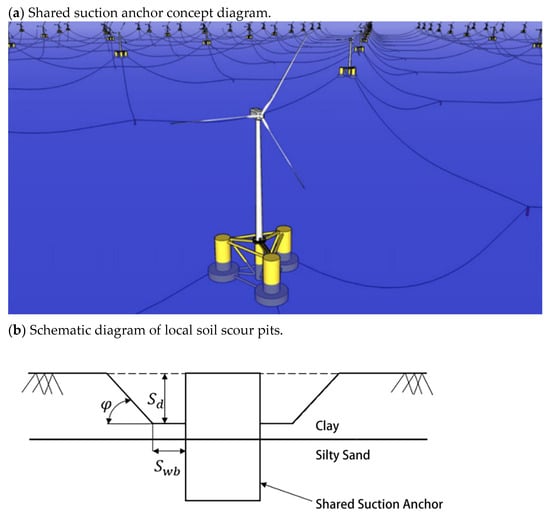
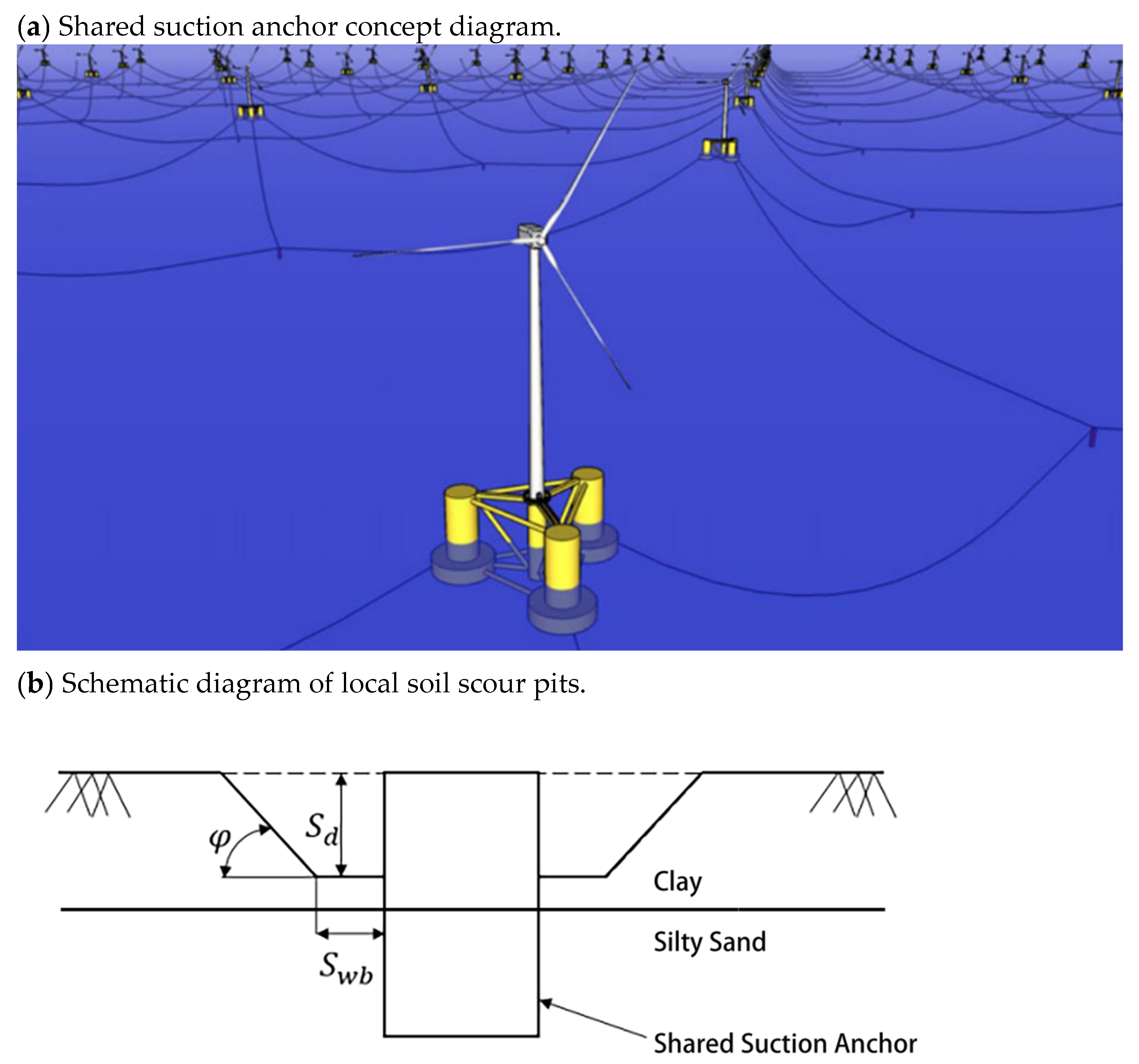
In marine energy, offshore wind power is developing rapidly and has become an important driver of energy transformation and of achieving carbon peaking and carbon neutrality goals [1]. Suction anchors are a common foundation in marine engineering [2]. A typical suction anchor is a large-diameter cylinder with an opening at the bottom and a bulge on its skirt. It is connected to floating bodies via mooring lines and is commonly used on coastal floating platforms, such as offshore floating wind turbines and deep-water projects. As shown in Figure 1a, the shared anchor is a new technology which reduces the cost of the foundation. This technology primarily uses a single suction anchor or piled anchor to connect multiple anchor chains, thereby connecting multiple floating wind turbines and reducing the number of suction anchors required for production and installation, thus reducing costs.
Figure 1.
Shared suction anchor and its soil schematic diagram.
Shared suction anchor has good performance in reducing the cost of the foundation for offshore wind turbines. However, there remains uncertainty in its design, especially in predicting the bearing capacity under combined loads, considering scour effects.
1.2. Previous Work
Research on shared suction anchors began relatively late as an emerging technology in offshore engineering. Existing studies primarily focus on conceptual design and anchor chain force analysis, while limited attention has been paid to their VHMT combined bearing capacity in specific layered soils—especially under scouring conditions—which limits their engineering application. For the fundamental theory of suction anchor bearing capacity, research on marine VHMT bearing capacity has advanced through numerical and analytical methods, extending the failure envelope from 3D to 4D and providing theoretical support for offshore foundation design. He & Newson (2023) derived a 4D undrained failure envelope for two-layer clay shallow foundations with crust-correction factors, cautioning against capacity underestimation without crust consideration [3]. Liu et al. (2023) found that torsion weakens the VHM capacity of suction caissons (L/D = 1.0–2.0) in normally consolidated clay (more significantly for smaller L/D) and proposed a torsion-included calculation method [4]. Fu et al. (2024) demonstrated that fins enhance the bearing capacities of suction caissons in clay, analyzed key influencing factors, and established closed-form expressions for three torsion scenarios [5].
Specific to shared suction anchors, early explorations have focused on mooring system optimization: Fontana et al. (2016) [6] proposed the shared mooring concept for floating offshore wind turbines, showing that anchor point numbers can be reduced by at least threefold; Balakrishnan et al. (2020) [7] simulated shared anchor loading using a 5 MW wind turbine floating system; Saviano et al. (2017) [8] conducted finite element analysis of shared suction anchors’ non-displacement high-pressure performance in soft soil.
To address the above research gaps, this study investigates the VHMT combined bearing capacity characteristics of shared suction anchors in layered clay-silt soils under scouring conditions, aiming to provide targeted design guidance for their offshore engineering applications.
1.3. Objective of the Present Study
This study investigates the bearing characteristics of shared suction anchors under VHMT loads and soil scour conditions. The failure mechanisms and corresponding envelope curves for shared suction anchors were proposed, considering the soil scouring issue, which can provide guidance for the construction and design of shared suction anchors in offshore wind turbines.
2. Numerical Model
2.1. Geometric Modeling of Shared Suction Anchor
Based on the research by Zhou et al. (2023) and its application in practical engineering, the shared suction anchor involved in this study is cylindrical, with a diameter of D and a length of L [9]. The length-to-diameter ratio of the shared suction anchor ranges from 1 to 3. The material of the shared suction anchor is modeled as a rigid body using a C3D8 mesh, and the external load application point is set to the bottom-center reference point of the shared suction anchor.
2.2. Geometric Modeling of Soil Mass
The soil in this study consisted of a clay-over-silt layer. The clay was modeled as an elastoplastic material, following the Mohr–Coulomb failure criterion, and classified as a normally consolidated soil. A C3D8 mesh was used, with a Poisson’s ratio of υ = 0.49, and the friction angle and dilation angle set to 0. An undrained condition model with no volume change was employed. The clay layer thickness was Tc, and the clay layer thickness ratio Tc/D ranged from 0.5 to 2. The undrained shear strength Su as a function of depth was expressed as follows:
where Sum represents the undrained shear strength of the clay at the mud surface; k is the gradient of the clay shear strength with depth; and z is the depth of the soil below the seabed. The elastic modulus E is related to Su by E = 500Su. In this study, the normalized parameter Sum/(kD) represents the clay strength, and the change in this parameter is used as a parameter analysis of the clay strength, where D is the diameter of the shared suction anchor. According to the study by Zhou et al. (2023) [9], the values of Sum/kD are set to 0, 0.67, and 1.0, which are the effective unit weights of the clay. Detailed parameters of the clay are shown in Table 1 [9].
Su = Sum + kz
Table 1.
Clay modeling parameters.
The underlying silt was modeled using the Mohr–Coulomb failure criterion, and the soil was modeled using a C3D8 mesh. Draw on existing research data about silt (Zhou et al., 2023), the cohesion Cu of the silt ranged from 3 to 15 kPa, and its normalized cohesion was expressed as denoted by , where is the effective unit weight of the silt, D is the diameter of the shared suction anchor, and takes values of 0.07, 0.22, and 0.34 [9]. The friction angle φs of the silt was set to 33°, and the dilation angle ψ was set to 8°. Since the ultimate bearing capacity of sandy soil mainly depends on the soil strength, the elastic modulus of the silt needs to be set sufficiently large. The elastic modulus of the silt was greater than 2000 Cu. Detailed parameters of the silt are shown in Table 2.
Table 2.
Modeling parameters for silt and sand.
The local scour effect manifests as soil loss around the suction anchor in soil modeling. The scour hole is usually idealized as an inverted cone, defined by the scour depth Sd, scour hole angle φ, and bottom width Swb, as illustrated in Figure 1. Based on existing research (Guo et al., 2022) and offshore engineering practices, the bottom width of the scour hole Swb in this study is recommended to be set to 0, and the scour hole angle φ is suggested to be fixed at 30° [10]. Therefore, the scour depth Sd is adopted as the key parameter for the scour hole in this research, with a value range of 0 to 1D, resulting in a ratio of scour depth to the diameter of the shared suction anchor Sd/D ranging from 0 to 1. It should be noted that this method simplifies the local scour hole, which may lead to deviations from practical engineering conditions. In actual engineering applications, adjustments to the scour angle and slope stability should be made based on site-specific construction conditions.
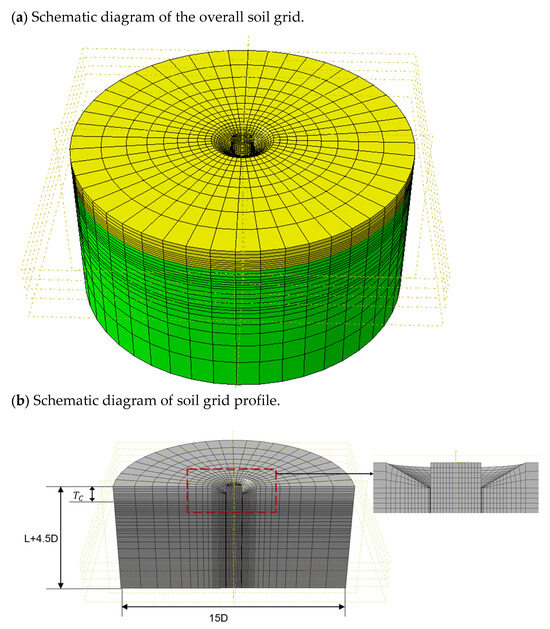
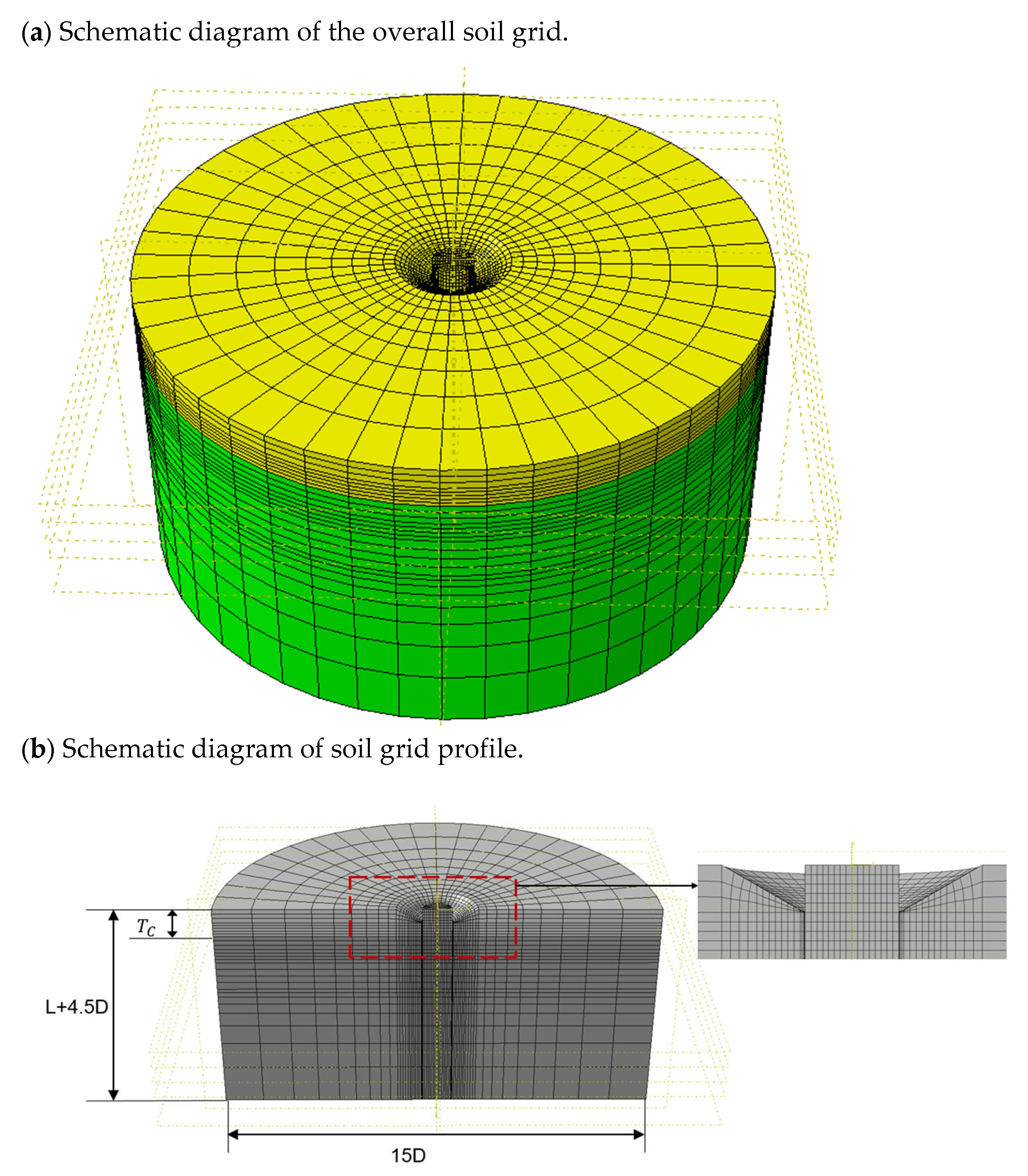
The soil is modeled as a cylindrical shape. To eliminate boundary effects, the soil diameter is set to 15D = 75 m, and the soil depth is set to L + 4.5D [11]. The mesh is refined from the edge of the soil to the center and from the top and bottom of the soil to the loading point of the suction anchor, as shown in Figure 2
Figure 2.
Schematic diagram of soil modeling.
2.3. Combination of Soil Mass and Shared Suction Anchors
A shared suction anchor is installed at the center of the soil mass, with its base embedded in the silty sand layer. The anchor and soil assembly are allowed to separate. The interface between the soil and the anchor follows Coulomb’s law of friction, with the friction coefficient denoted by μ. The friction coefficient between the anchor and clay is μ = 1. To account for the impact of the anchor installation on the soil, a thin layer of soil, 0.2 m thick, is placed outside the anchor in the clay layer. Its undrained shear strength is defined as 0.65Su [12]. Therefore, the equivalent fractional coefficient is 1 × 0.65 = 0.65. The interaction between the anchor and silty sand is μ = 0.4. The loading point at the center of the anchor’s bottom is coupled to the anchor. The bottom of the soil mass is completely fixed, and horizontal displacement is constrained around the perimeter of the soil mass.
2.4. Model Validation
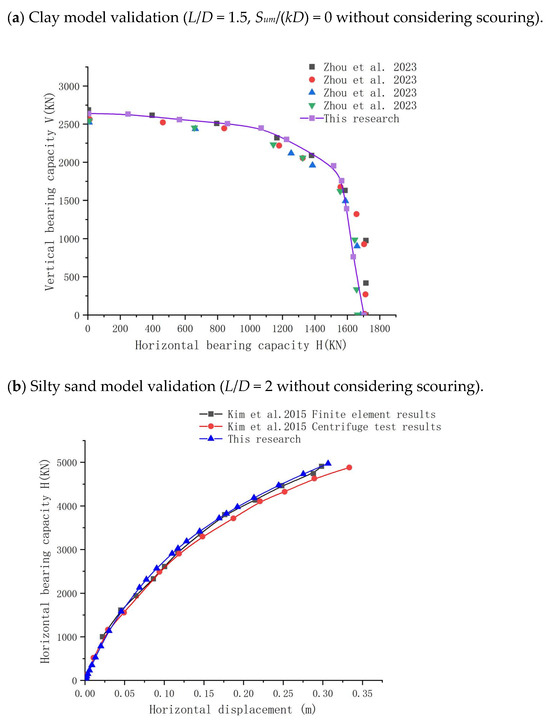
For suction anchors installed in clay, this study employs numerical simulation results for suction anchors in clay and compares them with published data reported by Zhou et al. (2023) [9]. As illustrated in Figure 3a, the VH envelope curve of the proposed model is compared with existing findings, revealing good agreement between the two. Consequently, the accuracy of the clay model established in this study is validated.
Figure 3.
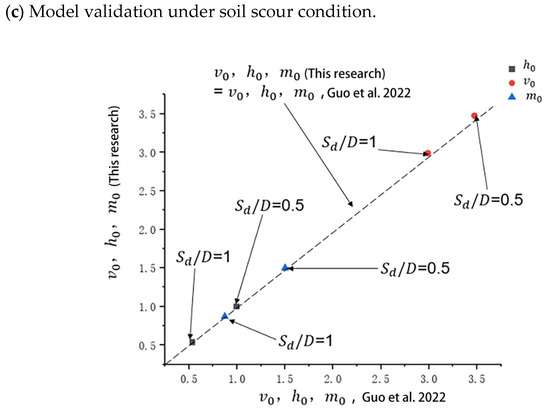
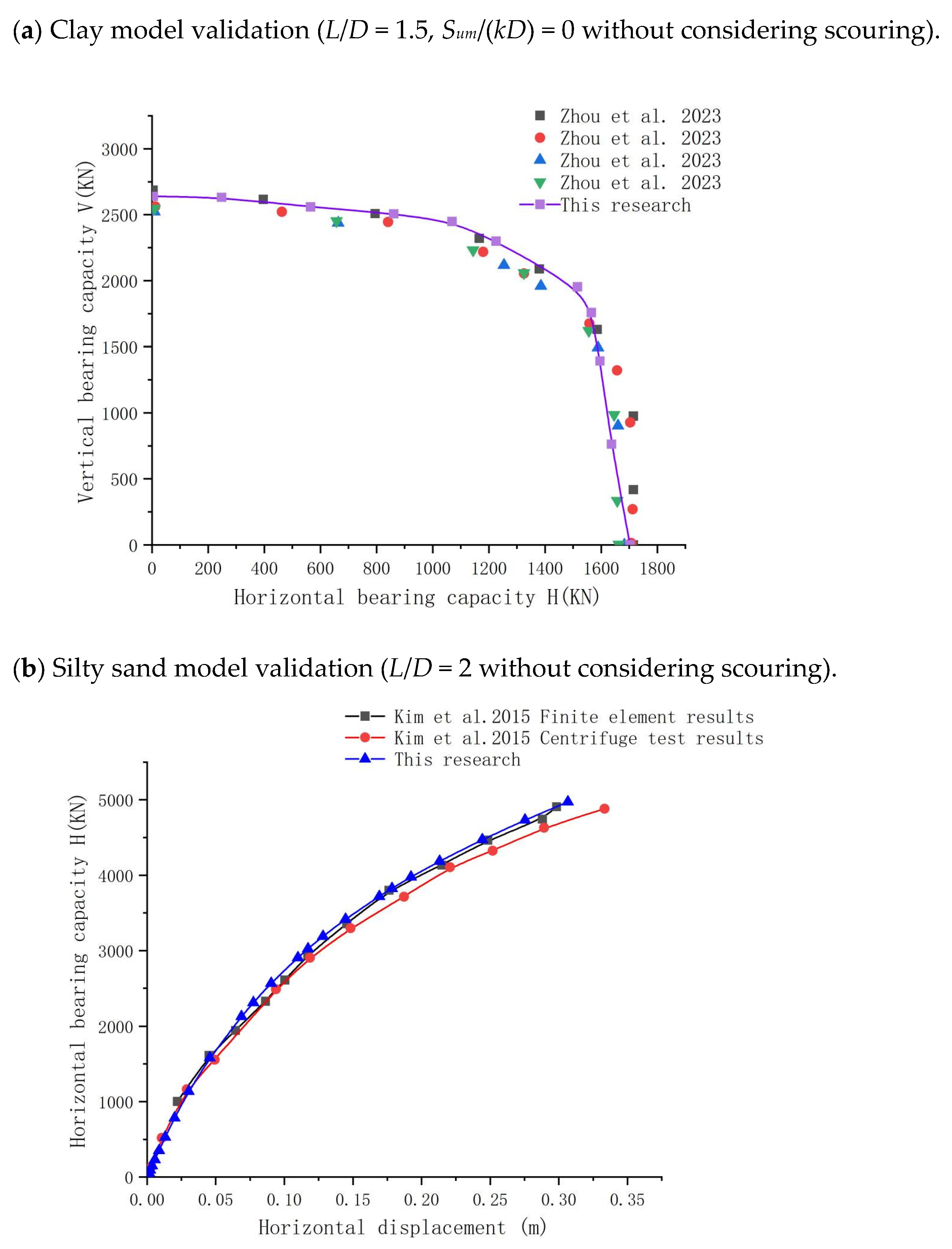
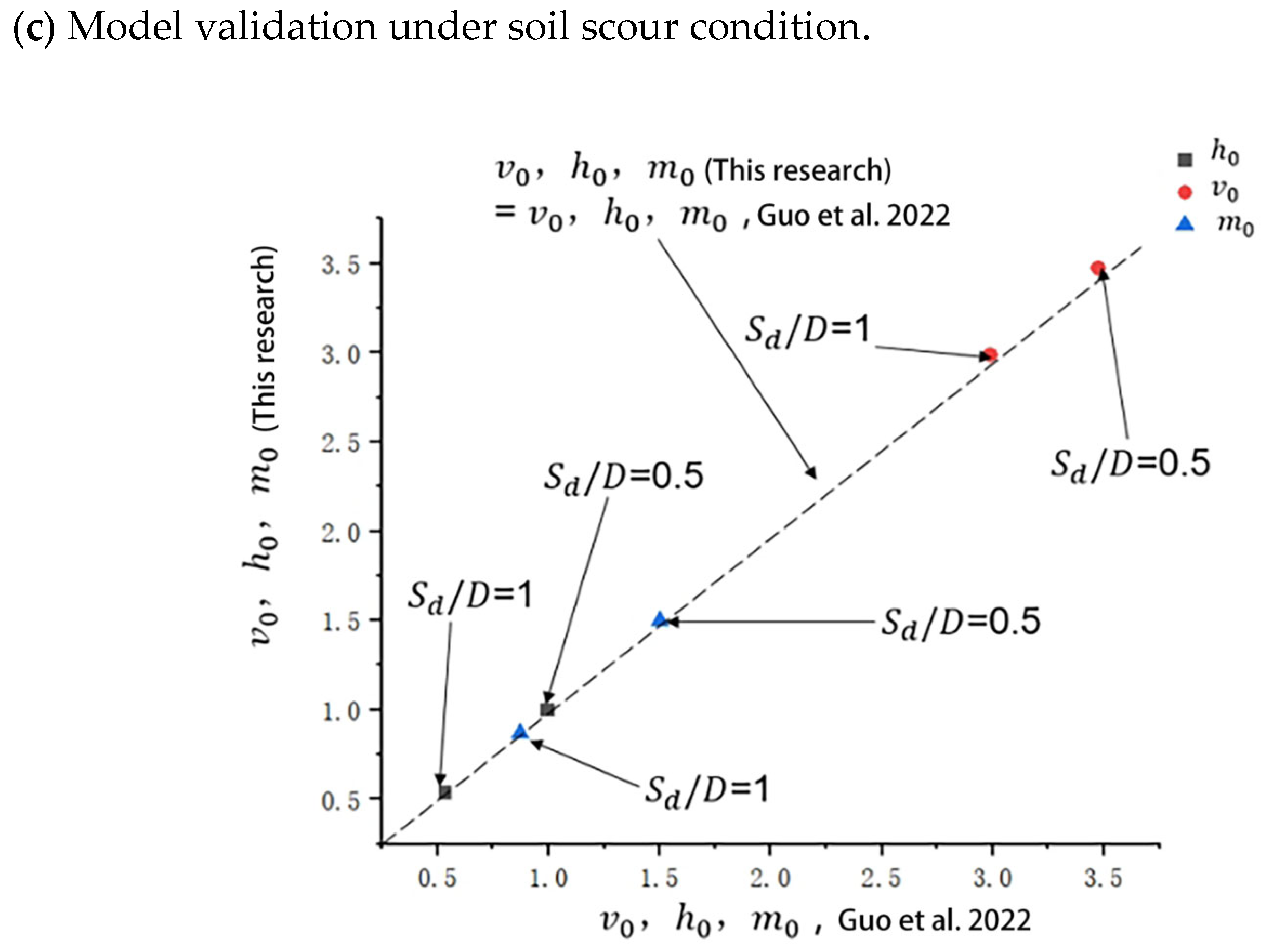
Model validation against the previous study [9,10,13].
For suction anchors installed in silty sand, this study conducts a comparative analysis by adopting the numerical simulation and centrifuge test results for suction anchors in silty sand presented by Kim et al. (2015) [13]. As depicted in Figure 3b, the load–displacement curves of the proposed model under horizontal loading are compared with the existing data, demonstrating a good agreement between them. Thus, the accuracy of the silty sand model developed in this study is verified.
To verify the accuracy of the model considering soil scour effects in this study, the simulation results modeled above were compared with the numerical simulation results of suction anchors considering soil scour effects by Guo et al. (2022), as shown in Figure 3 [10]. The uniaxial loading results for V, H, and M modeled in this study were compared one by one with the results of Guo et al. (2022) (L/D = 2) [10]. The results are in good agreement, indicating that the accuracy of the model considering soil scour has been verified.
3. Soil Failure Mechanism
In practical marine geotechnical engineering, soil scour is often a key factor to consider [14]. The main varying parameters are the scour depth ratio Sd/D, the length-to-diameter ratio of the suction anchor L/D, the clay strength Sum/(kD), the clay layer thickness ratio Tc/D, and the silt cohesion . The shared suction anchor is subjected to uniaxial, biaxial, and quadriaxial loading. The ultimate bearing capacities V0, H0, M0, and T0 of the shared suction anchor under uniaxial loading (V–H, H–M, H–T), considering scour effects, are obtained, as well as the failure envelope curves for biaxial loading (V–H, H–M, H–T) and quadriaxial loading (VHMT). The calculation results are presented in Table 3.
Table 3.
Calculation table for shared suction anchors considering soil scour.
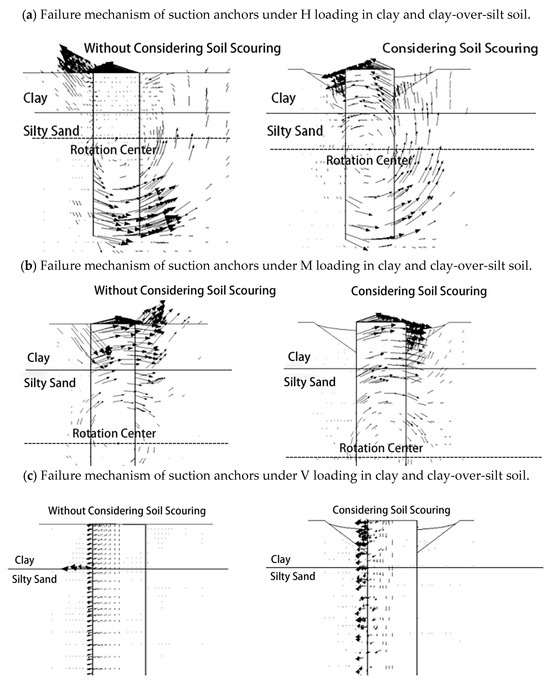
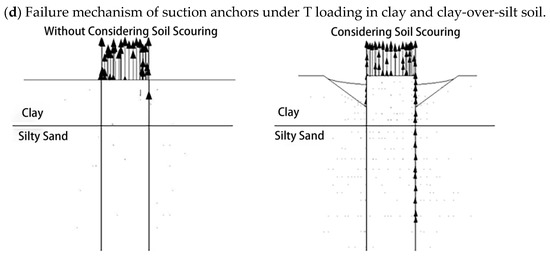
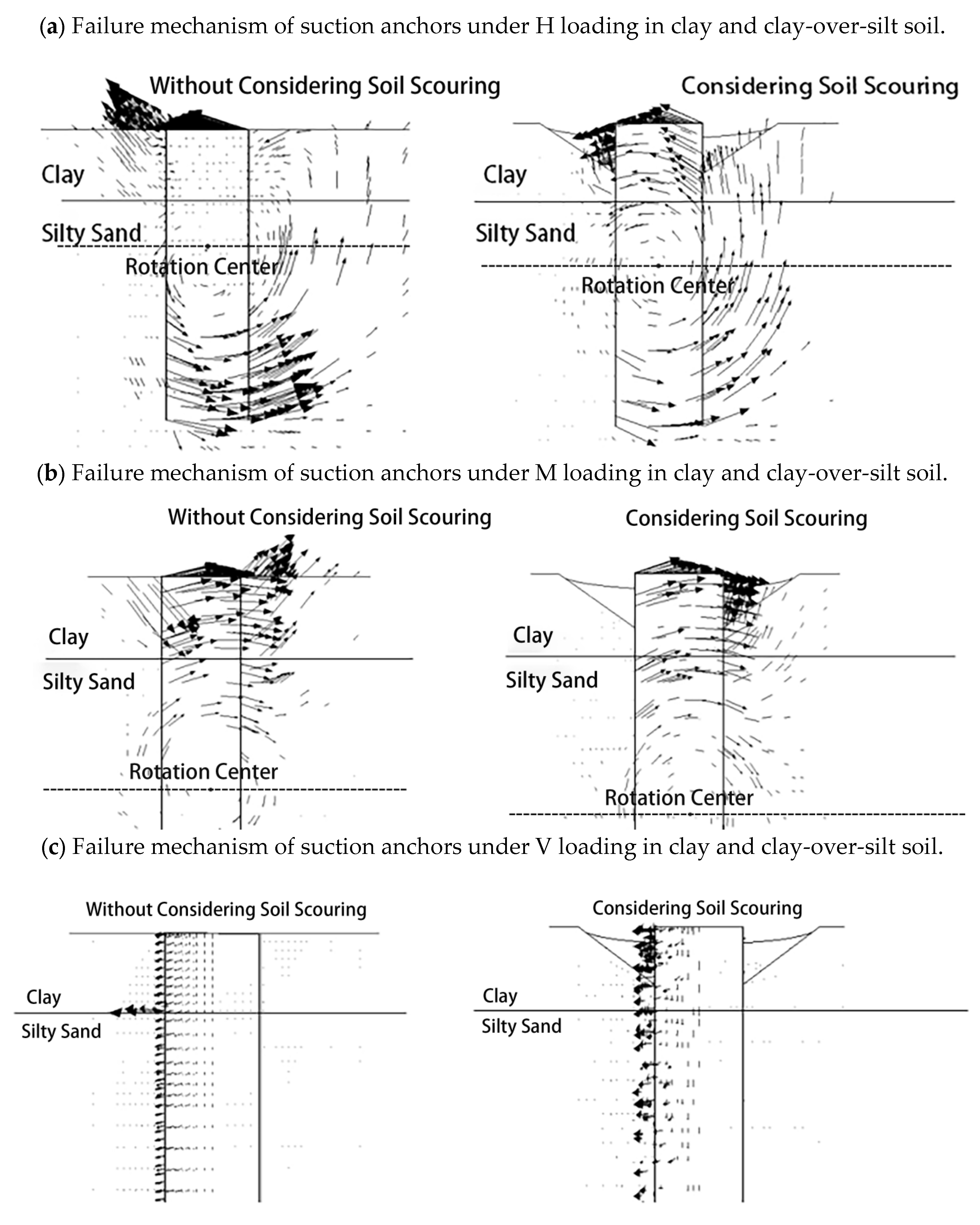
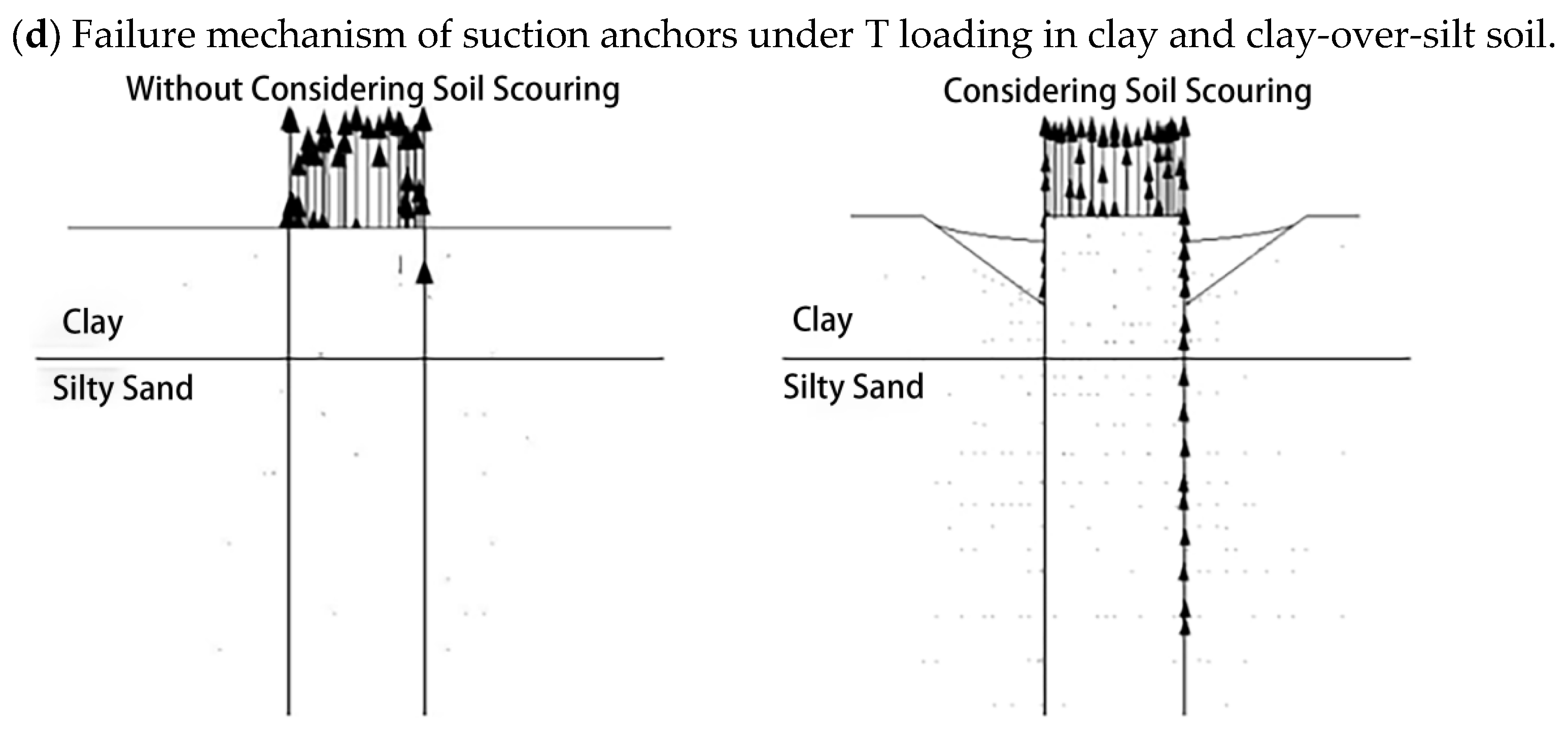
To illustrate the failure mechanisms of a shared suction anchor in a clay-covered silt layer considering soil scour, taking soil parameters Sum/(kD) = 0, = 0.34, Tc/D = 1, L/D = 3, Sd/D = 0.5 as an example, the displacement vector diagram of its single-axis loading of V, H, M, and T is shown in Figure 4. The bottom of the suction anchor is located in the silty sand. In Figure 4a, under horizontal loading, without soil scour, the rotation of the suction anchor causes the soil on the left surface to be squeezed upward and undergo shear failure. Under the action of soil scour, the rotation of the suction anchor causes the soil on the left to be squeezed downward and undergo shear failure, and the soil on the right to be squeezed upward and undergo shear failure. In Figure 4b, under bending-moment loading, considering soil scour, the suction anchor rotates and squeezes the soil on the right side, causing shear failure downwards. Therefore, soil scour will change the direction of shear failure of the surface soil under H and M loading [15]. In Figure 4c,d, under V and T loading, the soil failure mechanism is shear failure caused by friction at the contact surface between the soil and the suction anchor [16]. As illustrated in Figure 4a,b, scouring induces the removal of substantial clay around the anchor, which in turn weakens the lateral bearing capacity of the anchor shaft and results in a slight downward shift in the rotation center.
Figure 4.
Soil failure mechanism.
4. Loading Methods
4.1. Uniaxial Loading
The uniaxial loading method for the shared suction anchor is displacement-controlled loading. Displacements in the corresponding directions V, H, M, and T are applied at the loading point of the shared suction anchor, and the displacements are gradually increased until the single-bearing load tends to stabilize, thus obtaining the ultimate uniaxial bearing capacity of the shared suction anchor.
4.1.1. Uniaxial V Loading
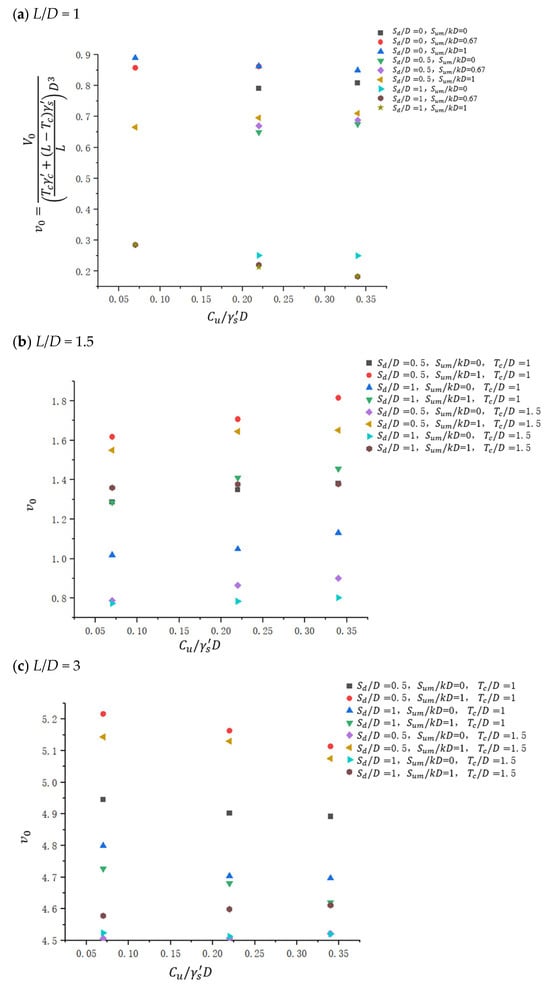
The uniaxial V-load was controlled by displacement. An upward displacement was applied at the loading point to obtain the uniaxial ultimate bearing capacity V0, which was then normalized to obtain v0. Figure 5 shows the uniaxial bearing capacity v0. In Figure 5a, L/D = 1, Sd/D takes values of 0, 0.5, 1, and Tc/D = 0.5. According to Equation (2),
as Sd/D increases, the uniaxial bearing capacity v0 gradually decreases. This is because the increased size of the scour hole leads to a reduction in the soil mass around the suction anchor, decreasing the contact area between the suction anchor and the soil, thus reducing the frictional force and consequently decreasing v0. Simultaneously, the figure shows that when Sd/D = 0 (i.e., no soil scour), the change in the soil parameter clay strength Sum/(kD) has the most significant impact on v0. When Sd/D increases to 1, the change in Sum/(kD) has no significant effect on v0. Therefore, the reduction in soil mass weakens the influence of soil parameter changes on the uniaxial bearing capacity of the suction anchor. The increase in silty sand cohesion has a relatively weak effect on v0.
Figure 5.
Uniaxial V-load.
In Figure 5b,c, Sd/D takes values of 0.5 and 1, and the clay layer thickness ratio Tc/D takes values of 1 and 1.5. In Figure 5b, L/D = 1.5, and in Figure 5c, L/D = 3. It can be seen from the figures that increasing Tc/D leads to a decrease in v0, while increasing Sd/D weakens the effect of Tc/D on v0, because the larger the scour hole, the less soil is affected. Comparing Figure 5b,c, increasing L/D significantly increases v0, and the increase in L/D weakens the effect of Sd/D on v0, indicating that the greater the suction anchor burial depth, the less the bearing capacity is affected by changes in the scour hole. The increase in silt cohesion has a weak effect on v0. Referring to existing research [10], the scour factor is used to represent the ratio of vertical bearing capacity under scour conditions to vertical bearing capacity under non-scour conditions, as shown in Table 4. The calculation method for the scour factor η is shown in Equation (3).
where Fult,s: ultimate uniaxial bearing capacity under scoured conditions (including vertical ultimate bearing capacity FV,ult,s, horizontal ultimate bearing capacity FH,ult,s, and moment ultimate bearing capacity FM,ult,s).
Table 4.
Vertical bearing capacity scour factor.
Fult,0: corresponding ultimate uniaxial bearing capacity under unscoured conditions.
4.1.2. Uniaxial H Loading
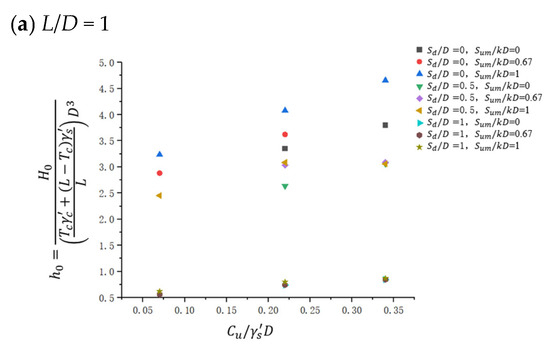
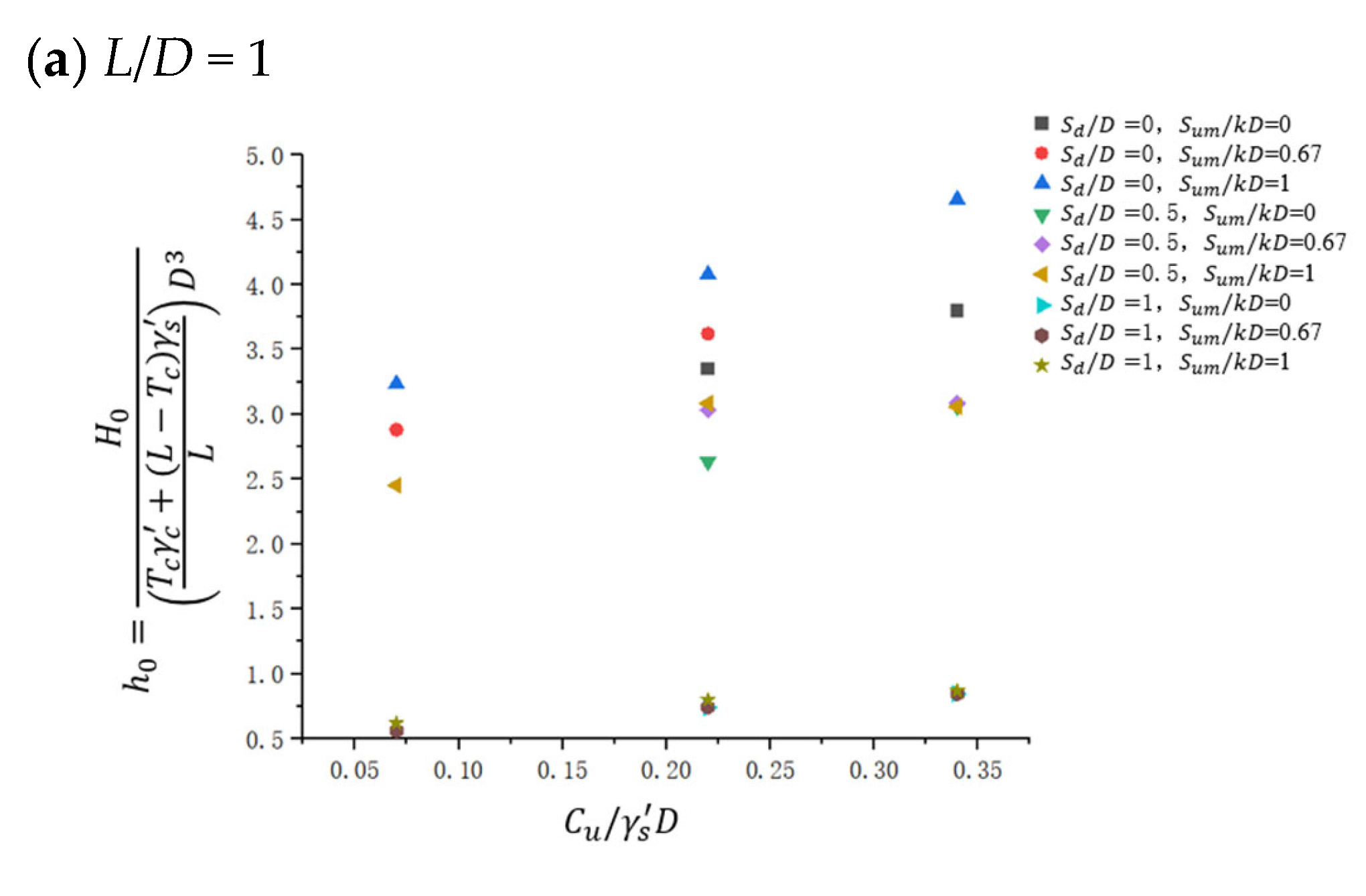
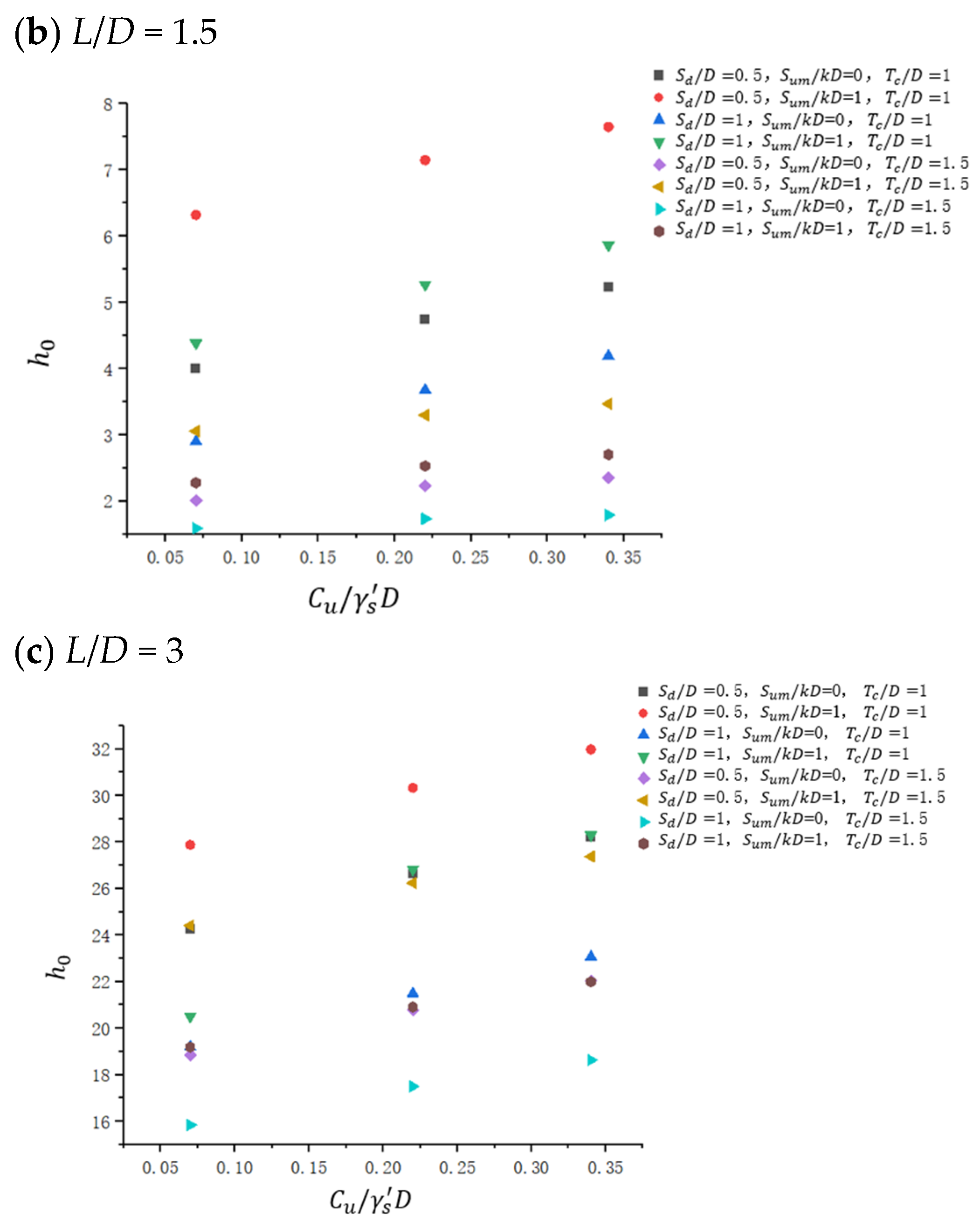
Uniaxial H-loading was performed using displacement control. A horizontal displacement was applied at the loading point to obtain the uniaxial horizontal ultimate bearing capacity H0, which was then dimensionless converted to h0. The loading results are shown in Figure 6. In Figure 6a, increasing Sd/D decreases h0, with h0 being minimum when Sd/D = 1. Furthermore, the influence of changes in clay strength and silt cohesion on h0 is at its weakest; h0 increases with increasing silt cohesion.
Figure 6.
Uniaxial H-load.
As shown in Figure 6b,c, when Tc/D increases, h0 decreases, and the change in clay strength Sum/(kD) has a stronger impact on h0. In Figure 6b, when Tc/D increases to 1.5, Tc/D = L/D, at which point h0 is at its minimum, and the influence of silt cohesion on horizontal bearing capacity is weakest. An increase in Sd/D reduces horizontal bearing capacity because the reduction in soil mass decreases the resistance from the soil during the horizontal displacement of the suction anchor, thus reducing h0. Furthermore, an increase in Sd/D weakens the influence of soil strength parameters and Tc/D on horizontal bearing capacity. An increase in the suction anchor’s length-to-diameter ratio L/D can weaken the influence of Sd/D on horizontal bearing capacity. The scour factor is used to represent the ratio of horizontal bearing capacity under scour conditions to that under non-scour conditions, as shown in Table 5.
Table 5.
Horizontal bearing capacity scour factor.
4.1.3. Uniaxial M Loading
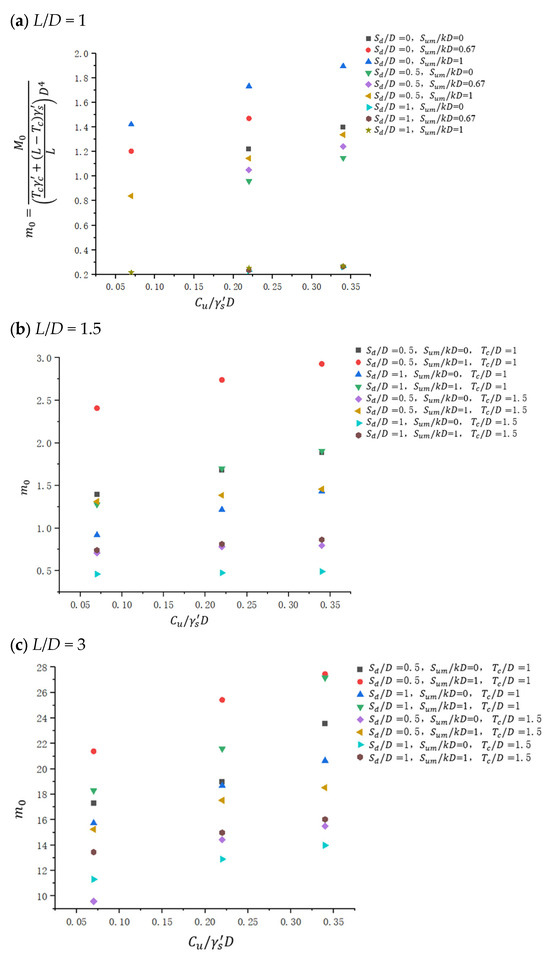
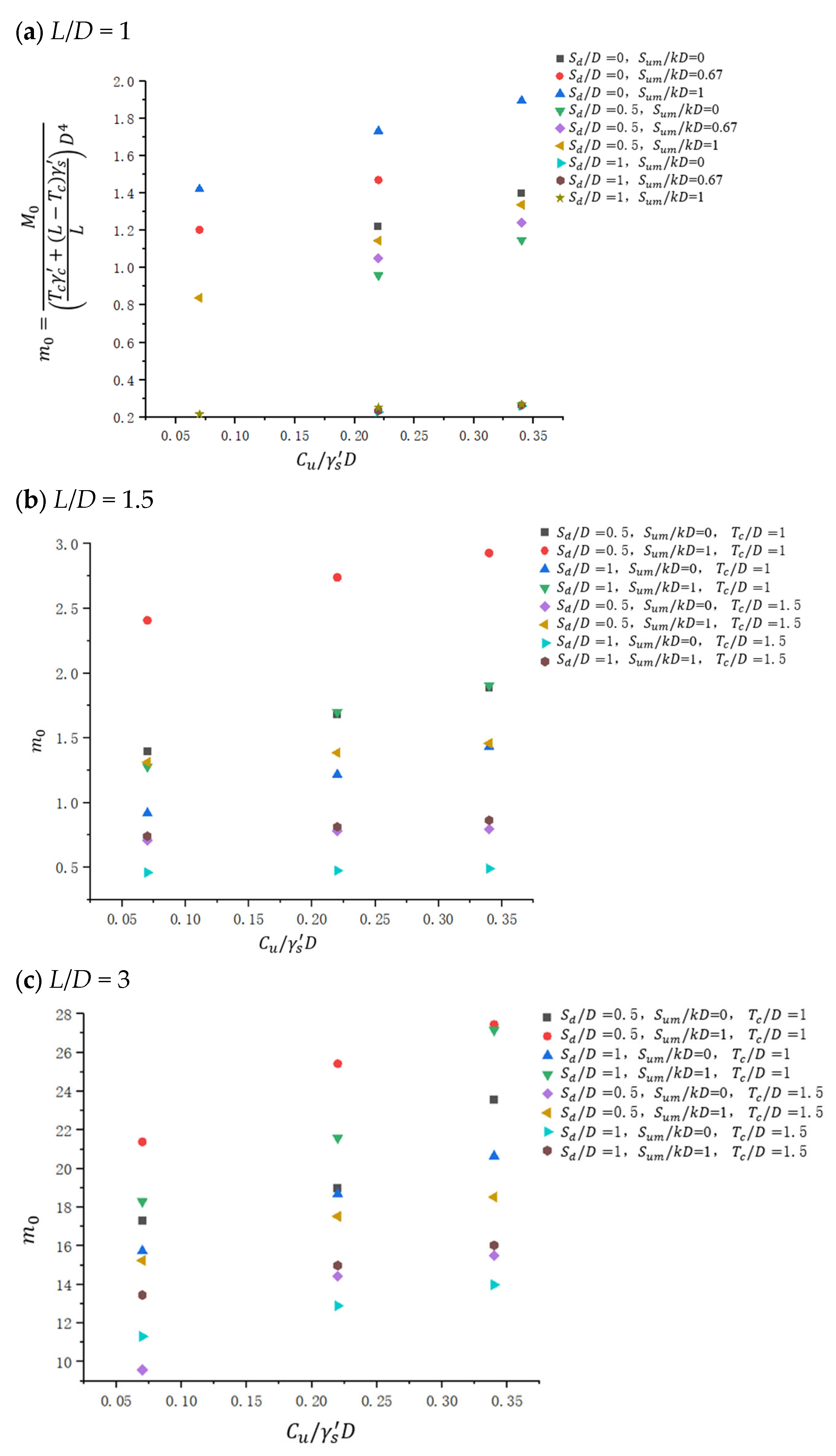
The uniaxial M-load is displacement-controlled, with a rotation angle applied at the loading point to obtain the uniaxial bending moment ultimate bearing capacity, which is then dimensionless processed to obtain m0. Figure 7 shows the loading results. In Figure 7, L/D = 1. Increasing Sd/D leads to a decrease in m0 and also weakens the influence of changes in clay strength and silt cohesion on m0. The bending moment bearing capacity of the suction anchor is the weakest, and the influence of clay strength and silt cohesion on m0 is also the weakest.
Figure 7.
Uniaxial M-load.
As shown in Figure 7b,c, the increase in Sd/D significantly reduces m0 because the reduction in soil mass decreases the resistance encountered when the suction anchor overturns. This principle is similar to the effect of Sd/D on h0. The increase in the suction anchor’s length-to-diameter ratio L/D weakens the effect of Sd/D on the bending moment bearing capacity. m0 increases with the increase in clay strength and silt cohesion, and gradually decreases with the increase in Tc/D. When Sd/D increases, the effects of clay strength, silt cohesion, and Tc/D on the bending moment bearing capacity weaken. The scour factor is used to represent the ratio of the bending moment bearing capacity under scour conditions to that under non-scour conditions, as shown in Table 6.
Table 6.
Bending moment bearing capacity scour factor.
4.1.4. Uniaxial T Loading
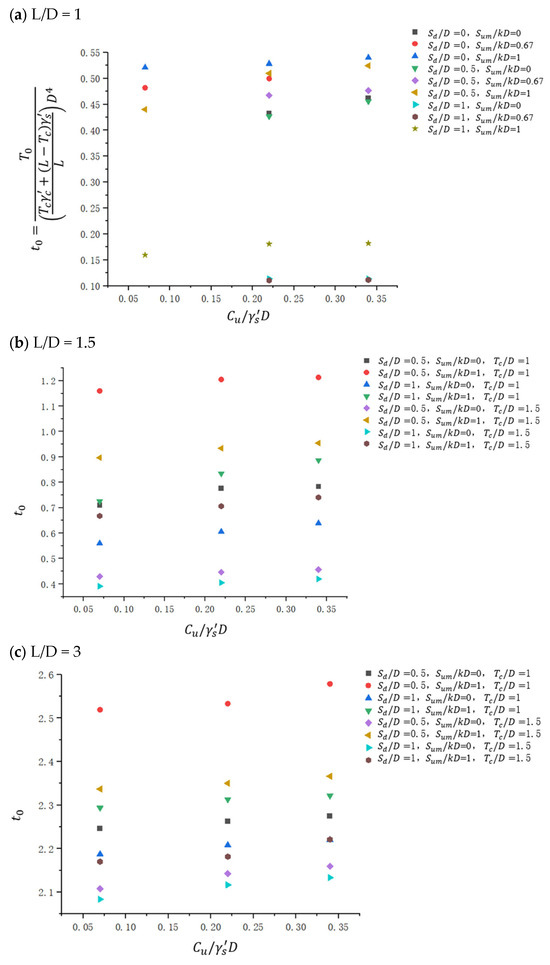
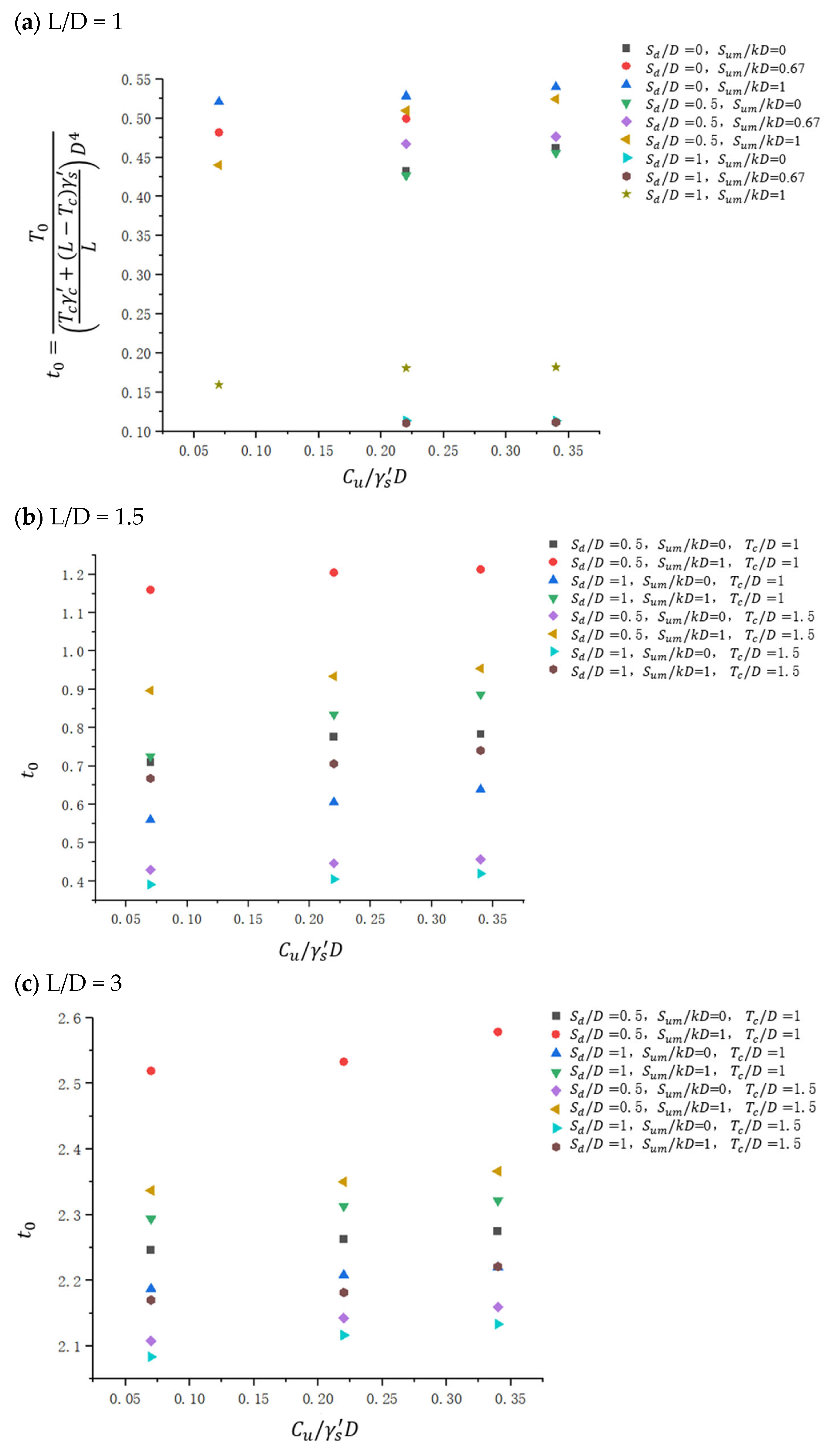
Uniaxial T loading employed displacement control, applying a torsional rotation angle at the loading point to obtain the uniaxial torque ultimate bearing capacity, which was then dimensionless processed to obtain t0. The loading results are shown in Figure 8. Since the resistance experienced by the suction anchor during torsion is friction, similar to uniaxial V-loading, t0 gradually decreases with increasing Tc/D, increases with increasing clay strength Sum/(kD), and decreases with increasing Sd/D. Increasing L/D increases t0 and weakens the effect of scouring on the torque bearing capacity. The figure shows that t0 increases with increasing silt cohesion. The scouring factor is used to represent the ratio of the torque bearing capacity under scouring to that under no-scouring conditions, as shown in Table 7. As indicated in Table 4, Table 5, Table 6 and Table 7, soil scour induces a reduction in the single-anchor bearing capacity of the shared suction anchor, with the decreases in h0 and m0 being particularly significant—this is consistent with the research findings of Guo et al. (2022) [10]. As Sd/D increases, the single-anchor bearing capacity decreases; while the magnitude of the numerical influence of changes in clay strength Sum/(kD) and the ratio of silty sand cohesion to clay layer thickness Tc/D on the single-anchor bearing capacity diminishes, the underlying influence trends remain unchanged. An increase in the suction anchor’s length-to-diameter ratio L/D can mitigate the adverse effects caused by the increase in Sd/D and simultaneously significantly enhance the single-anchor bearing capacity. Therefore, this study concludes that L/D is the primary influencing factor governing the single-anchor bearing capacity of the suction anchor. Notably, when Tc/D = L/D, the suction anchor is installed at the interface between clay and sand, resulting in a marked reduction in the single-anchor bearing capacity.
Figure 8.
Uniaxial T-load.
Table 7.
Torque bearing capacity erosion factor.
4.2. Biaxial Combined Loading
The biaxial combined loading method is employed to study the bearing capacity of the shared suction anchor, undertaken through displacement control for the load application. Specifically, displacements in V–H, H–M, and H–T directions are simultaneously imposed. The displacement ratio is a constant while displacements are gradually increased until the bearing capacity stabilizes. This stable value is then recorded to derive the biaxial stress–failure envelope curve of the shared suction anchor.
4.2.1. V-H Combined Loading
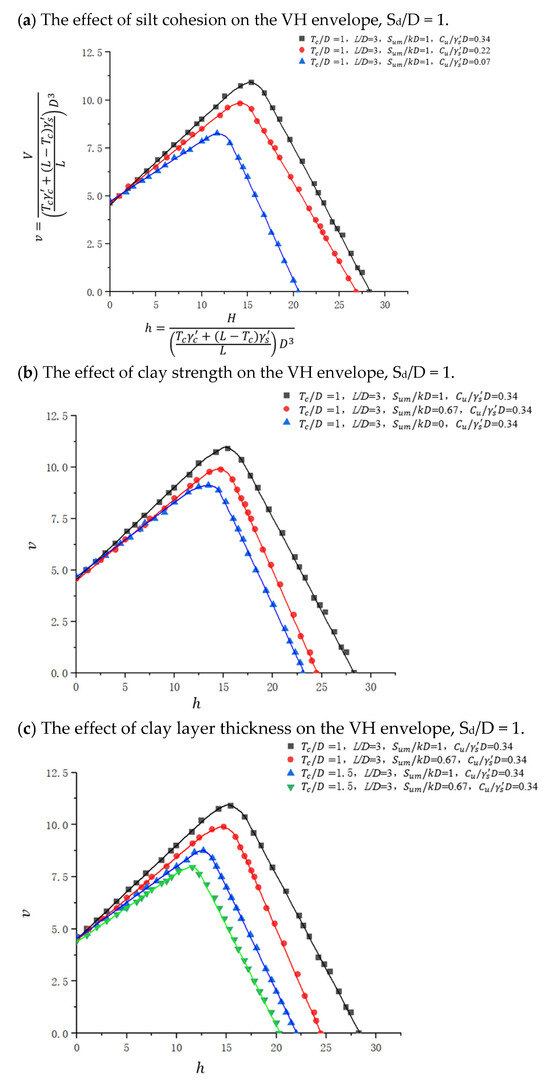
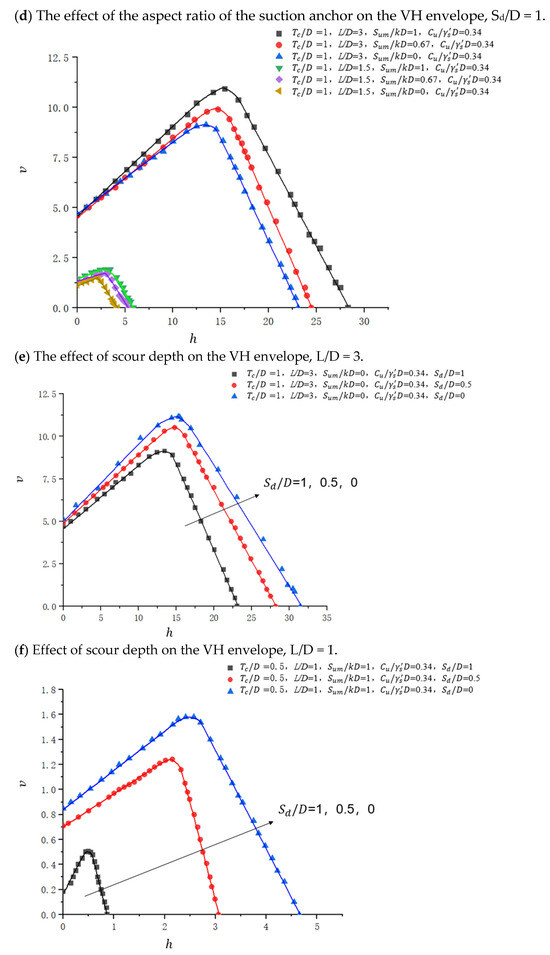
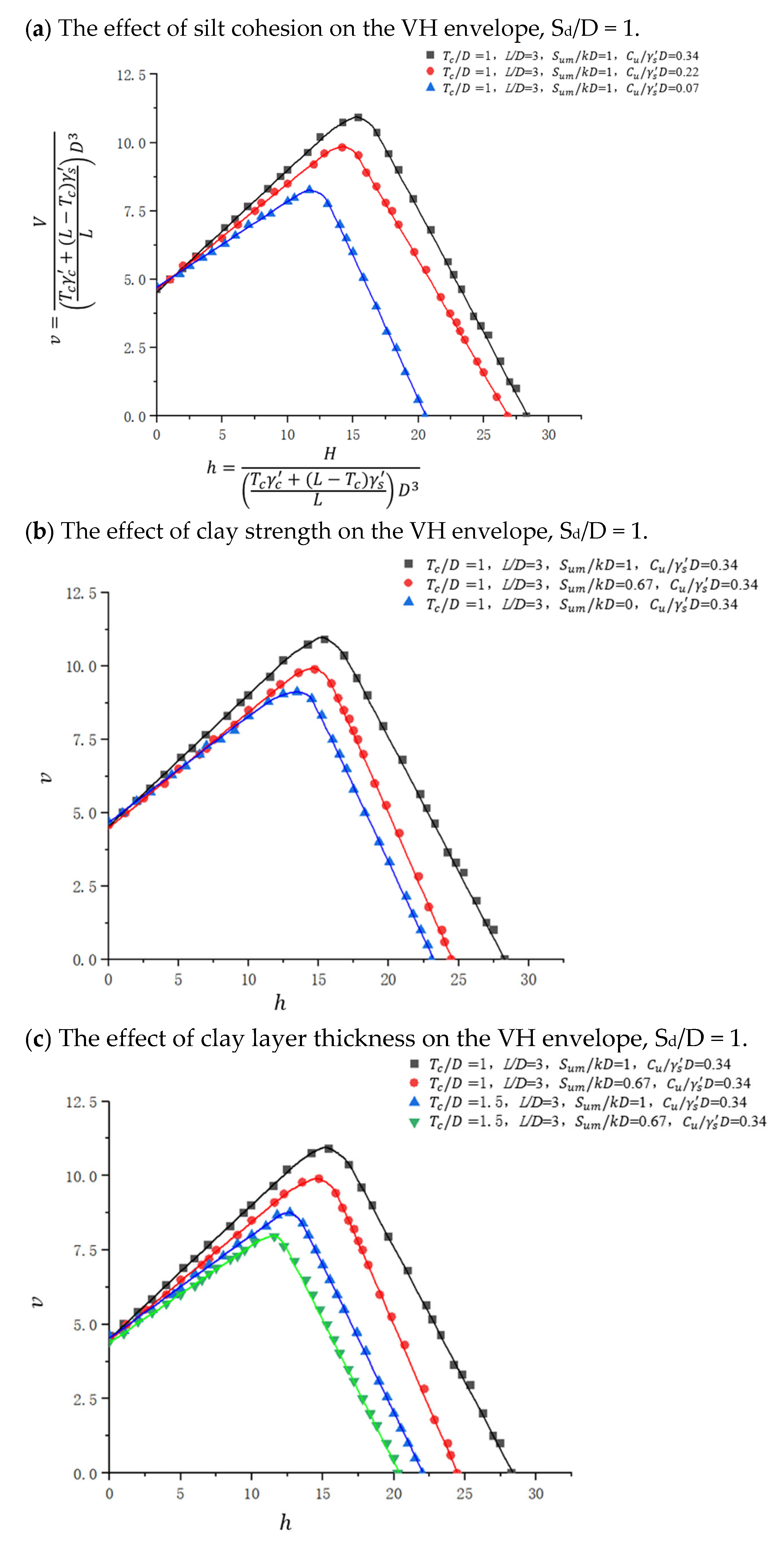
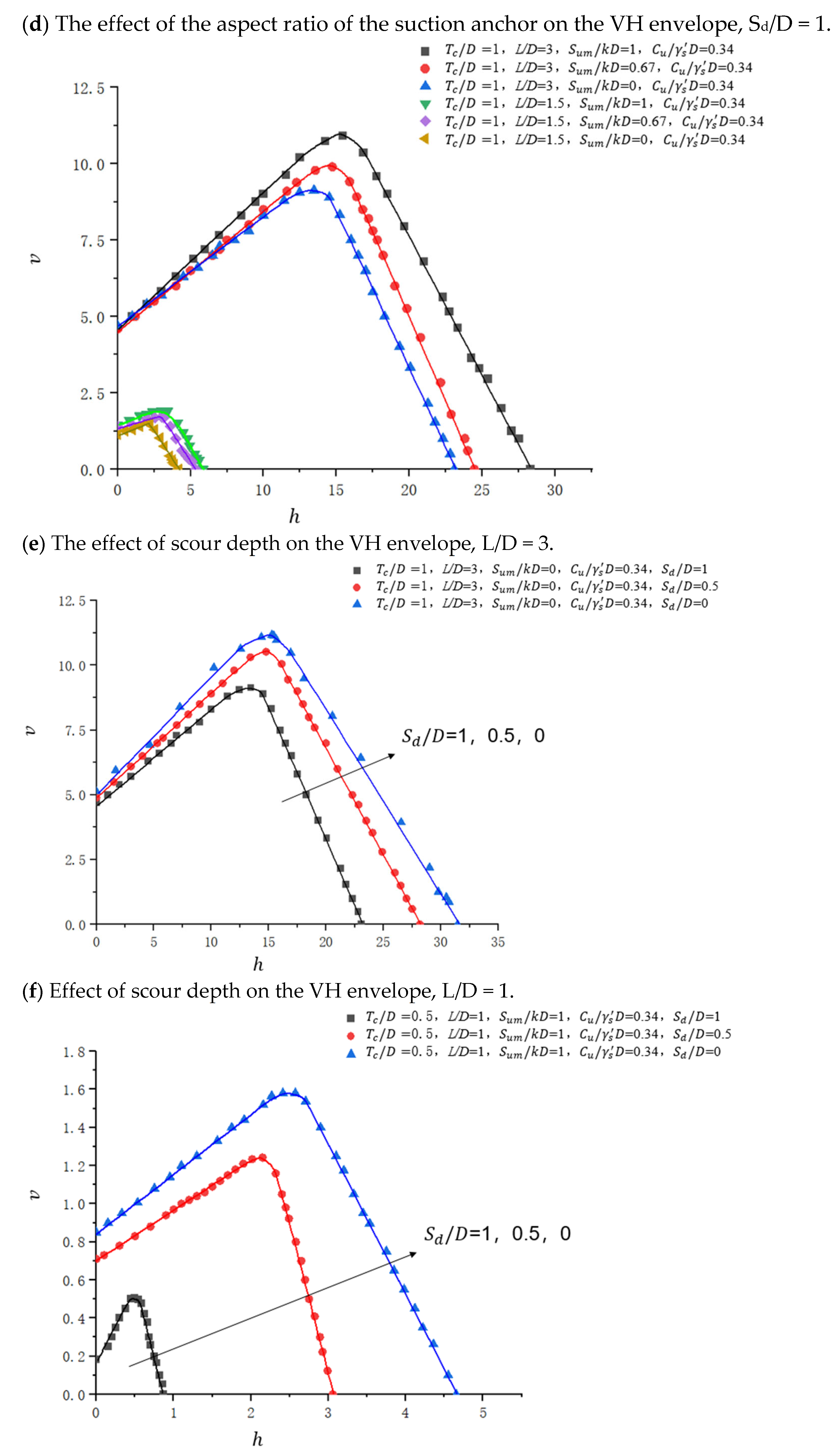
Figure 9 shows the VH envelope curve of the bearing capacity of the shared suction caisson. As observed, v first increases and then decreases with increasing h, reaching its maximum value near 0.5h0. This is because its ultimate uplift capacity increases with the increase in horizontal load, resulting in v > v0. As the horizontal load further increases and h approaches approximately 0.5h0, v rises to its maximum value. With a continued increase in the horizontal load until h = h0, v gradually decreases to 0. In Figure 9a,b, the increase in Sum/(kD) and leads to a higher VH envelope value, indicating an enhanced bearing capacity of the suction anchor. In Figure 9c, the increase in Tc/D leads to a decrease in the VH envelope value because of the increased proportion of clay in the soil; hence, it reduces the equivalent soil strength in the pre-embedded length of the caisson. Consequently, the suction anchor bearing capacity drops accordingly. In Figure 9d, the increase in L/D of the caisson results in an effect on the failure mechanism of the caisson, which increases the V–H envelope value. Figure 9e,f show that the VH envelope value decreases with the scour depth increase because the effective caisson’s length is decreased due to soil scour, thereby reducing the suction anchor’s bearing capacity. In Figure 9e, for the case of L/D = 3, the shape of the VH envelope does not change with the increase in scour depth. In Figure 9f, for the case of L/D = 1, the shape of the VH envelope changes significantly with the increase in scour depth, and the envelope value decreases significantly. This indicates that when L/D is small, the scour depth has a greater impact on the bearing capacity and envelope shape of the suction anchor. However, as L/D increases, the impact of scour depth on the bearing capacity and envelope shape of the suction anchor weakens. Therefore, increasing the length-to-diameter ratio of the suction anchor can reduce the impact of soil scour.
Figure 9.
V–H envelope curve considering soil erosion effect.
4.2.2. H–M Combined Loading
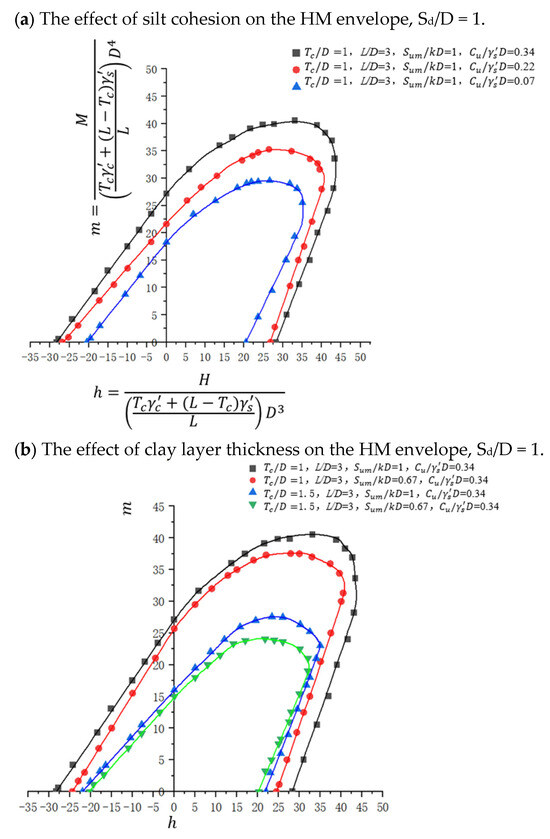
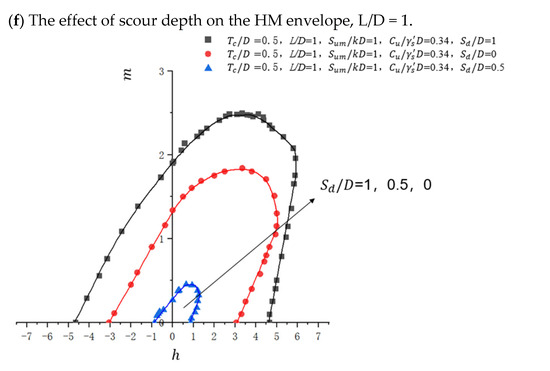
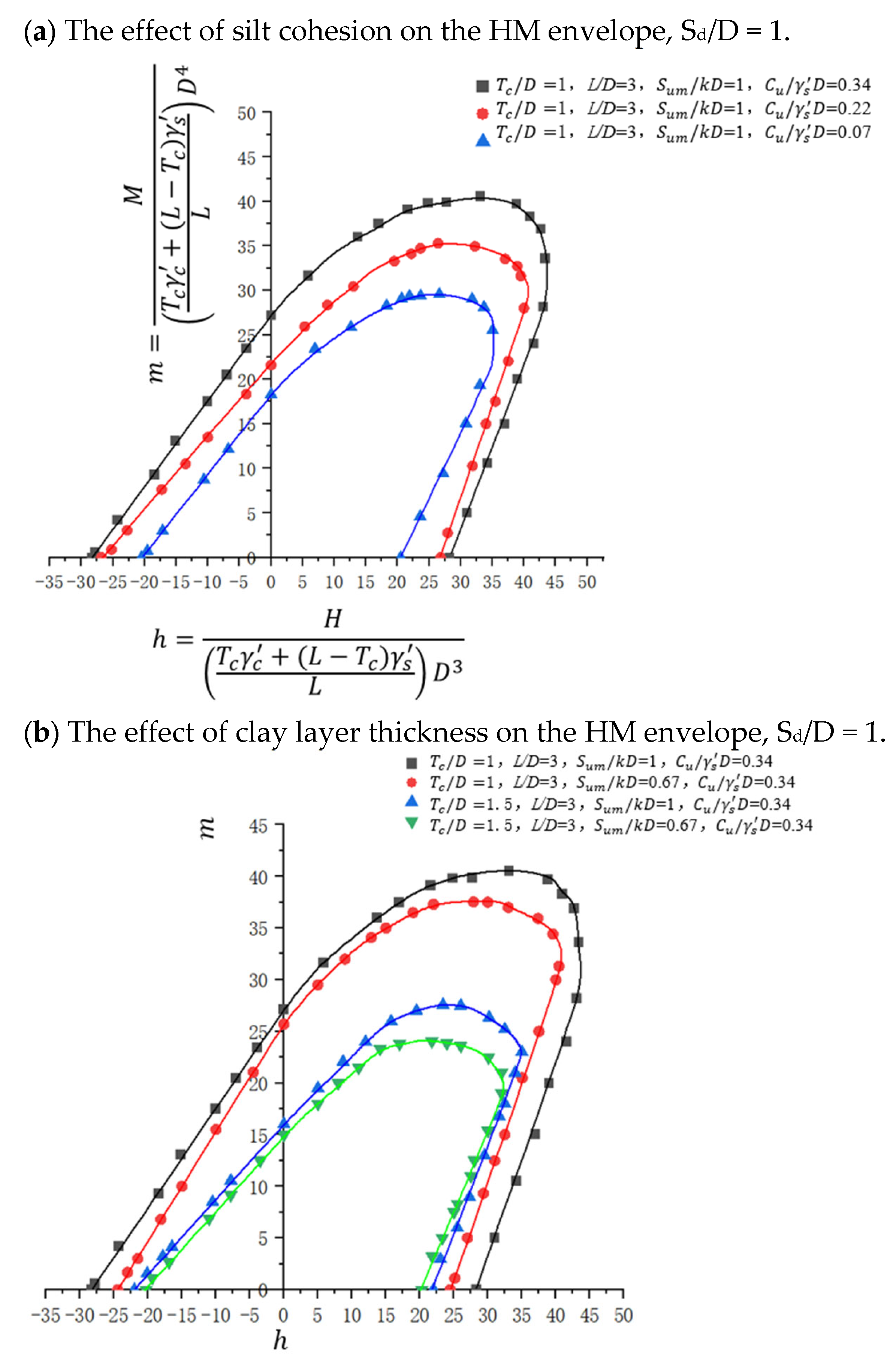
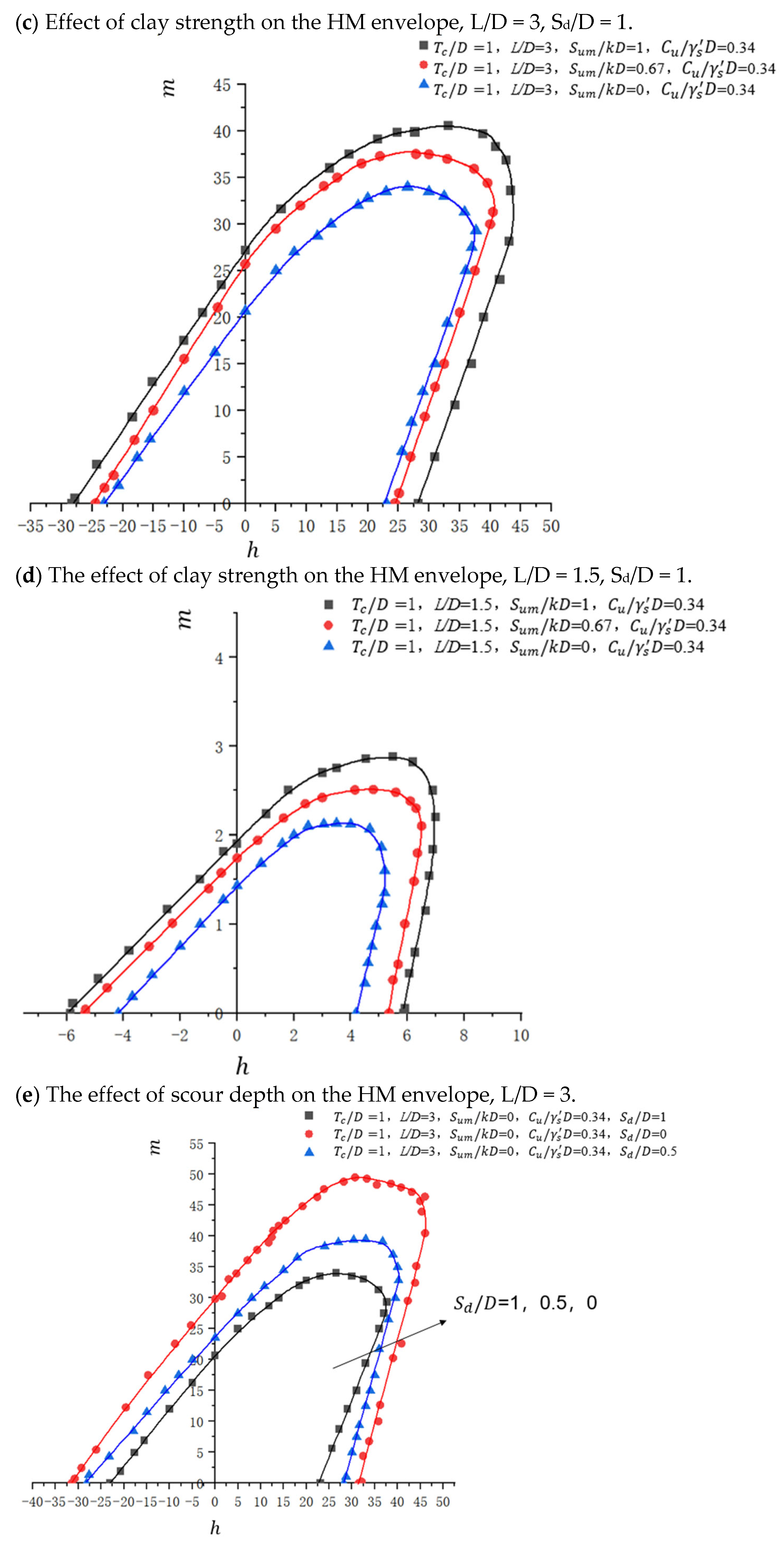
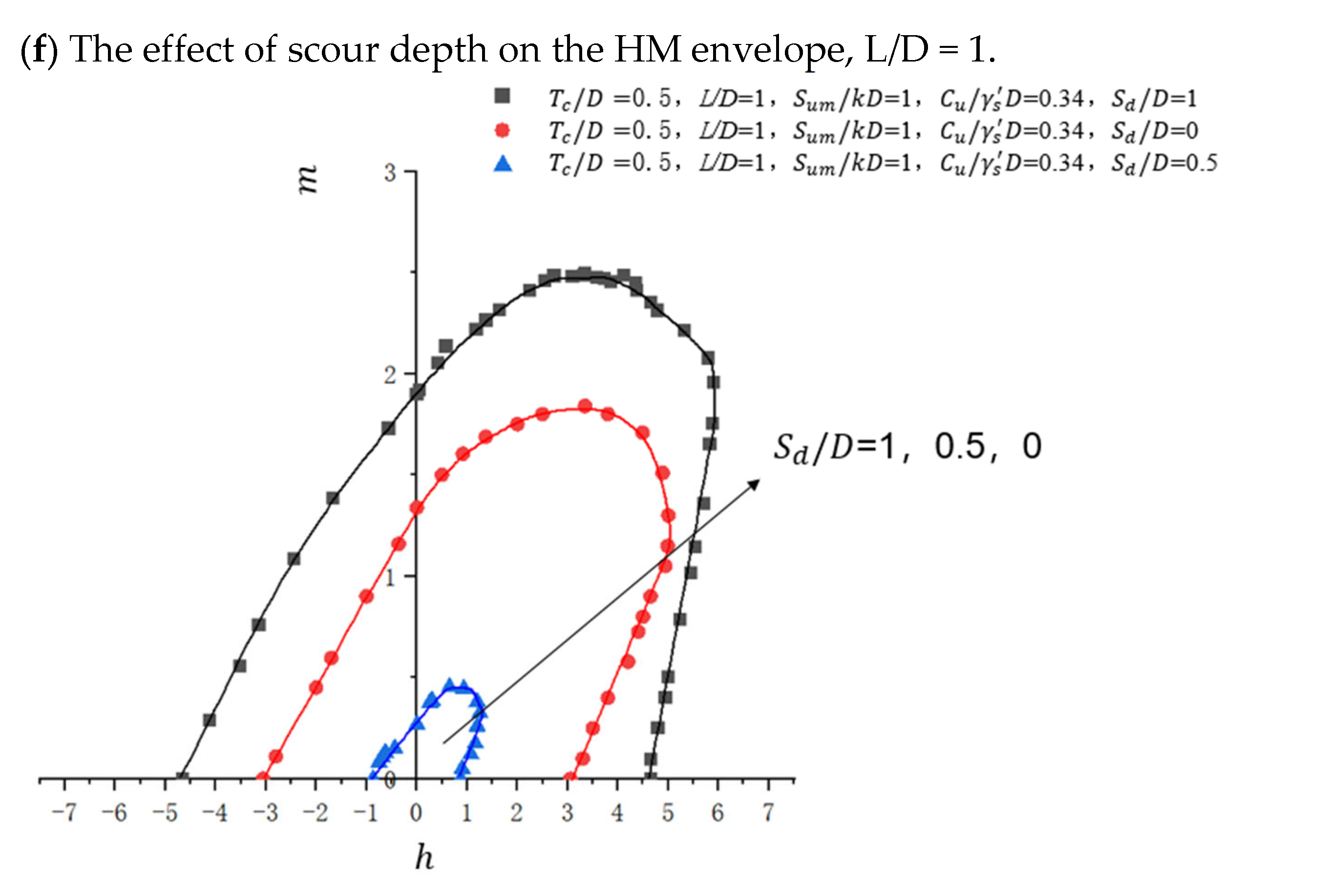
Figure 10 shows the HM envelope curve. As can be seen, the curve is eccentric to the right. After increasing to its maximum value, the bending moment m decreases and eventually reduces to 0, which is consistent with the research findings of Hung and Kim (2014) [17]. In Figure 10, for the case of Sd/D = 1, as increases, the value of the envelope curve increases. In Figure 10b, the value of the envelope curve decreases as Tc/D increases, in which the suction anchor’s load-bearing capacity decreases accordingly. In Figure 10c,d, the value of the envelope curve increases as Sum/(kD) increases, but the shape does not change significantly. Compared with that in Figure 10c,d, it can be seen that increasing the length-to-diameter ratio L/D of the suction anchor significantly increases the value of the envelope curve. And the larger the length-to-diameter ratio, the more pronounced the eccentricity of the curve. Figure 10e,f show the effect of the scour depth ratio Sd/D on the HM envelope. It shows that the value of the envelope decreases as Sd/D increases. For the case of L/D = 1, the scour depth has a greater impact on the value, while for that of L/D = 3, the impact of the scour depth on the value weakens. When Sd/D increases, the eccentricity of the envelope increases, which is consistent with the conclusions of Guo et al. (2022) [10].
Figure 10.
H–M envelope curve considering soil erosion effect.
4.2.3. H–T Combined Loading
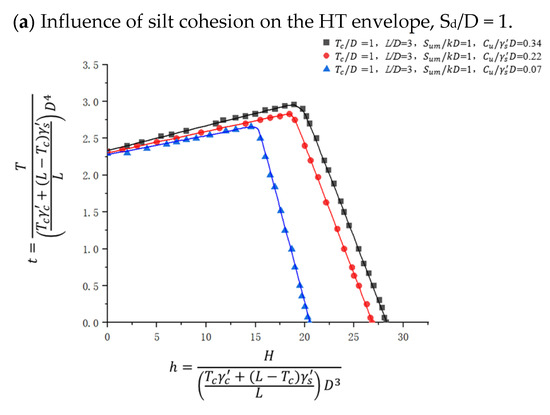
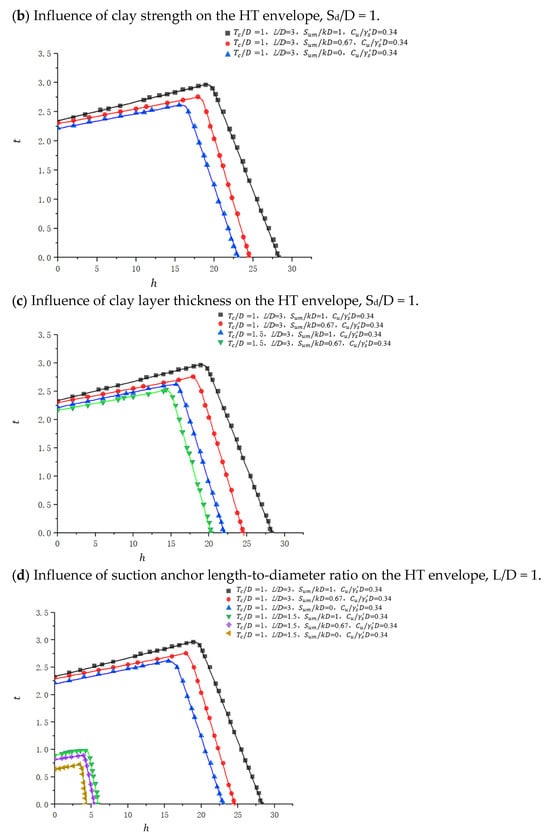
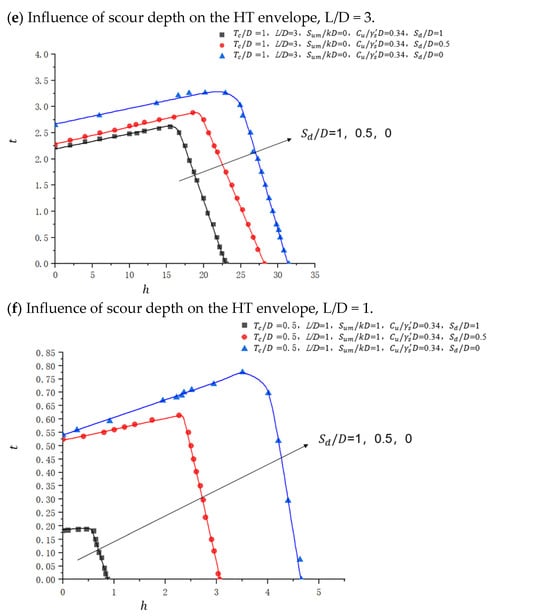
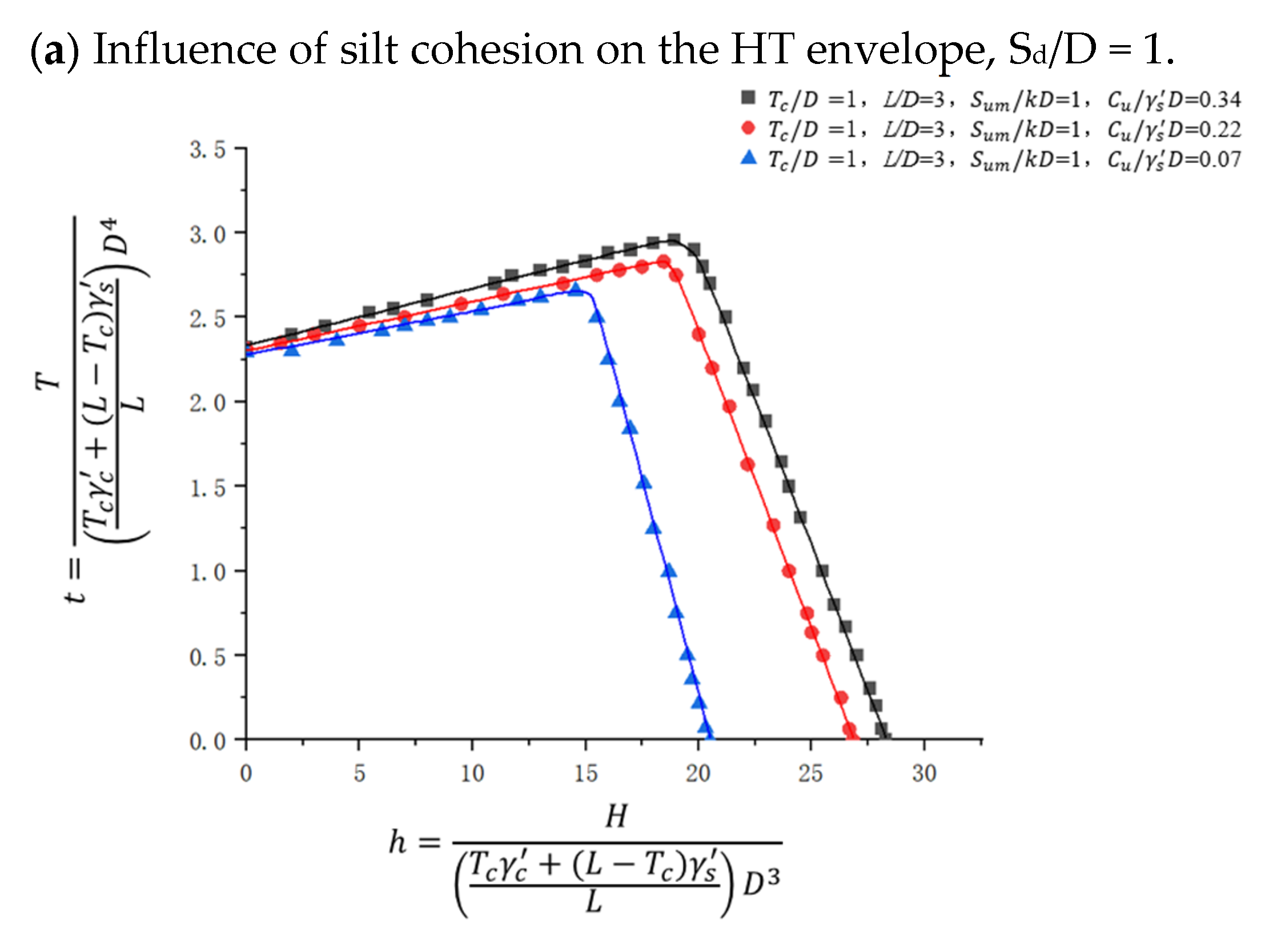
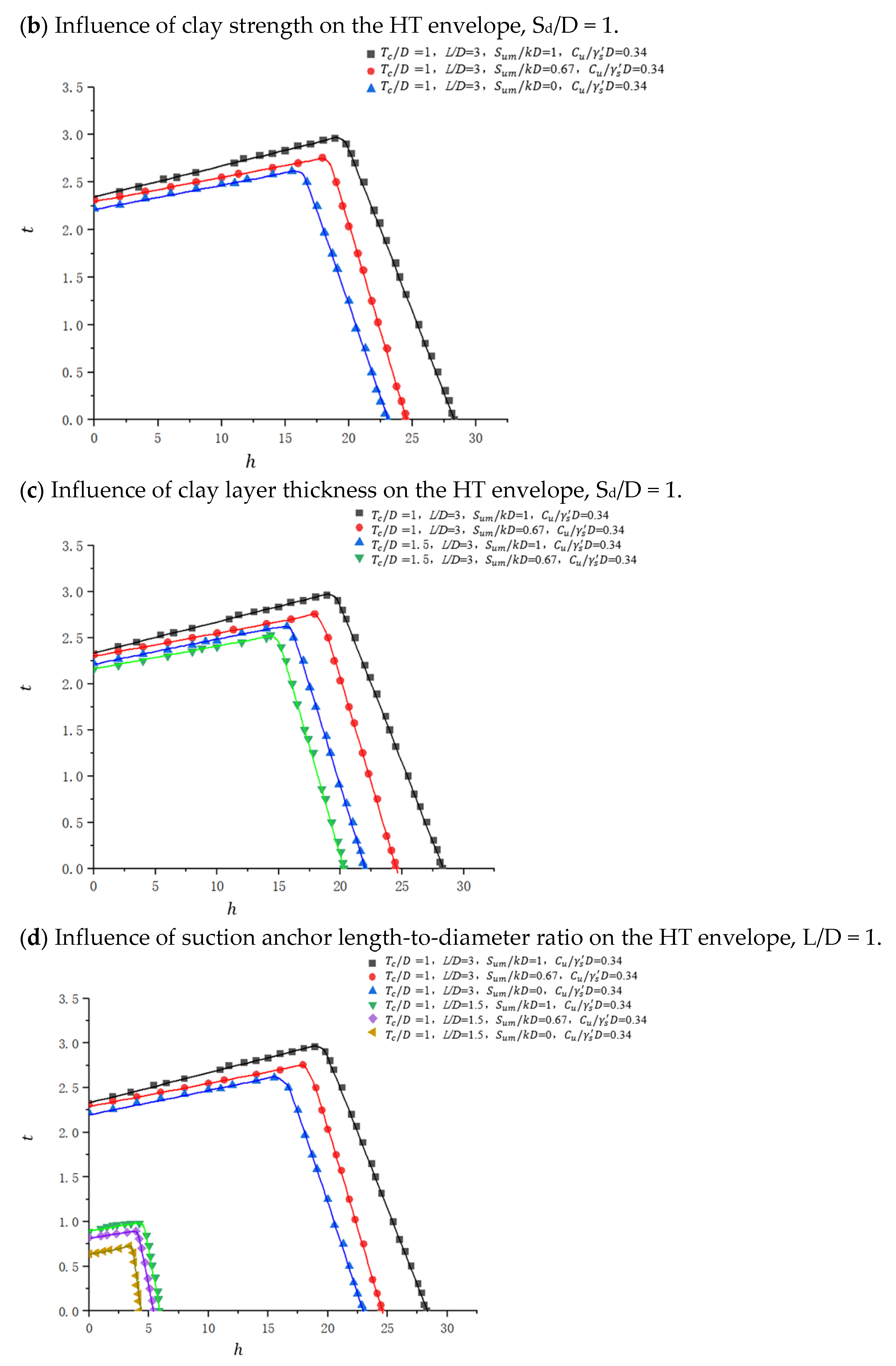
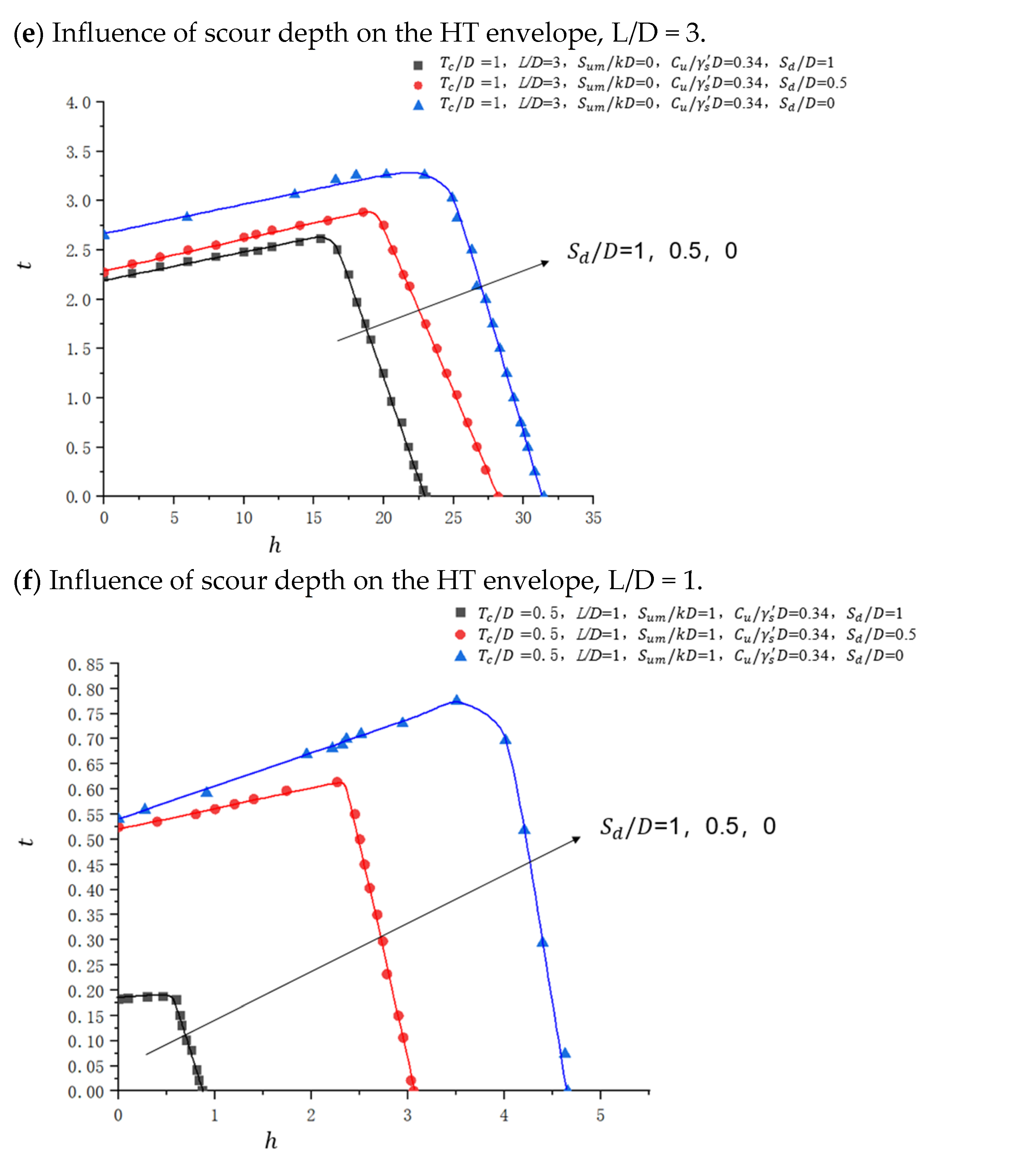
As shown in Figure 11, the HT envelope curve first increases and then decreases to 0 as h increases. When h is near 0.75h0, t increases to its maximum value. This is because its ultimate uplift capacity increases with the horizontal load increase, resulting in t > t0. As the horizontal load further increases and h approaches approximately 0.75h0, t rises to its maximum value. With a continued increase in the horizontal load until h = h0, t gradually decreases to 0. In Figure 11a,b, the value of the envelope increases with the increase in clay strength and silty sand’s cohesion, while its shape remains largely unchanged. In Figure 11c, the increase in the clay layer thickness ratio Tc/D causes the envelope value to decrease, while the shape of the envelope remains unchanged. In Figure 11d, the value of the envelope increases significantly with the increase in L/D, and the ratio of the maximum value of t to t0 increases, while the shape of the envelope remains unchanged. In Figure 11e,f, the values of the envelope decrease as Sd/D increases. When Sd/D increases, the ratio of the maximum value of t to t0 decreases. In Figure 11f, L/D = 1, the increase in scour depth has a significant impact on the bearing capacity of the suction anchor. In Figure 11e, for the case of L/D = 3, the increase in scour depth has a weaker impact on the bearing capacity of the suction anchor.
Figure 11.
H–T envelope curve considering soil erosion effect.
4.3. VHMT Combined Loading
- (1)
- Vertical Loading (V). In this analysis step, a concentrated upward vertical force V is applied at the center loading point at the bottom of the shared suction anchor in the global coordinate system. The range of V is 0.3V0–0.9V0, where V0 is the ultimate uniaxial bearing capacity in the vertical direction.
- (2)
- Torque Loading (T). In this analysis step, a torque T is applied at the loading point of the shared suction anchor in the global coordinate system. The range of T is 0.3T0–0.9T0, where T0 is the ultimate torque of the individually applied torque.
- (3)
- Displacement Loading (H-M). In this analysis step, a horizontal displacement U1 and a rotational displacement UR2 are applied at the loading point of the shared suction anchor in the global coordinate system. The loading is adjusted by controlling the displacement ratio.
4.3.1. Influence of Changes in V/V0 and T/T0
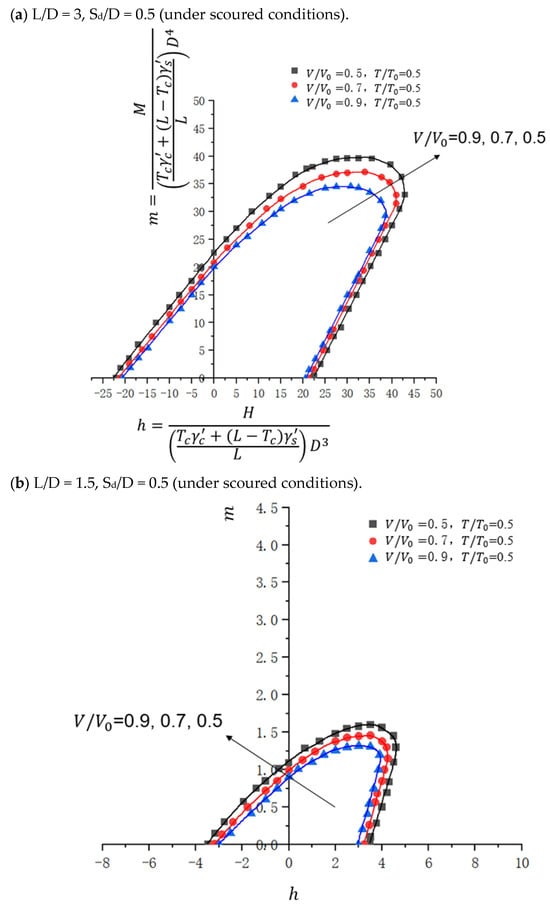
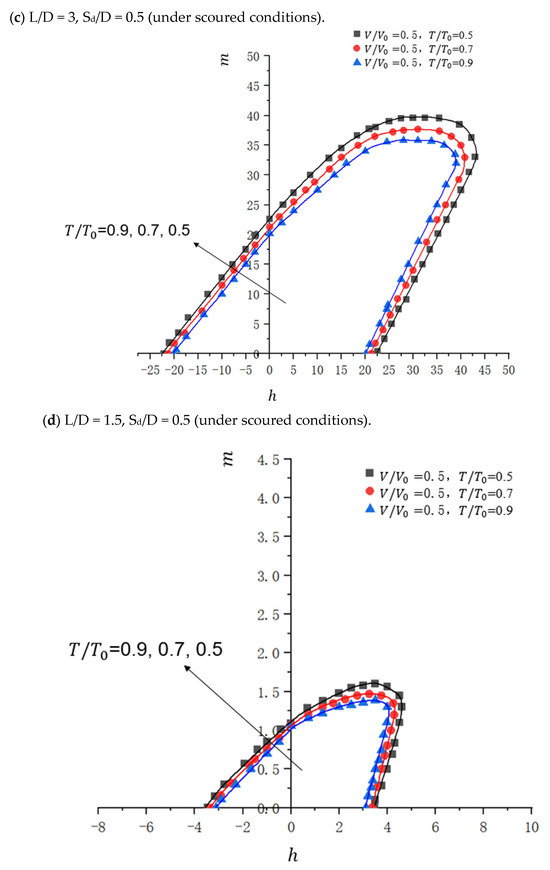
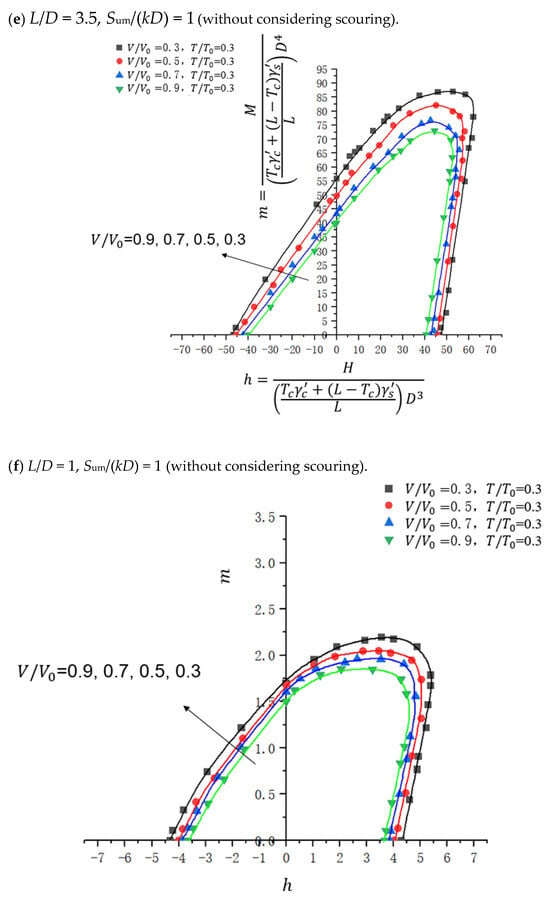
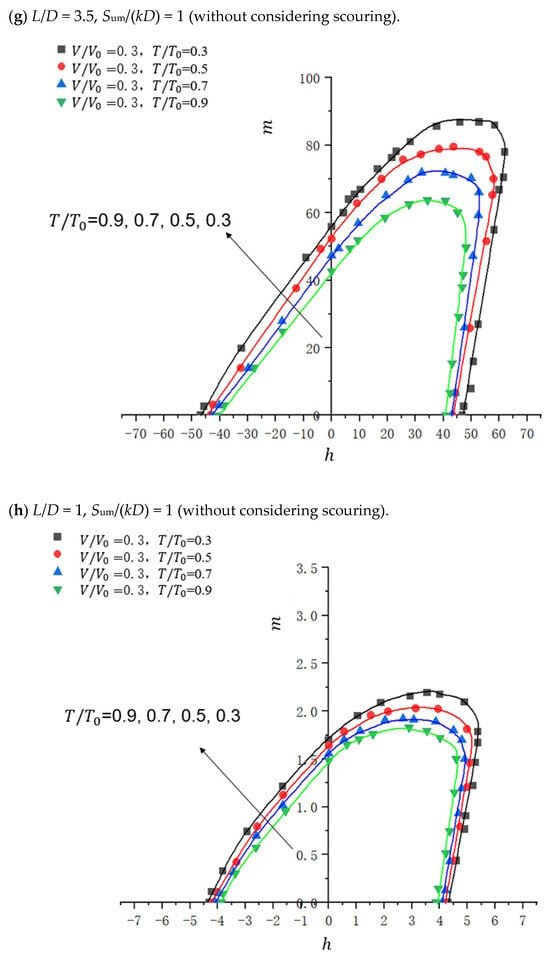
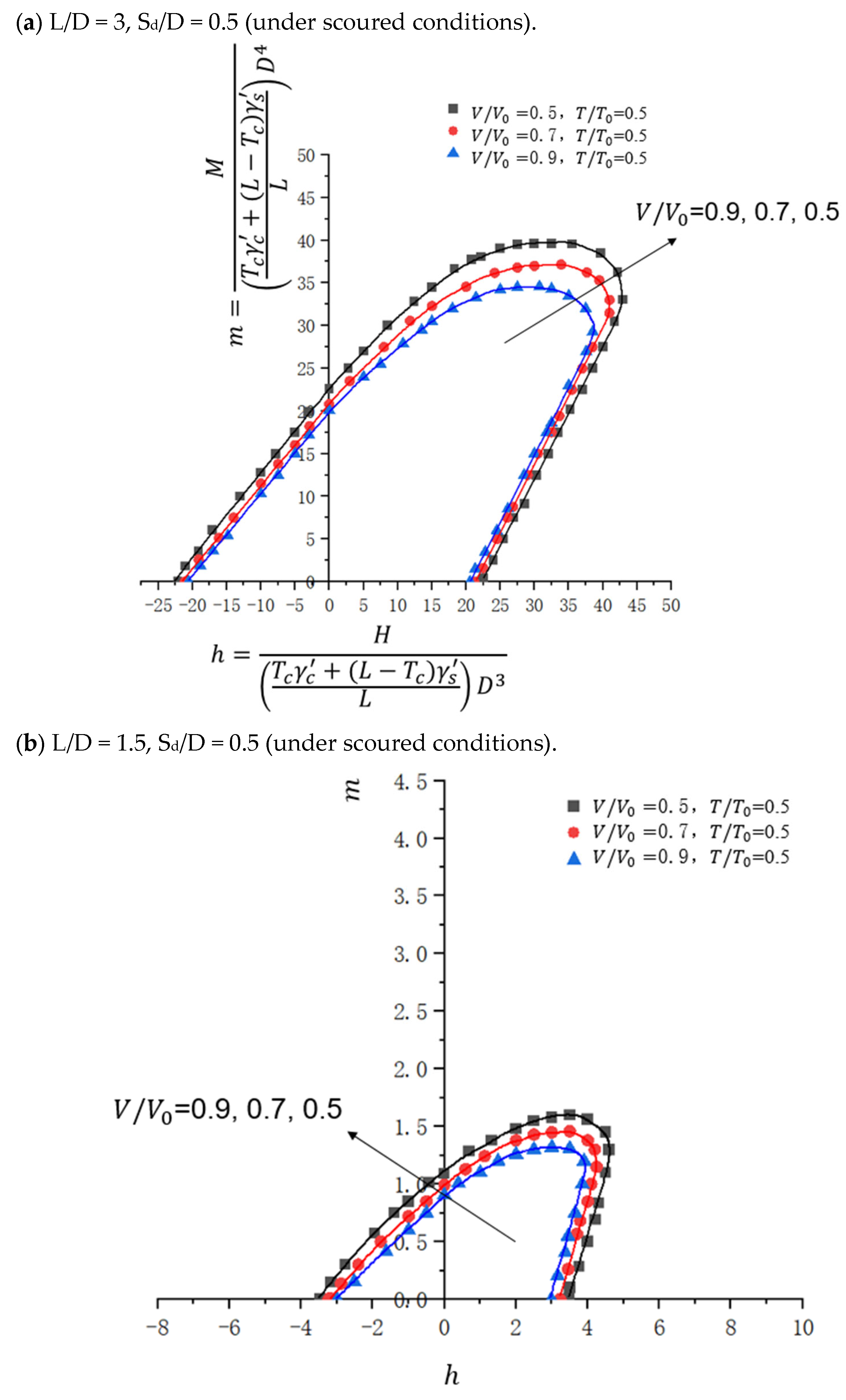
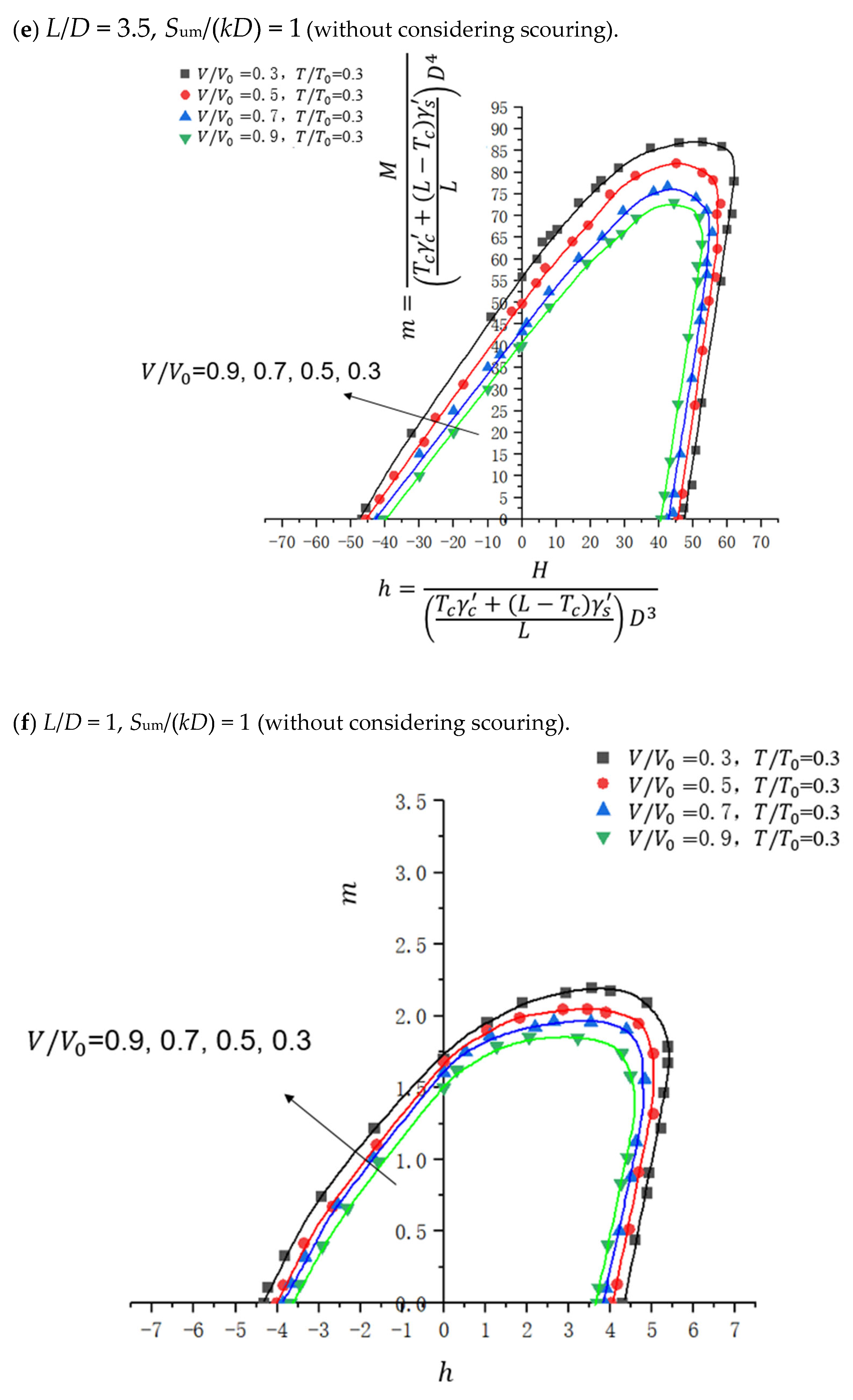
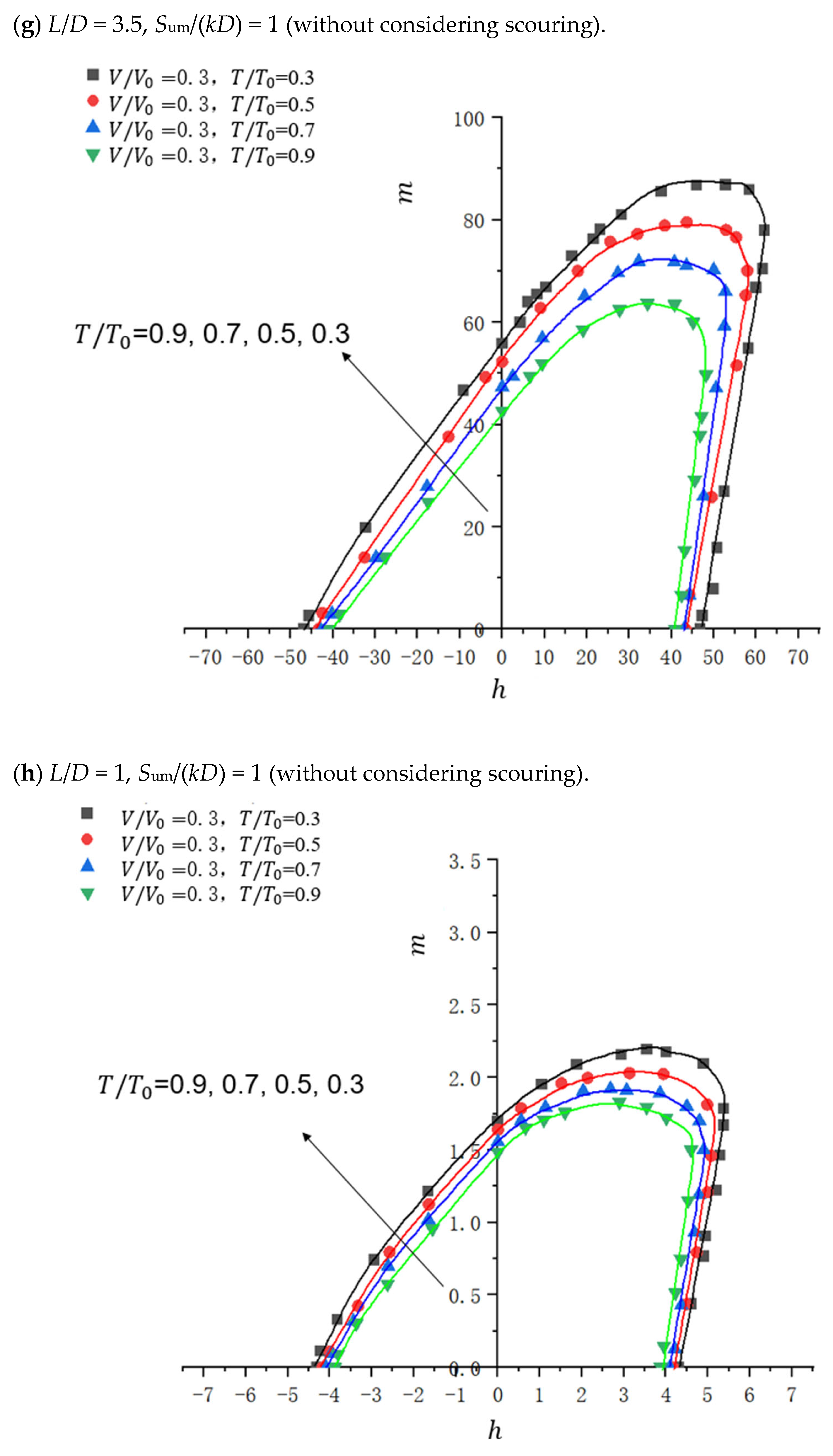
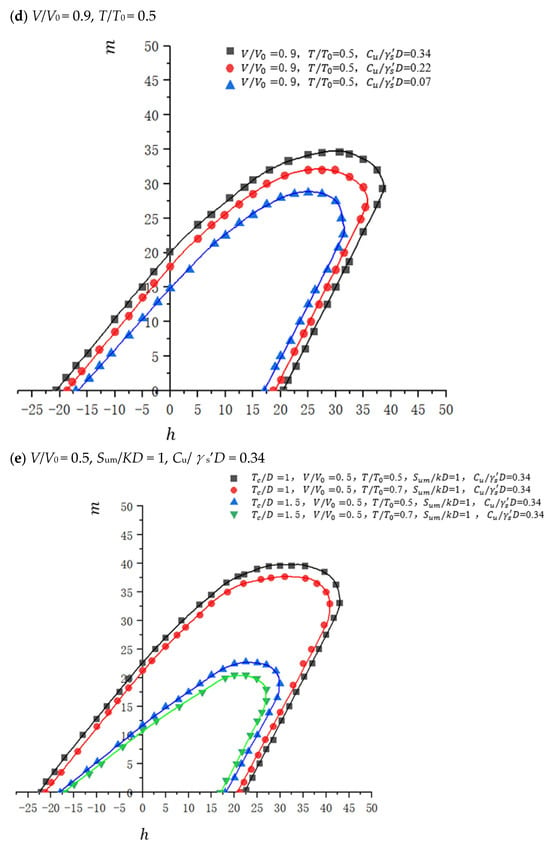
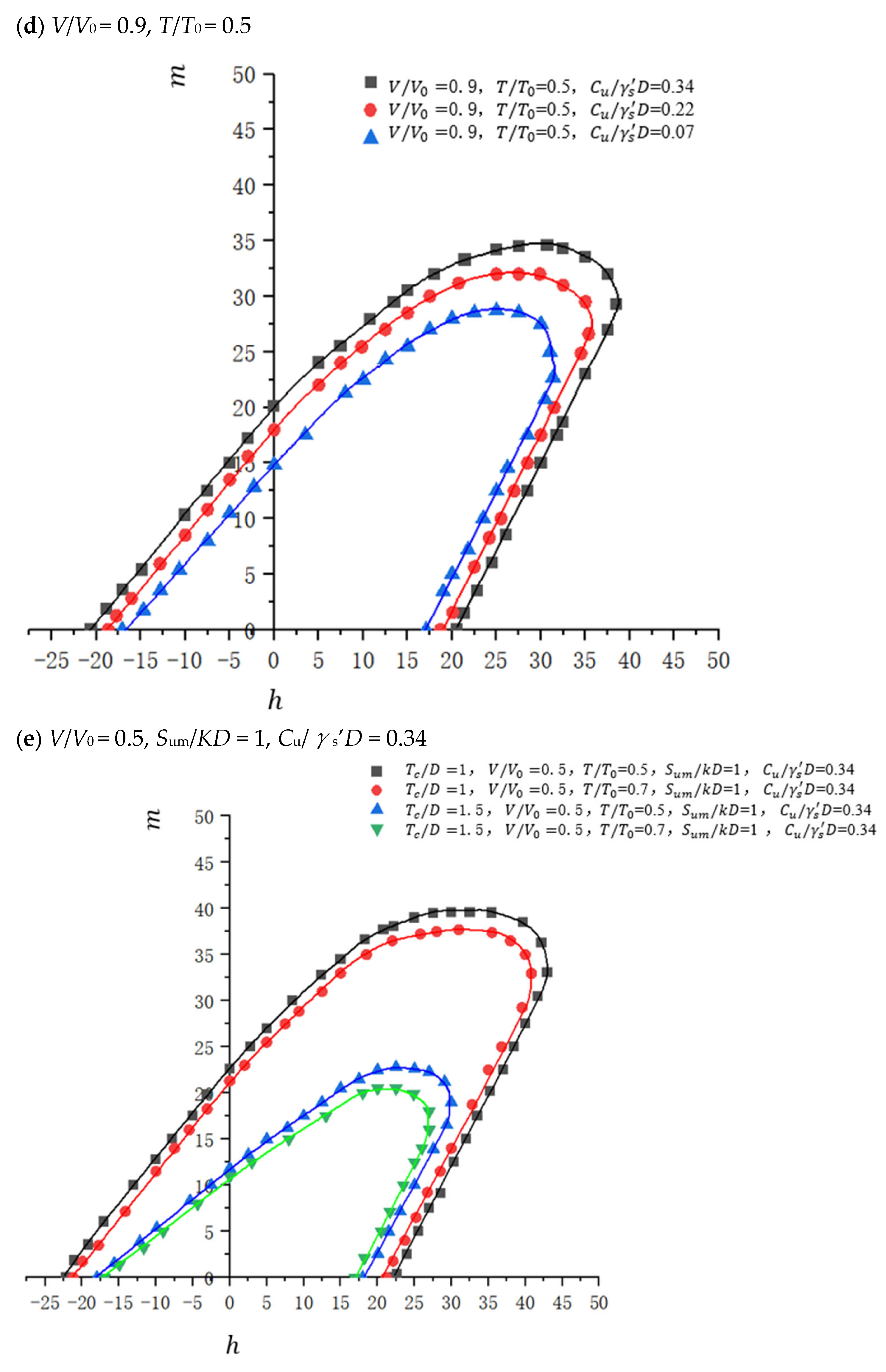
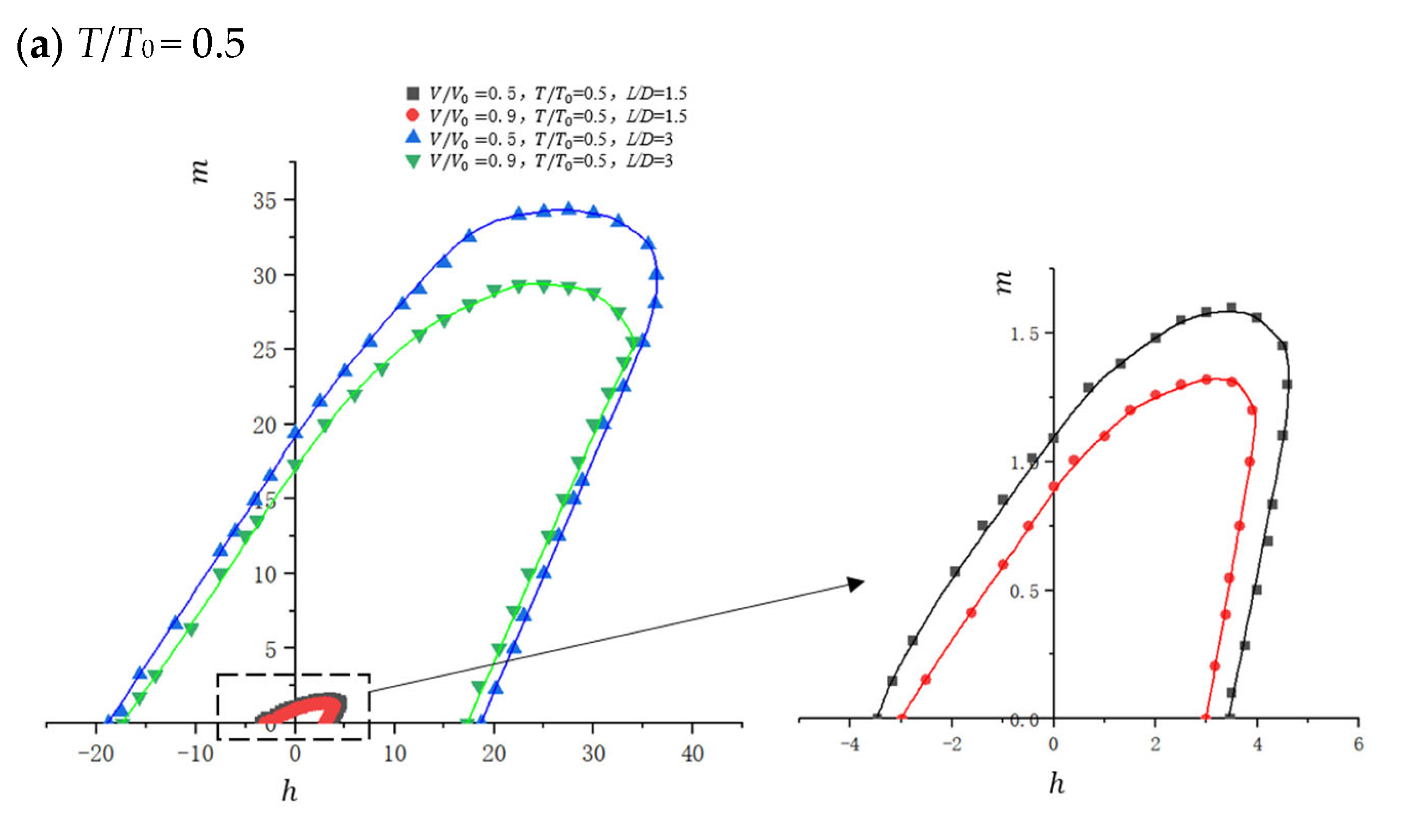
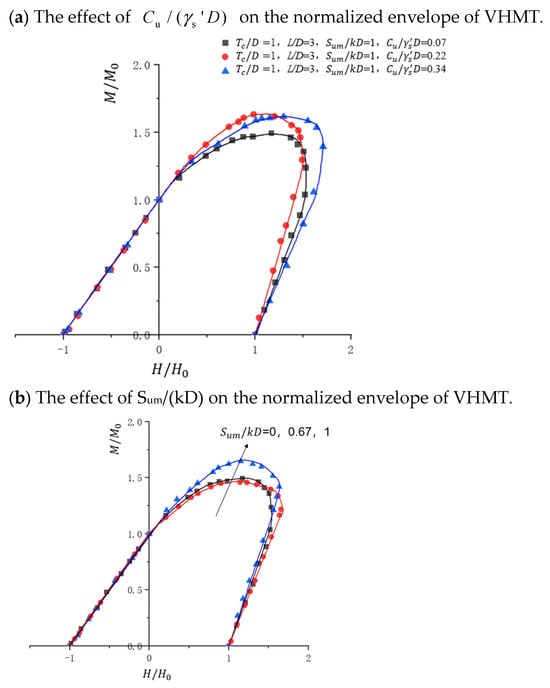
Figure 12 shows the effect of changes in V/V0 and T/T0 on the bearing capacity of the shared suction anchor VHMT, with identical V/V0 and T/T0 fixed as 0.5, 0.7, and 0.9. In Figure 12a,b, for the case of Sd/D = 0.5, V/V0 increases from 0.5 to 0.9, and T/T0 remains constant at 0.5. It can be seen from the figure that the envelope shrinks with the increase in V/V0. The larger V/V0 is, the more obvious the envelope shrinkage is. In fact, as V increases, the shrinkage trend of the envelope becomes more pronounced, leading to greater reductions in both the horizontal bearing capacity and the bending moment bearing capacity. This is because, as V increases and approaches V0, only a small additional force is required to induce failure. Consequently, both the horizontal bearing capacity and the moment bearing capacity exhibit a decreasing trend. This indicates that the soil scouring effect does not change the trend of the influence of V/V0 on the bearing capacity of the suction anchor VHMT.
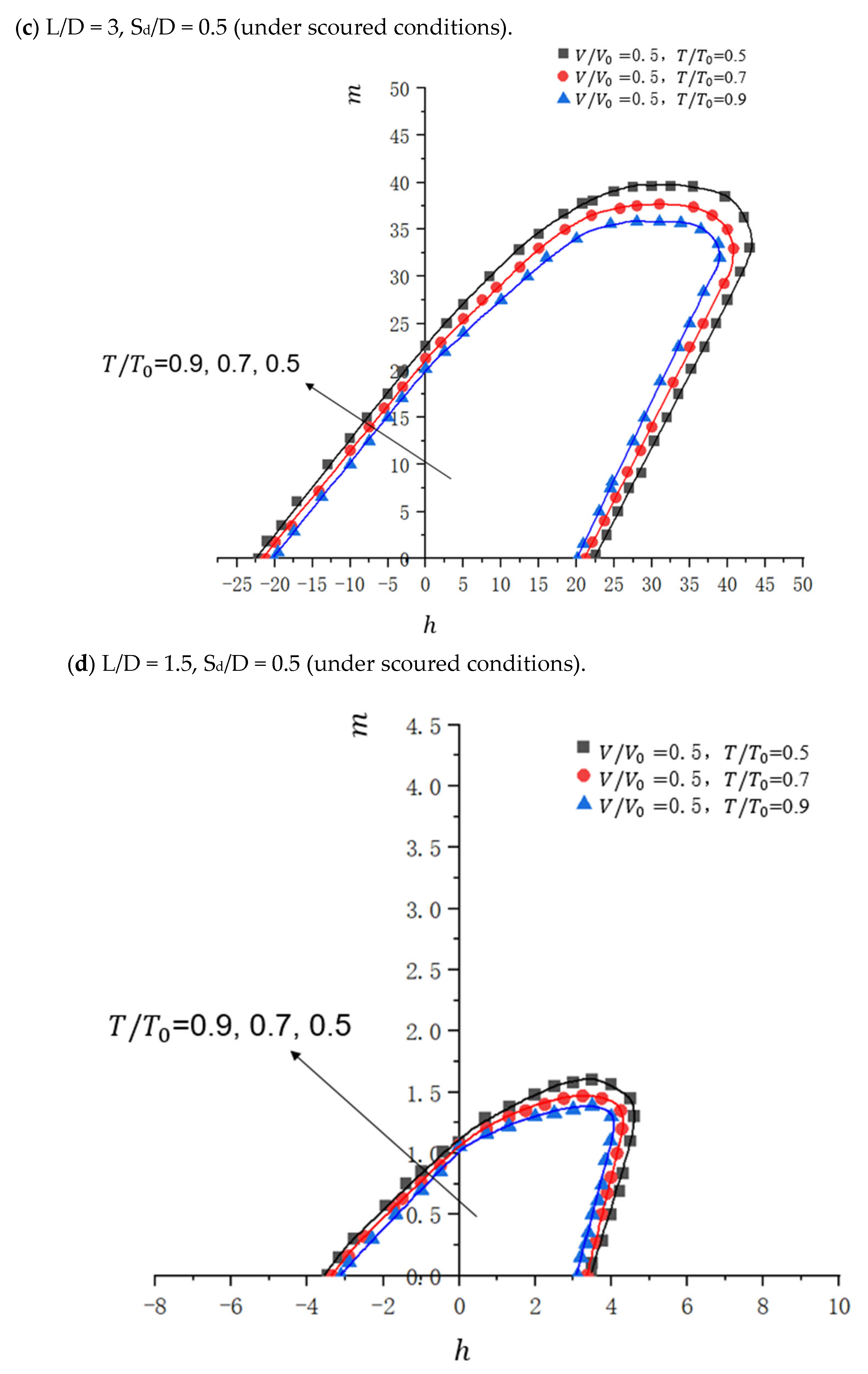
Figure 12.
Effects of V/V0 and T/T0 on the bearing capacity of the shared suction anchor VHMT.
In Figure 12c,d, for the case of Sd/D = 0.5, T/T0 increases from 0.5 to 0.9, and V/V0 remains unchanged at 0.5. It shows that the envelope value decreases with T/T0 increases, the curve contracts, and the curve shape does not change significantly. As T increases, the shrinkage of the envelope becomes more pronounced, resulting in lower horizontal bearing capacity and bending moment bearing capacity. Moreover, the larger T/T0 is, the greater the decrease in the envelope value. This indicates that the soil scouring effect has not changed the trend of the influence of T/T0 on the bearing capacity of the suction anchor VHMT. In fact, under unscoured conditions, the increasing trends in Figure 12e,f are similar to those in Figure 12a,b, and the increasing trends in Figure 12g,h are analogous to those in Figure 12c,d.
4.3.2. Influence of Changes in Soil Parameters
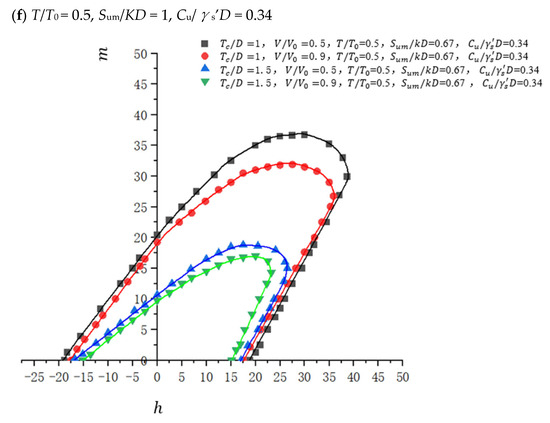
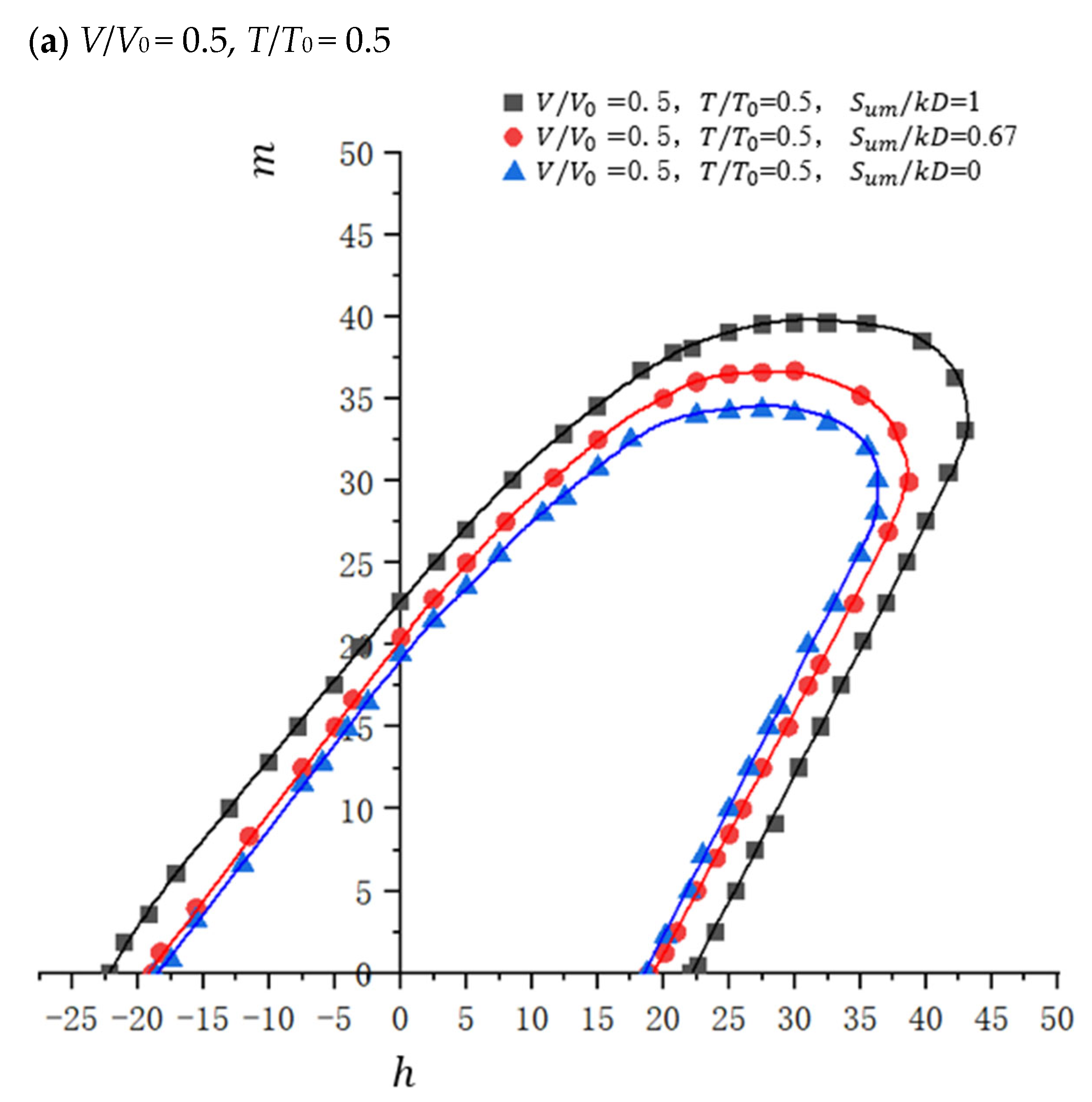
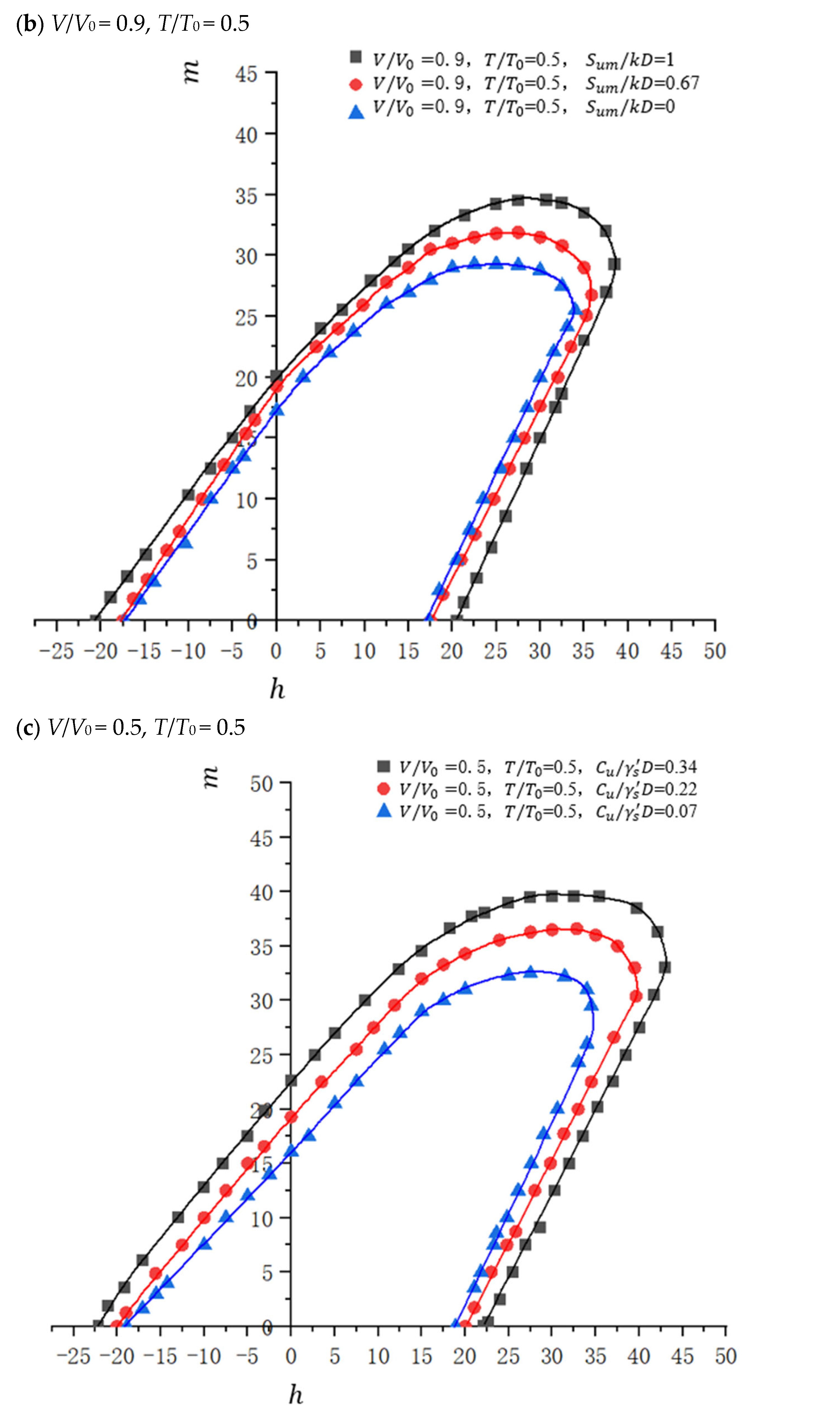
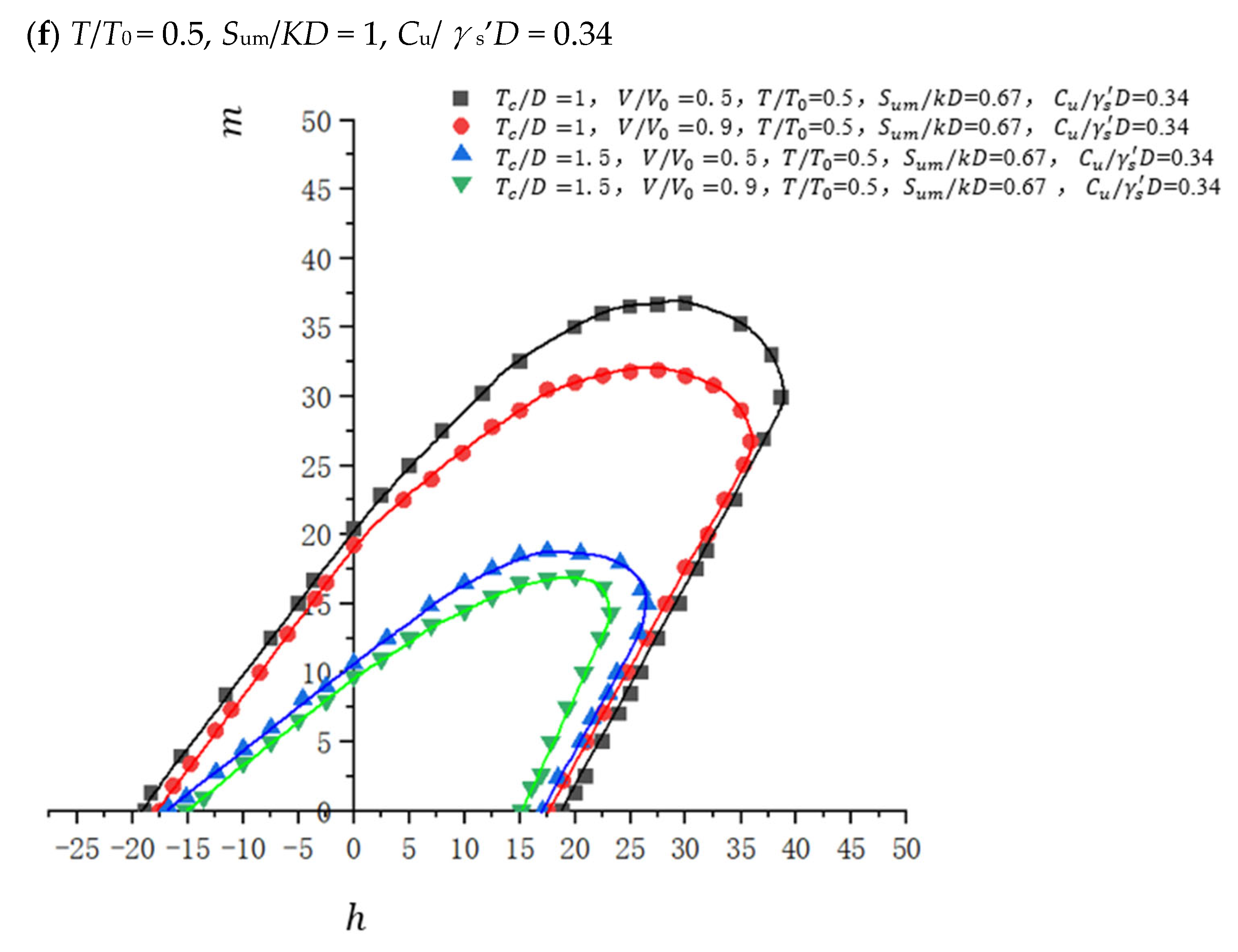
Figure 13 illustrates the impact of soil parameter variations on the bearing capacity of the shared suction anchor VHMT. In Figure 13a,b, for the case of Sd/D = 0.5, and Sum/(kD) increases from 0 to 1. In Figure 13c,d, increases from 0.07 to 0.34. Both increases lead to an increase in the envelope value, enhancing the suction anchor’s bearing capacity, and causing the curve to expand outward. This indicates that the soil scouring effect does not alter the trend of soil strength variation on the VHMT’s bearing capacity.
Figure 13.
Influence of soil parameters on the bearing capacity of shared suction anchor VHMT (L/D = 3, Sd/D = 0.5).
In Figure 13e,f, for the case of Sd/D = 0.5, and Tc/D takes values of 1 and 1.5. The figures show that increasing Tc/D significantly reduces the envelope value. Consequently, it decreases the suction anchor’s bearing capacity, causing the curve to contract significantly. This is because as Tc/D increases, the equivalent soil strength along the caisson is reduced, hence affecting the normalized bearing capacity of the anchor.
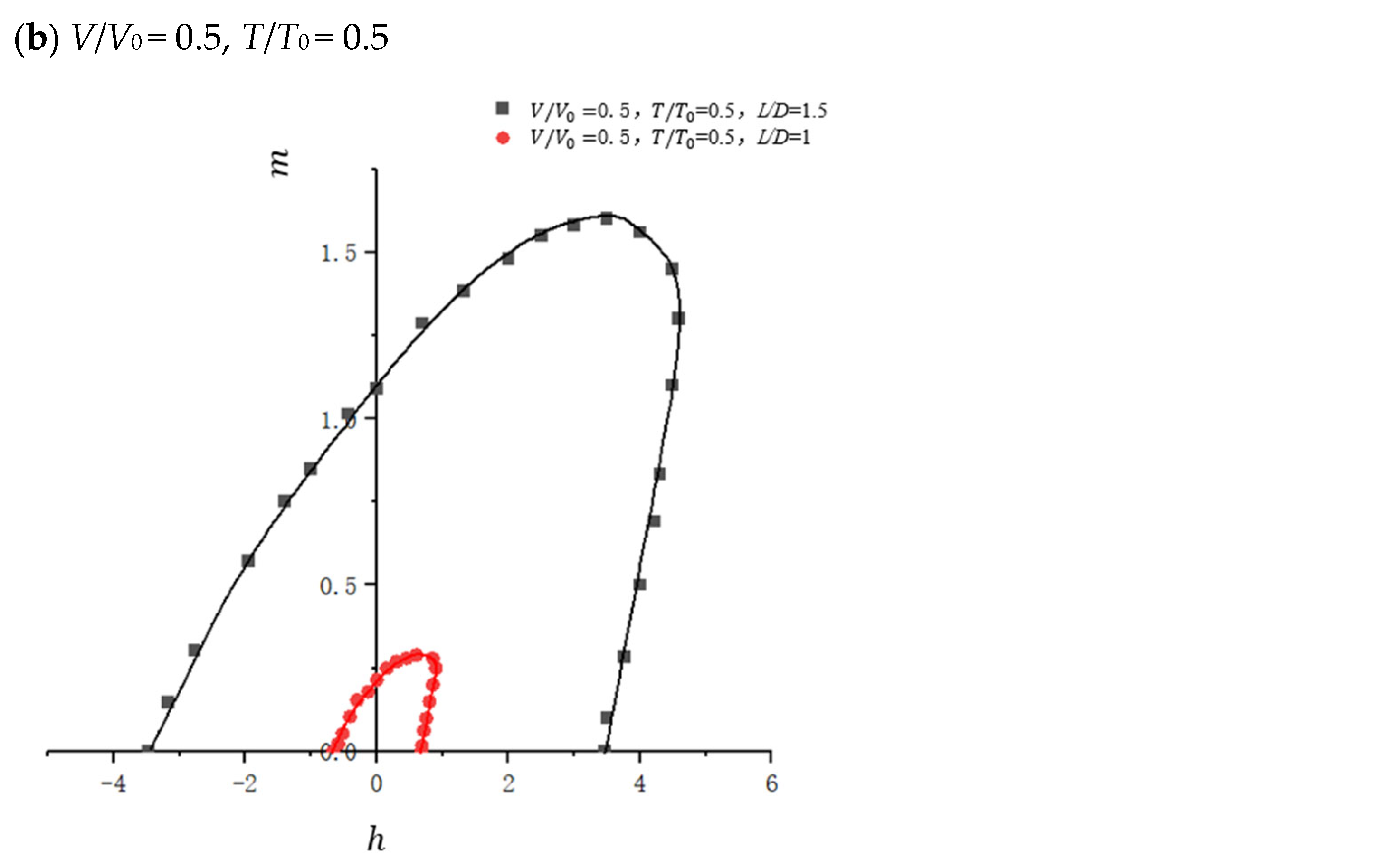
4.3.3. Influence of Changes in the Aspect Ratio of Suction Anchors
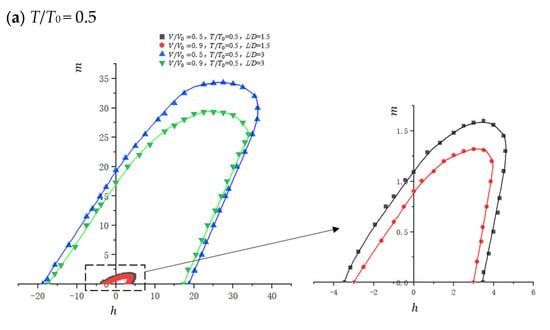
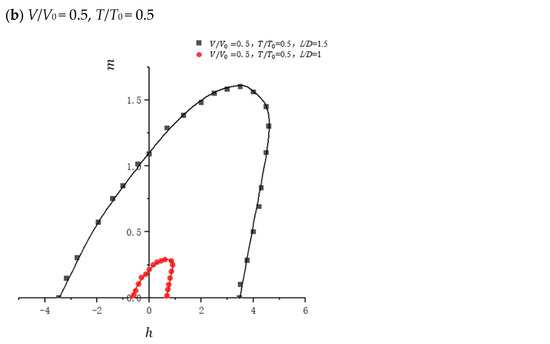
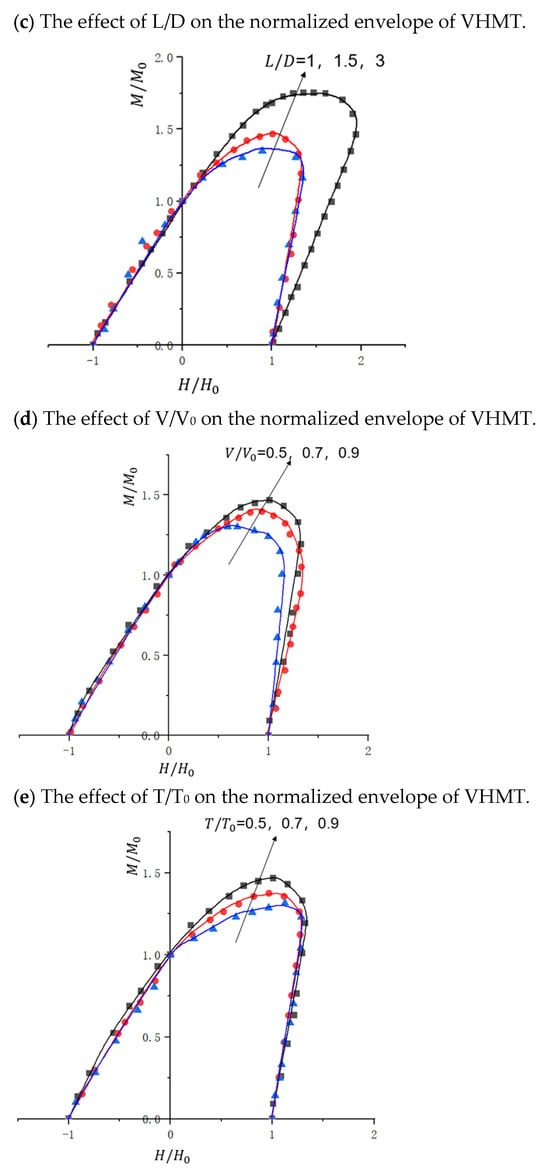
Figure 14 illustrates the effect of varying the length-to-diameter ratio of the suction anchor on the VHMT bearing capacity of the shared suction anchor. In Figure 14, L/D values are 1.5 and 3. As can be seen in the figure, with L/D increases, the envelope value increases significantly, and the eccentricity of the curve increases. In Figure 14b, L/D values are 1 and 1.5. When L/D increases, the envelope value increases, the VHMT bearing capacity of the shared suction anchor is enhanced, and the eccentricity of the envelope curve increases.
Figure 14.
Effect of the length-to-diameter ratio of the suction anchor on the bearing capacity of the shared suction anchor VHMT (Sd/D = 1, Sum/(kD) = 0, = 0.34).
4.3.4. Influence of Changes in Scour Depth
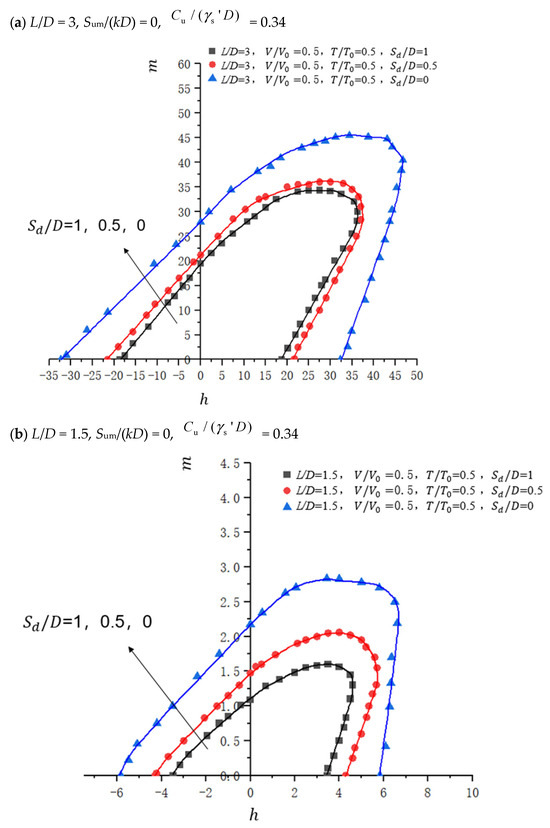
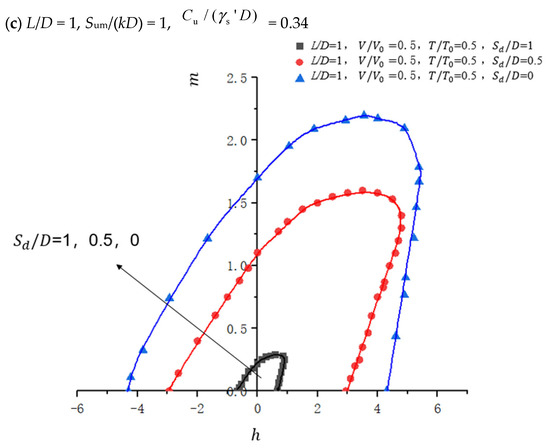
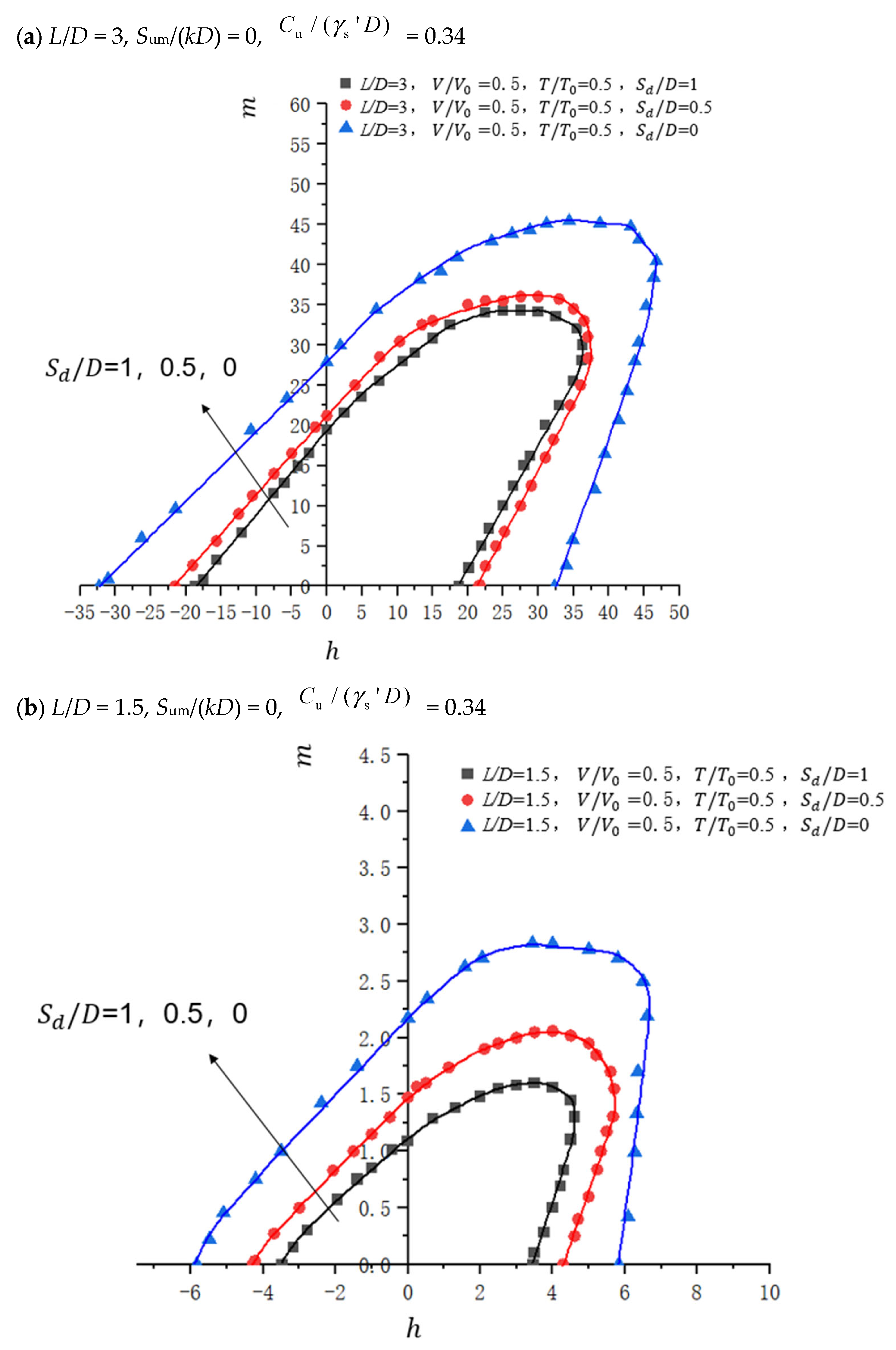
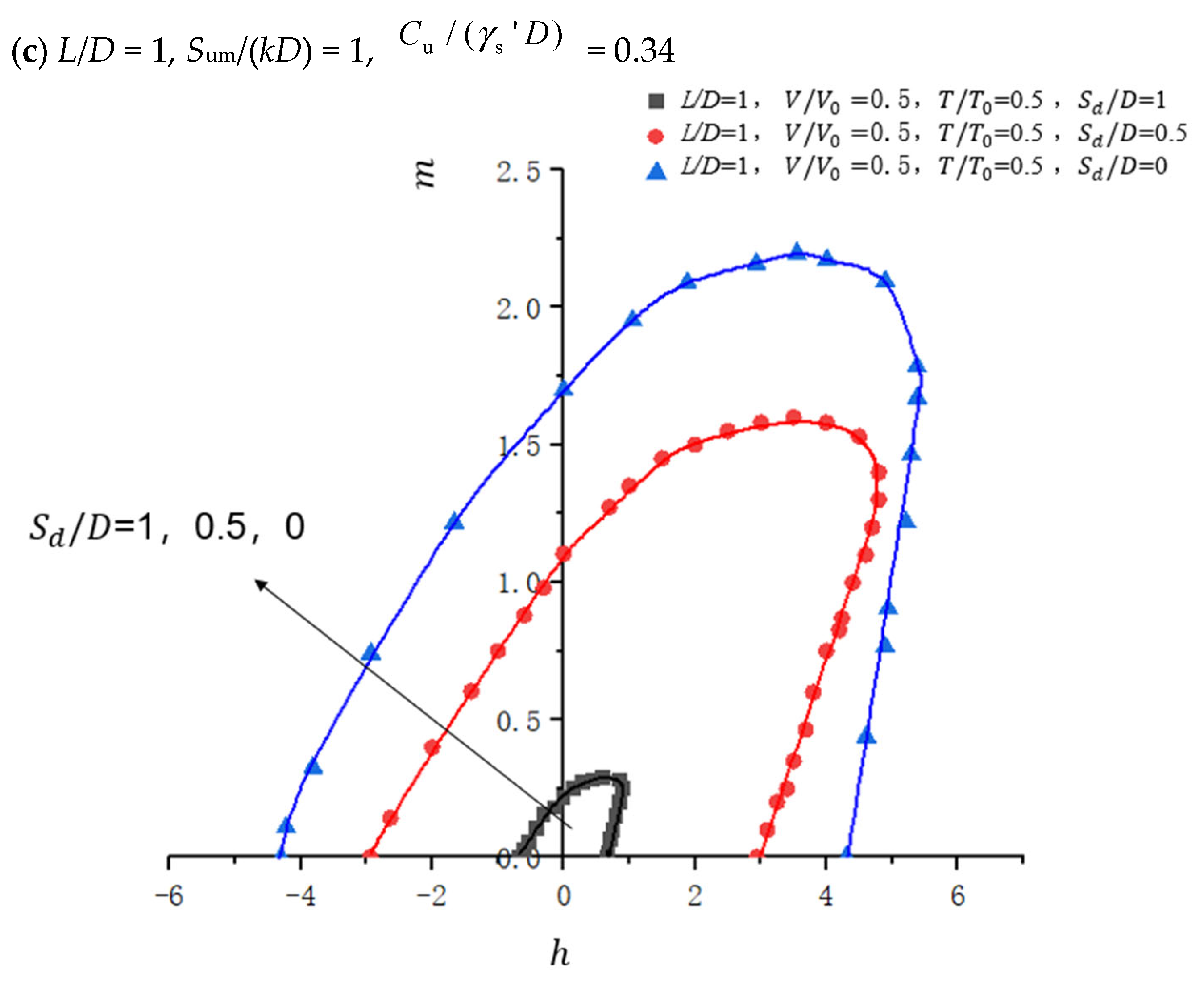
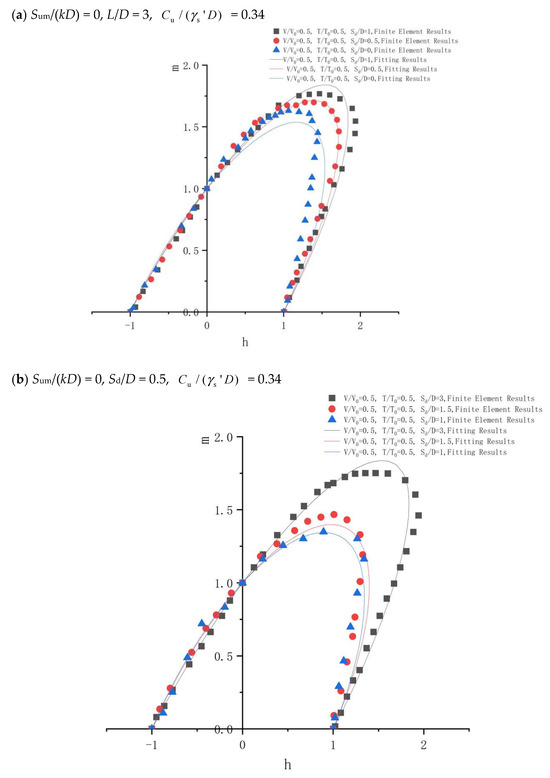
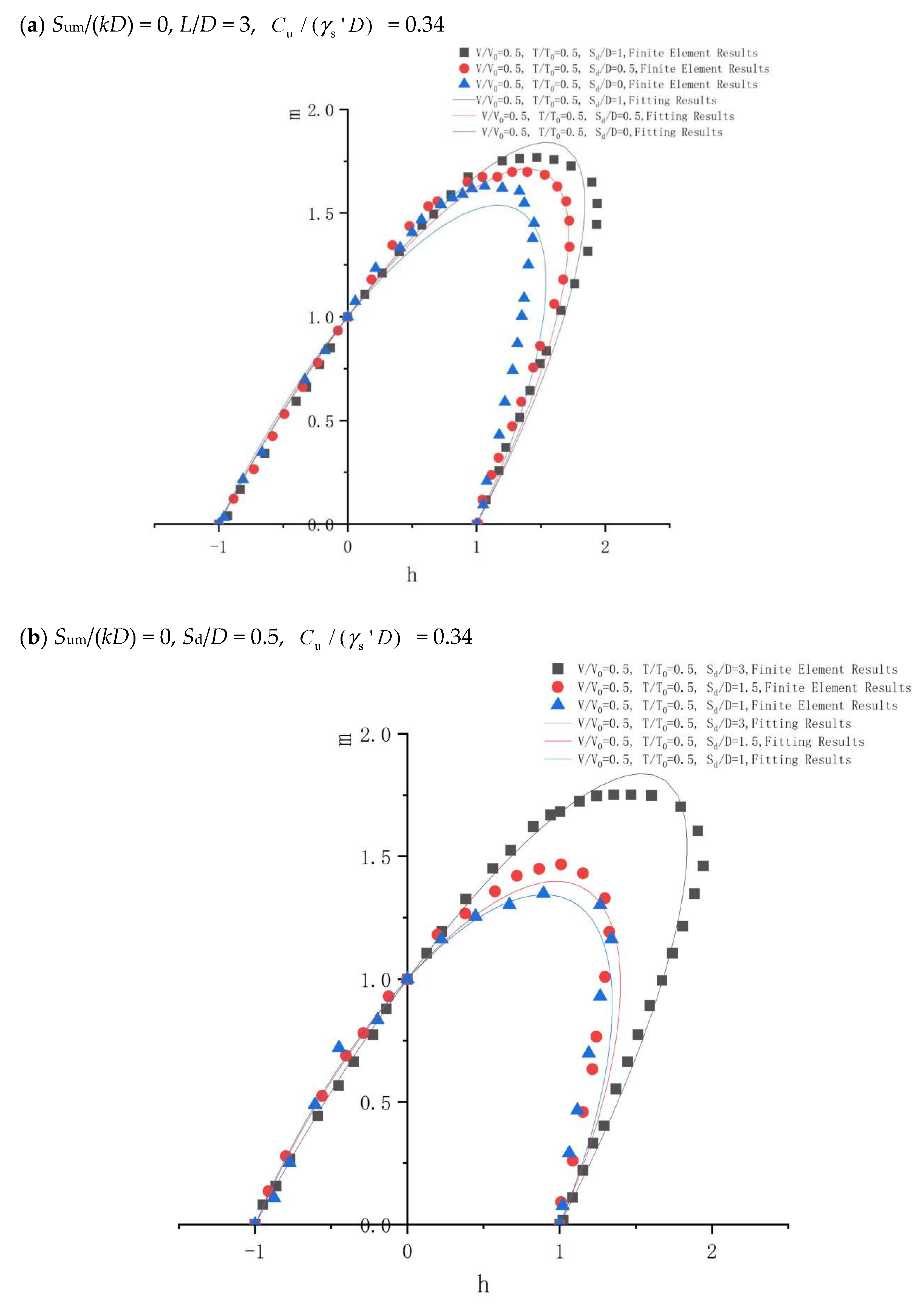
The effect of scour depth variation on the VHMT bearing capacity of the shared suction anchor is shown in Figure 15. In Figure 15a, for the case of L/D = 3 with Sd/D varied as 0, 0.5, and 1, it can be seen from the figure that the increase in scour depth reduces the value of the envelope curve, weakens the VHMT bearing capacity of the shared suction anchor, and increases the eccentricity of the curve. In Figure 15b, L/D = 1.5, the increase in scour depth leads to a greater reduction in the bearing capacity of the shared suction anchor, and the eccentricity of the envelope curve increases more significantly. In Figure 15c, L/D = 1, the increase in scour depth leads to a significant reduction in the VHMT bearing capacity of the shared suction anchor, and the eccentricity of the envelope curve increases significantly. Therefore, the smaller the length-to-diameter ratio, the more significant the effect of scour depth variation on the VHMT bearing capacity of the shared suction anchors. Conversely, increasing the length-to-diameter ratio can weaken the bearing capacity effect brought about by soil scour. This is attributed to the fact that soil scour strips off the shallow clay layer, impairing the lateral confinement and shear resistance of the upper part of the suction anchor and thereby inducing inward migration of the upper failure plane. In contrast, the deep, stiff silt layer remains intact, sustaining the outward extension tendency of the lower failure plane. Such asymmetric evolution of the failure plane deflects the resultant reaction force of the soil mass from the central axis of the suction anchor, ultimately leading to an increase in eccentricity.
Figure 15.
Effect of scour depth on the bearing capacity of the shared suction anchor VHMT.
5. Proposed Design Procedure
5.1. Bearing Capacity of a Single Bearing
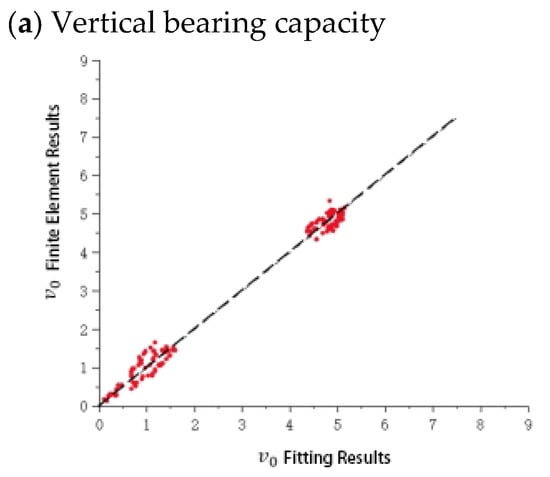
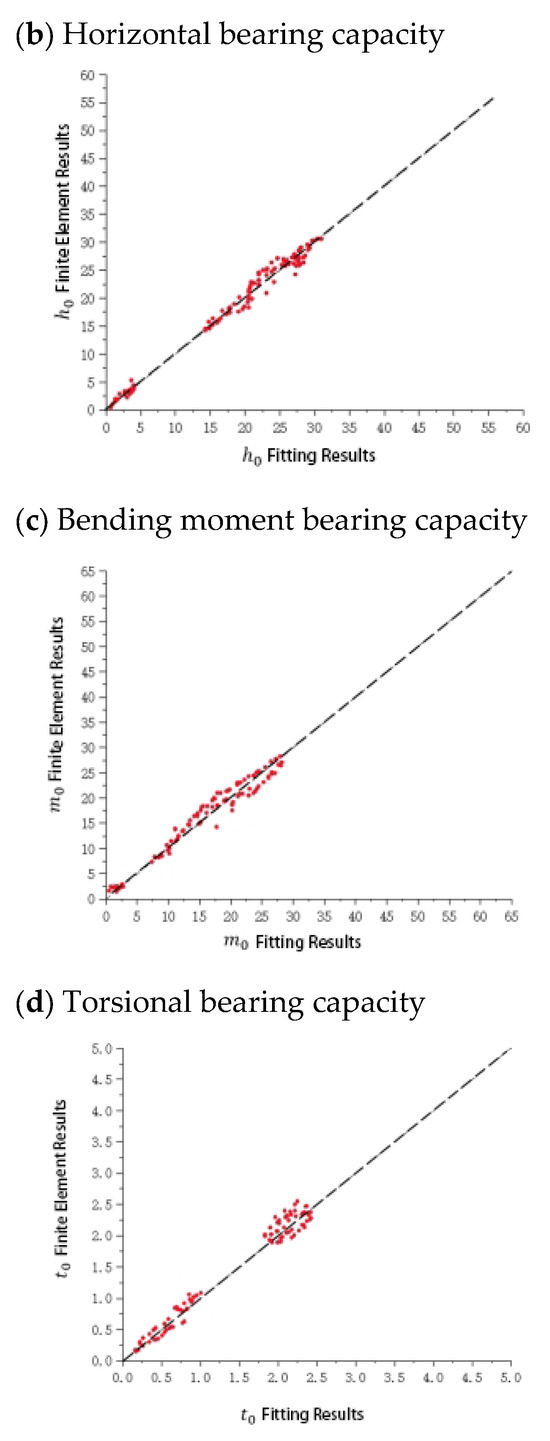
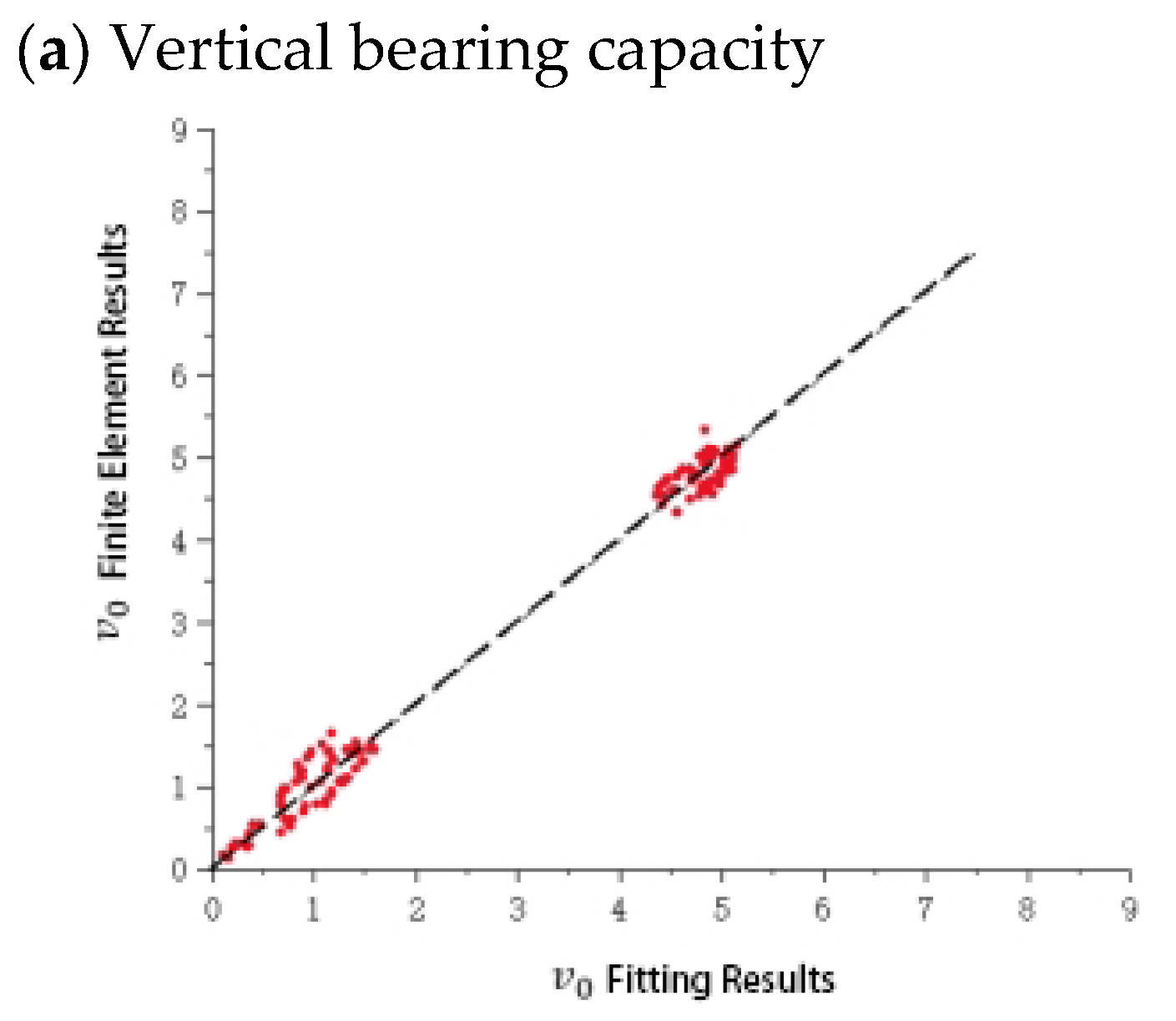
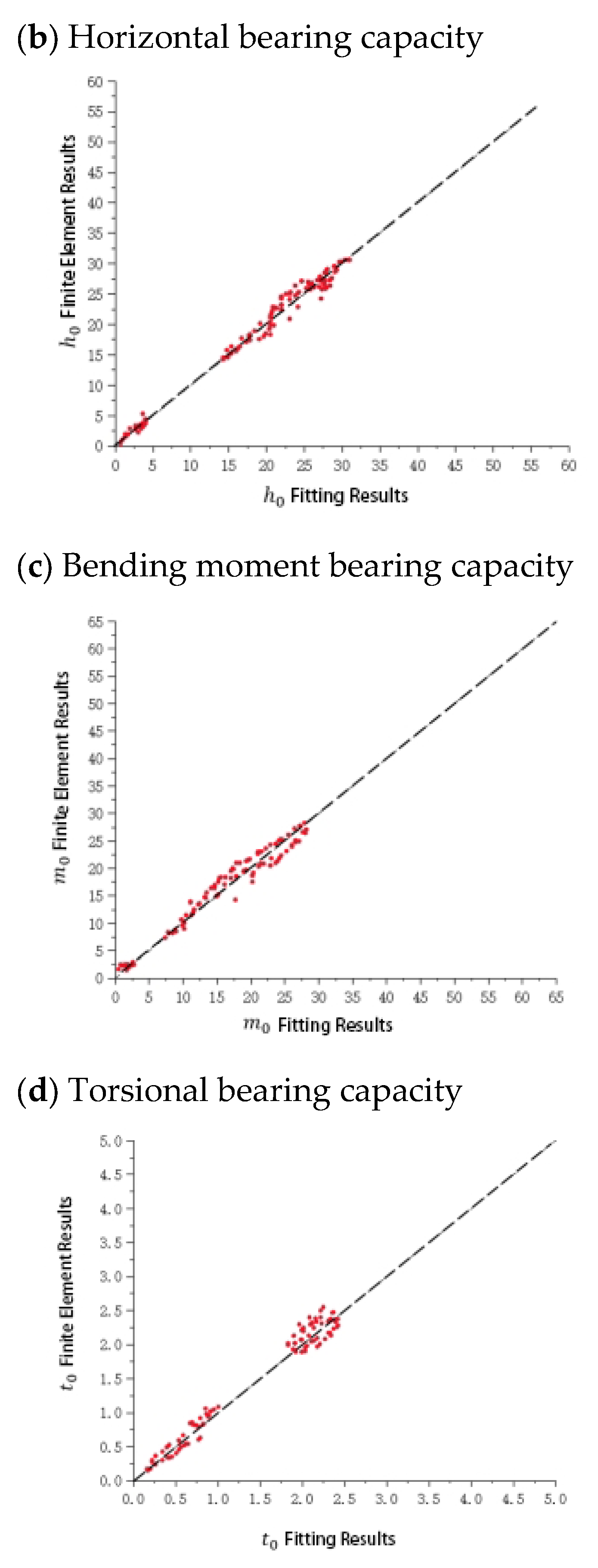
Referring to existing research results [10], the scour factor η is used to quantitatively represent the influence of soil scour on the single bearing load capacity of a caisson. Then, Equations (2)–(10) are proposed to represent the single bearing load considering the soil scour effect, in which the coefficients for each formula are shown in Table 8, Table 9, Table 10 and Table 11. The following expressions are derived by fitting the FE results from the parametric study:
where L/D = 1~3, Tc/D = 0.5~1.5, Sum/(kD) = 0~1, = 0.07~0.34, Sd/D = 0~1, the scouring factor η for different scouring depth ratios is shown in Table 12 and Table 13. The fitting effect of the single bearing capacity is shown in Figure 16.
Table 8.
Vertical load bearing capacity coefficient table.
Table 9.
Horizontal load bearing capacity coefficient table.
Table 10.
Bending moment bearing capacity coefficient table.
Table 11.
Torque bearing capacity coefficient table.
Table 12.
The scouring factor corresponding to Sd/D = 0.5.
Table 13.
The scouring factor corresponding to Sd/D = 1.
Figure 16.
Fitting effect of the formula for single bearing load capacity.
5.2. VHMT Bearing Capacity Curve
First of all, the H0 and M0 obtained from uniaxial loading are denoted by Hu and Mu, respectively. As shown in Figure 12e–h, the values of H0 and M0 from the VHMT failure envelopes under different V/V0 and T/T0 loading combinations are extracted under unscoured conditions. H0/Hu and M0/Mu are calculated, respectively, to obtain the horizontal bearing capacity reduction coefficient and bending moment bearing capacity reduction coefficient of the shared suction anchor under different V/V0 and T/T0 loading, L/D, Tc/D, Sum/(kD) and are orthogonalized, the average undrained shear strength of clay is denoted as Su,avg, the effective unit weight of clay is denoted as , the effective unit weight of silt is denoted as , the friction angle of silt is , and cohesion of silt, denoted as Cu, to obtain the parameters Tc/L and , and the least squares method is used to fit to obtain Equations (11) and (12):
where e and z are the correction coefficients of Tc/L, Sd/D, and the calculation results are shown in Equations (13) and (14).
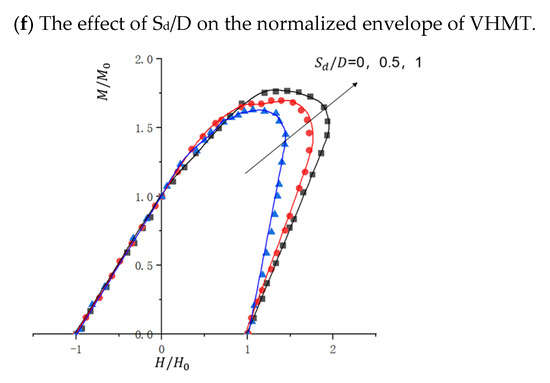
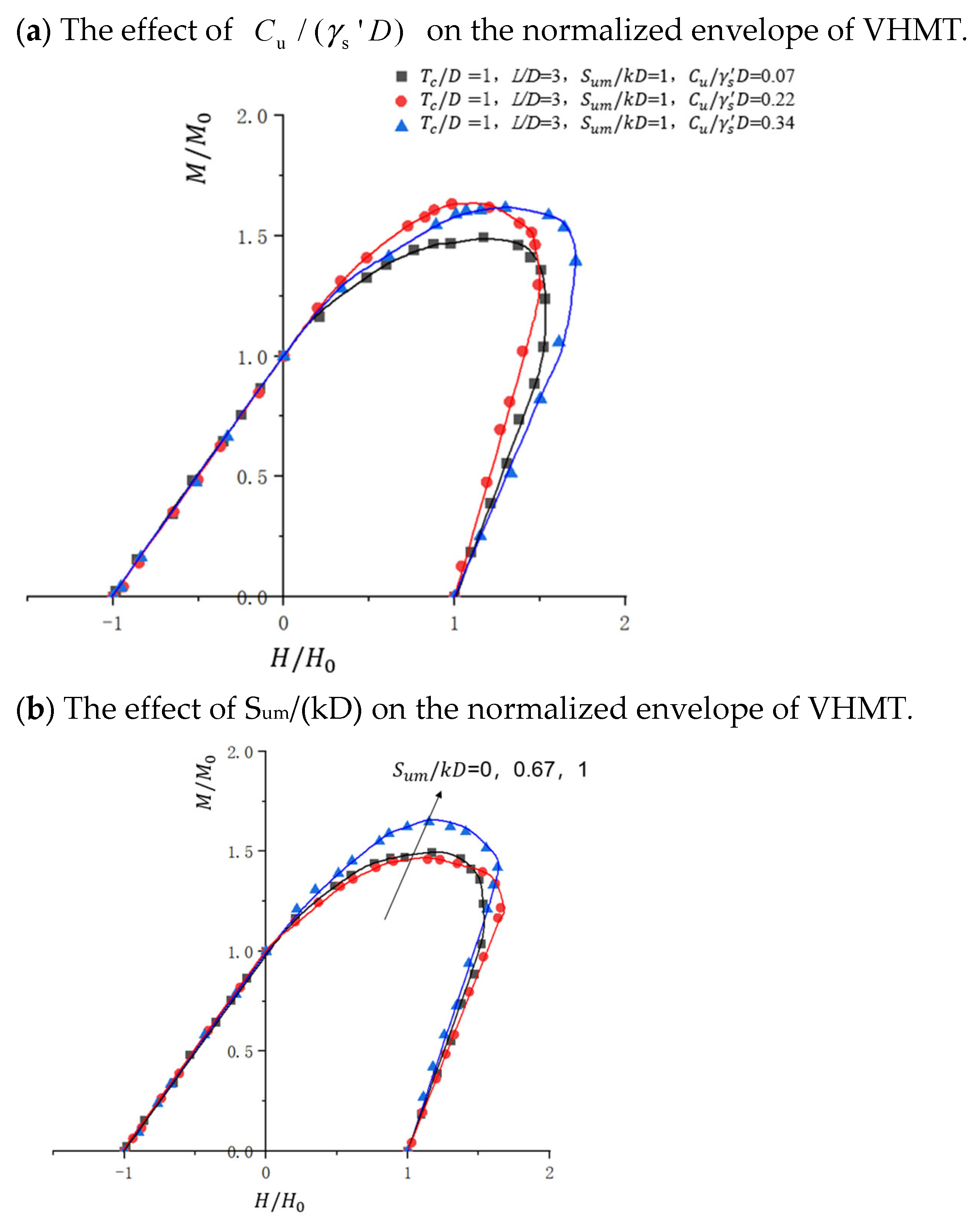
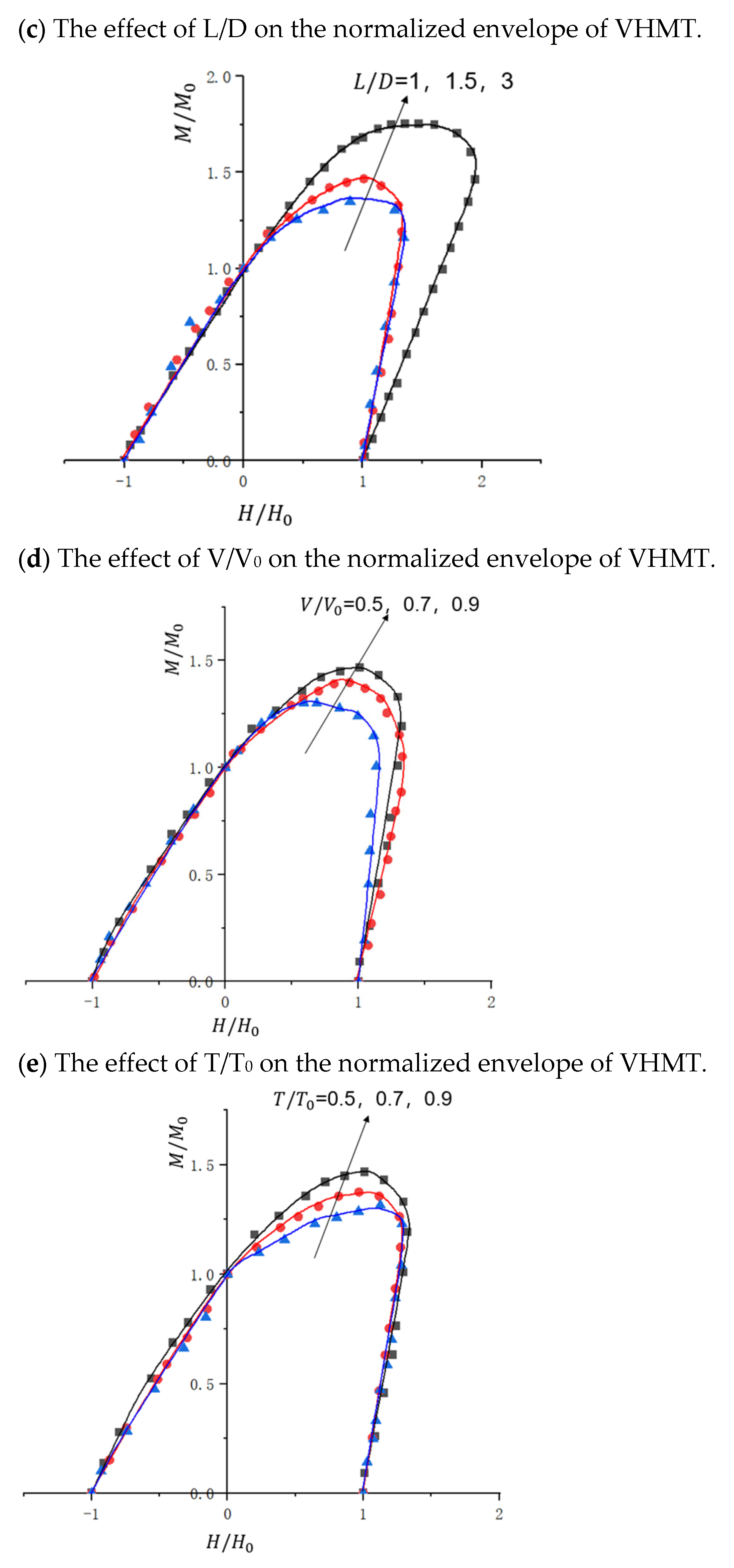
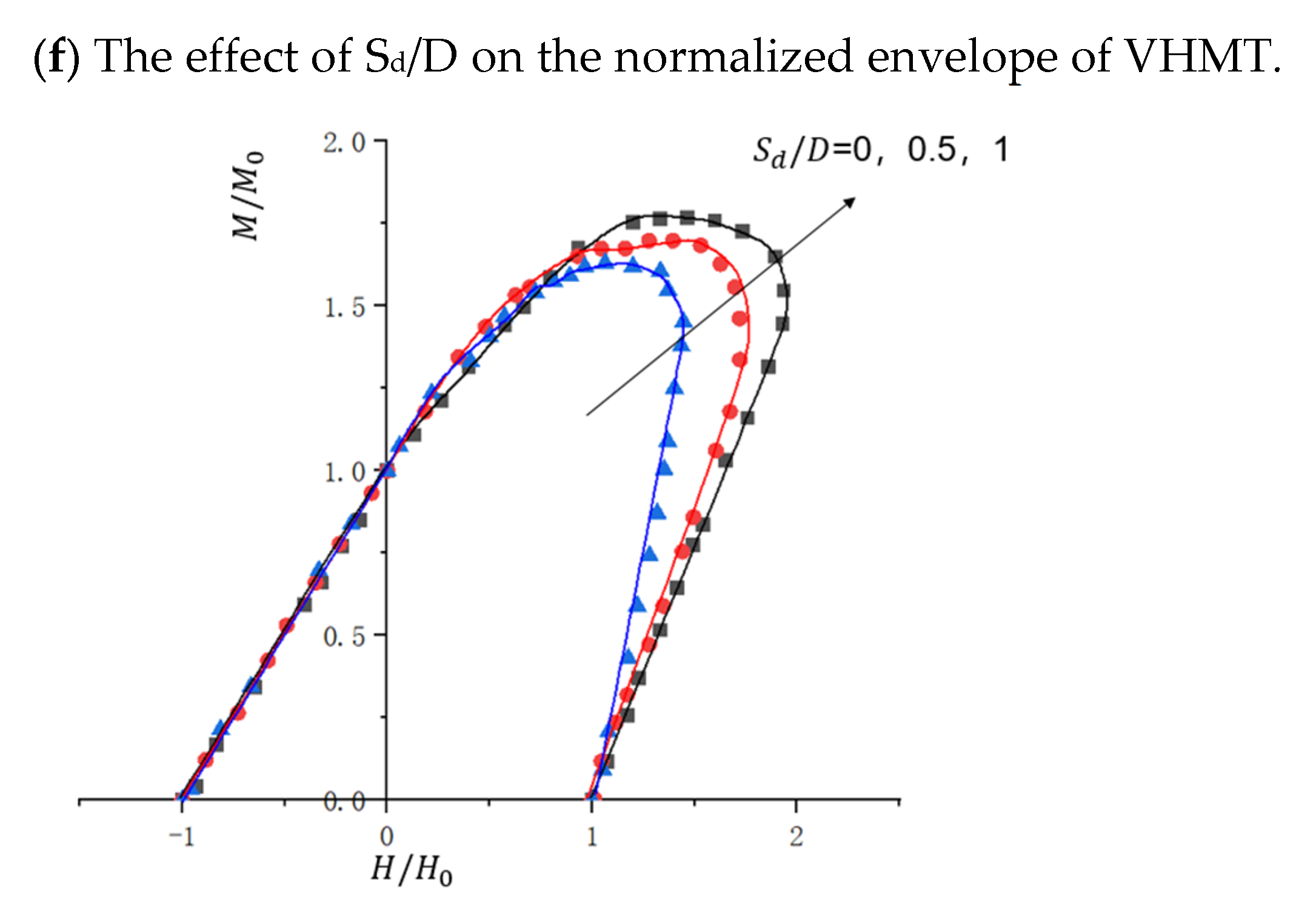
The second step is to normalize the VHMT envelope curve. The influence of each factor is shown in Figure 17.
Figure 17.
VHMT normalized envelope.
The third step is to fit the normalized VHMT envelope curve, and Equation (15) is proposed using finite element numerical simulation as an alternative to traditional experiments:
Among them, it can be obtained from Equations (2)–(15). Using the orthogonalization process in the first step, α, β, γ, ξ, and σ are the correction coefficients of V/V0, T/T0, , Tc/L, and Sd/D, respectively. α, β, γ, ξ, σ are obtained by fitting the control variables with the least squares method and are expressed by Equations (15)–(20):
The fitting effect of Equations (15)–(20) is shown in Figure 18. As can be seen from the figure, according to the fitting calculation, the goodness of fit of the curve is 84.3%, and the fitting effect of the equation is good.
Figure 18.
Formula fitting effect.
5.3. Bearing Capacity Design
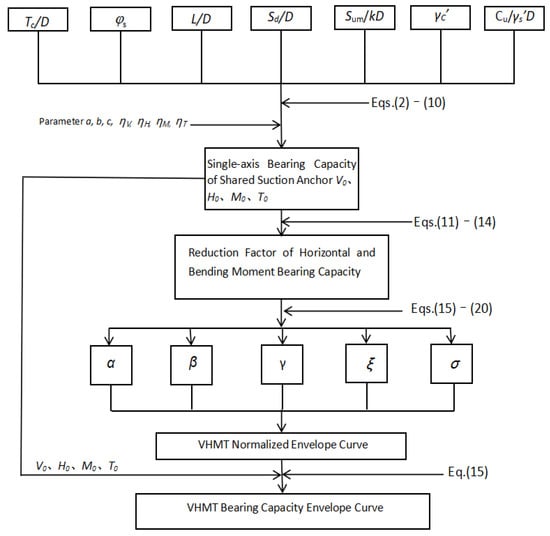
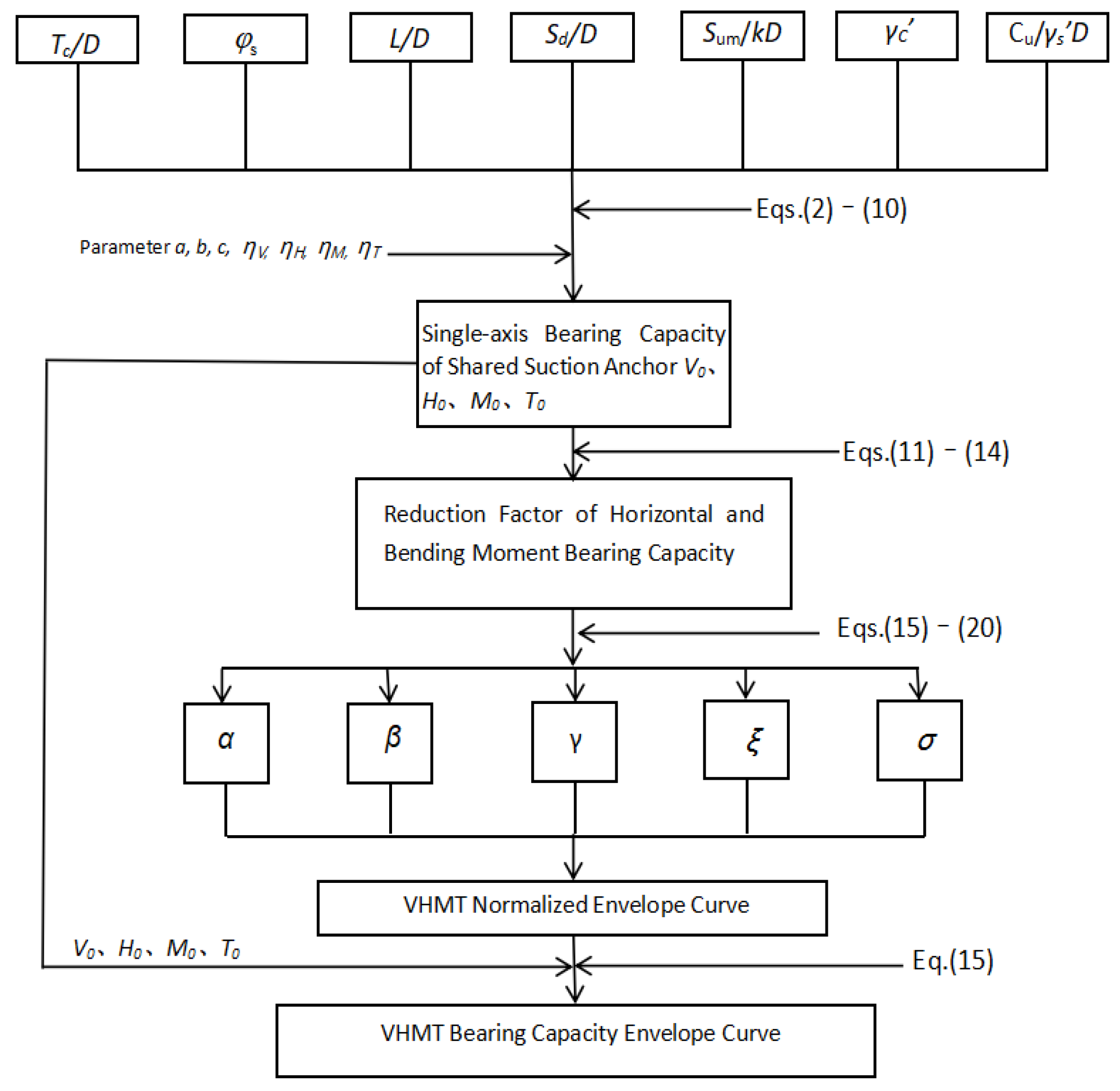
In clay-covered silty soil layers, the VHMT bearing capacity design method for shared suction anchors considering soil scour effects is shown in Figure 19.
Figure 19.
Design flowchart.
- (1)
- Based on the field survey data and soil report, determine the clay layer thickness ratio Tc/D, the suction anchor length-to-diameter ratio L/D, the normalized clay strength Sum/(kD), the normalized silt cohesion, the scour depth ratio Sd/D, the effective unit weight of clay , the effective unit weight of silt , and the silt friction angle .
- (2)
- Using Equations (2)–(10), calculate the single-bearing loads V0, H0, M0, and T0 of the suction anchor.
- (3)
- Represent H0 and M0 from step 2 as Hu and Mu, respectively. Using Equations (11)–(14), obtain the horizontal bearing capacity reduction coefficient H0/Hu and the bending moment bearing capacity reduction coefficient M0/Mu of the shared suction anchor under different V/V0 and T/T0 loading conditions, and calculate H0 and M0 under different V/V0 and T/T0 loading conditions.
- (4)
- Using Equations (15)–(20), obtain the normalized VHMT bearing capacity curve of the shared suction anchor.
6. Conclusions
This paper presents finite element modeling of shared suction anchors in clay-covered silty soil layers, investigating their VHMT bearing capacity under soil scour conditions. The VHMT failure envelope equation for shared suction anchors considering soil scour is derived, and a design procedure for their VHMT bearing capacity is proposed, providing practical engineering design references. Key conclusions are as follows:
- (1)
- It shows that the failure mechanism of the shared anchor in the foundation without scour is different from that in the condition with scour, and the corresponding bearing capacity decreases significantly.
- (2)
- The tensional force has a significant effect on H, and the bearing capacity of T has a significant contribution to the stability of the shared suction anchor.
- (3)
- The failure mechanisms of the shared suction anchor in clay overlying silty sand and corresponding bearing envelopes are proposed to assess the bearing capacity of the shared suction anchor, which provides guidance for its application.
Author Contributions
Software, J.W.; Validation, K.L.; Formal analysis, K.L.; Resources, N.Y.; Data curation, N.Y.; Writing—original draft, J.W.; Writing—review & editing, K.L.; Supervision, M.Z.; Project administration, M.Z. All authors have read and agreed to the published version of the manuscript.
Funding
This research received no external funding.
Data Availability Statement
The original contributions presented in this study are included in the article. Further inquiries can be directed to the corresponding author.
Conflicts of Interest
Author Kai Liang was employed by the company CGNPC Huizhou Nuclear Power Co., Ltd. The remaining authors declare that the research was conducted in the absence of any commercial or financial relationships that could be construed as a potential conflict of interest.
References
- Hu, Z.; Xiong, T.; Gao, X.; Tian, D.; Liu, C.; Song, Y.; Wang, W.; Lu, D. Study on the Structural Vibration Control of a 10 MW Offshore Wind Turbine with a Jacket Foundation Under Combined Wind, Wave, and Seismic Loads. J. Mar. Sci. Eng. 2025, 13, 2112. [Google Scholar] [CrossRef] [Scilit]
- Andersen, K.H.; Jostad, H.P. Foundation design of skirted foundations and anchors in clay. In Proceedings of the Offshore Technology Conference, Houston, TX, USA; 3–6 May 1999; p. OTC-10824, OTC. [Google Scholar]
- He, P.; Newson, T. Undrained capacity of circular shallow foundations on two-layer clays under combined VHMT loading. Wind. Eng. 2023, 47, 579–596. [Google Scholar] [CrossRef] [Scilit]
- Liu, T.; Zhang, Y.; Meng, Q. Numerical investigation and design of suction caisson for on-bottom pipelines under combined V-H-M-T loading in normal consolidated clay. Ocean Eng. 2023, 274, 113997. [Google Scholar] [CrossRef] [Scilit]
- Fu, D.; Zhou, Z.; Pradhan, D.L.; Yan, Y. Bearing Performance of Finned Suction Caissons under Combined VHMT Loading in Clay. J. Geotech. Geoenvironmental Eng. 2024, 150, 04024031. [Google Scholar] [CrossRef] [Scilit]
- Fontana, C.M.; Arwade, S.R.; DeGroot, D.J.; Myers, A.T.; Landon, M.; Aubeny, C. Efficient multiline anchor systems for floating offshore wind turbines. In Proceedings of the International Conference on Offshore Mechanics and Arctic Engineering, Busan, Republic of Korea, 19–24 June 2016; American Society of Mechanical Engineers: New York, NY, USA; Volume 49972, p. V006T09A042. [Google Scholar]
- Balakrishnan, K.; Arwade, S.R.; DeGroot, D.J.; Fontana, C.; Landon, M.; Aubeny, C.P. Comparison of multiline anchors for offshore wind turbines with spar and with semisubmersible. J. Phys. Conf. Ser. 2020, 1452, 12032. [Google Scholar] [CrossRef] [Scilit]
- Saviano, A.; Pisanò, F. Effects of misalignment on the undrained HV capacity of suction anchors in clay. Ocean. Eng. 2017, 133, 89–106. [Google Scholar] [CrossRef] [Scilit]
- Zhou, M.; Yang, N.; Tian, Y.; Zhang, X. Inclined Pullout Capacity of Suction Anchors in Clay over Silty Sand. J. Geotech. Geoenvironmental Eng. 2023, 149, 4023030. [Google Scholar] [CrossRef] [Scilit]
- Guo, X.; Liu, J.; Yi, P.; Feng, X.; Han, C. Effects of local scour on failure envelopes of offshore monopiles and caissons. Appl. Ocean Res. 2022, 118, 103007. [Google Scholar] [CrossRef] [Scilit]
- Yang, N.; Zhou, M.; Tian, Y.; Zhang, X. Numerical investigation on the pullout capacity of suction caissons in silty sand-over-clay deposit. Can. Geotech. J. 2024, 62, 1–16. [Google Scholar] [CrossRef] [Scilit]
- Andersen, K.H.; Murff, J.D.; Randolph, M.F.; Clukey, E.C.; Erbrich, C.T.; Jostad, H.P.; Hansen, B.; Aubeny, C.P.; Sharma, P.; Supachawarote, C. Suction anchors for deepwater applications. In Proceedings of the 1st International Symposium on Frontiers in Offshore Geotechnics, ISFOG, Perth, WA, USA, 19–21 September 2005; pp. 3–30. [Google Scholar]
- Kim, S.; Choo, Y.W.; Kim, J.-H.; Kim, D.-S.; Kwon, O. Pullout resistance of group suction anchors in parallel array installed in silty sand subjected to horizontal loading—Centrifuge and numerical modeling. Ocean Eng. 2015, 107, 85–96. [Google Scholar] [CrossRef] [Scilit]
- Xie, S.; Sun, C.; Liu, B.; Huang, L.; Deng, H.; Zhu, M.; Li, X.; Dai, G. Numerical Simulation on Anchored Load-Bearing Characteristics of Suction Caisson for Floating Offshore Wind Power. J. Mar. Sci. Eng. 2025, 13, 1653. [Google Scholar] [CrossRef] [Scilit]
- Li, X.; Yan, W.; Zhao, Y.; Li, Y.; Zhang, Y.; Lang, Y. Numerical Study on the Keying of Suction Embedded Plate Anchors with Chain Effects. J. Mar. Sci. Eng. 2025, 13, 2056. [Google Scholar] [CrossRef] [Scilit]
- Ma, J.; Zhao, H.; Jeng, D.-S. Numerical Modeling of Composite Load-Induced Seabed Response around a Suction Anchor. J. Mar. Sci. Eng. 2024, 12, 189. [Google Scholar] [CrossRef] [Scilit]
- Hung, L.C.; Kim, S. Evaluation of Undrained Bearing Capacities of Bucket Foundations Under Combined Loads. Mar. Georesources Geotechnol. 2014, 32, 76–92. [Google Scholar] [CrossRef] [Scilit]

Disclaimer/Publisher’s Note: The statements, opinions and data contained in all publications are solely those of the individual author(s) and contributor(s) and not of MDPI and/or the editor(s). MDPI and/or the editor(s) disclaim responsibility for any injury to people or property resulting from any ideas, methods, instructions or products referred to in the content. |
© 2025 by the authors. Licensee MDPI, Basel, Switzerland. This article is an open access article distributed under the terms and conditions of the Creative Commons Attribution (CC BY) license (https://creativecommons.org/licenses/by/4.0/).