3.1. Data Analysis
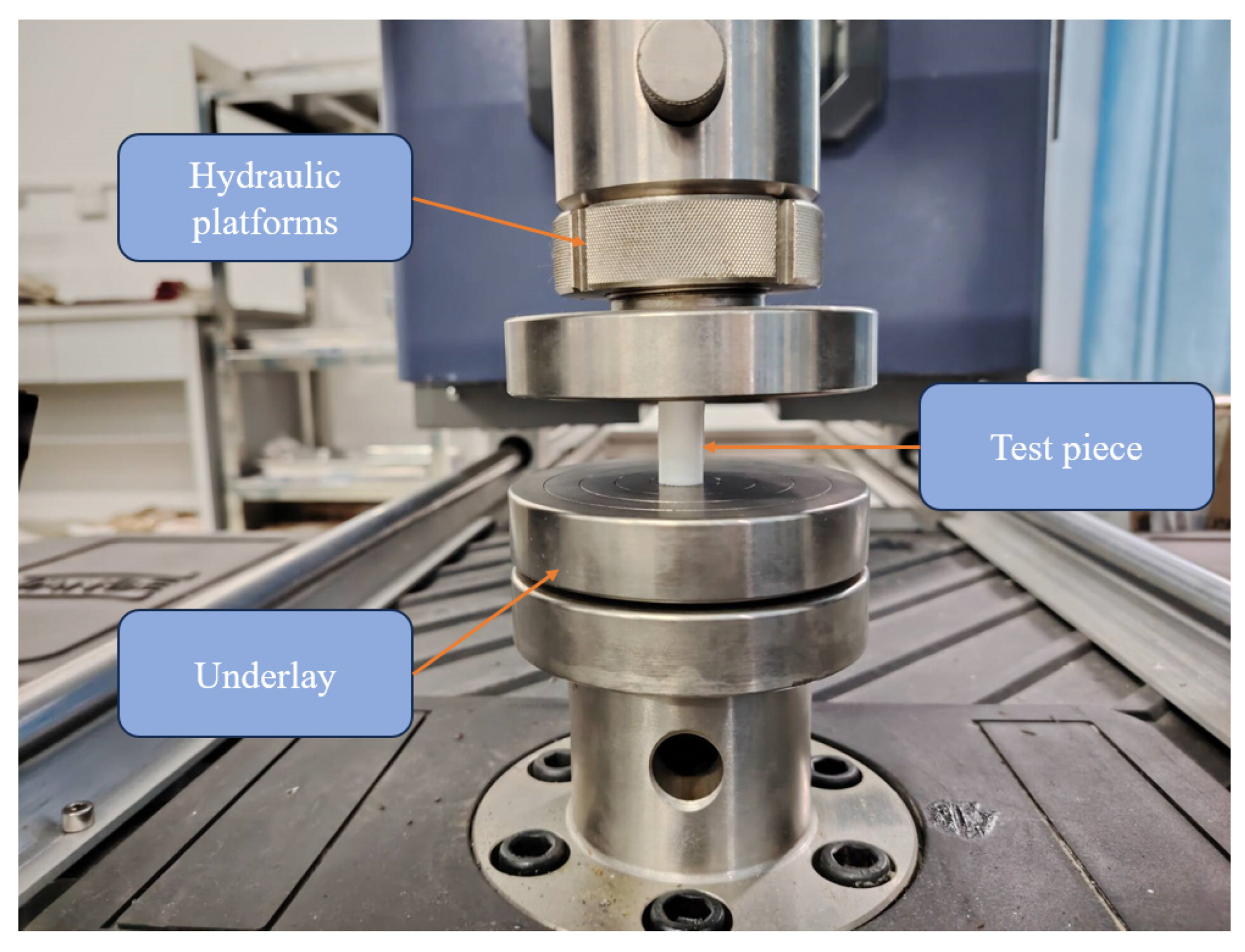
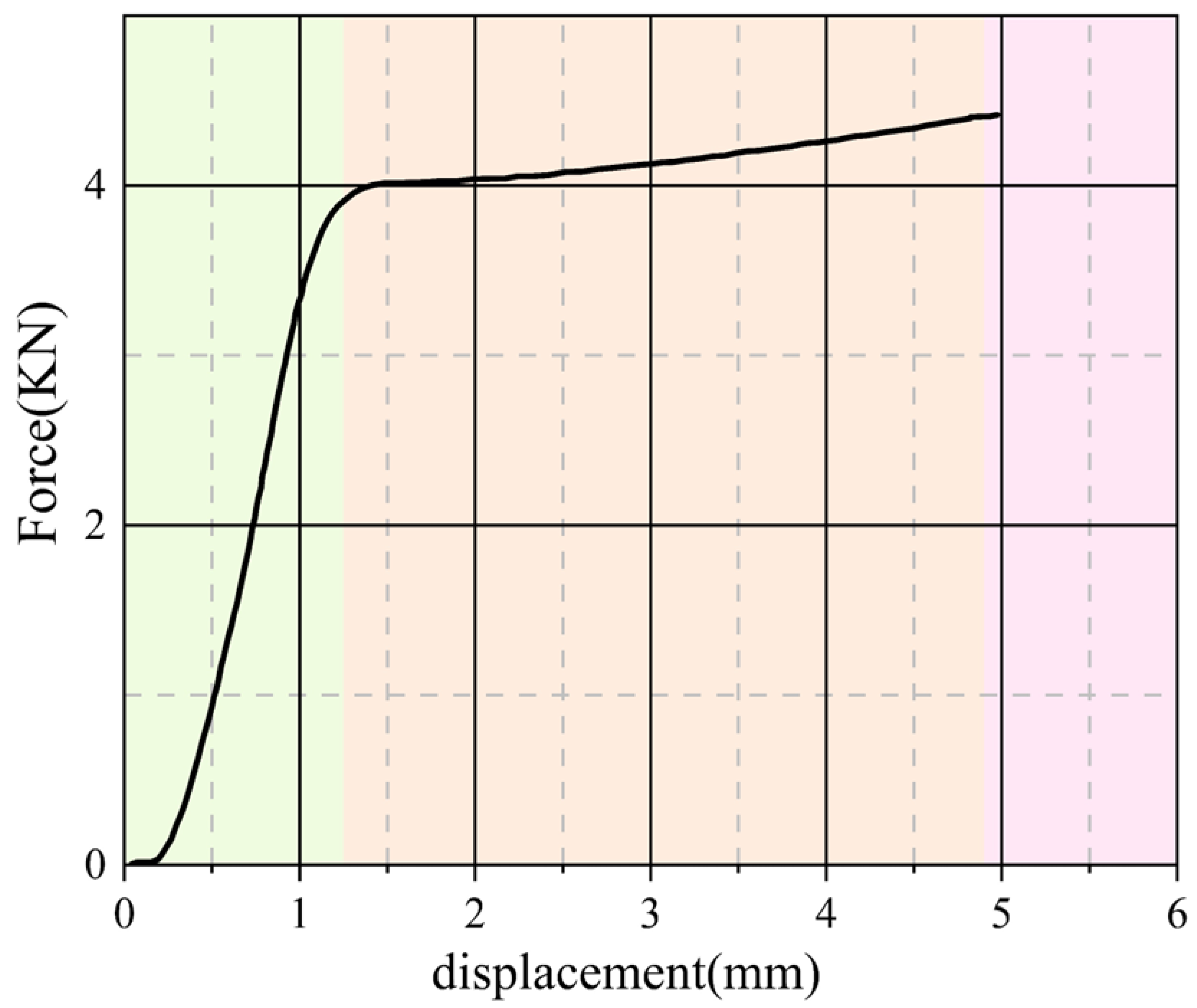
The compression testing machine we use is the ETM series electronic universal testing machine. Before commencing the experiment, the lower platform must be leveled to ensure horizontal alignment; the upper platform compresses the test specimen downward at a rate of 2 mm per minute. The force–compression displacement curve exhibits only one form, as shown in
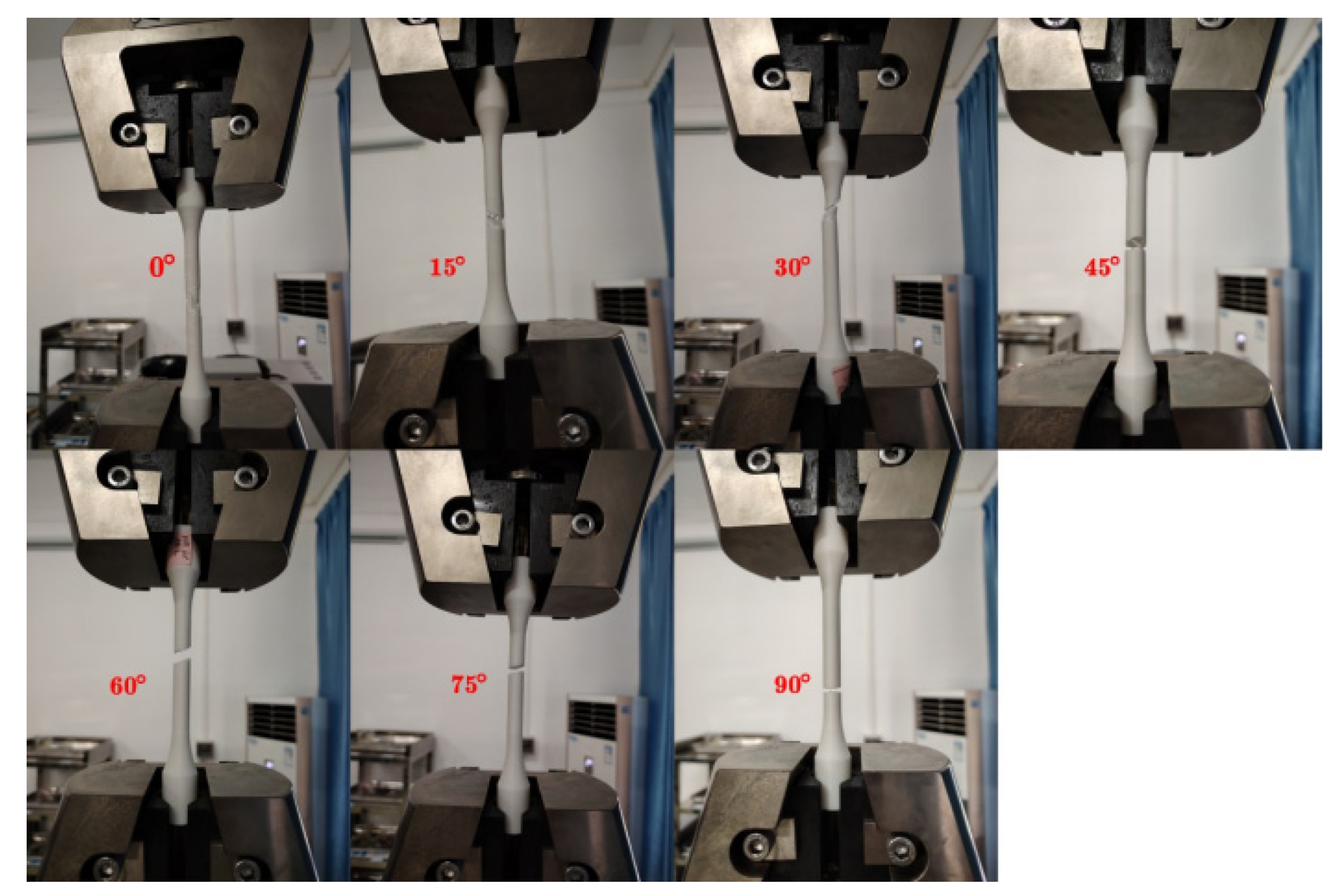
Figure 7; the initial stage involves force increasing the compression within the specimen, enabling it to withstand a rapid rise in pressure after reaching a certain pressure value during the slow increase phase. At both ends of the platform where force is applied, the specimen’s constraints prevent deformation; the cross-section in the specimen’s center, subjected to increasing pressure, continues to thicken, and its load-bearing capacity increases accordingly. When deformation approaches 5 mm, the test specimen fails, and the experiment is terminated. The damaged specimen is shown in
Figure 8.
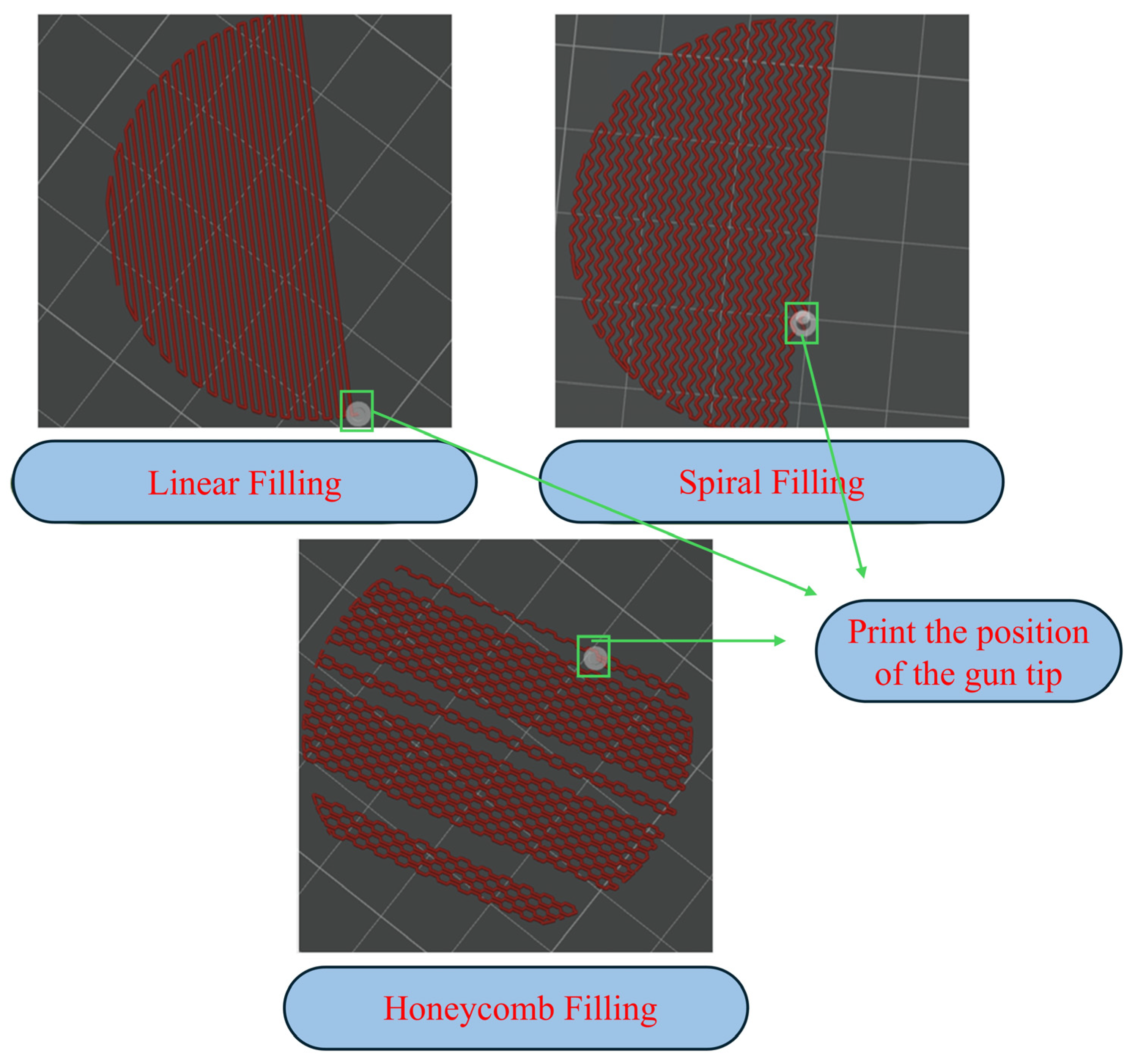
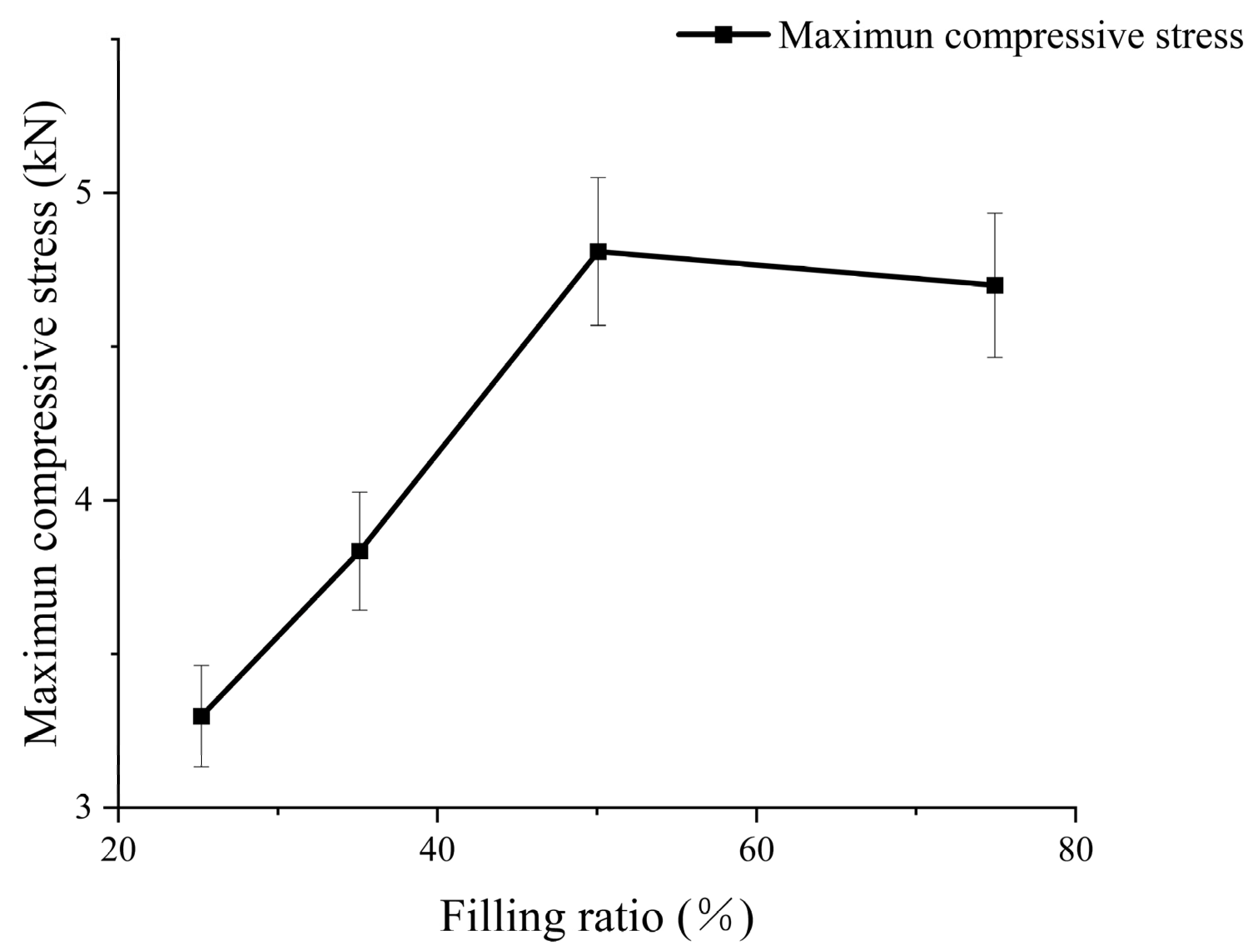
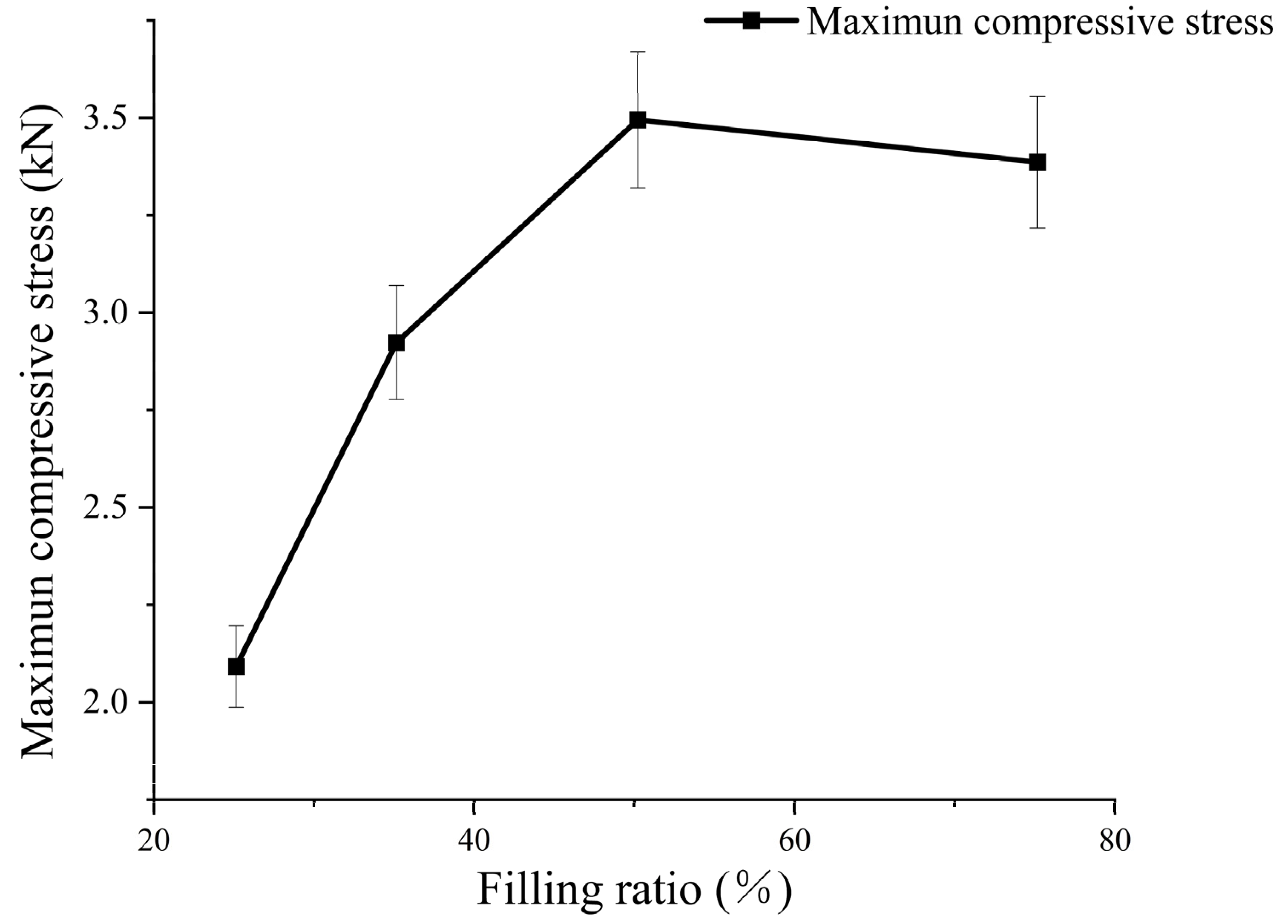
Analysis of experimental data indicates a significant correlation between the mechanical properties of various filler structures and their topological design. Under consistent filling ratios, the honeycomb filling structure exhibits optimal compressive performance due to its biomimetic hexagonal cell design, as illustrated in
Figure 9. When the filling rate increases from 25% to 50%, the maximum compressive stress rises from 3.304 kN to 4.818 kN, representing a 45.8% increase. This enhancement reflects the ability of hexagonal cells to effectively delay material damage mechanisms by uniformly distributing stress. A stress relaxation of 2.3% (from 4.818 kN to 4.708 kN) occurs once the filling rate reaches 50%. According to Formula (4), hexagonal pressure is determined jointly by three directions. As filling increases, differential units in each direction acquire more material, thereby enhancing their compressive performance and effectively mitigating structural damage. A similar stress shrinkage of 2.3% (from 4.818 kN to 4.708 kN) is observed after surpassing the 50% filling rate. The honeycomb filling employs a biomimetic hexagonal cell structure whose topological design inherently possesses “trisubstructural stress balance” characteristics. This aligns with the synergistic interaction of the three stress components as defined by stress tensor Equation (4). When the filling rate increases from 25% to 50%, the wall thickness of hexagonal cells grows and cell density rises. This allows stress to be uniformly distributed throughout the structure via the hexagonal edges under compression, preventing localized stress concentration. Simultaneously, according to Hooke’s law (Equation (1)), the material’s elastic modulus is positively correlated with stress transfer efficiency. The increased packing ratio means more “differential elements” bear the load and a higher proportion of material is engaged. Each element can more effectively share the load, delaying the damage progression of “elastic deformation ⟶ plastic deformation ⟶ fracture”. This ultimately manifests as a significant increase in compressive stress. The printing angle affects the degree of fiber interlacing between layers. When printed at 75°, the cross-angle of fibers in the honeycomb structure approaches 45°, enhancing the structure’s shear resistance and thus achieving the highest maximum compressive stress.
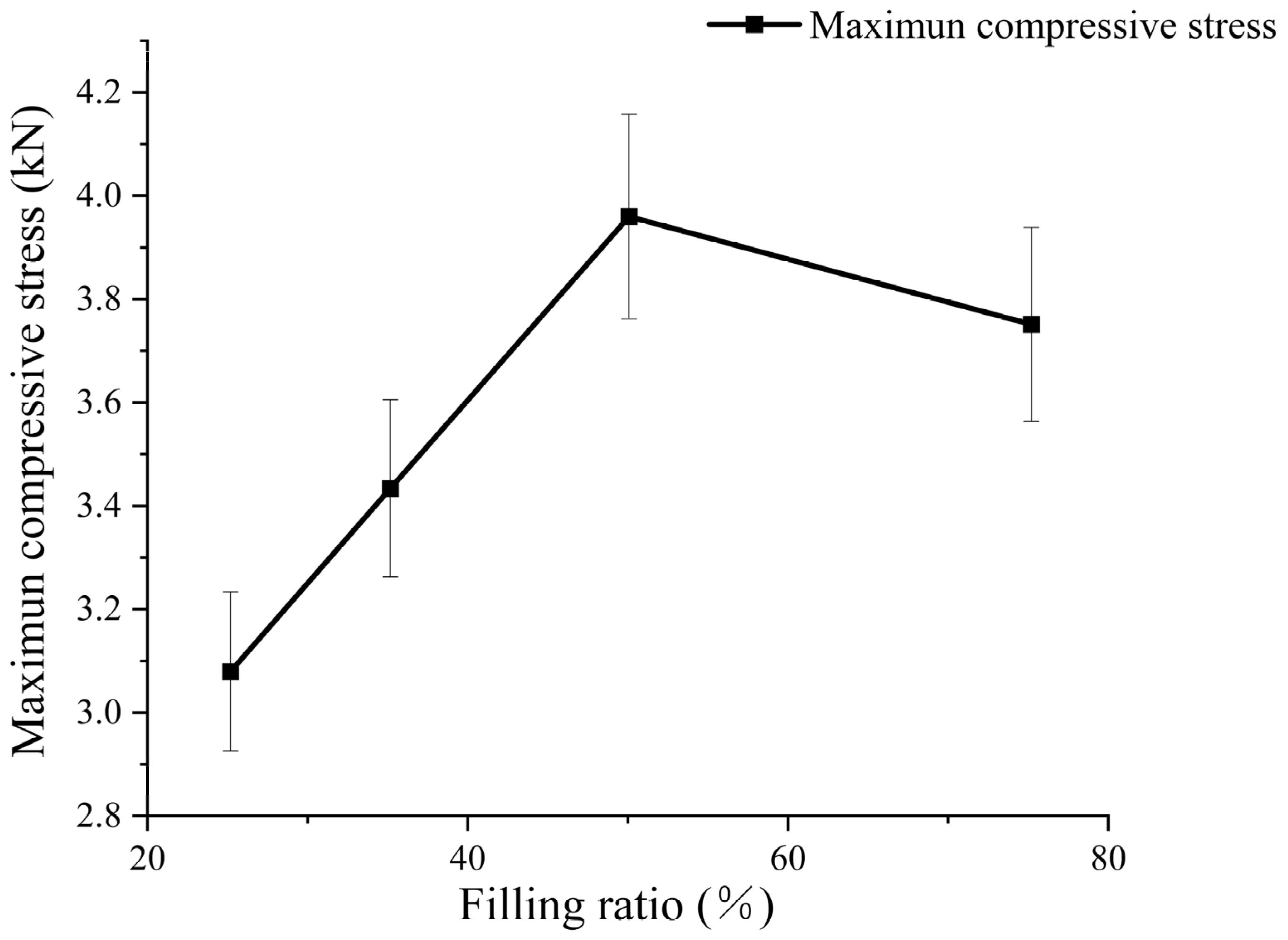
As shown in
Figure 10, the compressive curve (3.078 ⟶ 3.966 kN) of the helical-filled structure exhibits a honeycomb-like decay trend. The observed 32.8% gain in axial strength, relative to straight-line filling, at 50% filling supports the geometrical advantage of the helical structure in resisting bending-torsional coupling loads. However, the 5.4% stress decay at 75% filling indicates a threshold effect of helical spacing on plastic flow. The helical path design with spiral filling endows it with “bending–torsion coupled load resistance capability”—under compression, the spiral’s intertwined structure partially converts axial pressure into tangential stress, dispersing concentrated loads from a single direction. When the filling rate increases from 25% to 50%, the pitch of the spiral path decreases and the linear density increases, enhancing the structure’s “spatial entanglement stiffness”. This creates a more continuous load transfer path, resulting in a sustained increase in axial compressive stress. Compared to linear filling, the spiral structure exhibits tighter interlayer bonding (with no distinct parallel interfaces), resulting in weaker stress concentration effects. Consequently, at 50% filling rate, compressive stress is 32.8% higher than in linear filling.
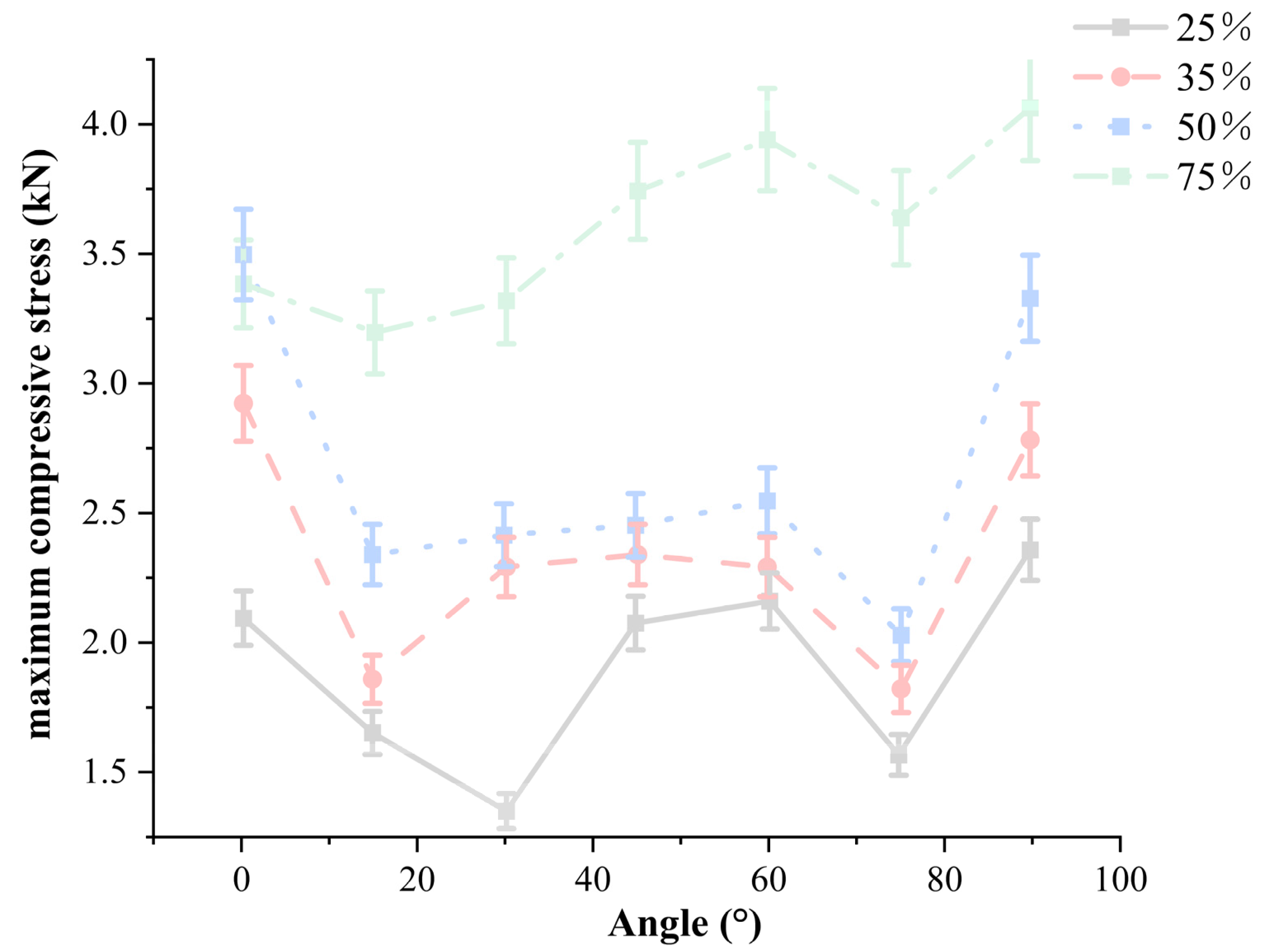
As shown in
Figure 11, the low mechanical efficiency of the linearly filled body, which is 27.3% lower than that of the honeycomb structure at 50% filling, highlights an inherent flaw in the anisotropic design. This flaw arises from the stress-concentration effect at the interlayer interfaces, which complicates the ability to surpass the 50% filling threshold of the honeycomb structure, even under the strong constraint of 75% filling (3.39 kN). The quantitative results of these structure-function relationships offer a critical parameter optimization space for the additive manufacturing-based reverse design of porous materials. Linear filling employs a parallel straight-line path design, forming “parallel interlayer interfaces” after 3D printing. This structure exhibits unidirectional load transfer pathways, effectively transmitting stress only along the linear path direction, while interlayer bonding perpendicular to the path direction is extremely weak. According to the “stress transfer principle for anisotropic materials” in materials mechanics, the transverse (perpendicular to the straight path) elastic modulus of linear structures is significantly lower than the longitudinal modulus. Under compression, stress tends to accumulate at the interlayer interfaces, creating a “potential shear failure risk”. Even with increased fill density, interlayer defects persist, resulting in inherently inadequate mechanical efficiency.
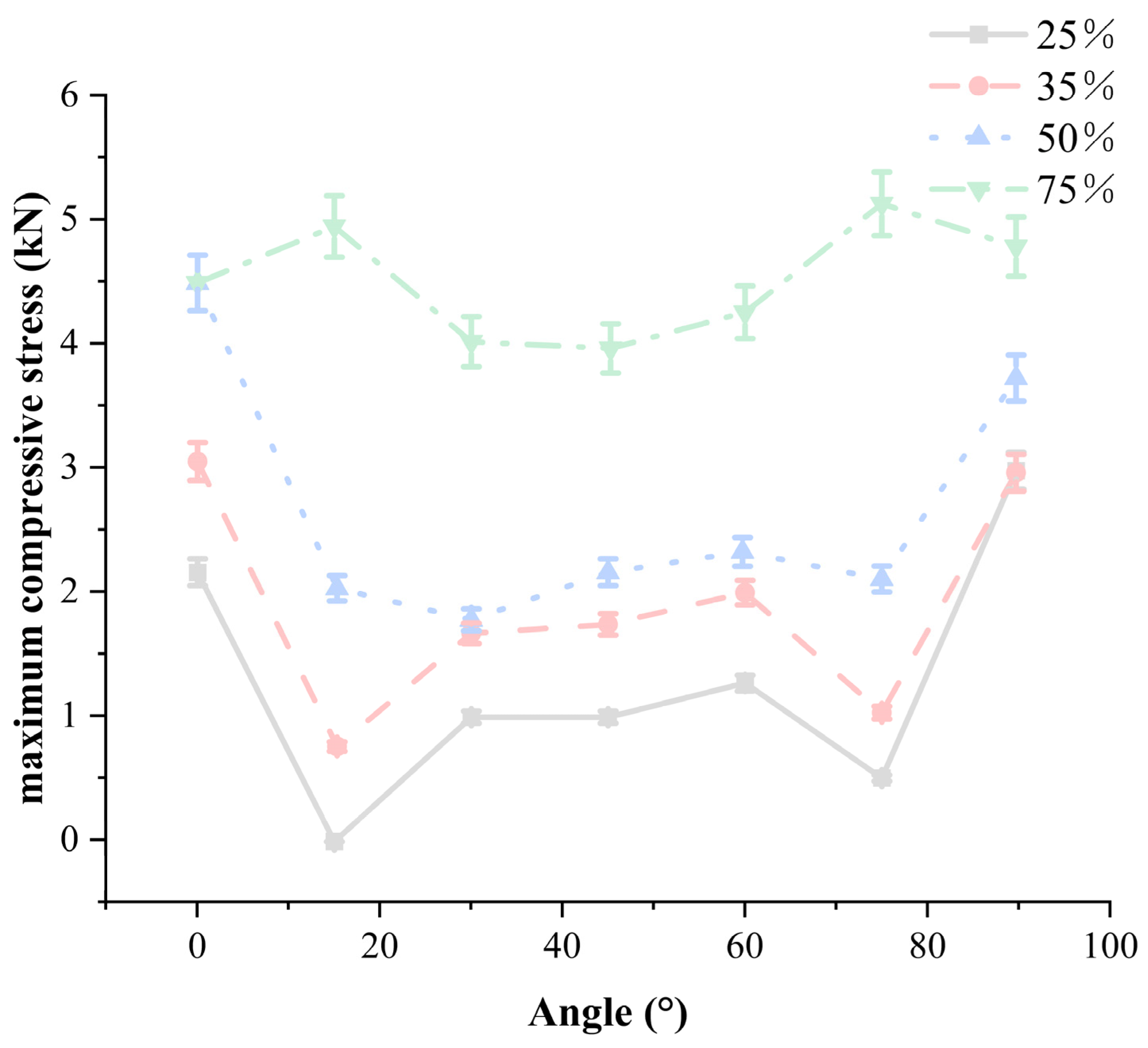
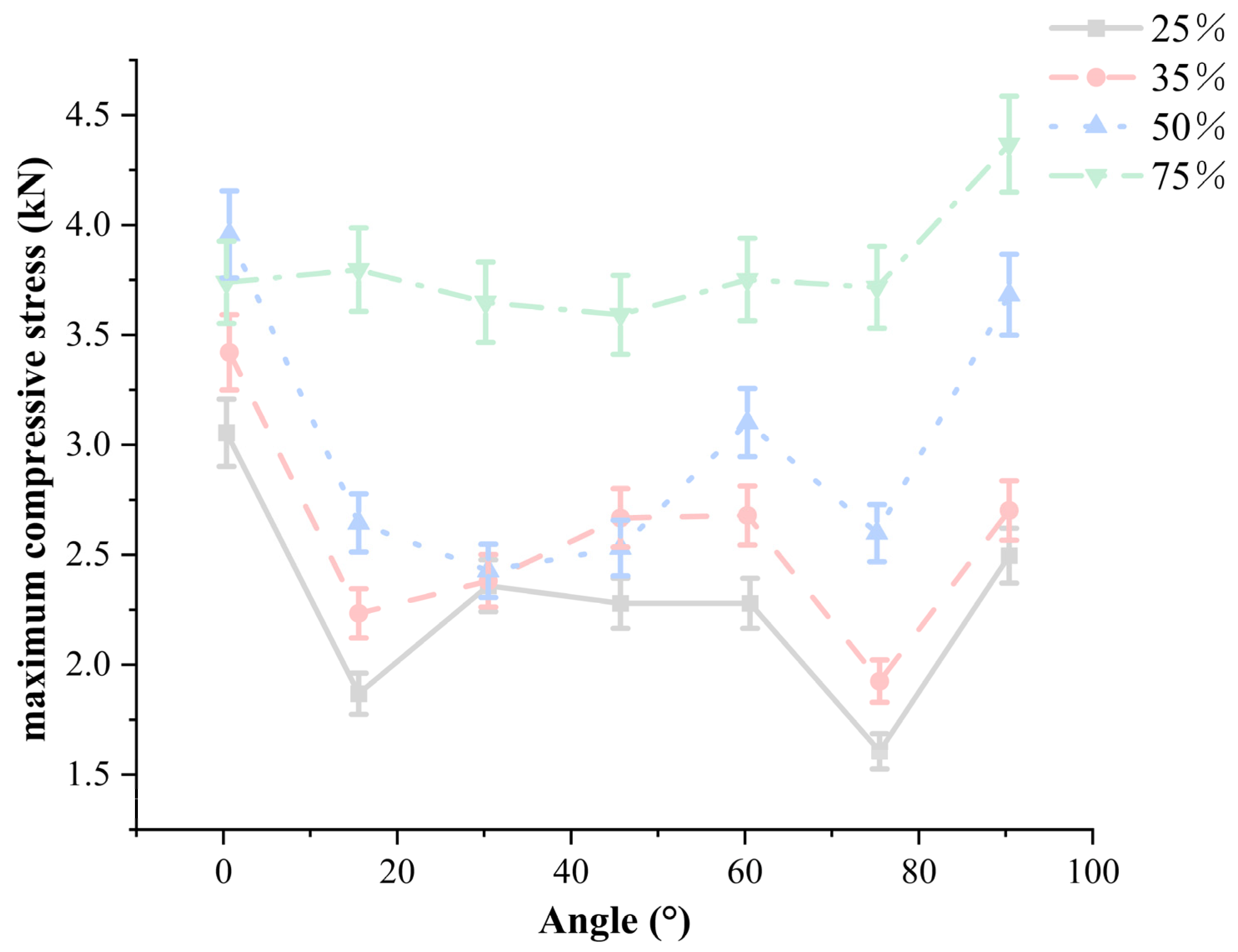
As shown in
Figure 12,
Figure 13 and
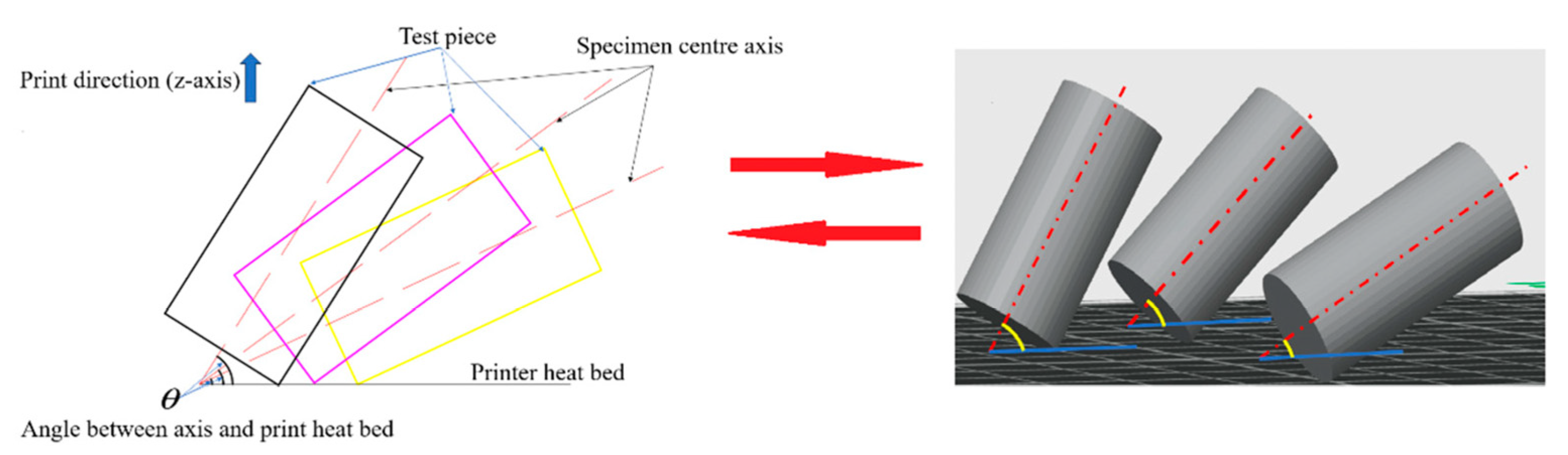
Figure 14. By analyzing the maximum compressive stress data of different filling forms (honeycomb, spiral and linear filling) at different printing angles (0°, 15°, 30°, 45°, 60°, 75°, 90°), it can be found that the influence of printing angle on the compression performance of the specimen shows a certain regularity. In general, the maximum compressive stress with the change in printing angle usually shows a decreasing and then increasing trend; 15° or 30° is usually the lowest point of performance, while 0° or 90° is the highest point of performance. Specifically, the honeycomb infill specimen has the best performance at 75° or 90° printing direction, for example, the maximum compressive stress of 75% honeycomb infill specimen reaches 5.095 kN at 75°, which is the highest value among all the specimens, indicating that the honeycomb infill has excellent load-bearing capacity and impact resistance at high angle printing direction; while the spiral infill and linear infill specimens have better performance at 0° or 90° printing direction. For example, the maximum compressive stress of the 75% spiral-filled specimen at 90° was 4.38 kN, and that of the 75% linear-filled specimen at 90° was 4.061 kN, indicating that the spiral-filled and linear-filled specimens have high compressive performance under these printing directions. In addition, from the above three graphs, it can be seen once again that the compressive properties of the specimens generally show an upward trend with the increase in the filling ratio, e.g., the maximum compressive stress of the specimens with a 75% filling ratio is significantly higher than that of the specimens with a 25% filling ratio in most of the printing orientations, which indicates that a high filling ratio can effectively increase the load-carrying capacity of the material. However, in some printing directions (e.g., 15°and 30°), the increase in filling ratio has limited effect on the compression performance, e.g., the maximum compressive stress of 25% cellular filled specimen at 15°is 1.989 kN, while that of 75% cellular filled specimen at 15°is 4.988 kN, which is improved but still lower than that of the performance in other printing directions. Taken together, the honeycomb-filled specimen performs best under the high-angle printing direction (75° or 90°), which is suitable for application scenarios that require high load-bearing capacity and impact resistance; the spiral-filled and linear-filled specimens perform better under the 0° or 90° printing direction, which is suitable for parts requiring torsional resistance and lightweight design.
Due to the “multi-directional stress adaptability” of the hexagonal structure in honeycombs, during high-angle printing, the edges of hexagonal cells form obtuse angles with the load direction. This allows stress dispersion through elastic deformation of the edges. Furthermore, when printing at 90°, the stacking direction aligns parallel to the vertical edges of the hexagons. This maximizes the “effective stress-bearing length” of the load-bearing cells, resulting in the highest load-carrying capacity. At the same time, when the specimen is subjected to compression, the deposition direction of PLA aligns with the printing tilt angle of the specimen. At 0° printing, the layers bond along the X-axis, and at 90°, they bond along the Y-axis. Since the longitudinal strength of PLA is 20–30% higher than the transverse strength, the performance of the specimens printed at 0° and 90° is better than at intermediate angles.
The winding direction of the spiral structure is directly related to the printing angle. At 0° printing, the spiral winds axially, directly resisting axial pressure. At 90° printing, the spiral winds radially, forming a “ring-shaped load-bearing structure” that enhances the synergistic effect of torsion and compression resistance. When printing at an oblique angle, the winding direction of the spiral becomes misaligned with the load direction, disrupting the stress transfer path and resulting in reduced performance.
When the linear path aligns with the print angle, the path direction is either parallel (0°) or perpendicular (90°) to the load direction. When parallel, stress transfers directly along the path; when perpendicular, the path forms a “transverse support” that prevents layer delamination. During angled printing, the path forms an acute angle with the load direction, concentrating stress at path intersections and resulting in the lowest performance.
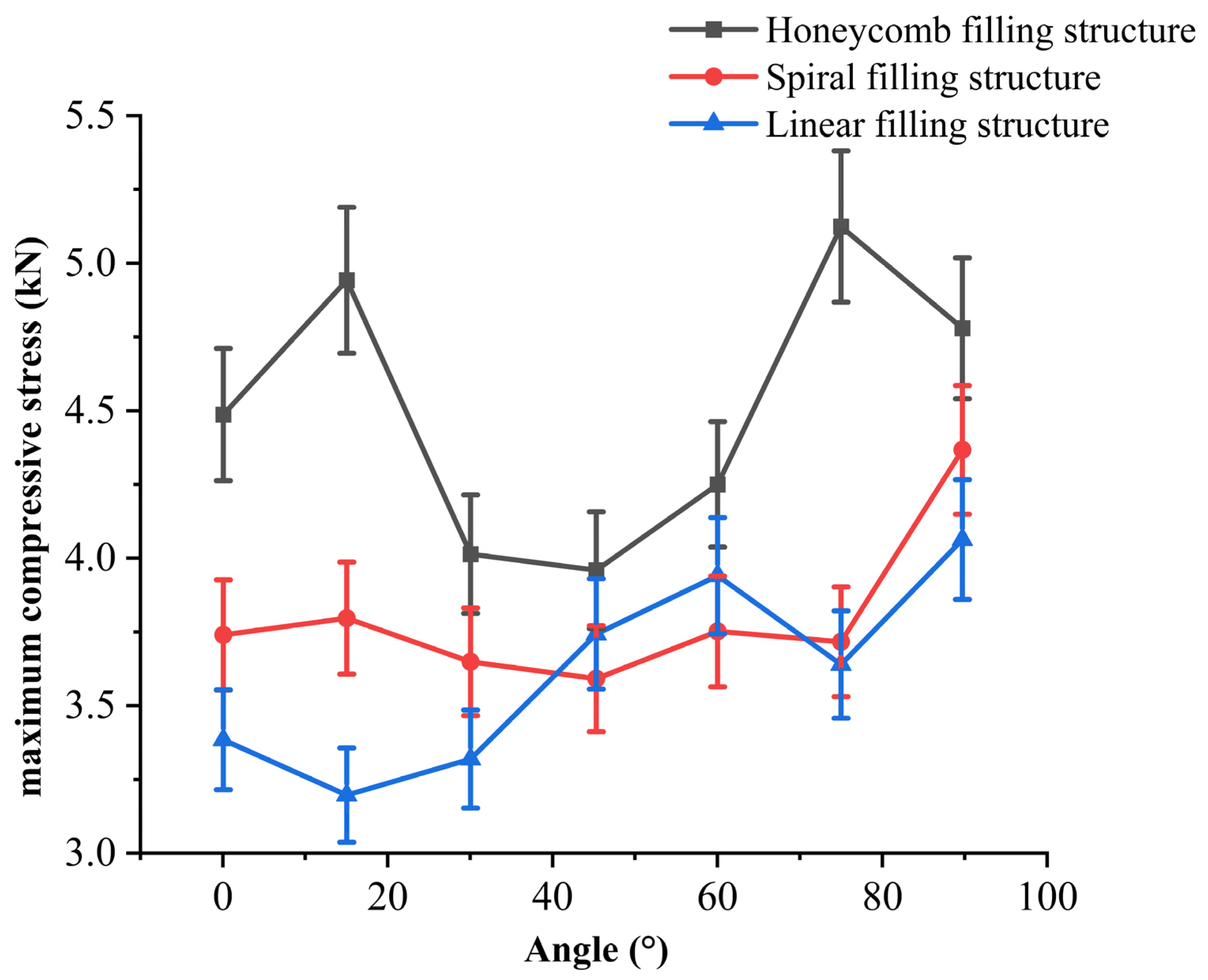
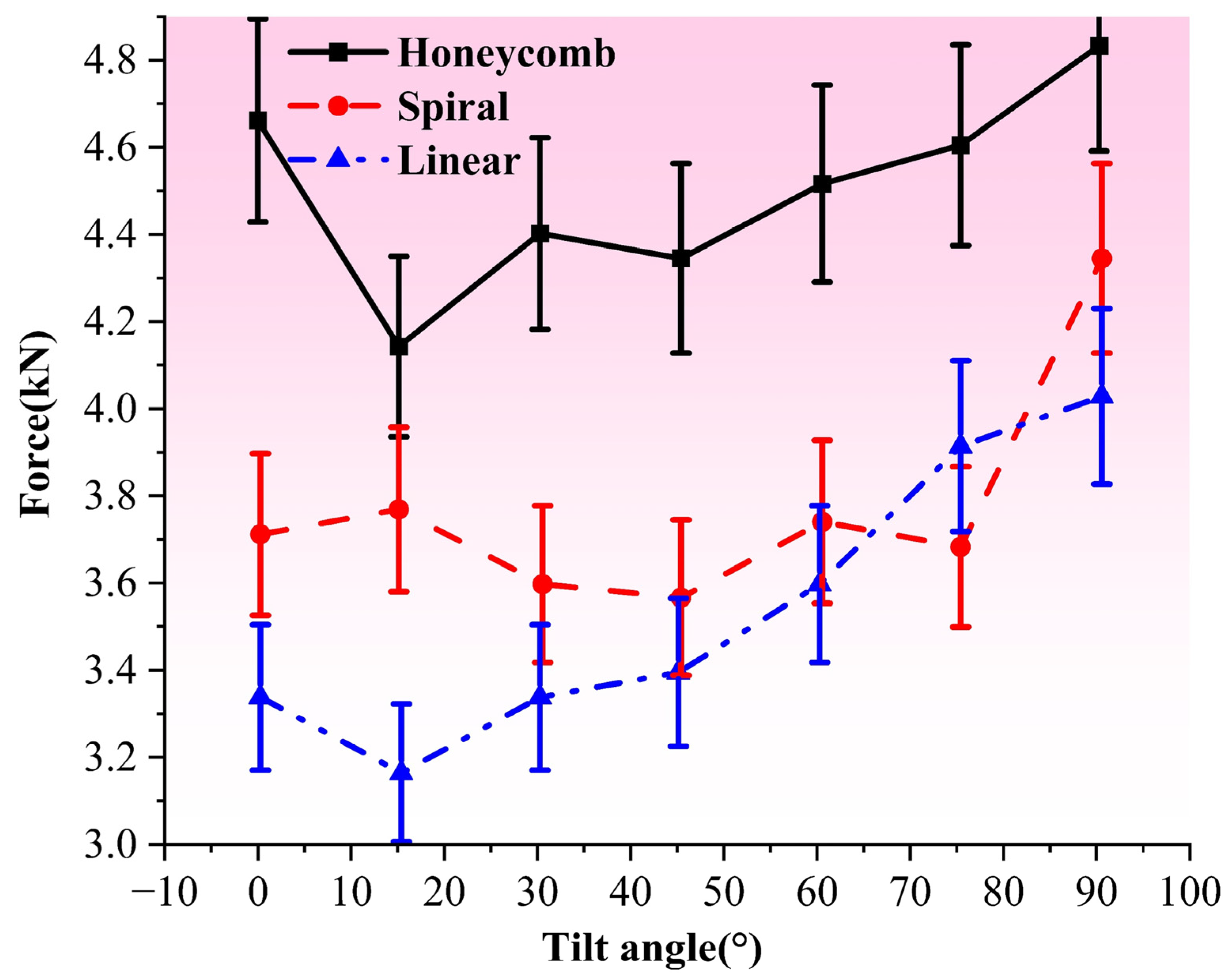
As shown in
Figure 15, the maximum compressive stress at angles ranging from 0° to 90° for honeycomb, spiral, and linear filling structures, all exhibiting a 75% filling rate. The honeycomb filling structure demonstrates significantly higher compressive stress than both the spiral and linear structures, indicating superior compressive performance among the three. At 0°, the stress reaches approximately 4.5 kN, peaking near 5.0 kN at 15° and 75°. Although stress declines at 45° and 60°, it remains greater than that of the other two structures, with corresponding error bars reflecting notable stress fluctuations. The helical filling structure displays intermediate compressive stress levels with minimal overall variation, typically maintaining values between 3.5 and 3.8 kN, and showing only a slight increase beyond 75°. In contrast, the linear filling structure exhibits the lowest overall compressive stress, indicating the weakest performance among the three. At 0°, the stress is approximately 3.4 kN, decreasing to about 3.1 kN at 15° before gradually recovering. Between 75° and 90°, it increases to around 4.0 kN, with error bars suggesting relatively stable performance. Overall, the honeycomb structure shows the highest compressive strength but with more pronounced angular fluctuations, while the linear structure presents the lowest compressive strength with more consistent performance across varying angles.
The hexagonal topology of honeycomb structures represents “nature’s optimal load-bearing configuration,” characterized by “uniform stress distribution across three adjacent unit edges under forces applied in any direction” (fulfilling the triaxial stress balance in the stress tensor equation). A 75% fill rate provides ample material foundation for this topology. Even when printing angles vary, hexagonal cells adapt to stress directions through geometric deformation, ensuring compressive stress remains maximized. However, at high angles (75°/90°), the force direction within hexagonal cells aligns more closely with the load-bearing edges. At low angles (15°/30°), stress must traverse layer interfaces for transfer, resulting in the greatest fluctuation amplitude.
The “enveloping characteristic” of helical structures confers a degree of ‘isotropy’—regardless of printing angle, the helical lines form continuous load-transfer paths. This avoids the “unidirectional weakness” of linear structures while circumventing the “high angle dependency” of honeycomb structures. However, due to “tangential losses” in spiral stress transfer, the stress transmission efficiency of spiral structures is lower than that of hexagonal structures. This results in consistently lower compressive strength compared to honeycomb structures. Additionally, owing to the stability of spiral structures, their stress fluctuations exhibit smaller amplitudes than those of honeycomb structures.
Interlayer stress concentration in linear structures is a universal phenomenon across all printing angles. Regardless of angle variation, the interlayer interfaces along parallel paths remain stress weak points, resulting in the lowest overall compressive stress. Simultaneously, the issue of weak interlayer bonding persists irrespective of angle, leading to minimal performance fluctuation in linear structures and manifesting as the flattest curve.
Table 3 shows the variance of three different infill patterns when the infill method is the same, with the printing tilt angle as the only variable.
Table 4 shows the variance for specimens with the infill pattern as the variable, across seven different printing tilt angles. By comparing the data, it can be intuitively seen that the variance at tilt angles of 30°, 45°, and 90° is similar to the data in
Table 3. This indicates that under the conditions of 30°, 45°, and 90°, the influence of the infill pattern on the compressive performance of the specimens is similar in significance to the influence of the tilt angle on the compressive performance. However, when the printing tilt angles are 0°, 15°, and 75°, the variance in
Table 4 is significantly larger than that in
Table 3. This indicates that at tilt angles of 0°, 15°, and 75°, the effect of the infill pattern on the compressive performance of the specimens is significantly more pronounced than the effect of the printing tilt angle on the compressive performance.
3.2. Discussion on Existing Research
In the study conducted by Liu et al. [
34], experiments were performed on five distinct specimens. The authors defined the relative density of the specimens as F
V, where a higher F
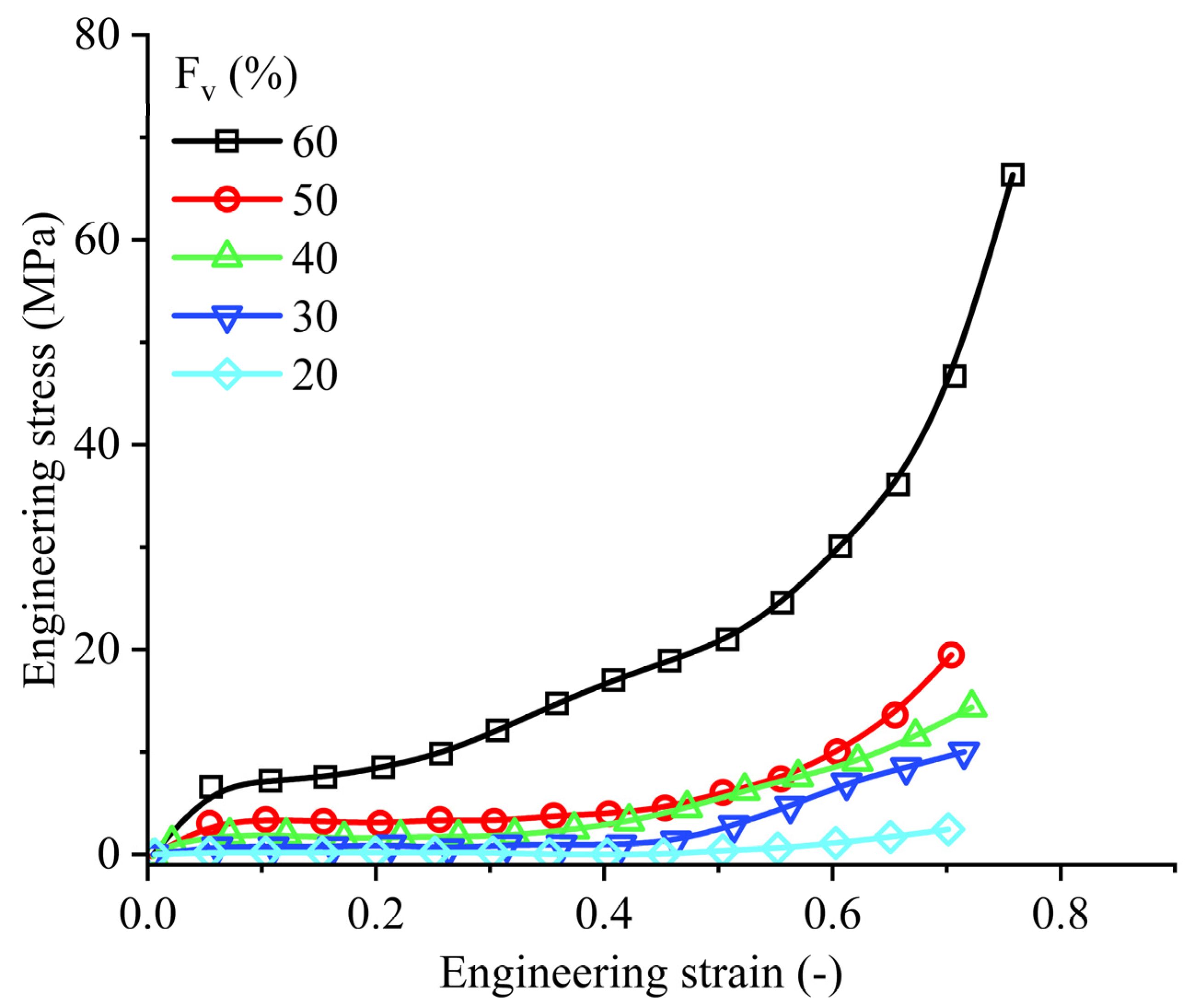
V value corresponds to increased wall thickness and, consequently, greater packing density. Their experiments produced stress–strain curves for the five specimens with differing relative densities, as shown in
Figure 16. The figure clearly indicates that the specimen with a relative density of 60% exhibits the most favorable compressive performance among the five, followed by those with relative densities of 50%, 40%, 30%, and 20%, as depicted in
Figure 16. Liu’s findings demonstrate that specimens with higher relative densities, indicative of greater packing density, exhibit enhanced mechanical properties.
In the study by Wang et al. [
35], compression tests were performed on three specimens: PDMS/PLA-3, PDMS/PLA-5, and PDMS/PLA-7. The fundamental data for these specimens are summarized in
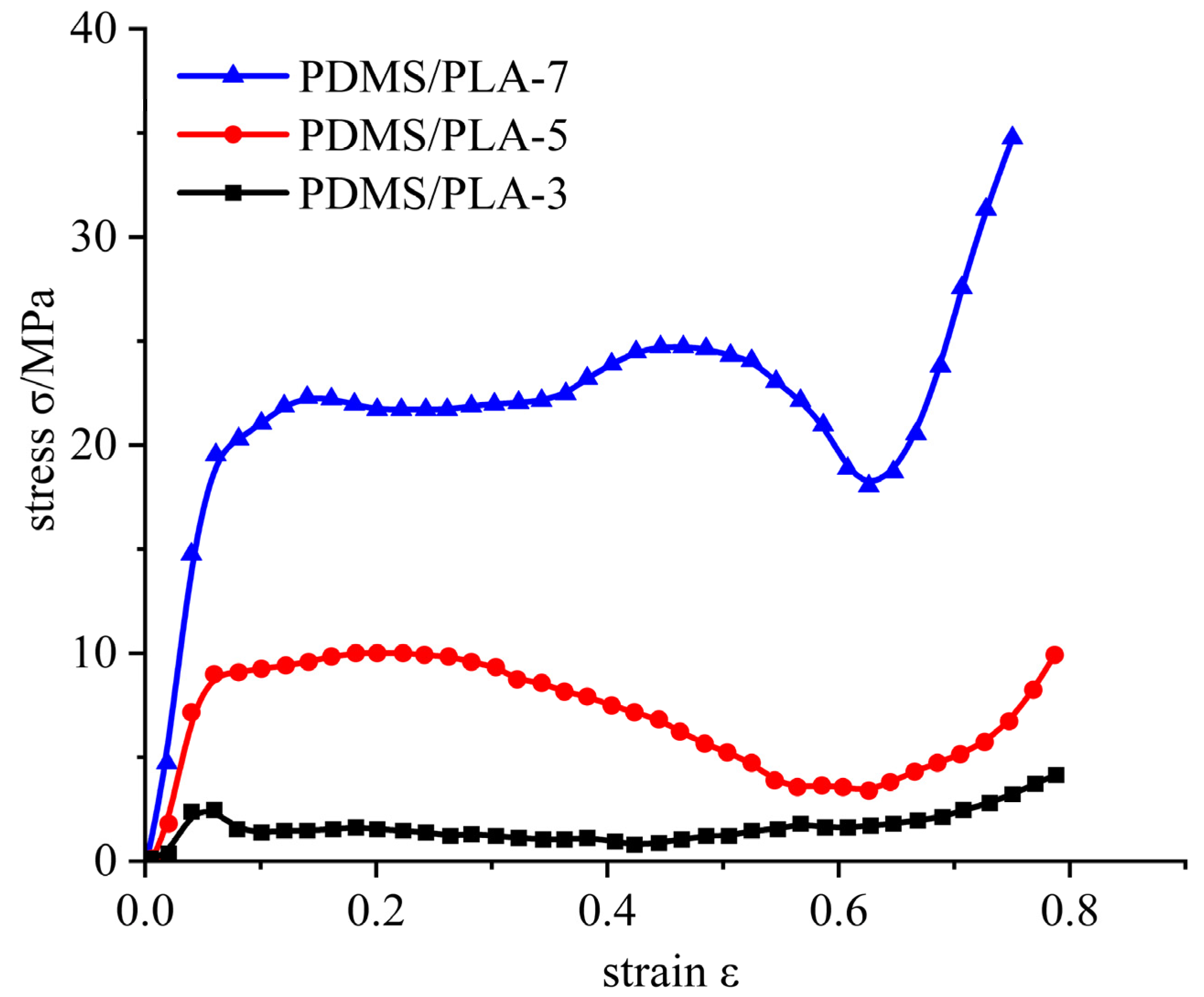
Table 5. Utilizing the same filler material, the researchers assessed the compressive properties of specimens featuring three distinct pillar diameters. The results indicated that increasing the pillar diameter enhanced the filling rate of the specimens. The experimental data obtained by Wang et al. are illustrated in
Figure 17. Their findings demonstrated that the mechanical properties of the specimens were directly affected by the pillar diameter. The specimen exhibiting the most favorable mechanical properties was the one with a 7 mm diameter, followed by the 5 mm diameter specimen. Conversely, the specimen with the least favorable mechanical properties was the 3 mm diameter specimen, as depicted in
Figure 17. The study concluded that larger pillar diameters, which corresponded to higher filling rates, led to improved mechanical properties of the specimens.
In the studies conducted by Liu and Wang, the researchers modified the filling rate of components by adjusting their relative density and pillar diameter, respectively. Both Liu and Wang performed compression tests on specimens with varying filling rates. An analysis of these experiments reveals consistent conclusions: the mechanical properties of the studied samples improved as the filling rate increased. This finding is consistent with the results of the present study, which utilized different printing angles, infill patterns, and infill ratios for specimen fabrication. As shown in
Figure 9,
Figure 10 and
Figure 11, when both the printing angle and infill pattern were held constant, specimens with higher infill density demonstrated enhanced compressive strength.
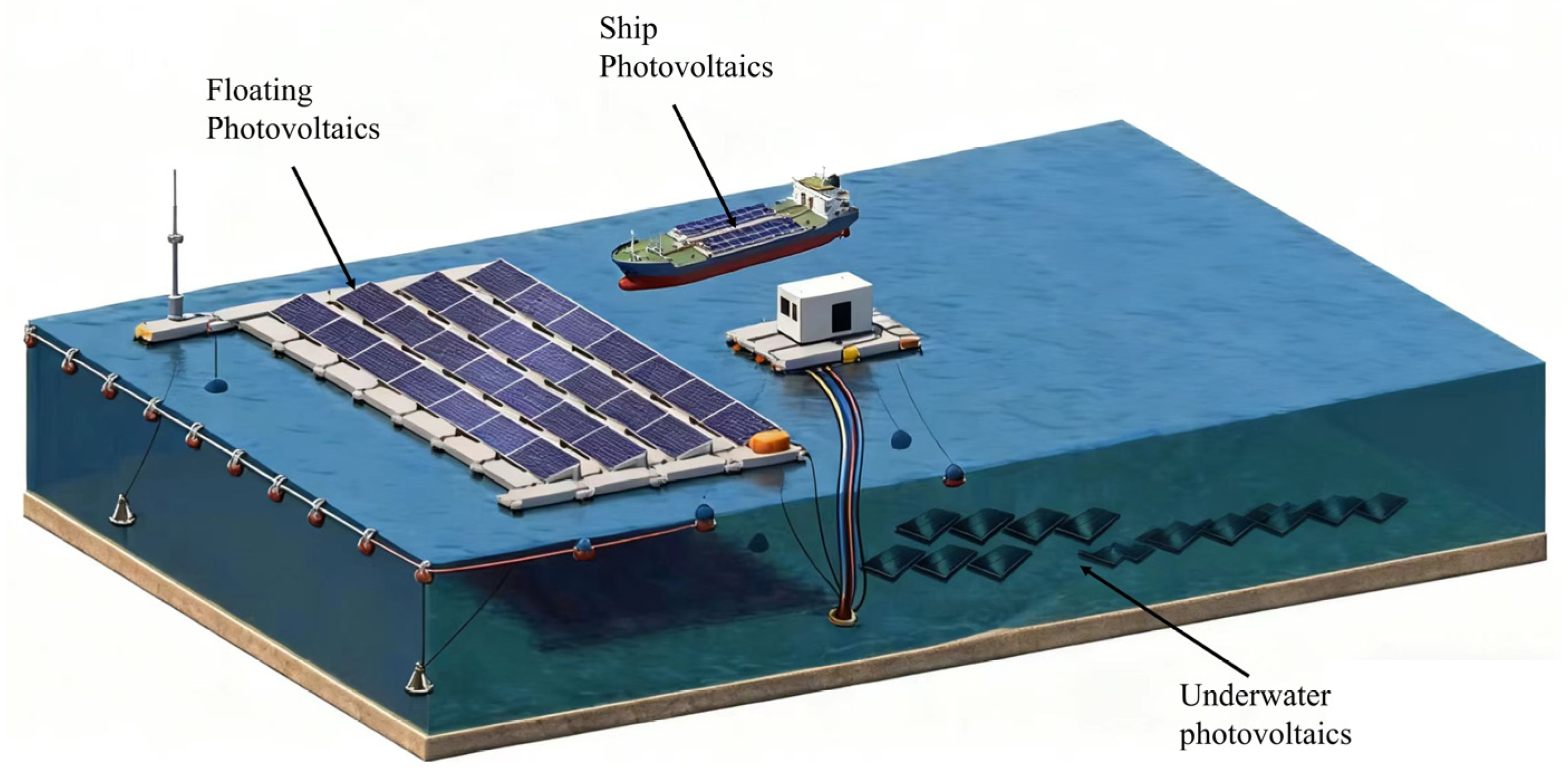
Marine photovoltaic structures must consider not only compressive properties but also tensile and flexural characteristics. The packing ratio serves as a crucial factor that influences the compressive performance of specimens and significantly impacts their tensile and flexural properties.
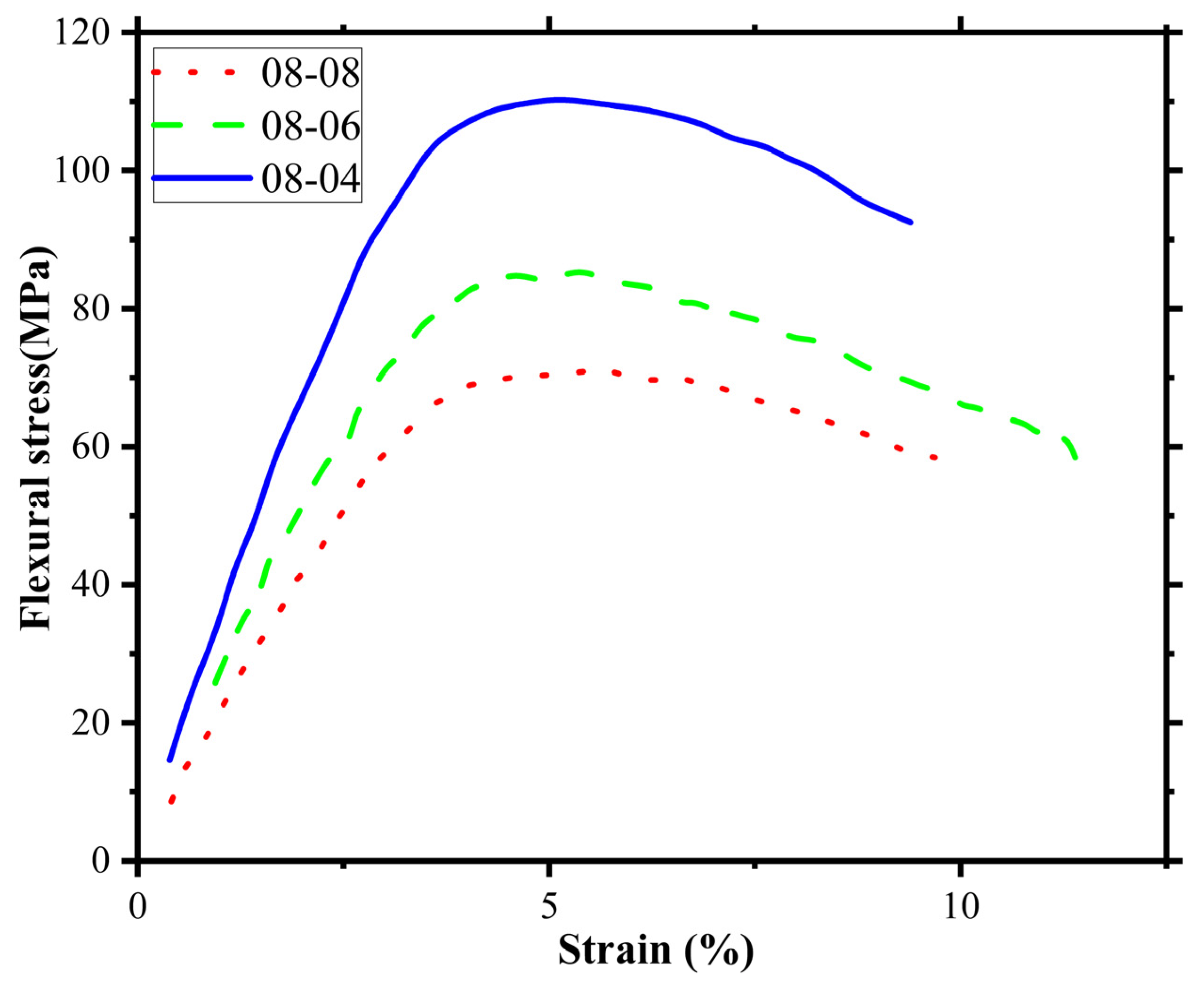
Kilinc’s research [
36] indicates that a reduction in layer thickness and hatch spacing leads to an increase in the deposition of reinforcing fibers per unit area. The study involved the fabrication of nine specimens; for instance, “1-08” denotes a specimen with a layer thickness of 1 mm and a hatch spacing of 0.8 mm, whereas “08-06” signifies a specimen with a layer thickness of 0.8 mm and a hatch spacing of 0.6 mm. The fiber content for various specimen types is presented in
Table 6.
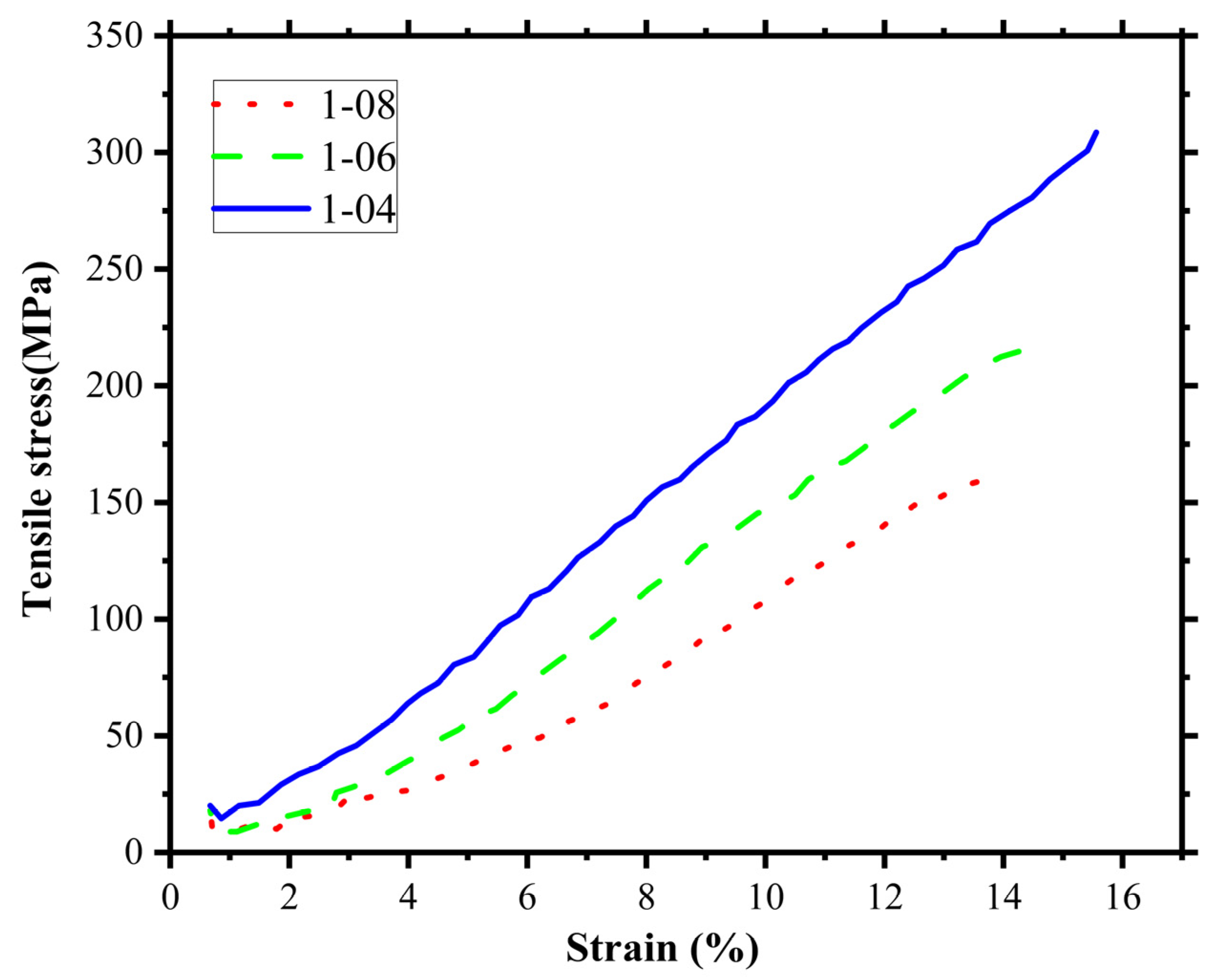
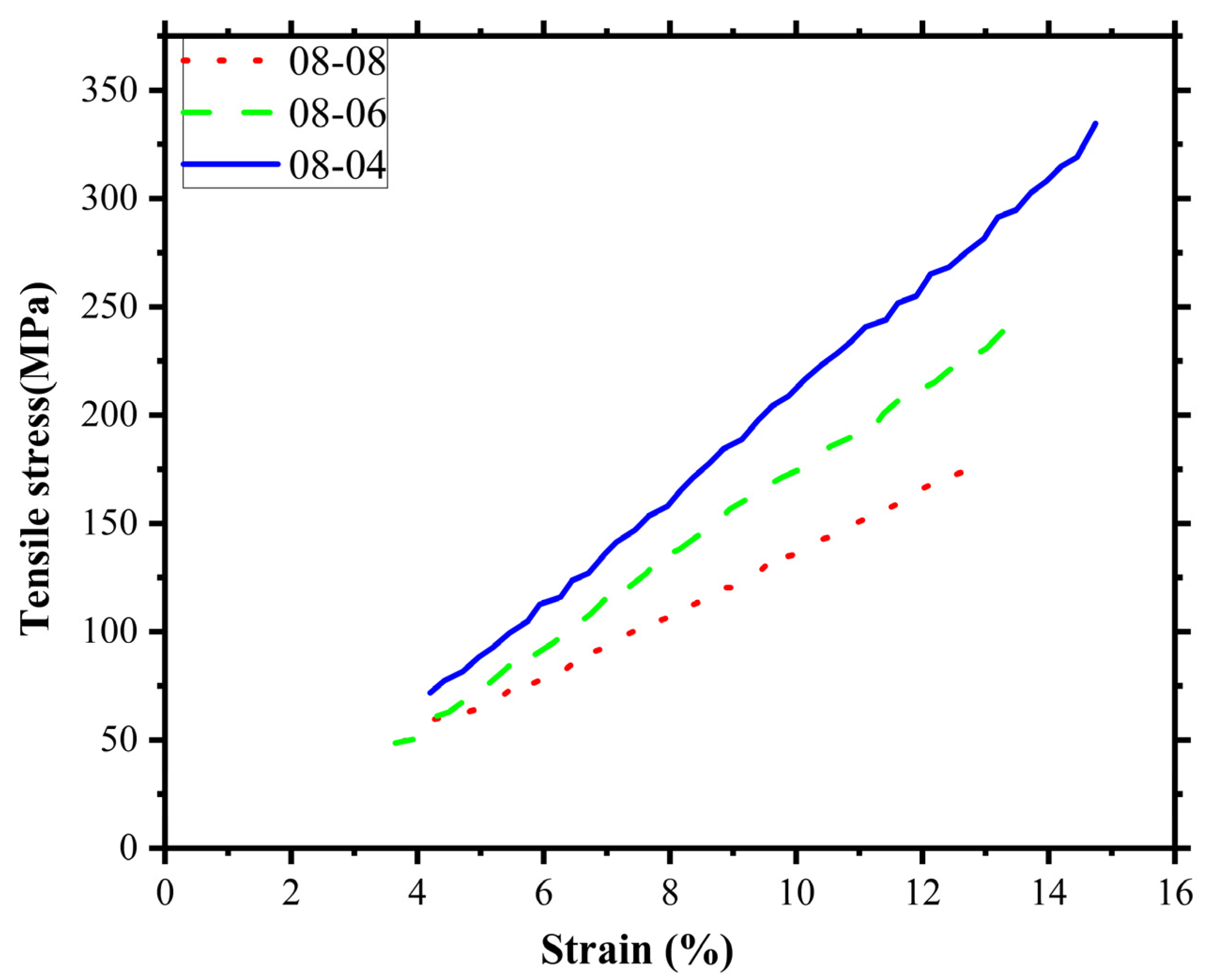
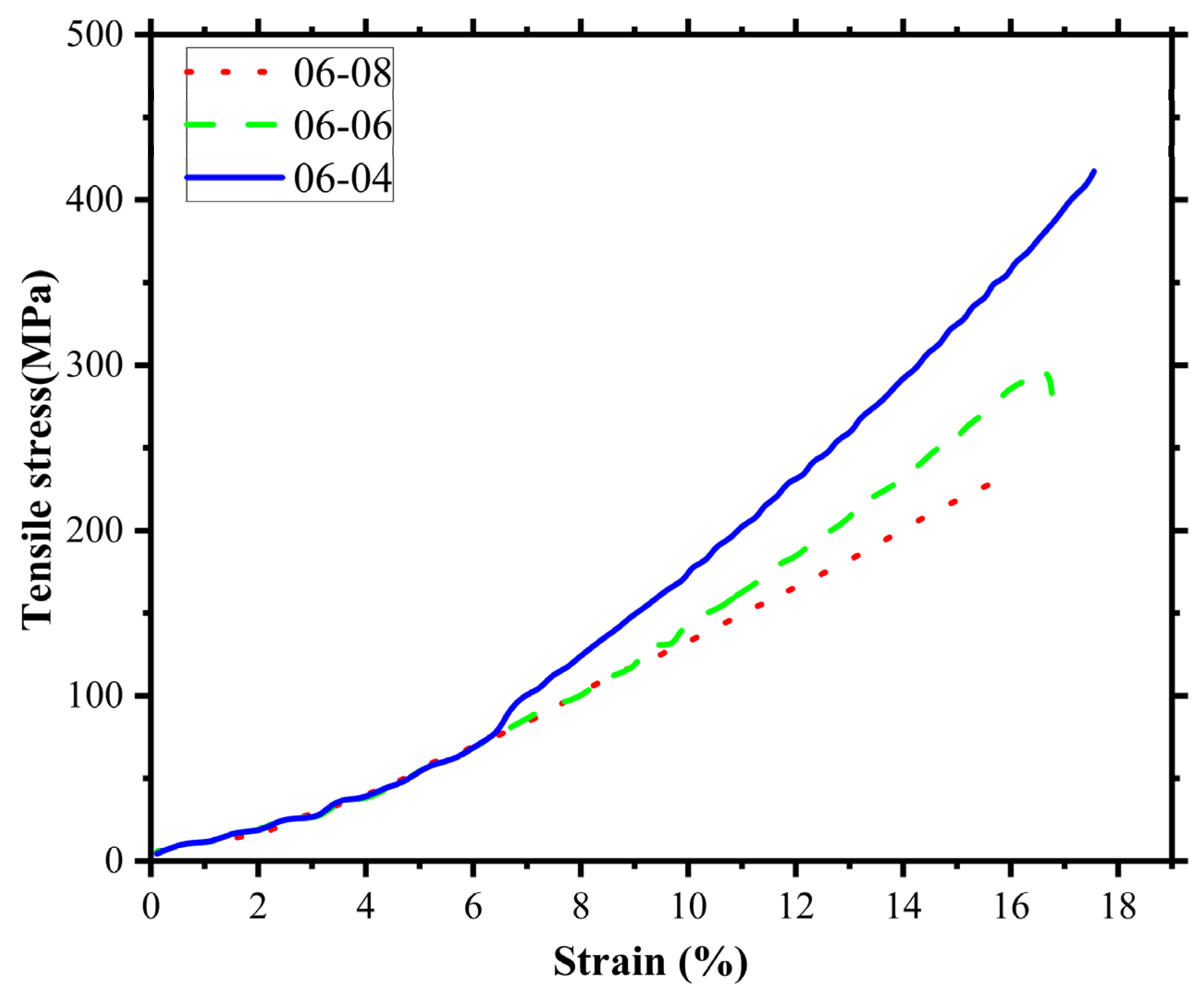
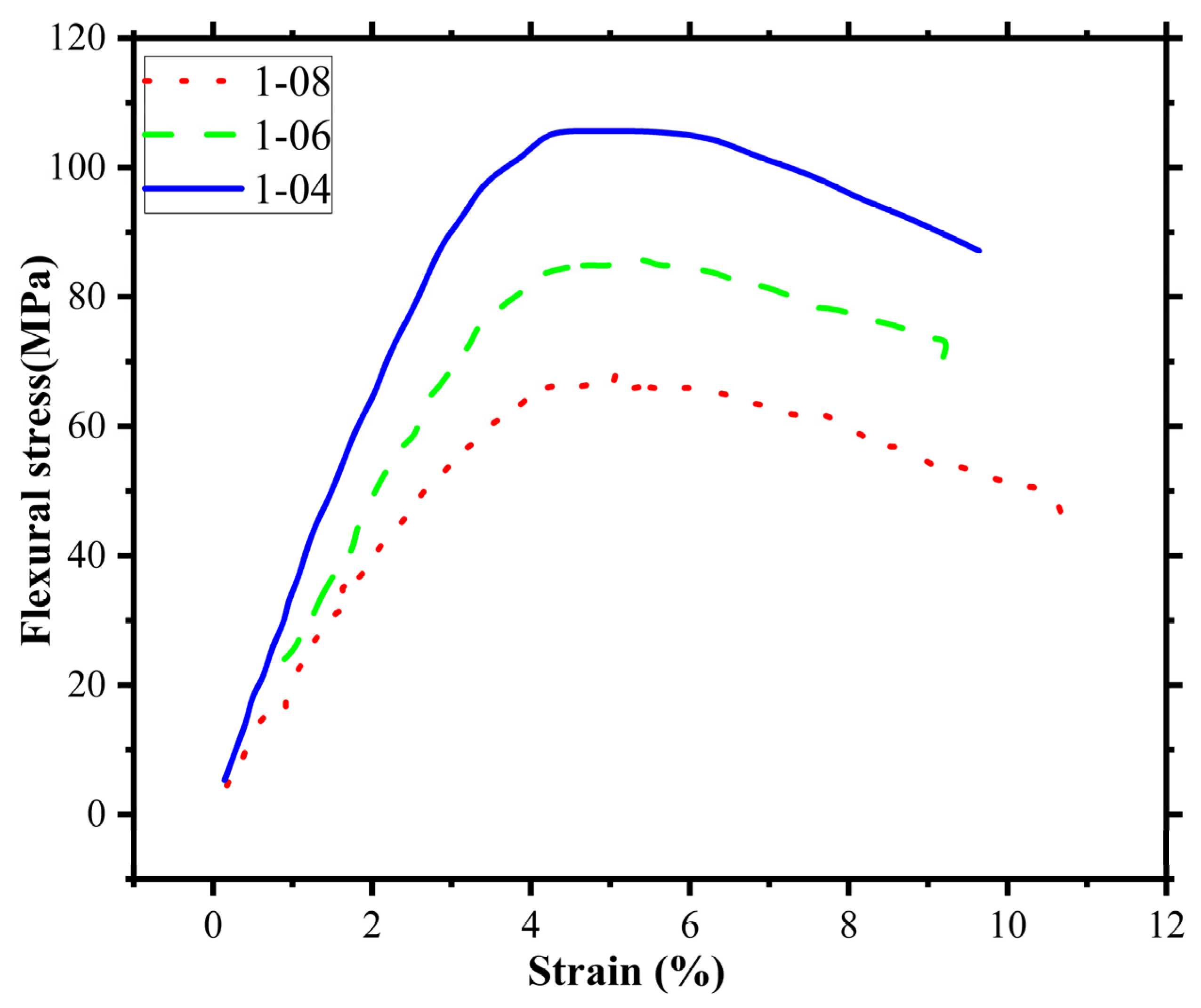
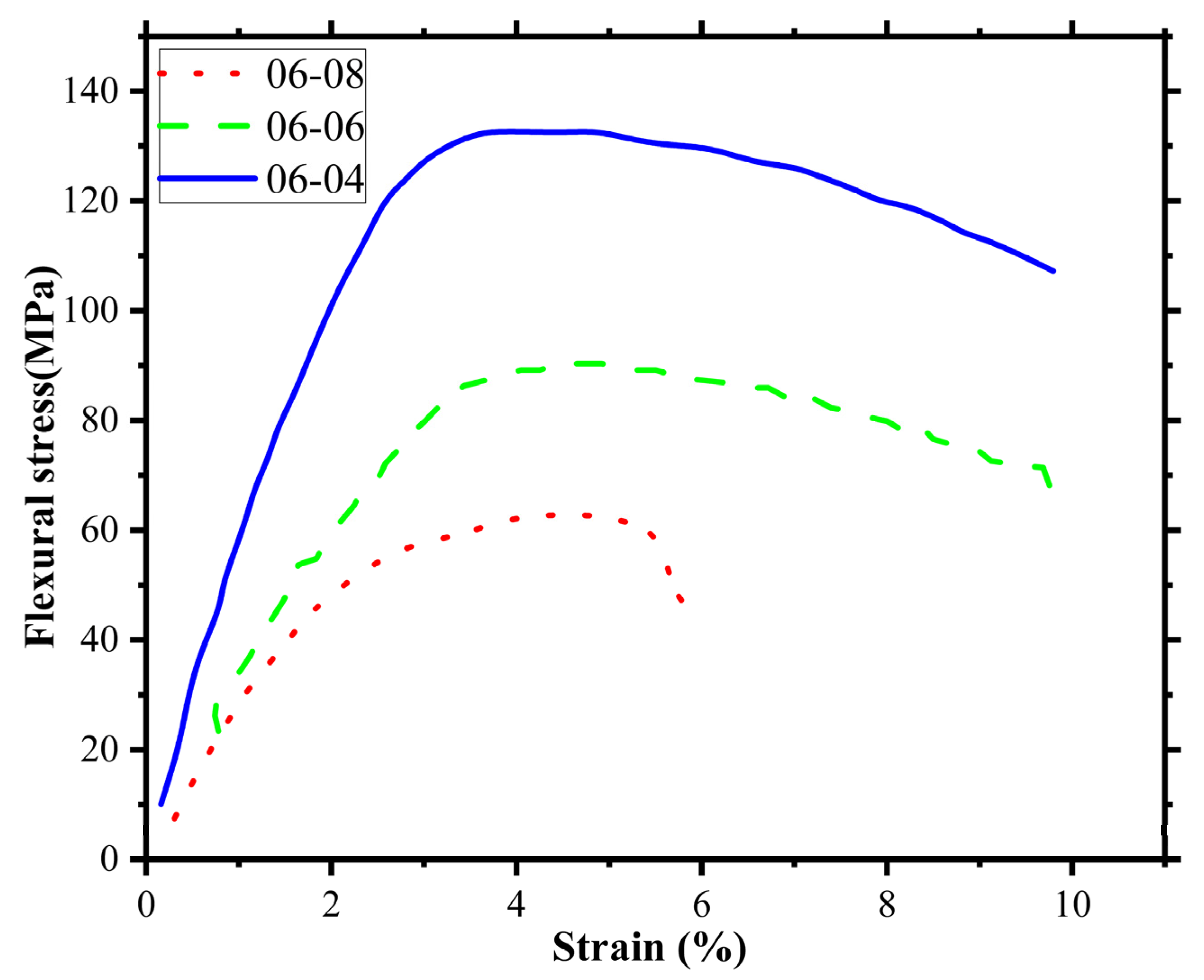
Kilinc et al. conducted tensile and flexural tests on nine specimens, which were categorized into three groups according to thickness (1 mm, 0.8 mm, and 0.6 mm). Each group underwent both tensile and flexural testing. As illustrated in
Figure 18,
Figure 19,
Figure 20,
Figure 21,
Figure 22 and
Figure 23, the specimens demonstrating the highest performance in both tests across the three thickness categories were 1-04, 08-04, and 06-04, followed by 1-06, 08-06, and 06-06. The lowest-performing specimens were 1-08, 08-08, and 06-08. Their research indicated that increased fiber content, specifically higher filler loading, led to enhanced tensile and flexural strengths in the specimens.
The study conducted by Abdulsalam et al. [
37] summarized the impact of various printing parameters on the mechanical properties of specimens, as detailed in
Table 7. As the parameters increase, they influence the mechanical properties of the components, with “+” denoting an increase in response values and “-” indicating a decrease in response values.
The table clearly indicates that packing density is positively correlated with all three mechanical properties: compression, tensile strength, and flexural strength. Specifically, as packing density increases, the mechanical properties of the specimens also improve.
A summary of the above studies reveals that increasing the specimen filling rate significantly enhances the mechanical properties of the specimens. Integrating the experimental data yields
Table 8. As mentioned earlier, this study encompasses a total of 84 data points. Twelve experiments were conducted for each of the 84 data points in this study. The average values for all data points are presented in
Table 8. The table directly demonstrates that, under identical conditions, the specimen with a 75% filling rate exhibits the best compressive performance among the four filling rates. Comparing the remaining three filling rates, it is also observed that the compressive performance of the specimens improves to some extent as the filling rate increases. Through the integration of data points, along with the error analysis and variance analysis of the data discussed earlier, it is not difficult to arrive at the same conclusions as those found in existing literature. This demonstrates that the research presented in this paper is reproducible and has repeatability.
Liu et al. verified the positive correlation between increased infill rate and improved mechanical properties by adjusting relative density, while Wang et al. explored the impact of changing pillar diameters on material mechanical performance; both findings align with the core conclusions of this study. However, these studies generally lack an in-depth exploration of the synergistic effects of multiple parameters and their application to specific scenarios. Kilinc’s research focused on the effect of fiber content on tensile and bending properties, without addressing the relationship among compressive performance, infill patterns, and print angles. Although Abdulsalam et al. summarized the trends in the influence of printing parameters, they did not analyze the mechanical performance differentiation mechanism caused by differences in the topology of various infill patterns, nor did they conduct targeted analysis for the harsh environmental requirements of marine photovoltaic support structures. In contrast, this study not only systematically investigates the synergistic effects of three key parameters—fill density, infill pattern, and print angle—but also, by comparing the stress transmission paths of honeycomb, spiral, and linear infill patterns, reveals the iso-stress distribution advantage of hexagonal topologies. It clarifies the suitability of honeycomb infill at high fill density (75%) with specific print angles (75° or 90°), filling a gap in existing research regarding multi-parameter optimization and scenarios specific to marine photovoltaics. Additionally, this study verifies the significance of differences in parameter effects through variance analysis, further deepening the understanding of the relationship between 3D printing processes and material performance. For instance, Liu et al. (2024) [
34] found that specimens with a relative density (equivalent to the filling rate) of 60% exhibited optimal compressive properties. In contrast, this study demonstrates that the compressive stress of honeycomb-filled specimens continues to increase even at a filling rate of 75% (with only slight stress relaxation occurring after 50%). This discrepancy likely stems from differences in the matrix material (PLA/PHA-wood composite in Liu et al.’s study [
34] versus pure PLA in this study) and the filler pattern (lattice structure in Liu et al [
34]. versus honeycomb/spiral/linear fill in this study), indicating that the optimal filling rate is highly dependent on material type and topological structure. Regarding optimal printing angles, Jiang et al. (2025) [
31] observed that honeycomb-filled specimens at 75% filling exhibited stable superior performance across all printing angles, aligning with the general trend in this study. However, this research further clarifies that honeycomb filling achieves peak compressive stress at 75° or 90°, whereas Jiang et al [
31]. did not specify the peak angle. This refinement may stem from the finer print angle gradient employed in this study (7 angles versus fewer in Jiang et al.’s work [
31]). Regarding performance gains, the maximum compressive stress (5.12 kN) achieved by honeycomb filling at 75% packing density and 75° printing angle in this study represents an approximately 28% improvement over the peak value (approximately 3.99 kN) of the lattice structure in Liu et al.’s research [
34] and a roughly 12% enhancement over the performance (approximately 4.57 kN) of honeycomb filling in Jiang et al.’s study [
31]. This disparity highlights the synergistic optimization effect of filling patterns, filling ratios, and printing angles—an aspect insufficiently explored in prior studies. Placing this work within a broader literature context reveals that multi-parameter synergistic optimization is a key direction for enhancing the mechanical properties of 3D-printed marine photovoltaic components. Subsequent studies on the mechanical properties of PLA-based components can reference this multi-parameter synergistic approach to optimize component performance.
Offshore photovoltaic structures are typically large in scale and must endure harsh environmental conditions, which necessitate exceptional mechanical properties in their construction. As previously noted, a higher infill density in 3D-printed specimens is associated with enhanced mechanical properties. However, beyond a certain threshold, further increases in infill density result in only marginal improvements in mechanical performance. At this juncture, alternative methods are required to improve mechanical properties, ensuring compliance with performance standards while also aiming to reduce structural mass and conserve materials. This study examines the effects of fill rate on the compressive properties of specimens, as well as the influence of printing method and angle. As shown in
Figure 12, at a 75% fill rate, the honeycomb printing method consistently exhibits superior compressive performance compared to the other two methods, irrespective of the specimen’s printing angle. Jiang et al. [
38] utilized the same three printing methods as this study for specimen design and analysis. Compression tests were performed on specimens with a 75% fill rate. As shown, specimens featuring a honeycomb structure consistently demonstrated superior compressive performance compared to the other two structures, regardless of the printing angle, when the fill rate was maintained at 75%, as depicted in
Figure 24. Jiang et al [
31]. provided an explanation for this phenomenon in their research. The hexagonal topology of the honeycomb structure constitutes an ‘equistress structure,’ enabling uniform distribution of external forces throughout the entire structure and preventing localized stress concentration (refer to stress distribution simulation results in Jiang et al., 2025 [
31]). Its interlayer bonding area is 35% larger than that of linear structures, enhancing resistance to interlaminar delamination.
Although this study chose PLA as the 3D printing material and it demonstrated certain feasibility in laboratory compression performance tests, PLA, as a typical biodegradable polymer, has characteristics that make it susceptible to hydrolysis, which poses significant limitations in harsh marine environments. Under conditions of long-term immersion in seawater, high humidity, and salt spray erosion, PLA molecular chains are prone to breakage and degradation, leading to a significant decline in key mechanical properties such as compressive strength and tensile strength over service time. This makes it difficult to meet the engineering requirements of marine photovoltaic (MPV) systems, which typically need stable operation for 15–20 years. This is a core issue that this research must address at the material selection level. To address this limitation, polymers more suitable for marine environments, such as PETG, Nylon, and fiber-reinforced composites, should be included in subsequent studies and applications [
38,
39,
40,
41]. PETG has excellent hydrolysis resistance and UV aging resistance, maintaining structural stability even under fluctuations in daily marine temperatures and long-term seawater immersion, and its melt flow properties are compatible with 3D printing processes. Nylon combines high mechanical strength with seawater corrosion resistance, and its impact and fatigue resistance better respond to dynamic loads such as waves and wind. Fiber-reinforced composites (such as carbon fiber-reinforced PP and glass fiber-reinforced epoxy resin), with their high strength-to-weight ratio and excellent environmental aging resistance, have been widely used in marine engineering, with mechanical performance and environmental adaptability far exceeding that of PLA. It should be clarified that this study uses PLA as the target to explore the effects of infill pattern, density, and printing angle on compression performance. The core conclusions (such as the stress uniformity advantage of honeycomb infill and the threshold effect of high infill density) can, in principle, be transferred to optimize the 3D printing processes of the aforementioned marine-grade polymers. However, follow-up studies need to conduct targeted experiments based on the printing parameter sensitivities of different materials (such as the printing temperature window of PETG and the pre-drying requirements of Nylon). At the same time, accelerated tests such as seawater immersion and salt spray aging should be carried out to evaluate long-term performance, so that the research conclusions better align with the actual engineering needs of MPV systems, addressing the current study’s shortcomings in material environmental adaptability analysis. Furthermore, a key limitation of this study must be clarified: marine photovoltaic support structures encounter complex dynamic loads from waves, wind forces, and corrosion during actual service, rather than purely static compressive loads. Therefore, conclusions drawn solely from compression tests are insufficiently comprehensive to fully guide engineering applications. This research should be regarded as one component within the overall design framework for marine photovoltaic support structures. Regarding the potential influence of filling patterns on other critical mechanical properties: Honeycomb filling, with its stress-distribution characteristics, may enhance tensile strength and fatigue performance under cyclic loading by reducing local stress concentrations—consistent with the stress transfer mechanism observed in compression tests. In contrast, linear filling, characterized by its anisotropic structure and weak interlayer bonding, may exhibit lower tensile strength and poorer fatigue performance under cyclic tensile or bending loads due to crack propagation at interfacial interfaces. Helical filling, with its ability to resist combined bending and torsional loads, may exhibit tensile and fatigue properties intermediate between honeycomb and linear filling. However, these inferences require validation through subsequent tensile and fatigue testing to provide comprehensive mechanical performance data supporting the design of marine photovoltaic structures.




 ,
,