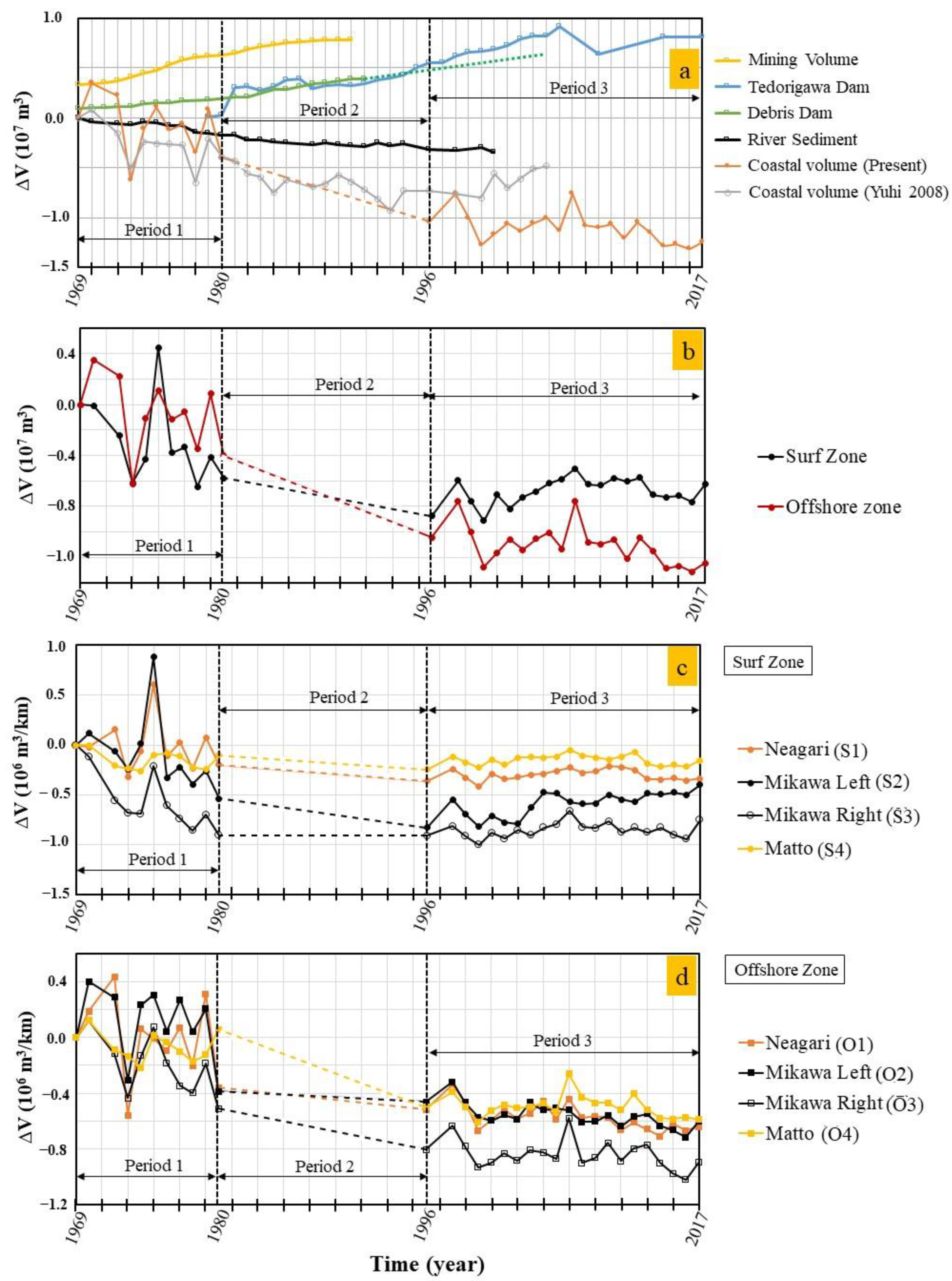
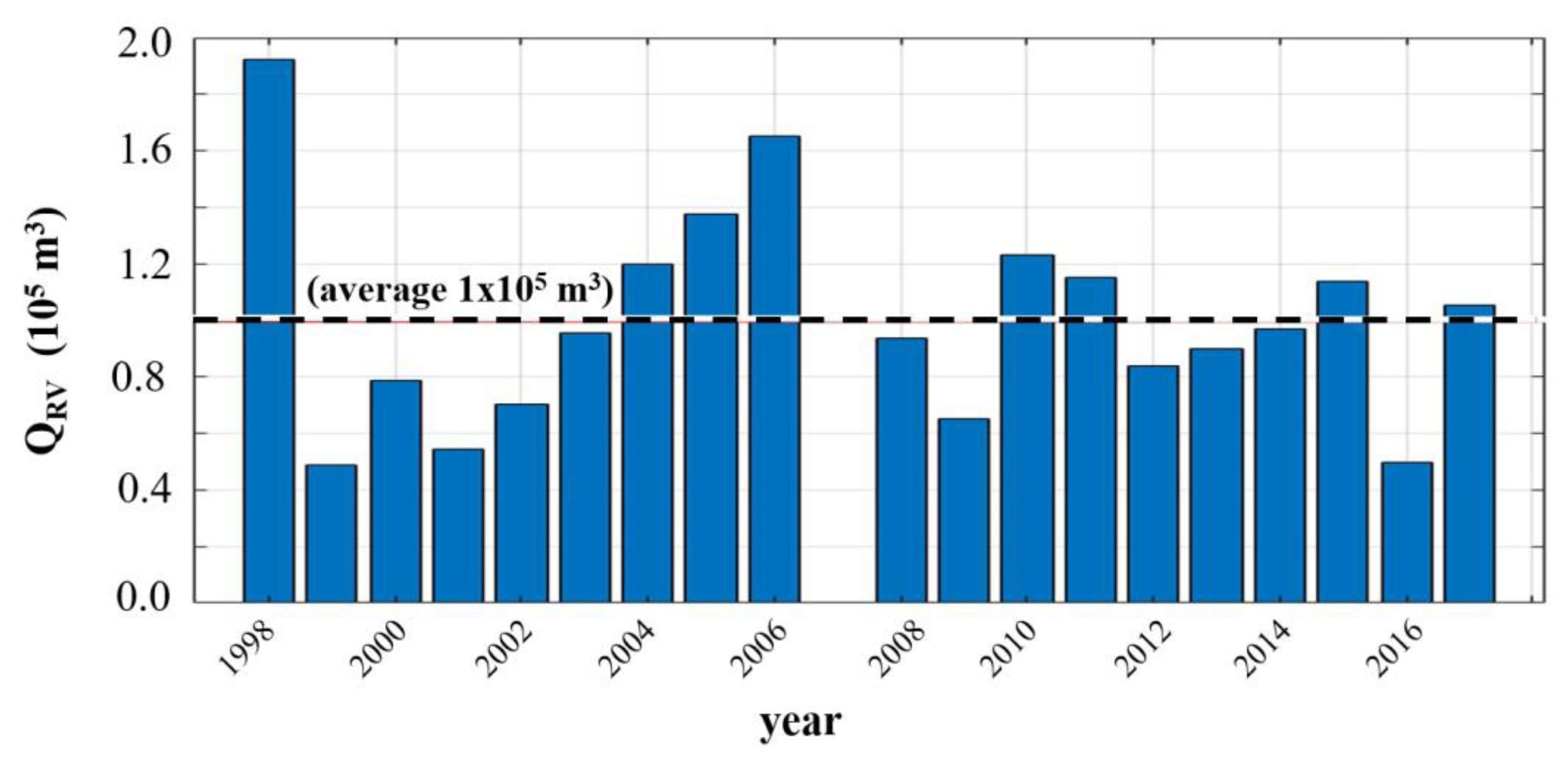
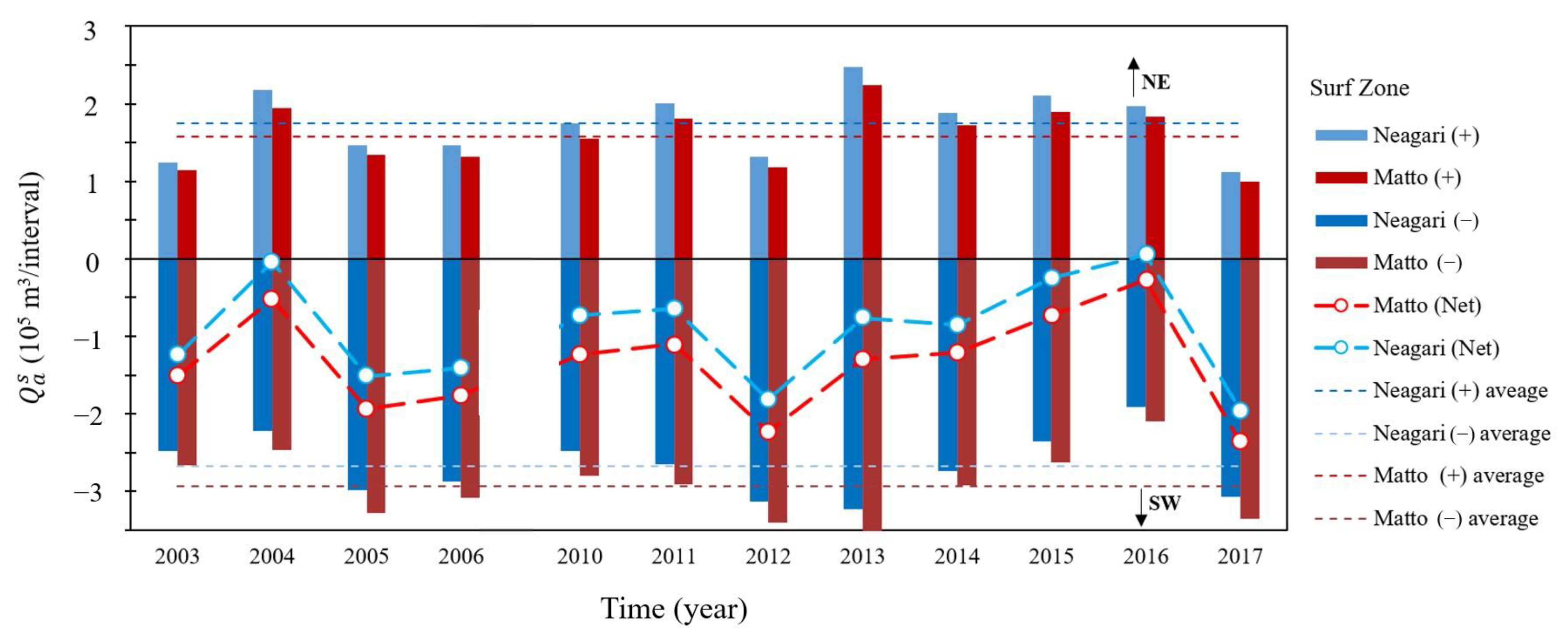
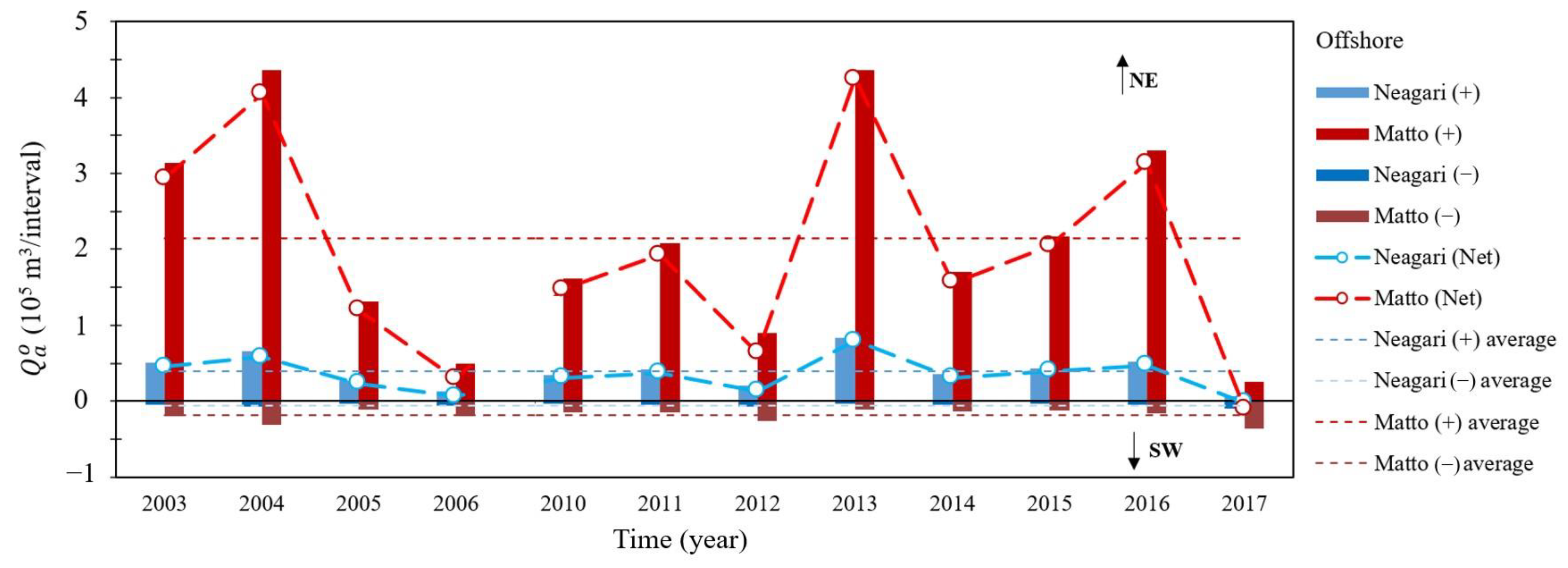
Sediment Budget and Net Sediment Transport on a Coast Dominated by Waves and Offshore Currents: A Case Study on the Ishikawa Coast and Its Surrounding Areas in Japan


Abstract
Share and Cite
Thunyaphun, T.; Umeda, S.; Yuhi, M. Sediment Budget and Net Sediment Transport on a Coast Dominated by Waves and Offshore Currents: A Case Study on the Ishikawa Coast and Its Surrounding Areas in Japan. J. Mar. Sci. Eng. 2023, 11, 621. https://doi.org/10.3390/jmse11030621
Thunyaphun T, Umeda S, Yuhi M. Sediment Budget and Net Sediment Transport on a Coast Dominated by Waves and Offshore Currents: A Case Study on the Ishikawa Coast and Its Surrounding Areas in Japan. Journal of Marine Science and Engineering. 2023; 11(3):621. https://doi.org/10.3390/jmse11030621
Chicago/Turabian StyleThunyaphun, Tussanun, Shinya Umeda, and Masatoshi Yuhi. 2023. "Sediment Budget and Net Sediment Transport on a Coast Dominated by Waves and Offshore Currents: A Case Study on the Ishikawa Coast and Its Surrounding Areas in Japan" Journal of Marine Science and Engineering 11, no. 3: 621. https://doi.org/10.3390/jmse11030621
APA StyleThunyaphun, T., Umeda, S., & Yuhi, M. (2023). Sediment Budget and Net Sediment Transport on a Coast Dominated by Waves and Offshore Currents: A Case Study on the Ishikawa Coast and Its Surrounding Areas in Japan. Journal of Marine Science and Engineering, 11(3), 621. https://doi.org/10.3390/jmse11030621