Article

A New Method for Modeling Effects of Surface Ice on Waves

Ocean Sciences Division, U.S. Naval Research Lab, Stennis Space Center, MS 39529, USA
J. Mar. Sci. Eng. 2023, 11(10), 2017; https://doi.org/10.3390/jmse11102017
Submission received: 28 September 2023 / Revised: 16 October 2023 / Accepted: 18 October 2023 / Published: 20 October 2023
(This article belongs to the Special Issue Recent Research on the Measurement and Modeling of Sea Ice)

Abstract

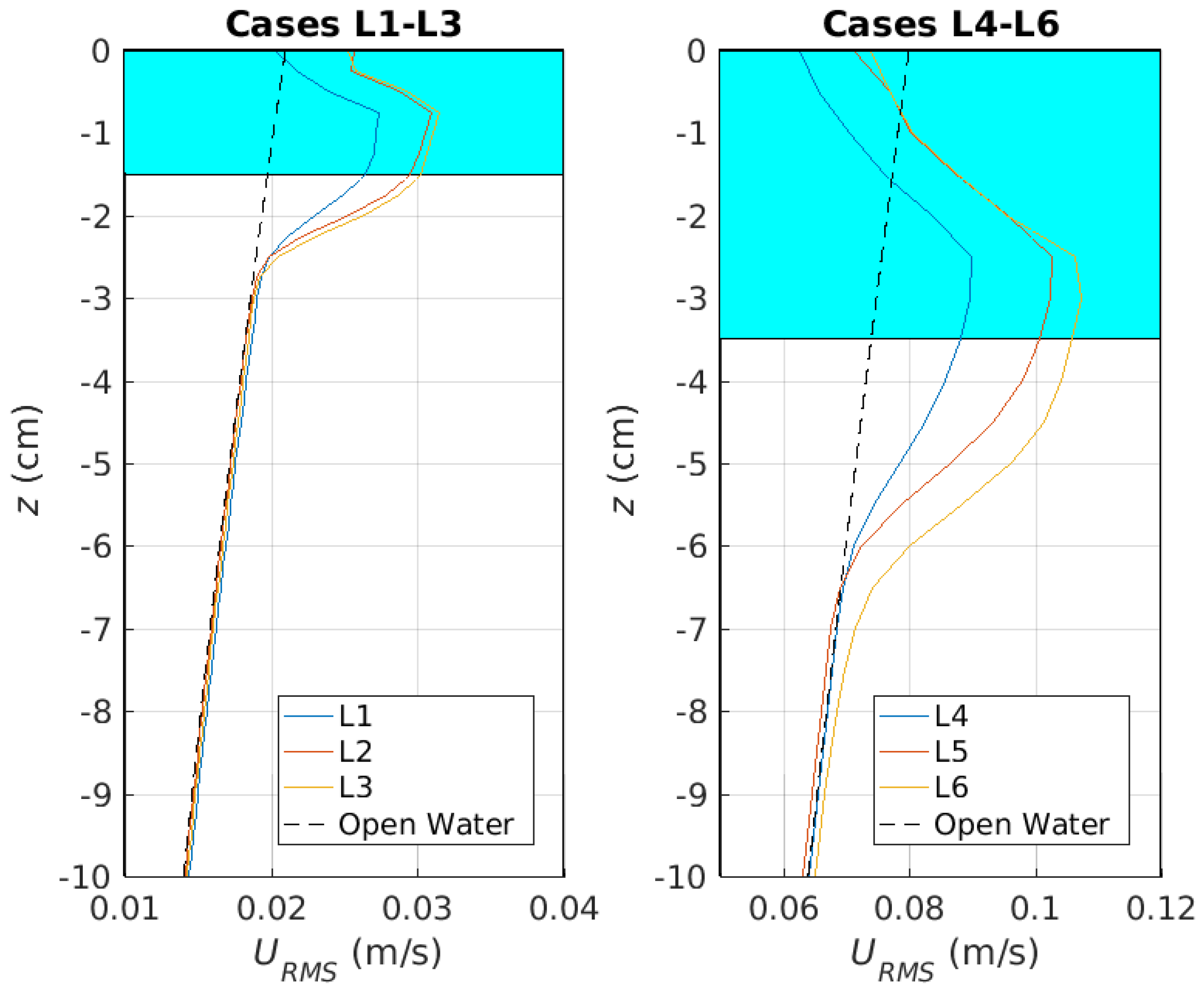
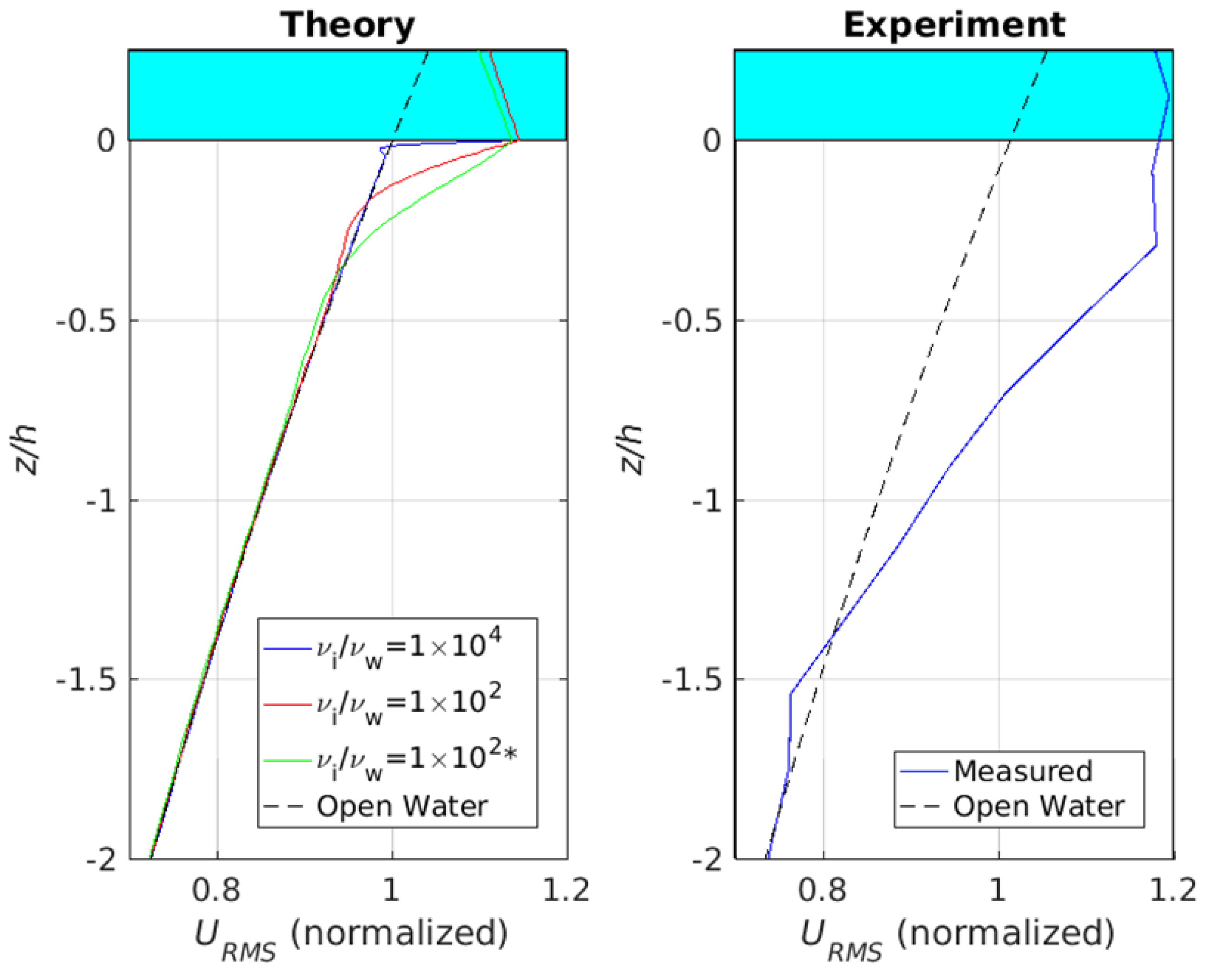
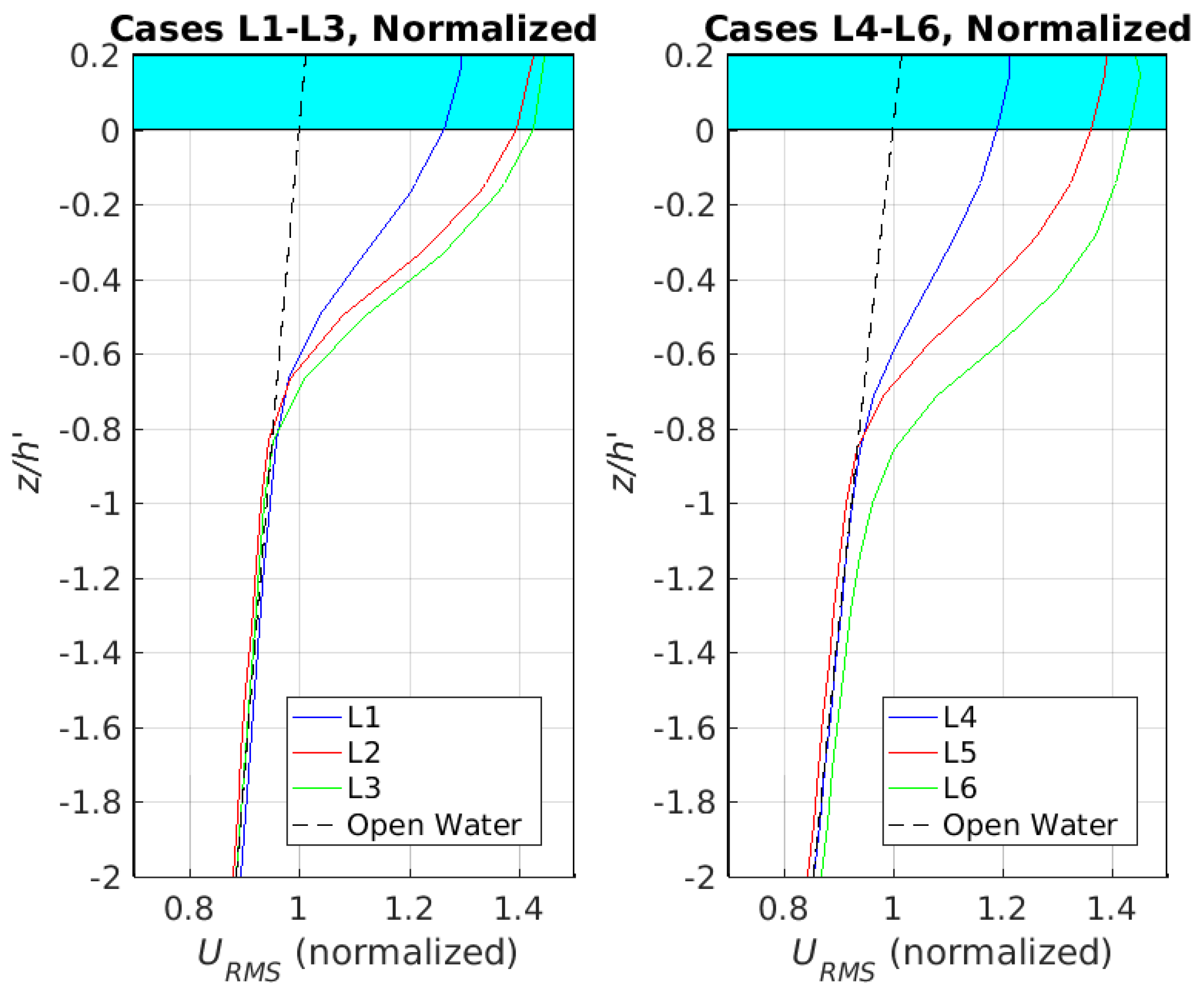
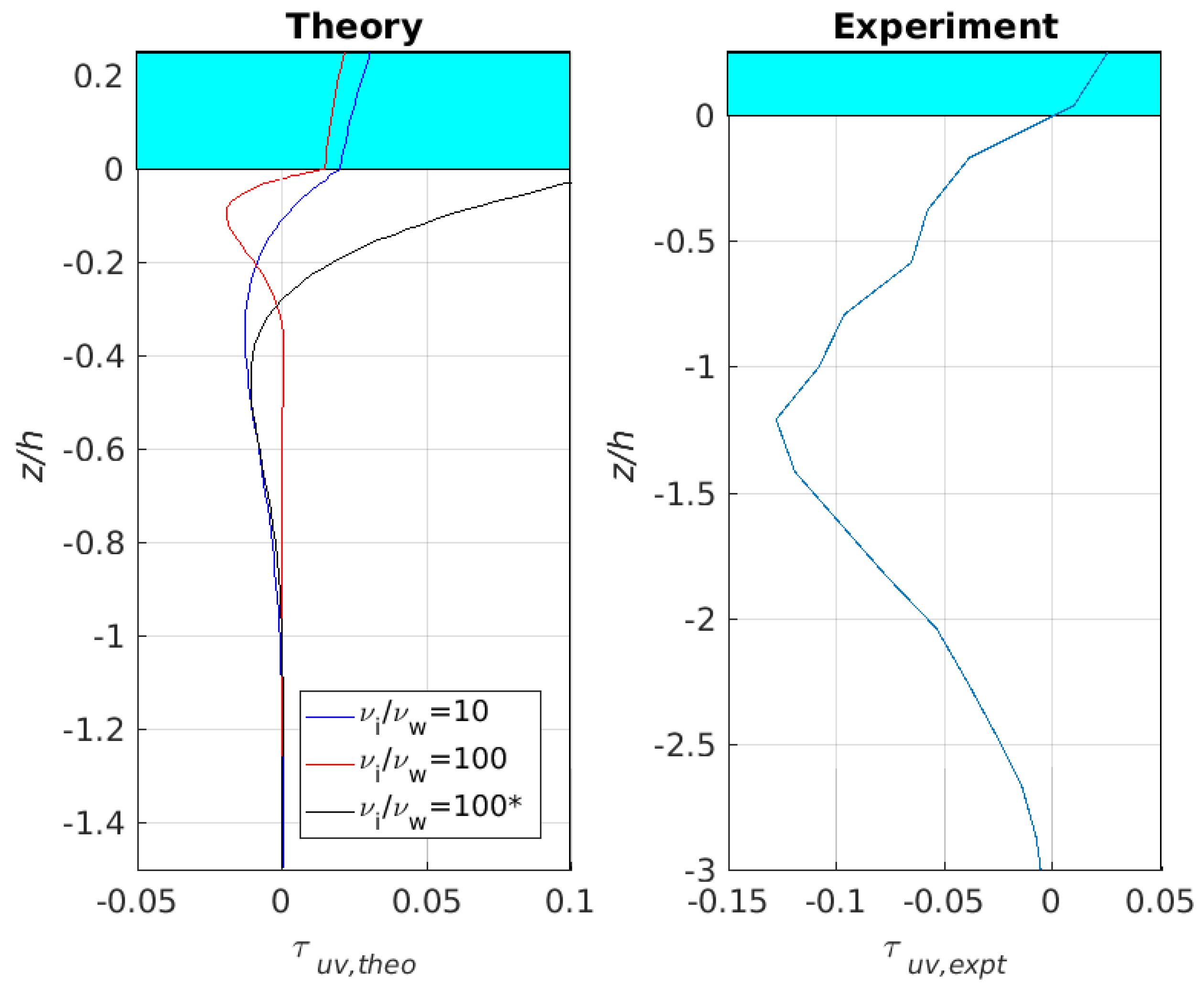
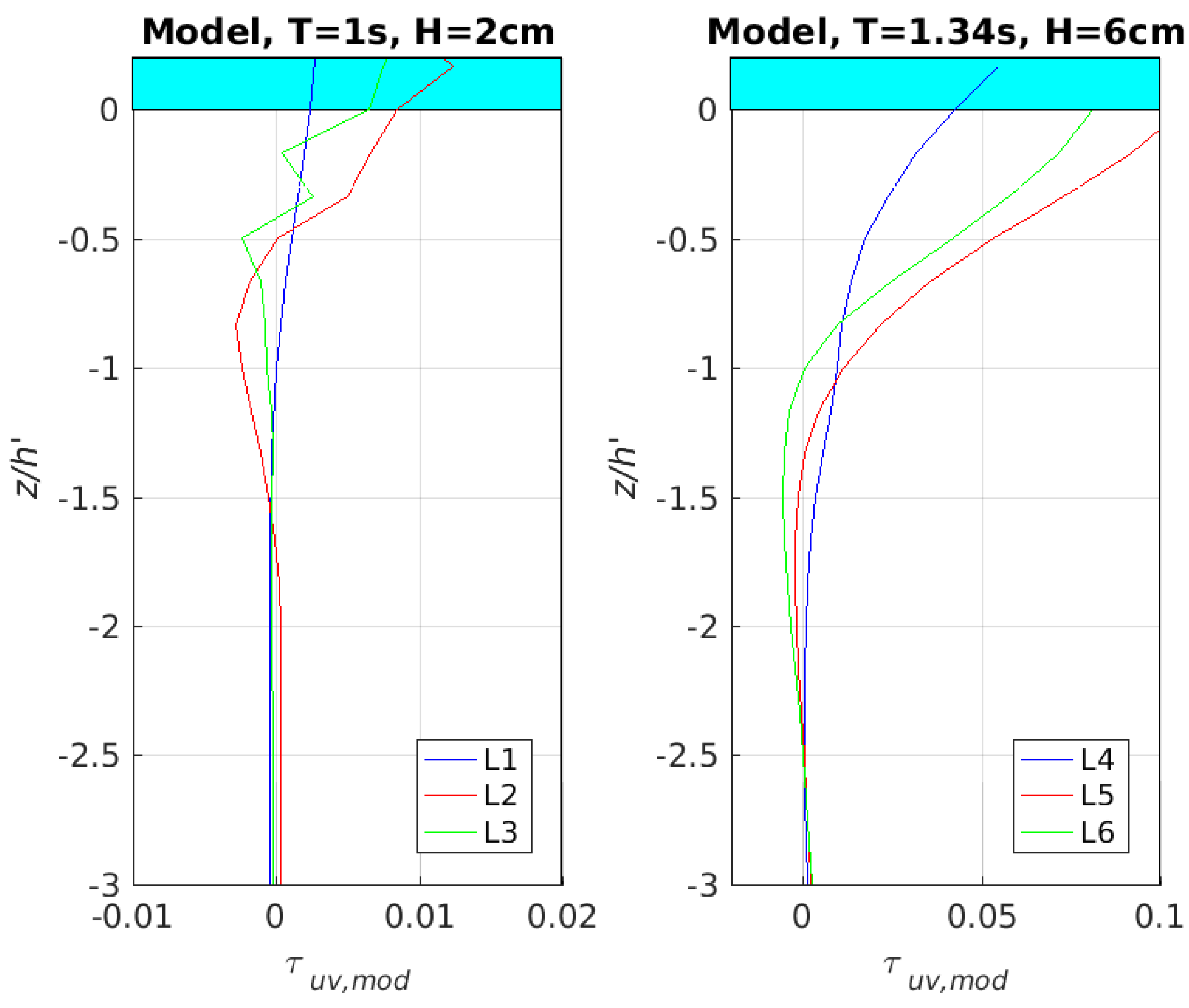
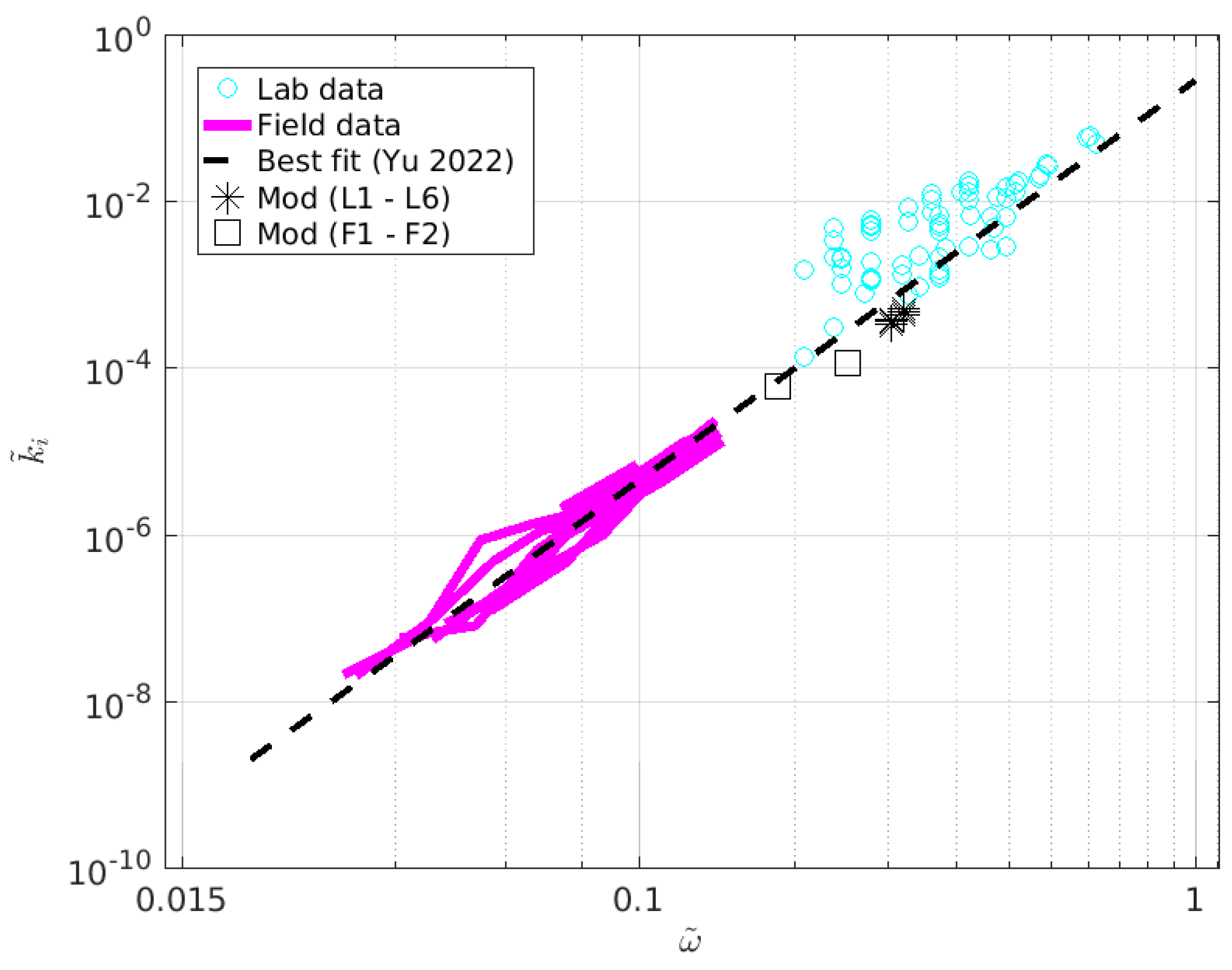
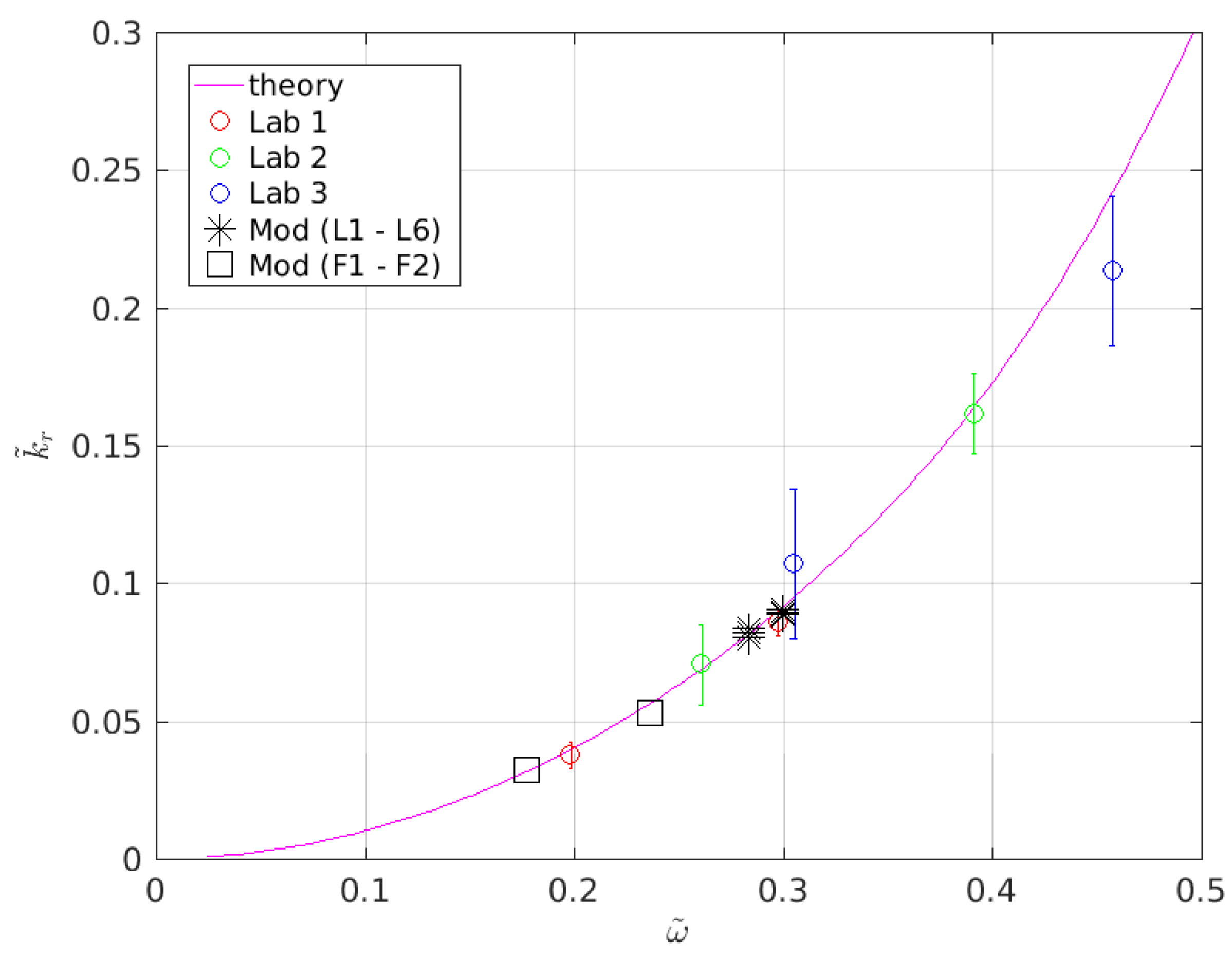
Accurate prediction of ocean surface wave attenuation in polar marginal ice zones remains a challenge. In this article, an alternative approach to the problem is introduced, in which the ice layer is represented with a modified version of the vegetation damping parameterization in a phase-resolved wave model. The new representation is evaluated by comparison to theory and measured data under varied wave and ice conditions. Model-estimated profiles of RMS water velocity and Reynolds stress under ice layers with different drag coefficients are found to be qualitatively comparable to a range of nondimensional profiles computed using viscous layer theory. Modeled profiles appear somewhat vertically “stretched” relative to theoretical results, and in this respect, they more closely resemble measurements obtained during a recent wave–ice laboratory experiment. Estimated values of the wave attenuation coefficient and wavenumber in ice from the adapted model align well with theory and with a range of lab and field datasets. Several additional model ice parameters are available to facilitate a more nuanced representation of surface ice effects and will be investigated further in an upcoming companion study.
Keywords: ocean surface waves; sea ice; marginal ice zone; wave attenuation; wave modeling ocean surface waves; sea ice; marginal ice zone; wave attenuation; wave modeling