
You are currently viewing a new version of our website. To view the old version click .
Journal of Marine Science and Engineering
  • Article
  • Open Access

14 February 2022

Decision Support System for Technology Deployment Considering Emergent Behaviors in the Maritime Industry

and
1
Graduate School of Frontier Science, The University of Tokyo, Kashiwa 277-0882, Japan
2
Simplex Inc., 19F Toranomon Hills Mori Tower, Tokyo 105-6319, Japan
*
Author to whom correspondence should be addressed.
This article belongs to the Special Issue Advances in Ship Design

Abstract

The maritime industry is trying to utilize new technology for enhancing its competitiveness to overcome today’s severe economic situation, and some interact effects, or potentially emergent effects, will emerge during the introduction of these technologies. In this study, various simulations that relate to marine logistics and shipping were performed. By contrast, a detailed method that can reproduce emergent effects is required to some extent. This study utilized a Monte Carlo simulation for uncertainties, such as market and failure uncertainties. To evaluate and explore the emergent effect correctly and accurately when multiple technologies are introduced, an evaluation methodology was developed, which can evaluate the interact effect from the perspective of profit improvement and CO2 reduction during the transportation period. As a case study, decision making for introducing 28 technology combinations to the maritime industry was conducted, and the utility of the proposed methodology was assessed.

1. Introduction

In recent years, the maritime industry has been striving to enhance efficiency, reduce costs, and strengthen competitiveness while effectively utilizing technologies for development. Although studies on the emergence and evaluation of synergistic effects by combining elements are currently progressing in many industries, it is difficult to create a simulation that can reproduce the emergent phenomenon. There is a need to support the decision-making aspect of selecting the technologies to be deployed and examining the effects of deploying a combination of technologies using new simulations.
In this study, we developed a decision support system to improve the performance of complex marine transportation systems by exploring combinations of technologies that can produce emergent behavior regarding improving operational profits and reducing CO2 emissions on the basis of the background and perspective of decision makers in the maritime industry.
As the methodology of the simulation, we applied several models that help calculate the operational profit and CO2 emissions during ship transportation. By changing the value of input parameters in a well-designed simulator, the performance of deploying multiple technologies at the same time can be compared and evaluated in a quantitative aspect.
This study proposed a novel method of how to evaluate some critical performances, such as operating profit improvement and CO2 emission reduction, in the maritime industry. Furthermore, the methodology of exploring emergent effects by deploying multiple technologies at the same time can significantly help decision makers to make appropriate decisions and strategies of technology introductions in the maritime industry.

3. Proposed Method

3.1. Overview of the Proposed Method

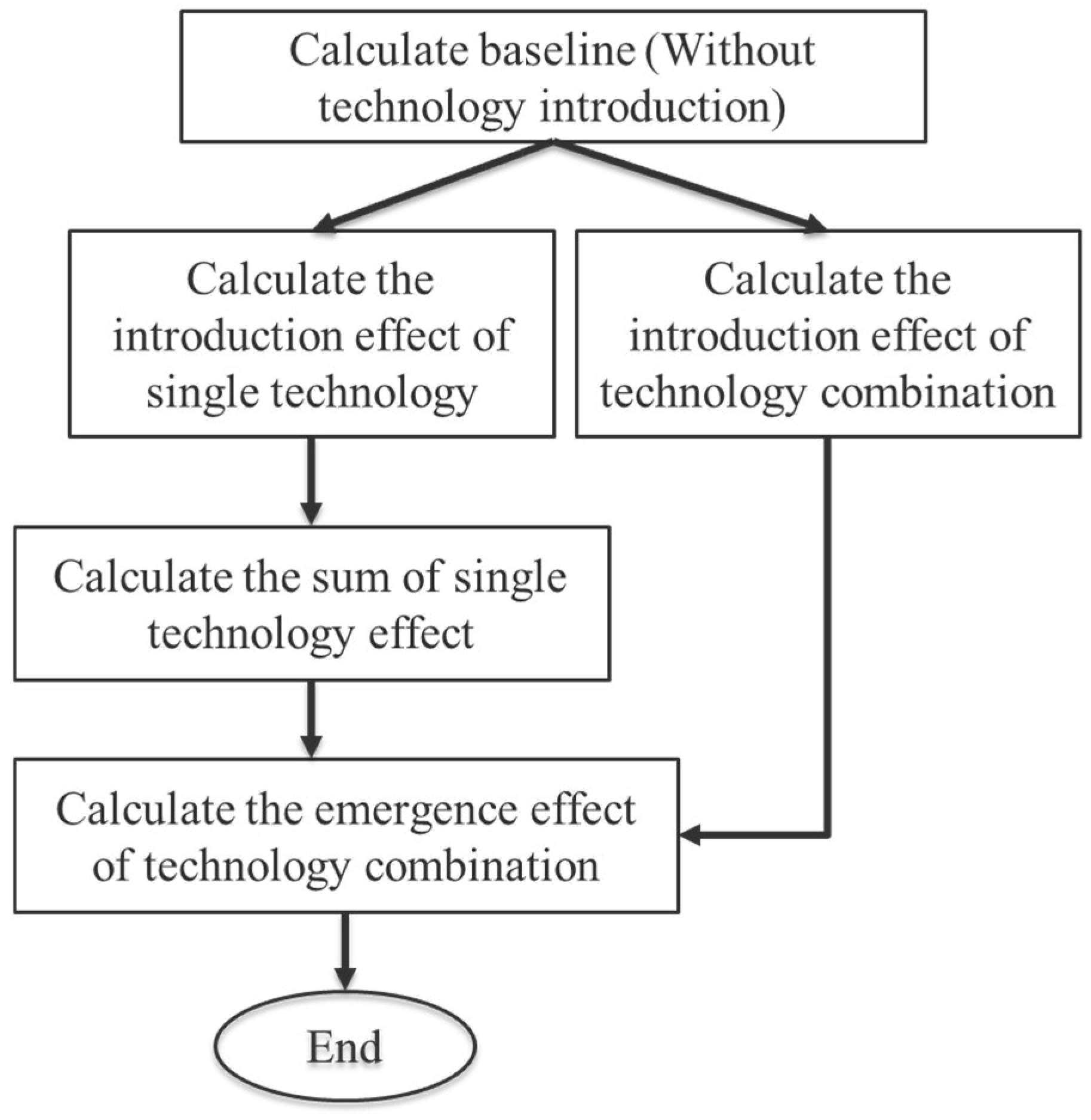
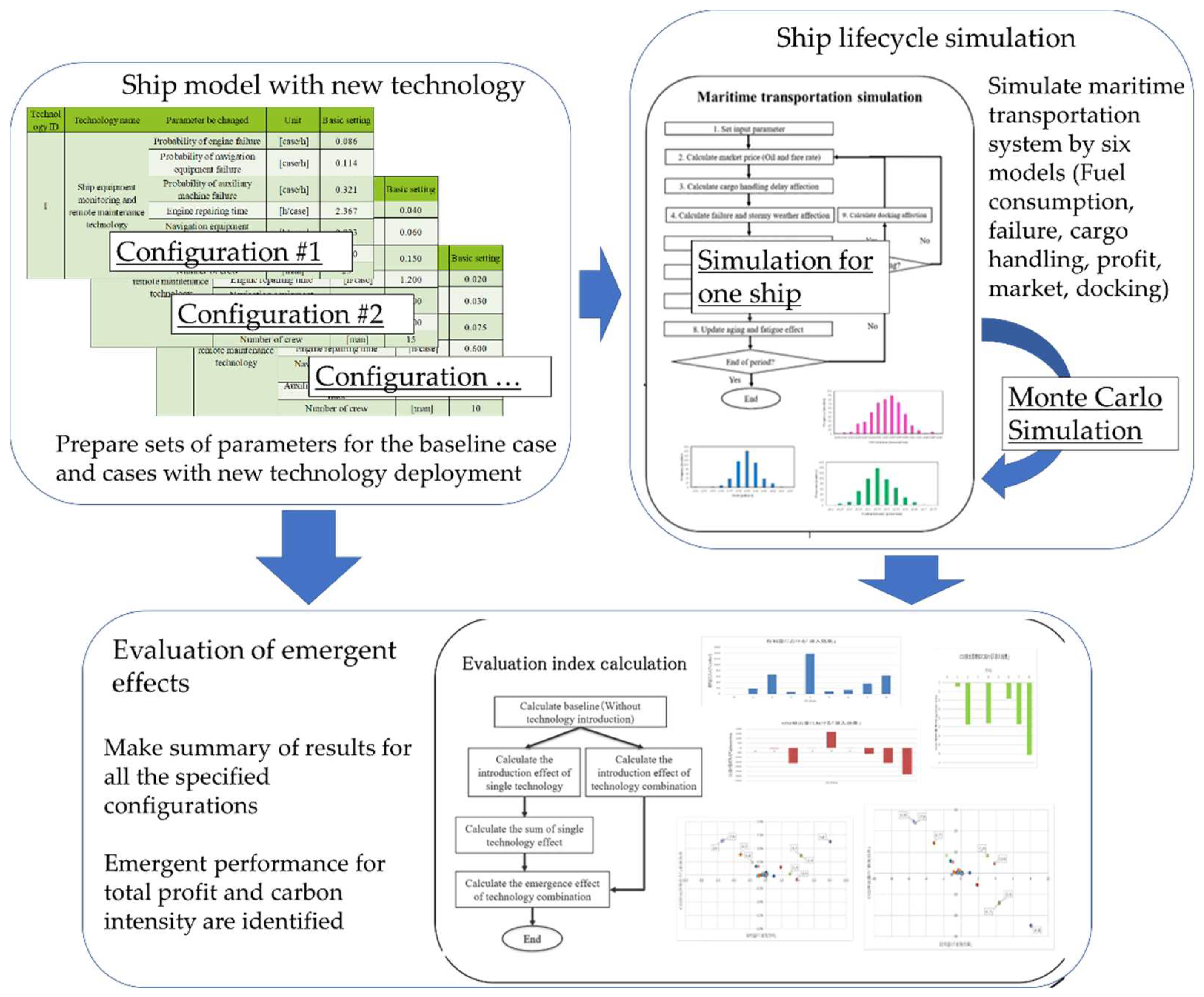
In this study, we built a logistics simulator based on the simulator created by a previous study [15], with reference to the technology group that is being considered for development or deployment in the maritime industry. The methodology in the previous study assumed that the states of a ship in service are “operation”, “cargo handling”, and “docking”. The number of incidents and failures, operating profit, flight delay, and cargo handling delay were calculated on the basis of several models. Some of the models are used in this study continuously, which will be introduced next. In addition, this methodology considers the effects of weather conditions as external influences. However, the simulator in previous research does not consider the influence of market fluctuations, and it assumes that fuel price and transportation fees are constant. The evaluation criteria were determined from the viewpoint of improving the operating profit and reducing CO2 emissions on the basis of the output value of the simulation. The study also explains a quantification evaluation method of emergent effects by deploying a combination of technologies. Figure 1 depicts an overview of the proposed method.
Figure 1. Overview of proposed method.
The functions of the simulator are classified into six models based on the status of the cargo ship, fuel consumption, failure and weather, cargo handling, profit and market models, and docking rules. The input is the parameter set in each model, and the output parameter is the total profit and carbon intensity.
The effect of deploying a single technology or multiple technologies is expressed by changing the parameters of the created models.

3.2. Selection and Calculation of Evaluation Indicators

It was necessary to compare the effects of deployment to explore the interactive effects by deploying multiple technologies. Therefore, a baseline was set to serve as a reference for the evaluation index. The total profit (million USD) and carbon intensity (g/(ton·km)), which were the evaluation indexes, are described below.
The total profit, π, is defined as the difference between the total income, I, and the total cost, Cost.
Π = I − Cost
Carbon intensity was calculated on the basis of the following formula for the annual transportation activity of a ship. Here, Es is the amount of CO2 emission per year, which is “cargo quantity times mileage”. The CO2 emission coefficient and specific gravity of a general fuel (C heavy oil) are based on the Ministry of the Environment’s greenhouse gas emission calculation, reporting, and publication system. The unit of carbon intensity is g/(ton·km).
CI = (Es (thousand ton))/(Amount of cargoyear (ton) × mileage (km) × 106)

3.3. Calculating for Emergent Effects on Total Profit

An overview of the method is depicted in Figure 2.
Figure 2. Overview of calculating emergent effects on total profit.
The method for calculating the emergent effect on the total profit was as follows:
  • Calculate the baseline, the simulation result without deployment of technology.
  • Compute the simulation with the deployment of a single technology.
  • Compute the simulation with the simultaneous deployment of multiple technologies.
  • Calculate the deployment effect, which is the difference between the results calculated in steps 2 and 3 and the baseline calculated in step 1.
  • Calculate the sum of deployment effects, effectcombi, when deploying a combination of multiple technologies simultaneously, along with the deployment effect, effectsingle,i, when deploying multiple technologies independently. The difference between the two, as shown in step 3, is termed the emergent effect, effectcombi.
emergencecombi = effectcombi − (effectsingle,i + effectsingle,j + ⋯)
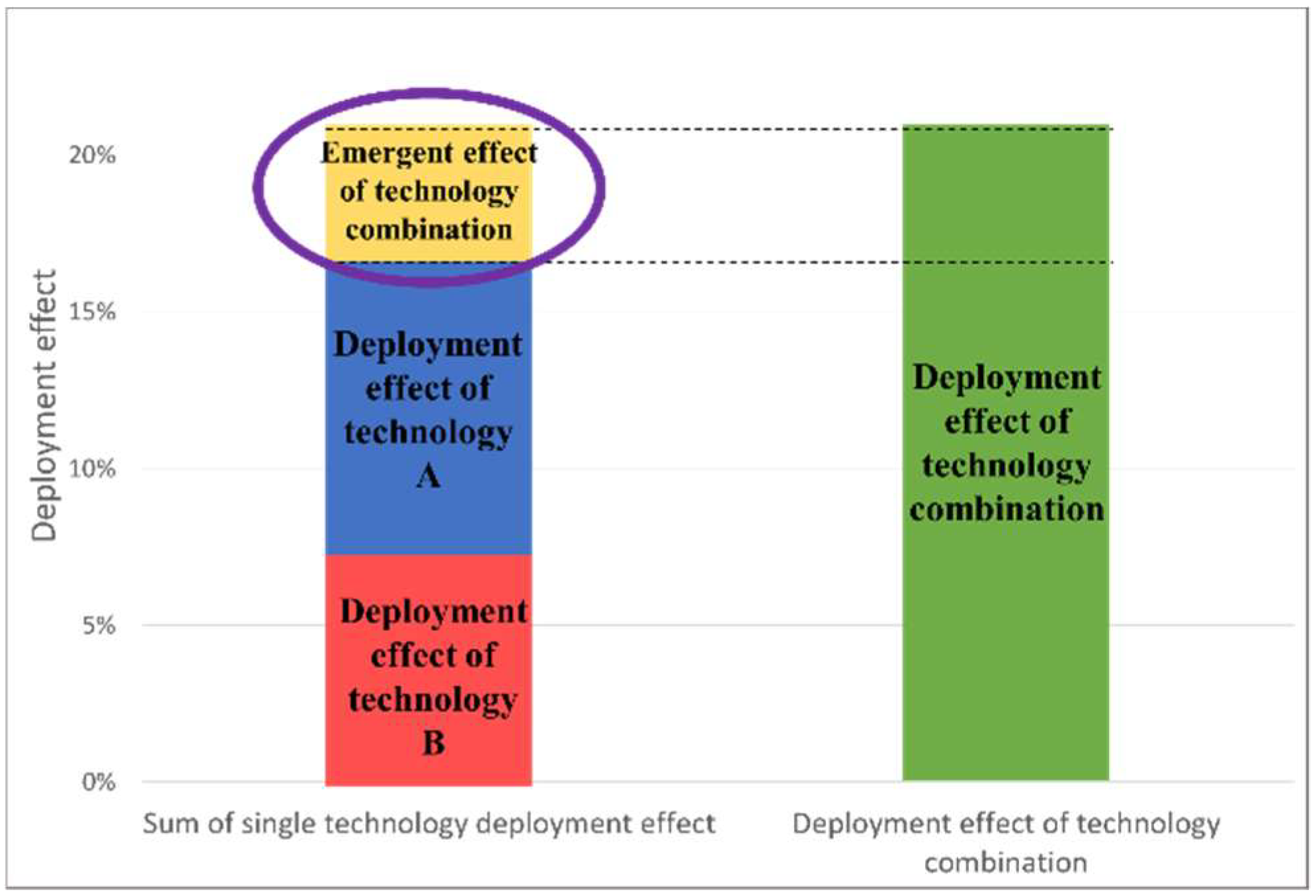
Figure 3 depicts the emergent effects on total profit. If the emergent effect is a positive number, the deployment effect when the technology combinations are utilized simultaneously is larger than the sum of the deployment effects when the technologies are utilized independently. This implies a good emergent effect of deployment. Otherwise, if it is a negative number, it implies a negative emergent effect because of the deployment of multiple technologies.
Figure 3. Schematic of the emergent effect on total profit.

3.4. Calculating Emergent Effects on Carbon Intensity

The method for calculating the emergent effect on carbon intensity is similar, but as carbon intensity is a unit that expresses efficiency, it is expressed in terms of a percentage. The deployment effect, influencecombi, and the emergent effect, emergencecombi, when utilizing a combination of multiple technologies simultaneously, are expressed in a percentage format, as shown in (4).
influencecombi = ((1 − |effectsingle,i|) × (1 − |effectsingle,j|) × ⋯ × 100%)
emergencecombi = effectcombi − influencecombi
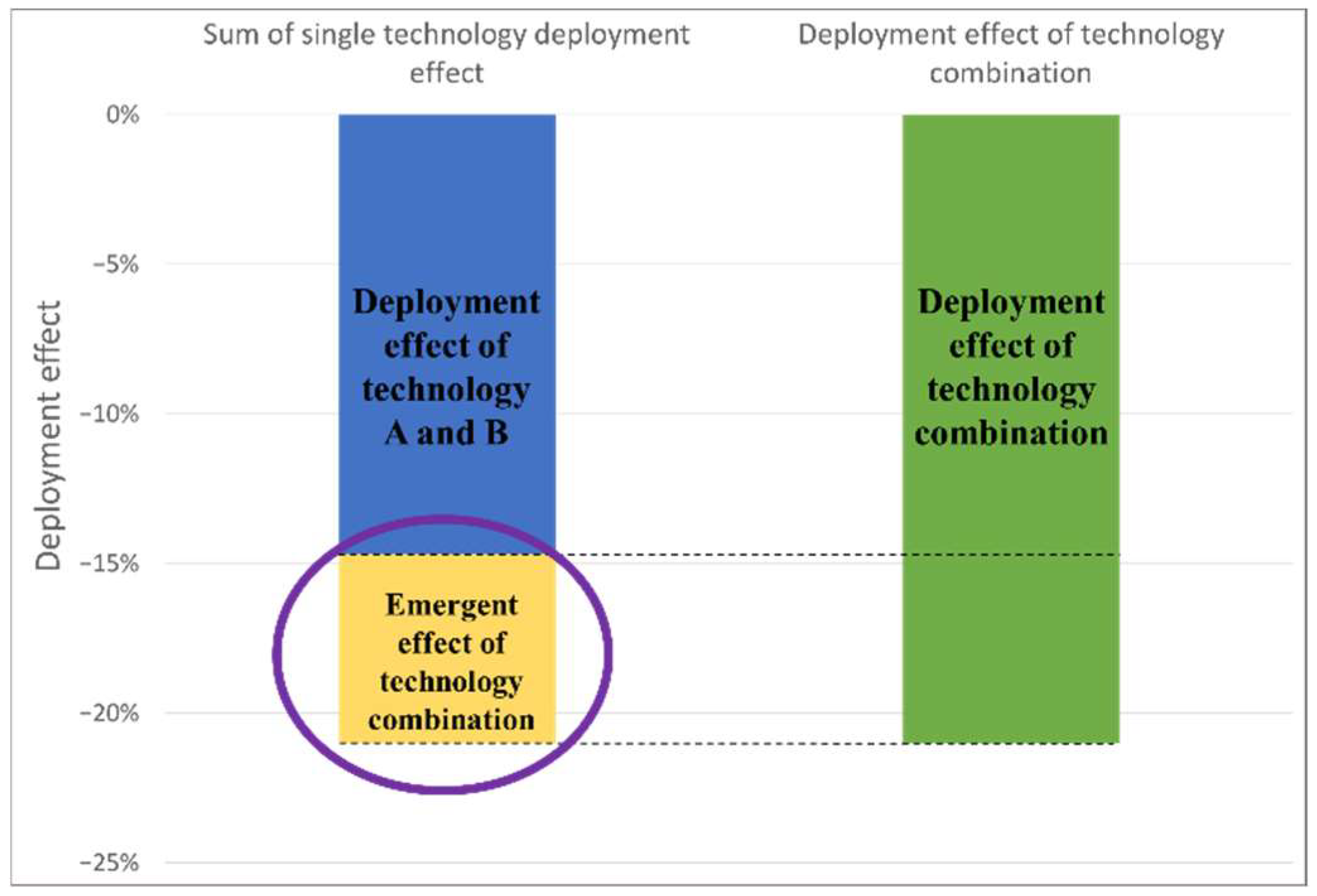
Figure 4 depicts a schematic of the emergent effects on carbon intensity. The carbon intensity is expected to decrease with the deployment of technology. Therefore, when the emergent effect in carbon intensity is a negative number, the deployment effect when multiple technologies are deployed in combination is larger than the deployment effect when the technologies are deployed separately. This means that there is a good emergent effect in deploying a combination of technologies. In the contrary case, it implies a negative emergent effect.
Figure 4. Schematic of the emergent effect on carbon intensity.

3.5. Visualization of Evaluation Indicators

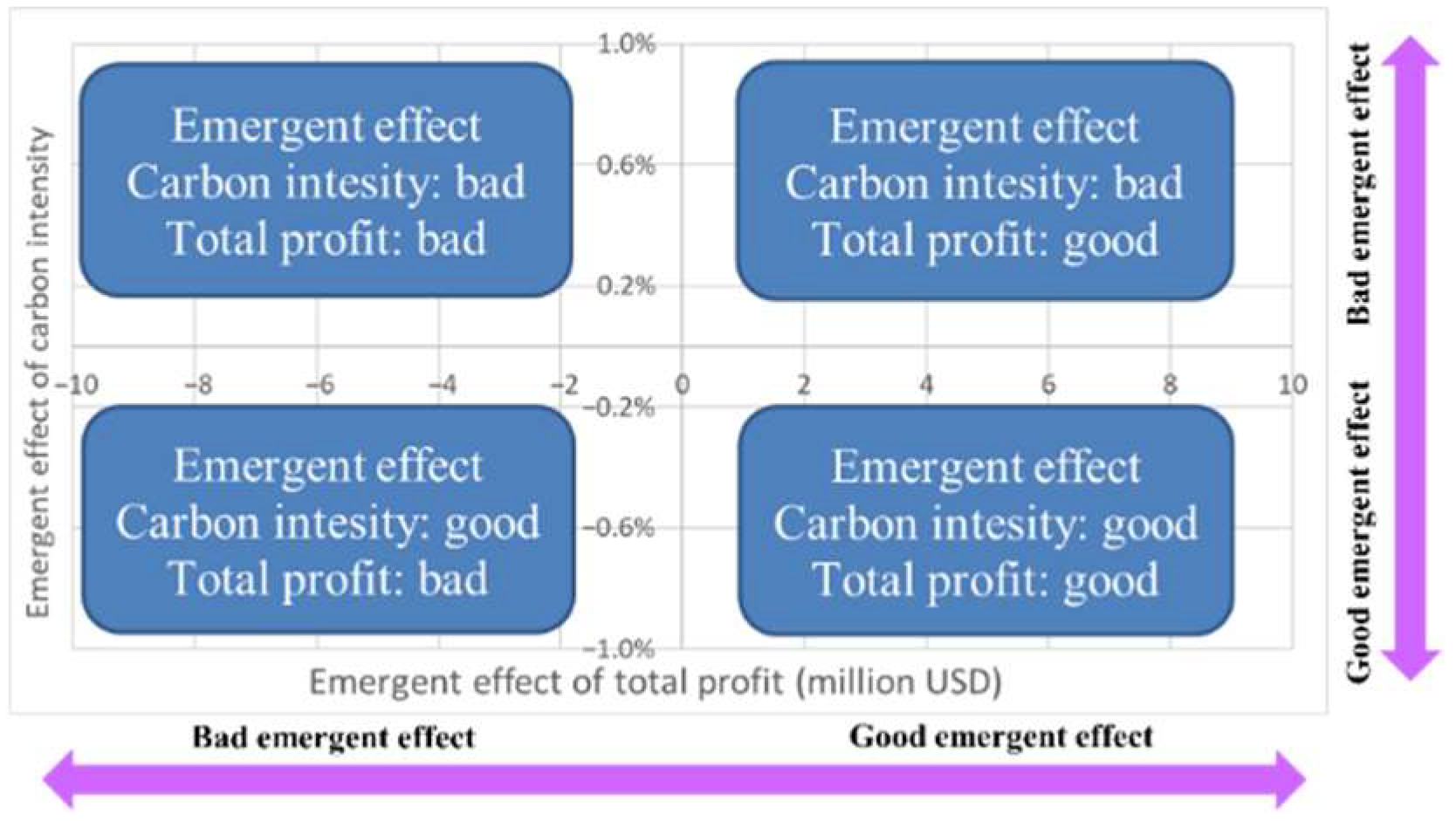
Evaluation indicators are essential to facilitate decision makers’ investment in high-performance technology combinations. In this study, we focused on two evaluation indexes: total profit and carbon intensity. Then, we created a matrix format that can evaluate the effect of technology deployment in two dimensions. The graph in Figure 5 illustrates the emergence effect of carbon intensity on the vertical axis and the emergence effect of the total profit, which represents the operating profit, on the horizontal axis.
Figure 5. Evaluation indicator graph of emergent effect.
The indications of each quadrant, horizontal axis, and vertical axis are depicted in the figure. When carbon intensity is positive, it is considered a bad emergent effect. When the total profit is positive, it is considered a good emergent effect. The second quadrant indicates that the deployment of technology produces a good comprehensive emergent effect, while the fourth quadrant indicates that it produces a bad comprehensive emergent effect.

3.6. Model Creation

The fuel consumption model was created considering the effects of aging and degradation in the general calculation method of vessel performance.
The failure and weather model was created using the beta distribution in the probability density function of encountering hull and marine equipment failures and bad weather.
The cargo handling model was defined by the sum of the standard cargo handling time and the time due to the cargo handling delay.
The profit model was divided into and defined in two parts, namely, income and cost.
The market model predicts crude oil prices and freight rates using the binomial lattice model from historical data of earlier studies.
The docking rule was defined by the conventional inspection rule of ship classifications.

3.7. Simulation

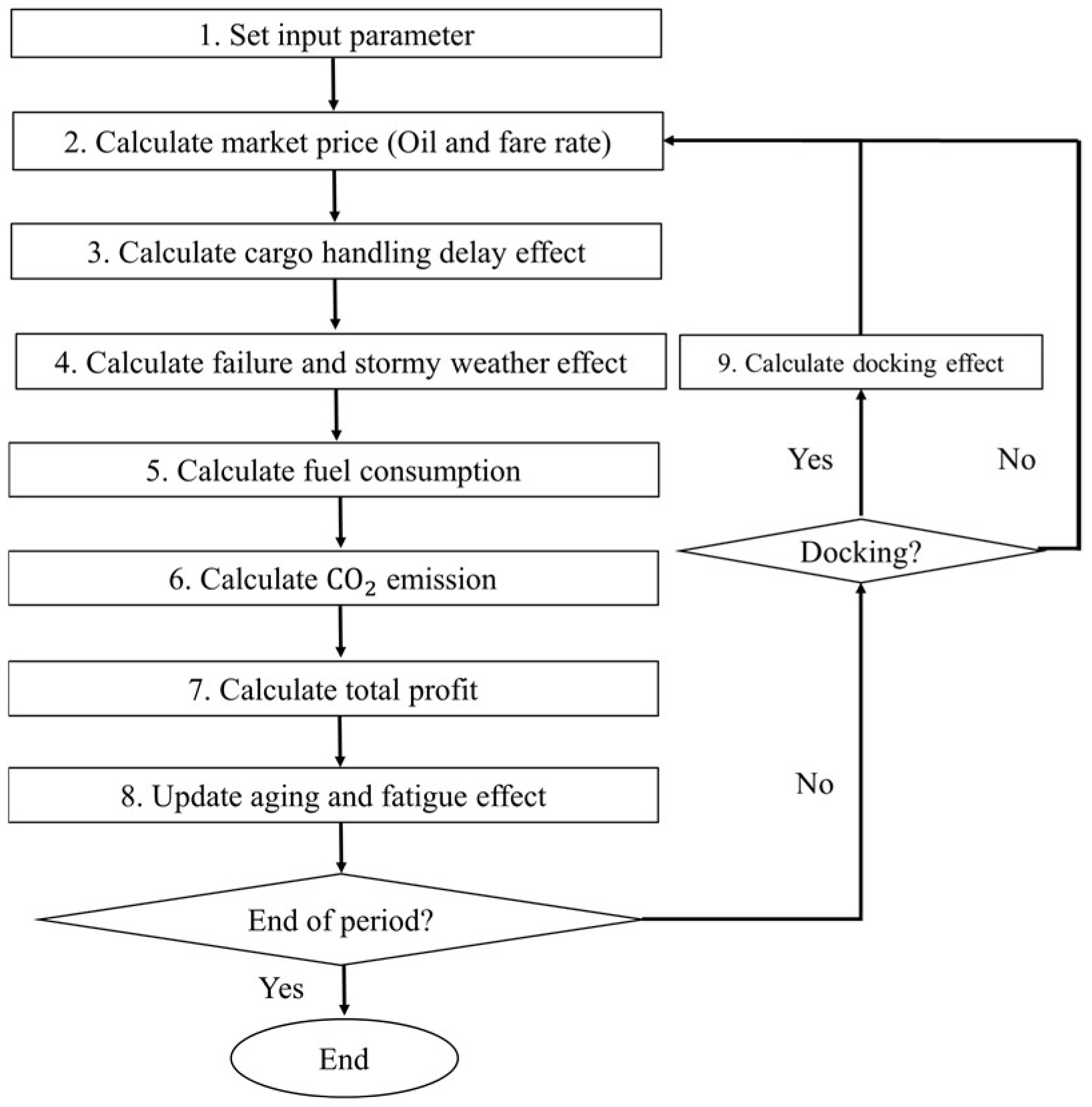
In the simulation, after entering each initial setting value, the following simulation procedure, as depicted in Figure 6, is repeated for each voyage until the end of the ship’s life cycle.
Figure 6. Simulation procedure.
The Monte Carlo method is used in the simulation. The initial setting value changes during the simulation; the simulation is repeated many times.
  • Initial setting: input each initial setting value and start the simulation.
  • Market price calculation: calculate the crude oil price and fare rate predicted from the market model.
  • Calculation of cargo handling work impact: calculate the cargo handling equipment failure and cargo handling work delay on the basis of the cargo handling model, and then calculate the associated costs.
  • Meteorological and failure impact calculation: calculate the delay time and cost associated with hull and marine equipment failure on the basis of the failure and weather model.
  • Calculate the fuel consumption.
  • Calculate the carbon intensity.
  • Profit calculation: profit is calculated from the income and cost on the basis of the profit model and then the total delay time and navigation time.
  • Update of aging and fatigue effect: update the ship propulsion performance based on the aging deterioration effect of the fuel consumption model.
  • Calculation of docking impact: Decide the presence or absence of docking.
  • End of simulation: If the period exceeds the ship’s life cycle, calculate the total profit and average value of carbon intensity when the simulation is completed.
The simulation method utilizes the Monte Carlo simulation to calculate the effect of deploying a single technology or a combination of technologies on the two evaluation axes.

4. Case Study

4.1. Simulation Settings

With reference to the previous study [7], this case study first selected multiple technologies, organized the parts to be changed by each technology to realize the requirements of decision makers, and then changed the parameters of the relevant parts in each model. As depicted in Table 1, when deploying multiple technologies simultaneously, we changed the parameters of all the related models at the same time. For example, the basic value of the hull weight ratio was 1. We used this value as an input of the simulation. After the deployment of technologies, the hull weight ratio changed to 0.9, and we changed the input value to 0.9 and ran the simulation to obtain a contract result.
Table 1. Example of deploying multiple technologies by changing parameters simultaneously.
Subsequently, the marine logistics simulator verified the emergent effects of all combinations of technologies for the improvement of operating profit and reduction of CO2 emissions. Finally, the synergistic effects were exhibited by comparing the results considering investment decisions in combinations.
Table 2 illustrates a list of technologies, functions, and evaluating parameters to be changed in this case study.
Table 2. Technology deployment and altering the setting values.
In each scenario, there were one or several parameters of technology change from the basic setting to after changing status, which are shown in Table 2. The time of the simulation in each scenario was 1000.
In this case study, the parameter values of the basic setting were based on the existing level. Additionally, the parameter values after changing are levels expected to be achievable within a few years, assuming improvements due to the introduction of technologies in the maritime industry.
To make them easy to find, Table 3 shows all 28 simulation IDs, which correspond to each technology combination.
Table 3. Simulation IDs that correspond to technology combinations.
Additionally, in the simulation, when deploying a single technology, the parameters of the model that correspond to only that particular technology were changed. When deploying multiple technologies at the same time, the parameters of all models were changed simultaneously.

4.2. Confirmation and Analysis of Results

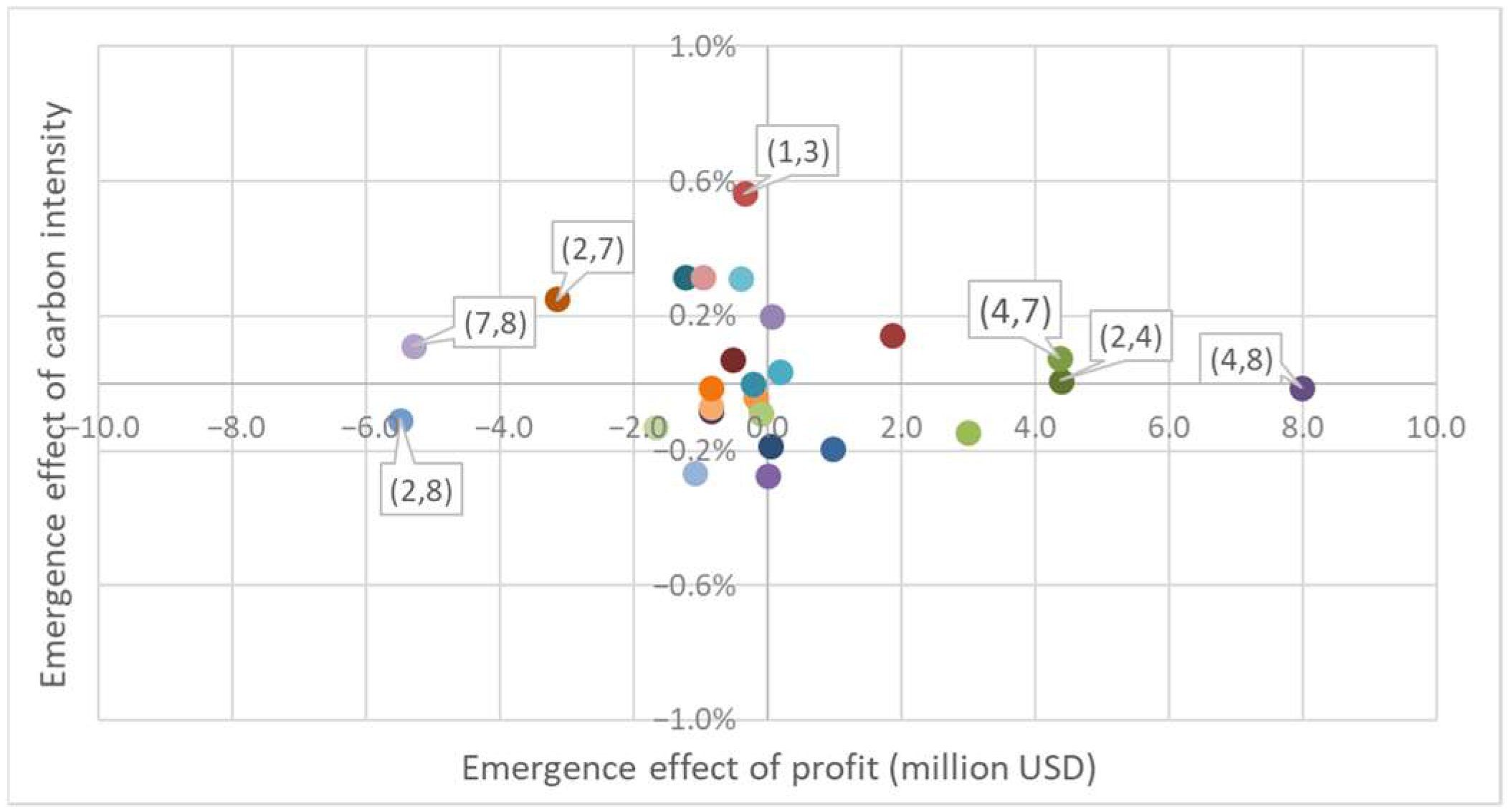
The results of the simulation are depicted in Figure 7. Because the simulation uses the Monte Carlo method, the vertical axis represents the average simulation result of the emergent effect on carbon intensity, and the horizontal axis is the average simulation result of the emergent effect on the total profit.
Figure 7. Simulation results considering total profit and carbon intensity (average).
From the simulation result, we can confirm that the emergent effect on carbon intensity is close to zero. It is considered to have an extremely low emergent effect on CO2 emission efficiency because of the deployment of a combination of technologies. Hence, we can confirm that the effect of deploying a single technology and the effect of deploying multiple technologies at the same time are identical. However, there are certain combinations that are more effective than the others. We will analyze the ones that are further from identical among these combinations.

4.2.1. Technology IDs (4, 8)

By deploying technology ID 4 (port management system), the reference time and delay time of port work could be reduced, and the efficiency of operation could be improved. In addition, because the fuel consumption rate can be calculated using the approximate quadratic expression of the relative load of the engine, the maximum engine output, and the braking horsepower (BHP), the deployment of technology ID 8 (improvement of engine performance) improved the fuel consumption efficiency of the engine and reduced CO2 emissions when considered in the same economic activity. When these two technologies were deployed in combination, the improvement of operational efficiency and fuel consumption efficiency were effective in increasing profits and reducing costs at the same time, resulting in a positive emergent effect on the total profit. By contrast, ID 4 did not affect CO2 emission efficiency. Therefore, even if both technologies are deployed at the same time, there is no emergent effect on carbon intensity.

4.2.2. Technology IDs (1, 3)

The deployment of technology ID 1 (marine equipment monitoring and remote maintenance) reduced the failure rate of marine equipment and the delay time because of its reparations. The deployment of technology ID 3 (weather routing) reduced the probability of encountering stormy weather and improved fuel efficiency by reducing delay times. When these two technologies were deployed in combination, they worked together to shorten the delay time during operation and improve fuel efficiency. As there is no direct significant relationship with total profit, there was no emergent effect on the total profit. By contrast, although the fuel consumption efficiency was improved by deploying these two technologies at the same time, it was confirmed that there is a negative emergent effect in carbon intensity because of the increased operating time.

4.2.3. Technology IDs (2, 8)

The deployment of technology ID 2 (hull weight reduction) could reduce hull resistance and wetted surface area and improve the fuel consumption rate of the ship. By deploying technology ID 8 (improvement of engine performance), the fuel consumption efficiency of the engine could be improved, and the fuel consumption could be reduced. Both technologies improved the fuel consumption performance of ships. When they were deployed in combination simultaneously, the decreases in fuel consumption of each were offset, thus creating a negative emergent effect on total profit. By contrast, it cannot be said that the simultaneous deployment of these technologies can improve the CO2 emission efficiency significantly. Thus, it is considered that the emergent effect on the carbon intensity improved slightly.
The above cases confirm the simulation results and the emergent effects when carbon intensity and total profit are taken into consideration. By matching these mechanisms in the simulator with physical phenomena, it is possible to conduct a deeper study on technology deployment.

4.3. Sensitivity Analysis

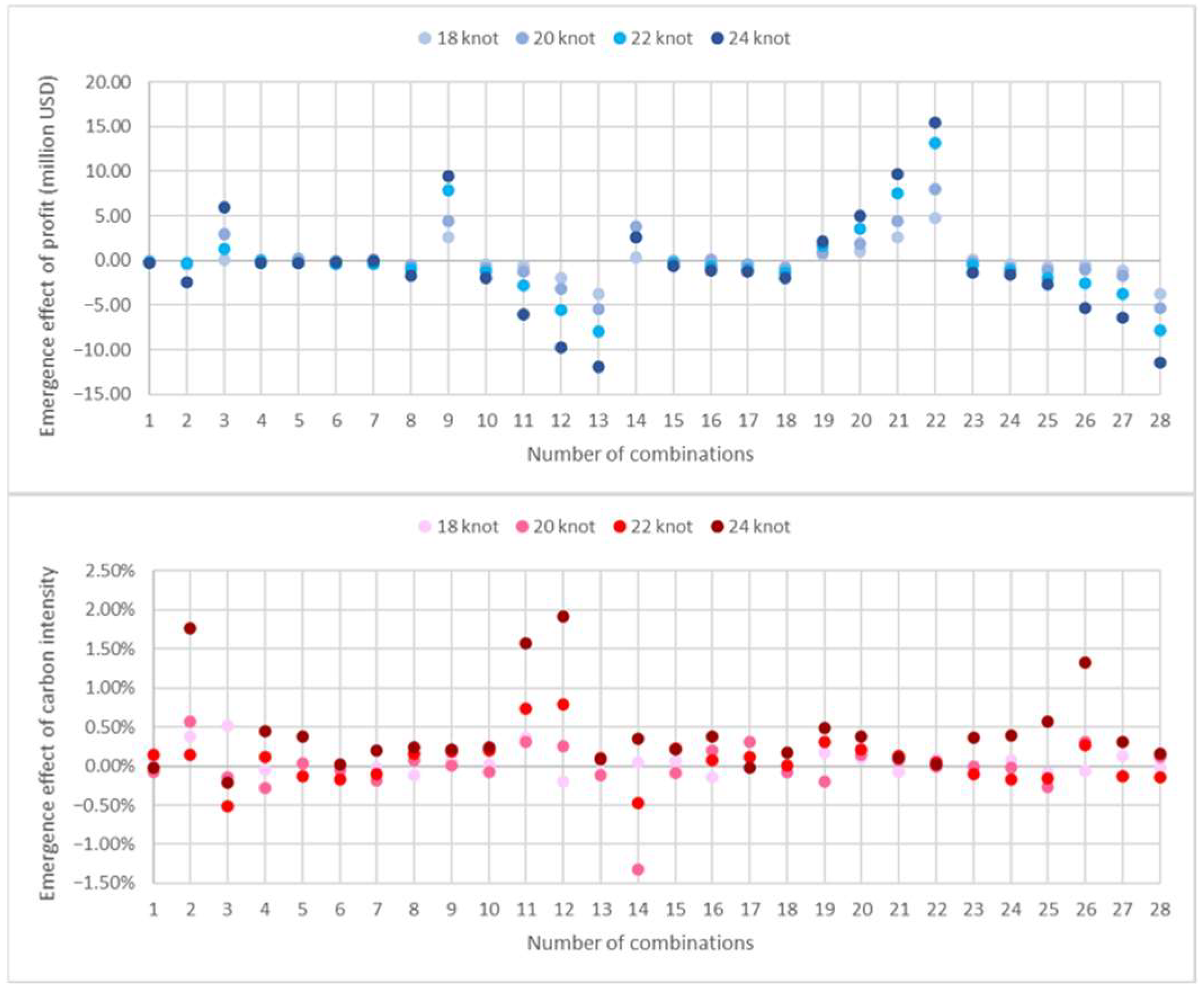
In this study, a sensitivity analysis was performed by setting the ship velocity to four scenarios: 18 knots, 20 knots, 22 knots, and 24 knots. Figure 8 depicts the results of the sensitivity analysis. Each simulation ID corresponds to the technology combinations in Table 3. Each technology ID corresponds to its name in Table 4.
Figure 8. Sensitivity analysis result.
Table 4. Technology IDs and corresponding technology names.
In terms of the emergent effect on the total profit, the combinations of technology IDs (1, 4), (2, 4), (4, 7), (4, 8) had largely positive emergent effects. By contrast, the technology ID combinations (2, 6), (2, 7), (2, 8), (6, 7), (6, 8), and (7, 8) had large negative emergent effects. It was also established that for technology combinations (1, 4), (2, 4), and (6, 7), the effect of the inter-technology interaction became evident as the velocity of the ship increased.
Regarding the emergent effect on carbon intensity, the result confirmed that the change in carbon intensity is irregular with the change in speed for many technology combinations. Technology combinations (1, 3), (2, 6), (2, 7), and (3, 4) portrayed a negative emergent effect on carbon intensity when the ship was operating at high speeds.
Because of the sensitivity analysis, with respect to the change in the speed of the operating ship, it is possible to invest in the technology combinations that are valuable for investment, considering the speed-setting practices for ships operating at constant speeds.

5. Discussion

5.1. Discussion of the Proposed Method

In this research, for technologies under development or utilized in the maritime industry, we were able to make a dual evaluation of the emergent effects in deploying technology combinations from the perspective of improving operating profit and reducing CO2 emissions to support decision makers.
By contrast, it is considered that other apparent emergent effects may appear from the combination of technologies in an analysis utilizing evaluation criteria that were not used in the study. Depending on the evaluation axis that the decision maker emphasizes, it may be meaningful to deploy a combination of related technologies.
Additionally, when we use this proposed method to search for the interaction of technology deployment, it is necessary to consider the difficulty of developing the technology itself or the dependency between several technologies. Therefore, when decision makers make decisions regarding the deployment of actual technology combinations, it is necessary to consider that it will create value in the future, in addition to the functions and effects that are realized. In this case, we may preferentially invest in the combination of these two technologies.

5.2. Discussion of Case Studies

Regarding the performance of deploying technology combinations, when considering carbon intensity and total profit, many technology combinations had a negative emergent effect on carbon intensity. Therefore, if decisions are made only for the purpose of improving operational profits, the combination of technologies for streamlining port operations and improving the fuel consumption performance should be deployed. When deploying multiple technologies for reducing carbon intensity, it may not be possible to obtain a large reduction because of emergent effects. It is effective to deploy a combination that can avoid negative emergent effects.
It was also observed that many technology combinations do not have a clear emergent effect caused by deployment. In such cases, it is necessary to consider the technology being deployed, or the selection of parameter values for the particular technology.
As this study considered market uncertainties, such as fluctuations in crude oil prices and freight rates, we think that fluctuations in total profit due to changes in the number of operations during the life cycle and changes in the ship velocity are non-linear. We can also recommend the evaluation method in this study for decision makers, who invest according to the effect of deploying a combination of technologies while considering market uncertainties.
On the other hand, there were some technology combinations whose functions could not be fully evaluated by the evaluation defined in this study. In this case study, there were a number of technology combinations that had almost no effect, especially the emergent effects on CO2 emission intensity. This is because the combination of the two relevant technologies does not significantly interact with the evaluation method developed in this study. However, from the results of this study, it cannot be asserted that the combination of the two applicable technologies should not be introduced at the same time. It is possible that a large emergent effect will appear from the combination of two specific technologies in an analysis using an evaluation axis that was not considered in this study. Depending on the evaluation axis that the decision maker emphasizes, it may be meaningful to introduce a combination of the two applicable technologies.

6. Conclusions

In order to improve operational profit and reduce CO2 emissions, this research successfully constructed a marine transportation simulator that can evaluate the emergent effect of deploying technologies quantitatively by changing the input parameter value.
A method was also proposed for evaluating the interaction of technology combinations using the total profit and CO2 emission intensity as the evaluation axes, with the aim of improving the performance of marine transportation systems and analyzing the emergent effects when the technology combinations were deployed simultaneously.
The novelty of this study was that it proposed a quantitative strategy of how to evaluate the improved operating profit and the reduction of CO2 emissions in the maritime industry. Furthermore, the study provides a practical methodology of exploring emergent effects by deploying multiple technologies at the same time in one system to help decision making in the maritime industry.
As a case study, we evaluated the deployment of 28 technology combinations, including those currently devised in the maritime industry. Some observations were verified as follows:
  • From the perspective of the technology developer, a logical and practical evaluating method as well as the simulation system were established for estimating the performance regarding reducing CO2 emissions and improving the operational profit of different technologies.
  • From the perspective of the decision maker, the effect of deploying the technology was quantitatively compared and evaluated on the basis of the two evaluation axes of operating profit and CO2 emissions.
  • A sensitivity analysis utilizing the operating speed as the input parameter variable provided decision-making support for an appropriate velocity of the ship during navigation and the combinations of technologies that are worth being deployed at the same time.

Author Contributions

Conceptualization, K.H. and Z.Z.; methodology, Z.Z.; software, Z.Z.; validation, K.H. and Z.Z.; formal analysis, Z.Z.; investigation, Z.Z.; resources, K.H. and Z.Z.; data curation, Z.Z.; writing—original draft preparation, Z.Z.; writing—review and editing, K.H. and Z.Z.; supervision, K.H.; project administration, K.H. and Z.Z. All authors have read and agreed to the published version of the manuscript.

Funding

This research received no external funding.

Institutional Review Board Statement

Not applicable.

Data Availability Statement

The authors confirm that the data supporting the findings of this study are available within the article.

Conflicts of Interest

The authors declare no conflict of interest.

References

  1. Energy Efficiency Measures. Available online: http://www.imo.org/en/OurWork/Environment/PollutionPrevention/AirPollution/Pages/Technical-and-Operational-Measures.aspx (accessed on 26 July 2021).
  2. UN Body Adopts Climate Change Strategy for Shipping. Available online: http://www.imo.org/en/MediaCentre/PressBriefings/Pages/06GHGinitialstrategy.aspx (accessed on 26 July 2021).
  3. Mitsuyuki, T.; Hiekata, K.; Yamato, H. Design of production strategy considering the cutting peak demand of electricity in the shipbuilding industry. J. Mar. Sci. Technol. 2014, 19, 425–437. [Google Scholar] [CrossRef]
  4. Suzuki, Y.; Yahyaei, M.; Jin, Y.; Koyama, H.; Kang, G. Simulation based process design: Modeling and applications. Adv. Eng. Inform. 2012, 26, 763–781. [Google Scholar] [CrossRef]
  5. Lepistö, V.; Lappalainen, J.; Sillanpää, K.; Ahtila, P. Dynamic process simulation promotes energy efficient ship design. Ocean Eng. 2016, 111, 43–55. [Google Scholar] [CrossRef]
  6. Nielsen, J.B.; Sandvik, E.; Pedersen, E.; Asbjørnslett, B.E.; Fagerholt, K. Impact of simulation model fidelity and simulation method on ship operational performance evaluation in sea passage scenarios. Ocean Eng. 2019, 188, 106268. [Google Scholar] [CrossRef]
  7. Sasa, K.; Terada, D.; Shiotani, S.; Wakabayashi, N.; Ikebuchi, T.; Chen, C.; Takayama, A.; Uchida, M. Evaluation of ship performance in international maritime transportation using an onboard measurement system—In case of a bulk carrier in international voyages. Ocean Eng. 2015, 104, 294–309. [Google Scholar] [CrossRef]
  8. Alderson, D.L.; Funk, D.; Gera, R. Analysis of the global maritime transportation system as a layered network. J. Transp. Secur. 2019, 13, 291–325. [Google Scholar] [CrossRef]
  9. Carotenuto, P.; Giordani, S.; Zaccaro, A. A simulation based approach for evaluating the impact of maritime transport on the inventory levels of an oil supply chain. Transp. Res. Procedia 2014, 3, 710–719. [Google Scholar] [CrossRef] [Green Version]
  10. Zhang, X.; Lin, J.; Guo, Z.; Liu, T. Vessel transportation scheduling optimization based on channel–berth coordination. Ocean Eng. 2016, 112, 145–152. [Google Scholar] [CrossRef]
  11. Kim, B.; Kim, T.-W. Monte Carlo simulation for offshore transportation. Ocean Eng. 2017, 129, 177–190. [Google Scholar] [CrossRef]
  12. Alamilla, J.L.; Campos, D.; Ortega, C.; Soriano, A.; Morales, J.L. Optimum selection of design parameters for transportation of offshore structures. Ocean Eng. 2009, 36, 330–338. [Google Scholar] [CrossRef]
  13. DNV GL. Beyond Condition Monitoring in the Maritime Industry; DNV GL Strategic Research and Innovation Position Paper 6-2014; DNV GL: Oslo, Norway, 2014. [Google Scholar]
  14. Xisong, D.; Gang, X.; Xiujiang, G.; Yuantao, L.; Yisheng, L. Intelligent Ports Based on Internet of Things, Service Operations and Logistics, and Informatics. In Proceedings of the 2013 IEEE International Conference on Service Operations and Logistics, and Informatics, Dongguan, China, 28–30 July 2013. [Google Scholar]
  15. Hiekata, K.; Wanaka, S.; Mitsuyuki, T.; Ueno, R.; Wada, R.; Moser, B. Systems analysis for deployment of internet of things (IoT) in the maritime industry. J. Mar. Sci. Technol. 2020, 26, 459–469. [Google Scholar] [CrossRef]
Publisher’s Note: MDPI stays neutral with regard to jurisdictional claims in published maps and institutional affiliations.

Article Metrics

Citations

Article Access Statistics

Multiple requests from the same IP address are counted as one view.