Article

CFD–DEM-Based Analysis and Optimization of Biomimetic Jet Hole Design for Pneumatic Subsoiling Performance


1
College of Engineering, Northeast Agricultural University, Harbin 150030, China
2
College of Agricultural Equipment, Heilongjiang Agricultural Engineering Vocational and Technical University, Harbin 150088, China
3
College of Agriculture, Northeast Agricultural University, Harbin 150030, China
*
Authors to whom correspondence should be addressed.
Agriculture 2026, 16(9), 949; https://doi.org/10.3390/agriculture16090949

Submission received: 15 March 2026 / Revised: 16 April 2026 / Accepted: 22 April 2026 / Published: 25 April 2026

Abstract

Subsoiling can break the plough pan and improve the root growth environment. The effect of the traditional subsoiler is poor, as it relies only on the chisel tine, but pneumatic subsoiling can improve the soil structure more efficiently through the negative pressure generated by the jet hole. This research used computational fluid dynamics and the discrete element method to optimize the biomimetic structure of the jet hole, model the pneumatic subsoiling process at a depth of 330 mm, and observe the movement of soil particles as airflow passes through. The effect of the jet hole at different positions and sizes on the plough pan soil was analyzed, and fluid domains and measurement areas were set up to observe the upward movement, diffusion, stabilization, and settling of soil particles under the action of airflow. The results of the soil bin experiment validated the accuracy of the simulation model through draft force and vertical force, and the average error between the simulation and experimental data was 2.8%. The study revealed that the increase in the rate of soil porosity reached a maximum of 3.65% when the jet hole was positioned above the chisel tine with a radius of 4 mm. The biomimetic jet hole pneumatic subsoiler designed in this study, along with the established CFD-DEM coupled simulation model capable of predicting pneumatic subsoiling performance, can provide references for the design and application of a pneumatic subsoiler. Furthermore, it also provides a theoretical basis for understanding the mechanism of airflow on soil during pneumatic subsoiling operations.

1. Introduction

As mechanization levels in China have gradually increased, the frequent use of machinery in fields has caused the soil structure to deteriorate, resulting in a decrease in the spaces between soil aggregates [1], thereby forming a hard plough pan [2,3,4]. When the porosity of the plough pan falls below average, crop roots struggle to penetrate the soil, significantly restricting their capacity to absorb water and nutrients, thereby adversely affecting crop growth [5]. In recent years, conservation of tillage based on no-till or reduced tillage has been proposed. As one of the core aspects of conservation tillage, subsoiling can break up the plough pan, enhance soil water retention, increase soil porosity, and improve the growth environment for crop roots [6,7,8,9]. Among these, the subsoiler, as the core component of subsoiling operations, plays a crucial role in the process.
The traditional deep loosening method involves using a machine to cut the soil layer to facilitate deep loosening. The tillage machinery has a large operation depth and a high crushing rate of soil blocks. However, during the deep loosening process, the machine’s resistance is greater, the wear on the deep loosening shovel tip is greater, and both the deep loosening shovel and the machine have a limited range of action in the soil. This type of machinery relies solely on the blade tip to cut the soil, damaging the bottom of the plough structure, and has a negative effect [10,11]. For this reason, scholars at home and abroad have applied the principle of pneumatic splitting to increase looseness by creating cracks in the soil while reducing traction resistance during mechanical penetration [12]. These researchers studied how the pressurized air-blowing subsoiler altered the movement of soil particles and compared it with conditions before pressurization. They concluded that pneumatic subsoiling could improve the effectiveness of the subsoiler [13]. Pneumatic subsoiling is achieved by setting jet holes at the chisel tine and using the negative pressure generated by the airflow during operation to extract soil rapidly. Compared with traditional mechanical methods, it offers higher efficiency and better soil improvement, thus holding broad application prospects in agricultural production.
Existing pneumatic subsoiling typically involves directly injecting air into the soil [14]. Although this method is more effective at loosening plough pan soil than conventional subsoiling, it often encounters excessive resistance and pressure loss in complex soil environments, and the limited range of air guns often results in poor loosening of the plough pan soil. The positioning and size of the jet holes can significantly affect how airflow is distributed and how well pneumatic subsoiling works, which, in turn, affects the depth and quality of soil loosening. Furthermore, Wang conducted simulation studies on cat-ear-shaped and circular jet holes using the turbulence model in Fluent; some scholars concluded that the geometry of the jet holes significantly impacts the drag reduction in the jet plate. The cat-ear-shaped jet holes exhibited a higher drag-reduction rate compared to the circular holes. It is evident that both the position and shape of the jet holes influence the airflow drag reduction, thereby affecting the performance of subsoiling operations [15]. Common jet holes are typically circular, which, although better at loosening the plough pan soil compared to conventional subsoiling, tend to generate excessive resistance in complex soil environments and have an air gun with limited effective range, often resulting in poor soil loosening in the plough pan. In recent years, the application of bionic technology in deep loosening machinery has also received widespread attention from foreign countries [16,17,18]. By referring to the morphology and biomechanical characteristics of the claws and toes of animals with digging functions, such as pangolins and rabbits, researchers designed a bionic subsoiling shovel with drag-reducing features and verified its drag-reducing performance through experiments. This bionic design not only improves subsoiling efficiency but also reduces soil structural damage. Therefore, this paper aims to optimize the jet hole structure using bionic principles to improve its drag-reduction efficiency.
Currently, EDEM is limited to simulating single-phase materials in soil. As soil–subsoiler interaction and soil–fluid interactions occur simultaneously, using DEM alone to simulate pneumatic subsoiling is highly inaccurate. Computer simulations based on EDEM and Fluent have advanced significantly, and CFD-DEM coupling is now one of the most important tools for studying air–solid two-phase flow [19,20]. In the DEM, spherical particles are used to simulate paddy soil, and a two-phase CFD air–liquid flow model is employed to characterize the mobility of water in the soil. The coupling of these two methods can effectively predict the dynamic changes in the water–soil–tool interaction [21]. After careful consideration, CFD-DEM coupling is the best approach for simulating the interaction between soil and fluids, and it is increasingly used in agriculture and related fields [22]. However, research on the CFD-DEM coupled method in pneumatic subsoiling remains limited, making it difficult to thoroughly analyze the performance of pneumatic subsoiling in breaking the plough pan. To address the poor operational performance caused by the insufficient drag reduction in circular jet holes in pneumatic tillage, the following research hypothesis is proposed in this study: a jet hole design based on shark-gill bionics can effectively improve the drag-reduction rate, and the position and size of the jet hole significantly affect soil-loosening efficiency. Furthermore, the CFD-DEM coupled method can accurately simulate the interaction between airflow and the plough pan soil.
The innovations of this study are as follows. Inspired by the physiological structure of shark gills (where continuous swimming maintains water-level stability, oxygen-rich water enters the oropharyngeal cavity, and oxygen-depleted water is expelled through the gill slits to form a maximum-rate jet flow), a bionic jet hole was designed to address the low drag-reduction efficiency of conventional circular jet holes. Using the CFD-DEM coupled method, a subsoil–airflow–soil model is developed to simulate particle–air interactions. Furthermore, three-dimensional characteristics are employed to describe the disturbance of the deep plough pan and changes in soil porosity, demonstrating that the organic combination of pneumatic and bionic technologies effectively reduces resistance in the lower soil layer. The main objectives of this study are as follows: to simulate the pneumatic subsoiling process using the coupled computational fluid dynamics (CFD) and discrete element method (DEM), thereby revealing the interaction mechanism between airflow and the plough pan soil; to improve the operational efficiency of pneumatic subsoiling by optimizing the structure of the bionic jet hole; and to systematically investigate the operational performance of pneumatic subsoiling through coupled simulation tests and soil bin validation tests. This study will provide a theoretical basis for understanding the mechanism of airflow action on soil during pneumatic subsoiling and propose optimization methods for improving the operational efficiency of pneumatic subsoiling.

2. Materials and Methods

2.1. Simulation Test

2.1.1. Mathematical Model

In this study, the particle phase was calculated using the DEM software (EDEM 2018; DEM Solutions Ltd., Edinburgh, UK). In contrast to conventional DEM simulations, the CFD-DEM coupling approach accounts for the effect of airflow on particle motion. Spherical particles were selected to establish the soil bin model, and the Hertz–Mindlin (no slip) and Bonding models were used to describe the contact between particles [23,24].
Equations of air phase: in this study, the calculation of the fluid phase was carried out using the CFD software (Fluent 2022R1, ANSYS, Inc., Canonsburg, PA, USA). As complex energy-transfer processes were not involved, only the equations of mass conservation (Equation (1)) and momentum conservation (Equation (2)) were used to describe the continuous fluid phase in this simulation [25,26].
The equations of mass conservation:
ε ρ t + ρ ε u = 0
The equations of momentum conservation:
ε ρ t + ρ ε u μ = ρ + μ ε u + ρ ε g S
where ε, ρ, u, μ and S are the volume fraction term, air density (kg m−3), air velocity (m s−1), coefficient of viscosity (Pa s−1), and momentum source (kg m s−1), respectively.
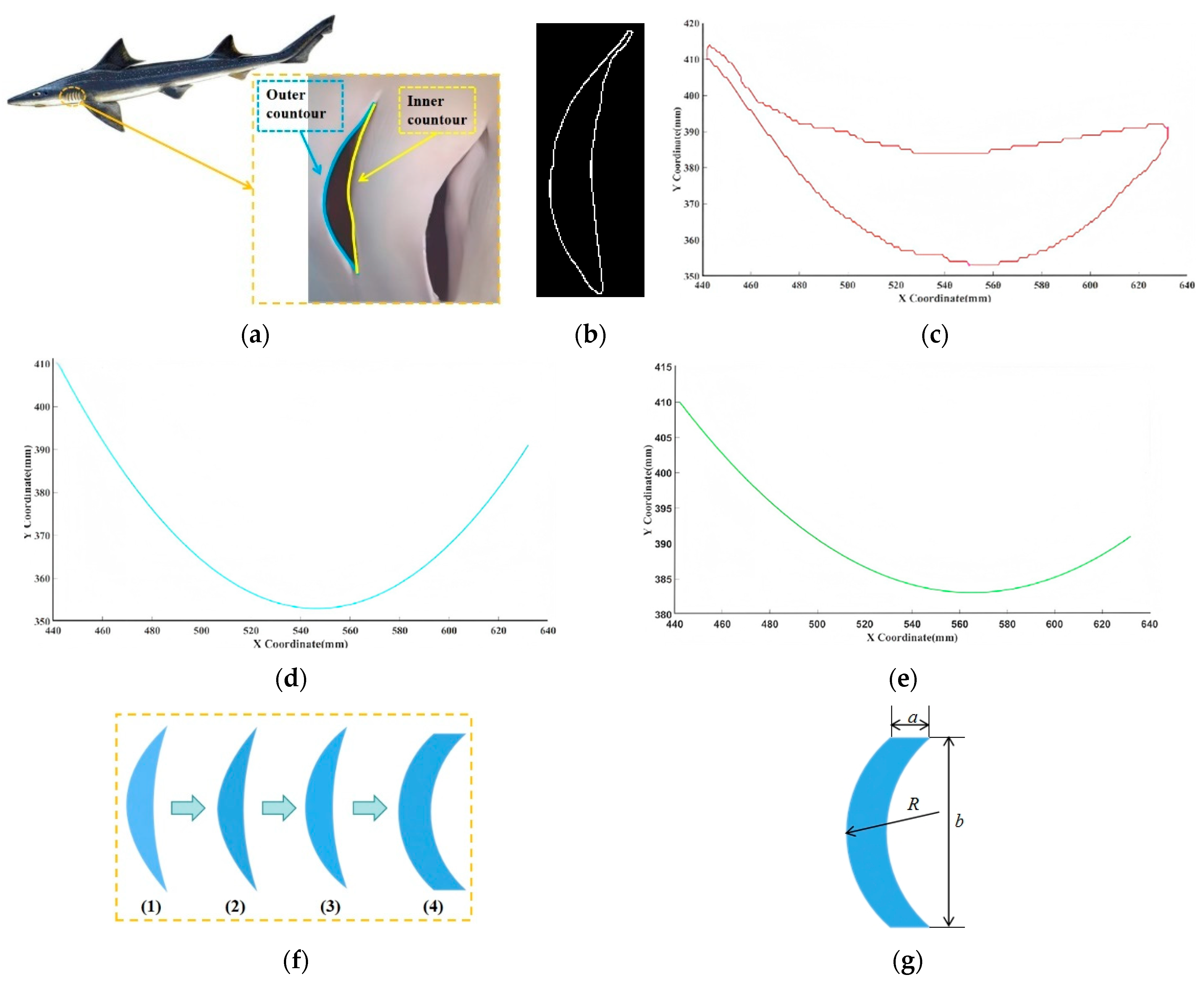
Sharks need to swim continuously to maintain a certain water level in the water. During the swimming process, oxygen-rich water enters the oropharyngeal cavity, and after air exchange through the gills, oxygen-poor water flows out of the gill slits, forming a jet. Sharks can achieve the maximum jet rate through their gill slits [27,28]. Therefore, a bionic design of the jet hole was conducted, with the white-spotted bamboo shark selected as the bionic object. The bionic hole was designed based on the outer contour line of the gill slits. Matlab (R2022b) was used to extract and fit the contour on the enlarged image of the gill slit hole, as shown in Figure 1a. Firstly, the image is preprocessed through grayscale processing, binarization, and morphological operations. The edges of both the inner and outer contours were detected and extracted using the Canny algorithm [29], as shown in Figure 1b. Subsequently, three fitting points were selected to fit the curve, as illustrated in Figure 1c. Based on the least-squares principle, the coordinates of the characteristic fitting points of the extracted inner and outer contours of the gill slit were imported into Matlab. The polyfit command was then used for curve fitting and quantitative analysis. A quadratic polynomial was chosen for the fitting, yielding the fitted curves for the outer contour of the gill slit (Figure 1d) and the fitting curve for the inner contour of the gill slit (Figure 1e). The fitting equations are presented in Equations (3) and (4):
y = 0.005 x 2 5.703 x + 1911.482
y = 0.002 x 2 2.009 x + 950.812
Figure 1f illustrates the modeling and shape processing of the biomimetic orifice, including (1) combining two original fitting curves and scaling them by a factor of 31.66, (2) symmetrically processing a portion of the curve to prevent stress concentration during ventilation due to asymmetry of the biomimetic jet orifice, (3) setting the biomimetic jet orifice as a smooth arc to ensure smooth ventilation, and (4) optimizing the end of the jet orifice because the air ejected from the jet orifice would collide significantly with the cross-flowing fluid at the bend. Figure 1g shows the final shape of the biomimetic jet hole (where a = 1.25 mm, b = 6 mm, and R = 4 mm). The orifice diameter was controlled at (4, 5, 6 mm) through pre-experiments for CFD-DEM coupled simulation tests.
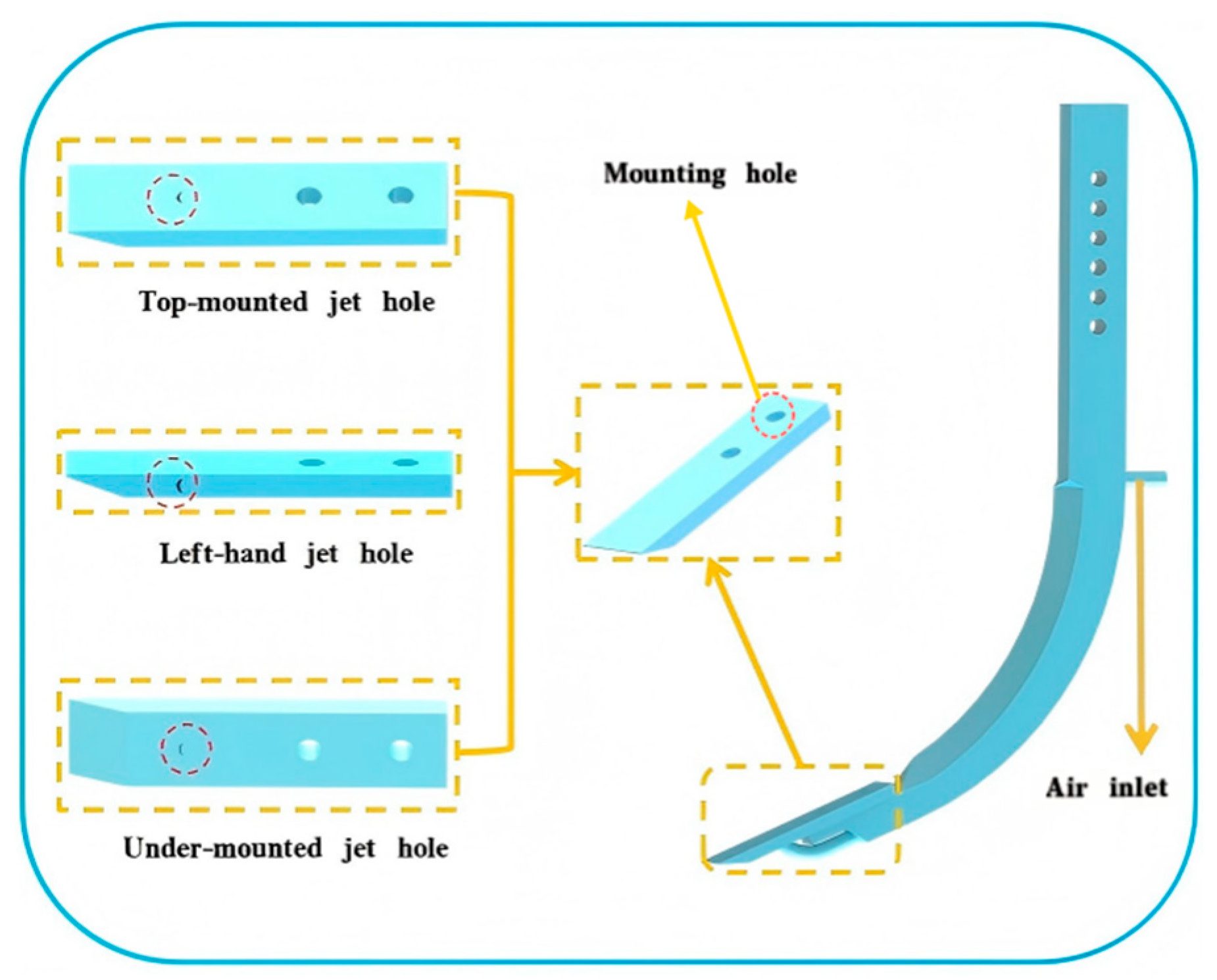
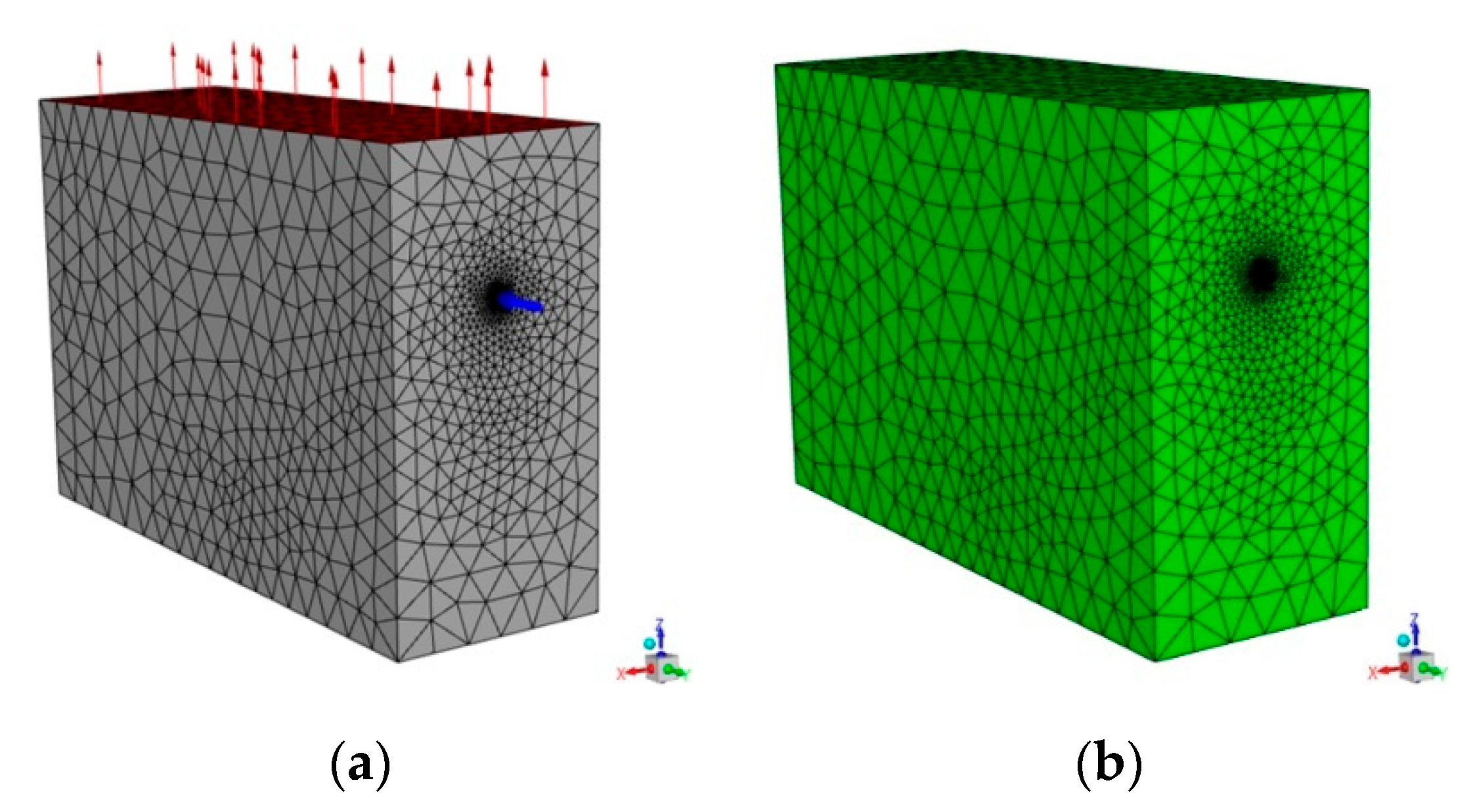
Soil bin–subsoiler model: Based on the existing chisel-shaped subsoiler model, a jet hole was opened inside the chisel tine of the subsoiler, and a ventilation pipeline that can transmit high-pressure airflow is placed inside. The jet hole was located on the surface of the chisel tine. Figure 2 shows the ventilated subsoiler model with jet holes at different positions. In order to reduce calculation time in the coupling process, the subsoiler model is simplified, and the part leading from the bottom plane of the chisel tine to the shank (330 mm in length) is retained. To meet the actual field working conditions and better characterize the influence of the position of the jet hole on the subsoiling effect in the subsequent coupling process, three subsoiler models were placed in soil bins of different sizes (900 mm × 300 mm × 600 mm, 900 mm × 600 mm × 300 mm, 900 mm × 320 mm × 600 mm, respectively). To ensure the accuracy of the simulation comparison results, the position distribution in the soil bin was adjusted. Moreover, the air inlet end surface of the subsoiler coincided with the right side of the soil bin along the Y-axis, and the pneumatic subsoiling operation model of the soil bin–subsoiler was constructed. A pneumatic subsoiling operation model integrating the excavation bin and the subsoiler was constructed. Taking the chisel tine with the jet hole located on its surface as an example, Figure 3a,b show the mesh model obtained using the DEM and CFD, as well as the delineated fluid domain model. The total number of elements and nodes were 282,841 and 55,322, respectively.
Particle model: In this study, the pneumatic subsoiling model involves only soil particles. The soil (with a depth of 430 mm) was simulated with individual spherical particles. The parameters in the DEM simulation primarily consisted of material parameters and contact parameters. The material parameters mainly included the density, Poisson’s ratio, and shear modulus of the soil particles and the subsoiler (65 Mn steel). The soil density was obtained by measurement, whereas the density and shear modulus of the 65 Mn steel used in this study, as well as the shear modulus and Poisson’s ratio of soil, were referenced from [30,31]. The contact parameters mainly include the coefficient of restitution (0.6) and the friction coefficient between materials, which are referenced from [32]. The tangential stiffness and normal stiffness used in this study align with [33]. The material properties of the particle model in the simulation are summarized in Table 1. Poisson’s ratio of soil: The ratio of lateral strain to axial strain in soil under uniaxial loading, reflecting the deformation characteristics of the soil. Shear modulus of soil (Pa): The ratio of shear stress to shear strain, measuring the soil’s resistance to shear deformation. Coefficient of restitution of soil–soil: The ratio of the relative velocity after collision to the relative velocity before collision between two soil particles, indicating energy dissipation. Coefficient of restitution of soil–steel: The ratio of energy dissipation during collision between a soil particle and a steel subsoiler.

2.1.2. Parameter Settings

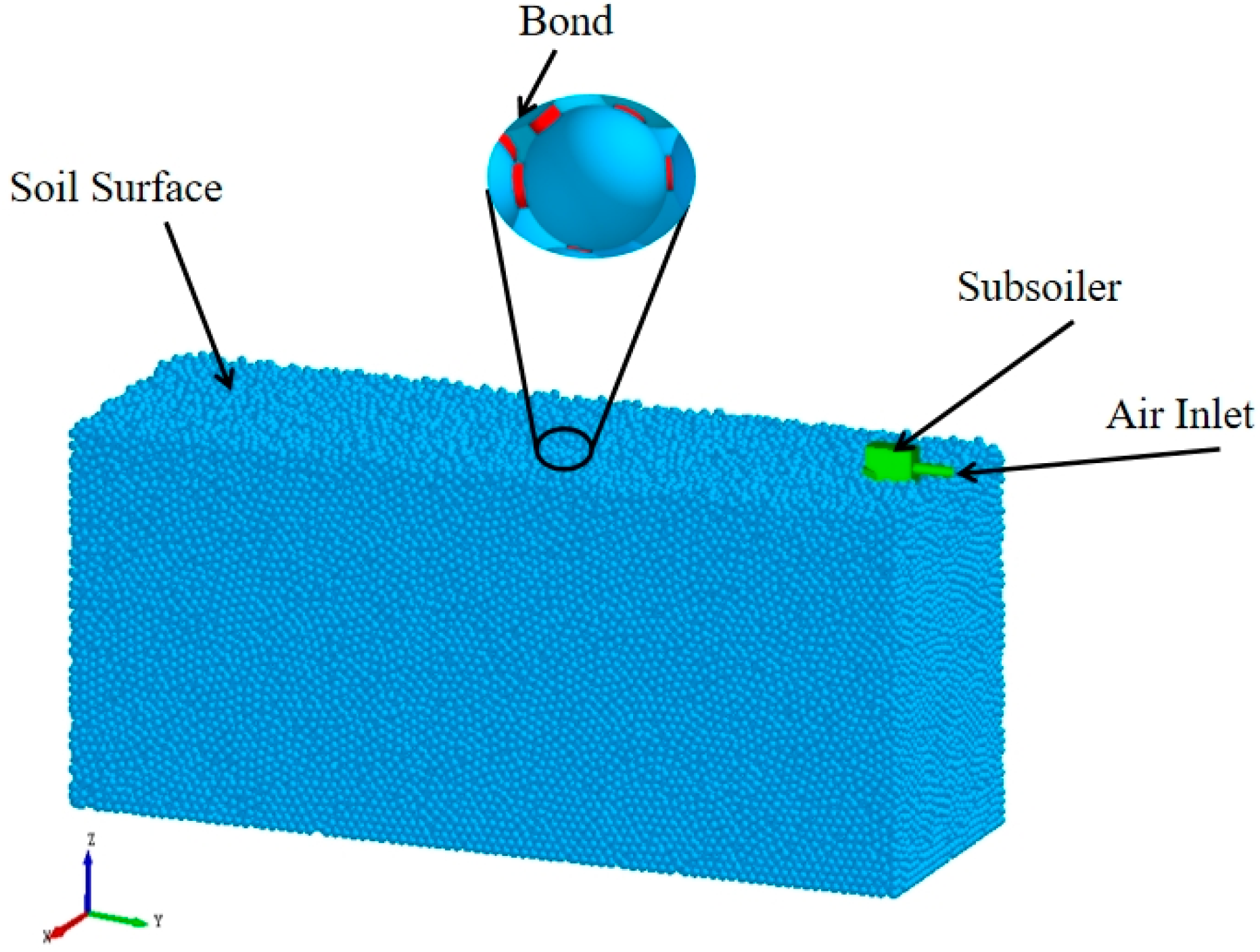
Parameter settings for the particle phase: the mesh file after drawing the divided mesh was imported into EDEM, and soil particles were filled using a particle factory with a generation rate of 50,000 particles per minute and randomly generated particle locations. Under gravity, the soil particles filled the soil bin. To make the bond between the soil particles more consistent with the field conditions, the particles were filled to a predetermined depth and then allowed to settle; after settling, they continued to fill the soil bin. The process of filling and stabilizing soil particles was repeated until no new soil particles were generated, as shown in Figure 4. The soil bin generation time was 0–25 s, where the first filling of soil to the specified depth of the soil bin took 0–22 s, and the repetitive filling and stabilization of soil particles lasted 22–25 s. To obtain the specific perturbation of the deep soil particles, the position, velocity, contact, and collision of the particles were automatically recorded every 7 × 10⁻⁵ s.
Parameter setting for the fluid phase: In this study, the high-pressure air was continuously supplied by an air compressor, and the high-pressure air was released into the soil through the jet hole at the chisel tine. The corresponding air pressure at the inlet of the shank was 0.8 MPa [34]. In the CFD model, free inflow and free outflow were applied. The inlet and outlet boundaries were set as pressure–inlet and pressure–outlet, respectively, and the initial pressure values were both set to zero. In the simulation, the time step was set to 7 × 10⁻⁵ s, and the simulation results were automatically recorded every 20 steps.

2.1.3. Experimental Protocol and Data Collection

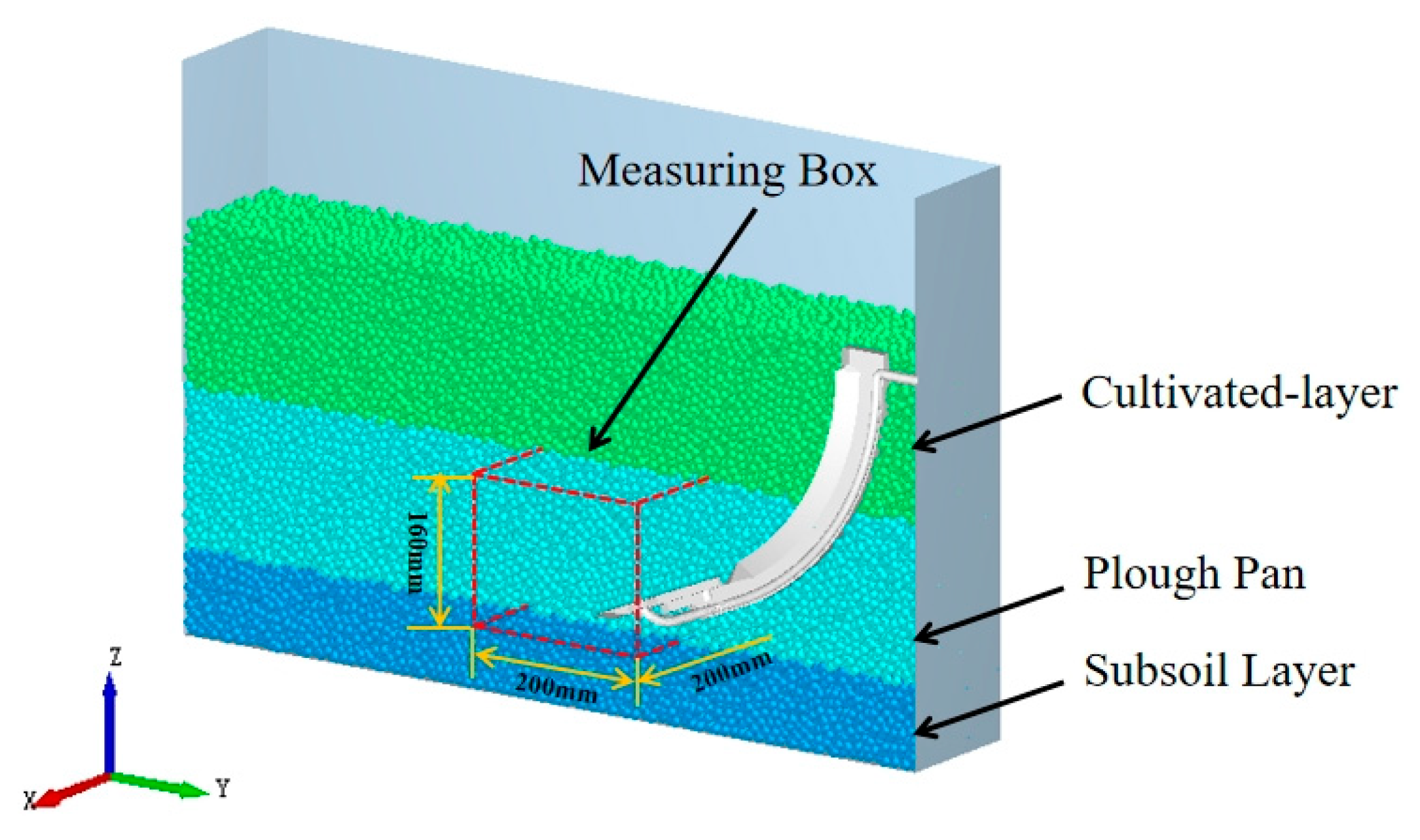
EDEM can monitor soil porosity changes in the target region of the plough pan during the pneumatic subsoiling process. Before the simulation, a measuring box with a plough pan of a certain thickness (200 mm × 200 mm × 160 mm) was placed in the middle of the three soil bin models (Figure 5, showing a soil model with a subsoiler on top of a jet hole was taken as an example). The soil porosities before and after ventilation were recorded using the “measuring box”, and the rate at which soil porosity increased was subsequently calculated. The soil porosity before and after aeration was recorded using this measuring box, providing data support for analyzing the effect of pneumatic subsoiling on soil performance.

2.2. Soil Bin Tests

2.2.1. Test Conditions and Preparation

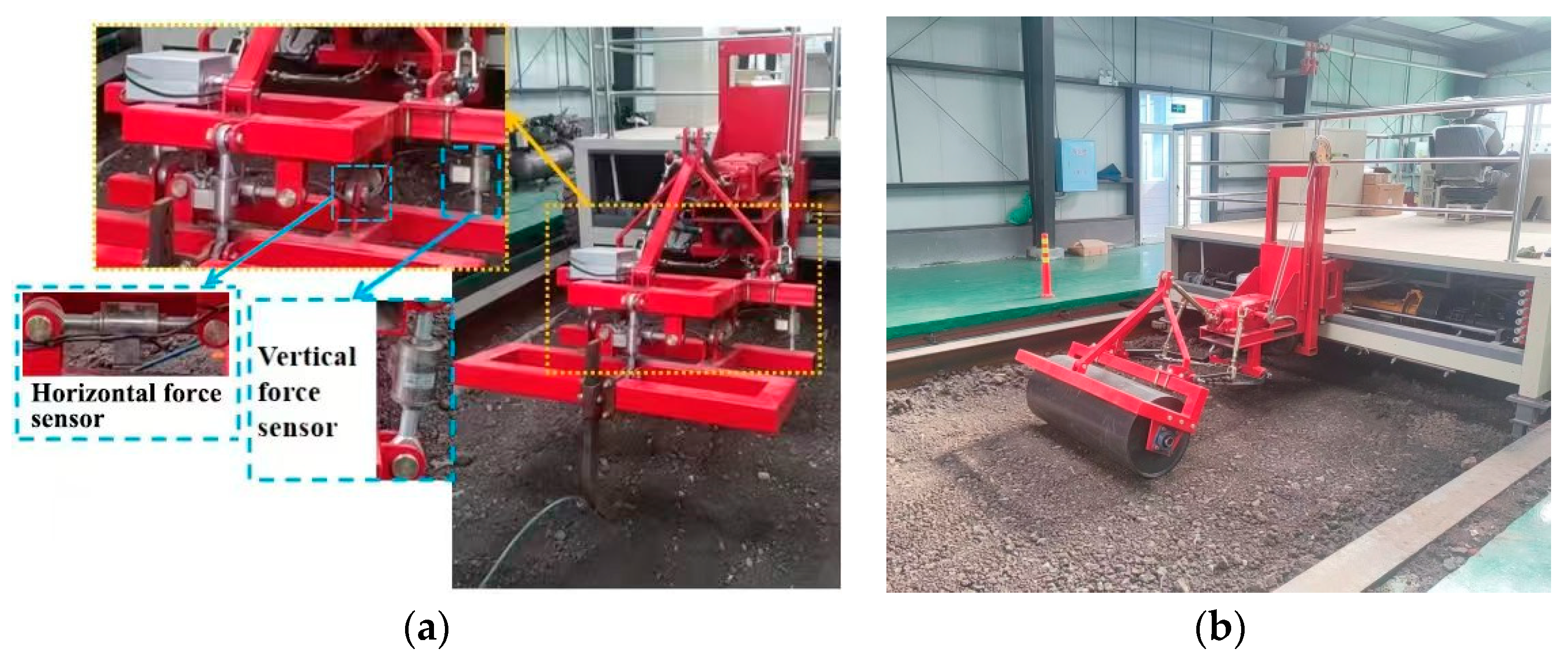
In order to verify the accuracy of the subsoiler model, the subsoiler tested in this study was a pneumatic subsoiler with a circular arc jet hole. The cutting edge was a chisel tine, and the arc-shaped shank was selected according to the Chinese standards (JB/T). The soil bin test was conducted in October 2025 in the soil bin at the Machinery Laboratory of Northeast Agricultural University, Heilongjiang Province, China. The test equipment was an 80 kW power frequency conversion four-wheel-drive soil bin test vehicle (Ruiye Industrial Control Co., Ltd., Harbin, China). The test vehicle includes a six-component force-measuring frame (the data collection system includes six tension sensors: three vertical force sensors, two horizontal force sensors, and a lateral force sensor) to measure the tillage force during the operation of the pneumatic subsoiler (Figure 6).
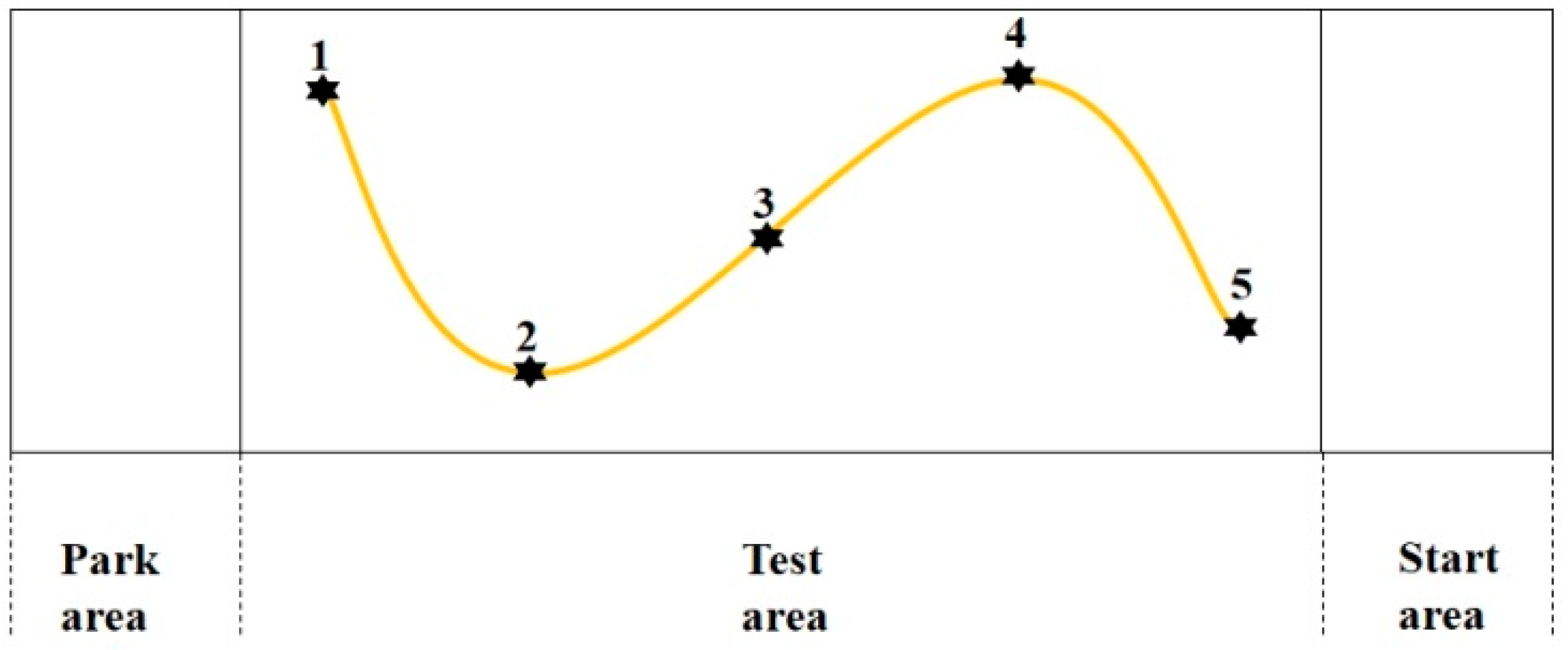
A soil bin 30 m in length was divided into three areas, which were (from right to left): the start area, the test area, and the park area, with lengths of 5 m, 20 m, and 5 m, respectively. The soil in the soil bin was a Lou soil (loamy soil) that developed on parent loess. Based on the physical parameters of field soil (e.g., hardness and moisture content), a layered method was employed to prepare the soil for the soil bin [35]. Firstly, we removed the soil 330 mm from the surface, sprayed water evenly on the soil surface, and then used a rotary tillage device to mix the soil and water. Subsequently, the soil was continuously compacted with rollers [36]. After the subsoil layer was prepared, the removed soil was evenly backfilled to 160 mm, and then processes including water spraying, rotary tillage, and compaction were repeated to prepare the plough pan. Finally, we backfilled the remaining soil evenly to about 170 mm, and repeated the above-mentioned operation to prepare the soil for the tillage layer. After soil preparation, soil hardness was measured using a soil firmness-measuring instrument. During measurement, in order to avoid accidental errors, the S-shaped five-point measurement method was used (Figure 7). After the measurement of the five test points was completed, the data was sorted, and the average value of the five points was taken as the soil compactness value of the test. The final soil compactness measurements of the cultivated layer, plough pan, and subsoil layer were 827 kPa, 1575 kPa, and 960 kPa with corresponding moisture contents of 23.41%, 26.74%, and 25.25%, respectively. Before the test, we used U-shaped bolts to fix the pneumatic subsoiler unit, and the pneumatic subsoiler and six-component force-measuring frame were connected to an electric soil bin cart with a three-point hitch (Figure 6). The pneumatic subsoiler was tested at a constant working depth (330 mm) and a constant tractor travel speed (3 km h−1) and each test was replicated three times.

2.2.2. Test Plan and Measurements

Randomized grouping method: the test plots were divided into two groups; one group used pneumatic subsoiling, and the other group used traditional subsoiling. The working speed and subsoiling depth were kept constant for each test group. Observation data were collected and recorded. To ensure accuracy and consistency, statistical analysis was subsequently performed to compare the differences between the two treatment groups and evaluate the effectiveness and feasibility of pneumatic subsoiling.
In the subsoiling process, soil structural failure is caused by the applied force of the subsoiler. Surface soil disturbance width (W) and soil porosity increase rate (ΔF) calculated from soil porosity (f) are considered two essential parameters to evaluate the effect of subsoiling operations. After the test, the width of surface soil disturbance after subsoiling was measured every 2 m.
Soil samples were collected at a depth of 330 mm before and after the experiment. The soil particle density and soil bulk density were determined using the pycnometer method and the core cutter method, respectively. The soil porosity and soil porosity improvement rate were calculated as shown in Equations (5) and (6) [37,38]:
f = 1 ρ b ρ s
Δ F = f 2 f 1 f 1 × 100 %
where ρ b is soil bulk density, g cm−3; ρ s is soil solid density, g cm−3; f is soil porosity; f 2 is soil porosity after subsoiling; f 1 is soil porosity before subsoiling; and Δ F is the rate at which soil porosity increases, %.

3. Results and Discussion

3.1. Effect Analysis of Subsoiling Operation

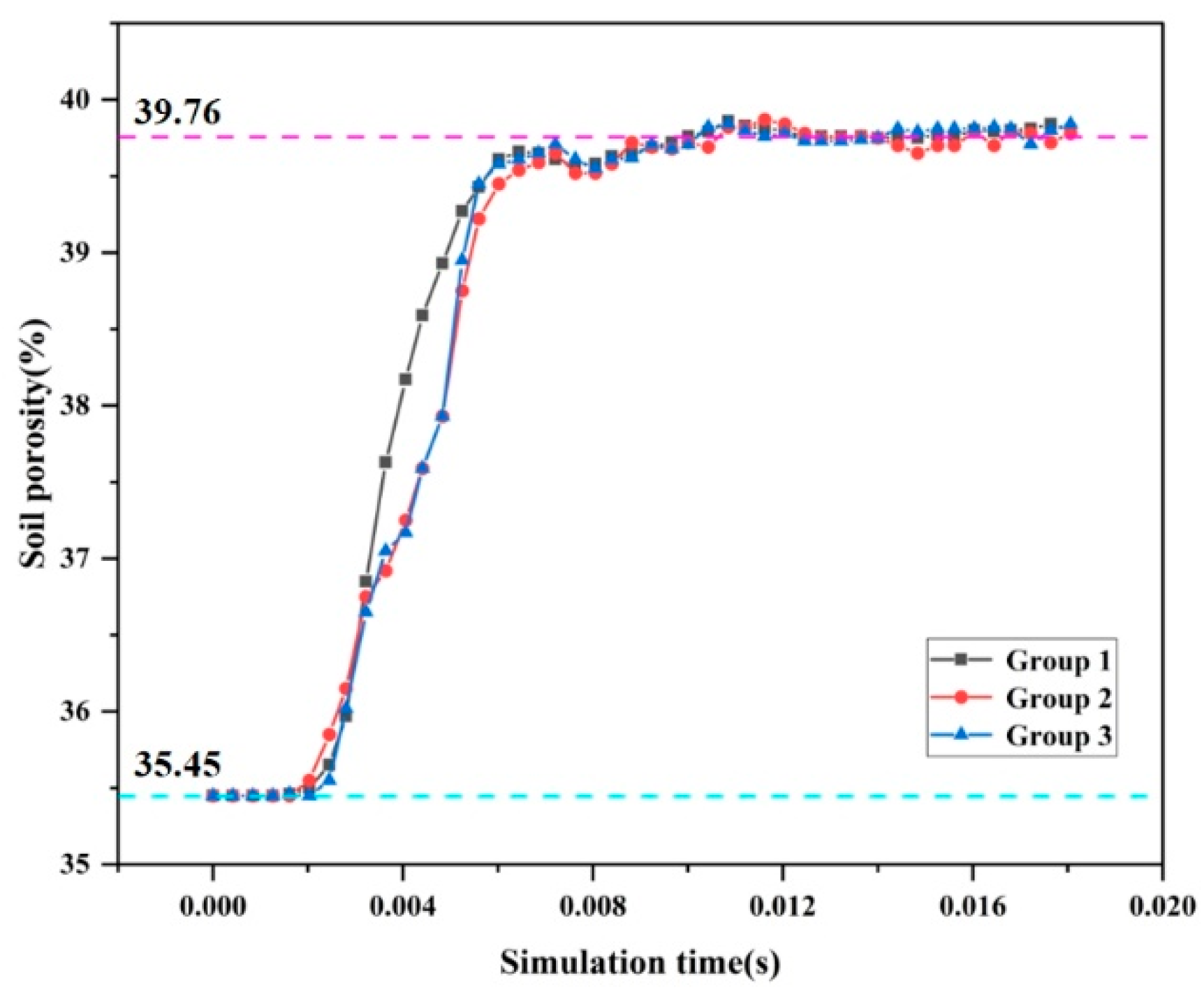
Figure 8 shows the changes in soil porosity in the target area during pneumatic subsoiling operation with the optimized subsoiler, where the jet hole was positioned above the chisel tine. It can be observed that the soil porosity in the target area exhibited three distinct stages: stability, rapid increase, and re-stabilization.
During the stabilization stage, soil porosity remained approximately 35.45%, consistent with the initial value. This resulted from the volume fraction equation not being activated during the initial stage of pneumatic subsoiling to maintain simulation stability and prevent divergence, thereby keeping the airflow confined to the vent tube and avoiding interaction with soil particles. Once the simulation stabilized, the volume fraction equation was activated, allowing airflow to be injected into the soil and interact with the soil particles. Under the influence of airflow, soil particles in the target area were continuously lifted, increasing soil porosity. This accounts for the sharp rise observed in the porosity curve. During the re-stabilization stage, soil porosity fluctuated around 39.76%, with a negligible range, indicating that the system had reached a new equilibrium state.
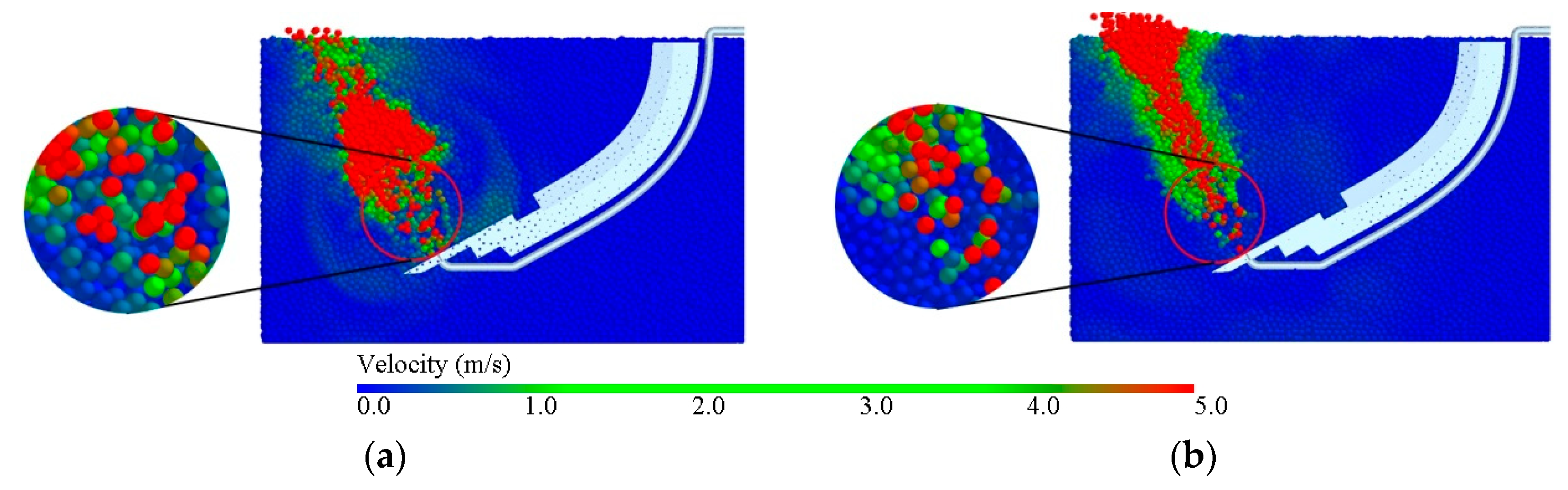
Figure 9 shows the state of soil particles corresponding to the time-sampling points during the soil porosity change stage. Figure 9a shows the velocity cloud diagram of particles inside the soil during the rising stage of soil porosity. At this stage, the particles in the marked area began to loosen, and as aeration continued, they moved upward until they left the soil surface. The particle clusters with the largest velocity appeared obliquely above the marked area (perpendicular to the direction of the jet hole). This velocity distribution occurs because the airflow had just exited the jet hole and entered the soil, and had not yet reached the critical value required to penetrate the soil surface, so it was blocked by the airflow. The surrounding particles remained in the soil layer between the surface and the marked area, and some airflow began to spread. Figure 9b shows the velocity cloud diagram of soil particles in the re-stabilization stage of soil porosity. At this stage, the number of particles in the marked area reached a minimum and then continued to decline. The air supply ensured that the airflow reached conditions that could penetrate the soil surface, and a large number of particles left the surface, driven by the airflow. Since the airflow was shaped by the fan and spread continuously diagonally upward, the speed was highest near the middle, perpendicular to the jet hole. Because the airflow continued to spread and attenuate to the surroundings, it was difficult for particles on both sides to reach the conditions required to penetrate the surface. Under the influence of gravity, it eventually stayed between the surface and the marked area.
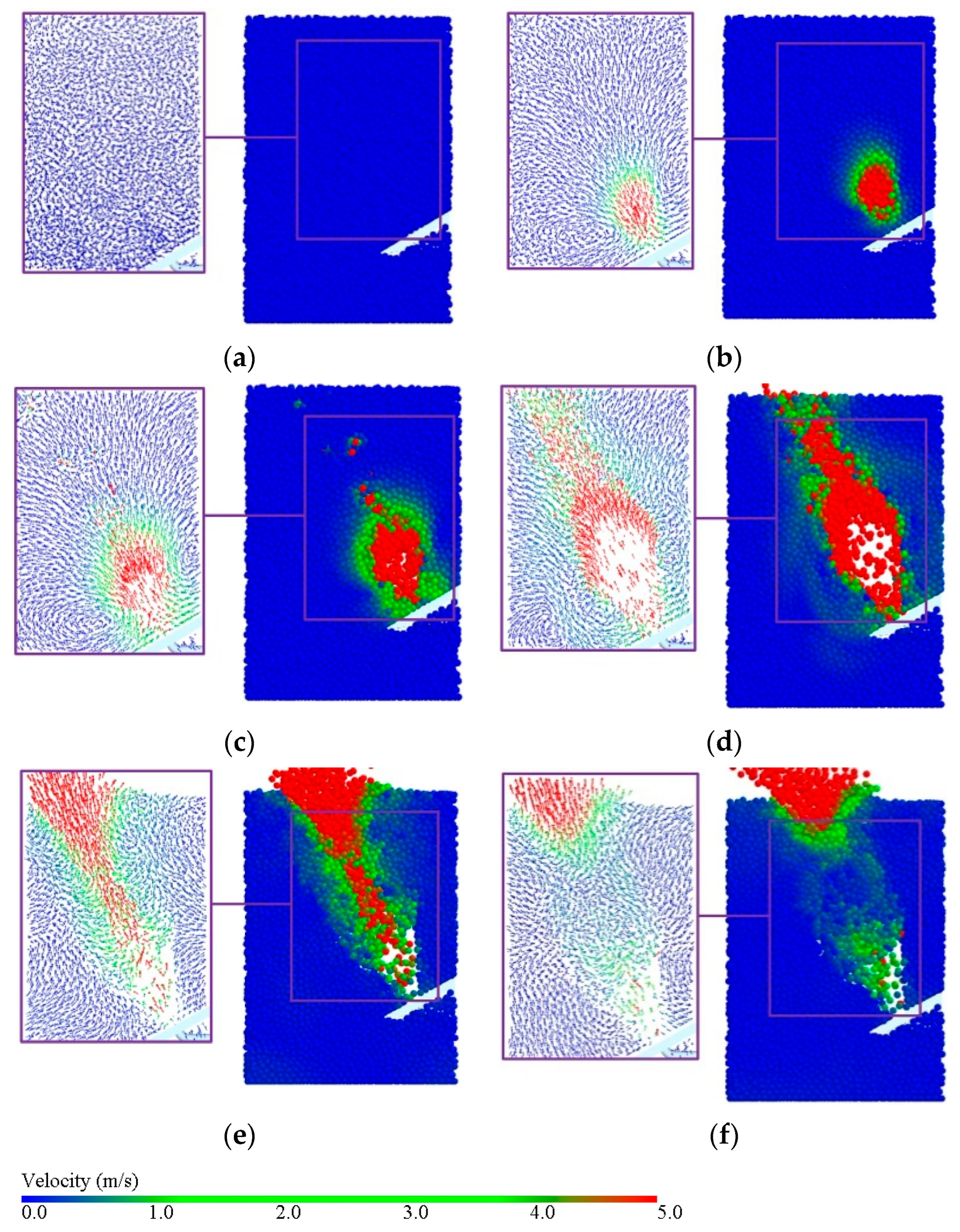
Figure 10 shows the particle motion state in the soil disturbance area in EDEM. Figure 10a shows the initial state. It can be seen that the high-pressure airflow has not yet entered the soil, and the velocity vector direction of the soil particles has no obvious pattern at this time. It is a state in which the soil particles are filled and naturally settle. Figure 10b shows the state when the airflow has just been injected into the soil from the jet hole above the chisel tine. It can be seen that the airflow has just begun to be injected into the soil, and the movement of particles within the soil appears to spread to the surrounding area. However, due to the initial airflow injection, the movement of soil particles was confined to a small area above the chisel tine and did not reach the surface. At this time, the velocity of particles in the nearly circular middle region reached a maximum and then gradually decreased outward. Figure 10c and e show the movement state of particles in the soil when airflow is continuously injected. During this period, the particles’ movement range gradually spread upward along the vertical chisel tine until they broke through the surface. Figure 10c shows that, due to continuous airflow injection into the soil, the particles’ speed continued to increase, driven by the airflow. It was not limited to a nearly circular range but spread diagonally upward. Some particles began to break through the bottom range of the plough pan and moved towards the tillage layer. Figure 10d shows that a large number of particles gradually moved toward the tillage layer, resulting in larger particle gaps near the plough pan and smaller gaps near the tillage layer. Figure 10e shows that the speed at which the particles reached the tillage layer or even broke through the surface reached the maximum, at which point the particles gradually reached a stable state. Due to pressure loss and gravity acting on the particles, some particles began to fall back and move toward the empty area inside the soil. Figure 10f shows that the particle motion reached a state of two-level differentiation. At this time, the particle velocity in the upper region near the surface was still the largest, but it decreased downward, reaching a minimum near the chisel tine. This velocity decrease with depth occurs because the particles gradually backfill the soil downward, eventually filling the empty areas within the soil before reaching stability and reducing speed to a minimum [39].
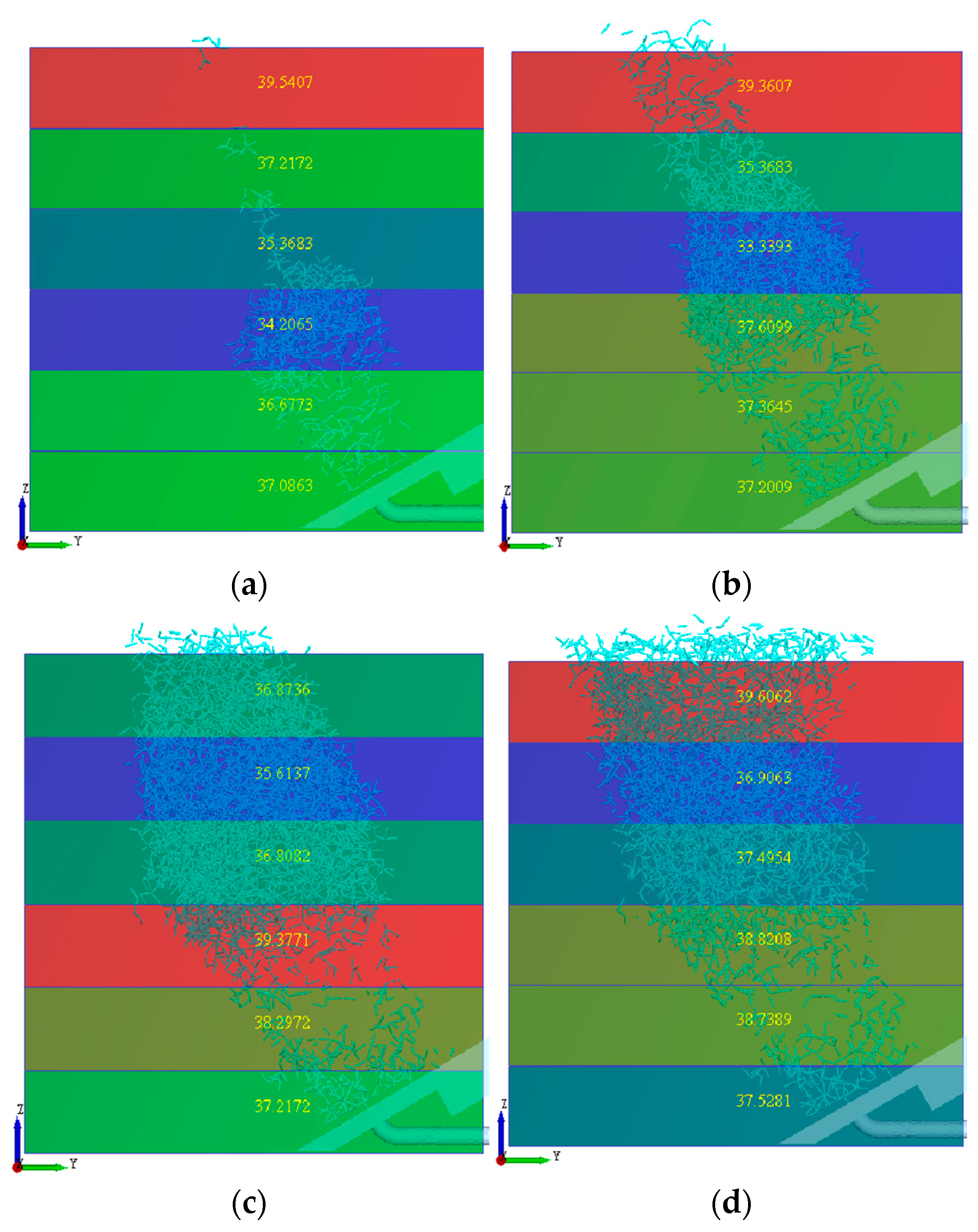
To more clearly analyze the soil porosity conditions during pneumatic subsoiling, the soil was layered as shown in Figure 11. Combined with the bonding model, which quantifies soil particle dispersion, an in-depth analysis of soil loosening under airflow was conducted. In the initial stage, Figure 11a shows the distribution of soil porosity immediately after airflow was injected through the jet hole. Analyzing from top to bottom, the maximum soil porosity appeared in the first layer. This may be because during particle settlement, the uppermost particles, unlike those in the middle and bottom layers, were not subjected to lateral compression from neighboring particles and therefore settled more loosely, resulting in higher porosity than in the other five layers. In the expansion stage, Figure 11b shows that with continuous airflow injection, the subsequent three figures indicate that this factor did not affect the layered comparison of soil porosity. The soil porosity in the fifth and sixth layers was also relatively high, as these layers were located near the jet holes and were the first to be affected by the airflow upon injection. In the maintenance stage, as airflow injection continued, higher porosity values began to appear in the fourth layer (Figure 11c). This may be because the airflow, having initially affected the fifth and sixth layers, began to spread upward into the fourth layer and beyond, increasing the soil porosity in the fourth layer and eventually reaching a peak of approximately 39.38%. At the end stage, as the airflow continued to spread upward, porosity in the upper soil layers gradually increased (Figure 11d).
However, the soil porosity value in the middle soil layer does not return to the initial state, as the particles were affected by gravity, but stabilizes at a certain value. This stabilization occurs because the particles gradually backfill the soil downward and eventually fill the empty area within the soil. After the particles reach stability, they will no longer move once their speed reaches a minimum and will not return to their original state after naturally settling. This behavior was consistent with the phenomenon in Figure 10f mentioned above. In addition, bonding fractures in soil particles indicate that they continue to move upward under the action of airflow. The initial number of bonding fractures was concentrated in the fourth, fifth, and sixth layers. This concentration occurred because the airflow had just been injected into the soil. These layers of particles began to move under the influence of the airflow. Afterwards, the number of bonding fractures began to concentrate in the third layer, or even the upper layer, of the soil, as shown in the above particle velocity cloud diagram.
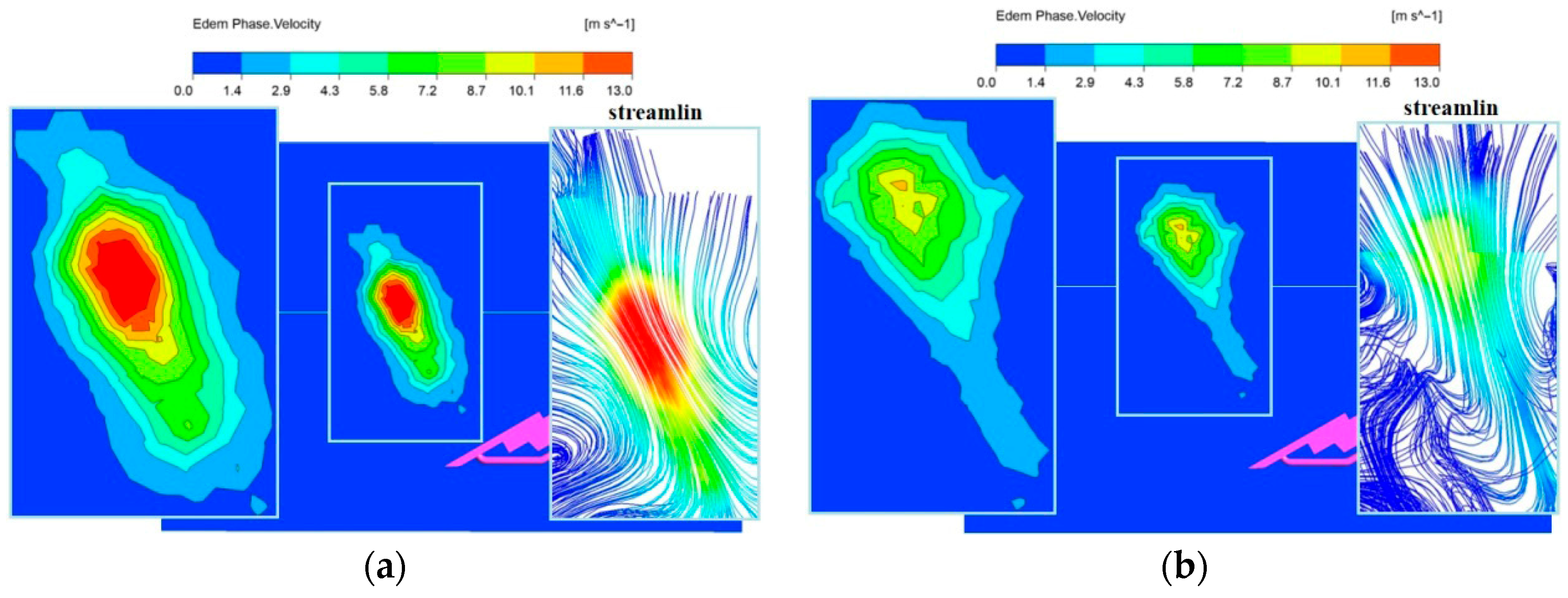
Figure 12 shows the velocity contour and streamline distributions of airflow injected into the soil. Figure 12a illustrates the airflow state during continuous high-pressure air injection into the soil. As shown, with continuous airflow injection, the velocity reached a maximum at a certain distance from the jet hole and then gradually decreased as it spread outward, reaching a minimum as it approached the critical boundary. Figure 12b depicts the airflow after it had reached a stable state within the soil. The airflow gradually migrated toward the soil surface. Due to pressure loss and the gravitational effect on the displaced particles, the airflow velocity decreased, and backflow began as the particles settled. The airflow velocity decreased with increasing depth. This behavior is generally consistent with the particle motion patterns observed in Figure 10f.

3.2. Effect of Jet Hole Location on Changes in Soil Porosity

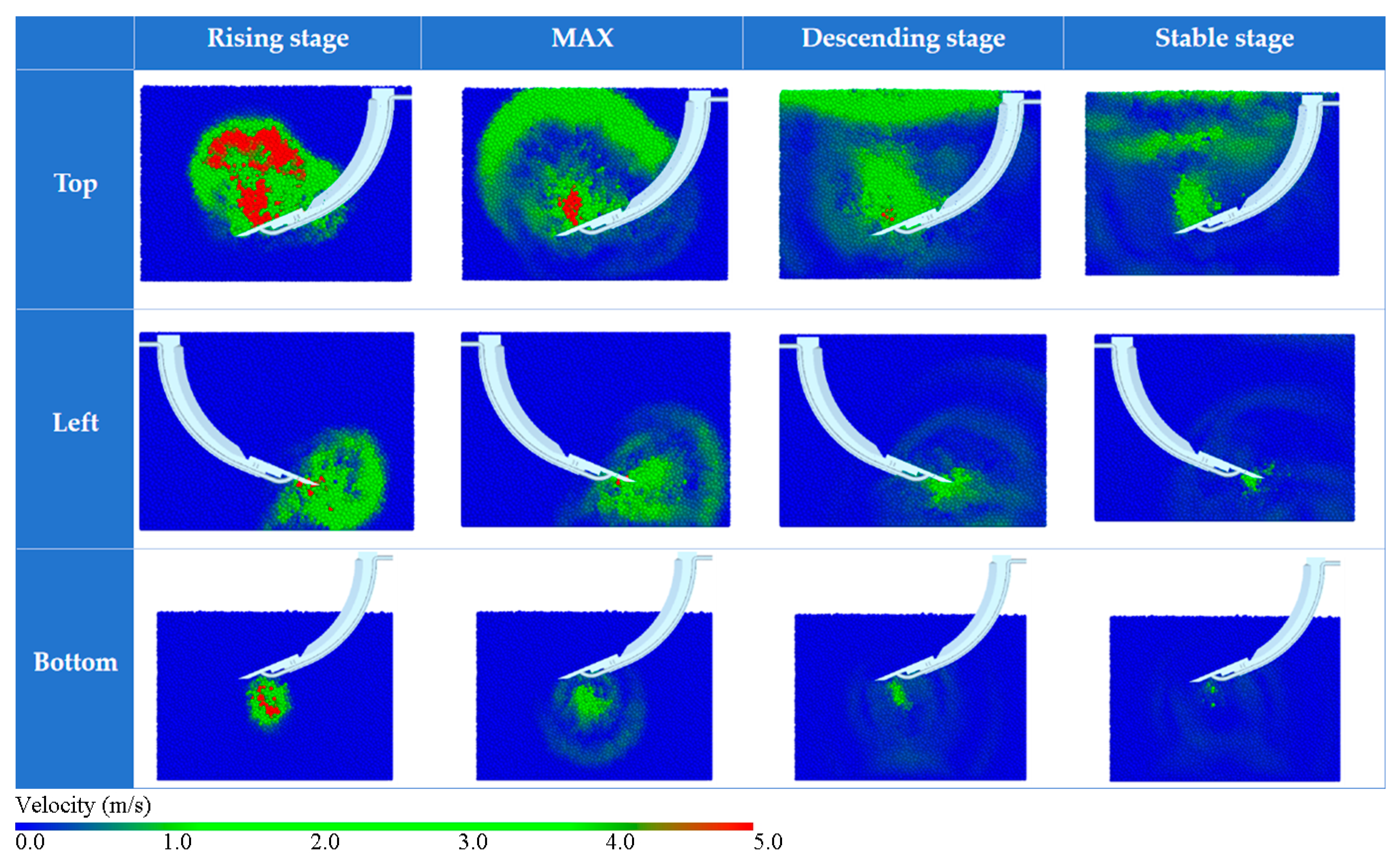
Figure 13 shows the variation in soil porosity for different jet hole positions when the subsoiler was stationary and the jet hole radius was set to 4 mm. Analysis of the soil’s ZY cross-section revealed that when the jet hole was positioned on the chisel tine, the area of green particles on the soil surface above the chisel tine reached a maximum, regardless of whether soil porosity was increasing, decreasing, or stable. During the stage in which soil porosity increased, as airflow was continuously injected through the jet holes, it spread in a fan-shaped pattern within the soil. The particles in the central region, appearing green in the contour, were actually red, indicating that the airflow had just begun to be injected and had not yet fully diffused. Consequently, the particle velocity reached a maximum in the area directly above the vertical vent outlet and its immediate surroundings. As ventilation continued, the number of red particles above the chisel tine decreased, while the number of green particles in the diffusion zone increased. This occurred because the airflow was no longer confined to an upward direction but began spreading laterally. Under soil resistance, the airflow velocity decreased until the lateral diffusion area reached its maximum. At this point, red particles were nearly invisible, and the velocity reached a minimum. As the diffusion area continued to expand, the airflow velocity decreased progressively from the interior to the diffusion boundary. At this stage, particle gravity and soil resistance became dominant. The particles that had been lifted by the airflow at the onset of ventilation began to settle under gravity until their velocity dropped to zero. Consequently, the soil porosity that had been increased by the airflow began to decrease. However, because aeration was continuously maintained, the reduced soil porosity did not return to its pre-aeration state.
When the jet hole was positioned on the lower surface of the chisel tine, the area of green particles on the soil surface beneath the chisel tine was the smallest, regardless of whether soil porosity was increasing, decreasing, or stable. This smallest area occurred because, when the subsoiler was positioned downward, the airflow direction was similar to that of the upward configuration. However, because the particles at the bottom of the soil bin model were compacted, the downward airflow injected was ineffective at loosening the bottom soil. On the contrary, under the influence of airflow, the bottom soil particles became even more compacted, hindering soil loosening.
When the jet hole was positioned on the left side of the chisel tine, the pneumatic subsoiling effect was intermediate between the upward and downward configurations. During the stage in which soil porosity increased, red particles were concentrated near the jet holes, and the airflow continued to spread radially. As ventilation continued, the red particles near the jet holes gradually disappeared, the velocity of the diffusing airflow progressively decreased, and the velocity at the diffusion boundary reached a minimum. Similarly to the downward configuration, soil particles near the bottom of the bin showed poor loosening under airflow, whereas those near the outlet boundary showed better loosening, resembling the effect observed in the upward configuration. In summary, although the left-side configuration yielded better results than the downward configuration, achieving optimal subsoiling performance required placing the jet hole upward on the chisel tine surface.
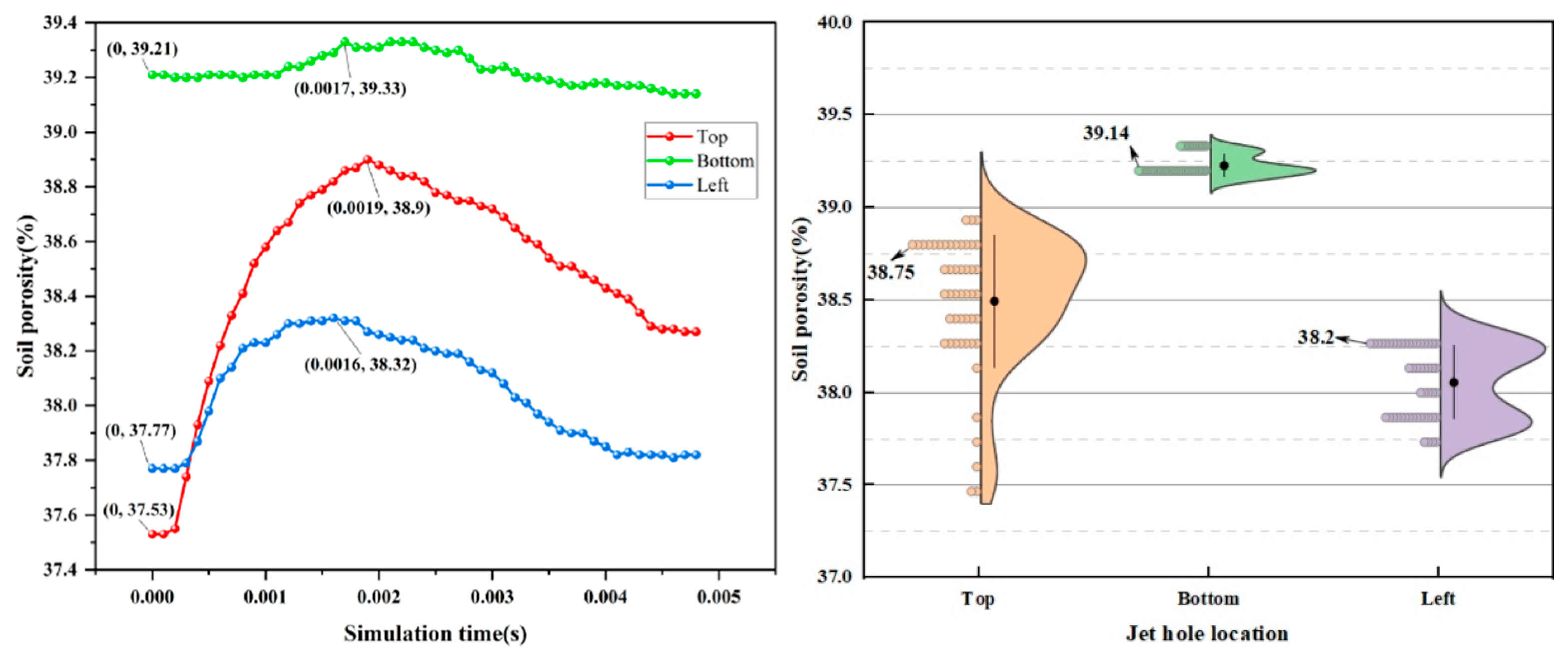
Figure 14 shows the effect of jet hole position on soil porosity. When the jet hole was positioned on the upper surface of the chisel tine, soil porosity rose almost linearly and increased rapidly as the simulation progressed. The maximum soil porosity in the measurement area reached 38.9% (the pre-ventilation porosity in the target area was 37.53%). Subsequently, as the simulation continued, soil porosity decreased slowly and eventually approached a stable value. When the jet hole was positioned on the left side of the chisel tine, soil porosity increased slightly and slowly as the simulation progressed, with the maximum value in the measurement area reaching 38.32% (the pre-ventilation porosity was 37.77%). As the simulation continued, soil porosity decreased slowly, following a trend similar to that of the upward configuration, and eventually stabilized. When the jet hole was positioned on the lower surface of the chisel tine, soil porosity showed very little increase and remained near a constant value for an extended period. This trend (very little increase in soil porosity) was consistent with the above analysis: because the bottom soil particles were always compacted, continuous airflow injection only further compacted them, with little loosening. Consequently, soil porosity in this area did not increase significantly. The maximum soil porosity in the measurement area was 39.33% (the pre-ventilation porosity was 39.21%), although the overall trend of the curve was similar to that of the two configurations described above.
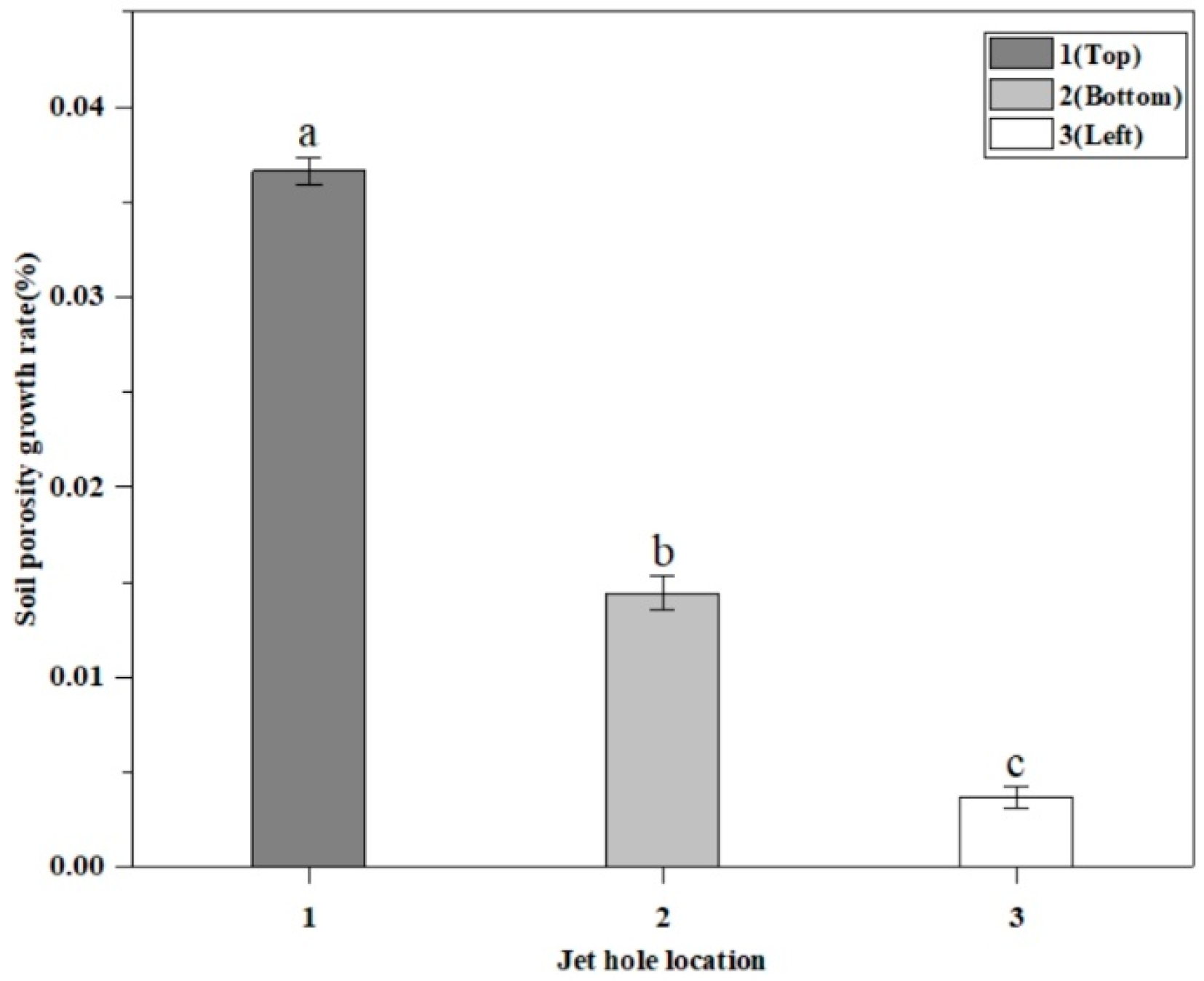
Pneumatic subsoiling operations were conducted using jet holes at three different positions. The soil porosity increase rates, calculated using Equation (6), were 3.65%, 1.46%, and 0.31%, respectively. The violin plot on the right shows the impact of jet hole position on the pneumatic subsoiling effect. The comparison indicates that the range of soil porosity variation corresponded to the jet hole position in the order: top > left > bottom, while the density of soil porosity values during the simulation followed the order: bottom > top > left. Although the soil porosity was concentrated around 39.14% in the downward configuration—the highest value among the three positions—the change in porosity during the initial ventilation stage was the smallest, indicating the least effective subsoiling performance. Considering all factors, the optimal subsoiling effect was achieved when the jet hole was positioned upward [40]. Figure 15 shows the effect of jet hole position on soil porosity growth. Statistical analysis revealed significant differences among the three jet hole positions (p < 0.01). The rate of increase in soil porosity varied significantly with jet hole position. When the jet hole was positioned above the chisel tine, both soil porosity (Figure 14) and the rate of increase in soil porosity (Figure 15) reached their maximum values. Therefore, the optimal jet hole position for pneumatic subsoiling was on the upper surface of the chisel tine.

3.3. Effect of Jet Hole Radius on Changes in Soil Porosity

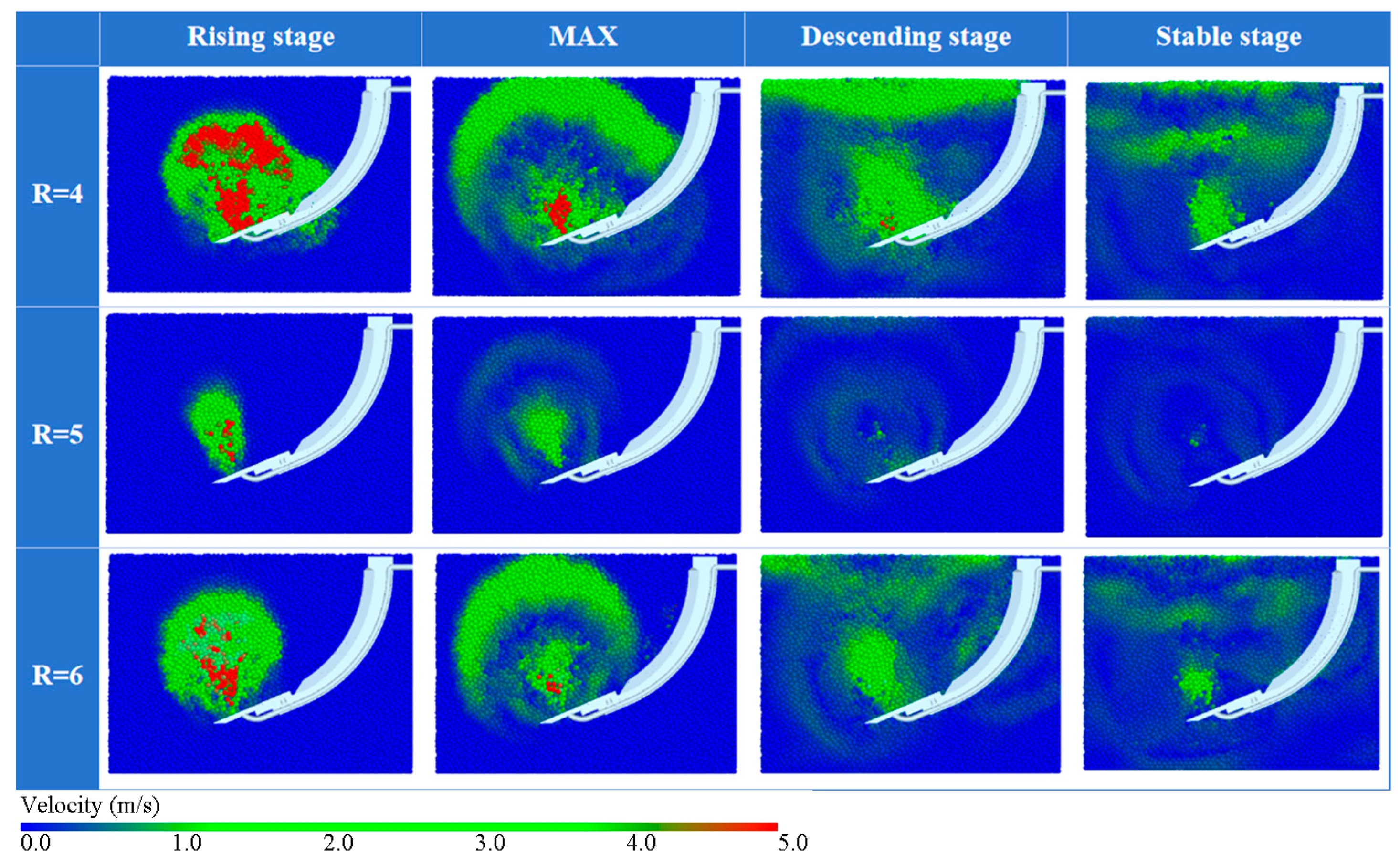
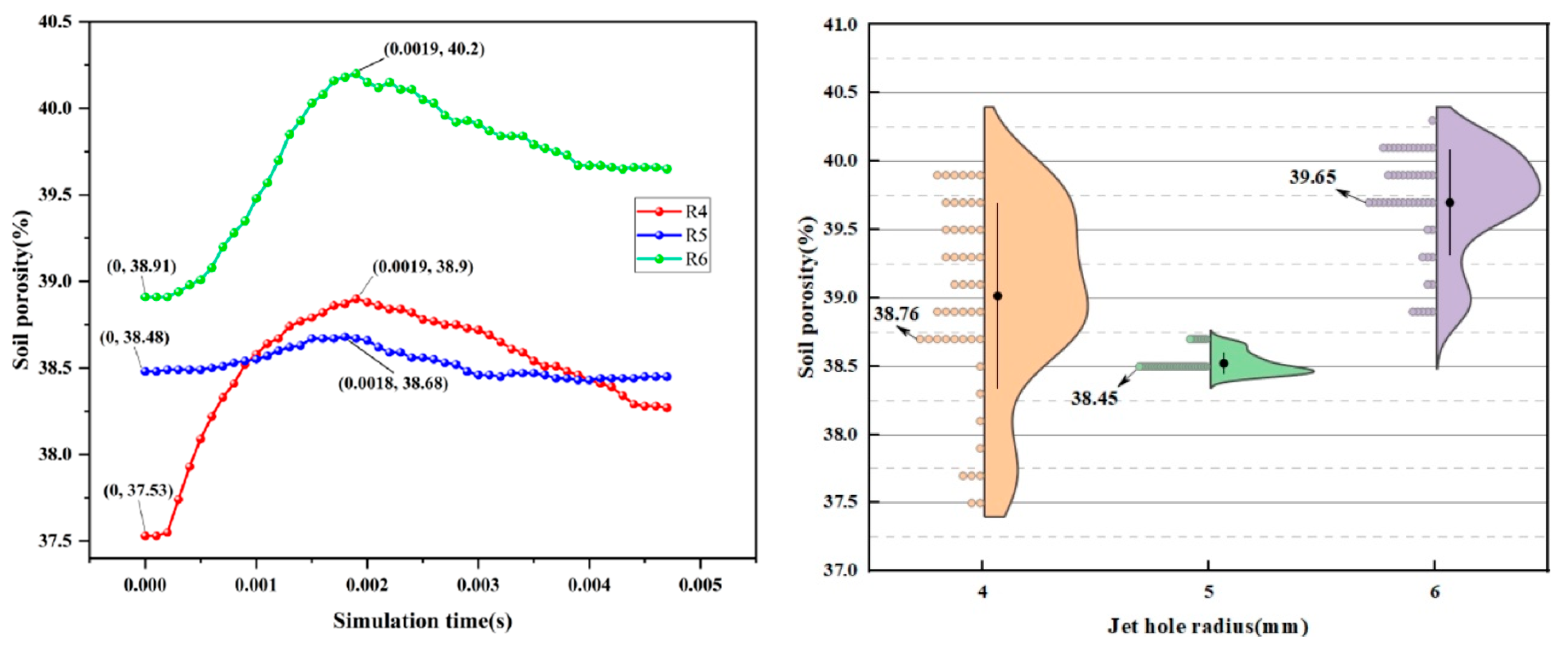
Figure 16 shows the changes in soil porosity with different radii of the jet hole when the subsoiler was in a stationary state, and the jet hole was placed upward. From the soil ZY cross-section analysis, by comparing the soil particle velocity size and velocity distribution during the process of injecting air into the soil with pneumatic subsoilers with different jet hole radii, it could be seen that the airflow in the jet hole with a radius of 4 mm during the subsoiling process involved the upper soil surface, had the widest diffusion range, and had the best effect on loosening the plough pan.
This best loosening effect is explained by the fact that the vent outlet had the smallest cross-sectional area. When the airflow exited through the jet hole, the airflow loss was the smallest, and the speed was the highest. We found that when the jet hole radius was 6 mm, although the airflow diffused over a large area on the soil surface above the jet hole during pneumatic subsoiling, the degree of diffusion was lower than when the jet hole radius was 4 mm [41]. When the jet hole radius was 5 mm, the airflow diffused over a large area. When the subsoiler injected air into the soil, it had the greatest effect on loosening the plough pan. Therefore, to achieve the best subsoiling effect (i.e., effective disruption of the plough pan), it was necessary to set the radius of the arc-shaped jet hole to 4 mm [17].
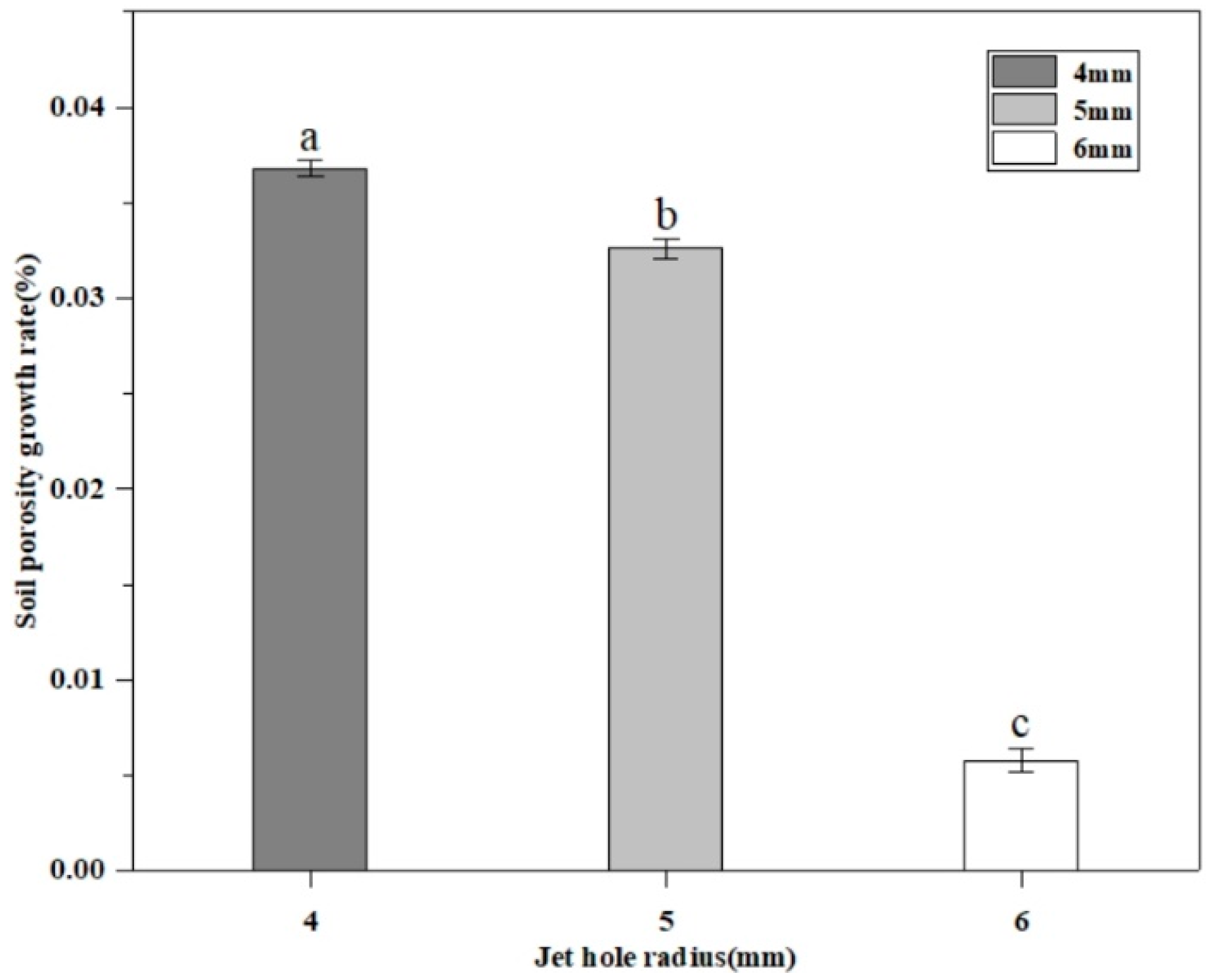
Figure 17 shows the effect of different radii of jet holes on soil porosity. When the jet hole radius was 4 mm, soil porosity increased linearly and rapidly over time. The maximum soil porosity in the measurement area reached 38.9% (compared with 37.53% in the target area before ventilation). As the simulation progressed, the soil porosity decreased slowly and eventually approached stability. When the jet hole radius was 6 mm, soil porosity increased slowly, reaching a maximum of 40.2% in the measurement area (soil porosity in the target area before ventilation was 38.91%). The soil porosity began to decrease slowly when the simulation continued. The trend was similar to that present when the jet hole radius was 4 mm, and finally became stable. When the jet hole radius was 5 mm, the soil porosity in this target area did not increase significantly. The maximum soil porosity in the measurement area was 38.68% (the soil porosity in the target area before ventilation was 38.48%), but the overall trend of the curve was similar to that of the two cases above. Three types of jet holes with different radii were used for pneumatic subsoiling operations. The soil porosity growth rates obtained by using Equation (6) were 3.65%, 3.21%, and 0.52%, respectively. The violin plot on the right can show the influence of different jet hole radii on the pneumatic subsoiling effect. The comparison indicated that the range of soil porosity variation corresponded to the jet hole radii in the order: 4 mm, 6 mm, and 5 mm; the density of soil porosity values during the simulation followed the order: 6 mm, 4 mm, and 5 mm. Although the soil porosity value was concentrated at 39.65% when the jet hole radius was 6 mm, taking into account the initial stage of ventilation, the change in soil porosity when the jet hole radius was 6 mm was smaller than the change when the jet hole radius was 4 mm. Figure 18 shows the effect of different radii of the jet hole on the growth of soil porosity. These data show significant differences between jet hole locations (p < 0.01). As the position of the jet holes changed, the rate of growth in soil porosity also changed significantly. When the jet hole radius was 4 mm, the soil porosity (Figure 17) and the rate at which soil porosity increased (Figure 18) reached the maximum under its influence. Considering all factors, the optimal subsoiling effect was achieved with a jet hole radius of 4 mm.

3.4. Soil Bin Comparison and Verification Test

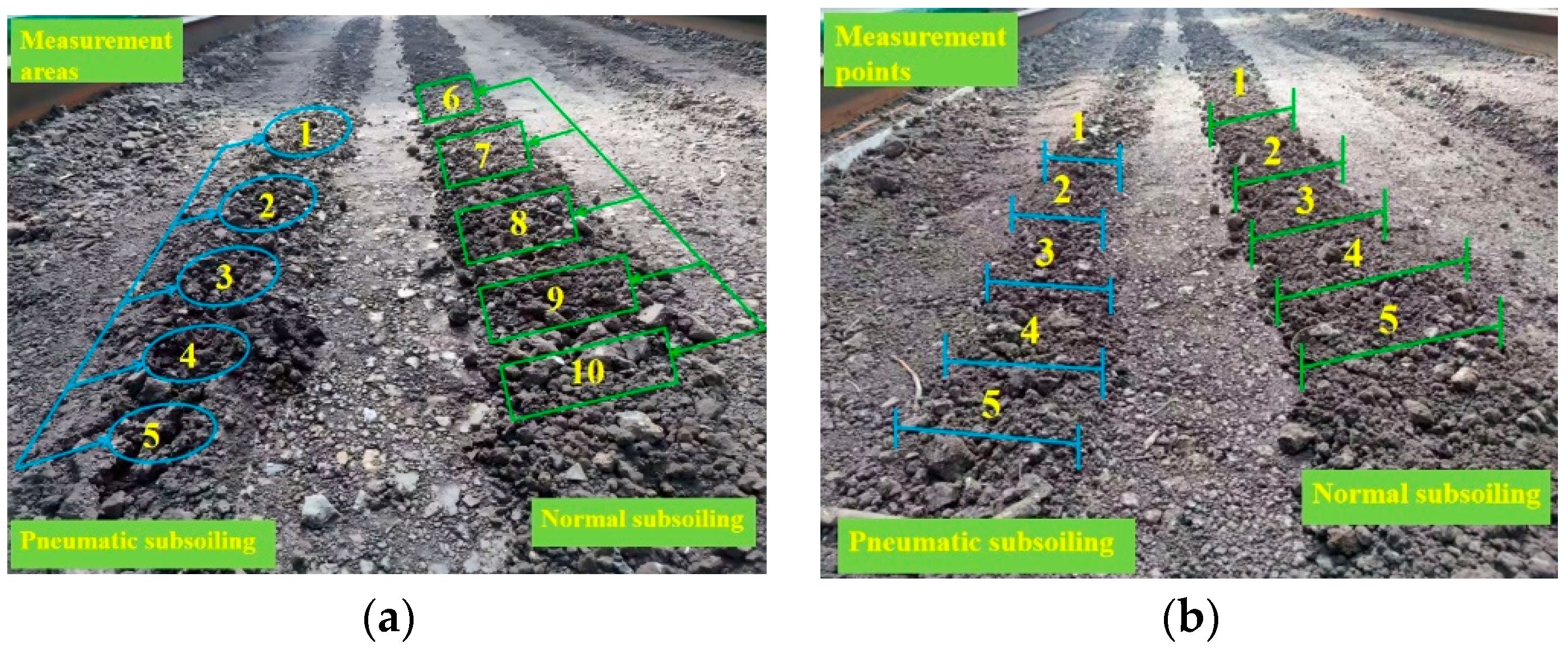
The area where soil porosity parameters were measured after pneumatic subsoiling and normal subsoiling operations is shown in Figure 19a. The aspects measured in Figure 19a were soil parameters at a depth of 330 mm (soil bulk density before subsoiling and soil bulk density after subsoiling). The soil porosity at the target depth after the two subsoiling methods was calculated according to the formula, and the results are shown in Table 2. The average increase in soil porosity was 6.3% for normal subsoiling and 16.1% for pneumatic subsoiling. It was observed that the pneumatic subsoiling method had a strong loosening effect on the soil, especially near the plough pan [12]. This may be attributed to the fact that the internal soil, especially the soil in the plough pan, was affected by the high-pressure airflow ejected from the chisel tine. Soil particles were continuously lifted upward along the airflow direction, causing those above the chisel tine and near the plough pan to move. The airflow propagated upward along the chisel tine and spread laterally, thereby increasing soil porosity [42]. In order to compare the differences between the results of pneumatic subsoiling and normal subsoiling operations, an analysis of variance (ANOVA) of soil porosity growth rate was carried out, as presented in Table 3. The ANOVA results indicated a significant difference between pneumatic and normal subsoiling (p < 0.01).
Figure 19b shows the measurement points of the width parameters for surface soil disturbance after pneumatic subsoiling and normal subsoiling operations. As shown in Figure 19b, the left side shows the disturbance width of the surface soil after pneumatic subsoiling operations, and the right side shows the disturbance width of the surface soil after normal subsoiling operations. It is evident from Figure 19b that pneumatic subsoiling operations can significantly reduce the disturbance width of the surface soil. After sampling and measurement, the average disturbance width of the surface soil at the parameter measurement points in the pneumatic subsoiling area was 305 mm, and the average disturbance width in the surface soil at the parameter measurement points in the normal subsoiling area was 373 mm. This may be because the soil trajectory showed a trend of first rising and then falling after being affected by the airflow. Under the continuous action of airflow, the soil first lifted, and then the soil lifted by the airflow, especially the soil particles near the surface, resulted in a pressure loss due to the injection of air into the soil as the height of the airflow increases. This meant that the gravity of the soil particles near the surface was greater than the pressure of the airflow, and the airflow did not continue to blow the soil upward. Under the influence of gravity, the particles continued to fall and fill the bin that had formed after the subsoiler operation, thereby reducing surface soil disturbance. In order to compare the differences between the results of normal subsoiling operations and pneumatic subsoiling operations, a variance analysis of the surface soil disturbance width was performed, as shown in Table 4. The ANOVA results show a significant difference between normal subsoiling and pneumatic subsoiling (p < 0.01).
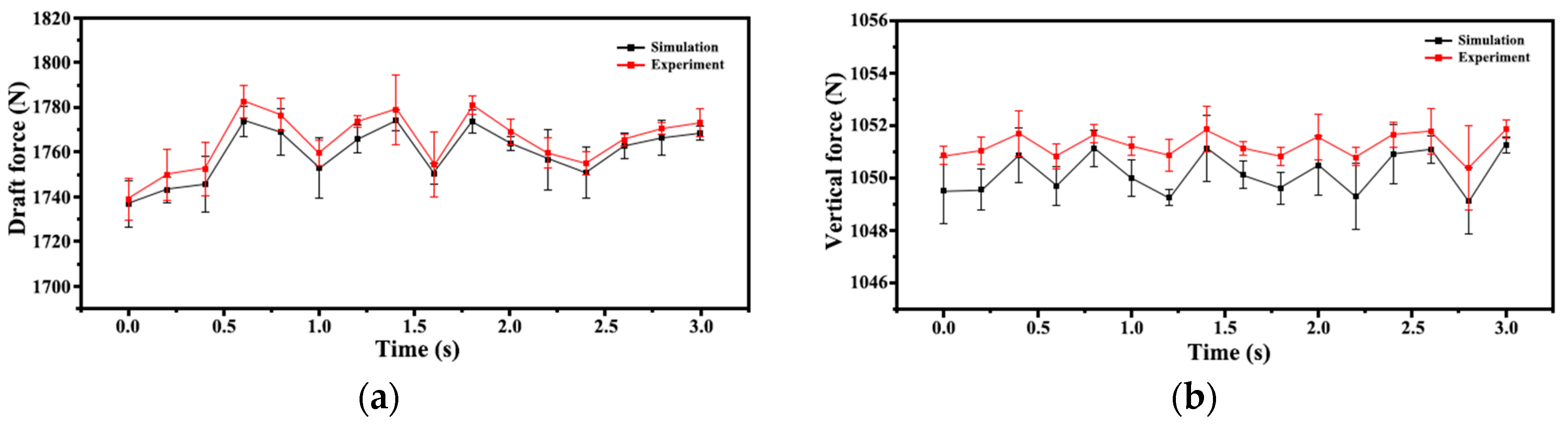
To determine the accuracy of the simulation model, the range over which the draft and vertical forces remained stable during simulation and testing was selected. To compare the simulation and experimental results, a variance analysis of draft force and vertical force was performed, as shown in Table 5 and Table 6.
The results showed that the draft force and vertical force measured by the subsoiler were slightly different from the simulation results. Still, the simulation trend was consistent with the experimental results, as shown in Figure 20a,b. However, the analysis of variance results showed no significant difference (p > 0.01) between the experimental and simulation results, with an average error of approximately 2.8%. As shown in Table 5 and Table 6, the CFD-DEM model successfully simulated the pneumatic subsoiling effect [43].

4. Conclusions

This study employed bionic techniques to design a jet hole and utilized the CFD-DEM coupled method to model the pneumatic subsoiling process. The coupled simulation revealed that as airflow was continuously injected into the soil, it spread in a fan-shaped pattern, spreading to all sides, and the velocity showed a trend of being higher in the center and lower at the periphery. Under this influence, the particles’ porosity near the plough pan initially increased and then stabilized. Simulation analysis indicated that the pneumatic subsoiling process can be divided into four stages. In the initial stage, as airflow is injected, air pressure increases rapidly due to the soil’s low permeability, causing particles above the jet hole to move upward and gradually loosen the soil. In the expansion stage, the soil-loosening effect becomes more pronounced as aeration penetrates deeper into the soil, gradually spreading from the lower layer to the upper soil. In the maintenance stage, the soil particles no longer spread around, and the velocity begins to stabilize. At the end stage, the particles began to fall under gravity and return to their original positions, but the soil porosity did not revert to its initial state.
Changes in the location and radius of the jet hole significantly affected the rate of increase in soil porosity. The experimental results showed that the optimal pneumatic subsoiling effect was achieved when the jet hole was positioned on the upper surface of the chisel tine, with a 4 mm radius. Under these conditions, pressure loss was minimized, and subsoiling efficiency was enhanced, and the rate of increase in soil porosity reached 3.65%.
The soil bin tests have been conducted to verify the simulation model’s accuracy and compare the effects of pneumatic subsoiling. The average error between the experimental data and the simulation results was approximately 2.8%. The results showed that pneumatic subsoiling significantly improves subsoiling efficiency compared with conventional methods, and the CFD-DEM coupled model accurately predicts its effects.

Author Contributions

Writing—original draft, S.Z.; Writing—review and editing, S.Z., S.D. and B.L.; Investigation, S.Z., C.J. and X.L.; Formal analysis, S.Z., C.J. and X.L.; Visualization, B.L., S.D. and M.D.; Resources, Y.Y., S.D. and M.D.; Methodology, S.Z., S.D. and M.D.; Validation, C.J., M.D. and X.L.; Project administration, S.Z. and X.L.; Data curation, S.Z. and C.J.; Conceptualization, C.J., S.Z. and B.L.; Supervision, Y.Y. All authors have read and agreed to the published version of the manuscript.

Funding

This research was funded by the National Key R&D Program of China, Grant (Project No. 2024YFD1500303).

Institutional Review Board Statement

Not applicable.

Data Availability Statement

The raw data supporting the conclusions of this article will be made available by the authors on request.

Conflicts of Interest

The authors declare no conflicts of interest.

References

  1. Shahgholi, G.; Moinfar, A. The effect of crop residue percentages and their chopped size on soil compactibility. Acta Technol. Agric. 2021, 24, 181–186. [Google Scholar] [CrossRef]
  2. Menon, M.; Jia, X.; Lair, G.J.; Faraj, P.H.; Blaud, A. Analysing the impact of compaction of soil aggregates using X-ray microtomography and water flow simulations. Soil Tillage Res. 2015, 150, 147–157. [Google Scholar] [CrossRef]
  3. Silva, F.G.D.; Assis, R.N.D.; Toma, R.S.; Oliveira, L.D.S.; Marques, E.D.S.; Mota, J.C.A. Physical-hydraulic attributes as indicators of functionality of soil pores under different compaction levels. Rev. Caatinga 2022, 35, 884–893. [Google Scholar] [CrossRef]
  4. Wang, F.; Zhang, X.; Neal, A.L.; Crawford, J.W.; Mooney, S.J.; Bacq-Labreuil, A. Evolution of the transport properties of soil aggregates and their relationship with soil organic carbon following land use changes. Soil Tillage Res. 2022, 215, 105226. [Google Scholar] [CrossRef]
  5. Abraha, A.B.; Tesfamariam, E.H.; Truter, W.F. Can a blend of amendments be an important component of a rehabilitation strategy for surface coal mined soils? Sustainability 2019, 11, 4297. [Google Scholar] [CrossRef]
  6. Wang, Y.; Jing, H.; Zhang, D.; Cui, T.; Zhong, X.; Yang, L. Development and performance evaluation of an electric-hydraulic control system for subsoiler with flexible tips. Comput. Electron. Agric. 2018, 151, 249–257. [Google Scholar] [CrossRef]
  7. Feng, X.; Hao, Y.; Latifmanesh, H.; Lal, R.; Cao, T.; Guo, J.; Deng, A.; Song, Z.; Zhang, W. Effects of subsoiling tillage on soil properties, maize root distribution, and grain yield on mollisols of Northeastern China. Agron. J. 2018, 110, 1607–1615. [Google Scholar] [CrossRef]
  8. Guo, R.; Zhang, N.; Wang, L.; Lin, T.; Zheng, Z.; Cui, J.; Tian, L. Subsoiling depth affects the morphological and physiological traits of roots in film-mulched and drip-irrigated cotton. Soil Tillage Res. 2023, 234, 105826. [Google Scholar] [CrossRef]
  9. Xue, L.; Khan, S.; Sun, M.; Anwar, S.; Ren, A.; Gao, Z.; Lin, W.; Xue, J.; Yang, Z.; Deng, Y. Effects of tillage practices on water consumption and grain yield of dryland winter wheat under different precipitation distribution in the loess plateau of China. Soil Tillage Res. 2019, 191, 66–74. [Google Scholar] [CrossRef]
  10. Wang, Y.; Li, N.; Ma, Y.; Tong, J.; Pfleging, W.; Sun, J. Field experiments evaluating a biomimetic shark-inspired (BioS) subsoiler for tillage resistance reduction. Soil Tillage Res. 2020, 196, 104432. [Google Scholar] [CrossRef]
  11. Zhao, J.; Lu, Y.; Wang, X.; Zhuang, J.; Han, Z. A bionic profiling-energy storage device based on MBD-DEM coupled simulation optimization reducing the energy consumption of deep loosening. Soil Tillage Res. 2023, 234, 105824. [Google Scholar] [CrossRef]
  12. Li, X.; Wang, S.; Meng, H.; Qu, Q.; Jia, Y. Research on drag reduction mechanism of pneumatic subsoiler and establishment of resistance mathematical model. Can. J. Soil Sci. 2021, 102, 531–548. [Google Scholar] [CrossRef]
  13. Su, H.; Cui, H.; Li, F.; Fan, T. Optimization design of an air-pressure subsoiler type. INMATEH Agric. Eng. 2021, 63, 145–154. [Google Scholar] [CrossRef]
  14. Shen, C.; Zhang, L.; Jia, S.; Zhou, Y.; Li, F.; Dai, Y.; Zhang, J.; Ma, W. Parameter optimization and test of hydraulic soil insertion device of orchard gas explosion subsoiling and fertilizing machine. Int. J. Agric. Biol. Eng. 2023, 16, 132–141. [Google Scholar] [CrossRef]
  15. Zhang, L.; Qian, B.; Zhang, C.; Mao, J.; Fan, H. Numerical study on the cooling characteristics of cat-ear-shaped film-cooling holes on turbine blades. Case Stud. Therm. Eng. 2022, 36, 102050. [Google Scholar] [CrossRef]
  16. Zhang, L.; Zhai, Y.; Chen, J.; Zhang, Z.; Huang, S. Optimization design and performance study of a subsoiler underlying the tea garden subsoiling mechanism based on bionics and EDEM. Soil Tillage Res. 2022, 220, 105375. [Google Scholar] [CrossRef]
  17. Niu, J.; Luo, T.; Xie, J.; Cai, H.; Zhou, Z.; Chen, J.; Zhang, S. Simulation and experimental study on drag reduction and anti-adhesion of subsoiler with bionic surface. Int. J. Agric. Biol. Eng. 2022, 15, 57–64. [Google Scholar] [CrossRef]
  18. Song, W.; Jiang, X.; Li, L.; Ren, L.; Tong, J. Increasing the width of disturbance of plough pan with bionic inspired subsoilers. Soil Tillage Res. 2022, 220, 105356. [Google Scholar] [CrossRef]
  19. Kong, X.; Liu, J.; Yang, T.; Su, Y.; Geng, J.; Niu, Z. Numerical simulation of feed pellet breakage in pneumatic conveying. Biosyst. Eng. 2022, 218, 31–42. [Google Scholar] [CrossRef]
  20. Ma, H.; Zhou, L.; Liu, Z.; Chen, M.; Xia, X.; Zhao, Y. A review of recent development for the CFD-DEM investigations of non-spherical particles. Powder Technol. 2022, 412, 117972. [Google Scholar] [CrossRef]
  21. Tang, Z.; Gong, H.; Wu, S.; Zeng, Z.; Wang, Z.; Zhou, Y.; Fu, D.; Liu, C.; Cai, Y.; Qi, L. Modelling of paddy soil using the CFD-DEM coupling method. Soil Tillage Res. 2023, 226, 105591. [Google Scholar] [CrossRef]
  22. Chen, P.; Han, Y.; Jia, F.; Zhao, D.; Meng, X.; Li, A.; Chu, Y.; Zhao, H. Investigation of the mechanism of aerodynamic separation of rice husks from brown rice following paddy hulling by coupled CFD-DEM. Biosyst. Eng. 2022, 218, 200–215. [Google Scholar] [CrossRef]
  23. Ahmad, F.; Qiu, B.; Ding, Q.; Ding, W.; Khan, Z.M.; Shoaib, M.; Chandio, F.A.; Rahim, A.; Khaliq, A. Discrete element method simulation of disc type furrow openers in paddy soil. Int. J. Agric. Biol. Eng. 2020, 13, 103–110. [Google Scholar] [CrossRef]
  24. Hoseinian, S.H.; Hemmat, A.; Esehaghbeygi, A.; Shahgoli, G.; Baghbanan, A. Development of a dual side way-share subsurface tillage implement: Part 1. Modeling tool interaction with soil using DEM. Soil Tillage Res. 2022, 215, 105201. [Google Scholar] [CrossRef]
  25. Li, H.; Li, Y.; Gao, F.; Zhao, Z.; Xu, L. CFD–DEM simulation of material motion in air-and-screen cleaning device. Comput. Electron. Agric. 2012, 88, 111–119. [Google Scholar] [CrossRef]
  26. Zhou, Z.Y.; Kuang, S.B.; Chu, K.W.; Yu, A.B. Discrete particle simulation of particle–fluid flow: Model formulations and their applicability. J. Fluid Mech. 2010, 661, 482–510. [Google Scholar] [CrossRef]
  27. Gu, Y.; Zhao, G.; Zheng, J.; Li, Z.; Liu, W.; Muhammad, F.K. Experimental and numerical investigation on drag reduction of non-smooth bionic jet surface. Ocean Eng. 2014, 81, 50–57. [Google Scholar] [CrossRef]
  28. Li, F.; Zhao, G.; Liu, W. Research on drag reduction performance of turbulent boundary layer on bionic jet surface. Proc. Inst. Mech. Eng. M 2017, 231, 258–270. [Google Scholar] [CrossRef]
  29. Li, E.S.; Zhu, S.L.; Zhu, B.S.; Zhao, Y.; Xia, C.G.; Song, L.H. An adaptive edge-detection method based on the Canny operator. In Proceedings of the International Conference on Environmental Science and Information Application Technology, Wuhan, China, 4–5 July 2009. [Google Scholar] [CrossRef]
  30. Ding, Q.; Ren, J.; Adam, B.E.; Zhao, J.; Ge, S.; Li, Y. DEM analysis of subsoiling process in wet clayey paddy soil. Trans. Chin. Soc. Agric. Mach. 2017, 48, 38–48, (In Chinese with English abstract). [Google Scholar] [CrossRef]
  31. Wang, X.; Yue, B.; Gao, X.; Zheng, Z.; Zhu, R.; Huang, Y. Discrete element simulations and experiments of disturbance behavior as affected by the mounting height of the subsoiler’s wing. Trans. Chin. Soc. Agric. Mach. 2018, 49, 129–141, (In Chinese with English abstract). [Google Scholar] [CrossRef]
  32. Hang, C.; Gao, X.; Yuan, M.; Huang, Y.; Zhu, R. Discrete element simulations and experiments of soil disturbance as affected by the tip spacing of subsoiler. Biosyst. Eng. 2018, 163, 73–82. [Google Scholar] [CrossRef]
  33. Zheng, K.; He, J.; Li, H.; Dao, P.; Wang, Q.; Zhao, H. Research on polyline soil-breaking blade subsoiler based on subsoiling soil model using discrete element method. Trans. Chin. Soc. Agric. Mach. 2016, 47, 62–72, (In Chinese with English abstract). [Google Scholar] [CrossRef]
  34. Li, X.; Wang, S.; Jiang, Z.; Li, X.; You, B.; Rui, C. Study on soil cracks in pneumatic subsoiling based on LSTM. Soil Use Manag. 2023, 39, 298–315. [Google Scholar] [CrossRef]
  35. Wang, X.; Zhang, S.; Pan, H.; Zheng, Z.; Huang, Y.; Zhu, R. Effect of soil particle size on soil-subsoiler interactions using the discrete element method simulations. Biosyst. Eng. 2019, 182, 138–150. [Google Scholar] [CrossRef]
  36. He, C.; Guo, Y.; Guo, X.; Sang, H. A mathematical model for predicting the draft force of shank-type tillage tip in a compacted sandy loam. Soil Tillage Res. 2023, 228, 105642. [Google Scholar] [CrossRef]
  37. Gao, Y.; He, Z.; Zhu, X.; Chen, L.; Du, J. Light thinning can improve soil water availability and water holding capacity of plantations in alpine mountains. Front. Plant Sci. 2022, 13, 1032057. [Google Scholar] [CrossRef]
  38. Wu, Y.; Wang, Q.; Wang, H.; Wang, W.; Han, S. Shelterbelt poplar forests induced soil changes in deep soil profiles and climates contributed their inter-site variations in dryland regions, northeastern China. Front. Plant Sci. 2019, 10, 220. [Google Scholar] [CrossRef]
  39. Gao, P.; Li, J.; Qi, H.; Liu, X.; Ma, Y. Simulation of Draught Reduction Performance of Subsoiling with Upcutting Belt Motion Using Discrete Element Method. Appl. Sci. 2024, 14, 1313. [Google Scholar] [CrossRef]
  40. Liu, K.; Sozzi, M.; Gasparini, F.; Marinello, F.; Sartori, L. Combining simulations and field experiments: Effects of subsoiling angle and tillage depth on soil structure and energy requirements. Comput. Electron. Agric. 2023, 214, 108323. [Google Scholar] [CrossRef]
  41. Wang, X.; Du, R.; Geng, L.; Zhou, H.; Ji, J. Performance Evaluation of a Cicada-Inspired Subsoiling Tool Using DEM Simulations. Biomimetics 2024, 9, 25. [Google Scholar] [CrossRef] [PubMed]
  42. Li, X.; Zhao, Z.; You, B.; Wang, X.; Qi, T.; Zhu, H.; Qin, T. Numerical simulation and field experiment study of the supersonic gas jet subsoiler based on DEM. PLoS ONE 2025, 20, e0328565. [Google Scholar] [CrossRef] [PubMed]
  43. Zheng, H.; Duan, W.; Li, Z.; Zhu, Y.; Li, D.; Liu, Z.; Xu, W.; Xiao, M.; Zhu, L. A CFD-DEM model for simulating mechanical responses of saturated paddy soil: Model development and experimental verification. Comput. Electron. Agric. 2025, 239, 110896. [Google Scholar] [CrossRef]
Figure 1. Design of jet hole inspired by shark gill slits: (a) bionic biological prototype; (b) edge detection; (c) the curve plotted from fitted points; (d) outer contour fitting curve; (e) inner contour fitting curve; (f) bionic jet hole processing; (g) jet hole parameters.
Agriculture 16 00949 g001
Figure 2. Subsoiler model with different jet hole positions.
Agriculture 16 00949 g002
Figure 3. The mesh model of soil–subsoiler interaction in the DEM and CFD: (a) mesh models in DEM and CFD; (b) fluid domain mesh model.
Agriculture 16 00949 g003
Figure 4. Subsoiler–soil model with an enlarged image of the bonds between particles.
Agriculture 16 00949 g004
Figure 5. Measuring box for monitoring the number of soil particles within the plough pan.
Agriculture 16 00949 g005
Figure 6. Preparation for soil bin tests: (a) the test equipment and draft force-measuring device in the soil bin test; (b) soil preparation process (taking compaction as an example).
Agriculture 16 00949 g006
Figure 7. The test soil bin was divided into a test area, a start area, and a parking area.
Agriculture 16 00949 g007
Figure 8. Changes in soil porosity during simulation.
Agriculture 16 00949 g008
Figure 9. Velocity of soil particles in EDEM: (a) sampling points when the soil porosity was increasing; (b) sampling points when the soil porosity was stable.
Agriculture 16 00949 g009
Figure 10. Particle motion state in soil disturbed areas in EDEM: (a) non-jet state; (b) jet initiation state; (ce) jet persistence state; (f) jet stability state.
Agriculture 16 00949 g010
Figure 11. Analysis of soil porosity under the influence of pneumatic subsoiling from the perspective of layering: (a) unbroken state; (b) initial state of fracture; (c) peak fracture state; (d) fracture stable state.
Agriculture 16 00949 g011
Figure 12. Velocity cloud diagram and streamline distribution of airflow injected into soil; (a) sustained state; (b) stable state.
Agriculture 16 00949 g012
Figure 13. Velocity fields of the longitudinal soil failure at different jet hole positions.
Agriculture 16 00949 g013
Figure 14. Soil porosity under jet holes at different locations.
Agriculture 16 00949 g014
Figure 15. Soil porosity growth rates as affected by the jet hole location; 1–3 represent data of simulations with jet hole location from top to left; different letters (a–c) mean significant difference at p < 0.05.
Agriculture 16 00949 g015
Figure 16. Velocity fields of the longitudinal soil failure at different jet hole radii.
Agriculture 16 00949 g016
Figure 17. Soil porosity under jet holes with different radii.
Agriculture 16 00949 g017
Figure 18. Soil porosity growth rates as affected by the jet holes with different radii; 4–6 represent data of simulations with different radii from 4 to 6; different letters (a–c) mean significant difference at p < 0.05.
Agriculture 16 00949 g018
Figure 19. Normal subsoiling and pneumatic subsoiling operation parameters: (a) measurement areas; (b) measurement points.
Agriculture 16 00949 g019
Figure 20. Experiments and simulation measurements: (a) draft force, (b) vertical force.
Agriculture 16 00949 g020
Table 1. Major model parameters.
ParameterUnitValue
Density of soilkg/m32150
Poisson’s ratio of soilDimensionless0.41
Shear modulus of soilPa1.24 × 106
Density of 65 Mn steelkg/m37865
Critical Shear StressPa6.8 × 104
Critical Normal StressPa2 × 105
Shear stiffness per unit areaN/m31.5 × 108
Normal stiffness per unit areaN/m33.4 × 108
Poisson’s ratio of 65 Mn steelDimensionless0.3
Shear modulus of 65 Mn steelPa7.9 × 1010
Coefficient of restitution of soil–soilDimensionless0.6
Coefficient of restitution of soil–steelDimensionless0.6
Coefficient of static friction of soil–soilDimensionless0.3
Coefficient of rolling friction of soil–soilDimensionless0.2
Coefficient of static friction of soil–steelDimensionless0.6
Coefficient of rolling friction of soil–steelDimensionless0.05
Table 2. Soil porosity of each plot.
Subsoiling TypePlotsSoil Porosity/%Averages/%
Pneumatic subsoiling1–555.5%54.3%54.7%54.7%55.1%54.9%
Normal subsoiling6–1050.2%49.4%50.2%50.9%49.8%50.1%
Table 3. Analysis of variance for soil porosity growth rates.
Origin of
Variance
Sum of SquaresdfMean SquaresF Valuep Value
Different groups0.02610.026218.823<0.001 *
Interior group0.00180.000
Total0.0269
* Extremely significant at p < 0.01.
Table 4. Analysis of variance for surface soil disturbance width.
Origin of
Variance
Sum of SquaresdfMean SquaresF Valuep Value
Different groups11,560.000111,560.00079.450<0.001 *
Interior group1164.008145.500
Total12,724.0009
* Extremely significant at p < 0.01.
Table 5. Analysis of variance for draft force.
Origin of
Variance
Sum of SquaresdfMean SquaresF Valuep Value
Different-groups235.3911235.3911.5630.221
Interior-group4518.83930150.628
Total4754.23031
Table 6. Analysis of variance for vertical force.
Origin of
Variance
Sum of SquaresdfMean SquaresF Valuep Value
Different groups194.0201194.0200.8890.353
Interior group6544.95030218.165
Total6738.97031
Disclaimer/Publisher’s Note: The statements, opinions and data contained in all publications are solely those of the individual author(s) and contributor(s) and not of MDPI and/or the editor(s). MDPI and/or the editor(s) disclaim responsibility for any injury to people or property resulting from any ideas, methods, instructions or products referred to in the content.