Article

Application of Plant Stimulants to Slovak Grape Varieties (Vitis vinifera L.) and Their Effect on Selected Physiological Indicators

1
Institute of Horticulture, Faculty of Horticulture and Landscape Engineering, Slovak University of Agriculture in Nitra, Tr. A. Hlinku 2, 949 76 Nitra, Slovakia
2
SUA University Farm, Ltd., Hlavná 561, 951 78 Kolíňany, Slovakia
3
Institute of Plant Production, Faculty of Agrobiology and Food Resources, Slovak University of Agriculture in Nitra, Tr. A. Hlinku 2, 949 76 Nitra, Slovakia
*
Author to whom correspondence should be addressed.
Agriculture 2026, 16(7), 812; https://doi.org/10.3390/agriculture16070812
Submission received: 11 February 2026 / Revised: 2 April 2026 / Accepted: 3 April 2026 / Published: 6 April 2026
(This article belongs to the Special Issue Biostimulants Extracted from Biomass for Better Crop Growth)

Abstract

Grapevine growth and physiological performance are strongly influenced by biotic and abiotic stresses occurring during the growing season. Plant stimulants are increasingly applied in viticulture as management tools aimed at supporting plant physiological processes and improving plant performance under variable environmental conditions; however, cultivar-specific responses to different application strategies remain insufficiently characterized. The aim of this study was to evaluate the effects of foliar plant stimulant application strategies differing in application frequency and phenological timing on selected physiological and canopy-related indicators in Slovak grapevine cultivars (Vitis vinifera L.) under field conditions. The assessed parameters included leaf chlorophyll a and b contents, chlorophyll a/b ratio, leaf area index (LAI), vegetation indices (NDVI and PRI), cluster weight, and basic must composition. Grapevines were subjected to three treatment variants: a control without plant stimulant application, a variant with two foliar applications, and a variant with three foliar applications of commercial biostimulants (Tecamin Max, Tecamin Flower, and Tecamin Brix) performed at key phenological stages during the growing season. Plant stimulant applications were associated with variations in leaf chlorophyll content and LAI values, particularly under repeated application strategies. NDVI and PRI complemented leaf-level measurements by capturing cultivar-dependent differences in canopy condition and photosynthetic regulation throughout the season. Responses of cluster weight and must composition to plant stimulant application were moderate and varied among cultivars, indicating cultivar-specific responses. Although no consistent increase in cluster yield was observed, treated variants showed higher sugar content and lower titratable acidity in several cultivars, indicating differences in grape composition and ripening-related traits. Overall, the results indicate that foliar plant stimulant application strategies can influence physiological and canopy-level grapevine traits in a cultivar-dependent manner. The combined use of leaf-level, canopy-level, and spectral indicators provides a practical framework for evaluating plant stimulant strategies under field conditions and supports their application in sustainable viticulture.

1. Introduction

Grapevine growth and physiological performance are strongly influenced by biotic and abiotic stresses occurring during the growing season. These stresses can affect photosynthetic activity, canopy development, and overall plant functioning, thereby influencing vineyard productivity and sustainability. In the context of increasing climatic variability and the need for environmentally sound management practices, strategies aimed at supporting grapevine physiological performance have received growing attention [1].
Plant biostimulants represent a broad and diverse group of substances that stimulate plant physiological processes, improve nutrient use efficiency and stress tolerance, and enhance plant vitality independently of their nutrient content [2,3,4,5,6,7]. Their use has expanded beyond organic farming into conventional and integrated viticulture systems. In grapevine cultivation, foliar application of biostimulants has been reported to influence physiological traits associated with growth and development, including photosynthetic pigment content, canopy structure, and the formation of secondary metabolites in grape berries [8,9,10,11]. However, the effects of biostimulants depend on individual conditions of use, such as application frequency, phenological timing, and the overall treatment strategy applied during the growing season.
Photosynthetic pigments, particularly chlorophyll a and chlorophyll b in grapevine leaves, are widely used as indicators of photosynthetic capacity and plant physiological status, while the leaf area index (LAI) provides an integrative measure of canopy development and light interception efficiency. The physiological relevance of these indicators in grapevine growth, canopy function, and assimilate production has been comprehensively described in grapevine physiology studies [12]. Together, these parameters offer valuable insight into grapevine physiological responses to management practices targeting photosynthesis-related processes. Several studies have demonstrated that plant stimulant application can positively affect these indicators under field conditions [5,6,13,14]. Nevertheless, reported responses vary considerably among cultivars and experimental conditions, highlighting the importance of cultivar-specific evaluation.
In Slovakia, several grapevine cultivars have been developed with the aim of improving vigour, fertility, and tolerance to environmental stress. Despite their increasing use in commercial vineyards, information on their physiological responses to foliar plant stimulant application strategies under field conditions remains limited. In commercial vineyard practice, biostimulants are commonly applied as combined products within defined management strategies, and their integrated effects are of practical relevance, although detailed mechanistic understanding remains limited. Data focusing on seasonal changes in chlorophyll content in grapevine leaves and canopy development are scarce for Slovak grapevine cultivars. The expanding use of biostimulants in viticulture has emphasized the importance of understanding cultivar-specific physiological responses to different application strategies under Central European vineyard conditions. However, knowledge of how application frequency and phenological timing affect canopy development and photosynthetic indicators in Slovak grapevine cultivars is still limited.
Therefore, the aim of this study was to evaluate how different foliar biostimulant application strategies, differing in application frequency and phenological timing, influence selected physiological and canopy-related indicators in Slovak grapevine cultivars under field conditions. Specifically, chlorophyll a and chlorophyll b content in leaves and the leaf area index (LAI) were assessed to characterize cultivar-specific physiological responses under field conditions. The results are intended to provide a physiological basis for the use of plant stimulant application strategies in sustainable viticulture.
This study contributes to a better understanding of cultivar-specific physiological responses to practical biostimulant application strategies under Central European vineyard conditions. We hypothesized that increasing the frequency of foliar biostimulant applications would modify selected physiological and canopy-related indicators in a cultivar-dependent manner under field conditions.

2. Materials and Methods

2.1. Location

The experiment was conducted in commercial vineyards located in the South Slovak wine region, within the Strekov wine-growing district, in the village of Strekov (Slovak Republic), at the Chateau Marco vineyard (48.103° N, 18.452° E; approximately 130 m a.s.l.). Grapevines were planted at a spacing of 2.0 × 0.9 m. The vineyards were established in 2009 (cultivar Slovakia) and in 2014 (cultivars Torysa, Dunaj, and Devín). Vines were trained using a Guyot training system with one fruiting cane and one renewal spur. Plant protection was carried out according to integrated pest management principles until 2022 and subsequently under conservation farming practices. The experimental site is located in a very warm and dry climatic region. The average annual temperature in the area is approximately 11–12 °C, with annual precipitation around 520–550 mm. The soil is classified as carbonate black soil with a medium-heavy texture and a depth exceeding 60 cm, providing favourable conditions for grapevine root development.

2.2. Plant Material

Four Slovak grapevine cultivars (Vitis vinifera L.) were included in the experiment: Devín, Dunaj, Slovakia, and Torysa. The vineyard areas reported for these cultivars represent their total planted area within the Slovak Republic [15,16]. Devín is a white grapevine cultivar bred in Slovakia, known for its aromatic character and good adaptability to local growing conditions. Dunaj is a blue grapevine cultivar characterized by high colour intensity and good ripening potential. Torysa is a blue grapevine cultivar valued for its stable yield and balanced grape composition. Slovakia is a white grapevine cultivar developed for improved vigour and adaptability to Central European vineyard conditions.

2.3. Experimental Design and Biostimulant Application Strategies

The experiment was designed to evaluate grapevine physiological responses to different foliar plant stimulant application strategies differing in application frequency and phenological timing. The objective of the experiment was to evaluate practical foliar biostimulant application strategies used in vineyard management rather than to isolate the biochemical effects of individual products. Therefore, treatments were designed to represent realistic vineyard management protocols differing in application frequency and phenological timing. For each cultivar, three treatment variants were established: a control variant with no plant stimulant application, a variant with two foliar plant stimulant applications during the growing season, and a variant with three foliar plant stimulant applications during the growing season.
Each treatment consisted of three replicates, with each replicate comprising six adjacent grapevines. In the control treatment, five grapevines per replicate were evaluated due to vineyard layout constraints. Biostimulants were applied as foliar sprays at defined phenological stages according to the BBCH scale. In the two-application strategy, applications were performed during flowering (BBCH 60) and at the pea-sized berry stage (BBCH 75). In the three-application strategy, applications were performed at the beginning of shoot growth (BBCH 11), during flowering (BBCH 60), and at the pea-sized berry stage (BBCH 75). The applied products included commercially available amino acid–based biostimulants commonly used in viticulture, containing free amino acids, seaweed extracts, and selected macro- and micronutrients. These products were selected because they represent commonly used formulations applied in vineyard management to support plant metabolism during early growth, flowering, and berry development. All biostimulants were applied at a uniform dose of 3 L ha−1 (1% concentration) according to the manufacturer’s recommendations. Applications were performed using a spray volume of 300 L ha−1. No additional adjuvants were used. All products were obtained from the same commercial batch and applied uniformly across all replicates. Foliar applications were carried out using a motorized sprayer to ensure uniform coverage (Table 1 and Table 2).
Detailed information on the composition and main active components of the applied biostimulants was obtained from the manufacturer’s specification sheets. The products used in the experiment represent commercial amino acid–based biostimulants commonly applied in viticulture to support plant physiological performance during key phenological stages. A summary of the main product characteristics is provided in Table 3. However, the complete quantitative formulation of these commercial products is considered proprietary by the manufacturer; therefore, only the main components reported in the official product documentation are presented in this study.

2.4. Determination of Chlorophyll a and Chlorophyll b Content in Leaves

Chlorophyll a and chlorophyll b content were determined in grapevine leaves sampled at defined phenological stages during the growing season. Leaf sampling was conducted at five phenological stages between flowering and the post-harvest period. For each replicate, fully developed leaves located near the grape clusters were sampled from multiple vines to ensure representative sampling. A total of ten leaves per replicate were collected and pooled to form one composite sample. Samples were processed immediately after collection. Fresh leaf tissue (1 g) was homogenized in acetone using a laboratory homogenizer. The homogenate was filtered, transferred to a volumetric flask, and adjusted to a final volume of 50 mL with acetone. Absorbance of the extract was measured at wavelengths of 665 nm and 649 nm using a spectrophotometer. Chlorophyll a and chlorophyll b concentrations were calculated according to [17] and expressed on a fresh weight basis as mg.kg−1.

2.5. Chlorophyll a and Chlorophyll b Ratio

The chlorophyll a and chlorophyll b (Chl a/b) ratio was calculated for each treatment and phenological stage as the ratio of chlorophyll a to chlorophyll b concentrations measured in the same composite leaf samples. This ratio was used as an additional indicator of changes in the organization and functional adjustment of the photosynthetic apparatus in response to different plant stimulant application strategies.

2.6. Leaf Area Index (LAI)

Leaf area index (LAI) was determined using a non-destructive optical method with an LAI-pen device (PSI, Brno, Czech Republic). Measurements were conducted at the same phenological stages as leaf sampling for chlorophyll analysis. LAI measurements were performed under stable weather conditions on clear days between 9:00 and 14:00. For each replicate, multiple readings were taken below the canopy in the inter-row space directly beneath the vine leaf area, and an average value was calculated. Reference measurements of incoming radiation were recorded in an unshaded area near the experimental plots before and after each measurement series.

2.7. Vegetation Indices (NDVI and PRI)

Normalized Difference Vegetation Index (NDVI) and Photochemical Reflectance Index (PRI) were used as additional non-destructive indicators related to canopy greenness and photosynthetic functioning. Measurements were performed using optical sensors from the same manufacturer as the device used for leaf area index (LAI) determination (PSI, Brno, Czech Republic), ensuring methodological consistency among canopy-related measurements. NDVI and PRI measurements were conducted in the same experimental plots and at the same time points as LAI measurements and leaf sampling for chlorophyll analysis. Measurements were aligned with defined phenological stages of grapevine development to ensure comparability among treatments and cultivars. NDVI was calculated as (NIR − Red)/(NIR + Red), while PRI was calculated as (R531 − R570)/(R531 + R570), where R represents reflectance at the respective wavelength. Measurements were conducted above the canopy following the manufacturer’s recommendations. For each replicate, multiple readings were taken and averaged to obtain a single replicate-level value for each phenological stage.

2.8. Cluster Weight

Cluster weight was evaluated as a complementary yield-related indicator associated with assimilate allocation and fruit development. Cluster sampling was performed at technological maturity shortly before harvest in the same experimental plots and treatment variants used for physiological measurements. For each replicate, 10 clusters were collected from different vines within the replicate plot. Clusters were selected from the main fruiting cane and from positions located as close as possible to the trunk head in order to minimize positional variability along the shoot. All sampled clusters were weighed individually, and cluster weight was expressed as fresh weight in grams. The values were subsequently averaged at the replicate level.

2.9. Must Analysis Using Alfa Spectrophotometer

Must parameters were analysed as complementary indicators related to grape composition and assimilate accumulation [18]. Grape samples used for must analysis originated from the same treatment variants, cultivars, and experimental plots as those used for physiological and berry trait assessments. After sampling, grape berries were gently crushed and the resulting must was analysed using an Alfa spectrophotometer (Alfa Instruments, Písek, Czech Republic). The analysed parameters included selected indicators of must composition derived from spectrophotometric measurements. Measurements were performed according to the manufacturer’s instructions and standard analytical procedures [19,20]. All must parameters were determined at the replicate level. The obtained data were used to support the interpretation of physiological responses and their potential relationships with fruit development and composition. It is important to mention that cluster weight and must parameters were included to provide additional context for physiological measurements and were not intended to represent a comprehensive evaluation of yield or grape quality.

2.10. Statistical Evaluation

Statistical analyses were performed using Statgraphics Centurion XVII software (StatPoint Technologies, The Plains, VA, USA). Data were evaluated by one-way analysis of variance (ANOVA). NDVI and PRI values were analysed based on pooled data across measurement dates to assess overall treatment effects within each cultivar. Mean values were compared using the least significant difference (LSD) test at a significance level of p ≤ 0.05.

3. Results

3.1. NDVI and PRI Values

Seasonal mean values of NDVI and PRI showed limited differences among plant stimulant application strategies and cultivars (Table 4). Treated variants generally showed a tendency toward higher NDVI values compared to the control, indicating a tendency toward differences in canopy greenness; however, statistically significant differences were observed only in the cultivar Devín. PRI values varied among cultivars and treatments without significant differences, reflecting variability in photosynthetic functioning across the growing season. The relatively high variability observed in PRI values reflects natural heterogeneity of vineyard canopy structure and temporal variability in photosynthetic regulation under field conditions.

3.2. Chlorophyll a/b

Chlorophyll a content in grapevine leaves varied among cultivars, phenological stages, and plant stimulant application strategies (Table 5). In all cultivars, differences in chlorophyll a content were observed between the control and treated variants across the evaluated phenological stages. Differences in chlorophyll a values were frequently observed in variants with plant stimulant application compared to the control, although the magnitude of the response differed among cultivars and sampling stages.
Chlorophyll b content in grapevine leaves varied among cultivars, phenological stages, and plant stimulant application strategies (Table 6). Across all cultivars, treated variants generally showed variations in chlorophyll b content compared to the control, although the magnitude and consistency of the response differed depending on cultivar and sampling stage.

3.3. Chlorophyll Ratio

Values represent calculated chlorophyll a/b ratios based on chlorophyll a/b concentrations measured in the same composite leaf samples at defined phenological stages. The ratio was used as an indicator of changes in the balance and functional adjustment of the photosynthetic pigment apparatus in response to different plant stimulant application strategies (Table 7).

3.4. Leaf Area Index

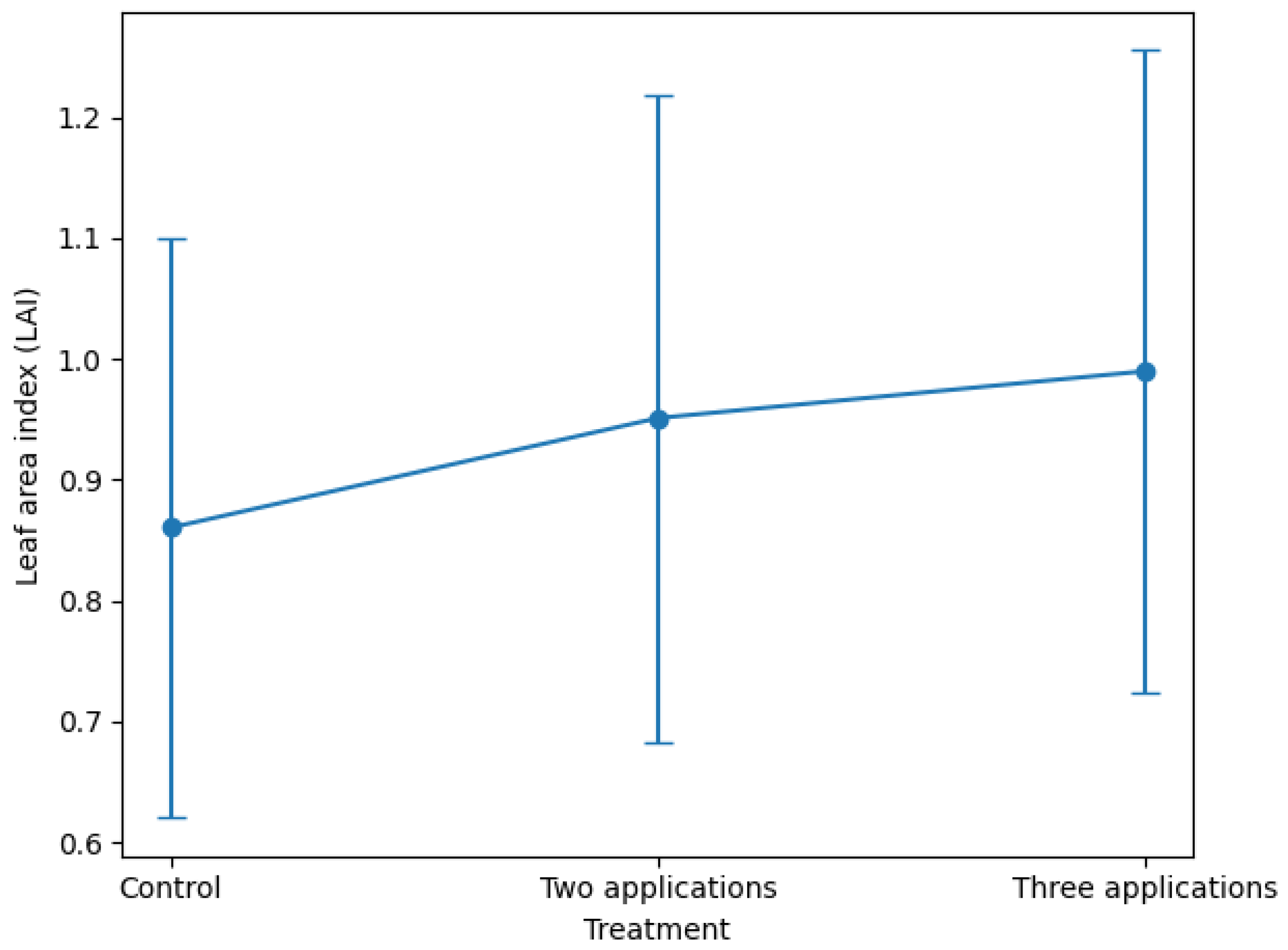
Leaf area index (LAI) varied among biostimulant application strategies (Figure 1). Averaged across cultivars and measurement dates, differences in LAI values were observed among treatments compared to the control, with the highest values recorded under the strategy with three applications.
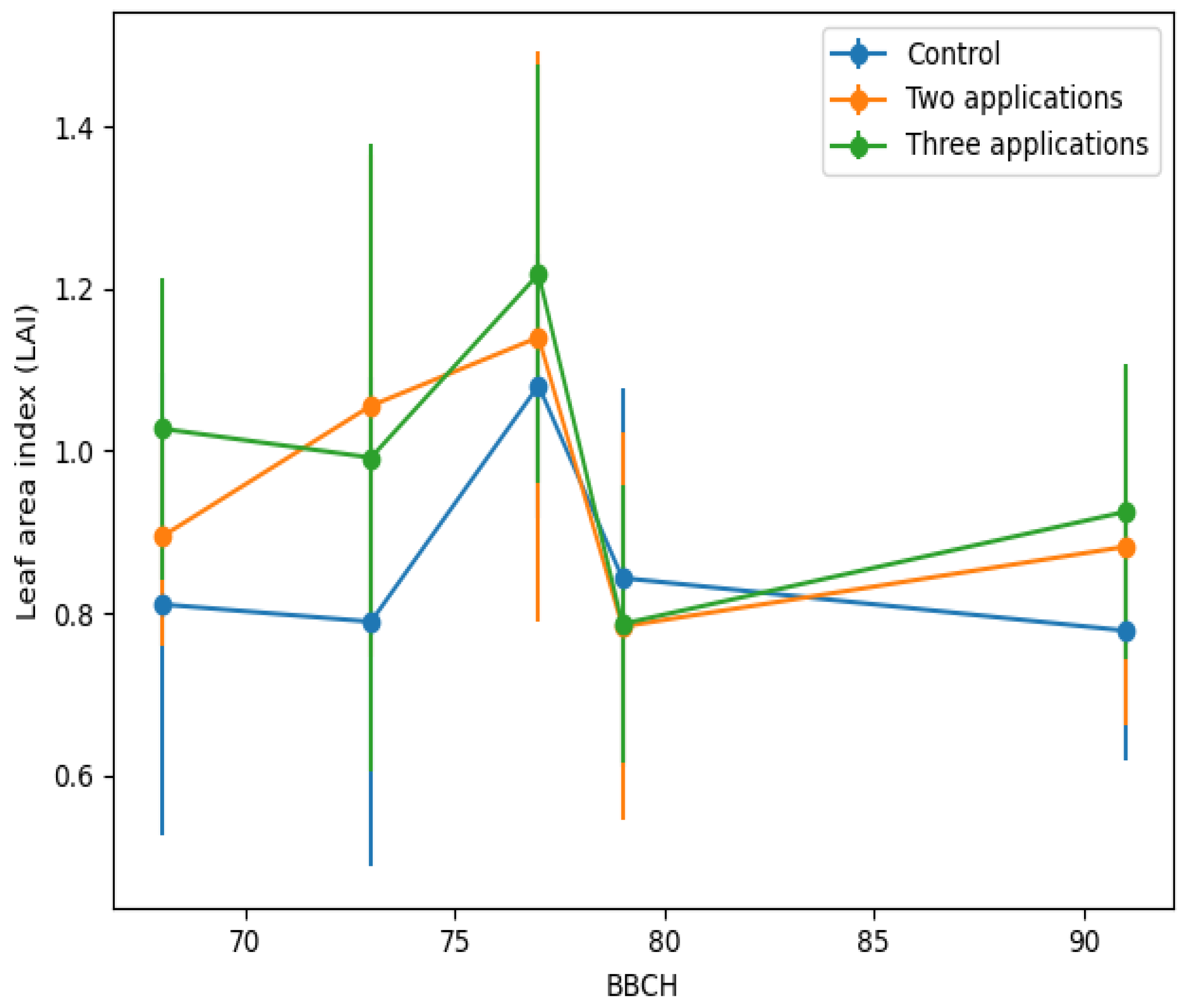
Seasonal changes in leaf area index (LAI) across phenological stages are shown in Figure 2. LAI values varied during the growing season, without significant differences, but differences in LAI values were observed among treatments at several BBCH stages.

3.5. Cluster Weight

Average cluster weight differed among cultivars and, to a lesser extent, among biostimulant application strategies (Table 8). Significant differences between treatments were observed in the cultivars Devín and Torysa, whereas no significant differences were detected in Dunaj. Such variability suggests that physiological responses induced by plant stimulants do not necessarily translate directly into yield-related parameters within a single growing season. Overall, treatment effects on cluster weight were cultivar-dependent and showed no consistent trend across cultivars.

3.6. Must Analysis

Table 9 summarizes the basic must composition of Slovak grapevine cultivars under different plant stimulant application strategies. Sugar content and titratable acidity differed significantly among treatments within individual cultivars, while changes in organic acid composition were generally moderate. In most cultivars, treated variants were associated with higher sugar content and lower titratable acidity compared to the control. The observed responses were cultivar-dependent.
The evaluated physiological and canopy-related parameters showed coherent response patterns throughout the growing season. Changes in chlorophyll content were generally accompanied by corresponding trends in leaf area index and vegetation indices, indicating functional consistency between leaf-level and canopy-level responses.

4. Discussion

This study evaluated cultivar-dependent responses of Slovak grapevine cultivars to foliar plant stimulant application strategies differing in application frequency and phenological timing. Because the treatments were designed as application strategies rather than individual product comparisons, the discussion focuses on physiological and canopy-level responses without attributing effects to specific products. Similar limitations and interpretation principles have been emphasized in recent reviews on plant stimulant use in viticulture, highlighting the importance of cultivar, environment, and application protocol in determining plant responses [2,3,21,22,23].

4.1. Chlorophyll a/b Responses Across Phenological Stages

Chlorophyll a and chlorophyll b contents in grapevine leaves are widely used indicators of photosynthetic capacity and plant physiological status [24]. Previous studies have shown that foliar plant stimulant applications may support chlorophyll stability and delay leaf senescence under field conditions, particularly during periods of environmental stress [25,26,27,28]. In the present study, treated variants showed differences in chlorophyll levels compared to the control at several phenological stages, although the magnitude and consistency of these responses differed among cultivars. Such cultivar-specific variability has been frequently reported and may be related to differences in vigour, canopy structure, and intrinsic physiological sensitivity among genotypes [9,29]. The observed temporal variability further indicates that plant stimulant effects on pigment dynamics are not uniform throughout the growing season, emphasizing the importance of phenological context when interpreting chlorophyll responses.

4.2. Leaf Area Index and Canopy Development

In this study, LAI tended to increase under more intensive application strategies, particularly around bunch closure, followed by a decline later in the season, which is consistent with typical canopy development patterns in grapevines [7,12,13,14,23]. However, no statistically significant differences among treatments were detected (p > 0.05). From a practical perspective, moderate increases in LAI may reflect differences in canopy formation and assimilate production capacity. However, excessive canopy density may also increase shading and negatively affect fruit microclimate, highlighting the need for cultivar-specific interpretation [12]. The combined assessment of LAI with spectral vegetation indices strengthens canopy evaluation by integrating both structural and physiological information. Leaf area index integrates canopy expansion and light interception and is closely linked to grapevine physiological performance and stress responses [7,30].

4.3. NDVI and PRI as Complementary Canopy Indicators

Normalized Difference Vegetation Index (NDVI) and Photochemical Reflectance Index (PRI) were included as non-destructive indicators related to canopy greenness and short-term photosynthetic regulation [31]. NDVI is commonly associated with chlorophyll content and canopy density, while PRI is considered more sensitive to changes in photosynthetic efficiency and stress responses [32,33,34,35]. In the present study, NDVI and PRI complemented LAI and chlorophyll measurements by capturing canopy-level variability at the same phenological stages. Previous vineyard studies have shown that NDVI may saturate under dense canopy conditions, whereas PRI can provide additional information on physiological regulation during stress events [5,36,37,38,39]. The combined use of these indices therefore represents a valuable approach for monitoring grapevine physiological responses under field conditions.

4.4. Relationships with Cluster Weight and Must Composition

Cluster weight and basic must composition were included as complementary indicators related to assimilate allocation and fruit development. Similar variability in yield- and quality-related responses to plant stimulant and foliar treatments has been reported in previous vineyard studies, where effects on grape and wine quality were shown to depend strongly on cultivar and seasonal conditions [23]. Although significant treatment effects on cluster weight were observed only in certain cultivars, the overall responses were cultivar-dependent and did not show a consistent trend across all genotypes. Similar variability has been reported in previous studies, indicating that physiological stimulation does not necessarily translate directly into yield-related responses within a single growing season [10,11,40,41,42]. Must composition showed treatment-related differences in sugar content and titratable acidity within cultivars, while changes in organic acid composition were generally moderate [43]. These results are consistent with reports suggesting that foliar treatments and plant stimulant strategies may influence ripening dynamics and berry composition, but that responses are strongly influenced by cultivar and seasonal conditions [11,26]. Given the experimental design, these differences should be interpreted as effects of the overall application strategy rather than individual product components. Although cluster weight responses were inconsistent and no clear yield increase was observed, changes in must composition, particularly higher sugar content and lower acidity in several cultivars, indicate that plant stimulant application strategies may influence grape composition. These effects were cultivar-dependent and should be interpreted within the context of seasonal and environmental variability.

4.5. Limitations and Implications for Future Research

The main limitation of this study is that combined application strategies were evaluated, which does not allow discrimination of the individual contribution of specific products. It is important to emphasize that the present study was not designed to resolve the mechanistic effects of individual biostimulant components. Instead, the results reflect integrated plant responses to practical application strategies combining multiple products and phenological timings. Therefore, the observed responses should be interpreted at the level of management strategy rather than specific biochemical pathways. In addition, the study primarily focused on physiological and canopy-related indicators. While these parameters provide valuable insight into grapevine responses, future studies would benefit from integrating additional indicators such as yield components, polyphenol composition, water status, or chlorophyll fluorescence [44,45].
Overall, the results demonstrate that foliar plant stimulant application strategies can modulate leaf pigment content and canopy development in a cultivar-dependent manner under field conditions. The combined use of physiological, structural, and spectral indicators represents a robust framework for evaluating plant stimulant strategies in sustainable viticulture.

5. Conclusions

This study showed that foliar plant stimulant application strategies differing in application frequency and phenological timing influenced selected physiological and canopy-related indicators in a cultivar-dependent manner under field conditions. Repeated applications were associated with variations in chlorophyll a and b contents and moderate changes in canopy development, as indicated by leaf area index (LAI), although responses varied among cultivars and phenological stages. Non-destructive canopy indicators (NDVI and PRI) contributed to the evaluation of canopy greenness and photosynthetic regulation throughout the growing season. Cluster weight and must composition showed variable and cultivar-dependent responses, providing additional physiological context. Treated variants were associated with higher sugar content and lower acidity in several cultivars, suggesting differences in grape composition under different application strategies. Overall, the results highlight the need for cultivar-specific evaluation when applying foliar plant stimulant strategies in vineyards. The combined use of physiological, structural, and spectral indicators represents a practical approach for assessing such strategies under field conditions. While the study provides field-based insights relevant for vineyard management, further research is required to better understand the mechanistic basis of biostimulant effects.


Author Contributions

Conceptualization, A.S., J.M., T.V. and D.E.; methodology, A.S., J.M. and M.J.; software, A.S. and I.K.; validation, T.V. and D.E.; formal analysis, A.S.; investigation, A.S.; resources, A.S. and J.M.; data curation, A.S. and I.K.; writing—original draft preparation, A.S. and M.J.; writing—review and editing, I.K.; visualization, A.S.; supervision, J.M.; project administration, A.S.; funding acquisition, A.S. All authors have read and agreed to the published version of the manuscript.

Funding

This research was supported by the Grant Agency of the Slovak University of Agriculture (GA SPU), project No. 03-GA SPU-2025 (Ing. Adrián Selnekovič), and by Slovakia’s Recovery and Resilience Plan, project No. 09I03-03-V05-00018—Early Stage Grants at SUA in Nitra.

Data Availability Statement

The original contributions presented in this study are included in the article material. Further inquiries can be directed to the corresponding author.

Acknowledgments

During the preparation of this manuscript the author(s) used ChatGPT 5.2 by OpenAI in order to assist with language editing, phrasing, and improving the overall readability of the manuscript. After using this tool/service, the author(s) reviewed and edited the output as needed and take(s) full responsibility for the content of this publication.

Conflicts of Interest

Author Martin Janás was employed by the company SUA University Farm, Ltd.,. The remaining authors declare that the research was conducted in the absence of any commercial or financial relationships that could be construed as a potential conflict of interest.

Abbreviations

The following abbreviations are used in this manuscript:
PRIPhotochemical Reflectance Index
NDVINormalized Difference Vegetation Index
LAILeaf area index

References

  1. International Organisation of Vine and Wine. Statistical Report on World Vitiviniculture. OIV. Available online: https://www.oiv.int/public/medias/6782/oiv-2019-statistical-report-on-world-vitiviniculture.pdf (accessed on 6 February 2026).
  2. du Jardin, P. Plant Biostimulants: Definition, Concept, Main Categories and Regulation. Sci. Hortic. 2015, 196, 3–14. [Google Scholar] [CrossRef]
  3. Yakhin, O.I.; Lubyanov, A.A.; Yakhin, I.A.; Brown, P.H. Biostimulants in Plant Science: A Global Perspective. Front. Plant Sci. 2017, 7, 2049. [Google Scholar] [CrossRef]
  4. Zarco-Tejada, P.J.; González-Dugo, M.V.; Fereres, E. Seasonal Stability of Chlorophyll Fluorescence Quantified from Airborne Hyperspectral Imagery as an Indicator of Net Photosynthesis in the Context of Precision Agriculture. Remote Sens. Environ. 2016, 179, 89–103. [Google Scholar] [CrossRef]
  5. Matese, A.; Di Gennaro, S.F. Practical Applications of a Multisensor UAV Platform Based on Multispectral, Thermal and RGB High Resolution Images in Precision Viticulture. Agriculture 2018, 8, 116. [Google Scholar] [CrossRef]
  6. Hall, A.; Lamb, D.W.; Holzapfel, B.; Louis, J. Optical Remote Sensing Applications in Viticulture—A Review. Aust. J. Grape Wine Res. 2002, 8, 36–47. [Google Scholar] [CrossRef]
  7. Caruso, G.; Palai, G.; Gucci, R.; Priori, S. Remote and Proximal Sensing Techniques for Site-Specific Irrigation Management in the Olive Orchard. Appl. Sci. 2022, 12, 1309. [Google Scholar] [CrossRef]
  8. Rouphael, Y.; Colla, G. Editorial: Biostimulants in Agriculture. Front. Plant Sci. 2020, 11, 40. [Google Scholar] [CrossRef]
  9. Cataldo, E.; Fucile, M.; Mattii, G.B. Biostimulants in Viticulture: A Sustainable Approach against Biotic and Abiotic Stresses. Plants 2022, 11, 162. [Google Scholar] [CrossRef] [PubMed]
  10. Ollat, N.; Touzard, J.-M.; van Leeuwen, C. Climate Change Impacts and Adaptations: New Challenges for the Wine Industry. J. Wine Econ. 2016, 11, 139–149. [Google Scholar] [CrossRef]
  11. Rogiers, S.Y.; Coetzee, Z.A.; Walker, R.R.; Deloire, A.; Tyerman, S.D. Potassium in the Grape (Vitis vinifera L.) Berry: Transport and Function. Front. Plant Sci. 2017, 8, 1629. [Google Scholar] [CrossRef]
  12. Keller, M. The Science of Grapevines: Anatomy and Physiology, 3rd ed.; Elsevier: London, UK, 2020. [Google Scholar]
  13. Jindo, K.; Goron, T.L.; Pizarro-Tobías, P.; Sánchez-Monedero, M.Á.; Audette, Y.; Deolu-Ajayi, A.O.; van der Werf, A.; Goitom Teklu, M.; Shenker, M.; Pombo Sudré, C.; et al. Application of Biostimulant Products and Biological Control Agents in Sustainable Viticulture: A Review. Front. Plant Sci. 2022, 13, 932311. [Google Scholar] [CrossRef]
  14. Fang, H.; Li, W.; Wei, S.; Jiang, C. Seasonal Variation of Leaf Area Index (LAI) over Paddy Rice Fields in NE China: Intercomparison of Destructive Sampling, LAI-2200, Digital Hemispherical Photography (DHP), and AccuPAR Methods. Agric. For. Meteorol. 2014, 198–199, 126–141. [Google Scholar] [CrossRef]
  15. Pospíšilová, D.; Sekera, D.; Ruman, T. Ampelografia Slovenska; Výskumná a Šlachtiteľská Stanica Vinárska a Vinohradnícka Modra: Modra, Slovakia, 2005; ISBN 80-969350-9-7. [Google Scholar]
  16. Trubačová, A. Situačná a Výhľadová Správa—Vinič Hroznorodý, Hroznové Víno (Situation and Outlook Report—Grapevine, Grapes and Wine); Ministerstvo Pôdohospodárstva a Rozvoja Vidieka: Bratislava, Slovakia, 2022.
  17. Hegedűsová, A.; Šlosár, M.; Mezeyová, I.; Hegedűs, O.; Andrejiová, A.; Szarka, K. Methods for Estimation of Selected Biologically Active Substances; Slovak University of Agriculture: Nitra, Slovakia, 2018; ISBN 978-80-552-1928-8. [Google Scholar]
  18. Ribéreau-Gayon, P.; Dubourdieu, D.; Donèche, B.; Lonvaud, A. Handbook of Enology, Volume 1: The Microbiology of Wine and Vinifications, 3rd ed.; Wiley: Chichester, UK, 2021. [Google Scholar]
  19. ISO 2173:2003; Fruit and Vegetable Products-Determination of Soluble Solids-Refractometric Method. International Organization for Standardization: Geneva, Switzerland, 2003. Available online: https://www.iso.org/home.html (accessed on 6 February 2026).
  20. International Organisation of Vine and Wine. Compendium of International Methods of Analysis of Wines and Must. OIVs. Available online: https://www.oiv.int/standards/compendium-of-international-methods-of-wine-and-must-analysis (accessed on 6 February 2026).
  21. Calvo, P.; Nelson, L.; Kloepper, J.W. Agricultural Uses of Plant Biostimulants. Plant Soil 2014, 383, 3–41. [Google Scholar] [CrossRef]
  22. Bulgari, R.; Franzoni, G.; Ferrante, A. Biostimulants Application in Horticultural Crops under Abiotic Stress Conditions. Agronomy 2019, 9, 306. [Google Scholar] [CrossRef]
  23. Gutiérrez-Gamboa, G.; Romanazzi, G.; Garde-Cerdán, T.; Pérez-Álvarez, E.P. A Review of the Use of Biostimulants in the Vineyard for Improved Grape and Wine Quality: Effects on Prevention of Grapevine Diseases. J. Sci. Food Agric. 2019, 99, 1001–1009. [Google Scholar] [CrossRef]
  24. Croft, H.; Chen, J.M.; Luo, X.; Bartlett, P.; Chen, B.; Staebler, R.M. Leaf Chlorophyll Content as a Proxy for Leaf Photosynthetic Capacity. Glob. Change Biol. 2017, 23, 3513–3524. [Google Scholar] [CrossRef]
  25. Gambetta, G.A.; Herrera, J.C.; Dayer, S.; Feng, Q.; Hochberg, U.; Castellarin, S.D. The Physiology of Drought Stress in Grapevine: Towards an Integrative Definition of Drought Tolerance. J. Exp. Bot. 2020, 71, 4658–4676. [Google Scholar] [CrossRef] [PubMed]
  26. Popescu, G.C.; Popescu, M. Yield, Berry Quality and Physiological Response of Grapevine to Foliar Humic Acid Application. Bragantia 2018, 77, 273–282. [Google Scholar] [CrossRef]
  27. Van Oosten, M.J.; Pepe, O.; De Pascale, S.; Silletti, S.; Maggio, A. The Role of Biostimulants and Bioeffectors as Alleviators of Abiotic Stress in Crop Plants. Chem. Biol. Technol. Agric. 2017, 4, 5. [Google Scholar] [CrossRef]
  28. Salvi, L.; Brunetti, C.; Cataldo, E.; Niccolai, A.; Centritto, M.; Ferrini, F.; Mattii, G.B. Effects of Ascophyllum Nodosum Extract on Vitis Vinifera: Consequences on Plant Physiology, Grape Quality and Secondary Metabolism. Plant Physiol. Biochem. 2019, 139, 21–32. [Google Scholar] [CrossRef] [PubMed]
  29. Colla, G.; Rouphael, Y.; Canaguier, R.; Svecova, E.; Cardarelli, M. Biostimulant Action of a Plant-Derived Protein Hydrolysate Produced through Enzymatic Hydrolysis. Front. Plant Sci. 2014, 5, 448. [Google Scholar] [CrossRef]
  30. Černý, J.; Krejza, J.; Pokorný, R.; Bednár, P. LaiPen LP 100—A New Device for Estimating Forest Ecosystem Leaf Area Index Compared to the Etalon: A Methodologic Case Study. J. For. Sci. 2018, 64, 455–468. [Google Scholar] [CrossRef]
  31. Pagay, V.; Kidman, C.M. Evaluating Remotely-Sensed Grapevine (Vitis vinifera L.) Water Stress Responses Across a Viticultural Region. Agronomy 2019, 9, 682. [Google Scholar] [CrossRef]
  32. Tombesi, S.; Sabbatini, P.; Frioni, T.; Grisafi, F.; Barone, F.; Zani, P.; Palliotti, A.; Poni, S. Grapevine Response to Stress Generated by Excessive Temperatures during the Budburst. Horticulturae 2022, 8, 187. [Google Scholar] [CrossRef]
  33. Flexas, J.; Diaz-Espejo, A.; Gago, J.; Gallé, A.; Galmés, J.; Gulías, J.; Medrano, H. Photosynthetic Limitations in Mediterranean Plants: A Review. Environ. Exp. Bot. 2014, 103, 12–23. [Google Scholar] [CrossRef]
  34. Gamon, J.A.; Serrano, L.; Surfus, J.S. The Photochemical Reflectance Index: An Optical Indicator of Photosynthetic Radiation Use Efficiency across Species, Functional Types, and Nutrient Levels. Oecologia 1997, 112, 492–501. [Google Scholar] [CrossRef] [PubMed]
  35. Garbulsky, M.F.; Peñuelas, J.; Gamon, J.; Inoue, Y.; Filella, I. The Photochemical Reflectance Index (PRI) and the Remote Sensing of Leaf, Canopy and Ecosystem Radiation Use EfficienciesA Review and Meta-Analysis. Remote Sens. Environ. 2011, 115, 281–297. [Google Scholar] [CrossRef]
  36. Tombesi, S.; Nardini, A.; Frioni, T.; Soccolini, M.; Zadra, C.; Farinelli, D.; Poni, S.; Palliotti, A. Stomatal Closure Is Induced by Hydraulic Signals and Maintained by ABA in Drought-Stressed Grapevine. Sci. Rep. 2015, 5, 12449. [Google Scholar] [CrossRef]
  37. De Pascale, S.; Rouphael, Y.; Colla, G. Plant Biostimulants: Innovative Tool for Enhancing Plant Nutrition in Organic Farming. Eur. J. Hortic. Sci. 2018, 82, 277–285. [Google Scholar] [CrossRef]
  38. Frioni, T.; Tombesi, S.; Sabbatini, P.; Squeri, C.; Lavado Rodas, N.; Palliotti, A.; Poni, S. Kaolin Reduces ABA Biosynthesis through the Inhibition of Neoxanthin Synthesis in Grapevines under Water Deficit. Int. J. Mol. Sci. 2020, 21, 4950. [Google Scholar] [CrossRef]
  39. Zarco-Tejada, P.J.; Berni, J.A.J.; Suárez, L.; Sepulcre-Cantó, G.; Morales, F.; Miller, J.R. Imaging Chlorophyll Fluorescence with an Airborne Narrow-Band Multispectral Camera for Vegetation Stress Detection. Remote Sens. Environ. 2009, 113, 1262–1275. [Google Scholar] [CrossRef]
  40. Jones, G.V.; Davis, R.E. Climate Influences on Grapevine Phenology, Grape Composition, and Wine Production and Quality for Bordeaux, France. Am. J. Enol. Vitic. 2000, 51, 249–261. [Google Scholar] [CrossRef]
  41. Van Leeuwen, C.; Destrac-Irvine, A. Modified Grape Composition under Climate Change Conditions Requires Adaptations in the Vineyard. OENO One 2017, 51, 147–154. [Google Scholar] [CrossRef]
  42. Deluc, L.G.; Quilici, D.R.; Decendit, A.; Grimplet, J.; Wheatley, M.D.; Schlauch, K.A.; Mérillon, J.-M.; Cushman, J.C.; Cramer, G.R. Water Deficit Alters Differentially Metabolic Pathways Affecting Important Flavor and Quality Traits in Grape Berries of Cabernet Sauvignon and Chardonnay. BMC Genom. 2009, 10, 212. [Google Scholar] [CrossRef] [PubMed]
  43. Lapčíková, B.; Lapčík, L.; Hupková, J. Physico-Chemical Characterisation of Slovak Wines. Potravin. Slovak J. Food Sci. 2017, 11, 216–222. [Google Scholar] [CrossRef][Green Version]
  44. Baker, N.R. Chlorophyll Fluorescence: A Probe of Photosynthesis In Vivo. Annu. Rev. Plant Biol. 2008, 59, 89–113. [Google Scholar] [CrossRef]
  45. Sylvester, G.; Davis, K.E.; Gammelgaard, J.; Preissing, J. Smart Farmers—Learning with Digital Technologies; FAO: Rome, Italy; IFPRI: Washington, DC, USA, 2021; ISBN 978-92-5-135458-2. [Google Scholar]
Figure 1. Leaf area index (LAI) of grapevine under different plant stimulant application strategies. Note: values represent means ± standard deviation calculated from measurements across cultivars and sampling dates. Each value represents the mean of three biological replicates, with each replicate consisting of six vines.
Agriculture 16 00812 g001
Figure 2. Seasonal dynamics of leaf area index (LAI) across phenological stages under different plant stimulant application strategies. Note: values represent means ± standard deviation averaged across cultivars at the indicated BBCH stages.
Agriculture 16 00812 g002
Table 1. Overview of plant stimulant application in variants with two applications according to BBCH.
Plant StimulantGrowth Stage
BBCH 11BBCH 60BBCH 75
Tecamin Flower
Tecamin Brix
Note: BBCH 11—Leaf development; BBCH 60—Flowering; BBCH 75—Development of fruits.
Table 2. Overview of plant stimulant application in variant with three applications according to BBCH.
Plant StimulantGrowth Stage
BBCH 11BBCH 60BBCH 75
Tecamin Max
Tecamin Flower
Tecamin Brix
Note: BBCH 11—Leaf development; BBCH 60—Flowering; BBCH 75—Development of fruits.
Table 3. Characteristics of the applied biostimulants.
ProductManufacturerMain ComponentsDoseApplication Stage
Tecamin MaxAgro Nutritional Solutions S.L., Murcia, Spainfree amino acids, organic nitrogen, micronutrients3 L ha−1BBCH 11
Tecamin FlowerAgro Nutritional Solutions S.L., Murcia, Spainamino acids, phosphorus (P), potassium (K)3 L ha−1BBCH 60
Tecamin BrixAgro Nutritional Solutions S.L., Murcia, Spainamino acids, potassium, metabolic activators3 L ha−1BBCH 75
Table 4. Seasonal mean values of NDVI and PRI of grapevine cultivars under different plant stimulant application strategies.
VarietyTreatmentNDVI (Mean ± SD)PRI (Mean ± SD)
DevínControl0.749 ± 0.336 b−0.021 ± 0.031 a
Two applications1.021 ± 0.315 a−0.014 ± 0.020 a
Three applications1.099 ± 0.420 a−0.012 ± 0.015 a
TorysaControl0.921 ± 0.110 a−0.053 ± 0.047 a
Two applications0.887 ± 0.350 a−0.057 ± 0.075 a
Three applications0.996 ± 0.205 a−0.031 ± 0.036 a
DunajControl0.844 ± 0.328 a−0.042 ± 0.048 a
Two applications0.923 ± 0.217 a−0.023 ± 0.035 a
Three applications0.869 ± 0.217 a−0.033 ± 0.035 a
SlovakiaControl0.929 ± 0.121 a−0.015 ± 0.026 a
Two applications0.973 ± 0.244 a−0.022 ± 0.019 a
Three applications0.995 ± 0.188 a−0.016 ± 0.022 a
Note: Values represent seasonal means ± standard deviation calculated from five measurement dates. NDVI and PRI were used as complementary indicators of canopy condition and photosynthetic functioning. Different lowercase letters indicate significant differences among treatments within each cultivar at p ≤ 0.05 (ANOVA, LSD test). NDVI and PRI values were analysed based on pooled seasonal data. Each value represents the mean of three biological replicates.
Table 5. Chlorophyll a content (mg.kg−1) in grapevine leaves at different phenological stages under different plant stimulant application strategies.
VarietyTreatmentFloweringPost-FloweringBunch ClosureRipeningPost-Harvest
DevínControl716.55 ± 14.41 a618.72 ± 23.78 a743.47 ± 27.29 b983.69 ± 43.29 b641.14 ± 1.92 c
Two applications503.39 ± 51.23 c668.89 ± 33.48 a789.45 ± 48.40 b918.51 ± 35.74 b964.54 ± 112.51 a
Three applications707.52 ± 34.32 b645.61 ± 16.29 a862.05 ± 32.86 a1123.06 ± 93.10 a964.90 ± 45.85 a
TorysaControl268.58 ± 19.77 c464.27 ± 28.18 b368.32 ± 17.24 c465.03 ± 34.63 c116.39 ± 10.50 c
Two applications409.65 ± 65.61 a521.78 ± 31.77 a551.76 ± 11.62 a663.28 ± 17.51 a448.45 ± 30.57 b
Three applications368.09 ± 23.83 b492.60 ± 60.84 ab433.46 ± 29.72 b597.63 ± 40.53 b540.11 ± 10.47 a
DunajControl457.42 ± 25.57 c644.30 ± 52.28 a532.32 ± 26.83 c577.91 ± 45.86 c413.57 ± 42.47 c
Two applications604.54 ± 12.04 b556.63 ± 90.62 a690.64 ± 16.32 b801.30 ± 100.06 a471.38 ± 12.72 b
Three applications700.28 ± 52.27 a561.29 ± 161.64 a737.14 ± 48.41 b744.98 ± 4.63 b618.74 ± 54.73 a
SlovakiaControl588.54 ± 28.42 a517.16 ± 121.81 a780.20 ± 22.50 a646.87 ± 16.76 b450.50 ± 56.43 c
Two applications486.00 ± 2.51 b524.90 ± 98.05 a599.28 ± 15.97 b673.58 ± 16.48 a570.65 ± 8.70 b
Three applications422.23 ± 18.97 c464.75 ± 42.79 a509.61 ± 44.51 c665.72 ± 61.08 ab576.17 ± 12.49 a
Note: Leaf samples were collected at five defined phenological stages corresponding to flowering, post-flowering, bunch closure, ripening, and post-harvest. Values are means ± standard deviation. Different lowercase letters indicate significant differences among treatments within each cultivar and phenological stage at p ≤ 0.05 (ANOVA, LSD test).
Table 6. Chlorophyll b content (mg.kg−1) in grapevine leaves at different phenological stages under different plant stimulant application strategies.
VarietyTreatmentFloweringPost-FloweringBunch ClosureRipeningPost-Harvest
DevínControl328.07 ± 22.97 b305.58 ± 37.57 a341.16 ± 14.52 c482.82 ± 29.40 b307.02 ± 19.34 c
Two applications227.70 ± 31.25 c305.47 ± 19.42 a414.98 ± 72.67 a437.54 ± 19.33 c617.68 ± 125.28 a
Three applications340.66 ± 70.38 a292.66 ± 3.78 a405.53 ± 18.41 b539.20 ± 56.34 a481.66 ± 35.53 b
TorysaControl105.54 ± 18.71 c224.47 ± 44.74 b135.05 ± 69.84 c193.34 ± 15.89 c59.63 ± 4.64 c
Two applications150.69 ± 21.25 a222.33 ± 10.05 a248.01 ± 43.31 a280.03 ± 6.41 a204.53 ± 11.33 b
Three applications146.33 ± 6.41 b206.83 ± 19.80 a191.52 ± 16.65 b249.57 ± 17.86 b245.01 ± 5.75 a
DunajControl234.19 ± 13.71 c295.59 ± 25.95 b268.79 ± 18.19 c273.26 ± 21.74 c208.95 ± 27.16 c
Two applications267.12 ± 6.38 b329.96 ± 91.10 a312.61 ± 9.03 b358.60 ± 42.68 a243.53 ± 16.54 b
Three applications314.99 ± 35.63 a347.43 ± 37.49 a339.58 ± 21.88 a340.81 ± 5.49 b308.42 ± 22.80 a
SlovakiaControl269.19 ± 13.99 a293.91 ± 34.90 b339.74 ± 9.81 a286.70 ± 9.85 b241.39 ± 5.18 c
Two applications228.77 ± 9.48 b321.88 ± 44.59 a252.64 ± 18.15 b290.54 ± 11.95 ab312.68 ± 28.28 a
Three applications177.79 ± 17.53 c247.88 ± 17.73 c221.76 ± 20.84 c291.96 ± 28.99 a283.24 ± 8.76 b
Note: Values are means ± standard deviation. Different lowercase letters indicate significant differences among treatments within each cultivar and phenological stage at p ≤ 0.05 (ANOVA, LSD test).
Table 7. Chlorophyll a/b ratio in grapevine leaves under different plant stimulant application strategies.
CultivarTreatmentFloweringPost-FloweringBunch ClosureRipeningPost-Harvest
DevínControl2.182.022.182.042.09
Two applications2.212.191.902.101.56
Three applications2.082.212.132.082.00
TorysaControl2.542.072.732.411.95
Two applications2.722.352.222.372.19
Three applications2.522.382.262.392.20
DunajControl1.952.181.982.111.98
Two applications2.261.692.212.231.94
Three applications2.221.622.172.192.01
SlovakiaControl2.191.762.302.261.87
Two applications2.121.632.372.321.83
Three applications2.371.872.302.282.03
Note: values represent calculated chlorophyll a/b ratios based on mean chlorophyll a/b concentrations. No statistical analysis was performed for this derived parameter, because the ratio represents a derived parameter calculated from already statistically evaluated chlorophyll a and b values.
Table 8. Average cluster weight of Slovak grapevine cultivars under different plant stimulant application strategies.
VarietyTreatmentAverage Cluster Weight (g)
DevínControl188.66 ± 2.84 a
Two applications172.06 ± 5.15 b
Three applications173.51 ± 3.97 b
TorysaControl78.36 ± 2.55 b
Two applications81.57 ± 1.98 a
Three applications73.61 ± 3.16 c
DunajControl161.23 ± 2.54 a
Two applications162.01 ± 4.17 a
Three applications161.12 ± 3.77 a
SlovakiaControl137.12 ± 3.18 b
Two applications138.61 ± 4.01 a
Three applications137.14 ± 2.84 b
Note: values are presented as mean ± standard deviation. Different letters within a cultivar indicate significant differences at p ≤ 0.05 (ANOVA, LSD test).
Table 9. Must composition of Slovak grapevine cultivars under different plant stimulant application strategies.
VarietyTreatmentSugars (g.l−1)Glucose (g.l−1)Fructose (g.l−1)Titratable Acidity (g.l−1)Malic Acid (g.l−1)
DevínControl161.94 ± 2.44 c73.97 ± 1.54 c98.17 ± 2.10 c8.83 ± 0.04 a5.67 ± 0.04 a
Two applications177.30 ± 2.90 b81.72 ± 1.12 b103.66 ± 1.13 b8.01 ± 0.03 b5.48 ± 0.09 b
Three applications180.76 ± 1.77 a82.03 ± 1.80 a104.82 ± 2.91 a7.96 ± 0.12 b5.39 ± 0.04 b
TorysaControl161.71 ± 0.99 b71.40 ± 1.98 a85.00 ± 1.53 b8.50 ± 0.06 a5.86 ± 0.07 a
Two applications162.34 ± 1.14 b72.02 ± 2.30 a83.87 ± 1.52 b8.48 ± 0.17 a5.81 ± 0.15 a
Three applications166.22 ± 1.53 a72.90 ± 1.02 a87.77 ± 1.18 a8.21 ± 0.06 b5.68 ± 0.11 b
DunajControl157.70 ± 2.01 c69.71 ± 0.85 b82.80 ± 0.99 c8.40 ± 0.08 a5.88 ± 0.14 a
Two applications171.44 ± 1.00 b70.06 ± 0.71 b91.55 ± 1.73 b8.01 ± 0.04 b5.66 ± 0.06 b
Three applications175.21 ± 1.67 a72.72 ± 1.66 a94.47 ± 1.15 a7.85 ± 0.11 b5.39 ± 0.08 c
SlovakiaControl129.70 ± 2.17 c65.31 ± 0.76 b77.09 ± 0.66 c8.03 ± 0.09 a5.56 ± 0.13 a
Two applications152.97 ± 2.03 b68.38 ± 1.31 a92.05 ± 0.86 b6.90 ± 0.05 b5.22 ± 0.11 b
Three applications155.08 ± 1.94 a68.44 ± 1.11 a92.27 ± 1.41 a6.88 ± 0.03 b5.01 ± 0.08 c
Note: values are presented as mean ± standard deviation. Different letters within a cultivar and parameter indicate significant differences at p ≤ 0.05 (ANOVA, LSD test).
Disclaimer/Publisher’s Note: The statements, opinions and data contained in all publications are solely those of the individual author(s) and contributor(s) and not of MDPI and/or the editor(s). MDPI and/or the editor(s) disclaim responsibility for any injury to people or property resulting from any ideas, methods, instructions or products referred to in the content.