1. Introduction
Grapevine growth and physiological performance are strongly influenced by biotic and abiotic stresses occurring during the growing season. These stresses can affect photosynthetic activity, canopy development, and overall plant functioning, thereby influencing vineyard productivity and sustainability. In the context of increasing climatic variability and the need for environmentally sound management practices, strategies aimed at supporting grapevine physiological performance have received growing attention [
1].
Plant biostimulants represent a broad and diverse group of substances that stimulate plant physiological processes, improve nutrient use efficiency and stress tolerance, and enhance plant vitality independently of their nutrient content [
2,
3,
4,
5,
6,
7]. Their use has expanded beyond organic farming into conventional and integrated viticulture systems. In grapevine cultivation, foliar application of biostimulants has been reported to influence physiological traits associated with growth and development, including photosynthetic pigment content, canopy structure, and the formation of secondary metabolites in grape berries [
8,
9,
10,
11]. However, the effects of biostimulants depend on individual conditions of use, such as application frequency, phenological timing, and the overall treatment strategy applied during the growing season.
Photosynthetic pigments, particularly chlorophyll
a and chlorophyll
b in grapevine leaves, are widely used as indicators of photosynthetic capacity and plant physiological status, while the leaf area index (LAI) provides an integrative measure of canopy development and light interception efficiency. The physiological relevance of these indicators in grapevine growth, canopy function, and assimilate production has been comprehensively described in grapevine physiology studies [
12]. Together, these parameters offer valuable insight into grapevine physiological responses to management practices targeting photosynthesis-related processes. Several studies have demonstrated that plant stimulant application can positively affect these indicators under field conditions [
5,
6,
13,
14]. Nevertheless, reported responses vary considerably among cultivars and experimental conditions, highlighting the importance of cultivar-specific evaluation.
In Slovakia, several grapevine cultivars have been developed with the aim of improving vigour, fertility, and tolerance to environmental stress. Despite their increasing use in commercial vineyards, information on their physiological responses to foliar plant stimulant application strategies under field conditions remains limited. In commercial vineyard practice, biostimulants are commonly applied as combined products within defined management strategies, and their integrated effects are of practical relevance, although detailed mechanistic understanding remains limited. Data focusing on seasonal changes in chlorophyll content in grapevine leaves and canopy development are scarce for Slovak grapevine cultivars. The expanding use of biostimulants in viticulture has emphasized the importance of understanding cultivar-specific physiological responses to different application strategies under Central European vineyard conditions. However, knowledge of how application frequency and phenological timing affect canopy development and photosynthetic indicators in Slovak grapevine cultivars is still limited.
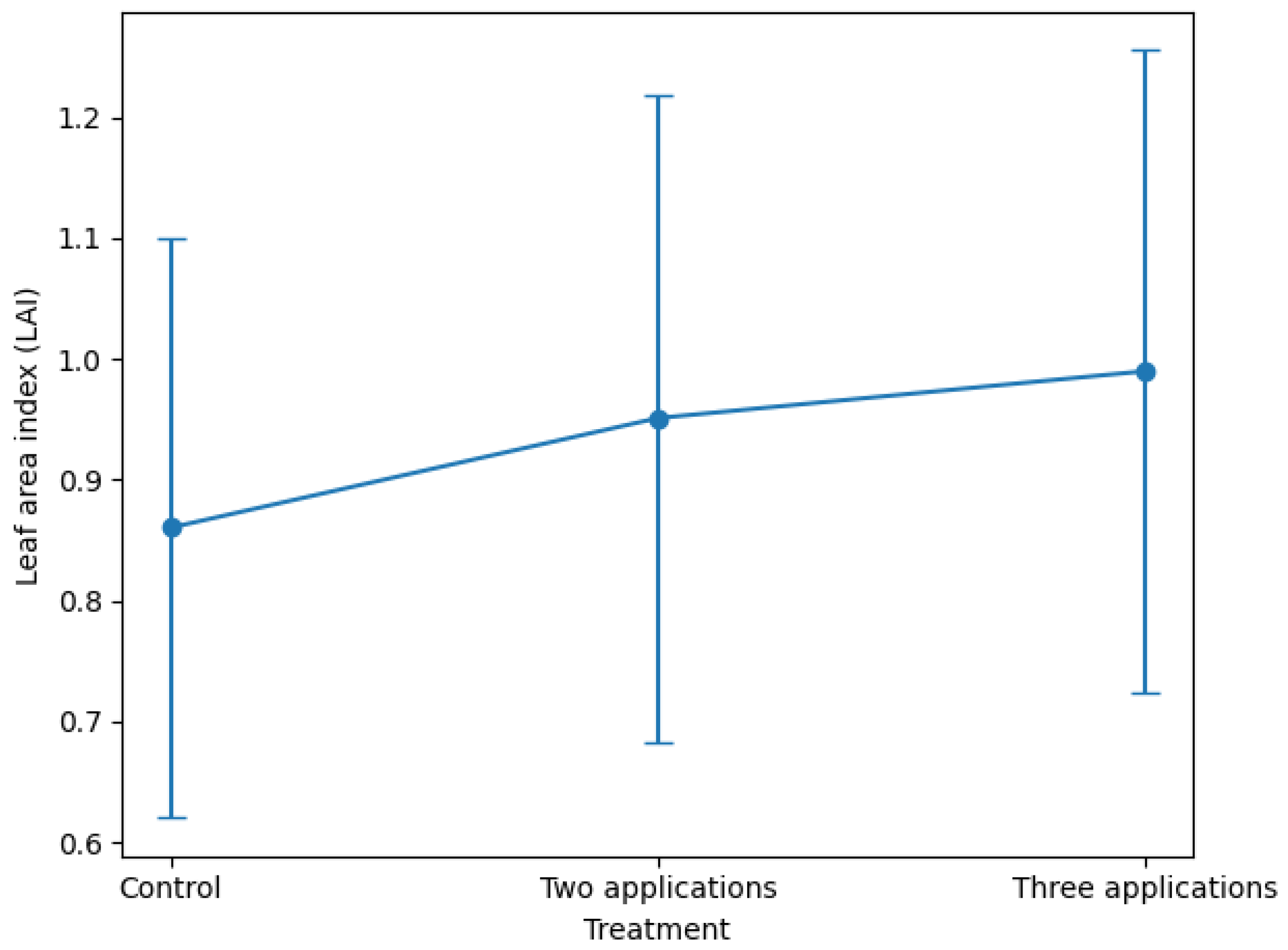
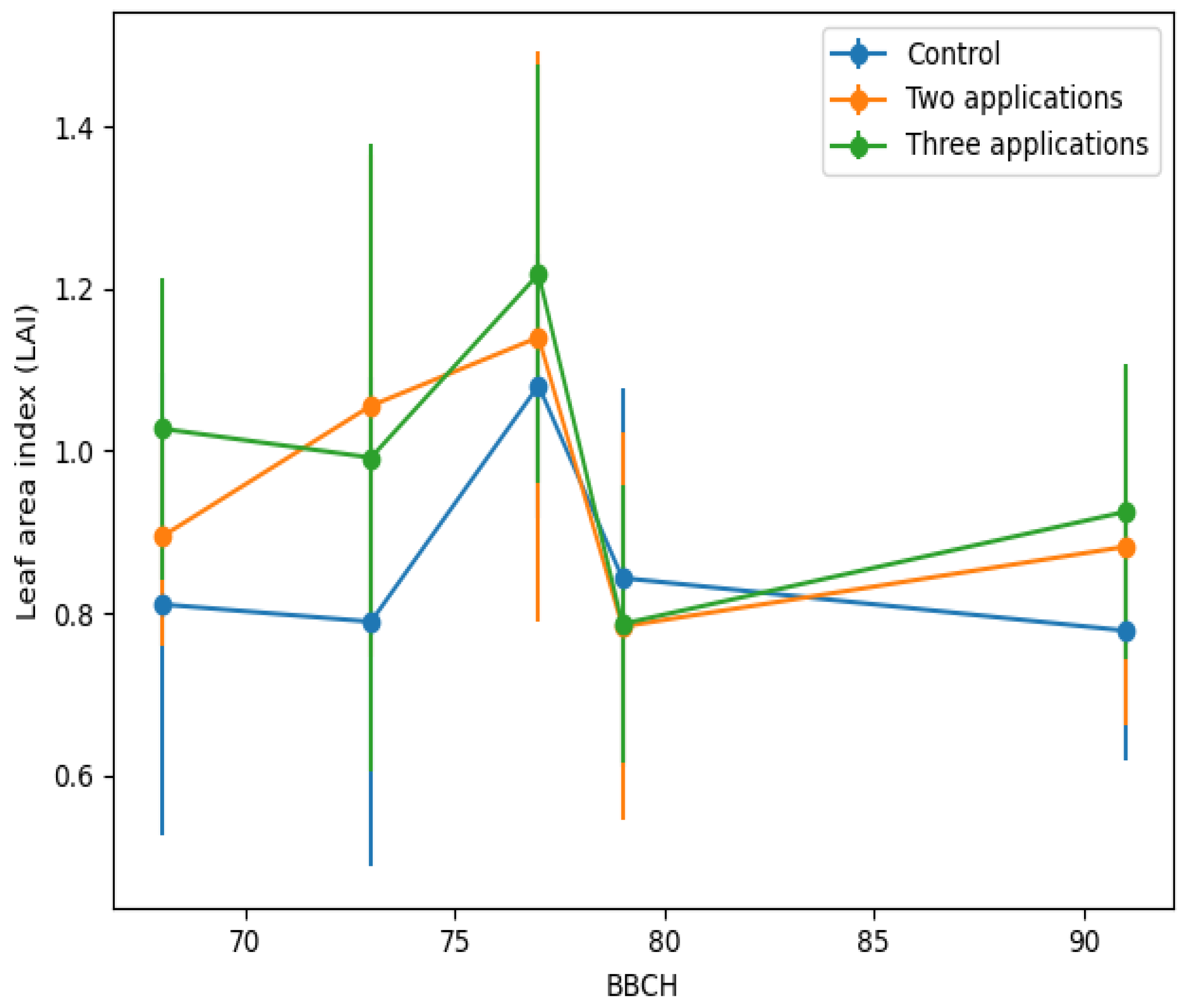
Therefore, the aim of this study was to evaluate how different foliar biostimulant application strategies, differing in application frequency and phenological timing, influence selected physiological and canopy-related indicators in Slovak grapevine cultivars under field conditions. Specifically, chlorophyll a and chlorophyll b content in leaves and the leaf area index (LAI) were assessed to characterize cultivar-specific physiological responses under field conditions. The results are intended to provide a physiological basis for the use of plant stimulant application strategies in sustainable viticulture.
This study contributes to a better understanding of cultivar-specific physiological responses to practical biostimulant application strategies under Central European vineyard conditions. We hypothesized that increasing the frequency of foliar biostimulant applications would modify selected physiological and canopy-related indicators in a cultivar-dependent manner under field conditions.
2. Materials and Methods
2.1. Location
The experiment was conducted in commercial vineyards located in the South Slovak wine region, within the Strekov wine-growing district, in the village of Strekov (Slovak Republic), at the Chateau Marco vineyard (48.103° N, 18.452° E; approximately 130 m a.s.l.). Grapevines were planted at a spacing of 2.0 × 0.9 m. The vineyards were established in 2009 (cultivar Slovakia) and in 2014 (cultivars Torysa, Dunaj, and Devín). Vines were trained using a Guyot training system with one fruiting cane and one renewal spur. Plant protection was carried out according to integrated pest management principles until 2022 and subsequently under conservation farming practices. The experimental site is located in a very warm and dry climatic region. The average annual temperature in the area is approximately 11–12 °C, with annual precipitation around 520–550 mm. The soil is classified as carbonate black soil with a medium-heavy texture and a depth exceeding 60 cm, providing favourable conditions for grapevine root development.
2.2. Plant Material
Four Slovak grapevine cultivars (
Vitis vinifera L.) were included in the experiment: Devín, Dunaj, Slovakia, and Torysa. The vineyard areas reported for these cultivars represent their total planted area within the Slovak Republic [
15,
16]. Devín is a white grapevine cultivar bred in Slovakia, known for its aromatic character and good adaptability to local growing conditions. Dunaj is a blue grapevine cultivar characterized by high colour intensity and good ripening potential. Torysa is a blue grapevine cultivar valued for its stable yield and balanced grape composition. Slovakia is a white grapevine cultivar developed for improved vigour and adaptability to Central European vineyard conditions.
2.3. Experimental Design and Biostimulant Application Strategies
The experiment was designed to evaluate grapevine physiological responses to different foliar plant stimulant application strategies differing in application frequency and phenological timing. The objective of the experiment was to evaluate practical foliar biostimulant application strategies used in vineyard management rather than to isolate the biochemical effects of individual products. Therefore, treatments were designed to represent realistic vineyard management protocols differing in application frequency and phenological timing. For each cultivar, three treatment variants were established: a control variant with no plant stimulant application, a variant with two foliar plant stimulant applications during the growing season, and a variant with three foliar plant stimulant applications during the growing season.
Each treatment consisted of three replicates, with each replicate comprising six adjacent grapevines. In the control treatment, five grapevines per replicate were evaluated due to vineyard layout constraints. Biostimulants were applied as foliar sprays at defined phenological stages according to the BBCH scale. In the two-application strategy, applications were performed during flowering (BBCH 60) and at the pea-sized berry stage (BBCH 75). In the three-application strategy, applications were performed at the beginning of shoot growth (BBCH 11), during flowering (BBCH 60), and at the pea-sized berry stage (BBCH 75). The applied products included commercially available amino acid–based biostimulants commonly used in viticulture, containing free amino acids, seaweed extracts, and selected macro- and micronutrients. These products were selected because they represent commonly used formulations applied in vineyard management to support plant metabolism during early growth, flowering, and berry development. All biostimulants were applied at a uniform dose of 3 L ha
−1 (1% concentration) according to the manufacturer’s recommendations. Applications were performed using a spray volume of 300 L ha
−1. No additional adjuvants were used. All products were obtained from the same commercial batch and applied uniformly across all replicates. Foliar applications were carried out using a motorized sprayer to ensure uniform coverage (
Table 1 and
Table 2).
Detailed information on the composition and main active components of the applied biostimulants was obtained from the manufacturer’s specification sheets. The products used in the experiment represent commercial amino acid–based biostimulants commonly applied in viticulture to support plant physiological performance during key phenological stages. A summary of the main product characteristics is provided in
Table 3. However, the complete quantitative formulation of these commercial products is considered proprietary by the manufacturer; therefore, only the main components reported in the official product documentation are presented in this study.
2.4. Determination of Chlorophyll a and Chlorophyll b Content in Leaves
Chlorophyll
a and chlorophyll
b content were determined in grapevine leaves sampled at defined phenological stages during the growing season. Leaf sampling was conducted at five phenological stages between flowering and the post-harvest period. For each replicate, fully developed leaves located near the grape clusters were sampled from multiple vines to ensure representative sampling. A total of ten leaves per replicate were collected and pooled to form one composite sample. Samples were processed immediately after collection. Fresh leaf tissue (1 g) was homogenized in acetone using a laboratory homogenizer. The homogenate was filtered, transferred to a volumetric flask, and adjusted to a final volume of 50 mL with acetone. Absorbance of the extract was measured at wavelengths of 665 nm and 649 nm using a spectrophotometer. Chlorophyll
a and chlorophyll
b concentrations were calculated according to [
17] and expressed on a fresh weight basis as mg.kg
−1.
2.5. Chlorophyll a and Chlorophyll b Ratio
The chlorophyll a and chlorophyll b (Chl a/b) ratio was calculated for each treatment and phenological stage as the ratio of chlorophyll a to chlorophyll b concentrations measured in the same composite leaf samples. This ratio was used as an additional indicator of changes in the organization and functional adjustment of the photosynthetic apparatus in response to different plant stimulant application strategies.
2.6. Leaf Area Index (LAI)
Leaf area index (LAI) was determined using a non-destructive optical method with an LAI-pen device (PSI, Brno, Czech Republic). Measurements were conducted at the same phenological stages as leaf sampling for chlorophyll analysis. LAI measurements were performed under stable weather conditions on clear days between 9:00 and 14:00. For each replicate, multiple readings were taken below the canopy in the inter-row space directly beneath the vine leaf area, and an average value was calculated. Reference measurements of incoming radiation were recorded in an unshaded area near the experimental plots before and after each measurement series.
2.7. Vegetation Indices (NDVI and PRI)
Normalized Difference Vegetation Index (NDVI) and Photochemical Reflectance Index (PRI) were used as additional non-destructive indicators related to canopy greenness and photosynthetic functioning. Measurements were performed using optical sensors from the same manufacturer as the device used for leaf area index (LAI) determination (PSI, Brno, Czech Republic), ensuring methodological consistency among canopy-related measurements. NDVI and PRI measurements were conducted in the same experimental plots and at the same time points as LAI measurements and leaf sampling for chlorophyll analysis. Measurements were aligned with defined phenological stages of grapevine development to ensure comparability among treatments and cultivars. NDVI was calculated as (NIR − Red)/(NIR + Red), while PRI was calculated as (R531 − R570)/(R531 + R570), where R represents reflectance at the respective wavelength. Measurements were conducted above the canopy following the manufacturer’s recommendations. For each replicate, multiple readings were taken and averaged to obtain a single replicate-level value for each phenological stage.
2.8. Cluster Weight
Cluster weight was evaluated as a complementary yield-related indicator associated with assimilate allocation and fruit development. Cluster sampling was performed at technological maturity shortly before harvest in the same experimental plots and treatment variants used for physiological measurements. For each replicate, 10 clusters were collected from different vines within the replicate plot. Clusters were selected from the main fruiting cane and from positions located as close as possible to the trunk head in order to minimize positional variability along the shoot. All sampled clusters were weighed individually, and cluster weight was expressed as fresh weight in grams. The values were subsequently averaged at the replicate level.
2.9. Must Analysis Using Alfa Spectrophotometer
Must parameters were analysed as complementary indicators related to grape composition and assimilate accumulation [
18]. Grape samples used for must analysis originated from the same treatment variants, cultivars, and experimental plots as those used for physiological and berry trait assessments. After sampling, grape berries were gently crushed and the resulting must was analysed using an Alfa spectrophotometer (Alfa Instruments, Písek, Czech Republic). The analysed parameters included selected indicators of must composition derived from spectrophotometric measurements. Measurements were performed according to the manufacturer’s instructions and standard analytical procedures [
19,
20]. All must parameters were determined at the replicate level. The obtained data were used to support the interpretation of physiological responses and their potential relationships with fruit development and composition. It is important to mention that cluster weight and must parameters were included to provide additional context for physiological measurements and were not intended to represent a comprehensive evaluation of yield or grape quality.
2.10. Statistical Evaluation
Statistical analyses were performed using Statgraphics Centurion XVII software (StatPoint Technologies, The Plains, VA, USA). Data were evaluated by one-way analysis of variance (ANOVA). NDVI and PRI values were analysed based on pooled data across measurement dates to assess overall treatment effects within each cultivar. Mean values were compared using the least significant difference (LSD) test at a significance level of p ≤ 0.05.
5. Conclusions
This study showed that foliar plant stimulant application strategies differing in application frequency and phenological timing influenced selected physiological and canopy-related indicators in a cultivar-dependent manner under field conditions. Repeated applications were associated with variations in chlorophyll a and b contents and moderate changes in canopy development, as indicated by leaf area index (LAI), although responses varied among cultivars and phenological stages. Non-destructive canopy indicators (NDVI and PRI) contributed to the evaluation of canopy greenness and photosynthetic regulation throughout the growing season. Cluster weight and must composition showed variable and cultivar-dependent responses, providing additional physiological context. Treated variants were associated with higher sugar content and lower acidity in several cultivars, suggesting differences in grape composition under different application strategies. Overall, the results highlight the need for cultivar-specific evaluation when applying foliar plant stimulant strategies in vineyards. The combined use of physiological, structural, and spectral indicators represents a practical approach for assessing such strategies under field conditions. While the study provides field-based insights relevant for vineyard management, further research is required to better understand the mechanistic basis of biostimulant effects.





 ,
,