


Abstract
Systematic reviews and meta-analyses have become essential infrastructure for translating agricultural research into actionable knowledge; yet the field’s developmental trajectory and intellectual structure remain poorly characterized. This study presents a bibliometric analysis of 1709 evidence synthesis publications in agricultural sciences from 1997 to 2023, examining growth dynamics, collaboration, thematic evolution, and geographic specialization. The results show exponential growth of 29% annually, with a 2018 inflection point marking the transition from emerging methodology to mainstream practice. Meta-analyses, comprising 75% of publications and accelerating earlier (2017) than systematic reviews (2019), have primarily driven this expansion as an accessible quantitative approach. Evidence synthesis is highly collaborative, with 59% multi-country authorship sustained across 97 countries and regions. Topic modeling identified 14 core themes spanning soil carbon, climate change, crop management, technology adoption, and sustainable agriculture, with thematic shifts from production-focused topics toward climate and sustainability priorities aligned with post-2015 policy agendas. Strategic diagram analysis revealed a linear structure linking topic maturity and centrality, indicating exceptional integration distinct from the fragmentation typical of other domains. Revealed comparative advantage (RCA) analysis showed geographic specialization aligned with national agricultural contexts, though the concentration of synthesis capacity raises equity concerns about whose systems and questions are represented. Overall, agricultural evidence synthesis has matured into a globally connected, policy-responsive knowledge network; yet sustaining growth will require institutional support, methodological rigor, and pathways that translate synthesis into practice impact.
1. Introduction
Evidence synthesis has become an essential foundation for addressing agriculture’s global challenges, supporting food production, climate adaptation, and ecosystem sustainability [1,2]. Systematic reviews and meta-analyses transform fragmented research into coherent, actionable insights through transparent and reproducible integration of existing studies [3,4], amplifying the value of prior research investments. Evidence synthesis publications receive substantially higher citation rates than primary research articles [5,6]. This approach is particularly critical in agriculture, where environmental heterogeneity and socio-ecological complexity limit the generalization of individual studies [7,8]. By identifying cross-context patterns and boundary conditions, evidence synthesis converts dispersed findings into structured evidence that could informs decisions from farm management to policy [9,10].
Originating in evidence-based medicine through the Cochrane Collaboration [11], systematic review and meta-analysis methodologies diffused into environmental and agricultural sciences via the Collaboration for Environmental Evidence [12]. Their adaptation to agriculture required the accommodation of high spatial and biological variability, mixed experimental and observational data, and interdisciplinary contexts [3,9]. Consequently, the development, collaboration structures, and thematic evolution of agricultural evidence synthesis may differ from those of the medical sciences.
Despite its growing visibility, the trajectory of evidence synthesis in agriculture remains underexplored. Fundamental questions persist regarding the timing and rate of growth, its relationship to primary research output, and whether the field has transitioned from niche methodology to mainstream practice [13]. These dynamics are critical for stakeholders assessing synthesis capacity, quality assurance, and the balance between new data generation and evidence integration [14,15]. Assessments of agricultural meta-analyses have documented recurrent methodological weaknesses including inadequate variance weighting, insufficient heterogeneity exploration, and limited reporting transparency, suggesting that synthesis growth has not been uniformly matched by methodological rigor [13,16]. The global interconnectedness of agriculture further emphasizes the importance of synthesis [17]. International collaboration facilitates comparative analyses across diverse contexts but raises equity concerns over leadership, participation, and capacity building in resource-limited regions. Studies of North–South research partnerships indicate that high-income country institutions disproportionately lead internationally collaborative projects, raising concerns about whether Global South partners contribute as substantive co-leaders or primarily as data providers [18,19].
Shifts in agricultural priorities, from productivity-driven paradigms to sustainability and resilience, prompt examination of whether synthesis reflects this transition [20,21]. Mapping emerging, stable, and declining themes can reveal alignment between research synthesis and global sustainability goals, as well as identify gaps where synthesis lags behind primary research [22,23]. Network and strategic analyses further clarify whether the field is fragmented into isolated niches or integrated around mature, connected themes [24,25]. Geographic specialization also shapes the evidence base, as national research capacities, policy agendas, and agroecological conditions influence the distribution of synthesis activity and knowledge equity across regions [26].
Bibliometric analysis, which draws on article-level metadata such as titles, abstracts, authorship, journals, and publication years to map growth trajectories, thematic patterns, collaboration structures, and geographic specialization, offers an appropriate approach for characterizing these dynamics. Yet such analyses remain limited in agricultural sciences, even as evidence synthesis output continues to expand rapidly. Existing studies focus predominantly on medical research, leaving synthesis landscape in agriculture largely unexplored [6,27]. This gap limits understanding of how synthesis capacity aligns with agricultural research needs, collaborative equity, and thematic evolution.
This study addresses that gap through a multi-dimensional bibliometric analysis of 1709 systematic reviews and meta-analyses published from 1997 to 2023. We examine: (1) publication growth trajectories compared to primary research, (2) international collaboration patterns and intensity, (3) thematic evolution across temporal periods, and (4) geographic specialization in synthesis topics. These analyses characterize how evidence synthesis has developed as a distinct research domain within agricultural sciences.
2. Methods and Materials
2.1. Data Source and Search Strategy
We selected the Web of Science Core Collection (WOSCC) as the primary data source due to its comprehensive coverage of agricultural journals, rigorous indexing standards, and robust bibliometric metadata, including author affiliations and citation counts. As our goal is bibliometric sampling and pattern analysis rather than exhaustive scoping review, single-database selection prioritizes metadata consistency and analytical precision over maximal coverage. Our search targeted evidence synthesis publications in agricultural sciences, including all journals published by the Tri-Societies (American Society of Agronomy, Crop Science Society of America, and Soil Science Society of America). Detailed search strings, Boolean operators, field tags, and execution dates are provided in Supplementary Table S1. Publications were included if explicitly labeled as “systematic review” or “meta-analysis”, focused on agricultural topics, and contained abstracts. Exclusions were applied for the following reasons: veterinary medicine operates within distinct methodological traditions; field trials and QTL mapping studies generate rather than synthesize primary data; general economics publications fall outside agricultural production and policy contexts; and publications without abstracts lack text data required for topic modeling. Multi-stage screening was conducted using Rayyan.ai [28] by a single experienced researcher (CC) applying the selection criteria, an approach appropriate for bibliometric studies where inclusion decisions do not require subjective quality judgment.
2.2. Data Extraction and Preprocessing
Bibliometric metadata were extracted, including publication year, title, abstract, author keywords, journal, document type, and author affiliations for country-level analysis. Citation counts were retrieved via the Web of Science API using Python (v3.10) code in Google Colab. Author countries and regions were standardized to ISO 3-letter codes with the countrycode (v1.6.1) R package, which resolved common name variants automatically (e.g., ‘USA’, ‘United States’, and ‘U.S.A.’ all mapped to ‘USA’). Ambiguous or unresolved affiliations were manually verified against original publications. Publications were assigned to all countries listed in author affiliations using full counting methodology, treating each affiliated country as an equal participant without weighting by author position or estimated contribution, a standard practice in bibliometric collaboration analysis.
For topic modeling, a text corpus was created by combining titles, abstracts, and author keywords. Data wrangling and visualization were conducted in R (v4.4.3) using tidyverse and specialized packages for downstream analyses (see details below). Python code was used solely for citation retrieval.
2.3. Publication Trends and Change Point Analysis
Characterizing growth trajectories and identifying temporal inflection points is essential for determining whether evidence synthesis has transitioned from a niche methodology to mainstream practice in agricultural sciences. Annual publication counts were modeled to characterize growth. Exponential, polynomial, and power law models were compared using AIC. Annual growth rates and doubling times were calculated based on a log-linear model to quantify expansion. Comparable data for the primary agricultural literature were retrieved using the same WOSCC search strategy excluding synthesis terms (Supplementary Table S2), allowing direct growth rate comparison. Temporal inflection points were identified using Bayesian change point modeling with the R mcp package (v0.3.4).
2.4. International Collaboration and Geographic Analysis
Mapping collaboration networks and geographic distribution reveals whether evidence synthesis capacity is globally distributed or concentrated among a small number of countries, with implications for knowledge equity. International collaboration was defined as publications with authors from two or more countries. Collaboration intensity, normalized annual rates, and temporal trends were calculated. Chord diagrams (R circlize v0.4.16) visualized the structure of international partnerships, and world maps (R rnaturalearth v1.1.0) illustrated country-level publication volumes.
2.5. Topic Modeling and Theme Identification
Latent Dirichlet Allocation (LDA) [29] was selected to inductively discover thematic structure from the corpus without imposing pre-defined categories, allowing the intellectual landscape of agricultural evidence synthesis to emerge from the literature itself. Text preprocessing included tokenization, lowercasing, stopword removal (custom stopword list in Supplementary Materials), and word stemming (R SnowballC v 0.7.1). A document-term matrix was constructed, and the optimal number of topics (K = 14) was determined by testing K = 8 to 16 in increments of 2, evaluating each model using perplexity and coherence metrics (Supplementary Figure S1). Perplexity decreased continuously with increasing K, while semantic coherence slightly peaked at K = 14. We selected K = 14 because it achieved maximum coherence while producing topics that expert review confirmed were semantically distinct and interpretable; lower values merged conceptually distinct themes whereas higher values fragmented coherent themes into artificial splits.
Topic interpretation followed a rigorous multi-stage validation process to ensure reliability. In Stage 1, two agricultural experts worked independently, provided only with the top 5 terms with highest β values indicating term importance to topics for each topic. Each expert assigned preliminary descriptive labels based on these terms. In Stage 2, the same experts received additional information: the top 3 representative articles with highest γ values indicating articles most strongly associated with each topic, including their titles and abstracts, alongside the topic terms from Stage 1. Experts either confirmed their initial interpretations or modified them based on this contextual information. Finally, a third expert synthesized interpretations from both Stage 1 and Stage 2 reviewers, examined all topic terms and beta values, conducted broader reading of article titles and abstracts associated with each topic, and finalized topic labels. In cases where Stage 1 and Stage 2 interpretations diverged between the two initial reviewers, the third expert made final determinations through this comprehensive review process. Topic similarity networks were constructed based on β-value correlations (R widyr v0.1.5) to examine thematic relationships.
2.6. Temporal Evolution of Themes
Publications were divided into three periods: 1997–2007 (early), 2008–2017 (growth), and 2018–2023 (acceleration). Each publication was assigned a dominant topic based on the highest γ value from the LDA model. Alluvial diagrams (R ggalluvial v0.12.5), showing the top 5 topics from each period, and heatmaps visualized topic continuity, emergence, and decline across periods, supplemented with 3-year window analyses for finer temporal resolution.
2.7. Strategic Diagram: Theme Maturity and Connectivity
Positioning topics by internal coherence and external connectivity reveals which themes function as mature drivers of the field versus those that are peripheral or still developing, providing a structural view of field integration. Research themes were positioned along density (internal coherence) and centrality (external connectivity) axes to identify motor, niche, emerging/declining, and marginal themes. Both metrics were derived from LDA outputs and topic coherence networks. Quadrant analysis illustrated field structure, showing topic development stages and integration [30].
2.8. Geographic Specialization: Revealed Comparative Advantage
Revealed comparative advantage (RCA) was applied to identify whether countries concentrate synthesis efforts on topics aligned with their national agricultural contexts, beyond what their overall publication volume alone would predict, by assigning each publication to its dominant topic. Publications were assigned to all countries represented in author affiliations using full counting methodology, treating each affiliated country as equal participant without weighting by author position or estimated contribution. This approach, standard in bibliometric collaboration analysis, characterizes collaboration breadth but may overestimate substantive contribution from countries with single authors on large teams. RCA > 1 indicates specialization relative to global average, and <1 indicates under-representation [31]. RCA is a relative measure reflecting thematic emphasis within a country’s publication portfolio rather than absolute contribution or global leadership. Heatmaps visualized country-topic specialization patterns, highlighting geographic differences in research focus.
2.9. Data Availability and Reproducibility
Complete search strategies, analytical parameters, and custom stop word lists are provided in the Supplementary Materials. Datasets, topic assignments, collaboration networks, and RCA values will be publicly available via the Open Science Framework (OSF), along with R and Python code to ensure reproducibility (https://doi.org/10.17605/OSF.IO/K293A).
3. Results
3.1. Overview of the Evidence Synthesis Dataset
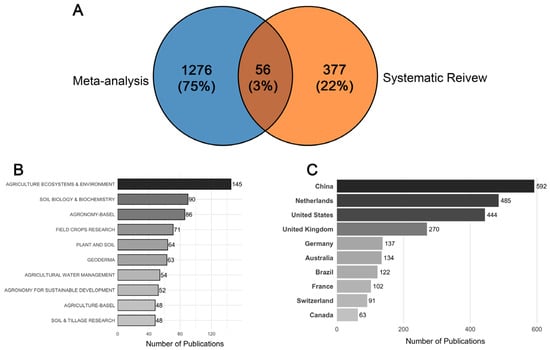
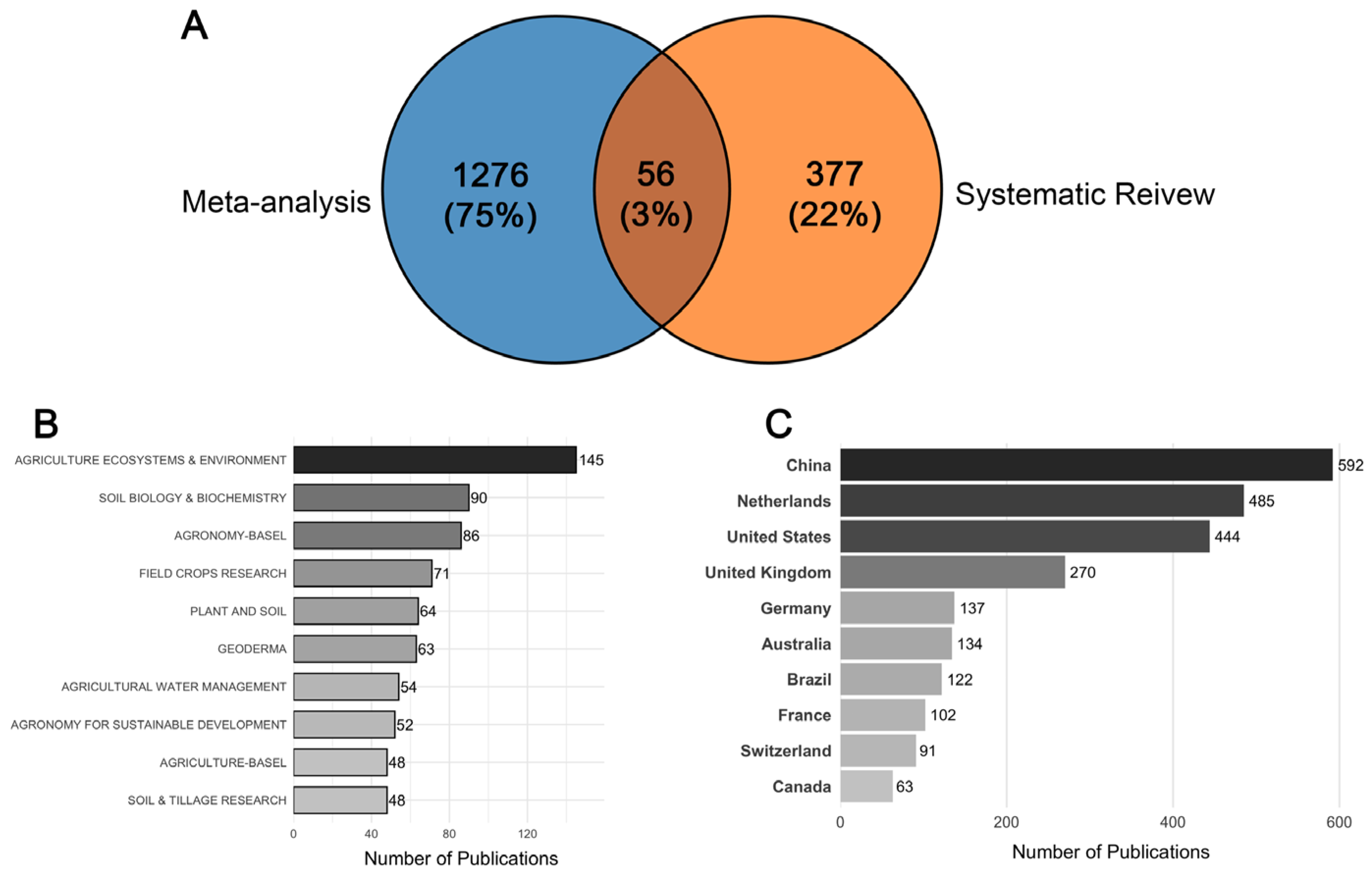
Our systematic search and screening process yielded 1709 evidence synthesis publications in agricultural sciences (Supplementary Figure S2). Meta-analyses dominated the corpus (75%), outnumbering systematic reviews (22%) by more than three to one (Figure 1A), reflecting the strong quantitative orientation of agricultural evidence synthesis. This also highlights a notable dissociation between meta-analyses and systematic reviews, as the vast majority of quantitative syntheses do not appear to be embedded within formal systematic review protocols. This pattern may reflect limited adoption of established systematic review frameworks that guide transparent search procedures, study appraisal, and reporting quality in other disciplines.
Figure 1.
Composition and geographic distribution of evidence synthesis publications. (A) Venn diagram showing publication type distribution: meta-analysis only (n = 1276), systematic review only (n = 377), and systematic review with meta-analysis (n = 56). (B) Top 10 journals by publication count. (C) Top 10 countries by publication count.
The top three journals publishing ES in agriculture were Agriculture, Ecosystems & Environment (145 articles, 8.5%), Soil Biology & Biochemistry (90 articles, 5.3%), and Agronomy (86 articles, 5.0%) (Figure 1B), indicating concentration in soil science and agroecology outlets. China led ES production with 592 articles (35%), followed by the Netherlands (485 articles, 28%) and the United States (444 articles, 26%) (Figure 1C). These top three countries collectively contributed to over two thirds of all evidence synthesis publications, establishing the geographic concentration of synthesis capacity.
3.2. Exponential Growth and Critical Inflection Point
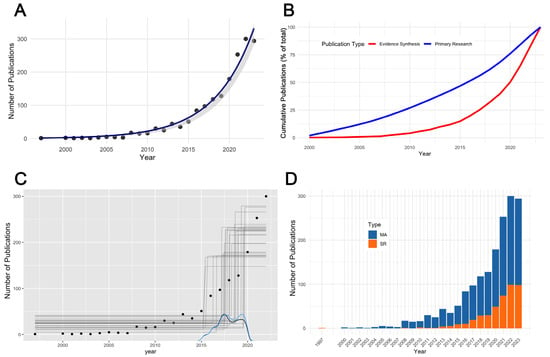
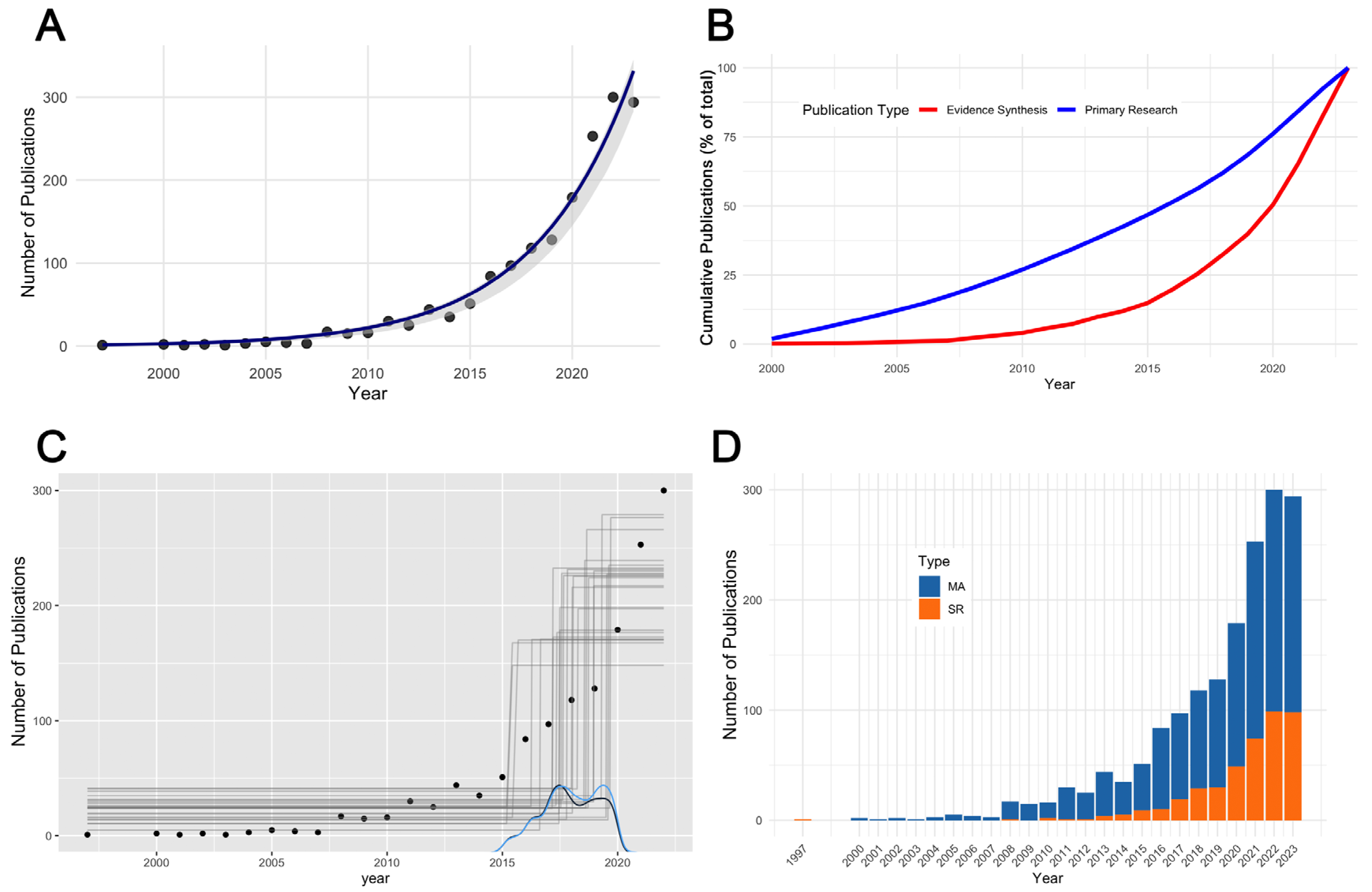
Evidence synthesis publications in agriculture exhibited sustained exponential growth over the study period (Figure 2A). Annual publications increased from fewer than 10 in the late 1990s/early 2000s to over 250 by 2023. Model comparison confirmed that exponential growth provided superior fit to the data compared to polynomial or power law alternatives (Supplementary Table S3), with the exponential model achieving the highest R2 and lowest AIC values.
Figure 2.
Exponential growth trajectory and change point detection. (A) Annual publication counts with exponential growth curve fit and 95% confidence intervals. (B) Growth rate comparison between evidence synthesis and primary agricultural literature. (C) Bayesian change point analysis identifying 2018 inflection point (black dots) with pre- (black) and post- (blue) change regression lines. (D) Stacked bar chart of annual publications by type: meta-analyses (blue) and systematic reviews (orange).
The exponential growth rate of evidence synthesis publications was 29% annually, yielding a doubling time of 2.7 years. In contrast, the primary agricultural literature grew at 7% annually with a doubling time of 10.1 years (Table 1; Supplementary Table S4). This differential indicates that evidence synthesis is expanding about 4 times faster than the primary literature base it synthesizes. This pattern suggests that evidence synthesis is transitioning from peripheral methodology to central practice in agricultural sciences.
Table 1.
Comparative growth dynamics: evidence synthesis vs. primary research.
Change point analysis identified 2018 as the critical inflection point when evidence synthesis growth accelerated markedly (Figure 2C). Prior to 2018, publications accumulated gradually; post-2018, the field entered a phase of rapid expansion. For analytical consistency, the 56 publications that combined systematic review and meta-analysis were classified with systematic reviews in all subsequent analyses, while the meta-analysis category refers exclusively to meta-analysis-only studies. Disaggregating by publication type revealed that meta-analyses reached their inflection point in 2017 (Supplementary Figure S3A), while systematic reviews accelerated in 2019 (Supplementary Figure S3B). The earlier acceleration of meta-analyses, combined with their numerical dominance (Figure 2D), indicates that quantitative synthesis methods are the primary driving force of the field’s exponential trajectory.
3.3. Highly Collaborative and Globally Distributed
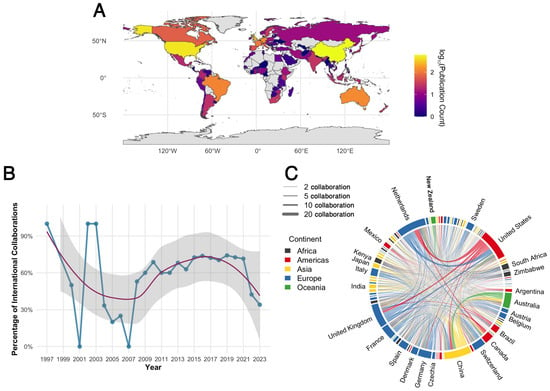
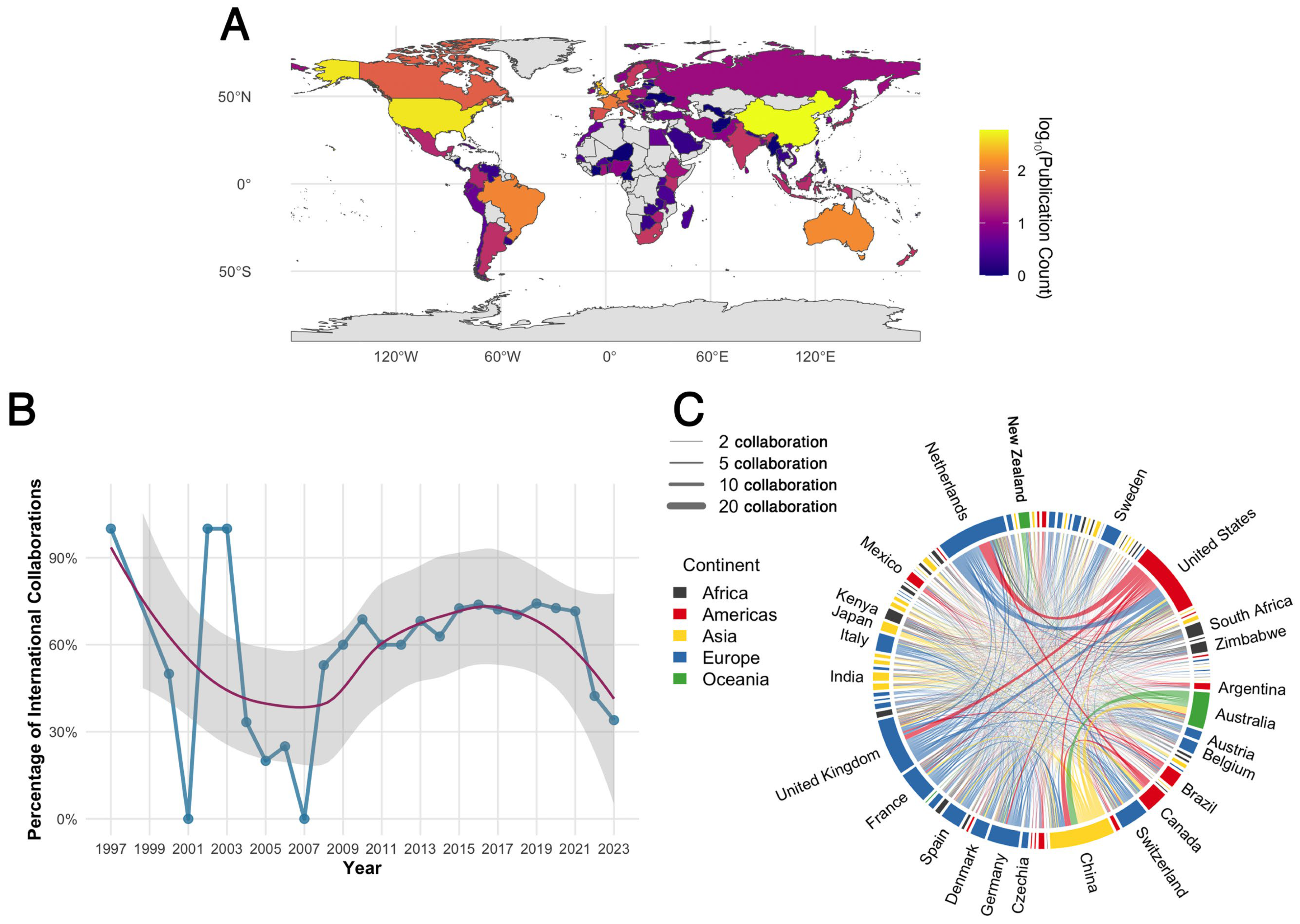
Evidence synthesis production in agriculture spanned 97 countries and regions (Figure 3A), demonstrating truly global participation despite varying research capacities. However, publication counts showed strong geographic concentration, with the top 10 countries accounting for almost 90% of all evidence synthesis articles. Moreover, evidence synthesis publications demonstrated remarkably high international collaboration. Of the 1709 publications, 59% involved authors from two or more countries. This collaborative intensity remained relatively stable over time (Figure 3B), with the normalized collaboration rate remaining near 60% since 2008, suggesting that international partnership is inherent to synthesis work rather than an increasing trend. Most international collaborations involved 2–5 partner countries, though some projects engaged up to 12 countries (Supplementary Table S5), reflecting both bilateral partnerships and large consortium efforts.
Figure 3.
International collaboration patterns. (A) World map showing publication counts by country (n = 97 total). Color gradient from yellow (low) to red (high). (B) Normalized international collaboration rate (1997–2024) with LOESS smooth trend line (purple) and 95% confidence interval (grey area). (C) Chord diagram of collaboration networks among top 25 countries. Sectors represent countries colored by continent; arcs represent co-authorship with width proportional to collaborative publications; arc colors match originating continent. Note the concentration of major collaboration flows between US–Europe partnerships (particularly US–UK and US–Netherlands) and China–Australia connections, while intra-African networks suggest emerging South–South collaboration patterns.
The chord diagram revealed major collaboration networks (Figure 3C). The strongest flows occurred between the United States and European countries, particularly the United Kingdom and the Netherlands, likely reflecting complementary strengths in agricultural systems and analytical capacity. Substantial collaboration also linked China with Australia and within European networks. Notable intra-African partnerships suggested emerging South–South collaboration patterns. These network structures indicate that the most productive countries are also the most internationally connected, with collaboration intensity aligning with overall publication volume.
3.4. Fourteen Core Research Themes
Latent Dirichlet Allocation (LDA) topic modeling identified 14 distinct research themes comprising the intellectual landscape of agricultural evidence synthesis (Table 2; Supplementary Figure S4). These themes spanned production-oriented topics (grain crops and livestock), resource management domains (soil carbon, soil amendment, irrigation, and fertilizer), agroecological approaches (agroforestry and biodiversity), global challenges (climate change and sustainable agriculture), technological and social dimensions (technology adoption), crop protection (biotic stress), and physiological processes (plant growth).
Table 2.
Thematic structure of evidence synthesis in agriculture.
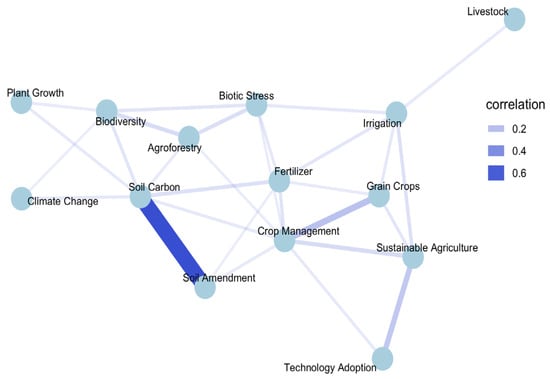
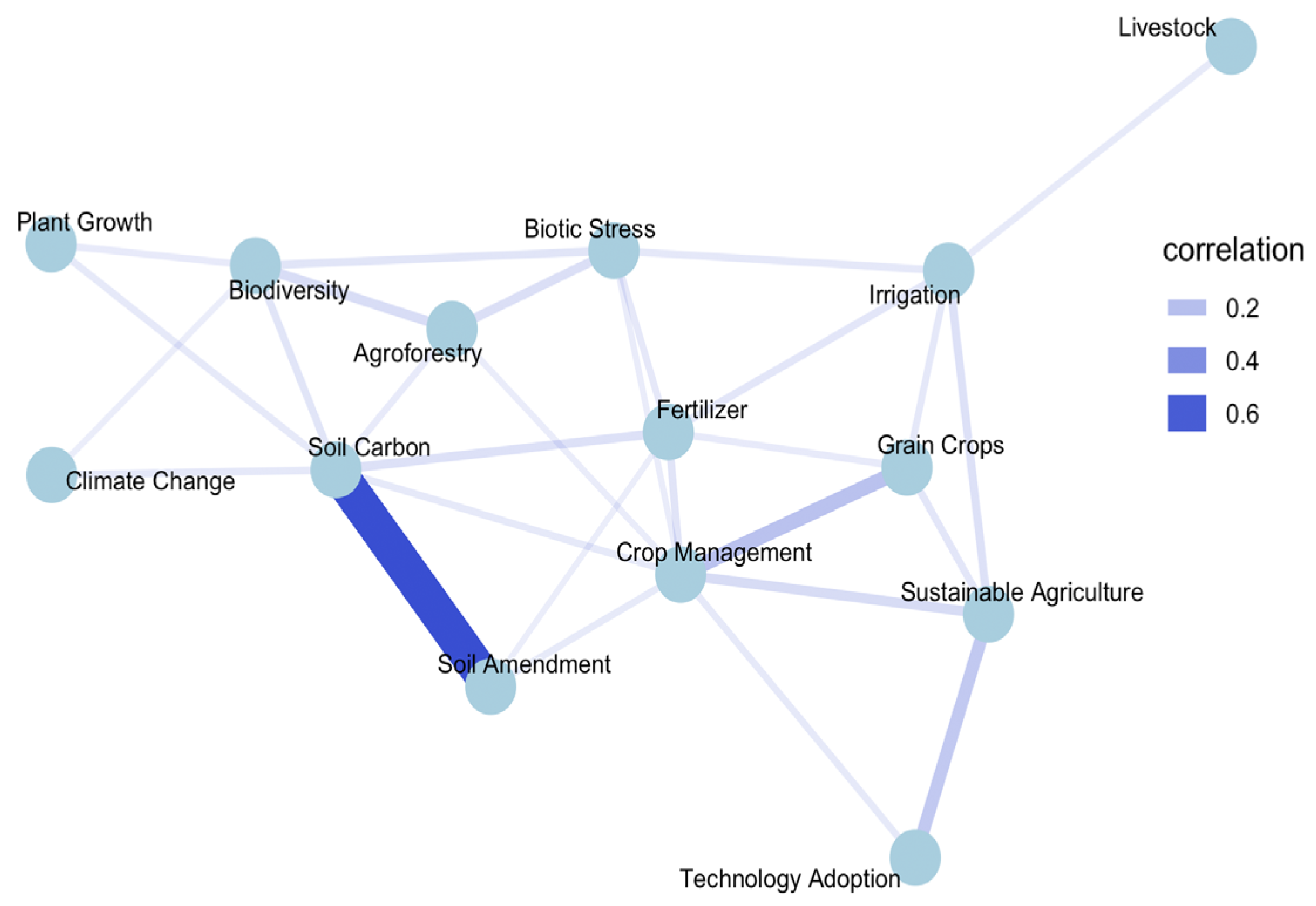
Topic distribution was uneven, with some themes claiming larger shares of the corpus. Soil carbon, crop management, and fertilizer emerged as prominent themes based on article counts, while topics like agroforestry and biodiversity represented more specialized domains. The topic coherence network (Figure 4) revealed a core of interconnected soil and crop management themes, with livestock as a notable outlier operating largely independently from the broader thematic landscape. Biodiversity, biotic stress, and irrigation connected broadly across topics, reflecting their cross-cutting relevance to multiple agricultural domains.
Figure 4.
Topic coherence network. Network diagram showing 14 LDA-derived topics as nodes (size proportional to article count) connected by edges representing pairwise correlations based on term distributions (β values; threshold = 0.01). Edge thickness indicates correlation strength. Crop management and fertilizer occupy central network positions with highest connectivity, while livestock appears relatively isolated with fewer connections to other topics.
3.5. Temporal Evolution of Research Priorities
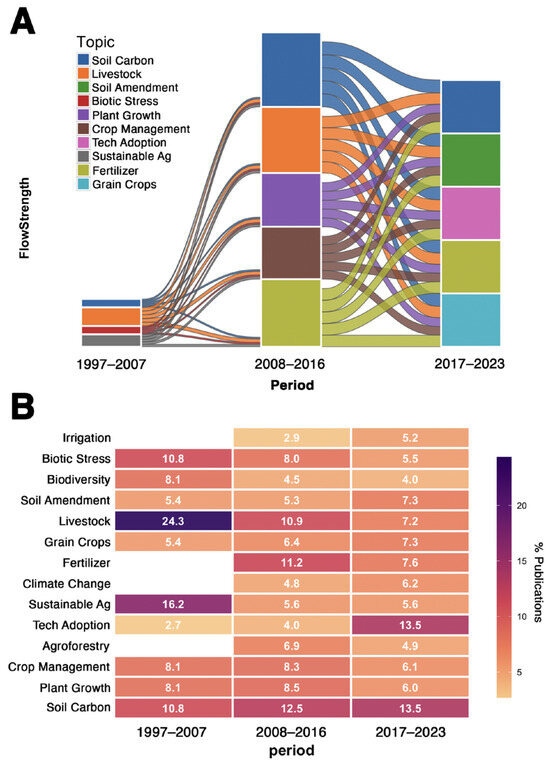
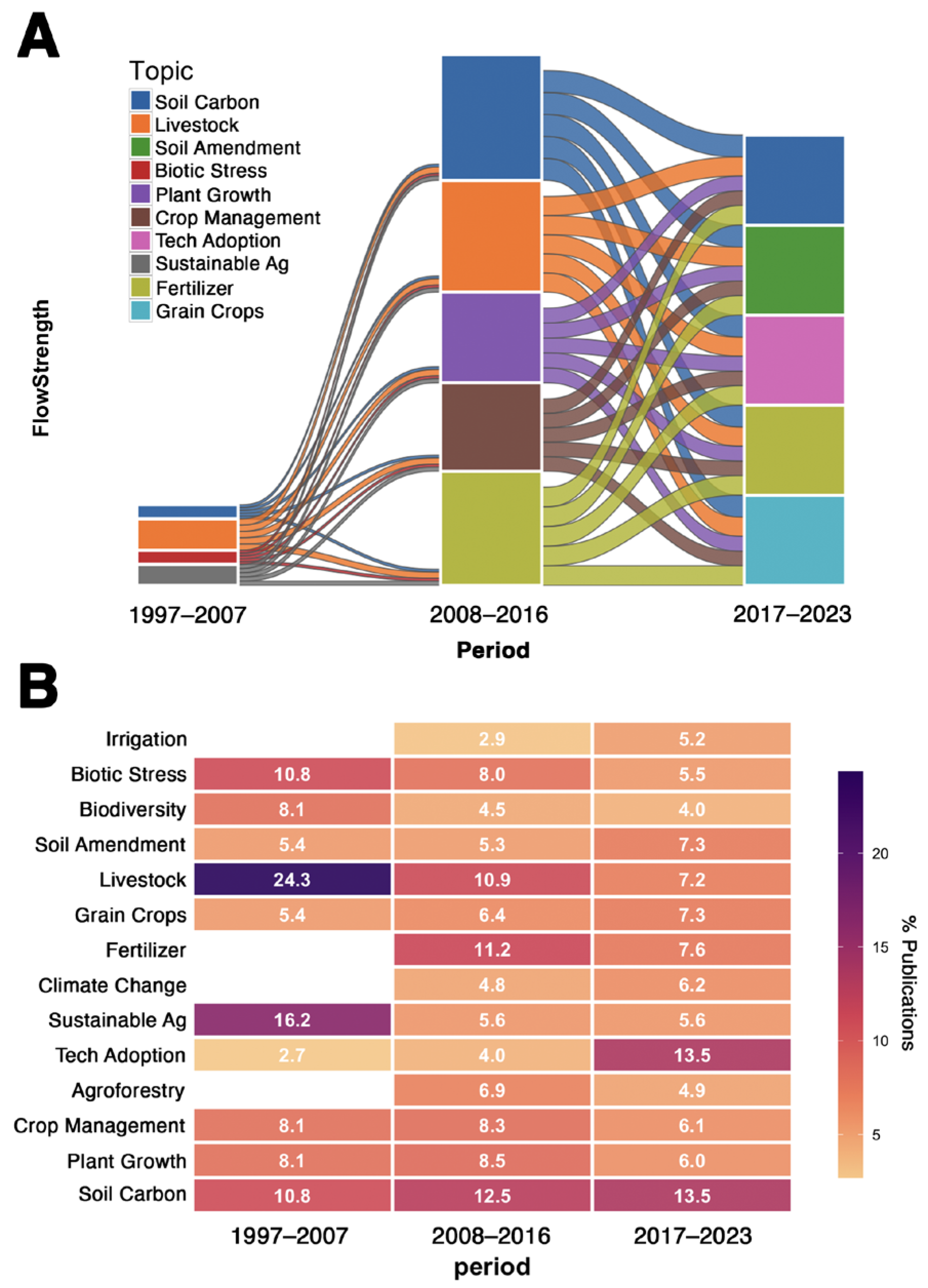
The 14 research themes exhibited dynamic evolution across three temporal periods spanning early (1997–2007), growth (2008–2017), and acceleration (2018–2023) eras (Figure 5). Several themes emerged as gaining prominence in recent periods. Fertilizer, absent as a distinct theme in the early period, appeared in 2008–2017 and remained in 2018–2023, reflecting intensified focus on nutrient use efficiency. Technology adoption similarly emerged in the middle period and expanded rapidly in the most recent era, indicating growing recognition that technical innovations require an understanding of adoption dynamics and constraints.
Figure 5.
Temporal evolution of research themes. (A) Alluvial diagram showing topic flows across three periods: 1997–2007, 2008–2017, and 2018–2023. Stream width represents publication volume. (B) Heatmap showing percentage distribution of 14 topics (rows) across three periods (columns).
Soil carbon demonstrated remarkable stability, maintaining relatively constant proportional representation across all three periods (Figure 5B). This persistence suggests enduring concern with soil health spanning from fertility-focused to carbon sequestration framings. In contrast, certain themes declined in relative prominence. Livestock dominated early periods but declined substantially in 2018–2023, possibly reflecting methodological challenges in synthesizing heterogeneous animal systems or the concentration of livestock evidence synthesis in specialized outlets. Biotic stress showed continuous decline across periods. Sustainable agriculture, prominent in the first period, dropped substantially in later eras, potentially because sustainability concepts became integrated into other themes rather than standing as a distinct domain.
The alluvial diagram revealed relatively uniform flow strengths throughout (Figure 5A), suggesting that these themes are highly interconnected rather than representing isolated research silos. Topics rarely disappeared completely but were rather reconfigured in relative emphasis, indicating that the field maintains thematic continuity while shifting focus in response to evolving priorities.
3.6. Strategic Positioning Reveals Unusual Integration
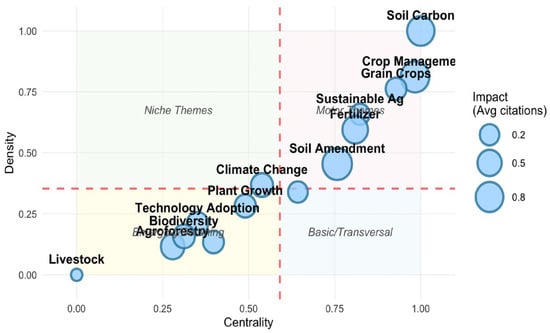
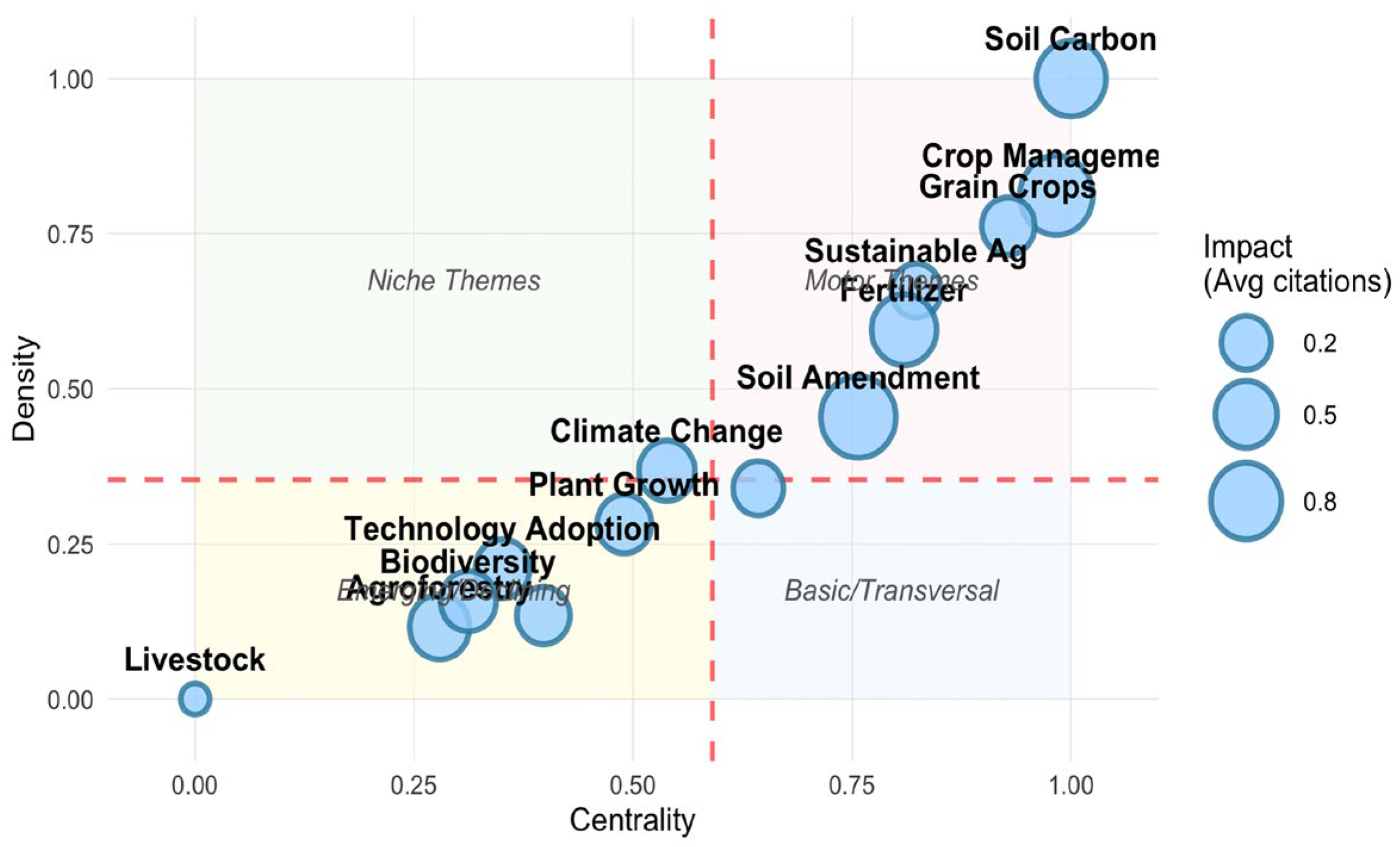
The strategic diagram positioning topics by internal development (density) and external connectivity (centrality) revealed a striking linear distribution pattern (Figure 6). All 14 topics aligned along a diagonal from the motor themes quadrant (high density, high centrality) to the emerging/declining quadrant (low density, low centrality), with virtually no topics occupying the niche themes or basic themes quadrants. This linear alignment indicates a strong positive correlation between topic maturity and field centrality, with themes that develop internal coherence naturally becoming more connected to the broader research landscape.
Figure 6.
Strategic diagram of research themes. Two-dimensional scatter plot positioning 14 topics by density (y-axis: internal development) and centrality (x-axis: external connectivity). Dashed lines delineate four quadrants: motor themes (upper-right), niche themes (upper-left), basic/transversal themes (lower-right), and emerging/declining themes (lower-left). Point size corresponds to impact (citation count) per topic.
Five topics occupied motor theme positions (high density, high centrality): soil carbon, crop management, grain crops, sustainable agriculture, and fertilizer. These well-developed themes with strong external connections function as the field’s intellectual drivers. Four topics positioned as emerging or declining (low density, low centrality): livestock, agroforestry, biodiversity, and technology adoption. However, strategic position alone cannot distinguish emergence from decline. Temporal evolution analysis (Supplementary Figure S5) revealed that technology adoption is actually emerging (growing rapidly) while livestock is declining, despite similar structural positions. The remaining five topics occupied intermediate positions along the diagonal: climate change, irrigation, plant growth, biotic stress, and soil amendment.
The absence of topics in niche and basic themes quadrants is notable. This pattern contrasts sharply with strategic diagrams from other fields, which typically show fragmented patterns with distinct isolated specializations [24]. The linear distribution suggests that agricultural evidence synthesis exhibits unusual integration where topics must simultaneously build internal coherence and external connections to advance. This integrated structure may reflect agriculture’s applied, problem-oriented nature, where isolated topic development is less viable than in basic sciences, or it may result from the field’s sustained high international collaboration facilitating integration across research communities.
3.7. Geographic Specialization in Research Themes
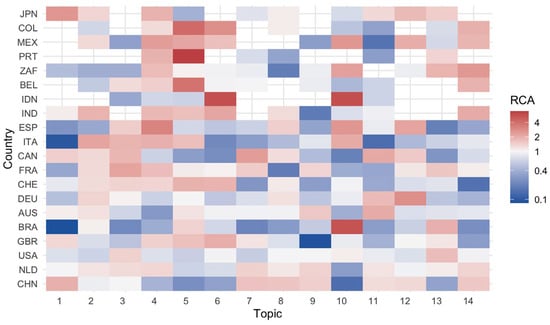
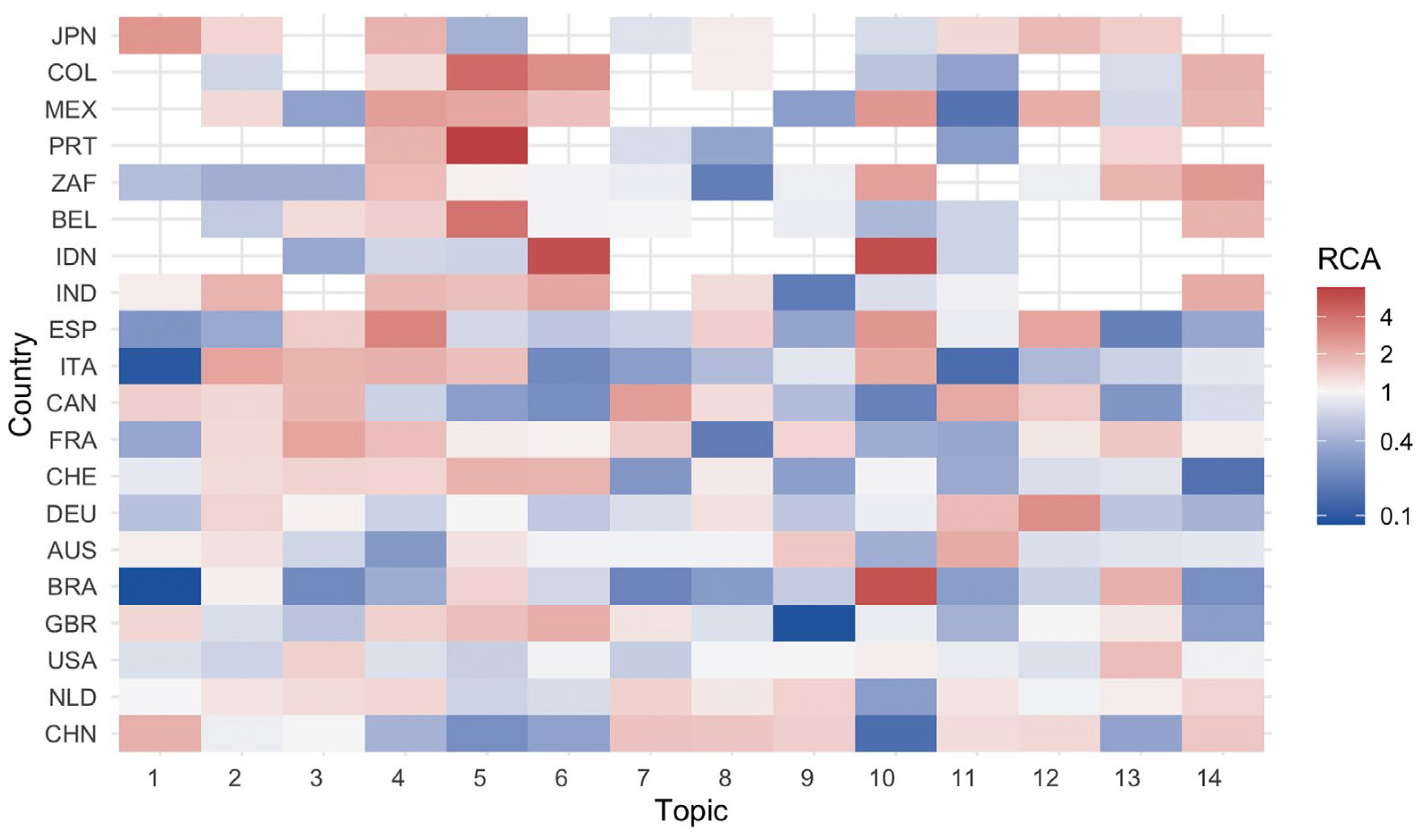
Revealed comparative advantage analysis exposed country-specific thematic specializations (Figure 7). Interestingly, the highest-volume producers (China, the Netherlands, and the United States) showed relatively few strong specializations (RCA > 1), suggesting that these countries maintain broad, balanced portfolios rather than narrow focus. Their substantial research capacity enables addressing multiple themes rather than concentrating efforts.
Figure 7.
Geographic specialization via revealed comparative advantage (RCA). Heatmap showing RCA values for 20 countries (rows) versus 14 topics (columns). Countries ordered by total publication count. Color scale from blue (RCA < 0.5, under-representation) through white (RCA≈1.0) to red (RCA > 2.0, strong specialization). RCA > 1 indicates country specialization in that topic. Note that high-volume producers (top rows) generally show balanced portfolios with few strong specializations, while moderate-volume producers show more concentrated patterns aligned with national agricultural contexts (e.g., Brazil—livestock; Indonesia—sustainable agriculture).
Nevertheless, clear specialization patterns emerged. China demonstrated comparative advantage in soil carbon, climate change, and fertilizer, aligning with national priorities on carbon sequestration and food security through nutrient management [32,33,34]. The Netherlands specialized in agroforestry, climate change, and grain crops, reflecting Dutch expertise in sustainable intensification and controlled-environment systems [35]. The United States showed strength in crop management and biotic stress, consistent with American agricultural research emphasis on pest management and production systems [36,37]. The United Kingdom specialized in agroforestry, technology adoption, and sustainable agriculture, reflecting British growing priority in agroecological transitions [38,39].
Among moderate-volume producers, distinctive specializations appeared. Brazil exhibited strong RCA in livestock, reflecting its position as a major global producer and research center for tropical animal systems. Australia specialized in grain crops and soil amendment, consistent with dryland cereal systems and soil constraint challenges. Germany focused on soil amendment and biodiversity, aligning with European agroecological emphases.
Particularly notable specializations emerged from lower-volume producers. Indonesia showed strong RCA in sustainable agriculture and livestock, reflecting research priorities for smallholder tropical systems. Portugal specialized in agroforestry and technology adoption, possibly related to Mediterranean agricultural contexts. Colombia demonstrated comparative advantage in technology adoption and sustainable agriculture, consistent with development-oriented agricultural research in Latin America.
These specialization patterns suggest that countries concentrate evidence synthesis efforts on themes aligned with their agricultural characteristics, environmental contexts, and policy priorities. This geographic division of labor likely enhances evidence synthesis quality through contextual expertise but may also create knowledge gaps where certain topic–region combinations remain under-synthesized.
4. Discussion
4.1. Growth and Maturation of Agricultural Evidence Synthesis
Our analysis reveals that agricultural evidence synthesis has transitioned from an emergent methodology to a recognized research practice characterized by sustained exponential growth. The annual rate of increase (29%) surpasses that of the primary agricultural literature (7%), indicating rising recognition of evidence synthesis as a means to consolidate fragmented findings into actionable knowledge. The inflection point around 2018 aligns with parallel developments in environmental and sustainability sciences, where systematic reviews became integral to policy-relevant research [9,15]. This trajectory suggests the institutionalization of evidence synthesis as an epistemic tool for addressing complex, cross-scalar agricultural problems. However, whether this rapid expansion reflects genuine evidence needs or partly mirrors publication incentives warrants consideration, as exponential growth risks outpacing quality assurance infrastructure, particularly if evidence synthesis methods diffuse to broader research communities without corresponding investment in training and methodological standards.
Compared with evidence synthesis in medicine and ecology, the agricultural domain demonstrates both methodological adaptation and contextual diversification. The increasing share of meta-analyses relative to systematic reviews signals methodological sophistication and growing familiarity with quantitative synthesis approaches [3]. At the same time, the diversity of publication outlets reflects broader disciplinary integration, linking agronomy, environmental sciences, and social dimensions of sustainability. Together, these trends confirm agriculture’s movement toward evidence-based paradigms that mirror but are not identical to those in other applied sciences.
4.2. Collaboration, Networks, and Knowledge Equity
The field’s high international co-authorship rate (~60%) highlights that evidence synthesis in agriculture is inherently global. This collaboration structure is not merely logistical; it reflects the transboundary nature of agricultural systems, climate effects, and food security challenges [40]. The dominance of collaborations among Global North institutions, however, raises concerns about knowledge equity. Although such partnerships expand methodological capacity, they risk reproducing dependency patterns if evidence synthesis efforts systematically marginalize Global South perspectives or contexts.
Emerging collaborations involving Asian, African, and Latin American countries indicate gradual diversification. Yet the geographic asymmetry highlights persistent structural imbalances. Expanding evidence synthesis training, open access infrastructure, and funding for regional collaborations could mitigate these inequities. Future research should assess whether evidence synthesis networks facilitate capacity building or merely reinforce existing hierarchies in global agricultural research.
4.3. Methodological and Reporting Quality of Evidence Syntheses
Despite the maturity and expansion of agricultural evidence synthesis, existing evaluations indicate that the quality of reporting and quantitative execution varies considerably across published articles, though our bibliometric analysis does not directly assess this dimension. Prior assessments of agricultural meta-analyses highlight recurrent weaknesses, indicating that methodological growth has not been matched by consistent adherence to best-practice standards. Studies such as Philibert et al. 2012 [41], Krupnik et al. 2019 [16], and Fohrafellner et al. 2023 [13] document common issues including improper or unreported variance weighting, limited exploration of heterogeneity, incomplete presentation of effect-size calculations, and reliance on vote counting when quantitative synthesis is feasible. These patterns suggest that rapid publication growth may occur without corresponding improvements in analytical rigor or reporting transparency. To ensure that evidence synthesis fulfills its promise of providing reliable, actionable insights, there is a pressing need for research programs that systematically evaluate the reporting quality of agricultural systematic reviews and meta-analyses, map their alignment with existing guidelines and recommendations, and identify methodological gaps most in need of attention. Such work is critical for strengthening the credibility and utility of evidence synthesis outputs as the field continues to expand.
4.4. Thematic Evolution and Field Integration
Topic modeling and strategic mapping reveal a clear thematic shift from production-oriented to sustainability- and climate-focused priorities. Early evidence synthesis work centered on crop yield and input efficiency, while more recent studies integrate biodiversity, soil health, and resilience frameworks. This transition reflects the broader reorientation of agricultural research toward sustainable intensification and multifunctionality. The centrality of themes such as soil carbon, crop management, and fertilizer likely reflects their role as methodologically tractable, well-established research areas with sufficient primary literature to sustain repeated synthesis, while their strong cross-connections to multiple other themes positioned them as integrative hubs within the field’s knowledge network.
The strong correlation between thematic maturity and connectivity indicates an unusually integrated field structure. Unlike other applied domains where thematic clusters remain isolated, agricultural evidence synthesis shows coherent development across related areas such as agroecology, ecosystem services, and food security. This suggests a maturing field where methodological standardization and conceptual cross-linkages foster cumulative knowledge building. However, peripheral themes, especially those addressing socio-economic aspects or smallholder systems, remain underdeveloped, suggesting opportunities for targeted synthesis investments.
4.5. Geographic Specialization and Comparative Advantage
Revealed comparative advantage (RCA) analysis highlights distinct geographic contributions to evidence synthesis themes. North America and Western Europe dominate climate adaptation and sustainability research [42,43], whereas Asia and Africa specialize in crop production and resource-use efficiency [44,45,46]. These specializations likely reflect both local agricultural priorities and differential research capacity, but also the broader political economy of climate and development policy. In high-income countries, the climate-oriented reviews that gained prominence were often those aligned with government-level mitigation agendas, such as soil carbon sequestration, fertilizer efficiency, or emissions reductions, where consolidated evidence directly supported national commitments under global climate agreements [47,48].
In contrast, in low- and middle-income countries, the rise in climate- and sustainability-related evidence synthesis responded to a different set of incentives. Here, engagement with climate-smart agriculture was frequently tied to adaptation needs and opportunities to access climate finance, with reviews focused on interventions that could improve food and nutritional security rather than emission mitigation [49]. As a result, evidence synthesis activity in these regions tended to emphasize water management, soil health, technology adoption, and resilience-building that are with direct implications for household livelihoods and development priorities. These divergent motivations help explain the geographic clustering of evidence synthesis themes observed in our results and demonstrate that thematic evolution in agricultural evidence synthesis is shaped not only by scientific interest but by policy imperatives and funding structures [50].
While such specialization enhances the contextual relevance of syntheses, it also risks leaving gaps where context-specific evidence is needed but underproduced, particularly in underrepresented agroecological zones and smallholder farming systems. Encouraging cross-regional synthesis, especially efforts that integrate data across diverse production environments, could strengthen global relevance, improve knowledge equity, and support more inclusive evidence-informed policymaking. Initiatives that expand multilingual databases, promote open-access synthesis protocols, and build collaborative evidence synthesis centers may help address current disparities in representation and capacity.
Geographic specialization patterns should be interpreted cautiously. RCA is relative to each country’s portfolio, not absolute global contribution. Small-sample sensitivity means that countries with limited publications can show high RCA from few topic-specific papers. High RCA indicates quantity of focus, not necessarily research quality or expertise, as countries may specialize in topics where they face challenges requiring evidence. Our full counting methodology means that RCA reflects all collaborative participation, including junior partnerships. Despite these limitations, RCA reveals thematic emphasis potentially aligned with national agricultural priorities.
4.6. Implications for Policy and Research Infrastructure
The observed growth, collaboration, and thematic realignment have broad implications for research management and policy:
- Research funders should recognize evidence synthesis as core infrastructure warranting dedicated funding streams, as our findings suggest allocating 5–10% of agricultural research portfolios to evidence synthesis projects. Strategic investment should target emerging themes (technology adoption and climate adaptation) transitioning toward motor status and topic–region combinations showing gaps despite agricultural importance.
- Research institutions should establish evidence synthesis support units providing methodological expertise, integrate evidence synthesis training into graduate curricula (particularly meta-analysis, given its 75% dominance), and develop career pathways for evidence synthesis specialists.
- Journal editors should enforce reporting guidelines (PRISMA and ROSES) and expand reviewer pools with evidence synthesis expertise to maintain quality as publication volumes grow.
- International research programs should design capacity-building mechanisms that train partners in evidence synthesis methods rather than merely extracting data, prioritizing evidence synthesis of underrepresented agricultural systems (smallholder tropical and pastoralist).
More broadly, this study demonstrates the value of multi-dimensional bibliometric approaches for assessing field maturity. Integrating temporal, network, thematic, and geographic analyses provides a structural view of knowledge development that single-method studies often miss. Such integrative frameworks could be applied to other environmental or sustainability-oriented domains to monitor the evolution of evidence synthesis capacity and equity in global knowledge systems.
4.7. Methodological Considerations and Limitations
We selected Web of Science Core Collection (WOSCC) for its superior bibliometric metadata quality essential for rigorous network analysis, including comprehensive institutional affiliation data, consistent citation indexing, and established subject classification. Multi-database approaches introduce substantial analytical challenges: error-prone deduplication across platforms, non-standardized bibliometric fields, and incompatible classification schemes. While Scopus and Dimensions might offer broader coverage, these advantages trade off against metadata consistency required for collaboration network construction and longitudinal citation tracking. Our single-database approach prioritizes analytical precision over maximal coverage but introduces coverage bias. Web of Science indexing favors English-language journals from North America and Europe, underrepresenting regional journals and non-English evidence synthesis in Chinese, Spanish, Portuguese, and French studies. This bias likely contributes to observed geographic concentration and may influence apparent country specializations. Our findings should be interpreted as characterizing internationally visible evidence synthesis reaching premier databases rather than comprehensive global evidence synthesis activity.
Our focus on publications explicitly labeled “systematic review” or “meta-analysis” maintains methodological specificity but may exclude synthesis using alternative terminology, prioritizing precision over sensitivity. Full counting methodology assigns publications to all affiliated countries without weighting, potentially overestimating contribution from countries with single authors on large teams. LDA topic modeling with K = 14 represents one viable solution; alternative specifications might reveal different thematic granularity. Topic labels involve expert interpretation but remain analytical constructs. Revealed comparative advantage interpretation requires caution, as discussed in Section 4.5. Bibliometric analysis documents publication patterns but cannot assess evidence synthesis methodological quality or rigor, which requires examining individual publications directly.
5. Conclusions
Evidence synthesis in agriculture has passed a critical threshold. The 2018 inflection point, marking exponential acceleration beyond primary literature growth, signifies not just expansion but transformation, as evidence synthesis has evolved from a peripheral methodology into a central practice for generating and validating agricultural knowledge. Yet this rise, driven largely by grassroots adoption of accessible meta-analytical tools, raises questions of sustainability and quality assurance.
The field’s defining features, such as sustained global collaboration, unusual thematic integration, and responsiveness to evolving policy priorities, collectively distinguish agricultural evidence synthesis from most research domains and signal its maturation into a globally connected knowledge network. Broad participation does not automatically translate into equitable leadership or agenda setting. Sustaining this progress requires dedicated structural support across funding, training, and quality assurance, as detailed in Section 4.6.
This research landscape reveals evidence synthesis as a cornerstone of agricultural knowledge production. However, realizing its full potential demands deliberate attention to equity, rigor, and translation into practice. Evidence synthesis has become central to agricultural science, and the next challenge is ensuring that it becomes transformative.
Supplementary Materials
The following supporting information can be downloaded at: https://www.mdpi.com/article/10.3390/agriculture16070793/s1. Figure S1: Model selection for Latent Dirichlet Allocation topic dodeling; Figure S2: PRISMA flow diagramFlow Diagram; Figure S3: Publication type-specific change point detection; Figure S4: Term probability distributions (β values) by topic; Figure S5: Fine-grained temporal dynamics; Table S1: Search strategy for evidence synthesis; Table S2: Search strategy for primary literature in agriculture; Table S3: Model comparison for publication trends; Table S4: Counts of evidence synthesis vs primary literature by year; Table S5: Distribution of international collaboration intensity; List of R packages used in data analysis and R session information; List of custom stop words used for topic modeling.
Author Contributions
Conceptualization and design, C.C., J.K.Y., S.M.B. and J.J.V.; methodology, C.C. and J.K.Y.; software, C.C.; validation, S.M.B. and J.J.V.; investigation, C.C. and J.K.Y.; data curation, C.C. and J.K.Y.; writing—original draft preparation, C.C.; writing—review and editing, J.K.Y., S.M.B. and J.J.V.; visualization, C.C.; supervision, C.C.; project administration, C.C.; funding acquisition, S.M.B. and J.J.V. All authors have read and agreed to the published version of the manuscript.
Funding
This research was supported by the United States Department of Agriculture (USDA) National Institute of Food and Agriculture (NIFA) grant awarded to Sylvie Brouder and Jeff Volenec for the project “FACT: An Innovative Cyber-Framework Integrating Public/Private Data for Evidence-Based Recommendations” (grant # 2019-68017-29939).
Data Availability Statement
The original data presented in the study are openly available in Open Science Framework (OSF) at https://doi.org/10.17605/OSF.IO/K293A.
Conflicts of Interest
The authors declare that the research was conducted in the absence of any commercial or financial relationships that could be construed as a potential conflict of interest.
References
- Calvin, K.; Dasgupta, D.; Krinner, G.; Mukherji, A.; Thorne, P.W.; Trisos, C.H.; Romero, J.; Aldunce, P.; Barrett, K.; Blanco, G.; et al. IPCC, 2023: Climate Change 2023: Synthesis Report. Contribution of Working Groups I, II and III to the Sixth Assessment Report of the Intergovernmental Panel on Climate Change; Core Writing Team, Lee, H., Romero, J., Eds.; IPCC: Geneva, Switzerland, 2023. [Google Scholar]
- Verma, K.K.; Song, X.; Kumari, A.; Jagadesh, M.; Singh, S.K.; Bhatt, R.; Singh, M.; Seth, C.S.; Li, Y. Climate change adaptation: Challenges for agricultural sustainability. Plant Cell Environ. 2025, 48, 2522–2533. [Google Scholar] [CrossRef] [Scilit]
- Gurevitch, J.; Koricheva, J.; Nakagawa, S.; Stewart, G. Meta-analysis and the science of research synthesis. Nature 2018, 555, 175–182. [Google Scholar] [CrossRef] [Scilit]
- Petticrew, M.; Roberts, H. Systematic Reviews in the Social Sciences: A Practical Guide; John Wiley & Sons: Hoboken, NJ, USA, 2008; ISBN 1-4051-5014-9. [Google Scholar]
- Patsopoulos, N.A.; Analatos, A.A.; Ioannidis, J.P.A. Relative Citation Impact of Various Study Designs in the Health Sciences. JAMA 2005, 293, 2362–2366. [Google Scholar] [CrossRef] [Scilit] [PubMed]
- Royle, P.; Kandala, N.-B.; Barnard, K.; Waugh, N. Bibliometrics of systematic reviews: Analysis of citation rates and journal impact factors. Syst. Rev. 2013, 2, 74. [Google Scholar] [CrossRef] [Scilit]
- Catford, J.A.; Wilson, J.R.; Pyšek, P.; Hulme, P.E.; Duncan, R.P. Addressing context dependence in ecology. Trends Ecol. Evol. 2022, 37, 158–170. [Google Scholar] [CrossRef] [Scilit]
- Gontijo, L.M. Addressing context dependence in studies of plant diversity to improve the understanding of natural enemy conservation. Curr. Opin. Insect Sci. 2024, 63, 101202. [Google Scholar] [CrossRef] [Scilit] [PubMed]
- Shackelford, G.E.; Kelsey, R.; Sutherland, W.J.; Kennedy, C.M.; Wood, S.A.; Gennet, S.; Karp, D.S.; Kremen, C.; Seavy, N.E.; Jedlicka, J.A. Evidence synthesis as the basis for decision analysis: A method of selecting the best agricultural practices for multiple ecosystem services. Front. Sustain. Food Syst. 2019, 3, 83. [Google Scholar] [CrossRef] [Scilit]
- Cooke, S.J.; Cook, C.N.; Nguyen, V.M.; Walsh, J.C.; Young, N.; Cvitanovic, C.; Grainger, M.J.; Randall, N.P.; Muir, M.; Kadykalo, A.N. Environmental evidence in action: On the science and practice of evidence synthesis and evidence-based decision-making. Environ. Evid. 2023, 12, 10. [Google Scholar] [CrossRef] [Scilit]
- Levin, A. The cochrane collaboration. Ann. Intern. Med. 2001, 135, 4. [Google Scholar] [CrossRef] [Scilit]
- Pullin, A.S.; Stewart, G.B. Guidelines for systematic review in conservation and environmental management. Conserv. Biol. 2006, 20, 1647–1656. [Google Scholar] [CrossRef] [Scilit]
- Fohrafellner, J.; Zechmeister-Boltenstern, S.; Murugan, R.; Valkama, E. Quality assessment of meta-analyses on soil organic carbon. Soil 2023, 9, 117–140. [Google Scholar] [CrossRef] [Scilit]
- Sheldon, T.A. Making evidence synthesis more useful for management and policy-making. J. Health Serv. Res. Policy 2005, 10, 1–5. [Google Scholar] [CrossRef] [Scilit]
- Wyborn, C.; Louder, E.; Harrison, J.; Montambault, J.; Montana, J.; Ryan, M.; Bednarek, A.; Nesshöver, C.; Pullin, A.; Reed, M. Understanding the impacts of research synthesis. Environ. Sci. Policy 2018, 86, 72–84. [Google Scholar] [CrossRef] [Scilit]
- Krupnik, T.J.; Andersson, J.A.; Rusinamhodzi, L.; Corbeels, M.; Shennan, C.; Gérard, B. Does size matter? a critical review of meta-analysis in agronomy. Exp. Agric. 2019, 55, 200–229. [Google Scholar] [CrossRef] [Scilit]
- Ruttan, V.W. Toward a global agricultural research system. In Policy for Agricultural Research; CRC Press: Boca Raton, FL, USA, 2019; pp. 65–97. [Google Scholar]
- Voller, S.; Schellenberg, J.; Chi, P.; Thorogood, N. What makes working together work? A scoping review of the guidance on North–South research partnerships. Health Policy Plan. 2022, 37, 523–534. [Google Scholar] [CrossRef] [Scilit]
- Herrera, M.S.; Maharaj, G. Promoting equity between the Global North and Global South in entomological research. Curr. Opin. Insect Sci. 2025, 69, 101357. [Google Scholar] [CrossRef] [Scilit]
- Laxmi, T.; Krishna, P.J.; Reddy, G.P. Changing paradigms in agricultural research: Significance of end-user involvement. Outlook Agric. 2007, 36, 119–125. [Google Scholar] [CrossRef] [Scilit]
- Kassam, A.; Kassam, L. Paradigms of agriculture. In Rethinking Food and Agriculture; Elsevier: Amsterdam, The Netherlands, 2021; pp. 181–218. [Google Scholar]
- Yamaguchi, N.U.; Bernardino, E.G.; Ferreira, M.E.C.; De Lima, B.P.; Pascotini, M.R.; Yamaguchi, M.U. Sustainable development goals: A bibliometric analysis of literature reviews. Environ. Sci. Pollut. Res. 2023, 30, 5502–5515. [Google Scholar] [CrossRef] [Scilit] [PubMed]
- Mishra, M.; Desul, S.; Santos, C.A.G.; Mishra, S.K.; Kamal, A.H.M.; Goswami, S.; Kalumba, A.M.; Biswal, R.; da Silva, R.M.; Dos Santos, C.A.C. A bibliometric analysis of sustainable development goals (SDGs): A review of progress, challenges, and opportunities. Environ. Dev. Sustain. 2024, 26, 11101–11143. [Google Scholar] [CrossRef] [Scilit]
- Han, H.; Gui, J.; Xu, S. Revealing research themes and their evolutionary trends using bibliometric data based on strategic diagrams. In Proceedings of the 2013 International Conference on Information Science and Cloud Computing Companion, Guangzhou, China, 7–8 December 2013; pp. 653–659. [Google Scholar]
- Feng, J.; Mu, X.; Wang, W.; Xu, Y. A topic analysis method based on a three-dimensional strategic diagram. J. Inf. Sci. 2021, 47, 770–782. [Google Scholar] [CrossRef] [Scilit]
- Altukhov, A.I.; Semkin, A.G.; Bykov, V.G.; Piatinskiy, A.S. Strategic areas of distribution and specialization in terms of development of the management of agricultural production. In Modern Global Economic System: Evolutional Development vs. Revolutionary Leap; Springer: Berlin/Heidelberg, Germany, 2019; pp. 805–815. [Google Scholar]
- Fu, Y.; Mao, Y.; Jiang, S.; Luo, S.; Chen, X.; Xiao, W. A bibliometric analysis of systematic reviews and meta-analyses in ophthalmology. Front. Med. 2023, 10, 1135592. [Google Scholar] [CrossRef] [Scilit]
- Ouzzani, M.; Hammady, H.; Fedorowicz, Z.; Elmagarmid, A. Rayyan—A web and mobile app for systematic reviews. Syst. Rev. 2016, 5, 210. [Google Scholar] [CrossRef] [Scilit]
- Blei, D.M.; Ng, A.Y.; Jordan, M.I. Latent dirichlet allocation. J. Mach. Learn. Res. 2003, 3, 993–1022. [Google Scholar]
- Cobo, M.J.; López-Herrera, A.G.; Herrera-Viedma, E.; Herrera, F. An approach for detecting, quantifying, and visualizing the evolution of a research field: A practical application to the Fuzzy Sets Theory field. J. Informetr. 2011, 5, 146–166. [Google Scholar] [CrossRef] [Scilit]
- Balassa, B. Trade liberalisation and “revealed” comparative advantage 1. Manch. Sch. 1965, 33, 99–123. [Google Scholar] [CrossRef] [Scilit]
- Miao, Y.; Stewart, B.A.; Zhang, F. Long-term experiments for sustainable nutrient management in China. A review. Agron. Sustain. Dev. 2011, 31, 397–414. [Google Scholar] [CrossRef] [Scilit]
- Tang, H.; Liu, Y.; Li, X.; Muhammad, A.; Huang, G. Carbon sequestration of cropland and paddy soils in China: Potential, driving factors, and mechanisms. Greenh. Gases Sci. Technol. 2019, 9, 872–885. [Google Scholar] [CrossRef] [Scilit]
- Zhang, G.-L.; Wu, H.; Shi, Z.; Yan, X.; Shen, R. Priorities of soil research and soil management in China in the coming decade. Geoderma Reg. 2022, 29, e00537. [Google Scholar] [CrossRef] [Scilit]
- Heuvelink, E.; Hemming, S.; Marcelis, L.F.M. Some recent developments in controlled-environment agriculture: On plant physiology, sustainability, and autonomous control. J. Hortic. Sci. Biotechnol. 2024, 100, 604–614. [Google Scholar] [CrossRef] [Scilit]
- Carruthers, R.I. Invasive species research in the United States Department of Agriculture–Agricultural Research Service. Pest Manag. Sci. Former. Pestic. Sci. 2003, 59, 827–834. [Google Scholar] [CrossRef] [Scilit]
- Young, S.L. A systematic review of the literature reveals trends and gaps in integrated pest management studies conducted in the United States. Pest Manag. Sci. 2017, 73, 1553–1558. [Google Scholar] [CrossRef] [Scilit] [PubMed]
- Cusworth, G.; Garnett, T.; Lorimer, J. Agroecological break out: Legumes, crop diversification and the regenerative futures of UK agriculture. J. Rural Stud. 2021, 88, 126–137. [Google Scholar] [CrossRef] [Scilit]
- Berthon, K.; Jaworski, C.C.; Beacham, J.D.; Jackson, P.; Leake, J.; McHugh, N.M.; Capstick, L.; Daniell, T.; Krzywoszynska, A.; Cameron, D. Measuring the transition to regenerative agriculture in the UK with a co-designed experiment: Design, methods and expected outcomes. Environ. Res. Food Syst. 2024, 1, 025007. [Google Scholar] [CrossRef] [Scilit]
- Stephens, E.C.; Jones, A.D.; Parsons, D. Agricultural systems research and global food security in the 21st century: An overview and roadmap for future opportunities. Agric. Syst. 2018, 163, 1–6. [Google Scholar] [CrossRef] [Scilit]
- Philibert, A.; Loyce, C.; Makowski, D. Assessment of the quality of meta-analysis in agronomy. Agric. Ecosyst. Environ. 2012, 148, 72–82. [Google Scholar] [CrossRef] [Scilit]
- Fernández-Manjarrés, J.F.; Ruiz-Benito, P.; Zavala, M.A.; Camarero, J.J.; Pulido, F.; Proença, V.; Navarro, L.; Sansilvestri, R.; Granda, E.; Marqués, L. Forest adaptation to climate change along steep ecological gradients: The case of the Mediterranean-temperate transition in South-Western Europe. Sustainability 2018, 10, 3065. [Google Scholar] [CrossRef] [Scilit]
- Shi, L.; Moser, S. Transformative climate adaptation in the United States: Trends and prospects. Science 2021, 372, eabc8054. [Google Scholar] [CrossRef] [Scilit]
- Kansiime, M.K.; van Asten, P.; Sneyers, K. Farm diversity and resource use efficiency: Targeting agricultural policy interventions in East Africa farming systems. NJAS Wagening. J. Life Sci. 2018, 85, 32–41. [Google Scholar] [CrossRef] [Scilit]
- Liu, Y.; Zhuo, L.; Varis, O.; Fang, K.; Liu, G.; Wu, P. Enhancing water and land efficiency in agricultural production and trade between Central Asia and China. Sci. Total Environ. 2021, 780, 146584. [Google Scholar] [CrossRef] [Scilit] [PubMed]
- Aslam, M.S.; Huanxue, P.; Sohail, S.; Majeed, M.T.; Rahman, S.U.; Anees, S.A. Assessment of major food crops production-based environmental efficiency in China, India, and Pakistan. Environ. Sci. Pollut. Res. 2022, 29, 10091–10100. [Google Scholar] [CrossRef] [Scilit]
- Buck, H.J.; Palumbo-Compton, A. Soil carbon sequestration as a climate strategy: What do farmers think? Biogeochemistry 2022, 161, 59–70. [Google Scholar] [CrossRef] [Scilit]
- Alcalde, J.; Johnson, G.; Roberts, J.J. National climate strategies show inequalities in global development of carbon dioxide geological storage. Commun. Earth Environ. 2025, 6, 61. [Google Scholar] [CrossRef] [Scilit]
- Lipper, L.; Zilberman, D. A short history of the evolution of the climate smart agriculture approach and its links to climate change and sustainable agriculture debates. Clim. Smart Agric. 2018, 52, 13–30. [Google Scholar]
- McGlynn, M.; Sparks, A.C. Climate change policy development: A multiple streams analysis of the Inflation Reduction Act of 2022. Forum 2024, 22, 177–204. [Google Scholar] [CrossRef] [Scilit]

Disclaimer/Publisher’s Note: The statements, opinions and data contained in all publications are solely those of the individual author(s) and contributor(s) and not of MDPI and/or the editor(s). MDPI and/or the editor(s) disclaim responsibility for any injury to people or property resulting from any ideas, methods, instructions or products referred to in the content. |
© 2026 by the authors. Licensee MDPI, Basel, Switzerland. This article is an open access article distributed under the terms and conditions of the Creative Commons Attribution (CC BY) license.