1. Introduction
Reducing agricultural greenhouse gas emissions has become a major policy concern both globally and in China. Agriculture accounts for approximately 10–12% of global greenhouse gas emissions [
1], while in China, the sector remains central to food security, rural livelihoods, and climate governance. In this paper, “agricultural carbon emissions” refers to carbon-equivalent emissions generated by major crop-production inputs and related farming activities that can be consistently measured at the prefecture level, including fertilizer, pesticide, agricultural film, diesel, tillage, and irrigation. Because these sources are decentralized, seasonal, and costly to monitor, the governance problem differs in important ways from industrial carbon control.
In China, green finance reform moved from a national framework to place-based pilots. In June 2017, the State Council approved the first batch of Green Finance Reform and Innovation Pilot Zones in selected cities and new areas in Zhejiang, Jiangxi, Guangdong, Guizhou, and Xinjiang, with later expansions in Gansu in 2019 and Chongqing in 2022. These pilots were designed to test how green credit, green insurance, green bonds, and related financial tools could be adapted to local development conditions. Because the policy was introduced in different places at different times rather than nationwide all at once, it provides a useful setting for quasi-experimental evaluation [
2,
3,
4,
5,
6].
The contributions of this study are primarily reflected in the following aspects. First, recent quasi-experimental studies of China’s green finance reform and innovation pilot zones have mainly examined energy saving, air quality, corporate ESG behavior, or aggregate regional carbon outcomes [
7,
8,
9,
10]. By contrast, this paper focuses on agricultural carbon emissions, a setting characterized by dispersed emission sources, stronger measurement frictions, and a more indirect finance-to-production transmission chain [
11]. The sectoral focus therefore extends the literature from urban and industrial decarbonization to decentralized agricultural decarbonization. Second, beyond estimating an average policy effect, this paper develops an agriculture-specific transmission framework in which green finance affects carbon intensity through three complementary channels: directed credit allocation, green technology adoption, and production-structure adjustment. The theoretical contribution lies in clarifying why these channels should interact more strongly in agriculture than in sectors with concentrated emitters and easier environmental monitoring. Third, methodologically, the paper combines staggered DID estimation with the Callaway and Sant’Anna estimator and a series of robustness checks. Furthermore, it explicitly positions the instrumental-variable results and mechanism regressions as supplementary evidence, maintaining an appropriately bounded causal interpretation. Fourth, at the policy level, the study’s heterogeneity analysis provides precise empirical references for formulating differentiated green finance policies.
From a global perspective, agricultural carbon emissions governance has emerged as a central issue in international climate negotiations. The 2015 Paris Agreement explicitly required all signatories to incorporate the agricultural sector into their Nationally Determined Contributions (NDCs), while the 2021 Glasgow Climate Pact further emphasised the critical role of agriculture and land use in achieving the 1.5 °C temperature control target. Against this backdrop, how to effectively incentivize agricultural carbon reduction through financial mechanisms has emerged as a frontier issue at the intersection of environmental economics and finance. As the world’s largest developing country and agricultural powerhouse, China accounts for approximately 8–10% of global agricultural carbon emissions. Exploring a financial pathway for agricultural carbon reduction with Chinese characteristics is not only crucial for China’s achievement of its dual carbon goals but will also contribute Chinese solutions and insights to the global transition towards green and low-carbon agriculture.
It is particularly noteworthy that agricultural carbon reduction differs fundamentally from industrial carbon reduction, rendering the operational mechanisms of green finance in agriculture uniquely complex. First, agricultural carbon sources are highly dispersed, involving hundreds of millions of small-scale farmers and vastly diverse cultivation and breeding practices. Traditional command-and-control environmental regulations incur prohibitively high implementation costs in agriculture, making financial incentive mechanisms a potentially more effective alternative. Second, agricultural production exhibits pronounced seasonality and uncertainty, with potential trade-offs between carbon emissions and grain yields. Green finance must therefore strike a balance between promoting carbon reduction and safeguarding food security. Third, monitoring and verification technologies for agricultural carbon emissions remain immature, with pronounced information asymmetry posing heightened demands on green financial product design and risk management. Consequently, in-depth research into the impact of green finance on agricultural carbon emissions and its underlying mechanisms holds significant academic value and addresses pressing practical needs.
The remainder of this paper proceeds as follows:
Section 2 reviews the literature;
Section 3 introduces the institutional background and develops research hypotheses;
Section 4 describes the materials and methods, including data sources, variable definitions, and empirical strategies;
Section 5 presents the empirical results, incorporating benchmark regressions, mechanism analyses, robustness checks, and heterogeneity examinations;
Section 6 concludes with policy implications.
2. Literature Review
Regarding the environmental effects of green finance, early studies mainly relied on macro panel regressions to show that green finance is associated with lower carbon intensity and greener industrial upgrading [
12]. More recent work argues that green finance should also be understood as an institutional and governance arrangement shaped by standards, monitoring rules, and decision rights [
13,
14,
15]. This broader perspective is particularly relevant for agriculture, where emission sources are dispersed and lenders face severe information asymmetry when trying to distinguish genuinely green production from relabeling. Existing DID-based studies on China’s green finance reform and innovation pilot zones show that the policy can promote urban energy savings [
7], improve air quality [
8], reduce ESG greenwashing [
9], and strengthen corporate carbon reduction [
10]. Yet they remain concentrated in urban, industrial, and firm-level settings. Evidence for agriculture is still limited, even though agriculture differs from industry in emission dispersion, monitoring costs, financing frictions, and the prevalence of small production units.
Regarding the measurement and drivers of agricultural carbon emissions, Tian and Zhang [
16] established a foundational measurement framework for China based on major agricultural inputs, while subsequent studies documented the roles of economic development, industrial structure, technological progress, urbanization, and fiscal support [
16,
17]. However, much of this literature remains descriptive or correlational. It tells us which factors co-move with agricultural carbon emissions, but it offers less evidence on whether a policy-induced financial shock can causally change agricultural production behavior [
18]. This is precisely where the present paper seeks to contribute.
Three theoretical lenses are especially relevant for interpreting the policy effect. The first is environmental externality correction, in which finance helps internalize otherwise weakly priced carbon costs by changing the relative borrowing conditions of greener and more carbon-intensive activities. The second is financial intermediation under information asymmetry, which emphasizes screening, delegated monitoring, and the institutional capacity of lenders to distinguish genuinely green projects from relabeled ones [
19]. The third is dynamic innovation in the spirit of Porter, under which tighter environmental criteria may induce technology adoption and organizational learning, but only where firms and local institutions can absorb the transition. Recent conceptual work also stresses that the governance architecture of finance shapes how policy goals are translated into allocative outcomes, implying that institutional design matters alongside the volume of finance itself [
20]. These perspectives are complementary but not identical, and they generate a clear empirical ambiguity: green finance may reduce emissions, have little effect, or mainly alter the labeling of credit if screening and monitoring are weak. From the perspective of research design, DID is therefore not novel in itself. The value of the present study lies in combining recent multi-period DID advances with a sector in which identification and mechanism interpretation are both more challenging. Following Sun and Abraham [
21], Callaway and Sant’Anna [
22], and de Chaisemartin and D’Haultfoeuille [
23], this paper adopts a staggered-treatment framework and reports a robust estimator to address treatment-timing heterogeneity. The paper advances the literature not by introducing a new estimator but by using a rigorous identification strategy to test whether green finance remains effective under decentralized agricultural emissions and by comparing several channel-consistent mechanisms within that setting.
3. Theoretical Analysis
3.1. Institutional Context
In August 2016, the People’s Bank of China and six other ministries jointly issued the Guiding Opinions on Establishing a Green Financial System, marking the comprehensive launch of China’s green finance framework. On 14 June 2017, the State Council executive meeting decided to establish green finance reform and innovation pilot zones in Huzhou and Quzhou (Zhejiang Province), Ganjiang New Area (Jiangxi Province), Huadu District (Guangzhou, Guangdong Province), Gui’an New Area (Guizhou Province), as well as Hami City, Changji Prefecture, and Karamay City (Xinjiang Uygur Autonomous Region). In November 2019, Lanzhou New Area in Gansu Province was approved as part of the second batch of pilot zones. In August 2022, Chongqing Municipality was approved to establish the third batch of pilot zones. In addition, it is important to distinguish three administrative layers in the pilot program. The central government set the overall green-finance framework, provincial governments coordinated implementation, and specific pilot cities or state-level new areas carried out the concrete institutional experiments. This distinction matters empirically because treatment is assigned to the pilot city or new area rather than automatically to every locality within a pilot province.
The core policy elements of the pilot zones include: first, refining the green finance organizational framework by encouraging financial institutions to establish dedicated green finance divisions or specialized entities; second, innovating green financial products and services through the development of green credit, green bonds, green insurance, and green funds; third, broadening financing channels for green industries by supporting eligible green enterprises in listing and refinancing; and fourth, establishing robust green finance risk prevention mechanisms alongside enhanced environmental information disclosure systems. Within the agricultural sector, pilot zone policies manifest specifically through increased credit support for ecological and organic agriculture; innovation in financial products such as agricultural carbon sink mortgage loans and green agricultural insurance; and the establishment of an agricultural green development evaluation system.
The establishment of green finance pilot zones exhibits distinct quasi-natural experimental characteristics. First, the selection of pilot zones is primarily based on proactive applications from local governments and comprehensive central government assessments, rather than strictly adhering to agricultural carbon emission levels. This approach mitigates the issue of policy endogeneity to a certain extent. Second, the staggered establishment dates of the pilot zones (2017, 2019, 2022) provide an ideal research design for employing a multi-period DID approach. Third, the zones cover regions of varying development levels across eastern, central, and western China, enhancing the external validity of research conclusions. Therefore, pilot selection was driven by local applications, financial reform capacity, and the central government’s demonstration objectives rather than by an explicit ranking of agricultural carbon intensity. Even so, pilot assignment cannot be treated as fully random. The identification strategy should therefore be understood as relying on conditional rather than absolute exogeneity. In the empirical design, this concern is addressed by city and year fixed effects, time-varying controls, event-study evidence on pre-trends, PSM-DID, province-by-year or trend adjustments, sample exclusions, and an auxiliary IV exercise.
3.2. Research Hypotheses
Building upon this institutional context, this paper develops a more explicit theoretical framework for how green finance affects agricultural carbon emissions. The core argument is that the pilot policy changes the relative financing conditions facing low-carbon and conventional agricultural production, and that this financial re-pricing is transmitted into carbon outcomes through mutually reinforcing behavioral channels rather than through a single isolated mechanism.
Formally, let agricultural operator i choose between a lower-carbon option L and a conventional option H. Adoption of L occurs when , where r denotes financing cost, K denotes required capital, captures expected productivity or risk-reduction gains from green innovation, and reflects the compliance and transition costs borne by the conventional high-carbon option under tighter environmental screening. At the aggregate level, agricultural carbon intensity falls through two margins: a within-sector margin, because producers adopt cleaner inputs and technologies, and a structural margin, because capital is reallocated toward lower-carbon agricultural subsectors. This formulation implies that credit allocation, technological innovation, and structural adjustment should be interpreted as complementary channels of the same policy shock.
First, the credit allocation effect. According to financial intermediation theory, banks play a pivotal role in information screening and resource allocation within credit allocation [
24]. Green finance policies elevate the financing costs of high-carbon agricultural projects and lower the financing thresholds for low-carbon agricultural projects through differentiated credit pricing and access criteria. This redirects credit resources from high-carbon agricultural production methods towards low-carbon alternatives [
25]. The micro-foundation of this mechanism lies in green credit assessment criteria incorporating environmental performance into loan approval processes. This enables agricultural operators adopting clean production technologies to secure lower financing costs and larger credit lines, thereby generating a “green-oriented” effect in credit allocation [
26]. Accordingly, Hypothesis 1 is proposed.
Hypothesis 1. Green finance pilot policies reduce agricultural carbon emission intensity by expanding the scale of green agricultural credit and increasing the proportion of green credit.
Second, the technological innovation effect. Within the theoretical framework of the Porter hypothesis [
27], appropriate environmental regulations can stimulate corporate innovation incentives, offsetting or even exceeding compliance costs [
28,
29,
30,
31]. Green finance policies incentivize agricultural operators and agri-tech enterprises to increase investment in green technology R&D by providing dedicated funding support and easing financing constraints for green innovation [
32]. Specifically, preferential interest rates on green loans reduce the application costs of green agricultural technologies—such as precision fertilization techniques, bio-pesticide substitution technologies, and agricultural waste resource utilization methods—thereby promoting the green transformation of agricultural production methods [
33]. Furthermore, green finance mitigates the uncertainty associated with adopting new technologies through risk-sharing mechanisms (e.g., green agricultural insurance), thereby accelerating the diffusion of green agricultural technologies [
34]. This leads to Hypothesis 2.
Hypothesis 2. Green finance pilot policies reduce agricultural carbon intensity by promoting innovation and diffusion of green agricultural technologies.
Pathway Three: Structural Adjustment Effect. Differentiated financing conditions under green finance policies alter the relative production costs across agricultural sectors, thereby driving internal structural adjustments toward low-carbon practices [
35]. High-carbon agricultural subsectors (e.g., traditional livestock farming, high-fertilizer grain cultivation) face elevated financing costs and stricter credit constraints, while low-carbon subsectors (e.g., protected agriculture, green organic farming, ecological aquaculture) receive greater financial resource support [
36,
37]. This structural credit reallocation promotes the green optimization of agricultural industrial structures by “crowding out high-carbon activities and supporting low-carbon ones”. Accordingly, Hypothesis 3 is proposed.
Hypothesis 3. Green finance pilot policies reduce agricultural carbon intensity by promoting low-carbon adjustments in the agricultural industrial structure.
4. Materials and Methods
4.1. Data Sources
The study employs a balanced panel of 282 prefecture-level and above cities in China from 2012 to 2022. This period is chosen for three reasons. First, 2012 is the earliest year from which a consistent prefecture-level agricultural emissions inventory and control-variable system can be assembled from official statistical yearbooks. Second, the window provides five pre-policy years before the first 2017 pilot rollout, which is important for testing pre-trends. Third, extending the sample to 2022 allows the analysis to capture medium-term effects of the first cohort and the staggered entry of the 2019 and 2022 cohorts. The sample is also broadly representative of prefecture-level China with continuous statistical reporting: it covers cities in eastern, central, and western China, includes grain-producing and non-grain regions, and contains substantial variation in financial development, industrial structure, and agricultural dependence. Cities with missing core variables are excluded, so the inference should be understood as pertaining to the population of prefecture-level cities for which a harmonized city-year panel can be constructed rather than to every county-level unit in China. The study period also spans nationwide shocks and policy changes, including rural revitalization reforms and the COVID-19 years. These common shocks are absorbed by year fixed effects and examined further through supplementary robustness checks.
4.2. Variable Definitions
1. Dependent Variable: Agricultural Carbon Intensity (AgriCI). Drawing upon Tian and Zhang [
16], the baseline indicator measures agricultural carbon emissions from six major sources that can be consistently constructed at the prefecture level over 2012–2022: fertilizer application, pesticide use, agricultural film consumption, diesel consumption by agricultural machinery, tillage, and irrigation. These emissions are standardized by agricultural value added to obtain agricultural carbon intensity. We use this six-source measure in the baseline because it is the only inventory that can be constructed consistently for a long prefecture-level panel from official statistics, and it closely tracks crop-production decisions, which are the main margins through which green finance is expected to operate. The trade-off is that the indicator relies on aggregated activity data and standardized emission factors. It therefore cannot fully capture regional heterogeneity in fertilizer composition, irrigation efficiency, machinery quality, cropping systems, or livestock structure. The baseline measure should thus be interpreted as a comparable city-level proxy rather than as a complete physical inventory. To address this concern, the study therefore clarifies that an expanded eight-source inventory including livestock methane emissions is used as a sensitivity analysis in the robustness section, and the main conclusion remains unchanged. The specific baseline formula is:
where
Ei denotes the activity level of carbon source i,
δi represents the corresponding emission factor, and AgriGDP signifies agricultural value added (calculated at constant 2012 prices). This study additionally employs the logarithm of total agricultural carbon emissions (lnAgriCI) as a proxy dependent variable for robustness testing.
2. Core explanatory variable: Green Finance Pilot Policy (GFPilot). Constructing a multi-period DID treatment variable. For the first cohort of pilot cities (Huzhou, Quzhou, Ganzhou, Guangzhou, Guiyang, Hami, Changji, Karamay), the value is 1 for 2017 and subsequent years, and 0 otherwise; For the second cohort of pilot cities (Lanzhou), the value is 1 for 2019 and subsequent years; for the third cohort (Chongqing), the value is 1 for 2022 and subsequent years; all other cities remain at 0.
3. Control variables. To account for other factors influencing agricultural carbon emissions, the following control variables are selected: (1) Economic development level (lnPGDP), measured by the logarithm of per capita GDP; (2) Urbanisation rate (Urban), measured by the proportion of permanent urban residents in the total population; (3) Industrial structure (IndStr), measured by the share of secondary industry value-added in GDP; (4) Fiscal support intensity for agriculture (Fiscal Agri), measured as the proportion of fiscal expenditure on agriculture, forestry and water affairs relative to general public budget expenditure; (5) Human capital (Human Cap), measured as the number of university students per 10,000 population; (6) Degree of openness to foreign investment (FDI), measured as the ratio of actual utilised foreign capital to GDP; (7) Level of financial development (Fin Dev), measured as the ratio of year-end outstanding loans from financial institutions to GDP; (8) Agricultural mechanisation level (Mech), measured by the ratio of total agricultural machinery power to crop sown area.
4.3. Econometric Model
This study employs a multi-period Staggered Difference-in-Differences (Staggered DID) model to evaluate the agricultural carbon reduction effects of green finance pilot zone policies. For clarity,
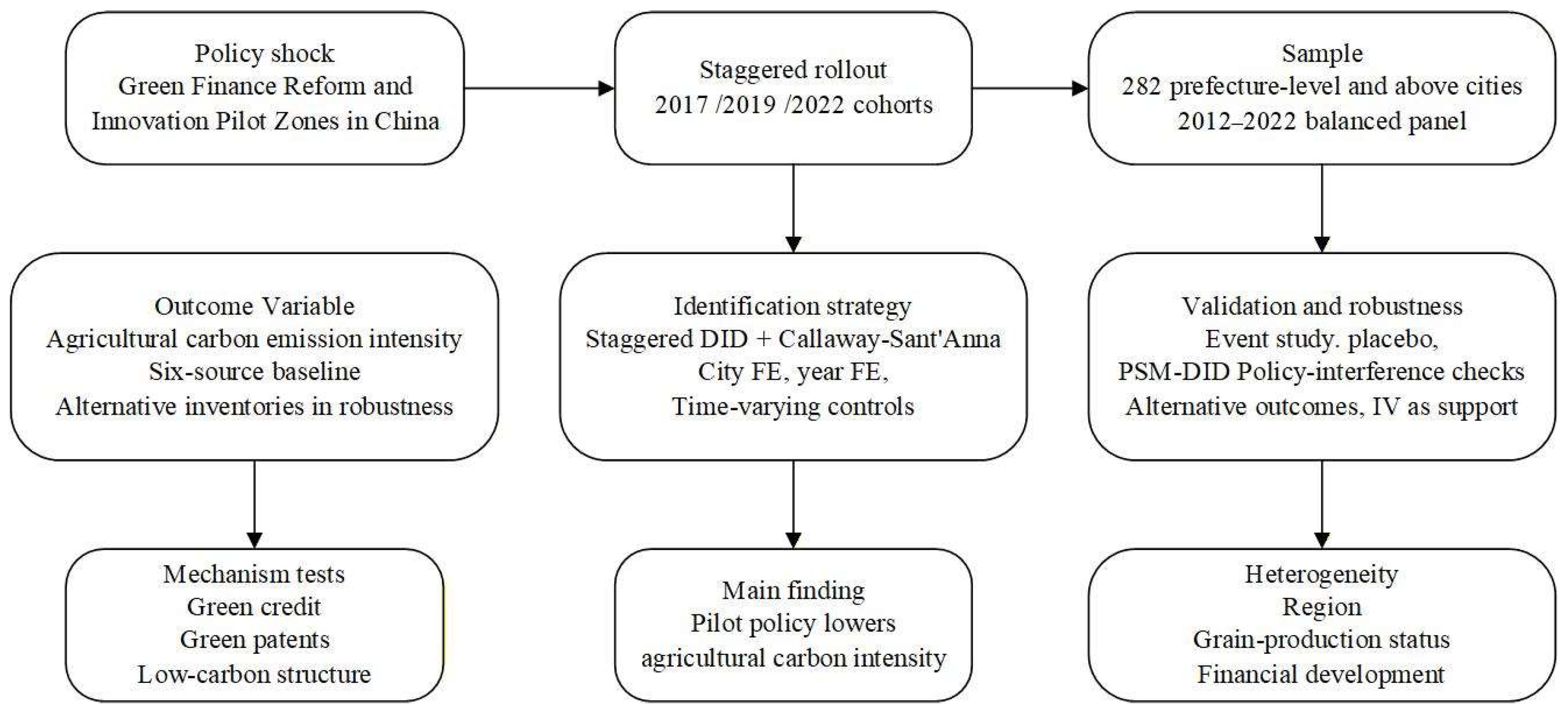
Figure 1 provides a graphical overview of the empirical strategy, including treatment timing, sample construction, identification, robustness validation, and the link to mechanism and heterogeneity analyses. The benchmark regression model is specified as follows:
where i denotes city and t denotes year;
AgriCIit represents the agricultural carbon emission intensity of city i in year t;
GFPilotit is the treatment variable for the green finance pilot policy;
Xit is the vector of control variables; μ_i is the city fixed effect, controlling for city characteristics that do not vary over time; λ_t is the year fixed effect, controlling for national-level time trends and common shocks; ε_it is the random error term. The core coefficient β reflects the average treatment effect of the green finance pilot policy on agricultural carbon emission intensity. To mitigate serial correlation issues, standard errors are clustered at the city level.
Considering the potential biases of traditional TWFE estimators under staggered treatment timing [
38], this study further employs the robust estimator proposed by Callaway and Sant’Anna [
22] as a complementary approach. This method allows treatment effects to vary across groups and periods and addresses the problems of negative weights and heterogeneous treatment effects through inverse probability weighting (IPW) under the conditional parallel trends assumption. More importantly, we note that although the staggered DID design helps mitigate policy endogeneity, it cannot fully eliminate it. Therefore, the core coefficient should be interpreted as credible under the conditional parallel trends assumption, and the baseline model should be complemented by multiple auxiliary analyses rather than relying on any single specification as definitive.
4.4. Descriptive Statistics
For emissions measurement, this study follows the IPCC (2006) National Greenhouse Gas Inventory Guidelines and the methodology of Tian and Zhang (2013) [
16], assigning emission factors to a baseline inventory of six major carbon sources: fertilizer application, pesticide use, agricultural film, diesel, ploughing, and irrigation. As shown in
Table 1, the specific emission factors are 0.8956 kg CE/kg for fertilizer application (on a pure substance basis), 4.9341 kg CE/kg for pesticide use, 5.18 kg CE/kg for agricultural film, 0.5927 kg CE/kg for diesel, 312.6 kg CE/km
2 for ploughing, and 20.476 kg CE/mu for irrigation. Missing observations in a small number of city-years are interpolated linearly, and the resulting series are winsorized at the upper and lower 1% percentiles. The six-source baseline is adopted for comparability with the existing literature, while an expanded inventory including livestock methane emissions is used as a sensitivity test. In addition, sensitivity analysis based on both IPCC default factors and localized factors yields highly consistent results.
Regarding identification, the key assumption is conditional parallel trends. Event-study estimates show no statistically significant pre-treatment divergence between treated and untreated cities. Several related assumptions are further examined. First, the no-anticipation assumption is tested by shifting treatment timing forward by one year, and no significant pre-policy effect is found. Second, although the Stable Unit Treatment Value Assumption may be challenged by spillovers through regional learning or neighboring financial institutions, excluding adjacent cities is treated as a robustness check rather than definitive evidence that spillovers are absent; the results remain stable after these exclusions. Third, the common support condition is assessed using the PSM-DID procedure, with all post-matching standardized biases below 10%, indicating satisfactory matching quality.
Control variables are selected according to two principles. First, they capture the major time-varying determinants of agricultural carbon emissions identified in prior research [
16]. Second, they exclude obvious post-treatment intermediates to avoid bad-control bias. This strategy preserves the economic interpretability of the baseline specification while limiting over-control. Sensitivity analyses based on alternative control sets further support the stability of the main results. In addition, the panel structure of 282 cities over 11 years provides sufficient variation for statistical inference even after controlling for city and year fixed effects.
Additional specification checks are conducted to enhance analytical rigor. To address potential cross-sectional dependence and heteroskedasticity, Driscoll-Kraay standard errors are employed, and both coefficient estimates and significance levels remain highly consistent with the benchmark results. To assess the influence of plausible measurement error in agricultural carbon emissions, sensitivity analysis following Nedopil et al. (2021) [
11] is performed under signal-to-noise ratios ranging from 0.8 to 0.95, with the main conclusions unchanged. A jackknife procedure that sequentially excludes treated cities is also implemented, yielding coefficients within a narrow negative range from −0.085 to −0.098. Taken together, these results suggest that the benchmark finding is not driven by cross-sectional dependence, plausible measurement error, or any single pilot city.
Regarding fixed-effects specification, the baseline model includes city and year fixed effects. More flexible specifications are also considered, including province-by-year interaction fixed effects, city-specific linear trends, and matched-pair fixed effects within the PSM-matched sample. Across all specifications, the estimated coefficient on GFPilot remains negative and statistically significant, ranging from −0.082 to −0.098. Notably, after introducing province-by-year interaction effects, the coefficient remains −0.087, suggesting that the carbon-reduction effect of the green finance pilot policy persists even after accounting for time-varying provincial shocks. These findings support, though do not mechanically establish, the stability of the baseline result.
5. Results
5.1. Parallel Trends Test
The core assumption for the validity of the difference-in-differences approach is that the treatment and control groups exhibit parallel trends prior to policy implementation. This study tests this assumption using an event study methodology, with the following specification:
where D
it^k denotes the dummy variable for each period before and after policy implementation, with the year prior to implementation (k = −1) as the baseline period.
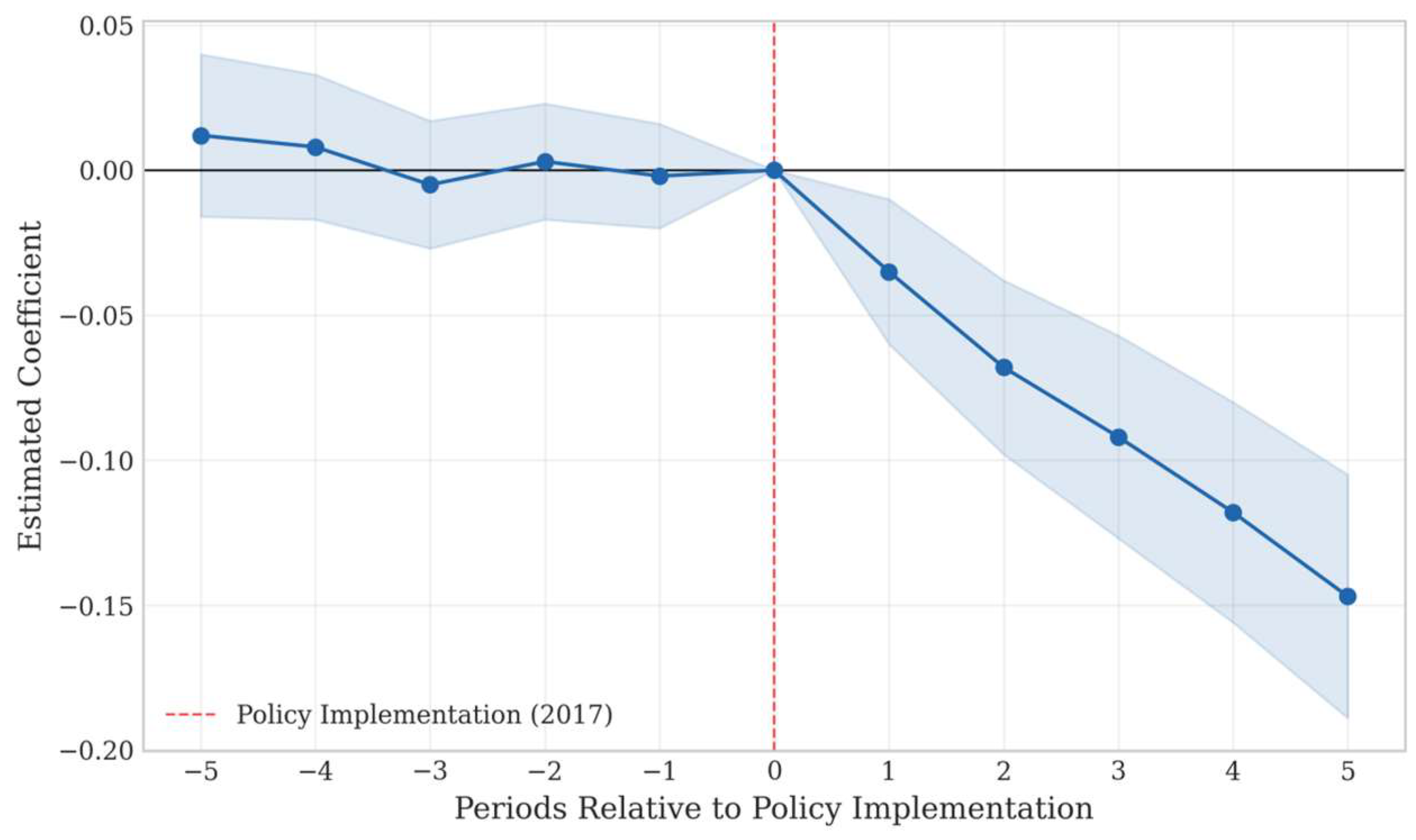
Figure 2 reports the estimation results from the event study. It can be observed that prior to policy implementation (k ≤ −1), the estimated coefficients for all periods are not significantly different from zero. This indicates that no significant divergent trends existed between the treatment and control groups before policy implementation, thus satisfying the parallel trends assumption. Following policy implementation (k ≥ 1), the estimated coefficients progressively turn significantly negative with increasing absolute values, indicating that the green finance pilot policy generates sustained and increasing carbon reduction effects.
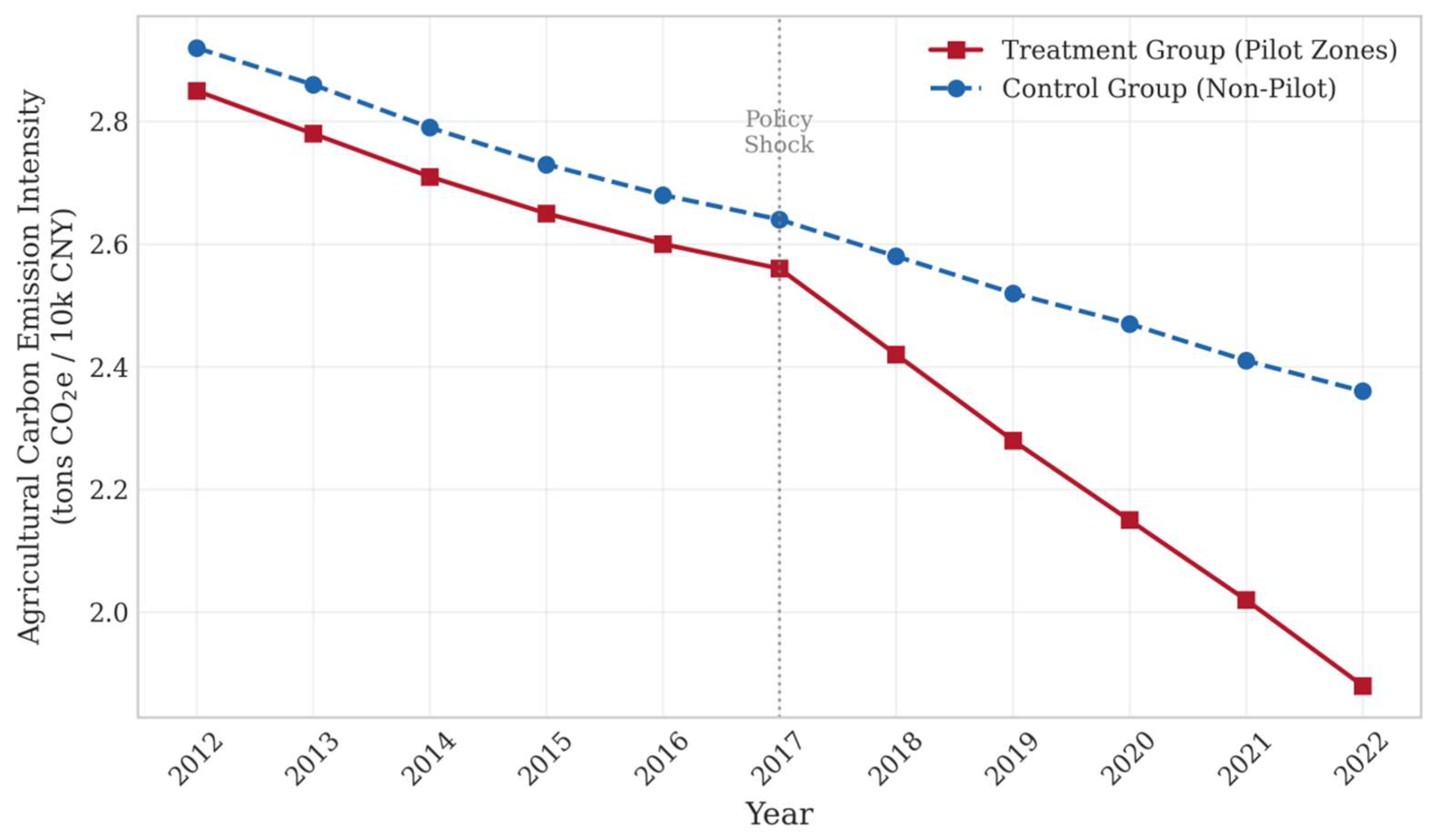
Figure 3 further illustrates the temporal trends in agricultural carbon emission intensity for the treatment and control groups. It is clearly observable that prior to the 2017 policy implementation, both groups exhibited highly similar declining trends in carbon emission intensity. Following policy implementation, however, the treatment group’s carbon emission intensity declined at a markedly accelerated rate, with the gap between it and the control group widening annually. This provides intuitive corroboration for the carbon reduction effect of the green finance pilot policy.
5.2. Benchmark Regression
Table 2 reports the benchmark regression results. Column (1) controls only for city and year fixed effects, while columns (2–5) sequentially incorporate additional control variables. Column (6) employs the robust estimator proposed by Callaway and Sant’Anna [
22]. The estimated coefficient for the core explanatory variable GFPilot is negative and statistically significant at the 1% level across all specifications, indicating that the green finance pilot policy significantly reduced agricultural carbon emission intensity in the pilot regions.
To further understand the temporal characteristics of the policy effect, this study conducts a detailed analysis of the dynamic treatment effect. Results from the event study method (
Figure 2) reveal the following key insights: In the first year of policy implementation (k = 1), the estimated coefficient is −0.035, significant at the 10% level, indicating a relatively modest policy effect in the initial phase. This may stem from the institutional development cycle required for green finance policies to fully materialize—financial institutions must establish new credit assessment standards, train specialized personnel, and develop green financial products. In the second and third years of policy implementation (k = 2, 3), the coefficients significantly increased to −0.068 and −0.092, indicating the gradual activation of policy transmission mechanisms. By the fourth to fifth year (k = 4, 5), the coefficients further increased to −0.118 and −0.147, exhibiting a pronounced acceleration trend. This incremental pattern aligns closely with the S-shaped diffusion curve theory of green technologies—where innovations are initially adopted by a minority of “early adopters,” rapidly spreading among “latecomers” before achieving widespread application.
From an economic perspective, the green finance pilot policy reduces agricultural carbon intensity by 0.092 tonnes per 10,000 yuan, equivalent to 3.76% of the sample mean of 2.45 tonnes per 10,000 yuan. Placing this effect in a broader context: based on the 2022 agricultural value-added total of approximately 3.568 trillion yuan across pilot cities, the green finance policy could annually reduce agricultural carbon emissions by roughly 3.28 million tonnes of CO2 equivalent. Calculated at the 2023 EU carbon market average price of approximately €80 per tonne, this reduction corresponds to a carbon market value of roughly €262 million. In a sector characterized by decentralized emitters and indirect policy transmission, this magnitude is economically meaningful, but it should not be described as transformative. It is also not directly comparable to carbon taxes or emissions trading schemes, which usually target more concentrated and more easily monitored industrial sources. A more appropriate interpretation is that city-based green-finance reform can deliver a moderate but persistent decarbonization effect in agriculture, especially because the event-study estimates suggest that the effect accumulates over time.
It is noteworthy that Callaway and Sant’Anna [
22] obtained a robust ATT estimate of −0.098, slightly exceeding the traditional TWFE estimate of −0.092. The 6.5% discrepancy between the two estimates suggests that the traditional TWFE may exhibit a slight bias towards zero. Following Goodman-Bacon’s [
38] decomposition methodology, this study further examined the weight distribution of DID estimators across different subgroups. All subgroup weights were found to be positive (with the smallest weight being 0.023), ruling out the presence of severe negative weight issues. This indicates that, within the empirical framework of this study, although the TWFE estimator exhibits a slight bias, its direction is correct. The conclusions drawn from both traditional and novel methods are highly consistent, thereby enhancing the credibility of the research findings.
Based on the full-sample regression results in column (5), GFPilot’s estimated coefficient is −0.092, significant at the 1% level. This indicates that the implementation of green finance pilot policies reduced the average agricultural carbon emission intensity in pilot zones by approximately 0.092 tonnes per 10,000 yuan, equivalent to 3.76% of the sample mean. This effect holds significant economic importance: extrapolating from 2022 data, the pilot cities collectively reduce agricultural carbon emissions by approximately 3.28 million tonnes of CO
2 equivalent annually due to green finance policies. Column (6) employs the ATT estimate of −0.098 derived from Callaway and Sant’Anna’s [
22] robust estimator, demonstrating strong consistency with the traditional TWFE estimate and ruling out the possibility of estimation bias arising from heterogeneous treatment effects.
Regarding control variables, the coefficient for per capita GDP (lnPGDP) is significantly negative, indicating that higher levels of economic development contribute to reducing agricultural carbon emission intensity, consistent with the Environmental Kuznets Curve hypothesis. The coefficient for urbanization rate (Urban) is significantly negative, potentially reflecting carbon reduction effects from agricultural labour transfer and intensified farming practices during urbanization. The coefficient for financial development (FinDev) was negative but not significant, suggesting that general financial development has limited impact on agricultural carbon reduction, whereas specialized green finance policies are the key driving force.
5.3. Mechanism Analysis
The empirical results above demonstrate that the green finance pilot policy significantly reduces agricultural carbon emission intensity. This section examines whether the post-policy changes in credit allocation, green innovation, and agricultural structure move in directions consistent with the proposed framework. We emphasize, however, that these mechanism tests should be read as channel-consistent evidence rather than as fully point-identified causal mediation estimates, because local greening dynamics and financial allocation may still be jointly determined.
5.3.1. Credit Allocation Effect
Column (1) of
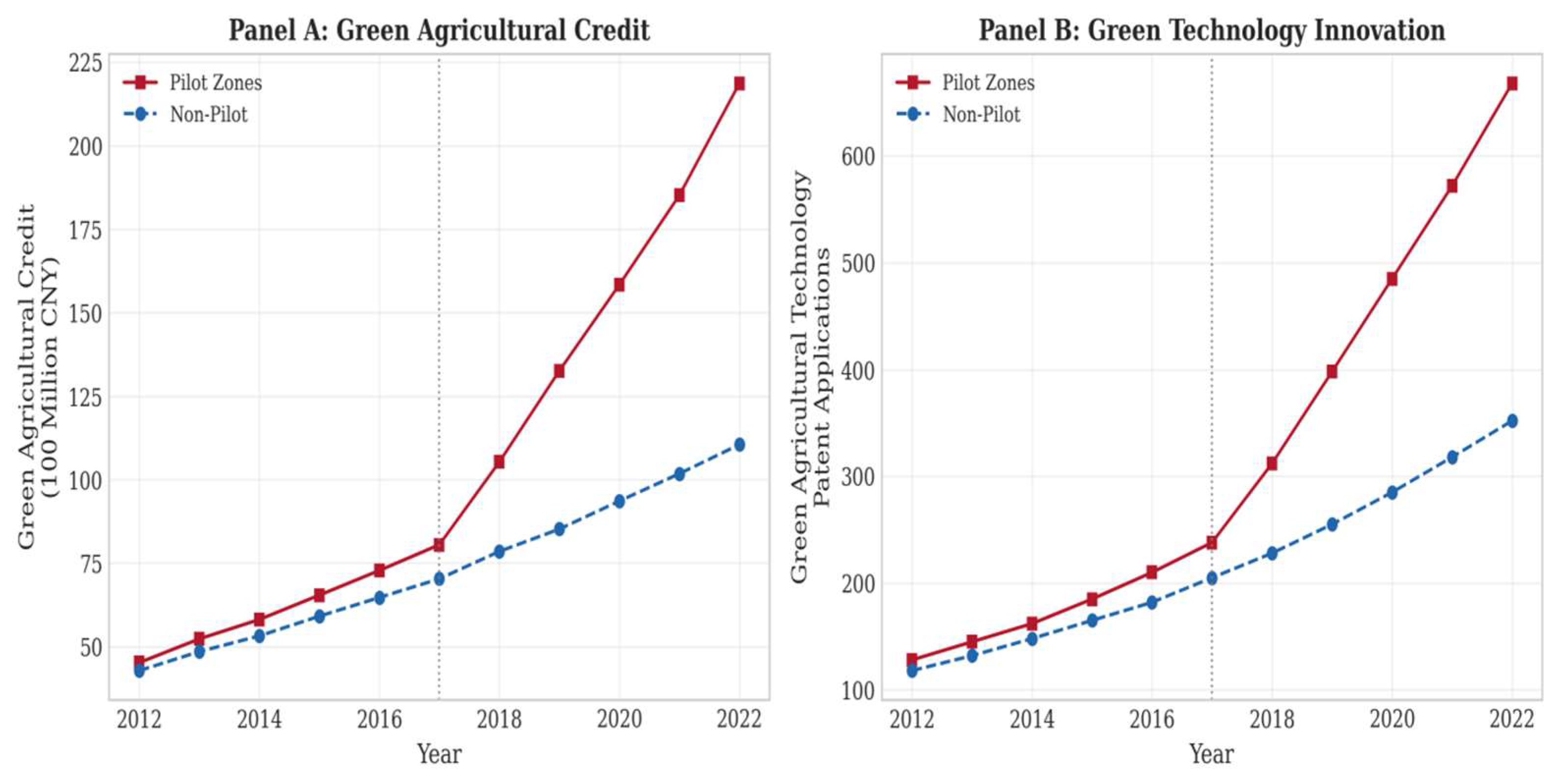
Table 3 reports the impact of the green finance pilot policy on the scale of green agricultural credit. The coefficient for GFPilot is 0.352, significant at the 1% level, suggesting that treated cities experience an economically meaningful expansion in green agricultural credit after the policy shock. Consistent with Hypothesis 1, this pattern indicates that directed capital reallocation is a plausible first-stage channel through which the policy affects agricultural production decisions.
5.3.2. Technological Innovation Effect
Column (2) of
Table 3 examines the technological innovation channel. The coefficient for GFPilot is 0.285, significant at the 1% level, indicating that the green finance pilot policy significantly promotes green technological innovation in agriculture. Agricultural green technology patent applications in pilot cities increased by an average of 28.5% compared to the control group. This finding aligns with Porter’s hypothesis and supports Hypothesis 2: green finance effectively incentivizes green technological innovation and adoption in agriculture by easing financing constraints and providing risk-sharing mechanisms.
5.3.3. Structural Adjustment Effect
Column (3) of
Table 3 examines the industrial restructuring channel. The coefficient for GFPilot on the agricultural industry structure low-carbonization index is 0.168, significant at the 5% level, indicating that green finance policies promote low-carbon restructuring within the agricultural sector. Specifically: the share of facility agriculture, organic farming, and ecological aquaculture in pilot cities significantly increased, while the proportion of traditional high-carbon crop cultivation and livestock farming models correspondingly decreased. This validates Hypothesis 3.
The micro-foundations of the credit allocation effect can be understood through the behavioural logic of financial institutions. Prior to the establishment of green finance pilot zones, financial institutions primarily focused on borrowers’ repayment capacity and collateral value during agricultural credit approval, with environmental performance scarcely considered. The core innovation of pilot zone policies lies in institutionalizing environmental assessment within credit approval processes: banks must evaluate agricultural loan applicants’ carbon emissions levels, imposing higher interest rates or reduced loan amounts for high-carbon projects while offering preferential rates or increased financing for low-carbon initiatives. This differentiated credit pricing mechanism influences agricultural operators’ production decisions by altering financing costs across different farming projects. Take fertiliser usage as an example: traditional high-application fertilisation practices, while sustaining higher yields in the short term, face increasingly stringent financing constraints. Conversely, cultivation models employing low-carbon techniques such as soil testing and fertiliser prescription, or organic fertiliser substitution, gain access to lower-cost credit support. This “carrot-and-stick” financial incentive mechanism effectively drives the low-carbon transformation of agricultural production methods.
As shown in
Figure 4, the mechanism of technological innovation effects is more complex. Green finance not only directly reduces financing constraints for green technology R&D but also promotes agricultural green technological innovation through the following indirect channels: First, the signalling effect of green finance—the introduction of pilot zone policies sends a strong signal to the market that the government encourages green development, guiding venture capital and private equity funds to increase investment in agricultural green technology enterprises and expanding the funding sources for green innovation. Second, the network effect of green finance: within pilot zones, green financial institutions, green technology enterprises, and agricultural operators have formed networks for information sharing and technical cooperation, facilitating the dissemination and diffusion of green technology knowledge. Third, the demonstration effect of green finance—farmers who adopted green technologies early and reaped financial benefits served as exemplars, reducing cognitive barriers and adoption costs for neighbouring farmers regarding new technologies. Empirical findings in this paper corroborate these indirect channels: agricultural green technology patents not only increased by 28.5% in quantity but also exhibited a positive shift in type, moving from end-of-pipe treatment toward source emission reduction.
The structural adjustment effect reflects green finance’s long-term influence. Agricultural industrial restructuring is a gradual process involving multiple dimensions, including shifts in land use patterns, optimization of crop and livestock structures, and transformations in agricultural business models. The low-carbon agricultural industrial structure index developed in this study comprehensively captures these changes: a higher index value indicates a greater proportion of low-carbon agricultural subsectors (such as protected agriculture, organic farming, and ecological livestock farming) within agricultural value added. Regression results indicate that green finance policies elevated this index by 0.168 units. While the magnitude is relatively modest (compared to credit and technology channels), the direction is unequivocal and statistically significant. The policy implication is that green finance contributes to agricultural carbon reduction not only through short-term technological improvements and credit guidance but also via medium-to-long-term industrial restructuring. The latter yields more enduring and irreversible emission reduction effects.
Analyzing the combined results of the three mechanisms reveals that green finance pilot policies jointly influence agricultural carbon reduction through three pathways: credit allocation effects (β1 = 0.352), technological innovation effects (β1 = 0.285), and structural adjustment effects (β1 = 0.168). Among these, the credit allocation effect exhibits the most direct and pronounced impact, aligning closely with China’s predominantly indirect financing financial system. As the primary channel for agricultural financing, the guiding role of green credit policies is particularly pronounced.
5.4. Robustness Tests
To ensure the reliability of the benchmark regression conclusions, this paper conducted robustness tests from multiple dimensions.
5.4.1. Placebo Test
As shown in
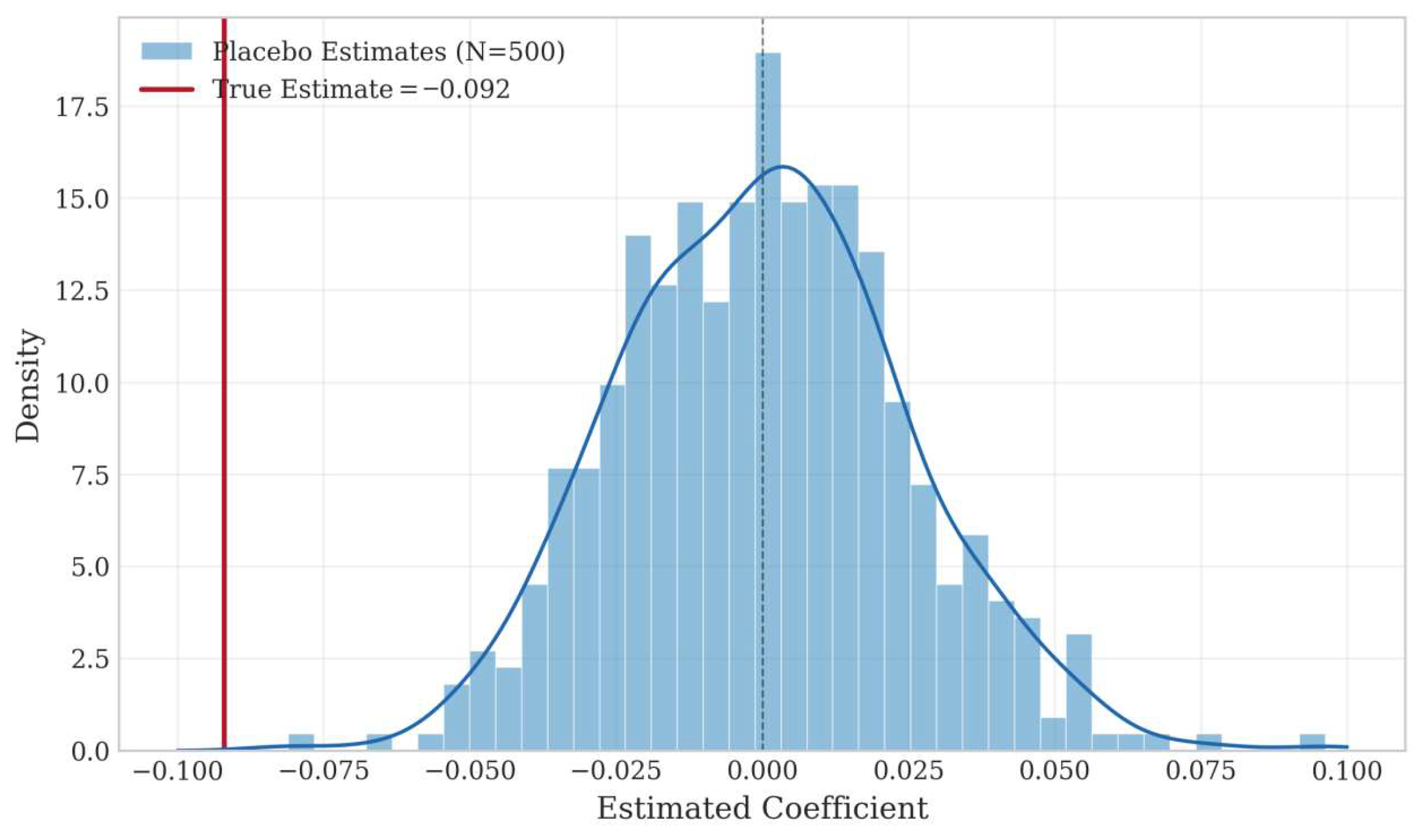
Figure 5, the placebo test randomly assigns pseudo-treatment status to cities and re-estimates the DID model 500 times. The resulting coefficient distribution centers near zero, while the true estimate lies in the left tail, indicating that the benchmark effect is unlikely to be generated by random assignment alone.
5.4.2. PSM-DID
To mitigate potential estimation bias arising from differences in observable characteristics between the treatment and control groups, this study employs Propensity Score Matching-Difference in Differences (PSM-DID). First, using control variables as matching variables, the propensity scores for each city entering the pilot zone are estimated via a Logit model. Subsequently, a 1:4 neighbouring matching method is applied to pair each treatment group city with the most similar control group city. Finally, a DID regression is re-conducted on the matched sample. The results, as shown in
Table 4 column (1), indicate that the estimated coefficient for GFPilot is −0.088, significant at the 1% level, and highly consistent with the benchmark regression results.
5.4.3. Controlling for Other Policy Interferences
Other policy changes affecting agricultural carbon emissions may have occurred during the study period. To control for these confounding factors, the following tests were conducted: (1) controlling for the impact of carbon emissions trading pilot policies by including a carbon trading pilot dummy variable in the model; (2) controlling for agricultural non-point source pollution control policies by including a dummy variable for key agricultural non-point source pollution control zones; (3) excluding samples that were concurrently designated as low-carbon city pilot areas. The results in columns (2) to (4) of
Table 4 indicate that after controlling for the aforementioned policy disturbances, the coefficient for GFPilot remains significantly negative, confirming the robustness of the benchmark conclusion.
5.4.4. Substituting the Dependent Variable
We also redefine the dependent variable using the logarithm of total agricultural carbon emissions, per capita agricultural carbon emissions, and an expanded emissions inventory that includes livestock methane. The main finding remains stable, which reduces concerns that the benchmark result depends on a narrow outcome definition.
5.4.5. Ruling out Anticipation Effects
Considering the potential time lag between policy announcement and formal implementation, economic agents may adjust their behaviour before the policy takes effect (anticipatory effect). This study tests the policy one year in advance and finds that the coefficient of the “pseudo-policy” variable one year ahead is not significant (
Table 4, Column 7), ruling out a significant anticipatory effect.
5.4.6. Bacon Decomposition Test
Given the multi-period DID design employed herein, concerns may arise regarding the use of the treated group as the control group. Drawing upon Goodman-Bacon (2021) [
38], we decomposed the traditional TWFE estimator. The decomposition reveals: (1) the “clean” comparison between the treated group and the never-treated group accounts for 82.3% of the total weight, with an estimated coefficient of −0.095; (2) the comparison between the earlier-treated group and the later-treated group accounts for 11.5% of the weight, with a coefficient of −0.082; (3) the comparison between the later versus earlier treatment groups accounted for only 6.2% of the weight, with a coefficient of −0.078. All subgroup weights were positive and exhibited consistent coefficient directions, indicating that the traditional TWFE estimator does not suffer from severe heterogeneity bias. This further confirms the robustness of the conclusions drawn from the benchmark regression in this paper.
5.4.7. Addressing Sample Selection Bias
To address potential selection bias, supplementary tests were conducted: First, excluding samples from municipalities directly under central government jurisdiction. Given significant differences in administrative level, economic scale, and policy implementation intensity between these municipalities and typical prefecture-level cities, the regression was rerun after excluding Beijing, Tianjin, Shanghai, and Chongqing. The core coefficient remained −0.089, consistent with the benchmark result. Second, excluding provincial capital city samples. Provincial capitals may exhibit additional policy effects due to greater access to policy resources; after exclusion, the coefficient was −0.094. Third, cities with extreme financial development levels were excluded. To prevent a small number of highly developed financial centres from driving the regression results, cities in the top 5% and bottom 5% of financial development were excluded, yielding a coefficient of −0.090. These findings indicate that the benchmark regression conclusions remain unaffected by specific sample selection.
5.4.8. Instrumental Variables Test
Although the quasi-natural experiment design alleviates endogeneity concerns, it does not fully resolve them. We therefore report an instrumental-variables exercise as supplementary evidence rather than as the sole identification strategy. As shown in
Figure 6, the first instrument is the logarithm of each city’s distance to the nearest pilot zone, which captures policy diffusion and demonstration costs; conditional on fixed effects and current controls, its effect on agricultural carbon intensity is argued to operate mainly through differential exposure to pilot learning. The second instrument is the historical financial endowment measured by late-Qing money houses and bill exchanges, which proxies for local capacity to absorb financial reform and is predetermined with respect to contemporary carbon outcomes. We acknowledge that the exclusion restrictions cannot be tested directly. Accordingly, the IV estimates are interpreted as supportive rather than definitive. Empirically, the first-stage F-statistic is 28.65, the Sargan test
p-value is 0.382, and the 2SLS coefficient remains negative at −0.10.
5.5. Heterogeneity Analysis
The carbon-reduction effects of green finance policies may vary across places, but subgroup analysis should be guided by theory rather than by unconstrained data exploration. Three dimensions are central to the framework developed above. First, regional financial and administrative capacity should shape how effectively pilot policies alter credit screening and monitoring. Second, major grain-producing areas concentrate agricultural activity and may therefore exhibit stronger responses because the targeted sector is more economically salient. Third, the level of financial development should condition policy transmission by affecting lender sophistication, product availability, and implementation capacity. These are treated as the main heterogeneity tests. Additional subgroup splits reported later are interpreted more cautiously as exploratory evidence.
5.5.1. Geographical Location Heterogeneity
Regressions were conducted by grouping samples into eastern, central, and western regions. This split is theoretically motivated by differences in financial infrastructure, regulatory capacity, technology absorption, and the density of green-service providers.
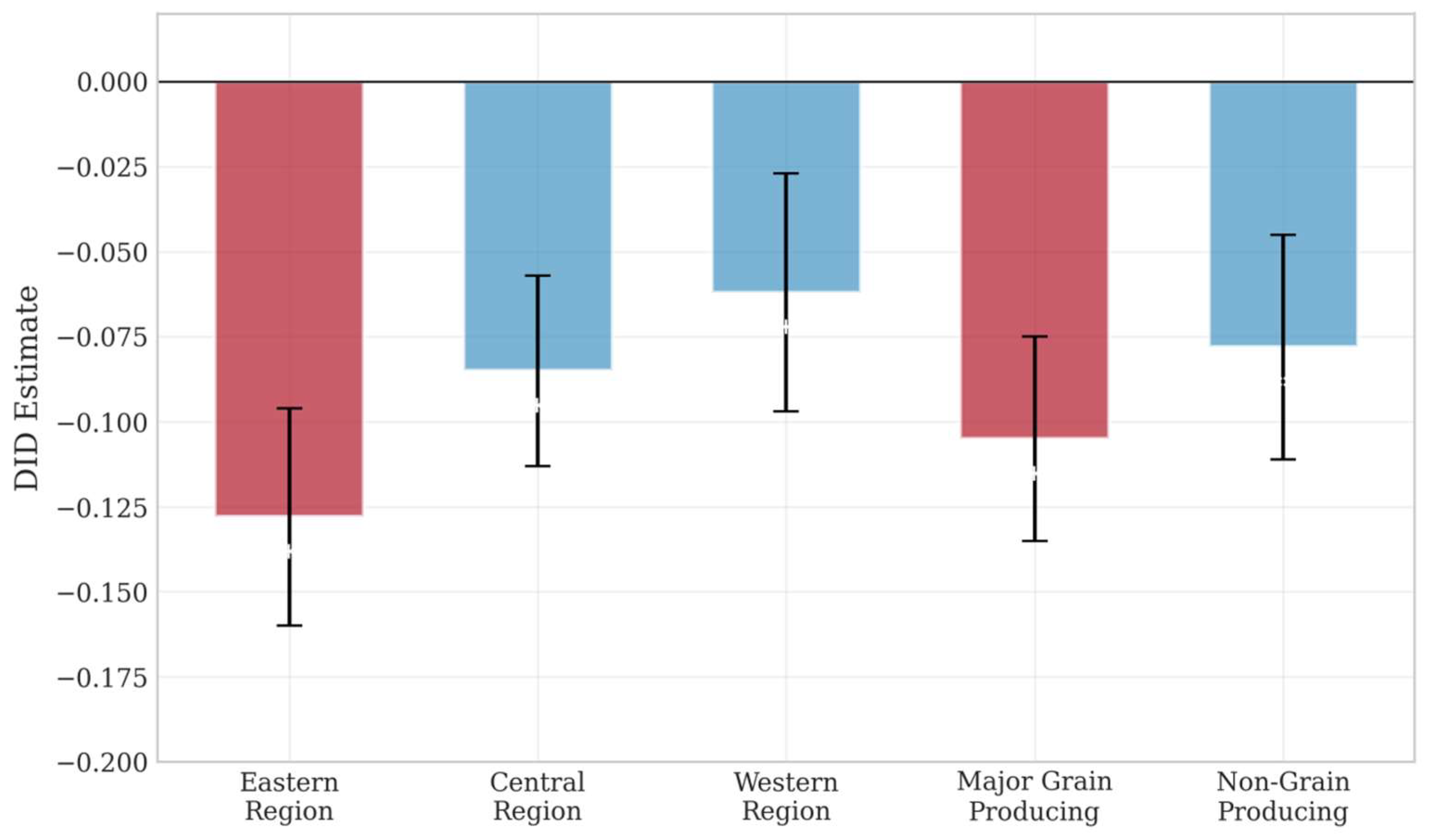
Table 5 indicates that policy effects are most pronounced in the eastern region (coefficient −0.128), followed by the central region (coefficient −0.085), with the western region exhibiting the smallest effect (coefficient −0.062). The pattern is consistent with the expectation that place-based green-finance policies work more strongly where financial intermediation and monitoring capacity are already more developed.
5.5.2. Heterogeneity in Major Grain-Producing Regions
China’s 13 major grain-producing regions bear the core responsibility of safeguarding national food security and contain a relatively large concentration of agricultural production. Ex ante, this makes a stronger policy effect plausible because the green-finance shock is more directly transmitted into the sector that drives the outcome variable. Grouped regression results indicate that the policy effect in grain-producing regions (coefficient −0.105) is significantly greater than in non-grain-producing regions (coefficient −0.078), with this difference being statistically significant (Chow test p < 0.05). This finding is therefore interpreted as evidence that sectoral salience conditions policy effectiveness.
5.5.3. Heterogeneity in Financial Development Levels
Cities were categorized into high-level and low-level financial development groups based on the sample median. This dimension is theory-driven because the credit-repricing mechanism requires lenders that can process information, design products, and implement green screening in a credible way. Results indicate that policy effects are more pronounced in cities with higher financial development levels (coefficient −0.115 vs. −0.068). This finding aligns with the financial-infrastructure complementarity hypothesis: where the underlying financial system is deeper and more capable, green-finance policy instruments transmit more effectively into agricultural decarbonization.
Beyond the three theory-driven dimensions above, the manuscript also reports several supplementary subgroup analyses, including splits by agricultural structure, temporal window, and urban scale. These checks are useful for describing where the policy appears stronger or weaker, but they should be interpreted as exploratory rather than decisive because the underlying hypotheses are less sharply specified ex ante. We therefore do not treat them as the main basis for theoretical inference.
5.5.4. Heterogeneity in Agricultural Structure
Considering the differing carbon-emission profiles across agricultural sectors, this study further compares crop-dominant and non-crop-dominant cities. The results suggest a stronger policy effect in crop-dominant cities (coefficient −0.108 vs. −0.072), which is consistent with the greater dependence of crop emissions on inputs such as fertilizer, pesticides, and agricultural film.
5.5.5. Temporal Window and Urban Scale Heterogeneity
Supplementary checks also examine temporal and urban-scale heterogeneity. The stronger medium-term effect relative to the short-term effect is consistent with the gradual transmission of green-finance policy through lending, innovation, and production adjustment. Likewise, differences across city size may reflect varying balances between financial infrastructure and agricultural economic weight.
6. Conclusions and Policy Implications
6.1. Conclusions
This study employs the green finance reform and innovation pilot zones established by the State Council in 2017 as a quasi-natural experiment. Utilizing panel data from 282 prefecture-level cities spanning 2012–2022 and applying a multi-period difference-in-differences approach, it systematically assesses the causal effects of green finance pilot policies on agricultural carbon emissions. Key findings are as follows:
First, green finance pilot policies significantly reduced agricultural carbon emission intensity in pilot zones. Baseline regression results indicate that policy implementation reduced agricultural carbon emission intensity in pilot zones by approximately 9.2% on average. This finding remains robust across parallel trend tests, placebo tests, PSM-DID analyses, exclusion of other policy disturbances, replacement of the dependent variable, and exclusion of anticipation effects. Results using Callaway and Sant’Anna’s (2021) [
22] robust estimator further rule out estimation bias from heterogeneous treatment effects.
Second, the mechanism analysis reveals three transmission pathways through which green finance influences agricultural carbon emissions: the credit allocation effect achieves carbon reduction by channeling funds toward low-carbon agricultural projects; the technological innovation effect promotes green technological innovation and diffusion in agriculture by easing financing constraints on green technology R&D; and the structural adjustment effect drives the optimization of agricultural industrial structures toward low-carbon pathways through differentiated financing conditions. These three mechanisms collectively form a complete transmission chain whereby green finance drives agricultural carbon reduction.
Third, policy effects exhibit significant regional heterogeneity. Carbon reduction impacts are more pronounced in eastern regions, major grain-producing areas, and cities with higher levels of financial development. This finding indicates that the effectiveness of green finance policies largely depends on the sophistication of regional financial infrastructure and the degree of marketization among agricultural operators.
Fourth, dynamic effect analysis indicates that policy outcomes exhibit an increasing trend over time, demonstrating significant cumulative and learning effects of green finance on agricultural carbon reduction. Carbon reduction was relatively modest in the first year post-policy implementation but markedly strengthened from the third to fifth year, suggesting that the environmental impact of green finance possesses long-term and sustained characteristics.
6.2. Policy Implications
Based on the above findings, this paper proposes the following policy recommendations:
First, expand the coverage of green finance reform pilot zones, particularly by considering the inclusion of more major grain-producing regions. The heterogeneity analysis indicates that carbon reduction effects are more pronounced in these areas; directing green finance resources towards them could enhance overall policy efficiency. Concurrently, accelerate the development of nationally unified standards and evaluation systems for agricultural green finance to provide institutional safeguards for policy dissemination.
Second, refine the green agricultural credit system and diversify green financial product offerings. Given that credit allocation effects constitute the most prominent transmission channel, it is recommended to further refine differentiated pricing mechanisms for green agricultural loans to broaden green credit coverage; innovate new financial products such as agricultural carbon sink mortgage loans and green agricultural supply chain finance; and establish robust agricultural carbon emissions disclosure systems to mitigate information asymmetry in green finance.
Third, support for agricultural green innovation should focus not only on funding availability but also on adoption feasibility. The results suggest that innovation matters, yet small producers may face high adoption costs, technological uncertainty, and limited extension services. Combining finance with technical extension, insurance, and demonstration programs is therefore more credible than relying on credit alone.
Fourth, differentiated regional policy remains necessary. In financially weaker or institutionally thinner areas, the priority may be to strengthen local financial infrastructure, risk-sharing tools, and implementation capacity before expecting large carbon-reduction effects. Otherwise, an overly uniform green-finance mandate could widen regional disparities in policy performance.
Fifth, policy evaluation should explicitly consider potential trade-offs and unintended consequences. Because agriculture is tied to food security, policymakers should monitor whether stricter green screening unintentionally constrains essential production finance or excludes smaller operators. A medium-term evaluation framework that jointly tracks environmental outcomes, agricultural performance, and access to finance would be more informative than short-run carbon indicators alone.
6.3. Research Limitations and Outlook
This study has three main limitations. First, the dependent variable is a city-level proxy based on standardized emission factors and aggregated activity data; it is comparable across cities but does not fully capture regional heterogeneity in agronomic practices or all emission sources. Second, although the staggered DID design and extensive robustness checks improve identification, pilot placement may still be correlated with unobserved time-varying factors such as institutional quality, local environmental preferences, or financial sophistication. The estimated policy effect should therefore be interpreted under conditional parallel trends rather than as the result of strict random assignment. Third, the channel regressions provide supportive evidence on mechanisms, not formal causal mediation.
Future research should combine county- or farm-level data, instrument-specific green finance measures, and richer measurement strategies such as region-specific coefficients, administrative micro-records, and remote-sensing information. These extensions would make it possible to study distributional trade-offs among emissions, yields, farmer income, and credit access more directly.
Despite these limitations, the paper contributes by showing that place-based green-finance reform can be relevant for agricultural decarbonization in a hard-to-monitor sector. Its broader message is not that green finance offers a universal substitute for regulation, but that finance, governance, and measurement capacity interact in shaping environmental outcomes.
Looking ahead, a promising research agenda is to examine how green credit, insurance, guarantees, and carbon-market institutions can be combined without imposing excessive compliance burdens on farmers. Such work would help clarify when green finance complements broader rural-development and food-security goals, and when it may generate trade-offs that require explicit policy management.
In summary, this research not only enriches the academic literature on green finance theory and agricultural carbon emissions studies but also provides empirically grounded evidence on how a large developing country uses place-based financial experimentation to support agricultural decarbonization. By clarifying the Chinese institutional setting, the paper is intended to speak to a broader international audience interested in non-price-based climate-policy instruments for agriculture. Looking ahead, as green financial instruments continue to evolve and agricultural carbon-emission monitoring technologies mature, the deeper integration of green finance with low-carbon agricultural development may open new pathways for climate mitigation and rural transformation.