1. Introduction
Rice serves as a staple food for more than half of the global population. As the world’s largest rice producer and consumer, China accounts for 18.5% of the global rice harvested area [
1,
2]. However, ensuring food security in rice production heavily depends on substantial irrigation water resources. Rice irrigation consumes over 65% of China’s total agricultural water use, with water consumption 2–3 times higher than that of other major staple crops such as wheat and maize [
3,
4]. Consequently, optimizing water use is critical for achieving efficient rice production. Paddy rice fields contribute 10–13% of global anthropogenic methane (CH
4) emissions [
5], and those in China account for 21.9% of the global total [
6]. Moreover, CH
4 emissions constitute up to 94% of the total greenhouse gas emissions from rice paddies [
7]. Given the urgency of mitigating global warming, optimizing irrigation regimes to enhance water productivity and reduce CH
4 emissions is essential for ensuring food security, combating climate change, and meeting the carbon neutrality target by 2060 [
8]. However, operational frameworks capable of high-resolution, spatio-temporal optimization to address this water–carbon nexus at a regional scale are currently lacking.
Recent years have seen progress in optimizing rice irrigation. Studies have explored various techniques, from meta-analyses of water-saving irrigation [
9] to optimization models combining stochastic methods and algorithms [
10]. The integration of process-based models like DSSAT (Decision Support System for Agrotechnology Transfer) for water management [
11] and DNDC (Denitrification—Decomposition) for emission estimation [
12,
13] marks a significant advancement. However, as summarized in
Table 1, existing research often focuses on experimental plots or coarse regional scales, lacking the resolution to account for fine-scale spatial heterogeneity and optimal irrigation timing. This limits their direct applicability for precise, region-wide management.
Rice growth and CH
4 emissions are highly sensitive to spatially variable factors such as soil texture, organic matter, and microclimate [
14]. This inherent spatial heterogeneity dictates that irrigation strategies must be site-specific to be effective. Consequently, accurately quantifying location-specific responses of yield and emissions to irrigation is fundamental. While distributed crop modeling on GIS (Geographic Information System) platforms provides a viable path forward [
15,
16], applications have been hampered by coarse resolutions (e.g., 10 km × 10 km) that cannot resolve critical sub-grid variability, a limitation detailed in
Supplementary Material Table S1. This gap underscores the need for a high-resolution, physically based framework that can both simulate and optimize irrigation scheduling across vast areas while accounting for fine-scale spatial differences.
This study develops a physically based, high-resolution grid-driven irrigation optimization framework to improve water use efficiency and mitigate methane emissions at the regional scale. To capture the spatial heterogeneity of agricultural management and soil properties while ensuring computational tractability, a grid resolution of 500 m was selected. The specific objectives are to: (1) Overcome the coarse spatial resolution of traditional regional irrigation management by coupling the GIS-DSSAT and GIS-DNDC models on a 500 m × 500 m grid to simulate both rice growth and CH4 emission processes; (2) Integrate crop models with machine learning techniques by employing the Random Forest algorithm to quantify nonlinear multi-factor interactions and establish the response relationships among irrigation water, yield, and CH4 emissions; (3) Construct a spatio-temporally distributed multi-objective optimization model that simultaneously optimizes water productivity and CH4 emission intensity using the NSGA-II algorithm, thereby achieving irrigation optimization for rice production across 408,264 response units at the regional scale. These contributions facilitate the optimization of spatio-temporal irrigation systems for regional rice cultivation within ecologically and economically sustainable agricultural practices.
The paper is structured as follows.
Section 2 details the study area, data, and the coupled modeling-optimization methodology.
Section 3 presents the optimization results, including changes in yield, CH
4 emissions, irrigation water use, and WP.
Section 4 provides a combined discussion and conclusion, interpreting the findings, examining mechanisms and limitations, and outlining implications for sustainable rice production.
2. Materials and Methods
2.1. Overview of the Study Region
The Sanjiang Plain, located in the northeastern part of Heilongjiang Province, China (43°50′–48°24′ N, 129°11′–134°46′ E), is the province’s primary grain-producing region. It is a low-lying alluvial plain formed by the Heilong, Songhua, and Ussuri rivers, covering an area of approximately 108,900 km
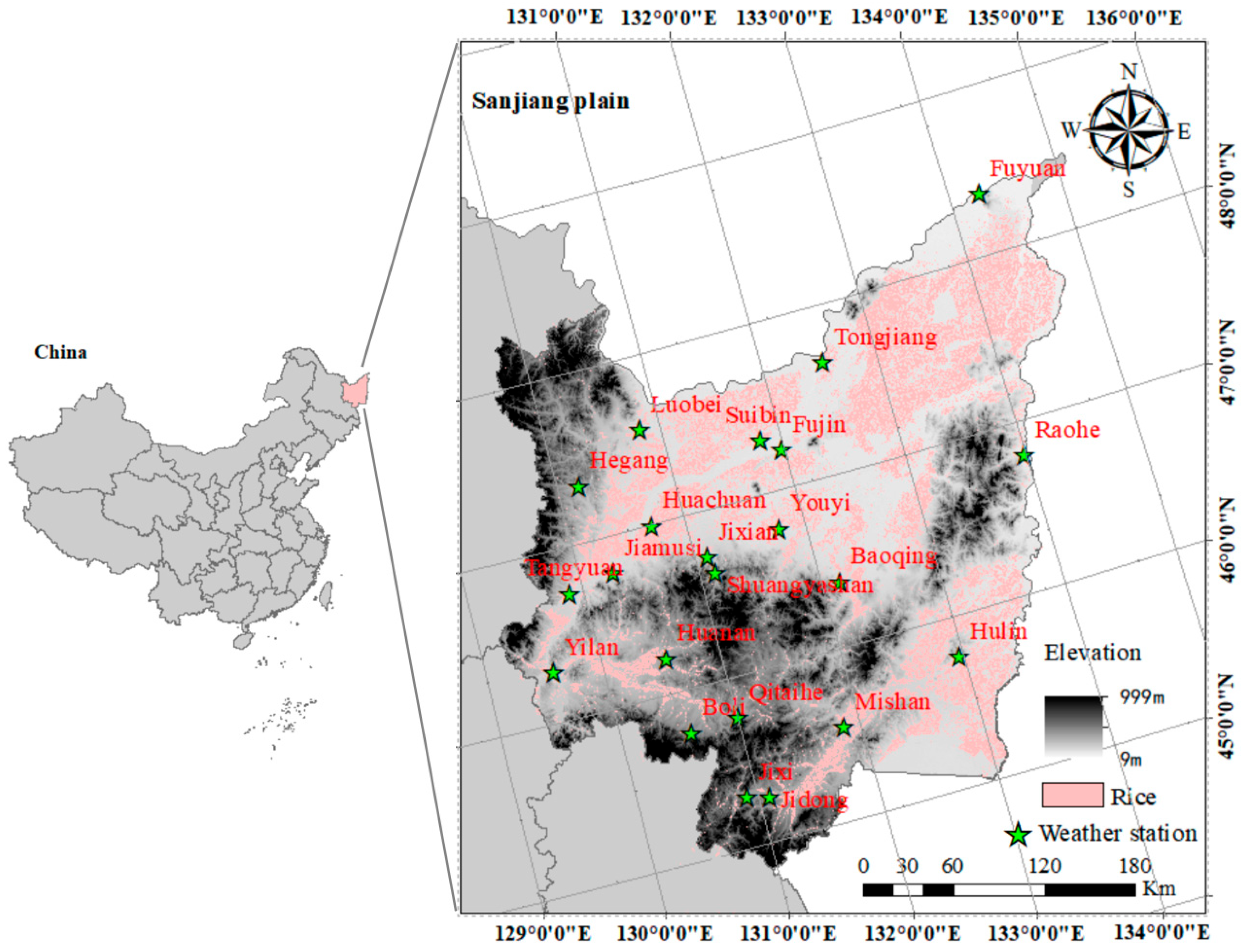
2. The region experiences a temperate, humid, and semi-humid continental monsoon climate, with an average annual temperature of 1–4 °C. Annual sunshine duration ranges from 2400 to 2500 h, and the frost-free period lasts 120–140 days. The accumulated temperature above 10 °C is 2300–2500 °C. During the growing season (May–September), the daily average temperature ranges from 17 °C to 20 °C. The area is characterized by high latitude, rich soil organic matter, and an annual rainfall of approximately 384–886 mm, with about 400–600 mm occurring during the growing season. Elevation ranges from 34 to 1100 m above sea level. Precipitation is concentrated in the summer and autumn, and the region’s summer rain–heat synchronization, combined with its high soil fertility (soil organic matter content typically ranging from 3% to 5%), creates favorable conditions for rice cultivation. By 2022, the rice cultivation area in the Sanjiang Plain reached approximately 1.1 million hectares, accounting for 29% of the region’s arable land. The proposed model was applied to 21 counties (or cities) that constitute the core agricultural area of the Sanjiang Plain, including those within Jiamusi, Hegang, Shuangyashan, Qitaihe, and Jixi cities in Heilongjiang Province, as well as Yilan County in Harbin City. The study area is depicted in
Figure 1.
2.2. Data and Methods
The data used in this study include model input parameters: meteorological, soil, crop, and field management data (
Table 1). Meteorological data were obtained from the China Meteorological Data Service Center (
http://data.cma.cn (accessed on 23 November 2024)) for the year 2022, covering 22 stations across the study area. The average annual temperature is 3.6 °C, and the average annual rainfall is approximately 580 mm. These data were used to characterize the regional agroclimatic conditions, including mean temperatures and precipitation amounts as summarized in
Section 2.1. Station observations were interpolated using Thiessen polygons in GIS to create continuous spatial datasets. The processed meteorological data were then converted into formats compatible with the DSSAT and DNDC models, generating a gridded regional climate dataset for subsequent simulations. Soil data were extracted from the Harmonized Soil Database version 2.0 (HWSD v2.0), with single-factor extraction performed using GIS. Data screening was carried out in R (version 4.4.1), and the filtered data were rasterized in GIS to produce the multifactor raster data required for the model. The soil data include soil profile stratification, field water holding capacity, soil water content, bulk density, pH, and organic matter content. Crop and field management data were primarily sourced from relevant regional statistical yearbooks, national agricultural yield information, and related literature. The irrigation decisions in this study are based on a critical water consumption threshold parameter
.
2.3. Distributed Modelling of Crop Growth Processes
In this study, the GIS-DSSAT model was employed to simulate the spatial distribution of rice growth across the study region. The DSSAT (Decision Support System for Agrotechnology Transfer) model is a process-based crop growth simulation tool that quantitatively describes crop development, yield formation, and their interactions with climatic factors, soil properties, crop varieties, and cultivation practices. As one of the most widely used crop growth simulation systems, DSSAT provides quantitative tools for predicting crop growth and development, estimating yield, optimizing management practices, assessing environmental impacts, and analyzing climate change scenarios under diverse environmental conditions. The DSSAT system includes the CERES and CROPGRO model series and standardizes the input and output variables for these models [
17,
18,
19,
20].
The simulation employed a predominant japonica rice cultivar adapted to the cold region of the Sanjiang Plain. The genetic coefficients were derived from the standard “CERES-Rice” parameter library within the DSSAT model and were further calibrated and validated using local cultivar registration data and published regional calibration studies [
17]. To establish robust irrigation–yield–emission response relationships, a series of 99 irrigation scenarios were simulated for each grid, with irrigation amounts ranging from 0 mm and increasing in 5-mm increments. This gradient was designed to comprehensively capture the full physiological response spectrum of rice, from conditions of water stress to waterlogging.
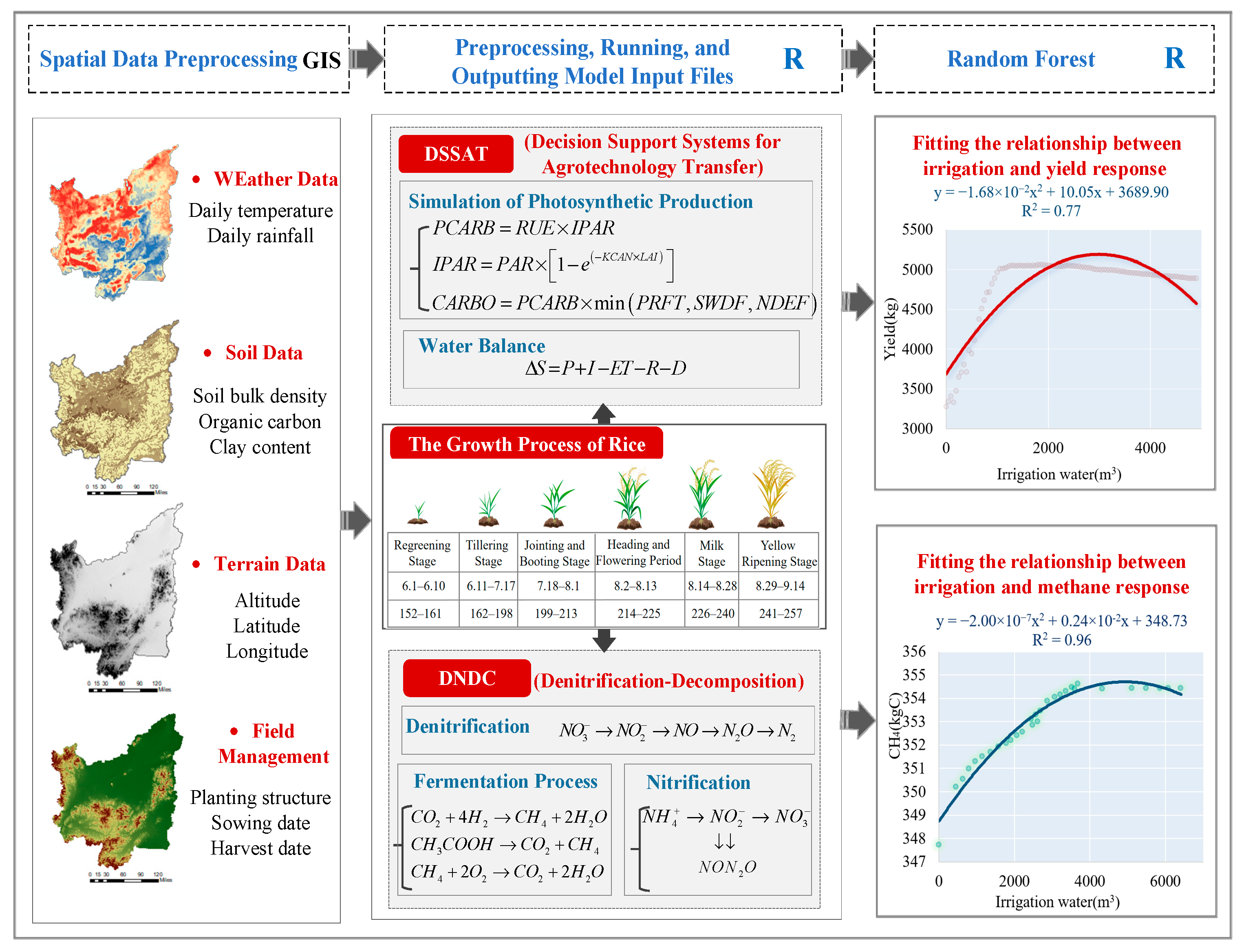
In this study, rice growth was simulated to assess yield under different irrigation water levels. The Cropping System Model (CSM), based on a modular simulation framework, was employed to simulate rice growth and development. The model integrates dynamic processes of soil moisture, nitrogen, and carbon cycling, with the CERES-RICE module specifically simulating rice growth. The simulation results were extrapolated to the regional scale using GIS (ArcGIS 10.8). A 500 m × 500 m grid resolution was applied across the Sanjiang Plain to compile spatial data—including meteorological and soil properties for each grid cell—thereby enabling simulation of environmental impacts on rice growth. Spatial data from meteorological stations were processed using R software to generate Rice. RIX files, which were subsequently integrated with the simulation models to simulate crop growth and water demand for each grid cell. This approach facilitated the estimation of rice yields under diverse meteorological conditions and irrigation scenarios, providing essential data for analyzing the yield response to irrigation water, as illustrated in
Figure 2.
2.4. Distributed Modelling of Crop Methane Emissions
In this study, the GIS-DNDC model was employed to simulate the spatial distribution of CH4 emissions during regional rice growth. The DNDC (Denitrification–Decomposition) model is a process-based soil environment simulation tool designed to assess the impacts of climate, soil, vegetation, and human activities on soil biogeochemistry. The model comprises six sub-modules: climate and soil, crop growth, soil organic matter decomposition, nitrification, denitrification, and fermentation. These sub-modules operate on daily time steps and exchange information to simulate the complex interactions among environmental conditions, plant growth, and soil chemical dynamics. Driven by ecological factors, the DNDC model dynamically simulates changes in soil conditions and evaluates gas emissions (e.g., CH4) resulting from microbial activity within the plant–soil system. The model structure is divided into two main components. The first component simulates soil environmental conditions—including temperature, moisture, pH, redox potential, and the concentration gradients of relevant chemicals—which are influenced by ecological drivers such as climate and vegetation. The second component consists of three sub-models (nitrification, denitrification, and fermentation) that focus on how the soil environment affects microbial activity and quantify greenhouse gas emissions, including CH4.
For the simulation, the key biogeochemical parameters governing methane production, oxidation, and transport in the DNDC model primarily adopted the model’s default settings recommended for paddy fields in East Asia [
16]. Key parameters include the carbon allocation coefficients of rice plants, the decomposition rate constants of soil organic matter, and the optimal pH and redox potential (Eh) ranges for methanogenesis and methanotrophy (
Supplementary Table S2).
In this study, we investigated CH
4 emissions under different irrigation conditions by simulating rice growth and its interaction with environmental factors. First, regional data were extrapolated to the Sanjiang Plain using GIS technology, which involved discretizing the region into a 500 m × 500 m grid to obtain spatial data—such as meteorological and soil properties—for each grid cell. These data served as ecological drivers in the model. The response of rice growth to soil chemical changes under varying environmental conditions was then simulated. Particular attention was paid to the processes of CH
4 production, oxidation, and transport in rice under different irrigation scenarios, which ultimately governed CH
4 emissions across meteorological stations and irrigation regimes. The resulting dataset provided key insights for establishing the relationship between CH
4 emissions and irrigation water, as illustrated in
Figure 2.
2.5. Model Calibration and Validation
The model was calibrated and validated through two separate procedures: parameter adjustment and model evaluation. Station-specific data were first input into the model, and parameters were calibrated using a combination of the trial-and-error method and the GLUE (Generalized Likelihood Uncertainty Estimation) algorithm embedded within the model to achieve parameter localization. The calibrated genetic parameters were then applied to the validation datasets from each station to generate simulation results [
16]. The validation results are illustrated in the
Supplementary Materials (Figures S1 and S2). The model has been calibrated and validated using field data collected from over 30 stations distributed across the study region. Specifically, the DSSAT model was validated using actual values from the Heilongjiang Statistical Yearbook, while the DNDC model was validated using data from 37 irrigation districts. The validation results demonstrated good model performance. For yield simulation using DSSAT, the normalized root mean square error (nRMSE) was 5.08%, with a coefficient of determination (R
2) of 0.87. For CH
4 emission simulation using DNDC, the nRMSE was 12.64%, with an R
2 of 0.83. These metrics indicate that both models satisfactorily captured the spatiotemporal dynamics of rice yield and methane emissions in the study region.
The integrated modeling framework (GIS-DSSAT, GIS-DNDC) was further validated at the regional scale by comparing aggregated outputs with independent estimates. The simulated regional average yield and total CH4 emissions were within 10% of the values reported in the Heilongjiang Statistical Yearbook and published literature, indicating satisfactory performance of the coupled system.
This correlation is indicated by the Normalised Root Mean Square Error (
nRMSE) and the Coefficient of Determination (
R2). The equations are as follows:
In the above equation, represents the i-th observation and represents the simulated value. represents the mean value of the observation, while represents the mean value of the simulated value. n represents the number of samples. When the normalized root mean square error (nRMSE) is less than 10%, it signifies that the simulation has a highly favorable effect. If the nRMSE falls between 10% and 20%, it indicates a decent simulation effect. However, if the nRMSE exceeds 30%, it suggests an inadequate simulation effect. The variable R2 has a range of values from 0 to 1, with a higher value indicating a greater correlation between simulated values and measured values.
2.6. Irrigation Water Volume Fitted to Yield and Methane Emission Responses
To address the excessive computational cost arising from the direct coupling of the mechanistic model and optimization algorithms across more than 400,000 grid cells, this study employs a two-stage surrogate modeling framework. First, an irrigation scenario sample database is generated based on the DSSAT and DNDC models. Subsequently, a Random Forest (RF) algorithm is utilized to construct an efficient surrogate model that fits the complex response relationships between irrigation water quantity, yield, and methane emissions, thereby efficiently supporting subsequent large-scale optimization. RF is an ensemble learning method designed to enhance model accuracy and stability by constructing multiple decision trees and aggregating their predictions. During the construction of each decision tree, RF applies bootstrap sampling to input the simulation results of yield and CH
4 emissions under various irrigation conditions, as simulated by the DSSAT and DNDC models. It randomly selects samples from the training data, ensuring model diversity and mitigating the overfitting issues that may arise from a single decision tree. Rather than considering all features for each decision tree node, RF was selected to construct an efficient surrogate model. RF was preferred over SVM, ANN, and XGBoost because it requires no kernel/architecture tuning, provides intrinsic feature importance, and achieves competitive accuracy (
R2 > 0.75) with lower training cost. RF randomly selects a subset from the full set of features to split, thus enhancing the independence of each tree [
21,
22]. The final response relationship between irrigation water quantity, yield, and CH
4 emission is derived through majority voting (for classification problems) or averaging (for regression problems), as shown in
Figure 2. These results provide crucial data to support the optimization of irrigation regimes.
The RF model was configured with 500 decision trees, and its hyperparameters, including tree depth and split criteria, were tuned through cross-validation. It was trained on a dataset comprising all 99 simulated irrigation scenarios to establish the nonlinear response surfaces. The model’s performance was rigorously evaluated, with key metrics such as
R2 reported in
Figure 2. RF was selected over alternative methods like SVM and ANN due to its robustness against overfitting and its ability to quantify variable importance, which aids in interpreting the driving factors behind yield and emission responses.
2.7. Optimal Decision-Making for Spatio-Temporal Irrigation Water Quantity in Rice
This paper proposes a multi-objective regional spatio-temporal optimization model for irrigation water allocation. The model is based on spatially distributed simulations of rice yield and CH4 emissions, generated using the GIS-DSSAT and GIS-DNDC models. It establishes the response relationships between irrigation water amount, yield, and CH4 emissions, which are subsequently used to characterize water productivity and emission intensity. The model optimizes water resource allocation to maximize water productivity while promoting low-carbon rice cultivation. By analyzing the dynamic effects of irrigation water volume on yield and CH4 emissions throughout the rice growth cycle, the model efficiently allocates limited water resources across grids. The objective function is formulated as follows:
2.7.1. Optimizing the Modelling Objective Function
(1) Water productivity:
Water productivity reflects the crop yield obtained per unit of water consumed. The objective function can be expressed as:
where
WP represents water productivity [
7,
10], defined as the crop yield per unit of water consumed kg/m
3).
Yi is the yield per unit area of grid
i, the theoretical relationship between yield (
Yi) and irrigation water amount (
Wi) is defined by a quadratic function (Equation (5)). The specific quadratic response relationship is generated through a dataset simulated by DSSAT, and the relationship is fitted using a Random Forest model.
Wi is the amount of water applied per unit area of grid
i (m
3/ha), and
a1,
b1, and
c1 are the fitting coefficients.
(2) Methane emission:
The objective of methane emission is to minimize
CH4 emissions during rice production, thereby reducing environmental impacts and promoting sustainable agriculture. This objective function can be expressed as:
CH4(i) is obtained by fitting the relationship between CH
4 emissions and irrigation water (kg C/ha) using random forests based on DNDC simulations and
Ei is the total
CH4 emission from grid
i (kg C/ha).
fi denotes the non-linear response function of
CH4 emissions to irrigation water, established by the Random Forest model.
2.7.2. Constraints
(1) Irrigation water availability constraints
The total irrigation water allocated to each region shall not exceed the available water resources in the study area, and this constraint is expressed as follows:
where
IQi represents the irrigation quota (m
3/ha) for rice in grid
i,
Ai denotes the area under rice in grid
i (ha), and
Qi is the amount of water available in the area (m
3).
(2) Water demand constraints
Irrigation water allocation must satisfy the water requirements of crops. This constraint can be expressed as: Safe food production is ensured by specifying the amount of water allocated to each unit to meet the crop’s water needs.
where
IQi is the annual irrigation water volume (m
3/ha) for rice in grid
after optimization,
ETi is the water demand (m
3/ha) for rice in grid
, the water demand decision parameter
is set at 8% [
23], so that irrigation allocation meets crop water demand within an acceptable deficit range.
The NSGA-II algorithm was configured with the following parameters: population size = 200; number of generations = 200; crossover probability = 0.9 (simulated binary crossover, SBX); mutation probability = 0.1 (polynomial mutation); distribution indices for crossover and mutation were set to 20 and 100, respectively. The Pareto front was selected based on the maximum hypervolume criterion. Convergence was assessed by monitoring the stability of the hypervolume metric over the last 100 generations. The final irrigation schedule for each grid was selected from the Pareto-optimal set as the solution with the minimum Euclidean distance to the ideal point (utopia point) in the normalized objective space, balancing water productivity maximization and methane emission minimization.
2.8. Decision-Making Process for Rice Irrigation Water Optimization
We coupled GIS with crop models to simulate rice growth and CH
4 emissions in the Sanjiang Plain under varying irrigation water amounts. The relationship between irrigation water amount and yield response was established using the Random Forest algorithm, while the corresponding relationship between irrigation water and CH
4 emissions provided the baseline data for the optimization model. Subsequently, a multi-objective optimization model was developed. The objective function included both water productivity and CH
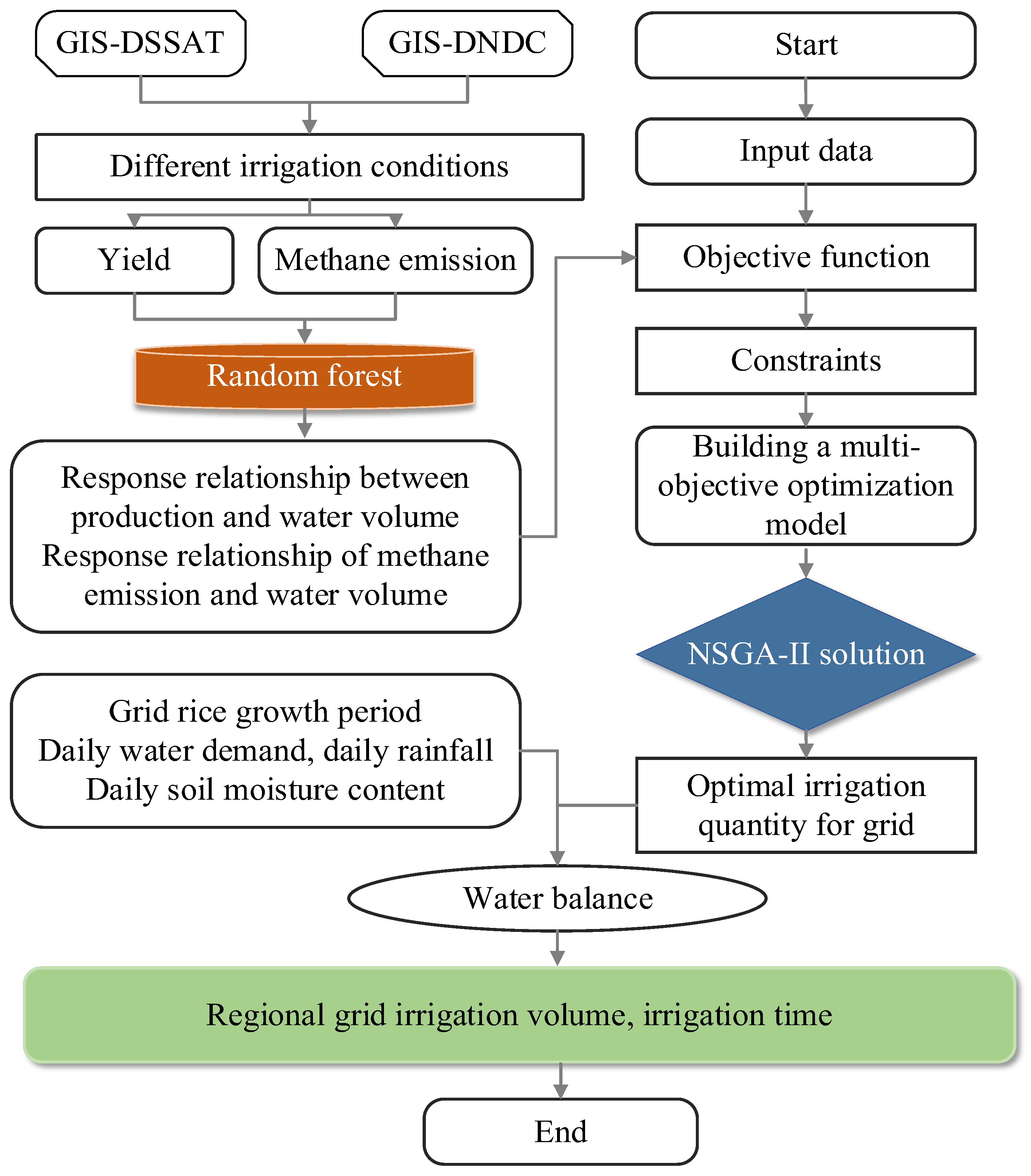
4 emissions, with constraints that accounted for crop water demand and water availability. The decision variables were irrigation water amount and irrigation timing. The multi-objective model was solved using the NSGA-II algorithm, and irrigation schedules were determined based on the water demand of rice in each grid cell. Each grid cell served as the fundamental unit, enabling refined spatio-temporal optimization of irrigation decisions for rice cultivation across the Sanjiang Plain. The overall workflow of the multi-objective optimization for rice irrigation water allocation is illustrated in
Figure 3.
4. Discussion
This study developed a high-resolution (500 m × 500 m) grid-based optimization framework that successfully reconciles water conservation, yield enhancement, and methane mitigation in rice production on the Sanjiang Plain. Compared to earlier coarse-scale applications (e.g., 10 km) of coupled GIS-DSSAT/DNDC models [
15,
16], our 500 m discretization substantially improves the representation of local biophysical conditions and enables more precise irrigation prescriptions. The 21.8% improvement in water productivity achieved in this study aligns with or exceeds the range of 10–20% reported in meta-analyses of water-saving irrigation in Chinese rice systems [
7,
9], confirming the effectiveness of the proposed spatio-temporal optimization approach.
4.1. Interpretation of Synergistic Benefits
The optimized irrigation regime, applied across more than 400,000 grid cells, yielded significant synergistic benefits. Relative to conventional practices, it reduced total regional irrigation water use by 10.3%, increased average rice yield by 8.4%, enhanced water productivity by 21.8%, and decreased methane emission intensity per unit yield by 9.6%. These outcomes demonstrate that precision water management can simultaneously address water scarcity, food security, and climate objectives in major rice-growing regions. The 10.3% reduction in irrigation water use is primarily attributable to optimized scheduling, which reduces both irrigation frequency (from 13–15 to 7–14 events) and total volume while maintaining soil moisture within optimal ranges for rice growth. The concurrent 8.4% increase in yield suggests that conventional excessive flooding not only wastes water but may also create suboptimal growing conditions due to prolonged anaerobic stress. Furthermore, the 9.6% reduction in methane emission intensity reflects the suppression of methanogenic activity during aerobic soil phases induced by reduced irrigation frequency.
4.2. Comparison with Alternative Irrigation Strategies
The optimized schedules exhibit conceptual similarities with alternate wetting and drying (AWD), a widely studied water-saving technique in rice systems [
25]. Meta-analyses have reported that AWD can reduce CH
4 emissions by 30–50% compared to continuous flooding [
24,
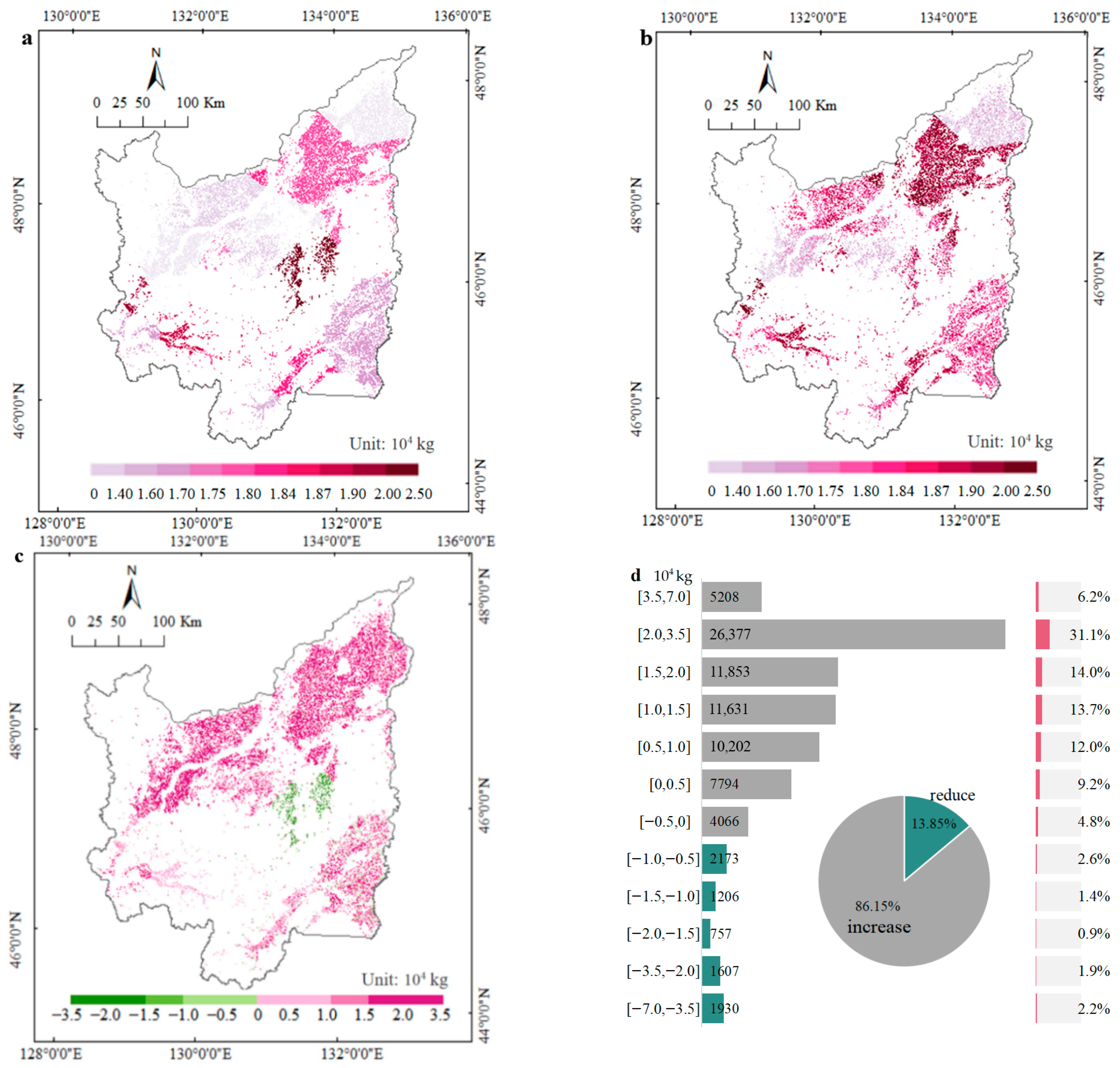
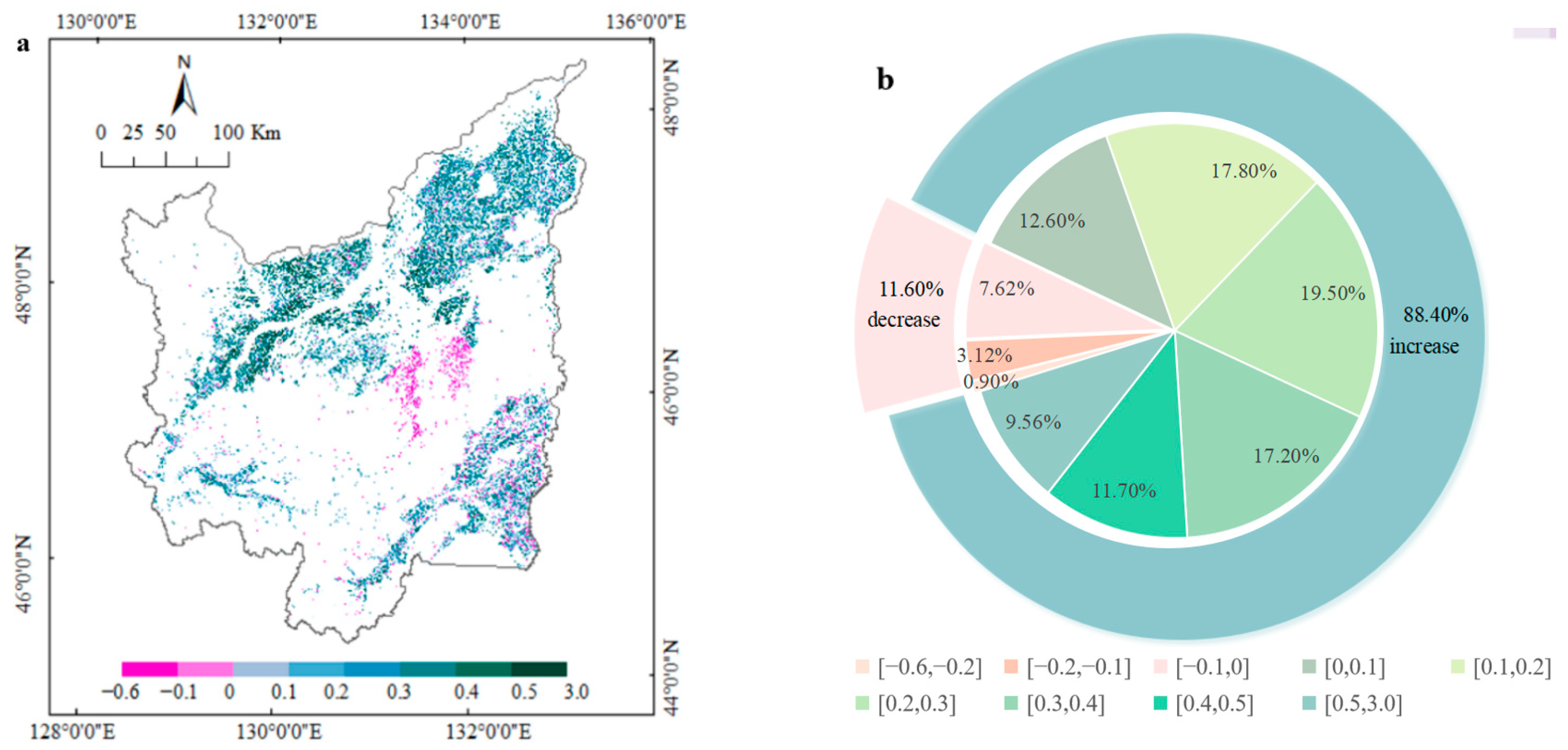
26]. The comparatively lower reduction of 9.6% in emission intensity observed in this study reflects the multi-objective nature of our optimization framework, which balances water productivity, yield maintenance, and emission reductions. Unlike uniform AWD recommendations that typically prescribe fixed drying periods, our framework generates spatially differentiated schedules tailored to local soil and climate conditions. This approach avoids yield penalties in sensitive areas (e.g., sandy soils) while maximizing regional water savings. This distinction is critical: the 13.9% of grids that experienced yield reductions (
Section 3.1) would likely have suffered greater losses under a uniform AWD protocol, underscoring the value of a spatially explicit optimization approach.
4.3. Spatial Heterogeneity and Its Implications
Spatial analysis revealed that optimal irrigation timing and frequency exhibit clear patterns correlated with local conditions. Grids characterized by sandy soils or located in warmer sub-regions tended to receive slightly earlier and more frequent irrigations during early growth stages to compensate for higher percolation or evapotranspiration rates. Conversely, clay-rich soils in cooler areas allowed for longer intervals between irrigation events. This spatial differentiation is essential for maximizing regional-scale benefits while minimizing localized penalties. The yield reductions observed in 13.9% of grids, primarily concentrated in Baoqing, were mechanistically linked to soil texture and climatic anomalies, confirming that the optimization framework successfully identifies its own boundary conditions.
4.4. Limitations and Uncertainty
The optimization results presented herein are derived from deterministic model simulations that do not formally propagate uncertainties. Although the coupled models were calibrated and validated against available data (see
Section 2.5), uncertainties inherent in input data, model structure, and parameter equifinality are not explicitly quantified in the final optimized schedules. As a result, the reported numerical values should be interpreted as indicative of synergistic potential within the defined modeling framework rather than as precise predictions with quantified confidence intervals. In addition to this core limitation, several further constraints exist: reliance on single-year (2022) meteorological data, which may not adequately capture interannual climate variability; the absence of multi-year field validation across diverse sites; the lack of an economic analysis to assess farm-level profitability and adoption incentives; and the necessity for stakeholder engagement to address practical implementation constraints.
4.5. Future Research Directions
Based on the identified limitations, future research should prioritize several interconnected directions. Multi-year field experiments (3–5 years) at representative sites are necessary to validate the robustness of optimized irrigation schedules under varying hydroclimatic conditions and to refine model parameters. Additionally, formal uncertainty quantification—utilizing methods such as Sobol sensitivity analysis and Monte Carlo simulation—should be implemented to assess how parameter uncertainties influence the stability of Pareto-optimal solutions and to establish confidence intervals around predicted benefits. Integrated economic assessments are essential to evaluate farm-level profitability, incorporating investment costs for monitoring equipment, potential savings from reduced pumping costs, and yield risks associated with imperfect implementation. Furthermore, the optimization framework must be coupled with downscaled climate projections to design adaptive irrigation strategies for future climatic conditions and to evaluate the long-term sustainability of proposed schedules. Stakeholder engagement through participatory research with local farmers and extension agents is critical for identifying practical barriers to adoption and for developing user-friendly decision support tools—such as mobile applications or web-based platforms—that translate optimized schedules into actionable irrigation recommendations.
5. Conclusions
This study successfully developed and demonstrated a high-resolution (500 m × 500 m) grid-based optimization framework for rice irrigation, integrating process-based crop and methane models (GIS-DSSAT, GIS-DNDC), machine learning (Random Forest), and multi-objective evolutionary optimization (NSGA-II). Applied to the Sanjiang Plain—a major rice-producing region in Northeast China—the framework yielded the following key findings:
- (1)
The optimized irrigation regime reduced total regional irrigation water use by 10.3%, increased average rice yield by 8.4%, enhanced water productivity by 21.8%, and decreased methane emission intensity per unit yield by 9.6%. These results demonstrate that precision water management can simultaneously address water scarcity, food security, and climate mitigation objectives.
- (2)
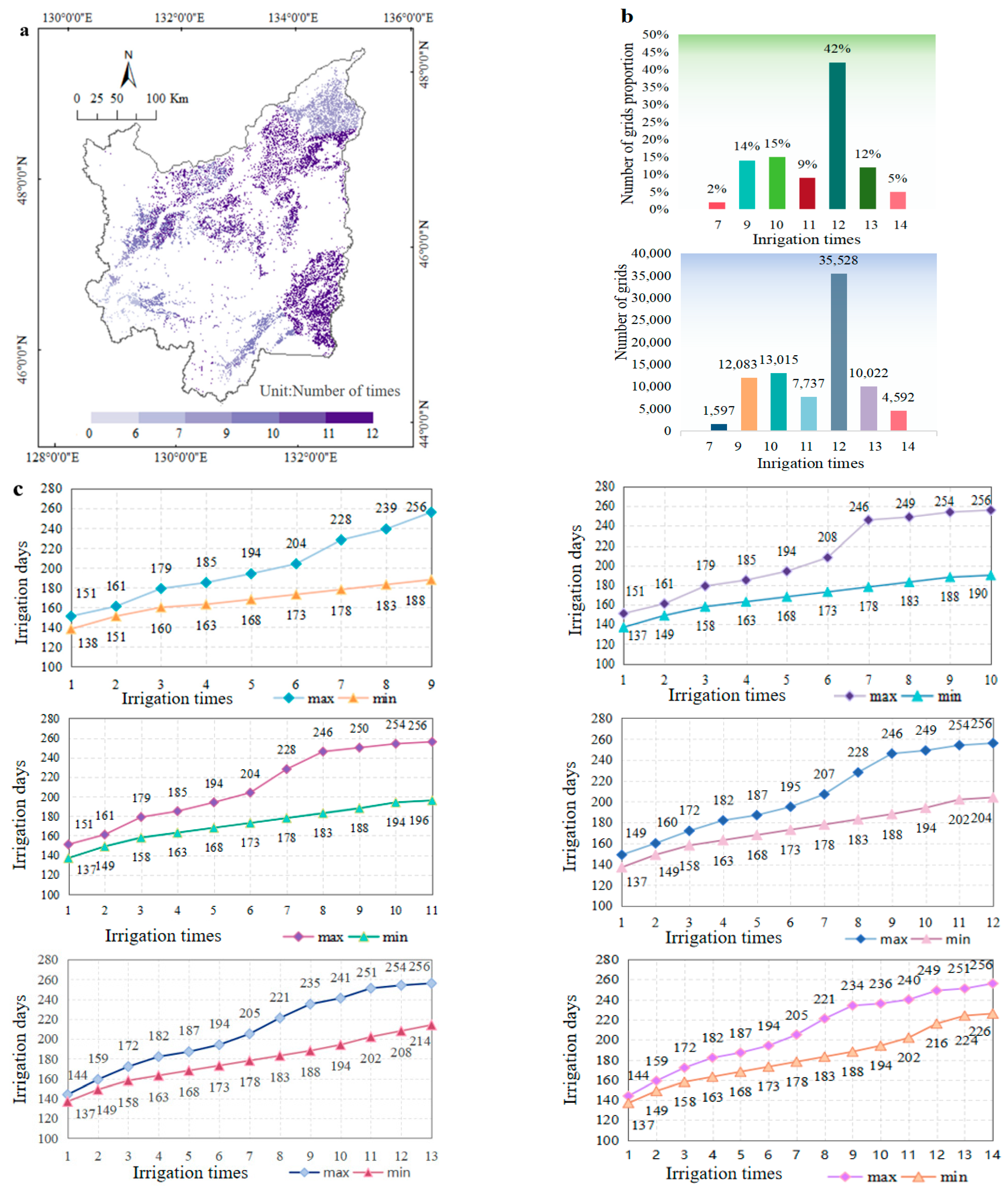
The optimal irrigation strategy involved 7–14 irrigation events concentrated during the critical growth window from tillering to milky ripening (days 137–256), reflecting a strategic alignment of water application with crop physiological demand.
- (3)
Spatial differentiation based on local soil and climate conditions is essential: grids characterized by sandy soils or experiencing above-average rainfall required schedule adjustments to avoid yield penalties, thereby confirming that uniform irrigation recommendations are suboptimal at regional scales.
The framework serves as a scalable decision-support tool. Extrapolating the 10.3% water-saving ratio to China’s total rice area (~30 million hectares) suggests an upper-bound theoretical potential of approximately 30 billion cubic meters of irrigation water saved annually. However, this estimate assumes similar conditions across all rice-growing regions and should not be interpreted as a precise prediction.
This study advances irrigation management from uniform practices to a spatially differentiated paradigm, demonstrating that synergistic outcomes across water, food, and climate dimensions are achievable through integrated modeling and optimization. Future research should prioritize multi-year validation, uncertainty quantification, economic analysis, and stakeholder engagement to enhance the robustness and practical applicability of the framework, thereby supporting the transition toward sustainable rice production at regional and national scales.