Article

Optimization of Aeroponic Cultivation Parameters with Closed-Loop Water Recycling: A Field-Scale Case Study on Pak Choi (Brassica rapa subsp. chinensis)

1
Graduate School of Engineering Science and Technology, National Yunlin University of Science and Technology, Douliou 64002, Taiwan
2
Department of Safety Health and Environmental Engineering, National Yunlin University of Science and Technology, Douliou 64002, Taiwan
*
Author to whom correspondence should be addressed.
Agriculture 2026, 16(5), 586; https://doi.org/10.3390/agriculture16050586
Submission received: 29 January 2026 / Revised: 21 February 2026 / Accepted: 3 March 2026 / Published: 4 March 2026
(This article belongs to the Section Crop Production)

Abstract

Aeroponic cultivation can enhance resource-use efficiency, yet field-scale evidence for closed-loop water recycling remains limited. This study assessed a multi-tier aeroponic system for Pak choi, Brassica rapa subsp. chinensis, integrated with a recovery, filtration, ultraviolet sterilization, and recirculation module under practical operating conditions in Yunlin County, Taiwan. System performance was quantified using water consumption under recycling and non-recycling configurations, electricity use, crop growth, yield, and resource-use efficiencies. Closed-loop operation reduced external freshwater input from 27,000 L to 7000 L, corresponding to a 74% reduction, and decreased water use from 2.8 to 0.95 L plant−1. Electricity consumption over the cultivation cycle was 68.9 kWh, equivalent to 2.46 kWh day−1. With a planting density of 44 plants m−2, yield reached 2657.6 g m−2 and exceeded the soil reference benchmark of 1644 g m−2 used for contextual comparison. Water-use efficiency was 63.8 g L−1, and nutrient-use efficiency was 35.4 g mL−1 of fertilizer stock added. Nutrient solution pH remained stable between 6.69 and 6.99, while electrical conductivity was adjusted by growth stage. The findings indicate that field-deployed closed-loop aeroponics can markedly reduce freshwater demand while sustaining high productivity, and they identify transplant acclimation and improved pH control as priorities for enhancing survival and consistency.

1. Introduction

Global agriculture is undergoing significant transformation due to the interplay of water scarcity, increasing frequency of climatic extremes, limitations on urban land availability, and an aging rural labor force [1]. In many regions, freshwater withdrawals for irrigation constitute a major portion of human water consumption. Traditional surface and sprinkler irrigation methods often demonstrate low application efficiency, primarily because of evaporative losses, runoff, and deep percolation [2,3,4]. Concurrently, nutrient leaching and volatilization exacerbate the risk of eutrophication and diminish fertilizer-use efficiency, thereby intensifying both economic costs and environmental impacts [5,6,7]. These issues are especially pronounced in island and monsoon-affected regions, where drought conditions can rapidly develop due to interannual variability in rainfall and constraints on reservoir storage capacity.
In response to these challenges, soilless cultivation has emerged as a strategic approach [4,8,9]. By decoupling crop production from soil-related limitations, soilless systems reduce vulnerability to soil-borne pathogens, alleviate yield variability caused by heterogeneous soil fertility, and enable precise nutrient management through sensor-based technologies [10,11,12,13]. Among soilless cultivation methods, hydroponics has been extensively implemented in protected horticulture and controlled environment agriculture. Nevertheless, hydroponic systems still require substantial volumes of liquid and may encounter challenges related to oxygen transfer, thermal regulation, and nutrient solution management [14,15,16,17,18]. Aeroponics offers a more advanced alternative, wherein plant roots are suspended within a sealed chamber and supplied with water and dissolved nutrients in the form of a fine mist [19,20,21,22]. This system enhances root-zone oxygen availability, promotes rapid absorption of water and nutrients, and supports high-density production configurations, including vertical stacking and modular deployment, as detailed in Table 1.
From the standpoint of resource efficiency, aeroponics offers the potential to significantly reduce the total volume of irrigation water by delivering fine droplets directly to the rhizosphere [2,3,23,24,25]. This targeted application minimizes the need for bulk solution storage and decreases overflow discharge. Moreover, the physical separation of aeroponic root chambers from soil effectively eliminates weed pressure and diminishes soil-borne pest and disease transmission pathways [26,27,28,29,30]. These characteristics render aeroponics highly compatible with precision agriculture and automation technologies, including timer-based or sensor-driven control systems, remote monitoring capabilities, and integration with renewable energy sources [31,32]. Practically, the capacity to lower labor requirements is increasingly advantageous in regions experiencing a decline in the available agricultural workforce.
Despite these benefits, aeroponics entails several engineering and agronomic challenges that must be overcome to ensure consistent commercial viability [33,34,35]. Critical factors influencing success include the distribution of spray droplet sizes, resistance to nozzle clogging, precise control of the chamber microclimate, system redundancy to prevent root desiccation during power interruptions, and the stability of nutrient chemistry under recirculation conditions [1,36,37,38,39]. Additionally, issues such as transplant shock, root damage, and suboptimal pH and electrical conductivity (EC) settings can adversely affect plant survival and reduce marketable yields, even when water-use efficiency (WUE) is optimized [40,41,42]. Consequently, empirical data derived from field-relevant prototype systems are essential to bridge the gap between laboratory-scale demonstrations and scalable agricultural implementation [43,44,45,46].
Closed-loop recirculation is well established in hydroponics, yet its translation to aeroponics is less frequently reported at the field scale because aeroponic losses occur through mist condensation, drainage, and periodic sanitation rather than continuous bulk-solution turnover. Existing studies predominantly evaluate laboratory or indoor prototypes, whereas field deployments must manage diurnal microclimate variability, maintenance constraints, and hygiene risks under recirculation. Accordingly, quantitative field-scale evidence remains limited, motivating the present case study focused on a practical recovery–filtration–UV sterilization–recirculation workflow.
Taiwan presents a pertinent context for assessing the feasibility of aeroponic systems. As an agriculturally active region, Taiwan faces concurrent challenges, including seasonal water scarcity, periods of heat stress, and an aging agricultural workforce. Yunlin County, situated in west-central Taiwan and recognized as a major agricultural hub, has increasingly encountered constraints related to water allocation and labor availability. Within this framework, the present study sought to address the following:
(i)
Knowledge gap:
Field-scale, quantitative evidence remains limited on how closed-loop water recycling performs when integrated into aeroponic cultivation under practical operating variability, particularly regarding verified freshwater demand reduction, energy use, and nutrient-solution stability.
(ii)
Research novelty:
To address this gap, this study provides field-relevant data from a multi-tier aeroponic prototype coupled with a closed-loop recovery–filtration–UV sterilization–recirculation module, alongside continuous monitoring of environmental conditions and nutrient-solution EC/pH dynamics.
(iii)
Specific objectives:
Specifically, we aimed to (1) design and commission the aeroponic recycling system for Pak choi production, (2) quantify water consumption with and without recycling together with electricity use, crop growth and yield, and resource-use efficiencies, and (3) identify operational priorities (e.g., transplant acclimation and pH management) that constrain survival and commercial consistency.
This field-scale case study addresses the following questions: (i) To what extent can a closed-loop recovery–filtration–UV sterilization–recirculation module reduce external freshwater input in a multitier aeroponic Pak choi system under practical operating conditions? (ii) What are the associated electricity demands and the resulting water-, nutrient-, and land-use efficiencies? (iii) Which operational constraints most strongly influence survival and performance consistency?
Based on the system design, we hypothesized that (i) closed-loop operation would substantially reduce make-up water demand by capturing condensate and drainage, while (ii) maintaining productivity within a field-relevant energy envelope, and (iii) that transplant acclimation and nutrient-solution pH management would be primary determinants of survival and performance variability.

2. Materials and Methods

2.1. Study Site and Experimental Timeline

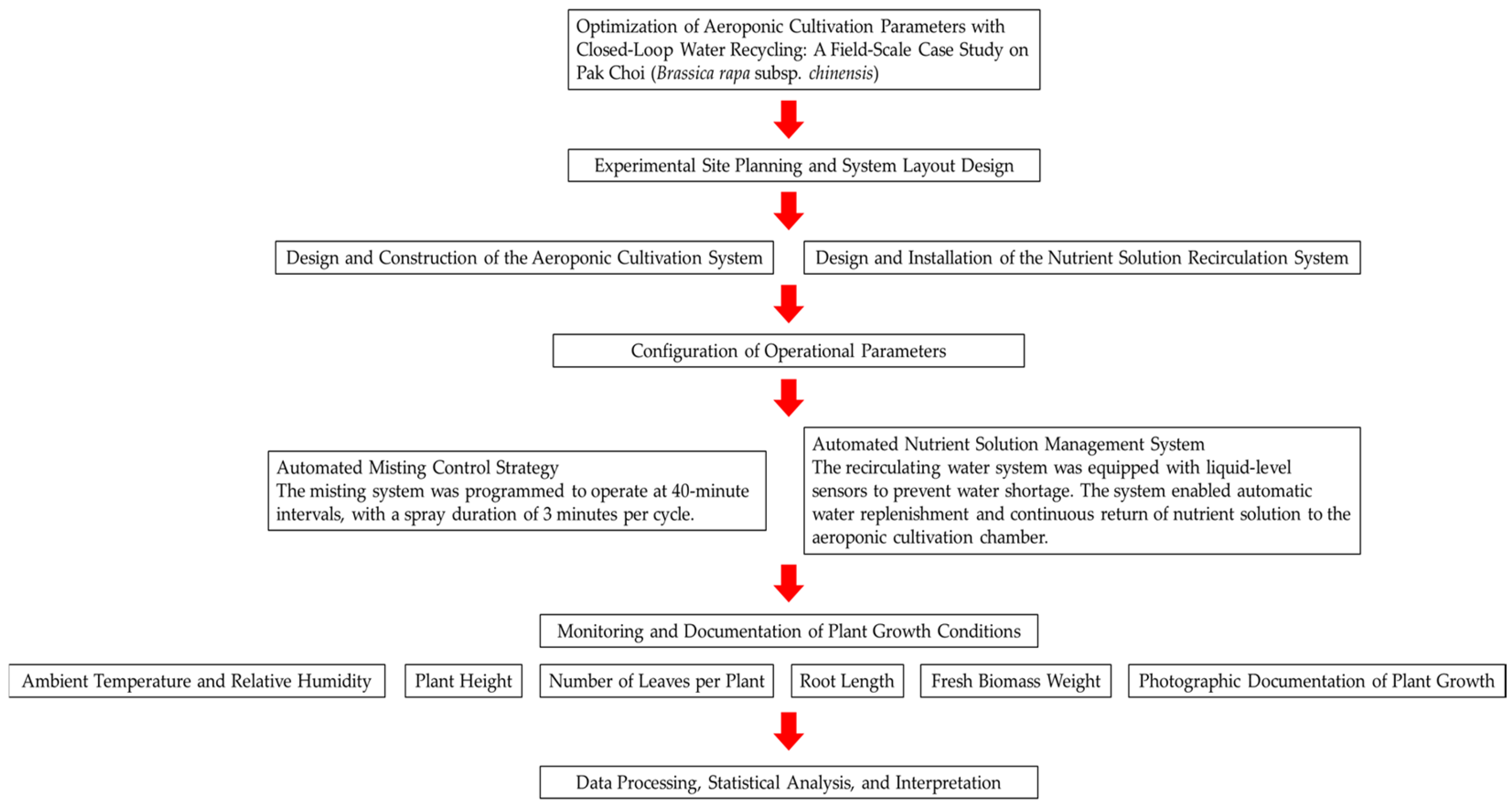
The aeroponic cultivation experiment was carried out in Gulen Township, Yunlin County, Taiwan. The experimental site was chosen to reflect environmental variability typical of field conditions, encompassing diurnal temperature variations and episodes of elevated ambient humidity characteristic of subtropical climates. The construction, commissioning, and cultivation trials of the system were conducted from 30 May to 27 June 2024. Furthermore, water consumption was monitored over an extended period, including a comparative analysis of system configurations with and without water recycling, from 13 October to 27 November 2024, as documented by system logs presented in Figure 1. Comparisons were conducted sequentially under comparable seasonal conditions, using system logs for normalization.
The system was implemented as a field pilot with a single installation. Water consumption comparisons between the non-recycling baseline and the recycling configuration were conducted sequentially using operational logs under comparable seasonal conditions (13 October to 27 November 2024). Each installation cycle used 88 planted individuals per unit, and survival was tracked throughout cultivation.

2.2. Aeroponic System Architecture

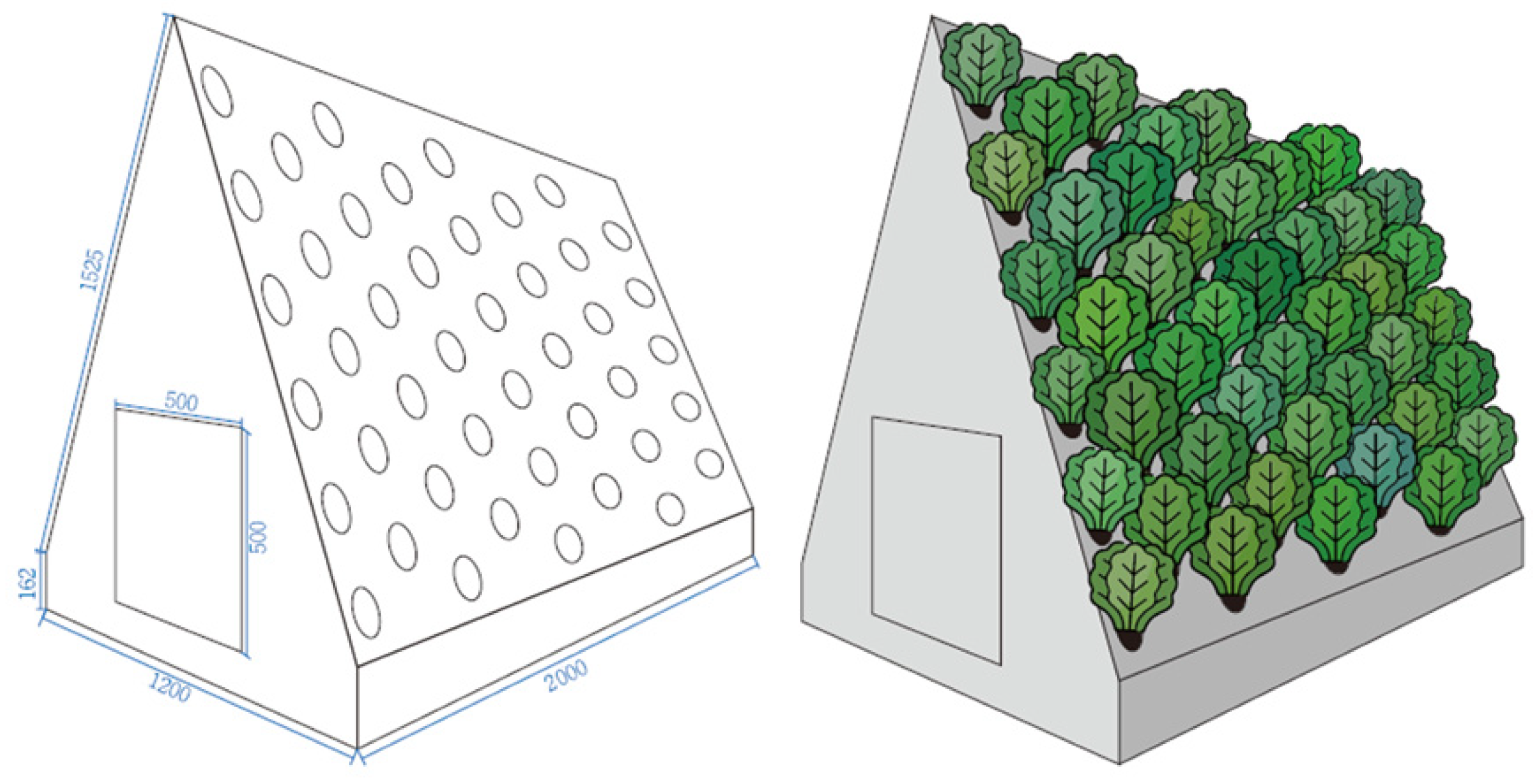
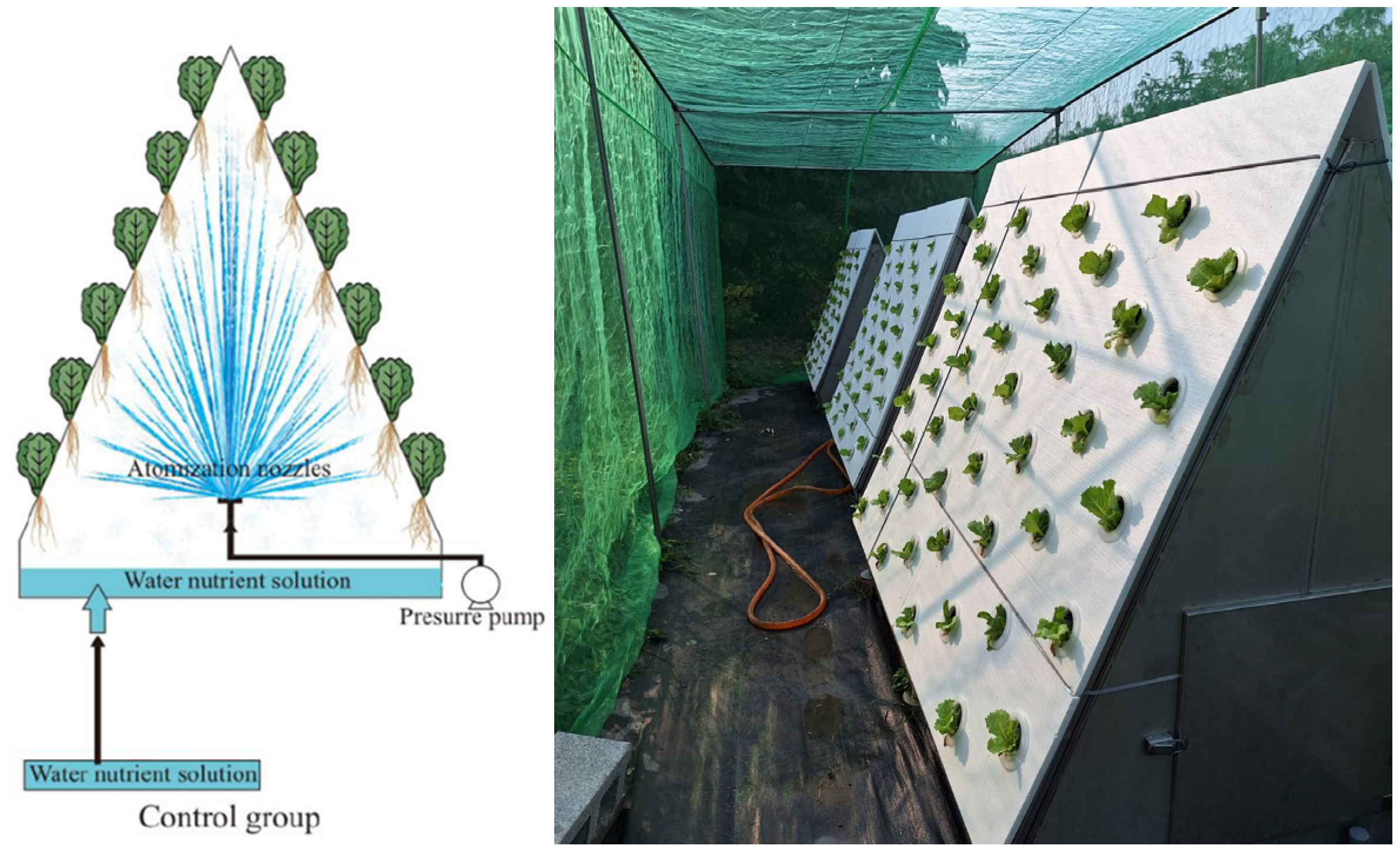
The core aeroponic unit consisted of a cultivation frame supporting plant sites in a sealed root-zone chamber [47]. Plant roots were suspended in air, while nutrient solution was delivered via atomizing nozzles supplied by a constant-pressure pump in Figure 2.
The system incorporated (i) a high-pressure misting pump, (ii) atomizing nozzles installed along the irrigation manifold, (iii) an electronic control unit enabling timer-based operation, (iv) environmental sensors for basic monitoring, and (v) a water-level sensing device to safeguard recirculation operation. The design objective was to achieve uniform droplet dispersion across plant sites while preventing oversaturation and minimizing runoff in Figure 3.
Each cultivation cycle deployed 88 planted individuals per unit. With the operational planting density of 44 plants m−2, the effective cultivation area per unit was approximately 2.0 m2 (derived from plant count and density). The system was implemented as a multi-tier field prototype (Figure 2 and Figure 3), and all core hardware specifications (pump, nozzles, filtration, UV unit, and metering devices) are summarized in the Supplementary Materials for reproducibility.

2.3. Closed-Loop Water Recycling Module

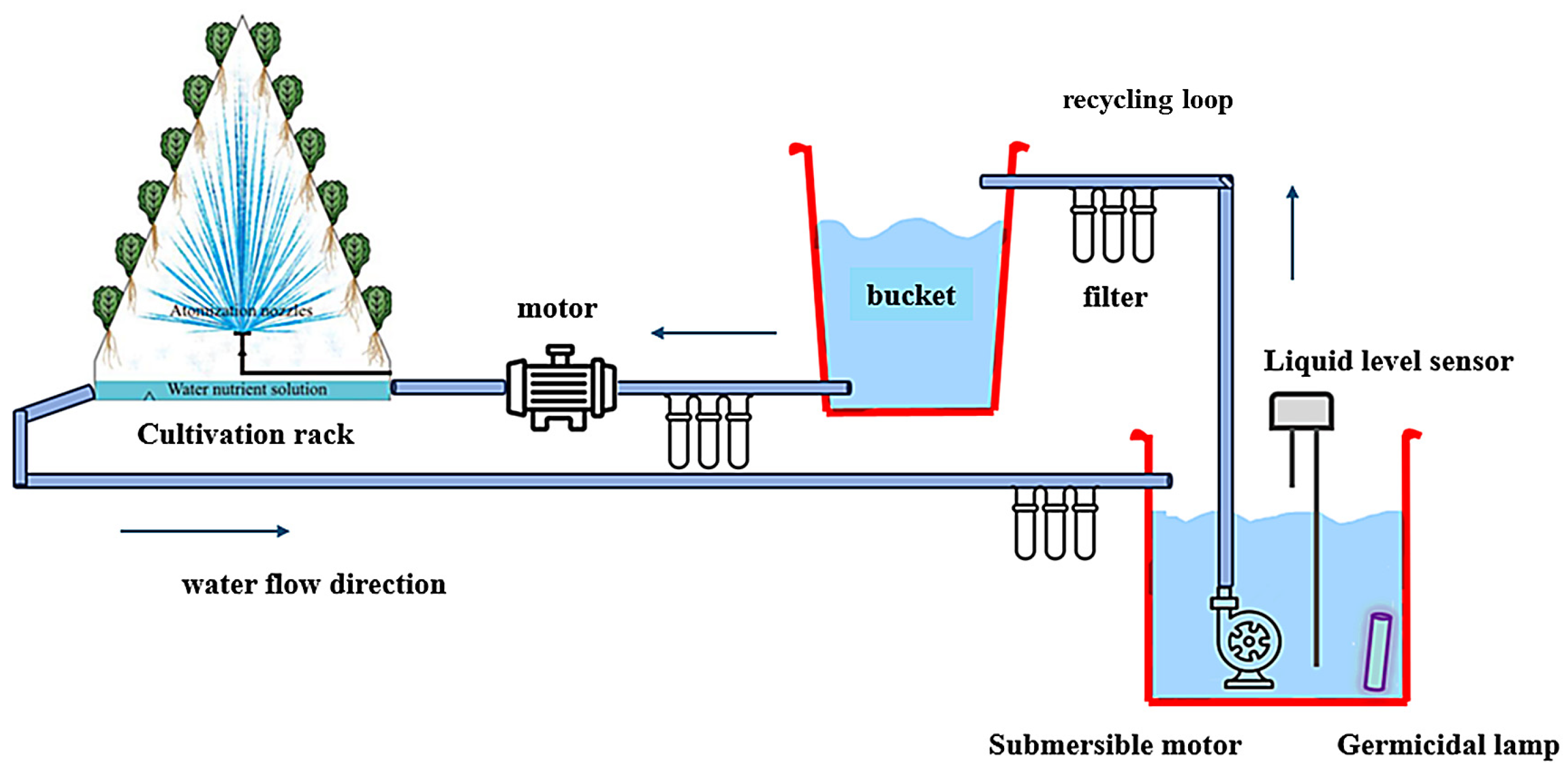
A closed-loop recycling system was implemented to decrease overall water consumption and minimize effluent discharge [48,49,50,51]. Nutrient mist that condensed within the root chamber was collected via gravity drainage through designated channels and accumulated in a recycling reservoir. Activation of a submersible transfer pump, controlled by a capacitive water-level sensor, occurred once the collected volume surpassed a predetermined threshold. The recovered solution was subsequently processed through a filtration unit to eliminate particulate matter, followed by ultraviolet sterilization to reduce microbial contamination, before being reintroduced into the nutrient reservoir [52,53,54].
The recovered solution was polished using a commercial fine-filtration unit (3M HF10-MS; nominal 0.5 μm rating) and disinfected by a UV germicidal lamp (24 W, 110 V) prior to reintroduction into the nutrient reservoir (Supplementary Materials).
To ensure transparency and promote reproducibility, the principal equipment and input specifications requested by the reviewers—such as brand and model identifiers, rated performance parameters (including pumps, nozzles, filtration, and UV units), as well as measurement and calibration details for electrical conductivity (EC), pH monitoring, and electricity metering have been systematically documented in the Supplementary Materials.

2.4. Plant Material, Seedling Preparation, and Transplantation

Pak choi (Brassica rapa subsp. chinensis) was selected due to its short growth cycle and high relevance to Taiwanese dietary consumption. Two seedling sourcing approaches were evaluated: (i) laboratory-raised seedlings germinated and grown using sponge-based media under controlled conditions; and (ii) nursery-procured soil-grown seedlings that were transplanted after manual removal of attached soil from roots. Seedling germination and early growth followed standard protocols involving pre-soaking seeds to enhance germination, maintaining a warm (20–25 °C) [55,56] dark germination environment, and subsequently increasing light exposure after emergence. Seedlings were transplanted to the aeroponic system once 3–4 true leaves had developed [57,58,59].

2.5. Nutrient Solution Preparation and Management

The nutrient solution was prepared by dissolving commercially available inorganic fertilizers in water, and its ionic strength was adjusted according to the crop developmental stage. Throughout cultivation, EC and pH were continuously monitored using standard electrochemical meters, and nutrient concentration was progressively increased from the seedling to vegetative stage (Section 3.4) to align with the higher macronutrient demand associated with rapid biomass accumulation. This staged EC management is consistent with published soilless Pak choi protocols that apply moderate EC levels (e.g., 1.2–1.6 mS·cm−1) during active growth and may adjust concentration over time depending on treatment design in Table 2.
The nutrient solution pH was maintained near neutral to slightly acidic (6.69–6.99). While some Pak choi soilless studies commonly operate under a mildly acidic regime (approximately pH 5.8–5.9), our pH range remains within the broader operational envelope reported for aeroponic leafy vegetable systems (pH 5.7–7.5) and is comparable to a Brassica aeroponic system operated at pH 6.8. Accordingly, the adopted pH control strategy prioritized operational stability and nutrient availability under field-scale recirculation, while remaining within ranges supported by the aeroponics and Pak choi soilless literature.
This deviation was considered a potential factor affecting plant survival and overall performance. The nutrient solution was prepared using a commercially available hydroponic fertilizer (stock solution). Over the cultivation cycle, the cumulative volume of fertilizer stock solution added to maintain the target EC trajectory was recorded as 150 mL. This recorded stock solution addition was used to compute fertilizer-use efficiency (g mL−1) as fresh harvested biomass divided by the cumulative fertilizer stock solution added. The hydroponic liquid fertilizer was used as the nutrient source (manufacturer: [Taiwan]) and diluted 1:200 (v/v) with water. The nutrient solution composition was verified using water-quality test reagents based on colorimetric assays for phosphate (PO43−), nitrate (NO3), Cu2+, and Fe3+, and a titration-based method for Ca2+. Measured concentrations were PO43− > 5.0 mg L−1 (ppm), NO3 = 10.0 mg L−1, Cu2+ = 0.25 mg L−1, and Fe3+ = 2.0 mg L−1. Calcium was quantified by endpoint titration, requiring 7 drops of indicator/titrant; 1 drop was equivalent to 20 mg L−1 Ca2+, yielding Ca2+ = 140 mg L−1. The electrical conductivity (EC) and pH of the working solution were 840 μS cm−1 and 5.86, respectively, measured using a handheld multi-parameter meter (model EC50) with automatic temperature compensation. The instrument supports measurement ranges of pH 0.00–14.00 and EC 0–199.9 μS cm−1, 200–1999 μS cm−1, and 2.00–19.99 mS cm−1 (resolution: 0.01 pH; 0.1 μS cm−1/1 μS cm−1/0.01 mS cm−1; specified accuracy: ±0.01 pH and ±2% of full scale for EC).
A commercial hydroponic liquid fertilizer was used as the nutrient source and prepared as a working solution by dilution at 1:200 (v/v), after which EC setpoints were stage-adjusted to match increasing nutrient demand during vegetative growth. Across the cultivation period, the cumulative stock solution addition required to maintain the target EC trajectory was 150 mL, which was recorded and used to compute fertilizer-use efficiency. Working-solution chemistry was verified using standard colorimetric reagent kits for PO43−, NO3, Cu2+, and Fe3+ and a titration-based method for Ca2+ (Supplementary Materials).

2.6. Irrigation Scheduling and Control Logic

The aeroponic system operated continuously over a 24 h cycle, with misting controlled by a timer-based schedule. The misting mechanism was set to activate every 40 min, delivering a spray for a duration of 3 min per cycle, following preliminary optimization derived from pilot experiments. This protocol was selected to achieve an optimal balance between root hydration and aeration, while avoiding excessive moisture accumulation within the chamber. This approach aligns with intermittent pulse irrigation strategies frequently utilized in aeroponic cultivation, which are designed to maintain thin water films around the roots and promote high levels of oxygen availability.
Nutrient mist was generated using a high-pressure atomization line equipped with ceramic-core misting nozzles (3/16″ thread; brass body with nickel plating) and controlled by a timer relay/controller (DH48S, 110 V) to implement intermittent pulse operation (Supplementary Materials). Recovered solution transfer was actuated by a DC submersible pump (24 V; 60 W) triggered by a capacitive water-level sensor, enabling threshold-based return flow to the main reservoir.
Control logic was rule-based. Misting control followed a fixed-duty cycle implemented by the timer controller: ON for 3 min every 40 min, 24 h day−1. Recycling control was threshold-triggered: when collected condensate/drainage raised the recycling reservoir level above the sensor setpoint, the submersible pump was activated to transfer the recovered solution through filtration and UV disinfection back to the main reservoir; pumping stopped once the level fell below the setpoint.

2.7. Monitoring Variables and Performance Indicators

System performance was evaluated using the following indicators:
  • Water consumption: Total and daily water use (L), and water use per plant (L plant−1);
  • Recovered and recycled water volume inferred from reservoir and collection logs;
  • Electricity consumption: Total and daily kWh based on a dedicated power meter;
  • Crop growth: Plant height (cm), leaf number, root length, and survival rate;
  • Resource-use efficiencies: WUE (g L−1), nutrient-use efficiency (NUE) (g mL−1 of fertilizer), and land-use efficiency (LUE) (g m−2);
  • Environmental conditions: Temperature and relative humidity in the cultivation environment.
For log-derived variables (daily electricity use), variability was summarized as 5.75 ± 4.910 across daily records within each configuration. For plant-level growth traits, 12.943 ± 0.277 across surviving individuals was reported. Because the baseline and recycling configurations were evaluated sequentially on a single field installation (non-randomized), statistical inference was treated as exploratory; results are primarily interpreted descriptively with uncertainty summaries.

2.8. Comparative Benchmarking Against Soil Cultivation

To provide a contextual framework for evaluating aeroponic performance, benchmark values for soil-based Pak choi cultivation were derived from local cultivation practice records and comparative datasets. The assessed metrics encompassed LUE (1644 g m−2), WUE (46 g L−1), and NUE (21.9 g mL−1). Soil cultivation values were used as reference benchmarks rather than experimental controls. Given the preliminary nature of the field-scale demonstration, these benchmarks were employed for ratio-based interpretation rather than formal statistical hypothesis testing.

3. Results

3.1. System Commissioning and Operational Stability

The constructed aeroponic system achieved stable mist generation under constant-pressure operation, with droplets dispersed throughout the root chamber. The closed-loop collection and recirculation pathway maintained reservoir levels and reduced the frequency of manual refilling. The capacitive water-level sensor provided reliable non-contact detection, triggering submersible pump activation to transfer the collected solution through filtration and UV sterilization. Throughout continuous operation, no catastrophic failures were recorded; however, chamber humidity frequently approached saturation during and immediately after spraying events, underscoring the importance of drainage design and ventilation management.

3.2. Water Consumption and the Impact of Recycling

Water consumption was quantified under two configurations: a baseline aeroponic operation without recycling and an upgraded closed-loop operation with recycling. Without recycling, total water consumption over the monitoring period reached 27,000 L, with an average daily use of 209.3 L and a per-plant water requirement of 2.8 L plant−1. After implementation of recycling, total water consumption decreased to 7000 L, corresponding to 83.3 L day−1 and 0.95 L plant−1. This represents an approximate 74% reduction in total water input. The reduction can be attributed to the recovery of condensed mist and drainage water that would otherwise be lost, demonstrating the efficacy of closed-loop design in reducing freshwater dependence in Table 3.

3.3. Electricity Consumption

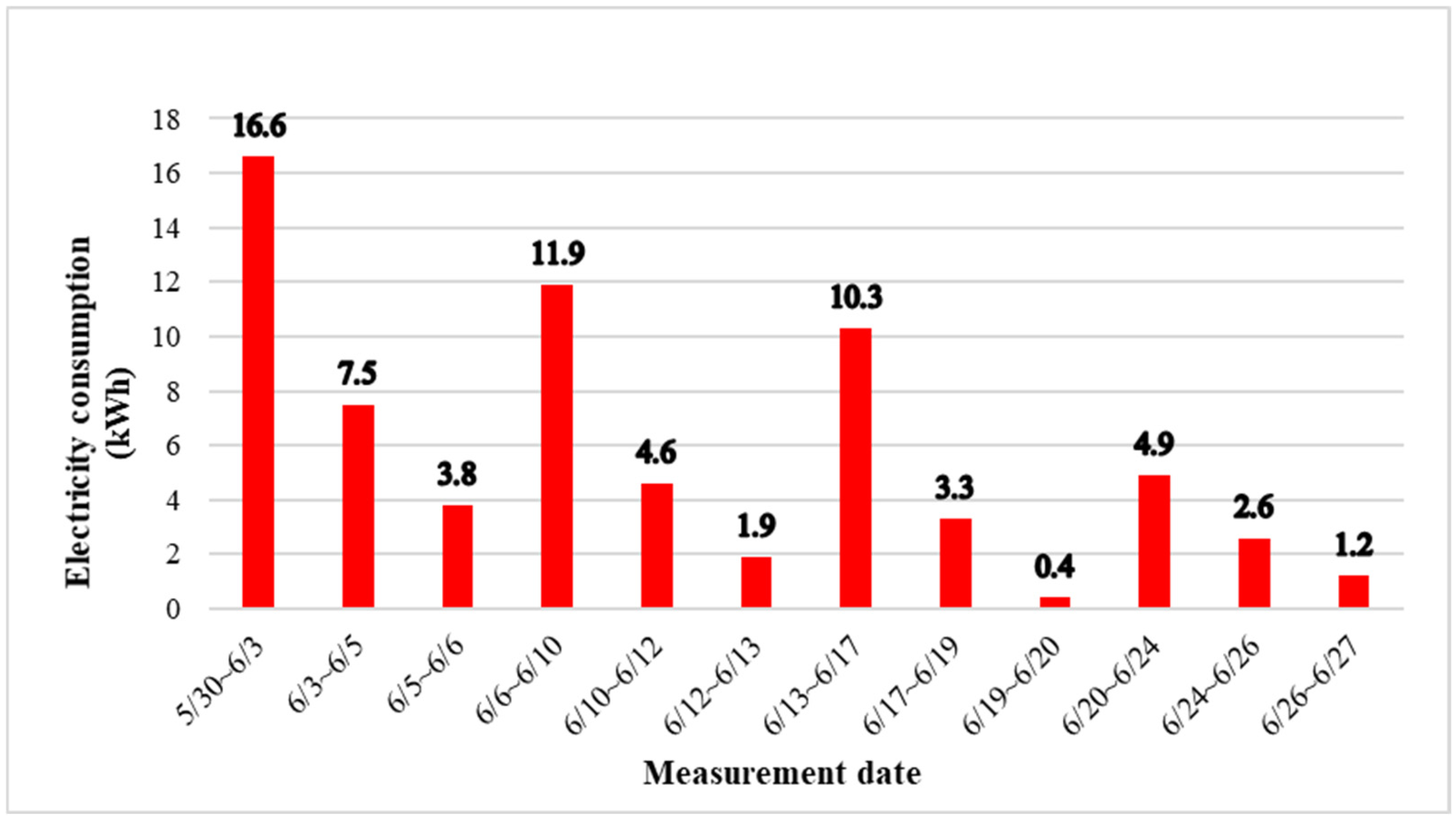
Total electricity consumption between 30 May and 27 June 2024 was 68.9 kWh, with an average daily consumption of 2.46 kWh day−1. Power demand was primarily driven by the high-pressure misting pump and auxiliary submersible pump for recirculation. The continuous 24 h schedule produced relatively stable daily consumption with minor variations reflecting pump duty cycles and potential fluctuations in system head pressure. These results provide a quantitative basis for evaluating operating costs and for exploring opportunities for energy optimization, such as variable-frequency drive control, improved hydraulic design, or renewable energy integration in Figure 4.

3.4. Nutrient Solution EC and pH Dynamics

Electrical conductivity (EC) was used as an operational control indicator reflecting the overall ionic strength of the working solution (i.e., the combined contribution of dissolved ions), rather than a direct quantification of individual nutrient concentrations. EC was monitored with temperature compensation and sensor calibration, and setpoints were adjusted by growth stage to maintain stable crop performance. Across the trial, EC increased from 1.186 ± 2% to 2.122 ± 2% mS cm−1 in the main cultivation period, consistent with a higher overall nutrient supply target during vegetative growth in Table 4.
pH remained relatively stable between 6.69 and 6.99 across monitoring intervals, suggesting buffering capacity in the nutrient solution and limited acid/base drift in Table 5. However, this pH range is slightly higher than commonly recommended targets for Pak choi (6.0–6.5), potentially contributing to suboptimal micronutrient availability and growth consistency.

3.5. Crop Growth Performance and Survival

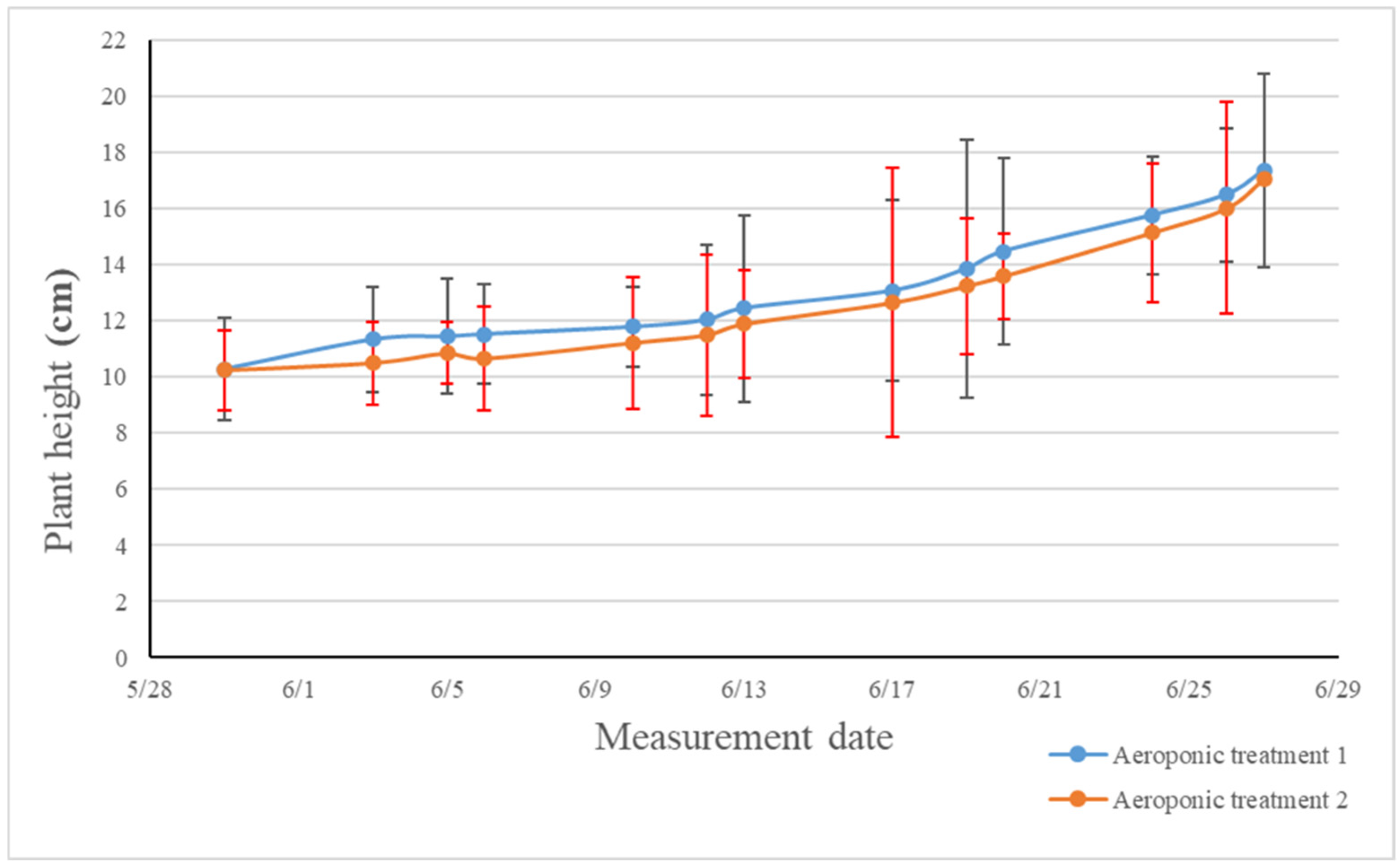
Plant growth performance varied significantly according to the origin of the seedlings. Seedlings cultivated under laboratory conditions demonstrated consistent adaptation to the aeroponic system, achieving an average height of approximately 18 cm and sustaining healthy leaf development. Conversely, soil-grown seedlings obtained from the nursery exhibited inhibited growth and elevated mortality rates, culminating in the total loss of these plants by 17 June 2024. This outcome is primarily attributed to root damage and physiological stress resulting from soil removal before transplantation, which likely compromised water and nutrient absorption and heightened susceptibility to transient desiccation or osmotic stress, as illustrated in Figure 5.
In Figure 5, Aeroponic treatment 1 refers to the mean plant height measured for Pak choi cultivated on the first aeroponic rack, whereas Aeroponic treatment 2 denotes the mean plant height measured for plants cultivated on the second aeroponic rack. For each treatment, plant height was recorded for all sampled individuals on the corresponding rack, and the reported value represents the arithmetic average of those measurements.
The overall survival rate for the cultivation trial was approximately 70%. Therefore, the efficiency metrics reported in Section 3.6 should be interpreted as gross values conditional on survival, and they may overstate whole-system performance when scaled to commercial expectations of near-complete stand establishment. While the system achieved strong water- and land-use efficiencies among surviving plants, the survival rate remains below commercial expectations for consistent production. These findings emphasize that cultivation success in aeroponics is jointly determined by engineering reliability and agronomic management, particularly during the transition to transplanting.

3.6. Resource-Use Efficiency and Yield

At a planting density of 44 plants m−2, the aeroponic system achieved an LUE of 2657.6 g m−2, exceeding the soil benchmark of 1644 g m−2 (ratio-based comparison, not statistical testing). Based on recorded water consumption, WUE in aeroponics reached 63.8 g L−1, compared with 46 g L−1 in soil cultivation. NUE also improved to 35.4 g mL−1 fertilizer, relative to 21.9 g mL−1 under soil conditions. These results collectively indicate that aeroponics with water recycling can enhance productivity per unit resource input, supporting the technology’s potential to reduce agricultural water footprints in water-limited settings in Table 6.

3.7. Environmental Temperature and Humidity Trends

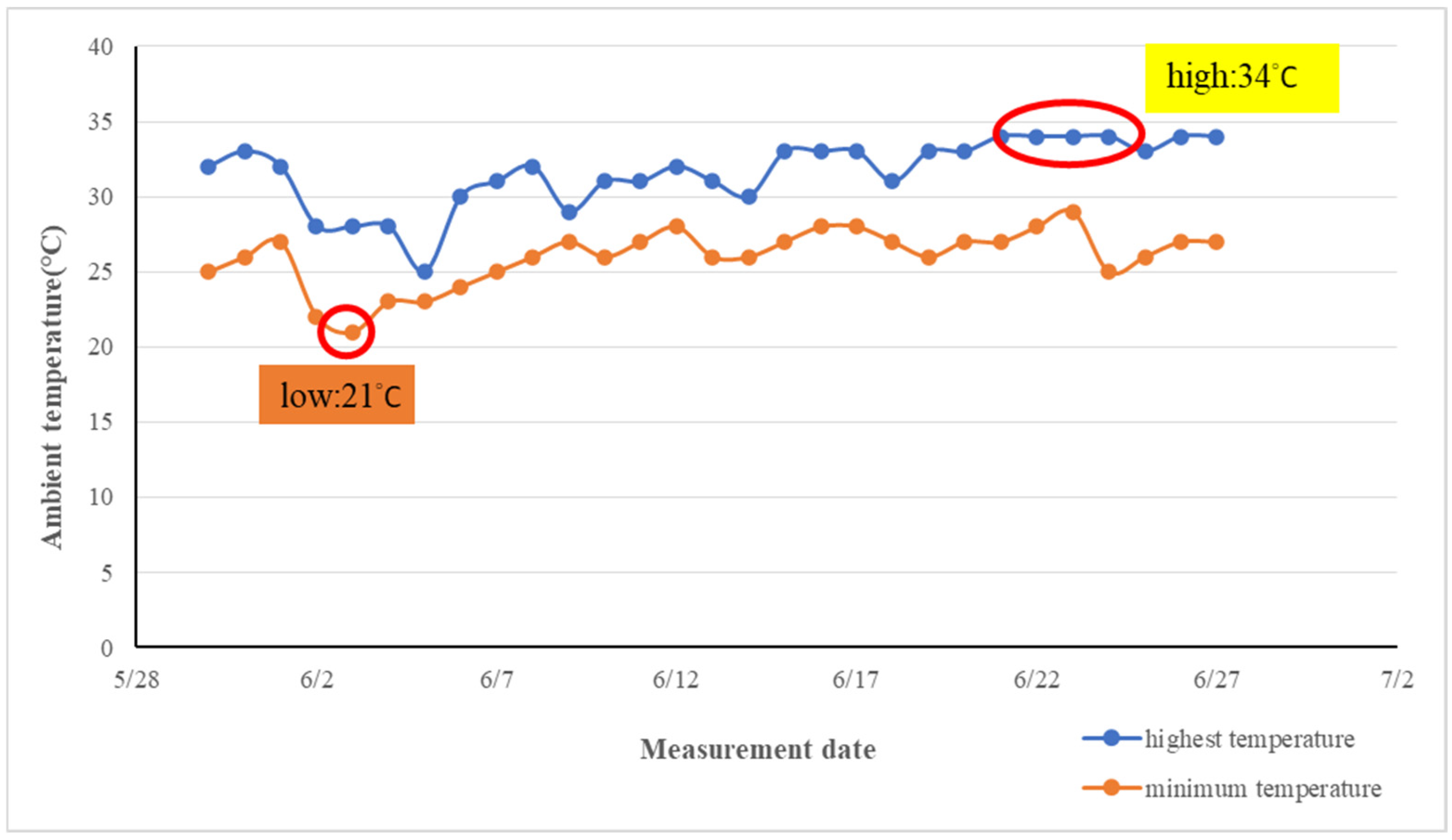
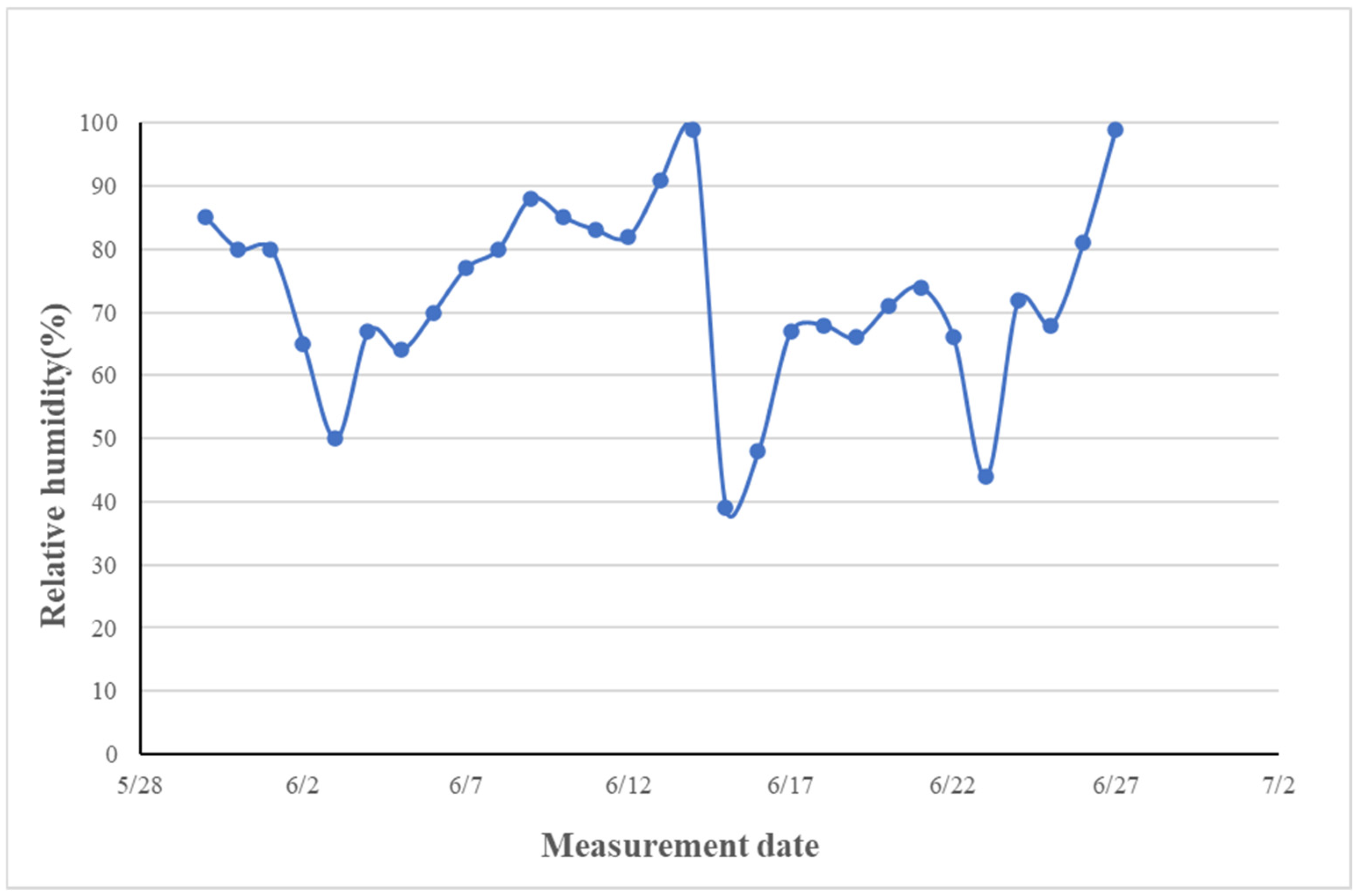
Environmental monitoring demonstrated that misting events transiently raised relative humidity within the root chamber to near saturation (approaching 100%). Temperature trends reflected ambient conditions moderated by shading measures, which were applied to prevent overheating. While high humidity is beneficial for reducing root desiccation risk, sustained saturation may increase the likelihood of microbial proliferation or condensation-related oxygen limitations if drainage is insufficient. Therefore, these environmental trends underscore the need to balance hydration with aeration and hygiene in closed chambers, particularly under continuous operation in Figure 6 and Figure 7.

4. Discussion

4.1. Closed-Loop Water Recycling as a Practical Water-Saving Strategy

The observed 74% reduction in water demand after recycling integration demonstrates the practical effectiveness of integrating closed-loop recovery into aeroponics. The conservative reduction reflects field-scale losses and practical operation rather than ideal laboratory conditions. This closed-loop configuration effectively diminished the need for freshwater supplementation and maintained more consistent reservoir levels during continuous operation, as illustrated in Figure 8.
In conventional irrigation, losses occur via evaporation, infiltration, and runoff, whereas soilless systems often lose water through drainage overflow and periodic reservoir replacement. Although aeroponics reduces bulk water handling, a portion of the delivered mist still condenses and drains. Capturing and treating this fraction transforms a loss pathway into a reusable resource [48]. The present system implemented a straightforward engineering sequence of collection, filtration, and UV sterilization, which is readily scalable and amenable to automation [51]. In water-stressed settings, such recycling can buffer the system against supply interruptions and reduce operational dependence on municipal or groundwater resources.
However, closed-loop operation requires vigilant management of solution chemistry. Recirculation can alter solution chemistry via concentration effects and organic/microbial accumulation. Consistent with this risk, EC increased as nutrient supply intensified, underscoring the need for tighter feedback control [49,50].

4.2. Water- and Land-Use Efficiencies and Their Implications for Sustainable Production

As presented in Table 6, the aeroponic system demonstrated a significant enhancement in LUE (2657.6 g m−2) and WUE (63.8 g L−1) compared to the reference soil benchmarks, which recorded values of 1644 g m−2 and 46 g L−1, respectively. These gains align with aeroponics’ core mechanisms—enhanced root aeration and intermittent, uniform droplet delivery—supporting rapid uptake under high-density configurations. In practice, improved resource-use efficiency can translate to higher yield per unit of constrained inputs, supporting food security objectives in regions where water allocations limit cropping intensity [42,44].
The results also indicate improved NUE in aeroponics. This can be attributed to reduced leaching and improved root interception of sprayed droplets. However, NUE values should be interpreted cautiously because fertilizer formulation, dosing protocols, and measurement boundaries (e.g., accounting for recycling losses) can influence apparent efficiency.

4.3. Energy Considerations and Opportunities for Optimization

Electricity consumption in the present system averaged 2.46 kWh day−1, driven mainly by pressurization for atomization in Figure 5. Energy use was within the lower range reported for small-scale pressurized aeroponic systems. Unlike plant factories, where lighting/HVAC dominates, energy demand here was primarily mechanical (pressurization and circulation). While the reported energy demand is modest in absolute terms, its relevance depends on production scale and local electricity prices. Importantly, water savings do not necessarily imply energy savings; instead, aeroponics can shift the sustainability trade-off from water to energy if pressurization and control components are inefficient [4,7,8].
Several design strategies may reduce energy intensity: (i) optimizing nozzle selection to achieve adequate droplet size at lower operating pressure; (ii) reducing hydraulic head losses through improved pipe sizing and manifold layout; (iii) implementing variable-frequency drives to match pump speed to demand. Renewable integration (e.g., PV-assisted pumping) may further reduce the net environmental burden depending on the site conditions.

4.4. pH Control and Nutrient Bioavailability

The measured pH range (6.69–6.99) was slightly higher than commonly recommended targets for Pak choi (typically ~6.0–6.5), which may influence the solubility and root uptake kinetics of certain micronutrients. However, this study did not quantify ion speciation in the recirculating solution nor plant tissue nutrient concentrations; therefore, nutrient bioavailability cannot be directly inferred from pH/EC alone. Accordingly, we interpret pH as an operational control variable and recommend future work incorporating solution ion profiling and tissue analysis to link pH management to nutrient status and growth outcomes, particularly under closed-loop recirculation, where concentration and buffering dynamics can evolve [10,11].

4.5. Engineering Design Rationale and Atomization Quality Considerations

Aeroponic performance is strongly influenced by the physical characteristics of the sprayed droplets delivered to the root zone. In general, smaller droplets increase surface-area-to-volume ratio, improving wetting uniformity across complex root architectures and enabling rapid nutrient diffusion. However, excessively fine droplets are prone to drift, incomplete deposition, and evaporation before reaching the root surface, particularly when chamber air temperature is elevated or airflow is uncontrolled [12,13]. Conversely, large droplets improve deposition efficiency but may promote localized oversaturation, reduce root oxygen availability, and accelerate drainage losses. Therefore, selecting an appropriate nozzle specification and operating pressure is a central engineering decision.
In the present system, a constant-pressure pump was adopted to provide stable hydraulic conditions across the nozzle manifold. This choice reduces temporal fluctuation in droplet size distribution and avoids spray intermittency arising from pressure oscillations, which may occur when pumps are directly switched on and off. Stable atomization also decreases the likelihood of uneven root hydration among plants positioned at different points along the manifold [21,22,23]. From an operational standpoint, maintaining stable pressure can prolong nozzle service life by reducing rapid mechanical stress cycles and improving the repeatability of mist delivery. Nevertheless, the constant-pressure approach may increase baseline electricity demand, and future designs could evaluate variable-speed pump control to balance atomization stability with energy efficiency [58].

4.6. Interpretation of WUE and Yield Under Survival Constraints

The present trial achieved strong water- and land-use efficiencies among surviving plants; however, the overall survival rate (~70%) introduces an important boundary condition for interpreting system-level performance. In practical deployment, the same infrastructure-level inputs (make-up water, electricity for pressurization and circulation, and nutrient additions) are incurred for the entire planted cohort, whereas harvested biomass accrues only from surviving individuals. Consequently, efficiency indicators calculated solely from the harvested biomass of survivors should be interpreted as gross values conditional on survival, and they may overstate expected performance when extrapolated to commercial scenarios that assume near-complete stand establishment [2,3,24].
To make this implication explicit, it is useful to distinguish between (i) gross efficiencies based on harvested biomass from surviving plants and (ii) survival-adjusted (net) efficiencies that allocate the same cumulative inputs across the entire cohort of planted individuals. Under a simplifying assumption that mean harvestable biomass scales approximately with the survival fraction S, survival-adjusted indicators can be expressed conceptually as WUEadjS × WUEgross and LUEadjS × LUEgross. Although exact recalculation is not performed here due to incomplete per-plant harvest weight distributions and the absence of time-resolved input allocation at the plant level, this framework clarifies why reporting only gross WUE/LUE can yield optimistic (potentially inflated) efficiency claims at the production-system level.
A pragmatic approach is to calculate a survival-adjusted yield (Yadj) by multiplying the average yield per plant by the survival fraction. Future reporting should therefore include per-plant harvest weight distributions, enabling estimation of the expected yield under stochastic survival outcomes and facilitating more realistic comparisons against commercial benchmarks [25,26]. This will also help determine whether interventions should prioritize improving per-plant growth rate, increasing survival during transplantation, or both. For short-cycle leafy vegetables, improving survival can yield immediate economic benefit by reducing wasted system capacity and simplifying harvesting operations.

4.7. Environmental Control Strategy Under Semi-Outdoor Conditions

Unlike indoor vertical farms, field-scale or semi-outdoor aeroponic systems are subject to fluctuating ambient temperature, humidity, and solar radiation. In the present work, shading was used to mitigate overheating. The humidity response indicated that misting events elevated local relative humidity to near saturation, which can be beneficial for reducing root dehydration risk in Figure 3. However, under high ambient temperature, saturated humidity can also reduce evaporative cooling and may exacerbate thermal stress. Moreover, repeated saturation may contribute to condensation formation on chamber surfaces, creating environments conducive to biofilm development [34,35,36].
For robust operation in subtropical environments, environmental control should be considered at two levels: (i) macro-level shading, ventilation, and physical enclosure choices that modulate external heat load; and (ii) micro-level control within the root chamber, including airflow management, drainage slope, and insulation. For example, installing low-energy fans to promote mild circulation within the chamber may reduce stagnant pockets and help equilibrate humidity without significantly increasing water loss. Similarly, adopting reflective insulation materials on exposed surfaces can reduce solar heat gain, stabilizing root-zone temperatures [48,49,51]. Root-zone temperature management is particularly important because it influences oxygen solubility and root respiration rate; high temperatures can increase oxygen demand while reducing oxygen availability, thereby creating stress.

4.8. Nutrient Solution Chemistry Under Recirculation: Risks and Mitigations

Although EC and pH were monitored, closed-loop systems often experience secondary chemical dynamics, including ion accumulation, precipitation, and changes in redox conditions. As mist evaporates, solutes concentrate in both the reservoir and residual films on roots. This concentration can lead to osmotic stress if EC rises above crop tolerance. In addition, carbonate chemistry can shift pH upward when dissolved CO2 degasses, particularly in aerated systems [19]. Conversely, nitrification or microbial activity can lower pH. The stable pH observed in this study suggests buffering capacity, but further monitoring of individual ions is recommended to ensure balanced nutrient availability.
A structured nutrient management protocol should include: (i) periodic calibration of EC and pH sensors; (ii) verification of nutrient stock solution composition; (iii) scheduled partial replacement (e.g., 10–30%) of reservoir solution to avoid long-term accumulation of non-essential ions; and (iv) filtration maintenance to prevent particulate buildup. Additionally, UV sterilization reduces microbial load but does not remove dissolved organic compounds, which can accumulate over time and contribute to biofilm formation. Therefore, integrating activated carbon filtration or advanced oxidation may be considered for long-duration operations, depending on cost constraints.

4.9. Linking Experimental Outcomes to Food Security and Regional Water Resilience

Leafy vegetable production contributes directly to dietary quality, and in island contexts such as Taiwan, food-system resilience is closely coupled with stable water allocation and efficient land use. The present field-scale results indicate that closed-loop aeroponics can reduce dependence on external freshwater inputs while maintaining high spatial productivity, which is relevant to drought-period water rationing and to decentralized, near-consumer production models [24].
Nevertheless, resilience benefits should be evaluated as a coupled water–energy–management problem. As discussed in Section 4.3, water savings do not necessarily imply energy savings; therefore, operational robustness depends on electricity price and reliability, contingency planning (e.g., backup power for pumps), and standardized management protocols for sanitation, sensor calibration, and nutrient control. In this sense, aeroponics should be treated as a socio-technical system in which engineering performance and agronomic outcomes are conditional on operator capacity and maintenance discipline.

4.10. Summary of Optimized Parameter Set for Pak Choi Under the Current System

Based on the current prototype and single-cycle dataset, a baseline parameter checklist for Pak choi is proposed: (i) misting 3 min every 40 min (24 h operation); (ii) EC ramping from ~1.2 to ~2.1 mS cm−1 across vegetative stages; (iii) pH target refined to 6.0–6.5; (iv) planting density of 44 plants m−2; and (v) closed-loop recovery with filtration and UV sterilization. This checklist is intended as a reproducible starting point for subsequent optimization and multi-season validation.

4.11. Limitations and Recommendations for Future Work

While this study provides field-scale evidence of water- and land-use advantages for closed-loop aeroponics, several limitations constrain generalization and motivate a focused next research phase. First, the evaluation covered a single short crop cycle under semi-outdoor conditions; multi-season deployments are required to quantify how ambient variability (temperature–humidity swings, rainfall events, and heat stress) reshapes irrigation demand, disease pressure, and yield stability. Second, replication was limited; future trials should incorporate replicated units or randomized plant blocks to estimate variance and enable formal statistical inference for yield, survival, and efficiency indicators.
Third, mechanistic characterization should be strengthened to support engineering optimization. In particular, droplet size distribution and spatial deposition uniformity were not measured; integrating atomization diagnostics (e.g., droplet sizing and manifold uniformity tests) would clarify the linkage between hydraulic design choices and plant response, and would provide a defensible basis for nozzle selection and pressure setpoints. Relatedly, because energy demand is primarily mechanical in this system, future work should quantify energy intensity under alternative pump control strategies (e.g., variable-speed operation) and lower-pressure nozzle configurations, and benchmark these against maintained atomization quality and crop performance.
Fourth, improved accounting boundaries are needed to enhance comparability and avoid optimistic interpretation of efficiency. Nutrient mass balances were not fully quantified; subsequent studies should track nutrient inputs, recovered volumes, and residual solution composition to compute NUE on a transparent mass-balance basis and to harmonize reporting across studies. In addition, adaptive control should be evaluated as a pathway to stabilize performance under real-world disturbances: sensor-informed misting (root-zone humidity or plant-water-status proxies) and automated EC/pH dosing can reduce oversupply, improve reproducibility, and directly address survival-related yield losses. Nutrient chemistry risks and mitigation options under recirculation (including solution management protocols) should be implemented as described in Section 4.8, with emphasis on validating long-duration stability rather than re-stating the detailed chemistry mechanisms.
Finally, translation beyond the prototype scale requires an integrated feasibility assessment. Techno-economic analysis and life-cycle assessment should be conducted to quantify cost drivers and environmental trade-offs under local electricity mixes and water-pricing conditions, and to evaluate resilience measures (e.g., backup power or renewable-assisted pumping) that may be necessary for reliable operation during grid disturbances. Collectively, these steps provide a practical pathway from a successful field prototype toward stable, repeatable aeroponic production systems.
Limitations of this study include the use of a single field installation without randomized replication, which restricts statistical inference. In addition, efficiency indicators were calculated from harvested biomass while survival was approximately 70%; future studies should report both gross and survival-adjusted (stand-level) efficiencies. Mechanistic optimization will benefit from measuring droplet size distributions and spatial deposition uniformity within the root chamber, alongside ion-resolved nutrient monitoring, microbial indicators, and plant tissue diagnostics to enable a nutrient mass balance under recirculation. Multi-season trials are also required to capture climatic variability and to assess long-term hygiene and maintenance performance.

4.12. Quantitative Indicator Definitions and Reporting Template

To support reproducible reporting and comparability across studies, it is recommended that future manuscripts present a standardized indicator template for aeroponic performance evaluation. The key indicators used in this study can be formalized as follows. Water use per plant is defined as the cumulative external make-up water added to the system divided by the number of planted individuals during the monitoring period. WUE is calculated as harvested fresh biomass (g) divided by the cumulative external make-up water (L). LUE is defined as harvested fresh biomass (g) normalized by the cultivated footprint area (m2). NUE can be reported as harvested biomass (g) per unit volume (mL) of fertilizer stock solution added, assuming a consistent stock concentration. Electricity use intensity is calculated as total electricity consumption (kWh) divided by harvested biomass (kg), yielding kWh kg−1, which enables cross-system energy comparisons in Table 6. When survival is below 100%, both gross and survival-adjusted indicators should be reported, with gross indicators based on surviving plants and net indicators based on total planted individuals, to avoid inflating the apparent efficiency.
In addition, contingency planning is essential. Aeroponic roots can dry quickly during pump failure; therefore, an uninterruptible power supply, backup pump, or gravity-fed emergency drip line should be considered for any deployment beyond the experimental scale. Finally, routine sanitation between cycles—mechanical wiping, approved disinfectants, and flushing of irrigation lines—will help maintain stable performance across seasons and protect product quality.
Collectively, these practical measures complement the engineering design presented herein and provide a realistic pathway for pilots to transition into stable, repeatable production. They are particularly relevant for smallholders and research farms seeking to improve water productivity under constrained conditions.

5. Conclusions

This study represents a single field-scale case study on Pak choi conducted within a specific site and season. Although the observed freshwater savings and resource-use efficiencies are promising, broader generalization requires replication across additional crops, seasons, climates, and system scales, together with systematic evaluation of maintenance burden, biofouling control, and techno-economic viability under commercial operating constraints. Therefore, the present findings should be interpreted as field-relevant empirical evidence and a design reference, rather than a universal performance guarantee.
This field-scale case study demonstrates that integrating a recovery–filtration–UV sterilization–recirculation module into aeroponic Pak choi production can substantially reduce external freshwater demand while maintaining high spatial productivity. Under practical operating conditions, closed-loop operation reduced freshwater input by 74% and achieved high yield at 44 plants m−2, with favorable water- and nutrient-use efficiencies when calculated on a harvested fresh biomass basis. Importantly, the study also clarifies operational boundaries: system-level efficiencies are sensitive to stand establishment, and the observed 70% survival indicates that transplant acclimation is a primary constraint on commercial consistency. Because the soil-based values were used as contextual benchmarks rather than experimental controls, cross-system comparisons should be interpreted as indicative rather than strictly equivalent. Future work should prioritize (i) replicated, multi-season deployments to quantify variability; (ii) reporting both gross and survival-adjusted indicators; (iii) improved nutrient accounting via mass balance and, where feasible, tissue/solution ion profiling; and (iv) tighter pH control and adaptive operation strategies to stabilize performance under closed-loop recirculation. Collectively, these refinements will strengthen the evidence base for deploying closed-loop aeroponic systems in water-limited regions.

Supplementary Materials

The following supporting information can be downloaded at https://www.mdpi.com/article/10.3390/agriculture16050586/s1, Figure S1: The water recycling reservoir, ultraviolet sterilization lamp, and submersible pump; Figure S2: Filtration system; Figure S3: Electrical enclosure; Figure S4: High-pressure atomizing pump; Figure S5: Illustrates the misting nozzle; Figure S6: Illustrates the process of spray dispersion; Figure S7: Demonstrates the operation of a capacitive water level sensor; Table S1: Summary of aeroponic cultivation research; Table S2: Critical Equipment and Input Specifications for the Field-Scale Closed-Loop Aeroponic System.

Author Contributions

Conceptualization, S.-W.C. and T.-J.W.; methodology, S.-W.C.; software, S.-W.C.; validation, S.-W.C. and G.-Y.G.; formal analysis, S.-W.C.; investigation, S.-W.C.; resources, S.-W.C. and G.-Y.G.; data curation, S.-W.C. and G.-Y.G.; writing—original draft preparation, S.-W.C.; writing—review and editing, T.-J.W.; visualization, S.-W.C. and T.-J.W.; supervision, S.-W.C.; project administration, S.-W.C. and T.-J.W.; funding acquisition, S.-W.C. All authors have read and agreed to the published version of the manuscript.

Funding

This research received no external funding.

Data Availability Statement

The data presented in this study are available on request from the corresponding author.

Acknowledgments

The authors would like to extend their sincere gratitude to all teachers, editors, and classmates for their invaluable support and assistance throughout this research.

Conflicts of Interest

The authors declare that they have no known competing financial interests or personal relationships that could have appeared to influence the work reported in this paper.

References

  1. Puccinelli, M.; Landi, M.; Maggini, R.; Pardossi, A.; Incrocci, L. Iodine biofortification of sweet basil and lettuce grown in two hydroponic systems. Sci. Hortic. 2021, 276, 109783. [Google Scholar] [CrossRef]
  2. Marcacci, S.; Raveton, M.; Ravanel, P.; Schwitzguébel, J.-P. Conjugation of atrazine in vetiver (Chrysopogon zizanioides Nash) grown in hydroponics. Environ. Exp. Bot. 2006, 56, 205–215. [Google Scholar] [CrossRef]
  3. Mabitsela, M.M.; Motsi, H.; Hull, K.J.; Labuschagne, D.P.; Booysen, M.J.; Mavengahama, S.; Phiri, E.E. First report of aeroponically grown Bambara groundnut, an African indigenous hypogeal legume: Implications for climate adaptation. Heliyon 2023, 9, e14675. [Google Scholar] [CrossRef]
  4. Carotti, L.; Pistillo, A.; Zauli, I.; Meneghello, D.; Martin, M.; Pennisi, G.; Gianquinto, G.; Orsini, F. Improving water use efficiency in vertical farming: Effects of growing systems, far-red radiation and planting density on lettuce cultivation. Agric. Water Manag. 2023, 285, 108365. [Google Scholar] [CrossRef]
  5. Alahe, M.A.; Wei, L.; Chang, Y.; Gummi, S.R.; Kemeshi, J.; Yang, X.; Won, K.; Sher, M. Cyber security in smart agriculture: Threat types, current status, and future trends. Comput. Electron. Agric. 2024, 226, 109401. [Google Scholar] [CrossRef]
  6. Alnafrah, I. Evaluating efficiency of green innovations and renewables for sustainability goals. Renew. Sustain. Energy Rev. 2025, 209, 115137. [Google Scholar] [CrossRef]
  7. Buckseth, T.; Sharma, A.K.; Pandey, K.K.; Singh, B.P.; Muthuraj, R. Methods of pre-basic seed potato production with special reference to aeroponics—A review. Sci. Hortic. 2016, 204, 79–87. [Google Scholar] [CrossRef]
  8. Divyangkumar, N.; Panwar, N.L. Standardization, certification, and development of biochar based fertilizer for sustainable agriculture: An overview. Environ. Pollut. Manag. 2024, 1, 186–202. [Google Scholar] [CrossRef]
  9. Du, M.; Xiao, Z.; Luo, Y. Advances and emerging trends in cultivation substrates for growing sprouts and microgreens toward safe and sustainable agriculture. Curr. Opin. Food Sci. 2022, 46, 100863. [Google Scholar] [CrossRef]
  10. Fasciolo, B.; Awouda, A.; Bruno, G.; Lombardi, F. A smart aeroponic system for sustainable indoor farming. Procedia CIRP 2023, 116, 636–641. [Google Scholar] [CrossRef]
  11. Gao, Y.; Camtepe, S.A.; Sultan, N.H.; Bui, H.T.; Mahboubi, A.; Aboutorab, H.; Bewong, M.; Islam, R.; Islam, M.Z.; Chauhan, A.; et al. Security threats to agricultural artificial intelligence: Position and perspective. Comput. Electron. Agric. 2024, 227, 109557. [Google Scholar] [CrossRef]
  12. Grable, A.R. Soil Aeration and Plant Growth. In Advances in Agronomy; Norman, A.G., Ed.; Academic Press: Cambridge, MA, USA, 1966; Volume 18, pp. 57–106. [Google Scholar]
  13. Idoje, G.; Mouroutoglou, C.; Dagiuklas, T.; Kotsiras, A.; Muddesar, I.; Alefragkis, P. Comparative analysis of data using machine learning algorithms: A hydroponics system use case. Smart Agric. Technol. 2023, 4, 100207. [Google Scholar] [CrossRef]
  14. Jaime-Rodríguez, C.; Pérez, M.; Pérez-Llorca, M.; Lozano-Castellón, J.; Lamuela-Raventós, R.M.; Vallverdú-Queralt, A.; González-Coria, J.; Chantry, O.; Hernandez, R.; Romanyà, J. Impacts of Woody Residue Amendments and Compost on ‘Beauregard’ Orange Fleshed Sweet Potato. Hortic. Plant J. 2025, 11, 1640–1652. [Google Scholar] [CrossRef]
  15. Jaman, M.H.; Roy, S.; Chatterjee, J.; Das, S.; Mistri, P.; Sengupta, S. Integrating agricultural land suitability and farmers’ perception on crop selection in a water-stressed region of eastern India. Agric. Syst. 2025, 222, 104171. [Google Scholar] [CrossRef]
  16. Janiak, K.; Jurga, A.; Kuźma, J.; Breś, W.; Muszyński-Huhajło, M. Surfactants effect on aeroponics and important mass balances of regenerative life support system—Lettuce case study. Sci. Total Environ. 2020, 718, 137324. [Google Scholar] [CrossRef]
  17. Johnson, M.; Villani, T.S.; Azmat, A.; Simon, J.E.; Both, A.J. Evaluation of algal biomass production on vertical aeroponic substrates. Algal Res. 2015, 10, 240–248. [Google Scholar] [CrossRef]
  18. Kamies, R.; Rafudeen, M.S.; Farrant, J.M. The use of aeroponics to investigate desiccation tolerance in the roots of the resurrection plant, Xerophyta viscosa. S. Afr. J. Bot. 2009, 75, 407. [Google Scholar] [CrossRef]
  19. Kratsch, H.A.; Graves, W.R.; Gladon, R.J. Aeroponic system for control of root-zone atmosphere. Environ. Exp. Bot. 2006, 55, 70–76. [Google Scholar] [CrossRef]
  20. Kyoi, S.; Mori, K.; Matsushita, K. Seeking sustainable efficient global agricultural production with nexus approach. J. Clean. Prod. 2024, 477, 143805. [Google Scholar] [CrossRef]
  21. Li, F.; Ding, M.; Yuan, H.; Wang, S.; Liang, B. Effects of Chlorine-Based Fertilizers on Tomato Growth under Soilless Culture. Phyton-Int. J. Exp. Bot. 2025, 94, 243–250. [Google Scholar] [CrossRef]
  22. Liu, B.; Zhang, Y.; Yi, X.; Zheng, H.; Ni, K.; Ma, Q.; Cai, Y.; Ma, L.; Shi, Y.; Yang, X.; et al. Partially replacing chemical fertilizer with manure improves soil quality and ecosystem multifunctionality in a tea plantation. Agric. Ecosyst. Environ. 2025, 378, 109284. [Google Scholar] [CrossRef]
  23. Liu, Z. Green technology based agricultural product quality and market prices in China. J. King Saud Univ. Sci. 2024, 36, 103451. [Google Scholar] [CrossRef]
  24. Malkawi, S.; Hagare, D.; Maheshwari, B. A two-step approach to recycling hydroponics waste nutrient solutions using fertiliser drawn forward osmosis and chemical precipitation. Resour. Conserv. Recycl. Adv. 2024, 23, 200233. [Google Scholar] [CrossRef]
  25. Millam, S.; Sharma, S.K. Chapter 32—Soil-Free Techniques. In Potato Biology and Biotechnology; Vreugdenhil, D., Bradshaw, J., Gebhardt, C., Govers, F., Mackerron, D.K.L., Taylor, M.A., Ross, H.A., Eds.; Elsevier Science B.V.: Amsterdam, The Netherlands, 2007; pp. 705–716. [Google Scholar] [CrossRef]
  26. Mirzabe, A.H.; Hajiahmad, A.; Fadavi, A.; Rafiee, S. Piezoelectric atomizer in aeroponic systems: A study of some fluid properties and optimization of operational parameters. Inf. Process. Agric. 2023, 10, 564–580. [Google Scholar] [CrossRef]
  27. Moe, K.; Moh, S.M.; Htwe, A.Z.; Kajihara, Y.; Yamakawa, T. Effects of Integrated Organic and Inorganic Fertilizers on Yield and Growth Parameters of Rice Varieties. Rice Sci. 2019, 26, 309–318. [Google Scholar] [CrossRef]
  28. Nesheli, S.A.; Salaj, A.T. Urban farming for social benefit. IFAC-PapersOnLine 2024, 58, 351–356. [Google Scholar] [CrossRef]
  29. Neukart, F. Towards sustainable horizons: A comprehensive blueprint for Mars colonization. Heliyon 2024, 10, e26180. [Google Scholar] [CrossRef]
  30. Niu, G.; Masabni, J. Chapter 9—Hydroponics. In Plant Factory Basics, Applications and Advances; Kozai, T., Niu, G., Masabni, J., Eds.; Academic Press: Cambridge, MA, USA, 2022; pp. 153–166. [Google Scholar] [CrossRef]
  31. Olabi, A.G.; Shehata, N.; Issa, U.H.; Mohamed, O.A.; Mahmoud, M.; Abdelkareem, M.A.; Abdelzaher, M.A. The role of green buildings in achieving the Sustainable Development Goals. Int. J. Thermofluids 2024, 25, 101002. [Google Scholar] [CrossRef]
  32. Omri, H.; Jarraya, B.; Kahia, M. Green finance for achieving environmental sustainability in G7 countries: Effects and transmission channels. Res. Int. Bus. Financ. 2025, 74, 102691. [Google Scholar] [CrossRef]
  33. Otieno, E.O.; Lenga, F.K.; Mburu, D.M.; Kiboi, M.N.; Fliessbach, A.; Ngetich, F.K. Combined inorganic and organic fertilizers improved soil microbial biomass and nitrogen dynamics in Upper Eastern region of Kenya. Geoderma Reg. 2024, 39, e00869. [Google Scholar] [CrossRef]
  34. Patil, N.L.; Kulkarni, A.A.; Amalnerkar, D.; Kamble, S.C. Exploration of wheatgrass as functional food by using urban agriculture models for regulating growth & nutrients. S. Afr. J. Bot. 2022, 151, 284–289. [Google Scholar] [CrossRef]
  35. Pejman Sereshkeh, S.R.; Llumiquinga, B.; Bapatla, S.; Grzenda, M.J.; Specca, D.; Both, A.-J.; Singer, J.P. Staticaponics: Electrospray delivery of nutrients and water to the plant root zone. J. Electrost. 2024, 128, 103902. [Google Scholar] [CrossRef]
  36. Peterson, L.A.; Welander, N.T.; Hellgren, O. An Intermittent Aeroponics System Adaptable to Root Research. In Developments in Agricultural and Managed Forest Ecology; McMichael, B.L., Persson, H., Eds.; Elsevier: Amsterdam, The Netherlands, 1991; Volume 24, pp. 628–631. [Google Scholar]
  37. Pezzarossa, B.; Rosellini, I.; Borghesi, E.; Tonutti, P.; Malorgio, F. Effects of Se-enrichment on yield, fruit composition and ripening of tomato (Solanum lycopersicum) plants grown in hydroponics. Sci. Hortic. 2014, 165, 106–110. [Google Scholar] [CrossRef]
  38. Rahman, M.H.; Hasan, M.N.; Khan, M.Z.H. Study on different nano fertilizers influencing the growth, proximate composition and antioxidant properties of strawberry fruits. J. Agric. Food Res. 2021, 6, 100246. [Google Scholar] [CrossRef]
  39. Raihan, A.; Ridwan, M.; Rahman, M.S. An exploration of the latest developments, obstacles, and potential future pathways for climate-smart agriculture. Clim. Smart Agric. 2024, 1, 100020. [Google Scholar] [CrossRef]
  40. Raihan Talukder, M.; Asaduzzaman, M.; Tanaka, H.; Asao, T. Electro-degradation of culture solution improves growth, yield and quality of strawberry plants grown in closed hydroponics. Sci. Hortic. 2019, 243, 243–251. [Google Scholar] [CrossRef]
  41. Rajendran, S.; Domalachenpa, T.; Arora, H.; Li, P.; Sharma, A.; Rajauria, G. Hydroponics: Exploring innovative sustainable technologies and applications across crop production, with Emphasis on potato mini-tuber cultivation. Heliyon 2024, 10, e26823. [Google Scholar] [CrossRef]
  42. Rathor, A.S.; Choudhury, S.; Sharma, A.; Nautiyal, P.; Shah, G. Empowering vertical farming through IoT and AI-Driven technologies: A comprehensive review. Heliyon 2024, 10, e34998. [Google Scholar] [CrossRef]
  43. Redjala, T.; Zelko, I.; Sterckeman, T.; Legué, V.; Lux, A. Relationship between root structure and root cadmium uptake in maize. Environ. Exp. Bot. 2011, 71, 241–248. [Google Scholar] [CrossRef]
  44. Regkouzas, P.; Katie, N.; Bontiotis, K.; Stefanakis, A. Effect of compost and compost-derived biochar on the growth of lettuce irrigated with water and treated wastewater. Nat.-Based Solut. 2025, 7, 100220. [Google Scholar] [CrossRef]
  45. Roxas, C.L.C.; Dela Cruz, R.L.C.; De Pedro, J.P.Q.; Tamani, B.M.; Dungca, J.R.; Lejano, B.A.; Ongpeng, J.M.C. Development of socially sustainable transitional shelter design in the Philippines. Int. J. Disaster Risk Reduct. 2024, 115, 105026. [Google Scholar] [CrossRef]
  46. Sadek, N.; Kamal, N.; Shehata, D. Internet of Things based smart automated indoor hydroponics and aeroponics greenhouse in Egypt. Ain Shams Eng. J. 2024, 15, 102341. [Google Scholar] [CrossRef]
  47. Salam, M.; Jamil, M.H.; Tenriawaru, A.N.; Kamarulzaman, N.H.; Syam, S.H.; Rahmadanih; Ramadhani, A.; Bidangan, A.M.; Muslim, A.I.; Bakheet Ali, H.N.; et al. The effectiveness of agricultural extension in rice farming in Bantaeng Regency, Indonesia: Employing structural equation modeling in search for the effective ways in educating farmers. J. Agric. Food Res. 2024, 18, 101487. [Google Scholar] [CrossRef]
  48. Schmidt Rivera, X.; Rodgers, B.; Odanye, T.; Jalil-Vega, F.; Farmer, J. The role of aeroponic container farms in sustainable food systems—The environmental credentials. Sci. Total Environ. 2023, 860, 160420. [Google Scholar] [CrossRef]
  49. Tian, W.; Liang, F.; Tu, L.; Xu, Z.; Li, R.; Ma, R.; Huang, Y.; Wu, S.; Li, S.; Wang, J.; et al. Mineral fertilizer substitution and application of Bacillus velezensis SQR9 reduced nitrogen-oxide emissions in tropical vegetable fields. Agric. Ecosyst. Environ. 2025, 384, 109554. [Google Scholar] [CrossRef]
  50. Tiwari, J.K.; Devi, S.; Buckseth, T.; Ali, N.; Singh, R.K.; Zinta, R.; Dua, V.K.; Chakrabarti, S.K. Precision phenotyping of contrasting potato (Solanum tuberosum L.) varieties in a novel aeroponics system for improving nitrogen use efficiency: In search of key traits and genes. J. Integr. Agric. 2020, 19, 51–61. [Google Scholar] [CrossRef]
  51. Topalcengiz, Z.; Chandran, S.; Gibson, K.E. A comprehensive examination of microbial hazards and risks during indoor soilless leafy green production. Int. J. Food Microbiol. 2024, 411, 110546. [Google Scholar] [CrossRef]
  52. Valizadeh, N.; Hayati, D.; Karami, E.; Rezaei-Moghaddam, K. Agricultural sustainability assessment in Fars province of Iran through the lens of the elimination multi-criteria decision-making method. Environ. Sustain. Indic. 2024, 24, 100505. [Google Scholar] [CrossRef]
  53. Vera-Puerto, I.; Olave, J.; Tapia, S.; Chávez, W. Atacama Desert: Water resources and reuse of municipal wastewater in irrigation of cut flower aeroponic cultivation system (first laboratory experiments). Desalination Water Treat. 2019, 150, 73–83. [Google Scholar] [CrossRef]
  54. Wang, L.; Lian, G.; Harris, Z.; Horler, M.; Wang, Y.; Chen, T. The controlled environment agriculture: A sustainable agrifood production paradigm empowered by systems engineering. In Computer Aided Chemical Engineering; Kokossis, A.C., Georgiadis, M.C., Pistikopoulos, E., Eds.; Elsevier: Amsterdam, The Netherlands, 2023; Volume 52, pp. 2167–2172. [Google Scholar]
  55. Weathers, P.J.; Zobel, R.W. Aeroponics for the culture of organisms, tissues and cells. Biotechnol. Adv. 1992, 10, 93–115. [Google Scholar] [CrossRef] [PubMed]
  56. Wen, J.; Li, Z.; Yao, J.; Wang, S.; Liu, Y.; Liu, Y. The combined application of organic and inorganic fertilizers improved the quality of colored wheat by physicochemical properties and rheological characteristics of starch. Int. J. Biol. Macromol. 2024, 282, 137175. [Google Scholar] [CrossRef] [PubMed]
  57. Xue, C.; Ghirardelli, A.; Chen, J.; Tarolli, P. Investigating agricultural drought in Northern Italy through explainable Machine Learning: Insights from the 2022 drought. Comput. Electron. Agric. 2024, 227, 109572. [Google Scholar] [CrossRef]
  58. Zhang, R.; Hu, P.; Li, L.; Tang, Q.; Yang, J.; Yang, J.; Chen, L. Fine-grained method for determining size and velocity distribution patterns of flat-fan nozzle-atomised droplets based on phase doppler interferometer. Comput. Electron. Agric. 2024, 225, 109343. [Google Scholar] [CrossRef]
  59. Zhang, S.; Peng, Y.; Zhang, F.; Li, Z.; Weng, W. Impact of no-tillage and reduced nitrogen input on corn yield and nitrogen efficiency in the corn belt of northeast China. Field Crops Res. 2025, 322, 109742. [Google Scholar] [CrossRef]
  60. Srikanth, S.; Choong, T.W.; Yan, A.; He, J.; Chen, Z. An Efficient Method for Adventitious Root Induction from Stem Segments of Brassica Species. Front. Plant Sci. 2016, 7, 943. [Google Scholar] [CrossRef]
  61. Sugito, A.; Sumarsono, J.; Priyati, A.; Dewi, E.P. Application of Aeroponics Techniques on The Growth of Spinach (Amaranthus sp). J-AGENT J. Agric. Eng. Technol. 2024, 2, 1–13. [Google Scholar]
  62. Park, H.-k.; Kim, S.-H.; Lee, J.-H.; Kim, K.-Y.; Sim, J.-E.; Jang, D.-C.; Park, S.-M. Physiological Responses of Pak Choi (Brassica rapa subsp. Chinensis) Genotypes to Salt Tolerance. Horticulturae 2023, 9, 1161. [Google Scholar] [CrossRef]
  63. LIN, T.-H. Research on The Feasibility of a Home-Based Aeroponic Cultivation System for Leafy Vegetable Crops. In Department of Safety Health and Environmental Engineering; National Yunlin University of Science and Technology: Yunlin, Taiwan, 2025. [Google Scholar]
Figure 1. Experimental flowchart.
Agriculture 16 00586 g001
Figure 2. Aeroponic frame conceptual model.
Agriculture 16 00586 g002
Figure 3. Aeroponic cultivation site setup overview.
Agriculture 16 00586 g003
Figure 4. Aeroponic cultivation for a power consumption trend.
Agriculture 16 00586 g004
Figure 5. Aeroponic cultivation for a Pak choi growth height and seedling comparison. Note: Error bars indicate standard deviation. (1) Black bar: Aeroponic treatment 1 error bar (2) Red bar: Aeroponic treatment 2 error bar.
Agriculture 16 00586 g005
Figure 6. Aeroponic cultivation for temperature monitoring.
Agriculture 16 00586 g006
Figure 7. Aeroponic cultivation for relative humidity monitoring.
Agriculture 16 00586 g007
Figure 8. Aeroponic cultivation for a water recycling loop schematic.
Agriculture 16 00586 g008
Table 1. Comparative analysis of traditional soil agriculture and soilless cultivation techniques [1,2,3,4].
FeatureConventional Soil FarmingHydroponic CultivationAeroponic Cultivation
YieldLowMediumHigh
Production ControlDependent on soilDependent on nutrient solutionDependent on nutrient solution
HygieneHigh risk of contaminationModerate riskLow risk
Nutrient AbsorptionLowMediumHigh
Fertilizer UsageHighLower than soil farmingLower than soil farming
Water-Use Efficiency (WUE)Affected by soil and climateControlled via sensorsControlled via sensors
Soil SalinizationPossibleNoNo
Labor RequirementHighAutomatedAutomated
Pest & Disease RiskSevereMildMild
Equipment CostLowMediumHigh
Table 2. pH and electrical conductivity (EC) ranges for Pak choi (Brassica rapa subsp. chinensis) under aeroponics and related soilless cultivation systems.
Evidence TypesCrop/SystempHEC (mS·cm−1)Ref.
Direct aeroponics (Pak choi-type Brassica)Brassica rapa ssp. chinensis in an aeroponic trough system using full-strength Netherlands Standard Composition6.82.2[60]
Aeroponic leafy-green operational envelope (context)Leafy vegetables under aeroponics (not Pak choi-specific)5.7–7.51.0–2.5[61]
Pak choi soilless culture (supporting, non-aeroponics)Pak choi in controlled soilless cultivation (hydroponic platform)5.80.8 (acclimation), 1.2–1.6 (growth stages)[62]
Table 3. Comparison of water consumption with and without recycling.
System TypeTotal Water Usage (L)Daily Water Usage (L)Water Usage per Plant (L)
Without Water Recycling27,000209.32.8
With Water Recycling700083.30.95
Table 4. Summarize the nutrient concentration.
DateEC (mS cm−1)pH
2024.5.13~2024.5.230.056.99
2024.5.12~2024.5.290.5246.81
Table 5. pH levels during different growth phases.
DateEC (mS cm−1)pH
2024.5.30~2024.6.81.1866.93
2024.6.9~2024.6.121.4206.79
2024.6.13~2024.6.161.6406.77
2024.6.17~2024.6.201.8706.70
2024.6.21~2024.6.272.1226.69
Table 6. Comparison of resource-use efficiency indicators between the present aeroponic case study and soil-based benchmark values (contextual reference).
Cultivation MethodTemperature (°C)Relative Humidity (%)Growth Duration (Days)WUE (g/L)LUE (g/m2)Fertilizer Efficiency (g/mL)
Aeroponic
(This Study)
21–3439–972863.82657.635.4
Soil-Based [63]
(Previous Study)
25–29804446.0164421.9
Note: Soil-based values are reported as literature benchmarks under their respective cultivar/fertilizer/environment conditions, not as experimental controls.
Disclaimer/Publisher’s Note: The statements, opinions and data contained in all publications are solely those of the individual author(s) and contributor(s) and not of MDPI and/or the editor(s). MDPI and/or the editor(s) disclaim responsibility for any injury to people or property resulting from any ideas, methods, instructions or products referred to in the content.