Article

Effects of Long-Term Material Amendments on Soil Phosphorus Fractions and Associated Microbial Changes in Greenhouse Tomato Cultivation

1
College of Horituculture, Shenyang Agricultural University, Shenyang 110866, China
2
The Modern Facilities Horticultural Engineering Technology Center, Shenyang Agricultural University, Shenyang 110866, China
*
Author to whom correspondence should be addressed.
Agriculture 2026, 16(4), 406; https://doi.org/10.3390/agriculture16040406
Submission received: 6 January 2026 / Revised: 3 February 2026 / Accepted: 8 February 2026 / Published: 10 February 2026
(This article belongs to the Special Issue Phosphorus Utilization and Management in Agricultural Soil Systems)

Abstract

Background and Aims: High phosphate fertilizer application is commonly used in facility vegetable cultivation to sustain high yields, but it leads to intense phosphorus fixation. While organic-inorganic amendments for soil remediation have been explored, their long-term effects on phosphorus availability and microbial mechanisms in continuous cropping soils remain unclear. Methods: This study, based on a long-term experiment, assesses the impact of mixed amendments (straw, biochar, and calcium oxide) on soil chemistry, phosphorus fractions, enzyme activities, and microbial communities (phoD and pqqC) in greenhouse continuous cropping systems, compared to a control (CK). Results: BCa and BRCa significantly increased soil pH. BR and BRCa treatments raised soil organic matter by 48% and 97%. All treatments boosted available phosphorus, total phosphorus, and microbial biomass phosphorus by 3.6–24%, 9.0–21%, and 24–49%. Labile phosphorus content increased, while medium labile and residual phosphorus decreased. BRCa treatment notably enhanced the richness of both phoD and pqqC communities. Conclusions: Combined application of straw, biochar, and calcium oxide improves soil properties and microbial communities, enhancing phosphorus availability.

1. Introduction

Phosphorus is an essential nutrient element required for plant growth and participates in key physiological processes such as energy transfer, photosynthesis, and genetic information transmission [1,2]. The rational application of phosphate fertilizer can improve soil structure, enhance soil fertility, increase phosphorus availability, and promote crop nutrient absorption and utilization, thereby increasing yield [3]. Despite the widespread use of phosphate fertilizers, the deficiency of available phosphorus in the soil remains a key issue restricting the sustainable development of agriculture [4]. There are two reasons for phosphorus deficiency in soils. One reason is that the soil has a limited capacity to provide available phosphorus because phosphorus has poor mobility in soil; it is prone to react chemically with soil components such as clay, iron, and aluminum, transforming into insoluble forms, thereby reducing the utilization rate of phosphorus [5,6]. On the other hand, intensive agricultural production increases the input of phosphate fertilizers to meet the demand for high yields, which promotes the accumulation and fixation of phosphorus in soil. Consequently, a large proportion of applied phosphorus is transformed into sparingly soluble and strongly fixed P forms, resulting in low phosphorus utilization efficiency [7,8]. This “high input and low efficiency” management approach not only fails to effectively solve the problem of phosphorus deficiency but may also lead to phosphorus non-point source pollution, resulting in resource waste and environmental pressure. Therefore, researching management methods to improve soil phosphorus availability is crucial for sustainable agricultural development and environmental protection.
Soil phosphorus exists in both organic and inorganic forms, and the interconversion process determines the bioavailability of soil phosphorus [9,10]. In agricultural soils, organic phosphorus mineralization and inorganic phosphorus dissolution are the two core pathways for maintaining phosphorus supply, with microorganisms and their secreted phosphatases playing a dominant role in this process [11]. Previous studies have shown that over 40% of soil microorganisms directly participate in phosphorus transformation, converting unavailable phosphorus forms into bioavailable phosphorus that plants can absorb by regulating enzyme activity and metabolic pathways [12]. Soil phosphatases (such as acid phosphatase ACP and alkaline phosphatase ALP) also play an important role in this process [13]. In phosphorus-deficient soils, microorganisms upregulate the expression of phosphatases, phosphate transporters, and related genes, forming a phosphorus system [14]. At the molecular level, different functional genes represent the differentiated ecological strategies of microorganisms in acquiring phosphorus. Genes such as phoD, phoA, and phoX are mainly associated with the enzymatic mineralization potential of organophosphorus compounds. Among them, the alkaline phosphatase encoded by phoD is considered an important molecular marker of organophosphorus activation in neutral to slightly alkaline soils [15,16]. In contrast, GCD and its synergistic PQQ gene family are considered potential metabolic pathways for the microbial dissolution of inorganic phosphorus minerals by promoting glucose oxidation and organic acid production [17,18], It is important to emphasize that the changes in the community structure of phoD and pqqC in this study mainly reflect the potential functional allocation patterns of microorganisms related to different phosphorus acquisition strategies, rather than directly proving their functional realization. At the genus level, some taxa associated with phosphate mineralization or phosphate solubility (such as some Actinomycetes or Proteobacteria) showed significant responses to specific treatments, consistent with their reported functional potential in the literature [19], but this association should still be considered indirect evidence. Given the lack of transcriptomics or functional enzyme expression data, the results of this study are more suitable for revealing the functional potential structure of soil phosphorus cycling and its ecological regulation direction under long-term management measures rather than making quantitative inferences about the specific functional intensity.
In the field environment, different forms of soil phosphorus are continuously transformed through microbial metabolism, rhizosphere organic acid secretion, and enzymatic reactions, which determine the availability of phosphorus to crops. Inorganic phosphorus (such as Ca-P and Fe/Al-P) is converted into labile phosphorus (such as Resin-P and NaHCO3-Pi) under these effects, thereby improving plant absorption efficiency [20]. Meanwhile, organic phosphorus (such as NaHCO3-Po and NaOH-Po) is mineralized into inorganic labile phosphorus under the action of phosphatases and organic acids, which can then be utilized by plants [11]. In facility environments, due to long-term fertilization and the closed water and nutrient cycles, the transformation characteristics of soil phosphorus components are unique, with their dominant storage form determined by soil pH: when pH > 7, it is mainly Ca-P, and when pH < 7, it is mainly Fe/Al-P [21]. Under conditions of excessive irrigation and low biological demand, these environments may exacerbate phosphorus leaching losses, particularly from more labile phosphorus pools. In contrast, under conditions of high microbial activity and sufficient carbon availability, phosphorus is more likely to be temporarily immobilized within microbial biomass. In controlled environments, characterized by high temperature, high humidity, and frequent irrigation, enhanced microbial activity and accelerated organic matter decomposition promote the mineralization of organic phosphorus. This dynamic regulation further drives continuous transformations between less available and more readily available phosphorus forms, thereby influencing the long-term availability of soil phosphorus [22]. Long-term continuous cropping and excessive fertilization lead to the accumulation of phosphorus in the soil, with most of the phosphorus being converted into slow-release and insoluble states, reducing the availability of phosphorus [23,24]. This phenomenon limits the efficient absorption of phosphorus by crops and exacerbates the problem of low phosphorus utilization efficiency. Therefore, how to improve the availability of phosphorus in facility soils has become a key aspect of sustainable agricultural production. It should also be noted that amendments such as biochar may exert dual effects on soil phosphorus dynamics; while they can enhance phosphorus retention and cycling, they may also increase phosphorus adsorption or promote calcium phosphate precipitation under high pH conditions, potentially limiting phosphorus availability if not properly managed.
At present, the application of organic and inorganic materials has become the main method to alleviate the continuous cropping obstacles in the facility soil. Biochar alleviates continuous cropping obstacles by improving soil aggregates, water-holding capacity, and other properties [25]. Studies have shown that in a three-year potted experiment of continuous tobacco cultivation, biochar treatment significantly improved soil nutrient retention and soil physicochemical properties, thereby inhibiting disease occurrence and improving the continuous cropping soil environment, which is beneficial to crop growth [26]. Applying biochar to greenhouse tobacco soil can increase soil organic matter, pH, and microbial diversity and promote growth [27]. Straw is rich in nutrients and can improve soil as an organic material. Research has found that combining straw returning with nitrogen fertilizer treatment improves microbial communities and alleviates continuous cropping obstacles [28]. Inorganic materials such as calcium oxide can neutralize acidity, increase pH, and reduce the toxicity of Al3+ and Mn2+, which is beneficial to root growth and nutrient absorption [29]. In terms of enhancing phosphorus availability, straw biochar substrates can improve phosphorus adsorption in soils with high phosphorus accumulation and increase phosphorus availability [30]. In the rice pot experiment, the application of straw significantly increased soil pH and available phosphorus [31]. Corn straw biochar enhances phosphorus absorption and effective phosphorus content [32]. Regarding the issue of phosphorus use efficiency under greenhouse systems and field conditions: In the greenhouse experiments, researchers evaluated the effects of different modified biochars on crop phosphorus use efficiency. The results showed that sorghum plants treated with modified biochar had an increase of approximately 77% in shoot phosphorus use efficiency and 40% in root phosphorus use efficiency (PUE) [33]. At the same time, a 2025 field study on rice showed that the application of biochar can reduce the migration and loss of total phosphorus (TP) in the soil by about 19.9–30.4%. This not only alleviates the risk of phosphorus leaching but also further helps maintain the soil’s available phosphorus pool, which is practically significant for improving the overall utilization efficiency of phosphorus fertilizers [34]. Therefore, the rational application of organic materials (such as straw, compost, and biochar, etc.) and inorganic materials (such as calcium oxide, and lime, etc.) can help improve the physical and chemical properties of soil, alleviate acidification and nutrient imbalance, and enhance phosphorus availability. However, the effects of different material types, dosages, and interactions on soil phosphorus cycling still require further research to develop optimal application strategies to achieve efficient soil nutrient utilization and ecologically sustainable management.
Tomato, as one of the important crops in facility cultivation, is widely grown. In facility cultivation, farmers tend to invest high amounts of phosphorus in pursuit of yield, leading to the deposition of unabsorbed phosphorus in the soil. Therefore, it is of practical significance to explore the responsiveness of phosphorus-rich soil in tomato facilities to phosphorus under the addition of organic materials. The purpose of this study is: (1) to explore the effects of long-term material addition on the availability and composition of phosphorus in tomato soil; (2) to explore the effects of long-term material addition on the microbial-mediated soil organic phosphorus mineralization gene phoD and inorganic phosphorus dissolution gene pqqC; and (3) to reveal the possible reasons for the improvement of phosphorus availability in continuous cropping soils by long-term material addition.

2. Materials and Methods

2.1. Experimental Design and Plant Materials

Soil was collected from a greenhouse tomato field with over 20 years of continuous cropping history in Shenyang, China (41°53′ N, 123°14′ E), and classified as brown soil (Cambisols, WRB). The subsequent long-term experiment was conducted under controlled greenhouse conditions at Shenyang Agricultural University (41°30′ N, 127°00′ E), approximately 93 km from the sampling site, within the same climatic region, equipped with 15 independent cement-enclosed cultivation pools (1.5 m × 1.0 m × 0.8 m) to prevent water and nutrient movement between treatments. Drip irrigation was applied to ensure a uniform water supply. The experiment was initiated in 2009 under a two-crop-per-year tomato system, with materials applied before planting in both spring and autumn. Five treatments were established: control (CK), biochar (B), biochar + straw (BR), biochar + calcium oxide (BCa), and biochar + straw + calcium oxide (BRCa). Application rates and material properties are presented in Table 1 and Table 2. All treatments followed the same basal and top-dressing fertilization regime, while treatment-specific N, P, and K application rates are detailed in Table 3. The experiment followed a randomized block design with three replicates per treatment. Soil samples were collected after harvest of the spring 2023 tomato crop (14 years after experiment initiation). Five soil cores (0–20 cm) were composited per cultivation pool, sieved (2 mm), and subsampled for physicochemical analysis, enzyme activity assays, and microbial community analysis.

2.2. Soil Indicator Measurement

Soil pH was measured at a soil-to-water ratio of 1:5. Soil organic matter (SOM) was determined using the potassium dichromate oxidation method [35]. Total nitrogen (TN) was measured by the semi-micro Kjeldahl method [36]. Total phosphorus (TP) and available phosphorus (AP) were determined using the molybdenum blue colorimetric method [37], while total potassium (TK) was measured by NaOH fusion followed by flame photometry [38]. Available nitrogen (AN) was determined by the alkali-hydrolyzed diffusion method, and available potassium (AK) by ammonium acetate extraction with flame photometry [39]. Microbial biomass phosphorus (MBP) was determined using the chloroform fumigation–extraction method [40], followed by molybdenum–antimony colorimetry. Soil phosphorus fractions were extracted following the Hedley sequential fractionation procedure [41], and phosphorus concentrations in the extracts were determined using the molybdate–ascorbic acid colorimetric method. Acid and alkaline phosphatase activities were measured following the method of Tabatabai [42], using p-nitrophenyl phosphate (pNPP) as the substrate under pH 6.5 and 11.0 conditions, respectively. Phytase activity was determined using the vanadium–molybdate yellow colorimetric method.

2.3. Soil Microbial Diversity Analysis

Genomic DNA of the phoD and pqqC genes was extracted using the FastDNA® Spin Kit for Soil. DNA concentration and purity were assessed by 1% agarose gel electrophoresis. Specific primers were then used for PCR amplification: phoD primers (ALPS-F730F_ALPS-1101R: GAGGCCGATCGGCATGTCG/GCGAACAGCTCGGTCAG) and pqqC primers (pqqCF_pqqCR: CAGTGGGACGACCACGAGGT/AACCGCTTCTACTACCAG). The PCR reactions were conducted on an ABI GeneAmp® 9700 PCR system (Applied Biosystems, Waltham, MA, USA). The PCR products were analyzed for fluorescence quantification using the QuantiFluor™-ST blue fluorescence quantification system (Promega, Madison, WI, USA) to accurately determine the concentration of the amplification products. Subsequently, the PCR products from each sample were mixed in appropriate proportions to optimize sequencing uniformity based on sequencing requirements. The mixed DNA products were subjected to high-throughput sequencing on the Illumina Miseq PE300 platform, with sequencing performed by Shanghai Meiji Bio-Medical Technology Co., Ltd. (Shanghai, China). The obtained sequencing data were processed for quality control (QC), followed by OTU (operational taxonomic unit) clustering using the USEARCH11-uparse algorithm at a 97% similarity threshold. Representative OTU sequences were extracted and aligned with the Silva database (Release 138, http://www.arb-silva.de (accessed on 12 November 2023)) for taxonomic classification. Finally, the microbial community composition of each sample was statistically analyzed at different taxonomic levels to examine its ecological structure and functional characteristics.

2.4. Date Analyses

The experimental data were organized using Excel (Microsoft Office, Redmond, WA, USA, 2016). Soil chemical properties, soil phosphorus fractions, soil phosphatase activity, and the α-diversity of phoD and pqqC microorganisms, as well as their abundance at the phylum and genus levels, were analyzed using one-way ANOVA based on Duncan’s test in IBM SPSS Statistics 22.0 (IBM, Armonk, NY, USA). Bar charts were created using GraphPad Prism 10. Percentage stacked bar charts and bar plots for phoD and pqqC microorganisms at the phylum and genus levels were generated using Origin 2024. NMDS analysis for phoD and pqqC was performed using the Meiji platform. Redundancy analysis (RDA) of the microbial community structure of phoD and pqqC with soil physicochemical properties was conducted using Canoco5, while the heatmap of soil phosphorus fractions was generated using R software 4.4.2. Structural equation modeling (SEM) was established using AMOS, with variables B, BR, BCa, and BRCa treatments. The assumed pathway was that material addition promoted the activity of active phosphorus in the soil. A sample size of 12 soil samples was used. Model goodness of fit was evaluated using multiple indices. A good fit was considered achieved when χ2/df < 3.0, CFI > 0.90, and RMSEA < 0.08. Standardized path coefficients were reported in the model results to characterize the direction and strength of the relationships between variables. All paths in the model were significant at the p < 0.05 level, and visual plots were created in PowerPoint (Microsoft Office, 2016).

3. Results

3.1. Effects of Long-Term Material Addition on Basic Physicochemical Properties of Protected Continuous Cropping Tomato Soil

The long-term application of soil amendments altered the physiochemical properties of the continuous cropping tomato soil (Table 4). Compared with the control group (CK), BRCa and BCa treatments significantly increased soil pH; BR and BRCa treatments significantly increased soil SOM by 48% and 97%, respectively; There was no significant difference in total nitrogen (TN) content in the soil, but the four treatments significantly increased the alkaline hydrolyzable nitrogen (AN) content in the soil; all treatments significantly increased the content of total phosphorus (TP) and available phosphorus (AP) compared to the control (CK), with increases ranging from 9.0% to 21% and 3.6% to 24%, respectively, the BRCa treatment showed the most significant improvement, with TP content increasing by 21% and AP content increasing by 24% compared to the CK; The four additive treatments had no significant effect on the total potassium (TK) content of the soil, but the BCa treatment significantly increased the available potassium (AK) content of the soil, with an increase of 27%. All four treatments significantly increased MBP content, with increases ranging from 24 to 49%.

3.2. Soil Phosphorus Component Content

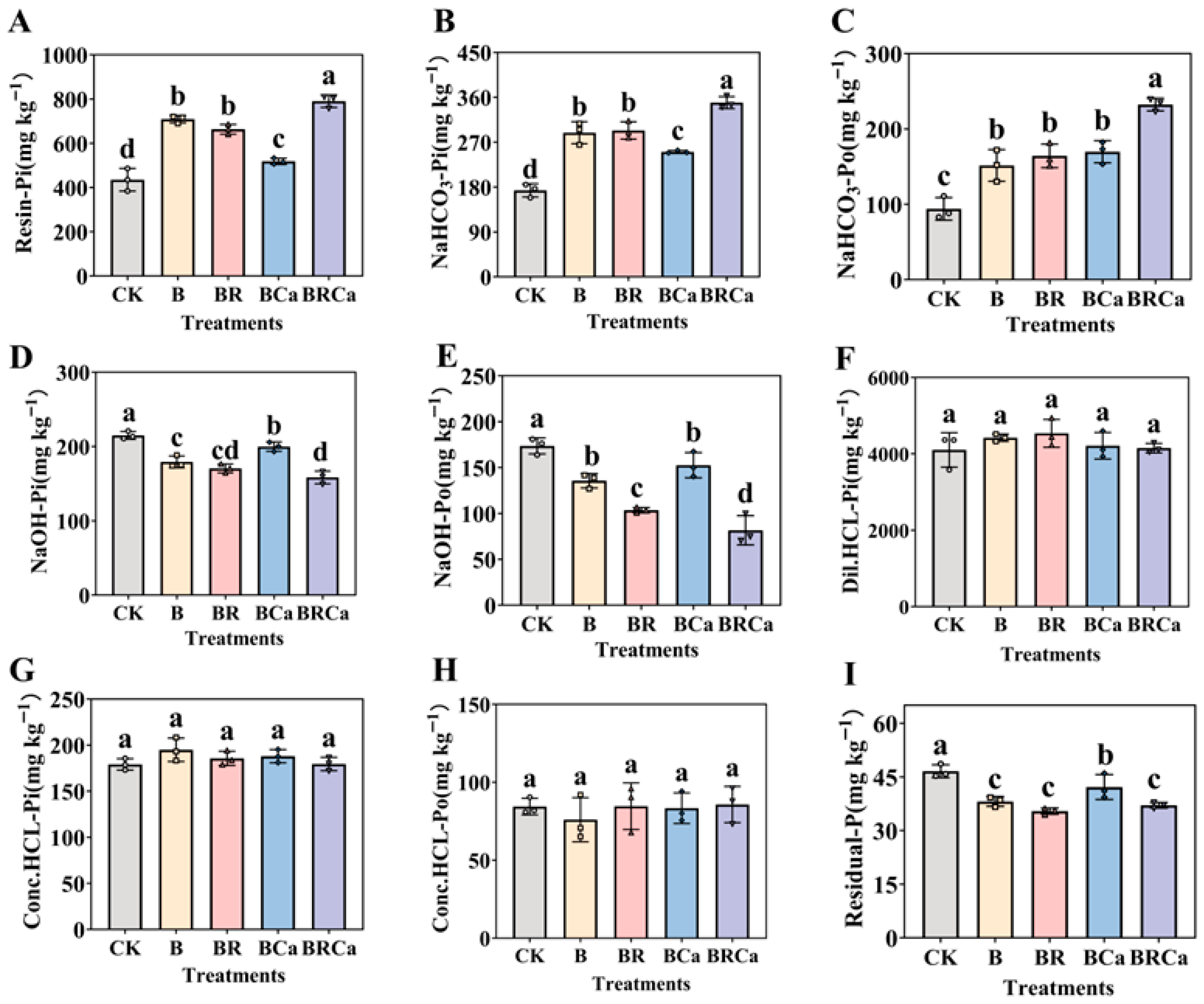
The distribution of soil phosphorus fractions determined using the Hedley-P sequential extraction method is presented in Figure 1. Different material amendments exerted distinct effects on phosphorus fractions in continuously cropped greenhouse tomato soils. For soil labile phosphorus fractions (Resin-P, NaHCO3-Pi, and NaHCO3-Po), all material treatments significantly increased their contents compared with the control (CK), with increases ranging from 19% to 81%, 44% to 107%, and 61% to 147%, respectively. Among these treatments, the BRCa treatment exhibited the greatest enhancement of labile phosphorus fractions (Figure 1A–C). In contrast, the contents of moderately labile phosphorus fractions (NaOH-Pi and NaOH-Po) were significantly reduced under all four treatments relative to CK, with decreases of 7–26% and 12–52%, respectively (Figure 1D,E). For non-labile phosphorus fractions (Dil.HCl-Pi, Conc.HCl-Pi, Conc.HCl-Po, and residual-P), only residual-P showed a significant decline under all treatments compared with CK, with reductions ranging from 1% to 17% (Figure 1I). No significant differences were observed for the remaining non-labile phosphorus fractions among treatments (Figure 1F–H).

3.3. Soil Phosphorus-Related Enzyme Activity

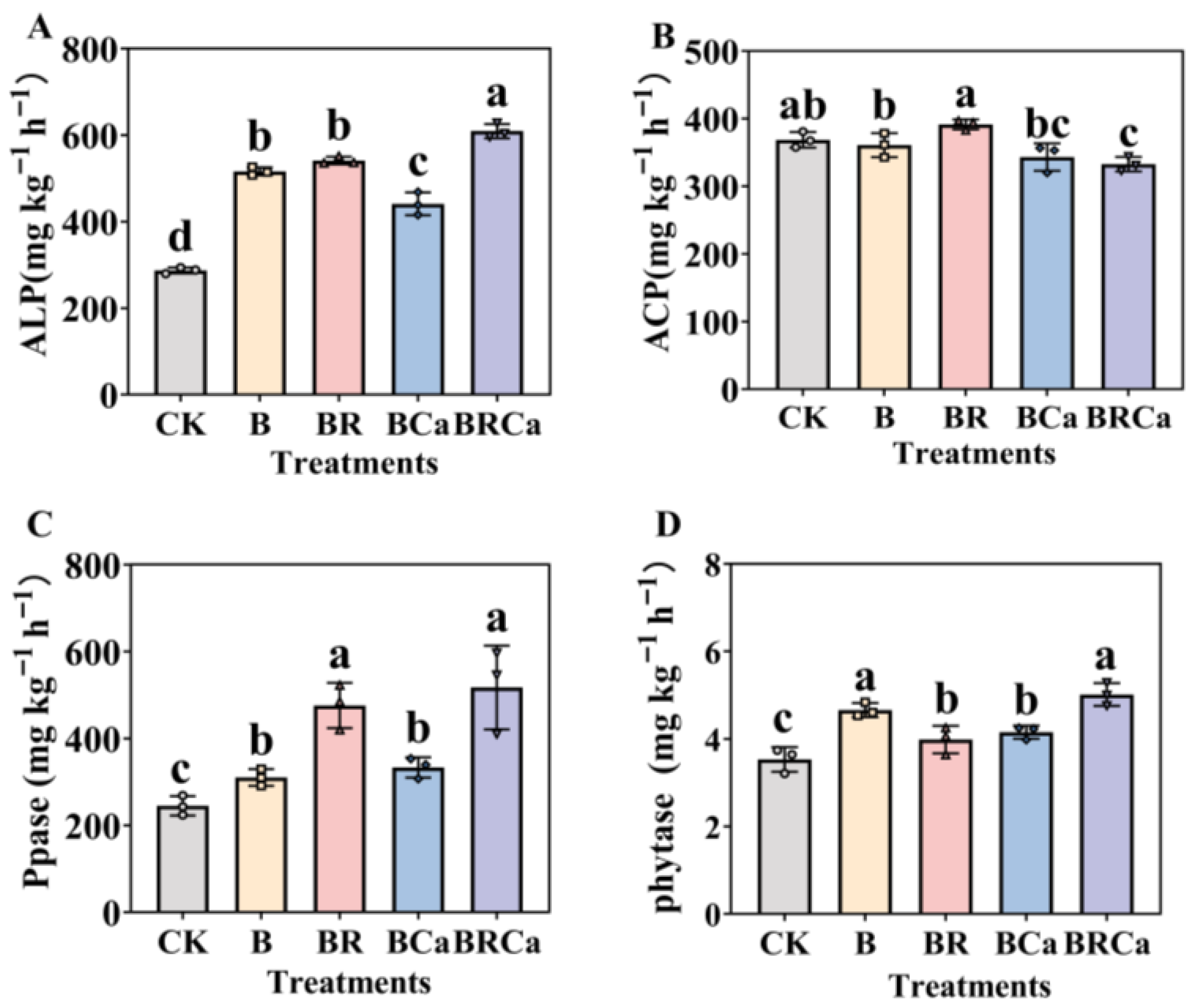
The effects of material amendments on soil enzyme activities are shown in Figure 2. Compared with the control (CK), treatments B, BCa, and BRCa significantly decreased acid phosphatase activity by 7%, 12%, and 15%, respectively (Figure 2A). In contrast, soil alkaline phosphatase activity was significantly enhanced under all material treatments (B, BR, BCa, and BRCa), with increases ranging from 53% to 112%, corresponding to approximately 1.53–2.12-fold increases, and the BRCa treatment exhibited the strongest effect (Figure 2B). Soil pyrophosphatase activity was also significantly stimulated by material addition. Specifically, the BR and BRCa treatments increased pyrophosphatase activity by approximately 1.25-fold and 1.08-fold, respectively, relative to CK (Figure 2C). In addition, soil phytase activity was significantly increased under all treatments, showing increases of 12–48% compared with CK (Figure 2D).

3.4. Alpha Diversity Index of phoD and pqqC Genes

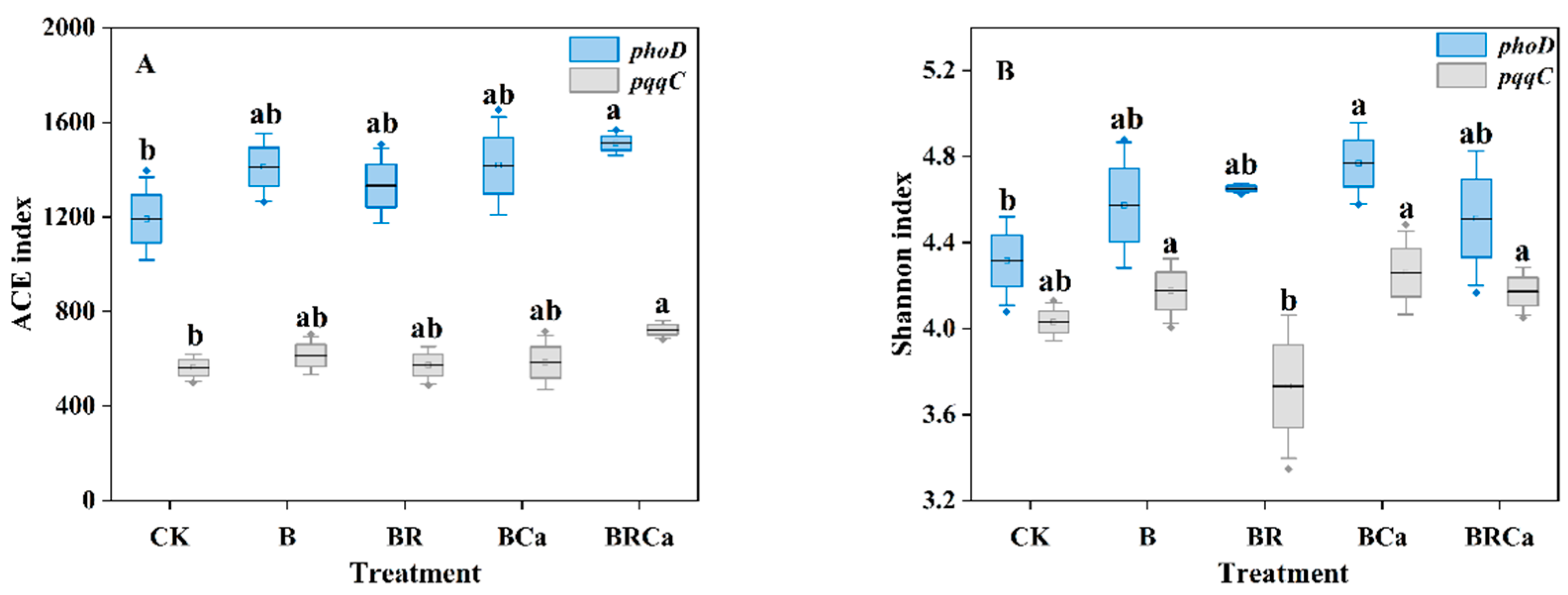
As shown in Figure 3, for the ACE index of microbial community richness in phoD and pqqC, only the BRCa treatment significantly increased microbial community richness compared with CK, with increases of 26% for phoD and 28% for pqqC, respectively (Figure 3A). For the Shannon index of microbial community diversity in phoD and pqqC, only BRCa treatment significantly increased the microbial community diversity in phoD compared to CK. In the pqqC microbial community diversity, there was no statistically significant difference between each treatment and the CK (Figure 3B).

3.5. NMDS Analysis of Bacterial Community Structure in Facility Tomato Soil

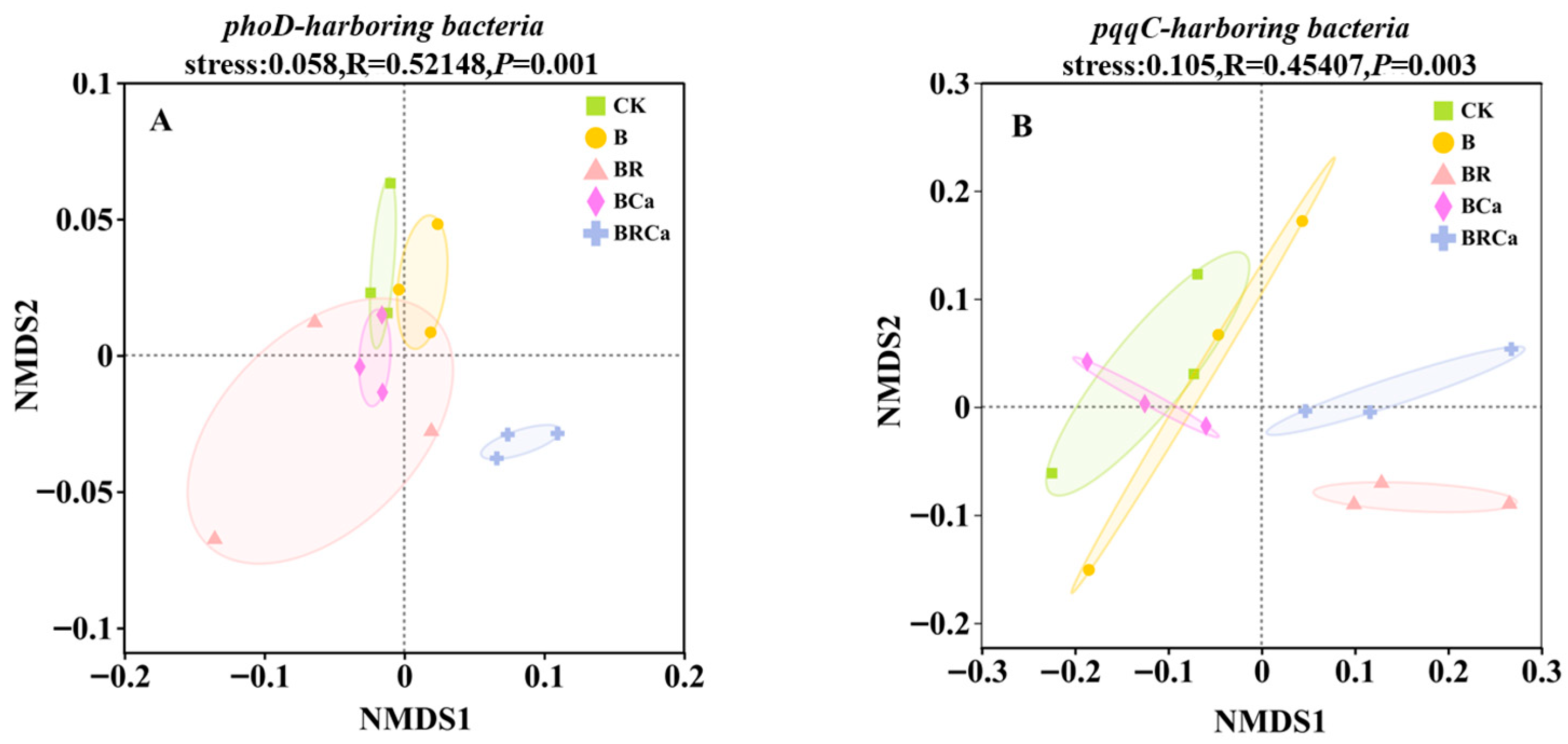
According to the analysis of species composition differences (NMDS) between phoD and pqqC (Figure 4). The phoD microbial community composition showed significant differences after different material addition treatments (p = 0.001), and the BRCa treatment showed significant separation from the CK, while B, BR, BCa, and CK showed overlap. In the pqqC microbial community composition, the community composition showed significant differences after material addition (p = 0.003), with BR and BRCa showing obvious separation from CK, while B and BCa overlapped with CK.

3.6. Phylum-Level Distribution of phoD and pqqC Microbial Communities

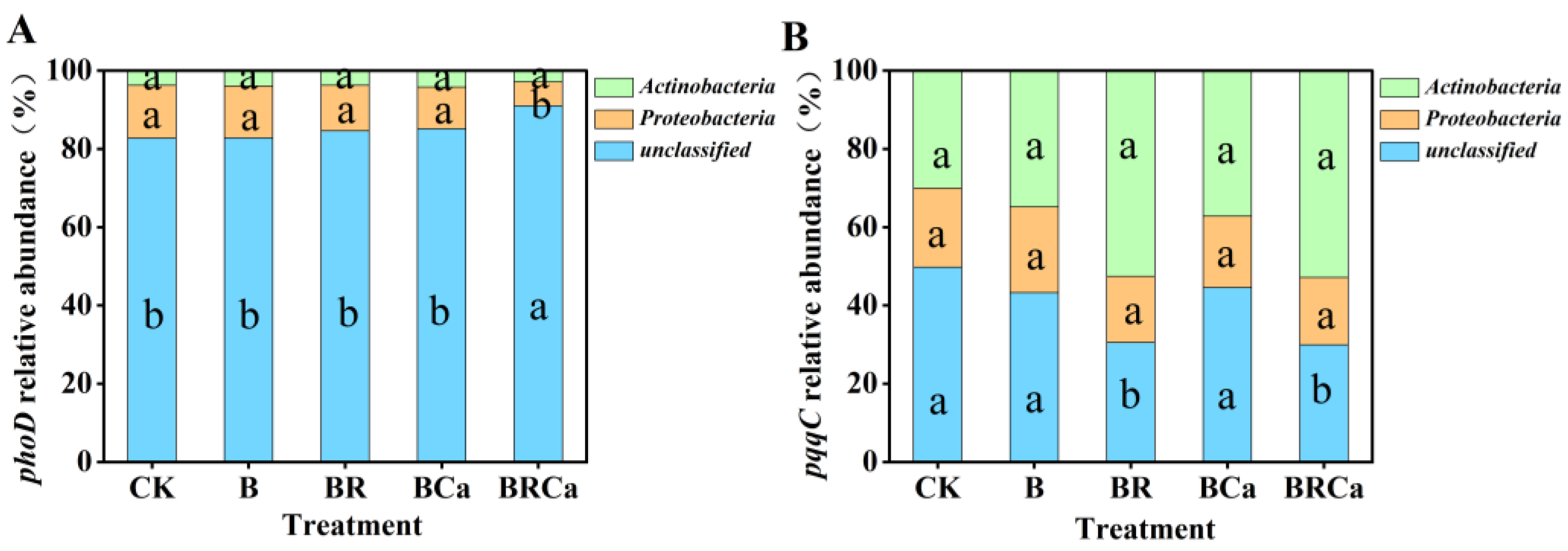
We analyzed the top 20 phyla-level display charts based on the abundance of phoD and pqqC microbial communities at the phylum taxonomic level under long-term material addition treatment. It can be seen that, excluding the unclassified phyla, Proteobacteria and Actinobacteria are the main dominant phyla, occupying a dominant position in the microbial community. Among them, Proteobacteria accounted for 6.13–13.52% of the total phoD bacterial community (Figure 5A) and 16.90–21.95% of the pqqC bacterial community (Figure 5B); Actinobacteria accounted for 2.87–4.22% of the total phoD bacterial community (Figure 5A) and 30.04–52.86% of the pqqC bacterial community (Figure 5B). In the phoD community, the abundance of unclassified under BRCa treatment was significantly higher than that under CK treatment, and the relative abundance of Proteobacteria was significantly reduced in BRCa treatment compared to CK (Figure 5A). In the pqqC community, the abundance of unclassified bacteria under BR and BRCa treatments was significantly lower than that under CK (Figure 5B).

3.7. Genus-Level Community Composition of phoD and pqqC Microbes

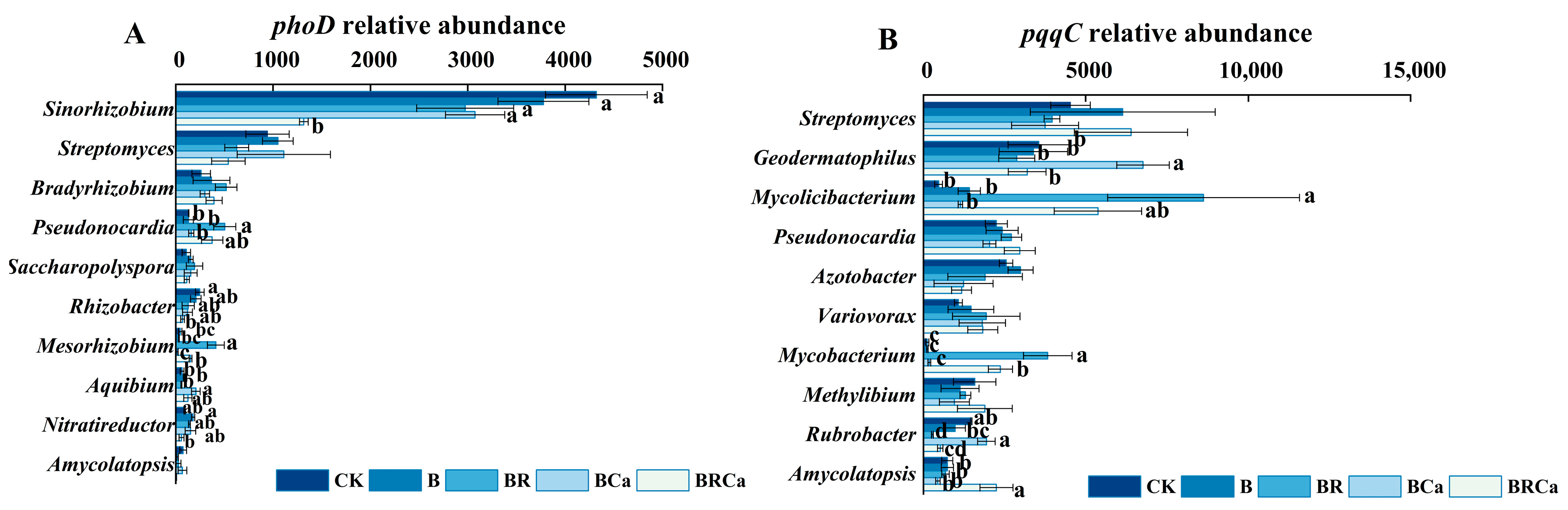
From the abundance graph of the top ten microbial communities ranked at the genus level for phoD and pqqC, we found that (Figure 6). In the phoD microbial community, the abundance of Sinorhizobium and Rhizobacter under BRCa treatment was significantly lower than that under CK; in the pqqC microbial community, the relative abundance of Mycolicibacterium significantly increased after BR treatment compared with CK, and the relative abundance of Mycobacterium significantly increased under BR and BRCa treatments compared to CK (p < 0.05, Figure 6B).

3.8. Correlation Analysis of phoD and pqqC Microbes with Soil Phosphorus Fractions

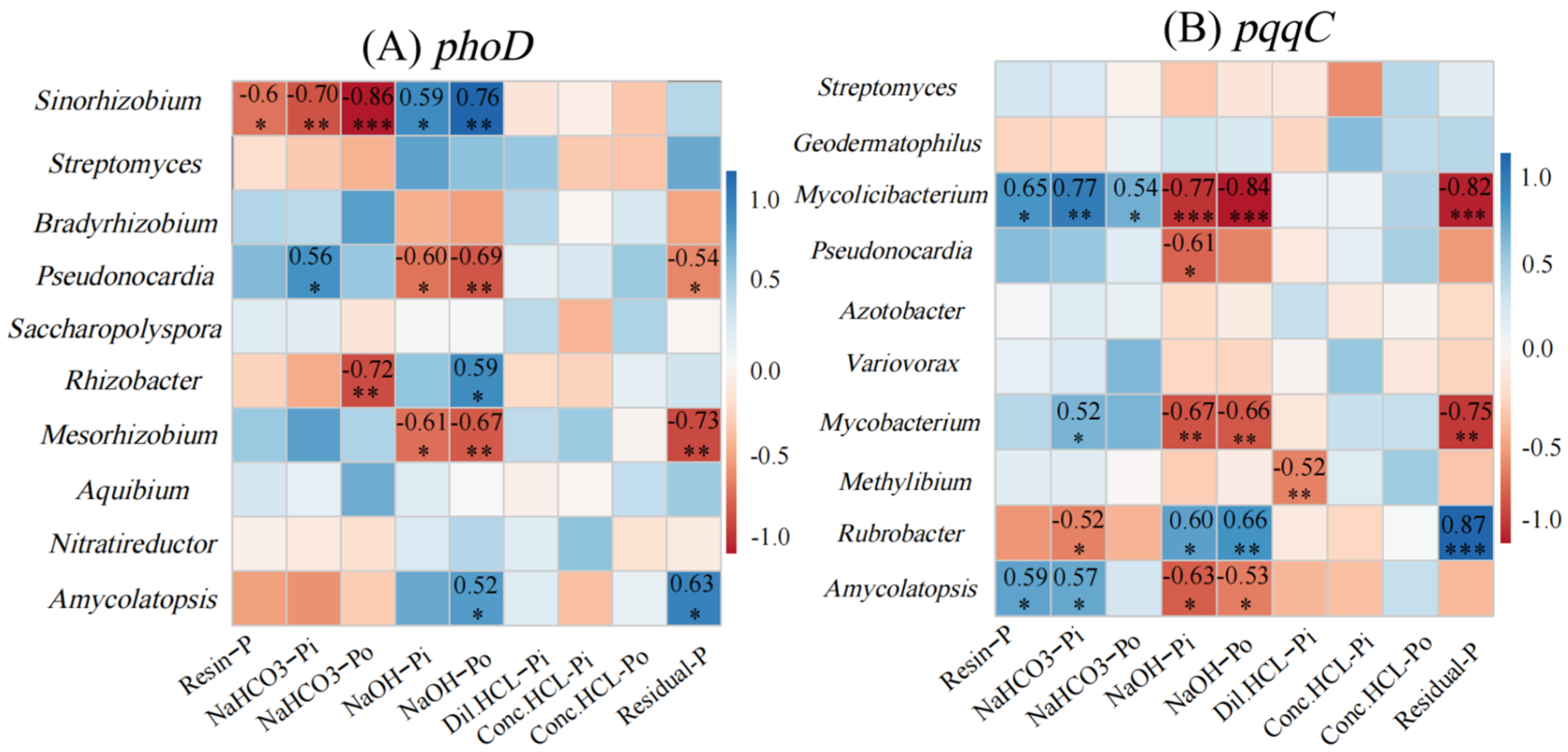
Figure 7 reveals the correlation between the top ten phoD and pqqC microbial communities at the genus level and soil phosphorus components. In the phoD microbial community, Sinorhizobium showed a significant negative correlation with soil labile phosphorus (Resin-Pi, NaHCO3-Pi, and NaHCO3-Po) and a significant positive correlation with soil moderately labile phosphorus (NaOH-Pi and NaOH-Po). The class Pseudonocardia showed a significant positive correlation with labile phosphorus (NaHCO3-Pi) and a significant negative correlation with moderate labile phosphorus (NaOH-Pi and NaOH-Po). Rhizobacter showed a significant negative correlation with labile phosphorus (NaHCO3-Po) and a significant positive correlation with moderately labile phosphorus (NaOH-Po). Mesorhizobium showed a significant negative correlation with moderately labile phosphorus (NaOH-Pi and NaOH-Po) and residual phosphorus (Residual-P); Amycolatopsis showed a significant positive correlation with moderately labile phosphorus (NaOH-Po) and residual phosphorus (Residual-P) (Figure 7A). In the pqqC microbial community, Mycolicibacterium, Mycobacterium, and Amycolatopsis all showed significant positive correlations with soil labile phosphorus (Resin-Pi, NaHCO3-Pi, and NaHCO3-Po) to varying degrees. Additionally, all three exhibited significant negative correlations with moderately labile phosphorus (NaOH-Pi and NaOH-Po). Furthermore, Mycolicibacterium and Mycobacterium also showed significant negative correlations with non-labile phosphorus (Residual-P). Rubrobacter demonstrated a significant negative correlation with soil labile phosphorus (NaHCO3-Pi) and a significant positive correlation with moderately labile phosphorus (NaOH-Pi and NaOH-Po) (Figure 7B).

3.9. RDA of phoD and pqqC Microorganisms with Soil Environmental Factors

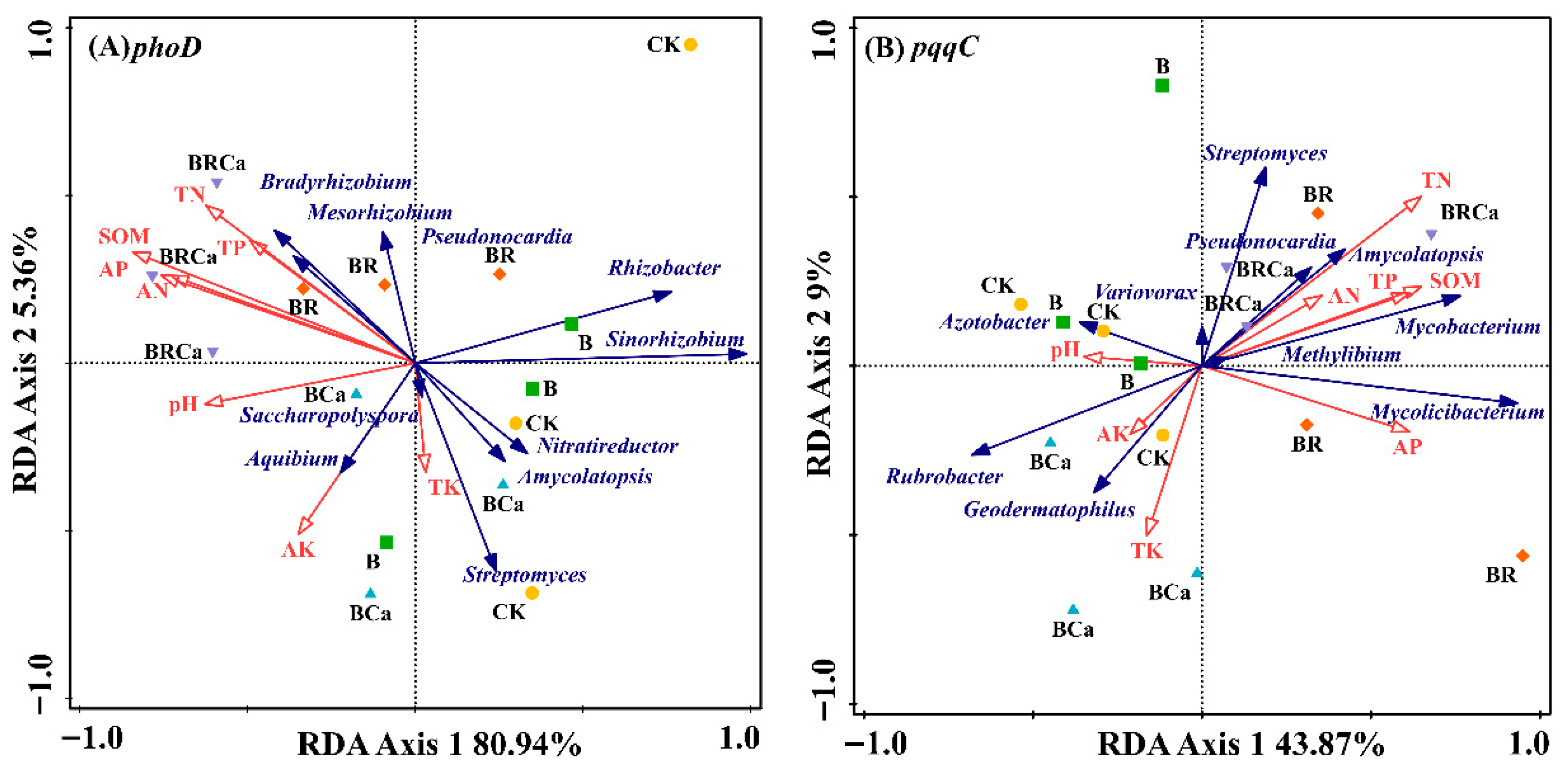
From the RDA results of phoD microorganisms and soil environmental factors, it can be seen that soil environmental factors have a strong explanatory power on the phoD microbial community, with a total explanatory rate of 86.24%. Specifically, the explanatory power of the RDA1 axis is 80.94%, and the explanatory power of the RDA2 axis is 5.36%. Among them, pH and SOM are the main driving factors affecting the differential changes in phoD microbial communities, and both have reached a significant level (pH = 0.002; SOM = 0.014) (Figure 8A). The total explanatory power of soil environmental factors on the pqqC microbial community reached 52.87%, with the RDA1 axis accounting for 43.87% and the RDA2 axis accounting for 9%. Among them, pH and TN were the main environmental factors affecting the differential changes in the pqqC microbial community, with significant impacts (pH = 0.004; TN = 0.01) (Figure 8B).

3.10. Response of Tomato Soil Phosphorus Availability to Material Addition

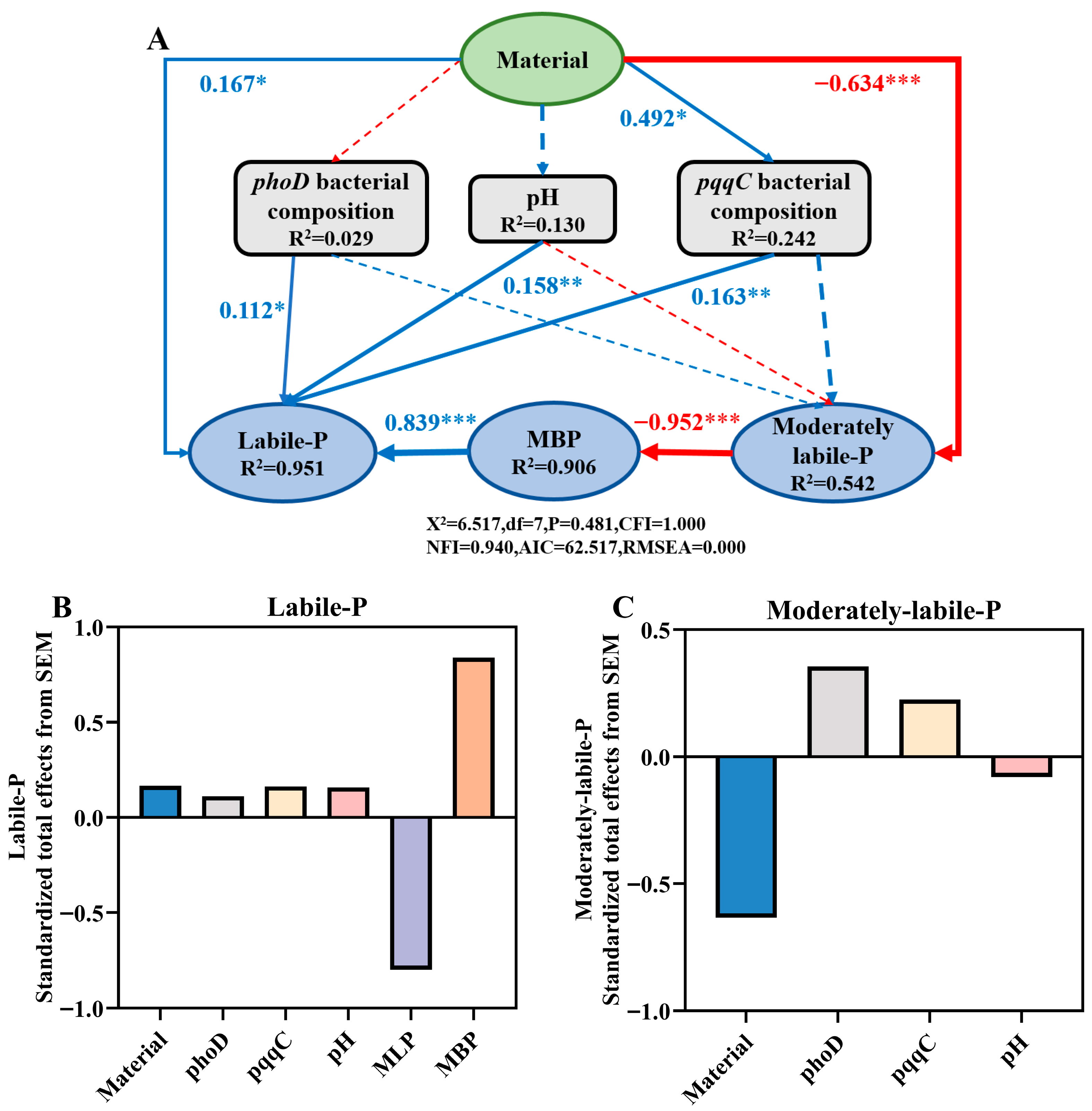
To clarify how material addition (material) directly or indirectly affects soil labile phosphorus (LP) and moderately labile phosphorus (MLP) components through microbial biomass phosphorus, phoD, and pqqC community composition, as well as their pH, this study conducted a structural equation modeling (SEM; Figure 9). The results showed that the explanation of the variation in soil labile phosphorus (labile-P) by the composition of material, phoD, and pqqC communities and their pH (R2 = 0.951) was significantly higher than that of medium labile phosphorus (medium-labile-P) (R2 = 0.542). Material regulates the changes in labile-P through its significant positive impact on the composition of the pqqC community. Meanwhile, labile-P is also significantly and directly positively influenced by material, the composition of the phoD community, and pH. Medium-labile-P is only significantly and directly negatively influenced by material (Figure 9A). The standardized total effect of SEM indicates that material is positively correlated with MBP, MBP is positively correlated with labile-P, and negatively correlated with medium-labile-P (Figure 9B,C). These results suggest that MBP, as a labile phosphorus pool, converts medium-labile phosphorus (MLP) to labile phosphorus (LP) in the soil under material addition treatment.

4. Discussion

4.1. The Impact of Material Addition on Soil Chemical Properties

The results indicate that long-term biochar application significantly improved soil chemical properties under continuous greenhouse tomato cropping (Table 4, p < 0.05). Biochar-containing treatments markedly increased soil total phosphorus (TP) and microbial biomass phosphorus (MBP), consistent with previous studies showing enhanced TP and MBP under straw return and biochar application in long-term systems [5,43]. These effects are mainly attributed to improved soil structure, stable carbon inputs, and stimulated microbial activity, which together promote microbial phosphorus uptake and immobilization [44]. In addition, all biochar treatments increased soil available phosphorus (AP) and available nitrogen (AN). Similar synergistic improvements in nutrient availability were reported for combined biochar–straw application, with increases of 39.2% in available N and 28.4% in available P [45]. Calcium-containing treatments (BCa and BRCa) significantly increased soil pH (Table 4), likely reducing phosphorus fixation by Al3+ and Fe3+ through precipitation reactions and thereby enhancing phosphorus availability [46,47]. This mechanism aligns with the effects observed under long-term liming, where Ca2+ replaces H+ and Al3+ on soil colloids, reducing soil acidity and increasing pH [48,49]. Soil organic matter (SOM), as the main reservoir of organic phosphorus (Po), provides the basis for long-term phosphorus supply, although Po must be mineralized by microorganisms before plant uptake [50,51]. In this study, BR and BRCa treatments significantly increased SOM content (Table 4), consistent with long-term field evidence showing stable SOM accumulation following combined straw and biochar inputs [52,53]. Importantly, increased SOM does not directly enhance phosphorus availability but indirectly supports phosphorus mineralization by sustaining microbial activity and phosphatase-mediated processes. Thus, SOM accumulation represents a foundation for long-term phosphorus supply capacity and bioregulation potential rather than a direct source of available phosphorus.

4.2. The Impact of Material Addition on Soil Phosphorus Fractions and Phosphorus-Related Enzyme Activities

The combined application of straw, biochar, and calcareous materials significantly increased the active phosphorus components (resinous phosphorus and sodium bicarbonate phosphorus) in the soil (Figure 1A–C), indicating enhanced soil phosphorus availability. Previous studies have reported that applying rice straw biochar to acidic red soil can increase the active phosphorus content by 35–78% [44]. This further confirms that materials such as biochar and straw can provide a long-term phosphorus source for the soil. Furthermore, compared to the control, the contents of moderately active phosphorus (NaOH-Pi and NaOH-Po) were significantly reduced (Figure 1D,E), indicating that the combined application of biochar, straw, and calcium oxide accelerated the conversion of moderately active phosphorus to other phosphorus pools. Under near-neutral soil conditions (pH 6.4–6.9), phosphorus mainly exists in calcium-bound form. The addition of materials reduces the refixation intensity of phosphorus by adjusting soil pH and Ca–P balance, thereby promoting the transfer of moderately active phosphorus to more readily available phosphorus forms [54,55]. Meanwhile, straw addition significantly reduced residual phosphorus content (Figure 1I), indicating that stable phosphorus gradually participates in soil phosphorus cycling in long-term continuous planting systems. Organic anions released during microbial decomposition of straw can interfere with Ca–P crystallization and refixation and promote the redistribution of residual phosphorus to moderately active phosphorus and active inorganic phosphorus pools under the combined effect of enhanced microbial activity and organophosphorus mineralization [56,57].
The results of this study indicate that the application of straw, biochar, and calcium-based materials had no significant effect on acid phosphatase (ACP) activity but significantly increased alkaline phosphatase (ALP) activity (Figure 2A,B). This result is consistent with previous studies on biochar promoting ALP activity. Biochar and calcareous materials improve the microbial habitat by increasing soil pH and mitigating the potential toxicity of Al3+ and Fe3+, thereby favoring bacterial growth and ALP expression. In contrast, ACP, mainly derived from plant roots and fungi, has an optimal pH of 4–6, and its activity enhancement was limited under the near-neutral soil conditions (pH 6–7) of this study [58]. Furthermore, the input of straw and biochar significantly promoted the activities of pyrophosphatase (PPase) and phytase (Figure 2C,D), indicating that the conversion of moderately active organic phosphorus to active inorganic phosphorus was enhanced. Biochar promotes the proliferation of microorganisms carrying functional genes such as PPA by providing an easily decomposable carbon source and a microporous habitat, thereby enhancing the hydrolysis process of pyrophosphate to orthophosphate [59]. Straw, as a continuous carbon source, not only improves the phosphorus mineralization capacity of microorganisms but also enhances the stability of extracellular enzymes by promoting the formation of soil aggregates [60]. These results indicate that the addition of materials primarily promotes phosphorus bioactivation through a microbial-enzyme-driven mechanism, rather than universally increasing the activity of all phosphatases.

4.3. Effects of Material Addition on phoD and pqqC Microbial Communities

The combined application of BR and BRCa significantly altered the community structure of phoD- and pqqC-harboring microorganisms (Figure 4A,B), with BRCa markedly increasing the richness of both communities compared to CK (Figure 3A). Straw provides organic carbon that stimulates overall microbial growth [29,61], while labile carbon fractions in biochar selectively enrich phosphorus-solubilizing microorganisms (PSMs) [62]. At the phylum level, Proteobacteria and Actinobacteria dominated both functional communities (Figure 5), underscoring their importance in soil phosphorus cycling under continuous cropping. Their relatively low proportions compared to bulk soil communities reflect the gene-targeted nature of this analysis. The observed decrease in Proteobacteria accompanied by an increase in unclassified taxa under certain treatments suggests a redistribution within the functional phosphorus-cycling community rather than a replacement by other dominant phyla. At the genus level, long-term material inputs significantly reshaped key taxa within both communities (Figure 6). In the phoD community, Sinorhizobium abundance declined significantly under BRCa treatment (Figure 6A), likely due to pH elevation (Table 4), as this genus prefers slightly acidic conditions [63], and soil pH was identified as a major driver of phoD community structure (Figure 8A). Sinorhizobium showed a negative correlation with labile phosphorus and a positive correlation with medium-labile phosphorus (Figure 7A). In contrast, Pseudonocardia was significantly enriched under BR treatment (Figure 6A). As an actinobacterial genus with reported phosphatase and phosphate-solubilizing potential, its enrichment is consistent with the combined effects of biochar-induced pH buffering and porous microhabitats, together with sustained carbon inputs from straw decomposition, which favor Actinobacteria colonization and persistence [48]. Pseudonocardia abundance was positively correlated with NaHCO3-Pi and negatively correlated with NaOH-Pi and NaOH-Po. This contrasting relationship suggests that Pseudonocardia is more likely involved in the transformation of moderately labile phosphorus pools into labile forms rather than merely responding to elevated NaHCO3-Pi availability. In the pqqC-harboring community, Mycolicibacterium was significantly enriched under BR treatment, while both BR and BRCa increased Mycobacterium abundance (Figure 6B). These taxa, belonging to the Mycobacteriaceae, are known for strong environmental adaptability and acidolysis-driven phosphate solubilization via secretion of low-molecular-weight organic acids [64]. Their enrichment likely contributed to increased phosphorus availability under material amendments. Moreover, Mycolicibacterium showed positive correlations with Resin-Pi, NaHCO3-Pi, and NaHCO3-Po, whereas Mycobacterium correlated mainly with NaHCO3-Pi; both genera were negatively correlated with NaOH-Pi, NaOH-Po, and residual P (Figure 7B). Given that a large proportion of soil phosphorus occurs in organic forms inaccessible to plants, the presence of phytase-producing taxa such as Mycobacterium [65] suggests enhanced organic phosphorus mineralization potential under BR and BRCa treatments, possibly supported by increased SOM content (Table 4).
In this study, we explored the impact of different microbial communities in soil (phoD and pqqC) on soil phosphorus forms, particularly their roles in labile-P, MBP, and medium labile-P (Figure 9). SEM analysis results indicate that soil pH has a positive effect on labile-P and a negative effect on medium-labile-P. Wang et al. [66] also used structural equation modeling (SEM) to study the effect of soil pH on labile phosphorus components in acidic red soils, finding a significant positive effect on labile-P (path coefficient = 2.23) and a negative effect on medium labile-P (path coefficient = −2.28). This suggests that an increase in pH can enhance labile-P and promote the conversion of medium-labile phosphorus to labile phosphorus. SEM analysis further shows that both phoD and pqqC microbial communities have a strong positive effect on labile-P, but the standardized effects indicate that the response of the pqqC microbial community to labile-P is stronger than that of the phoD community, suggesting that pqqC is more sensitive to labile-P. The pqqC gene is key to the glucose dehydrogenase (GDH) pathway for dissolving inorganic phosphorus and is involved in synthesizing PQQ (pyrroloquinoline quinone), a cofactor for the GDH enzyme [67]. Microorganisms carrying the pqqC gene tend to grow quickly and have high metabolic activity. When abundant labile carbon sources, such as straw, are input into the soil, these microorganisms proliferate rapidly and produce organic acids to solubilize phosphorus. In contrast, microorganisms carrying the phoD gene grow more slowly, and their response to carbon inputs is delayed. They are more likely to occupy ecological niches in stable environments. Therefore, when carbon sources are added, the response of the pqqC genes is more sensitive than that of the phoD genes. Through SEM path analysis, we found that medium-labile-P has a significant negative effect on MBP, while MBP has a positive effect on labile-P. This suggests that MBP acts as a conversion pool between labile phosphorus and medium-labile phosphorus. Min Li et al. [68] found a significant positive correlation between MBP and labile phosphorus components, and the turnover of the MBP pool provides available phosphorus to the soil. From both SEM and standardized effects, it is clear that the material addition (such as biochar, straw, etc.) has a significant positive effect on labile-P and a negative effect on medium-labile-P. This indicates that materials like biochar and straw can directly promote the conversion of medium-labile phosphorus to labile phosphorus, increasing the accumulation of labile-P in soil.
Nevertheless, several limitations of the present study should be acknowledged. This study was conducted at a single long-term experimental site under a controlled greenhouse tomato continuous cropping system. While this design effectively minimized environmental variability and enabled a clear assessment of the long-term effects of material addition on soil phosphorus fractions, enzyme activities, and phosphorus-related microbial communities, the results may not be directly extrapolated to other soil types, cropping systems, or open-field conditions. In addition, this study primarily focused on soil biochemical and microbial mechanisms regulating phosphorus availability; therefore, crop yield and plant phosphorus uptake were not evaluated within the current experimental framework. Furthermore, microbial community analyses were conducted at a single representative sampling time following long-term treatment application. Although this approach captures the integrated effects of sustained material addition, seasonal or multi-year microbial dynamics were not addressed due to practical and financial constraints. Future studies incorporating multi-site validation, plant performance indicators, and temporal microbial monitoring would further strengthen the understanding of phosphorus cycling processes under long-term material management.

5. Conclusions

Long-term material addition enhanced soil phosphorus availability in a continuous greenhouse tomato system through coordinated changes in soil chemical properties, phosphorus-related enzyme activities, and microbial functional attributes. BCa and BRCa increased soil pH, while BR and BRCa elevated soil organic matter. All material treatments increased labile phosphorus and microbial biomass phosphorus, reduced medium-labile and residual phosphorus pools, and stimulated alkaline phosphatase, pyrophosphatase, and phytase activities. The richness of phoD- and pqqC-harboring communities was significantly higher under the BRCa treatment, and shifts in community composition were observed under BR and BRCa treatments at the time of sampling. Structural equation modeling further indicated that material addition was a key driver of phosphorus turnover, facilitating the conversion of medium-labile phosphorus to labile forms and thereby improving phosphorus availability and cycling efficiency.

Author Contributions

Conceptualization, H.F. and Z.S.; methodology, J.L. and H.F.; software, J.L. and Y.L.; validation, J.L., J.Z. and H.F.; formal analysis, J.L.; investigation, J.L.; resources, J.L.; data curation, J.L.; writing—original draft preparation, J.L.; writing—review and editing, J.L., H.F. and Z.S.; visualization, J.L.; supervision, J.L.; project administration, J.L.; funding acquisition, H.F. All authors have read and agreed to the published version of the manuscript.

Funding

This research was funded by the National Key Research and Development Program of China (2024YFD2300703); Key technologies and applications of modern energy saving facilities to opti- mize structure and green vegetable production (2024JH2/102400031); China Agriculture Research System (CARS-23-B02).

Institutional Review Board Statement

Not applicable.

Data Availability Statement

The original contributions presented in this study are included in the article. Further inquiries can be directed to the corresponding author.

Acknowledgments

The authors would like to thank Muhammad Awais for his contributions in revising the manuscript.

Conflicts of Interest

The authors declare no conflicts of interest.

References

  1. Ahmed, N.; Deng, L.; Wang, C.; Shah, Z.-u.-H.; Deng, L.; Li, Y.; Li, J.; Chachar, S.; Chachar, Z.; Hayat, F.; et al. Advancements in Biochar Modification for Enhanced Phosphorus Utilization in Agriculture. Land 2024, 3, 644. [Google Scholar] [CrossRef]
  2. Silva, L.I.D.; Pereira, M.C.; Carvalho, A.M.X.D.; Buttrós, V.H.; Pasqual, M.; Dória, J. Phosphorus-Solubilizing Microorganisms: A Key to Sustainable Agriculture. Agriculture 2023, 13, 462. [Google Scholar] [CrossRef]
  3. Khan, A.; Zhang, G.; Li, T.; He, B. Fertilization and cultivation management promotes soil phosphorus availability and enhances soil fertility. Ecotoxicol. Environ. Saf. 2023, 264, 115441. [Google Scholar] [CrossRef]
  4. García-Berumen, J.A.; Flores de la Torre, J.A.; de los Santos-Villalobos, S.; Espinoza-Canales, A.; Echavarría-Cháirez, F.G.; Gutiérrez-Bañuelos, H. Phosphorus dynamics and sustainable agriculture: The role of microbial solubilization and innovations in nutrient management. Curr. Res. Microb. Sci. 2025, 8, 100326. [Google Scholar] [CrossRef]
  5. Ding, S.; Zhang, T.; Fan, B.; Fan, B.; Yin, J.; Chen, S.; Zhang, S.; Chen, Q. Enhanced phosphorus fixation in red mud-amended acidic soil subjected to periodic flooding-drying and straw incorporation. Environ. Res. 2023, 229, 115960. [Google Scholar] [CrossRef]
  6. Lemos, J.O.; Freire, F.J.; de Souza Júnior, V.S.; Oliveira, E.C.A.; Lucena, P.G.C.; Silva, S.R.V.; Freire, M.B.G.D.S.; Lima, D.R.M. Phosphorus fractions in soils with distinct mineralogy and their relationship with phosphate buffer capacity indicators in Brazil. Acta Sci. Agron. 2022, 44, e55148. [Google Scholar] [CrossRef]
  7. Ge, X.; Zhang, W.; Zhai, H. Adsorption and Precipitation of Phosphorus by Minerals in Soil: Mechanisms and Implications. Minerals 2024, 14, 123. [Google Scholar]
  8. Yu, X.; Keitel, C.; Dijkstra, F.A. Global analysis of phosphorus fertilizer use efficiency in cereal crops. Glob. Food Secur. 2021, 29, 100545. [Google Scholar] [CrossRef]
  9. Zhu, H.Y.; Gao, M.; Long, Y.; Xu, G.X.; Wang, F.H.; Wang, Z.F. Effects of Fertilizer Reduction and Application of Organic Fertilizer on Soil Nitrogen and Phosphorus Nutrients and Crop Yield in a Purple Soil Sloping Field. Huan Jing Ke Xue 2020, 41, 1921–1929. [Google Scholar]
  10. Zhang, Y. Effects of Soil Phosphorus Components on Enzyme Activity and Microbial Communities During the Process of Returning Farmland to Forest and Grassland in the Loess Plateau. Master’s Thesis, Northwest A&F University, Xianyang, China, 2025; p. 000497. [Google Scholar]
  11. Jiang, Y.; Kuang, D.; Han, C.; Liu, K.; Deng, H. Enhancement of soil phosphorus mineralization and phosphorus availability by labile carbon in organic amendments through boosting copiotrophic phosphatase-producing bacteria. Plant Soil 2025, 514, 955–971. [Google Scholar] [CrossRef]
  12. B Li, Y.; Jia, J.; Ying, Y.; Shi, W. The role of phosphate-solubilizing microbial interactions in phosphorus activation and utilization in plant–soil systems: A review. Plants 2024, 13, 2686. [Google Scholar]
  13. Preece, C.; Peñuelas, J. Relationship among Soil Biophysicochemical Properties, Agricultural Practices and Climate Factors Influencing Soil Phosphatase Activity in Agricultural Land. Agriculture 2024, 14, 288. [Google Scholar] [CrossRef]
  14. Siles, J.A.; Starke, R.; Martinovic, T.; Fernandes, M.L.P.; Orgiazzi, A.; Bastida, F. Distribution of phosphorus cycling genes across land uses and microbial taxonomic groups based on metagenome and genome mining. Soil Biol. Biochem. 2022, 174, 108826. [Google Scholar] [CrossRef]
  15. Zhou, L.; Jiang, J.; Xie, J.; Chen, Y.; Guo, H.; Dai, W.; Huang, R.; Wang, Z.; Gao, M. Long-term nitrogen addition changes phosphorus availability and reshapes phosphate-solubilizing bacterial community in purple soil of southwest China. Environ. Technol. Innov. 2025, 40, 104353. [Google Scholar] [CrossRef]
  16. Yang, J.; Li, Z.; Zhuang, J.; Yu, Z. PhoD Harboring Microbial Community and Alkaline Phosphatase as Affected by Long-Term Fertilization Regimes on a Calcareous Soil. Microorganisms 2023, 12, 939. [Google Scholar]
  17. Liang, J.L.; Liu, J.; Jia, P.; Yang, T.T.; Li, J.T. Novel phosphate-solubilizing bacteria enhance soil phosphorus cycling following ecological restoration of land degraded by mining. ISME J. 2020, 14, 1600–1613. [Google Scholar] [CrossRef] [PubMed]
  18. Shi, Q.; Song, Q.; Shan, X.; Li, X.; Wang, S.; Fu, H.; Sun, Z.; Liu, Y.; Li, T. Microorganisms regulate soil phosphorus fractions in response to low nocturnal temperature by altering the abundance and composition of the pqqC gene rather than that of the phoD gene. Biol. Fertil. Soils 2023, 59, 973–987. [Google Scholar] [CrossRef]
  19. Ma, D.; Wang, J.; Chen, K.; Lan, W.; Ye, Y.; Ma, X.; Lin, K. Responses of Soil Phosphorus Cycling-Related Microbial Genes to Thinning Intensity in Cunninghamia lanceolata Plantations. Forests 2024, 15, 440. [Google Scholar] [CrossRef]
  20. Afzal, J.; Moussa, M.G.; Elyamine, A.M.; Bhantana, P. Soil phosphorus transformation characteristics in response to molybdenum supply in leguminous crops. J. Environ. Manag. 2020, 268, 110610. [Google Scholar] [CrossRef]
  21. Fang, B.; Chen, L.; Wang, Y.; Zhu, Y.F.; Wang, R.; Song, G.; Liu, J.; Yang, B.; Zhang, S.W. Accumulation, migration, and transformation of phosphorus in soils under facility agriculture and their influencing factors. Environ. Sci. 2023, 44, 452–462. [Google Scholar]
  22. Xu, C.; Chen, S.; Chu, G.; Liu, Y.; Wang, D.; Xiao, D. Aeration treatment promotes transformation of soil phosphorus fractions to plant-available phosphorus by modulating rice rhizosphere microbiota. Sci. Total Environ. 2025, 245, 106318. [Google Scholar]
  23. Tian, K.; Xing, Z.; Kalkhajeh, Y.K.; Zhao, T.; Hu, W. Excessive phosphorus inputs dominate soil legacy phosphorus accumulation and its potential loss under intensive greenhouse vegetable production system. J. Environ. Manag. 2022, 303, 114149. [Google Scholar] [CrossRef] [PubMed]
  24. Liu, Y.; Chen, L.; Zhao, L.; Zhang, H. Phosphorus accumulation and leaching risks in soils of greenhouse vegetable production systems in China. Pedosphere 2021, 31, 683–693. [Google Scholar]
  25. Zhao, X.; Elcin, E.; He, L.; Vithanage, M.; Zhang, X.; Wang, J.; Wang, S.; Deng, Y.; Niazi, N.K.; Shaheen, S.M.; et al. Using biochar for the treatment of continuous cropping obstacle of herbal remedies: A review. Appl. Soil Ecol. 2024, 193, 105127. [Google Scholar] [CrossRef]
  26. Hu, H.J.; Meng, J.; Zheng, H.; Cai, H.; Wang, M.; Luo, Z.; E, Y.; Li, C.; Wu, Q.; Yan, Z.; et al. Relief effect of biochar on continuous cropping of tobacco through the reduction of p-hydroxybenzoic acid in soil. Heliyon 2024, 10, e33011. [Google Scholar] [CrossRef]
  27. Zhang, X.; Ren, X.; Cai, L. Effects of Different Straw Incorporation Amounts on Soil Organic Carbon, Microbial Biomass, and Enzyme Activities in Dry-Crop Farmland. Sustainability 2024, 16, 10588. [Google Scholar] [CrossRef]
  28. Li, Z.; Khan, K.; Yang, L.; Pan, Y.; Zhou, X. Continuous straw returning combined with nitrogen application improve soil properties and yield of double cropping maize in subtropical regions. Sustainability 2024, 16, 5265. [Google Scholar] [CrossRef]
  29. Mkhonza, N.P.; Buthelezi-Dube, N.N.; Muchaonyerwa, P. Effects of lime application on nitrogen and phosphorus availability in humic soils. Sci. Rep. 2020, 10, 8634. [Google Scholar] [CrossRef]
  30. Wu, X.; Wang, X.B.; Zheng, Q. Layered double hydroxide-modified biochar effectively improves the phosphorus adsorption capacity of greenhouse vegetable soil. J. Plant Nutr. Fertil. 2022, 28, 1652–1663. [Google Scholar]
  31. Yang, C.; Lu, S. The dynamic changes of phosphorus availability in straw/biochar-amended soils during the rice growth revealed by a combination of chemical extraction and DGT technique. J. Soils Sediments 2022, 22, 957–967. [Google Scholar] [CrossRef]
  32. Li, B.; Zhang, J.; Chang, T.; Wu, Q.; Zheng, H.; Zhang, D. Corn stover biochar amendment enhances nitrogen and phosphorus transformations, microbial community diversity, and enzyme activities in agricultural soil. Plants 2025, 14, 2787. [Google Scholar] [CrossRef]
  33. Frene, J.P.; Kasera, N.; Jaisi, D.P.; Sapkota, S.; O’Connell, D.W.; Higgins, S.; Adhikari, S.; Ghimire, R. Enhancing soil health and phosphorus use efficiency with modified biochar amendment. Sci. Total Environ. 2025, 1004, 180794. [Google Scholar] [CrossRef]
  34. He, S.; Chen, H.T.; Lu, Y.Y.; Feng, W.D.; Zhang, M.H.; Liu, C.L.; Li, F.Y.; Liang, X.Q. Field-scale performance of straw biochar for mitigation of nitrogen and phosphorus runoff losses and yield stabilization in paddy systems. Environ. Technol. Innov. 2025, 40, 104556. [Google Scholar] [CrossRef]
  35. Ji, T.W. Comparative study on different heating methods for determining soil organic matter by potassium dichromate volumetric method. Acta Agric. Zhejiangensis 2005, 17, 311–313. [Google Scholar]
  36. Ye, H.L.; Liu, D.; Ren, W.T. Rapid determination of total nitrogen content in compound fertilizers by semi-micro Kjeldahl method. J. Anhui Agric. Sci. 2015, 43, 28–29. [Google Scholar]
  37. Nobile, C.M.; Bravin, M.N.; Becquer, T.; Paillat, J.M. Phosphorus sorption and availability in an andosol after a decade of organic or mineral fertilizer applications: Importance of pH and organic carbon modifications in soil as compared to phosphorus accumulation. Chemosphere 2020, 239, 124709–124719. [Google Scholar] [CrossRef] [PubMed]
  38. Lu, R.K. Methods of Soil Agro-Chemical Analysis; Agricultural Science and Technology Press: Beijing, China, 2000. [Google Scholar]
  39. Bao, S.D. Soil and Agricultural Chemistry Analysis; China Agriculture Press: Beijing, China, 2000. [Google Scholar]
  40. Brookes, P.C.; Powlson, D.S.; Jenkinson, D.S. Measurement of microbial biomass phosphorus in soil. Soil Biol. Biochem. 1982, 14, 319–329. [Google Scholar] [CrossRef]
  41. Hedley, M.J.; Stewart, J.W.B.; Chauhan, B.S. Changes in inorganic and organic soil phosphorus fractions induced by cultivation practices and by laboratory incubations. Soil Sci. Soc. Am. J. 1982, 46, 970–976. [Google Scholar] [CrossRef]
  42. Tabatabai, M. Soil enzymes. In Methods of Soil Analysis: Part 2-Microbiological and Biochemical Properties; The American Society of Agronomy: Madison, WI, USA, 1994; pp. 775–833. [Google Scholar]
  43. Zhou, K.; Li, H.; Li, X.; Zhou, B.; Wei, X.; Wang, Y.; Liu, N.; Li, X.; Zhan, X.; Han, X. Long-Term Combined Organic and Inorganic Fertilization Alters Soil Phosphorus Fractions and Peanut Uptake. Agronomy 2025, 15, 2104. [Google Scholar] [CrossRef]
  44. He, W.; Zhang, J.; Gao, W.; Chen, Y.; Wei, Z. Enhancing phosphorus availability and dynamics in acidic soils through rice straw biochar application: A sustainable alternative to chemical fertilizers. Sustain. Food Syst. 2025, 9, 1506609. [Google Scholar] [CrossRef]
  45. Xia, H.; Shen, J.; Riaz, M.; Jiang, C.; Zu, C.; Jiang, C.; Liu, B. Effects of Biochar and Straw Amendment on Soil Fertility and Microbial Communities in Paddy Soils. Plants 2024, 13, 1478. [Google Scholar] [CrossRef]
  46. Santoro, V.; Schiavon, M.; Celi, L. Role of soil abiotic processes on phosphorus availability and plant responses with a focus on strigolactones in tomato plants. Plant Soil 2024, 494, 1–49. [Google Scholar] [CrossRef]
  47. Borges, B.M.; Strauss, M.; Camelo, P.A.; Sohi, S.P.; Franco, H.C. Re-use of sugarcane residue as a novel biochar fertiliser-increased phosphorus use efficiency and plant yield. J. Clean. Prod. 2020, 262, 121406. [Google Scholar] [CrossRef]
  48. Bossolani, J.W.; Crusciol, C.A.C.; Moretti, L.G.; da Silva, L.C. Long-Term Lime and Phosphogypsum Amended-Soils Alleviate Field Drought Effects by Improving Soil Fertility and Root Growth. Front. Plant Sci. 2021, 12, 650296. [Google Scholar] [CrossRef]
  49. Olego, M.Á.; Quiroga, M.J.; Mendaña-Cuervo, C.; Cara-Jiménez, J.; López, R.; Garzón-Jimeno, E. Long-Term Effects of Calcium-Based Liming Materials on Soil Fertility Sustainability and Productivity in Acidic Soils. Processes 2021, 9, 1181. [Google Scholar] [CrossRef]
  50. Amadou, I.; Faucon, M.-P.; Houben, D. Role of soil minerals on organic phosphorus availability and phosphorus uptake by plants. Geoderma 2022, 428, 116125. [Google Scholar] [CrossRef]
  51. Lei, K.; Dai, W.; Wang, J.; Li, Z.; Cheng, Y.; Jiang, Y.; Yin, W.; Wang, X.; Song, X.; Tang, Q. Biochar and Straw Amendments over a Decade Divergently Alter Soil Organic Carbon Accumulation Pathways. Agronomy 2024, 14, 2176. [Google Scholar] [CrossRef]
  52. Yang, Y.; Fu, Y.; Wang, L.; Luo, Y. Straw incorporation accelerates microbial-driven soil organic carbon decomposition, enhances humus formation and improves carbon sequestration efficiency in agricultural soils. Soil Biol. Biochem. 2024, 157, 108178. [Google Scholar]
  53. Ye, Y.; Guo, X.; Li, Y.; Min, W.; Guo, H. Biochar and straw amendments drive microbial regulation of phosphorus dynamics in saline-irrigated cotton fields. Frontiers 2025, 4, 1508717. [Google Scholar] [CrossRef]
  54. Bolan, N.; Sarmah, A.K.; Bordoloi, S.; Bolan, S.; Padhye, L.P.; Van Zwieten, L.; Sooriyakumar, P.; Khan, B.A.; Ahmad, M.; Solaiman, Z.M.; et al. Soil acidification and the liming potential of biochar. Environ. Pollut. 2023, 317, 120632. [Google Scholar] [CrossRef]
  55. Singh, H.; Northup, B.K.; Rice, C.W.; Prasad, P.V. Biochar applications influence soil physical and chemical properties, microbial diversity, and crop productivity: A meta-analysis. Biochar 2022, 4, 8. [Google Scholar] [CrossRef]
  56. Kataria, P.; Singh, J.; Singh, G.; Mavi, M.S.; Sillanpää, M.; Al-Farraj, S. Residual phosphorus availability after soil application of different organic waste in varying soil P status soils. Heliyon 2024, 10, e25732. [Google Scholar] [CrossRef] [PubMed]
  57. Wu, W.C.; Zhang, Y.J.; Turner, B.L.; He, Y.L.; Chen, X.D.; Che, R.X.; Cui, X.Y.; Liu, X.J.; Jiang, L.; Zhu, J.T. Organic amendments promote soil phosphorus related functional genes and microbial phosphorus cycling. Geoderma 2025, 456, 117247. [Google Scholar] [CrossRef]
  58. Zhang, Y.; Yang, C.; Wang, J.; Lu, S. Biochar Co-Applied with Lime Enhances Soil Phosphorus Availability via Microbial and Enzymatic Modulation of Paddy Soil. Microorganisms 2025, 13, 582. [Google Scholar] [CrossRef]
  59. Li, H.; Lin, Y.; Qin, X.; Song, L.; Fan, F.; Liu, Y.; Li, S. An updated review on how biochar may possess potential in soil ARGs control on aspects of source, fate and elimination. Biochar 2024, 6, 24. [Google Scholar] [CrossRef]
  60. Zhang, Y.; Chen, H.; Xiang, J.; Xiong, J.; Wang, Y.; Wang, Z.; Zhang, Y. Effect of Rice-Straw Biochar Application on the Acquisition of Rhizosphere Phosphorus in Acidified Paddy Soil. Agronomy 2022, 12, 1556. [Google Scholar] [CrossRef]
  61. Zhang, D.; Zhang, Y.; Zhao, Z.; Xu, S.; Cai, S.; Zhu, H.; Rengel, Z.; Kuzyakov, Y. Carbon–phosphorus coupling governs microbial effects on nutrient acquisition strategies by four crops. Front. Plant Sci. 2022, 13, 924154. [Google Scholar] [CrossRef]
  62. Lu, L.; Qin, W.; Wu, M.; Chen, Q.; Pan, B.; Xing, B. Biochar promotes FePO4 solubilization through modulating organic acids excreted by Talaromyces pinophilus. Carbon Res. 2025, 7, 27. [Google Scholar] [CrossRef]
  63. Cafiero, J.H.; Casasco, M.S.; Lozano, M.J.; Vacca, C.; López García, S.L.; Draghi, W.O.; Lagares, A.; Del Papa, M.F. Genomic analysis of Sinorhizobium meliloti LPU63, an acid-tolerant and symbiotically efficient alfalfa-nodulating rhizobia. Front. Agron. 2023, 5, 1175524. [Google Scholar] [CrossRef]
  64. Riahi, H.S.; Heidarieh, P.; Fatahi-Bafghi, M. Genus Pseudonocardia: What we know about its biological properties, abilities, and current application in biotechnology. Appl. Microbiol. 2022, 132, 890–906. [Google Scholar] [CrossRef]
  65. Babu, P.M.; Panda, N.; Nayak, R.K.; Sethi, D.; Biswal, S.; Mishra, M.K.; Datta, S.; Karubakee, S.; Suchitha, N.S.; Prusty, M.; et al. Isolation, characterization and screening of phosphate (P) solubilizing actinomycetes and exploring its potency in finger millet (Eleusine coracana L.). BMC Plant Biol. 2025, 25, 362. [Google Scholar] [CrossRef] [PubMed]
  66. Wang, Y.; Zhang, W.; Müller, T.; Lakshmanan, P.; Liu, Y.; Liang, T.; Wang, L.; Yang, H.; Chen, X. Soil phosphorus availability and fractionation in response to different phosphorus sources. Sci. Rep. 2023, 13, 31908. [Google Scholar] [CrossRef] [PubMed]
  67. Wu, X.; Cui, Z.; Peng, J.; Zhang, F.; Liesack, W. Genome-resolved metagenomics identifies the particular genetic traits of phosphate-solubilizing bacteria in agricultural soil. ISME Commun. 2022, 2, 17. [Google Scholar] [CrossRef] [PubMed]
  68. Li, M.; He, X.; Zhang, P.; Wang, R.; Wang, J.; Zhang, X. Close linkage between available and microbial biomass phosphorus in the rhizosphere of alpine coniferous forests along an altitudinal gradient. Rhizosphere 2024, 30, 100904. [Google Scholar] [CrossRef]
Figure 1. Soil phosphorus component content. Note: The lowercase letters in the figure indicate significant differences in the variables between different material additive treatments at the p < 0.05 level; each scatter point within a column represents one replicate. (A) Resin-Pi; (B) NaHCO3-Pi; (C) NaHCO3-Po; (D) NaOH-Pi; (E) NaOH-Po; (F) Dil.HCL-Pi; (G) Conc.HCL-Pi; (H) Conc.HCL-Po; (I) Residual-P.
Agriculture 16 00406 g001
Figure 2. Soil phosphorus-related enzyme activity. Note: (A) represents acid phosphatase activity; (B) represents alkaline phosphatase activity; (C) represents pyrophosphatase activity; (D) represents phytase activity. The lowercase letters in the figure indicate significant differences in the variables between different material additive treatments at the p < 0.05 level; each scatter point within a column represents one replicate.
Agriculture 16 00406 g002
Figure 3. Alpha diversity index of phoD and pqqC genes. Note: The lowercase letters in the figure indicate that there are significant differences in variables between different material additive treatments (p < 0.05). (A) ACE index; (B) Shannon index.
Agriculture 16 00406 g003
Figure 4. NMDS analysis of bacterial community structure in facility tomato soil. (A) phoD-harboring bacteria; (B) pqqC harboring bacteria.
Agriculture 16 00406 g004
Figure 5. Phylum-level distribution of phoD and pqqC microbial communities. Note: The lowercase letters in the figure indicate that there are significant differences in variables between different material additive treatments (p < 0.05). (A) phoD relative abundance; (B) pqqC relative abundance.
Agriculture 16 00406 g005
Figure 6. Genus-level community composition of phoD and pqqC microbes. Note: The lowercase letters in the figure indicate that there are significant differences in variables between different material additive treatments (p < 0.05). (A) phoD relative abundance; (B) pqqC relative abundance.
Agriculture 16 00406 g006
Figure 7. Correlation analysis of phoD and pqqC microbes with soil phosphorus fractions. * p < 0.05; ** p < 0.01; *** p < 0.001. (A) phoD; (B) pqqC.
Agriculture 16 00406 g007
Figure 8. RDA of phoD and pqqC microorganisms with soil environmental factors.
Agriculture 16 00406 g008
Figure 9. Response of tomato soil phosphorus availability to material addition. Note: (A) represents the structural equation model. (B) represents the total effect of standardized soil available phosphorus components. (C) represents the total effect of the standardized soil moderately available phosphorus components. Solid and dashed arrows indicate significant and non-significant relationships, respectively. The numbers on the arrows are standardized path coefficients. Bold numbers (R2) indicate the variance explained by the model. Blue and red arrows represent positive and negative effects, respectively, and the thickness of the arrows indicates the magnitude of the effect. Significance levels are as follows: * p < 0.05, ** p < 0.01, *** p < 0.001.
Agriculture 16 00406 g009
Table 1. Material application rate for each treatment.
Chicken Manure
(kg·Cultivation Pool−1)
Straw (kg·Cultivation Pool−1)Biochar (kg·Cultivation Pool−1)Calcium Oxide
(kg·Cultivation Pool−1)
CK4.50---
B4.50-1.10-
BR4.502.101.10-
BCa4.50-1.100.10
BRCa4.502.101.100.10
Note: The “-” in the table indicates no addition; the same applies below. The material application rates for each treatment were based on an independent cultivation pool as the basic experimental unit. The values listed in Table 1 represent the material application rate (kg·cultivation pool−1) per cultivation pool within a single tomato growing cycle. Under a two-crop-a-year tomato planting system, the material was applied once each before the spring and autumn tomato plantings, i.e., twice a year, and the application method and rate remained consistent throughout the experiment. Therefore, the annual input for each treatment was twice the value listed in Table 1, and the cumulative input over many years could be calculated by multiplying the annual input by the duration of the experiment. To facilitate comparison between different treatments, this paper mainly reports the material application rates within a single tomato growing cycle.
Table 2. Basic chemical properties of the tested materials.
MaterialspHECTN
(g·kg−1)
TP
(g·kg−1)
TK
(g·kg−1)
AN
(mg·kg−1)
AP
(mg·kg−1)
AK
(mg·kg−1)
Soil6.10379.201.603.7028.70235.90215.40654.00
Chicken manure8.3374.3022.2014.9016.60519.50345.90137.80
Biochar9.601902.530.781.68136.10311.90324.20
Straw--9.801.606.30---
Calcium oxide13.60729------
Note: AP, soil available phosphorus content; AN, soil alkaline hydrolyzable nitrogen content; AK, soil available potassium content; TP, soil total phosphorus content; TN, soil total nitrogen content; TK, total soil potassium content.
Table 3. Experimental design and dosages of material and chemical fertilizer application.
Urea
(g·Cultivation Pool−1)
KH2PO4
(g·Cultivation Pool−1)
K2SO4
(g·Cultivation Pool−1)
CK118.0010.6181.70
B97.504.00130.80
BR60.00-90.00
BCa97.504.00130.80
BRCa60.00-90.00
Table 4. Effects of long-term material addition on basic physicochemical properties of protected continuous cropping tomato soil.
CKBBRBCaBRCa
pH6.83 ± 0.04 b6.93 ± 0.06 b6.84 ± 0.20 b7.28 ± 0.07 a7.33 ± 0.05 a
SOM(g/kg)52.04 ± 3.69 c61.45 ± 3.01 c77.04 ± 3.17 b66.49 ± 3.60 bc102.49 ± 7.24 a
TN (g/kg)5.56 ± 0.32 a5.64 ± 0.04 a5.99 ± 0.35 a6.03 ± 0.45 a6.33 ± 0.19 a
AN (mg/kg)53.66 ± 2.54 c88.66 ± 6.87 b81.08 ± 4.98 b85.75 ± 4.63 b118.41 ± 3.24 a
TP (g/kg)5.41 ± 0.12 c6.46 ± 0.08 a6.51 ± 0.03 a5.90 ± 0.07 b6.55 ± 0.07 a
AP (mg/kg)389.12 ± 5.37 d403.50 ± 1.16 c462.17 ± 2.83 b460.82 ± 1.83 b483.15 ± 5.71 a
TK (g/kg)15.54 ± 0.27 a15.55 ± 0.31 a15.58 ± 0.48 a15.60 ± 0.31 a16.53 ± 0.54 a
AK (mg/kg)615.93 ± 45.44 b718.86 ± 33.41 ab686.36 ± 37.42 ab787.97 ± 11.24 a693.89 ± 39.59 ab
MBP(mg/kg)45.93 ± 0.90 d59.48 ± 0.52 c65.30 ± 0.85 b57.23 ± 1.00 c68.54 ± 1.07 a
Note: SOM, soil organic matter content; AP, soil available phosphorus content; AN, soil alkaline hydrolyzable nitrogen content; AK, soil available potassium content; TP, soil total phosphorus content; TN, soil total nitrogen content; TK, total soil potassium content. Data are presented as mean (n = 3). Different lowercase letters within a column denote significant differences among treatments based on Duncan’s multiple range test (p < 0.05).
Disclaimer/Publisher’s Note: The statements, opinions and data contained in all publications are solely those of the individual author(s) and contributor(s) and not of MDPI and/or the editor(s). MDPI and/or the editor(s) disclaim responsibility for any injury to people or property resulting from any ideas, methods, instructions or products referred to in the content.