Article

Alternating Partial Root-Zone Irrigation Improves Alfalfa Water Use Efficiency by Regulating Root Water Uptake, Photosynthetic Traits, and Endogenous Hormones

1
College of Grassland Science, Xinjiang Agricultural University, Urumqi 830052, China
2
The Ministry of Education Key Laboratory of Grassland Resources and Ecology in the Western Arid and Desert Areas, Urumqi 830052, China
3
Xinjiang Uygur Autonomous Region Grassland Station, Urumqi 830052, China
4
College of Grassland Science and Technology, China Agricultural University, Beijing 100193, China
*
Author to whom correspondence should be addressed.
These authors contributed equally to this work.
Agriculture 2026, 16(2), 251; https://doi.org/10.3390/agriculture16020251
Submission received: 26 December 2025 / Revised: 15 January 2026 / Accepted: 17 January 2026 / Published: 19 January 2026

Abstract

Alfalfa (Medicago sativa L.) is an important forage crop with significant economic value. Alternating partial root-zone irrigation (APRI) is a promising water-saving technique that has been shown to improve water use efficiency in various crops. In this study, the effects of APRI on root water uptake, photosynthetic indices, and physiological responses in alfalfa were investigated. Polyethylene glycol (PEG 6000) was used to simulate water stress, and four irrigation treatments were established: conventional irrigation (CI), deficit irrigation (DI), fixed partial root-zone irrigation (FPRI), and APRI. Principal component analysis (PCA) revealed that APRI reduced stomatal conductance (Gs) by 19.82% and transpiration rate (E) by 19.16%, which was associated with increased abscisic acid (ABA) content, thereby enhancing instantaneous water use efficiency (iWUE) by 47.93%. Meanwhile, APRI promoted root growth, leading to a 14.09% increase in root–shoot ratio, which in turn enhanced the photosynthetic rate by 22.06%. APRI enhanced methyl jasmonate (MeJA) content in alfalfa leaves by 45.23%, which was associated with a 24.13% improvement in water absorption capacity. In conclusion, APRI induced positive physiological responses in alfalfa, with the effectiveness ranked as follows: APRI > CI > FPRI > DI. These findings provide a theoretical basis for the rational application of APRI in alfalfa forage production.

1. Introduction

Alfalfa (Medicago sativa L.), as a perennial leguminous forage crop, possesses high nutritional value, good palatability, and strong stress resistance, making it one of the most important high-quality forage crops for livestock [1]. It is widely cultivated worldwide and plays a pivotal role in agricultural production [2].
Water is a critical factor for crop survival. Water deficits, whether prolonged or transient, adversely affect crop growth and development, while severe drought significantly hinders growth and disrupts physiological metabolism [3]. Currently, the negative effects of water scarcity on agriculture and the ecological environment are increasing. Consequently, the development of water-saving agricultural practices has emerged as a vital strategy for achieving sustainable agricultural development worldwide [4]. Among the various technologies aimed at conserving water in agriculture, modifying irrigation methods to enhance crop water use efficiency is a key approach for both water conservation and increased crop yield [5]. Through long-term adaptation and evolution in response to environmental conditions, crops have gradually developed resistance to moderate drought stress. When stress conditions improve, the physiological and biochemical functions, as well as growth and development, of crops can recover to a certain extent, sometimes reaching or even surpassing levels observed under non-stress conditions, thereby compensating for damage caused by environmental stress [6]. This compensatory adaptation mechanism results from crop self-regulation and is termed the water deficit compensation effect, which ensures that final crop biomass does not exhibit a significant yield reduction compared to full irrigation conditions [7,8]. Numerous studies indicate that the occurrence of the compensation effect is primarily linked to enhanced water conductivity of the root system [9]. APRI refers to an irrigation technique in which a portion of the root zone receives normal watering, while the remaining roots are left dry during part or all of the crop growth period [10]. The fundamental principle of APRI is to establish alternating “dry–wet” conditions in the root zone, thereby exploiting the crop water compensation effect, which has demonstrated promising outcomes across various crops [11,12] By the early 21st century, APRI had gained widespread adoption in the cultivation of numerous crops worldwide. Economic crops such as wheat (Triticum aestivum L.) [13], tomato (Solanum lycopersicum L.) [14], maize (Zea mays L.) [15], chili pepper (Capsicum annuum L.) [16], grape (Vitis vinifera L.) [17], and citrus (Citrus spp.) [18], along with herbaceous crops like alfalfa [19], have been reported to benefit from APRI. Research indicates that APRI does not significantly affect aboveground biomass in maize during certain growth stages [20] or tomato fruit yield under specific experimental conditions [21]. Conversely, some studies have reported that APRI can enhance tomato fruit biomass [14] and improve maize yield, depending on irrigation regime and environmental conditions [22]. Furthermore, research suggests that APRI in potatoes can substantially reduce irrigation water use without compromising yield, while enhancing water use efficiency [23]. Compared to conventional irrigation, APRI has been demonstrated to maintain or enhance citrus yield under certain conditions [24]. Recent studies indicate that APRI can sustain alfalfa production performance without significantly diminishing yield, although reductions in leaf area may occur [25]. Additionally, APRI markedly increases the hay yield of alfalfa [26]. The physiological responses of crops are governed by various physiological and biochemical substances, with photosynthesis and transpiration rates being influenced by the opening and closing of stomata [27]. Among the factors regulating stomatal movement in crops, abscisic acid (ABA) is a major hormone involved in stomatal closure. Under water stress conditions, roots can contribute to ABA synthesis, which acts as a stress signal transported to leaves and contributes to stomatal closure to reduce water loss [28]. Numerous experimental studies have identified proline as a crucial osmotic regulator within crop cells. Proline accumulation elevates cell osmotic pressure, reduces water loss, maintains cell turgor, and supports normal physiological metabolism in crops [29]. Many reports suggest that jasmonic acid (JA) participates in plant stress responses and may interact with ABA in regulating stomatal function and root water uptake [30,31]. In 1996, it was found that exogenous jasmonic acid could increase water permeability in rice roots, indicating JA’s role in regulating root water absorption [32]. Furthermore, studies have shown that exogenous jasmonic acid can enhance root hydraulic conductivity in both Arabidopsis and common bean [33]. Crops regulate their internal water balance by enhancing root water absorption. Research on tomatoes has demonstrated that partial root-zone irrigation can significantly increase water uptake in the irrigated root zone [34]. Specifically, under partial root-zone irrigation, the water uptake in the irrigated root zone of Melaleuca leucadendron L. increased threefold within 24 h [10]. Emerging research has demonstrated that APRI enhances the antioxidant defense system in alfalfa [35]. However, the effects of APRI on the photosynthetic traits and endogenous hormone dynamics in alfalfa remain poorly understood. Specifically, it is unclear how APRI modulates the spatial and temporal distribution of key hormones such as ABA and MeJA in leaves and roots, and whether such regulation enhances root water uptake. Furthermore, whether APRI optimizes the trade-off between photosynthetic carbon gain and transpirational water loss, thereby sustaining or improving dry matter production and water use efficiency, requires further investigation. Therefore, this study aimed to elucidate the physiological responses of alfalfa to APRI, with a focus on root water uptake, photosynthetic performance, and endogenous hormone profiles. The results will clarify the mechanisms governing the retention of production performance under APRI, thereby providing a theoretical basis for applying this technique in water-saving alfalfa cultivation.

2. Materials and Methods

2.1. Experimental Materials

Seeds of the alfalfa cultivar Xinmu No. 4 were obtained from the College of Grassland Science, Xinjiang Agricultural University. The seeds, with a germination rate of 95% and a seed age of 3 years, were preserved in gunny sacks under dark and dry conditions in a warehouse. The seeds were full and free of pests. They were cleaned with alcohol for 30 s, disinfected with 0.1% NaClO solution for 8 min, and rinsed three times with distilled water before use.

2.2. Crop Cultivation and Root Division Methods

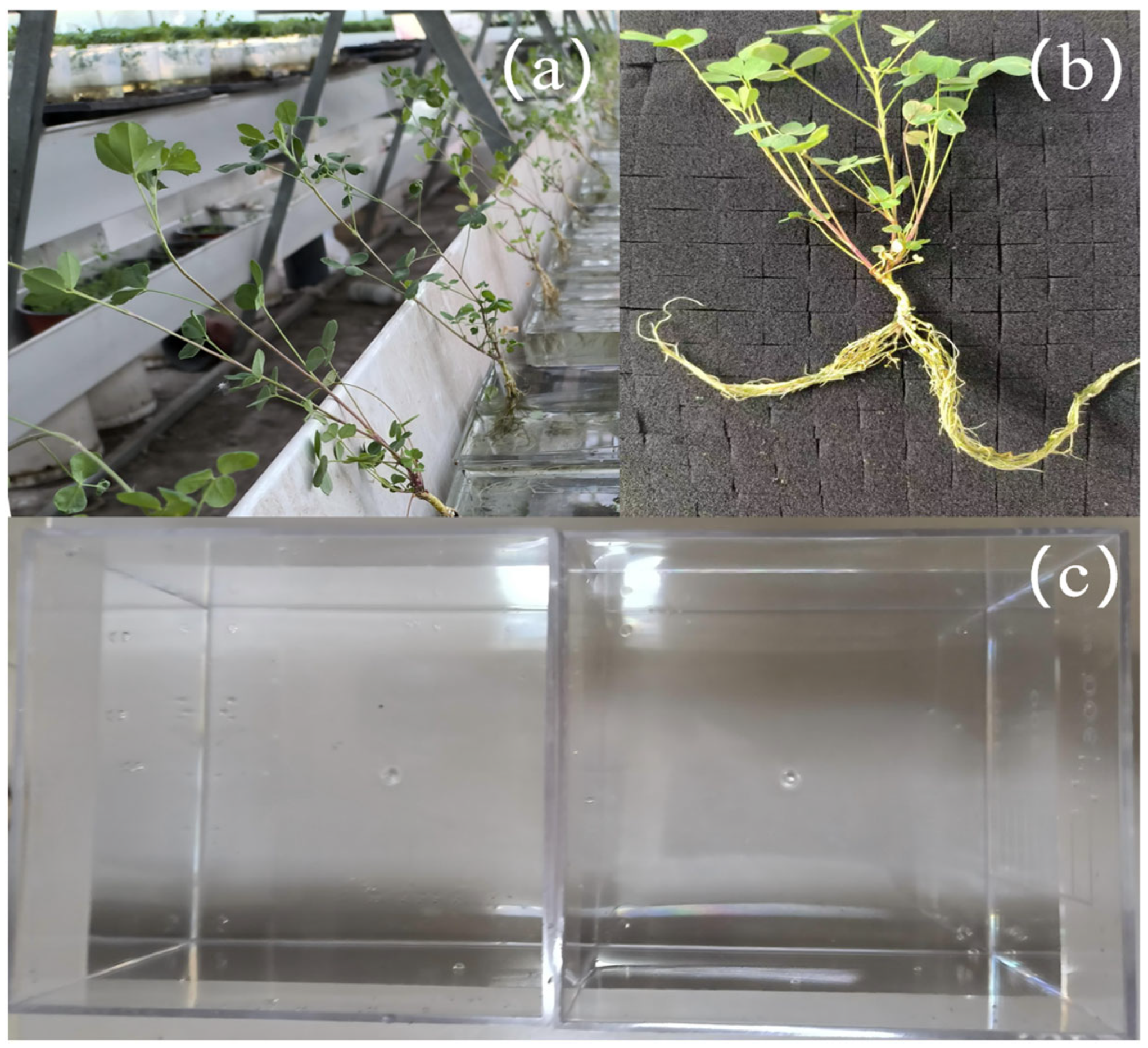
Alfalfa seeds were germinated in seedling trays in a constant-temperature intelligent greenhouse. Uniform seedling emergence was achieved prior to transplantation. After 60 days of growth, plants with relatively uniform growth and well-developed root systems were selected and transplanted into hydroponic boxes. The hydroponic box consisted of two 8.2 × 8.2 × 8.2 cm cubic plastic containers, each filled with 500 mL of nutrient solution. The roots on each side were placed in separate containers. One alfalfa plant was grown per pair of containers, with each plant considered one biological replicate. The intelligent greenhouse provided 12 h of light per day, with a controlled environment at (20.0 ± 5) ℃. The nutrient solution was prepared using deionized water and half-strength Hoagland solution, containing calcium nitrate (945 mg·L−1), potassium nitrate (607 mg·L−1), ammonium phosphate (115 mg·L−1), sulfate (493 mg·L−1), iron salt solution (2.5 mg·L−1), and trace elements (5 mg·L−1). Polyethylene glycol 6000 (PEG 6000), a non-ionic polymeric osmotic agent employed in the experiment, could generate an osmotic stress environment by reducing the water potential of the culture medium, without being absorbed by plant roots. Alfalfa plants were allowed to grow stably in the hydroponic boxes for one week before starting experimental treatments. Preliminary experiments showed that a PEG 6000 concentration of 20% in the root solution caused plant death within three days due to osmotic stress. A PEG 6000 concentration of 10% was selected to induce moderate osmotic stress while maintaining plant survival. The experimental treatments were as follows: CI (conventional irrigation, no PEG 6000), DI (the PEG 6000 concentration in the nutrient solution of both root zones was 5%), FPRI (the PEG 6000 concentration in the nutrient solution of the right root zone was 10%), and APRI (the PEG 6000 concentration in the nutrient solution of the right root zone was 10%, with the stress exposure alternated between root zones every 3 days; during each alternation for the APRI group, plants were gently lifted from the hydroponic boxes, their roots rinsed in distilled water for 10 s, and then the entire plant was rotated 180 degrees before being placed back, with the procedure conducted at 7:00 a.m.), to ensure that the PEG 6000 concentrations of the nutrient solutions in the hydroponic boxes were consistent across the DI, FPRI, and APRI treatments. The plant growth status and the appearance of hydroponic boxes during the experiment are shown in Figure 1. Throughout the experiment, the solution was replaced every 7 days. Each fresh solution had a baseline pH ranging from 5.5 to 6.0 and was adjusted to 6.5 using potassium hydroxide (KOH) prior to replacement. A total of 60 plants were included across all treatments, with 15 plants per treatment, and each treatment configured with three biological replicates and five technical replicates. Among these technical replicates, one was dedicated to the determination of growth traits and biomass, while the remaining four were used for sampling tissues for subsequent physiological parameter measurements at 3 h, 6 h, 9 h, and 12 h post-treatment, respectively. After 15 days of treatment, water uptake was measured at 3 h, 6 h, 9 h, and 12 h following the final morning treatment implemented at 7:00 a.m. Leaf and root samples harvested from both root zones were immediately immersed in liquid nitrogen and subsequently stored in a −80 °C freezer for further biochemical analyses.

2.3. Measurement Indicators and Methods

(1) Measurement of Growth Traits
The height from the base to the tip of the plant was measured using a soft ruler. Five representative leaves from each alfalfa plant were selected, and their length and width were measured using a vernier caliper. Leaf area was calculated by multiplying the product of leaf length and width by a leaf area coefficient of 0.75. The plants were dried, and the aboveground biomass and root biomass were measured. The root-to-shoot ratio was then calculated.
(2) Measurement of Root water uptake
The natural evaporation capacity of the nutrient solution was measured using three culture boxes without alfalfa plants. The actual water uptake was calculated by subtracting the natural evaporation capacity from the total weight loss of the nutrient solution. The detailed operation procedures for each treatment were as follows: prior to the final alternating irrigation treatment, plants were gently removed from the hydroponic boxes, and the water adhering to the root systems was allowed to drip naturally back into the hydroponic boxes for 30 s until no more water dripped off. An electronic balance (model CN-HZ60002; Kunshan Huake Electronic Technology Co., Ltd.; Kunshan, China; precision: 0.01 g) was used to weigh the initial total weight of each hydroponic box (including the nutrient solution) for all treatments and replicates. The weight of the nutrient solution in each hydroponic box was measured separately at 3 h, 6 h, 9 h, and 12 h after treatment initiation. For the CI and DI treatments, the average weight loss of the nutrient solution in the two compartments was used to represent the root water uptake. For the FPRI and APRI treatments, the weight of the nutrient solution in the irrigated and drought-stressed compartments was recorded separately during each weighing.
(3) Measurement of Photosynthetic Gas Exchange Parameters
For the measurement of photosynthetic gas exchange parameters, fully expanded, healthy compound leaves were selected from the middle section of the main stem of alfalfa plants. All experimental plants were at the branching stage during sampling. A CIRAS-4 portable photosynthesis measurement system from PP SYSTEMS, Amesbury, USA was used to measure leaf photosynthetic rate, intercellular CO2 concentration, stomatal conductance, and transpiration rate. Instantaneous water use efficiency was calculated as the ratio of photosynthetic rate to transpiration rate. Measurements were conducted separately at 3 h, 6 h, 9 h, and 12 h after treatment initiation. Each measurement was completed within 30 min. The photosynthetically active radiation (PAR) intensities at 3 h, 6 h, 9 h, and 12 h after treatment were 1200, 1600, 800, and 600 μmol·m−2·s−1, respectively. The concentration of atmospheric carbon dioxide (Ca) was set to 400 μmol·mol−1.
(4) Measurement of Osmotic Regulatory Substances
Proline: Measured using a spectrophotometric method with a reagent kit provided by Shanghai MLBio Biotechnology Co., Ltd., Shanghai, China.
(5) Measurement of Endogenous Signaling Substances
ABA and MeJA: Measured using enzyme-linked immunosorbent assay (ELISA) with reagent kits provided by Shanghai MLBio Biotechnology Co., Ltd., Shanghai, China, and detected using a microplate reader (Model: INNO, Litaike Biotechnology Co., Ltd., Beijing, China). Hydrogen peroxide (H2O2) was measured using a spectrophotometric method with a reagent kit.

2.4. Data Processing

Preliminary calculations of experimental data were conducted using Excel 2025. Subsequently, one-way analysis of variance (ANOVA) and Duncan’s multiple range test for significance were performed via SPSS 26.0. Bar charts were generated with Origin 2024, followed by the implementation of Pearson correlation analysis and PCA. Data were expressed as mean ± standard deviation, with a significance level set at 0.05.

3. Results

3.1. Effects of Different Irrigation Methods on the Growth Traits of Alfalfa

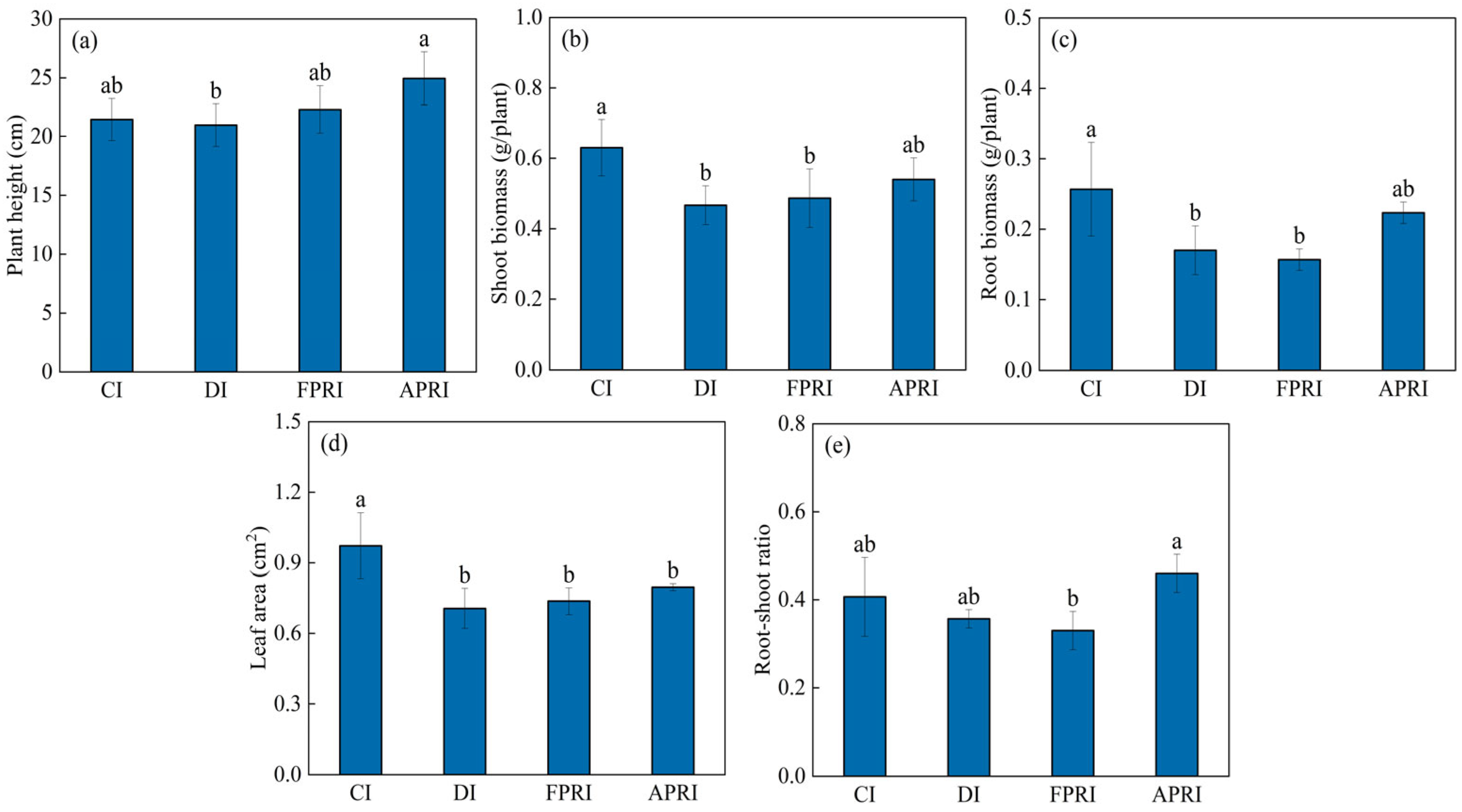
As illustrated in Figure 2, plant height under APRI was not significantly different from that under CI or FPRI (p > 0.05), but was 16.3% greater than that under DI. The leaf areas under the DI, FPRI, and APRI treatments were 27.9%, 24.4%, and 18.6% lower than that of the CI treatment, respectively, with the smallest reduction observed under the APRI treatment. The shoot biomass under the DI and FPRI treatments was significantly lower than that under the CI treatment (p < 0.05), with reductions of 25.4% and 22.2%, respectively. The shoot biomass under the APRI treatment showed no significant decrease compared to the CI treatment (p > 0.05). Similarly, the root biomass under the DI and FPRI treatments was significantly lower than that under the CI treatment (p < 0.05), while the root biomass under the APRI treatment showed no significant difference compared to the CI treatment (p > 0.05). Moreover, root biomass did not differ significantly between the APRI treatment and the DI or FPRI treatments (p > 0.05). The maximum root-to-shoot ratio (R/S) was observed under APRI, which was significantly higher than the DI and FPRI treatments (p < 0.05) yet comparable to the CI treatment (p > 0.05). The comparable plant height and aboveground biomass under APRI and CI suggest that APRI did not negatively affect aboveground growth and was associated with altered root-to-shoot allocation. The highest root-to-shoot ratio (R/S) under the APRI treatment indicates improved root growth. In contrast, the DI treatment, characterized by continuous uniform drought stress, and the FPRI treatment, characterized by persistent unilateral root stress, significantly inhibited plant growth.

3.2. Effects of Different Irrigation Methods on Root Water Uptake and Photosynthetic Gas Exchange Parameters of Alfalfa

3.2.1. Effects of Different Irrigation Methods on Root Water Uptake of Alfalfa

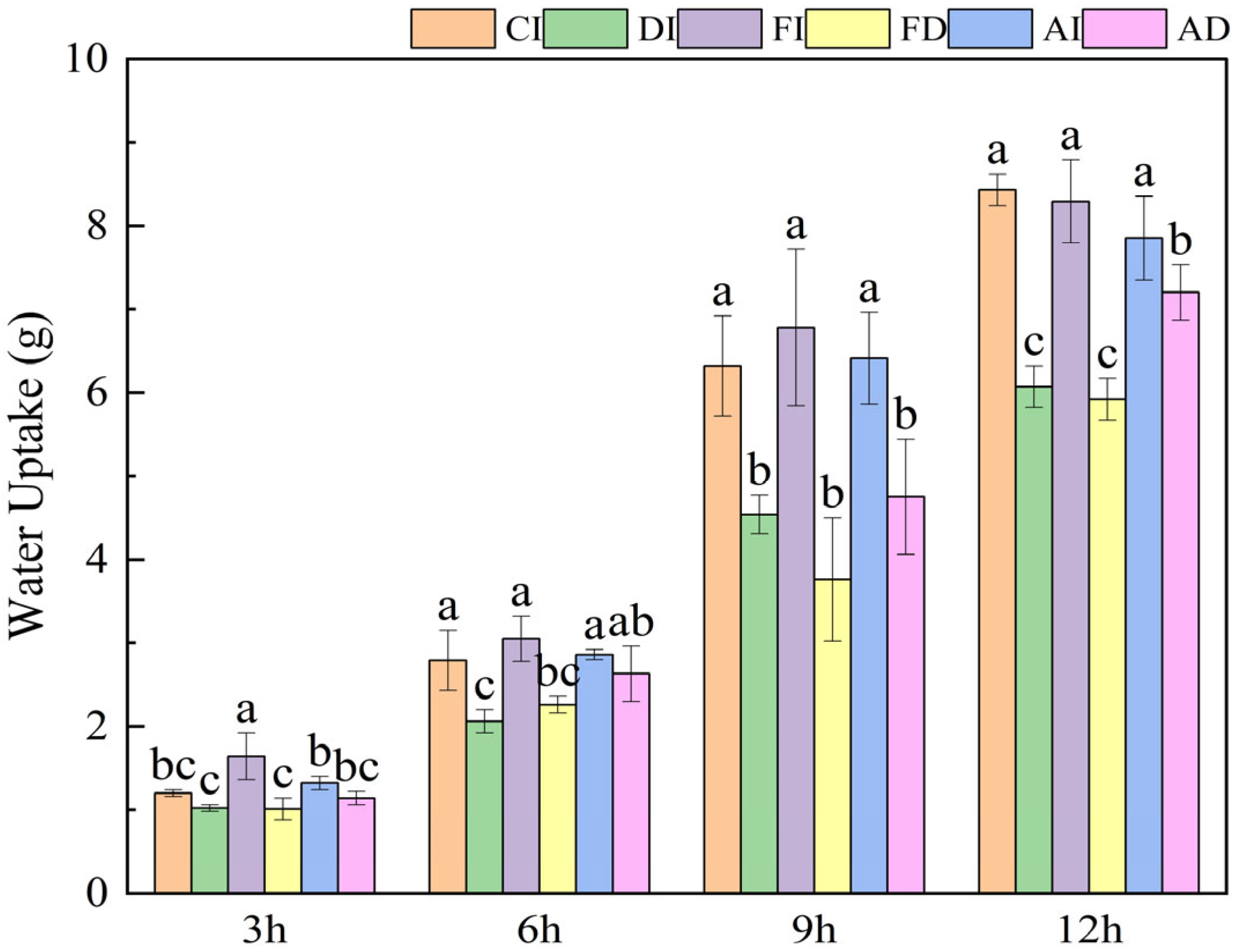
Figure 3 illustrates the effects of distinct irrigation regimes on root water uptake in alfalfa under water stress conditions simulated by PEG 6000. From 6 to 12 h, the root water uptake under DI was significantly lower than that under CI across all time points (p < 0.05), with a 28% reduction observed at 12 h. The root water uptake on the irrigated side under FPRI was significantly higher than that on the drought side at all time points (p < 0.05). From 6 to 12 h, the root water uptake on the irrigated side under FPRI did not differ significantly from the CI treatment (p > 0.05), indicating that the water uptake of the irrigated side was equivalent to that under CI and significantly higher than that under DI. The difference in root water uptake between the irrigated and drought sides under APRI was smaller than that under FPRI. After 12 h of treatment, the root water uptake on the drought side under APRI was significantly higher than that under FPRI (p < 0.05): 21.6% higher. Root water uptake under APRI was consistently higher than under DI and exceeded that under FPRI from 6 to 12 h. Although it decreased compared with CI during the same period, the reduction magnitude was smaller than that of DI and FPRI. APRI maintained a more balanced root water uptake pattern compared with FPRI, reducing functional asymmetry between root zones.

3.2.2. Effects of Different Irrigation Methods on Photosynthetic Gas Exchange Parameters of Alfalfa

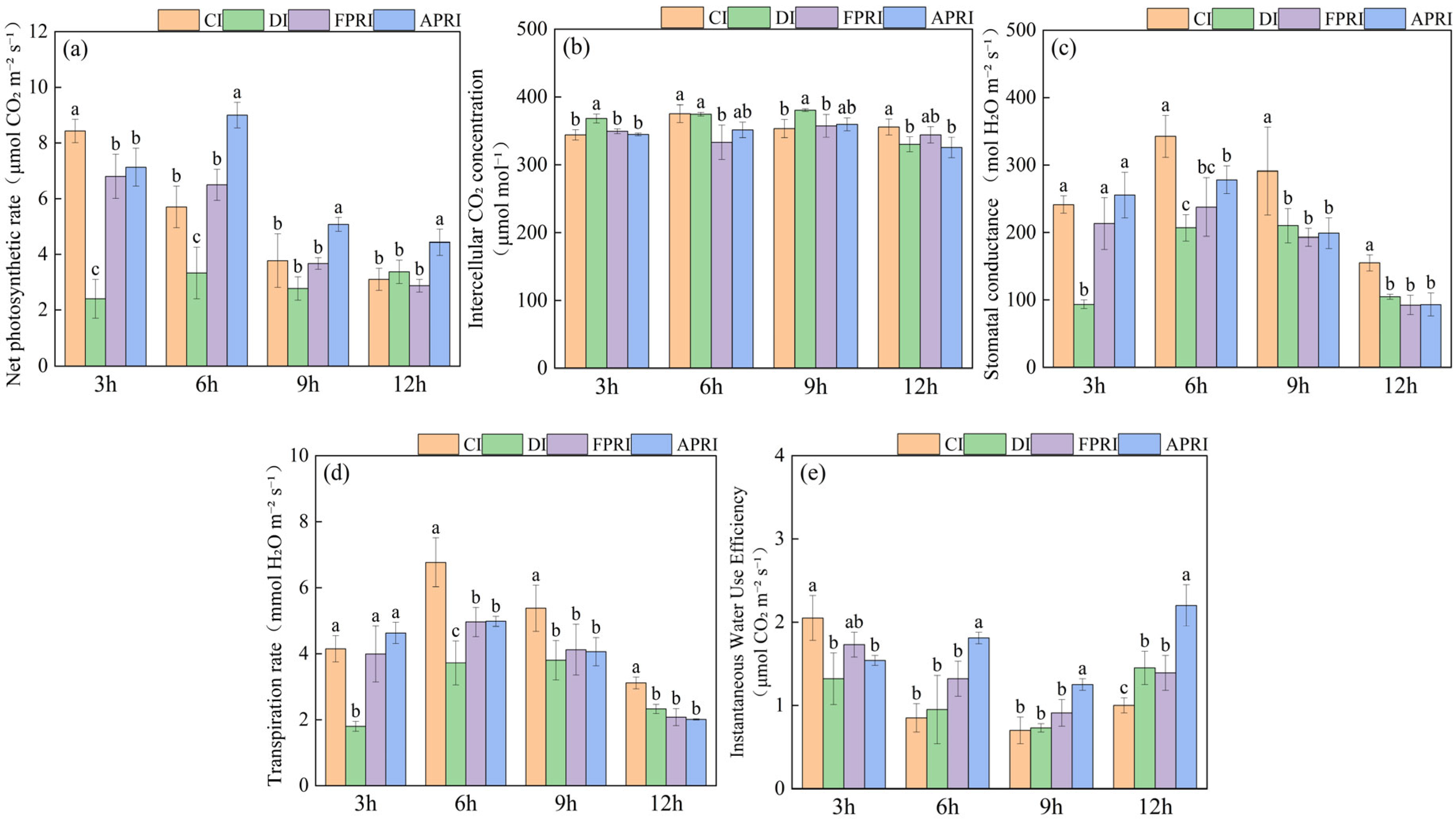
The effects of different irrigation methods under PEG 6000-simulated water stress are illustrated in Figure 4. The photosynthetic rate (Pn) of CI decreased over time, while DI significantly reduced Pn in alfalfa at all time points except 9–12 h (p < 0.05). From 6 to 12 h after treatment, Pn in the APRI group was consistently and significantly higher than in other treatments (p < 0.05), indicating that, unlike the sustained photosynthetic inhibition caused by DI and FPRI, APRI enhanced the photosynthetic rate of alfalfa. Measurements of intercellular CO2 concentration (Ci) from 3 to 12 h after treatment showed that Ci was highest under DI from 3 to 9 h, while APRI consistently exhibited lower values. Stomatal conductance (Gs) varied significantly with treatment time under different irrigation methods. In all treatments, Gs first increased and then decreased. At 6 h after treatment, Gs under DI was significantly reduced by 39.6% compared to CI, while Gs under FPRI and APRI was also significantly lower than that under CI (p < 0.05). From 9 to 12 h, Gs under DI, FPRI, and APRI remained significantly lower than that under CI (p < 0.05). Three hours after treatment, E under DI was significantly reduced by 56.6% (p < 0.05). At 6 h, E under DI decreased by 45%, while E under FPRI and APRI decreased by 26.7% and 26.4%, respectively, but both were significantly higher than under DI (p < 0.05). From 9 to 12 h, E under DI, FPRI, and APRI was significantly lower than that under CI (p < 0.05). Three hours after treatment, iWUE under DI was significantly reduced by 35.6% (p < 0.05), while APRI reduced iWUE by 24.9%. From 6 to 12 h, iWUE under CI, DI, and FPRI was significantly lower than that under APRI. APRI differed from DI and FPRI by enhancing Pn and achieving the highest iWUE; it moderately reduced Gs and E without inducing photosynthetic inhibition, outperforming DI in particular.

3.3. Effects of Different Irrigation Methods on the Contents of PRO, ABA, H2O2, and MeJA in Alfalfa Leaves

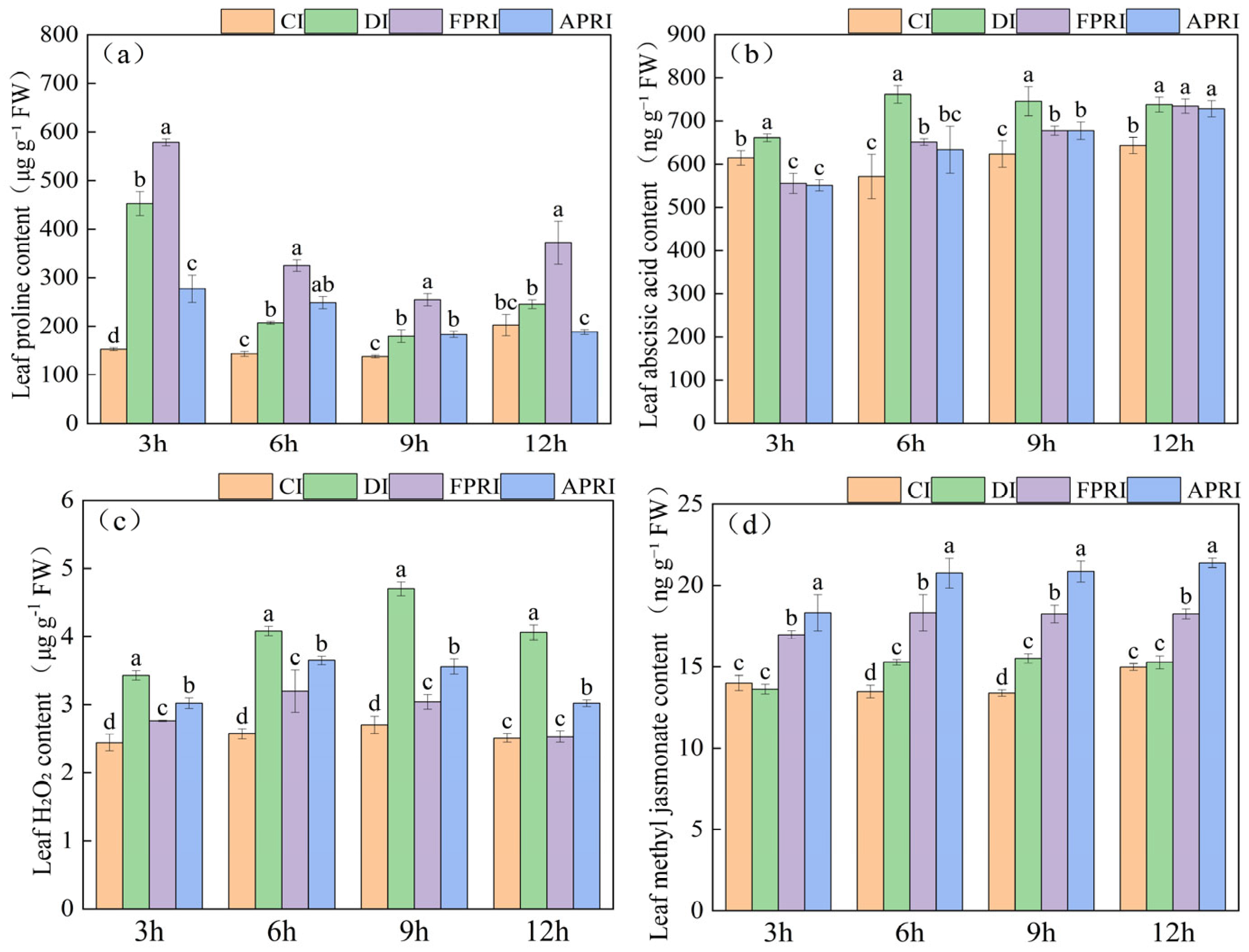
The effects of different irrigation methods on the Pro, ABA, H2O2, and MeJA contents in alfalfa leaves under PEG 6000-simulated water stress are presented in Figure 5. Compared to CI, PEG treatment significantly increased the proline content in leaves (p < 0.05). The proline content in DI and FPRI leaves showed a pattern of first decreasing and then increasing, while the proline content in APRI leaves gradually decreased over time, indicating a lower degree of stress experienced by the leaves. The proline content in FPRI leaves was consistently the highest, and DI was consistently higher than CI (p < 0.05). DI and FPRI exhibited elevated proline levels (FPRI the highest), indicating significantly more severe stress responses than APRI. Compared to CI treatment, PEG treatment significantly increased the ABA content in leaves (p < 0.05). Among the treatments, CI resulted in the lowest ABA content in leaves, while deficit irrigation (DI) resulted in the highest ABA content. The ABA content in leaves under FPRI and APRI treatments significantly increased after 6 h of treatment (p < 0.05) and reached a peak at 12 h. Leaf ABA content was lowest in CI and highest in DI. Unlike DI, which induced higher ABA accumulation, FPRI and APRI induced more gradual ABA increases that peaked at 12 h, with APRI exhibiting milder stress-related ABA responses than DI. Compared to the CI treatment group, PEG treatment significantly increased the H2O2 content in leaves. The H2O2 content in leaves across all treatment groups showed a pattern of first increasing and then decreasing. Among the groups, DI consistently showed the highest H2O2 content in leaves, while CI consistently showed the lowest. The H2O2 content in FPRI leaves reached its peak at 9 h, while APRI leaves reached their peak at 6 h. Additionally, the H2O2 content in APRI leaves was consistently and significantly higher than that in CI and FPRI groups. The leaf H2O2 content indicated that DI induced the most severe oxidative stress in alfalfa. The H2O2 levels in APRI-treated leaves were consistently lower than those under DI but higher than those under CI and FPRI. Combined with biomass performance, this moderate accumulation was not associated with severe oxidative damage. Compared to the CI, FPRI and APRI treatments significantly increased the MeJA content in leaves (p < 0.05). Between 6 and 12 h, the MeJA content in leaves followed the trend APRI > FPRI > DI > CI, with CI consistently having the lowest content and APRI consistently having the highest, indicating that APRI resulted in higher MeJA accumulation in alfalfa leaves compared with the other treatments.

3.4. Effects of Different Irrigation Methods on the Contents of PRO, ABA, H2O2, and MeJA in Alfalfa Roots

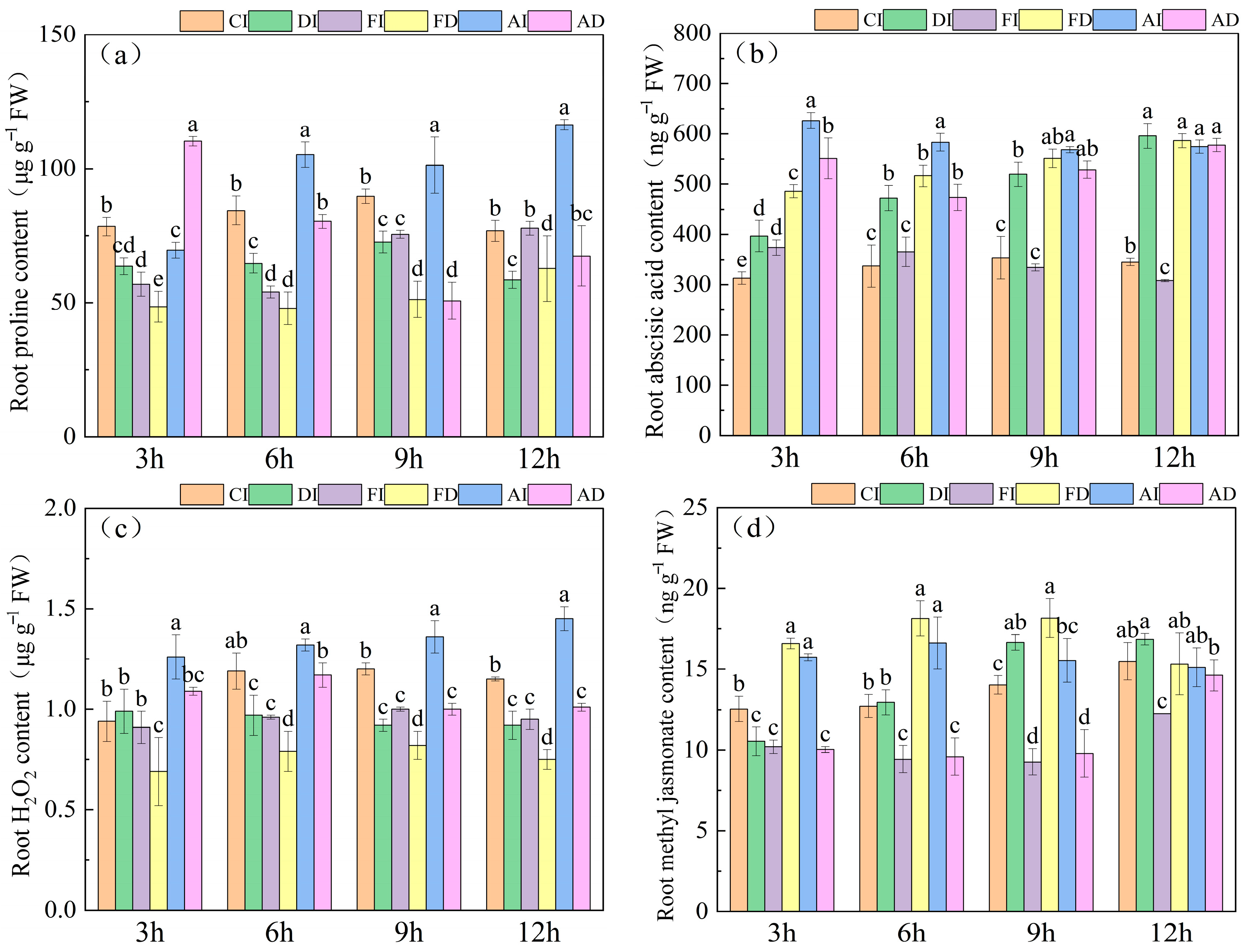
The changes in Pro, ABA, H2O2, and MeJA contents in roots under PEG 6000-simulated water stress from 3 to 12 h are illustrated in Figure 6. Under DI treatment, the proline content in roots was consistently and significantly lower than that under CI treatment (p < 0.05). In FPRI treatment, the proline content in the drought-side roots was consistently and significantly lower than that in the irrigated side (p < 0.05). Under APRI treatment, the proline content in the irrigated-side roots showed a turning point at 6 h, increasing over time, and was significantly higher than in the drought side and with other treatments from 6 to 12 h (p < 0.05). This suggests that uniform mild drought under DI treatment could not activate an increase in root proline content, whereas under root-zone partitioned stress, the irrigated-side roots could be induced to develop stronger osmotic regulation capacity. All PEG treatments significantly elevated root ABA levels relative to CI at all time points (p < 0.05). Under DI, ABA content increased over time, peaking at 12 h. For FPRI, ABA levels in irrigated-side roots decreased gradually, while drought-side roots exhibited a DI-like increasing trend with a 12 h peak. Under APRI, drought-side root ABA was consistently lower than in the irrigated side; irrigated-side ABA was 100.2%, 73.2%, 60.8%, and 67.3% higher than CI at 3, 6, 9, and 12 h, respectively (p < 0.05). At 12 h, no significant ABA difference existed between APRI root zones (p > 0.05). In summary, DI induced progressive ABA accumulation, FPRI maintained an asynchronous ABA distribution, and APRI mediated coordinated ABA allocation. Root H2O2 content under DI was significantly lower than CI from 6 to 12 h (p < 0.05). In FPRI, drought-side H2O2 was significantly reduced relative to CI as early as 3 h and remained low (p < 0.05). Irrigated-side H2O2 in FPRI showed no difference from CI at 3 h (p > 0.05) but decreased significantly at 6 h (p < 0.05), thereafter staying lower than CI but higher than the FPRI drought side. Under APRI, irrigated-side H2O2 was 35.1% higher than CI at 3 h (p < 0.05), increasing continuously to a 12 h peak. Drought-side H2O2 in APRI showed no difference from CI at 3 and 6 h (p > 0.05) but decreased significantly at 9 and 12 h (p < 0.05). This suggests that APRI more effectively promotes root H2O2 production. DI induced a gradual increase in root MeJA content from 3 to 12 h. In FPRI, irrigated-side MeJA was consistently and significantly lower than CI (p < 0.05), while drought-side MeJA surged at 3 h, peaked at 6–9 h, and was significantly higher than other treatments (p < 0.05). APRI elicited opposite MeJA dynamics: irrigated-side MeJA remained high from 3 to 9 h but decreased at 12 h, whereas drought-side MeJA was significantly lower than CI early on (p < 0.05) and then increased continuously. These results indicate that FPRI concentrates stress signals in drought-side roots, while APRI achieves dynamic complementary MeJA changes between root zones.

3.5. Correlation Analysis of Growth Traits, Root Water Uptake, and Various Physiological Indicators

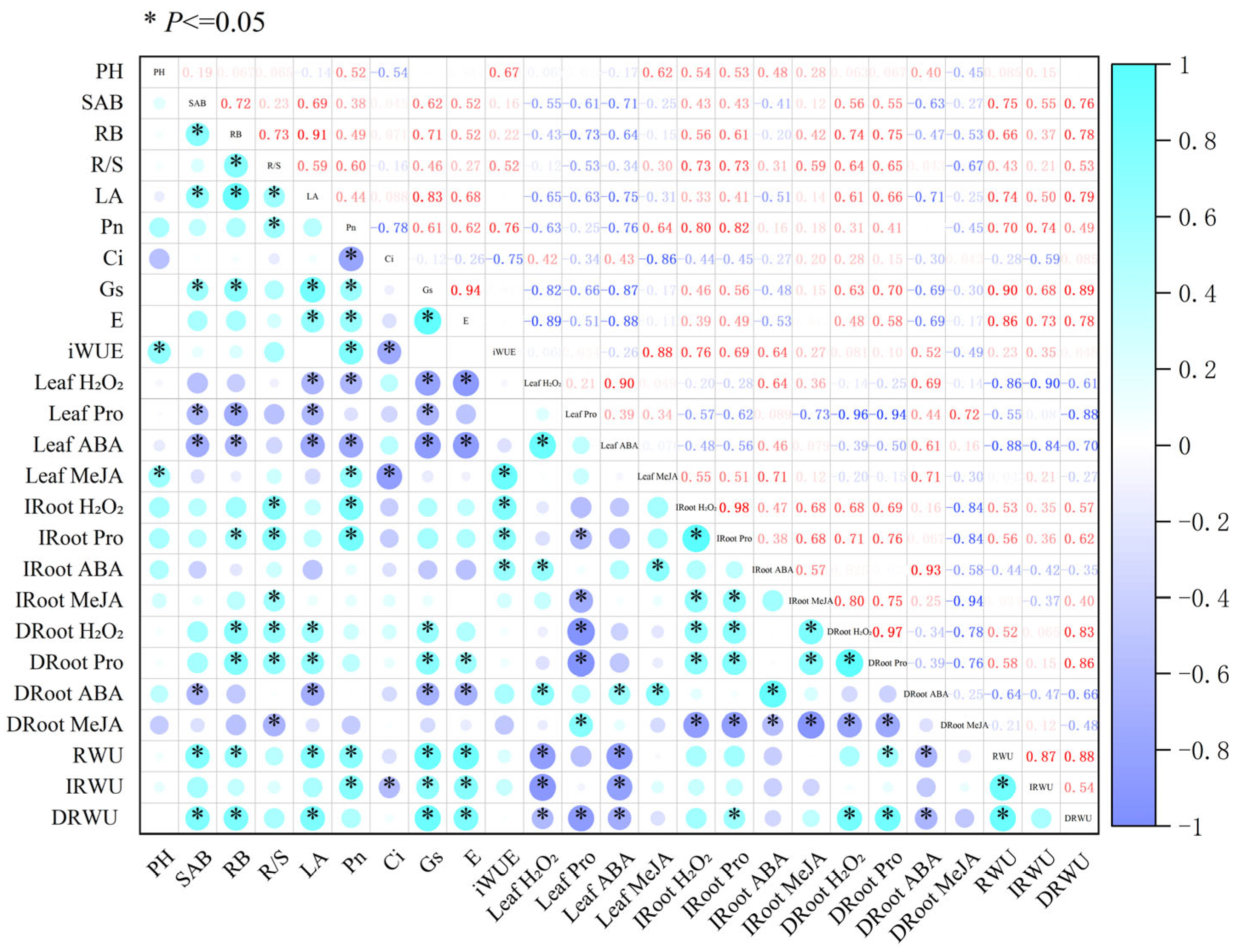
As illustrated in Figure 7, indicates that plant height, leaf area, and biomass are positively correlated with photosynthetic rate and instantaneous water use efficiency. Photosynthetic rate is significantly positively correlated with stomatal conductance (p < 0.05). Stomatal conductance is positively correlated with transpiration rate, and transpiration rate is significantly positively correlated with ABA (p < 0.05). Leaf MeJA is significantly positively correlated with instantaneous water use efficiency (p < 0.05). Root biomass and root-to-shoot ratio are significantly positively correlated with total root water uptake, H2O2, proline, and drought-side water uptake (p < 0.05).

3.6. Principal Component Analysis of Growth Traits, Root Water Uptake, and Physiological Characteristics of Alfalfa

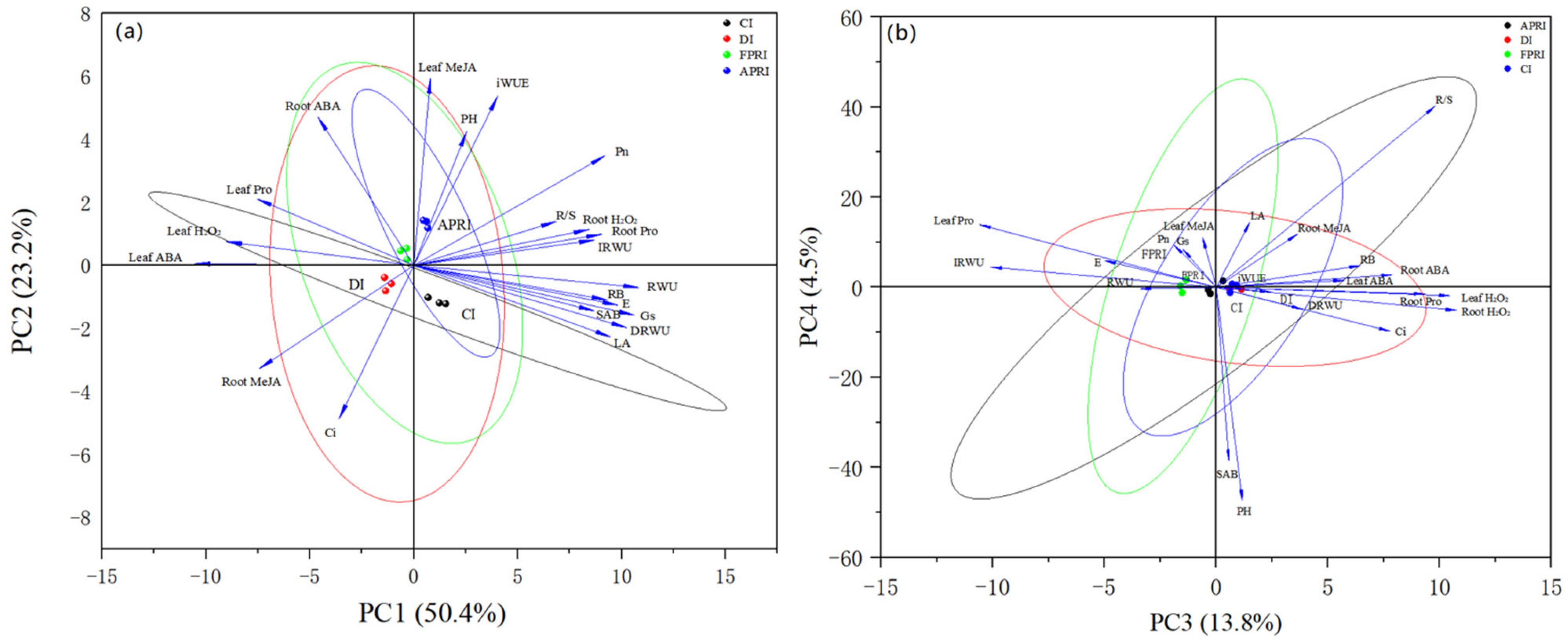
PCA was conducted on 21 indicators, including plant height (PH). The results showed that the variance contribution rates of the four extracted principal components were 50.43%, 23.16%, 13.83%, and 4.50%, respectively, with a cumulative contribution rate of 91.92%, effectively explaining the main information regarding growth traits and physiological characteristics. Principal component 1 (PCA1) had an eigenvalue of 10.590, with a high loading for total root water uptake (RWU), reflecting alfalfa’s ability to absorb and utilize water, which is a key factor in water metabolism. Principal component 2 (PCA2) had an eigenvalue of 4.865, with a high loading for leaf methyl jasmonate content (Leaf MeJA), which is a key factor in hormonal regulation in leaves. Principal component 3 (PCA3) had an eigenvalue of 2.904, with the highest absolute loading for root hydrogen peroxide content (Root H2O2), indicating it as a key factor in root oxidative stress. Principal component 4 (PCA4) had the highest absolute loading for plant height (PH), which is a key factor in agronomic traits. Using the eigenvalues and variance contribution rates of the principal components, the feature vectors were obtained (as shown in Table 1), which were then used as coefficients to construct the principal component function expressions.
Y1 = 0.068X1 + 0.232X2 + 0.248X3 + 0.183X4 + 0.253X5 + 0.246X6 − 0.096X7 + 0.283X8 + 0.262X9 + 0.108X10 − 0.241X11 − 0.202X12 − 0.281X13 + 0.021X14 + 0.289X15 + 0.225X16 + 0.241X17 − 0.123X18 − 0.199X19 + 0.232X20 + 0.273X21
Y2 = 0.318X1 − 0.108X2 − 0.082X3 + 0.104X4 − 0.171X5 + 0.261X6 − 0.365X7 − 0.118X8 − 0.094X9 + 0.402X10 + 0.056X11 + 0.158X12 + 0.004X13 + 0.447X14 − 0.053X15 + 0.009X16 + 0.074X17 + 0.074X18 − 0.246X19 + 0.060X20 − 0.148X21
Y3 = 0.039X1 + 0.019X2 + 0.215X3 + 0.327X4 + 0.050X5 − 0.063X6 + 0.259X7 − 0.050X8 − 0.167X9 + 0.081X10 + 0.349X11 − 0.353X12 + 0.191X13 − 0.021X14 − 0.113X15 + 0.358X16 + 0.311X17 + 0.263X18 + 0.122X19 −0.333X20 + 0.129X21
By standardizing the raw data in SPSS, common factors can be obtained, and then introduced into the equation Y = (0.504Y1 + 0.232Y2 + 0.138Y3) to construct a comprehensive evaluation model, as shown in Figure 8.
Table 2 displays the comprehensive scores for various irrigation methods, ranked in descending order as APRI > CI > FPRI > DI. Based on the model and function expression, APRI treatment achieved the highest comprehensive score.

4. Discussion

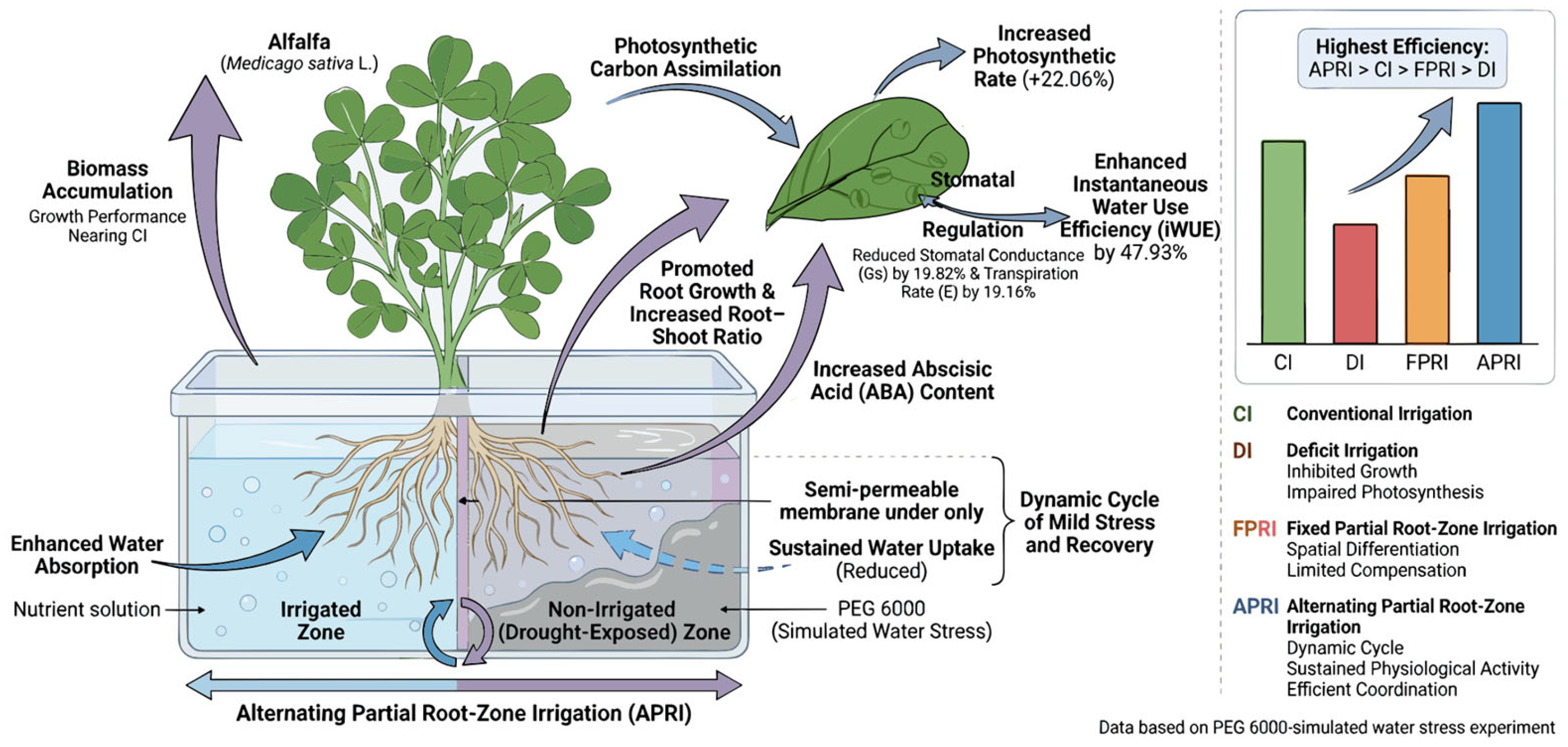
The present study demonstrates that APRI alleviates the detrimental effects of drought stress on alfalfa through the coordinated modulation of physiological, biochemical, and morphological responses. APRI significantly increased instantaneous water use efficiency (iWUE) under the experimental conditions. The underlying mechanisms appear to involve (1) inducing a compensatory root water uptake response; (2) optimizing stomatal behavior to reduce water loss while maintaining photosynthetic capacity; (3) regulating the accumulation of the osmolyte proline; (4) modulating endogenous hormone (ABA and MeJA) levels; and (5) involving H2O2 signaling in the regulation of root water uptake physiology. The physiological responses of alfalfa to APRI are shown in Figure 9.
Drought represents one of the most prevalent environmental stresses affecting crops, and these plants can adapt through various physiological and morphological responses. Irrigation practices can induce physiological changes in crops, thereby influencing their survival and growth strategies [36]. Appropriate irrigation regimes enable the synergistic improvement of water conservation and crop yield [37]. Previous research has demonstrated that APRI significantly increases alfalfa plant height and hay yield relative to conventional irrigation, while concomitantly enhancing root biomass [38]. In this experiment, APRI significantly improved the height of alfalfa plants. Although the aboveground biomass did not show a notable increase compared to CI, it was significantly greater than that of DI under similar drought stress conditions. Furthermore, research has demonstrated that alternate partial root-zone irrigation in maize [39] can promote root elongation and extension while enhancing root biomass, thereby increasing the root system’s capacity for water uptake. This experiment revealed that, compared to conventional irrigation, APRI did not significantly reduce root biomass but did increase the root-to-shoot ratio. Under APRI treatment, the reductions in plant height and leaf area were minimal, suggesting that this irrigation model enhances alfalfa’s ability to adapt to water stress. The absorption and transport of water in crops have long been significant scientific concerns [40]. Root water uptake is influenced not only by the current moisture status of the growth substrate but also by prior water management. In the present study, the irrigated-side roots exhibited significantly enhanced water absorption under both FPRI and APRI treatments. The drought-side roots in the APRI group exhibited a distinct compensatory water uptake effect following rehydration, with the water absorption capacity after rehydration being significantly greater than that observed under continuous drought stress. Consistent with previous findings [41], the results indicate that the root system of Medicago sativa exhibits water stress memory and compensatory water uptake capabilities under partial root-zone irrigation conditions. Stomata serve as the primary pathways for water loss and carbon dioxide absorption in crops. Numerous studies have established a linear relationship between transpiration rate and stomatal conductance, while photosynthetic rate demonstrates a non-linear, gradually saturating relationship with stomatal conductance. Consequently, a judicious reduction in stomatal conductance can significantly decrease transpiration with minimal impact on photosynthesis [42]. In this experiment, APRI reduced both stomatal conductance and transpiration rate, thereby significantly enhancing instantaneous water use efficiency, which aligns with previous findings [43]. Research has shown that APRI can elevate the photosynthetic rate in watermelon; APRI optimizes nutrient uptake in watermelon, providing a material basis for photosynthetic reactions and thereby enhancing the net photosynthetic rate [44], and in maize, alternate partial root-zone irrigation markedly increased total chlorophyll content and leaf net photosynthetic rate compared to surface drip irrigation. APRI promotes the vertical distribution of roots and increases the root water uptake rate, which in turn enhances the photosynthetic rate of plants [9]. In this study, under drought stress, APRI did not significantly reduce alfalfa’s root biomass or leaf area, but notably increased the root–shoot ratio and enhanced water uptake by roots in the droughted side, which is likely the key reason for APRI improving alfalfa photosynthetic rate. Proline, as an osmotic regulator, possesses strong hydrophilicity, which allows it to increase cellular water content, particularly that of bound water. Moreover, under conditions of cellular dehydration, proline can alleviate or prevent structural damage to proteins [45]. A study on partial root-zone irrigation in apple trees revealed that conventional drought treatment resulted in the most significant and rapid increase in leaf proline content. Changes in electrical conductivity and malondialdehyde (MDA) content across the three treatments exhibited trends consistent with proline accumulation, likely reflecting the extent of stress-induced injury. In contrast, the partial root-zone alternate irrigation treatment demonstrated lower leaf proline content compared to the conventional drought treatment [46]. In this experiment, the proline content in leaves subjected to APRI was lower than that in the DI treatment, indicating a reduced degree of drought-induced damage in the leaves relative to DI. Meanwhile, the proline levels in the roots on the irrigated side under both partial root-zone irrigation treatments were significantly increased, which explains the enhanced water absorption capacity observed in these irrigated root zones. Endogenous hormones, which are physiologically active substances in crops sensitive to changes in soil moisture, serve as key regulatory factors for crop growth and development. ABA plays a crucial role in promoting plant dormancy and inhibiting plant growth. Additionally, it exerts significant effects on facilitating stomatal closure and enhancing the efficiency of root water uptake. ABA has been shown in several studies to increase root hydraulic conductivity when applied to the root medium, which may lead to the increase in water uptake [47]. Aligning with findings from previous studies on cassava and apple, APRI in this study significantly increased the ABA content in both roots and leaves, particularly in the drought-side roots [48,49]. Compared with CI, APRI significantly increased the ABA content in alfalfa leaves starting at 6 h; this increase led to a decrease in stomatal conductance and transpiration rate. Nevertheless, the ABA content in alfalfa leaves under APRI was significantly lower than that under DI. This result indicates that conventional deficit irrigation causes excessive accumulation of ABA in leaves, which may result in growth inhibition. Studies have shown that water uptake in cotton roots is positively regulated by leaf-derived jasmonic acid as a long-distance signal. Jasmonic acid can enhance the activity of defense proteins and improve the stress resistance of crops [50]. In the present study, MeJA content in leaves was significantly increased by the APRI treatment. This finding indicates that under APRI conditions, crop leaves are protected, plant stress resistance is enhanced, and alfalfa water uptake is promoted concurrently. H2O2, a type of reactive oxygen species, has been shown to participate in various physiological functions and stress responses, and it is widely recognized as a signaling molecule. However, research regarding the role of H2O2 in regulating root water uptake capacity remains inconclusive. Some studies indicate that under cold stress, H2O2 can diminish the water transport capacity of cucumber roots [51]. Conversely, exogenous H2O2 can enhance the hydraulic conductivity of roots by increasing the content of PIP proteins in root cell plasma membranes [52]. Other investigations suggest that the effect of H2O2 on root water uptake capacity, whether enhancing or reducing, is contingent upon its concentration within the cells [53]. In this experiment, the leaf H2O2 content under APRI was significantly lower than that observed under DI but higher than that under CI and FPRI. Furthermore, the H2O2 content in the irrigated-side roots under APRI and FPRI was significantly elevated, which may contribute to the increased water uptake in the irrigated-side roots. In this experiment, the content of hormonal signals in leaves was generally higher than that in roots, which indicates that the sensitivity of leaves to drought stress is higher than that of roots.

5. Conclusions

In this study, DI markedly inhibited alfalfa growth and severely impaired its photosynthetic function. FPRI promoted spatial differentiation in root function, with roots on the irrigated side assuming the majority of physiological roles. However, these roots could not entirely compensate for the functional decline of the non-irrigated-side roots due to drought stress, leading to a certain degree of limitation on overall plant growth. APRI established a dynamic cycle of mild stress and recovery, which sustained root physiological activity over time. The main reason why APRI maintains water uptake by alfalfa roots is that it enhances water absorption by roots in the irrigated zone while also sustaining water uptake by roots in the non-irrigated (drought-exposed) zone. APRI facilitated efficient coordination among stomatal regulation, photosynthetic carbon assimilation, and transpiration water consumption, significantly improving instantaneous water use efficiency and biomass accumulation, with growth performance nearing that of CI.
In conclusion, alternating partial root-zone irrigation (APRI) represents an effective strategy for balancing water conservation with stable biomass production in alfalfa under controlled conditions. It alleviates drought stress impacts by enhancing intrinsic physiological regulation and functional compensation between root zones. These findings support APRI as a viable water-saving technique for alfalfa cultivation. Future research should focus on elucidating the molecular regulatory networks underlying APRI-induced improvements in water use efficiency, which will further strengthen the theoretical basis and promote the adoption of this sustainable irrigation model.

Author Contributions

Conceptualization: X.G. and S.Z.; methodology: C.L., X.G., and B.W.; data analysis and visualization: X.P. and Y.A.; original draft preparation: X.G., C.L., and D.H.; experimental supervision: L.L. and R.X. All authors contributed to the review and editing of the manuscript. All authors have read and agreed to the published version of the manuscript.

Funding

The present work was supported by the National Natural Science Foundation of China (32560917), the Natural Science Foundation of Xinjiang Uygur Autonomous Region (2024D01A71), the Xinjiang Modern Agricultural Industry Technology System (XJARS-13), and the China Agriculture Research System of MOF and MARA (CARS34).

Data Availability Statement

The data presented in this study are available on request from the corresponding author due to the risk of improper use by other researchers.

Acknowledgments

We sincerely thank Ying Wang, Zhipeng Jiang, and all the students in the research group for their various forms of assistance during the experimental process.

Conflicts of Interest

The authors declare that they have no known competing financial interests or personal relationships that could have influenced the work reported in this paper.

References

  1. Meng, J.; Ma, H.; Li, H.J.; Li, N. Effects of two rhizobium strains on photosynthetic characteristics and growth of Xinmu No.1 alfalfa. J. Xinjiang Agric. Univ. 2021, 44, 241–247. [Google Scholar]
  2. Yu, H.; Ma, X.; Zeng, H.; Shan, X.; Li, M.; Wang, Z. Effects of underground drip irrigation timing and water volume on seed production of alfalfa. Acta Prataculturae Sin. 2023, 32, 1–12. [Google Scholar]
  3. Shan, L. Scientific responses to agricultural drought. Agric. Res. Arid Areas 2011, 29, 1–5. [Google Scholar]
  4. Qi, S.; Qin, W.; Jiao, T. Evaluation of physiological characteristics and water use efficiency of different silage maize varieties in rain-fed areas of Gansu. Acta Prataculturae Sin. 2022, 30, 2407–2414. [Google Scholar]
  5. Chai, Q. Research progress and prospects of alternate partial root-zone irrigation technology. Chin. Agric. Sci. Bull. 2010, 26, 46–51. [Google Scholar]
  6. Du, T.; Kang, S.; Hu, X. Temporal-spatial deficit irrigation regulation: A new breakthrough in orchard water-saving theory. J. Shenyang Agric. Univ. 2004, 35, 449–454. [Google Scholar]
  7. Dodd, I.C. Rhizosphere manipulations to maximize ‘crop per drop’ during deficit irrigation. J. Exp. Bot. 2009, 60, 2454–2459. [Google Scholar] [CrossRef]
  8. Kang, S.; Zhang, J. Controlled alternate partial root-zone irrigation: Its physiological consequences and impact on water use efficiency. J. Exp. Bot. 2004, 55, 2437–2446. [Google Scholar] [CrossRef]
  9. Cao, Y. Mechanisms of Alternate Vertical Partial Root-Zone Irrigation on Growth, Physiology, and Yield of Summer Maize. Ph.D. Thesis, Northwest A&F University, Yangling, China, May 2021. [Google Scholar]
  10. Mclean, E.H.; Ludwig, M.; Grierson, P.F. Root hydraulic conductance and aquaporin abundance respond rapidly to partial root-zone drying events in a riparian Melaleuca species. New Phytol. 2011, 192, 664–675. [Google Scholar] [CrossRef]
  11. Panigrahi, P.; Sahu, N.N. Evapotranspiration and yield of okra as affected by partial root-zone furrow irrigation. Int. J. Plant Prod. 2012, 7, 33–54. [Google Scholar]
  12. Du, S.Q.; Tong, L.; Kang, S.Z.; Li, F.S.; Du, T.S.; Li, S.; Ding, R.S. Alternate partial root-zone irrigation with high irrigation frequency improves root growth and reduces unproductive water loss by apple trees in arid north-west China. Front. Agr. Sci. Eng. 2018, 5, 188–196. [Google Scholar] [CrossRef]
  13. Jia, D.Y.; Dai, X.L.; Xie, Y.L. Alternate furrow irrigation improves grain yield and nitrogen use efficiency in winter wheat. Agric. Water Manag. 2021, 244, 106606. [Google Scholar] [CrossRef]
  14. Liu, R.; Yang, Y.; Wang, Y.S.; Wang, X.C.; Rengel, Z.; Zhang, W.P.; Shu, L.Z. Alternate partial root-zone drip irrigation with nitrogen fertigation promoted tomato growth, water and fertilizer-nitrogen use efficiency. Agric. Water Manag. 2020, 233, 106049. [Google Scholar] [CrossRef]
  15. Cheng, M.H.; Wang, H.D.; Fan, J.L.; He, Y.B. Effects of soil water deficit at different growth stages on maize growth, yield, and water use efficiency under alternate partial root-zone irrigation. Water 2021, 13, 148. [Google Scholar] [CrossRef]
  16. Sezen, S.M.; Yazar, A.; Tekin, S. Physiological response of red pepper to different irrigation regimes under drip irrigation in the Mediterranean region of Turkey. Sci. Hortic. 2019, 245, 280–288. [Google Scholar] [CrossRef]
  17. Conesa, M.R.; Berrios, P.; Temnani, A.; Falagán, N.; Mounzer, O.; Pérez-Pastor, A. Assessment of the type of deficit irrigation applied during berry development in ‘Crimson Seedless’ table grapes. Water 2022, 14, 1311. [Google Scholar] [CrossRef]
  18. El-Otmani, M.; Chouaibi, A.; Azrof, C.; Chetto, O.; Ait-Oubahou, A. Response of Clementine Mandarin to water-saving strategies under water scarcity conditions. Water 2020, 12, 2439. [Google Scholar] [CrossRef]
  19. Xiao, Y.; Zhang, J.; Jia, T.T.; He, Y.; Zhou, L. Effects of alternate furrow irrigation on the biomass and quality of alfalfa (Medicago sativa). Agric. Water Manag. 2015, 161, 147–154. [Google Scholar] [CrossRef]
  20. Liu, L.; Wang, T.; Zhang, J.; Wang, Z.; Li, C. Responses of main functional traits of alfalfa roots to alternate partial root-zone irrigation. Acta Prataculturae Sin. 2023, 31, 852–859. [Google Scholar]
  21. Sarker, K.K.; Akanda, M.A.R.; Biswas, S.K.; Roy, D.K.; Khatun, A.; Goffar, M.A. Field performance of alternate wetting and drying furrow irrigation on tomato crop growth, yield, water use efficiency, quality and profitability. J. Integr. Agric. 2016, 15, 2380–2392. [Google Scholar] [CrossRef]
  22. Fu, F.B.; Li, F.S.; Kang, S.Z. Alternate partial root-zone drip irrigation improves water- and nitrogen-use efficiencies of sweet-waxy maize with nitrogen fertigation. Sci. Rep. 2017, 7, 17256. [Google Scholar] [CrossRef] [PubMed]
  23. Kassaye, K.T.; Yilma, W.A.; Fisha, M.H.; Haile, A.T. Yield and water use efficiency of potato under alternate furrows and deficit irrigation. Int. J. Agron. 2020, 2020, 8869098. [Google Scholar] [CrossRef]
  24. Consoli, S.; Stagno, F.; Vanella, D.; Boaga, J.; Cassiani, G.; Roccuzzo, G. Partial root-zone drying irrigation in orange orchards: Effects on water use and crop production characteristics. Eur. J. Agron. 2017, 82, 190–202. [Google Scholar] [CrossRef]
  25. Zhang, J. Effects of Partial Root-Zone Irrigation on Yield Stability and Nitrogen-Phosphorus Utilization of Alfalfa. Ph.D. Thesis, Lanzhou University, Lanzhou, China, May 2021. [Google Scholar]
  26. Wang, Y. Effects of Alternate Partial Root-Zone Underground Drip Irrigation on Photosynthetic Characteristics, Yield Quality, and Water Use Efficiency of Alfalfa. Ph.D. Thesis, Beijing Forestry University, Beijing, China, June 2021. [Google Scholar]
  27. Zhao, S.S.; Jiang, Y.X.; Zhao, Y.; Huang, S.J.; Yuan, M.; Zhao, Y.X.; Guo, Y. CASEIN KINASE1-LIKE PROTEIN2 regulates actin filament stability and stomatal closure via phosphorylation of actin depolymerizing factor. Plant Cell 2016, 28, 1422–1439. [Google Scholar] [CrossRef]
  28. Bauerle, W.L.; Inman, W.W.; Dudley, J.B. Leaf abscisic acid accumulation in response to substrate water content: Linking leaf gas exchange regulation with leaf abscisic acid concentration. J. Am. Soc. Hortic. Sci. 2006, 131, 295–301. [Google Scholar] [CrossRef]
  29. Szabados, L.; Savouré, A. Proline: A multifunctional amino acid. Trends Plant Sci. 2010, 15, 89–97. [Google Scholar] [CrossRef]
  30. Hossain, M.A.; Munemasa, S.; Uraji, M.; Nakamura, Y.; Mori, I.C.; Murata, Y. Involvement of endogenous abscisic acid in methyl jasmonate-induced stomatal closure in Arabidopsis. Plant Physiol. 2011, 156, 430–438. [Google Scholar] [CrossRef]
  31. Suhita, D.; Raghavendra, A.S.; Kwak, J.M.; Vavasseur, A. Cytoplasmic alkalization precedes reactive oxygen species production during methyl jasmonate- and abscisic acid-induced stomatal closure. Plant Physiol. 2004, 134, 1536–1545. [Google Scholar] [CrossRef] [PubMed]
  32. Lee, H.D. Enhancement of root bleeding rate of rice by exogenous methyl jasmonate. Plant Growth Regul. 1996, 19, 229–233. [Google Scholar]
  33. Sánchez-Romera, B.; Ruiz-Lozano, J.M.; Zamarreño, Á.M.; García-Mina, J.M.; Aroca, R. Enhancement of root hydraulic conductivity by methyl jasmonate and the role of calcium and abscisic acid in this process. Plant Cell Environ. 2014, 37, 1583–1593. [Google Scholar] [CrossRef]
  34. Mingo, D.M.; Bacon, M.A.; Davies, W.J. Non-hydraulic regulation of fruit growth in tomato plants (Lycopersicon esculentum cv. Solairo) growing in drying soil. J. Exp. Bot. 2003, 54, 1205–1212. [Google Scholar] [CrossRef]
  35. Sun, Q.C.; Wang, Y.; Zhang, S.Z.; Peng, X.W.; Ge, X.Y.; Wen, B.H.; An, Y.P.; Jing, G.L.; Zhang, Y.J. Drought resistance physiological responses of alfalfa to alternate partial root-zone drying irrigation. Agriculture 2024, 14, 15. [Google Scholar] [CrossRef]
  36. Li, S.; Wan, L.; Nie, Z.; Li, X.; Zhang, J. Fractal and topological analyses and antioxidant defense systems of alfalfa (Medicago sativa L.) root system under drought and rehydration regimes. Agronomy 2020, 10, 805. [Google Scholar] [CrossRef]
  37. Wang, L.L.; Mao, B.B.; Chen, B.; Cheng, J.H.; Zhang, K.; Han, B.B. Effects of different irrigation rates on growth, yield components and fiber quality of cotton in arid regions of Xinjiang. J. Xinjiang Agric. Univ. 2024, 47, 350–357. [Google Scholar]
  38. Sun, Q.C.; Zhang, S.Z.; Peng, X.W.; Ge, X.Y.; Wen, B.H.; Jiang, Z.P.; Wang, Y.X.; Zhang, B. Alternating partial root-zone subsurface drip irrigation enhances the productivity and water use efficiency of alfalfa by improving root characteristics. Agronomy 2024, 14, 849. [Google Scholar] [CrossRef]
  39. Li, C.; Zhou, X.; Sun, J.; Wang, X. Root length density distribution and water use of maize under alternate furrow irrigation. J. Irrig. Drain. 2012, 31, 81–83. [Google Scholar]
  40. Luo, Z. Physiological and Molecular Mechanisms of Improved Water Use Efficiency in Cotton Under Partial Root-Zone Irrigation. Ph.D. Thesis, Shandong University, Jinan, China, December 2018. [Google Scholar]
  41. Hu, T.T.; Kang, S.Z.; Li, F.S.; Zhang, J.H. Effects of localized irrigation on hydraulic conductivity in soil-root system from different root zone of maize. Trans. ASABE 2007, 23, 11–16. [Google Scholar]
  42. Lawson, T.; Vialet-Chabrand, S. Speedy stomata, photosynthesis and plant water use efficiency. New Phytol. 2019, 221, 93–98. [Google Scholar] [CrossRef]
  43. Helaly, M.N.; Hoseiny, H.; Sheery, N.I.; Zayed, M.Z. Regulation and physiological role of silicon in alleviating drought stress of mango. Plant Physiol. Biochem. 2017, 118, 31–44. [Google Scholar] [CrossRef]
  44. Wang, X.C.; Liu, R.; Luo, J.N.; Wang, Y.S.; Yang, Y.; Zhang, W.P.; Shu, L.Z. Effects of water and NPK fertigation on watermelon yield, quality, irrigation-water, and nutrient use efficiency under alternate partial root-zone drip irrigation. Agric. Water Manag. 2022, 271, 107785. [Google Scholar] [CrossRef]
  45. Gomes, F.P.; Oliva, M.A.; Mielke, M.S.; Almeida, A.A.F.; Aquino, L.A. Osmotic adjustment, proline accumulation and cell membrane stability in leaves of Cocos nucifera submitted to drought stress. Sci. Hortic. 2010, 126, 379–384. [Google Scholar] [CrossRef]
  46. Ma, H.Y.; Lv, D.G.; Liu, G.C.; Wang, Y.P.; Zhou, Z.S. Effects of different irrigation methods on photosynthetic function and antioxidant enzyme activities in leaves of ‘Hanfu’ apple trees. J. Ecol. 2012, 31, 2534–2540. [Google Scholar]
  47. Ruiz-Lozano, J.M.; Alguacil, M.M.; Bárzana, G.; Vernieri, P.; Aroca, R. Exogenous ABA accentuates the differences in root hydraulic properties between mycorrhizal and non mycorrhizal maize plants through regulation of PIP aquaporins. Plant Mol. Biol. 2009, 70, 565–579. [Google Scholar] [CrossRef] [PubMed]
  48. Zhou, F.; Liu, E.; Zhao, P.; Yin, H.; Shen, Y. Effects of drought stress on endogenous hormone content in cassava seedlings. Agric. Res. Arid Areas 2013, 31, 238–244. [Google Scholar]
  49. Liu, C.; Zhou, S.; Zou, Y.; Wang, H.; Li, M.; Feng, B. Changes in endogenous hormone content of different drought-resistant apple rootstocks under drought stress conditions. Agric. Res. Arid Areas 2012, 31, 94–98. [Google Scholar]
  50. Luo, Z.; Kong, X.; Zhang, Y.; Li, W.; Zhang, D.; Dai, J.; Fang, S.; Chu, J.; Dong, H. Leaf-derived jasmonate mediates water uptake from hydrated cotton roots under partial root-zone irrigation. Plant Physiol. 2019, 180, 1660–1676. [Google Scholar] [CrossRef]
  51. Lee, S.H.; Singh, A.P.; Chung, G.C. Rapid accumulation of hydrogen peroxide in cucumber roots due to exposure to low temperature appears to mediate decreases in water transport. J. Exp. Bot. 2004, 55, 1733–1741. [Google Scholar] [CrossRef]
  52. Benabdellah, K.; Ruiz-Lozano, J.M.; Aroca, R. Hydrogen peroxide effects on root hydraulic properties and plasma membrane aquaporin regulation in Phaseolus vulgaris. Plant Mol. Biol. 2009, 70, 647–661. [Google Scholar] [CrossRef]
  53. Aroca, R.; Porcel, R.; Ruiz-Lozano, J.M. Regulation of root water uptake under abiotic stress conditions. J. Exp. Bot. 2012, 63, 43–57. [Google Scholar] [CrossRef]
Figure 1. Experimental schematic and plant samples: (a) growth performance during the experiment, (b) alfalfa plant sample photograph, (c) hydroponic box schematic.
Agriculture 16 00251 g001
Figure 2. Effects of different irrigation methods on plant height (a), shoot biomass (b), root biomass (c), leaf area (d), and root–shoot ratio (e) of alfalfa. Note: CI = conventional irrigation; DI = deficit irrigation; FPRI = fixed partial root-zone irrigation; APRI = alternating partial root-zone irrigation. Distinct lowercase letters in the figure denote statistically significant differences among irrigation methods (p < 0.05).
Agriculture 16 00251 g002
Figure 3. Effects of different irrigation methods on the root water uptake capacity of alfalfa. Note: CI = Average water uptake of both root sides under CI; DI = Average water uptake of both root sides under DI; FI = FPRI irrigated-side roots; FD = FPRI dry-side roots; AI = APRI irrigated-side roots; AD = APRI dry-side roots. Distinct lowercase letters in the figure denote statistically significant differences among irrigation methods (p < 0.05).
Agriculture 16 00251 g003
Figure 4. Effects of different irrigation methods on photosynthetic rate (a), intercellular CO2 concentration (b), stomatal conductance (c), transpiration rate (d), and instantaneous water use efficiency (e) of alfalfa. Distinct lowercase letters in the figure denote statistically significant differences among irrigation methods (p < 0.05).
Agriculture 16 00251 g004
Figure 5. Effects of different irrigation methods on leaf Pro (a), ABA (b), H2O2 (c), and MeJA (d) contents of alfalfa. Distinct lowercase letters in the figure denote statistically significant differences among irrigation methods (p < 0.05).
Agriculture 16 00251 g005
Figure 6. Effects of different irrigation methods on root Pro (a), ABA (b), H2O2 (c), and MeJA (d) contents of alfalfa. Distinct lowercase letters in the figure denote statistically significant differences among irrigation methods (p < 0.05). Note: CI = conventional irrigation roots; DI = deficit irrigation roots; FI = FPRI irrigated-side roots; FD = FPRI dry-side roots; AI = APRI irrigated-side roots; AD = APRI dry-side roots.
Agriculture 16 00251 g006
Figure 7. Correlation between treatment indicators. Note: Plant Height (PH), Shoot Biomass (SAB), Root Biomass (RB), Root-shoot Ratio (R/S), Leaf Area (LA), Net Photosynthetic Rate (Pn), Intercellular CO2 Concentration (Ci), Stomatal Conductance (Gs), Transpiration Rate (E), Instantaneous Water Use Efficiency (IWUE), Leaf Hydrogen Peroxide (Leaf H2O2), Leaf Proline (Leaf Pro), Leaf Abscisic Acid (Leaf ABA), Leaf Methyl Jasmonate (Leaf MeJA), Root Hydrogen Peroxide (Root H2O2), Root Proline (Root Pro), Root Abscisic Acid (Root ABA), Root Methyl Jasmonate (Root MeJA), Total Root Water Uptake (RWU), Irrigation-side Root Water Uptake (IRWU), Drought-side Root Water Uptake (DRWU). *: p < 0.05.
Agriculture 16 00251 g007
Figure 8. PCA Plot: (a) PC1 vs. PC2 and (b) PC3 vs. PC4, illustrating sample-loading vector relationships and corresponding total contribution rates. Note: Plant Height (PH), Shoot Biomass (SAB), Root Biomass (RB), Root-shoot Ratio (R/S), Leaf Area (LA), Net Photosynthetic Rate (Pn), Intercellular CO2 Concentration (Cᵢ), Stomatal Conductance (Gs), Transpiration Rate (E), Instantaneous Water Use Efficiency (IWUE), Leaf Hydrogen Peroxide (Leaf H2O2), Leaf Proline (Leaf Pro), Leaf Abscisic Acid (Leaf ABA), Leaf Methyl Jasmonate (Leaf MeJA), Root Hydrogen Peroxide (Root H2O2), Root Proline (Root Pro), Root Abscisic Acid (Root ABA), Root Methyl Jasmonate (Root MeJA), Total Root Water Uptake (RWU), Irrigation-side Root Water Uptake (IRWU), Drought-side Root Water Uptake (DRWU).
Agriculture 16 00251 g008
Figure 9. Schematic diagram illustrating the physiological responses of alfalfa (Medicago sativa L.) to APRI.
Agriculture 16 00251 g009
Table 1. Eigenvectors of each index across principal components.
NamePCA1PCA2PCA3PCA4
PH0.067690.318460.03894−0.59192
SAB0.23164−0.108310.01877−0.4805
RB0.24829−0.082250.214760.05999
R/S0.182860.104410.32690.50272
LA0.25244−0.170710.050270.18055
Pn0.24550.26089−0.063020.1168
Ci−0.09593−0.365440.2593−0.12187
Gs0.28276−0.11834−0.049980.10607
E0.26212−0.09434−0.166760.07405
iWUE0.107480.402330.08154−0.01275
Leaf H2O2−0.240850.056130.34862−0.0234
Leaf Pro−0.20150.15836−0.352860.17338
Leaf ABA−0.281410.003950.191030.01925
Leaf MeJA0.021360.44578−0.02040.13786
RWU0.28857−0.05247−0.11325−0.00442
Root H2O20.224870.085510.35841−0.06412
Root Pro0.241260.074120.31093−0.01878
Root ABA−0.123270.353260.262750.03463
Root MeJA−0.19855−0.246380.121340.14772
IRWU0.231890.06029−0.336330.05607
DRWU0.27309−0.148320.12909−0.06161
Eigenvalue
Contributions Cumulative contribution
10.5904.8652.9040.946
50.43223.16713.8314.505
50.43273.59987.43091.935
Table 2. Comprehensive score table.
TreatmentY1Y2Y3YRanking
CI12.24−1.97−0.390.622
CI24.99−2.340.682.07
CI33.97−2.21−0.241.46
DI1−4.59−0.950.84−2.424
DI2−4.43−1.901.21−2.51
DI3−3.55−1.281.71−1.85
FPRI1−1.151.31−2.69−0.653
FPRI2−2.081.20−2.73−1.15
FPRI3−1.050.56−2.24−0.71
APRI11.982.651.081.761
APRI21.492.711.581.60
APRI32.182.231.201.78
Disclaimer/Publisher’s Note: The statements, opinions and data contained in all publications are solely those of the individual author(s) and contributor(s) and not of MDPI and/or the editor(s). MDPI and/or the editor(s) disclaim responsibility for any injury to people or property resulting from any ideas, methods, instructions or products referred to in the content.