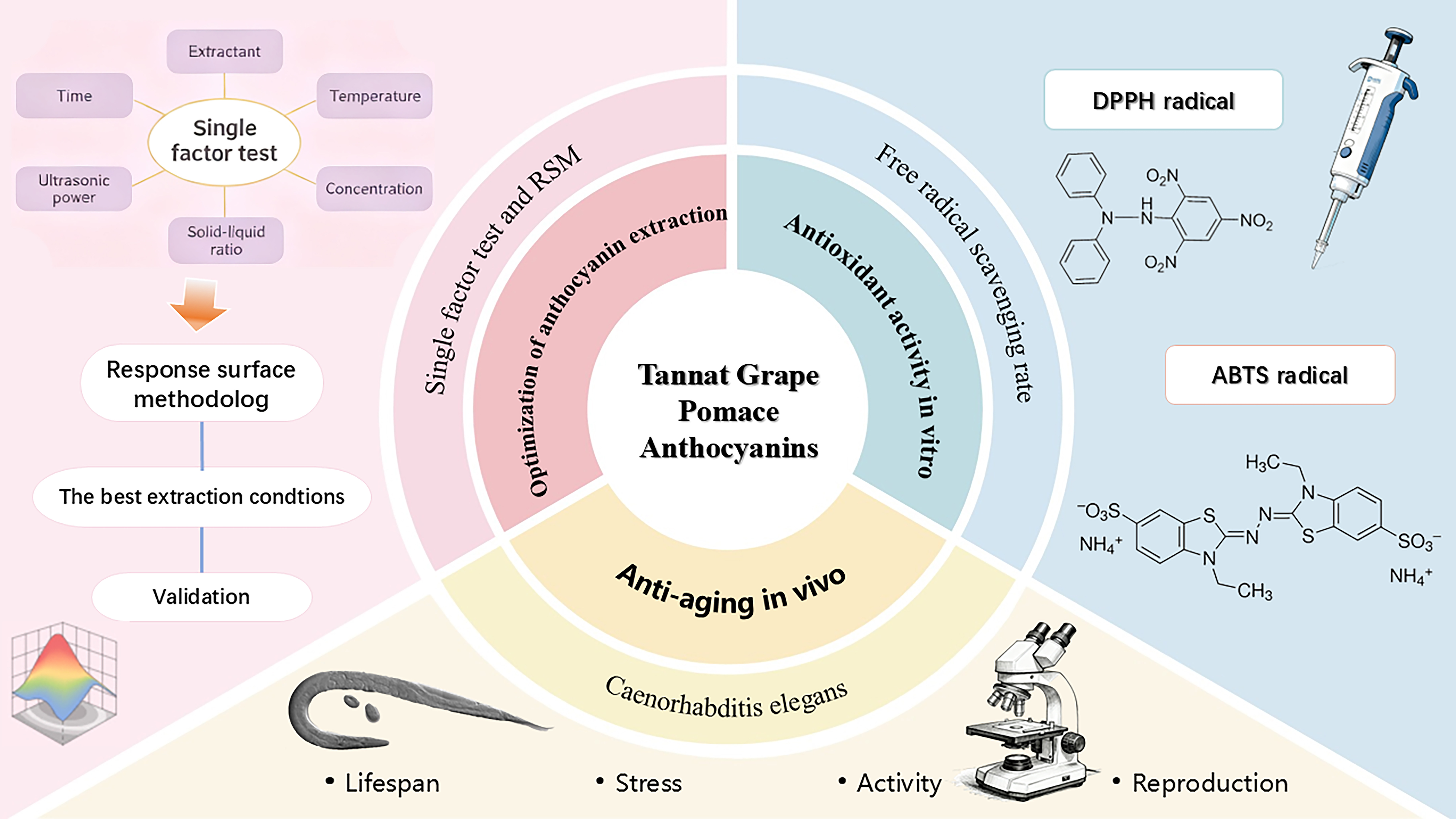
Optimization of the Extraction Process for Anthocyanins from Tannat Grape Skins and Pomace and Research on Their Antioxidant and Anti-Aging Effects

Abstract
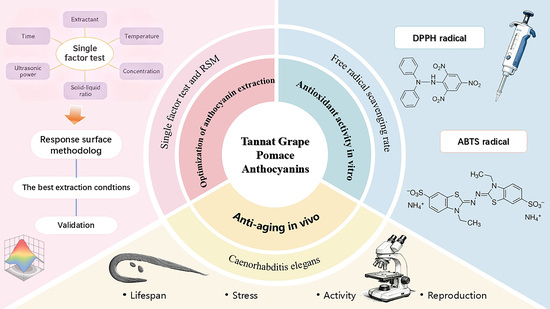
1. Introduction
2. Materials and Methods
2.1. Materials and Chemicals
2.2. Instrumentation
2.3. Optimal Extraction Solvent Screening
2.4. Single-Factor Experiment
2.5. Design of Response Surface Methodology (RSM)
2.6. Calculation of Anthocyanin Content
2.7. In Vitro Evaluation of TGPA Antioxidant Capacity
2.7.1. Determination of DPPH Radical Scavenging Activity of TGPA
2.7.2. Determination of ABTS Radical Scavenging Activity of TGPA
2.8. TGPA Anti-Aging Activity Study
2.8.1. Preparation of Escherichia coli OP50 Culture
2.8.2. Nematode Culture and Synchronization
2.8.3. Experimental Groups
2.8.4. Nematode Lifespan Assay
2.8.5. Motor Activity Assessment
2.8.6. Fertility Assay
2.8.7. Nematode Heat Stress Experiment
2.8.8. Acute Oxidative Stress Experiment
2.9. Data Processing
3. Results
3.1. Optimization of TGPA Extraction Process
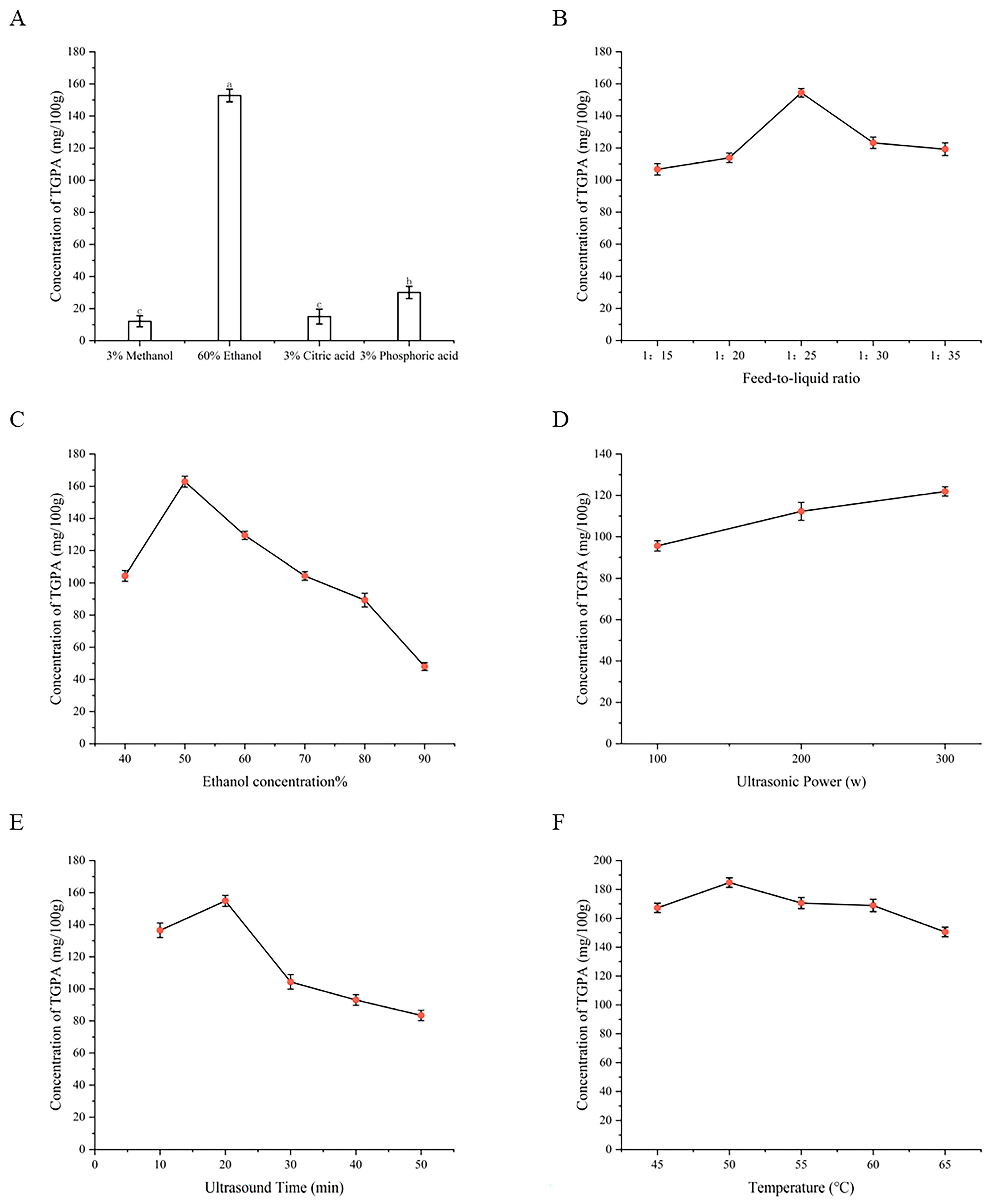
3.1.1. Screening for Optimal Extraction Reagent
3.1.2. Effect of Different Solid-to-Liquid Ratios on TGPA Extraction Yield
3.1.3. Effect of Different Concentrations on TGPA Extraction Yield
3.1.4. Effect of Ultrasonic Power on TGPA Extraction Yield
3.1.5. Effect of Ultrasonication Time on TGPA Extraction Yield
3.1.6. Effect of Ultrasonic Temperature on TGPA Extraction Yield
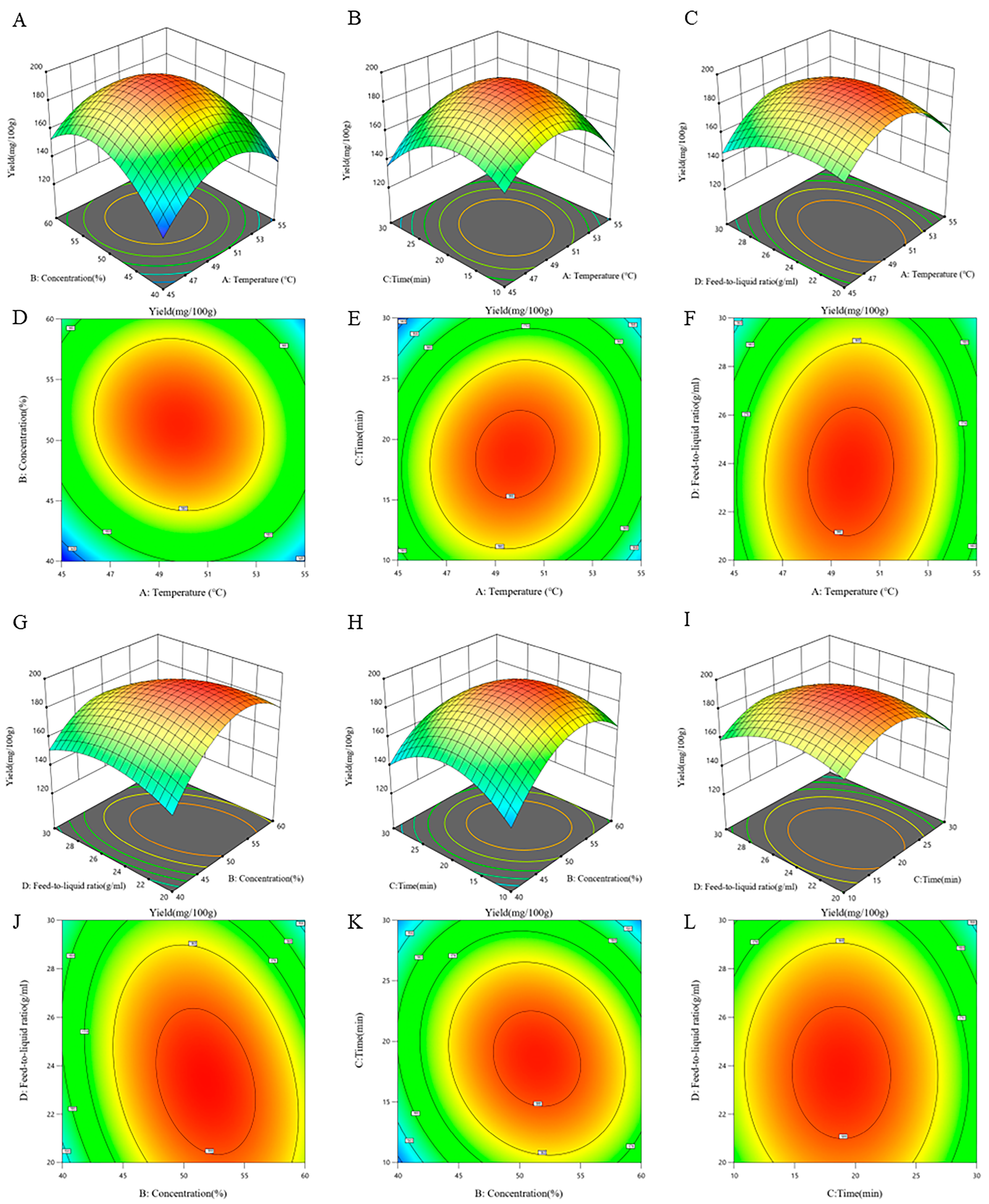
3.1.7. Response Surface Optimization of the Extraction Process
3.2. In Vitro Antioxidant Studies of TGPA
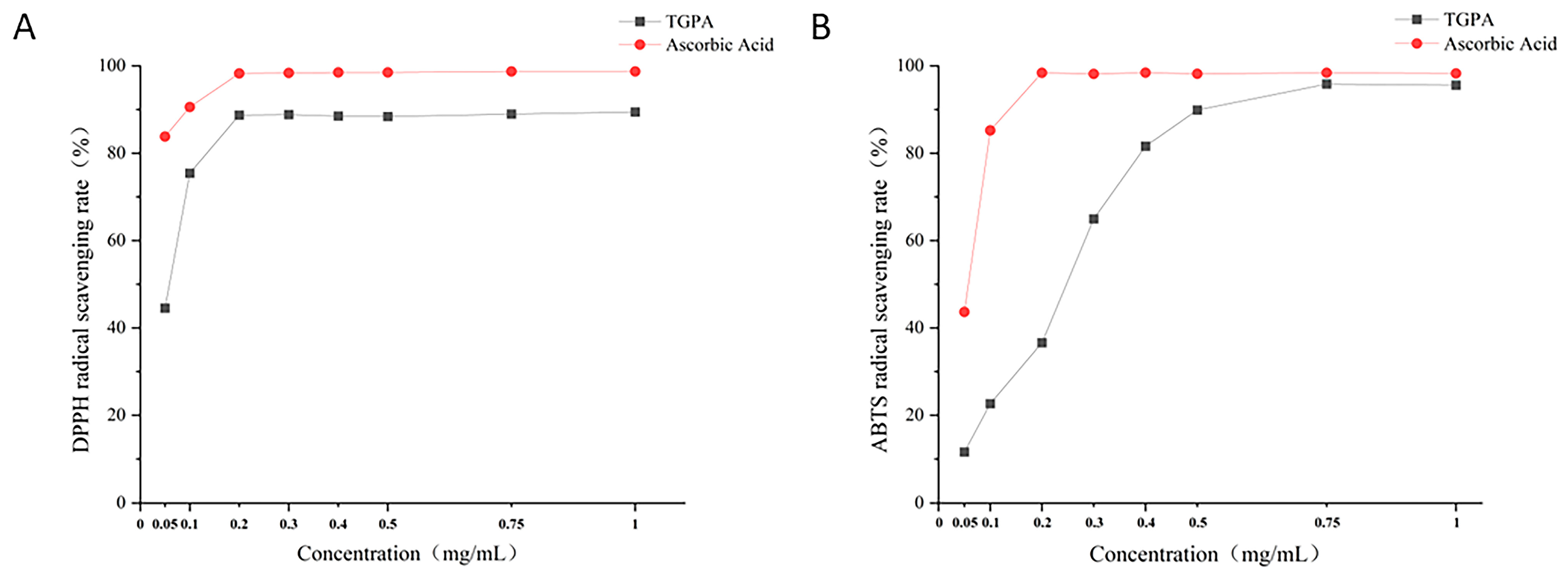
3.2.1. DPPH Radical Scavenging Activity
3.2.2. ABTS Radical Scavenging Capacity
3.3. Anti-Aging Activity
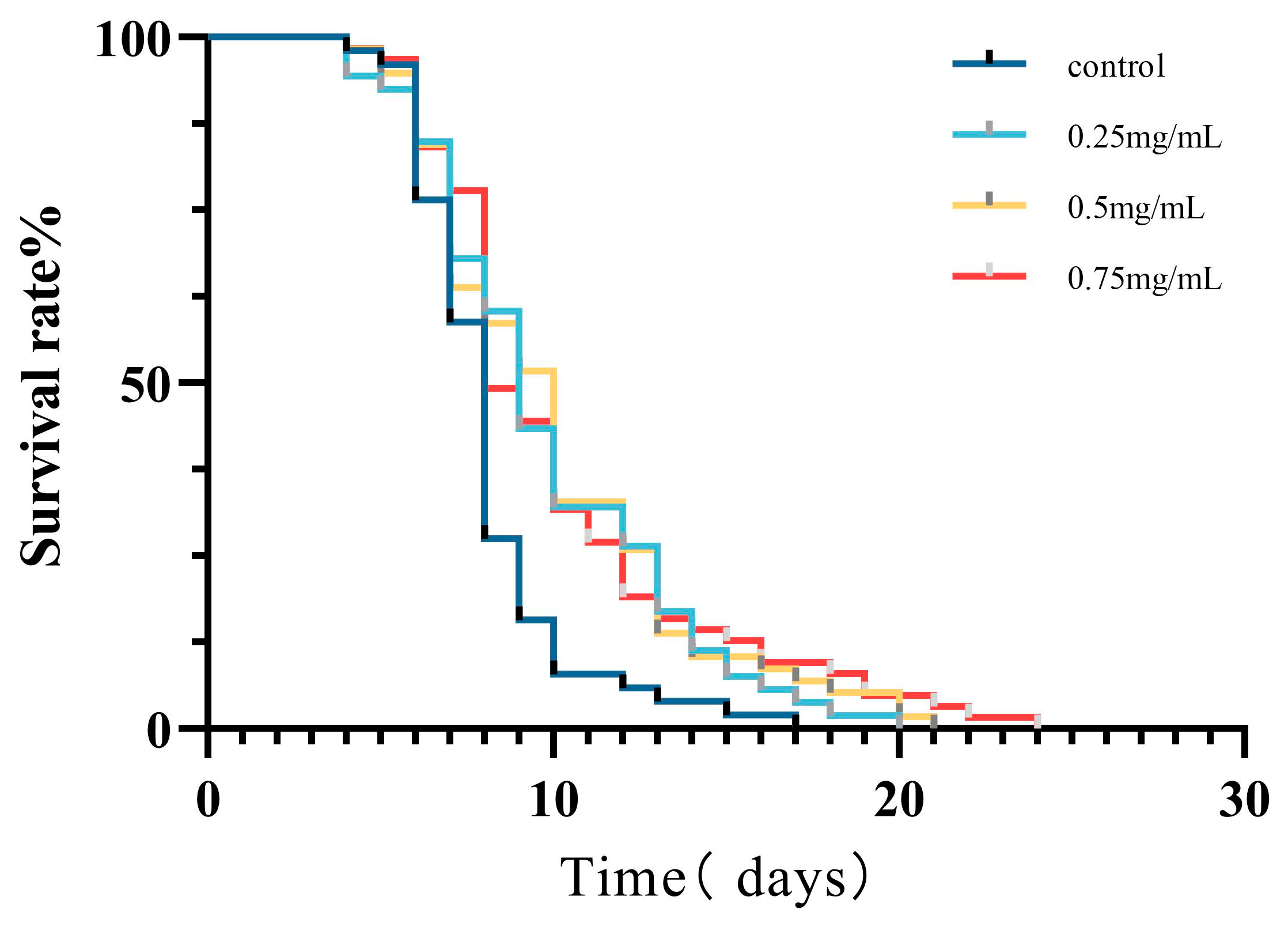
3.3.1. Effect of TGPA Extract on the Lifespan of Caenorhabditis elegans
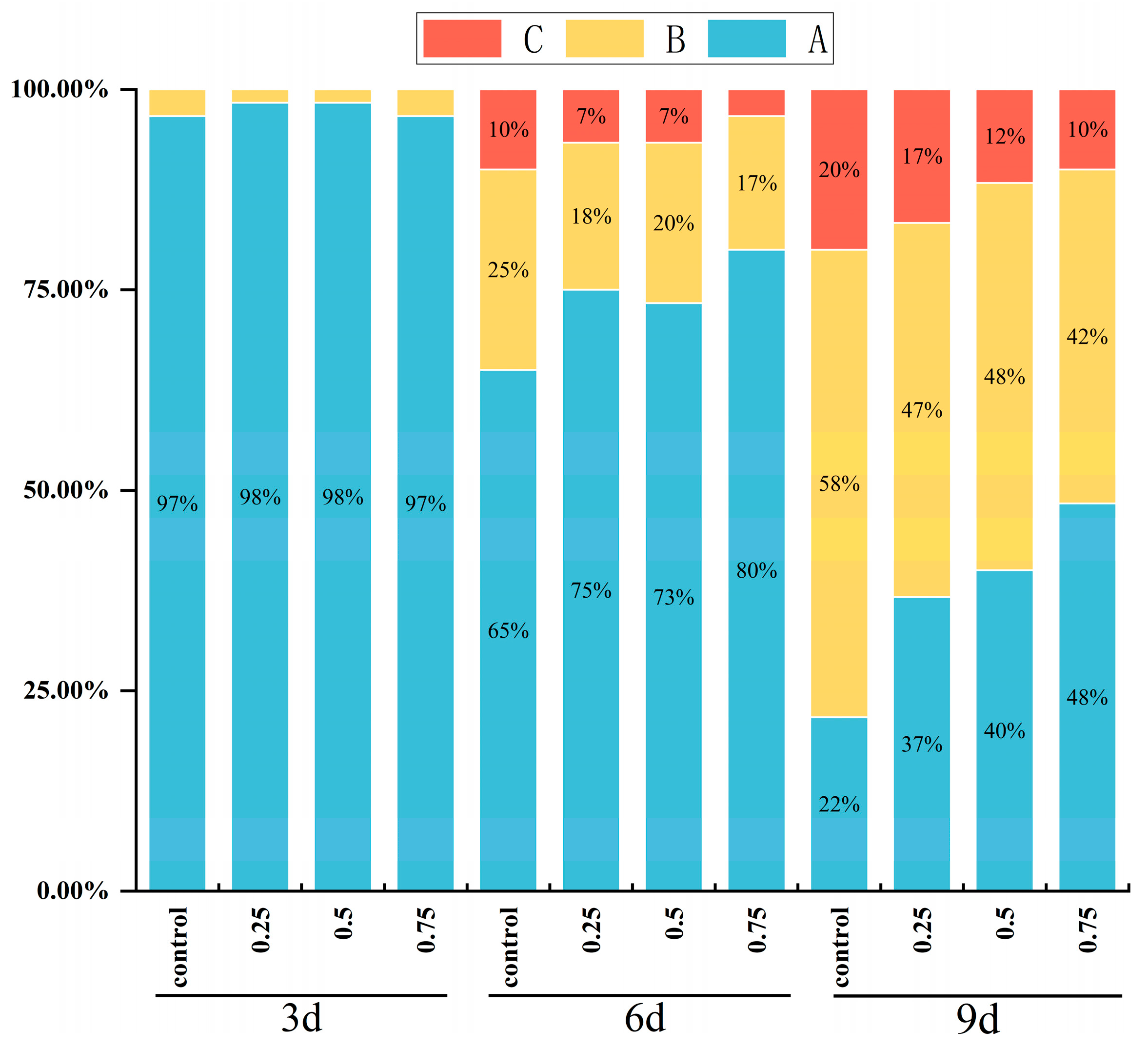
3.3.2. Effect of TGPA on Locomotor Ability in Caenorhabditis elegans
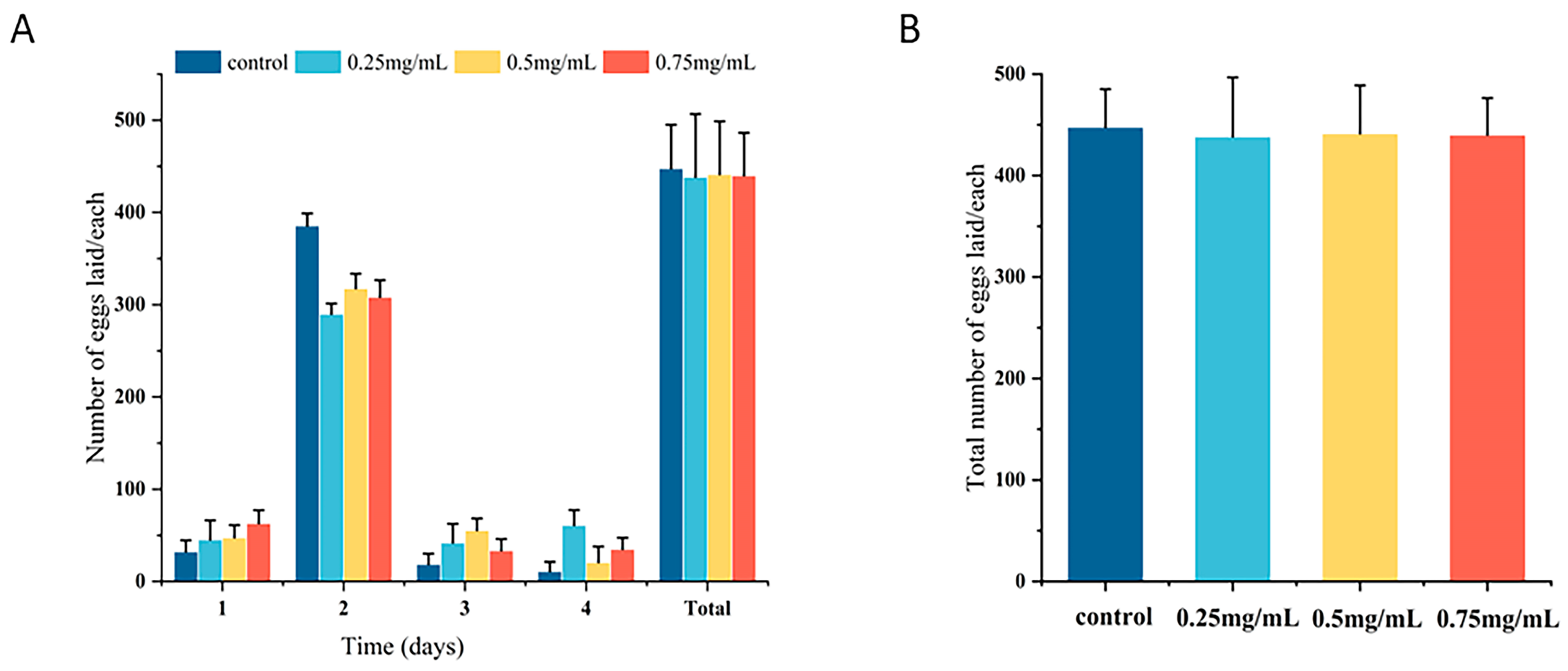
3.3.3. Effect of TGPA on Nematode Fertility
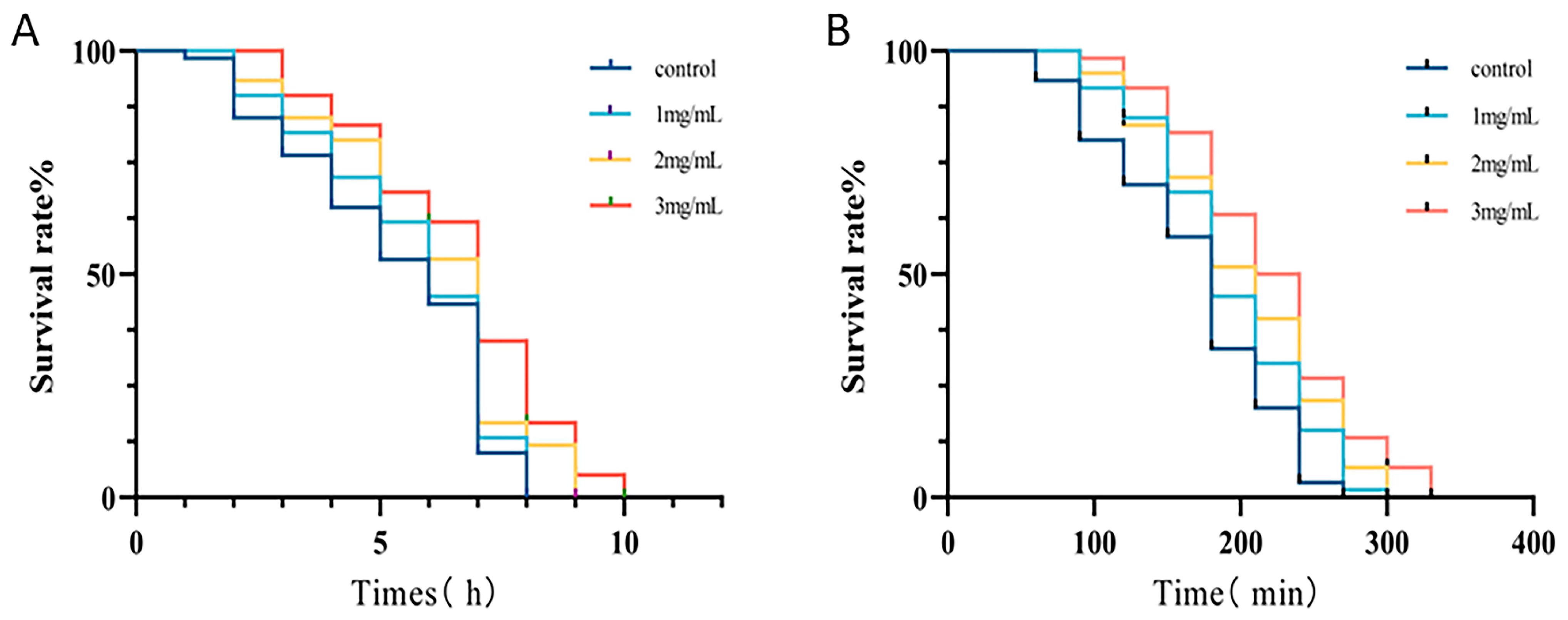
3.3.4. Effects of TGPA on Heat Stress in Nematodes
3.3.5. Effects of TGPA Extract on Acute Oxidative Stress Damage Induced by Hydrogen Peroxide in Nematodes
4. Discussion
5. Conclusions
Author Contributions
Funding
Institutional Review Board Statement
Data Availability Statement
Acknowledgments
Conflicts of Interest
Abbreviations
| TGPA | Tannat Grape Pomace Anthocyanins |
| DPPH | 2,2-Diphenyl-1-picrylhydrazyl |
| ABTS | 2,2′-Azino-bis(3-ethylbenzothiazoline-6-sulfonic acid) |
| RSM | Response surface methodology |
References
- Largado-Valler, D. In-Vitro Production of Anthocyanin in Sesbania grandiflora (Red Katuray) as Influenced by Varying Concentrations of 2,4-D and BA Added on MS Medium. Am. J. Plant Sci. 2016, 7, 2297–2306. [Google Scholar] [CrossRef]
- Ayuda-Durán, B.; González-Manzano, S.; Gil-Sánchez, I.; Moreno-Arribas, M.V.; Bartolomé, B.; Sanz-Buenhombre, M.; Guadarrama, A.; Santos-Buelga, C.; González-Paramás, A.M. Antioxidant Characterization and Biological Effects of Grape Pomace Extracts Supplementation in Caenorhabditis elegans. Foods 2019, 8, 75. [Google Scholar] [CrossRef] [PubMed]
- Cai, J.Q.; Qin, X.M.; Lu, H.Y.; Ye, W.Q.; Zhang, G.F.; Lin, H.S.; Zheng, H.N. Anti-aging effect of Abalone muscle enzymatic hydrolysate on Caenorhabditis elegans. Food Ferment. Ind. 2023, 49, 106–112. [Google Scholar]
- Chen, H. Study on Functional Food and Biological Activity of Aronia melanocarpa Fruit. Master’s Thesis, Jilin University of Chemical Technology, Jilin, China, June 2024. [Google Scholar]
- Chen, X.; Lu, S.; Zou, Z.; Chen, J.; Huang, L.; Li, P.; Du, B. The Anti-Aging Effect of Tianlu Black-Bone Chicken Soup on Caenorhabditis elegans. Food Ferment. Ind. 2025, 1–12. [Google Scholar] [CrossRef]
- Cuiping, Y.I.; Sijie, Z.; Jinxiang, X.; Bo, Z.; Li, Z. Antioxidant activity of rice bran fermentation broth and its effect on the longevity of Caenorhabditis elegans. Food Ferment. Ind. 2025, 70–75. [Google Scholar] [CrossRef]
- Dehghan, E.; Zhang, Y.; Saremi, B.; Yadavali, S.; Hakimi, A.; Dehghani, M.; Goodarzi, M.; Tu, X.; Robertson, S.; Lin, R.; et al. Hydralazine induces stress resistance and extends C. elegans lifespan by activating the NRF2/SKN-1 signalling pathway. Nat. Commun. 2017, 8, 2223. [Google Scholar] [CrossRef]
- Gerardi, C.; D’amico, L.; Migoni, D.; Santino, A.; Salomone, A.; Carluccio, M.A.; Giovinazzo, G. Strategies for Reuse of Skins Separated from Grape Pomace as Ingredient of Functional Beverages. Front. Bioeng. Biotechnol. 2020, 8, 645. [Google Scholar] [CrossRef]
- Granese, T.; Cardinale, F.; Cozzolino, A.; Pepe, S.; Ombra, M.N.; Nazzaro, F.; Coppola, R.; Fratianni, F. Variation of Polyphenols, Anthocyanins and Antioxidant Power in the Strawberry Grape (Vitis labrusca) after Simulated Gastro-Intestinal Transit and Evaluation of in Vitro Antimicrobial Activity. Food Nutr. Sci. 2014, 5, 60–65. [Google Scholar] [CrossRef]
- Hou, Z.; Zhu, D.; Gao, X.; Zhao, L.; Yang, H.; Wang, Q.; Zhao, Y.; Wang, N. Antiaging and antioxidative effects of water extract of Zizyphus jujuba Mill on Caenorhabditis elegans. J. Funct. Foods 2023, 110, 105829. [Google Scholar] [CrossRef]
- Huang, J.; Liu, Z.-G.; Mu, L.-Q.; Fu, Y.-J. Research Progress on Extraction and Purification of Anthocyanins. Chem. Reag. 2021, 1683–1690. [Google Scholar]
- Huang, S.; Chen, H.; Zhong, C.; Zhu, S.; Li, P.; Du, B. Anti-aging Effect of Polysaccharide from Dendrobium officinale Leaves in Caenorhabditis elegans. Food Sci. 2022, 43, 203–208. [Google Scholar] [CrossRef]
- Jolly, E.; Goupy, P.; Claisse-Gainvors, A.; Dangles, O.; Garcia-Bernet, D.; Dufour, C.; Rémond, C. A two-step biocatalytic process to extract and to acylate anthocyanins: A sustainable approach for red grape pomace biorefining. Appl. Food Res. 2025, 5, 101431. [Google Scholar] [CrossRef]
- Wang, J. Multidimensional Omics Analysis to Explore the Anti-Aging Mechanism of Anoectochilus roxburghii Extract in Caenorhabditis elegans. Master’s Thesis, Zhejiang Normal University, Jinhua, China, 2024. [Google Scholar]
- Kovács, D.; Biró, J.B.; Ahmed, S.; Kovács, M.; Sigmond, T.; Hotzi, B.; Varga, M.; Vincze, V.V.; Mohammad, U.; Vellai, T.; et al. Age-dependent heat shock hormesis to HSF-1 deficiency suggests a compensatory mechanism mediated by the unfolded protein response and innate immunity in young Caenorhabditis elegans. Aging Cell 2024, 23, e14246. [Google Scholar] [CrossRef]
- Kumsta, C.; Hansen, M. Hormetic heat shock and HSF-1 overexpression improve C. elegans survival and proteostasis by inducing autophagy. Autophagy 2017, 13, 1076–1077. [Google Scholar] [CrossRef] [PubMed]
- Lei, W.; Jiayi, Q.; Zhijin, Z.; Tianyi, C.; Yingxing, X.; Xuzheng, C.; Caisheng, W.; Guoying, Q. Effects of Laminaria japonica Oligosaccharides on Antioxidant Enzyme Activities and Anti-Aging in Drosophila melanogaster. Sci. Technol. Food Ind. 2025, 1–16. [Google Scholar] [CrossRef]
- Li, D.; Wang, P.; Luo, Y.; Zhao, M.; Chen, F. Health benefits of anthocyanins and molecular mechanisms: Update from recent decade. Crit. Rev. Food Sci. Nutr. 2017, 57, 1729–1741. [Google Scholar] [CrossRef] [PubMed]
- Li, L.D.; Wang, S.Y.; Li, X.Y.; Wang, Q.; Chen, T.; Yu, X.; Xiao, M.; Ma, T.P.; Xie, Y.Q. The Anti-Aging Effects of Shuquan Yishen Formula in C. elegans Through Antimetabolic Dysregulation and Antioxidant Stress. Chin. Tradit. Pat. Med. 2025, 47, 1642–1646. [Google Scholar] [CrossRef]
- Li, M.-S. Study on the Effects of Anthocyanin of Aronia on Human Gastric Cancer Cell SGC-7901. Territ. Nat. Resour. Study 2016, 90–92. [Google Scholar] [CrossRef]
- Li, Z.; Hao, H.; Jiang, H.; Jia, Z.; Caifen, L. Research Status and Prospects of the Antioxidant Activity of Anthocyanins. Food Ind. 2019, 238–243. [Google Scholar]
- Lin, C.; Zhang, X.; Xiao, J.; Zhong, Q.; Kuang, Y.; Cao, Y.; Chen, Y. Effects on longevity extension and mechanism of action of carnosic acid in Caenorhabditis elegans. Food Funct. 2019, 10, 1398–1410. [Google Scholar] [CrossRef]
- Liu, Y.; Wu, J.; Ding, Z.; Chen, L.; Liu, M.; Li, B.; Li, X.; Li, J.; Liu, W. Verbascoside from Callicarpa nudiflora Hook extends lifespan in Caenorhabditis elegans via SKN-1 pathway activation. Biogerontology 2025, 27, 18. [Google Scholar] [CrossRef]
- Luan, Y.; Jiang, Y.; Huang, R.; Wang, X.; He, X.; Liu, Y.; Tan, P. Polygonati Rhizoma Polysaccharide Prolongs Lifespan and Healthspan in Caenorhabditis elegans. Molecules 2023, 28, 2235. [Google Scholar] [CrossRef] [PubMed]
- Najiao, Z.; Li, Y.; Longmei, G.; Mingyang, W.U. Advances in Research on Extraction Process and Analytical Method of Anthocyanin in Purple Potatoes. Process Technol. 2025, 102–105. [Google Scholar] [CrossRef]
- Lyu, Q.J.; Gan, Z.S.; Che, G.Z.; Rao, J.W. Research Progress on the Bioactive of Anthocyanins in Black Rice. China Food Saf. Mag. 2024, 94–96. [Google Scholar]
- Sadowska-Bartosz, I.; Bartosz, G. Antioxidant Activity of Anthocyanins and Anthocyanidins: A Critical Review. Int. J. Mol. Sci. 2024, 25, 12001. [Google Scholar] [CrossRef]
- Song, B.; Zheng, B.; Li, T.; Liu, R.H. Raspberry extract ameliorates oxidative stress in Caenorhabditis elegans via the SKN-1/Nrf2 pathway. J. Funct. Foods 2020, 70, 103977. [Google Scholar] [CrossRef]
- Song, Z.; Huang, Y.; Wang, Y.; Deng, J.; Zhen, D.; Tan, N.; Cheng, S. Antioxidant and anti-aging effects and mechanism of Poria cocos polysaccharides in Caenorhabditis elegans. Chin. Tradit. Herb. Drugs 2024, 55, 1133–1144. [Google Scholar]
- Su, Y.; Jiang, Y.; Xiaobin, D.; Buyang, C. The Impact of col-93 on Locomotion and Aging in Caenorhabditis elegans Through Regulation of the Heat Shock Factor-1 Signaling Pathway. Chin. J. Cell Biol. 2025, 47, 3088–3098. [Google Scholar] [CrossRef]
- Sugawara, T.; Sakamoto, K. Quercetin enhances motility in aged and heat-stressed Caenorhabditis elegans nematodes by modulating both HSF-1 activity, and insulin-like and p38-MAPK signalling. PLoS ONE 2020, 15, e0238528. [Google Scholar] [CrossRef]
- Turrini, E.; Ferruzzi, L.; Fimognari, C. Possible Effects of Dietary Anthocyanins on Diabetes and Insulin Resistance. Curr. Drug Targets 2017, 18, 629–640. [Google Scholar] [CrossRef] [PubMed]
- Wang, T. Study on the Anti-Aging Effect and Mechanisms of Berberine in Caenorhabditis elegans. Master’s Thesis, Jilin University, Changchun, China, 2025. [Google Scholar]
- Wang, W.; Li, S.; Zhu, Y.; Zhu, R.; Du, X.; Cui, X.; Wang, H.; Cheng, Z. Effect of Different Edible Trichosanthes germplasm on Its Seed Oil to Enhance Antioxidant and Anti-Aging Activity in Caenorhabditis elegans. Foods 2024, 13, 503. [Google Scholar] [CrossRef] [PubMed]
- Wei, R.X.; Lu, H.Y.; Qin, X.M.; Wang, L.Y. Study on the Anti-Aging Effects of Oyster Extract on Caenorhabditis elegans. Food Ferment. Ind. 2024, 50, 52–58. [Google Scholar] [CrossRef]
- Xiang, Y.; Lai, F.; He, G.; Li, Y.; Yang, L.; Shen, W.; Huo, H.; Zhu, J.; Dai, H.; Zhang, Y. Alleviation of Rosup-induced oxidative stress in porcine granulosa cells by anthocyanins from red-fleshed apples. PLoS ONE 2017, 12, e0184033. [Google Scholar] [CrossRef] [PubMed]
- Xin, M.; Liang, Q.; Tian, J.; Yang, S.; Yang, Y.; Li, B. Effects of Sucrose Degradation Products on the Stability and Antioxidant Activity of Blueberry Anthocyanins Under Processing and Storage Conditions. Shipin Kexue/Food Sci. 2024, 45, 51–59. [Google Scholar] [CrossRef]
- Xu, Q.; Zheng, B.; Li, T.; Liu, R.H. Black goji berry anthocyanins extend lifespan and enhance the antioxidant defenses in Caenorhabditis elegans via the JNK-1 and DAF-16/FOXO pathways. J. Sci. Food Agric. 2025, 105, 2282–2293. [Google Scholar] [CrossRef]
- Tang, X.B.; Zhang, C.; Wang, L.Y.; Liang, S.Y.; Ou, L.L. Optimization of the Extraction Process of Total Saponins from Asparagus Cochinchinensis Peel and Study on its Anti-Aging Effects on Caenorhabditis elegans. Chin. Pharm. J. 2025, 2293–2302. [Google Scholar]
- Yu, M.; Wang, B.; Xu, H.; Li, Q.; Wu, J.; Shang, X. Research Progress on the Reuse of Grape Skin Residue. Shandong Chem. Ind. 2021, 50, 84–87. [Google Scholar] [CrossRef]
- Zhang, S.; Lyu, X.; Liu, W.; Zhang, J. Research progress on physical and chemical characteristics, extraction technology, and functional activity of anthocyanins from fruits and vegetables. Food Ferment. Ind. 2024, 50, 360–371. [Google Scholar] [CrossRef]
- Zhang, X.; Chen, Q.; Chen, L.; Chen, X.; Ma, Z. Anti-Aging in Caenorhabditis elegans of Polysaccharides from Polygonatum cyrtonema Hua. Molecules 2024, 29, 1276. [Google Scholar] [CrossRef]
- Zhao, D.; Yan, M.; Xu, H.; Liang, H.; Zhang, J.; Li, M.; Wang, C. Antioxidant and Antiaging Activity of Fermented Coix Seed Polysaccharides on Caenorhabditis elegans. Nutrients 2023, 15, 2474. [Google Scholar] [CrossRef]
- Zhao, J.; Yu, J.; Zhi, Q.; Yuan, T.; Lei, X.; Zeng, K.; Ming, J. Anti-aging effects of the fermented anthocyanin extracts of purple sweet potato on Caenorhabditis elegans. Food Funct. 2021, 12, 12647–12658. [Google Scholar] [CrossRef] [PubMed]
- Zhou, M.; Wu, C.; Xu, W.; Liu, T.; Zhang, S.; Yan, H.; Yang, Z. Optimization in Extraction Strategy of Anthocyanins from Blueberry Pomace Based on Plackett-Burman Design and Response Surface Methoddogy. Food Sci. Technol. 2024, 50, 231–239. [Google Scholar] [CrossRef]
- Chen, Z.W.; Ren, Y.M.; Tang, X.; Nie, S.M.; Ma, D.W. Mechanism of Gymnadenia orchidis Alcohol Extract in Delaying Aging in Caenorhabditis elegans via the Antioxidant Pathway. Food Sci. 2025. [Google Scholar]
- Zhu, A.; Zheng, F.; Zhang, W.; Li, L.; Li, Y.; Hu, H.; Wu, Y.; Bao, W.; Li, G.; Wang, Q.; et al. Oxidation and Antioxidation of Natural Products in the Model Organism Caenorhabditis elegans. Antioxidants 2022, 11, 705. [Google Scholar] [CrossRef]



| A/°C | B/% | C/min | D | |
|---|---|---|---|---|
| −1 | 45 | 40 | 10 | 1:20 |
| 0 | 50 | 50 | 20 | 1:25 |
| 1 | 55 | 60 | 30 | 1:30 |
| Test Number | A/Extraction Temperature/°C | B/Extraction Concentration (%) | C/Extraction Time (min) | D/Extraction Ratio (g/mL) | Concentration of TGPA (mg/100 g) |
|---|---|---|---|---|---|
| 1 | 55 | 50 | 20 | 30 | 149.605 |
| 2 | 45 | 50 | 20 | 30 | 149.305 |
| 3 | 55 | 40 | 20 | 25 | 142.04 |
| 4 | 45 | 50 | 20 | 20 | 165.319 |
| 5 | 50 | 50 | 20 | 25 | 192.455 |
| 6 | 50 | 60 | 20 | 30 | 143.95 |
| 7 | 50 | 50 | 30 | 20 | 167.332 |
| 8 | 55 | 60 | 20 | 25 | 141.698 |
| 9 | 45 | 40 | 20 | 25 | 132.912 |
| 10 | 50 | 50 | 10 | 20 | 169.327 |
| 11 | 50 | 40 | 20 | 20 | 143.269 |
| 12 | 50 | 50 | 20 | 25 | 193.212 |
| 13 | 50 | 50 | 20 | 25 | 195.125 |
| 14 | 50 | 40 | 30 | 25 | 137.096 |
| 15 | 50 | 50 | 20 | 25 | 191.212 |
| 16 | 50 | 40 | 10 | 25 | 140.183 |
| 17 | 55 | 50 | 20 | 20 | 153.296 |
| 18 | 50 | 40 | 20 | 30 | 147.261 |
| 19 | 45 | 50 | 10 | 25 | 153.183 |
| 20 | 50 | 50 | 30 | 30 | 151.964 |
| 21 | 50 | 50 | 20 | 25 | 190.125 |
| 22 | 50 | 50 | 10 | 30 | 157.3 |
| 23 | 45 | 60 | 20 | 25 | 153.465 |
| 24 | 50 | 60 | 30 | 25 | 138.183 |
| 25 | 50 | 60 | 20 | 20 | 175.321 |
| 26 | 45 | 50 | 30 | 25 | 131.329 |
| 27 | 50 | 60 | 10 | 25 | 167.154 |
| 28 | 55 | 50 | 30 | 25 | 141.941 |
| 29 | 55 | 50 | 10 | 25 | 142.339 |
| Source | Sum of Squares | df | Mean Square | F-Value | p-Value | Significance |
|---|---|---|---|---|---|---|
| Model | 10,641.58 | 14 | 760.11 | 48.39 | <0.0001 | ** |
| A—Extraction Temperature | 17.756 | 1 | 17.75 | 1.13 | 0.3058 | |
| B—Extraction concentration | 494.22 | 1 | 494.22 | 31.46 | <0.0001 | ** |
| C—Extraction Time | 316.63 | 1 | 316.63 | 20.16 | 0.0005 | ** |
| D—Extraction Ratio | 462.25 | 1 | 462.25 | 29.43 | <0.0001 | ** |
| AB | 109.15 | 1 | 109.15 | 6.95 | 0.0196 | * |
| AC | 115.08 | 1 | 115.08 | 7.33 | 0.0170 | * |
| AD | 37.97 | 1 | 37.97 | 2.42 | 0.1423 | |
| BC | 167.49 | 1 | 167.49 | 10.66 | 0.0056 | ** |
| BD | 312.64 | 1 | 312.64 | 19.90 | 0.0005 | ** |
| CD | 2.79 | 1 | 2.79 | 0.18 | 0.6798 | |
| A2 | 4534.90 | 1 | 4534.90 | 288.68 | <0.0001 | ** |
| B2 | 4277.08 | 1 | 4277.08 | 272.27 | <0.0001 | ** |
| C2 | 2950.78 | 1 | 2950.78 | 187.84 | <0.0001 | ** |
| D2 | 909.15 | 1 | 909.15 | 57.88 | <0.0001 | ** |
| Residual | 219.92 | 14 | 15.71 | |||
| Lack of Fit | 205.25 | 10 | 20.53 | 5.60 | 0.0557 | |
| Pure Error | 14.67 | 4 | 3.67 | |||
| Cor Total | 10,861.51 | 28 | ||||
| R2 = 0.9798 | ||||||
| Group | Maximum Lifespan (Days) | Average Lifespan (Days) | p |
|---|---|---|---|
| Control | 17 | 8.06 ± 0.58 | —— |
| 0.25 | 20 | 9.83 ± 0.34 | >0.05 |
| 0.5 | 21 | 10.05 ± 0.42 * | <0.05 |
| 0.75 | 25 | 10.16 ± 0.31 * | <0.05 |
Disclaimer/Publisher’s Note: The statements, opinions and data contained in all publications are solely those of the individual author(s) and contributor(s) and not of MDPI and/or the editor(s). MDPI and/or the editor(s) disclaim responsibility for any injury to people or property resulting from any ideas, methods, instructions or products referred to in the content. |
© 2026 by the authors. Licensee MDPI, Basel, Switzerland. This article is an open access article distributed under the terms and conditions of the Creative Commons Attribution (CC BY) license.
Share and Cite
Wang, B.; Yu, Y.; Wang, H. Optimization of the Extraction Process for Anthocyanins from Tannat Grape Skins and Pomace and Research on Their Antioxidant and Anti-Aging Effects. Agriculture 2026, 16, 236. https://doi.org/10.3390/agriculture16020236
Wang B, Yu Y, Wang H. Optimization of the Extraction Process for Anthocyanins from Tannat Grape Skins and Pomace and Research on Their Antioxidant and Anti-Aging Effects. Agriculture. 2026; 16(2):236. https://doi.org/10.3390/agriculture16020236
Chicago/Turabian StyleWang, Bing, Yang Yu, and Honglei Wang. 2026. "Optimization of the Extraction Process for Anthocyanins from Tannat Grape Skins and Pomace and Research on Their Antioxidant and Anti-Aging Effects" Agriculture 16, no. 2: 236. https://doi.org/10.3390/agriculture16020236
APA StyleWang, B., Yu, Y., & Wang, H. (2026). Optimization of the Extraction Process for Anthocyanins from Tannat Grape Skins and Pomace and Research on Their Antioxidant and Anti-Aging Effects. Agriculture, 16(2), 236. https://doi.org/10.3390/agriculture16020236