The Spatiotemporal Evolution and Scenario Prediction of Agricultural Total Factor Productivity Under Extreme Temperature: Evidence from Jiangsu Province

Abstract
1. Introduction
2. Research Area, Research Methods, and Data Sources
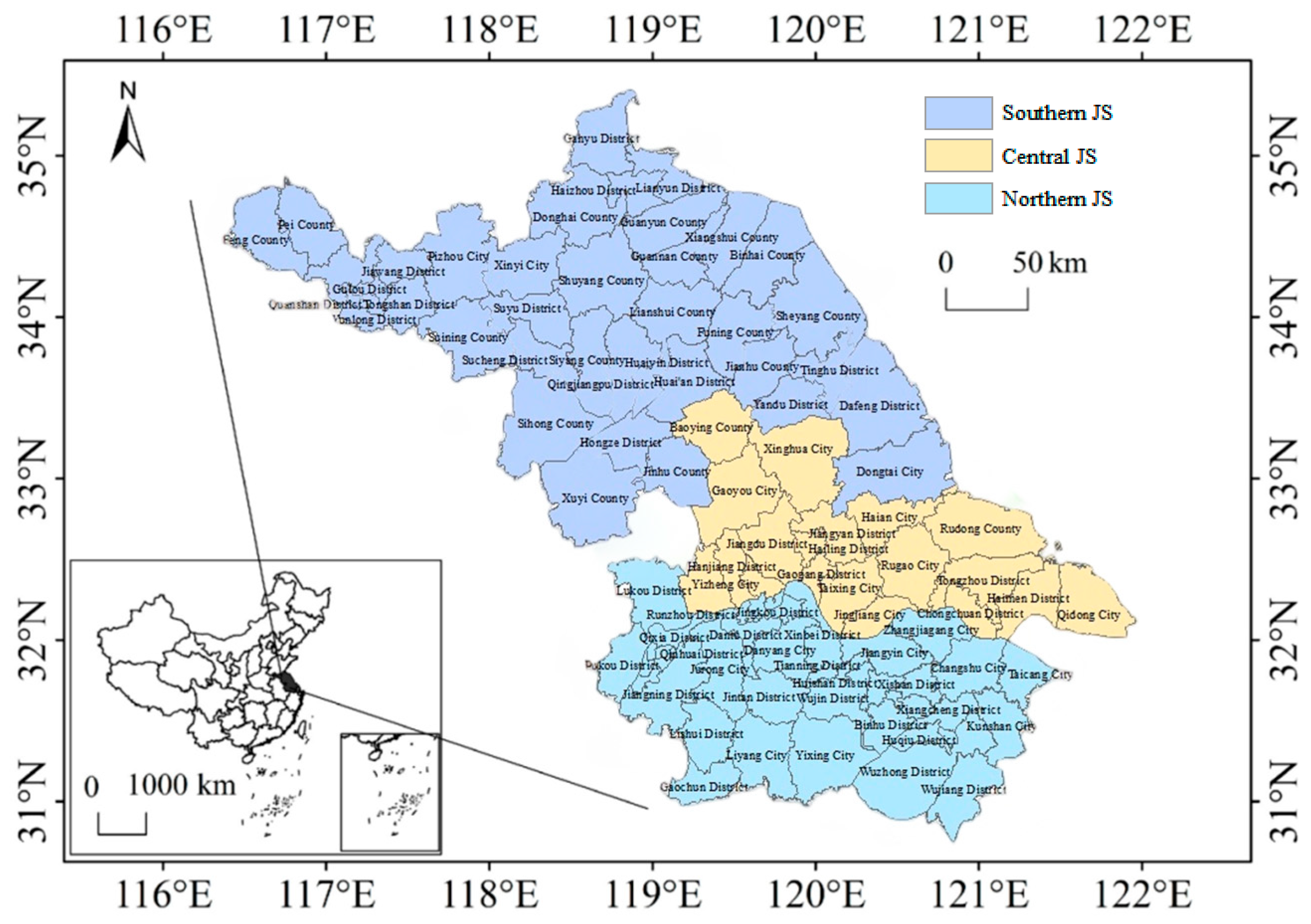
2.1. Research Area
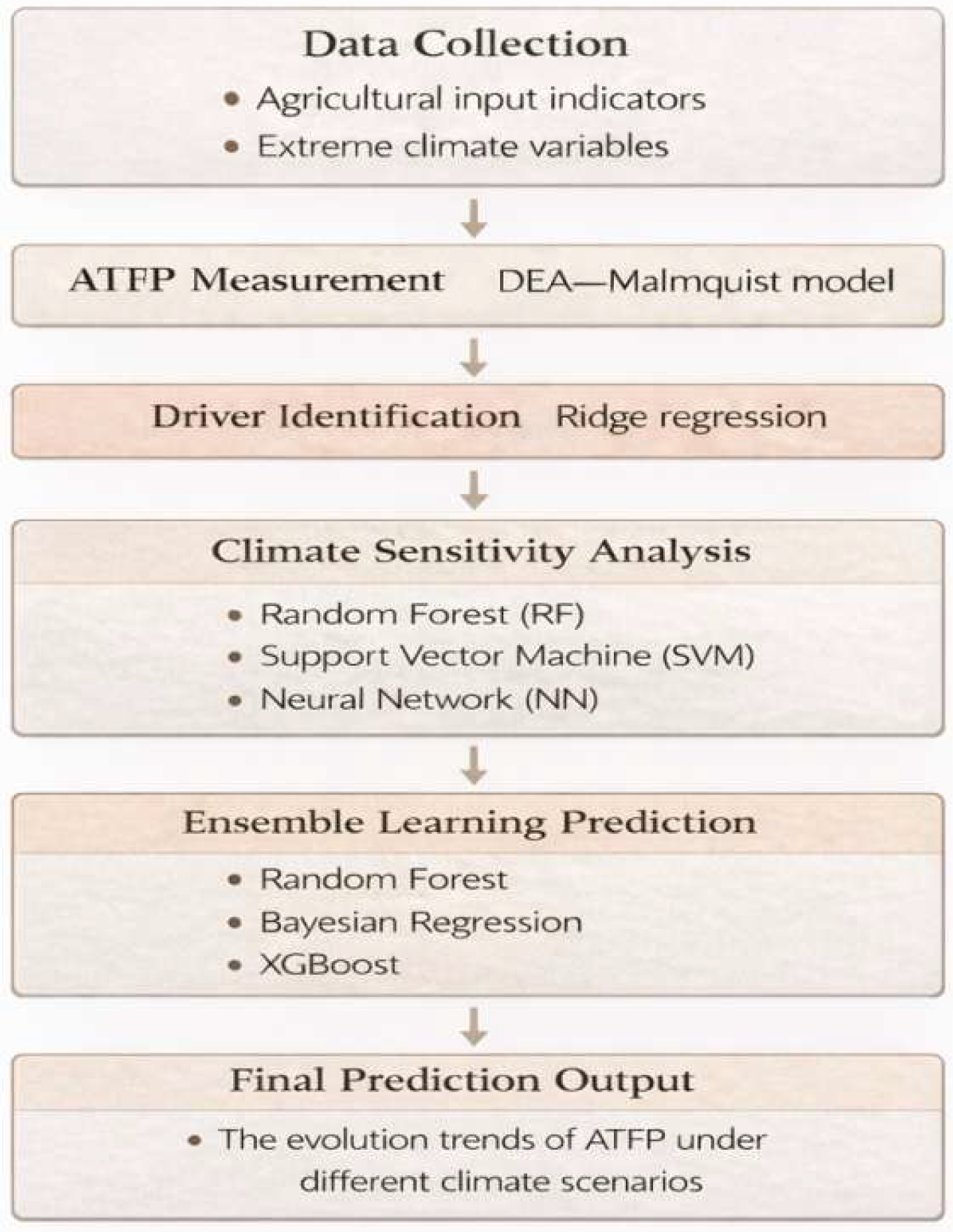
2.2. Research Methods
2.2.1. DEA-Malmquist Model
2.2.2. Machine Learning Algorithms
2.3. Data Sources
3. Spatiotemporal Trend and Main Influencing Factors
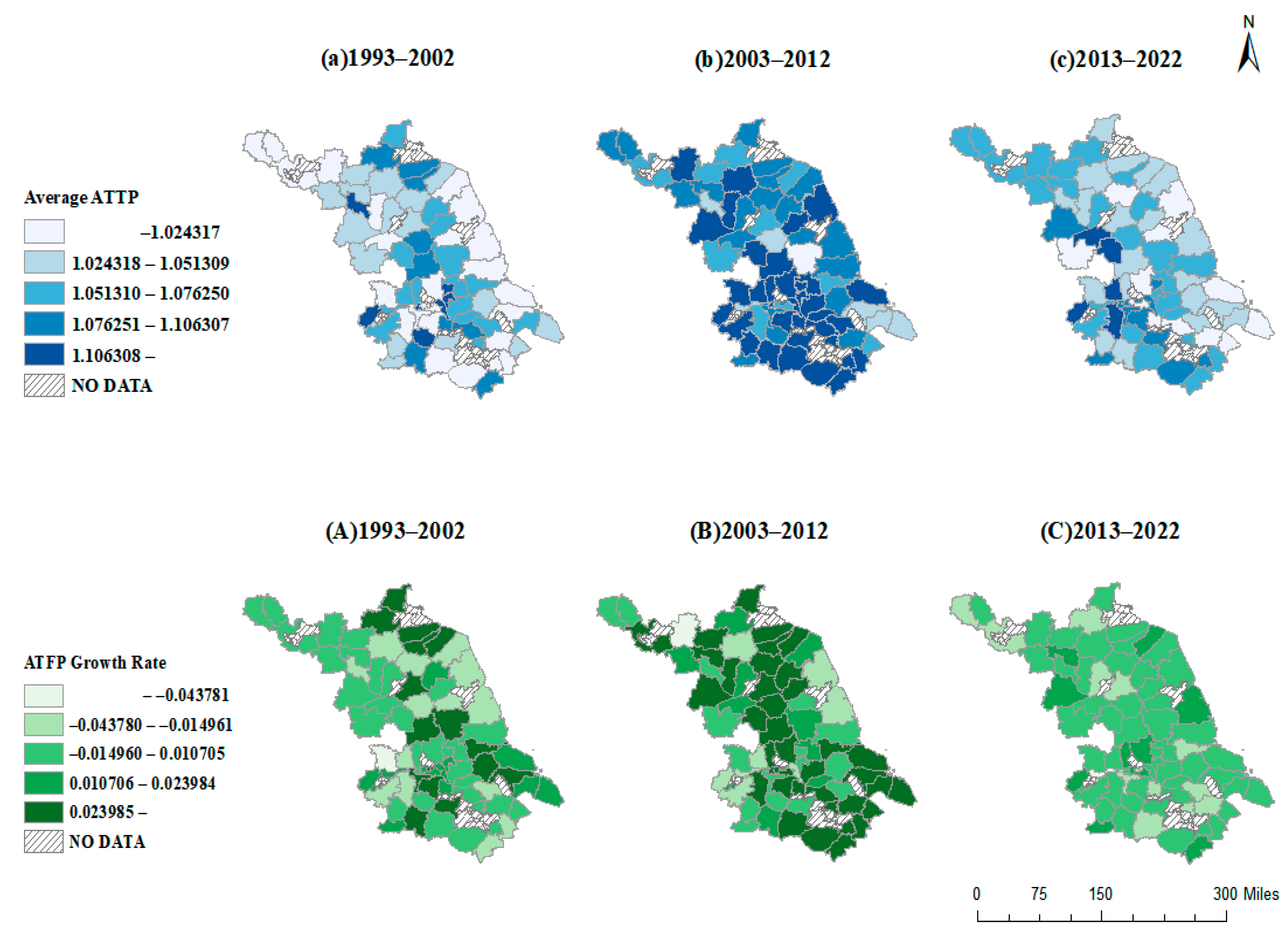
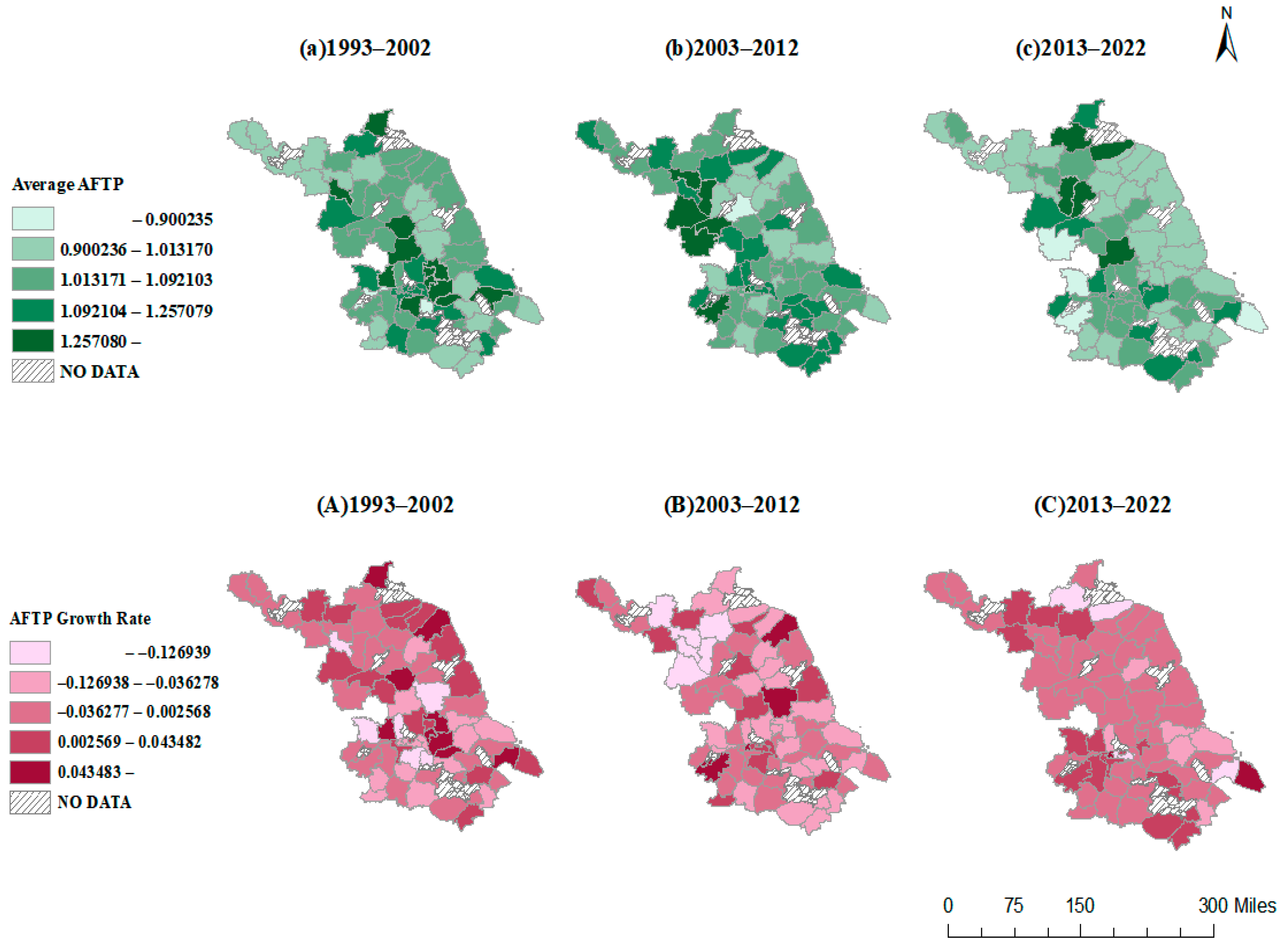
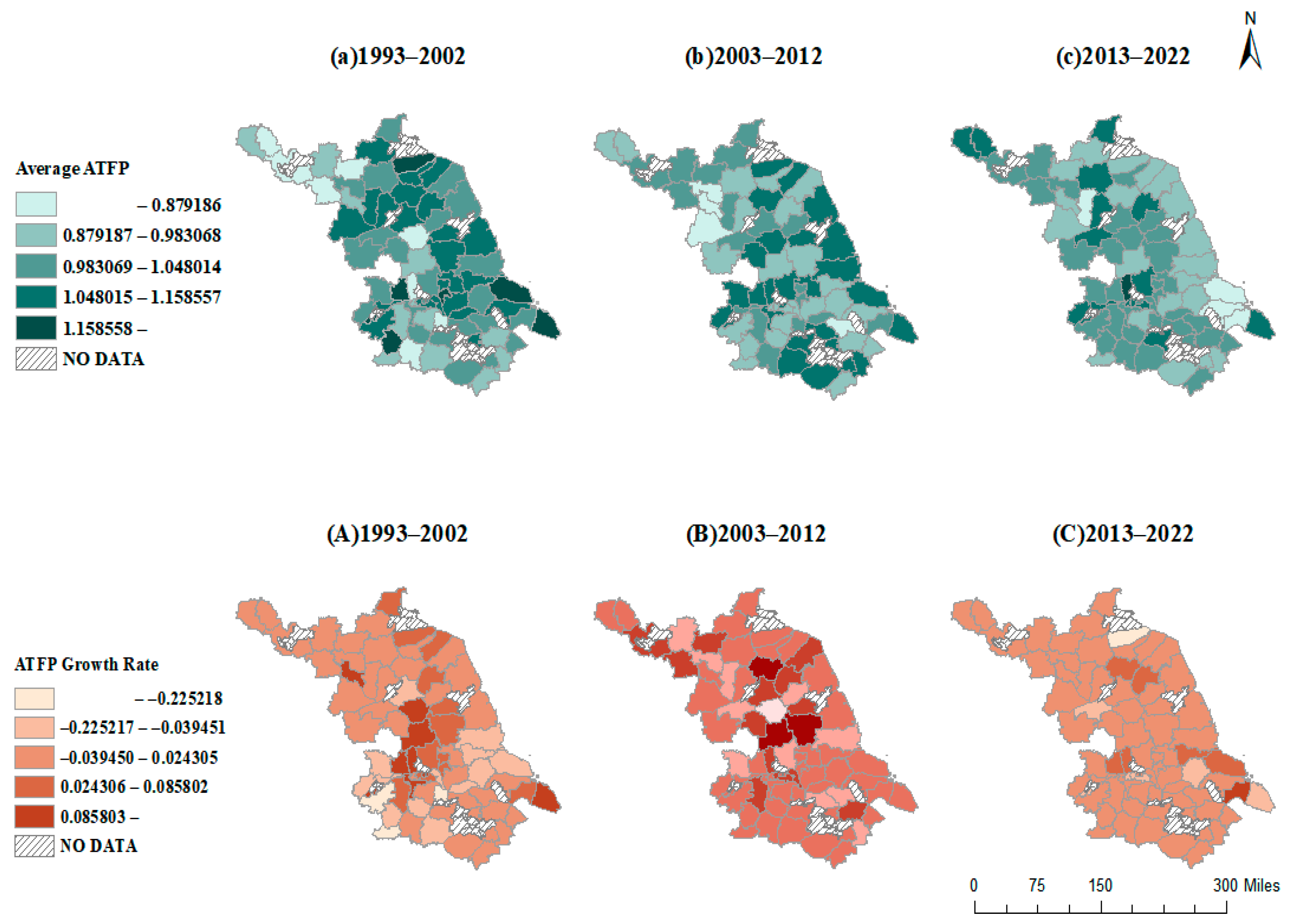
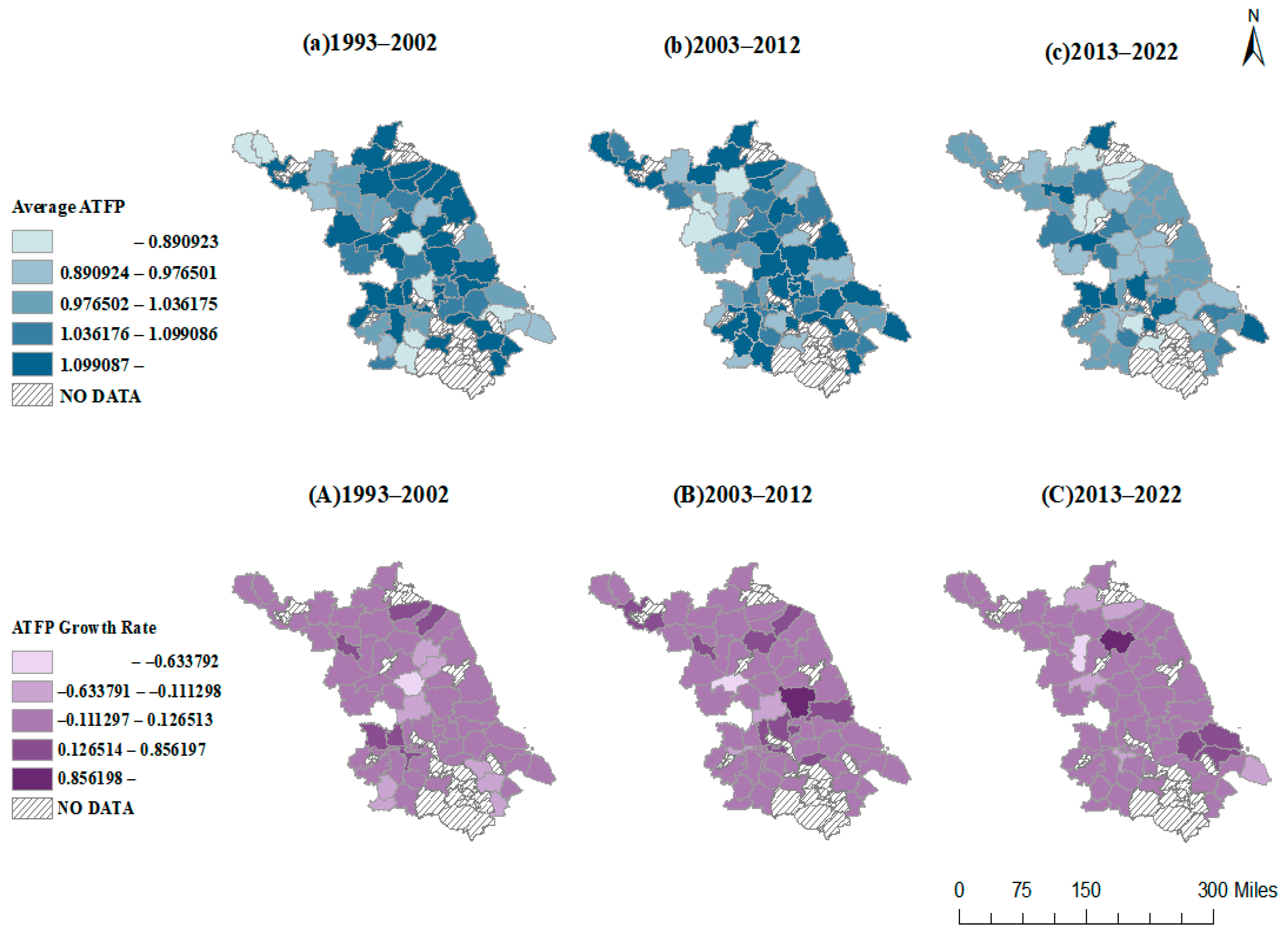
3.1. Temporal and Spatial Variation Trend of ATFP
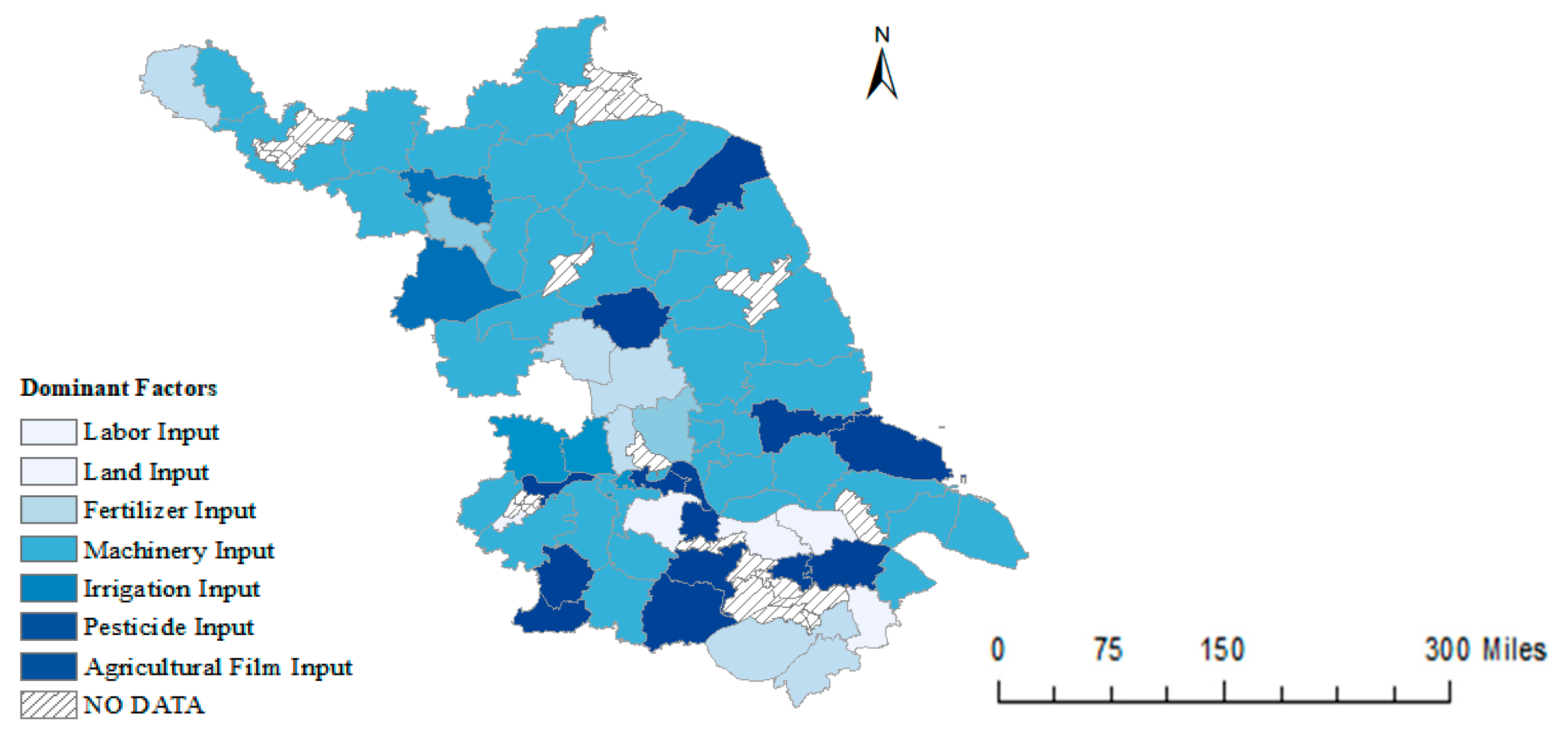
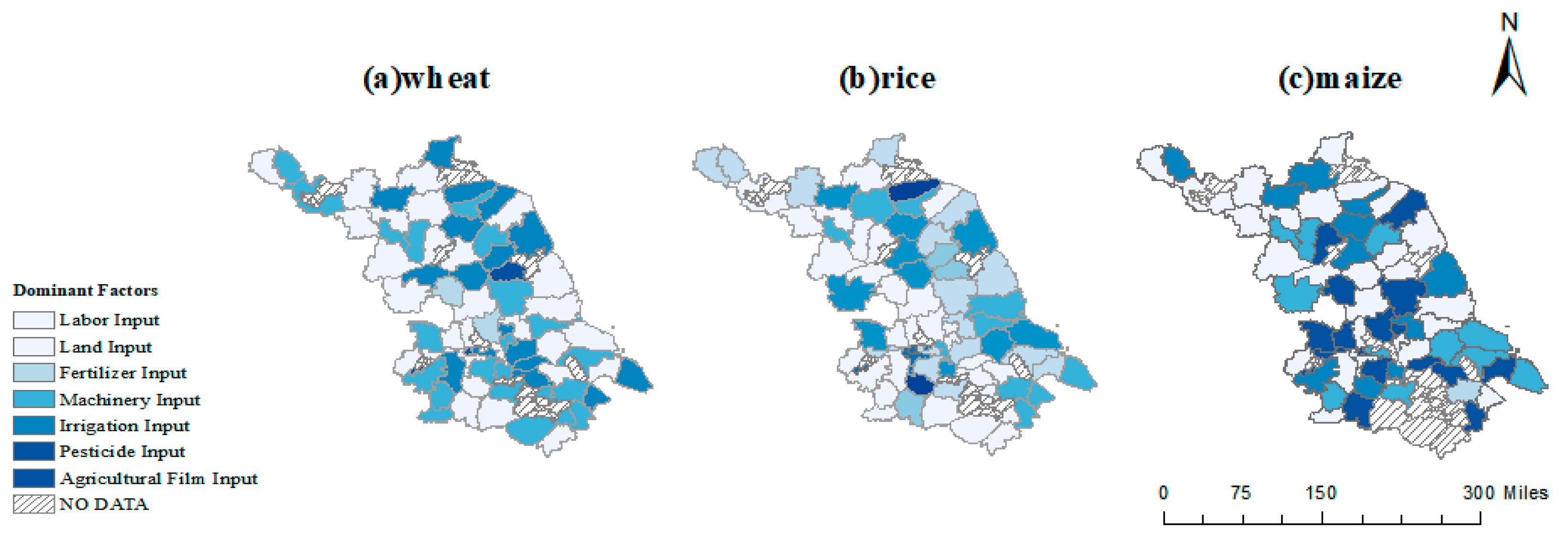
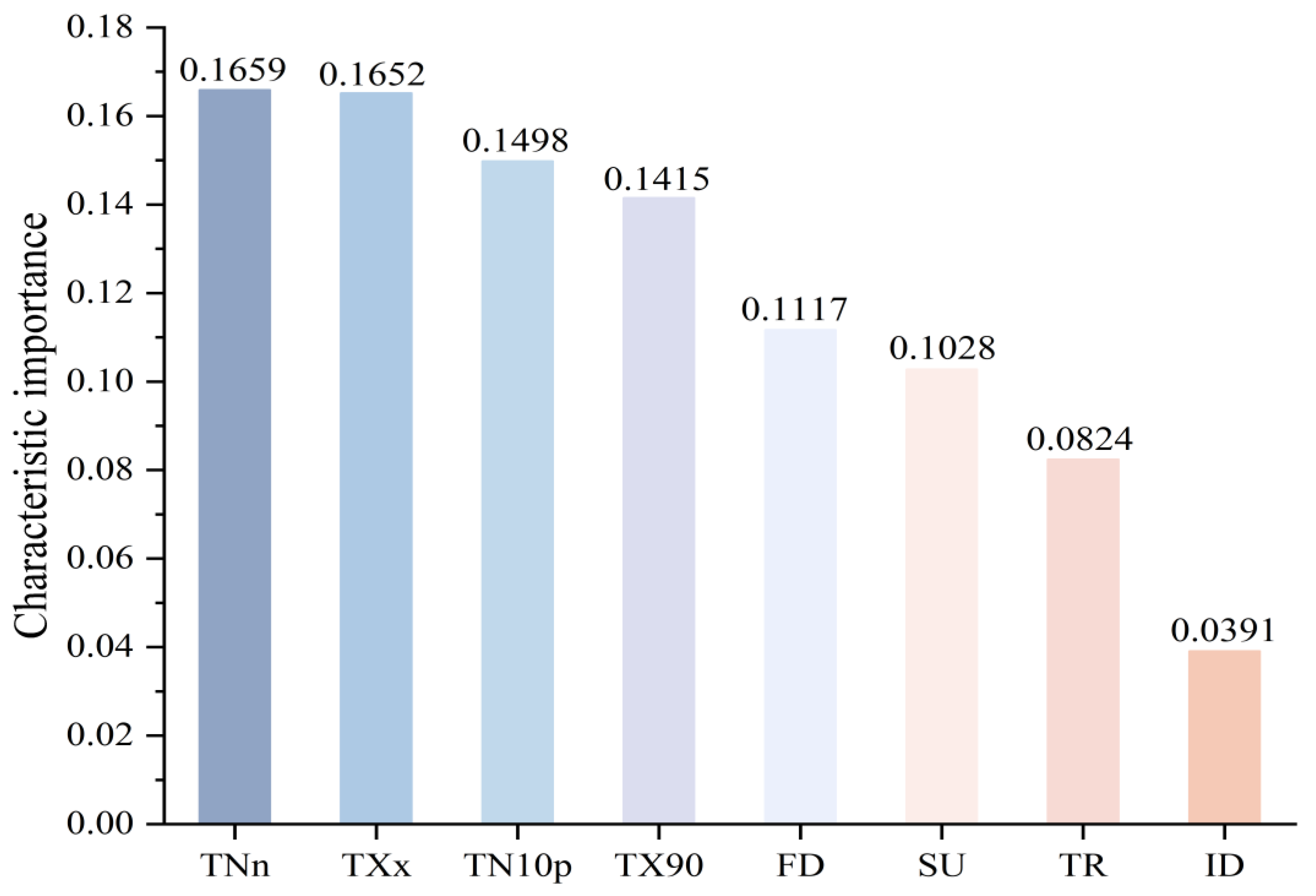
3.2. Main Influencing Factors of ATFP
4. Scenario Prediction
4.1. Sensitivity Analysis of Extreme Temperature Events
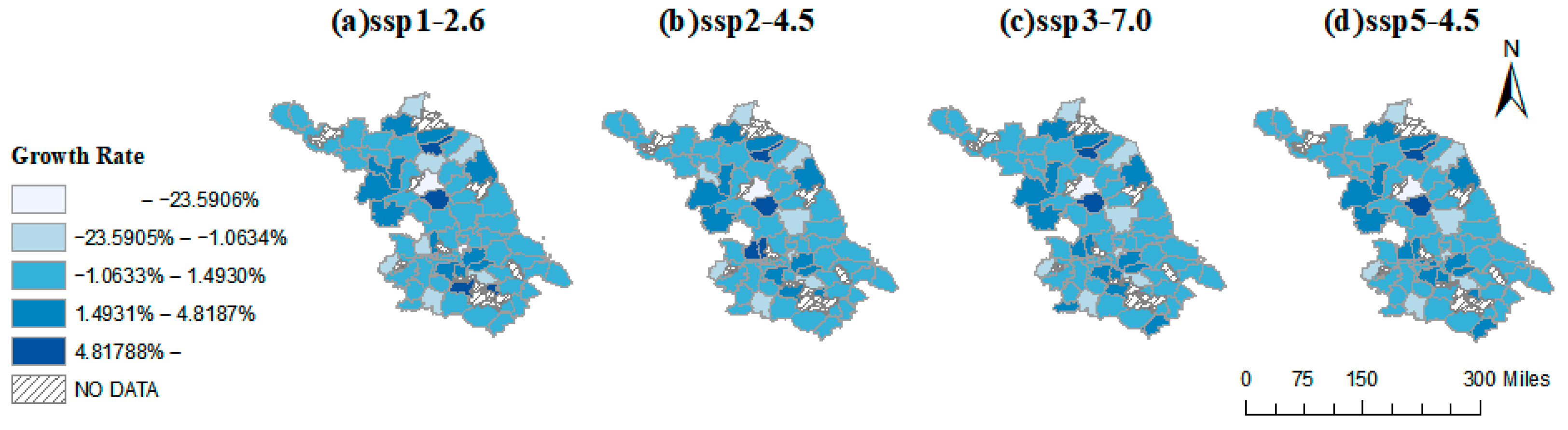
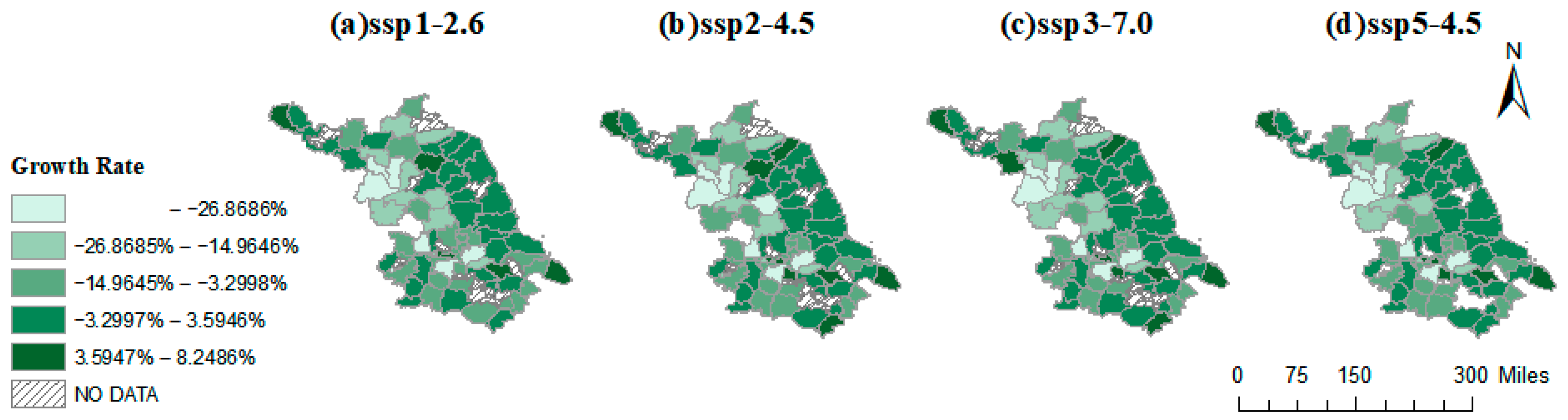
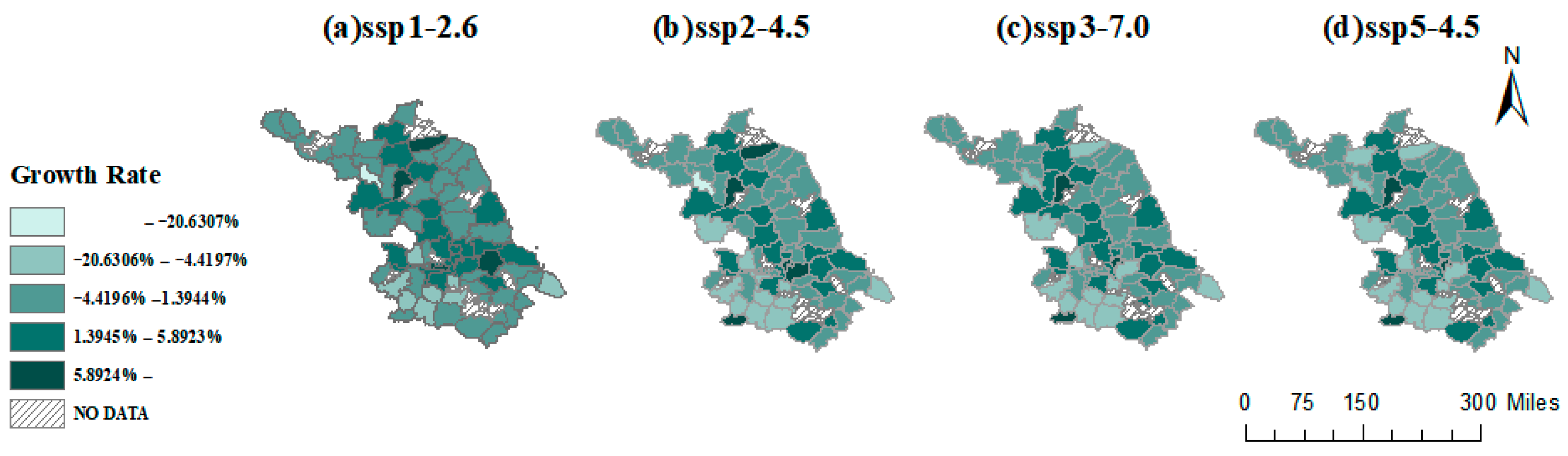
4.2. Prediction of ATFP in Jiangsu Province
5. Conclusions and Recommendation
Author Contributions
Funding
Data Availability Statement
Conflicts of Interest
References
- IPCC. Climate Change 2013: Managing the Risks of Extreme Events and Disaster to Advance Climate Change Adaptation; Cambridge University Press: Cambridge, UK, 2013; pp. 1–7. [Google Scholar]
- Wang, Y.Y.; Wang, Y.B.; Li, F. Dynamics of agricultural system vulnerability to climate change and the externalities of its mitigation in China. Mitig. Adapt. Strateg. Glob. Change 2024, 29, 76. [Google Scholar]
- Vogel, E.; Donat, M.G.; Alexander, L.V.; Meinshausen, M.; Ray, D.K.; Karoly, D.; Meinshausen, N.; Frieler, K. The effects of climate extremes on global agricultural yields. Environ. Res. Lett. 2019, 14, 054010. [Google Scholar] [CrossRef] [Scilit]
- Peng, J.Q.; Huang, A.; Chen, J.; Chen, L. Farmland’s Comprehensive Improvement and Agricultural Total Factor Productivity Increase: Empirical Evidence from China’s National Construction of High-Standard Farmland. Land 2025, 14, 2218. [Google Scholar] [CrossRef] [Scilit]
- Editorial Committee of Jiangsu Climate Change Assessment Report. Jiangsu Climate Change Assessment Report; China Meteorological Press: Beijing, China, 2017; p. 382. (In Chinese)
- Li, S.Q.; Li, M.Y.; Chen, J.J.; Shao, S.Y.; Tian, Y. Impacts and Internal Mechanisms of High-Standard Farmland Construction on the Reduction of Agricultural Carbon Emission in China. Agriculture 2025, 15, 105. [Google Scholar] [CrossRef] [Scilit]
- Vatsa, P.; Ma, W.L.; Zheng, H.Y.; Li, J.P. Climate-smart agricultural practices for promoting sustainable agrifood production: Yield impacts and implications for food security. Food Policy 2023, 121, 102551. [Google Scholar] [CrossRef] [Scilit]
- Gao, J.B.; Liu, L.L.; Guo, L.H.; Sun, D.Q.; Liu, W.L.; Hou, W.J.; Wu, S.H. The effects of climate change and phenological variation on agricultural production and its risk pattern in the black soil area of northeast China. J. Geogr. Sci. 2023, 33, 37–58. [Google Scholar] [CrossRef] [Scilit]
- Sun, H.F.; Dang, Y.G.; Mao, W.X. Identifying key factors of regional agricultural drought vulnerability using a panel data grey combined method. Nat. Hazards 2019, 98, 621–642. [Google Scholar] [CrossRef] [Scilit]
- Guo, E.L.; Liu, X.P.; Zhang, J.Q.; Wang, Y.F.; Wang, C.L.; Wang, R.; Li, D.J. Assessing spatiotemporal variation of drought and its impact on maize yield in Northeast China. J. Hydrol. 2017, 553, 231–247. [Google Scholar] [CrossRef] [Scilit]
- Birthal, P.S.; Hazrana, J.; Negi, D.S.; Bhan, S.C. Climate change and land-use in Indian agriculture. Land Use Policy 2021, 109, 105652. [Google Scholar] [CrossRef] [Scilit]
- Liu, Y.J.; Zhang, J.; Qin, Y. How global warming alters future maize yield and water use efficiency in China. Technol. Forecast. Soc. Change 2020, 160, 120229. [Google Scholar] [CrossRef] [Scilit]
- Lu, Y.; Feng, C. What drives the fluctuations of “green” productivity in China’s agricultural sector? A weighted Russell directional distance approach. Resour. Conserv. Recycl. 2019, 147, 201–213. [Google Scholar] [CrossRef] [Scilit]
- Zhang, N.; Yao, F.M.; Zhang, J.H. Simulation of rice yield response to elevated carbon dioxide and temperature for different cultivars in the cold region of China. Yingyong Shengtai Xuebao 2016, 27, 1153–1162. (In Chinese) [Google Scholar]
- Rezaei, E.E.; Siebert, S.; Huging, H.; Ewert, F. Climate change effect on wheat phenology depends on cultivar change. Sci. Rep. 2018, 8, 4891. [Google Scholar] [CrossRef] [Scilit]
- Mei, Q.H.; Zhang, Z.Z.; Han, J.C.; Song, J.; Cheng, F.; Zhuang, H.M.; Wu, H.Q.; Xu, J.L. Cultivar shifts have offset climate warming impacts on soybean phenology in China since 1981. Agric. Syst. 2025, 224, 104260. [Google Scholar] [CrossRef] [Scilit]
- Luchtenbelt, H.; Doelman, J.; Bos, A.; Daioglou, V.; Jägermeyr, J.; Müller, C.; Stehfest, E.; van Vuuren, D. Quantifying food security and mitigation risks consequential to climate change impacts on crop yields. Environ. Res. Lett. 2025, 20, 014001. [Google Scholar] [CrossRef] [Scilit]
- Boote, K.J.; Prasad, V.; Allen, L.H.; Singh, P.; Jones, J.W. Modeling sensitivity of grain yield to elevated temperature in the DSSAT crop models for peanut, soybean, dry bean, chickpea, sorghum, and millet. Eur. J. Agron. 2018, 100, 99–109. [Google Scholar] [CrossRef] [Scilit]
- Liu, B.; Liu, L.L.; Asseng, S.; Zou, X.D.; Li, J.; Cao, W.X.; Zhu, Y. Modelling the effects of heat stress on post-heading durations in wheat: A comparison of temperature response routines. Agric. For. Meteorol. 2016, 222, 45–58. [Google Scholar] [CrossRef] [Scilit]
- Tao, F.L.; Zhang, Z.; Zhang, S.; Rotter, R.P. Heat stress impacts on wheat growth and yield were reduced in the Huang-Huai-Hai Plain of China in the past three decades. Eur. J. Agron. 2015, 71, 44–52. [Google Scholar] [CrossRef] [Scilit]
- Xiao, D.P.; Zhang, Y.; Bai, H.Z.; Tang, J.Z. Trends and climate response in the phenology of crops in Northeast China. Front. Earth Sci. 2021, 9, 811621. [Google Scholar] [CrossRef] [Scilit]
- Allan, R.P.; Hawkins, E.; Bellouin, N.; Collins, B. IPCC, 2021: Summary for Policymakers; IPCC: Geneva, Switzerland, 2021; pp. 50–53. [Google Scholar]
- Zhang, R.R.; Ning, X.J.; Qin, Y.C.; Zhao, K.N.; Li, Y.H. Analysis of sensitivity of main grain crops yield to climate change since 1980 in Henan Province. Resour. Sci. 2018, 40, 137–149. (In Chinese) [Google Scholar]
- Liu, Y.K.; Huang, C.L.; Yang, C.; Chen, C. Spatiotemporal variation and driving factors of vegetation net primary productivity in the Guanzhong Plain Urban Agglomeration, China from 2001 to 2020. J. Arid Land 2025, 17, 74–92. [Google Scholar] [CrossRef] [Scilit]
- Feng, S.F.; Hao, Z.C.; Zhang, X.; Hao, F.H. Changes in climate-crop yield relationships affect risks of crop yield reduction. Agric. For. Meteorol. 2021, 304–305, 108401. [Google Scholar] [CrossRef] [Scilit]
- Zou, Z.X.; Li, C.H.; Wu, X.D.; Meng, Z.; Cheng, C.X. The effect of day-to-day temperature variability on agricultural productivity. Environ. Res. Lett. 2024, 21, 155–167. [Google Scholar] [CrossRef] [Scilit]
- Cunningham, S.W.; Zhu, L. Unveiling the knowledge structure of technological forecasting and social change (1969–2020) through an NMF-based hierarchical topic model. Technol. Forecast. Soc. Change 2022, 174, 121277. [Google Scholar]
- Suresh, K.; Khanal, U.; Wilson, C.; Managi, S.; Quayle, A.; Santhirakumar, S. An economic analysis of agricultural adaptation to climate change impacts in Sri Lanka: An endogenous switching regression analysis. Land Use Policy 2021, 109, 105601. [Google Scholar] [CrossRef] [Scilit]
- Chen, Y.; Zhang, Z.; Tao, F.L. Impacts of climate change and climate extremes on major crops productivity in China at a global warming of 1.5 and 2.0 °C. Earth Syst. Dyn. 2018, 9, 543–562. [Google Scholar] [CrossRef] [Scilit]
- Liu, Y.J.; Zhang, J.; Ge, Q.S. The optimization of wheat yield through adaptive crop management in a changing climate: Evidence from China. J. Sci. Food Agric. 2021, 101, 3644–3653. [Google Scholar] [CrossRef] [Scilit]
- Coomes, O.T.; Barham, B.L.; MacDonald, G.K.; Ramankutty, N.; Chavas, J.P. Leveraging total factor productivity growth for sustainable and resilient farming. Nat. Sustain. 2019, 2, 22–28. [Google Scholar] [CrossRef] [Scilit]
- Kryszak, L.; Swierczynska, K.; Staniszewski, J. Measuring total factor productivity in agriculture: A bibliometric review. Int. J. Emerg. Mark. 2023, 18, 148–172. [Google Scholar] [CrossRef] [Scilit]
- Ortiz-Bobea, A.; Ault, T.R.; Carrillo, C.M.; Chambers, R.G.; Lobell, D.B. Anthropogenic climate change has slowed global agricultural productivity growth. Nat. Clim. Change 2021, 11, 306–312. [Google Scholar] [CrossRef] [Scilit]
- Zhang, M.Y.; Cheng, Z.Q.; Fan, Y.B. The Mechanism of the Impact of Transgenic Pest-Resistant Cotton Technology Promotion on Total Factor Productivity in Agriculture Under Climate Change. Agric. Technol. Econ. 2023, 6, 17–34. (In Chinese) [Google Scholar] [CrossRef]
- Tian, T.; Li, L.L.; Huang, D.; Wu, L.P. What will China’s grain production mainly rely on in the future?—Analysis based on the “ten consecutive increases” of grain production. China Rural Econ. 2015, 6, 13–22. (In Chinese) [Google Scholar] [CrossRef]
- Cui, J.; Wang, X.Q.; Xin, X.; Wu, W.B. Impact of climate change on yield per unit area of major food crops in China during the growing season. China Rural Econ. 2011, 9, 13–22. (In Chinese) [Google Scholar] [CrossRef]
- Zhou, H.; Tao, F.L.; Chen, Y.; Yin, L.C.; Wang, Y.C.; Li, Y.B.; Zhang, S. Climate change reduces agricultural total factor productivity in major agricultural production areas of China even with continuously increasing agricultural inputs. Agric. For. Meteorol. 2024, 349, 109953. [Google Scholar] [CrossRef] [Scilit]
- Liu, Y.; Li, N.; Zhang, Z.T.; Huang, C.F.; Chen, X.; Wang, F. Climate Change Effects on Agricultural Production: The Regional and Sectoral Economic Consequences in China. Earths Future 2020, 8, e2020EF001617. [Google Scholar] [CrossRef] [Scilit]
- Wang, X.; Yao, F.M.; Yu, X.; Zhang, J.H.; Bao, Y.L.; Wang, J.W.; Yao, L.P. Early forecasting and spatial typologies indicate rice yield growth potential in Yangtze River Delta. Ecol. Indic. 2025, 179, 114200. [Google Scholar] [CrossRef] [Scilit]
- Chen, P.P.; Li, Y.; Liu, X.J.; Tian, Y.C.; Zhu, Y.; Cao, W.X.; Cao, Q. Improving yield prediction based on spatio-temporal deep learning approaches for winter wheat: A case study in Jiangsu Province, China. Comput. Electron. Agric. 2023, 213, 108201. [Google Scholar] [CrossRef] [Scilit]
- Yang, Q.; Zheng, J.Z.; Zhu, H.C. Influence of spatiotemporal change of temperature and rainfall on major grain yields in southern Jiangsu Province, China. Glob. Ecol. Conserv. 2020, 21, e00818. [Google Scholar] [CrossRef] [Scilit]
- Wang, J.L.; Huang, X.J.; Zhong, T.Y.; Chen, Z.G. Climate change impacts and adaptation for saline agriculture in north Jiangsu Province, China. Environ. Sci. Policy 2013, 25, 83–93. [Google Scholar] [CrossRef] [Scilit]
- Coelli, T.J.; Rao, D.S.P.; O’Donnell, C.J.; Battese, G.E. An Introduction to Efficiency and Productivity Analysis; Springer Science & Business Media: Heidelberg, Germany, 2005; pp. 85–88. [Google Scholar]
- Coelli, T.J.; Rao, D.S.P. Total factor productivity growth in agriculture: A Malmquist index analysis of 93 countries, 1980–2000. Agric. Econ. 2005, 32, 115–134. [Google Scholar] [CrossRef] [Scilit]
- Lu, J.; Wang, G.J.; Li, S.J.; Feng, A.Q.; Zhan, M.Y.; Jiang, T.; Su, B.D.; Wang, Y.J. Projected land evaporation and its response to vegetation greening over China under multiple scenarios in the CMIP6 models. J. Geophys. Res. Biogeosci. 2021, 126, e2021JG006327. [Google Scholar] [CrossRef] [Scilit]
- Qi, X.L.; Wang, X.R. Research on the Influencing Factors of Urbanization Level of Agricultural Migrants Based on Machine Learning Methods. China Rural. Econ. 2024, 5, 128–150. (In Chinese) [Google Scholar] [CrossRef]
- Guo, Y.L. Integrating genetic algorithm with ARIMA and reinforced random forest models to improve agriculture economy and yield forecasting. Soft Comput. 2024, 28, 1685–1706. [Google Scholar] [CrossRef] [Scilit]
- Yan, X.; Wang, S.X.; Chen, H.N.; Zhu, H.M. Multi-view learning with enhanced multi-weight vector projection support vector machine. Neural Netw. 2025, 185, 107180. [Google Scholar] [CrossRef] [Scilit]
- Liu, Y.T.; Fan, L.Y.; Wang, L. Urban virtual environment landscape design and system based on PSO-BP neural network. Sci. Rep. 2024, 14, 13747. [Google Scholar] [CrossRef] [Scilit]
- Babu, M.; Rao, R.M.; Babu, A.; Jerom, J.P.; Gogoi, A.; Singh, N.; Seshadri, M.; Ray, A.; Shelley, B.P.; Datta, A. Antioxidant Effect of Naringin Demonstrated Through a Bayes’ Theorem Driven Multidisciplinary Approach Reveals its Prophylactic Potential as a Dietary Supplement for Ischemic Stroke. Mol. Neurobiol. 2024, 62, 3918–3933. [Google Scholar] [CrossRef] [Scilit] [PubMed]
- Ramsheh, A.B.; Larestani, A.; Atashrouz, S.; Nasirzadeh, E.; Essakhraoui, M.; Abedi, A.; Ostadhassan, M.; Mohaddespour, A.; Hemmati-Sarapardeh, A. Toward accurate prediction of carbon dioxide (CO2) compressibility factor using tree-based intelligent schemes (XGBoost and LightGBM) and equations of state. Results Eng. 2025, 25, 104035. [Google Scholar] [CrossRef] [Scilit]
- Ma, J.Q.; Zhu, X.Y.; Gao, J.L.; Chen, C.; Liu, W.C.; Cao, H.; Chen, J.L. Analysis of the Dynamics and Influencing Factors of Cotton Production in Xinjiang from 1990 to 2020. Res. Agric. Mod. 2025, 46, 864–876. (In Chinese) [Google Scholar] [CrossRef]
- Jiang, Z.H.; Weng, D.M.; Tu, Q.P.; Miao, Q.L.; Wu, X.; Yu, J.H. Review of Advances in Climate and Climate Change Research at Nanjing University of Information Science & Technology. Trans. Atmos. Sci. 2020, 43, 785–801. (In Chinese) [Google Scholar] [CrossRef]
- O’ Neill, B.C.; Tebaldi, C.; van Vuuren, D.P.; Eyring, V.; Friedlingstein, P.; Hurtt, G.; Knutti, R.; Kriegler, E.; Lamarque, J.-F.; Lowe, J.; et al. The scenario model intercomparison project (ScenarioMIP) for CMIP6. Geosci. Model Dev. 2016, 9, 3461–3482. [Google Scholar] [CrossRef] [Scilit]
- Lange, S. Trend-preserving bias adjustment and statistical downscaling with ISIMIP3BASD (v1.0). Geosci. Model Dev. 2019, 12, 3055–3070. [Google Scholar] [CrossRef] [Scilit]
- Hu, Y.; Koondhar, A.M.; Kong, R. From Traditional to Smart: Exploring the Effects of Smart Agriculture on Green Production Technology Diversity in Family Farms. Agriculture 2023, 13, 1236. [Google Scholar] [CrossRef] [Scilit]
- Gao, Y.; Zhao, D.Y.; Yu, L.L.; Yang, H.R. Influence of a new agricultural technology extension mode on farmers’ technology adoption behavior in China. J. Rural Stud. 2020, 76, 173–183. [Google Scholar] [CrossRef] [Scilit]
- Li, S.J.; Sun, Z.G.; Tan, M.H.; Guo, L.L.; Zhang, X.B. Changing patterns in farming-pastoral ecotones in China between 1990 and 2010. Ecol. Indic. 2018, 89, 110–117. [Google Scholar] [CrossRef] [Scilit]
- Chou, F.D.; Zhang, X.L.; Yin, P.X.; Sheng, Z.P. Spatial Dislocation and Problem Type Identification of Agricultural Transformation in Resource-Based Cities at the Town Scale-A Case Study of Xuzhou City. Econ. Geogr. 2020, 42, 152–161. (In Chinese) [Google Scholar] [CrossRef]
- Huang, L.J.; Ma, X.D. Spatial Synergy Analysis of County Economy and Rural Transformation Development in Jiangsu Province. Econ. Geogr. 2018, 38, 151–159. (In Chinese) [Google Scholar] [CrossRef]
- Chen, S.; Gong, B.L. Response and adaptation of agriculture to climate change: Evidence from China. J. Dev. Econ. 2021, 148, 102557. [Google Scholar] [CrossRef] [Scilit]



| Indicators | Definition | Remarks | |
|---|---|---|---|
| Input indicators | Land investment | Total sown area of crops (thousands of hectares) | The area of all cultivated or uncultivated land sown or transplanted in that year |
| Fertilizer input | Agricultural fertilizer amount (ten thousand tons) | Contains nitrogen fertilizer, phosphate fertilizer, potassium fertilizer and compound fertilizer | |
| Mechanical inputs | Total power of agricultural machinery (10,000 kilowatts) | It is mainly used for the power of various power machines in agriculture, forestry, animal husbandry and fishery | |
| Human input | Number of people employed in agriculture (10,000 persons) | Number of employees in agriculture, forestry, animal husbandry and fishery x (total agricultural output value/total output value of agriculture, forestry, animal husbandry and fishery) | |
| Inflow of irrigation | Effective irrigated area (thousands of hectares) | The area of arable land that can be irrigated with water and equipment support | |
| Agricultural chemical inputs | Pesticide use (tons) | Total amount of chemicals used for agricultural pest control and plant growth control | |
| Plastic film input | Usage of agricultural plastic film (tons) | Used to retain soil moisture and heat | |
| Output indicators | agricultural output | total value of farm output (CNY 10,000) | The total amount of agricultural products and various support services for agricultural production |
| Type | Index |
|---|---|
| Extreme temperature index | TXx (maximum daily maximum temperature of the year) |
| TNn (minimum daily minimum temperature of the year) | |
| Extreme temperature intensity index | TN10p (cold night: percentage of days with minimum temperature < 10% percentile) |
| TX90p (warm day: percentage of days with maximum temperature > 90% percentile) | |
| Extreme temperature frequency index | FD (Frost days: the number of days with minimum temperature < 0 °C in a year) |
| SU (summer days: the number of days with daily maximum temperature > 35 °C within a year) | |
| ID (Freezing days: the number of days with the highest daily temperature < 0 °C in a year) | |
| TR (hot night days: the number of days with minimum temperature > 20 °C in a year) |
Disclaimer/Publisher’s Note: The statements, opinions and data contained in all publications are solely those of the individual author(s) and contributor(s) and not of MDPI and/or the editor(s). MDPI and/or the editor(s) disclaim responsibility for any injury to people or property resulting from any ideas, methods, instructions or products referred to in the content. |
© 2026 by the authors. Licensee MDPI, Basel, Switzerland. This article is an open access article distributed under the terms and conditions of the Creative Commons Attribution (CC BY) license.
Share and Cite
Zhang, Y.; Chen, Y.; Feng, Z. The Spatiotemporal Evolution and Scenario Prediction of Agricultural Total Factor Productivity Under Extreme Temperature: Evidence from Jiangsu Province. Agriculture 2026, 16, 176. https://doi.org/10.3390/agriculture16020176
Zhang Y, Chen Y, Feng Z. The Spatiotemporal Evolution and Scenario Prediction of Agricultural Total Factor Productivity Under Extreme Temperature: Evidence from Jiangsu Province. Agriculture. 2026; 16(2):176. https://doi.org/10.3390/agriculture16020176
Chicago/Turabian StyleZhang, Yue, Yan Chen, and Zhaozhong Feng. 2026. "The Spatiotemporal Evolution and Scenario Prediction of Agricultural Total Factor Productivity Under Extreme Temperature: Evidence from Jiangsu Province" Agriculture 16, no. 2: 176. https://doi.org/10.3390/agriculture16020176
APA StyleZhang, Y., Chen, Y., & Feng, Z. (2026). The Spatiotemporal Evolution and Scenario Prediction of Agricultural Total Factor Productivity Under Extreme Temperature: Evidence from Jiangsu Province. Agriculture, 16(2), 176. https://doi.org/10.3390/agriculture16020176