Article

Leucine Mitigates Porcine Epidemic Diarrhea Virus-Induced Colonic Damage in Piglets via Suppression of Viral Replication and Restoration of Intestinal Homeostasis

1
Hubei Key Laboratory of Animal Nutrition and Feed Science, Wuhan Polytechnic University, Wuhan 430023, China
2
Engineering Research Center of Feed Protein Resources of Agricultural By-Products, Ministry of Education, Wuhan Polytechnic University, Wuhan 430023, China
*
Authors to whom correspondence should be addressed.
Agriculture 2026, 16(2), 161; https://doi.org/10.3390/agriculture16020161
Submission received: 13 December 2025 / Revised: 6 January 2026 / Accepted: 8 January 2026 / Published: 9 January 2026
(This article belongs to the Section Farm Animal Production)

Abstract

The preventive effect of leucine (Leu) against colonic damage in piglets infected with porcine epidemic diarrhea virus (PEDV) was examined in this study. Three groups (n = 6) were randomly assigned to eighteen 7-day-old Du-roc × Landrace × Large piglets (body weight [BW] = 2.58 ± 0.05 kg): Control, PEDV-infected (PEDV), and Leu-supplemented + PEDV-infected (Leu + PEDV). Following a three-day period of acclimatization, the Leu + PEDV group was given Leu (400 mg/kg BW) orally every day. On day eight, the PEDV and Leu + PEDV groups were challenged with PEDV, while the Control group was given Dulbecco’s Modified Eagle’s Medium. Colonic tissues were collected on day 11. PEDV infection induced severe colonic damage by an increase in crypt, disrupting intestinal homeostasis, including impaired barrier integrity (matrix metalloproteinase-7 and matrix metalloproteinase-13 upregulation), mucus disorganization (mucin 5AC elevation), oxidative stress (reduced catalase activity and increased malondialdehyde levels), inflammation, electrolyte imbalance and enhanced viral replication. Leu supplementation reversed these injuries by alleviating oxidative stress, suppressing inflammation, inhibiting viral replication and stabilizing ion homeostasis. This study provides a scientific basis for Leu as a nutritional intervention to alleviate PEDV-induced colonic damage in piglets.

1. Introduction

Porcine epidemic diarrhea (PED) is a severe enteric disorder affecting swine populations worldwide, and its onset is attributed to infection with porcine epidemic diarrhea virus (PEDV). This virus belongs to the Alphacoronavirus lineage within the Coronaviridae family and is characterized by rapid transmission and acute clinical manifestations, thereby posing a substantial threat to global pig farming and production systems [1]. Initially recognized in the United Kingdom in 1977 and then documented in Belgium in 1978 [2], following its emergence, PEDV disseminated extensively throughout Asia, Europe, and the American continents, leading to severe economic damage as a result of epidemics marked by high rates of illness and mortality among neonatal piglets [1]. The viral particle is enveloped and harbors a positive-sense single-stranded RNA genome of approximately 28 kb in length. This genome directs the synthesis of seven nonstructural proteins (nsp1–nsp7) involved in viral genome replication and transcription, as well as four major structural components, namely the spike (S), membrane (M), envelope (E), and nucleocapsid (N) proteins [3]. Viral attachment and entry are initiated by the spike (S) protein, which recognizes and engages receptors expressed on the surface of intestinal epithelial cells, ultimately facilitating membrane fusion and enabling the establishment of infection [2]. PEDV transmission primarily occurs via the fecal-oral route, with neonatal piglets exhibiting severe clinical symptoms, including acute watery diarrhea, vomiting and dehydration [1]. With death rates in newborn piglets (less than three days old) without lactogenic immunity reaching 70–100%, these clinical signs are especially severe in piglets [4]. Pathologically, PEDV infection causes extensive destruction of small intestinal villi [1], leading to enterocyte atrophy, impaired nutrient absorption, and osmotic diarrhea. Moreover, the virus infects the colon, damaging mucosal structures and disrupting colonic crypt integrity [5]. According to research, PEDV infection lowers the amount of good bacteria in piglets’ colons while increasing the amount of dangerous bacteria [6]. The emergence of highly virulent and transmissible variants, coupled with incomplete cross-protection from vaccines and the absence of specific antiviral drugs [7], underscores the urgent need for novel strategies to mitigate PEDV-induced enteric damage.
Nutritional intervention, particularly with leucine (Leu), a hydrophobic branched-chain amino acid (BCAA; 2-amino-4-methylpentanoic acid, C6H13NO2), has surfaced as a viable strategy to improve gut health and antiviral responses [8,9]. Beyond its role in protein synthesis, Leu acts as a key signaling molecule regulating metabolism, growth, and immune function [8,10,11]. In weaned pigs consuming low-protein diets, the administration of dietary leucine has been shown to enhance tissue protein synthesis, significantly elevating growth rates and boosting feed efficiency [12]. In particular, dietary inclusion at a level of 0.55% markedly promoted protein accretion in multiple tissues, including skeletal muscle, liver, and kidney, and was associated with an increase in average daily weight gain of up to 61% [13]. Leu is essential for preserving the structure and functionality of the gastrointestinal tract. Research showed that in piglets with normal birth weights, Leu supplementation enhanced intestine development and general growth [11]. Of relevance to viral enteritis, dietary addition of 1% L-Leu alleviated rotavirus-induced diarrhea in weaned piglets. The result suggests that activation of the mechanistic target of rapamycin kinase (mTOR)-associated signaling cascade played a mediating role in the observed protective effect, which restored mucin production, specifically Mucin 1 (MUC1) and Mucin 2 (MUC2), within the jejunal region, consequently enhancing the structural robustness and functional stability of the intestinal mucus barrier [14]. Leu markedly suppresses PEDV replication in porcine intestinal epithelial cells through the stimulation of mTOR-associated signaling mechanisms, thereby demonstrating a strong antiviral capacity. Through this mechanism, Leu alleviates the virus-induced inhibition of interferon-responsive genes and the transcription factor signal transducer and activator of transcription 1 (STAT1), both of which play pivotal roles in the host innate antiviral defense system [9]. In addition, Leu contributes to the maintenance of redox homeostasis by stimulating the activities of key antioxidant enzymes in the serum, liver, and skeletal muscle, while concurrently reducing malondialdehyde (MDA) concentrations, an established indicator of oxidative damage and lipid peroxidation [15].
Despite these promising findings, the mechanistic understanding of Leu’s protective effects against PEDV infection in vivo remains incomplete. However, the effects of Leu on colonic tissues in piglets challenged with PEDV remain largely unexplored. Therefore, based on the reliable PEDV infection model previously established by this research team, this study is aimed at systematic examination of the protective effects of Leu against PEDV-induced colonic injury, to provide crucial theoretical support for the application of Leu to safeguard intestinal health in PEDV-infected young piglets.

2. Materials and Methods

2.1. Description of Animal Models and Experimental Layout

This investigation was carried out in 2024 using eighteen healthy seven-day-old Duroc × Landrace × Large White three-way crossbred piglets (body weight [BW] = 2.58 ± 0.05 kg) from PEDV-negative farms. The farms tested sows and piglets for PEDV antigen (reverse transcription-polymerase chain reaction detection) and PEDV-specific serum antibodies (inhibition enzyme-linked immunosorbent assay detection) prior to piglet transportation. Only piglets confirmed to be free of PEDV antigen and PEDV-specific serum antibodies were selected for transport to our experimental facility. Piglets of similar initial body mass were randomly assigned to three treatment groups using a single-variable, fully randomized experimental scheme, including an untreated control group (Control), a PEDV-challenged group (PEDV), and a group receiving Leu supplementation in combination with PEDV infection (Leu + PEDV). Each group consisted of 6 piglets (n = 6). The experimental period lasted 11 days: days 1–3 served as a pre-feeding period for environmental adaptation and acclimation to the artificial milk; days 4–10 constituted the formal experimental phase, during which all groups were fed the artificial milk. Throughout the experimental phase, piglets assigned to the Leu + PEDV group received a daily oral dose of Leu mixed with artificial milk at 19:30. At the same point, animals in both the control and PEDV-only groups were given an equivalent amount of artificial milk without Leu supplementation. Piglets in the PEDV and Leu + PEDV cohorts received a 3 mL aliquot of PEDV suspension (1 × 10⁶ 50% tissue culture infective dose [TCID50] per milliliter) at 20:30 on day 8. Meanwhile, piglets in the control group were treated with a comparable dose of Dulbecco’s Modified Eagle Medium. All piglets were denied food and water starting at 22:00 on day 10. On day 11, piglets were put to death by intramuscular injection of 0.2 mL/kg BW of Zoletil 50 (Virbac, Paris, France). Piglets were dissected to obtain samples when it was confirmed that they had completely lost consciousness. To facilitate subsequent analytical procedures, specimens were promptly cryopreserved using liquid nitrogen and then stored long-term in an ultralow freezer maintained at −80 °C.

2.2. Experimental Materials

The Yunnan isolate of PEDV was preserved and maintained at the Hubei Key Laboratory of Animal Nutrition and Feed Science laboratory. Piglets received Leu supplementation at a level of 400 mg/kg BW; Leu (Catalog number L6238; 99% purity) was sourced from Shanghai Macklin Biochemical Technology Co., Ltd. (Shanghai, China). The experimental diet consisted of whole milk powder (Nouriz, imported from Auckland, New Zealand) mixed with 0.1% water-soluble vitamins (HuaLuo Universal Vitamin Premix for Poultry and Livestock, Beijing, China). Table 1 displays the nutritional composition of the whole milk powder. The milk powder was reconstituted with water at a ratio of 1:5.

2.3. Feeding Management

The experiment was conducted within a standardized animal facility, which was equipped with an air ventilation system to facilitate indoor air circulation and maintain environmental sterility. The facility’s temperature was meticulously regulated to maintain a constant range of 27–29 °C, thereby ensuring a stable and optimal growth environment for the piglets. The piglets in the Control group, PEDV group, and Leu + PEDV group were housed in distinct, isolated pens that were identical in environmental settings. Physical barriers and separate ventilation systems were implemented between pens to mitigate the risk of viral cross-contamination. Throughout the trial, the artificial milk was provided at five consistent feeding times each day: 7:30, 11:00, 15:00, 18:00, and 21:00. Artificial milk was freshly prepared at a ratio of 1 part milk powder to 5 parts water by mass and provided to piglets for unrestricted consumption without time limitations; the supply of artificial milk was withdrawn when the piglets ceased voluntary ingestion completely. The feeding dosage was standardized as 20 g milk powder per pig for each feeding, and the total amount of artificial milk used for each group was 720 g per meal. Following the feedings at 7:30, 15:00, and 21:00, an ample supply of clean drinking water at a temperature of 25–30 °C was made available to satisfy the piglets’ normal physiological metabolic requirements. After each feeding, all feeding equipment, feeders, drinkers, and the pigpen floor and walls were thoroughly disinfected using a rotating regimen of 0.5% glutaraldehyde solution and 0.1% benzalkonium chloride solution. The area was then ventilated for 30 min post-disinfection. Upon the conclusion of the experiment, a comprehensive environmental spray disinfection of the entire facility was conducted daily to prevent bacterial contamination. Concurrently, during feeding periods and routine inspections, careful observations were made of each group of piglets’ daily feed intake, mental condition, and state of diarrhea.

2.4. Intestinal Sample Preparation

Colon tissue samples were collected separately from piglets in each group. A portion of each colon tissue sample was immediately immersed in 4% paraformaldehyde fixative solution. After fixation at room temperature for 24 h, these samples were used for subsequent intestinal paraffin section preparation and morphological observation. The remaining colon tissue was gently rinsed with pre-chilled saline to remove intestinal contents and surface impurities. Adipose tissue stuck to the tissue surface was then removed in an ice bath. After being cleansed, the intestinal tissue was divided into little pieces, labeled according to the group, covered in aluminum foil, and put inside sterile gauze bags. After rapid immersion in liquid nitrogen to achieve instant freezing, the samples were stored at −80 °C in a cryogenic freezer for later experimental evaluation.

2.5. Colonic Structural Morphology Measurement

Paraffin-embedded intestinal sections were prepared and stained with hematoxylin-eosin (H&E) by Wuhan BOLF Biotechnology Co., Ltd. (Wuhan, China). Colonic morphological observations were performed using an Olympus BX-41 TF optical microscope (Tokyo, Japan), and crypt depth (CD) was quantified via OLYMPUS cellSens Standard 1.1.8 image analysis software (Olympus, Tokyo, Japan). CD was defined as the vertical distance extending from the opening of the crypt to the base of the epithelial layer. For each piglet, six sections were randomly selected, and five intact crypts were measured per section. The average value was used as the CD data for that piglet.

2.6. Determination of Antioxidant Capacity in the Colon

The kits used in this study were obtained from Nanjing Jiancheng Bioengineering Institute (Nanjing, China): total superoxide dismutase (T-SOD; the wavelength of analysis is 550 nm; Catalog number A001-1-2), glutathione peroxidase (GSH-Px; the wavelength of analysis is 412 nm; Catalog number A005-1-2), catalase (CAT; the wavelength of analysis is 405 nm; Catalog number A007-1-1), hydrogen peroxide (H2O2; the wavelength of analysis is 405 nm; Catalog number A064-1-1), MDA (the wavelength of analysis is 532 nm; Catalog number A003-1-2), and myeloperoxidase (MPO; Catalog number A044-1-1; the wavelength of analysis is 460 nm). All materials are diluted to a 10% (w/v) concentration for subsequent experimentation. Every assay was carried out in compliance with the manufacturer’s instructions.

2.7. Quantification of mRNA Expression Levels in the Colon

Colon tissues that had undergone cryopreservation were extracted from liquid nitrogen, pulverized in liquid nitrogen, and weighed at 100 mg. Total RNA was extracted using the RNAiso Plus Kit (TaKaRa, Dalian, China). Complementary DNA (cDNA) was synthesized via reverse transcription with the PrimeScriptTM RT Reagent Kit containing gDNA Eraser (TaKaRa, Dalian, China). Quantitative polymerase chain reaction (qPCR) was performed using the SYBR® Premix Ex TaqTM (Tli RNaseH Plus) Reagent Kit (TaKaRa, Dalian, China) on a 7500 Fast Real-Time PCR System (Applied Biosystems, Foster City, CA, USA). Ribosomal protein L19 (RPL19) served as the internal reference gene. The relative expression of genes was calculated using the 2−ΔΔCt method [16]. Table 2 had a list of primer sequences.

2.8. Statistics and Analysis of Data

Microsoft 365 Excel was used to initially compile and handle all experimental measurements, after which statistical analyses were carried out using SPSS (26.0). A one-way ANOVA was applied to evaluate differences among groups, and Tukey’s post hoc procedure was used to identify pairwise differences. The significance level was set at p < 0.05, and the results are shown as mean ± SEM.

3. Results

3.1. Leu’s Impact on Colonic CD in Piglets Infected with PEDV

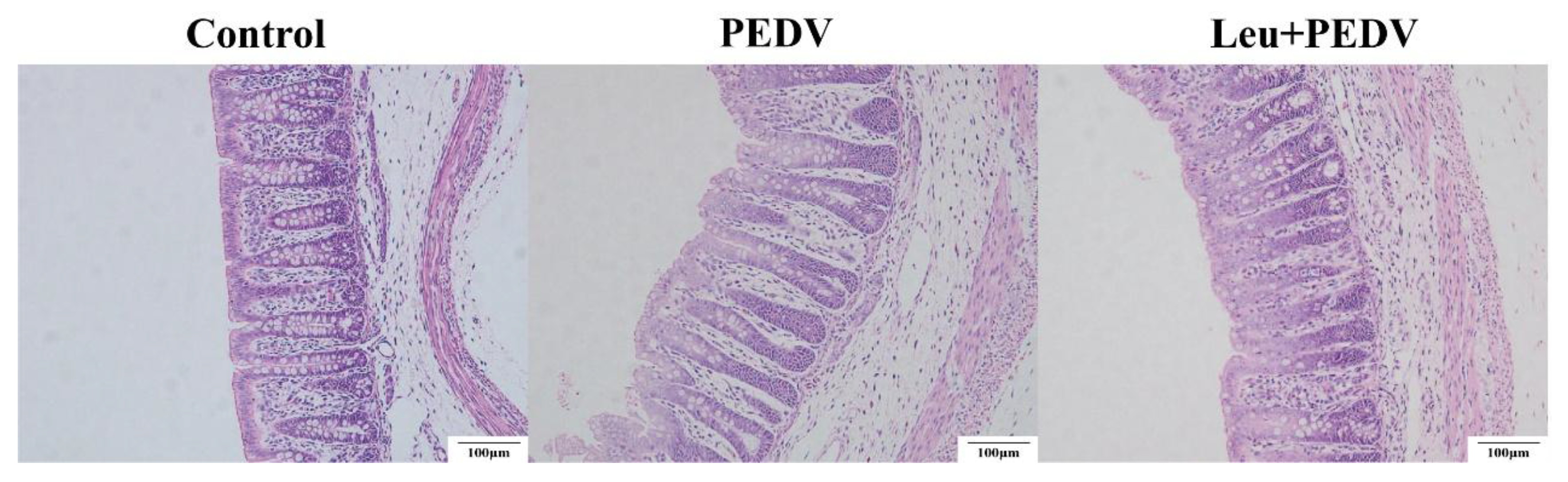
Representative images of colon tissue sections stained with hematoxylin and eosin (H&E) at 100× magnification are shown for the Control, PEDV-challenged, and Leu-treated PEDV groups in Figure 1.
As illustrated in Figure 1 and summarized in Table 3, piglets assigned to the Control treatment exhibited intestinal CD within the expected normal range, consistent with the physiological status of healthy neonates. Relative to the Control group, the PEDV-challenged piglets showed a marked increase (p < 0.05) in colonic CD (Table 3). In contrast, supplementation with Leu in PEDV-infected animals significantly reduced (p < 0.05) CD compared with the PEDV group. Notably, CD measurements did not differ appreciably between the Leu + PEDV and Control groups (Table 3).

3.2. Leucine Modulates the Expression Levels of Genes Associated with Injury and Regeneration in the Colonic Tissue of Piglets After PEDV Infection

As reported in Table 4, PEDV challenges markedly altered gene transcription in the colonic tissue of piglets. Specifically, relative mRNA abundances of Matrix Metallopeptidase 7 (MMP7), Matrix Metallopeptidase 13 (MMP13), and Mucin 5AC (MUC5AC) were elevated (p < 0.05) compared with the Control group, whereas MUC2 expression was reduced (p < 0.05). When Leu was provided with PEDV-infected piglets, colonic Amphiregulin (AREG) transcripts increased significantly (p < 0.05), accompanied by pronounced decreases (p < 0.05) in MMP7, MMP13, and MUC5AC relative to the PEDV group. Moreover, the Leu + PEDV group exhibited higher (p < 0.05) mRNA levels of AREG and MUC5AC in the colon than those observed in the Control group (Table 4).

3.3. Leu Alters Colonic Antioxidant Function in Piglets Under PEDV Challenge

According to the data summarized in Table 5, PEDV exposure led to a significant decline (p < 0.05) in CAT activity in the piglet colon, accompanied by notable increases (p < 0.05) in T-SOD activity and MDA levels relative to the Control group. When compared with PEDV infection alone, Leu supplementation resulted in a significant reduction (p < 0.05) in GSH-Px activity, while concurrently elevating (p < 0.05) T-SOD and CAT activities in colonic tissue. Moreover, relative to the Control group, piglets receiving Leu under PEDV challenge showed lower (p < 0.05) GSH-Px activity, whereas both T-SOD activity and MDA content remained higher (p < 0.05) (Table 5).

3.4. Leu Modulates the Relative mRNA Abundance of Antioxidant-Associated Genes in Colonic Tissue of PEDV-Challenged Piglets

As summarized in Table 6, PEDV challenge did not produce significant changes in colonic Glutathione Peroxidase 2 (GPX2) or Glutathione S-Transferase Omega 2 (GSTO2) mRNA levels when compared with the Control group. Likewise, Leu supplementation failed to elicit measurable differences in the expression of these two antioxidant-related genes relative to the PEDV group. In addition, no significant variation in GPX2 and GSTO2 transcript abundance was detected between the Leu + PEDV and Control groups (Table 6).

3.5. Leu Influences the Relative Transcriptional Levels of PEDV-Associated Genes in Colonic Tissue from PEDV-Challenged Piglets

As indicated in Table 7, PEDV challenge resulted in significantly elevated (p < 0.05) colonic mRNA levels of the viral membrane (M), nucleocapsid (N), and spike (S) genes relative to the Control group. In contrast, piglets receiving Leu under PEDV infection exhibited markedly reduced (p < 0.05) transcript abundance of these PEDV-associated genes compared with the PEDV group (Table 7).

3.6. Leu Regulates the Transcriptional Profiles of Inflammatory and Immune Pathway Genes in the Colon of Piglets Following PEDV Infection

As detailed in Table 8, PEDV challenge markedly reshaped colonic gene transcription relative to the Control group. Infected piglets showed significant reductions (p < 0.05) in interferon-stimulated gene 15 (ISG15), MX Dynamin Like GTPase 1 (MX1), radical S-adenosyl methionine domain-containing protein 2 (RSAD2), and 2′,5′-oligoadenylate synthetase-like protein (OASL) mRNA abundance, whereas S100 Calcium Binding Protein A8 (S100A8), S100 Calcium Binding Protein A9 (S100A9), interleukin-1 beta (IL-1β), and (REG3G) were significantly increased (p < 0.05). When Leu was provided under PEDV infection, expression of OASL as well as the inflammatory markers S100A8, REG3G, S100A9, and IL-1β significantly decreased (p < 0.05) compared with the PEDV group, while interleukin-1 8 (IL-8) transcripts were significantly elevated (p < 0.05). Furthermore, relative to the Control group, the Leu + PEDV treatment remained associated with significantly lower (p < 0.05) expression of ISG15, S100A8, RSAD2, OASL, MX1, and S100A9, alongside a significant increase (p < 0.05) in IL-8 mRNA levels (Table 8).

3.7. Leu Modifies the Relative mRNA Abundance of Ion Transport/Channel–Associated Genes in Colonic Tissue from PEDV-Challenged Piglets

According to the data presented in Table 9, PEDV challenge resulted in a marked reduction (p < 0.05) in the mRNA abundance of Aquaporin 10 (AQP10), Transient Receptor Potential Cation Channel Subfamily V Member 6 (TRPV6), and Transient Receptor Potential Cation Channel Subfamily M Member 6 (TRPM6) in the colonic tissue of piglets when compared with the Control group. Conversely, the transcriptional level of Sodium/Hydrogen Exchanger 3 (NHE3) was significantly elevated (p < 0.05) following PEDV infection. Relative to the PEDV group, piglets receiving the Leu + PEDV treatment exhibited significant increases (p < 0.05) in the expression of Aquaporin 7 (AQP7), Solute Carrier Family 5 Member 1 (SLC5A1), Chloride Channel Accessory 4 (CLCA4), TRPV6, TRPM6, and NHE3 in the colon. Moreover, when compared with the Control group, the Leu + PEDV group showed notably higher expression levels (p < 0.05) of AQP7, SLC5A1, CLCA4, and NHE3 in colonic tissues (Table 9).

4. Discussion

As a major segment of the large bowel, the colon is indispensable for the regulation and maintenance of normal physiological processes in the body. Its main functions include absorbing water and electrolytes, storing feces, preventing harmful substances from invading through the mucosal barrier, and participating in immune defense responses and the synthesis of metabolites [17,18]. Structurally, the colon wall comprises four layers from inner to outer: the mucosa, submucosa, muscularis, and serosa [19]. The mucosa serves as the core functional region, featuring a smooth surface devoid of villi, with crypts (also termed intestinal glands) as its defining structural element [20]. CD serves as a key indicator for assessing intestinal epithelial regeneration capacity and nutrient absorption function [21]. Deeper crypts may reflect increased cellular proliferation demands or suggest mucosal repair following injury [22]. Previous research confirmed that piglets challenged with PEDV exhibited a pronounced rise in CD expression within colonic tissues. [23]. Consistent with this finding, our study demonstrated that Leu administration significantly reduced colonic CD in PEDV-infected piglets, suggesting Leu’s mitigating effect on PEDV-induced intestinal mucosal damage in piglets.
Matrix metalloproteinases (MMPs), specifically MMP7 and MMP13, are pivotal molecules in tissue repair and remodeling processes [24,25]. Elevated levels of these enzymes are indicative of active tissue remodeling within the microenvironment, acting as critical pathobiological markers [25,26]. The mucus layer lining the gut constitutes a crucial interface separating nutrients and pathogens from epithelial cells, with MUC2 representing the major gel-forming mucin that underpins the structural framework of this protective barrier [4]. Research indicates that young pigs exhibit lower MUC2 expression levels, rendering them more susceptible to early viral infections [4]. Downregulation of MUC2 expression directly compromises the barrier protective capacity of the mucus layer itself [27]. Findings from the present investigation indicated that infection with PEDV resulted in a marked reduction in the relative abundance of MUC2 transcripts within colonic tissues. This result indicates that PEDV infection disrupts mucus barrier integrity. However, oral administration of Leu did not significantly alter the expression levels of MUC2 in the colon of PEDV-infected piglets. MUC5AC, a secretory mucin, primarily serves to construct and protect the mucosal epithelial mucus barrier, thereby lubricating the intestinal surface and defending against pathogens and harmful substances [28]. In healthy animals, MUC5AC levels are typically very low or even absent. However, under disease conditions such as tumors, its levels increase [29]. Accumulating evidence has shown that upregulation of MUC5AC was a characteristic feature of multiple respiratory disorders, such as chronic obstructive pulmonary disease (COPD), and plays a key role in excessive mucus production and subsequent blockage of the airways [30,31]. PEDV challenge is found to significantly upregulate the transcript abundance of MMP7, MMP13, and MUC5AC within colonic tissues. While oral administration of Leu effectively downregulated the expression of these genes. These findings suggested that Leu can mitigate PEDV-induced intestinal injury and facilitate intestinal morphological repair. This discovery offers novel insights into Leu’s mechanism of intestinal protection. Nevertheless, the present results showed that even after leucine supplementation, PEDV-challenged piglets exhibited persistently elevated MUC5AC expression in colonic tissues compared with the control group. Although oral Leu effectively downregulated the abnormal elevation of MUC5AC, it failed to eliminate residual pathological microenvironments (such as gaps in barrier repair) from PEDV infection within the short term. This may be because the intestine still requires maintaining a certain level of MUC5AC to meet barrier protection demands during the repair phase. As a result, after Leu treatment, MUC5AC expression was maintained at a level that lay between that observed in uninfected controls and that detected in the PEDV-infected group.
Cells rely on a defense system dominated by enzymes, including GSH-Px, CAT, and T-SOD, which act to eliminate free radicals and reactive oxygen species and thus guard against damage caused by oxidative stress [5]. Malondialdehyde (MDA), generated during lipid peroxidation processes, is widely recognized as an indicator for evaluating the extent of oxidative stress [32]. Previous studies have confirmed that PEDV infection significantly reduces CAT activity in piglet colonic tissue [5] while increasing MDA content [33], findings that align with those of this study. This suggested that PEDV infection disrupted redox homeostasis in piglets, triggering a marked oxidative stress response. However, oral Leu administration alleviated PEDV-induced oxidative stress by restoring CAT activity.
The structural proteins of PEDV, including the N, M, and S proteins, play crucial roles in viral pathogenesis. The N protein, an abundant structural protein present throughout the entire infection cycle, serves as an ideal target for early PEDV diagnosis [34] and participates in viral replication and cellular infection processes [35]. As the major structural constituent of the viral envelope, the M protein plays a central role in virion formation and release, while simultaneously suppressing host innate immunity through interference with type III and type I interferon signaling; moreover, it is capable of inducing protective antibody responses in swine [36]. The S protein enables viral invasion by governing receptor engagement and membrane fusion, thereby allowing the nucleocapsid to be delivered into the host cell cytosol and serving as a critical determinant of cellular entry [37]. This work demonstrated that Leu treatment markedly diminished the mRNA expression levels of M, N, and S in the colonic tissues of PEDV-infected piglets, thereby successfully suppressing viral replication in the gut. These findings indicate that Leu, an important amino acid that is both safe and readily accessible, functions as an antiviral agent, offering novel insights and strategies for the nutritional prevention and management of PEDV infection in swine production.
S100A9 and S100A8 are calcium-binding proteins in the S100 family that typically function as heterodimers (S100A8/A9) and serve as important predictive indicators for therapeutic responses in inflammation-related diseases [38]. IL-1β, a potent pro-inflammatory cytokine and core mediator of inflammatory responses, exhibits expression levels closely correlated with S100A8/A9. Upregulation of S100A8/A9 activates the TLR4-NLRP3-IL-1β signaling axis, resulting in a substantial release of mature IL-1β and ultimately exacerbating tissue damage [39]. REG3G is a member of the Regenerating islet-derived (Regen) gene family, which primarily functions as an antimicrobial peptide, directly defending against pathogenic microbial invasion and maintaining the integrity of the intestinal barrier [40]. Li observed that PEDV infection increases IL-1β and REG3G levels in piglet colon tissue, findings that are consistent with this research [23]. In addition, the present study demonstrated a pronounced upregulation of S100A8 and S100A9 in colonic tissues following PEDV challenge, indicating that viral infection provoked a strong inflammatory response in the intestine. The expression levels of inflammation-related genes (S100A8, S100A9, IL-1β, and REG3G) were markedly decreased after oral Leu treatment, indicating that Leu can lessen inflammation-induced damage brought on by PEDV in porcine colon.
Normal ion transport across membranes is crucial for maintaining intestinal physiological function. The TRPV6 protein facilitates the uptake of Ca2+ from the intestinal lumen into epithelial cells, whereas the TRPM6 protein acts as the primary Mg2+ influx channel in the intestinal apical membrane, directly contributing to colonic mucosal Mg2+ absorption [41]. This study showed that PEDV infection significantly reduced TRPV6 and TRPM6 expression in piglet colon tissue, resulting in compromised intestinal ion transport. This finding is in line with the clinical signs of dehydration and diarrhea that are commonly seen in pigs infected with PEDV. Leu supplementation markedly increased the transcription of TRPV6 and TRPM6, implying that Leu supports ionic equilibrium in intestinal epithelial cells through regulation of genes involved in ion transport processes. In summary, this study systematically elucidated that Leu mitigated PEDV-induced colonic injury in piglets via a multifaceted mechanism. These include the restoration of intestinal morphological integrity by modulating CD; the reduction in tissue injury by downregulating MMP7, MMP13, and MUC5AC expression; the inhibition of viral replication by decreasing the expression of PEDV structural proteins (M, N, S); the mitigation of inflammatory damage by suppressing S100A8, S100A9, IL-1β, and REG3G expression; and the preservation of ionic balance through increased expression of TRPV6 and TRPM6. These findings not only elucidate the potential for Leu as a nutritional intervention in managing PEDV infection but also offer novel insights into the mechanisms through which essential amino acids modulate virus-induced intestinal diseases. The research has substantial practical implications for enhancing swine health and increasing production efficiency in pig farming.


5. Conclusions

Leu alleviated colonic damage in PEDV-infected piglets by restoring intestinal morphology, inhibiting viral replication, suppressing inflammatory responses, and maintaining ion homeostasis.

Author Contributions

M.L., Y.Z.: Conceptualization, Investigation, Writing—Original Draft, Writing—Review and Editing, Software. L.G., J.W., Z.L. (Zongyun Li), Z.L. (Zhonghua Li), L.W., D.Z., T.W., D.Y.: Methodology, Data Curation. Y.H.: Conceptualization, Supervision, Funding Acquisition, Writing—Review and Editing. All authors have read and agreed to the published version of the manuscript.

Funding

The National Natural Science Foundation of China (U22A20514, 32172763), the National Key R&D Program (2022YFD130040302), the Hubei Provincial Key R&D Program (2023BBB040), the Hubei Important Science and Technology Project (2024BA004), and the Research and Innovation Initiatives of WHPU (2024J04) provided funding for this work.

Institutional Review Board Statement

Ethical approval for this research was granted by the Animal Ethics Committee of Wuhan University of Technology (Approval No. WPU202405006). All experimental protocols involving animals were conducted in accordance with national guidelines governing the care and use of laboratory animals.

Data Availability Statement

The publication contains all the data used in this study. The appropriate author can be contacted for more information.

Acknowledgments

We would like to acknowledge the valuable contributions of our technicians and students to this research.

Conflicts of Interest

The authors declare no conflicts of interest.

Abbreviations

AQP7Aquaporin 7
AQP10Aquaporin 10
AREGAmphiregulin
CXCL2C-X-C Motif Chemokine Ligand 2
CLCA4Chloride Channel Accessory 4
IFN-βInterferon Beta
IL-1βInterleukin 1 Beta
IL-8Interleukin 8
ISG15ISG15 Ubiquitin-Like Modifier
KCNJ13Potassium Inwardly Rectifying Channel Subfamily J Member 13
MMP13Matrix Metallopeptidase 13
MMP7Matrix Metallopeptidase 7
MX1MX Dynamin Like GTPase 1
MUC2Mucin 2
MUC5ACMucin 5AC
NHE3Sodium Hydrogen Exchanger 3 (Soluble Carrier Family 9 Member 3)
OASL2′,5′-Oligoadenylate Synthetase Like
PEDV MPorcine Epidemic Diarrhea Virus Membrane Protein
PEDV NPorcine Epidemic Diarrhea Virus Nucleocapsid Protein
PEDV SPorcine Epidemic Diarrhea Virus Spike Protein
REG3GRegenerating Family Member 3 Gamma
RPL19Ribosomal Protein L19
RSAD2Radical S-Adenosyl Methionine Domain Containing 2
SLC5A1Solute Carrier Family 5 Member 1
S100A9S100 Calcium Binding Protein A9
S100A8S100 Calcium Binding Protein A8
TRPV6Transient Receptor Potential Cation Channel Subfamily V Member 6
TRPM6Transient Receptor Potential Cation Channel Subfamily M Member 6

References

  1. Jung, K.; Saif, L.J. Porcine epidemic diarrhea virus infection: Etiology, epidemiology, pathogenesis and immunoprophylaxis. Vet. J. 2015, 204, 134–143. [Google Scholar] [CrossRef]
  2. Lin, F.; Zhang, H.; Li, L.; Yang, Y.; Zou, X.; Chen, J.; Tang, X. PEDV: Insights and Advances into Types, Function, Structure, and Receptor Recognition. Viruses 2022, 14, 1744. [Google Scholar] [CrossRef]
  3. Li, Z.; Ma, Z.; Li, Y.; Gao, S.; Xiao, S. Porcine epidemic diarrhea virus: Molecular mechanisms of attenuation and vaccines. Microb. Pathog. 2020, 149, 104553. [Google Scholar] [CrossRef]
  4. Saleem, W.; Carpentier, N.; Hinnekens, C.; Oh, D.; Van Vlierberghe, S.; Braeckmans, K.; Nauwynck, H. Porcine ex-vivo intestinal mucus has age-dependent blocking activity against transmissible gastroenteritis virus. Vet. Res. 2024, 55, 113. [Google Scholar] [CrossRef] [PubMed]
  5. Li, H.; Wu, M.; Li, Z.; Zhang, Q.; Zhang, X.; Zhang, Y.; Zhao, D.; Wang, L.; Hou, Y.; Wu, T. Effect of supplementation with yeast polysaccharides on intestinal function in piglets infected with porcine epidemic diarrhea virus. Front. Microbiol. 2024, 15, 1378070. [Google Scholar] [CrossRef]
  6. Tan, Z.; Dong, W.; Ding, Y.; Ding, X.; Zhang, Q.; Jiang, L. Porcine Epidemic Diarrhea Altered Colonic Microbiota Communities in Suckling Piglets. Genes 2019, 11, 44. [Google Scholar] [CrossRef]
  7. Xu, Q.; Wang, F.; Jiao, W.; Zhang, M.; Xing, G.; Feng, H.; Sun, X.; Hu, M.; Zhang, G. Virtual Screening-Based Peptides Targeting Spike Protein to Inhibit Porcine Epidemic Diarrhea Virus (PEDV) Infection. Viruses 2023, 15, 381. [Google Scholar] [CrossRef] [PubMed]
  8. Song, B.; Zheng, C.; Zha, C.; Hu, S.; Yang, X.; Wang, L.; Xiao, H. Dietary leucine supplementation improves intestinal health of mice through intestinal SIgA secretion. J. Appl. Microbiol. 2020, 128, 574–583. [Google Scholar] [CrossRef]
  9. Du, J.; Chen, D.; Yu, B.; He, J.; Yu, J.; Mao, X.; Luo, Y.; Zheng, P.; Luo, J. L-Leucine Promotes STAT1 and ISGs Expression in TGEV-Infected IPEC-J2 Cells via mTOR Activation. Front. Immunol. 2021, 12, 656573. [Google Scholar] [CrossRef]
  10. Ananieva, E.A.; Powell, J.D.; Hutson, S.M. Leucine Metabolism in T Cell Activation: mTOR Signaling and Beyond. Adv. Nutr. 2016, 7, 798s–805s. [Google Scholar] [CrossRef]
  11. Sun, Y.; Wu, Z.; Li, W.; Zhang, C.; Sun, K.; Ji, Y.; Wang, B.; Jiao, N.; He, B.; Wang, W.; et al. Dietary L-leucine supplementation enhances intestinal development in suckling piglets. Amino Acids 2015, 47, 1517–1525. [Google Scholar] [CrossRef]
  12. Yin, Y.; Huang, R.; Li, T.; Ruan, Z.; Xie, M.; Deng, Z.; Hou, Y.; Wu, G. Amino acid metabolism in the portal-drained viscera of young pigs: Effects of dietary supplementation with chitosan and pea hull. Amino Acids 2010, 39, 1581–1587. [Google Scholar] [CrossRef]
  13. Yin, Y.; Yao, K.; Liu, Z.; Gong, M.; Ruan, Z.; Deng, D.; Tan, B.; Liu, Z.; Wu, G. Supplementing L-leucine to a low-protein diet increases tissue protein synthesis in weanling pigs. Amino Acids 2010, 39, 1477–1486. [Google Scholar] [CrossRef]
  14. Mao, X.; Liu, M.; Tang, J.; Chen, H.; Chen, D.; Yu, B.; He, J.; Yu, J.; Zheng, P. Dietary Leucine Supplementation Improves the Mucin Production in the Jejunal Mucosa of the Weaned Pigs Challenged by Porcine Rotavirus. PLoS ONE 2015, 10, e0137380. [Google Scholar] [CrossRef] [PubMed]
  15. Yin, Y.; Liu, Y.; Duan, G.; Han, M.; Gong, S.; Yang, Z.; Duan, Y.; Guo, Q.; Chen, Q.; Li, F. The Effect of Dietary Leucine Supplementation on Antioxidant Capacity and Meat Quality of Finishing Pigs Under Heat Stress. Antioxidants 2022, 11, 1373. [Google Scholar] [CrossRef] [PubMed]
  16. Fu, W.J.; Stromberg, A.J.; Viele, K.; Carroll, R.J.; Wu, G. Statistics and bioinformatics in nutritional sciences: Analysis of complex data in the era of systems biology. J. Nutr. Biochem. 2010, 21, 561–572. [Google Scholar] [CrossRef] [PubMed]
  17. Hibberd, T.J.; Ramsay, S.; Spencer-Merris, P.; Dinning, P.G.; Zagorodnyuk, V.P.; Spencer, N.J. Circadian rhythms in colonic function. Front. Physiol. 2023, 14, 1239278. [Google Scholar] [CrossRef]
  18. Ren, Z.; Guo, C.; Yu, S.; Zhu, L.; Wang, Y.; Hu, H.; Deng, J. Progress in Mycotoxins Affecting Intestinal Mucosal Barrier Function. Int. J. Mol. Sci. 2019, 20, 2777. [Google Scholar] [CrossRef]
  19. McKie, K.A.; Irani, J.L. Large Intestine. In Current Diagnosis & Treatment: Surgery, 16th ed.; Doherty, G.M., Ed.; McGraw Hill: New York, NY, USA, 2025. [Google Scholar]
  20. Heo, J.M.; Opapeju, F.O.; Pluske, J.R.; Kim, J.C.; Hampson, D.J.; Nyachoti, C.M. Gastrointestinal health and function in weaned pigs: A review of feeding strategies to control post-weaning diarrhoea without using in-feed antimicrobial compounds. J. Anim. Physiol. Anim. Nutr. 2013, 97, 207–237. [Google Scholar] [CrossRef]
  21. Pluske, J.R.; Hampson, D.J.; Williams, I.H. Factors influencing the structure and function of the small intestine in the weaned pig: A review. Livest. Prod. Sci. 1997, 51, 215–236. [Google Scholar] [CrossRef]
  22. Abimosleh, S.M.; Lindsay, R.J.; Butler, R.N.; Cummins, A.G.; Howarth, G.S. Emu oil increases colonic crypt depth in a rat model of ulcerative colitis. Dig. Dis. Sci. 2012, 57, 887–896. [Google Scholar] [CrossRef] [PubMed]
  23. Li, H.H.; Yu, C.M.; Tian, X.R.; Li, R.; Li, Z.Y.; Zhang, Y.Y.; Zhao, D.; Wang, L.; Hou, Y.Q.; Wu, T. Protective Effect of Catechu Extract on the Colon of Young Piglets Infected with Porcine Epidemic Diarrhea Virus. China Anim. Husb. Vet. Med. 2025, 52, 1360–1369. [Google Scholar] [CrossRef]
  24. Vaalamo, M.; Karjalainen-Lindsberg, M.L.; Puolakkainen, P.; Kere, J.; Saarialho-Kere, U. Distinct expression profiles of stromelysin-2 (MMP-10), collagenase-3 (MMP-13), macrophage metalloelastase (MMP-12), and tissue inhibitor of metalloproteinases-3 (TIMP-3) in intestinal ulcerations. Am. J. Pathol. 1998, 152, 1005–1014. [Google Scholar]
  25. Li, L.; Jiao, L.; Feng, D.; Yuan, Y.; Yang, X.; Li, J.; Jiang, D.; Chen, H.; Meng, Q.; Chen, R.; et al. Human apical-out nasal organoids reveal an essential role of matrix metalloproteinases in airway epithelial differentiation. Nat. Commun. 2024, 15, 143. [Google Scholar] [CrossRef]
  26. Qian, W.; Xia, S.; Yang, X.; Yu, J.; Guo, B.; Lin, Z.; Wei, R.; Mao, M.; Zhang, Z.; Zhao, G.; et al. Complex Involvement of the Extracellular Matrix, Immune Effect, and Lipid Metabolism in the Development of Idiopathic Pulmonary Fibrosis. Front. Mol. Biosci. 2021, 8, 800747. [Google Scholar] [CrossRef]
  27. Saladrigas-García, M.; D’Angelo, M.; Ko, H.L.; Nolis, P.; Ramayo-Caldas, Y.; Folch, J.M.; Llonch, P.; Solà-Oriol, D.; Pérez, J.F.; Martín-Orúe, S.M. Understanding host-microbiota interactions in the commercial piglet around weaning. Sci. Rep. 2021, 11, 23488. [Google Scholar] [CrossRef]
  28. Yamazoe, S.; Tanaka, H.; Sawada, T.; Amano, R.; Yamada, N.; Ohira, M.; Hirakawa, K. RNA interference suppression of mucin 5AC (MUC5AC) reduces the adhesive and invasive capacity of human pancreatic cancer cells. J. Exp. Clin. Cancer Res. 2010, 29, 53. [Google Scholar] [CrossRef]
  29. Betge, J.; Schneider, N.I.; Harbaum, L.; Pollheimer, M.J.; Lindtner, R.A.; Kornprat, P.; Ebert, M.P.; Langner, C. MUC1, MUC2, MUC5AC, and MUC6 in colorectal cancer: Expression profiles and clinical significance. Virchows Arch. 2016, 469, 255–265. [Google Scholar] [CrossRef]
  30. Jia, Z.; Bao, K.; Wei, P.; Yu, X.; Zhang, Y.; Wang, X.; Wang, X.; Yao, L.; Li, L.; Wu, P.; et al. EGFR activation-induced decreases in claudin1 promote MUC5AC expression and exacerbate asthma in mice. Mucosal Immunol. 2021, 14, 125–134. [Google Scholar] [CrossRef] [PubMed]
  31. Samsuzzaman, M.; Uddin, M.S.; Shah, M.A.; Mathew, B. Natural inhibitors on airway mucin: Molecular insight into the therapeutic potential targeting MUC5AC expression and production. Life Sci. 2019, 231, 116485. [Google Scholar] [CrossRef] [PubMed]
  32. Del Rio, D.; Stewart, A.J.; Pellegrini, N. A review of recent studies on malondialdehyde as toxic molecule and biological marker of oxidative stress. Nutr. Metab. Cardiovasc. Dis. 2005, 15, 316–328. [Google Scholar] [CrossRef]
  33. Wang, C.; Zhang, Q.; Ji, C.; Hu, Y.; Yi, D.; Wu, T.; Wang, L.; Zhao, D.; Hou, Y. Effects of monolaurin on intestinal barrier, blood biochemical profile, immunity and antioxidant function in porcine epidemic diarrhoea virus-infected piglets. Br. J. Nutr. 2024, 131, 185–192. [Google Scholar] [CrossRef]
  34. Song, D.; Park, B. Porcine epidemic diarrhoea virus: A comprehensive review of molecular epidemiology, diagnosis, and vaccines. Virus Genes 2012, 44, 167–175. [Google Scholar] [CrossRef]
  35. Shi, D.; Lv, M.; Chen, J.; Shi, H.; Zhang, S.; Zhang, X.; Feng, L. Molecular characterizations of subcellular localization signals in the nucleocapsid protein of porcine epidemic diarrhea virus. Viruses 2014, 6, 1253–1273. [Google Scholar] [CrossRef] [PubMed]
  36. Rodríguez-Enríquez, A.; Herrera-Camacho, I.; Millán-Pérez-Peña, L.; Reyes-Leyva, J.; Santos-López, G.; Rivera-Benítez, J.F.; Rosas-Murrieta, N.H. Predicted 3D model of the M protein of Porcine Epidemic Diarrhea Virus and analysis of its immunogenic potential. PLoS ONE 2022, 17, e0263582. [Google Scholar] [CrossRef] [PubMed]
  37. Li, W.; van Kuppeveld, F.J.M.; He, Q.; Rottier, P.J.M.; Bosch, B.J. Cellular entry of the porcine epidemic diarrhea virus. Virus Res. 2016, 226, 117–127. [Google Scholar] [CrossRef]
  38. Wang, S.; Song, R.; Wang, Z.; Jing, Z.; Wang, S.; Ma, J. S100A8/A9 in Inflammation. Front. Immunol. 2018, 9, 1298. [Google Scholar] [CrossRef]
  39. Tousif, S.; Singh, A.P.; Umbarkar, P.; Galindo, C.; Wheeler, N.; Toro Cora, A.; Zhang, Q.; Prabhu, S.D.; Lal, H. Ponatinib Drives Cardiotoxicity by S100A8/A9-NLRP3-IL-1β Mediated Inflammation. Circ. Res. 2023, 132, 267–289. [Google Scholar] [CrossRef]
  40. Dissanayake, W.M.N.; Chandanee, M.R.; Lee, S.M.; Heo, J.M.; Yi, Y.J. Change in intestinal alkaline phosphatase activity is a hallmark of antibiotic-induced intestinal dysbiosis. Anim. Biosci. 2023, 36, 1403–1413. [Google Scholar] [CrossRef] [PubMed]
  41. Holzer, P. TRP channels in the digestive system. Curr. Pharm. Biotechnol. 2011, 12, 24–34. [Google Scholar] [CrossRef]
Figure 1. Effect of Leu on Colonic Crypt Depth in Piglets Following PEDV Infection.
Agriculture 16 00161 g001
Table 1. Nutrient Composition of Whole Milk Powder.
ItemsEnergyProteinFatCarbohydratesSodiumCalcium
Per 100 g2127 KJ24.2 g28.5 g38.9 g310 mg850 mg
NRV%25%40%48%13%16%106%
NRV, Nutrient Reference Values.
Table 2. Primer sequence.
Gene NameForward (5′-3′)Reverse (5′-3′)
AQP7GAGTTCTTGGCCGAGTTCATCCCAACACGTACACAGGAAA
AQP10GGGCGTTATACTAGCCATCTACCCAACTGCACCAAGGAGTAA
AREGGAGTACGATAACGAACCGCACATTTCCACTTTTGCCTCCCTTT
CLCA4ACAGCGTTTGAGGTGGTTAGATGATGGCCCCACTTTGTTT
CXCL2CGGAAGTCATAGCCACTCTCAACAGTAGCCAGTAAGTTTCCTCCATC
GPX2CCGGGACTTCACCCAACTCCGGACGTACTTGAGGCTGTT
GSTO2GCCTTGAGATGTGGGAGAGAAAAGATGGTGTTCTGATAGCCAAGA
HMBSAGGATGGGCAACTCTACCTGGATGGTGGCCTGCATAGTCT
IFN-βAGCAGATCTTCGGCATTCTCGTCATCCATCTGCCCATCAA
IL-1βCAACGTGCAGTCTATGGAGTGAGGTGCTGATGTACCAGTTG
IL-8TTCGATGCCAGTGCATAAATACTGTACAACCTTCTGCACCCA
ISG15AGCATGGTCCTGTTGATGGTGCAGAAATGGTCAGCTTGCACG
KCNJ13ATGGATGTGTCGCTGGTCTTTCACAACTGCTTGCCTTTACGAG
MMP13AGTTTGGCCATTCCTTAGGTCTTGGGCTTTTGCCAGTGTAGGTATAGAT
MMP7GGTGGCAGCATAGGCATTAACTCCGTAGGTTGGATACATCACAG
MUC5ACGTCAATGGCCGCACAATTCAGCATCGTGGGAGAGGAACTCG
MUC2CCTTGCTCTCGTGTGGAACAACTTCTCCTCGGGCTTGTTG
MX1AGTGCGGCTGTTTACCAAGTTCACAAACCCTGGCAACTC
NHE3AAGTACGTGAAGGCCAACATCTCTTCTCCTTGACCTTGTTCTCGTC
OASLGGCACCCCTGTTTTCCTCTAGCACCGCTTTTGGATGG
PEDV MTCCCGTTGATGAGGTGATAGGATGCTGAAAGCGAAAA
PEDV NTTGGTGGTAATGTGGCTGTTCTGGTTTCACGCTTGTTCTTCTT
PEDV SCTCTCTGGTACAGGCAGCACGCTCACGTAGAGTCAAGGCA
RPL19AACTCCCGTCAGCAGATCCAGTACCCTTCCGCTTACCG
RSAD2CCCCACTAGCGTCAATTACCTGATCTTCTCCATACCCGCT
S100A8GCGTAGATGGCGTGGTAAGCCCTGCATGTGCTTTGT
S100A9CCAGGATGTGGTTTATGGCTTTCCGGACCAAATGTCGCAGA
REG3GCTGTCTCAGGTCCAAGGTGAAGCAAGGCATAGCAGTAGGAAGCA
SLC5A1GTCATCTACTTCGTGGTGGTGACCCAAATCAGAGCATTCCATT
TRPM6TACGGGAAGAGATGTGGTGTCGCCTGAGCTTCATCTCATT
TRPV6AGGAGCTGGTGAGCCTCAAGTGGGGTCAGTTTGGTTGTTGG
Table 3. Leu’s impact on colonic CD in piglets infected with PEDV.
ItemsControlPEDVLeu + PEDVp-Value
CD (µm)255.04 ± 35.01 b329.77 ± 62.25 a239.95 ± 30.7 b0.008
CD, crypt depth. The data are expressed as the mean value together with the corresponding standard error (mean ± SEM). Different superscript symbols (a, b) are used to indicate statistical significance, such that values within the same column carrying distinct letters differ significantly from one another (p < 0.05).
Table 4. Leucine Modulates the Expression Levels of Genes Associated with Injury and Regeneration in the Colonic Tissue of Piglets After PEDV Infection.
ItemsControlPEDVLeu + PEDVp-Value
AREG1.000 ± 0.141 b1.204 ± 0.184 b1.675 ± 0.384 a0.001
MMP71.000 ± 0.224 b2.532 ± 0.653 a1.023 ± 0.227 b<0.001
MMP131.000 ± 0.137 b1.747 ± 0.318 a0.896 ± 0.258 b<0.001
MUC5AC1.000 ± 0.247 c3.980 ± 0.755 a2.462 ± 0.426 b<0.001
MUC21.000 ± 0.232 a0.527 ± 0.092 b0.502 ± 0.118 b<0.001
The abbreviations used are as follows: AREG, Amphiregulin; MMP7, Matrix Metallopeptidase 7; MMP13, Matrix Metallopeptidase 13; MUC5AC, Mucin 5AC; MUC2, Mucin 2. The data are expressed as the mean value together with the corresponding standard error (mean ± SEM). Different superscript symbols (a, b, and c) are used to indicate statistical significance, such that values within the same column carrying distinct letters differ significantly from one another (p < 0.05).
Table 5. Leu Alters Colonic Antioxidant Function in Piglets Under PEDV Challenge.
ItemsControlPEDVLeu + PEDVp-Value
GSH-Px (U/mg prot)75.91 ± 15.9 a62.79 ± 9.76 a35.45 ± 14.78 b0.002
T-SOD (U/mg prot)37.81 ± 3.72 c46.11 ± 6.66 b65.76 ± 8.03 a<0.001
CAT (U/mg prot)9.16 ± 1.77 a1.55 ± 0.65 b10.87 ± 0.99 a<0.001
MPO (U/g prot)65.92 ± 52.3850.56 ± 43.9629.68 ± 13.250.378
MDA (mmol/g prot)0.55 ± 0.12 b0.88 ± 0.3 a1.01 ± 0.28 a0.015
H2O2 (mmol/g prot)8.44 ± 0.629.64 ± 1.1110.29 ± 2.750.213
The abbreviations used are as follows: GSH-PX: Glutathione peroxidase; CAT: Catalase; T-SOD: Total superoxide dismutase; H2O2: Hydrogen peroxide; MDA: Malondialdehyde; MPO: Myeloperoxidase. The data are expressed as the mean value together with the corresponding standard error (mean ± SEM). Different superscript symbols (a, b, and c) are used to indicate statistical significance, such that values within the same column carrying distinct letters differ significantly from one another (p < 0.05).
Table 6. Leu Modulates the Relative mRNA Abundance of Antioxidant-Associated Genes in Colonic Tissue of PEDV-Challenged Piglets.
ItemsControlPEDVLeu + PEDVp-Value
GPX21.000 ± 0.0931.027 ± 0.1491.105 ± 0.1020.301
GSTO21.000 ± 0.1751.336 ± 0.3101.07 ± 0.1650.051
The abbreviations used are as follows: GSTO2, Glutathione S-Transferase Omega 2; GPX2, Glutathione Peroxidase 2. The data are expressed as the mean value together with the corresponding standard error (mean ± SEM), and differences were considered significant when p < 0.05.
Table 7. Leu Influences the Relative Transcriptional Levels of PEDV-Associated Genes in Colonic Tissue from PEDV-Challenged Piglets.
ItemsControlPEDVLeu + PEDVp-Value
PEDV M/1.000 ± 0.266 a0.186 ± 0.047 b<0.001
PEDV N/1.000 ± 0.147 a0.186 ± 0.047 b<0.001
PEDV S/1.000 ± 0.211 a0.186 ± 0.047 b<0.001
“/” indicates that no expression of the protein was detected. PEDV M, Porcine Epidemic Diarrhea Virus Membrane Protein; PEDV N, Porcine Epidemic Diarrhea Virus Nucleocapsid Protein; PEDV S, Porcine Epidemic Diarrhea Virus Spike Protein. The data are expressed as the mean value together with the corresponding standard error (mean ± SEM). Different superscript symbols (a, b) are used to indicate statistical significance, such that values within the same column carrying distinct letters differ significantly from one another (p < 0.05).
Table 8. Leu Regulates the Transcriptional Profiles of Inflammatory and Immune Pathway Genes in the Colon of Piglets Following PEDV Infection.
ItemsControlPEDVLeu + PEDVp-Value
IFN-β1.000 ± 0.2411.333 ± 0.3011.101 ± 0.2420.114
RSAD21.000 ± 0.181 a0.143 ± 0.024 b0.048 ± 0.011 b<0.001
MX11.000 ± 0.181 a0.250 ± 0.053 b0.129 ± 0.035 b<0.001
ISG151.000 ± 0.188 a0.139 ± 0.027 b0.117 ± 0.034 b<0.001
OASL1.000 ± 0.164 a0.240 ± 0.045 b0.055 ± 0.012 c<0.001
S100A81.000 ± 0.270 b1.485 ± 0.261 a0.616 ± 0.122 c<0.001
S100A91.000 ± 0.260 b1.782 ± 0.347 a0.568 ± 0.128 c<0.001
IL-1β1.000 ± 0.291 b1.527 ± 0.237 a0.723 ± 0.126 b<0.001
IL-81.000 ± 0.146 b1.305 ± 0.349 b1.766 ± 0.464 a0.006
CXCL21.000 ± 0.2251.117 ± 0.2181.08 ± 0.2530.680
REG3G1.000 ± 0.236 b6.266 ± 1.771 a0.167 ± 0.04 b<0.001
The abbreviations used are as follows: IFN-β, denotes interferon beta; RSAD2 refers to radical S-adenosyl methionine domain-containing protein 2; MX1 indicates MX dynamin-like GTPase 1; ISG15 represents interferon-stimulated gene 15; OASL corresponds to 2′,5′-oligoadenylate synthetase-like protein; S100A8 and S100A9 refer to S100 calcium-binding proteins A8 and A9, respectively; IL-8 and IL-1β, designate interleukin-8 and interleukin-1 beta; CXCL2 stands for C-X-C motif chemokine ligand 2; and REG3G indicates regenerating family member 3 gamma. The data are expressed as the mean value together with the corresponding standard error (mean ± SEM). Different superscript symbols (a, b, and c) are used to indicate statistical significance, such that values within the same column carrying distinct letters differ significantly from one another (p < 0.05).
Table 9. Leu Modifies the Relative mRNA Abundance of Ion Transport/Channel–Associated Genes in Colonic Tissue from PEDV-Challenged Piglets.
ItemsControlPEDVLeu + PEDVp-Value
AQP71.000 ± 0.215 b0.997 ± 0.249 b1.842 ± 0.407 a<0.001
AQP101.000 ± 0.226 a0.673 ± 0.162 b0.912 ± 0.269 ab0.059
SLC5A11.000 ± 0.291 b0.803 ± 0.205 b1.458 ± 0.25 a0.001
CLCA41.000 ± 0.270 b0.769 ± 0.142 b1.694 ± 0.378 a<0.001
KCNJ131.000 ± 0.1630.833 ± 0.1221.001 ± 0.0930.063
TRPV61.000 ± 0.255 a0.459 ± 0.121 b1.127 ± 0.332 a0.001
TRPM61.000 ± 0.299 a0.654 ± 0.167 b1.189 ± 0.204 a0.004
NHE31.000 ± 0.220 c2.345 ± 0.377 b3.703 ± 1.052 a<0.001
The following abbreviations are used: AQP7 refers to aquaporin 7, while AQP10 denotes aquaporin 10; SLC5A1 represents solute carrier family 5 member 1; CLCA4 corresponds to chloride channel accessory protein 4; KCNJ13 indicates potassium inwardly rectifying channel subfamily J member 13; TRPM6 and TRPV6 stand for transient receptor potential cation channels subfamily M member 6 and subfamily V member 6, respectively; NHE3 designates sodium–hydrogen exchanger isoform 3. The data are expressed as the mean value together with the corresponding standard error (mean ± SEM). Different superscript symbols (a, b, and c) are used to indicate statistical significance, such that values within the same column carrying distinct letters differ significantly from one another (p < 0.05).
Disclaimer/Publisher’s Note: The statements, opinions and data contained in all publications are solely those of the individual author(s) and contributor(s) and not of MDPI and/or the editor(s). MDPI and/or the editor(s) disclaim responsibility for any injury to people or property resulting from any ideas, methods, instructions or products referred to in the content.