
Connection Between the Microbial Community and the Management Zones Used in Precision Agriculture Cultivation

 , , ,
, , ,
Abstract
1. Introduction
2. Materials and Methods
2.1. Study Area
2.2. Delineation of Management Zones
2.3. Field Sampling and Sample Preparation
2.4. Laboratory Analyses
2.5. Soil Classification
2.6. Illumina 16S rRNA Gene Amplicon Sequencing and Bioinformatics Analysis
2.7. Statistical Analysis
3. Results
3.1. Soil Properties of the Investigated Area
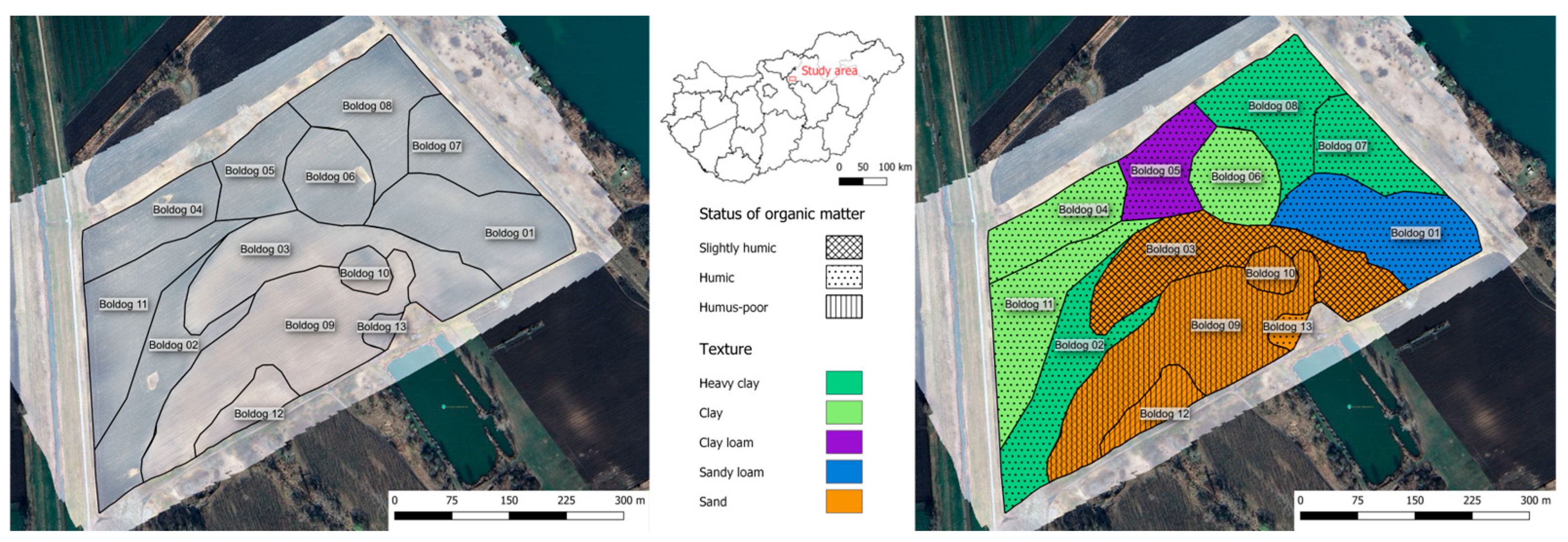
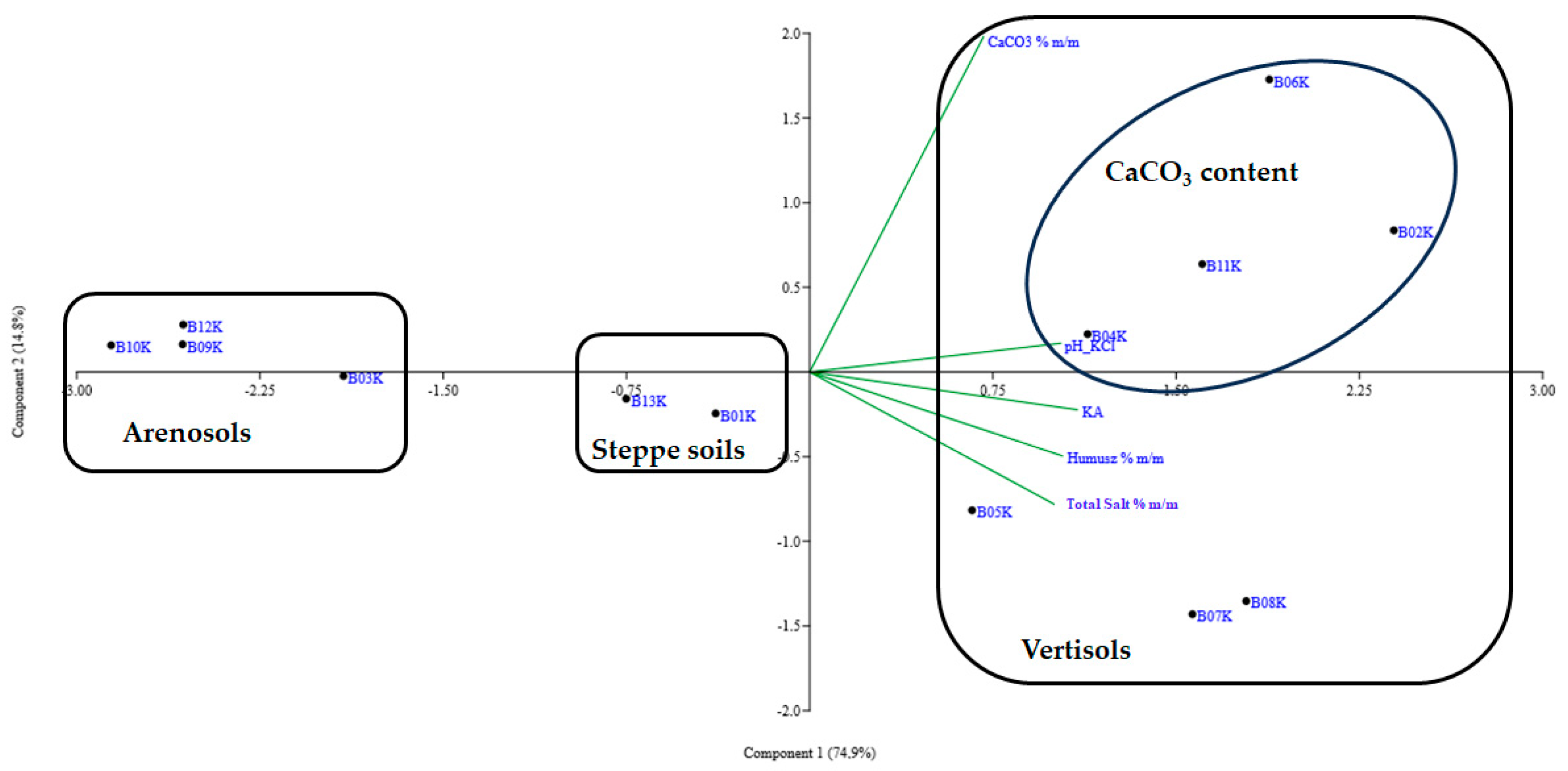
- Arenosols: Represented in four MZs—B03, B09, B10, and B12—characterized by sandy texture and poor profile development.
- Vertisols: Occurring in seven MZs—B02, B04, B06, B11, B05, B07, and B08—distinguished by high clay content, characterized with shrinking and swelling properties and vertic horizons.
- Steppe soils: Two MZs, B01K and B13K, were classified as Kastanozem and Phaeozem, respectively, based on the presence and depth of mollic horizons referring to the deep and organic carbon-rich surface horizons and secondary calcium carbonate accumulation (calcic horizon).
- Vertisols, characterized by high clay content and elevated SOM,
- Steppe soils (Kastanozem and Phaeozem), with intermediate texture and SOM,
- Arenosols, with sandy texture and low SOM content.
3.2. Bacterial Community Structure of the Soil Samples Taken from the MZs
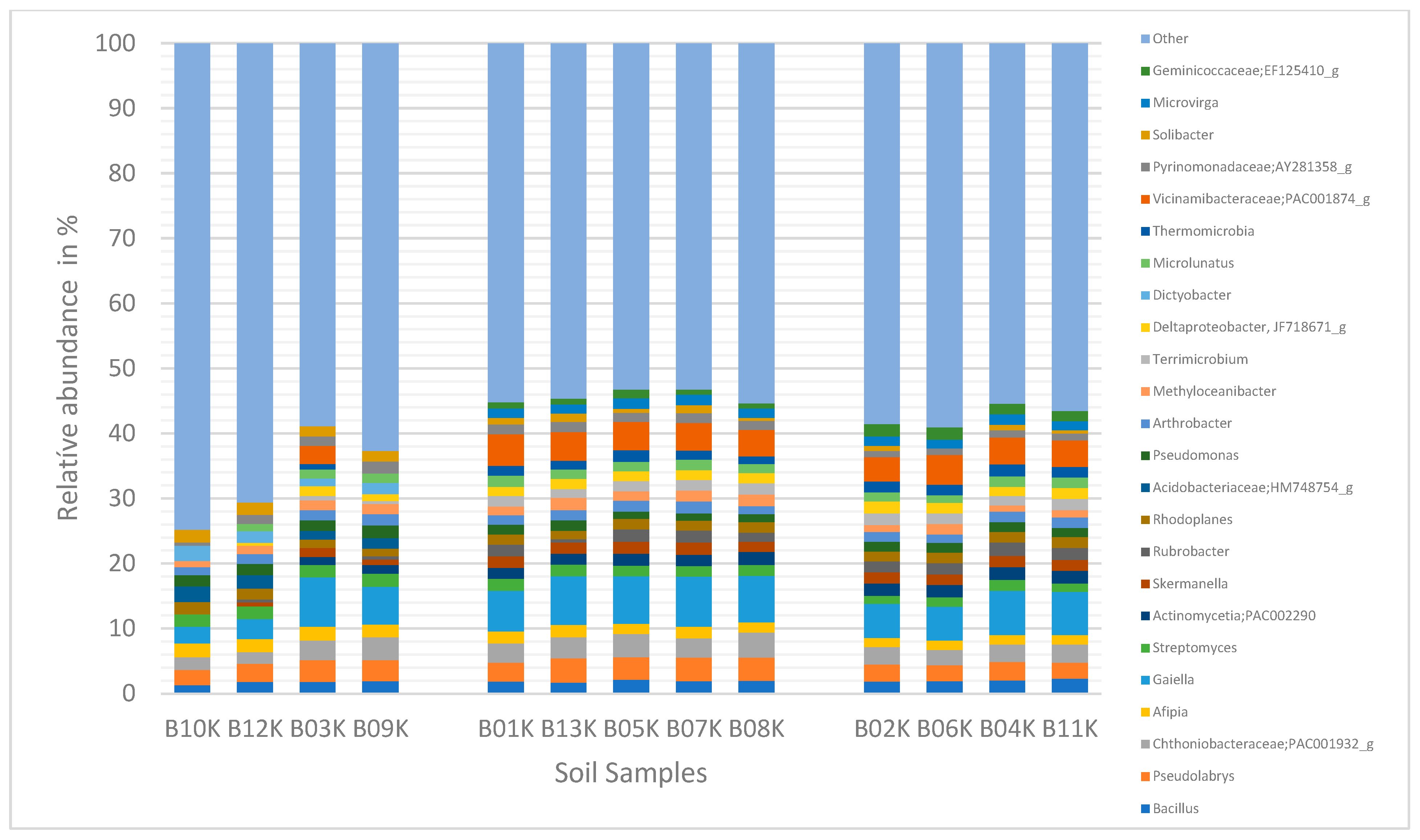
- Gaiella (2.5–7% relative abundance),
- Pseudolabrys (2.3–3.7%),
- PAC001932_g genus belonging to Chthoniobacteraceae family (1.7–3.8%).
3.3. Correlations Between Bacterial Groups and Soil Chemical Properties of the MZs
3.3.1. Cluster Analysis of Soil Microbial Communities Based on UPGMA Dendrogram
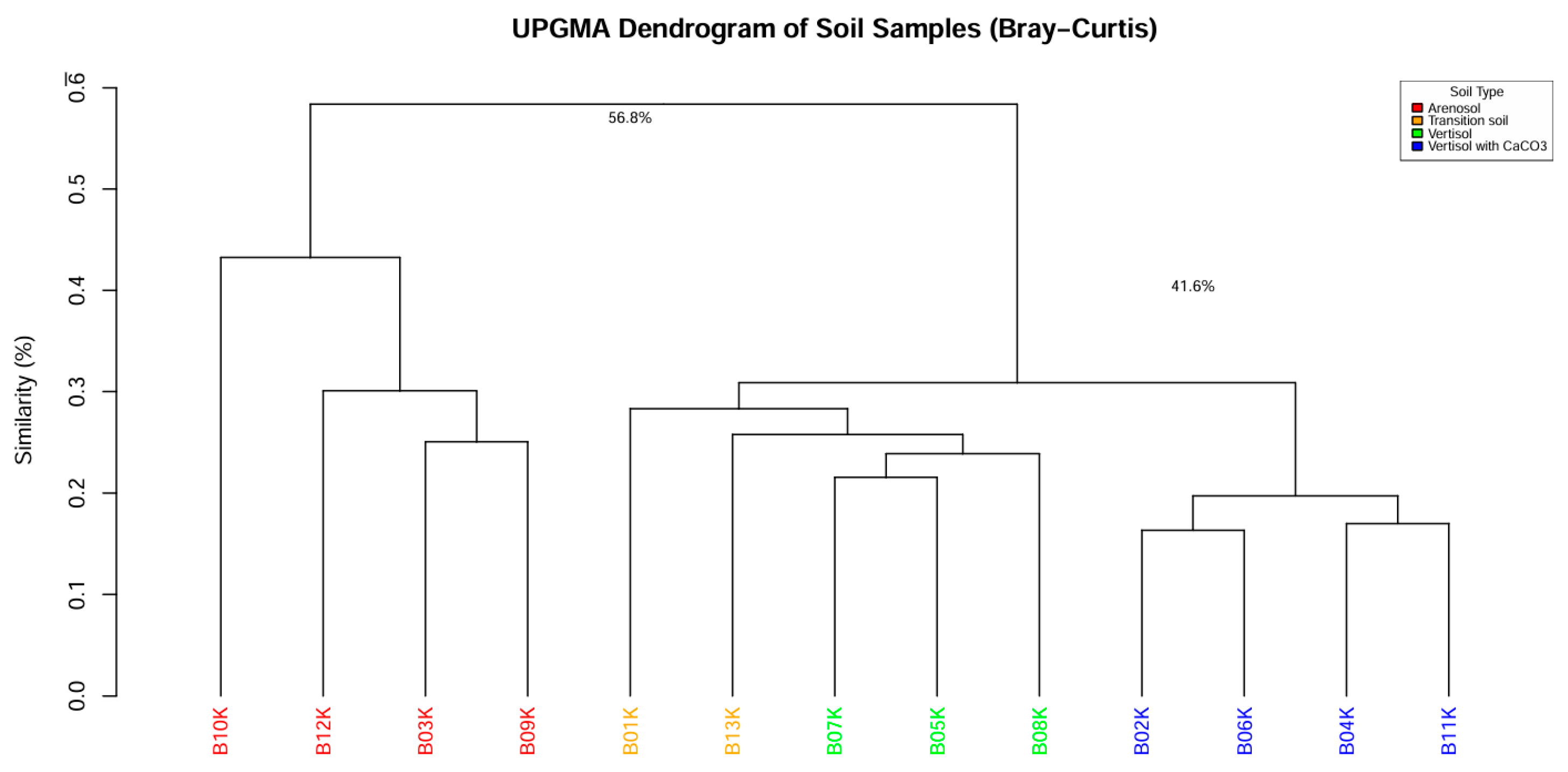
- Steppe soils (e.g., Kastanozem and Phaeozem),
- Vertisols with CaCO3 accumulation, and
- Vertisols without CaCO3 accumulation.
- Vertisols with CaCO3 accumulation,
- Vertisols without CaCO3, and
- Arenosols.
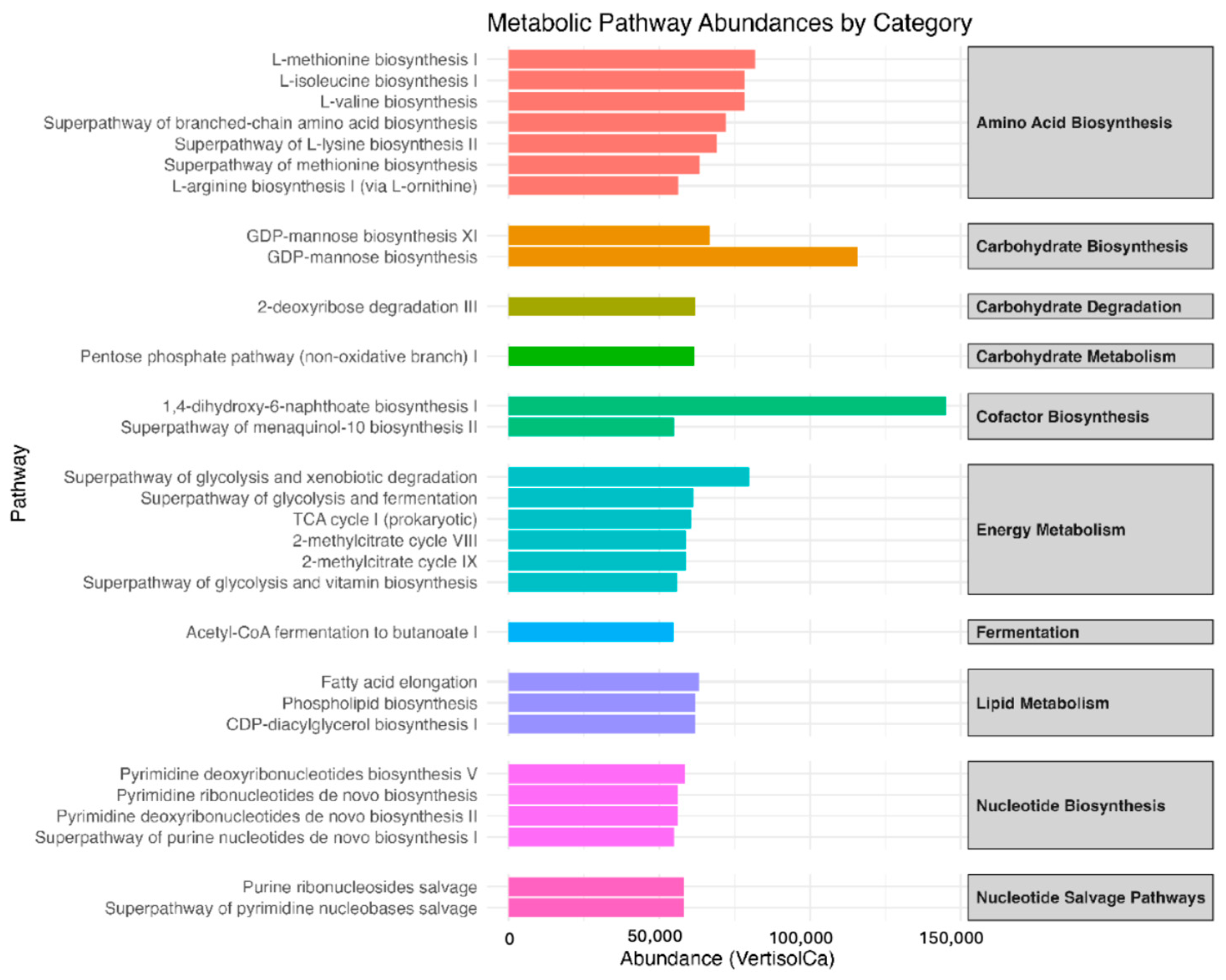
3.3.2. Comparison of the Enzymatic Pathways According to the Amplicon Results Evaluated by KEGG Orthology
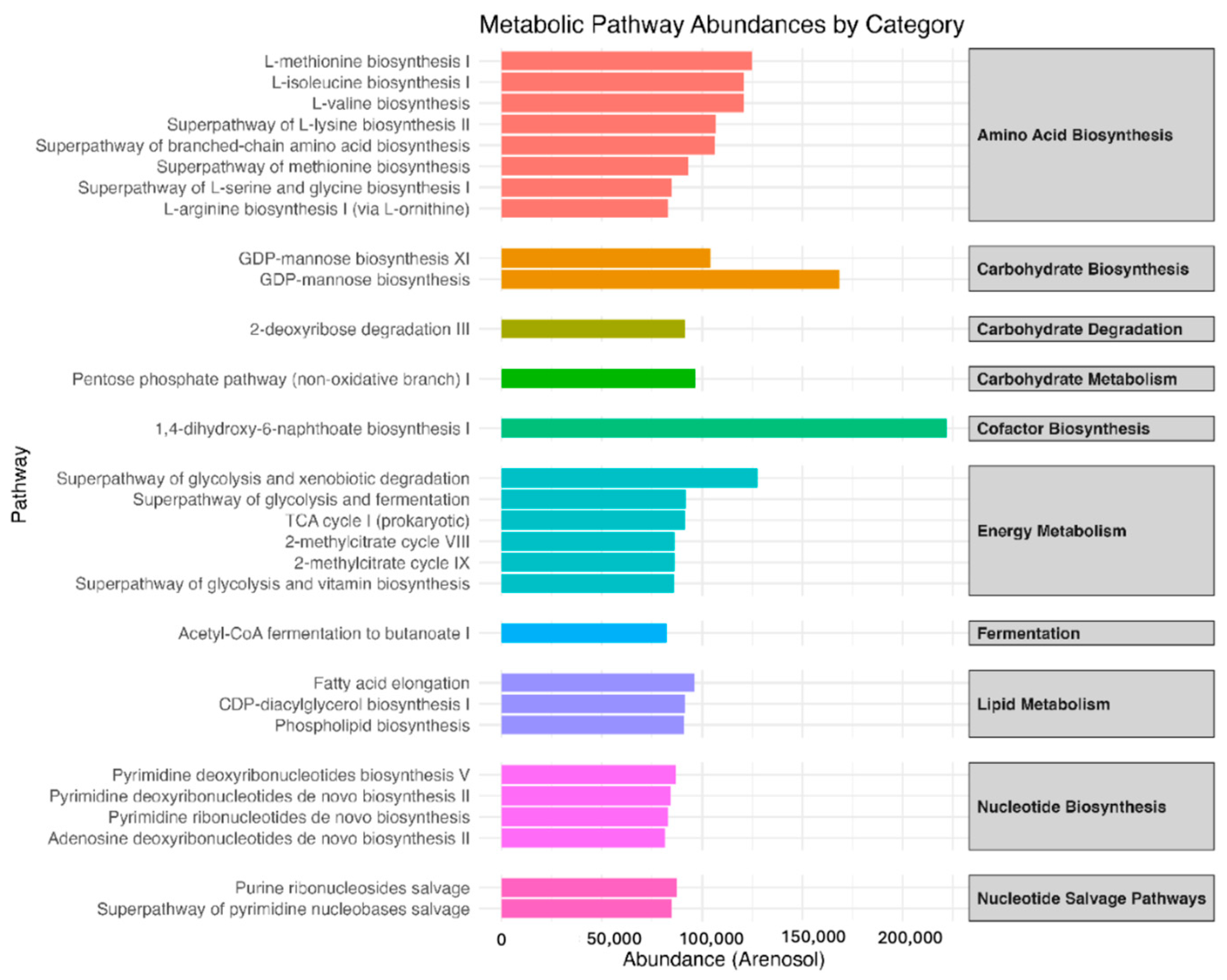
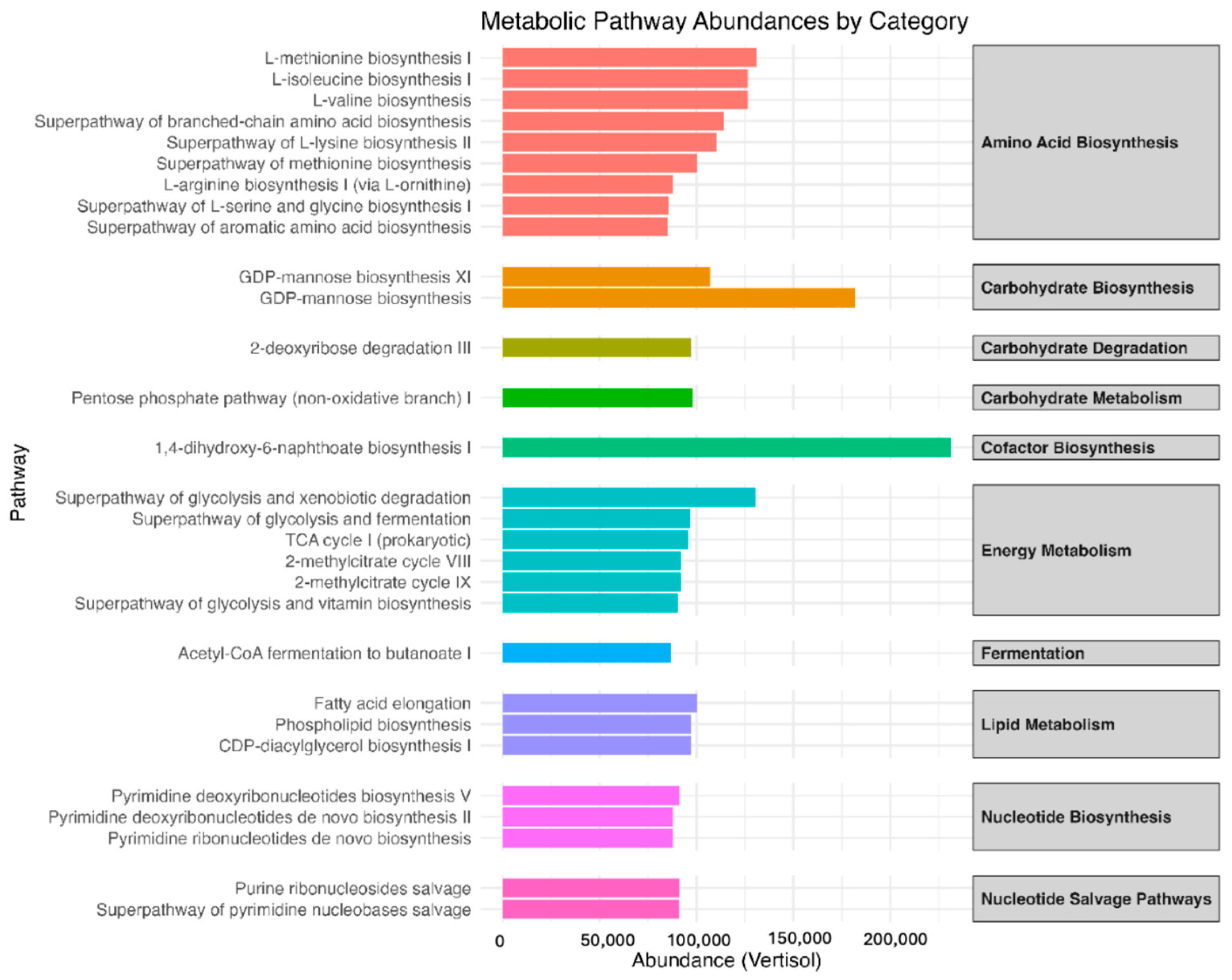
- Vertisol group (MZs B05, B07, B08),
- Vertisol with CaCO3 group (MZs B02, B04, B06, B11),
- Arenosol group (MZs B01, B03, B09, B10, B12, B13).
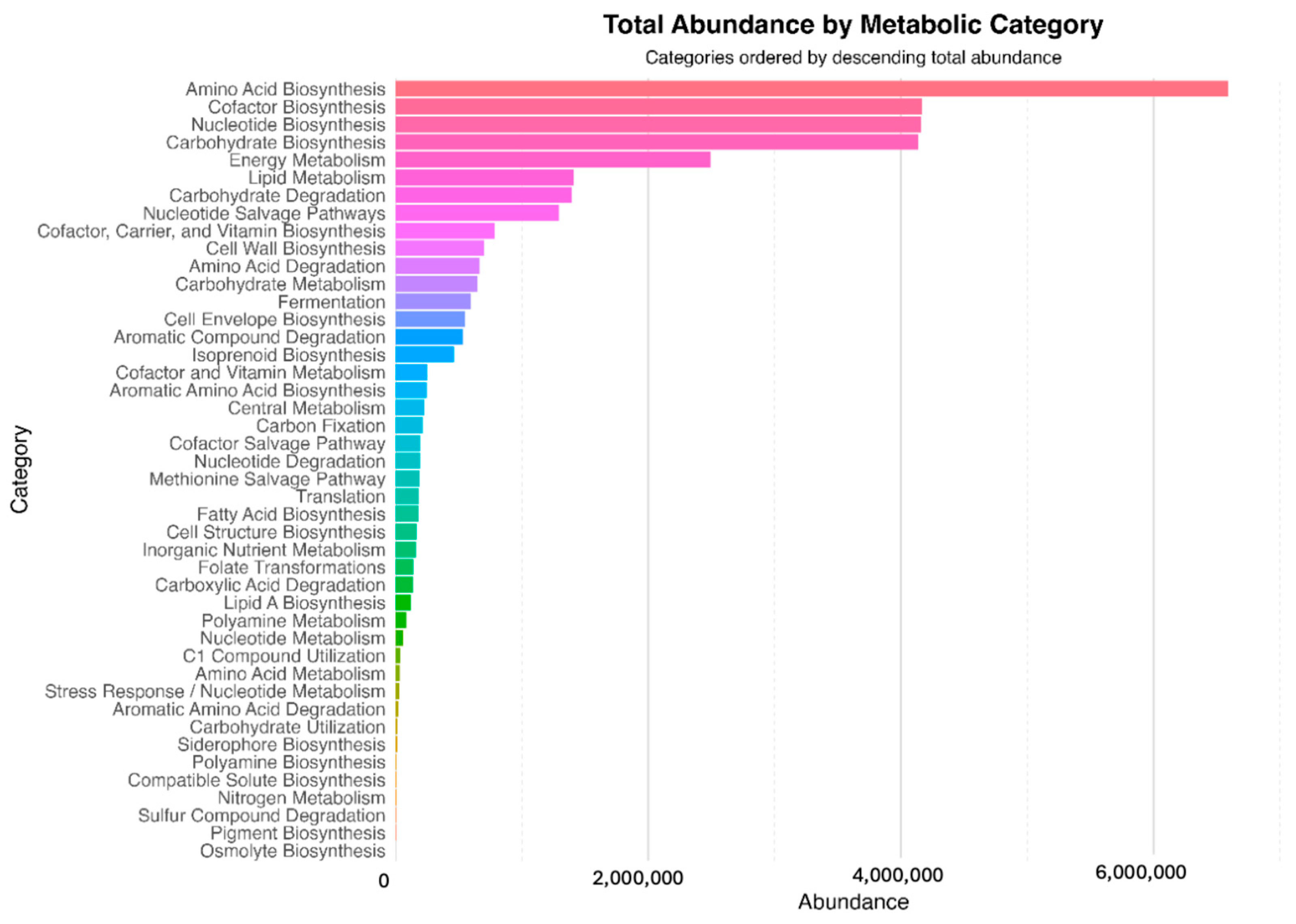
- Amino acid biosynthesis,
- Cofactor biosynthesis,
- Nucleotide biosynthesis, and
- Carbohydrate metabolism.
4. Discussion
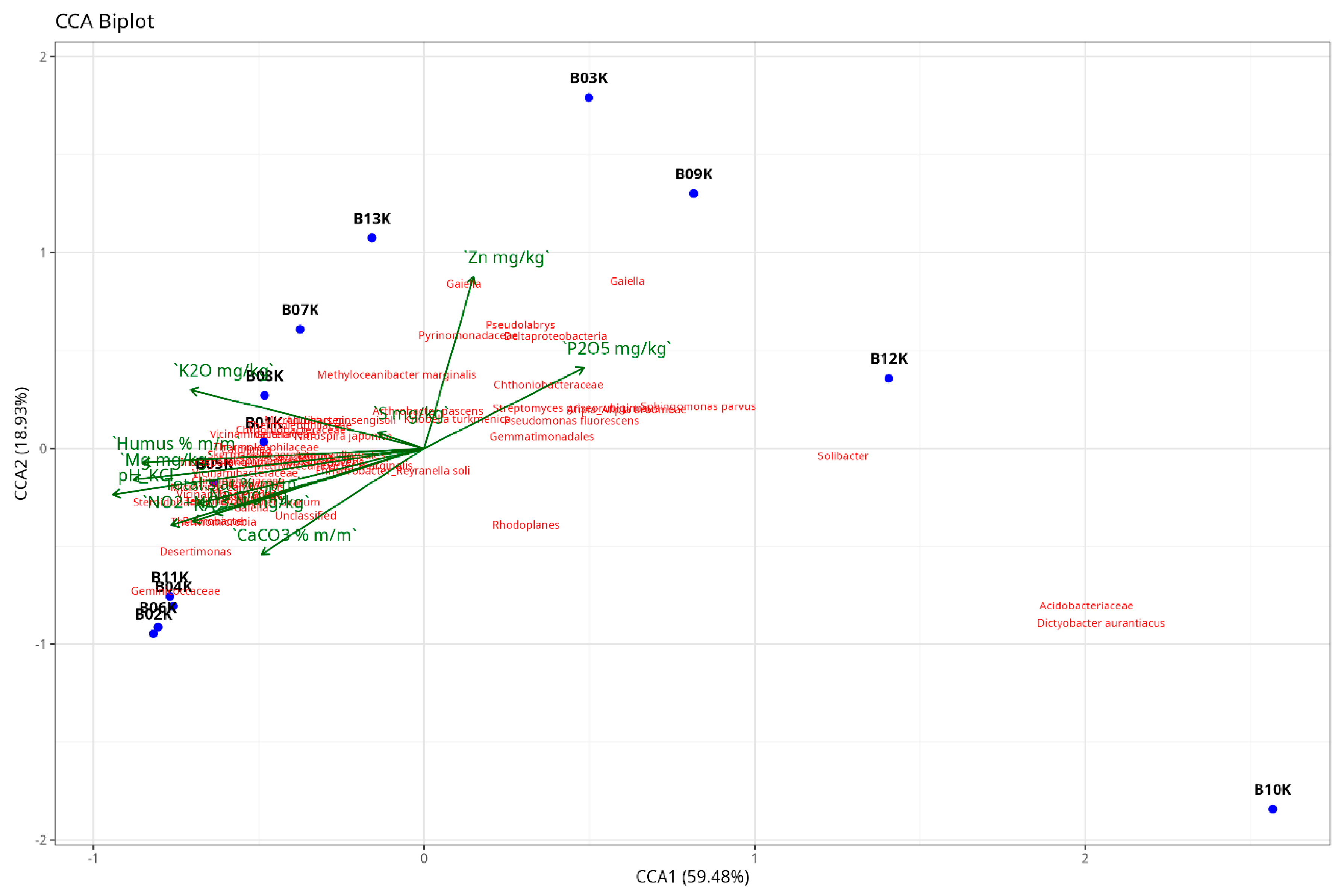
- Sandy soils (B03, B09, B10, B12) hosted unique genera such as HM748754_g belonging to Acidobacteria (OTU11), Dictyobacter (OTU17), Solibacter (OTU23), Sphingomonas (OTU41), and Gaiella (OTU43). This is supported by the study of Baćmaga et al., 2021 [34], where Arenosols were colonized in the highest numbers by Acidobacteriaceae. These taxa were either absent or occurred at <1% relative abundance in clay and steppe soils.
- Interestingly, different Gaiella-linked OTUs displayed divergent patterns: OTU36 and OTU46 were exclusive to clay soils, whereas OTU5 was detected across all MZs, regardless of soil texture.
- Clay soils (B04, B05, B06, B07, B08, B11) were characterized by the abundance of taxa such as Actinomycetia, Skermanella, Rubrobacter, Terrimicrobium, Thermomicrobia, PAC001874_g belonging to Vicinamibacteraceae, Microvirga, EF125410_g belonging to Geminicoccaceae, Desertimonas, and PAC001932_g belonging to Chitinophagaceae. These genera were largely absent in sandy soils but were present in steppe MZs (B01 and B13), which had intermediate textures and organic matter content.
5. Conclusions
Supplementary Materials
Author Contributions
Funding
Institutional Review Board Statement
Data Availability Statement
Acknowledgments
Conflicts of Interest
References
- Hobbs, P.R.; Sayre, K.; Gupta, R. The role of conservation agriculture in sustainable agriculture. Philos. Trans. R. Soc. B Biol. Sci. 2008, 363, 543–555. [Google Scholar] [CrossRef] [PubMed] [PubMed Central]
- Frattini, N.; Pulido Carrasquero, A.; Pronsato, L.; Milanesi, L.; Vasconsuelo, A. Effects of common fertilizers on the soil ecosystem. Bull. Natl. Res. Cent. 2023, 47, 78. [Google Scholar] [CrossRef]
- Sun, Y.; Tao, C.; Deng, X.; Liu, H.; Shen, Z.; Liu, Y.; Li, R.; Shen, Q.; Geisen, S. Organic fertilization enhances the resistance and resilience of soil microbial communities under extreme drought. J. Adv. Res. 2023, 47, 1–12. [Google Scholar] [CrossRef] [PubMed] [PubMed Central]
- Pacini, L.; Arbelet, P.; Chen, S.; Bacq-Labreuil, A.; Calvaruso, C.; Schneider, F.; Arrouays, D.; Saby, N.P.; Cécillon, L.; Barré, P. A new approach to estimate soil organic carbon content targets in European croplands topsoils. Sci. Total Environ. 2023, 900, 165811. [Google Scholar] [CrossRef]
- Bellamy, P.H.; Loveland, P.J.; Bradley, R.I.; Lark, R.M.; Kirk, G.J.D. Carbon losses from all soils across England and Wales 1978–2003. Nature 2005, 437, 245–248. [Google Scholar] [CrossRef]
- Goidts, E.; van Wesemael, B. Regional assessment of soil organic carbon changes under agriculture in Southern Belgium (1955–2005). Geoderma 2007, 141, 341–354. [Google Scholar] [CrossRef]
- Meersmans, J.; Van Wesemael, B.; De Ridder, F.; Dotti, M.F.; De Baets, S.; Van Olle, M. Changes in organic carbon distribution with depth in agricultural soils in northern Belgium, 1960–2006. Glob. Change Biol. 2009, 15, 2739–2750. [Google Scholar] [CrossRef]
- Šarapatka, B.; Bednář, M. Assessment of potential soil degradation on agricultural land in the Czech Republic. J. Environ. Qual. 2015, 44, 154–161. [Google Scholar] [CrossRef] [PubMed]
- Steinmann, T.; Welp, G.; Holbeck, B.; Amelung, W. Long-term development of organic carbon contents in arable soil of North Rhine-Westphalia, Germany, 1979–2015. Eur. J. Soil Sci. 2016, 67, 616–623. [Google Scholar] [CrossRef]
- Juřicová, A.; Chuman, T.; Žížala, D. Soil organic carbon content and stock change after half a century of intensive cultivation in a chernozem area. Catena 2022, 211, 105950. [Google Scholar] [CrossRef]
- Wang, F.; Liang, Y.; Jiang, Y.; Yang, Y.; Xue, K.; Xiong, J.; Zhou, J.; Sun, B. Planting increases the abundance and structure complexity of soil core functional genes relevant to carbon and nitrogen cycling. Sci. Rep. 2015, 5, 14345. [Google Scholar] [CrossRef]
- Fisk, L.M.; Murphy, D.V. Ammonia-oxidising bacteria not archaea dominate nitrifcation activity in semi-arid agricultural soil. Sci. Rep. 2015, 5, 11146. [Google Scholar]
- Maleki, S.; Karimi, A.; Mousavi, A.; Kerry, R.; Taghizadeh-Mehrjardi, R. Delineation of Soil Management Zone Maps at the Regional Scale Using Machine Learning. Agronomy 2023, 13, 445. [Google Scholar] [CrossRef]
- Veerman, C.; Correia, T.P.; Bastioli, C.; Biro, B.; Bouma, J.; Cienciala, E.; Emmett, B.; Frison, A.E.; Grand, A.; Filchew, L.H.; et al. Caring for Soil is Caring for Life—Ensure 75% of Soils are Healthy by 2030 for Food, People, Nature and Climate; European Commission: Brussels, Belgium, 2020. [Google Scholar]
- Faoro, H.; Alves, A.C.; Souza, E.M.; Rigo, L.U.; Cruz, L.M.; Al-Janabi, S.M.; Monteiro, R.A.; Baura, V.A.; Pedrosa, F.O. Influence of soil characteristics on the diversity of bacteria in the Southern Brazilian Atlantic Forest. Appl. Environ. Microbiol. 2010, 76, 4744–4749. [Google Scholar] [CrossRef]
- Lauber, C.L.; Strickland, M.S.; Bradford, M.A.; Fierer, N. The influence of soil properties on the structure of bacterial and fungal communities across land-use types. Soil Biol. Biochem. 2008, 40, 2407–2415. [Google Scholar] [CrossRef]
- Rousk, J.; Bååth, E.; Brookes, P.C.; Lauber, C.L.; Lozupone, C.; Caporaso, J.G.; Knight, R.; Fierer, N. Soil bacterial and fungal communities across a pH gradient in an arable soil. ISME J. 2010, 4, 1340–1351. [Google Scholar] [CrossRef]
- Luo, X.; Fu, X.; Yang, Y.; Cai, P.; Peng, S.; Chen, W.; Huang, Q. Microbial communities play important roles in modulating paddy soil fertility. Sci. Rep. 2016, 6, 1–12. [Google Scholar] [CrossRef] [PubMed]
- Suman, J.; Rakshit, A.; Ogireddy, S.D.; Singh, S.; Gupta, C.; Chandrakala, J. Microbiome as a Key Player in Sustainable Agriculture and Human Health. Front. Soil Sci. 2022, 2, 821589. [Google Scholar] [CrossRef]
- Huang, T.; Gao, B.; Hu, X.K.; Lu, X.; Well, R.; Christie, P.; Bakken, L.R.; Ju, X.T. Ammonia-oxidation as an engine to generate nitrous oxide in an intensively managed calcareous Fluvo-aquic soil. Sci. Rep. 2014, 4, 3950. [Google Scholar] [CrossRef] [PubMed]
- FAO (Food and Agricultural Organization). Guidelines for Soil Description, 4th ed.; Food and Agriculture Organization of the United Nations Scientific Research Publishing: Rome, Italy, 2006; 97p, ISBN 92-5-105521-1. [Google Scholar]
- Reeuwijk, L.P. Procedures for Soil Analysis; ISRIC—World Soil Information: Wageningen, The Netherlands, 2002; ISBN 90-6672-044-1. [Google Scholar]
- IUSS Working Group. World Reference Base for Soil Resources (WRB, 3rd Edition): International Soil Classification System for Naming Soils and Creating Legends for Soil Maps; World Soil Resources Report No. 106; FAO: Rome, Italy, 2014; 191p. [Google Scholar]
- Klindworth, A.; Pruesse, E.; Schweer, T.; Peplies, J.; Quast, C.; Horn, M.; Glöckner, F.O. Evaluation of general 16S ribosomal RNA gene PCR primers for classical and next-generation sequencing-based diversity studies. Nucleic Acids Res. 2013, 41, e1. [Google Scholar] [CrossRef]
- Tindall, B.J.; Rosselló-Móra, R.; Busse, H.-J.; Ludwig, W.; Kämpfer, P. Notes on the characterization of prokaryote strains for taxonomic purposes. Int. J. Syst. Evol. Microbiol. 2010, 60, 249–266. [Google Scholar] [CrossRef] [PubMed]
- Douglas, G.M.; Maffei, V.J.; Zaneveld, J.R.; Yurgel, S.N.; Brown, J.R.; Taylor, C.M.; Huttenhower, C.; Langille, M.G.I. PICRUSt2 for prediction of metagenome functions. Nat. Biotechnol. 2020, 38, 685–688. [Google Scholar] [CrossRef] [PubMed]
- Kuramae, E.E.; Yergeau, E.; Wong, L.C.; Pijl, A.S.; Van Veen, J.A.; Kowalchuk, G.A. Soil characteristics more strongly influence soil bacterial communities than land-use type. FEMS Microbiol. Ecol. 2012, 79, 12–24. [Google Scholar] [CrossRef]
- Coller, E.; Cestaro, A.; Zanzotti, R.; Bertoldi, D.; Pindo, M.; Larger, S.; Albanese, D.; Mescalchin, E.; Donati, C. Microbiome of vineyard soils is shaped by geography and management. Microbiome 2019, 7, 140. [Google Scholar] [CrossRef]
- Shao, M.; Zhang, S.; Niu, B.; Pei, Y.; Song, S.; Lei, T.; Yun, H. Soil texture influences soil bacterial biomass in the permafrost-affected alpine desert of the Tibetan plateau. Front. Microbiol. 2022, 13, 1007194. [Google Scholar] [CrossRef]
- She, R.; Yu, Y.; Ge, C.; Yao, H. Soil Texture Alters the Impact of Salinity on Carbon Mineralization. Agronomy 2021, 11, 128. [Google Scholar] [CrossRef]
- Gangwar, R.K.; Makádi, M.; Demeter, I.; Táncsics, A.; Cserháti, M.; Várbíró, G.; Singh, J.; Csorba, Á.; Fuchs, M.; Michéli, E.; et al. Comparing Soil Chemical and Biological Properties of Salt Affected Soils under Different Land Use Practices in Hungary and India. Eurasian Soil Sci. 2021, 54, 1007–1018. [Google Scholar] [CrossRef]
- Gangwar, R.K.; Makádi, M.; Bresilla, B.; Zain, M.; Weldmichael, T.G.; Demeter, I.; Táncsics, A.; Cserháti, M.; Szegi, T.A. Effects of land uses and soil types on microbial activity and community structure. Int. Agrophys. 2022, 36, 323–336. [Google Scholar] [CrossRef]
- Gangwar, R.K.; Táncsics, A.; Makádi, M.; Farkas, M.; Cserháti, M.; Michéli, E.; Fuchs, M.; Szegi, T. Bacterial community composition of Hungarian salt-affected soils under different land uses. Biol. Futur. 2024, 75, 339–350. [Google Scholar] [CrossRef]
- Baćmaga, M.; Wyszkowska, J.; Borowik, A.; Kucharski, J.; Paprocki, Ł. Microbiological and Biochemical Properties in Eutric/Dystric Brunic Arenosols, Eutric/Endocalcaric Cambisols, and Haplic/Albic Luvisols Soils. J. Soil Sci. Plant Nutr. 2021, 21, 1277–1292. [Google Scholar] [CrossRef]
- Chung, E.J.; Park, T.S.; Jeon, C.O.; Chung, Y.R. Chitinophaga oryziterrae sp. nov., isolated from the rhizosphere soil of rice (Oryza sativa L.). Int. J. Syst. Evol. Microbiol. 2012, 62, 3030–3035. [Google Scholar] [CrossRef]
- Carrión, V.J.; Perez-Jaramillo, J.; Cordovez, V.; Tracanna, V.; De Hollander, M.; Ruiz-Buck, D.; Mendes, L.W.; van Ijcken, W.F.; Gomez-Exposito, R.; Elsayed, S.S.; et al. Pathogen-induced activation of disease-suppressive functions in the endophytic root microbiome. Science 2019, 366, 606–612. [Google Scholar] [CrossRef]
- Ardley, J.K.; Parker, M.A.; De Meyer, S.E.; Trengove, R.D.; O’Hara, G.W.; Reeve, W.G.; Yates, R.J.; Dilworth, M.J.; Willems, A.; Howieson, J.G. Microvirga lupini sp. nov., Microvirga lotononidis sp. nov. and Microvirga zambiensis sp. nov. are alphaproteobacterial root-nodule bacteria that specifically nodulate and fix nitrogen with geographically and taxonomically separate legume hosts. Int. J. Syst. Evol. Microbiol. 2012, 62, 2579–2588. [Google Scholar] [CrossRef]
- Fierer, N.; Leff, J.W.; Adams, B.J.; Nielsen, U.N.; Bates, S.T.; Lauber, C.L.; Owens, S.; Gilbert, J.A.; Wall, D.H.; Caporaso, J.G. Cross-biome metagenomic analyses of soil microbial communities and their functional attributes. Proc. Natl. Acad. Sci. USA 2012, 109, 21390–21395. [Google Scholar]
- Högberg, M.N.; Högberg, P.; Myrold, D.D. Is microbial community composition in boreal forest soils determined by pH, C-to-N ratio, the trees, or all three? Oecologia 2007, 150, 590–599. [Google Scholar]
- Dimitriu, P.A.; Grayston, S.J. Relationship between soil properties and patterns of bacterial b-diversity across reclaimed and natural boreal forest soils. Microb. Ecol. 2010, 59, 563–573. [Google Scholar] [PubMed]
- Lauber, C.L.; Hamady, M.; Knight, R.; Fierer, N. Pyrosequencing-based assessment of soil pH as a predictor of soil bacterial community structure at the continental scale. Appl. Environ. Microbiol. 2009, 75, 5111–5120. [Google Scholar]
- Wang, R.; Zhang, H.; Sun, L.; Qi, G.; Chen, S.; Zhao, X. Microbial community composition is related to soil biological and chemical properties and bacterial wilt outbreak. Sci. Rep. 2017, 7, 343. [Google Scholar] [CrossRef] [PubMed]
- Chen, D.; Liu, X.; Li, C.; Tian, W.; Shen, Q.; Shen, B. Isolation of Bacillus amyloliquefaciens S20 and its application in control of eggplant bacterial wilt. J. Environ. Manag. 2014, 137, 120–127. [Google Scholar] [CrossRef] [PubMed]
- Hu, H.Q.; Li, X.S.; He, H. Characterization of an antimicrobial material from a newly isolated Bacillus amyloliquefaciens from mangrove for biocontrol of capsicum bacterial wilt. Biol. Control 2010, 54, 359–365. [Google Scholar] [CrossRef]
- Tan, S.; Jiang, Y.; Song, S.; Huang, J.; Ling, N.; Xu, Y.; Shen, Q. Two Bacillus amyloliquefaciens strains isolated using the competitive tomato root enrichment method and their effects on suppressing Ralstonia solanacearum and promoting tomato plant growth. Crop Prot. 2013, 43, 134–140. [Google Scholar] [CrossRef]
- Breitkreuz, C.; Heintz-Buschart, A.; Buscot, F.; Wahdan, S.F.M.; Tarkka, M.; Reitz, T. Can we estimate functionality of soil microbial communities from structure-derived predictions? A reality test in agricultural soils. Microbiol. Spectr. 2021, 9, 10–1128. [Google Scholar] [CrossRef] [PubMed]
- Chen, H.; Ma, K.; Lu, C.; Fu, Q.; Qiu, Y.; Zhao, J.; Huang, Y.; Yang, Y.; Schadt, C.W.; Chen, H. Functional redundancy in soil microbial community based on metagenomics across the globe. Front. Microbiol. 2022, 13, 878978. [Google Scholar] [CrossRef] [PubMed]



| Name of the Zone | Elevation (m) | Simplified RSG | Size [ha] |
|---|---|---|---|
| B01 | 113 | Gleyic Kastanozem (Loamic, Aric) “Steppe Soil” | 2.32 |
| B02 | 111 | Calcic Pellic Vertisol (Aric, Mollic, Gleyic) | 1.85 |
| B03 | 114 | Eutric Arenosol (Aric, Humic) | 2.7 |
| B04 | 112 | Pellic Vertisol (Aric, Mollic, Gleyic) | 1.34 |
| B05 | 112 | Calcic Pellic Vertisol (Aric, Mollic, Gleyic) | 1.17 |
| B06 | 112 | Calcic Pellic Vertisol (Aric, Mollic, Gleyic) | 1.2 |
| B07 | 110 | Haplic Vertisol (Aric, Mollic, Gleyic) | 1.2 |
| B08 | 110 | Calcic, Pellic Vertisol (Aric, Mollic, Gleyic) | 1.84 |
| B09 | 115 | Eutric Arenosol (Aric) | 3.65 |
| B10 | 113 | Gleyic Eutric Arenosol (Aric) | 0.33 |
| B11 | 110 | Calcic Pellic Vertisol (Aric, Mollic, Gleyic) | 1.92 |
| B12 | 117 | Eutric Arenosol (Aric) | 0.59 |
| B13 | 114 | Calcaric Phaeozem (Arenic, Aric, Novic) “Steppe Soil” | 0.17 |
| Sample | Texture (KA) | SOM % m/m | pH KCl | Total Salt % m/m | CaCO3% m/m | NO2 + NO3-N | Mg | S | P2O5 | K2O | Na | Zn | Cu | Mn |
|---|---|---|---|---|---|---|---|---|---|---|---|---|---|---|
| mg kg−1 | ||||||||||||||
| B01K | sandy loam | 1.71 | 6.63 | 0.04 | 0 | 5.6 | 564 | 2.5 | 71.6 | 196 | 21 | 1.16 | 3.62 | 310 |
| B02K | heavy clay | 2.76 | 6.78 | 0.09 | 1.6 | 9.35 | 926 | 2.5 | 122 | 321 | 40.4 | 1.07 | 4.07 | 135 |
| B03K | sand | 1.56 | 5.44 | 0.02 | 0 | 4.25 | 200 | 2.5 | 324 | 215 | 12.8 | 3.17 | 2.19 | 233 |
| B04K | clay | 2.1 | 6.7 | 0.07 | 0.6 | 10.4 | 575 | 2.5 | 93.5 | 230 | 27.9 | 1.53 | 4.24 | 301 |
| B05K | loamy clay | 1.89 | 6.52 | 0.08 | 0 | 7.76 | 819 | 2.5 | 70.5 | 250 | 24.3 | 1.17 | 5.98 | 319 |
| B06K | clay | 2.14 | 6.87 | 0.07 | 2.3 | 6.47 | 738 | 2.5 | 172 | 286 | 35.2 | 0.8 | 2.52 | 61.1 |
| B07K | heavy clay | 2.79 | 6.14 | 0.11 | 0 | 11.7 | 1295 | 2.5 | 124 | 464 | 53.6 | 2.26 | 7.94 | 180 |
| B08K | heavy clay | 2.65 | 6.62 | 0.11 | 0 | 10.1 | 1260 | 3.59 | 88.4 | 354 | 77.4 | 1.72 | 7.16 | 217 |
| B09K | sand | 0.85 | 5.06 | 0.02 | 0 | 1.54 | 117 | 2.5 | 160 | 210 | 12.6 | 1.98 | 3.13 | 136 |
| B10K | sand | 0.84 | 4.81 | 0.02 | 0 | 3.77 | 68.7 | 2.5 | 179 | 122 | 17 | 0.99 | 2.32 | 116 |
| B11K | clay | 2.2 | 6.81 | 0.07 | 1 | 7.51 | 651 | 2.5 | 103 | 265 | 35.6 | 0.88 | 3.61 | 258 |
| B12K | sand | 0.69 | 5.35 | 0.02 | 0 | 2.67 | 96.2 | 2.5 | 183 | 184 | 8.26 | 1.6 | 10.3 | 131 |
| B13K | sand | 2.28 | 6.37 | 0.02 | 0 | 3.88 | 191 | 2.5 | 290 | 393 | 14.4 | 2.32 | 5.27 | 206 |
Disclaimer/Publisher’s Note: The statements, opinions and data contained in all publications are solely those of the individual author(s) and contributor(s) and not of MDPI and/or the editor(s). MDPI and/or the editor(s) disclaim responsibility for any injury to people or property resulting from any ideas, methods, instructions or products referred to in the content. |
© 2026 by the authors. Licensee MDPI, Basel, Switzerland. This article is an open access article distributed under the terms and conditions of the Creative Commons Attribution (CC BY) license.
Share and Cite
Cserháti, M.; Márton, D.; Csorba, Á.; Farkas, M.; Almalkawi, N.; Hegyi, Á.; Kriszt, B.; Szegi, T. Connection Between the Microbial Community and the Management Zones Used in Precision Agriculture Cultivation. Agriculture 2026, 16, 156. https://doi.org/10.3390/agriculture16020156
Cserháti M, Márton D, Csorba Á, Farkas M, Almalkawi N, Hegyi Á, Kriszt B, Szegi T. Connection Between the Microbial Community and the Management Zones Used in Precision Agriculture Cultivation. Agriculture. 2026; 16(2):156. https://doi.org/10.3390/agriculture16020156
Chicago/Turabian StyleCserháti, Mátyás, Dalma Márton, Ádám Csorba, Milán Farkas, Neveen Almalkawi, Ádám Hegyi, Balázs Kriszt, and Tamás Szegi. 2026. "Connection Between the Microbial Community and the Management Zones Used in Precision Agriculture Cultivation" Agriculture 16, no. 2: 156. https://doi.org/10.3390/agriculture16020156
APA StyleCserháti, M., Márton, D., Csorba, Á., Farkas, M., Almalkawi, N., Hegyi, Á., Kriszt, B., & Szegi, T. (2026). Connection Between the Microbial Community and the Management Zones Used in Precision Agriculture Cultivation. Agriculture, 16(2), 156. https://doi.org/10.3390/agriculture16020156