Article

Impact of Meteorological Conditions on the Bird Cherry–Oat Aphid (Rhopalosiphum padi L.) Flights Recorded by Johnson Suction Traps


1
Department of Monitoring and Signaling of Agrophages, Institute of Plant Protection-National Research Institute, Władysława Węgorka 20, 60-318 Poznań, Poland
2
Department of Mathematical and Statistical Methods, Poznań University of Life Sciences, Wojska Polskiego 28, 60-637 Poznań, Poland
*
Author to whom correspondence should be addressed.
Agriculture 2026, 16(2), 152; https://doi.org/10.3390/agriculture16020152
Submission received: 29 October 2025 / Revised: 27 December 2025 / Accepted: 5 January 2026 / Published: 7 January 2026

Abstract

Due to its abundance, bird cherry–oat aphid is the most important vector in Poland of the complex of viruses causing barley yellow dwarf virus (BYDV). These viruses infect all cereals. During the growing season, cereal plants are exposed to many species of agrophages, which can limit their growth, development and yield. As observed for many years, global warming contributes to changes in the development of many organisms. Aphids (Aphidoidea), which are among the most important pests of agricultural crops, respond very dynamically to these changes. Under favorable conditions, their populations can increase several-fold within a few days. The bird cherry–oat aphid (Rhopalosiphum padi L.) is a dioecious species that undergoes a seasonal host shift during its life cycle. Its primary hosts are trees and shrubs (Prunus padus L.), while secondary hosts include cereals and various grass species. R. padi feeds directly on bird cherry tree, reducing its ornamental value, and on cereals, where it contributes to yields losses. The species can also damage plants indirectly by transmitting harmful viruses. Indirect damage is generally more serious than direct feeding injury. Monitoring aphid flights with a Johnson suction trap (JST) is useful for plant protection, which enables early detection of their presence in the air and then on cereal crops. To provide early detection of R. padi migrations and to study the dynamics of abundance, flights were monitored in 2020–2024 with Johnson suction traps at two localities: Winna Góra (Greater Poland Province) and Sośnicowice (Silesia Province). The aim of the research conducted in 2020–2024 was to study the dynamics of the bird cherry–oat aphid (Rhopalosiphum padi L.) population in relation to meteorological conditions as recorded by a Johnson suction trap. Over five years of research, a total of 129,638 R. padi individuals were captured using a Johnson suction trap at two locations (60,426 in Winna Góra and 69,212 in Sośnicowice). In Winna Góra, the annual counts were as follows: 5766 in 2020, 6498 in 2021, 36,452 in 2022, 5598 in 2023, and 6112 in 2024. In Sośnicowice, the numbers were as follows: 6954 in 2020, 9159 in 2021, 49,120 in 2022, 3855 in 2023, and 124 in 2024. The year 2022 was particularly notable for the exceptionally high abundance of R. padi, especially in the autumn. Monitoring crops for the presence of pests is the basis of integrated plant protection. Climate change, modern cultivation technologies, and increasing restrictions on chemical control are the main factors contributing to the development and spread of aphids. Therefore, measures based on monitoring the level of threat and searching for control solutions are necessary.

1. Introduction

During the growing season, cereals are exposed to many pests, including pathogenic microorganisms, weeds, and numerous insects, which limit their growth, development, and yield [1]. Global warming contributes to changes in the development of all living organisms, with aphids responding particularly rapidly and strongly [2,3,4,5,6,7,8]. Along with leafhoppers, cereal aphids are considered among the most important pests of cereal [9,10,11,12,13]. These insects damage host plants directly by sucking sap, or indirectly by transmitting harmful plant viruses [8,14,15,16,17,18]. Viruses are transmitted by aphids throughout their life cycle, but autumn infections are the most dangerous. Primary infections, initiated by the first colonizing aphids, are especially dangerous due to their longer incubation period [19].
Rhopalosiphum padi L., commonly known as the bird cherry–oat aphid, is a species with a global distribution, found in almost all climatic zones except the coldest regions. It is considered one of the most significant pests of cereal crops, particularly wheat, and serves as an important vector for numerous plant viruses, including Barley yellow dwarf virus. Its broad environmental adaptability and ability to migrate over long distances make it a major concern for cereal production worldwide. Because of their typically large populations, Rhopalosiphum padi L. is the most important vector in the Poland virus complex, causing barley yellow dwarf disease [20]. This disease affects all cereals as well as grasses [21,22,23,24,25]. Warm and moderately humid summers favor the development of these insect colonies. Under such conditions, their numbers can increase several dozen times within just a few days [26]. Temperature plays a key role in insect development, especially for aphids, as it directly affects both the pest and its host plant, determining the rate of metabolic processes [27]. Their evolutionary adaptation involving rapid responses to temperature changes is mainly related to their short generational development time and small body size. High temperatures, particularly during droughts, cause excessive water loss through evaporation, which may lead to population decline [28]. Low spring temperatures inhibit aphid development and migration activity. Nevertheless, once crops are colonized and temperatures rise, reproduction increases rapidly. It has also been shown that high temperatures combined with low or no rainfall clearly stimulate an earlier onset of spring aphid migration, leading to the colonization of young, highly hydrated plant tissues [29,30]. The dispersal of aphids and the colonization of new areas by cyclically occurring winged morphs capable of long-distance flight have been studied for many years using Johnson suction traps. Captured aphids are valuable for predetermining their appearance and signaling. They indicate precisely which species appear and when and in what intensity 2–3 days before they colonize agricultural crops, which is crucial for integrated plant protection [31]. Accuracy in determining the optimal time for aphid control reduces the need for chemical treatments, which is the main goal of integrated protection.
The aim of the research conducted in 2020–2024 was to study the dynamics of the bird cherry–oat aphid (Rhopalosiphum padi L.) population in relation to meteorological conditions as recorded by a Johnson suction trap.
Based on the specific objective, the following hypothesis was established: higher mean temperatures and lower rainfall advance spring migration and increase the autumn abundance of R. padi.

2. Materials and Methods

2.1. Aphid Sampling

The research was conducted between 2020 and 2024 using two Johnson suction traps [32,33] placed on the premises of the Experimental Station of the Institute of Plant Protection—National Research Institute (IPP-NRI) in Winna Góra (Wielkopolska Province, Środa Wielkopolska County, coordinates: latitude 52.20548, longitude 17.44712) and on the premises of the IPP—NRI Branch in Sośnicowice (10 km from Gliwice, Silesian Province, Gliwice County, coordinates: latitude 50.27099, longitude 18.54144). The area surrounding Winna Góra consists of farmland, primarily cultivated with winter wheat, winter barley, winter rapeseed, and sugar beet, along with forested areas and small towns. The surrounding landscape in Sośnicowice is similar, although this region also includes water reservoirs. Regional and environmental differences may influence local microclimatic conditions and emergence dates and the abundance of R. padi. JST is inspected and cleaned before each season to ensure proper functioning and reliability. The JST operated daily from late April/early May to late October, running continuously between 6:00 a.m. and 10:00 p.m. to collect airborne insects. All insects accumulated during each day were taken from the trap. Samples were taken daily at a fixed time (12:00 p.m.) and then sorted, counted, and identified based on available keys and catalogs. R. padi can be identified by its olive-green body color with distinctive rusty discoloration around the bases of the cornicles. The cornicles are relatively long, slightly swollen at the tip. The cauda is short, pigmented and rounded. Antennae are dark and shorter than body and the terminal process is notably shorter than in related species, which serves as an important diagnostic feature. Winged forms display darker abdominal spots and transparent wings with a well-defined medial vein [34,35,36,37,38]. The material was preserved in 70% propanol. Although samples were collected daily, the analyses were based on monthly and seasonal averages. This approach was necessary because R. padi was not captured every day. The absence of daily captures of the bird cherry–oat aphid (R. padi) in the JST is a natural phenomenon resulting from both the species’ biology and the limitations of the monitoring method itself. Johnson traps record only actively flying individuals, and aphid flight activity is not continuous but occurs in distinct waves. The initiation of flight by alate forms is strongly dependent on meteorological conditions such as temperature, wind speed, precipitation, and solar radiation, which on many days may significantly limit or completely inhibit migratory activity. In addition, the appearance of winged morphs in aphid populations is closely linked to specific stages of the life cycle, including colony overcrowding, deterioration of host plant quality, and seasonal migrations between host plants. As a result, periods without any flight activity may occur between successive migration waves. It should also be emphasized that the Johnson suction trap captures aphids moving at a specific height and does not record individuals remaining on plants or moving locally within the crop canopy. Therefore, the lack of captures on a given day does not indicate the absence of the species in the agroecosystem, but rather the absence of active flight under conditions suitable for trapping. The steel JST construction is equipped with an electric fan that draws air through a 9 m long pipe with a diameter of 250 mm, and the total height of the JST is 12.2 m. The JST traps aphids as a kind of aerial plankton from the layer of air most densely populated by them. The JST is easy to use, neither attracts nor repels insects, systematically collects samples from a large volume of air in all weather conditions, and provides data that can be used to analyze aphid migration patterns within a radius of 80 km [39,40,41,42].

2.2. Meteorological Data

Temperature and precipitation were monitored continuously throughout the study period at both sites. Meteorological data for the 2020–2024 were obtained from a meteorological station located at the IPP–NRI Experimental Station in Winna Góra, and a branch in Sośnicowice. The collected samples provide information on the migrating fauna within a radius of up to 80 km from the JST location [36,39,40,41,42].

2.3. Statistical Analysis

The conformity of the empirical distributions of observed traits with the normal distribution was assessed using the Shapiro–Wilk W-test. Homogeneity of variances was evaluated using Bartlett’s test. The influence of meteorological conditions (temperature, precipitation) on the population size of R. padi was analyzed using regression analysis [43]. Regression models were considered separately for temperature and precipitation, independently for both localities (Winna Góra, Sośnicowice) and for the respective months and seasons. All statistical analyses and result visualizations were carried out using GenStat 23.1 software [44].

3. Results and Discussion

3.1. Influence of the Temperature and Precipitation on the Flight Activity of R. padi

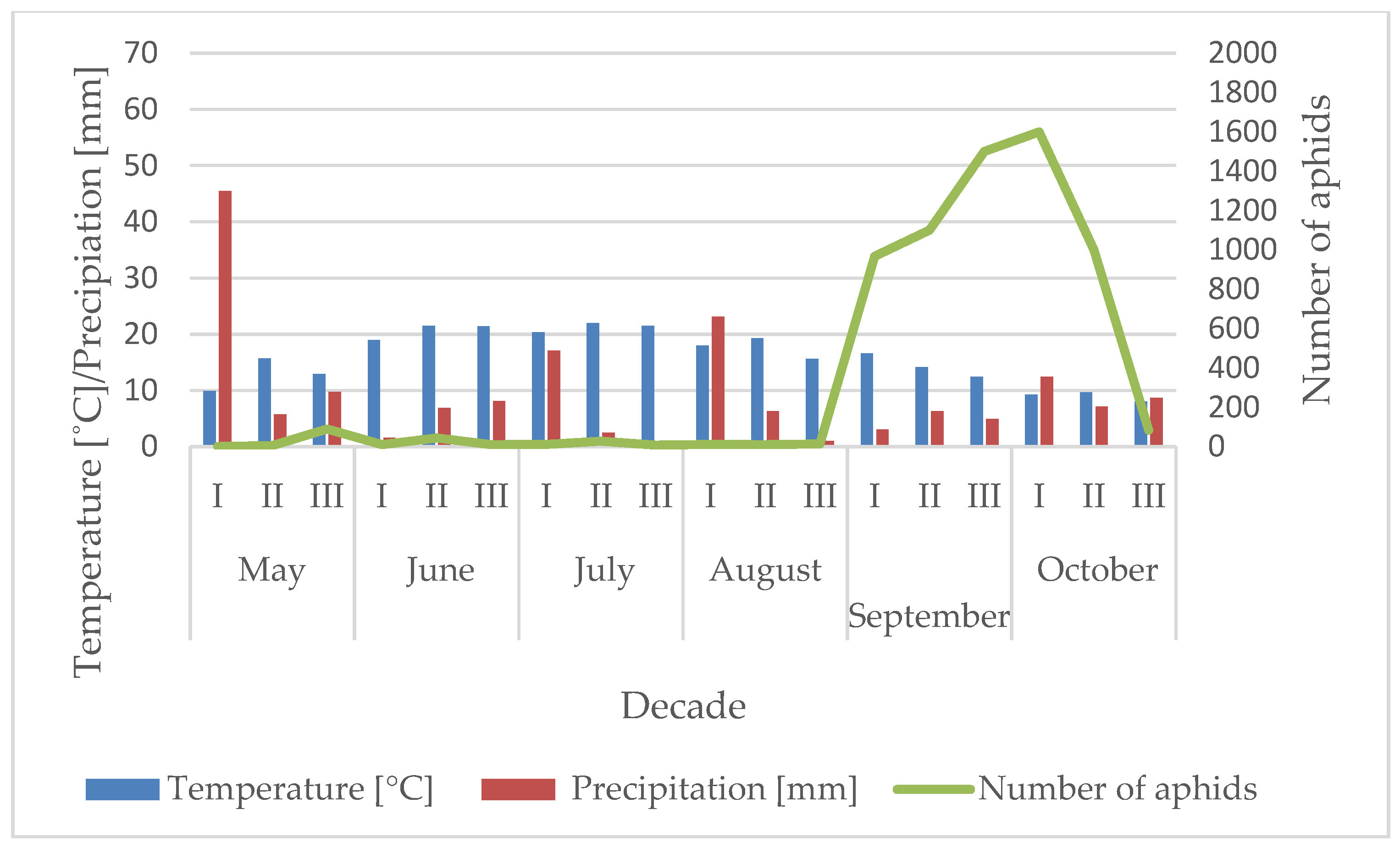
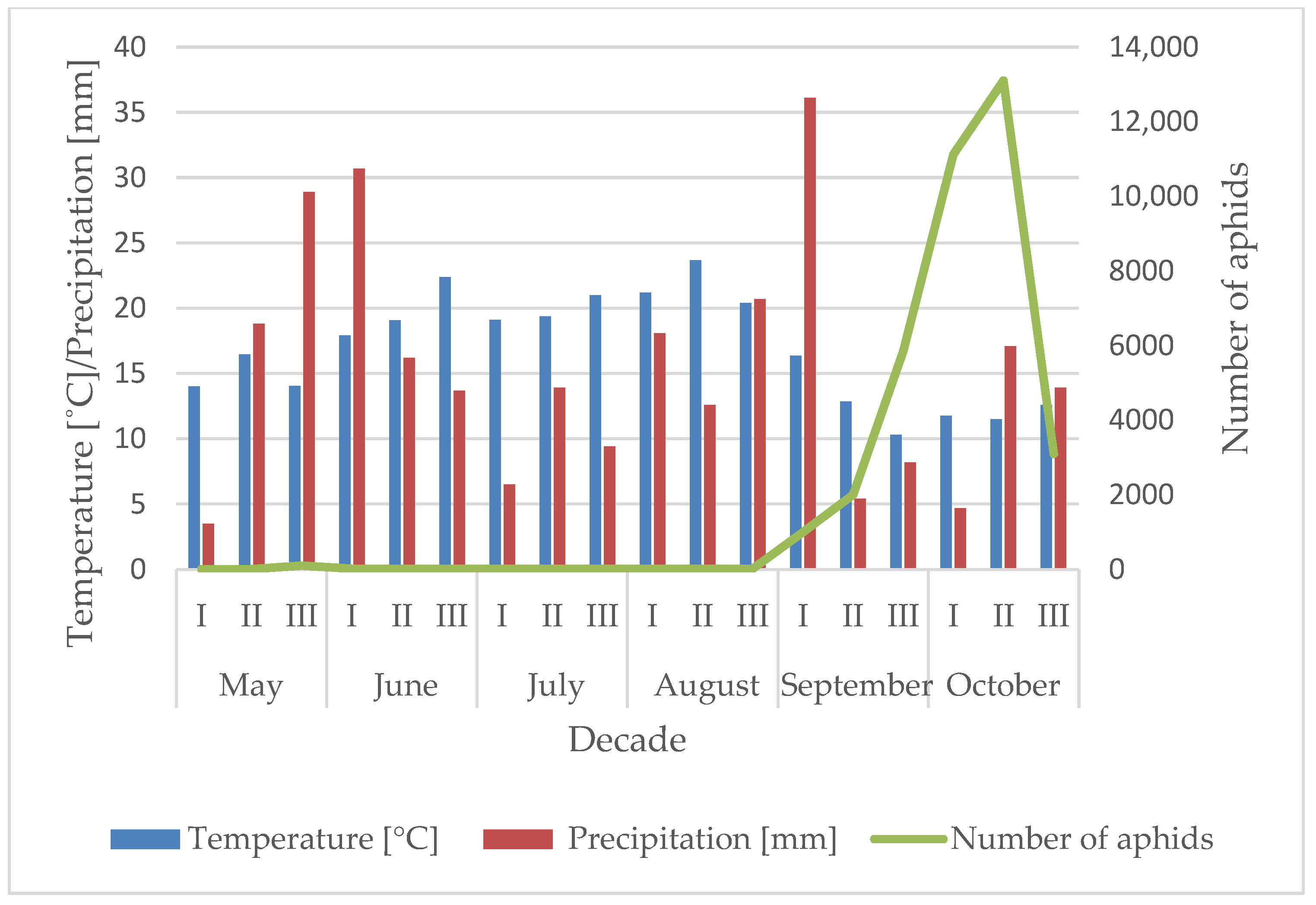
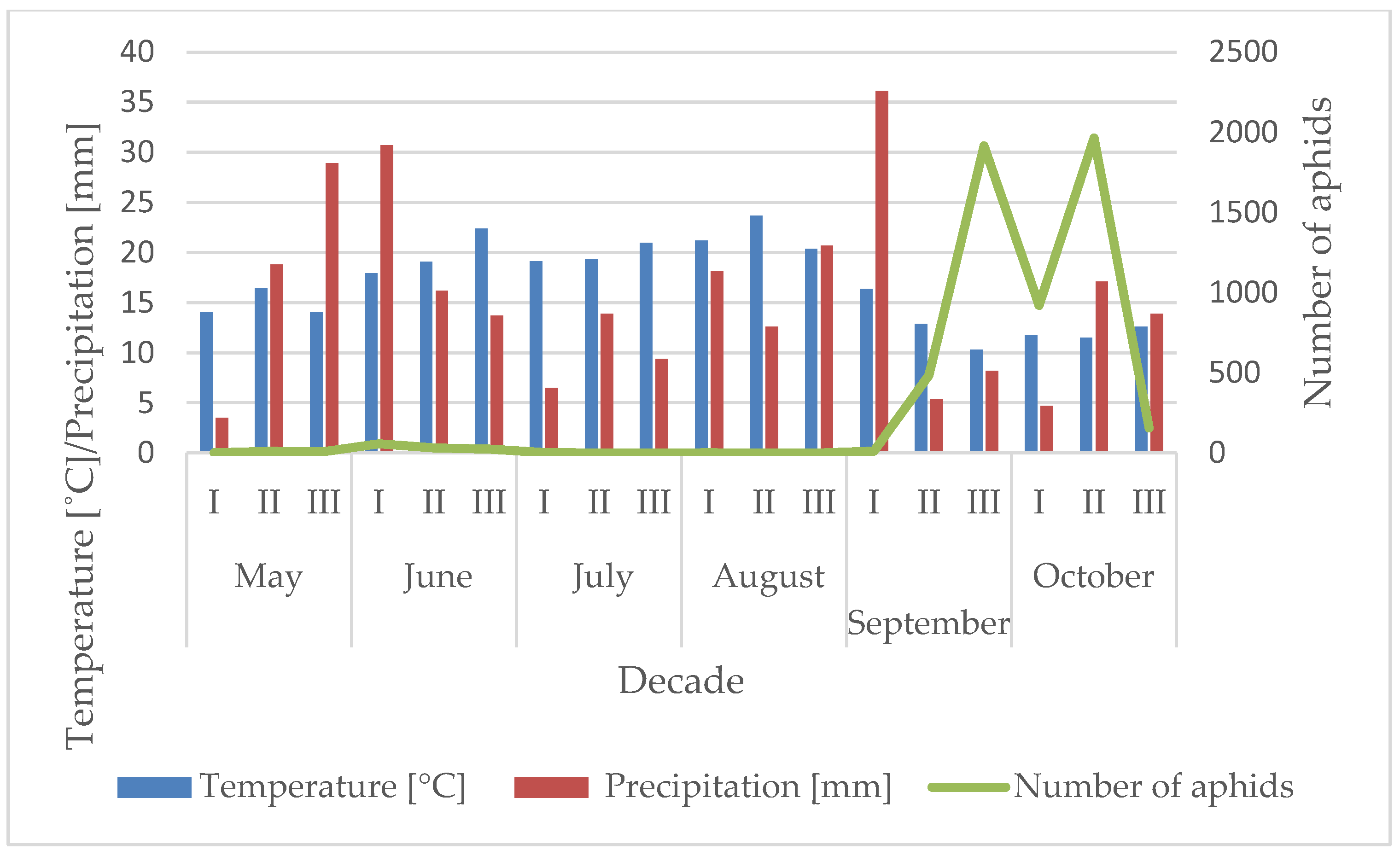
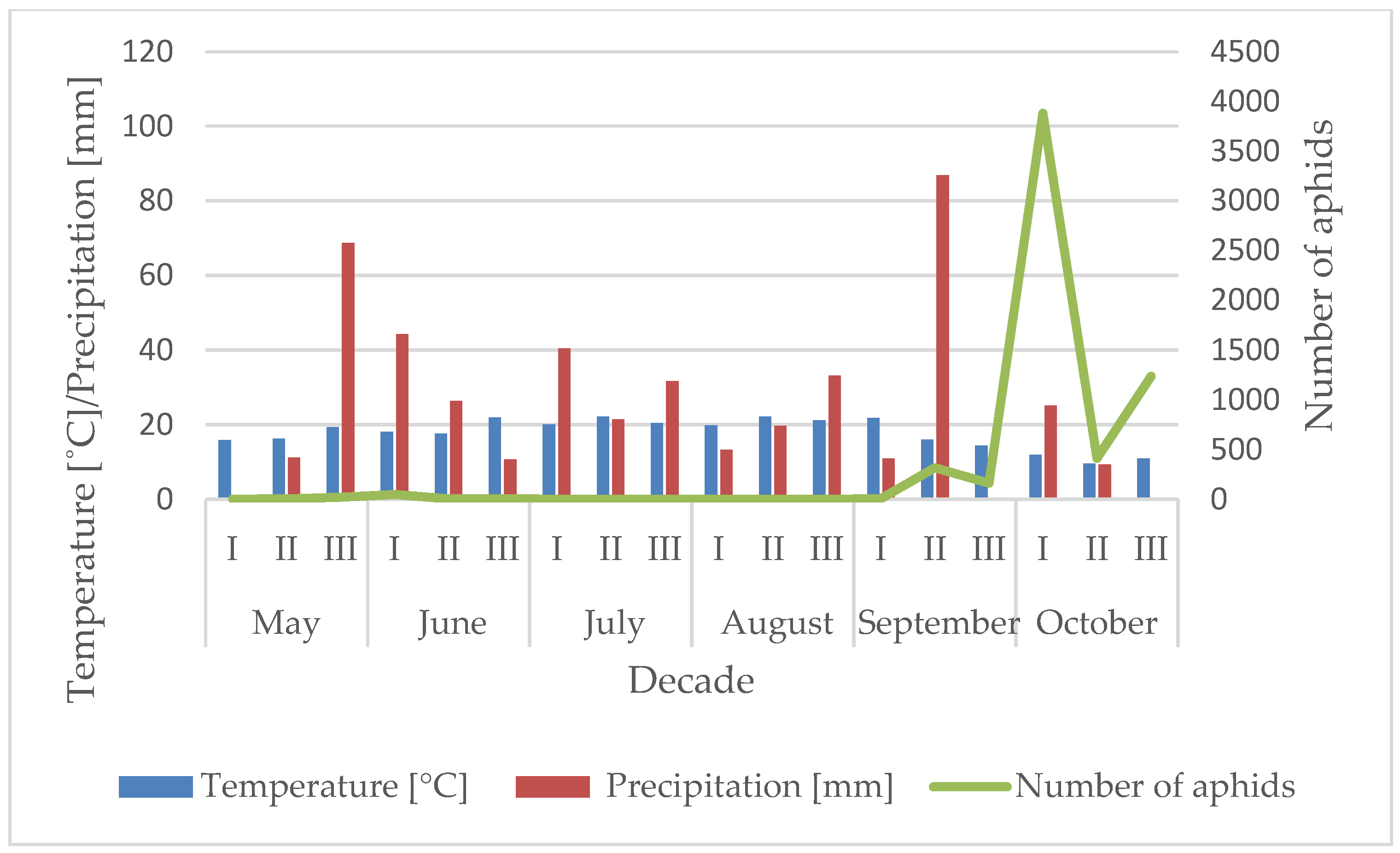
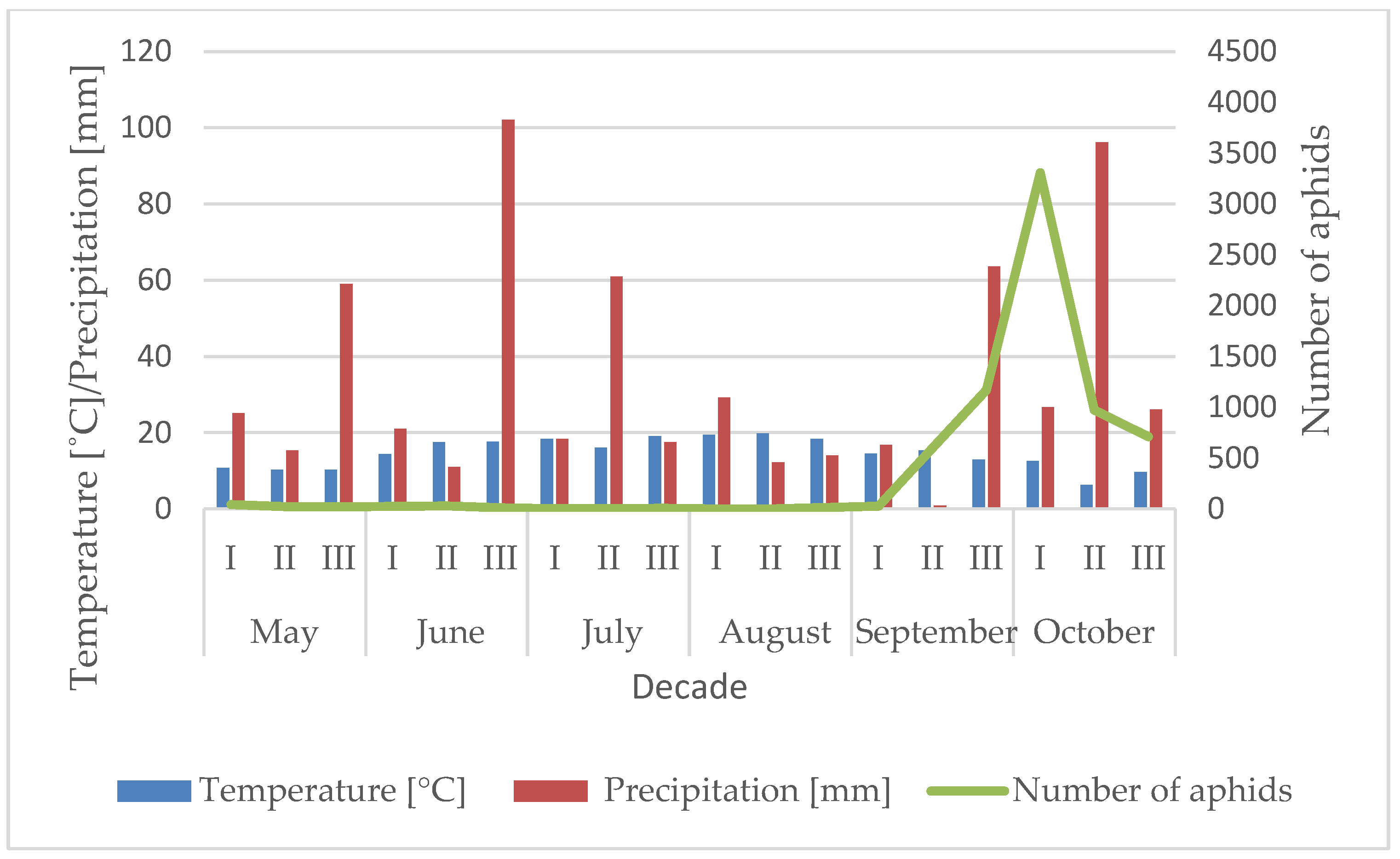
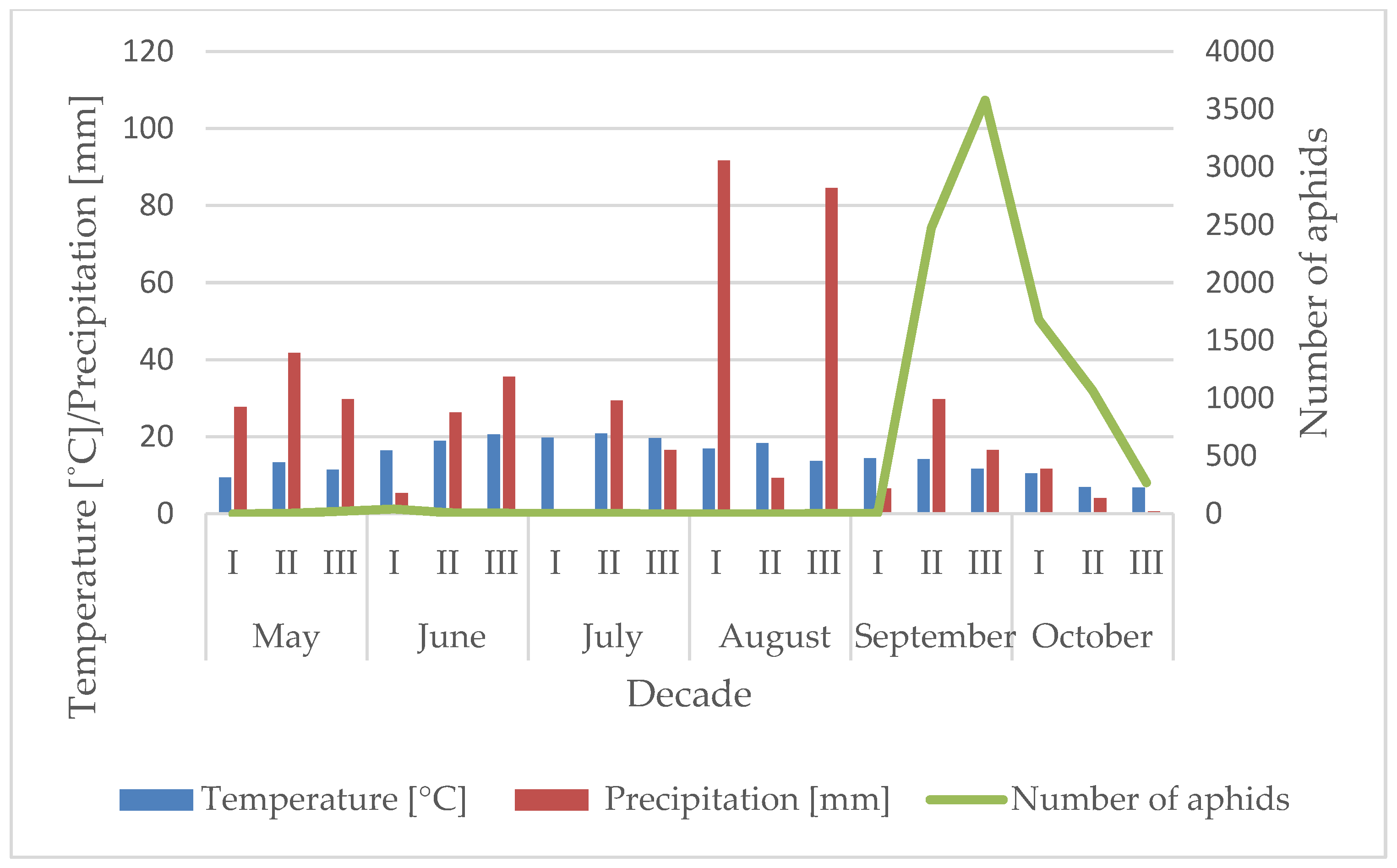
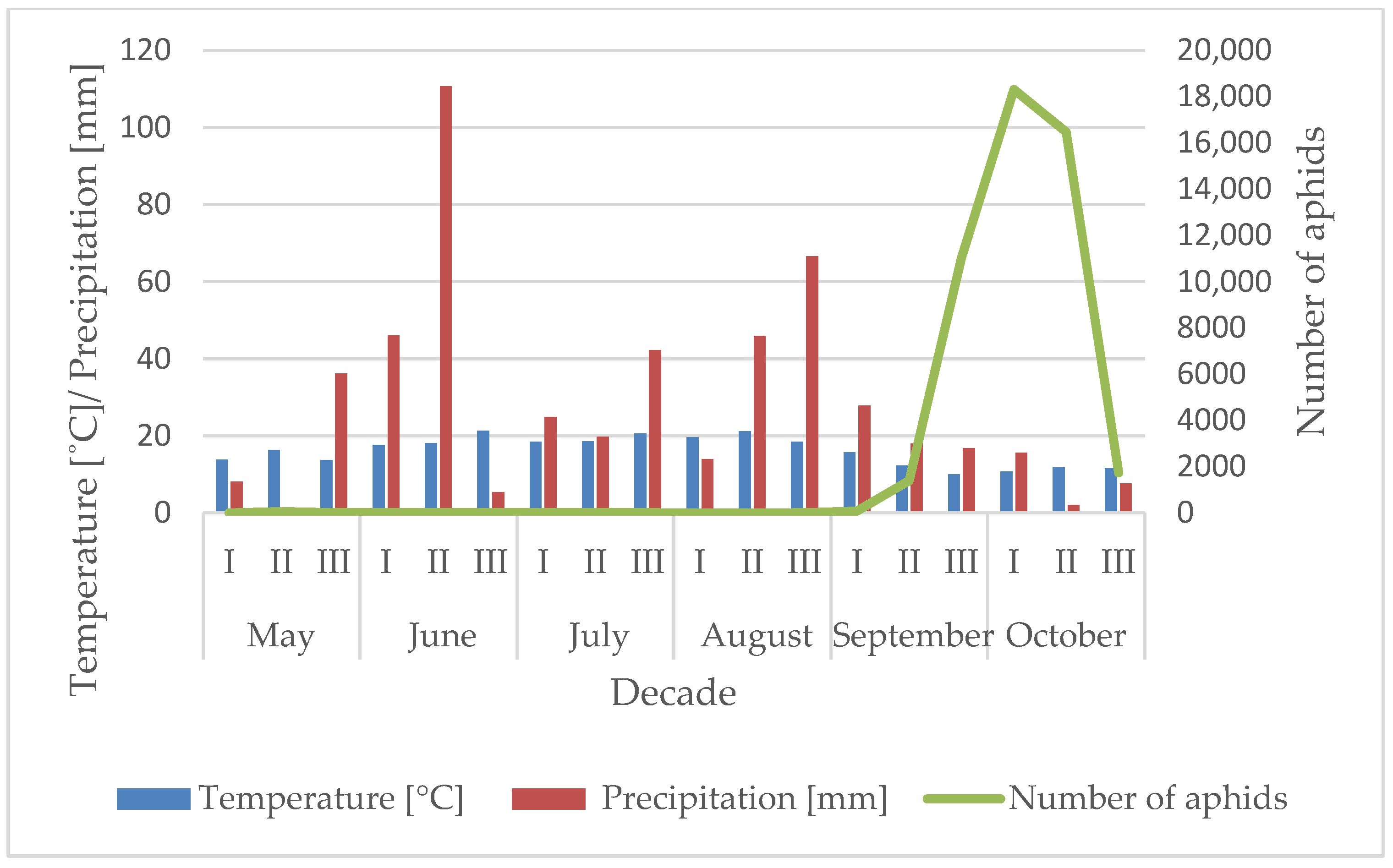
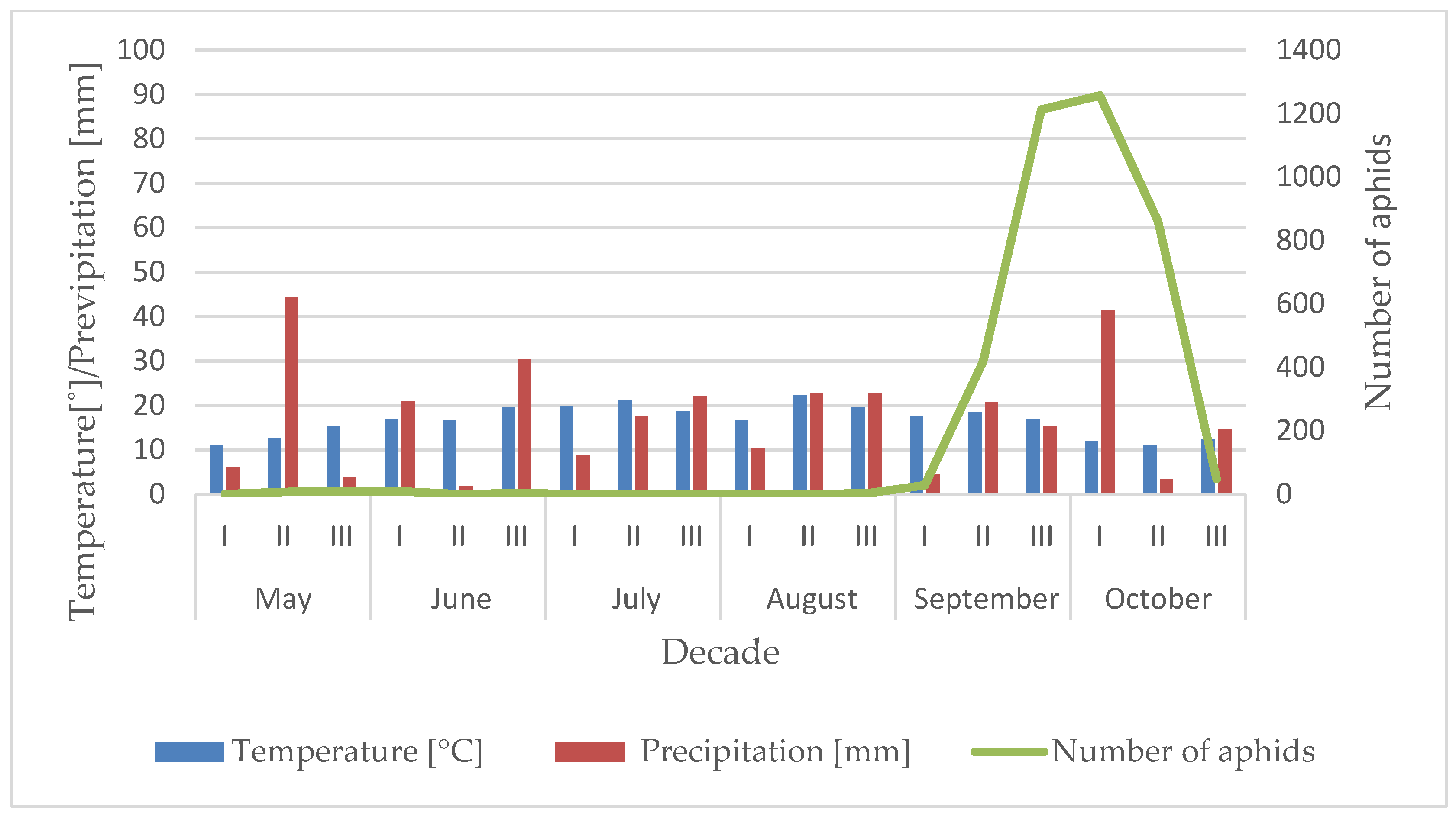
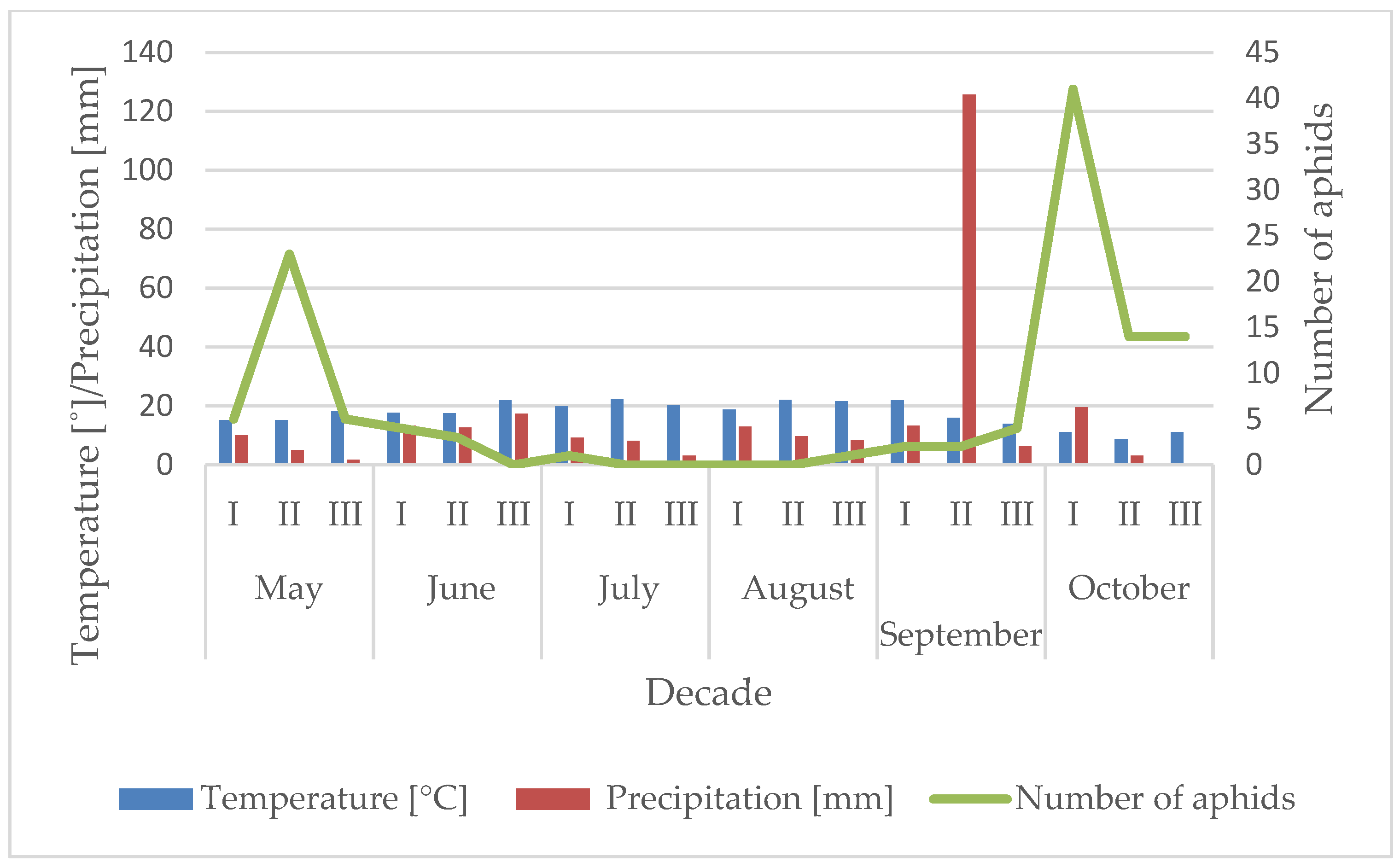
Rhopalosiphum padi is the most abundant aphid species caught since the JST was launched in both locations. Over five years of research, a total of 129,638 R. padi individuals were captured using Johnson suction trap at two locations (60,426 in Winna Góra and 69,212 in Sośnicowice). In Winna Góra, the annual counts were as follows: 5766 in 2020, 6498 in 2021, 36,452 in 2022, 5598 in 2023, and 6112 in 2024. In Sośnicowice, the numbers were as follows: 6954 in 2020, 9159 in 2021, 49,120 in 2022, 3855 in 2023, and 124 in 2024. The year 2022 was particularly notable for the exceptionally high of the abundance of R. padi, especially in the autumn (Figure 1, Figure 2, Figure 3, Figure 4, Figure 5, Figure 6, Figure 7, Figure 8, Figure 9 and Figure 10). In the entire history of the operation of JST in Poland, such a high intensity of flights of one species during one growing season has to our knowledge not previously been recorded. During the study, there were significant weather anomalies, including record global warming. In certain years, with high temperatures and higher rainfall, aphid numbers have been observed to decline for long periods of time. Other studies have also shown this relationship [45]. (Table 1). All three relationships were inversely proportional, indicating that higher temperature and precipitation were associated with smaller R. padi population. The determination coefficients of the obtained models were very high (ranging from 64.2% to 89.9%), indicating an excellent model fit.
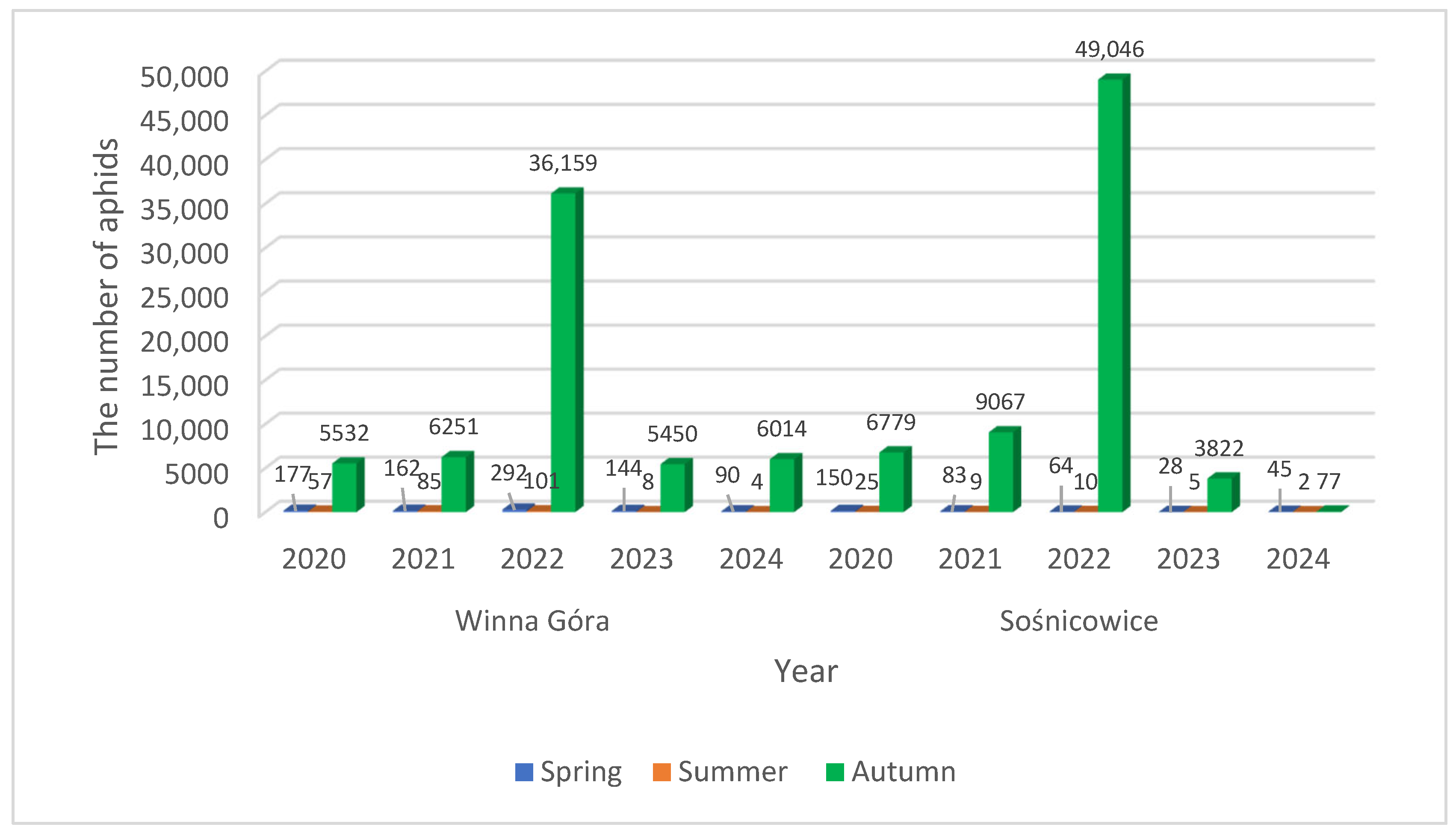
A comparison of seasonal flight dynamics throughout the study period revealed a marked imbalance in aphid abundance between autumn, spring and summer. The proportion of autumn catches in Winna Góra was 95.94% in 2020, 96.19% in 2021, 99.19% in 2022, 97.35% in 2023, and 98.39% in 2024. In Sośnicowice, they were 97.48% in 2020, 98.99% in 2021, 99.84% in 2022, 99.14% in 2023, and 62.09% in 2024 (Figure 11).
When analyzing the observed seasonal relationships, only one statistically significant relationship was found: the population size of the bird cherry–oat aphid (R. padi) was determined by rainfall in Sośnicowice in 2022 (Table 2). The model fit was 99.6%, and the negative coefficient (−2399) indicates that the R. padi population size increased as rainfall decreased. The absence of other significant relationships is most likely due to the limited number of observations incorporated into the model. Autumn thermal conditions in both regions have been increasingly favorable for aphid activity, with extended periods of mild temperatures enabling prolonged migration and the development of additional generations. These conditions, although not always statistically significant at the monthly scale, likely contributed to the consistently high autumn catch numbers. Lower frequency of heavy rainfall events in autumn at both sites reduces mortality caused by wash-off and allows aphids to remain airborne for longer periods, increasing trap captures. Crop phenology (development of winter cereals) and the availability of suitable host plants align with this period, promoting colonization and enhancing the probability of detecting migrants.

3.2. Dates of the Beginning of First Flights of R. padi Caught by the Johnson Suction Trap

In the years in which the research was conducted, differences were also observed in the timing of the first spring migrations and in delays of autumn migrations (except for 2021 in Winna Góra, which was relatively cool and rainy ). In 2022, the onset of migration in Winna Góra was recorded almost three weeks earlier than in Sośnicowice (Table 3 and Table 4). Weather conditions affect aphid trapping in various ways, depending on location and time of year. Temperature is considered the main factor influencing aphid development, although other variables, such as rainfall and wind, also play a role. Elevated temperatures during the spring development of the aphid Rhopalosiphum padi, combined with low precipitation, accelerate the emergence of successive aphid generations. These factors may explain the observed differences in the timing of migration and population intensity of aphids. The structure of the surrounding landscape, changing crop rotation, the presence of natural enemies, and the proximity of permanent grasslands also influence aphid abundance and migration.

3.3. The Significance of Aphids and Their Monitoring in Plant Protection

The importance of aphids in crop protection is mainly due their rapid growth rate and the nature of the damage they cause. They belong to an extremely interesting group of pests that have developed strategies allowing them to respond quickly to changes in the environment. Their growth rate and reproduction rate are influenced by many factors, primarily temperature and humidity, but also the availability of host plants, their physiological condition, and the presence of natural enemies. Their rapid growth rate and ability to migrate are just some of the manifestations of the specialized biology of aphids, which testify to their particular importance in plant protection. Therefore, the speed of response to their presence on host plants and the ability to signal a potential threat early, even before the physical appearance of pests on the plantation, are of great importance for effective protection. This is particularly important in the case of species that are vectors of dangerous viruses causing plant diseases. Climate change is one of the most important environmental problems of recent years. Aphids (Aphidoidea) react very dynamically to these changes, with their development, population, and migration dependent on temperature [46]. Therefore, the occurrence and intensity of their populations require continuous monitoring. Monitoring aphids with a JST is a crucial component of plant protection, as the data obtained allow for tracking changes in population density, harmfulness, and regional distribution [47]. Aphids are an excellent example in studies on the biological relationships between insects and temperature fluctuations at the front line. They spread only within a specific temperature range, and their development rate depends directly on temperature [2]. Temperature increases have a key impact on their biology, ecology, and nutrition, including accelerated development [48], increased reproductive growth [49], potential winter survival [50], disruption of life cycles [51], and changes in the dynamics of change [52]. Warm and nearly rainless days promote rapid pest colonization of crops in certain regions. Weather factors affect aphid capture differently depending on the area and season [53,54]. Temperature is known to be the primary factor influencing aphid development [55,56], with additional influences from a number of variables, such as rain and wind. Higher temperatures during the spring development of R. padi and low rainfall accelerate the emergence of subsequent generations and their emergence on the secondary host [30,57]. Variable weather conditions occurring in spring and autumn also affect the growth rate of winter crops [58], as well as the development of bird cherry trees. Researchers from Hungary and the United Kingdom [59] observed that in some years, the peak migration period in Hungary occurred 1–3 weeks earlier than in the United Kingdom, which was due to higher temperatures and an earlier start to the growing season. In addition to the influence of climate, differences in the abundance of R. padi have been reported depending on the crop structure in the surrounding landscape, crop rotation, fertilization level, abundance of natural enemies or proximity of permanent grasslands [60,61,62,63,64,65]. Aphids are an excellent lens through which to examine protection, and detailed knowledge of the seasonal flight dynamics of R. padi is crucial for optimizing the timing of control measures and integrating meteorological forecasts into warning systems. Similar findings were also obtained by other researchers in their studies [17,66,67,68]. Other studies conducted in previous years reported comparable aphid numbers during spring and autumn migrations [17,18,40], while other scientists showed higher numbers of R. padi during spring–summer migrations [41,69,70,71]. The occurrence of long and warm autumns in successive years allowed aphids to produce additional generations. Determining the optimal timing for chemical control is challenging, as relying solely on the visible and abundant pest population often means the timing is too late and is not always economically viable. Monitoring and forecasting are conducted to assess the current level of pest risk. Systematic monitoring allows for the early detection of aphid presence. Data from the JST, combined with meteorological conditions, can support long-term forecasting of pest occurrence, while short-term forecasting enables detection of aphids in the air shortly before crop colonization. Such an approach minimizes the risk of crop damage and facilitates decisions on chemical treatment at the most effective and economically justified time, considering established economic thresholds [27,47,72,73]. The development of more effective control strategies by linking aphid population dynamics with thermal conditions is the fundament of these studies. The findings enable more precise timing of surveillance and control measures, promote threshold-based and region-specific management and highlight the importance of integrating climate data into long-term pest management planning.

4. Conclusions

The bird cherry–oat aphid (Rhopalosiphum padi L.) was the most frequently captured aphid species in the Johnson suction trap. Winged forms were observed continuously during the 2020–2024 study period. The highest numbers of R. padi were recorded in 2022 in both monitoring locations. The markedly higher number of aphids recorded in 2022 reflects the natural interannual variability of Rhopalosiphum padi populations, which is largely driven by environmental conditions. Aphid population dynamics and the intensity of migratory flights of alate forms are strongly influenced by meteorological factors, particularly temperature and early spring conditions. Warm and relatively dry springs promote faster population development, earlier and more synchronized migration, and consequently higher catches in suction traps. Additional factors such as winter survival, host plant availability, natural enemies, regional phytosanitary conditions, and immigration from neighboring areas may further contribute to year-to-year differences. Since suction traps measure flight activity rather than absolute population size, such interannual variation in captures is expected and can be pronounced. The analysis of seasonal flight dynamics from 2020 to 2024 revealed a pronounced disproportion in the number of R. padi captured during spring and summer migrations. Weather conditions showed a certain influence on the abundance of R. padi, but this effect was not consistently statistically significant across all years of the study. R. padi tends to migrate earlier in spring and later in autumn, increasing the risk of winter crop infestation in autumn. Our findings highlight several robust patterns in R. padi dynamics. We documented an unprecedented population peak in 2022, a consistent dominance of autumn flights, and clear regional differences in the timing of first and last flights. Linking these multi-year trends with local weather conditions provides a basis for hypothesizing environmental drivers of aphid activity and supports the refinement of future forecasting efforts. Monitoring crops for the presence of harmful organisms on plantations is one of the basic elements of integrated plant protection. The data obtained from such observations are a source of knowledge about the phytosanitary condition of crops in the fields. On this basis, decisions are made on the need to carry out chemical treatments at precisely determined times. They also make it possible to track changes in the severity, regionalization and range of pests in individual years and to determine their economic significance. The data obtained over many years is helpful in long-term forecasting.

Author Contributions

Conceptualization, K.R. and S.M.; methodology, K.R., S.M., P.T. and J.B.; software, J.B.; validation, K.R., S.M., J.B. and P.T.; formal analysis, K.R. and J.B.; data curation, K.R., S.M., P.T. and J.B.; writing—original draft preparation, K.R., S.M. and J.B.; writing—review and editing, K.R., S.M. and J.B.; visualization, K.R., S.M. and J.B.; supervision, K.R. and S.M.; project administration, K.R.; funding acquisition, K.R. All authors have read and agreed to the published version of the manuscript.

Funding

This research was supported by the Institute of Plant Protection—National Research Institute.

Institutional Review Board Statement

Not applicable.

Data Availability Statement

The original contributions presented in this study are included in the article; further inquiries can be directed to the corresponding authors.

Conflicts of Interest

The authors declare no conflicts of interest.

References

  1. Mrówczyński, M.; Walczak, F.; Korbas, M.; Paradowski, A.; Roth, M. Zmiany klimatyczne a zagrożenia roślin rolniczych przez agrofagi. Stud. Rap. IUNG–PIB 2009, 17, 139–148. [Google Scholar]
  2. Harrington, R.; Bale, J.S.; Tatchell, G.M. Aphids in a changing climate. In Insects in a Changing Environment; Harrington, R., Stark, N.E., Eds.; Academic Press: London, UK, 1995; Volume 535, pp. 126–150. [Google Scholar]
  3. Hulle, M.; Cœur d’Acier, A.; Bankheat-Dronnet, S.; Harrington, R. Aphids in the face of global changes. Competes Rendus Biol. 2010, 333, 497–503. [Google Scholar] [CrossRef]
  4. Kindlmann, P.; Dixon, A.F.G.; Michaud, J.P. (Eds.) Aphid Biodiversity Under Enviromental Change; Springer: Dordrecht, The Netherlands, 2010; p. 191. [Google Scholar]
  5. Bell, J.R.; Anderson, L.; Izera, I.D.; Kruger, T.; Parker, S.; Pickup, J.; Shortall, C.R.; Taylor, M.S.; Verrier, P.; Harrington, R. Onwards and upwards—Aphid flight trends follow climate change. J. Anim. Ecol. 2015, 84, 1–3. [Google Scholar]
  6. Bell, J.R.; Anderson, L.; Izera, I.D.; Kruger, T.; Parker, S.; Pickup, J.; Shortall, C.R.; Taylor, M.S.; Verrier, P.; Harrington, R. Longterm phonological trends, species accumulation rates, aphid trait and climate: Five decades of change in migrating aphids. J. Anim. Ecol. 2015, 84, 21–34. [Google Scholar] [CrossRef]
  7. Strażyński, P.; Ruszkowska, M. The life cycle functional response of Rhopalosiphum padi (L.) to higher temperature: Territorial expansion of permanent parthenogenetic development as a result of warmer weather conditions. J. Plant Prot. Res. 2015, 55, 162–165. [Google Scholar] [CrossRef]
  8. Borodynko-Filas, N.; Pruszyński, G.; Strażyński, P. Wirus żółtaczki rzepy (Turnip Yellows Virus, TuYV) i jego wektory—Nowe zagrożenie w uprawie rzepaku. In Proceedings of the Streszczenia 57, Sesji Naukowej IOR–PIB, Poznań, Poland, 9–10 February 2017; p. 72. [Google Scholar]
  9. Vereijken, P.H. Feeding and multiplication of Three Cereal Aphid Species and Their Effect on Yield of Winter Wheat. Ph.D. Thesis, Wageningen University & Research, Wageningen, The Netherlands, 1979; pp. 1–58. [Google Scholar]
  10. Assmann, G.; Hagele, R.; Wetzel, T. Untersuchungen zur Okonomie der Bekampfung der Getrideblattlaus (Macrosiphum (Sitobion) avenae F.) in Winterweizen. Nachrichtenblatt Pflanzenschutz DDR 1988, 42, 24–27. [Google Scholar]
  11. Mrówczyński, M.; Wachowiak, H.; Boroń, M. Szkodniki zbóż–aktualne zagrożenia w Polsce. Cereals pests–current thereats in Poland. Prog. Plant Prot. Post. Ochr. Roślin 2005, 45, 929–932. [Google Scholar]
  12. Walczak, F. Monitoring agrofagów dla potrzeb integrowanej ochrony roślin uprawnych. Agrophages monitoring for plant integrated control needs. Fragm. Agron. 2010, 27, 147–154. [Google Scholar]
  13. Roik, K.; Strażyński, P.; Baran, M.; Bocianowski, J. Analiza poziomu zasiedlenia pszenicy ozimej przez mszycę zbożową (Sitobion avenae F.) w różnych rejonach Polski w latach 2009–2018. Prog. Plant Prot. Postępy Ochr. Roślin 2022, 62, 174–180. [Google Scholar]
  14. Strażyński, P.; Ruszkowska, M.; Jeżewska, M.; Trzmiel, K. Evaluation of the Risk of the Autumn Infections of Winter Barley with Barley Yellow Dwarf Viruses in Poland in the Years 2006–2008. J. Plant Prot. Res. 2011, 51, 314–321. [Google Scholar] [CrossRef]
  15. Ruszkowska, M. Uwarunkowania klimatyczne w rozprzestrzenianiu najważniejszych wektorów chorób wirusowych na zbożach w badanych regionach Polski. Permanent and cyclic parthenogenesis of Rhopalosiphum padi (L.) (Homoptera: Aphidoidea) across different climate regions in Poland. Prog. Plant Prot. Postępy Ochr. Roślin 2006, 46, 276–283. [Google Scholar]
  16. Klueken, A.M.; Hau, B.; Ulber, B.; Poehling, H.M. Forecasting migration of cereal aphids (Hemiptera: Aphididae) in autumn and spring. J. Appl. Entomol. 2009, 133, 328–344. [Google Scholar] [CrossRef]
  17. Strażyński, P. Population structure of Rhopalosiphum padi (Linnaeus, 1758)/Hemiptera, Aphidoidea/ in Wielkopolska region in 2003–2008 in the context of winter cereals threat of BYDV expansion. In Aphids and Other Hemipterous Insects; Goszczyński, W., Herczek, A., Leszczyński, B., Łabanowski, G., Podsiadło, E., Rakauskas, R., Ruszkowska, M., Wilkaniec, B., Wojciechowski, W., Eds.; The John Paul II Catholic University of Lublin: Lublin, Poland, 2010; Volume 16, pp. 91–105. [Google Scholar]
  18. Strażyński, P.; Ruszkowska, M.; Węgorek, P. Dynamika lotów mszyc w latach 2008–2010 najliczniej odławianych w Poznaniu aspiratorem Johnsona. Flights dynamics of aphids caught numerously by Johnson’s suction trap in Poznań in 2008–2010. Prog. Plant Prot. Postępy Ochr. Roślin 2011, 51, 213–216. [Google Scholar]
  19. Jeżewska, M. Choroby wirusowe zbóż w Polsce. Choroby wirusowe zbóż w Polsce, występowanie i zapobieganie. Poznań, 2010, p. 4. Available online: https://www.agrofagi.com.pl/plik,podglad,2773,choroby-wirusowe-zboz-w-polsce.jpg (accessed on 28 October 2025).
  20. Gray, S.M.; Power, A.G.; Smith, D.M.; Seaman, A.J.; Altman, N.S. Aphid transmission of Barley Yellow DwarfVirus: Acquisition acces periods and virus concentration requirements. Phytopatology 1991, 81, 539–544. [Google Scholar] [CrossRef]
  21. Cichocka, E.; Goszczyński, W.; Leszczyński, W. Wykorzystanie techniki EPG do oceny podatności roślin na mszyce. Prog. Plant Prot. Postępy Ochr. Roślin 1998, 50, 172–179. [Google Scholar]
  22. Jeżewska, M. Choroby wirusowe zbóż w Polsce diagnostyka i występowanie. Ochr. Roślin 1995, 6, 3–4. [Google Scholar]
  23. Jeżewska, M. Wirus żółtej karłowatości jęczmienia-niebezpieczny patogen wszystkich gatunków zbóż. Ochr. Roślin 2001, 45, 36–37. [Google Scholar]
  24. Jeżewska, M. Choroby wirusowe zbóż, diagnostyka i występowanie. Prog. Plant Prot. Postępy Ochr. Roślin 2003, 43, 152–159. [Google Scholar]
  25. Kröber, T.; Carl, K. Cereal aphids and their natural enemies in Europe—A literature review. Biocontrol News Inf. 1991, 12, 4. 357–371. [Google Scholar]
  26. Ruszkowska, M. Przekształcenia cyklicznej partenogenezy mszycy Rhopalosiphum padi (L.) (Homoptera: Aphidoidae)—znaczenie zjawiska w adaptacji środowiskowej. Rozpr. Nauk. Inst. Ochr. Roślin 2002, 8, 63. [Google Scholar]
  27. Ruszkowska, M. Modyfikacja progów szkodliwości i metody alternatywne w warunkach powstawania nowych form rozwojowych mszyc. Prog. Plant Prot. Postępy Ochr. Roślin 2004, 44, 347–354. [Google Scholar]
  28. Hurej, M. Wrażliwość mszyc na ekstremalne temperatury. Wiadomości Entomol. 1991, 1, 42–49. [Google Scholar]
  29. Leszczyński, B. Wpływ czynników klimatycznych na populację mszyc zbożowych. Zesz. Probl. Postępów Nauk. Rol. 1990, 392, 123–131. [Google Scholar]
  30. Leszczyński, B.; Urbańska, A.; Wereda, I. Some factors influencing spring and autumn migrations of bird cherry-oat aphid in Eastern Poland. In Aphids and Other Homopterous Insects; Cichocka, E., Goszczyński, W., Leszczyński, M., Ruszkowska, W., Wojciechowski, W., Eds.; PAS: Siedlce, Poland, 2001; Volume 8, pp. 223–230. [Google Scholar]
  31. Ruszkowska, M.; Strażyński, P. Mszyce na Oziminach; Instytut Ochrony Roślin: Poznań, Poland, 2007; p. 23. [Google Scholar]
  32. Taylor, L.R. An improved suction trap for insect. Ann. Appl. Biol. 1951, 38, 582–591. [Google Scholar] [CrossRef]
  33. Allison, D.; Pike, K.S. An inexpensive suction trap and its use in an aphid monitoring network. J. Agric. Entomol. 1988, 5, 103–107. [Google Scholar]
  34. Müller, F.P. Mszyce-Szkodniki Roślin: Terenowy Klucz do Oznaczania; Instytut Zoologii Polskiej Akademii Nauk: Warszawa, Poland, 1976; p. 119. [Google Scholar]
  35. Remadieurѐ, G.; Remadieurѐ, M. Catalogue des Aphididae du Monde; Instiut National de la racherche Agronomique: Paris, France, 1977; p. 473. [Google Scholar]
  36. Taylor, L.R. A Handbook for Aphid Identification; Euraphid—Rothamsted, Experimental Station: Rothamsted, UK, 1984; p. 171. [Google Scholar]
  37. Blacman, R.L.; Eastop, V.F. Aphids on the Words Crops, an Identification and Information Guide, 2nd ed.; The Natural History Museum: London, UK, 2000; p. 466. [Google Scholar]
  38. Holman, J. Host Plant Catalog of Aphids; Springer: Dordrecht, The Netherlands, 2009; p. 1140. [Google Scholar]
  39. Kasprzak, K.; Niedbała, W. Wskaźniki biocenotyczne stosowane przy porządkowaniu i analizie danych w badaniach ilościowych. s. 397–416. In Metody Stosowane w Zoologii Gleby; Górny, M., Grüm, L., Eds.; Państwowe Wydawnictwo Naukowe: Warszawa, Poland, 1981; p. 483. [Google Scholar]
  40. Strażyński, P. Znaczenie rejestracji lotów ważnych gospodarczo gatunków i form mszyc w odłowach aspiratorem Johnsona w Poznaniu w latach 2003–2005 w integrowanych metodach ochrony roślin. Importance of registration of flights of economically important species and forms of aphids in catches by Johnson’s suction trap in Poznań in 2003–2005 in integrated plant protection methods. Prog. Plant Prot. Postępy Ochr. Roślin 2006, 46, 395–398. [Google Scholar]
  41. Honěk, A.; Martinkowá, Z.; Brabec, M.; Saska, P. Predicting aphid abundance on winter wheat using suction trap catches. Plant Prot. Sci. 2020, 56, 35–45. [Google Scholar] [CrossRef]
  42. Slavíková, L.; Fryč, D.; Kundu, J.K. Analysis of Twenty Years of Suction Trap Data on the Flight Activity of Myzus persicae and Brevicoryne brassicae, Two Main Vectors of Oilseed Rape Infection Viruses. Agronomy 2024, 14, 1931. [Google Scholar] [CrossRef]
  43. Bocianowski, J.; Liersch, A. Multidimensional Analysis of Diversity in Genotypes of Winter Oilseed Rape (Brassica napus L.). Agronomy 2022, 12, 633. [Google Scholar] [CrossRef]
  44. VSN International. VSN International Genstat for Windows, 23rd ed.; VSN International Hemel: Hempstead, UK, 2023. [Google Scholar]
  45. Strażyński, P.; Roik, K. Rejestracja dynamiki lotów wazniejszych gospodarczo gatunków mszyc za pomocą aspiratora Johnsona i jej znaczenie w integrowanej ochronie upraw rolniczych. Prog. Plant Prot. Postępy Ochr. Roślin 2021, 61, 2021–2027. [Google Scholar]
  46. Menéndez, R. How are insects responding to global warming? Tijdschr. Voor Entomol. 2007, 150, 355–365. [Google Scholar]
  47. Złotkowski, J. Znaczenie pułapki ssącej Johnsona w badaniach migracji mszyc w Polsce w latach 1973–2010. The importance of Johnson’s suction trap in the study of aphid migration in Poland in the years 1973–2010. Prog. Plant Prot./Postępy Ochr. Roślin 2011, 51, 158–163. [Google Scholar]
  48. Borowiak-Sobkowiak, B.; Durak, R. Biology and ecology of Appendiseta robiniae (Hemiptera: Aphidoidea)—An alien species in Europe. Open Life Sci. 2012, 7, 487–494. [Google Scholar] [CrossRef]
  49. Bale, J.S.; Masters, G.J.; Hodkinson, I.D.; Awmack, C.; Bezemer, T.M.; Brown, V.K.; Butterfield, J.; Buse, A.; Coulson, J.C.; Farrar, J.; et al. Herbivory in global climate change research: Direct effects of rising temperature on insect herbivores. Glob. Chang. Biol. 2002, 8, 1–16. [Google Scholar] [CrossRef]
  50. Harrington, R.; Fleming, R.A.; Woiwod, I.P. Climate change impacts on insect management and conservation in temperate regions: Can they be predicted? Agric. For. Entomol. 2001, 3, 233–240. [Google Scholar] [CrossRef]
  51. Margaritopoulos, J.T.; Tsitsipis, J.A.; Goudoudaki, S.; Blackman, R.L. Life cycle variation of Myzus persicae (Hemiptera: Aphididae) in Greece. Bull. Entomol. Res. 2002, 92, 309–319. [Google Scholar] [CrossRef]
  52. Yamamura, K.; Yokozawa, M.; Nishimori, M.; Ueda, Y.; Yokosuka, T. How to analyze long-term insect population dynamics under climate change: 50-year data of three insect pests in paddy fields. Popul. Ecol. 2006, 48, 31–48. [Google Scholar] [CrossRef]
  53. Harrigton, R.; Tatchell, G.M.; Bale, J.S. Weather, lifecycle strategy and spring populations of aphids. Acta Phytopathol. Entomol. Hung. 1990, 25, 423–432. [Google Scholar]
  54. Klueken, A.M.; Hau, B.; Freier, B.; Friesland, H.; Kleinhenz, B.; Poehling, H.M. Comparison and validation of population models for cereal aphids. Forecasting migration of cereal aphids. J. Plantd Dis. Prot. 2009, 116, 129–140. [Google Scholar] [CrossRef]
  55. Park, J.H.; Kwon, S.H.; Kim, T.O.; Oh, S.O.; Kim, D.-S. Temperature-dependent development and fecundity of Rhopalosiphum padi (L.) (Hemiptera: Aphididae) on corns. Korean J. Appl. Entomol. 2016, 55, 149–160. [Google Scholar] [CrossRef]
  56. Aboutelabian, A.; Haghani, M.; Norbakhsh, H.; Abbasipour, H.; Toorani, A.H. Selected demografic data of the bird chery-oat aphid, Rhopalosiphum padi L. on corn, Zea mays L. at different temperaturesd. J. Agric. Sci. Technol. 2020, 22, 197–207. [Google Scholar]
  57. Strażyński, P. Wybrane element rozwoju mszycy czeremchowo-zbożowej (Rhopalosiphum padi L.) na żywicielu pierwotnym (Prunus padus L.) w Poznaniu w latach 2007–2008. Prog. Plant Prot. Postępy Ochr. Roślin 2010, 50, 1308–1311. [Google Scholar]
  58. Brabec, M.; Honěk, A.; Pekár, S.; Martinková, Z. Population dynamics of aphids on cereals: Digging in the time-series data to reveal population regulation caused by temperature. PLoS ONE 2014, 9, e106228. [Google Scholar] [CrossRef] [PubMed]
  59. Basky, Z.; Harrington, R. Cereal aphid flight activity in Hungary and England compared by suction traps. Anz. Schädlingskunde Pflanzenschutz Umweltschutz 2000, 73, 70–74. [Google Scholar] [CrossRef]
  60. De Barro, P.J.; Sherratt, T.N.; Brookes, C.P.; David, O.; Maclean, N. Spatial and temporal genetic variation in British field populations of the grain aphid Sitobion avenae (F.) (Hemiptera: Aphididae) studied using RAPD-PCR. Proc. R. Soc. B 1995, 262, 321–327. [Google Scholar]
  61. Simon, J.C.; Baumann, S.; Sunnucks, P.; Hebert, P.D.N.; Pierre, J.S.; Le Gallic, J.F.; Dedryver, C.A. Reproductive mode and population genetic structure of the cereal aphid Sitobion avenae studied using phenotypic and microsatellite markers. Mol. Ecol. 1999, 8, 531–545. [Google Scholar] [CrossRef] [PubMed]
  62. Plantegenest, M.; Pierre, J.S.; Dedryver, C.A.; Kindlmann, P. Assessment of the relative impact of different natural enemies on population dynamics of the grain aphid Sitobion avenae in the field. Ecol. Entomol. 2001, 26, 404–410. [Google Scholar] [CrossRef]
  63. Papura, D.; Simon, J.C.; Halkett, F.; Delmotte, F.; Le Gallic, J.F.; Dedryver, C.A. Predominance of sexual reproduction in Romanian populations of the aphid Sitobion avenae inferred from phenotypic and genetic structure. Heredity 2003, 90, 397–404. [Google Scholar] [CrossRef]
  64. Vialatte, A.; Plantegenest, M.; Simon, J.C.; Dedryver, C.A. Farm-scale assessment of movement patterns and colonisation dynamics of the grain aphid in arable crops and hedgerows. Agric. For. Entomol. 2007, 9, 337–346. [Google Scholar] [CrossRef]
  65. Dedryver, C.A.; Fievet, V.; Plantegenest, M.; Vialatte, A. An overview of the functioning of Sitobion avenae populations at three spatial scales in France. Redia 2009, XCII, 159–162. [Google Scholar]
  66. Strażyński, P. Dynamics of aphid seasonal flights in Johnson’s suction trap in Poznań in 2003–2004. In Aphids and Other Hemipterous Insects; Cichocka, E., Goszczyński, W., Ruszkowska, M., Wilkaniec, B., Nowak, P., Kowalski, G., Eds.; Agricultural University of Poznań: Poznań, Poland, 2005; Volume 11, pp. 175–183. [Google Scholar]
  67. Złotkowski, J.; Wolski, A. Badania nad migracjami mszyc przy użyciu aspiratora Johnsona w Winnej Górze w latach 2000–2007. Studies on migrations of aphids with the use of Johnson’s suction trap in Winna Góra during the period of 2000–2007. Prog. Plant Prot. Postępy Ochr. Roślin 2008, 48, 1013–1017. [Google Scholar]
  68. Złotkowski, J. Sezonowe zmiany w dynamice migracji mszyc w okolicach Winnej Góry (Wielkopolska) w latach 2007–2008. Seasonal changes in aphid migration dynamics in the surrounding area of Winna Góra (Wielkopolska district) in 2007–2008. Prog. Plant Prot./Postępy Ochr. Roślin 2009, 49, 1242–1246. [Google Scholar]
  69. Ruszkowska, M.; Złotkowski, J. Badania populacyjne nad ważnymi gospodarczo gatunkami mszyc na podstawie połowów z powietrza. Cz. II. Dynamika sezonowa lotów mszyc. Population studies on economically important species of aphids based on aerial catching. Th. II. Seasonal dynamics of aphid flights. Pr. Nauk. Inst. Ochr. Roślin 1977, 19, 125–144. [Google Scholar]
  70. Złotkowski, J. Sezonowe aktywności lotów mszyc w odłowach aspiratorem Johnsona w latach 1998–2001. Prog. Plant Prot. Postępy Ochr. Roślin 2002, 49, 712–715. [Google Scholar]
  71. Złotkowski, J. Rejestracja sezonowych lotów ważnych gospodarczo mszyc w odłowach aspiratorem zainstalowanym na terenie Pracowni Doświadczalnictwa Polowego w Winnej Górze w latach 2001–2004. Registration of seasonal flights of economically important aphids in catches by suction trap installed in the Field Experimental Station in Winna Góra in the years 2001–2004. Prog. Plant Prot. Postępy Ochr. Roślin 2005, 45, 1229–1232. [Google Scholar]
  72. Ruszkowska, M.; Strazyński, P. Profilaktyka w ochronie zbóż przed chorobą żółtej karłowatości jęczmienia. Prog. Plant Prot. Postępy Ochr. Roślin 2007, 47, 363–366. [Google Scholar]
  73. Tratwal, A.; Bereś, P.K.; Korbas, M.; Danielewicz, J.; Jajor, E.; Horoszkiewicz-Janka, J.; Jakubowska, M.; Roik, K.; Baran, M.; Strażyński, P.; et al. Poradnik Sygnalizatora Ochrony Zbóż; Tratwal, A., Kubasik, W., Mrówczyński, M., Eds.; Instytut Ochrony Roślin-PIB: Poznań, Poland, 2017; p. 248. ISBN 978-83-64655-29-6. [Google Scholar]
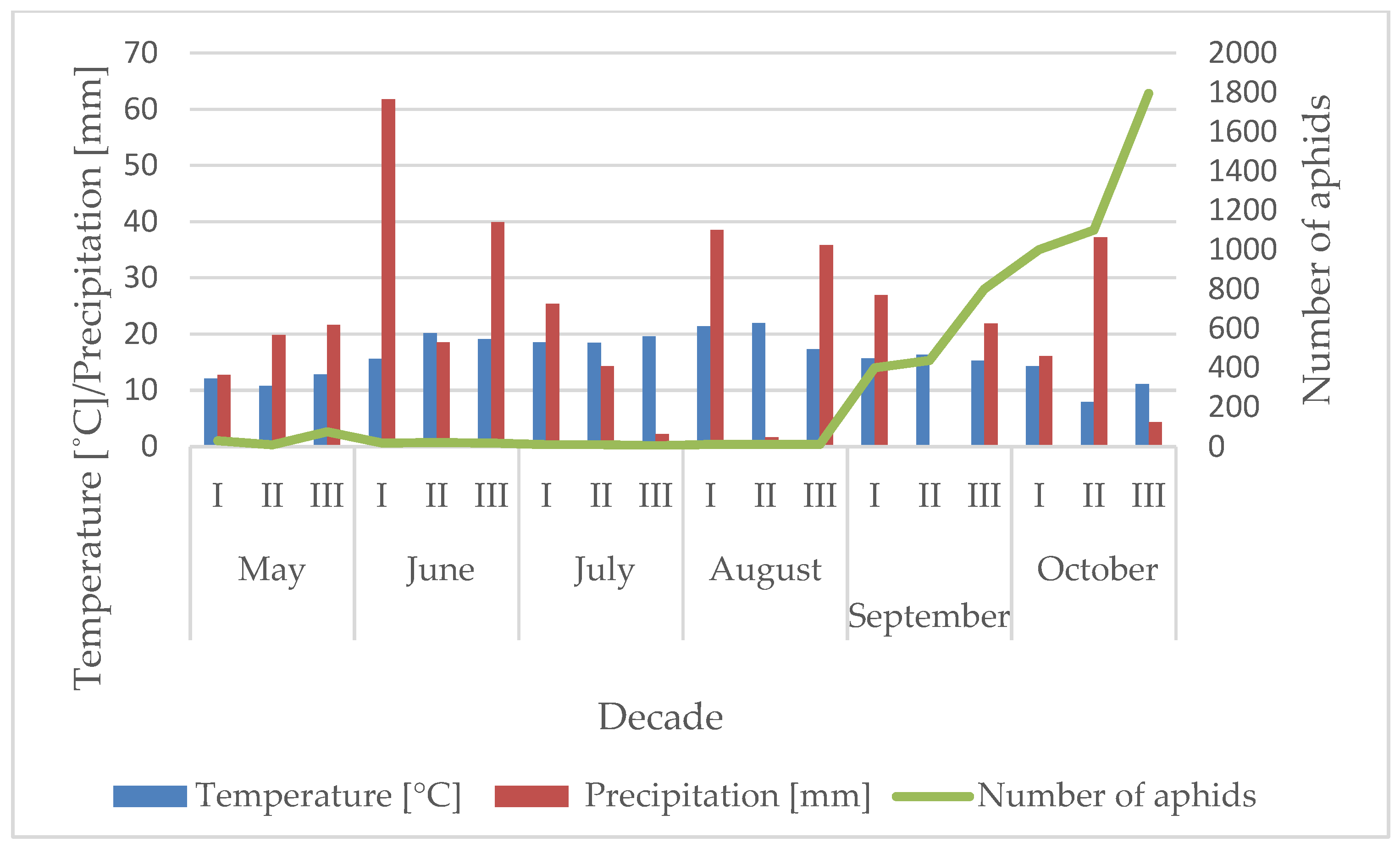
Figure 1. Dynamics of the abundance of Rhopalosiphum padi L. aphids caught using Johnson suction traps in relation to weather conditions in Winna Góra in 2020. I, II and III denote the decades.
Agriculture 16 00152 g001
Figure 2. Dynamics of the abundance of Rhopalosiphum padi L. aphids caught using Johnson suction traps in relation to weather conditions in Winna Góra in 2021. I, II and III denote the decades.
Agriculture 16 00152 g002
Figure 3. Dynamics of the abundance of Rhopalosiphum padi L. aphids caught using Johnson suction traps in relation to weather conditions in Winna Góra in 2022. I, II and III denote the decades.
Agriculture 16 00152 g003
Figure 4. Dynamics of the abundance of Rhopalosiphum padi L. aphids caught using Johnson suction traps in relation to weather conditions in Winna Góra in 2023. I, II and III denote the decades.
Agriculture 16 00152 g004
Figure 5. Dynamics of the abundance of Rhopalosiphum padi L. aphids caught using Johnson suction traps in relation to weather conditions in Winna Góra in 2024. I, II and III denote the decades.
Agriculture 16 00152 g005
Figure 6. Dynamics of the abundance of Rhopalosiphum padi L. aphids caught using Johnson suction traps in relation to weather conditions in Sośnicowice in 2020. I, II and III denote the decades.
Agriculture 16 00152 g006
Figure 7. Dynamics of the abundance of Rhopalosiphum padi L. aphids caught using Johnson suction traps in relation to weather conditions in Sośnicowice in 2021. I, II and III denote the decades.
Agriculture 16 00152 g007
Figure 8. Dynamics of the abundance of Rhopalosiphum padi L. aphids caught using Johnson suction traps in relation to weather conditions in Sośnicowice in 2022. I, II and III denote the decades.
Agriculture 16 00152 g008
Figure 9. Dynamics of the abundance of Rhopalosiphum padi L. aphids caught using Johnson suction traps in relation to weather conditions in Sośnicowice in 2023. I, II and III denote the decades.
Agriculture 16 00152 g009
Figure 10. Dynamics of the abundance of Rhopalosiphum padi L. aphids caught using Johnson suction traps in relation to weather conditions in Sośnicowice in 2024. I, II and III denote the decades.
Agriculture 16 00152 g010
Figure 11. Comparison of Rhopalosiphum padi L. flight activity during spring, summer and autumn in 2020–2024 in Winna Góra and Sośnicowice.
Agriculture 16 00152 g011
Table 1. The influence of meteorological conditions on the population size of the bird cherry–oat aphid (Rhopalosiphum padi L.) analyzed in the months under consideration.
YearSośnicowiceWinna Góra
TemperaturePrecipitation [mm]TemperaturePrecipitation [mm]
EffectR2 100EffectR2 100EffectR2 100EffectR2 100
2020−33429.69914.9−27429.8−45.1a
2021−2623.0−57.80.7−21124.1−99a
2022−316253.5−55226.7−201344.9−1206a
2023−1507.3−30a−1898.3−1248.4
2024−6.724 **89.9−0.502a−537 *79.7−243.9 *64.2
* p < 0.05; ** p < 0.01; a—residual variance exceeds variance of response variate.
Table 2. The influence of meteorological conditions on the population size of the bird cherry–oat aphid (Rhopalosiphum padi L.) analyzed in the seasons under consideration.
YearSośnicowiceWinna Góra
TemperaturePrecipitation [mm]TemperaturePrecipitation [mm]
EffectR2 100EffectR2 100EffectR2 100EffectR2 100
2020−775a243a−7154.9−317a
2021−126865.8−35169.1−84777.7−758a
2022−697875.2−2399 *99.6−457965.2−2890a
2023−488a−324357.2−782a−56440.9
2024−10.6896.12.9747.1−91968.9−126398.4
a—residual variance exceeds variance of response variate. *—p < 0.05.
Table 3. Dates of the beginning of first flights of Rhopalosiphum padi L. caught by Johnson suction traps in 2020–2024 in Winna Góra.
Dates of MigrationYears
20202021202220232024
The start of migration9.0524.054.0512.058.05
The end of migration31.1026.1031.1030.1028.10
Table 4. Dates of the beginning of first flights of Rhopalosiphum padi L. caught by Johnson suction traps in 2020–2024 in Sośnicowice.
Dates of MigrationYears
20202021202220232024
The start of migration8.0519.0524.0512.051.05
The end of migration31.1031.1031.1031.1030.10
Disclaimer/Publisher’s Note: The statements, opinions and data contained in all publications are solely those of the individual author(s) and contributor(s) and not of MDPI and/or the editor(s). MDPI and/or the editor(s) disclaim responsibility for any injury to people or property resulting from any ideas, methods, instructions or products referred to in the content.