


Abstract
Re-ensiling is an important practice in the commercialization and transportation of high-quality silage, yet limited information is available regarding its effectiveness under different storage temperatures and aerobic exposure times. This study aimed to evaluate the effects of storage temperature and aerobic exposure time on the fermentation characteristics, chemical composition, and mycotoxin levels of re-ensiled corn silage. Whole-plant corn harvested at the dough stage (39.77% DM) was initially stored at 20 °C, 30 °C, and 40 °C for 90 d and subsequently subjected to 0, 48, 72, and 96 h of aerobic exposure before re-ensiling, with three replicates per treatment. The results showed that corn silage initially stored at 20 °C and re-ensiled within 48 h of aerobic exposure exhibited the lowest pH (3.70), highest lactic acid concentration (56.78 g/kg DM), and highest Flieg score (99.67) among all temperature treatments (p > 0.05). In contrast, corn silage initially stored at 40 °C and re-ensiled after 96 h of aerobic exposure retained higher water-soluble carbohydrate (5.47% DM) and crude protein (7.32% DM) contents (p > 0.05). Aerobic exposure increased concentrations of beauvericin (71.89–864.92%), zearalenone (6.24–24.20%), and alternariol (0.77–1.89%) across all storage temperatures. Following 96 h of aerobic exposure, re-ensiling reduced these mycotoxin concentrations by 3.16–67.32%, 9.10–20.57%, and 0.62–6.79%, respectively. Overall, re-ensiling helped to preserve silage quality after aerobic exposure. The greatest benefits were observed when silage initially stored at 20 °C was re-ensiled within 48 h, while re-ensiling after prolonged exposure effectively mitigated mycotoxin risks.
1. Introduction
Silage is an essential strategy for preserving forage crops and ensuring a stable feed supply for the livestock industry [1]. However, in many tropical and subtropical regions, high temperatures, high humidity, and variable seasonal rainfall often hinder the production of high-quality silage, particularly on small-scale farms where labor shortages and limited mechanization restrict the on-farm ensiling capacity [2]. Consequently, many farms rely on purchased silage, creating demand for commercial production by specialized enterprises and individual producers [3].
In countries such as Brazil, Israel, and Japan, purchased silage may be transported between farms and re-ensiled after delivery [4,5]. Therefore, re-ensiling has become an important component of the commercial circulation of silage in these production systems. The re-ensiling process typically involves unloading, transferring, recompacting, and sealing the silage into a new silo [6]. During these operations, silage is inevitably exposed to air. This exposure may last for 1–2 days or longer, resulting in temperature increases and aerobic deterioration that can impair the quality of the final re-ensiled product [7]. Consequently, understanding the factors that influence the quality and safety of re-ensiled silage has become increasingly important.
The response of silage to aerobic exposure is a key determinant of the re-ensiling outcome [8]. Aerobic stability after air exposure is influenced by multiple factors, including forage type, residual substrate availability, and oxygen and carbon dioxide dynamics [9]. Among these factors, ambient temperature is particularly important because it strongly affects microbial activity and the progression of aerobic deterioration [10]. Such deterioration not only alters fermentation characteristics but may also create favorable conditions for fungal growth and mycotoxin accumulation. Wang et al. [11] demonstrated that temperature can influence mycotoxin accumulation in corn silage; for example, higher concentrations of dissolved deoxynivalenol (DON) were observed at 20 °C, whereas ochratoxin A (OTA) was elevated at 40 °C. These findings suggest that temperature may affect not only the aerobic stability of silage but also the pattern of mycotoxin contamination during subsequent storage.
As aerobic deterioration progresses, the resulting changes in microbial activity and substrate availability may further compromise the hygienic status of silage intended for animal feed. Xia et al. [12] reported that aerobic exposure can increase mycotoxin concentrations in corn silage. Therefore, the unavoidable air exposure that occurs during transportation and re-ensiling may elevate the risk of mycotoxin accumulation and compromise the safety of silage used as animal feed. Existing studies on re-ensiling have primarily focused on the aerobic exposure timeand the use of additives, emphasizing fermentation characteristics and conventional quality parameters [13,14]. However, limited information is available on how the initial storage temperature of silage affects its subsequent response to re-ensiling following aerobic exposure, particularly in terms of mycotoxin levels.
Therefore, the objective of this study was to evaluate the impact of storage temperature and aerobic exposure time on the fermentation quality, nutritional characteristics, and mycotoxin levels of corn silage during re-ensiling. We hypothesized the following: (i) corn silage initially stored at 20, 30, and 40 °C could maintain acceptable quality if re-ensiled within a specific window of aerobic exposure; and (ii) the subsequent re-ensiling process could reduce mycotoxin concentrations that accumulated during the aerobic challenge. If these results are confirmed, they will provide a scientific basis for the safe handling and practical utilization of re-ensiled forage in commercial silage systems.
2. Materials and Methods
2.1. Harvesting, Ensiling, Aerobic Exposure, and Re-Ensiling
The corn was grown in the experimental field of South China Agricultural University (Guangzhou, China, 23° N, 113° E; subtropical climate). Whole-plant corn was harvested at the dough stage at the end of June 2023, chopped into 2–3 cm lengths, thoroughly mixed, and packed into nine 5 L plastic laboratory silos. The silos were filled to a density of 700 kg/m3 fresh matter and hermetically sealed with a double lid system consisting of an inner sealing lid and an outer screw cap. Unlike the re-ensiled silage, no vacuum sealing was applied during the initial ensiling process. The plastic silos were subsequently placed in three intelligent artificial climate chambers (RXZ-500D, Ningbo Jiangnan Instrument Factory, Ningbo, Zhejiang, China) set at 20, 30, and 40 °C, with relative humidity maintained at 50%. These temperatures were selected to represent a range of storage conditions that may occur in practical silage systems, including elevated temperatures associated with hot climates and heat accumulation during storage, under which silage temperatures may approach 40 °C. Each temperature treatment consisted of three independent 5 L laboratory silo replicates.
The experiment involved three initial storage temperatures (20, 30, and 40 °C), four aerobic exposure times (0, 48, 72, and 96 h), and two sequential ensiling phases (primary ensiling and re-ensiling). Because the primary ensiling and re-ensiling phases represented distinct experimental stages, they were analyzed separately. Within each phase, the effects of storage temperature, aerobic exposure time, and their interaction were evaluated using a two-way ANOVA model. The original 5 L laboratory silo was considered the experimental unit throughout the study.
After 90 days of primary ensiling, all laboratory silos were opened. Prior to aerobic exposure, the top 2–3 cm of silage showing visible deterioration (discoloration, stickiness, or white mycelial growth) was discarded. To prevent pseudoreplication, the remaining silage from each silo was homogenized individually without pooling across replicates and subdivided into four independent portions for 0, 48, 72, and 96 h of aerobic exposure. The four portions were exposed independently under identical ambient conditions (22.6–27.2 °C), with sufficient spacing to ensure uniform aerobic exposure.
Following the designated aerobic exposure periods (0, 48, 72, and 96 h), approximately 300 g of silage from each independently exposed portion was packed into a plastic film bag (200 × 300 mm) at a packing density of approximately 700 kg/m3 (fresh matter basis). The bags were degassed, vacuum-sealed using a commercial vacuum packaging machine (Mingkang Packing Co., Ltd., Zhongshan, China), and re-ensiled at ambient temperature for 30 d. No pooling of material occurred at any stage of the experiment. The re-ensiled bags were derived from the corresponding original silo replicate and aerobic exposure time but were not treated as independent experimental units. Instead, the original 5 L laboratory silo remained the independent experimental unit for all statistical analyses. This resulted in a total of 36 re-ensiled bags (3 storage temperatures × 4 aerobic exposure durations × 3 silo replicates). A control group was maintained by continuously ensiling silage for 120 d without aerobic exposure (three replicates per temperature treatment). At the end of the 30 d re-ensiling period (or the corresponding 120 d continuous ensiling period for the control), all bags were opened for the determination of fermentation characteristics, chemical composition, microbial counts, and mycotoxin concentrations.
2.2. Microbial Counts and Chemical Composition
For microbial enumeration, 10 g of fresh material was mixed with 90 mL of sterile water, shaken thoroughly, and serially diluted from 10−1 to 10−5 with sterile water. Lactic acid bacteria (LAB) were counted on de Man, Rogosa, and Sharpe (MRS) agar (Huankai Microbiology Co., Ltd., Guangzhou, China) after incubation in an anaerobic incubator at 30 °C for 2 d. Aerobic bacteria were counted on nutrient agar. Yeasts and molds were counted on potato dextrose agar acidified to pH 3.5 with sterilized tartaric acid solution, and the plates were incubated at 30 °C for 3 d.
Approximately 100 g of fresh material was oven-dried at 70 °C for 48 h to determine the dry matter (DM) content [15], and then ground to pass through a 1.0 mm screen using a laboratory knife mill (FZ102, Tianjin Taisite Instrument Co., Ltd., Tianjin, China). The crude protein was determined using the Kjeldahl method according to AOAC Official Method 984.13, and calculated as total nitrogen × 6.25 [16]. The neutral detergent fiber (NDF) and acid detergent fiber (ADF) were determined following the procedures of Van Soest et al. [17]. The crude ash was measured after incineration at 550 °C for 3 h. The water soluble carbohydrate (WSC) content was determined using the anthrone colorimetric method [18].
2.3. Fermentation Quality Analysis
For fermentation analyses, 20 g of silage was mixed thoroughly with 80 mL of dis-tilled water and stored at 4 °C for 18 h [19]. The extract was then filtered and used for the determination of pH, ammonia nitrogen (NH3-N), and organic acids. The pH was measured using a glass electrode pH meter (PHS-3C, CSDIHO Co., Ltd., Shanghai, China). The NH3-N content was determined using the phenol–sodium hypochlorite colorimetric method [20]. Organic acids were quantified using high-performance liquid chromatography (HPLC), a Shodex RS Pak KC-811 column (Showa Denko K.K., Kawasaki, Japan), and an RID-10A detector (Shimadzu Co., Ltd., Kyoto, Japan). The mobile phase was 0.1% phosphoric acid, the flow rate was 1.0 mL/min, and the column temperature was maintained at 40 °C.
2.4. Flieg Score Calculation
The Flieg scores of silage and re-ensiled silage were calculated according to Flieg [21] based on the proportions of lactic acid, acetic acid, and butyric acid in the total fermentation acids. Based on this classification, Flieg scores of 0–20 were considered “Failure”, 21–40 were considered “Poor”, 41–60 “Fair”, 61–80 “Good”, and 81–100 “Excellent”.
2.5. Mycotoxin Analysis
A 1.0 g sample was weighed in a 50 mL screw-cap centrifuge tube, and 5 mL of 0.3% formic acid aqueous solution (v/v) was added. The mixture was homogenized for 30 s using a high-speed homogenizer (VM-02U (HYQ-3111); Suzhou Jiemei Electronic Co., Ltd., Suzhou, China) and shaken for 15 min. Then, 2.5 mL of n-hexane was added, vortexed for 2 min, and allowed to stand for phase separation, after which the n-hexane layer was discarded. Subsequently, 5 mL of acetonitrile was added, and the mixture was vortexed for 30 min. After adding 1.5 g of anhydrous magnesium sulfate and 0.5 g of sodium chloride, the tube was vigorously shaken for 2 min and centrifuged at 5000 r/min for 3 min. A 2 mL aliquot of the upper organic phase was transferred to a 15 mL screw-cap centrifuge tube containing 150 mg of anhydrous magnesium sulfate, 150 mg of C18 sorbent, and 20 mg of PSA sorbent. The tube was immediately vortexed at high speed for 1 min and centrifuged at 4 °C for 1 min at 4000 r/min. The resulting supernatant was filtered through a 0.22 μm microporous membrane before analysis.
LC-MS/MS conditions: chromatographic separation was performed on an Acquity UPLC BEH C18 column (100 mm × 2.1 mm, 1.7 μm; Waters Corporation, Milford, MA, USA). The mobile phase consisted of water containing 0.1% formic acid (A) and acetonitrile (B). The gradient program was as follows: 0–1 min, 10% B; 1–5 min, 10–95% B; 5–7 min, 95% B; 7–7.1 min, 95–10% B; and 7.1–10 min, 10% B. The flow rate was 0.3 mL/min, the column temperature was maintained at 40 °C, and the injection volume was 5 μL. Mass spectrometric detection was performed using a Xevo TQD triple quadrupole mass spectrometer (Waters Corporation, Milford, MA, USA) equipped with an electrospray ionization (ESI) source operated in positive ion mode (ESI+). The acquisition was performed in multiple reaction monitoring (MRM) mode. The specific MS source parameters were set as follows: source temperature, 150 °C; desolvation gas temperature, 500 °C; desolvation gas flow, 1000 L/h; and cone gas flow, 30 L/h. The MRM transitions and optimized mass spectrometric parameters (e.g., cone voltage and collision energy) for each analyte are summarized in Supplementary Table S1. Quantification was based on matrix-matched external calibration.
Method validation: the method was validated in a blank silage matrix prior to sample analysis. Analytical specificity was confirmed by the absence of interfering peaks in blank silage extracts, retention time matching (±0.1 min), and the compliance of the qualifier/quantifier ion ratio with the reference (±20%) for every analyte in all batches. Limits of detection (LOD) and quantification (LOQ) were determined as the concentrations yielding signal-to-noise ratios of 3 and 10, respectively: beauvericin (BEA), LOD 2.78 µg/kg, LOQ 8.43 µg/kg; zearalenone (ZEN), LOD 1.86 µg/kg, LOQ 5.64 µg/kg; and alternariol (AOH), LOD 0.25 µg/kg, LOQ 0.75 µg/kg. Linearity was satisfactory across the working range with correlation coefficients (R2) > 0.995 for all analytes. Recovery, matrix effect, and repeatability were evaluated at three spiking levels with five replicates per level. The detailed results of these validation parameters are presented in Supplementary Table S2, with all recovery values ranging from 83.5% to 98.2%, matrix effects between 86.1% and 102.5%, and RSDs below 12%, confirming that the method is suitable for quantitative mycotoxin analysis in corn silage and re-ensiled corn silage. Mycotoxin concentrations in both silage and re-ensiled silage were determined at 0 h and 96 h of aerobic exposure, representing the beginning and the end of the aerobic exposure period, respectively. These time points were selected to evaluate the overall impact of prolonged aerobic exposure on mycotoxin dynamics. Intermediate time points (48 and 72 h) were not included because of the relatively high analytical costs associated with multi-mycotoxin determination.
2.6. Statistical Analysis
The original 5 L laboratory silo was considered the independent experimental unit throughout the study, with three independent silo replicates per storage temperature treatment. Fermentation characteristics, microbial populations, chemical composition, Flieg scores, and mycotoxin concentrations were analyzed using two-way analysis of variance (ANOVA, generalized linear model) to evaluate the effects of storage temperature, aerobic exposure time, and their interaction. When significant effects were detected, treatment means were compared using Duncan’s multiple range test (p < 0.05). In addition, simple linear regression analyses were performed to characterize the quantitative relationships between storage temperature, aerobic exposure time, and selected response variables, thereby complementing the ANOVA by describing overall biological response trends. All statistical analyses and data visualizations were performed using IBM SPSS Statistics 19.0 for Windows (IBM Corporation, Armonk, NY, USA) and R software (version 4.2.2; R Core Team, Vienna, Austria).
3. Results
3.1. Chemical Composition and Microbial Counts in Corn
The DM content of corn was approximately 40%. The CP and WSC contents were approximately 8% and 13% DM, respectively. The NDF content did not exceed 60% DM, and the ADF content was less than 40% DM. In addition, the aerobic bacterial count approached 7 log10 cfu/g FM and was higher than the counts of LAB, yeasts, and molds detected in fresh corn (Table 1).
Table 1.
Chemical composition and microbial counts of fresh corn.
3.2. Fermentation Quality, Flieg Scores, and Microbial Counts of Corn Silage During Aerobic Exposure
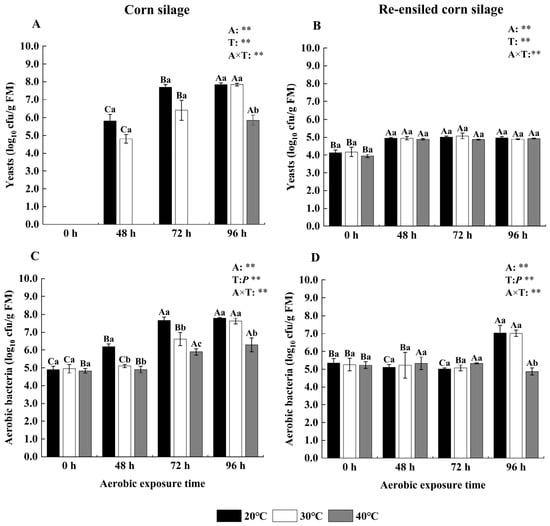
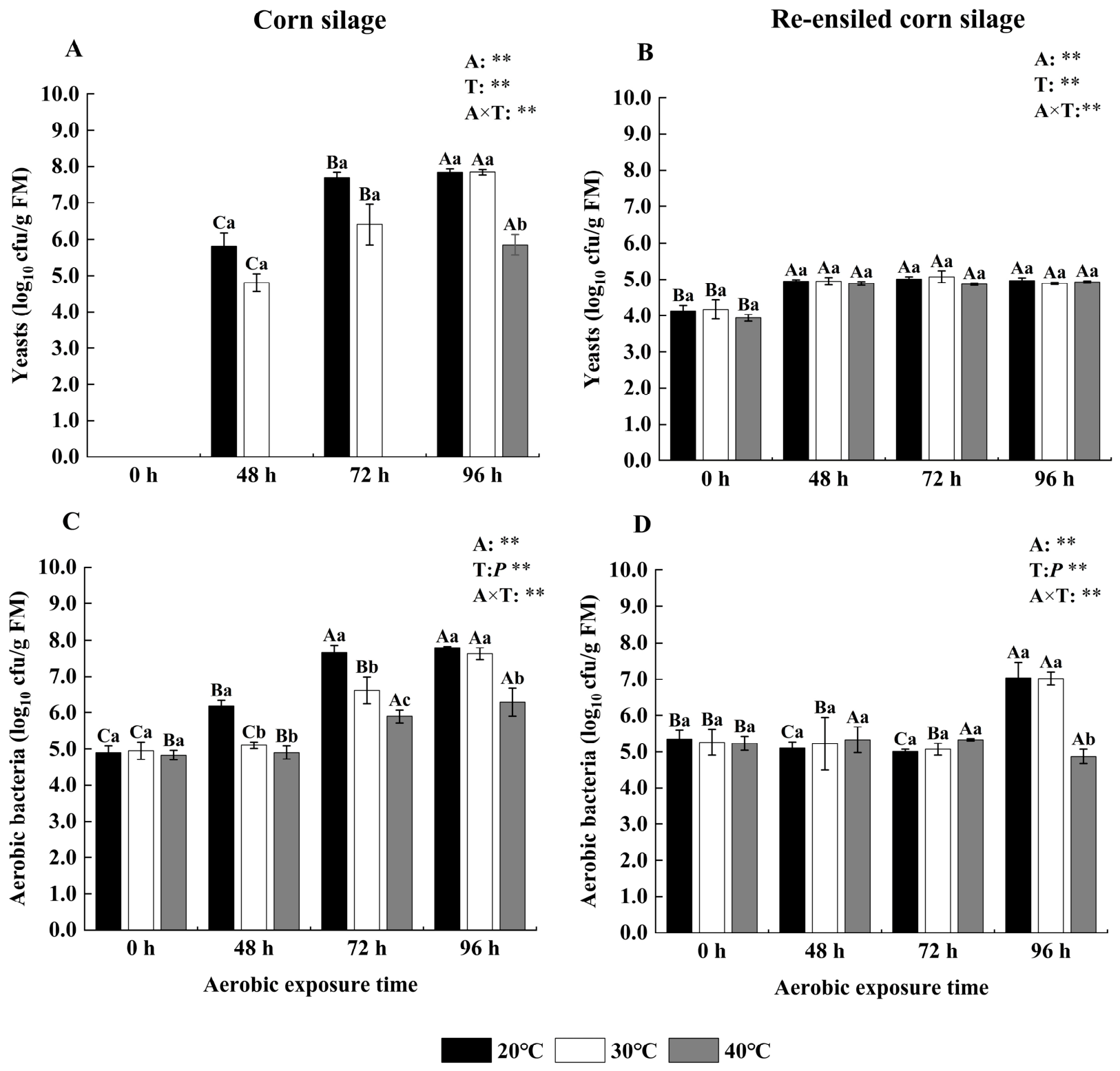
Both the initial storage temperature and aerobic exposure time, along with their interaction, exerted a highly significant effect (p < 0.01) on all evaluated fermentation characteristics (pH, lactic, and acetic acids, NH3-N) and Flieg scores as well as the microbial populations (yeast and aerobic bacterial counts) of the corn silage (Figure 1, Figure 2 and Figure 3).
Figure 1.
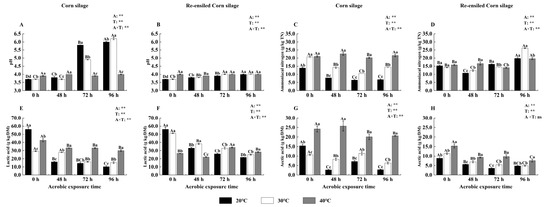
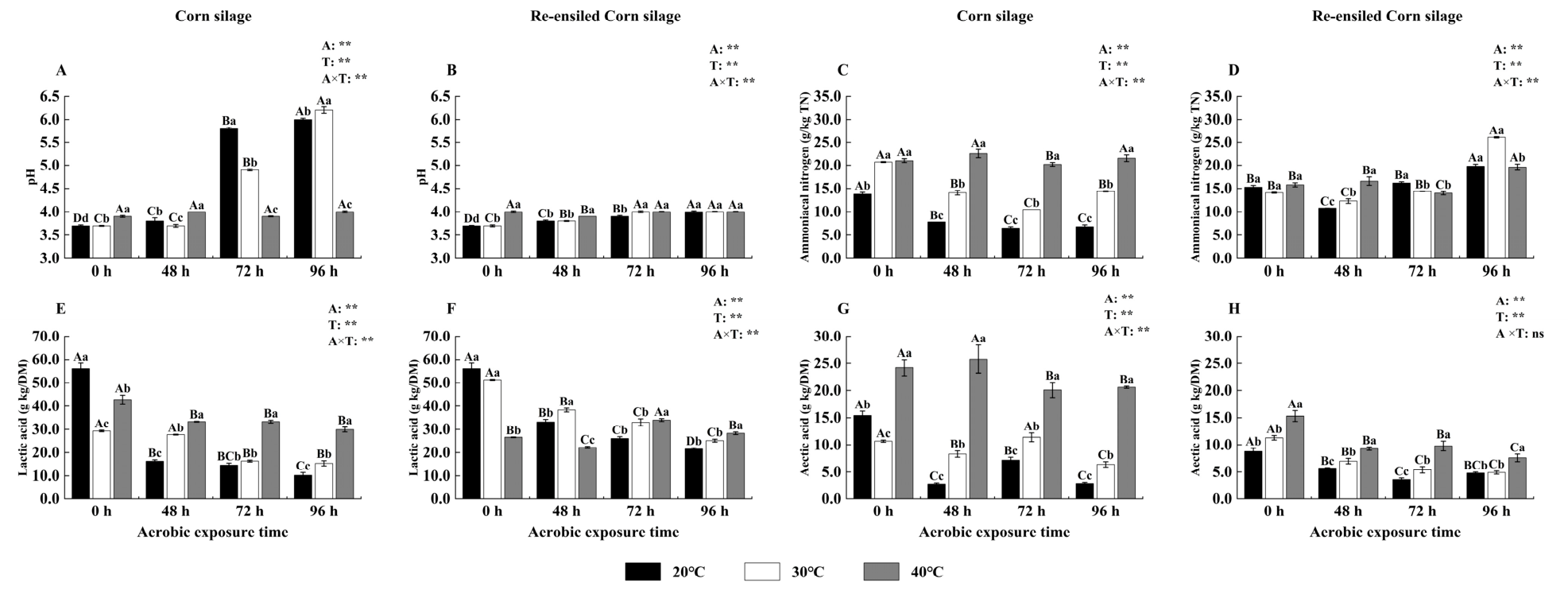
Effects of storage temperature and aerobic exposure time on the fermentation quality of corn silage and re-ensiled corn silage. Panels (A,C,E,G) represent corn silage, whereas panels (B,D,F,H) represent re-ensiled corn silage. Panels (A,B) show pH, panels (C,D) show ammonia nitrogen, panels (E,F) show lactic acid, and panels (G,H) show acetic acid. Black, white, and gray bars represent storage temperatures of 20, 30, and 40 °C, respectively. A, aerobic exposure time; T, storage temperature; and A × T, interaction between aerobic exposure time and storage temperature. For A, T, and A × T, ** indicates p < 0.01, whereas ns indicates no significant effect (p > 0.05). Different capital letters indicate significant differences between aerobic exposure times within the same storage temperature, whereas different lowercase letters indicate significant differences between storage temperatures within the same aerobic exposure time (p < 0.05).
Figure 2.
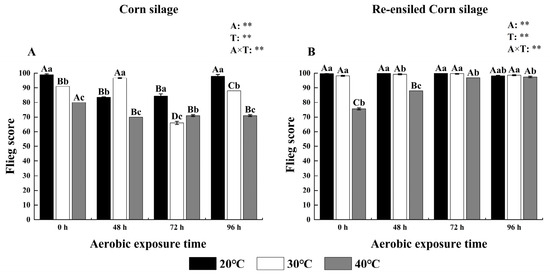
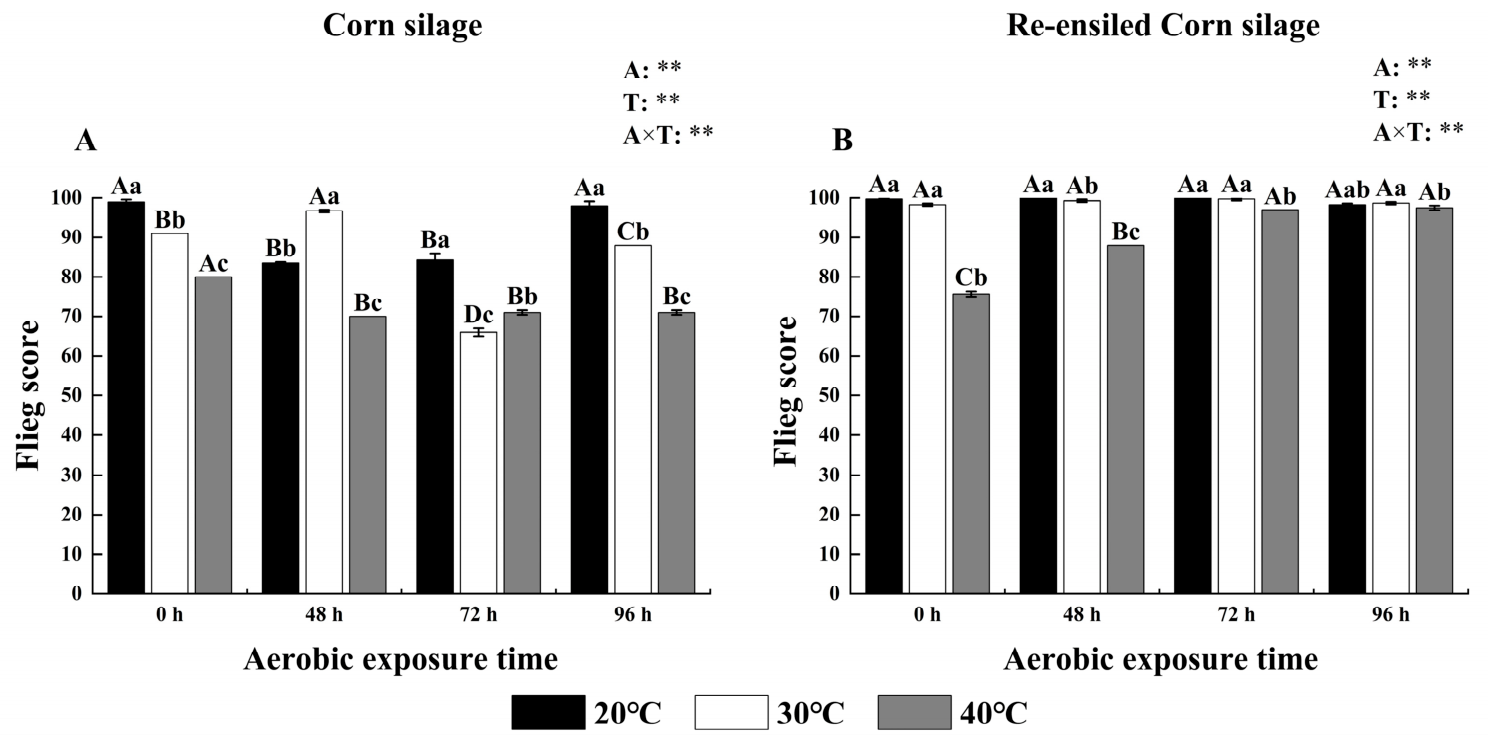
Effects of storage temperature and aerobic exposure time on Flieg scores of corn silage and re-ensiled corn silage. Panel (A) represents corn silage, whereas panel (B) represents re-ensiled corn silage. Black, white, and gray bars represent storage temperatures of 20, 30, and 40 °C, respectively. A, aerobic exposure time; T, storage temperature; and A × T, interaction between aerobic exposure time and storage temperature. For A, T, and A × T, ** indicates p < 0.01. Different capital letters indicate significant differences between aerobic exposure times within the same storage temperature, whereas different lowercase letters indicate significant differences between storage temperatures within the same aerobic exposure time (p < 0.05).
Figure 3.
Effects of storage temperature and aerobic exposure time on microbial counts in corn silage and re-ensiled corn silage. Panels (A,C) represent corn silage, whereas panels (B,D) represent re-ensiled corn silage. Panels (A,B) show yeast counts, whereas panels (C,D) show aerobic bacterial counts. Black, white, and gray bars represent storage temperatures of 20, 30, and 40 °C, respectively. A, aerobic exposure time; T, storage temperature; and A × T, interaction between aerobic exposure time and storage temperature. For A, T, and A × T, ** indicates p < 0.01. FM, fresh matter; cfu, colony-forming units. Different capital letters indicate significant differences between aerobic exposure times within the same storage temperature, whereas different lowercase letters indicate significant differences between storage temperatures within the same aerobic exposure time (p < 0.05).
The pH of corn silage initially stored at 20 °C and 30 °C increased markedly after 48 h of exposure, whereas the pH remained relatively unchanged in silage initially stored at 40 °C (Figure 1A). Lactic acid concentrations decreased during aerobic exposure across all treatments (Figure 1E). In addition, silage initially stored at 40 °C maintained higher acetic acid concentrations, whereas NH3-N concentrations were generally lower in the 20 °C treatment (p < 0.05) (Figure 1C,G).
After 0 h of aerobic exposure, the Flieg score was higher in silage initially stored at 20 °C than in silage initially stored at 30 °C and 40 °C (p < 0.05) (Figure 2A). During aerobic exposure, yeast and aerobic bacterial counts increased across all treatments (Figure 3A,C). Yeast counts exceeded 5 log10 cfu/g FM after 48 h in the 20 °C and 30 °C treatments, whereas this threshold was reached only after 96 h in the 40 °C treatment. Overall, silage initially stored at 40 °C maintained lower microbial counts than the other treatments throughout the exposure period.
3.3. Fermentation Quality, Flieg Scores, and Microbial Counts of Re-Ensiled Corn Silage
Following re-ensiling, both the initial storage temperature and aerobic exposure time significantly affected the pH, lactic acid, acetic acid, and NH3-N contents, alongside the Flieg scores (p < 0.01). Furthermore, the interaction between these two primary factors significantly impacted all of these fermentation characteristics except for the acetic acid content (p < 0.01). Compared with non-re-ensiled silage, re-ensiled corn silage generally exhibited a lower pH and higher lactic acid concentrations after 72 h of aerobic exposure in the 20 °C and 30 °C treatments (Figure 1A,B,E,F). Re-ensiled silage initially stored at 40 °C maintained lower NH3-N concentrations than silage initially stored at 20 °C and 30 °C (Figure 1D). In addition, the highest Flieg score was observed in the 20 °C treatment after re-ensiling after 0 h of aerobic exposure (Figure 2B).
Re-ensiling significantly affected yeast and aerobic bacterial counts (p < 0.01), and the interaction between the initial storage temperature and aerobic exposure time significantly affected aerobic bacterial counts (p < 0.01). Following 72 h of aerobic exposure, subsequent re-ensiling generally reduced yeast and aerobic bacterial counts in corn silage initially stored at 20 °C and 30 °C (Figure 3B,D). In addition, re-ensiled silage initially stored at 40 °C maintained lower aerobic bacterial counts than silage initially stored at 20 °C and 30 °C for the same exposure time (p < 0.05) (Figure 3D).
3.4. Chemical Composition of Corn Silage During Aerobic Exposure
The initial storage temperature and aerobic exposure time significantly affected the WSC, CP, NDF, and ADF contents of corn silage (p < 0.01). Significant interactions between the initial storage temperature and aerobic exposure time were also observed for WSC, NDF, and ADF contents (p < 0.01), and for the CP content (p < 0.05) (Table 2).
Table 2.
Effects of storage temperature and aerobic exposure time on the chemical composition of corn silage.
During aerobic exposure, silage initially stored at 40 °C maintained a higher DM content than silage initially stored at 20 °C and 30 °C. After 0 h of aerobic exposure, the highest WSC and CP contents were observed in the 20 °C treatment. However, after 96 h of exposure, the highest DM, WSC, and CP contents were observed in the 40 °C treatment (Table 2).
3.5. Chemical Composition of Re-Ensiled Corn Silage
The aerobic exposure time significantly affected the WSC, CP, and ADF contents in re-ensiled corn silage (p < 0.01), whereas the initial storage temperature affected the CP (p < 0.01) as well as WSC, NDF, and ADF contents (p < 0.05). In addition, significant interactions between the aerobic exposure time and initial storage temperature were observed for the WSC, CP, NDF, and ADF contents (p < 0.01) (Table 3).
Table 3.
Effects of storage temperature and aerobic exposure time on the chemical composition of re-ensiled corn silage.
In re-ensiled corn silage, the WSC and CP contents varied with the initial storage temperature and prior aerobic exposure time. For silage re-ensiled immediately (0 h exposure), the 20 °C treatment exhibited the highest WSC content and maintained a higher CP content than the 30 °C and 40 °C treatments after 48 h of exposure. However, when re-ensiled following 96 h of exposure, the 40 °C treatment retained higher WSC and CP contents than the other temperature groups (Table 3).
3.6. Correlations of Storage Temperature and Aerobic Exposure Time with Key Indicators of Corn Silage and Re-Ensiled Corn Silage
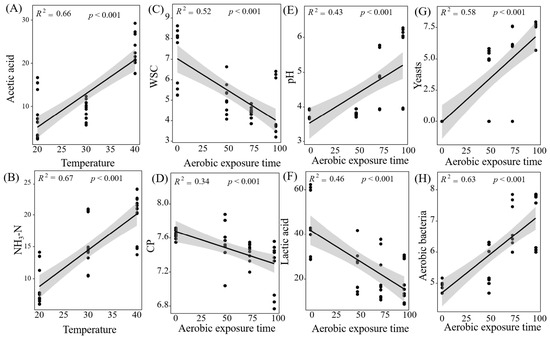
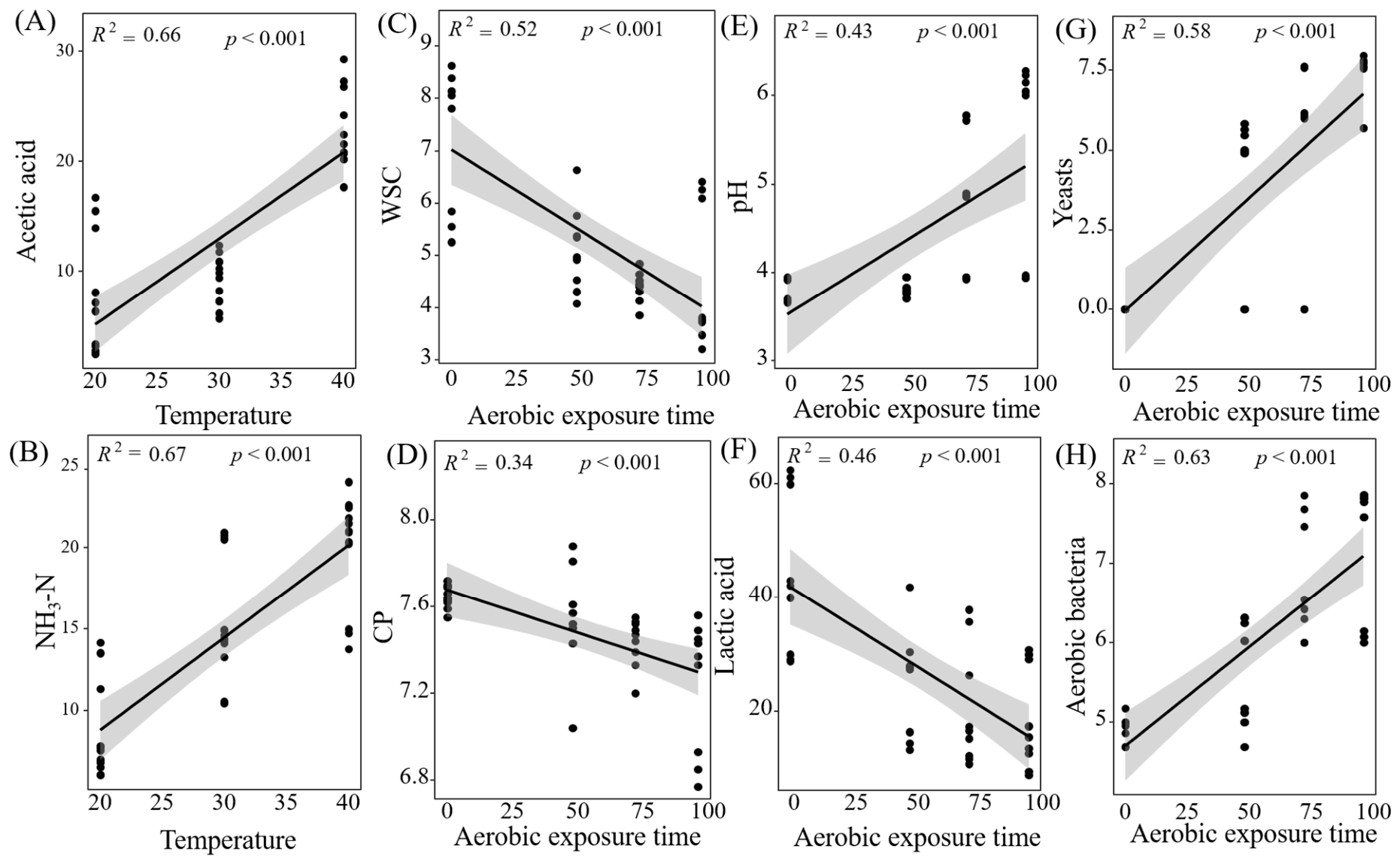
The initial storage temperature was positively associated with acetic acid and NH3-N contents in corn silage (R2 = 0.66 and 0.67, respectively; p < 0.001) (Figure 4A,B). In contrast, the aerobic exposure time was negatively associated with WSC, CP, and lactic acid contents (R2 = 0.52, 0.34, and 0.46, respectively; p < 0.001) (Figure 4C,D,F), but positively associated with pH and the microbial counts of yeast and aerobic bacteria (R2 = 0.43, 0.58, and 0.63, respectively; p < 0.001) (Figure 4E,G,H).
Figure 4.
Correlations of storage temperature and aerobic exposure time with key indicators of corn silage. Panels (A,B) show the simple linear relationships between initial storage temperature and acetic acid and ammonia nitrogen (NH3-N), respectively. Panels (C–H) show the simple linear relationships between aerobic exposure time and water-soluble carbohydrate (WSC), crude protein (CP), pH, lactic acid, yeast counts, and aerobic bacterial counts, respectively. Solid black lines represent the fitted simple linear regression models, and shaded gray bands indicate the 95% confidence intervals. Black dots represent individual observations. NH3-N, ammonia nitrogen; WSC, water soluble carbohydrate; CP, crude protein; R2, coefficient of determination; and p, significance of the regression model.
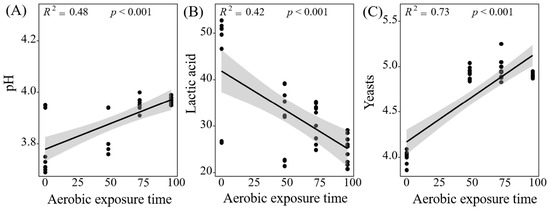
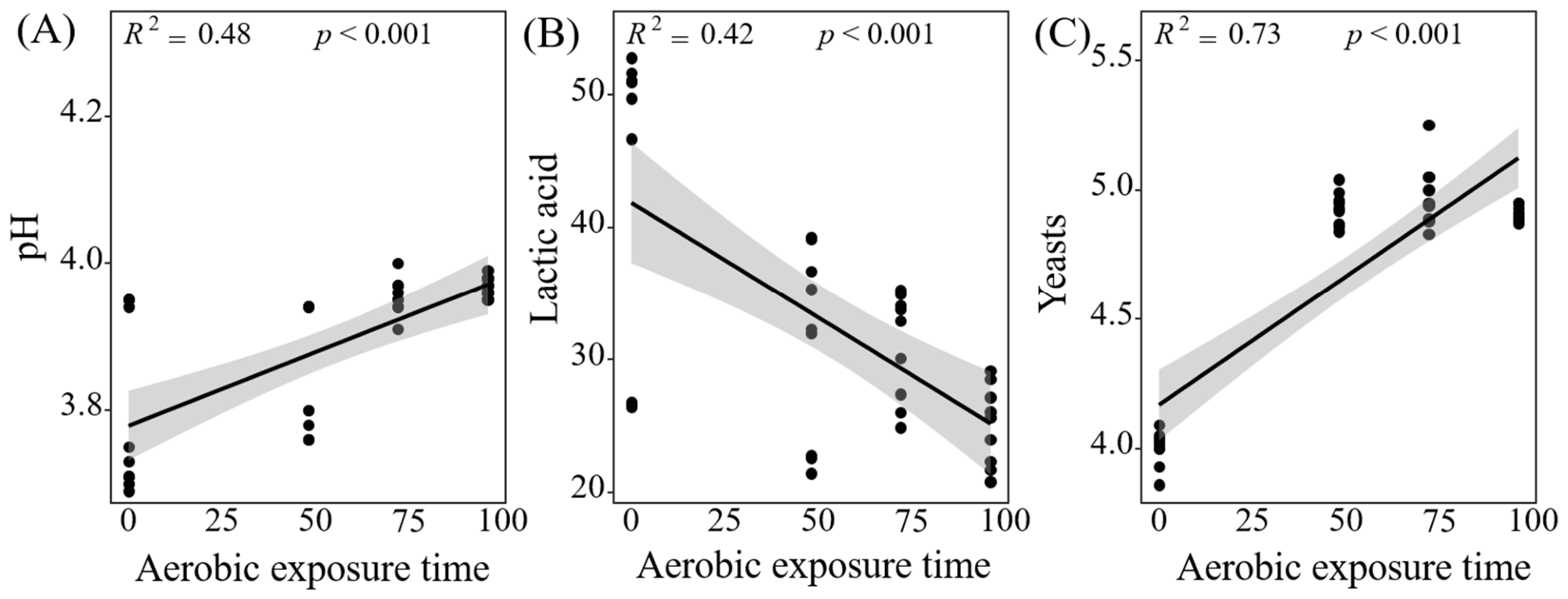
In re-ensiled corn silage, the prior aerobic exposure time was negatively associated with the lactic acid content (R2 = 0.42, p < 0.001) and positively associated with pH and yeast counts (R2 = 0.48 and 0.73, respectively; p < 0.001) (Figure 5).
Figure 5.
Correlations between aerobic exposure time and key indicators of re-ensiled corn silage. Panels (A–C) show the simple linear relationships between prior aerobic exposure time and pH, lactic acid, and yeast counts, respectively. Solid black lines represent the fitted simple linear regression models, and shaded gray bands indicate the 95% confidence intervals. Black dots represent individual observations. R2, coefficient of determination; and p, significance of the regression model.
3.7. Mycotoxin Concentrations in Corn
As shown in Table 4, three mycotoxins were detected in the corn samples, including beauvericin (BEA), zearalenone (ZEN), and alternariol (AOH) at concentrations of 695.41, 213.81, and 86.09 μg/kg, respectively.
Table 4.
Mycotoxin concentrations in fresh corn.
3.8. Mycotoxin Concentrations in Corn Silage and Re-Ensiled Corn Silage
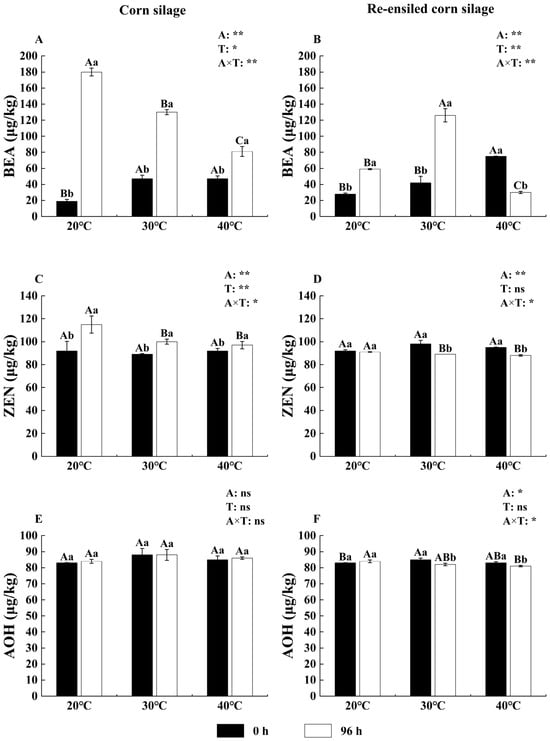
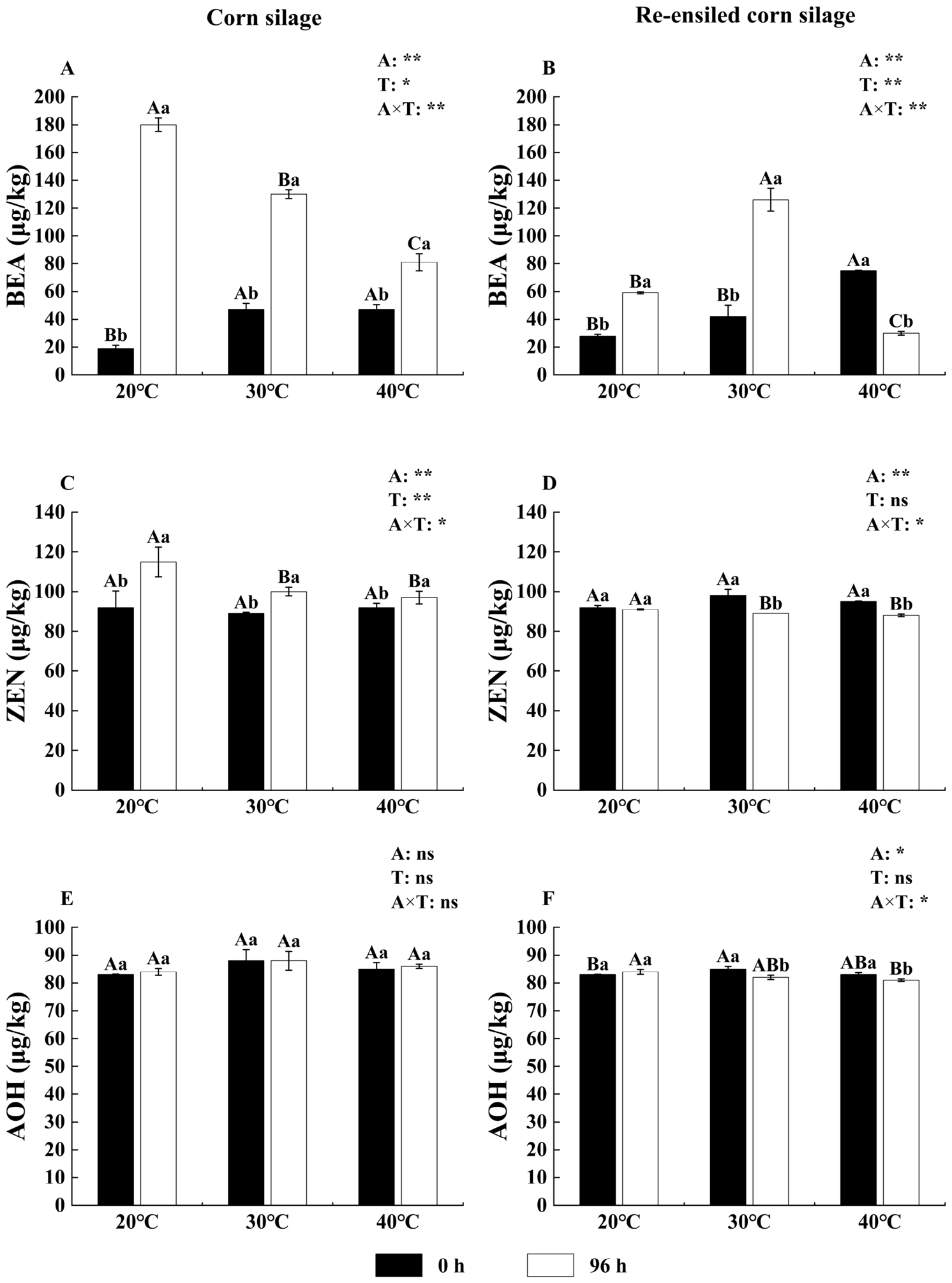
For corn silage, the initial storage temperature, aerobic exposure time, and their interaction significantly affected the BEA and ZEN concentrations (p < 0.05), whereas the AOH concentration was unaffected (p > 0.05) (Figure 6E). Prolonged aerobic exposure increased BEA and ZEN concentrations across all initial storage temperatures (p < 0.05) (Figure 6A,C), but after 96 h of exposure, BEA concentrations in the 40 °C treatment were lower than in the 20 °C and 30 °C treatments (p < 0.05) (Figure 6A).
Figure 6.
Effects of storage temperature and aerobic exposure time on mycotoxin concentrations in corn silage and re-ensiled corn silage. Panels (A,C,E) represent corn silage, whereas panels (B,D,F) represent re-ensiled corn silage. Black and white bars represent 0 and 96 h of aerobic exposure, respectively. A, aerobic exposure time; T, storage temperature; and A × T, interaction between aerobic exposure time and storage temperature. For A, T, and A × T, * indicates p < 0.05, ** indicates p < 0.01, whereas ns indicates no significant effect (p > 0.05). BEA, beauvericin; ZEN, zearalenone; and AOH, alternariol. Different capital letters indicate significant differences between storage temperatures within the same aerobic exposure time, whereas different lowercase letters indicate significant differences between aerobic exposure times (0 and 96 h) within the same storage temperature (p < 0.05).
For re-ensiled corn silage, prior aerobic exposure and its interaction with the initial storage temperature significantly affected BEA, ZEN, and AOH concentrations (all p < 0.05), while the initial storage temperature alone influenced only the BEA concentrations (p < 0.05). For silage re-ensiled immediately (0 h), BEA concentrations were higher in the 40 °C treatment than in the 20 °C and 30 °C treatments (p < 0.05) (Figure 6B). After 96 h of prior exposure, BEA concentrations in the 40 °C treatment and ZEN concentrations in the 30 °C and 40 °C treatments were lower than in the 20 °C treatment (p < 0.05) (Figure 6B,D). Overall, compared to primary silage subjected to 96 h of aerobic exposure, the corresponding re-ensiled silage generally exhibited reduced mycotoxin concentrations.
4. Discussion
4.1. Chemical Characteristics and Microbial Counts of Fresh Corn Before Ensiling
During the natural fermentation process, the concentrations of water-soluble carbohydrate (WSC) and the epiphytic microbial population in the raw material are key factors affecting silage fermentation quality. To ensure satisfactory fermentation, the WSC content in the raw material should be at least 12% DM, and the lactic acid bacteria (LAB) count should reach at least 5 log10 cfu/g FM [22,23]. In the present study, the corn material met these basic requirements, indicating that it was suitable for producing well-fermented silage.
4.2. Aerobic Stability of Corn Silage During Aerobic Exposure
Aerobic deterioration is commonly defined as a pH increase of more than 0.5 units above the initial value [24]. The differences in aerobic stability observed among storage temperature treatments suggest that initial storage conditions may influence the subsequent deterioration process during aerobic exposure. Yeasts are widely recognized as primary initiators of aerobic deterioration, and yeast counts above 5 log10 cfu/g FM are generally associated with aerobic deterioration [25,26]. The observed changes in yeast countswere consistent with the differences in aerobic stability among treatments. Similar observations were reported by Ashbell et al. [10], whereas Chai et al. [27] reported contrasting results in oat silage, indicating that temperature effects on aerobic stability may vary with forage type and storage conditions. Greater nutrient retention should not be interpreted as evidence of superior preservation but may instead reflect delayed deterioration under the conditions of this study. Minimizing aerobic exposure remains essential for maintaining silage quality.
4.3. Fermentation Quality, Flieg Scores, and Microbial Counts in Corn Silage and Re-Ensiled Corn Silage
During aerobic exposure, oxygen ingress promotes the activity of spoilage microorganisms, including yeasts, molds, and aerobic bacteria, which metabolize organic acids, ethanol, and WSC, thereby contributing to an increase in silage pH [28]. The deterioration process is generally accompanied by the depletion of fermentation products and the proliferation of aerobic microorganisms, ultimately reducing silage stability. NH3-N is widely used as an indicator of protein degradation during ensiling [29]. The different responses of NH3-N and CP during aerobic exposure may reflect delayed deterioration rather than improved preservation.
The observed differences in lactic acid concentrations among treatments may be related to the effects of the storage temperature on fermentation characteristics before re-ensiling. Previous studies have indicated that temperatures between 20 °C and 30 °C favor lactic acid fermentation in corn silage [30,31]. The restoration of anaerobic conditions during re-ensiling may have contributed to the maintenance of fermentation quality and the limitation of further deterioration, although this mechanism was not directly investigated in the present study.
Silage quality, assessed using the Flieg score, was primarily determined by lactic and acetic acid concentrations due to the absence of butyric acid [21]. Therefore, differences in Flieg scores largely reflected differences in fermentation quality among treatments. Although silage from the 40 °C treatment remained classified as “Good” or “Excellent”, this should not be interpreted as evidence that prolonged high-temperature exposure is beneficial for preservation [32,33]. These findings highlight that re-ensiling primarily maintains silage quality after aerobic exposure, and that minimizing exposure remains essential for maintaining fermentation quality.
4.4. Chemical Composition of Corn Silage and Re-Ensiled Corn Silage
WSC serves as the primary substrate for ensiling fermentation and as a key carbon source for microbial growth [34]. The reduction in WSC during aerobic exposure is likely associated with increased oxygen ingress, which stimulates aerobic microbial activity and accelerates the utilization of soluble sugars [35]. In contrast, the slight increase in WSC observed under certain conditions indicates that WSC dynamics during aerobic exposure may be influenced by multiple factors, although the relative importance of these factors remains unclear.
Higher nutrient levels should not be interpreted as evidence of superior aerobic stability or improved preservation. Rather, they may reflect delayed deterioration under the specific conditions of this study. The persistence of relatively high nutrient levels after re-ensiling suggests that nutrient losses during aerobic exposure may vary among storage conditions; however, this observation should not be interpreted as evidence that elevated storage temperatures improve preservation. Regardless of the storage conditions, proper aerobic management remains essential. Therefore, minimizing aerobic exposure remains a fundamental strategy for safeguarding the nutritional value of silage.
4.5. Mycotoxin Contamination in Corn Silage and Re-Ensiled Corn Silage
Corn is highly susceptible to fungal infection and mycotoxin contamination. The presence of mycotoxins in corn silage can impair the productivity, health, and reproductive performance of dairy herds, compromise feed safety, and potentially transfer into animal-derived products, thereby posing risks to human health [36,37]. The occurrence of Fusarium-associated mycotoxins in corn is consistent with the environmental conditions in Guangzhou, China, where high temperatures and humidity strongly favor Fusarium development [38]. Ensiling has been reported to reduce the concentrations of certain mycotoxins [39], and a similar trend was observed in the present study.
Previous studies have shown that oxygen ingress can promote mycotoxin accumulation during aerobic deterioration [40], which is consistent with the trend observed in the present study and the findings of Xia et al. [12]. Differences in mycotoxin accumulation among storage temperature treatments suggest that initial storage conditions may influence subsequent mycotoxin dynamics during aerobic exposure. Acetic acid has been reported to inhibit the growth of certain undesirable microorganisms [41], although its specific role in the responses observed in the present study remains unclear.
The re-establishment of low pH and anaerobic conditions during re-ensiling may contribute to mitigating mycotoxin risks, as such conditions are generally unfavorable for the growth and activity of toxigenic microorganisms [42]. However, as this study relied primarily on chemical analyses and classical microbiological counts, the underlying mechanisms were not directly evaluated. Nevertheless, under the laboratory conditions of the present study, re-ensiling showed potential as a practical strategy for helping to manage mycotoxin risks while preserving silage quality. Several limitations should be acknowledged. Although three biological replicates are commonly used in laboratory-scale silo experiments, larger sample sizes would improve statistical robustness. In addition, re-ensiling was conducted using vacuum-sealed plastic bags containing approximately 300 g of silage, which may not fully represent commercial-scale re-ensiling conditions. Therefore, caution should be exercised when extrapolating the present findings to practical silage systems. Furthermore, the absence of high-throughput microbial sequencing and starch analysis limited a more detailed evaluation of the biological processes associated with the observed changes in fermentation characteristics and mycotoxin profiles. Future studies incorporating microbial community analyses, metabolomics, and commercial-scale validation trials are needed to further clarify these responses and verify their practical applicability.
5. Conclusions
Re-ensiling proved to be a practical strategy for preserving corn silage following aerobic exposure. Under the conditions of this study, the most favorable fermentation quality was observed when silage initially stored at 20 °C was re-ensiled within 48 h of aerobic exposure. Although prolonged aerobic exposure increased the risk of mycotoxin accumulation, re-ensiling after 96 h of exposure was associated with lower concentrations of beauvericin, zearalenone, and alternariol across all storage temperature treatments. Overall, timely re-ensiling helped to preserve silage quality and mitigate mycotoxin risks following aerobic exposure, while minimizing aerobic exposure remains essential for maintaining silage quality and safety. Nevertheless, because re-ensiling was evaluated under laboratory-scale conditions, further validation under commercial-scale silage systems is warranted to confirm the applicability of these findings under practical conditions.
Supplementary Materials
The following supporting information can be downloaded at https://www.mdpi.com/article/10.3390/agriculture16131474/s1, Table S1: Mass spectrometry parameters of the LC-MS/MS method for three mycotoxins; Table S2: Validation parameters of the LC-MS/MS method for three mycotoxins in corn silage and re-ensiled corn silage.
Author Contributions
Y.L.: Conceptualization, Methodology, Software, Investigation, Validation, Formal analysis, Visualization, and Writing—original draft. K.C.: Formal analysis and Investigation. M.X.: Visualization and Investigation. Y.W. (Yanyan Wang): Investigation. Y.W. (Yuhan Wang): Investigation. Y.H.: Investigation. J.T.: Investigation. J.Z.: Conceptualization, Supervision, Data curation, Funding acquisition, Project administration, Resource, and Writing—review and editing. All authors have read and agreed to the published version of the manuscript.
Funding
This research was funded by the National Key R&D Program of China (Grant No. 2022YFE0111000).
Data Availability Statement
The data that support the findings of this study are available from the corresponding author upon reasonable request.
Conflicts of Interest
The authors declare no conflicts of interest.
References
- Yin, X.; Tian, J.; Zhang, J. Effects of re-ensiling on the fermentation quality and microbial community of napier grass (Pennisetum purpureum) silage. J. Sci. Food Agric. 2021, 101, 5028–5037. [Google Scholar] [CrossRef] [Scilit] [PubMed]
- Namihira, T.; Shinzato, N.; Akamine, H.; Maekawa, H.; Matsui, T. Influence of nitrogen fertilization on tropical-grass silage assessed by ensiling process monitoring using chemical and microbial community analyses. J. Appl. Microbiol. 2010, 108, 1954–1965. [Google Scholar] [CrossRef] [Scilit] [PubMed]
- Michel, P.H.F.; Gonçalves, L.C.; Rodrigues, J.A.S.; Keller, K.M.; Raposo, V.S.; Lima, E.M.; Santos, F.P.C.; Jayme, D.G. Re-ensiling and inoculant application with Lactobacillus plantarum and Propionibacterium acidipropionici on sorghum silages. Grass Forage Sci. 2017, 72, 432–440. [Google Scholar] [CrossRef] [Scilit]
- dos Anjos, G.; Gonçalves, L.; Rodrigues, J.; Keller, K.; Coelho, M.; Michel, P.; Ottoni, D.; Jayme, D. Effect of re-ensiling on the quality of sorghum silage. J. Dairy Sci. 2018, 101, 6047–6054. [Google Scholar] [CrossRef] [Scilit] [PubMed]
- Tian, J.; Yin, X.; Zhang, J. Changes of the fermentation quality and microbial community during re-ensiling of sweet corn stalk silage. Ital. J. Anim. Sci. 2022, 21, 168–177. [Google Scholar] [CrossRef] [Scilit]
- Faria, E.F.S.; da Silva, T.C.; Pina, D.d.S.; Santos, E.M.; de Araújo, M.L.G.M.L.; da Silva, L.O.; de Carvalho, G.G.P. Do re-ensiling time and application of Lactobacillus buchneri alter the characteristics of sugarcane silage? J. Agric. Sci. 2020, 158, 438–446. [Google Scholar] [CrossRef] [Scilit]
- de Queiroz, A.C.M.; Mendonça, R.d.C.A.d.; dos Santos, R.I.R.; Cardoso, M.V.S.B.; Domingues, F.N.; Faturi, C.; da Silva, T.C.; Rêgo, A.C.D. Effects of whole-plant corn silage relocation on quality, chemical composition, and intake, digestibility, and nitrogen balance in sheep. Small Rumin. Res. 2021, 205, 106558. [Google Scholar] [CrossRef] [Scilit]
- Chen, Y.; Weinberg, Z. The effect of relocation of whole-crop wheat and corn silages on their quality. J. Dairy Sci. 2014, 97, 406–410. [Google Scholar] [CrossRef] [Scilit] [PubMed]
- de Lima, T.O.; Lino, A.d.A.; Sanches, L.A.; Brito, V.M.; dos Santos-Araujo, S.N.; Sant’anna, M.A.C.; de Araujo, L.C. Quality of re-ensiled sorghum silages after prolonged periods of environmental exposure. Semin. Ciênc. Agrar. 2020, 41, 357–362. [Google Scholar] [CrossRef] [Scilit]
- Ashbell, G.; Weinberg, Z.G.; Hen, Y.; Filya, I. The effects of temperature on the aerobic stability of wheat and corn silages. J. Ind. Microbiol. Biotechnol. 2002, 28, 261–263. [Google Scholar] [CrossRef] [Scilit] [PubMed]
- Wang, M.; Xu, S.; Wang, T.; Jia, T.; Xu, Z.; Wang, X.; Yu, Z. Effect of inoculants and storage temperature on the microbial, chemical and mycotoxin composition of corn silage. Anim. Biosci. 2018, 31, 1903–1912. [Google Scholar] [CrossRef] [Scilit] [PubMed]
- Xia, G.-H.; Huang, Y.; Wu, C.-R.; Zhang, M.-Z.; Yin, H.-Y.; Yang, F.; Chen, C.; Hao, J. Characterization of mycotoxins and microbial community in whole-plant corn ensiled in different silo types during aerobic exposure. Front. Microbiol. 2023, 14, 1136022. [Google Scholar] [CrossRef] [Scilit] [PubMed]
- Santos, F.P.C.; de Oliveira, A.F.; de Souza, F.A.; Rodrigues, J.A.S.; Gonçalves, L.C.; e Silva, R.R.; Lana, Â.M.Q.; Jayme, D.G. Re-ensiling effects on sorghum silage quality, methane emission and sheep efficiency in tropical climate. Grass Forage Sci. 2021, 76, 440–450. [Google Scholar] [CrossRef] [Scilit]
- dos Santos, R.I.R.; Mendonça, R.d.C.A.d.; de Queiroz, A.C.M.; Bernardes, T.F.; Domingues, F.N.; Faturi, C.; da Silva, T.C.; Rêgo, A.C.D. How do relocation time and length of storage after relocation affect fermentation and nutritive value of corn silage? Rev. Bras. Zootec. 2023, 52, 1516–3598. [Google Scholar] [CrossRef] [Scilit]
- Zhang, J.G.; Liu, Q.H.; Yang, F.Y. The chemical composition and ensiling characteristics of sweet corn processing by products. Adv. Mater. Res. 2011, 236–238, 305–308. [Google Scholar] [CrossRef] [Scilit]
- AOAC. Official Methods of Analysis, 15th ed.; Association of Official Analytical Chemists: Arlington, VA, USA, 1990. [Google Scholar]
- Van Soest, P.J.; Robertson, J.B.; Lewis, B.A. Methods for dietary fiber, neutral detergent fiber, and nonstarch polysaccharides in relation to animal nutrition. J. Dairy Sci. 1991, 74, 3583–3597. [Google Scholar] [CrossRef] [Scilit] [PubMed]
- Murphy, R.P. A method for the extraction of plant samples and the determination of total soluble carbohydrates. J. Sci. Food Agric. 2010, 9, 714–717. [Google Scholar] [CrossRef] [Scilit]
- Cui, X.; Yang, Y.; Zhang, M.; Jiao, F.; Gan, T.; Lin, Z.; Huang, Y.; Wang, H.; Liu, S.; Bao, L.; et al. Optimized ensiling conditions and microbial community in mulberry leaves silage with inoculants. Front. Microbiol. 2022, 13, 813363. [Google Scholar] [CrossRef] [Scilit] [PubMed]
- Broderick, G.A.; Kang, J.H. Automated simultaneous determination of ammonia and total amino acids in ruminal fluid and in vitro media. J. Dairy Sci. 1980, 63, 64–75. [Google Scholar] [CrossRef] [Scilit] [PubMed]
- Flieg, O. A key for the evaluation of silage samples. Futterbau 1938, 1, 112–128. [Google Scholar]
- Smith, L.H. Theoretical carbohydrates requirement for alfalfa silage production. Agron. J. 1962, 54, 291–293. [Google Scholar] [CrossRef] [Scilit]
- McDonald, P.; Henderson, A.R.; Heron, S.J.E. The Biochemistry of Silage, 2nd ed.; Chalcombe Publications: Marlow, UK, 1991. [Google Scholar]
- Mu, L.; Xie, Z.; Hu, L.; Chen, G.; Zhang, Z. Cellulase interacts with Lactobacillus plantarum to affect chemical composition, bacterial communities, and aerobic stability in mixed silage of high-moisture amaranth and rice straw. Bioresour. Technol. 2020, 315, 123772. [Google Scholar] [CrossRef] [Scilit] [PubMed]
- Wilkinson, J.M.; Davies, D.R. The aerobic stability of silage: Key findings and recent developments. Grass Forage Sci. 2013, 68, 1–19. [Google Scholar] [CrossRef] [Scilit]
- Drouin, P.; Tremblay, J.; Renaud, J.; Apper, E. Microbiota succession during aerobic stability of maize silage inoculated with Lentilactobacillus buchneri NCIMB 40788 and Lentilactobacillus hilgardii CNCM-I-4785. MicrobiologyOpen 2021, 10, e1153. [Google Scholar] [CrossRef] [Scilit] [PubMed]
- Chai, J.; Gong, W.; Bai, J.; Ju, Z.; Zhao, G. Dry matter recovery, ensiling characteristics and aerobic stability of oat silage treated with microbial inoculants at different temperatures. Arch. Anim. Nutr. 2022, 76, 175–190. [Google Scholar] [CrossRef] [Scilit] [PubMed]
- Song, C.; Wang, C.; Ma, C.; Meng, Q.; Li, J.; Zhang, S.; Shan, A. Low concentrations of acetic acid and its sodium salt enhance the anaerobic fermentation and aerobic preservation of Chinese cabbage waste. Environ. Technol. Innov. 2025, 38, 104207. [Google Scholar] [CrossRef] [Scilit]
- He, L.; Wang, Y.; Guo, X.; Chen, X.; Zhang, Q. Evaluating the effectiveness of screened lactic acid bacteria in improving crop residues silage: Fermentation parameter, nitrogen fraction, and bacterial community. Front. Microbiol. 2022, 13, 680988. [Google Scholar] [CrossRef] [Scilit] [PubMed]
- Kim, S.; Adesogan, A. Influence of ensiling temperature, simulated rainfall, and delayed sealing on fermentation characteristics and aerobic stability of corn silage. J. Dairy Sci. 2006, 89, 3122–3132. [Google Scholar] [CrossRef] [Scilit] [PubMed]
- Liu, J.; Hao, J.; Zhao, M.; Yan, X.; Jia, Y.; Wang, Z.; Ge, G. Effects of different temperature and density on quality and microbial population of wilted alfalfa silage. BMC Microbiol. 2024, 24, 380. [Google Scholar] [CrossRef] [Scilit] [PubMed]
- Hou, J.; Nishino, N. Bacterial and fungal microbiota of guinea grass silage shows various levels of acetic acid fermentation. Fermentation 2022, 8, 10. [Google Scholar] [CrossRef] [Scilit]
- Jatkauskas, J.; Lanckriet, A.; Gentilini, M.; Vrotniakiene, V. Effects of Different Inoculant Types on the Fermentation Characteristics of Silages from Various Forage Crops. Agriculture 2026, 16, 583. [Google Scholar] [CrossRef] [Scilit]
- Yu, Q.; Xu, J.; Li, M.; Xi, Y.; Sun, H.; Xie, Y.; Cheng, Q.; Li, P.; Chen, C.; Yang, F.; et al. Synergistic effects of ferulic acid esterase-producing lactic acid bacteria, cellulase and xylanase on the fermentation characteristics, fibre and nitrogen components and microbial community structure of Broussonetia papyrifera during ensiling. J. Sci. Food Agric. 2024, 104, 3543–3558. [Google Scholar] [CrossRef] [Scilit] [PubMed]
- Yuan, X.J.; Wen, A.Y.; Wang, J.; Desta, S.T.; Dong, Z.H.; Shao, T. Effects of four short-chain fatty acids or salts on fermentation characteristics and aerobic stability of alfalfa (Medicago sativa L.) silage. J. Sci. Food Agric. 2018, 98, 328–335. [Google Scholar] [CrossRef] [Scilit] [PubMed]
- Bao, Y.; Dong, T.; Shao, T.; Wang, W.; Varzakas, T.; Agriopoulou, S.; Yuan, X. Antifungal and mycotoxin detoxification potentials of Acetobacter tropicalis AT7 and Lactiplantibacillus plantarum LP64 in whole-plant corn silage. Anim. Feed Sci. Technol. 2024, 313, 115987. [Google Scholar] [CrossRef] [Scilit]
- Manni, K.; Rämö, S.; Franco, M.; Rinne, M.; Huuskonen, A. Occurrence of mycotoxins in grass and whole-crop cereal silages—A farm survey. Agriculture 2022, 12, 398. [Google Scholar] [CrossRef] [Scilit]
- Wang, W.; Yang, X.; Li, J.; Dong, Z.; Zhao, J.; Shao, T.; Yuan, X. Effects of hexanoic acid on microbial communities, fermentation, and hygienic quality of corn silages infested with toxigenic fungi. J. Sci. Food Agric. 2022, 102, 3522–3534. [Google Scholar] [CrossRef] [Scilit] [PubMed]
- Li, J.; Wang, W.; Chen, S.; Shao, T.; Tao, X.; Yuan, X. Effect of Lactic Acid Bacteria on the Fermentation Quality and Mycotoxins Concentrations of Corn Silage Infested with Mycotoxigenic Fungi. Toxins 2021, 13, 699. [Google Scholar] [CrossRef] [Scilit] [PubMed]
- Driehuis, F.; Wilkinson, J.; Jiang, Y.; Ogunade, I.; Adesogan, A. Silage review: Animal and human health risks from silage. J. Dairy Sci. 2018, 101, 4093–4110. [Google Scholar] [CrossRef] [Scilit] [PubMed]
- Moon, Y.; Kim, H.; Chun, H.S.; Lee, S. Organic acids suppress aflatoxin production via lowering expression of aflatoxin biosynthesis-related genes in Aspergillus flavus. Food Control 2018, 88, 207–216. [Google Scholar] [CrossRef] [Scilit]
- Mannai, A.; Ben Youssef, N.O.; Ben Salem, H. Identification and dynamics of toxigenic fungi in forage before and after fermentation for silage production, and their correlation with detected mycotoxins. Grass Forage Sci. 2026, 81, e70044. [Google Scholar] [CrossRef] [Scilit]

Disclaimer/Publisher’s Note: The statements, opinions and data contained in all publications are solely those of the individual author(s) and contributor(s) and not of MDPI and/or the editor(s). MDPI and/or the editor(s) disclaim responsibility for any injury to people or property resulting from any ideas, methods, instructions or products referred to in the content. |
© 2026 by the authors. Licensee MDPI, Basel, Switzerland. This article is an open access article distributed under the terms and conditions of the Creative Commons Attribution (CC BY) license.