Slope Structure Evolution and Spatial Competition Mechanisms Among Urban, Agricultural, and Ecological Spaces in China



Abstract
1. Introduction
2. Materials and Methods
2.1. Research Area
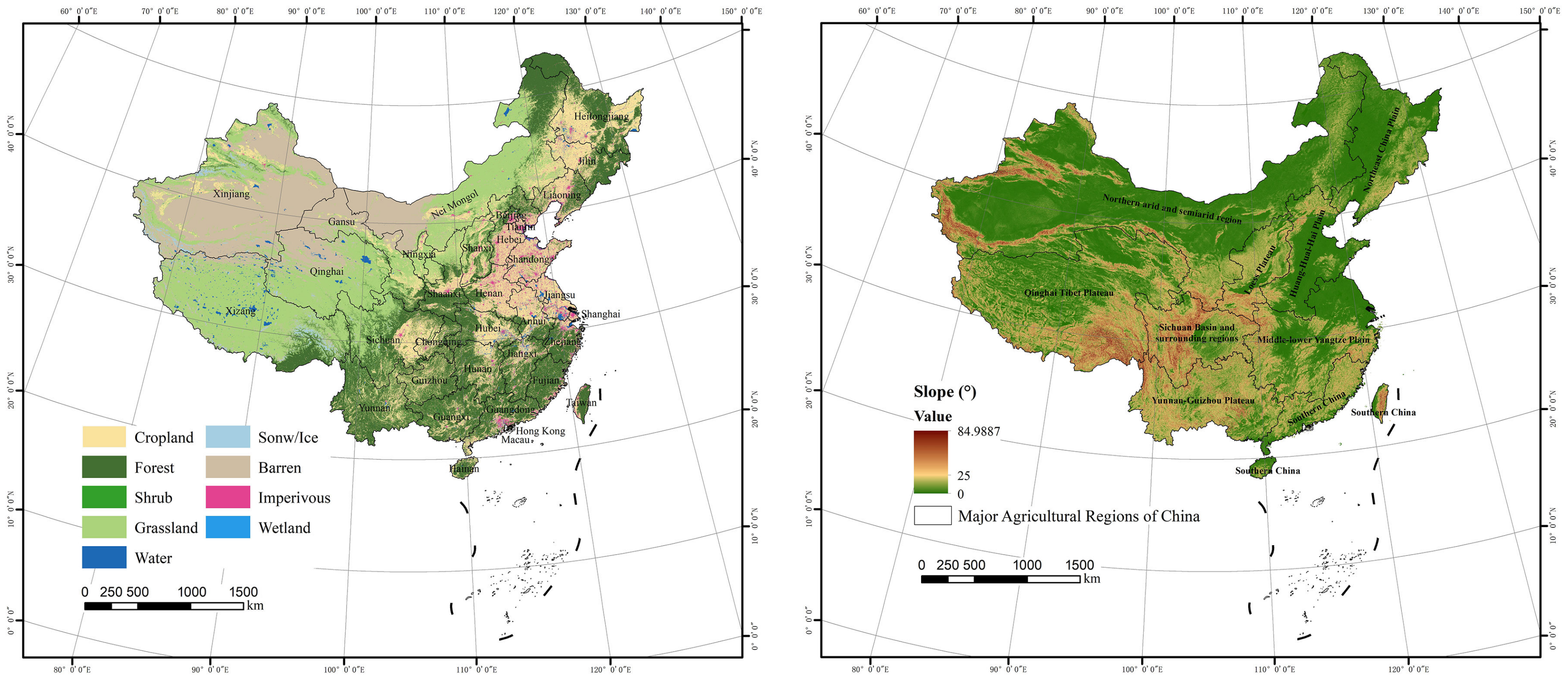
2.2. Data Sources
2.2.1. Urban–Agricultural–Ecological Space
2.2.2. Digital Elevation Model (DEM) and Slope Calculation
2.2.3. Potential Driving Factors for UAE Space Changes
2.3. Methods
2.3.1. H3 Hexagonal Grid System
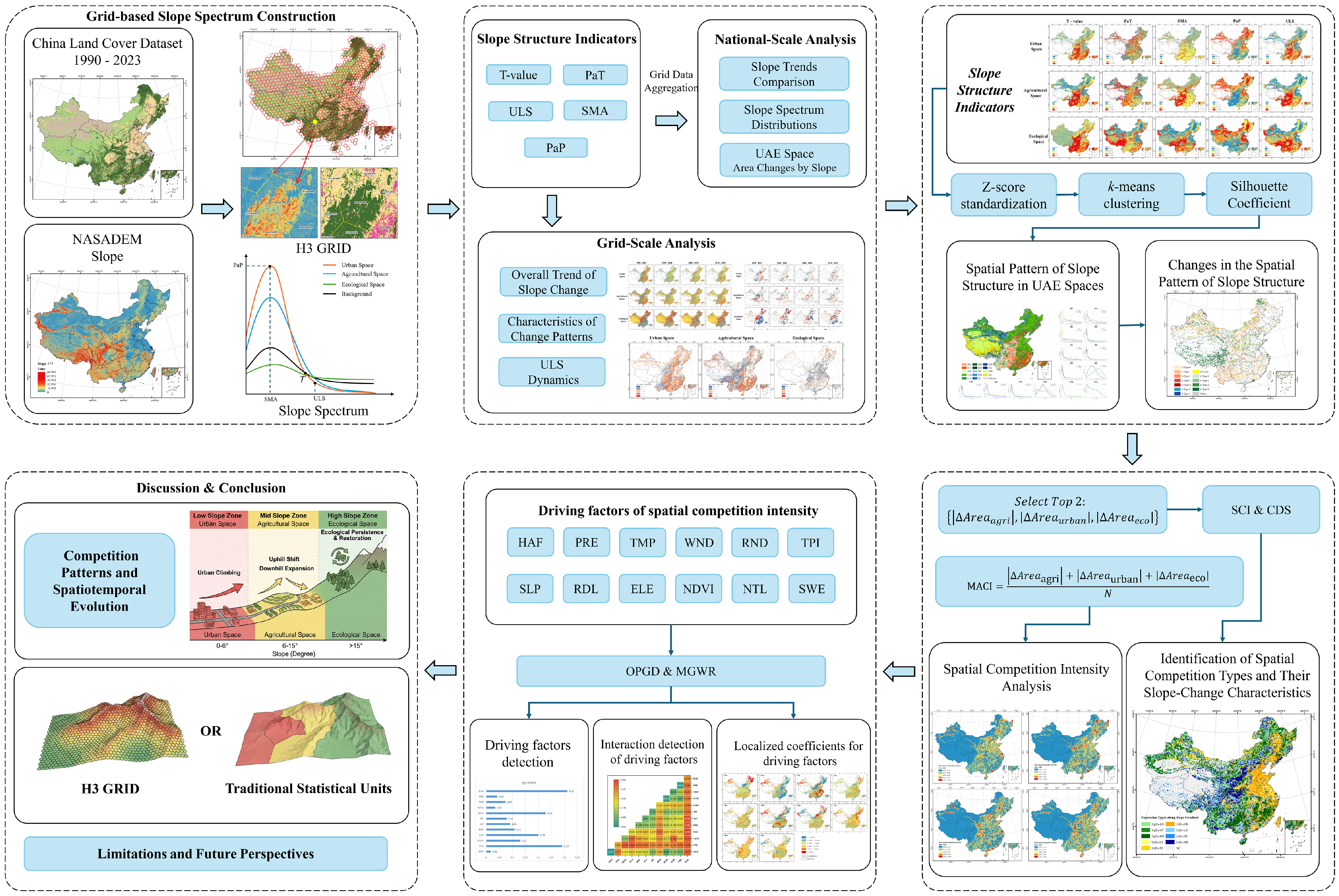
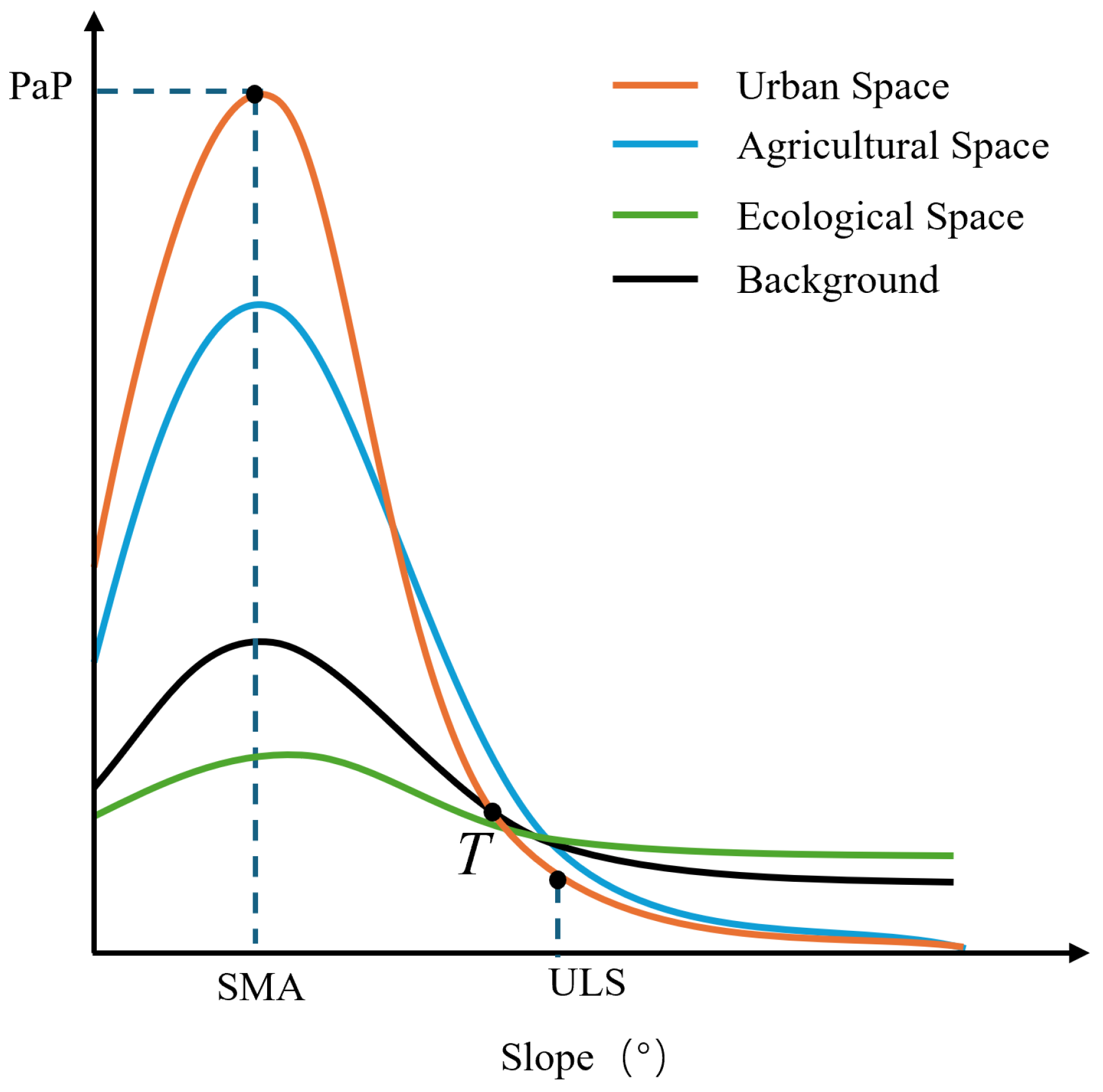
2.3.2. Slope Spectrum Analysis Framework
2.3.3. Analysis of Competition Patterns
- (1)
- Net Change Calculation and Dominant Type Identification
- : Net change in urban space area;
- : Net change in agricultural space area;
- : Net change in ecological space area.
- (2)
- Identification of Dominant Competition Relationships
- Urban vs. Agricultura: Signifies that the reciprocal transformation between urban and agricultural spaces dominates the local land-use dynamics (typically implying urban encroachment on farmland).
- Ecological vs. Urban: Indicates that the tension between ecological conservation and urban development is the primary driver of land-use change.
- (3)
- Assessment of mean annual competitive intensity
- (4)
- Competitive dominance slope
2.3.4. Analysis of Driving Mechanisms
- (1)
- Optimal Parameters Geodetector (OPGD)
- (2)
- Multiscale Geographically Weighted Regression (MGWR)
3. Results
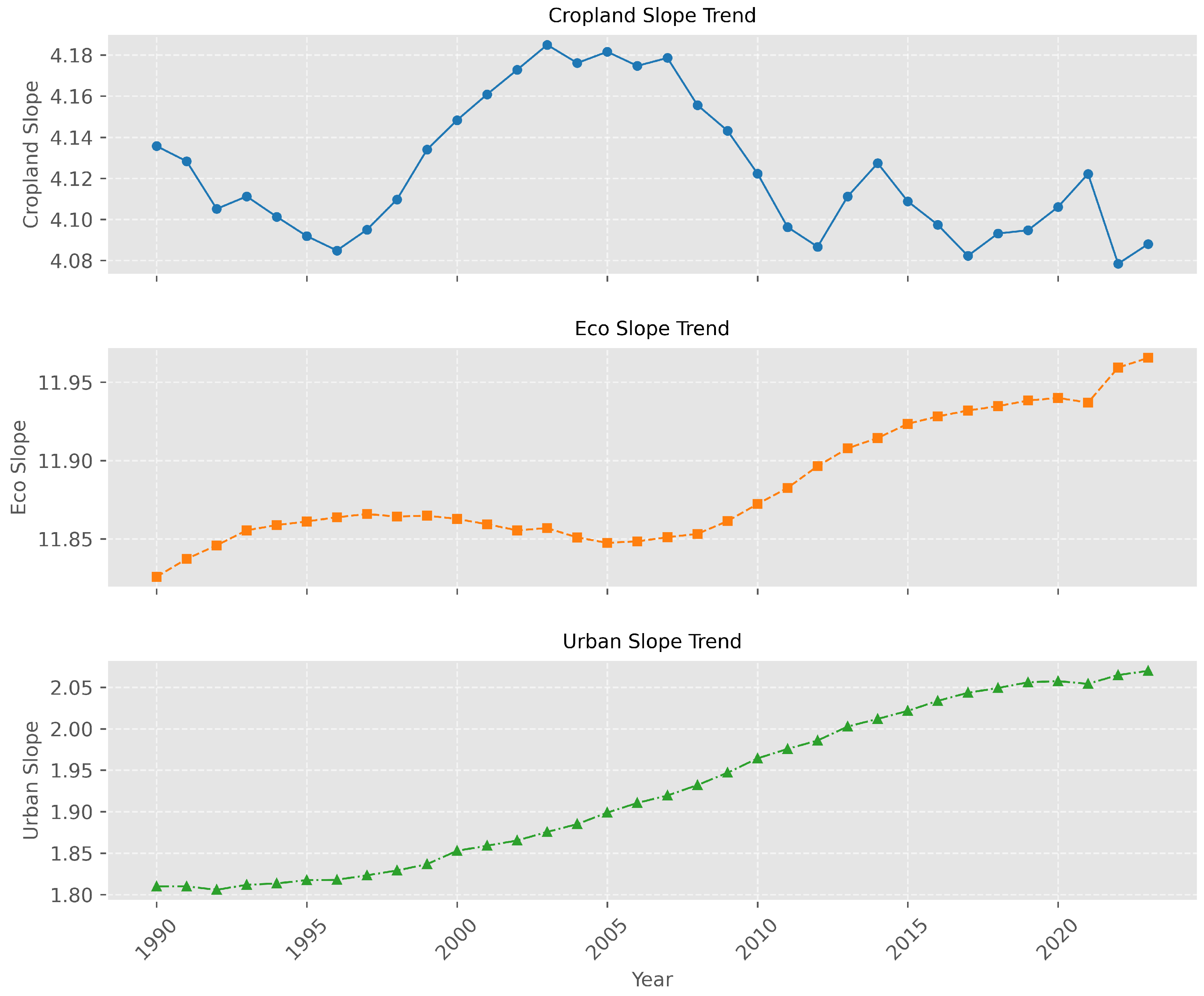
3.1. Slope Distribution Characteristics of Urban–Agricultural–Ecological Spaces in China (National Scale)
3.2. Slope Spatial Distribution Characteristics Based on the H3 Grid
3.2.1. Multi-Resolution Sensitivity and Selection of H3 Resolution
3.2.2. Overall Trend of Slope Change
3.2.3. Characteristics of Change Patterns
3.2.4. Upper Limit Slope (ULS) Dynamics
3.3. Slope Structure Transition of Urban, Agricultural, and Ecological Spaces
- 1.
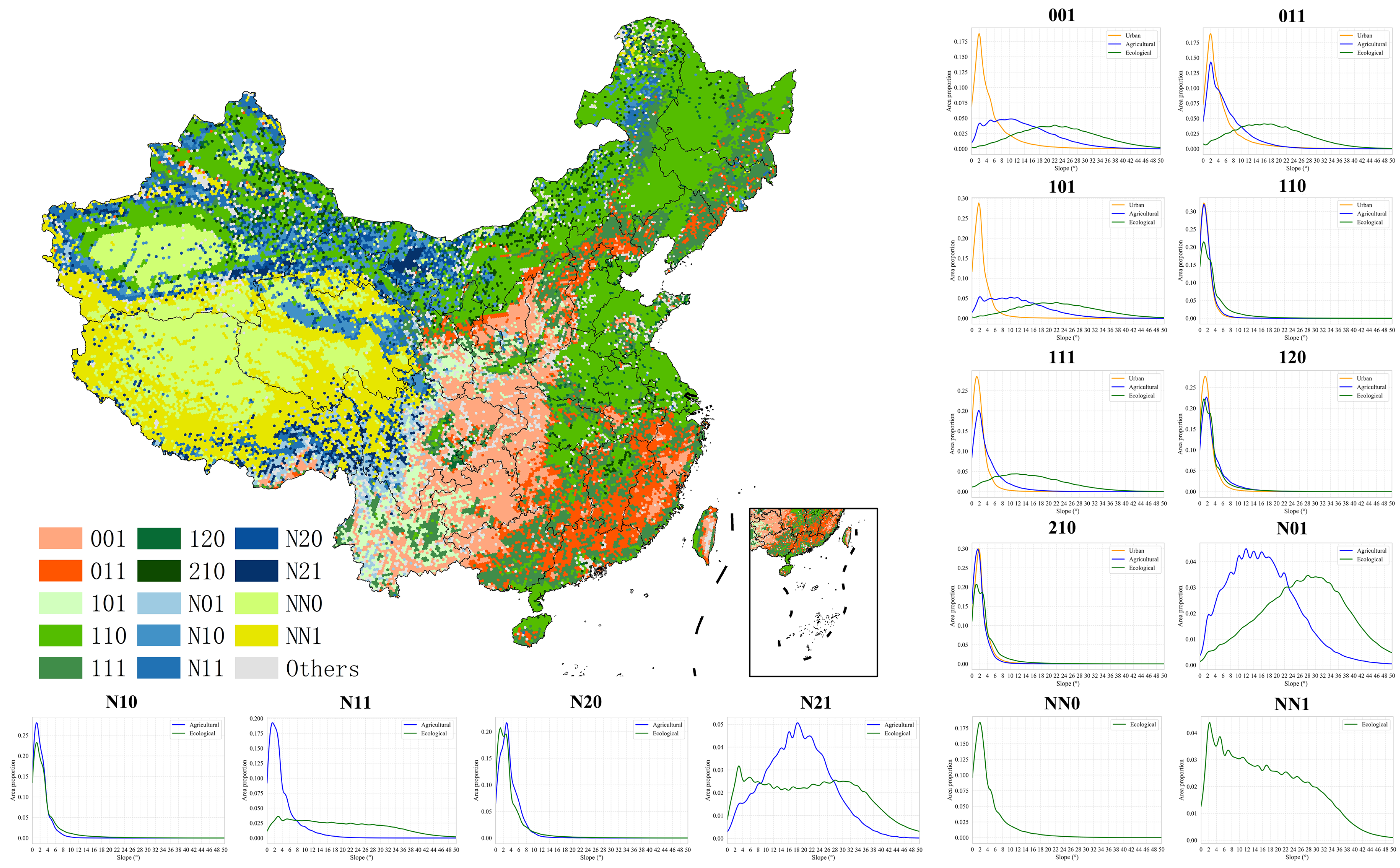
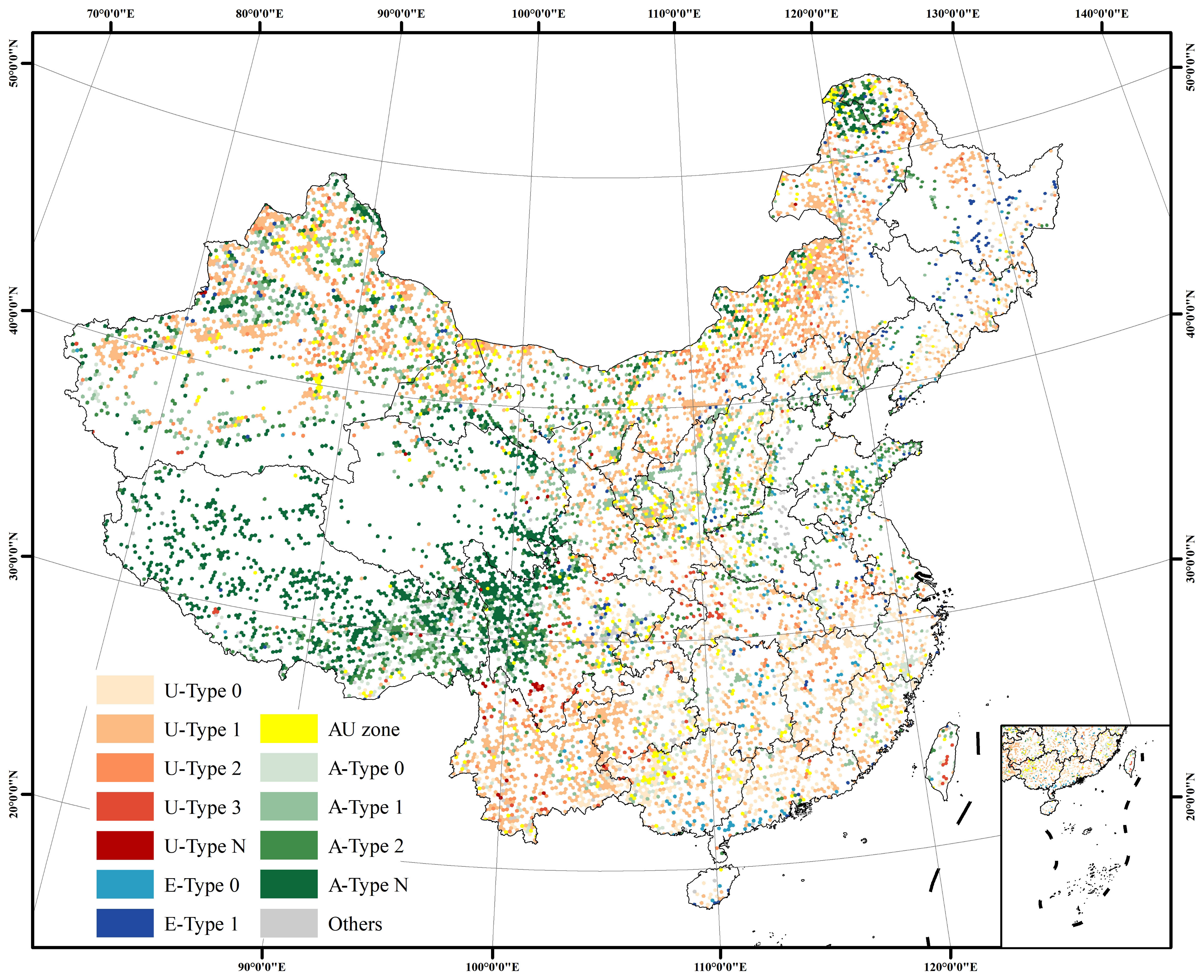
- The Eastern Plains exhibit a distinct low-slope agglomeration characteristic (Dominant Types: 110, 111). In the Northeast Plain, North China Plain, and the Middle-Lower Yangtze Plain, both urban (U) and agricultural (A) spaces are highly concentrated in low-slope tiers below . This pattern reflects intense spatial overlap and competition between construction land and cropland in flat regions, while ecological space (E) is largely squeezed to peripheral low slopes (Type 110) or distributed relatively evenly below (Type 111).
- 2.
- The Southern Hilly Regions display mixed characteristics of “interwoven 011 and 001” types. Compared with the plains, although urban space in this region remains aggregated on low slopes, its utilization range ascends to approximately . Meanwhile, agricultural space further expands into higher slope zones, with the upper limit of distribution (e.g., A0 category) reaching , reflecting the trend of “uphill farming” under topographic constraints.
- 3.
- Central and Southwest China (Loess Plateau, Sichuan Basin, Yunnan-Guizhou Plateau) are dominated by the “001” type. In these regions, the spatial pattern is consistent with a displacement process in which the dominance of urban space in low-slope areas is associated with agricultural space occupying higher gradients. As a result, agricultural space shows a relatively uniform distribution in areas below . Consequently, ecological and agricultural spaces exhibit a clear complementary relationship, with ecological space occupying a dominant position in steep areas greater than .
- 4.
- The Northwest and Qinghai-Tibet Regions exhibit “absolute ecological dominance” (Dominant Types: NN0, NN1). The slope structure of the Qinghai-Tibet Plateau is almost entirely controlled by natural topography, where ecological space maintains absolute dominance. In other parts of the Northwest, restricted by climate and water resources, ecological and agricultural spaces show a “trade-off” competitive relationship (Types N21, N01). This indicates that in regions with harsh natural conditions, ecological space maintains absolute dominance regardless of terrain flatness.
3.4. Spatial Competition Among Urban, Agricultural, and Ecological Spaces
3.4.1. Classification of Spatial Competition Types
3.4.2. Competition Intensity Analysis
3.4.3. Explanatory Factors Associated with Spatial Competition
4. Discussion
4.1. Competition Patterns and Spatiotemporal Evolution of UAE Spaces: A Slope Structure Perspective
4.2. Comparative Advantages of H3 Grids over Traditional Statistical Units and Scale Effects in Slope-Spectrum Competition Analysis
4.3. Limitations and Future Perspectives
5. Conclusions
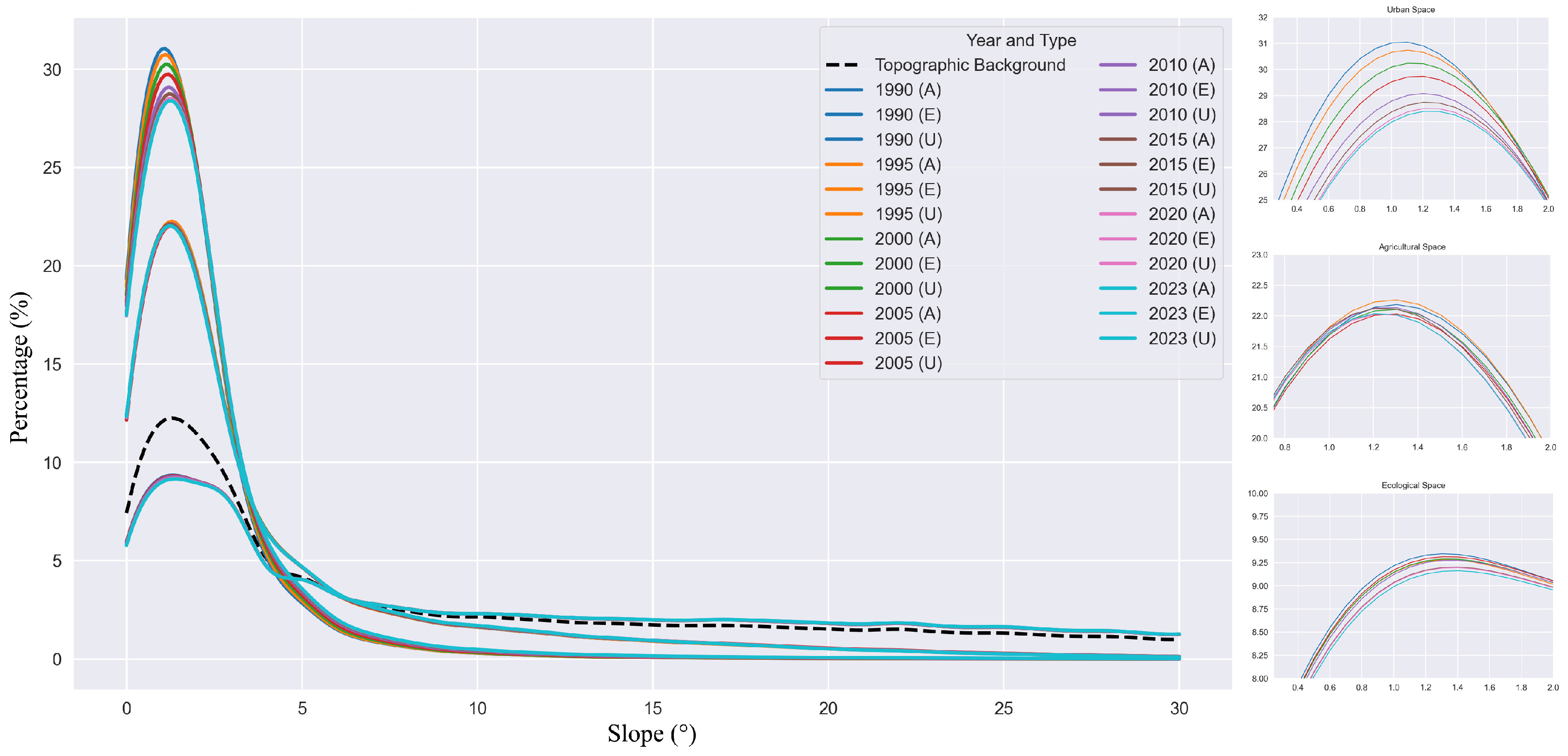
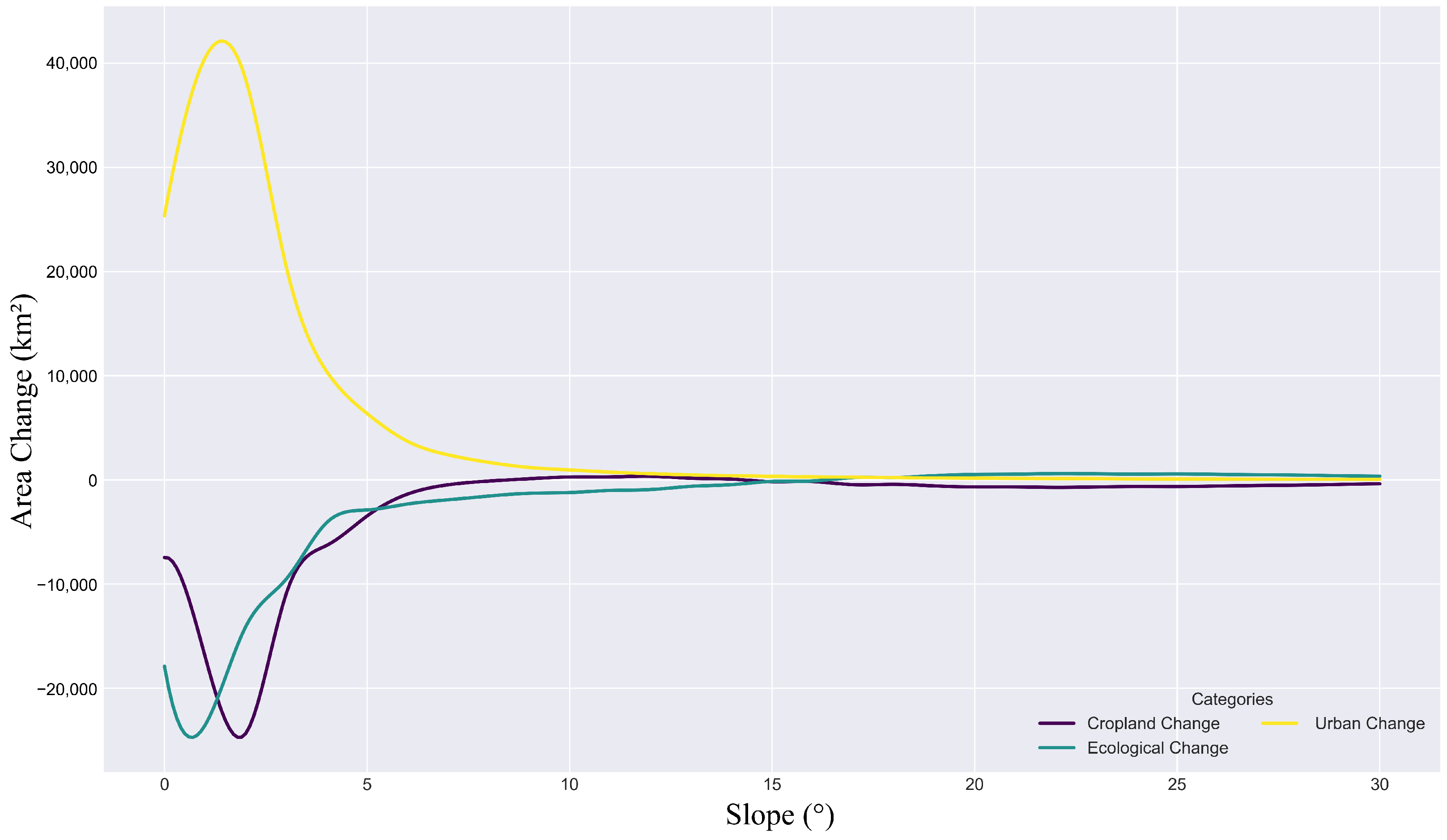
- Topographic Stratification and Agricultural Upslope Pressure: At the national scale, UAE spaces exhibit a distinct slope-based stratification. Urban space is concentrated in the high-accessibility lowlands (), agricultural space mainly occupies transitional slopes (6–), and ecological space dominates steeper terrains ().However, this structure has changed over time. The average slope of urban space increased from to , indicating that urban expansion has gradually extended into more topographically constrained areas. More importantly, 52.16% of agricultural grid cells showed positive SCI values, suggesting that agricultural space has experienced measurable upslope displacement. This result indicates concrete pressure on arable land, especially in regions where flat and highly productive farmland is scarce. Therefore, cropland protection should prioritize low-slope and high-productivity agricultural areas, while agricultural expansion into steeper slopes should be carefully evaluated to avoid productivity decline and ecological degradation.
- Regional Heterogeneity and Differentiated Agricultural Land Management: Based on K-means clustering, China’s slope structure patterns can be categorized into four distinct modes aligning with aligned with macro-geomorphological conditions:
- The “Low-Slope Agglomeration” mode in the Eastern Plains (intense urban-agri conflict),where urban–agricultural competition is concentrated in flat areas and calls for strict protection of high-quality lowland cropland;
- The “Interwoven Upslope” mode in the Southern Hilly Regions (agri-ecological tension),where agricultural and ecological spaces are closely intertwined and where agricultural expansion on steep slopes should be monitored and regulated;
- The “Urban-Valley/Agri-Slope” complementary mode in the Southwest, where valley-based urban development and slope-based agricultural use require coordinated spatial zoning;
- The “Ecological Dominance” mode in the Qinghai-Tibet Plateau, where ecological conservation should remain the primary management priority.
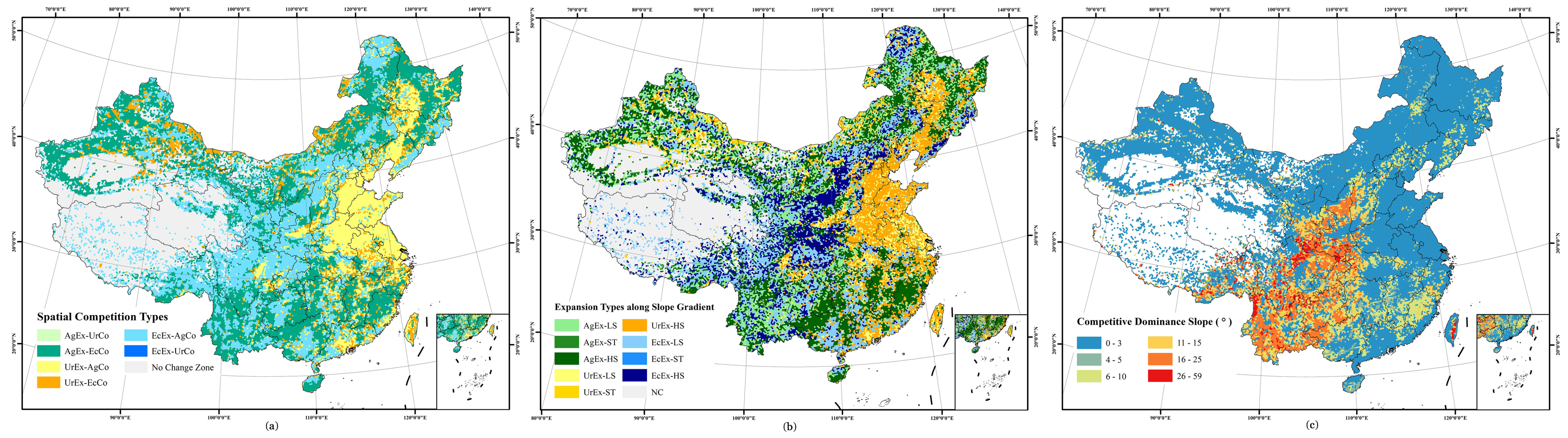
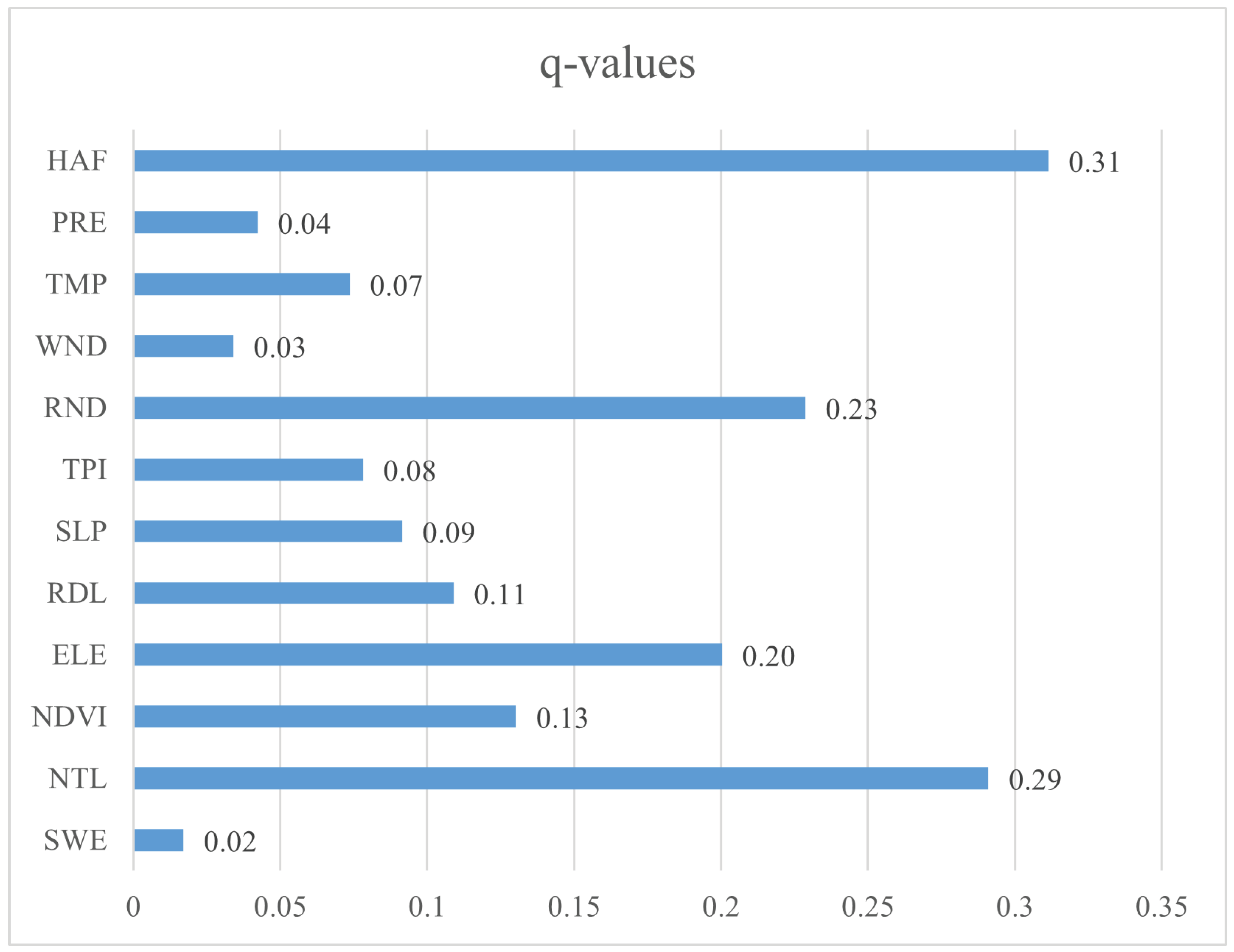
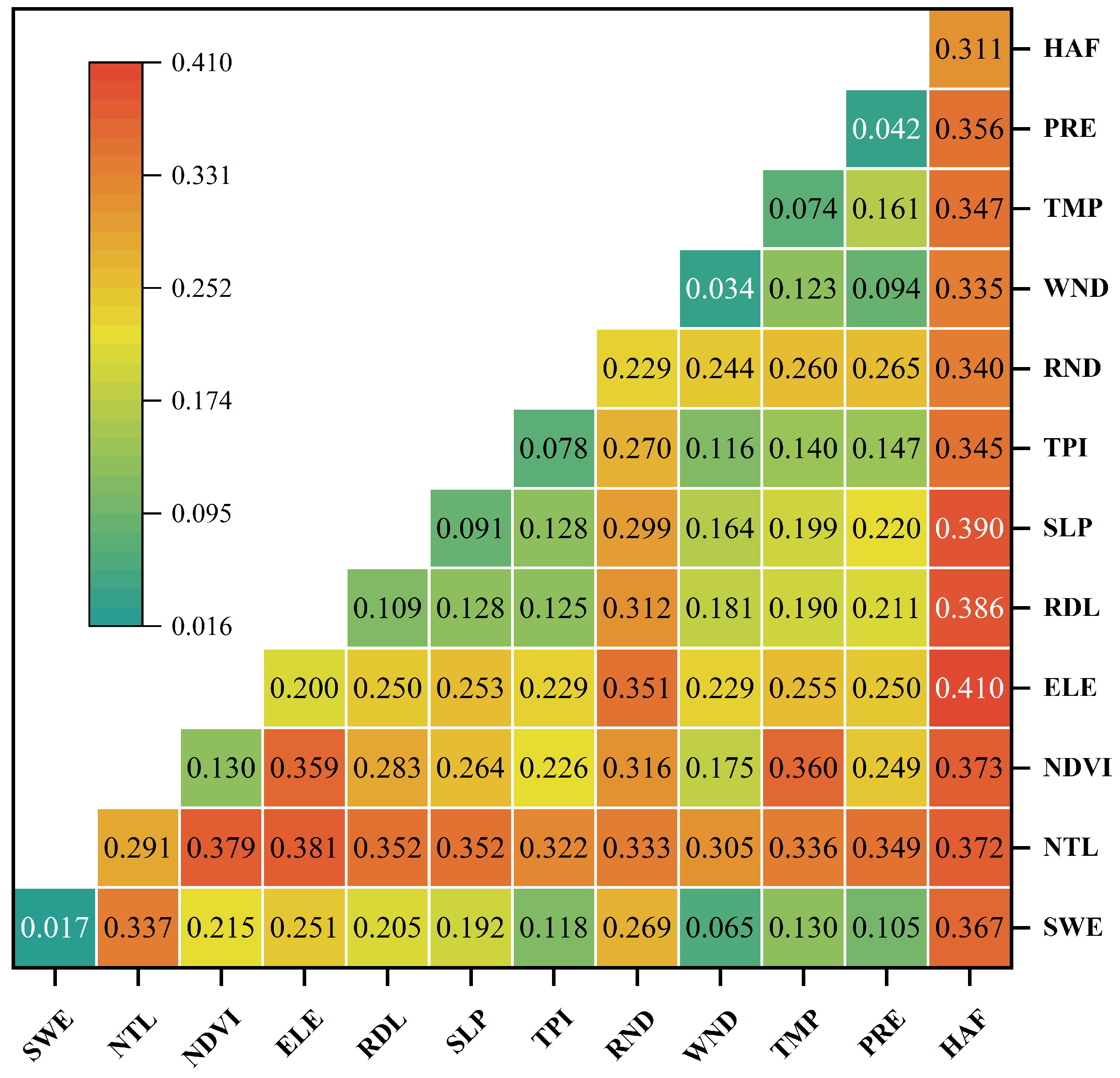
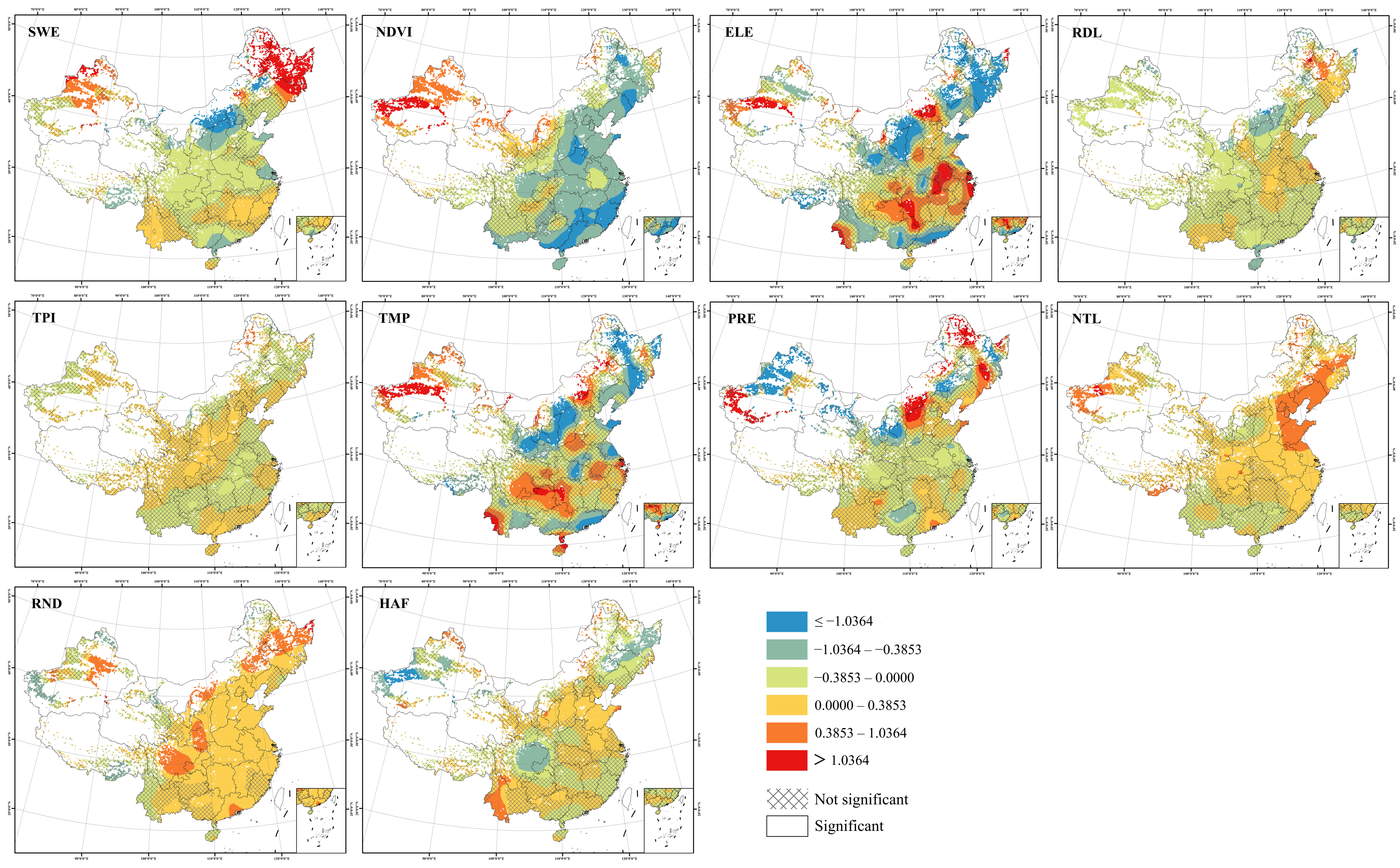
These regional differences suggest that agricultural land management should not rely on a uniform slope threshold alone. Instead, slope-based regulation should be combined with regional land-use functions, cropland quality, and ecological sensitivity. - Human Activity Association and Topographic Constraint: The GeoDetector and MGWR results indicate that the spatial differentiation of competition intensity is more strongly associated with human activity factors, such as Human Activity Footprint and Nighttime Lights, than with natural factors alone. The interaction between Human Activity Footprint and elevation showed relatively high explanatory power (), suggesting that spatial competition becomes more pronounced where intensive human activities overlap with strict topographic constraints. This finding highlights the need to identify priority management zones where urban expansion, cropland displacement, and ecological vulnerability occur simultaneously.
Supplementary Materials
Author Contributions
Funding
Data Availability Statement
Acknowledgments
Conflicts of Interest
References
- Fuso Nerini, F.; Sovacool, B.; Hughes, N.; Cozzi, L.; Cosgrave, E.; Howells, M.; Tavoni, M.; Tomei, J.; Zerriffi, H.; Milligan, B. Connecting Climate Action with Other Sustainable Development Goals. Nat. Sustain. 2019, 2, 674–680. [Google Scholar] [CrossRef]
- Lusseau, D.; Mancini, F. Income-based variation in Sustainable Development Goal interaction networks. Nat. Sustain. 2019, 2, 242–247. [Google Scholar] [CrossRef]
- Nilsson, M.; Griggs, D.; Visbeck, M. Policy: Map the Interactions between Sustainable Development Goals. Nature 2016, 534, 320–322. [Google Scholar] [CrossRef]
- Pradhan, P.; Costa, L.; Rybski, D.; Lucht, W.; Kropp, J.P. A Systematic Study of Sustainable Development Goal (SDG) Interactions. Earth’s Future 2017, 5, 1169–1179. [Google Scholar] [CrossRef]
- van Vliet, J. Direct and indirect loss of natural area from urban expansion. Nat. Sustain. 2019, 2, 755–763. [Google Scholar] [CrossRef]
- Tu, Y.; Chen, B.; Yu, L.; Song, Y.; Wu, S.; Li, M.; Wei, H.; Chen, T.; Lang, W.; Gong, P.; et al. Raveling the nexus between urban expansion and cropland loss in China. Landsc. Ecol. 2023, 38, 1869–1884. [Google Scholar] [CrossRef]
- Bren d’Amour, C.; Reitsma, F.; Baiocchi, G.; Barthel, S.; Güneralp, B.; Erb, K.H.; Haberl, H.; Creutzig, F.; Seto, K.C. Future urban land expansion and implications for global croplands. Proc. Natl. Acad. Sci. USA 2017, 114, 8939–8944. [Google Scholar] [CrossRef] [PubMed]
- Li, C.; Chen, L.; Liu, D.; Wei, J.; He, J.; Duan, X. The hidden risk in China’s cropland conversion from the perspective of slope. Catena 2021, 206, 105536. [Google Scholar] [CrossRef]
- Shi, K.; Liu, G.; Zhou, L.; Cui, Y.; Liu, S.; Wu, Y. Satellite Remote Sensing Data Reveal Increased Slope Climbing of Urban Land Expansion Worldwide. Landsc. Urban Plan. 2023, 235, 104755. [Google Scholar] [CrossRef]
- Duan, J.; Peng, Q.; Huang, P. Slope Characteristics of Urban Construction Land and Its Correlation with Ground Slope in China. Open Geosci. 2022, 14, 1524–1537. [Google Scholar] [CrossRef]
- Zhang, H.; Zhao, X.; Ren, J.; Hai, W.; Guo, J.; Li, C.; Gao, Y. Research on the Slope Gradient Effect and Driving Factors of Construction Land in Urban Agglomerations in the Upper Yellow River: A Case Study of the Lanzhou–Xining Urban Agglomerations. Land 2023, 12, 745. [Google Scholar] [CrossRef]
- Zhou, L.; Dang, X.; Mu, H.; Wang, B.; Wang, S. Cities are going uphill: Slope gradient analysis of urban expansion and its driving factors in China. Sci. Total Environ. 2021, 775, 145836. [Google Scholar] [CrossRef]
- Liu, G.; Xia, Y.; Bao, L. The Evolution of Cropland Slope Structure and Its Implications for Fragmentation and Soil Erosion in China. Land 2025, 14, 1093. [Google Scholar] [CrossRef]
- Ministry of Natural Resources of the People’s Republic of China. Land Survey Results Sharing and Application Service Platform. 2025. Available online: https://gtdc.mnr.gov.cn/Share#/ (accessed on 21 December 2025).
- Cao, Y.; Zhang, M.; Zhang, Z.; Liu, L.; Gao, Y.; Zhang, X.; Chen, H.; Kang, Z.; Liu, X.; Zhang, Y. The Impact of Land-Use Change on the Ecological Environment Quality from the Perspective of Production-Living-Ecological Space: A Case Study of the Northern Slope of Tianshan Mountains. Ecol. Inform. 2024, 83, 102795. [Google Scholar] [CrossRef]
- Wang, D.; Fu, J.; Xie, X.; Ding, F.; Jiang, D. Spatiotemporal evolution of urban-agricultural-ecological space in China and its driving mechanism. J. Clean. Prod. 2022, 371, 133684. [Google Scholar] [CrossRef]
- Shi, K.; Yu, B.; Ma, J.; Cao, W.; Cui, Y. Impacts of Slope Climbing of Urban Expansion on Global Sustainable Development. Innovation 2023, 4, 100529. [Google Scholar] [CrossRef]
- Harari, M. Cities in Bad Shape: Urban Geometry in India. Am. Econ. Rev. 2020, 110, 2377–2421. [Google Scholar] [CrossRef]
- Shi, K.; Cui, Y.; Liu, S.; Wu, Y. Global Urban Land Expansion Tends To Be Slope Climbing: A Remotely Sensed Nighttime Light Approach. Earth’s Future 2023, 11, e2022EF003384. [Google Scholar] [CrossRef]
- Seto, K.C.; Güneralp, B.; Hutyra, L.R. Global forecasts of urban expansion to 2030 and direct impacts on biodiversity and carbon pools. Proc. Natl. Acad. Sci. USA 2012, 109, 16083–16088. [Google Scholar] [CrossRef]
- Dax, T.; Schroll, K.; Machold, I.; Derszniak-Noirjean, M.; Schuh, B.; Gaupp-Berghausen, M. Land Abandonment in Mountain Areas of the EU: An Inevitable Side Effect of Farming Modernization and Neglected Threat to Sustainable Land Use. Land 2021, 10, 591. [Google Scholar] [CrossRef]
- Nadal-Romero, E.; Khorchani, M.; Gaspar, L.; Arnáez, J.; Cammeraat, E.; Navas, A.; Lasanta, T. How Do Land Use and Land Cover Changes after Farmland Abandonment Affect Soil Properties and Soil Nutrients in Mediterranean Mountain Agroecosystems? Catena 2023, 226, 107062. [Google Scholar] [CrossRef]
- García-Ruiz, J.M.; Lasanta, T.; Nadal-Romero, E.; Lana-Renault, N.; Álvarez-Farizo, B. Rewilding and Restoring Cultural Landscapes in Mediterranean Mountains: Opportunities and Challenges. Land Use Policy 2020, 99, 104850. [Google Scholar] [CrossRef]
- Liu, B.; Song, W.; Sun, Q. Status, Trend, and Prospect of Global Farmland Abandonment Research: A Bibliometric Analysis. Int. J. Environ. Res. Public Health 2022, 19, 16007. [Google Scholar] [CrossRef] [PubMed]
- Panagos, P.; Borrelli, P.; Poesen, J.; Ballabio, C.; Lugato, E.; Meusburger, K.; Montanarella, L.; Alewell, C. The New Assessment of Soil Loss by Water Erosion in Europe. Environ. Sci. Policy 2015, 54, 438–447. [Google Scholar] [CrossRef]
- Cueva, J.; Yakouchenkova, I.A.; Fröhlich, K.; Dermann, A.F.; Dermann, F.; Köhler, M.; Grossmann, J.; Meier, W.; Bauhus, J.; Schröder, D. Synergies and Trade-Offs in Ecosystem Services from Urban and Peri-urban Forests and Their Implication to Sustainable City Design and Planning. Sustain. Cities Soc. 2022, 82, 103903. [Google Scholar] [CrossRef]
- Sylla, M.; Hagemann, N.; Szewrański, S. Mapping Trade-Offs and Synergies among Peri-Urban Ecosystem Services to Address Spatial Policy. Environ. Sci. Policy 2020, 112, 79–90. [Google Scholar] [CrossRef]
- Wu, S.; Sumari, N.S.; Dong, T.; Xu, G.; Liu, Y. Characterizing urban expansion combining concentric-ring and grid-based analysis for Latin American cities. Land 2021, 10, 444. [Google Scholar] [CrossRef]
- Burdziej, J. Using Hexagonal Grids and Network Analysis for Spatial Accessibility Assessment in Urban Environments: A Case Study of Public Amenities in Toruń. Misc. Geogr. 2019, 23, 99–110. [Google Scholar] [CrossRef]
- Wang, C.; Liu, S.; Zhou, S.; Zhou, J.; Jiang, S.; Zhang, Y.; Feng, T.; Zhang, H.; Zhao, Y.; Lai, Z. Spatial-Temporal Patterns of Urban Expansion by Land Use/Land Cover Transfer in China. Ecol. Indic. 2023, 155, 111009. [Google Scholar] [CrossRef]
- De Vidovich, L. Socio-Spatial Transformations at the Urban Fringes of Rome: Unfolding Suburbanisms in Fiano Romano. Eur. Urban Reg. Stud. 2021, 29, 238–254. [Google Scholar] [CrossRef]
- Ding, W.; Chen, H. Urban-Rural Fringe Identification and Spatial Form Transformation during Rapid Urbanization: A Case Study in Wuhan, China. Build. Environ. 2022, 226, 109697. [Google Scholar] [CrossRef]
- Firmansyah, F.; Jatayu, A.; Imaduddin, B.R. Spatial Transformation Analysis in Menganti Subdistrict: A Study of Peri-Urban Area Typologies in the Face of Urban Expansion. Iop Conf. Ser. Earth Environ. Sci. 2024, 1353, 12039. [Google Scholar] [CrossRef]
- Fu, B.; Xue, B. Temporal and Spatial Evolution Analysis and Correlation Measurement of Urban–Rural Fringes Based on Nighttime Light Data. Remote Sens. 2024, 16, 88. [Google Scholar] [CrossRef]
- Zhang, S.; Deng, W.; Zhang, H.; Wang, Z. Identification and Analysis of Transitional Zone Patterns along Urban-Rural-Natural Landscape Gradients: An Application to China’s Southwest Mountains. Land Use Policy 2023, 129, 106625. [Google Scholar] [CrossRef]
- Zhao, M.; Cheng, C.; Zhou, Y.; Li, X.; Shen, S.; Song, C. A Global Dataset of Annual Urban Extents (1992–2020) from Harmonized Nighttime Lights. Earth Syst. Sci. Data 2022, 14, 517–534. [Google Scholar] [CrossRef]
- Li, Q.; Li, W.; Wang, S.; Wang, J. Assessing Heterogeneity of Trade-Offs/Synergies and Values among Ecosystem Services in Beijing-Tianjin-Hebei Urban Agglomeration. Ecol. Indic. 2022, 140, 109026. [Google Scholar] [CrossRef]
- Li, S.; An, W.; Zhang, J.; Gan, M.; Wang, K.; Ding, L.; Li, W. Optimizing Limit Lines in Urban-Rural Transitional Areas: Unveiling the Spatial Dynamics of Trade-Offs and Synergies among Land Use Functions. Habitat Int. 2023, 140, 102907. [Google Scholar] [CrossRef]
- Zhu, C.; Dong, B.; Li, S.; Lin, Y.; Shahtahmassebi, A.; You, S.; Zhang, J.; Gan, M.; Yang, L.; Wang, K. Identifying the Trade-Offs and Synergies among Land Use Functions and Their Influencing Factors from a Geospatial Perspective: A Case Study in Hangzhou, China. J. Clean. Prod. 2021, 314, 128026. [Google Scholar] [CrossRef]
- Kong, W.; Liu, H.; Fan, J. The features and causes of spatial planning conflicts in China: Taking urban planning and land-use planning as examples. Chin. J. Urban Environ. Stud. 2019, 7, 1950003. [Google Scholar] [CrossRef]
- Zhao, J.; Zhao, Y. Synergy/trade-offs and differential optimization of production, living, and ecological functions in the Yangtze River economic Belt, China. Ecol. Indic. 2023, 147, 109925. [Google Scholar] [CrossRef]
- Pan, S.; Liang, J.; Chen, W.; Peng, Y. Uphill or downhill? Cropland use change and its drivers from the perspective of slope spectrum. J. Mt. Sci. 2024, 21, 484–499. [Google Scholar] [CrossRef]
- Jiang, Y.; Zhou, L.; Wang, B.; Zhang, Q.; Gao, H.; Wang, S.; Cui, M. The impact of gradient expansion of urban–rural construction land on landscape fragmentation in typical mountain cities, China. Int. J. Digit. Earth 2024, 17, 2310093. [Google Scholar] [CrossRef]
- Yang, J.; Huang, X. The 30 m Annual Land Cover Dataset and Its Dynamics in China from 1990 to 2019. Earth Syst. Sci. Data 2021, 13, 3907–3925. [Google Scholar] [CrossRef]
- Yang, J.; Huang, X. The 30 m Annual Land Cover Datasets and Its Dynamics in China from 1985 to 2023; Version 1.0.3; Zenodo: Geneva, Switzerland, 2024. [Google Scholar] [CrossRef]
- Zhang, C.; Dong, J.; Ge, Q. Quantifying the Accuracies of Six 30-m Cropland Datasets over China: A Comparison and Evaluation Analysis. Comput. Electron. Agric. 2022, 197, 106946. [Google Scholar] [CrossRef]
- An, X.; Jin, W.; Zhang, H.; Liu, Y.; Zhang, M. Analysis of Long-Term Wetland Variations in China Using Land Use/Land Cover Dataset Derived from Landsat Images. Ecol. Indic. 2022, 145, 109689. [Google Scholar] [CrossRef]
- Feng, Z.; Yang, X.; Li, S. New Insights of Eco-Environmental Vulnerability in China’s Yellow River Basin: Spatio-temporal Pattern and Contributor Identification. Ecol. Indic. 2024, 167, 112655. [Google Scholar] [CrossRef]
- Pan, Y.; Tian, Y.; Wu, Y.; Fu, M. A Comprehensive Approach for the Spatial Optimization of the Biodiversity Conservation Network in the Qinling Mountains, China. Landsc. Ecol. 2025, 40, 11. [Google Scholar] [CrossRef]
- Crippen, R.; Buckley, S.; Agram, P.; Belz, E.; Gurrola, E.; Hensley, S.; Kobrick, M.; Lavalle, M.; Martin, J.; Neumann, M.; et al. NASADEM GLOBAL ELEVATION MODEL: METHODS AND PROGRESS. Int. Arch. Photogramm. Remote Sens. Spat. Inf. Sci. 2016, XLI-B4, 125–128. [Google Scholar] [CrossRef]
- Yan, J.; Wang, S.; Feng, J.; He, H.; Wang, L.; Sun, Z.; Zheng, C. The 30 m Annual Soil Water Erosion Dataset in Chinese Mainland from 1990 to 2022; Science Data Bank: Beijing, China, 2024. [Google Scholar]
- Yan, J.; Wang, S.; Feng, J.; He, H.; Wang, L.; Sun, Z.; Zheng, C. New 30-m Resolution Dataset Reveals Declining Soil Erosion with Regional Increases across Chinese Mainland (1990–2022). Remote Sens. Environ. 2025, 323, 114681. [Google Scholar] [CrossRef]
- Zhang, D.X.; Peng, J.F. A Dataset of 1km Grid Drainage Density in China (2022); Science Data Bank: Beijing, China, 2024. [Google Scholar] [CrossRef]
- Peng, S.; Ding, Y.; Liu, W.; Li, Z. 1 km monthly temperature and precipitation dataset for China from 1901 to 2017. Earth Syst. Sci. Data 2019, 11, 1931–1946. [Google Scholar] [CrossRef]
- Li, X.; Zhou, Y.; Zhao, M.; Zhao, X. Harmonization of DMSP and VIIRS Nighttime Light Data from 1992–2024 at the Global Scale; Figshare: London, UK, 2020. [Google Scholar] [CrossRef]
- Mu, H.; Li, X.; Wen, Y.; Huang, J.; Du, P.; Su, W.; Miao, S.; Geng, M. An Annual Global Terrestrial Human Footprint Dataset from 2000 to 2018; Figshare: London, UK, 2021. [Google Scholar] [CrossRef]
- Brodsky, I. H3: Uber’s Hexagonal Hierarchical Spatial Index. 2018. Available online: https://www.uber.com/us/en/blog/h3/ (accessed on 22 June 2019).
- Uber Technologies, Inc. Tables of Cell Statistics Across Resolutions. 2025. Available online: https://h3geo.org/docs/core-library/restable (accessed on 22 September 2025).
- Tang, G.; Li, F.; Liu, X.; Long, Y.; Yang, X. Research on the Slope Spectrum of the Loess Plateau. Sci. China Ser. E Technol. Sci. 2008, 51, 175–185. [Google Scholar] [CrossRef]
- Wang, J.; Xu, C.D. Geodetector: Principle and prospective. Acta Geogr. Sin. 2017, 72, 116–134. [Google Scholar]
- Song, Y.; Wang, J.; Ge, Y.; Xu, C. An optimal parameters-based geographical detector model enhances geographic characteristics of explanatory variables for spatial heterogeneity analysis: Cases with different types of spatial data. GISci. Remote Sens. 2020, 57, 593–610. [Google Scholar] [CrossRef]
- Fotheringham, A.S.; Yang, W.; Kang, W. Multiscale geographically weighted regression (MGWR). Ann. Am. Assoc. Geogr. 2017, 107, 1247–1265. [Google Scholar] [CrossRef]
- Zhou, J.; Deitch, M.J.; Grunwald, S.; Screaton, E. Do the Mann-Kendall test and Theil-Sen slope fail to inform trend significance and magnitude in hydrology? Hydrol. Sci. J. 2023, 68, 1241–1249. [Google Scholar] [CrossRef]
- Ord, J.K.; Getis, A. Local spatial autocorrelation statistics: Distributional issues and an application. Geogr. Anal. 1995, 27, 286–306. [Google Scholar] [CrossRef]
- Chong, B. K-means clustering algorithm: A brief review. Acad. J. Comput. Inf. Sci. 2021, 4, 37–40. [Google Scholar] [CrossRef]
- Shi, K.; Wu, Y.; Liu, S. Slope climbing of urban expansion worldwide: Spatiotemporal characteristics, driving factors and implications for food security. J. Environ. Manag. 2022, 324, 116337. [Google Scholar] [CrossRef]
- Wang, Y.; Li, X.; Xin, L.; Tan, M. Farmland marginalization and its drivers in mountainous areas of China. Sci. Total Environ. 2020, 719, 135132. [Google Scholar] [CrossRef]
- Chen, C.; Park, T.; Wang, X.; Piao, S.; Xu, B.; Chaturvedi, R.K.; Fuchs, R.; Brovkin, V.; Ciais, P.; Fensholt, R.; et al. China and India lead in greening of the world through land-use management. Nat. Sustain. 2019, 2, 122–129. [Google Scholar] [CrossRef]
- He, T.; Li, J.; Zhang, M.; Zhai, G.; Lu, Y.; Wang, Y.; Guo, A.; Wu, C. Uphill Cropland and Stability Assessment of Gained Cropland in China over the Preceding 30 Years. J. Geogr. Sci. 2024, 34, 699–721. [Google Scholar] [CrossRef]
- Wong, D.W. The modifiable areal unit problem (MAUP). In WorldMinds: Geographical Perspectives on 100 Problems: Commemorating the 100th Anniversary of the Association of American Geographers 1904–2004; Springer: Berlin/Heidelberg, Germany, 2004; pp. 571–575. [Google Scholar]
- Sahr, K.; White, D.; Kimerling, A.J. Geodesic discrete global grid systems. Cartogr. Geogr. Inf. Sci. 2003, 30, 121–134. [Google Scholar] [CrossRef]
- Birch, C.P.; Oom, S.P.; Beecham, J.A. Rectangular and hexagonal grids used for observation, experiment and simulation in ecology. Ecol. Model. 2007, 206, 347–359. [Google Scholar] [CrossRef]
- Zhu, Z.; Woodcock, C.E. Continuous change detection and classification of land cover using all available Landsat data. Remote Sens. Environ. 2014, 144, 152–171. [Google Scholar] [CrossRef]



| Category | CLCD Land-Use Type |
|---|---|
| Urban space | Impervious |
| Agricultural space | Cropland |
| Ecological space | Forest, Shrub, Grassland, Water, Snow/Ice, Barren, Wetland |
| Category | Variable | Abb. | Dataset | Format | Res. | Source |
|---|---|---|---|---|---|---|
| Natural environmental factors | Soil water erosion | SWE | Soil Water Erosion Dataset | Raster | 30 m | [51,52] |
| Vegetation Index | NDVI | Landsat/Sentinel series | Raster | 30 m | GEE processing | |
| Elevation | ELE | NASADEM | Raster | 30 m | [50] | |
| Relief degree | RDL | Derived from NASADEM | H3 Grid | Res 5 | Derived from NASADEM | |
| Slope | SLP | Derived from NASADEM | Raster | 30 m | Derived from NASADEM | |
| Topographic position | TPI | Derived from NASADEM | H3 Grid | Res 5 | Derived from NASADEM | |
| Water network | WND | Drainage Density Dataset | Raster | 1 km | [53] | |
| Mean temperature | TMP | Monthly temp dataset | Raster | ∼1 km | [54] | |
| Mean precipitation | PRE | Monthly precip dataset | Raster | ∼1 km | [54] | |
| Human activity factors | Night-time light | NTL | DMSP and VIIRS dataset | Raster | ∼1 km | [55] |
| Road network density | RND | OpenStreetMap | H3 Grid | Res 5 | OpenStreetMap | |
| Human Footprint | HAF | Human Footprint dataset | H3 Grid | 1 km | [56] |
| Indicator | Abbreviation | Description |
|---|---|---|
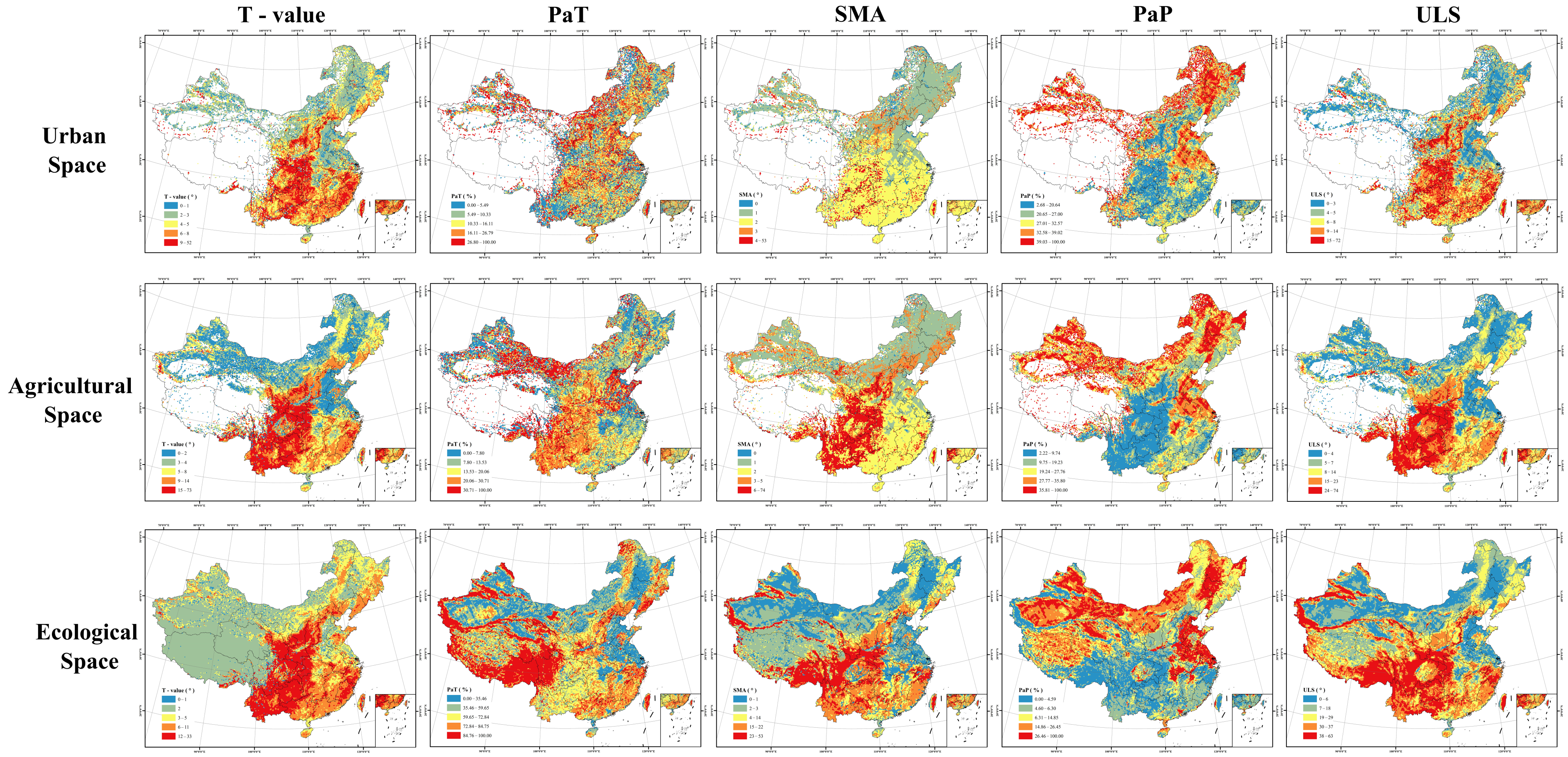
| Slope intersection | T-value | The slope at which the slope spectrum of a spatial category intersects the regional background slope spectrum, representing the critical point where its distribution shifts from dominance on gentle slopes to steeper slopes. |
| Upper Limit of Slope | ULS | The slope threshold at which the cumulative area of a spatial category reaches 95% of its total area, reflecting its upper adaptive boundary to slope conditions and its potential expansion limit. |
| Peak Area Proportion | PaP | The percentage of the spatial category’s area corresponding to the peak value of the slope spectrum. |
| Slope at Maximum Area | SMA | The slope class corresponding to the maximum proportion of a spatial category, indicating the slope most intensively occupied. |
| Proportion above T-value | PaT | The share of the spatial category’s area located on slopes steeper than the T-value, characterizing the extent of high-slope occupation pressure. |
| Space | Statistic | L4 | L5 | L6 |
|---|---|---|---|---|
| Agricultural | Presence ratio (%) | 86.34 | 78.39 | 68.69 |
| Mean dispersion | 32.59 | 27.52 | 23.21 | |
| Mean span | 34.57 | 28.97 | 24.41 | |
| Low-dispersion cells (%, ≤20 bins) | 34.54 | 44.53 | 50.12 | |
| Ecological | Presence ratio (%) | 99.68 | 99.78 | 98.82 |
| Mean dispersion | 55.06 | 47.15 | 39.58 | |
| Mean span | 55.09 | 47.17 | 39.54 | |
| Low-dispersion cells (%, ≤20 bins) | 6.62 | 16.03 | 26.54 | |
| Urban | Presence ratio (%) | 76.09 | 65.70 | 52.79 |
| Mean dispersion | 25.77 | 19.42 | 13.00 | |
| Mean span | 27.85 | 21.53 | 14.82 | |
| Low-dispersion cells (%, ≤20 bins) | 41.06 | 58.47 | 81.75 |
| Space | Indicator | L4–L5 | L5–L6 | L4–L6 |
|---|---|---|---|---|
| Agricultural | T-value | 0.686 | 0.666 | 0.462 |
| ULS | 0.906 | 0.928 | 0.881 | |
| PaP | 0.668 | 0.665 | 0.450 | |
| SMA | 0.767 | 0.805 | 0.716 | |
| PaT | 0.563 | 0.599 | 0.412 | |
| Ecological | T-value | 0.825 | 0.732 | 0.685 |
| ULS | 0.923 | 0.940 | 0.870 | |
| PaP | 0.889 | 0.867 | 0.792 | |
| SMA | 0.805 | 0.842 | 0.744 | |
| PaT | 0.833 | 0.833 | 0.732 | |
| Urban | T-value | 0.676 | 0.666 | 0.455 |
| ULS | 0.810 | 0.801 | 0.724 | |
| PaP | 0.606 | 0.623 | 0.371 | |
| SMA | 0.662 | 0.657 | 0.561 | |
| PaT | 0.589 | 0.627 | 0.438 |
Disclaimer/Publisher’s Note: The statements, opinions and data contained in all publications are solely those of the individual author(s) and contributor(s) and not of MDPI and/or the editor(s). MDPI and/or the editor(s) disclaim responsibility for any injury to people or property resulting from any ideas, methods, instructions or products referred to in the content. |
© 2026 by the authors. Licensee MDPI, Basel, Switzerland. This article is an open access article distributed under the terms and conditions of the Creative Commons Attribution (CC BY) license.
Share and Cite
Liu, G.; Xia, Y.; Wang, L.; Bao, L.; Zhang, N. Slope Structure Evolution and Spatial Competition Mechanisms Among Urban, Agricultural, and Ecological Spaces in China. Agriculture 2026, 16, 1094. https://doi.org/10.3390/agriculture16101094
Liu G, Xia Y, Wang L, Bao L, Zhang N. Slope Structure Evolution and Spatial Competition Mechanisms Among Urban, Agricultural, and Ecological Spaces in China. Agriculture. 2026; 16(10):1094. https://doi.org/10.3390/agriculture16101094
Chicago/Turabian StyleLiu, Guangjie, Yi Xia, Lu Wang, Li Bao, and Naiming Zhang. 2026. "Slope Structure Evolution and Spatial Competition Mechanisms Among Urban, Agricultural, and Ecological Spaces in China" Agriculture 16, no. 10: 1094. https://doi.org/10.3390/agriculture16101094
APA StyleLiu, G., Xia, Y., Wang, L., Bao, L., & Zhang, N. (2026). Slope Structure Evolution and Spatial Competition Mechanisms Among Urban, Agricultural, and Ecological Spaces in China. Agriculture, 16(10), 1094. https://doi.org/10.3390/agriculture16101094