Article

Identification and Pathogenicity of Botryosphaeriaceae, Colletotrichum, and Phytophthora Species Associated with Avocado Diseases in Italy

1
Dipartimento Territorio e Sistemi Agro-Forestali, Università degli Studi di Padova, 35020 Legnaro, Italy
2
Dipartimento di Agraria, Università degli Studi di Sassari, Viale Italia, 39, 07100 Sassari, Italy
3
Dipartimento di Agricoltura, Alimentazione e Ambiente, Università degli Studi di Catania, Via Santa Sofia 100, 95123 Catania, Italy
*
Author to whom correspondence should be addressed.
Agriculture 2026, 16(10), 1035; https://doi.org/10.3390/agriculture16101035
Submission received: 4 April 2026 / Revised: 4 May 2026 / Accepted: 5 May 2026 / Published: 10 May 2026
(This article belongs to the Special Issue Emerging Diseases of Tropical and Subtropical Fruits and Nuts)

Abstract

With the rapid expansion of avocado cultivation in southern Italy, growers have had to deal with the emergence of new diseases often caused by invasive and polyphagous pathogens responsible for leaf spot, branch cankers, dieback and fruit and root rot. Given the severity of these emerging diseases, a study was conducted in the main avocado growing areas in Sardinia and Sicily (Italy) to isolate and characterize the causal agents. Specifically, a total of 430 symptomatic leaf, fruit, branch, stem and root samples were collected and examined. Isolations performed on both non-selective and selective growth media yielded 22 species (fungi and oomycetes) belonging to the genera Botryosphaeria, Colletotrichum, Diplodia, Dothiorella, Macrophomina, Neofusicoccum and Phytophthora, including 14 new host–pathogen records in Italy. Notably, Neofusicoccum australe, Phytophthora cinnamomi and Phytophthora palmivora emerged as the main pathogens involved in the emerging avocado diseases. The identified pathogens were often isolated simultaneously from the same plants, which exhibited a complex of symptoms. Pathogenicity bioassays have helped to clarify the differences in aggressiveness among the different species and their specificity towards the different plant organs. The results achieved suggest that avocado orchards’ productivity and profitability is threatened by a plethora of unrelated pathogens whose control represents a major challenge for the success of this crop in Italy.

1. Introduction

Avocado is one of the most profitable tropical fruit crops worldwide, with approximately 700,000 ha cultivated mainly in Mexico, Colombia, Peru, the Dominican Republic and Kenya [1,2,3]. In Italy, avocado orchards are expanding in southern regions with an overall growing area of about 1.000 ha, mainly located in Sicily, followed by Calabria, Apulia and Sardinia [4]. In recent years, several emerging diseases were observed in southern Italian regions, with declining trees leading to substantial losses in productivity, fruit quality and profitability [5,6].
Globally, avocado production is impaired by several diseases, including fruit and leaf anthracnose caused by Colletotrichum spp. [7], branch cankers and dieback due to Botryosphaeriaceae species [8], and root rot caused by Phytophthora spp. [9].
Over twenty Colletotrichum species belonging chiefly to the “acutatum”, “boninense” and “gloeosporioides” species complex have been recognized as important avocado anthracnose agents worldwide [10]. Colletotrichum species can infect fruits, leaves, flowers and shoots, leading to substantial yield losses [11,12,13]. In Italy, Colletotrichum fioriniae, C. fructicola and C. gloeosporioides have been associated with postharvest fruit rot and stem-end rot diseases [6,14]. Moreover, recently C. gloeosporioides and C. perseae were reported as being responsible for necrotic lesions and dieback of young plants’ cv. Hass after grafting in a nursery [15].
In avocado, Botryosphaeriaceae are chiefly involved on twig, branch and stem cankers characterized by necrotic and sunken bark lesions, often associated with whitish and dark reddish exudates [5]. Internally, the wood becomes light-brown and gradually takes on the typical V-shaped appearance that is visible in a cross-section [16]. Bark and xylem necrotic lesions cause an interruption in the flow of water and nutrients, which leads to wilting and dieback of twigs and branches. In Italy, branch cankers caused by Botryosphaeriaceae, and in particular by Neofusicoccum parvum, have emerged as a significant threat to avocado production [5,6,16].
Reports of avocado root rot caused by Phytophthora spp. are increasing worldwide, with particular emphasis on the invasive species P. cinnamomi which is recognized globally as the main limiting factor to the avocado industry [9,17,18,19]. However, other Phytophthora species are also emerging as a new threat to avocado production, including P. mengei in California and Mexico [20,21], P. heveae in Colombia [22], P. nicotianae in Thailand [23], P. niederhauserii in the Canary Islands [24] and P. palmivora in Cuba [25]. Despite Phytophthora root rot representing the largest threat to the avocado industry in both traditional and emerging producing countries, to date, no exhaustive studies have been conducted in Italy to determine the presence and impact of these pathogens in avocado orchards, although reports from growers on the presence of typical Phytophthora symptoms such as root rot are progressively increasing in several producing areas.
Therefore, considering the growing impact of Botryosphaeriaceae, Colletotrichum and Phytophthora species on avocado production worldwide, the rapid expansion of avocado cultivation in southern Italy and the growing reports of new diseases characterized by a complex of symptoms in Italian avocado nurseries and orchards, the main aim of this work was to isolate and identify the main causal agents, as well as to evaluate the potential co-infection by multiple pathogens at the site and plant levels.

2. Materials and Methods

2.1. Field Surveys and Sampling

From summer 2022 to autumn 2024, extensive surveys were conducted in three nurseries and three orchards in Sicily and Sardinia (Italy), respectively (Table 1). Avocado plants of different age in both nurseries and orchards were checked for the presence of symptoms in the fruits (necrotic lesion and rot), leaves (necrosis), stem and branches (cankers, dieback and exudates) and at the collar and root system (exudates, necrosis and rot causing loss of fine roots). A total of 430 symptomatic avocado samples from 115 plants were randomly collected, placed in sterile plastic bags, labeled and then transferred to a laboratory for diagnostic analysis (Table 1).
To estimate the disease incidence (DI), 36 avocado trees along three liner transects (12 per transect) were monitored during summer 2023 at site 4 in Sardinia. Given the uniformity of the symptoms in the plants, the transects were identified at random over the entire surface area of approximately 1 hectare. The disease incidence was evaluated as the number of symptomatic trees among the total number of avocado trees monitored. On the same trees, the occurrence of symptomatic fruits and premature fruit drop (carpoptosis) was also evaluated in August 2023 as the percentage of symptomatic fruits and fruit drop compared to the total number of fruits per plant.

2.2. Fungal and Phytophthora Isolations

In the laboratory, leaf, fruit, branch, stem (5 × 5 cm fragment including outer and inner bark) and root samples were surface disinfected with 70% ethanol for 30 s, rinsed in sterile distilled water, and then air-dried in an aseptic condition. From each sample, ten fragments (5 × 5 mm) aseptically cut from the margin of the necrotic lesion were placed onto both potato dextrose agar (PDA, Oxoid Ltd., Basingstoke, UK) and PDA supplemented with 100 mL/L of fresh carrot juice, 0.013 g/L of pimaricin and 0.05 g/L of hymexazol (PDA+) in 90 mm Petri dishes and then incubated at 20 °C in the dark for 7 days [26]. Hyphal tips from emerging colonies were sub-cultured onto PDA and carrot agar (CA) in 60 mm Petri dishes and incubated at 20 °C in the dark.
Indirect isolation from fine root and rhizosphere samples (100 g per tree), collected at a depth of 10 cm from 2 points 30 cm away from the trunk, were performed using the zoospore trap assay described by [27] with slight modifications. Each sample was placed in a Sedimentation Imhoff Cone into which 0.8 L of distilled water was added. After 24 h, fresh holm oak leaves taken from 2-month-old seedlings were placed on the clean water surface and used as baits to capture Phytophthora zoospores. The Imhoff cones were kept at 20 °C in laboratory conditions for 5 d. Oak leaves showing dark spots were cut into small fragments, air-dried on sterile filter paper in aseptic conditions and then placed in 90 mm Petri dishes containing PDA+ [26]. The dishes were incubated in the dark at 20 °C and examined daily. The pure cultures were stored as described above.
The surface and reverse colony appearance of fungal and fungal-like isolates was recorded on PDA and CA after 7 days at 20 °C in the dark. The biometric data of conidia (fungi) and sporangia (oomycetes) were recorded using a light microscope (Motic BA410E microscope) at ×400 magnification.

2.3. DNA Extraction, PCR Amplification and Phylogeny

Genomic DNA was extracted from aerial mycelium of 4-day-old cultures on PDA, using the Instagene Matrix kit (BioRad Laboratories, Hercules, CA, USA). The polymerase chain reaction (PCR) was performed in a total volume of 50 μL, using the PCRBIO Ultra Polymerase mix (PCRBiosystems Ltd. London, UK) on a SimpliAmp™ Thermal Cycler (Life Technologies Holdings Pte Ltd., Singapore). The internal transcribed spacer (ITS) region of the rDNA was amplified and sequenced for all isolates, using the primer pairs ITS1 and ITS4 [28]. For the Botryosphaeriaceae species, a portion of the translation elongation factor 1 alpha gene (tef1-α) was also amplified and sequenced with the primers EF446f and EF1035r [29], whereas for Colletotrichum spp., a portion of the glyceraldehyde-3-phosphate dehydrogenase (gapdh) region using the primer pairs GDF1 and GDR1 [30]. For the ITS and tef1-α regions, the thermal parameters reported by Linaldeddu et al. [26] were used, whereas for Colletotrichum isolates, the PCR parameters were as follows: 95 °C for 4 min, followed by 35 cycles of denaturation at 95 °C for 30 s, annealing at 60 °C for 30 s and extension at 72 °C for 45 s, and a final elongation step at 72 °C for 5 min [31].
PCR products were purified using the MonarchTM PCR & DNA Cleanup Kit (New England Biolabs, Ipswich, MA, USA) according to the manufacturer’s instructions. Specific amplicons of ITS, tef1-α and gapdh regions were sequenced by the BMR Genomics DNA sequencing service (www.bmr-genomics.it). The consensus sequences obtained by the FinchTV v1.4.0 (Geospiza, Inc.) software were compared with sequences of ex-type culture or representative isolates deposited in GenBank (http://blast.ncbi.nlm.nih.gov). New sequences were deposited and are available in GenBank (Table 2).
Sequences from 22 representative strains obtained in this study and 67 sequences of Botryosphaeria, Colletotrichum, Diplodia, Dothiorella, Macrophomina, Neofusicoccum and Phytophthora strains downloaded from GenBank including ex-type cultures were used in the phylogenetic analyses (Table 2). To confirm the identity of isolates at the species level, phylogenetic analyses were conducted first individually for each locus and then as combined analyses of ITS plus tef1-α for Botryosphaeriaceae and ITS plus gapdh for Colletotrichum species, respectively. Sequence alignments were performed with ClustalX version 1.83 [32], using the following parameters: pairwise alignment parameters (gap opening, 10; gap extension, 0.1) and multiple alignment parameters (gap opening, 10; gap extension, 0.2; transition weight, 0.5; delay divergent sequences, 25%). The alignments were checked and edited with BioEdit Alignment Editor version 7.2.5 [33]. Phylogenetic analyses were done with mega-X 10.1.8 [34]. All gaps were included in the analyses. The best model of DNA sequence evolution was determined automatically by the software. Maximum-likelihood (ML) analyses were performed with a neighbor-joining (NJ) starting tree generated by the software. A bootstrap analysis (1000 replicates) was used to estimate the robustness of nodes.

2.4. Pathogenicity Tests

The pathogenicity of the main species (isolated more frequently or for the first time from avocado) as well as their specificity towards the different plant organs, was evaluated using three pathogenicity bioassays conducted in a nursery and in a climate chamber. Specifically, five isolates belonging to the Botryosphaeriaceae family (Diplodia mutila CFU165; Diplodia seriata CFU 117; Dothiorella viticola CFU 114; Neofusicoccum parvum CFU 167; Neofusicoccum australe CFU120), one isolate of Colletotrichum siamense (CFU 170) and nine isolates of Phytophthora (Phytophthora bilorbang CB489; Phytophthora cinnamomi CB102; Phytophthora citricola CFU174; Phytophthora citrophthora CFU 160; Phytophthora gonapodyides CFU 139; Phytophthora multivora CB 125; Phytophthora niederhauserii CFU175; Phytophthora palmivora CFU 179; and Phytophthora polonica CFU 180) were used during the bioassays.
The first test was conducted on potted 1-year-old plants “Hass” grafted on “Day”. Botryosphaeriaceous isolates were previously grown on PDA amended with 100 mg L−1 of streptomycin sulphate and incubated at 25 ± 1 °C for 7 days, whereas Phytophthora species were cultivated on corn meal agar (CMA, OxoidTM, Basingstoke, England) amended with 100 mg L−1 of streptomycin sulphate and incubated at 25 ± 1 °C for 10 days. The stem was surface sterilized with a 70% ethanol solution, and the bark was removed using a sterile cork-borer (6 mm Ø). Then, the mycelial plug of each species was placed upside down onto each wound. The wounds were sealed with Parafilm® to prevent dehydration. A total of nine plants were inoculated with each isolate, while the control consisted of an equal number of plants inoculated with sterile PDA. The temperature in the greenhouse ranged from 10 to 22 °C and the humidity from 70 to 80%. Plants were regularly watered and monitored monthly for symptom development. After three months, the length of the inner bark lesion extending both upward and downward from each inoculation point was measured and recorded.
The second test was performed using young detached avocado leaves “Hass”. Six leaves were used for each fungal and fungal-like isolate. The leaf surface was previously disinfected with 70% ethanol and injured in four points with a sterile needle, then a mycelial plug of each species, taken from the margin of colonies grown on PDA for 7 days, was placed upside down on each wound. The control consisted of leaves that were wounded and inoculated with a sterile PDA plug. Successively, the leaves were placed in a growth chamber at 25 ± 1 °C with a photoperiod of 16 h. After seven days, the size of the necrotic lesion was evaluated by measuring two perpendicular diameters at each inoculation point.
In the third test, artificial inoculations of asymptomatic fruits (cv. Bacon) were performed under controlled conditions. Twenty fruits per isolate were initially surface disinfected with 70% ethanol, then inoculated with a 5 mm-diameter mycelium PDA plug taken from an active 5-day-old colony on the stem end of fruits without injuries. The same number of fruits were inoculated with a sterile PDA plug and used as controls. The inoculated and control fruits were incubated in a climatic chamber at 25 °C in the dark with 70% relative humidity for 4 days. The two species most frequently isolated from fruits (N. australe and P. palmivora) were used in this assay. At the end of the experimental period, the occurrence of external and internal necrotic lesions was assessed, and lesion size was recorded.
Koch’s postulates were achieved for each bioassay by re-isolations from artificially inoculated tissues. For both the fungal and Phytophthora species, re-isolations were performed from symptomatic tissues cut around the margin of the necrotic lesions and placed onto PDA (fungi) or PDA+ (Phytophthora). Growing colonies were sub-cultured onto PDA, incubated in the dark at 20 °C for 7 days and identified based on colony appearance and DNA sequence data (ITS region).

2.5. Statistical Analysis

Results of the pathogenicity test were checked for normality, then subjected to analysis of variance (ANOVA). Significant differences among the mean values were evaluated using Fisher’s least significant differences multiple range test (p = 0.05) after one-way ANOVA using XLSTAT 2008 software (Addinsoft).

3. Results

3.1. Symptoms and Disease Incidence

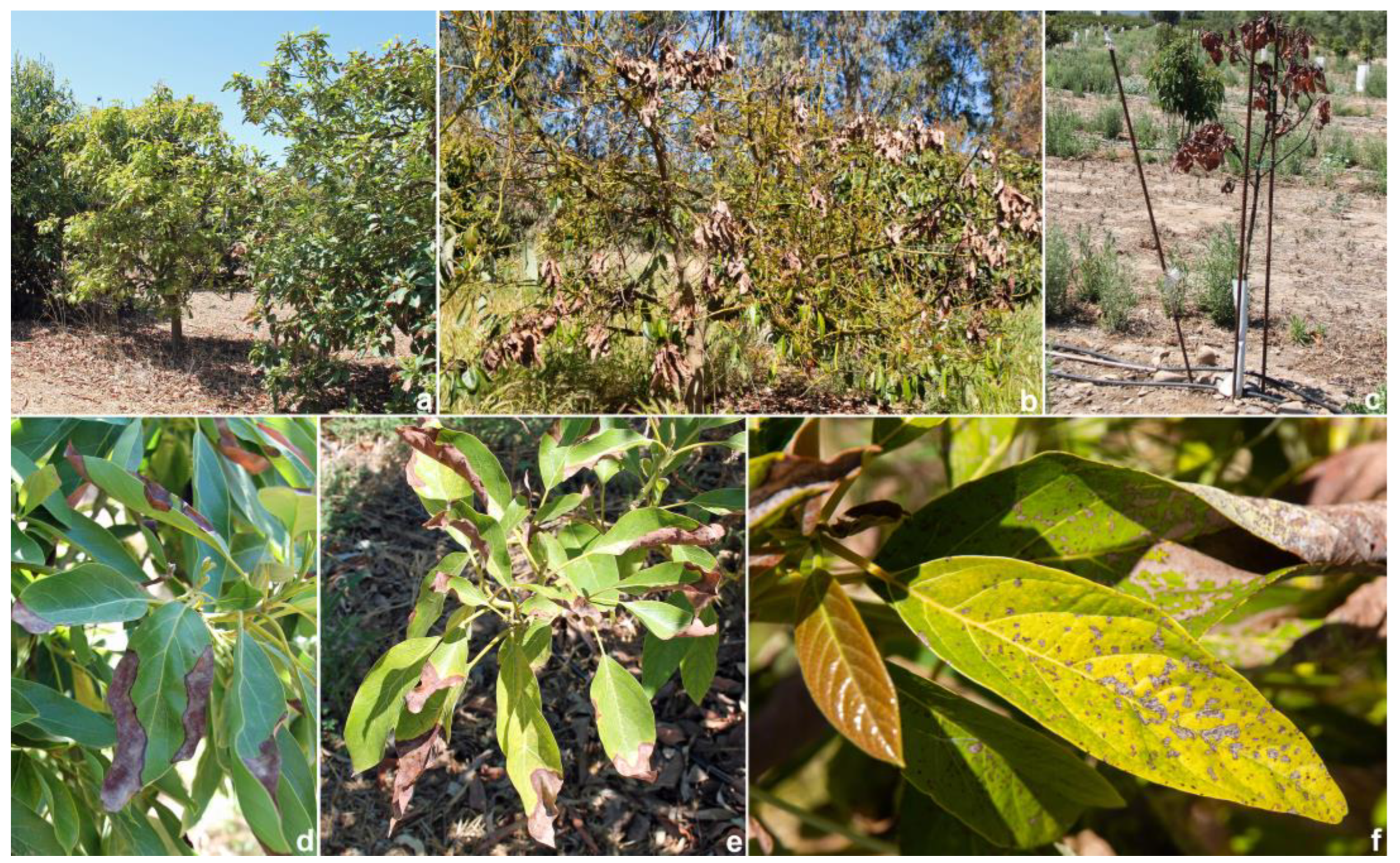
A variety of symptoms in avocado leaves, fruits, twigs, branches, stems and roots were recorded in both the nursery and orchard (Figure 1, Figure 2, Figure 3 and Figure 4). In the orchard, symptomatic avocado trees showed chlorosis, stunted growth, extensive shoot blight, dieback and sudden death (Figure 1a–c). On the leaves, two distinct disease symptoms were consistently observed: the first consisted of dark brown necrosis starting from the margin of the apical portion (DI: 86%) (Figure 1d,e); this type of necrosis progressively enlarged merging, leaving the branch partially defoliated. Less frequently, the presence of small leaf spots (anthracnose) randomly distributed across the entire leaf blade was observed, especially at the end of summer (DI: 3%); over time, the lesions progressively enlarged, merging into larger spots (Figure 1f).
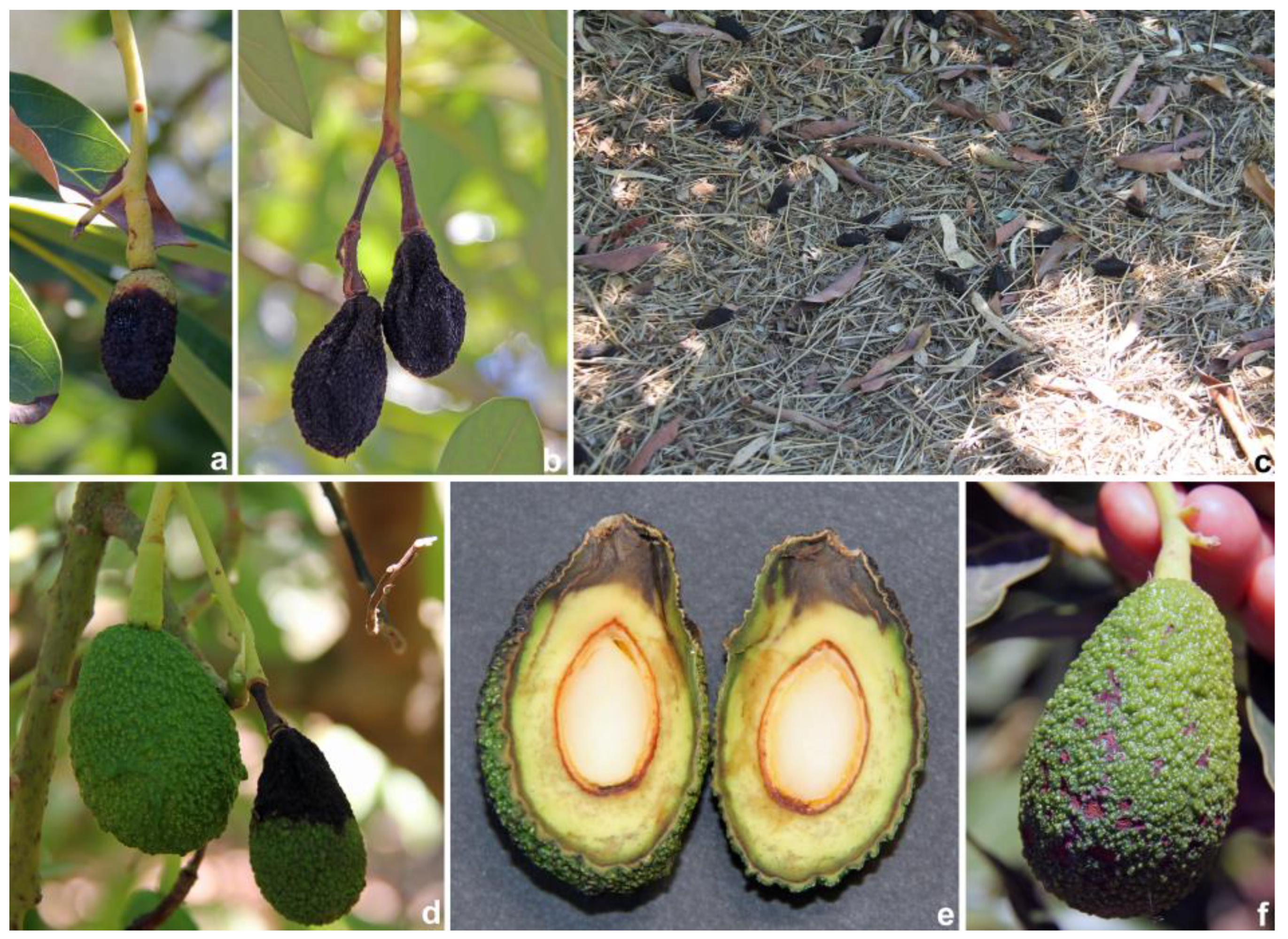
Three main disease symptoms were observed on the fruits: the first was visible in late summer on unripe fruits as a dark necrotic lesion affecting the exocarp and gradually migrating towards the peduncle, causing a light brown rot (Figure 2a–c). In a few days, the infection determined an intense carpoptosis (DI: 19%). The second symptom (stem-end rot) was recognized chiefly in autumn and winter (ripe fruits) as a slightly sunken necrosis which migrated from the petiole towards the fruit (DI: 4%), whereas small slightly sunken brown light lesions (anthracnose) were detected on 3% of fruits (Figure 2f).
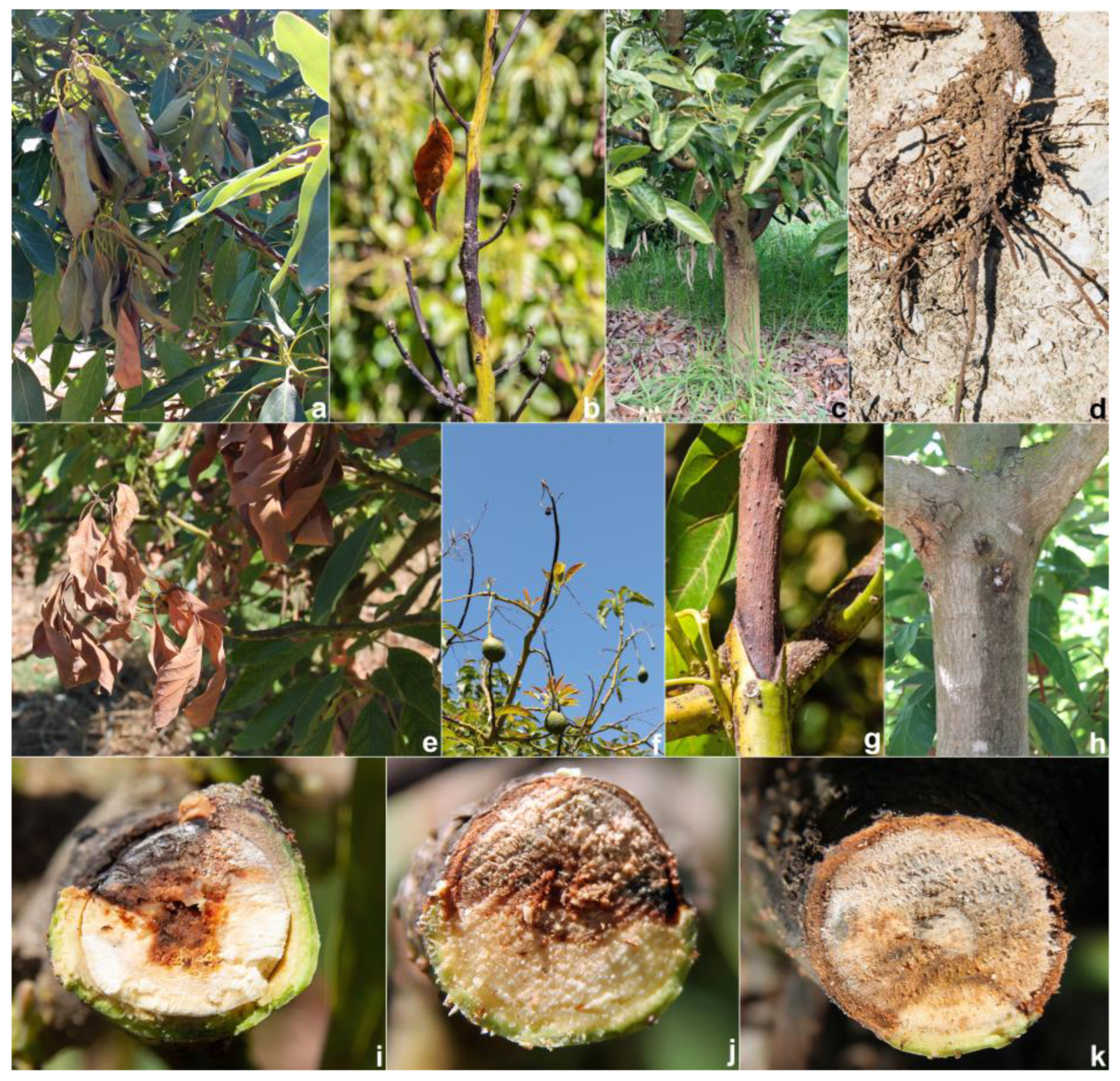
On shoots, branches and stem necrotic bark lesions (cankers) with and without a sunken appearance and sometimes with whitish hard exudates visible in the center of the canker were detected on 86% of the monitored trees (Figure 3). In cross-sections, cankers with a sunken appearance showed a wood reddish-brown necrosis that gradually took a typical V-shaped girdling of the branch (Figure 3i–k). In the canker without sunken bark lesions, the necrosis was confined to the inner bark.
Finally, 11% of trees in the liner plot showed typical root rot symptoms, with the loss of feeder roots and the presence of dark, linear necrosis starting from the root tip, resulting in the appearance of a characteristic “rat tail” (Figure 3). The inner bark and cambium necrosis progressively migrated towards the base of the stem, causing the bark to crack. Other nonspecific canopy symptoms, such as chlorosis, stunted growth, flower abortion and sudden death were also visible on these plants (Figure 1).
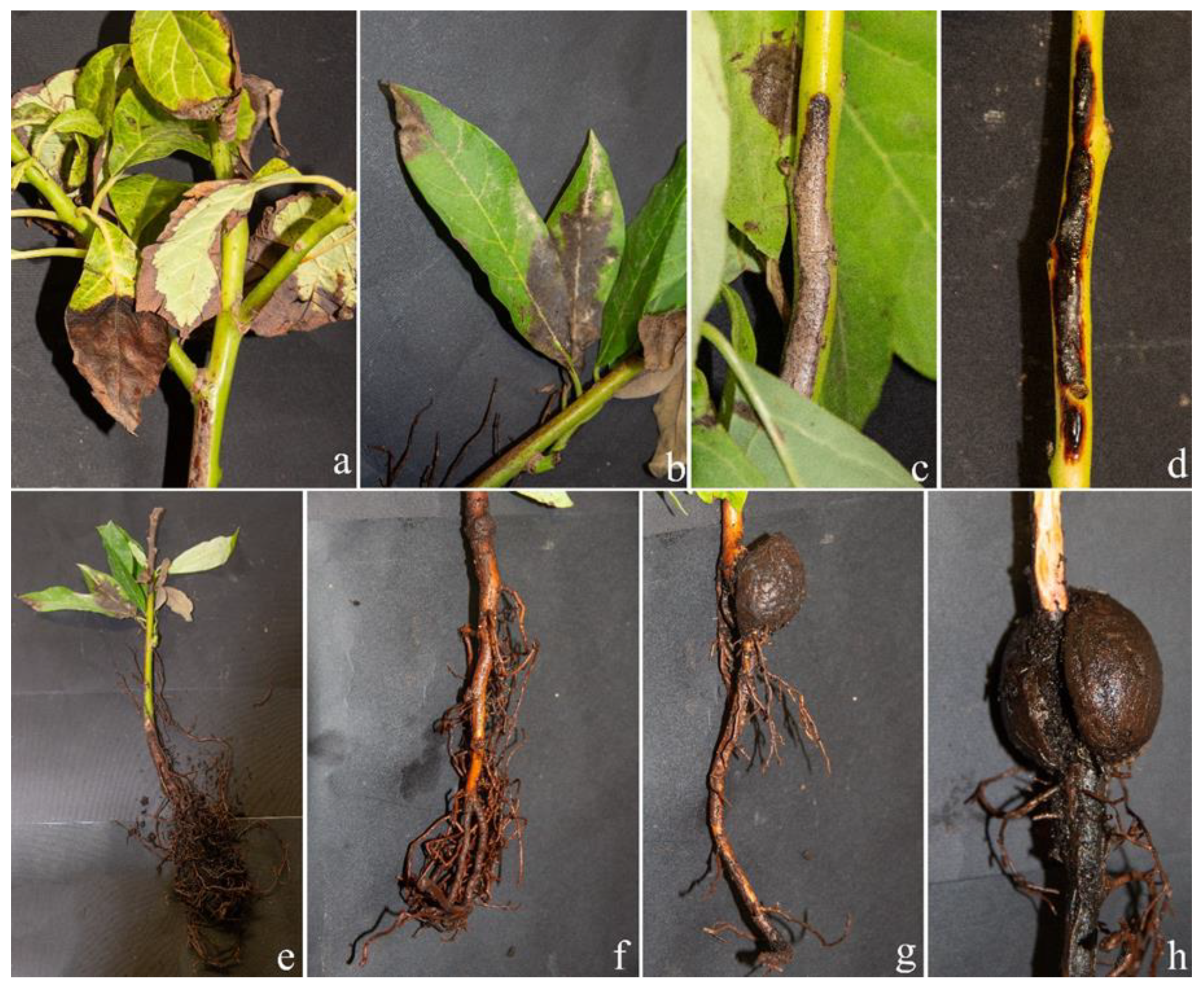
In nurseries, the main symptoms observed on seedlings were brown apical and marginal leaf necrosis, sunken canker and dark necrosis on the stem, and root and collar rot (Figure 4).

3.2. Etiology

The symptomatic samples processed yielded in pure culture a total of 22 species, of which nine belonged to the Botryosphaeriaceae family (Botryosphaeria dothidea, Diplodia mutila, D. seriata, Do. viticola, Macrophomina phaseolina, N. australe, N. cryptoaustrale, N. luteum and N. parvum), 11 to the Peronosporaceae family (P. bilorbang, P. cinnamomi, P. citricola, P. citrophthora, P. gonapodyides, P. multivora, P. nicotianae, P. niederhauserii, P. palmivora, P. polonica, P. plurivora) and two to the Glomerellaceae family (Colletotrichum gloeosporioides and C. siamense) (Table 3 and Table 4). On all plant organs, a variable and complex assemblage of pathogens was detected. On leaves showing large necrotic lesions, six species were isolated: in particular, N. australe from leaves of mature avocado trees and P. palmivora from leaves of nursery seedlings (Table 3 and Table 4). From leaves with anthracnose symptoms collected in Sardinian orchards, the species C. gloeosporioides was consistently isolated, whereas the sister species C. siamense was isolated from leaves of seedlings with apical necrotic lesions in Sicily (Table 4).
In the fruit, P. palmivora was the dominant species associated with early dark rot during the summer, whereas N. australe and N. luteum were from the stem-end rot symptoms in autumn (Table 3). Isolation from ripening avocado fruits with anthracnose symptoms yielded colonies of C. gloeosporioides.
Neofusicoccum australe and N. parvum were consistently associated with branch and stem cankers showing the V-shaped necrotic sector in a cross section (Table 3). The sunken appearance of Botryosphaeriaceae cankers with the V-shaped necrotic sector was more visible on twigs and branches, whereas on the main stem this was less clear due to an abundant production of dark-colored exudates by the plant. Sometimes a white exudate was also present in the center of the canker. In addition, on both branches and the main stem, outer and inner bark dark necrosis with blackish exudates without a sunken appearance were observed. From this type of bark canker from both nursery seedlings and mature trees, P. citrophthora and P. palmivora were consistently isolated.
From collar and root rot symptoms, a total of 11 Phytophthora species were isolated: nine from orchard samples and six from samples taken from nursery seedlings (Table 3 and Table 4). Four species (P. cinnamomi, P. citrophthora, P. niederhauserii and P. palmivora) were present in both the nursery and orchard samples.

3.3. Phylogeny

Phylogenetic relationships among the representative Colletotrichum, Phytophthora and botryosphaeriaceous isolates obtained in this study and the closely formally described species were clarified using a single-locus analysis for Phytophthora spp. and a Multilocus Sequence Analysis (MLSA) based on concatenated sequences of ITS and gapdh regions for Colletotrichum species, and ITS plus tef1-α region for botryosphaeriaceous isolates.
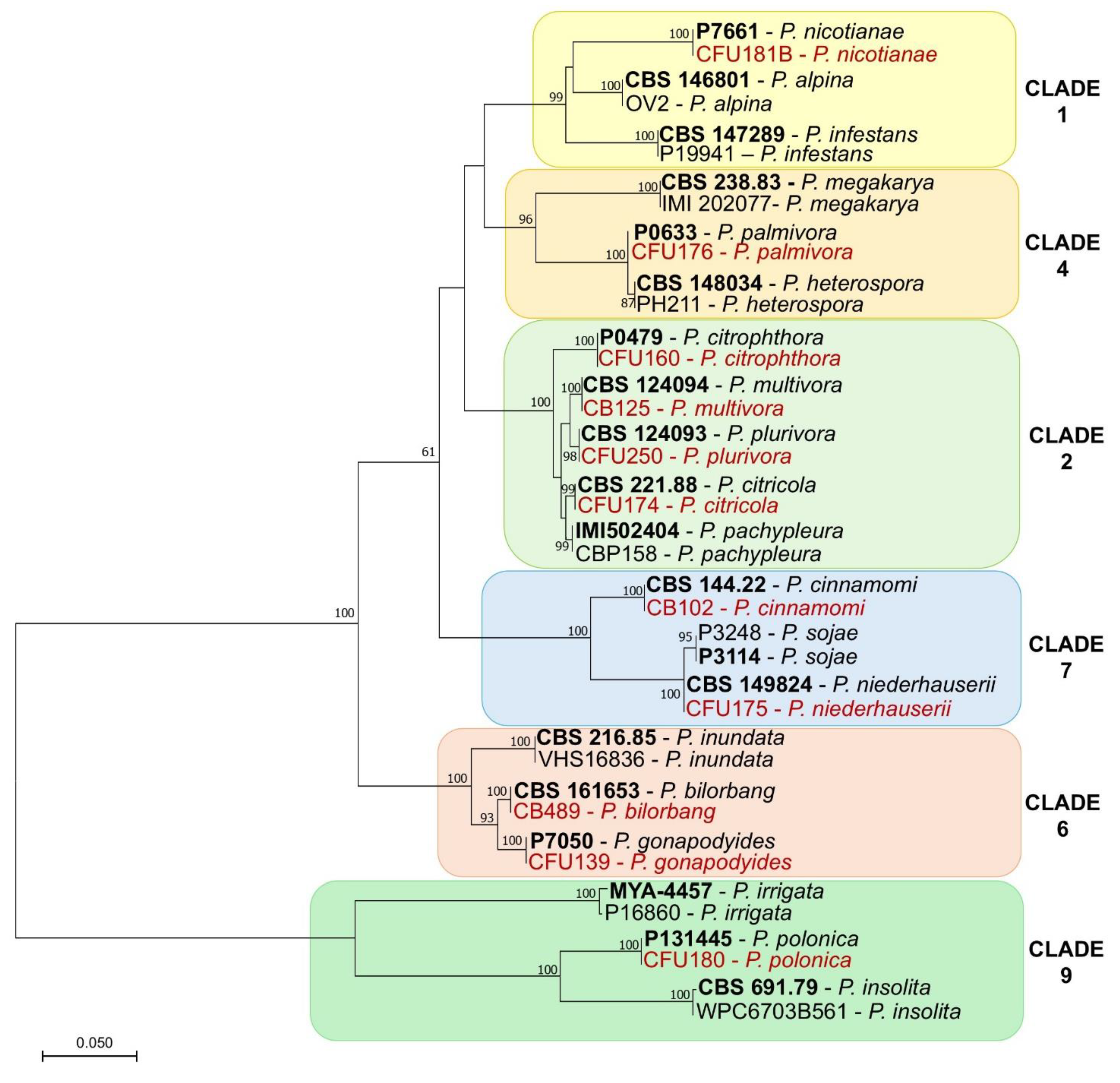
Single and concatenated phylogenies are shown in Figure 5, Figure 6 and Figure 7. The ML evolutionary reconstruction placed the representative Phytophthora isolates into 11 well-supported terminal clades (ML bootstrap, 100%) together with the relative ex-type culture (Figure 5). The 11 species were distributed into 6 of the 13 major Phytophthora clades [35].
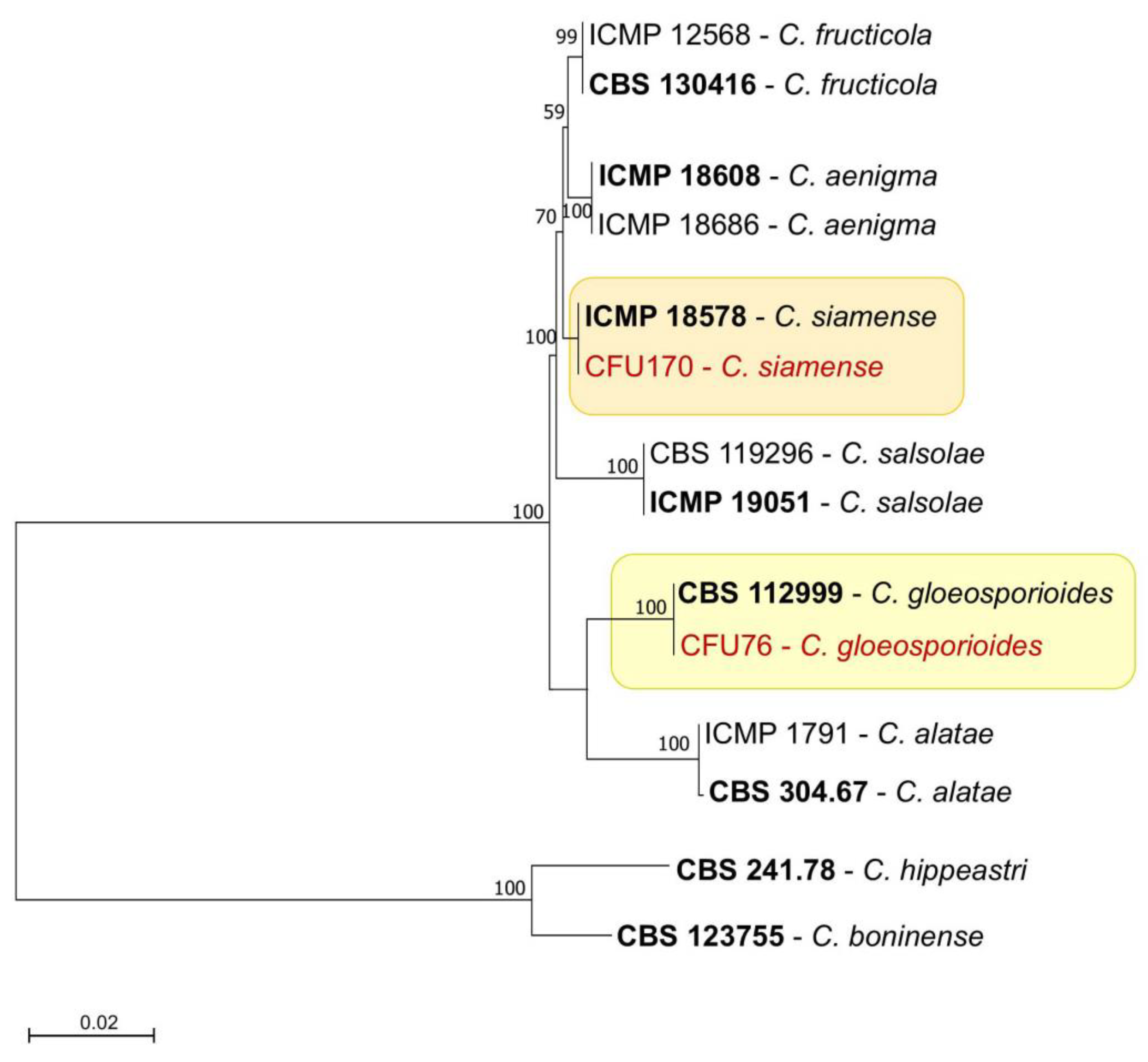
ML analyses clustered the two representative Colletotrichum isolates into two terminal clades together with the ex-type culture (ICMP18578) of C. siamense and the ex-type culture (CBS 112999) of C. gloeosporioides, respectively (Figure 6), confirming the identification.
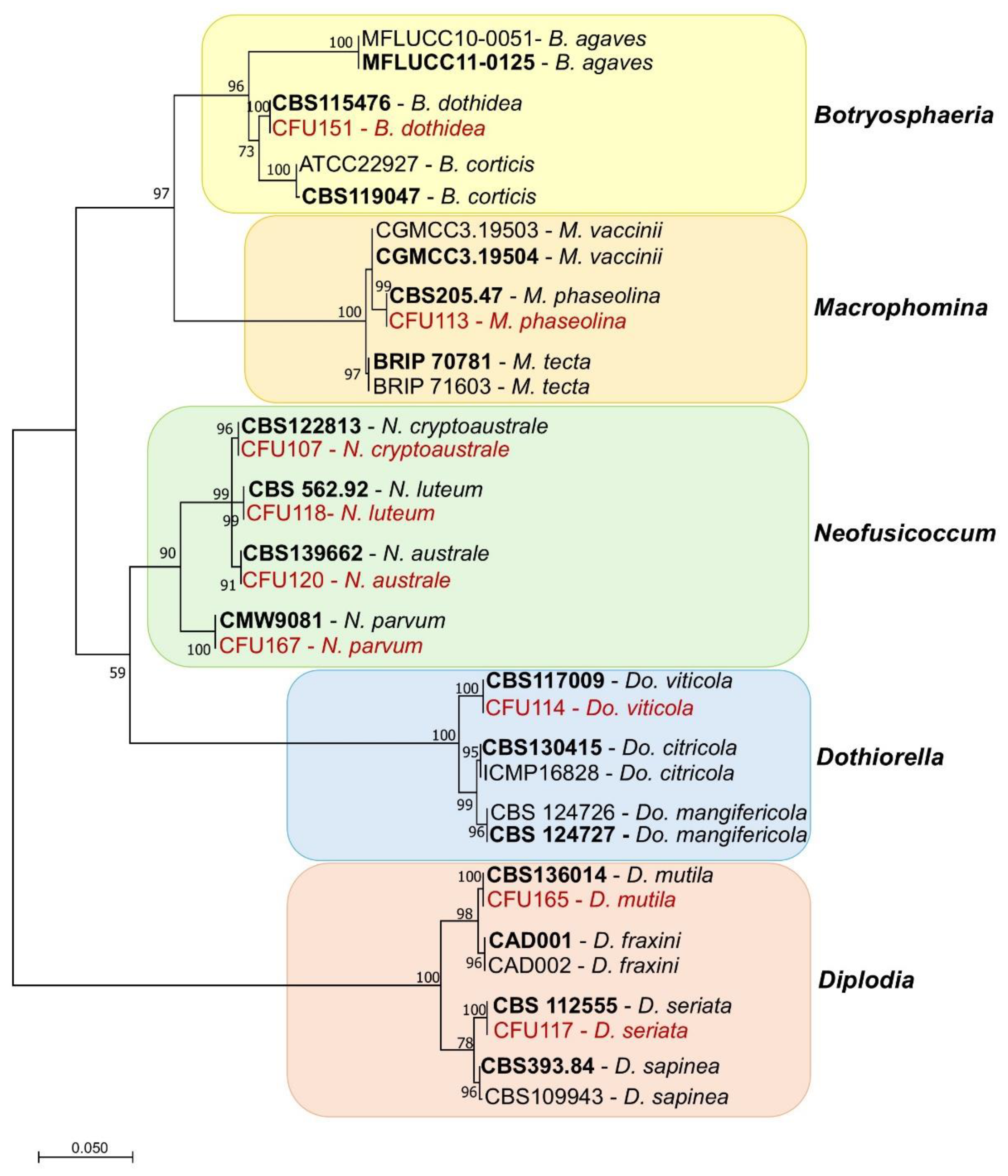
The representative botryosphaeriaceous isolates studied were distributed into nine terminal clades within five genera belonging to the Botryosphaeriaceae family (Figure 7). All terminal clades showed a high bootstrap support (ML, 91/100%) and included the ex-type culture of each species (Figure 7).

3.4. Pathogenicity

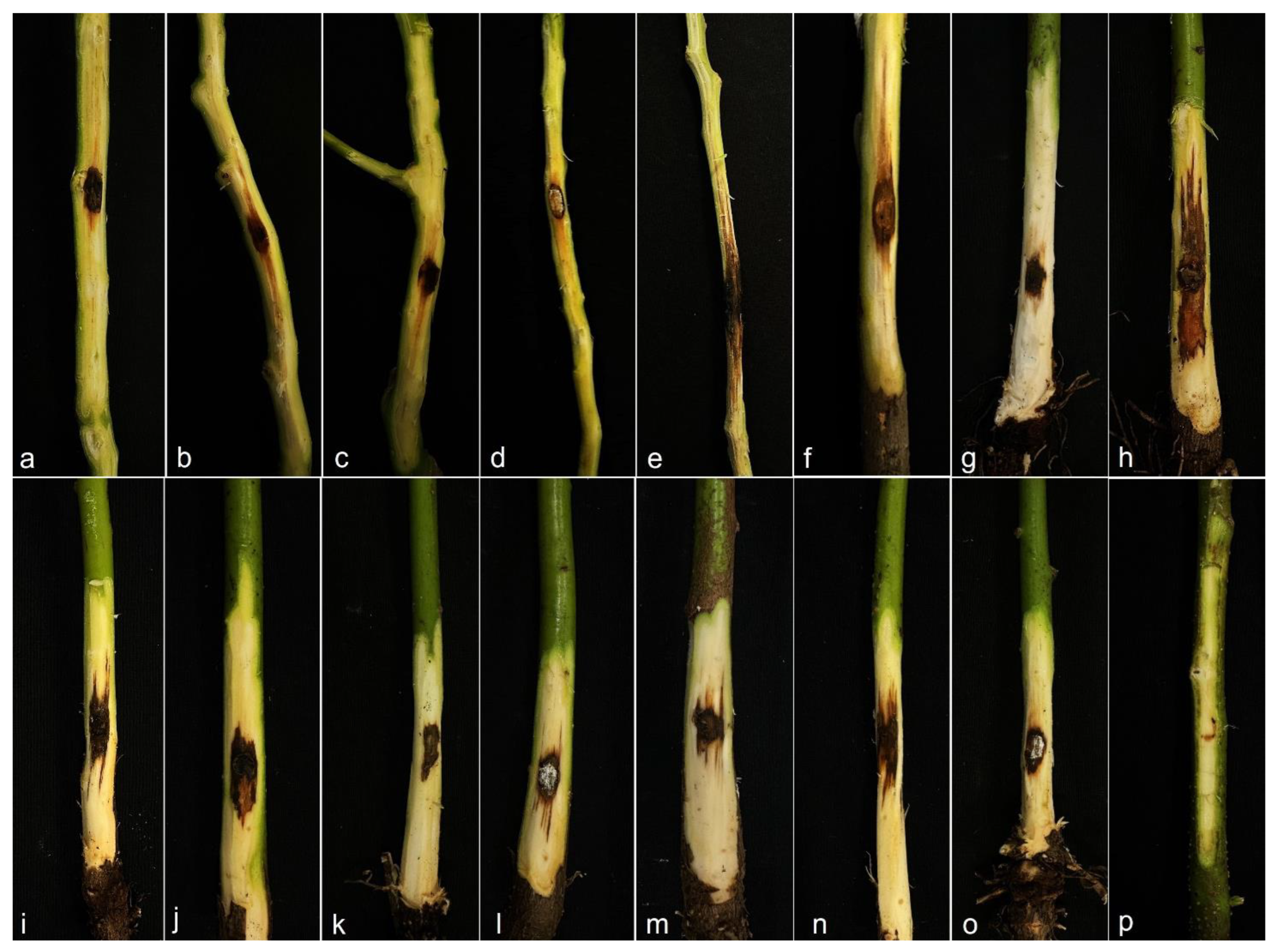
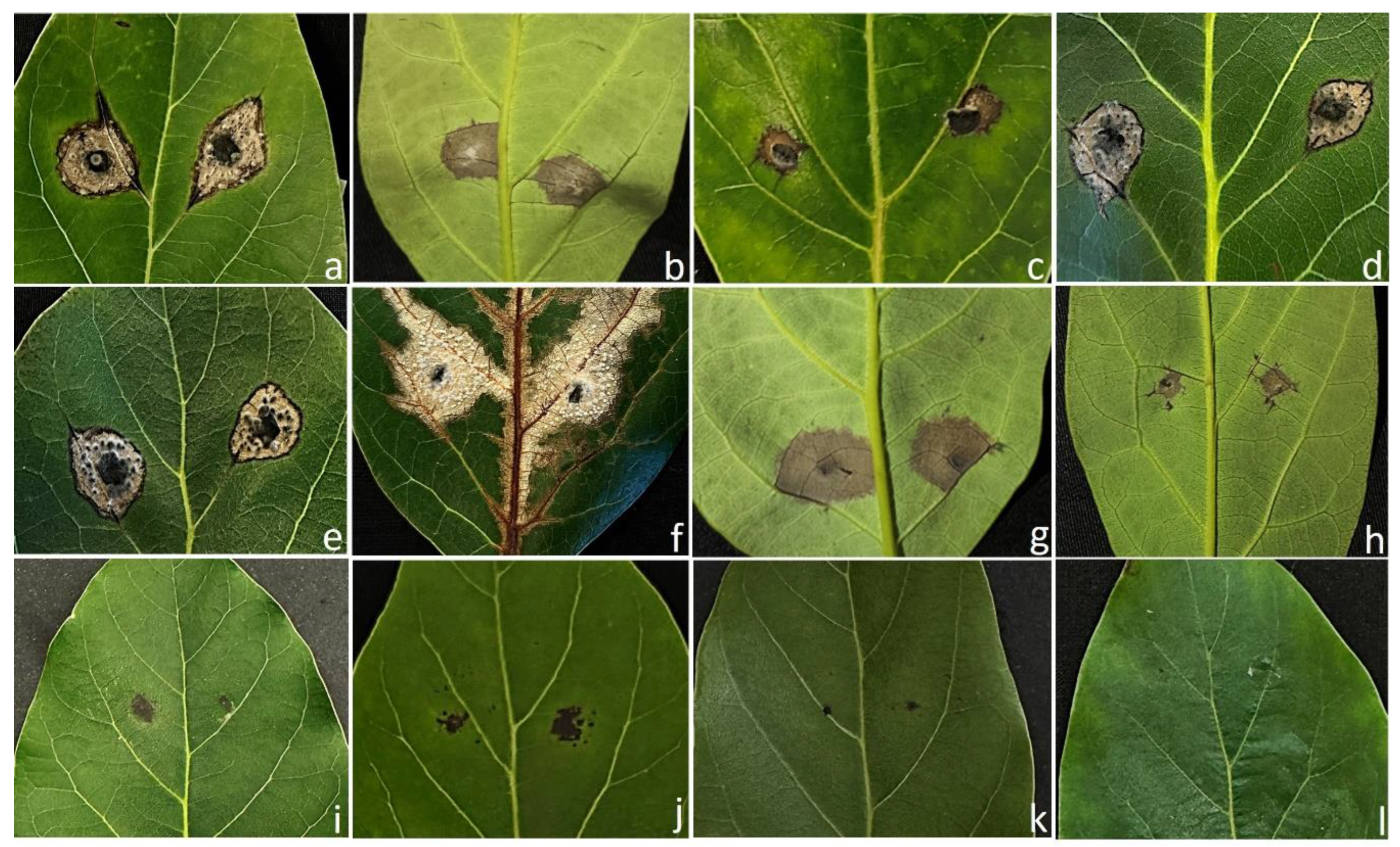
At the end of the experimental period of the first bioassay, all fungal and fungal-like isolates caused on stem external and internal necrotic lesions on the stem were consistent with those observed in nursery/orchard, whereas the control plants were asymptomatic (Figure 8). In particular, C. siamense produced the longest internal lesions, followed by N. parvum, N. australe and P. cinnamomi. Furthermore, lesions caused by C. siamense were significantly different from those of Phytophthora species, except for P. cinnamomi, while they did not differ significantly from those of Botryosphaeriaceae, except for D. mutila (Table 5).
Among the Phytophthora species tested on avocado leaves, P. palmivora proved to be an aggressive leaf pathogen causing extensive necrotic lesions that were significantly different from those of the other Phytophthora species and control (Figure 9 and Table 5). Phytophthora citrophthora, P. multivora and P. niederhauserii caused lesions ranging from 1.53 mm to 1.67 mm. In contrast, P. citricola, P. polonica, P. bilorbang, and P. gonapodyides did not produce any leaf symptoms, while P. cinnamomi induced only small, dark lesions restricted to the inoculation sites (Table 5). Among the fungal species, all isolates caused necrotic lesions with N. australe recognized as the main aggressive species (Table 5).
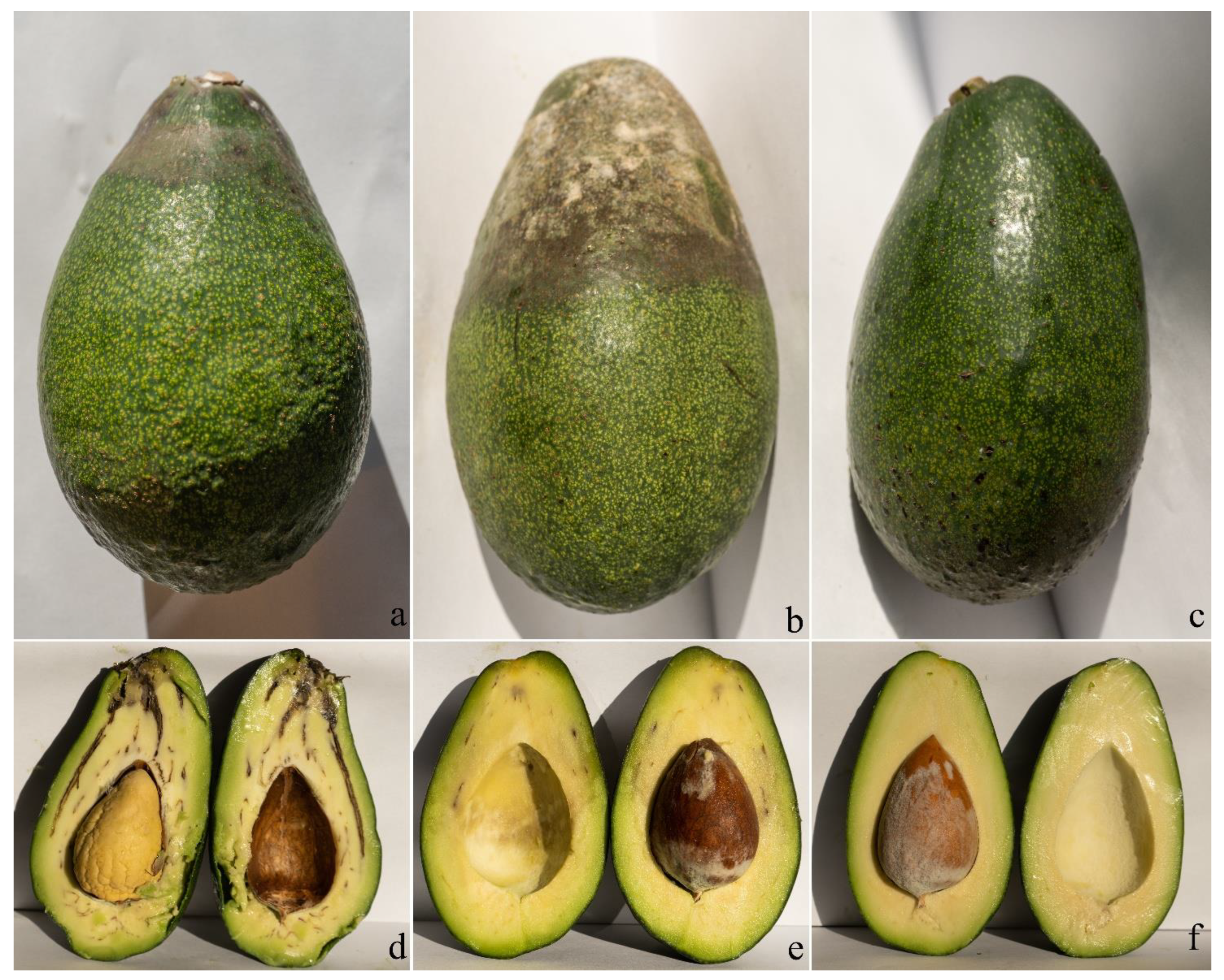
Phytophthora palmivora and N. australe proved to be pathogenic on avocado fruits, although with different aggressiveness. Statistically significant differences emerged among the two species in terms of lesion size and ability to colonize fruit tissues (Figure 10 and Table 5). In particular, N. australe caused extensive necrotic lesions that quickly expanded towards internal tissues (mesocarp), whereas P. palmivora caused chiefly superficial (exocarp) soft rot lesions that were easily recognizable by touch. Control fruits inoculated with sterile PDA plugs remained asymptomatic (Figure 10).
All species used in the pathogenicity bioassays were successfully re-isolated from the margin of necrotic lesions in all bioassays, thus fulfilling Koch’s postulates.

4. Discussion

In this study, we present a comprehensive overview of the pathogens involved in the etiology of emerging diseases affecting avocado in Italy. To address this major issue, we employed a combination of different diagnostic analyses on all plant organs, using various isolation techniques which allowed us to isolate and characterize 22 pathogenic species belonging to seven genera in the Botryosphaeriaceae, Glomerellaceae and Peronosporaceae families.
These results highlight that, in addition to several Botryosphaeriaceae and Colletotrichum species already known to be avocado pathogens in Italy, different species of Phytophthora are also involved in the etiology of the emerging avocado diseases, including some never before reported on avocado worldwide. The pathogenicity tests confirmed the aggressiveness of the different fungal and oomycetes species and provided important information about plant organs’ susceptibility.
Among the Botryosphaeriaceae species, N. parvum was confirmed to be one of the main pathogens directly associated with leaf, branch and stem avocado disease symptoms in Italy [6]. Neofusicoccum parvum has also been reported on avocado in Turkey [36], Spain [37,38], Mexico [39], Chile [40] and California [41]. Over the past few years, an increasing number of studies have focused on the primary role played by N. parvum in emerging diseases on both agriculture [16,26,42,43] and forestry ecosystems [16,44,45,46] in Europe. In addition to N. parvum, two other Botryosphaeriaceae species, namely N. australe and N. luteum, were isolated with a high frequency from the symptomatic avocado samples. In particular, N. australe, reported here for the first time on avocado in Italy, was the dominant species on stem cankers. The high isolation frequency of N. australe obtained in this study agrees with previous studies conducted in avocado orchards in California, Chile, Turkey, and Spain [38,47,48,49]. Genetic evidence strongly suggests that N. australe is native to Western Australia, where it exists as a common endophyte or opportunistic pathogen of eucalypts [50,51]. Given the widespread use of eucalyptus as a windbreak in Sardinian avocado orchards, a continuous host-jump of this pathogen between avocado and eucalypt is plausible.
The other Botryosphaeriaceae species (B. dothidea, D. seriata, D. mutila, Do. viticola, M. phaseolina and N. cryptoaustrale) were isolated with a lower frequency and especially from sunken cankers. Overall, our results reveal contrasting infection patterns among Botryosphaeriaceae species: while N. australe, N. luteum and N. parvum exhibit the ability to infect both woody tissues (branches and trunk) and herbaceous tissues (leaves, shoots, fruits), the other species display a specialization towards woody tissues. Among these species, D. seriata, D. mutila, and Do. viticola represent a first report on avocado in Italy.
Concerns like those regarding the impact of Botryosphaeriaceae have also emerged for the involvement of several Phytophthora species as avocado fruit rot, cankers, and root rot agents. These pathogens have also been associated for the first time with leaf diseases. Overall, nine different Phytophthora species were isolated and identified. Multiple species were often detected from a single sample and from the same site. The most consistently isolated species were P. cinnamomi from the roots and stem and P. palmivora from the fruits and leaves. Both species were isolated from mature trees on orchards and nursery plants, confirming the wide diffusion of these pathogens in Italian nurseries [52,53]. The international trade of plant material is widely recognized as the main pathway in the accidental introduction of Phytophthora species into agriculture, natural and urban ecosystems worldwide [54]. Once established in a new site (natural or anthropized), the impact of Phytophthora species is unpredictable and difficult to contrast [55,56]. Over the last 30 years, our knowledge about global Phytophthora diversity has improved with the number of culturable species exceeding 200 [57]. This result derives from the refinement of isolation and identification techniques, as well as from the constant discovery of new diseases caused by these pathogens [57]. The co-occurrence of different Phytophthora species associated with avocado root rot detected in this study could have a direct impact on avocado management strategies and in the screening for resistant rootstocks that are currently evaluated chiefly for P. cinnamomi [58,59]. Therefore, it is of the utmost importance to take this complex etiology into due consideration, since the Phytophthora species isolated from avocado are known to have optimal peaks of activity at different times of the year, as well as different infection and reproductive strategies [55].
Phytophthora cinnamomi is considered a highly invasive pathogen due to its virulence, wide host range, and ability to survive in the soil for long periods through the production of chlamydospores [56,60]. Avocado root rot caused by P. cinnamomi was first reported in Italy in 1998 on eight-year-old trees in Sicily [61]. Symptomatic trees were grafted on two different rootstocks including the G6, a Mexican selection reported to have some field resistance towards P. cinnamomi infections [58]. After this first report, there have been no other reports of Phytophthora affecting avocado in Italy before this work; therefore, the other species (P. bilorbang, P. citricola, P. citrophthora, P. gonapodyides, P. multivora, P. nicotianae, P. niederhauserii, P. palmivora, P. polonica, P. plurivora) are reported here for the first time on avocado in Italy. The involvement of P. palmivora in the fruit rot etiology is of particular concern. Phytophthora palmivora is a major pathogenic oomycete causing devastating fruit rot, stem canker and bud rot across different countries and tropical hosts such as cacao, coconut, durian, papaya and pomegranate [43,62,63,64,65]. Its ability to produce persistent and caducous sporangia support an aerial or soilborne lifestyle. In avocado, it causes a serious, often rapid, fruit rot, often leaving a white mycelium on the fruit surface. Similar symptoms have recently been reported in Italy on pomegranate fruits [43].
Among the other Phytophthora species, four within the major clade 2 (P. citricola, P. citrophthora, P. multivora and P. plurivora) are highly polyphagous oomycetes with a broad host range. These species are notorious for causing serious root rot, collar rot and stem canker diseases on a variety of woody agricultural, ornamental and forest tree species such as alders, common ash, European beech, olive, paulownia and walnut trees in Italy [26,46,53,66,67,68,69,70,71]. Interestingly, P. citrophthora caused bleeding cankers on the trunk that were externally identical to those caused by N. parvum. Only through an invasive investigation involving a cross section of the trunk and observation of the internal wood symptoms was it possible to differentiate the attacks of the two pathogens. Phytophthora citrophthora is an aggressive pathogen involved in severe citrus diseases worldwide, including root rot, bleeding stem cankers (gummosis) and brown fruit rot [72]. In Italy, avocado cultivation is gradually expanding into areas where citrus fruit was grown until a few years ago [4]. This could pose a serious risk to the avocado industry, given the widespread distribution of P. citrophthora in Italian citrus groves [73].
To better understand the role of each Phytophthora species in the colonization of the avocado root system as well as on the potential synergistic interaction among these different species, an investigation based on the artificial inoculation of avocado seedlings with an infected soil mixed with the nine Phytophthora species is in progress.
Besides Botryosphaeriaceae and Phytophthora species, isolation from leaves, fruits and branch samples yielded fungal isolates belonging to the species C. gloeosporioides and C. siamense. Colletotrichum species are well-known pathogens that affect various agricultural crops in tropical, subtropical and temperate regions. Diseases caused by these pathogens can cause significant economic losses, especially in the postharvest phase of tropical fruits, including avocados. Several species within the C. gloeosporioides complex, including C. gloeosporioides s.s. and C. siamense, have already been reported on avocado in different countries [7,31]. In Italy, C. gloeosporioides s.s., C. fructicola, C. fioriniae and C. perseae have previously been reported as avocado pathogens, whereas this is the first report of C. siamense as an avocado pathogen [15]. Colletotrichum siamense was originally described as a saprophyte, endophyte and pathogen of coffee (Coffea arabica) in Thailand [74], and then reported as causing severe diseases on a wide range of hosts globally [75,76,77,78,79]. A pathogenicity test demonstrated that C. siamense is an aggressive avocado pathogen that is able to infect stem and leaf tissues. The occurrence of Colletotrichum siamense-related diseases in nursery seedlings raises concerns about the potential diffusion of this pathogen through propagation materials. Both Colletotrichum species were recovered from lesions on twigs and branches in association with Neofusicoccum species, suggesting a secondary role played by these species on avocado wood tissues. This agrees with what was previously reported by various studies in other countries [80,81].

5. Conclusions

Although avocado is emerging as a profitable crop in Italy, the co-occurrence of severe attacks by several Botryosphaeriaceae and Phytophthora species outlines an alarming scenario. The high pathogen diversity detected in avocado orchards appears to be the result of multiple introductions by infected nursery material and host jumps between adjacent fruit and forest trees and avocado.
Overall, N. parvum confirmed its wide distribution on avocado orchards in the Mediterranean area, whereas P. australe was recognized as the dominant species in Sardinia. Phytophthora cinnamomi is widely regarded as the most destructive avocado pathogen globally, but the results of this study highlight that several other species and in particular P. palmivora and P. citrophthora represent an emerging threat to avocado in Italy. The different species of Phytophthora can infect all aerial organs, albeit with different specificity, often causing symptoms that are apparently identical when observed externally to those of Botryosphaeriaceae on the trunk. This complex etiology and the simultaneous involvement of several ecologically unrelated pathogens represent a major challenge for the development of adequate management strategies. At the same time, this issue raises the question about the limit of a diagnosis priority based on the new technologies offered by artificial intelligence (AI) and machine learning (ML) that analyzes plant images to automatically diagnose plant diseases in real time.

Author Contributions

Conceptualization, B.T.L., C.B. and D.A.; methodology, B.T.L., C.B. and D.A.; validation, B.T.L., C.B. and D.A.; formal analysis, B.T.L., C.B., J.M., L.M., D.A., L.V. and G.P.; investigation, B.T.L., C.B., J.M., L.M., D.A., L.V. and G.P.; resources, B.T.L., C.B. and D.A.; data curation, B.T.L., C.B., L.M., D.A. and L.V.; writing—original draft preparation, B.T.L.; writing—review and editing, B.T.L., C.B., L.M., D.A., L.V. and G.P.; supervision, B.T.L., C.B., L.M. and D.A.; funding acquisition, B.T.L., C.B. and D.A. All authors have read and agreed to the published version of the manuscript.

Funding

This research was funded by Associazione Agricoltori Villacidresi, and partially by the Project BIRD 2025 TESAF1SIDPROGETTI-00027 (Dept. TESAF, University of Padua, Italy), by the University of Padova with the projects: 2025TESAF1DOR-00255 and 2025TESAF1DOR-00262, by Piano di incentivi per la ricerca di Ateneo DIME-SIECO 2024-2026, University of Catania (Italy) and from the University of Catania (PhD grant to Laura Vecchio).

Data Availability Statement

The original contributions presented in this study are included in the article. Further requests can be directed to the corresponding author.

Acknowledgments

The authors thank Giorgio Ionta and Giovanni Ignazio Muscas for their logistic support and technical assistance during field surveys and sampling.

Conflicts of Interest

The authors declare no conflicts of interest.

References

  1. Silva, T.R.; Ledesma, N. Avocado history, biodiversity and production. In Sustainable Horticultural Systems: Issues, Technology and Innovation; Nandwani, D., Ed.; Springer International Publishing: Cham, Switzerland, 2014; pp. 157–205. [Google Scholar] [CrossRef]
  2. Cervantes-Paz, B.; Yahia, E.M. Avocado oil: Production and market demand, bioactive components, implications in health, and tendencies and potential uses. Compr. Rev. Food Sci. Food Saf. 2021, 20, 4120–4158. [Google Scholar] [CrossRef]
  3. Huang, K.M.; Guan, Z.; Blare, T.; Hammami, A.M. Global avocado boom. Choices 2023, 38, 1–9. [Google Scholar]
  4. Coldiretti. Italia tropicale, avocado, mango e guava avanzano nelle campagne. Il Punto Coldiretti 2025. [Google Scholar]
  5. Fiorenza, A.; Gusella, G.; Vecchio, L.; Aiello, D.; Polizzi, G. Diversity of Botryosphaeriaceae species associated with canker and dieback of avocado (Persea americana) in Italy. Phytopathol. Mediterr. 2023, 62, 47–63. [Google Scholar] [CrossRef]
  6. Guarnaccia, V.; Vitale, A.; Cirvilleri, G.; Aiello, D.; Susca, A.; Epifani, F.; Polizzi, G. Characterisation and pathogenicity of fungal species associated with branch cankers and stem-end rot of avocado in Italy. Eur. J. Plant Pathol. 2016, 146, 963–976. [Google Scholar] [CrossRef]
  7. Sharma, G.; Maymon, M.; Freeman, S. Epidemiology, pathology and identification of Colletotrichum, including a novel species associated with avocado (Persea americana) anthracnose in Israel. Sci. Rep. 2017, 7, 15839. [Google Scholar] [CrossRef] [PubMed]
  8. Möller, H.; Slippers, B.; van den Berg, N. Branch canker battles: Understanding and managing the Botryosphaeriaceae in avocado. Phytoparasitica 2025, 53, 17. [Google Scholar] [CrossRef]
  9. Ramírez-Gil, J.G.; Castañeda-Sánchez, D.A.; Morales-Osorio, J.G. Production of avocado trees infected with Phytophthora cinnamomi under different management regimes. Plant Pathol. 2017, 66, 623–632. [Google Scholar] [CrossRef]
  10. Zakaria, L. Diversity of Colletotrichum species associated with anthracnose disease in tropical fruit crops—A review. Agriculture 2021, 11, 297. [Google Scholar] [CrossRef]
  11. Pérez-Jiménez, R.M. Significant avocado diseases caused by fungi and oomycetes. Eur. J. Plant Sci. Biotechnol. 2008, 2, 1–24. [Google Scholar]
  12. Kimaru, K.S.; Muchemi, K.P.; Mwangi, J.W. Effects of anthracnose disease on avocado production in Kenya. Cogent Food Agric. 2020, 6, 1799531. [Google Scholar] [CrossRef]
  13. Dissanayake, D.M.S.; Adikaram, N.K.B.; Yakandawala, D.M.D.; Jayasinghe, L. Molecular phylogeny-based identification of Colletotrichum endophytica and C. siamense as causal agents of avocado anthracnose in Sri Lanka. Ceylon J. Sci. 2021, 50, 449–458. [Google Scholar] [CrossRef]
  14. Martino, I.; Sorrentino, R.; Piccirillo, G.; Battaglia, V.; Polizzi, G.; Guarnaccia, V.; Lahoz, E. Colletotrichum fioriniae, causal agent of postharvest avocado fruit rot in Southern Italy. Phytopathol. Mediterr. 2024, 63, 375–383. [Google Scholar] [CrossRef]
  15. Vecchio, L.; Martino, I.; Guarnaccia, V.; Polizzi, G.; Aiello, D. Colletotrichum perseae and Colletotrichum gloeosporioides sensu strictu Causing Stem Lesion and Dieback in Avocado in Italy. Horticulturae 2026, 12, 111. [Google Scholar] [CrossRef]
  16. Aiello, D.; Bregant, C.; Carlucci, A.; Guarnaccia, V.; Gusella, G.; Linaldeddu, B.T.; Polizzi, G. Current status of Botryosphaeriaceae species in Italy: Impacts on agricultural crops and forest ecosystems. Phytopathol. Mediterr. 2023, 62, 381–412. [Google Scholar] [CrossRef]
  17. Belisle, R.J.; McKee, B.; Hao, W.; Crowley, M.; Arpaia, M.L.; Miles, T.D.; Adaskaveg, J.E.; Manosalva, P. Phenotypic characterization of genetically distinct Phytophthora cinnamomi isolates from avocado. Phytopathology 2019, 109, 384–394. [Google Scholar] [CrossRef]
  18. Zentmyer, G.A. Avocado diseases. Int. J. Pest Manag. 1984, 30, 388–400. [Google Scholar] [CrossRef]
  19. Kurbetli, İ.; Sülü, G.; Aydoğdu, M.; Woodward, S.; Bayram, S. Outbreak of Phytophthora cinnamomi causing severe decline of avocado trees in southern Turkey. J. Phytopathol. 2020, 168, 533–541. [Google Scholar] [CrossRef]
  20. Hong, C.X.; Gallegly, M.E.; Browne, G.T.; Bhat, R.G.; Richardson, P.A.; Kong, P. The avocado subgroup of Phytophthora citricola constitutes a distinct species, Phytophthora mengei sp. nov. Mycologia 2009, 101, 833–840. [Google Scholar] [CrossRef]
  21. Mondragón-Flores, A.; Soto-Plancarte, A.; Rodríguez-Alvarado, G.; Manosalva, P.; Ochoa-Ascencio, S.; Hoyt, B.; Fernández-Pavía, S.P. First report of Phytophthora mengei causing root rot and canker in avocado (Persea americana) in Michoacán, Mexico. Microorganisms 2025, 13, 1471. [Google Scholar] [CrossRef] [PubMed]
  22. Palacios-Joya, L.P.; Rodríguez-Arévalo, K.A.; Martínez, M.F.; Murcia-Riaño, N.; Rodríguez-Mora, D.M. Phytophthora species causing root rot in avocado seedlings at Colombian nurseries: Morphological, molecular, and pathogenic analysis. Sci. Agropecu. 2025, 16, 113–121. [Google Scholar] [CrossRef]
  23. Kankavee, P.; Withee, P.; Haituk, S.; Wongwan, T.; Promthep, T.; Karunarathna, A.; Cheewangkoon, R. First report of Phytophthora nicotianae causing avocado root rot in Thailand. J. Gen. Plant Pathol. 2024, 90, 51–58. [Google Scholar] [CrossRef]
  24. Rodriguez-Padron, C.; Siverio, F.; Perez-Sierra, A.; Rodriguez, A. Isolation and pathogenicity of Phytophthora species and Phytopythium vexans recovered from avocado orchards in the Canary Islands, including Phytophthora niederhauserii as a new pathogen of avocado. Phytopathol. Mediterr. 2018, 57, 89–106. [Google Scholar]
  25. Machado, M.; Collazo, C.; Peña, M.; Renaud, M.A.; López, M.O.; Coto, O.; Zamora, V.; Cabrera, R.I.; Aranguren, M.; Boland, G.J. First report of Phytophthora palmivora Butler causing root rot on avocado (Persea americana Mill.) in Cuba. Can. J. Plant Pathol. 2012, 34, 323–348. [Google Scholar]
  26. Linaldeddu, B.T.; Rossetto, G.; Maddau, L.; Vatrano, T.; Bregant, C. Diversity and pathogenicity of Botryosphaeriaceae and Phytophthora species associated with emerging olive diseases in Italy. Agriculture 2023, 13, 1575. [Google Scholar] [CrossRef]
  27. Linderman, R.G.; Zeitoun, F. Phytophthora cinnamomi causing root rot and wilt of nursery- grown native Western azalea and Salal. Plant Dis. Report. 1977, 61, 1045–1048. [Google Scholar]
  28. White, T.J.; Bruns, T.; Lee, S.; Taylor, J. Amplification and direct sequencing of fungal ribosomal RNA genes for phylogenetics. In PCR Protocols: A Guide to Methods and Applications; Innis, M.A., Gelfand, D.H., Sninsky, J.J., White, T.J., Eds.; Academic Press: San Diego, CA, USA, 1990; pp. 315–322. [Google Scholar]
  29. Inderbitzin, P.; Bostock, R.M.; Trouillas, F.P.; Michailides, T.J. A six-locus phylogeny reveals high species diversity in Botryosphaeriaceae from California almond. Mycologia 2010, 102, 1350–1368. [Google Scholar] [CrossRef]
  30. Guerber, J.C.; Liu, B.; Correll, J.C.; Johnston, P.R. Characterization of diversity in Colletotrichum acutatum sensu lato by sequence analysis of two gene introns, mtDNA and intron RFLPs, and mating compatibility. Mycologia 2003, 95, 872–895. [Google Scholar] [CrossRef] [PubMed]
  31. Weir, B.S.; Johnston, P.R.; Damm, U. The Colletotrichum gloeosporioides species complex. Stud. Mycol. 2012, 73, 115–180. [Google Scholar] [CrossRef]
  32. Thompson, J.D.; Gibson, T.J.; Plewniak, F.; Jeanmougin, F.; Higgins, D.G. The CLUSTAL_X windows interface: Flexible strategies for multiple sequence alignment aided by quality analysis tools. Nucleic Acids Res. 1997, 25, 4876–4882. [Google Scholar] [CrossRef]
  33. Hall, T.A. BioEdit: A user-friendly biological sequence alignment editor and analysis program for Windows 95/98/NT. In Nucleic Acids Symposium Series; Oxford University Press: Oxford, UK, 1999; Volume 41, pp. 95–98. [Google Scholar]
  34. Kumar, S.; Stecher, G.; Li, M.; Knyaz, C.; Tamura, K. MEGA X: Molecular evolutionary genetics analysis across computing platforms. Mol. Biol. Evol. 2018, 35, 1547–1549. [Google Scholar] [CrossRef]
  35. Bourret, T.B.; Choudhury, R.A.; Mehl, H.K.; Blomquist, C.L.; McRoberts, N.; Rizzo, D.M. Multiple origins of downy mildews and mito-nuclear discordance within the paraphyletic genus Phytophthora. PLoS ONE 2018, 13, e0192502. [Google Scholar] [CrossRef]
  36. Çalış, Ö.; Çelik, S.; Fidan, H.; Tek, M.I.; Shah, M.; Tozlu, I.; Wani, S.H. Emerging pathogens and disease dynamics threatening avocado production in southern Türkiye. J. Plant Dis. Prot. 2024, 131, 1653–1663. [Google Scholar] [CrossRef]
  37. Zea-Bonilla, T.; González-Sánchez, M.A.; Martín-Sánchez, P.M.; Pérez-Jiménez, R.M. Avocado dieback caused by Neofusicoccum parvum in the Andalucía region, Spain. Plant Dis. 2007, 91, 1052. [Google Scholar] [CrossRef]
  38. Arjona-Girona, I.; Ruano-Rosa, D.; López-Herrera, C.J. Identification, pathogenicity and distribution of the causal agents of dieback in avocado orchards in Spain. Span. J. Agric. Res. 2019, 17, e1003. [Google Scholar] [CrossRef]
  39. Molina-Gayosso, E.; Silva-Rojas, H.V.; García-Morales, S.; Avila-Quezada, G. First report of black spots on avocado fruit caused by Neofusicoccum parvum in Mexico. Plant Dis. 2012, 96, 287. [Google Scholar] [CrossRef]
  40. Valencia, A.L.; Gil, P.M.; Latorre, B.A.; Rosales, I.M. Characterization and pathogenicity of Botryosphaeriaceae species obtained from avocado trees with branch canker and dieback and from avocado fruit with stem end rot in Chile. Plant Dis. 2019, 103, 996–1005. [Google Scholar] [CrossRef]
  41. McDonald, V.; Lynch, S.; Eskalen, A. First report of Neofusicoccum australe, N. luteum, and N. parvum associated with avocado branch canker in California. Plant Dis. 2009, 93, 967. [Google Scholar] [CrossRef]
  42. Thomidis, T.; Michailides, T.J.; Exadaktylou, E. Neofusicoccum parvum associated with fruit rot and shoot blight of peaches in Greece. Eur. J. Plant Pathol. 2011, 131, 661–668. [Google Scholar] [CrossRef]
  43. Bregant, C.; Rossetto, G.; Montecchio, L.; Tundo, S.; Raiola, A.; Linaldeddu, B.T. First report of Neofusicoccum parvum and Phytophthora palmivora causing fruit rot of pomegranate in Italy. Ital. J. Mycol. 2024, 53, 65–74. [Google Scholar] [CrossRef]
  44. Seddaiu, S.; Mello, A.; Sechi, C.; Cerboneschi, A.; Linaldeddu, B.T. First report of Neofusicoccum parvum associated with chestnut nut rot in Italy. Plant Dis. 2021, 105, 3743. [Google Scholar] [CrossRef]
  45. Bregant, C.; Rossetto, G.; Linaldeddu, B.T.; Batista, E.; Hilário, S.; Alves, A. First report of Neofusicoccum parvum causing canker and dieback on Alnus glutinosa in Portugal. New Dis. Rep. 2023, 47, e12169. [Google Scholar] [CrossRef]
  46. Bregant, C.; Marcolongo, M.; Montecchio, L.; Ogris, N.; Piškur, B.; Linaldeddu, B.T. Diversity and pathogenicity of Botryosphaeriaceae and Phytophthora species involved in emerging diseases of Fagus sylvatica in Italy and Slovenia. Ital. J. Mycol. 2024, 53, 166–177. [Google Scholar] [CrossRef]
  47. Montealegre, J.R.; Ramírez, M.; Riquelme, D.; Armengol, J.; León, M.; Pérez, L.M. First report of Neofusicoccum australe in Chile causing avocado stem-end rot. Plant Dis. 2016, 100, 1018. [Google Scholar] [CrossRef]
  48. Auger, J.; Palma, F.; Pérez, I.; Esterio, M. First report of Neofusicoccum australe (Botryosphaeria australis) as a branch dieback pathogen of avocado trees in Chile. Plant Dis. 2013, 97, 842. [Google Scholar] [CrossRef]
  49. Akgül, D.S.; Awan, Q.N.; Güler, P.G.; Önelge, N. First report of anthracnose and stem end rot diseases caused by Colletotrichum gloeosporioides and Neofusicoccum australe on avocado fruits in Turkey. Plant Dis. 2016, 100, 1792. [Google Scholar] [CrossRef]
  50. Burgess, T.I.; Sakalidis, M.L.; Hardy, G.E.S. Gene flow of the canker pathogen Botryosphaeria australis between Eucalyptus globulus plantations and native eucalypt forests in Western Australia. Austral Ecol. 2006, 31, 559–566. [Google Scholar] [CrossRef]
  51. Burgess, T.I.; Tan, Y.P.; Garnas, J.; Edwards, J.; Scarlett, K.A.; Shuttleworth, L.A.; Daniel, R.; Dann, E.K.; Parkinson, L.E.; Dinh, Q.; et al. Current status of the Botryosphaeriaceae in Australia. Australas. Plant Pathol. 2019, 48, 35–44. [Google Scholar] [CrossRef]
  52. Bregant, C.; Mulas, A.A.; Rossetto, G.; Deidda, A.; Maddau, L.; Piras, G.; Linaldeddu, B.T. Phytophthora mediterranea sp. nov., a new species closely related to Phytophthora cinnamomi from nursery plants of Myrtus communis in Italy. Forests 2021, 12, 682. [Google Scholar] [CrossRef]
  53. Antonelli, C.; Biscontri, M.; Tabet, D.; Vettraino, A.M. The never-ending presence of Phytophthora species in Italian nurseries. Pathogens 2022, 12, 15. [Google Scholar] [CrossRef] [PubMed]
  54. Brasier, C.M. The biosecurity threat to the UK and global environment from international trade in plants. Plant Pathol. 2008, 57, 792–808. [Google Scholar] [CrossRef]
  55. Hansen, E.M.; Reeser, P.W.; Sutton, W. Phytophthora beyond agriculture. Annu. Rev. Phytopathol. 2012, 50, 359–378. [Google Scholar] [CrossRef] [PubMed]
  56. Burgess, T.I.; Scott, J.K.; Mcdougall, K.L.; Stukely, M.J.; Crane, C.; Dunstan, W.A.; Brigg, F.; Andjic, V.; White, D.; Rudman, T.; et al. Current and projected global distribution of Phytophthora cinnamomi, one of the world’s worst plant pathogens. Glob. Chang. Biol. 2017, 23, 1661–1674. [Google Scholar] [CrossRef] [PubMed]
  57. Sarker, S.R.; Burgess, T.I.; Hardy, G.E.S.J.; McComb, J. Closing the Gap between the number of Phytophthora species isolated through baiting a soil sample and the number revealed through metabarcoding. Mycol. Prog. 2023, 22, 39. [Google Scholar] [CrossRef]
  58. Coffey, M.D. Phytophthora root rot of Avocado. Plant Dis. 1987, 71, 1046–1052. [Google Scholar]
  59. Dolan, T.E.; Coffey, M.D. Laboratory screening technique for assessing resistance of four avocado rootstocks to Phytophthora cinnamomi. Plant Dis. 1986, 70, 115–118. [Google Scholar] [CrossRef]
  60. Bregant, C.; Batista, E.; Hilário, S.; Linaldeddu, B.T.; Alves, A. Diversity and distribution of Phytophthora species along an elevation gradient in natural and semi-natural forest ecosystems in Portugal. Pathogens 2025, 14, 103. [Google Scholar] [CrossRef] [PubMed]
  61. Cacciola, S.O.; Pane, A.; Davino, M.; Magnano di San Lio, G. First report of root rot caused by Phytophthora cinnamomi on avocado in Italy. Plant Dis. 1998, 82, 1281. [Google Scholar] [CrossRef]
  62. Puig, A.S.; Quintanilla, W.; Matsumoto, T.; Keith, L.; Gutierrez, O.A.; Marelli, J.P. Phytophthora palmivora causing disease on Theobroma cacao in Hawaii. Agriculture 2021, 11, 396. [Google Scholar] [CrossRef]
  63. Blaha, G.; Hall, G.; Warokka, J.S.; Concibido, E.; Ortiz-Garcia, C. Phytophthora isolates from coconut plantations in Indonesia and Ivory Coast: Characterization and identification by morphology and isozyme analysis. Mycol. Res. 1994, 98, 1379–1389. [Google Scholar] [CrossRef]
  64. Vawdrey, L.L.; Langdon, P.; Martin, T. Incidence and pathogenicity of Phytophthora palmivora and Pythium vexans associated with durian decline in far northern Queensland. Australas. Plant Pathol. 2005, 34, 127–128. [Google Scholar] [CrossRef]
  65. Jami, F.; Botha, W.J.; Bhiya, T.; Ntuli, I.; Phakalatsane, T.; Schoeman, M.H.; Daneel, M. Phytophthora palmivora: A serious threat to papaya production in South Africa. Eur. J. Plant Pathol. 2026. [Google Scholar] [CrossRef]
  66. Schoebel, C.N.; Stewart, J.; Gruenwald, N.J.; Rigling, D.; Prospero, S. Population history and pathways of spread of the plant pathogen Phytophthora plurivora. PLoS ONE 2014, 9, e85368. [Google Scholar] [CrossRef] [PubMed]
  67. Tsykun, T.; Prospero, S.; Schoebel, C.N.; Rea, A.; Burgess, T.I. Global invasion history of the emerging plant pathogen Phytophthora multivora. BMC Genom. 2022, 23, 153. [Google Scholar] [CrossRef]
  68. Bregant, C.; Sanna, G.P.; Bottos, A.; Maddau, L.; Montecchio, L.; Linaldeddu, B.T. Diversity and pathogenicity of Phytophthora species associated with declining alder trees in Italy and description of Phytophthora alpina sp. nov. Forests 2020, 11, 848. [Google Scholar] [CrossRef]
  69. Carloni, F.; Bregant, C.; Linaldeddu, B.T.; Murolo, S. First report of Phytophthora acerina and Phytophthora palmivora causing root rot, bleeding cankers and dieback of English walnut in Italy. New Dis. Rep. 2024, 49, e12259. [Google Scholar] [CrossRef]
  70. Benigno, A.; Bregant, C.; Aglietti, C.; Rossetto, G.; Tolio, B.; Moricca, S.; Linaldeddu, B.T. Pathogenic fungi and oomycetes causing dieback on Fraxinus species in the Mediterranean climate change hotspot region. Front. For. Glob. Change 2023, 6, 1253022. [Google Scholar] [CrossRef]
  71. Bregant, C.; Carloni, F.; Balestra, M.; Linaldeddu, B.T.; Murolo, S. Pathogenicity of Botryosphaeriaceae and Phytophthora species associated with Paulownia dieback, canker and root rot in Italy. Phytopathol. Mediterr. 2023, 62, 481–488. [Google Scholar] [CrossRef]
  72. Hussain, T.; Legrifi, I.; El Magur, S.; Abdellatif, E.; Besselma, N.; Ait Barka, E.; Lahlali, R. Phytophthora spp.’s effect on citrus industry: Current status, challenges, and emerging control strategies. CABI Rev. 2025, 20, 0020. [Google Scholar] [CrossRef]
  73. Ippolito, A.; Schena, L.; Nigro, F.; Ligorio, V.; Yaseen, T. Real-time detection of Phytophthora nicotianae and P. citrophthora in citrus roots and soil. Eur. J. Plant Pathol. 2004, 110, 833–843. [Google Scholar] [CrossRef]
  74. Prihastuti, H.; Cai, L.; Chen, H.; McKenzie, E.H.C.; Hyde, K.D. Characterization of Colletotrichum species associated with coffee berries in northern Thailand. Fungal Divers. 2009, 39, 89–109. [Google Scholar]
  75. Jayawardena, R.S.; Hyde, K.D.; Damm, U.; Cai, L.; Liu, M.; Li, X.H.; Yan, J.Y. Notes on currently accepted species of Colletotrichum. Mycosphere 2016, 7, 1192–1260. [Google Scholar] [CrossRef]
  76. Zhang, L.; Zhao, L.; Liang, C.; Yu, L.; Zhang, Y. Colletotrichum species (Glomerellales, Glomerellaceae) causing walnut anthracnose in China. MycoKeys 2024, 108, 95–113. [Google Scholar] [CrossRef]
  77. Cao, X.; Xu, X.; Che, H.; West, J.S.; Luo, D. Three Colletotrichum species, including a new species, are associated with leaf anthracnose of rubber tree in Hainan, China. Plant Dis. 2019, 103, 117–124. [Google Scholar] [CrossRef]
  78. Cao, X.R.; Xu, X.M.; Che, H.Y.; West, J.S.; Luo, D.Q. Characteristics and distribution of Colletotrichum species in coffee plantations in Hainan, China. Plant Pathol. 2019, 68, 1146–1156. [Google Scholar] [CrossRef]
  79. Cao, X.; Xu, X.; Che, H.; West, J.S.; Luo, D. Eight Colletotrichum species, including a novel species, are associated with areca palm anthracnose in Hainan, China. Plant Dis. 2020, 104, 1369–1377. [Google Scholar] [CrossRef] [PubMed]
  80. Guarnaccia, V.; Kraus, C.; Markakis, E.; Alves, A.; Armengol, J.; Eichmeier, A.; Compant, S.; Gramaje, D. Fungal trunk diseases of fruit trees in Europe: Pathogens, spread and future directions. Phytopathol. Mediterr. 2022, 61, 563–599. [Google Scholar] [CrossRef]
  81. Crespo, M.; Guirado-Manzano, L.; Sarmiento, D.; Guirado, E.; de Vicente, A.; Fernández-Ortuño, D.; Arrebola, E. Fungal species of Botryosphaeriaceae associated with avocado dieback in Southern Spain. Plant Pathol. 2026, 75, e70079. [Google Scholar] [CrossRef]
Figure 1. Overview of foliar and canopy disease symptoms: chlorosis and stunted growth (a), extensive shoot blight (b), sudden death (c), apical and marginal leaf necrosis (d,e), and leaf anthracnose (f).
Agriculture 16 01035 g001
Figure 2. Overview of fruit disease symptoms: dark necrotic lesion affecting the exocarp and gradually migrating from the stylar region to the peduncle, causing a light brown rot (a,b); intense carpoptosis during the summer (c); stem end rot (d,e); and small slightly sunken brown light lesions (anthracnose) (f).
Agriculture 16 01035 g002
Figure 3. Overview of Phytophthora- (ad) and Botryosphaeriaceae (ek)-related disease symptoms: shoot blight (a), dark bark necrosis on branches (b), bleeding stem canker with a whitish and black exudation (c), root rot showing the characteristic “rat tail” symptoms (d), branch dieback (e,f), sunken canker (g), stem canker with hard whitish and black exudates (h), and a cross-section of sunken cankers highlighting the progressive expansion of the V-shaped necrotic sector (ik).
Agriculture 16 01035 g003
Figure 4. Symptoms on avocado nursery seedlings: brown apical and marginal leaf necrosis caused by Colletotrichum and Neofusicoccum spp. (a), black leaf lesions caused by Phytophthora palmivora (b), sunken canker with pycnidia on the stem lesion surface (c), Phytophthora dark bark necrosis (d), and Phytophthora root and collar rot (eh).
Agriculture 16 01035 g004
Figure 5. Maximum-likelihood tree based on ITS sequences of 40 Phytophthora isolates belonging to 20 species. Data are based on the General Time Reversible Model. A discrete Gamma distribution was used to model evolutionary rate differences among sites. The tree is drawn to scale, with branch lengths measured in the number of substitutions per site. Bootstrap support values in percentages (1000 replicates) are given at the nodes. Ex-type cultures are in bold and representative isolates obtained in this study are in red.
Agriculture 16 01035 g005
Figure 6. Maximum-likelihood tree obtained from concatenated ITS and gapdh sequences of 14 Colletotrichum isolates belonging to 8 species. Data are based on the General Time Reversible Model. A discrete Gamma distribution was used to model evolutionary rate differences among sites. The tree is drawn to scale, with branch lengths measured in the number of substitutions per site. Bootstrap support values in percentages (1000 replicates) are given at the nodes. Ex-type cultures are in bold, whereas the representative isolates obtained in this study are in red.
Agriculture 16 01035 g006
Figure 7. Maximum-likelihood tree obtained from concatenated ITS and tef1-α sequences of 34 botryosphaeriaceous isolates belonging to 17 species. Data are based on the General Time Reversible Model. A discrete Gamma distribution was used to model evolutionary rate differences among sites. The tree is drawn to scale, with branch lengths measured in the number of substitutions per site. Bootstrap support values in percentage (1000 replicates) are given at the nodes. Ex-type cultures are in bold, whereas representative isolates obtained in this study are in red.
Agriculture 16 01035 g007
Figure 8. Result of the pathogenicity test on plant stem inoculated with Diplodia mutila (a), Colletotrichum siamense (b), Diplodia seriata (c), Dothiorella viticola (d), Neofusicoccum parvum (e), Neofusicoccum australe (f), Phytophthora bilorbang (g), Phytophthora cinnamomi (h), Phytophthora citricola (i), Phytophthora citrophthora (j), Phytophthora gonapodyides (k), Phytophthora multivora (l), Phytophthora niederhauserii (m), Phytophthora palmivora (n), and Phytophthora polonica (o) after 90 days. Control (p).
Agriculture 16 01035 g008
Figure 9. Result of the pathogenicity test on leaf inoculated with Diplodia mutila (a), Colletotrichum siamense (b), Diplodia seriata (c), Dothiorella viticola (d), Neofusicoccum parvum (e), Neofusicoccum australe (f), Phytophthora palmivora (g), Phytophthora citrophthora (h), Phytophthora multivora (i), Phytophthora niederhauserii (j), and Phytophthora cinnamomi (k) after 7 days. Control (l).
Agriculture 16 01035 g009
Figure 10. Symptoms observed in avocado fruits (var. Bacon) inoculated with: Neofusicoccum australe (a,d) and P. palmivora (b,e) after four days. Control (c,f).
Agriculture 16 01035 g010
Table 1. Details of sampling sites and numbers of avocado samples collected during field surveys.
SiteLatitude Longitude CultivarConditionAgeRootCollarStem/
Branch
LeavesFruits
1 §37.21509015.034110DayPotted plant121-2163-
2 §37.74489615.195599Hass/FairchildPotted plant26-618-
3 §37.74489615.195599Hass/ZutanoPotted plant59----
4 °39.4333308.850343Hass/BaconOrchard9254902566
5 °39.4325918.850415Hass/BaconOrchard95125105
6 °39.4339168.848711Hass/BaconOrchard320-55-
Total86514712171
§ Sicily and ° Sardinia.
Table 2. Details of fungal and Phytophthora isolates included in the phylogenetic analyses. Ex-type cultures are given in bold and newly generated sequences are indicated in italics.
SpeciesIsolate CodeHostGenBank Accession Code
ITStef1-αgapdh
Botryosphaeria agavesMFLUCC10-0051Agave sp.JX646790JX646855
B. agavesMFLUCC11-0125Agave sp.JX646791JX646856
B. corticisCBS 119047Vaccinium corymbosumNR111213NR111213
B. corticisATCC22927Vaccinium sp.DQ299247EF614931
B. dothideaCBS 115476Prunus sp.KF766151AY236898-
B. dothideaCFU 151Persea americanaPX548330PX584485-
Colletotrichum aenigmaICMP 18608P. americanaJX010244-JX010044
C. aenigmaICMP 18686Pyrus pyrifoliaJX010243-JX009913
C. alataeCBS 304.67Dioscorea alataJX010191-JX010011
C. alataeICMP 1791D. alataJX010190-JX009990
C. boninenseCBS 123755Crinum asiaticumJX010292-JX009905
C. fructicolaCBS 130416Coffea arabicaJX010165-JX010033
C. fructicolaICMP 12568P. americanaJX010166-JX009946
C. gloeosporioidesCBS 112999Citrus sinensisJX010152-JX010056
C. gloeosporioidesCFU 76P. americanaPX548331-PX584494
C. hippeastriCBS 241.78Hippeastrum sp.JX010293-JX009932
C. salsolaeICMP 19051Salsola tragusJX010242-JX009916
C. salsolaeCBS 119296Glycine maxJX010241-JX009917
C. siamenseICMP 18578C. arabicaJX010171-JX009924
C. siamenseCFU 170P. americanaPX548332-PX584495
Diplodia fraxiniCAD 001Fraxinus angustifoliaKF307700KF318747-
D. fraxiniCAD 002F. angustifoliaKF307701KF318748-
D. mutilaCBS 136014Populus albaKJ361837KJ361829-
D. mutilaCFU 165P. americanaPX548333PX584486-
D. sapineaCBS 393.84Pinus nigraDQ458895DQ458880-
D. sapineaCBS 109943Pinus patulaDQ458898DQ458883-
D. seriataCBS 112555Vitis viniferaNR111151AY573220-
D. seriataCFU 117P. americanaPX548334PX584487-
Dothiorella citricolaCBS 130415Vachellia karrooMT587397MT592109-
Do. citricolaICMP 16828Citrus sinensisEU673323EU673290-
Do. mangifericolaCBS 124727Mangifera indicaKC898221KC898204-
Do. mangifericolaCBS 124726M. indicaMT587407MT592119-
Do. viticolaCBS 117009V. viniferaAY905554AY905559-
Do. viticolaCFU 114P. americanaPX548335PX584488-
Macrophomina phaseolinaCBS 205.47Phaseolus vulgarisKF951622KF951997-
M. phaseolinaCFU 113P. americanaPX548336PX584489-
M. tectaBRIP 70781Sorghum bicolorMW591684MW592271-
M. tectaBRIP 71603S. bicolorMW591631MW592218-
M. vacciniCGMCC3.19504Vaccinium sp.MK687451MK687426-
M. vacciniCGMCC3.19503Vaccinium sp.MK687450MK687427-
Neofusicoccum australeCBS 139662Acacia sp.AY339262AY339270-
N. australeCFU 120P. americanaPX548337PX584490-
N. cryptoaustraleCBS 122813Eucalyptus sp.FJ752742FJ752713-
N. cryptoaustraleCFU 107P. americanaPX548338PX584491-
N. luteumCBS 562.92Actinidia deliciosaKX464170KX464690-
N. luteumCFU 118P. americanaPX548339PX584492-
N. parvumCMW 9081Populus nigraAY236943AY236888-
N. parvumCFU 167P. americanaPX548340PX584493-
Phytophthora alpinaCBS 146801Alnus viridisMT707332--
P. alpinaOV2A. viridisMT707331--
Phytophthora bilorbangCBS 161653Rubus anglicandicansJQ256377--
P. bilorbangCB 489P. americanaPX548341--
P. cinnamomiCBS 144.22Cinnamomum burmanniiMG865473--
P. cinnamomiCB 102P. americanaPX548342--
P. citricolaCBS 221.88C. sinensisMG865475--
P. citricolaCFU 174P. americanaPX548343--
P. citrophthoraP0479Citrus sp.MG865476--
P. citrophthoraCFU 160P. americanaPX548344--
P. gonapodyidesP7050Eucalyptus obliquaMG865501--
P. gonapodyidesCFU 139P. americanaPX548345--
P. heterosporaCBS 148034Olea europaeaMT232393--
P. heterosporaPH211O. europaeaMT232394--
P. infestansCBS 147289Solanum tuberosumMG865512--
P. infestansP19941S. tuberosumMG865513--
P. insolitaCBS 691.79waterMG865515--
P. insolitaWPC6703B561soilFJ801939--
P. inundataCBS 216.85Salix matsudanaMG865516--
P. inundataVHS16836Xanthorrhoea preissiiHQ012944--
P. irrigataMYA-4457waterMH136914--
P. irrigataP16860waterGU594791--
P. megakaryaCBS 238.83Theobroma cacaoMG865533--
P. megakaryaIMI 202077T. cacaoMG865534--
P. multivoraCBS 124094Eucalyptus marginataMG865546--
P. multivoraCB 125P. americanaPX548346--
P. nicotianaeP7661Nicotiana tabacumMG865550--
P. nicotianaeCFU 181BP. americanaPX548347--
P. niederhauseriiCBS 149824Hedera helixMG865552--
P. niederhauseriiCFU 175P. americanaPX548348--
P. pachypleuraIMI 502404Aucuba japonicaKC855330--
P. pachypleuraCBP 158C. sativaPQ571408--
P. palmivoraP0633Areca catechuLC595875--
P. palmivoraCFU 176P. americanaPX548349--
P. plurivoraCBS 124093Fagus sylvaticaMG865568--
P. plurivoraCFU 250P. americanaPX548350--
P. polonicaP131445Alnus glutinosaAB511828--
P. polonicaCFU180P. americanaPX548351--
P. sojaeP3114Glycine maxMG865587--
P. sojaeP3248G. maxMG865588--
Table 3. Number of isolates of each species obtained from orchard samples at each site.
Plant OrganSymptomNumber of Isolates of Each Pathogenic SpeciesSite
LeafNecrosisColletotrichum gloeosporioides (12); Diplodia seriata (2), Neofusicoccum australe (20), Neofusicoccum parvum (7)4, 5, 6
FruitEarly dark rotN. australe (9), Phytophthora multivora (1), Phytophthora palmivora (41)4
Stem-end rotN. australe (3), Neofusicoccum luteum (3)4
Anthracnose Colletotrichum gloeosporioides (2)4
Shoot, branch and stemDark bark necrosisPhytophthora citrophthora (6), P. palmivora (2)4, 5
Cankers with V-shaped sectorBotryosphaeria dothidea (2), C. gloeosporioides (9), D. seriata (12), Dothiorella viticola (3), Macrophomina phaseolina (4), N. australe (64), Neofusicoccum cryptoaustrale (3), N. luteum (11), N. parvum (14)4, 5, 6
CollarCollar rotP. cinnamomi (3), P. citrophthora (2)4, 5
RootRoot rotPhytophthora bilorbang (4), Phytophthora cinnamomi (22), P. citrophthora (11), Phytophthora gonapodyides (2), P. multivora (2), Phytophthora nicotianae (1), Phytophthora niederhauserii (5), P. palmivora (1), Phytophthora plurivora (3)4, 5, 6
Table 4. Number of isolates of each species obtained from nursery samples at each site.
Plant organSymptomNumber of Isolates of Each Pathogenic SpeciesSite
LeafNecrosisColletotrichum siamense (4), N. parvum (2), P. palmivora (8)1, 2
Shoot, branch and stemDark bark necrosisP. citrophthora (2), P. palmivora (1)1, 2
Sunken cankersC. siamense (3), Diplodia mutila (2), N. parvum (5), Neofusicoccum luteum (2)1, 2
RootRoot rotP. cinnamomi (2), Phytophthora citricola (2), P. citrophthora (4), P. niederhauserii (1), P. palmivora (3), Phytophthora polonica (1)1, 2, 3
Table 5. Mean lesion size (± standard deviation) caused by the different pathogens on avocado stems, leaves and fruits.
Pathogen Necrosis Length on Stem (mm)Average Lesion Size on Leaves (mm2)Necrosis Length on Fruit Exocarp (mm)Necrosis Length on Fruit Mesocarp (mm)
Colletotrichum siamense70 ± 39 a6 ± 2 bcntnt
Diplodia mutila25 ± 20 bc10 ± 4 bntnt
Diplodia seriata32 ± 34 abc1 ± 0.2 bcdntnt
Dothiorella viticola30 ± 36 abc5 ± 1 bcdntnt
Neofusicoccum australe55 ± 32 abc27 ± 12 a27 ± 10 b61 ± 13 a
Neofusicoccum parvum61 ± 36 ab 7 ± 1 bcntnt
Phytophthora bilorbang21 ± 8 bc0 ± 0 dntnt
Phytophthora cinnamomi45 ± 10 abc0 ± 0 dntnt
Phytophthora citricola22 ± 7 bc0 ± 0 dntnt
Phytophthora citrophthora21 ± 4 bc2 ± 1 cdntnt
Phytophthora gonapodyides14 ± 3 c0 ± 0 dntnt
Phytophthora multivora20 ± 8 bc2 ± 0,2 cdntnt
Phytophthora niederhauserii21 ± 4 bc2 ± 2 cdntnt
Phytophthora palmivora24 ± 8 bc8 ± 5 bc70 ± 48 a49 ± 10 a
Phytophthora polonica17 ± 7 bc0 ± 0 dntnt
Control----
Values in column with the same letter do not differ significantly at p = 0.05, according to LSD multiple range test. nt = not tested.
Disclaimer/Publisher’s Note: The statements, opinions and data contained in all publications are solely those of the individual author(s) and contributor(s) and not of MDPI and/or the editor(s). MDPI and/or the editor(s) disclaim responsibility for any injury to people or property resulting from any ideas, methods, instructions or products referred to in the content.