1. Introduction
Family farming (FF) faces structural constraints related to fragmented production systems, unequal access to strategic resources—such as machinery, financing, training, and land—and its subordinate position within increasingly concentrated agri-food markets. These conditions limit its competitiveness in the context of agri-food liberalization and globalization [
1,
2]. However, these constraints are not solely driven by productive factors, but also by institutional and relational structures that restrict access to information, credit, and technical assistance [
3]. As a result, these dynamics weaken the sector’s competitiveness and hinder territorial coordination, particularly in contexts characterized by fragmented institutional arrangements and unstable policy support.
In Latin America, these limitations are largely associated with the historical concentration of land ownership and the persistence of a dual agricultural model, in which highly capitalized corporate agriculture coexists with small-scale family farming. This structure reinforces inequalities in access to productive resources and creates additional challenges for territorial coordination and rural governance [
3,
4,
5,
6].
In Paraguay, family farming is a cornerstone of national food sovereignty, accounting for approximately 89% of all farms [
5]. However, despite its socio-economic importance, the sector faces significant structural constraints linked to land concentration and the expansion of export-oriented agribusiness [
6,
7]. These conditions exacerbate inequalities in access to resources, technology, and infrastructure [
4,
8], while also contributing to persistent rural poverty and youth outmigration [
2,
9]. In addition, fragmented public policies and weak inter-institutional coordination further limit the sector’s capacity for collective action and the development of robust territorial networks, thereby constraining its integration into markets [
2,
3,
6,
10,
11,
12].
In contemporary rural systems, agricultural development and territorial governance increasingly depend on the capacity of diverse actors—including producers, organizations, public institutions, and private-sector agents—to coordinate their actions. In this context, social relationships and the flows of information, resources, and knowledge are central to understanding coordination processes and collective action in rural areas. Previous studies have shown that the adoption of innovations and the circulation of knowledge depend not only on individual decisions, but also on the structure of relationships among actors. For instance, Conley and Udry [
13] demonstrated that the diffusion of agricultural innovations is mediated by learning networks, where relational proximity shapes information flows. Similarly, Isaac et al. [
14] found that, in complex agricultural systems, the presence of “bridge actors” is essential for connecting fragmented groups, while excessively dense networks may limit information diversity and constrain innovation processes. In the field of resource governance, specific relational configurations with strategic nodes can strengthen collective management [
15], while actors with high betweenness centrality occupy positions of structural power that shape territorial decision-making processes [
16]. In this regard, Social Network Analysis (SNA) has emerged as a valuable analytical tool for examining the relational structure of rural governance systems and understanding how actors’ positions within networks influence territorial coordination processes.
Despite the widely recognized importance of FF in Paraguay, there is still a notable lack of empirical studies analyzing the relational dynamics among the actors involved. This gap limits the understanding of governance processes, inter-institutional coordination patterns, and the distribution of power within the sector.
Within this framework, this study aims to analyze the relational structure of actors linked to FF in the department of Itapúa using Social Network Analysis (SNA). The objective is to identify strategic actors, examine the distribution of territorial power, and uncover governance patterns that shape coordination processes. By applying network metrics such as centrality, betweenness, density, and modularity, this research provides a structural analysis of territorial coordination dynamics, moving beyond predominantly descriptive approaches.
In this context, the main research question guiding this study is:
How is the relational structure of actors involved in family farming in the department of Itapúa configured, and what does this structure reveal about territorial governance dynamics?
To address this question, the study is guided by the following working assumptions:
- (1)
The network is expected to exhibit a differentiated structure in which certain actors occupy central positions, reflecting their influence in coordination and decision-making processes.
- (2)
The configuration of relationships among actors is assumed to influence territorial governance outcomes, particularly through patterns of connectivity, interaction, and information flow.
The article is organized as follows:
Section 2 presents the theoretical and conceptual framework;
Section 3 describes the methodology;
Section 4 presents and discusses the results of the SNA; and
Section 5 outlines the main conclusions and their implications for strengthening family farming governance in the study area.
2. Conceptual Framework
2.1. Conceptual Foundations of Family Farming
In this study, FF is defined as a system of production and livelihood in which management, ownership, and labor are closely intertwined, operating under a logic that prioritizes social reproduction and autonomy over corporate food systems [
3,
16,
17]. Unlike the extractive agro-industrial model—characterized by vertically integrated and spatially disembedded value chains—FF is rooted in territorial contexts and contributes to ecosystem services and food sovereignty [
7,
18]. In Paraguay, although Law No. 6286/19 establishes operational criteria based on the predominance of family labor and land size limits, FF is conceptualized here as a social actor whose position is continuously contested within a dual and exclusionary agrarian structure [
6,
8]. The dual and exclusionary nature of the agrarian structure is not only conceptual but is also reflected in the configuration of relationships among actors, where interactions between family farming and more capital-intensive agricultural actors tend to be limited or indirectly structured through intermediaries, as further evidenced in the network analysis.
From a governance perspective, FF is understood as a complex territorial system composed of institutional, academic, and productive actors whose interactions shape its viability and resilience. Under this approach, FF is not an isolated entity but rather the outcome of multilevel coordination processes and collective resource management, which require institutional arrangements capable of mitigating power asymmetries and market failures [
11,
19]. This perspective shifts the analytical focus from individual actors to relational structures, recognizing that producers’ capacities are conditioned by their social capital and by the configuration of their ties within the system [
20,
21]. Accordingly, rural governance is understood not as a hierarchical structure, but as a dynamic web of relationships in which interactions among public institutions, academia, and producer organizations determine access to innovation and system sustainability [
10,
14,
22].
For the purpose of this study, key concepts are defined and used consistently throughout the manuscript. “Family farming” refers to small-scale agricultural systems primarily based on family labor. “Actors” denote individuals or organizations involved in the functioning and development of the system. “Territorial governance” is understood as the set of coordination processes among actors that shape decision-making and resource allocation within a given territory. “Coordination processes” refer to the interactions and mechanisms through which actors collaborate, exchange information, and organize collective action.
2.2. Dimensions of Family Farming
Family farming should be understood as a multidimensional system that transcends a purely productive perspective, integrating economic, social, political, and territorial dimensions. In economic terms, the multi-activity strategies of rural households—such as income diversification through off-farm employment and rural services—represent key mechanisms for ensuring social reproduction under conditions of market volatility [
23,
24]. This perspective aligns with the capabilities approach, in which FF seeks not only income generation but also the freedom to sustain dignified and autonomous livelihoods [
25]. From a political ecology perspective, FF contributes to the maintenance of resilient agroecosystems, where use-value-oriented production supports food sovereignty and biodiversity conservation in the face of global commodity price fluctuations [
18,
26].
At the institutional and political level, FF operates as a social actor whose recognition and rights are continuously negotiated in the public sphere. Its viability depends not only on technological innovation but also on the development of effective territorial governance mechanisms [
11,
17]. These include collective action institutions capable of managing shared resources and engaging with state structures under relatively balanced conditions [
19]. In this sense, the territorial dimension extends beyond physical space to encompass governance networks shaped by processes of interaction, negotiation, and contestation in response to pressures from corporate agribusiness [
27].
Finally, the relational dimension constitutes a central pillar of contemporary rural development. Drawing on Bourdieu’s concept of social capital [
20] and Long’s actor-oriented perspective [
28], relational networks can be understood as strategic assets that compensate for structural limitations in financial capital. Through networks of cooperation, knowledge exchange, and reciprocity, producers can reduce uncertainty and overcome institutional constraints. Economic action is embedded in social relations; therefore, networks not only facilitate access to markets and resources but also foster social innovation and territorial resilience [
21].
2.3. Debates and Challenges of Family Farming in Paraguay and Itapúa
Family farming in Itapúa is shaped by the expansion of an agro-export model based on mechanized monocultures, which has intensified land concentration and transformed rural territorial dynamics in Paraguay [
6,
29,
30]. This transformation has reduced the operational space of FF, increasing pressure on its economic sustainability and limiting its integration into markets and institutional support systems. According to data from the National Agricultural Census [
5], the number of farms in the department declined from 30,457 in 2008 to 29,092 in 2022. This trend reflects increasing pressure on the rural structure, threatening food security and the continuity of family farming systems [
7,
8].
This territorial vulnerability is further exacerbated by unequal access to basic services. In particular, technical assistance coverage reaches only around 15% of producers, limiting innovation processes and reinforcing dependence on traditional production strategies in increasingly dynamic markets [
3,
4]. At the same time, financial dependency on intermediaries and private buyers constrains producers’ autonomy, as marketing conditions are often externally imposed due to weak collective organization and limited access to public credit [
11,
24].
These challenges intersect with gender inequalities and weak generational renewal driven by youth migration, which undermines the long-term sustainability of FF systems [
9,
30]. Furthermore, fragmented public policies and institutional disarticulation highlight that many of the constraints faced by FF stem from insufficient coordination. Strengthening territorial governance is therefore essential to transform conditions of isolation into more resilient forms of collective action [
10,
14,
22].
2.4. Social Network Analysis in the Study of Family Farming
SNA provides a robust analytical framework for examining the relational structure of complex systems. Applied to FF, it enables the analysis of how interactions among productive, institutional, and organizational actors influence coordination processes and system sustainability [
27,
31].
By shifting the analytical focus from individual attributes to relational configurations, SNA makes it possible to identify how access to resources, innovation diffusion, and territorial coordination are shaped by network structures. Empirical studies show that technology adoption and knowledge flows depend largely on actors’ positions within networks [
12,
13], while social capital can be observed through relational configurations that facilitate or constrain collective action [
20,
32].
Key structural indicators provide insights into governance dynamics. Network density reflects levels of cohesion and trust, while betweenness centrality identifies bridging actors who connect fragmented groups and enable flows of information, technical assistance, and resources [
14,
15]. This approach makes it possible to assess whether governance structures promote inclusiveness or reproduce coordination failures that marginalize certain actors.
From this perspective, FF governance may exhibit different structural patterns, including centralized networks with strong institutional dependence, configurations with multiple intermediary actors, or fragmented systems with low levels of cohesion. SNA enables the empirical operationalization of these patterns through indicators such as centrality, density, modularity, and tie intensity, providing analytical tools to better understand the mechanisms underlying territorial coordination and system resilience.
SNA provides a suitable analytical framework for examining territorial governance in family farming systems, as it focuses on the structure of relationships among actors. Unlike approaches centered solely on individual or institutional attributes, SNA allows for the analysis of interactions, connectivity, and positionality within the network.
This perspective is particularly relevant in rural contexts, where governance processes depend on coordination among multiple actors, including public institutions, private organizations, and producers. Through SNA, it is possible to identify key actors, understand patterns of collaboration, and analyze the distribution of power and information flows.
Therefore, SNA offers a robust framework for operationalizing complex concepts such as social capital, institutional coordination, and territorial governance, making it especially appropriate for the objectives of this study.
SNA is adopted as the primary analytical framework to examine the relational structure of actors involved in family farming. Complementary perspectives, including social capital, institutional analysis, political ecology, and network governance, are used to enrich the interpretation of network dynamics. While SNA provides the methodological tools to analyze relationships and structural positions, these approaches contribute to understanding the qualitative dimensions of interactions, power relations, and governance processes within the network.
3. Materials and Methods
3.1. Scope of the Research: The Department of Itapúa
Paraguay has a total area of 406,752 km
2 and is administratively divided into 17 departments and 263 districts. The country’s territorial organization exhibits significant heterogeneity in terms of population, land area, and productive characteristics, posing important challenges for territorial management and rural development [
33]. In this context, small rural municipalities (less than 10 km
2) coexist with others that, particularly in the western region (Chaco), exceed 50,000 km
2 [
34].
This study focuses on the department of Itapúa, located in the southern region of the country and considered one of Paraguay’s most dynamic agricultural areas. According to the 2022 National Agricultural Census, the department has a population of 436,966 inhabitants and includes 29,092 FF production units, making it the third-largest department in the country in terms of the number of such farms [
5].
The selection of Itapúa as the study area is based on several factors. First, the department has a high concentration of FF production units, making it particularly suitable for analyzing the sector’s organizational and relational dynamics. Second, it is characterized by the coexistence of multiple institutional, productive, and organizational actors, including cooperatives, producer organizations, public institutions, and private actors, whose interactions create a favorable context for analyzing territorial governance networks. Finally, the diversity of production systems and the importance of agriculture in the regional economy make Itapúa a relevant case for examining institutional coordination processes related to the development of FF in Paraguay.
However, Itapúa is also characterized by a relatively high level of institutional presence and agricultural dynamism, which differentiates it from other regions of the country, where institutional density and coordination mechanisms are more limited. Therefore, the findings of this study should be interpreted as context-specific, while offering insights that may be transferable to regions with similar institutional and productive characteristics.
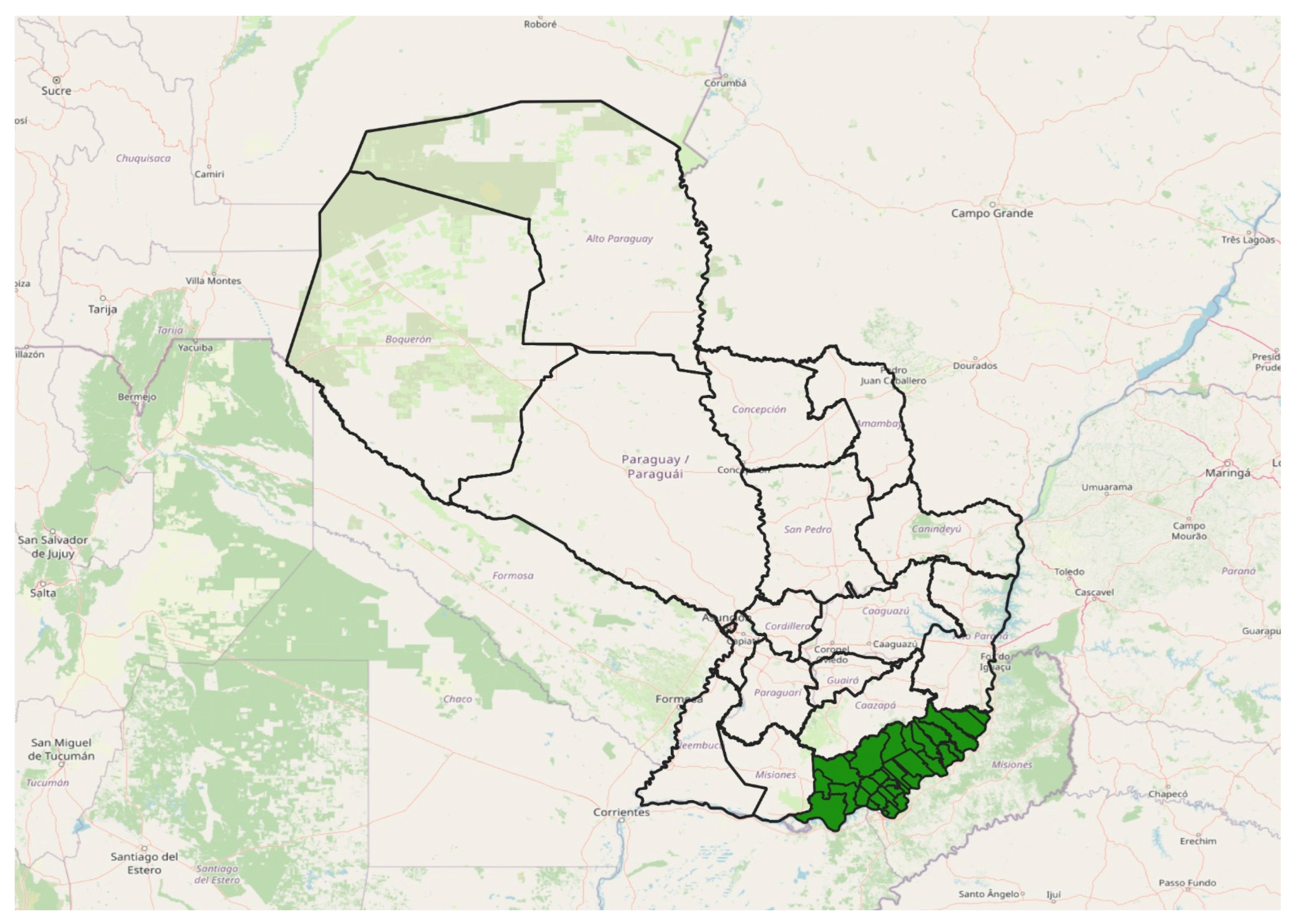
Administratively, the department is divided into 30 districts that exhibit significant diversity in terms of economic structure, territorial organization, and institutional presence (
Figure 1).
3.2. Social Network Analysis
Based on the relational approach outlined in the conceptual framework, this study employs SNA to examine the structure of relationships among actors linked to the FF sector in the department of Itapúa. From this perspective, social networks are understood as sets of actors (nodes) connected by different types of relationships (edges), which facilitate flows of information, resources, cooperation, and coordination among individuals, organizations, and institutions [
31,
35,
36].
In this study, nodes represent institutional, productive, and organizational actors within the FF system, while edges correspond to the relationships reported among them. The network is modeled as a directed and weighted graph, where the direction of ties reflects the nature of the relationships between actors and edge weights represent the intensity assigned to those relationships by respondents [
37,
38].
SNA enables the analysis of both the overall structure of the network and the relative positions of actors within it. Structural indicators are used to assess levels of cohesion, connectivity, and fragmentation, while centrality measures help identify strategic actors, intermediary positions, and coordination capacities within the network [
31,
36,
37,
39].
Table 1 presents the main indicators used in this study, distinguishing between those that describe the overall network structure and those that capture the positional characteristics of individual actors.
3.3. Phases and Sources of the Research
The research was conducted following a sequential methodological process consisting of three phases.
In the first phase, a literature review and a preliminary assessment of the family farming sector in the department of Itapúa were conducted to identify the main institutional, productive, and organizational actors involved in the local system.
Based on this initial assessment, a snowball sampling approach was employed to identify relevant actors within the network [
41,
42]. The process began with key institutional actors selected due to their recognized involvement in family farming, who subsequently identified additional actors. This iterative process allowed the network to expand progressively and capture the relational structure of the system.
Within the context of Social Network Analysis, this sampling strategy does not aim to achieve statistical representativeness, but rather to identify key actors and relationships that define the structure of the network.
The selection of participants was based on specific inclusion criteria, focusing on actors with a recognized role in family farming within the department of Itapúa. These included actors involved in production, technical assistance, financing, commercialization, and institutional coordination. The initial set of actors was identified through a preliminary sector assessment and subsequently expanded using a snowball sampling approach. Network boundaries were defined by including only those actors with direct influence on the functioning and promotion of family farming in the study area.
A total of 40 interviews were conducted. However, the final network consists of 35 actors. This difference is explained by the aggregation of respondents representing the same type of actor. In cases where multiple individuals belonged to the same category (e.g., public-sector technicians), their responses were combined by averaging the reported relationships. This procedure allowed for the construction of a network based on actor categories rather than individual respondents, ensuring consistency and avoiding duplication within the network structure.
This assessment also made it possible to identify the types of relationships that structure interactions among these actors, including technical assistance, access to financing, product marketing, organization and association, promotion of participation, access to information, and equitable participation. These relational dimensions constitute the analytical basis for network construction and are summarized in
Table 2, which describes the different types of relationships considered in the analysis.
The intensity of relationships between actors was measured using a scale from 0 to 10, where 0 indicates no relationship and 10 indicates a very strong relationship. This criterion was explicitly defined in the survey instrument, and respondents were asked to evaluate their ties according to this scale. To ensure consistency in interpretation, respondents were instructed to consider factors such as frequency of interaction, relevance of the relationship, and level of collaboration when assigning values.
For analytical purposes, the reported values were subsequently categorized into three levels: weak (0–4), medium (5–7), and strong (8–10). In cases where multiple respondents referred to the same actor category, the reported values were aggregated by averaging the intensity scores, allowing for the construction of a consistent weighted network.
While this approach allows for capturing the core relational structure of the system, it is important to acknowledge that the potential omission of actors or ties may influence network metrics such as centrality, density, and modularity. Therefore, the network should be interpreted as a representation of the main institutional and organizational structure rather than a fully exhaustive mapping of all actors involved in family farming in the department of Itapúa.
Based on this initial assessment, a preliminary identification of stakeholders linked to the FF system in the study area was carried out. This process made it possible to identify a range of relevant actors, including public institutions, producer organizations, financial institutions, agri-food companies, cooperation agencies, and other stakeholders shaping the sector’s dynamics.
4. Results
This section presents the main findings of the SNA applied to the FF system in the department of Itapúa and discusses their implications for territorial governance and institutional coordination. First, the overall structure of the network and its constituent actors are examined. Next, the positions occupied by actors within the system are analyzed using centrality measures, along with patterns of relationship formation and maintenance. Finally, tie intensity and the configuration of communities within the network are assessed.
4.1. General Structure of the Network
The network of actors linked to FF in the department of Itapúa consists of 35 nodes and 711 edges, reflecting a broad and highly connected relational system in terms of institutional, productive, and organizational interactions.
Table 3 presents the set of actors identified in the system, including public institutions, producer organizations, financial institutions, international cooperation agencies, agri-food companies, and other actors involved in technical assistance, marketing, and collective organization.
The analysis of structural indicators allows for the characterization of the overall configuration of the network. As shown in
Table 4, the network’s average degree is 20, indicating that, on average, each actor maintains relationships with a large number of other actors within the system.
Likewise, the network diameter (5) suggests that the maximum distance between any two actors is relatively small.
In addition, the network density (0.6) indicates that approximately 60% of all possible connections between actors are active, reflecting a relatively high level of relational cohesion.
Table 4 summarizes the main structural indicators of the network. The results show a relatively high average degree (20), indicating that actors maintain a large number of connections within the system.
The network diameter (5) suggests a relatively short maximum distance between actors.
In addition, the network density (0.6) indicates that a substantial proportion of possible connections are present, reflecting a highly connected network structure.
4.2. Centrality and Roles of Actors in the Network
Centrality analysis makes it possible to identify actors occupying strategic positions within the network and, therefore, playing key roles in institutional coordination processes.
Table 5 presents the actors with the highest values of closeness and betweenness centrality. In terms of closeness centrality, public sector technicians, academic institutions, and private sector technicians stand out, followed by producers and the Departmental Government.
Centrality analysis makes it possible to identify actors occupying strategic positions within the network.
In terms of betweenness centrality, municipalities and departmental government institutions present the highest values, followed by academic institutions.
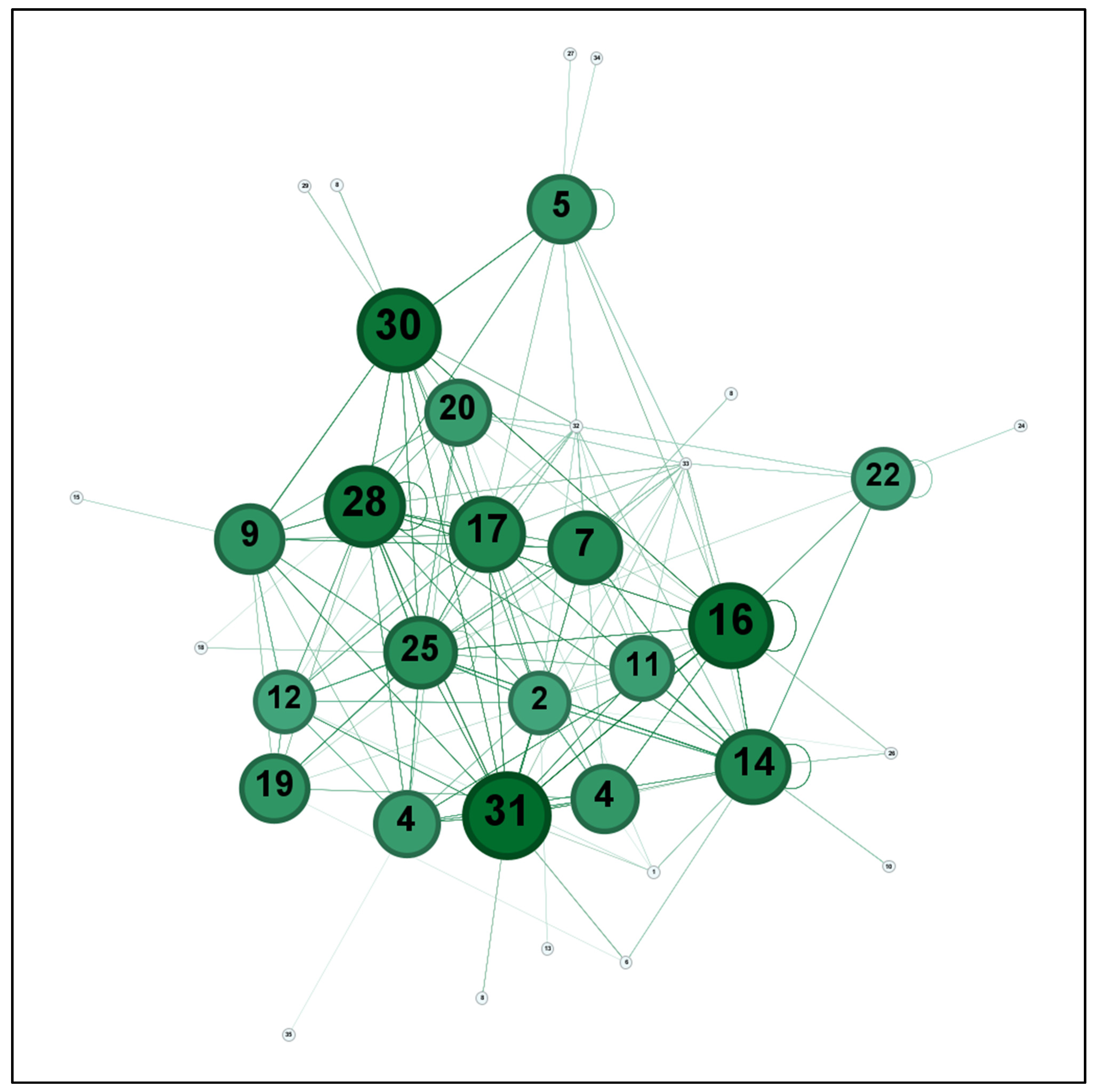
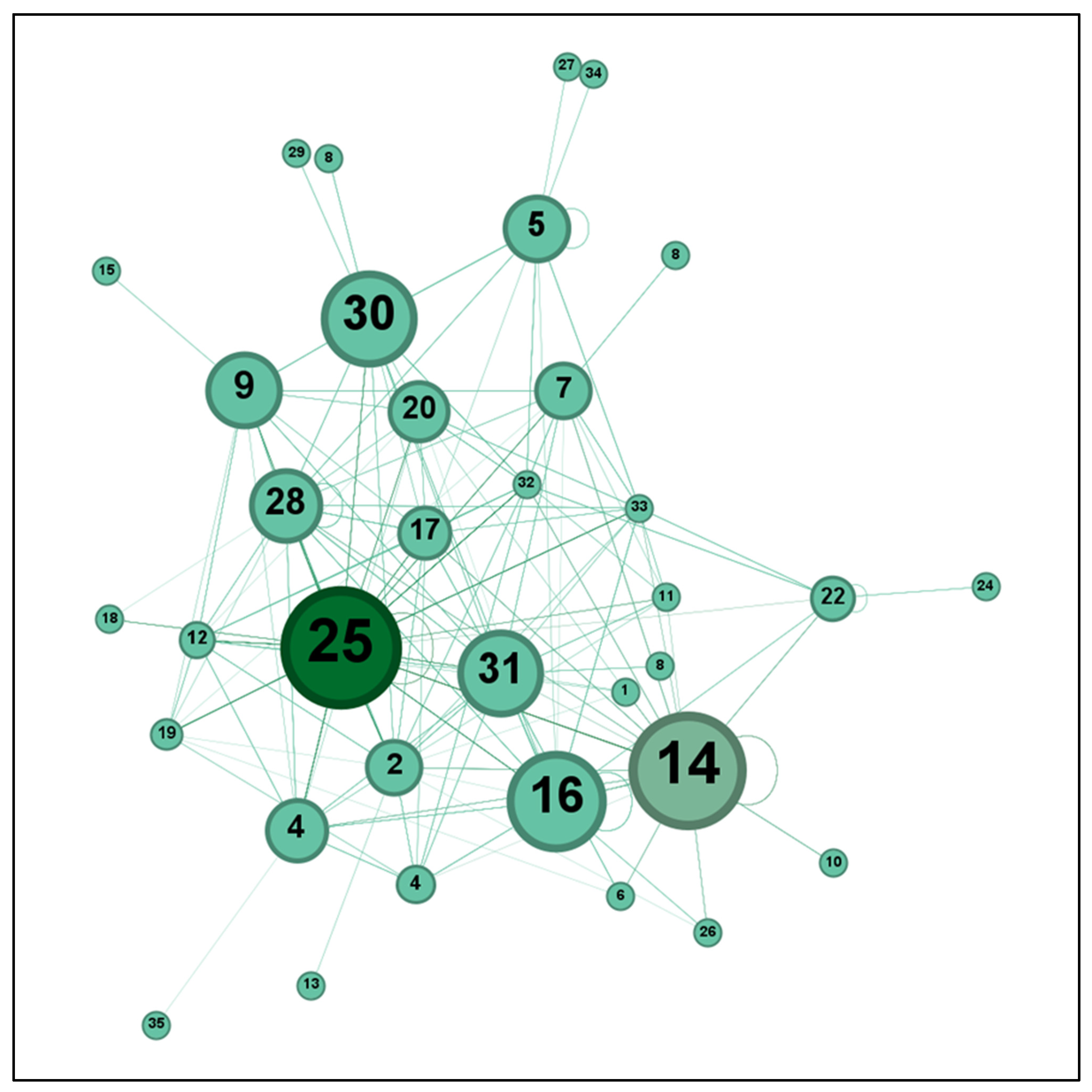
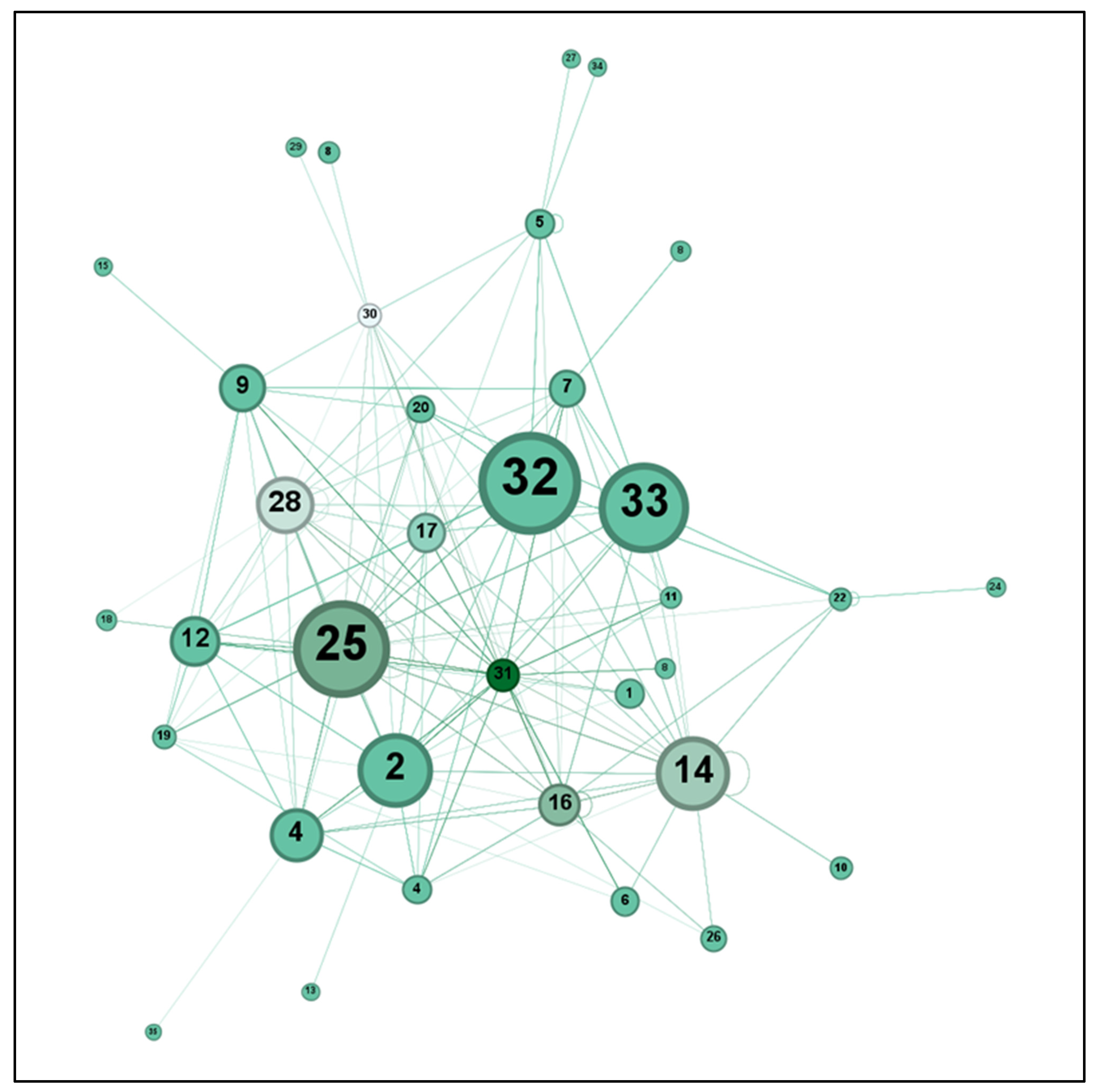
This configuration is visually represented in
Figure 2 and
Figure 3, which highlight actors with higher closeness and betweenness centrality within the network.
Figure 2 shows the structure of the family farming network in the department of Itapúa based on closeness centrality. The visualization highlights a highly interconnected network, where several actors occupy central positions, indicated by their larger size and darker color. In particular, Public sector technicians (31), Private sector technicians (30), Academic institutions (16), and Producers (28) stand out as more central, reflecting their proximity to the rest of the network. Other relevant actors, such as the Municipality (25), Intermediaries (17), and the Agricultural Extension Directorate (DEAG) (7), also appear closely connected within the network core. The overall structure suggests a dense core of interconnected actors, surrounded by a smaller number of more peripheral actors with fewer connections.
Figure 3 shows the structure of the family farming network in the department of Itapúa based on betweenness centrality. The visualization highlights a set of actors occupying intermediary positions, indicated by their larger size within the network. In particular, the Municipality (25) and the Departmental Government (14) stand out as the most prominent nodes, suggesting their central role in connecting different parts of the network. Other actors, such as Academic institutions (16) and Public sector technicians (31), also appear in relevant intermediary positions, linking multiple actors within the system. The overall structure reveals a network organized around key bridging actors that connect otherwise less directly linked nodes.
4.3. Outgoing and Incoming Relationships
Beyond the structural positions of actors within the network, the analysis of outgoing and incoming ties provides additional insight into interaction patterns.
Out-degree analysis identifies the actors that generate the highest number of ties within the network. As shown in
Table 6, public sector technicians, municipalities, academic institutions, and the Departmental Government exhibit the highest levels of outgoing connections.
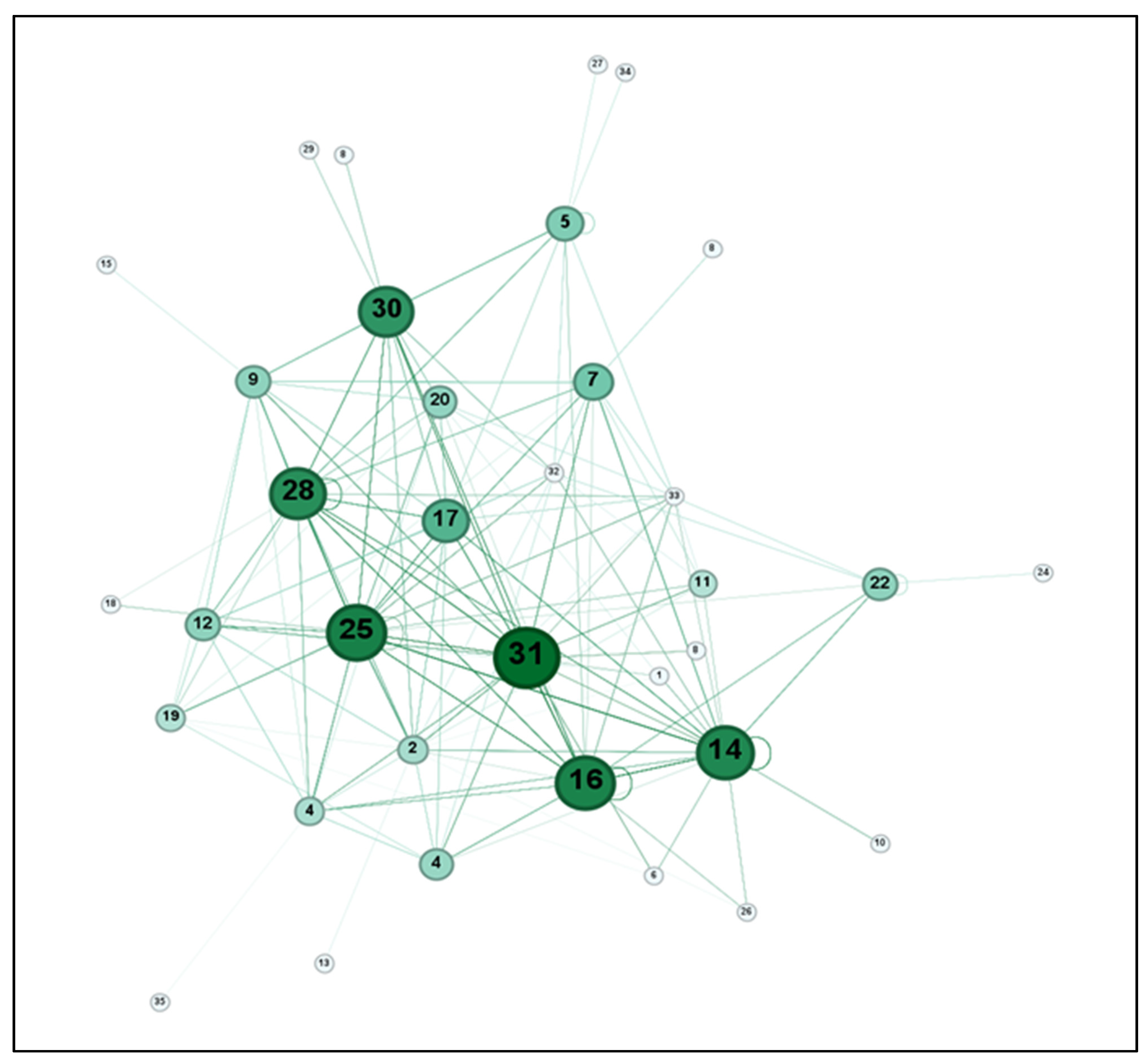
This configuration is illustrated in
Figure 4, which highlights actors initiating relationships within the network.
In contrast, in-degree analysis identifies actors that concentrate the highest number of incoming ties. As shown in
Table 6, cooperatives, the Ministry of Agriculture and Livestock (MAG), municipalities, departmental government institutions, and the Agricultural Credit Agency (CAH) stand out in this dimension.
Figure 4 shows the family farming network in the department of Itapúa based on outgoing relationships (out-degree). The visualization highlights actors that generate the highest number of ties, represented by larger and darker nodes within the network. In particular, Public sector technicians (31), Private sector technicians (30), Producers (28), and the Municipality (25) stand out as key relationship-emitting actors. Other actors, such as Academic institutions (16), the Departmental Government (14), and Intermediaries (17), also display a notable number of outgoing connections. The overall structure suggests that network dynamics are driven by a group of technical, institutional, and productive actors that actively establish and maintain relationships across the system.
Figure 5 shows the family farming network in the department of Itapúa based on incoming relationships (in-degree). The visualization highlights actors that receive the highest number of ties, represented by larger and more prominent nodes. In particular, Cooperatives (32) and the Ministry of Agriculture and Livestock (MAG) (33) stand out as the most central actors in terms of incoming connections. Other relevant actors, such as the Municipality (25), the Agricultural Credit Agency (CAH) (2), and the Departmental Government (14), also appear as important recipients of relationships within the network. The overall structure indicates a concentration of incoming ties in a limited number of actors, while the rest of the network appears more distributed.
4.4. Classification of Relationship Intensities
The analysis of relationship intensity provides additional insight into the strength of interactions among actors in the network.
As shown in
Table 7, most relationships fall into the medium-intensity category (76.85%), followed by strong relationships (18.52%) and a small proportion of weak ties (2.78%).
This distribution indicates that the network is primarily composed of medium- and high-intensity interactions.
4.5. Communities and the Network’s Modular Structure
Modularity analysis allows for the identification of subgroups or communities within the network that exhibit a higher density of internal relationships compared to their links with the rest of the system.
As shown in
Table 8, the family farming network in the department of Itapúa is structured into several communities that group actors based on the intensity and nature of their interactions.
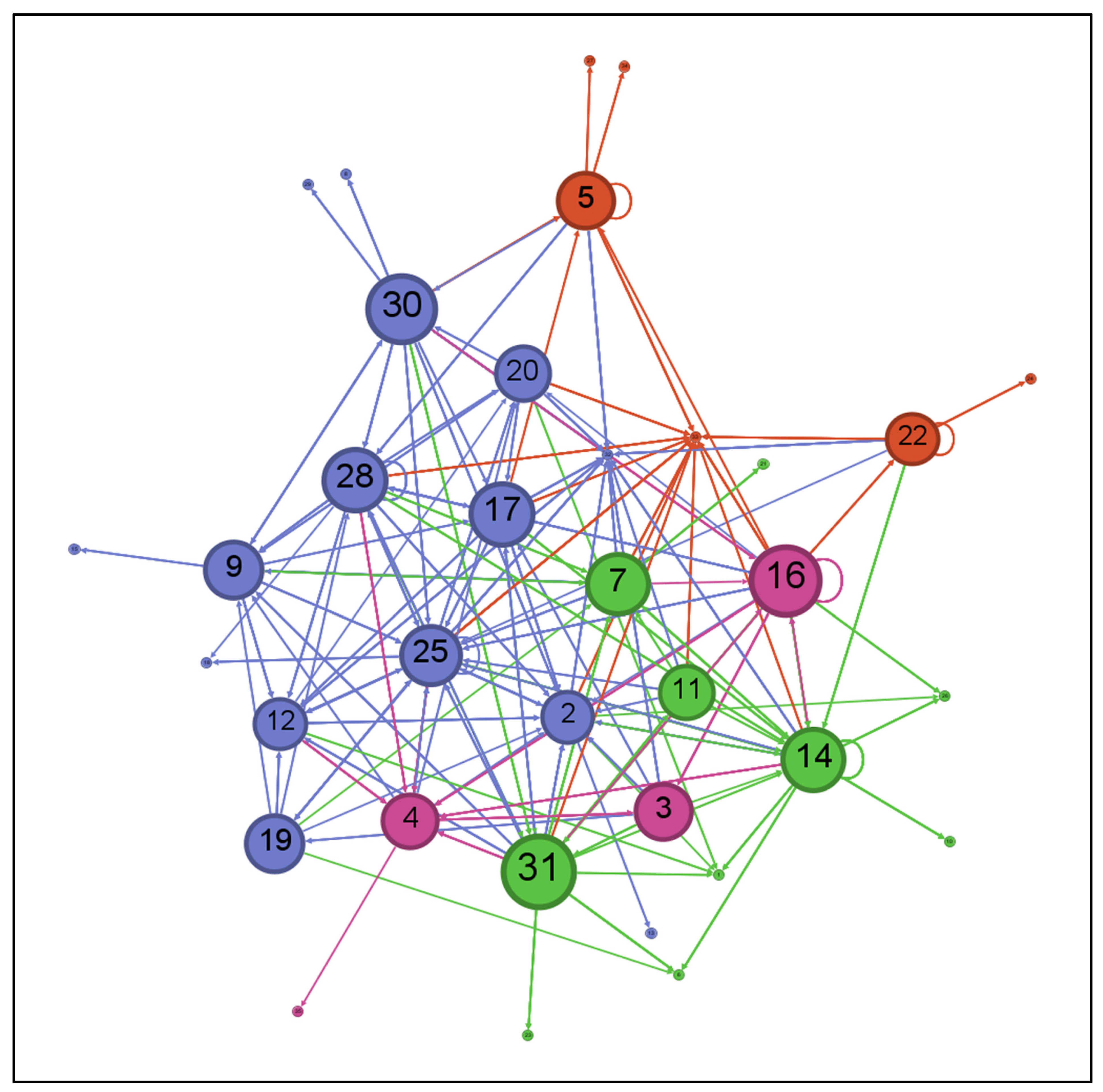
This configuration is illustrated in
Figure 6, which depicts the different modules or subgroups identified within the network.
Figure 6 shows the family farming network in the department of Itapúa based on its modular structure. The visualization highlights the presence of distinct communities, represented by different colors, indicating groups of actors with stronger internal connections. In addition, the direction of the ties is represented by arrows, showing the flow of relationships between actors.
Among the identified communities, one group includes actors linked to knowledge transfer and technical assistance, where Public sector technicians (31), the Agricultural Extension Directorate (DEAG) (7), and related actors occupy central positions. A second group comprises communities associated with marketing and participation, including Intermediaries (17), Market vendors (12), and Producers (28). A third set of communities is related to institutional coordination and territorial management, in which the Departmental Government (14), the Municipality (25), and the Ministry of Agriculture and Livestock (MAG) (33) stand out as key nodes. Finally, clusters associated with associative processes and organizational strengthening include Cooperatives (32), Producers’ Committee (4), and Academic institutions (16).
While several actors are clearly grouped within specific communities, others—such as Public sector technicians (31), Academic institutions (16), and the Municipality (25)—occupy more central positions and appear to connect different clusters. Overall, the network displays a modular structure organized into functionally differentiated subsystems that are interconnected through key linking actors.
5. Discussion
From a territorial governance perspective, the relatively high level of connectivity observed in the network suggests favorable conditions for the circulation of information, coordination among actors, and the generation of social capital [
14]. However, this level of connectivity should be interpreted with caution, as highly interconnected structures may lead to relational redundancy, reducing the diversity of information sources and limiting access to novel knowledge. This finding is consistent with previous studies on rural governance networks in Latin America, which have highlighted the role of relatively dense institutional networks in facilitating coordination and information exchange, while also warning about the risks of redundancy and limited innovation [
4,
7]. In this case, the relatively high network density (0.6) reflects both the structural characteristics of a system composed primarily of institutional and organizational actors and the potential influence of the snowball sampling method, which may have emphasized highly connected actors. Therefore, network density should be understood as the combined result of empirical structure and methodological design, highlighting the importance of contextualizing network metrics in Social Network Analysis [
37,
43,
44].
Furthermore, although the network exhibits a relatively high level of overall cohesion, this does not preclude the existence of institutional fragmentation. Rather than occurring at the level of the entire network, fragmentation is observed between functionally differentiated subgroups. The modular structure reveals the presence of specialized communities with stronger internal connections than external linkages, suggesting that coordination challenges may arise from limited articulation across domains such as technical assistance, market interactions, and institutional coordination.
The analysis of centrality highlights a differentiated distribution of roles within the network. Actors involved in knowledge generation and transfer, particularly public and private sector technicians, occupy positions close to the network as a whole, facilitating the dissemination of information and technical knowledge. However, differences between these actors are evident: public sector technicians tend to be more embedded in institutional coordination structures, whereas private sector technicians are more closely associated with production and market-oriented interactions. This result aligns with studies on agricultural innovation systems, which identify technical agents as key actors in knowledge diffusion and network activation [
13,
14], including in Latin American rural contexts.
In contrast, actors with high betweenness centrality, particularly municipalities and departmental government institutions, play key intermediary roles by connecting different segments of the network [
10,
14]. Their position allows them to facilitate flows of resources, information, and capabilities across functionally differentiated subgroups. However, not all intermediary roles are equivalent. While municipalities and governmental actors function as connectors between communities, other actors—such as academic institutions and technical agents operate more within specific domains, contributing to intracommunity coordination rather than cross-community articulation. This distinction provides a more nuanced understanding of brokerage roles within the system. Similar patterns have been observed in studies of network governance in rural Latin America, where public institutions often act as key brokers connecting otherwise fragmented groups [
7,
15].
Overall, the contrast between actors with high closeness centrality (primarily technical actors) and those with high betweenness centrality (mainly public institutions) reflects a functional distribution of roles consistent with network governance models based on interdependence between public and non-state actors [
10,
22]. In this context, technical actors support knowledge dissemination, while public institutions play a key role in territorial coordination.
The analysis of outgoing and incoming ties further reinforces this differentiated structure. Technical and institutional actors tend to drive network dynamics through the generation of ties, while actors such as cooperatives and financial institutions concentrate incoming connections, reflecting both their recognition and their central role in accessing and distributing resources. However, high in-degree centrality should not be interpreted solely as an indicator of legitimacy. It may also reflect forms of resource dependence, particularly when access to key resources is mediated by a limited number of actors [
14]. This concentration may generate structural dependencies that could affect the system’s resilience [
15].
Regarding relationship intensity, the predominance of medium-strength ties suggests a system structured around stable and operational interactions, particularly in areas such as information exchange, technical assistance, and institutional coordination. This configuration can be interpreted as a balance between cohesion and flexibility, allowing coordination without generating overly rigid structures [
14].
At the same time, the presence of strong ties indicates consolidated relationships that support long-term cooperation and trust, key elements for collective action in rural contexts [
11,
43]. However, the limited presence of weak ties suggests a relatively low level of openness to new actors and external connections. Given the importance of weak ties for accessing new information and fostering innovation [
42], their scarcity may constrain the system’s capacity to diversify knowledge sources and adapt to changing conditions. This pattern is also consistent with findings in rural network studies, where the limited presence of weak ties may constrain access to external knowledge and innovation opportunities [
16,
42]. This pattern should also be interpreted in light of methodological factors, as the use of a 0–10 scale may have led to an underrepresentation of low-intensity ties. Finally, the modular structure of the network reinforces the idea of a functionally differentiated system composed of specialized subsystems. These communities can be interpreted in terms of bonding social capital, associated with internal cohesion, and bridging social capital, related to connections between subgroups. These interpretations should be understood as analytically grounded inferences based on network structure, rather than direct measurements of social capital or institutional power. This type of modular configuration has been identified in previous studies of rural territories, where functionally differentiated sub-networks coexist and require bridging actors to ensure effective coordination [
15]. The presence of actors connecting these communities is therefore essential for maintaining overall cohesion and ensuring effective territorial coordination [
15].
6. Conclusions
This study provides new insights into the territorial governance of family farming in the department of Itapúa through a Social Network Analysis approach.
In response to the research question, the findings show that the relational structure of actors involved in family farming in Itapúa is characterized by a cohesive yet functionally differentiated network. Within this structure, technical and institutional actors occupy central positions, facilitating the circulation of information and coordination processes, while other actors remain in more peripheral positions. This configuration reveals a form of territorial governance based on interdependence and distributed coordination, but also shaped by central nodes and existing gaps in articulation between functional domains.
First, the results reveal a relatively cohesive and functionally differentiated network, in which technical actors occupy central positions, facilitating the flow of information and knowledge, while public institutions play key intermediary roles in connecting subgroups and supporting territorial coordination.
Second, the network shows a functional distribution of roles among technical, institutional, and economic actors, with organizations such as cooperatives, the Ministry of Agriculture and Livestock (MAG), and financial institutions occupying strategically important positions within the system.
Third, the structure of the network reflects a combination of bonding and bridging social capital, which supports coordination but also reveals a limited presence of weak ties, potentially restricting innovation and the incorporation of new actors. These interpretations should be understood as analytically grounded inferences based on network structure, rather than direct measurements of social capital.
Overall, the findings point to a form of distributed territorial governance, in which coordination depends on interdependent actors but is also influenced by central nodes, creating potential structural dependencies.
Based on these findings, several targeted recommendations can be proposed. Strengthening the coordinating role of central institutional actors through formal mechanisms of articulation could enhance system efficiency. In particular, the central position of the Ministry of Agriculture and Livestock (MAG), reflected in its high level of structural recognition within the network, suggests its potential to lead formal multi-actor coordination platforms aimed at improving articulation between technical, institutional, and market actors.
At the same time, the analysis identifies a group of peripheral actors with lower centrality values, including Market vendors (12), Agricultural laborers (19), and Women’s Committee (3), whose limited integration into the network suggests the need for targeted interventions. Strengthening direct linkages between these actors and central nodes—particularly public sector technicians (31), municipalities (25), and cooperatives (32)—as well as developing localized participatory platforms, could improve their inclusion within the governance system.
In addition, the modular structure of the network reveals limited articulation between certain functional communities, particularly between actors involved in technical assistance and those linked to market dynamics, as well as between institutional coordination bodies and producer-based organizations. The creation of bridging mechanisms—such as inter-institutional coordination spaces, joint technical–commercial platforms, and targeted multi-actor initiatives—could strengthen connections between these groups and enhance overall system integration.
Finally, promoting the creation of new connections, particularly weak ties between currently less connected groups, could foster innovation, knowledge exchange, and greater system resilience.
It is important to acknowledge several methodological limitations of this study. First, the network was constructed using a snowball sampling approach, which began with key institutional actors and may have influenced the composition of the network by emphasizing more visible and well-connected stakeholders. Second, the data are based on respondents’ perceptions, which may be subject to socially desirable responses or selective reporting of relationships. Third, the aggregation of individual respondents into categorical actor nodes may obscure internal heterogeneity within actor groups. Fourth, the analysis is based on cross-sectional data, providing a static representation of relationships that does not capture their temporal dynamics. Finally, the network shows a limited presence of certain actors, particularly agro-industrial entities, which may affect the representation of broader structural dynamics within the sector.
In this way, the study contributes to a better understanding of territorial governance in family farming, not only in Paraguay, but also in other Latin American contexts with similar institutional dynamics.