Article

Detoxification Responses of Tuta absoluta (Meyrick) to Serratia marcescens (Bizio) Strain Tapa21 Infection Revealed by Transcriptomics


State Key Laboratory of Agricultural and Forestry Biosecurity, Fujian Agriculture and Forestry University, Fuzhou 350002, China
*
Author to whom correspondence should be addressed.
These authors contributed equally to this work.
Agriculture 2026, 16(1), 48; https://doi.org/10.3390/agriculture16010048 (registering DOI)
Submission received: 27 November 2025 / Revised: 21 December 2025 / Accepted: 23 December 2025 / Published: 25 December 2025

Abstract

Tuta absoluta (Meyrick) is a globally invasive lepidopteran pest that has developed resistance to multiple classes of chemical insecticides, posing major challenges for the sustainable production of Solanaceae crops. In this study, we investigated the physiological and molecular responses of T. absoluta larvae to infection by the entomopathogenic bacterium Serratia marcescens (Bizio) strain Tapa21, which was isolated from naturally infected larvae and characterized through phenotypic, molecular, and phylogenetic analyses. Laboratory bioassays demonstrated dose- and time-dependent mortality of T. absoluta larvae, with mortality reaching nearly 80% at the highest Tapa21 concentration at 120 h post-infection (hpi), with a median lethal concentration (LC50) of Optical Density (OD)600 = 0.52 and a median lethal time (LT50) of 5.2 d. RNA-Seq was performed, revealing 493 differentially expressed genes (DEGs), including 304 up-regulated and 189 down-regulated transcripts. Gene ontology (GO) and Kyoto Encyclopedia of Genes and Genomes (KEGG) pathway enrichment analyses indicated activation of detoxification-related enzymes, lysosome- and immune-associated pathways, and metabolic reprogramming, suggesting coordinated defense responses. A subset of genes, randomly selected across expression levels, was validated by RT-qPCR, corroborating the transcriptomic results. These results delineate the molecular mechanisms by which T. absoluta reshapes its physiological state during bacterial challenge and provide insight into how entomopathogenic strain Tapa21 disrupts host homeostasis. Such a mechanistic understanding could potentially contribute to sustainable and integrated pest management (IPM) strategies.

1. Introduction

Among invasive insect pests, Tuta absoluta (Meyrick), also known as Phthorimaea absoluta [1] (Lepidoptera: Gelechiidae), is one of the most destructive threats to tomato crops worldwide. Its occurrence in tomato cultivation continues to rise. This highly damaging pest, native to South America, was first reported outside its natural range in Spain in 2006 [2]. Since then, it has rapidly spread to nearly all major tomato-producing regions across the globe. By 2024, a total of 177 countries across Asia, Europe, the Americas, and Africa had reported infestations [3,4], resulting in significant economic losses. Tuta absoluta attacks almost all aboveground parts of the tomato plant, including leaves, stems, flowers, and fruits, leading to significant stunting and reducing plant growth [5,6]. In the absence of effective control, crop losses in both greenhouses and open-field production systems can reach 80–100% [3,7,8].
In China, T. absoluta was first detected in Xinjiang in 2017 [9], marking its initial introduction into the country. Based on six years of nationwide monitoring in China [10], this pest has spread to over 20 provinces, including Yunnan [11], Guizhou [12], and Ningxia [13], facilitated mainly by human-mediated transport and favorable ecological conditions [10]. Tuta absoluta is capable of infesting a wide range of solanaceous hosts such as tomato, eggplant, potato, and European black nightshade [5,14], which significantly enhances its invasive potential and complicates management strategies. The rapid spread of T. absoluta poses a substantial threat to China’s solanaceous production [15]. Tomatoes are an important cash crop with significant acreage across multiple provinces [16], and uncontrolled infestations may cause devastating yield losses [11,17] and increase reliance on chemical control measures [18,19,20]. In response, Chinese researchers and the Institute of Plant Quarantine have initiated nationwide monitoring programs using pheromone traps [21,22], along with risk assessments to predict the potential distribution of T. absoluta and evaluate management options [23,24,25]. Nevertheless, the establishment of stable field populations demonstrates that the pest has already overcome initial invasion barriers, highlighting the urgent need for effective integrated pest management (IPM) strategies tailored to the Chinese agricultural systems.
Current management of T. absoluta in tomato fields relies heavily on synthetic insecticides [8,20,26]. While chemical controls can temporarily suppress pest populations and improve yields, they present more limitations. Overreliance on insecticides not only increases production costs but also accelerates the evolution of resistance in pest populations, making this approach unsustainable in the long term. Resistance has already been reported in T. absoluta for multiple classes of insecticides. Brazilian populations showed resistance to avermectins and benzoylureas [27], while Argentine populations exhibited pyrethroid resistance in the mid-2000s [28]. More recent studies reported resistance to organophosphates, diamides, and spinosyns across South America and the Mediterranean [29], and methoxyfenozide resistance in South American populations [30]. Moreover, the broad-spectrum use of these insecticides negatively affects non-target beneficial insects, plants, and aquatic organisms [31,32,33], thereby limiting their roles in an integrated pest management framework. Collectively, these challenges highlight the urgent need to develop novel, environmentally friendly, and economically sustainable strategies for managing T. absoluta. Insect pathogenic bacteria are increasingly considered as promising alternatives for IPM due to their relative specificity toward target pest species and their minimal impact on non-target organisms and the environment [34,35]. Such bacteria may establish long-term or transient associations with their insect hosts, which can confer either beneficial or detrimental effects. Several studies have evaluated the virulence of different Bacillus thuringiensis (Bt) strains against T. absoluta larvae. For instance, Bt 4D1 is highly effective against larvae at all developmental stages [36], and combining Bt with the predator Nesidiocoris tenuis (Reuter) results in optimal control efficacy, reducing tomato fruit damage by up to 93% [37]. Spraying a 100-fold dilution of Bt-G033A Wettable Powder (WP) (10 g/L) achieved 100% corrected mortality of 1st- and 2nd-instar larvae within seven days post-treatment [38]. Furthermore, the 1:1 mixture of Bt-G033A and diflubenzuron exhibits superior field control efficacy (64.76–89.12% mortality between 3 and 21 days post-application) compared with either agent alone [39]. In addition, Eski et al. [40] have isolated 13 bacterial strains from T. absoluta larvae, among which Bt Ta1 causes over 90% mortality of 2nd-instar larvae within 3 days. Although Bt formulations exhibit vigorous larvicidal activity against T. absoluta under laboratory conditions, field failures and decreased sensitivity have been reported in some populations [41,42]. Previous studies have indicated that variations in the glycosylation and structural properties of midgut receptors among T. absoluta populations may alter toxin-target binding, contributing to the development of Bt resistance [42]. Furthermore, transgenic tomato plants expressing the Cry1Ac toxin show significantly enhanced resistance to T. absoluta, yet the potential for resistance evolution remains a serious concern [43].
Given the increasing reports of T. absoluta developing resistance to Bt and the limitations of current control measures, we hypothesized that naturally occurring bacteria could serve as alternative microbial agents with novel infection mechanisms and stable efficacy. Thus, we focused on isolating and characterizing biocontrol bacteria capable of effectively suppressing T. absoluta. Among the isolates, S. marcescens Tapa21 was selected for further characterization due to its prominent pathogenic effects observed in preliminary bioassays, including high larval mortality. The pathogenicity and population-suppression potential of this strain were then systematically evaluated under laboratory conditions. It is worth noting that, although a patent in China has reported the use of S. marcescens for the control of T. absoluta [44], this study is the first to focus on a transcriptomic characterization of the host response of T. absoluta to S. marcescens infection. Using Illumina sequencing, we identified detoxification-, immune-, and metabolism-related pathways activated in response to the Tapa21 strain, thereby providing novel molecular insights into insect–pathogen interactions. Collectively, these findings offer a mechanistic basis for further exploring entomopathogenic bacteria as alternative components of IPM strategies.

2. Materials and Methods

2.1. Growth of Plants and Rearing of Insects

Tomato plants (Solanum lycopersicum L.) were cultivated under controlled laboratory conditions (22–28 °C, 16:8 h light/dark photoperiod) with regular irrigation to ensure healthy and uniform growth for insect rearing. These tomato plants were cultivated without the use of pesticides to avoid prior exposure to insecticides.
The laboratory colony of T. absoluta was originally established in 2023 from field-collected populations in Yunnan Province, China. Tuta absoluta larvae were maintained on these plants under the same conditions, and both plants and insects were routinely monitored to ensure healthy growth and stable population development.

2.2. Isolation of Bacterial Strains

Under the rearing laboratory conditions, Tuta absoluta larvae were monitored and found to display characteristic symptoms of bacterial infection. To isolate bacterial strains, infected larvae were first surface-disinfected with 75% ethanol on a sterile biosafety workbench. Subsequently, the larvae were resuspended in phosphate-buffered saline (PBS, pH = 7.4) (Sangon Biotech, Shanghai, China) and homogenized within a centrifuge tube. The resulting homogenate was serially diluted to concentrations of 10−2, 10−3, and 10−4. These dilutions were then spread onto three separate Petri dishes and incubated at 37 °C. The resulting bacterial colonies were stored at 4 °C for subsequent analysis. A single colony was selected from the diluted Petri dishes and subcultured onto fresh nutrient agar (NA) plates two to three times to obtain a pure bacterial isolate. After each inoculation step, the Petri dishes were incubated upside-down at 37 °C for 48 h to ensure optimal bacterial growth. The obtained isolates were subsequently designated as Tapa02, Tapa12, Tapa13, and Tapa21 for further screening.

2.3. Screening and Identification of Biocontrol Bacterial Strains

Each of the four purified bacterial strains was inoculated into fresh nutrient broth (NB) medium at a 1% (v/v) inoculation volume. The cultures were incubated at 37 °C with shaking at 200 rpm in the dark for 24 h. Following centrifugation, the bacterial pellets were washed and resuspended in sterile distilled water. The final bacterial suspensions were adjusted to an Optical Density (OD)600 = 1.0.
Tomato leaves were immersed in each of the four bacterial suspensions for 2 h, air-dried, and subsequently provided to T. absoluta larvae as feed. For each replicate, fifteen 2nd-to 3rd-instar T. absoluta larvae were randomly selected to form a group, and the procedure was repeated to establish a total of 3 independent groups. The tomato leaves were replaced every 24 h with ongoing observation for five days. Larvae were carefully monitored for symptoms of bacterial infection, such as decreased activity, color change (blackening), tissue softening, and decay, which were regarded as indicators of pathogenicity. The mortality rate at various time points and the occurrence of infection symptoms were recorded to evaluate the biocontrol potential of the four bacterial strains. Strains that significantly elevated larval mortality and consistently induced typical infection symptoms were selected as potential biocontrol agents.
The bacterial strain Tapa21, which exhibited significant biocontrol potential, was subjected to both morphological and molecular identification. Colony morphology, including shape, size, and color, was examined on NA plates. Cellular morphology and Gram staining characteristics were analyzed using Gram staining and observation under a 100× oil immersion objective lens on a light microscope.
Using the Tapa21 bacterial suspension as the template, PCR amplification of Tapa21 was carried out using the universal primers 27F (5′-AGAGTTTGATCCTGGCTCAG-3′) and 1492R (5′-CGGTTACCTTGTTACGTTACGACTT-3′) [45]. PCR reactions were performed at a total volume of 20 μL containing 2 μL template, 1 μL of each primer (10 μM), 10 μL of 2× Hieff Canace® Gold PCR Master Mix (including DNA polymerase), and 6 μL of nuclease-free water. The PCR thermocycling conditions were as follows: initial denaturation at 94 °C for 3 min; 29 cycles of denaturation at 94 °C for 30 s, annealing at 48 °C for 30 s, and extension at 72 °C for 2.5 min; final extension at 72 °C for 5 min; and storage at 12 °C.
The amplified product was sequenced by Sangon Biotech. The resulting Tapa21 sequence was compared against the NCBI-BLAST database (https://blast.ncbi.nlm.nih.gov/Blast.cgi, accessed on 12 June 2025) to identify the most closely related species, and a phylogenetic analysis was performed using MEGA 12.0 and iTOL (https://itol.embl.de, accessed on 14 June 2025) based on the neighbor-joining method with 1000 bootstraps.

2.4. Detection of the Bacterial Load in Tuta absoluta Infected by Tapa21

Tuta absoluta larvae infected with Tapa21 were collected, and total DNA was extracted using a commercial DNA extraction kit (Accurate Biotechnology, Changsha, China) according to the manufacturer’s instructions. Gene-specific primers targeting the Tapa21 genome were designed using Primer3Plus (https://www.primer3plus.com/index.html, accessed on 20 June 2025) and are listed in Table S1. Quantitative PCR (qPCR) was performed using SYBR Green Master Mix (Thermo Fisher Scientific, Waltham, MA, USA) on a QuantStudio Real-Time PCR System to quantify the bacterial abundance in infected larvae. Relative bacterial abundance was calculated using the 2−ΔΔCT method [46]. T. absoluta larvae treated with sterile water were used as the control group.

2.5. Pathogenic Test of Tapa21 Against Tuta absoluta

Determination of median lethal concentration (LC50): Bacterial suspensions of Tapa21 with different concentrations (OD600 = 1.5, 1.0, 0.75, 0.5, 0.25) were prepared and used for infection experiments by soaking clean tomato leaves. For each concentration, 15 larvae were randomly assigned per replicate, with 3 biological replicates. In the control group, the same number of larvae were fed with tomato leaves treated with sterile water. The larvae were carefully observed for the appearance of bacterial infection symptoms. The number of dead larvae individuals was recorded, and the tomato leaves were replaced every 24 h. Dead larvae were recorded daily; the experiment lasted 5 days with continuous monitoring.
Determination of median lethal time (LT50): A bacterial suspension of Tapa21 at an OD600 = 0.52 (i.e., the LC50) concentration was prepared and used for pathogenicity assays following the same procedure. Time-to-death data were recorded to calculate the LT50.

2.6. Sample Collection and RNA Extraction

The suspension of Tapa21 at the LC50 concentration was applied to detached tomato leaves, which were subsequently used to feed third-instar larvae of T. absoluta (treatment groups). The control group was fed leaves immersed in sterile water. Following exposure, the larvae were collected, homogenized as whole bodies, and used directly for RNA extraction. Total RNA was extracted from the collected larval samples using a commercial RNA extraction kit (TianGen, Beijing, China), following the manufacturer’s instructions. RNA quality and purity were assessed using a NanoDrop spectrophotometer (Thermo Fisher Scientific, Waltham, MA, USA), yielding OD260/OD280 ratios of 1.8–2.0. RNA integrity was further verified by agarose gel electrophoresis.

2.7. Library Construction and Sequencing

A total of 1 μg RNA per sample was used for library preparation. Sequencing libraries were generated using the Hieff NGS Ultima Dual-mode mRNA Library Prep Kit for Illumina (Yeasen Biotechnology, Shanghai, China) following the manufacturer’s protocol, with unique index codes to distinguish individual samples. Briefly, mRNA was purified from total RNA using poly-T oligo-attached magnetic beads, followed by synthesis of first- and second-strand cDNA. Overhangs were converted into blunt ends through exonuclease and polymerase activities. After adenylation of 3′ ends, NEBNext Adaptor with hairpin loop structure was ligated to the cDNA fragments. The ligated products were purified with the AMPure XP system (Beckman Coulter, Beverly, CA, USA). Subsequently, USER enzyme (NEB) treatment was performed at 37 °C for 15 min, followed by inactivation at 95 °C for 5 min. PCR amplification was then carried out using Phusion High-Fidelity DNA polymerase, universal PCR primers, and index primers. The amplified libraries were purified with the AMPure XP system and assessed for quality using an Agilent 2100 Bioanalyzer (Agilent Technologies, Santa Clara, CA, USA). Finally, the libraries were sequenced on an Illumina NovaSeq platform to generate 150 bp paired-end reads.

2.8. Data Preprocessing and Quality Control

Raw data in FASTQ format were first processed using in-house Perl scripts to remove adapter sequences, reads containing poly-N stretches, and low-quality reads. After quality filtering, clean reads were obtained, and quality metrics such as Q20, Q30, GC-content, and sequence duplication level were calculated to ensure data reliability. All subsequent analyses were conducted on these high-quality, clean reads. The adaptor-trimmed and filtered reads were aligned to T. absoluta reference genome (ZJU_Tuta_1.1, GenBank assembly GCA_029230345.1) using HISAT2 [47], allowing only perfectly matched reads or reads with a single mismatch to be retained for downstream analyses. To reconstruct the transcriptome, the StringTie Reference Annotation Based Transcript (RABT) [48] assembly method was employed to assemble and identify both known and novel transcripts from HISAT2 alignment results, thereby enabling comprehensive transcript discovery and quantification. This combined strategy ensured high accuracy in read mapping, transcript assembly, and downstream differential expression analysis. Transcriptome data analysis was carried out on the BMKCloud (www.biocloud.net, accessed on 3 July 2025).

2.9. Differential Gene Expression Analysis

Gene expression levels were quantified as Fragments Per Kilobase of transcript per Million fragments mapped (FPKM) [49], calculated according to the following formula:
FPKM   =   cDNA   fragments Mapped   fragments   millions   ×   Transcript   length   kb
Differential expression analysis between groups was conducted using the DESeq2 [50], which employed a negative binomial distribution model to estimate gene expression variance. Before screening the DGEs, low-expression genes were filtered through Counts Per Million (CPM) < 1 [51]. The calculation formula for CPM was as follows:
CPM   gene   =   The   original   counts   of   this   gene The   total   counts   of   all   genes   in   this   sample   ×   10 6
Resulting p-values were adjusted using the Benjamini–Hochberg method to control the false discovery rate (FDR). Genes with an adjusted p-value < 0.01 and Fold Change (FC) ≥ 1.5 were considered significantly differentially expressed.

2.10. Functional Annotation and Pathway Enrichment Analysis

Gene ontology (GO) database (established in 2000) [52] provides a structured vocabulary for gene functions and consists of three categories. Kyoto Encyclopedia of Genes and Genomes (KEGG) [53] is a comprehensive resource for systematic analysis of gene functions and biological pathways.
To explore the functional roles of differentially expressed genes (DEGs), enrichment analyses were performed using the clusterProfiler R package 4.4.4 [54]. GO enrichment was conducted based on the Wallenius noncentral hypergeometric distribution [55], which accounts for gene length bias. KEGG pathway enrichment was carried out using the KEGG Orthology Based Annotation System (KOBAS) database [56]. For both GO and KEGG analyses, terms with an adjusted p-value (FDR) < 0.05 were considered significantly enriched.

2.11. Analysis of Gene Expression Levels

To validate the accuracy and reliability of the transcriptomic data, RT-qPCR was performed on a selected subset of the most DEGs. Gene-specific primers were designed using Primer3 Plus to ensure precise amplification. Complementary DNA (cDNA) was synthesized from total RNA using the High-Capacity cDNA Reverse Transcription Kit (Thermo Fisher, Waltham, MA, USA). qPCR was used to measure gene expression levels, same as Section 2.4. This validation step provided independent confirmation of the transcriptome findings, ensuring the robustness of the data and the biological relevance of the identified DEGs [57]. The primers used for gene expression have been listed in Table S1. The gene expression levels were calculated using the 2−∆∆CT method [46], and subsequently transformed into log2FC for consistency with RNA-Seq data presentation. Therefore, expression values were shown as log2FC without error bars [58].

2.12. Statistical Analysis

For all statistical tests, data are presented as mean ± standard error of the mean (SEM), and comparisons were made using appropriate statistical tests. Significant differences between the two groups were determined using a t-test (p < 0.05). Significant differences among three or more groups were determined using two-way analysis of variance (ANOVA) followed by Tukey’s multiple comparisons test (p < 0.05). The LC50 and LT50 values were calculated using the Probit method. Statistical analyses were performed using SPSS 26.0 (IBM Corp, Armonk, NY, USA), and data were visualized using GraphPad Prism 9.5. In addition, the calculation formulas for the cumulative mortality rate [59] and corrected mortality rate [60] were as follows:
Cumulative   mortality   rate   =   total   number   of   treated   deaths total   number   of   treated   insects   ×   100 %  
Corrected   mortality   rate = treatment   mortality   rate     control   mortality   rate 1   control   mortality   rate   ×   100 %  

3. Results

3.1. Isolation of Bacteria and Screening of Biocontrol Bacteria

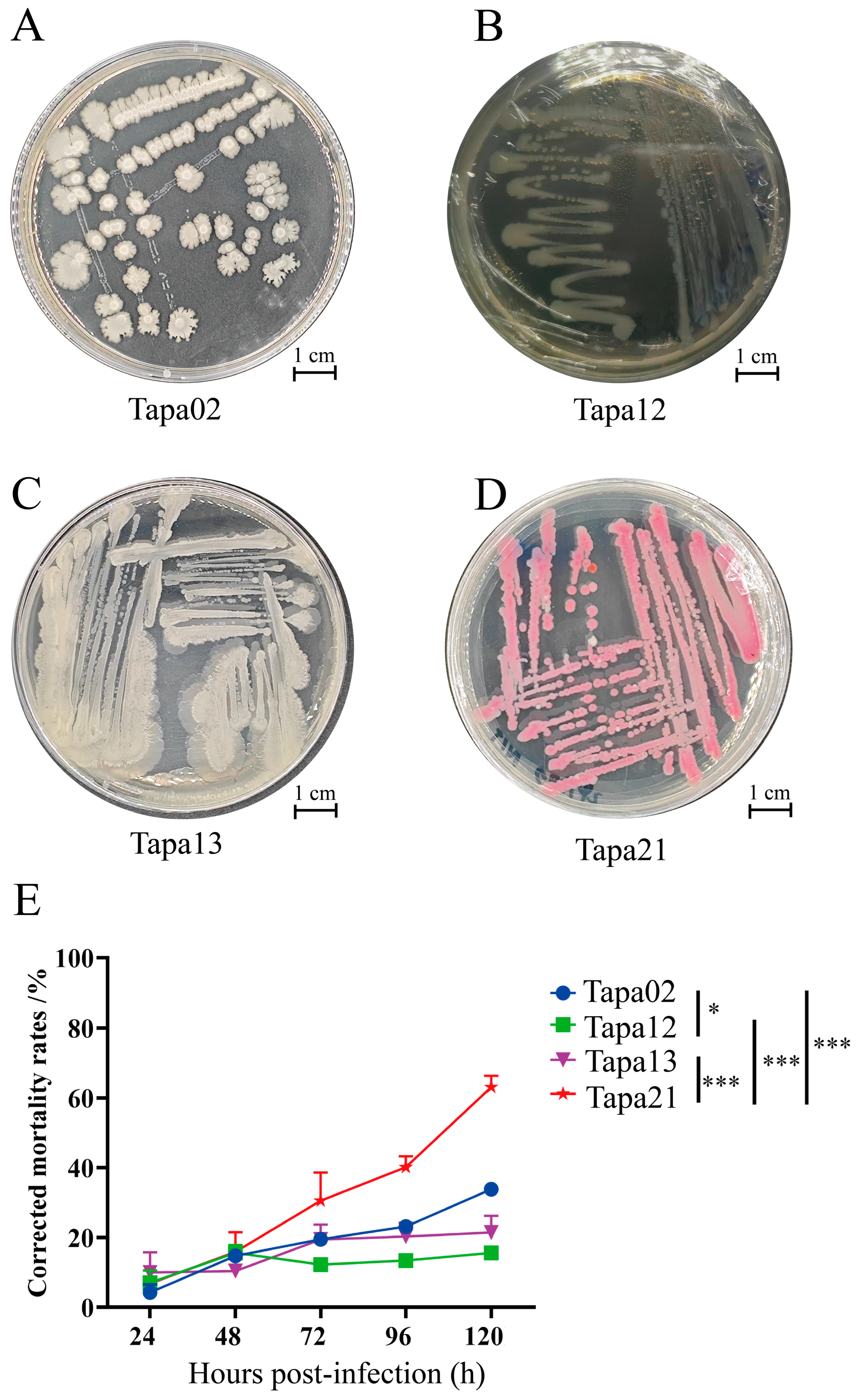
Four bacterial strains with different colony morphology were isolated on nutrient agar plates and designated as Tapa02 (Figure 1A), Tapa12 (Figure 1B), Tapa13 (Figure 1C), and Tapa21 (Figure 1D). The macroscopic colony morphology characteristics of the 4 bacterial strains were summarized (Table 1). Bacterial suspensions were adjusted to OD600 = 1.0 and applied to T. absoluta larvae.
The corrected mortality (Figure 1E) revealed that infection with Tapa21 caused a statistically significant increase in larval mortality from 24 h post-infection (hpi) to 120 hpi, especially at 72, 96, and 120 hpi, when the corrected mortality reached 30–65%. In contrast, Tapa02 (Figure 1E) showed a steady but relatively slow upward trend, reaching approximately 20% at 72 hpi. Tapa12 (Figure 1E) produced minimal effects, with corrected mortality remaining below 16% throughout the observation period. Tapa13 (Figure 1E) followed a similar trajectory at an even lower rate (12.26% at 72 hpi).
Collectively, these findings indicate that, compared with the other 3 bacterial strains, Tapa21 induced a significantly higher and more dynamic increase in corrected mortality of T. absoluta larvae.

3.2. Identification of Biocontrol Bacteria

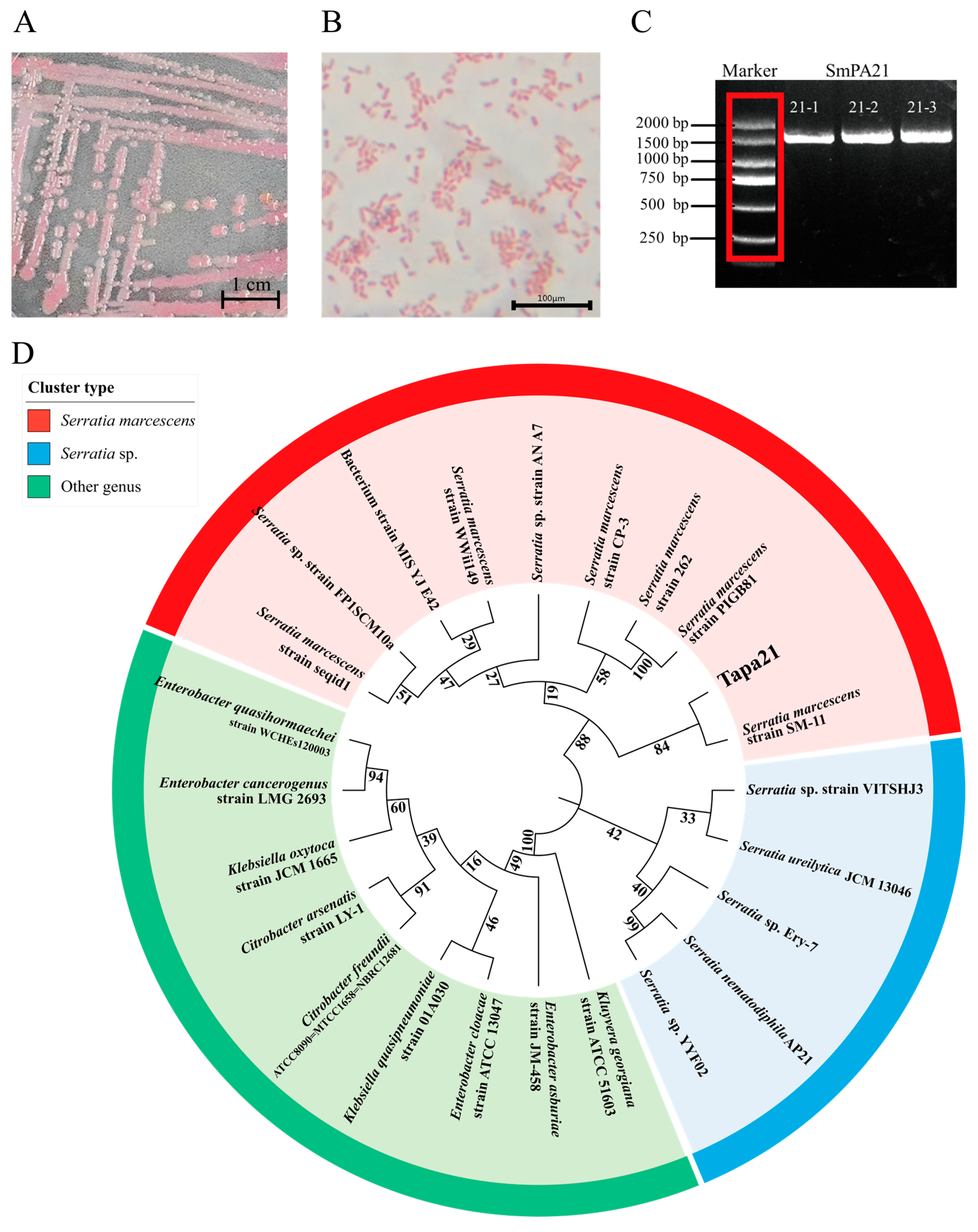
The colony morphology of Tapa21 was characterized as round and raised, with a semi-transparent center and red pigment production (Figure 2A). After Gram staining, Tapa21 cells exhibited rod-shaped morphology and were classified as Gram-negative (Figure 2B). PCR amplification using universal primers produced the expected band of approximately 1500 bp (Figure 2C). Sequencing and phylogenetic analysis further confirmed that Tapa21 belongs to the species S. marcescens (Figure 2D).

3.3. Symptoms of Tuta absoluta Infected by Tapa21

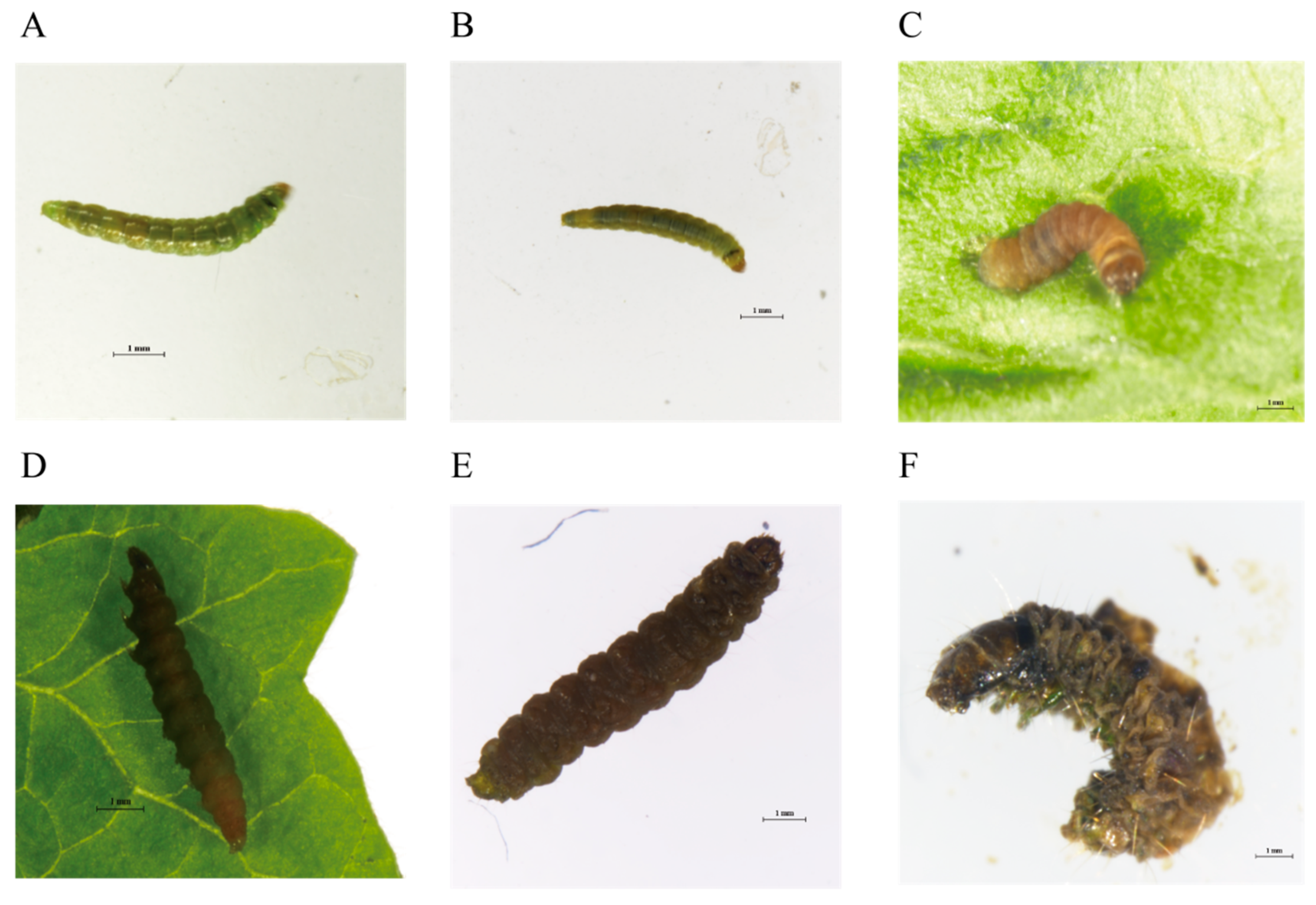
After oral infection of Tapa21 in T. absoluta, larvae exhibited a time-dependent series of visible changes (Figure 3A–F). At 0 hpi (Figure 3A), larvae showed normal coloration and activity. By 24 hpi (Figure 3B), larvae became lethargic, with non-noticable external changes. At 48 hpi (Figure 3C), the larval body color began to redden, and the cuticle appeared slightly softened. At 72 hpi (Figure 3D), the body darkened to brown. At 96 hpi (Figure 3E), the darkening further progressed. At 120 hpi (Figure 3F), larvae were completely blackened. These external changes were consistently observed in larvae infected with Tapa21 but were not observed in the sterile water (control group).
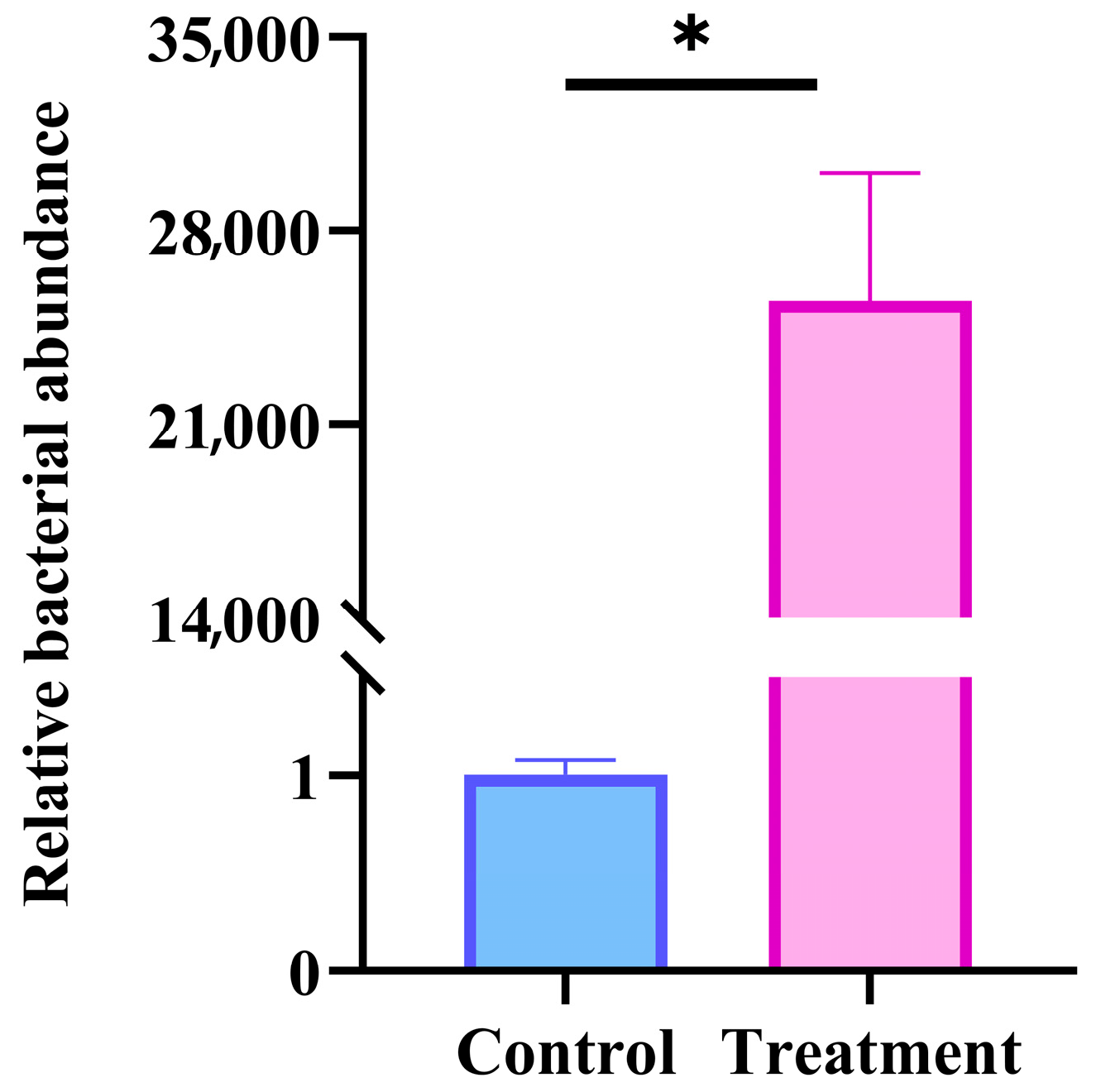
QPCR analysis revealed a clear accumulation of Tapa21 in T. absoluta larvae following oral infection. Compared with the control group (sterile water), Tapa21-infected larvae showed a significantly higher relative bacterial abundance (Figure 4), approximately 25,000 times that of the control group. These results indicate that Tapa21 successfully colonized the larvae after ingestion and provide evidence supporting the occurrence of bacterial infection.

3.4. Pathogenicity Determination of Tapa21 Against Tuta absoluta

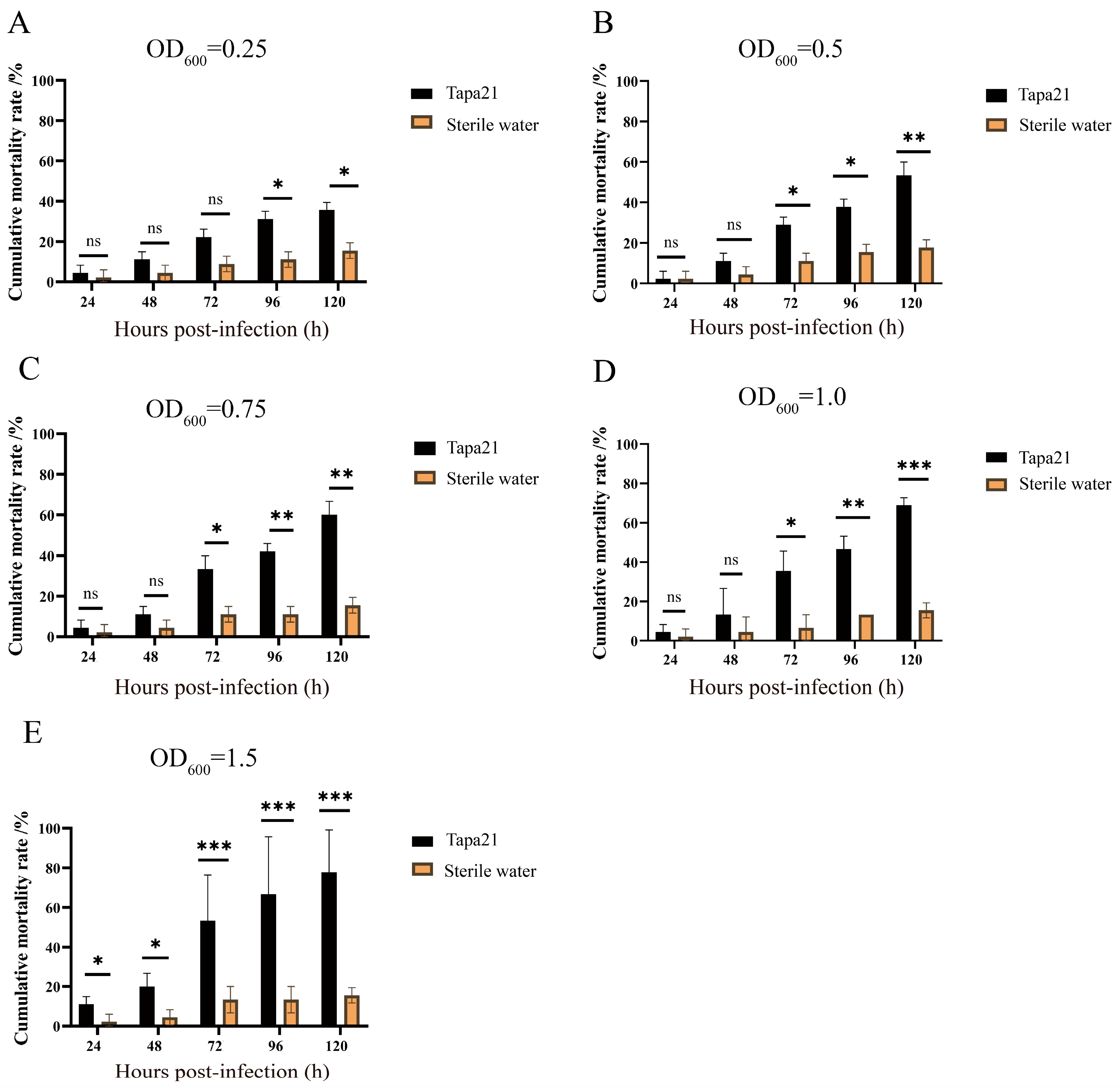
The cumulative mortality of T. absoluta larvae increased with both Tapa21 concentration (OD600 = 0.25–1.0) and exposure time (24–120 hpi), demonstrating dose-dependent effects (Figure 5). At the lowest concentration (OD600 = 0.25; Figure 5A), from 24 hpi to 120 hpi, the mortality increased gradually from 4.44% to 35.56%. At OD600 = 0.5 (Figure 5B), cumulative mortality rose faster, reaching approximately 55% at 120 hpi. At OD600 = 0.75 (Figure 5C), mortality increased more significantly, reaching 60% at 120 hpi. At the highest concentration (OD600 = 1.0; Figure 5D), cumulative mortality reached nearly 70% at 120 hpi. At OD600 = 1.5 (Figure 5E), cumulative mortality reached almost 80% at 120 hpi. The results demonstrated the effects of both Tapa21 concentration (OD600) and exposure duration on the cumulative mortality of T. absoluta larvae. A clear positive linear correlation was observed between OD600 values and larval cumulative mortality, with higher concentrations of Tapa21 resulting in significantly elevated mortality rates. Likewise, cumulative mortality increased progressively with exposure time, reflecting the time-dependent nature of bacterial pathogenicity.
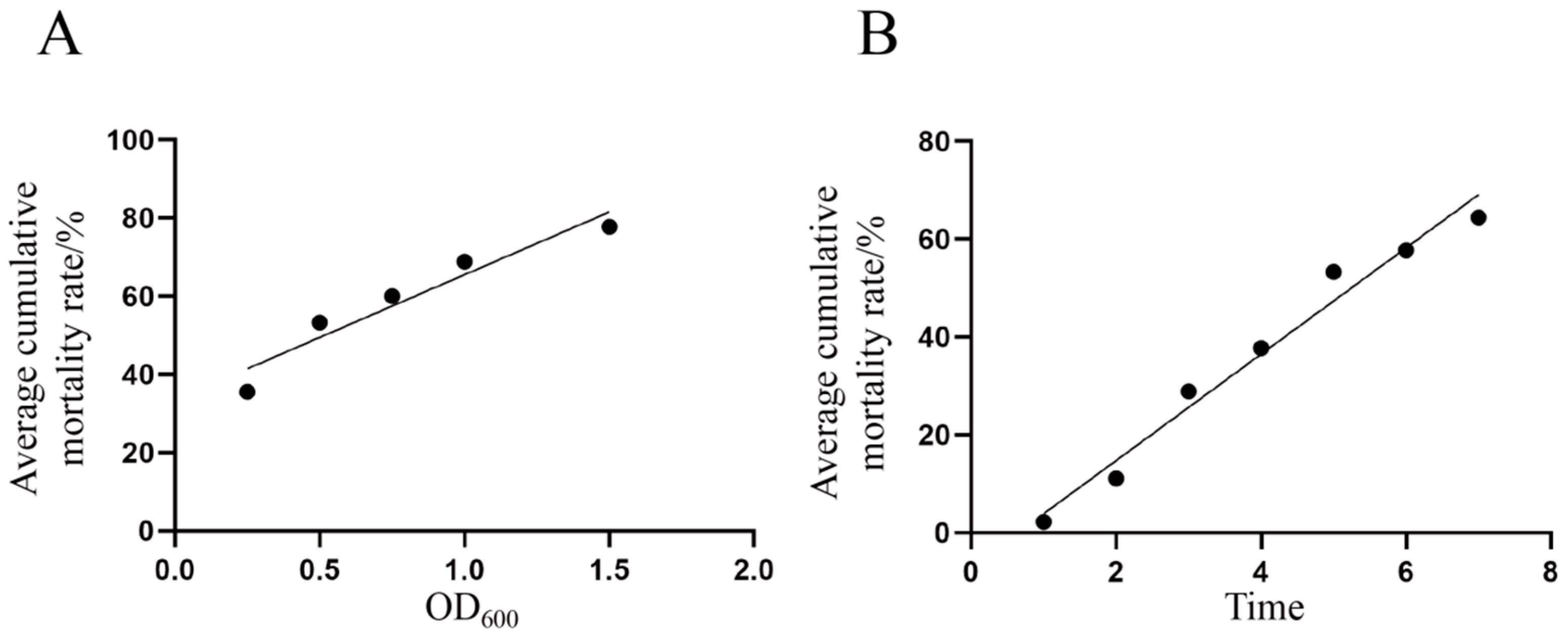
Probit analysis estimated the LC50 at OD600 = 0.52 (95% CI: 0.33–0.65) and LT50 at 5.29 days (95% CI: 4.64–6.18) (Figure 6A,B). The regression equation for OD600 concentration was Y = 0.86X − 0.45 (R2 = 0.94), while that for exposure time was Y = 0.38X − 2.01 (R2 = 0.91). Together, these findings highlight the strong virulence of Tapa21 and underscore its potential as a promising microbial agent for IPM systems (Table 2).

3.5. Transcriptome Profiling of Tuta absoluta

3.5.1. Analysis of RNA-Sequencing Data

RNA libraries (n = 6) were constructed and sequenced on the Illumina NovaSeq platform, with three biological replicates for each treatment and control group. After stringent quality control, a total of 41.08 Gb of clean data were obtained across all samples. At least 6.72 Gb of clean reads were generated for each sample, and a minimum of 97.88% of clean data achieved a quality score of Q30 (Table S2).

3.5.2. Identification and Functional Analysis of DEGs

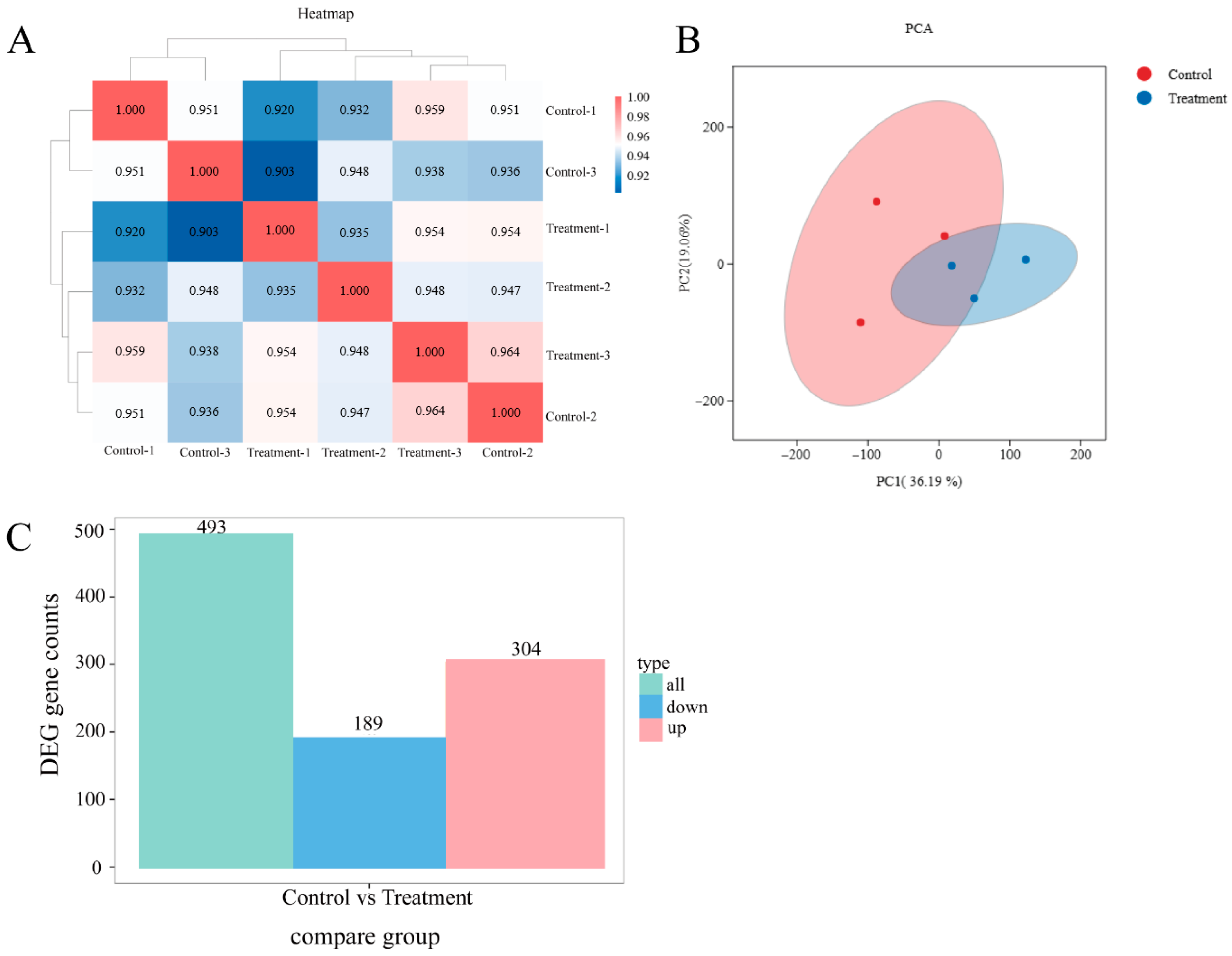
The transcriptome correlation heatmap (Figure 7A) illustrated the relationships among 6 experimental groups, including 3 biological replicates of the control groups (C-1, C-2, C-3) and the treatment groups (T-1, T-2, T-3). Except for T-1 (correlation coefficient = 0.903) and C-3 (which exhibited a slightly lower correlation), most samples showed strong pairwise correlations (r > 0.94), indicating high reproducibility and consistency across replicates. The Principal Component Analysis (PCA) plot (Figure 7B) further demonstrated a clear separation between the control and the treatment groups, with PC1 and PC2 explaining 36.19% and 10.09% of the total variance, respectively. The red and blue clusters represented the expression profiles of treatment and control samples, which were distinctly grouped, although partial overlap suggested a certain degree of similarity. This separation reflected treatment-induced transcriptional reprogramming. Furthermore, the transcriptomic analysis identified a total of 493 DEGs (Figure 7C), including 304 up-regulated and 189 down-regulated genes. The volcano plot provided a global distribution of DEGs (Figure S1). The predominance of up-regulated genes indicated that Tapa21 infection strongly activated specific transcriptional pathways in T. absoluta. Collectively, these results highlight both the robustness of the transcriptomic dataset and the dynamic nature of host gene expression in response to bacterial challenge.

3.5.3. GO Enrichment Analysis of DEGs

Among the genes subjected to functional annotation, 288 genes were successfully annotated to GO terms and included in the enrichment analysis, with FDR < 0.05. GO enrichment was performed across the three major GO categories: Biological Process (BP), Cellular Component (CC), and Molecular Function (MF). In the BP category, the most enriched terms included “metabolic process” (140 genes) and “cellular process” (111 genes), indicating extensive transcriptional reprogramming in response to bacterial infection. Within the CC category, enriched terms such as “cellular anatomical entity” (121 genes) and “intracellular” (25 genes) indicated that Tapa21 infection primarily affected intracellular structures and processes. For the MF category, “catalytic activity” (135 genes) and “binding” (116 genes) were the predominant enriched terms, highlighting that enzymatic processes and protein interaction networks were substantially affected. Collectively, these results indicate that Tapa21 triggers complex molecular responses in T. absoluta, especially those associated with stress adaptation and metabolic regulation (Figure S2).

3.5.4. KEGG Pathway Enrichment Analysis of DEGS

Among the genes subjected to functional annotation, 276 genes were successfully mapped to KEGG pathways and included in the enrichment analysis, with an FDR < 0.05. KEGG pathway enrichment analysis was performed on the DEGs to identify the biological pathways that were significantly affected by Tapa21 treatment. The enriched pathways were classified into 5 functional categories: cellular processes, environmental information processing, genetic information processing, metabolism, and organismal systems. Among these, the metabolism category was the most enriched, including key pathways such as “drug metabolism—other enzymes”, “purine metabolism”, “glycerolipid metabolism”, “fatty acid metabolism”, and “carbon metabolism”. Detoxification-related pathways, particularly those involved in “cytochrome P450 enzymes”, were also prominently represented, highlighting their role in metabolic stress responses. Within cell processes, “peroxisome” and “lysosome” were the most enriched pathways, indicating that Tapa21 infection impacted cellular maintenance and degradation mechanisms. Environmental information processing, such as “neuroactive ligand-receptor interaction”, was enriched, reflecting adaptive cellular responses. Moderate enrichment was observed in genetic information processing and organismal systems, including “RNA degradation” and “Toll and immune deficiency (IMD) signaling pathway”, suggesting that gene regulation and immune defense contributed to maintaining homeostasis under bacterial stress. Notably, “drug metabolism—other enzymes” and “lysosome” were enriched and largely composed of up-regulated genes, highlighting metabolic reprogramming in response to infection (Figure S3).

3.5.5. Pathway Analysis

Heatmaps were generated to illustrate the expression patterns of DEGs (annotated by transcript IDs) across 6 samples, including three biological replicates from the control group (C-1 to C-3) and three from the treatment group (T-1 to T-3).
The first heatmap represented the pathway of “drug metabolism—other enzymes”. Tabs015766 was up-regulated in the treatment group, whereas Tabs001664 was down-regulated in the treatment group but slightly up-regulated in the control group, indicating a treatment-associated perturbation. Most of the remaining genes, such as Tabs017861 and Tabs0117837, showed moderate up-regulation, reflecting an overall activation trend in the treatment group. The second heatmap represented the pathway of “lysosome”; genes including Tabs00849, Tabs017842, and Tabs020049 were up-regulated, particularly in the control group, suggesting treatment-specific induction patterns. In contrast, Tabs015351 and Tabs009543 displayed only moderate variation, implying limited involvement in the treatment response. The third heatmap showed the “Toll and IMD signaling pathway”; the expression levels of Tabs019329, Tabs004742, and Tabs0175273 were slightly elevated in the treatment group compared with the control group. Collectively, the heatmaps revealed clear expression differences between treatment and control groups, suggesting that several genes could serve as potential biomarkers or functional regulators under Tapa21 treatment (Figure S4).

3.6. Experimental Validation of Transcriptomic Data via RT-qPCR

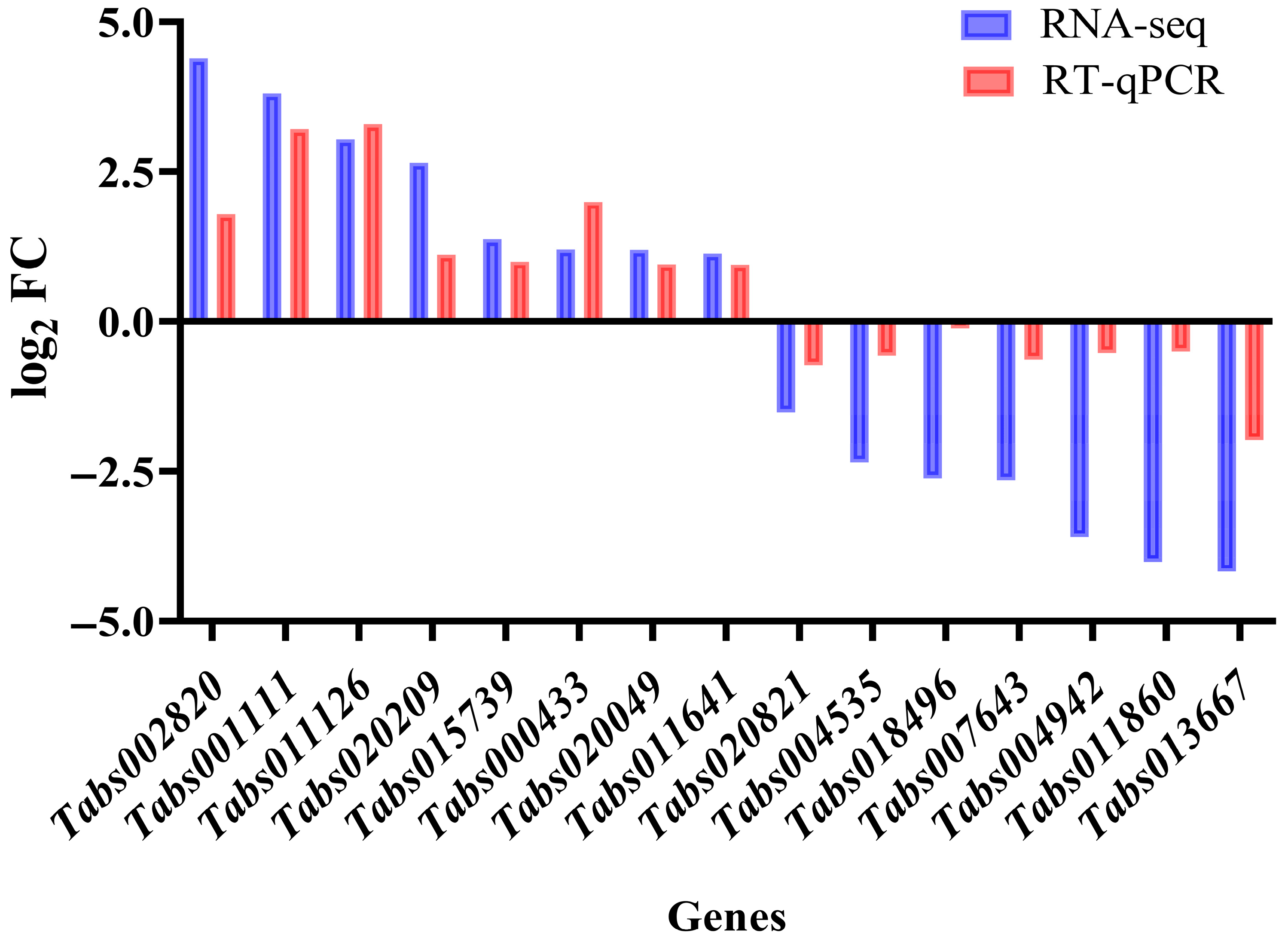
The result (Figure 8) demonstrated a strong concordance between RNA-Seq and RT-qPCR measurements of fold-change (FC) for the selected DEGs. Blue bars represented RNA-Seq data, while red bars indicated RT-qPCR validation. Genes in the left part of the x-axis (e.g., Tabs002820, Tabs001111, and Tabs011126) showed consistent up-regulation across both platforms, whereas genes on the right (e.g., Tabs020281, Tabs004535, Tabs018496, and Tabs007643) showed consistent down-regulation. Minor quantitative differences were observed for some genes (e.g., Tabs020049, Tabs011641), likely due to methodological factors such as primer efficiency or read mapping sensitivity, but the overall expression trends were maintained. These results confirmed the reliability of the RNA-Seq and RT-qPCR dataset and supported the biological relevance of the identified DEGs.

4. Discussion

Serratia marcescens (Bizio) (Enterobacteriales: Enterobacteriaceae), sometimes referred to as Bacillus spiritus [61], is a Gram-negative bacterium of the genus Serratia, widely found in the natural environment [62]. In addition, the secondary metabolite prodigiosin is biosynthesized during the proliferation of S. marcescens [63], and has been widely studied in various agricultural and forestry pests [64,65], including Spodoptera litura (Fab.) [66], Helicoverpa armigera (Hübner) [67], Mythimna separata (Walker) [68], Adelphocoris suturalis (Jakovlev) [69], and Plutella xylostella [70]. In this study, S. marcescens strain Tapa21 exhibited pronounced pathogenicity against T. absoluta larvae in both dose- and time-dependent manners, underscoring its potential as an effective entomopathogenic bacterium for the biological control of pests. Furthermore, histopathological observations and symptoms such as lethargy, tissue necrosis, and inflammation confirm a systemic pathogenic effect of S. marcescens in T. absoluta [71,72,73].
The sequential pathological symptoms observed in T. absoluta larvae infected with Tapa21 were consistent with the typical progression of a systemic bacterial infection. The early reddening and cuticle softening observed at approximately 48 hpi likely reflected an initial immune or oxidative stress response to bacterial invasion. The subsequent darkening and extensive tissue necrosis from 72 to 120 hpi indicated systemic dissemination of the bacterium and severe physiological disruption. Similar infection dynamics have been reported in other insect-pathogen systems, where S. marcescens penetrates the gut epithelium, proliferates within the hemocoel, and ultimately causes septicemia and host mortality [74,75]. Comparable pathogenic mechanisms have also been documented in chitinolytic S. marcescens infections, in which secreted enzymes and toxins promote host tissue degradation and suppress immune defenses [70]. Additionally, studies on insect gut immunity have shown that bacterial invasion can trigger immune priming through epithelial signaling and immune regulatory pathways [76,77]. These findings suggest that Tapa21-induced mortality in T. absoluta is likely driven by synergistic effects of gut barrier disruption, bacterial proliferation, and systemic immune collapse. Similar host–pathogen interactions have been observed in S. marcescens infections in houseflies, where disruption of the gut microbial community inhibits host growth [78]. Nonetheless, further verification using bacterial quantification and tissue localization assays is required to confirm the infection route and elucidate the underlying pathological mechanisms of Tapa21 virulence.
The significantly higher and more dynamic increase in corrected mortality induced by Tapa21 compared with the other bacterial strains (Figure 1E), together with the transcriptomic evidence (Figure S4) showing activation of detoxification and immune-related pathways in infected larvae, indicates that Tapa21 exhibits strong pathogenicity toward T. absoluta. Through transcriptome sequencing analysis of T. absoluta larvae infected with S. marcescens, DEGs were found to be significantly enriched in functional categories related to stress response, catalytic activity, and molecular function, which are essential for detoxification and metabolic regulation [79,80]. Cellular component terms such as “intracellular” and “cellular anatomical entity” were also significantly enriched, suggesting extensive cellular remodeling. These findings are consistent with transcriptomic responses reported in other insect species exposed to external stress, such as Plutella xylostella [81] and Zeugodacus cucurbitae (Coquillett) [82]. KEGG pathway enrichment analysis further indicated that the “drug metabolism—other enzymes” pathway was strongly activated in T. absoluta following S. marcescens infection. Similarly, bacterial induction in Musca domestica L. larvae led to significant enrichment in the insulin signaling pathway, HIF-1 signaling pathway, and chemokine signaling pathway [83]. In Myzus persicae (Sulzer), bacterial infection resulted in the upregulation of Toll signaling components [84]; in Ostrinia furnacalis (Guenée), infection altered lipid metabolism and immune mechanisms [85]; and in Reticulitermes chinensis (Snyder), KEGG pathway analysis following S. marcescens infection revealed enrichment in selenocompound metabolism, amino acid biosynthesis, and ribosome-related pathways [86]. These integrated findings support its potential as a biocontrol agent.
Furthermore, numerous studies have demonstrated that bacterial infections can activate insect innate immunity through the Toll and/or IMD pathways, thereby inducing the synthesis of antimicrobial peptides (AMPs) to counter bacterial invasion [87]. Nevertheless, under natural or sub-lethal bacterial exposure, insects often elicit milder and more adaptive responses, relying more on metabolic and detoxification adjustments to maintain homeostasis [88]. For instance, Deshpande et al. [89] have revealed that enteric infection of Drosophila with Pseudomonas entomophila triggers systemic up-regulation of metabolic genes independently of IMD signaling. Detoxification enzymes, including cytochrome P450 genes (CYP450s) [90], glutathione S-transferases (GSTs) [91], carboxylesterases (CarEs) [92], and uridine diphosphate-glycosyltransferases (UGTs) [93], are also activated to alleviate oxidative stress caused by bacterial infection. These indicate that insect hosts integrate immunity, metabolism, and stress tolerance as part of a balanced response to natural bacterial invasion. Consistent with these findings [94,95], detoxification-related genes such as CYP450s, GSTs, CarEs, were also significantly up-regulated in this study. Among them, multiple CYP450s have shown notably higher expression levels after S. marcescens infection. Members of this enzyme family are widely recognized for their roles in xenobiotic metabolism and stress adaptation in insects such as Bemisia tabaci (Gennadius) [96], Locusta migratoria L. [97], Spodoptera littoralis (Boisduval) [98], Anopheles gambiae (Giles) [99], and Helicoverpa armigera [100]. Collectively, these results suggest that S. marcescens infection triggers multifaceted adaptive responses in insects, including detoxification, metabolic reprogramming, cellular restructuring, and immune activation via canonical signaling pathways such as Toll and IMD. These findings provide valuable molecular evidence for the adaptive responses of T. absoluta to bacterial infection and lay the groundwork for future studies aiming to elucidate the specific immune signaling and metabolic regulatory networks through functional validation approaches, such as RNA interference or tissue-specific localization assays.
Overall, these findings highlight the dual role of S. marcescens as both an opportunistic pathogen and a potential biocontrol agent. Understanding its infection strategy and host response in T. absoluta not only provides novel insights into insect-microbe interactions but also supports the rational development of S. marcescens-based bioinsecticides with enhanced safety and efficacy. Future studies integrating multi-omics analyses, microbial competition assays, and in vivo functional validations will be crucial to uncover the molecular determinants governing host susceptibility and pathogen virulence.

5. Conclusions

This study demonstrates that S. marcescens Tapa21 is highly pathogenic against T. absoluta, exhibiting clear dose- and time-dependent larval mortality, with an LC50 of OD600 = 0.52, an LT50 of 5.2 days, and nearly 80% mortality at the highest concentration at 120 hpi. Transcriptomic analysis identified DEGs and pathways involved in immune defense, detoxification, and metabolic regulation, and RT-qPCR validation confirmed the reliability of these expression patterns. These findings reveal the molecular interactions between T. absoluta and S. marcescens Tapa21 and provide a mechanistic basis for the development of a Tapa21-based microbial agent for sustainable IPM.
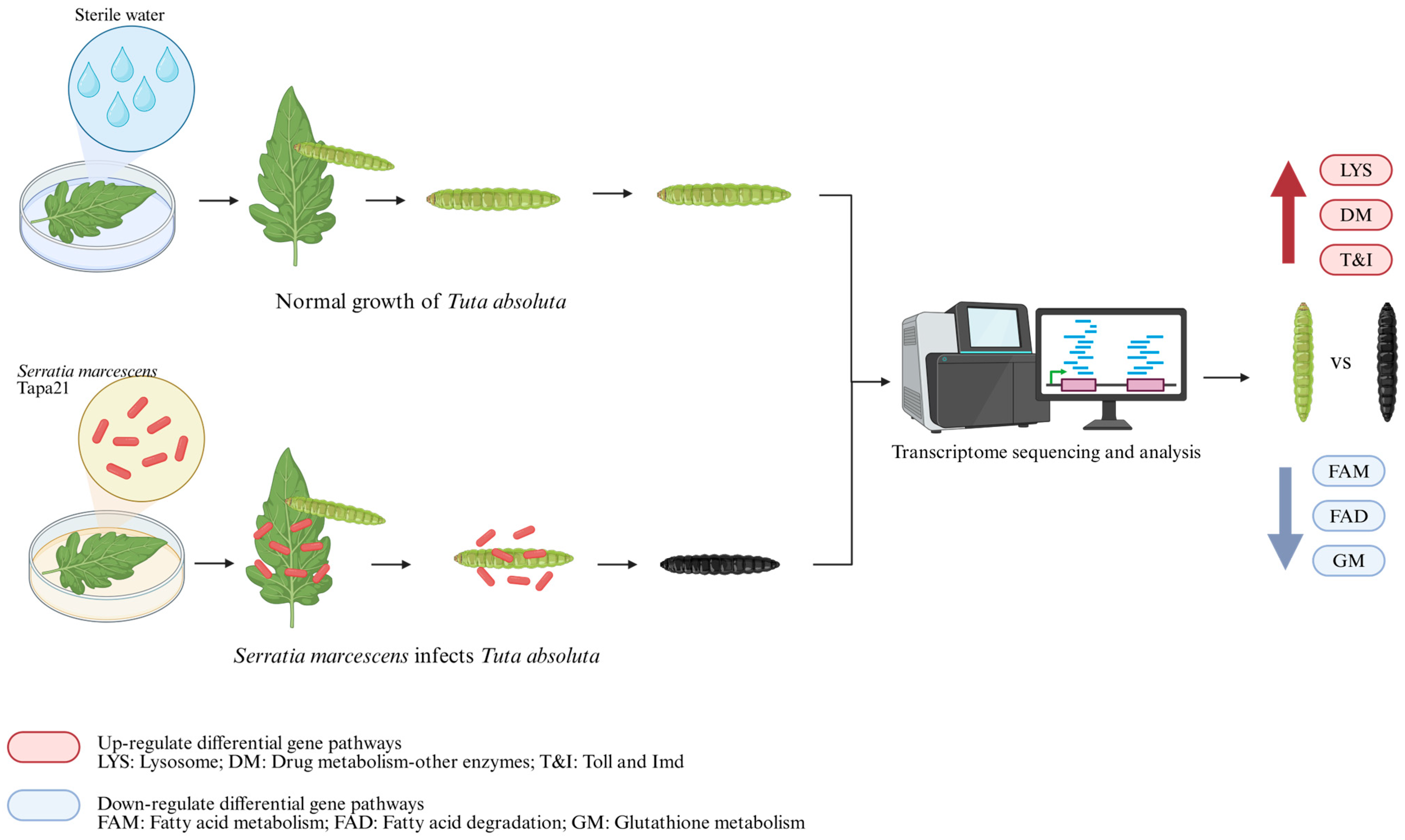
The overall workflow of this study is summarized in the accompanying graphic (Figure 9), created in BioRender (https://www.biorender.com/, accessed on 22 December 2025).

Supplementary Materials

The following supporting information can be downloaded at: https://www.mdpi.com/article/10.3390/agriculture16010048/s1, Figure S1. Volcano plot illustrating DEGs. Figure S2. Enriched GO for DEGs. Figure S3. The KEGG pathway enrichment analysis of DEGs. Figure S4. Heatmaps displaying expression levels of selected DEGs. Table S1. Primer sequences used for gene expression. Table S2. RNA Sequence Data Evaluation Statistics.

Author Contributions

Methodology, investigation, software, Experimental operation, Data curation, writing—original draft, Y.W. and A.B.; Writing and editing, revising article, investigation, Experimental design, Data analysis, X.C. and L.S.; Methodology, Investigation, Z.W., B.L. and X.L.; Writing—review and editing, Y.Z.; Writing—review and editing, Funding acquisition, Project administration, Supervision, Y.H. All authors have read and agreed to the published version of the manuscript.

Funding

This work was supported by the key projects of National Natural Science Foundation of China (U22A20489; 32361143791).

Data Availability Statement

Transcriptome raw data have been uploaded to the Sequence Read Archive (SRA) database with the accession number PRJNA1306029.

Acknowledgments

We would like to express our sincere gratitude to Weicong Fu and Yuxiang Liu for their valuable contributions to the language editing and refinement of this manuscript. We also thank our colleagues in the laboratory for their assistance and support during the experiments. We would like to express our gratitude to all the reviewers for their valuable suggestions and guidance regarding this article.

Conflicts of Interest

The authors declare no conflicts of interest.

References

  1. Patricia, E.C.C.; Mark, A.M. Classification of Tuta absoluta (Meyrick, 1917) (Lepidoptera: Gelechiidae: Gelechiinae: Gnorimoschemini) Based on Cladistic Analysis of Morphology. Proc. Entomol. Soc. Wash. 2021, 123, 41–54. [Google Scholar]
  2. Urbaneja, A.; Vercher, R.; Navarro-Llopis, V.; Porcuna Coto, J.L.; García-Marí, F. La polilla del tomate, Tuta absoluta. Phytoma España La Rev. Prof. De Sanid. Veg. 2007, 194, 16–23. [Google Scholar]
  3. Pandey, M.; Bhattarai, N.; Pandey, P.; Chaudhary, P.; Katuwal, R.J.; Khanal, D. A review on biology and possible management strategies of tomato leaf miner, Tuta absoluta (Meyrick), Lepidoptera: Gelechiidae in Nepal. Heliyon 2023, 9, e16474. [Google Scholar] [CrossRef]
  4. EPPO Global Database Tuta absoluta (GNORAB). 2024. Available online: https://gd.eppo.int/taxon/GNORAB/distribution (accessed on 30 October 2024).
  5. Mahlangu, L.; Sibisi, P.; Nofemela, R.S.; Ngmenzuma, T.; Ntushelo, K. The differential effects of Tuta absoluta infestations on the physiological processes and growth of tomato, potato, and eggplant. Insects 2022, 13, 754. [Google Scholar] [CrossRef]
  6. Zannou, A.J.; Romeis, J.; Collatz, J. Response of the tomato leaf miner Phthorimaea absoluta to wild and domesticated tomato genotypes. Pest Manag. Sci. 2025, 81, 1345–1359. [Google Scholar] [CrossRef]
  7. Acharya, R.; Barman, A.K.; Sharma, S.R.; Kafle, L.; Kim, S.M.; Lee, K.Y. Biology, distribution, and management of invasive South American tomato leafminer, Tuta absoluta (Meyrick) (Lepidoptera; Gelechiidae), in Asia. Arch. Insect Biochem. 2023, 114, e22056. [Google Scholar] [CrossRef]
  8. Vivekanandhan, P.; Swathy, K.; Sarayut, P.; Patcharin, K. Biology, classification, and entomopathogen-based management and their mode of action on Tuta absoluta (Meyrick) in Asia. Front. Microbiol. 2024, 15, 1429690. [Google Scholar] [CrossRef]
  9. Zhang, G.F.; Ma, D.Y.; Wang, Y.S.; Gao, Y.H.; Liu, W.X.; Zhang, R.; Fu, W.J.; Xian, X.Q.; Wang, J.; Kuang, M. First report of the South American tomato leafminer, Tuta absoluta (Meyrick), in China. J. Inter. Agri. 2020, 19, 1912–1917. [Google Scholar] [CrossRef]
  10. Xue, Y.; Huang, C.; Xian, X.; Liu, W.X.; Wan, F.H.; Desneux, N.; Zhang, G.F.; Zhang, Y.B. Modeling the spread patterns and climatic niche dynamics of the tomato leaf miner Tuta absoluta following its invasion of China. J. Pest Sci. 2025, 98, 2417–2426. [Google Scholar] [CrossRef]
  11. Zhang, G.F.; Zhang, Y.B.; Xian, X.Q.; Liu, W.X.; Li, P.; Liu, W.C.; Liu, H.; Feng, X.D.; Lv, Z.C.; Wang, Y.S.; et al. Damage of an important and newly invaded agricultural pest, Phthorimaea absoluta, and its prevention and management measures. J. Plant Prot. 2022, 48, 51–58. [Google Scholar]
  12. Luo, Y.H.; Wang, X.S.; Zhao, X.Y.; Jia, D. Analysis of suitability of quarantine pest Tuta absoluta in China. Shaanxi J. Tradit. Chin. Med. 2022, 50, 579–585. [Google Scholar]
  13. Zhang, Z.K.; Wu, S.Y.; Lei, Z.R. Occurrence, harm and control of tomato leaf miner, a new agricultural invasive organism in Ningxia. Chin. Cuc. Veg. 2022, 35, 111–116. [Google Scholar]
  14. Tarusikirwa, V.L.; Machekano, H.; Mutamiswa, R.; Chidawanyika, F.; Nyamukondiwa, C. Tuta absoluta (Meyrick) (Lepidoptera: Gelechiidae) on the “Offensive” in Africa: Prospects for integrated management initiatives. Insects 2020, 11, 764. [Google Scholar] [CrossRef]
  15. Wu, S.Y.; Zhang, Q.K.; Zhang, Y.; Diao, H.L.; Zhang, Z.K.; Tang, L.D.; Zhang, T.Y.; Zhang, X.M.; Lei, Z.R. Advances in integrated pest management of Phthorimaea absoluta. J. Plant Prot. 2023, 49, 6–12+21. [Google Scholar]
  16. Zeng, X.J.; Zhang, C.; He, Y.Q.; Zhou, Q.H.; Li, D.; Zheng, L.M.; Ouyang, X.; Zhang, Z.H. Analysis of world tomato production based on FAO data from 1980 to 2019. Hunan Agric. Sci. 2021, 11, 104–108. [Google Scholar]
  17. Xi, M.Z.; Wang, Z.L.; Liu, X.X.; Li, Z.H.; Zhang, X.; Lv, Z.Z.; Han, P. Assessment of the economic loss to the tomato industry caused by Tuta absoluta in China based on @RISK. J. Biosaf. 2022, 31, 300–308. [Google Scholar]
  18. Silva, J.E.; Assis, C.; Ribeiro, L.; Siqueira, H. Field-evolved resistance and cross-resistance of Brazilian Tuta absoluta (Lepidoptera: Gelechiidae) populations to diamide insecticides. J. Econ. Entomol. 2016, 109, 2190–2195. [Google Scholar] [CrossRef] [PubMed]
  19. Liu, Y.; Chen, X.; Yin, Y.Q.; Li, X.Y.; He, K.; Zhao, X.Q.; Li, X.Y.; Luo, X.Y.; Mei, Y.; Wang, Z.Q.; et al. A chromosome-level genome assembly of tomato pinworm, Tuta absoluta. Sci. Data 2023, 10, 390. [Google Scholar] [CrossRef] [PubMed]
  20. Hu, S.Y.; Ming, F.C.; Dai, Y.T.; Wang, K.; Dong, R.; Zhang, Y.J.; Wang, S.L. Occurrence, pesticide resistance, and integrated pest management of the invasive pest Tuta absoluta. China Veg. 2025, 06, 39–46. [Google Scholar]
  21. Zhang, G.F.; Zhang, Y.B.; Liu, W.X.; Zhang, F.; Xian, X.Q.; Wan, F.H.; Feng, X.D.; Zhao, J.N.; Liu, H.; Liu, W.C.; et al. Effect of trap color and position on the trapping efficacy of Tuta absoluta. Chin. Agric. Sci. 2021, 54, 2343–2354. [Google Scholar]
  22. Xie, X.B.; Meng, J.Z.; Zhao, G.A.; Yang, D.M.; Yang, Y.Y.; Chen, X.J.; Shen, Y.F. Evaluation of trapping effect on Tuta absoluta (Meyrick) with different hanging heights of traps and different sex attractants in field. Plant Quar. 2023, 37, 44–47. [Google Scholar]
  23. Guo, W.X.; Li, L.L.; Jiang, W.F.; Cheng, Y.Z.; Song, Y.Y.; Cui, H.Y.; Lv, S.H.; Yu, Y.; Men, X.Y. Hazard risk of Tuta absoluta to tomato industry in Shandong province and its monitoring and control research progress. Shandong Agric. Sci. 2023, 55, 1–11. [Google Scholar]
  24. Wang, H.; Lv, B.Q.; Lu, H.; Wang, S.; Tang, J.H.; Wang, S.C. Invasive risk analysis of the tomato leafminer Tuta absoluta in Hainan Province. Pertanika J. Trop. Agric. 2023, 43, 66–73. [Google Scholar]
  25. Hu, W.; Lu, L.; Hu, L.T.; Liu, L.; He, N. Prediction of the potential global distribution of Tuta absoluta different periods under climate change. China Plant Prot. 2025, 45, 30–38+95. [Google Scholar]
  26. Wang, S.L.; Shi, C.H.; Xu, D.D.; Zhang, Y.J. Screening of efficient insecticide against invasive Tuta absoluta (Meyrick) and detection of its resistance gene mutation. China Veg. 2021, 11, 33–36. [Google Scholar]
  27. Siqueira, H.Á.A.; Guedes, R.N.C.; Picanço, M.C. Insecticide resistance in populations of Tuta absoluta (Lepidoptera: Gelechiidae). Agric. Forest Entomol. 2000, 2, 147–153. [Google Scholar] [CrossRef]
  28. Lietti, M.M.; Botto, E.; Alzogaray, R.A. Insecticide resistance in argentine populations of Tuta absoluta (Meyrick) (Lepidoptera: Gelechiidae). Neotrop. Entomol. 2005, 34, 113–119. [Google Scholar] [CrossRef]
  29. Guedes, R.; Roditakis, E.; Campos, M.; Haddi, K.; Bielza, P.; Siqueira, H.; Tsagkarakou, A.; Vontas, J.; Nauen, R. Insecticide resistance in the tomato pinworm Tuta absoluta: Patterns, spread, mechanisms, management and outlook. J. Pest Sci. 2019, 92, 1329–1342. [Google Scholar] [CrossRef]
  30. Langa, T.P.; Dantas, K.C.; Pereira, D.L.; de Oliveira, M.; Ribeiro, L.M.; Siqueira, H.A. Basis and monitoring of methoxyfenozide resistance in the South American tomato pinworm Tuta absoluta. J. Pest Sci. 2022, 95, 351–364. [Google Scholar] [CrossRef]
  31. Osama, E.; Ahmed, B.; Fawzy, E. Impact of pesticides on non-target invertebrates in agricultural ecosystems. Pest. Biochem. Physiol. 2024, 202, 105974. [Google Scholar]
  32. Gruss, I.; Bączek, P.; Ćwieląg-Piasecka, I.; Jędrzejewski, S.; Magiera-Dulewicz, J.; Twardowska, K. Assessing the ecotoxicological effects of pesticides on non-target plant species. Environ. Monit. Assess. 2025, 197, 1047. [Google Scholar] [CrossRef]
  33. Wan, N.F.; Fu, L.; Dainese, M.; Kiær, L.P.; Hu, Y.Q.; Xin, F.F.; Goulson, D.; Woodcock, B.A.; Vanbergen, A.J.; Spurgeon, D.J.; et al. Pesticides have negative effects on non-target organisms. Nat. Commun. 2025, 16, 1360. [Google Scholar] [CrossRef]
  34. Karaoğlan, B.; Alkassab, A.T.; Borges, S.; Fisher, T.; Link-Vrabie, C.; McVey, E.; Ortego, L.; Nuti, M. Microbial pesticides: Challenges and future perspectives for non-target organism testing. Environ. Sci. Eur. 2024, 36, 205. [Google Scholar] [CrossRef]
  35. Wend, K.; Zorrilla, L.; Freimoser, F.M.; Gallet, A. Microbial pesticides-challenges and future perspectives for testing and safety assessment with respect to human health. Environ. Health 2024, 23, 49. [Google Scholar]
  36. Sandeep Kumar, J.; Jayaraj, J.; Shanthi, M.; Theradimani, M.; Venkatasamy, B.; Irulandi, S.; Prabhu, S. Potential of standard strains of Bacillus thuringiensis against the tomato pinworm, Tuta absoluta (Meyrick) (Lepidoptera: Gelechiidae). Egypt. J. Biol. Pest Control. 2020, 30, 123. [Google Scholar] [CrossRef]
  37. Jallow, M.F.A.; Dahab, A.A.; Albaho, M.S.; Devi, V.Y. Efficacy of Nesidiocoris tenuis (Hemiptera: Miridae) and Bacillus thuringiensis (Berliner) for controlling Tuta absoluta (Lepidoptera: Gelechiidae) in greenhouse tomato crops under Kuwait hot desert climate. Int. J. Pest Manag. 2022, 70, 1149–1159. [Google Scholar] [CrossRef]
  38. Zhang, G.F.; Zhang, Y.B.; Zhang, J.; Liu, W.X.; Wang, Y.S.; Wan, F.H.; Shu, C.L.; Liu, H.; Wang, F.L.; Zhao, L.; et al. Laboratory toxicity and field control efficacy of biopesticide Bacillus thuringiensis G033A on the South American tomato leafminer Tuta absoluta (Meyrick), a new invasive alien species in China. Chin. J. Biol. 2020, 36, 175–183. [Google Scholar]
  39. Tayier, A.; Wumuerhan, P.; Ma, Z.; Wang, H.Q.; Lu, Y.; Fu, W.J.; Liu, F.; Wusiman, B.; Ma, D.Y. Evaluation of the control effect of Bt-G033A mixed with 3 insect growth regulators on Tuta absoluta Meyrick. Chin. J. Biol. 2024, 40, 770–775. [Google Scholar]
  40. Eski, A.; Erdoğan, P.; Demirbağ, Z.; Demir, İ. Isolation and identification of bacteria from the invasive pest Tuta absoluta (Meyrick) (Lepidoptera: Gelechiidae) and evaluation of their biocontrol potential. Int. Microbiol. 2024, 27, 631–643. [Google Scholar] [PubMed]
  41. González-Cabrera, J.; Mollá, O.; Montón, H.; Urbaneja, A. Efficacy of Bacillus thuringiensis (Berliner) in controlling the tomato borer, Tuta absoluta (Meyrick) (Lepidoptera: Gelechiidae). BioControl 2011, 56, 71–80. [Google Scholar]
  42. Oliveira, A.C.; Wanderley-Teixeira, V.; Silva, C.T.; Teixeira, Á.A.; Siqueira, H.A.; Cruz, G.S.; Neto, C.J.C.L.; Lima, A.L.; Correia, M.T. Labeling membrane receptors with lectins and evaluation of the midgut histochemistry of Tuta absoluta (Meyrick) (Lepidoptera: Gelechiidae) populations with different levels of susceptibility to formulated Bt. Pest Manag. Sci. 2018, 74, 2608–2617. [Google Scholar] [CrossRef] [PubMed]
  43. Selale, H.; Dağlı, F.; Mutlu, N.; Doğanlar, S.; Frary, A. Cry1Ac-mediated resistance to tomato leaf miner (Tuta absoluta) in tomato. Plant Cell Tissue Org. 2017, 131, 65–73. [Google Scholar] [CrossRef]
  44. Zheng, Y.Q.; Zhou, W.W.; Ren, Y.F.; Zhang, J.Y.; Liu, X.L.; Ding, N. A type of Serratia marcescens and Its Application in the Green Control of Tuta absoluta. CN118638666A, 13 September 2024. [Google Scholar]
  45. Yao, Y.H.; Wang, W.Q.; Du, G.Z.; Shen, Y.F.; Meng, J.Z.; Xiao, W.X.; Chen, B. Structure, diversity and function prediction of intestinal tract bacterial composition of Paralipsa gularis (Zeller) a new maize pest. J. South. Agric. 2024, 55, 355–365. [Google Scholar]
  46. Livak, K.J.; Schmittgen, T.D. Analysis of relative gene expression data using real-time quantitative PCR and the 2(-Delta Delta C(T)) method. Methods 2001, 25, 402–408. [Google Scholar] [CrossRef]
  47. Kim, D.; Langmead, B.; Salzberg, S.L. HISAT: A fast spliced aligner with low memory requirements. Nat. Methods 2015, 12, 357–360. [Google Scholar] [CrossRef]
  48. Pertea, M.; Pertea, G.M.; Antonescu, C.M.; Chang, T.C.; Mendell, J.T.; Salzberg, S.L. StringTie enables improved reconstruction of a transcriptome from RNA-seq reads. Nat. Biotechnol. 2015, 33, 290–295. [Google Scholar] [CrossRef]
  49. Trapnell, C.; Williams, B.A.; Pertea, G.; Mortazavi, A.; Kwan, G.; van Baren, M.J.; Salzberg, S.L.; Wold, B.J.; Pachter, L. Transcript assembly and quantification by RNA Seq reveals unannotated transcripts and isoform switching during cell differentiation. Nat. Biotechnol. 2010, 28, 511–515. [Google Scholar] [CrossRef] [PubMed]
  50. Love, M.I.; Huber, W.; Anders, S. Moderated estimation of fold change and dispersion for RNA-seq data with DESeq2. Genome Biol. 2014, 15, 550. [Google Scholar] [CrossRef]
  51. Pereira, E.P.V.; da Silva Felipe, S.M.; de Freitas, R.M.; da Cruz Freire, J.E.; Oliveira, A.E.R.; Canabrava, N.; Soares, P.M.; van Tilburg, M.F.; Guedes, M.I.F.; Grueter, C.E.; et al. Transcriptional Profiling of SARS-CoV-2-Infected Calu-3 Cells Reveals Immune-Related Signaling Pathways. Pathogens 2023, 12, 1373. [Google Scholar] [CrossRef] [PubMed]
  52. Ashburner, M.; Ball, C.A.; Blake, J.A.; Botstein, D.; Butler, H.; Cherry, J.M.; Davis, A.P.; Dolinski, K.; Dwight, S.S.; Eppig, J.T. Gene ontology: Tool for the unification of biology. Nat. Genet. 2000, 25, 25–29. [Google Scholar] [CrossRef]
  53. Kanehisa, M.; Goto, S.; Kawashima, S.; Okuno, Y.; Hattori, M. The KEGG resource for deciphering the genome. Nucleic Acids Res. 2004, 32, D277–D280. [Google Scholar] [CrossRef]
  54. Yu, G.; Wang, L.G.; Han, Y.; He, Q.Y. ClusterProfiler: An R package for comparing biological themes among gene clusters. Omics 2012, 16, 284–287. [Google Scholar] [CrossRef]
  55. Young, M.D.; Wakefield, M.J.; Smyth, G.K.; Oshlack, A. Gene ontology analysis for RNA-seq: Accounting for selection bias. Genome Biol. 2010, 11, R14. [Google Scholar] [CrossRef]
  56. Mao, X.; Cai, T.; Olyarchuk, J.G.; Wei, L. Automated genome annotation and pathway identification using the KEGG Orthology (KO) as a controlled vocabulary. Bioinformatics 2005, 21, 3787–3793. [Google Scholar] [CrossRef]
  57. Pfaffl, M.W. A new mathematical model for relative quantification in real-time RT-PCR. Nucleic Acids Res. 2001, 29, e45. [Google Scholar] [CrossRef]
  58. Wang, C.C.; Mu, T.; Feng, X.F.; Yu, B.J.; Zhang, J.; Gu, Y.L. Identification of key candidate genes for milk fat metabolism in dairy cows based on transcriptome sequencing. Acta Vet. Et Zootech. Sin. 2022, 53, 3421–3433. [Google Scholar]
  59. Cao, C.W.; Liu, G.F.; Wang, Z.Y.; Yan, S.C.; Ma, L.; Yang, C.P. Response of the gypsy moth, Lymantria dispar to transgenic poplar, Populus simonii × P. nigra, expressing fusion protein gene of the spider insecticidal peptide and Bt-toxin C-peptide. J. Insect Sci. 2010, 10, 200. [Google Scholar] [CrossRef] [PubMed]
  60. Zhang, Y.; Shi, R.R.; Xu, P.D.; Huang, W.; Liu, C.Q.; Wang, J.; Shu, C.L.; Zhang, J.; Geng, L.L. A Novel Vpb4 Gene and Its Mutants Exhibiting High Insecticidal Activity Against the Monolepta hieroglyphica. Toxins 2025, 17, 167. [Google Scholar] [CrossRef] [PubMed]
  61. Zhong, B.; Lv, C.; Li, W.; Li, C.; Chen, T. Virulence of entomopathogenic bacteria Serratia marcescens against the red palm weevil, Rhynchophorus ferrugineus (Olivier). PeerJ 2023, 11, e16528. [Google Scholar] [CrossRef]
  62. Honger, J.; Monson, R.E.; Rawlinson, A.; Salmond, G.P.C. Draft genome sequences of Serratia marcescens strains CAPREx SY13 and CAPREx SY21 isolated from yams. Genome Announc. 2017, 5, e00191-17. [Google Scholar] [CrossRef]
  63. Petersen, L.M.; Tisa, L.S. Friend or foe? A review of the mechanisms that drive Serratia towards diverse lifestyles. Can. J. Microbiol. 2013, 59, 627–640. [Google Scholar] [CrossRef]
  64. Fu, R.; Qi, X.; Feng, K.; Xia, X.; Tang, F. Identification and characteristics of a strain of Serratia marcescens isolated from the termites, Odontotermes formosanus. J. Nanjing For. Univ. 2019, 43, 76. [Google Scholar]
  65. Hu, W.; Zheng, R.; Liao, Y.; Kuang, F.; Yang, Z.; Chen, T.; Zhang, N. Evaluating the biological potential of prodigiosin from Serratia marcescens KH-001 against Asian citrus psyllid. J. Econ. Entomol. 2021, 114, 1219–1225. [Google Scholar] [CrossRef] [PubMed]
  66. Devi, S.; Saini, H.S.; Kaur, S. Assessing the pathogenicity of gut bacteria associated with tobacco caterpillar Spodoptera litura (Fab.). Sci. Rep. 2022, 12, 8257. [Google Scholar] [CrossRef] [PubMed]
  67. Mohan, M.; Selvakumar, G.; Sushil, S.N.; Chandra Bhatt, J.; Shankar Gupta, H. Entomopathogenicity of endophytic Serratia marcescens strain SRM against larvae of Helicoverpa armigera (Noctuidae: Lepidoptera). World J. Microbiol. Biotechnol. 2011, 27, 2545–2551. [Google Scholar] [CrossRef]
  68. Lin, D.J.; Zhou, J.X.; Ali, A.; Fu, H.Y.; Gao, S.J.; Jin, L.; Fang, Y.; Wang, J.D. Biocontrol efficiency and characterization of insecticidal protein from sugarcane endophytic Serratia marcescens (SM) against oriental armyworm Mythimna separata (Walker). Int. J. Biol. Macromol. 2024, 262, 129978. [Google Scholar] [CrossRef]
  69. Luo, J.; Cheng, Y.X.; Guo, L.B.; Wang, A.L.; Lu, M.; Xu, L.T. Variation of gut microbiota caused by an imbalance diet is detrimental to bugs’ survival. Sci. Total Environ. 2021, 771, 144880. [Google Scholar] [CrossRef]
  70. Tao, A.; Wang, T.; Pang, F.; Zheng, X.; Ayra-Pardo, C.; Huang, S.; Xu, R.; Liu, F.; Li, J.; Wei, Y.; et al. Characterization of a novel chitinolytic Serratia marcescens strain TC-1 with broad insecticidal spectrum. AMB Express 2022, 12, 100. [Google Scholar] [CrossRef]
  71. Kodrík, D.; Bednářová, A.; Zemanová, M.; Krishnan, N. Hormonal regulation of response to oxidative stress in insects-an update. Int. J. Mol. Sci. 2015, 16, 25788–25816. [Google Scholar] [CrossRef]
  72. Guo, Y.; Chai, Y.; Zhang, L.; Zhao, Z.; Gao, L.L.; Ma, R. Transcriptome analysis and identification of major detoxification gene families and insecticide targets in Grapholita molesta (Busck)(Lepidoptera: Tortricidae). J. Insect Sci. 2017, 17, 43. [Google Scholar] [CrossRef]
  73. Nardini, L.; Christian, R.N.; Coetzer, N.; Ranson, H.; Coetzee, M.; Koekemoer, L.L. Detoxification enzymes associated with insecticide resistance in laboratory strains of Anopheles arabiensis of different geographic origin. Parasite. Vector. 2012, 5, 113. [Google Scholar] [CrossRef]
  74. Braglia, C.; Alberoni, D.; Garrido, P.M.; Porrini, M.P.; Baffoni, L.; Scott, D.; Eguaras, M.J.; Di Gioia, D.; Mifsud, D. Vairimorpha (Nosema) ceranae can promote Serratia development in honeybee gut: An underrated threat for bees? Front. Cell. Infect. Microbiol. 2024, 14, 1323157. [Google Scholar] [CrossRef] [PubMed]
  75. Raymann, K.; Coon, K.L.; Shaffer, Z.; Salisbury, S.; Moran, N.A. Pathogenicity of Serratia marcescens strains in honey bees. MBio 2018, 9, e01649-18. [Google Scholar] [CrossRef]
  76. Barbosa, T.; Rescigno, M. Host-bacteria interactions in the intestine: Homeostasis to chronic inflammation. Wires. Syst. Biol. Med. 2010, 2, 80–97. [Google Scholar] [CrossRef]
  77. Baur, M.; Schulz, N.K.E.; Greune, L.; Länger, Z.M.; Eirich, J.; Finkemeier, I.; Peuß, R.; Dersch, P.; Kurtz, J. Immune priming in the insect gut: A dynamic response revealed by ultrastructural and transcriptomic changes. BMC Biol. 2025, 23, 227. [Google Scholar] [CrossRef]
  78. Li, Y.; Wang, S.; Zhang, K.; Yin, Y.; Zhang, X.; Zhang, Q.; Kong, X.; Tang, L.; Zhang, R.; Zhang, Z. Serratia marcescens in the intestine of housefly larvae inhibits host growth by interfering with gut microbiota. Parasite. Vector. 2023, 16, 196. [Google Scholar] [CrossRef]
  79. Choudhary, C.; Sharma, S.; Meghwanshi, K.K.; Patel, S.; Mehta, P.; Shukla, N.; Do, D.N.; Rajpurohit, S.; Suravajhala, P.; Shukla, J.N. Long non-coding RNAs in insects. Animals 2021, 11, 1118. [Google Scholar] [CrossRef]
  80. Graveley, B.R.; Brooks, A.N.; Carlson, J.W.; Duff, M.O.; Landolin, J.M.; Yang, L.; Artieri, C.G.; Van Baren, M.J.; Boley, N.; Booth, B.W. The developmental transcriptome of Drosophila melanogaster. Nature 2011, 471, 473–479. [Google Scholar] [CrossRef]
  81. Wang, Y.; Xu, T.; He, W.; Shen, X.; Zhao, Q.; Bai, J.; You, M. Genome-wide identification and characterization of putative lncRNAs in the Diamondback moth. Plutella xylostella (L.). Genomics 2018, 110, 35–42. [Google Scholar] [CrossRef] [PubMed]
  82. Li, W.J.; Song, Y.J.; Han, H.L.; Xu, H.Q.; Wei, D.; Smagghe, G.; Wang, J.J. Genome-wide analysis of long non-coding RNAs in adult tissues of the melon fly, Zeugodacus cucurbitae (Coquillett). BMC Genom. 2020, 21, 600. [Google Scholar] [CrossRef] [PubMed]
  83. Gao, S.J.; Zhang, Q.C.; Liu, C.X.; Shen, H. Transcriptome of Musca domestica (Diptera: Muscidae) larvae induced by bacteria. J. Entomol. Sci. 2024, 59, 66–82. [Google Scholar] [CrossRef]
  84. He, L.; Zhang, C.; Yang, H.; Ding, B.; Yang, H.Z.; Zhang, S.W. Characterization and functional analysis of toll receptor genes during antibacterial immunity in the green peach aphid Myzus persicae (Sulzer). Insects 2023, 14, 275. [Google Scholar] [CrossRef]
  85. Qiao, P.; Mei, X.; Li, R.; Xu, Y.; Qiu, Z.; Xia, D.; Zhao, Q.L.; Shen, D.X. Transcriptome analysis of immune-related genes of Asian corn borer (Ostrinia furnacalis [Guenée]) after oral bacterial infection. Arch. Insect Biochem. 2023, 114, e22044. [Google Scholar] [CrossRef]
  86. Luo, J.; Wang, Z.; Tang, F.; Feng, K. Immune Defense Mechanism of Reticulitermes chinensis Snyder (Blattodea: Isoptera) against Serratia marcescens Bizio. Insects 2022, 13, 226. [Google Scholar] [CrossRef]
  87. Tsakas, S.; Marmaras, V.J. Insect immunity and its signaling: An overview. Invertebr. Surviv. J. 2010, 7, 228–238. [Google Scholar]
  88. Darby, A.M.; Keith, S.A.; Kalukin, A.A.; Lazzaro, B.P. Chronic bacterial infections exert metabolic costs in Drosophila melanogaster. J. Exp. Biol. 2025, 228, jeb249424. [Google Scholar] [CrossRef]
  89. Deshpande, R.; Lee, B.; Grewal, S.S. Enteric bacterial infection in Drosophila induces whole-body alterations in metabolic gene expression independently of the immune deficiency signaling pathway. G3 2022, 12, 163. [Google Scholar] [CrossRef] [PubMed]
  90. Bartling, M.T.; Thumecke, S.; Russert, J.H.; Vilcinskas, A.; Lee, K.Z. Exposure to low doses of pesticides induces an immune response and the production of nitric oxide in honeybees. Sci. Rep. 2021, 11, 6819. [Google Scholar] [CrossRef]
  91. Di Pasquale, G.; Salignon, M.; Le Conte, Y.; Belzunces, L.P.; Decourtye, A.; Kretzschmar, A.; Suchail, S.; Brunet, J.L.; Alaux, C. Influence of pollen nutrition on honey bee health: Do pollen quality and diversity matter? PLoS ONE 2013, 8, e72016. [Google Scholar] [CrossRef] [PubMed]
  92. Shiotsuki, T.; Kato, Y. Induction of carboxylesterase isozymes in Bombyx mori by E. coli infection. Insect Biochem. Mol. Biol. 1999, 29, 731–736. [Google Scholar] [CrossRef]
  93. Feng, K.; Luo, J.; Ding, X.; Tang, F. Transcriptome analysis and response of three important detoxifying enzymes to Serratia marcescens Bizio (SM1) in Hyphantria cunea (Drury) (Lepidoptera: Noctuidae). Pest Biochem. Physiol. 2021, 178, 104922. [Google Scholar] [CrossRef]
  94. Li, X.; Schuler, M.A.; Berenbaum, M.R. Molecular mechanisms of metabolic resistance to synthetic and natural xenobiotics. Annu. Rev. Entomol. 2007, 52, 231–253. [Google Scholar] [CrossRef] [PubMed]
  95. Lu, K.; Song, Y.; Zeng, R. The role of cytochrome P450-mediated detoxification in insect adaptation to xenobiotics. Curr. Opin. Insect Sci. 2021, 43, 103–107. [Google Scholar] [CrossRef]
  96. Li, J.; Li, X.; Bai, R.; Shi, Y.; Tang, Q.; An, S.; Song, Q.; Yan, F. RNA interference of the P450 CYP6CM1 gene has different efficacy in B and Q biotypes of Bemisia tabaci. Pest Manag. Sci. 2015, 71, 1175–1181. [Google Scholar] [CrossRef] [PubMed]
  97. Zhang, X.; Dong, J.; Wu, H.; Zhang, H.; Zhang, J.; Ma, E. Knockdown of cytochrome P450 CYP6 family genes increases susceptibility to carbamates and pyrethroids in the migratory locust, Locusta migratoria. Chemosphere 2019, 223, 48–57. [Google Scholar] [CrossRef]
  98. Davies, L.; Williams, D.R.; Aguiar-Santana, I.A.; Pedersen, J.; Turner, P.C.; Rees, H.H. Expression and down-regulation of cytochrome P450 genes of the CYP4 family by ecdysteroid agonists in Spodoptera littoralis and Drosophila melanogaster. Insect Biochem. Molec. 2006, 36, 801–807. [Google Scholar] [CrossRef]
  99. Ranson, H.; Nikou, D.; Hutchinson, M.; Wang, X.; Roth, C.; Hemingway, J.; Collins, F. Molecular analysis of multiple cytochrome P450 genes from the malaria vector, Anopheles gambiae. Insect Mol. Biol. 2002, 11, 409–418. [Google Scholar] [CrossRef] [PubMed]
  100. Zhou, X.; Sheng, C.; Li, M.; Wan, H.; Liu, D.; Qiu, X. Expression responses of nine cytochrome P450 genes to xenobiotics in the cotton bollworm Helicoverpa armigera. Pestic. Biochem. Phys. 2010, 97, 209–213. [Google Scholar] [CrossRef]
Figure 1. In vitro culture of bacterial strains isolated and screened for biocontrol potential. (AD) Colony morphology of four bacterial isolates: Tapa02, Tapa12, Tapa13, and Tapa21 (scale bar = 1 cm). (E) Corrected mortality rates of T. absoluta larvae (2nd–3rd instar) after feeding on tomato leaves treated with the four bacterial strains. Mortality was recorded every 24 h for 5 days, and larvae were monitored for typical infection symptoms. Data were analyzed by two-way ANOVA, “*” means p < 0.05, “***” means p < 0.001.
Agriculture 16 00048 g001
Figure 2. Morphological and molecular characterization of Tapa21. (A) Colony morphology of Tapa21 (scale bar = 1 cm). (B) Gram staining of Tapa21 (scale bar = 100 μm). (C) PCR amplification of the 16S rRNA gene showed the expected band at approximately 1500 bp; M: DNA marker (2000 bp). (D) Phylogenetic tree based on 16S rRNA sequences with 1000 bootstraps. The red branch represents the closest relationship of Tapa21 with S. marcescens; the blue branch represents Serratia sp., like S. nematodiphila and S. urilytica; the green branch represents other bacterial genera.
Agriculture 16 00048 g002
Figure 3. Symptoms of T. absoluta infected with Tapa21 at different times. (A) 0 hpi. (B) 24 hpi. (C) 48 hpi. (D) 72 hpi. (E) 96 hpi. (F) 120 hpi. Scale bar = 1 mm.
Agriculture 16 00048 g003
Figure 4. Relative bacterial abundance of T. absoluta infected with Tapa21. Statistical significance compared with the control (sterile water) was assessed using an independent sample t-test, “*” means p < 0.05.
Agriculture 16 00048 g004
Figure 5. Cumulative mortality of T. absoluta exposed to different concentrations of Tapa21. (A) OD600 = 0.25. (B) OD600 = 0.5. (C) OD600 = 0.75. (D) OD600 = 1.0. (E) OD600 = 1.5. Mortality was recorded at 24, 48, 72, 96, and 120 hpi. Larval mortality increased with both bacterial concentration and exposure time, showing clear dose- and time-dependent effects. Statistical significance compared with the control (sterile water) was assessed using an independent sample t-test, “ns” means no difference, “*” means p < 0.05, “**” means p < 0.01, and “***” means p < 0.001.
Agriculture 16 00048 g005
Figure 6. Toxicity regression curves of Tapa21 against T. absoluta larvae. (A) Regression curve for LC50 esti-mation. (B) Regression curve for LT50 estimation.
Agriculture 16 00048 g006
Figure 7. Transcriptomic analysis of T. absoluta before and after infection with Tapa21. The control group represents uninfected larvae, while the treatment group represents larvae following Tapa21 infection. (A) The heatmap shows the correlation matrix among all samples, with correlation coefficients indicated. (B) The PCA plot illustrates the separation between the control (red) and the treatment group (blue); each point represents a replicate. (C) The bar chart displays the numbers of DEGs, including up-regulated and down-regulated genes, between the two groups.
Agriculture 16 00048 g007
Figure 8. Validation of RNA-Seq data by RT-qPCR for selected DEGs. Blue bars indicate RNA-Seq fold-change, and red bars indicate RT-qPCR validation. Positive and negative values represent up-regulation and down-regulation, respectively. Most genes show consistent expression trends between the two methods, confirming the reliability of the transcriptomic data. Gene expression values have been shown as log2FC (RNA-Seq and RT-qPCR), without error bars due to normalization and transformation.
Agriculture 16 00048 g008
Figure 9. A comparative analysis was conducted on T. absoluta infected by S. marcescens Tapa21 and those growing normally.
Agriculture 16 00048 g009
Table 1. Macroscopic colony morphology characteristics of the 4 bacterial strains isolated.
StrainColony Color 1Colony Size 2Surface Texture 3Colony Margin 4
Tapa02 (Figure 1A)CreamMediumRoughUndulate
Tapa12 (Figure 1B)Pale whiteSmallSmoothEntire
Tapa13 (Figure 1C)WhiteSmallRoughUndulate
Tapa21 (Figure 1D)RedMediumSmoothEntire
1 Colony characteristics were recorded based on visual observations of bacterial growth on nutrient agar plates under identical incubation conditions. 2 Colony size refers to relative diameter. 3 Surface texture describes the appearance of the colony surface. 4 Colony margin indicates the morphology of the colony edges.
Table 2. Toxicity Regression Equation of Tapa21 infection on T. absoluta.
χ2 Value 1LC50/LT50 2Toxicity Regression EquationR2
2.65 (3)LC50 = OD600 = 0.52
(0.33–0.65)
Y = 0.86X − 0.450.94
12.83 (5)LT50 = 5.29 days
(4.64–6.18)
Y = 0.38X − 2.010.91
1 Degrees of Freedom in Parentheses. 2 95% Confidence Interval in Parentheses.
Disclaimer/Publisher’s Note: The statements, opinions and data contained in all publications are solely those of the individual author(s) and contributor(s) and not of MDPI and/or the editor(s). MDPI and/or the editor(s) disclaim responsibility for any injury to people or property resulting from any ideas, methods, instructions or products referred to in the content.