
Communication

Spring Oat Yields in Crop Rotation and Continuous Cropping: Reexamining the Need for Crop Protection When Growing Modern Varieties


by
Magdalena Jastrzębska
*,
Marta K. Kostrzewska
and
Marek Marks
Department of Agroecosystems and Horticulture, Faculty of Agriculture and Forestry, University of Warmia and Mazury in Olsztyn, Plac Łódzki 3, 10-718 Olsztyn, Poland
*
Author to whom correspondence should be addressed.
Agriculture 2025, 15(24), 2618; https://doi.org/10.3390/agriculture15242618
Submission received: 12 November 2025 / Revised: 6 December 2025 / Accepted: 17 December 2025 / Published: 18 December 2025
(This article belongs to the Special Issue Innovative Conservation Cropping Systems and Practices—2nd Edition)

Abstract

Oats are regaining interest because of their nutritional and agro-environmental benefits. Hence, research into increasing oat productivity through sustainable agronomic practices has become increasingly important, especially as new varieties are developed and weather patterns become more unpredictable. The paper presents the effects of the cropping system (six-field crop rotation, continuous cropping since 1968), variety (two per six-year period), chemical crop protection (control, herbicide, herbicide plus fungicide), and study year, on spring oat grain yields for two six-year crop rotation cycles (2011–2016, 2017–2022) of a long-term experiment in Poland. The cropping system was the most influential factor. Studies confirmed that growing oats in crop rotation ensures higher productivity than continuous cropping and sustains satisfactory yields in Polish conditions despite yearly weather variability. The cultivated varieties differed in yield levels and degree of yield reduction in response to continuous oat cropping. Only during the 2011–2016 cycle was a decreasing trend in yields observed as continuous cropping was prolonged. Oats grown in crop rotation rarely benefited from chemical protection against weeds and pathogens. In continuous cropping, herbicide and fungicide treatments typically did not mitigate oat yield losses associated with the system, exacerbating them in the 2017–2022 cycle. Among the evaluated agronomic practices, the six-field crop rotation system proved the most reliable yield-enhancing strategy, whereas chemical protection rarely improved oat performance. In individual years, contradictory reactions of the two cultivated varieties to cropping systems and crop protection levels were often noted.

1. Introduction

Oats (Avena sativa L.) are among the oldest cultivated cereals [1], with a long history of use as food, feed, and a source of health-promoting compounds [1,2]. Historically, they played a vital role in regions with poorer soils, shorter growing seasons, or less favorable climates, where producing wheat and maize was less profitable [3]. In the early 20th century, oats were among the most widely cultivated cereals worldwide [4], primarily used as a forage crop [5]. Interest in cultivating oats has decreased since the 1970s (Figure 1), mainly due to reduced demand for fodder oats after the use of horses as draft animals in agriculture decreased [4,6]. At the same time, other cereals with higher yields gradually replaced this species [7], growing their shares in increasingly simplified crop rotations [8]. Furthermore, the role of oats as an agronomic tool for suppressing weeds and diseases was increasingly supplanted by the availability of synthetic crop protection chemicals [6]. Currently, oats are the seventh most economically important cereal after corn, rice, wheat, barley, sorghum, and millet. Their global production at 18.8 million tons (data for 2023) accounts for only 0.6% of total cereal grain yields [7]. The largest oat producers are the Russian Federation (3.30 million tons) and Canada (2.64). They are followed by Poland (1.50), Finland (1.02), and Australia (0.96). Soon, oat production is expected to increase due to strong consumer interest in innovative oat-based dairy and meat alternatives [9,10]. Apart from the nutritional value of oats, attention has recently returned to their role in protecting soil, mitigating erosion, and inhibiting the growth of weeds and the transmission of pathogens to subsequent crops. This role aligns with sustainable agriculture principles, making the species a valuable break crop in crop rotations while supporting the diversity of these cropping systems [11]. In many regions, scientific initiatives have emerged to revitalize or reintroduce the cultivation of oats, along with other minor cereals [12,13]. Efforts have been made to develop varieties resistant to biotic stresses and easily adaptable to abiotic stresses and climate change [14]. Consequently, field studies examining the agronomic and environmental factors that influence oat yields and quality have regained their significance [15]. Such studies can facilitate the development of strategies that help crops withstand unpredictable challenges posed by a changing climate, including droughts, heatwaves, heavy rains, and other weather extremes [11,16].
The environmental and sanitary benefits provided by oats make them a valuable preceding crop for other crops, primarily cereals [15,18]. However, growing oats in diversified crop rotation systems is also beneficial for the crop itself, as opposed to cultivating it in short cereal rotations or continuously in the same field for several years (continuous cropping) [19,20,21]. Continuous cropping is considered the least favorable succession system for crops, resulting in significant yield losses [22,23]. While this cropping system has limited practical applications, the continuous cultivation of certain species has a long history in research experiments [24]. These experiments have shed light on challenges associated with this practice [25,26]. The oldest and most well-known experiments have involved continuous winter wheat [24], spring barley [24], and winter rye [27]. A unique experiment has been conducted in Bałcyny, Poland. For over 50 years, oats have been cultivated in the same field alongside eleven other crop species that have been grown continuously and in diversified crop rotations [28]. To the best of the authors’ knowledge, this is the only experiment in the world involving continuous oat cropping over such a long period. In recent years, studies comparing oat performance in crop rotation and continuous cropping systems have been limited. However, given the development of new varieties that can be more resistant to adverse crop succession, their importance has not diminished [14]. Furthermore, examining agronomic factors alongside weather variability over time may highlight the challenges of cultivating oats in the drier, warmer conditions predicted for the future [29].
Selecting efficient and resistant varieties for cultivation is claimed to be an effective way to obtain satisfactory cereal yields, both in crop rotation and continuous cropping systems [30]. Some previous studies have shown that different crop varieties can exhibit varying levels of tolerance to continuous cropping [31]. Additionally, relatively frequent variety replacement in the field was found to mitigate the adverse consequences of this cropping system [32]. These issues have not been conclusively clarified by existing research on oat varieties [21]. Currently, there is a vast number of oat cultivars in the world, with new ones being developed constantly for specific climates and purposes [14,33,34,35]. According to the Congruence Market Insights report [36], in 2024, over 20 new cultivars were released globally. Polish oat breeding has primarily focused on increasing grain yield and quality, as well as improving adaptability [14]. These efforts have resulted in varieties that are not only competitive in the European market but also serve as reservoirs of new alleles that were not present in foreign materials [14]. Nevertheless, publishing on the response of newly developed varieties to opposing cropping systems, such as crop rotation and continuous cropping, has been neglected in the past decade [21].
Proper protection against weeds, pathogens, and pests is among the factors that support cereals’ productivity [37]. However, earlier findings from the long-term experiment in Bałcyny indicated that protecting oat plants with herbicides and fungicides was unnecessary, or even harmful, when the cereal was grown in a diversified crop rotation [21,38,39]. Furthermore, during continuous cropping, these agents either exacerbated the decline in oat yields [20,39] or reduced yield losses [21] throughout various study periods. These effects may depend on the varieties used, as well as differ when more environmentally friendly plant protection formulations are applied, and with the variability of weather during the trial years. In the Bałcyny experiment, crop varieties, including those of oats, were exchanged cyclically, every rotation cycle, and pesticides were used according to current recommendations.
This study aimed to assess the yields of spring oats cultivated in a six-field crop rotation as compared to continuous oats, based on twelve years (two complete rotation cycles) of the abovementioned long-term experiment in Bałcyny. The influence of oat varieties and levels of crop protection was also evaluated, along with their interactions with the cropping system. It was hypothesized that growing oats in a six-field crop rotation would maintain yields despite inter-annual weather variability, compared with continuous oat cropping. It was also assumed that modern varieties would not require protection against weeds and pathogens under crop rotation, whereas this protection would mitigate yield loss in continuous oat cultivation.

2. Materials and Methods

2.1. Study Site and Basic Long-Term Experiment Description

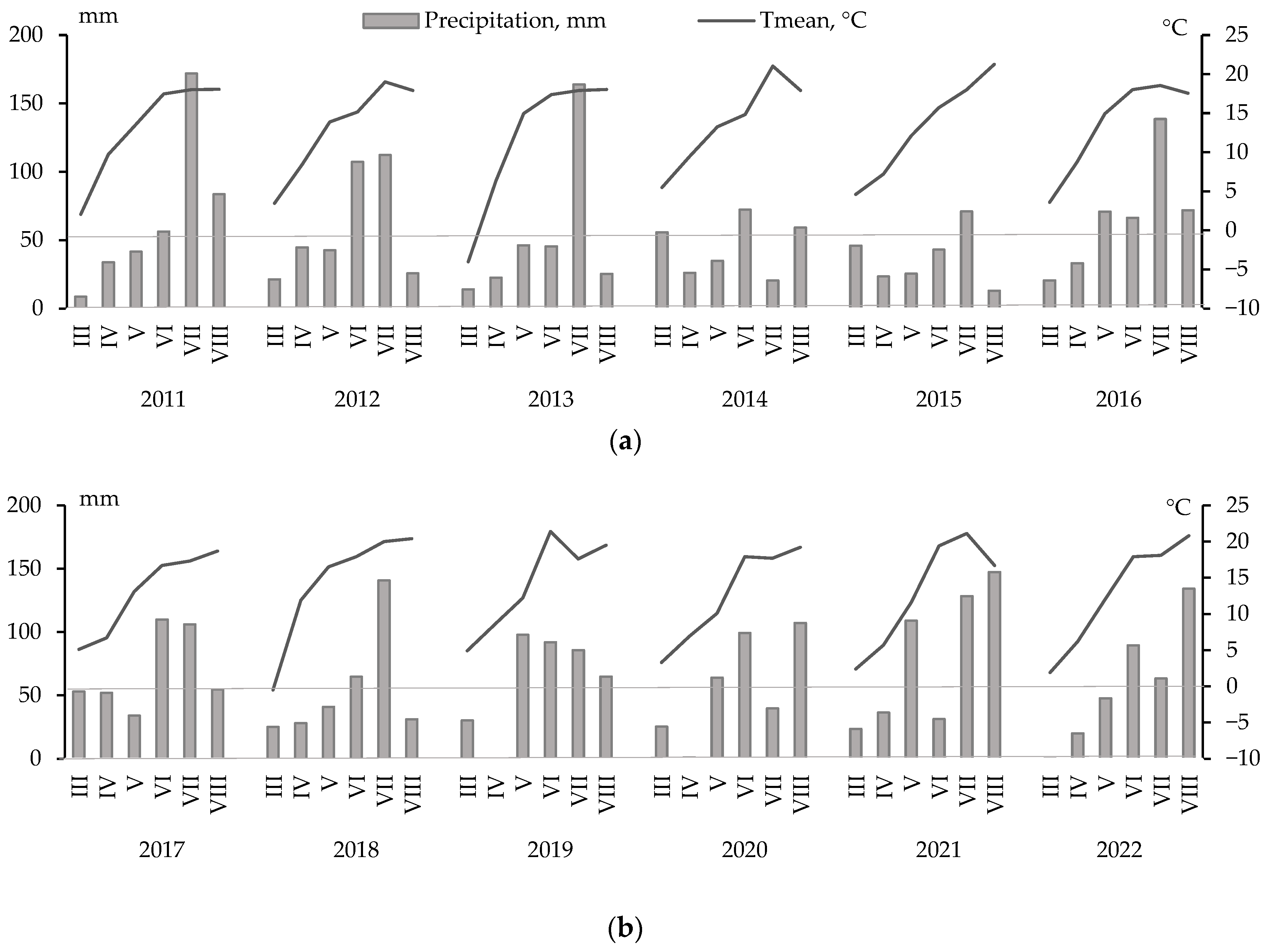
The present study was based on a long-term experiment conducted in north-eastern Poland since 1967. Table 1 presents the major characteristics of the study site. The monthly precipitation sums and mean air temperatures for the vegetation periods studied are demonstrated in Figure 2. In contrast, Table S1 provides a more detailed presentation of the soil’s chemical properties from the experimental area. These properties were determined through analyses carried out in 2010 and 2016, i.e., before the initiation of the crop rotation cycles that are the focus of this study.
An overview of the extensive long-term experiment, including its core concept, significant modifications, and the experimental factors examined throughout, is summarized in Table S3. This table also provides general information on fertilization and crop protection strategies, as well as other essential details. Since its last modification in 1993, the experiment has focused on the response of twelve crops to three main factors: cropping system (crop rotation versus continuous cropping), crop variety (two varieties per crop), and chemical plant protection (three levels), as well as their interactions. Each crop was tested with twelve treatment combinations (two cropping systems × two varieties × three crop protection levels) and replicated in three 27 m2 plots. Figure S1 shows the arrangement of the crop rotation and continuous cropping fields from 2011 to 2022. The placement of variety and crop protection treatment plots within each cropping system field remained constant throughout the study, with the configuration illustrated in Figure S2. The experiment as a whole covered 432 plots, which together comprised an area of approximately one hectare.

2.2. Study Design and Description

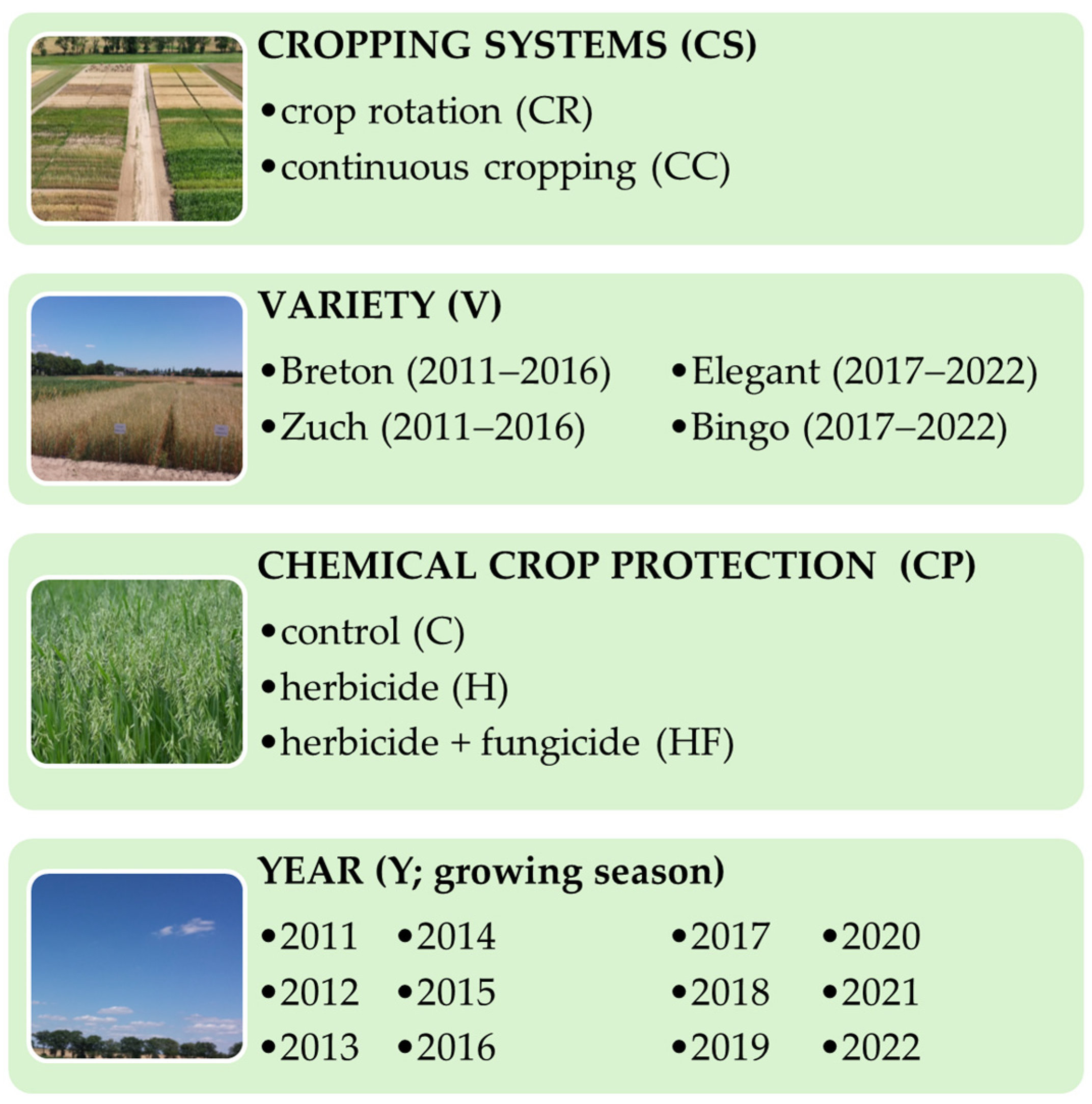
The present study was based on a part of the larger experiment mentioned above, specifically on the spring oat fields. It focused on oat grain yields influenced by three agronomic factors, shown in Figure 3, and by the year of study, which was adopted as an additional, uncontrolled factor. Data from 2011 to 2022 were analyzed, encompassing the two completed six-year cycles of the crop rotation.
The crop rotation (CR) system, in which spring oats were grown, encompassed six fields with the following crop sequence: potato (Solanum tuberosum L.)—spring oats (Avena sativa L.)—fiber flax (Linum usitatissimum L.)—winter rye (Secale cereale L.)—faba bean (Vicia faba L.)—winter triticale (x Triticosecale Wittm. Ex A. Camus). In the continuous cropping (CC) system, spring oats have been grown in the same field since spring 1968. The Breton and Zuch varieties were introduced into the experiment in 2011 through a cyclic variety exchange and cultivated annually until 2016. Both varieties were relatively new in 2011 and had satisfactory productivity potential. In addition, Breton was selected for its greater drought resistance during the intensive biomass growth period [40], while Zuch was chosen for its tolerance of poor soil conditions [41]. In 2017, these varieties were replaced by Bingo and Elegant, which were grown until 2022. Bingo was selected as the leading Polish oat variety, also recognized in Europe [14]. Stable yields and high flexibility regarding habitat and cultivation conditions were its main features. Elegant, in 2017, was among the newest and promising genotypes on Poland’s National List [4]. All varieties studied were hulled, yellow-grained varieties recommended for most regions of Poland. Major characteristics of the varieties in the light of the national post-registration tests by COBORU [40] are summarized in Table 2. The control (C) treatment within the plant protection (CP) factor involved no use of chemical agents against weeds and fungal pathogens. Herbicides and fungicides used in the two remaining protection levels, as well as other pesticides applied in the experiment, were summarized in Table S3, along with their application dosage and timing. In each of the twelve years, twelve treatment combinations were tested (two cropping systems × two varieties × three levels of crop protection). Each treatment combination was represented by three plots (replications). The plots were arranged as shown in Figures S1 and S2.

2.3. Agronomic Management and Data Collection

Except for research factors, all management practices were consistent across all fields of spring oats, as assumed for the entire large experiment. A conventional plowing system was employed to prepare the soil for crop cultivation (moldboard plowing in the fall to a depth of 20–25 cm, spike tooth harrowing in the spring). Farmyard manure (FYM) was applied to continuous spring oats at a rate of 15 t ha−1 in the fall of 2010, 2013, 2016, and 2019 before pre-sowing plowing. Spring oats grown in rotation benefited from 30 t ha−1 of FYM applied before potato planting in the fall of 2010 and 2016 (once per each rotation cycle). Mineral fertilization was used annually as follows: N—70 kg ha–1 (50 kg before oat sowing, 20 kg at oat stem elongation stage), P2O5—70 kg ha–1 (before oat sowing), K2O—100 kg ha–1 (before oat sowing). Spring oat sowing was performed in March or April (Table 3). Expected plant density at emergence was 550 plants m−2. Insecticides and plant growth regulators were applied in all plots when necessary (Table S4). The harvest of spring oats was executed at the end of July or in the first half of August (Table 3). A plot combine harvester (Wintersteiger CLASSIC, Wintersteiger AG, Ried im Innkreis, Austria) was used. The oat straw was removed from the field after harvest.
Each year, grain yield was measured by weighing harvested grain from individual plots and converting this to yield per hectare at 15% moisture content.

2.4. Statistical Analysis

A four-way variance analysis (ANOVA) for a completely randomized design experiment was conducted to assess the influence of cropping systems, variety, chemical crop protection, year, and their interactions on spring oat grain yield. Each of the two crop rotation cycles was analyzed separately. The analysis employed a linear fixed model, incorporating fixed effects for all four factors. The normality and homogeneity of the variance of the data were confirmed using the Shapiro–Wilk and Levene tests, respectively. Tukey’s HSD post hoc test was further applied to identify the significant differences between treatment means. Linear trends were determined for the year-to-year yield patterns of oats cultivated in the CC system, and Pearson’s coefficients (r) were applied to express their directions and significance. Variation coefficients were used to assess interannual variability in spring oat yields. For each test performed in this study, the statistical significance level was set at 0.05. STATISTICA 13.3 [42] was used for all statistical tests.

3. Results

The ranges of the spring oat grain yields in both studied periods were similar: 2.80–8.72 t ha−1 for the 2011–2016 cycle, and 2.88–8.94 t ha−1 for the 2017–2022 cycle. During the period from 2011 to 2016, oat yields varied according to all the experimental factors studied: cropping system (CS), variety (V), chemical plant protection (CP), and year of the study (Y) (Table 4). The CS factor had the strongest influence, followed by V, Y, and CP. The following interactions were also proven: V × CP, CS × Y, V × Y, CS × V × Y, and V × CP × Y. During the 2017–2022 period, CS remained the most influential factor, followed by Y and V, while CP did not affect oat yields. Furthermore, all two-way, three-way, and four–way interactions contributed to the variability in oat yields in this period.

3.1. Individual Effects of the Cropping System, Variety, Crop Protection, and Year Factors

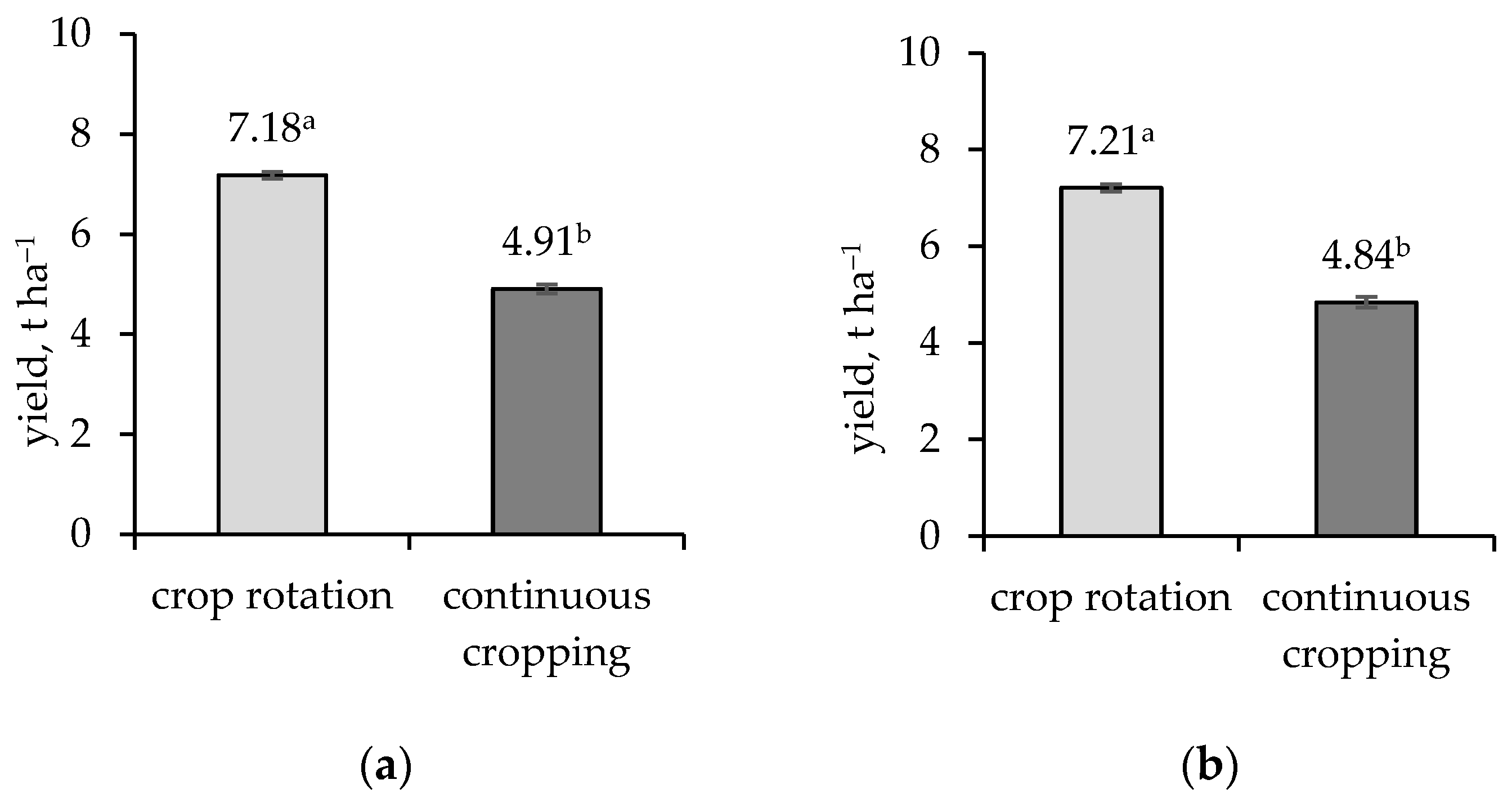
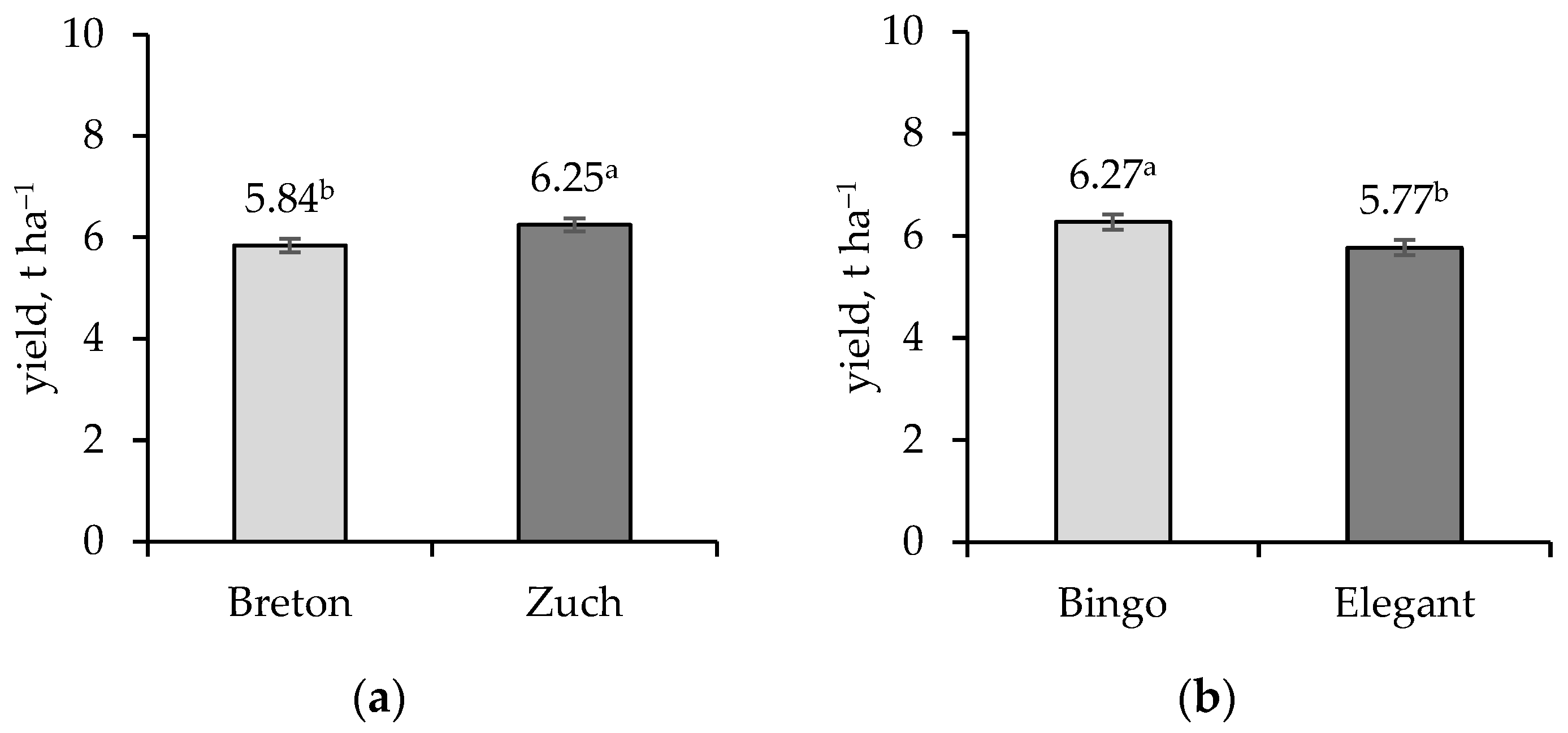
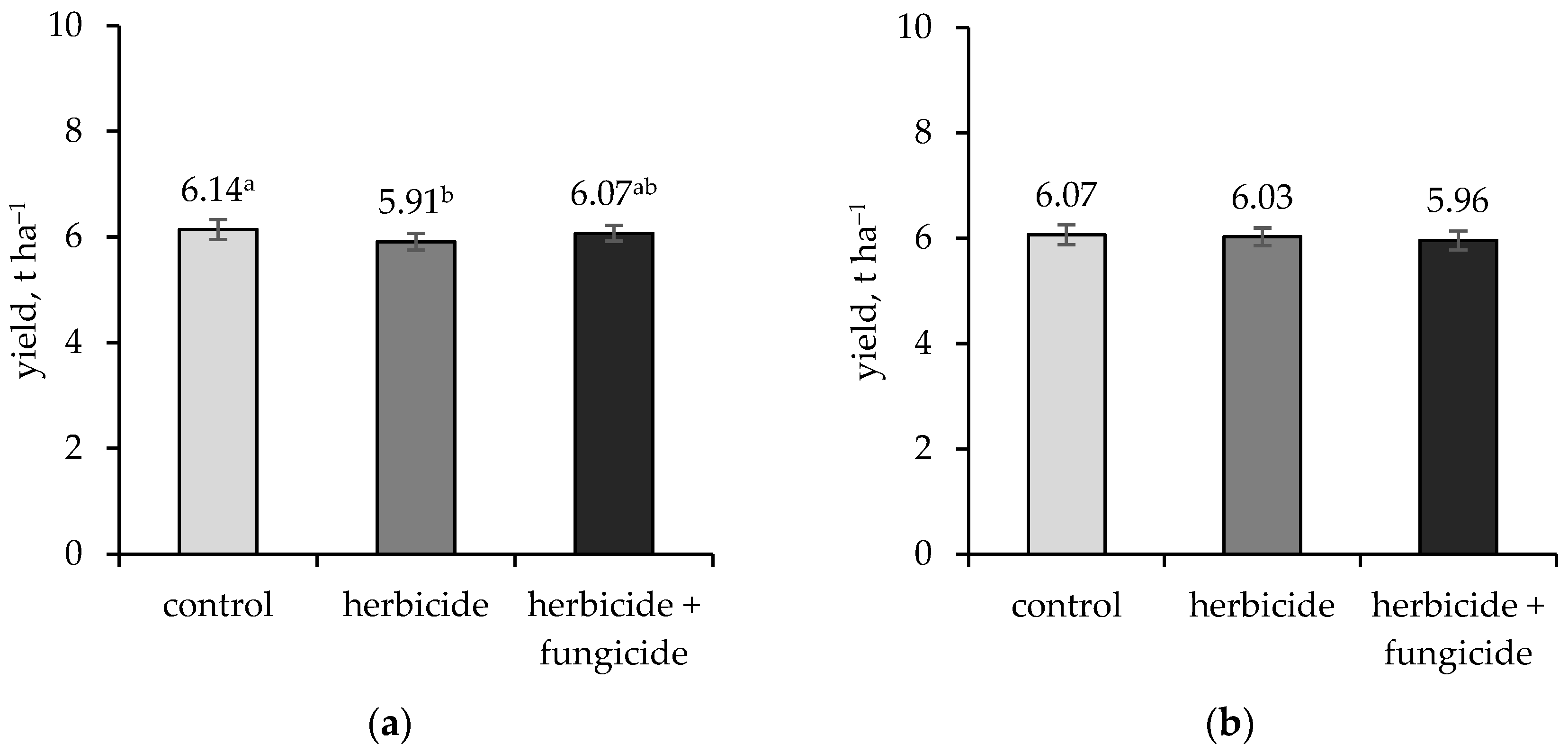
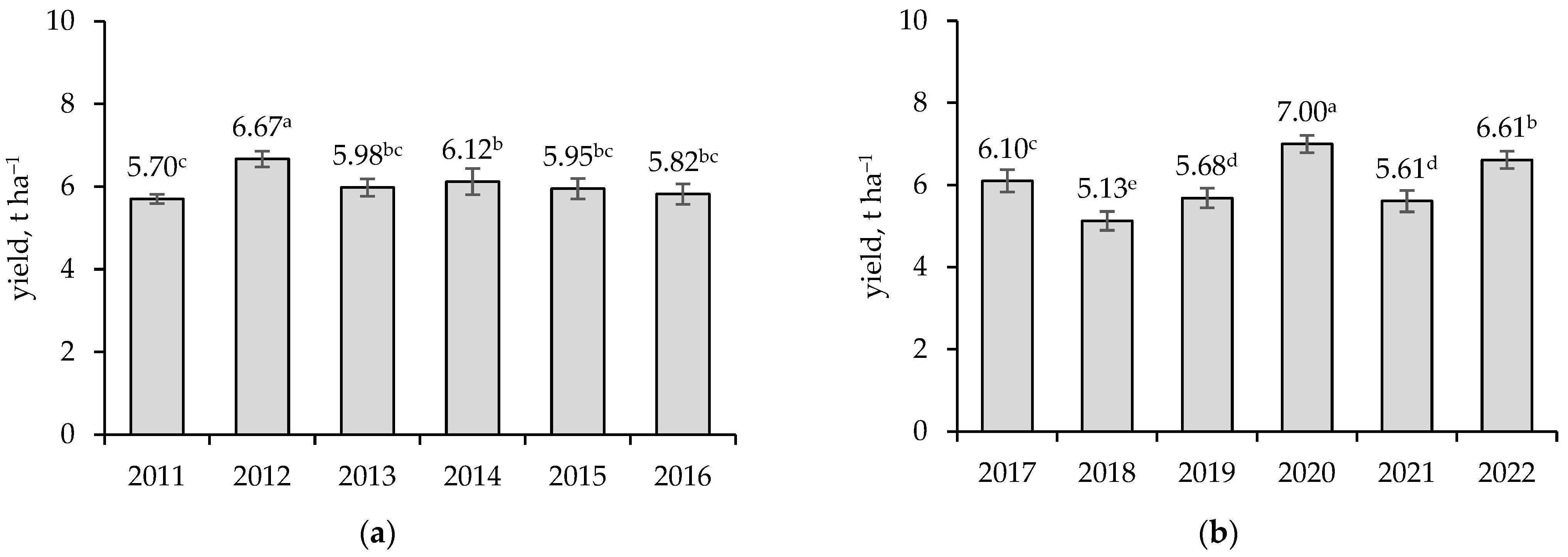
In both periods studied (rotation cycles), spring oats yielded higher under crop rotation (CR) than under continuous cropping (CC) (Figure 4). The Zuch variety yielded significantly higher than Breton, and Bingo yielded significantly higher than Elegant (Figure 5). In the 2011–2016 cycle, the herbicide (H) treatment decreased oat yields compared to the control (C) treatment (Figure 6). No effect of the joint application of herbicides and fungicides (HF) was observed during this period, and no differences due to chemical crop protection (CP) levels were noted in the 2017–2022 cycle. During the 2011–2016 cycle, the highest yield was recorded in 2012, while the lowest was in 2011 (Figure 7). The latter did not differ from those obtained in 2013, 2015, and 2016. In turn, during the 2017–2022 cycle, the highest yield of oats was produced in 2020, and the lowest in 2018.

3.2. Interaction Effects Between Experimental Factors

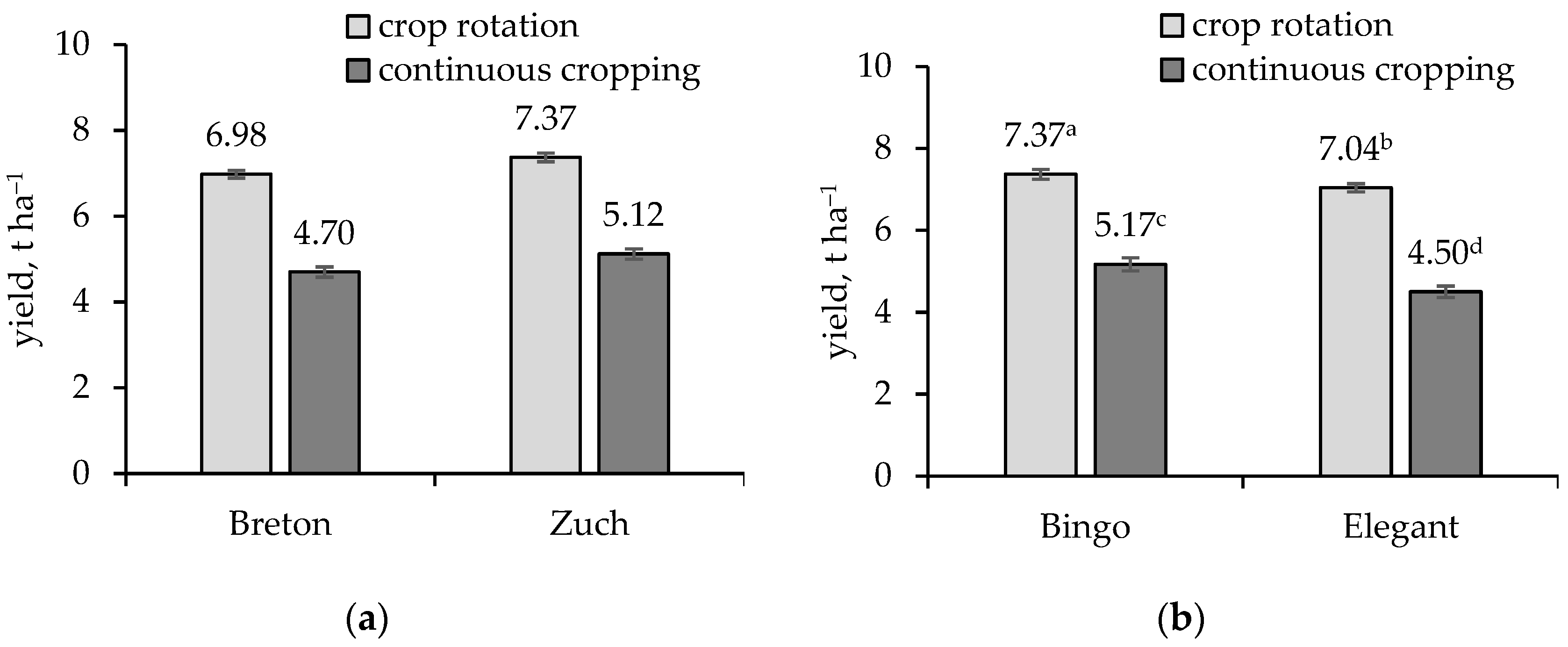
In both crop rotation cycles, oat varieties exhibited higher productivity under the CR system compared to the CC system (Figure 8). In both CR and CC systems, the Zuch variety outperformed the Breton variety, and the Bingo variety surpassed the Elegant variety. The Breton and Zuch varieties experienced the same yield decrease under CC, while the Elegant variety suffered greater yield loss than the Bingo variety.
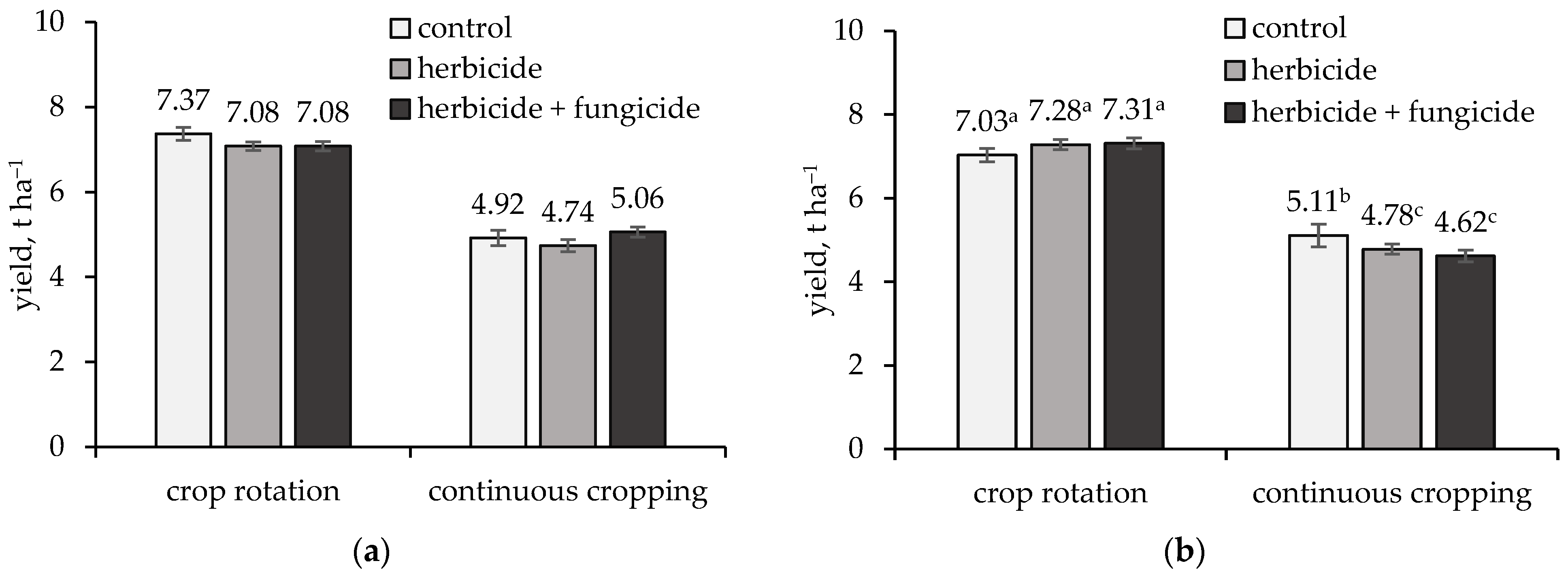
Using the H or HF treatments during the 2011–2016 cycle did not affect oat yields in either the CR or CC systems (Figure 9). In contrast, during the 2017–2022 cycle, these treatments were generally unnecessary in the CR system but reduced cereal yield in the CC system.
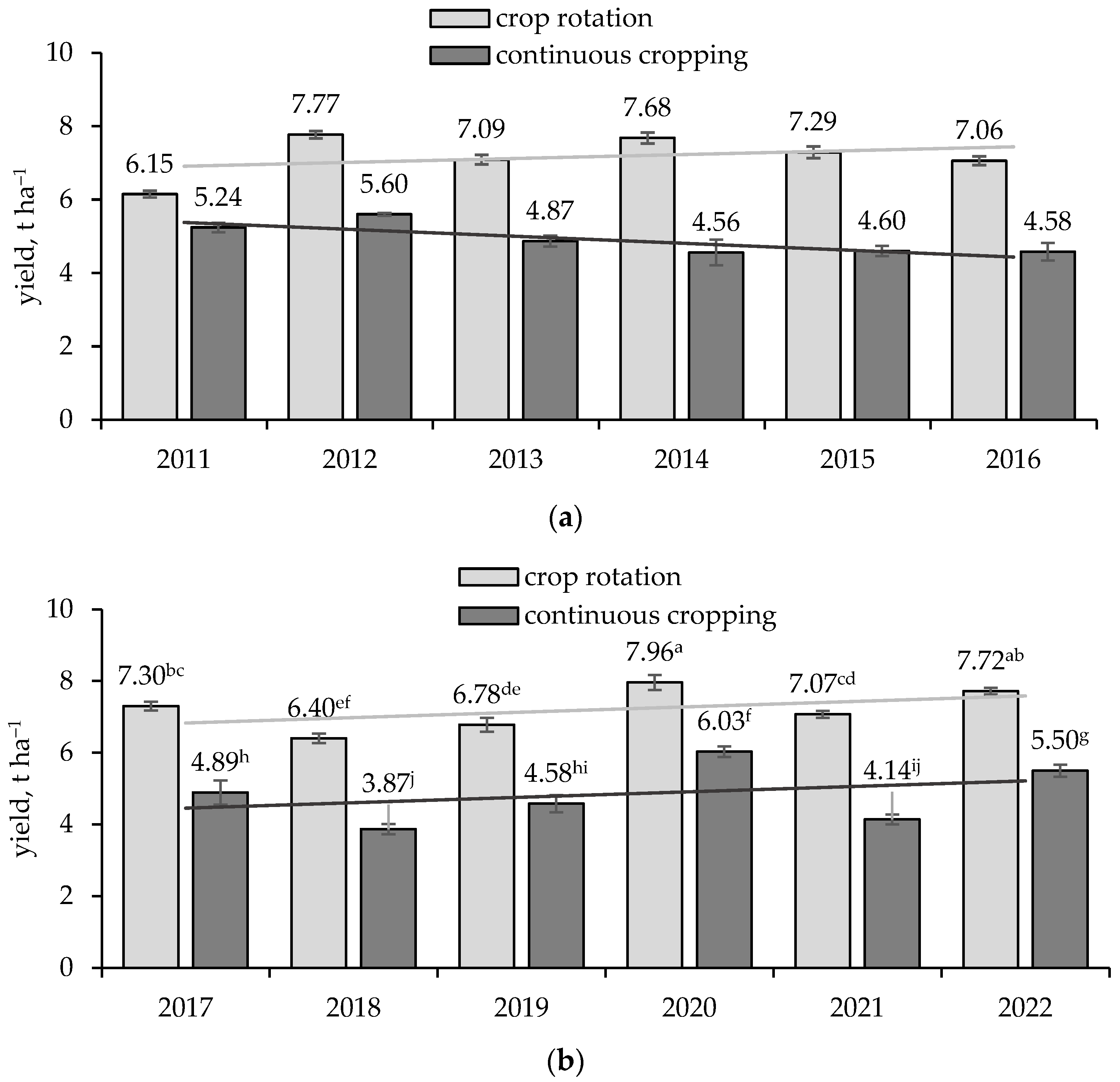
The analysis of the CS × Y interaction showed that, regardless of the variety and level of chemical crop protection, spring oat yields were consistently higher in the CR system than in the CC system across the years of the two rotation cycles (Figure 10). However, aside from yield levels, the size of the differences between the systems also varied from year to year. During the 2011–2016 cycle, the lowest discrepancy between the cropping systems was recorded in 2011 (yield difference of 0.91 t ha−1), when oats grown in the CR system showed their poorest performance. In the subsequent years, when average annual oat yields in CR exceeded 7 t ha–1, the differences between CR and CC were substantially greater, exceeding 2 t ha–1, and reaching as much as 3.12 t ha–1 in 2014. During the 2017–2022 cycle, the smallest difference between cropping systems was observed in 2020, the year that was most favorable for oat yields in both CR and CC. In contrast, the largest difference occurred in 2021 due to low oat yields in CC. In this cycle, the lowest yields were observed in both cropping systems in 2018. In the 2011–2016 cycle, a decreasing yield trend was observed as CC was prolonged (r = –0.826, p = 0.043), an effect that was not proven in the 2017–2022 cycle (r = 0.347, p = 0.501). No significant linear year-to-year trends were found for the yields of oats grown in CR (r = 0.340 and p = 0.510 for 2011–2016; r = 0.486 and p = 0.328 for 2017–2022).
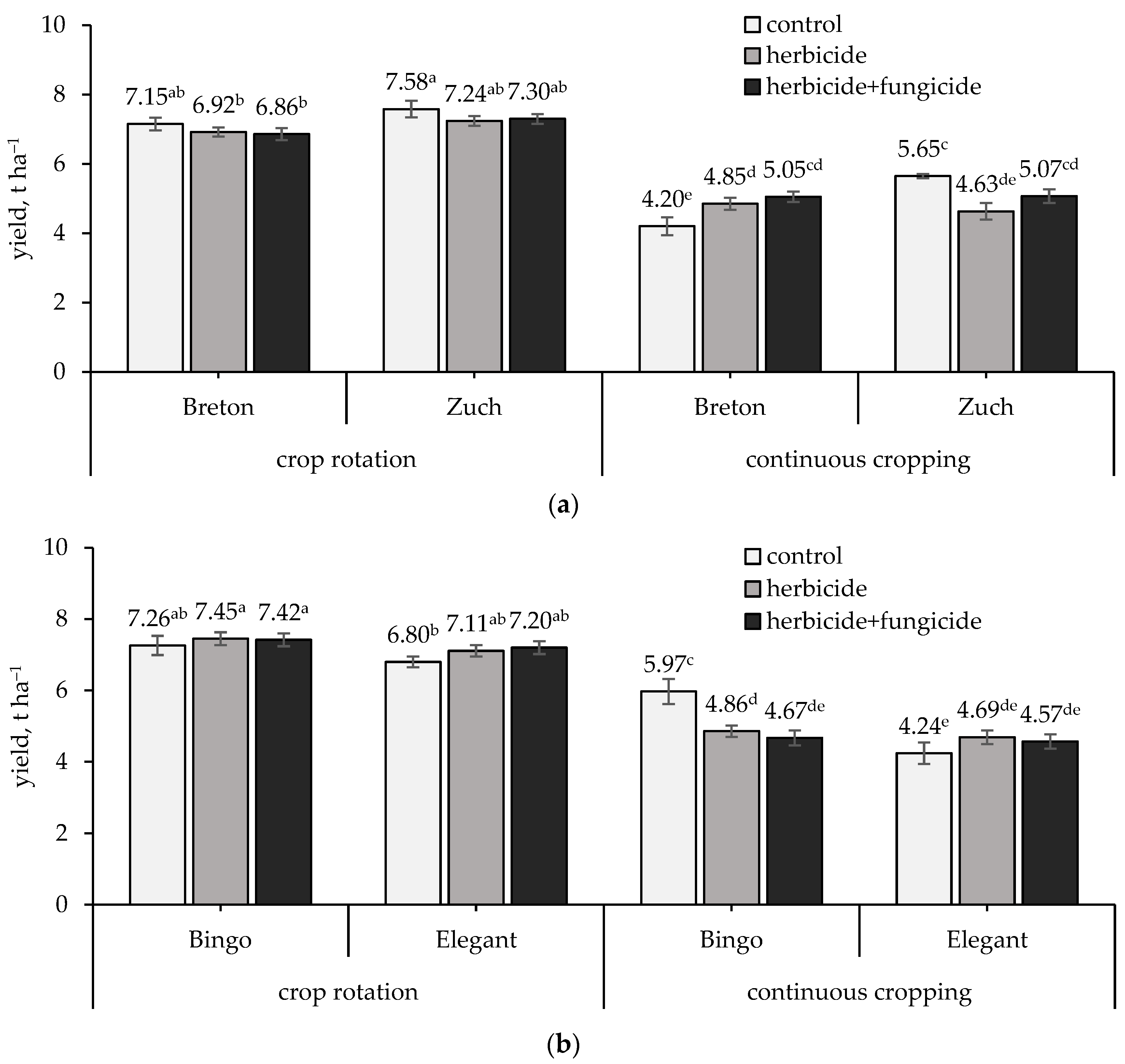
The interaction between the agronomic sources of variability (CS × V × CP) revealed that the H and HF treatments did not significantly affect the yield of any of the oat varieties studied when cultivated in the CR system, irrespective of the study years or crop rotation cycle (Figure 11). A positive tendency was observed for using H and HF protection in the 2017–2022 cycle, but the trend was negative in the previous cycle. In contrast, in the CC system, the usefulness of H or HF treatments depended on the variety. These treatments had a positive impact on the yields of Breton and Elegant, with Breton experiencing a significant increase and Elegant showing a positive trend. However, they exacerbated the decline in yields of the Zuch and Bingo varieties.
Details on the other two-way (V × CP, V × Y, CP × Y) and three-way (CS × V × Y, CS × CP × Y, V × CP × Y) interactions between the experimental factors are presented (Tables S5–S10) and described in Supplementary Information.
According to ANOVA, the reaction of oat yield to the combination of agronomic factors (CS × V × CP) was not significantly modified by the year (Y) factor in the 2011–2016 cycle (Table 4). However, the 2017–2022 cycle confirmed the strong variation in oat yield response to controlled factors in individual years of the study (significant CS × V × CP × Y interaction). The two simultaneously cultivated varieties often had contradictory reactions to CS and CP levels in individual years of the cycle. Notably, in years starting each new crop rotation cycle, one of the studied varieties did not experience a yield decrease due to continuous oat cultivation under the control (C) crop protection treatment, compared to growing in the crop rotation system (Zuch in 2011, Bingo in 2017). Detailed data on the effects of the CS × V × CP × Y interaction are documented (Table S11) and described in Supplementary Information.

3.3. Interannual Yield Variability

Cultivating oats in the crop rotation system ensured stable yields (CVs < 15%) of all varieties tested in both cycles, even without chemical protection against weeds and diseases (Table 5). The highest interannual yield variability (CVs > 25%) was observed when Breton, Bingo, and Elegant were grown in the continuous cropping system with the control protection treatment. Using herbicides and fungicides mitigated these fluctuations. The Zuch variety demonstrated stable yields regardless of the cropping system or crop protection level.

4. Discussion

4.1. Effects of the Cropping System, Variety, Crop Protection Factors, and Their Interactions

As expected, the cropping system (CS) substantially affected oat grain yield, confirming the clear advantage of a diversified crop rotation (CR) over continuous cereal cropping (CC). The average reduction in oat yield in CC, amounting to 31.6% and 32.9% in the 2011–2016 and 2017–2022 cycles, respectively, was only slightly greater than the reduction recorded in the 2005–2010 cycle of this experiment (26.9%) [21]. This result, as well as trends observed in the two cycles studied, is not surprising, as most crops experience a significant yield decline during the first few years of CC, followed by stabilization in subsequent years [23]. Compared to other crops, cereals are considered to be less sensitive to CC. Among cereals, wheat exhibits the strongest response to CC, followed by triticale and barley, while rye and oats show the least reaction [43]. The diminution in cereal yields in CC is attributed to increased weed and pathogen infestations, as well as declines in soil biological activity and fertility [43]. The CC system can alter various biotic indicators of soil health, including the composition, abundance, diversity, and functioning of soil micro- and macro-organisms, microbial networks, enzyme activities, and soil food web interactions [44]. CC promotes fungal growth while limiting bacterial proliferation in soil and the plant rhizosphere [45]. The accumulation of pathogenic fungi, especially Fusarium species, causes plant weakening and death [18]. Additionally, CC lowers the earthworm population [46] and increases the accumulation of plant-parasitic nematodes [47]. Numerous studies also report lower soil enzymatic activity under CC [25,46]. Furthermore, CC can alter various soil abiotic properties. This can result in an increased accumulation of toxic metabolites, salts, and acids, a reduction in soil aggregation, an alteration in the composition of soil aggregate-size classes, a decrease in mineralization, and a decrease in soil organic matter, active carbon, and nutrient contents [44]. The primary cause of the severe decrease in oat yields in CC is typically the intensified competition from Avena fatua [20].
The differences in yields among cultivated varieties were genetically determined [41,48]. Cultivating improved varieties with higher production potential, greater disease resistance, and increased tolerance to adverse environmental conditions is a proven method for increasing oat yield, along with other agricultural practices [48]. However, the response of individual oat varieties to crop sequences is not well understood. The present study demonstrated that different varieties react differently to the adverse conditions caused by CC. This finding aligns with reports from other crops [30,31]. The Bingo variety in general experienced a smaller yield loss than the Elegant variety, likely due to its greater height and leaf area index, which supported its competitiveness against weeds [49,50].
Regarding crop protection, the results of the 2011–2022 research are consistent with the mixed findings from earlier studies, which reported no effect, a decrease, and an increase in the yield of chemically protected oats in the CR and CC systems [20,21,39]. In the present study, the generalized results for varieties and years in both six-year cycles indicated that there was no justification for using herbicides and fungicides in oats grown in CR. Given the right conditions, oats can outcompete weeds without herbicide application [51]. Their morphological structure and optimal plant density facilitate this phenomenon [50]. One reason the crop may not respond to fungicides is that the varieties are highly resistant to fungal diseases. Other studies have shown that varieties with high disease resistance do not react to fungicide treatments. Furthermore, the weaker the resistance, the greater the response tends to be [52]. According to May et al. [53], applying fungicides at low to moderate levels of Puccinia coronata and other leaf diseases can prevent the spread of disease, but has little effect on yield. On the other hand, oats are considered beneficial species for CR because they are less susceptible to some major pathogens that affect other cereals [18]. In the 2017–2022 cycle, the use of agrochemicals in CC exacerbated the yield decline caused by adverse crop succession. This effect was not statistically confirmed for the 2011–2016 cycle. Previous studies have shown that, though to a lesser extent than other cereals, oats also react to CC with increased weed infestation and deterioration of health [23]. Therefore, neither the lack of yield-protective effects nor the oat’s negative reaction to chemical protection is easily explained. These effects are also difficult to compare with other studies due to the paucity of research on the oat response to long-term continuous cultivation. Moreover, the two tested varieties frequently showed divergent reactions to the cropping systems and crop protection levels in individual years. This observation further complicates understanding the mechanisms behind the observed phenomena.

4.2. Effects of the Year Factor and Interactions Between Year and the Agronomic Factors

According to previous studies, high yields of spring oats are favored by a warm, sunny spring and a cooler summer without excessive rainfall during grain filling [54]. In turn, high temperatures and drought during flowering [55] and at early milk stages limit photosynthesis and biomass accumulation, resulting in decreased grain weight [56]. During the 2011–2016 period, 2012 was the year in which oats experienced conditions similar to those considered beneficial (Figure 2), producing the highest yields in both CR and CC. The cool spring of 2013 delayed the sowing of oats considerably. In 2014 and 2015, precipitation was deficient, while in 2011 and 2016, heavy rainfall in July led to lodging and delayed harvesting. These weather conditions were not conducive to high yields, especially under CC. The limited precipitation in spring 2011 significantly decreased oat yields in the CR system. It is presumed that water shortages increased intraspecific competition in the well-densified oat canopy of this system [50,57]. The yield differences between CR and CC may also be related to the frequency of FYM application: once every six years in CR and once every three years in CC. Although the same amount of FYM was applied per six-year cycle, this fertilization strategy resulted in varying nutrient availability in specific seasons.
During the 2017–2022 cycle, the highest oat yields recorded in both cropping systems in 2020 were determined by rainfall and temperature conditions from stem elongation to the end of the oat vegetation period (Figure 2). These conditions were favorable for plant development and grain filling, compensating for the spring drought. In contrast, the lowest yields in 2018 resulted from a cold spring that delayed sowing, low rainfall until the wax-ripeness stage, and heavy rain before harvest that caused lodging. In the 2018 dry season, the Elegant (newer) variety, which performed similarly to the Bingo (older) variety in CR, produced a substantially lower yield in CC, particularly under the control (C) treatment. This finding supports the argument that newer varieties are more susceptible to environmental stresses than older ones [48]. The decrease in oat yield in 2019 may have been attributed to drought during emergence (April) (Figure 2). In 2021, the decline was likely due to heavy rainfall before harvest, causing crop lodging. In 2017, significant reductions in oat yields were observed in CC under chemical protection for the Bingo variety and in its absence for the Elegant variety. These effects were more closely associated with factors other than weather conditions.
In both cycles, contrasting reactions (significant effects or tendencies) of the two cultivated varieties to levels of crop protection were not uncommon, whether in CC or CR. The varying effects may have been related to the diversity and structure of weed species communities, as well as their dynamics over individual years and under the influence of controlled agronomic factors [58]. In years with favorable conditions for weed growth, varieties with greater competitive ability, such as Zuch and Bingo [49], could withstand competition from a more diverse weed community. However, they likely were inferior to aggressive, multiple herbicide-resistant species, such as Avena fatua [59]. Diverse communities of herbicide-sensitive weeds were regulated by herbicides, resulting in increased oat yields. Once an expansive, herbicide-resistant species appeared in the community, applying these chemicals presumably promoted its expansion by eliminating sensitive species. This could have caused greater risk to oat yields than a diverse community did [60]. In continuous oat growing, herbicides could therefore increase the prevalence of resistant weeds [38]. The potential herbicide toxicity on oat plants also cannot be discounted [30]. This phenomenon may have contributed to a substantial reduction in yield under herbicide influence observed for the more competitive Bingo variety in the favorable meteorological year of 2020, in crop rotation with low weed infestation. At the same time, the less competitive Elegant variety benefited from herbicide protection. For comparison, the study by Adamiak [20] found that reducing weed density and biomass with herbicides did not increase the yield of oats cultivated in CR. The relatively poor yield-protective effects of fungicides may have been due to the beneficial health status of oats in CR, on the one hand, and the limited effectiveness of fungicides against pathogens of root rot diseases, which occur more intensively in CC, on the other [18].
The yield level of the Zuch and Bingo varieties in the first year of their use in continuous oat cultivation, in 2011 and 2017, respectively, was an interesting result. Without chemical protection, the yields of these varieties were equal to those obtained in crop rotation. This finding supports the claim that replacing crop varieties can mitigate the adverse consequences of CC [32]. However, this effect was not observed with the other varieties cultivated at that time (Breton and Elegant, respectively). Neither was it evident in earlier stages of this long-term experiment [21,39]. Other authors [31,61,62] have pointed to variations in the resistance of certain crop varieties to CC. They attributed this phenomenon largely to the more beneficial structure of the microbial community in the rhizosphere of CC-tolerant varieties, resulting from the quality of rhizosphere soil metabolites. In the case of the Zuch and Bingo varieties, their greater resistance to unfavorable soil conditions [41] and greater competitiveness against weeds [49] partially justify the results. Nevertheless, studying the microbiological and biochemical activity of the soil could provide deeper insight into why this phenomenon only occurred in specific oat varieties.

4.3. Interannual Yield Variability

In light of long-term studies (1960–2000) conducted in Central Europe, oats, like other cereals, have relatively low interannual yield variability, estimated at 12.2% [63]. The present study, conducted in two six-year cycles between 2011 and 2022, found that oats grown in a diversified crop rotation exhibited similar low variability. These results support the assertion that CRs sustain cereal yields under a changing climate [64]. The present study also confirms the supposition that under suboptimal agro-management conditions, such as CC with no crop protection, cereal yields may be less resilient to weather fluctuations associated with global warming [30].

4.4. Study Strengths and Limitations

A distinctive virtue of the present study is that it is based on a long-term experiment conducted over 50 years. This type of trial reveals cumulative agroecosystem processes that short-term studies cannot capture, including gradual shifts in weed communities, changes in pathogen pressure, and long-term modifications of soil properties [22,23]. Consequently, some of the observed patterns, particularly the magnitude of continuous cropping effects and the variety-specific responses across years, may not be consistent with the outcomes reported from short-term experiments [8].
On the other hand, the geographic location and environmental conditions of the experiment might limit the applicability of its findings. The most effective crop succession strategy for a given field highly depends on local climate, water availability, soil type, and the composition of existing weed, pathogen, and pest communities [16,65]. The same applies to variety selection and plant protection methods [41,49]. Other limitations of the present study stem from the basic assumptions of the long-term experiment. Specifically, a comparison was made between continuous oat cropping and a single six-field crop rotation model involving spring oats. Consequently, the findings from this study can support the implementation of diversified crop rotations, though not this specific model. The small number of varieties tested and their maintenance over the years of the rotation cycle are also limitations of the study.

5. Conclusions

Twelve years of the long-term experiment, covering two six-year crop rotation cycles, confirmed that growing oats in the six-field crop rotation (CR) system sustains satisfactory yields despite yearly weather changes. Over the years studied, continuous cropping (CC) caused an average yield loss of 32%. The interannual variability in weather strongly affected oat productivity. However, only in the 2011–2016 cycle was a decreasing yield trend observed as CC was prolonged. This trend was not found in the 2017–2022 cycle. In each six-year cycle, the variety with higher yield potential and better tolerance to adverse agro-environmental conditions (Zuch in 2011–2016 and Bingo in 2017–2022) performed better in both CR and CC systems. Still, all varieties generally experienced yield reductions in the CC system. Spring oats grown in CR rarely benefited from chemical protection (CP) against weeds and fungal pathogens. In CC, using herbicides (H) and herbicides with fungicides (HF) typically did not mitigate CC-associated oat yield losses, and in the 2017–2022 cycle, they even exacerbated them. However, variety-specific responses were observed. Within the studied cycles, the two varieties cultivated simultaneously often showed contradictory responses to CS and CP levels, with significant effects or tendencies. In the CC system with control (C) treatment, replacing varieties in the first year of each six-year cycle resulted in oat yields comparable or higher than those achieved in the CR system, but only when the Zuch (2011) and Bingo (2017) varieties were introduced.
The answers to unresolved questions about why different oat varieties respond differently to cropping systems and chemical crop protection across years likely lie in changes in weed community structure and soil microbiological and biochemical properties. Therefore, further studies in these areas are needed.

Supplementary Materials

The following supporting information can be downloaded at: https://www.mdpi.com/article/10.3390/agriculture15242618/s1, Table S1: Chemical properties of the soil in the experiment in 2010 and 2016 after harvesting of crops (mean ± standard error); Table S2: Average monthly precipitation and air temperature for 1991–2020 according to the Meteorological Station in Bałcyny, Poland; Table S3: Overview of the basic long-term experiment in Bałcyny; Figure S1: The arrangement of continuous cropping (gray plots) and crop rotation (white plots) fields in the Bałcyny experiment in the following years from 2011 to 2022; Figure S2: The arrangement of varieties and crop protection levels on each single field of continuous crops or crop rotation shown in Figure S1; Table S4: Plant protection products used in the spring oat fields under study; Table S5: Effects of the interaction of variety × crop protection on spring oat yields, t ha−1 (means and standard errors); Table S6: Effects of the interaction of variety × year on spring oat yields, t ha−1 (means and standard errors); Table S7: Effects of the interaction of crop protection × year on spring oat yields, t ha−1 (means and standard errors); Table S8: Effects of the interaction of cropping system × variety × year on spring oats yields, t ha−1 (means and standard errors); Table S9: Effects of the interaction of cropping system × crop protection × year on spring oats yields, t ha−1 (means and standard errors); Table S10: Effects of the interaction of variety × crop protection × year on spring oat yields, t ha−1 (means and standard errors); Table S11: Effect of the interaction of cropping system × variety × crop protection × year on spring oats yield, t ha−1 (means and standard errors).

Author Contributions

Conceptualization, M.J. and M.K.K.; methodology, M.J. and M.K.K.; validation, M.K.K. and M.J.; formal analysis, M.K.K. and M.J.; investigation, M.K.K., M.M. and M.J.; resources, M.K.K., M.J. and M.M.; writing—original draft preparation, M.J. and M.K.K.; writing—review and editing, M.K.K., M.M. and M.J.; visualization, M.K.K. and M.J.; funding acquisition, M.K.K., M.M. and M.J. All authors have read and agreed to the published version of the manuscript.

Funding

The results presented in this paper were obtained as part of a comprehensive study financed by the University of Warmia and Mazury in Olsztyn, Faculty of Agriculture and Forestry, Department of Agroecosystems and Horticulture (grant no. 30.610.015-110) and funded by the Minister of Science under the Regional Initiative of Excellence Program.

Institutional Review Board Statement

Not applicable.

Data Availability Statement

The original contributions presented in this study are included in the article and Supplementary Materials. Further inquiries can be directed to the corresponding author.

Acknowledgments

The authors acknowledge the technical support of employees from the Department of Agroecosystems and Horticulture of the University of Warmia and Mazury in Olsztyn and from the Bałcyny Production and Experimental Plant Sp. z o.o.

Conflicts of Interest

The authors declare no conflicts of interest.

Abbreviations

The following abbreviations are used in this manuscript:
ANOVAanalysis of variance
Ccontrol treatment
CCcontinuous cropping
COBORUCentralny Ośrodek Badania Odmian Roślin Uprawnych (Research Center for Cultivar Testing)
CPcrop protection
CRcrop rotation
CScropping system
CVvariation coefficient
FYMfarmyard manure
Hherbicide protection
HFherbicide plus fungicide protection
NLIPolish National List (of agricultural plant varieties)
Vvariety
Yyear

References

  1. Jain, D.; Singh, P.; Rani, K.; Kumar, S.; Kumar, V.; Prajapati, A. Oat, a distinct cereal origin, history, production practices, and production economics. In Oat (Avena sativa): Production to Plate; Tomar, M., Singh, P., Eds.; CRC Press: Boca Raton, FL, USA, 2024; pp. 1–46. [Google Scholar]
  2. Alemayehu, G.F.; Forsido, S.F.; Tola, Y.B.; Amare, E. Nutritional and phytochemical composition and associated health benefits of oat (Avena sativa) grains and oat-based fermented food products. Sci. World 2023, 2023, 2730175. [Google Scholar] [CrossRef]
  3. Gorash, A.; Armonienė, R.; Mitchell Fetch, J.; Liatukas, Ž.; Danytė, V. Aspects in oat breeding: Nutrition quality, nakedness and disease resistance, challenges and perspectives. Ann. Appl. Biol. 2017, 171, 281–302. [Google Scholar] [CrossRef]
  4. Sowa, S.; Paczos-Grzęda, E. A study of crown rust resistance in historical and modern oat cultivars representing 120 years of Polish oat breeding. Euphytica 2020, 216, 12. [Google Scholar] [CrossRef]
  5. Ma, B.-L.; Zheng, Z.; Ren, C. Oat. In Crop Physiology Case Histories for Major Crops; Sadras, V.O., Calderini, D.F., Eds.; Academic Press: London, UK, 2021; pp. 222–248. [Google Scholar] [CrossRef]
  6. Winkler, L.R.; Murphy, K.M.; Jones, S.S. The history of oats in western Washington and the evolution of regionality in agriculture. J. Rural. Stud. 2016, 47, 231–241. [Google Scholar] [CrossRef]
  7. FAO. FAOSTAT Database; Food and Agriculture Organization of the United Nations: Rome, Italy, 2023; Available online: http://www.fao.org/faostat/en/#data/QC (accessed on 3 October 2025).
  8. Smith, M.E.; Vico, G.; Costa, A.; Bowles, T.; Gaudin, A.C.M.; Hallin, S.; Watson, C.A.; Alarcón, R.; Berti, A.; Blecharczyk, A.; et al. Increasing crop rotational diversity can enhance cereal yields. Commun. Earth Environ. 2023, 4, 89. [Google Scholar] [CrossRef]
  9. Holopainen-Mantila, U.; Vanhatalo, S.; Lehtinen, P.; Sozer, N. Oats as a source of nutritious alternative protein. J. Cereal Sci. 2024, 116, 103862. [Google Scholar] [CrossRef]
  10. Le, M.S.; Hermansen, C.; Vuong, Q.V. Oat Milk By-Product: A review of nutrition, processing and applications of oat pulp. Food Rev. Int. 2025, 41, 1538–1575. [Google Scholar] [CrossRef]
  11. Singh, P.; Tomar, M.; Singh, A.K.; Yadav, V.K.; Saini, R.P.; Swami, S.R.; Mahesha, H.S.; Singh, T. International scenario of oat production and its potential role in sustainable agriculture. In Oat (Avena sativa); Tomar, M., Singh, P., Eds.; CRC Press: Boca Raton, FL, USA, 2024; pp. 47–68. [Google Scholar]
  12. EC. Inforegio—Smart Regions: The European Project “Re-Cereal” Is Bringing Back Traditional Cereal Crops to Europe. Available online: https://ec.europa.eu/regional_policy/en/newsroom/news/2022/09/09-01-2022-smart-regions-the-european-project-re-cereal-is-bringing-back-traditional-cereal-crops-to-europe (accessed on 7 November 2025).
  13. Healthy Minor Cereals. Available online: https://healthyminorcereals.eu/en/about-project/about (accessed on 7 November 2025).
  14. Koroluk, A.; Sowa, S.; Boczkowska, M.; Paczos-Grzęda, E. Utilizing genomics to characterize the common oat gene pool—The story of more than a century of Polish breeding. Int. J. Mol. Sci. 2023, 24, 6547. [Google Scholar] [CrossRef] [PubMed]
  15. Wojtacki, M.; Żuk-Gołaszewska, K.; Gołaszewski, J. Modeling the effects of agronomic factors and physiological and climatic parameters on the grain yield of hulled and hulless oat. Eur. J. Agron. 2025, 162, 127425. [Google Scholar] [CrossRef]
  16. Hakala, K.; Jauhiainen, L.; Rajala, A.A.; Jalli, M.; Kujala, M.; Laine, A. Different responses to weather events may change the cultivation balance of spring barley and oats in the future. Field Crop Res. 2020, 259, 107956. [Google Scholar] [CrossRef]
  17. Ratcliffe, H.E. Statistics of Oats, Barley, and Grain Sorghums: Year Ended December 31, 1928, with Comparable Data for Earlier Years; U.S. Department of Agriculture: Washington, DC, USA, 1930.
  18. Kurowski, T.P. Studia nad Chorobami Podsuszkowymi Zboz Uprawianych w Wieloletnich Monokulturach; Rozprawy i Monografie, 56; Wydawnictwo UWM: Olsztyn; Poland, 2002. [Google Scholar]
  19. Wojciechowski, W. Reakcja owsa siewnego na uprawę w płodozmianach uproszczonych. Biul. Inst. Hod. Aklim. Rośl. 2006, 239, 147–153. [Google Scholar] [CrossRef]
  20. Adamiak, E. Struktura Zachwaszczenia i Produktywność Wybranych Agrocenoz Zbóż Ozimych i Jarych w Zależności od Systemu Następstwa Roślin i Ochrony Łanu; Rpzprawy i Monografie, 129; Wydawnictwo UWM: Olsztyn, Poland, 2007. [Google Scholar]
  21. Adamiak, E.; Adamiak, J. Reaction of oat varieties to the protection level in different crop sequence systems. Prog. Plant Prot. 2013, 53, 483–486. [Google Scholar] [CrossRef]
  22. Blecharczyk, A.; Małecka-Jankowiak, I.; Sawińska, Z.; Piechota, T.; Waniorek, W. 60-letnie doświadczenie nawozowe w Brodach z uprawą roślin w zmianowaniu i monokultutrze. In Eksperymenty Wieloletnie w Badaniach Rolniczych w Polsce; Marks, M., Jastrzębska, M., Kostrzewska, M.K., Eds.; Wydawnictwo UWM: Olsztyn, Poland, 2018; pp. 27–40. [Google Scholar]
  23. Marks, M.; Rychcik, B.; Treder, K.; Tyburski, J. 50-letnie badania nad uprawą roślin w płodozmianie i monokulturze -źródło wiedzy i pomnik kultury rolnej. In Eksperymenty Wieloletnie w Badaniach Rolniczych w Polsce; Marks, M., Jastrzębska, M., Kostrzewska, M., Eds.; Wydawnictwo UWM: Olsztyn, Poland, 2018; pp. 41–56. [Google Scholar]
  24. Johnston, A.E.; Poulton, P.R. The importance of long-term experiments in agriculture: Their management to ensure continued crop production and soil fertility; the Rothamsted experience. Eur. J. Soil Sci. 2018, 69, 113–125. [Google Scholar] [CrossRef] [PubMed]
  25. Holatko, J.; Brtnicky, M.; Baltazar, T.; Smutny, V.; Frouz, J.; Kintl, A.; Jaskulska, I.; Ryant, P.; Radziemska, M.; Latal, O.; et al. Long-term effects of wheat continuous cropping vs wheat in crop rotation on carbon content and mineralisation, aggregate stability, biological activity, and crop yield. Eur. J. Agron. 2024, 158, 127218. [Google Scholar] [CrossRef]
  26. Poulton, P.R.; Powlson, D.S.; Glendining, M.J.; Gregory, A.S. Why do we make changes to the long-term experiments at Rothamsted? Eur. J. Agron. 2024, 154, 127062. [Google Scholar] [CrossRef]
  27. Merbach, W.; Deubel, A. Long-term field experiments—Museum relics or scientific challenge? Plant Soil Environ. 2008, 54, 219–226. [Google Scholar]
  28. Jastrzębska, M.; Kostrzewska, M.K.; Marks, M. Over 50 years of a field experiment on cropping systems in Bałcyny, Poland: Assessing pesticide residues in soil and crops from the perspective of their field application history. Eur. J. Agron. 2024, 159, 127270. [Google Scholar] [CrossRef]
  29. Diao, X. Production and genetic improvement of minor cereals in China. Crop. J. 2017, 5, 103–114. [Google Scholar] [CrossRef]
  30. Kostrzewska, M.K.; Jastrzębska, M. Hybrid cultivar and crop protection to support winter rye yield in continuous cropping. Agriculture 2025, 15, 1368. [Google Scholar] [CrossRef]
  31. Liu, W.; Wang, N.; Yao, X.; He, D.; Sun, H.; Ao, X.; Wang, H.; Zhang, H.; St. Martin, S.; Xie, F.; et al. Continuous-cropping-tolerant soybean cultivars alleviate continuous cropping obstacles by improving structure and function of rhizosphere microorganisms. Front. Microbiol. 2023, 13, 1048747. [Google Scholar] [CrossRef] [PubMed]
  32. Cao, T.; Manolii, V.P.; Zhou, Q.; Hwang, S.-F.; Strelkov, S.E. Effect of canola (Brassica napus) cultivar rotation on Plasmodiophora brassicae pathotype composition. Can. J. Plant Sci. 2019, 100, 218–225. [Google Scholar] [CrossRef]
  33. Hautsalo, J.; Jauhiainen, L.; Hannukkala, A.; Manninen, O.; Veteläinen, M.; Pietilä, L.; Peltoniemi, K.; Jalli, M. Resistance to Fusarium head blight in oats based on analyses of multiple field and greenhouse studies. Eur. J. Plant Pathol. 2020, 158, 15–33. [Google Scholar] [CrossRef]
  34. Canales, F.J.; Montilla-Bascón, G.; Gallego-Sánchez, L.M.; Flores, F.; Rispail, N.; Prats, E. Deciphering Main climate and edaphic components driving oat adaptation to Mediterranean environments. Front. Plant Sci. 2021, 12, 780562. [Google Scholar] [CrossRef]
  35. Zhang, G.; Chai, J.; Zhao, G.; Zeng, L. Study on the adaptability of 15 oat varieties in different ecological regions. Agronomy 2025, 15, 391. [Google Scholar] [CrossRef]
  36. Congruence Market Insights. Oat Seeds Market Trends and Future Opportunities Report [2032]. Available online: https://www.congruencemarketinsights.com/report/oat-seeds-market (accessed on 3 November 2025).
  37. Jastrzębska, M.; Kostrzewska, M.; Saeid, A. Chapter 1—Conventional agrochemicals: Pros and cons. In Smart Agrochemicals for Sustainable Agriculture; Chojnacka, K., Saeid, A., Eds.; Academic Press: Cambridge, MA, USA, 2022; pp. 1–28. [Google Scholar] [CrossRef]
  38. Kurowski, T.P.; Adamiak, E. Occurrence of stem base diseases of four cereal species grown in long-term monocultures. Pol. J. Nat. Sci. 2007, 22, 574–583. [Google Scholar] [CrossRef]
  39. Zawislak, K.; Adamiak, E. Płodozmlan i pestycydy jako czynniki integrowanej uprawy owsa. Acta Acad. Agric. Tech. Olst. Agric. 1998, 66, 131–142. [Google Scholar]
  40. COBORU. Post-Registration Variety Testing System and Variety Recommendation; Centralny Ośrodek Badania Odmian Roślin Uprawnych: Słupia Wielka, Poland, 2025. Available online: https://www.coboru.gov.pl/pdo (accessed on 14 October 2025).
  41. Noworolnik, K.; Sułek, A. Plonowanie odmian owsa w zależności od warunków glebowych. Pol. J. Agron. 2017, 31, 16–20. [Google Scholar] [CrossRef]
  42. StatSoft. TIBCO Software Inc. Statistica (Data Analysis Software System), Version 13.3; TIBCO Software Inc.: Palo Alto, CA, USA, 2017.
  43. Kuś, J.; Smagacz, J. Plonowanie zbóż w zmianowaniach z różnym ich udziałem w trwałym doświadczeniu w Grabowie. In Eksperymenty Wieloletnie w Badaniach Rolniczych w Polsce; Marks, M., Jastrzębska, M., Kostrzewska, M., Eds.; Wydawnictwo UWM: Olsztyn, Poland, 2018; pp. 73–93. [Google Scholar]
  44. Pervaiz, Z.H.; Iqbal, J.; Zhang, Q.; Chen, D.; Wei, H.; Saleem, M. Continuous Cropping Alters multiple biotic and abiotic indicators of soil health. Soil Syst. 2020, 4, 59. [Google Scholar] [CrossRef]
  45. Koper, J.; Maniewska, R.; Piotrowska, A.; Kaszeska, J. Nastepcze oddzialywanie zmianowania tradycyjnego i monokultury na stan fitosanitarny gleby pod uprawa owsa siewnego (Avena sativa L.). Zesz. Probl. Post. Nauk. Rol. 2003, 492, 155–160. [Google Scholar]
  46. Woźniak, A. Effect of crop rotation and cereal monoculture on the yield and quality of winter wheat grain and on crop infestation with weeds and soil properties. Int. J. Plant Prod. 2019, 13, 177–182. [Google Scholar] [CrossRef]
  47. Skwiercz, A.T.; Zatoń, K.K.; Adamiak, E.; Szelągowska, P.; Hury, G. Plant parasitic nematodes in the soil and roots of winter wheat grown in crop rotation and long–term monoculture. J. Plant Prot. Res. 2018, 58, 184–191. [Google Scholar] [CrossRef]
  48. Duda, M.; Tritean, N.; Racz, I.; Kadar, R.; Russu, F.; Fițiu, A.; Muntean, E.; Vâtcă, A. Yield performance of spring oats varieties as a response to fertilization and sowing distance. Agronomy 2021, 11, 815. [Google Scholar] [CrossRef]
  49. Feledyn-Szewczyk, B.; Kuś, J.; Stalenga, J.; Berbeć, A.K.; Radzikowski, P. The role of biological diversity in agroecosystems and organic farming. In Organic Farming—A Promising Way of Food Production; Konvalina, P., Ed.; IntechOpen: London, UK, 2016; pp. 1–27. [Google Scholar] [CrossRef]
  50. Tang, W.; Li, Z.; Guo, H.; Chen, B.; Wang, T.; Miao, F.; Yang, C.; Xiong, W.; Sun, J. Annual weeds suppression and oat forage yield responses to crop density management in an oat-cultivated grassland: A case study in Eastern China. Agronomy 2024, 14, 583. [Google Scholar] [CrossRef]
  51. Zawislak, K. Regulacyjna funkcja płodozmianu wobec chwastów w agrofitocenozach zbóż. Acta Acad. Agric. Techn. Olst. Agric. 1997, 64, 81–99. [Google Scholar]
  52. May, W.E.; Ames, N.; Irvine, R.B.; Kutcher, H.R.; Lafond, G.P.; Shirtliffe, S.J. Are fungicide applications to control crown rust of oat beneficial? Can. J. Plant Sci. 2014, 94, 911–922. [Google Scholar] [CrossRef]
  53. May, W.E.; Brandt, S.; Hutt-Taylor, K. Response of oat grain yield and quality to nitrogen fertilizer and fungicides. Agron. J. 2020, 112, 1021–1034. [Google Scholar] [CrossRef]
  54. Doehlert, D.C.; McMullen, M.S.; Hammond, J.J. Genotypic and environmental effects on grain yield and quality of oat grown in North Dakota. Crop. Sci. 2001, 41, 1066–1072. [Google Scholar] [CrossRef]
  55. Frey, K. Genetic responses of oat genotypes to environmental factors. Field Crop. Res. 1998, 56, 183–185. [Google Scholar] [CrossRef]
  56. Pecio, A.; Bichonski, A. Nitrogen fertilization and fungicide application as elements of oat production. Pol. J. Environ. Stud. 2010, 19, 1297–1305. [Google Scholar]
  57. Weiner, J. Weed suppression by cereals: Beyond ‘competitive ability’. Weed Res. 2023, 63, 133–138. [Google Scholar] [CrossRef]
  58. Storkey, J.; Neve, P. What good is weed diversity? Weed Res. 2018, 58, 239–243. [Google Scholar] [CrossRef]
  59. Larson, C.D.; Wong, M.L.; Carr, P.M.; Seipel, T. Cool semi-arid cropping treatments alter Avena fatua’s performance and competitive intensity. J. Sustain. Agric. Environ. 2024, 3, e12078. [Google Scholar] [CrossRef]
  60. Stupnicka-Rodzynkiewicz, E.; Stepnik, K.; Lepiarczyk, A. Wpływ zmianowania, sposobu uprawy roli i herbicydów na bioróżnorodność zbiorowisk chwastów. Acta Sci. Pol. Agric. 2004, 3, 235–245. [Google Scholar]
  61. Gu, S.; Xiong, X.; Tan, L.; Deng, Y.; Du, X.; Yang, X.; Hu, Q. Soil microbial community assembly and stability are associated with potato (Solanum tuberosum L.) fitness under continuous cropping regime. Front. Plant Sci. 2022, 13, 1000045. [Google Scholar] [CrossRef] [PubMed]
  62. Yao, X.; He, D.; Zhao, X.; Tan, Z.; Zhao, H.; Xie, F.; Wang, J. Integrated microbiology and metabolomics analysis reveal how tolerant soybean cultivar adapt to continuous cropping. Agronomy 2025, 15, 468. [Google Scholar] [CrossRef]
  63. Chloupek, O.; Hrstkova, P.; Schweigert, P. Yield and its stability, crop diversity, adaptability and response to climate change, weather and fertilisation over 75 years in the Czech Republic in comparison to some European countries. Field Crop. Res. 2004, 85, 167–190. [Google Scholar] [CrossRef]
  64. Marini, L.; St-Martin, A.; Vico, G.; Baldoni, G.; Berti, A.; Blecharczyk, A.; Malecka-Jankowiak, I.; Morari, F.; Sawinska, Z.; Bommarco, R. Crop rotations sustain cereal yields under a changing climate. Environ. Res. Lett. 2020, 15, 124011. [Google Scholar] [CrossRef]
  65. Al-Musawi, Z.K.; Vona, V.; Kulmány, I.M. Utilizing different crop rotation systems for agricultural and environmental sustainability: A review. Agronomy 2025, 15, 1966. [Google Scholar] [CrossRef]
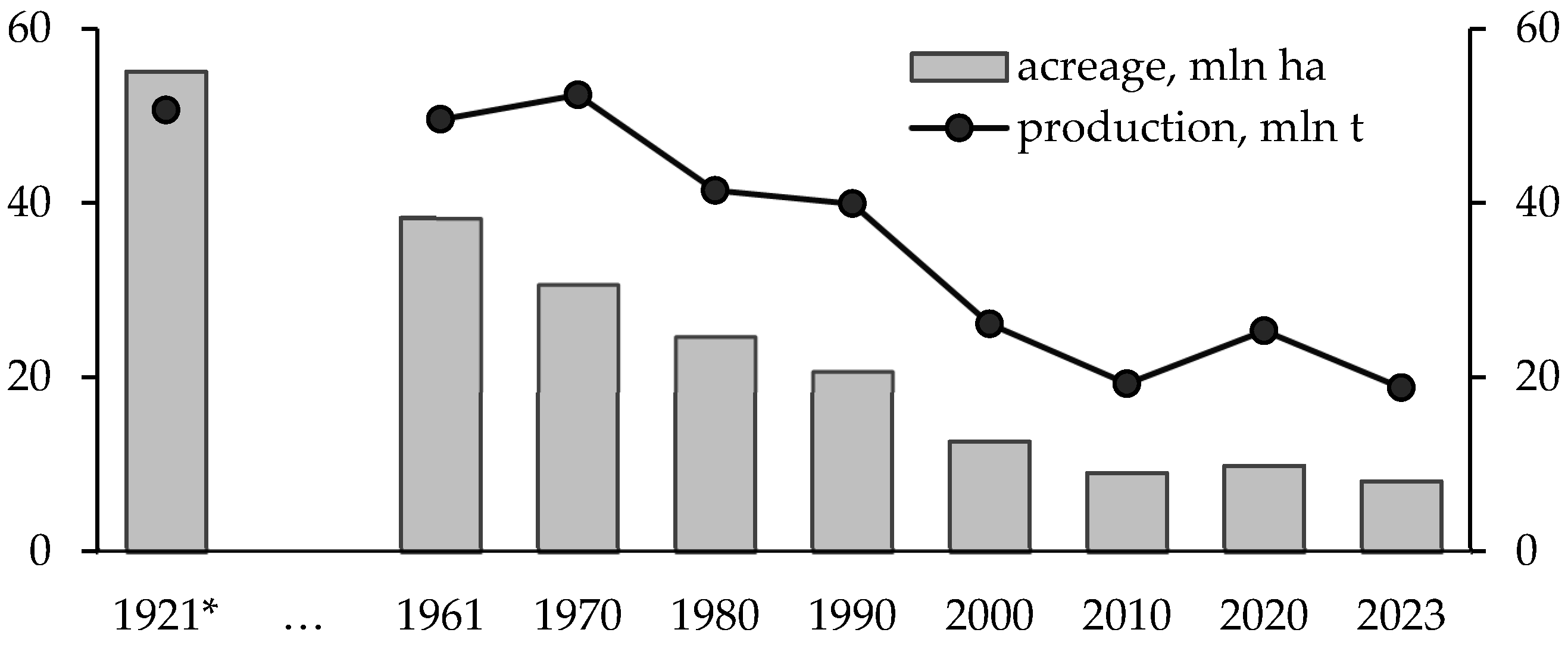
Figure 1. Global oat acreage and grain production from 1921 to 2023 (* USDA [17] for 1921, FAO [7] for other years).
Agriculture 15 02618 g001
Figure 2. Atmospheric precipitation and daily air temperature during the 2011–2016 (a) and 2017–2022 (b) study periods in accordance with the Meteorological Station in Bałcyny, Poland.
Agriculture 15 02618 g002
Figure 3. Research factors investigated in the study and their levels.
Agriculture 15 02618 g003
Figure 4. Effects of cropping systems (CS) on spring oat yields in the 2011–2016 (a) and 2017–2022 (b) cycles (means and standard errors). Different letters indicate significant differences at p < 0.05. Abbreviations used in the main text: crop rotation (CR), continuous cropping (CC).
Agriculture 15 02618 g004
Figure 5. Effects of varieties (V) on spring oat yields in the 2011–2016 (a) and 2017–2022 (b) cycles (means and standard errors). Different letters indicate significant differences at p < 0.05.
Agriculture 15 02618 g005
Figure 6. Effects of crop protection (CP) levels on spring oat yields in the 2011–2016 (a) and 2017–2022 (b) cycles (means and standard errors). Different letters indicate significant differences at p < 0.05; no letters—differences not significant at p < 0.05. Abbreviations used in the main text: control (C), herbicide (H), herbicide + fungicide (HF).
Agriculture 15 02618 g006
Figure 7. Effects of years (Y) on spring oat yields in the 2011–2016 (a) and 2017–2022 (b) cycles (means and standard errors). Different letters indicate significant differences at p < 0.05.
Agriculture 15 02618 g007
Figure 8. Effects of the interaction of cropping system (CS) × variety (V) on spring oat yields in the 2011–2016 (a) and 2017–2022 (b) cycles (means and standard errors). Different letters indicate significant differences at p < 0.05; no letters—interaction not significant at p < 0.05. Abbreviations used in the main text: crop rotation (CR), continuous cropping (CC).
Agriculture 15 02618 g008
Figure 9. Effects of the interaction of cropping system (CS) × crop protection (CP) on spring oat yields in the 2011–2016 (a) and 2017–2022 (b) cycles (means and standard errors). Different letters indicate significant differences at p < 0.05; no letters—interaction not significant at p < 0.05. Abbreviations used in the main text: crop rotation (CR), continuous cropping (CC), control (C), herbicide (H), herbicide + fungicide (HF).
Agriculture 15 02618 g009
Figure 10. Effects of the interaction of cropping system (CS) × year (Y) on spring oat yields in the 2011–2016 (a) and 2017–2022 (b) cycles (means and standard errors). Different letters indicate significant differences at p < 0.05; no letters—interaction not significant at p < 0.05. Lines represent linear trends for the year-to-year yield patterns of oats cultivated in the crop rotation (light gray) and continuous cropping (dark gray) systems. Abbreviations used in the main text: crop rotation (CR), continuous cropping (CC).
Agriculture 15 02618 g010
Figure 11. Effects of the interaction of cropping system (CS) × variety (V) × crop protection (CP) on spring oat yields in the 2011–2016 (a) and 2017–2022 (b) cycles (means and standard errors). Different letters indicate significant differences at p < 0.05. Abbreviations used in the main text: crop rotation (CR), continuous cropping (CC), control (C), herbicide (H), herbicide + fungicide (HF).
Agriculture 15 02618 g011
Table 1. Major characteristics of the study site.
ItemDescription
LocationNorth-eastern Poland, 53.60° N, 19.85° E, 136.9 m above sea level; Agricultural Experiment Station in Bałcyny, Poland, owned by the University of Warmia and Mazury in Olsztyn, Poland (formerly the Academy of Agriculture and Technology)
Landformsslight undulations of post-glacial origin
Climate temperate (Cfb according to the Köppen climate classification); mean annual air temperature—8.1 °C, mean yearly precipitation—614.6 mm (Table S2); high weather variability, interannual variations in seasonal patterns (irregular, brief periods of drought, mostly in July and August, and heavy precipitation)
Soil typeLuvisols formed from silty light clay
Table 2. Major characteristics of spring oat varieties used in the experiment according to COBORU [40].
CharacteristicsUnitBretonZuchBingoElegant
Breeder/maintainer DANKO Hodowla Roślin sp. z o.o.Hodowla Roślin Strzelce sp. z o.o. Grupa IHAR
Entry into NLI 1year2007200820092016
COBORU testsyears2007–20182008–20162009–20222016–2020
Germination ability%90–9990–10090–9892–99
1000-grain weightg35.0–43.133.5–44.039.2–47.836.1–41.0
Plant height cm88–11590–11990–11792–109
Heading (from 1.01)days154–170160–172152–168154–166
Wax maturity (from 1.01)days196–213201–211196–213197–213
Resistance to lodging9-point scale5.5–7.25.6–7.35.6–7.35.9–7.3
Resistance to diseases9-point scale
—Blumeria graminis 6.8–8.26.9–8.07.1–8.46.1–8.2
—Puccinia coronata 7.0–8.26.5–8.27.0–8.27.4–7.8
—Pyrenophora avenae 7.3–8.07.2–7.97.2–7.97.1–7.8
—Septoria tritici 6.8–8.47.3–8.17.0–8.17.3–7.9
Grain yield with hullst ha–15.63–7.305.78–7.595.75–7.775.61–6.84
Hull percentage%23.6–27.823.2–28.222–27.720.3–28.4
1 Polish National List of Agricultural Plant Varieties.
Table 3. Sowing and harvest dates for spring oats in the growing seasons under study.
YearSowingHarvestYearSowingHarvest
the 2011–2016 cyclethe 2017–2022 cycle
201131 March17 August201731 March13 August
201226 March6 August20186 April25 July
201319 April6 August201928 March31 July
201411 March2 August202028 March31 July
201518 March14 August202128 March31 July
201630 March12 August202226 March28 July
Table 4. Analysis of variance (degrees of freedom, F, and p values) for spring oat yield.
Source of VariationDegrees of FreedomFor the 2011–2016 CycleFor the 2017–2022 Cycle
FpFp
Cropping system (CS)1856.34<0.0011431.98<0.001
Variety (V)127.81<0.00164.27<0.001
Crop protection (CP)23.230.0420.950.391
Year (Y)513.37<0.00180.87<0.001
CS × V10.010.9066.870.010
CS × CP22.820.06313.49<0.001
V × CP212.25<0.00122.50<0.001
CS × Y515.57<0.0014.93<0.001
V × Y53.000.0136.13<0.001
CP × Y101.420.1791.970.040
CS × V × CP210.44<0.00113.93<0.001
CS × V × Y50.860.5095.70<0.001
CS × CP × Y100.730.6991.980.040
V × CP × Y103.48<0.0013.93<0.001
CS × V × CP × Y100.690.72912.36<0.001
Table 5. Interannual variation in spring oat yields under cropping system x variety x crop protection treatments, variation coefficient (CV), %.
Crop Rotation CycleCropping System (CS)Variety (V)Chemical Crop Protection (CP)
Control (C)Herbicide (H)Herbicide + Fungicide (HF)
2011–2016Crop rotation (CR)Breton8.46.58.0
Zuch12.35.96.8
Continuous cropping (CC)Breton25.06.26.2
Zuch3.913.09.5
2017–2022Crop rotation (CR)Bingo14.48.18.6
Elegant8.77.29.1
Continuous cropping (CC)Bingo23.811.715.3
Elegant29.014.613.7
Disclaimer/Publisher’s Note: The statements, opinions and data contained in all publications are solely those of the individual author(s) and contributor(s) and not of MDPI and/or the editor(s). MDPI and/or the editor(s) disclaim responsibility for any injury to people or property resulting from any ideas, methods, instructions or products referred to in the content.