Article

Development of an Innovative Mechanical–Aeraulic Device for Sustainable Vector Control of Nymphs of Philaenus spumarius


by
Francesco Paciolla
1,
Alessia Farella
1,
Gerardo Betrò
1,
Annalisa Milella
2 and
Simone Pascuzzi
1,*
1
Department of Soil, Plant and Food Science (DiSSPA), University of Bari Aldo Moro, Via Amendola 165/A, 70126 Bari, Italy
2
Institute of Intelligent Industrial Technologies and Systems for Advanced Manufacturing (STIIMA), National Research Council of Italy (CNR), Via G. Amendola 122 D-O, 70126 Bari, Italy
*
Author to whom correspondence should be addressed.
Agriculture 2025, 15(24), 2609; https://doi.org/10.3390/agriculture15242609
Submission received: 14 November 2025 / Revised: 12 December 2025 / Accepted: 15 December 2025 / Published: 17 December 2025
(This article belongs to the Section Agricultural Technology)

Abstract

Several management strategies based on different approaches have been proposed to contain the spread of the pest Xylella fastidiosa, but novel, effective, and sustainable physical methods are still needed. The present study is focused on the design, construction, and testing of an innovative mechanical–aeraulic device which implements a physical vector control strategy against the nymphs of Philaenus spumarius. The developed machine generates an airstream with proper temperature, shape, and velocity to impact the nymphs sheltered in the protective white “spittle” and cause their impairment or death. The machine generates a hot airflow with a temperature of 71.9 °C at 10 cm and 65.4 °C at 30 cm and a speed of 8.6 m s−1 at 10 cm to 6.2 m s−1 at 30 cm from the central axis of the outlet section. The area affected by the hot airflow was 2.65 m2, and the recorded mean temperature of the vegetation in this area was 60.2 ± 2 °C. The mean mortality rate of nymphs of Philaenus spumarius reached by using the developed machine was 84.3%.

1. Introduction

Xylella fastidiosa [1] is a rod-shaped, Gram-negative quarantine pathogen native to the Americas that resides in plants’ xylem tissue, blocking the vascular system and impeding water supply to the canopy and causing leaf scorch and consequent plant death [2]. The development of the X. fastidiosa pest depends on the interaction of several factors, including the pathogen, host plants, vector insects, and environmental conditions. Among vector-borne plant pathogens, X. fastidiosa is unique in its transmission mechanism since it is persistently transmitted and does not have a latency period [3]. Extensive bibliographic research conducted by the European Food Safety Authority (EFSA) reported that X. fastidiosa infects a wide range of cultivated and wild plant species, including grapevine, olive, almond, citrus, herbaceous, shrubby, and woody plants [4]. The first detection of X. fastidiosa in Europe took place in 2013 in the province of Lecce, Apulia region (Southern Italy), but the infection rapidly spread to the nearby provinces of Brindisi and Taranto by 2015, reaching the province of Bari (2018), the Barletta–Andria–Trani province (2022) and, by 2025, the province of Foggia.
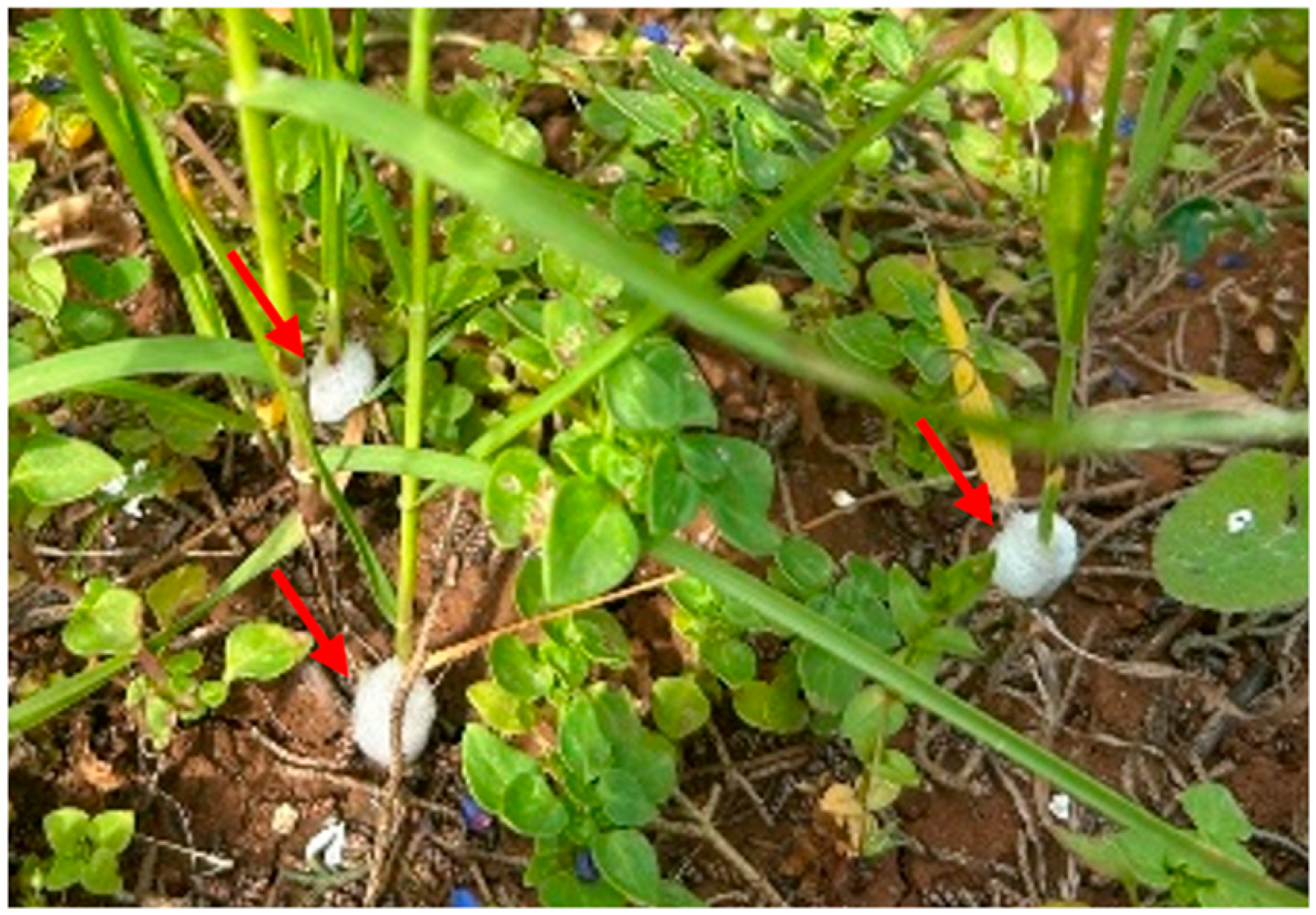
The bacterial strain reported in the Apulia region is X. fastidiosa subsp. pauca ST53, known as “De Donno” [5]; it primarily affects olive groves, causing a disease denoted as Olive Quick Decline Syndrome (OQDS) [6]. Vector surveys and transmission tests have identified the Philaenus spumarius (Linnaeus, 1758), commonly known as meadow spittlebug, as the primary vector of X. fastidiosa [7]. These insects insert their mouth into xylem vessels and feed on the sap. Meadow spittlebugs complete one generation per year, and their life cycle is mainly composed of four phases: (i) the young hatch, from the overwintering eggs in the last days of February; (ii) the nymphs; (iii) the young; and (iv) the adult molt. The nymphs, found either solitary or aggregated, shelter in the leaf axils or stems of weeds and grasses. They produce a white foamy “spittle” from xylem sap (indicated by red arrows in Figure 1), which protects them from the surrounding environment by creating a thermal microhabitat [8]. The spittle consists of a mixture of palmitic and stearic acids, carbohydrates, lipids, and proteins [9].
In the literature, several pest management strategies based on different approaches have been proposed to contain the diffusion of X. fastidiosa or mitigate its symptoms. Following the first detection of the X. fastidiosa pest in the Apulia region in 2013, the initial response was based on regulatory measures. Both the European Commission (EC) and the Italian Ministry of Agriculture, Food and Forestry enacted regulations (EU Regulation 2015/789) and successive amendments [10]) detailing emergency measures to prevent, control, and eradicate X. fastidiosa. In 2020, with the diffusion of the pest across Europe, the EC introduced a new regulation (EU Regulation 2020/1201 [11]), which included new and more stringent control measures based on updated EFSA findings. After the detection of an infected plant in any EU Member State, plant health authorities must promptly establish a demarcated area, consisting of an infected zone and a buffer zone. However, this approach has failed due to asymptomatic or delayed infections, which cause the infection of several surrounding plants [12]. In 2023, the Action Plan (Regional Government Decisions No. 1866/2022 and 570/2023 [13]) was implemented to limit the spread of X. fastidiosa in the Apulia region. The document defined mandatory phytosanitary measures to reduce the population of P. spumarius, including soil surface operations such as plowing, tilling, harrowing, and mulching. However, these measures were insufficient since the pest continued its spread due to favorable environmental conditions that have accelerated the vector’s life cycle, as confirmed by vector monitoring activities conducted by the Phytosanitary Observatory [14]. In 2024, the Action Plan was integrated by the Regional Council Resolution No. 1593/2024 [15], which introduced additional mandatory phytosanitary measures, including the application of specific phytosanitary treatments that must be carried out no later than 30 June 2025. The authorized products that can be employed included acetamiprid, aluminum silicate/kaolin, deltamethrin, flupyradifurone, pyrethrins, and spinetoram.
Several studies have explored strategies based on the control of the bacterium, involving mineral formulations, chemical compounds, natural products, and microbial antagonists. Del Coco et al. [16] reported changes in the metabolic profile of the bacterium following treatment of X. fastidiosa-infected trees with Dentamet®, a zinc–copper–citric acid bio complex. Similarly, OQDS-affected trees showed significative symptom reduction when sprayed with ammonium chloride or N-acetylcysteine (NAC) [17]. It is important to note that none of the described approaches have been validated as pest management strategies, since most studies were conducted in vitro and were at a preliminary stage.
An alternative approach has been to explore antimicrobial activity of natural products derived from plants or microorganisms to inhibit bacterial growth. Bleve et al. [18] tested in vitro various classes of plant-derived phenolics and Trichoderma spp. culture extracts. All tested phenolic compounds exhibited inhibitory activity against X. fastidiosa “De Donno”, although with limited to reversible bacteriostatic effects.
The main strategy employed for controlling insect-borne diseases is vector control [19]. Each vector can transmit the pathogen to several plants; therefore, reducing or eliminating the vector population would drastically limit the transmission of X. fastidiosa [20]. Vector control strategies can target both nymphal and adult stages, although targeting nymphs is generally more effective due to their limited mobility and poor chances to survive outside the protective white foamy “spittle” [21]. Furthermore, in the current epidemiological scenario, nymphs do not significantly contribute to the spread of the infection. Among these strategies, the removal of ground cover through double tillage, pyroweeding, or the use of systemic herbicides are widely employed [22]. However, these practices are insufficient and ecologically detrimental, with large-scale environmental impacts. Another promising approach is the implementation of biological control measures, but further research is needed due to very limited knowledge of potential natural enemies [23]. Among all vector control strategies, those based on spraying insecticides and natural compounds onto the canopy have been studied the most [24]. The appropriate timing of product application is a crucial aspect for the effectiveness of the control strategy, and the use of insecticides can contribute to the development of resistant bacterial strains [25]. Field trials showed that among several tested products, neonicotinoids and pyrethroids significantly reduce nymphs’ population. Other tested compounds, such as buprofenzin, sweet orange essential oil, kaolin, and zeolite, were less effective compared to systemic insecticides [26].
Nowadays, innovative physical Integrated Pest Management (IPM) strategies for the control of meadow spittlebug are under investigation [27,28]. Few studies have explored the manipulation of feeding and sexual behavior of P. spumarius. Recent research on the antennal sensilla structure of these insects allowed the identification of chemoreceptors. Ongoing investigations are focusing on characterizing the vibrational signals emitted by male and female vector insects. According to the current state of the art, novel and effective physical pest management strategies for the control of X. fastidiosa are essential for the survival of olive groves in the Apulia region. This study focuses on the theoretical analysis, design, construction, and testing of an innovative mechanical-aeraulic device that implements a physical vector control strategy against the nymphs of P. spumarius using a hot airstream to cause irreversible damage or mortality to the nymphs. The novelty of this study lies in the proposed method. It differs from chemical/biological methods since it acts by combining convective heating and the application of an aerodynamic force to cause the death of nymphs of P. spumarius. The knowledge gap that this study aims to address is the lack of effective, immediate, and non-chemical approaches to contain the diffusion of X. fastidiosa.

2. Materials and Methods

2.1. Components of the Developed Mechanical–Aeraulic Device

The developed machine is composed of a motorized agricultural wheelbarrow with two air heaters mounted on both sides.

2.1.1. Motorized Agricultural Wheelbarrow

The motorized wheelbarrow used is the KC350M (Sz Italia, 2025, Caltanissetta, Italy), a tracked model with 170 mm wide tracks and a turning radius of 131 cm. It is powered by a Loncin G200F (Loncin Holdings, Chongqing, China) 4-strike gasoline engine (4.8 kW, 196 cc). The expected lifespan of the engine is 1500–3000 operating hours, if the most important maintenance requirements are respected (change oil, clean air filter). The chassis of the KC350M is made of corrosion-resistant steel and has an expandable load bed with a maximum capacity of 300 kg. The power coming from the engine is transferred to the tracks through a 3-forward + 1-reverse gear transmission system. The manual clutch engages or disengages engine power to the tracks. The throttle control regulates engine speed, the gear selector enables shifting between forward/reverse and different speed ranges, and the brake levers engage the mechanical brakes. The KC350M motorized wheelbarrow is equipped with a safety device that causes the clutch to release and the machine to stop. The maximum speed of the KC350M agricultural wheelbarrow is not provided by the datasheet. The main technical specifications of the employed motorized wheelbarrow are summarized in Table 1.
The chassis geometry, the low center of gravity, and the track-based undercarriage ensure stability. The manuovrability of the employed motorized wheelbarrow was satisfactory under different terrain conditions, including uneven soil, slopes, and mulch-covered areas, at an operating velocity of 1 km h−1.

2.1.2. Employed Air Heaters

The two air heaters employed in this study, mounted on the load bed of the motorized agricultural wheelbarrow, are the Munters GA 95T [29] (Munters Group AB, Kista, Sweden). These devices are based on the direct-fired heating technology. These air heaters are characterized by a compact design consisting of a fan and a burner. The fan draws ambient air into the unit and, passing through the combustion chamber where the burner is located, it is rapidly heated up by the combustion of liquefied petroleum gas (LPG) before being discharged through a circular outlet section. One of the main advantages of direct-fired technology is the elimination of the heat exchanger, thereby avoiding the associated energy losses, ensuring very high thermal efficiency, reduced fuel consumption, and lower operating costs in the system [30]. LPG is a fuel mixture composed of propane (C3H8) and butane (C4H10). Since the air–fuel ratio in direct-fired heating systems is typically fifty times the stoichiometric requirement, complete combustion is ensured. The chemical equations for the complete combustion of propane and butane are reported in Equation (1) and Equation (2), respectively:
C 3 H 8 + 5 O 2   3 C O 2 + 4 H 2 O
2 C 4 H 10 + 13 O 2   8 C O 2 + 10 H 2 O
The emissions from combustion consist primarily of water vapor and carbon dioxide (CO2), minimizing the formation of carbon monoxide (CO) and nitrogen oxides (NOx). The dominant heat transfer mechanism in direct-fired heating systems is forced convection, since the airflow is actively moved by the fan to enhance heat transfer. The fundamental law of calorimetry (Equation (3)) expresses the rate of heat transfer in a steady-flow process involving a temperature change.
Q = m ˙ · c p · ( T o u t T i n )
where Q is the heat transfer rate, W; m ˙   is the mass flow rate of air drown by the fan, kg s−1; cp is the specific heat of air (1005 J kg−1 K); and Tin and Tout are the air temperature in °C at the inlet and outlet sections, respectively. From Equation (3), it is possible to retrieve Tout as Equation (4):
T o u t = Q c p · m ˙ + T i n
The Munters GA 95T is a device ISO 9001 certified equipped with a safety pressure switch and a thermostat that controls the inlet airflow and temperature, respectively. In case of airflow obstructions or fan blockage, the burner will automatically be shut down, and in case of overheating, both the gas and electrical supply will be cut off. The housing and the combustion chamber are made of stainless steel, with electrical components housed in an IP54 enclosure. The main technical specifications of the Munters GA 95T are summarized in Table 2.
The main operating parameters of the Munters GA 95T, i.e., heat output and flow rate, are fixed; moreover, no information about the output temperature is provided in the datasheet. The two Munters GA 95T are powered independently by the VULCAN VPG6500CLE electric generator (Harrison Hydra-Gen, Houston, TX, USA) with the following features: 5.5 kW, 220 V–50 Hz monophase, and maximum output 12 V/8.3 A. This electric generator has been chosen for its affordability. It is used to supply the functioning of the fan and the control circuits of the air heaters. The theoretical thermal power supplied by the complete combustion of the LPG Qtheor, kW, is given by Equation (5):
Q t h e o r = m ˙ L P G · L H V
where m ˙ LPG is the mass flow rate of LPG, kg s−1, and LHV is the lower heating value of LPG, J kg−1. The LHV represents the amount of heat released during complete fuel combustion. If the LPG used has a higher LHV (more propane-rich mixture), the air heater will release more thermal energy for the same amount of fuel burned. Assuming a LHV of 46 MJ kg−1 for LPG, the Qtheor supplied by LPG combustion is 99.7 kW. Calculating the real heat output (Qreal) of the Munters GA 95T by considering the heat output reported in the datasheet (95 kW), it is possible to estimate the thermal efficiency (η) of the air heater as reported in Equation (6):
η = Q t h e o r Q   r e a l · 100 = 95.2 %
The obtained thermal efficiency for the considered direct-fired air heater is very high compared to indirect heating systems thanks to the absence of the heat exchanger, which usually produces high energy losses. The losses are related to incomplete combustion, exhaust losses, heat lost to heater housing, inaccurate LHV assumption, leakage, and entrainment of cool ambient air.

2.2. Design and Construction of the Mechanical–Aeraulic Device

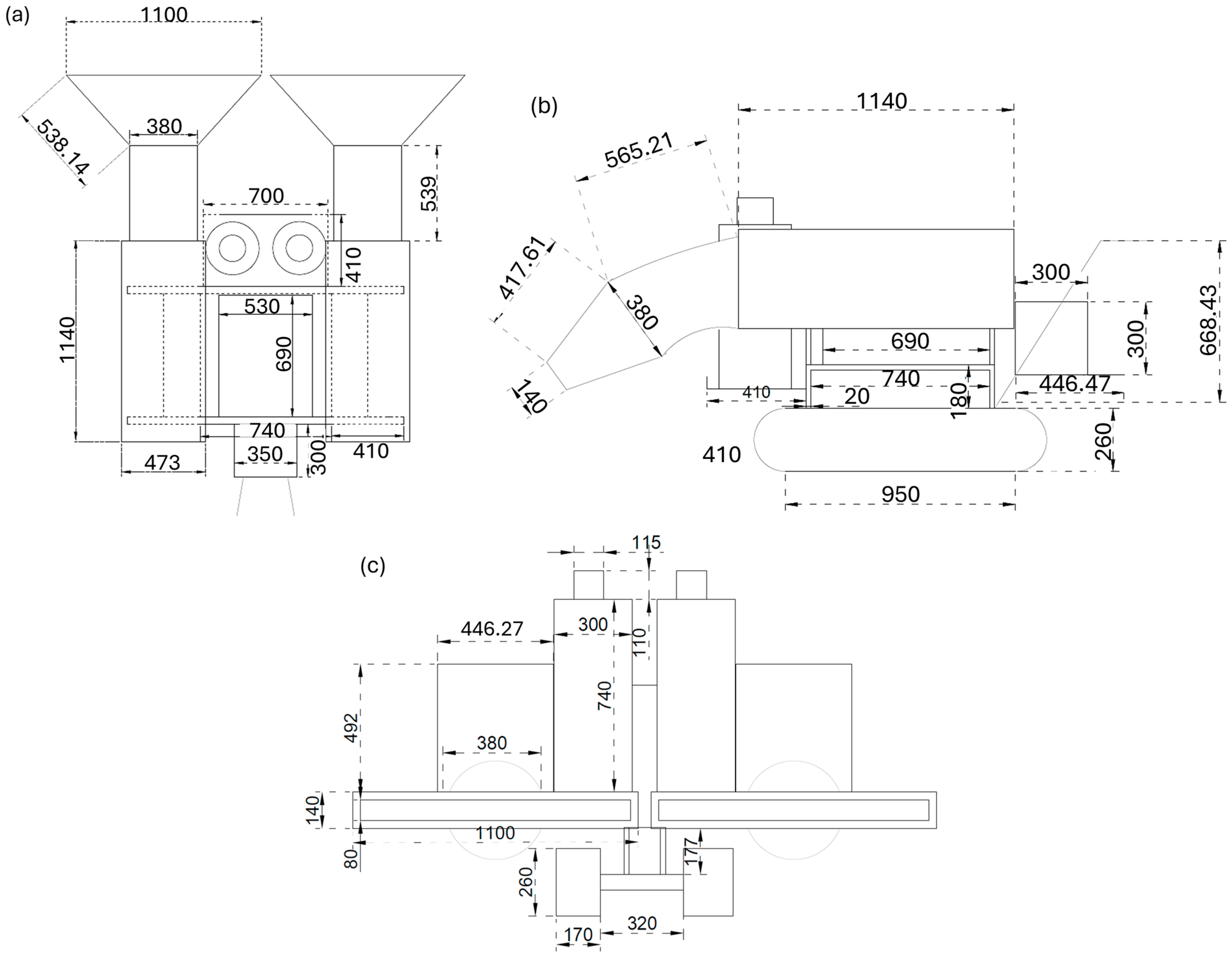
The design of the mechanical–aeraulic device was developed using the CAD Autodesk Inventor 2024 (San Francisco, CA, USA). The top (a), lateral (b), and frontal (c) views of the machine, with the respective dimensions of the components, are reported in Figure 2.
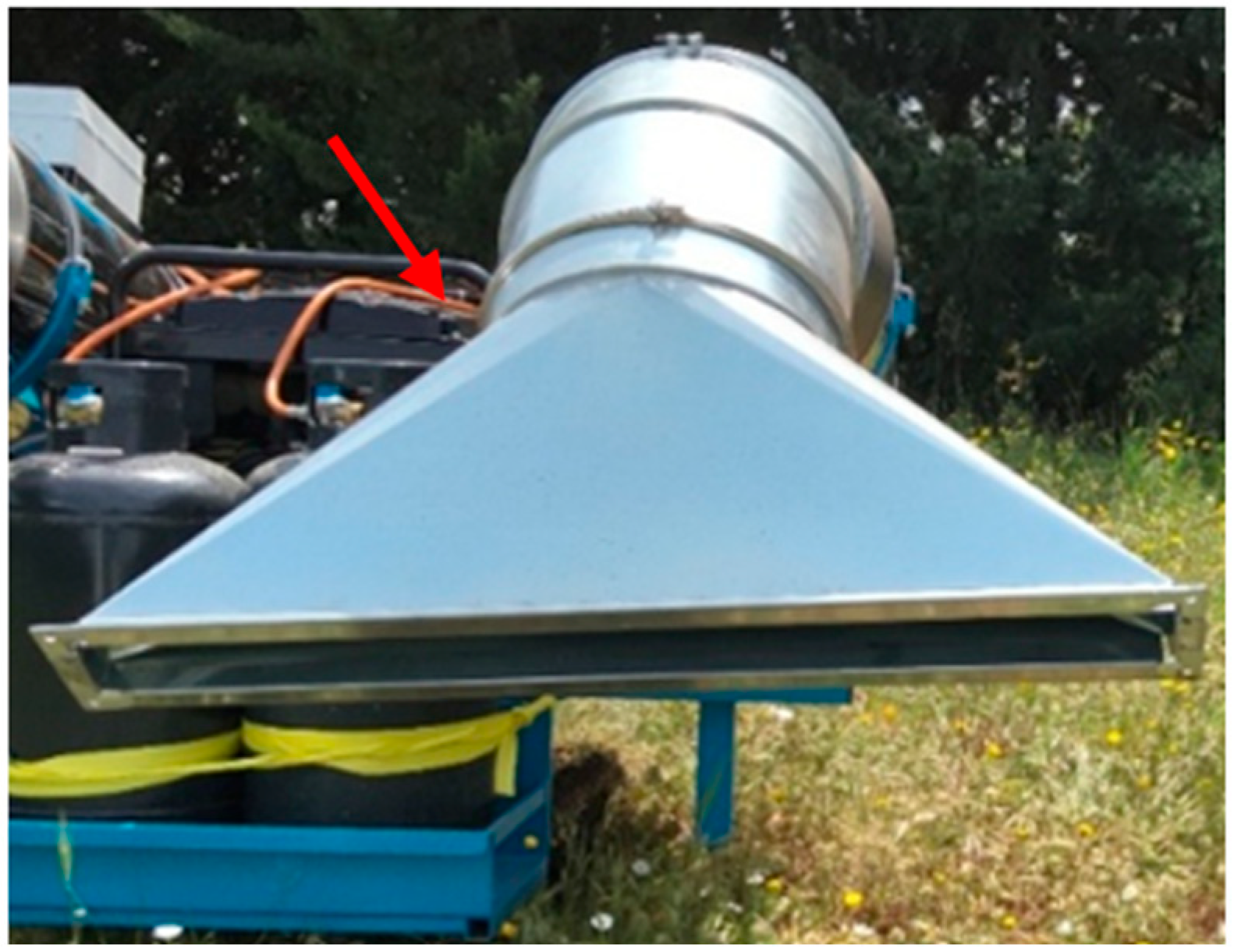
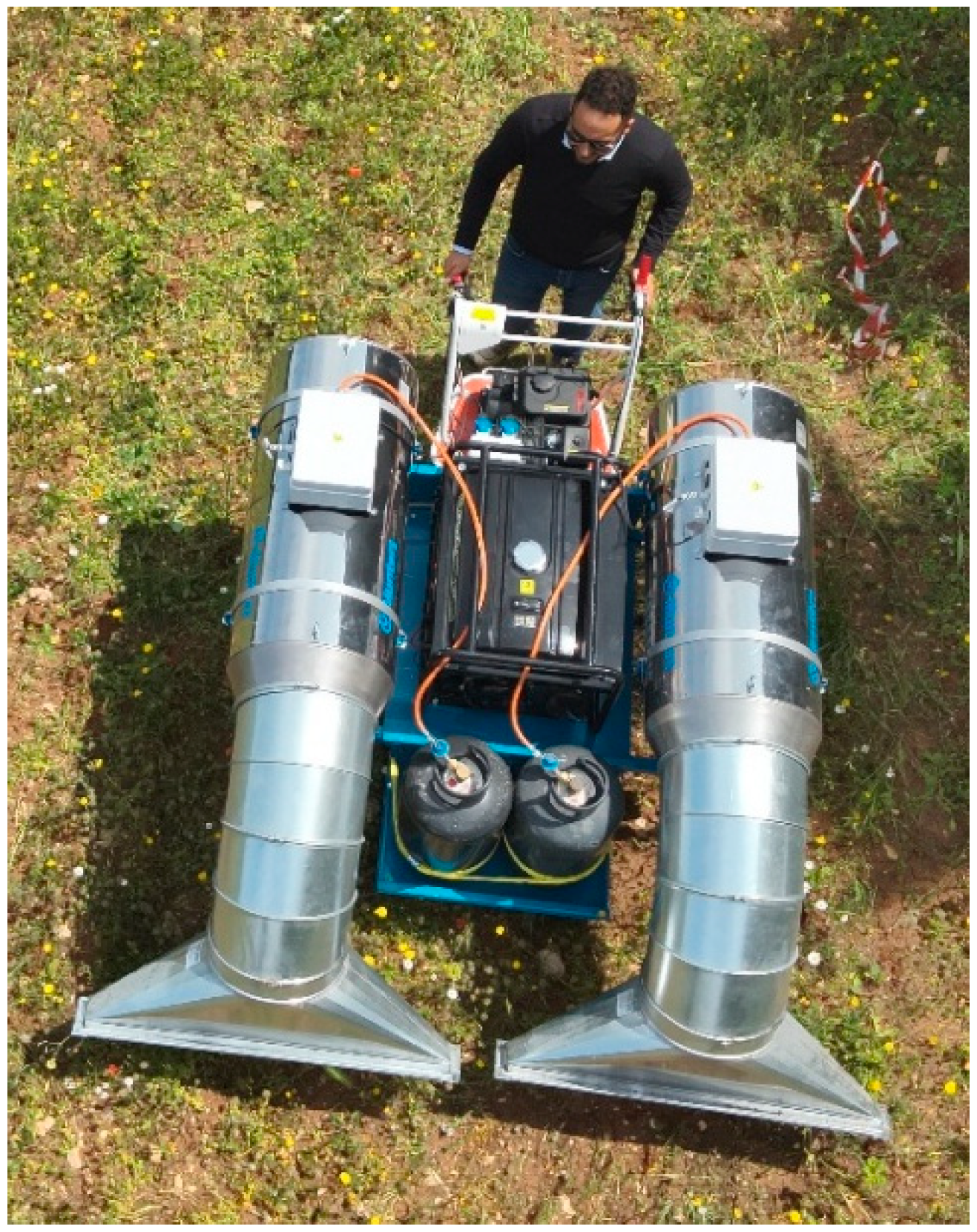
The length, width, and height of the constructed machine are equal to 2000 mm, 1650 mm, and 1320 mm, respectively. The width has been optimized for field operation in typical Apulian olive groves. For the scope of this study, the most important parameter considered during the design phase was the working width of the machine. The circular outlet section of the Mounters GA 95T (Munters Group AB, Kista, Sweden) is circular, with a diameter of 300 mm. The working width has been increased by two custom-designed aluminum outlet sections that were fabricated and connected to the circular outlet of the Mounters GA 95T. The rectangular output section measures 1100 mm in length and 140 mm in width (indicated by the red arrow in Figure 3).
The machine can also be tilted towards the ground through a mechanical system. This operating parameter has been modified to optimize nymphs’ mortality. The developed machine in operation during field tests is shown in Figure 4.
Figure 4 clearly shows the configuration of the developed machine, in which the LPG cylinders and the electric generator were placed in the middle on the load bed of the motorized wheelbarrow with the two Munters GA 95T air heaters on both sides. The forward speed of the machine during operation was evaluated by measuring the time required by the machine to travel a linear distance of 10 m. The recorded operating speed was 1 km/h. At this speed, the turning maneuverability of the developed machine is satisfactory. The stability of the machine is also optimal on uneven terrains thanks to the optimized weight distribution, its compactness, and low geometric center.

2.3. Field Tests

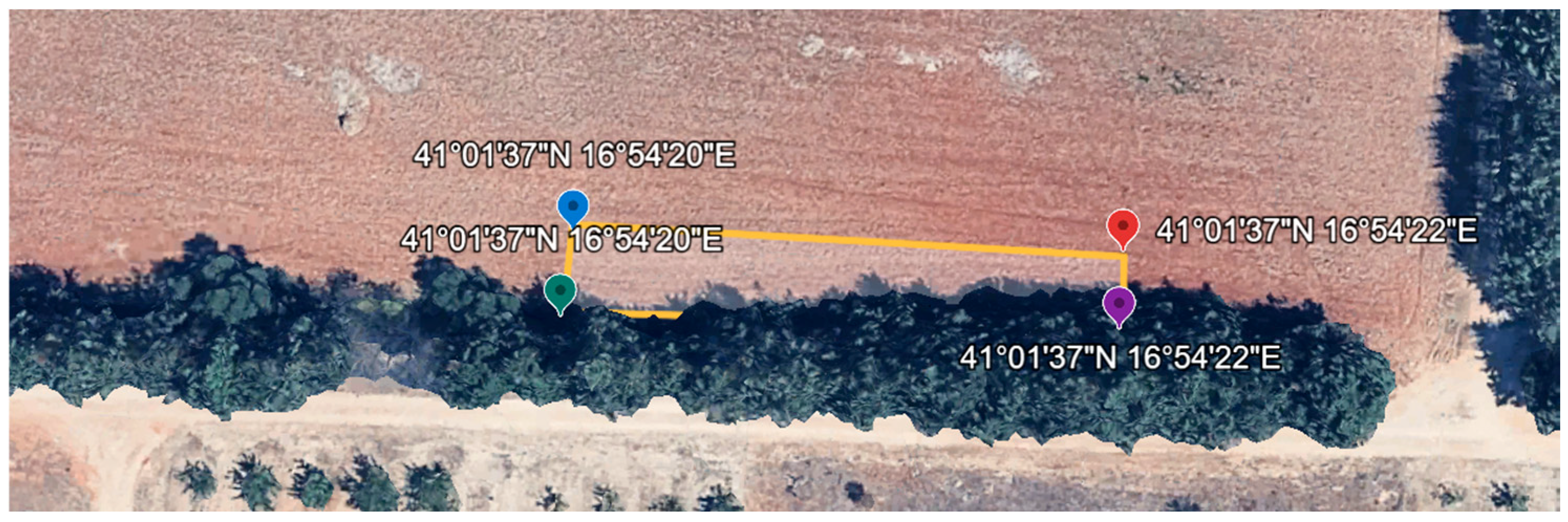
The field tests were carried out at the University experimental farm (41°01′00″ N, 16°54′10″ E) during the last week of April 2025, during the period in which the P. spumarius insect was in the nymphal stage. The air temperature and relative humidity recorded by the weather station located on-site were 23 °C and 62%, respectively. The recorded environmental conditions were optimal for the development of the nymphs. A portion of an uncultivated field, typically in the shade of trees during the day, was selected, as high levels of relative humidity promote the development of more abundant spittle masses produced by the nymphs of the meadow spittlebug (Figure 5). In these environmental conditions, water evaporates slowly, allowing foams to be hydrated, foamy, and stable.
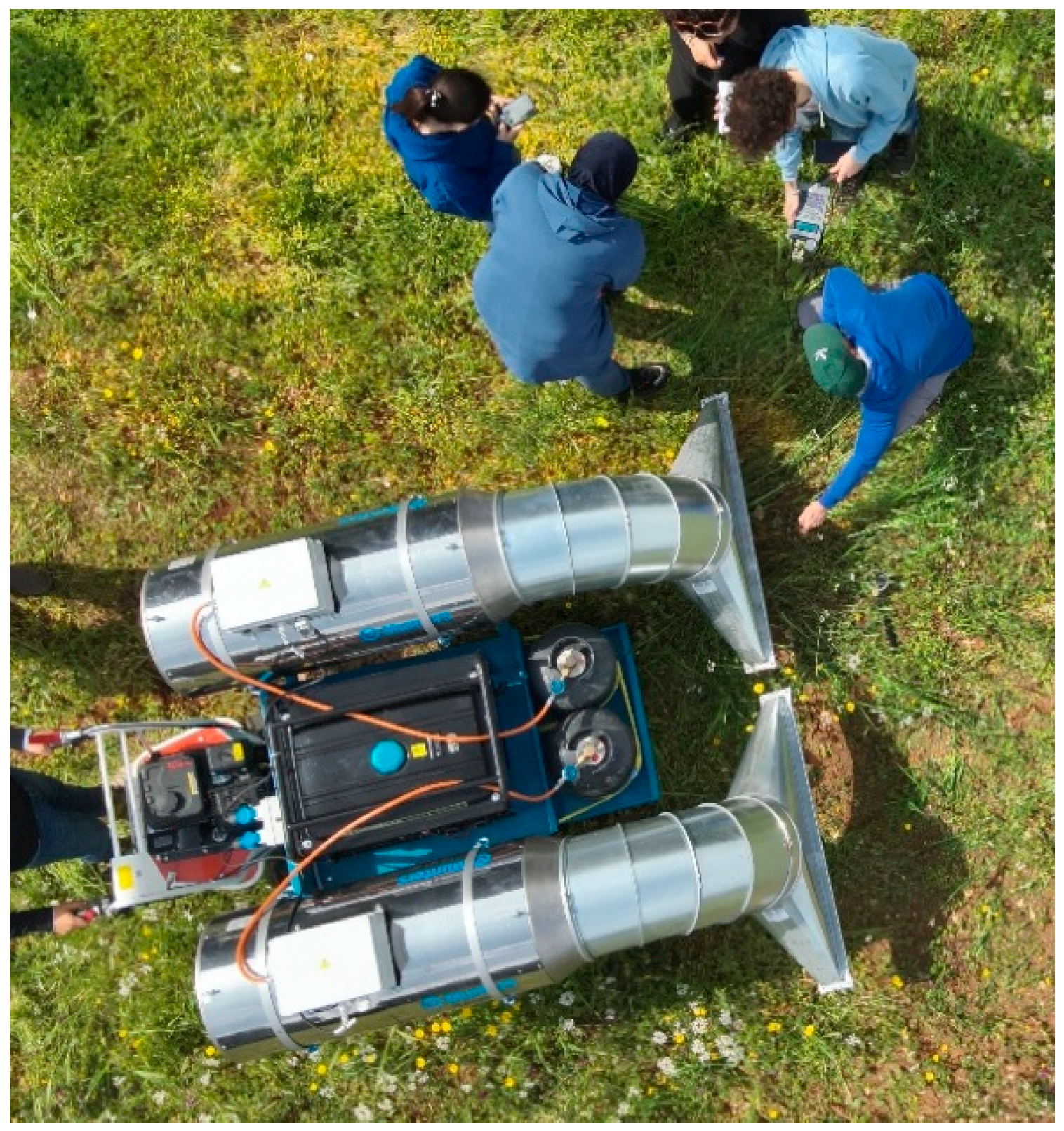
The functionality tests were performed to assess the performance of the developed machine. Specifically, the following parameters were measured: (i) temperature and speed of the hot airflow generated by the Munters GA 95T as a function of the distance from the rectangular outlet section; and (ii) relative humidity of the hot airflow. These measurements were performed using the BABUC/M (Bresciani Srl, Milan, Italy) portable data logger (Figure 6). This device can acquire, store, and process multiple environmental parameters thanks to the possibility of connecting different probes. Its main features are the visualization in real time of the most important statistics of the performed measurement and the programmable rate of acquisition. For this study, the BSV102 probe (Bresciani Srl, Milan, Italy) was used. It is a multifunctional probe that simultaneously measures air speed, temperature, and relative humidity. The main technical specifications include a range of temperature from −30 °C to 70 °C, with accuracy of ±0.1 °C, and a range of relative humidity from 0% to 100%, with accuracy of ±2%.

3. Results

3.1. Characterization of the Developed Mechanical–Aeraulic Device

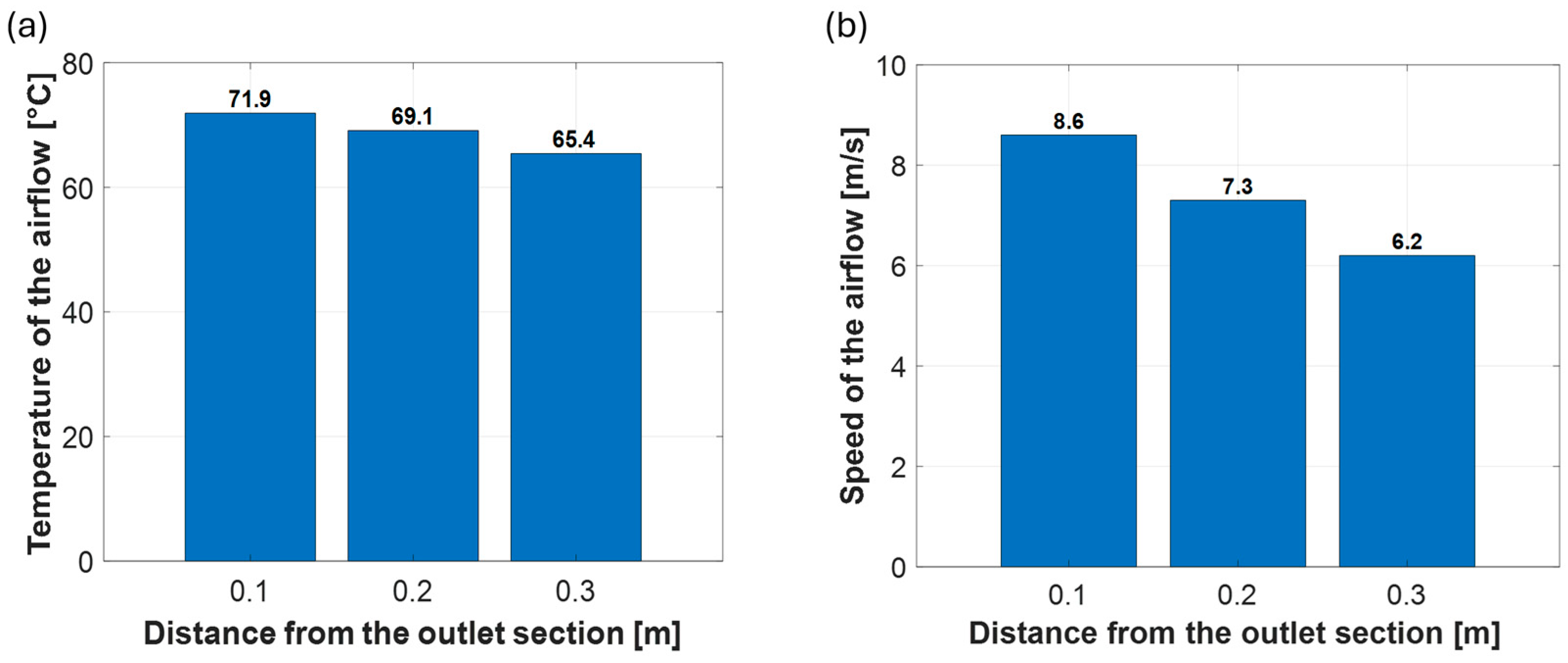
The experimental trend of temperature (a) and speed (b) of the airflow generated by the Munters GA 95T as a function of the distance from the central axis of the rectangular outlet section (10, 20, and 30 cm) are reported in Figure 7.
When the air heaters are switched on, in a few seconds they reach the operational temperature. As shown in Figure 7a, the measured temperature of the airflow decreased from 71.9 °C at 10 cm to 65.4 °C at 30 cm from the central axis of the rectangular outlet section. The airflow speed exhibited a similar decreasing trend, from 8.6 m s−1 at 10 cm to 6.2 m s−1 at 30 cm from the central axis of the rectangular outlet section. The relative humidity of the airflow remained constant at 32% at the different measured distances.
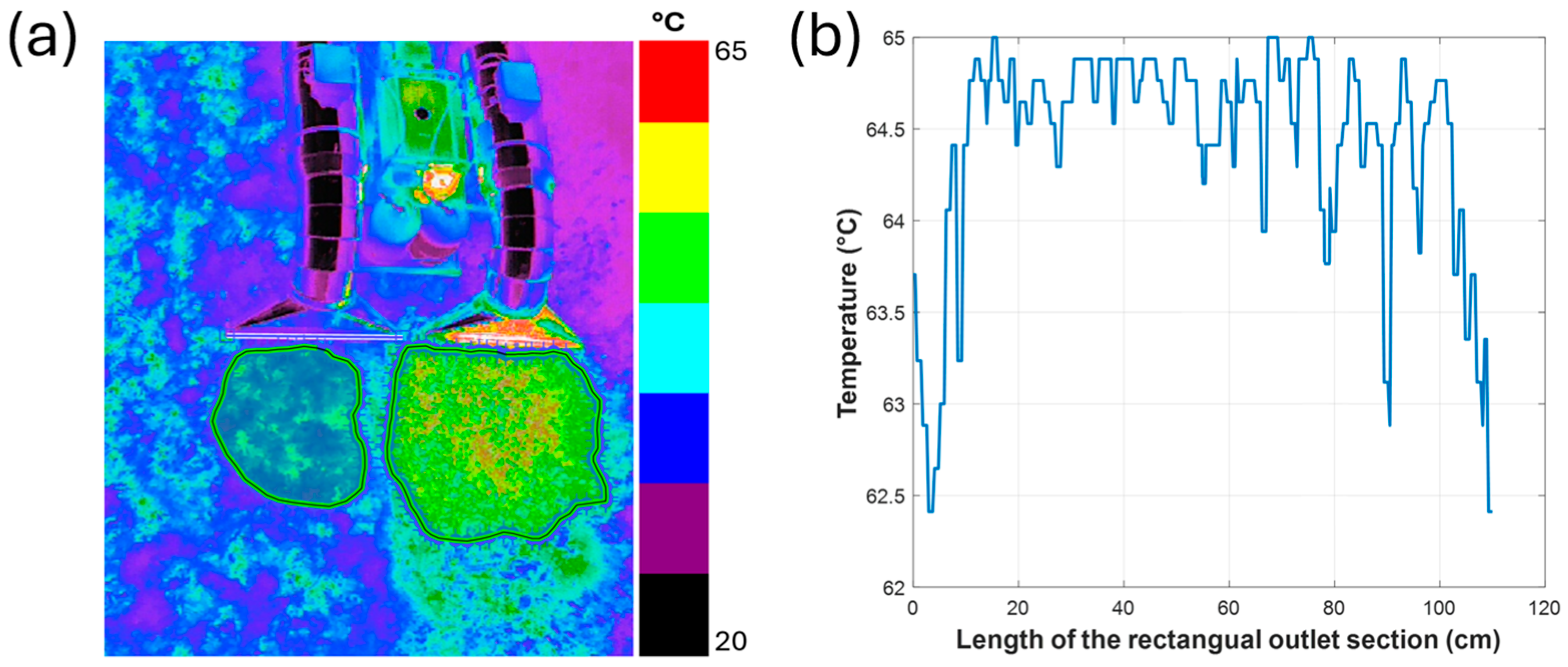
The temperature of the vegetation was assessed using the DJI Mavic 3T drone (SZ DJI Technology Co., Ltd., Shenzhen, China). This drone is equipped with a dual-camera system, composed of a 48 MP RGB camera and a thermal camera operating in the long-wavelength infrared range (8–14 µm). The thermal sensor employs an uncooled Vanadium Oxide (Vox) microbolometer with a resolution of 640 × 512 pixels and has a temperature accuracy of ±2 °C [31]. The thermal images acquired by the drone were processed and analyzed using QGIS software 3.42.3 [32]. Processing the acquired thermal images, it was possible to visualize the temperature distribution of the hot airflow generated by the Munters GA 95T and, knowing the Ground Sampling Distance (0.95 cm/pixel), extract its spatial dimension (Figure 8a). The cooler areas (shades of violet and blue in Figure 8) represent the untreated vegetation, while the warmer areas (shades of yellow, green, and red in Figure 8) correspond to the vegetation affected by the hot airflow. The spatial distribution of the temperature across the rectangular outlet section is shown in Figure 8b.
Knowing the GSD, the surface area affected by the hot airflow generated by one of the Munters GA 95T was estimated to be 2.65 m2, and the recorded mean temperature of the vegetation in this area was 60.2 ± 2 °C. For comparison, the mean temperature of the surrounding untreated vegetation was also evaluated and was equal to 36.3 ± 2 °C. The hot airflow generated by the Munters GA 95T air heater is effective in raising the vegetation’s temperature of ~23.9 °C. It is worth noting that the spatial distribution of the temperature across the rectangular outlet section (Figure 8b) is quite uniform, with a small, expected, decrease near the edges of the section. This behavior was expected because the hot airflow is concentrated in the central part of the section since the original outlet section was circular.

3.2. Effectiveness of the Employed Method Against Nymphs of P. spumarius

To verify the effectiveness of the proposed physical pest management strategy based on the use of a hot airflow to cause the death of vector insects in the nymphal stage, some preliminary tests were carried out. Five different 3 m2 test areas were considered and delimited. In each area, the nymphs’ population density (nymphs/m2) was visually assessed by an expert operator before and just after the use of the mechanical–aeraulic machine to understand the efficacy of the employed method. The initial nymphs’ distribution was considered as ground-truth measurement. This approach has been adopted in several studies [33,34]. It is worth noting that the spatial variability of nymphs’ population in different nearby areas of the same plot, thus subjected to similar environmental conditions in terms of humidity, temperature, and wind, is not significant as confirmed in [33,34]. For each measure performed, the standard error (SE) has been calculated by Equation (7):
S E = σ n
where σ is the standard deviation calculated over the considered sample and n is the number of considered test areas. The results obtained during the field tests are summarized in Table 3.
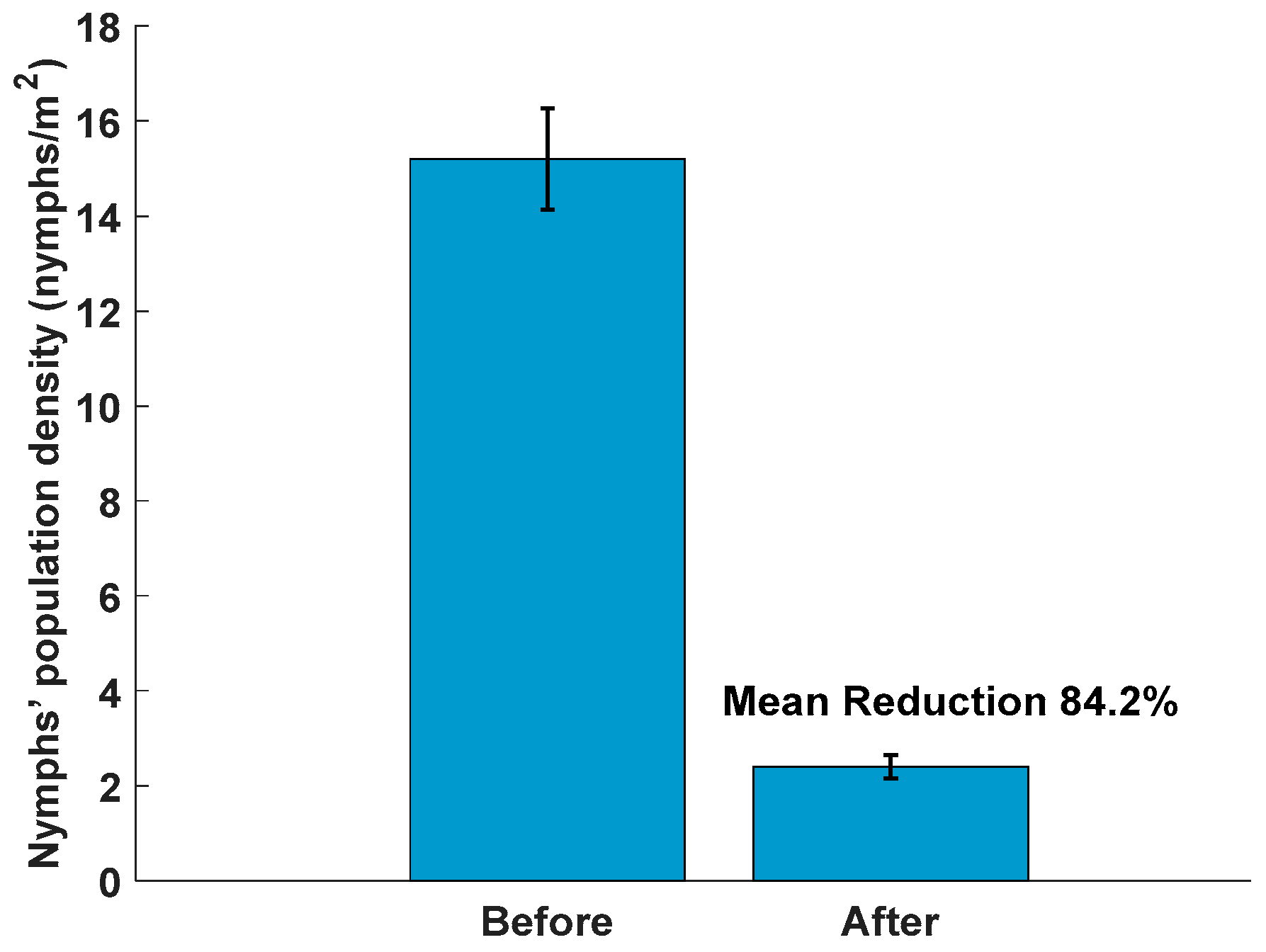
The initial mean nymphs’ population density (nymphs/m2) in the five considered test areas was 15.2, with σ = 2.39 and SE = 1.07. After the use of the machine, the nymphs’ population density drastically decreased to a mean of 2.4 nymphs/m2 with σ = 0.55 and SE = 0.25. The results shown in Table 3 highlight that the employed strategy is both immediate and extremely effective, reaching a mean mortality rate of 84.2% over nymphs of meadow spittlebugs. The paired t-test (parametric) performed on the data showed that the test was significant (h = 1, p = 0.0001), with 95% confidence that the mean reduction in nymphs’ population per each test area is between 10.4 and 15.2. The mean nymphs’ population densities and the respective error bars obtained in the five considered test areas before and after the use of the developed mechanical–aeraulic device are reported in the bar plot shown in Figure 9.

4. Discussion

4.1. Mechanism of Action of the Proposed Physical Vector Control Strategy

The vector control strategy proposed in this study acts by combining convective heating with the generation of an aerodynamic force. It relies on the application of a heated airflow against the nymphs of P. spumarius. It differs from chemical/biological methods typically employed because it is not chemical-based and provides immediate efficacy, and this represents the novelty of this paper. The proposed method combines mechanical and thermal actions whose effects cannot be distinguished. The increase in temperature is a well-known factor that strongly influences insects’ distribution and can cause mortality [35]. When subjected to high temperatures, insects die from dehydration, metabolic disruption, cellular damage, and protein denaturation. In addition, in the proposed method, the hot airflow generates an aerodynamic force that dislodges the nymphs from the host plant, compromising their survival by direct mechanical damage (impact with the soil) and indirect effects (foam drying and breakage). To date, in the literature no experimental studies have established the lethal thermal threshold for P. spumarius or provided information about the temperature at which the foam produced by the nymphs dries or collapses. Santoiemma et al. [36] reported that the optimal temperatures for survival and reproduction of P. spumarius is 15.6 °C. Several studies pointed out that nymphs are more sensitive to high temperatures and arid conditions compared to adults, since they live immersed in foams at very stable temperature and humidity conditions. This leads to a lower tolerance to acute temperature stress [37]. Gilioli et al. [38] developed a model to predict the phenology of P. spumarius considering different environmental variables and found that the upper temperature threshold for nymphs’ development is 33.0 ± 2 °C. Few experimental studies were conducted on affine species. For example, the study conducted by Piyaphongkul at al. [39] reported a lethal temperature for nymphs of N. lugens of 41.8 ± 0.1 °C. Since the two species are affines, a similar lethal temperature can be reasonably expected. The developed machine can reach a mean temperature of the vegetation of 60.2 ± 2 °C within the area affected by the hot airflow. This value is much above the expected lethal temperature for P. spumarius nymphs. The high temperature causes rapid protein denaturation, loss of membrane integrity, and collapse of metabolic processes within seconds, thereby preventing any possibility of recovery. This indicates that the developed machine is extremely effective to cause their impairment (reduced mobility, diminished feeding behavior, and inability to jump or fly) and leads to imminent death. Furthermore, it is worth noting that the generated hot airflow has a low relative humidity (32%). This is beneficial since the hot airflow dries out the foamy spittle and breaks it down, thereby destroying the thermal microhabitat that protects them from the surrounding environment. The relative humidity remains constant with distance since there is no additional evaporation or condensation in the free warm air.
In the authors’ opinion, the innovative physical approach proposed in this study appears very promising, being cost effective for farmers, and could offer a sustainable solution for the control of X. fastidiosa.

4.2. Technical Performance of the Developed Mechanical–Aeraulic Device

The mechanical–aeraulic device developed in this study, which implements the proposed physical vector control strategy, is composed of a motorized agricultural wheelbarrow with two Munters GA 95T air heaters mounted on both sides. The machine has been characterized to understand the operating parameters of the generated hot airflow and its spatial and thermal distribution. It can be noted that the decreasing trend of the airflow temperature, from 71.9 °C at 10 cm to 65.4 °C at 30 cm (Figure 7a), from the central axis of the rectangular outlet section indicates convective heat losses to the surrounding environment and the mixing of the generated airflow with ambient air. This thermal decay is consistent with the behavior of a free turbulent airflow in the far field, where mixing and diffusion processes dominate as the flow develops downstream [40]. The airflow speed exhibited a similar decreasing trend, from 8.6 m s−1 at 10 cm to 6.2 m s−1 at 30 cm (see Figure 7b), from the central axis of the rectangular outlet section. This decrease is linked with the dissipation of kinetic energy due to turbulence and drag with the surrounding air [41]. The airflow generated is therefore relatively dry, which is beneficial to dry the spittle and destroy the environment in which the nymphs develop. These results demonstrate that the Munters GA 95T generates a rapidly expanding airflow characterized by high initial temperature and speed, which attenuate significantly within the first 30 cm from the outlet. Such behavior is typical of direct-fired air heaters, in which thermal energy is directly transferred from the combustion to the outlet air.
A limitation of the developed machine is its working speed, which is 1 km h−1; thefore, the operational efficiency of the machine is low compared to traditional spraying operations, which are typically performed at a speed in the range of 4–6 km h−1. It is important to note that the developed machine is a prototype, and this limitation can be overcome by using a more powerful motorized agricultural wheelbarrow, with possible problems related to the manouvrability of the machine, or an autonomous terrestrial rover as robotic platform. In this context, the authors are already working in this direction, and in the next field campaign the two Munters GA 95T air heaters will be mounted on an autonomous platform. More extensive field tests will be conducted to evaluate the effectiveness of the proposed method againts P. spumarius nymphs and the efficiency of the system.

4.3. Comparison of the Employed Method with Control Strategies Based on Chemical Insecticides and Natural Compounds

The results obtained in this study have been compared with vector control strategies based on chemical insecticides and natural compounds tested against adults and nymphs of P. spumarius in both laboratory settings and in field conditions. The comparison is reported in Table 4.
One of the first studies that evaluated the effectiveness of several chemical products against P. spumarius adults was conducted by Dongiovanni et al. [42]. In this study, synthetic pyrethroids (i.e., deltamethrin and λ-cyhalothrin) and neonicotinoids (acetamiprid, imidacloprid, thiamethoxan, and thiamethoxam mixed with chlorantraniliprole) reached the highest mortality rates, with values ranging from 76.7% to 100% at 3 days after treatments (DAT). In Spain, in a laboratory setting, six commercial products (acetamiprid, deltamethrin, spinosad, sulfoxaflor, pyrethrin, and kaolin) were tested [43]. The highest acute toxicity was achieved for deltamethrin and acetamiprid, reaching 100% mortality after 1.5 and 2 h of exposure, respectively. Conversely, pyrethrin showed low mortality rates (12.5% after 4 h), while no effects were registered at 1 DAT using kaolin, sulfoxaflor, and spinosad. Regarding long-terms effects (after 3 DAT), the highest mortality rates were obtained with sulfoxaflor (~35%) and pyrethrin (~13.3%). Few studies have focused on the nymphal stage of P. spumarius. The effectiveness of several pesticides on nymphs collected in-field and transferred onto S. oleraceus plants under laboratory and semi-field glasshouse conditions was assessed by Dàder et al. [24]. The results showed that, in this case, pyrethroids (delthamethrin and λ-cyhalothrin) were also very effective in the nymphal stage, with a mortality rate of over 86.8% at 1 DAT. In contrast, other synthetic pesticides, including pymetrozine and spirotetramat, caused low mortality (20% at 1 DAT and 30% at 3 DAT), in accordance with Dongiovanni et al. [42]. Natural products such as natural pyrethrins, one of the most common natural insecticides, were also tested. It induced only 25% mortality at 3 DAT; however, when combined with piperonyl butoxide, mortality increased to 95% at 1 DAT. Other natural products such as azadirachtin and kaolin caused low mortality rates (26% at 3 DAT), in agreement with Dongiovanni et al. [42]. The result obtained in this study against nymphs of P. spumarius reached a mean mortality rate of 84.2%, which is perfectly in line with the ones achieved by chemical insecticides and natural compounds. Therefore, it is worth noting that the results presented in the literature were obtained in laboratory settings and controlled environments. Furthermore, neonicotinoids, used in several field trials as reference compounds, have been banned (specifically the three active ingredients clothianidin, imidacloprid, and thiamethoxam) in the EU (Regulations 2013/485 [44] and 2018/783 [45]).
Most employed chemical products target the adult stage of P. spumarius and require multiple applications per year, as their efficacy is limited over time. Moreover, it is important to note that chemical-based methods are environmentally detrimental and induce high selective pressure on insect populations. In contrast, the physical vector control method proposed in this study targets the nymphal stage of P. spumarius, is chemical-free, and provides immediate efficacy. This approach can be used in Integrated Pest Management (IPM) strategies as a first line of defense to reduce nymphs’ population together with the cultivation of cereals in the autumn–spring cycle, even for controlled grassing, and favor the presence of vegetation islands to maintain the presence of beneficial insects. Furthermore, it is important to emphasize that the presented method induces a low insect resistance since it is expected that performing one or two treatments can be sufficient to cause the death of 80–90% of nymphs’ population, limiting the use of chemical treatments to only severe conditions.
In this study, no long-term analysis was conducted to evaluate the efficacy of the proposed method. However, at 1 DAT, the desiccation of weeds in the treated test areas was evident, suggesting that it is advisable to believe that the effects observed on the previous day were at least confirmed, and the hot airflow reliably penetrated the epigeal part of the plant to reach the nymphs that had taken refuge deep in the leaf axils or at the base of the stems. Furthermore, its non-selectivity was also not addressed, since the field trials were conducted in an uncultivated field where the action of physical weeding was beneficial. In the next field campaign, the developed machine will be tested in an Apulian olive grove for further field tests to assess the long-term efficacy and the non-selectivity of the proposed method. In this context, it is worth noting that the authors are currently working on an improved version of the developed machine involving the integration of computer vision algorithms, enabling the machine to operate the air heaters only when the foamy spittle produced by the P. spumarius nymphs are detected.

4.4. Economic Considerations

The economic efficiency of the proposed approach was analyzed and compared with the traditional vector control methods based on the spraying of chemical insecticides and natural compounds. Firstly, the operating cost of the developed mechanical–aeraulic device must be evaluated. Considering the working speed of 1 km h−1 and the working width of 2.2 m, the time required to treat one hectare is 4.5 h. The LPG consumption per hectare can be calculated as Equation (8):
T o t a l   L P G   c o n s u m p t i o n   [ k g   h a 1 ] = L P G   c o n s u m p t i o n   [ k g   h 1 ] × t i m e   [ h   h a 1 ] × 2
where the LPG consumption per hour of a single Munters GA 95T is 7.7 kg h−1, as reported in the datasheet. This value was multiplied by two since the developed machine employs two air heaters. The resulting LPG consumption per hectare is 69.3 kg ha−1. Excluding the cost of gasoline used to power the agricultural wheelbarrow and the electric generator, the operating cost of the machine for one application can be estimated using (Equation (9)):
O p e r a t i n g   c o s t   [   h a 1 ] = L P G   c o n s u m p t i o n   [ k g   h a 1 ] × L P G   c o s t   [   k g 1 ]
where the cost of LPG is assumed to be 2 €/kg−1. The operating cost of the machine per hectare is approximately 139 €/ha−1.
Table 5 reports the estimated cost per hectare using the most used commercial products, considering the recommended number of applications per year, the price per liter, and the recommended product dosage [42,46]. The reported costs refer only to the chemical products used and do not include the cost associated with the tractor to perform the spraying operation.
The operating cost for the developed mechanical–aeraulic machine (278 €/ha−1 for two applications per year) is fully comparable to the operating costs incurred when chemical products are used. In addition, it is important to highlight that the proposed method offers several advantages over traditional methods based on the use of chemical products since it is chemical-free and does not pose risks to operator health. Indeed, except for Dentamet®, which is a biological compound, all the other considered products present a medium level of toxicity according to the EFSA, and the use of personal protective equipment is mandatory for involved operators due to the risks associated with their inhalation.

5. Conclusions

In this study, the theoretical analysis, design, construction, and testing of an innovative mechanical–aeraulic device that implements a novel physical vector control strategy, based on the combination of convective heating and the application of an aerodynamic force to cause the death of nymphs of P. spumarius, is presented. The novelty of this study lies in the employed approach, since the proposed physical vector control method differs from chemical/biological methods because it offers the advantage of being chemical-free while providing immediate efficacy. The thermal action kills the nymphs by dehydration, metabolic disruption, cellular damage, and protein denaturation, and the mechanical action dislodges the nymphs from the host plant, compromising their survival by direct damage (impact with the soil) and indirect effects (foam drying and breakage). During field tests, the developed machine was characterized. It generates a hot airflow with a temperature of 71.9 °C at 10 cm and 65.4 °C at 30 cm and a speed of 8.6 m s−1 at 10 cm to 6.2 m s−1 at 30 cm from the central axis of the rectangular outlet section. The area affected by the hot airflow was 2.65 m2, and the recorded mean temperature of the vegetation in this area was 60.2 ± 2 °C. The mean mortality rate reached by the proposed approach was 84.3%; moreover, it is economically competitive compared to traditional chemical-based approaches. In future field campaigns, more extensive field tests will be carried out to better understand the long-term efficacy and quantify the non-selectivity of the implemented method. Future works will include the development of an autonomous full electric robotic platform to increase the working speed of the machine and the on-board integration of a vision system with image analysis algorithms to automatically detect the spittle produced by the nymphs and carry out precision operations.

Author Contributions

Conceptualization, F.P., A.M. and S.P.; methodology, F.P. and S.P.; validation, F.P., A.F. and G.B.; formal analysis, F.P. and A.F.; investigation, F.P.; data curation, F.P. and G.B.; writing—original draft preparation, F.P.; writing—review and editing, F.P., A.F., G.B. and A.M.; visualization, F.P.; supervision, S.P.; project administration, S.P.; funding acquisition, A.M. and S.P. All authors have read and agreed to the published version of the manuscript.

Funding

This work was funded by the European Union-NextGenerationEU under the research program “PNRR MUR Missione 4, Componente C2, Investimento 1.1 NextGenerationEU-PRIN 2022” (Grant N. 20227F7J5W, CUP H53D23005130006, B53D23017280006).

Data Availability Statement

Data is contained within the article.

Conflicts of Interest

The authors declare no conflicts of interest.

Abbreviations

The following abbreviations are used in this manuscript:
EFSAEuropean Food Safety Authority
OQDSOlive Quick Decline Syndrome
ECEuropean Commission
NACN-acetylcysteine
IPMIntegrated Pest Management
LPGLiquefied Petroleum Gas
LHVLower Heating Value

References

  1. Wells, J.M.; Raju, B.C.; Hung, H.-Y.; Weisburg, W.G.; Mandelco-Paul, L.; Brenner, D.J. Xylella fastidiosa gen. nov., sp. nov:Gram-negative, xylem-limited, fastidious plant bacteria related to Xanthomonas spp. Int. J. Syst. Evol. Microbiol. 1987, 37, 136–143. [Google Scholar] [CrossRef]
  2. Hopkins, D. Xylella fastidiosa: Xylem-Limited Bacterial Pathogen of Plants. Annu. Rev. Phytopathol. 1989, 27, 271–290. [Google Scholar] [CrossRef]
  3. Almeida, R.P.; Blua, M.J.; Lopes, J.R.; Purcell, A.H. Vector transmission of Xylella fastidiosa: Applying fundamental knowledge to generate disease management strategies. Ann. Entomol. Soc. Am. 2005, 98, 775–786. [Google Scholar] [CrossRef]
  4. Jeger, M.; Caffier, D.; Candresse, T.; Chatzivassiliou, E.; Dehnen-Schmutz, K.; Gilioli, G.; Grégoire, J.; Jaques Miret, J.A.; MacLeod, A.; Navajas Navarro, M.; et al. Updated pest categorisation of Xylella fastidiosa. EFSA J. 2018, 16, e05357. [Google Scholar] [CrossRef]
  5. D’Attoma, G.; Morelli, M.; De La Fuente, L.; Cobine, P.A.; Saponari, M.; de Souza, A.A.; De Stradis, A.; Saldarelli, P. Phenotypic Characterization and Transformation Attempts Reveal Peculiar Traits of Xylella fastidiosa Subspecies pauca Strain De Donno. Microorganisms 2020, 8, 1832. [Google Scholar] [CrossRef]
  6. Martelli, G.P. The current status of the quick decline syndrome of olive in southern Italy. Phytoparasitica 2015, 44, 1–10. [Google Scholar] [CrossRef]
  7. Saponari, M.; Loconsole, G.; Cornara, D.; Yokomi, R.K.; De Stradis, A.; Boscia, D.; Bosco, D.; Martelli, G.P.; Krugner, R.; Porcelli, F. Infectivity and Transmission of Xylella fastidiosa by Philaenus spumarius (Hemiptera: Aphrophoridae) in Apulia, Italy. J. Econ. Entomol 2014, 107, 1316–1319. [Google Scholar] [CrossRef]
  8. Hoch, H.; Pingel, M.; Voigt, D.; Wyss, U.; Gorb, S. Adhesive properties of Aphrophoridae spittlebug foam. J. R. Soc. Interface 2024, 21, 20230521. [Google Scholar] [CrossRef]
  9. Tonelli, M.; Gomes, G.; Silva, W.D.; Magri, N.T.C.; Vieira, D.M.; Aguiar, C.L.; Bento, J.M.S. Spittlebugs produce foam as a thermoregulatory adaptation. Sci. Rep. 2018, 8, 4729. [Google Scholar] [CrossRef]
  10. European Commission (EU). Commission Implementing Decision (EU) 2015/789 of 18 May 2015 as regards measures to prevent the introduction into and the spread within the Union of Xylella fastidiosa (Wells et al.). Off. J. Eur. Union 2015, 125, 36–53. [Google Scholar]
  11. European Commission (EU). Commission implementing regulation (EU) 2020/1201 of 14 August 2020, as regards measures to prevent the introduction into and the spread within the Union of Xylella fastidiosa (Wells et al.). Off. J. Eur. Union 2020, 269, 2–39. [Google Scholar]
  12. Almeida, R.P.; Nunney, L. How Do Plant Diseases Caused by Xylella fastidiosa Emerge? Plant Dis. 2015, 99, 1457–1467. [Google Scholar] [CrossRef]
  13. Regional Government Decisions No. 1866/2022 and 570. Available online: https://burp.regione.puglia.it/documents/20135/2174105/DEL_590_2023.pdf (accessed on 15 October 2025).
  14. Labadessa, R.; Adamo, M.; Tarantino, C.; Vicario, S. The side effects of the cure: Large-scale risks of a phytosanitary action plan on protected habitats and species. J. Environ. Manag. 2024, 371, 123285. [Google Scholar] [CrossRef]
  15. The Regional Council Resolution No. 1593/2024. Available online: https://burp.regione.puglia.it/documents/20135/2560952/DEL_1593_2024.pdf (accessed on 15 October 2025).
  16. Del Coco, L.; Migoni, D.; Girelli, C.R.; Angilè, F.; Scortichini, M.; Fanizzi, F.P. Soil and Leaf Ionome Heterogeneity in Xylella fastidiosa Subsp. Pauca-Infected, Non-Infected and Treated Olive Groves in Apulia, Italy. Plants 2020, 9, 760. [Google Scholar] [CrossRef]
  17. Morelli, M.; García-Madero, J.M.; Jos, Á.; Saldarelli, P.; Dongiovanni, C.; Kovacova, M.; Saponari, M.; Baños Arjona, A.; Hackl, E.; Webb, S.; et al. Xylella fastidiosa in olive: A review of control attempts and current management. Microorganisms 2021, 9, 1771. [Google Scholar] [CrossRef]
  18. Bleve, G.; Gallo, A.; Altomare, C.; Vurro, M.; Maiorano, G.; Cardinali, A.; D’Antuono, I.; Marchi, G.; Mita, G. In vitro activity of antimicrobial compounds against Xylella fastidiosa, the causal agent of the olive quick decline syndrome in Apulia (Italy). FEMS Microbiol. Lett. 2017, 365, fnx281. [Google Scholar] [CrossRef]
  19. Wilson, A.L.; Courtenay, O.; Kelly-Hope, L.A.; Scott, T.W.; Takken, W.; Torr, S.J.; Lindsay, S.W. The importance of vector control for the control and elimination of vector-borne diseases. PLoS Negl. Trop. Dis. 2020, 14, e0007831. [Google Scholar] [CrossRef]
  20. Hill, B.L.; Purcell, A.H. Populations of Xylella fastidiosa in plants required for transmission by an efficient vector. Phytopathology 1997, 87, 1197–1201. [Google Scholar] [CrossRef]
  21. Cornara, D.; Saponari, M.; Zeilinger, A.R.; De Stradis, A.; Boscia, D.; Loconsole, G.; Bosco, D.; Martelli, G.P.; Almeida, R.P.P.; Porcelli, F. Spittlebugs as vectors of Xylella fastidiosa in olive orchards in Italy. J. Pest. Sci. 2017, 90, 521–530. [Google Scholar] [CrossRef]
  22. Monteiro, A.; Santos, S. Sustainable approach to weed management: The role of precision weed management. Agronomy 2022, 12, 118. [Google Scholar] [CrossRef]
  23. Serio, F.D.; Bodino, N.; Cavalieri, V.; Demichelis, S.; Carolo, M.D.; Dongiovanni, C.; Fumarola, G.; Gilioli, G.; Guerrieri, E.; Picciotti, U.; et al. Collection of data and information on biology and control of vectors of Xylella fastidiosa. EFSA Support. Publ. 2019, 16, 1628E. [Google Scholar] [CrossRef]
  24. Dongiovanni, C.; Di Carolo, M.; Fumarola, G.; Tauro, D.; Altamura, G.; Cavalieri, V. Evaluation of insecticides for the control of juveniles of Philaenus spumarius L., 2015–2017. Arthropod Manag. Tests 2018, 43, tsy073. [Google Scholar] [CrossRef]
  25. Dáder, B.; Viñuela, E.; Moreno, A.; Plaza, M.; Garzo, E.; Del Estal, P.; Fereres, A. Sulfoxaflor and natural Pyrethrin with Piperonyl Butoxide are effective alternatives to Neonicotinoids against juveniles of Philaenus spumarius, the european vector of Xylella fastidiosa. Insects 2019, 10, 225. [Google Scholar] [CrossRef]
  26. Sicard, A.; Zeilinger, A.R.; Vanhove, M.; Schartel, T.E.; Beal, D.J.; Daugherty, M.P.; Almeida, R.P. Xylella fastidiosa: Insights into an emerging plant pathogen. Annu. Rev. Phytopathol. 2018, 56, 181–202. [Google Scholar] [CrossRef]
  27. Ranieri, E.; Ruschioni, S.; Riolo, P.; Isidoro, N.; Romani, R. Fine structure of antennal sensilla of the spittlebug Philaenus spumarius L. (Insecta: Hemiptera: Aphrophoridae). I. Chemoreceptors and thermo-/hygroreceptors. Arthropod Struct. Dev. 2016, 45, 432–439. [Google Scholar] [CrossRef]
  28. Avosani, S.; Franceschi, P.; Ciolli, M.; Verrastro, V.; Mazzoni, V. Vibrational playbacks and microscopy to study the signalling behaviour and female physiology of Philaenus spumarius. J. Appl. Entomol. 2021, 145, 518–529. [Google Scholar] [CrossRef]
  29. Industrial Dehumidification, Cooling & Air Quality Solutions|Munters. Available online: https://www.munters.com/it-it/ (accessed on 10 October 2025).
  30. Webley, N. Air Heaters. In The Coen &amp: Hamworthy Combustion Handbook; Taylor and Francis: Oxfordshire, UK, 2013; pp. 460–469. [Google Scholar] [CrossRef]
  31. Paciolla, F.; Popeo, G.; Farella, A.; Pascuzzi, S. Agronomic Information Extraction from UAV-Based Thermal Photogrammetry Using MATLAB. Remote Sens. 2025, 17, 2746. [Google Scholar] [CrossRef]
  32. Lacaze, B.; Dudek, J.; Picard, J. Grass gis software with qgis. In QGIS and Generic Tools; Wiley-ISTE: Hoboken, NJ, USA, 2018; Volume 1, pp. 67–106. [Google Scholar]
  33. Chartois, M.; Mesmin, X.; Quiquerez, I.; Borgomano, S.; Farigoule, P.; Pierre, E.; Thuillier, J.; Streito, J.; Casabianca, F.; Hugot, L.; et al. Environmental factors driving the abundance of Philaenus spumarius in mesomediterranean habitats of Corsica (France). Sci. Rep. 2023, 13, 1901. [Google Scholar] [CrossRef]
  34. Dongiovanni, C.; Cavalieri, V.; Bodino, N.; Tauro, D.; Di Carolo, M.; Fumarola, G.; Altamura, G.; Lasorella, C.; Bosco, D. Plant selection and population trend of spittlebug immatures (Hemiptera: Aphrophoridae) in olive groves of the Apulia region of Italy. J. Econ. Entomol. 2019, 112, 67–74. [Google Scholar] [CrossRef]
  35. Terblanche, J.S.; Clusella-Trullas, S.; Deere, J.A.; Chown, S.L. Thermal tolerance in a south-east African population of the tsetse fly Glossina pallidipes (Diptera, Glossinidae): Implications for forecasting climate change impacts. J. Insect Physiol. 2008, 54, 114–127. [Google Scholar] [CrossRef]
  36. Santoiemma, G.; Tamburini, G.; Sanna, F.; Mori, N.; Marini, L. Landscape composition predicts the distribution of Philaenus spumarius, vector of Xylella fastidiosa, in olive groves. J. Pest Sci. 2019, 92, 1101–1109. [Google Scholar] [CrossRef]
  37. Godefroid, M.; Morente, M.; Schartel, T.; Cornara, D.; Prucell, A.; Gallego, D.; Moreno, A.; Pereira, J.A.; Fereres, A. Climate tolerances of Philaenus spumarius should be considered in risk assessment of disease outbreaks related to Xylella fastidiosa. J. Pest Sci. 2022, 95, 855–868. [Google Scholar] [CrossRef]
  38. Gilioli, G.; Simonetto, A.; Weber, I.D.; Gervasio, P.; Sperandio, G.; Bosco, D.; Bodino, N.; Dongiovanni, C.; Di Carolo, M.; Cavalieri, V.; et al. A model for predicting the phenology of Philaenus spumarius. Sci. Rep. 2024, 14, 8137. [Google Scholar] [CrossRef]
  39. Piyaphongkul, J.; Pritchard, J.; Bale, J. Can tropical insects stand the heat? A case study with the brown planthopper Nilaparvata lugens (Stål). PLoS ONE 2012, 7, e29409. [Google Scholar] [CrossRef] [PubMed] [PubMed Central]
  40. Abdel-Rahman, A. A Review of Effects of Initial and Boundary Conditions on Turbulent Jets. WSEAS Trans. Fluid Mech. 2010, 5, 257–275. [Google Scholar]
  41. Schröder, M.; Bätge, T.; Bodenschatz, E.; Wilczek, M.; Bagheri, G. Estimating the turbulent kinetic energy dissipation rate from one-dimensional velocity measurements in time. Atmos. Meas. Tech. 2024, 17, 627–657. [Google Scholar] [CrossRef]
  42. Dongiovanni, C.; Altamura, G.; Di Carolo, M.; Fumarola, G.; Saponari, M.; Cavalieri, V. Evaluation of Efficacy of Different Insecticides Against Philaenus spumarius L., Vector of Xylella fastidiosa in Olive Orchards in Southern Italy, 2015–2017. Arthropod Manag. Tests 2018, 43, tsy034. [Google Scholar] [CrossRef]
  43. Lago, C.; Cornara, D.; Minutillo, S.A.; Moreno, A.; Fereres, A. Feeding behaviour and mortality of Philaenus spumarius exposed to insecticides and their impact on Xylella fastidiosa transmission. Pest Manag. Sci. 2022, 78, 4841–4849. [Google Scholar] [CrossRef]
  44. European Commission (EU). Commission Implementing Regulation (EU) No 485/2013 of 24 May 2013 amending Implementing Regulation (EU) No 540/2011, as regards the conditions of approval of the active substances clothianidin, thiamethoxam and imidacloprid, and prohibiting the use and sale of seeds treated with plant protection products containing those active substances. OJ 2013, 139, 12–26. [Google Scholar]
  45. European Commission (EU). Commission Implementing Regulation (EU) 2018/783 of 29 May 2018 amending Implementing Regulation (EU) No 540/2011 as regards the conditions of approval of the active substance imidacloprid. Off. J. Eur. Union 2018, 132, 31–34. [Google Scholar]
  46. Blonda, P.; Tarantino, C.; Scortichini, M.; Maggi, S.; Tarantino, M.; Adamo, M. Satellite monitoring of bio-fertilizer restoration in olive groves affected by Xylella fastidiosa subsp. pauca. Sci. Rep. 2023, 13, 5695. [Google Scholar] [CrossRef]
Figure 1. White foamy “spittle” produced by the nymphs of P. spumarius.
Agriculture 15 02609 g001
Figure 2. Top (a), lateral (b), and frontal (c) views of the developed mechanical–aeraulic device.
Agriculture 15 02609 g002
Figure 3. Custom-designed rectangular outlet section.
Agriculture 15 02609 g003
Figure 4. Developed machine in operation during the performed field tests.
Agriculture 15 02609 g004
Figure 5. Considered portion of the uncultivated field in the University experimental farm where field tests were carried out.
Agriculture 15 02609 g005
Figure 6. Measurements in the field performed by using the BSV102 probe connected to the BABUC/M portable data logger.
Agriculture 15 02609 g006
Figure 7. (a) Temperature measured by the BSV102 probe as a function of the distance from the outlet section of the machine; (b) Speed of the airflow measured by the BSV102 probe as a function of the distance from the outlet section of the machine.
Agriculture 15 02609 g007
Figure 8. (a) Spatial and thermal distribution of the hot airflow generated by the Munters GA 95T; (b) Spatial distribution of the temperature across the rectangular outlet section.
Agriculture 15 02609 g008
Figure 9. Mean nymphs’ population densities and the respective error bars obtained in the five considered test areas before and after the use of the developed mechanical–aeraulic device.
Agriculture 15 02609 g009
Table 1. Main technical specifications of the employed motorized wheelbarrow.
SpecificationValue
Dimension (L × W × H)901 mm × 300 mm × 204 mm
Weight178 kg
Fuel tank capacity3.6 L
Table 2. Main technical specification of the Munters GA 95T air heater.
SpecificationValue
Heat output95 Kw
Flow rate6000 m3/h
Power intake/nominal
voltage/nominal current
700 W/230 V/4.5 A
LPG consumption7.7 kg/h
Gas pressure2 bar
Weight32 kg
Dimensions1140 mm × 470 mm × 610 mm
Table 3. Mortality rate over nymphs of P. spumarius obtained during field tests by using the proposed physical approach.
Test AreaInitial Nymphs’ Population Density (Nymphs/m2)Nymphs’ Population Density (Nymphs/m2) After the Use of the Developed MachineMortality Rate [%]
114 ± 1.072 ± 0.2585.7
212 ± 1.072 ± 0.2583.3
317 ± 1.073 ± 0.2582.4
418 ± 1.073 ± 0.2583.3
515 ± 1.072 ± 0.2586.7
Table 4. Comparison among the efficacy of different active ingredients against P. spumarius and the method applied in this study.
Active IngredientEfficacy
deltamethrin 100% after 1.5 h
acetamiprid100% after 2 h
pyrethrin12.5% after 4 h
kaolin, sulfoxaflor, and spinosadNo effects
pyrethroids
pymetrozine and spirotetramat
86.8% at 1 DAT
20% at 1 DAT
pyrethrin + piperonyl butoxide, 95% at 1 DAT
azadirachtin and kaolin26% at 3 DAT
Method applied in this studyEfficacy
convective heating + aerodynamic force84.2% just after the use
of the machine
Table 5. Estimated cost per hectare using the most popular products available on the market, considering the number of applications per year, the price per liter, and the quantity of product to use.
Commercial ProductNumber of
Applications per Year
Price Per Liter
[€ L−1]
Recommended Quantity
[L ha−1]
Estimated Cost
[€ ha−1]
Dentamet® (zinc–copper–citric acid bio complex)6203.9468
Epik SL (acetamiprid)5401.5300
Decis Jet EC (deltamethrin)5401.15230
Confidor 200 O-Teq (imidacloprid)5301.15173
Karathe Zeon 1.5 CS (λ-cyhalothrin)5302.5375
Disclaimer/Publisher’s Note: The statements, opinions and data contained in all publications are solely those of the individual author(s) and contributor(s) and not of MDPI and/or the editor(s). MDPI and/or the editor(s) disclaim responsibility for any injury to people or property resulting from any ideas, methods, instructions or products referred to in the content.