
Design and Experiment of a Sowing-Layer Residual Film Recovery Machine Integrated with a Soil Preparation Function

 ,
,
Abstract
1. Introduction
2. Materials and Methods
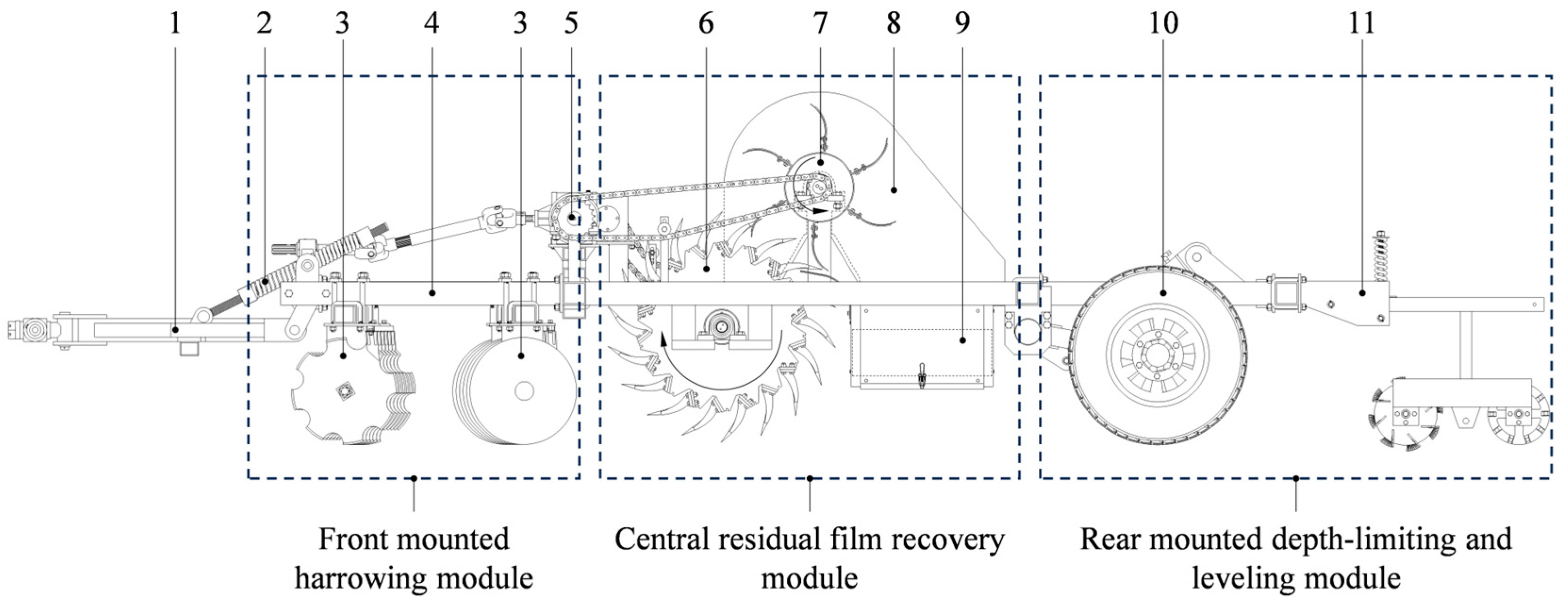
2.1. Structure Composition and Working Principle
2.2. Design of Key Components
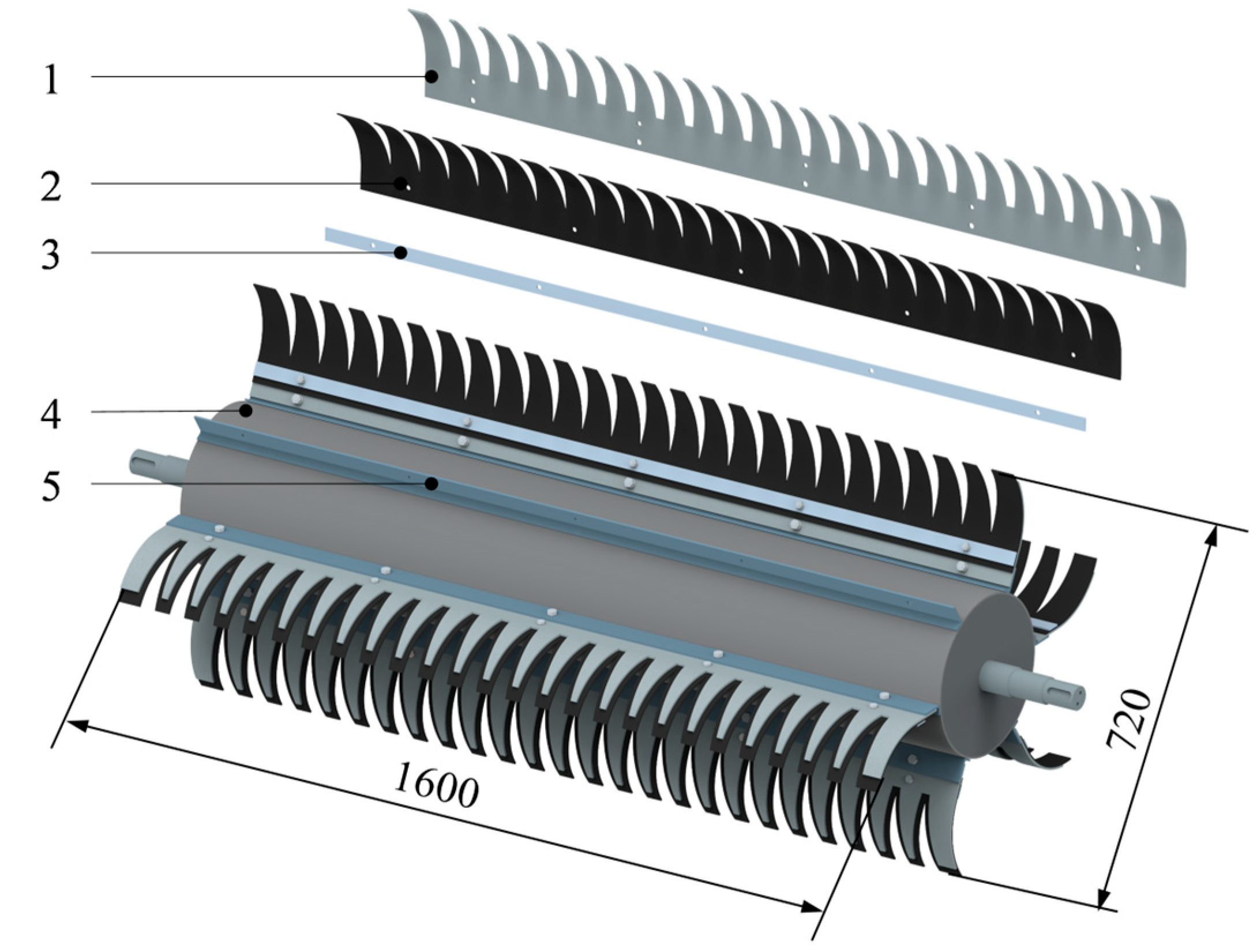
2.2.1. Arc-Shaped Scraper Film-Removal Device
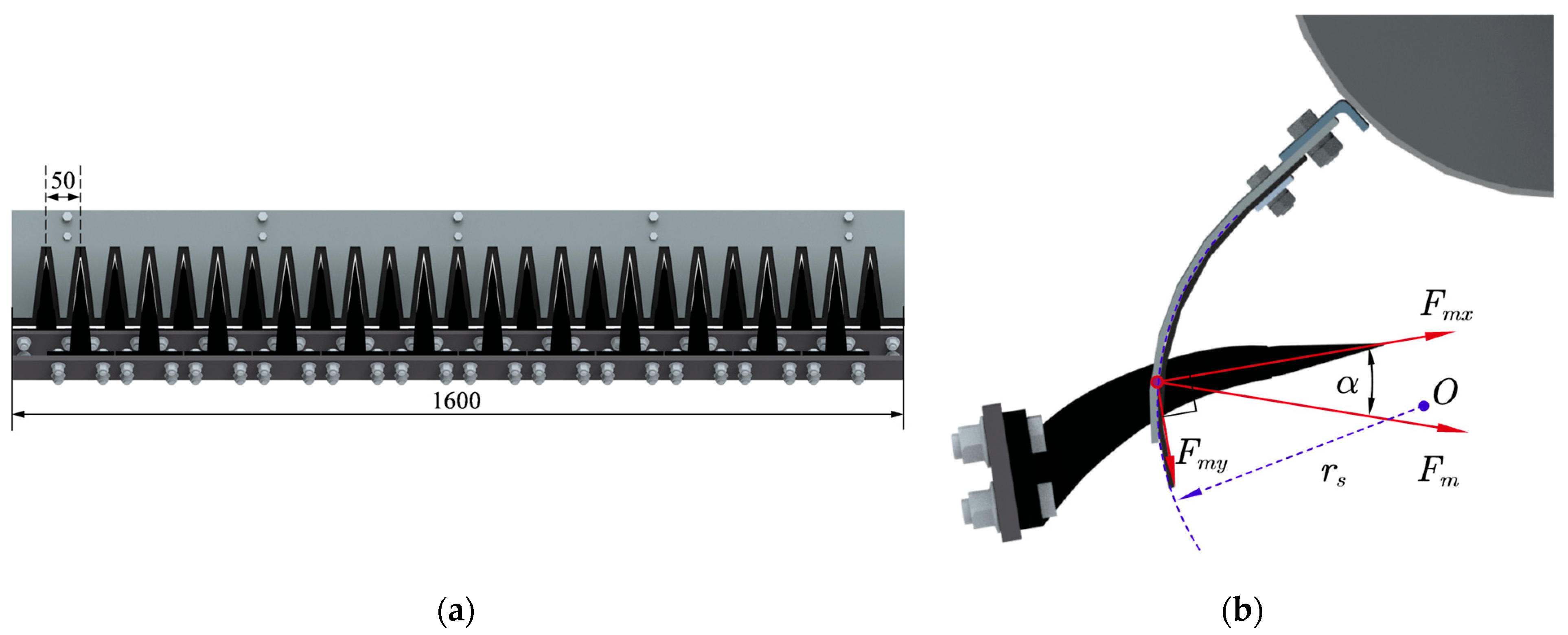
2.2.2. Structural Design of the Arc-Shaped Film-Removal Scraper
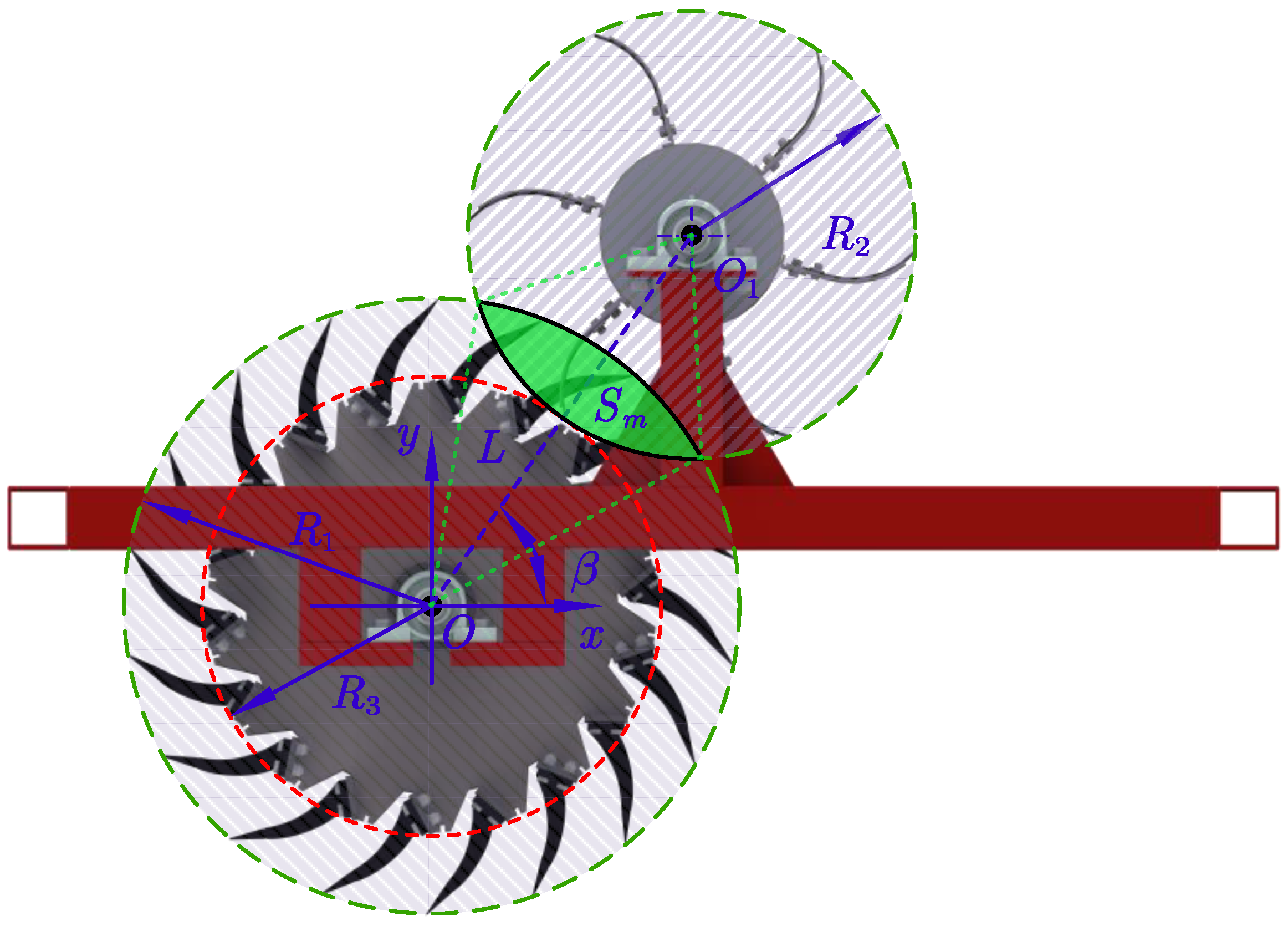
2.2.3. Installation Position of the Film-Removal Device
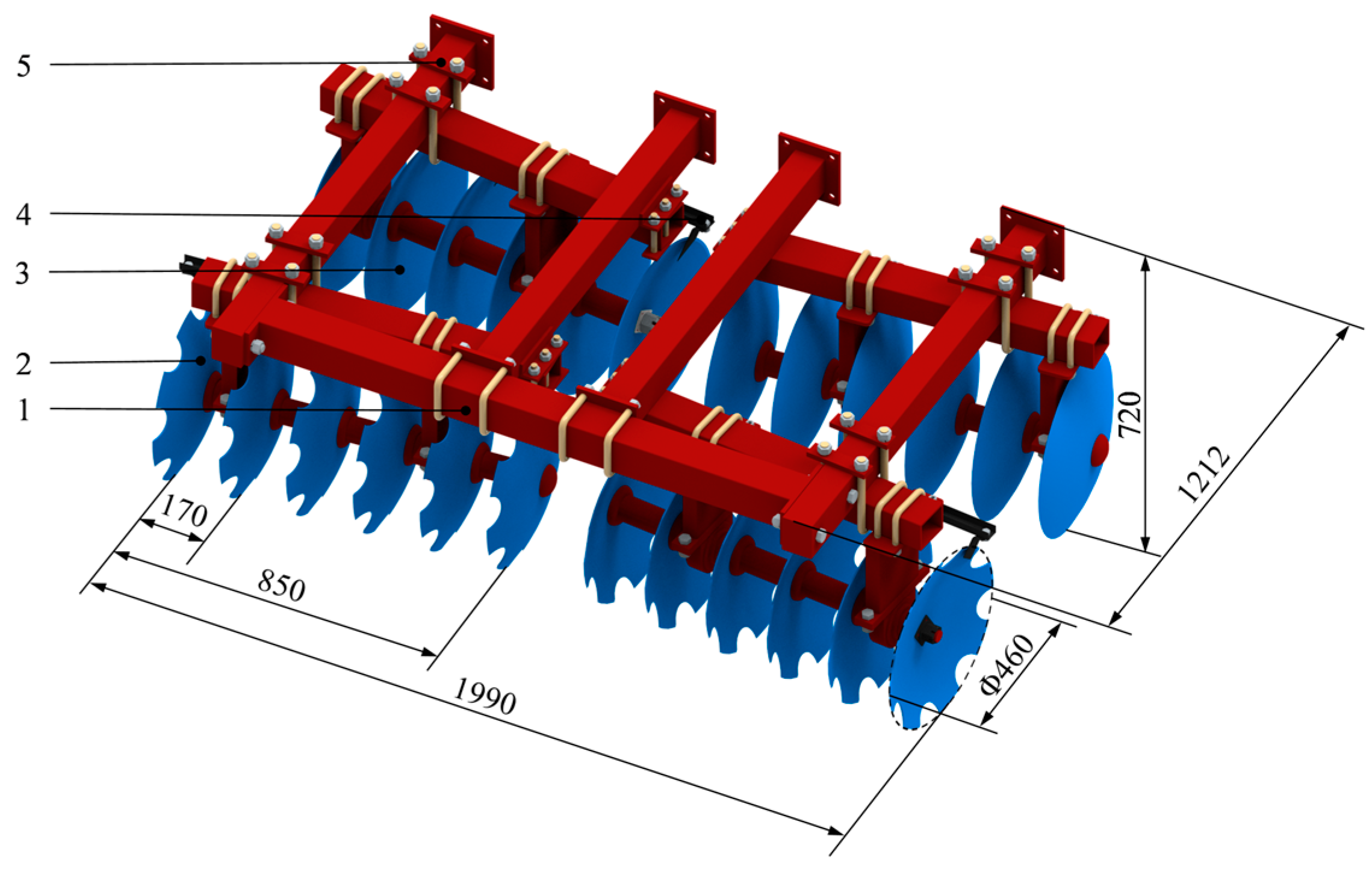
2.2.4. Device Disc Harrow Device
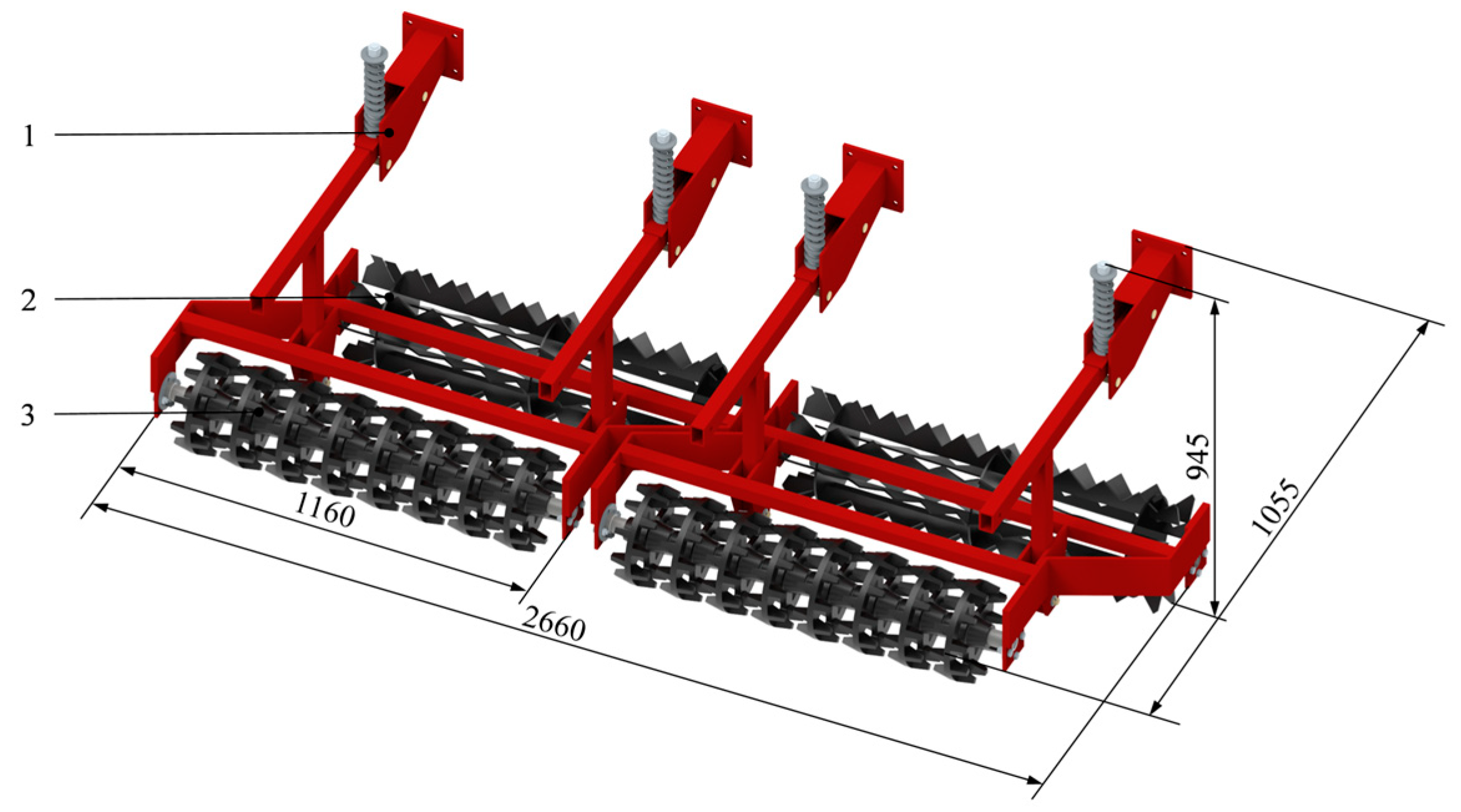
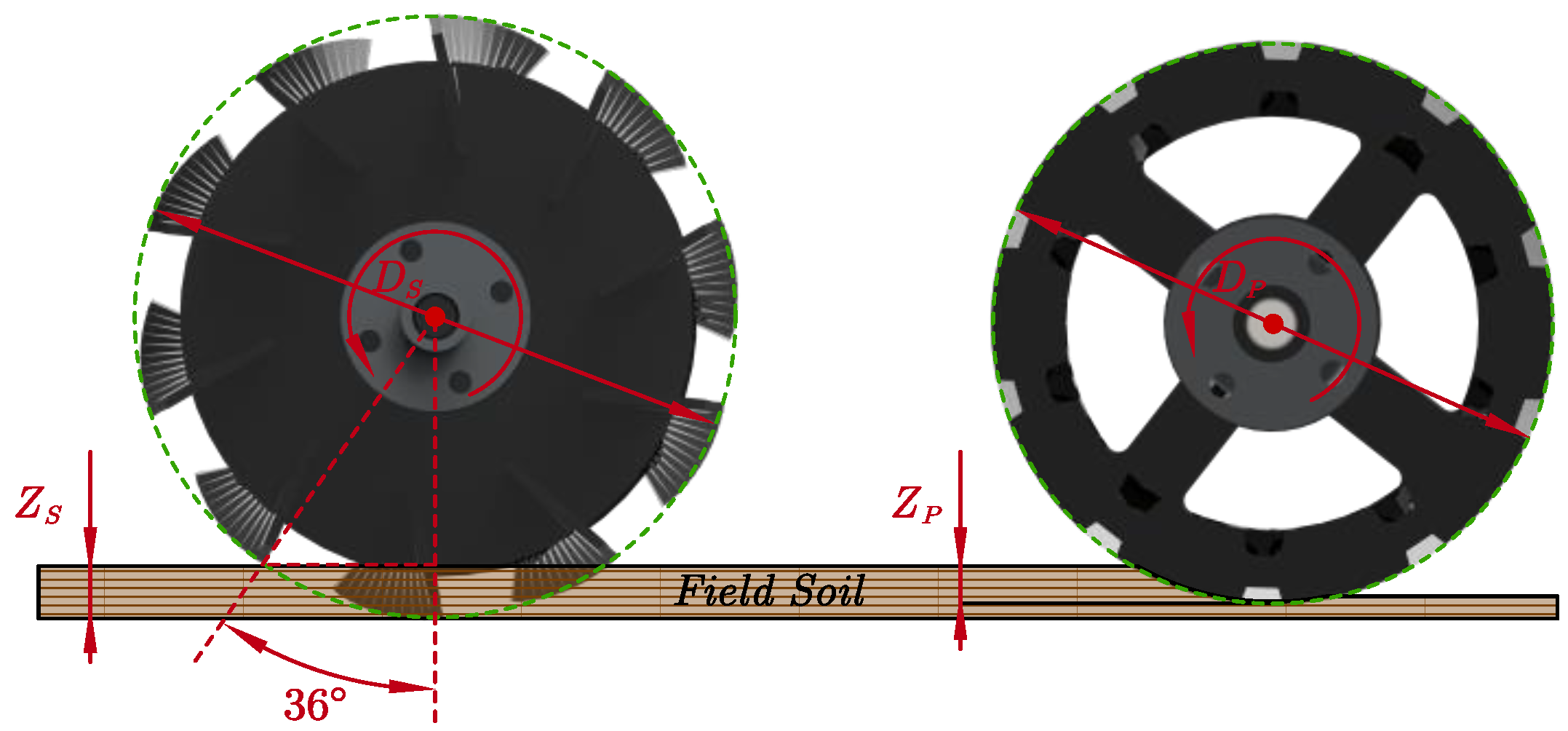
2.2.5. Soil Crushing and Leveling Device
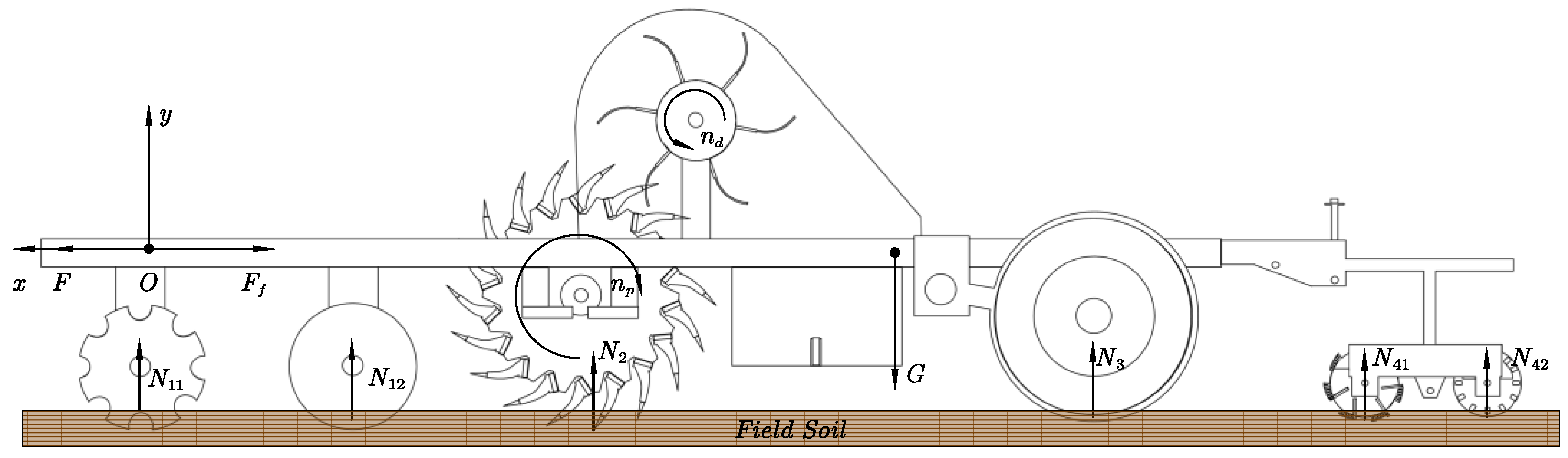
2.3. Dynamics Analysis of the Machine’s Operational Process
2.4. Field Performance Experiment
2.4.1. Test Conditions and Instruments
2.4.2. Test Methods
2.4.3. Experimental Factors and Levels
3. Results
3.1. Analysis of Residual Film Recovery Performance
3.1.1. Range Analysis and Variance Analysis
3.1.2. Analysis of Single-Factor Influence Patterns
3.1.3. Determination of Optimal Parameter Combination
3.2. Analysis of Soil Preparation Performance
3.3. Validation Test
4. Discussion
5. Conclusions
- (1)
- This study successfully developed and validated a sowing-layer residual film recovery machine integrated with soil preparation functionality. The modular design, incorporating “harrowing–film picking–film removal–soil leveling” in a single pass, effectively resolves the operational conflict between pre-sowing residual film recovery and soil preparation in Xinjiang’s cotton fields. This integration delivers substantial field benefits by reducing the required machinery passes from three to one, thereby saving time, labor, and fuel, while crucially eliminating the repeated soil compaction inherent in conventional segregated operations. Consequently, the machine provides a technically effective and agronomically superior solution for combined pre-sowing operations.
- (2)
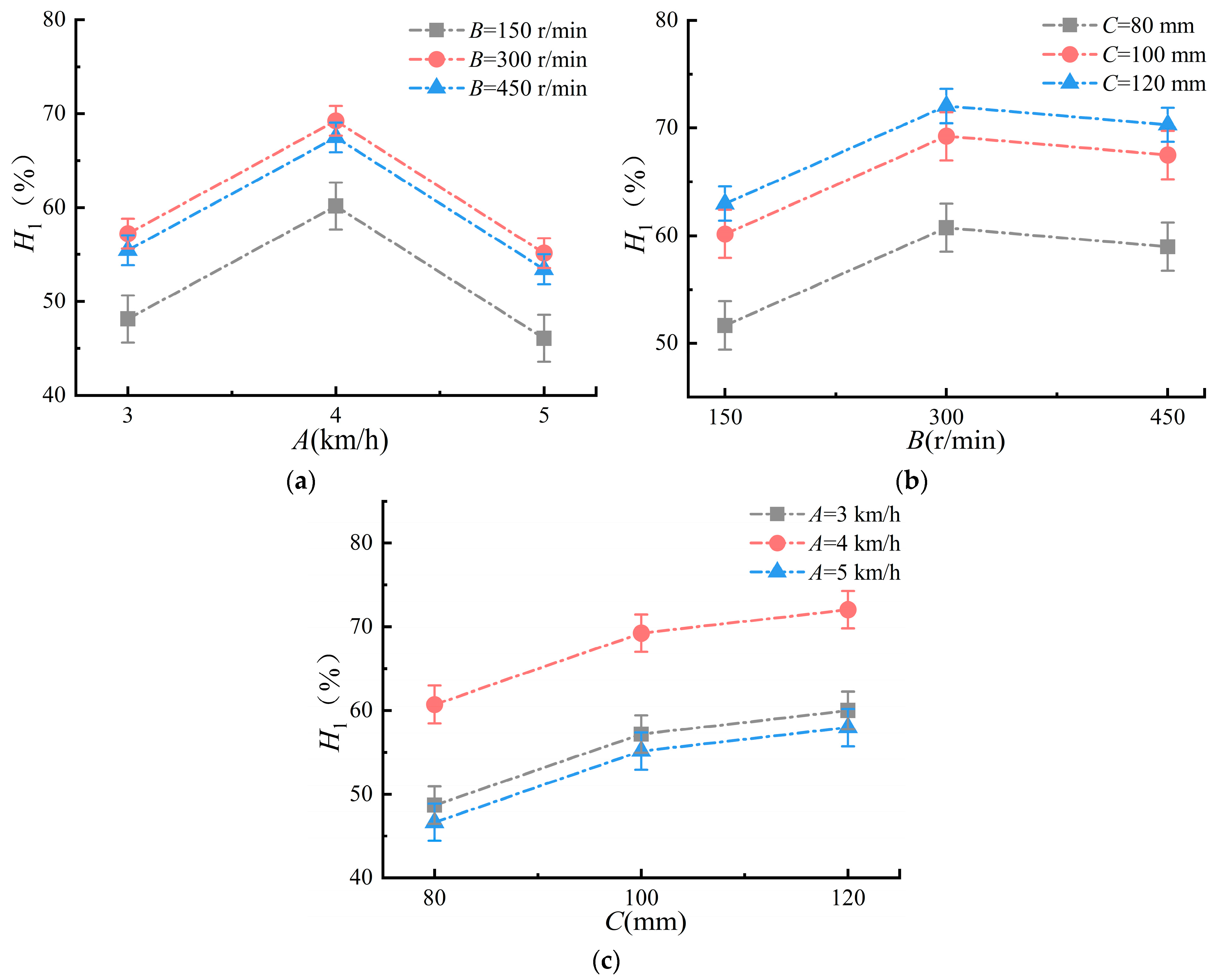
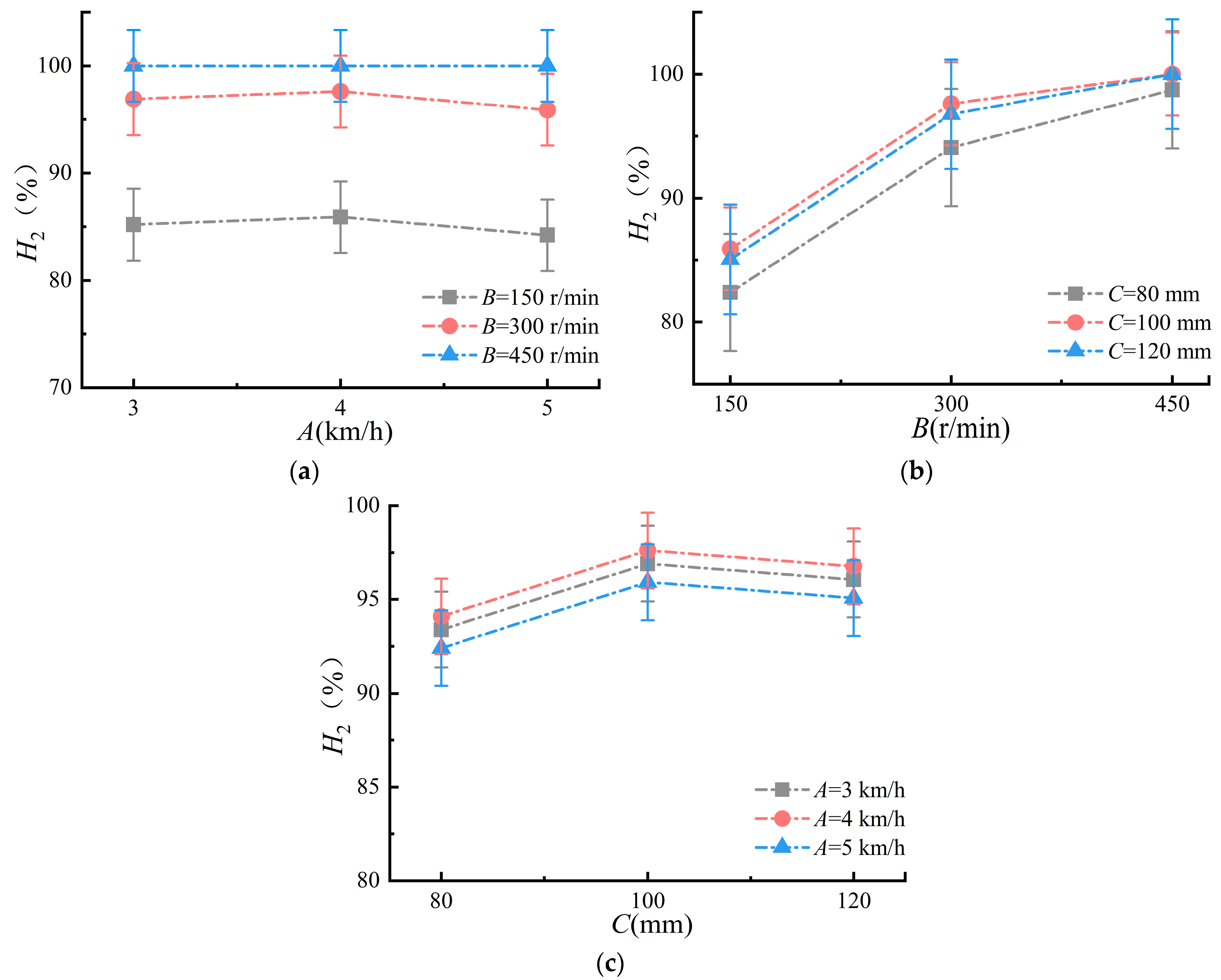
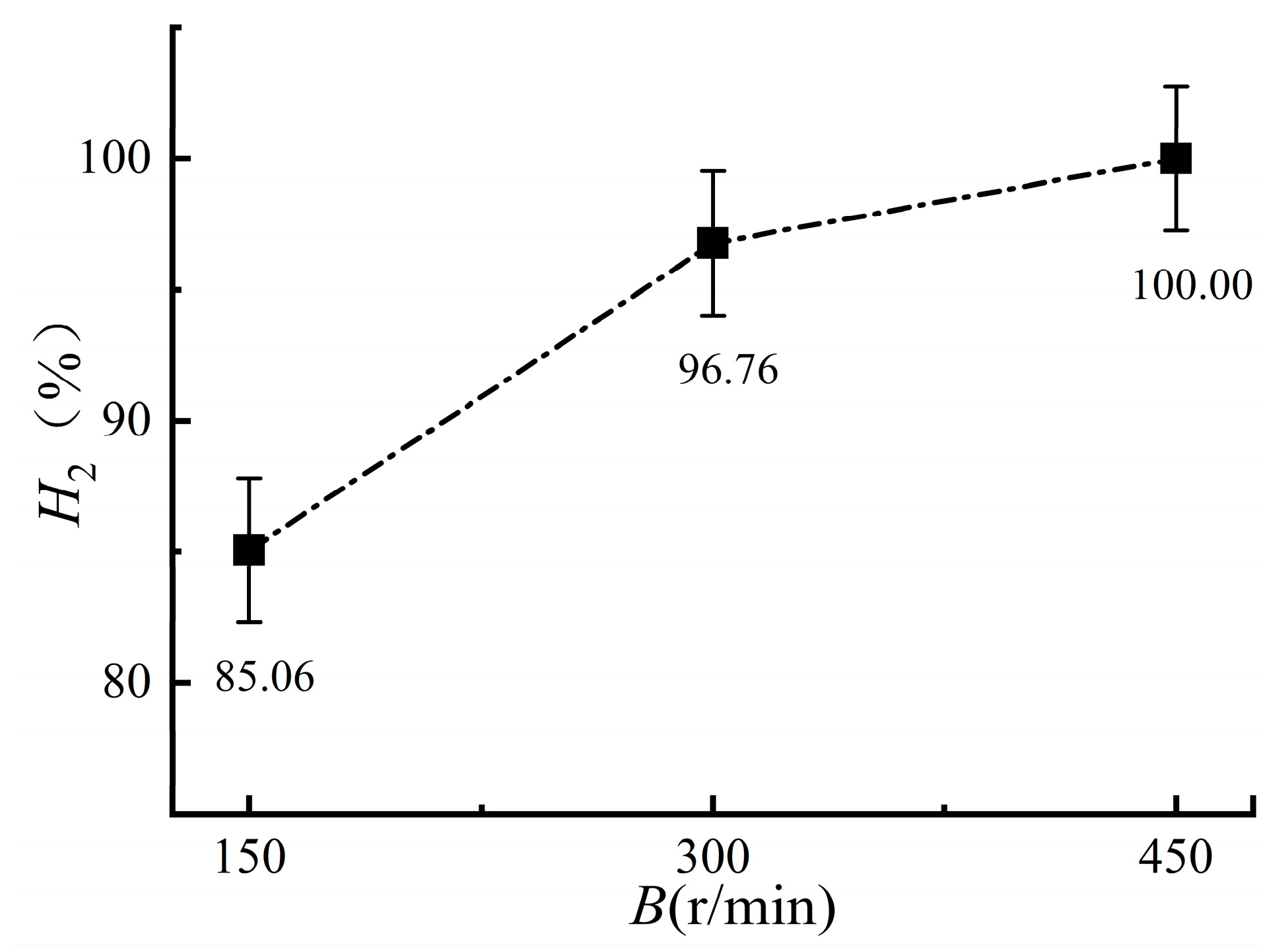
- Through dynamic analysis and orthogonal experimental design with subsequent analysis, the influence patterns of operational parameters on film recovery performance were systematically investigated. The results indicate that forward speed, the rotational speed of the film-removal roller, and working depth significantly affect the film-pickup rate, with the order of influence being forward speed > working depth > rotational speed of the film-removal roller. The film-removal rate is primarily influenced by the rotational speed of the film-removal roller, with the order of influence being rotational speed of the film-removal roller > working depth > forward speed. The optimal parameter combination was determined as a forward speed of 4 km/h, a rotational speed of the film-removal roller at 300 r/min, and a working depth of 120 mm.
- (3)
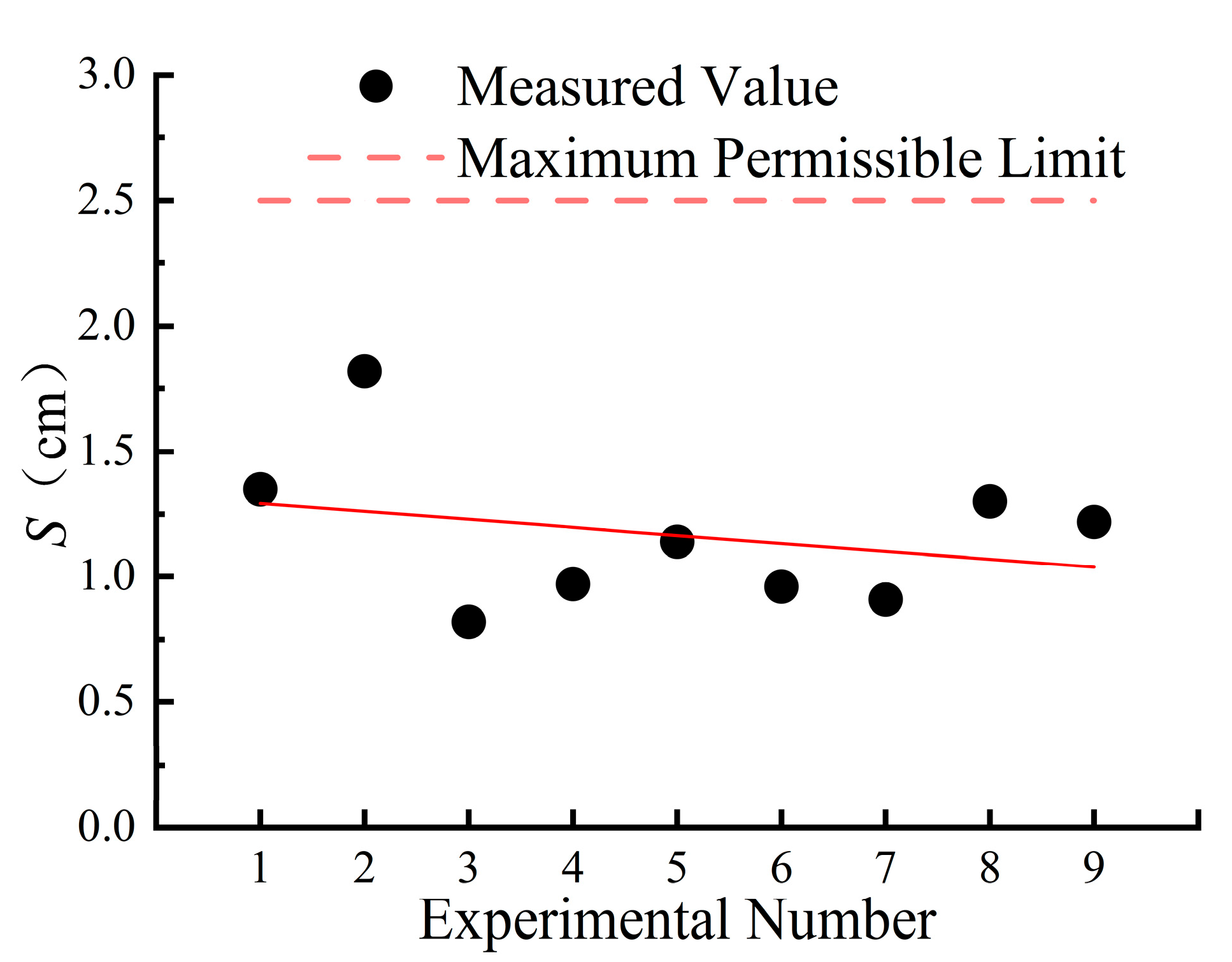
- Validation test results under the optimal parameters showed that the film-pickup rate reached 71.23%, the film-removal rate reached 95.06%, and the surface evenness was stabilized at 1.23 cm after operation. All the indicators met the design requirements and showed good agreement with the predicted values (relative error < 2%). Compared to the previously developed arc-toothed roller and spike-toothed roller residual film recovery devices by our team, the current machine achieved significant improvements of 7.75 and 15.10 percentage points in the film-pickup rate and film-removal rate.
- (4)
- Looking forward, this integrated machine presents a promising solution for regions facing similar challenges of residual film pollution and tight farming schedules. Future work will focus on its adaptability across different soil types and film-mulching histories, along with a comprehensive assessment of scaling potential and cost-effectiveness to facilitate broader adoption.
Author Contributions
Funding
Institutional Review Board Statement
Data Availability Statement
Conflicts of Interest
References
- Zhang, L.; Wei, H.; Zhang, K.; Li, Z.; Li, F.-M.; Zhang, F. Plastic film mulching increases crop yields and reduces global warming potential under future climate change. Agric. For. Meteorol. 2024, 349, 109963. [Google Scholar] [CrossRef]
- Wang, H.; Li, Z.; Si, Z.; Hamani, A.K.M.; Huang, W.; Fan, K.; Wang, X.; Gao, Y. Alternative planting patterns of film-mulching cotton for alleviating plastic residue pollution in Aksu oasis, southern Xinjiang. Ind. Crops Prod. 2023, 203, 117205. [Google Scholar] [CrossRef]
- Zhao, Y.; Chen, X.; Wen, H.; Zheng, X.; Niu, Q.; Kang, J. Research status and prospect of control technology for residual plastic film pollution in farmland. Trans. Chin. Soc. Agric. Mach. 2017, 48, 1–14. [Google Scholar] [CrossRef]
- Yao, J.; Zhang, X.; Shi, Z.; Liu, X.; Kang, M.; Guo, L. Research status and development trend of tillage layer residual film recycling machine. J. Chin. Agric. Mech. 2024, 45, 290–295. [Google Scholar] [CrossRef]
- Zhang, D.; Liu, H.-b.; Hu, W.; Qin, X.; Ma, X.; Yan, C.; Wang, H. The Status and Distribution Characteristics of Residual Mulching Film in Xinjiang, China. J. Integr. Agric. 2016, 15, 2639–2646. [Google Scholar] [CrossRef]
- Wang, J.; Liu, H.; Gong, P.; Li, P.; Yang, C.; Li, L.; Xu, Y.; Dong, J.; Guo, Y. Assessing the impact of residual film on agriculture: A meta-analysis of soil moisture, salinity, and crop yield. Ecotoxicol. Environ. Saf. 2025, 289, 117665. [Google Scholar] [CrossRef]
- Can, H.; Wang, X.; Wang, S.; Lu, B.; Guo, W.; Liu, C.; Tang, X. Impact of agricultural residual plastic film on the growth and yield of drip-irrigated cotton in arid region of Xinjiang, China. Int. J. Agric. Biol. Eng 2020, 13, 160–169. [Google Scholar] [CrossRef]
- Wang, D.; Xi, Y.; Shi, X.; Guo, C.; Zhong, Y.; Song, C.; Guan, Y.; Huang, L.; Yang, Q.; Li, F. Effects of Residual Plastic Film on Crop Yield and Soil Fertility in a Dryland Farming System. J. Integr. Agric. 2023, 22, 3783–3791. [Google Scholar] [CrossRef]
- Kimball, J. Agricultural Implement for Recovery of Plastic Mulch and Processing of the Same. U.S. Patent 10285330, 14 May 2019. [Google Scholar]
- Lamont, W.J. Plastic Mulches for the Production of Vegetable Crops. In A Guide to the Manufacture, Performance, and Potential of Plastics in Agriculture; Orzolek, M.D., Ed.; Elsevier: Amsterdam, The Netherlands, 2017; pp. 45–60. [Google Scholar] [CrossRef]
- Wang, P.; Chen, X.; Wen, H. Research and Experiment on the Removal Mechanism of Light Impurities of the Residual Mulch Film Recovery Machine. Agriculture 2022, 12, 775. [Google Scholar] [CrossRef]
- Yang, M.; Chen, Y.; Li, Y.; Zhang, T.; Wu, T. A two-stage hybrid NSGA-III with BWO for path planning and task allocation in agricultural land preparation. PLoS ONE 2025, 20, e0315670. [Google Scholar] [CrossRef]
- Mojžiš, M.; Jobbágy, J.; Rataj, V.; Zsembeli, J. Impact of Machinery Passages on Soil Compaction in Field Conditions. Acta Technol. Agric. 2024, 27, 116–124. [Google Scholar] [CrossRef]
- Zhang, X.; Liu, J.; Shi, Z.; Jin, W.; Yan, J.; Yu, M. Design and parameter optimization of reverse membrane and soil separation device for residual film recovery machine. Trans. Chin. Soc. Agric. Eng. 2019, 35, 46–55. [Google Scholar] [CrossRef]
- Zhao, Y.; Zhang, X.; Jin, W.; Yuan, P.; Liu, J. Design of Pick-up mechanism for the chain-teeth-rake topsoil incomplete plastic film recycling machine. J. Agric. Mech. Res. 2019, 41, 119–122, 127. [Google Scholar] [CrossRef]
- Li, C.; Bai, S.; Jin, W. Design and experiment on picking mechanism of chain tooth type plough residue film reclaiming machine. J. Agric. Mech. Res. 2019, 41, 107–111. [Google Scholar] [CrossRef]
- Huang, W.; Wang, H.; Dai, W.; Zhang, M.; Ren, D.; Wang, W. Study on the throwing device of residual film recycling machine for the plough layer. Comput. Electron. Agric. 2024, 227, 109679. [Google Scholar] [CrossRef]
- Shi, Z.; Zhang, X.; Liu, X.; Kang, M.; Yao, J.; Guo, L. Analysis and Test of the Tillage Layer Roll-Type Residual Film Recovery Mechanism. Appl. Sci. 2023, 13, 7598. [Google Scholar] [CrossRef]
- Guo, W.; He, X.; Wang, L.; Zhao, P.; Hu, C.; Hou, S.; Wang, X. Development of a comb tooth loosening and pneumatic stripping plough layer residual film recovery machine. Trans. Chin. Soc. Agric. Eng. 2020, 36, 1–10. [Google Scholar] [CrossRef]
- You, Z.; Hu, Z.; Wu, H.; Zhang, Y.; Yan, J.; Yan, W.; Zhou, X. Design and experiment of 1MCDS-100A typed shovel-sieve residual film recovery machine. Trans. Chin. Soc. Agric. Eng. 2017, 33, 10–18. [Google Scholar] [CrossRef]
- Yan, W.; Hu, Z.; Wu, N.; Xu, H.; You, Z.; Zhou, X. Parameter optimization and experiment for plastic film transport mechanism of shovel screen type plastic film residue collector. Trans. Chin. Soc. Agric. Eng. 2017, 33, 17–24. [Google Scholar] [CrossRef]
- Zhang, Y.; Hu, Z.; You, Z.; Shen, C.; Gu, F.; Wu, F.; Liu, M. Membrane-soil separation for the shovel-screen type residual plastic film collector. J. Chin. Agric. Mech. 2018, 39, 21–26. [Google Scholar] [CrossRef]
- Chen, X.; Chen, X.; Li, J.; Li, C.; Yang, Y. Design and test of nail-teeth roller-type residual film recovery device before sowing. Trans. Chin. Soc. Agric. Eng. 2020, 36, 30–39. [Google Scholar] [CrossRef]
- Zhang, Z.; Chen, X.; Wang, X.; Xue, S.; Li, J. Design and test of the arc-shaped nail-tooth roller residual film recovery machine from the sowing layer. Int. J. Agric. Biol. Eng. 2024, 17, 90–98. [Google Scholar] [CrossRef]
- Wang, X.; Zhang, Z.; Zhao, Y.; Xue, S.; Li, J. Design and test of arc-shaped film binding nail teeth. J. Chin. Agric. Mech. 2021, 42, 24–29. [Google Scholar] [CrossRef]
- Zhang, Z.; Li, J.; Wang, X.; Zhao, Y.; Xue, S.; Su, Z. Parameters optimization and test of an arc-shaped nail-tooth roller-type recovery machine for sowing layer residual film. Agriculture 2022, 12, 660. [Google Scholar] [CrossRef]
- Trevini, M.; Tosti, G.; Benincasa, P. Agronomic performance of disc chain harrow as a conservation agriculture tool for a one-step cover crop termination and seedbed preparation. Exp. Agric. 2024, 60, e12. [Google Scholar] [CrossRef]
- Zeng, Z.; Chen, Y.; Qi, L. Soil Cutting by a Compact Disc Harrow Having Various Disc Arrangements. Trans. ASABE 2019, 62, 429–437. [Google Scholar] [CrossRef]
- Stolf, R.; Silva, J.R.d.; Gomez, J.A.M. Method for measuring the horizontal gang angle of double-action disc harrows and its application in the field. Bragantia 2010, 69, 493–497. [Google Scholar] [CrossRef]
- Liu, D.; Yang, H.; Liu, J. Optimization design of diverting-type land leveling machine. Xinjiang Agric. Mech. 2025, 4, 13–15+26. [Google Scholar] [CrossRef]
- Li, F.; Yang, H.; Zheng, X.; Hu, H. Development of the soil layer construction device for the cotton seedbed in sandy soil of arid areas. Trans. Chin. Soc. Agric. Eng. 2024, 40, 55–65. [Google Scholar] [CrossRef]
- Wang, X.; Huang, Y.; Qin, C.; Li, Y. Theoretical and experimental research on 1LZ-5.4 tillage combine. Trans. Chin. Soc. Agric. Mach. 1996, 27, 15–18. [Google Scholar]
- Li, B. Agricultural Machines, 1st ed.; China Agriculture Press Co., Ltd.: Beijing, China, 2003; pp. 45–46. [Google Scholar]
- Cao, S. Improved Design of the Folding General-Purpose Frame of Combined Land Preparation Machine. Master’s Thesis, Shihezi University, Shihezi, China, 2014. [Google Scholar]
- Chinese Academy of Agricultural Mechanization Sciences. Agricultural Machinery Design Manual; China Agricultural Science and Technology Press: Beijing, China, 2007; Volume 1, pp. 263–264. [Google Scholar]
- Damanauskas, V.; Janulevičius, A. Effect of tillage implement (spring tine cultivator, disc harrow), soil texture, forward speed, and tillage depth on fuel consumption and tillage quality. J. Agric. Eng. 2022, 53, 1371. [Google Scholar] [CrossRef]
- Zhang, Z.; Li, J.; Wang, X.; Zhao, Y.; Xue, S.; Su, Z.; Liang, J. Design and test of 1SMB-3600A type fragmented mulch film collector for sowing layer soil. Soil Tillage Res. 2023, 225, 105555. [Google Scholar] [CrossRef]
- Zhang, Q.; Liang, L.; Zhang, J. Agricultural Machinery, 2nd ed.; Chemical Industry Press Co., Ltd.: Beijing, China, 2024; pp. 7–8. [Google Scholar]
- Pashchenko, V.F.; Syromyatnikov, Y.U.N. The Transporting Ability of the Rotor of the Soil-Cultivating Loosening and Separating Vehicle. Tract. Agric. Mach. 2019, 86, 67–74. [Google Scholar] [CrossRef]
- Dai, F.; Song, X.; Zhao, W.; Zhang, F.; Ma, H.; Ma, M. Simulative Calibration on Contact Parameters of Discrete Elements for Covering Soil on Whole Plastic Film Mulching on Double Ridges. Trans. Chin. Soc. Agric. Mach. 2019, 50, 49–56, 77. [Google Scholar] [CrossRef]
- Bernacki, H.; Haman, J.; Kanafojski, C.Z.; Wiszniewicz, E. Agricultural Machines, Theory and Construction; China Machine Press: Beijing, China, 1985; Volume 1. [Google Scholar]
- GB/T 25412-2021; Residual Film Field Recycling Machine. China Standards Press: Beijing, China, 2021.
- GB/T 25413-2010; Limit and Determination of Residual Plastic Film in Farmland. China Standards Press: Beijing, China, 2010.
- DG/T 096-2021; Combined Soil Preparation Machines. China Standards Press: Beijing, China, 2021.
- Hu, C.; Wang, X.; Chen, X.; Tang, X.; Zhao, Y.; Yan, C. Current situation and control strategies of residual film pollution in Xinjiang. Trans. Chin. Soc. Agric. Eng. 2019, 35, 223–234. [Google Scholar] [CrossRef]
- Zhang, M.; Zhang, J.; Peng, Y.; Wang, Y. FreqDyn-YOLO: A High-Performance Multi-Scale Feature Fusion Algorithm for Detecting Plastic Film Residues in Farmland. Sensors 2025, 25, 4888. [Google Scholar] [CrossRef] [PubMed]
- Qiu, F.; Zhai, Z.; Li, Y.; Yang, J.; Wang, H.; Zhang, R. UAV imaging and deep learning based method for predicting residual film in cotton field plough layer. Front. Plant Sci. 2022, 13, 1010474. [Google Scholar] [CrossRef] [PubMed]
- Zhai, Z.; Chen, X.; Zhang, R.; Qiu, F.; Meng, Q.; Yang, J.; Wang, H. Evaluation of Residual Plastic Film Pollution in Pre-Sowing Cotton Field Using UAV Imaging and Semantic Segmentation. Front. Plant Sci. 2022, 13, 991191. [Google Scholar] [CrossRef]



| Level | Experimental Factor | ||
|---|---|---|---|
| A/km·h−1 | B/r·min−1 | C/mm | |
| Lower level (−1) | 3 | 150 | 80 |
| Center level (0) | 4 | 300 | 100 |
| Upper level (1) | 5 | 450 | 120 |
| Test Number | Factors | Indicators | |||
|---|---|---|---|---|---|
| A/km·h−1 | B/r·min−1 | C/mm | H1/% | H2/% | |
| 1 | 3 | 150 | 80 | 39.47 | 81.12 |
| 2 | 3 | 300 | 100 | 56.68 | 98.17 |
| 3 | 3 | 450 | 120 | 58.82 | 100.00 |
| 4 | 4 | 150 | 100 | 60.75 | 85.20 |
| 5 | 4 | 300 | 120 | 71.98 | 96.20 |
| 6 | 4 | 450 | 80 | 58.61 | 100.00 |
| 7 | 5 | 150 | 120 | 48.45 | 84.63 |
| 8 | 5 | 300 | 80 | 47.17 | 91.69 |
| 9 | 5 | 450 | 100 | 53.26 | 100.00 |
| Experimental Index | Items | A/km·h−1 | B/r·min−1 | C/mm |
|---|---|---|---|---|
| H1 | k1 | 51.66 | 49.56 | 48.42 |
| k2 | 63.78 | 58.61 | 56.90 | |
| k3 | 49.63 | 56.90 | 59.75 | |
| R | 14.15 | 9.05 | 11.33 | |
| Order of significance: A > C > B | ||||
| Optimal combination: A2B2C3 | ||||
| H2 | k1 | 93.10 | 83.65 | 90.94 |
| k2 | 93.80 | 95.35 | 94.46 | |
| k3 | 92.11 | 100.00 | 93.61 | |
| R | 1.69 | 16.35 | 3.52 | |
| Order of significance: B > C > A | ||||
| Optimal combination: A2B3C2 | ||||
| Experimental Index | Source | Sum of Squares | Degrees of Freedom | Mean Square | F-Value | p-Value |
|---|---|---|---|---|---|---|
| H1 | Model | 695.08 | 6 | 115.85 | 141.52 | 0.0070 ** |
| A | 347.24 | 2 | 173.62 | 212.09 | 0.0047 ** | |
| B | 139.20 | 2 | 69.60 | 85.02 | 0.0116 * | |
| C | 208.65 | 2 | 104.32 | 127.44 | 0.0078 ** | |
| Residual | 1.64 | 2 | 0.8186 | |||
| Cor Total | 696.72 | 8 | ||||
| H2 | Model | 450.48 | 6 | 75.08 | 20.75 | 0.0467 * |
| A | 4.34 | 2 | 2.17 | 0.5999 | 0.6250 | |
| B | 425.88 | 2 | 212.94 | 58.84 | 0.0167 * | |
| C | 20.25 | 2 | 10.13 | 2.80 | 0.2633 | |
| Residual | 7.24 | 2 | 3.62 | |||
| Cor Total | 457.72 | 8 |
| Test Number | H1/% | H2/% |
|---|---|---|
| 1 | 70.50 | 97.72 |
| 2 | 71.21 | 94.11 |
| 3 | 70.23 | 95.26 |
| 4 | 73.11 | 95.10 |
| 5 | 71.09 | 93.11 |
| Average | 71.23 | 95.06 |
| Predicted value | 72.05 | 96.76 |
| Relative error | 1.15% | 1.79% |
Disclaimer/Publisher’s Note: The statements, opinions and data contained in all publications are solely those of the individual author(s) and contributor(s) and not of MDPI and/or the editor(s). MDPI and/or the editor(s) disclaim responsibility for any injury to people or property resulting from any ideas, methods, instructions or products referred to in the content. |
© 2025 by the authors. Licensee MDPI, Basel, Switzerland. This article is an open access article distributed under the terms and conditions of the Creative Commons Attribution (CC BY) license (https://creativecommons.org/licenses/by/4.0/).
Share and Cite
Hou, G.; Li, J.; Zhang, Z.; Li, Z.; Wang, X.; Li, Y. Design and Experiment of a Sowing-Layer Residual Film Recovery Machine Integrated with a Soil Preparation Function. Agriculture 2025, 15, 2584. https://doi.org/10.3390/agriculture15242584
Hou G, Li J, Zhang Z, Li Z, Wang X, Li Y. Design and Experiment of a Sowing-Layer Residual Film Recovery Machine Integrated with a Soil Preparation Function. Agriculture. 2025; 15(24):2584. https://doi.org/10.3390/agriculture15242584
Chicago/Turabian StyleHou, Gang, Jingbin Li, Zhiyuan Zhang, Zeyi Li, Xianfei Wang, and Yingjie Li. 2025. "Design and Experiment of a Sowing-Layer Residual Film Recovery Machine Integrated with a Soil Preparation Function" Agriculture 15, no. 24: 2584. https://doi.org/10.3390/agriculture15242584
APA StyleHou, G., Li, J., Zhang, Z., Li, Z., Wang, X., & Li, Y. (2025). Design and Experiment of a Sowing-Layer Residual Film Recovery Machine Integrated with a Soil Preparation Function. Agriculture, 15(24), 2584. https://doi.org/10.3390/agriculture15242584