Article

A Path Analysis of Behavioral Drivers of Household Food Waste in Greece

by
Zacharias Papanikolaou
* and
Christos Karelakis
Department of Agricultural Development, Democritus University of Thrace, 68200 Orestiada, Greece
*
Author to whom correspondence should be addressed.
Agriculture 2025, 15(23), 2481; https://doi.org/10.3390/agriculture15232481 (registering DOI)
Submission received: 2 November 2025 / Revised: 21 November 2025 / Accepted: 26 November 2025 / Published: 29 November 2025

Abstract

Food waste is one of the planet’s most pressing challenges, directly linked to food security, resource depletion, greenhouse gas emissions, and, more broadly, environmental concerns demanding immediate attention. This issue occurs throughout the entire food value chain; however, households are the primary source of waste. This research examines the key factors influencing household food waste behavior and investigates how these factors can contribute to the development of sustainable practices that minimize environmental impacts. Six research hypotheses were examined, focusing on consumers’ knowledge of environmental and food waste issues, their awareness of their community, their emotional responses to their actions, and their social and economic status. A structured questionnaire was administered to a sample of 870 individuals in a region of Greece, and the data were analyzed using factor and path analyses. The results showed that education and accurate information about environmental issues, as well as strategies for reducing waste and its impact on the environment and the economy, were strongly correlated with consumers’ food waste behaviors. The proposed model demonstrated moderate explanatory power (R2 = 0.396) and excellent fit indices (χ2 = 10.58, p < 0.001, NFI = 0.99, IFI = 0.995, CFI = 0.98, RMSEA = 0.06), highlighting the significance of the main predictors identified.

1. Introduction

Food waste is a major global challenge with significant social, ethical, and environmental impacts, directly linked to climate change and food insecurity. Despite international efforts by the European Union [1] and the United Nations [2,3], approximately 1.3 billion tons of food—around 33% of global production—is discarded annually. While numerous studies have addressed food waste along the supply chain, household behavior remains the primary source of waste and is less understood, particularly in the context of Greece. This research aims to fill this gap by examining the key behavioral, social, and psychological factors driving household food waste and their implications for sustainable consumption practices. In this context, we should also consider the significant environmental impacts associated with the processing of these foods, as their production processes are highly resource-intensive and result in substantial losses [4]. The most critical environmental impacts are greenhouse gas emissions, water and air pollution, and deforestation, which are observed at all stages of food processing. Throughout the food value chain—from production to final consumption—food waste and food loss (FWL) arise, representing two distinct concepts [4,5,6,7,8,9,10]. Food waste (FW) results from food losses at the last stage of the value chain, when food is in consumers’ hands, while food loss (FL) occurs at all stages of the value chain before reaching households. These stages incorporate agricultural production, transportation, product processing, and storage and distribution [11].
FW is inextricably linked to consumers’ social profiles and habits. More important than these are their economic profile, knowledge of food management issues, preferences, and environmental awareness [12,13]. In this context, the recent rapid urbanization has led to decentralization and population growth in cities. This phenomenon, combined with rising household incomes, has inevitably led to greater consumer spending. The rise in goods consumption also entails increased food purchases, as food is a primary necessity of life. As a result, households produce more waste, which naturally provides food.
According to the Food and Agriculture Organization, 61% of food losses are attributed to household waste, amounting to approximately 79 kg of food per consumer [12,13,14]. Food waste also increases losses of water and other energy resources, as they are integral to production and processing. Therefore, we immediately recognize the benefits of reducing overall food losses, which, in turn, will reduce per capita greenhouse gas (GHG) emissions across all stages of the supply chain. It is worth noting that reducing food waste will also benefit climate change mitigation [15]. According to research, total food losses contribute to 8% of greenhouse gas emissions and occupy 30% of global agricultural land, which receives most of the cultivation care. Still, in the end, these products end up in the trash [16].
One of the most critical issues in reducing FW is achieving the United Nations (UN) Sustainable Development Goals, as the sustainability of our planet is threatened [17,18]. Knowing all the impacts that the issue of FW has on resource management, as well as on critical sustainability issues, all 193 UN members have included in their agenda, with an implementation plan for 2030, “Responsible Production and Consumption” in the context of achieving Sustainable Development Goal (SDG) 12 [19,20]. Achieving this goal requires planning and discipline in sustainable agricultural production processes, as well as the implementation of circular economy methods [21]. Additionally, governments should reconsider all processes along the product value chain—from cultivation to distribution—to reduce food losses by half by 2030 [22]. A consequence of the above is the obligation of UN member states to implement what is required for sustainable rural development and the sustainable utilization of all food losses [23,24].
In this article, we shed light on the factors that contribute to consumer behavior, the final driver of the largest share of food waste. The research approach focuses on consumer perceptions of food management, organization, consumer behavior, environmental knowledge, and their impacts. The consumer profile is essential, with its economic and social aspects being more critical.
The primary objective of the study was to identify the key factors that influence consumer behavior related to food waste and, based on these factors, propose targeted action plans to reduce it. The innovation lies in examining an additional factor—the “sense of community”—and its relationship with consumer behavior, an aspect that has not previously been explored in Central Macedonia. The remainder of the paper presents the theoretical background in the next section, while the materials and methods employed are described in the third section. The fourth section discusses the results, and the final section concludes.
This study adds to the literature by identifying the key psychological, social, and educational factors that influence household food waste behavior in Greece, providing empirical evidence through path analysis, and highlighting the practical implications for designing targeted interventions to promote sustainable consumption.

2. Theoretical Background

In recent years, numerous studies have focused on identifying factors of and solutions to food waste, highlighting households as one of the most critical links in the food supply chain [25,26]. The most recent studies highlight practical issues in food management from a household perspective, such as the correct planning of quantities to be processed, as well as more complex matters, including proper storage and preservation practices [27,28]. However, several studies have approached the issue from the perspective of policies and government guidelines within their commitments to sustainable rural development goals. These approaches highlight essential topics, such as the importance of educational campaigns to reduce food waste, how to effectively communicate product expiration dates, and how to make consumers aware of and understand them [29].
However, few studies have focused on environmental issues related to food waste, including greenhouse gas emissions and resource depletion [30]. The role of educational campaigns in reducing food waste was also highlighted by Principato et al. [31]. Educational campaigns that propose proper food management techniques to consumers to reduce food waste are of strategic importance. Additionally, Carmo Stangherlin and Barcellos [32], in their study on reducing food waste, concluded that providing proper information and raising consumer awareness is also the responsibility of the food industry and commercial stores. Both should help inform an adequate way to manage food, which is also a key factor in minimizing food waste. Another modern approach is social media campaigns, through which consumers can learn how to store food properly, plan meals more effectively, and utilize leftovers. Finally, campaigns that promote donating surplus food can help direct it to those in need [33].
Consumer behavior is the most prevalent factor and plays a decisive role in household food waste. Numerous studies have analyzed these factors by dividing households into groups and patterns, the most common of which are based on purchasing attitudes, perceptions, and educational levels [6,34,35,36,37,38,39,40]. Although food waste and its correlation with consumer behavior during times of crisis have been little studied, this is being addressed in the COVID-19 period, with numerous studies [23,41,42,43,44,45,46,47,48] being conducted. In conclusion, research conducted during the pandemic crisis on food waste yielded common findings about consumer behavior across countries and cultures [49,50,51,52]. The most significant of these is the shift by households towards healthier foods, which involves avoiding processed foods with preservatives and additives. This shift strengthens the domestic market, thereby enhancing the local economy, and also supports e-commerce, as it is consumers’ preferred shopping channel [53]. These specific conclusions are also supported by studies in Italy and Spain, which highlight the Internet as one of the most significant means of purchasing food [23,54]. A characteristic of all these studies is the emphasis on consumers’ need to reduce food waste through proper management, planning, organization, and household awareness [55,56,57,58]. In conclusion, food waste is a multidimensional phenomenon influenced by environmental, social, and psychological factors. The theory of planned behavior [59] posits that attitudes, social norms, and perceived control are the primary predictors of behavior. Knowledge of environmental issues, particularly food waste, enhances environmental sensitivity and promotes responsible consumption [60]. A sense of community strengthens social responsibility and environmental awareness, positively influencing the reduction in food waste. At the same time, emotions such as guilt and a sense of moral obligation serve as moral incentives that guide consumer choices toward more responsible, sustainable behaviors [61]. Sociodemographic factors, such as income, age, education level, and family status, significantly affect both consumption patterns and household food management. Individuals with higher levels of education or income tend to exhibit increased environmental sensitivity and more effective shopping planning. These variables, combined with social and psychological dimensions, provide the theoretical background for understanding household behavior towards food waste [60].
In addition to knowledge and social factors, consumers’ attitudes, perceptions, and feelings regarding food consumption and waste also play a critical role in shaping household practices. In this study, consumer sentiment is defined as the set of attitudes, feelings, and perceptions that individuals hold toward food consumption and food waste. Previous research has consistently shown that stronger pro-environmental attitudes and greater awareness of the food waste issue are positively associated with more responsible household practices, such as better meal planning, increased use of leftovers, and, ultimately, reduced avoidable food waste [62,63]. Building on this evidence, we propose that consumer sentiment serves as a motivational driver, translating into concrete household behaviors, specifically lower food waste.
Based on the above, in this study, we will examine the following hypotheses (Figure 1):
Hypothesis 1:
A significant positive relationship exists between knowledge of environmental issues and household food waste behavior.
Hypothesis 2:
A significant positive relationship exists between knowledge of this specific issue of food waste and their behavior towards it.
Hypothesis 3:
A significant positive relationship exists between Sense of Community and household food waste behavior.
Hypothesis 4:
There is a significant positive relationship between consumer sentiment and household behavior that leads to lower food waste.
Hypothesis 5:
A significant positive relationship exists between monthly income and household food waste behavior.
Hypothesis 6:
A significant positive relationship exists between marital status and household food waste behavior.

3. Materials and Methods

3.1. Sampling Procedure

For this research, an online questionnaire was used to capture consumers’ perceptions of household food waste issues. The specific data were also the primary data of the research conducted from January to August 2024. The sampling frame comprised 1,795,670 individuals in Central Macedonia. The statistical analyses conducted in this study included factor analysis, confirmatory factor analysis, Pearson Correlations to validate the constructs, path analysis to estimate direct and indirect relationships among variables, and correlation analysis to examine associations between factors. All analyses were performed using SPSS Statistics 21, IBM, Armonk, NY, USA and AMOS 26 software, IBM, Armonk, NY, USA.
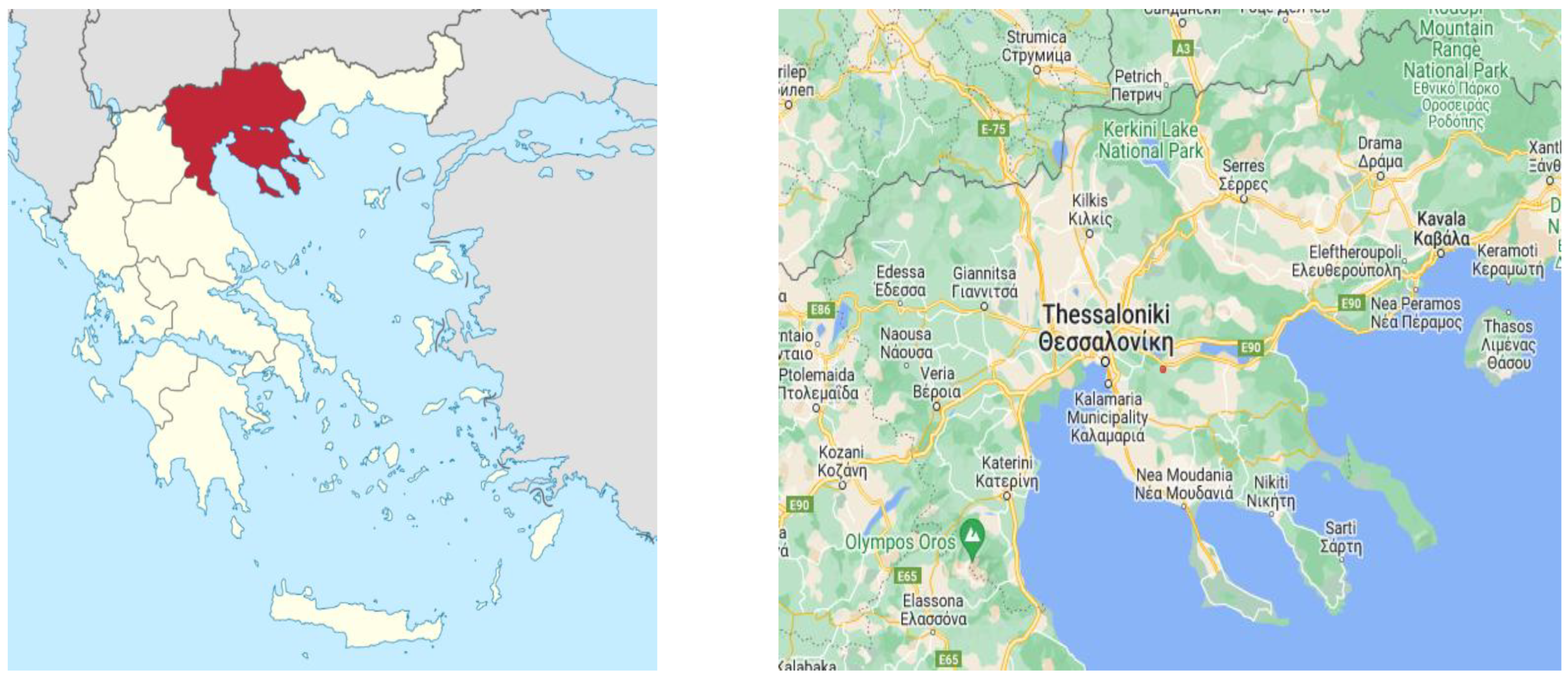
The Region of Central Macedonia is the largest in area (19,162 km2) and the second most populous region in Greece. It has well-developed industries, including the food, chemical, and mechanical equipment sectors, and is one of the country’s strongest economic regions. It also has the second-largest number of households (735,829) and more households with more than two members than Attica. Additionally, it is the region with the most significant number of households actively employed in the primary sector across all Greek regions [64]. Central Macedonia is unique in that it has experienced simultaneous intense development in industry, agriculture, and tourism. It boasts the largest urban center outside of Attica and occupies a strategic position as a bridge between Greece and the Balkans. The Region of Central Macedonia is one of Greece’s most dynamic and multifaceted economic and cultural hubs. According to available data, it significantly contributes to the national GDP, ranking second after Attica. The region’s economy is diversified, with strong sectors in industry, services, and agriculture. Central Macedonia (Figure 2) represents 17% of Greece’s economically active population. The share of the economically active population among those aged 15 and over was 51% in 2015 and 49% in 2020. reflecting a slight decrease in labor force participation. Overall, Central Macedonia boasts a dynamic economy, with diverse sectors contributing to its growth and development. The sample size was chosen to ensure adequate representation of this population and sufficient statistical power for reliable analysis of household food waste behavior. The minimum sample size required for a given population was determined according to the following formula [65]:
S = [(z2 · x · p · (1 − p))/e2]/[1 + ((z2 · x · p · (1 − p))/(e2 · N))]
where S is the minimum sample size to investigate, N is the total population size, e is the margin of error, z is how confident you can be that the population would choose an answer within a specific range, and p is the standard deviation (in this case, 0.5%). The sampling method employed was simple random, and the final sample for the research consisted of 954 individuals.
Initially, social media served as the primary sampling framework. The questionnaire was distributed electronically through targeted posts and direct communication to relevant online groups and networks related to nutrition and food consumption (e.g., Facebook groups for healthy food or agricultural products, Instagram, and professional networks on LinkedIn). Utilizing social media as a distribution channel is a modern and practical approach to engaging consumers in research, as highlighted by recent studies that emphasize the contributions of Facebook and Instagram to scientific data collection [67,68,69,70].
According to the research design, after the initial distribution of the questionnaire to all individuals in the sample, a reminder of the research objectives was sent one month later, followed by a second distribution. After completing all communications, 870 questionnaires were returned, of which 668 were considered valid, with a response rate of 76.78%. The remaining questionnaires were excluded due to missing data. The constructs measured in the questionnaire, along with the corresponding scales and supporting literature, are summarized in Table 1.
To assess the underlying structure of the measured constructs, we conducted an Exploratory Factor Analysis (EFA) using Principal Component Analysis with Varimax rotation. EFA was selected as a suitable method for data reduction and construct validation, particularly when the variable dimensionality was unknown [71]. After extracting the factors, we developed a Path Analysis Model to test the hypothesized relationships between constructs. Path analysis, a subset of Structural Equation Modeling (SEM), estimates direct and indirect effects among observed variables, offering a robust means of evaluating theoretical frameworks [72]. This combined approach (EFA + path analysis) has been employed in previous studies on consumer behavior and food waste [61], supporting its relevance. Model fit was assessed using several indices (X2/df, RMSEA, CFI, TLI), and path coefficients were interpreted at p < 0.05. Standard goodness-of-fit indices evaluated the model. The Comparative Fit Index (CFI) and Tucker–Lewis Index (TLI) are considered acceptable above 0.90 and excellent above 0.95. The RMSEA (Root Mean Square Error of Approximation) is considered good when below 0.08 and very good when below 0.05. Values from 0.05 to 0.08 indicate an acceptable fit [71]. The X2/df ratio was below 3, indicating a satisfactory fit. Collectively, these indices confirm that the model fits the empirical data well.

3.2. Sample Characteristics

Following the sampling procedure, the sociodemographic profile of the study participants is shown in Table 1. The sample included individuals from diverse demographic and socioeconomic backgrounds, with 63.77% identifying as female. The most common age group was 40–59 years (37.28%), followed by 30–39 years (30.84%). Most participants reported holding a master’s degree (36.68%) or a bachelor’s degree (34.43%), while only 0.90% had completed only high school. Nearly half of the sample were married (49.25%), and 45.21% were single.
Regarding employment, the majority were employed (79.19%), followed by college students (13.17%) and unemployed people (7.63%). Most participants lived in urban areas (80.54%), compared to 19.46% in villages. The most reported monthly household income was €501–1000 (31.59%), followed by €1001–1500 (25.30%). Household sizes varied, with 29.34% living in households of four, and about 21% in households of two or three members. Regarding the number of children per household, 39.97% had none, while 31.44% had two. A comprehensive summary of these characteristics is presented in Table 1.

3.3. Methodology

According to the existing literature on household food waste, as well as issues of recycling, reuse, and waste reduction, these questions support the research [42,43,73,74,75,76,77,78,79,80,81,82,83,84]. Seven key questions were used to explore the factors contributing to household food waste behavior, with responses on a five-point Likert scale from “strongly disagree” to “strongly agree”.
The adverse effects of food waste were assessed using four items that asked respondents to rate the environmental, economic, and social impacts on a scale from “strongly agree” to “strongly disagree”. Sense of community was measured through four items, with respondents rating their perception of people in their workplace, neighborhood, city, and country on the same Likert scale. Perceived knowledge of the research issue was assessed using four questions related to food waste, pollution, the environment, resources, and landfills, with responses ranging from “very strong” to “not at all strong”. Environmental knowledge was evaluated through three items capturing respondents’ understanding of recycling, the environment, and environmental symbols, using a scale from “very important” to “not at all important”. Food waste reduction behavior was assessed with three items, and recycling and reuse behaviors were measured using separate multi-item Likert scales. Recycling practices were evaluated with a five-item scale (1 = strongly disagree, 5 = strongly agree), focusing on actions such as sorting recyclable materials and participating in recycling programs. Reuse behaviors were measured using a five-item Likert scale that captured respondents’ tendencies to repurpose or reuse items to minimize waste.
The questionnaire’s construct validity was examined using a principal component analysis with varimax rotation. This process resulted in seven psychometric factors: C1 (Consumer sentiments), C2 (Sense of Community), C3 (Knowledge of the problem), C4 (Knowledge of environmental issues), C5 (Reduce), C6 (Reuse), and C7 (Recycle). Two demographic variables were also included: C01 (Monthly Income) and C02 (Marital Status). Standardized factor loadings and the reliability of the explanatory factors are presented below.
The extracted factors were subsequently incorporated into a path analysis model based on the original conceptual framework (Figure 1). The analysis was conducted using SPSS Amos 25 to estimate path coefficients, allowing the examination of both direct and indirect effects among variables. Path analysis was chosen for its ability to model complex relationships and account for interactions among independent factors. The dependent variable, C20—household food waste behavior—was constructed as a composite score derived from multiple psychometric and demographic factors, calculated as a linear combination of Age, Education level, Monthly Income, and C5–C7. Higher C20 values indicate greater household food waste, integrating individual characteristics and attitudes into a single measure.
C20 = b1C01 + b2C02 + b3C1 + b4C2 + b5C3 + b5C4 + e
where bn (n = 1, 2, 3) are the partial standardized regression coefficients, and e is the measurement error. According to the results of the path analysis, the overall effects of the factors that contribute to household food waste behavior are:
C20 = 0.12C02 + 0.31C1 + 0.11C2 + 0.21C3 + 0.14C4 + 0.684
These results indicate that consumer sentiment, problem knowledge, and environmental knowledge are the strongest predictors of household food waste behavior.
A correlation analysis was also conducted to explore the relationships among the extracted factors, providing insights into their interactions and relation to the primary research objective. The correlation table helped identify statistically significant associations and rule out specific scenarios in the subsequent path analysis stage. This analysis offered an overall view of how factors interact and informed the specification of the path model.
Household food waste is a complex consumer behavior that has been extensively studied using the Theory of Planned Behavior (TPB) [78,82]. According to TPB, behavioral intention is influenced by three main components: attitudes toward the behavior, subjective norms, and perceived behavioral control. In this study, attitudes are reflected in consumers’ emotions, such as guilt, while the sense of community captures subjective norms. Perceived behavioral control relates to knowledge of the problem and food management skills [84,85,86,87,88,89,90,91,92].
Thus, the theoretical model directly builds on TPB, incorporating additional demographic and socioeconomic characteristics, such as income and marital status, which serve as complementary determinants. Integrating these variables strengthens the theoretical foundation, allows for a more comprehensive understanding of household food waste behavior, and supports the development of targeted hypotheses and interventions.
Overall, the methodology followed a straightforward, stepwise approach: (1) measurement of multiple constructs using a structured questionnaire, (2) validation of constructs through factor analysis, (3) integration of psychometric and demographic factors into a path analysis model, (4) correlation analysis to assess interrelations among variables, and (5) theoretical grounding in the TPB framework with inclusion of demographic determinants. This structured approach ensures robustness, replicability, and clarity in understanding the drivers of household food waste behavior, providing a solid basis for both analysis and practical recommendations.

Survey Construction and Validation

The questionnaire was developed based on established literature on household food waste, recycling, reuse, and waste reduction [11,12,13,14,15,16,17]. Items were adapted from validated scales used in previous studies and organized into thematic sections reflecting the constructs under investigation (consumer sentiments, sense of community, knowledge dimensions, and waste-related behaviors). Each construct was measured using multi-item Likert scales, which were adjusted to the context of Central Macedonia to ensure conceptual relevance [12,18,19,20,21,22,23,24].
To ensure content validity, the initial questionnaire was reviewed by two subject-matter experts, who evaluated its clarity, relevance, and completeness. A pilot test was then conducted with a small sample to assess comprehensibility and refine wording where necessary. Construct validity was examined through factor analysis, which confirmed the expected factor structure and yielded seven factors. Reliability was assessed using standardized factor loadings and internal consistency measures. This process ensured that each set of items reliably captured the intended underlying construct before inclusion in the final analysis.

4. Results

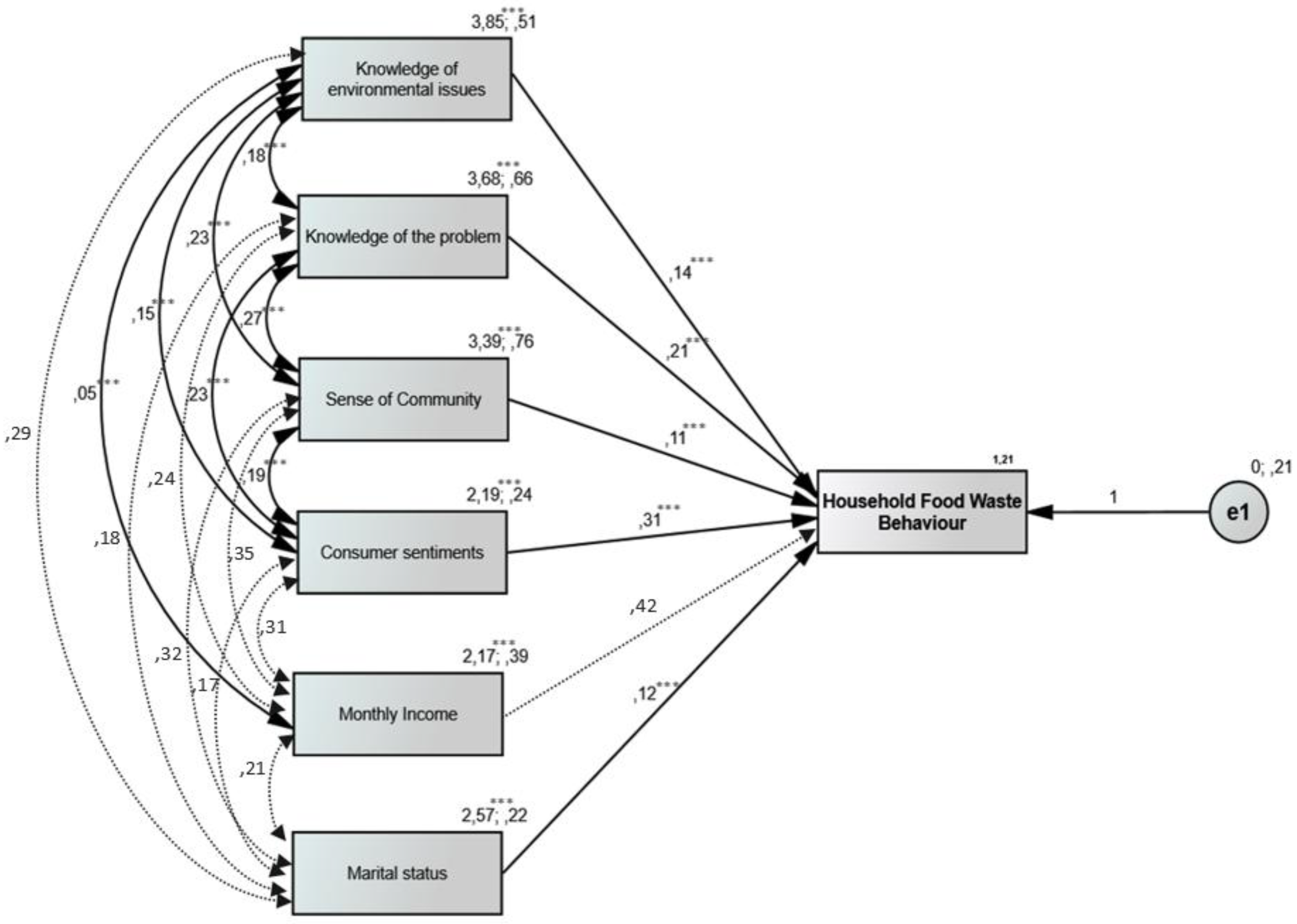
A literature review on food waste in households and consumer behavior identified six research hypotheses, which were examined to inform the development of the consumer behavior model. Table 2 captures the demographics of the sample, providing context for the subsequent analysis. To evaluate the measurement model, confirmatory factor analyses were conducted, and the results are presented in Table 3, which shows the standardized loadings and reliabilities for each construct. Furthermore, the relationships between the constructs were assessed using Pearson correlations, as summarized in Table 4, which supports the validity of the theoretical model. The model results and the standardized path coefficients confirmed five hypotheses, while one was rejected. All estimated paths and their standardized coefficients are illustrated in Figure 32 = 10.58, p < 0.001, NFI = 0.99, IFI = 0.995, CFI = 0.98, RMSEA = 0.06). Fit indices indicated acceptable model fit, with NFI, IFI, and CFI all above 0.90 (good if >0.95) and RMSEA = 0.06, which is marginal but within the acceptable range (0.05–0.08). The level of statistical significance of each coefficient is indicated by asterisks (p < 0.001). At the same time, non-significant paths (e.g., the link between Monthly income and Household Food Waste Behavior) are also presented, along with their corresponding coefficients. The satisfactory R2 value of the dependent variable indicates an acceptable level of explanatory power for the factors affecting food waste, enhancing the reliability and validity of the model.
Based on the model’s results, the coefficient of determination (R2) was 0.396, indicating moderate explanatory power. The results demonstrate the interconnections among the factors and support the understanding of the determinants of food waste behavior. The factor ‘Knowledge of environmental issues’ (C4, β: 0.140, p < 0.01) contributes significantly to the behavior of households on the issue of food waste (hypothesis 1 is confirmed). Households’ awareness of the problem seems to be positively related (C3, β: 0.21, p < 0.01) to their behavior regarding food waste (hypothesis 2). This fact demonstrates that informing and raising citizens’ awareness are crucial for preventing waste. Regarding the factor ‘Sense of Community,’ a positive correlation is observed (C2, β: 0.11, p < 0.01) (hypothesis 3), suggesting that social cohesion and solidarity promote responsible consumer behavior.
The factor ‘Consumer Emotion’ has a positive effect (C1, β: 0.31, p < 0.01) (hypothesis 4), highlighting the importance of emotional factors, such as guilt or pride, in shaping behaviors with environmental impact. Monthly income does not appear to be a significant factor (hypothesis 5 was rejected), suggesting that waste is not necessarily related to household economic status. On the contrary, Marital Status is positively related (C02, β: 0.12, p < 0.01) (hypothesis 6 is confirmed), as the number of members or the presence of children may affect the way food is managed.
For the final model adjustment, criteria such as non-significant X2 (p > 0.05), SRMR, and RMSEA were used. The estimation results were satisfactory (NFI = 0.99, IFI = 0.995, CFI = 0.98, RMSEA = 0.06), confirming the model’s statistical adequacy. The final model’s mapping revealed bidirectional relationships among the main factors. Knowledge of environmental issues (C4) has a direct, positive correlation with all factors, except family status.
A positive relationship was also found between knowledge (C4) and consumer sentiment (C1), as well as between monthly income (C01) and knowledge (C4), suggesting the existence of multidimensional interactions that can be exploited to develop targeted food waste reduction policies.

5. Discussion

Díaz-Ruiz et al. [90] surveyed 418 people in Barcelona and found an indirect yet clear relationship between consumers’ environmental concerns and their efforts to minimize food waste. Specifically, consumers who reported higher levels of environmental concern had lower food waste rates. Similarly, in the present study, knowledge of environmental issues (C4, β = 0.14, p < 0.01) and awareness of the problem (C3, β = 0.21, p < 0.01) were found to significantly influence household food waste behavior, confirming that informed households adopt more responsible practices. Monthly income did not appear to be a statistically significant determinant of waste in our results (C01, p > 0.05), which aligns with Cheng et al. [88] and contradicts some previous findings [92,93,94,95]. This suggests that economic level alone does not determine waste behavior. On the contrary, factors such as education, access to adequate information, and cultural practices play a more decisive role in shaping consumer behavior. Proper information about food storage and use positively influences consumer practices, enhancing rational planning and reducing excessive purchases. The tendency of many consumers to buy larger quantities of food for security reasons, regardless of income, demonstrates that income is not an absolute indicator of waste.
On the other hand, Grasso et al. [94] found no association between family status and food waste levels. In our study, marital status (C02, β = 0.12, p < 0.01) was a significant predictor, suggesting that household composition, including the presence of children, influences food management practices. In contrast, other factors, such as knowledge of recycling, familiarity with environmental symbols, and waste reduction practices, were confirmed as essential determinants of behavior [84,93,94,95,96,97,98,99,100,101]. Environmental sensitivity, strengthened through education and social influence, is positively linked to more responsible and sustainable consumer behavior. Additionally, feelings of guilt and the desire to integrate into environmentally conscious communities, captured by consumer sentiment (C1, β = 0.31, p < 0.01), are strong psychological drivers of waste reduction. Culturally shaped practices, such as family gatherings or religious ceremonies, can either promote overconsumption or encourage more prudent and conscious food management, depending on the social context.
Household composition also plays a role, as households with more members and children exhibit differentiated food management behaviors, mainly due to increased needs and the necessity of meal planning. Daly et al. [100] confirm this observation, arguing that although larger families consume more food, they may waste less because they manage available resources more efficiently. In addition, households with higher incomes have greater access to educational tools and ecological technologies, whereas low-income households are often limited to meeting basic needs and are not actively involved in environmental actions [102]. The absence of such participation, however, does not indicate a lack of environmental interest; rather, it reflects material and time constraints.
In the Greek context, education is positively correlated with environmental awareness, as evidenced by national studies and the European Commission Report [1]. At the same time, involvement in environmental education programs at both school and community levels is essential for shaping attitudes from a young age. Food production incurs significant environmental costs, including the consumption of natural resources, greenhouse gas emissions, and pollution. Therefore, policies to reduce waste should be multidimensional, focusing on both waste reduction and sustainability throughout the supply chain. Equally crucial is investment in environmental education and citizen awareness to create conditions that favor a transition to more responsible consumption patterns and a circular economy.
In addition to socioeconomic variables, the psychological dimension of consumer behavior is also a key factor. Consumers’ views on “proper” food management are shaped not only by their knowledge and values but also by prevailing social norms and cultural narratives. In many cultures, an abundance of food is viewed as a symbol of hospitality, prosperity, or social status, which can lead to overconsumption and waste. Meanwhile, the stigma against consuming imperfect or near-expiry food leads to unnecessary rejection, even when such food is safe to eat.
A significant issue is the misunderstanding of expiration labels, such as the distinction between “best before” and “expiration date,” which often leads to the needless disposal of edible food. Improving consumer education on these distinctions can substantially reduce household food waste. Ultimately, integrating environmental topics into education at all levels is vital. Local authorities, municipalities, and civil society organizations also play a crucial role in organizing information campaigns and initiatives that foster collective responsibility and encourage active participation in reducing food waste.
These findings, taken together, demonstrate that a combination of psychological, social, educational, and household composition factors influences household food waste behavior. The model’s moderate explanatory power (R2 = 0.396) indicates that while these determinants are significant, other contextual or cultural variables may also contribute, underscoring the need for comprehensive, targeted interventions.
To effectively implement the above findings, it is crucial to tailor educational campaigns to the sociodemographic characteristics of the target groups. At younger ages, integrating food waste topics into school curricula can foster environmental responsibility. For adults with lower levels of education, practical tools and information should be provided through local communities. Municipalities can play a decisive role as hubs of cooperation by organizing informational activities, local campaigns, or composting programs in collaboration with schools, cultural associations, and social structures. Exploiting these study findings can also support policy design within the National Strategy for the Circular Economy and the National Waste Management Plan (NWMP), thereby strengthening local implementation and promoting more sustainable consumption patterns aligned with EU objectives. The hypotheses were largely supported: environmental knowledge, problem awareness, Sense of Community, consumer sentiment, and marital status significantly influenced household food waste behavior, while monthly income did not. This confirms the key role of psychological, social, and educational factors in shaping responsible consumption.
The study makes two significant contributions. Theoretically, it advances environmental psychology and behavioral consumption research by demonstrating that emotional involvement is a key factor in fostering environmentally responsible attitudes. Practically, the findings can assist local governments, educational institutions, NGOs, and food sector businesses in designing targeted information campaigns, awareness initiatives, and social planning strategies. Reducing food waste is vital not only for environmental protection but also for the economic well-being of households and society. Our study provides insights for formulating targeted policies to improve food management at both local and national levels. Strengthening environmental education and community engagement can drive behavioral change. Additionally, food businesses and supply chain organizations can use these findings to adopt more responsible practices and encourage consumer participation in reducing waste.
In this context, the study of digital transformation and business model innovation in the post-pandemic era and the exploration of the adaptation of agrifood businesses to digitalization in Greece, as well as the analysis of the challenges and opportunities linking digital transformation to green entrepreneurship in the food sector, offer critical insights [102,103]. Ultimately, understanding sociodemographic differences enables the personalization of interventions, making them more effective and efficient. Through collaboration between researchers, policymakers, and the business sector, comprehensive programs can be developed that not only reduce waste but also enhance sustainability and social responsibility at all levels. However, the study has limitations.

6. Conclusions

This research aimed to highlight the factors that influence households’ attitudes towards food waste in a large urban area of Northern Greece. The findings demonstrate that the most critical determinants are consumer emotions (such as guilt and moral obligation) and knowledge of the problem, confirming previous research findings and reinforcing the importance of empathy and environmental education in shaping responsible consumer behavior. The study also revealed new associations, such as the positive correlation between education level and the intensity of guilt feelings about waste, offering theoretical added value to the relevant literature. Furthermore, factors such as marital status and household composition appear to shape perceived responsibility for waste reduction to different degrees. The hypotheses were mainly supported: environmental knowledge, problem awareness, Sense of Community, consumer sentiment, and marital status significantly influenced household food waste behavior, while monthly income did not. This confirms the key role of psychological, social, and educational factors in shaping responsible consumption.
The geographical concentration of data in a single region of Greece limits the generalizability of the results. The use of self-reported questionnaires may affect response accuracy due to social desirability bias. Furthermore, the cross-sectional nature of the research precludes causal inference. Future research could adopt multi-methodological approaches (combining quantitative and qualitative methods), expand the sample geographically and socially, or focus on interventions and evaluating their effectiveness in reducing food waste at the household level. Longitudinal studies could help track changes in behavior over time, while comparative studies between Mediterranean countries could shed light on cultural and contextual differences in food waste practices. In this way, efforts to promote more sustainable and responsible food consumption can be further strengthened, benefiting both society and the planet.

Author Contributions

Z.P., Research design, investigation, writing, and C.K., supervision, writing, and editing. All authors have read and agreed to the published version of the manuscript.

Funding

This research received no external funding.

Data Availability Statement

The data that support the findings of this study are available from the corresponding author upon reasonable request.

Conflicts of Interest

The authors declare no conflicts of interest.

References

  1. EU Commission. Roadmap to a Resource-Efficient Europe; COM/2011/0571; EU Commission: Brussels, Belgium, 2011. [Google Scholar]
  2. FAO. Food Wastage Footprint: Impacts on Natural Resources; Food and Agriculture Organization of the United Nations: Rome, Italy, 2013. [Google Scholar]
  3. FAO. Food Wastage Footprint Full Cost Accounting; Food Wastage Footprint; FAO: Rome, Italy, 2014. [Google Scholar]
  4. Gustavsson, J.; Cederberg, C.; Sonesson, U.; von Otterdijk, R.; Meybeck, A. Global Food Losses and Food Waste—Extent, Causes and Prevention; Food and Agriculture Organization: Rome, Italy, 2024. [Google Scholar]
  5. Teigiserova, D.A.; Hamelin, L.; Thomsen, M. Towards transparent valorization of food surplus, waste and loss: Clarifying definitions, food waste hierarchy, and role in the circular economy. Sci. Total Environ. 2020, 706, 136033. [Google Scholar] [CrossRef]
  6. Principato, L.; Mattia, G.; Di Leo, A.; Pratesi, C.A. The household wasteful behaviour framework: A systematic review of consumer food waste. Ind. Mark. Manag. 2021, 93, 641–649. [Google Scholar] [CrossRef]
  7. Martin Rios, C.; Hofmann, A.; Mackenzie, N. Sustainability oriented innovations in food waste management technology. Sustainability 2020, 13, 210. [Google Scholar] [CrossRef]
  8. Chen, C.; Chaudhary, A.; Mathys, A. Nutritional and environmental losses embedded in global food waste. Resour. Conserv. Recycl. 2020, 160, 104912. [Google Scholar] [CrossRef]
  9. Karelakis, C.; Papanikolaou, Z.; Keramopoulou, C.; Theodossiou, G. Green Growth, Green Development and Climate Change Perceptions: Evidence from a Greek Region. Agriculture 2024, 14, 1233. [Google Scholar] [CrossRef]
  10. Sklavos, G.; Theodossiou, G.; Papanikolaou, Z.; Karelakis, C.; Ragazou, K. Environmental, Social, and Governance Based Artificial Intelligence Governance: Digitalizing Firms’ Leadership and Human Resources Management. Sustainability 2024, 16, 7154. [Google Scholar] [CrossRef]
  11. Noleppa, S.; Cartsburg, M. Das Grosse Wegschmeissen: Vom Acker bis zum Verbraucher: Ausmaß und Umwelteffekte der Lebensmittelverschwendung in Deutschland; WWF Deutschland: Berlin, Germany, 2015. [Google Scholar]
  12. Schmidt, K. Explaining and promoting household food waste prevention by an environmental psychological based intervention study. Resour. Conserv. Recycl. 2016, 111, 53–66. [Google Scholar] [CrossRef]
  13. Bellemare, M.F.; Çakir, M.; Peterson, H.H.; Novak, L.; Rudi, J. On the measurement of food waste. Am. J. Agric. Econ. 2017, 99, 1148–1158. [Google Scholar] [CrossRef]
  14. Koester, U.; Loy, J.P.; Ren, Y. Measurement and reduction of food loss and waste: Reconsidered. Agric. Econ. 2018, 1, 2–4. [Google Scholar] [CrossRef]
  15. Champions 12.3. Guidance on Interpreting Sustainable Development Goal Target 12.3. [Internet Document]. Available online: https://champions123.org/sites/default/files/2020-09/champions-12-3-guidance-on-interpreting-sdg-target-12-3.pdf (accessed on 20 September 2022).
  16. FAO. FAO STAT; Food and Agriculture Organization of the United Nations: Rome, Italy, 2018; Available online: http://faostat.fao.org (accessed on 20 September 2022).
  17. Principato, L.; Ruini, L.; Guidi, M.; Secondi, L. Adopting the circular economy approach on food loss and waste: The case of Italian pasta production. Resour. Conserv. Recycl. 2019, 144, 82–89. [Google Scholar] [CrossRef]
  18. Sklavos, G.; Theodossiou, G.; Papanikolaou, Z.; Karelakis, C.; Lazarides, T. Reinforcing sustainability and efficiency for agrifood firms: A theoretical framework. In Sustainability Through Green HRM and Performance Integration; IGI Global: Hershey, PA, USA, 2025; pp. 101–120. [Google Scholar] [CrossRef]
  19. Carlsen, L.; Bruggemann, R. The 17 United Nations’ sustainable development goals: A status by 2020. Int. J. Sustain. Dev. World Ecol. 2022, 29, 219–229. [Google Scholar] [CrossRef]
  20. do Carmo Stangherlin, I.; de Barcellos, M.D.; Basso, K. The impact of social norms on suboptimal food consumption: A solution for food waste. J. Int. Food Agribus. Mark. 2020, 32, 30–53. [Google Scholar] [CrossRef]
  21. Tsangas, M.; Gavriel, I.; Doula, M.; Xeni, F.; Zorpas, A.A. Life cycle analysis in the framework of agricultural strategic development planning in the Balkan region. Sustainability 2020, 12, 1813. [Google Scholar] [CrossRef]
  22. Ardra, S.; Barua, M.K. Halving food waste generation by 2030: The challenges and strategies of monitoring UN sustainable development goal target 12.3. J. Clean. Prod. 2022, 380, 135042. [Google Scholar] [CrossRef]
  23. Jribi, S.; Ben Ismail, H.; Doggui, D.; Debbabi, H. COVID-19 virus outbreak lockdown: What impacts on household food wastage? Environ. Dev. Sustain. 2020, 22, 3939–3955. [Google Scholar] [CrossRef]
  24. Kuiper, M.; Cui, H.D. Using food loss reduction to reach food security and environmental objectives—A search for promising leverage points. Food Policy 2021, 98, 101915. [Google Scholar] [CrossRef]
  25. Giordano, C.; Alboni, F.; Falasconi, L. Quantities, determinants, and awareness of households’ food waste in Italy: A comparison between diary and questionnaires quantities. Sustainability 2019, 11, 3381. [Google Scholar] [CrossRef]
  26. Leverenz, D.; Moussawel, S.; Maurer, C.; Hafner, G.; Schneider, F.; Schmidt, T.; Kranert, M. Quantifying the prevention potential of avoidable food waste in households using a self reporting approach. Resour. Conserv. Recycl. 2019, 150, 104417. [Google Scholar] [CrossRef]
  27. Romani, S.; Grappi, S.; Bagozzi, R.P.; Barone, A.M. Domestic food practices: A study of food management behaviors and the role of food preparation planning in reducing waste. Appetite 2018, 121, 215–227. [Google Scholar] [CrossRef]
  28. van Holsteijn, F.; Kemna, R. Minimizing food waste by improving storage conditions in household refrigeration. Resour. Conserv. Recycl. 2018, 128, 25–31. [Google Scholar] [CrossRef]
  29. Szakos, D.; Szabó Bódi, B.; Kasza, G. Consumer awareness campaign to reduce household food waste based on structural equation behavior modeling in Hungary. Environ. Sci. Pollut. Res. 2021, 28, 24580–24589. [Google Scholar] [CrossRef]
  30. von Massow, M.; Parizeau, K.; Gallant, M.; Wickson, M.; Haines, J.; Ma, D.W.; Wallace, A.; Carroll, N.; Duncan, A.M. Valuing the multiple impacts of household food waste. Front. Nutr. 2019, 6, 143. [Google Scholar] [CrossRef] [PubMed]
  31. Principato, L.; Secondi, L.; Pratesi, C.A. Reducing food waste: An investigation on the behaviour of Italian youths. Br. Food J. 2015, 117, 731–748. [Google Scholar] [CrossRef]
  32. Stangherlin, I.D.C.; De Barcellos, M.D. Drivers and barriers to food waste reduction. Br. Food J. 2018, 120, 2364–2387. [Google Scholar] [CrossRef]
  33. Aitken, J.A.; Alaybek, B.; Hartman, R.; Mika, G.; Leib, E.M.B.; Plekenpol, R.; Branting, K.; Rao, D.; Leets, L.; Sprenger, A. Initial assessment of the efficacy of food recovery policies in US States for increasing food donations and reducing waste. Waste Manag. 2024, 176, 149–158. [Google Scholar] [CrossRef]
  34. Zhang, P.; Zhang, D.; Cheng, S. The effect of consumer perception on food waste behavior of urban households in China. Sustainability 2020, 12, 5676. [Google Scholar] [CrossRef]
  35. Akhter, S.; Rather, M.I.; Zargar, U.R. Understanding the food waste behavior in university students: An application of the theory of planned behaviour. J. Clean. Prod. 2024, 437, 140632. [Google Scholar] [CrossRef]
  36. Theodoridis, P.; Zacharatos, T.; Boukouvala, V. Consumer behaviour and household food waste in Greece. Br. Food J. 2024, 126, 965–994. [Google Scholar] [CrossRef]
  37. Etim, E.; Choedron, K.T.; Ajai, O.; Duke, O.; Jijingi, H.E. Systematic review of factors influencing household food waste behaviour: Applying the theory of planned behaviour. Waste Manag. Res. 2024, 43, 803–827. [Google Scholar] [CrossRef]
  38. Li, C.; Bremer, P.; Jowett, T.; Lee, M.; Parker, K.S.; Gaugler, E.C.; Mirosa, M. What influences consumer food waste behaviour when ordering food online? An application of the extended theory of planned behaviour. Cogent Food Agric. 2024, 10, 2330728. [Google Scholar] [CrossRef]
  39. Falasconi, L.; Cicatiello, C.; Franco, S.; Segrè, A.; Setti, M.; Vittuari, M. Such a shame! A study on self perception of household food waste. Sustainability 2019, 11, 270. [Google Scholar] [CrossRef]
  40. Kulikovskaja, V.; Aschemann Witzel, J. Food waste avoidance actions in food retailing: The case of Denmark. J. Int. Food Agribus. Mark. 2017, 29, 328–345. [Google Scholar] [CrossRef]
  41. Iranmanesh, M.; Ghobakhloo, M.; Nilashi, M.; Tseng, M.L.; Senali, M.G.; Abbasi, G.A. Impacts of the COVID-19 pandemic on household food waste behaviour: A systematic review. Appetite 2022, 176, 106127. [Google Scholar] [CrossRef] [PubMed]
  42. Pappalardo, G.; Cerroni, S.; Nayga, R.M., Jr.; Yang, W. Impact of COVID-19 on household food waste: The case of Italy. Front. Nutr. 2020, 7, 585090. [Google Scholar] [CrossRef] [PubMed]
  43. Watanabe, E.A.D.M.; Freitas, M.G.M.T.D.; Demo, G. Food waste in restaurants: Evidence from Brazil and the United States. J. Int. Food Agribus. Mark. 2023, 35, 283–304. [Google Scholar] [CrossRef]
  44. Qian, K.; Javadi, F.; Hiramatsu, M. Influence of the COVID-19 pandemic on household food waste behavior in Japan. Sustainability 2020, 12, 9942. [Google Scholar] [CrossRef]
  45. Baya Chatti, C.; Ben Hassen, T.; El Bilali, H. Closing the Loop: Exploring Food Waste Management in the Near East and North Africa (NENA) Region during the COVID-19 Pandemic. Sustainability 2024, 16, 3772. [Google Scholar] [CrossRef]
  46. Zhang, Y.; Qi, D. How to reduce household food waste during and after the COVID-19 lockdown? Evidence from a structural model. Aust. J. Agric. Resour. Econ. 2024, 68, 628–652. [Google Scholar] [CrossRef]
  47. Ardekani, Z.F.; Sobhani, S.M.J.; Barbosa, M.W.; Amiri Ardekani, E.; Dehghani, S.; Sasani, N.; De Steur, H. Determinants of household food waste behavior during the COVID-19 pandemic in Iran: An integrated model. Environ. Dev. Sustain. 2024, 26, 26205–26235. [Google Scholar] [CrossRef]
  48. Bashar, A.; Nyagadza, B.; Ligaraba, N.; Maziriri, E.T. The influence of COVID-19 on consumer behaviour: A bibliometric review analysis and text mining. Arab Gulf J. Sci. Res. 2024, 42, 585–601. [Google Scholar] [CrossRef]
  49. Hatab, A.A.; Tirkaso, W.T.; Tadesse, E.; Lagerkvist, C.J. An extended integrative model of behavioural prediction for examining households’ food waste behaviour in Addis Ababa, Ethiopia. Resour. Conserv. Recycl. 2022, 179, 106073. [Google Scholar] [CrossRef]
  50. Annunziata, A.; Agovino, M.; Ferraro, A.; Mariani, A. Household food waste: A case study in Southern Italy. Sustainability 2020, 12, 1495. [Google Scholar] [CrossRef]
  51. Li, R.; Roe, B.E. Segmenting US consumers by food waste attitudes and behaviors: Opportunities for targeting reduction interventions. Sustain. Prod. Consum. 2024, 45, 348–358. [Google Scholar] [CrossRef]
  52. Laguna, L.; Fiszman, S.; Puerta, P.; Chaya, C.; Tárrega, A. The impact of the COVID-19 lockdown on food priorities. Results from a preliminary study using social media and an online survey with Spanish consumers. Food Qual. Prefer. 2020, 86, 104028. [Google Scholar] [CrossRef] [PubMed]
  53. Karelakis, C.; Papanikolaou, Z.; Theodosiou, G.; Goulas, A. Local Products Dynamics and the Determinants of Purchasing Behaviour. Stud. Bus. Econ. 2021, 16, 72–86. [Google Scholar] [CrossRef]
  54. Roe, B.E.; Bender, K.; Qi, D. The impact of COVID-19 on consumer food waste. Appl. Econ. Perspect. Policy 2021, 43, 401–411. [Google Scholar] [CrossRef]
  55. Leal Filho, W.; Voronova, V.; Kloga, M.; Paço, A.; Minhas, A.; Salvia, A.L.; Sivapalan, S. COVID-19 and waste production in households: A trend analysis. Sci. Total Environ. 2021, 777, 145997. [Google Scholar] [CrossRef]
  56. Cequea, M.M.; Vásquez Neyra, J.M.; Schmitt, V.G.H.; Ferasso, M. Household food consumption and wastage during the COVID-19 pandemic outbreak: A comparison between Peru and Brazil. Sustainability 2021, 13, 7583. [Google Scholar] [CrossRef]
  57. Wei, L.; Prabhakar, G.; Duong, L.N. Usage of online food delivery in food waste generation in China during the crisis of COVID-19. Int. J. Food Sci. Technol. 2023, 58, 5602–5608. [Google Scholar] [CrossRef]
  58. Chen, D.; Wang, C.; Liu, Y. How household food shopping behaviors changed during the COVID-19 lockdown period: Evidence from Beijing, China. J. Retail. Consum. Serv. 2023, 75, 103513. [Google Scholar] [CrossRef]
  59. Naskar, S.T.; Lindahl, J.M.M. Forty years of the theory of planned behavior: A bibliometric analysis (1985–2024). Manag. Rev. Q. 2025, 13, 1–60. [Google Scholar] [CrossRef]
  60. Stancu, V.; Haugaard, P.; Lähteenmäki, L. Determinants of consumer food waste behaviour: Two routes to food waste. Appetite 2016, 96, 7–17. [Google Scholar] [CrossRef] [PubMed]
  61. Russell, K.C.; Gillis, H.L.; Kivlighan, D.M., Jr. Process factors explaining psychosocial outcomes in adventure therapy. Psychotherapy 2017, 54, 273. [Google Scholar] [CrossRef] [PubMed]
  62. Mucha, L.; Oravecz, T. Assumptions and perceptions of food wasting behavior and intention to reduce food waste in the case of Generation Y and Generation X. Sci. Rep. 2025, 15, 2991. [Google Scholar] [CrossRef] [PubMed]
  63. Li, C.; Zhou, Z.; Liu, Z.; Fang, Q.; Han, G. From attitude to behavior: The effect of residents’ food waste attitudes on their food waste behaviors in Shanghai. Foods 2024, 13, 2201. [Google Scholar] [CrossRef]
  64. Hellenic Statistical Authority, Good Practice Advisory Committee. First Annual Report. 2023. Available online: http://www.statistics.gr (accessed on 17 September 2025).
  65. Cochran, W.G. Sampling Techniques; Johan Wiley & Sons Inc.: Hoboken, NJ, USA, 1977. [Google Scholar]
  66. Google. (n.d.). Google Maps [Map]. Available online: https://www.google.com/maps/place/Κεντρική+Μακεδονία (accessed on 1 September 2025).
  67. Ng, W.Z.; Erdembileg, S.; Liu, J.C.; Tucker, J.D.; Tan, R.K.J. Increasing rigor in online health surveys through the use of data screening procedures. J. Med. Internet Res. 2025, 27, 68092. [Google Scholar] [CrossRef]
  68. Niessner, C.; Reiß, F.; Sand, M.; Knirsch, F.; Behn, S.; Hanssen-Doose, A.; Kaman, A.; Reichert, M.; Olfermann, R.; Wagner, P.; et al. Strategies to minimize selection bias in digital population-based studies in sport and health sciences: Methodological and empirical insights from the COMO study. Dtsch. Z. Für Sportmed. 2025, 76, 160–166. [Google Scholar] [CrossRef]
  69. Bryer, T.; Zavatarro, S. Social media and public administration: Theoretical dimensions and introduction to symposium. Adm. Theory Prax. 2011, 33, 325–340. [Google Scholar] [CrossRef]
  70. Kosinski, M.; Matz, S.C.; Gosling, S.D.; Popov, V.; Stillwell, D. Facebook as a research tool for the social sciences: Opportunities, challenges, ethical considerations, and practical guidelines. Am. Psychol. 2015, 70, 543–556. [Google Scholar] [CrossRef]
  71. Hair, J.F.; Risher, J.J.; Sarstedt, M.; Ringle, C.M. When to use and how to report the results of PLS-SEM. Eur. Bus. Rev. 2019, 31, 2–24. [Google Scholar] [CrossRef]
  72. Mitchell, R.J. Testing evolutionary and ecological hypotheses using path analysis and structural equation modelling. Funct. Ecol. 1992, 6, 123–129. [Google Scholar] [CrossRef]
  73. Attiq, S.; Chau, K.Y.; Bashir, S.; Habib, M.D.; Azam, R.I.; Wong, W.K. Sustainability of household food waste reduction: A fresh insight on youth’s emotional and cognitive behaviors. Int. J. Environ. Res. Public Health 2021, 18, 7013. [Google Scholar] [CrossRef]
  74. Mondéjar-Jiménez, J.A.; Ferrari, G.; Secondi, L.; Principato, L. From the table to waste: An exploratory study on behaviour towards food waste of Spanish and Italian youths. J. Clean. Prod. 2016, 138, 8–18. [Google Scholar] [CrossRef]
  75. Jereme, I.A.; Siwar, C.; Begum, R.A.; Talib, B.A.; Choy, E.A. Analysis of household food waste reduction towards sustainable food waste management in Malaysia. J. Solid Waste Technol. Manag. 2018, 44, 86–96. [Google Scholar] [CrossRef]
  76. Graham-Rowe, E.; Jessop, D.C.; Sparks, P. Identifying motivations and barriers to minimising household food waste. Resour. Conserv. Recycl. 2014, 84, 15–23. [Google Scholar] [CrossRef]
  77. Porpino, G.; Parente, J.; Wansink, B. Food waste paradox: Antecedents of food disposal in low income households. Int. J. Consum. Stud. 2015, 39, 619–629. [Google Scholar] [CrossRef]
  78. Browne, M.W. Alternative ways of assessing model fit. In Testing Structural Equation Models; Sage: Thousand Oaks, CA, USA, 1993. [Google Scholar]
  79. Boulet, M.; Hoek, A.C.; Raven, R. Towards a multi level household food waste and consumer behaviour framework: Untangling spaghetti soup. Appetite 2021, 156, 104856. [Google Scholar] [CrossRef]
  80. Withanage, S.V.; Dias, G.M.; Habib, K. Review of household food waste quantification methods: Focus on composition analysis. J. Clean. Prod. 2021, 279, 123722. [Google Scholar] [CrossRef]
  81. Li, Y.; Wang, L.E.; Liu, G.; Cheng, S. Rural household food waste characteristics and driving factors in China. Resour. Conserv. Recycl. 2021, 164, 105209. [Google Scholar] [CrossRef]
  82. Smith, T.A.; Landry, C.E. Household food waste and inefficiencies in food production. Am. J. Agric. Econ. 2021, 103, 4–21. [Google Scholar] [CrossRef]
  83. Nunkoo, R.; Bhadain, M.; Baboo, S. Household food waste: Attitudes, barriers, and motivations. Br. Food J. 2021, 123, 2016–2035. [Google Scholar] [CrossRef]
  84. Oehman, J.M.; Babbitt, C.W.; Flynn, C. What predicts and prevents source separation of household food waste? An application of the theory of planned behavior. Resour. Conserv. Recycl. 2022, 186, 106492. [Google Scholar] [CrossRef]
  85. Ajzen, I. The theory of planned behavior. Organ. Behav. Hum. Decis. Process. 1991, 50, 179–211. [Google Scholar] [CrossRef]
  86. Stern, P.C. Toward a coherent theory of environmentally significant behavior. J. Soc. Issues 2000, 56, 407–424. [Google Scholar] [CrossRef]
  87. Shove, E.; Pantzar, M.; Watson, M. The Dynamics of Social Practice: Everyday Life and How It Changes; Sage: London, UK, 2012. [Google Scholar]
  88. Cheng, L.L.; Guan, W.J.; Duan, C.Y.; Zhang, N.F.; Lei, C.L.; Hu, Y.; Chen, A.L.; Li, S.Y.; Zhuo, C.; Deng, X.L.; et al. Effect of recombinant human granulocyte colony–stimulating factor for patients with coronavirus disease 2019 (COVID-19) and lymphopenia: A randomized clinical trial. JAMA Intern. Med. 2021, 181, 71–78. [Google Scholar] [CrossRef]
  89. Fami, H.S.; Aramyan, L.H.; Sijtsema, S.J.; Alambaigi, A. Determinants of household food waste behavior in Tehran city: A structural model. Resour. Conserv. Recycl. 2019, 143, 154–166. [Google Scholar] [CrossRef]
  90. Diaz Ruiz, R.; Costa Font, M.; Gil, J.M. Moving ahead from food related behaviours: An alternative approach to understand household food waste generation. J. Clean. Prod. 2018, 172, 1140–1151. [Google Scholar] [CrossRef]
  91. Setti, M.; Falasconi, L.; Segrè, A.; Cusano, I.; Vittuari, M. Italian consumers’ income and food waste behavior. Br. Food J. 2016, 118, 1731–1746. [Google Scholar] [CrossRef]
  92. Lanfranchi, M.; Calabrò, G.; De Pascale, A.; Fazio, A.; Giannetto, C. Household food waste and eating behavior: Empirical survey. Br. Food J. 2016, 118, 3059–3072. [Google Scholar] [CrossRef]
  93. Di Talia, E.; Simeone, M.; Scarpato, D. Consumer behaviour types in household food waste. J. Clean. Prod. 2019, 214, 166–172. [Google Scholar] [CrossRef]
  94. Grasso, A.C.; Olthof, M.R.; Boevé, A.J.; van Dooren, C.; Lähteenmäki, L.; Brouwer, I.A. Socio demographic predictors of food waste behavior in Denmark and Spain. Sustainability 2019, 11, 3244. [Google Scholar] [CrossRef]
  95. Nguyen, T.T.T.; Malek, L.; Umberger, W.J.; O’Connor, P.J. Household food waste disposal behaviour is driven by perceived personal benefits, recycling habits, and ability to compost. J. Clean. Prod. 2022, 379, 134636. [Google Scholar] [CrossRef]
  96. Barker, H.; Shaw, P.J.; Richards, B.; Clegg, Z.; Smith, D. What nudge techniques work for food waste behaviour change at the consumer level? A systematic review. Sustainability 2021, 13, 11099. [Google Scholar] [CrossRef]
  97. Blair, J.; Mataraarachchi, S. A review of landfills, waste, and the nearly forgotten nexus with climate change. Environments 2021, 8, 73. [Google Scholar] [CrossRef]
  98. Rohini, C.; Geetha, P.S.; Vijayalakshmi, R.; Mini, M.L.; Pasupathi, E. Global effects of food waste. J. Pharmacogn. Phytochem. 2020, 9, 690–699. [Google Scholar]
  99. Vijay, V.; Kinsland, A.; Shah, T. CellMore: Reducing Food Waste and Landfills While Increasing Plastic Alternatives; Illinois Mathematics and Science Academy: Aurora, IL, USA, 2024. [Google Scholar]
  100. Daly, A.N.; Kearney, J.M.; O’Sullivan, E.J. The underlying role of food guilt in adolescent food choice: A potential conceptual model for adolescent food choice negotiations under circumstances of conscious internal conflict. Appetite 2024, 192, 107094. [Google Scholar] [CrossRef]
  101. Fazal e Hasan, S.M.; Mortimer, G.; Ahmadi, H.; Abid, M.; Farooque, O.; Amrollahi, A. How tourists’ negative and positive emotions motivate their intentions to reduce food waste. J. Sustain. Tour. 2024, 32, 2039–2059. [Google Scholar] [CrossRef]
  102. Michou, M.; Panagiotakos, D.B.; Lionis, C.; Costarelli, V. Socioeconomic inequalities in relation to health and nutrition literacy in Greece. Int. J. Food Sci. Nutr. 2019, 70, 1007–1013. [Google Scholar] [CrossRef]
  103. Chia, D.; Yap, C.C.; Wu, S.L.; Berezina, E.; Aroua, M.K.; Gew, L.T. A systematic review of country specific drivers and barriers to household food waste reduction and prevention. Waste Manag. Res. 2024, 42, 459–475. [Google Scholar] [CrossRef]
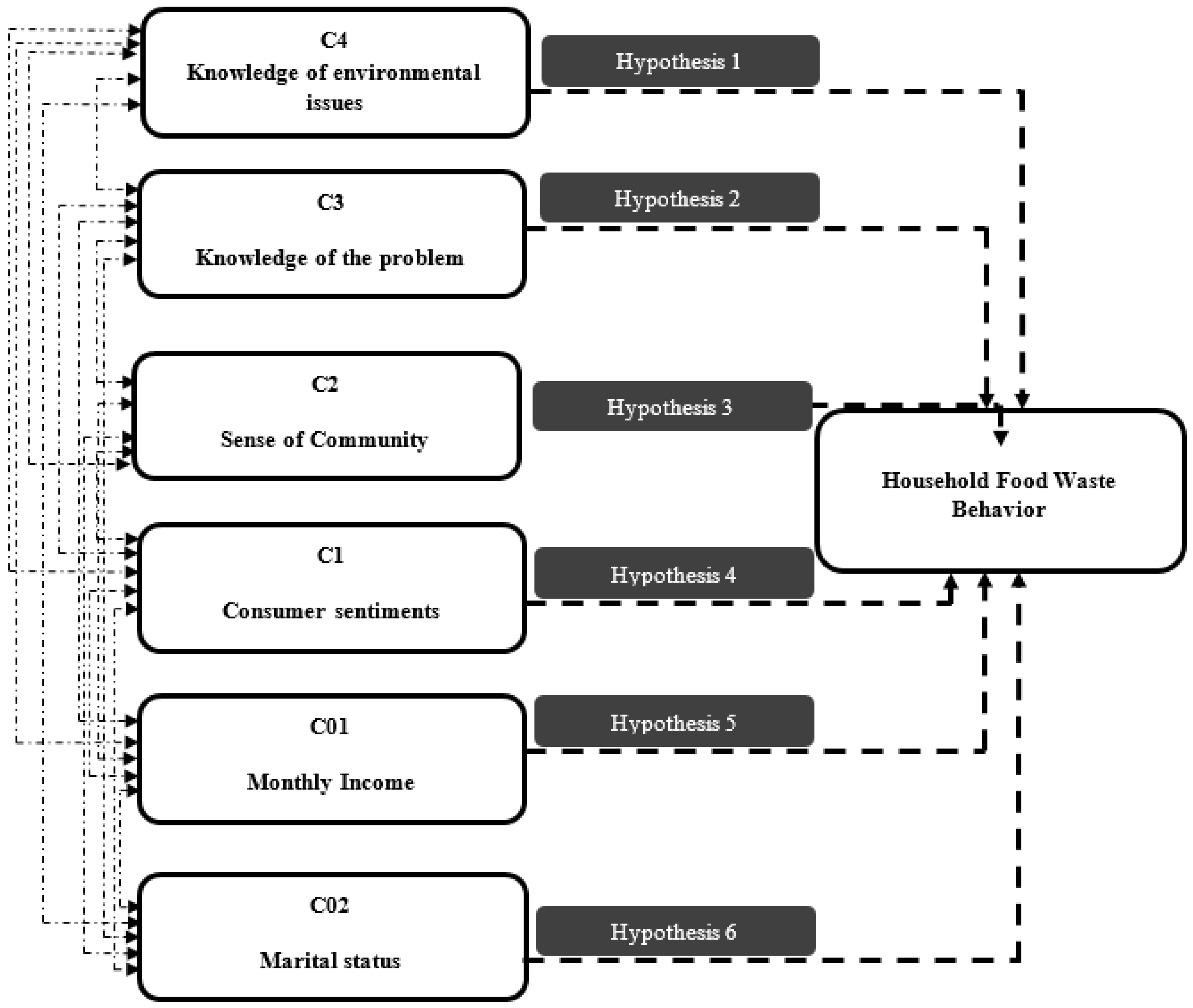
Figure 1. Schematic representation of the conceptual framework.
Agriculture 15 02481 g001
Figure 2. Topographic map of the study area. Thessaloniki (Θεσσαλονίκη): the second-largest city in Greece, located in the northern part of the country [66].
Agriculture 15 02481 g002
Figure 3. Path Diagram—Statistically Significant Paths and Standardized Coefficient (X2: 10.58, *** p < 0.001, NFI = 0.99, IFI = 0.995, CFI = 0.98, RMSEA = 0.06).
Agriculture 15 02481 g003
Table 1. Sociodemographic characteristics of the sample (N = 668).
ItemCategoryFrequencyPercentage
GenderMale24236.23%
Female42663.77%
Age18–24 years old19629.34%
30–39 years old20630.84%
40–59 years old24937.28%
65+ years old172.54%
Education levelHigh School60.90%
Professional Degree11417.07%
Bachelors23034.43%
Masters24536.68%
Doctorate7310.93%
Marital statusFree30245.21%
Married32949.25%
Divorced304.49%
Widow71.05%
OccupationIn paid work52979.19%
Unemployed517.63%
College student8813.17%
Habitation typeVillage (up to 10,000 inhabitants)13019.46%
City (>10,000 inhabitants)53880.54%
Monthly Income€0–50012218.26%
€501–100021131.59%
€1001–150016925.30%
€1501–20007210.78%
€2001 and above9414.07%
Number of household members112218.26%
214121.11%
314221.26%
419629.34%
Five and above6710.03%
Number of children in the family111617.37%
221031.44%
3578.53%
Four and above182.69%
None26739.97%
Table 2. Constructs and Measurement Items Related to Reuse and Recycle Behaviors in Household Food Waste Management.
CodeName of FactorMeasurement ScaleSource/Reference Construct-Items
C20C5 Reduce3-item scale, Likert 1–5 (1 = strongly disagree–5 = strongly agree)[65]C561I will pay more attention to their purchase
C562I will pay more attention to my meals
C563I will become better informed about the effects of food waste
C20C7 Recycle4-item scale, Likert 1–5 (1 = strongly disagree– 5 = strongly agree)[73]C769I participate in the recycling of household food waste
C770I recycle to reduce landfill problems
C771I intend to promote the recycling of household food waste
C772I resell a large portion of my leftover food for financial reasons.
C2Sense of Community4 items, Likert 1–5 from (1 = strongly disagree–5 = strongly agree)[73]C248People from my workplace feel like we are members of the same community
C249To the people of my neighborhood, I feel that we are members of the same community
C250To the people from my town, I feel like we are members of the same community
C251To the people from my country, I feel that we are members of the same community
C20C6 Reuse5-item scale, Likert 1–5 (1 = strongly disagree–5 = strongly agree)[74]C664It will significantly benefit the environment
C665To make the most of them
C666To save money
C667Instead of buying new ones
C668Their disposal contributes significantly to landfill problems
C4Knowledge of environmental issues5 items, Likert 1–5 (1 = strongly disagree–5 = strongly agree)[75]C456I know how to buy products that are environmentally friendly
C457I know about food waste recycling
C458I know about purchasing packaging that reduces waste
C459I know environmental symbols
C460I know various environmental issues
C3Knowledge of the problem4 items, Likert 1–5 (1 = strongly disagree–5 = strongly agree)[76]C352Reducing household food waste is an important way to reduce pollution
C353Reducing household food waste creates a better environment for future generations
C354Reducing household food waste is a critical way to reduce the unnecessary use of landfills
C355Reducing household food waste is a meaningful way to conserve natural resources
C1 Consumer sentiments4 items, Likert 1–5 from (1 = strongly disagree–5 = strongly agree)[77]C144I feel guilty when I waste food, as it has a negative impact on the environment
C145I feel guilty when I waste food, as it has a negative impact on the economy
C146I feel guilty when I waste food, as it has a negative impact on society
C147I feel ashamed when I waste food, as this has a negative impact on the environment.
C01Monthly IncomeSelf-reported, categorical Demographic variableA11Gender
A88Monthly income
C02Marital statusSelf-reported, categorical Demographic variableA44Marital status
A99Number of household members
A1010Number of children in the family
Table 3. Factor Analysis Results—Confirmatory Factor Analyses: Standardized Loadings, Measure Reliabilities.
Factor CodeName of Construct-ItemsFactor LoadingEigenvalueVariance (%)Goodness-of-Fit MeasuresStandardized Path Coefficients
C7C7690.848231757.918X2: 857,448df: 6p: 0.000.729
C7700.878 0.833
C7710.887 0.849
C6C6640.816336167.229X2: 1,727,698df: 10p: 0.000.788
C6650.828 0.782
C6660.818 0.741
C6670.841 0.768
C6680.796 0.760
C5C5610.920248882.933X2: 1,229,766df: 3p: 0.000.890
C5620.921 0.883
C5630.891 0.817
C4C4560.771340868.153X2: 1,691,840df: 10p: 0.000.703
C4570.827 0.777
C4580.851 0.812
C4590.850 0.806
C4600.826 0.783
C3C3520.891310977.737X2: 1,771,198df: 6p: 0.000.873
C3530.912 0.909
C3540.869 0.797
C3550.853 0.771
C2C2480.806303575.867X2: 1,694,698df: 6p: 0.000.709
C2490.896 0.843
C2500.918 0.918
C2510.859 0.826
C1C1440.881297374.318X2: 1,529,196df: 6p: 0.000.853
C1450.881 0.798
C1460.877 0.782
C01A110.787117723.532X2: 548,496df: 10p: 0.00−0.462
A88−0.730 0.520
C02A440.702204540.908 0.547
A990.783 0.544
A1010−0.831 −0.908
N = 668. CFI = Bentler’s comparative fit index; RMSEA = root mean square error of approximation; NFI = Normed fit index; NC = v2/df:1,192,866/428 = 2.78; RMSEA: 0.051; NFI: 0.905; CFI: 0.937.
Table 4. Pearson Correlations Between the Constructs.
CodeC4C3C2C1C01C02K
Knowledge of environmental issuesC41
Knowledge of the problemC30.307 **1
Sense of CommunityC20.373 **0.378 **1
Consumer sentimentsC10.440 **0.567 **0.450 **1
Monthly IncomeC010.158 **0.0190.079 *0.0651
Marital statusC020.0240.0700.0230.0400.0451
Food Waste BehaviorK0.407 **0.517 **0.443 **0.563 **0.097 *0.126 **1
** Correlation is significant at 0.01, * Correlation is significant at 0.05.
Disclaimer/Publisher’s Note: The statements, opinions and data contained in all publications are solely those of the individual author(s) and contributor(s) and not of MDPI and/or the editor(s). MDPI and/or the editor(s) disclaim responsibility for any injury to people or property resulting from any ideas, methods, instructions or products referred to in the content.