Article

Design and Experimental Investigation of a Self-Propelled Sea Buckthorn Cutting Harvester with a Reciprocating Cutter


1
College of Mechanical and Electrical Engineering, Shihezi University, Shihezi 832003, China
2
Xinjiang Silk Road Sea Buckthorn Technology Co., Ltd., Tacheng 654700, China
3
College of Agriculture, Shihezi University, Shihezi 832003, China
*
Author to whom correspondence should be addressed.
Agriculture 2025, 15(23), 2428; https://doi.org/10.3390/agriculture15232428
Submission received: 18 October 2025 / Revised: 21 November 2025 / Accepted: 23 November 2025 / Published: 25 November 2025
(This article belongs to the Section Agricultural Technology)

Abstract

To address longstanding challenges in sea buckthorn harvesting—such as the absence of effective harvesting principles, inefficient traditional manual and semi-mechanised methods, and rising labour costs—this study developed a self-propelled harvester equipped with a reciprocating cutter. The harvester featured an optimised double-support reciprocating cutter driven by a swing ring mechanism, with its kinematic parameters and cutting speed determined through analytical analysis. A coordinated transport system, consisting of an arc-shaped branch dial wheel, a conveying device, and a hydraulic system, was also designed. Field experiments were conducted employing a three-factor, three-level Box–Behnken design of Response Surface Methodology (RSM), which enabled the establishment of a predictive mathematical model for harvesting performance. Numerical optimisation via the model yielded the optimal operational parameters: harvesting forward speed of 0.6 m·s−1, a cutting speed of 1.2 m·s−1, and a conveyor belt linear speed of 0.8 m·s−1. With this parameter combination, the missed cutting rate was 6.72%, fruit breakage rate 4.06%, and conveyor failure rate 7.79%, all meeting mechanised harvesting standards. This research provides the essential theoretical foundation and technical solutions for harvesting equipment in the sea buckthorn industry, accelerating its mechanisation process.

1. Introduction

As a high-value cash crop, sea buckthorn boasts remarkable nutritional and medicinal attributes. Its fruits and branches play pivotal roles in food production, pharmaceutical applications, and ecological restoration [1,2,3,4,5,6]. However, there are no clear principles for reference regarding the fully mechanised harvesting of sea buckthorn, so mechanised harvesting is challenging [7,8]. In recent years, demand for sea buckthorn has surged. Concurrently, the Chinese government has intensified its support for the industry through policy, driving a substantial expansion of cultivation areas. By 2024, the area dedicated to sea buckthorn cultivation in China had surpassed 9.1 million hectares [9]. As cultivation scales continue to expand, traditional manual and semi-mechanised harvesting methods have become inefficient and costly [10]. This has led to widespread degradation and damage to unharvested sea buckthorn branches and fruits due to delayed collection. Furthermore, the limited operating range and the challenges associated with continuous operation of existing small-scale semi-mechanised harvesting equipment hinder the adoption of full mechanisation [11]. Moreover, the reduced reliability of existing mechanization in operation is directly reflected in yield losses and increased maintenance costs, including downtime, repairs, and fuel consumption [12]. These factors collectively affect work efficiency and lead to increased unit costs for both operations and final agricultural products. Therefore, there is an urgent need for self-propelled sea buckthorn fruit harvesting equipment that can integrate cutting, conveying, storage, and unloading functions.
Numerous studies have been conducted on hard crop stalks, including those of sugarcane, sunflowers, bananas, cotton, cannabis, and oilseed rape, as well as the machinery used to cut them. Brazil is one of the world’s leading producers of sugarcane. Qui and Wang et al. employed finite element numerical simulations and conducted relevant experiments to ascertain the ideal parameters for a sugarcane cutting device [13,14]. Manhães et al. explored the losses and damage caused to sugarcane during harvesting using a Case IH A8800 harvester at different operating speeds [15]. The Case New Holland A8800 harvester employed by them integrated cutting, conveying and storage functions, thereby enhancing crop harvesting efficiency. Mo et al. used a homemade sugarcane harvester test platform and a finite element analysis method to conduct cutting tests and simulations on a small, mountainous harvester in order to determine its cutting mechanism and the main factors affecting the cutting process [16]. Liu et al. confirmed the effectiveness of reciprocating cutters for shrub willow. Should reciprocating cutters be employed for sea buckthorn harvesting, cutting parameters must be optimised to minimise fruit damage [17]. Meanwhile, Wen et al. optimised the parameters of a banana crown cutter using the surface quality of the banana crown cut, peak cutting force, and cutting power consumption as test indexes [18]. They then finalised the optimum parameters of the cutter for banana crown cutting. Akhtar Khan et al. used finite element analysis to design and analyse the structure of a cotton stalk crusher. Their results showed that excessive force on the cutting blade and blockages in the crusher affect the machine performance [19]. Tian et al. designed a bionic blade with various combinations of tooth pitch and angle for cutting industrial hemp. They determined the cutter’s optimal parameters through practical and simulation tests [20]. Xiong and Tian conducted a study on a rapeseed stalk cutting device. They used finite element simulation to perform single-factor and multi-factor analyses on rapeseed stalks to determine the optimal operating parameters of the cutting device [21,22]. Although these studies provide some reference for research into the harvesting of hard-stemmed crops, studies specifically addressing the sea buckthorn cutting process remain scarce. Such research is crucial for analysing factors affecting cutting efficiency from a kinematic perspective.
Research exists in China concerning the cutting and harvesting of hard-stemmed crops. Zhang’s team designed a rapeseed reciprocating cutter. Addressing the issue of high cutting inertia in traditional reciprocating cutters, which causes significant header vibration, they developed a rapeseed cyclic chain cutter [23]. This cyclic cutting mechanism mitigates inertial forces during operation. However, with an effective cutting diameter of 30 mm, it cannot process sea buckthorn stems ranging from 20 to 50 mm in diameter. To address excessive cutting resistance in hemp, Tian et al. developed triangular sharp-toothed biomimetic blades [24]. Wang et al. analysed optimised cutting parameters for sea buckthorn branches and designed a test platform employing a double-action reciprocating blade (also applicable to other crops) [25]. In Wang et al.’s experiments, a double-action blade was employed for cutting trials, demonstrating its feasibility for harvesting hard-stemmed plants like sea buckthorn. However, their experimental conditions differed from actual field harvesting environments. Consequently, research remains insufficient in the development of dedicated sea buckthorn branch-fruit harvesters and branch-cutting devices, thereby limiting the advancement of mechanical harvesting for this crop.
A self-propelled sea buckthorn harvester with a reciprocating cutter was designed to meet the operational requirements of the ‘Deep Autumn Red’ variety in Xinjiang. This study aimed to develop a sustainable, integrated harvester that could complete the cutting, conveying, storing, and unloading processes in one operation. Particular focus was given to designing the cutting component. The main contributions of this paper are as follows:
  • A novel sea buckthorn cutting harvester is proposed, focusing on the design and optimisation of its cutting mechanism. The kinematic characteristics of the reciprocating cutter during operation were analysed to determine optimal parameters that effectively reduce damage and fracture.
  • A two-stage conveyor was designed, featuring an integrated storage structure. The motion phases during the conveying process were analysed to determine parameters that effectively enhance conveying success rate and efficiency.
  • The performance-affecting factors were optimised through field orthogonal tests combined with a comprehensive scoring method, and the optimal parameter combinations were determined using a three-factor, three-level Box–Behnken test.
The remainder of this paper is organised as follows: Section 2 presents an experimental analysis of the harvester’s operating principles; describes the key components of the developed harvester, including the cutting device, drive wheels, conveying device, and hydraulic system; and outlines the field trial design; Section 3 presents the test results and discussion, determining optimal parameters; and Section 4 summarises the entire paper.

2. Materials and Methods

This research employed an integrated approach combining analytical modelling, ADAMS simulation, and field experimentation. Design Expert 13.0 software was used for Box–Behnken experimental design and statistical analysis, while laboratory methods determined the biomechanical properties of sea buckthorn branches. Field trials validated the prototype performance under actual operating conditions.

2.1. Working Principle and Overall Machine Configuration

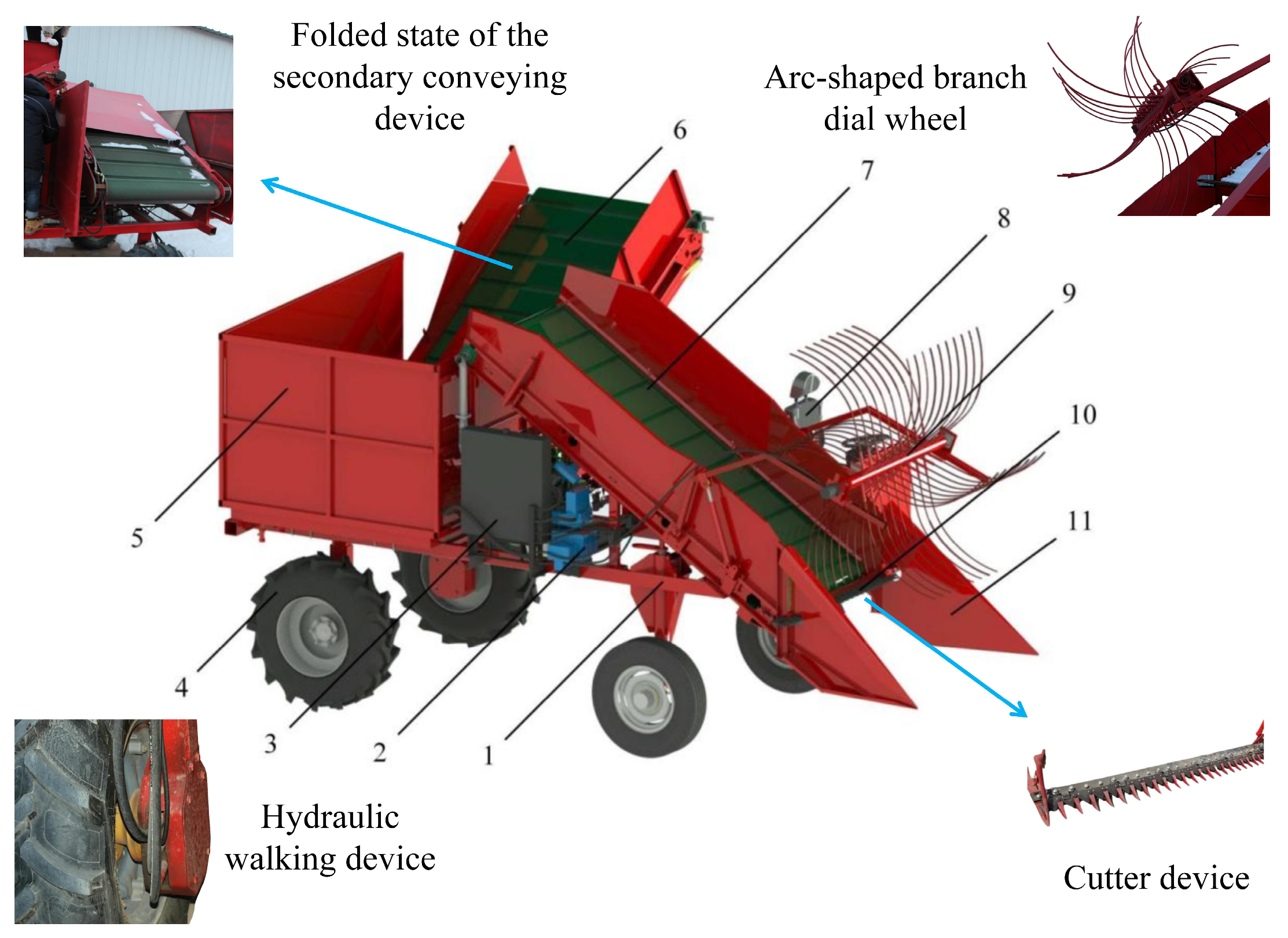
The seif-developed sea buckthorn cutting harvester (see Figure 1) consists primarily of a cutting device, a conveying device, a hydraulic power system, a storage bin device, and an unloading device. The cutting device includes a reciprocating cutter, a branch gatherer, and a pivoting wheel. The conveying device comprises primary and secondary conveyors. The storage device is located at the rear of the machine. Table 1 shows these key components of the harvester.
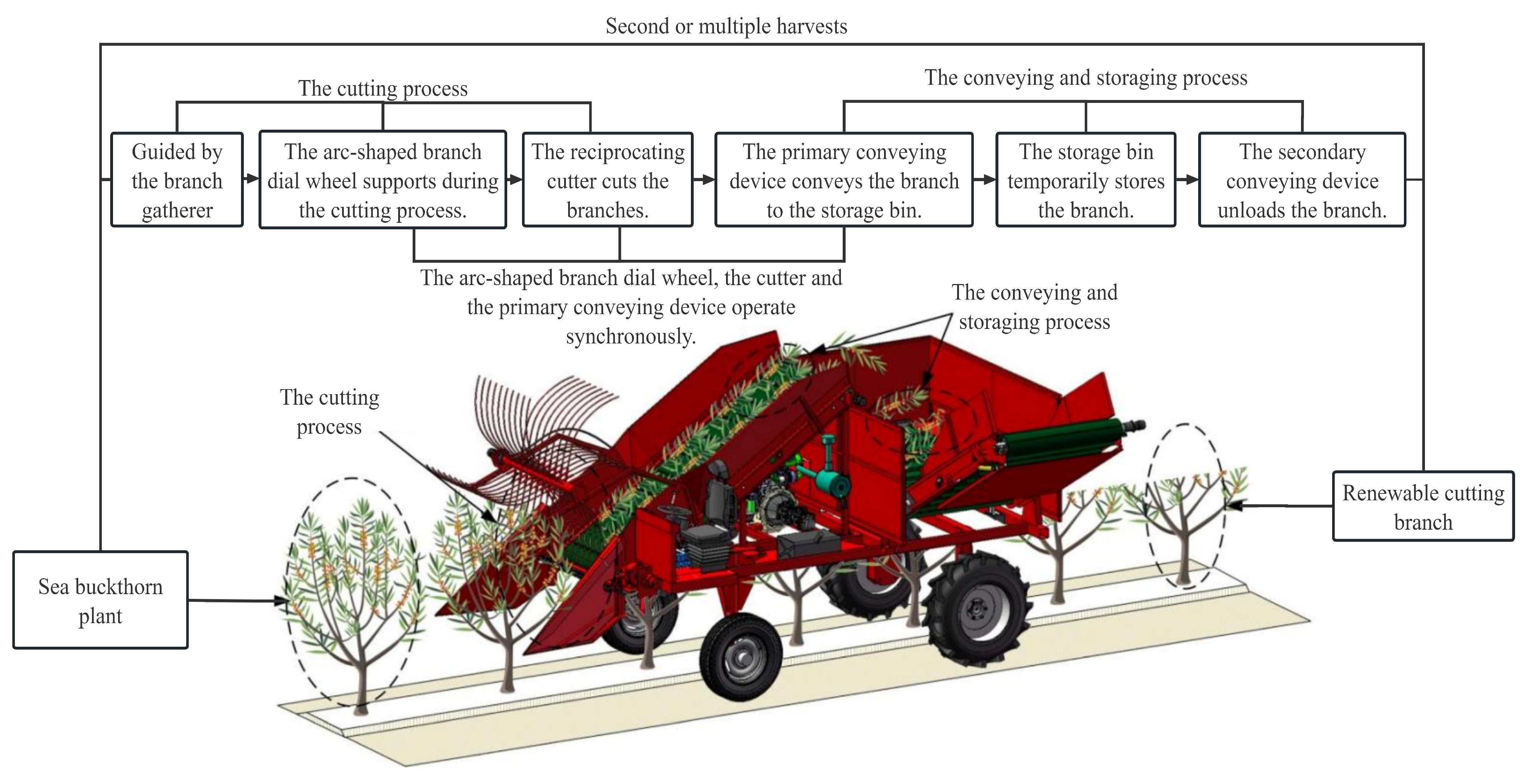
The harvester is mounted on a high-clearance, wheeled chassis and is powered by a diesel engine. The units are driven by a hydraulic system. Figure 2 illustrates the harvester operating principle. During operation, the harvester moves longitudinally along the plant. The branch-gathering branch collects gather sea buckthorn branches and fruit. The arc-shaped branch dial wheel then guides and supports these branches. The reciprocating cutter then cuts off the branches and fruit. The pivoting wheel then directs the branches and fruit onto the primary conveyor belt, which transports them into the storage bin for temporary storage. Once the storage bin is full, the secondary conveyor belt unloads the branches and fruit, thus completing the harvesting process. Harvesting sea buckthorn at a height of over 1.3 m causes less damage to the plant and therefore allows for a second harvest the following year.

2.2. Physical Properties of Sea Buckthorn Branches

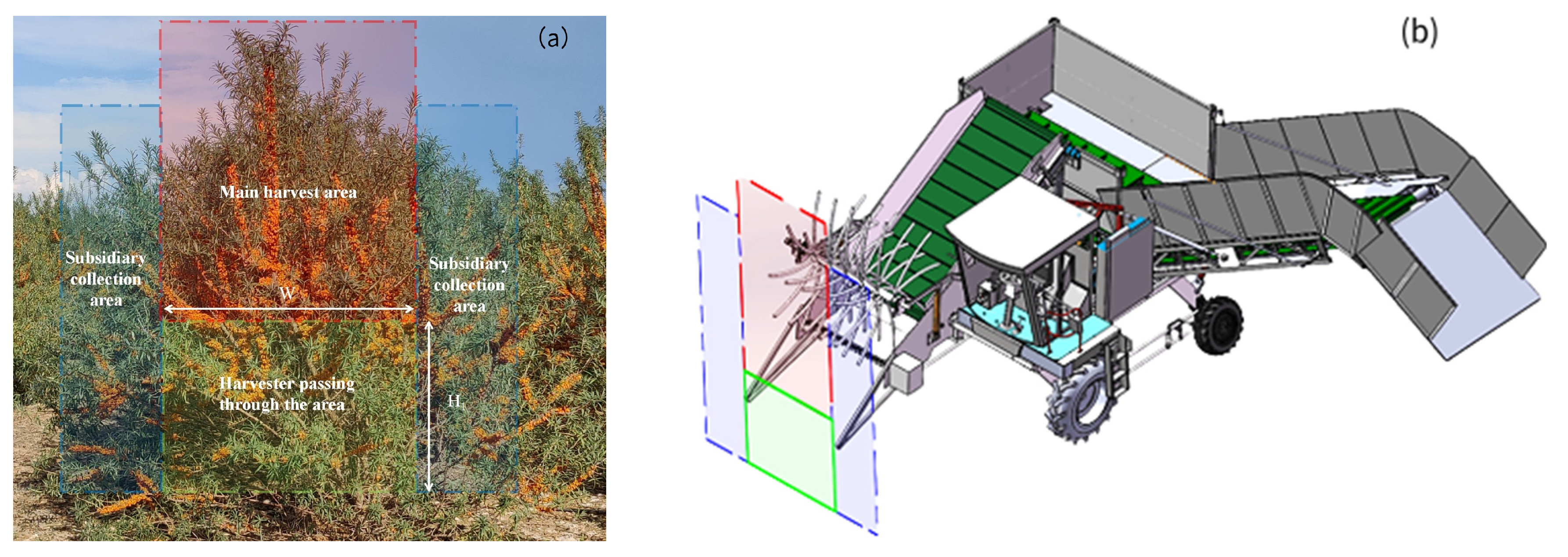
The samples for this study were collected from sea buckthorn plantations in Emin County, Tacheng, Xinjiang. The sea buckthorn variety was Deep Autumn Red, and the trees were four years old. To align the test results with the branch and fruit harvesting period, branch samples were collected on 15 September 2023 from the main and sub-harvesting areas using the theoretical machine harvesting position (see Figure 3). Plants that were growing well, bearing plenty of fruit, and free from pests, diseases, and obvious defects were selected for sampling. The collected sea buckthorn branches and fruits were grouped, numbered, and placed in sealed bags for thermostatic transportation.
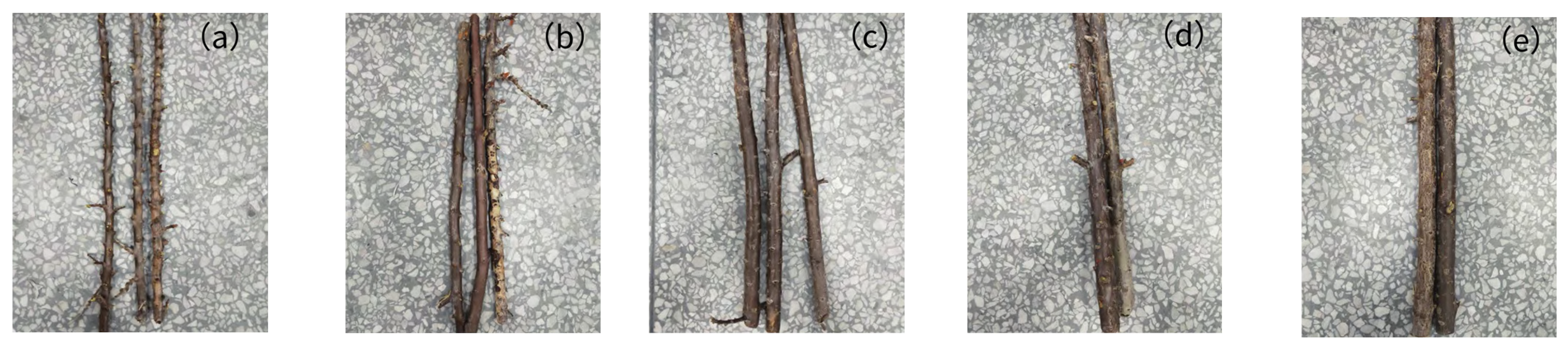
Prior to the collection of test materials, the branches, leaves, and fruits were removed (see Figure 4). The diameter of each branch was trimmed to 10.0 mm, 12.5 mm, 15.0 mm, 17.5 mm, or 20.0 mm (with an error margin of ±0.5 mm). A number of branches from sea buckthorn were prepared for each diameter section. The experimental materials were divided into three parts, respectively, for the determination of their density, collision recovery coefficient and friction coefficient.
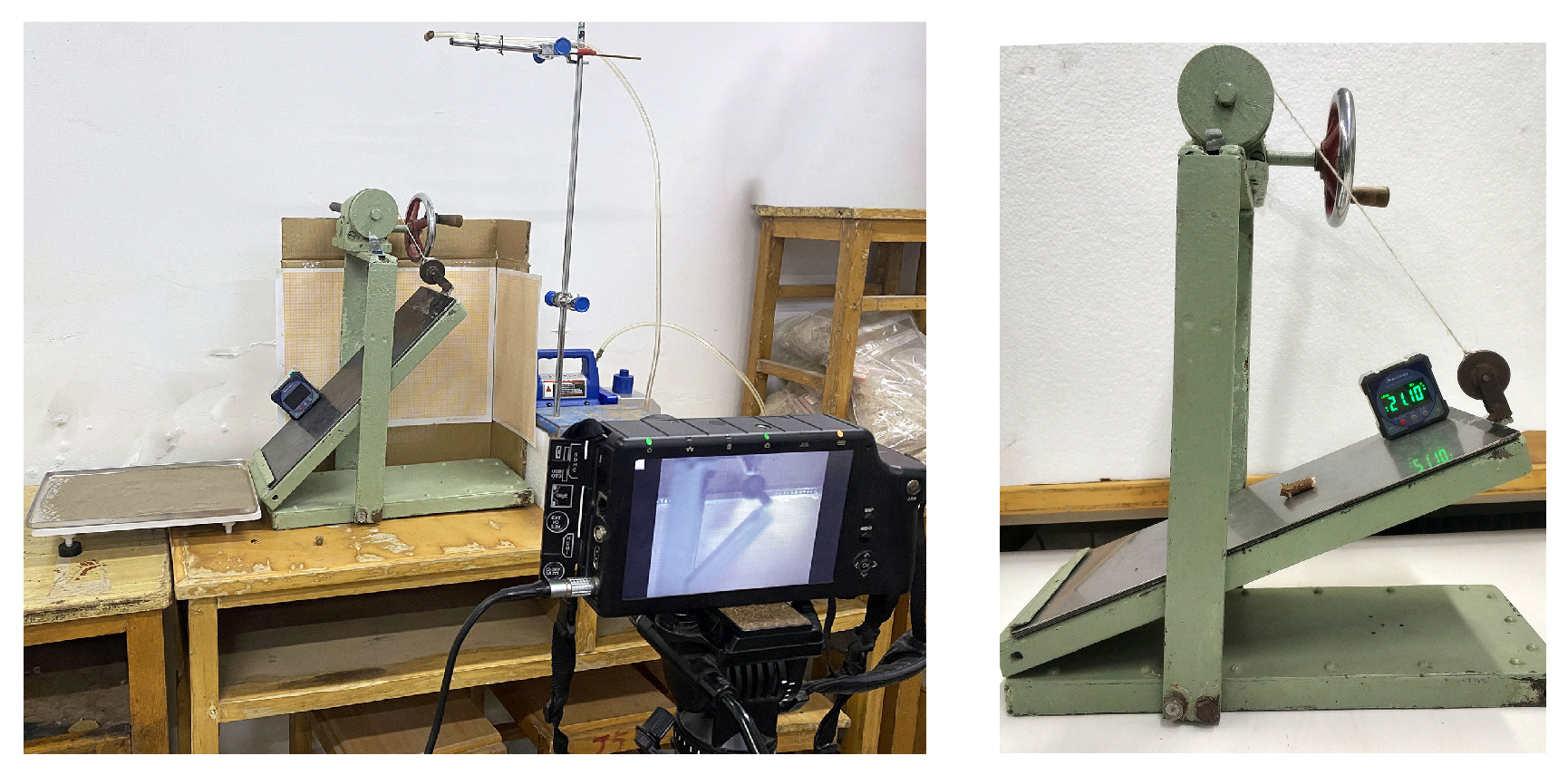
The density, rebound coefficient, and coefficient of friction of sea buckthorn branches were determined using the drainage method, inclined plane collision method, and inclined plane rolling method, respectively. The experimental process is illustrated in Figure 5, with results presented in Table 2.

2.3. Cutting Device

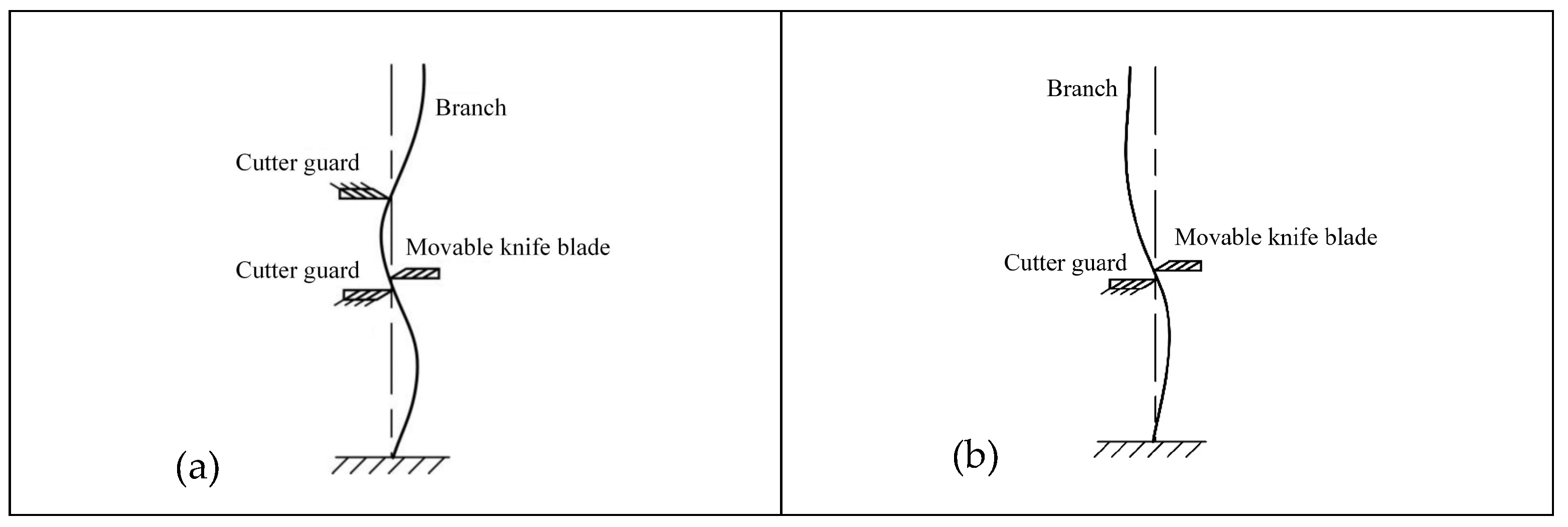
The reciprocating cutting device comprises a moving blade and a fixed counter-blade, which perform the cutting action through coordinated kinematic movements. This apparatus employs a double-support cutting mechanism, wherein the moving blade shears against a rigid guard edge to achieve clean branch severance. Unlike single-support cutting methods prone to causing branch bending, fracture, and irregular breakage, the double-support structure physically constrains the branch on both sides of the cut, effectively preventing bending or slippage during cutting (see Figure 6). This enables reduced cutting speeds while maintaining cutting quality and efficiency.
By providing bidirectional restraint during cutting, the double-support method minimises elastic deformation of the branch, maintaining it in a near-pure shear state. This significantly reduces the required cutting force and energy consumption. Consequently, this design employs a double-support single-action blade structure.

2.3.1. Cutter Unit

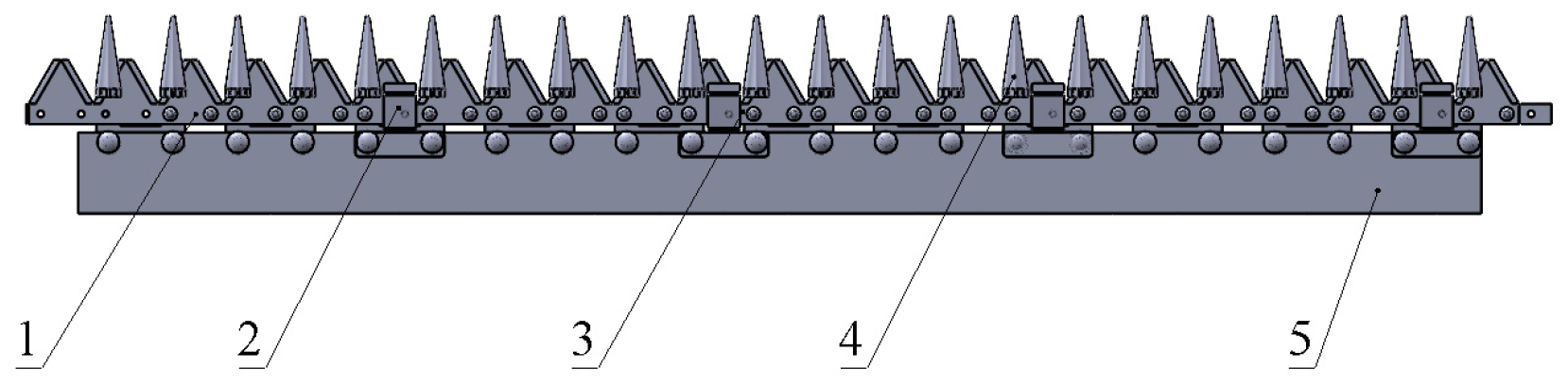
The reciprocating cutter is mainly composed of a drive plate, blade presser, cutter assembly, blade guard, and cutter beam, with its designed structure illustrated in Figure 7.
The cutter blade is made of T9 carbon tool steel. The cutting edge is 20 mm wide and has been quenched and heat-treated to ensure that the blade service life and material properties meet the demands of actual operations.
The trapezoidal hexagonal profile was prioritised in the design of the cutter blade. This geometry ensures that both sides of the blade retain their original height even after wear, justifying the choice of a toothed edge blade for the reciprocating cutter. The edge guard provides critical support during the cutting process, thereby enhancing interchangeability. A standard Type IV edge guard fabricated from cast steel was adopted to fulfil this role. Unlike fixed blade configurations, this edge guard does not have a dedicated stationary blade. Instead, it relies on its support surface to stabilise the branch during the cutting process.
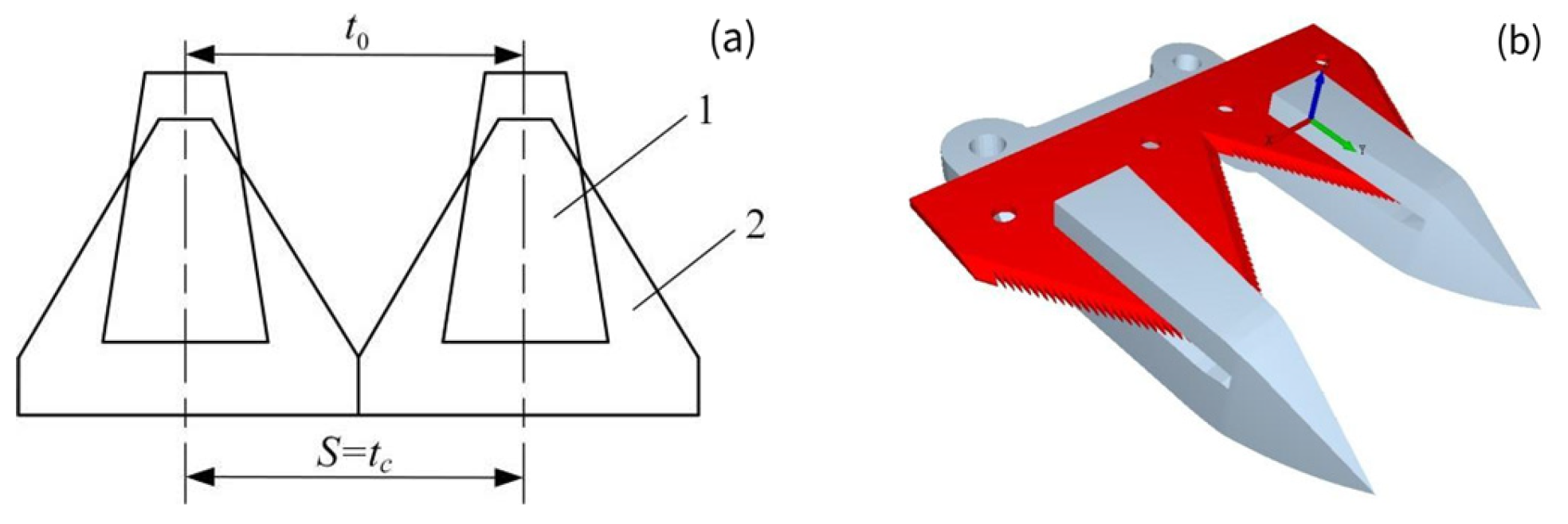
It is evident that the dimensional combinations of three distinct cutter types can be delineated in consideration of the cutter stroke S, movable blade pitch tc, and edge guard tooth pitch t0. The common Type I cutter, characterised by S = tc = t0, was selected for its superior cutting stability and strong adaptability to branches of varying thickness. This is critical for meeting the demands of sea buckthorn harvesting. As shown in Figure 8a, this configuration uses a cutter stroke of 76.2 mm, ensuring consistent shearing performance across different branch diameters by maintaining consistent spacing between the movable blade and the edge guard teeth.
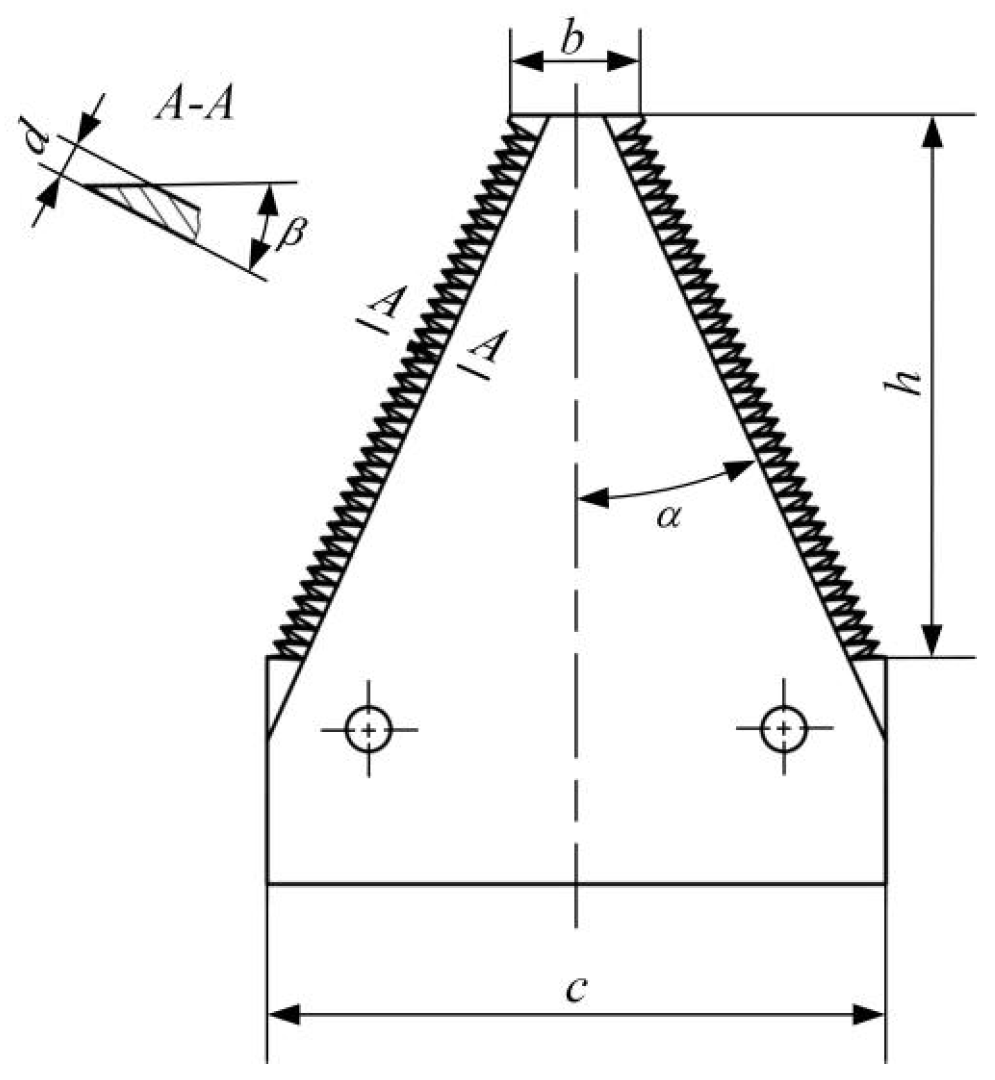
Figure 9 shows the movable blade structure. Blade thickness (d) directly influences structural strength. Based on industry-standard cutter designs, the blade thickness was appropriately increased and set to 4 mm to optimise mechanical durability and operational requirements.
The analysis of the slip-cutting mechanism reveals that a reduction in the blade angle, β, leads to a decrease in cutting resistance during branch shearing. Conversely, an excessively small angle results in increased wear on the cutting edge. The blade angle was designed according to the GB/T 1209.3-2009 cutter standards, with the objective of achieving a balance between minimising cutting force and enhancing edge durability [26]. This was achieved by setting the blade angle to β = 25°.
The fundamental premise of the study is the utilisation of the cutter clamping the branch, thus establishing the slip cutting angle α. The subsequent discussion delves into the relationship between α and other parameters, as delineated in Equation (1):
α + α 2 ϕ 1 + ϕ 2
where α is the slip cutting angle of the movable blade, °; α 2 is the slip angle of the edge guard, °; ϕ 1 is the friction angle between the branch and the movable blade, °; and ϕ 2 is the friction angle between the branch and the edge guard, °.
The friction angle between the toothed edge movable blade and the smooth edge guard is 47°. Consequently, the slip cutting angle α was set to 22.5°, with the sum of α and the edge guard slip angle α2 (α + α2 < 47°) satisfying the clamping cutting condition.
An analysis was conducted to determine the cutting force exerted by sea buckthorn branches. The analysis revealed that the force is influenced by the blade’s effective cutting length. Given that the slip-cutting angle α and blade width were pre-determined, the blade height h, which directly affects the effective cutting length, was set to 16 mm. This ensured optimal mechanical performance during branch shearing.
h = c b 2 c o s α
where h is the blade height, m; b is width of the blade front axle, m; and c is the width of the blade rear axle, m.
The blade angle β = 25° and skiving angle α = 22.5° outlined above are designed to optimise cutting performance from a theoretical perspective. Their efficacy was validated through field trials, with missed cutting rate and fruit breakage rates serving as key performance indicators (see Section 3.2 for details).

2.3.2. Cutter Motion Analysis

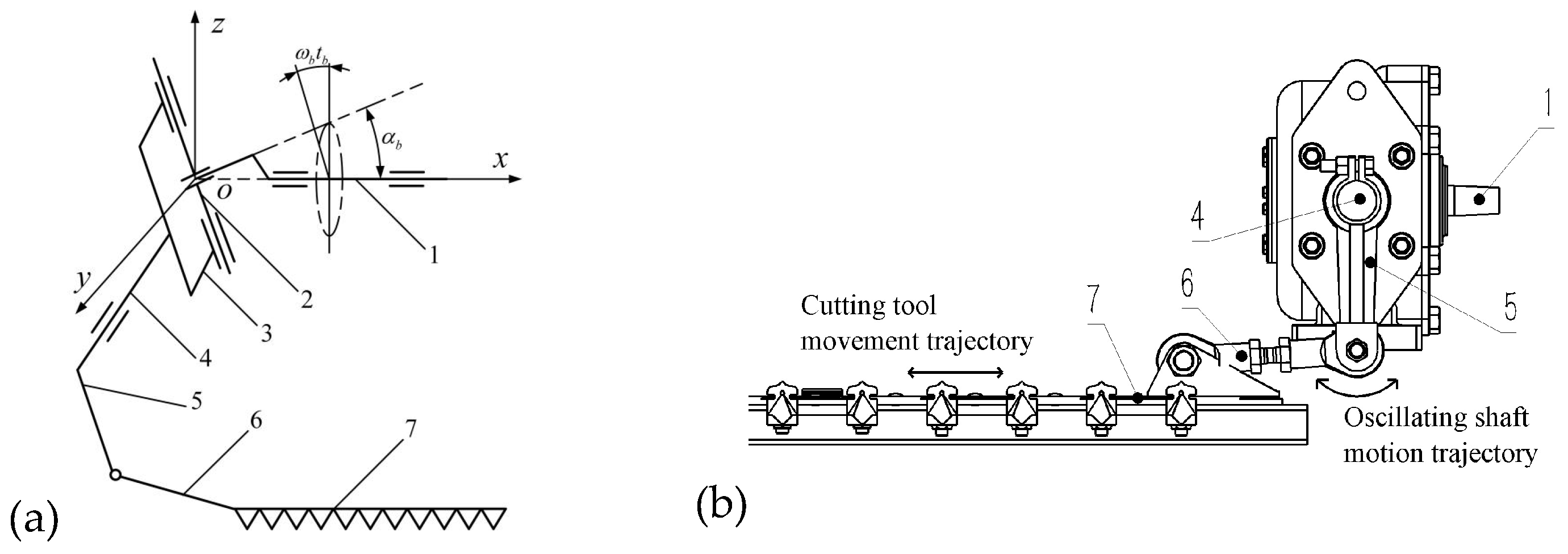
The pendulum ring mechanism is selected as the drive mechanism, and its motion characteristics are analysed. The structural schematic of the pendulum ring mechanism is shown in Figure 10.
When the spindle front half-axis forms an angle αb with the x-axis and undergoes a 180° rotation, the pendulum ring executes a spherical motion around the centre of rotation, moving to a position that is symmetric about the yoz-plane. This movement creates an angular displacement of αb relative to the original position, thereby driving the pendulum fork to oscillate. The oscillating pendulum fork is a device that induces rotational motion in the pendulum axis, which is rigidly fixed to the pendulum rod. This rotational motion is then converted into reciprocating motion of the cutter, thereby completing the mechanical transformation from rotational to reciprocating motion.
(1)
Motion characteristics of the pendulum ring
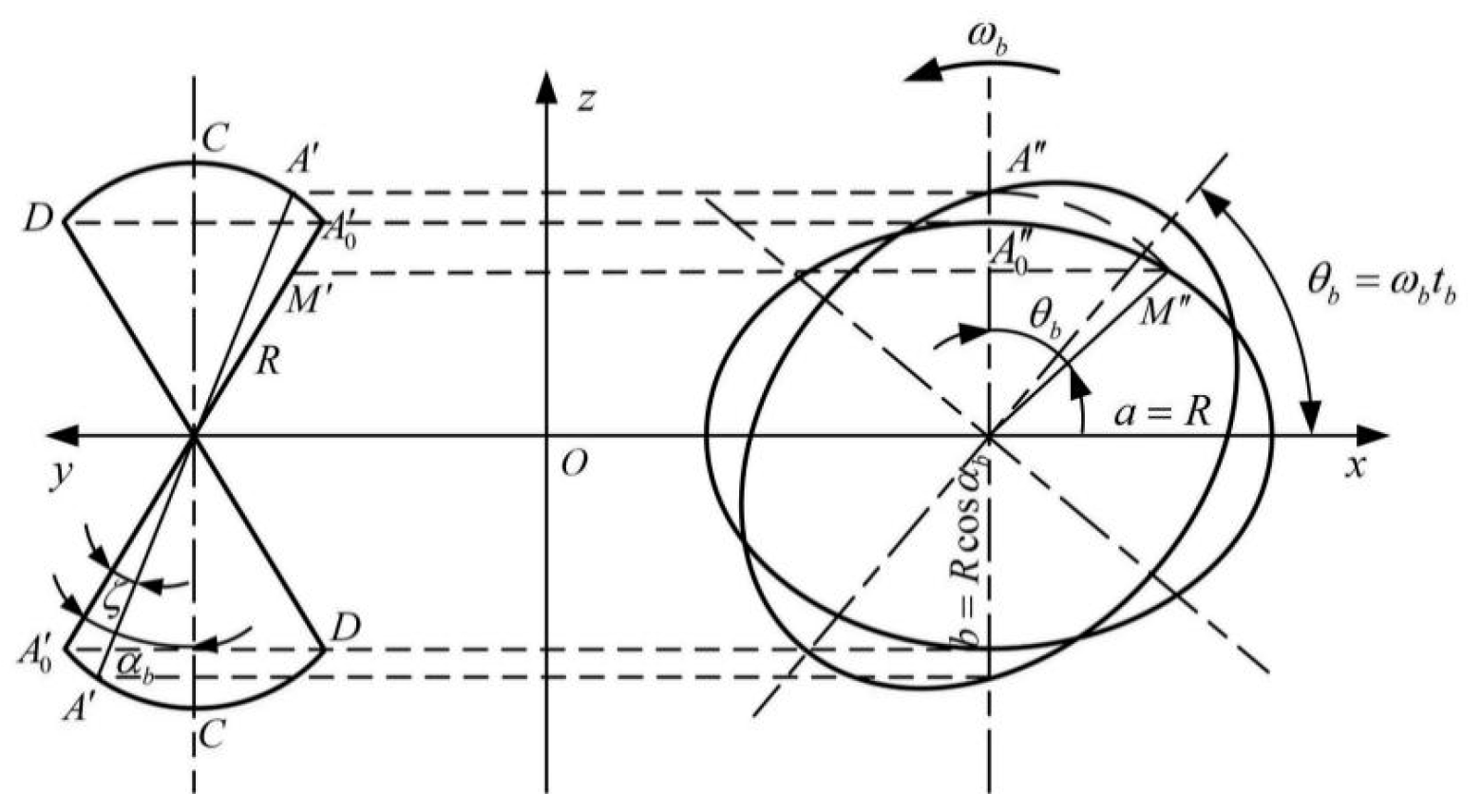
During rotation of the spindle, relative motion between the spindle and the pendulum ring generates a conical trajectory for the pendulum ring. The motion projections of the pendulum ring onto the yoz-plane and xoz-plane, with the origin at point O, are illustrated in Figure 11. The pendulum ring is articulated to the pendulum fork via a hinge, while the fork is rigidly fastened to the pendulum shaft, which undergoes pure rotational motion [27].
The A 0 A 0 line segment is the projection of the pendulum ring on the yoz-plane, the angle with the y-axis is 90° αb, the length is 2R, and R is the radius of the pendulum ring. When the pendulum ring is rotated by 180°, the projected line segment becomes DD, and the line segment DD is symmetric with A 0 A 0 about CC. The projection of the pendulum ring on the xoz-plane is an ellipse of unchanged shape, the long axis is 2R, the short axis is 2Rcosαb, and let the ellipse be parallel to the x-axis at the initial position. When the ellipse is rotating uniformly with ωb that is the projection of the pendulum ring motion in the xoz-plane. Let there be a point M on the ellipse, and after the main axis turns through the angle θb, point M moves to the position of point A , which is projected as A A on the yoz surface, and at this time the pendulum fork turns through the angle α b ζ .
After the main axis turns through the angle θb, the pendulum fork axle pin swings from A 0 A 0 to A A , then the relationship between the motion of the pendulum fork turning angle is Equation (3).
A O = ρ = O A cos ξ
where ξ is the angular displacement of the pendulum fork, rad; αb is the angle between the front half-axis of the main shaft and the x-axis, °; ωb is the angular velocity of the spindle, rad·s−1; and tb is the time, s.
The relationship between the spindle angle and the pendulum fork angular displacement is described by Equation (4).
tan ξ = tan α b cos ω b t b
where αb is the angle between the front half-axis of the main shaft and the x-axis, °; ωb is the angular velocity of the spindle, rad∙s−1.
Differentiating the preceding equation yields the angular velocity of the pendulum fork rotation, as described in Equation (5).
d ξ d t b = ω b tan α b sin ω b t b 1 + t a n 2 α b c o s 2 ω b t b
Differentiating Equation (5) and simplifying the result yields the angular acceleration expression, as shown in Equation (6).
d 2 ξ d t b 2 = ω b 2 tan ξ 1 + 2 t a n 2 α b t a n 2 ξ 1 + t a n 2 ξ 2
(2)
Motion analysis of the cutter
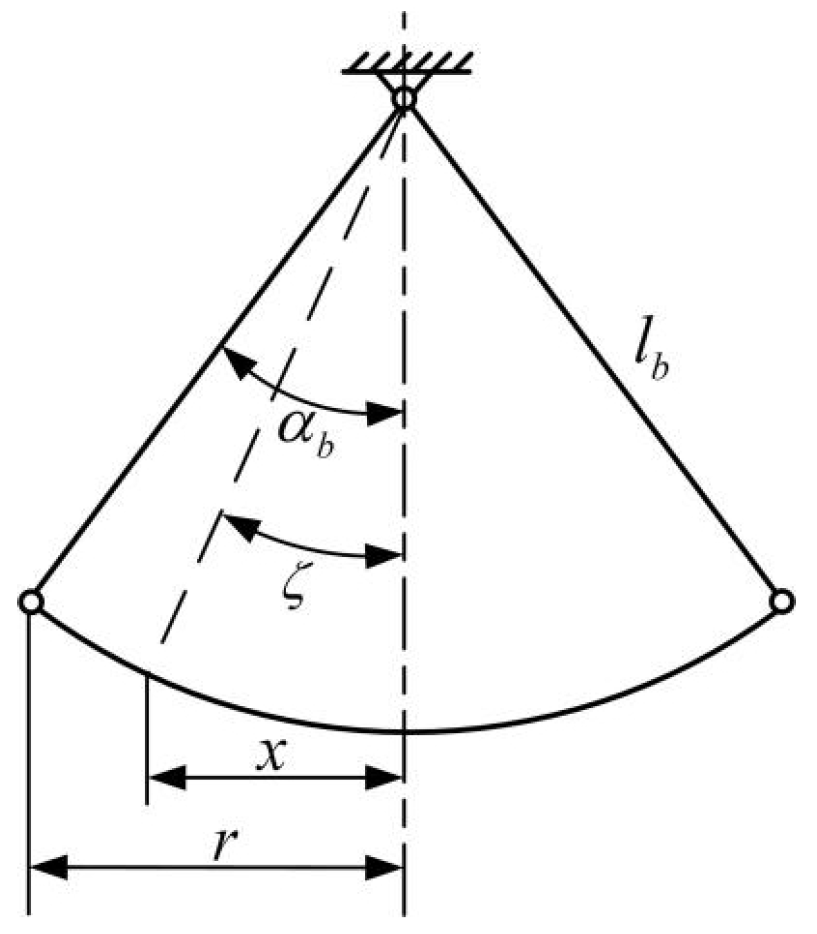
The swing amplitude of the pendulum, influenced by the pendulum length lb, directly affects the cutting stroke, as illustrated in Figure 12. Taking the midpoint of the pendulum swing stroke as a reference, the cutter displacement equation is described in Equation (7).
x = l b sin ξ
The equation for the cutter speed is given in Equation (8). This equation is derived through kinematic analysis.
v x = γ ω b sin ω b t b cos α b 1 + t a n 2 α b c o s 2 ω b t b 3 / 2
The preceding kinematic analysis describes the ideal motion of the mechanism. To improve the model’s realism and account for energy losses due to joint friction and dynamic damping effects inherent in reciprocating systems, a dynamic efficiency factor, ηd, is introduced. Following the analysis of nonlinear friction in similar closed-chain mechanisms by Hazem et al. [28], a conservative efficiency factor of ηd = 0.87 was adopted for our system. This coefficient synthesises the effects of Coulomb friction and viscous damping at the revolute joints and the sliding interface of the pendulum ring. Therefore, the effective drive torque (Teff) required for the spindle is adjusted according to Equation (9):
T i d e a = T e f f η d
where Tidea is the theoretical torque calculated from the cutting force.
This adjustment provides a more realistic basis for hydraulic motor selection and power system sizing, ensuring the design is robust against the energy dissipation observed in practical operation [28].

2.3.3. Feed Analysis of Cutter

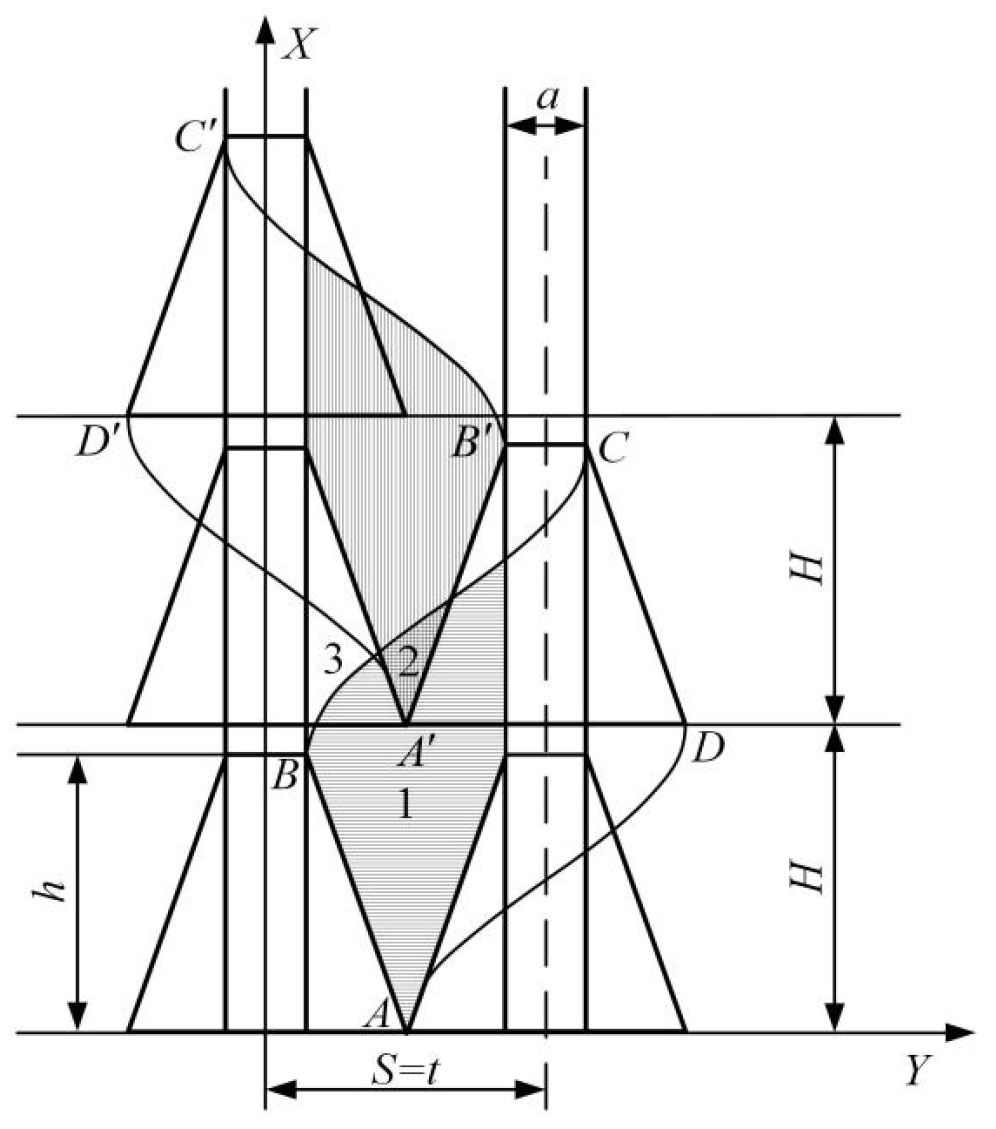
The feed distance (H) of the reciprocating cutter is defined as the distance travelled by the machine when the cutter completes one stroke, i.e., when the spindle rotates through 180° and the pendulum ring moves to a position that is symmetrical to its initial configuration relative to the ring surface. The blade trajectory, which is also characterised by the H, is illustrated in Figure 13. The mathematical expression for feed distance is given in Equation (10).
The feed distance of the reciprocating cutter is defined as the distance travelled by the machine when the cutter completes one stroke. When the spindle rotates through 180°, the pendulum ring moves to a position that is symmetrical to its initial configuration relative to the ring surface. The blade trajectory, which is also characterised by the feed distance, is illustrated in Figure 13.
H = v m π ω b = 30 v m n
where H is the feed distance per cutter stroke, m; vm is the harvester forward speed, m·s−1; ωb is the angular velocity of the spindle, rad·s−1; and n is the rotational speed of the spindle, r·min−1.
The cutter trajectory equation is given in Equation (11).
x = v m                             y = γ σ cos ω b t
where x and y are the coordinates of the cutter trajectory, m; vm is the harvester forward speed, m·s−1; γ is the transmission ratio; ω b is the angular velocity of the spindle, rad·s−1; t is the time, s; and σ is an intermediate kinematic parameter.
Rearranging Equation (11) yields Equation (12), for which the expression for σ is given in Equation (13).
y = γ σ cos ω b x / v m = γ σ cos π x / H
σ = 1 cos α b 1 + t a n 2 α b cos 2 ω b t = cos ξ cos α b
The cutter is driven by a pendulum ring mechanism and executes a reciprocating motion.
Its cutting speed, vp, is expressed in Equation (14).
v p = S n 30
where vp is the cutting speed of cutter, m∙s−1; s is the tool stroke, mm; and n is the rotational speed of the spindle, r·min−1.
The intersection between the cutter envelope (ABCD) and the edge guard teeth defines the cutting zones, which are classified as cutting zone 1, heavy cutting zone 2 and missed cut zone 3, as can be seen from the shaded areas in the cutter feed diagram. Analysis of cutting performance and power consumption shows that excessively large heavy cutting or missed cut zones are detrimental to cutting efficiency and energy use. Repeated cutting of the same branch section in the heavy cutting zone increases operation time and accelerates cutter wear. Uncut branches in the missed cut zone require subsequent processing, which complicates the cutting operation. To enhance performance and reduce power consumption, the sizes of both zones must be minimised. However, the area of the missed cut zone is inversely proportional to that of the heavy cutting zone. Therefore, optimising cutting parameters specifically determining an appropriate H is critical to balancing reduced heavy cutting overlap with controlled growth of the missed cut zone and achieving an optimal tradeoff between cutting efficiency and energy consumption.
Based on the density of the sea buckthorn branches and fruit and the operational parameters of other harvesters, the harvester forward speed vm was set to 0.4–0.8 m∙s−1, the cutting speed vp to 1.0–1.4 m∙s−1, and the main shaft rotational speed n to 400–550 rpm. These parameters, including vm and vp, were optimised through subsequent field tests to effectively balance cutting performance and power consumption.

2.4. Arc-Shaped Branch Dial Wheel

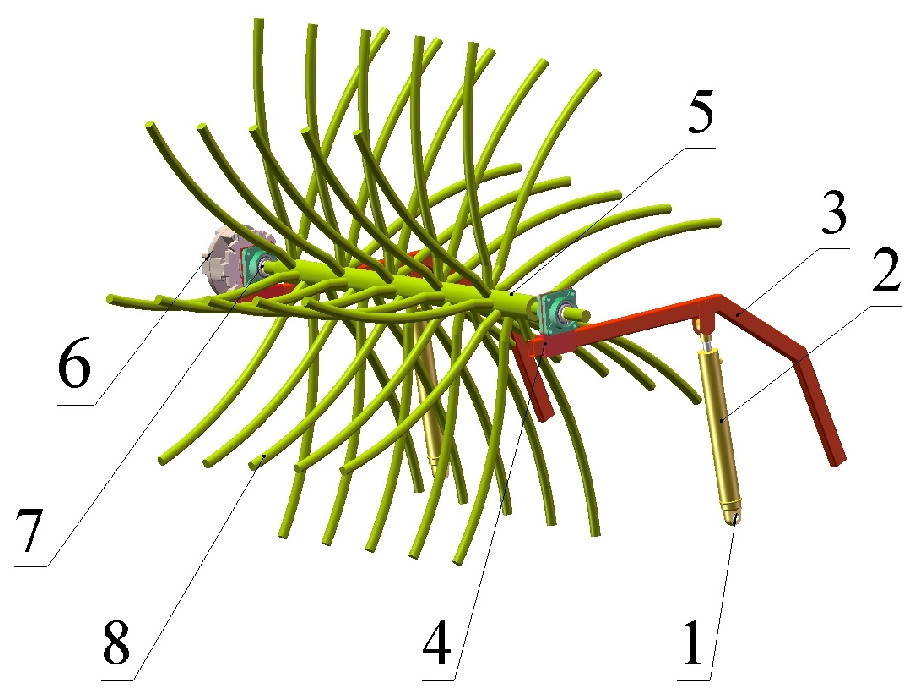
As shown in Figure 14, the arc-shaped branch dial wheel consists of a mounting foot, hydraulic cylinder, bracket, position adjusting lever, centre shaft, hydraulic motor, coupling, and cutting rod.

2.4.1. Structural Design of the Arc-Shaped Branch Dial Wheel

The arc-shaped branch dial rods are radially arranged around the central shaft, forming a 120° arc. These rods are distributed axially along the wheel in nine sets, spaced at 152 mm intervals (corresponding to every two cutter strokes). The hollow central shaft design significantly reduces the assembly overall weight. During operation, the hydraulic motor drives the wheel rotation, and dual hydraulic cylinders dynamically adjust its vertical position. This enables the precise guidance and manipulation of sea buckthorn branches and fruits at different heights. Furthermore, the adjustable positioning lever has multiple pre-set holes for fore–aft adjustment of the dialling wheel relative to the cutting mechanism.

2.4.2. Analysis of Key Parameters for the Arc-Shaped Branch Dial Wheel

The primary parameters of the branch-threshing wheel include the number of rod assemblies nz, the branch-threshing speed ratio λ, the branch-threshing wheel radius Rd, the branch-threshing wheel rotational speed nd, and the installation position of the branch-threshing wheel’s central shaft (distance from the cutting tool). Traditional combine harvester grain-threshing mechanisms predominantly employ a five-rod mechanism, featuring five threshing plates. However, when designing the branch-threshing wheel in practice, consideration must be given to the complexity of operational conditions encountered during the harvesting of sea buckthorn branches and fruit. The number of rake bar sets must not be excessive to avoid unduly increasing the wheel’s weight, nor should it be insufficient as this would compromise both the raking and supporting efficacy. Therefore, to ensure operational effectiveness and considering the selected harvesting method and cutter type, the number of rake bar sets nz for the arc-shaped branch dial wheel is determined to be six sets.
(1)
Branch speed relative to λ
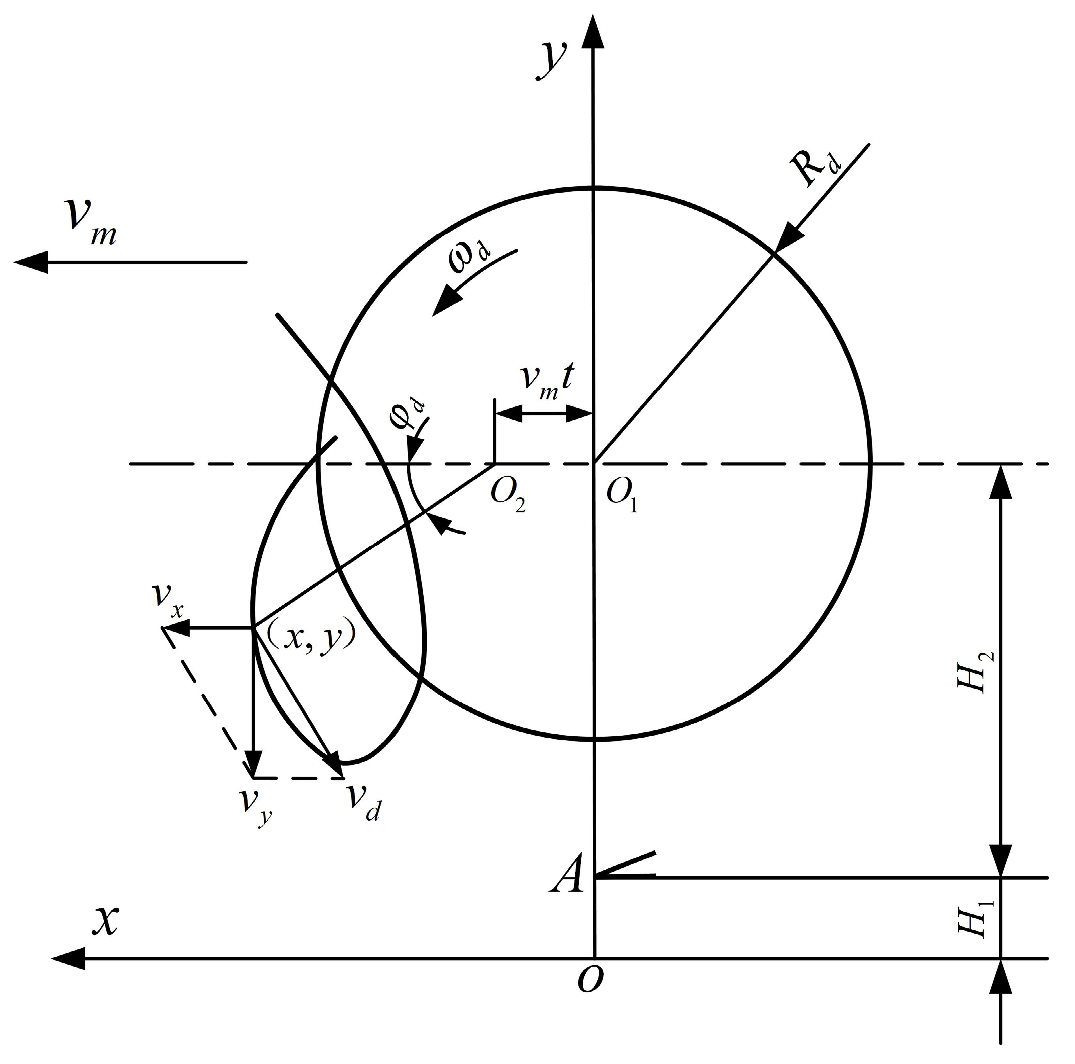
During operation of the arc-shaped branch dial wheel, the deflecting speed relative to λ directly influences the deflecting rod’s ability to propel and support branches. By analysing the motion trajectory at the deflecting rod’s terminal point, the relative relationship between the wheel’s rotational speed and the implement’s working speed can be determined to assess whether the deflecting rod possesses rearward propulsion capability. Consequently, the motion trajectory of a single point at the deflecting rod’s terminal end is investigated. Establish a coordinate system with the point directly beneath the moving blade as the origin, as illustrated in Figure 15. The trajectory point’s horizontal coordinate is denoted as x, the vertical coordinate as y, the cutting height as H1, and the installation height of the arc-shaped branch dial wheel as H2. The trajectory equation is as shown in Equation (15).
x = v m t + R d c o s φ d               y = H 1 + H 2 R d s i n φ d
where x and y are the coordinates of the trajectory point at the tip of the deflector arm, m; vm is the harvester forward speed, m·s−1; t is the time, s; Rd is the radius of the arc-shaped branch dial wheel, m; φ d is the instantaneous rotation angle of the dial wheel, rad; ω d is the angular velocity of the dial wheel, rad·s−1; H1 is the cutting height, m; H2 is the installation height of the dial wheel’s central shaft, m; vd is the linear speed at the tip of the deflector arm, m·s−1; and λ is the branch-thinning speed ratio.
Taking the derivative of the trajectory equation yields the velocity vd at the tip of the deflector arm.
v x = v m R d ω d s i n ω d t v y = R d ω d c o s ω d t            
When the arc-shaped branch dial wheel first makes contact with sea buckthorn branches and fruit, the horizontal velocity of the curved pruning arm must be zero to minimise damage to the branches and fruit.
ω d = a r c s i n v m R d ω d λ = R d ω d v m = v d v m          
The shape of the arc-shaped branch dial wheel’s trajectory is determined by the branch-thinning speed ratio λ. Upon contact with the sea buckthorn branches and fruit, the wheel must complete the task of pushing them rearwards; consequently, the branch-thinning rod must possess a rearward component velocity.
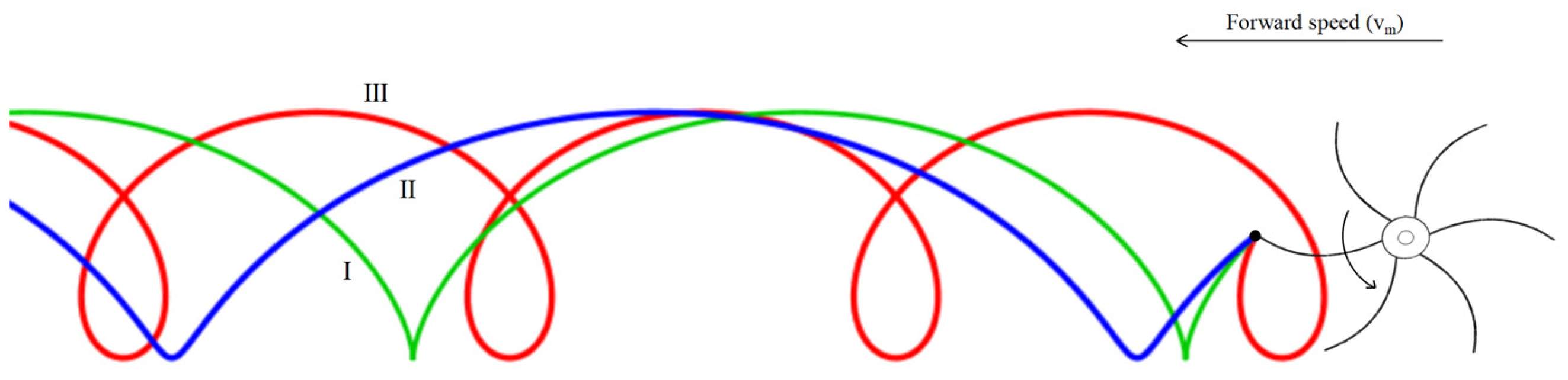
A simulation study was conducted on the motion trajectory of the arc-shaped branch dial wheel at different λ values, as illustrated in Figure 16. The three-dimensional model of the arc-shaped branch dial wheel was imported into ADAMS 2020 software. Kinematic pairs and drives were added according to its operating principle, with the harvester’s forward speed set at 0.6 m·s−1. By adjusting the rotational speed of the arc-shaped branch dial wheel to control the branch-removal speed ratio, the motion trajectory of a point at the end of the branch-removal lever could be obtained. In Figure 16, the motion trajectories can be categorised into three types based on varying branch-thinning ratios: the trajectory for λ < 1 (segment I), the trajectory for λ = 1 (segment II), and the trajectory for λ > 1 (segment III). Analysis of the segment shapes reveals that when λ < 1, the branch-thinning lever exhibits no backward movement tendency and thus lacks backward pushing capability; when λ = 1, the backward movement tendency is minimal, resulting in weak backward pushing capability; and when λ > 1, the branch-thinning rod exhibits a pronounced backward movement tendency, thus demonstrating strong backward pushing capability for sea buckthorn branches and fruits. However, the branch-thinning speed ratio λ should not be excessively high. The operational speed range of the harvester is limited. Increasing the branch-thinning speed ratio would only elevate the rotational speed of the arc-shaped branch dial wheel, and excessively high speeds would increase impact damage to the sea buckthorn branches and fruits. Referencing relevant literature [29], the branch-thinning speed ratio λ was set to 1.6.
(2)
Arc-shaped branch dial wheel radius Rd
When determining the arc-shaped branch dial wheel radius Rd, consideration must be given to both the average plant height Lh of the sea buckthorn and the required cutting height H1 stipulated in agronomic practices. The arc-shaped branch dial wheel radius Rd may be determined using Equation (18).
R d = R d λ + 1 3 L h H 1
where Lh is average height of sea buckthorn plants for 2.2 m. The calculation yields a radius of the arc-shaped branch dial wheel Rd of 0.8 m.
(3)
Arc-shaped branch dial wheel rotational speed nd
Refer to the Agricultural Machinery Manual [30] for the rotational speed of the arc-shaped branch dial wheel, nd.
ω d = n d π 30
Combining Equations (19) and (20) yields:
n d = 30 λ v m R d π
where ω d is the angular velocity of the arc-shaped branch dial wheel, rad·s−1; nd is the rotational speed of the arc-shaped branch dial wheel, r·min−1; λ is the branch-thinning speed ratio; vm is the harvester forward speed, m·s−1; and Rd is the radius of the arc-shaped branch dial wheel, m.
Analysis of the cutting tool feed rate indicates that the harvester operates within a speed range of 0.4 to 0.8 m·s−1, with a branch-removal speed ratio of 1.6. Consequently, the rotational speed of the arc-shaped branch dial wheel varies in response to changes in operating speed. However, the wheel struggles to maintain stability at low rotational speeds. Therefore, after comprehensive consideration, the rotational speed range for the arc-shaped branch dial wheel has been determined to be between 10 and 20 r·min−1.

2.5. Conveying Device

The sea buckthorn harvester conveying system comprises two stages: a primary conveyor and a secondary conveyor. After the cutting device severs the branches and fruit, the primary conveyor quickly transports the harvested material to a storage bin for temporary holding. The secondary conveyor then unloads this bin to ensure continuous harvesting operations.

2.5.1. Primary Conveyor

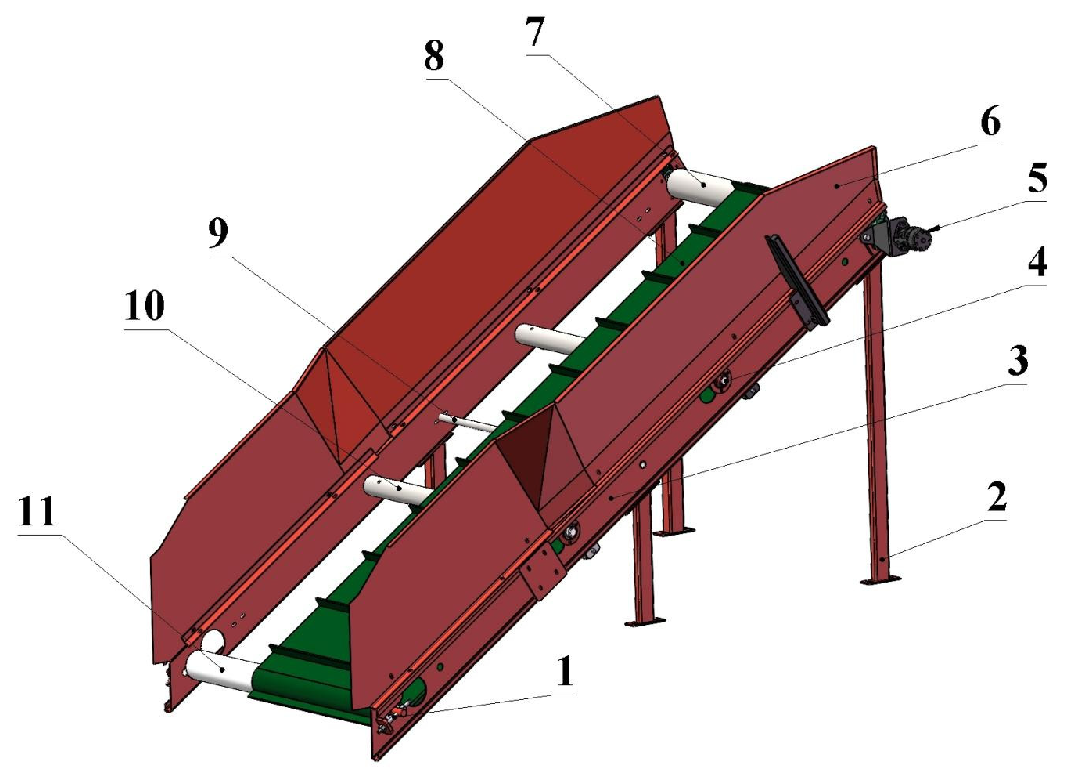
As shown in Figure 17, the primary conveyor has a belt type structure consisting of a conveyor belt, drive and idler rollers, mounting brackets, fixed pitch rods, side plates, a tensioning mechanism, supporting rollers, baffles, and hydraulic motors. The drive and idler rollers are linked by the conveyor belt and are powered directly by the hydraulic motor. The drive roller is secured to the side plate via a square base and bearings, and the idler roller is mounted on a tensioning mechanism with adjustable bolts. Conveyor belt tension is controlled by adjusting the bolts on this mechanism. The supporting rollers act as the conveyor belt support structure and are installed on the side plates using round bases and bearings, which support the belt efficiently and minimise vibration. As the main load-bearing components, the fixed pitch rods are welded between the two side plates to maintain structural stability. Two side baffles are attached to the side plates to prevent sea buckthorn branches and fruit from deviating or falling off during transport and to ensure that the material follows the designated conveying path.
Conveyor belts, serving as primary working components, are commonly manufactured from materials such as rubber, polyvinyl chloride (PVC), and nylon. PVC conveyor belts, characterised by corrosion resistance and wear resistance, are primarily employed in food processing, packaging, and light industrial sectors. This conveying system utilises a PVC belt with a specified thickness of 6 mm. The belt surface features a turf pattern and incorporates evenly spaced transverse ribs. This design aims to increase contact area and prevent slippage of sea buckthorn branches and fruits caused by excessive conveying angles. The harvester’s cutting width is 1500 mm. The conveyor belt is designed with a 10 mm clearance from the side plates, 20 mm thick guide strips, a belt width of 1480 mm, and a circumference of 7060 mm.
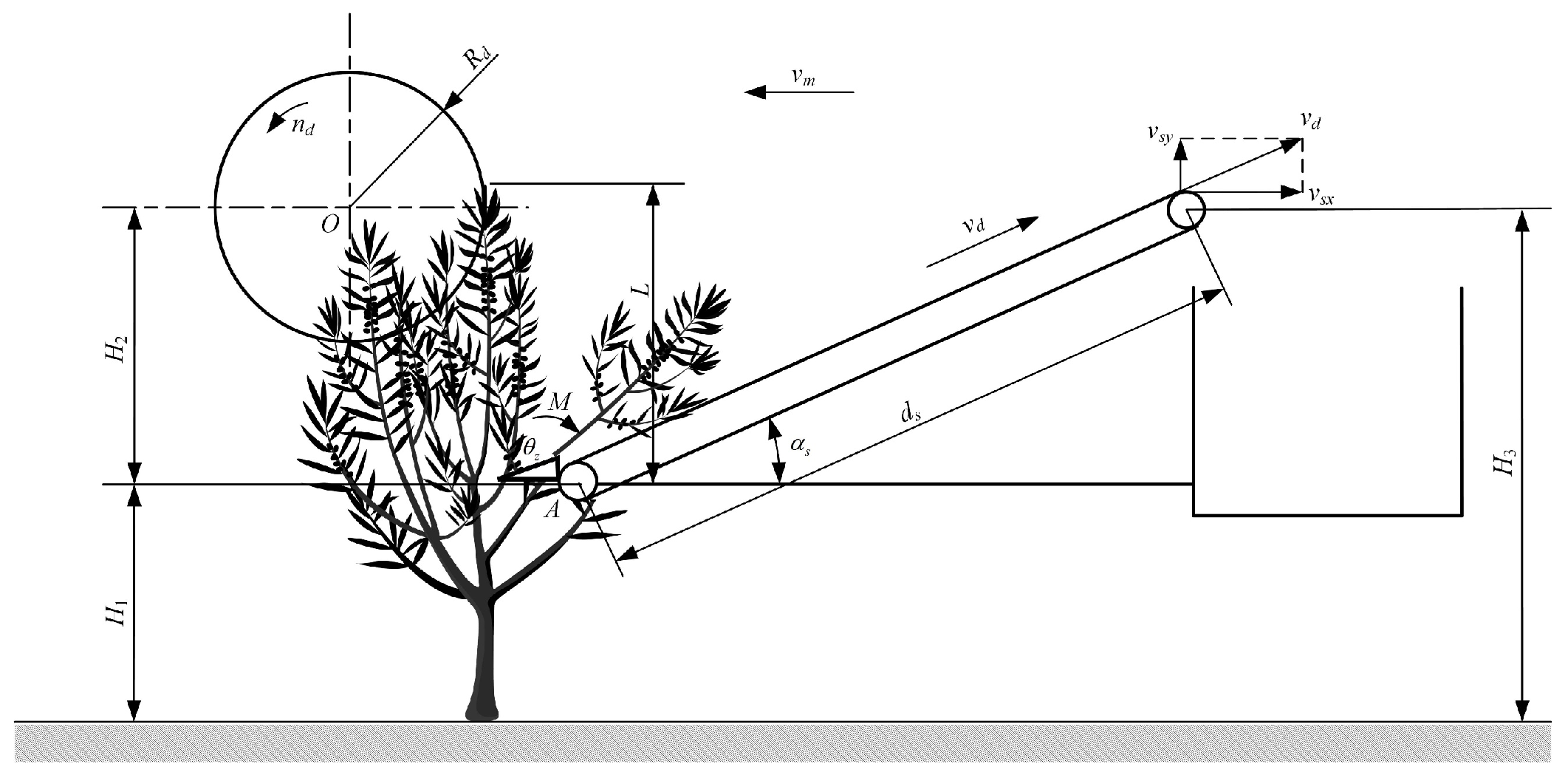
The conveying process primarily involves sea buckthorn branches and fruits, having been severed by the cutting apparatus, being propelled onto the conveying mechanism by the arc-shaped branch dial wheel. This process can be divided into two distinct stages. The first stage entails the sea buckthorn branches and fruits advancing alongside the harvester while rotating around cutting point A. The second stage comprises the sea buckthorn branches and fruits being deposited onto the conveyor belt for subsequent transport.
The ability of the arc-shaped branch dial wheel to propel sea buckthorn branches and fruits is primarily manifested in the tendency of these branches and fruits to move rearward upon severance, i.e., possessing an initial velocity v0. Assuming the sea buckthorn plant grows vertically, the angular velocity ωs of the branches and fruits rotating about the cutting point A in Figure 18 can be expressed by Equation (21) based on the rotational speed of the arc-shaped branch dial wheel and the installation height of the central shaft.
v 0 = R d ω d s i n ω d t ω d = v 0 H 2 R d               ω d = 2 π n d                      
where nd is the arc-shaped branch dial wheel rotational speed, r·min−1.
At the moment of cutting, the angular acceleration a of the sea buckthorn plant can be determined by parameters such as the rotational inertia J and torque M of the sea buckthorn branches and fruits, specifically as given by Equation (22).
J a = 1 3 m z L 2 a = M
where J is the rotational inertia of the sea buckthorn plant, kg·m2; a is the angular acceleration, rad·s−2; M is the driving torque applied by the dial wheel, N·m; mz is the mass of the sea buckthorn branch and fruit, kg; and L is the length of the harvested branch, m.
Phase one at time t1:
θ Z = π 2 α S = ω S t 1 + 1 2 a t 1 2
where θz is angle between the plant and the conveyor belt, (°); αs is conveyor belt inclination, (°).
The smaller the inclination angle of the conveying device, the greater the overall length required to ensure smooth installation onto the frame and connection with the collection box, thereby compromising the machine’s clearance performance. Conversely, a steeper inclination angle renders the conveying process less stable, increasing the likelihood of sea buckthorn branches and fruits slipping from the conveyor belt. Furthermore, the elevated terminal height heightens the risk of collision damage to the sea buckthorn fruits. Therefore, after consulting the Agricultural Machinery Design Manual [30], the conveyor belt inclination angle αs was determined to be 31°.
In the first stage, the displacement distance of the sea buckthorn branches and fruits is given by ΔS1 in Equation (24).
S 1 = v m t 1 = v m v 0 4 L 4 M Z 2 9 H 2 R d 2 M 2 + 2 θ z m z L 2 3 M v 0 H 2 R d
where S 1 is the displacement in the first stage, m; and θ z is the rotation angle of the plant when it contacts the conveyor, rad.
Phase two at time t2:
t 2 = v d d s
where ds is conveyor belt length, m; vd is conveyor belt line speed, m·s−1.
The ratio k between the belt line speed and the implemented operating speed is one of the primary parameters influencing the operational effectiveness of the conveying system. A value of k = 1.4 is adopted.
k = v d v m = π r n 2 30 v m
where k is the ratio of belt speed to forward speed; n2 is the rotational speed of the primary conveyor’s drive roller, r·min−1; and r is the radius of the drive roller, m.
Substituting the data into Equation (26) yields n2 as 80–161 r/min.
During the second stage, the distance travelled by the sea buckthorn branches and fruit relative to the forward movement of the harvester is ΔS2.
S 2 = v m t 2 = d s k
The sum of the first stage time t1 and the second stage time t2 constitutes the total duration of the transfer process, namely t3.
t 3 = t 1 + t 2 = v 0 4 L 4 m z 2 9 H 2 R d 2 M 2 + 2 θ z m z L 2 3 M v 0 H 2 R d + v d d s
The total displacement during the conveying process is ΔS.
S = S 1 + S 2 = v m v 0 4 L 4 m z 2 9 H 2 R d 2 M 2 + 2 θ z m z L 2 3 M v 0 H 2 R d + d s k
where S is the total displacement of the branch during the conveying process relative to the ground, m; and ds is the length of the primary conveyor, m.
Analysis of the total duration and displacement of the conveying process indicates that factors influencing conveying efficiency include both structural parameters of the relevant apparatus (arc-shaped branch dial wheel radius, conveyor belt inclination angle) and operational parameters (conveyor belt linear velocity, implemented operating speed).
This conveying system incorporates several key design features to minimise fruit damage. The main conveyor belt’s 31° incline effectively reduces impact forces during transfer, while the PVC belt’s turf-textured surface and transverse ribs provide secure grip to prevent fruit rolling and crushing. Potential damage mechanisms include collisions during transfer from the paddles to the conveyor belt and compression within dense branches. These issues are mitigated through the controlled unloading action of the curved paddles and an optimised belt speed ratio of 1.4, ensuring smooth material flow without abrupt movements.

2.5.2. Secondary Conveyor

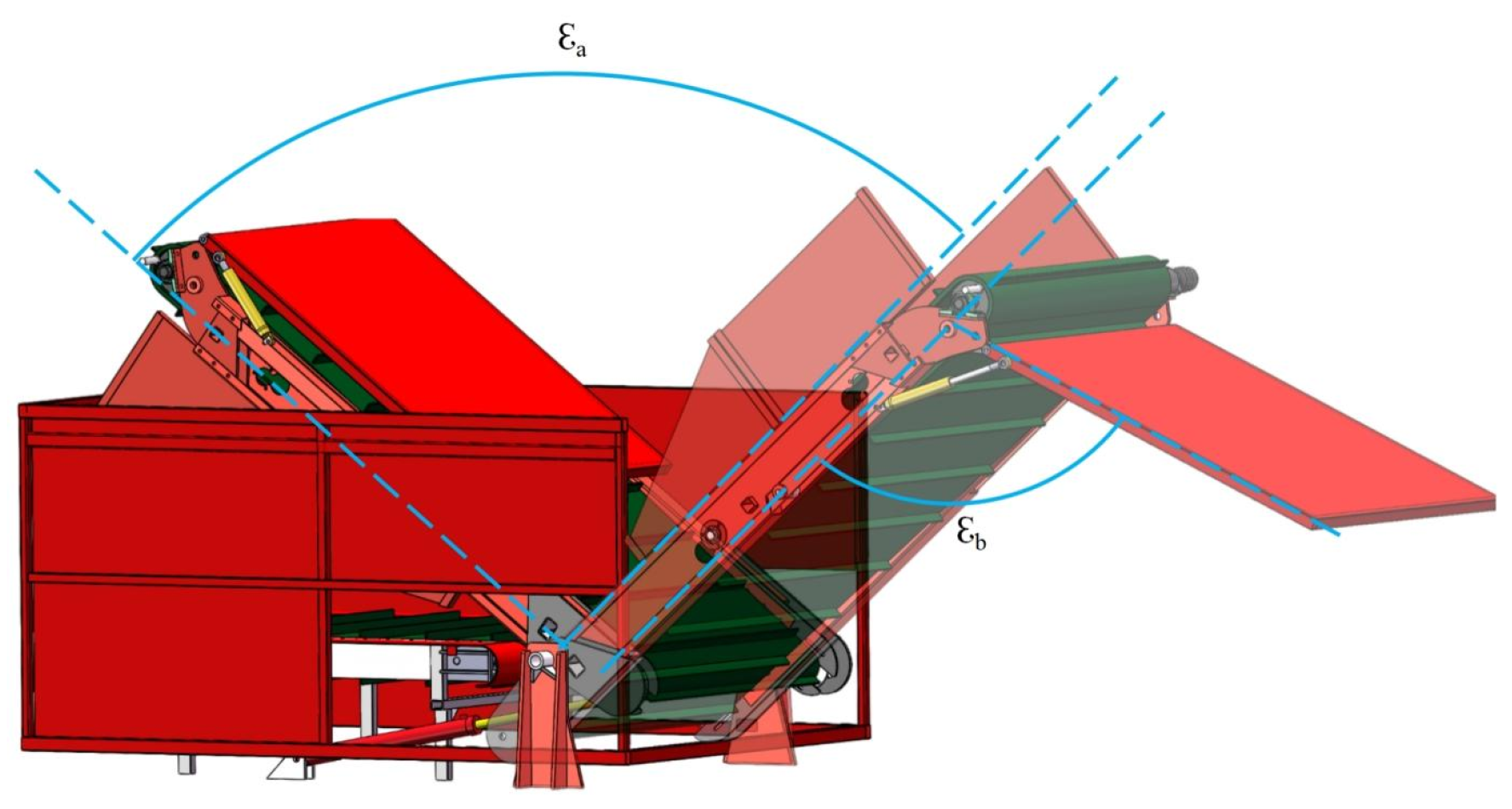
The secondary conveyor has a similar design to the primary conveyor but is integrated with the storage bin. Through optimisation (see Figure 19), it transitions between two states: daily road transport and field operation. During daily travel, the secondary conveyor device retracts into the storage bin via a hydraulic mechanism and a linkage shaft. This lowers the harvester centre of gravity, making travel more convenient and improving overall manoeuvrability. When extended for fieldwork, the secondary conveyor device unloads sea buckthorn branches and fruits from the storage bin into a transport vehicle that moves in sync with the harvester. This enables continuous unloading without stopping. Additionally, a deflector plate at the end of the conveyor ensures precise discharge into the transport vehicle. Here, εa denotes the secondary conveyor adjustment angle, and εb represents the adjustment angle of the deflector plate.

2.6. Hydraulic System

2.6.1. Hydraulic System Components

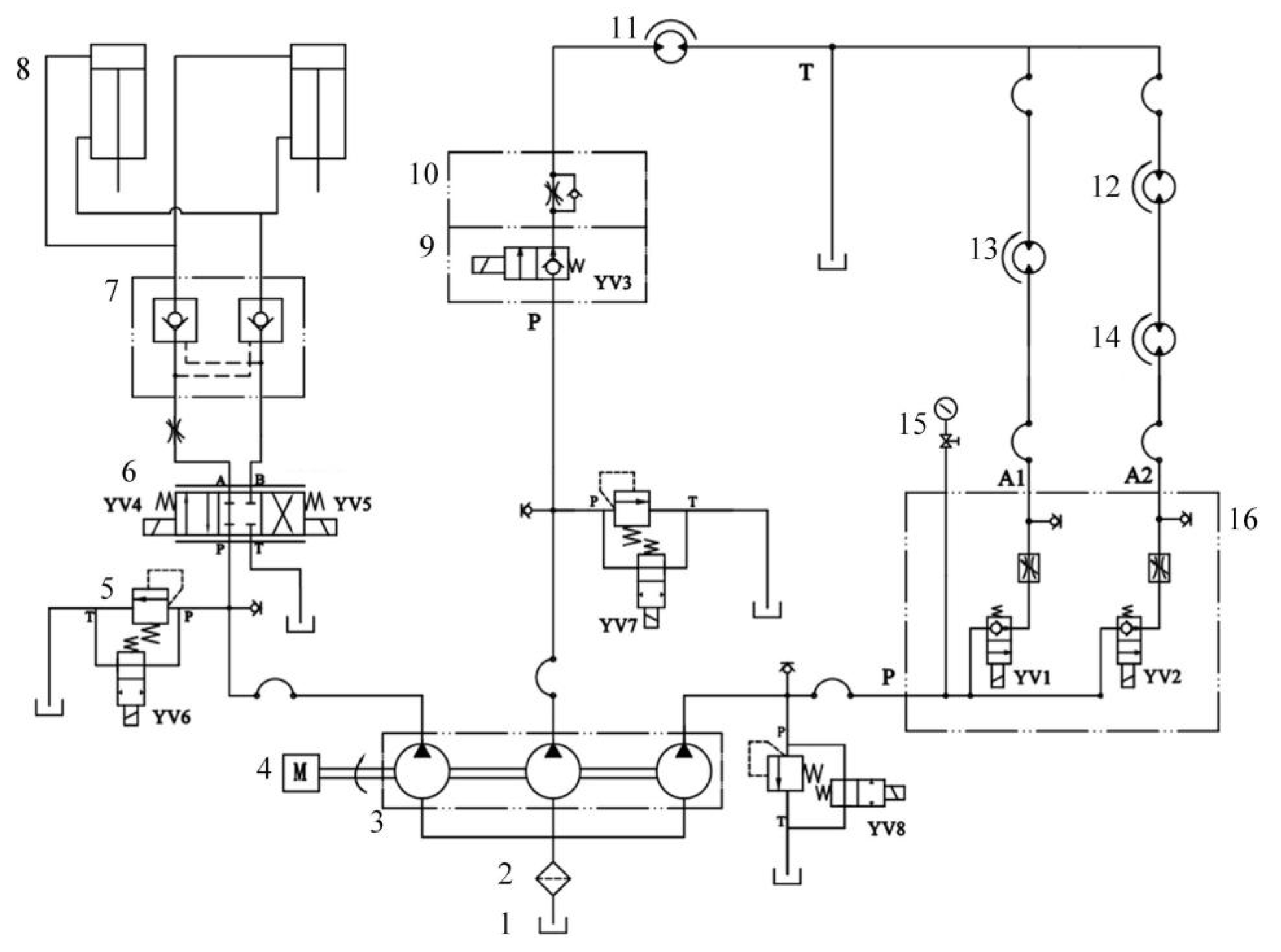
As depicted in Figure 20, the basic working circuit of the hydraulic system comprises a triplex hydraulic pump, hydraulic cylinders, hydraulic motors, and a motor control valve group. The engine output shaft is connected directly to the triplex pump input shaft. The pump draws hydraulic oil from the tank and distributes it to three independent branches at the outlet. The first branch directs oil to a three-position, four-way reversing valve and then through a hydraulic lock formed by check valves to the toggle wheel hydraulic cylinders. The reversing valve controls the movement of the cylinders to adjust the height of the toggle wheel. Two of the cylinders are stabilised in position by hydraulic locks, and oil returns to the tank via the valve return port. The second branch routes oil through a two-position, two-way reversing valve and a superimposed, one-way throttle valve to the cutter hydraulic motor. The throttle valve regulates the moto rotational speed, and post-motor, the oil flows directly back to the tank. The motor shaft drives the cutter via a coupling to sever sea buckthorn branches. The third branch passes oil through a control valve group containing two two-position two-way valves and throttle valves before splitting into two paths. One path powers the primary conveyor motor and toggles the wheel motor, and the other drives the secondary conveyor motor. Both paths return oil directly to the tank. An electromagnetic relief valve is integrated into each branch circuit to provide component protection through electric signal activated overflow. This safety feature actively releases excess pressure by directing the overflow liquid directly back to the tank. This ensures that the hydraulic system operates within safe pressure limits, safeguarding against potential overloading damage.

2.6.2. Hydraulic System Selection

The hydraulic motors within the hydraulic system comprise the cutter motor, the branch-removal wheel motor, the primary conveyor motor, and the secondary conveyor motor. Gear-type hydraulic motors for each device were selected based on the power requirements of the apparatus. The relevant parameters of the selected motors are shown in Table 3.

2.7. Field Test Design

2.7.1. Test Conditions

In September 2024, an experiment involving sea buckthorn pruning and harvesting was conducted at the Xinjiang Emin County Sea Buckthorn Industrial Park Demonstration Base (44° N, 83° E) in Xinjiang, China. The plants were arranged in a 4 m × 1.6 m (row spacing × plant spacing) pattern, and the experiment focused on branches and fruits above 1.3 m.
The trial site features relatively flat terrain with an average gradient below 2%, providing ideal conditions for mechanised harvesting operations. The soil type is sandy loam, exhibiting excellent drainage characteristics consistent with the typical features of the region’s alluvial plain. Sea buckthorn plants were cultivated in uniformly spaced, orderly rows, ensuring consistent harvesting conditions throughout the trial area. Throughout the trial period, the field surface remained firm and dry, effectively minimising soil compaction and ensuring stable mechanical operation.
The demonstration base covers a total area of approximately 50 hectares, with the experimental trials conducted in a designated 2-hectare section of mature sea buckthorn plantation that had been established for five years.
The experimental subjects were five-year-old ‘Deep Autumn Red’ sea buckthorn plants, with an average fruit water content ranging from 43.13% to 53%, and an average branch water content ranging from 43.13% to 53.83% (an overall average of 47%).

2.7.2. Test Method

A test area was designated every 5 m between sea buckthorn rows. Before testing began, any scattered branches and debris in the inter row space were cleared away. Then, the prototype was calibrated to the required test parameters before the branch and fruit cutting-harvesting trials were conducted.
Y 1 = N 2 N t × 100 %
Y 2 = M 1 M t × 100 %
Y 3 = N 3 N 2 × 100 %
The performance of sea buckthorn harvesting was evaluated using three key indexes: the missed cutting rate (Y1), the fruit breakage rate (Y2), and the conveyance failure rate (Y3). The missed cutting rate was defined as the ratio of uncut branches to the total number of branches in the experimental area. The fruit breakage rate was defined as the ratio of broken fruit mass to the total mass of fruit harvested. The conveyance failure rate was defined as the ratio of conveyed branches that failed to be delivered to the total number of effectively cut branches. These indexes are denoted Y1, Y2, and Y3 and are calculated using Equations (30)–(32), respectively.
In this context, Nt represents the total number of sea buckthorn branches in the test area, N2 denotes the number of branches that were effectively cut in the test area, Mt is the total mass of fruit that was effectively harvested (in kg), M1 is the total mass of broken fruit among the fruit that was effectively harvested (in kg), and N3 represents the total number of branch conveyance failures in the test area.
The experiments were conducted across multiple trials at varying average speeds. The average harvesting forward speed, average cutting speed, and conveyor belt linear speed were selected as the test factors. The factor levels were set as follows: harvester forward speed: 0.4–0.8 m∙s−1; cutting speed: 1.0–1.4 m∙s−1 (determined by cutter feed distance analysis); and conveyor belt linear speed: 0.6–1.2 m∙s−1. A three-factor, three-level response surface test was performed using the Box–Behnken response surface design theory, with Y1, Y2, and Y3 as response variables. The 17 experiments in this design were each replicated three times under field conditions, resulting in a total of 51 randomised trials. During each trial, the harvester operated at a constant distance of 10 metres to ensure the collection of sufficient and representative samples for evaluation purposes. Table 4 presents the test factors and their corresponding levels.
The average harvesting forward speed was measured via a radar speed sensor (DICKEY-john RADAR II (Dickey-John Company, Auburn, IL, USA)) mounted on the chassis, which provides real-time ground speed feedback. The average cutting speed was calculated by monitoring the rotational speed of the cutting drive shaft through a magnetic proximity sensor, using the established Equation (33). The conveyor belt linear speed was verified by measuring the drive roller speed via an optical encoder, ensuring precise speed control by the hydraulic system. All sensor data was recorded at a 10 Hz frequency via the data acquisition system for subsequent analysis.
V p = S n 30
where Vp is the calculated average cutting speed, m·s−1; S is the stroke of the cutter, mm; and n is the measured rotational speed of the cutting drive shaft, r·min−1.

3. Results and Discussion

The field experiments were conducted to evaluate the harvesting performance based on the methodology detailed in Section 2.7.

3.1. Test Results

3.1.1. Regression Modelling and Significance Analysis

Design Expert 13.0 software was used to design a three factor, three-level Box–Behnken experiment consisting of 12 sets of analytical factors and 5 sets of zero-point errors, totalling 17 test groups. Table 5 shows the experimental design and results. The average harvesting forward speed (X1), average cutting speed (X2), and conveyor belt linear speed (X3) are given.
The experimental results in Table 5 were analysed using ANOVA to derive significant outcomes for the missed cutting rate, fruit breakage rate, and conveyance failure rate. Then, regression models of Y1, Y2, and Y3 on X1, X2, and X3 were fitted to test the significance of the effects of the factors using p-values.
Table 6 summarises the goodness-of-fit and predictive capability of the established regression models. All three models exhibited exceptionally high coefficients of determination (R2 > 0.94), indicating that over 94% of the variability in the response data could be explained by the models. The elevated adjusted coefficients of determination (>0.88) validated the robustness of the models, whilst the ample precision ratios (>15) demonstrated sufficient navigational signals within the design space. No significant underfitting was observed in any model (p > 0.05), confirming that the quadratic models adequately capture the intrinsic relationship between operating parameters and yield performance.
(1)
Establishment of regression equation and significance analysis of missed cutting rate
Table 7 presents the ANOVA results for the missed cutting rate. The Y1 model showed high significance (p < 0.01), indicating that this regression model was highly significant. Among the factors, X1, X2, and X12 had a highly significant effect on the missed cutting rate model, while X3 had a relatively significant effect. The order of significance for the variables affecting the missed cutting rate was as follows: average cutting speed > average harvesting forward speed > conveyor belt linear speed. After eliminating the non-significant factors, Equation (34) was derived as the quadratic regression equation for the significant variables affecting the missed cutting rate.
Y 1 = 46.985 73.453 X 1 27.499 X 2 0.164 X 3 + 47.919 X 1 2
(2)
Establishment of regression equation and significance analysis of fruit breakage rate
The ANOVA results for the fruit breakage rate are presented in Table 8. The Y2 model exhibited high significance (p < 0.01), indicating that this regression model was highly significant. Among the factors, X1, X2, X12, and X22 had a highly significant effect on the fruit breakage rate model. The order of significance for the variables affecting the fruit breakage rate was as follows: average harvesting forward speed > average cutting speed > conveyor belt linear speed. After eliminating non-significant factors, the quadratic regression equation for the fruit breakage rate, obtained from the significant variables, is shown in Equation (35).
Y 2 = 26.317 20.105 X 1 34.86 X 2 + 25.994 X 1 2 + 18.119 X 2 2
(3)
Establishment of regression equation for conveyance failure rate and significance analysis

The results of the ANOVA for the conveyance failure rate are presented in Table 8. The Y3 model showed high significance (p < 0.01), indicating that this regression model was highly significant. Among the factors, X1, X3, X12, and X32 had a highly significant effect on the conveyance failure rate model, while X2 and X3 had a relatively significant effect. The order of significance for the variables affecting the conveyance failure rate was as follows: average harvesting forward speed > conveyor belt linear speed > average cutting speed. After eliminating non-significant factors, the quadratic regression equation for the conveyance failure rate based on the significant variables was obtained, as shown in Equation (36).
Y 3 = 37.598 54.508 X 1 20.055 X 3 8.333 X 2 X 3 + 41.538 X 1 2 + 17.85 X 3 2
Table 8. ANOVA for Y2 and Y3.
Simulation ItemSum of SquaresDegrees of FreedomMean Square ErrorF Valuep-ValueSignificance
Y2Model10.9791.2215.250.0008***
X12.0012.0025.020.0016***
X21.2211.2215.220.0059***
X30.125010.12501.560.2513
X1X20.207010.20702.590.1516
X1X30.055210.05520.69080.4333
X2X30.189210.18922.370.1678
X124.5514.5556.940.0001***
X222.2112.2127.660.0012***
X320.002610.00260.03230.8625
Residuals0.559670.0799
Lack of Fit Term0.345030.11502.140.2376
Pure Error0.214740.0537
Sum11.5316
Y3Model33.6193.7317.270.0005***
X15.0215.0223.230.0019***
X20.162410.16240.75100.4149
X32.6712.6712.330.0098***
X1X20.348110.34811.610.2452
X1X30.000910.00090.00420.9504
X2X31.000011.00004.620.0686*
X1211.62111.6253.730.0002***
X220.197410.19740.91230.3713
X3210.87110.8750.230.0002***
Residuals Lack-of-Fit Term Pure Error Sum1.5170.2163
Lack of Fit Term0.732130.24401.250.4033
Pure Error0.782140.1955
Sum35.1316
Note: p < 0.01 (extremely significant ***); 0.05 ≤ p < 0.1 (relatively significant *); p > 0.1 (not significant —).

3.1.2. Analysis of the Interactive Influence Law of Test Factors on Test Indicators

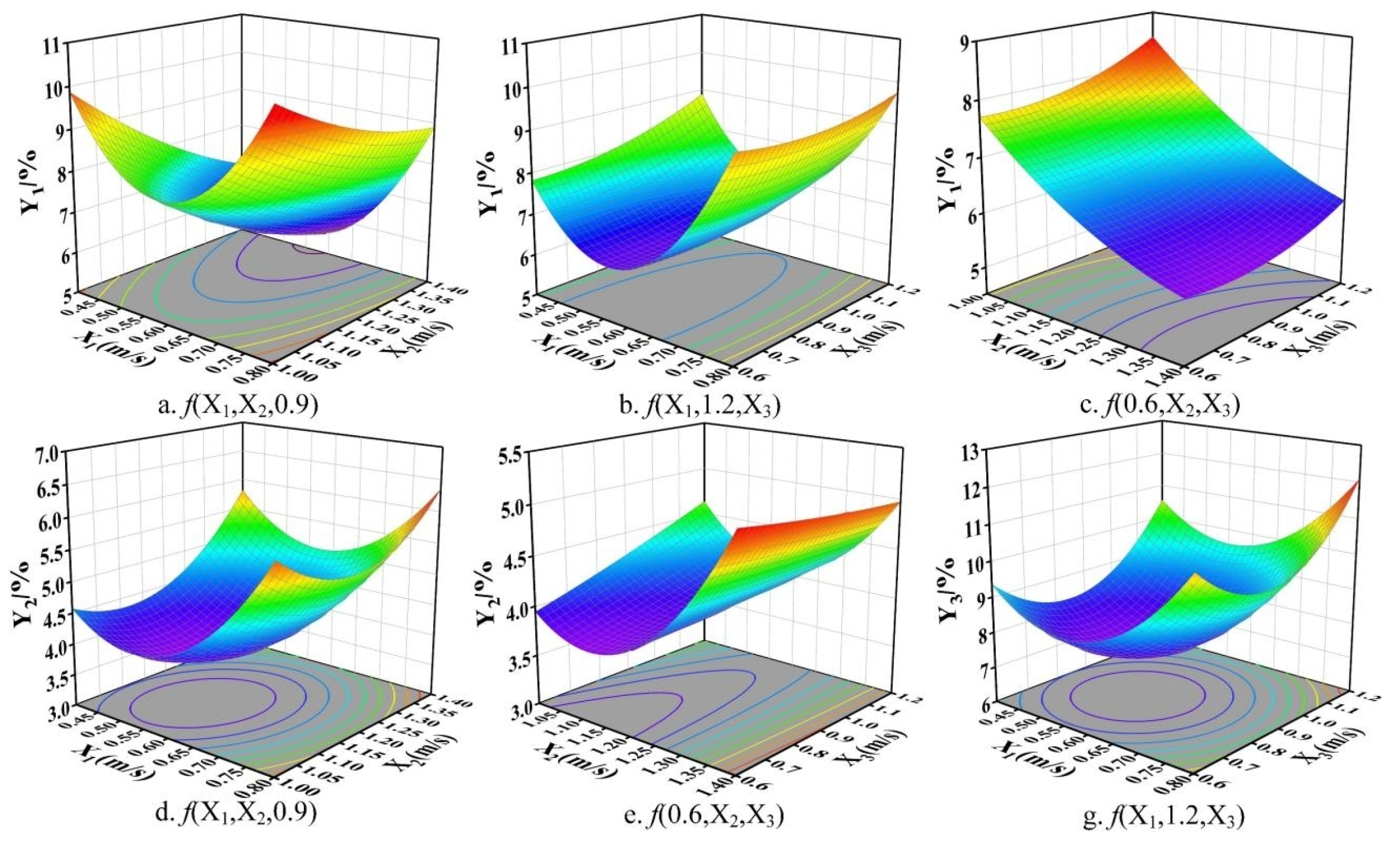
The response surface plots for the corresponding models were generated using Design Expert 13.0 software, as shown in Figure 21. Response surface analysis revealed the interaction effects of the significant and relatively significant factors, including (X1), (X2), and (X3), on the response values of Y1, Y2, and Y3.
(1)
Analysis of missed cutting rate influencing factors
Figure 21a–c shows the response surfaces for the interactions between X1 and X2, X1 and X3, and X2 and X3 on Y1. Figure 21a shows that, for a fixed average machine operating speed, the missed cutting rate is negatively related to the average cutting speed. For a fixed speed, Y1 first decreases slowly and then increases as X1 rises. Figure 21b shows that, at a constant conveyor belt line speed, Y1 initially decreases and then increases as X1 rises. When X1 is held constant, Y1 remains relatively stable, with minimal effect from X3. Figure 21c shows that, when X3 is held constant, Y1 gradually decreases as X2 increases.
(2)
Analysis of fruit breakage rate influencing factors
With X2X3 identified as the primary interacting factor, Figure 21d,e illustrate the response surfaces of Y2 for the X1X2 and X2X3 interactions. In Figure 21d, at a fixed average harvesting forward speed, the fruit breakage rate initially decreases and then increases as the average cutting speed increases. In Figure 21e, at a fixed average cutting speed, the fruit breakage rate steadily increases as the conveyor belt line speed rises.
(3)
Analysis of conveyance failure rate influencing factors
Figure 21g shows the interaction response surface of X1 and X2 on the conveyance failure rate. At a constant conveyor belt line speed, the conveyance failure rate initially decreases and then increases as the average harvesting forward speed increases. Conversely, at a fixed X1, the rate exhibits a similar gradual decrease followed by an increase as X3 rises.
Figure 21. Effect of interaction factors on test indicators.
Agriculture 15 02428 g021

3.2. Optimal Parameter Validation

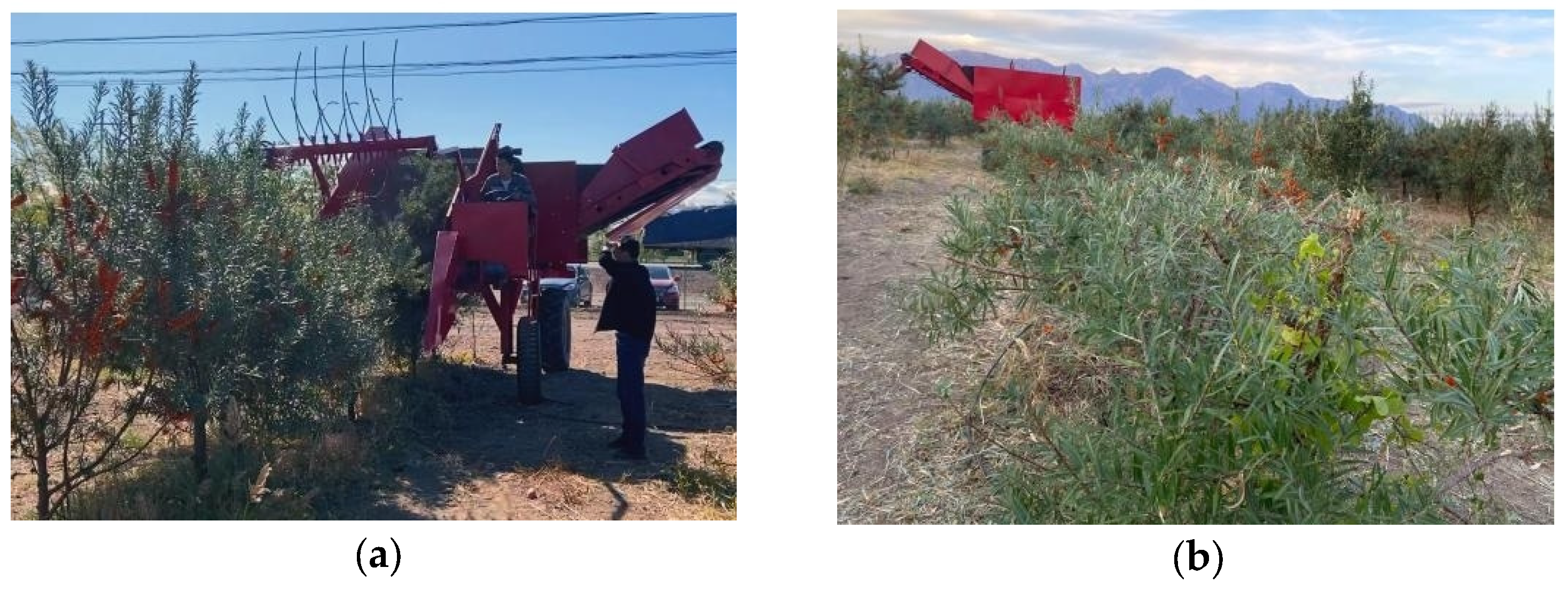
The objective function was optimised using Design Expert 13.0 software, yielding the following optimal parameter combinations: an average harvesting forward speed of 0.56 m∙s−1, an average cutting speed of 1.22 m∙s−1, and a conveyor belt line speed of 0.82 m∙s−1. Verification tests were conducted to validate these parameters, as illustrated in Figure 22. These tests involved five replicate trials with adjusted parameters: 0.6 m∙s−1 for harvesting forward speed, 1.2 m∙s−1 for cutting speed, and 0.8 m∙s−1 for conveyor belt linear speed. The average values from these tests are presented in Table 9.
Field trials yielded a missed cutting rate of 6.72% and a fruit breakage rate of 4.06%, validating the rationality and effectiveness of the sliding cut angle and blade angle. These parameters were initially determined based on the physical characteristics and kinematic analysis of sea buckthorn branches.
The <10% relative error between predicted and experimental values reflects inherent operational variability, including natural variations in plant characteristics (branch diameter and fruit moisture content), minor operator adjustments during field navigation, and transient environmental conditions. These factors represent typical agricultural working conditions, and the consistent performance within this margin demonstrates the robustness of the optimised parameters.

3.3. Discussion

The validation test results show that the harvester developed in this study has made significant progress towards achieving the goal of harvesting sea buckthorn, with its performance fully meeting the initial design requirements. Field experiments verified that the error between the test values and the theoretically optimised values of the model was less than 10%. This demonstrates that the optimised model is accurate and reliable and can effectively complete the entire operational process of cutting, conveying, storing, and unloading. These findings provide a solid theoretical foundation for designing and operating such harvesting equipment.

3.3.1. Discussion on Energy Consumption and Operational Efficiency

To address practical deployment issues, we analysed the energy consumption and operational efficiency of the harvester. Based on the hydraulic motor specifications in Table 2, the total power requirement for harvesting functions is 25.2 kilowatts, representing merely 30.7% of the engine’s rated power. Effective field capacity (C), as the actual operational rate achievable under field conditions, is defined as per Equation (37).
C e = W × v m × E f 10
where Ce denotes effective field water-holding capacity (ha·h−1), W represents working width, vm denotes forward speed, and Ef denotes the field operation efficiency.
This yields an effective field water-holding capacity of 0.327 ha·h−1. Calculated according to ASABE standards [31], this water-holding capacity represents a significant improvement over manual harvesting methods, confirming the practical feasibility of commercial deployment for this harvester.
The harvester demonstrates strong commercial potential with modular construction using standard components, enabling scalable production. Based on the achieved field capacity of 0.327 ha·h−1 and reduced labour needs, the design offers viable economics for large-scale plantations, with projected cost recovery within 2–3 seasons.

3.3.2. Comparative Performance Analysis

Table 10 presents a comparative analysis of the performance between the developed sea buckthorn harvesting machine and existing harvesting methods, highlighting its technological advancement and operational efficiency. The comparative analysis demonstrates that this harvester not only achieves a significant efficiency gain—operating at 10 to 15 times the rate of manual harvesting—but also substantially reduces fruit damage rates to between one-quarter and one-sixth of those incurred by traditional methods. Its integrated design eliminates multiple operational steps, while the cutting-based harvesting principle more effectively safeguards fruit quality compared to vibration-based harvesting methods.

3.3.3. Limitations and Future Work

Whilst this study has validated the functional performance of the harvesting machine under field conditions, it must be acknowledged that its long-term practical deployment presents several limitations. Firstly, the mechanical durability of components such as the reciprocating cutter and drive mechanism requires verification through extended operational cycles. Secondly, blade wear during sustained use, particularly when encountering soil or debris, may compromise cutting efficiency and increase fruit damage over time. Thirdly, the performance stability of the hydraulic system under prolonged high-load conditions warrants further evaluation. Subsequent work will focus on quantifying component lifecycles through durability testing, evaluating wear-resistant materials for blades, and optimising hydraulic circuit efficiency to ensure sustained operation.

4. Conclusions

This study successfully designed and developed a self-propelled sea buckthorn harvester equipped with a reciprocating cutter, effectively resolving the critical challenges of high labour intensity and low efficiency inherent in traditional harvesting methods. Integrating cutting, conveying, storage, and unloading functions within a fully hydraulic drive system for continuous operation, this harvester provides a viable solution for large-scale mechanised harvesting.
(1)
The optimised cutting mechanism, featuring a pendulum ring-driven reciprocating cutter with double-support cutting, demonstrated effective performance with the determined optimal parameters of 22.5° slip cutting angle and 76.2 mm stroke length, providing stable cutting action while minimising branch deformation.
(2)
Field experiments employing Box–Behnken design methodology established the optimal operational parameters as 0.6 m·s−1 harvesting forward speed, 1.2 m·s−1 cutting speed, and 0.8 m·s−1 conveyor belt linear speed, achieving performance metrics of 6.72% missed cutting rate, 4.06% fruit breakage rate, and 7.79% conveyance failure rate.
(3)
This integrated hydraulic system demonstrates highly efficient power utilisation, with its harvesting functions requiring a total power demand of merely 25.2 kilowatts—representing just 30.7% of the engine’s rated power output. Concurrently, it achieves an effective operational efficiency of 0.327 hectares per hour, significantly enhancing harvesting efficiency compared to conventional methods.
The harvester effectively addresses the limitations of conventional sea buckthorn harvesting through its integrated cutting–conveying–storage system and proven field reliability. Future work will focus on implementing machine vision for selective harvesting, developing adaptive control systems for variable crop conditions, and conducting endurance testing to evaluate long term mechanical durability. These advancements will further enhance the commercial viability and operational efficiency of sea buckthorn harvesting technology.

Author Contributions

Conceptualization, J.S., J.L. and W.W.; methodology, J.S. and J.L.; software, J.S. and Z.C.; validation, J.S., J.L. and X.Q.; formal analysis, J.S.; investigation, J.S., Z.C., C.T. and X.L.; resources, J.S., J.W. and X.Q.; data curation, Z.C. and X.L.; writing—original draft preparation, J.S., J.L. and X.L.; writing—review and editing, J.S., J.L. and X.Q.; visualization, J.S. and J.L.; supervision, J.S., J.L. and X.L. All authors have read and agreed to the published version of the manuscript.

Funding

This study was supported by the Financial Science and Technology Plan of XPCC (Grant No.: 2024AB043), the Regional Science Fund Project (Grant No.: 62163032), Tianshan Elite Cultivation Programme Corps Rural Development Core Talent Development Project, and the Achievement Transformation and Technology Promotion Project of Shihezi University (Grant No.: CGZH202306).

Data Availability Statement

The original contributions presented in the study are included in the article, further inquiries can be directed to the corresponding author.

Conflicts of Interest

The author Junyang Wang is from Xinjiang Silk Road Sea Buckthorn Technology Co., Ltd., where he serves as Managing Director. All authors declare no conflicts of interest.

References

  1. El-Sohaimy, S.A.; Shehata, M.G.; Mathur, A.; Darwish, A.G.; Abd El-Aziz, N.M.; Gauba, P.; Upadhyay, P. Nutritional Evaluation of Sea Buckthorn “Hippophae rhamnoides” Berries and the Pharmaceutical Potential of the Fermented Juice. Fermentation 2022, 8, 391. [Google Scholar] [CrossRef]
  2. Ciesarová, Z.; Murkovic, M.; Cejpek, K.; Kreps, F.; Tobolková, B.; Koplík, R.; Belajová, E.; Kukurová, K.; Daško, Ľ.; Panovská, Z.; et al. Why is sea buckthorn (Hippophae rhamnoides L.) so exceptional? A review. Food Res. Int. 2020, 133, 109170. [Google Scholar] [CrossRef]
  3. Sabir, S.M.; Ahmed, S.D.; Lodhi, N. Morphological and biochemical variation in Sea buckthorn Hippophae rhamnoides ssp. turkestanica, a multipurpose plant for fragile mountains of Pakistan. S. Afr. J. Bot. 2003, 69, 587–592. [Google Scholar] [CrossRef]
  4. Shi, S.; Wu, R.; Han, Z.; Sun, Y.; Li, P.; Ren, F.; Shang, N. Prospects of sea buckthorn(Hippophae rhamnoides L.) polysaccharides: Preparation, structural characterization, and bioactivities diversity. Food Sci. Hum. Wellness 2025, 14, 11–28. [Google Scholar] [CrossRef]
  5. Miao, C.; Yang, H.; Bi, Y.; Song, Z.; Guo, N. Effect of arbuscular mycorrhizal fungi and Hippophae rhamnoides on the improvement of the dump of open-pit coal mine in the eastern grassland. Coal Geol. Explor. 2021, 49, 202–206. [Google Scholar]
  6. Zhang, B.; Zhang, G.; Yang, H.; Wang, H.; Li, N. Soil erodibility affected by vegetation restoration on steep gully slopes on the Loess Plateau of China (Article). Soil Res. 2018, 56, 712–723. [Google Scholar] [CrossRef]
  7. Fu, L.; Peng, J.; Nan, Q.; He, D.; Yang, Y.; Cui, Y. Simulation of vibration harvesting mechanism for sea buckthorn. Eng. Agric. Environ. Food 2016, 9, 101–108. [Google Scholar] [CrossRef]
  8. Stupans, A.; Maksimkins, P.; Senfelds, A.; Ribickis, L. Development and Testing of the Automated Control System for the Sea Buckthorn Fruit Harvesting Robot ‘AGROBOT’. Eng. Rural Dev. 2024, 23, 887–893. [Google Scholar] [CrossRef]
  9. Zhang, Z.; Chen, Y.; Chen, Z.; Gao, Z.; Cheng, Y.; Qu, K. Quality analysis and assessment of representative sea buckthorn fruits in northern China. Food Chem. X 2024, 24, 101828. [Google Scholar] [CrossRef]
  10. Zhu, P.; Ren, Y.; Wei, C.; Luo, J.; Wu, D.; Ye, X.; Donlao, N.; Tian, J. Compounds from sea buckthorn and their application in food: A review. Food Chem. 2025, 476, 143428. [Google Scholar] [CrossRef]
  11. Sun, R.; Zhang, M.; Zhao, J.; Lu, M.; Hao, J.; Guan, X.; Li, C. Anti-atherosclerotic effect of sea buckthorn (Hippophae rhamnoides Linn) and its molecular mechanism. J. Funct. Foods 2024, 117, 106248. [Google Scholar] [CrossRef]
  12. Desnica, E.; Ašonja, A.; Kljajin, M.; Glavaš, H.; Pastukhov, A. Analysis of Bearing Assemblies Refit in Agricultural PTO Shafts. Teh. Vjesn. 2023, 30, 872–881. [Google Scholar] [CrossRef]
  13. Qiu, M.; Meng, Y.; Li, Y.; Shen, X. Sugarcane stem cut quality investigated by finite element simulation and experiment. Biosyst. Eng. 2021, 206, 135–149. [Google Scholar] [CrossRef]
  14. Wang, Q.; Zhou, G.; Huang, X.; Song, J.; Xie, D.; Chen, L. Experimental Research on the Effect of Sugarcane Stalk Lifting Height on the Cutting Breakage Mechanism Based on the Sugarcane Lifting-Cutting System (SLS). Agriculture 2022, 12, 2078. [Google Scholar] [CrossRef]
  15. Manhães, C.M.C.; Garcia, R.F.; Junior, D.C.; Francelino, F.M.A.; Francelino, H.d.O.; Santos, C.M.F.G.d. Evaluation of Visible Losses and Damage to the Ratoon Cane in the Mechanized Harvesting of Sugarcane for Different Displacement Speeds. Am. J. Plant Sci. 2014, 5, 2956–2964. [Google Scholar] [CrossRef]
  16. Mo, H.; Li, S.; Zhou, J.; Zeng, B.; He, G.; Qiu, C. Simulation and Experimental Investigations on the Sugarcane Cutting Mechanism and Effects of Influence Factors on the Cutting Quality of Small Sugarcane Harvesters under Vibration Excitations. Math. Probl. Eng. 2022, 2022, 6929776. [Google Scholar] [CrossRef]
  17. Liu, Z.; Wang, D.; Zhai, G.; Liu, G.; Zhang, N.; Hao, X. Design and Testing of a Reciprocating Double-Action Blade Shrub Harvester. Trans. Chin. Soc. Agric. Mach. 2013, 44, 102–106. [Google Scholar]
  18. Wen, F.; Zhu, Z. Design and parameter study of banana crown mechanical cutting device. PLoS ONE 2022, 17, e0275365. [Google Scholar] [CrossRef]
  19. Khan, A.A.; Sultan, U.; Rudra, R.P.; Ehsan, F.; Kashif, M.; Khan, M.M.; Hashim, S.; Zohaib, M.; Ahmad, S.I. Structural analysis of cotton stalk Puller and Shredder Machine. Alex. Eng. J. 2023, 64, 335–347. [Google Scholar] [CrossRef]
  20. Tian, K.; Zhang, B.; Shen, C.; Liu, H.; Huang, J.; Ji, A. Dynamic Cutting Performance Test and Parameter Optimization of Longicorn Bionic Blade for Industrial Hemp Harvester. Agriculture 2023, 13, 1074. [Google Scholar] [CrossRef]
  21. Tian, K.; Huang, J.; Zhang, B.; Ji, A.; Xu, Z. Study on the Impact of Cutting Platform Vibration on Stalk Cutting Quality in Industrial Hemp. Agriculture 2024, 14, 321. [Google Scholar] [CrossRef]
  22. Xiong, D.; Ai, J.; Fu, M.; Yu, W.; Li, X.; Luo, H. Finite element analysis and experiment of cutting rape shoot stalks based on Ansys. Proc. Inst. Mech. Eng. Part C J. Mech. Eng. Sci. 2024, 238, 3678–3688. [Google Scholar] [CrossRef]
  23. Zhang, B.; Luo, H.; Xiao, X.; Mao, C.; Zhu, Y. Design and Experiment of a Circulating Chain Cutter for Rape. J. Hunan Agric. Univ. (Nat. Sci.) 2019, 45, 440–443. [Google Scholar] [CrossRef]
  24. Tian, K.; Li, X.; Shen, C.; Zhang, B.; Huang, J.; Wang, J.; Zhou, Y. Design and experiment of cutting blade for hemp harvester inspired by longicorn beetle. Trans. Chin. Soc. Agric. Eng. 2017, 33, 56–61. [Google Scholar] [CrossRef]
  25. Wang, B.; Lei, J.; Qin, X.; Wang, W.; Wang, J.; Ren, Z.; Zhai, Z. Analysis and experiment on cutting parameters of seabuckthorn branches with double-moving blades. Trans. Chin. Soc. Agric. Eng. 2023, 39, 26–36. [Google Scholar]
  26. GB/T 1209.3-2009; Agricultural Machinery Cutters Part 3: Moving Blades, Fixed Blades and Cutter Bars. China Standards Press: Beijing, China, 2010.
  27. Wen, B. Mechanical Design Handbook: Common Design Materials and Data; China Machine Press: Beijing, China, 2020; p. 189. [Google Scholar]
  28. Hazem, Z.B.; Fotuhi, M.J.; Bingül, Z. A Comparative Study of the Joint Neuro-Fuzzy Friction Models for a Triple Link Rotary Inverted Pendulum. IEEE Access 2020, 8, 49066–49078. [Google Scholar] [CrossRef]
  29. Jin, C.Q.; Qi, Y.D.; Liu, G.W.; Yang, T.X.; Ni, Y.L. Analysis of the Working Mechanism and Parameter Optimisation of the Grain Threshing Wheel in Soybean Combine Harvesters. Trans. Chin. Soc. Agric. Mach. 2023, 54, 104–113. [Google Scholar]
  30. Agricultural Machinery Design Manual; China Machine Press: Beijing, China, 1988; Volume I, p. 1061.
  31. Addy, S.K.P.; Stout, T.E.; Darr, M.J.; Shearer, S.A.; Fulton, J.P.; McDonald, T.P. Predicting Tractor Fuel Consumption. Appl. Eng. Agric. 2021, 37, 131–141. [Google Scholar] [CrossRef]
Figure 1. Structure of the developed sea buckthorn cutting harvester: 1. Frame. 2. Hydraulic valve unit. 3. Engine assembly. 4. Wheeled hydraulic chassis. 5. Storage bin. 6. Secondary conveyor. 7. Primary conveyor. 8. Driving control platform. 9. Arc-shaped branch dial wheel. 10. Reciprocating cutter. 11. Gathering device.
Agriculture 15 02428 g001
Figure 2. Working principle of the sea buckthorn cutting harvester.
Agriculture 15 02428 g002
Figure 3. Schematic representation of the sampling range of sea buckthorn branches: (a) sampling sea buckthorn plants; (b) schematic of the corresponding cutting area.
Agriculture 15 02428 g003
Figure 4. Preparation of materials for experimental biomechanical properties of sea buckthorn branches: (a) D = 10.0 mm (±0.5); (b) D = 10.0 mm (±0.5); (c) D = 15.0 mm (±0.5); (d) D = 17.5 mm (±0.5); (e) D = 20.0 mm (±0.5).
Agriculture 15 02428 g004
Figure 5. Determination of mechanical properties of sea buckthorn cuttings.
Agriculture 15 02428 g005
Figure 6. Cutting support method: (a) double-support cutting method; (b) single-support cutting method.
Agriculture 15 02428 g006
Figure 7. Reciprocating cutter: 1. Drive plate. 2. Blade presser. 3. Cutter assembly. 4. Blade guard. 5. Cutter beam.
Agriculture 15 02428 g007
Figure 8. Schematic diagram of cutting components: (a) ordinary Type I cutting size relationship diagram: 1. edge guards; 2. dynamic blades; (b) simplified model of cutter.
Agriculture 15 02428 g008
Figure 9. Reciprocating cutter blade dimensions.
Agriculture 15 02428 g009
Figure 10. Pendulum ring mechanism: (a) pendulum ring mechanism structure sketch; (b) forward motion path of the pendulum ring mechanism. 1. Spindle. 2. Pendulum ring. 3. Pendulum fork. 4. Pendulum shaft. 5. Pendulum rod. 6. Guide bar. 7. Cutter.
Agriculture 15 02428 g010
Figure 11. Projection of pendulum ring motion (where θb is the angle of rotation of the main shaft of the swinging ring box, rad∙s−1).
Agriculture 15 02428 g011
Figure 12. Cutter displacement diagram.
Agriculture 15 02428 g012
Figure 13. Cutter feed diagram.
Agriculture 15 02428 g013
Figure 14. Arc-shaped branch dial wheel structure: 1. Mounting feet. 2. Hydraulic cylinder. 3. Bracket. 4. Position adjustment lever. 5. Centre shaft. 6. Hydraulic motor. 7. Coupling. 8. Toggle lever.
Agriculture 15 02428 g014
Figure 15. Trajectory of the branching wheel.
Agriculture 15 02428 g015
Figure 16. Trajectories of the branching wheel for different values of λ.
Agriculture 15 02428 g016
Figure 17. Schematic diagram of the structure of the primary conveyor device: 1. Tensioning device. 2. Mounting bracket. 3. Side plate. 4. Bearing with round stamping seat. 5. Hydraulic motor. 6. Stopper. 7. Active roller. 8. Conveyor belt. 9. Pitch bar. 10. Roller. 11. Slave roller.
Agriculture 15 02428 g017
Figure 18. Conveying process of sea buckthorn plant.
Agriculture 15 02428 g018
Figure 19. Folding change of the secondary conveyor unit.
Agriculture 15 02428 g019
Figure 20. Hydraulic schematic diagram: 1. Oil tank. 2. Suction filter. 3. Triplex pump. 4. Engine. 5. Electromagnetic relief valve. 6. Three-position four-way reversing valve. 7. Hydraulic lock. 8. Toggle wheel lifting hydraulic. 9. Two-position two-way reversing valve. 10. Superimposed one-way throttle valve. 11. Cutter motor. 12. Toggle wheel motor. 13. Secondary conveyor motor. 14. Primary conveyor motor. 15. Pressure gauge. 16. Motor control valve set.
Agriculture 15 02428 g020
Figure 22. Sea buckthorn harvester cutting-conveying device field test: (a) pre-harvest effect; (b) post-harvest effect.
Agriculture 15 02428 g022
Table 1. Structural parameters of sea buckthorn harvester.
ParameterValue
StructureSelf-propelled
Device drive modeHydraulic type
Overall dimensions (L × W × H)/(m × m × m) 5.53 × 2.94 × 3.50
Rated engine power/(kW)82
Rated engine speed/(r∙min−1)2000
Harvester mass/(kg)5200
Effective working width/(m)2.10
Table 2. Measurement test results of physical properties.
ItemMaximum ValueMinimum ValueAverage Value
Branch density ρ (kg/m3)931924927
Branch–steel collision recovery coefficient e10.550.430.50
Branch–branch collision recovery coefficient e20.550.410.48
Branch–steel static friction coefficient f10.640.590.61
Branch–branch static friction coefficient f20.850.810.83
Coefficient of dynamic friction μ1 of branch–steel μ10.110.100.11
Branch–branch dynamic friction coefficient μ20.060.050.06
Table 3. Hydraulic motor selection.
ApparatusModelOutput Power/kWTraffic/L·min−1Maximum Continuous Torque/N·mMaximum Continuous Rotational Speed/r·min−1Maximum Continuous Pressure/MPa
Cutting deviceBM6-24515.6815073361520.5
Arc-shaped branch dial wheelBM1-3051.76583651799
Primary conveyorBM2-2002.725831827612.5
Secondary conveyorBM2-2002.725831827612.5
Table 4. Test factors and levels.
LevelAverage Harvesting Forward Speed (m∙s−1)Average Cutting Speed (m∙s−1)Conveyor Belt Linear Speed (m∙s−1)
−10.41.00.6
00.61.20.9
10.81.41.2
Table 5. Field trial program and results.
Serial NumberX1X2X3Y1 (%)Y2 (%)Y3 (%)
1−1−109.454.579.04
21019.725.7112.02
30115.694.769.35
40006.734.146.93
5−10−17.854.049.43
601−15.375.368.73
7−1107.115.828.39
810−19.355.2811.36
90−1−18.094.168.24
100005.973.617.29
111−1010.286.029.72
120−118.764.4310.86
13−1019.064.9410.15
140006.243.848.03
150006.913.887.30
161109.326.3610.25
170006.274.177.81
Table 6. Goodness-of-fit statistics for the developed regression models.
ResponseR2Adjusted R2Adeq PrecisionModel p-ValueLack of Fit p-Value
Y1 (Missed cutting)0.9630.91618.24<0.00010.2487
Y2 (Fruit breakage)0.9510.90116.850.00080.2376
Y3 (Conveyance failure)0.9440.88715.920.00050.4033
Note: R2 is the coefficient of determination; Adeq Precision is the adequate precision ratio (signal-to-noise ratio, >4 is desirable).
Table 7. ANOVA for Y1.
Simulation ItemSum of SquaresDegrees of FreedomMean Square ErrorF Valuep-ValueSignificance
Y1Model39.2494.3620.230.0003***
X13.3813.3815.680.0055***
X210.33110.3347.920.0002***
X30.825610.82563.830.0912*
X1X20.476110.47612.210.1808
X1X30.176410.17640.81840.3957
X2X30.030610.03060.14210.7174
X1222.60122.60104.85<0.0001***
X220.377110.37711.750.2275
X320.272210.27221.260.2982
Residuals1.5170.2155
Lack of Fit Term0.915330.30512.060.2487
Pure Error0.593540.1484
Sum40.7516
Note: p < 0.01 (extremely significant ***); 0.05 ≤ p < 0.1 (relatively significant *); p > 0.1 (not significant —).
Table 9. Relative error of optimization results.
ItemY1 (%)Y2 (%)Y3 (%)
Optimal value6.1933.8917.330
Experimental value6.724.067.79
Relative error (%)8.514.346.28
Table 10. Comparative performance analysis.
ParameterManual HarvestingSemi-Mechanised MethodsThis Study
Working PrincipleHand pickingVibrating/combingReciprocating cutting
Field Capacity (ha·h−1)0.002–0.0030.08–0.120.327
Fruit Damage Rate (%)15–2510–204.06
Missed Cutting Rate (%)5–1015–306.72
Labour Requirement3–4 persons2–3 persons1 operator
Fruit Damage Rate (%)15–2510–204.06
Disclaimer/Publisher’s Note: The statements, opinions and data contained in all publications are solely those of the individual author(s) and contributor(s) and not of MDPI and/or the editor(s). MDPI and/or the editor(s) disclaim responsibility for any injury to people or property resulting from any ideas, methods, instructions or products referred to in the content.