Article

Transcriptomic and Physiological Insights into the Role of Nano-Silicon Dioxide in Alleviating Salt Stress During Soybean Germination

1
Department of Applied Plant Science, Chonnam National University, Gwangju 61186, Republic of Korea
2
BK21 Interdisciplinary Program in IT-Bio Convergence System, Chonnam National University, Gwangju 61186, Republic of Korea
3
Department of Plant Resources, Chungnam National University, Daejeon 34134, Republic of Korea
*
Authors to whom correspondence should be addressed.
These authors contributed equally to this work.
Agriculture 2025, 15(22), 2320; https://doi.org/10.3390/agriculture15222320
Submission received: 29 September 2025 / Revised: 30 October 2025 / Accepted: 4 November 2025 / Published: 7 November 2025
(This article belongs to the Special Issue Crop Yield Improvement in Genetic and Biology Breeding)

Abstract

Salt stress is a major form of abiotic stress that disrupts soybean germination and early seedling establishment. In this study, physiological, biochemical, and transcriptomic analyses—including germination index, antioxidant enzyme activity, and RNA-seq profiling—were conducted during soybean germination to elucidate early responses to salt stress and biostimulant treatment. A preliminary screening of six biostimulants (nanoparticle zinc oxide (NP-ZnO), nanoparticle silicon dioxide (NP-SiO2), silicon dioxide (SiO2), glucose, humic acid, and fulvic acid) revealed NP-SiO2 as the most effective in promoting germination under salt stress. Under 150 mM NaCl, NP-SiO2 increased the germination rate and length of the radicle compared with the control, also enhancing peroxidase and ascorbate peroxidase activities while reducing malondialdehyde accumulation, suggesting alleviation of oxidative stress. RNA sequencing revealed extensive transcriptional reprogramming under salt stress, identifying 4579 differentially expressed genes (DEGs) compared with non-stress conditions, while NP-SiO2 treatment reduced this number to 2734, indicating that NP-SiO2 mitigated the transcriptional disturbance caused by salt stress and stabilized gene expression networks. Cluster analysis showed that growth- and hormone-related genes suppressed by salt stress were restored under NP-SiO2 treatment, whereas stress-responsive genes that were induced by salt were attenuated. Hormone-related DEG analysis revealed that NP-SiO2 down-regulated the overactivation in the abscisic acid, jasmonic acid, and salicylic acid pathways while partially restoring gibberellin, auxin, cytokinin, and brassinosteroid signaling. Overall, NP-SiO2 at 100 mg/L mitigated salt-induced oxidative stress and promoted early soybean growth by fine-tuning physiological and transcriptional responses, representing a promising nano-based biostimulant for enhancing salt tolerance in plants.

1. Introduction

Salinization poses a major threat to global agriculture, reducing crop productivity, food security, and sustainability. The Food and Agriculture Organization (FAO) estimates that over 1.1 billion hectares of land are affected by salinity worldwide, with arid and semi-arid regions such as the Middle East, Australia, and North Africa being most vulnerable [1,2]. Soybean (Glycine max [L.] Merr.) is valued for its high protein and oil content and is a key global source of food, animal feed, and industrial products, including biofuels [3,4]. Although soybean is only considered moderately salt-sensitive, electrical conductivity levels exceeding 5 dS/m significantly impair germination and growth, leading to substantial yield losses [5]. Given that the germination stage is particularly sensitive to salt stress [6], strategies to improve soybean salt tolerance are required to sustain productivity under salt-stress conditions.
The physiological damage caused by salt stress arises from multiple interconnected processes. For example, excess sodium (Na+) and chloride (Cl) ions disrupt cellular structures and interfere with essential metabolic processes [7], while elevated external salt concentrations reduce the soil water potential, limiting water uptake and leading to cellular dehydration and osmotic stress [8]. Sodium ions also displace key cations such as potassium (K+), calcium (Ca2+), and magnesium (Mg2+), resulting in nutrient imbalances and the disruption of ion homeostasis [9]. In addition, salt stress alters plant hormone regulation, particularly affecting abscisic acid (ABA), gibberellins (GAs), and ethylene, which are critical for growth and development [10]. Ion toxicity and osmotic stress consequently trigger excessive production of reactive oxygen species (ROS), which damage cellular integrity by oxidizing membrane lipids, denaturing proteins, and modifying nucleic acids, ultimately impairing vital physiological processes [11,12,13].
Plant biostimulants (PBSs) have been developed to stimulate growth, enhance stress tolerance, and improve overall crop performance [14]. Under salt-stress conditions, PBSs can induce beneficial physiological adjustments in plants, contributing to hormonal regulation, reducing Na+ accumulation, enhancing ion homeostasis, and stabilizing cellular membranes. More recently, nano-enabled biostimulants have attracted increasing attention in sustainable agriculture due to their efficiency and multifunctionality. Nanoparticles (NPs), typically ranging from 1 to 100 nm in size, have a high surface-area-to-volume ratio, which improves their absorption and bioactivity in plant tissues [15,16]. Their enhanced reactivity, relatively low ecological toxicity, and minimal input requirements make them promising alternatives to conventional fertilizers and pesticides. As a result, many previous studies have shown that Zn NPs, Ag NPs, SiO2 NPs, Cu NPs, Fe NPs, and Mn NPs effectively alleviate salt stress in various crops [17]. In addition, PBSs stimulate the activity of antioxidant enzymes such as peroxidase, ascorbate peroxidase, and catalase, thus strengthening the plant defense system against oxidative stress and mitigating ROS-induced damage [18].
The objective of this study was to identify biostimulants capable of mitigating salt stress during soybean germination and to elucidate their underlying transcriptional networks. Soybean seeds were treated with six different biostimulants under salt-stress conditions, and the most effective treatment and dosage were subsequently identified. RNA sequencing of radicle tissues was conducted to characterize transcriptional networks and to identify differentially expressed genes (DEGs) and pathways associated with silicon-mediated salt tolerance.

2. Materials and Methods

2.1. Plant Materials

The Korean soybean variety ‘Haepum’ (Milyang 225), which is widely used for sprout production due to the small size of its seeds (10.4 g per 100 seeds), was selected for the present study. Each replicate consisted of 20 seeds, which were first soaked in 70% ethanol for 5 min and then disinfected in a 0.4% sodium hypochlorite (NaOCl) solution for 20 min. To remove the residual disinfectant, the seeds were rinsed five times with a saline solution. Discolored or damaged seeds were discarded to ensure that only healthy seeds were retained for further use. The sterilized seeds were evenly placed on filter paper inside 12 cm diameter Petri dishes, and each dish received 50 mL of the designated treatment solution to ensure full saturation of both the seeds and the filter medium. To maintain consistent moisture levels, the same treatment solution was reapplied periodically during the germination period. All Petri dishes were incubated in complete darkness at a constant temperature of 24 °C in a growth chamber.

2.2. Preliminary Screening and Biostimulant Selection

Six candidate biostimulants were selected for initial evaluation: nanoparticle zinc oxide and silicon dioxide (NP-SiO2 and NP-ZnO, respectively), micro-scale silicon dioxide (SiO2), glucose (Glu), humic acid (HA), and fulvic acid (FA). These candidates and their application rates were chosen according to previous studies demonstrating their effectiveness and non-phytotoxicity in enhancing seed germination and salt-stress tolerance in various crops. Specifically, humic acid, fulvic acid, and glucose were applied at 2.5 mM, whereas nanoparticles were tested at 100 mg L−1 (Table 1).
NP-ZnO and NP-SiO2 were used in the form of NPs, while the remaining compounds took their standard powdered form. Through previous studies, the particle size distribution and zeta potential of NP-SiO2 (CAS 7631-86-9, Sigma-Aldrich Inc., St. Louis, MO, USA) and NP-ZnO (Sigma-Aldrich, CAS 1314-13-2) were confirmed. Both nanoparticle compounds exhibited negative surface charges of approximately –20 mV under the experimental conditions, maintaining a stable dispersion state with good colloidal stability [19,20]. All biostimulants were tested at the doses listed in Table 1 under control (0 mM NaCl) and salt-stress (150 mM NaCl) conditions.
To assess stress alleviation, the germination percentage (GP), germination index (GI), and radicle lengths were measured for all of the treatments under both control and salt-stress conditions. Among the six treatments, NP-SiO2 consistently showed the most favorable results under salt-stress conditions across all measured parameters and was thus selected for subsequent analysis to determine its optimal dosage. Four concentrations (50, 100, 150, and 200 mg/L) were tested under both test conditions, with five replicates per treatment group.
Table 1. Biostimulants used in the preliminary experiment.
ProductConcentrationCompany (City, Country)Particle SizeReference
Nano-scale zinc oxide
(NP-ZnO)
100 mg/LSigma-Aldrich Inc. (St. Louis, MO, USA)<50 nm[21,22,23]
Nano-scale silicon dioxide
(NP-SiO2)
100 mg/LSigma-Aldrich Inc. (St. Louis, MO, USA)10–20 nm[24,25]
Micro-scale silicon dioxide
(SiO2)
100 mg/LSigma-Aldrich Inc. (St. Louis, MO, USA)0.5–10 μm[26]
Glucose (Glu)2.5 mMSigma-Aldrich Inc. (St. Louis, MO, USA)-[27,28]
Humic acid (HA)2.5 mM Daejung (Siheung, Republic of Korea)-[29,30]
Fulvic acid (FA)2.5 mM RNM (Busan, Republic of Korea)-[31]

2.3. Germination Parameters

In 2024, germination was assessed over a seven-day period, with each replicate consisting of 20 seeds (n = 3). The number of germinated seeds (defined by a radicle emergence of 2 mm) was recorded daily. The following equations were used to calculate germination-related metrics:
(a)
GP was calculated in accordance with the process outlined by Alsaeedi et al. using Equation (1) [32]:
GP   % = Number   of   germinated   seeds Number   of   seeds   per   replicate × 100
(b)
GI was computed to reflect both the speed and uniformity of seed germination based on daily germination data using Equation (2) [33]:
GI = n i d i
where ni indicates the number of seeds that germinated on a given day i and di corresponds to the number of days since sowing.
(c)
Radicle length was determined by selecting five germinated seeds with similar growth conditions and calculating the average radicle length.

2.4. Antioxidant Enzyme Activity Analysis

Radicle tissues from 7-day-old seedlings were harvested, immediately frozen in liquid nitrogen, and stored at −80 °C until analysis. Total soluble protein was extracted from 0.2 g of frozen tissue by homogenizing it in 0.2 M potassium phosphate buffer (pH 7.8) supplemented with 0.1 mM EDTA. The homogenate was then centrifuged at 15,294× g for 20 min at 4 °C, and the resulting supernatant was collected to quantify the activity of the antioxidant enzymes peroxidase (POD), ascorbate peroxidase (APX), and catalase (CAT).
POD activity was assessed by monitoring the increase in absorbance at 470 nm, with pyrogallol employed as the substrate. The reaction mixture contained 100 mM potassium phosphate buffer (pH 6.0), 20 mM pyrogallol, and 10 mM hydrogen peroxide. The specific activity was recorded as units per minute per gram fresh weight (U/min/g FW) and calculated using an extinction coefficient (ε) of 12 mM−1·cm−1 [34].
APX activity was evaluated by tracking the decline in absorbance at 290 nm. The assay solution consisted of 50 mM potassium phosphate buffer (pH 7.0), 0.5 mM ascorbic acid, 10 mM hydrogen peroxide, and 0.1 mM EDTA. Enzyme activity was determined at 8 min intervals based on the rate at which the absorbance decreased using a molar extinction coefficient (ε) of 2.8 mM−1·cm−1 [35].
CAT activity was assessed by observing the reduction in absorbance at 240 nm. Each 200 μL reaction mixture contained 140 μL of 50 mM potassium phosphate buffer (pH 7.0) and 50 μL of 10 mM hydrogen peroxide. Enzyme activity was calculated based on the rate of H2O2 decomposition using a molar extinction coefficient (ε) of 40 mM−1·cm−1 and expressed as U/min/g FW [36].

2.5. Lipid Peroxidation Assays

Lipid peroxidation was assessed by quantifying the malondialdehyde (MDA) levels. Radicle tissue (approximately 0.2 g) was ground in 1.5 mL of 10% (w/v) trichloroacetic acid (TCA) and centrifuged at 12,000× g for 20 min at 4 °C. Following this, 1 mL of the resulting supernatant was combined with 1 mL of 0.67% (w/v) thiobarbituric acid (TBA) reagent. The mixture was incubated at 95 °C for 30 min to facilitate the reaction. To halt the reaction, the tubes were promptly placed on ice for 5 min. After cooling, a second round of centrifugation was conducted at 2447× g for 5 min. The absorbance of the supernatant was then recorded at 470 nm, 532 nm, and 650 nm using a spectrophotometer (BioTek Instruments Inc., Winooski, VT, USA), and absorbance at 650 nm was used to correct for non-specific background interference. The final MDA concentration was expressed as nanomoles per gram of fresh weight (nmol/g FW) [37,38].

2.6. Transcriptome Sequencing and Analysis

In 2025, total RNA was extracted from 50 to 100 mg of soybean radicle tissue using a MiniBest Plant RNA Extraction Kit (Takara Bio Inc., Kusatsu, Japan) following the manufacturer’s instructions. The RNA concentration and integrity were assessed using a Nano MD spectrophotometer (SCINCO, Seoul, Republic of Korea) and 1% agarose gel electrophoresis. Only samples with RNA integrity values greater than 6.0, as determined by TapeStation analysis (Agilent Technologies, Santa Clara, CA, USA), were used for library construction.
Library preparation and RNA sequencing were outsourced to Seeders Inc. (Daejeon, Republic of Korea). For each sample, 1 μg of total RNA was used to construct strand-specific cDNA libraries using a NEXTFLEX® Rapid Directional RNA Seq Kit 2.0 (PerkinElmer, Waltham, MA, USA). Poly A mRNA was enriched using oligo(dT) beads, fragmented, and reverse-transcribed into first-strand cDNA, followed by synthesis of the second strand. The resulting double-stranded cDNA was end-repaired, A-tailed, and ligated to sequencing adapters, after which the libraries were PCR amplified and quantified using TapeStation D1000 ScreenTape (Agilent Technologies). Paired-end sequencing (2 × 151 bp) was performed on an Illumina NovaSeq 6000 platform (Illumina, San Diego, CA, USA).
Raw reads were processed using Trimmomatic (v0.39) to remove adaptors and low-quality bases. The cleaned reads were then aligned to the Glycine max reference genome (Wm82.a4.v1) using HISAT2, and gene-level counts were obtained using HTSeq (v0.11.0). Raw counts were normalized and DEGs were identified using the DESeq2 package in R, with genes meeting the criteria of |log2 (fold change)| ≥ 1 and an adjusted p-value (FDR) < 0.01 defined as DEGs. Functional enrichment analysis of the DEGs was conducted using the Gene Ontology (GO) and Kyoto Encyclopedia of Genes and Genomes (KEGG) databases to determine the transcriptional changes’ biological significance.

2.7. Statistical Analysis

Statistical analyses were conducted using IBM SPSS Statistics software (v27; IBM Corp., Armonk, NY, USA). One-way ANOVA was used to detect differences among treatments, and Tukey’s HSD tests were employed for post hoc multiple comparisons. A significance level of p ≤ 0.05 was used throughout.

3. Results

3.1. Effects of the Biostimulants on Germination Under Control (0 mM NaCl) and Salt-Stress (150 mM NaCl) Conditions

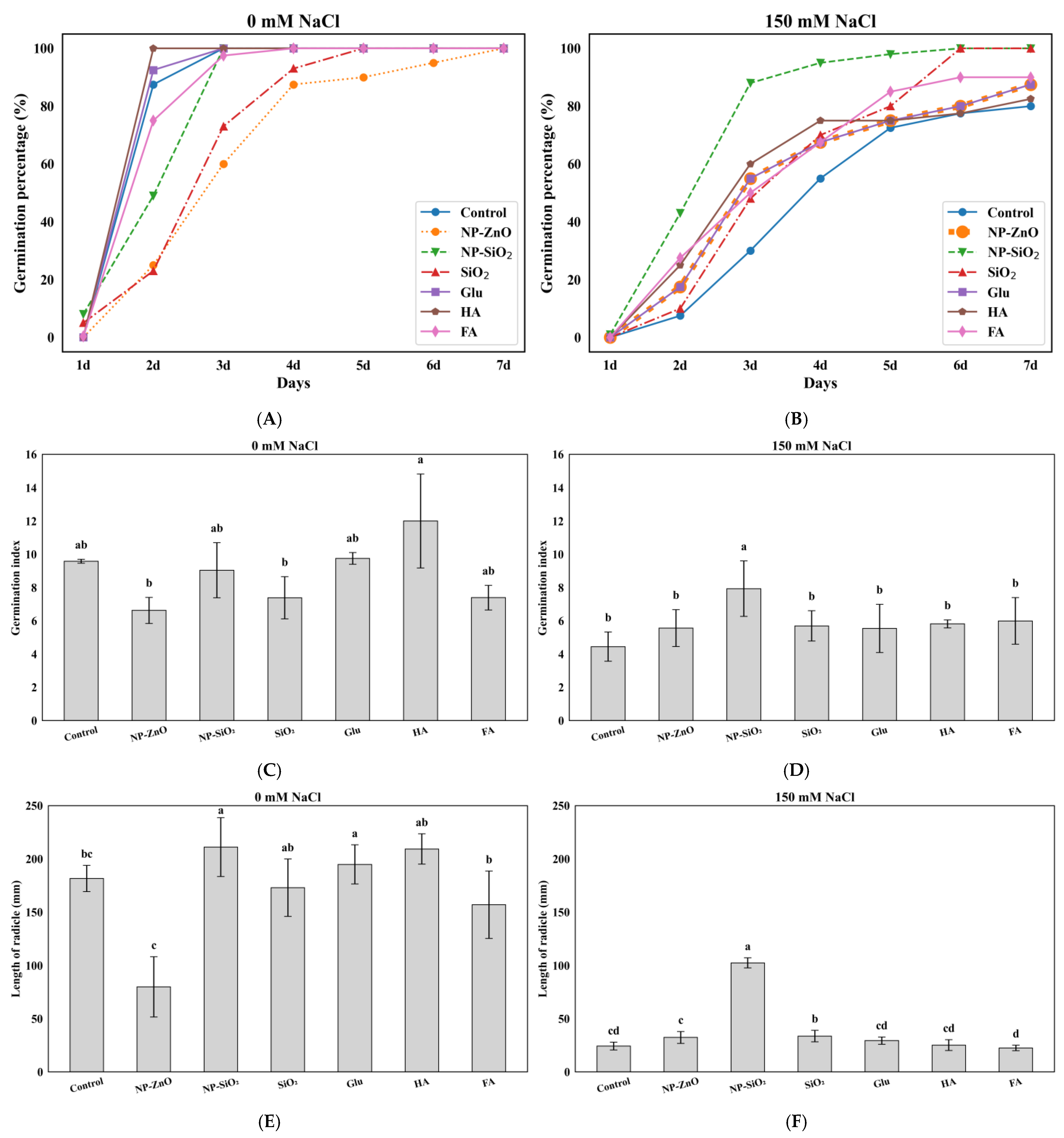
GP is a fundamental physiological indicator used to evaluate seed vigor and environmental adaptability. In a preliminary experiment, six different biostimulants were tested for their potential to enhance salt-stress tolerance during soybean seed germination: NP-ZnO, NP-SiO2, SiO2, Glu, HA, and FA. Changes in GP were monitored over a 7-day observation period, and under non-stress conditions, most seeds germinated by the third or fourth day. The HA and Glu treatments promoted germination compared to the untreated control, indicating their potential to enhance germination speed under favorable conditions (Figure 1A). In contrast, exposure to 150 mM NaCl strongly suppressed seed germination in the control, with GP reduced to 30% by day 3, compared to 100% under non-stress conditions (Figure 1B). However, biostimulant application mitigated this inhibitory effect to varying extents. In particular, treatment with 100 mg/L NP-SiO2 significantly improved germination percentage under salt-stress conditions, restoring it to 88% on day 3.
GI, which accounts for both the speed and uniformity of germination, is also widely used to assess seed vigor and responsiveness to environmental stress. In this study, GI exhibited a trend similar to that of GP: under salt-stress conditions, only NP-SiO2 treatment led to a statistically significant increase in GI compared to the untreated control (p < 0.05), suggesting that NP-SiO2 enhanced germination speed under salt stress (Figure 1C,D).
Under non-stress conditions, NP-SiO2 significantly increased radicle length compared to the control (Figure 1E), and under salt-stress conditions, both NP-SiO2 and SiO2 significantly increased radicle length (p < 0.05). In particular, the length of the salt-stress control radicle was 24.2 mm, whereas NP-SiO2 treatment extended this growth to 102.4 mm, an increase of ~324% (Figure 1F).
Based on these findings, NP-SiO2 was selected as the most effective biostimulant for improving seed germination and early radicle growth under salt stress, and was selected for further analysis.

3.2. Effects of NP-SiO2 Dosage on Soybean Germination Under Control (0 mM NaCl) and Salt-Stress (150 mM NaCl) Conditions

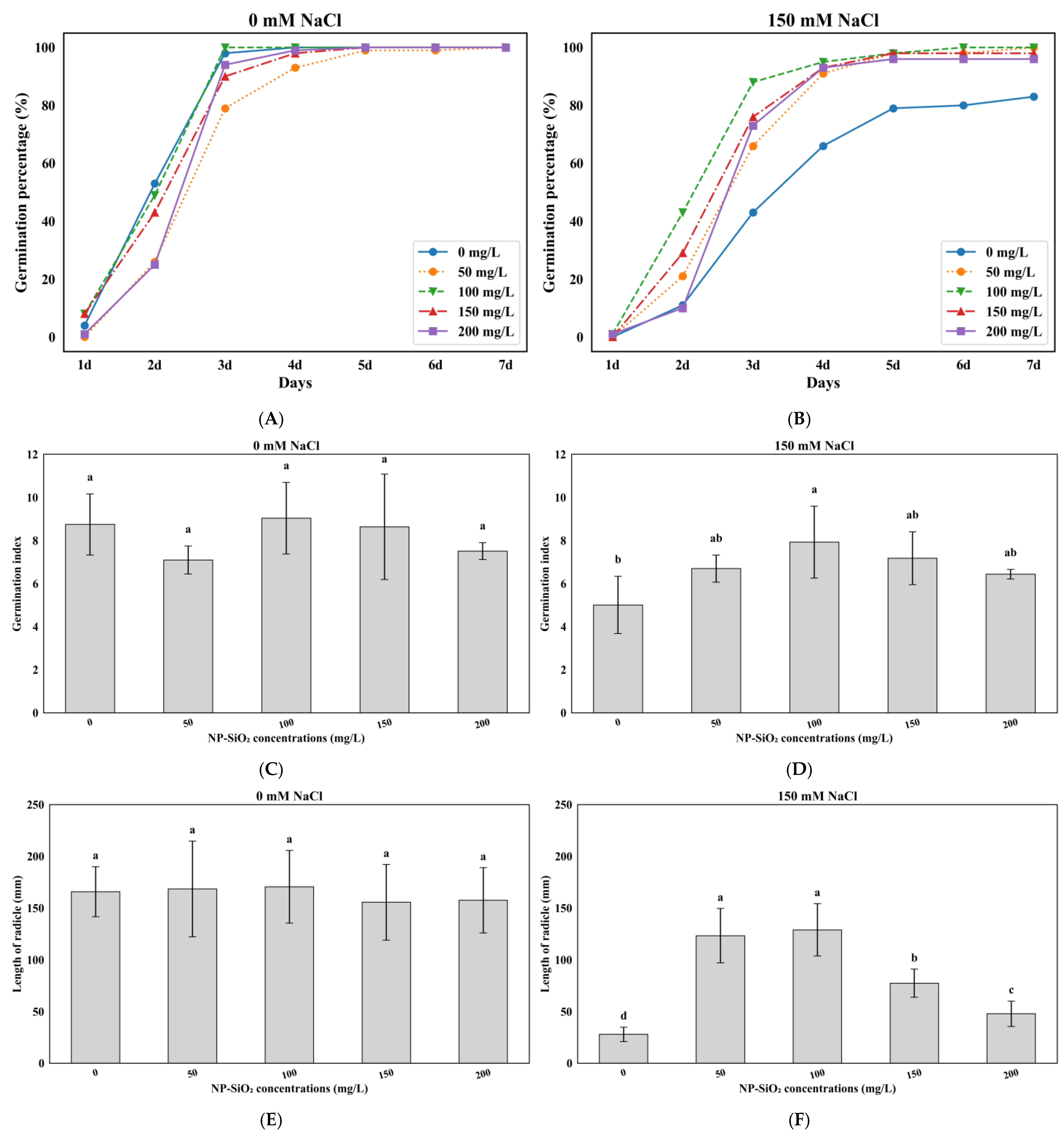
To evaluate the influence of NP-SiO2 dosage on soybean seed germination under both control and salt-stress conditions, a control treatment (0 mg/L) and four NP-SiO2 concentrations (50, 100, 150, and 200 mg/L) were tested. Under non-stress conditions, most of the seeds germinated by the third day, and the control group had a GP of 98%, while that of the 50 mg/L NP-SiO2 treatment was slightly lower at 79%, suggesting that NP-SiO2 did not enhance germination in the absence of stress (Figure 2A). In contrast, under salt-stress conditions, all NP-SiO2-treated groups exhibited an improved GP relative to the untreated control. The 100 mg/L NP-SiO2 treatment led to the highest GP, suggesting that ameliorating the salt-induced inhibition of germination was dependent on NP-SiO2 concentration (Figure 2B).
A similar trend was observed for GI. No significant differences in GI were observed between the treatments under non-stress conditions; however, under salt-stress conditions, GI was significantly higher for the 100 mg/L NP-SiO2 treatment than the salt-stressed control (p < 0.05), suggesting that NP-SiO2 concentration influenced not only the overall GP but also the speed and uniformity of germination under salt-stress conditions (Figure 2C,D).
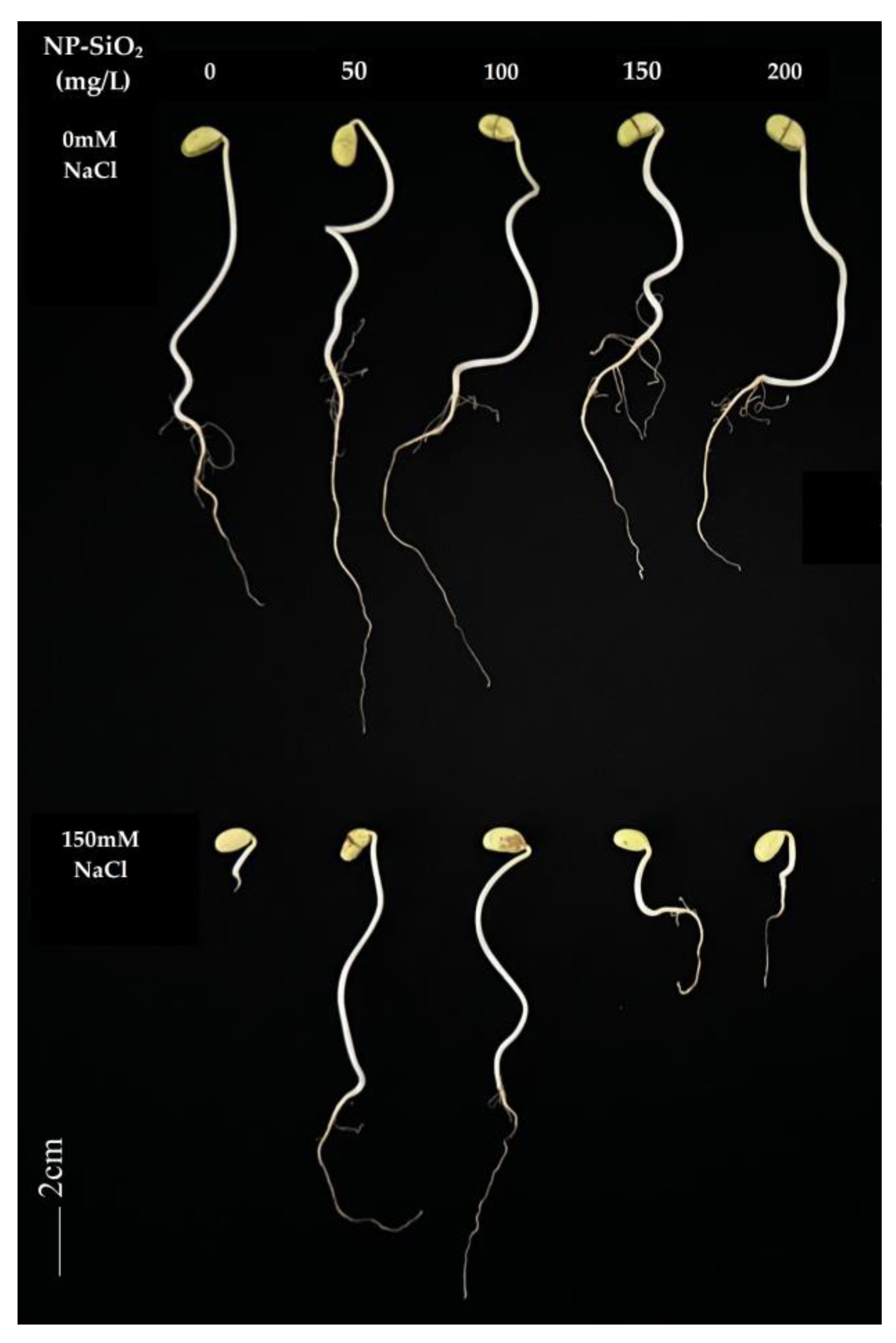
Radicle length also followed a similar trend. Under non-stress conditions, no significant differences were found between treatments (Figure 2E). However, under salt-stress conditions, the 50 and 100 mg/L NP-SiO2 treatments produced significantly longer radicles than both the control and other concentrations (p < 0.05). In particular, radicle length reached 129 mm in the 100 mg/L NP-SiO2 treatment, corresponding to an increase of ~362.7% over the salt-stressed control (27.9 mm). Radicle elongation peaked at 100 mg/L and declined at higher concentrations (Figure 2F and Figure 3). Collectively, these results demonstrate that NP-SiO2 had a concentration-dependent effect on seed germination and early seedling growth under salt-stress conditions, with 100 mg/L identified as the most effective dosage.

3.3. Effects of NP-SiO2 on POD, APX, and CAT Activity Under Control and Salt-Stress Conditions

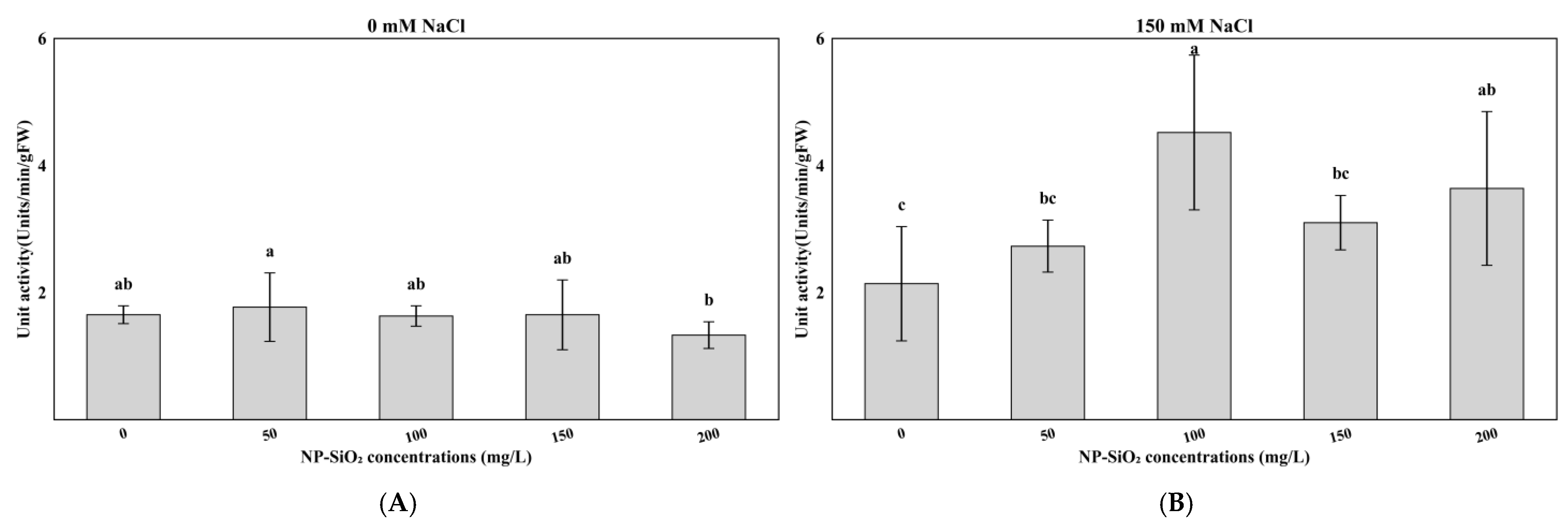
To investigate the effect of NP-SiO2 on the antioxidant defense system, the activities of three major enzymes, POD, APX, and CAT, were examined in soybean seedlings under control and salt-stress conditions. Under non-stress conditions, POD activity remained relatively stable between NP-SiO2 treatments, except for a slight decrease for the 200 mg/L treatment. In contrast, under salt-stress conditions, POD activity generally increased, with the highest activity observed under 100 mg/L NP-SiO2 treatment, approximately 2.1 times higher than that of the control (2.14) (Figure 4A,B).
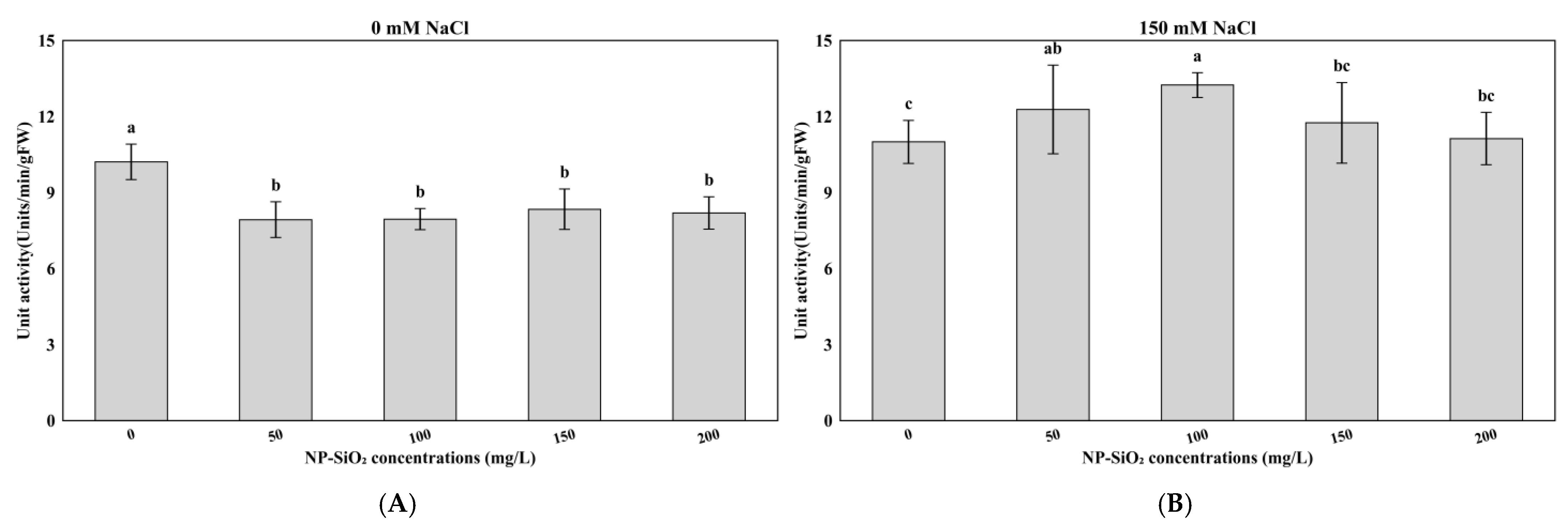
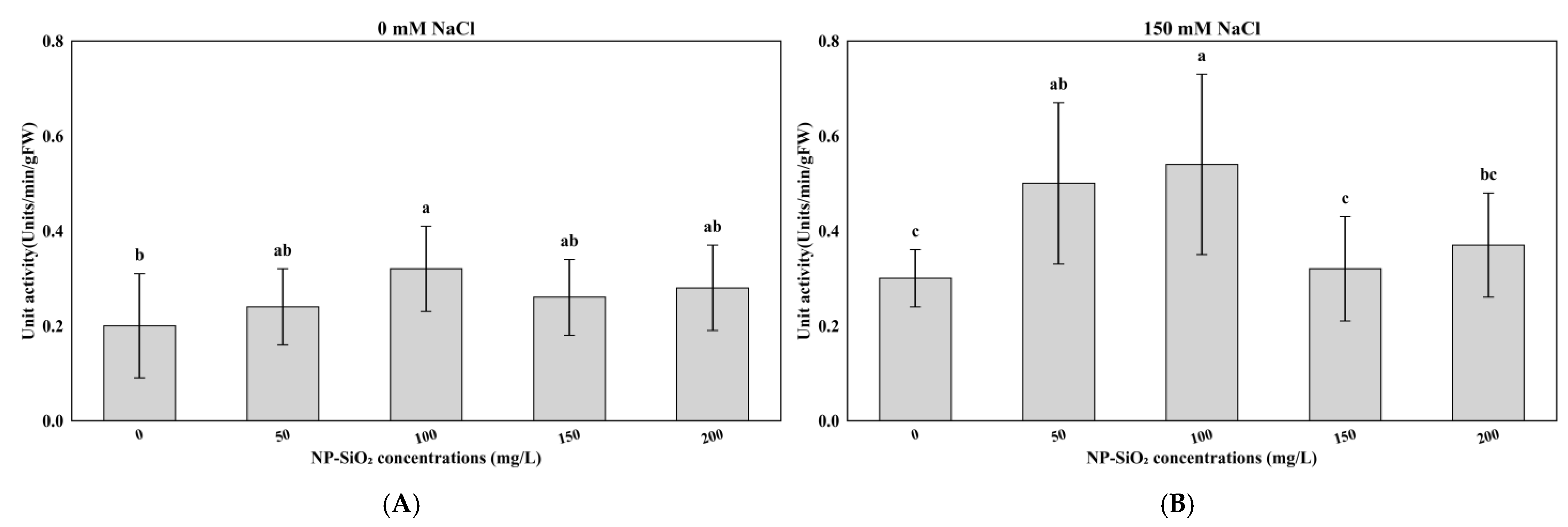
In normal conditions, the control exhibited the highest APX activity, and no significant increases were observed with NP-SiO2 treatment (Figure 5A). However, under salt-stress conditions, APX activity increased overall, with the 100 mg/L NP-SiO2 treatment leading to a significant increase from 11.00 (control) to 13.24 (Figure 5B). Similarly, CAT activity remained relatively constant under non-stress conditions (Figure 6A), though under salt-stress conditions a slight increase was observed under 100 mg/L NP-SiO2 treatment (0.54) compared to the control (0.30) (Figure 6B).
Collectively, the activity of POD, APX, and CAT exhibited a concentration-dependent response, with peak activity in the 100 mg/L NP-SiO2 treatment followed by a decline at higher concentrations. These results indicate that NP-SiO2 treatment enhanced the antioxidant machinery in response to salt stress, thus promoting effective ROS scavenging and contributing to improved stress tolerance.

3.4. Effects of NP-SiO2 on Malondialdehyde (MDA) Levels Under Control and Salt-Stress Conditions

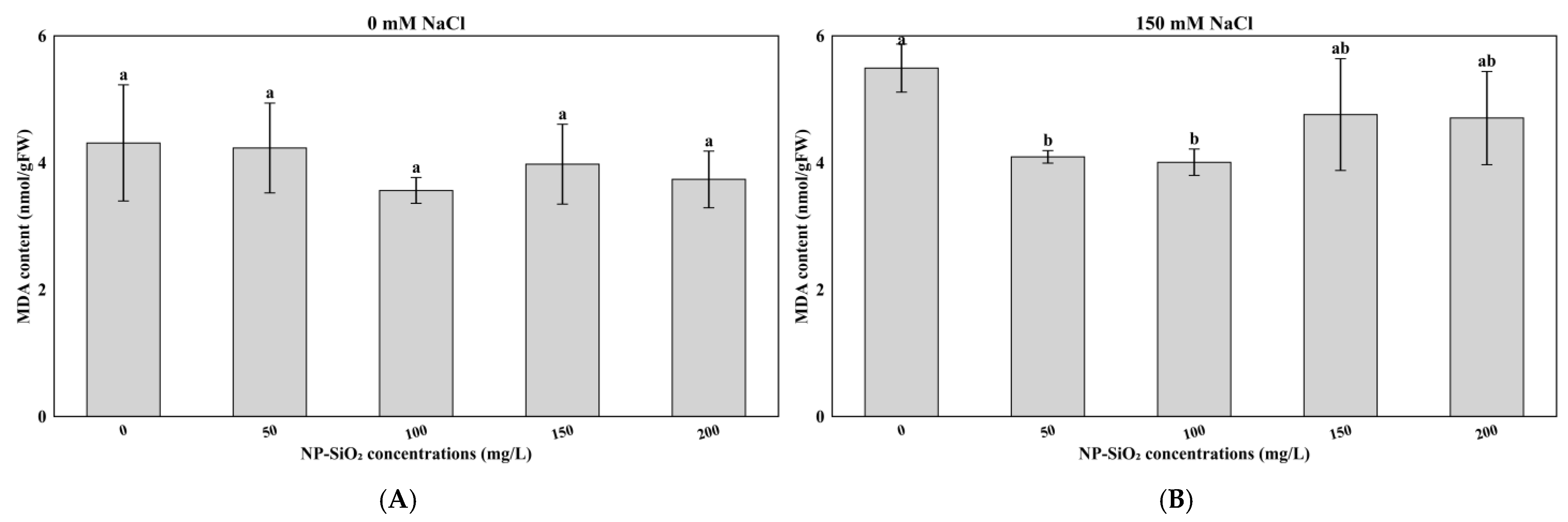
To explore how NP-SiO2 protects against salt-induced oxidative damage, the levels of MDA, an established marker of membrane lipid peroxidation, were quantified in soybean seedlings. In the absence of salt stress, MDA levels did not differ significantly among the NP-SiO2 treatments, indicating that they did not notably affect membrane integrity (Figure 7A). In contrast, salt stress triggered a substantial increase in MDA accumulation in the untreated group, indicating greater oxidative damage to cellular membranes (Figure 7B).
However, treatment with NP-SiO2 at 50 and 100 mg/L effectively suppressed this increase, demonstrating a protective effect against lipid peroxidation. At higher concentrations (150 and 200 mg/L), MDA levels were comparable to those observed in the salt-stressed control, indicating that the protective efficacy of NP-SiO2 may diminish at excessive dosages.

3.5. Overview of Transcriptome Profiling and Functional Analysis

To investigate transcriptional changes under salt-stress conditions, RNA sequencing (RNA-seq) was conducted on soybean radicle tissues from three treatment groups, each with three biological replicates: control, salt stress alone, and salt stress with NP-SiO2 treatment. DEGs were identified from two pairwise comparisons: both salt stress and salt stress with NP-SiO2 treatment compared to the control. Quality control analysis confirmed the reliability of the RNA-seq data, and more than 92% of the clean reads were successfully mapped to the soybean reference genome (Glycine max Wm82.a4.v1), indicating sufficient sequencing quality (Table S1).
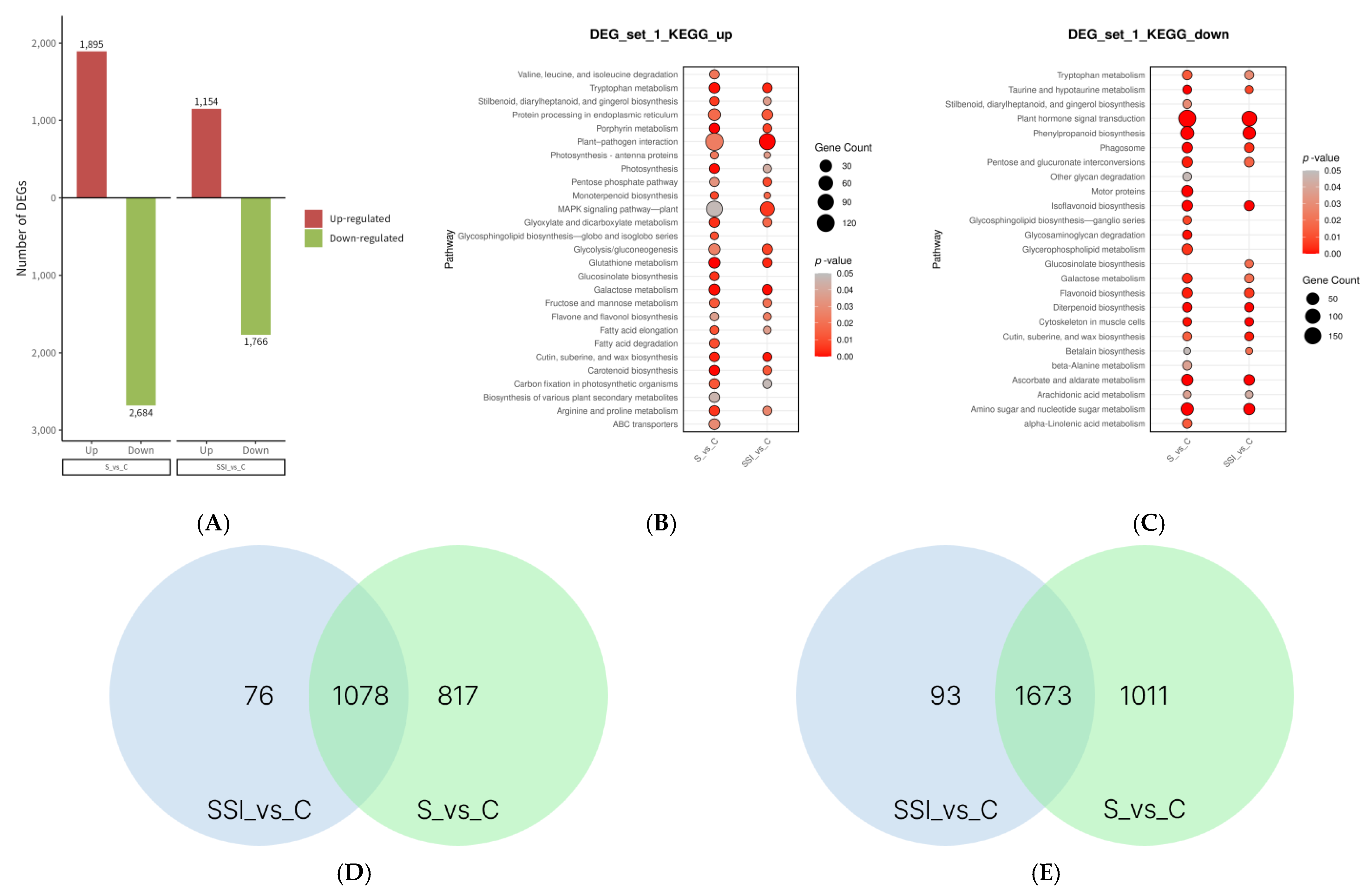
In the comparison of the salt-stress group to the control, a total of 4579 DEGs were identified, including 1895 up-regulated and 2684 down-regulated genes (Figure 8A and Table S2). When NP-SiO2 was applied, the number of DEGs was markedly reduced, decreasing to 1154 and 1766 up- and down-regulated genes, respectively, indicating that NP-SiO2 alleviates salt-stress-induced differences in gene expression, contributing to the stabilization of the gene expression profiles (Table S3).
GO and KEGG enrichment analysis revealed that, in the comparison of both the salt-stress and the salt-stress with NP-SiO2 treatment groups to the control, the up-regulated DEGs were significantly enriched in stress-response- and defense-related pathways, including plant−pathogen interactions, MAPK signaling, and glutathione metabolism. In addition, pathways associated with photosynthetic processes, such as porphyrin metabolism, photosynthesis, and photosynthetic antenna proteins, were also up-regulated. Notably, several metabolic pathways, including fatty acid degradation, glucosinolate biosynthesis, glycosphingolipid biosynthesis, ABC transporters, secondary metabolite biosynthesis, and valine, leucine, and isoleucine degradation were specifically enriched under salt stress relative to the control (Figure 8B).
Conversely, the down-regulated DEGs were mainly associated with hormone signal transduction, secondary metabolism, carbohydrate metabolism, and lipid metabolism, with antioxidant- and lipid-related pathways, including alpha linolenic acid metabolism, beta alanine metabolism, and glycerophospholipid metabolism, selectively suppressed under salt stress relative to the control (Figure 8C). Venn diagram analysis illustrated the overlap between the salt stress vs. control and salt stress with NP-SiO2 vs. control comparisons. Of the up-regulated DEGs, 1078 genes were shared, while 817 and 76 genes were uniquely expressed under salt stress alone and NP-SiO2 treatment, respectively (Figure 8D and Table S4). For the down-regulated DEGs, 1673 genes were shared, with 1011 specific to salt stress and 93 specific to NP-SiO2 treatment (Figure 8E and Table S5).

3.6. Hierarchical Clustering of DEGs Under Salt Stress and NP-SiO2 Treatment

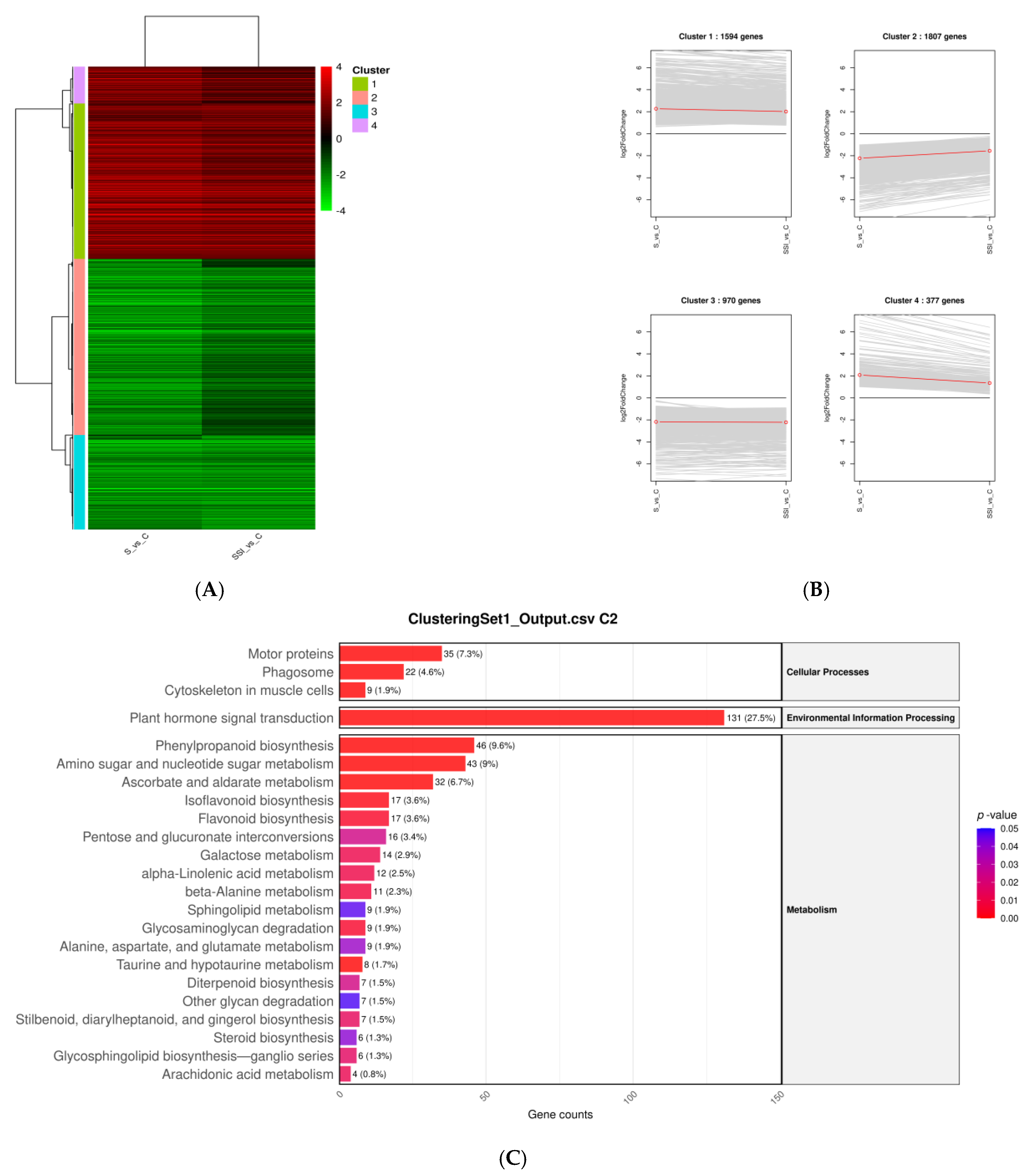
Hierarchical clustering of transcriptome data identified a total of 4748 DEGs, which were grouped into four distinct clusters based on their expression profiles (Figure 9A,B and Table S6). Cluster 1 (1594 genes) consisted of genes that were up-regulated under salt stress and remained at comparable levels following NP-SiO2 treatment, and Cluster 3 (970 genes) included genes that were down-regulated under salt stress and showed little change with the application of NP-SiO2, indicating that these gene sets were minimally affected by NP-SiO2 treatment.
In contrast, Cluster 2 (1807 genes) contained genes that were down-regulated under salt stress but recovered toward control levels following NP-SiO2 treatment. KEGG enrichment analysis revealed that these genes were predominantly associated with the plant hormone signal transduction pathway, which exhibited the strongest enrichment with 137 annotated genes (Figure 9C), as well as with phenylpropanoid biosynthesis, amino sugar and nucleotide sugar metabolism, ascorbate and aldarate metabolism, and multiple secondary metabolite biosynthesis pathways, including flavonoid, isoflavonoid, and carotenoid biosynthesis. Several metabolic processes, such as alpha linolenic acid metabolism, beta alanine metabolism, and sphingolipid metabolism, were also represented. These results suggest that Cluster 2 plays a central role in hormone-mediated signaling, antioxidant defense, and secondary metabolism, highlighting its importance in NP-SiO2-mediated stress adaptation.
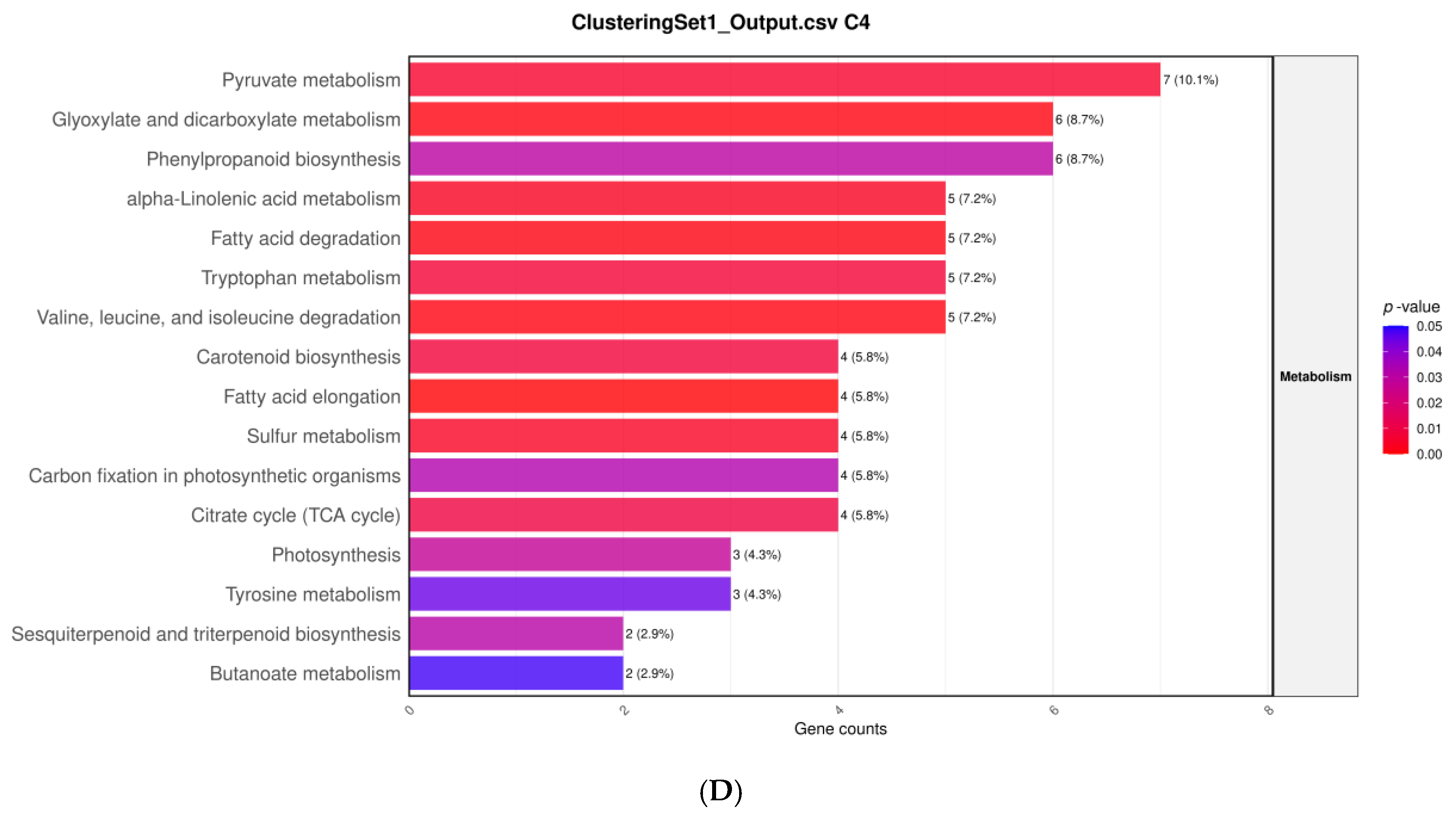
Similarly, Cluster 4 (377 genes) consisted of genes up-regulated under salt stress but with weaker up-regulation in response to NP-SiO2 treatment, suggesting the modulation of salt-induced transcriptional activation under NP-SiO2 treatment. KEGG enrichment analysis showed that Cluster 4 genes were most commonly involved in pathways related to central carbon metabolism and energy processes, including pyruvate metabolism, glyoxylate and dicarboxylate metabolism, and fatty acid degradation, as well as in phenylpropanoid and carotenoid biosynthesis (Figure 9D). These functional categories indicate that Cluster 4 genes are associated with central metabolic and energy-related processes, and that NP-SiO2 treatment attenuates their salt-induced up-regulation, thereby contributing to the fine-tuning of metabolic adjustment and energy balance under stress conditions.

3.7. Differential Expression of Hormone-Related Genes and Their Roles in Salt Tolerance Under NP-SiO2 Treatment

Transcriptome profiling revealed that soybean hormone signaling pathways were extensively affected by salt stress and modulated by NP-SiO2 treatment (Table 2). Eight major hormonal pathways, including ABA, GA, cytokinin (CK), auxin, brassinosteroid (BR), ethylene, jasmonic acid (JA), and salicylic acid (SA), were represented among the DEGs.
In the ABA pathway, stress-induced up-regulation of ABF4, BG2, and HAI2 was observed, though their expression levels were reduced under NP-SiO2 treatment compared to salt stress alone. Conversely, ABI4, AIT1, and PYL12, which were strongly down-regulated under salt stress, partially recovered following NP-SiO2 treatment. GA-related genes, including DXR, GA20ox1, and PIF1, were strongly repressed under salt stress but up-regulated with NP-SiO2 treatment, while in contrast, GAI and GA2ox1 expression, which was induced by salt stress, was reduced under NP-SiO2 treatment.
CK biosynthesis and metabolism were also influenced by salt stress and NP-SiO2 treatment. LOG4 showed strong induction under salt stress, whereas NP-SiO2 treatment attenuated this increase. In contrast, UGT85A1, which was suppressed by salt stress, was partially restored under NP-SiO2 treatment. In the auxin pathway, auxin transporters (AUX1, NRT1.1, and PIN4) were down-regulated in the presence of salt, but their expression levels recovered with NP-SiO2 treatment.
Brassinosteroid-related genes, such as BRI1, CDG1, and CPD, were significantly repressed under salt stress, and their expression was partially recovered by NP-SiO2 treatment, with the same pattern observed for ethylene-related genes (ACO1, ERF13, and ETO1).
In the JA pathway, DGL and LOX2 were strongly induced under salt stress, but this induction was weaker under NP-SiO2 treatment, while DAD1, which was suppressed by salt stress, was moderately restored. In terms of SA-associated genes, MES7 and TRX5 were suppressed under salt stress but recovered after NP-SiO2 treatment, whereas BSMT1 was strongly induced by salt stress, with its expression attenuated under NP-SiO2 treatment.
Overall, these results indicate that NP-SiO2 treatment altered the expression of key hormone-related genes, suppressing stress-induced overactivation in ABA, JA, and SA signaling while partially restoring growth-associated pathways, including GA, CK, auxin, and BR, under salt-stress conditions.

4. Discussion

Plant biostimulants (PBSs) are substances or microorganisms that, when applied to seeds, plant tissues, or the rhizosphere, stimulate natural physiological processes to enhance nutrient uptake, improve tolerance to abiotic stress, and ultimately increase crop quality and yield [39,40]. In this study, the effects of different biostimulants were evaluated during the most salt-sensitive developmental stage of soybean germination, and the most effective treatment was identified. Furthermore, transcriptomic analysis was conducted to elucidate the molecular mechanisms underlying the enhanced salt tolerance conferred by the selected biostimulants.
Among the six previously reported PBSs with proven efficacy, treatment with NP-SiO2 at 100 mg L−1 significantly improved germination percentage (GP) and germination index (GI) under salt-stress conditions, indicating a marked enhancement in seed vigor and salt tolerance [24]. Mechanistically, this treatment activated major antioxidant enzymes (POD, APX, and CAT) to scavenge excessive reactive oxygen species (ROS) produced under salt stress, while concurrently reducing the level of malondialdehyde (MDA), a key marker of oxidative membrane damage. These findings suggest that 100 mg/L NP-SiO2 represents the optimal concentration for mitigating salt-induced oxidative stress during soybean germination. In contrast, higher concentrations (150 mg/L and 200 mg/L) decreased antioxidant activity and increased MDA content to levels comparable to salt stress alone, indicating that excessive NP-SiO2 may negatively affect redox homeostasis.
Previous studies support these observations. In pepper seeds, treatment with 300 mg/L NP-SiO2 significantly recovered germination percentage, germination index, and radicle length under salt stress, accompanied by reduced H2O2 (−24.8%) and O2 (−8.4%) accumulation [41]. Similarly, in tomato seeds, 100 mg/L NP-SiO2 enhanced germination performance, activated antioxidant enzymes, and modulated hormonal conditions by decreasing ABA while increasing auxin and GA levels. Notably, the nano-scale form of SiO2 exhibited higher Si uptake and accumulation than its bulk counterpart, demonstrating its superior bioavailability [24]. Collectively, NP-SiO2 enhances salt tolerance during germination through cell wall reinforcement, osmotic regulation, and ROS scavenging, benefiting from its intrinsic high surface-area-to-volume ratio and reactive physicochemical properties.
RNA-seq analysis provided molecular evidence for NP-SiO2-mediated transcriptional stabilization under salt stress. Salt treatment induced 4579 differentially expressed genes (DEGs), indicating a substantial transcriptional reprogramming. However, NP-SiO2 treatment reduced this number to 2920 DEGs, suggesting that the biostimulant not only activates certain stress-responsive genes but also restores transcriptional networks toward non-stress conditions.
Hierarchical clustering further revealed distinct regulatory modules. Cluster 2 genes, enriched in pathways related to hormone signaling (ABA, GA), phenylpropanoid and flavonoid biosynthesis, and ROS detoxification, were markedly down-regulated by salt stress but recovered to control levels following NP-SiO2 treatment. Specifically, the recovery of PYL12/RCAR6 and ABI4 (ABA signaling), PIF1 and GA20ox1 (GA signaling), and TRX5 and ERF13 (ROS regulation) indicates that NP-SiO2 maintains a balanced interplay between hormonal signaling and the antioxidant defense system under stress. This transcriptional pattern strongly parallels previous findings in other plant species, where antioxidant enzymes such as SOD, CAT, APX, and POD, which were down-regulated under salt stress, were restored to control levels following NP-SiO2 treatment [42]. Similarly, NP-SiO2 has been shown to recover the expression of stress-responsive transcription factors (e.g., AP2/ERF family) and ion-homeostasis-related genes (e.g., NHX transporters), reinforcing ROS detoxification and hormonal balance [41]. Together, these observations indicate that NP-SiO2 reactivates the ROS-scavenging network at the transcriptional level, maintaining redox balance and ion homeostasis across diverse plant species.
Conversely, Cluster 4 genes, including those involved in energy and carbon metabolism, hormone signaling, and ROS detoxification, such as HAI2, ABF4, CAT, TRX5, GA2ox1, and DXR, were strongly induced under salt stress but attenuated following NP-SiO2 treatment. The suppression of these overactivated genes suggests that NP-SiO2 mitigates excessive ABA-dependent signaling and ROS-mediated responses, thereby reducing unnecessary metabolic energy consumption and restoring homeostatic balance. Similar trends were reported in previous studies, where NP-SiO2 treatment enhanced photosynthetic performance and PSII efficiency in pepper, alleviating metabolic overload under salt stress [41], and normalized hyperactivated antioxidant enzyme levels in pea, reducing ROS-dependent energy expenditure [42]. These findings indicate that NP-SiO2 performs a dual regulatory role, restoring suppressed antioxidant and hormonal pathways (Cluster 2) while simultaneously moderating overactivated stress metabolism (Cluster 4), ultimately optimizing the trade-off between growth and defense.
Finally, the ecological implication of NP-SiO2 application should be considered for practical agricultural use. Recent studies have shown that NP-SiO2 is environmentally benign and nontoxic at agricultural concentrations [43], therefore being a safe and sustainable nanomaterial for modern agriculture, although further research is needed to clarify its long-term behavior in soil ecosystems. Overall, current evidence supports NP-SiO2 as an environmentally safe and sustainable biostimulant that enhances crop resilience under salt stress [44].

5. Conclusions

NP-SiO2 demonstrated strong potential to mitigate the adverse effects of salt stress during soybean seed germination. Under salt stress induced by 150 mM NaCl, NP-SiO2 treatment significantly enhanced germination performance, particularly at a concentration of 100 mg/L, where the most notable improvements in GP, radicle elongation, and physiological recovery were observed. Biochemical analysis revealed that NP-SiO2 application reduced lipid peroxidation, as evidenced by decreased MDA levels, and enhanced the antioxidant defense system by increasing the activity of the key enzymes POD, APX, and CAT. Transcriptomic analysis further provided molecular evidence supporting the biostimulant’s protective role under salt stress. Although NP-SiO2 is recognized as a safe and sustainable nanomaterial, its long-term ecological effects in soil remain to be fully elucidated. Overall, this study demonstrates that NP-SiO2 significantly enhances soybean tolerance to salt stress through physiological, biochemical, and molecular mechanisms. These findings provide mechanistic insights into its protective action and position silicon-based nanomaterials as a promising strategy for improving the abiotic stress resilience of crops.

Supplementary Materials

The following supporting information can be downloaded at: https://www.mdpi.com/article/10.3390/agriculture15222320/s1. Table S1: Descriptive statistics for the RNA sequencing data from the soybean transcriptome under salt stress and NP-SiO2 treatment; Table S2: Information and functional enrichment analysis of DEGs in soybean radicles under salt stress; Table S3: Information and functional enrichment analysis of DEGs in soybean radicles under salt stress combined with NP-SiO2 treatment; Table S4: Information and functional annotation for each Venn diagram region using up-regulated DEGs; Table S5: Information and functional annotation for each Venn diagram region using down-regulated DEGs; Table S6: Information and functional enrichment analysis for DEG clusters based on expression values.

Author Contributions

Conceptualization, S.-Y.S. and W.-H.L.; methodology, S.-Y.S. and W.-H.L.; software, B.H.K.; validation, S.C. and D.-Y.K.; formal analysis, S.-Y.S. and W.-H.L.; investigation, H.-S.L. and B.-K.H.; resources, H.-S.L. and B.-K.H.; data curation, H.-S.L. and B.-K.H.; writing—original draft preparation, S.-Y.S.; writing—review and editing, W.-H.L.; visualization, S.-Y.S. and W.-H.L.; supervision, H.-S.L. and B.-K.H.; project administration, H.-S.L. and B.-K.H.; funding acquisition, H.-S.L. and B.-K.H. All authors have read and agreed to the published version of the manuscript.

Funding

This research was carried out with the support of the Cooperative Research Program for Agriculture Science and Technology Development (RS-2024-00333535), Rural Development Administration, Republic of Korea.

Institutional Review Board Statement

Not applicable.

Data Availability Statement

The original data in this study are included in the article and Supplementary Materials. Further inquiries can be directed to the corresponding authors.

Conflicts of Interest

The authors declare no conflicts of interest.

Abbreviations

The following abbreviations are used in this manuscript:
ABAAbscisic acid
GAGibberellin
CKCytokinin
BRBrassinosteroid
JAJasmonic acid
SASalicylic acid
ROSReactive oxygen species
MDAMalondialdehyde
GPGermination percentage
GIGermination index
NPNanoparticle
PODPeroxidase
APXAscorbate peroxidase
CATCatalase
GOGene Ontology
KEGGKyoto Encyclopedia of Genes and Genomes
GluGlucose
HAHumic acid
FAFulvic acid
DEGDifferentially expressed gene

References

  1. FAO. FAO Launches First Major Global Assessment of Salt-Affected Soils in 50 Years. Available online: https://www.fao.org/newsroom/detail/fao-launches-first-major-global-assessment-of-salt-affected-soils-in-50-years/en (accessed on 19 September 2025).
  2. Balasubramaniam, T.; Shen, G.; Esmaeili, N.; Zhang, H. Plants’ response mechanisms to salinity stress. Plants 2023, 12, 2253. [Google Scholar] [CrossRef] [PubMed]
  3. Zhao, J.; Wang, C.; Shi, X.; Bo, X.; Li, S.; Shang, M.; Chen, F.; Chu, Q. Modeling climatically suitable areas for soybean and their shifts across China. Agric. Syst. 2021, 192, 103205. [Google Scholar] [CrossRef]
  4. Guo, B.; Sun, L.; Jiang, S.; Ren, H.; Sun, R.; Wei, Z.; Hong, H.; Luan, X.; Wang, J.; Wang, X.; et al. Soybean genetic resources contributing to sustainable protein production. Theor. Appl. Genet. 2022, 135, 4095–4121. [Google Scholar] [CrossRef]
  5. Majidian, P.; Ghorbani, H.R.; Farajpour, M. Achieving agricultural sustainability through soybean production in Iran: Potential and challenges. Heliyon 2024, 10, e26389. [Google Scholar] [CrossRef] [PubMed]
  6. Awan, S.A.; Khan, I.; Wang, Q.; Gao, J.; Tan, X.; Yang, F. Pre-treatment of melatonin enhances the seed germination responses and physiological mechanisms of soybean (Glycine max L.) under abiotic stresses. Front. Plant Sci. 2023, 14, 1149873. [Google Scholar] [CrossRef]
  7. Fu, H.; Yang, Y. How Plants Tolerate Salt Stress. Curr. Issues Mol. Biol. 2023, 45, 5914–5934. [Google Scholar] [CrossRef]
  8. Atta, K.; Mondal, S.; Gorai, S.; Singh, A.P.; Kumari, A.; Ghosh, T.; Roy, A.; Hembram, S.; Gaikwad, D.J.; Mondal, S.; et al. Impacts of salinity stress on crop plants: Improving salt tolerance through genetic and molecular dissection. Front. Plant Sci. 2023, 14, 1241736. [Google Scholar] [CrossRef] [PubMed]
  9. Shani, M.Y.; Ashraf, M.Y.; Butt, A.K.; Abbas, S.; Nasif, M.; Khan, Z.; Mauro, R.P.; Cannata, C.; Gul, N.; Ghaffar, M.; et al. Potassium Nutrition Induced Salinity Mitigation in Mungbean [Vigna radiata (L.) Wilczek] by Altering Biomass and Physio-Biochemical Processes. Horticulturae 2024, 10, 549. [Google Scholar] [CrossRef]
  10. Al-Khayri, J.M.; Rashmi, R.; Surya Ulhas, R.; Sudheer, W.N.; Banadka, A.; Nagella, P.; Aldaej, M.I.; Rezk, A.A.-S.; Shehata, W.F.; Almaghasla, M.I. The role of nanoparticles in response of plants to abiotic stress at physiological, biochemical, and molecular levels. Plants 2023, 12, 292. [Google Scholar] [CrossRef]
  11. Sardar, H.; Waqas, M.; Nawaz, A.; Naz, S.; Ali, S.; Ejaz, S.; Ahmad, R.; Ghfar, A.A.; Wabaidur, S.M.; Abou Fayssal, S. Amendment of Tomato (Lycopersicon esculentum L.) Grown in Calcareous Soil with Spent Mushroom Substrate-derived Biochar: Improvement of Morphological, Biochemical, Qualitative Attributes, and Antioxidant Activities. J. Soil Sci. Plant Nutr. 2025, 25, 2244–2260. [Google Scholar] [CrossRef]
  12. Hasanuzzaman, M.; Raihan, M.R.H.; Masud, A.A.C.; Rahman, K.; Nowroz, F.; Rahman, M.; Nahar, K.; Fujita, M. Regulation of reactive oxygen species and antioxidant defense in plants under salinity. Int. J. Mol. Sci. 2021, 22, 9326. [Google Scholar] [CrossRef]
  13. Kesawat, M.S.; Satheesh, N.; Kherawat, B.S.; Kumar, A.; Kim, H.-U.; Chung, S.-M.; Kumar, M. Regulation of Reactive Oxygen Species during Salt Stress in Plants and Their Crosstalk with Other Signaling Molecules—Current Perspectives and Future Directions. Plants 2023, 12, 864. [Google Scholar] [CrossRef]
  14. Albrecht, U. Plant biostimulants: Definition and overview of categories and effects: HS1330, 5/2019; Horticultural Sciences Department, UF/IFAS Extension: Gainesville, FL, USA, 2019. [Google Scholar]
  15. Khan, I.; Saeed, K.; Khan, I. Nanoparticles: Properties, applications and toxicities. Arab. J. Chem. 2019, 12, 908–931. [Google Scholar] [CrossRef]
  16. Zia-ur-Rehman, M.; Anayatullah, S.; Irfan, E.; Hussain, S.M.; Rizwan, M.; Sohail, M.I.; Jafir, M.; Ahmad, T.; Usman, M.; Alharby, H.F. Nanoparticles assisted regulation of oxidative stress and antioxidant enzyme system in plants under salt stress: A review. Chemosphere 2023, 314, 137649. [Google Scholar] [CrossRef]
  17. Singh, R.; Širić, I.; Alhag, S.K.; Al-Shuraym, L.A.; Al-Shahari, E.A.; Alsudays, I.M.; Bachheti, A.; Goala, M.; Abou Fayssal, S.; Kumar, P.; et al. Impact of titanium dioxide (TiO2) nanoparticle and liquid leachate of mushroom compost on agronomic and biochemical response of marigold (Tagetes erecta L.) under saline stress. Environ. Sci. Pollut. Res. 2024, 31, 43731–43742. [Google Scholar] [CrossRef]
  18. Martínez-Lorente, S.E.; Martí-Guillén, J.M.; Pedreño, M.Á.; Almagro, L.; Sabater-Jara, A.B. Higher Plant-Derived Biostimulants: Mechanisms of Action and Their Role in Mitigating Plant Abiotic Stress. Antioxidants 2024, 13, 318. [Google Scholar] [CrossRef] [PubMed]
  19. Kim, S.-H.; Lee, D.H.; Choi, S.; Yang, J.-Y.; Jung, K.; Jeong, J.; Oh, J.H.; Lee, J.H. Skin Sensitization Potential and Cellular ROS-Induced Cytotoxicity of Silica Nanoparticles. Nanomaterials 2021, 11, 2140. [Google Scholar] [CrossRef]
  20. Valdiglesias, V.; Touzani, A.; Ramos-Pan, L.; Alba-González, A.; Folgueira, M.; Moreda-Piñeiro, J.; Méndez, J.; Pásaro, E.; Fernández-Bertólez, N.; Laffon, B. Cytotoxic Effects of Zinc Oxide Nanoparticles on Human Glial Cells. Mater. Proc. 2023, 14, 23. [Google Scholar]
  21. Asmat-Campos, D.; López-Medina, E.; Montes de Oca-Vásquez, G.; Gil-Rivero, E.; Delfín-Narciso, D.; Juárez-Cortijo, L.; Villena-Zapata, L.; Gurreonero-Fernández, J.; Rafael-Amaya, R. ZnO Nanoparticles Obtained by Green Synthesis as an Alternative to Improve the Germination Characteristics of L. esculentum. Molecules 2022, 27, 2343. [Google Scholar] [CrossRef] [PubMed]
  22. Stałanowska, K.; Szablińska-Piernik, J.; Okorski, A.; Lahuta, L.B. Zinc Oxide Nanoparticles Affect Early Seedlings’ Growth and Polar Metabolite Profiles of Pea (Pisum sativum L.) and Wheat (Triticum aestivum L.). Int. J. Mol. Sci. 2023, 24, 14992. [Google Scholar] [CrossRef]
  23. Gupta, A.; Bharati, R.; Kubes, J.; Popelkova, D.; Praus, L.; Yang, X.; Severova, L.; Skalicky, M.; Brestic, M. Zinc oxide nanoparticles application alleviates salinity stress by modulating plant growth, biochemical attributes and nutrient homeostasis in Phaseolus vulgaris L. Front. Plant Sci. 2024, 15, 1432258. [Google Scholar] [CrossRef] [PubMed]
  24. Wang, T.; Long, H.; Mao, S.; Jiang, Z.; Liu, Y.; He, Y.; Zhu, Z.; Yan, G. Silicon Nanoparticles Improve Tomato Seed Germination More Effectively than Conventional Silicon under Salt Stress via Regulating Antioxidant System and Hormone Metabolism. Horticulturae 2024, 10, 785. [Google Scholar] [CrossRef]
  25. Avestan, S.; Ghasemnezhad, M.; Esfahani, M.; Byrt, C.S. Application of Nano-Silicon Dioxide Improves Salt Stress Tolerance in Strawberry Plants. Agronomy 2019, 9, 246. [Google Scholar] [CrossRef]
  26. Abdo, R.A.; Hazem, M.M.; El-Assar, A.E.-M.; Saudy, H.S.; El-Sayed, S.M. Efficacy of nano-silicon extracted from rice husk to modulate the physio-biochemical constituents of wheat for ameliorating drought tolerance without causing cytotoxicity. Beni-Suef Univ. J. Basic Appl. Sci. 2024, 13, 75. [Google Scholar] [CrossRef]
  27. Ma, S.; Guo, S.; Chen, J.; Sun, J.; Wang, Y.; Shu, S. Enhancement of salt-stressed cucumber tolerance by application of glucose for regulating antioxidant capacity and nitrogen metabolism. Can. J. Plant Sci. 2019, 100, 253–263. [Google Scholar] [CrossRef]
  28. Kan, G.; Zhang, W.; Yang, W.; Ma, D.; Zhang, D.; Hao, D.; Hu, Z.; Yu, D. Association mapping of soybean seed germination under salt stress. Mol. Genet. Genom. 2015, 290, 2147–2162. [Google Scholar] [CrossRef]
  29. Tunçtürk, R.; Maıwan, N.; Tunçtürk, M. Effect of Humic Acid Applications on Physiological and Biochemical Properties of Soybean (Glycine max L.) Grown under Salt Stress Conditions. Yuz. Yıl Univ. J. Agric. Sci. 2023, 33, 1–9. [Google Scholar]
  30. Saidimoradi, D.; Ghaderi, N.; Javadi, T. Salinity stress mitigation by humic acid application in strawberry (Fragaria x ananassa Duch.). Sci. Hortic. 2019, 256, 108594. [Google Scholar] [CrossRef]
  31. Jesmin, A.; Anh, L.H.; Mai, N.P.; Khanh, T.D.; Xuan, T.D. Fulvic acid improves salinity tolerance of rice seedlings: Evidence from phenotypic performance, relevant phenolic acids, and momilactones. Plants 2023, 12, 2359. [Google Scholar] [CrossRef]
  32. Alsaeedi, A.; Elgarawany, M.; El-Ramady, H.; Alshaal, T.; Al-Otaibi, A. Application of silica nanoparticles induces seed germination and growth of cucumber (Cucumis sativus). Met. Environ. Arid. Land Agric. Sci 2019, 28, 57–68. [Google Scholar]
  33. Al-Mudaris, M. Notes on various parameters recording the speed of seed germination. Der Tropenlandwirt-J. Agric. Trop. Subtrop. 1998, 99, 147–154. [Google Scholar]
  34. Maehly, A.C. The Assay of Catalases and Peroxidases. In Methods of Biochemical Analysis; John Wiley & Sons Inc.: Hoboken, NJ, USA, 1954; pp. 357–424. [Google Scholar]
  35. Nakano, Y.; Asada, K. Hydrogen Peroxide is Scavenged by Ascorbate-specific Peroxidase in Spinach Chloroplasts. Plant Cell Physiol. 1981, 22, 867–880. [Google Scholar] [CrossRef]
  36. Aebi, H. [13] Catalase in vitro. In Methods in Enzymology; Academic Press: Cambridge, MA, USA, 1984; pp. 121–126. [Google Scholar]
  37. Heath, R.L.; Packer, L. Photoperoxidation in isolated chloroplasts: I. Kinetics and stoichiometry of fatty acid peroxidation. Arch. Biochem. Biophys. 1968, 125, 189–198. [Google Scholar] [CrossRef] [PubMed]
  38. Taulavuori, E.; Hellström, E.K.; Taulavuori, K.; Laine, K. Comparison of two methods used to analyse lipid peroxidation from Vaccinium myrtillus (L.) during snow removal, reacclimation and cold acclimation. J. Exp. Bot. 2001, 52, 2375–2380. [Google Scholar] [CrossRef]
  39. Calvo, P.; Nelson, L.; Kloepper, J.W. Agricultural uses of plant biostimulants. Plant Soil 2014, 383, 3–41. [Google Scholar] [CrossRef]
  40. Asif, A.; Ali, M.; Qadir, M.; Karthikeyan, R.; Singh, Z.; Khangura, R.; Di Gioia, F.; Ahmed, Z.F.R. Enhancing crop resilience by harnessing the synergistic effects of biostimulants against abiotic stress. Front. Plant Sci. 2023, 14, 1276117. [Google Scholar] [CrossRef]
  41. Li, Y.; Zan, T.; Li, K.; Hu, H.; Yang, T.; Yin, J.; Zhu, Y. Silica nanoparticles promote the germination of salt-stressed pepper seeds and improve growth and yield of field pepper. Sci. Hortic. 2024, 337, 113570. [Google Scholar] [CrossRef]
  42. Ismail, L.M.; Soliman, M.I.; Abd El-Aziz, M.H.; Abdel-Aziz, H.M.M. Impact of Silica Ions and Nano Silica on Growth and Productivity of Pea Plants under Salinity Stress. Plants 2022, 11, 494. [Google Scholar] [CrossRef]
  43. Goswami, P.; Mathur, J.; Srivastava, N. Silica nanoparticles as novel sustainable approach for plant growth and crop protection. Heliyon 2022, 8, e09908. [Google Scholar] [CrossRef] [PubMed]
  44. Li, F.; Hou, Y.; Chen, L.; Qiu, Y. Advances in silica nanoparticles for agricultural applications and biosynthesis. Adv. Biotechnol. 2025, 3, 14. [Google Scholar] [CrossRef]
Figure 1. Preliminary experiment germination results for soybean under non-stress and salt-stress conditions. Germination percentage under (A) control (0 mM NaCl) and (B) salt-stress conditions (150 mM NaCl). Germination index under (C) control and (D) salt-stress conditions. Radicle length under (E) control and (F) salt-stress conditions. Error bars represent the standard error (i = 3). Different letters above the bars indicate significant differences between treatments at p ≤ 0.05 based on Tukey’s multiple comparison tests.
Agriculture 15 02320 g001
Figure 2. Effects of NP-SiO2 concentration on germination percentage, gemination index, and radicle length under (A,C,E) control and (B,D,F) salt-stress (150 mM NaCl) conditions, respectively. Error bars represent the standard error (n = 3). Different letters above the bars indicate significant differences between treatments at p ≤ 0.05 based on Tukey’s multiple comparison tests.
Agriculture 15 02320 g002
Figure 3. Phenotypes of soybean radicles for different NP-SiO2 concentrations under non-stress and salt-stress conditions. NP-SiO2 treatments promoted radicle growth and alleviated salt-induced radicle elongation inhibition, indicating enhanced salt tolerance during germination.
Agriculture 15 02320 g003
Figure 4. POD activity in soybean seedlings treated with NP-SiO2 under (A) non-stress (B) and salt-stress conditions (150 mM NaCl). Error bars represent the standard error (n = 3). Different letters above the bars indicate significant differences between treatments at p ≤ 0.05 based on Tukey’s multiple comparison tests.
Agriculture 15 02320 g004
Figure 5. APX activity in soybean seedlings treated with NP-SiO2 under (A) non-stress and (B) salt-stress conditions (150 mM NaCl). Error bars represent the standard error (n = 3). Different letters above the bars indicate significant differences between treatments at p ≤ 0.05 based on Tukey’s multiple comparison tests.
Agriculture 15 02320 g005
Figure 6. CAT activity in soybean seedlings treated with NP-SiO2 under (A) non-stress and (B) salt-stress conditions (150 mM NaCl). Error bars represent the standard error (n = 3). Different letters above the bars indicate significant differences between treatments at p ≤ 0.05 based on Tukey’s multiple comparison tests.
Agriculture 15 02320 g006
Figure 7. MDA content in soybean seedlings treated with NP-SiO2 under (A) non-stress and (B) salt-stress conditions (150 mM NaCl). Error bars represent the standard error (n = 3). Different letters above the bars indicate significant differences between treatments at p ≤ 0.05 based on Tukey’s multiple comparison tests.
Agriculture 15 02320 g007
Figure 8. Transcriptomic responses of soybean radicles under salt stress and NP-SiO2 treatment. (A) Number of DEGs in each comparison group (red: up-regulated; green: down-regulated). KEGG enrichment of (B) up-regulated and (C) down-regulated DEGs. Venn diagrams of (D) up-regulated and (E) down-regulated DEGs between treatments.
Agriculture 15 02320 g008
Figure 9. Hierarchical clustering and KEGG enrichment of DEGs in soybean under salt stress and NP-SiO2 treatment. (A) Hierarchical clustering of 4748 DEGs into four clusters. (B) Expression patterns of the four clusters. KEGG pathway enrichment for (C) Cluster 2 and (D) Cluster 4.
Agriculture 15 02320 g009aAgriculture 15 02320 g009b
Table 2. NP-SiO2-responsive genes involved in hormone pathways and their likely roles in salt-stress tolerance in soybean.
HormoneGene IDSymbolCategoryClusterLog2 Fold ChangeLikely Role in Salt-Stress Tolerance
S_vs_CSSI_vs_C
ABAGlyma.01G225100.1HAI2ABA_SignalingC47.696.36Reduces ABA hypersignaling, contributing to stomatal regulation
Glyma.01G018800.1PYL12|RCAR6ABA_SignalingC2−3.10−1.86Restores ABA receptor activity, maintaining appropriate signaling
Glyma.07G017300.1ABI4ABA_SignalingC2−3.74−2.21Recovery of ABA signaling promotes balanced stress response
Glyma.11G095100.1BG2|PR2ABA_BiosynthesisC45.64.31Suppresses ABA-induced PR proteins, preventing unnecessary defense
Glyma.19G194500.1ABF4ABA_SignalingC43.141.69Attenuates ABA overactivation, preventing growth arrest
Glyma.19G224400.1AIT1|NRT1.2ABA_TransportC2−3.08−1.60Restores ABA transport, supporting hormone homeostasis
GAGlyma.09G183500.1PIF1|PIL5GA_SignalingC2−3.40−2.24GA–light crosstalk recovery supports photosynthesis and ROS defense
Glyma.10G190200.1GAIGA_SignalingC42.21.91Reduces DELLA overactivation, restoring cell elongation
Glyma.13G218200.1GA2ox1GA_BiosynthesisC42.712.06Moderates GA catabolism induction, balancing GA levels
Glyma.16G089000.1DXRGA_BiosynthesisC2−3.64−2.26Recovers GA biosynthesis, supporting elongation
Glyma.16G200800.3GA20ox1|GA5GA_BiosynthesisC2−3.19−1.94Promotes GA biosynthesis, enhancing growth recovery
SAGlyma.02G023400.1TRX5SA_SignalingC2−5.03−3.05Restores redox balance, enhancing ROS detoxification
Glyma.02G063500.1MES7SA_SynthesisC2−2.67−1.33Recovery of SA homeostasis → maintenance of ABA/ROS crosstalk
Glyma.18G238900.1BSMT1SA_SynthesisC42.861.75Attenuates SA overactivation, stabilizing signaling crosstalk
JAGlyma.02G142200.1DAD1JA_BiosynthesisC2−2.62−1.40Enhances JA-mediated lipid signaling, contributing to ROS defense
Glyma.03G159000.1DGLJA_BiosynthesisC43.512.3Reduces JA overactivation, saving energy under salt stress
Glyma.13G030300.1LOX2JA_BiosynthesisC42.681.64Suppresses excessive JA/ROS induction, preventing cell damage
CKGlyma.13G324700.1LOG4CK_BiosynthesisC45.674.48Suppresses CK overactivation, maintaining growth–defense balance
Glyma.14G175100.1UGT85A1CK_BiosynthesisC2−4.60−2.19Restores cytokinin biosynthesis, enhancing growth
Glyma.20G057500.1UGT85A1CK_BiosynthesisC2−1.64−0.60Restores cytokinin biosynthesis, enhancing growth
BRGlyma.02G256800.1CPD|CBB3|DWF3BR_BiosynthesisC2−2.55−1.08Recovers BR biosynthesis, supporting elongation
Glyma.03G002900.1CDG1BR_SignalingC2−2.16−0.95Restores BR signaling, supporting development
Glyma.11G204700.1BRI1|CBB2|DWF2BR_SignalingC2−4.31−3.15Restores BR receptor function, maintaining developmental control
Glyma.13G352800.1CDG1BR_SignalingC2−3.98−2.67Recovers BR kinase signaling, regulating growth
AUXGlyma.03G063900.1AUX1AUX_TransportC2−3.14−1.67Restores auxin transport, supporting directional radicle growth
Glyma.07G164600.4PIN4AUX_TransportC2−2.58−1.34Recovers auxin efflux, enhancing radicle development
Glyma.17G139400.1NRT1.1AUX_TransportC2−2.74−1.22Restores nitrate/auxin transport, maintaining growth
ETHGlyma.07G017300.1EREBP|ERF13ETH_SignalingC2−3.74−2.21Recovery of ERF13 supports ROS detoxification and ion homeostasis
Glyma.09G008400.1ACO1ETH_BiosynthesisC2−2.29−1.64Recovery of ACC oxidase maintains ethylene biosynthesis under salt stress
Glyma.18G059700.1ETO1ETH_BiosynthesisC2−2.50−1.75Moderation of ethylene overproduction helps maintain the hormonal balance
S_vs_C: Salt stress (S) relative to control (C). SSI_vs_C: Salt stress with NP-SiO2 treatment (SSI) relative to control (C). Box color indicates gene expression level, from green (down-regulated) to red (up-regulated).
Disclaimer/Publisher’s Note: The statements, opinions and data contained in all publications are solely those of the individual author(s) and contributor(s) and not of MDPI and/or the editor(s). MDPI and/or the editor(s) disclaim responsibility for any injury to people or property resulting from any ideas, methods, instructions or products referred to in the content.