Abstract
In the mechanized harvesting of Lycium barbarum L. (L. barbarum), there are prominent problems such as low harvesting efficiency, high damage rate, incomplete separation of leaves and delayed transportation. Therefore, an integrated L. barbarum harvester was designed and developed in this study, which has the functions of picking, undertaking, transportation, winnowing and collection. The design requirements and constraints were identified by cultivation agronomy. Through simulation and physical tests, the tarpaulin was determined as the undertaking material. This machine achieved efficient picking with a vibrating picker with a multi-degree-of-freedom picking arm. The two-stage conveyor belts and the intermediate receiving plate were designed for low loss transportation of fruit. The axial flow fan and secondary buffer device were used to realize winnowing and reduce the damage rate. Through the three-factor and three-level orthogonal test, an optimal working parameter combination was determined: the vibration frequency of the picker was 20 Hz, the conveyor speed was 4 m/min, the airflow speed of the fan was 7 m/s. A field test was conducted under these parameters, and the results showed that the harvesting efficiency was about five times that of manual harvesting. The integrated L. barbarum harvester basically met the harvesting requirements and provided a new scheme for mechanized harvesting.
1. Introduction
L. barbarum belongs to the Lycium barbarum in the Solanaceae family, with rich nutrients and enormous medicinal value [1,2,3,4]. The L. barbarum industry has broad development prospects [5,6]. However, L. barbarum is an infinite inflorescence shrub plant. At maturity, it needs to be harvested every 7 days. At present, L. barbarum harvesting still mainly relies on manual labor, but manual harvesting is inefficient and costly [7]. The continuous expansion of planting area and the intensification of agricultural labor transfer have made the harvesting problem a bottleneck restricting the sustainable development of the L. barbarum industry. At present, efficient and low loss L. barbarum mechanized harvesting remains an urgent technical problem to be solved [5,7,8,9].
The L. barbarum harvesters are divided into vibrating, comb-brushing, shearing, and air-flowing harvesters based on picking principles [10]. Among them, vibration harvesting is a non-contact harvesting method based on the difference in binding force between the fruit and the fruit stalk, which can quickly and effectively shake off ripe fruit and is suitable for large-scale fruit production [11,12]. The vibrating L. barbarum harvester is also the main model currently available in the Chinese market. Xu Liming et al. [8] developed a comb brush vibratory harvesting device for wolfberry, which mainly includes a harvesting unit and a moving unit, and the optimal working parameter combination was determined through field tests. For the standardized hedge cultivation mode, Chen Qingyu et al. [13] designed a vibrating and comb-brushing L. barbarum harvester, which is composed of an execution system, motion system and control system. Zhang Zui et al. [14] established a mechanical model of L. barbarum vibratory picking, obtained the best working parameters through optimization analysis, and designed a self-propelled L. barbarum harvesting machine with a vibration mode. Zhang Wenqiang et al. [15,16] designed a vibrating wolfberry harvester and a variable pacing combing brush picking device for L. barbarum. So [17,18] analyzed the vibration characteristics of Korean Lycium chinense Mill and designed a vibratory harvesting machine, but the machine was not suitable for L. barbarum due to the large differences in terms of biomechanical characteristics.
Based on existing research, it has been found that the current L. barbarum harvesting devices are mainly vibratory, which are divided into small portable and large automatic harvesting devices. However, most of them ignore impurities such as leaves and lack consideration of fruit vulnerability, resulting in a shortage of designs of key components for undertaking, transportation, and winnowing. The portable L. barbarum picking device has a simple structure, low cost and high picking rate of ripe fruit, but it is difficult to collect fruit, has greater artificial dependence and more easily leads to muscle fatigue. In terms of large-scale L. barbarum harvesting equipment, the different planting modes lead to poor field passability and low operating efficiency. Fully automatic picking methods are also prone to problems such as broken branches, mixed fruit and leaves, high picking rate of flowers and unripe fruit and a high damage rate [19,20].
To solve the above problems and achieve efficient harvesting of L. barbarum, this study combined a portable vibrating picker and a large and versatile harvester based on the biomechanical characteristics of L. barbarum and field restrictions, and designed an integrated L. barbarum harvester which can adapt to various planting modes and complete picking, transportation, winnowing and collection in one go. Field experiments were carried out to verify harvester performance, in order to provide a reference for the development of mechanized harvesting of L. barbarum.
2. Materials and Methods
2.1. L. barbarum Cultivation Agronomy
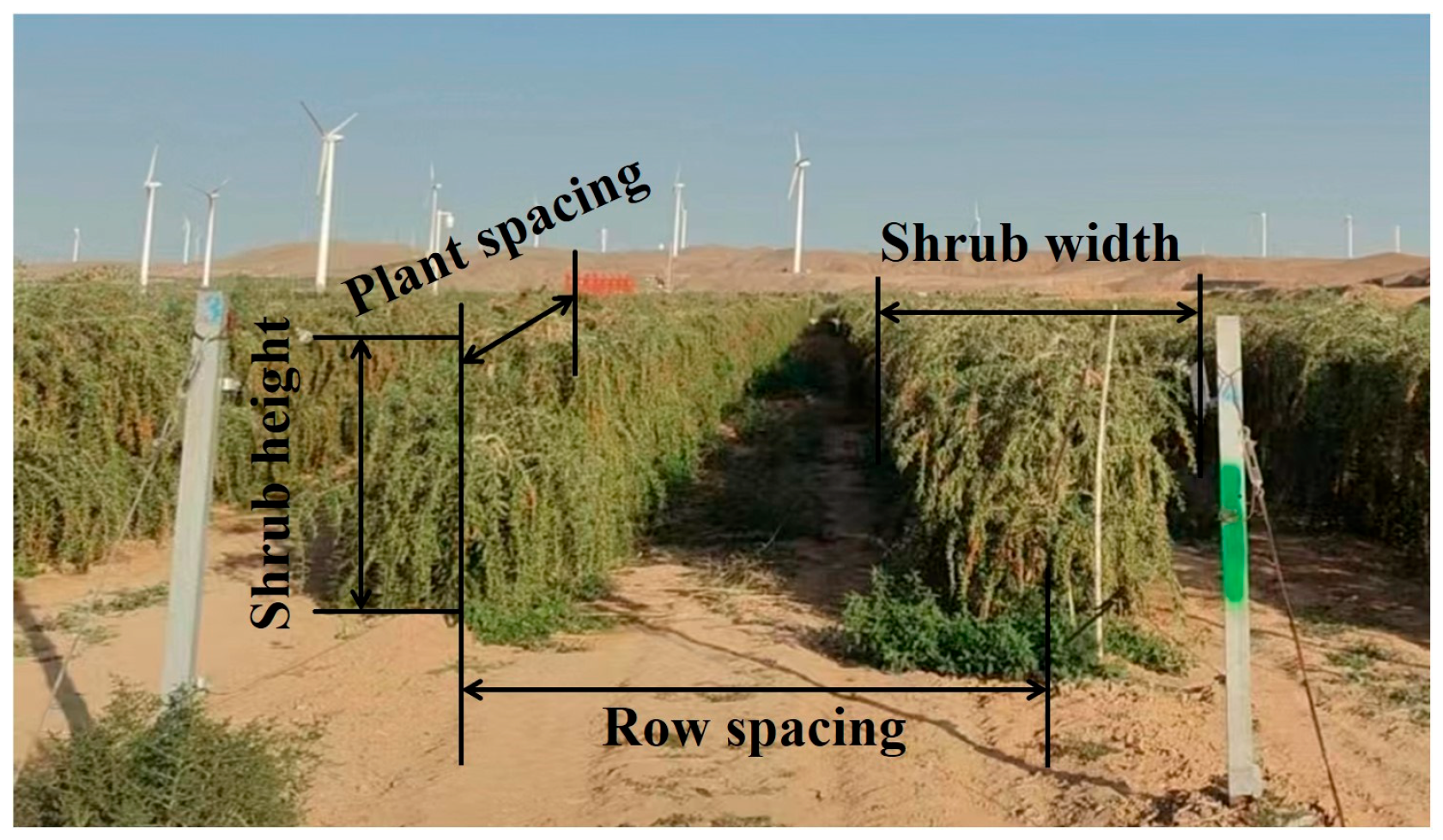
At present, the hedge cultivation mode is commonly used in large-scale planting of L. barbarum in China, as shown in Figure 1, which reduces plant lodging and branch dragging, makes row spacing and plant spacing uniform, and is conducive to mechanized harvesting [21].
Figure 1.
The hedge cultivation mode.
The physical properties and mechanical parameters of L. barbarum were measured at the planting base of the L. barbarum Research Institute, Ningxia Academy of Agriculture and Forestry Sciences, China, and the measuring object was the Ningqi No. 7. A total of 200 ripe fruits, 200 unripe fruits and 100 L. barbarum leaves were randomly selected. The weight of the ripe fruit and leaves was measured by a high-precision electronic scale. The transverse diameter and longitudinal diameter of the ripe fruit were measured with a vernier caliper. The binding force between the fruit and its stalk was measured with a digital display push–pull meter [22]. According to the five-point sampling method, 50 shrubs were selected as samples in the experimental site to measure shrub width, shrub height and height of branches from the ground; 50 pairs of adjacent shrubs were selected to measure plant spacing; and 50 sampling points were selected to measure row spacing. The measurement results are shown in Table 1.
Table 1.
Statistical parameters of L. barbarum measurement.
2.2. Overall Structure and Working Principle
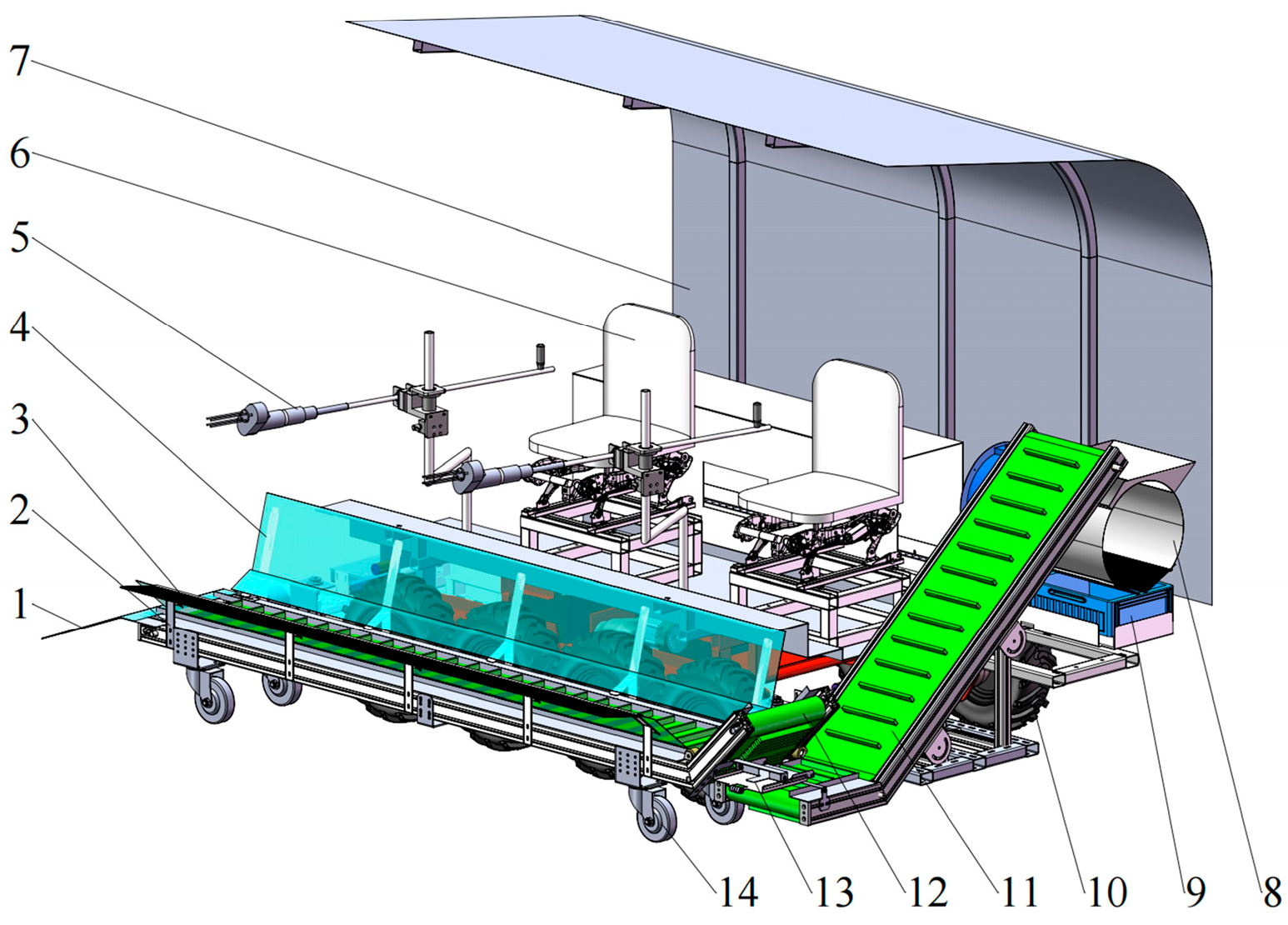
The main components of the whole machine were the picking device, undertaking and transferring device, winnowing device, collection and storage device, automatic adjustable seat system, chassis, etc. The structure of the integrated L. barbarum harvester is shown in Figure 2, and the main technical parameters are shown in Table 2.
Figure 2.
Structure diagram of the integrated L. barbarum harvester: 1. Reel bat; 2. Outer undertaking device; 3. Buffer device; 4. Inner undertaking device; 5. Picking device; 6. Seating system; 7. Sun visor; 8. Winnowing device; 9. Collection and storage device; 10. Chassis; 11. Longitudinal conveyor belt; 12. Horizontal conveyor belt; 13. Receiving plate; 14. Land wheel.
Table 2.
Parameters of the integrated L. barbarum harvester.
When the harvester was moving towards the picking position, the L. barbarum branches were lifted and gathered onto the undertaking device by the reel bat. After the harvester reached the working position, the worker remotely controlled the electric push rod to adjust the distance between the undertaking device and the trunk, and the receiving plate unfolded accordingly. When the buffer device came into contact with the trunk, the worker stopped the remote control and began operating the picking arm to achieve vibration picking of fruit. Fruits were shaken off to the undertaking device, collected on the horizontal conveyor belt, and then lifted up to the feeding port of the winnowing device through the vertical conveyor belt. Fruits with fewer impurities fell into the collection box after winnowing, while other lighter impurities were blown out of the machine.
2.3. Key Component Design
2.3.1. Picking Device
Harvest efficiency was introduced to measure the weight of the ripe fruits picked and placed into the collection box every minute on average. The harvesting rate of the ripe fruits and unripe fruits (, ), the damage rate of the ripe fruits (), the cleaning rate of the ripe fruits () and the loss rate of ripe fruits () were calculated according to the following Equation (1) [8,15,16].
where n1 is the number of ripe fruits harvested; n2 is the number of ripe fruits that have not been picked; n3 is the number of unripe fruits harvested; n4 is the number of damaged fruits in the harvested ripe fruits; m1 is the mass of fruits falling into the collection box, g; m2 is the total mass of the harvested products falling into the collection box, g; m3 is the mass of lost fruits, g.
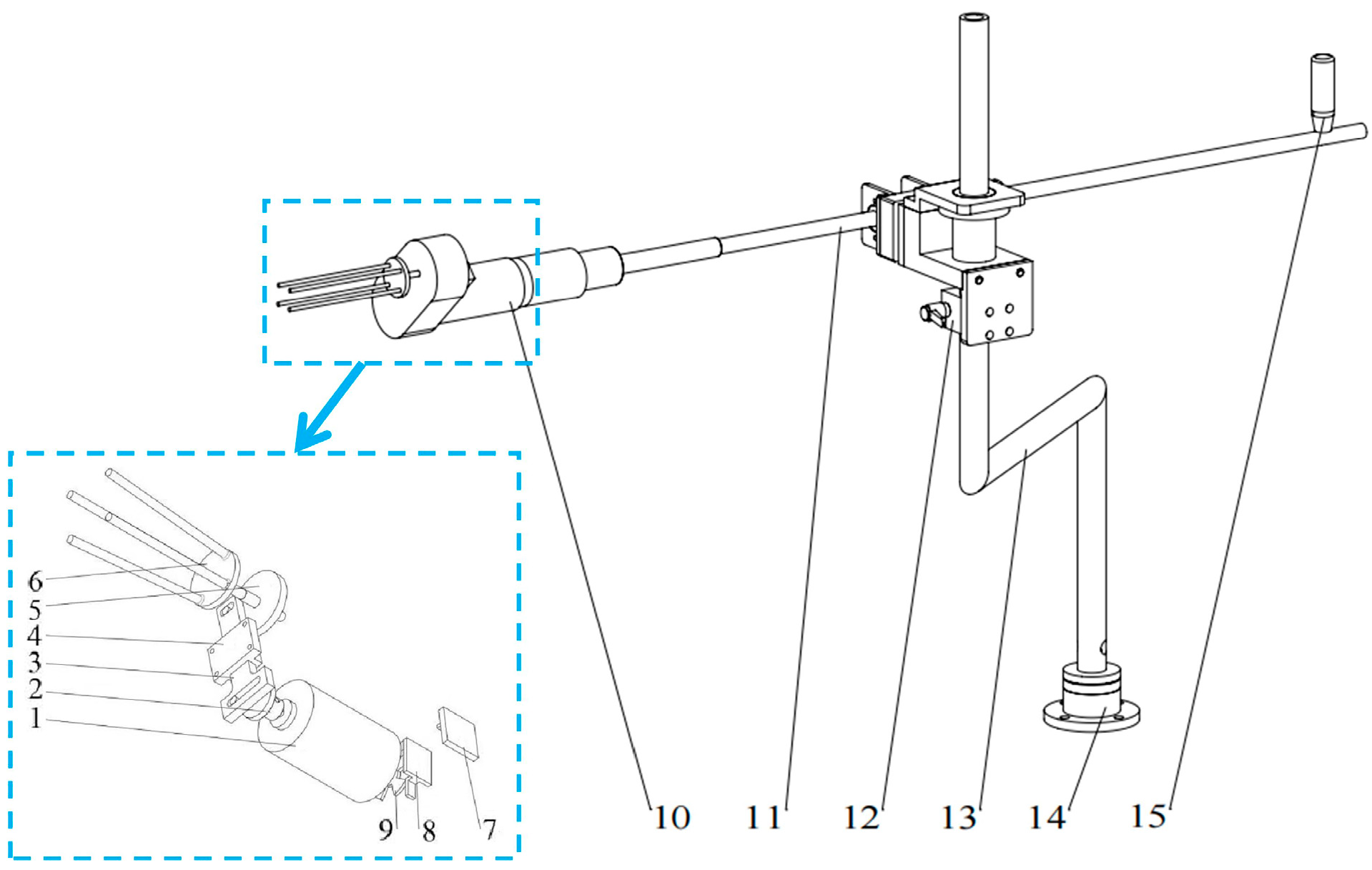
To achieve the unilateral harvesting of two shrubs at once, the harvester was equipped with two sets of same-side picking devices spaced 1000 mm apart. The structure of the picking device is shown in Figure 3 [23]. The actual measurement showed that the transverse picking range of the picking arm can reach 1500 mm, the longitudinal picking range can reach 1800 mm from the ground, and the front and rear adjustable range is 800 mm.
Figure 3.
Structure of picking device [23]. 1. Direct current motor; 2. Eccentric; 3. Transmission structure; 4. Guiding structure; 5. Main shaft; 6. Vibration head; 7. Display screen; 8. Optocoupler speed measurement module; 9. Code disk; 10. Shell; 11. Operating rod; 12. Adjustment mechanism; 13. Support legs; 14. Base; 15. Handle.
The circular motion of the eccentric in the vibratory picker was converted to the reciprocating swing of the main shaft, which made the picking rod and the branch collide at high frequency, so that the inertia could be used to achieve picking. The vibration frequency of the selected picker can be adjusted from 0 to 30 Hz. Under the optimal parameter combination of a torsion angle of 73.66°, a rod pitch of 35.51 mm, and a vibration frequency of 19.12 Hz, the picking rates of ripe and unripe fruit were 95.67% and 4.68%, respectively, and the damage rate of ripe fruit was 3.70% [23,24]. It can be concluded that the picker has superior harvesting performance and is suitable for application in a L. barbarum harvester.
2.3.2. Undertaking and Transportation Device
The undertaking material has a significant impact on the effectiveness and damage rate of ripe fruit. Under the premise of adapting to the outdoor working environment, three types of materials were selected: stainless steel plate, silicone plate, and tarpaulin [23,25]. In order to select the suitable material, a physical test and EDEM simulation test were conducted to study the parameters of L. barbarum fruit.
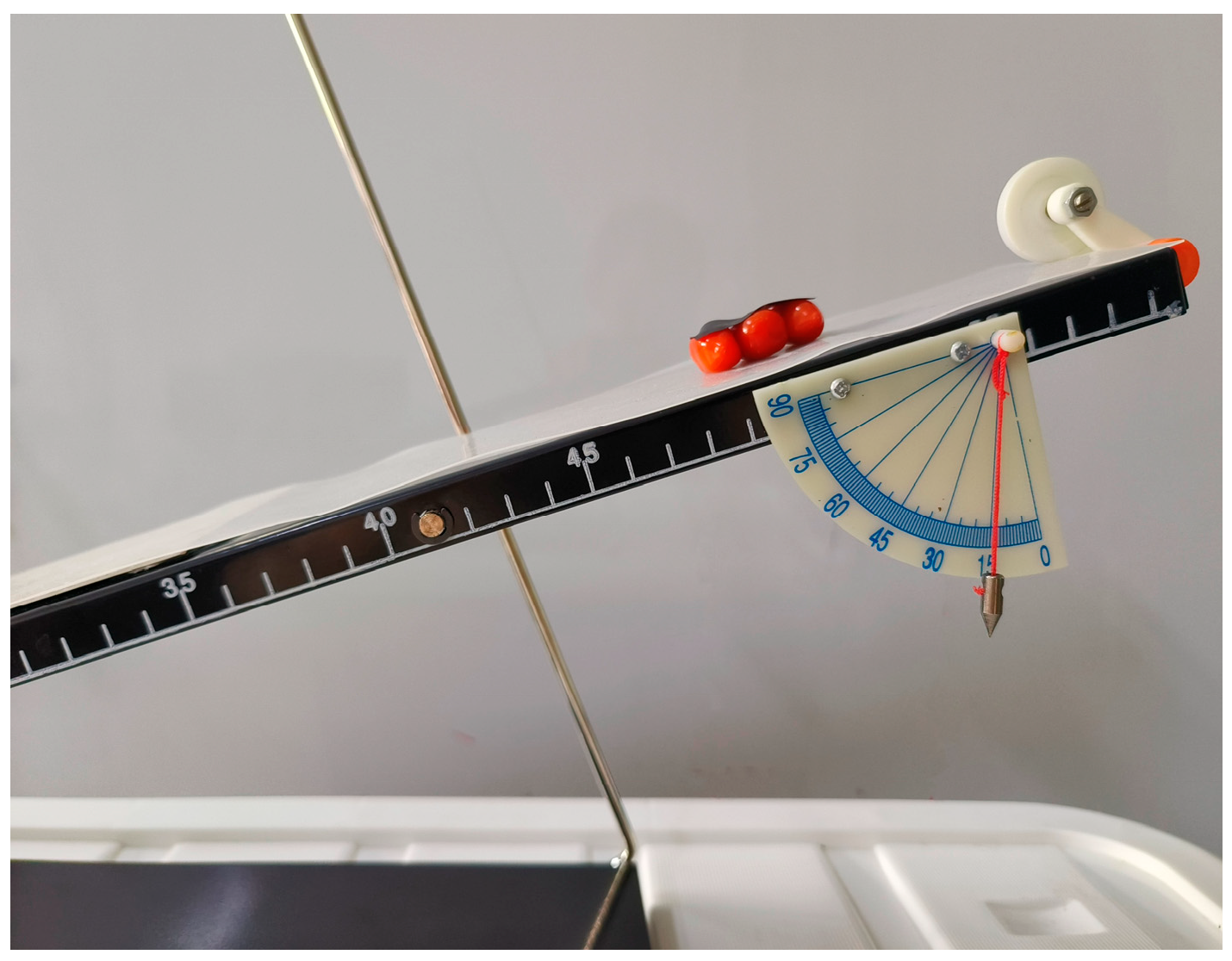
The slope sliding method was used to obtain the static friction coefficient between fruit and the material, as shown in Figure 4. Each group was repeated 10 times, and the calculated range of static friction coefficient between the fruit and steel plate was 0.9 ± 0.05, the range between the fruit and silicone plate was 0.7 ± 0.05, and the range between the fruit and tarpaulin was 0.5 ± 0.02.
Figure 4.
Static friction coefficient determination test.
The collision recovery coefficient is defined as the ratio of the normal instantaneous separation velocity and instantaneous contact velocity at the collision contact point between L. barbarum fruit and materials before and after collision. Fruits were released at the distance of 100, 400, and 700 mm from the collision material, and the collision recovery coefficients were determined using the collision method of free fall. Experimenters used high-speed photography technology to capture the collision process and determined the first rebound height of fruit. Each fruit was used only once, with each group repeated 10 times, and the average of 10 tests was taken as the final result. Results showed that the collision recovery coefficients of the fruit–stainless steel plate, fruit–silicone plate and fruit–tarpaulin were about 0.225, 0.194 and 0.169, respectively.
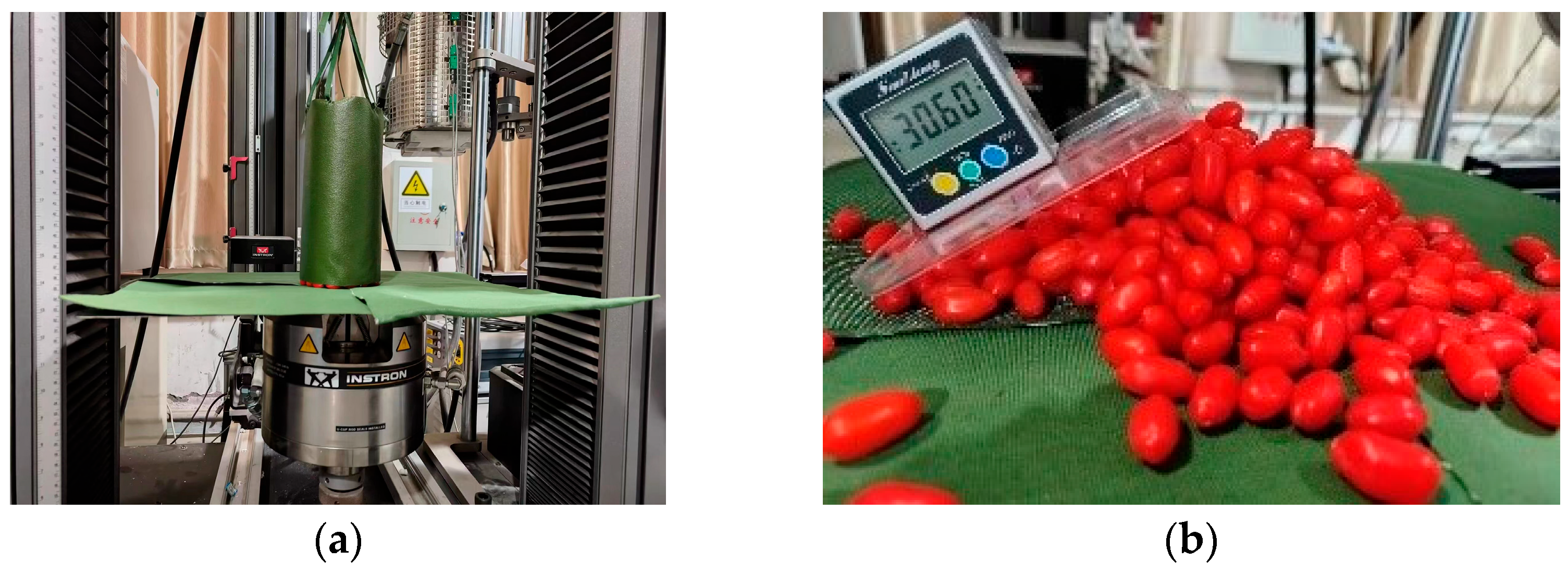
The stacking angle can reflect the flow performance of L. barbarum fruit particles. The bottomless cylinder lifting method was used for measurement, as shown in Figure 5. The cylinder made of the undertaking material was placed on the bottom plate made of the same material, and 500 fresh fruits filled the cylinder. A universal testing machine was used to lift the cylinder at a speed of 20 mm/s to form a particle pile of fruit. The stacking angle was measured by a digital display inclinometer. The stacking angles of the fruit–stainless steel plate, fruit–silicone plate, and fruit–tarpaulin were 29.01°, 27.93°, and 30.59°, respectively.
Figure 5.
Stacking angle determination test. (a) Universal testing machine test; (b) Test results.
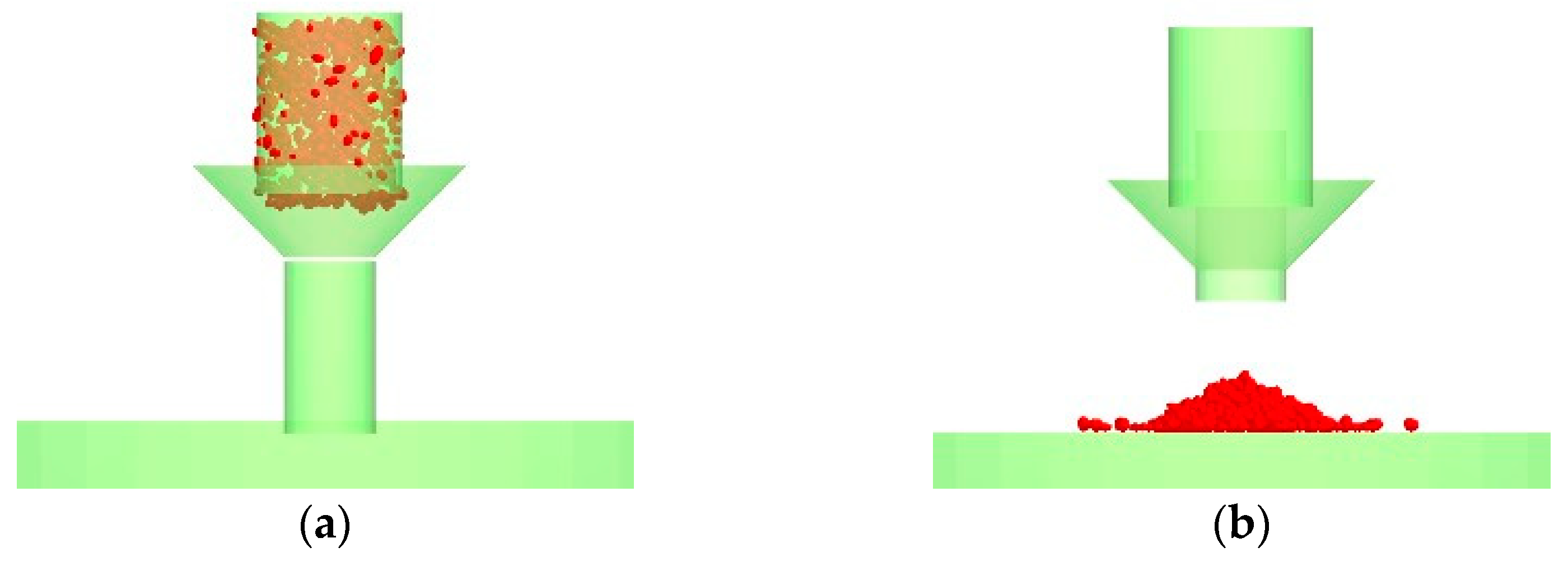
In order to verify the accuracy and reliability of the measured parameters, the stacking effect was simulated by EDEM 2021 software and compared with the actual stacking angle. In SOLIDWORKS 2020 software, the fruit model was defined as an ellipsoid with a long axis of 17 mm, a short axis of 10 mm and a rotating radius of 10 mm and imported into EDEM software to generate a discrete element three-dimensional model. The particle factory produced 500 fruits, the lifting speed of the bottomless cylinder was set to 20 mm/s, the total simulation time was set to 2 s, the time step was set to 20% of the Rayleigh step, and the grid size was set to five times the minimum particle diameter. The intrinsic parameters of L. barbarum fruit, stainless steel plate, silicone plate and tarpaulin obtained through physical test and data retrieval are shown in Table 3 [9,26]. The simulation process and results are shown in Figure 6.
Table 3.
Intrinsic parameters of L. barbarum fruit and each material.
Figure 6.
Stacking angle simulation. (a) Particle generation; (b) Stacking angle generation.
The experimental results showed that the simulated stacking angle of the fruit–stainless steel plate was 28.82°, the simulated stacking angle of the fruit–silicone plate was 28.42°, and the simulated stacking angle of the fruit–tarpaulin was 30.72°. The relative errors with the actual stacking angle were 0.66, 1.72, and 0.42%, respectively, indicating that the calibrated parameters were accurate and reliable.
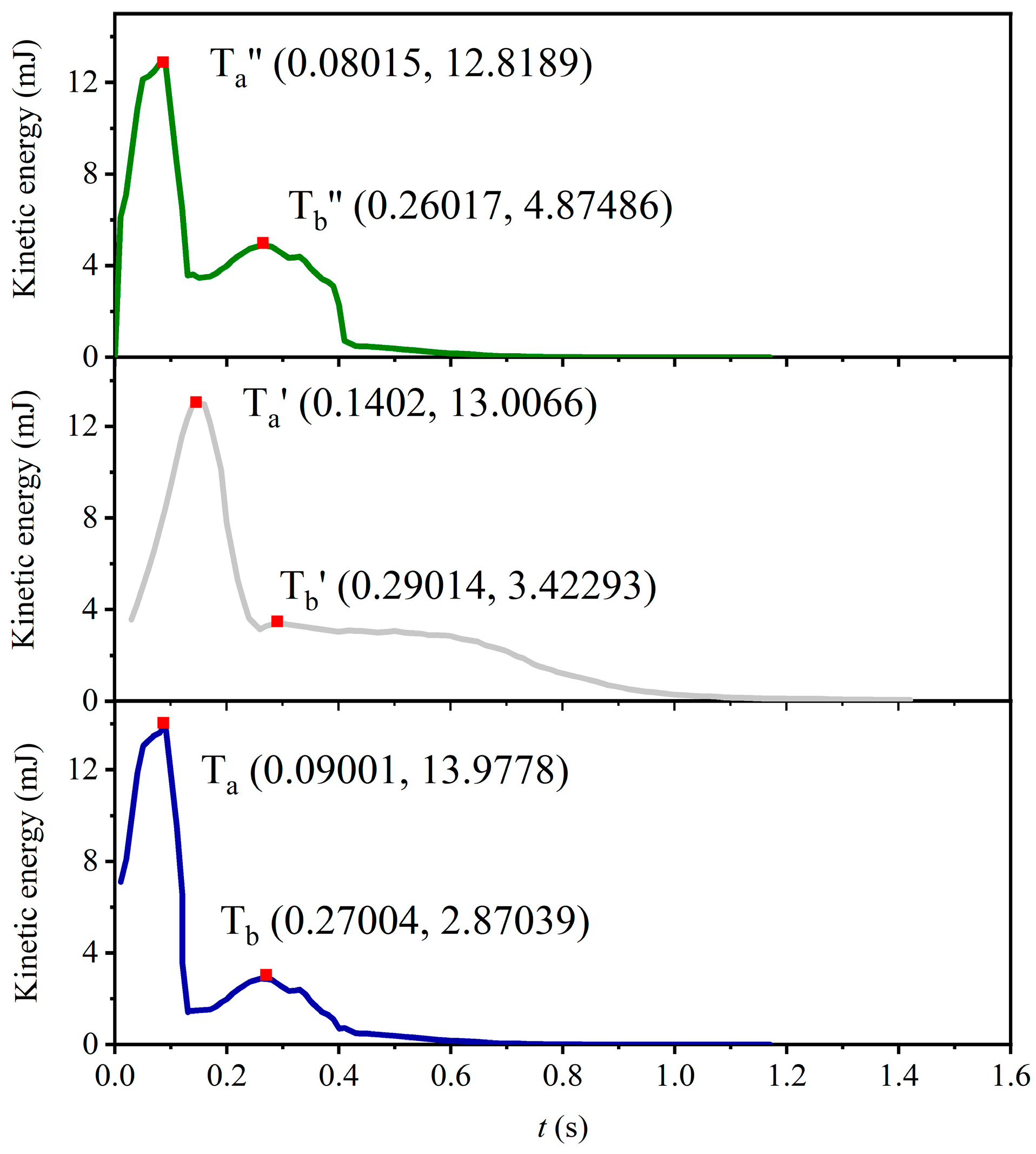
Drop models with different undertaking materials were established in EDEM software, and the quality of fruit was analyzed based on deformation energy. The drop height was set to 1000 mm, initial velocity was set to 0, and drop acceleration was set to the gravitational acceleration. In the post-processor, Figure 6 shows the curves of the average kinetic energy of the fruit over time. In Figure 6, point A represents the moment when the fruit comes into contact with the undertaking device. At this point, all the gravitational potential energy of the fruit is converted into kinetic energy. At point B, the maximum rebound height of the fruit is reached. Assuming that the kinetic energy at point A is Ta and the kinetic energy at point B is Tb, the energy lost by the fruit is defined: T = Ta − Tb. As shown in Figure 7, the deformation energy of L. barbarum fruit is minimal when using tarpaulin as the undertaking material. Therefore, based on simulation analysis, the selected undertaking material was tarpaulin.
Figure 7.
Analysis of collision deformation energy. Blue line: fruit–stainless steel plate; gray line: fruit–silicone plate; green line: fruit–tarpaulin.
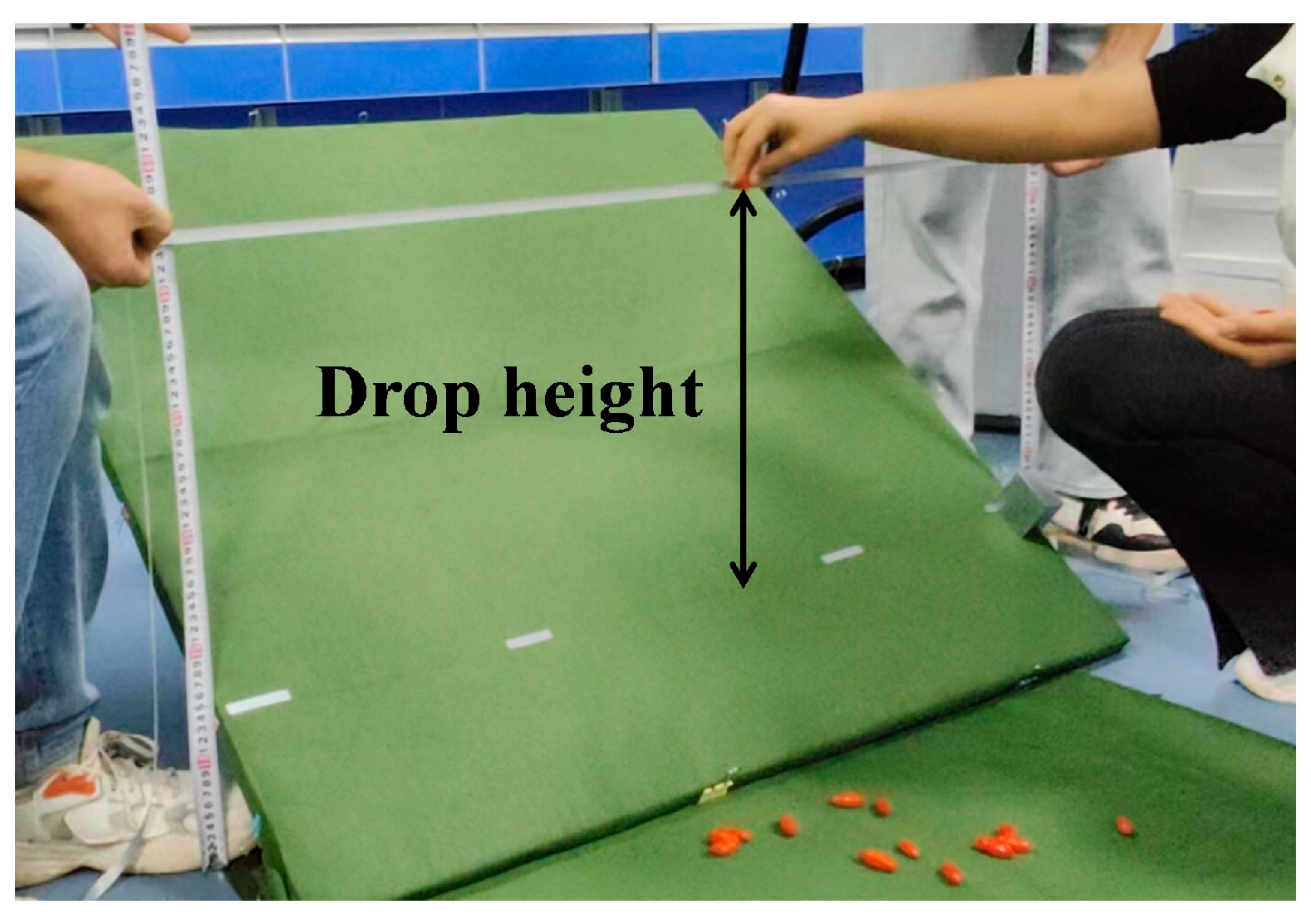
The drop test was conducted using drop height as the factor, as shown in Figure 8. The drop height was set to 400, 700 and 1000 mm, respectively, and 50 fresh fruits of Ningqi No. 7 were used in each group of tests. After the test, the long and short axes of the softened surface were measured, and the damaged area was calculated according to the elliptic area formula. According to the damaged area, fruits were divided into four levels: Level 0, with no obvious damage; Level 1, there is a small amount of damage on the surface of the fruit, and the damage area is less than 25% of the fruit surface area; Level 2, the damage area accounts for 25–50% of the fruit surface area; Level 3, the damage area accounts for more than 50% of the fruit surface area [27]. Using the damage index zd calculated according to Equation (2) as the evaluation index [27], the test results are shown in Table 4.
where LD is the damage level; N is the number of fruits at this level; LM is the maximum damage level; NT is the total number of fruits.
Figure 8.
Undertaking material test.
Table 4.
Drop test results.
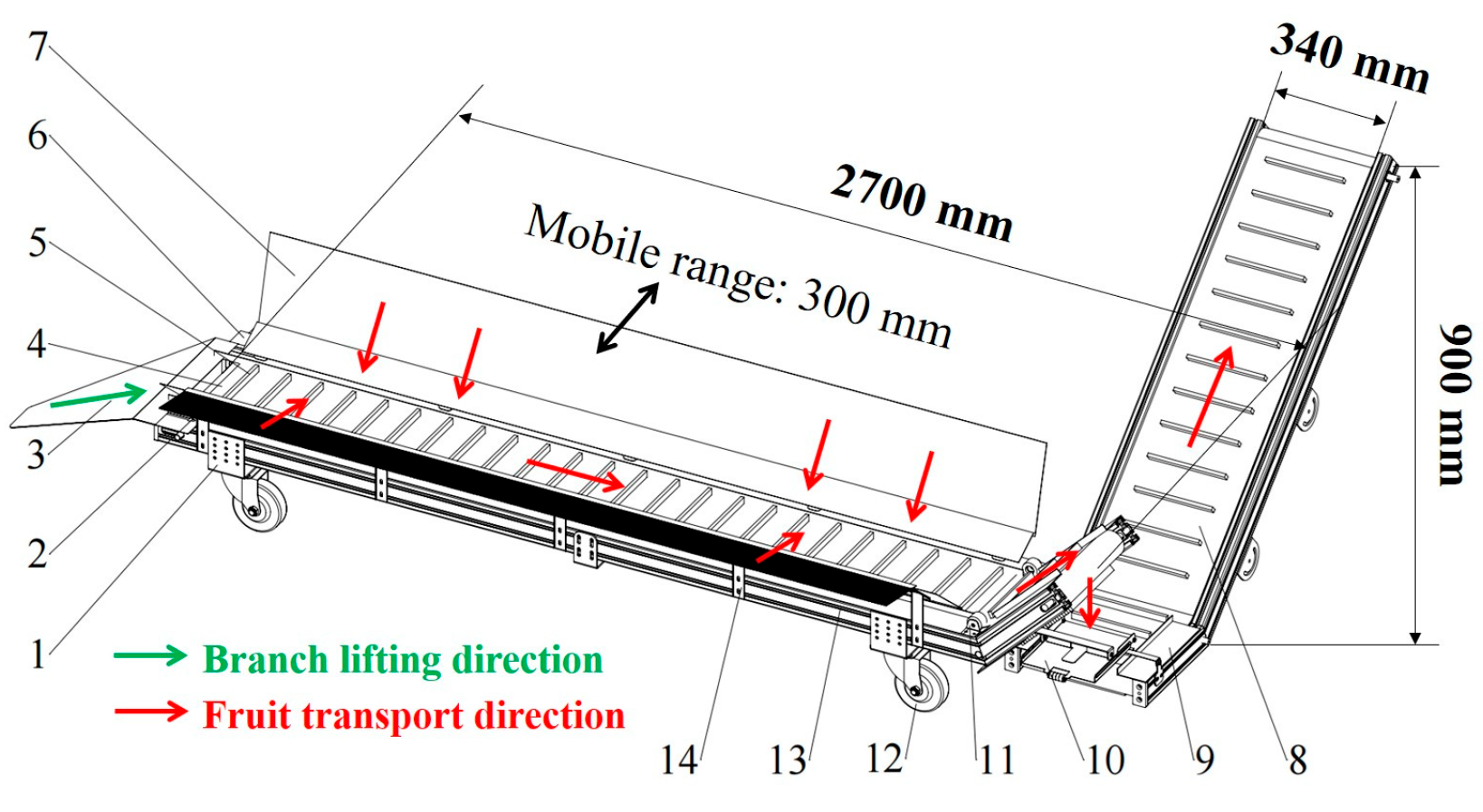
In summary, tarpaulin was selected as the undertaking material, and the structure of the undertaking and transportation device structure is shown in Figure 9. Based on the growth characteristics of L. barbarum and the working efficiency of the picker, the height of the conveyor baffle was set to 20 mm, the spacing between the baffles was 100 mm, and the conveyor belt speed was set to 0–4 m/min. A receiving plate was designed between the two conveyor belts to prevent fruit leakage. A brush with a hair height of 150 mm was selected as the buffer device to be installed on the edge of the outer bracket.
Figure 9.
Structure of undertaking and transportation device. 1. Support plate; 2. Buffer device; 3. Reel; 4. Horizontal conveyor belt; 5. Baffle; 6. Motor; 7. Inner undertaking device; 8. Longitudinal conveyor belt; 9. Side baffle; 10. Receiving plate; 11. Pressing wheel; 12. Ground wheel; 13. Frame; 14. Outer undertaking device.
2.3.3. Winnowing Device
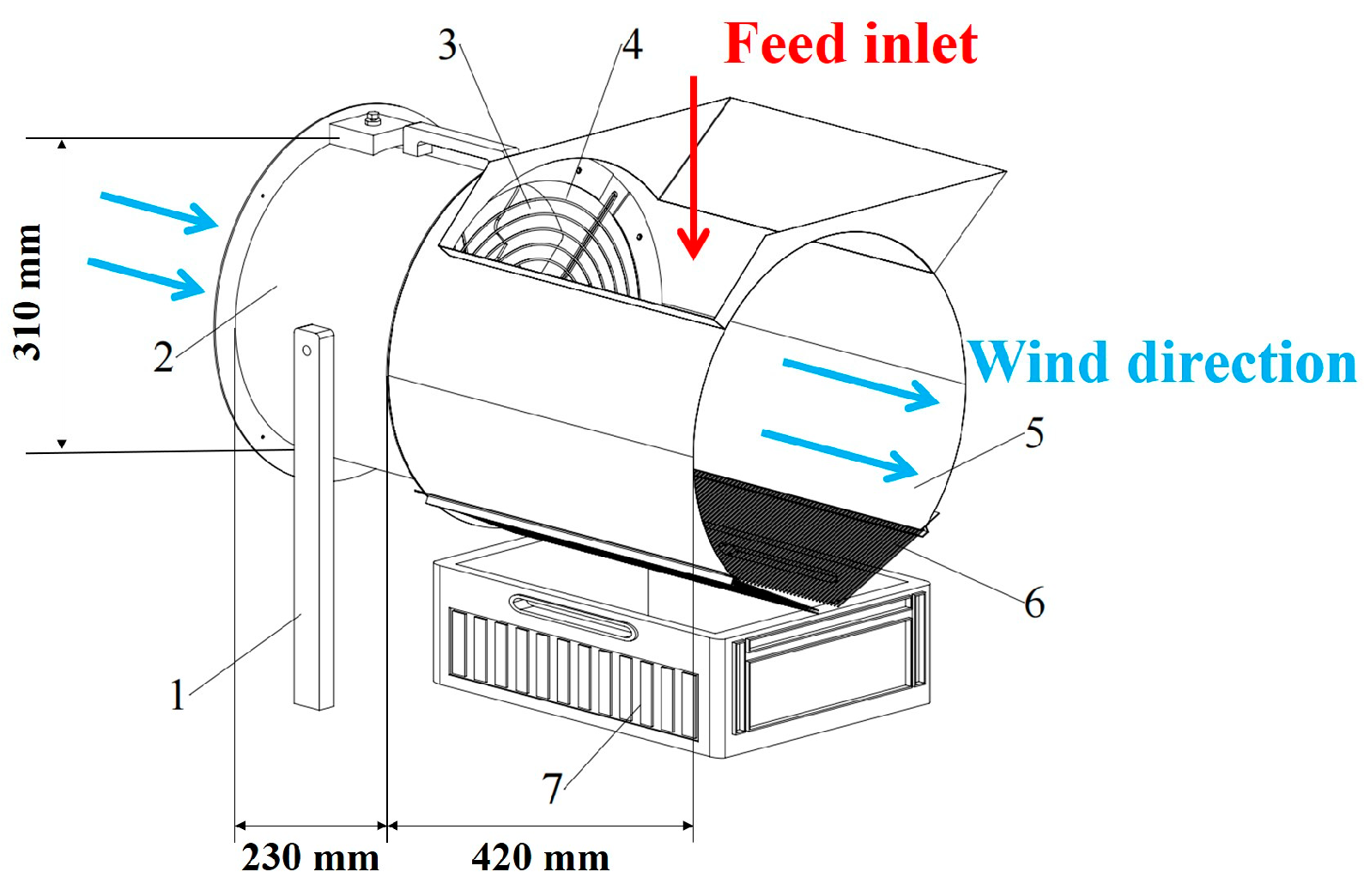
Due to the close binding force between the flowers, leaves, fruit, and stalks of L. barbarum and the presence of dust on the surface of shrubs and in the air, the harvested products are prone to containing impurities. To ensure sufficient separation of the target harvest and impurities, the harvester was designed with a winnowing device, as shown in Figure 10. The feeding port and guide baffle were designed as a whole and connected to the longitudinal conveyor belt and fan. A secondary buffer device was also installed below to reduce damage to the fruit.
Figure 10.
Structure of winnowing device. 1. Bracket; 2. Machine barrel; 3. Fan blade; 4. Mesh cover; 5. Air duct; 6. Secondary buffer device; 7. Collection box.
The optimal wind speed was calculated under the critical condition that L. barbarum fruit was not blown out of the machine. The initial speed of the harvested products entering the device from the inlet was set to 0. The harvested products were subjected to vertical gravity and horizontal wind force. According to the displacement equation, Equation (3) can be obtained:
where t is the time required for L. barbarum fruit to fall into the collection box from the feeding port, s; d is the diameter of the air duct, mm; af is the horizontal acceleration of fruit, m/s2; xf is the maximum horizontal distance for fruit not to be blown out of the machine, mm.
According to Newton’s second law, Equation (4) can be derived:
where Fw is the wind force, N; mf is the weight of L. barbarum fruit, g, referring to the average weight of ripe Ningqi No. 7 in Table 1.
The windward area of the fruit was calculated based on the maximum cross-sectional area of the fruit, referring to the average values of the transverse and longitudinal diameters in Table 1. The windward area was calculated using the elliptical area formula. Combined with the wind force calculation formula, the following equation can be obtained:
where vw is the required airflow speed, m/s; ρ is air density, g/L, and the density of normal dry air can be taken as 1.293 g/L; la is the transverse diameter of L. barbarum fruit, mm, referring to Table 1; lb is the longitudinal diameter of L. barbarum fruit, mm, referring to Table 1.
The optimal airflow speed of the fan was calculated to be 6.86 m/s. Therefore, an SF3-2 pipeline-type energy-saving and low-noise axial flow fan with an airflow speed of 0–8 m/s was adopted.

2.4. Test Conditions and Methods
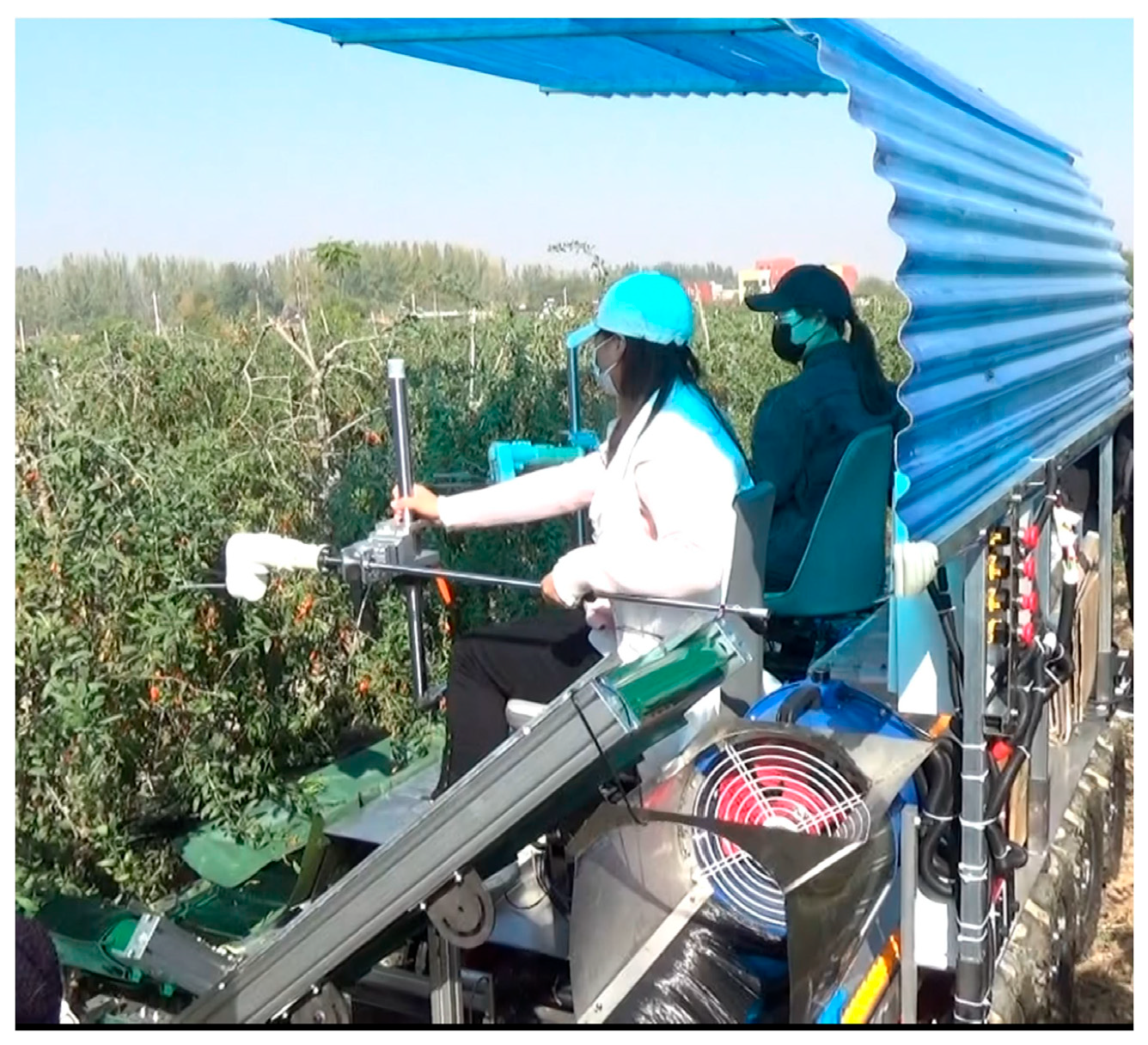
The test site was the planting base of the L. barbarum Research Institute, Ningxia Academy of Agriculture and Forestry Sciences, China, with a planting area of 6000 m2, and the test object was Ningqi No. 7. According to the actual production conditions, the physical prototype of the L. barbarum harvester used in the final test was adjusted appropriately compared with the virtual prototype, as shown in Figure 11.
Figure 11.
Field test.
The optimum airflow speed for separating fruit and leaves of L. barbarum was determined by theoretical calculation and single-factor test. The winnowing test took and as the evaluation index and used the same feeding material and speed in each test. Regarding the whole machine experiment, the vibration frequency of the picker has a significant impact on the picking effect, airflow speed is the key to improving the cleaning rate and reducing the loss rate , and conveyor speed indirectly affects winnowing effect by affecting feeding speed. Therefore, taking vibration frequency, conveyor speed, and airflow speed of the axial flow fan as the main influencing factors, the three-factor and three-level orthogonal test was conducted with , , , and as indices.
3. Results and Discussion
3.1. Winnowing Test Results
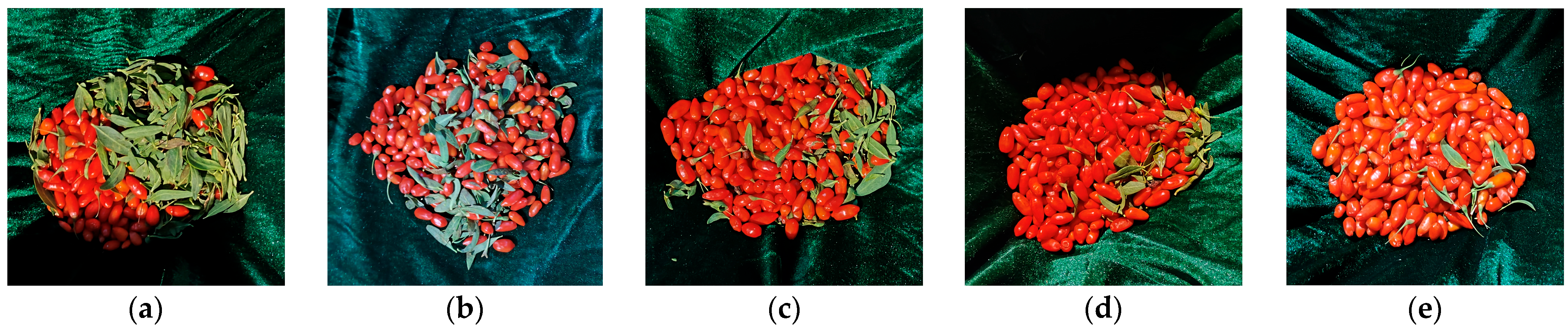
During the test, it was observed that when the airflow speed was less than 4 m/s, the winnowing effect was poor. Therefore, the average value of the test results with an airflow speed of 4–8 m/s was plotted as Table 5, and the effect was shown in Figure 12.
Table 5.
Winnowing test results.
Figure 12.
Winnowing test effect. (a) 4 m/s; (b) 5 m/s; (c) 6 m/s; (d) 7 m/s; (e) 8 m/s.
It can be seen from the winnowing test results that when the airflow speed of the axial flow fan was 7 m/s, the comprehensive winnowing effect was the best, which was consistent with the theoretical calculation results.
3.2. Overall Test Results and Discussion
According to the previous tests and analysis, it can be concluded that the vibration frequency can be taken as 15, 20, and 25 Hz; the conveyor speed can be taken as 2, 3, and 4 m/min; and the airflow speed of the axial flow can be taken as 6, 7, and 8 m/s. The factors and levels are shown in Table 6, and the test results are shown in Table 7.
Table 6.
Factors and levels of the overall test.
Table 7.
Orthogonal test results.
The range analysis of the orthogonal experimental results is shown in Table 8. Comprehensively considering the effects of three factors on the harvesting effect and their optimized combinations, A2B3C2 was determined as the optimal combination, that is, a vibration frequency of 20 Hz, a conveyor speed of 4 m/min, and an airflow speed of 7 m/s, and the overall field test was carried out under this combination in order to determine the optimal harvesting effect.
Table 8.
Range analysis of orthogonal test.
Unilateral harvesting of two adjacent shrubs at each working position by the harvester was recorded as one test, and twenty overall tests were carried out under the optimal parameter combination. The average of the test results was recorded as the final result, as shown in Table 9. Based on the characteristics of L. barbarum cultivation, the requirements for L. barbarum harvesting are also shown in Table 9 and there should be no obstacle crossing problems, no power shortage and no obvious damage to branches and trunks during operation.
Table 9.
Overall test results.
During the test, the harvester operated stably, met the relevant standards, shortened the transportation time, and eased the fatigue of the workers. In order to verify the superiority of the L. barbarum harvester over manual harvesting, a comparative test with man–machine harvesting was carried out. Five workers carried out three picking experiments, respectively, and the picking time of each test was 5 min. The average manual harvesting efficiency was 88.2 g/min, so the harvesting efficiency for a single person of the harvester under the optimal parameter combination was about five times the manual harvesting efficiency.
Test results show that the vibration frequency of the picker has a significant impact on the , and . In this regard, the test results are in line with the studies of other researchers [16,23]. For example, this finding is consistent with the experimental results of the vibrating wolfberry harvester designed by Zhang [16]. When the vibration frequency increases, the inertia force between the L. barbarum fruit and the fruit stalk increases, the harvesting rate of ripe fruits increases, and the damage to fruits caused by mechanical collisions increases. However, when the inertia force is greater than the binding force between the unripe fruit and its stalk, the harvesting rate of unripe fruits significantly increases.
The speed of the conveyor belt and the airflow speed of the fan are the main factors affecting the winnowing effect [9]. The harvester test found that as the conveyor speed increased, the distribution of harvested materials was more evenly distributed on the conveyor belt, the single feeding amount decreased, resulting in an increase in and a slight decrease in . When the airflow speed increases, increases. But when the speed is so fast that fruits are blown out of the machine, decreases and increases. In the case of low airflow speed, it was observed that impurities such as leaves were easy to wrap around the fruit and fall out of the machine, and was also comparatively high.
4. Conclusions
Based on the integration of L. barbarum agricultural machinery and agronomy, an integrated L. barbarum harvester was designed and developed by a unique human–machine collaboration approach. The machine was installed with a vibrating picker, a picking arm with a multi-degree of freedom undertaking device, a two-stage conveyor belt and intermediate receiving plate, an axial flow fan and a secondary buffer device, which efficiently realized the functions of vibrating picking, collecting, transferring, separation of fruit and leaves, and storage of fruit. One-factor experiments and EDEM simulations were performed, focusing on the design of the undertaking and transportation device. The optimal combination of working parameters was determined by the three-factor and three-level orthogonal test, under which the was 89.28%, was 7.40%, was 8.63%, was 97.39%, was 1.09% and the harvesting efficiency was about five times the manual harvesting efficiency. The integrated L. barbarum harvester basically met the requirements of L. barbarum harvesting, realizing multifunctional harvesting. Its human–machine collaborative harvesting method also offers a new solution in the mechanized harvesting of L. barbarum.
Author Contributions
Conceptualization, Y.W. and A.Q.; software, C.Y. and Y.L.; validation, C.Y., Y.L. and L.M.; investigation, C.Y., Y.L. and L.M.; resources, Y.W. and A.Q.; writing—original draft preparation, Y.W., C.Y. and Y.L.; writing—review and editing, Y.W., C.Y. and Y.G.; visualization, C.Y. and Y.L.; supervision, Y.W. and A.Q.; funding acquisition, Y.W. All authors have read and agreed to the published version of the manuscript.
Funding
This research was funded by the National Key Research and Development Program of China, grant number 2022YFD2202105-5; the National Natural Science Foundation of China, grant number 32260431; and the Key Research and Development Program of Ningxia, grant number 2022BBF01002.
Institutional Review Board Statement
Not applicable.
Data Availability Statement
Data are contained within the article.
Conflicts of Interest
The authors declare no conflicts of interest.
References
- Masci, A.; Carradori, S.; Casadei, M.A.; Paolicelli, P.; Petralito, S.; Ragno, R.; Cesa, S. Lycium barbarum polysaccharides: Extraction, purification, structural characterisation and evidence about hypoglycaemic and hypolipidaemic effects. A review. Food Chem. 2018, 254, 377–389. [Google Scholar] [CrossRef]
- Xiao, Z.; Deng, Q.; Zhou, W.; Zhang, Y. Immune activities of polysaccharides isolated from Lycium barbarum L. What do we know so far? Pharmacol. Ther. 2022, 229, 107921. [Google Scholar] [CrossRef]
- Yu, J.; Yan, Y.; Zhang, L.; Mi, J.; Yu, L.; Zhang, F.; Lu, L.; Luo, Q.; Li, X.; Zhou, X.; et al. A comprehensive review of goji berry processing and utilization. Food Sci. Nutr. 2023, 11, 7445–7457. [Google Scholar] [CrossRef]
- Yang, L.; Liang, Q.; Zhang, Y.; Wang, S.; Yuan, F.; Wang, J. Variation of phytochemical composition of Lycium chinense leaves as an endemic high-value healthy resource. Sci. Hortic. 2021, 281, 109910. [Google Scholar] [CrossRef]
- Li, M.; Liu, Z.; Dai, Y.; Yang, S.; Wang, Y.; Yang, S. Vision-based edge detection between plant column and soil of ningxia Lycium barbarum garden. J. Chin. Inst. Eng. 2019, 42, 664–675. [Google Scholar] [CrossRef]
- Pedro, A.C.; Sánchez-Mata, M.-C.; Pérez-Rodríguez, M.L.; Cámara, M.; López-Colón, J.L.; Bach, F.; Bellettini, M.; Haminiuk, C.W.I. Qualitative and nutritional comparison of goji berry fruits produced in organic and conventional systems. Sci. Hortic. 2019, 257, 108660. [Google Scholar] [CrossRef]
- Zhao, J.; Tsuchikawa, S.; Ma, T.; Hu, G.; Chen, Y.; Wang, Z.; Chen, Q.; Gao, Z.; Chen, J. Modal Analysis and Experiment of a Lycium barbarum L. Shrub for Efficient Vibration Harvesting of Fruit. Agriculture 2021, 11, 519. [Google Scholar] [CrossRef]
- Xu, L.; Chen, J.; Wu, G.; Yuan, Q.; Ma, S.; Yu, C.; Duan, Z.; Xing, J.; Liu, X. Design and operating parameter optimization of comb brush vibratory harvesting device for wolfberry. Trans. CSAE 2018, 34, 75–82. [Google Scholar] [CrossRef]
- Zhao, J.; Sugirbay, A.; Liu, F.; Chen, Y.; Hu, G.; Zhang, E.; Chen, J. Parameter optimization of winnowing equipment for machine-harvested Lycium barbarum L. Span. J. Agric. Res. 2019, 17, e0203. [Google Scholar] [CrossRef]
- Zhao, J.; Ma, T.; Inagaki, T.; Chen, Y.; Hu, G.; Wang, Z.; Chen, Q.; Gao, Z.; Zhou, J.; Wang, M.; et al. Parameter Optimization of Vibrating and Comb-Brushing Harvesting of Lycium barbarum L. Based on FEM and RSM. Horticulturae 2021, 7, 286. [Google Scholar] [CrossRef]
- Wang, J.; Mei, S.; Xiao, H.; Zhao, Y.; Zhou, H. Research on Mechanized Harvesting Methods of Lycium barbarum Fruit. In Proceedings of the IFAC Papersonline: 6th International-Federation-of-Automatic-Control (IFAC) Conference on Bio-Robotics (Biorobotics), Beijing, China, 13–15 July 2018; Volume 51, pp. 223–226. [Google Scholar]
- Láng, Z. A One Degree of Freedom Damped Fruit Tree Model. Trans. ASABE 2008, 51, 823–829. [Google Scholar] [CrossRef]
- Chen, Q.; Zhang, S.; Hu, G.; Zhou, J.; Zhao, J.; Chen, Y.; Chen, J.; Gao, S.; Chen, Y.; Shi, T. Parameter Optimization of the Harvest Method in the Standardized Hedge Cultivation Mode of Lycium barbarum Using Response Surface Methodology. Horticulturae 2022, 8, 308. [Google Scholar] [CrossRef]
- Zhang, Z.; Xiao, H.; Ding, W.; Mei, S. Mechanism simulation analysis and prototype experiment of Lycium barbarum harvest by vibration mode. Trans. CSAE 2015, 31, 20–28. [Google Scholar]
- Zhang, W.; Li, Z.; Tan, Y.; Li, W. Optimal Design and Experiment on Variable Pacing Combing Brush Picking Device for Lycium barbarum. Trans. CSAM 2018, 49, 83–90. [Google Scholar]
- Zhang, W.; Zhang, M.; Zhang, J.; Li, W. Design and Experiment of Vibrating Wolfberry Harvester. Trans. CSAM 2018, 49, 97–102. [Google Scholar] [CrossRef]
- So, J.D. Vibration Characteristics of Boxthorn (Lycium Chinense Mill) Branches. Appl. Eng. Agric. 2001, 17, 755–760. [Google Scholar] [CrossRef]
- So, J.D. Vibratory Harvesting Machine for Boxthorn (Lycium chinense Mill) Berries. Trans. ASAE 2003, 46, 211–221. [Google Scholar] [CrossRef]
- Mei, S.; Shi, Z.; Song, Z.; Wan, R.; Li, Y. Current situation and development trend prediction of mechanization harvesting technology of wolfberry. Agric. Dev. Equip. 2021, 12, 12–14. [Google Scholar] [CrossRef]
- Pei, X.; Sun, S.; Dai, X.; Liu, K.; Yang, Y.; Lu, L.; Wang, Y. Oligogalacturonides reduced postharvest losses by alleviating mechanical damage in Goji berry (Lycium barbarum Miller). Sci. Hortic. 2024, 328, 112915. [Google Scholar] [CrossRef]
- Zhao, J.; Ma, T.; Inagaki, T.; Chen, Q.; Gao, Z.; Sun, L.; Cai, H.; Chen, C.; Li, C.; Zhang, S.; et al. Finite Element Method Simulations and Experiments of Detachments of Lycium barbarum L. Forests 2021, 12, 699. [Google Scholar] [CrossRef]
- Davidson, J.; Silwal, A.; Karkee, M.; Mo, C.; Zhang, Q. Hand-Picking Dynamic Analysis for Undersensed Robotic Apple Harvesting. Trans. ASABE 2016, 59, 745–758. [Google Scholar] [CrossRef]
- Zhang, S. Optimization of Portable Chinese Wolfberry Picker and Development of Collecting Device; Northwest A&F University: Xianyang, China, 2023. [Google Scholar]
- Horvath, E.; Sitkei, G. Damping Properties of Plum Trees Shaken at Their Trunks. Trans. ASAE 2005, 48, 19–25. [Google Scholar] [CrossRef]
- Li, P. Research on Falling Damage Mechanism and Branch Vibration Characteristics of Lycium barbarum Based on Vibration Harvesting; Ningxia University: Yinchuan, China, 2021. [Google Scholar]
- Zhao, J.; Sugirbay, A.; Chen, Y.; Zhang, S.; Liu, F.; Bu, L.; Chen, Y.; Wang, Z.; Chen, J. FEM explicit dynamics simulation and NIR hyperspectral reflectance imaging for determination of impact bruises of Lycium barbarum L. Postharvest Biol. Technol. 2019, 155, 102–110. [Google Scholar] [CrossRef]
- Zheng, Y.; Su, X.; Mao, H. A preliminary study on the effects of pure oxygen on strawberry fruit storage. J. Nanjing Agric. Univ. 2001, 24, 85–88. [Google Scholar]
Disclaimer/Publisher’s Note: The statements, opinions and data contained in all publications are solely those of the individual author(s) and contributor(s) and not of MDPI and/or the editor(s). MDPI and/or the editor(s) disclaim responsibility for any injury to people or property resulting from any ideas, methods, instructions or products referred to in the content. |
© 2024 by the authors. Licensee MDPI, Basel, Switzerland. This article is an open access article distributed under the terms and conditions of the Creative Commons Attribution (CC BY) license (https://creativecommons.org/licenses/by/4.0/).