Article

A Shortlisting Framework for Crop Diversification in the United Kingdom

Crops for the Future UK, National Institute of Agricultural Botany, 93 Lawrence Weaver Road, Cambridge CB3 0LG, UK
*
Author to whom correspondence should be addressed.
Agriculture 2023, 13(4), 787; https://doi.org/10.3390/agriculture13040787

Submission received: 24 February 2023 / Revised: 22 March 2023 / Accepted: 27 March 2023 / Published: 29 March 2023
(This article belongs to the Special Issue Data Science to Support Agricultural Diversification)

Abstract

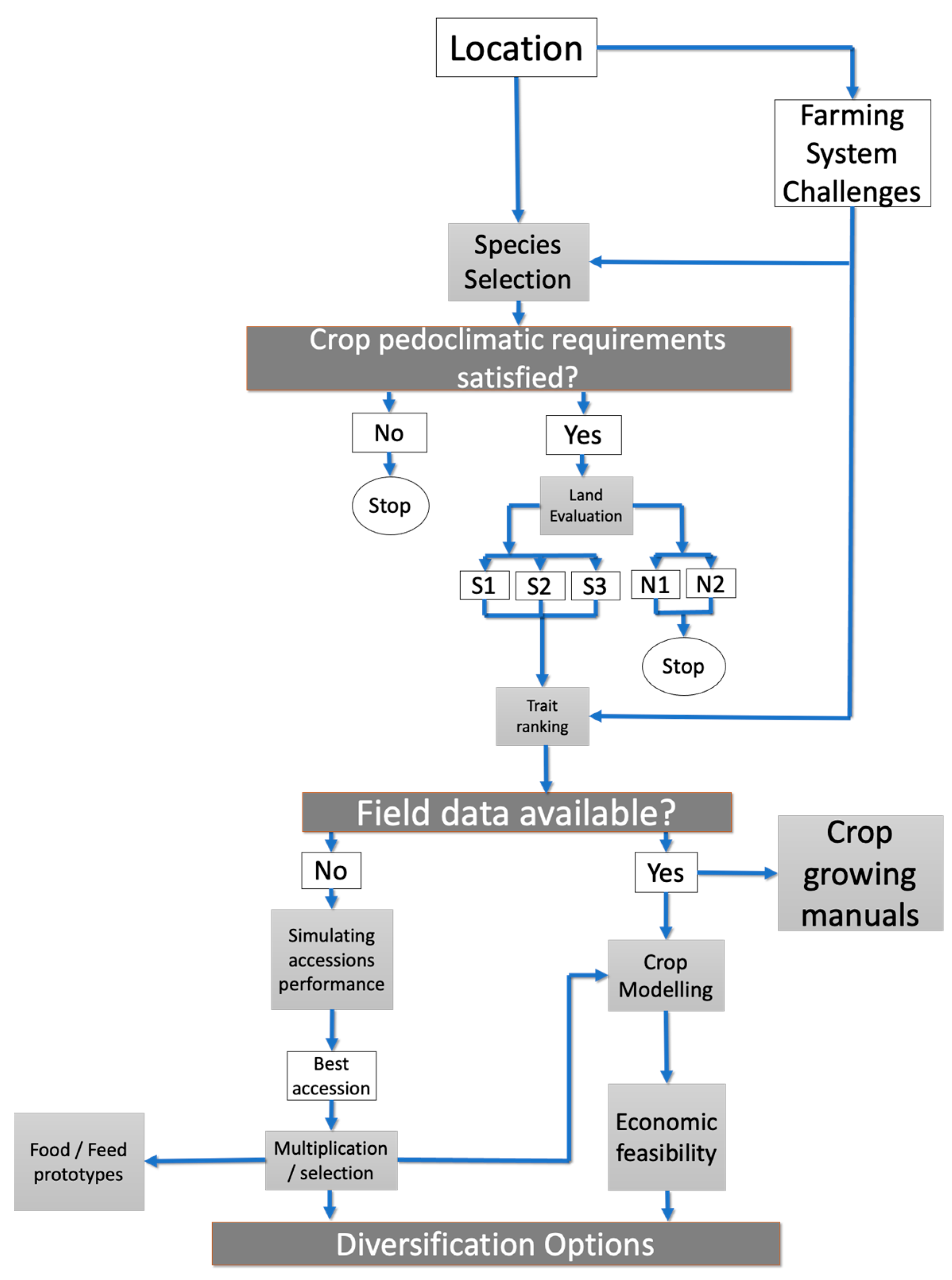
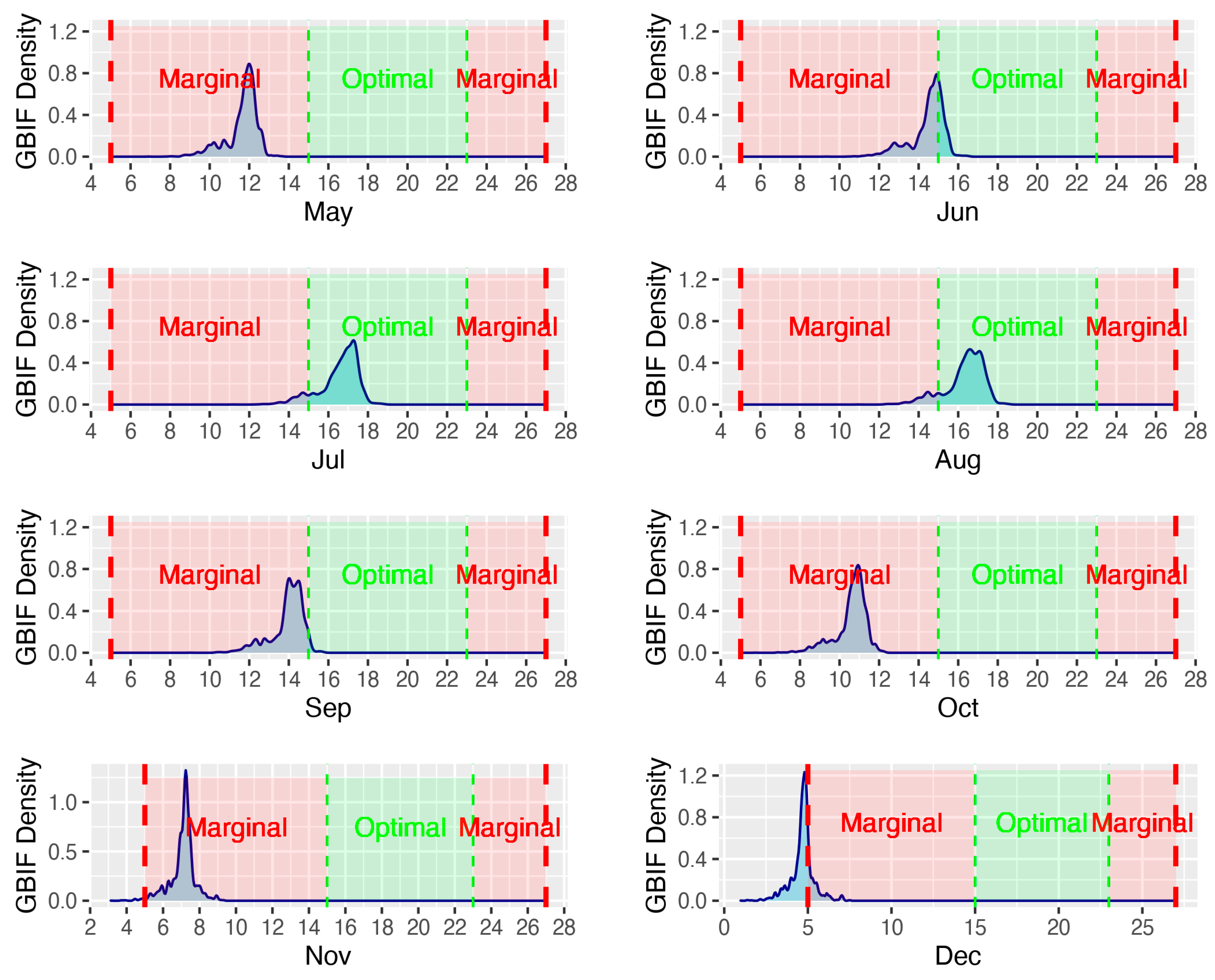
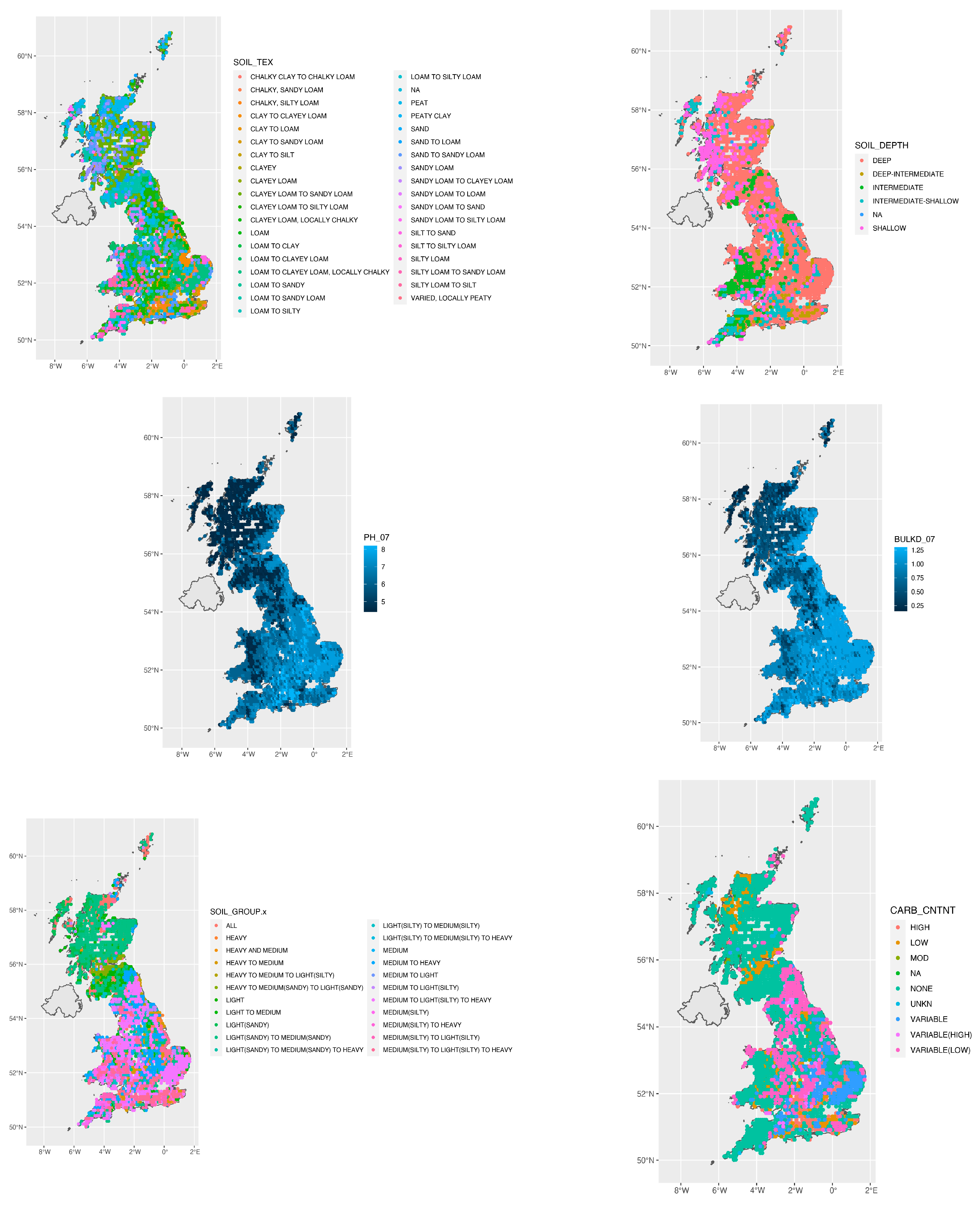
We present a systematic framework for nationwide crop suitability assessment within the UK to improve the resilience in cropping systems and nutrition security of the UK population. An initial suitability analysis was performed using data from 1842 crops at 2862 grid locations within the UK, using climate (temperature and rainfall) and soil (pH, depth, and texture) data from the UK Met Office and British Geological Survey. In the second phase, additional qualitative and quantitative data are collected on 56 crops with the highest pedoclimatic suitability and coverage across the UK. An exercise was conducted on crops within each category using a systematic ranking methodology that shortlists crops with high value across a multitude of traits. Crops were ranked based on their nutritional value (macronutrients, vitamins, and minerals) and on adaptive (resistance to waterlogging/flood, frost, shade, pest, weed, and diseases and suitability in poor soils) and physiological traits (water-use efficiency and yield). Other characteristics such as the number of special uses, available germplasm through the number of institutions working on the crops, and production knowledge were considered in shortlisting. The shortlisted crops in each category are bulbous barley (cereal), colonial bentgrass (fodder), Russian wildrye (forage), sea buckthorn (fruit), blue lupin (legume), shoestring acacia (nut), ochrus vetch (vegetable), spear wattle (industrial), scallion (medicinal), and velvet bentgrass (ornamental/landscape). These crops were identified as suitable crops that can be adopted in the UK. We further discuss steps in mainstreaming these and other potential crops based on a systematic framework that takes into account local farming system issues, land suitability, and crop performance modelling at the field scale across the UK.
Keywords: climate change adaptation; underutilised crops; pedoclimate analysis; land evaluation; nutrition security climate change adaptation; underutilised crops; pedoclimate analysis; land evaluation; nutrition security