


Abstract
Coronary artery bypass graft surgery (CABG) might adversely affect the health status of the patients, producing cognitive deterioration, with depression being the most common symptom. The aim of this study is to analyse the prevalence of depression in patients before and after coronary artery bypass surgery. A systematic review and meta-analysis was carried out, involving a study of the past 10 years of the following databases: CINAHL, LILACS, MEDLINE, PsycINFO, SciELO, Scopus, and Web of Science. The total sample comprised n = 16,501 patients. The total number of items was n = 65, with n = 29 included in the meta-analysis. Based on the different measurement tools used, the prevalence of depression pre-CABG ranges from 19–37%, and post-CABG from 15–33%. There is a considerable presence of depression in this type of patient, but this varies according to the measurement tool used and the quality of the study. Systematically detecting depression prior to cardiac surgery could identify patients at potential risk.
1. Introduction
Coronary artery disease (CAD) is one of the leading causes of death in developed countries, and it is associated with deteriorated quality of life, disability, and premature death [1]. The usual surgical treatment involves coronary artery bypass graft surgery (CABG). This technique is based on revascularisation by diverting blood flow to other arteries to increase the blood supply to the heart muscle [2].
Although CABG surgery increases life expectancy [3], it is associated with multiple physical complications, including myocardial infarction, stroke, and even kidney failure [4]; in addition to psychological consequences, such as mood disorders, fatigue, weakness, stress, anxiety, and depression [5].
Short-term recovery factors include a longer hospital stay, pain, and infection, which may predispose towards cognitive disorders, like anxiety and depression [6]. In the long term, it is estimated that at least 25% of patients will experience deteriorated quality of life after a CABG; and, it even doubles the post-surgery risk of future cardiac events and mortality related to high levels of anxiety and depression [7].
In particular, depression is considered to be one of the main reasons for reduced well-being, having a negative impact on a patient’s quality of life, as well as their social and family life. It is a strong risk factor for mortality, being related to the occurrence of new cardiac events and reduced functionality up to six months post-CABG surgery, increasing the risk of hospital readmission in up to 20% of patients, due to complications including infection, arrhythmia, and volume overload [8].
Diagnosis is sometimes difficult, since symptoms, such as loss of appetite, sleep cycle disturbance, and constant fatigue, may be superimposed over the same symptoms that were derived from surgery. For this reason, determining the degree to which a CABG can affect a patient’s mental, psychological, and social skills, and, specifically, analysing the level of depression, requires the use of multiple tools validated during a clinical interview [9,10].
A number of factors seem to influence the relationship between depression and CABG, including biological alterations (cardiac rhythm alterations, tone of cardiac muscle, hormone levels, and reduced brain perfusion) [11]. However, in many cases, the high prevalence of mood disorders cannot be explained by the severity of the illness, but is instead related to psychosocial factors, such as socioeconomic status, lifestyle (adherence to the recommended diet or prescribed treatment), or the level of social support [12].
Even though the effects of CABG have been studied in terms of morbidity, mortality, and organ function, the effect or influence it has on mood disorders, like depression, remains unclear. It seems that depression predicts how much a patient’s health will deteriorate. Therefore, it is extremely important to assess how the disease affects a patient, as this can influence the therapeutic benefit and, consequently, which interventions and care are prioritised, and which self-care strategies are implemented both before and after surgery [13,14].
Although depression is considered to have a negative impact on patient recovery, few studies have examined the association between CABG and depression. Some systematic reviews have analysed the risk factors [15], and there are also reports regarding the effect of certain interventions [16,17]. However, to our knowledge, no meta-analysis studies that include a prevalence analysis have been exclusively undertaken on CABG patients.
Describing the levels of depression in CABG patients is essential for analysing the importance of this surgery with regard to depression levels. The purpose of this work is, therefore: (1) to analyse the prevalence of depression in patients both before and after CABG surgery; and, (2) to analyse the depression levels over time.
2. Materials and Methods
The data were extracted and analysed based on the recommendations of preferred reporting items for systematic review and meta-analysis (PRISMA) 2015 [18].
2.1. Search Strategy
A search was conducted of CINAHL, LILACS, MEDLINE, PsychINFO, SciELO, Scopus, and Web of Science in January 2020. MeSH descriptors were used, with the search strategy being: “(depression OR depressive disorder) AND (coronary artery bypass grafting)”.
2.2. Inclusion and Exclusion Criteria
The inclusion criteria were the following: (1) full text of quantitative primary studies; (2) men and women aged over 18; (3) no psychiatric pathology or illness; (4) CABG surgery; (5) study of depression levels prior to or after CABG; (6) the use of a validated scale; (7) written in English, Portuguese, Spanish, or French; and, (8) published in the last 10 years.
The exclusion criteria were the following: (1) paediatric population; (2) a different type of cardiac surgery that was not exclusively CABG (CABG with valve replacement); (3) measurement of depression in relatives; (4) patients with an active treatment deriving from a psychiatric disorder; (5) data from duplicate articles in previous studies; and, (6) no depression data extracted using a validated scale.
2.3. Selection of Articles and Information Analysis
Firstly, two authors checked the title and abstract, and, secondly, the full text of the article. A third author was consulted in the case of discrepancy.
For the meta-analysis, we selected the data from those studies that used the same measurement tool, since the inclusion of several measurement tools would not permit the results to be integrated, due to different scores.
2.4. Data Extraction
The following variables were recorded: (1) data on the study (author, year, country); (2) type of CABG (first time, elective or emergency); (3) study characteristics (sample, type of study, sex, and follow-up time); (4) measurement tool; and, (5) mean, standard deviation, prevalence of depression. For clinical trials or quasi-experimental studies, we selected only the levels of depression prior to the programme intervention (baseline) or those relating to the control group.
We used the intraclass correlation coefficient to analyse coding reliability, obtaining an average value of 0.97 (minimum = 0.93; maximum = 1), and the Cohen’s kappa coefficient with a mean value of 0.94 (minimum = 0.92; maximum = 1).
2.5. Assessment of Quality and Measurement of Bias
Two independently authors assessed the quality of the studies, consulting with a third party in the event of a disagreement.
For observational studies (cohort and cross-sectional), we followed the guidelines in “Strengthening the Reporting of Observational Studies in Epidemiology” (STROBE) [19]. We followed the standards in the Cochrane Collaboration Risk of Bias tool for clinical trials [20].
We used a second quality assessment tool to analyse the level of evidence in accordance with the recommendations of the Oxford Centre for Evidence-Based Medicine [21] (Table 1).
Table 1.
Studies reporting prevalence and levels of coronary artery bypass graft surgery (CABG) depression.
2.6. Data Synthesis and Statistical Analysis
The meta-analysis included those studies that used the same tool for measuring depression. We performed six meta-analyses using a random-effects model and two meta-analyses using a fixed-effect model, for prevalence levels and confidence intervals, through the statistical package StatsDirect (version 3, StatsDirect Ltd., Cambridge, UK).
We used I2 to analyse the heterogeneity, grouping values into low (25%), moderate (50%), or high (75%) heterogeneity [22]. The publication bias was assessed using Egger’s test.
3. Results
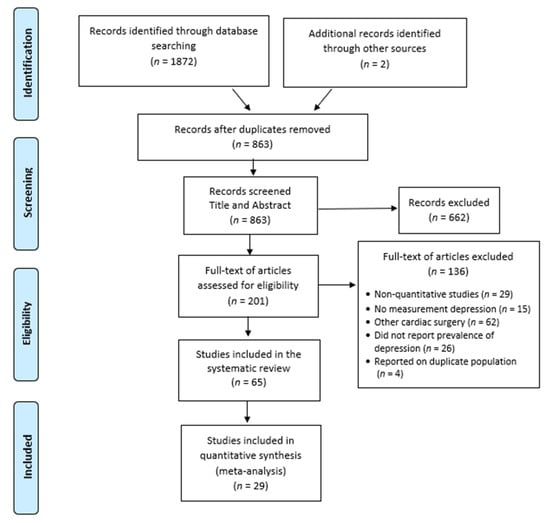
The search yielded a total of n = 1874 articles. After reading the title and abstract, 662 were excluded. Figure 1 shows the study selection process.
Figure 1.
Preferred reporting items for systematic review and meta-analysis (PRISMA) flow-chart of included studies.
3.1. Characteristics of Included Studies
The total sample comprised 16,501 patients, predominantly male (n = 54). Most of the studies were cohort studies (n = 34), followed by cross-sectional studies (n = 12). Thirteen studies evaluated the levels prior to surgery, 23 after surgery, and 29 both before and after. Most of the studies were carried out in the USA (n = 17), followed by Germany (n = 7), Iran (n = 7), and Australia (n = 6) (Table 1). The depression follow-up ranged from a month prior to surgery (since the pre-assessment clinic appointment) [23] up to six years after surgery [24,25].
3.2. Measurement of Depression
We used a total of 15 measurement tools. The Hospital Anxiety and Depression Scale (HADS) (n = 18), Beck Depression Inventory (BDI) (n = 17), nine-item Patient Health Questionnaire (PHQ-9) (n = 9), and Centre for Epidemiological Studies Depression Scale (CES-D) (n = 4) were the measurement tools used (Table 1 and Supplementary Table S1).
3.3. Meta-Analysis
A total of 1217 patients were included in the meta-analysis prior to CABG surgery, and 596 patients after the operation. Egger’s test showed no publication bias in any case.
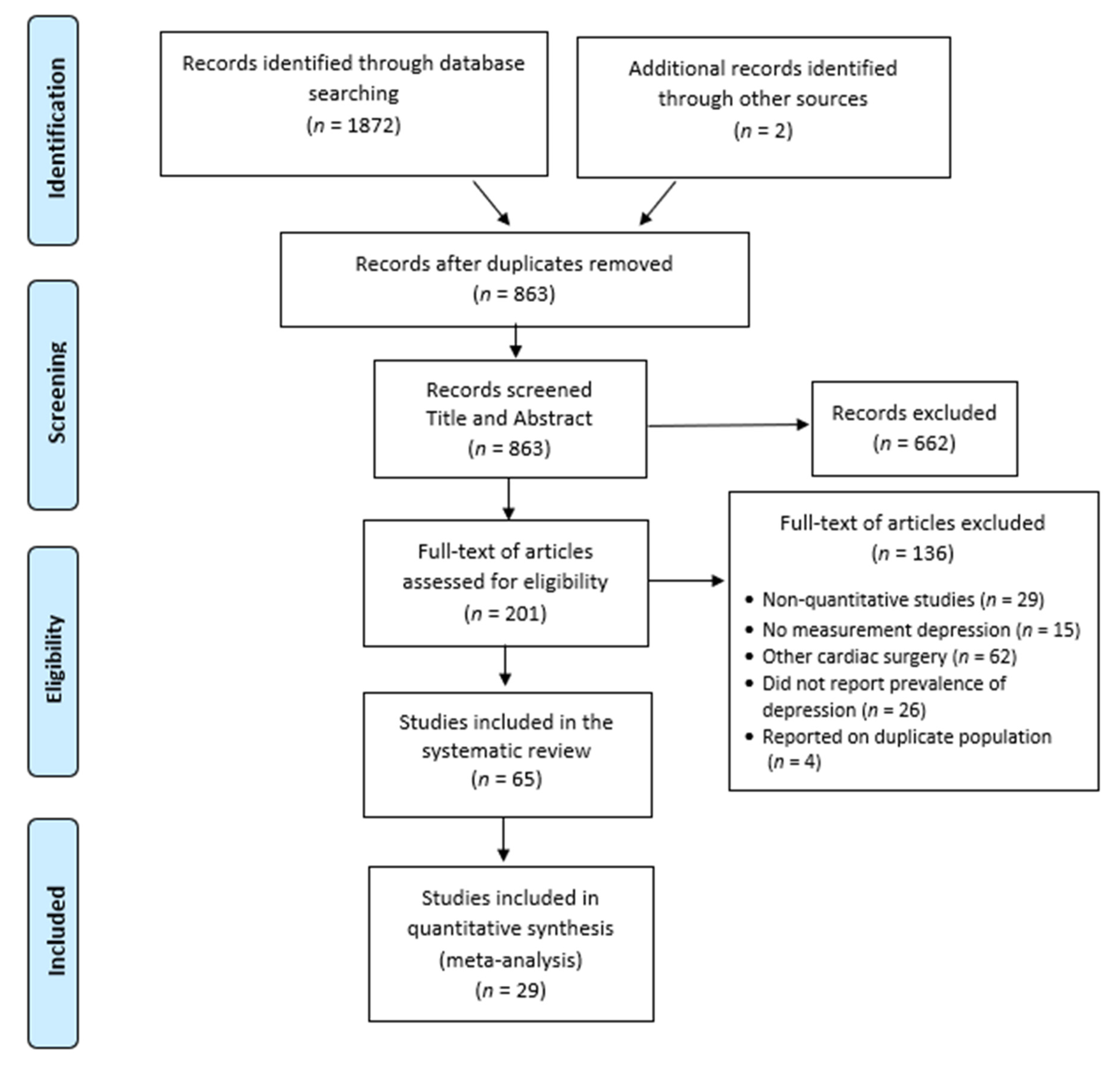
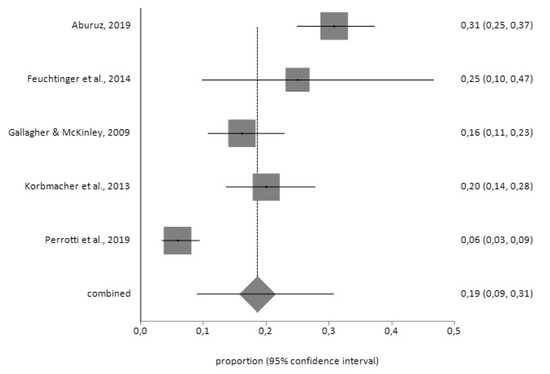
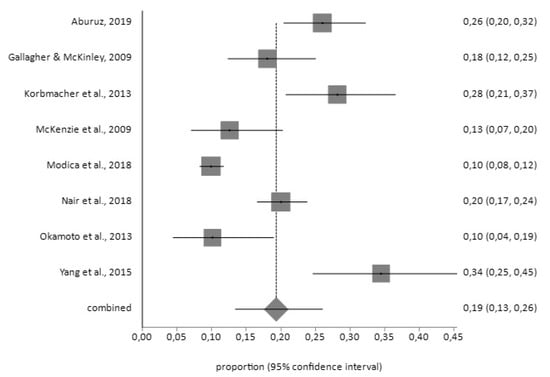
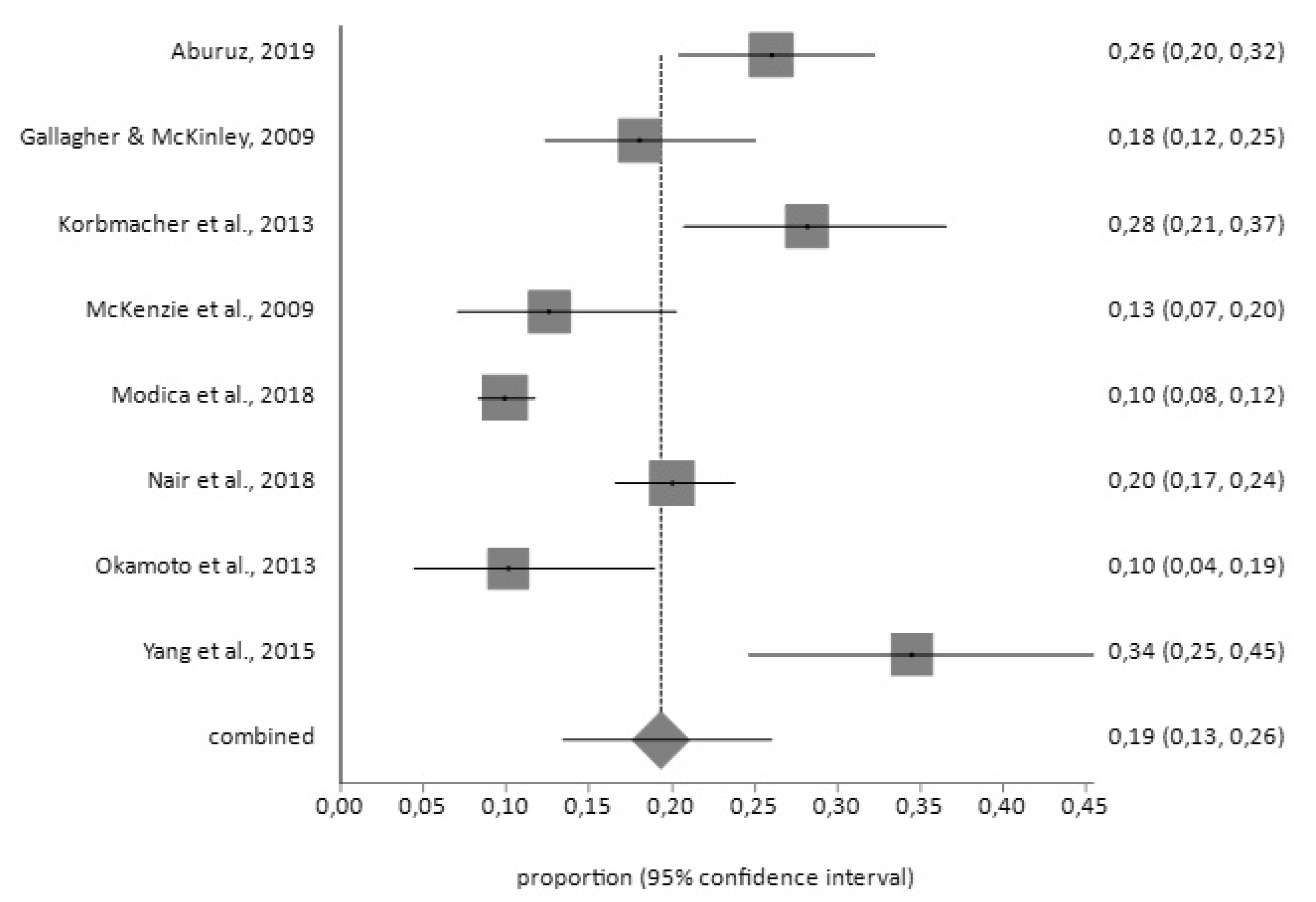
For the HADS tool, the prevalence of depression prior to surgery (n = 144) was 19% (95% CI = 9–31) with a high degree of heterogeneity (I2 = 93.4%), while the prevalence after surgery (n = 394) was 19% (95% CI = 13–26) with I2 = 92.2%, according to the random effects model (Figure 2 and Figure 3).
Figure 2.
Forest plot for pre-CABG depression using Hospital Anxiety and Depression Scale (HADS).
Figure 3.
Forest plot for post-CABG depression using HADS.
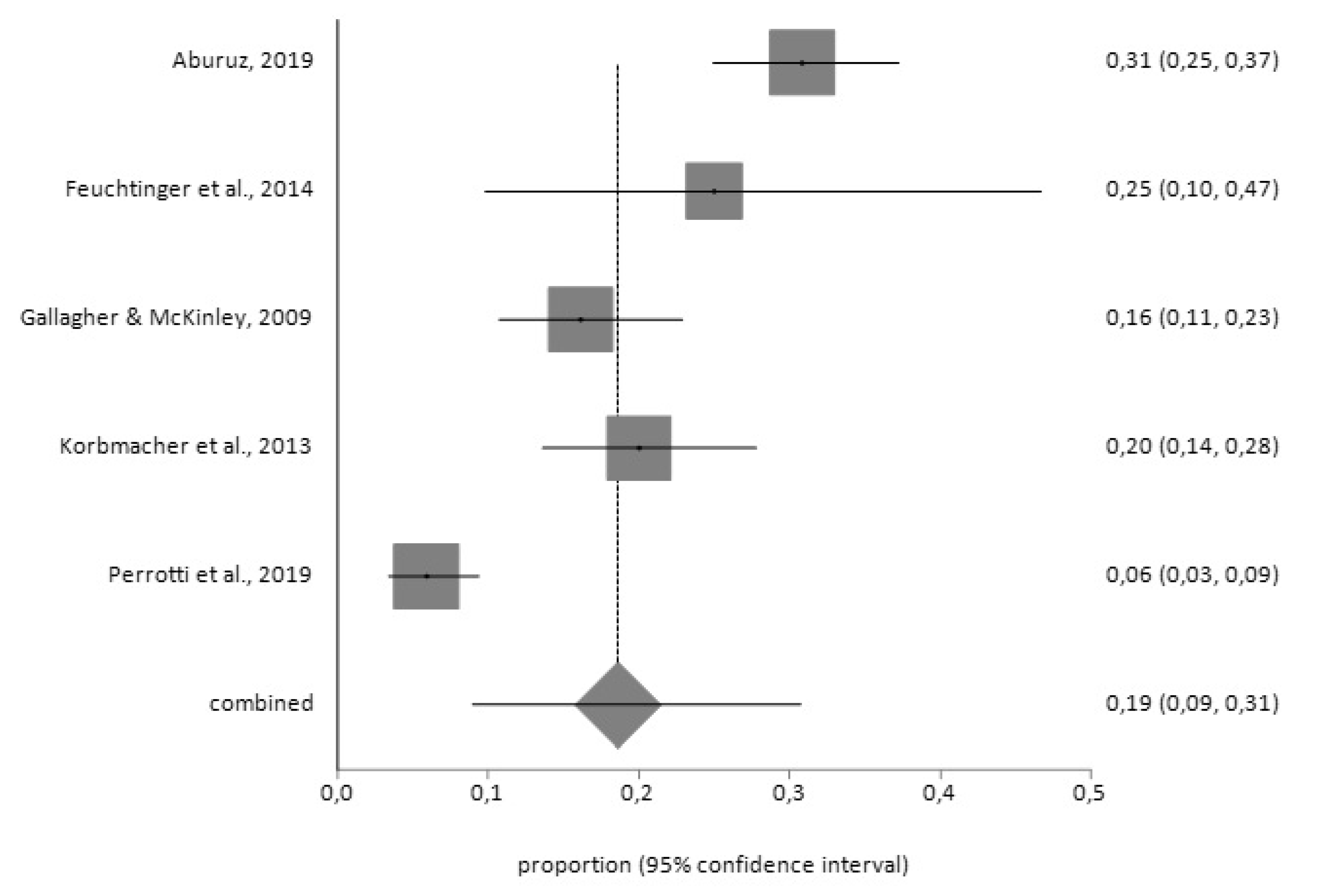
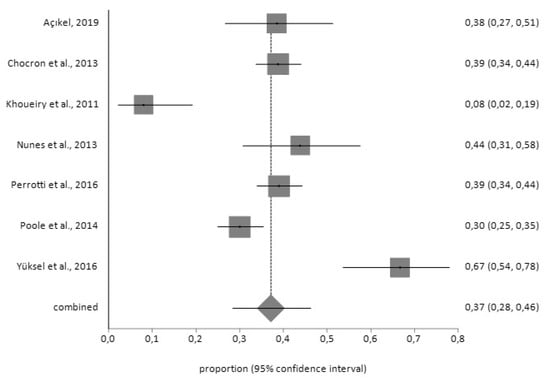
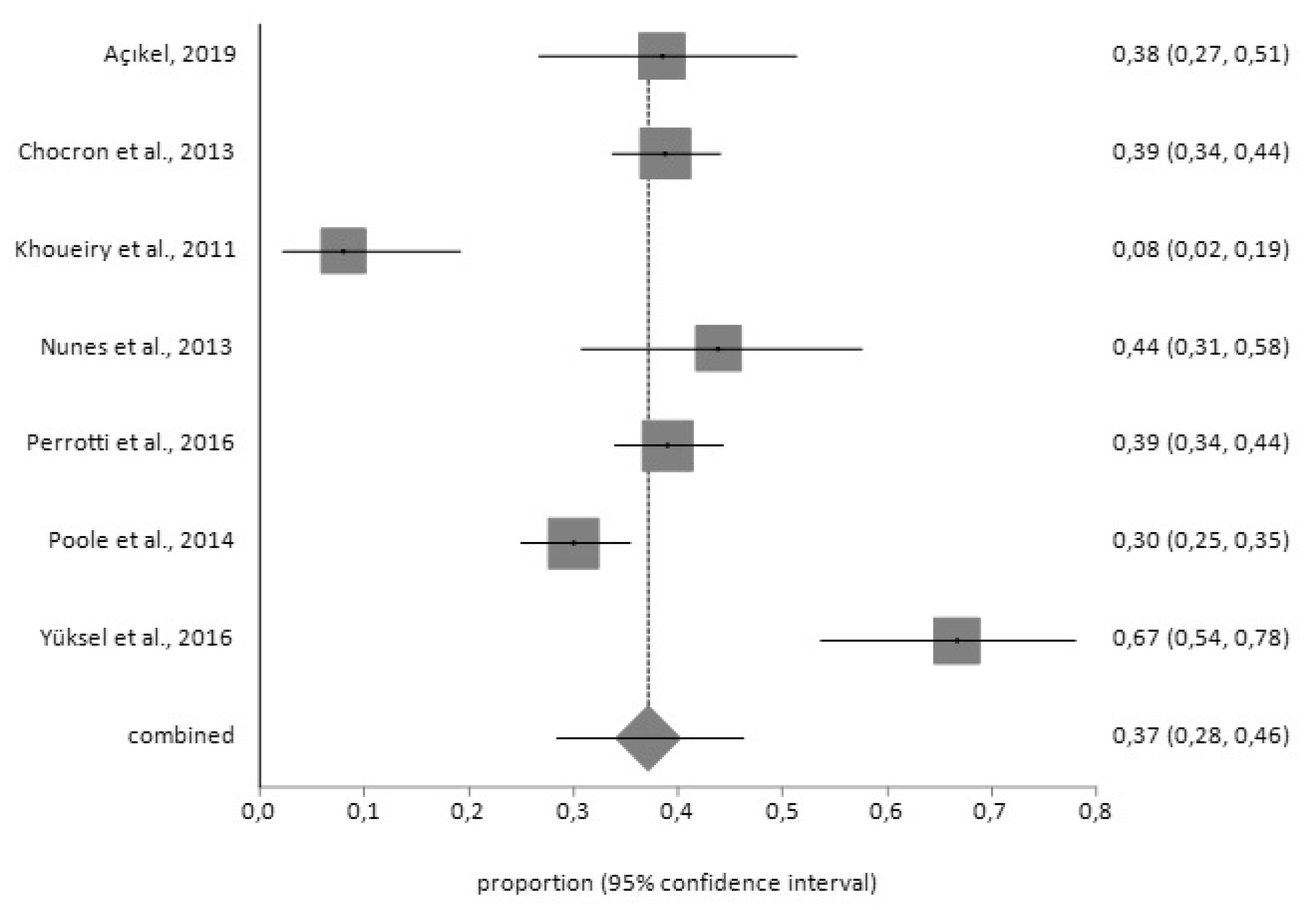
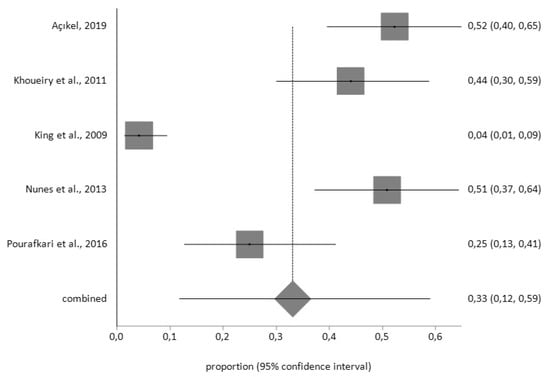
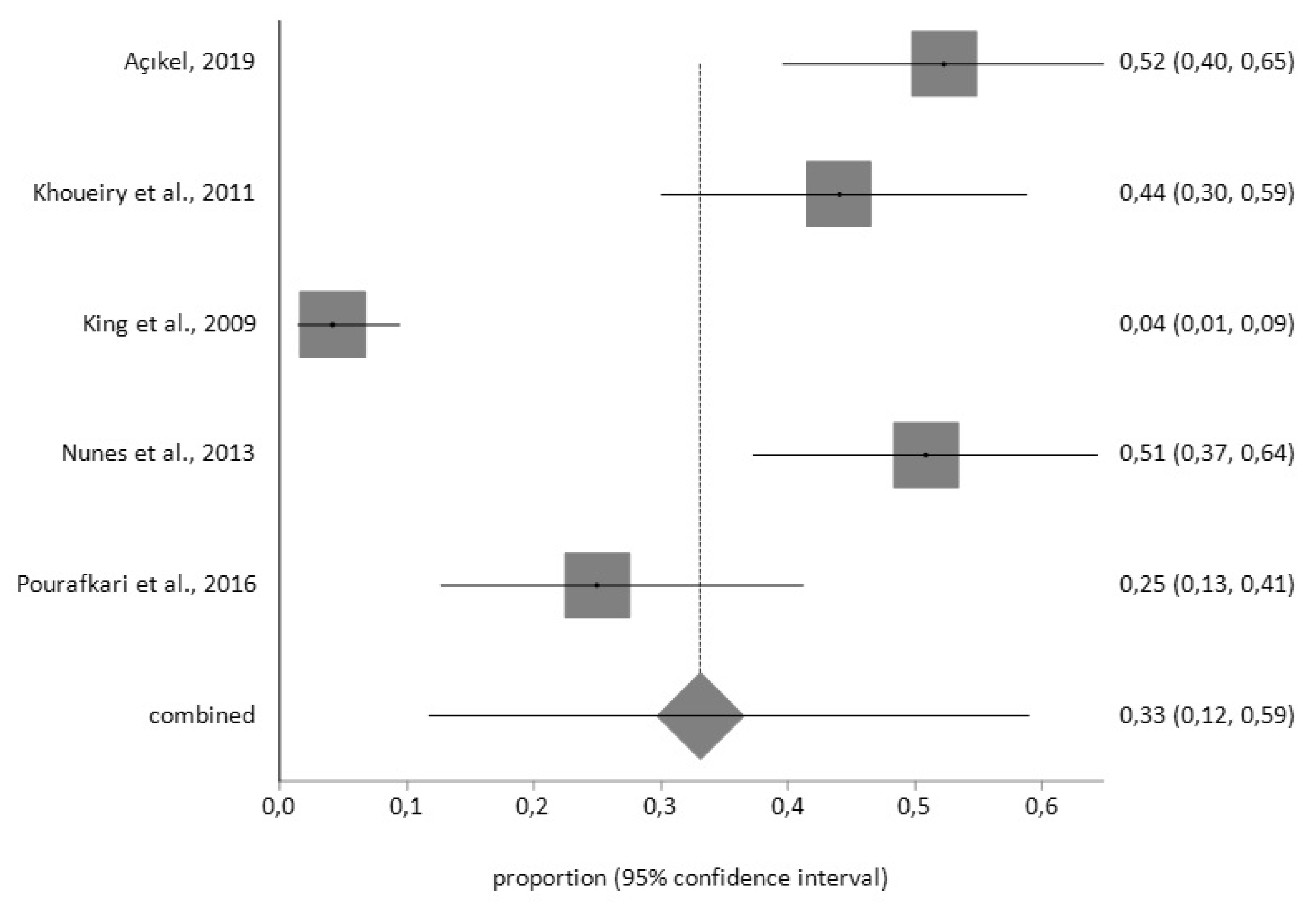
For the BDI tool, the prevalence of depression prior to surgery (n = 469) was 37% (95% CI = 28–46) with a high degree of heterogeneity (I2 = 89.4%), while the prevalence afterwards (n = 97) was 33% (95% CI = 12–59) with a high degree of heterogeneity (I2 = 96.6%), according to the random effects model (Figure 4 and Figure 5).
Figure 4.
Forest plot for pre-CABG depression using Beck Depression Inventory (BDI).
Figure 5.
Forest plot for post-CABG depression using BDI.
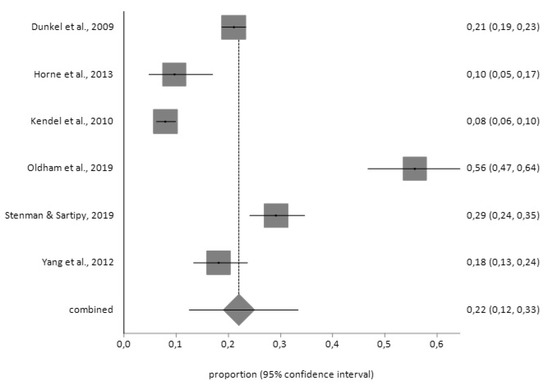
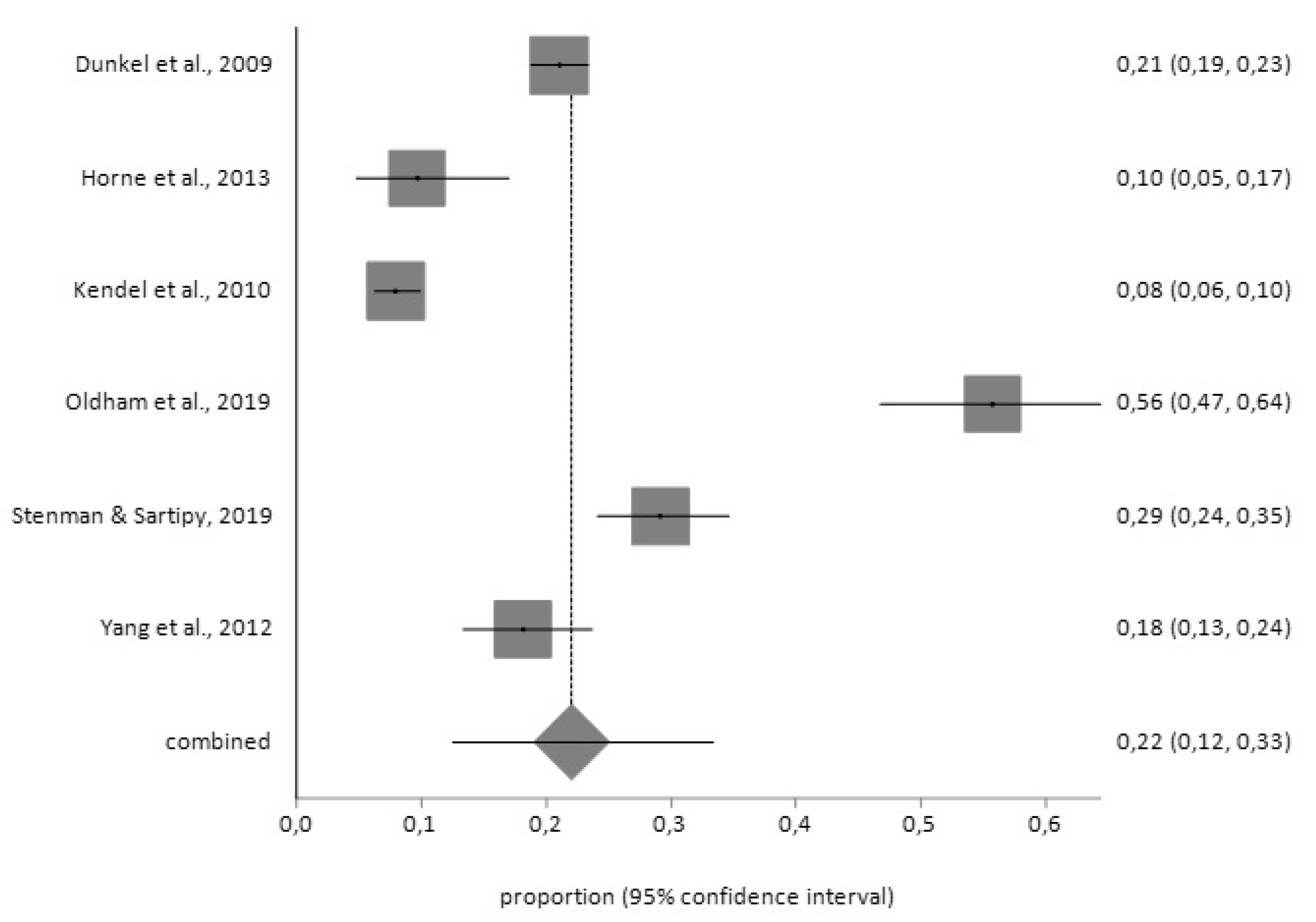
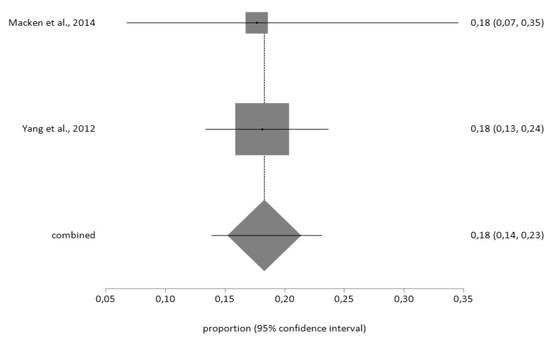
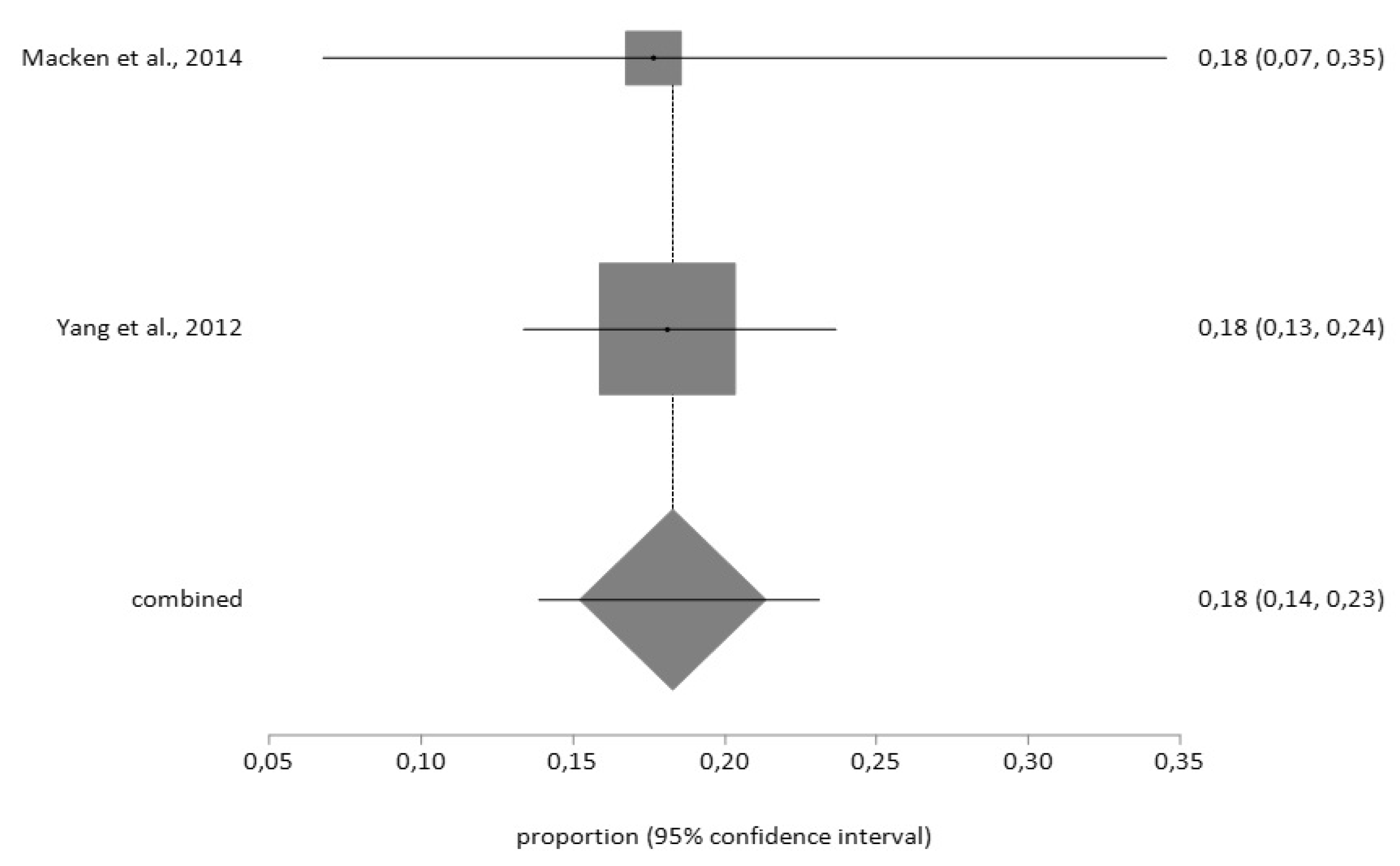
According to the PHQ-9 tool, the prevalence prior to surgery (n = 543) was 22% (95% CI = 12–33) with a high degree of heterogeneity (I2 = 97.5%) according to the random effects model; and, the prevalence of depression after surgery (n = 48), using the fixed effects model, was 18% (95% CI = 14–23) (Figure 6 and Figure 7), with a low degree of heterogeneity (I2 = 2%).
Figure 6.
Forest plot for pre-CABG depression using Patient Health Questionnaire (PHQ-9).
Figure 7.
Forest plot for post-CABG depression using PHQ-9.
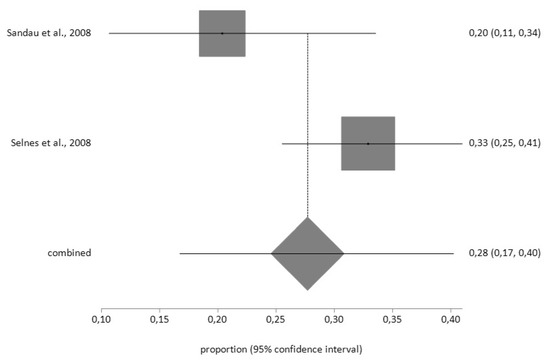
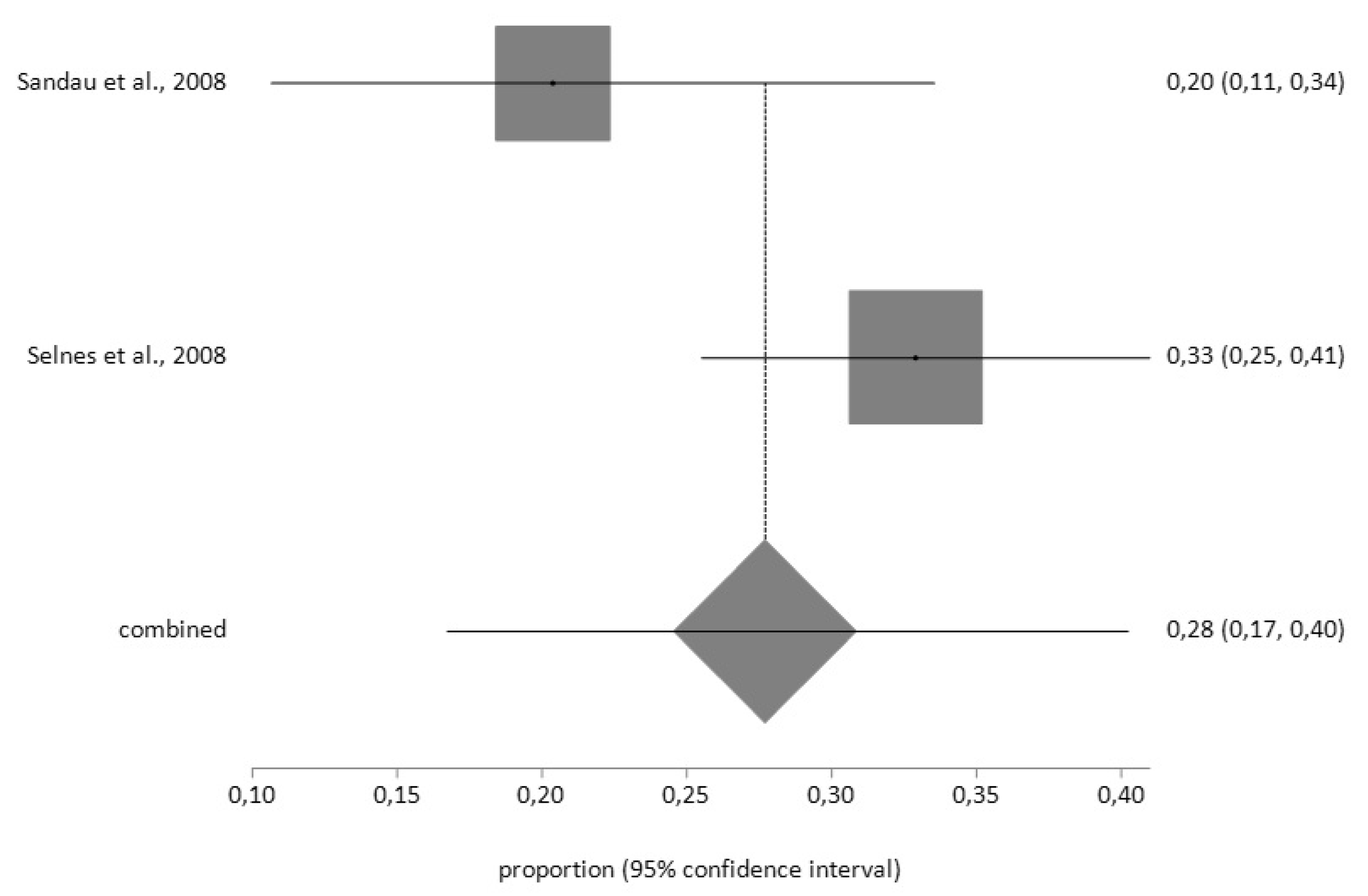
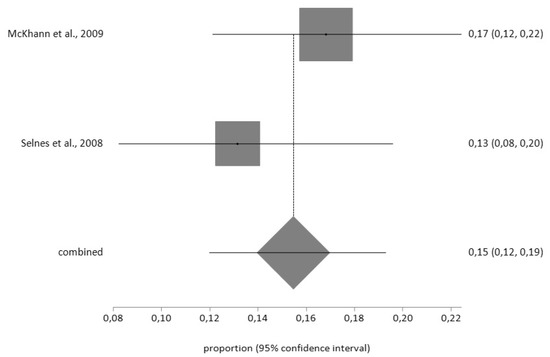
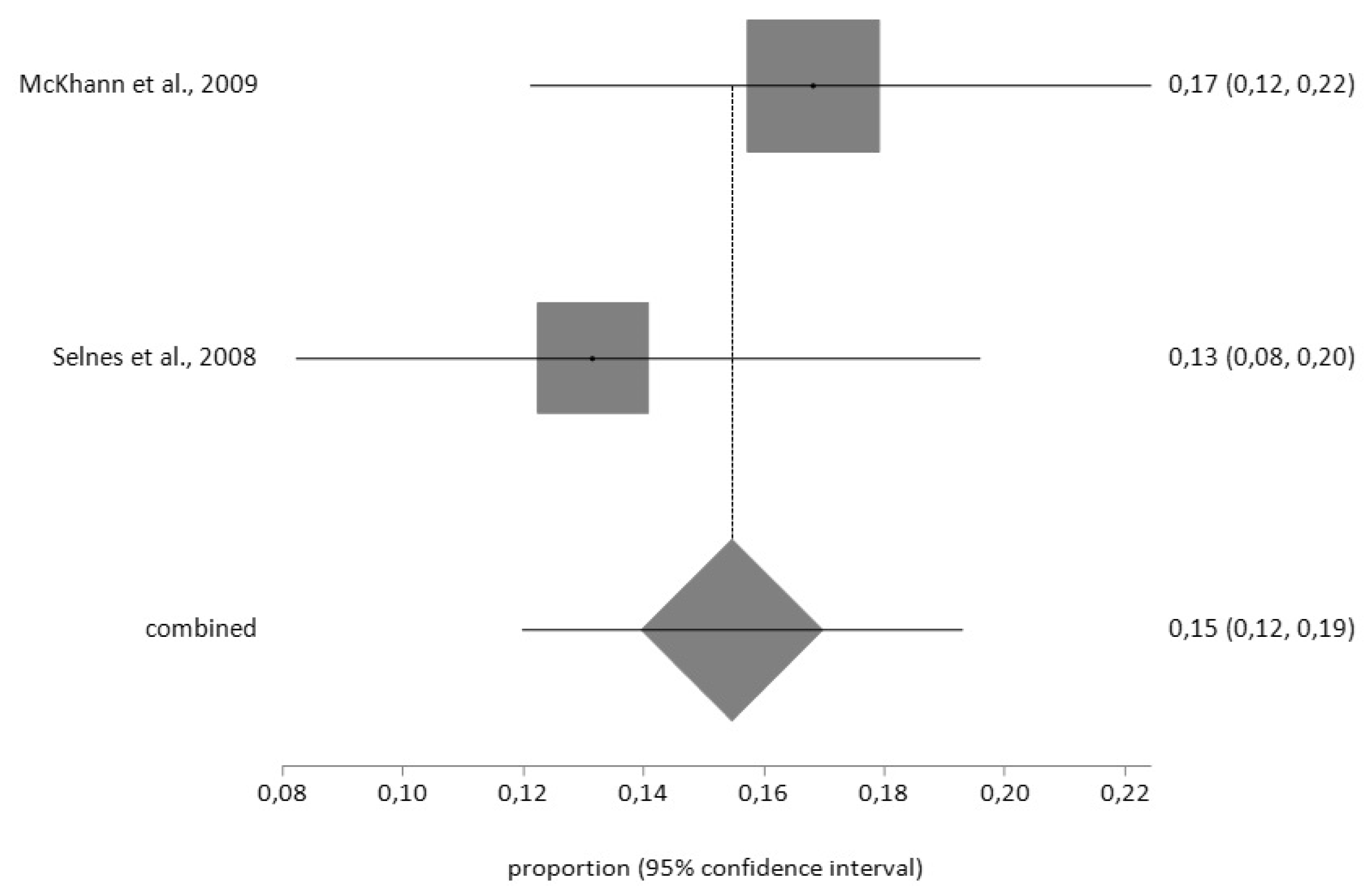
Finally, for CES-D, the prevalence of pre-CABG depression (n = 61) using the random effects model was 28% (95% CI = 17–40) with a moderate degree of heterogeneity (I2 = 66.9%); while the prevalence after surgery (n = 57) was 15% (95% CI = 12–19) with a low degree of heterogeneity (I2 = 2%), according to the fixed effects model (Figure 8 and Figure 9)
Figure 8.
Forest plot for pre-CABG depression using Centre for Epidemiological Studies Depression Scale (CES-D).
Figure 9.
Forest plot for post-CABG depression using CES-D.
3.4. Levels of Depression Before and After CABG Surgery and Follow Up
Prior to CABG surgery, most of the authors report depression levels within the normal range, although others found mild [36,55,58,83,86] and moderate levels [27,35,66,69] (Table 1).
Post-surgery, most authors report normal levels, while others found mild [28,36,49,53,58,60,66,83,85,88], moderate [27,47,69], and severe [32] levels.
The majority of authors observed a positive impact on depression prevalence and levels after surgery, as well as in the short and medium term, although others found that these levels increased after surgery [28,32,33,48,49,55,57,89].
4. Discussion
The prevalence of depression obtained in this study varied between 19% and 37% prior to surgery, and between 15% and 33% after surgery, depending on the type of measurement tool used. Other studies that combine CABG with valve replacement have reported similar percentages, with depression prevalence ranging from 15% pre-CABG [90] to 37.7% post-CABG [51,91], associated with the development of the disease, worse quality of life, longer hospital stays, and high rates of hospital readmissions [8].
Normal levels of pre-CABG depression are observed, although other studies have indicated higher levels, from moderate to severe [92]. However, more than 25% of patients with normal levels are at risk of worsening, for which reason continuous reassessment can identify patients with transient symptoms of depression [93].
High levels of depression prior to the operation predict a worse quality of life [94,95], worse survival after a CABG [12,96], and more symptoms up to six months after surgery [97].
We have observed that depression levels did not go to remission, but they tend to improve in depressive symptoms, which is probably due to an improvement in the patient’s quality of life [98], and even due to greater optimism that facilitates commitment to adaptation [99]. Some authors have found a positive impact on patients from eight weeks [100], while others report a slight improvement from the first month post-CABG surgery [101]. For the majority of patients, depression persists after the surgery. Recent meta-analyses demonstrated that patients undergoing heart valve surgery are at risk of cognitive dysfunction up to six months after surgery [102,103].
Although there is a relationship between depression and CABG, its temporal onset is not clear. Depression can be a pre-existing condition, which increases the risk of cardiovascular disease that is related to behavioural alterations in diet, physical activity level, toxic habits, or poor adherence to treatment and recommendations [45]; or, can appear as a consequence of multiple postoperative complications, such as longer hospital stays [23], readmissions [104,105], general pain [104], or even when facing a series of lifestyle changes [12].
Without evaluation, it is unlikely that depression is being treated correctly. Some authors report that more than 50% of patients were receiving medical treatment for depression, even though they had no symptoms of depression [106]. For this reason, the use of measurement tools to confirm the presence and levels of depression makes it possible to identify the at-risk patients, and therefore carry out a more in-depth post-CABG follow-up, of at least nine months [93].
The current study highlights the importance of depression measures before and after CABG in assessing clinically meaningful mood disturbance, in order to provide early intervention. Systematic screening for depression in the period both before and after this procedure is crucial. Planned coaching combined with counselling can reduce these levels [36]. Cardiac rehabilitation programmes [107,108] and cognitive-behavioural therapies are also available, which reduce the levels of depression and even decrease the length of hospital stays [109]. However, further studies are needed to understand the potential prognostic implication of depression and investigate the best ways to approach the treatment of depression in this patient group.
Depression counselling prior to surgery can influence the post-surgical depression levels by positively improving a patient’s perception of illness control and management [13]. Planning is therefore an essential part of the healthcare process as it has the potential to promote self-care [36].
From a clinical perspective, these results suggest that strategies that are aimed to improve depression as a disorder, such as the application of policies and depression assessment protocols prior to CABG by health care providers, are essential, because the depression level might help risk stratification in patients undergoing CABG identifying the high-risk groups and the trajectory of recovery experienced [11].
This study has several limitations. Firstly, the heterogeneity in terms of prevalence is due to different estimation methods over time, differences in the timing of assessment and demographic differences between samples, different uses of cut-offs on questionnaire measures, as well as the use of various tools for assessing the symptoms of depression. Secondly, the measuring tools assess the severity of depression symptoms, but they do not replace a formal clinical diagnosis of depression.
5. Conclusions
There is a high presence of depression both before and after CABG surgery. While this study found an overall improvement in depressive symptoms after CABG, depression persists after the surgery for the majority of patients. The depression levels present prior to the operation may affect postoperative recovery.
Given the prevalence of depression and its impact, early detection is crucial, since it enables the identification of at-risk patients, through a clinical interview that uses validated measurement tools. This enables the medical team to implement preventive strategies as well as monitor the development of the depression.
Supplementary Materials
The following are available online at https://www.mdpi.com/2077-0383/9/4/909/s1, Table S1: Depression Assessment Instruments Used by the 65 Studies Included in the Systematic Review [110,111,112,113,114,115,116,117,118,119,120,121,122].
Author Contributions
J.S.-R., J.L.G.-U. and M.C.-R. conceived and designed the review and meta-analysis; M.A.E., N.S.-M. and M.J.M.-J. contributed to the selection process and analysis of the risk of bias; N.S.-M. and J.L.G.-U. contributed to the meta-analysis; J.S.-R., M.C.-R. and A.V.-S. contributed to the data extraction; N.S.-M. and M.C.-R. wrote the paper; J.S.-R. and J.L.G.-U. drafted the paper. All authors have read and agreed to the published version of the manuscript.
Funding
This research received no external funding.
Acknowledgments
The results reported in the study are from the doctoral thesis of Moath Abu Ejheisheh and belong to the Clinical Medicine and Health Public Programme (B 12.56.1) of the University of Granada, Spain.
Conflicts of Interest
The authors declare no conflict of interest.
References
- Le, J.; Dorstyn, D.S.; Mpfou, E.; Prior, E.; Tully, P.J. Health-related quality of life in coronary heart disease: A systematic review and meta-analysis mapped against the International Classification of Functioning, Disability and Health. Qual. Life Res. 2018, 27, 2491–2503. [Google Scholar] [CrossRef] [Scilit] [PubMed]
- Alexander, J.H.; Smith, P.K. Coronary-Artery Bypass Grafting. N. Engl. J. Med. 2016, 374, 1954–1964. [Google Scholar] [CrossRef] [Scilit] [PubMed]
- Noyez, L.; de Jager, M.J.; Markou, A.L.P. Quality of life after cardiac surgery: Underresearched research. Interact. Cardiovasc. Thorac. Surg. 2011, 13, 511–515. [Google Scholar] [CrossRef] [Scilit] [PubMed]
- Karim, M.N.; Reid, C.M.; Huq, M.; Brilleman, S.L.; Cochrane, A.; Tran, L.; Billah, B. Predicting long-term survival after coronary artery bypass graft surgery. Interact. Cardiovasc. Thorac. Surg. 2018, 26, 257–263. [Google Scholar] [CrossRef] [Scilit] [PubMed]
- AbuRuz, M.E.; Al-Dweik, G.; Al-Akash, H.Y. Checking the moderating effect of perceived control on the relationship between anxiety and postoperative hospital length of stay among coronary artery bypass graft patients. Int. J. Gen. Med. 2019, 12, 79–85. [Google Scholar] [CrossRef] [Scilit] [PubMed]
- Kidd, T.; Poole, L.; Ronaldson, A.; Leigh, E.; Jahangiri, M.; Steptoe, A. Attachment anxiety predicts depression and anxiety symptoms following coronary artery bypass graft surgery. Br. J. Health Psychol. 2016, 21, 796–811. [Google Scholar] [CrossRef] [Scilit]
- Celano, C.M.; Huffman, J.C. Depression and cardiac disease: A review. Cardiol. Rev. 2011, 19, 130–142. [Google Scholar] [CrossRef] [Scilit]
- Iribarne, A.; Chang, H.; Alexander, J.H.; Gillinov, A.M.; Moquete, E.; Puskas, J.D.; Bagiella, E.; Acker, M.A.; Mayer, M.L.; Ferguson, T.B.; et al. Readmissions after cardiac surgery: Experience of the national institutes of health/canadian institutes of health research cardiothoracic surgical trials network. Ann. Thorac. Surg. 2014, 98, 1274–1280. [Google Scholar] [CrossRef] [Scilit]
- Beck, A.; Steer, R. Manual for the Beck Depression Inventory, 1993 ed.; Psychological Corporation: San Antonio, TX, USA, 1987. [Google Scholar]
- Zigmond, A.S.; Snaith, R.P. The hospital anxiety and depression scale. Acta Psychiatr. Scand. 1983, 67, 361–370. [Google Scholar] [CrossRef] [Scilit]
- Ravven, S.; Bader, C.; Azar, A.; Rudolph, J.L. Depressive symptoms after CABG surgery: A meta-analysis. Harv. Rev. Psychiatry 2013, 21, 59–69. [Google Scholar] [CrossRef] [Scilit]
- Stenman, M.; Holzmann, M.J.; Sartipy, U. Association between preoperative depression and long-term survival following coronary artery bypass surgery—A systematic review and meta-analysis. Int. J. Cardiol. 2016, 222, 462–466. [Google Scholar] [CrossRef] [Scilit] [PubMed]
- Rushton, M.; Howarth, M.; Grant, M.J.; Astin, F. Person-centred discharge education following coronary artery bypass graft: A critical review. J. Clin. Nurs. 2017, 26, 5206–5215. [Google Scholar] [CrossRef] [Scilit] [PubMed]
- Abdulrahman, M.; Alsabbagh, A.; Kuntze, T.; Lauer, B.; Ohlow, M.A. Impact of hierarchy on multidisciplinary heart-team recommendations in patients with isolated multivessel coronary artery disease. J. Clin. Med. 2019, 8, 1490. [Google Scholar] [CrossRef] [Scilit]
- McKenzie, L.; Simpson, J.; Stewart, M. A systematic review of pre-operative predictors of post-operative depression and anxiety in individuals who have undergone coronary artery bypass graft surgery. Psychol. Health Med. 2010, 15, 74–93. [Google Scholar] [CrossRef] [Scilit]
- Protogerou, C.; Fleeman, N.; Dwan, K.; Richardson, M.; Dundar, Y.; Hagger, M.S. Moderators of the effect of psychological interventions on depression and anxiety in cardiac surgery patients: A systematic review and meta-analysis. Behav. Res. Ther. 2015, 73, 151–164. [Google Scholar] [CrossRef] [Scilit] [PubMed]
- Keeping-Burke, L.; Purden, M.; Frasure-Smith, N.; Cossette, S.; McCarthy, F.; Amsel, R. Bridging the transition from hospital to home: Effects of the VITAL telehealth program on recovery for CABG surgery patients and their caregivers. Res. Nurs. Health 2013, 36, 540–553. [Google Scholar] [CrossRef] [Scilit]
- Moher, D.; Shamseer, L.; Clarke, M.; Ghersi, D.; Liberati, A.; Petticrew, M.; Shekelle, P.; Stewart, L. Preferred reporting items for systematic review and meta-analysis protocols (PRISMA-P) 2015 statement. Syst. Rev. 2015, 4, 1. [Google Scholar] [CrossRef] [PubMed]
- Sanderson, S.; Tatt, I.D.; Higgins, J.P.T. Tools for assessing quality and susceptibility to bias in observational studies in epidemiology: A systematic review and annotated bibliography. Int. J. Epidemiol. 2007, 36, 666–676. [Google Scholar] [CrossRef] [Scilit]
- Higgins, J.P.T.; Green, S. Cochrane Handbook for Systematic Reviews of Interventions. Version 5.1.0. The Cochrane Collaboration. Available online: www.cochrane-handbook.org (accessed on 10 September 2019).
- Howick, J.; Chalmers, I.; Glasziou, P.; Greenhalg, T.; Heneghan, C.; Liberati, A.; Moschetti, I.; Phillips, B.; Thornton, H. The Oxford 2011 Levels of Evidence. Available online: https://www.cebm.net/2016/05/ocebm-levels-of-evidence (accessed on 10 September 2019).
- Higgins, J.P.T.; Thompson, S.G.; Deeks, J.J.; Altman, D.G. Measuring inconsistency in meta-analyses. Br. Med. J. 2003, 327, 557–560. [Google Scholar] [CrossRef] [Scilit]
- Poole, L.; Leigh, E.; Kidd, T.; Ronaldson, A.; Jahangiri, M.; Steptoe, A. The combined association of depression and socioeconomic status with length of post-operative hospital stay following coronary artery bypass graft surgery: Data from a prospective cohort study. J. Psychosom. Res. 2014, 76, 34–40. [Google Scholar] [CrossRef] [Scilit]
- McKhann, G.M.; Selnes, O.A.; Grega, M.A.; Bailey, M.M.; Pham, L.D.; Baumgartner, W.A.; Zeger, S.L. Subjective memory symptoms in surgical and nonsurgical coronary artery patients: 6-year follow-up. Ann. Thorac. Surg. 2009, 87, 27–34. [Google Scholar] [CrossRef] [Scilit] [PubMed]
- Selnes, O.A.; Grega, M.A.; Bailey, M.M.; Pham, L.D.; Zeger, S.L.; Baumgartner, W.A.; McKhann, G.M. Cognition 6 years after surgical or medical therapy for coronary artery disease. Ann. Neurol. 2008, 63, 581–590. [Google Scholar] [CrossRef] [Scilit] [PubMed]
- Abbott, A.; Barnason, S.; Zimmerman, L. Symptom burden clusters and their impact on psychosocial functioning following coronary artery bypass surgery. J. Cardiovasc. Nurs. 2010, 25, 301–310. [Google Scholar] [CrossRef] [Scilit] [PubMed]
- Aburuz, M.E. Pre-operative depression predicted longer hospital length of stay among patients undergoing coronary artery bypass graft surgery. Risk Manag. Healthc. Policy 2019, 12, 75–83. [Google Scholar] [CrossRef] [Scilit] [PubMed]
- Açıkel, M.E.T. Evaluation of depression and anxiety in coronary artery bypass surgery patients: A prospective clinical study. Braz. J. Cardiovasc. Surg. 2019, 34, 389–395. [Google Scholar] [CrossRef] [Scilit] [PubMed]
- Afridi, M.I.; Habib, S.; Lal, C.; Khan, A.U.R.; Afaq, S.M.; Tariq, Q.D. Frequency of depression in patients undergoing coronary artery bypass grafting surgery (CABGS), before the surgery, at discharge and at six months follow up. J. Liaquat Univ. Med. Heal. Sci. 2016, 15, 110–115. [Google Scholar]
- Ajtahed, S.S.; Rezapour, T.; Etemadi, S.; Moradi, H.; Habibi Asgarabad, M.; Ekhtiari, H. Efficacy of neurocognitive rehabilitation after coronary artery bypass graft surgery in improving quality of life: An interventional trial. Front. Psychol. 2019, 10, 1759. [Google Scholar] [CrossRef] [Scilit]
- Ammouri, A.A.; Al-Daakak, Z.M.; Gharaibeh, H.; Al-Zaru, I. Symptoms experienced by jordanian men and women after coronary artery bypass graft surgery. Dimens. Crit. Care Nurs. 2016, 35, 125–132. [Google Scholar] [CrossRef] [Scilit]
- Amouzeshi, A.; Hosseini, S.M.; Javadi, A.; Norozian, F.; Zamanian, N.; Yahya, M.; Jomefourjan, S.; Amouzeshi, Z.; Kohan, M. Depression and associated factors in patients undergoing coronary artery bypass grafting in Imam Reza Hospital of Mashhad in 2013. J. Surg. Trauma 2015, 3, 51–56. [Google Scholar]
- Azzopardi, S.; Lee, G. Health-related quality of life 2 years after coronary artery bypass graft surgery. J. Cardiovasc. Nurs. 2009, 24, 232–240. [Google Scholar] [CrossRef] [Scilit]
- Bay, P.S.; Beckman, D.; Trippi, J.; Gunderman, R.; Terry, C. The effect of pastoral care services on anxiety, depression, hope, religious coping, and religious problem solving styles: A randomized controlled study. J. Relig. Health 2008, 47, 57–69. [Google Scholar] [CrossRef] [Scilit] [PubMed]
- Beresnevaite, M.; Benetis, R.; Taylor, G.J.; Jurnien, K.; Kinduris, Š.; Barauskien, V. Depression predicts perioperative outcomes following coronary artery bypass graft surgery. Scand. Cardiovasc. J. 2010, 44, 289–294. [Google Scholar] [CrossRef] [Scilit] [PubMed]
- Cebeci, F.; Çelik, S.Ş. Effects of discharge teaching and counselling on anxiety and depression level of CABG patients. Turk. J. Thorac. Cardiovasc. Surg. 2011, 19, 170–176. [Google Scholar] [CrossRef] [Scilit]
- Chocron, S.; Vandel, P.; Durst, C.; Laluc, F.; Kaili, D.; Chocron, M.; Etievent, J.-P. Antidepressant therapy in patients undergoing coronary artery bypass grafting: The MOTIV-CABG trial. Ann. Thorac. Surg. 2013, 95, 1609–1618. [Google Scholar] [CrossRef] [Scilit]
- Colella, T.J.; King-Shier, K. The effect of a peer support intervention on early recovery outcomes in men recovering from coronary bypass surgery: A randomized controlled trial. Eur. J. Cardiovasc. Nurs. 2018, 17, 408–417. [Google Scholar] [CrossRef] [Scilit] [PubMed]
- Dal Boni, A.L.M.; Martinez, J.E.; Da Silva Saccomann, I.C.R. Quality of Life of patients undergoing coronary artery bypass grafting. Acta Paul. Enferm. 2013, 26, 575–580. [Google Scholar] [CrossRef] [Scilit]
- Doering, L.V.; Martínez-Maza, O.; Vredevoe, D.L.; Cowan, M.J. Relation of depression, natural killer cell function, and infections after coronary artery bypass in women. Eur. J. Cardiovasc. Nurs. 2008, 7, 52–58. [Google Scholar] [CrossRef] [Scilit]
- Donohue, J.M.; Belnap, B.H.; Men, A.; He, F.; Roberts, M.S.; Schulberg, H.C.; Reynolds, C.F.; Rollman, B.L. Twelve-month cost-effectiveness of telephone-delivered collaborative care for treating depression following CABG surgery: A randomized controlled trial. Gen. Hosp. Psychiatry 2014, 36, 453–459. [Google Scholar] [CrossRef] [Scilit]
- Dunkel, A.; Kendel, F.; Lehmkuhl, E.; Babitsch, B.; Oertelt-Prigione, S.; Hetzer, R.; Regitz-Zagrosek, V. Predictors of preoperative depressive risk in patients undergoing coronary artery bypass graft surgery. Clin. Res. Cardiol. 2009, 98, 643–650. [Google Scholar] [CrossRef] [Scilit]
- Dunkel, A.; Kendel, F.; Lehmkuhl, E.; Hetzer, R.; Regitz-Zagrosek, V. Causal attributions among patients undergoing coronary artery bypass surgery: Gender aspects and relation to depressive symptomatology. J. Behav. Med. 2011, 34, 351–359. [Google Scholar] [CrossRef] [Scilit]
- El-Baz, N.; Ondusova, D.; Studencan, M.; Rosenberger, J.; Reijneveld, S.A.; van Dijk, J.P.; Middel, B. Differences between Slovak and Dutch patients scheduled for coronary artery bypass graft surgery regarding clinical and psychosocial predictors of physical and mental health-related quality of life. Eur. J. Cardiovasc. Nurs. 2018, 17, 324–335. [Google Scholar] [CrossRef] [Scilit] [PubMed]
- Elliott, P.C.; Murphy, B.M.; Oster, K.A.; Le Grande, M.R.; Higgins, R.O.; Worcester, M.U.C. Changes in mood states after coronary artery bypass graft surgery. Eur. J. Cardiovasc. Nurs. 2010, 9, 188–194. [Google Scholar] [CrossRef] [Scilit] [PubMed]
- Feuchtinger, J.; Burbaum, C.; Heilmann, C.; Imbery, C.; Siepe, M.; Stotz, U.; Fritzsche, K.; Beyersdorf, F. Anxiety and fear in patients with short waiting times before coronary artery bypass surgery—A qualitative study. J. Clin. Nurs. 2014, 23, 1900–1907. [Google Scholar] [CrossRef] [Scilit] [PubMed]
- Freedland, K.; Skala, J.; Carney, R.; Rubin, E.; Lustman, P.; Dávila-Román, V.; Steinmeyer, B.; Hogue, C. Treatment of depression after coronary artery bypass surgery: A randomized controlled trial. Arch. Gen. Psychiatry 2009, 66, 387–396. [Google Scholar] [CrossRef] [Scilit] [PubMed]
- Gallagher, R.; McKinley, S. Anxiety, depression and perceived control in patients having coronary artery bypass grafts. J. Adv. Nurs. 2009, 65, 2386–2396. [Google Scholar] [CrossRef] [Scilit] [PubMed]
- Gelogahi, Z.K.; Aghebati, N.; Mazloum, S.R.; Mohajer, S. Effectiveness of nurse’s intentional presence as a holistic modality on depression, anxiety, and stress of cardiac surgery patients. Holist. Nurs. Pract. 2018, 32, 296–306. [Google Scholar] [CrossRef] [Scilit]
- Hazavei, S.M.M.; Sabzmakan, L.; Hasanzadeh, A.; Rabiei, K.; Roohafza, H. The effects of an educational program based on PRECEDE model on depression levels in patients with coronary artery bypass grafting. ARYA Atheroscler. 2012, 8, 36–42. [Google Scholar]
- Horne, D.; Kehler, S.; Kaoukis, G.; Hiebert, B.; Garcia, E.; Duhamel, T.A.; Arora, R.C. Depression before and after cardiac surgery: Do all patients respond the same? J. Thorac. Cardiovasc. Surg. 2013, 145, 1400–1406. [Google Scholar] [CrossRef] [Scilit]
- Hweidi, I.M.; Gharaibeh, B.A.; Al-Obeisat, S.M.; Al-Smadi, A.M. Prevalence of depression and its associated factors in patients post-coronary artery bypass graft surgery. J. Res. Nurs. 2018, 23, 76–88. [Google Scholar] [CrossRef] [Scilit]
- Kendel, F.; Dunkel, A.; Lehmkuhl, E.; Hetzer, R.; Regitz-Zagrosek, V. Does time spent on household activities or housework stress complicate recovery following coronary artery bypass surgery? Women Health 2008, 48, 325–338. [Google Scholar]
- Kendel, F.; Gelbrich, G.; Wirtz, M.; Lehmkuhl, E.; Knoll, N.; Hetzer, R.; Regitz-Zagrosek, V. Predictive relationship between depression and physical functioning after coronary surgery. Arch. Intern. Med. 2010, 170, 1717–1721. [Google Scholar] [CrossRef] [Scilit] [PubMed]
- Khoueiry, G.; Flory, M.; Abi Rafeh, N.; Zgheib, M.H.; Goldman, M.; Abdallah, T.; Wettimuny, S.; Telesford, B.; Costantino, T.; McGinn, J.T. Depression, disability, and quality of life after off-pump coronary artery bypass grafting: A prospective 9-month follow-up study. Hear. Lung J. Acute Crit. Care 2011, 40, 217–225. [Google Scholar] [CrossRef] [Scilit] [PubMed]
- King, K.M.; Colella, T.J.; Faris, P.; Thompson, D.R. Using the cardiac depression scale in men recovering from coronary artery bypass surgery. J. Clin. Nurs. 2009, 18, 1617–1624. [Google Scholar] [CrossRef] [Scilit]
- Korbmacher, B.; Ulbrich, S.; Dalyanoglu, H.; Lichtenberg, A.; Schipke, J.D.; Franz, M.; Schäfer, R. Perioperative and long-term development of anxiety and depression in CABG patients. Thorac. Cardiovasc. Surg. 2013, 61, 676–681. [Google Scholar] [CrossRef] [Scilit]
- Kozora, E.; Kongs, S.; Collins, J.; Hattler, B.; Baltz, J.; Hampton, M.; Grover, F.; Novitzky, D.; Shroyer, L. Cognitive outcomes after on- versus off-pump coronary artery bypass surgery. Ann. Thorac. Surg. 2010, 90, 1134–1141. [Google Scholar] [CrossRef] [Scilit] [PubMed]
- Macken, L.C.; Yates, B.C.; Meza, J.; Norman, J.; Barnason, S.; Pozehl, B. Health-related quality-of-life outcomes in coronary artery bypass surgery patients and partners. J. Cardiopulm. Rehabil. Prev. 2014, 34, 130–137. [Google Scholar] [CrossRef] [Scilit]
- McGrady, A.; McGinnis, R.; Badenhop, D.; Bentle, M.; Rajput, M. Effects of depression and anxiety on adherence to cardiac rehabilitation. J. Cardiopulm. Rehabil. Prev. 2009, 29, 358–364. [Google Scholar] [CrossRef] [Scilit]
- McKenzie, L.; Simpson, J.; Stewart, M. The impact of depression on activities of daily living skills in individuals who have undergone coronary artery bypass graft surgery. Psychol. Health Med. 2009, 14, 641–653. [Google Scholar] [CrossRef] [Scilit]
- Modica, M.; Castiglioni, P.; Minotti, A.; Faini, A.; Racca, V.; Ferratini, M. Psychological profile in coronary artery by-pass graft patients vs. valve replacement patients entering cardiac rehabilitation after surgery. Sci. Rep. 2018, 8, 14381. [Google Scholar] [CrossRef] [Scilit]
- Moser, D.K.; Dracup, K.; Evangelista, L.S.; Zambroski, C.H.; Lennie, T.A.; Chung, M.L.; Doering, L.V.; Westlake, C.; Heo, S. Comparison of prevalence of symptoms of depression, anxiety, and hostility in elderly patients with heart failure, myocardial infarction, and a coronary artery bypass graft. Hear. Lung J. Acute Crit. Care 2010, 39, 378–385. [Google Scholar] [CrossRef] [Scilit]
- Murphy, B.; Elliott, P.; Higgins, R.; Le Grande, M.; Worcester, M.; Goble, A.; Tatoulis, J. Anxiety and depression after coronary artery bypass graft surgery: Most get better, some get worse. Eur. J. Cardiovasc. Prev. Rehabil. 2008, 15, 434–440. [Google Scholar] [CrossRef] [Scilit] [PubMed]
- Nair, V.V.; Nair, J.T.K.; Das, S.; Singh, K.K.; Kathayanat, J.T.; Radhakrishnan, R.; Chooriyil, N.; Babu, A. Lifestyle practices, health problems, and quality of life after coronary artery bypass grafting. Indian J. Thorac. Cardiovasc. Surg. 2018, 34, 476–482. [Google Scholar] [CrossRef] [Scilit]
- Nemati, M.H.; Astaneh, B. The impact of coronary artery bypass graft surgery on depression and anxiety. J. Cardiovasc. Med. (Hagerstown) 2011, 12, 401–404. [Google Scholar] [CrossRef] [Scilit] [PubMed]
- Nunes, J.K.V.R.S.; de Figueiredo Neto, J.A.; de Sousa, R.M.L.; Costa, V.L.X.D.C.; Silva, F.M.A.M.; da Hora, A.F.L.T.; da Silva, E.L.C.; Reis, L.M.C.B. Depression after CABG: A prospective study. Braz. J. Cardiovasc. Surg. 2013, 28, 491–497. [Google Scholar]
- Okamoto, Y.; Motomura, N.; Murashima, S.; Takamoto, S. Anxiety and depression after thoracic aortic surgery or coronary artery bypass. Asian Cardiovasc. Thorac. Ann. 2013, 21, 22–30. [Google Scholar] [CrossRef] [Scilit]
- Oldham, M.A.; Hawkins, K.A.; Lin, I.H.; Deng, Y.; Hao, Q.; Scoutt, L.M.; Yuh, D.D.; Lee, H.B. Depression predicts delirium after coronary artery bypass graft surgery independent of cognitive impairment and cerebrovascular disease: An analysis of the neuropsychiatric outcomes after heart surgery study. Am. J. Geriatr. Psychiatry 2019, 27, 476–486. [Google Scholar] [CrossRef] [Scilit]
- Perrotti, A.; Mariet, A.S.; Durst, C.; Monaco, F.; Vandel, P.; Monnet, E.; Chocron, S. Relationship between depression and health-related quality of life in patients undergoing coronary artery bypass grafting: A MOTIV-CABG substudy. Qual. Life Res. 2016, 25, 1433–1440. [Google Scholar] [CrossRef] [Scilit]
- Perrotti, A.; Ecarnot, F.; Monaco, F.; Dorigo, E.; Monteleone, P.; Besch, G.; Chocron, S. Quality of life 10 years after cardiac surgery in adults: A long-term follow-up study. Health Qual. Life Outcomes 2019, 17, 88. [Google Scholar] [CrossRef] [Scilit]
- Phillips-Bute, B.; Mathew, J.P.; Blumenthal, J.A.; Morris, R.W.; Podgoreanu, M.V.; Smith, M.; Stafford-Smith, M.; Grocott, H.P.; Schwinn, D.A.; Newman, M.F.; et al. Relationship of genetic variability and depressive symptoms to adverse events after coronary artery bypass graft surgery. Psychosom. Med. 2008, 70, 953–959. [Google Scholar] [CrossRef] [Scilit]
- Pourafkari, L.; Ghaffari, S.; Tajlil, A.; Shahamfar, J.; Hedayati, S.; Nader, N.D. The impact of cardiac rehabilitation program on anxiety and depression levels after coronary artery bypass graft surgery. Cor Vasa 2016, 58, e384–e390. [Google Scholar] [CrossRef] [Scilit]
- Rezaei, O.; Komeilian, R.; Fattah, L.; Mandegar, M.H.; Dolatshahi, B. Quality of life and mental disorders in patients after coronary artery bypass grafting. World Appl. Sci. J. 2013, 26, 34–38. [Google Scholar] [CrossRef] [Scilit]
- Sandau, K.E.; Lindquist, R.A.; Treat-Jacobson, D.; Savik, K. Health-related quality of life and subjective neurocognitive function three months after coronary artery bypass graft surgery. Hear. Lung J. Acute Crit. Care 2008, 37, 161–172. [Google Scholar] [CrossRef] [Scilit] [PubMed]
- Schwarz, N.; Schoenburg, M.; Möllmann, H.; Kastaun, S.; Kaps, M.; Bachmann, G.; Sammer, G.; Hamm, C.; Walther, T.; Gerriets, T. Cognitive decline and ischemic microlesions after coronary catheterization. A comparison to coronary artery bypass grafting. Am. Heart J. 2011, 162, 756–763. [Google Scholar] [CrossRef] [Scilit] [PubMed]
- Sorensen, E.A.; Wang, F. Social support, depression, functional status, and gender differences in older adults undergoing first-time coronary artery bypass graft surgery. Hear. Lung J. Acute Crit. Care 2009, 38, 306–317. [Google Scholar] [CrossRef] [Scilit] [PubMed]
- Spezzaferri, R.; Modica, M.; Racca, V.; Ripamonti, V.; Tavanelli, M.; Brambilla, G.; Ferratini, M. Psychological disorders after coronary artery by-pass surgery: A one-year prospective study. Monaldi Arch. Chest Dis. Arch. Monaldi Mal. Torace 2009, 72, 200–205. [Google Scholar] [CrossRef] [Scilit] [PubMed]
- Stenman, M.; Sartipy, U. Depression screening in cardiac surgery patients. Hear. Lung Circ. 2019, 28, 953–958. [Google Scholar] [CrossRef] [Scilit]
- Thomas, M.; Hariharan, M.; Rana, S. Psychological distress as predictor of adherence and prognosis among patients undergoing coronary artery bypass grafting. J. Indian Acad. Appl. Psychol. 2016, 42, 161–171. [Google Scholar]
- Tsai, M.F.; Tsay, S.F.; Moser, D.; Huang, T.Y.; Tsai, F.C. Examining symptom trajectories that predict worse outcomes in post-CABG patients. Eur. J. Cardiovasc. Nurs. 2019, 18, 204–214. [Google Scholar] [CrossRef] [Scilit]
- Tully, P.J.; Baker, R.A.; Turnbull, D.; Winefield, H. The role of depression and anxiety symptoms in hospital readmissions after cardiac surgery. J. Behav. Med. 2008, 31, 281–290. [Google Scholar] [CrossRef] [Scilit]
- Tully, P.J.; Winefield, H.R.; Baker, R.A.; Turnbull, D.A.; De Jonge, P. Confirmatory factor analysis of the Beck Depression Inventory-II and the association with cardiac morbidity and mortality after coronary revascularization. J. Health Psychol. 2011, 16, 584–595. [Google Scholar] [CrossRef] [Scilit]
- Yang, L.; Wang, J.; Zhang, L.Z.; Hou, J.H.; Yuan, X.; Hu, S.; Zheng, Z. Preoperative high-sensitivity C-reactive protein predicts depression in patients undergoing coronary artery bypass surgery: A single-center prospective observational study. J. Thorac. Cardiovasc. Surg. 2012, 144, 500–505. [Google Scholar] [CrossRef] [Scilit] [PubMed]
- Yang, P.; Huang, G.; Tsai, C.; Lou, M. Sleep quality and emotional correlates in taiwanese coronary artery bypass graft patients 1 week and 1 month after hospital discharge: A repeated descriptive correlational study. PLoS ONE 2015, 10, e0136431. [Google Scholar] [CrossRef] [Scilit] [PubMed]
- Yüksel, V.; Gorgulu, Y.; Cinar, R.K.; Huseyin, S.; Sonmez, M.B.; Canbaz, S. Impact of experiencing acute coronary syndrome prior to open heart surgery on psychiatric status. Braz. J. Cardiovasc. Surg. 2016, 31, 281–286. [Google Scholar] [CrossRef] [Scilit] [PubMed]
- Zimmerman, L.; Barnason, S.; Young, L.; Tu, C.; Schulz, P.; Abbott, A. Symptom profiles of coronary artery bypass surgery patients at risk for poor functioning outcomes. J. Cardiovasc. Nurs. 2010, 25, 292–300. [Google Scholar] [CrossRef] [Scilit]
- Gong, Y.; Han, T.; Yin, X.; Yang, G.; Zhuang, R.; Chen, Y.; Lu, Z. Prevalence of depressive symptoms and work-related risk factors among nurses in public hospitals in southern China: A cross-sectional study. Sci. Rep. 2015, 4, 1–5. [Google Scholar] [CrossRef] [Scilit]
- Tully, P.J.; Bennetts, J.S.; Baker, R.A.; McGavigan, A.D.; Turnbull, D.A.; Winefield, H.R. Anxiety, depression, and stress as risk factors for atrial fibrillation after cardiac surgery. Hear. Lung J. Acute Crit. Care 2011, 40, 4–11. [Google Scholar] [CrossRef] [Scilit]
- Botzet, K.; Dalyanoglu, H.; Schäfer, R.; Lichtenberg, A.; Schipke, J.D.; Korbmacher, B. Anxiety and depression in patients undergoing mitral valve surgery: A prospective clinical study. Thorac. Cardiovasc. Surg. 2018, 66, 530–536. [Google Scholar] [CrossRef] [Scilit]
- Boyer, B.A.; Matour, S.J.; Crittenden, K.B.; Larson, K.A.; Cox, J.M.; Link, D.D. Appraisals of fear, helplessness, and perceived life-threat during emergent cardiac surgery: Relationship to pre-surgical depression, trauma history, and posttraumatic stress. J. Clin. Psychol. Med. Settings 2013, 20, 173–185. [Google Scholar] [CrossRef] [Scilit]
- Poole, L.; Ronaldson, A.; Kidd, T.; Leigh, E.; Jahangiri, M.; Steptoe, A. Pre-surgical depression and anxiety and recovery following coronary artery bypass graft surgery. J. Behav. Med. 2017, 40, 249–258. [Google Scholar] [CrossRef] [Scilit]
- Murphy, B.; Rogerson, M.; Worcester, M.; Elliott, P.; Higgins, R.; Le Grande, M.; Turner, A.; Goble, A. Predicting mortality 12 years after an acute cardiac event: Comparison between inhospital and 2-month assessment of depressive symptoms in women. J. Cardiopulm. Rehabil. Prev. 2013, 33, 160–167. [Google Scholar] [CrossRef] [Scilit]
- Kendel, F.; Dunkel, A.; Müller-Tasch, T.; Steinberg, K.; Lehmkuhl, E.; Hetzer, R.; Regitz-Zagrosek, V. Gender differences in health-related quality of life after coronary bypass surgery: Results from a 1-year follow-up in propensity-matched men and women. Psychosom. Med. 2011, 73, 280–285. [Google Scholar] [CrossRef] [Scilit] [PubMed]
- Bjørnnes, A.K.; Parry, M.; Lie, I.; Falk, R.; Leegaard, M.; Rustøen, T. The association between hope, marital status, depression and persistent pain in men and women following cardiac surgery. BMC Womens. Health 2018, 18, 2. [Google Scholar] [CrossRef] [Scilit] [PubMed]
- Geulayov, G.; Novikov, I.; Dankner, D.; Dankner, R. Symptoms of depression and anxiety and 11-year all-cause mortality in men and women undergoing coronary artery bypass graft (CABG) surgery. J. Psychosom. Res. 2018, 105, 106–114. [Google Scholar] [CrossRef] [Scilit] [PubMed]
- Lie, I.; Arnesen, H.; Sandvik, L.; Hamilton, G.; Bunch, E.H. Predictors for physical and mental health 6months after coronary artery bypass grafting. A cohort study. Eur. J. Cardiovasc. Nurs. 2010, 9, 238–243. [Google Scholar] [CrossRef] [Scilit]
- Patron, E.; Messerotti Benvenuti, S.; Palomba, D. Preoperative and perioperative predictors of reactive and persistent depression after cardiac surgery: A three-month follow-up study. Psychosomatics 2014, 55, 261–271. [Google Scholar] [CrossRef] [Scilit]
- Tindle, H.; Belnap, B.H.; Houck, P.R.; Mazumdar, S.; Scheier, M.F.; Matthews, K.A.; He, F.; Rollman, B.L. Optimism, response to treatment of depression, and rehospitalization after coronary artery bypass graft surgery. Psychosom. Med. 2012, 74, 200–207. [Google Scholar] [CrossRef] [Scilit]
- Bruce, K.M.; Yelland, G.W.; Smith, J.A.; Robinson, S.R. Recovery of cognitive function after coronary artery bypass graft operations. Ann. Thorac. Surg. 2013, 95, 1306–1313. [Google Scholar] [CrossRef] [Scilit]
- Roohafza, H.; Sadeghi, M.; Khani, A.; Andalib, E.; Alikhasi, H.; Rafiei, M. Psychological state in patients undergoing coronary artery bypass grafting surgery or percutaneous coronary intervention and their spouses. Int. J. Nurs. Pract. 2015, 21, 214–220. [Google Scholar] [CrossRef] [Scilit]
- Oldham, M.A.; Vachon, J.; Yuh, D.; Lee, H.B. Cognitive outcomes after heart valve surgery: A systematic review and meta-analysis. J. Am. Geriatr. Soc. 2018, 66, 2327–2334. [Google Scholar] [CrossRef] [Scilit]
- Haschke, A.; Hutter, N.; Baumeister, H. Indirect costs in patients with coronary artery disease and mental disorders: A systematic review and meta-analysis. Int. J. Occup. Med. Environ. Health 2012, 25, 319–329. [Google Scholar] [CrossRef] [Scilit]
- Morone, N.E.; Weiner, D.K.; Belnap, B.H.; Karp, J.F.; Mazumdar, S.; Houck, P.R.; He, F.; Rollman, B.L. The impact of pain and depression on recovery after coronary artery bypass grafting. Psychosom. Med. 2010, 72, 620–625. [Google Scholar] [CrossRef] [Scilit] [PubMed]
- Khoury, H.; Sanaiha, Y.; Rudasill, S.E.; Mardock, A.L.; Sareh, S.; Benharash, P. Readmissions following isolated coronary artery bypass graft surgery in the United States (from the Nationwide Readmissions Database 2010 to 2014). Am. J. Cardiol. 2019, 124, 205–210. [Google Scholar] [CrossRef] [Scilit] [PubMed]
- Koivula, M.; Halme, N.; Åstedt-Kurki, P. Predictors of depressive symptoms among coronary heart disease patients: A cross-sectional study nine years after coronary artery bypass grafting. Hear. Lung J. Acute Crit. Care 2010, 39, 421–431. [Google Scholar] [CrossRef] [Scilit]
- Sharif, F.; Shoul, A.; Janati, M.; Kojuri, J.; Zare, N. The effect of cardiac rehabilitation on anxiety and depression in patients undergoing cardiac bypass graft surgery in Iran. BMC Cardiovasc. Disord. 2012, 12, 40. [Google Scholar] [CrossRef] [Scilit]
- Kabboul, N.; Tomlinson, G.; Francis, T.; Grace, S.; Chaves, G.; Rac, V.; Daou-Kabboul, T.; Bielecki, J.; Alter, D.; Krahn, M. Comparative effectiveness of the core components of cardiac rehabilitation on mortality and morbidity: A systematic review and network meta-analysis. J. Clin. Med. 2018, 7, 514. [Google Scholar] [CrossRef] [Scilit] [PubMed]
- Dao, T.K.; Youssef, N.A.; Armsworth, M.; Wear, E.; Papathopoulos, K.N.; Gopaldas, R. Randomized controlled trial of brief cognitive behavioral intervention for depression and anxiety symptoms preoperatively in patients undergoing coronary artery bypass graft surgery. J. Thorac. Cardiovasc. Surg. 2011, 142, e109–e115. [Google Scholar] [CrossRef] [Scilit] [PubMed]
- Hare, D.L.; Davis, C.R. Cardiac depression scale: Validation of a new depression scale for cardiac patients. J. Psychosom. Res. 1996, 40, 379–386. [Google Scholar] [CrossRef] [Scilit]
- Radloff, L.S. The CES-D Scale a self-report depression scale for research in the general population. Appl. Psychol. Meas. 1977, 1, 385–401. [Google Scholar] [CrossRef] [Scilit]
- Nieveen, J.L.; Zimmerman, L.M.; Barnason, S.A.; Yates, B.C. Development and content validity testing of the Cardiac Symptom Survey in patients after coronary artery bypass grafting. Hear. Lung J. Acute Crit. Care 2008, 37, 17–27. [Google Scholar] [CrossRef] [Scilit]
- Brown, T.A.; Chorpita, B.F.; Korotitsch, W.; Barlow, D.H. Psychometric properties of the Depression Anxiety Stress Scales (DASS) in clinical samples. Behav. Res. Ther. 1997, 35, 79–89. [Google Scholar] [CrossRef] [Scilit]
- Sanavio, S.; Bertolotti, G.; Michielin, P.; Vidotto, G.; Zotti, A. Cognitive Behavioural Assessment 2.0, Scale Primarie; Organizzazioni Speciali: Firenze, Italy, 1987. [Google Scholar]
- Sheikh, J.I.; Yesavage, J.A. Geriatric Depression Scale (GDS): Recent evidence and development of a shorter version. Clin. Gerontol. J. Aging Ment. Heal. 1986, 5, 165–173. [Google Scholar]
- Hamilton, M. A rating scale for depression. J. Neurol. Neurosurg. Psychiatry 1960, 23, 56–62. [Google Scholar] [CrossRef] [Scilit] [PubMed]
- Zuckerman, M.; Lubin, B. Manual for the Multiple Affect Adjective Checklist; Educational and Industrial Testing Service: San Diego, CA, USA, 1965. [Google Scholar]
- Kroenke, K.; Spitzer, R.L.; Williams, J.B.W. The patient health questionnaire-2: Validity of a two-item depression screener. Med. Care 2003, 41, 1284–1292. [Google Scholar] [CrossRef] [Scilit] [PubMed]
- Kroenke, K.; Spitzer, R.L.; Williams, J.B.W. The PHQ-9: Validity of a brief depression severity measure. J. Gen. Intern. Med. 2001, 16, 606–613. [Google Scholar] [CrossRef] [Scilit] [PubMed]
- McNair, D.; Lor, M.; Droppeman, L. Profile of Mood States Manual; Educational and Industrial Testing Service: San Diego, CA, USA, 1992. [Google Scholar]
- Zung, W.W.K. A Self-Rating depression scale. Arch. Gen. Psychiatry 1965, 12, 63–70. [Google Scholar] [CrossRef] [Scilit] [PubMed]
- Derogatis, L.R. SCL-90-R, Administration, Scoring & Procedures Manual-II for the Revised Version and Other Instruments of the Psychopathology Rating Scale Series; Clinical Psychometric Research: Townson, MD, USA, 1992. [Google Scholar]

© 2020 by the authors. Licensee MDPI, Basel, Switzerland. This article is an open access article distributed under the terms and conditions of the Creative Commons Attribution (CC BY) license (http://creativecommons.org/licenses/by/4.0/).