Review

Novel Indications for Bruton’s Tyrosine Kinase Inhibitors, beyond Hematological Malignancies

by
Robert Campbell
1,2,
Geoffrey Chong
1,3,4 and
Eliza A. Hawkes
1,5,6,*
1
Department of Medical Oncology and Clinical Haematology, Olivia Newton-John Cancer Research Institute, Austin Health, Heidelberg, VIC 3084, Australia
2
Bendigo Cancer Centre, Bendigo Health, Bendigo, VIC 3084, Australia
3
Department of Oncology, Northern Hospital, Melbourne, VIC 3084, Australia
4
Department of Medical Oncology, Ballarat Health Services, Ballarat, VIC 3084, Australia
5
Department of Medical Oncology, Eastern Health, Melbourne, VIC 3084, Australia
6
Eastern Health, Monash University Clinical School, Melbourne, VIC 3084, Australia
*
Author to whom correspondence should be addressed.
J. Clin. Med. 2018, 7(4), 62; https://doi.org/10.3390/jcm7040062
Submission received: 31 December 2017 / Revised: 18 February 2018 / Accepted: 6 March 2018 / Published: 21 March 2018
(This article belongs to the Section Hematology)

Abstract

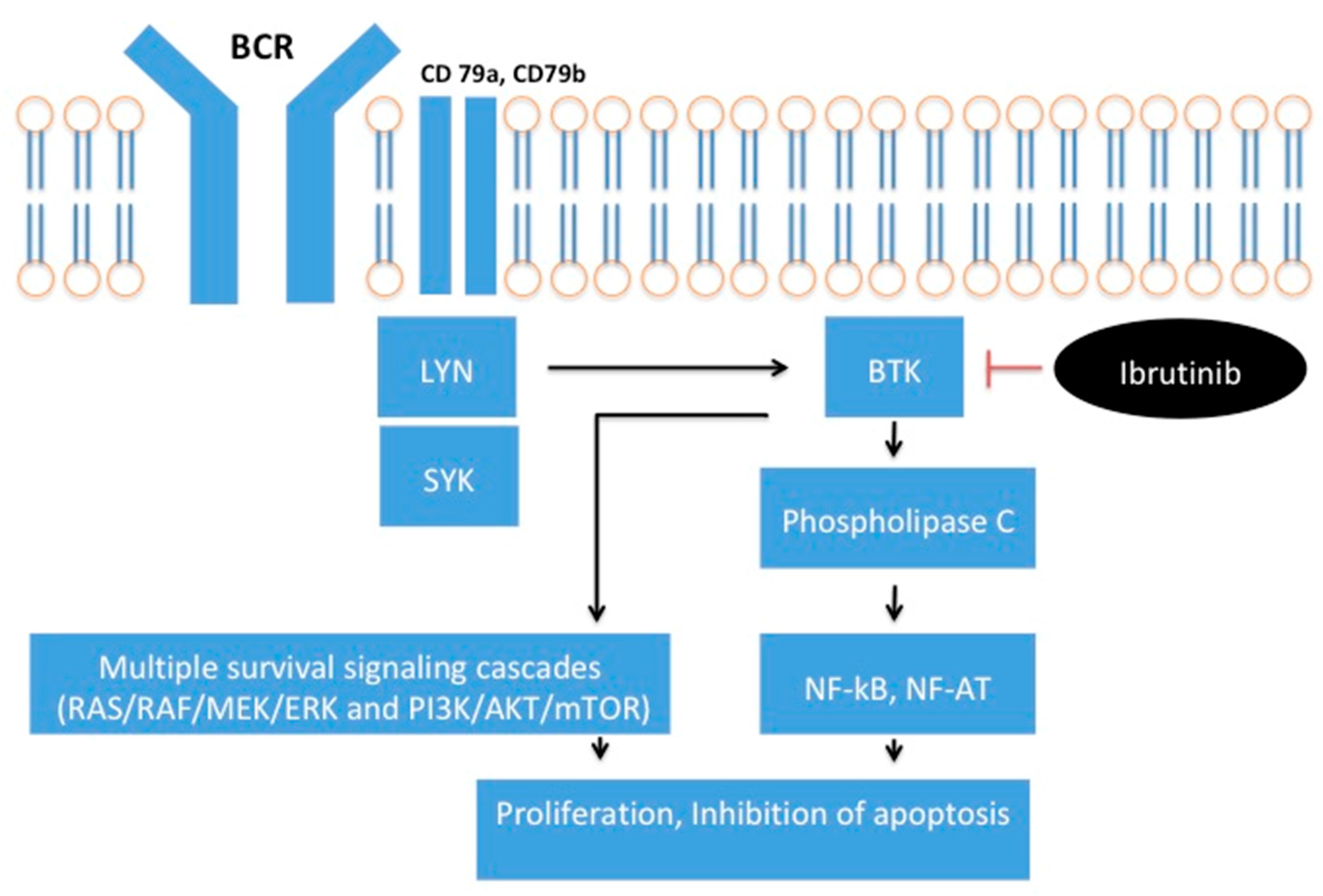
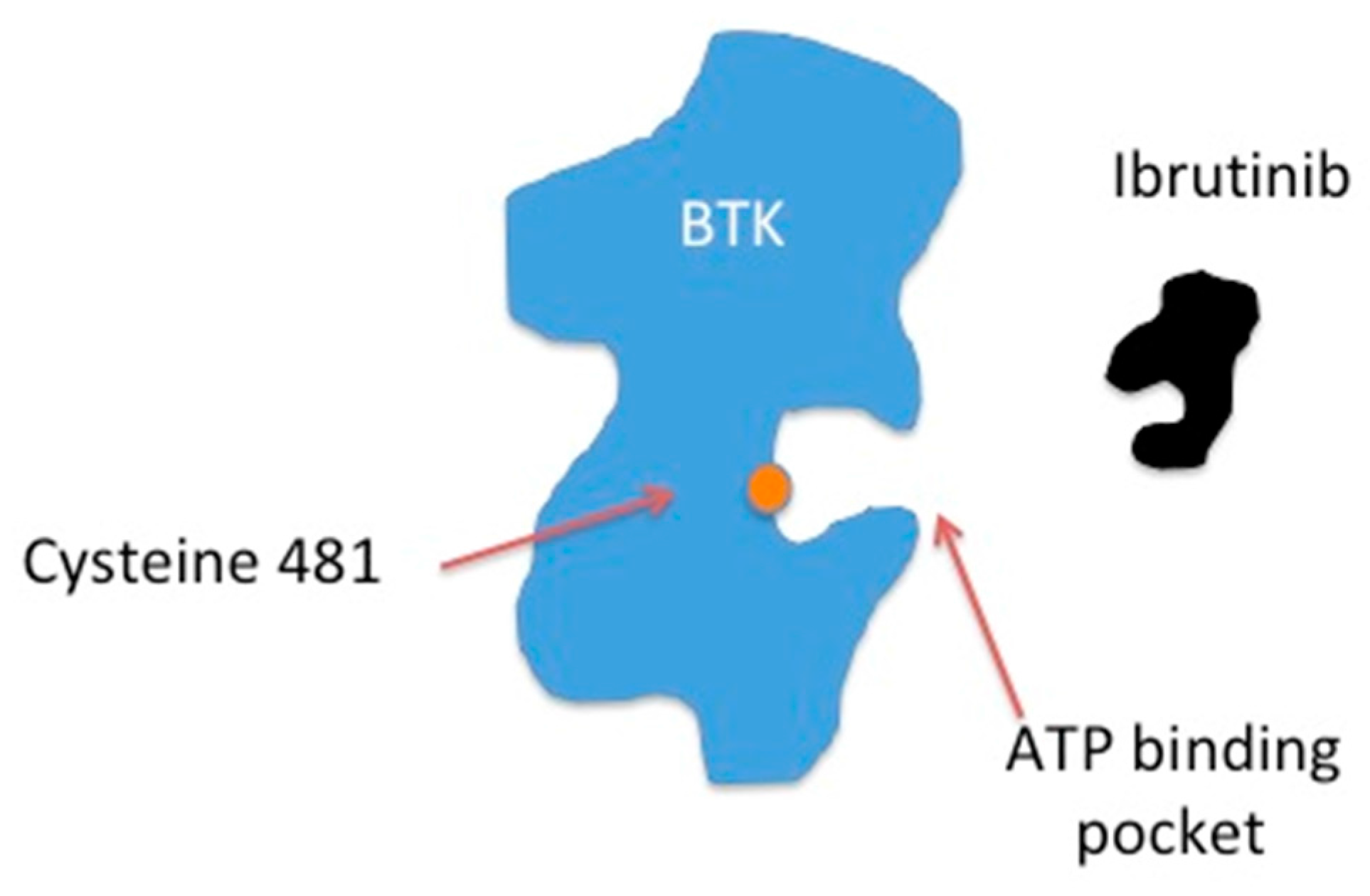
Bruton’s tyrosine kinase (BTK) is a critical terminal enzyme in the B-cell antigen receptor (BCR) pathway. BTK activation has been implicated in the pathogenesis of certain B-cell malignancies. Targeting this pathway has emerged as a novel target in B-cell malignancies, of which ibrutinib is the first-in-class agent. A few other BTK inhibitors (BTKi) are also under development (e.g., acalabrutinib). While the predominant action of BTKi is the blockade of B-cell receptor pathway within malignant B-cells, increasing the knowledge of off-target effects as well as a potential role for B-cells in proliferation of solid malignancies is expanding the indication of BTKi into non-hematological malignancies. In addition to the expansion of the role of BTKi monotherapy, combination therapy strategies utilizing ibrutinib with established regimens and combination with modern immunotherapy compounds are being explored.
Keywords: ibrutinib; Bruton’s tyrosine kinase; solid tumors ibrutinib; Bruton’s tyrosine kinase; solid tumors