Article

Prevalence and Multidrug Resistance of WHO-Priority Bacterial Pathogens in a Romanian Intensive Care Unit

by
Alina Simona Bereanu
1,2,
Bogdan Ioana Vintilă
1,2,*,
Lilioara-Alexandra Oprinca-Muja
1,*,
Rareș Bereanu
1,
Ioana Roxana Codru
1,2,
Raluca Maria Bădilă
2,
Sandra Ioana Neamțu
2,
Cosmin Ioan Mohor
1,2,
Liiana Carmen Prodan
1,2 and
Mihai Sava
1,2
1
Faculty of Medicine, Lucian Blaga University of Sibiu, Lucian Blaga Street 2A, 550169 Sibiu, Romania
2
County Clinical Emergency Hospital, Bld. Corneliu Coposu, nr. 2-4, 550245 Sibiu, Romania
*
Authors to whom correspondence should be addressed.
J. Clin. Med. 2026, 15(7), 2799; https://doi.org/10.3390/jcm15072799
Submission received: 9 March 2026 / Revised: 26 March 2026 / Accepted: 1 April 2026 / Published: 7 April 2026

Abstract

Background/Objectives: The rise in healthcare-associated infections caused by multidrug-resistant (MDR) bacteria in hospitals, particularly in intensive care units, has resulted in increased rates of morbidity and mortality, escalating costs, and has become a significant public health concern. In our Intensive Care Unit, we address healthcare-associated infections caused by multidrug-resistant bacteria, with a specific focus on those listed in the WHO 2024 List of Critically and Highly Prioritized Pathogens. Methods: Over the course of 1 year, from 1 January to 31 December 2024, we monitored the prevalence of healthcare-associated infections in the Intensive Care Unit of the Sibiu County Emergency Clinical Hospital, Romania, and the antibiotic susceptibility of the isolated bacteria. Results: The majority of infections were caused by pathogens in the ESKAPEE group. The most frequently isolated microorganism was Klebsiella pneumoniae (36.8%), followed by Acinetobacter baumannii (24.5%), classified as a critical priority by the WHO in 2024. Most positive samples for critical priority pathogens, including Klebsiella pneumoniae and Acinetobacter baumannii, as well as all MRSA strains (high priority), were obtained from tracheal aspirates collected from intubated and mechanically ventilated patients. A significant proportion of the isolated bacteria were multidrug-resistant, including extensively drug-resistant and pan-drug-resistant strains. Conclusions: The increase in antibiotic and antimicrobial resistance among hospital strains raises serious concerns about limited treatment options.

1. Introduction

The rise in healthcare-associated infections caused by multidrug-resistant (MDR) bacteria in hospitals, particularly in intensive care units, has resulted in limited treatment options, increased rates of morbidity and mortality, escalating costs, and has become a significant public health concern. Statistics show that in 2019, antibiotic resistance was directly responsible for 1.27 million deaths, with an additional 4.95 million deaths associated with it. By 2021, antimicrobial resistance was linked to 4.71 million deaths, including 1.14 million deaths directly caused by it [1,2,3].
Most hospital-acquired infections in intensive care units are from the ESKAPEE group (Enterococcus faecium, Staphylococcus aureus, Klebsiella pneumoniae, Acinetobacter baumannii, Pseudomonas aeruginosa, Enterobacter, Escherichia coli), known for their strong antibiotic resistance. Critical pathogens include carbapenem-resistant A. baumannii, Enterobacterales, and rifampicin-resistant Mycobacterium tuberculosis. High-priority pathogens are fluoroquinolone-resistant Salmonella Typhi, vancomycin-resistant E. faecium, and methicillin-resistant S. aureus. Medium-priority pathogens include macrolide-resistant group A and B Streptococcus, while third-generation cephalosporin-resistant Enterobacterales is now a distinct critical pathogen, and carbapenem-resistant P. aeruginosa has been downgraded to high-priority status [4,5,6,7,8,9,10].
Multidrug-resistant Gram-negative bacteria primarily develop resistance through the production of beta-lactamases, particularly carbapenemases [11,12,13,14]. KPC-producing Enterobacteriaceae are common in Italy, Greece, Israel, Argentina, Colombia, and the US. NDM-1 producers are mostly found in India, Sri Lanka, and Pakistan, while OXA-48-like producers are prevalent in Turkey, Malta, and parts of North Africa and the Middle East [15,16,17,18].
The 2016 European Antibiotic Surveillance Network report indicated an average carbapenem resistance of 6.1%, with higher values in Italy, Greece, and Romania [18]. In 2022, Greek authorities reported an alarming spread of the carbapenemase-producing K. pneumoniae ST39 strain [19]. According to a recent report by the European Antimicrobial Resistance Surveillance Network, the estimated total incidence of carbapenem-resistant K. pneumoniae infections increased by 61% from 2019 to 2024, and the incidence of infections caused by third-generation cephalosporin-resistant E. coli increased by 5.9% [20].
The spread of multidrug-resistant K. pneumoniae in intensive care units is concerning, as it is found in patient secretions and hospital biofilms. This pathogen causes ventilator-associated pneumonia and other healthcare-associated infections. Its resistance mechanisms include gene accumulation via horizontal transfer, enzymatic inactivation of antibiotics, target modification, increased efflux pump activity, and biofilm formation [10,21,22].
A. baumannii develops antibiotic resistance through genetic flexibility, which enables rapid mutation and the mobilization of genetic elements, particularly plasmids. It primarily combats antibiotics by reducing membrane permeability, activating efflux pumps, and modifying antibiotic targets. Additionally, its capacity to form biofilms on medical devices poses a serious risk, particularly in intensive care units [23,24].
P. aeruginosa exhibits strong intrinsic antibiotic resistance, employing efflux pumps to expel antibiotics and possessing a low-permeability outer membrane. It can acquire resistance via gene transfer and mutations and readily colonizes medical devices and hospital surfaces, forming persistent biofilms [25,26].
Gram-positive bacteria employ two main strategies to develop resistance: producing beta-lactamases that degrade antibiotics or modifying the target, namely penicillin-binding proteins (PBPs), either through acquisition of exogenous DNA or through genetic mutations, thereby decreasing antibiotic affinity and increasing treatment resistance. Among the most important multidrug-resistant Gram-positive bacteria are methicillin-resistant S. aureus (MRSA) and vancomycin-resistant E. faecium (VRE) [27,28,29].
Antimicrobial resistance is a significant global public health issue. The WHO’s Global Antimicrobial Resistance and Use Surveillance System (GLASS) monitors this issue. In its December 2022 report, based on 2020 data from 87 countries, it noted rising antimicrobial resistance levels since 2017, particularly high carbapenem resistance in K. pneumoniae and Acinetobacter spp. in blood infections, raising concerns about treatment failure [30,31].
The main objectives of international guidelines include preventing patient colonization, avoiding progression from colonization to infection, and limiting the transmission of MDR bacteria [32,33,34,35,36,37]. The high resistance is due to both the limited diffusion of antimicrobial substances within the biofilm and the phenotypic and genotypic characteristics of the bacteria living within it, which differ from those of planktonic forms [38,39,40,41].
Bacterial biofilm formation involves several stages. First, bacteria attach to a surface and stabilize their attachment by secreting adhesive substances, forming microcolonies. As they mature, bacteria communicate through quorum sensing, increasing biofilm complexity. Eventually, the mature biofilm releases bacteria, allowing them to disperse and colonize new areas, contributing to infection spread [39,40,41,42,43,44,45,46,47,48,49,50,51,52,53]. Between 60% and 80% of microbial infections are associated with the formation of bacterial biofilms [51,54,55]. The primary bacteria in biofilm-related infections on medical devices include Staphylococcus species and multidrug-resistant Gram-negative bacteria such as K. pneumoniae, P. aeruginosa, A. baumannii, and E. coli. In intensive care units, ventilator-associated pneumonia commonly involves Gram-negative aerobic bacteria—especially K. pneumoniae, Acinetobacter species, and P. aeruginosa—found in over 60% of cases, alongside Gram-positive cocci like MRSA [7,43,46,56,57,58,59,60,61,62]. Risk factors for colonization and infection with MDR bacteria include inappropriate antibiotic therapy, prolonged hospitalization in intensive care units, and comorbidities [17,53,63,64,65].
Another category of healthcare-associated infections in intensive care units is infections associated with intravascular catheters. The most commonly implicated bacteria are S. aureus, E. faecalis, P. aeruginosa, and K. pneumoniae [43,54,63]. A 2020 trans-European surveillance report reported a rate of 4.9 bloodstream infections associated with central venous catheters per 1000 catheter days [66]. In the last decade, several practices related to central venous catheterization have changed, reducing infectious complications; some studies suggest potential benefits of scheduled CVC replacement, particularly for non-subclavian catheters [67,68,69,70,71,72,73,74,75,76,77].
Healthcare-associated infections with multidrug-resistant (MDR) bacteria are common in intensive care units due to the fragility of critically ill patients, comorbidities, immunosuppression, and the extensive use of invasive devices and prolonged antibiotic treatment. Despite advancements in technology and new antibiotics, mortality remains high. The death rate among patients with bacteremia or bronchopneumonia caused by carbapenemase-producing K. pneumoniae ranges from 30% to 70% [18,19,78,79,80].
Our paper aims to emphasize the threat posed by antimicrobial resistance and to improve understanding of resistance mechanisms and transmission routes. Such knowledge can better inform infection-control strategies, supporting the development and implementation of local protocols aligned with international guidelines. In our Intensive Care Unit, this challenge is particularly significant: multidrug-resistant bacterial infections are frequently encountered, with carbapenemase-producing K. pneumoniae, a WHO-designated critical-priority pathogen, among the most commonly isolated organisms from samples of critically ill patients.

2. Materials and Methods

Clinical specimens included tracheal aspirates, bronchial aspirates, central venous catheter tips, blood cultures, pharyngeal exudates, wound secretions (from surgical wounds, abscesses, and superinfected venous ulcers), urine cultures, and pleural fluid. The classification of cases as infections and their reporting as healthcare-associated infections were conducted by the attending physician in collaboration with the Infection Prevention and Control Service of the Sibiu County Emergency Clinical Hospital. The reporting cases of infection were made in accordance with the case definitions outlined in European Commission Decision 945/2018, dated 22 June 2018, which addresses communicable diseases and related public health issues requiring epidemiological surveillance; these case definitions are also regulated by law in our country [81]. Descriptive statistics were used to summarize categorical variables as frequencies and percentages. Due to the descriptive nature of the study, no inferential statistical tests were applied.

2.1. Sample Collection and Bacterial Isolation

The present study was conducted over 1 year, from January 2024 to December 2024, involving patients admitted to the Intensive Care Unit of the Sibiu County Emergency Clinical Hospital. This study protocol was approved by the Ethics Committee of the Sibiu County Clinical Emergency Hospital (Approval No. 26995/13 November 2023). Isolates were identified using traditional biochemical methods, including Triple Sugar Iron (TSI) agar, Motility Indole Urease (MIU) tests, and Simmons citrate agar. Additional identification techniques included Gram and methylene blue staining, as well as the automated Vitek 2 Compact identification system. In some instances, molecular biology tests were conducted on samples collected from the upper respiratory tract. The tests used the GeneXpert system, which detects COVID-19, influenza, and respiratory syncytial virus, and the BioFire panel, which identifies pathogens responsible for upper and lower respiratory infections, sepsis, meningitis, joint infections, gastrointestinal infections, and tropical fever.

2.2. Antimicrobial Susceptibility Testing

Currently, our laboratory adheres to the standards established by the Clinical and Laboratory Standards Institute (CLSI—2024, M100, 34th edition). There were two main methods for evaluating antibacterial activity: the diffusion method (Kirby–Bauer) and the dilution method, which allows for the precise determination of the Minimum Inhibitory Concentration (MIC).
Kirby–Bauer method. This method involves seeding the test bacteria onto the surface of Mueller–Hinton solid medium, followed by the application of antibiotic micro-tablets to the medium surface, in accordance with CLSI standards. The antibiotic diffuses into the culture medium, gradually decreasing in concentration as it moves away from the disc. The bacteria grow uniformly across the medium until they reach the area where the antibiotic concentration equals the MIC. The diameters of the inhibition zones are measured and compared with international reference values (CLSI) to determine the sensitivity or resistance category.
Automated antibiogram—Vitek 2 Compact. This system allows both the identification of bacteria and fungi and the testing of their antibiotic sensitivity using special cards (GP card—Gram-positive bacteria, GN card—Gram-negative bacteria, YST card—yeast, ANC—anaerobic bacteria and Corynebacteria, NH—Neisseria and Haemophilus). The reading is performed using the turbidimetric method. The system includes the Advanced Expert System (AES) software (MYLA software, version 4.9, Biomerieux, l’Étoile, France), which validates results by referencing a complex database.
Antibiogram by broth microdilution. This is the standardized method for assessing antibiotic sensitivity and is used in our laboratory only for cases of MDR, XDR, and PDR infections. During the period analyzed, the method was applied exclusively for colistin testing.
Resistance classifications follow the international definitions proposed by Magiorakos et al. [67]: MDR—multidrug-resistant, XDR—extensively drug-resistant, and PDR—pan-drug-resistant.

3. Results

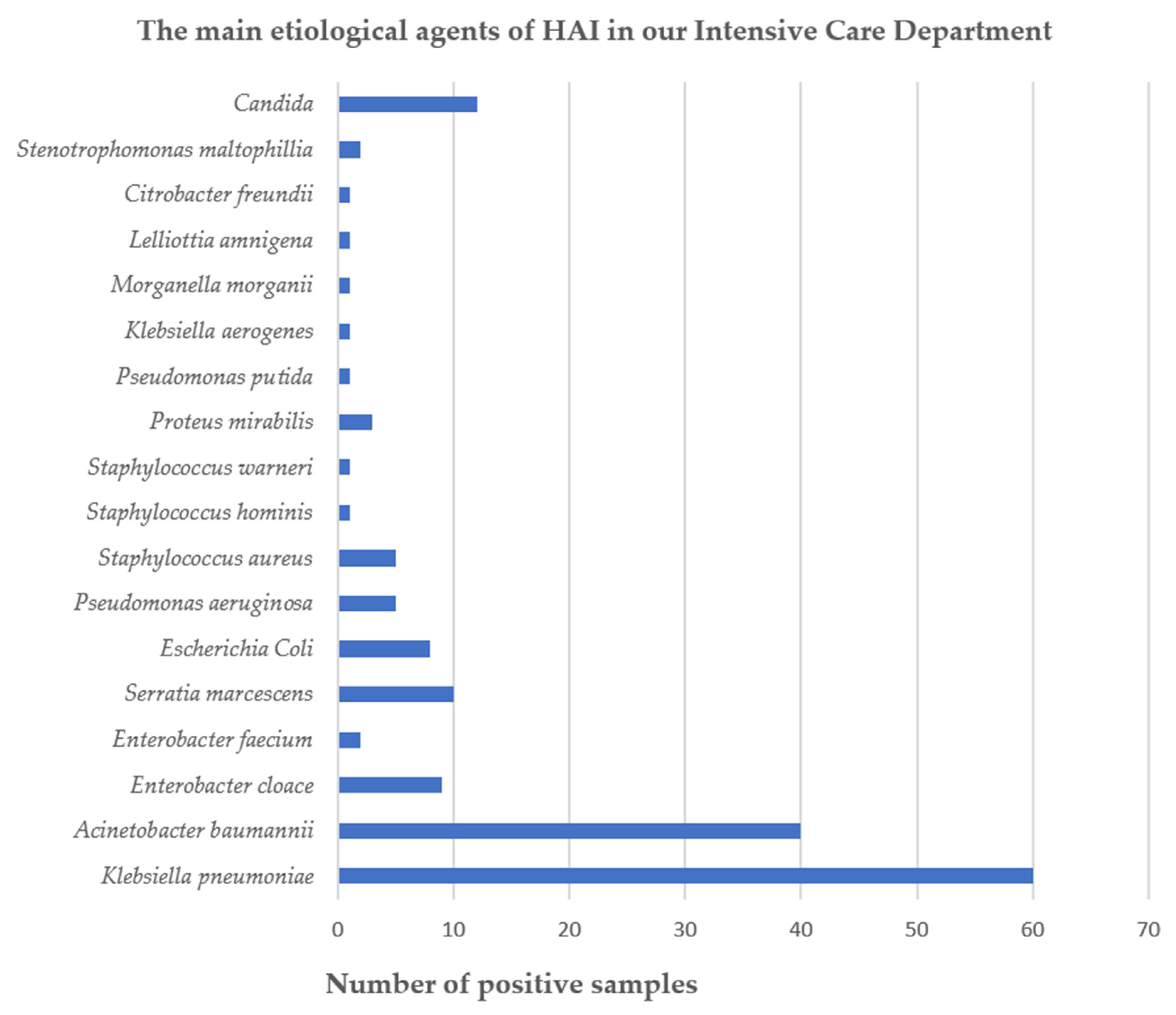
Over the course of one year, from 1 January to 31 December 2024, we monitored the prevalence of healthcare-associated infections in the Intensive Care Unit of the Sibiu County Emergency Clinical Hospital and the antibiotic susceptibility of the isolated bacteria. The majority of infections were caused by pathogens in the ESKAPEE group. The most frequently isolated microorganism was K. pneumoniae (36.8%), followed by A. baumannii (24.53%). Other Gram-negative bacteria included E. cloacae (5.53%), E. coli (4.9%), and P. aeruginosa (3%). Gram-positive cocci were identified less often, with S. aureus accounting for 3% and E. faecium for 1.22%. In total, 163 microorganisms were identified during the study period, of which 151 (92.6%) were bacterial species and 12 (7.4%) were fungal species (Figure 1, Table 1 and Table 2). Overall, the pathogens with the highest incidence were K. pneumoniae—a WHO 2024 BPPL critical-priority agent—representing 36.8% of isolates, followed by A. baumannii, also classified as a critical-priority pathogen, at 24.53%. A total of 163 hospital-acquired infections were identified according to the definitions outlined in the Materials and Methods section. These infections occurred in 88 patients, with some patients experiencing more than one HAI, either as coinfections at the same anatomical site or as infections involving different anatomical sites.
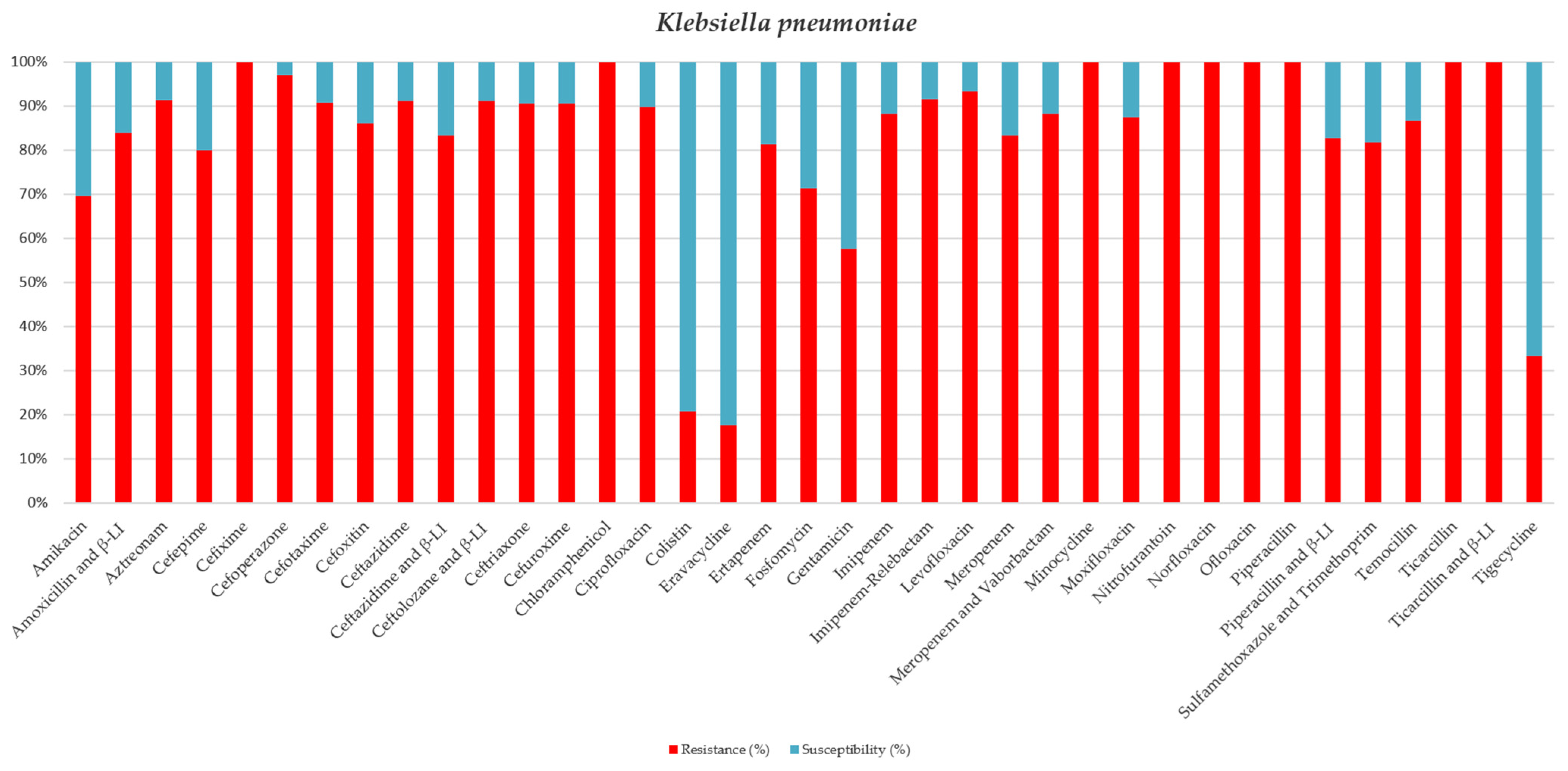
We present the incidence of bacteria classified by the WHO as critical and high-priority, isolated from patients’ secretions admitted to our Intensive Care Unit, along with their antibiotic resistance patterns for 2024 (see Tables and Figures). Most of the isolated bacteria (68.09%) associated with hospital-acquired infections were resistant to antibiotics, including ESBL, MDR, XDR, and even PDR strains. Among the K. pneumoniae strains isolated, 37 (61.66%) were classified as XDR, while 5 (8.33%) were classified as PDR (refer to Table 3 and Figure 2). Notably, over 80% of these strains were resistant to carbapenems.
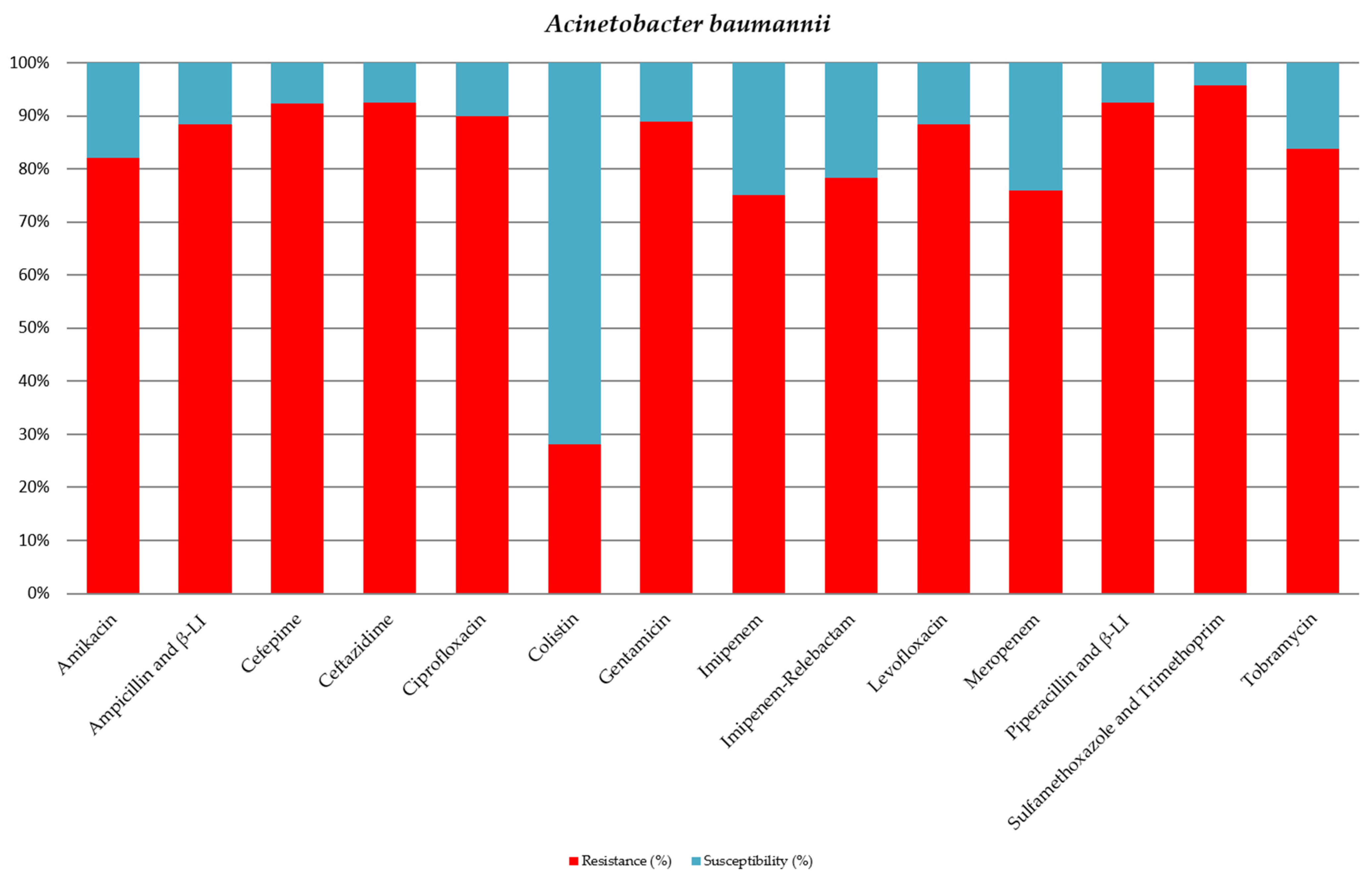
Of the isolated strains of A. baumannii, 28 strains (70%) were classified as XDR, while five strains (12.5%) were classified as PDR (Table 4, Figure 3). The majority of strains (over 70%) exhibited carbapenem resistance.
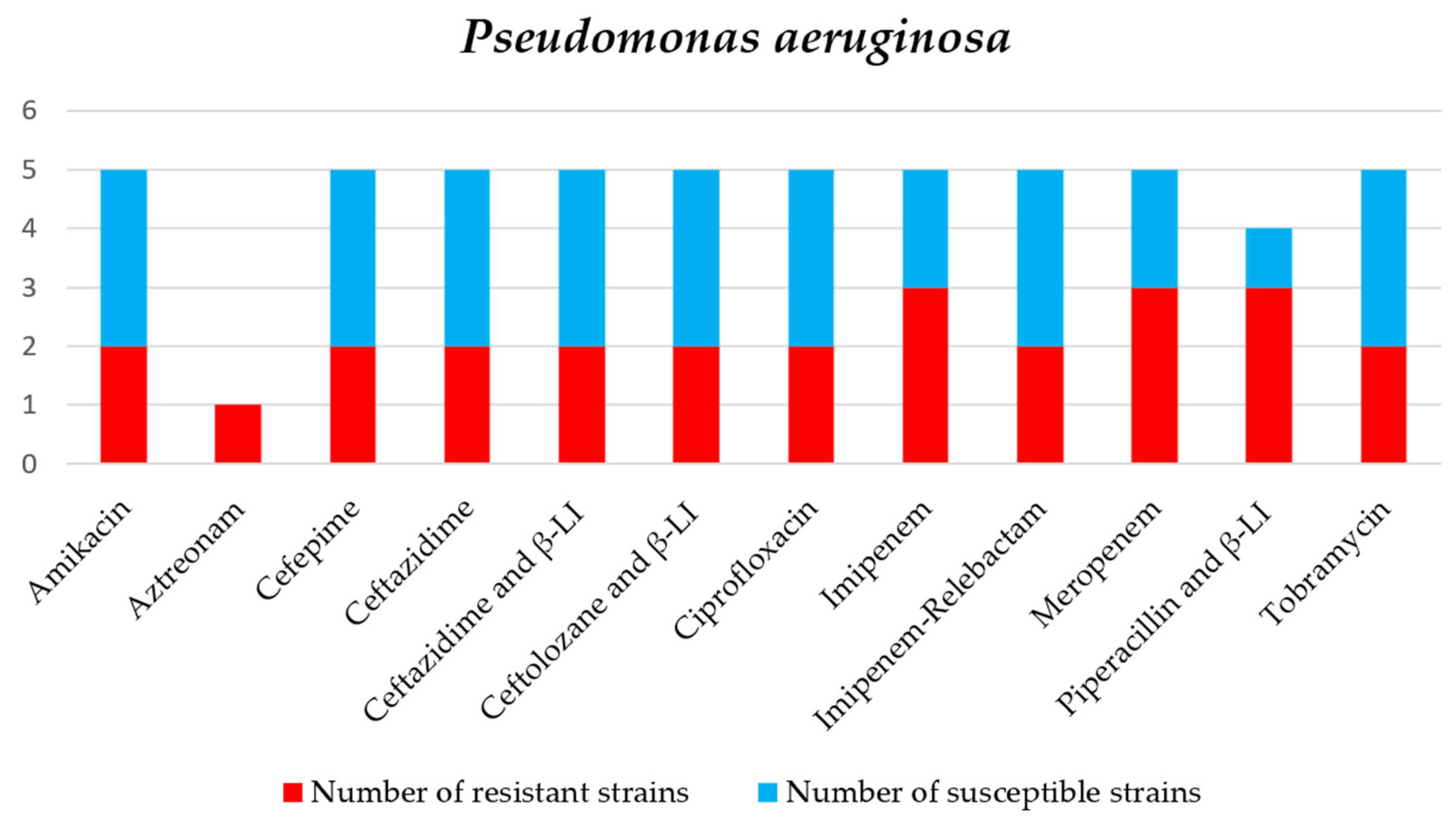
Regarding P. aeruginosa, 2 of 5 isolates (40%) were classified as XDR, both obtained from tracheal aspirates (see Table 5 and Figure 4). The rate of carbapenem resistance was about 60% among these strains, which is lower than that observed in K. pneumoniae and A. baumannii.
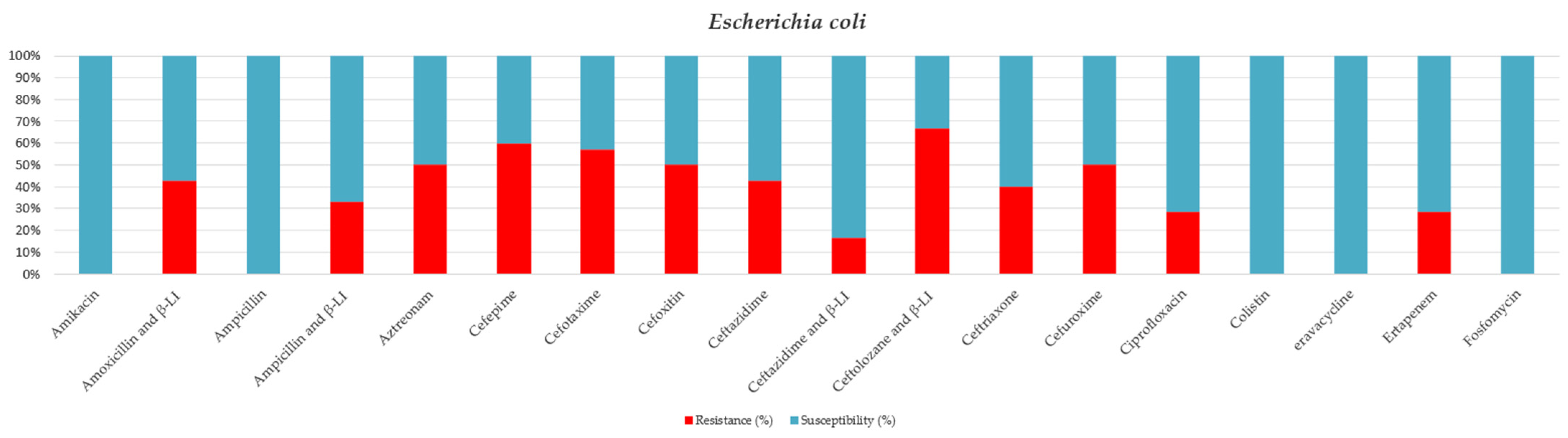
Most of the isolated E. coli strains did not show any pattern of antibiotic resistance (75%) (Table 6 and Figure 5).
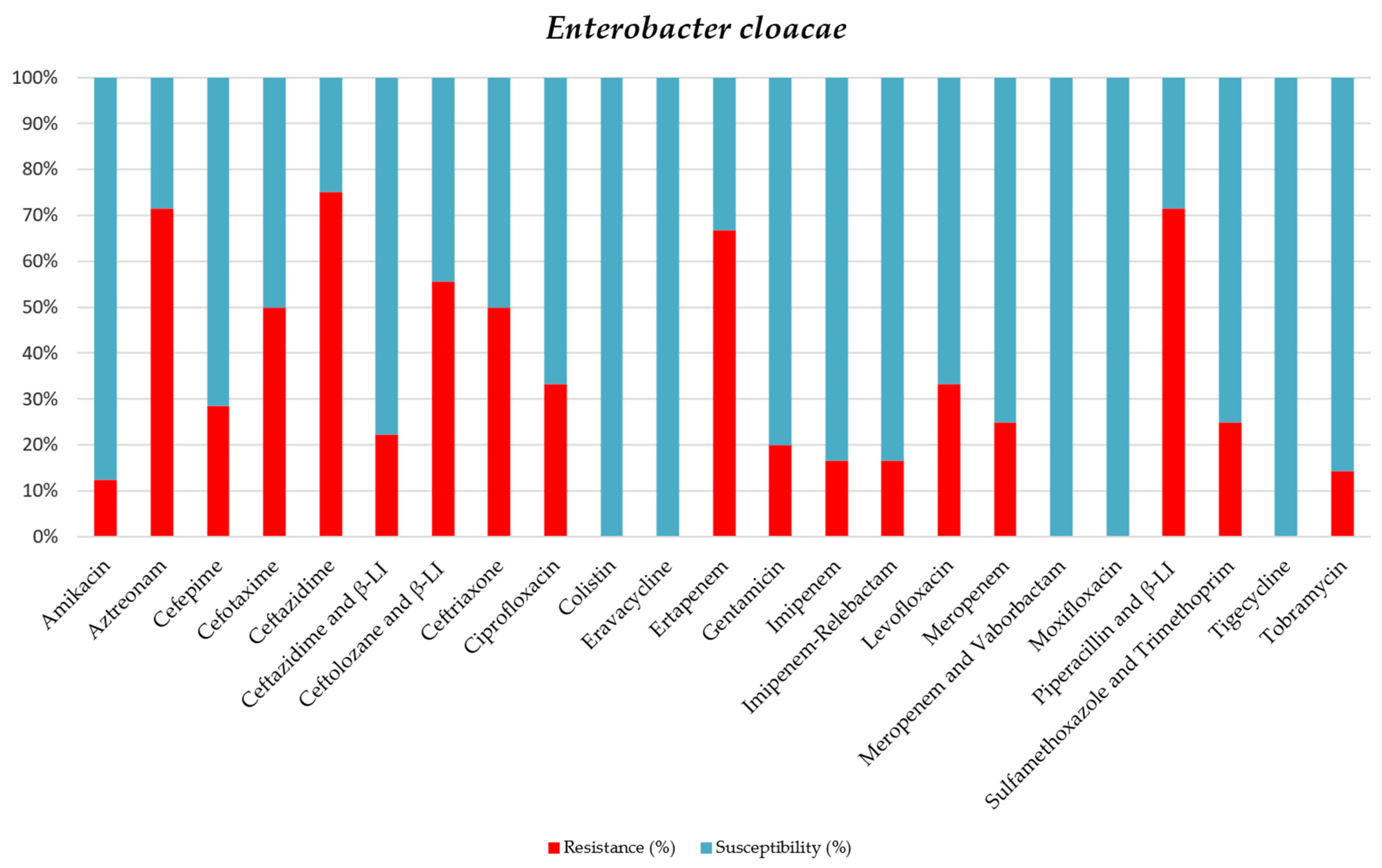
Out of the nine strains of E. cloacae, one strain was classified as XDR (11.1%), and another was classified as PDR (11.1%) (Table 7 and Figure 6).
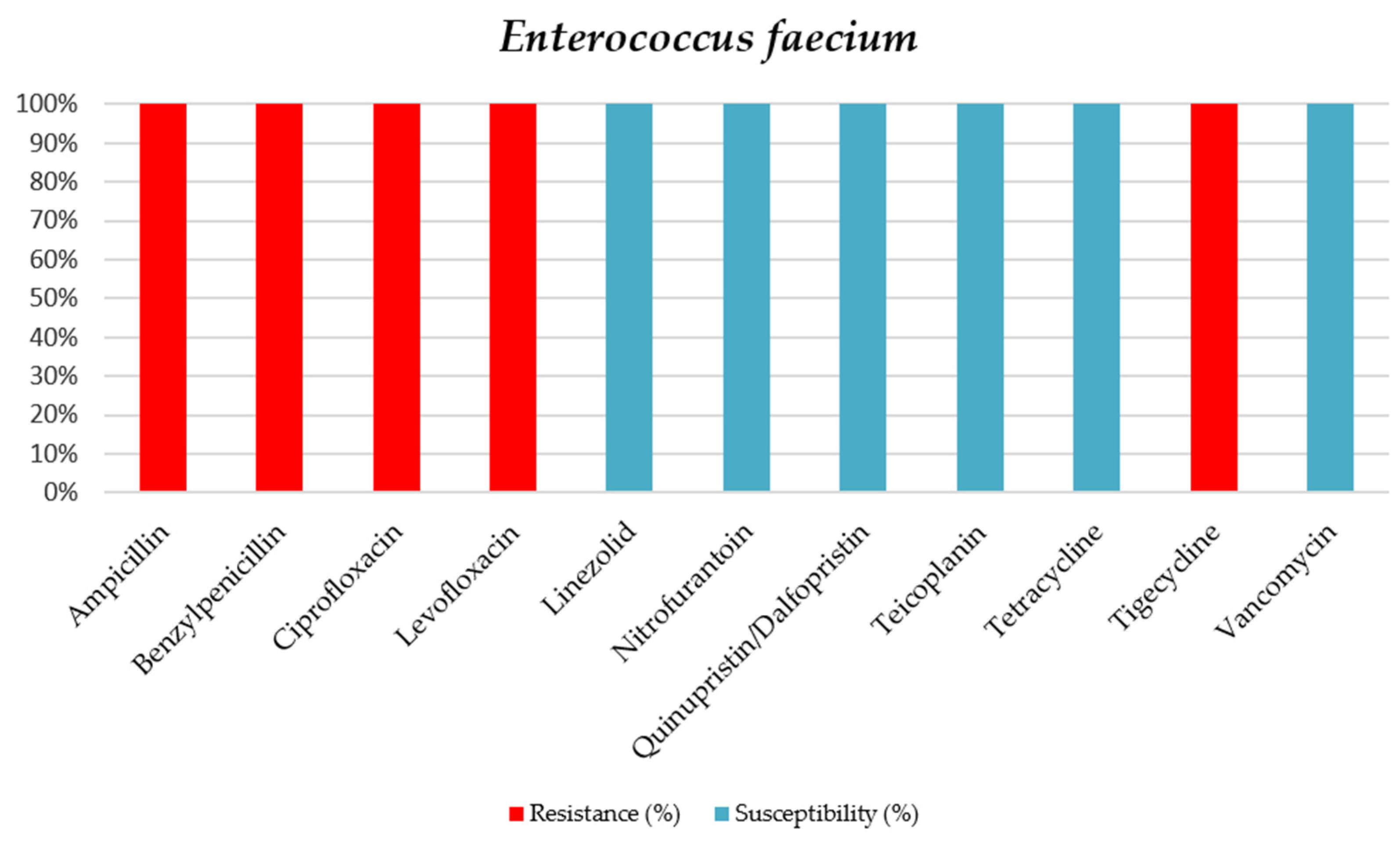
Only two E. faecium samples were positive, and both showed no resistance to Vancomycin (see Table 8 and Figure 7).
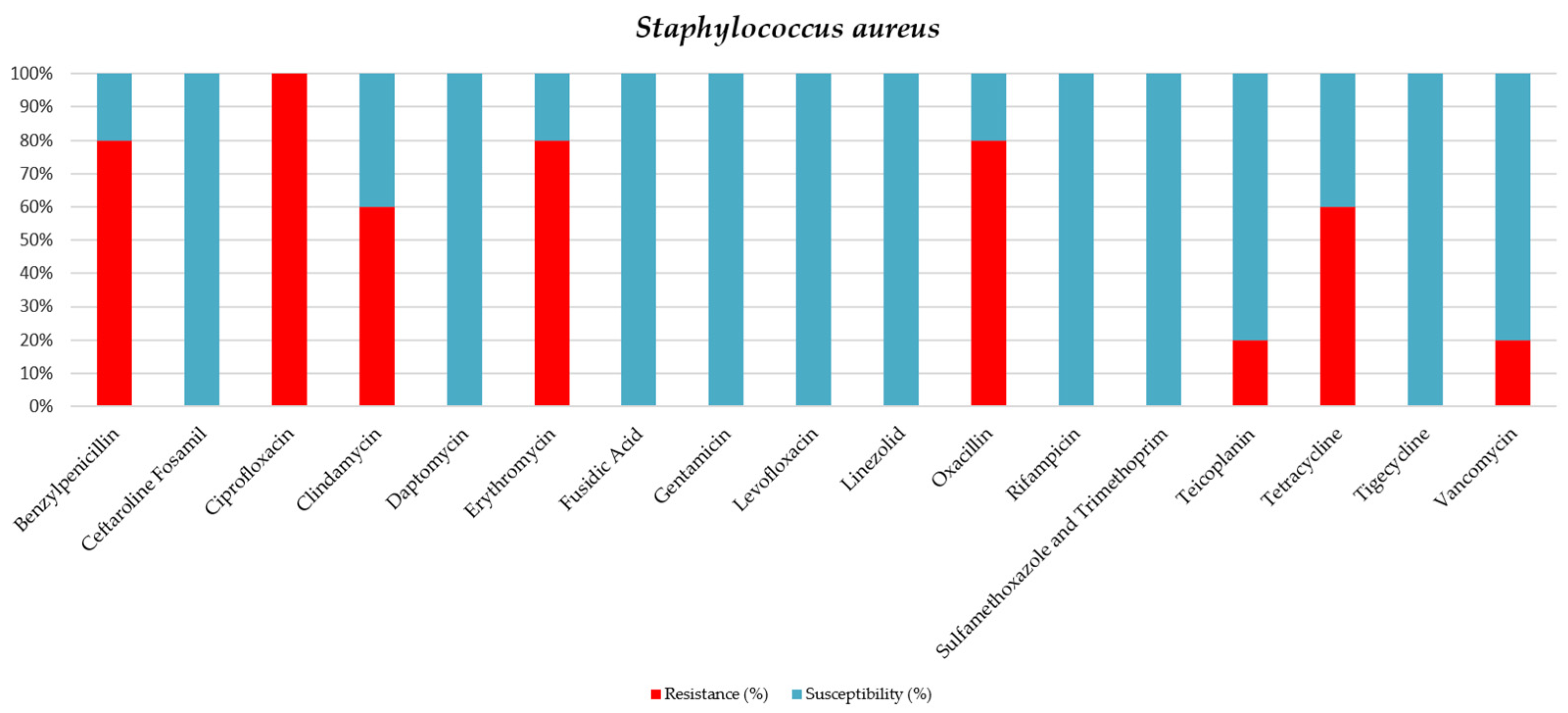
Of the five samples positive for S. aureus (all tracheal aspirates), four samples were positive for MRSA (80%) (Table 9).
Out of a total of 163 positive samples collected from patients, 95 (58.28%) were tracheal and bronchial aspirate samples. The majority of these positive tracheal and bronchial aspirates were K. pneumoniae (32 samples) and A. baumannii (30 samples) (see Table 2 and Table 3). All samples that tested positive for S. aureus were from tracheal aspirates. Methicillin-resistant S. aureus accounted for 80% of S. aureus cases, as 4 of 5 tracheal aspirate samples were positive for S. aureus and were MRSA (see Table 8 and Figure 8).
Six positive samples were identified from the tips of central venous catheters extracted from patients and sent to the Microbiology Laboratory for analysis. Among these six samples, two tested positive for A. baumannii, two for K. pneumoniae, and two for E. cloacae (see Table 2, Table 3 and Table 6). No central venous catheter-related infections were identified in these patients, as peripheral blood cultures were negative. These findings were classified as colonizations of the central venous catheters. Additional positive results included 21 urine cultures and 19 blood cultures. Furthermore, 18 samples collected from surgical wounds, abscesses, and superinfected varicose ulcers tested positive for various microorganisms (see Table 10).
A significant proportion (68.09%) of the bacteria isolated from samples collected from critically ill patients exhibited antibiotic resistance, including MDR, XDR, and even PDR. Among the five samples positive for S. aureus (all tracheal aspirates), four were identified as MRSA, representing 80% of the samples.
Among antibiotic-resistant bacterial isolates, a very high percentage of XDR (60.36%) and PDR (9.9%) strains were observed (Table 11). The bacteria were resistant to all antibiotics tested (PDR), including five strains of K. pneumoniae, five strains of A. baumannii, and one strain of E. cloacae.

4. Discussion

In our Intensive Care Unit, we address healthcare-associated infections caused by multidrug-resistant bacteria, with a specific focus on those listed in the WHO 2024 List of Critically and Highly Prioritized Pathogens [8,9]. Among the microorganisms isolated in our unit, K. pneumoniae was the most frequently identified. Of all isolated organisms (bacteria and fungi), 36.8% were K. pneumoniae, primarily isolated from tracheal aspirates of patients. A smaller percentage came from other sources, such as blood cultures, urine cultures, wound secretions, and invasive medical devices (central venous catheters), used for critically ill patients. The second most commonly isolated organism in our department is A. baumannii, which, like K. pneumoniae, was primarily isolated from tracheal aspirates of these patients.
According to the World Health Organization’s 2024 Priority Pathogen List, antibiotic-resistant Gram-negative bacteria, including K. pneumoniae, Acinetobacter spp., and E. coli, were assigned to the highest-priority quartile. Notably, carbapenem-resistant K. pneumoniae ranked first, receiving a priority score of 84%. In our study, we found that over 80% of K. pneumoniae strains and more than 70% of A. baumannii strains exhibited carbapenem resistance. P. aeruginosa demonstrated a 60% resistance rate to carbapenems. In fact, in 2024, the WHO reclassified P. aeruginosa from a critically prioritized pathogen to a high-priority pathogen, indicating a decrease in resistance compared to its 2017 classification [8,9].
Among Gram-positive bacteria, the highest rankings in the WHO’s BPPL 2024 are Vancomycin-resistant E. faecium (69%) and Methicillin-resistant S. aureus (59%). In our unit, we isolated two Enterococcus strains from patients; neither showed resistance to Vancomycin. Regarding S. aureus isolates from our patients, although they accounted for a low incidence relative to the total number of microorganisms isolated, the majority (80%) were identified as MRSA. All MRSA strains were sourced from tracheal aspirates [8,9].
Most positive K. pneumoniae samples were collected from tracheal aspirates (48.33%). Similarly, 67.5% of positive A. baumannii samples were from tracheal aspirates. The risk of ventilator-associated pneumonia increases exponentially in patients who have been mechanically ventilated for more than 48 h, making it the most common healthcare-associated infection in intensive care units. The endotracheal tube is believed to be the primary source of VAP, as it disrupts the upper respiratory tract’s natural defense mechanisms, allowing pathogens to invade the tracheobronchial tree. One mechanism of bacterial resistance to antibiotics is biofilm formation on biotic and abiotic surfaces, including medical devices and hospital surfaces. Many microorganisms can easily adhere to the endotracheal tube, forming biofilms and colonizing both the tube and the patient’s mucosa. The transition from colonization to infection poses a significant threat, particularly because biofilm-associated microorganisms are highly resistant to antibiotics and other antimicrobials. Despite technological advancements, identifying multi-microbial biofilms remains challenging. It is also difficult to distinguish between an actual infection and colonization of the patient’s mucosa or intubation tube. This complicates the etiological diagnosis of VAP and may hinder the implementation of an appropriate therapeutic regimen [46,59,60,61,68].
The primary cause of VAP is typically bacterial, with Gram-negative bacteria such as K. pneumoniae, Acinetobacter species, P. aeruginosa, Enterobacter spp., Stenotrophomonas maltophilia, and Serratia marcescens accounting for the majority of cases (approximately 60%). Additionally, Gram-positive cocci, particularly methicillin-resistant S. aureus, are also significant contributors [46,58,60,61]. In our department, VAP was the most common healthcare-associated complication, and its etiology was consistent with findings reported in the literature. Of the 163 positive samples collected from patients, 98 (60.12%) were obtained from tracheal and bronchial aspirates. Biofilms serve as reservoirs for multidrug-resistant pathogens. The internal organization of these biofilms, along with processes such as the horizontal transfer of resistance genes and genetic mutations, contributes to an increased resistance to disinfectants, antimicrobials, and antibiotics. Conversely, the widespread use of antimicrobials (including antibiotics) or repeated inadequate disinfection can further promote bacterial resistance [69,70,71,72,73,74,75,76,77,80,82,83,84,85,86,87,88,89]. MDR bacteria easily form biofilms on invasive medical devices such as catheters, drainage tubes, and endotracheal tubes. They can also develop on the hands of medical staff and on surfaces in the hospital environment, known as dry-surface biofilms. Multidrug-resistant Gram-negative bacteria, including K. pneumoniae, A. baumannii, P. aeruginosa, and E. coli, are frequently found in biofilms on urinary catheters and central venous catheters [41,45,46,90,91,92,93,94,95,96,97]. In 2021, Folliero and colleagues published a study that focused on identifying the primary microorganisms that colonize medical devices, their capacity to form biofilms, and the prevalence of multidrug-resistant strains within those biofilms. They found that 72.7% of K. pneumoniae strains produced biofilms. This bacterium was commonly found in urinary catheters, nephrostomy tubes, abdominal drains, and central venous catheters. Moreover, some biofilms from medical devices contained more than one type of microorganism. Regarding antibiotic resistance, 59.2% of the isolated strains were classified as multidrug-resistant [41].
In our unit, six positive samples were identified from central venous catheter tips extracted from patients and sent to the microbiology laboratory for analysis. These samples account for 3.68% of the total number of positive cultures isolated. Among these, two samples tested positive for A. baumannii, two for K. pneumoniae, and two for E. cloacae, which were found to be sensitive to Vancomycin. Furthermore, no central venous catheter-related bloodstream infections (CRBSI) were detected in these patients, as blood cultures obtained simultaneously from a peripheral vein were negative.
Over the past decade, practices related to central venous catheter placement have evolved, leading to a reduction in both infectious and non-infectious complications. Using a 2% chlorhexidine alcohol solution for skin preparation before catheter placement has been shown to significantly reduce the risk of catheter-related infections compared with a 5% povidone-iodine solution. Guidelines now recommend ultrasound-guided techniques for CVC insertion, and these methods have become standard in many medical centers, including our unit. Ultrasound-guided CVC placement allows for access to the internal jugular vein at its more proximal region or to the brachiocephalic vein. This approach facilitates a better seal of the chlorhexidine dressing, thereby reducing the risk of infection from dressing discontinuity. Numerous studies have demonstrated that transparent chlorhexidine-impregnated dressings are superior to standard dressings in reducing the risk of infection. Their use is recommended in international guidelines and is also standard practice in our Intensive Care Unit. Collectively, these advancements have significantly reduced the risk of infections associated with central venous catheters [66,98,99,100,101,102,103,104,105,106,107,108,109,110]. The REAREZO study group published the results in 2024, showing decreases in the incidence of CRBSI (fewer than 1 per 1000 CVC days) and CVC colonization (fewer than 7 per 1000 CVC days) [75].
The main objectives include preventing patient colonization and avoiding progression from colonization to invasive infection, because the mortality rate among patients with bacteremia or respiratory infections caused by MDR bacteria, especially carbapenemase-producing K. pneumoniae, remains high [97,98,99]. The materials used to manufacture invasive medical devices can impact bacterial adhesion and biofilm formation. This influence depends on several factors, including the hydrophobicity of the device material and the hydrophobicity of the bacterial cell wall. Thorarinsdottir and colleagues (2020) demonstrated that noble-metal-coated PVC endotracheal tubes significantly reduced the rate of bacterial biofilm formation compared to standard PVC tubes [84]. Polyvinyl chloride is hydrophobic, which helps explain why hydrophobic bacteria have a strong affinity for PVC endotracheal tubes, whereas noble metal-coated PVC tubes are hydrophilic. The cell wall of K. pneumoniae is also hydrophobic, further contributing to its tendency to adhere to PVC tubes [91,92,93,97]. Most endotracheal tubes used in our intensive care unit are made of PVC, which accounts for the high rate of tracheal aspirates that test positive for K. pneumoniae.
Since 2011, the CDC has highlighted that polyurethane CVCs have a lower infection rate than those made of polyvinyl chloride or polyethylene. The guidelines also recommend using CVCs impregnated with chlorhexidine/silver sulfadiazine or minocycline/rifampin—impregnated CVC in patients whose catheter is expected to remain in place more than five days. This recommendation remains in place today [98].
Dry-surface biofilms are found in hospital settings, particularly in Intensive Care Units near patients, such as on mattresses and bed rails. However, they can also be found farther away on frequently touched surfaces like door handles, light switches, trolley handles, ceilings, curtains, keyboards, and window sills. DSBs are resistant to common disinfectants and antimicrobials, which contributes to the spread of healthcare-associated infections. Additionally, polymicrobial biofilms are more resistant to disinfection than monomicrobial biofilms [111,112,113,114,115,116]. Dry biofilms on frequently touched surfaces in Intensive Care are a significant reservoir for pathogens [92,117]. In 2023, Centeleghe and colleagues published a study confirming that K. pneumoniae can survive on dry surfaces as dried bacterial cells for an extended period. The study found that this bacterium can remain viable on a dry surface for up to 4 weeks, even as its culturability declines [118].
K. pneumoniae MDR, classified by the WHO in 2024 as a critical priority with the highest priority score, is frequently encountered in our Intensive Care Unit. This pathogen has special abilities that enable it to survive extreme physical conditions, readily form biofilms, and rapidly acquire resistance to antibiotics and other antimicrobials.
This study has several limitations that should be acknowledged. First, the retrospective and single-center design limits the generalizability of the findings and restricts causal interpretations. Consequently, a comprehensive characterization of the underlying resistance mechanisms was not possible in our setting, limiting the ability to correlate phenotypic resistance profiles with specific genetic determinants. Additionally, molecular epidemiological analyses, such as multilocus sequence typing or whole-genome sequencing, were not performed; therefore, it was not possible to determine whether the high resistance rates observed were due to clonal dissemination or to independent emergence under antibiotic selective pressure. Finally, the study primarily provides a descriptive analysis of ICU pathogens, and the absence of longitudinal clinical correlations or systematic characterization of resistance genes limits the ability to assess the temporal dynamics of antimicrobial resistance or the impact of specific clinical interventions.


5. Conclusions

This study describes the microbiological profile and antimicrobial resistance patterns of healthcare-associated infections in the Intensive Care Unit of the Sibiu County Clinical Emergency Hospital during 2024. A total of 163 isolates were identified, predominantly Gram-negative bacteria from the ESKAPEE group. Klebsiella pneumoniae (36.8%) and Acinetobacter baumannii (24.5%) were the most frequently isolated pathogens, most commonly recovered from tracheal and bronchial aspirates associated with ventilator-associated pneumonia. A high proportion of bacterial isolates (68.1%) exhibited antimicrobial resistance, including ESBL, MDR, XDR, and PDR phenotypes. XDR strains represented the largest category, particularly among K. pneumoniae and A. baumannii, which also showed high rates of carbapenem resistance. MRSA was identified in 80% of Staphylococcus aureus isolates. These findings highlight the predominance of multidrug-resistant Gram-negative pathogens among healthcare-associated infections in our ICU and provide a local antimicrobial resistance profile that may support infection surveillance and antimicrobial stewardship strategies.

Author Contributions

Conceptualization, A.S.B., M.S. and B.I.V.; methodology, A.S.B., M.S., B.I.V., I.R.C. and R.B.; software, A.S.B., M.S., R.B., B.I.V. and L.-A.O.-M.; validation, A.S.B., M.S., B.I.V., L.-A.O.-M., R.B., I.R.C., R.M.B., S.I.N., C.I.M. and L.C.P.; formal analysis, A.S.B., M.S., B.I.V., R.M.B., C.I.M. and L.C.P.; investigation, A.S.B., M.S., B.I.V., R.B., S.I.N. and I.R.C.; resources, A.S.B., M.S., B.I.V., R.B., C.I.M. and L.C.P.; data curation, A.S.B., M.S., B.I.V., R.B., I.R.C. and R.M.B.; writing—original draft preparation, A.S.B., M.S., B.I.V., R.B. and L.-A.O.-M.; writing—review and editing, A.S.B., M.S., B.I.V., R.B., I.R.C. and C.I.M.; visualization, A.S.B., M.S., B.I.V., R.B., L.-A.O.-M., I.R.C., R.M.B., S.I.N., C.I.M. and L.C.P., supervision, A.S.B.; project administration, A.S.B. All authors have read and agreed to the published version of the manuscript.

Funding

This research received no external funding.

Institutional Review Board Statement

This study protocol has been approved by the Institutional Review Board of the Ethics Committee of Sibiu County Clinical Emergency Hospital, No. 26995/13 November 2023.

Informed Consent Statement

This is a retrospective analysis of de-identified patient data and poses no risk to participants’ rights.

Data Availability Statement

Data are contained within this article.

Conflicts of Interest

The authors declare no conflicts of interest.

References

  1. Ma, J.; Song, X.; Li, M.; Yu, Z.; Cheng, W.; Yu, Z.; Zhang, W.; Zhang, Y.; Shen, A.; Sun, H.; et al. Global Spread of Carbapenem-Resistant Enterobacteriaceae: Epidemiological Features, Resistance Mechanisms, Detection and Therapy. Microbiol. Res. 2023, 266, 127249. [Google Scholar] [CrossRef] [PubMed]
  2. Ranjbar, R.; Alam, M. Antimicrobial Resistance Collaborators (2022). Global Burden of Bacterial Antimicrobial Resistance in 2019: A Systematic Analysis. Evid. Based. Nurs. 2023, 27, 16. [Google Scholar] [CrossRef] [PubMed]
  3. Naghavi, M.; Vollset, S.E.; Ikuta, K.S.; Swetschinski, L.R.; Gray, A.P.; Wool, E.E.; Robles Aguilar, G.; Mestrovic, T.; Smith, G.; Han, C.; et al. Global Burden of Bacterial Antimicrobial Resistance 1990–2021: A Systematic Analysis with Forecasts to 2050. Lancet 2024, 404, 1199–1226. [Google Scholar] [CrossRef]
  4. Santajit, S.; Indrawattana, N. Mechanisms of Antimicrobial Resistance in ESKAPE Pathogens. Biomed Res. Int. 2016, 2016, 2475067. [Google Scholar] [CrossRef]
  5. Y. Mahmood, H.; Jamshidi, S.; Mark Sutton, J.; Rahman, K.M. Current Advances in Developing Inhibitors of Bacterial Multidrug Efflux Pumps. Curr. Med. Chem. 2016, 23, 1062–1081. [Google Scholar] [CrossRef]
  6. Sava, M.; Codru, I.R.; Bereanu, A.S.; Stoia, O.; Vintila, B.I.; Sava, M.; Codru, I.R.; Bereanu, A.S.; Stoia, O.; Vintila, B.I. Resistance Dynamics in a Romanian Critical Care Unit: Four Years of ESKAPE Pathogen Surveillance. Medicina 2025, 61, 2114. [Google Scholar] [CrossRef]
  7. Bereanu, A.S.; Bereanu, R.; Mohor, C.; Vintilă, B.I.; Codru, I.R.; Olteanu, C.; Sava, M. Prevalence of Infections and Antimicrobial Resistance of ESKAPE Group Bacteria Isolated from Patients Admitted to the Intensive Care Unit of a County Emergency Hospital in Romania. Antibiotics 2024, 13, 400. [Google Scholar] [CrossRef]
  8. Sati, H.; Carrara, E.; Savoldi, A.; Hansen, P.; Garlasco, J.; Campagnaro, E.; Boccia, S.; Castillo-Polo, J.A.; Magrini, E.; Garcia-Vello, P.; et al. The WHO Bacterial Priority Pathogens List 2024: A Prioritisation Study to Guide Research, Development, and Public Health Strategies against Antimicrobial Resistance. Lancet Infect. Dis. 2025, 25, 1033–1043. [Google Scholar] [CrossRef]
  9. WHO. Updates List of Drug-Resistant Bacteria Most Threatening to Human Health. Available online: https://www.who.int/news/item/17-05-2024-who-updates-list-of-drug-resistant-bacteria-most-threatening-to-human-health (accessed on 29 November 2025).
  10. Li, J.; Shi, Y.; Song, X.; Yin, X.; Liu, H. Mechanisms of Antimicrobial Resistance in Klebsiella: Advances in Detection Methods and Clinical Implications. Infect. Drug Resist. 2025, 18, 1339–1354. [Google Scholar] [CrossRef]
  11. Jean, S.S.; Lee, W.S.; Lam, C.; Hsu, C.W.; Chen, R.J.; Hsueh, P.R. Carbapenemase-Producing Gram-Negative Bacteria: Current Epidemics, Antimicrobial Susceptibility and Treatment Options. Future Microbiol. 2015, 10, 407–425. [Google Scholar] [CrossRef] [PubMed]
  12. Halat, D.H.; Moubareck, C.A.; Halat, D.H.; Moubareck, C.A. The Current Burden of Carbapenemases: Review of Significant Properties and Dissemination among Gram-Negative Bacteria. Antibiotics 2020, 9, 186. [Google Scholar] [CrossRef]
  13. Aurilio, C.; Sansone, P.; Barbarisi, M.; Pota, V.; Giaccari, L.G.; Coppolino, F.; Barbarisi, A.; Passavanti, M.B.; Pace, M.C. Mechanisms of Action of Carbapenem Resistance. Antibiotics 2022, 11, 421. [Google Scholar] [CrossRef]
  14. Acman, M.; Wang, R.; van Dorp, L.; Shaw, L.P.; Wang, Q.; Luhmann, N.; Yin, Y.; Sun, S.; Chen, H.; Wang, H.; et al. Role of Mobile Genetic Elements in the Global Dissemination of the Carbapenem Resistance Gene BlaNDM. Nat. Commun. 2022, 13, 1131. [Google Scholar] [CrossRef] [PubMed]
  15. Mukherjee, S.; Bhadury, P.; Mitra, S.; Naha, S.; Saha, B.; Dutta, S.; Basu, S.; Kaspar, J.R. Hypervirulent Klebsiella pneumoniae Causing Neonatal Bloodstream Infections: Emergence of NDM-1-Producing Hypervirulent ST11-K2 and ST15-K54 Strains Possessing PLVPK-Associated Markers. Microbiol. Spectr. 2023, 11, e0412122. [Google Scholar] [CrossRef]
  16. Suay-García, B.; Pérez-Gracia, M.T. Present and Future of Carbapenem-Resistant Enterobacteriaceae (CRE) Infections. Antibiotics 2019, 8, 122. [Google Scholar] [CrossRef] [PubMed]
  17. Bassetti, M.; Peghin, M. How to Manage KPC Infections. Ther. Adv. Infect. Dis. 2020, 7, 2049936120912049. [Google Scholar] [CrossRef]
  18. Surveillance of Antimicrobial Resistance in Europe. 2017. Available online: https://www.ecdc.europa.eu/en/publications-data/surveillance-antimicrobial-resistance-europe-2017 (accessed on 30 November 2025).
  19. Carbapenem- and/or Colistin-Resistant Klebsiella pneumoniae in Greece: Molecular Follow-Up Survey. 2022. Available online: https://www.ecdc.europa.eu/en/publications-data/carbapenem-andor-colistin-resistant-klebsiella-pneumoniae-greece-molecular-follow (accessed on 30 November 2025).
  20. Antimicrobial Resistance in the EU/EEA (EARS-Net)—Annual Epidemiological Report for 2024. Available online: https://www.ecdc.europa.eu/en/publications-data/antimicrobial-resistance-eueea-ears-net-annual-epidemiological-report-2024 (accessed on 30 November 2025).
  21. Wachino, J.I. Horizontal Gene Transfer Systems for Spread of Antibiotic Resistance in Gram-Negative Bacteria. Microbiol. Immunol. 2025, 69, 367–376. [Google Scholar] [CrossRef]
  22. Sava, M.; Vintila, B.I.; Bereanu, A.S.; Fratila, A.M.; Codru, I.R. Lessons from Four Years (2021–2024) of Klebsiella pneumoniae Resistance Surveillance Epidemiological Trends in a Romanian Intensive Care Unit. Antibiotics 2025, 14, 825. [Google Scholar] [CrossRef] [PubMed]
  23. Kyriakidis, I.; Vasileiou, E.; Pana, Z.D.; Tragiannidis, A. Acinetobacter Baumannii Antibiotic Resistance Mechanisms. Pathogens 2021, 10, 373. [Google Scholar] [CrossRef]
  24. Scoffone, V.C.; Trespidi, G.; Barbieri, G.; Arshad, A.; Israyilova, A.; Buroni, S. The Evolution of Antimicrobial Resistance in Acinetobacter baumannii and New Strategies to Fight It. Antibiotics 2025, 14, 85. [Google Scholar] [CrossRef]
  25. Verdial, C.; Serrano, I.; Tavares, L.; Gil, S.; Oliveira, M. Mechanisms of Antibiotic and Biocide Resistance That Contribute to Pseudomonas aeruginosa Persistence in the Hospital Environment. Biomedicines 2023, 11, 1221. [Google Scholar] [CrossRef]
  26. Hu, M.; Chua, S.L. Antibiotic-Resistant Pseudomonas aeruginosa: Current Challenges and Emerging Alternative Therapies. Microorganisms 2025, 13, 913. [Google Scholar] [CrossRef] [PubMed]
  27. Jubeh, B.; Breijyeh, Z.; Karaman, R. Resistance of Gram-Positive Bacteria to Current Antibacterial Agents and Overcoming Approaches. Molecules 2020, 25, 2888. [Google Scholar] [CrossRef] [PubMed]
  28. Kakoullis, L.; Papachristodoulou, E.; Chra, P.; Panos, G. Mechanisms of Antibiotic Resistance in Important Gram-Positive and Gram-Negative Pathogens and Novel Antibiotic Solutions. Antibiotics 2021, 10, 415. [Google Scholar] [CrossRef] [PubMed]
  29. Rajput, P.; Nahar, K.S.; Rahman, K.M. Evaluation of Antibiotic Resistance Mechanisms in Gram-Positive Bacteria. Antibiotics 2024, 13, 1197. [Google Scholar] [CrossRef]
  30. Tornimbene, B.; Eremin, S.; Abednego, R.; Abualas, E.O.; Boutiba, I.; Egwuenu, A.; Fuller, W.; Gahimbare, L.; Githii, S.; Kasambara, W.; et al. Global Antimicrobial Resistance and Use Surveillance System on the African Continent: Early Implementation 2017-2019. Afr. J. Lab. Med. 2022, 11, 1594. [Google Scholar] [CrossRef]
  31. The Lancet Infectious Diseases. Antimicrobial Resistance through the Looking-GLASS. Lancet Infect. Dis. 2023, 23, 131. [Google Scholar] [CrossRef]
  32. Tsioutis, C.; Eichel, V.M.; Mutters, N.T. Transmission of Klebsiella pneumoniae Carbapenemase (KPC)-Producing Klebsiella pneumoniae: The Role of Infection Control. J. Antimicrob. Chemother. 2021, 76, I4–I11. [Google Scholar] [CrossRef]
  33. Magiorakos, A.P.; Burns, K.; Rodríguez Baño, J.; Borg, M.; Daikos, G.; Dumpis, U.; Lucet, J.C.; Moro, M.L.; Tacconelli, E.; Simonsen, G.S.; et al. Infection Prevention and Control Measures and Tools for the Prevention of Entry of Carbapenem-Resistant Enterobacteriaceae into Healthcare Settings: Guidance from the European Centre for Disease Prevention and Control. Antimicrob. Resist. Infect. Control 2017, 6, 113. [Google Scholar] [CrossRef]
  34. Facility Guidance for Control of Carbapenem-Resistant Enterobacteriaceae (CRE): November 2015 Update—CRE Toolkit. Available online: https://stacks.cdc.gov/view/cdc/79104 (accessed on 30 November 2025).
  35. WHO. WHO Guidelines for the Prevention and Control of Carbapenem-Resistant Enterobacteriaceae, Acinetobacter Baumannii and Pseudomonas aeruginosa in Health Care Facilities; WHO: Geneva, Switzerland, 2017. [Google Scholar]
  36. Bassetti, M.; Giacobbe, D.R.; Giamarellou, H.; Viscoli, C.; Daikos, G.L.; Dimopoulos, G.; De Rosa, F.G.; Giamarellos-Bourboulis, E.J.; Rossolini, G.M.; Righi, E.; et al. Management of KPC-Producing Klebsiella pneumoniae Infections. Clin. Microbiol. Infect. 2018, 24, 133–144. [Google Scholar] [CrossRef]
  37. Vintila, B.I.; Arseniu, A.M.; Morgovan, C.; Butuca, A.; Bîrluțiu, V.; Dobrea, C.M.; Rus, L.L.; Ghibu, S.; Bereanu, A.S.; Arseniu, R.; et al. A Real-World Study on the Clinical Characteristics, Outcomes, and Relationship between Antibiotic Exposure and Clostridioides Difficile Infection. Antibiotics 2024, 13, 144. [Google Scholar] [CrossRef]
  38. Reyes, J.; Aguilar, A.C.; Caicedo, A. Carbapenem-Resistant Klebsiella pneumoniae: Microbiology Key Points for Clinical Practice. Int. J. Gen. Med. 2019, 12, 437–446. [Google Scholar] [CrossRef]
  39. Brunke, M.S.; Konrat, K.; Schaudinn, C.; Piening, B.; Pfeifer, Y.; Becker, L.; Schwebke, I.; Arvand, M. Tolerance of Biofilm of a Carbapenem-Resistant Klebsiella pneumoniae Involved in a Duodenoscopy-Associated Outbreak to the Disinfectant Used in Reprocessing. Antimicrob. Resist. Infect. Control 2022, 11, 81. [Google Scholar] [CrossRef]
  40. Dan, B.; Dai, H.; Zhou, D.; Tong, H.; Zhu, M. Relationship Between Drug Resistance Characteristics and Biofilm Formation in Klebsiella pneumoniae Strains. Infect. Drug Resist. 2023, 16, 985–998. [Google Scholar] [CrossRef] [PubMed]
  41. Folliero, V.; Franci, G.; Dell’annunziata, F.; Giugliano, R.; Foglia, F.; Sperlongano, R.; De Filippis, A.; Finamore, E.; Galdiero, M. Evaluation of Antibiotic Resistance and Biofilm Production among Clinical Strain Isolated from Medical Devices. Int. J. Microbiol. 2021, 2021, 9033278. [Google Scholar] [CrossRef] [PubMed]
  42. Flemming, H.C.; Wingender, J.; Szewzyk, U.; Steinberg, P.; Rice, S.A.; Kjelleberg, S. Biofilms: An Emergent Form of Bacterial Life. Nat. Rev. Microbiol. 2016, 14, 563–575. [Google Scholar] [CrossRef] [PubMed]
  43. Banerjee, D.; Shivapriya, P.M.; Gautam, P.K.; Misra, K.; Sahoo, A.K.; Samanta, S.K. A Review on Basic Biology of Bacterial Biofilm Infections and Their Treatments by Nanotechnology-Based Approaches. Proc. Natl. Acad. Sci. India Sect. B Biol. Sci. 2019, 90, 243–259. [Google Scholar] [CrossRef]
  44. Ramasamy, M.; Lee, J. Recent Nanotechnology Approaches for Prevention and Treatment of Biofilm-Associated Infections on Medical Devices. Biomed Res. Int. 2016, 2016, 1851242. [Google Scholar] [CrossRef]
  45. Maiti, P.; Chatterjee, S.; Dey, R.; Kundu, A.; Dey, R. Biofilms on Indwelling Urologic Devices: Microbes and Antimicrobial Management Prospect. Ann. Med. Health Sci. Res. 2014, 4, 100. [Google Scholar] [CrossRef]
  46. Codru, I.R.; Sava, M.; Vintilă, B.I.; Bereanu, A.S.; Bîrluțiu, V. A Study on the Contributions of Sonication to the Identification of Bacteria Associated with Intubation Cannula Biofilm and the Risk of Ventilator-Associated Pneumonia. Medicina 2023, 59, 1058. [Google Scholar] [CrossRef]
  47. Yin, W.; Wang, Y.; Liu, L.; He, J.; Yin, W.; Wang, Y.; Liu, L.; He, J. Biofilms: The Microbial “Protective Clothing” in Extreme Environments. Int. J. Mol. Sci. 2019, 20, 3423. [Google Scholar] [CrossRef]
  48. Chung, P.Y. The Emerging Problems of Klebsiella pneumoniae Infections: Carbapenem Resistance and Biofilm Formation. FEMS Microbiol. Lett. 2016, 363, 219. [Google Scholar] [CrossRef]
  49. Rahdar, H.A.; Malekabad, E.S.; Dadashi, A.R.; Takei, E.; Keikha, M.; Kazemian, H.; Karami-Zarandi, M. Correlation between Biofilm Formation and Carbapenem Resistance among Clinical Isolates of Klebsiella pneumoniae. Ethiop. J. Health Sci. 2019, 29, 745–750. [Google Scholar] [CrossRef] [PubMed]
  50. Thoendel, M.; Kavanaugh, J.S.; Flack, C.E.; Horswill, A.R. Peptide Signaling in the Staphylococci. Chem. Rev. 2011, 111, 117–151. [Google Scholar] [CrossRef]
  51. Rasamiravaka, T.; Labtani, Q.; Duez, P.; El Jaziri, M. The Formation of Biofilms by Pseudomonas aeruginosa: A Review of the Natural and Synthetic Compounds Interfering with Control Mechanisms. Biomed Res. Int. 2015, 2015, 759348. [Google Scholar] [CrossRef] [PubMed]
  52. Scalia, A.C.; Najmi, Z. Targeting Bacterial Biofilms on Medical Implants: Current and Emerging Approaches. Antibiotics 2025, 14, 802. [Google Scholar] [CrossRef]
  53. Bereanu, A.S.; Vintilă, B.I.; Bereanu, R.; Codru, I.R.; Hașegan, A.; Olteanu, C.; Săceleanu, V.; Sava, M. TiO2 Nanocomposite Coatings and Inactivation of Carbapenemase-Producing Klebsiella pneumoniae Biofilm—Opportunities and Challenges. Microorganisms 2024, 12, 684. [Google Scholar] [CrossRef] [PubMed]
  54. Jamal, M.; Ahmad, W.; Andleeb, S.; Jalil, F.; Imran, M.; Nawaz, M.A.; Hussain, T.; Ali, M.; Rafiq, M.; Kamil, M.A. Bacterial Biofilm and Associated Infections. J. Chin. Med. Assoc. 2018, 81, 7–11. [Google Scholar] [CrossRef]
  55. Schulze, A.; Mitterer, F.; Pombo, J.P.; Schild, S. Biofilms by Bacterial Human Pathogens: Clinical Relevance—Development, Composition and Regulation—Therapeutical Strategies. Microb. Cell 2021, 8, 28–56. [Google Scholar] [CrossRef]
  56. Tambyah, P.A. Catheter-Associated Urinary Tract Infections: Diagnosis and Prophylaxis. Int. J. Antimicrob. Agents 2004, 24, 44–48. [Google Scholar] [CrossRef]
  57. Singh, P.K.; Schaefer, A.L.; Parsek, M.R.; Moninger, T.O.; Welsh, M.J.; Greenberg, E.P. Quorum-Sensing Signals Indicate That Cystic Fibrosis Lungs Are Infected with Bacterial Biofilms. Nature 2000, 407, 762–764. [Google Scholar] [CrossRef] [PubMed]
  58. Jones, R.N. Microbial Etiologies of Hospital-Acquired Bacterial Pneumonia and Ventilator-Associated Bacterial Pneumonia. Clin. Infect. Dis. 2010, 51, 653053. [Google Scholar] [CrossRef] [PubMed]
  59. American Thoracic Society and Infectious Diseases Society of America. Guidelines for the Management of Adults with Hospital-Acquired, Ventilator-Associated, and Healthcare-Associated Pneumonia. Am. J. Respir. Crit. Care Med. 2005, 171, 388–416. [Google Scholar] [CrossRef]
  60. Melsen, W.G.; Rovers, M.M.; Koeman, M.; Bonten, M.J.M. Estimating the Attributable Mortality of Ventilator-Associated Pneumonia from Randomized Prevention Studies. Crit. Care Med. 2011, 39, 2736–2742. [Google Scholar] [CrossRef]
  61. Mohammadi, M.; Saffari, M.; Siadat, S.D.; Hejazi, S.H.; Shayestehpour, M.; Motallebi, M.; Eidi, M. Isolation, Characterization, Therapeutic Potency, and Genomic Analysis of a Novel Bacteriophage VB_KshKPC-M against Carbapenemase-Producing Klebsiella pneumoniae Strains (CRKP) Isolated from Ventilator-Associated Pneumoniae (VAP) Infection of COVID-19 Patients. Ann. Clin. Microbiol. Antimicrob. 2023, 22, 18. [Google Scholar] [CrossRef]
  62. Codru, I.R.; Vintilă, B.I.; Bereanu, A.S.; Sava, M.; Popa, L.M.; Birlutiu, V. Antimicrobial Resistance Patterns and Biofilm Analysis via Sonication in Intensive Care Unit Patients at a County Emergency Hospital in Romania. Pharmaceuticals 2025, 18, 161. [Google Scholar] [CrossRef]
  63. Vasoo, S.; Barreto, J.N.; Tosh, P.K. Emerging Issues in Gram-Negative Bacterial Resistance: An Update for the Practicing Clinician. Mayo Clin. Proc. 2015, 90, 395–403. [Google Scholar] [CrossRef]
  64. Lee, C.R.; Lee, J.H.; Park, K.S.; Kim, Y.B.; Jeong, B.C.; Lee, S.H. Global Dissemination of Carbapenemase-Producing Klebsiella pneumoniae: Epidemiology, Genetic Context, Treatment Options, and Detection Methods. Front. Microbiol. 2016, 7, 895. [Google Scholar] [CrossRef]
  65. Wang, Q.; Chen, M.; Ou, Q.; Zheng, L.; Chen, X.; Mao, G.; Fang, J.; Jin, D.; Tang, X. Carbapenem-Resistant Hypermucoviscous Klebsiella pneumoniae Clinical Isolates from a Tertiary Hospital in China: Antimicrobial Susceptibility, Resistance Phenotype, Epidemiological Characteristics, Microbial Virulence, and Risk Factors. Front. Cell. Infect. Microbiol. 2022, 12, 1083009. [Google Scholar] [CrossRef] [PubMed]
  66. Bassetti, M.; Carnelutti, A.; Peghin, M. Patient Specific Risk Stratification for Antimicrobial Resistance and Possible Treatment Strategies in Gram-Negative Bacterial Infections. Expert Rev. Anti. Infect. Ther. 2017, 15, 55–65. [Google Scholar] [CrossRef]
  67. Magiorakos, A.P.; Srinivasan, A.; Carey, R.B.; Carmeli, Y.; Falagas, M.E.; Giske, C.G.; Harbarth, S.; Hindler, J.F.; Kahlmeter, G.; Olsson-Liljequist, B.; et al. Multidrug-Resistant, Extensively Drug-Resistant and Pandrug-Resistant Bacteria: An International Expert Proposal for Interim Standard Definitions for Acquired Resistance. Clin. Microbiol. Infect. 2012, 18, 268–281. [Google Scholar] [CrossRef]
  68. De Vlam, B.; Khan, S.; Hans, G. A Systematic Review of Health Economic Studies on Endotracheal Tubes in Preventing Ventilator-Associated Pneumonia. Medicine 2025, 104, e43877. [Google Scholar] [CrossRef] [PubMed]
  69. O’grady, N.P.; Alexander, M.; Burns, L.A.; Patchen Dellinger, E.; Garland, J.; Heard, S.O.; Lipsett, P.A.; Masur, H.; Mermel, L.A.; Pearson, M.L.; et al. Guidelines for the Prevention of Intravascular Catheter-Related Infections. Clin. Infect. Dis. 2011, 52, e162–e193. [Google Scholar] [CrossRef] [PubMed]
  70. Centers for Disease Control and Prevention. 2017 Recommendations on Use of Chlorhexidine-Impregnated Dressings for Prevention of Intravascular Catheter-Related Infections: An Update to the 2011 Guidelines for the Prevention of Intravascular Catheter-Related Infections from the Centers for Disease Control and Prevention; Centers for Disease Control and Prevention: Atlanta, GA, USA; National Center for Emerging and Zoonotic Infectious Diseases: Atlanta, GA, USA; Division of Healthcare Quality and Promotion: Atlanta, GA, USA, 2017. Available online: https://www.cdc.gov/infection-control/hcp/c-i-dressings/index.html (accessed on 1 November 2025).
  71. Mimoz, O.; Lucet, J.C.; Kerforne, T.; Pascal, J.; Souweine, B.; Goudet, V.; Mercat, A.; Bouadma, L.; Lasocki, S.; Alfandari, S.; et al. Skin Antisepsis with Chlorhexidine-Alcohol versus Povidone Iodine-Alcohol, with and without Skin Scrubbing, for Prevention of Intravascular-Catheter-Related Infection (CLEAN): An Open-Label, Multicentre, Randomised, Controlled, Two-by-Two Factorial Trial. Lancet 2015, 386, 2069–2077. [Google Scholar] [CrossRef]
  72. Marschall, J.; Mermel, L.A.; Fakih, M.; Hadaway, L.; Kallen, A.; O’Grady, N.P.; Pettis, A.M.; Rupp, M.E.; Sandora, T.; Maragakis, L.L.; et al. Strategies to Prevent Central Line-Associated Bloodstream Infections in Acute Care Hospitals: 2014 Update. Infect. Control Hosp. Epidemiol. 2014, 35, 753–771. [Google Scholar] [CrossRef]
  73. Parienti, J.-J.; Mongardon, N.; Mégarbane, B.; Mira, J.-P.; Kalfon, P.; Gros, A.; Marqué, S.; Thuong, M.; Pottier, V.; Ramakers, M.; et al. Intravascular Complications of Central Venous Catheterization by Insertion Site. N. Engl. J. Med. 2015, 373, 1220–1229. [Google Scholar] [CrossRef]
  74. Massart, N.; Cosme, V.; Reizine, F.; Friggeri, A.; Lepape, A. Central Venous Catheter Insertion Site and Infection Prevention in 2024. Author’s Reply. Intensive Care Med. 2025, 51, 199–200. [Google Scholar] [CrossRef]
  75. Cosme, V.; Massart, N.; Reizine, F.; Machut, A.; Vacheron, C.H.; Savey, A.; Friggeri, A.; Lepape, A.; Zylberfajn, C.; Zanre, L.; et al. Central Venous Catheter-Related Infection: Does Insertion Site Still Matter? A French Multicentric Cohort Study. Intensive Care Med. 2024, 50, 1830–1840. [Google Scholar] [CrossRef]
  76. Kumar, A.; Sinha, C.; Kumar, A.; Kumar, N.; Singh, J.K. Ultrasound-Guided Left Brachiocephalic Vein Cannulation: Where to Puncture the Vein? Indian J. Anaesth. 2019, 63, 327–328. [Google Scholar] [CrossRef] [PubMed]
  77. Buetti, N.; Ruckly, S.; Souweine, B.; Mimoz, O.; Timsit, J.F. Risk of Infections in Intravascular Catheters in Situ for More than 10 Days: A Post Hoc Analysis of Randomized Controlled Trials. Clin. Microbiol. Infect. 2023, 29, 1200.e1–1200.e5. [Google Scholar] [CrossRef]
  78. Hasegan, A.; Totan, M.; Antonescu, E.; Bumbu, A.G.; Pantis, C.; Furau, C.; Bardaca (Urducea), C.; Grigore, N. Prevalence of Urinary Tract Infections in Children and Changes in Sensitivity to Antibiotics of E. Coli Strains. Rev. Chim. 2019, 70, 3788–3792. [Google Scholar] [CrossRef]
  79. Pourmehdiabadi, A.; Nobakht, M.S.; Hajjam Balajorshari, B.; Yazdi, M.R.; Amini, K. Investigating the Effects of Zinc Oxide and Titanium Dioxide Nanoparticles on the Formation of Biofilm and Persister Cells in Klebsiella pneumoniae. J. Basic Microbiol. 2024, 64, 454. [Google Scholar] [CrossRef]
  80. de Grooth, H.J.; Hagel, S.; Mimoz, O. Central Venous Catheter Insertion Site and Infection Prevention in 2024. Intensive Care Med. 2024, 50, 1897–1899. [Google Scholar] [CrossRef]
  81. Implementing Decision-2018/945-EN-EUR-Lex. Available online: https://eur-lex.europa.eu/eli/dec_impl/2018/945/oj/eng (accessed on 23 December 2025).
  82. Cohen, R. Reassessing the Need for Scheduled Replacement of Short Term Central Venous Catheters: A Narrative Comprehensive Review. Infect. Prev. Pract. 2024, 6, 100420. [Google Scholar] [CrossRef]
  83. Corrêa Carvalho, G.; Miguel Sábio, R.; Spósito, L.; de Jesus Andreoli Pinto, T.; Chorilli, M. An Overview of the Use of Central Venous Catheters Impregnated with Drugs or with Inorganic Nanoparticles as a Strategy in Preventing Infections. Int. J. Pharm. 2022, 615, 121518. [Google Scholar] [CrossRef]
  84. Thorarinsdottir, H.R.; Kander, T.; Holmberg, A.; Petronis, S.; Klarin, B. Biofilm Formation on Three Different Endotracheal Tubes: A Prospective Clinical Trial. Crit. Care 2020, 24, 382. [Google Scholar] [CrossRef] [PubMed]
  85. Araújo, B.F.; Ferreira, M.L.; de Campos, P.A.; Royer, S.; Gonçalves, I.R.; da Fonseca Batistão, D.W.; Fernandes, M.R.; Cerdeira, L.T.; de Brito, C.S.; Lincopan, N.; et al. Hypervirulence and Biofilm Production in KPC-2-Producing Klebsiella pneumoniae CG258 Isolated in Brazil. J. Med. Microbiol. 2018, 67, 523–528. [Google Scholar] [CrossRef]
  86. Stallbaum, L.R.; Pruski, B.B.; Amaral, S.C.; de Freitas, S.B.; Wozeak, D.R.; Hartwig, D.D. Phenotypic and Molecular Evaluation of Biofilm Formation in Klebsiella pneumoniae Carbapenemase (KPC) Isolates Obtained from a Hospital of Pelotas, RS, Brazil. J. Med. Microbiol. 2021, 70, 1451. [Google Scholar] [CrossRef] [PubMed]
  87. Santiago, A.J.; Burgos-Garay, M.L.; Kartforosh, L.; Mazher, M.; Donlan, R.M. Bacteriophage Treatment of Carbapenemase-Producing Klebsiella pneumoniae in a Multispecies Biofilm: A Potential Biocontrol Strategy for Healthcare Facilities. AIMS Microbiol. 2020, 6, 43–63. [Google Scholar] [CrossRef] [PubMed]
  88. Booq, R.Y.; Abutarboush, M.H.; Alolayan, M.A.; Huraysi, A.A.; Alotaibi, A.N.; Alturki, M.I.; Alshammari, M.K.; Bakr, A.A.; Alquait, A.A.; Tawfik, E.A.; et al. Identification and Characterization of Plasmids and Genes from Carbapenemase-Producing Klebsiella pneumoniae in Makkah Province, Saudi Arabia. Antibiotics 2022, 11, 1627. [Google Scholar] [CrossRef]
  89. Yazgan, B.; Türkel, İ.; Güçkan, R.; Kılınç, Ç.; Yıldırım, T. Comparison of Biofilm Formation and Efflux Pumps in ESBL and Carbapenemase Producing Klebsiella pneumoniae. J. Infect. Dev. Ctries. 2018, 12, 156–163. [Google Scholar] [CrossRef]
  90. D’Apolito, D.; Arena, F.; Conte, V.; De Angelis, L.H.; Di Mento, G.; Carreca, A.P.; Cuscino, N.; Russelli, G.; Iannolo, G.; Barbera, F.; et al. Phenotypical and Molecular Assessment of the Virulence Potential of KPC-3-Producing Klebsiella pneumoniae ST392 Clinical Isolates. Microbiol. Res. 2020, 240, 126551. [Google Scholar] [CrossRef] [PubMed]
  91. Mahmud, Z.H.; Uddin, S.Z.; Moniruzzaman, M.; Ali, S.; Hossain, M.; Islam, M.T.; Costa, D.T.D.; Islam, M.R.; Islam, M.S.; Hassan, M.Z.; et al. Healthcare Facilities as Potential Reservoirs of Antimicrobial Resistant Klebsiella pneumoniae: An Emerging Concern to Public Health in Bangladesh. Pharmaceuticals 2022, 15, 1116. [Google Scholar] [CrossRef]
  92. Silva, N.B.S.; Alves, P.G.V.; de Andrade Marques, L.; Silva, S.F.; de Oliveira Faria, G.; de Araújo, L.B.; dos Santos Pedroso, R.; Penatti, M.P.A.; de Paula Menezes, R.; von Dolinger de Brito Röder, D. Quantification of Biofilm Produced by Clinical, Environment and Hands’ Isolates Klebsiella Species Using Colorimetric and Classical Methods. J. Microbiol. Methods 2021, 185, 106231. [Google Scholar] [CrossRef]
  93. Papalini, C.; Sabbatini, S.; Monari, C.; Mencacci, A.; Francisci, D.; Perito, S.; Pasticci, M.B. In Vitro Antibacterial Activity of Ceftazidime/Avibactam in Combination against Planktonic and Biofilm Carbapenemase-Producing Klebsiella pneumoniae Isolated from Blood. J. Glob. Antimicrob. Resist. 2020, 23, 4–8. [Google Scholar] [CrossRef] [PubMed]
  94. Kerbauy, G.; C.P. Vivan, A.; C. Simões, G.; S. Simionato, A.; Pelisson, M.; C. Vespero, E.; F. Costa, S.; G.T. de J. Andrade, C.; M. Barbieri, D.; C.P. Mello, J.; et al. Effect of a Metalloantibiotic Produced by Pseudomonas aeruginosa on Klebsiella pneumoniae Carbapenemase (KPC)-Producing K. Pneumoniae. Curr. Pharm. Biotechnol. 2016, 17, 389–397. [Google Scholar] [CrossRef] [PubMed]
  95. Perez-Palacios, P.; Gual-de-Torrella, A.; Delgado-Valverde, M.; Oteo-Iglesias, J.; Hidalgo-Díaz, C.; Pascual, Á.; Fernández-Cuenca, F. Transfer of Plasmids Harbouring BlaOXA-48-like Carbapenemase Genes in Biofilm-Growing Klebsiella pneumoniae: Effect of Biocide Exposure. Microbiol. Res. 2022, 254, 126894. [Google Scholar] [CrossRef]
  96. Dey, D.; Ghosh, S.; Ray, R.; Hazra, B. Polyphenolic Secondary Metabolites Synergize the Activity of Commercial Antibiotics against Clinical Isolates of β-Lactamase-Producing Klebsiella pneumoniae. Phytother. Res. 2016, 30, 272–282. [Google Scholar] [CrossRef]
  97. Liu, Y.; Liu, P.P.; Wang, L.H.; Wei, D.D.; Wan, L.G.; Zhang, W. Capsular Polysaccharide Types and Virulence-Related Traits of Epidemic KPC-Producing Klebsiella pneumoniae Isolates in a Chinese University Hospital. Microb. Drug Resist. 2017, 23, 901–907. [Google Scholar] [CrossRef]
  98. Bai, J.; Liu, Y.; Kang, J.; Song, Y.; Yin, D.; Wang, S.; Guo, Q.; Wang, J.; Duan, J. Antibiotic Resistance and Virulence Characteristics of Four Carbapenem-Resistant Klebsiella pneumoniae Strains Coharbouring BlaKPC and BlaNDM Based on Whole Genome Sequences from a Tertiary General Teaching Hospital in Central China between 2019 and 2021. Microb. Pathog. 2023, 175, 105969. [Google Scholar] [CrossRef]
  99. Larcher, R.; Laffont-Lozes, P.; Naciri, T.; Bourgeois, P.M.; Gandon, C.; Magnan, C.; Pantel, A.; Sotto, A. Continuous Infusion of Meropenem-Vaborbactam for a KPC-3-Producing Klebsiella pneumoniae Bloodstream Infection in a Critically Ill Patient with Augmented Renal Clearance. Infection 2023, 51, 1835–1840. [Google Scholar] [CrossRef] [PubMed]
  100. Zhou, C.; Zhang, H.; Xu, M.; Liu, Y.; Yuan, B.; Lin, Y.; Shen, F. Within-Host Resistance and Virulence Evolution of a Hypervirulent Carbapenem-Resistant Klebsiella pneumoniae ST11 Under Antibiotic Pressure. Infect. Drug Resist. 2023, 16, 7255–7270. [Google Scholar] [CrossRef] [PubMed]
  101. Di Martino, P.; Cafferini, N.; Joly, B.; Darfeuille-Michaud, A. Klebsiella pneumoniae Type 3 Pili Facilitate Adherence and Biofilm Formation on Abiotic Surfaces. Res. Microbiol. 2003, 154, 9–16. [Google Scholar] [CrossRef] [PubMed]
  102. Krasowska, A.; Sigler, K. How Microorganisms Use Hydrophobicity and What Does This Mean for Human Needs? Front. Cell. Infect. Microbiol. 2014, 4, 112. [Google Scholar] [CrossRef]
  103. Mladenović, K.G.; Grujović, M.; Nikodijević, D.D.; čOmić, L.R. The Hydrophobicity of Enterobacteria and Their Co-Aggregation with Enterococcus Faecalis Isolated from Serbian Cheese. Biosci. Microbiota Food Health 2020, 39, 227–233. [Google Scholar] [CrossRef]
  104. Pintavirooj, C.; Vongmanee, N.; Sukjee, W.; Sangma, C.; Visitsattapongse, S.; Pintavirooj, C.; Vongmanee, N.; Sukjee, W.; Sangma, C.; Visitsattapongse, S. Biosensors for Klebsiella pneumoniae with Molecularly Imprinted Polymer (MIP) Technique. Sensors 2022, 22, 4638. [Google Scholar] [CrossRef]
  105. Sabença, C.; Costa, E.; Sousa, S.; Barros, L.; Oliveira, A.; Ramos, S.; Igrejas, G.; Torres, C.; Poeta, P. Evaluation of the Ability to Form Biofilms in KPC-Producing and ESBL-Producing Klebsiella pneumoniae Isolated from Clinical Samples. Antibiotics 2023, 12, 1143. [Google Scholar] [CrossRef]
  106. Ochońska, D.; Ścibik, Ł.; Brzychczy-Włoch, M. Biofilm Formation of Clinical Klebsiella pneumoniae Strains Isolated from Tracheostomy Tubes and Their Association with Antimicrobial Resistance, Virulence and Genetic Diversity. Pathogens 2021, 10, 1345. [Google Scholar] [CrossRef]
  107. Vintila, B.I.; Arseniu, A.M.; Morgovan, C.; Butuca, A.; Sava, M.; Bîrluțiu, V.; Rus, L.L.; Ghibu, S.; Bereanu, A.S.; Roxana Codru, I.; et al. A Pharmacovigilance Study Regarding the Risk of Antibiotic-Associated Clostridioides Difficile Infection Based on Reports from the EudraVigilance Database: Analysis of Some of the Most Used Antibiotics in Intensive Care Units. Pharmaceuticals 2023, 16, 1585. [Google Scholar] [CrossRef]
  108. Dutt, Y.; Dhiman, R.; Singh, T.; Vibhuti, A.; Gupta, A.; Pandey, R.P.; Raj, V.S.; Chang, C.M.; Priyadarshini, A. The Association between Biofilm Formation and Antimicrobial Resistance with Possible Ingenious Bio-Remedial Approaches. Antibiotics 2022, 11, 930. [Google Scholar] [CrossRef]
  109. Urban-Chmiel, R.; Marek, A.; Stępień-Pyśniak, D.; Wieczorek, K.; Dec, M.; Nowaczek, A.; Osek, J. Antibiotic Resistance in Bacteria—A Review. Antibiotics 2022, 11, 1079. [Google Scholar] [CrossRef]
  110. de Pontes, J.T.C.; Borges, A.B.T.; Roque-Borda, C.A.; Pavan, F.R. Antimicrobial Peptides as an Alternative for the Eradication of Bacterial Biofilms of Multi-Drug Resistant Bacteria. Pharmaceutics 2022, 14, 642. [Google Scholar] [CrossRef] [PubMed]
  111. Vickery, K.; Deva, A.; Jacombs, A.; Allan, J.; Valente, P.; Gosbell, I.B. Presence of Biofilm Containing Viable Multiresistant Organisms despite Terminal Cleaning on Clinical Surfaces in an Intensive Care Unit. J. Hosp. Infect. 2012, 80, 52–55. [Google Scholar] [CrossRef] [PubMed]
  112. Ledwoch, K.; Dancer, S.J.; Otter, J.A.; Kerr, K.; Roposte, D.; Rushton, L.; Weiser, R.; Mahenthiralingam, E.; Muir, D.D.; Maillard, J.Y. Beware Biofilm! Dry Biofilms Containing Bacterial Pathogens on Multiple Healthcare Surfaces; a Multi-Centre Study. J. Hosp. Infect. 2018, 100, e47–e56. [Google Scholar] [CrossRef] [PubMed]
  113. Costa, D.M.; Johani, K.; Melo, D.S.; Lopes, L.K.O.; Lopes Lima, L.K.O.; Tipple, A.F.V.; Hu, H.; Vickery, K. Biofilm Contamination of High-Touched Surfaces in Intensive Care Units: Epidemiology and Potential Impacts. Lett. Appl. Microbiol. 2019, 68, 269–276. [Google Scholar] [CrossRef]
  114. Hu, H.; Johani, K.; Gosbell, I.B.; Jacombs, A.S.W.; Almatroudi, A.; Whiteley, G.S.; Deva, A.K.; Jensen, S.; Vickery, K. Intensive Care Unit Environmental Surfaces Are Contaminated by Multidrug-Resistant Bacteria in Biofilms: Combined Results of Conventional Culture, Pyrosequencing, Scanning Electron Microscopy, and Confocal Laser Microscopy. J. Hosp. Infect. 2015, 91, 35–44. [Google Scholar] [CrossRef] [PubMed]
  115. Ababneh, Q.; Abulaila, S.; Jaradat, Z. Isolation of Extensively Drug Resistant Acinetobacter Baumannii from Environmental Surfaces inside Intensive Care Units. Am. J. Infect. Control 2022, 50, 159–165. [Google Scholar] [CrossRef] [PubMed]
  116. Maillard, J.Y.; Centeleghe, I. How Biofilm Changes Our Understanding of Cleaning and Disinfection. Antimicrob. Resist. Infect. Control 2023, 12, 95. [Google Scholar] [CrossRef] [PubMed]
  117. Codru, I.R.; Vintilă, B.I.; Sava, M.; Bereanu, A.S.; Neamțu, S.I.; Bădilă, R.M.; Bîrluțiu, V. Optimizing Diagnosis and Management of Ventilator-Associated Pneumonia: A Systematic Evaluation of Biofilm Detection Methods and Bacterial Colonization on Endotracheal Tubes. Microorganisms 2024, 12, 1966. [Google Scholar] [CrossRef]
  118. Centeleghe, I.; Norville, P.; Hughes, L.; Maillard, J.Y. Klebsiella pneumoniae Survives on Surfaces as a Dry Biofilm. Am. J. Infect. Control 2023, 51, 1157–1162. [Google Scholar] [CrossRef]
Figure 1. The main etiological agents of healthcare-associated infections in our intensive care unit. HAI—Healthcare-associated infections.
Jcm 15 02799 g001
Figure 2. Antibiotic sensitivity results for K. pneumoniae strains isolated from critically ill patients between 1 January 2024 and 31 December 2024, in the Intensive Care Unit of the County Clinical Emergency Hospital of Sibiu; red indicates the percentage of resistant strains, while blue indicates the percentage of sensitive strains; β-LI = beta-lactamase inhibitor.
Jcm 15 02799 g002
Figure 3. Antibiotic sensitivity results for A. baumannii strains isolated from critically ill patients between 1 January 2024 and 31 December 2024, in the Intensive Care Unit of the County Clinical Emergency Hospital of Sibiu; red indicates the percentage of resistant strains, while blue indicates the percentage of sensitive strains; β-LI = beta-lactamase inhibitor.
Jcm 15 02799 g003
Figure 4. Antibiotic sensitivity results for P. aeruginosa strains isolated from critically ill patients between 1 January 2024 and 31 December 2024, in the Intensive Care Unit of the County Clinical Emergency Hospital of Sibiu; red indicates the number of resistant strains, while blue indicates the number of sensitive strains; β-LI = beta-lactamase inhibitor.
Jcm 15 02799 g004
Figure 5. Antibiotic sensitivity results for E. Coli strains isolated from critically ill patients between 1 January 2024 and 31 December 2024, in the Intensive Care Unit of the County Clinical Emergency Hospital of Sibiu; red indicates the percentage of resistant strains, while blue indicates the percentage of sensitive strains; β-LI = beta-lactamase inhibitor.
Jcm 15 02799 g005
Figure 6. Antibiotic sensitivity results for E. cloacae strains isolated from critically ill patients between 1 January 2024 and 31 December 2024, in the Intensive Care Unit of the County Clinical Emergency Hospital of Sibiu; red indicates the percentage of resistant strains, while blue indicates the percentage of sensitive strains; β-LI = beta-lactamase inhibitor.
Jcm 15 02799 g006
Figure 7. Antibiotic sensitivity results for E. faecium strains isolated from critically ill patients between 1 January 2024 and 31 December 2024, in the Intensive Care Unit of the County Clinical Emergency Hospital of Sibiu; red indicates the percentage of resistant strains, while blue indicates the percentage of sensitive strains.
Jcm 15 02799 g007
Figure 8. Antibiotic sensitivity results for S. aureus strains isolated from critically ill patients between 1 January 2024 and 31 December 2024, in the Intensive Care Unit of the County Clinical Emergency Hospital of Sibiu; red indicates the percentage of resistant strains, while blue indicates the percentage of sensitive strains.
Jcm 15 02799 g008
Table 1. Overall distribution of microorganisms isolated in the ICU (2024).
MicroorganismNumber of Isolates (n)Percentage (%)WHO 2024 BPPL Priority
Klebsiella pneumoniae6036.8Critical
Acinetobacter baumannii4024.5Critical
Enterobacter cloacae95.5Critical (3GC-resistant Enterobacterales)
Escherichia coli84.9Critical (3GC-resistant Enterobacterales)
Pseudomonas aeruginosa53.0High
Staphylococcus aureus53.0High (MRSA)
Enterococcus faecium21.2High (VRE)
Fungal species127.4Not classified
Total163100
Table 2. Distribution of antimicrobial resistance profiles among bacterial isolates.
Resistance ProfileNumber of Isolates (n)Percentage (%)
No resistance detected4831.8
ESBL149.3
MDR1912.6
XDR6744.4
PDR117.3
Total bacterial isolates151100
Table 3. K. pneumoniae isolated from critically ill patients admitted to the Intensive Care Unit of the County Clinical Emergency Hospital, Sibiu, Romania, between 1 January 2024 and 31 December 2024.
K. pneumoniae Sample Origin and Resistance PatternNumber of Isolates
Bronchial aspirate3
No resistance pattern2
XDR-positive1
Tracheal aspirate29
No resistance pattern2
ESBL-positive4
MDR-positive2
PDR-positive1
XDR-positive20
Catheter tip2
ESBL-positive2
Pharyngeal swab1
ESBL-positive1
Surgical wound, abscess, ulcer, etc.6
ESBL-positive2
MDR-positive2
XDR-positive2
Blood sample8
MDR-positive1
PDR-positive2
XDR-positive5
Sputum1
XDR-positive1
Urine10
PDR-positive2
XDR-positive8
Total60
Table 4. A. baumannii isolated from critically ill patients admitted to the Intensive Care Unit of the County Clinical Emergency Hospital, Sibiu, Romania, between 1 January 2024 and 31 December 2024.
A. baumannii Sample Origin and Resistance PatternNumber of Isolates
Bronchial aspirate3
XDR-positive3
Tracheal aspirate27
No resistance pattern3
MDR-positive2
PDR-positive3
XDR-positive19
Catheter tip2
XDR-positive2
Surgical wound, abscess, ulcer, etc.4
MDR-positive1
PDR-positive1
XDR-positive2
Blood sample3
No resistance pattern1
PDR-positive1
XDR-positive1
Urine1
XDR-positive1
Total40
Table 5. P. aeruginosa isolated from critically ill patients admitted to the Intensive Care Unit of the County Clinical Emergency Hospital, Sibiu, Romania, between 1 January 2024 and 31 December 2024.
P. aeruginosa Sample Origin and Resistance PatternNumber of Isolates
Tracheal aspirate3
No resistance pattern1
XDR-positive2
Surgical wound, abscess, ulcer, etc.1
No resistance pattern1
Blood sample1
No resistance pattern1
Total5
Table 6. E. coli isolated from critically ill patients admitted to the Intensive Care Unit of the County Clinical Emergency Hospital, Sibiu, Romania, between 1 January 2024 and 31 December 2024.
E. coli Sample Origin and Resistance PatternNumber of Isolates
Bronchial aspirate1
MDR-positive1
Tracheal aspirate3
No resistance pattern3
Surgical wound, abscess, ulcer, etc.1
No resistance pattern1
Urine3
No resistance pattern2
ESBL-positive1
Total8
Table 7. E. cloacae isolated from critically ill patients admitted to the Intensive Care Unit of the County Clinical Emergency Hospital, Sibiu, Romania, between 1 January 2024 and 31 December 2024.
E. cloacae Sample Origin and Resistance PatternNumber of Isolates
Bronchial aspirate2
No resistance pattern2
Tracheal aspirate1
PDR-positive1
Catheter tip2
No resistance pattern1
ESBL-positive1
Surgical wound, abscess, ulcer, etc.2
No resistance pattern1
XDR-positive1
Urine2
No resistance pattern1
ESBL-positive1
Total9
Table 8. E. faecium isolated from critically ill patients admitted to the Intensive Care Unit of the County Clinical Emergency Hospital, Sibiu, Romania, between 1 January 2024 and 31 December 2024.
E. faecium Sample Origin and Resistance PatternNumber of Isolates
Surgical wound, abscess, ulcer, etc.1
VRE-negative1
Urine1
VRE-negative1
Total2
Table 9. S. aureus isolated from critically ill patients admitted to the Intensive Care Unit of the County Clinical Emergency Hospital, Sibiu, Romania, between 1 January 2024 and 31 December 2024.
S. aureus Sample Origin and Resistance PatternNumber of Isolates
Tracheal aspirate5
No resistance pattern1
MRSA-positive4
Total5
Table 10. Total number of positive samples isolated from critically ill patients admitted to the Intensive Care Unit of the County Clinical Emergency Hospital, Sibiu, Romania, between 1 January 2024 and 31 December 2024.
Sample TypeType of InfectionNumber of Samples (n)Percentage (%)
Tracheal and bronchial aspiratesVAP9558.3
Blood culturesHABSI1911.7
Urine culturesUTI2112.9
Surgical wounds/abscesses/ulcersSSI/SSTIs1811.0
Central venous catheter tipsCVC infection63.7
Pharyngeal swabHAP21.2
SputumHAP10.6
Pleural fluidEmpyema10.6
Total 163100
Table 11. Resistance profiles of positive samples isolated from critically ill patients admitted to the Intensive Care Unit of the County Clinical Emergency Hospital, Sibiu, Romania, between 1 January 2024 and 31 December 2024.
Resistance ProfileNumber of Isolates
MDR-positive19
XDR-positive67
PDR-positive11
ESBL-positive14
Disclaimer/Publisher’s Note: The statements, opinions and data contained in all publications are solely those of the individual author(s) and contributor(s) and not of MDPI and/or the editor(s). MDPI and/or the editor(s) disclaim responsibility for any injury to people or property resulting from any ideas, methods, instructions or products referred to in the content.