Recurring Bleeding Events Requiring Red Blood Cell Transfusion After Left Atrial Appendage Closure Are Associated with Increased Mortality

 , , , ,
Abstract
1. Introduction
2. Methods
3. Procedure
Statistical Analysis
4. Results
4.1. Patients Demographics
4.2. Procedure-Related Acute and Long-Term Complications
4.3. Anticoagulant and Antiplatelet Therapy
4.4. Major Adverse Events During Follow-Up: Stroke, Cardiovascular Events, New-Onset Malignancy and Mortality
4.4.1. Stroke
4.4.2. Cardiovascular Events
4.4.3. New-Onset Malignancy
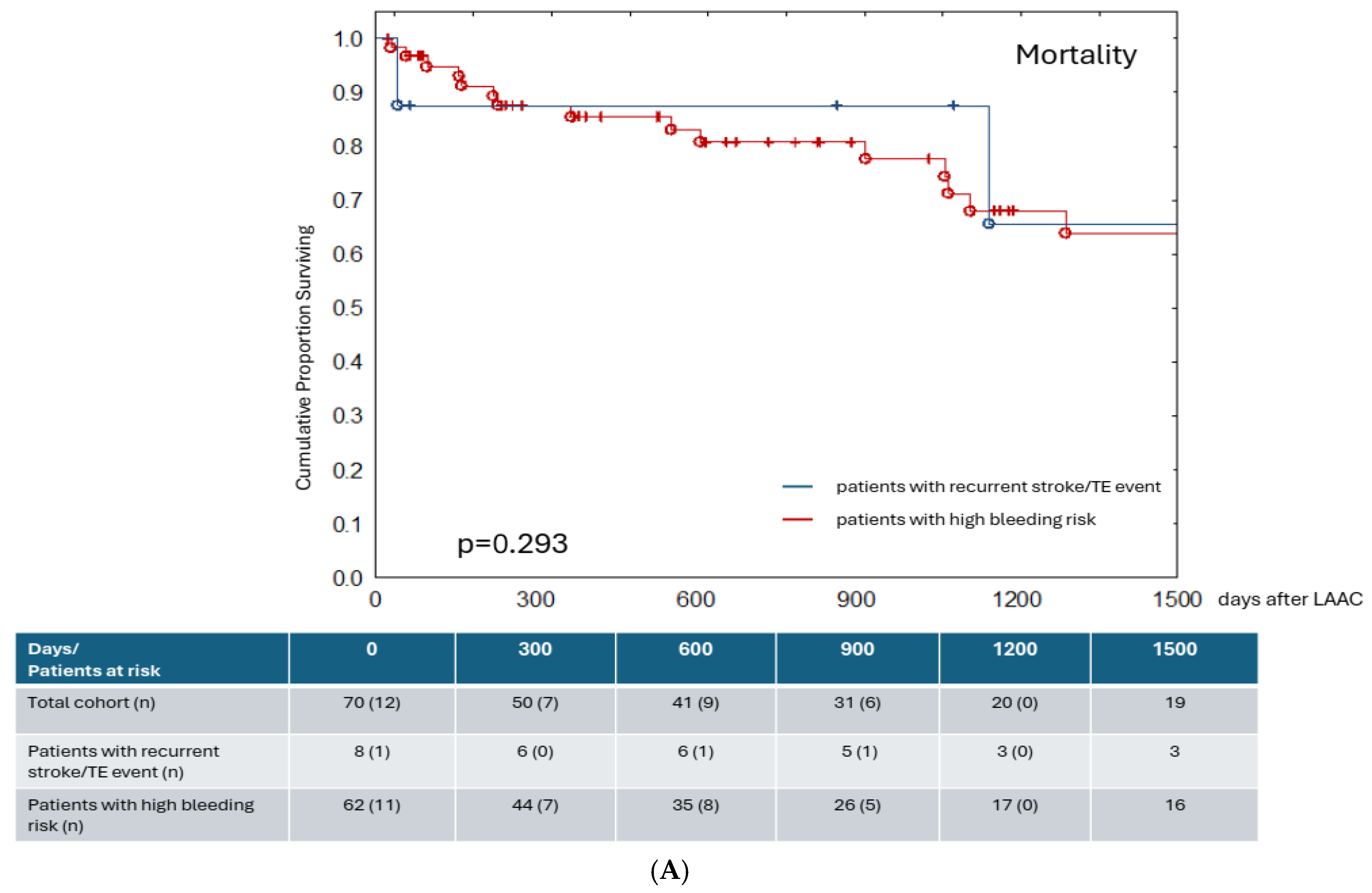
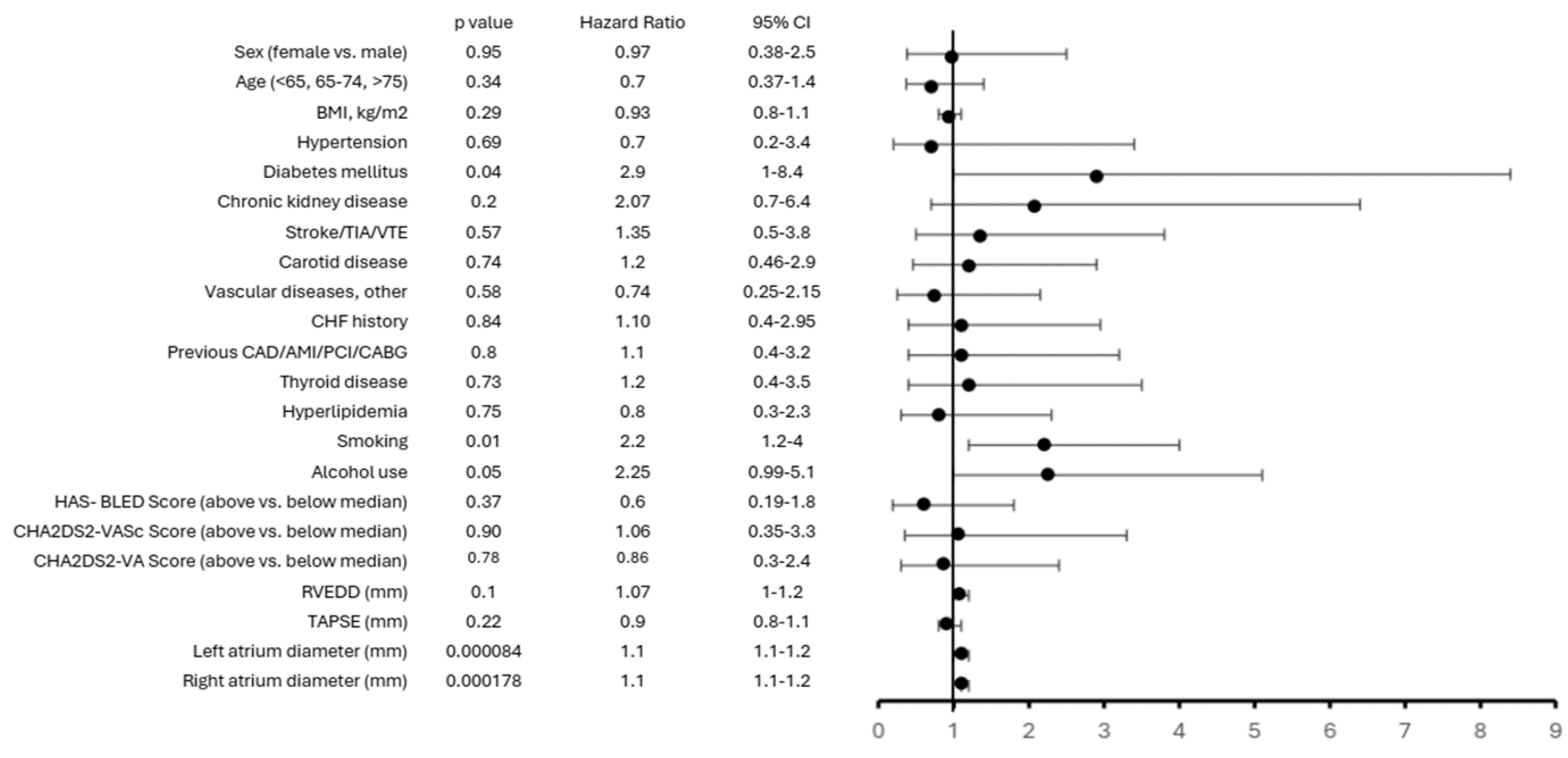
4.4.4. Mortality Rate, Cause of Death and Clinical Parameters Affecting Mortality
4.5. Analysis of Bleeding Events Before and After LAAC Implantation
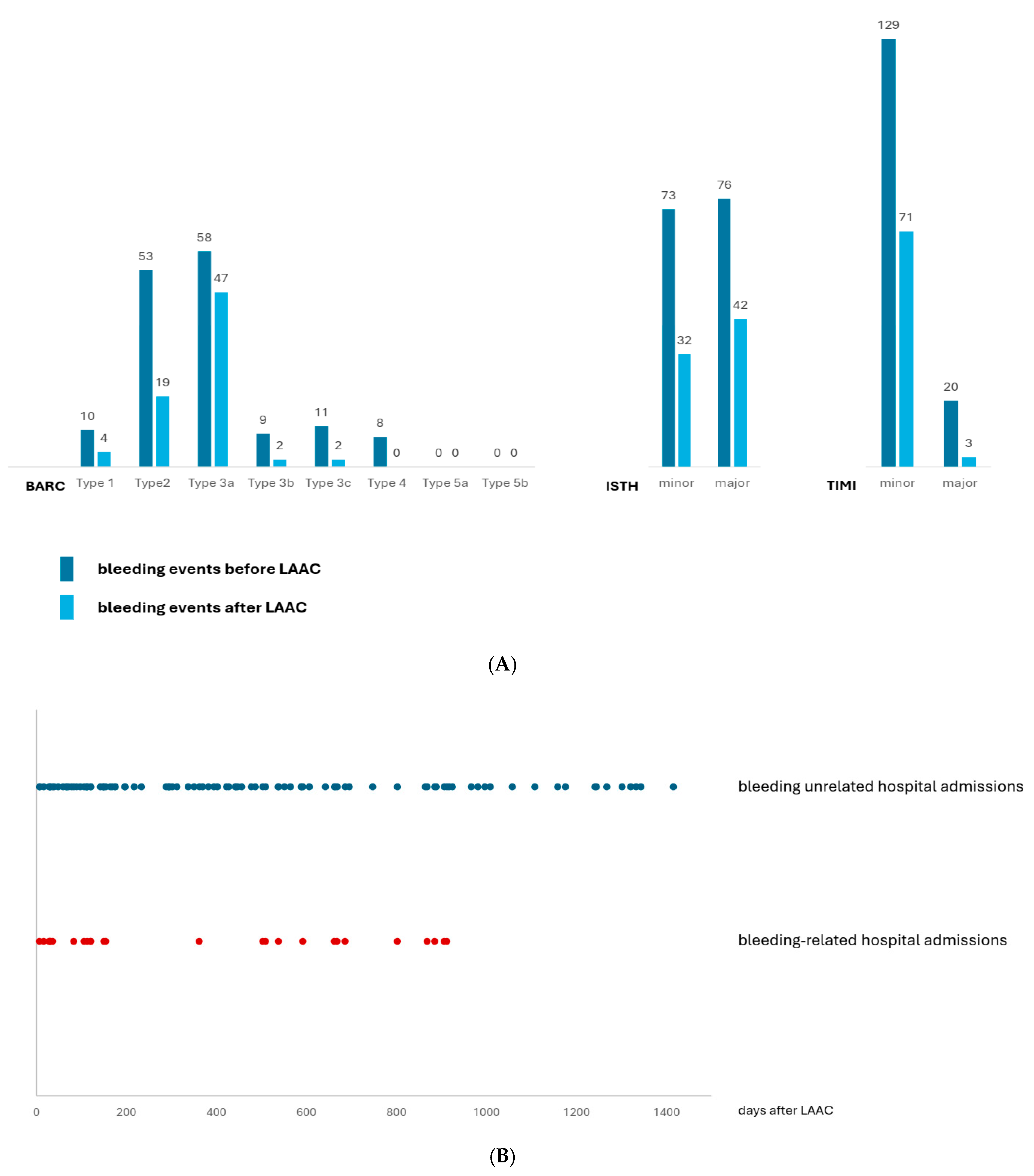
4.5.1. Definition and Classification of Pre- and Postoperative Bleeding Events
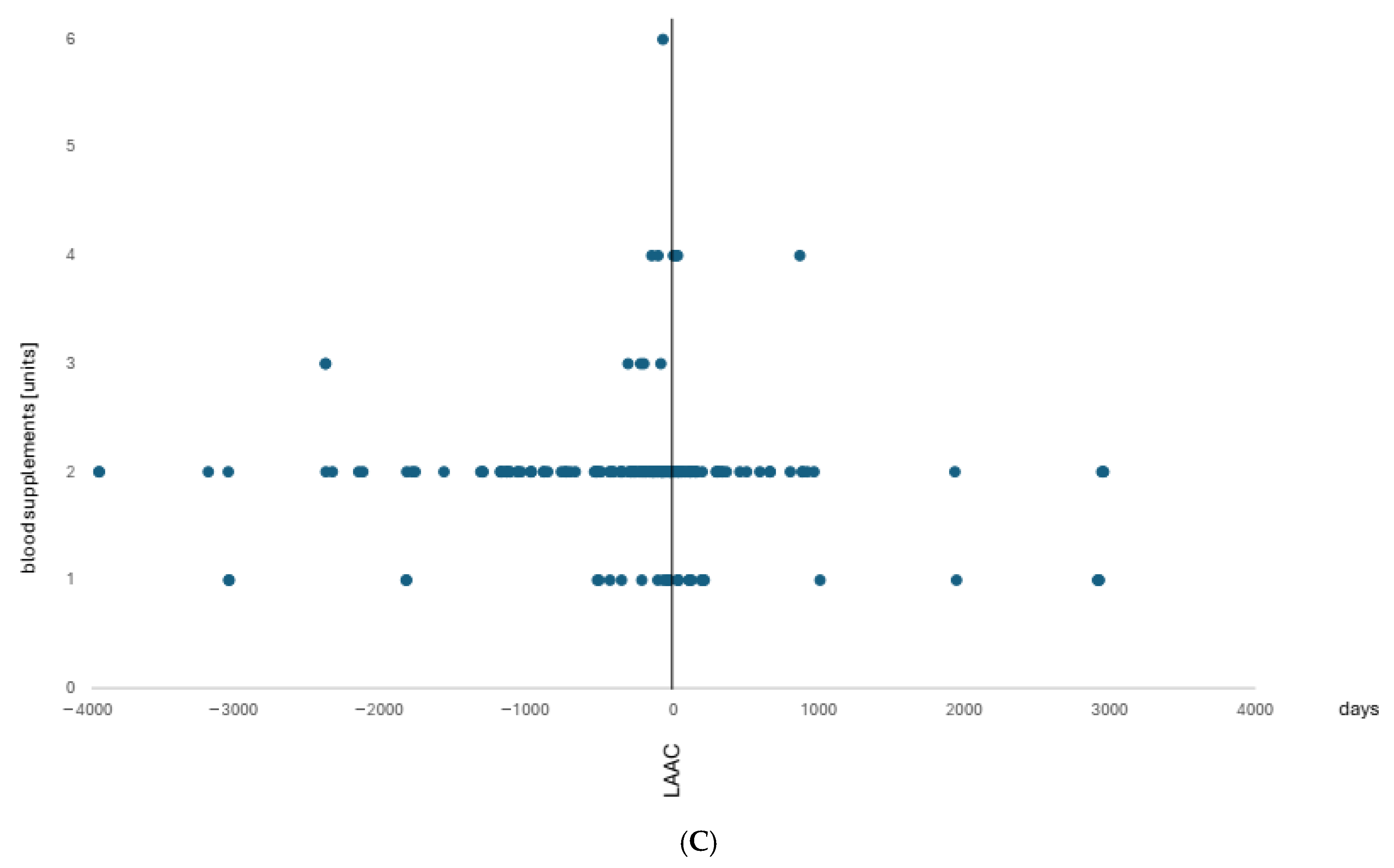
4.5.2. Reduced Bleeding Frequency, Severity, Bleeding-Related Hospitalization and Transfusion Were Observed After LAAC
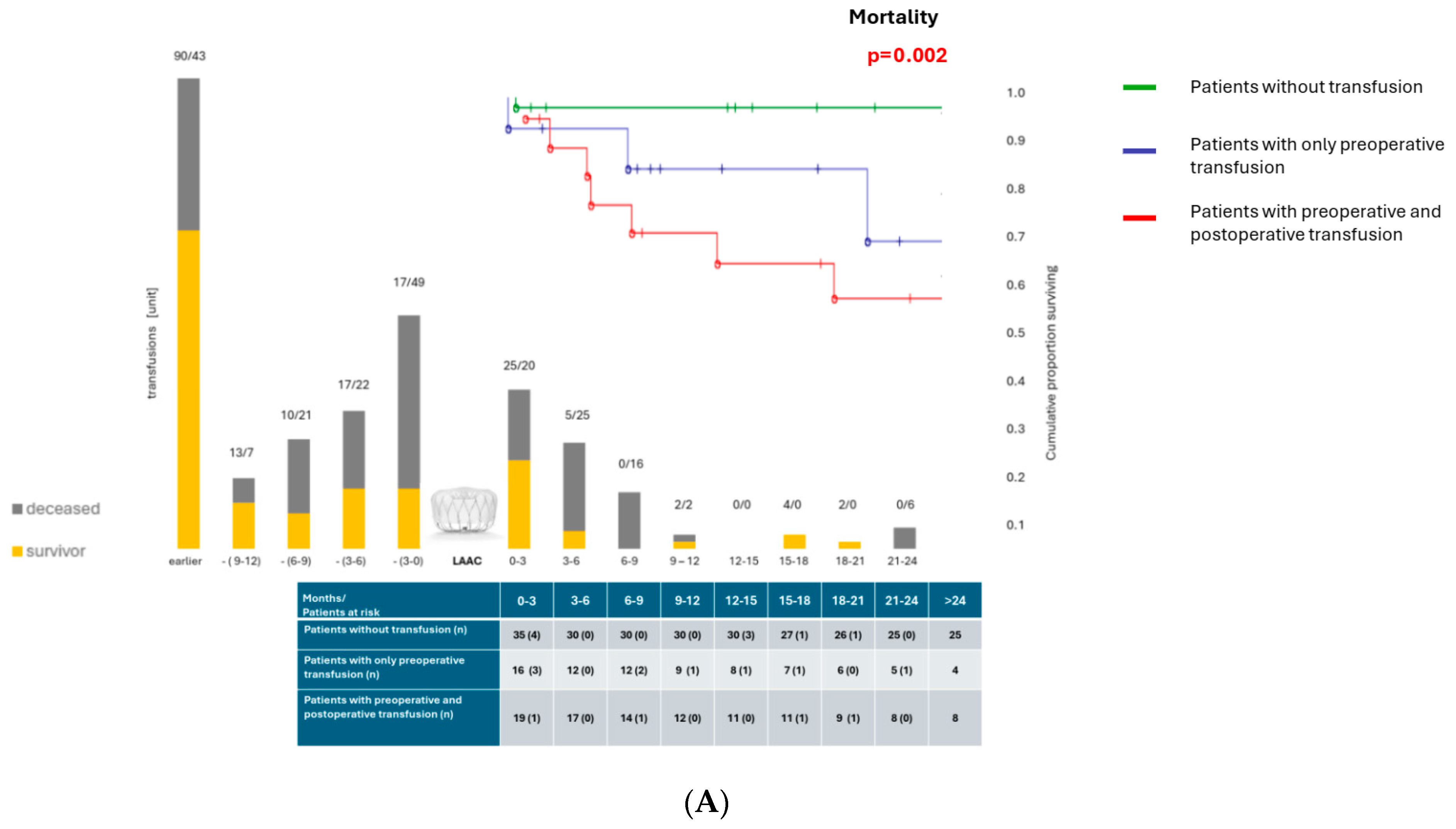
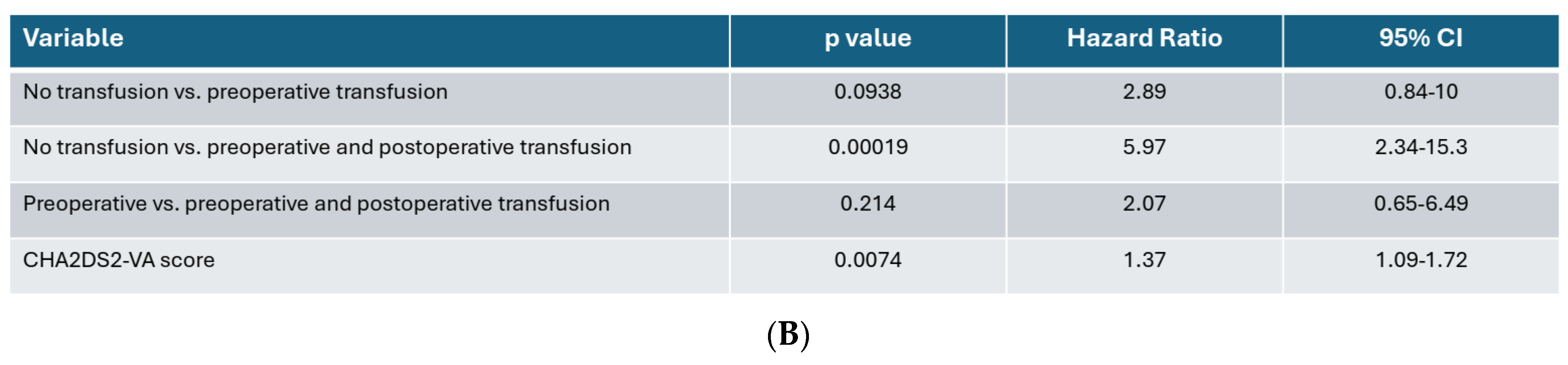
4.5.3. Impact of Bleeding on Mortality: Data from Patients with Pre-/Postprocedural Transfusions
4.5.4. Analysis of the Residual Bleeding Risk After LAAC: Data from Patients Requiring Recurrent Transfusion After LAAC
4.5.5. Demographics
4.5.6. Bleeding Characteristics
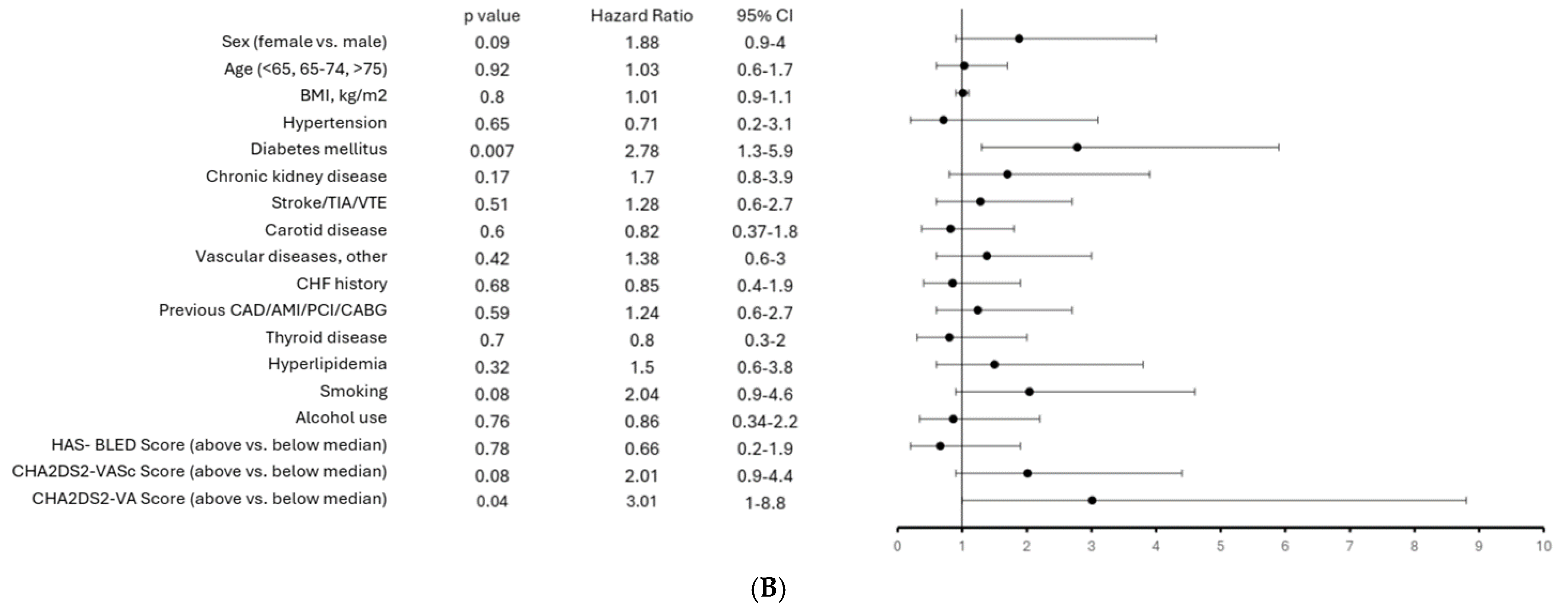
4.5.7. Factors Related to Postoperative Transfusion Need
5. Discussion
6. Limitation
7. Conclusions
Supplementary Materials
Author Contributions
Funding
Institutional Review Board Statement
Informed Consent Statement
Data Availability Statement
Acknowledgments
Conflicts of Interest
Abbreviations
| ACC | American College of Cardiology |
| ACCP | American College of Clinical Pharmacy |
| AF | atrial fibrillation |
| AHA | American Heart Association |
| AMI | acute myocardial injury |
| BARC | Bleeding Academic Research Consortium |
| CAD | coronary artery disease |
| DAPT | dual antiplatelet therapy |
| DOAC | direct oral anticoagulant |
| EESZT | National eHealth Infrastructure |
| ESC | European Society of Cardiology |
| HRS | Heart Rhythm Society |
| IQR | interquartile range |
| ISTH | International Society on Thrombosis and Hemostasis |
| LAA | left atrial appendage |
| LAAC | left atrial appendage closure |
| LAAO | left atrial appendage occlusion |
| MAE | major adverse events |
| OAC | oral anticoagulant |
| RBC | red blood cell |
| ROC | receiver operating characteristic |
| SAPT | single antiplatelet therapy |
| SEM | standard error of the mean |
| TIMI | Thrombolysis in Myocardial Infarction |
| TOE | transesophageal echocardiogram |
| TTE | transthoracic echocardiography |
| VKA | vitamin K antagonist |
References
- Nesheiwat, Z.; Goyal, A.; Jagtap, M. Atrial fibrillation. In StatPearls; StatPearls Publishing: Treasure Island, FL, USA, 2025; Available online: https://www.ncbi.nlm.nih.gov/books/NBK526072/ (accessed on 30 September 2025).
- Karakasis, P.; Ktenopoulos, N.; Pamporis, K.; Sagris, M.; Soulaidopoulos, S.; Gerogianni, M.; Leontsinis, I.; Giannakoulas, G.; Tousoulis, D.; Fragakis, N.; et al. Efficacy and Safety of Direct Oral Anticoagulants versus Warfarin in Obese Patients (BMI ≥ 30 kg/m2) with Atrial Fibrillation or Venous Thromboembolism: An Updated Systematic Review and Meta-Analysis. J. Clin. Med. 2024, 13, 3784. [Google Scholar] [CrossRef] [PubMed] [PubMed Central]
- Regazzoli, D.; Ancona, F.; Trevisi, N.; Guarracini, F.; Radinovic, A.; Oppizzi, M.; Agricola, E.; Marzi, A.; Sora, N.C.; Della Bella, P.; et al. Left atrial appendage: Physiology, pathology, and role as a therapeutic target. BioMed Res. Int. 2015, 2015, 205013. [Google Scholar] [CrossRef] [PubMed] [PubMed Central]
- Mesnier, J.; Cepas-Guillén, P.; Freixa, X.; Flores-Umanzor, E.; Hoang Trinh, K.; O’Hara, G.; Rodés-Cabau, J. Antithrombotic management after left atrial appendage closure: Current evidence and future perspectives. Circ. Cardiovasc. Interv. 2023, 16, e012812. [Google Scholar] [CrossRef] [PubMed]
- Tzikas, A.; Holmes, D.R., Jr.; Gafoor, S.; Ruiz, C.E.; Blomström-Lundqvist, C.; Diener, H.C.; Cappato, R.; Kar, S.; Lee, R.J.; Byrne, R.A.; et al. Percutaneous left atrial appendage occlusion: The Munich consensus document on definitions, endpoints, and data collection requirements for clinical studies. Europace 2017, 19, 4–15. [Google Scholar] [CrossRef] [PubMed] [PubMed Central]
- Van Gelder, I.C.; Rienstra, M.; Bunting, K.V.; Casado-Arroyo, R.; Caso, V.; Crijns, H.J.G.M.; De Potter, T.J.; Dwight, J.; Guasti, L.; Hanke, T.; et al. 2024 ESC Guidelines for the management of atrial fibrillation developed in collaboration with the European Association for Cardio-Thoracic Surgery (EACTS). Eur. Heart J. 2024, 45, 3314–3414. [Google Scholar] [CrossRef] [PubMed]
- Joglar, J.A.; Chung, M.K.; Armbruster, A.L.; Benjamin, E.J.; Chyou, J.Y.; Cronin, E.M.; Deswal, A.; Eckhardt, L.L.; Goldberger, Z.D.; Gopinathannair, R.; et al. 2023 ACC/AHA/ACCP/HRS Guideline for the diagnosis and management of atrial fibrillation: A report of the American College of Cardiology/American Heart Association Joint Committee on Clinical Practice Guidelines. J. Am. Coll. Cardiol. 2024, 83, 109–279. [Google Scholar] [CrossRef] [PubMed]
- Asmarats, L.; Rodés-Cabau, J. Percutaneous left atrial appendage closure: Current devices and clinical outcomes. Circ. Cardiovasc. Interv. 2017, 10, e005359. [Google Scholar] [CrossRef] [PubMed]
- Holmes, D.R., Jr.; Korsholm, K.; Rodés-Cabau, J.; Saw, J.; Berti, S.; Alkhouli, M.A. Left atrial appendage occlusion. EuroIntervention 2023, 18, e1038–e1065. [Google Scholar] [CrossRef] [PubMed]
- Boersma, L.V.; Ince, H.; Kische, S.; Pokushalov, E.; Schmitz, T.; Schmidt, B.; Gori, T.; Meincke, F.; Protopopov, A.V.; Betts, T.; et al. Evaluating real-world clinical outcomes in atrial fibrillation patients receiving the WATCHMAN left atrial appendage closure technology: Final 2-year outcome data of the EWOLUTION trial. Circ. Arrhythm. Electrophysiol. 2019, 12, e006841. [Google Scholar] [CrossRef] [PubMed]
- Kabra, R.; Girotra, S.; Vaughan Sarrazin, M. Clinical outcomes of mortality, readmissions, and ischemic stroke among Medicare patients undergoing left atrial appendage closure via implanted device. JAMA Netw. Open 2019, 2, e1914268. [Google Scholar] [CrossRef] [PubMed]
- Freeman, J.V.; Higgins, A.Y.; Wang, Y.; Du, C.; Friedman, D.J.; Daimee, U.A.; Minges, K.E.; Pereira, L.; Goldsweig, A.M.; Price, M.J.; et al. Antithrombotic Therapy After Left Atrial Appendage Occlusion in Patients with Atrial Fibrillation. J. Am. Coll. Cardiol. 2022, 79, 1785–1798. [Google Scholar] [CrossRef] [PubMed] [PubMed Central]
- Howard, A.; Germinaro, J.; Squire, J.; Sanon, S.; Jabbour, G.; Singh, M.; Voigt, A.; Mulukutla, S.; Saba, S.; Jain, S. Early gastrointestinal bleeding is most common hemorrhagic complication after Watchman implantation. Circulation 2022, 146, A12967. [Google Scholar] [CrossRef]
- Sanjoy, S.S.; Choi, Y.H.; Sparrow, R.T.; Jneid, H.; Dawn Abbott, J.; Nombela-Franco, L.; Azzalini, L.; Holmes, D.R.; Alraies, M.C.; Elgendy, I.Y.; et al. Outcomes of elderly patients undergoing left atrial appendage closure. J. Am. Heart Assoc. 2021, 10, e021973. [Google Scholar] [CrossRef] [PubMed]
- Mesnier, J.; Cruz-González, I.; Arzamendi, D.; Freixa, X.; Nombela-Franco, L.; Peral, V.; Caneiro-Queija, B.; Mangieri, A.; Trejo-Velasco, B.; Asmarats, L.; et al. Incidence and predictors of early death in patients undergoing percutaneous left atrial appendage closure. Clin. Electrophysiol. 2022, 8, 1093–1102. [Google Scholar] [CrossRef] [PubMed]
- Beneki, E.; Dimitriadis, K.; Theofilis, P.; Pyrpyris, N.; Iliakis, P.; Kalompatsou, A.; Kostakis, P.; Koukos, M.; Soulaidopoulos, S.; Tzimas, G.; et al. Intracardiac or transesophageal echocardiography for left atrial appendage occlusion: An updated systematic review and meta-analysis. Int. J. Cardiovasc. Imaging 2025, 41, 489–505. [Google Scholar] [CrossRef] [PubMed] [PubMed Central]



| Demographic Data | Total Cohort (n = 70) | Patients with Recurrent Stroke/Thromboembolic Event (n = 8) | Patients with High Bleeding Risk (n = 62) |
|---|---|---|---|
| Characteristics | |||
| Male/female, n (%) | 37/33 (53/47) | 3/5 (38/62) | 34/28 (55/45) |
| Age, years | 75.5 (68–80) | 72.5 (65–77.5) | 75.5 (68–80) |
| Comorbidities and risk factors | |||
| Hypertension, n (%) | 65 (93) | 8 (100) | 57 (92) |
| Diabetes mellitus, n (%) | 24 (35) | 3 (38) | 21 (34) |
| Hyperlipidemia, n (%) | 45 (64) | 5 (63) | 40 (65) |
| BMI, kg/m2 (M (IQR)) | 28 (24.6–30.5) | 32 (21.3–35.2) | 27.9 (24.7–30.1) |
| Chronic kidney disease, n (%) | 43 (61) | 4 (50) | 39 (63) |
| Thyroid disease, n (%) | 15 (21) | 1 (13) | 14 (23) |
| Previous epilepsy, n (%) | 5 (7) | 1 (13) | 4 (7) |
| Smoking previously, n (%) | 7 (10) | 0 (0) | 7 (11) |
| Current smoker, n (%) | 10 (14) | 1 (13) | 9 (15) |
| Previous regular alcohol consumption, n (%) | 2 (3) | 0 (0) | 2 (3) |
| Regular alcohol consumption, n (%) | 13 (19) | 2 (25) | 11 (18) |
| Atherosclerotic cardiovascular disease | |||
| CAD, n (%) | 19 (27) | 0 (0) | 19 (31) |
| Previous carotid artery disease, n (%) | 35 (50) | 3 (38) | 32 (52) |
| Previous sign. carotid artery disease, n (%) | 1 (1) | 0 (0) | 1 (2) |
| Previous PAD, n (%) | 10 (14) | 1 (13) | 9 (15) |
| Acute cardio/cerebrovascular events | |||
| Previous AMI, n (%) | 13 (19) | 0 (0) | 13 (21) |
| Previous TIA, n (%) | 10 (14) | 1 (13) | 9 (15) |
| Previous stroke, n (%) | 21 (30) | 6 (75) | 15 (24) |
| Previous other TE, n (%) | 6 (9) | 2 (25) | 4 (7) |
| Previous hemorrhagic stroke, n (%) | 11 (16) | 2 (25) | 9 (15) |
| Previous PCI, n (%) | 11 (16) | 0 (0) | 11 (18) |
| Previous CABG, n (%) | 7 (10) | 0 (0) | 7 (11) |
| Previous pacemaker implantation, n (%) | 17 (24) | 0 (0) | 17 (27) |
| Risk stratification | |||
| CHA2DS2-VASc Score | 5 (4–6) | 6 (5–6.5) | 5 (4–6) |
| CHA2DS2-VA Score | 4 (3–5) | 5 (4.5–6) | 4 (3–5) |
| HAS-BLED Score | 4 (4–5) | 4 (4–4.5) | 4 (4–5) |
| Transthoracic echocardiogram | |||
| Ejection fraction (%) | 56 (46–60) | 59 (50.5–65) | 56 (42–60) |
| Left ventricular end-diastolic/ end-systolic diameter, mm | 49 (46–55)/ 34 (30–42) | 48 (46–52)/ 31 (28–37) | 50 (46–55)/ 35 (29–42) |
| Interventricular septum/posterior wall diastolic thickness, mm | 12 (10–13) 11 (10–13) | 10.5 (10–12) 10 (10–11) | 12 (10–13) 11 (10–13) |
| Right ventricular end-diastolic diameter, mm | 37 (31–42) | 33 (28–35) | 38 (32–43) * |
| TAPSE, mm | 19 (16–22) | 22 (22–23.5) | 19 (16–22) |
| Right atrium diameter, mm | 58 (52–62) | 51 (47.5–54) | 60 (54–63) ** |
| Left atrium diameter, mm | 58 (53–64) | 53 (49.5–55) | 59 (54–64) *** |
| Medical Therapy | Total Cohort (n = 70) | Patients with Recurrent Stroke/Thromboembolic Event (n = 8) | Patients with High Bleeding Risk (n = 62) |
|---|---|---|---|
| Antiplatelet and anticoagulant therapy | |||
| On admission (%) | |||
| DAPT | 7.1 | 0 | 8.1 |
| ASA | 15.7 | 12.5 | 16.1 |
| Clopidogrel | 20 | 12.5 | 21 |
| VKA | 10 | 25 | 8 |
| DOACs | 21.4 | 50 | 17.7 |
| LMWH | 42.8 | 12.5 | 46.8 |
| At discharge (%) | |||
| DAPT | 88.6 | 50 | 93.5 |
| ASA | 92.9 | 87.5 | 93.5 |
| Clopidogrel | 95.7 | 62.5 | 100 |
| VKA | 2.9 | 12.5 | 1.6 |
| DOACs | 5.7 | 37.5 | 1.6 |
| LMWH | 0 | 0 | 0 |
| Major Adverse Events and Mortality | Total Cohort (n = 70) | Patients with Recurrent Stroke/TE Event (n = 8) | Patients with High Bleeding Risk (n = 62) |
|---|---|---|---|
| Ischemic stroke/TIA, n (%) | 1 (1.4)/1 (1.4) | 0/0 | 1 (1.6)/1 (1.6) |
| Cardiovascular endpoints | |||
| Coronary revascularization, n (%) | 7 (10) | 1 (12.5) | 6 (9.7) |
| AMI, n (%) | 1 (1.4) | 0 (0) | 1 (1.6) |
| Heart failure requiring hospitalization, n (%) | 12 (17.1) | 1 (12.5) | 11 (17.7) |
| Pacemaker implantation, n (%) | 7 (10) | 0 (0) | 7 (11.3) |
| New malignancy, n (%) | 8 (11.4) | 0/0 | 8 (12.9) |
| Mortality | |||
| Number of deaths, n (%) | 28 (40) | 4 (50) | 24 (38.7) |
| One-year mortality, n (%) | 9 (12.9) | 1 (12.5) | 8 (12.9) |
| Cause of death | |||
| Stroke, n (%) | 0 (0) | 0 (0) | 0 (0) |
| Hemorrhagic shock, n (%) | 0 (0) | 0 (0) | 0 (0) |
| Heart failure, n (%) | 7 (25) | 0 (0) | 7 (29.1) |
| Infectious diseases, n (%) | 9 (32.1) | 2 (50) | 7 (29.1) |
| Septicemia, n (%) | 3 (10.7) | 0 (0) | 3 (12.5) |
| Infective endocarditis, n (%) | 1 (3.6) | 0 (0) | 1 (4.2) |
| COVID-19 pneumonia, n (%) | 4 (14.3) | 1 (25) | 3 (12.5) |
| Malignant neoplasms, n (%) | 2 (7.1) | 0 (0) | 2 (8.3) |
| Asphyxiation, n (%) | 2 (7.1) | 1 (25) | 1 (4.2) |
| Sudden death, n (%) | 4 (14.3) | 0 (0) | 4 (16.7) |
| Unknown, n (%) | 4 (14.3) | 1 (25) | 3 (12.5) |
| Preoperative | Postoperative | |
|---|---|---|
| Frequency and severity of bleeding episodes | ||
| No. of bleeding patients, n | 61 | 30 * |
| No. of bleeding events, n | 144 | 56 |
| No. of bleeding events/patient, n/pt | 2.4 | 1.9 * |
| No. of all hospital admissions (n) | n.a. | 133 |
| No. of hospitalizations due to bleeding (n) | 110 | 34 |
| No. of transfused patients (n) | 33 | 19 * |
| No. of administered red blood cell supplements (n) | 289 | 134 |
| Average of administered red blood cell supplements/patients (n) | 8.8 | 7.1 * |
| Cause of bleeding | ||
| Gastrointestinal bleeding, n (%) | 39 (63.9) | 16 (53.3) |
| Hematuria, n (%) | 4 (6.6) | 1 (3.3) |
| Intracranial bleeding, n (%) | 8 (13.1) | 0 (0) |
| Epistaxis, n (%) | 0 (0) | 1 (3.3) |
| Hyphema, n (%) | 1 (1.6) | 1 (3.3) |
| Gastrointestinal bleeding and hematuria, n (%) | 1 (1.6) | 0 (0) |
| Gastrointestinal bleeding and epistaxis, n (%) | 1 (1.6) | 0 (0) |
| Gastrointestinal bleeding, hematuria and epistaxis, n (%) | 0 (0) | 1 (3.3) |
| Hematuria and epistaxis, n (%) | 1 (1.6) | 0 (0) |
| Intracranial bleeding and epistaxis, n (%) | 1 (1.6) | 0 (0) |
| Intracranial bleeding and hematuria, n (%) | 1 (1.6) | 0 (0) |
| Hematuria and scrotal bleeding, n (%) | 0 (0) | 1 (3.3) |
| Hemarthrosis, n (%) | 0 (0) | 1 (3.3) |
| Unknown, n (%) | 4 (6.6) | 5 (16.6) |
| Procedure-related bleeding | n.a. | 3 (10) |
| Pericardial tamponade, n (%) | n.a. | 1 (3.3) |
| Access site hematoma, n (%) | n.a. | 2 (6.6) |
| Patients with Postoperative Transfusion (n = 19) | Patients with No Postoperative Transfusion (n = 43) | |
|---|---|---|
| Characteristics | ||
| Male/female, n (%) | 10/9 (52.6/47.4) | 24/19 (55.8/44.2) |
| Age, years | 73 (65–79) | 76 (69–80) |
| Comorbidities and risk factors | ||
| Hypertension, n (%) | 17 (89.5) | 40 (93) |
| Diabetes mellitus, n (%) | 8 (42.1) | 13 (30.2) |
| Hyperlipidemia, n (%) | 12 (63.2) | 28 (65.1) |
| BMI, kg/m2 | 27.7 (24.2–30.1) | 28.1 (24.9–30.1) |
| Chronic kidney disease, n (%) | 15 (78.9) | 24 (55.8) |
| Thyroid disease, n (%) | 5 (26.3) | 9 (20.9) |
| Previous epilepsy, n (%) | 2 (10.5) | 2 (4.7) |
| Smoking previously, n (%) | 3 (15.8) | 2 (4.7) |
| Current smoker, n (%) | 7 (36.8) | 4 (9.3) * |
| Previous regular alcohol consumption, n (%) | 1(5.3) | 6 (14) |
| Regular alcohol consumption, n (%) | 5 (26.3) | 1 (2.3) * |
| Atherosclerotic cardiovascular disease | ||
| CAD, n (%) | 8 (42.1) | 11 (25.6) |
| Previous carotid artery disease, n (%) | 11 (57.9) | 21 (48.3) |
| Previous sign. carotid artery disease, n (%) | 0 (0) | 1 (2.3) |
| Previous PAD, n (%) | 2 (10.5) | 7 (16.3) |
| Acute cardio/cerebrovascular events | ||
| Previous AMI, n (%) | 6 (31.6) | 7 (16.3) |
| Previous TIA, n (%) | 3 (15.8) | 6 (14) |
| Previous stroke, n (%) | 3 (15.8) | 12 (27.9) |
| Previous thromboembolic event—other, n (%) | 2 (10.5) | 2 (4.7) |
| Previous hemorrhagic stroke, n (%) | 1 (5.3) | 8 (18.6) |
| Previous PCI, n (%) | 3 (15.8) | 8 (18.6) |
| Previous CABG, n (%) | 4 (21.1) | 3 (7) |
| Previous pacemaker implantation, n (%) | 5 (26.3) | 12 (27.9) |
| Risk stratification | ||
| CHA2DS2-VASc Score | 4 (4–6) | 5 (4–6) |
| CHA2DS2-VA Score | 4 (3–5) | 4 (3–5) |
| HAS-BLED Score | 4 (4–5) | 5 (4–5) |
| Transthoracic echocardiogram | ||
| Ejection fraction (%) | 55 (44.5–58) | 56 (42–61) |
| Left ventricular end-diastolic/ end-systolic diameter, mm | 50 (47–61)/ 35 (26–48) | 48 (46–55)/ 34 (30–40) |
| Interventricular septum/ Posterior wall diastolic thickness, mm | 12.5 (12–13)/ 12 (11–13) | 11 (10–13) */ 11 (10–13) |
| Right ventricular end-diastolic diameter, mm | 42 (30–46) | 37 (32–41) |
| TAPSE, mm | 16 (14–22) | 19 (16–22) |
| Right atrium diameter, mm | 60 (57–70) | 58 (50–62) * |
| Left atrium diameter, mm | 64 (57–72) | 58 (52–63) * |
| Preoperative bleeding | ||
| Number of bleeding events, n | 64 | 80 |
| Number of patients, n | 19 | 43 |
| Bleeding event/patient, average | 3.4 (+/−3.1) | 1.9 (+/−1.0) |
| Preop. transfusion, n, total units | 178 | 111 * |
| Preop. transfusion, n/patient units | 9.9 | 2.6 |
| Postoperative bleeding | ||
| Postop bleeding event, total, n | 40 | 16 * |
| Postop bleeding event/patient, n | 2.1 | 0.4 |
| Mortality data | ||
| Death, n (%) | 12 (63.2) | 12 (27.9) |
| One-year mortality, n (%) | 6 (31.6) | 2 (4.6) * |
| Survived days in deceased patients, mean SD | 874 ± 1037 | 1791 ± 1157 |
Disclaimer/Publisher’s Note: The statements, opinions and data contained in all publications are solely those of the individual author(s) and contributor(s) and not of MDPI and/or the editor(s). MDPI and/or the editor(s) disclaim responsibility for any injury to people or property resulting from any ideas, methods, instructions or products referred to in the content. |
© 2026 by the authors. Licensee MDPI, Basel, Switzerland. This article is an open access article distributed under the terms and conditions of the Creative Commons Attribution (CC BY) license.
Share and Cite
Bogdan, M.; Polgár, B.; Zsigmond, E.J.; Bencze, J.; Dávid, K.L.; Gulyás, Z.; Vigh, N.; Kiss, R.G.; Tóth-Zsámboki, E.; Duray, G.Z. Recurring Bleeding Events Requiring Red Blood Cell Transfusion After Left Atrial Appendage Closure Are Associated with Increased Mortality. J. Clin. Med. 2026, 15, 2626. https://doi.org/10.3390/jcm15072626
Bogdan M, Polgár B, Zsigmond EJ, Bencze J, Dávid KL, Gulyás Z, Vigh N, Kiss RG, Tóth-Zsámboki E, Duray GZ. Recurring Bleeding Events Requiring Red Blood Cell Transfusion After Left Atrial Appendage Closure Are Associated with Increased Mortality. Journal of Clinical Medicine. 2026; 15(7):2626. https://doi.org/10.3390/jcm15072626
Chicago/Turabian StyleBogdan, Manuella, Balázs Polgár, Előd János Zsigmond, Jusztina Bencze, Kamilla Luca Dávid, Zalán Gulyás, Nikolett Vigh, Róbert Gábor Kiss, Emese Tóth-Zsámboki, and Gábor Zoltán Duray. 2026. "Recurring Bleeding Events Requiring Red Blood Cell Transfusion After Left Atrial Appendage Closure Are Associated with Increased Mortality" Journal of Clinical Medicine 15, no. 7: 2626. https://doi.org/10.3390/jcm15072626
APA StyleBogdan, M., Polgár, B., Zsigmond, E. J., Bencze, J., Dávid, K. L., Gulyás, Z., Vigh, N., Kiss, R. G., Tóth-Zsámboki, E., & Duray, G. Z. (2026). Recurring Bleeding Events Requiring Red Blood Cell Transfusion After Left Atrial Appendage Closure Are Associated with Increased Mortality. Journal of Clinical Medicine, 15(7), 2626. https://doi.org/10.3390/jcm15072626