Systematic Review

Biopsychosocial Predictors of Pain Persistence and Pain Chronification in Temporomandibular Disorders: A Systematic Review


by
Piotr Seweryn
1,
Marta Waliszewska-Prosol
2,
Marcin Derwich
3,
Anna Paradowska-Stolarz
4,
Magdalena Gebska
5 and
Mieszko Wieckiewicz
1,*
1
Department of Experimental Dentistry, Wroclaw Medical University, 50-425 Wroclaw, Poland
2
Clinical Department of Neurology, Wroclaw Medical University, 50-556 Wroclaw, Poland
3
Department of Paediatric Dentistry, Medical University of Lodz, 90-419 Lodz, Poland
4
Department of Maxillofacial Orthopaedics and Orthodontics, Wroclaw Medical University, 50-425 Wroclaw, Poland
5
Department of Rehabilitation Musculoskeletal System, Pomeranian Medical University, 70-204 Szczecin, Poland
*
Author to whom correspondence should be addressed.
J. Clin. Med. 2026, 15(7), 2498; https://doi.org/10.3390/jcm15072498
Submission received: 21 February 2026 / Revised: 15 March 2026 / Accepted: 19 March 2026 / Published: 25 March 2026

Abstract

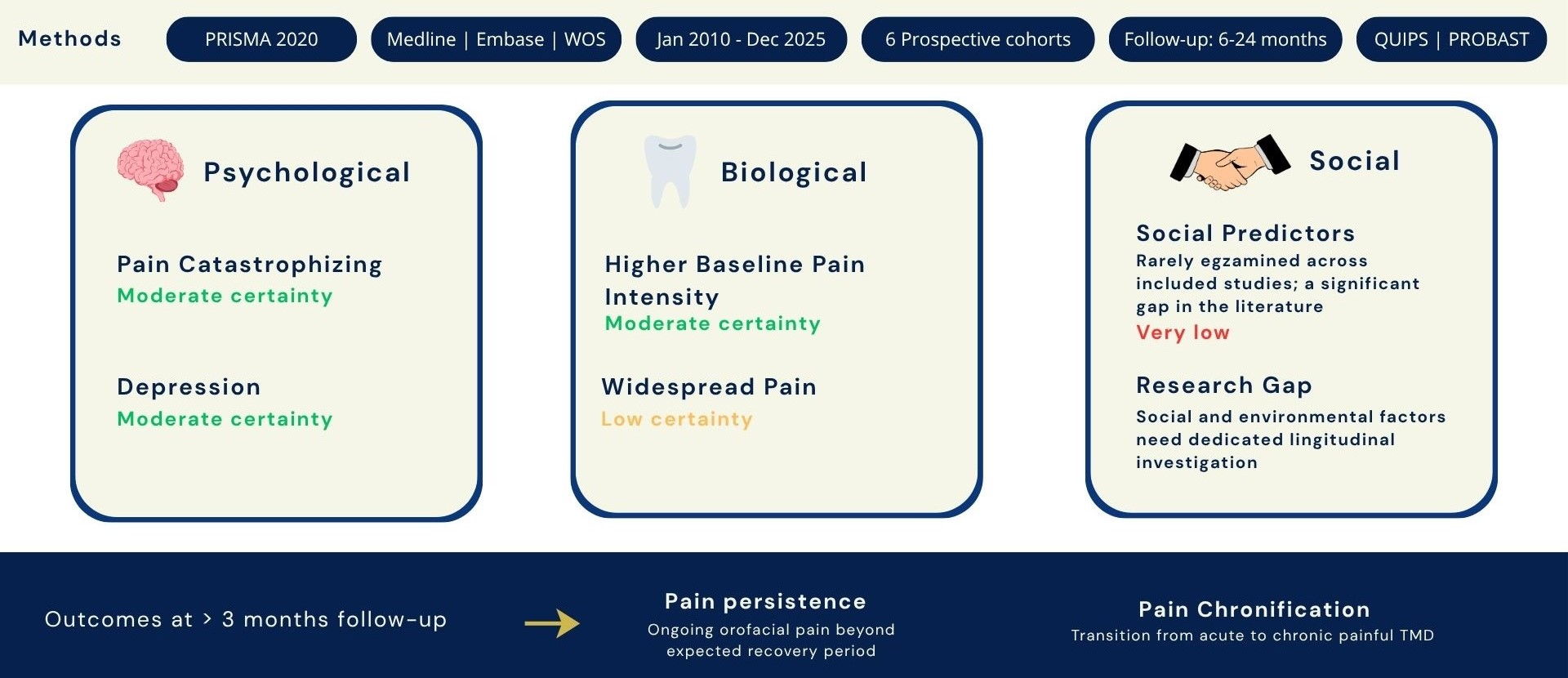
Background/Objectives: Temporomandibular disorders (TMD) are common causes of orofacial pain, but their clinical course varies, with some patients developing persistent symptoms. Evidence supports a biopsychosocial model of pain chronification, yet prognostic factors for pain persistence in TMD remain insufficiently synthesized. This systematic review aimed to identify biological, psychological, and social predictors associated with pain persistence and chronicity in painful TMD. Methods: This review was conducted in accordance with PRISMA 2020 guidelines and registered in PROSPERO (CRD420261286566). MEDLINE, Embase, and Web of Science were searched for studies published between January 2010 and December 2025. Eligible studies included adult patients with painful TMD and assessed baseline biopsychosocial predictors of pain persistence or chronicity at follow-up ≥ 3 months. Risk of bias was assessed using QUIPS and PROBAST. Due to heterogeneity across studies, findings were synthesized narratively. Results: Six prospective cohort studies were included, with follow-up durations ranging from 6 to 24 months. Psychological factors, particularly pain catastrophizing and depression, were associated with increased risk of pain persistence. Higher baseline pain intensity and widespread pain also showed prognostic value. Sleep-related and behavioral factors demonstrated inconsistent associations, and social predictors were rarely examined. The certainty of evidence ranged from moderate for catastrophizing and pain intensity to very low for sleep-related and occlusal factors. Conclusions: Pain persistence in TMD is influenced by multiple biopsychosocial factors. Psychological variables, especially catastrophizing and depression, appear to be the most consistent predictors, although this finding should be interpreted with caution, given the small number of included studies. These findings highlight the importance of comprehensive biopsychosocial assessment in patients with painful TMD and the need for further longitudinal research.

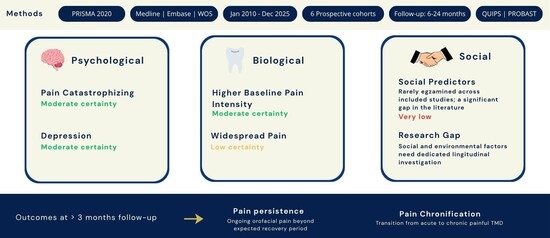
Graphical Abstract

1. Introduction

Temporomandibular disorders (TMD) are commonly described as a diversified group of conditions affecting the temporomandibular joints, the masticatory muscles, and surrounding tissues [1,2]. The etiology of TMD, including masticatory muscle pain as well as pain in the joints, both known as a painful TMD, is multifactorial [3,4]. According to the biopsychosocial model, there can be distinguished three major groups of factors leading to the development of TMD, namely: biological, psychological, and social factors [5].
Masticatory muscle pain is among the most frequent causes of non-odontogenic orofacial pain and is commonly encountered in daily dental and orofacial pain practice [6]. It is often regarded as a reversible and self-limiting condition, particularly at early stages. Nevertheless, longitudinal observations indicate that this assumption is not always justified. There have been reported cases in which pain persists beyond the expected period of tissue healing and gradually becomes chronic, leading to functional impairment and deterioration of quality of life [2,7,8]. Once pain persistence is established, treatment outcomes tend to be less predictable, and the overall burden for patients increases, both clinically and socially [9].
Over the last two decades, prospective cohort studies have substantially contributed to the understanding of factors associated with the onset and persistence of painful TMD [8]. In particular, findings from the Orofacial Pain: Prospective Evaluation and Risk Assessment (OPPERA) project have demonstrated that local musculoskeletal findings alone do not sufficiently explain why pain persists in some patients but not in others [2,8,9]. It has been suggested that pain chronicity develops rather as a consequence of interactions between altered pain processing, psychological vulnerability, and broader contextual or behavioral influences [2,8].
From a biological perspective, increased pain sensitivity has been repeatedly identified as a relevant factor preceding the development of painful TMD. Reduced pressure pain thresholds, widespread hyperalgesia, and other indicators of facilitated nociceptive processing have been associated with both first-onset TMD and persistence of pain over time [7,8]. These findings are commonly interpreted within the framework of central sensitization (CS) and suggest that, at least in a subgroup of patients, masticatory muscle pain reflects a more generalized disturbance of pain modulation rather than a strictly local muscle disorder. In addition, genetic and inflammatory mechanisms have been proposed to influence individual susceptibility, as associations between polymorphisms in pain- and inflammation-related genes and pain severity or persistence have been reported [10,11,12].
Psychological factors appear to contribute to the clinical course of painful TMD in a meaningful way. Prospective data indicate that pain catastrophizing, anxiety, depression, negative affect, and stress-related variables are associated with an increased risk of developing painful TMD as well as with less favorable pain trajectories over time [7,13]. These factors may influence how pain is perceived and interpreted, but also how patients respond behaviorally to pain. Results from twin and family studies further suggest that cognitive–emotional pain-related phenotypes contribute to pain chronicity beyond shared genetic background, underlining the independent role of psychological processes [14].
Social and behavioral factors have also been implicated in the chronification of painful TMD, although the available evidence is less consistent. Sleep disturbances, general health status, parafunctional behaviors, and occupational stress have been reported to be associated with painful TMD and with chronic overlapping pain conditions [15,16,17]. It has been proposed that impaired sleep may act as a nonspecific amplifier of pain sensitivity and stress responsiveness, thereby interacting with biological and psychological mechanisms involved in pain maintenance [16].
Despite growing recognition of the biopsychosocial nature of pain chronicity, the existing literature remains heterogeneous and difficult to integrate. Many studies focus on single domains or on pain onset rather than pain persistence. Moreover, cross-sectional designs are still frequently employed, limiting prognostic interpretation. Even within longitudinal studies, biological, psychological, and social predictors are often examined separately, without adequate consideration of their potential interactions.
Therefore, the aim of the present systematic review was to identify biopsychosocial predictors of pain chronicity in patients with painful TMD. By synthesizing evidence from prospective and longitudinal studies, this review seeks to clarify which baseline factors are associated with pain persistence and to contribute to a more clinically oriented, individualized understanding of chronic pain risk in this patient population.

2. Materials and Methods

2.1. Protocol and Registration

This systematic review was conducted in accordance with the Preferred Reporting Items for Systematic Reviews and Meta-Analyses 2020 (PRISMA 2020) [18]. The completed PRISMA 2020 checklist is provided in the Supplementary Materials. The protocol was registered in the PROSPERO database under the registration number CRD420261286566.

2.2. Eligibility Criteria

Eligibility criteria were defined according to the PICOS framework and are summarized in Table 1 [19].
The following inclusion criteria were applied:
(P) Population.
Studies involving adult participants (>18 years old) diagnosed with painful TMD were eligible, including myogenous, arthrogenic, or mixed TMD type. Studies focusing exclusively on non-painful TMD conditions (e.g., disc displacement with reduction) were excluded. A painful TMD diagnosis was preferably established using standardized diagnostic criteria, such as the Research Diagnostic Criteria for Temporomandibular Disorders (RDC/TMD), the Diagnostic Criteria for Temporomandibular Disorders (DC/TMD), or the International Classification of Orofacial Pain (ICOP). To ensure broad identification of relevant evidence, studies applying other clearly described clinical diagnostic approaches were also considered eligible, provided that painful TMD was explicitly defined.
(I/E) Prognostic factors/Exposure.
Studies investigating biological, psychological, social, or behavioral prognostic factors assessed at baseline and examined in relation to subsequent pain outcomes were eligible. Prognostic factors included, but were not limited to, psychological variables (e.g., depression, anxiety, pain catastrophizing), pain-related characteristics (e.g., baseline pain intensity, pain-related disability), sleep-related factors, behavioral factors (e.g., parafunctional activities), and demographic characteristics. Studies reporting pain persistence/chronicity outcomes without assessing prognostic factors were excluded.
(O) Outcomes.
The primary outcome was pain persistence or pain chronicity in painful TMD, requiring follow-up of at least 3 months. This threshold is consistent with the IASP/ICD-11 definition of chronic pain, which requires pain to persist for more than three months [20]. Related outcomes (e.g., transition to chronic pain, lack of remission, or persistence of clinically significant pain measured with validated instruments such as the Graded Chronic Pain Scale) were considered eligible if they reflected sustained pain over time. For the purpose of this review, the following definitions were applied: pain persistence refers to the continued presence of painful TMD symptoms at follow-up without clinically significant improvement; pain chronicity denotes the presence or progression of clinically significant pain, and transition from acute to chronic pain describes the process by which acute-onset TMD pain evolves into a chronic state, defined as pain duration exceeding three months in accordance with IASP/ICD-11 classification [20,21,22].
(S) Study design.
Eligible designs included prospective or retrospective cohort studies, case–control series, and secondary analyses of longitudinal cohorts. Purely cross-sectional studies without follow-up, case series, and case reports were excluded.

2.3. Search Strategy

A comprehensive literature search was conducted in the electronic databases MEDLINE, Embase, and Web of Science. These databases were selected to identify a broad range of relevant clinical and dental research on painful TMD. The search covered publications from January 2010 to December 2025 and was limited to peer-reviewed English-language articles. The grey literature was not searched because the review was intentionally limited to peer-reviewed studies with established methodological rigor and transparent reporting, to minimize the risk of bias arising from insufficient quality control and to enhance the comparability and reliability of the clinical conclusions. The databases were last searched on 5 January 2026. The selected time frame (2010–2025) was chosen to capture a period of substantial advances in pain research, particularly in chronic pain, as well as increasing standardization of TMD diagnostic frameworks and outcome measures. This improved methodological comparability across studies and ensured that the included evidence aligns with current concepts and assessment approaches.
Search terms combined controlled vocabulary (MeSH/Emtree) and free-text keywords; no study design filters were applied. The full database-specific search strategies are provided in Table 2.

2.4. Selection Process

All records identified through the database searches were imported into Rayyan QCRI (Qatar Computing Research Institute, Doha, Qatar, and Rayyan Systems, Cambridge, MA, USA) for duplicate removal and study screening [23]. Two reviewers (P.S. and M.D.) independently screened titles and abstracts to assess eligibility. Potentially relevant studies were retrieved in full text and evaluated by the same reviewers.
Throughout the screening process, reviewers were blinded to each other’s decisions. Any disagreement at either the title/abstract or full-text screening stage was resolved by consensus through discussion.

2.5. Data Collection

Data extraction was performed independently by two reviewers (P.S. and M.D.) using a predefined data extraction form. Reviewers were blinded to each other’s extracted data. Any discrepancies were resolved through consensus after discussion.
For each included study, the following data were extracted: study characteristics (authors, year of publication, study design), sample characteristics (sample size at baseline and follow-up, age, sex), diagnostic criteria for painful TMD (e.g., RDC/TMD, DC/TMD, ICOP or other clearly described criteria), TMD type (myogenous, arthrogenic, mixed), and pain characteristics (definition of chronic or persistent pain, baseline pain duration).
In addition, information on outcomes (outcome definition and outcome measures, e.g., pain intensity or Graded Chronic Pain Scale), baseline prognostic factors analyzed, and the statistical model used was extracted.

2.6. Risk of Bias Assessment

Risk of bias was assessed using the Quality In Prognosis Studies (QUIPS) tool [24]. Each included prognostic factor study was evaluated across six domains: study participation, study attrition, prognostic factor measurement, outcome measurement, study confounding, statistical analysis, and reporting.
For studies that involved the development or validation of multivariable prediction models, risk of bias was assessed using the Prediction model Risk Of Bias ASsessment Tool (PROBAST), in accordance with current methodological recommendations for prediction model studies [25].
Risk of bias assessments were performed independently by two reviewers (P.S and M.D), who were blinded to each other’s judgments. Any disagreements were resolved by consensus through discussion.
For QUIPS-based assessments, an overall risk-of-bias judgment was derived from domain-level ratings. Studies were rated as having a high overall risk of bias when at least one critical domain (e.g., study confounding or outcome measures) was judged to be high risk. When high risk of bias was identified only in non-critical domains, the overall risk of bias was considered moderate to high.
PROBAST assessments were reported according to the four domains of the tool (participants, predictors, outcome, and analysis), and the overall risk of bias judgment followed PROBAST guidance [25].

2.7. Data Synthesis

Due to substantial clinical and methodological heterogeneity across studies regarding study populations, definitions of pain persistence or chronicity, prognostic factors assessed, follow-up durations, and statistical approaches, a quantitative meta-analysis was not performed.
Findings were synthesized using a narrative synthesis, supported by structured tables summarizing study characteristics, outcomes, and prognostic factors.

3. Results

3.1. Study Selection

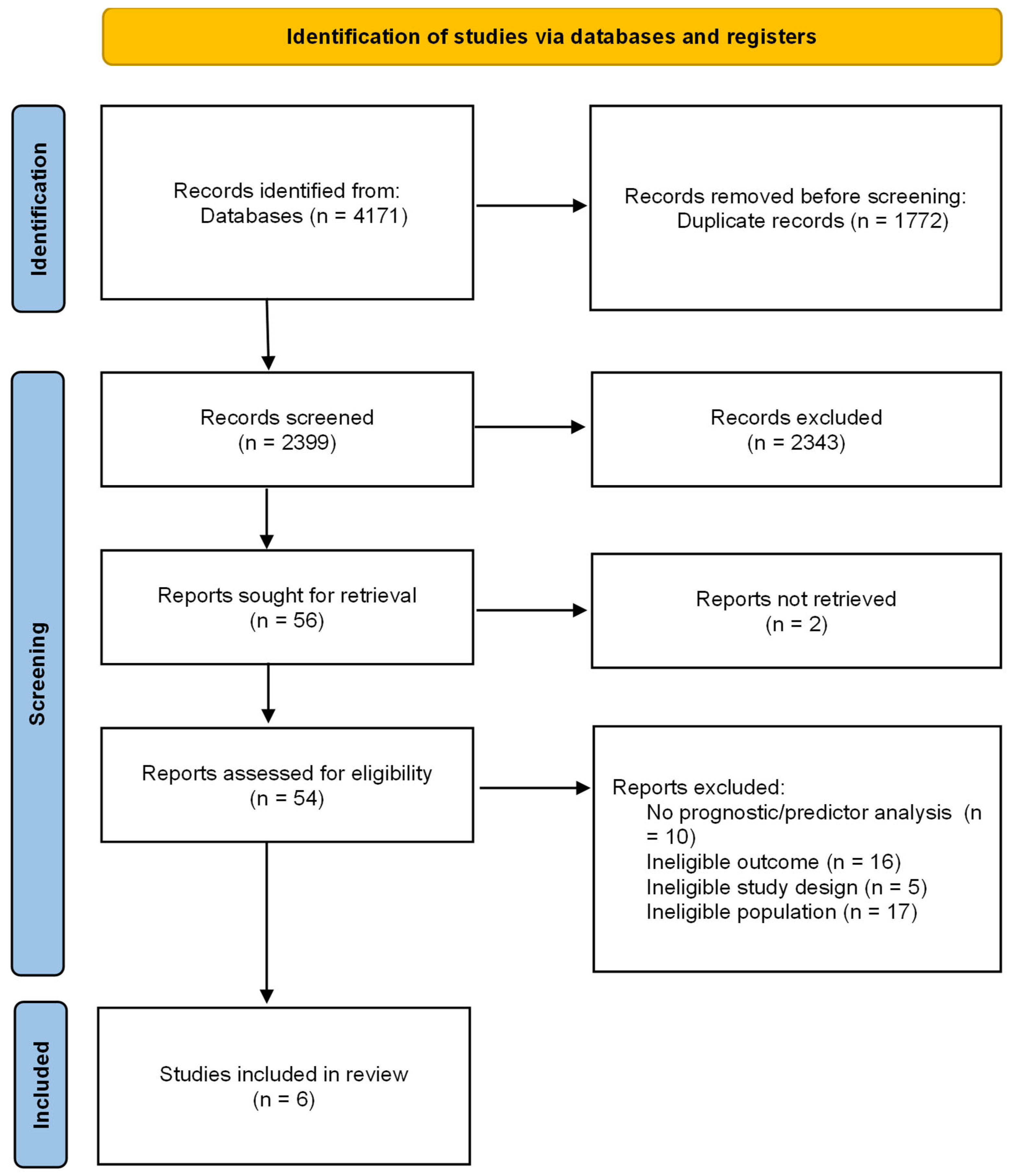
The database search yielded 4171 records. After removal of duplicates, titles and abstracts were screened, followed by full-text assessment of potentially eligible articles. Six studies met the predefined inclusion criteria and were included in the systematic review [22,26,27,28,29,30]. The study selection process is presented in the PRISMA 2020 flow diagram (Figure 1).

3.2. Study Characteristics

The characteristics of the included studies are summarized in Table 3 and Table 4. All included studies had a prospective observational design and assessed pain persistence or pain chronicity in patients with painful TMD. Across studies, baseline sample size varied from 63 to 480 participants. Follow-up time ranged between 6 and 24 months. All included studies used the Research Diagnostic Criteria for Temporomandibular Disorders. Outcomes focused on pain persistence or progression to clinically significant pain, and were measured using validated tools such as the Graded Chronic Pain Scale (GCPS), Characteristic Pain Intensity (CPI), or on the basis of sustained painful symptoms. Advanced statistical models were employed (e.g., regression-based analyses) for predictor analyses.
Across the included studies, the identified predictors could be broadly grouped into three domains consistent with the biopsychosocial framework. Biological predictors included pain-related characteristics (e.g., baseline pain intensity, widespread pain). Psychological predictors encompassed cognitive and affective variables (e.g., depression, pain catastrophizing, anxiety). Social and behavioral predictors related to illness behavior and daily functioning (e.g., healthcare-seeking behavior, functional disability, sleep-related factors). A full overview of predictors analyzed across studies is presented in Table 4.

3.3. Risk of Bias

A summary of the risk of bias assessment is presented in Table 5.
In the included prognostic factor studies, the risk of bias across most domains was judged to be low to moderate. The domains of prognostic factor measurement and outcome measurement were consistently rated as low risk of bias, due to the use of standardized diagnostic criteria (RDC/TMD) and other validated measurement tools. Higher risk of bias was more frequent in the domains of study attrition and study confounding, primarily due to loss to follow-up and confounding in multivariable analyses.
In PROBAST analysis, the one study assessed demonstrated concerns mainly in the domain of outcome and analysis, including a lack of external validation and potential risk of overfitting.
The overall methodological quality of the included studies was considered sufficient to support qualitative synthesis of prognostic findings.

3.4. Certainty of Evidence

The certainty of evidence for associations between biopsychological predictors and pain persistence or chronicity was assessed using the Grading of Recommendations Assessment, Development, and Evaluation (GRADE) approach. Although GRADE was originally developed for intervention research, its application to prognostic studies is supported by published methodological guidance and has been increasingly adopted in systematic reviews of prognostic factors [31,32]. Overall, the certainty of the evidence was judged to be moderate to very low, depending on the predictor. Higher certainty ratings were observed for selected psychological and pain-related factors, whereas evidence for sleep-related and occlusal factors was rated as low or very low. Downgrading was most commonly caused by risk of bias, inconsistency across studies, and imprecision. Only predictors supported by sufficiently comparable data were included in the GRADE assessment. A summary of the findings is presented in Table 6.

3.5. Definitions of Pain Persistence and Pain Chronicity

Across the included studies, outcomes related to pain persistence and chronicity were defined using similar but not identical definitions. Pain persistence was often defined as the continued presence of painful TMD symptoms at follow-up or as the lack of improvement over time [26,27,28]. Pain chronicity refers to the presence or progression of clinically significant pain [26,30]. Pain significance was often validated using tools such as the Graded Chronic Pain Scale (GCPS), or part of it, namely Characteristic Pain Intensity (CPI) [28,29,30]. In some studies, persistence or chronicity was based on sustained pain during repeated follow-up assessments [27,29]. Follow-up varied from 6 to 24 months.
The definitions of pain chronicity and pain persistence overlapped substantially, as both referred to the continued presence of painful TMD symptoms over time and were analyzed using similar tools.

4. Discussion

4.1. Summary of Main Findings

This systematic review synthesized evidence from prospective observational studies on predictors of pain persistence and chronicity in TMD. Across the six included studies, prognostic factors were heterogeneous and contained biological, psychological, social, and behavioral aspects. Overall, psychological factors, i.e., depression and catastrophizing, were associated with pain persistence or pain chronicity. Biological factors, including baseline pain intensity, number of pain conditions, and baseline number of disability days, also demonstrated prognostic value.
Social and behavioral factors were assessed less frequently and were mainly captured through indicators of illness behavior and functional impairment rather than through direct social variables. In this domain, functional disability influencing the ability to work and health care seeking were the most relevant factors associated with pain persistence or progression.
The certainty of evidence ranged from moderate to very low, reflecting methodological heterogeneity, limited sample sizes, and variability in outcome definitions across studies. In particular, the variability in outcome definitions across studies may have introduced inconsistencies in the reported findings. Some studies defined pain persistence as the continued presence of symptoms at follow-up, while others used validated tools such as GCPS to analyze the clinically significant pain. These differences limit direct comparison of results across studies and should be considered when interpreting the overall pattern of identified predictors.
To make interpretation easier, predictors identified in the included studies were grouped according to the biopsychosocial framework into three domains: biological, psychological, and social or behavioral factors. This structure allowed a clearer comparison of predictors across studies and helped identify which domains showed the most consistent prognostic associations with persistent TMD pain.
In summary, these findings support the biopsychosocial model of pain persistence and pain chronicity in patients with TMD while highlighting the need for prospective studies that more precisely analyze social and behavioral mechanisms in prognosis models.

4.2. Biological Predictors of Pain Persistence and Chronicity

Across the included studies, biological predictors of pain persistence and pain chronicity in painful TMD were mostly related to baseline pain characteristics, pain intensity, and pain distribution on other sites of the body. Physiological measures of pain were not employed. In the study by Velly et al., higher baseline pain intensity was associated with the onset and progression of clinically significant pain at 18-month follow-up [30]. It was still valid after adjustment for psychological factors and measures of widespread pain. Similarly, Marklund et al. reported that higher baseline pain was associated with persistence of TMD pain in the two-year period [27]. Therefore, it emphasizes the importance of the initial pain factor in the chronification process.
The distribution of pain outside of the orofacial region was also an important biological factor in pain persistence. Both Velly et al. and Su et al. identified the presence of widespread pain or pain elsewhere in the body as a predictor of pain persistence or progression [29,30]. A similar pattern has been observed in previous cross-sectional studies in chronic TMD patients, in which higher pain intensity and greater pain-related disability were associated with higher overall symptom burden [33,34,35]. These findings may demonstrate that chronic pain in TMD patients is related to alterations in pain processing and not only a localized musculoskeletal disorder. Such conclusions are in line with the concept of enhanced central pain amplification or reduced pain inhibition, although tools for CS were not employed in the included studies [33,36,37].
In a broader context outside of TMD, studies in other pain conditions suggest that baseline pain intensity and pain in other body sites are among the most consistent clinical predictors of pain persistence and long-term disability, regardless of the primary diagnosis [35,38]. Patients with chronic musculoskeletal and widespread pain with higher initial pain severity and greater area of body affected by pain, present poorer prognosis [38]. In this context, identified biological predictors in painful TMD patients align with the literature regarding chronic pain in general, where pain intensity and multisite pain act as markers of altered pain processing, rather than specific condition mechanisms [35,36]. This similarity may indicate that painful TMD shares common predictors with other chronic pain conditions.
Interestingly, functional parameters of the temporomandibular region showed some interesting results. A study by Su et al. reported that lower mandibular function impairment at baseline was associated with a higher likelihood of pain persistence at follow-up [29]. This finding may indicate that some patients experience persistent pain despite relatively preserved jaw function, suggesting that pain persistence in these cases is driven more by central mechanisms than by local functional impairment.
What is worth noting is that objective neurophysiological measures, such as quantitative sensory testing, were rarely incorporated, and their prognostic value for pain persistence was not clearly established, which limits the strength of the evidence regarding biological predictors in painful TMD. Biological factors were primarily assessed using self-reported pain tools such as GCPS [22,26,29,30]. Although measures such as pressure pain thresholds and other quantitative sensory testing parameters were assessed in one included study, they were not consistently identified as prognostic predictors, limiting the ability to analyze the relationship between biological predictors and pain-processing mechanisms, such as CS.
Therefore, although the biological predictors identified in TMD are consistent with those observed in other chronic pain conditions, further research is needed to better understand the underlying pathophysiological process, not only the patient’s self-reported pain experience.

4.3. Psychological Predictors of Pain Persistence and Pain Chronicity

In the included studies, psychological factors were examined more frequently and more precisely than biological aspects. Analyzed parameters encompassed psychological measures such as depression, anxiety, catastrophizing, somatization, quality of life, and perceived stress [26,28,29,30]. Psychological variables were typically assessed using validated, standardized self-report questionnaires.
Results of the studies demonstrated that pain catastrophizing (defined as a maladaptive cognitive-affective response to pain characterized by rumination, magnification and helplessness) plays an important role in unfavorable pain trajectories [30,39]. In the study by Velly et al., higher baseline levels of catastrophizing were associated with both the onset and progression of clinically significant pain at follow-up, even after adjustment for demographic variables and baseline pain intensity [30]. A similar relationship was also found for catastrophizing and pain-related disability at follow-up [30]. These findings may suggest that catastrophizing acts as an amplifier that affects pain perception and coping and can contribute to pain maintenance in TMD patients. Consistent with these findings, Forssell et al. reported that higher perceived ability to control pain can have a protective effect and was associated with more favorable outcomes [26]. It supports the thesis that the ability to cope with pain can predict long-term pain-related outcomes [26].
Interestingly, depression was also an important predictor of pain progression and disability, but after adjustment for pain catastrophizing and baseline pain-intensity it did not remain significant, while catastrophizing remained a predictor for pain outcomes [30].
Other psychological aspects showed less consistent results with pain persistence. Anxiety and psychological distress were examined in three studies, but their predictive value was not significant after adjustment for pain-related variables and comorbid conditions [26,27,29]. Findings from the OPPERA cohort confirm the dynamic relationship between psychological factors and pain persistence. Specifically, a study by Ohrbach et al. demonstrated that psychological distress may vary, and it tends to increase around TMD onset and is elevated in patients with persistent pain, but is declining in those whose symptoms are decreasing [28]. These findings support a dynamic model of the bidirectional relationship between psychological distress and TMD pain.
Chronic pain was previously associated with psychological disorders, particularly with depression and anxiety symptoms, which were also recognized as predictors of chronic pain conditions [40]. In a study by Aaron et al., approximately 40% of adults with chronic pain had significant depression and anxiety symptoms [41]. Interestingly, greater severity of psychological disorders was observed in participants with nociplastic pain conditions, such as fibromyalgia, compared with patients presenting nociceptive pain mechanisms (i.e different types of arthritis) [41]. It supports the view that centrally mediated pain is closely related to psychological impairment.
These observations are important in the context of painful TMD, where chronic myogenous pain was linked to altered pain processing mechanisms. Studies in patients with chronic masticatory muscle pain demonstrated a strong association between depression and anxiety symptoms and markers of CS, suggesting that psychological factors may be related to central nervous system alterations and not only the tissue damage [33].
Chronic pain and psychological disorders, such as depression, involve overlapping brain regions such as the hippocampus, thalamus, and amygdala, which are responsible for emotional regulation but also for pain processing [42,43].
The findings regarding psychological factors indicate that baseline psychological aspects, especially catastrophizing and depression, may be a relevant clinical predictor of pain persistence in painful TMD. It highlights the importance of assessing psychological factors during patient evaluation and supports the biopsychosocial model of understanding pain chronification.

4.4. Social and Behavioral Predictors of Pain Persistence and Pain Chronicity

In the biopsychosocial framework, the social domain refers to how patients function in their social context, including daily roles, work, interpersonal functioning, and healthcare use. Classical social determinants such as socioeconomic status, education, or social support were not directly assessed in the prospective studies included in the review. Therefore, “social predictors” in this analysis mainly refer to proxies of social functioning and illness behavior rather than direct measures of social context.
Four domains were identified: previous healthcare visits, healthcare utilization, functional disability impacting work or social life, and socio-behavioral stressors. Overall, social predictors were rarely investigated heterogeneously, and only two domains showed consistent prognostic relevance.
Regarding previous healthcare visits, only one study demonstrated that earlier healthcare contact may predict later pain persistence. Forssell et al. evaluated the number of pain-related healthcare visits in the six months preceding baseline. Each additional visit significantly increased the risk of clinically significant pain after one year, and this variable remained significant in multivariable analysis [26]. This finding was interpreted as reflecting frequent healthcare-seeking behavior, possibly indicating more complex symptom presentation or greater distress.
In contrast, Su et al. recorded previous treatment for TMD pain as a binary variable, which did not predict persistence at 6 or 12 months [29]. In OPPERA, participants with prior diagnosis or treatment were excluded, and in Marklund, Velly, and Elsaraj, healthcare history was not analyzed as a prognostic factor [22,27,28,30]. These discrepancies may partly reflect methodological differences, particularly the use of continuous versus dichotomous indicators.
Regarding general healthcare utilization, none of the included prospective studies formally evaluated it as an independent predictor of chronic pain. Although utilization was mentioned in several studies, no cohort included detailed quantitative measures, such as the number of consultations or treatment intensity, in prognostic models [26,28,29]. Consequently, current evidence does not allow conclusions regarding whether healthcare utilization per se predicts persistence of painful TMD.
Functional disability interfering with work and social activities emerged as the most consistent social predictor. Velly et al. used the disability component of the Graded Chronic Pain Scale, which includes interference with daily occupational and social activities [30]. Baseline pain-related disability significantly predicted both the onset and the progression of clinically significant chronic pain over 18 months. Higher initial interference increased the risk of developing more severe pain grades.
In other studies, functional limitation was assessed mainly in clinical terms. Ohrbach analyzed jaw functional limitation and chewing difficulties, and Su et al. used the Mandibular Function Impairment Questionnaire; however, these measures reflected stomatognathic function rather than work or social participation [28,29]. Consequently, only Velly et al. directly evaluated the prognostic role of work- and social-related disability [30]. Finally, socio-behavioral stressors were not systematically assessed as independent prognostic predictors of pain chronicity. Most cohorts focused primarily on psychological constructs such as depression, anxiety, or catastrophizing. Although some authors discussed potential social mechanisms, such variables were not included in statistical models. Therefore, current evidence does not support an independent prognostic role of broader social stressors in painful TMD.
In summary, prospective studies indicate that the social component of the biopsychosocial model has been only partially investigated in painful TMD. Among the selected domains, only two constructs showed prognostic relevance: frequent early healthcare-seeking behavior and functional disability interfering with work and social activities. Importantly, these variables serve as proxies for illness behavior and social functioning rather than classical social determinants. In contrast, general health care utilization and socio-behavioral stressors were either not assessed or not consistently associated with the outcome.
These findings indicate that social predictors of chronicity are mainly related to early maladaptive illness behavior and to the social consequences of pain rather than to external stress exposures. At the same time, the scarcity of positive results highlights an important gap in current research. Most studies concentrate on biological and psychological mechanisms, while the social dimension of chronic pain remains underrepresented. Future longitudinal studies should systematically include measures of occupational functioning, social participation, healthcare-seeking patterns, and social support in order to better understand how social context contributes to the persistence of painful TMD.

4.5. Clinical Implications

The findings of this systematic review have important implications for clinical practice regarding the assessment and treatment of patients with painful TMD. The identified psychological factors, such as pain catastrophizing and depression, highlight the importance of including psychological aspects in the daily routine in the management of painful TMD. Standardized screening tools, such as validated questionnaires, may help identify patients at higher risk of unfavorable pain trajectories.
Higher baseline pain intensity and widespread pain also demonstrated prognostic value, pointing out that assessment should consider regions outside of the orofacial area. It can also suggest possible alterations in pain processing.
Behavioral factors, such as parafunctional activities or sleep disturbances, may also contribute to pain persistence, although current evidence is limited and less consistent.
Early identification of prognostic factors may help to plan more appropriate and effective treatment. It should include patient education, behavioral changes, and interdisciplinary management.

4.6. Limitations of the Review and Future Research Directions

This review has several limitations. First, the number of included studies was relatively small, which limits the strength and generalizability of the conclusions. Second, high heterogeneity was observed in outcome definitions, follow-up duration, and the predictors assessed, making it impossible to perform a meta-analysis. In particular, follow-up periods ranged from 6 to 24 months, which may have influenced the findings; shorter follow-up periods may not capture late onset chronification, whereas longer follow-up introduces greater risk of attrition and changes in clinical management over time. Third, the certainty of evidence ranged from moderate to very low for most predictors. In addition, most studies relied primarily on self-reported measures, while objective physiological or neurophysiological indicators were rarely assessed and showed inconsistent prognostic value. Fourth, grey literature was not searched, which may introduce publication bias and limit the scope of the identified evidence. Fifth, the single study evaluated using PROBAST showed concerns regarding external validation and risk of overfitting, which further limits the generalizability of its findings.
Future studies should use standardized outcome definitions, objective pain measures, and comprehensive biopsychosocial assessments to improve the prognostic accuracy.

5. Conclusions

This systematic review showed that pain persistence in painful TMD is influenced by multiple biopsychosocial factors. Psychological variables, especially pain catastrophizing and depression, represent predictors of unfavorable pain outcomes, although this conclusion is limited by the small number of included studies and heterogeneity across outcome definitions. Biological factors, such as higher baseline pain intensity and widespread pain, also contribute to increased risk of persistent pain.
These findings support the biopsychosocial model of pain chronification and highlight the importance of comprehensive assessment beyond local musculoskeletal factors.
Further longitudinal studies using standardized outcome definitions and comprehensive biopsychosocial assessment are needed to improve prognostic models and support targeted preventive strategies.

Supplementary Materials

The following supporting information can be downloaded at: https://www.mdpi.com/article/10.3390/jcm15072498/s1, PRISMA 2020 Checklist.

Author Contributions

Conceptualization, P.S. and M.W.; methodology, P.S. and M.D.; formal analysis, M.W.-P.; investigation, P.S. and M.D.; writing—original draft preparation, P.S. and M.D.; writing—review and editing, M.G., A.P.-S. and M.W.; supervision, M.W. and M.G. All authors have read and agreed to the published version of the manuscript.

Funding

This research received no external funding.

Institutional Review Board Statement

Not applicable.

Informed Consent Statement

Not applicable.

Data Availability Statement

No new data were created or analyzed in this study.

Conflicts of Interest

The authors declare no conflicts of interest.

Abbreviations

The following abbreviations are used in this manuscript:
TMDTemporomandibular Disorders
TMJTemporomandibular Joint
DC/TMDDiagnostic Criteria for Temporomandibular Disorders
RDC/TMDResearch Diagnostic Criteria for Temporomandibular Disorders
ICOPInternational Classification of Orofacial Pain
PRISMAPreferred Reporting Items for Systematic Reviews and Meta-Analyses
PICOSPopulation, Intervention/Exposure, Comparator, Outcome, Study Design
PROSPEROInternational Prospective Register of Systematic Reviews
QUIPSQuality In Prognosis Studies
PROBASTPrediction model Risk Of Bias ASsessment Tool
GRADEGrading of Recommendations Assessment, Development, and Evaluation
GCPSGraded Chronic Pain Scale
CPICharacteristic Pain Intensity
EDSExcessive Daytime Sleepiness
ISIInsomnia Severity Index
PHQ-4Patient Health Questionnaire-4
SCL-90Symptom Checklist-90
CSCentral Sensitization
OROdds Ratio
RRRisk Ratio
CIConfidence Interval

References

  1. Osiewicz, M.; Ciapała, B.; Bolt, K.; Kołodziej, P.; Więckiewicz, M.; Ohrbach, R. Diagnostic Criteria for Temporomandibular Disorders (DC/TMD): Polish assessment instruments. Dent. Med. Probl. 2024, 61, 5–8. [Google Scholar] [CrossRef]
  2. Slade, G.D.; Bair, E.; Greenspan, J.D.; Dubner, R.; Fillingim, R.B.; Diatchenko, L.; Maixner, W.; Knott, C.; Ohrbach, R. Signs and Symptoms of First-Onset TMD and Sociodemographic Predictors of Its Development: The OPPERA Prospective Cohort Study. J. Pain 2013, 14, T20–T32.e3. [Google Scholar] [CrossRef] [PubMed]
  3. Osiewicz, M.; Więckiewicz, M.; Olchowy, A.; Czepiel, J.; Dąbrowski, P.; Cebula, M.; Messina, C.; Olchowy, C. Exploring the link between temporomandibular disorders and infectious diseases: A systematic review of comorbidities and underlying mechanisms. Dent. Med. Probl. 2025, 62, 1189–1200. [Google Scholar] [CrossRef]
  4. Orzeszek, S.M.; Piotr, S.; Waliszewska-Prosół, M.; Jenca, A.; Osiewicz, M.; Paradowska-Stolarz, A.; Winocur, O.; Zietek, M.; Bombała, W.; Wieckiewicz, M. Relationship between pain severity, satisfaction with life and the quality of sleep in Polish adults with temporomandibular disorders. Dent. Med. Probl. 2023, 60, 609–617. [Google Scholar] [CrossRef]
  5. Ohrbach, R.; Dworkin, S. The Evolution of TMD Diagnosis. J. Dent. Res. 2016, 95, 1093–1101. [Google Scholar] [CrossRef]
  6. Barjandi, G.; Svedenlöf, J.; Jasim, H.; Collin, M.; Hedenberg-Magnusson, B.; Christidis, N.; Ernberg, M. Clinical aspects of mastication myalgia—An overview. Front. Pain Res. 2024, 4, 1306475. [Google Scholar] [CrossRef] [PubMed]
  7. Bair, E.; Ohrbach, R.; Fillingim, R.B.; Greenspan, J.D.; Dubner, R.; Diatchenko, L.; Helgeson, E.; Knott, C.; Maixner, W.; Slade, G.D. Multivariable Modeling of Phenotypic Risk Factors for First-Onset TMD: The OPPERA Prospective Cohort Study. J. Pain 2013, 14, T102–T115. [Google Scholar] [CrossRef]
  8. Slade, G.D.; Sanders, A.E.; Ohrbach, R.; Fillingim, R.B.; Dubner, R.; Gracely, R.H.; Bair, E.; Maixner, W.; Greenspan, J.D. Pressure pain thresholds fluctuate with, but do not usefully predict, the clinical course of painful temporomandibular disorder. Pain 2014, 155, 2134–2143. [Google Scholar] [CrossRef]
  9. Slade, G.; Ohrbach, R.; Greenspan, J.; Fillingim, R.; Bair, E.; Sanders, A.; Dubner, R.; Diatchenko, L.; Meloto, C.; Smith, S.; et al. Painful Temporomandibular Disorder. J. Dent. Res. 2016, 95, 1084–1092. [Google Scholar] [CrossRef]
  10. Zlendić, M.; Đuričić, E.V.; Trošelj, K.G.; Tomljanović, M.; Đerfi, K.V.; Alajbeg, I.Z. Genetic Influences of Proinflammatory Cytokines on Pain Severity in Patients with Temporomandibular Disorders. Int. J. Mol. Sci. 2024, 25, 8730. [Google Scholar] [CrossRef] [PubMed]
  11. Zlendić, M.; Đuričić, E.V.; Trošelj, K.G.; Tomljanović, M.; Đerfi, K.V.; Alajbeg, I.; Alajbeg, I.Z. Genetic, Psychological, and Behavioural Factors Associated with Subtypes of Pain-Related Temporomandibular Disorders. Biomedicines 2025, 13, 1961. [Google Scholar] [CrossRef]
  12. Zorina-Lichtenwalter, K.; Ase, A.R.; Verma, V.; Parra, A.I.M.; Komarova, S.; Khadra, A.; Séguéla, P.; Diatchenko, L. Characterization of Common Genetic Variants in P2RX7 and Their Contribution to Chronic Pain Conditions. J. Pain 2024, 25, 545–556. [Google Scholar] [CrossRef]
  13. Chung, J.; Lobbezoo, F.; van Selms, M.K.A.; Chattrattrai, T.; Aarab, G.; Mitrirattanakul, S. Physical, psychological and socio-demographic predictors related to patients’ self-belief of their temporomandibular disorders’ aetiology. J. Oral Rehabil. 2021, 48, 109–123. [Google Scholar] [CrossRef]
  14. Magri, L.V.; Melchior, M.d.O.; da Silva, G.V.; Gherardi-Donato, E.C.d.S.; Leite-Panissi, C.R.A. Phenotypes of painful TMD in discordant monozygotic twins according to a cognitive-behavioral-emotional model: A case-control study. PLoS ONE 2025, 20, e0320515. [Google Scholar] [CrossRef]
  15. Sanders, A.E.; Slade, G.D.; Bair, E.; Fillingim, R.B.; Knott, C.; Dubner, R.; Greenspan, J.D.; Maixner, W.; Ohrbach, R. General Health Status and Incidence of First-Onset Temporomandibular Disorder: The OPPERA Prospective Cohort Study. J. Pain 2013, 14, T51–T62. [Google Scholar] [CrossRef]
  16. Sanders, A.; Greenspan, J.; Fillingim, R.; Rathnayaka, N.; Ohrbach, R.; Slade, G. Associations of Sleep Disturbance, Atopy, and Other Health Measures with Chronic Overlapping Pain Conditions. J. Oral Facial Pain Headache 2020, 34, s73–s84. [Google Scholar] [CrossRef] [PubMed]
  17. Orzeszek, S.; Martynowicz, H.; Smardz, J.; Kresse-Walczak, K.; Wojakowska, A.; Bombała, W.; Bort, M.; Wieckiewicz, M. Assessment of the relationship between sleep bruxism, reported pain and headache, selected health factors, and general health conditions among temporomandibular disorder patients: A preliminary report. Dent. Med. Probl. 2025, 62, 393–399. [Google Scholar] [CrossRef] [PubMed]
  18. Page, M.J.; McKenzie, J.E.; Bossuyt, P.M.; Boutron, I.; Hoffmann, T.C.; Mulrow, C.D.; Shamseer, L.; Tetzlaff, J.M.; Akl, E.A.; Brennan, S.E.; et al. The PRISMA 2020 statement: An updated guideline for reporting systematic reviews. BMJ 2021, 372, n71. [Google Scholar] [CrossRef] [PubMed]
  19. Amir-Behghadami, M.; Janati, A. Population, Intervention, Comparison, Outcomes and Study (PICOS) design as a framework to formulate eligibility criteria in systematic reviews. Emerg. Med. J. 2020, 37, 387. [Google Scholar] [CrossRef] [PubMed]
  20. Treede, R.-D.; Rief, W.; Barke, A.; Aziz, Q.; Bennett, M.I.; Benoliel, R.; Cohen, M.; Evers, S.; Finnerup, N.B.; First, M.B.; et al. Chronic pain as a symptom or a disease: The IASP Classification of Chronic Pain for the International Classification of Diseases (ICD-11). Pain 2019, 160, 19–27. [Google Scholar] [CrossRef]
  21. Nicholas, M.; Vlaeyen, J.W.S.; Rief, W.; Barke, A.; Aziz, Q.; Benoliel, R.; Cohen, M.; Evers, S.; Giamberardino, M.A.; Goebel, A.; et al. The IASP classification of chronic pain for ICD-11: Chronic primary pain. Pain 2019, 160, 28–37. [Google Scholar] [CrossRef]
  22. Elsaraj, S.M.; Gornitsky, M.; Hovey, R.; Samim, F.; Der Khatchadourian, Z.; Velly, A. The Contribution of Insomnia and Obstructive Sleep Apnea on the Transition from Acute to Chronic Painful Temporomandibular Disorders and their Persistence: A Prospective 3-Month Cohort Study. Can. J. Pain 2023, 7, 2266738. [Google Scholar] [CrossRef]
  23. Ouzzani, M.; Hammady, H.; Fedorowicz, Z.; Elmagarmid, A. Rayyan—A web and mobile app for systematic reviews. Syst. Rev. 2016, 5, 210. [Google Scholar] [CrossRef]
  24. Hayden, J.A.; van der Windt, D.A.; Cartwright, J.L.; Côté, P.; Bombardier, C. Assessing Bias in Studies of Prognostic Factors. Ann. Intern. Med. 2013, 158, 280–286. [Google Scholar] [CrossRef]
  25. Wolff, R.F.; Moons, K.G.M.; Riley, R.D.; Whiting, P.F.; Westwood, M.; Collins, G.S.; Reitsma, J.B.; Kleijnen, J.; Mallett, S. PROBAST: A Tool to Assess the Risk of Bias and Applicability of Prediction Model Studies. Ann. Intern. Med. 2019, 170, 51–58. [Google Scholar] [CrossRef]
  26. Forssell, H.; Kauko, T.; Kotiranta, U.; Suvinen, T. Predictors for future clinically significant pain in patients with temporomandibular disorder: A prospective cohort study. Eur. J. Pain 2017, 21, 188–197. [Google Scholar] [CrossRef] [PubMed]
  27. Marklund, S.; Wänman, A. Risk factors associated with incidence and persistence of signs and symptoms of temporomandibular disorders. Acta Odontol. Scand. 2010, 68, 289–299. [Google Scholar] [CrossRef] [PubMed]
  28. Ohrbach, R.; Slade, G.D.; Bair, E.; Rathnayaka, N.; Diatchenko, L.; Greenspan, J.D.; Maixner, W.; Fillingim, R.B. Premorbid and concurrent predictors of TMD onset and persistence. Eur. J. Pain 2020, 24, 145–158. [Google Scholar] [CrossRef] [PubMed]
  29. Su, N.; Lobbezoo, F.; Van Selms, M.K.A.; Van der Heijden, G.J.M.G. Development and internal validation of prediction models for persistence of self-reported orofacial pain in the follow-up of patients with myofascial pain. Clin. Oral Investig. 2021, 25, 2583–2594. [Google Scholar] [CrossRef]
  30. Velly, A.M.; Look, J.O.; Carlson, C.; Lenton, P.A.; Kang, W.; Holcroft, C.A.; Fricton, J.R. The effect of catastrophizing and depression on chronic pain—A prospective cohort study of temporomandibular muscle and joint pain disorders. Pain 2011, 152, 2377–2383. [Google Scholar] [CrossRef]
  31. Huguet, A.; Hayden, J.A.; Stinson, J.; McGrath, P.J.; Chambers, C.T.; Tougas, M.E.; Wozney, L. Judging the quality of evidence in reviews of prognostic factor research: Adapting the GRADE framework. Syst. Rev. 2013, 2, 71. [Google Scholar] [CrossRef]
  32. Foroutan, F.; Guyatt, G.; Zuk, V.; Vandvik, P.O.; Alba, A.C.; Mustafa, R.; Vernooij, R.; Arevalo-Rodriguez, I.; Munn, Z.; Roshanov, P.; et al. GRADE Guidelines 28: Use of GRADE for the assessment of evidence about prognostic factors: Rating certainty in identification of groups of patients with different absolute risks. J. Clin. Epidemiol. 2020, 121, 62–70. [Google Scholar] [CrossRef]
  33. Seweryn, P.; Waliszewska-Prosol, M.; Petrasova, A.; Bort, M.; Seweryn, M.; Straburzynski, M.; Wieckiewicz, M. Central Sensitisation, Anxiety and Depressive Symptoms in Patients with Chronic Masticatory Muscle Pain. J. Oral Rehabil. 2025, 52, 2010–2020. [Google Scholar] [CrossRef]
  34. Seweryn, P.; Waliszewska-Prosol, M.; Straburzynski, M.; Smardz, J.; Orzeszek, S.; Bombala, W.; Bort, M.; Jenca, A.; Paradowska-Stolarz, A.; Wieckiewicz, M. Prevalence of central sensitization and somatization in adults with temporomandibular disorders—A prospective observational study. J. Oral Facial Pain Headache 2024, 38, 33–44. [Google Scholar] [CrossRef]
  35. Häuser, W.; Wolfe, F.; Henningsen, P.; Schmutzer, G.; Brähler, E.; Hinz, A. Untying chronic pain: Prevalence and societal burden of chronic pain stages in the general population—A cross-sectional survey. BMC Public Health 2014, 14, 352. [Google Scholar] [CrossRef]
  36. Ni, W.; Kuang, X.; Zhu, Z. Pain Chronicity and Relief: From Molecular Basis to Exercise-Based Rehabilitation. Biology 2025, 14, 1116. [Google Scholar] [CrossRef]
  37. Zharova, N.; Zharikov, Y.; Pelicer-Marques, Y.; Nikolenko, V.; Tarasenko, V.; Mikliaeva, E.; Mchenskaya, A.; Ryagin, S.; Antonyan, S.; Aniskin, D.; et al. Amygdala-centered mechanisms of pain amplification and chronification in fibromyalgia and migraine: Narrative review. Behav. Brain Res. 2026, 503, 116071. [Google Scholar] [CrossRef] [PubMed]
  38. Engelmann, P.; Busmann, M.; Löwe, B.; Hüsing, P. Biopsychosocial risk factors for the transition from acute to chronic back pain: A prospective cohort study. J. Psychosom. Res. 2026, 202, 112500. [Google Scholar] [CrossRef] [PubMed]
  39. Sullivan, M.J.L.; Tripp, D.A. Pain Catastrophizing: Controversies, Misconceptions and Future Directions. J. Pain 2024, 25, 575–587. [Google Scholar] [CrossRef] [PubMed]
  40. Mullins, P.M.; Yong, R.J.; Bhattacharyya, N. Associations between chronic pain, anxiety, and depression among adults in the United States. Pain Pract. 2023, 23, 589–594. [Google Scholar] [CrossRef]
  41. Aaron, R.V.; Ravyts, S.G.; Carnahan, N.D.; Bhattiprolu, K.; Harte, N.; McCaulley, C.C.; Vitalicia, L.; Rogers, A.B.; Wegener, S.T.; Dudeney, J. Prevalence of Depression and Anxiety Among Adults with Chronic Pain. JAMA Netw. Open 2025, 8, e250268. [Google Scholar] [CrossRef] [PubMed]
  42. Sheng, J.; Liu, S.; Wang, Y.; Cui, R.; Zhang, X. The Link between Depression and Chronic Pain: Neural Mechanisms in the Brain. Neural Plast. 2017, 2017, 9724371. [Google Scholar] [CrossRef] [PubMed]
  43. IsHak, W.W.; Wen, R.Y.; Naghdechi, L.; Vanle, B.; Dang, J.; Knosp, M.; Dascal, J.; Marcia, L.; Gohar, Y.; Eskander, L.; et al. Pain and Depression: A Systematic Review. Harv. Rev. Psychiatry 2018, 26, 352–363. [Google Scholar] [CrossRef] [PubMed]
Figure 1. The PRISMA 2020 flow diagram.
Jcm 15 02498 g001
Table 1. Inclusion and exclusion criteria.
Inclusion CriteriaExclusion Criteria
PopulationAdults (≥18), painful TMD<18, non-painful TMD only, painful TMD not defined
Prognostic factors/Exposure Baseline biopsychosocial/behavioral factorsNo predictor/prognostic factor analysis
ComparatorPersistent/chronic pain vs. improved/remitted pain (within-study)No within-study comparison for pain persistence/chronicity
OutcomesPain persistence/chronicity; follow-up > 3 monthsFollow-up < 3 months, outcomes unrelated to pain persistence,
Study designCohort (prospective/retrospective), case–controlCross-sectional, case series, case reports
Table 2. Search strategies for each database.
DatabaseSearch String
Medline(“Temporomandibular Disorders”[Mesh] OR “temporomandibular disorder*”[tiab] OR TMD[tiab] OR “temporomandibular joint” OR “temporomandibular joint disorder” OR “myogenous TMD”[tiab] OR “myogenic TMD”[tiab] OR “masticatory muscle pain”[tiab] OR “masticatory myalgia”[tiab] OR “muscle related TMD”[tiab] OR “myofascial pain”[tiab] OR “jaw muscle pain”[tiab])
AND
(chronic*[tiab] OR persistent[tiab] OR “persistent pain”[tiab] OR “pain persistence”[tiab] OR “pain duration”[tiab] OR “follow-up”[tiab] OR longitudinal[tiab] OR prospective[tiab] OR cohort[tiab])
AND
(predictor*[tiab] OR “risk factor*”[tiab] OR prognos*[tiab] OR determinant*[tiab] OR associated[tiab] OR baseline[tiab])
Embase(‘temporomandibular disorder’/exp OR ‘temporomandibular disorder*’:ti,ab OR TMD:ti,ab OR ‘temporomandibular joint’:ti,ab
OR ‘temporomandibular joint disorder*’:ti,ab OR ‘myogenous TMD’:ti,ab OR ‘myogenic TMD’:ti,ab OR ‘masticatory muscle pain’:ti,ab OR ‘masticatory myalgia’:ti,ab OR’ myofascial pain’:ti,ab OR ‘jaw muscle pain’:ti,ab)
AND
(chronic*:ti,ab OR persistent:ti,ab OR ‘persistent pain’:ti,ab OR ‘pain persistence’:ti,ab OR ‘pain duration’:ti,ab OR ‘follow-up’:ti,ab OR longitudinal:ti,ab OR prospective:ti,ab OR cohort:ti,ab)
AND
(predictor*:ti,ab OR ‘risk factor*’:ti,ab OR prognos*:ti,ab OR determinant*:ti,ab OR associated:ti,ab OR baseline:ti,ab)
Web of ScienceTS = (
(“temporomandibular disorder*” OR TMD OR” temporomandibular joint” OR “myogenous TMD” OR “myogenic TMD” OR
“masticatory muscle pain” OR “masticatory myalgia” OR “myofascial pain” OR “jaw muscle pain”)
AND
(chronic* OR persistent OR “persistent pain” OR “pain persistence” OR
“pain duration” OR “follow-up” OR longitudinal OR prospective OR cohort)
AND
(predictor* OR “risk factor*” OR prognos* OR determinant* OR associated OR baseline))
Table 3. Studies characteristics.
l.pAuthorYearStudy DesignSample Size (Baseline)Sample Size (Follow-Up)Age (Mean ± SD/Range)Diagnostic CriteriaTMD Diagnosis Subtype Pain Duration at BaselineOutcome Type (Pain Persistence, Pain Chronicity)Chronic Pain/Pain Persistence DefinitionOutcome Measure (e.g., Pain Intensity, GCPS)
1Elsaraj et al.2023 [22]prospective cohort study45637841.74 ± 16.29RDC/TMD and DC/TMDpainful TMD (muscle and/or joint)acute cohort < 3 months; chronic > 3 monthsPain chronification (transition from acute to chronic) and persistence of chronic painful TMDPain duration > 3 months; Dysfunction GCPS II-IVPain persistence at 3-month follow-up (pain duration > 3 months), GCPS (1 vs. II-IV), Characteristic pain intensity
2Ohrbach et al.2020 [28]prospective cohort study260147N.DRDC/TMDPainful TMDNo TMD at baselinePain persistencePersistence defined as examiner-verified TMD at 6–8 months after onsetExaminer-verified presence of symptoms of TMD
3Forssell et al.2016 [26]prospective cohort study39926340.5 ± 12.7RDC/TMDPainful TMDTMD pain in last month Pain persistence pain persistence at 1 year follow-up (according to GCPS)GCPS at 1 year
4Velly et al.2011 [30]prospective cohort study57048035.85 ± 12.48RDC/TMDPainful TMD>3 monthsPain persistence/chronicitypain frequency of at least once per week, and duration of at least 3 monthsGCPS-CPI
5Marklund et al.2010 [27]case–control with 2-year prospective cohort 371280N.DRDC/TMDPainful TMDN.DPain persistence2 years of pain persistencePersistence of painful symptoms at 0, 12 and 24 months
6Su et al.2020 [29]prospective cohort study636340.5 ± 13.9RDC/TMDMyofascial painpain for at least 1 monthpain persistencePain persistence in the 6 and 12-month follow-upGCPS-CPI
Table 4. Predictors of pain persistence and chronicity in temporomandibular disorders.
l.pAuthorPredictors Analyzed (e.g., Somatization, Number of Painful Sites)Statistical Model (Logistic Regression, Linear Regression)Significant Predictors
1Elsaraj et al. [22]
  • EDS,
  • Insomnia,
  • PHQ-4,
  • Characteristic Pain Intensity,
  • Baseline acute/chronic status,
  • GCPS
  • Logistic regression
  • No associations between insomnia and persistence or transition to chronic pain,
  • Borderline association between transition or persistence risk and EDS,
2Ohrbach et al. [28]
  • Psychosocial measures (perceived stress/negative life events, anxiety, mood/affect, depression, somatic symptom reporting, pain catastrophizing),
  • Sleep quality and health-related quality of life,
  • Oral parafunctional behaviors and jaw functional limitation,
  • Quantitative sensory testing, pressure pain thresholds and thermal/mechanical pain response
  • Logistic and linear change
  • None reported
3Forssell et al. [26]
  • Comprehensive multidimensional pain questionnaire assessing TMD pain related and general health factors, and psychosocial prognostic factors using validated self-report scales.
  • Logistic regression
  • Number of healthcare visits (last 6 months),
  • Pain intensity/dysfunction of other pain conditions,
  • Number of other pain conditions: (borderline),
  • Number of disability days (baseline),
  • Perceived ability to control pain (borderline)
4Velly et al. [30]
  • Catastrophizing,
  • Depression,
  • Widespread pain,
  • Worst pain intensity,
  • GCPS at baseline,
  • Linear regression, binary logistic regression, ordinal logistic regression
  • Baseline catastrophizing,
  • Pain intensity at baseline,
  • Widespread pain,
5Marklund et al. [27]
  • Self-reported bruxism,
  • Dental occlusal factors,
  • Parafunctions,
  • Logistic regression
  • Self-reported bruxism,
  • Crossbite,
  • Mandibular instability in the Intercuspal Position,
  • Lateral slide 1 mm between the retruded contact position and the Intercuspal Position
6Su et al. [29]
  • Pain characteristics (baseline Characteristic Pain Intensity, pain duration/chronicity, pain elsewhere),
  • Prior TMD pain treatment,
  • Psychosocial factors (SCL-90 depression and somatization),
  • Bruxism,
  • Mandibular function impairment
  • Logistic regression
  • Pain elsewhere
  • Depression,
  • Bruxism,
  • Mandibular Function
(EDS—Excessive Daytime Sleepiness, PHQ-4—Patient Health Questionnaire 4, GCPS—Graded Chronic Pain Scale, TMD—Temporomandibular Disorders, SCL-90—Symptoms Checklist 90).
Table 5. Risk of bias analyzed with QUIPS tool.
AuthorStudy ParticipationStudy AttritionPrognostic Factor MeasurementOutcome MeasurementStudy ConfoundingStatistical Analysis and ReportingOverall Bias
Elsaraj et al. [22]ModerateModerateLowLowHighModerateHigh
Ohrbach et al. [28]LowHighLowLowModerateModerateModerate
Forssell et al. [26]ModerateModerateModerateModerateModerateModerateModerate
Velly et al. [30]LowModerateLowLowModerateLowModerate
Markulund et al. [27]HighModerateLowLowHighHighHigh
Table 6. GRADE assessment.
Prognostic FactorNo. of Studies (First Author)Total NOutcome DefinitionEffect Estimate (Adjusted)Certainty of Evidence (GRADE)
Catastrophizing2 (Velly; Forssell)~740GCPS II–IV/progression or persistenceOR 1.72–2.16⬤⬤⬤◯ Moderate
Baseline pain intensity2 (Velly; Forssell)~740GCPS II–IV/disabilityDose–response relationship⬤⬤⬤◯ Moderate
Depression2 (Velly; Forssell)~700GCPS II–IV/persistenceOR ~1.2–1.5⬤⬤◯◯ Low
Widespread pain/pain elsewhere2 (Velly; Forssell)~700GCPS II–IV/persistenceOR ~1.3–1.8⬤⬤◯◯ Low
Excessive daytime sleepiness (EDS)1 (Elsaraj)378Pain > 3 months/GCPS II–IVRR 1.13 (1.00–1.26)⬤◯◯◯ Very low
Bruxism/occlusal factors1 (Marklund)2802-year persistenceInconsistent effects⬤◯◯◯ Very low
⬤⬤⬤⬤ High, ⬤⬤⬤◯ Moderate, ⬤⬤◯◯ Low, ⬤◯◯◯ Very low.
Disclaimer/Publisher’s Note: The statements, opinions and data contained in all publications are solely those of the individual author(s) and contributor(s) and not of MDPI and/or the editor(s). MDPI and/or the editor(s) disclaim responsibility for any injury to people or property resulting from any ideas, methods, instructions or products referred to in the content.