Case Report

Vascular Complication After Revision of Total Knee Arthroplasty (R-TKA): A Case of Popliteal Branch Pseudoaneurysm Successfully Treated with Embolization—A Case Report and Mini Review of the Literature

1
Department of Interventional Radiology and Neuroradiology, Medical University of Lublin, Jaczewskiego 8, 20-954 Lublin, Poland
2
Department of Correct, Clinical and Imaging Anatomy, Medical University of Lublin, 20-954 Lublin, Poland
3
Department of Traumatology, Orthopedics and Rehabilitation, Medical University of Lublin, Jaczewskiego 8, 20-954 Lublin, Poland
4
Department of Vascular Surgery, Medical University of Lublin, Jaczewskiego 8, 20-954 Lublin, Poland
5
Department of Animal Physiology, Faculty of Veterinary Medicine, University of Life Sciences in Lublin, Akademicka 13, 20-912 Lublin, Poland
*
Authors to whom correspondence should be addressed.
J. Clin. Med. 2026, 15(5), 2079; https://doi.org/10.3390/jcm15052079
Submission received: 10 February 2026 / Revised: 26 February 2026 / Accepted: 7 March 2026 / Published: 9 March 2026
(This article belongs to the Section Vascular Medicine)

Abstract

Background: Vascular injury after total knee arthroplasty (TKA) is rare but may be limb-threatening. Popliteal artery branch pseudoaneurysm is an uncommon complication that can present with nonspecific symptoms, potentially mimicking postoperative hematoma, infection, or deep venous thrombosis (DVT). Case presentation: A 79-year-old man underwent primary left TKA for advanced osteoarthritis (OA). Seven months later, he sustained a low-energy fall closed reduction and bracing were implemented. Due to recurrent episodes of instability with spontaneous self-reduction, a constrained revision TKA (R-TKA) was performed. Eighteen days after revision, the patient was readmitted because of persistent pain-related functional impairment. Duplex Doppler ultrasonography revealed a partially thrombosed pseudoaneurysm measuring 33 × 37 mm arising from a popliteal/genicular branch. Computed tomography angiography (CTA) confirmed a partially thrombosed pseudoaneurysm with a contrast-filled component within a larger periarticular fluid collection. This suggested a second, smaller pseudoaneurysm along the feeding vessel; hemarthrosis and soft-tissue edema were also present. After multidisciplinary evaluation, selective catheter angiography via left common femoral access was performed, and the injured branch was occluded using coil embolization combined with n-butyl cyanoacrylate tissue adhesive. Completion angiography demonstrated successful exclusion of the pseudoaneurysm without complications. Conclusions: Delayed pseudoaneurysm of a popliteal artery branch should be considered after revision TKA in patients with atypical swelling, hemarthrosis, or disproportionate pain. Duplex ultrasound and CTA are complementary diagnostic tools, and endovascular embolization provides a minimally invasive, effective, and low-morbidity treatment option when the lesion involves a branch vessel.

1. Introduction

1.1. Total Knee Arthroplasty (TKA) and Revision Knee Arthroplasty (R-TKA)

Total knee arthroplasty (TKA) is an effective treatment option for patients with advanced knee osteoarthritis (OA) [1]. Epidemiological studies predict that by 2040, approximately 78.4 million adults will be affected by OA, thereby increasing the number of primary TKAs performed. It is estimated that by 2050, the number of TKAs will rise by approximately 143% [2]. Although studies have demonstrated the high effectiveness of TKA in OA management, implant survivorship exceeds 90%. However, despite this, a substantial proportion of patients still require repeat procedures—referred to as revision TKA (R-TKA) [3,4]. Epidemiological data published by Laver et al. (2025) [5] estimated that 1–20% of patients undergo R-TKA, indicating considerable variability across patient cohorts. The most common indications for R-TKA include infection, mechanical complications, and dislocation [5]. The increasing volume of primary TKA will therefore be accompanied by a rise in the number of R-TKAs. Epidemiological data indicate that the number of revision procedures (R-TKA) will increase by 600% between 2005 and 2030 [2]. Importantly, R-TKA is associated with a higher risk of complications, longer hospital stays, and increased mortality compared with primary TKA. In primary TKA, overall patient survival at 15-year follow-up is reported to be 90–95%, whereas after R-TKA, patient survival drops to 71–80% at a shorter 10-year follow-up, indicating increased mortality among patients undergoing R-TKA [4,5].

1.2. Vascular Complications—Popliteal Artery Pseudoaneurysm (PPA)

Vascular complications (e.g., thrombosis, arteriovenous fistula formation, aneurysm, or pseudoaneurysm) are rare but carry a serious risk of limb ischemia, hemorrhage, and nerve compression [6]. A pseudoaneurysm, which involves disruption of the arterial wall with subsequent formation of an aneurysmal sac, may result from direct vessel injury, mechanical stretching, or thermal injury caused by bone cement [7]. It may present acutely or with delayed symptoms, including swelling, pain, an abnormally pulsatile mass, and hemarthrosis [8].
PPA is rare after TKA. Epidemiological data indicate an incidence of 0.0095% to 0.088% among patients [6,7]. However, PPA is the most common vascular injury associated with TKA [9]. Sundaram et al. (2020) reported that PPA accounted for as many as 45% of vascular injuries resulting from TKA [6]. In patients after R-TKA, as well as in the setting of infection and fractures, the risk of vascular complications, including arterial injury, is higher [10].
The most commonly used imaging modalities for diagnosing PPA include Doppler ultrasonography and computed tomography angiography (CTA). Magnetic resonance angiography (MRA) is also used occasionally. However, Doppler ultrasonography is the most frequently employed method. It provides excellent visualization of the disrupted arterial wall and enables detection of blood flow outside the vessel lumen [11]. Early diagnosis of PPA is crucial because failure to intervene promptly in the setting of reduced or obstructed blood flow may lead to nerve injury, limb loss, and even patient death [12,13,14].

1.3. Treatment of PPA

Based on the current literature, all pseudoaneurysms should be treated [15]. At present, conservative, surgical, or radiological management may be used (ultrasound-guided approaches, endovascular treatment, thrombin injection, or ultrasound-guided compression of the pseudoaneurysm). Conservative management (monitoring) is used only in cases of small, asymptomatic iatrogenic pseudoaneurysms, which may undergo spontaneous thrombosis [16,17].
Traditionally, pseudoaneurysms were treated surgically. However, this treatment has drawbacks, such as the need for general anesthesia and prolonged hospitalization, and in patients with comorbidities, it may be associated with impaired wound healing [15]. In the surgical treatment of PPA, repeat surgery in patients after TKA or R-TKA may entail a risk of infection of the recently implanted prosthesis. Moreover, surgical management of these pseudoaneurysms often requires harvesting a venous graft from the contralateral limb, which increases the risk of postoperative complications [18].
Therefore, over recent years, radiological methods have gained popularity and are currently the most commonly used approaches for treating pseudoaneurysms. Radiological treatment modalities include ultrasound-guided compression repair (UGCR), thrombin injection, and endovascular treatment [15]. UGCR is applied in smaller pseudoaneurysms associated with limited disruption of the vessel wall. This technique is most often used for pseudoaneurysms of superficial vessels, such as the brachial, axillary, and femoral arteries [18,19].
In the treatment of PPA, endovascular therapy is increasingly used and primarily based on two techniques: stent placement and embolization [15,20]. When selecting an endovascular strategy, the pseudoaneurysm size and the presence of collateral circulation should be assessed. If collateral supply is absent, embolization can be performed with coils, N-butyl-2-cyanoacrylate (glue), or detachable balloons [21]. In contrast, when collateral circulation is present, stent placement is used. In PPA management, stent-based treatment is more commonly employed and involves deploying a stent at the site of the arterial defect [7,9,11,14,18,22,23,24].
The aim of this study was to present a case of a patient diagnosed with a PPAafter R-TKA, successfully treated with endovascular embolization. A second aim was to emphasize the importance of interdisciplinary collaboration among specialists and departments to enable rapid, effective management of complex clinical conditions.

2. Case Description

2.1. Primary Arthroplasty of the Left Knee

2.1.1. Medical History and Clinical Examination

A 79-year-old male patient (weight: 90 kg, height: 180 cm, body mass index (BMI): 27.78 kg/m2) was admitted due to pain-related functional impairment of the left knee. The symptoms were a consequence of advanced osteoarthritic changes that had been progressing for more than a decade. Over the preceding 5 years, symptoms had intensified despite regular use of non-steroidal anti-inflammatory drugs (NSAIDs). To alleviate symptoms, the patient had received multiple intra-articular steroid injections into the left knee at another center (at least three injections). The patient also underwent physiotherapy. However, despite treatment, his physical function deteriorated. Pain severity increased and was rated by the patient as 9/10 on the visual analog scale (VAS).
Physical examination of the left knee revealed enlarged joint contours without evidence of increased intra-articular effusion, with pain-related dysfunction involving all three compartments. Active and passive range of motion was 5–5–95°. Sagittal-plane stability was preserved, whereas coronal-plane instability was present. Valgus deformity of the knee measured 15°. The patella was immobile in the mediolateral direction. Peripheral sensation, perfusion, and limb function were preserved. The patient ambulated with the assistance of two forearm crutches.
The patient also had comorbidities, including arterial hypertension, nephrolithiasis, diabetes mellitus, and cardiac arrhythmia.

2.1.2. Imaging Studies

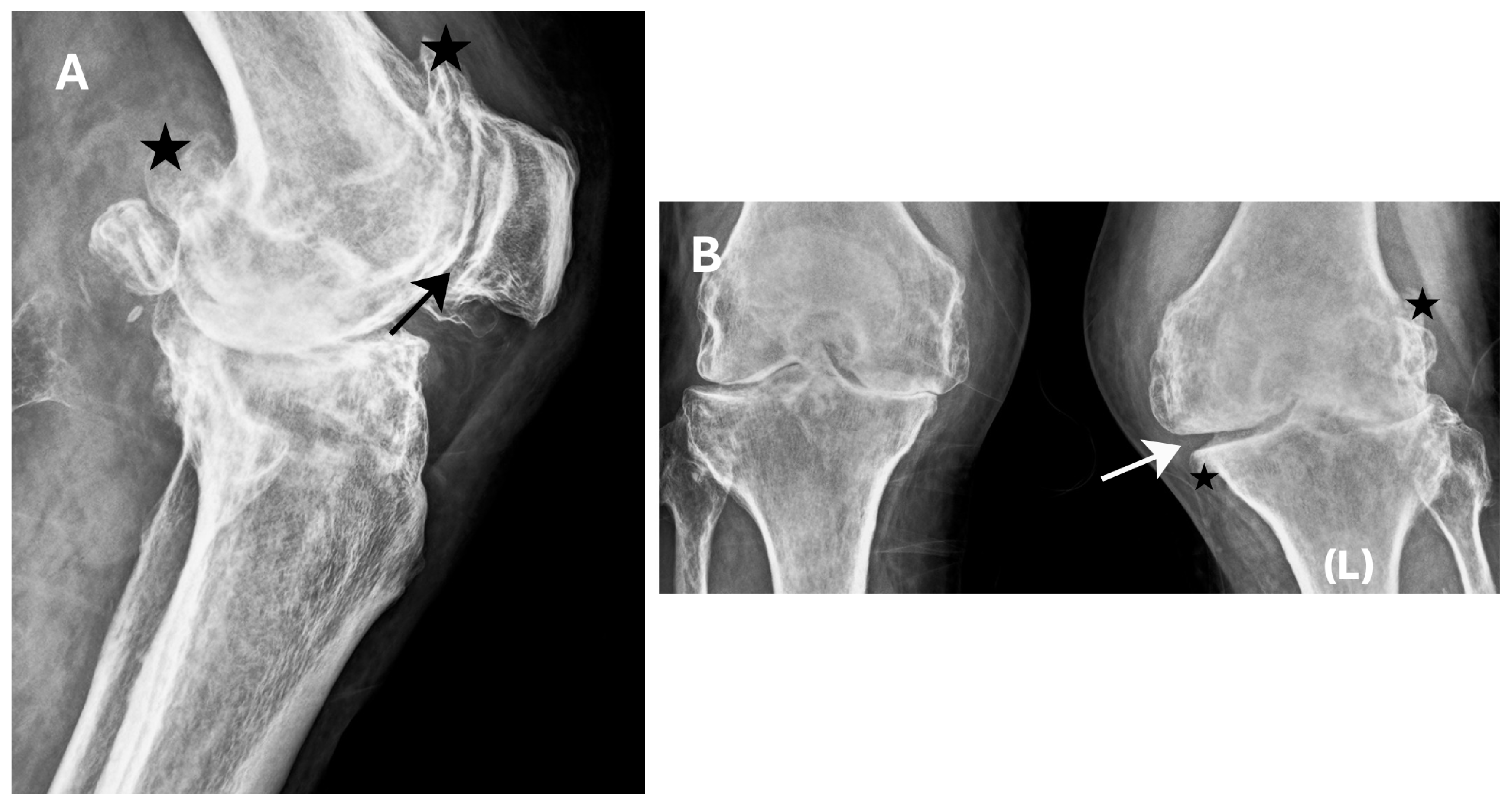
Anteroposterior (standing) and lateral radiographs (X-rays) of the knee were obtained (Figure 1). The X-rays showed severe OA in both knee joints. Massive osteophytes at the edge of the joint space (Figure 1A). Left knee joint valgus deformed. Osteophytes at the edge of the joint space. Closure of the joint space on the lateral side (Figure 1B).
Based on the clinical and imaging assessment, the patient was qualified for primary TKAof the left knee. However, the patient was disqualified at the initial scheduled date. During preoperative admission to the orthopedic ward, bradycardia and a rise in blood pressure to >200 mmHg were observed. A cardiology work-up (echocardiography, Holter monitoring, and ECG) was ordered, based on which a Biotronik DDD pacemaker was implanted at the Department of Cardiology. Anticoagulant therapy was also initiated (rivaroxaban 20 mg). Three months later, primary TKA of the left knee was performed (Figure 2).

2.1.3. Surgical Procedure

The patient was positioned supine. A pneumatic tourniquet was applied to the left thigh at the level of the proximal one-third of the femur and inflated to 320 mmHg. Standard skin preparation and sterile draping were performed. A straight midline skin incision approximately 20 cm in length was made. TKA was performed through a standard medial parapatellar approach (medial arthrotomy). After exposure of the joint, extensive osteophytes were removed, particularly in the medial femoral condyle (MFC) region. Hypertrophic synovium was also excised, and a large loose body was removed from the posterior recess of the joint. Following femoral and tibial preparation according to the recommended technique, a Triathlon Stryker PS prosthesis was implanted (femur size 7, tibia size 7, 9-mm insert). The tourniquet was released after 1 h and 50 min. After its release, 1 g of tranexamic acid (Exacyl) was administered intravenously, according to the department protocol. The wound was closed in layers and covered with a soft dressing.
Twelve hours postoperatively, thromboprophylaxis was initiated with enoxaparin (Neoparin) at a therapeutic dose of 80 mg twice daily. Pain was controlled with NSAIDs. On postoperative day 1, follow-up X-rays were obtained (Figure 3). The patient was then mobilized on postoperative day 1 using a high walker. Early postoperative rehabilitation was implemented during hospitalization. Passive exercises of the left lower limb were performed using a continuous passive motion device (CPM) (DJO Global, Lewisville, TX, USA). On postoperative day 3 after TKA, the patient began ambulating with forearm crutches. The patient was discharged home on postoperative day 8 in good condition, with a recommendation to continue anticoagulant therapy (Clexane 840 mg, 1 prefilled syringe twice daily subcutaneously) for 30 days. After that period, anticoagulant therapy with rivaroxaban was restarted. Continuation of the exercises learned during hospitalization was also advised, along with further follow-up at the outpatient clinic.

2.2. Conservative Management

2.2.1. Medical History and Clinical Examination

Seven months after primary TKA of the left knee, the patient presented to the emergency department. The day before, he had fallen in the bathroom from standing height, sustaining forced knee flexion with valgus stress. Clinical examination revealed marked enlargement of the joint contour with signs of increased joint effusion, deformity, and tenderness. Range of motion was limited by pain.

2.2.2. Imaging Studies

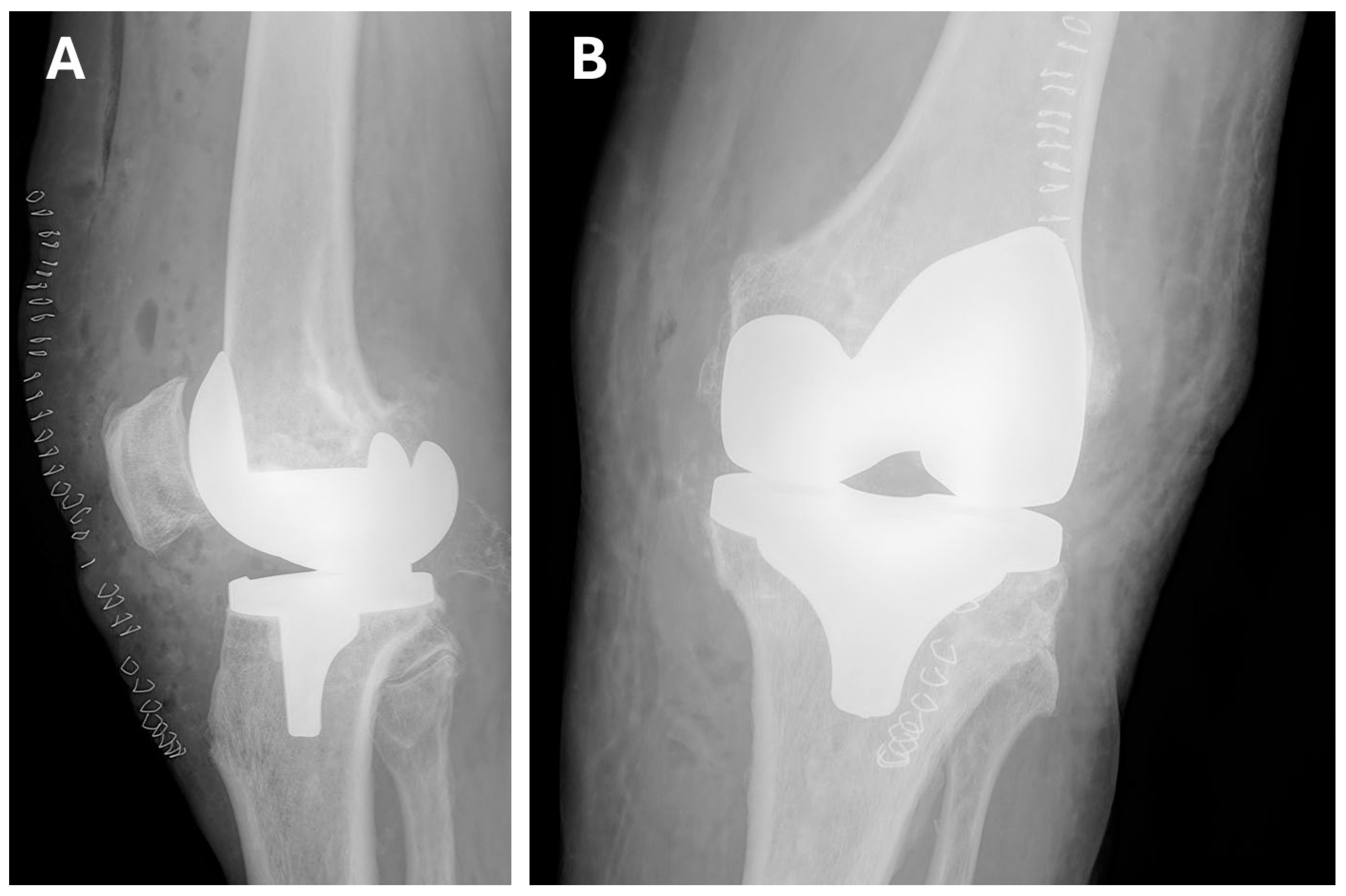
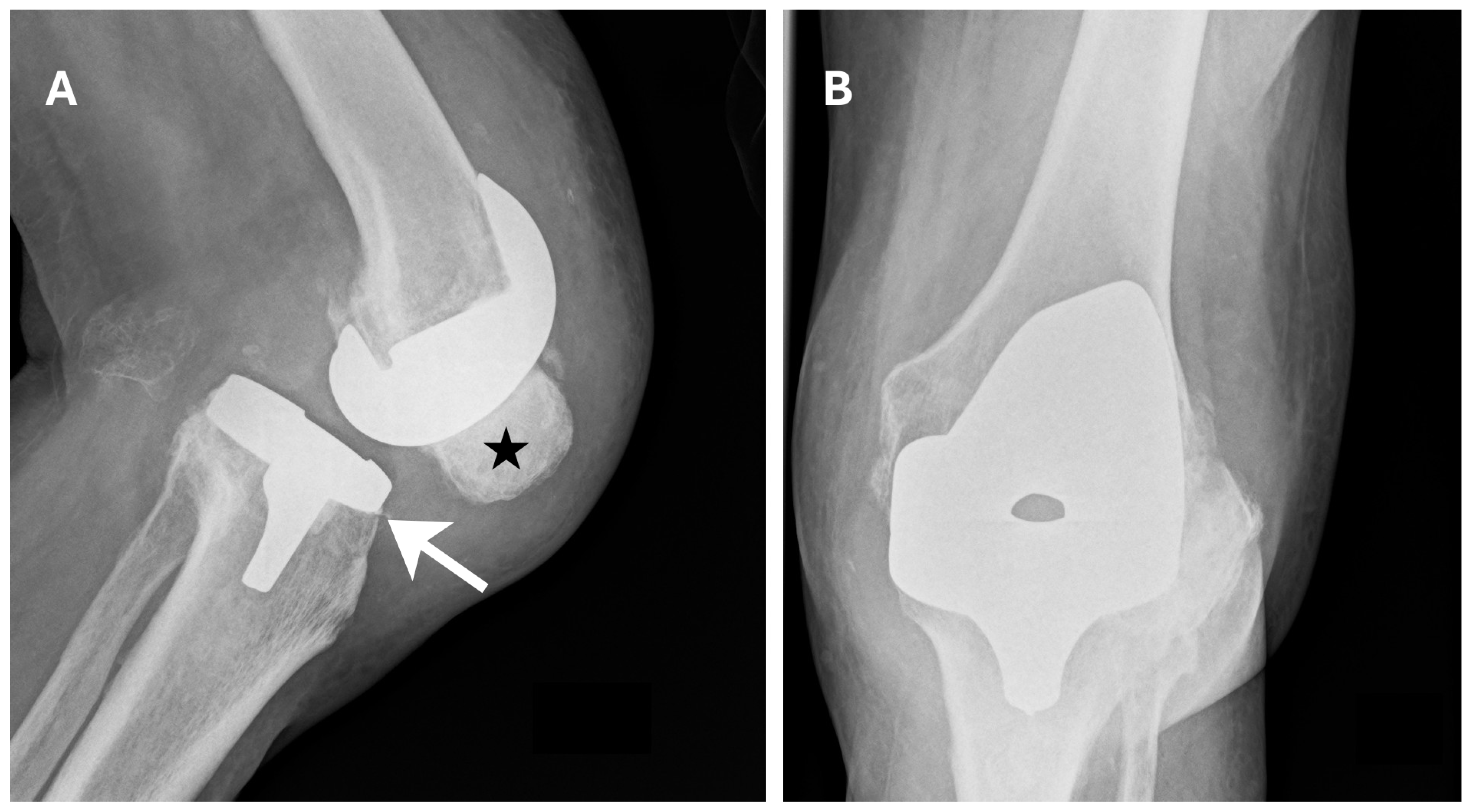
Plain x-ray demonstrated dislocation of the left knee endoprosthesis with posterior translation of the tibia, without clear evidence of component loosening (Figure 4). Imaging studies confirmed dislocation of the left knee, a substantial amount of intra-articular fluid, lateralization of the patella, and an irregular calcification measuring approximately 30 mm in the popliteal fossa. No evidence of prosthetic loosening was identified.
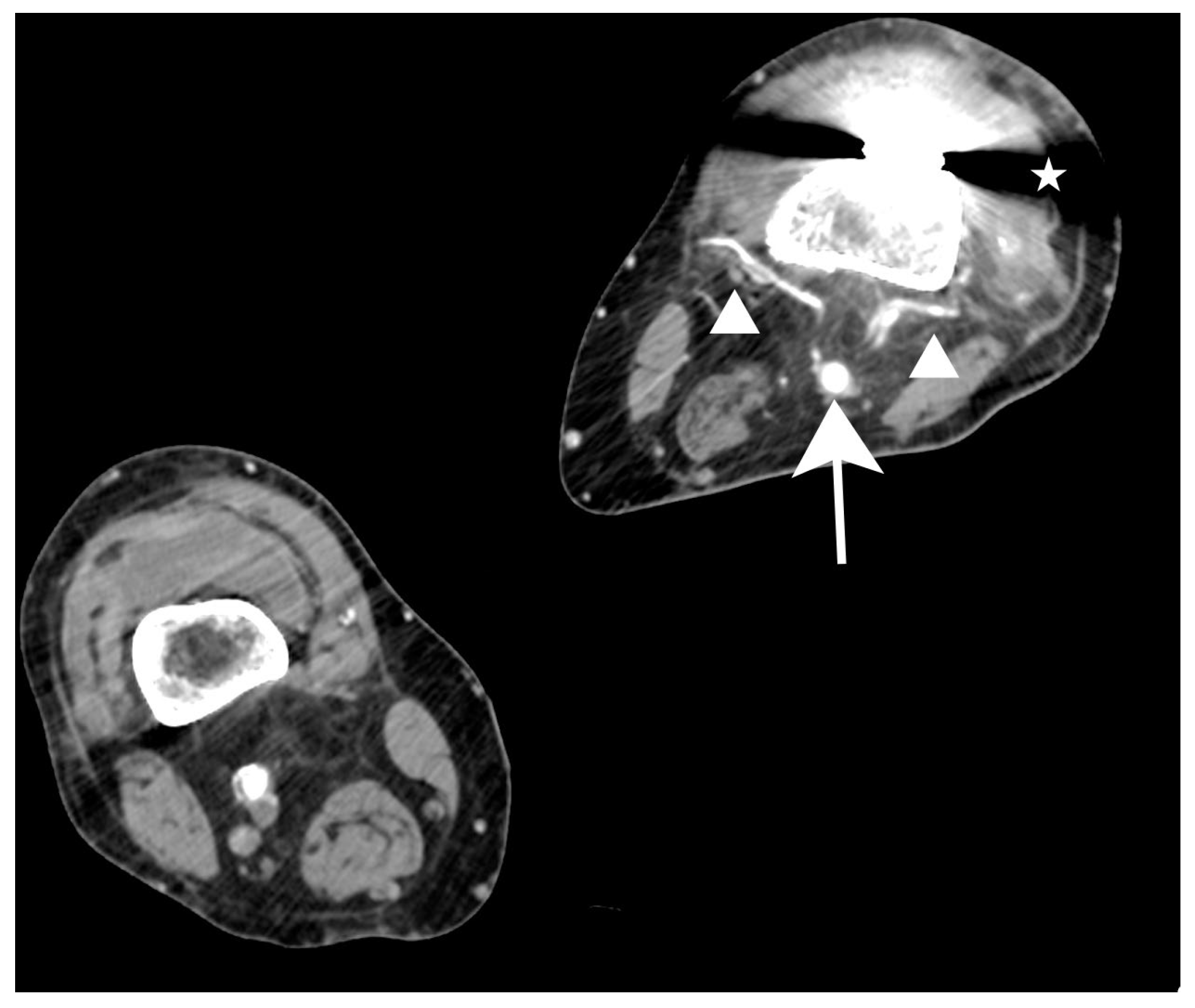
On CTA, lack of contrast opacification was noted in the distal segment of the left anterior tibial artery (at the level of the ankle joint) and the left dorsalis pedis artery, as well as in the distal segment of the medial branch of the left plantar artery. In the visible range, the main arteries of both lower limbs were otherwise appropriately opacified. The lack of contrast opacification in the aforementioned arteries was consulted with a vascular surgeon and considered a symptom of chronic lower limb ischemia, unrelated to the dislocation of the knee prosthesis (Figure 5).
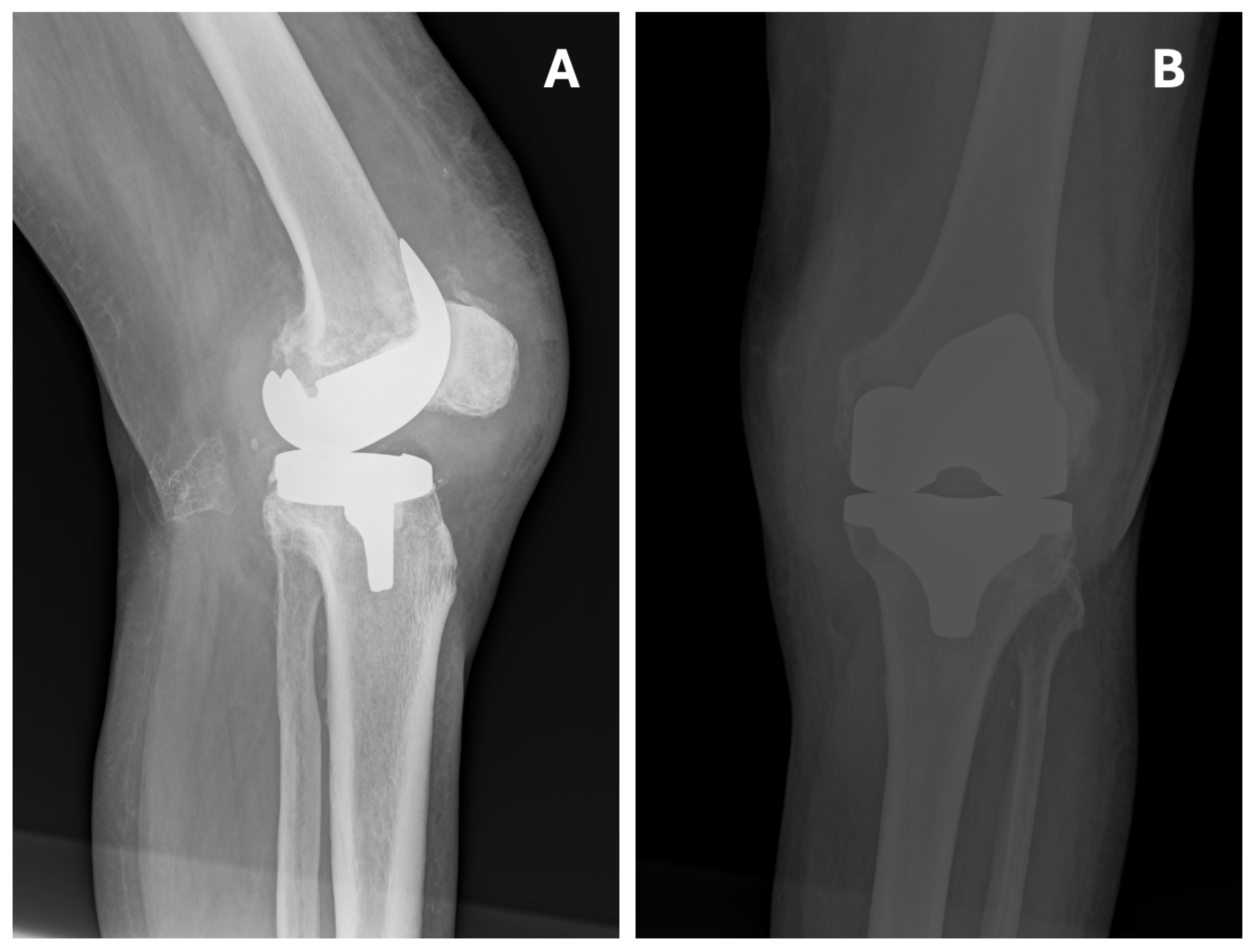
Based on the clinical examination and imaging findings, the patient was diagnosed with a traumatic injury to the medial collateral ligament (MCL). Conservative management was implemented, consisting of reduction of the knee joint and application of a knee brace (Figure 6). Outpatient follow-up at the trauma and orthopedic surgery clinic was recommended. The patient was discharged from the hospital in good condition after 4 days, with recommendations to use anticoagulant therapy and NSAIDs as needed for pain.

2.3. Revision of the Left Knee

During follow-up visits, the patient reported additional falls from standing height (at least three episodes), after which symptoms of dislocation occurred with spontaneous self-reduction. The patient did not use the knee brace at home. He was therefore qualified for revision surgery of the left knee.
Three months after the fall, the patient was admitted to the hospital for R-TKA of the left knee. However, the procedure was postponed because the required rivaroxaban washout period had not been observed. Three months later, revision surgery was performed.

Surgical Procedure

The patient was positioned supine. A pneumatic tourniquet was applied to the left thigh at the level of the proximal one-third of the femur and inflated to 320 mmHg. Standard skin preparation and sterile draping were performed. A straight skin incision approximately 20 cm in length was made along the previous scar. Synovial fluid was aspirated for culture. The procedure was performed through a standard midline approach (medial parapatellar arthrotomy). Intraoperatively, extensive damage to the MCL and the soft tissues of the medial compartment was identified. After exposure, the Triathlon Stryker PS prosthesis was removed. Subsequently, a constrained revision prosthesis was implanted: Triathlon MRH (femoral component: Large; 4 mm offset adapter; stem 80 mm/19 mm; tibial component: plateau Large; stem 15/80 mm; constrained MRH insert 13 mm). During prosthesis implantation, there was no need for extensive posterior capsular release. Tibial preparation and stem reaming were uneventful. The tourniquet was released after 1 h 35 min. After its release, no excessive bleeding was observed. 1 g of tranexamic acid (Exacyl) was administered intravenously, according to the department’s protocol. The wound was covered with a soft dressing.
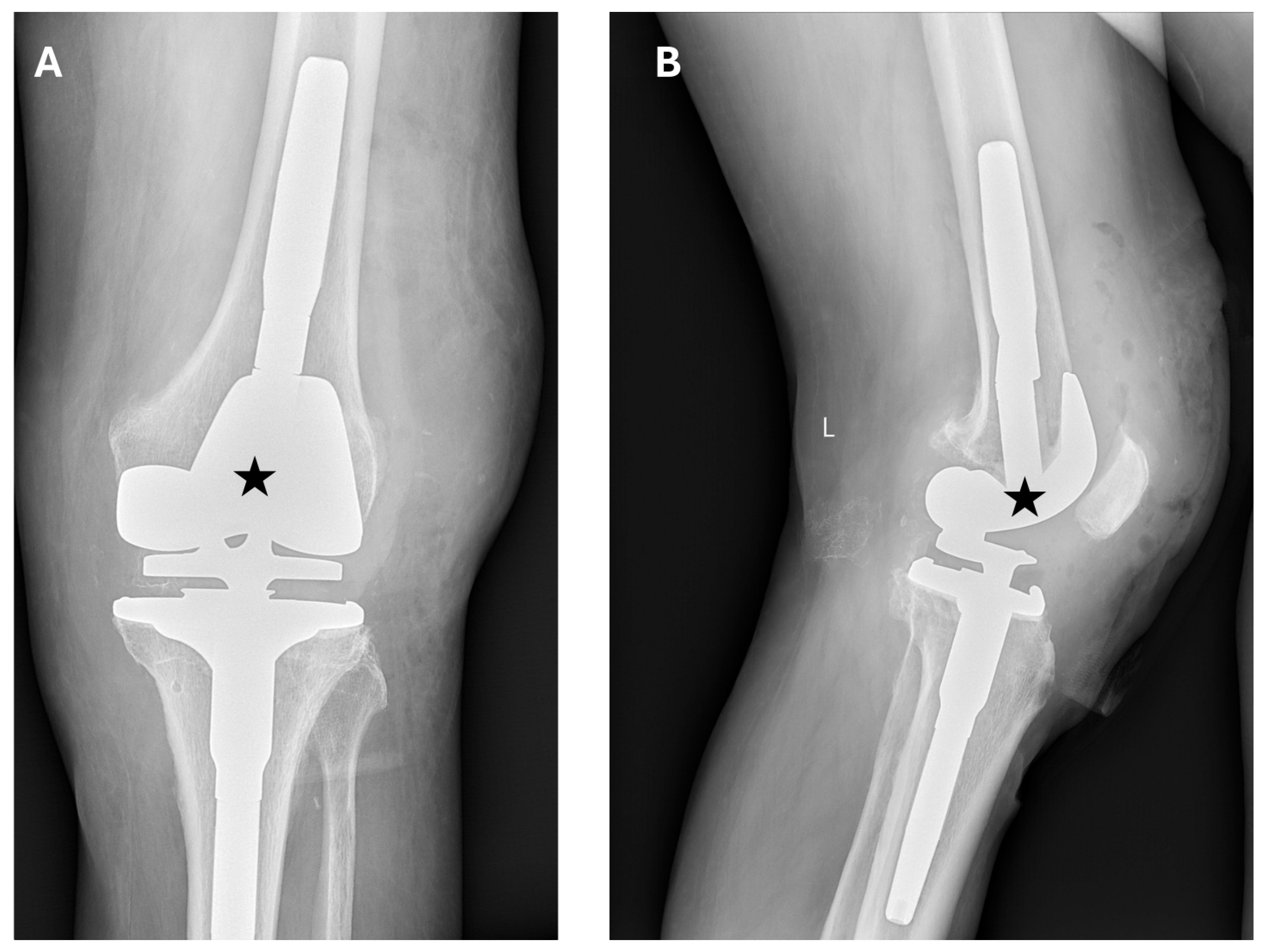
Twelve hours after surgery, thromboprophylaxis was initiated with enoxaparin (Neparin). Pain was controlled with NSAIDs. On postoperative day 1, follow-up X-rays were obtained (Figure 7). The patient was then mobilized on postoperative day 1 using a high walker. Early postoperative rehabilitation was implemented during hospitalization. Passive exercises of the left lower limb were performed using a CPM (DJO Global, Lewisville, TX, USA). On postoperative day 3 after TKA, the patient began ambulating with forearm crutches. During postoperative care and rehabilitation, no signs of hematoma formation were observed at the surgical site. The patient was discharged from the hospital after 15 days in good condition, with recommendations similar to those after primary TKA.

2.4. Pseudoaneurysm

2.4.1. Medical History and Clinical Examination

After discharge, in the late postoperative period (41 days after the revision surgery), the patient was readmitted due to persistent pain-related functional impairment of the knee.
On admission, the left lower limb was warm with preserved distal perfusion. Capillary refill was <2 s. Peripheral pulses were assessed and were palpable at the femoral level and distally at the posterior tibial and dorsalis pedis arteries. No clinically relevant pulse deficit or side-to-side asymmetry was identified, and there were no features of acute limb ischemia (no pallor, cyanosis, coldness, or rest pain).
Local inspection of the knee revealed periarticular swelling, more pronounced laterally and toward the popliteal region, consistent with the subsequently confirmed pseudoaneurysm and associated hemarthrosis. The overlying skin was intact, without erythema, increased local temperature, or signs of wound complication. On palpation, the mass was tender and deep-seated. A subtle pulsatile component could be appreciated without active bleeding. No audible bruit was detected over the popliteal fossa.
Neurological status was intact: light-touch sensation in the foot was preserved, and active ankle/toe motion was maintained. There were no symptoms suggestive of tibial or peroneal nerve compromise. Overall, the findings were consistent with a hemodynamically stable branch-vessel lesion without compromise of the main arterial axis, supporting further vascular imaging and endovascular management.

2.4.2. Imaging Studies

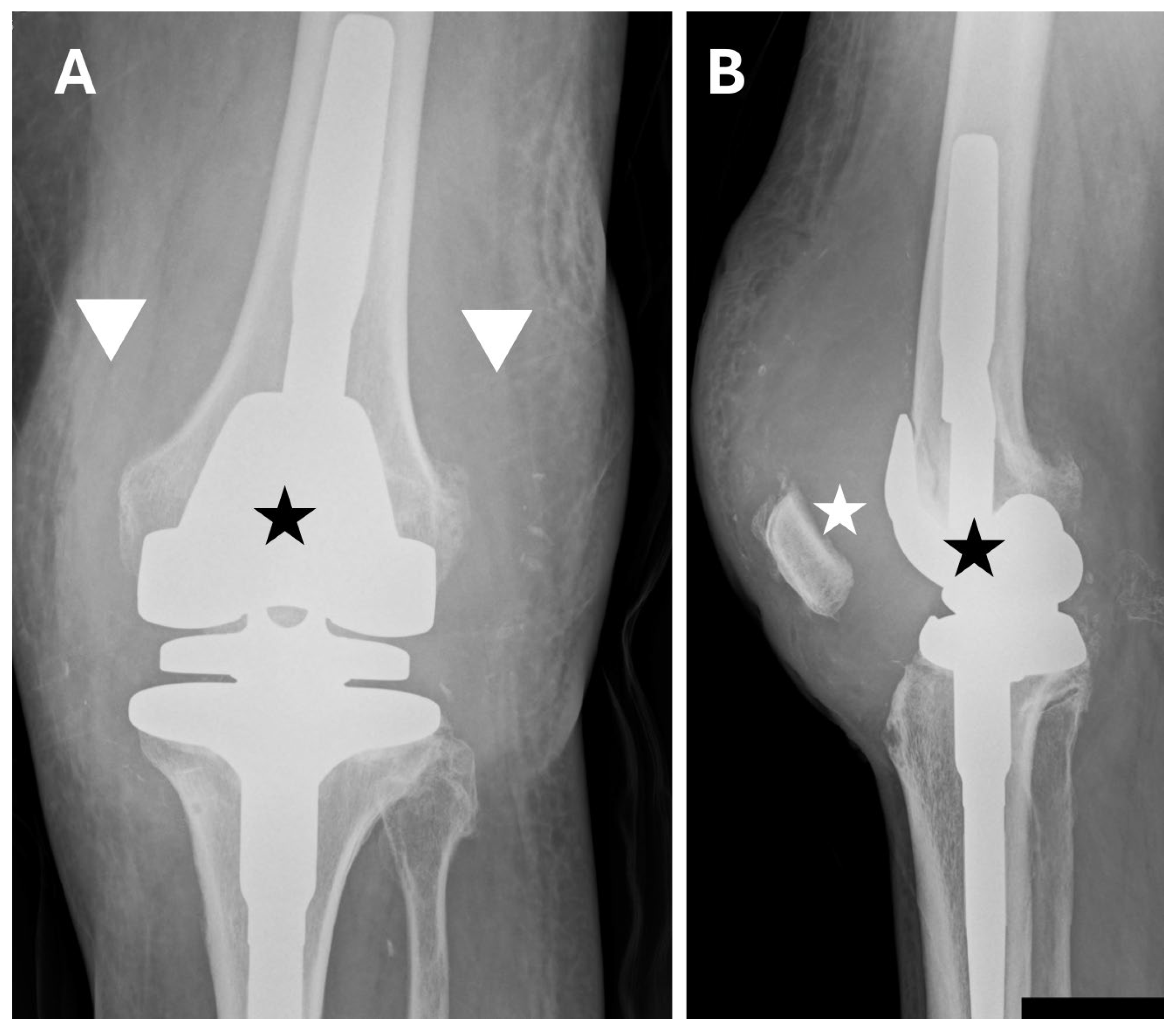
Initially, an X-ray of the operated knee was performed, which revealed significant expansion of the soft-tissue outline, a large joint effusion, and no obvious signs of loosening of the prosthetic components (Figure 8).
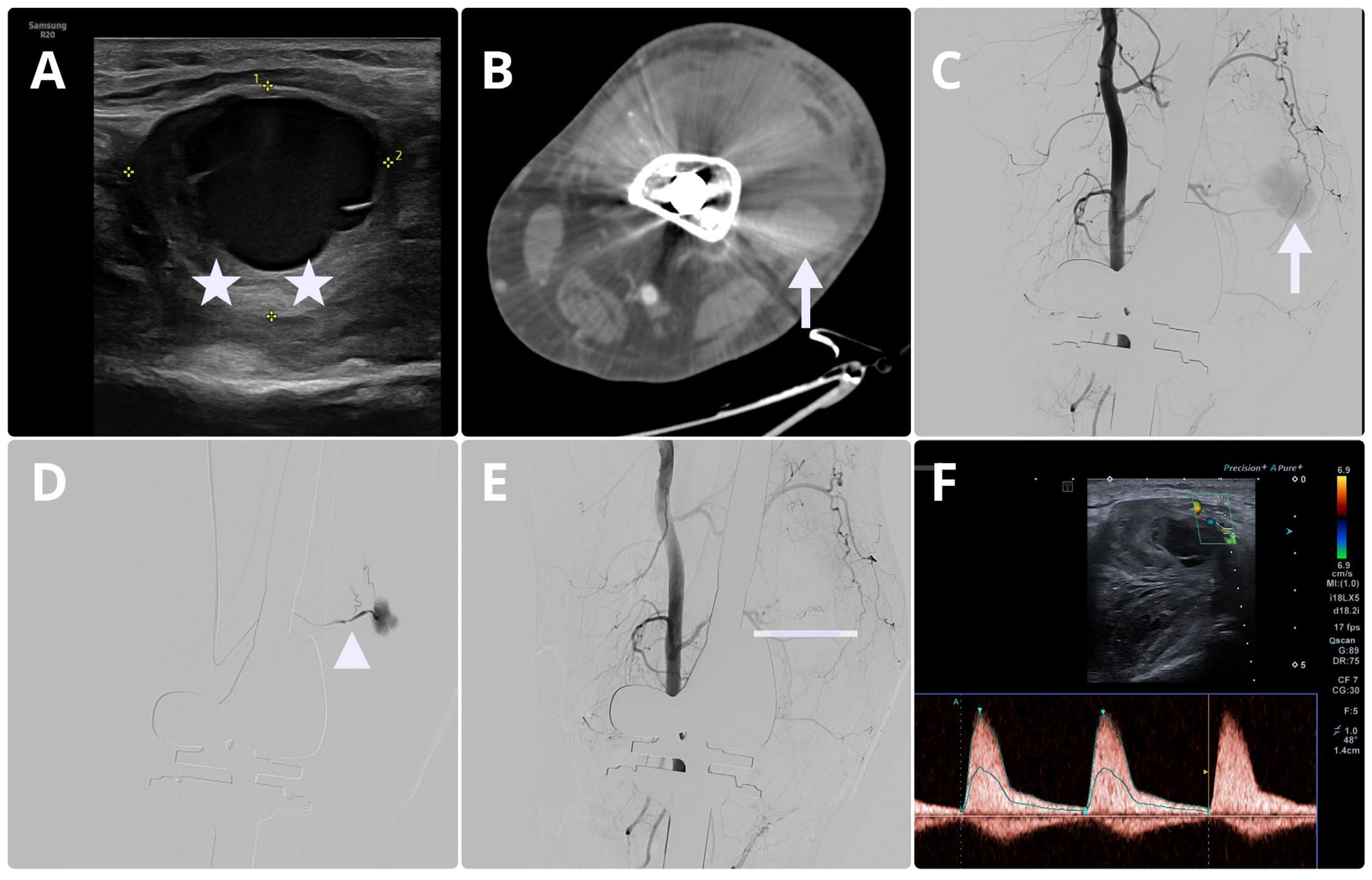
Doppler ultrasonography was performed and revealed a partially thrombosed pseudoaneurysm (33 × 37 mm) arising from a lateral branch of the popliteal artery. The examination assessed the arteries of the left lower limb, including the common, superficial, and deep femoral arteries, the popliteal artery, and the anterior and posterior tibial arteries. On the lateral aspect of the left knee, a partially thrombosed pseudoaneurysm of one of the popliteal artery branches measuring approximately 33 × 37 mm was visualized. No other significant morphological abnormalities were identified in the evaluated arteries. Blood flow parameters were normal, with a high-resistance, triphasic waveform. Probable explanation for the preservation of normal blood flow in the genicular artery is the fact that the pseudoaneurysm was located distally from the genicular artery. Soft-tissue edema was noted in the region of the left knee joint (Figure 9A).
Based on these findings, CTA of the left knee was ordered. The examination demonstrated a fluid-density area measuring approximately 55 × 48 mm along the lateral contour of the distal metaphysis of the left femur, with a contrast-filled focus within it measuring approximately 31 × 24 mm. One of the branches of the left popliteal artery was observed to course toward the described lesion. The CTA appearance suggested a partially thrombosed pseudoaneurysm along its course. In addition, in the proximal segment of the small feeding artery, a focal enlargement measuring approximately 6 × 6.5 mm was identified, consistent with a possible second, smaller pseudoaneurysm. A large amount of heterogeneous, dense content (most likely partially hemorrhagic) was also observed within the left knee joint, with small calcifications present. Edematous changes of the soft tissues of the left lower limb were noted, particularly at the level of the knee joint (Figure 9B).
The patient was qualified for endovascular embolization. The procedure was performed 2 days after readmission to the hospital.

2.4.3. Procedure Description

The procedure was performed under local anesthesia with 10 mL of 2% lidocaine. Vascular access was obtained via percutaneous puncture of the left common femoral artery (L CFA), and a 5F introducer sheath was inserted. Digital subtraction angiography (DSA), performed using Visipaque 320 (radiation exposure: RP 158 mGy), total time of fluoroscopy 10.5 min, total dose of contrast media—50 mL) demonstrated opacification of the pseudoaneurysm via a feeding branch originating from the genicular artery (GA) (Figure 9C).
The feeding vessel was selectively catheterized, and distal occlusion was achieved using embolization coils (Nester—2 coils 2 × 5mm) followed by injection of tissue adhesive (Glubran2 mixed with Lipiodol, 30% of glue), resulting in exclusion of the pseudoaneurysm from the circulation (Figure 9D). Completion DSA confirmed effective pseudoaneurysm exclusion with preserved flow in the remaining evaluated vessels and no procedure-related complications (Figure 9E,F). Hemostasis at the access site was achieved with manual compression and a pressure dressing, which was recommended for removal after at least 4 h. The patient, in good general condition, was transferred back to the orthopedic department. There was no need to modify anticoagulation after embolization.
Following the procedure, the patient remained in the hospital for 10 days. During this time, the left knee joint was regularly monitored, and the patient received appropriate rehabilitation. A gradual reduction in knee circumference was observed. A bedside ultrasound performed in the department of orthopedics confirmed complete embolization of the pseudoaneurysm (5 days after procedure—Figure 9F). The patient was discharged home in good general condition. Continuation of the exercises learned during hospitalization was recommended, along with further follow-up at the outpatient clinic. Due to cardiological indications, anticoagulant therapy with rivaroxaban (20 mg daily) was continued.

3. Discussion

Vascular injuries associated with TKA are exceptionally uncommon, with an estimated incidence ranging from 0.03% to 0.2% of procedures [25]. As a result of these injuries, pseudoaneurysms may occur. Pseudoaneurysms develop when blood extravasates from an injured vessel and is contained within a sac composed primarily of fibrin and platelets [26]. In the setting of pseudoaneurysm formation after TKA, the presence of prosthetic components and the constrained periarticular anatomy increase the risk of inadvertent vascular injury [27]. Epidemiological data indicate that the incidence of PPA after TKA is 0.0095–0.088% of patients [6,7]. In our case, the history of multiple interventions (reduction and subsequent revision surgery) may have contributed to cumulative vessel wall stress and microtrauma. Additionally, one can speculate that medial compartment soft-tissue damage and constrained prosthetic geometry might have altered local biomechanics and stress distribution in the vicinity of the vascular structures. Clinically, reported presentations range from swelling and pain to hemarthrosis, and may even mimic deep venous thrombosis (DVT) [27]. Our case was consistent with these observations.
With regard to imaging, duplex Doppler ultrasonography is often the first-line modality because it is safe and noninvasive, and it enables detection of flow within the pseudoaneurysm cavity [28]. CTA provides detailed anatomic information, allows precise localization, and offers a broader overview of surrounding structures, although metallic artifacts may reduce image quality.
Traditionally, open surgical repair (ligation, resection, grafting) was the mainstay of treatment for popliteal pseudoaneurysms [14,29,30,31,32]. However, endovascular and percutaneous techniques have become preferred in many cases due to lower morbidity, faster recovery, and the ability to combine diagnosis and treatment within a single session [33]. Available options include coil embolization, tissue adhesive, thrombin injection, covered stent placement, or combined approaches. In the post-TKA setting, coil-based strategies can be effective while sparing the main vessel when the lesion arises from a branch. Our patient was discussed at a multidisciplinary team meeting involving an orthopedic surgeon, a vascular surgeon, and an interventional radiologist. The least invasive options initially considered were ultrasound-guided interventions, including thrombin injection and ultrasound-guided compression. Both methods are recognized therapeutic options for selected peripheral pseudoaneurysms; however, their effectiveness in the knee region remains controversial [9]. In our case, both methods were also ruled out due to the lesion’s wide neck and lateral location, which might preclude effective compression. Open surgical repair was rejected because of the patient’s history of multiple prior procedures in the affected area, likely associated with significant fibrosis and altered local anatomy. Endovascular stent placement, although highly effective for PPA [9,22,24], was also excluded due to the small diameter of the parent artery [24].
In our patient, the pseudoaneurysm involved the superior genicular artery, a vessel commonly occluded during genicular artery embolization procedures without increased risk of clinically significant ischemia due to the presence of an anastomotic network between genicular arteries [34]. The importance of these collaterals and their impact on embolization procedures in the knee region was presented by Amin et al. [35]. Also, based on the studies included in Table 1, it can be concluded that pseudoaneurysm embolization is most commonly used to treat branches of the genicular artery [28,36,37]. However, based on this table, it can also be concluded that the most frequently reported treatment was in patients after TKA, not R-TKA [28,36,37]. In our case, the procedure was performed on a patient after R-TKA. Consequently, coil and glue embolization was performed successfully, resulting in effective exclusion of the pseudoaneurysm without complications.

4. Conclusions

This case underscores that a pseudoaneurysm of a popliteal branch may complicate revision TKA even many weeks after implantation. Recognition requires a high index of suspicion, especially in patients with atypical joint swelling or pain. Duplex ultrasound and angiographic imaging are complementary tools for diagnosis. Endovascular embolization offers a minimally invasive, effective, and low-morbidity option for excluding the lesion. In our opinion, the novelty of the present case arises from a combination of several distinctive features. First, while the majority of published reports describe pseudoaneurysms involving the main trunk of the popliteal artery, our patient developed a lesion originating from a distal segment of a small branch arising from the popliteal artery. This unusual branch-vessel location significantly increased the technical complexity of the endovascular procedure, particularly with respect to selective catheterization and embolization. Second, most available reports describe early symptom onset, typically occurring within days following the inciting surgical procedure. In contrast, our patient presented late in the postoperative period, which may have delayed clinical suspicion and diagnosis. Finally, although the diagnostic pathway itself was standard, the management strategy contributed additional novelty. The use of combined embolic materials (coils with tissue adhesive) appears to be less commonly reported in similar cases and allows effective exclusion of the pseudoaneurysm while preserving the parent vessel. Taken together, the uncommon distal branch origin, delayed clinical presentation, and combined embolization technique distinguish this case from previously published reports and underscore its clinical relevance.

Author Contributions

Conceptualization, K.Z. and P.P.; methodology, J.J., M.K. and M.S. (Michał Sojka); software, K.N. and A.T.-W.; formal analysis, P.P. and A.T.-W.; investigation, K.Z., P.P. and K.N.; data curation, M.K.; writing—original draft preparation, K.Z., P.P. and J.J.; writing—review and editing, A.T.-W., P.P., J.G., E.T. and M.S. (Maciej Szmygin); visualization, P.P., M.S. (Michał Sojka) and M.K.; supervision, J.J. and J.G.; project administration, J.J., J.G. and M.S. (Maciej Szmygin); funding acquisition, J.G. All authors have read and agreed to the published version of the manuscript.

Funding

This research received no external funding.

Institutional Review Board Statement

Ethical review and approval were waived for this study due to its non-experimental case report design and absence of deviation from standard clinical practice.

Informed Consent Statement

Written informed consent has been obtained from the patient to publish this paper.

Data Availability Statement

All results are presented in this paper.

Conflicts of Interest

The authors declare no conflicts of interest.

Abbreviations

The following abbreviations are used in this manuscript:
TKATotal knee arthroplasty
R-TKARevision knee arthroplasty
CTComputer tomography
OAOsteoarthritis
PPAPopliteal artery pseudoaneurysm
UGCRUltrasound-guided compression repair
BMIBody mass index
CTAComputed tomography angiography
MRAMagnetic resonance angiography
NSAIDsNon-steroidal anti-inflammatory drugs
VASVisual analog scale
X-raysRadiographs
MFCMedial femoral condyle
CPMContinuous passive motion device
MCLMedial collateral ligament
L CFALeft common femoral artery
DSADigital subtraction angiography
SFASuperficial femoral artery
DVTDeep venous thrombosis

References

  1. Klug, A.; Gramlich, Y.; Rudert, M.; Drees, P.; Hoffmann, R.; Weißenberger, M.; Kutzner, K.P. The Projected Volume of Primary and Revision Total Knee Arthroplasty Will Place an Immense Burden on Future Health Care Systems over the next 30 Years. Knee Surg. Sports Traumatol. Arthrosc. 2021, 29, 3287–3298. [Google Scholar] [CrossRef]
  2. Rosso, F.; Cottino, U.; Dettoni, F.; Bruzzone, M.; Bonasia, D.E.; Rossi, R. Revision Total Knee Arthroplasty (TKA): Mid-Term Outcomes and Bone Loss/Quality Evaluation and Treatment. J. Orthop. Surg. Res. 2019, 14, 280. [Google Scholar] [CrossRef]
  3. Nham, F.H.; Patel, I.; Zalikha, L.; El-Othmani, M.M. Epidemiology of Primary and Revision Total Knee Arthroplasty: Analysis of Demographics, Comorbidities and Outcomes from the National Inpatient Sample. Arthroplasty 2023, 5, 18. [Google Scholar] [CrossRef]
  4. Delanois, R.E.; Mistry, J.B.; Gwam, C.U.; Mohamed, N.S.; Choksi, U.S.; Mont, M.A. Current Epidemiology of Revision Total Knee Arthroplasty in the United States. J. Arthroplast. 2017, 32, 2663–2668. [Google Scholar] [CrossRef]
  5. Laver, L.; Maman, D.; Hirschmann, M.T.; Mahamid, A.; Bar, O.; Steinfeld, Y.; Berkovich, Y. Big Data Analysis Reveals Significant Increases in Complications, Costs, and Hospital Stay in Revision Total Knee Arthroplasty Compared to Primary TKA. Knee Surg. Sports Traumatol. Arthrosc. 2025, 33, 1015–1024. [Google Scholar] [CrossRef]
  6. Sundaram, K.; Udo-Inyang, I.; Mont, M.A.; Molloy, R.; Higuera-Rueda, C.; Piuzzi, N.S. Vascular Injuries in Total Knee Arthroplasty: A Systematic Review and Meta-Analysis. JBJS Rev. 2020, 8, e0051. [Google Scholar] [CrossRef] [PubMed]
  7. Alammari, N.; Ananthan, B.; Alotaibi, S.; Asiri, Y.; Mohammed, M.; Almulla, A. A Rare Presentation of Pseudoaneurysm of the Popliteal Artery After Total Knee Replacement: A Case Report and Review of the Literature. Cureus 2024, 16, e65772. [Google Scholar] [CrossRef] [PubMed]
  8. Hodgson, H.; Saghir, N.; Saghir, R.; Coughlin, P.; Scott, D.; Howard, A. Arterial Complications Following Total Knee Arthroplasty (TKA): A Systematic Review and Proposal for Improved Monitoring. Malays. Orthop. J. 2023, 17, 80–89. [Google Scholar] [CrossRef] [PubMed]
  9. Schermer, B.A.; Berger, A.C.; Stomp, W.; van der Lugt, J.C.T. Pseudoaneurysm of the Popliteal Artery After (Revision) Knee Arthroplasty. Arthroplast. Today 2022, 13, 1–6. [Google Scholar] [CrossRef]
  10. Tsujimoto, R.; Matsumoto, T.; Takayama, K.; Kawakami, Y.; Kamimura, M.; Matsushita, T.; Kuroda, R.; Kurosaka, M. Acute Popliteal Artery Occlusion after Revision Total Knee Arthroplasty. Case Rep. Orthop. 2015, 2015, 672164. [Google Scholar] [CrossRef]
  11. Nazari, I.; Zargar, M.A.; Nazari, A.; Alavi, S.M.A. Iatrogenic Popliteal Artery Pseudoaneurysm: A Case Report. Int. J. Surg. Case Rep. 2024, 122, 109988. [Google Scholar] [CrossRef]
  12. Sarvazyan, A.P.; Rudenko, O.V.; Swanson, S.D.; Fowlkes, J.B.; Emelianov, S.Y. Shear Wave Elasticity Imaging: A New Ultrasonic Technology of Medical Diagnostics. Ultrasound. Med. Biol. 1998, 24, 1419–1435. [Google Scholar] [CrossRef] [PubMed]
  13. Duymaz, S.; Duymaz, B.; Gursan, O.; Kosay, M.C. Late-Onset Popliteal Artery Pseudoaneurysm Secondary to Implant Migration in a Pediatric Patient: A Case Report and Surgical Management. Front. Pediatr. 2025, 13, 1560952. [Google Scholar] [CrossRef]
  14. Shin, Y.-S.; Hwang, Y.-G.; Savale, A.P.; Han, S.-B. Popliteal Artery Pseudoaneurysm Following Primary Total Knee Arthroplasty. Knee Surg. Relat. Res. 2014, 26, 117–120. [Google Scholar] [CrossRef]
  15. Sarioglu, O.; Capar, A.E.; Belet, U. Interventional Treatment Options in Pseudoaneurysms: Different Techniques in Different Localizations. Pol. J. Radiol. 2019, 84, e319–e327. [Google Scholar] [CrossRef]
  16. Kent, K.C.; McArdle, C.R.; Kennedy, B.; Baim, D.S.; Anninos, E.; Skillman, J.J. A Prospective Study of the Clinical Outcome of Femoral Pseudoaneurysms and Arteriovenous Fistulas Induced by Arterial Puncture. J. Vasc. Surg. 1993, 17, 125–131; discussion 131–133. [Google Scholar] [CrossRef]
  17. Toursarkissian, B.; Allen, B.T.; Petrinec, D.; Thompson, R.W.; Rubin, B.G.; Reilly, J.M.; Anderson, C.B.; Flye, M.W.; Sicard, G.A. Spontaneous Closure of Selected Iatrogenic Pseudoaneurysms and Arteriovenous Fistulae. J. Vasc. Surg. 1997, 25, 803–808; discussion 808–809. [Google Scholar] [CrossRef]
  18. Agarwala, S.R.; Mohrir, G.S.; Dotivala, S.J. Posttraumatic Pseudoaneurysm of Popliteal Artery Following Total Knee Arthroplasty. Indian J. Orthop. 2013, 47, 101–103. [Google Scholar] [CrossRef]
  19. Sloan, K.; Mofidi, R.; Nagy, J.; Flett, M.M.; Chakraverty, S. Endovascular Treatment for Traumatic Popliteal Artery Pseudoaneurysms after Knee Arthroplasty. Vasc. Endovascular. Surg. 2009, 43, 286–290. [Google Scholar] [CrossRef] [PubMed]
  20. Thalhammer, C.; Kirchherr, A.S.; Uhlich, F.; Waigand, J.; Gross, C.M. Postcatheterization Pseudoaneurysms and Arteriovenous Fistulas: Repair with Percutaneous Implantation of Endovascular Covered Stents. Radiology 2000, 214, 127–131. [Google Scholar] [CrossRef] [PubMed]
  21. Saad, N.E.A.; Saad, W.E.A.; Davies, M.G.; Waldman, D.L.; Fultz, P.J.; Rubens, D.J. Pseudoaneurysms and the Role of Minimally Invasive Techniques in Their Management. Radiographics 2005, 25, S173–S189. [Google Scholar] [CrossRef]
  22. Melian, C.M.; Giannopoulos, S.; Tsouknidas, I.; Volteas, P.; Virvilis, D.; Nicholson, J.; Koullias, G.J. Endovascular Repair of Popliteal Artery Injury Post-Total Knee Arthroplasty Is Safe and Effective: A Case Report and Systematic Review of the Literature. Ann. Vasc. Surg. 2023, 94, 263–271. [Google Scholar] [CrossRef] [PubMed]
  23. Katsogridakis, E.; Patel, H.; Serracino-Inglott, F.; Chalmers, N. Popliteal Artery Pseudoaneurysm Treated with Covered Stent Placement and Thrombolysis: A Case Report. J. Surg. Case Rep. 2015, 2015, rjv082. [Google Scholar] [CrossRef]
  24. Padegimas, E.M.; Levicoff, E.A.; McGinley, A.D.; Sharkey, P.F.; Good, R.P. Vascular Complications After Total Knee Arthroplasty—A Single Institutional Experience. J. Arthroplast. 2016, 31, 1583–1588. [Google Scholar] [CrossRef]
  25. Saini, P.; Meena, S.; Malhotra, R.; Gamanagatti, S.; Kumar, V.; Jain, V. Pseudoaneurysm of the Superior Lateral Genicular Artery: Case Report of a Rare Complication after Total Knee Arthroplasty. Patient Saf. Surg. 2013, 7, 15. [Google Scholar] [CrossRef]
  26. Rivera, P.A.; Dattilo, J.B. Pseudoaneurysm. In StatPearls; StatPearls Publishing: Treasure Island, FL, USA, 2025. [Google Scholar]
  27. Dincal, T.; Gencer, B.; Cincin, A.; Gulabi, D. Do Not Ignore Persistent Pain after Total Knee Arthroplasty: Pseudoaneurysm of the Popliteal Artery after Primary Total Knee Arthroplasty. Turk. J. Trauma Emerg. Surg. 2025, 31, 202–206. [Google Scholar] [CrossRef]
  28. Daniels, S.P.; Sneag, D.B.; Berkowitz, J.L.; Trost, D.; Endo, Y. Pseudoaneurysm after Total Knee Arthroplasty: Imaging Findings in 7 Patients. Skeletal. Radiol. 2019, 48, 699–706. [Google Scholar] [CrossRef]
  29. Ammori, M.B.; Evans, A.R.; Mclain, A.D. Popliteal Artery Pseudoaneurysm After Total Knee Arthroplasty. J. Arthroplast. 2016, 31, 2004–2007. [Google Scholar] [CrossRef]
  30. Sharma, H.; Singh, G.K.; Cavanagh, S.P.; Kay, D. Pseudoaneurysm of the Inferior Medial Geniculate Artery Following Primary Total Knee Arthroplasty: Delayed Presentation with Recurrent Haemorrhagic Episodes. Knee Surg. Sports Traumatol. Arthrosc. 2006, 14, 153–155. [Google Scholar] [CrossRef] [PubMed]
  31. Julien, T.P.; Gravereaux, E.; Martin, S. Superior Medial Geniculate Artery Pseudoaneurysm after Primary Total Knee Arthroplasty. J. Arthroplast. 2012, 27, 323.e13–323.e16. [Google Scholar] [CrossRef] [PubMed]
  32. Boutchichi, A.; Ciornohac, J.; Daubresse, F. Pseudoaneurysm after Total Knee Arthroplasty: A Rare Complication with Different Possible Clinical Presentations. Acta Orthop. Belg. 2013, 79, 16–19. [Google Scholar] [PubMed]
  33. Melian, C.M.; Giannopoulos, S.; Tsouknidas, I.; Volteas, P.; Virvilis, D.; Koullias, G.J. Geniculate Artery Endovascular Embolization Post-Total Knee Arthroplasty for Hemarthrosis Treatment: A Systematic Review of the Literature. J. Endovasc. Ther. 2024, 31, 1158–1164. [Google Scholar] [CrossRef] [PubMed]
  34. Szmygin, M.; Kuczyńska, M.; Kuczyński, P.; Drelichj, M.; Sojka, M.; Pyra, K. Genicular Artery Embolization as an Emerging Therapy for Osteoarthritis—The First Case in Poland. Med. Res. J. 2025, 10, 214–216. [Google Scholar]
  35. Amin, A.T.; Ziayee, F.; Boschheidgen, M.; Hübner, A.; Kemmer, E.; Weiss, D.; Wilms, L.M.; Tietz, E.; Jannusch, K.; Minko, P. Road to Genicular Artery Embolization: Importance of the Anastomotic Network. Cardiovasc. Interv. Radiol. 2025, 48, 1801–1815. [Google Scholar] [CrossRef] [PubMed]
  36. Puijk, R.; Rassir, R.; Kaufmann, L.W.; Nolte, P.A. A Pseudoaneurysm of the Inferior Lateral Geniculate Artery Following Total Knee Arthroplasty. Arthroplast. Today 2022, 15, 120–124. [Google Scholar] [CrossRef]
  37. Law, K.Y.; Cheung, K.W.; Chiu, K.H.; Antonio, G.E. Pseudoaneurysm of the Geniculate Artery Following Total Knee Arthroplasty: A Report of Two Cases. J. Orthop. Surg. 2007, 15, 386–389. [Google Scholar] [CrossRef]
Figure 1. X-rays of the knee joints. (A) Lateral X-ray of the left knee joint. (B) Standing anteroposterior X-ray of both knee joints. Advanced degenerative changes. Significant valgus deformity. The joint space (white arrow) is significantly narrowed and asymmetric between the medial and lateral sides. Numerous osteophytes (black asterisks). The patellofemoral joint (black arrow) is significantly narrowed.
Jcm 15 02079 g001
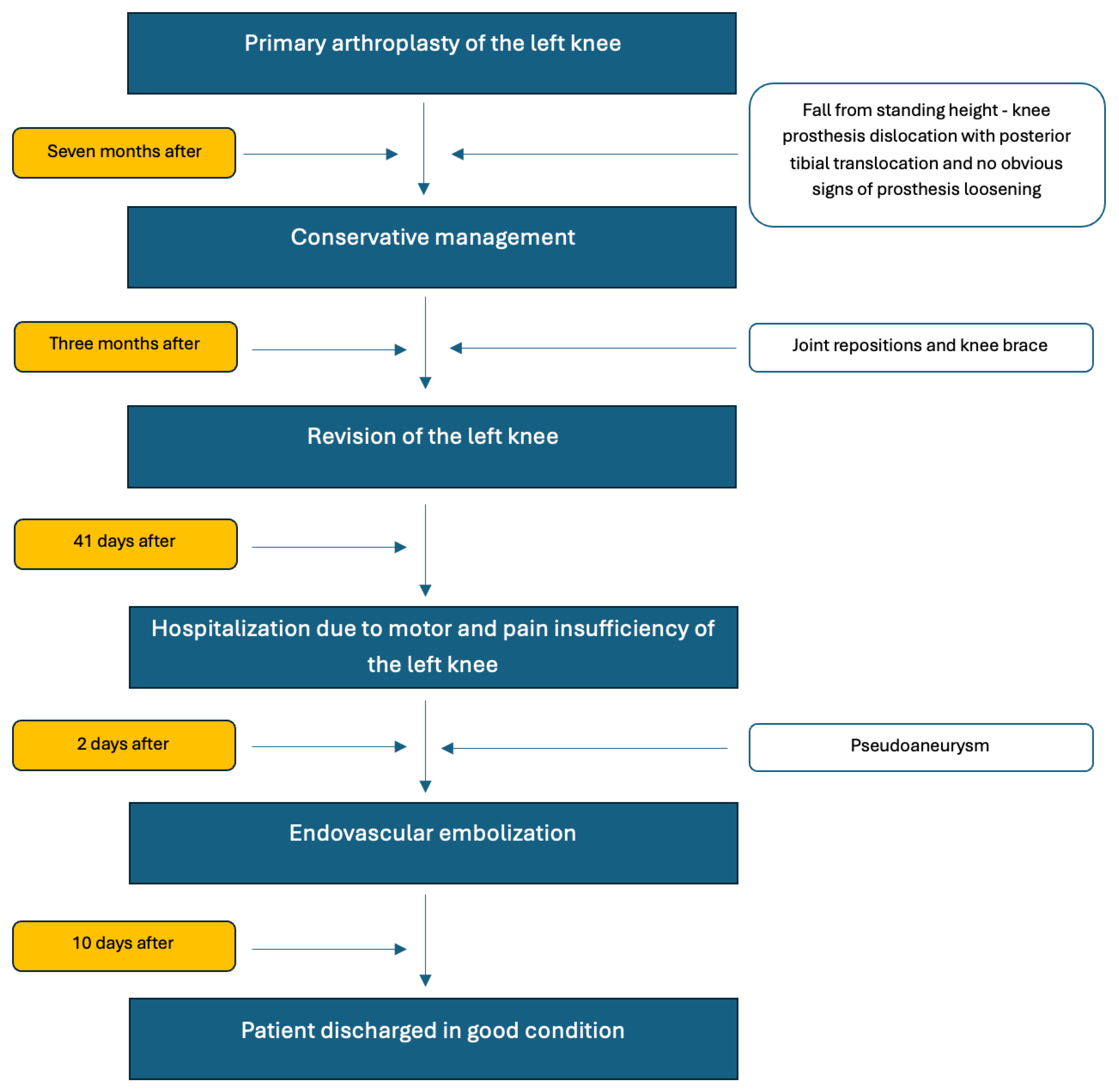
Figure 2. Treatment flow chart. The patient underwent primary total knee replacement of the left knee. Seven months later, the patient fell from a standing height. This resulted in a dislocation of the knee prosthesis with posterior tibial translocation, without any clear signs of prosthesis loosening. The patient received conservative treatment—repositioning and a knee brace. During follow-up visits, the patient reported additional falls from standing height (at least three episodes), after which symptoms of dislocation occurred with spontaneous self-reduction. The patient underwent revision surgery of the left knee. 41 days after discharge, the patient presented due to impaired mobility and pain in the left knee. The patient was diagnosed with a popliteal branch pseudoaneurysm. Embolization was performed.
Jcm 15 02079 g002
Figure 3. Postoperative X-ray of the left knee joint—day 1 after TKA. (A) Lateral plane. (B) Anteroposterior (AP) plane. The correct positioning of the femoral and tibial components is visible. The mechanical axis of the joint has been restored.
Jcm 15 02079 g003
Figure 4. Postoperative X-ray seven months after TKA—left knee dislocation. (A) Lateral plane. (B) Anteroposterior (AP) plane. The lateral view shows joint instability in the form of posterior tibial dislocation (white arrow). Note the low position of the patella (black asterisk). The prosthetic components show no obvious signs of loosening.
Jcm 15 02079 g004
Figure 5. Representative CTA image of the knee joints after dislocation of the left joint—performed on the day of readmission to the hospital. Adequate contrast opacification of the popliteal artery (white arrow) and the arterial branches forming the genicular anastomoses (white arrowheads) is visible. Artifacts from the knee prosthesis (white asterisk) limit the assessment, but no contrast leakage outside the vessels was observed.
Jcm 15 02079 g005
Figure 6. Postoperative X-ray after repositioning. (A) Lateral plane. (B) Anteroposterior (AP) plane. The correct axis is presented in both the AP and lateral views.
Jcm 15 02079 g006
Figure 7. Postoperative X-ray—1 day after R-TKA. (A) Anteroposterior (AP) plane. (B) Lateral plane. The correct positioning of the prosthesis components (black asterisk) is visible.
Jcm 15 02079 g007
Figure 8. X-ray taken upon readmission after R-TKA. (A) Anteroposterior (AP) plane. (B) Lateral plane. AP and lateral views show correct alignment of the prosthetic components (black asterisks). The AP view shows significant widening of the joint outline (white arrowheads). Significant joint effusion causing an increase in the distance between the patella and the femoral component of the prosthesis (white asterisk).
Jcm 15 02079 g008
Figure 9. Baseline B-mode ultrasound demonstrated a partially thrombosed pseudoaneurysm (thrombosis visible in the lower part of the lesion—white asterisks) originating from the lateral branch of the popliteal artery (A). Doppler modality showed slow filling of the lesion. The diagnosis was further confirmed by computed tomography angiography (CTA), which disclosed the presence of a partially filled lesion at the distal part of the branch of the genicular artery (white arrow) (B). Initial angiography via a catheter placed in the popliteal artery revealed a pseudoaneurysm arising from the superior genicular artery with delayed filling of contrast (C) (white arrow). A microcatheter was then positioned, and embolization was performed (D) (white triangle—tip of the microcatheter). Control Digital subtraction angiography (DSA) confirmed complete occlusion of the lesion with no residual filling (white line—coils) (E). Follow-up ultrasound showed further thrombosis and reduction in size, with preserved flow in the proximal segment of the artery (F).
Jcm 15 02079 g009
Table 1. Summary of previously reported cases of pseudoaneurysms after TKA or R-TKA.
ReferencesTKA TypeInvolved VesselTime to PresentationTreatment
[9]R-TKAPopliteal arterySeveral daysCovered stent
[36]Primary TKAInferior lateral genicular artery10–14 daysCoil embolization
[30]Primary TKAInferior medial genicular artery~4 weeksSurgical treatment
[31]Primary TKASuperior medial genicular arteryEarly postoperativeSurgical treatment
[25]Primary TKASuperior lateral genicular arteryEarly postoperativeCoil embolization
[37]TKASuperior medial and lateral genicular arteriesSeveral daysCompression/embolization
[32]1. Primary TKA (2 cases),
2. R-TKA (1 patient)
Popliteal artery/branchesVariable1. Percutaneous embolization (2 patients),
2. Surgical treatment (1 patient).
[14]Primary TKAPopliteal arterySeveral daysSurgical treatment
[28]TKAPopliteal + genicular arteriesVariable1. Mainly embolization (5 cases),
2. Thrombosed without intervention (1 participant),
3. Surgical treatment (1 patient).
[24]TKAVarious vascular complications1. Stents (9 cases),
2. Endarterectomies (2 patients),
3. Thrombectomy (1 case),
4. Bypass (1 participant).
[22]TKAPopliteal artery injuryEarly postoperativeEndovascular repair—Stent
Legend: TKA—total knee arthroplasty; R-TKA—revision total knee arthroplasty.
Disclaimer/Publisher’s Note: The statements, opinions and data contained in all publications are solely those of the individual author(s) and contributor(s) and not of MDPI and/or the editor(s). MDPI and/or the editor(s) disclaim responsibility for any injury to people or property resulting from any ideas, methods, instructions or products referred to in the content.