1. Introduction
Chronic kidney disease (CKD) affects 10–13% of the global population [
1], with prevalence increasing due to aging populations and rising rates of diabetes and hypertension [
2,
3]. CKD progression leads to mortality and end-stage kidney disease, with costs rising by a factor of four between early and late stages [
4]. Early identification of reduced kidney function through glomerular filtration rate (GFR) estimation supports timely intervention and optimization of healthcare resource allocation [
5]. Both reduced GFR and its rate of decline independently predict mortality and kidney failure [
6].
Clinical GFR estimation relies on two equations: Modification of Diet in Renal Disease (MDRD) [
7] and CKD Epidemiology Collaboration (CKD-EPI) [
8]. These equations combine serum creatinine concentration with demographic factors to estimate kidney function [
9,
10,
11,
12,
13].
Research in GFR estimation has progressed through distinct phases, each addressing limitations of previous approaches. The MDRD equation introduced standardization to GFR estimation, using data from 1628 CKD patients with measured GFR values below 60 mL/min/1.73 m
2 [
7]. Validation studies identified systematic bias in populations with preserved kidney function, limiting its utility for accurate GFR estimation and early CKD stage classification [
14]. The CKD-EPI equation addressed these limitations through its development in a broader population (
n = 8254), including both CKD patients and individuals with normal kidney function [
8]. Initial validation demonstrated reduced bias across GFR ranges, particularly above 60 mL/min/1.73 m
2 [
15,
16]. Meta-analyses have quantified systematic differences between equations across populations. Meta-analyses have reported improved risk prediction for mortality and end-stage kidney disease with CKD-EPI compared to MDRD [
9].
Although a race-free version of CKD-EPI was later introduced [
17], the 2009 equation remains widely adopted due to validation and comparability considerations in many regions, including Portugal.
Equation performance, indeed, varies systematically with population characteristics [
18,
19,
20,
21,
22]. Primary care studies reveal divergent impacts on clinical decision-making, with CKD-EPI often reclassifying patients to different CKD stages. Age-stratified analyses consistently show increasing divergence between equations in elderly populations, with CKD-EPI often classifying a higher proportion of older individuals into CKD stages [
23,
24]. At the healthcare system level, equation choice has been shown to influence resource utilization, including referral patterns to nephrology services [
25,
26].
Despite these findings, important gaps remain regarding the application of GFR estimating equations in primary care. Existing studies often lack integrated analyses combining demographic, clinical, and system-level factors, and implementation guidance for resource planning and workflow adaptation remains limited [
27,
28].
To address these gaps, which have direct implications for clinical decision-making and specialist referral pathways [
29,
30,
31], the present study conducts a comprehensive analysis of 117,055 primary care patients from the Matosinhos Health Unit, Portugal.
We aimed to quantify how the CKD-EPI (2009) and MDRD equations differ in eGFR-based CKD stage classification in a large primary care cohort, focusing on: differences in the proportion of individuals classified as CKD stages G3–G5 and the distribution across G3a–G5; age-stratified differences, particularly in older adults; and differences across clinically relevant subgroups, including BMI categories, albuminuria categories (when available) and major comorbidities (e.g., diabetes, hypertension and heart failure).
2. Materials and Methods
2.1. Study Design
This cross-sectional study analyzed electronic health records from the Local Health Unit of Matosinhos (Unidade Local de Saúde de Matosinhos; ULSM) Health Unit, Portugal, covering the period between January 2000 and May 2022. The health network includes 14 primary care units and Pedro Hispano Hospital, serving a defined population through centralized laboratory services.
2.2. Population and Data Collection
The study included 117,055 adults (≥18 years) who had contact with the healthcare system within three years before 31 May 2022, representing approximately 82% of the regional adult population (42.47% male).
Electronic health records provided demographic and anthropometric data, laboratory results (including standardized metabolic, lipid and cardiac panels), and comorbidity information using standardized coding systems (ICD-9/10 and ICPC-2). Ethnicity is not systematically recorded in Portuguese primary healthcare electronic health records and was therefore not available for analysis in the present study.
Key clinical definitions included hypertension (defined by a systolic blood pressure (SBP) ≥ 140 mmHg or diastolic blood pressure (DBP) ≥ 90 mmHg or specific codes), type 2 diabetes mellitus (defined according to internationally accepted diagnostic criteria, including HbA1c ≥ 6.5%, random plasma glucose ≥ 200 mg/dL or specific diagnosis codes, in line with American Diabetes Association guidelines [
32]) and heart failure (HF).
Heart failure (HF) was identified using diagnostic codes in combination with left ventricular ejection fraction (LVEF) values extracted from echocardiography reports and B-type natriuretic peptide (BNP) or N-terminal pro-B-type natriuretic peptide (NT-proBNP) levels recorded in the electronic health records.
HF phenotypes were classified according to 2021 European Society of Cardiology guidelines [
33] as follows: HF with preserved ejection fraction (HFpEF): LVEF ≥ 50%; HF with mildly reduced ejection fraction (HFmrEF): LVEF 41–49%; HF with reduced ejection fraction (HFrEF): LVEF ≤ 40%.
For HF identification, LVEF criteria were combined with elevated natriuretic peptide concentrations defined as BNP ≥ 100 pg/mL or NT-proBNP ≥ 200 pg/mL. In patients with documented atrial fibrillation, higher natriuretic peptide thresholds were applied (BNP ≥ 125 pg/mL or NT-proBNP ≥ 600 pg/mL) to account for potential biomarker elevation related to arrhythmia. Higher natriuretic peptide thresholds were selected to increase specificity in the context of retrospective electronic health record data.
The population exhibited primary care comorbidity patterns including hypertension (47.58%), diabetes (25.77%) and heart failure (3.03%), with 36.54% classified as overweight and 22.78% as obese. Laboratory measurements followed standardized quality control procedures with participation in external quality assessment programs. Urinary albumin-to-creatinine ratio (UACR) measurements were performed according to standardized protocols; however, UACR data were not available for all individuals. Analyses involving albuminuria were therefore restricted to participants with available UACR measurements.
2.3. GFR Estimation Equations
Serum creatinine concentration measurements were performed within a centralized laboratory network and by the same method, ensuring analytical standardization across facilities. This standardized approach was maintained throughout the period, minimizing inter-assay variability over time and allowing consistent application of creatinine-based estimating equations.
Estimated glomerular filtration rate (eGFR) was calculated using both the MDRD equation and the CKD-EPI equation, as follows:
where SCr is serum creatinine concentration (mg/dL), age is expressed in years, and eGFR is expressed in mL/min/1.73 m
2
where κ = 0.7 (female) or 0.9 (male), and α = −0.329 (female) or −0.411 (male). SCr is serum creatinine concentration (mg/dL) and age is expressed in years.
2.4. Statistical Analysis and CKD Staging
CKD staging followed the Kidney Disease: Improving Global Outcomes (KDIGO) guidelines [
31]. For each individual, only the most recent available serum creatinine measurement within the study period was used to calculate eGFR and determine CKD stage classification, focusing on stages G3–G5. No attempt was made to confirm chronicity through repeated measurements over a minimum three-month interval. Consequently, transient reductions in kidney function, including possible acute kidney injury (AKI), cannot be fully excluded. The present analysis, therefore, reflects eGFR-based CKD stage classification rather than confirmed chronic kidney disease diagnosis (
Table 1).
The primary analysis compared eGFR-based CKD stages classification between CKD-EPI and MDRD, including absolute differences (CKD-EPI minus MDRD percentage) and relative differences ((CKD-EPI minus MDRD)/MDRD × 100%). Age stratification was performed by decade (from 18 to 29 years through ≥80 years). BMI categories followed World Health Organization criteria: underweight (<18.5 kg/m2), normal (18.5–24.9 kg/m2), overweight (25.0–29.9 kg/m2) and obese (≥30.0 kg/m2). Quality control measures included evaluation of missing data, outlier detection and verification of measurement consistency.
2.5. Ethical Approval
The study received ethics committee approval from the Ethical Committee and Data Protection Officer of ULSM [approval 34/CE/JAS of 23 April 2020 (original) and 64/CE/JAS of 10 July 2020 (addenda)].
Patient anonymity was strictly maintained through data coding, ensuring compliance with data protection regulations.
2.6. Use of Generative AI Tools
During manuscript preparation, generative AI tools (Microsoft Copilot, based on GPT-4 architecture and Google Gemini, version 1.5) were used exclusively for language editing, grammar correction and rephrasing of selected text segments. These tools were not used for data analysis, statistical computation, the generation of results or scientific interpretation. All scientific content, analyses and conclusions were independently developed, reviewed and validated by the authors.
4. Discussion
It is important to emphasize that this study evaluates differences in eGFR-based classification rather than clinical outcomes and therefore does not allow conclusions regarding prognostic superiority or clinical effectiveness of one equation over the other.
In this real-world study, conducted with a representative sample of the adult population in primary healthcare (PHC), the CKD-EPI equation classified a higher proportion of individuals into CKD stages G3–G5 compared with the MDRD equation. This corresponded to an absolute difference of 1.16 percentage points (7.73% vs. 6.57%) and a relative increase of 17.7% in G3–G5 classification when CKD-EPI was used. These differences in eGFR-based stage classification were observed across all estimated glomerular filtration rate (eGFR) intervals, with greater divergence in more advanced stages.
The literature corroborates these findings. Matsushita et al. documented that CKD-EPI estimates eGFR with greater accuracy than MDRD, reclassifying 34.7% of participants from the 45–59 mL/min (MDRD) range to the 60–89 mL/min (CKD-EPI) range, and generally classifying fewer individuals with CKD, highlighting its higher specificity in populations with near-normal kidney function [
9]. Brañez-Condorena et al., in a systematic review, observed that, while both equations tend to overestimate eGFR in individuals with CKD and underestimate it in individuals without CKD, CKD-EPI showed a slight advantage in precision and sensitivity, especially for eGFR ≥60 mL/min/1.73 m
2 [
34]. The meta-analysis by McFadden et al. further supports that CKD-EPI presents less bias and greater accuracy, particularly for eGFR values above 60 mL/min/1.73 m
2, although differences were not significant for lower values [
18]. These authors also highlight the scarcity of studies based on community populations, reinforcing the relevance of analysis performed in real-world PHC settings.
Thus, these findings underscore the importance of continuously evaluating GFR estimating equations across different population contexts. The differential behavior of estimating equations according to population characteristics highlights the role of CKD-EPI primarily as a classification and risk stratification tool, rather than as a definitive diagnostic instrument. Our results are consistent with population-based studies, such as the one conducted in Oxfordshire (United Kingdom), which demonstrate an increased identification of advanced CKD by CKD-EPI, particularly in older adults and patients with multimorbidity [
35]. This pattern is especially relevant in PHC settings, where multimorbidity and care burden are prevalent and where equation choice can substantially influence clinical workflows and resource planning.
4.1. Age and Body Mass Index (BMI)
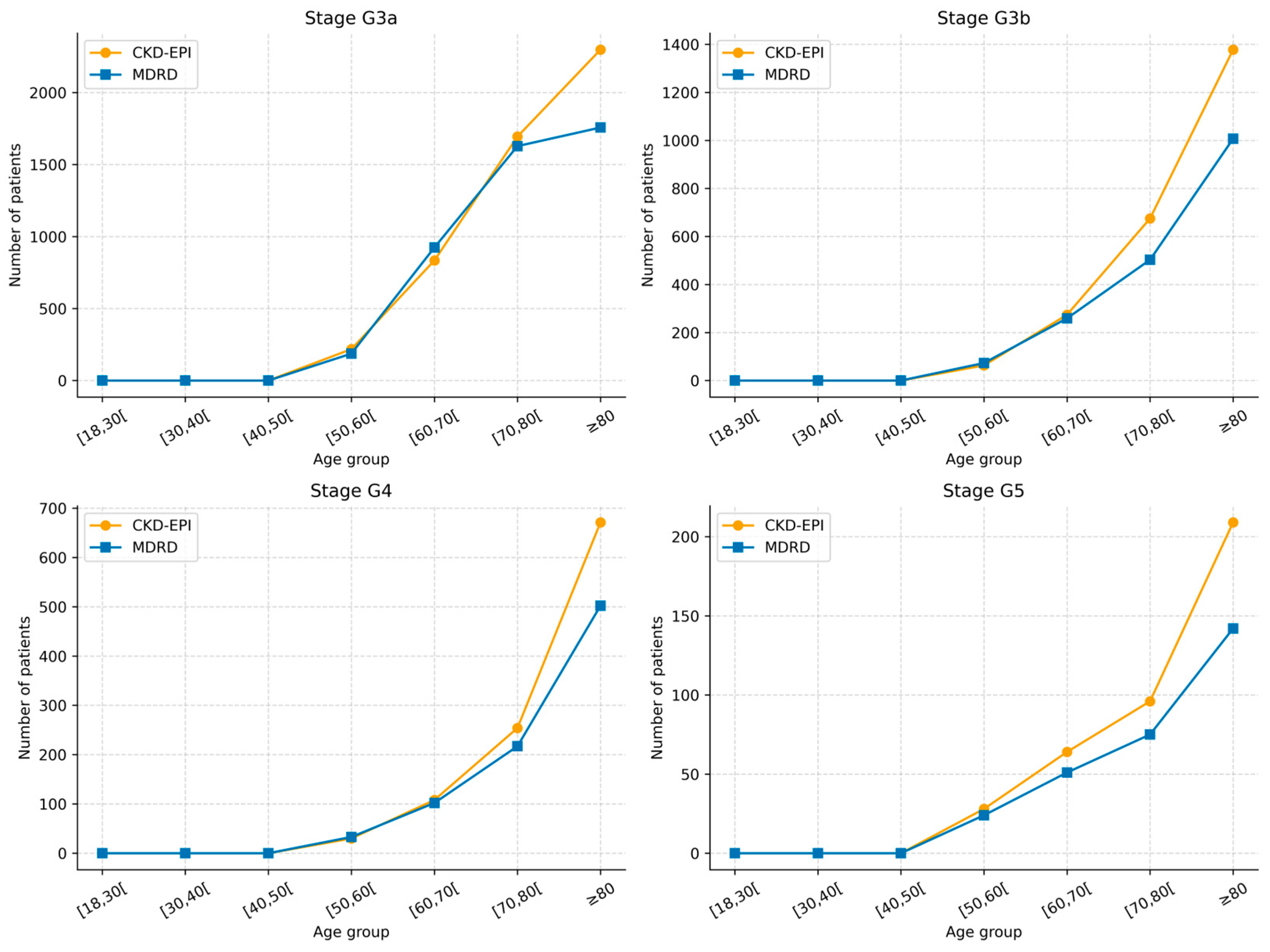
Differences in CKD stage classification between CKD-EPI and MDRD became more pronounced with increasing age and CKD stage severity. In this study, CKD-EPI consistently classified a higher proportion of older adults into CKD stages—particularly in advanced stages—compared with MDRD, with larger relative differences observed in the oldest age groups. This age-dependent pattern is consistent with previous evidence showing that, in young and middle-aged adults, CKD-EPI tends to yield slightly higher eGFR estimates than MDRD, thereby reducing classification into CKD stages such as G3a for individuals with eGFR values near 60 mL/min/1.73 m
2 [
8,
23]. With advancing age, however, this difference diminishes and may invert, resulting in higher CKD stage classification rates when CKD-EPI is used, as observed in the present study. In line with these findings, analyses from the SPRINT trial reported more frequent reclassification into advanced CKD stages among participants aged over 75 years when eGFR was calculated using CKD-EPI rather than MDRD [
36].
These age-related differences likely reflect structural characteristics of the estimating equations. The MDRD equation was developed in a CKD population and excluded individuals over 70 years of age, whereas CKD-EPI was derived from a more heterogeneous cohort, albeit with limited representation of very elderly individuals [
8]. Both equations may overestimate true glomerular filtration rate (GFR) in older adults due to age-related reductions in muscle mass and creatinine production [
11]. Although validation studies have reported lower bias for CKD-EPI at higher eGFR values, its age coefficient may lead to lower eGFR estimates for the same creatinine concentration at advanced ages, thereby increasing CKD stage classification in older populations [
8,
16].
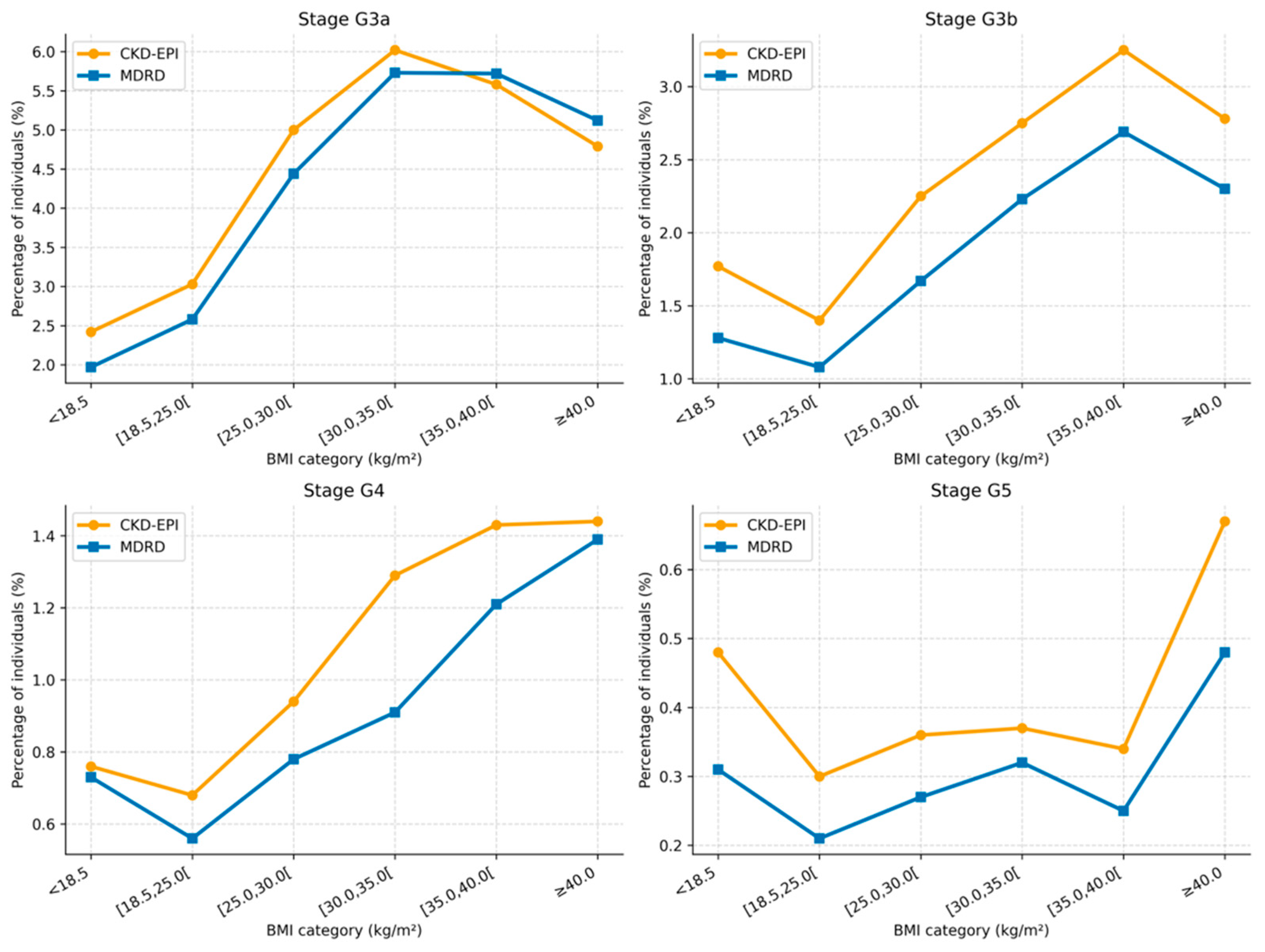
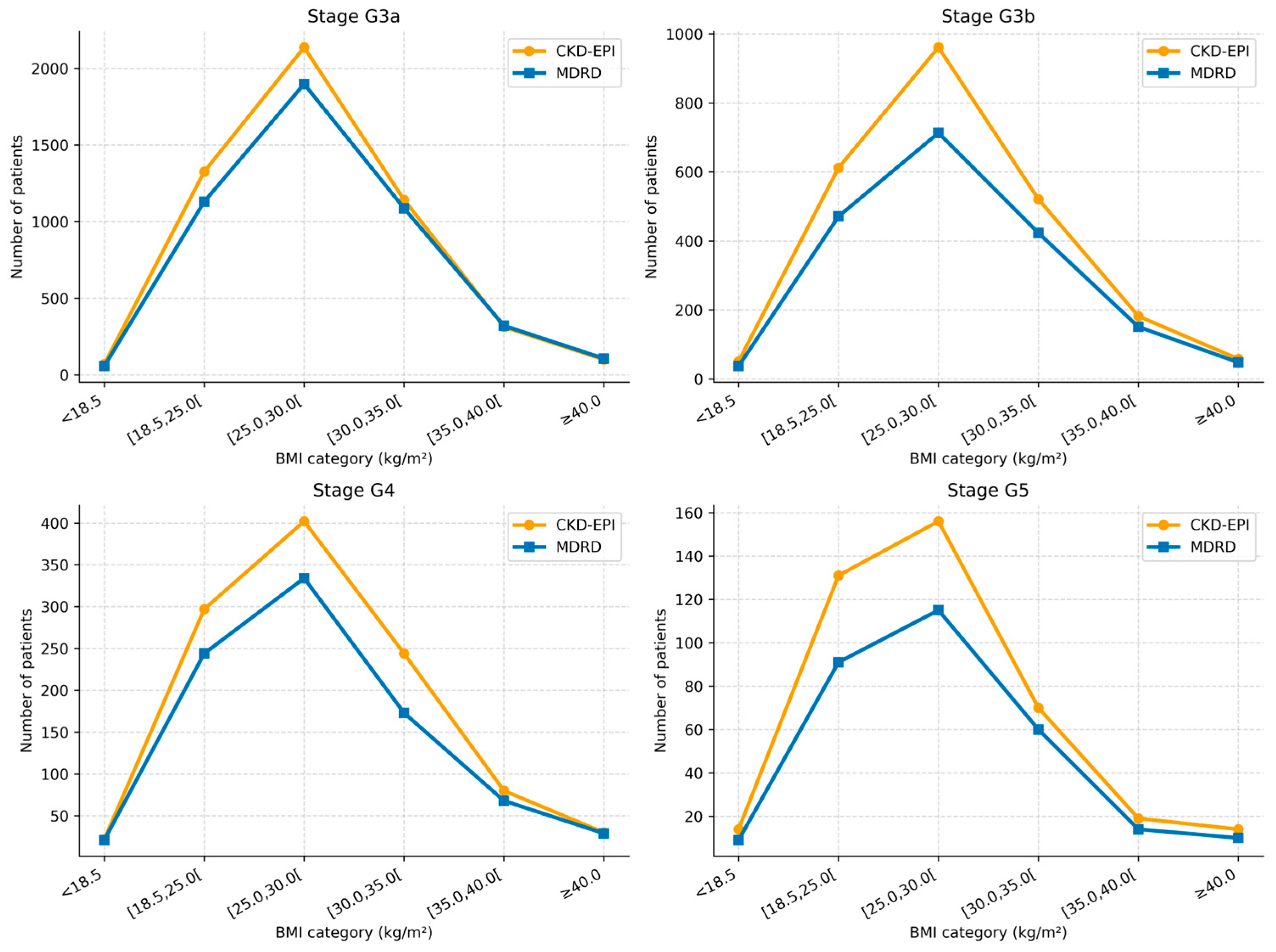
A similar pattern was observed across BMI categories. CKD-EPI consistently resulted in higher CKD stage classification rates compared with MDRD, with stage G3a being the most prevalent across all BMI groups. Differences were less pronounced at extreme BMI values (≥35 kg/m
2), where absolute differences in classification between equations were smaller. As with age, these findings likely reflect the influence of body composition on creatinine generation, as increased BMI does not necessarily correspond to proportional increases in muscle mass. In individuals with obesity or sarcopenia, creatinine-based equations may therefore be particularly prone to classification differences [
21].
Evidence from the literature supports this interpretation. Meta-analyses suggest that alternative equations such as BIS1 and FAS may capture physiological kidney functional decline associated with aging more appropriately [
24], while obesity has been consistently associated with increased risk of reduced eGFR and albuminuria [
37,
38]. Together, these findings highlight the challenge of distinguishing pathological CKD from physiological kidney aging or body composition-related effects. They also support cautious interpretation of eGFR values in older adults and individuals with extreme BMI, as well as the systematic integration of complementary markers, such as urinary albumin–creatinine ratio (UACR) or cystatin C, to refine kidney risk stratification in these populations [
16].
4.2. Comorbidities
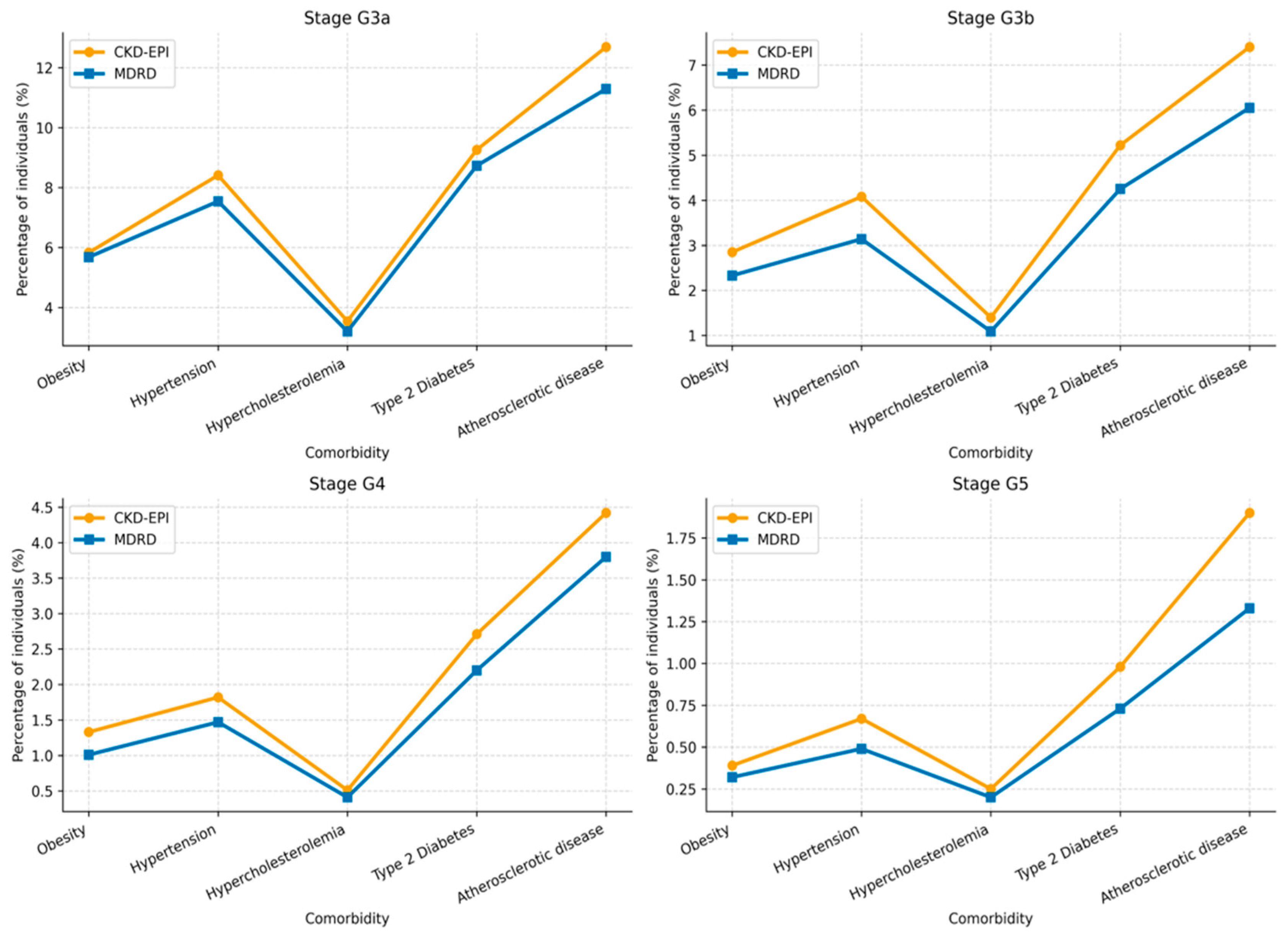
Across major cardiometabolic comorbidities, including hypertension, dyslipidemia, type 2 diabetes mellitus, atherosclerotic disease and heart failure, the CKD-EPI equation consistently classified a higher proportion of individuals into CKD stages G3a–G5 compared with MDRD, with consistent relative increases across subgroups. This pattern was observed across all analyzed subgroups, highlighting the substantial impact of equation choice on CKD stage classification in populations with high cardiovascular and metabolic risk.
These findings are consistent with previous evidence. Matsushita et al. reported that the CKD-EPI equation more accurately categorized risk for all-cause mortality and end-stage renal disease than the MDRD equation, reflecting improved prognostic stratification across a broad range of populations [
9]. Although outcome-based performance was not assessed in the present study, this literature provides important context for interpreting the clinical relevance of equation-related classification differences in high-risk populations.
Important limitations of creatinine-based estimating equations should nevertheless be acknowledged, particularly in specific comorbidity groups. A meta-analysis by Lingli et al. showed that both MDRD and CKD-EPI tend to overestimate eGFR in individuals with diabetes, potentially delaying classification into early CKD stages, and that CKD-EPI may exhibit lower accuracy in diabetic populations compared with non-diabetic individuals, possibly due to factors such as hyperfiltration, obesity and chronic inflammatory states [
22]. The heterogeneity observed across studies reinforces the need for cautious interpretation of eGFR values and supports the integration of complementary markers, such as albuminuria, to refine kidney risk stratification in these patients.
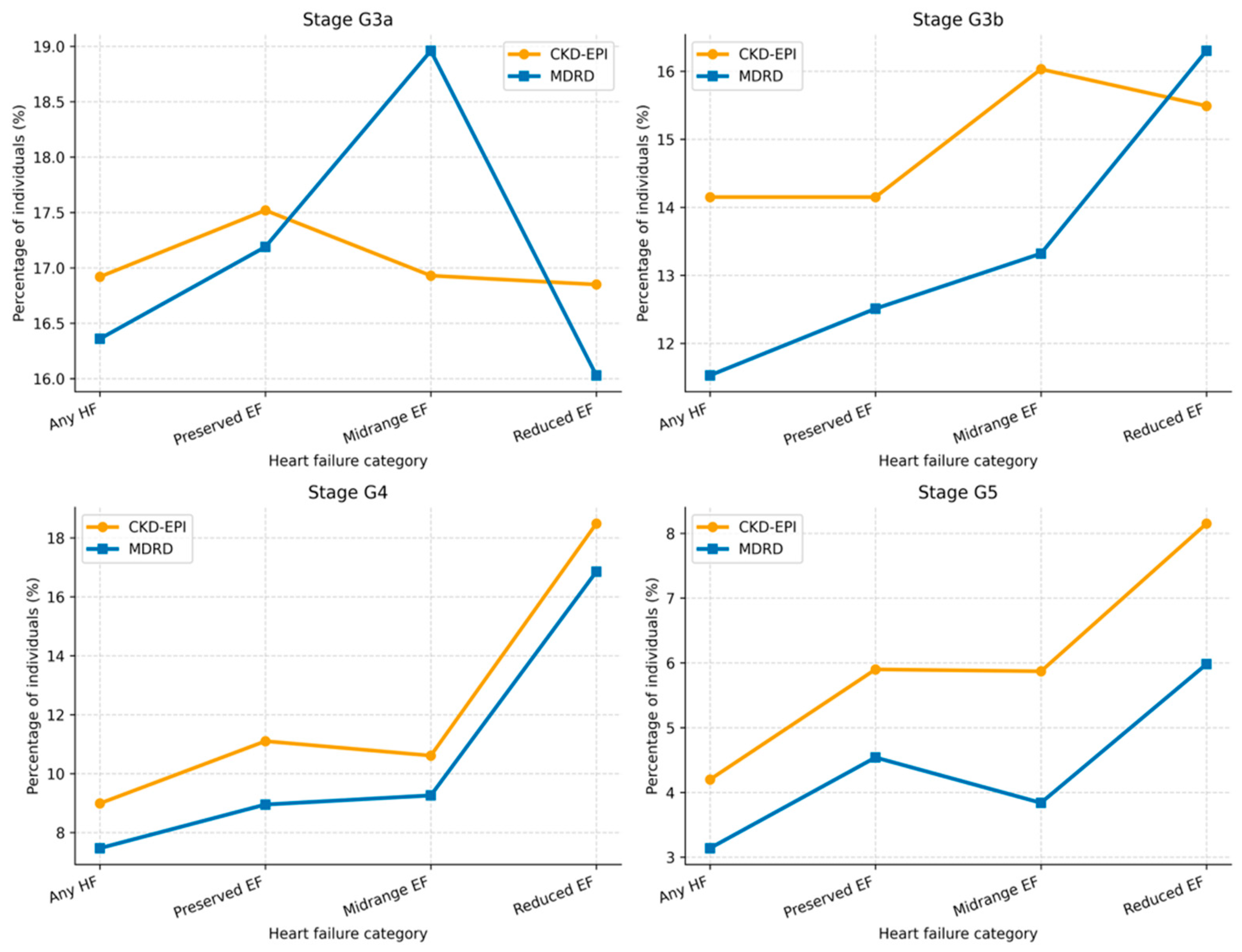
Heart failure represents a particularly illustrative high-risk subgroup. In this study, CKD-EPI classified a higher proportion of individuals with heart failure into CKD stages G3a–G5 across all phenotypes, with more pronounced differences in advanced stages. Among patients with heart failure and reduced ejection fraction, CKD-EPI classified 8.15% of individuals as stage G5 compared with 5.98% using MDRD, corresponding to an absolute difference of 2.17 percentage points and a relative increase of approximately 36%. Given the well-established association between CKD and heart failure, including increased hospitalization and mortality, such classification differences may be relevant when considering follow-up intensity, referral patterns and therapeutic decision-making, particularly regarding nephroprotective and cardioprotective therapies.
Overall, these results reinforce that higher CKD stage classification rates observed with CKD-EPI across comorbidity subgroups should be interpreted as equation-related classification effects rather than evidence of superior disease detection, underscoring the importance of a multidimensional approach to kidney risk assessment in primary healthcare.
4.3. Urinary Albumin-to-Creatinine Ratio
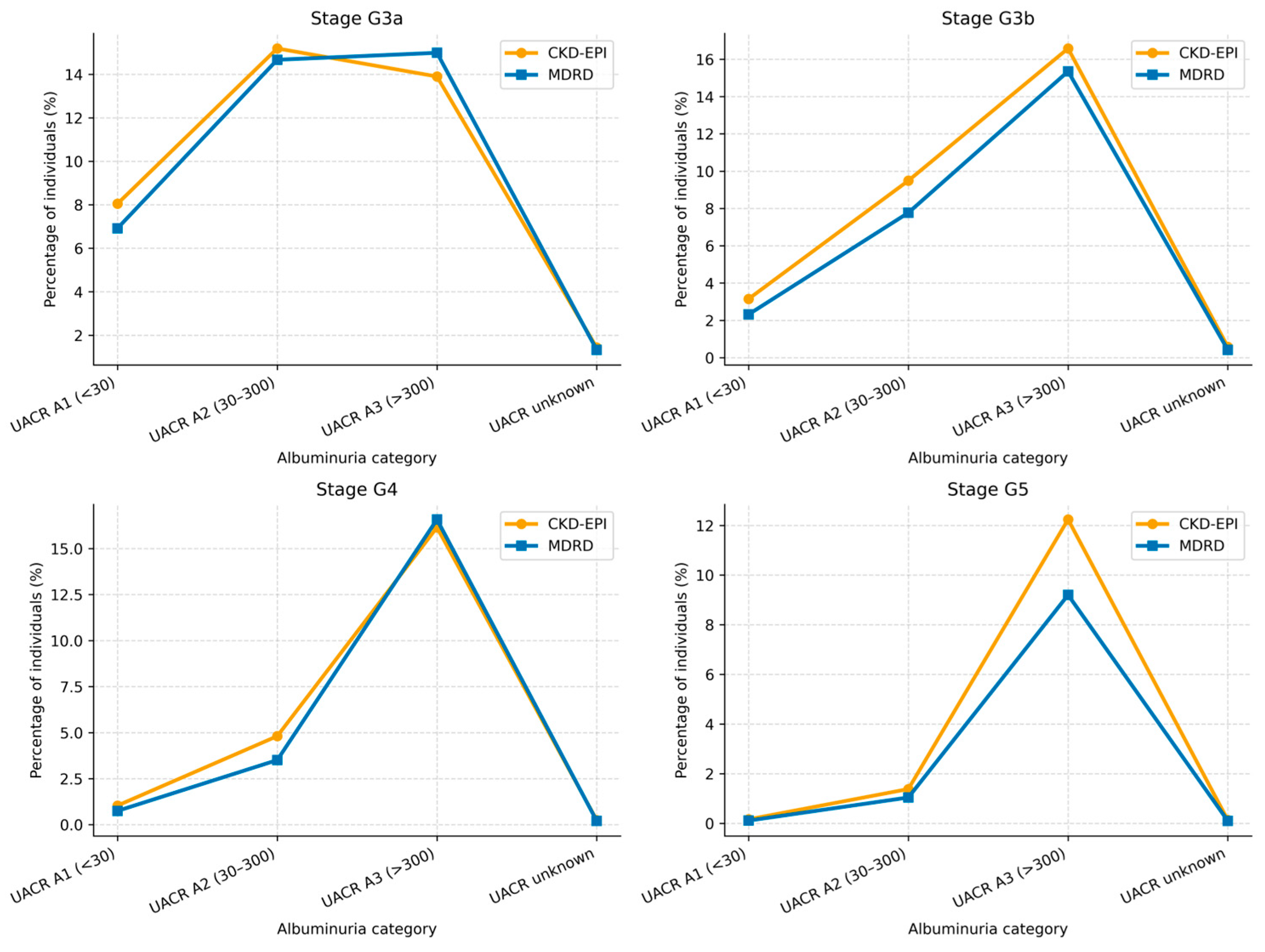
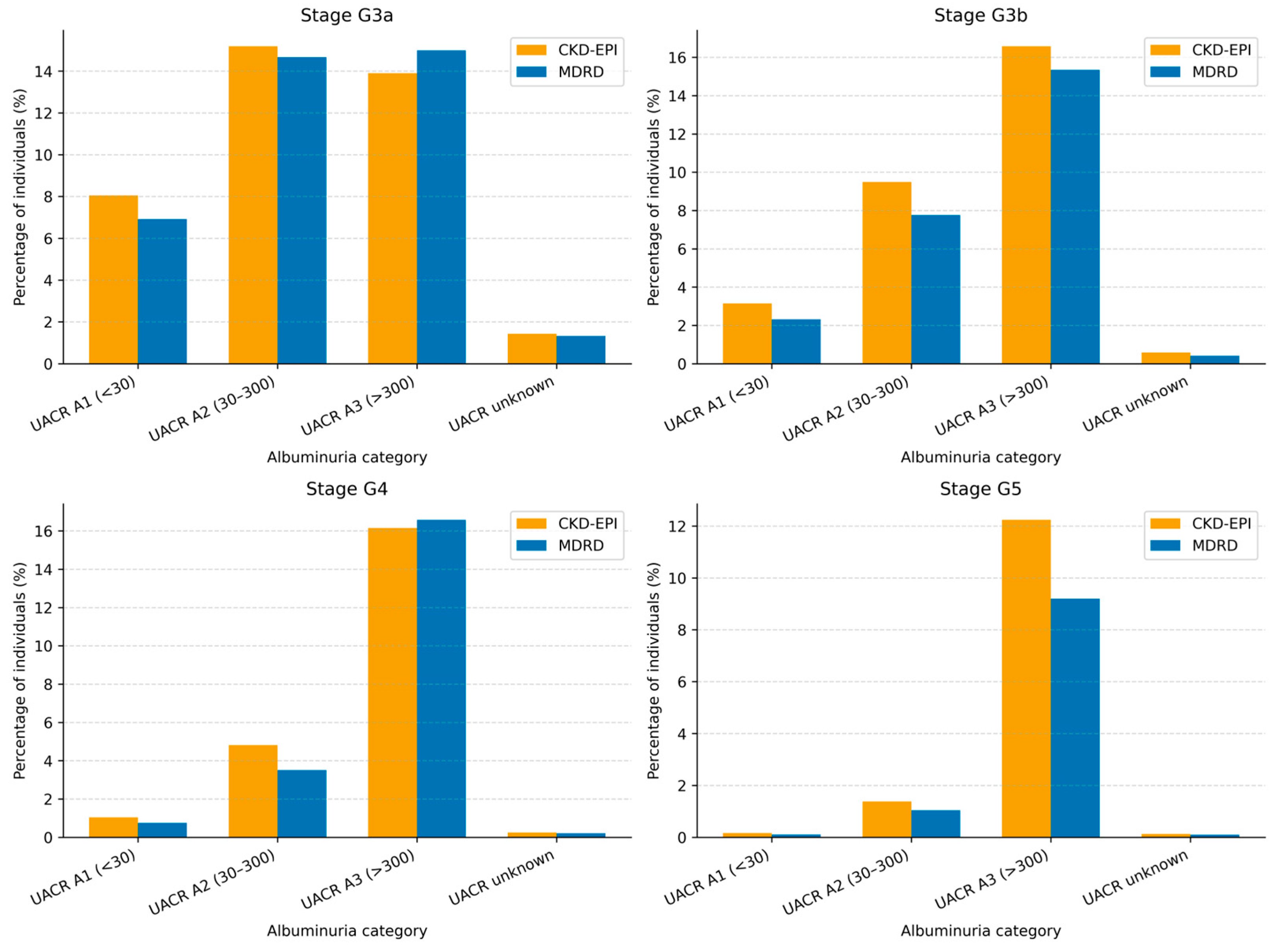
Albuminuria-stratified analyses revealed equation-related differences in eGFR-based CKD stage classification. In categories A1 (<30 mg/g) and A2 (30–300 mg/g), CKD-EPI classified a higher proportion of individuals into CKD stages, including G3a and G3b, compared with MDRD, with consistent relative increases across these categories. In contrast, differences between equations were less pronounced in category A3 (>300 mg/g), suggesting that when albuminuria is marked, kidney impairment is sufficiently advanced for both equations to yield similar stage classification, although CKD-EPI still tended to classify more individuals into advanced stages (G4 and G5).
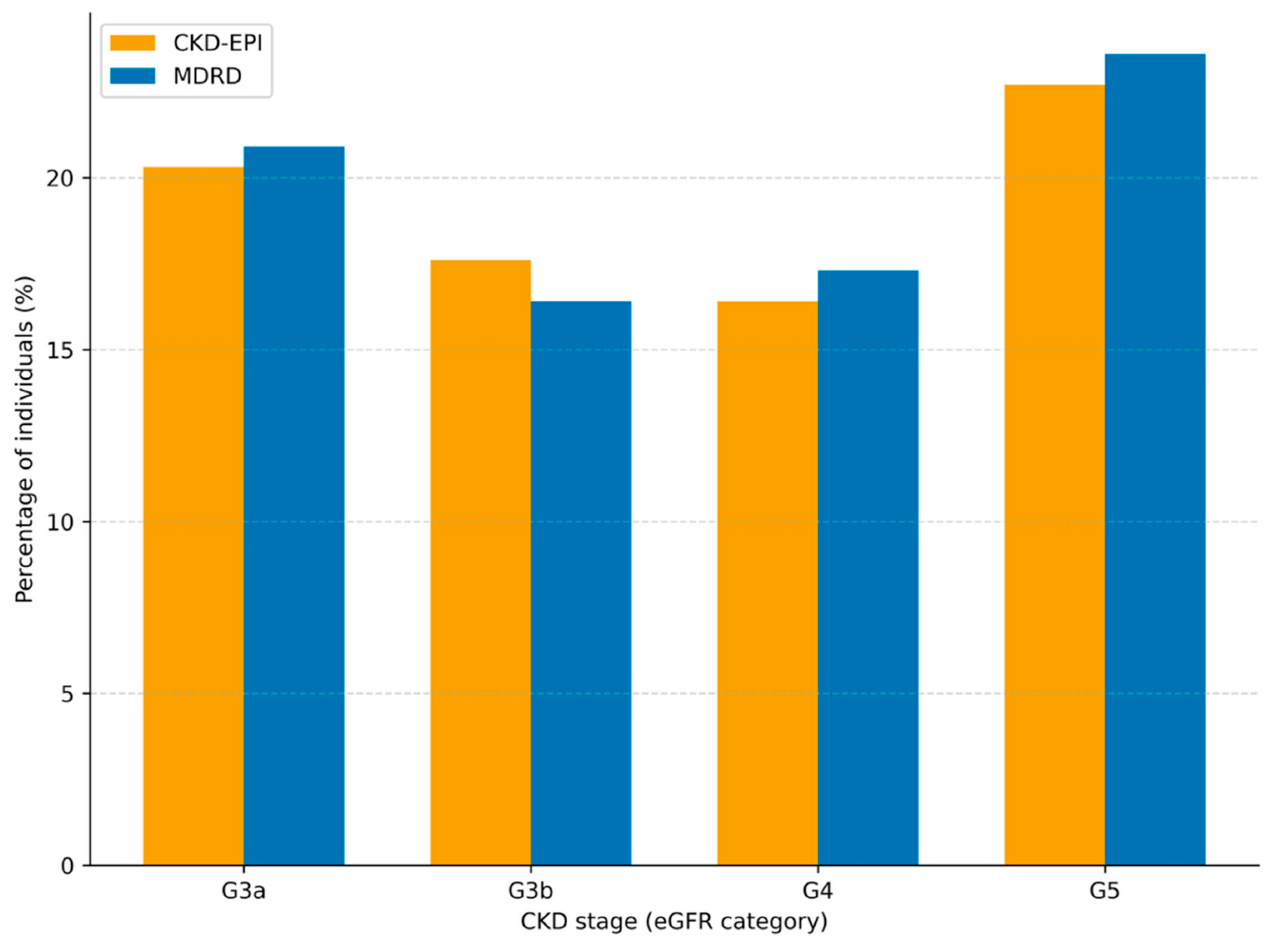
When UACR data were unavailable, CKD-EPI also resulted in a higher proportion of individuals classified into CKD stages across all eGFR categories. This finding is particularly relevant in primary healthcare, where albuminuria assessment is frequently incomplete. Albuminuria represents a key marker of kidney damage and cardiovascular risk, and both reduced eGFR and albuminuria have been independently associated with mortality and progression to end-stage kidney disease [
6,
39].
These findings reinforce the importance of integrating eGFR and albuminuria in kidney risk assessment, particularly in multimorbidity contexts. As highlighted by Levin et al. and Sullivan et al., reliance on eGFR alone may lead to misclassification, especially among older adults, whereas the inclusion of albuminuria improves risk stratification and clinical interpretation [
5,
40].
Overall, although CKD-EPI yields higher CKD stage classification rates in this real-world primary care population, these results underscore the need for a multidimensional approach combining markers of kidney function and kidney damage. Given the high prevalence of CKD-associated conditions in this cohort, such integration is essential for effective CKD surveillance and management in primary healthcare settings [
29].
4.4. Clinical Implications
The findings of this study have relevant practical implications for CKD surveillance in PHC. The choice of the eGFR-estimating equation substantially influences CKD stage classification, the risk profile of the monitored population, and subsequent clinical decision-making. In this large real-world cohort, CKD-EPI consistently resulted in higher CKD stage classification rates across the full spectrum of kidney function, particularly among individuals with high cardiovascular and metabolic risk. These classification differences may translate into earlier recognition of individuals at higher kidney and cardiovascular risk, with implications for follow-up intensity and care planning.
Continued use of the MDRD equation may contribute to a lower proportion of individuals being classified into CKD stages, not only in early stages but also in more advanced disease. In PHC settings—where screening, risk stratification, and longitudinal follow-up are central pillars of care—such classification differences may have implications for referral timing, monitoring strategies and therapeutic prioritization. From this perspective, the systematic use of CKD-EPI aligns with contemporary evidence and supports a more standardized approach to eGFR reporting in primary care.
Importantly, eGFR estimation should be interpreted in conjunction with markers of kidney damage, particularly albuminuria. The combined assessment of kidney function and kidney damage plays a central role in risk stratification and prognostic assessment, rather than diagnosis alone. Both reduced eGFR and albuminuria have been independently associated with adverse outcomes, including progression to end-stage kidney disease, cardiovascular events, and mortality. The results of the present study reinforce the importance of integrating eGFR and UACR to support a proactive and risk-oriented approach to CKD surveillance in PHC.
Equation choice also has implications for potential misclassification. Classification of individuals at low risk as having CKD may lead to unnecessary monitoring, treatment burden, patient anxiety, and avoidable healthcare costs, particularly in populations with low pre-test probability, such as younger adults. Conversely, underclassification of individuals at higher risk may delay intensified follow-up and contribute to progression toward more advanced CKD stages, with associated increases in morbidity, healthcare utilization, and costs [
5,
27]. These considerations highlight the need for population-adapted, cost-effective screening and stratification strategies.
At a system level, the high prevalence of CKD and its associated burden of adverse outcomes support the development of scalable, population-based interventions aimed at slowing disease progression and reducing cardiovascular risk—key objectives of any national kidney health plan. The findings of this study suggest that integrating automated eGFR calculation using CKD-EPI, alongside systematic assessment of albuminuria, may facilitate structured risk stratification and longitudinal monitoring, particularly among older adults.
Finally, given the successful application of this analysis within the Portuguese PHC system—characterized by proximity to patients, multidisciplinary teams, and longitudinal care—the organizational model underpinning these findings may offer transferable insights for CKD surveillance and management strategies in other healthcare systems.
4.5. Study Limitations
This retrospective study, based on electronic health records, has several limitations that should be acknowledged. As with all real-world data analyses, the quality and completeness of clinical records may constrain the interpretation of results. In particular, the absence of UACR data in a substantial proportion of individuals limited a comprehensive assessment of kidney risk and restricted albuminuria-stratified analyses.
In addition, kidney function assessment relied exclusively on serum creatinine–based estimating equations, without incorporation of cystatin C or direct measurement of glomerular filtration rate (GFR). This approach may have influenced eGFR estimation in specific subgroups, such as older adults and individuals with atypical body composition (e.g., severe obesity or sarcopenia). As highlighted by Delanaye et al., serum creatinine concentration is affected by non-renal determinants, including muscle mass, diet and tubular secretion, which may limit its individual reliability. In such contexts, combined equations using creatinine concentration and cystatin C, or direct GFR measurement with exogenous markers (e.g., iohexol), are more accurate and recommended strategies [
12].
Importantly, CKD stage classification in this study was based on the most recent available serum creatinine concentration value for each individual, without confirmation of persistence over at least three months. As a result, the findings should be interpreted as reflecting differences in eGFR-based classification between equations, rather than confirmed CKD diagnosis, and some individuals classified into CKD stages may not meet formal criteria for chronicity. In addition, UACR data were unavailable in a relevant proportion of individuals, limiting complete KDIGO risk stratification. Approximately one quarter of these cases lacked albuminuria measurements, reflecting routine primary care practice and potentially leading to underestimation of kidney damage in some cases.
The analyzed data derive exclusively from individuals registered within the Matosinhos Health Unit, which may limit generalizability to other regions with different sociodemographic characteristics, organizational models or healthcare utilization patterns. According to national census data [
41], the vast majority of residents in the study region hold Portuguese nationality (approximately 97%). However, nationality does not directly equate to ethnicity or genetic ancestry, and ethnicity is not systematically recorded in national electronic health records. Consequently, specific ethnic composition data were not available for analysis. This may limit the generalizability of the findings to more ethnically diverse populations, particularly given known variations in creatinine generation and eGFR estimation across different ancestry groups. Moreover, as the analysis was based on data generated through healthcare use, individuals who rarely access primary care services may be underrepresented, potentially influencing estimated CKD stage classification rates, particularly in earlier stages or less-monitored populations.
Furthermore, this study did not assess the direct clinical impact of equation choice on medical decision-making, follow-up strategies, or medium- and long-term outcomes, such as CKD progression, mortality or referral to nephrology. Future longitudinal studies linking equation-based classification differences to clinical outcomes are needed to address this gap.
Finally, the heterogeneity in kidney function assessment criteria, particularly in eGFR and albuminuria reporting, remains a challenge in both clinical care and research [
28]. Variability in formula use and incomplete recording of key renal markers limit comparability across studies and hinder consistent application of international recommendations. These constraints underscore the need to standardize not only eGFR estimation methods but also the systematic recording of albuminuria in primary healthcare.
4.6. Strengths
An important strength of this study is the high degree of laboratory standardization. Unlike many multicenter analyses or studies based on large administrative databases, all serum creatinine concentration measurements were performed within the same laboratory network and by the same method. This methodological consistency minimizes inter-laboratory analytical variability, enhances comparability between estimating equations and strengthens the internal validity of the observed differences in eGFR-based CKD stage classification.
The importance of rigorous creatinine calibration for eGFR estimation has been widely emphasized in the literature, particularly in individuals with preserved kidney function, where small analytical variations may result in clinically relevant differences in CKD stage classification [
42]. In this context, the analytical uniformity of the present study represents a substantial added value for the comparative evaluation of the CKD-EPI and MDRD equations.
Another major strength lies in the use of real-world data generated within PHC. The clinical information analyzed was recorded by primary care physicians during routine care, providing a highly representative view of patient trajectories in the community. This setting allows for the evaluation of eGFR-estimating equations as they are actually applied in daily clinical practice, capturing real patterns of disease burden, multimorbidity and risk stratification. The use of PHC data confers strong external validity to the findings and underscores the strategic role of primary care in generating epidemiologically robust and clinically meaningful evidence.
Despite the inherent limitations of observational real-world data, the large sample size, the high coverage of the regional adult population, and the exclusive focus on primary healthcare considerably enhance the robustness of the analyses and the practical relevance of the findings. Together, these strengths support the applicability of the results to clinical decision-making and health system planning in primary care-based settings.
4.7. Future Perspectives
This study opens the way for several lines of future research. A key priority will be prospective studies incorporating direct measurement of glomerular filtration rate and cystatin C assessment. Such approaches would enable more comprehensive validation of eGFR-estimating equations and a more precise evaluation of equation-related differences, particularly in specific clinical subgroups such as older adults, individuals with obesity or sarcopenia, and patients with heart failure.
In this context, further exploration of age-adapted interpretative frameworks for eGFR is warranted. Age-related physiological changes in kidney function may not be fully captured by current fixed cut-off points, and the use of age-dependent thresholds could help refine CKD stage classification in older populations while reducing misclassification related to physiological kidney aging.
Future research should also investigate the real-world impact of eGFR equation choice on clinical practice in primary healthcare, including CKD coding, referral patterns to nephrology, follow-up intensity and adherence to nephroprotective strategies. Linking equation-based classification differences to clinically relevant outcomes—such as hospitalization, cardiovascular events and mortality—will be essential to better understand their practical implications.
Additionally, the evaluation of combined stratification strategies integrating eGFR and albuminuria, as well as the development of automated, risk-based clinical decision support systems, may support more consistent identification and monitoring of individuals at higher risk of CKD progression.
Finally, the replication of this type of analysis in other regions and populations (distinct urban and rural contexts) is recommended to verify the consistency of observed patterns and adapt recommendations to local realities.
5. Conclusions
Chronic kidney disease represents a major global health challenge, with PHC playing a central role in population-level surveillance and risk assessment. In this large real-world PHC cohort, we demonstrated that the choice of eGFR-estimating equation substantially influences CKD stage classification.
Compared with MDRD, the CKD-EPI equation consistently resulted in a higher proportion of individuals classified into CKD stages G3–G5, corresponding to a relative increase of 17.6% in overall G3–G5 classification. These classification differences were particularly pronounced among older adults, across major cardiometabolic comorbidities, and across BMI categories. Differences were also observed in albuminuria-stratified analyses and in individuals without available UACR data, highlighting the impact of equation choice in routine primary care settings.
Importantly, these findings should be interpreted as differences in eGFR-based CKD stage classification, rather than as differences in confirmed CKD diagnosis. Nevertheless, such classification differences have relevant clinical and organizational implications, as they may influence risk stratification, follow-up intensity, referral patterns and healthcare resource planning in PHC.
Despite the retrospective design and reliance on routinely collected clinical data, the large sample size, high coverage of the regional adult population, and standardized laboratory methodology confer robustness and practical relevance to the results. This study contributes to a better understanding of how eGFR-estimating equations behave in real-world primary care and provides evidence to inform standardized equation selection in routine practice.
Future research should focus on prospective studies incorporating cystatin C and direct GFR assessment, as well as on linking equation-based classification differences to clinical outcomes. In the meantime, our findings provide real-world data relevant to ongoing efforts toward standardized CKD-EPI-based eGFR reporting in primary healthcare, within an integrated and risk-oriented framework for CKD surveillance and management.