


Abstract
Hot springs, hot-water bathing, and saunas are widely practiced forms of acute heat exposure and are often perceived as health-promoting. However, emergency clinicians frequently encounter patients in whom these exposures precipitate syncope, hypotension, drowning/aspiration, heat-related illness, and renal or electrolyte disturbances. This narrative review integrates these modalities within a unified “acute heat exposure” framework and summarizes pathophysiology and clinical implications from an emergency medicine perspective. We searched PubMed/MEDLINE from inception to January 2026 using controlled vocabulary and free-text terms related to heat stress, thermoregulation, hot-water immersion, sauna exposure, and acute clinical outcomes; evidence was synthesized qualitatively. Across modalities, acute heat exposure induces shared physiological responses—peripheral vasodilation, relative hypovolemia, circulatory stress, and internal heat storage—that can trigger diverse emergency presentations. We classify acute heat exposure–related illness into four domains: (1) cardiovascular events, including syncope, hypotension, and arrhythmic/ischemic complications in vulnerable individuals; (2) the heat-illness spectrum from exhaustion to heat stroke with organ dysfunction; (3) renal and electrolyte disturbances related to dehydration and hypoperfusion; and (4) neurological and traumatic complications, including falls, drowning, and aspiration. This framework may support risk stratification, evaluation, management, and prevention after hot spring, hot bath, or sauna use.
1. Introduction
Hot springs, bathing, and sauna bathing are widely practiced forms of acute heat exposure across cultures and regions and are generally considered beneficial behaviors for both physical and mental health [1,2]. In Japan, hot spring bathing has been linked to improved sleep quality [3], a lower prevalence of hypertension [4], and a reduced history of depression [5]. Additionally, epidemiological studies—primarily from Nordic countries—have suggested that sauna bathing is associated with reduced risks of cardiovascular mortality, all-cause mortality, and stroke, highlighting its potential as a health-promoting behavior [6,7,8].
However, in real-world emergency practice, clinicians routinely encounter patients in whom acute heat exposure serves as a clinically important trigger for adverse events [9,10]. These events are particularly common among older adults and patients with chronic diseases, in whom impaired physiological reserve against heat stress and circulatory stress is considered an important background factor [11,12,13]. Accordingly, a gap exists between the social perception of hot springs/bathing/sauna bathing as “healthy habits” and the reality in acute care, where they may act as “triggers for emergency conditions.” In this narrative review, we define acute heat exposure as physiological changes induced by relatively short periods of intense heat load (immersion and/or exposure to high ambient heat) related to hot springs/bathing/sauna bathing. Furthermore, we use the concept of acute heat exposure-related illness to encompass emergency-relevant conditions (e.g., heat syncope/exhaustion and heat stroke, cardiovascular events, neurological symptoms, kidney/electrolyte disturbances, trauma, drowning, and aspiration).
Moreover, heat transfer and hemodynamic effects differ between immersion-based exposure in hot springs/bathing and ambient acute heat exposure in saunas (including humidity conditions), which may alter the risks of accompanying events such as syncope, fall-related injuries, drowning, and aspiration.
Although existing guidelines are useful when acute heat exposure–related illness presents as typical heat-related conditions, acute manifestations may also involve the cardiovascular, respiratory, central nervous, and renal systems [14,15,16]. Current heat illness guidelines primarily focus on outdoor environmental exposure or exertional mechanisms, and integrated frameworks that explicitly incorporate exposure modalities specific to bathing/hot springs/saunas for differential diagnosis and triage remain limited.
Consequently, an implementable emergency medicine framework that integrates exposure modality and patient vulnerability (differential diagnosis, severity stratification, and early management) has not been sufficiently established.
This gap highlights the need for a clinically oriented review focusing on acute heat exposure. Prior studies and reviews have addressed acute heat exposure in a fragmented manner. For saunas, existing literature largely examines long-term cardiovascular outcomes or metabolic indices and tends to emphasize health benefits [17,18,19]. In contrast, adverse events related to hot springs and bathing are most frequently reported as accidental deaths and drowning, or are derived mainly from epidemiological studies and case series confined to specific regions (particularly Japan) [9,20,21,22,23]. This fragmentation generates at least three problems. First, studies focusing on chronic outcomes tend to select health-oriented populations, limiting applicability to risk estimation in acute care settings (healthy-user bias) [24]. Second, although hot springs, bathing, and saunas differ in exposure modalities and cultural contexts, they share core pathophysiological processes, including peripheral vasodilation, fluid loss, circulatory stress, and internal heat storage [25,26]; however, integrated clinical reviews remain scarce. Third, the central clinical question in emergency medicine—how acute heat exposure triggers emergency conditions and how clinicians should evaluate and respond in real-world practice—has not been adequately addressed. Consequently, emergency physicians and acute care clinicians lack a practical, cross-disease framework to understand acute heat exposure–related acute illness.
This narrative review aims to integrate hot springs, bathing, and sauna bathing under the shared framework of acute heat exposure and organize their clinical implications from an emergency medicine perspective. We specifically focus on shared physiological responses—peripheral vasodilation, relative reduction in effective circulating blood volume, circulatory stress, and internal heat storage—and describe how these can precipitate acute emergency conditions.
We organize the evidence as follows: (1) the spectrum of acute heat exposure–related illness (cardiovascular events, heat-related illness, kidney injury/electrolyte disturbances, and neurological/traumatic complications); (2) exposure modality–specific characteristics and emergency care considerations; and (3) high-risk populations. Additionally, we discuss the need for future research, including clarifying the relationship between internal heat storage and organ dysfunction, and emphasize the importance of quantitative assessment of acute heat exposure.
2. Materials and Methods
This narrative review was conducted to integrate an emergency medicine–oriented framework for acute heat exposure–related illnesses associated with hot-water tub bathing, hot springs, and saunas. We searched PubMed/MEDLINE from database inception to January 2026 using controlled vocabulary and free-text terms related to: (i) acute heat exposure and thermoregulation (e.g., heat stress, hyperthermia, heat-related illness, heat stroke, thermoregulation, and internal heat storage); (ii) bathing and hot-water immersion (e.g., bath, hot bath, hot-water immersion, hot spring, balneotherapy, and drowning); and (iii) sauna use (e.g., sauna and steam bath), combined with terms describing acute clinical outcomes (e.g., syncope, hypotension, arrhythmia, acute kidney injury (AKI), and electrolyte abnormalities). Study selection was performed in two stages as follows: (1) initial screening by title/abstract; and (2) full-text assessment. One author (R.Y.) conducted the screening; when uncertain, decisions were made in consultation with another author (K.Y.). Disagreements were resolved by discussion among co-authors.
Approximately 150 records were retrieved; after removing duplicates, we conducted primary screening, and among 108 full-text articles assessed, 97 were included. PubMed/MEDLINE was used as the primary database because it broadly covers peer-reviewed literature in emergency/clinical medicine and facilitates the identification of case reports, while enabling reproducible search strategies using MeSH terms. Although additional databases (e.g., Embase, Scopus, and Web of Science) were considered, this is a narrative review aimed at building an emergency medicine–oriented framework rather than a systematic review; therefore, PubMed/MEDLINE was chosen as the main database for stable retrieval of foundational clinical literature. To mitigate potential omissions inherent to a single database, we also screened reference lists of key papers and tracked citations in relevant reviews to identify additional important studies.
We included peer-reviewed articles published in English that provided clinically relevant evidence on: (a) physiological responses to acute heat exposure or hot-water immersion; (b) acute adverse events and emergency presentations related to bathing or sauna use (including drowning/aspiration and trauma); and (c) clinically relevant risk modifiers, including age, comorbidities, medications, and alcohol use. We prioritized higher levels of evidence when possible (systematic reviews, cohort studies, and population-based studies), while also including mechanistic/physiological studies to support clinical interpretation of emergency presentations. Reports that lacked relevance to acute illness or emergency care and focused only on long-term health benefits were not emphasized.
Because of substantial heterogeneity in exposure environments (water immersion vs. dry heat), study designs, and outcomes, we did not perform meta-analysis or formal risk-of-bias assessment using standardized tools. Instead, we qualitatively assessed methodological limitations (e.g., confounding and healthy-user bias, exposure misclassification, and incomplete outcome capture) and integrated these considerations into interpretation. Evidence was synthesized thematically according to: (1) core pathophysiological mechanisms (peripheral vasodilation, relative hypovolemia, circulatory stress, and internal heat storage); (2) spectrum of emergency conditions; (3) exposure modality–specific characteristics; (4) high-risk populations; and (5) implications for prevention strategies and future research.
3. Acute Heat Exposure as a Unified Pathophysiological Concept
3.1. Types of Acute Heat Exposure: Definition and Commonality
In this review, we focus on the following three representative forms of acute heat exposure: hot springs, bathing, and sauna bathing. Hot spring and tub bathing generally involve whole-body immersion, facilitating heat transfer from water to the body [27] and potentially causing increased skin temperature and hemodynamic changes via peripheral vasodilation even with short exposure durations [28]. Hot springs are commonly preferred at ~40–44 °C, whereas tub bathing is usually preferred at ~38–42 °C; however, temperature settings vary widely depending on individual preference and facility operations [2].
Regarding exposure duration, although 10–15 min bathing is recommended for safer use in Japan, longer immersion is frequently preferred in hot springs/bathing contexts [2]. In contrast, saunas primarily involve ambient acute heat exposure; physiological effects can vary by humidity (e.g., dry vs. wet/steam saunas). Typical sauna temperatures range from ~80 to 100 °C; conversely, heat load can increase depending on conditions [29,30]. Exposure duration also varies substantially based on individual preferences, facility practices, and cultural habits, and physiological responses may differ accordingly [31].
Although exposure modalities and cultural contexts differ, all three involve short-to-moderate exposure to high-temperature environments and share essential characteristics as acute heat exposure [1,2]. In high-temperature environments, the balance between heat production and dissipation shifts rapidly, imposing physiological strain [32]. From an emergency medicine perspective, it is critical that acute heat exposure simultaneously affects not only “body temperature” but also hemodynamics, fluid balance, and autonomic regulation [33,34,35]. Therefore, conceptualizing hot springs/bathing/sauna bathing as integrated forms of acute heat exposure may be useful for understanding and managing acute illnesses in emergency settings.
3.2. Core Physiological Responses
Acute heat exposure induces peripheral vasodilation to increase skin blood flow and promote heat dissipation. While essential for thermoregulation, this response can reduce venous return and decrease effective circulating blood volume [34]. Heat stress can impair endothelial homeostasis and promote increased vascular permeability and microcirculatory dysfunction through glycocalyx injury and the disruption of intercellular junctions [36,37]. Heat shock protein activation may interact with inflammatory mediators and cytokine responses, potentially amplifying or modulating inflammatory pathways [38,39]. Temperature-sensitive ion channels are also involved in controlling vascular tone and may contribute to variability in circulatory responses [40]. Additionally, acute heat exposure can compromise cardiac electrophysiological stability, manifesting as electrocardiogram (ECG) abnormalities and arrhythmias [41,42,43]. Furthermore, fluid loss due to sweating accelerates a relative hypovolemic state, and compensation may be insufficient in older adults and individuals using diuretics [44,45]. Consequently, even when measured body temperature elevation is mild, hemodynamic collapse can precede and present as emergency symptoms, including syncope and hypotension [33].
Heat storage reflects the net amount of heat accumulated in the body over time (heat gain > heat loss) and may not coincide with a single-point measurement of core temperature [46,47,48]. Particularly, immediately after exposure or after cooling has begun, substantial heat may remain stored in the skin/peripheral tissues (shell) or circulating blood even when core temperature is not markedly elevated; therefore, circulatory stress and symptoms may precede overt hyperthermia [49].
3.3. Conceptual Framework (Figure 1)
Hot baths, hot springs, and saunas are conceptualized as forms of acute heat exposure that elicit shared immediate physiological responses, including peripheral vasodilation, increased sweating, relative hypovolemia (reduced effective circulating volume), and reduced venous return. These responses collectively increase circulatory stress and, when heat gain exceeds heat loss, promote progressive internal heat storage, sympathetic activation, increased cardiac workload, and hemodynamic instability. As a result, acute heat exposure can precipitate a spectrum of emergency conditions, including cardiovascular events (syncope, hypotension, arrhythmia, and myocardial ischemia), heat-related illness (heat syncope, heat exhaustion, and heat stroke), renal and electrolyte disturbances (acute kidney injury and electrolyte disorders), and neurological/traumatic events (altered mental status, falls, and drowning). Modifying factors—such as older age, comorbidities, medications, and alcohol intake—may amplify or mitigate these pathways and influence clinical outcomes.
Figure 1.
Conceptual framework linking acute heat exposure to heat exposure–related acute illness.
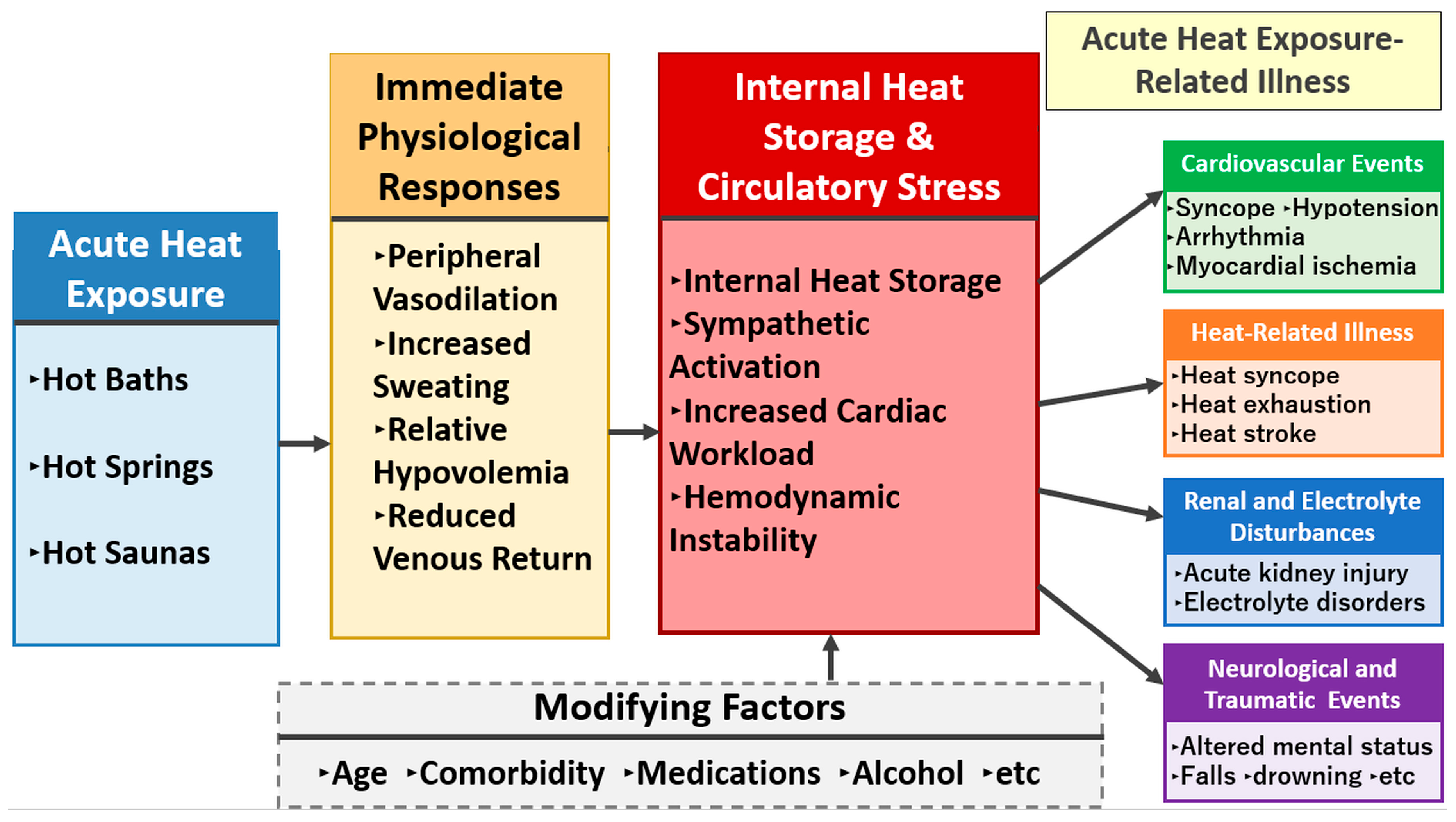
Conceptualizing exposure as a process involving internal heat storage and circulatory stress, rather than focusing solely on “temperature”, is crucial for understanding adverse events related to acute heat exposure [38,44,50,51]. Acute heat exposure increases circulatory stress through peripheral vasodilation and fluid loss, and internal heat storage progresses when heat dissipation fails to match heat gain. The cumulative burden of internal heat storage and circulatory stress can lead to acute illnesses—including circulatory collapse, altered mental status, trauma, and organ injury—via impaired organ perfusion and thermoregulatory failure.
3.4. Internal Heat Storage and Circulatory Stress
When acute heat exposure persists or heat dissipation is insufficient, heat production exceeds heat loss, leading to progressive internal heat storage [38,44,50,51]. Internal heat storage is not synonymous with a single measured body temperature value; however, it is a conceptual component closely related to circulatory stress and organ injury. As internal heat storage increases, hemodynamic stress may appear (tachycardia, changes in cardiac output, and blood pressure instability), and in patients with limited cardiovascular reserve, arrhythmias and ischemic events may be triggered [25,52].
Clinically, internal heat storage may not coincide with a single measured body temperature. In emergency settings, exposure intensity (temperature), duration, and time to cooling are often insufficiently assessed; consequently, clinicians may overlook ongoing circulatory failure or organ injury in patients whose measured temperature is “not very high” [51].
3.5. Individual Susceptibility and Background Factors as Modifiers
Responses to acute heat exposure vary substantially depending on modifiers, including age, comorbidities, medications, and alcohol use. For example, older adults have impaired thermoregulatory and circulatory regulation; patients with diabetes, chronic kidney disease, or cardiovascular disease may have difficulty maintaining fluid and circulatory homeostasis [44,53]. Diuretics and β-blockers may limit compensatory mechanisms and increase the risk of adverse events [54,55,56]. These background factors can drive divergent clinical trajectories even under similar exposures and directly inform risk stratification in emergency care.
4. Acute Heat Exposure–Related Illness
4.1. Cardiovascular and Circulatory Events
Syncope and hypotension represent common emergency conditions associated with acute heat exposure [33]. Peripheral vasodilation and relative hypovolemia can cause transient cerebral hypoperfusion, with symptoms frequently occurring during postural change (e.g., standing up or exiting the bathtub) [34]. In patients with cardiovascular disease, increased circulatory stress and autonomic fluctuations may precipitate arrhythmias and ischemic heart disease events [50,52]. Therefore, detailed history-taking regarding recent acute heat exposure is essential in emergency settings. To aid in understanding cardiovascular and circulatory events, we reviewed relevant literature and summarized the findings in Table 1.
Table 1.
Cardiovascular and circulatory events associated with hot-water immersion, hot spring bathing, and sauna exposure. Selected studies with clinically interpretable cardiovascular/circulatory endpoints and exposure characterization.
4.2. Heat-Related Illness Continuum
Although hot springs/bathing/sauna bathing differ from outdoor environmental acute heat exposure, they can be interpreted within the continuum of heat-related illness, ranging from heat exhaustion to heat stroke.
4.2.1. Pathophysiology
As heat load increases, thermoregulation relies on elevated skin blood flow and sweating for heat dissipation [11,63]. However, when relative reductions in circulating blood volume due to peripheral vasodilation, dehydration from sweating/diuresis, and circulatory redistribution during immersion are superimposed, compensation by cardiac output may become insufficient, leading to circulatory collapse [11,64]. With prolonged exposure and delayed/inadequate cooling, internal heat storage progresses and may evolve into severe heat stroke with altered mental status and multiple organ failure [65,66,67].
4.2.2. Clinical Presentations (Typical Signs/Symptoms) [65,66]
Heat syncope/heat exhaustion (mild): This presents with symptoms including fatigue, dizziness, nausea, headache, muscle cramps, and lightheadedness. Flushed skin and sweating are frequently preserved. Hypotension and tachycardia may be present; signs of dehydration (thirst and dry mucosa) may occur. Heat exhaustion (moderate): This is characterized by weakness, ataxia, repeated vomiting, and difficulty walking. With progressive circulatory failure, decreased consciousness may develop. Heat stroke (severe): This is marked by high body temperature with central nervous system dysfunction (delirium, seizures, and coma) and organ injury; complications may include rhabdomyolysis, liver injury, kidney injury, coagulopathy, and shock.
4.2.3. Outcomes
Outcomes are strongly determined by (1) the presence of central nervous system symptoms, (2) severity of circulatory failure, and (3) progression of organ injury (the kidneys, liver, coagulation systems, and muscles) [68,69]. Heat exhaustion frequently improves with appropriate cooling and fluid resuscitation, whereas heat stroke may have worse outcomes when aggressive early cooling is delayed [66,67]. In high-risk groups—including patients with core temperature ≥ 40 °C or older adults—heat-related complications are associated with extremely poor outcomes, with one study reporting a 1-year survival rate as low as 18% [70]. Therefore, emergency evaluation should integrate not only temperature but also exposure duration, time to cooling, hemodynamics, and mental status. When severe illness is suspected, active cooling and circulatory support should be initiated early [66,67].
4.3. Renal and Electrolyte Disturbances
4.3.1. Pathophysiology
Sweating and dehydration can precipitate AKI and electrolyte abnormalities [71]. Kidney injury may arise from overlapping mechanisms, including: (1) reduced effective circulating blood volume due to dehydration and peripheral vasodilation (renal hypoperfusion); (2) renal ischemia associated with circulatory collapse and inflammatory responses; and (3) myoglobinuria due to rhabdomyolysis [72,73,74]. In older adults and patients with chronic kidney disease, even mild fluid loss may cause clinically significant renal dysfunction [75]. In severe heat stroke, endothelial injury, coagulopathy, and amplified inflammation can accelerate kidney injury, potentially leading to oliguria and metabolic acidosis [74,75].
4.3.2. Typical Clinical/Laboratory Findings
AKI [71,72]: This is characterized by oliguria, concentrated urine, and elevated serum creatinine, and may be accompanied by electrolyte and acid–base disturbances.
Rhabdomyolysis [73]: This presents with myalgia, weakness, and dark urine (myoglobinuria); elevated creatine kinase is a key marker, and it may complicate AKI.
Electrolyte abnormalities can include [76,77]: hyper-/hyponatremia, which may cause altered mental status and seizures; hyper-/hypokalemia, which can cause arrhythmias and weakness; and hyper-/hypocalcemia, which may cause arrhythmias, neuromuscular symptoms, and neurological manifestations.
4.3.3. Outcomes and Clinical Implications
Kidney injury and electrolyte abnormalities may influence outcomes through arrhythmias, seizures, altered mental status, and circulatory failure [74,78]. Particularly, AKI with rhabdomyolysis, severe Na/K derangements, and progressive acidosis are warning signs of severe disease and frequently warrant observation or inpatient management [73,74]. Accordingly, in patients suspected of acute heat exposure–related illness, evaluating kidney function, checking electrolyte levels, and performing ECG monitoring are important.
4.4. Neurological and Traumatic Events
Peripheral vasodilation and hypotension associated with acute heat exposure can reduce cerebral perfusion, causing altered mental status, syncope, and dizziness [33,34]. Severe disease may present with hyperthermia-related central nervous system injury (delirium, seizures, and coma) [65,66]. Moreover, when altered mental status or syncope occurs during bathing, it can directly lead to aspiration or drowning, and many patients present to the emergency department with respiratory failure [9]. Falls associated with syncope or altered consciousness also occur and can result in head or torso trauma [79,80]. In older adults and those taking anticoagulants, even minor falls may be severe; therefore, emergency evaluation should systematically include trauma assessment in addition to neurological evaluation [81,82]. This syndrome should be understood as a complex condition where “primary acute heat exposure–related impairment” is compounded by secondary complications, including aspiration, drowning, and trauma.
5. Exposure-Specific Characteristics (Table 2)
Table 2 summarizes exposure characteristics, core physiological effects, typical acute emergency conditions, and key considerations for emergency physicians across acute heat exposure modalities, including hot-water tub bathing/hot springs and sauna bathing. Although the modalities differ in exposure duration, temperature, and hydrostatic pressure, common pathophysiological processes—including peripheral vasodilation, relative hypovolemia, circulatory stress, and internal heat storage—underlie many acute clinical presentations. From an emergency medicine perspective, outcomes are frequently determined more by the interaction between exposure intensity/duration and patient vulnerability than by the exposure type.
Table 2.
Exposure-specific emergency conditions and clinical features. Summary of exposure modality (immersion vs. ambient heat), typical exposure parameters, core physiological effects, and acute emergency conditions relevant to hot baths/hot springs and saunas.
5.1. Hot Baths and Hot Springs
Hot springs and hot-water tub bathing involve sustained whole-body immersion [2]. Hydrostatic pressure can alter venous return, and postural change before and after bathing may induce marked blood pressure fluctuations (so-called “heat shock”), leading to hemodynamic instability [57,83]. In Japan, high-temperature and prolonged bathing are culturally accepted, and older adults frequently bathe alone [84]. These circumstances may delay intervention when syncope or altered mental status occurs, increasing the risk of progression to drowning, aspiration, and severe respiratory failure [9,10,85]. Therefore, behavioral factors—including bathing duration, water temperature, and alcohol intake—should be recognized as contributors to adverse events.
5.2. Saunas
Sauna bathing is characterized by short exposure to high ambient temperatures and can induce rapid sweating and fluid loss [30]. Given that immersion is absent, hydrostatic pressure effects are limited; however, dehydration and peripheral vasodilation may rapidly progress to a relative hypovolemic state and increase cardiac workload [34]. In individuals with cardiovascular disease, increased circulatory stress may precipitate arrhythmias and ischemic events [50,52]. Recently, increased sauna use and the popularity of repeated sauna–cold water immersion cycles have raised concerns that rapid temperature shifts may impose substantial hemodynamic stress [29], warranting further investigation.
5.3. Differences Across Exposure Modalities and Shared Features
Although hot springs/bathing/saunas differ in exposure duration, temperature, and hydrostatic pressure, they share common pathophysiological features, including peripheral vasodilation, fluid loss, circulatory stress, and internal heat storage [12,34,50]. From an emergency medicine perspective, acute outcomes may be more strongly governed by the interaction between exposure intensity/duration and individual vulnerability than by the exposure modality. Therefore, these exposures should be evaluated comprehensively as acute heat exposure rather than as isolated behaviors.
6. High-Risk Populations (Table 3)
Table 3 outlines populations more likely to deteriorate or develop complex courses after acute heat exposure, along with underlying pathophysiological vulnerabilities and typical complications. Older adults, patients with cardiovascular or chronic kidney disease, and individuals using medications that blunt compensatory responses may develop marked instability even with relatively mild exposures. Recognizing these high-risk features is crucial for early risk stratification and appropriate management in emergency settings.
Table 3.
High-risk populations and clinical considerations in acute heat exposure. Highlights patient-level vulnerability factors that amplify circulatory stress, dehydration risk, or impaired thermoregulation.
Adverse events related to acute heat exposure tend to be more severe in specific populations. The most important high-risk group is older adults; impaired thermoregulation and circulatory regulation can lead to syncope and heat-related illness even with mild exposure [44,78]. Patients with cardiovascular disease have reduced cardiovascular reserve and higher risks of arrhythmias and ischemic events [34,52]. Patients with chronic kidney disease have impaired fluid/electrolyte regulation and are susceptible to dehydration and AKI [71]. Additionally, diuretic use, β-blocker use, diabetic autonomic dysfunction, and alcohol use may increase risk [34,86]. A prior history of heat illness suggests elevated recurrence risk and warrants caution [12,51].
7. Preventive Strategies for Acute Heat Exposure–Related Acute Illness
7.1. General Principles Applicable to All Acute Heat Exposure Settings
The most important shared preventive principle for hot springs/bathing/saunas is to avoid excessive progression of internal heat storage and circulatory stress [13,34,50]. First, limiting exposure duration is essential. Longer exposure increases the imbalance between heat gain and loss, accelerating internal heat storage [87]. In older adults and those with comorbidities, hemodynamic compensation may fail even with short exposure; therefore, conservative time limits are warranted [44,57]. Second, appropriate hydration is critical. Fluid loss from sweating increases circulatory stress, whereas excessive intake of free water alone may cause hyponatremia [71]. In high-risk individuals, consuming beverages containing electrolytes and avoiding excessive free-water intake are advisable. Third, acute heat exposure after alcohol intake should be avoided. Alcohol can increase adverse event risk through peripheral vasodilation, impaired judgment, and thermoregulatory dysfunction [88].
7.2. Preventive Strategies for Hot Baths and Hot Springs
In hot springs and bathing, because whole-body immersion and postural change strongly affect hemodynamics, prevention should focus primarily on circulatory collapse and drowning risk [89]. First, optimizing water temperature is important. High-temperature bathing increases the risk of hemodynamic failure; therefore, very hot (e.g., ≥41 °C) and prolonged bathing should be avoided [90]. Second, abrupt postural changes should be avoided. Standing up and exiting the bathtub can precipitate syncope through peripheral vasodilation and reduced venous return; gradual, slow movements should be encouraged [58,84]. Third, avoiding solitary bathing is an important safety measure. In older adults and high-risk individuals, altered mental status during bathing may delay intervention and increase drowning/aspiration risk [9].
7.3. Preventive Strategies for Sauna Use
In saunas, rapid sweating and fluid loss can occur within short periods; therefore, managing dehydration and circulatory stress is key [30]. First, continuous or excessively repeated sessions should be avoided [1]. Particularly, sauna–cold water immersion repetition may impose substantial hemodynamic stress due to rapid temperature shifts [87].
Second, hydration and electrolyte replenishment before and after sauna use are important. For individuals with cardiovascular disease or chronic kidney disease, clinicians should emphasize the risks of dehydration-related circulatory collapse and kidney function deterioration [26,38]. Third, sauna use should be avoided during acute illness or exacerbations of underlying disease. Sauna exposure during fever, infection, or dehydration may rapidly amplify internal heat storage and circulatory stress [12,38].
7.4. High-Risk Populations and Tailored Preventive Advice
As summarized in Section 6, older adults, patients with cardiovascular disease, those with chronic kidney disease, and individuals using diuretics or β-blockers have higher risks of adverse events from acute heat exposure. In addition to general preventive measures, tailored advice is needed: stricter limits on frequency and duration, supervision by family/caregivers, and immediate cessation with any symptom development.
7.5. The Role of Emergency Medicine in Prevention and Recurrence Reduction
Emergency medicine plays a crucial role not only in acute management but also as an intervention point for secondary and primary prevention. For cases of acute heat exposure–related illness that correspond to typical heat illness presentations, the Wilderness Medical Society clinical practice guidelines provide practical recommendations for prevention and treatment in emergency and out-of-hospital settings [16]. For severe cases, including cardiac arrest, the American Heart Association and European Resuscitation Council special circumstances guidelines provide key points for resuscitation and initial management in hyperthermia/heat stroke and other special situations [14,15]. Emergency physicians should apply these principles while managing acute heat exposure–related illness as a complex syndrome. Providing specific preventive counseling based on exposure modality, behavioral factors, and individual risks to patients presenting with acute heat exposure–related illness may help reduce future severe events [65]. Reframing acute heat exposure as an “adjustable medical risk factor,” rather than an “inevitable daily behavior,” is increasingly important for both emergency medicine and public health [91].
8. Limitations of Current Evidence
Current evidence on acute heat exposure has important limitations. First, the existing literature largely relies on observational studies or case series, limiting rigorous causal inference between exposure and outcomes. Sauna epidemiology is particularly susceptible to healthy-user bias, requiring caution when extrapolating to risk estimation in acute care settings. Second, quantitative characterization of exposure (temperature, duration, frequency, and behavioral patterns) is frequently inadequate, leading to substantial heterogeneity across studies. Third, relying on a single body temperature measurement may fail to capture peak heat load during exposure or internal heat storage. Furthermore, mild cases and individuals who do not seek medical care are difficult to capture, and reporting bias may influence observed patterns. These limitations hinder accurate characterization of the true risk profile of acute heat exposure.
9. Future Research Directions
9.1. Need for Quantitative Assessment
To deepen understanding of acute heat exposure–related illness, establishing quantitative and integrated assessment approaches is essential [92]. Rather than relying on a single measured temperature value, assessing internal heat storage based on the balance between heat gain and loss is crucial [93]. Heat balance models and continuous temperature monitoring can quantify heat stress while accounting for exposure modality and inter-individual differences, providing a basis for more precise investigation of its relationship with organ injury and severity indices [38,87].
9.2. Implications for Future Studies
Multicenter prospective studies are needed to systematically collect and evaluate emergency-transported cases related to hot springs/bathing, including exposure conditions, comorbidities, initial management, and clinical outcomes [37]. Such studies can provide implementable evidence reflecting regional and cultural contexts and inform prevention strategies. Additionally, research examining links between acute heat exposure and multiple organ failure from the perspective of hemodynamics and organ perfusion, and clarifying pathophysiological progression mediated by internal heat storage, is also important [50,70]. Finally, interdisciplinary research spanning emergency and environmental medicine is needed to position acute heat exposure not as an “accidental event,” but as a “predictable, assessable, and modifiable medical risk factor.”
10. Conclusions
In this narrative review, we organized the unified concepts of acute heat exposure and related illness across hot springs, bathing, and sauna bathing in a manner that is practical for emergency medicine. These environments may differ in how acute heat exposure–related illness manifests due to modality-specific characteristics. Nevertheless, common pathophysiological mechanisms include circulatory collapse originating from peripheral vasodilation and a relative reduction in effective circulating blood volume, dehydration and electrolyte disturbances, and—particularly in severe cases—central nervous system dysfunction and organ injury. Clinically, conceptualizing these conditions along a continuum from heat syncope/exhaustion to heat stroke is useful.
Practical implications for emergency care include rapidly stratifying patients with suspected acute heat exposure into: (1) severe illness requiring immediate cooling and resuscitation (heat stroke, altered mental status, and circulatory failure); (2) moderate illness requiring evaluation of complications including arrhythmias and renal/electrolyte disturbances; and (3) mild illness suitable for short observation and discharge with preventive counseling. When severe illness is suspected, early initiation of active cooling is critical, alongside evaluation for ECG abnormalities, electrolyte disturbances, kidney injury, rhabdomyolysis, and concomitant trauma/drowning. Future studies should quantify exposure modalities and clinical outcomes, clarify mechanisms and risk prediction for acute heat exposure–related illness, and test preventive interventions accounting for facility and cultural differences—thereby enhancing emergency care and informing effective prevention strategies.
Author Contributions
Conceptualization, R.Y. and K.Y.; data curation, R.Y. and K.Y.; formal analysis, R.Y.; methodology, R.Y. and K.Y.; supervision, T.K. (Tsuneo Konta); visualization, R.Y.; writing—original draft, R.Y.; writing—review and editing, R.Y., K.Y., T.H., K.S. (Kento Sakaguchi), M.K., K.S. (Kiyotaka Soewaka), T.K. (Tadahiro Kobayashi) and T.K. (Tsuneo Konta). All authors have read and agreed to the published version of the manuscript.
Funding
This research received no external funding.
Institutional Review Board Statement
Not applicable for studies not involving humans or animals.
Informed Consent Statement
Not applicable for studies not involving humans.
Data Availability Statement
Not applicable. No new data were created or analyzed in this study.
Acknowledgments
An initial draft of the English translation was generated using ChatGPT (GPT-5.2, OpenAI). We used a professional English-language editing service to improve the clarity and readability of the manuscript. The authors carefully reviewed all AI-assisted and professionally edited text and assume full responsibility for the accuracy and integrity of the final manuscript.
Conflicts of Interest
The authors declare no conflicts of interest regarding this article.
References
- Hannuksela, M.L.; Ellahham, S. Benefits and risks of sauna bathing. Am. J. Med. 2001, 110, 118–126. [Google Scholar] [CrossRef] [Scilit]
- Tochihara, Y. A review of Japanese-style bathing: Its demerits and merits. J. Physiol. Anthropol. 2022, 41, 5. [Google Scholar] [CrossRef] [Scilit]
- Long, J.; Qin, Q.; Huang, Y.; Wang, T.; Jiang, J.; Gao, Q.; Chen, Y. Study on nondrug intervention of 7 days of balneotherapy combined with various sleep-promoting measures on people with sleep disorders: Preliminary and pilot study. Int. J. Biometeorol. 2023, 67, 457–464. [Google Scholar] [CrossRef] [Scilit]
- Yamasaki, S.; Tokunou, T.; Maeda, T.; Horiuchi, T. Hot spring bathing is associated with a lower prevalence of hypertension among Japanese older adults: A cross-sectional study in Beppu. Sci. Rep. 2022, 12, 19462. [Google Scholar] [CrossRef] [Scilit] [PubMed]
- Yamasaki, S.; Maeda, T.; Horiuchi, T. Association between habitual hot spring bathing and depression in Japanese older adults: A retrospective study in Beppu. Complement. Ther. Med. 2023, 72, 102909. [Google Scholar] [CrossRef] [Scilit] [PubMed]
- Laukkanen, T.; Khan, H.; Zaccardi, F.; Laukkanen, J.A. Association between sauna bathing and fatal cardiovascular and all-cause mortality events. JAMA Intern. Med. 2015, 175, 542–548. [Google Scholar] [CrossRef] [Scilit]
- Laukkanen, J.A.; Laukkanen, T.; Kunutsor, S.K. Cardiovascular and other health benefits of sauna bathing: A review of the evidence. Mayo Clin. Proc. 2018, 93, 1111–1121. [Google Scholar] [CrossRef] [Scilit] [PubMed]
- Kunutsor, S.K.; Khan, H.; Zaccardi, F.; Laukkanen, T.; Willeit, P.; Laukkanen, J.A. Sauna bathing reduces the risk of stroke in Finnish men and women: A prospective cohort study. Neurology 2018, 90, e1937–e1944. [Google Scholar] [CrossRef] [Scilit]
- Yokoyama, R.; Yarimizu, K.; Sakaguchi, K.; Onodera, Y.; Kobayashi, T.; Nakane, M. Comparison of bathing-related adverse events, including drowning, between hot spring bathing and general bathing: A single-center retrospective study. Acute Med. Surg. 2025, 12, e70064. [Google Scholar] [CrossRef] [Scilit]
- Suzuki, M.; Shimbo, T.; Ikaga, T.; Hori, S. Incidence and characteristics of bath-related accidents. Intern. Med. 2019, 58, 53–62. [Google Scholar] [CrossRef] [Scilit]
- Kenny, G.P.; Yardley, J.; Brown, C.; Sigal, R.J.; Jay, O. Heat stress in older individuals and patients with common chronic diseases. CMAJ 2010, 182, 1053–1060. [Google Scholar] [CrossRef] [Scilit]
- Bouchama, A.; Knochel, J.P. Heat stroke. N. Engl. J. Med. 2002, 346, 1978–1988. [Google Scholar] [CrossRef] [Scilit]
- Crandall, C.G.; González-Alonso, J. Cardiovascular function in the heat-stressed human. Acta Physiol. 2010, 199, 407–423. [Google Scholar] [CrossRef] [Scilit]
- Cao, D.; Arens, A.M.; Chow, S.L.; Easter, S.R.; Hoffman, R.S.; Lagina, A.T.; Lavonas, E.J.; Patil, K.D.; Sutherland, L.D.; Tijssen, J.A.; et al. Part 10: Adult and pediatric special circumstances of resuscitation: 2025 American Heart Association Guidelines for Cardiopulmonary Resuscitation and Emergency Cardiovascular Care. Circulation 2025, 152, S578–S672. [Google Scholar] [CrossRef] [Scilit] [PubMed]
- Lott, C.; Karageorgos, V.; Abelairas-Gomez, C.; Alfonzo, A.; Bierens, J.; Cantellow, S.; Debaty, G.; Einav, S.; Fischer, M.; González-Salvado, V.; et al. European Resuscitation Council Guidelines 2025 Special Circumstances in Resuscitation. Resuscitation 2025, 215, 110753. [Google Scholar] [CrossRef] [Scilit] [PubMed]
- Eifling, K.P.; Gaudio, F.G.; Dumke, C.; Lipman, G.S.; Otten, E.M.; Martin, A.D.; Grissom, C.K. Wilderness Medical Society Clinical Practice Guidelines for the Prevention and Treatment of Heat Illness: 2024 Update. Wilderness Environ. Med. 2024, 35, 112S–127S. [Google Scholar] [CrossRef] [Scilit]
- Zaccardi, F.; Laukkanen, T.; Willeit, P.; Kunutsor, S.K.; Kauhanen, J.; Laukkanen, J.A. Sauna bathing and incident hypertension: A prospective cohort study. Am. J. Hypertens. 2017, 30, 1120–1125. [Google Scholar] [CrossRef] [Scilit]
- Engström, Å.; Hägglund, H.; Lee, E.; Wennberg, M.; Söderberg, S.; Andersson, M. Sauna bathing in northern Sweden: Results from the Monica study 2022. Int. J. Circumpolar Health 2024, 83, 2419698. [Google Scholar] [CrossRef] [Scilit] [PubMed]
- Lee, E.; Kolunsarka, I.; Kostensalo, J.; Ahtiainen, J.P.; Haapala, E.A.; Willeit, P.; Kunutsor, S.K.; Laukkanen, J.A. Effects of regular sauna bathing in conjunction with exercise on cardiovascular function: A multi-arm, randomized controlled trial. Am. J. Physiol. Regul. Integr. Comp. Physiol. 2022, 323, R289–R299. [Google Scholar] [CrossRef] [Scilit]
- Tai, Y.; Obayashi, K.; Yamagami, Y.; Saeki, K. Drowning and submersion deaths in bathtubs and associated factors: A descriptive and ecological study in Japan, 1995–2020. J. Epidemiol. 2025, 35, 482–489. [Google Scholar] [CrossRef] [Scilit]
- Tai, Y.; Obayashi, K.; Yamagami, Y.; Saeki, K. Association between outdoor temperature and bath-related drowning deaths in Japan (1995–2020): Modifying factors and the role of prefectural characteristics. Environ. Health Prev. Med. 2025, 30, 55. [Google Scholar] [CrossRef] [Scilit]
- Tai, Y.; Obayashi, K.; Yamagami, Y.; Saeki, K. Seasonal variations in bathtub drowning deaths and the impact of outdoor temperatures: A nationwide time-series analysis with future projections. Environ. Health Prev. Med. 2025, 30, 99. [Google Scholar] [CrossRef] [Scilit]
- Tai, Y.; Obayashi, K.; Yamagami, Y.; Saeki, K. Forecasting daily bathtub-drowning mortality in Japan: A comparative analysis of statistical, machine learning, and deep learning approaches. Front. Public Health 2025, 13, 1715622. [Google Scholar] [CrossRef] [Scilit]
- Delgado-Rodríguez, M.; Llorca, J. Bias. J. Epidemiol. Community Health 2004, 58, 635–641. [Google Scholar] [CrossRef] [Scilit]
- Rowell, L.B. Human cardiovascular adjustments to exercise and thermal stress. Physiol. Rev. 1974, 54, 75–159. [Google Scholar] [CrossRef] [Scilit]
- Johnson, J.M.; Kellogg, D.L. Thermoregulatory and thermal control in the human cutaneous circulation. Front. Biosci. 2010, 2, 825–853. [Google Scholar] [CrossRef] [Scilit]
- Institute of Medicine (US) Committee on Military Nutrition Research; Marriott, B.M.; Carlson, S.J. Physiology of Cold Exposure. In Nutritional Needs in Cold and in High-Altitude Environments: Applications for Military Personnel in Field Operations; National Academies Press: Washington, DC, USA, 1996. [Google Scholar]
- Roxburgh, B.H.; Cotter, J.D.; Fujii, N.; Masodsai, K.; Thomas, K.N. Hot water immersion: A (Not so) new therapy for the primary and secondary prevention of hypertension? J. Appl. Physiol. 2026, 140, 439–450. [Google Scholar] [CrossRef] [Scilit] [PubMed]
- Hussain, J.; Cohen, M. Clinical effects of regular dry sauna bathing: A systematic review. Evid.-Based Complement. Altern. Med. 2018, 2018, 1857413. [Google Scholar] [CrossRef] [Scilit] [PubMed]
- Pilch, W.; Szygula, Z.; Palka, T.; Pilch, P.; Cison, T.; Wiecha, S.; Tota, Ł. Comparison of physiological reactions and physiological strain in healthy men under heat stress in dry and steam heat saunas. Biol. Sport 2014, 31, 145–149. [Google Scholar] [CrossRef] [Scilit]
- Laukkanen, T.; Kunutsor, S.K.; Khan, H.; Willeit, P.; Zaccardi, F.; Laukkanen, J.A. Sauna bathing is associated with reduced cardiovascular mortality and improves risk prediction in men and women: A prospective cohort study. BMC Med. 2018, 16, 219. [Google Scholar] [CrossRef] [Scilit] [PubMed]
- Flouris, A.D.; Schlader, Z.J. Human behavioral thermoregulation during exercise in the heat. Scand. J. Med. Sci. Sports 2015, 25, 52–64. [Google Scholar] [CrossRef] [Scilit]
- Schlader, Z.J.; Wilson, T.E.; Crandall, C.G. Mechanisms of orthostatic intolerance during heat stress. Auton. Neurosci. 2016, 196, 37–46. [Google Scholar] [CrossRef] [Scilit]
- Crandall, C.G.; Wilson, T.E. Human cardiovascular responses to passive heat stress. Compr. Physiol. 2015, 5, 17–43. [Google Scholar] [CrossRef] [Scilit]
- Laukkanen, T.; Lipponen, J.; Kunutsor, S.K.; Zaccardi, F.; Araújo, C.G.S.; Mäkikallio, T.H.; Khan, H.; Willeit, P.; Lee, E.; Poikonen, S.; et al. Recovery from sauna bathing favorably modulates cardiac autonomic nervous system. Complement. Ther. Med. 2019, 45, 190–197. [Google Scholar] [CrossRef] [Scilit] [PubMed]
- Wang, S.; Zhang, X.; Zhang, Y.; Wu, N.; Bo, L.; Wang, M. The pathogenesis and therapeutic strategies of heat stroke-induced endothelial injury. Front. Cell Dev. Biol. 2025, 13, 1569346. [Google Scholar] [CrossRef] [Scilit] [PubMed]
- Sun, M.; Li, Q.; Zou, Z.; Liu, J.; Gu, Z.; Li, L. The mechanisms behind heatstroke-induced intestinal damage. Cell Death Discov. 2024, 10, 455. [Google Scholar] [CrossRef] [Scilit]
- Leon, L.R. Heat stroke and cytokines. Prog. Brain Res. 2007, 162, 481–524. [Google Scholar] [CrossRef] [Scilit] [PubMed]
- Martine, P.; Chevriaux, A.; Derangère, V.; Apetoh, L.; Garrido, C.; Ghiringhelli, F.; Rébé, C. HSP70 is a negative regulator of NLRP3 inflammasome activation. Cell Death Dis. 2019, 10, 256. [Google Scholar] [CrossRef] [Scilit]
- Caterina, M.J. Transient receptor potential ion channels as participants in thermosensation and thermoregulation. Am. J. Physiol.-Regul. Integr. Comp. Physiol. 2007, 292, R64–R76. [Google Scholar] [CrossRef] [Scilit]
- Marchand, M.; Gin, K. The cardiovascular system in heat stroke. CJC Open 2022, 4, 158–163. [Google Scholar] [CrossRef] [Scilit]
- Akhtar, M.J.; Al-Nozha, M.; Al-Harthi, S.; Nouh, M.S. Electrocardiographic abnormalities in patients with heat stroke. Chest 1993, 104, 411–414. [Google Scholar] [CrossRef] [Scilit] [PubMed]
- Paul, A.; Alex, R.; Jacob, J.R.; Yadav, B. Effects of heat stroke on surface ECG: A study on clinical outcomes. Heart Asia 2019, 11, e011221. [Google Scholar] [CrossRef] [Scilit]
- Núñez-Rodríguez, S.; Collazo-Riobó, C.; Sedano, J.; Sánchez-Iglesias, A.I.; González-Santos, J. Heat tolerance in older adults: A systematic review of thermoregulation, vulnerability, environmental change, and health outcomes. Healthcare 2025, 13, 2785. [Google Scholar] [CrossRef] [Scilit]
- Sun, S.; Cheng, W. Physical and physiological differences in thermal comfort and regulation among older adults: A systematic review. Build. Environ. 2025, 284, 113424. [Google Scholar] [CrossRef] [Scilit]
- Vallerand, A.L.; Savourey, G.; Hanniquet, A.-M.; Bittel, J.H.M. How should body heat storage be determined in humans: By thermometry or calorimetry? Eur. J. Appl. Physiol. 1992, 65, 286–294. [Google Scholar] [CrossRef] [Scilit]
- Sawka, M.N.; Castellani, J.W. How hot is the human body? J. Appl. Physiol. 2007, 103, 419–420. [Google Scholar] [CrossRef] [Scilit]
- Lenhardt, R.; Sessler, D.I. Estimation of mean body temperature from mean skin and core temperature. Anesthesiology 2006, 105, 1117–1121. [Google Scholar] [CrossRef] [Scilit]
- Jay, O.; Reardon, F.D.; Webb, P.; DuCharme, M.B.; Ramsay, T.; Nettlefold, L.; Kenny, G.P. Estimating changes in mean body temperature for humans during exercise using core and skin temperatures is inaccurate even with a correction factor. J. Appl. Physiol. 2007, 103, 443–451. [Google Scholar] [CrossRef] [Scilit]
- Périard, J.D.; Cramer, M.N.; Chapman, P.G.; Caillaud, C.; Thompson, M.W. Cardiovascular strain impairs prolonged self-paced exercise in the heat. Exp. Physiol. 2011, 96, 134–144. [Google Scholar] [CrossRef] [Scilit]
- Chan, Y.K.; Mamat, M. Management of heat stroke. Trends Anaesth. Crit. Care 2015, 5, 65–69. [Google Scholar] [CrossRef] [Scilit]
- Bhaskaran, K.; Hajat, S.; Haines, A.; Herrett, E.; Wilkinson, P.; Smeeth, L. Effects of ambient temperature on the incidence of myocardial infarction. Heart 2009, 95, 1760–1769. [Google Scholar] [CrossRef] [Scilit]
- Tan, C.C.S.; Chin, L.K.K.; Low, I.C.C. Thermoregulation in the aging population and practical strategies to overcome a warmer tomorrow. Proteomics 2020, 20, e1800468. [Google Scholar] [CrossRef] [Scilit] [PubMed]
- Wee, J.; Tan, X.R.; Gunther, S.H.; Ihsan, M.; Leow, M.K.S.; Tan, D.S.Y.; Eriksson, J.G.; Lee, J.K.W. Effects of medications on heat loss capacity in chronic disease patients: Health implications amidst global warming. Pharmacol. Rev. 2023, 75, 1140–1166. [Google Scholar] [CrossRef] [Scilit]
- Kalisch Ellett, L.M.; Pratt, N.L.; Le Blanc, V.T.; Westaway, K.; Roughead, E.E. Increased risk of hospital admission for dehydration or heat-related illness after initiation of medicines: A sequence symmetry analysis. J. Clin. Pharm. Ther. 2016, 41, 503–507. [Google Scholar] [CrossRef] [Scilit]
- Westaway, K.; Frank, O.; Husband, A.; McClure, A.; Shute, R.; Edwards, S.; Curtis, J.; Rowett, D. Medicines can affect thermoregulation and accentuate the risk of dehydration and heat-related illness during hot weather. J. Clin. Pharm. Ther. 2015, 40, 363–367. [Google Scholar] [CrossRef] [Scilit]
- Tai, Y.; Obayashi, K.; Okumura, K.; Yamagami, Y.; Saeki, K. Blood pressure, pulse rate, and skin temperature during hot-water bathing in real-world settings among community-dwelling older adults: The HEIJO-KYO Study. Environ. Health Prev. Med. 2024, 29, 12. [Google Scholar] [CrossRef] [Scilit]
- Nagasawa, Y.; Komori, S.; Sato, M.; Tsuboi, Y.; Umetani, K.; Watanabe, Y.; Tamura, K. Effects of hot bath immersion on autonomic activity and hemodynamics: Comparison of the elderly patient and the healthy young. Jpn. Circ. J. 2001, 65, 587–592. [Google Scholar] [CrossRef] [Scilit] [PubMed]
- Giannetti, N.; Juneau, M.; Arsenault, A.; Behr, M.A.; Grégoire, J.; Tessier, M.; Larivée, L. Sauna-induced myocardial ischemia in patients with coronary artery disease. Am. J. Med. 1999, 107, 228–233. [Google Scholar] [CrossRef] [Scilit] [PubMed]
- Tei, C.; Horikiri, Y.; Park, J.C.; Jeong, J.W.; Chang, K.S.; Toyama, Y.; Tanaka, N. Acute hemodynamic improvement by thermal vasodilation in congestive heart failure. Circulation 1995, 91, 2582–2590. [Google Scholar] [CrossRef] [Scilit]
- Oyama, J.; Kudo, Y.; Maeda, T.; Node, K.; Makino, N. Hyperthermia by bathing in a hot spring improves cardiovascular functions and reduces the production of inflammatory cytokines in patients with chronic heart failure. Heart Vessel. 2013, 28, 173–178. [Google Scholar] [CrossRef] [Scilit]
- Ukai, T.; Iso, H.; Yamagishi, K.; Saito, I.; Kokubo, Y.; Yatsuya, H.; Muraki, I.; Eshak, E.S.; Sawada, N.; Tsugane, S. Habitual tub bathing and risks of incident coronary heart disease and stroke. Heart 2020, 106, 732–737. [Google Scholar] [CrossRef] [Scilit]
- Helms, J.; Kondo, K.; Nagakari, K.; Iba, T. Diagnosis and management of heat-related illness: Clinical and molecular perspectives. Juntendo Med. J. 2025, 71, 399–405. [Google Scholar] [CrossRef] [Scilit]
- Francisco, M.A.; Colbert, C.; Larson, E.A.; Sieck, D.C.; Halliwill, J.R.; Minson, C.T. Hemodynamics of postexercise versus post-hot water immersion recovery. J. Appl. Physiol. 2021, 130, 1362–1372. [Google Scholar] [CrossRef] [Scilit]
- Epstein, Y.; Yanovich, R. Heatstroke. N. Engl. J. Med. 2019, 380, 2449–2459. [Google Scholar] [CrossRef] [Scilit]
- Sorensen, C.; Hess, J. Treatment and prevention of heat-related illness. N. Engl. J. Med. 2022, 387, 1404–1413. [Google Scholar] [CrossRef] [Scilit]
- Patel, J.; Boyer, N.; Mensah, K.; Haider, S.; Gibson, O.; Martin, D.; Walter, E. Critical illness aspects of heatstroke: A hot topic. J. Intensive Care Soc. 2023, 24, 206–214. [Google Scholar] [CrossRef] [Scilit] [PubMed]
- Misset, B.; De Jonghe, B.; Bastuji-Garin, S.; Gattolliat, O.; Boughrara, E.; Annane, D.; Hausfater, P.; Garrouste-Orgeas, M.; Carlet, J. Mortality of patients with heatstroke admitted to intensive care units during the 2003 heat wave in France: A national multiple-center risk-factor study. Crit. Care Med. 2006, 34, 1087. [Google Scholar] [CrossRef] [Scilit]
- Argaud, L.; Ferry, T.; Le, Q.-H.; Marfisi, A.; Ciorba, D.; Achache, P.; Ducluzeau, R.; Robert, D. Short- and long-term outcomes of heatstroke following the 2003 heat wave in Lyon, France. Arch. Intern. Med. 2007, 167, 2177–2183. [Google Scholar] [CrossRef] [Scilit] [PubMed]
- Hausfater, P.; Megarbane, B.; Dautheville, S.; Patzak, A.; Andronikof, M.; Santin, A.; André, S.; Korchia, L.; Terbaoui, N.; Kierzek, G.; et al. Prognostic factors in non-exertional heatstroke. Intensive Care Med. 2010, 36, 272–280. [Google Scholar] [CrossRef] [Scilit] [PubMed]
- Roncal-Jimenez, C.; García-Trabanino, R.; Barregard, L.; Lanaspa, M.A.; Wesseling, C.; Harra, T.; Aragón, A.; Grases, F.; Jarquin, E.R.; González, M.A.; et al. Heat stress nephropathy from exercise-induced uric acid crystalluria: A perspective on Mesoamerican nephropathy. Am. J. Kidney Dis. 2016, 67, 20–30. [Google Scholar] [CrossRef] [Scilit]
- Chapman, C.L.; Johnson, B.D.; Parker, M.D.; Hostler, D.; Pryor, R.R.; Schlader, Z. Kidney physiology and pathophysiology during heat stress and the modification by exercise, dehydration, heat acclimation and aging. Temp. Multidiscip. Biomed. J. 2020, 8, 108–159. [Google Scholar] [CrossRef] [Scilit]
- Khan, F.Y. Rhabdomyolysis: A review of the literature. Neth. J. Med. 2009, 67, 272–283. [Google Scholar] [PubMed]
- Zhang, D.; Zhu, J.; Wang, Z.; Liu, Z. Pathogenesis and therapeutic strategy of heat stroke-induced acute kidney injury. Int. Immunopharmacol. 2025, 160, 114969. [Google Scholar] [CrossRef] [Scilit] [PubMed]
- El-Sharkawy, A.M.; Sahota, O.; Maughan, R.J.; Lobo, D.N. The pathophysiology of fluid and electrolyte balance in the older adult surgical patient. Clin. Nutr. 2014, 33, 6–13. [Google Scholar] [CrossRef] [Scilit] [PubMed]
- Satirapoj, B.; Kongthaworn, S.; Choovichian, P.; Supasyndh, O. Electrolyte disturbances and risk factors of acute kidney injury patients receiving dialysis in exertional heat stroke. BMC Nephrol. 2016, 17, 55. [Google Scholar] [CrossRef] [Scilit]
- Teymouri, N.; Mesbah, S.; Navabian, S.M.H.; Shekouh, D.; Najafabadi, M.M.; Norouzkhani, N.; Poudineh, M.; Qadirifard, M.S.; Mehrtabar, S.; Deravi, N. ECG frequency changes in potassium disorders: A narrative review. Am. J. Cardiovasc. Dis. 2022, 12, 112–124. [Google Scholar]
- Zhang, Z.; Heerspink, H.J.L.; Chertow, G.M.; Correa-Rotter, R.; Gasparrini, A.; Jongs, N.; Langkilde, A.M.; McMurray, J.J.V.; Mistry, M.N.; Rossing, P.; et al. Ambient heat exposure and kidney function in patients with chronic kidney disease: A post-hoc analysis of the DAPA-CKD trial. Lancet Planet. Health 2024, 8, e225–e233. [Google Scholar] [CrossRef] [Scilit]
- Kavi, K.S.; Gall, N.P. Trauma and syncope: Looking beyond the Injury. Trauma Surg. Acute Care Open 2023, 8, e001036. [Google Scholar] [CrossRef] [Scilit]
- Furlan, L.; Esposito, G.J.; Gianni, F.; Solbiati, M.; Mancusi, C.; Costantino, G. Syncope in the emergency department: A practical approach. J. Clin. Med. 2024, 13, 3231. [Google Scholar] [CrossRef] [Scilit]
- Mitchell, A.; Elmasry, Y.; van Poelgeest, E.; Welsh, T.J. Anticoagulant use in older persons at risk for falls: Therapeutic dilemmas—A clinical review. Eur. Geriatr. Med. 2023, 14, 683–696. [Google Scholar] [CrossRef] [Scilit]
- Ganetsky, M.; Lopez, G.; Coreanu, T.; Novack, V.; Horng, S.; Shapiro, N.I.; Bauer, K.A. Risk of intracranial hemorrhage in ground-level fall with antiplatelet or anticoagulant agents. Acad. Emerg. Med. 2017, 24, 1258–1266. [Google Scholar] [CrossRef] [Scilit]
- Kohara, K.; Tabara, Y.; Ochi, M.; Okada, Y.; Ohara, M.; Nagai, T.; Ohyagi, Y.; Igase, M. Habitual hot water bathing protects cardiovascular function in middle-aged to elderly Japanese subjects. Sci. Rep. 2018, 8, 8687. [Google Scholar] [CrossRef] [Scilit]
- Chiba, T.; Yamauchi, M.; Nishida, N.; Kaneko, T.; Yoshizaki, K.; Yoshioka, N. Risk factors of sudden death in the Japanese hot bath in the senior population. Forensic Sci. Int. 2005, 149, 151–158. [Google Scholar] [CrossRef] [Scilit]
- Suzuki, H.; Hikiji, W.; Fukunaga, T. Bath-related deaths: Preventive strategies and suggestions for general physicians. J. Gen. Fam. Med. 2017, 18, 21–26. [Google Scholar] [CrossRef] [Scilit]
- Kenney, W.L.; Munce, T.A. Invited review: Aging and human temperature regulation. J. Appl. Physiol. 2003, 95, 2598–2603. [Google Scholar] [CrossRef] [Scilit]
- Epstein, Y.; Moran, D.S. Thermal comfort and the heat stress indices. Ind. Health 2006, 44, 388–398. [Google Scholar] [CrossRef] [Scilit]
- Yoda, T.; Crawshaw, L.I.; Nakamura, M.; Saito, K.; Konishi, A.; Nagashima, K.; Uchida, S.; Kanosue, K. Effects of alcohol on thermoregulation during mild heat exposure in humans. Alcohol 2005, 36, 195–200. [Google Scholar] [CrossRef] [Scilit] [PubMed]
- Suzuki, M.; Shimbo, T.; Ikaga, T.; Hori, S. Sudden death phenomenon while bathing in Japan—Mortality data. Circ. J. 2017, 81, 1144–1149. [Google Scholar] [CrossRef] [Scilit] [PubMed]
- Suzuki, M.; Hori, S. Experimental investigation in rats to identify the cause of sudden death during bathing in Japan. Acute Med. Surg. 2014, 1, 101–104. [Google Scholar] [CrossRef] [Scilit] [PubMed]
- Kenny, G.P.; Dorman, L.E.; Webb, P.; Ducharme, M.B.; Gagnon, D.; Reardon, F.D.; Hardcastle, S.G.; Jay, O. Heat balance and cumulative heat storage during intermittent bouts of exercise. Med. Sci. Sports Exerc. 2009, 41, 588–596. [Google Scholar] [CrossRef] [Scilit]
- Kovats, R.S.; Hajat, S. Heat stress and public health: A critical review. Annu. Rev. Public Health 2008, 29, 41–55. [Google Scholar] [CrossRef] [Scilit] [PubMed]
- Fiala, D.; Lomas, K.J.; Stohrer, M. A computer model of human thermoregulation for a wide range of environmental conditions: The passive system. J. Appl. Physiol. 1999, 87, 1957–1972. [Google Scholar] [CrossRef] [Scilit] [PubMed]

Disclaimer/Publisher’s Note: The statements, opinions and data contained in all publications are solely those of the individual author(s) and contributor(s) and not of MDPI and/or the editor(s). MDPI and/or the editor(s) disclaim responsibility for any injury to people or property resulting from any ideas, methods, instructions or products referred to in the content. |
© 2026 by the authors. Licensee MDPI, Basel, Switzerland. This article is an open access article distributed under the terms and conditions of the Creative Commons Attribution (CC BY) license.