Development of a Machine Learning-Based Prediction Model to Differentiate Infectious and Non-Infectious Diseases in Patients with Undiagnosed Fever: A Single Hospital-Based Retrospective Study

 , , , ,
Abstract
1. Introduction
2. Materials and Methods
2.1. Study Design and Participants
2.2. Setting
2.3. Data Collection
2.4. Statistical Analysis
2.5. Sample Size
2.6. Ethical Considerations
3. Results
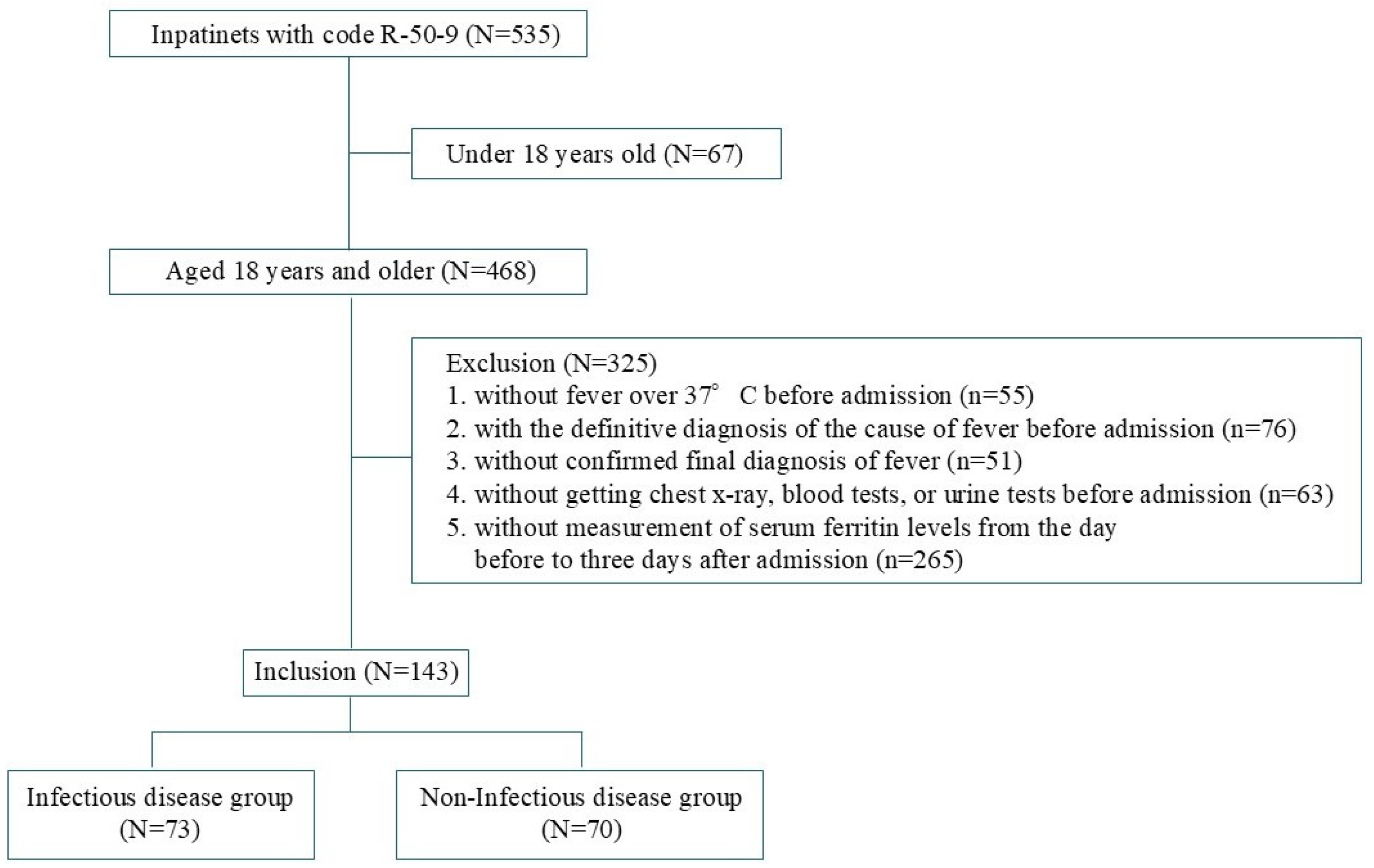
3.1. Enrollment and Allocation of Study Participants
3.2. Patient Characteristics
3.3. Laboratory Findings on Admission
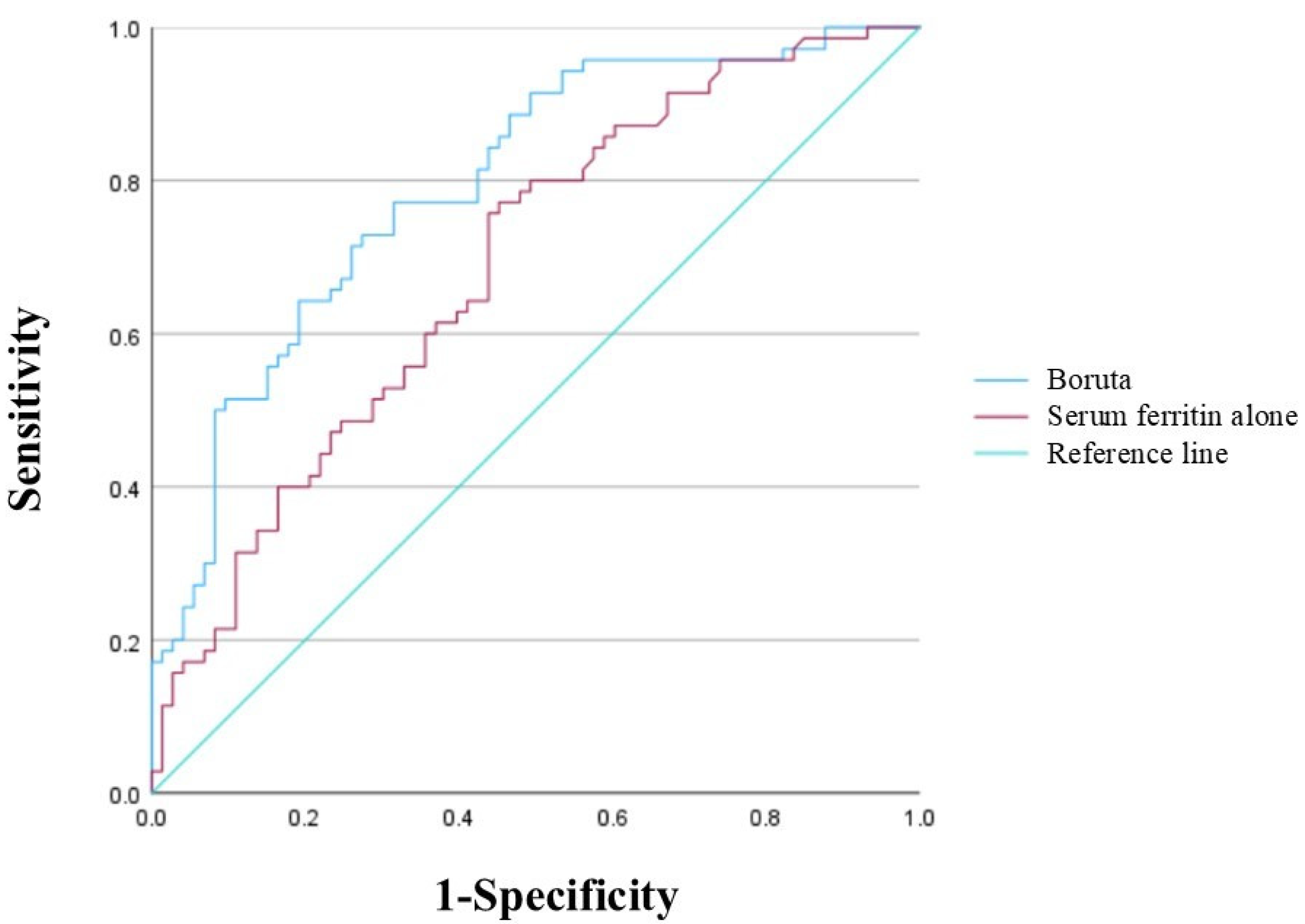
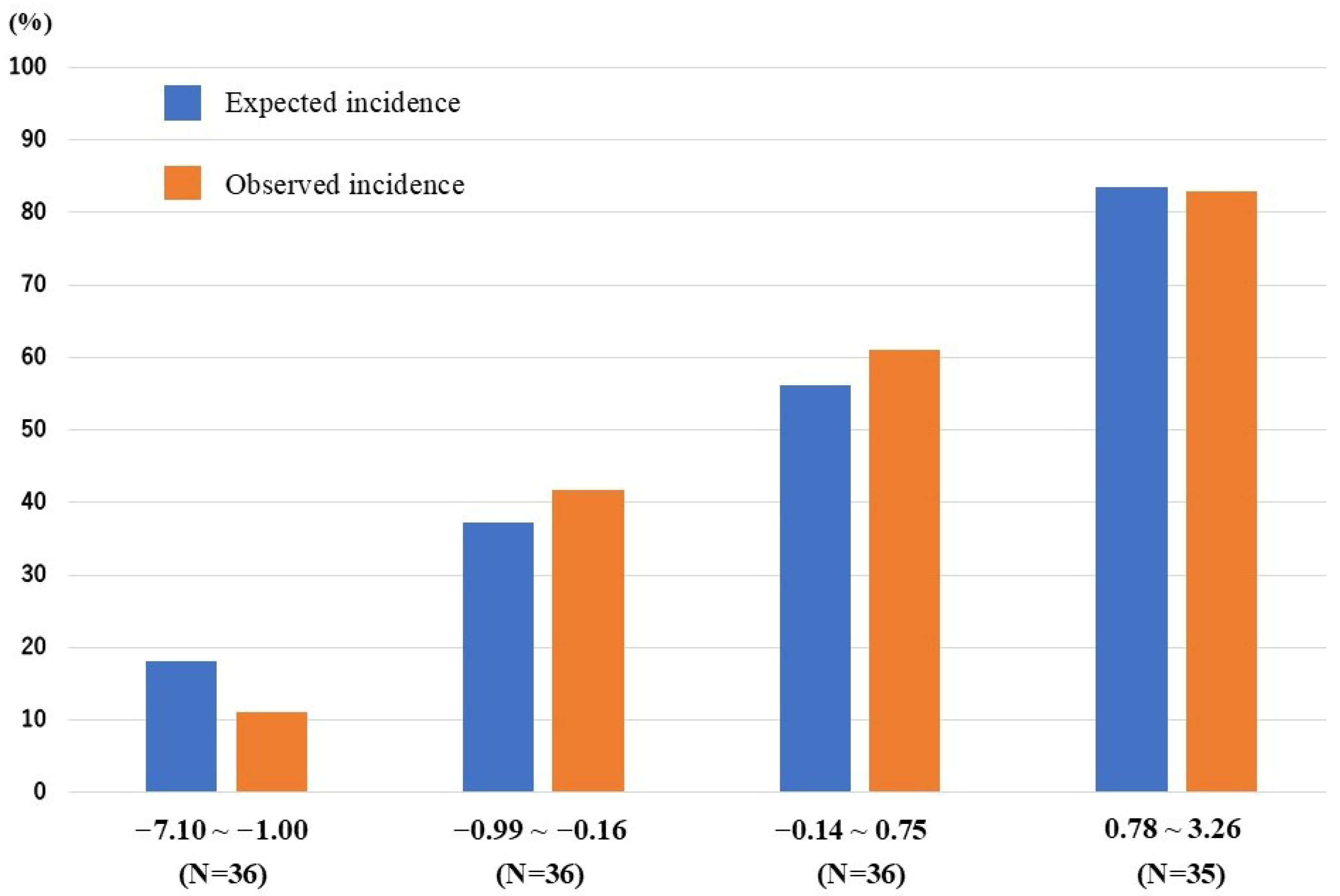
3.4. Selection of Candidate Variables and Multivariable Logistic Regression Analysis
4. Discussion
5. Conclusions
Supplementary Materials
Author Contributions
Funding
Institutional Review Board Statement
Informed Consent Statement
Data Availability Statement
Acknowledgments
Conflicts of Interest
Abbreviations
| AUC | Area under the curve |
| BIC | Bayesian Information Criterion |
| CI | Confidence interval |
| CT | Computed tomography |
| ICD-10 | International Statistical Classification of Diseases and Related Health Problems-10th Revision |
| IQR | Interquartile range |
| LASSO | Least Absolute Shrinkage and Selection Operator |
| LDH | Lactate dehydrogenase |
| MRI | Magnetic resonance imaging |
| NIID | Noninfectious inflammatory diseases |
| NPV | Negative predictive value |
| OR | Odds ratio |
| PPV | Positive predictive value |
| SF | Serum ferritin |
References
- Harada, Y.; Masuda, M.; Hirosawa, T.; Takase, H.; Morinaga, K.; Nin, M.; Shimizu, T. Safety and efficacy of outpatient follow-up for referred patients with undiagnosed fever: A retrospective cohort study. Medicine 2020, 99, e18532. [Google Scholar] [CrossRef] [PubMed]
- Fusco, F.M.; Pisapia, R.; Nardiello, S.; Cicala, S.D.; Gaeta, G.B.; Brancaccio, G. Fever of unknown origin (FUO): Which are the factors influencing the final diagnosis? A 2005–2015 systematic review. BMC Infect. Dis. 2019, 19, 653. [Google Scholar] [CrossRef] [PubMed]
- Yamashita, S.; Tago, M.; E Katsuki, N.; Ajimi, T.; Nagatomo, D.; Kotooka, N.; Node, K.; Yamashita, S.-I. Acute Mitral Regurgitation of Unknown Etiology Associated with Disseminated Intravascular Coagulation Eventually Diagnosed as Enterococcus Faecalis Infective Endocarditis by Mitral Valve Surgery. Am. J. Case Rep. 2018, 19, 1467–1473. [Google Scholar] [CrossRef] [PubMed]
- Liu, C.-P.; Liu, Z.-Y.; Liu, J.-P.; Kang, Y.; Mao, C.-S.; Shang, J. Diagnostic Value of Common Inflammatory Markers on Fever of Unknown Origin. Jpn. J. Infect. Dis. 2016, 69, 378–383. [Google Scholar] [CrossRef]
- Wright, W.F.; Yenokyan, G.; Auwaerter, P.G. Geographic Influence Upon Noninfectious Diseases Accounting for Fever of Unknown Origin: A Systematic Review and Meta-Analysis. Open Forum Infect. Dis. 2022, 9, ofac396. [Google Scholar] [CrossRef]
- Xu, T.; Wang, L.; Wu, S.; Zhou, F.; Huang, H. Utility of a Simple Scoring System in Differentiating Bacterial Infections in Cases of Fever of Unknown Origin. Clin. Infect. Dis. 2020, 71, S409–S415. [Google Scholar] [CrossRef]
- Aslam, B.; Khurshid, M.; Arshad, M.I.; Muzammil, S.; Rasool, M.; Yasmeen, N.; Shah, T.; Chaudhry, T.H.; Rasool, M.H.; Shahid, A.; et al. Antibiotic Resistance: One Health One World Outlook. Front. Cell Infect. Microbiol. 2021, 11, 771510. [Google Scholar] [CrossRef]
- Guh, A.Y.; Adkins, S.H.; Li, Q.; Bulens, S.N.; Farley, M.M.; Smith, Z.; Holzbauer, S.M.; Whitten, T.; Phipps, E.C.; Hancock, E.B.; et al. Risk Factors for Community-Associated Clostridium difficile Infection in Adults: A Case-Control Study. Open Forum Infect. Dis. 2017, 4, ofx171. [Google Scholar] [CrossRef]
- Hoofnagle, J.H.; Björnsson, E.S. Drug-Induced Liver Injury-Types and Phenotypes. N. Engl. J. Med. 2019, 381, 264–273. [Google Scholar] [CrossRef]
- Mulders-Manders, C.M.; Engwerda, C.; Simon, A.; van der Meer, J.W.M.; Bleeker-Rovers, C.P. Long-term prognosis, treatment, and outcome of patients with fever of unknown origin in whom no diagnosis was made despite extensive investigation: A questionnaire based study. Medicine 2018, 97, e11241. [Google Scholar] [CrossRef]
- Kim, S.E.; Kim, U.J.; Jang, M.O.; Kang, S.J.; Jang, H.C.; Jung, S.I.; Lee, S.S.; Park, K.H. Diagnostic use of serum ferritin levels to differentiate infectious and noninfectious diseases in patients with fever of unknown origin. Dis. Markers 2013, 34, 211–218. [Google Scholar] [CrossRef] [PubMed]
- Rosário, C.; Zandman-Goddard, G.; Meyron-Holtz, E.G.; D’cRuz, D.P.; Shoenfeld, Y. The hyperferritinemic syndrome: Macrophage activation syndrome, Still’s disease, septic shock and catastrophic antiphospholipid syndrome. BMC Med. 2013, 11, 185. [Google Scholar] [CrossRef] [PubMed]
- Zhao, M.-Z.; Ruan, Q.-R.; Xing, M.-Y.; Wei, S.; Xu, D.; Wu, Z.-H.; Zhu, L.; Zhu, J.-L.; Zheng, C.-F.; Liu, S.; et al. A Diagnostic Tool for Identification of Etiologies of Fever of Unknown Origin in Adult Patients. Curr. Med. Sci. 2019, 39, 589–596. [Google Scholar] [CrossRef] [PubMed]
- Arnau-Barrés, I.; Güerri-Fernández, R.; Luque, S.; Sorli, L.; Vázquez, O.; Miralles, R. Serum albumin is a strong predictor of sepsis outcome in elderly patients. Eur. J. Clin. Microbiol. Infect. Dis. 2019, 38, 743–746. [Google Scholar] [CrossRef]
- Lu, J.; Wei, Z.; Jiang, H.; Cheng, L.; Chen, Q.; Chen, M.; Yan, J.; Sun, Z. Lactate dehydrogenase is associated with 28-day mortality in patients with sepsis: A retrospective observational study. J. Surg. Res. 2018, 228, 314–321. [Google Scholar] [CrossRef]
- Yamashita, S.; Tago, M.; Tokushima, Y.; Harada, Y.; Suzuki, Y.; Aizawa, Y.; Miyagami, T.; Sano, F.; Sasaki, Y.; Komatsu, F.; et al. Evaluation of a Previously Developed Predictive Model for Infective Endocarditis in 320 Patients Presenting with Fever at 4 Centers in Japan Between January 2018 and December 2020. Med. Sci. Monit. 2023, 29, e939640. [Google Scholar] [CrossRef]
- Yusa, T.; Tateda, K.; Ohara, A.; Miyazaki, S. New possible biomarkers for diagnosis of infections and diagnostic distinction between bacterial and viral infections in children. J. Infect. Chemother. 2017, 23, 96–100. [Google Scholar] [CrossRef]
- Das, M.; Hazowary, D.; Rahman, M. Evaluation of platelet count, platelet indices and C-reactive protein in culture proven neonatal sepsis in a tertiary care centre. New Indian J. OBGYN 2024, 10, 378–382. [Google Scholar] [CrossRef]
- Ustundag, M.; Orak, M.; Karakoç, Y.; Yildirim, Y.; Celen, M.; Güloglu, C. An investigation of the effects of the mean platelet volume, platelet distribution width, platelet/lymphocyte ratio, and platelet counts on mortality in patents with sepsis who applied to the emergency department. Niger. J. Clin. Pract. 2018, 21, 667–671. [Google Scholar] [CrossRef]
- Gasparyan, A.Y.; Ayvazyan, L.; Mukanova, U.; Yessirkepov, M.; Kitas, G.D. The Platelet-to-Lymphocyte Ratio as an Inflammatory Marker in Rheumatic Diseases. Ann. Lab. Med. 2019, 39, 345–357. [Google Scholar] [CrossRef]
- Giannakeas, V.; Kotsopoulos, J.; Cheung, M.C.; Rosella, L.; Brooks, J.D.; Lipscombe, L.; Akbari, M.R.; Austin, P.C.; Narod, S.A. Analysis of Platelet Count and New Cancer Diagnosis Over a 10-Year Period. JAMA Netw. Open 2022, 5, e2141633. [Google Scholar] [CrossRef] [PubMed]
- Shipman, A.R.; Bahrani, S.; Shipman, K.E. Investigative algorithms for disorders affecting plasma lactate dehydrogenase: A narrative review. J. Lab. Precis. Med. 2024, 9, 15. [Google Scholar] [CrossRef]
- Wu, Y.; Lu, C.; Pan, N.; Zhang, M.; An, Y.; Xu, M.; Zhang, L.; Guo, Y.; Tan, L. Serum lactate dehydrogenase activities as systems biomarkers for 48 types of human diseases. Sci. Rep. 2021, 11, 12997. [Google Scholar] [CrossRef]
- Spernovasilis, N.; Tsioutis, C.; Markaki, L.; Zafeiri, M.; Soundoulounaki, S.; Gikas, A. Fever of unknown origin caused by infectious diseases in the era of migrant and refugee crisis. Travel Med. Infect. Dis. 2020, 33, 101425. [Google Scholar] [CrossRef] [PubMed]



| Total (n = 143) | Infection (n = 73) | Non-Infection (n = 70) | p Value | |
|---|---|---|---|---|
| Age, years | 66 (51–79) | 67 (49–80) | 66 (52–78) | 0.974 |
| Male | 71 (50) | 36 (49) | 35 (50) | 1.000 |
| Duration of hospital stay | 16 (10–29) | 12 (8–22) | 23 (13–38) | <0.001 |
| Mortality | ||||
| 30-day mortality | 7 (5) | 3 (4) | 4 (6) | 0.657 |
| In-hospital mortality | 8 (6) | 4 (6) | 4 (6) | 0.951 |
| Transfer by ambulance | 30 (21) | 19 (26) | 11 (15) | 0.130 |
| Administration of antibiotics ※ | 89 (62) | 41 (56) | 48 (69) | 0.167 |
| Administration of iron tablets | 6 (4) | 5 (7) | 1 (1) | 0.106 |
| History of blood transfusions | 7(5) | 4(5) | 3(4) | 0.741 |
| Outcome | 0.426 | |||
| In-hospital death | 9 (6) | 3 (4) | 6 (9) | |
| Hospital transfer | 33 (23) | 19 (26) | 14 (20) | |
| Discharge to home | 101 (71) | 51 (70) | 50 (71) |
| Total (n = 143) | Infection (n = 73) | Non-Infection (n = 70) | p Value | |
|---|---|---|---|---|
| White blood cell count (×103/µL) | 9.6 (5.7–12.8) | 8.8 (6.0–11.6) | 10.1 (5.7–15.2) | 0.152 |
| Neutrophil percentage (%) | 80.6 (72.8–86.2) | 81.1 (75.8–87.2) | 79.3 (66.4–85.5) | 0.069 |
| Platelet count (×104/µL) | 22.0 (12.3–36.2) | 18.8 (10.9–26.5) | 27.6 (15.0–44.0) | 0.002 |
| Albumin (g/dL) | 2.8 (2.4–3.4) | 3.0 (2.5–3.5) | 2.8 (2.4–3.2) | 0.070 |
| Total bilirubin (mg/dL) | 0.6 (0.5–0.9) | 0.6 (0.5–0.9) | 0.6 (0.4–0.9) | 0.527 |
| Aspartate aminotransferase (IU/L) | 32.0 (21–61) | 34.0 (21.5–67.0) | 31.0 (19.0–56.0) | 0.529 |
| Alanine aminotransferase (IU/L) | 26.0 (16–49) | 27.0 (16.5–60.5) | 27.0 (15.8–40.3) | 0.477 |
| Lactate dehydrogenase (IU/L) | 252.0 (199–360) | 249.0 (208–310) | 285.0 (171–492) | 0.688 |
| Blood urea nitrogen (mg/dL) | 15.1 (10.6–23.2) | 16.8 (11.4–24.9) | 13.3 (10.1–22.0) | 0.044 |
| Creatinine (mg/dL) | 0.79 (0.61–1.04) | 0.81 (0.64–1.17) | 0.73 (0.58–0.94) | 0.048 |
| C-reactive protein (mg/dL) | 9.8 (3.9–17.4) | 10.4 (5.0–17.6) | 9.6 (3.4–16.9) | 0.779 |
| D-dimmer (µg/mL) | 3.2 (1.93–8.32) | 3.7 (2.06–8.56) | 2.9 (1.78–8.33) | 0.619 |
| FDP (µg/mL) | 9.5 (6.3–27.6) | 9.6 (6.1–27.6) | 8.7 (6.4–29.3) | 0.745 |
| PT-INR | 1.2 (1.08–1.24) | 1.1 (1.06–1.24) | 1.2 (1.08–1.23) | 0.460 |
| Sodium (mEq/L) | 136.0 (132–139) | 136.0 (133–139) | 136.0 (132–138) | 0.833 |
| Potassium (mEq/L) | 3.9 (3.6–4.4) | 3.9 (3.5–4.4) | 4.1 (3.6–4.4) | 0.250 |
| Chloride (mEq/L) | 100.0 (97–102) | 100.0 (97–102) | 99.0 (97–102) | 0.697 |
| Fe (µg/dL) | 16.0 (12.0–26.5) | 16.0 (11.0–26.0) | 16.0 (12.8–27.5) | 0.909 |
| TIBC (µg/dL) | 177.0 (139.5–220.0) | 179.5 (145.3–251.3) | 176 (135–210) | 0.204 |
| Serum ferritin (ng/mL) | 478 (257–983) | 334 (191–713) | 659 (361–1493) | <0.001 |
| Predictors of Each Model | OR | 95% CI | p Value |
|---|---|---|---|
| Boruta-selected model | |||
| ln[serum ferritin (ng/mL)] | 1.988 | 1.373–2.878 | <0.001 |
| Platelet count (×104/µL) | 1.060 | 1.031–1.091 | <0.001 |
| Neutrophil count (%) | 0.999 | 0.998–1.001 | 0.521 |
| White blood cell count (×103/µL) | 0.999 | 0.999–1.000 | 0.509 |
| Lactate dehydrogenase (IU/L) | 1.000 | 0.999–1.001 | 0.714 |
| LASSO-selected model | |||
| ln[serum ferritin (ng/mL)] | 2.761 | 1.669–4.567 | <0.001 |
| Chloride (mEq/L) | 1.276 | 1.076–1.513 | 0.005 |
| Platelet count (×104/µL) | 1.083 | 1.042–1.125 | <0.001 |
| Age | 1.012 | 0.986–1.039 | 0.374 |
| Lactate dehydrogenase (IU/L) | 1.002 | 0.998–1.005 | 0.311 |
| White blood cell count (×103/µL) | 0.999 | 0.999–1.000 | 0.581 |
| C-reactive protein (mg/dL) | 0.998 | 0.9454–1.054 | 0.949 |
| Aspartate aminotransferase (IU/L) | 0.996 | 0.985–1.006 | 0.409 |
| Alanine aminotransferase (IU/L) | 0.993 | 0.979–1.007 | 0.331 |
| Neutrophil count (%) | 0.984 | 0.960–1.008 | 0.181 |
| Blood urea nitrogen (mg/dL) | 0.965 | 0.930–1.002 | 0.064 |
| Sodium (mEq/L) | 0.905 | 0.791–1.036 | 0.149 |
| Albumin (g/dL) | 0.810 | 0.395–1.662 | 0.565 |
| Score | Likelihood Ratio | Infection | Non-Infection |
|---|---|---|---|
| −7.10 to −1.00 | 0.13 | 32 | 4 |
| −0.99 to −0.16 | 0.74 | 21 | 15 |
| −0.14 to 0.75 | 1.64 | 14 | 22 |
| 0.78 to 3.26 | 5.04 | 6 | 29 |
| Statistics for 3 Cutoff Points | Using Cutoff Value of the Present Study |
|---|---|
| Sensitivity 90% | |
| Cutoff value for scores | −0.85 |
| Probability † | 29.8 |
| Sensitivity | 90.0 |
| Specificity | 50.7 |
| Positive predictive value | 36.4 |
| Negative predictive value | 84.1 |
| Youden’s index | |
| Cutoff value for scores | −0.21 |
| Probability † | 49.4 |
| Sensitivity | 77.1 |
| Specificity | 68.5 |
| Positive predictive value | 71.9 |
| Negative predictive value | 69.6 |
| Specificity 90% | |
| Cutoff value for scores | 0.53 |
| Probability † | 62.9 |
| Sensitivity | 51.4 |
| Specificity | 90.4 |
| Positive predictive value | 83.3 |
| Negative predictive value | 65.3 |
Disclaimer/Publisher’s Note: The statements, opinions and data contained in all publications are solely those of the individual author(s) and contributor(s) and not of MDPI and/or the editor(s). MDPI and/or the editor(s) disclaim responsibility for any injury to people or property resulting from any ideas, methods, instructions or products referred to in the content. |
© 2026 by the authors. Licensee MDPI, Basel, Switzerland. This article is an open access article distributed under the terms and conditions of the Creative Commons Attribution (CC BY) license.
Share and Cite
Nakamura, M.; Yamashita, S.; Osako, R.; Motomura, S.; Katsuki, N.E.; Yamashita, S.-i.; Tago, M. Development of a Machine Learning-Based Prediction Model to Differentiate Infectious and Non-Infectious Diseases in Patients with Undiagnosed Fever: A Single Hospital-Based Retrospective Study. J. Clin. Med. 2026, 15, 1905. https://doi.org/10.3390/jcm15051905
Nakamura M, Yamashita S, Osako R, Motomura S, Katsuki NE, Yamashita S-i, Tago M. Development of a Machine Learning-Based Prediction Model to Differentiate Infectious and Non-Infectious Diseases in Patients with Undiagnosed Fever: A Single Hospital-Based Retrospective Study. Journal of Clinical Medicine. 2026; 15(5):1905. https://doi.org/10.3390/jcm15051905
Chicago/Turabian StyleNakamura, Masahiko, Shun Yamashita, Ryosuke Osako, So Motomura, Naoko E. Katsuki, Shu-ichi Yamashita, and Masaki Tago. 2026. "Development of a Machine Learning-Based Prediction Model to Differentiate Infectious and Non-Infectious Diseases in Patients with Undiagnosed Fever: A Single Hospital-Based Retrospective Study" Journal of Clinical Medicine 15, no. 5: 1905. https://doi.org/10.3390/jcm15051905
APA StyleNakamura, M., Yamashita, S., Osako, R., Motomura, S., Katsuki, N. E., Yamashita, S.-i., & Tago, M. (2026). Development of a Machine Learning-Based Prediction Model to Differentiate Infectious and Non-Infectious Diseases in Patients with Undiagnosed Fever: A Single Hospital-Based Retrospective Study. Journal of Clinical Medicine, 15(5), 1905. https://doi.org/10.3390/jcm15051905