1. Introduction
The facial muscles, innervated by the facial nerve, are responsible for performing precise, coordinated expressive movements, the correct execution of which requires the integrity of both the central and peripheral nervous systems, as well as the efficiency of the muscles themselves and the neuromuscular connections. From the point of view of anatomy and biomechanics, the muscles on the left and right sides should work symmetrically, although absolute symmetry is not required here [
1]. The system is designed for patients undergoing treatment and rehabilitation for facial dysfunction (following orthognathic surgery, skin-muscle flap transplants, and central and peripheral nervous system paralysis). In fact, the goal of therapy is always to achieve symmetry, and obtaining objective information about the presence of differences allows for monitoring progress or lack thereof [
2,
3].
Many studies indicate that facial symmetry is a determinant of a person’s attractiveness and biological condition [
4]. It is also true that symmetry does not directly translate into the perception of a person, and these relationships can be mediated by facial movements (e.g., caused by emotion) as well as markers of health [
4]. Furthermore, symmetry is not a constant feature in either physiology or pathology and may change over time, including during treatment and rehabilitation [
5]. Facial dysfunction, especially when the prognosis for full recovery is poor, can significantly affect self-esteem and the quality of social relationships [
6].
Facial movement symmetry assessment is used, among other things, for diagnosing and monitoring rehabilitation for patients with facial nerve dysfunctions, evaluating the effectiveness of therapy, and planning and controlling the outcomes of surgical treatments [
7]. The analysis of symmetry changes over time enables an objective assessment of therapy progress and facilitates a comparison of results between patients [
8]. The use of facial symmetry assessment is also essential in speech therapy and neuro-speech therapy [
9].
In clinical practice, facial expression symmetry is primarily assessed by visual observation and descriptive scales completed by specialists. These methods, despite their widespread use, are highly subjective and exhibit limited repeatability, making it difficult to accurately compare results across studies and centers [
2].
To address these limitations, efforts are underway to objectify facial expression assessment using computer-aided diagnostic (CAD) methods and automated image processing techniques. Literature describes solutions based on facial geometry analysis, landmark tracking, and the use of machine learning-based tools such as MediaPipe or other facial landmark detection libraries [
10,
11,
12].
Despite the dynamic development of markerless and machine-learning approaches, their use in clinical setting is limited. Recent methods demonstrate high accuracy and repeatability in the specified conditions, their performance can vary in less standardized environments. Variability in lighting, different head positioning, and acquisition protocols with differences between recording sessions, still pose challenges for consistent landmark detection and longitudinal assessment. Importantly, these limitations are increasingly addressed at the methodological level but their translation into robust, standardized clinical workflows remains an open challenge [
2,
8,
13].
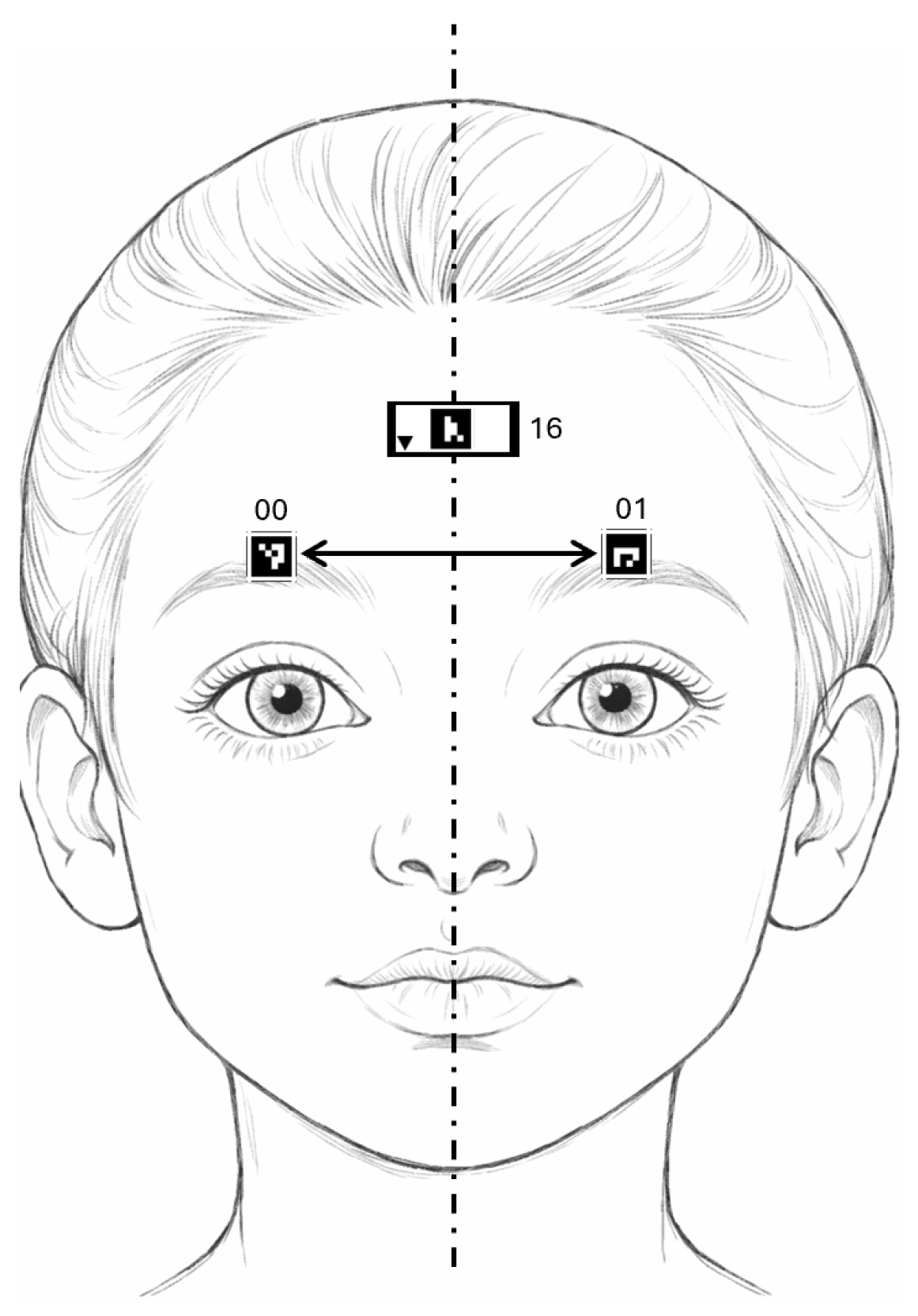
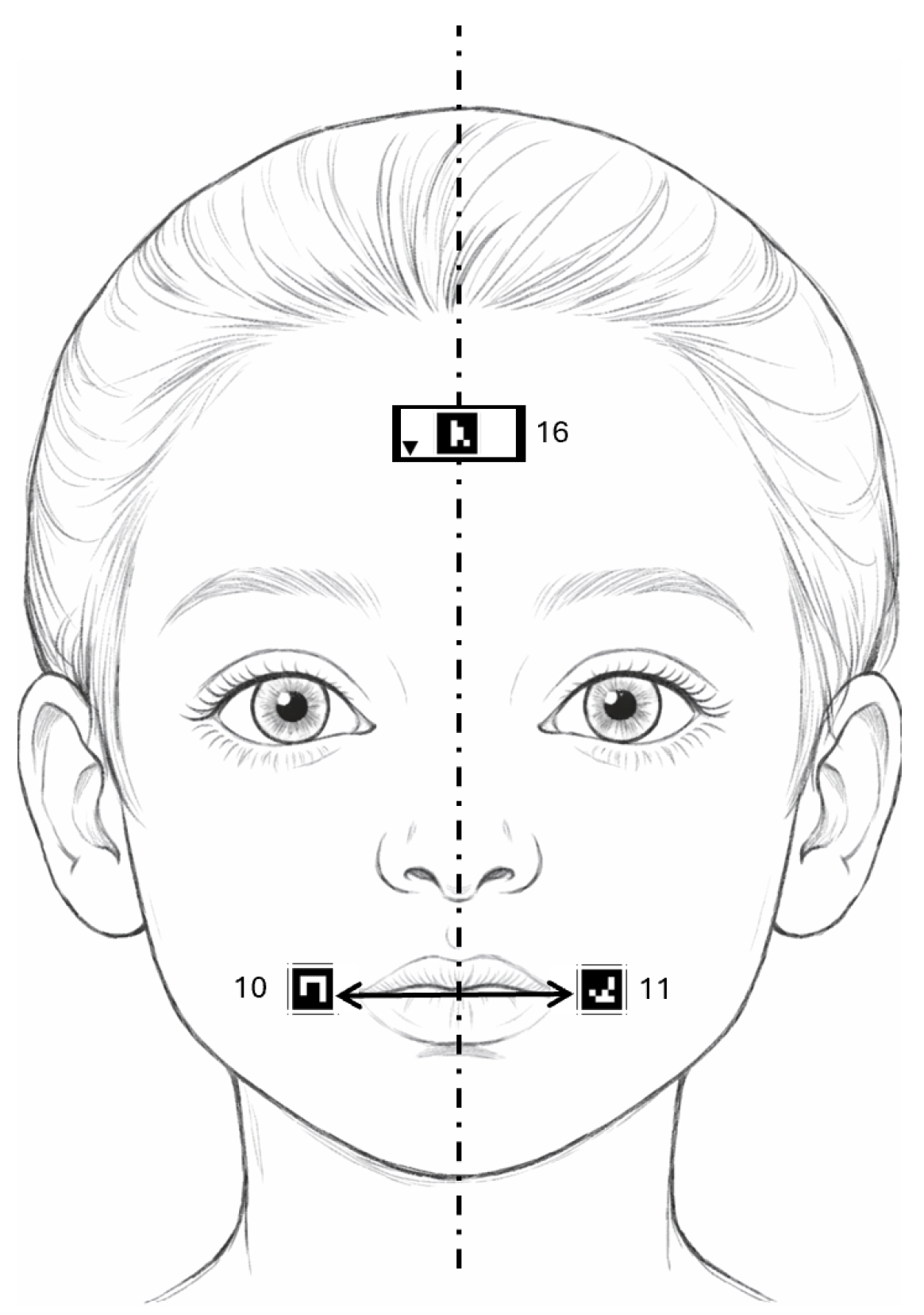
In this study, we applied a marker-based approach using physical reference points to improve tracking stability and measurement repeatability in facial movement analysis. In our research, we assumed that the dynamic parameters of facial movements allow for a reliable differentiation of symmetrical and asymmetrical performance of facial muscle exercises. The goal of this study is to quantitatively analyze the functional asymmetry of facial movements using objective features derived from video recordings.
From a clinical perspective, the proposed method has the potential to support future research on patients with facial nerve dysfunctions, including those resulting from trauma or surgical interventions. By providing an objective and repeatable quantification of facial movement symmetry the approach may serve as a quantitative research tool for objective assessment of facial movement in controlled clinical studies [
14,
15]. However, further validation is required to establish diagnostic performance, population reference values, and relations with established clinical grading scales before clinical application. By standardizing measurements and ensuring their repeatability, this tool can facilitate comparison of outcomes across patients and clinical centers, contributing to more effective and personalized clinical care [
16].
4. Discussion
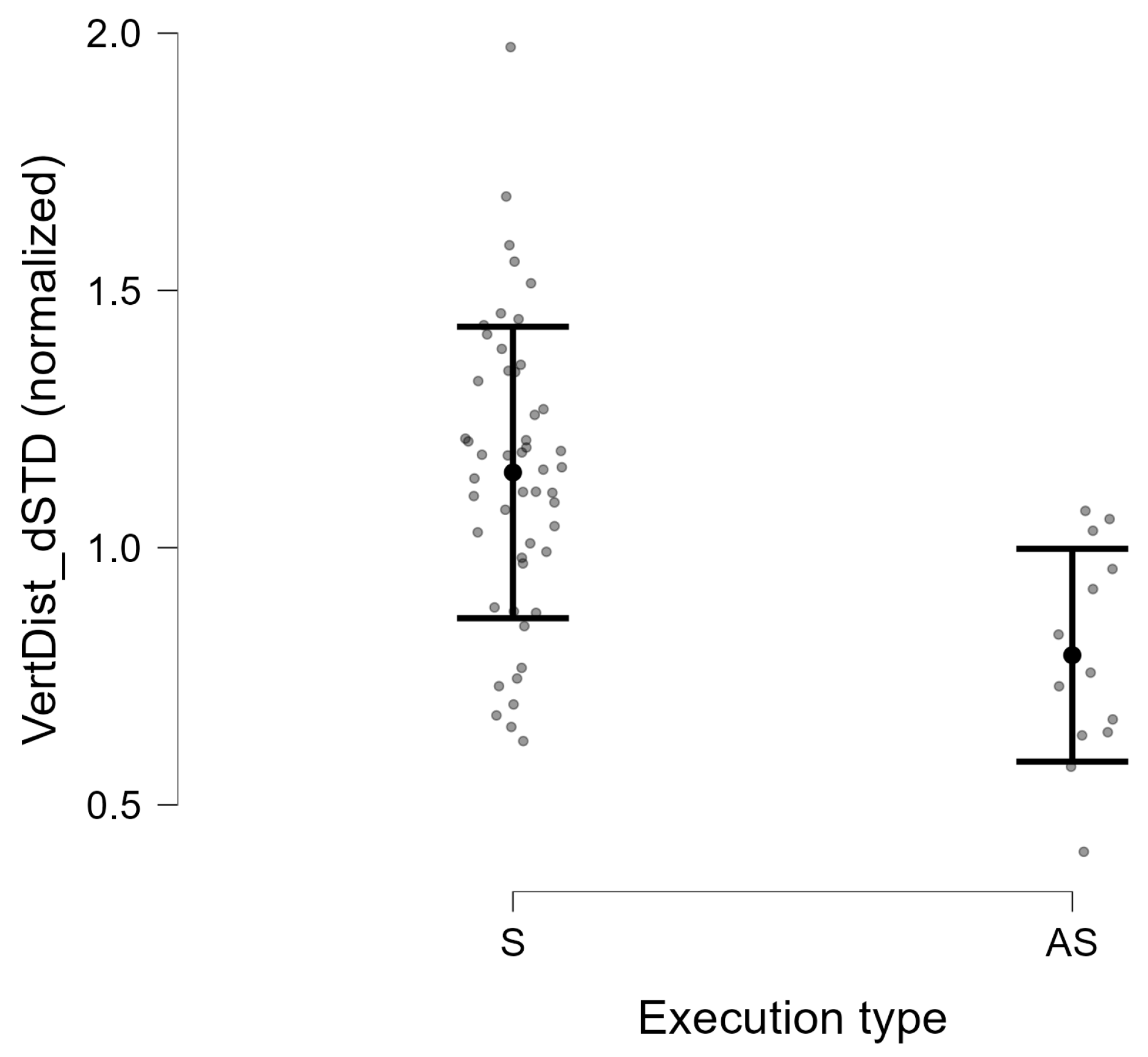
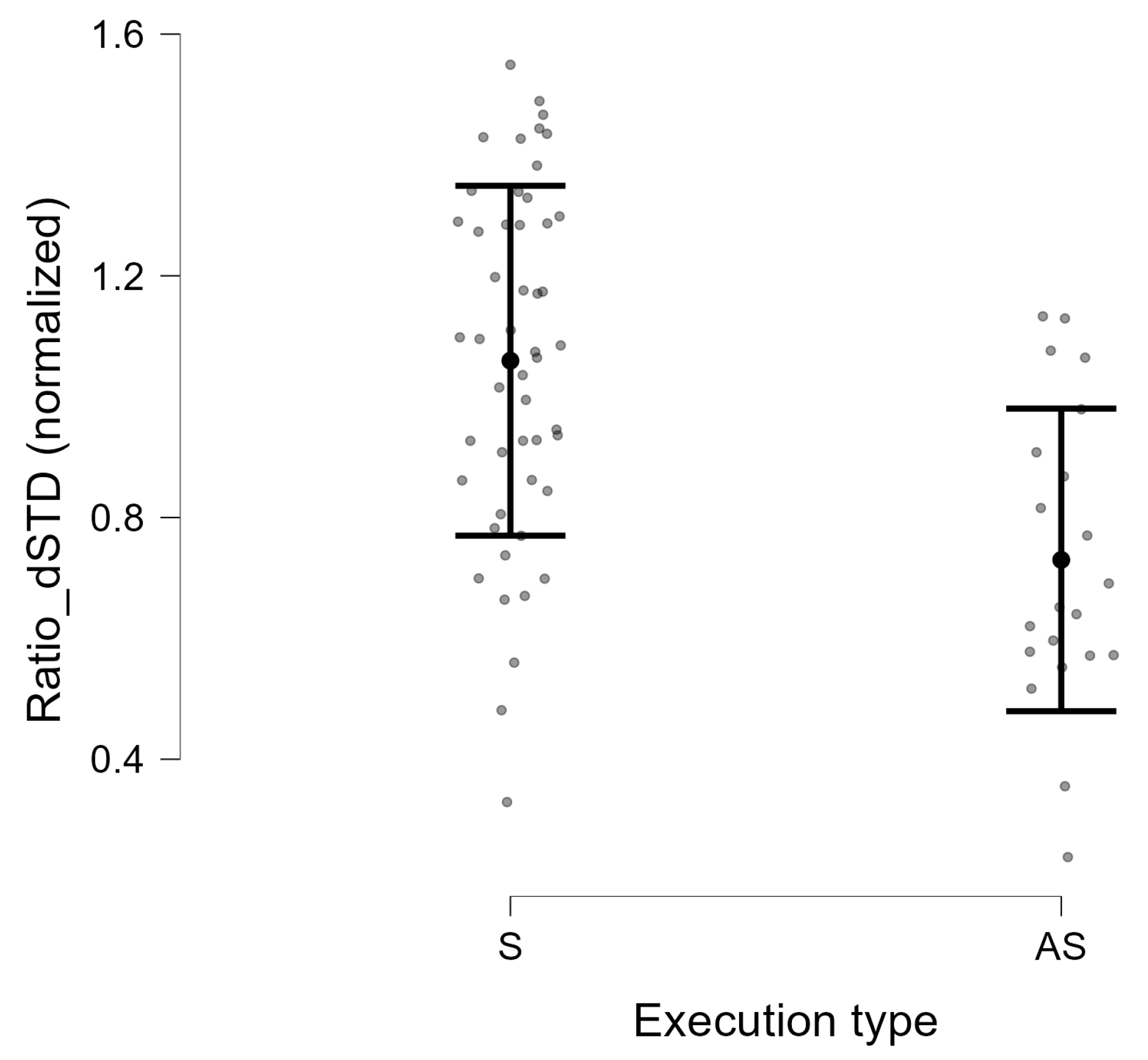
The conducted analysis demonstrated significant differences between symmetric and asymmetric executions in both analysed facial exercises. The most discriminative measures were descriptors based on the first derivatives of the VertDist and Ratio features, indicating that movement dynamics provide informative characteristics for differentiating between execution types. These findings are consistent with previous reports highlighting the relevance of dynamic movement descriptors in facial motion analysis [
22,
23]. Furthermore, in analysed dataset, asymmetric executions were associated with a narrower range and lower movement variability, reflected in lower values of dynamic descriptors compared to symmetric executions.
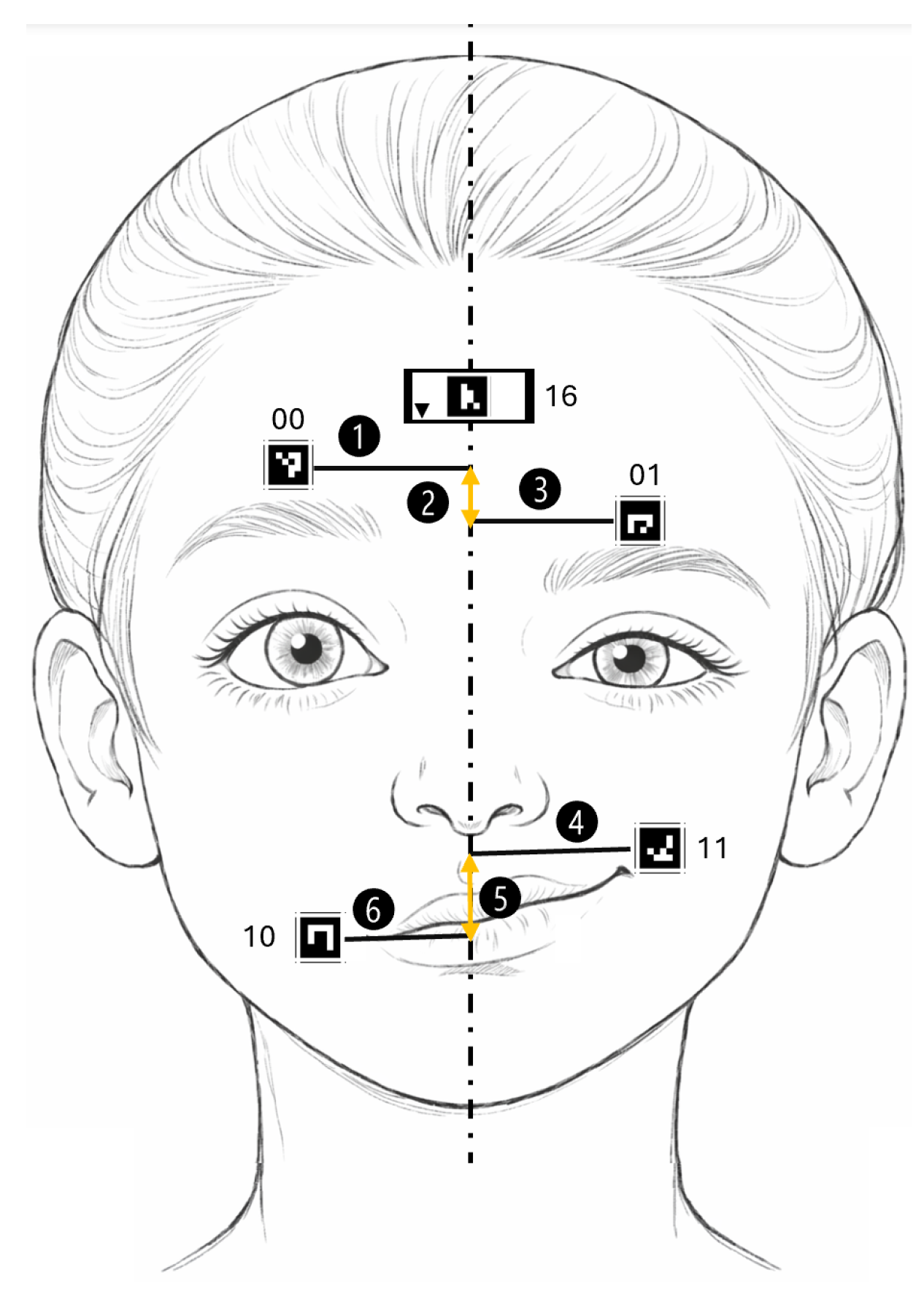
In this study, vertical displacement was used as a primary discriminative feature, while horizontal movement was indirectly captured through ratio-based inter-landmark distances along the x-axis. Although full two-dimensional vectorial motion was not explicitly modeled, the proposed feature set enables characterization of the fundamental kinematic aspects of the analyzed expressions while preserving methodological simplicity.
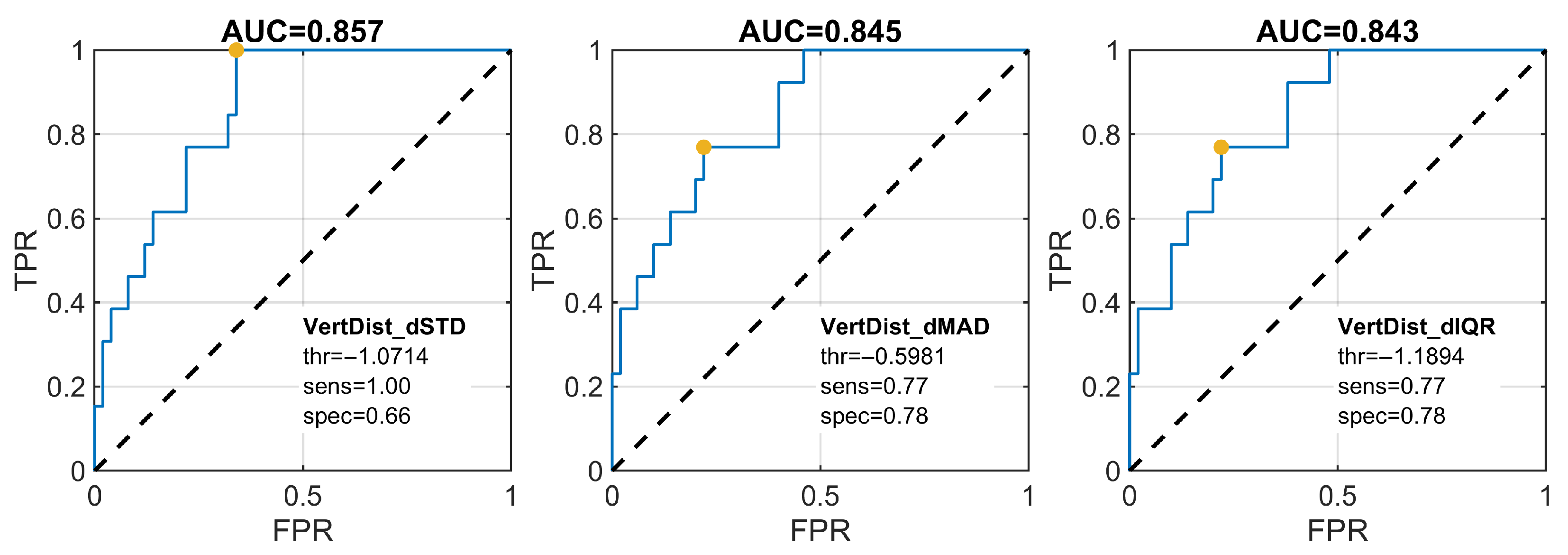
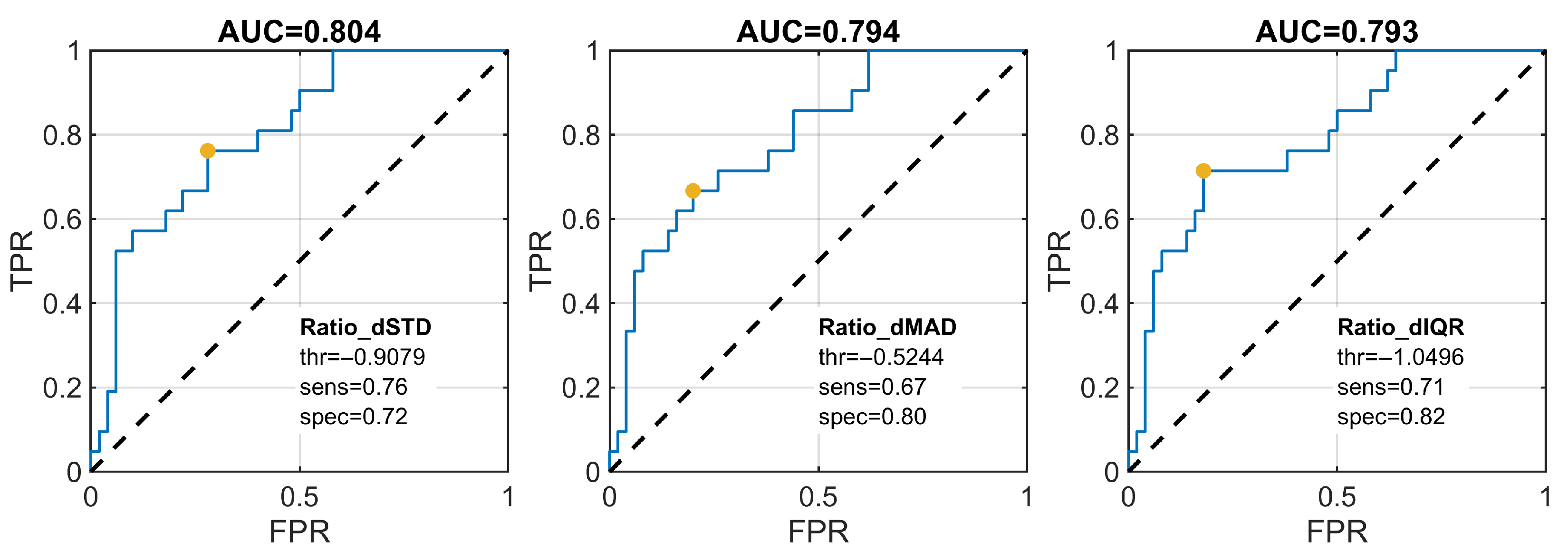
For the eyebrow-raising task, descriptors based on the vertical component of movement (VertDist) showed the greatest discriminative ability. In contrast, for the smiling task, relational descriptors (Ratio) describing dependencies between the two sides of the face more strongly differentiated the groups. For the two analysed tasks, different features demonstrated stronger discriminative ability, highlighting task-specific differences in feature performance. The observed effect sizes, with Hedges’ g values ranging from approximately 0.75 to 1.42, indicate moderate to large differences between groups.
The ROC-based feature ranking indicates that velocity-derived descriptors provide higher univariate separability between symmetric and asymmetric executions than static measures, suggesting that asymmetry in facial expressions is primarily reflected in dynamic movement characteristics. The observed AUC values in the range of approximately 0.84–0.86 indicate a consistent level of separation across exercises.
In contrast to previously reported methods, our study involves patients with actual facial asymmetries, whereas some earlier works employed artificially induced asymmetries in healthy volunteers. In those studies, participants were required to physically stabilize their heads to avoid midline displacement errors. In contrast, our method maintains an accurate estimation of asymmetry despite natural head movements, allowing for dynamic analysis of facial expressions under clinical conditions [
24]. Other studies have adopted a longitudinal approach, assessing symmetry changes before surgery and at 6 and 12 months postoperatively. In contrast, our data consist of a single measurement, which limits the ability to track changes over time but supports a rapid estimation of asymmetry within a cross-sectional framework. Despite differences in study designs, both our findings and previous work support the utility of dynamic analysis in capturing functional facial asymmetry [
5].
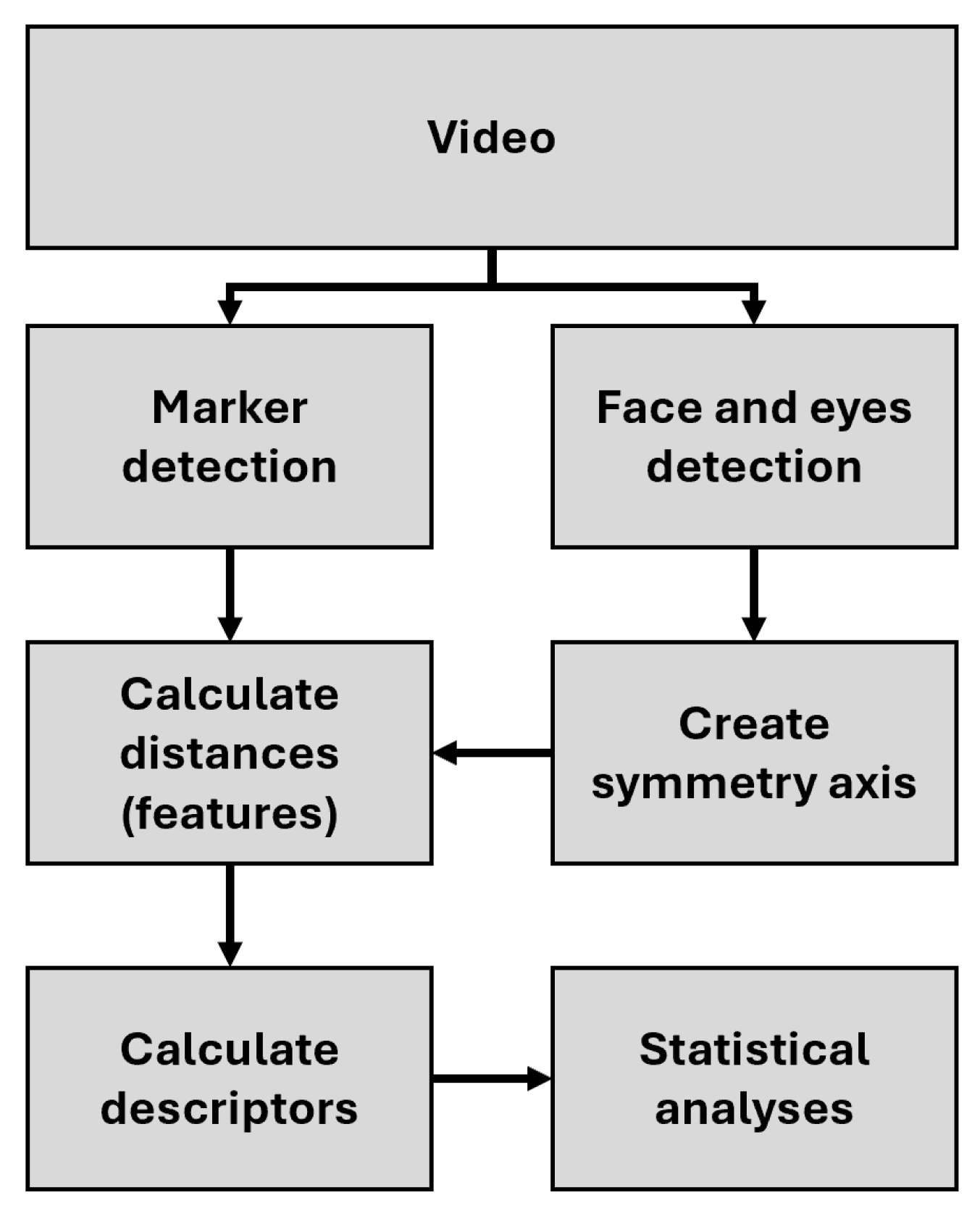
An important component of the proposed method was frame-by-frame estimation of the facial symmetry axis, which served as a local reference frame for the computed parameters and reduced the influence of global head movements. In this context, maintaining consistent localization of the face and eyes across consecutive video frames was crucial, as it enabled stable estimation of the symmetry axis over time while allowing the analysis to be performed with low computational burden. The concept of using a symmetry axis as the basis for quantitative asymmetry assessment is consistent with previous studies in geometric facial analysis [
1,
25,
26]. This solution is particularly useful in pediatric populations, although it does not completely eliminate the influence of head tilt; this issue requires further investigation. The obtained results are consistent with observations related to the perception of facial movement asymmetry, where temporal and amplitude differences between the two sides of the face have been shown to be detectable and functionally relevant [
3]. These findings justify the use of objective quantitative methods, given the subjective nature of traditional clinical grading scales [
2].
The moderate agreement among expert ratings (
–
) further confirms the subjectivity of visual assessment and supports the need for objective quantitative approaches. Compared to deep learning models, which may also offer interpretability but typically require additional explainability techniques, the proposed descriptors provide simpler, more direct interpretations [
8,
27]. The method may serve as a supportive tool for expert assessment and for monitoring rehabilitation progress, both in clinical and home-based settings. Moreover, it aligns with current trends in the development of objective systems for orofacial function assessment using motion tracking techniques [
7].
In summary, our results confirm that dynamic descriptors based on the first derivatives of the VertDist and Ratio features effectively differentiate symmetric and asymmetric executions and can be used for quantitative assessment of functional facial movement asymmetry. The results support the hypothesis stated in the introduction that first-derivative dynamic descriptors effectively distinguish between symmetric and asymmetric executions.
This study has several limitations. The analysis was restricted to two facial exercises and involved a limited sample size, with unequal numbers of symmetric and asymmetric executions. The analysis was based on 2D video data without full 3D head-pose compensation, and the facial symmetry axis was determined solely from eye positions. Moreover, ROC and AUC analyses were used to quantify univariate feature separability rather than to construct a predictive classifier. As such, the reported operating points should be interpreted descriptively, and future work should address multivariate modeling and validation.
Although the proposed approach shows promise, the present study represents an initial methodological exploration rather than a validated clinical tool. At this stage, no data are available regarding diagnostic sensitivity or specificity, normative population values, or correlations with established clinical outcome measures. Consequently, any potential clinical applications such as diagnostic use, therapy planning, or inter-centre comparisons should be considered preliminary. Further studies involving larger and clinically diverse cohorts, standardized reference measures, and longitudinal validation are required before clinical implementation can be justified.
An additional limitation of the present study is its reliance on a single cross-sectional measurement. While this allows for the identification of asymmetry at a given time point, it is not methodologically comparable to studies designed to track temporal changes or intervention-related effects. The absence of a longitudinal component substantially limits functional interpretation and precludes conclusions regarding progression, adaptation, or treatment response. Future longitudinal studies are necessary to assess the stability and clinical relevance of the observed asymmetry over time. These limitations indicate that the results should be generalized with caution.




 ,
,