1. Introduction
Aneurysmal bone cysts (ABCs) are rare benign osteolytic bone lesions with expansile growth, occurring most commonly in the second decade of life with an incidence of 0.14 to 0.32 per 100’000 individuals [
1,
2,
3,
4,
5,
6,
7]. They are typically found in the metaphysis of the long bones such as the distal femur, humerus, tibia, or ulna [
6]; fewer than 5% are localized in the hand [
2]. ABCs are considered to grow locally aggressively, without forming metastases [
6].
ABCs can be divided into primary and secondary lesions, of which the majority are secondary [
8]. The primary lesion appears as a true mesenchymal neoplasm, mostly exhibiting the USP6 and CDH11 gene abnormalities. Secondary ABCs may mimic morphology of the primary ABCs, without expressing the mentioned gene abnormalities [
9]. They may result from primary lesions such as non-ossifying fibroma, chondroblastoma, solitary bone cyst, giant cell tumors, hemangioma, osteoblastoma, giant-cell reparative granuloma, fibrous dysplasia, and fibromyxoma [
1,
4]. Other authors have reported post-traumatic secondary ABCs [
10,
11,
12]. Previous studies have shown evidence of an altered venous circulation resulting in an arteriovenous fistula, eventually leading to bone resorption [
6,
13,
14]. The theory of a blood-flow alteration is supported by other authors in post-traumatic secondary ABCs [
10,
11,
12,
13]. However, the pathogenesis of the secondary ABC remains not fully understood.
There is still no consensus regarding treatment recommendations. Options include en bloc resection, intralesional curettage (with or without local adjuvants), embolization, sclerotherapy with polidocanol [
15], radiotherapy, or medical treatment with bisphosphonates [
16,
17,
18].
Computed tomography-based patient-specific surgical treatments have been introduced in other contexts, e.g., for the management of complex tibial plateau fractures [
19]. In the distal radius, several case series demonstrated 3D-planned, patient-specific planning for corrective osteotomies [
20,
21]. Despite reports about 3D-planned, patient-specific templates for corrective osteotomies, there is a lack of documented cases about reconstruction of the distal radius after a tumor resection using this technique. We show a case of a 3D-planned, patient-specific distal radius reconstruction with a vascularized double-barrel free fibular graft after a secondary aneurysmal bone cyst.
2. Methods and Results
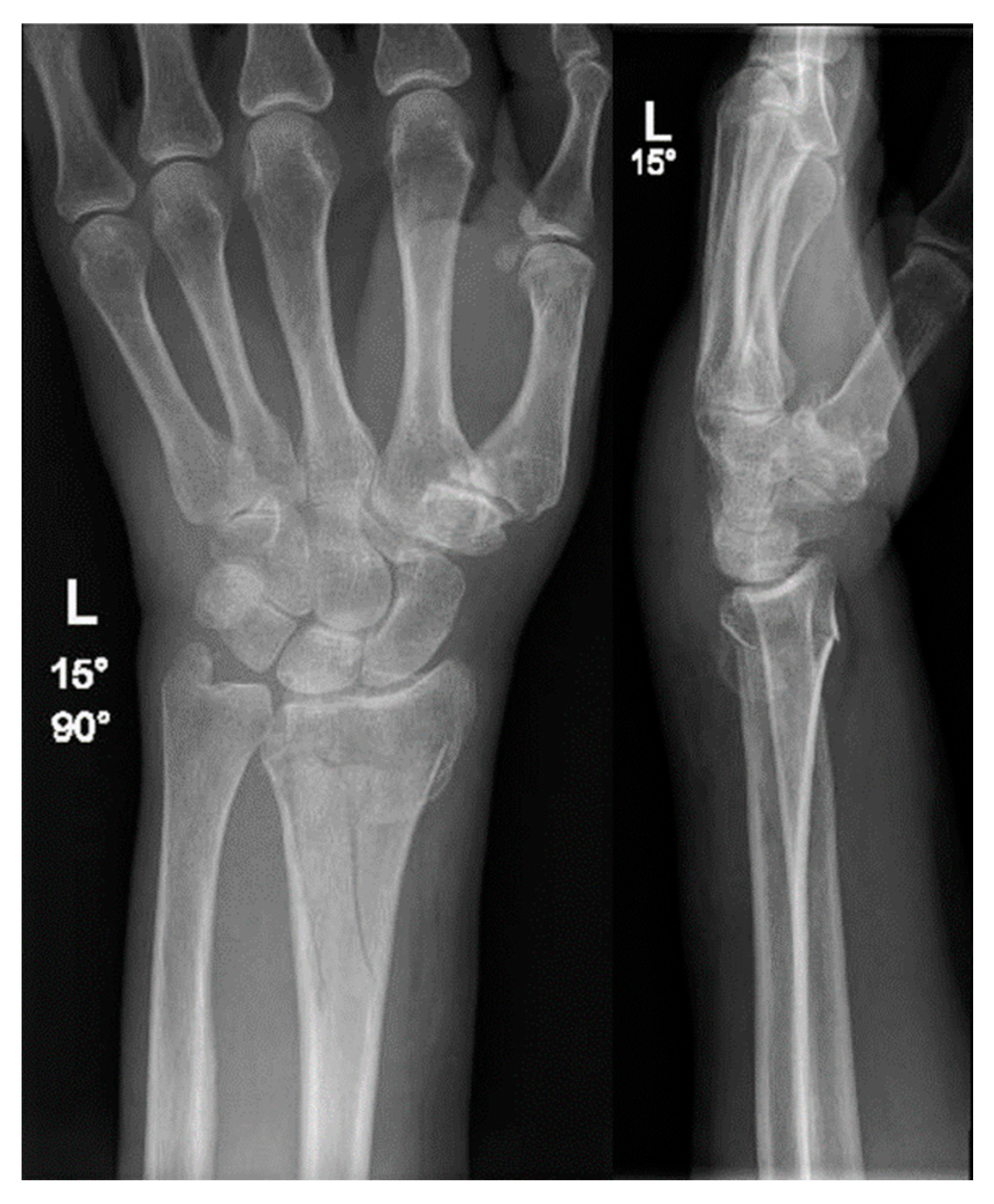
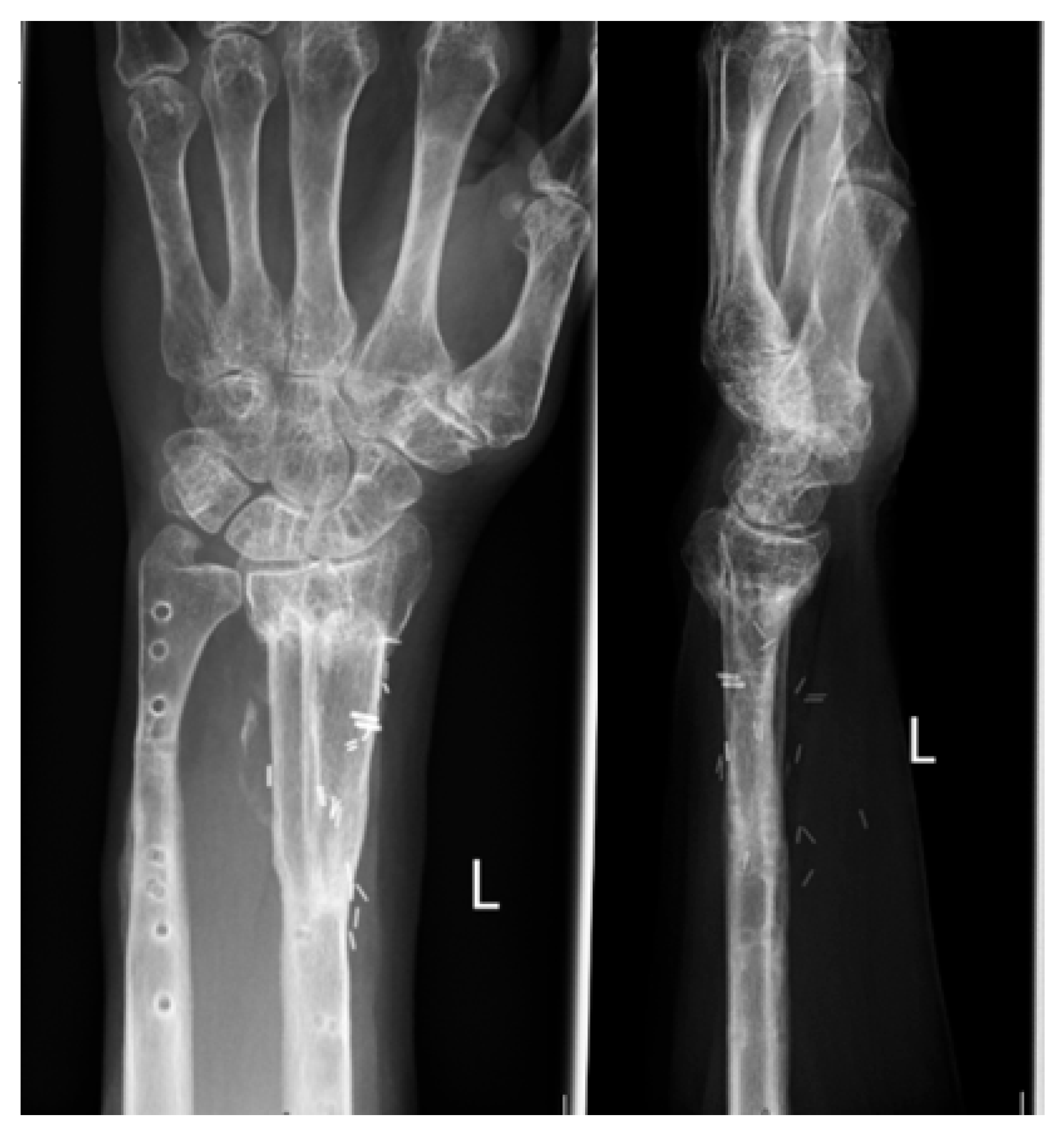
A 67-year-old female presented in our emergency room after she had fallen off of her bike while standing. The patient had a history of an intraarticular distal radius fracture (AO 23 C1) on the left arm 4 years prior (
Figure 1) that had been treated by volar plate osteosynthesis. Otherwise, she was healthy. The osteosynthesis material had been removed.
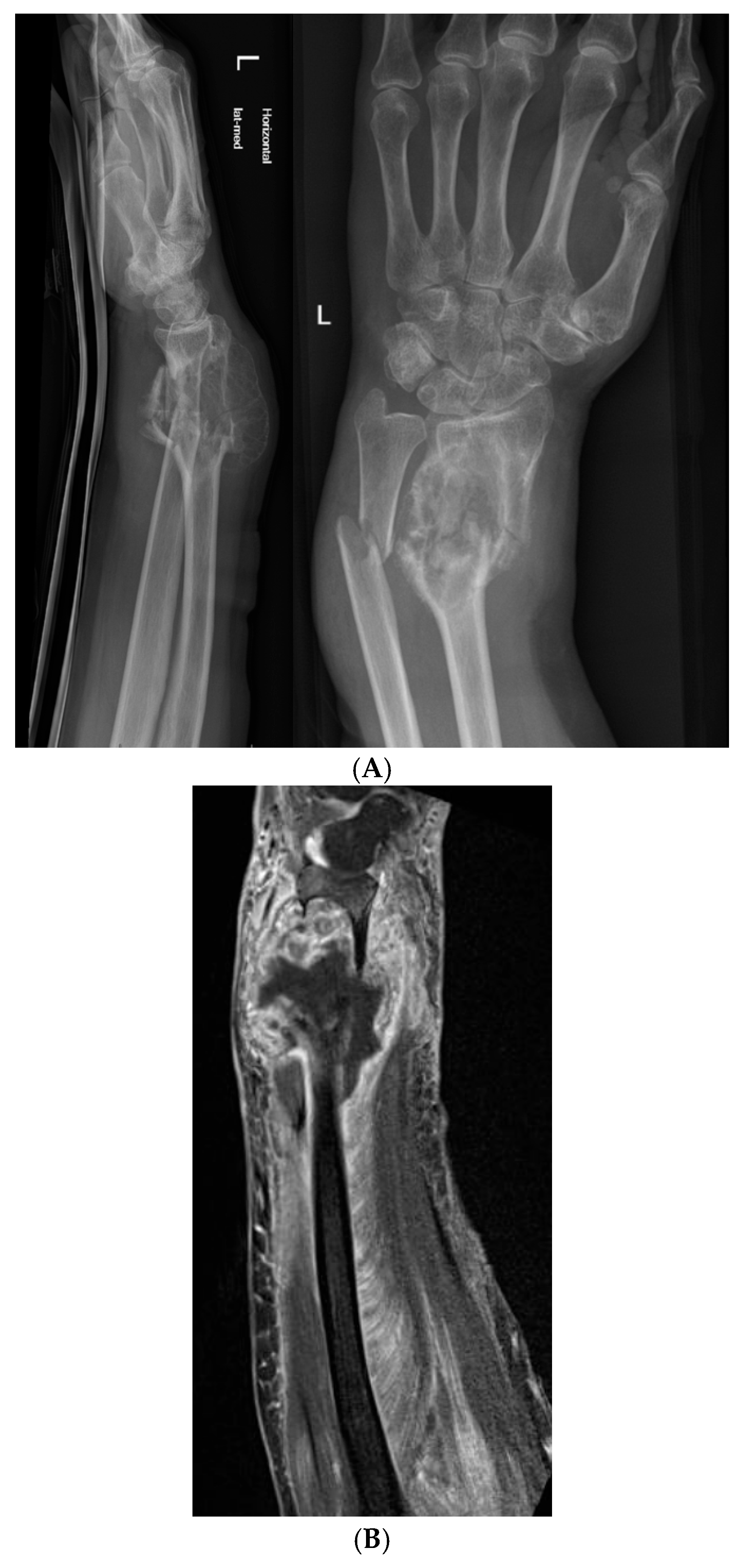
The patient presented clinically with pain following her fall, as well as a palpable mass on her left wrist. A dislocated fracture of the ulna and a dislocated pathological fracture of the radius on the left forearm were detected using a conventional X-ray (
Figure 2A) and CT. On current presentation, in the radial metaphysis, a lytic lesion with a sclerosed margin was found, suspicious of an ABC.
An MRI was performed for further diagnostics, which showed a solitary expansive lesion; however, there was no sign of fluid–fluid levels (
Figure 2B).
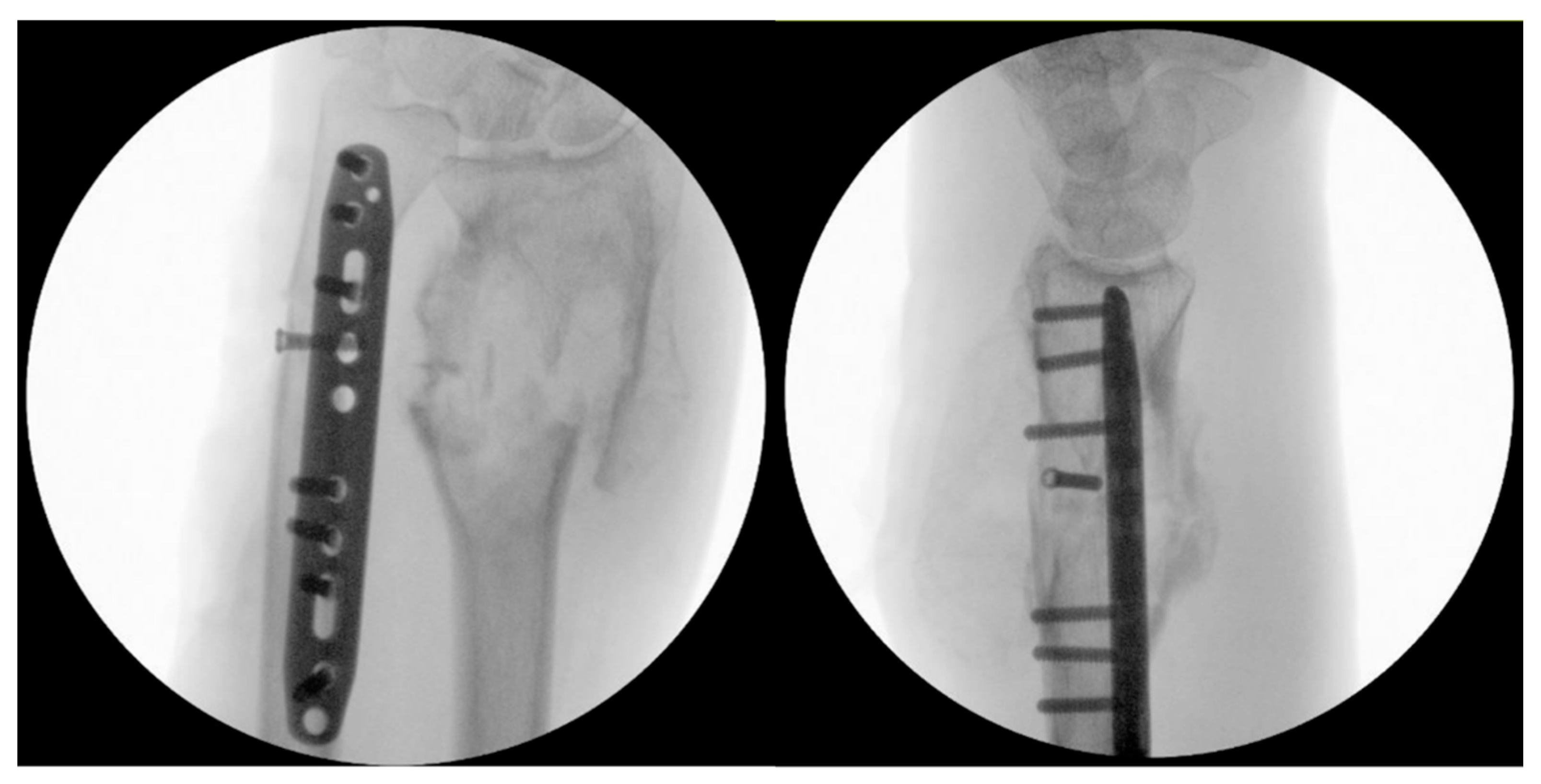
The lesion was biopsied; furthermore, a fixation of the distal radius fracture using an external fixator and osteosynthesis of the ulnar fracture was performed (
Figure 3).
Histopathological examination showed reactive bone formation with spindle-cell-proliferation and osteoclast-like giant cells. There were signs of diffuse hemorrhage, cystic formations, and septa. No signs of malignancy could be detected. The suspicion of an ABC was histologically confirmed, although the constellation was unusual with regard to the patient’s age.
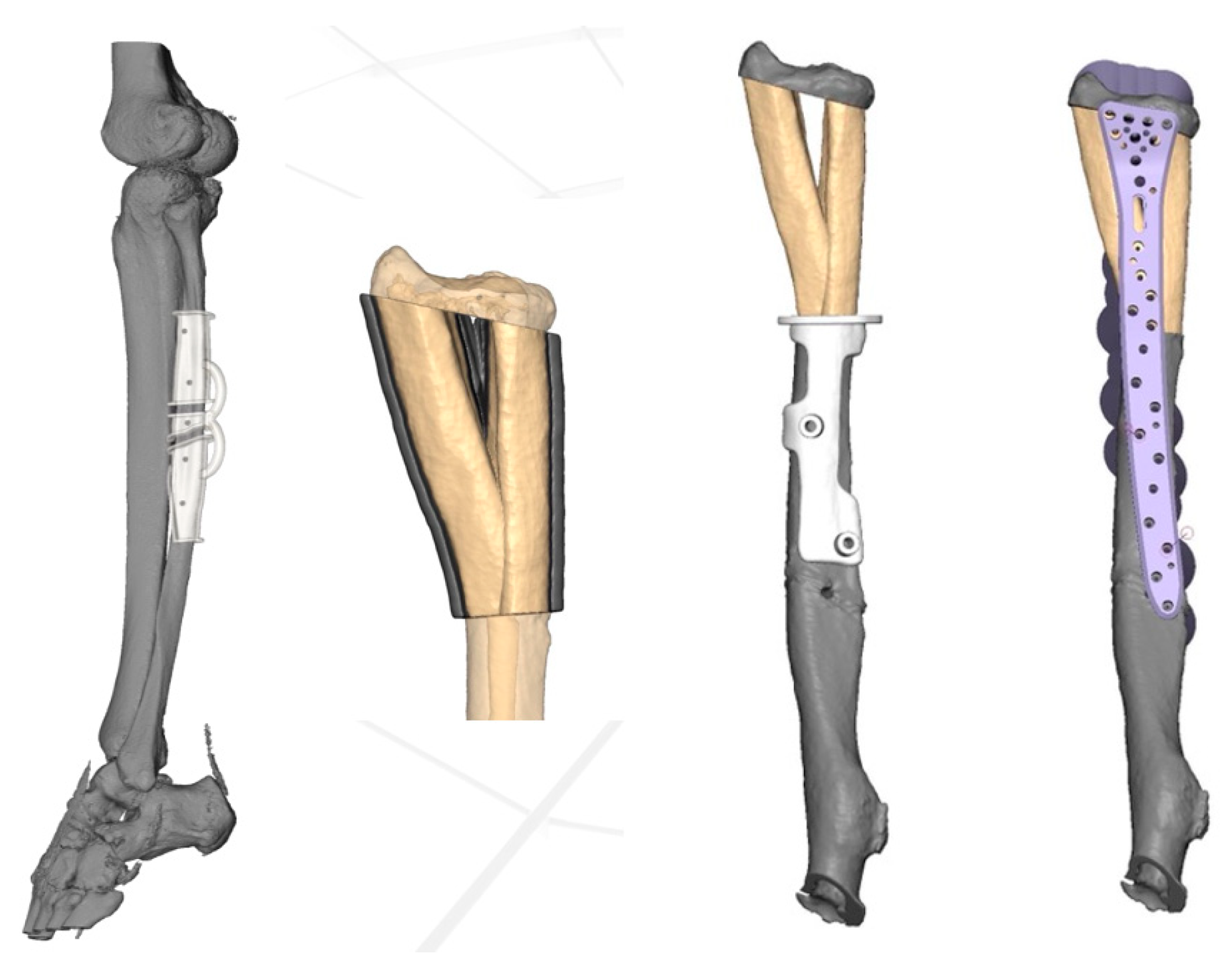
In accordance with the regional tumor board, a treatment plan was developed. An en bloc resection of the lytic lesion was chosen. Reconstruction of the distal radius using an ipsilateral vascularized double-barrel fibula graft was selected. To reproduce the physiological shape of the distal radius metaphysis, the reconstruction was 3D planned and involved the use of patient-specific 3D-printed osteotomy templates (
Figure 4). The computed tomography images of the affected forearm and the lower leg planned as the harvesting site were performed using a SIEMENS Biograph 128 scanner (Siemens AG, Munich, Germany) with an in-plane resolution of 0.25 mm × 0.25 mm and a slice thickness of 0.37 mm. Bone segmentation (radius and fibula) and osteotomy planning was conducted using Materialise Mimics 23.0 software (Materialise NV, Leuven, Belgium). A virtual osteotomy was performed by a medical engineer in order to fill the tumor resection site with the V-shaped double barrel autograft press-fit and according osteotomy guides were designed. Eventually, the plate fixation of the radius and the interposed graft were planned with a standard Aptus XL volar locking plate 2.5 (Medartis AG, Basel, Switzerland). The consent of the patient was obtained.
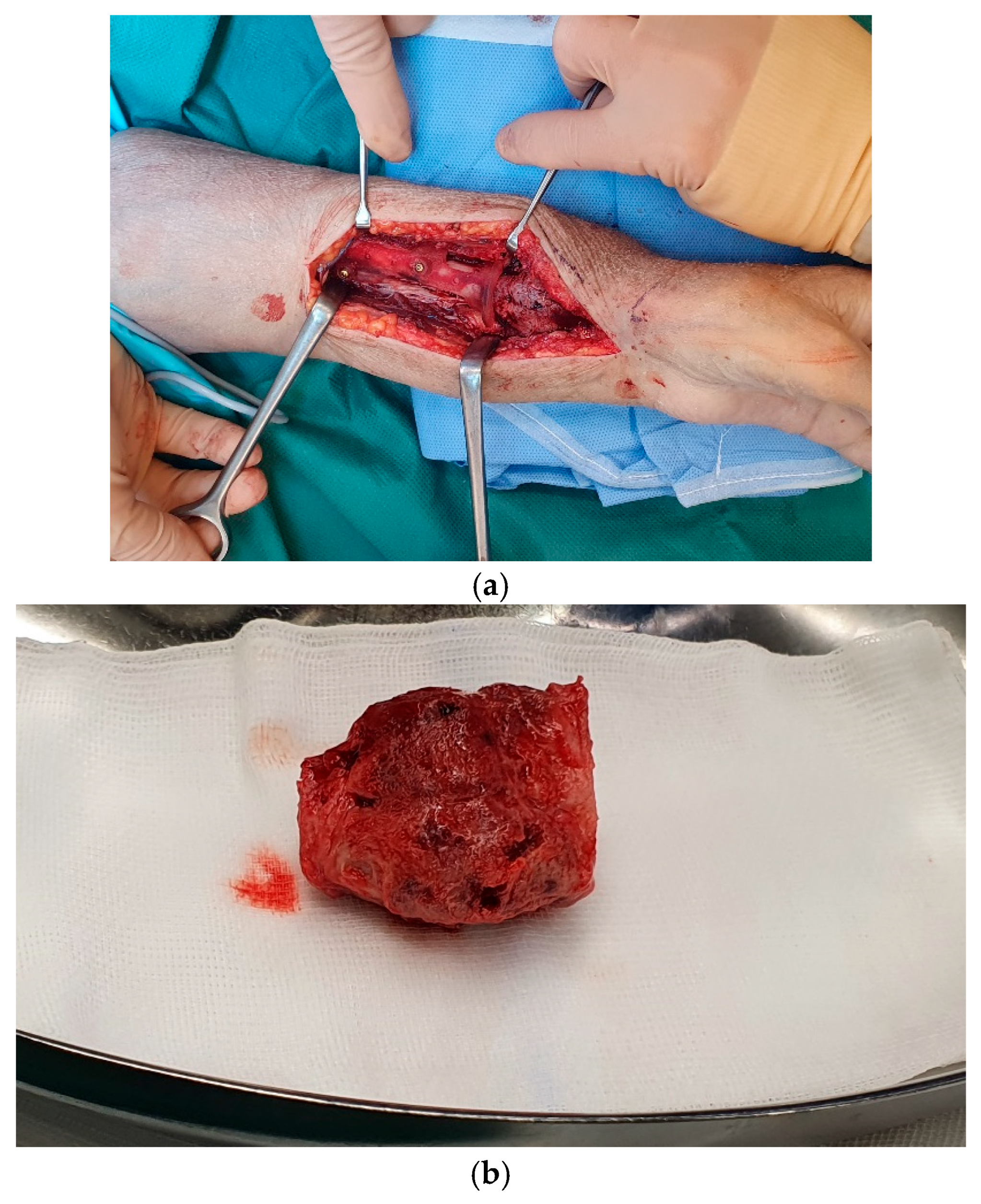
The operation was performed under general anesthesia. The skin was cut open in the axis of the fibula, subcutaneous preparation to the bone was performed, and a remainder of the soleus muscle was left on the fibula. An anterior approach to the vessels through the interosseus membrane was chosen. Distally, the fibular artery and vein were cut off, and the proximal and distal osteotomy was then performed with the templates. At the distal radius, a modified Henry approach was performed, exposing the tumor (
Figure 5a).
The proximal osteotomy was carried out, using the patient-specific osteotomy template, thus excising the ABC (
Figure 5b).
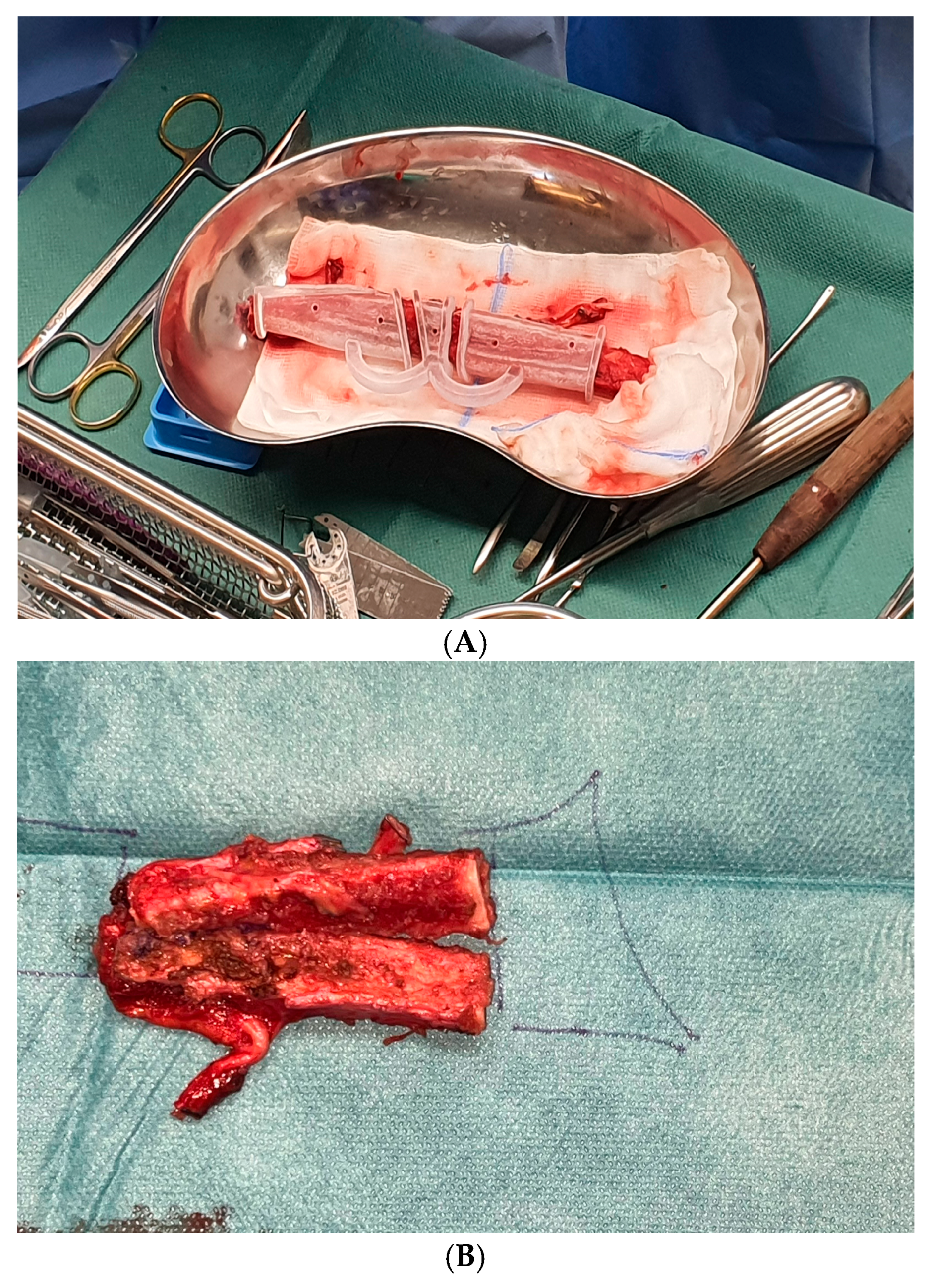
The initial plan was to apply the osteotomy guides in situ and resect only the required portions of the tibia. However, this had to be adjusted because placing the guides in situ risked compromising the vascular pedicle. Therefore, a slightly longer segment was excised. The pedicle could be protected more accurately on-table while applying the osteotomy guides and trimming the graft free-hand into the planned dimensions (
Figure 6A,B).
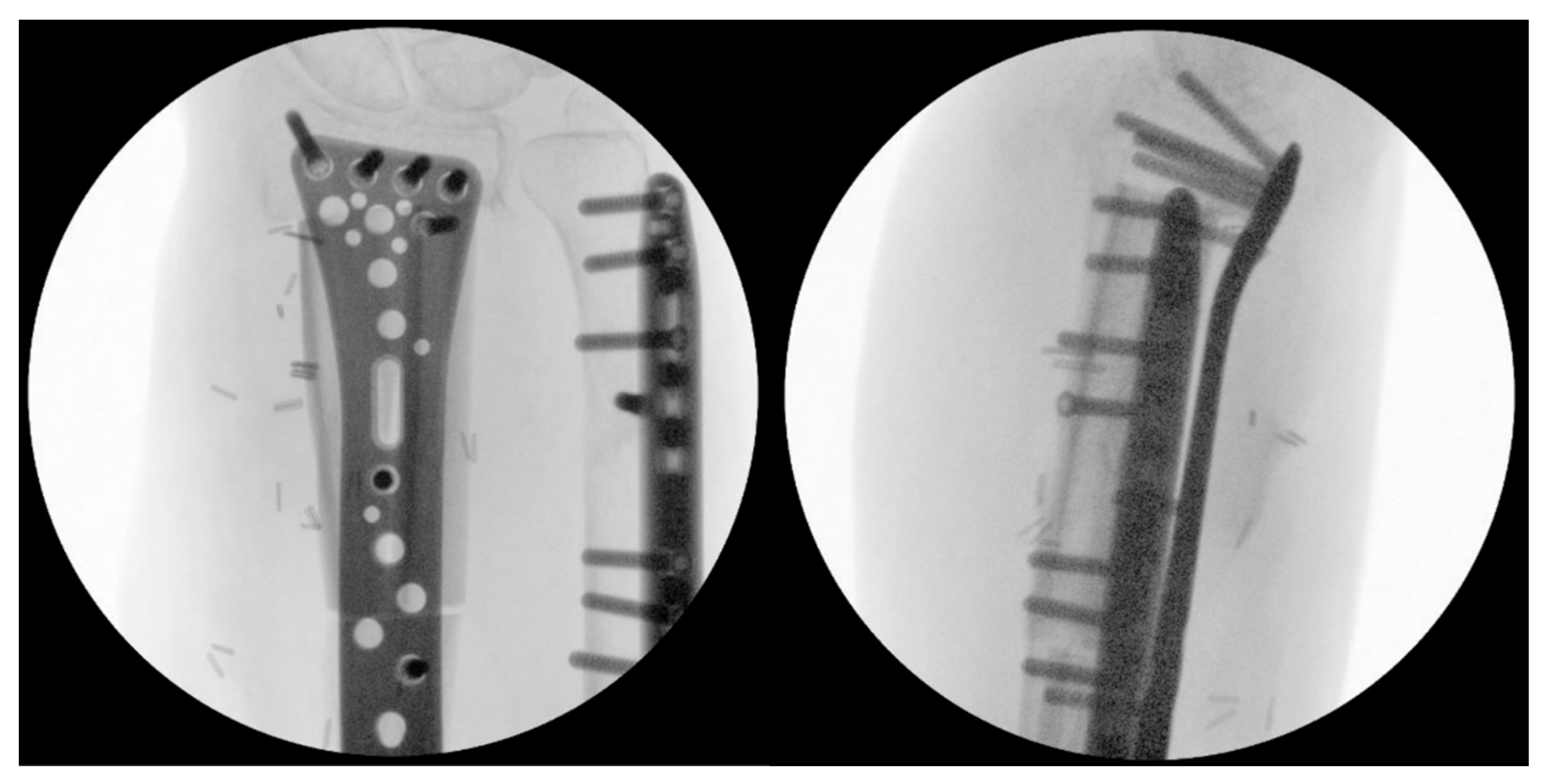
The graft was inserted and secured with an osteosynthesis plate. Intraoperative fluoroscopy showed the physiological length, palmar tilt, and shape of the distal radius (
Figure 7).
3. Results
The postoperative course was uneventful and anticoagulation was achieved with unfractionated heparin during the first 24 h, after which the medication was adapted to acetylsalicylic acid for 6 weeks. Immobilization was carried out with a splint for 6 weeks with no mobilization of the wrist.
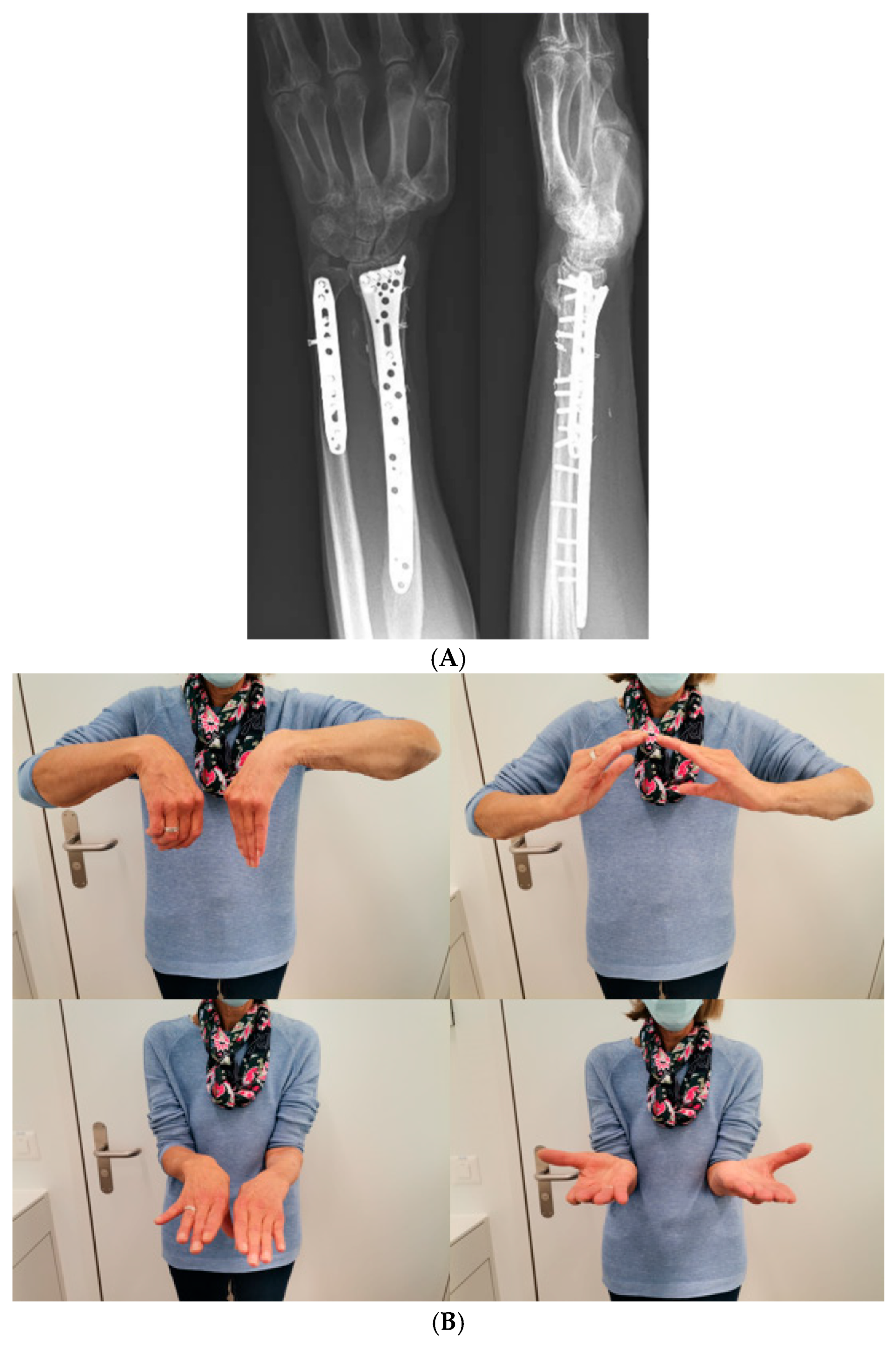
At follow-up after 6 months, the patient showed a good radiological and clinical result (
Figure 8A,B).
Regarding the distal radius, she had little to no pain. An active range of motion of the patient’s operated wrist is shown in
Table 1. After 18 months, the postoperative reconstruction showed complete consolidation on X-ray with excellent range of motion. Thus, the removal of osteosynthesis material was performed at 20 months postoperatively (
Figure 9).
There was minimal donor site morbidity, and the patient was able to walk with full weight bearing after a short time and even managed a 10 km hike.
4. Discussion
Aneurysmal bone cysts are rare benign osteolytic lesions. So far, there have been no reported post-traumatic secondary ABCs in the distal radius, especially among people in this age group.
Patients usually present with local pain and swelling [
22], and occasionally with a palpable mass or pathological fracture [
2,
7]. In our case, the patient had no pain prior to the pathological fracture. Initial evaluation by plain radiograph can show an osteolytic and expansile lesion, usually located in the metaphysis [
7] and possibly with a sclerotic margin [
2]. Magnetic resonance imaging can support the diagnosis showing characteristic fluid–fluid levels caused by blood sedimentation [
22]. The current case showed characteristic lesions in the plain radiograph as well as on MRI. Confirmation of the diagnosis by biopsy is essential, which was applicable in our case. Histopathological findings showed multi-septic cavities filled with blood, the septa containing spindle cells, osteoclast-like giant cells, and inflammatory cells [
3,
22]. Taking into consideration the results of the imaging studies and histopathological findings, an ABC had to be considered despite the advanced age of the patient.
There is no consensus regarding the optimal treatment of ABCs [
18]. In the current case, we decided to treat the patient by complete resection and subsequent reconstruction. En bloc resection has shown excellent results in terms of local control, with a recurrence rate as good as 0% in other studies [
18,
23,
24]. Local treatment such as curettage was not possible in our case due to the pathological fracture already present. In other studies, resection showed a low recurrence rate in patients with ABCs localized in the hand [
23,
24]. Jafari et al. reported one case with a local recurrence in a patient with an ABC in a metacarpal bone [
25]. We discussed with the patient the option of resection and reconstruction using a 3D-printed, patient-specific scaffold made of polylactide and β-tricalcium phosphate and then colonization with autologous stem cells from abdominal fat. The advantage of this method would be a lack of donor site morbidity. However, the patient decided against this because it was too experimental for her and it lacked in vivo results [
26]. To date, 32 months postoperatively, we could not detect a recurrence in our case.
Reconstruction of the distal radius can be challenging due to the high functional demands with the goal of preserving the joint function and thus, the range of motion and strength; it can be achieved with a fibula graft. Reconstruction of the distal radius after a secondary ABC has been described previously [
27]. However, we highlighted the use of computer-assisted planning and 3D-printed, patient-specific osteotomy templates which improved the efficiency and precision of the surgery. It also facilitated the reconstruction of the physiological shape of the distal radius metaphysis. We recommend this approach in similar cases whenever technical resources are available. However, our case has shown that vascular anatomy should be considered in order to preserve the pedicle.
Our approach achieved excellent results in terms of radiographic consolidation and range of motion. Compared to other studies, our patient achieved a higher range of motion after the reconstruction with a vascularized fibula graft [
28,
29,
30]. Moreover, our patient has not experienced any restrictions in everyday life.
5. Conclusions
ABCs are rare, thus establishing a correct diagnosis is essential. In the case of a secondary ABC, tumor formation can be an underlying cause. For this reason, a correct differentiation should be made between primary and secondary ABCs. In our case, an atypical constellation was found consisting of the advanced age of the patient and the presentation of the ABC secondary to a distal radius fracture.
Patient-specific 3D planning is a promising approach to planning functional restoration. As demonstrated in our example, vascular anatomy is critical. The impact of donor-site vascular variability on the surgical strategy should be the subject of further research. Overall, it is presented as a valuable option for the complex reconstruction of the distal forearm.
Author Contributions
Conceptualization, P.H. and M.K.; methodology, P.H., M.K. and M.H.; investigation, P.H., M.K. and M.H.; writing—original draft preparation, B.K.; writing—review and editing, B.K.; visualization, B.K. and M.K.; supervision, M.K.; project administration, B.K. and M.K.; funding acquisition, none. All authors have read and agreed to the published version of the manuscript.
Funding
This research received no external funding.
Institutional Review Board Statement
The submitted manuscript is a case report, therefore no ethics committee approval was obtained. The study was conducted in accordance with the Declaration of Helsinki.
Informed Consent Statement
Informed consent was obtained from all subjects involved in the study.
Data Availability Statement
The data presented in this study are available on request from the corresponding author.
Conflicts of Interest
The authors declare no conflict of interest.
References
- Gutierrez, L.B.; Link, T.M.; Horvai, A.E.; Joseph, G.B.; O’Donnell, R.J.; Motamedi, D. Secondary aneurysmal bone cysts and associated primary lesions: Imaging features of 49 cases. Clin. Imaging 2020, 62, 23–32. [Google Scholar] [CrossRef]
- Athanasian, E.A. Aneurysmal bone cyst and giant cell tumor of bone of the hand and distal radius. Hand Clin. 2004, 20, 269–281. [Google Scholar] [CrossRef] [PubMed]
- Mendenhall, W.M.; Zlotecki, R.A.; Gibbs, C.P.; Reith, J.D.; Scarborough, M.T.; Mendenhall, N.P. Aneurysmal bone cyst. Am. J. Clin. Oncol. 2006, 29, 311–315. [Google Scholar] [CrossRef]
- Levy, W.M.; Miller, A.S.; Bonakdarpour, A.; Aegerter, E. Aneurysmal bone cyst secondary to other osseous lesions. Report of 57 cases. Am. J. Clin. Pathol. 1975, 63, 1–8. [Google Scholar] [CrossRef]
- de Silva, M.V.; Raby, N.; Reid, R. Fibromyxoid areas and immature osteoid are associated with recurrence of primary aneurysmal bone cysts. Histopathology 2003, 43, 180–188. [Google Scholar] [CrossRef]
- Mascard, E.; Gomez-Brouchet, A.; Lambot, K. Bone cysts: Unicameral and aneurysmal bone cyst. Orthop. Traumatol. Surg. Res. 2015, 101, S119–S127. [Google Scholar] [CrossRef]
- Rapp, T.B.; Ward, J.P.; Alaia, M.J. Aneurysmal bone cyst. J. Am. Acad. Orthop. Surg. 2012, 20, 233–241. [Google Scholar] [CrossRef] [PubMed]
- Cottalorda, J.; Kohler, R.; Sales de Gauzy, J.; Chotel, F.; Mazda, K.; Lefort, G.; Louahem, D.; Bourelle, S.; Dimeglio, A. Epidemiology of aneurysmal bone cyst in children: A multicenter study and literature review. J. Pediatr. Orthop. B 2004, 13, 389–394. [Google Scholar] [CrossRef] [PubMed]
- Oliveira, A.M.; Perez-Atayde, A.R.; Inwards, C.Y.; Medeiros, F.; Derr, V.; Hsi, B.L.; Gebhardt, M.C.; Rosenberg, A.E.; Fletcher, J.A. USP6 and CDH11 oncogenes identify the neoplastic cell in primary aneurysmal bone cysts and are absent in so-called secondary aneurysmal bone cysts. Am. J. Pathol. 2004, 165, 1773–1780. [Google Scholar] [CrossRef]
- Dabezies, E.J.; D’Ambrosia, R.D.; Chuinard, R.G.; Ferguson, A.B., Jr. Aneurysmal bone cyst after fracture. A report of three cases. J. Bone Jt. Surg. Am. 1982, 64, 617–621. [Google Scholar] [CrossRef]
- Ginsburg, L.D. Congenital aneurysmal bone cyst. Case report with comments on the role of trauma in the pathogenesis. Radiology 1974, 110, 175–176. [Google Scholar] [CrossRef]
- Ratcliffe, P.J.; Grimer, R.J. Aneurysmal bone cyst arising after tibial fracture. A case report. J. Bone Jt. Surg. Am. 1993, 75, 1225–1227. [Google Scholar] [CrossRef]
- Cottalorda, J.; Bourelle, S. Le kyste osseux anévrismal primitif: Quoi de neuf en 2006 ?: Aneurysmal bone cyst in 2006. Rev. Chir. Orthop. Reparatrice Appar. Mot. 2007, 93, 5–16. [Google Scholar] [CrossRef] [PubMed]
- Biesecker, J.L.; Marcove, R.C.; Huvos, A.G.; Miké, V. Aneurysmal bone cysts. A clinicopathologic study of 66 cases. Cancer 1970, 26, 615–625. [Google Scholar] [CrossRef]
- Brosjö, O.; Pechon, P.; Hesla, A.; Tsagozis, P.; Bauer, H. Sclerotherapy with polidocanol for treatment of aneurysmal bone cysts. Acta Orthop. 2013, 84, 502–505. [Google Scholar] [CrossRef] [PubMed]
- Cornelis, F.; Truchetet, M.E.; Amoretti, N.; Verdier, D.; Fournier, C.; Pillet, O.; Gille, O.; Hauger, O. Bisphosphonate therapy for unresectable symptomatic benign bone tumors: A long-term prospective study of tolerance and efficacy. Bone 2014, 58, 11–16. [Google Scholar] [CrossRef] [PubMed]
- Lange, T.; Stehling, C.; Fröhlich, B.; Klingenhöfer, M.; Kunkel, P.; Schneppenheim, R.; Escherich, G.; Gosheger, G.; Hardes, J.; Jürgens, H.; et al. Denosumab: A potential new and innovative treatment option for aneurysmal bone cysts. Eur. Spine J. 2013, 22, 1417–1422. [Google Scholar] [CrossRef]
- Tsagozis, P.; Brosjö, O. Current Strategies for the Treatment of Aneurysmal Bone Cysts. Orthop. Rev. 2015, 7, 6182. [Google Scholar] [CrossRef]
- Moldovan, F.; Gligor, A.; Bataga, T. Structured Integration and Alignment Algorithm: A Tool for Personalized Surgical Treatment of Tibial Plateau Fractures. J. Pers. Med. 2021, 11, 190. [Google Scholar] [CrossRef]
- Dobbe, J.G.; Vroemen, J.C.; Strackee, S.D.; Streekstra, G.J. Patient-specific distal radius locking plate for fixation and accurate 3D positioning in corrective osteotomy. Strateg. Trauma Limb Reconstr. 2014, 9, 179–183. [Google Scholar] [CrossRef]
- Pastor, T.; Nagy, L.; Fürnstahl, P.; Roner, S.; Pastor, T.; Schweizer, A. Three-Dimensional Planning and Patient-Specific Instrumentation for the Fixation of Distal Radius Fractures. Medicina 2022, 58, 744. [Google Scholar] [CrossRef]
- Deventer, N.; Deventer, N.; Gosheger, G.; de Vaal, M.; Vogt, B.; Budny, T. Current strategies for the treatment of solitary and aneurysmal bone cysts: A review of the literature. J. Bone Oncol. 2021, 30, 100384. [Google Scholar] [CrossRef]
- Frassica, F.J.; Amadio, P.C.; Wold, L.E.; Beabout, J.W. Aneurysmal bone cyst: Clinicopathologic features and treatment of ten cases involving the hand. J. Hand Surg. Am. 1988, 13, 676–683. [Google Scholar] [CrossRef]
- Burkhalter, W.E.; Schroeder, F.C.; Eversmann, W.W., Jr. Aneurysmal bone cysts occurring in the metacarpals: A report of three cases. J. Hand Surg. Am. 1978, 3, 579–584. [Google Scholar] [CrossRef]
- Jafari, D.; Jamshidi, K.; Najdmazhar, F.; Shariatzade, H.; Liaghat, O. Expansile aneurysmal bone cyst in the tubular bones of the hand treated with en bloc excision and autograft reconstruction: A report of 12 cases. J. Hand Surg. Eur. Vol. 2011, 36, 648–655. [Google Scholar] [CrossRef]
- Jakimiuk, A.; Maintz, M.; Müller-Gerbl, M.; Thieringer, F.M.; Keller, M.; Guebeli, A.; Honigmann, P. 3D-printed patient-specific implants made of polylactide (PLDLLA) and β-tricalcium phosphate (β-TCP) for corrective osteotomies of the distal radius. 3D Print. Med. 2024, 10, 42. [Google Scholar] [CrossRef] [PubMed]
- Wen, Z.; Kuang, G.; Jiang, Y.; Wu, Y.; Liu, E.; Qiu, L.; Xu, X.; Lu, M. Autogenous fibula head transplantation for aneurysmal bone cyst of distal radius: A case report followed up for 7 years. Medicine 2024, 103, e36210. [Google Scholar] [CrossRef]
- Peng-Fei, S.; Yu-Hua, J. Reconstruction of distal radius by fibula following excision of grade III giant cell tumour: Follow-up of 18 cases. Int. Orthop. 2011, 35, 577–580. [Google Scholar] [CrossRef] [PubMed][Green Version]
- Muller, C.; Athlani, L.; Barbary, S.; Dautel, G. Reconstruction of the distal radius using a double-barrel vascularized fibula flap: A case series. Hand Surg. Rehabil. 2022, 41, 189–193. [Google Scholar] [CrossRef] [PubMed]
- Minami, A.; Kato, H.; Iwasaki, N. Vascularized fibular graft after excision of giant-cell tumor of the distal radius: Wrist arthroplasty versus partial wrist arthrodesis. Plast. Reconstr. Surg. 2002, 110, 112–117. [Google Scholar] [CrossRef]
| Disclaimer/Publisher’s Note: The statements, opinions and data contained in all publications are solely those of the individual author(s) and contributor(s) and not of MDPI and/or the editor(s). MDPI and/or the editor(s) disclaim responsibility for any injury to people or property resulting from any ideas, methods, instructions or products referred to in the content. |