Systematic Review

Comparison of Lower Eyelid Complications Among Surgical Approaches for Orbital and Zygomaticomaxillary Fractures: A Network Meta-Analysis

1
Department of Ophthalmology, Taichung Veterans General Hospital, Taichung 407219, Taiwan
2
Doctoral Program in Translational Medicine, National Chung Hsing University, Taichung 402202, Taiwan
3
School of Medicine, National Yang Ming Chiao Tung University, Taipei 112304, Taiwan
4
Program of Biomedical Informatics and Data Sciences, School of Medicine, Johns Hopkins University, Baltimore, MD 21218, USA
5
School of Medicine, Chung Shan Medical University, Taichung 402306, Taiwan
6
Department of Post-Baccalaureate Medicine, College of Medicine, National Chung Hsing University, Taichung 40227, Taiwan
7
School of Medicine, College of Medicine, Taipei Medical University, Taipei 110301, Taiwan
8
Department of Medical Education, Taichung Veterans General Hospital, Taichung 407219, Taiwan
9
Institute of Public Health, National Yang Ming Chiao Tung University, Taipei 112304, Taiwan
*
Author to whom correspondence should be addressed.
J. Clin. Med. 2026, 15(5), 1842; https://doi.org/10.3390/jcm15051842
Submission received: 21 January 2026 / Revised: 18 February 2026 / Accepted: 26 February 2026 / Published: 28 February 2026
(This article belongs to the Section Ophthalmology)

Abstract

Background/Objectives: This network meta-analysis aimed to evaluate and compare the risks of lower eyelid complications—ectropion, entropion, scleral show, and postoperative scarring—associated with four surgical approaches (subciliary, subtarsal, infraorbital, and transconjunctival) for orbital and zygomaticomaxillary fracture repair. Methods: A systematic search of PubMed, Embase, and Cochrane databases identified relevant studies published between 1 January 1990 and 10 January 2026. Twenty-seven eligible studies involving 2790 patients were included. Direct pairwise meta-analyses and network meta-analyses were conducted to compare complication risks among the approaches. Sensitivity analyses were performed to assess the influence of individual studies, and inconsistency tests were applied to evaluate model robustness. Results: The subciliary approach was associated with the highest risk of ectropion and scleral show. The transconjunctival approach had the lowest risk of ectropion and scarring but the highest risk of entropion. The subtarsal approach had the lowest risk of scleral show, while the infraorbital approach had the highest risk of postoperative scarring. Sensitivity analyses confirmed consistent rankings, and no significant inconsistency was detected. Conclusions: This study provides updated, comprehensive evidence to guide the choice of surgical approach for orbital and zygomaticomaxillary fracture repair. Surgeons should balance operative exposure, cosmetic outcomes, and complication risk, and communicate these trade-offs clearly with patients to optimize decision-making.

1. Introduction

The common surgical approaches for orbital and zygomaticomaxillary fractures are subciliary, subtarsal, infraorbital, and transconjunctival approaches. Postoperative lower eyelid malposition, including ectropion, entropion, scleral show, and visible scarring, is the most common complication associated with these approaches. The subciliary, subtarsal, and infraorbital approaches involve transcutaneous incisions of the lower eyelid. The subciliary incision is typically placed approximately 2 mm below the lash line; the subtarsal incision lies 5–7 mm inferior to the lid margin; and the infraorbital incision is made along a natural skin crease at the level of the orbital rim. These three techniques provide excellent access to the infraorbital rim and zygomaticomaxillary complex. However, visible skin incisions may lead to unfavorable aesthetic outcomes. Previous studies have shown that the subciliary approach is associated with a higher incidence of postoperative ectropion, whereas the subtarsal and infraorbital approaches may carry a higher risk of hypertrophic scarring, particularly in younger female patients [1,2,3].
The transconjunctival approach has gained increasing popularity due to its concealed incision and lower incidence of ectropion [4,5]. However, it may be associated with an increased risk of entropion, a condition in which eyelashes turn inward and rub against the ocular surface, potentially causing conjunctivitis or corneal ulceration requiring medical or surgical interventions [6,7]. Additionally, the transconjunctival approach may provide limited surgical exposure unless combined with lateral canthotomy and inferior cantholysis. These additional procedures increase the technical complexity and may contribute to eyelid malposition if not performed meticulously [8]. Therefore, the optimal surgical approach for managing orbital and zygomaticomaxillary fractures remains a subject of debate.
Previous studies on postoperative eyelid complications have mainly focused on comparing the subciliary and transconjunctival approaches [9,10,11,12]. Additionally, most studies are retrospective and include fewer than 50 cases per group, which limits the reliability of the results. Zhang et al., AI-Moraissi et al. and Chen et al. conducted traditional meta-analyses of several studies that directly compared eyelid complications between the subciliary and transconjunctival approaches to enhance the statistical power [13,14,15].
Traditional meta-analysis is limited to direct comparisons between two groups. Conversely, network meta-analysis enables the integration of direct and indirect evidence to simultaneously assess multiple treatment options. This method allows for the estimation of relative risks and rankings across four commonly used approaches: subciliary, subtarsal, infraorbital, and transconjunctival. Al-Moraissi et al. performed a network meta-analysis comparing postoperative eyelid complications among these four approaches and reported that the transconjunctival and subtarsal approaches were associated with the lowest complication rates [16]. Despite the emergence of several new clinical studies involving pairwise comparisons of these approaches [17,18,19,20], no additional network meta-analyses have been conducted since the study by Al-Moraissi et al. Therefore, this study aimed to synthesize more recent evidence and perform an updated and comprehensive network meta-analysis comparing the risk of lower eyelid complications among four surgical approaches.

2. Materials and Methods

This study was conducted in accordance with the Preferred Reporting Items for Systematic Reviews and Meta-Analyses (PRISMA) extension guidelines for network meta-analysis [21]. This study was registered with PROSPERO (CRD420251089460). The requirement for ethical approval and informed consent was waived.

2.1. Search Strategy

A systematic search was conducted in the PubMed, EMBASE, and Cochrane databases from 1 January 1990 to 10 February 2026, using the following MeSH terms: (“Zygomatic Fractures” [MeSH] OR “Orbital Fractures” [MeSH] OR “Facial Bones/injuries” [MeSH]) AND (“Surgical Procedures, Operative” [MeSH] OR “Fracture Fixation” [MeSH] OR “Fracture Fixation, Internal” [MeSH] OR “Open Reduction” [MeSH]). The records were exported to EndNote, and duplicates were removed. After removing duplicates, articles were screened by titles and abstracts, followed by full-text review for eligibility. Additionally, the reference lists were manually searched for relevant articles.

2.2. Inclusion and Exclusion Criteria

The PICO framework was applied as follows: P (Population): patients with orbital or zygomaticomaxillary fractures; I (Intervention): surgeries using one of the following approaches: subciliary, subtarsal, infraorbital, or transconjunctival; C (Comparison): the four approaches; and O (Outcome): ectropion, entropion, scleral show, and scarring.
Only peer-reviewed journal articles were included in the analysis. The inclusion criterion was original prospective, retrospective, or cross-sectional clinical research investigating eyelid complications and directly comparing any two of the following surgical approaches for orbital or zygomaticofacial fractures: subciliary, subtarsal, infraorbital, and transconjunctival. Reviews, meta-analyses, or studies with fewer than 10 cases in either group were excluded from the analysis. Articles were independently assessed by two researchers (Y.-Y. Chen and T.-Y. Chen). Any discrepancies were resolved by discussion, and a third researcher (P. Chou) was consulted if no consensus was reached.

2.3. Data Extraction

Data, including the first author, year of publication, number/age of participants, and follow-up duration, were collected from each article. Additionally, the percentage of postoperative complications, including ectropion, entropion, scleral show, and cutaneous scar, was recorded.

2.4. Quality Assessment

The risk of bias of the included studies was assessed independently by two reviewers (Y.-Y. Chen and T.-Y. Chen), and any discrepancies were resolved through discussion or consultation with a third reviewer (P. Chou). Randomized clinical studies were evaluated using the Cochrane Risk of Bias 2 (RoB 2) tool, which assesses five domains: bias arising from the randomization process, bias due to deviations from intended interventions, bias due to missing outcome data, bias in measurement of the outcome, and bias in selection of the reported result. Each domain was judged as low risk of bias, some concerns, or high risk of bias, and an overall risk-of-bias judgment was assigned according to the RoB 2 guidance. Non-randomized studies were assessed using the Risk Of Bias In Non-randomized Studies of Interventions (ROBINS-I) tool, which evaluates seven domains: bias due to confounding, selection of participants, classification of interventions, deviations from intended interventions, missing data, measurement of outcomes, and selection of the reported result. Each domain was rated as low, moderate, serious, or critical risk of bias, and the overall risk of bias for each study was determined based on the worst domain rating in accordance with the ROBINS-I guidance [22].

2.5. Data Synthesis

2.5.1. Network Geometry

Network meta-analysis was conducted using MetaInsight (version 6.4.0; National Institute for Health Research, London, UK), a web-based platform for network meta-analysis that leverages the netmeta package in R software (version 4.5.2; R Foundation for Statistical Computing, Vienna, Austria) for conducting statistical calculations [23]. Network geometry was illustrated using network plots, which visually represent the relationships between various approaches for fractures, facilitating the evaluation of the clinical evidence strength for each comparison [24,25].

2.5.2. Measures of the Treatment Effect

Measures of the treatment effect were evaluated using odds ratios (ORs). For each outcome (ectropion, entropion, scleral show, and cutaneous scar), the results of the pairwise comparison were summarized as ORs with 95% confidence interval (CI) between the two approaches.

2.5.3. Direct Treatment Comparisons

Direct pairwise comparisons were performed using standard, conventional meta-analyses with a random-effects model. These analyses were conducted for treatment comparisons, including at least two studies.

2.5.4. Mixed Comparisons (Network)

Indirect comparisons were performed using a network meta-analysis. Furthermore, the surgical approaches were ranked. The values of both direct and indirect comparisons were presented in matrices. Treatment rankings were generated using P-scores, which represent the mean probability that each intervention is superior to competing treatments based on the network estimates. P-scores are the frequentist analogue of Surface Under the Cumulative Ranking (SUCRA) and were calculated using the MetaInsight software (Cambridge Research Support Unit, University of Leicester, Leicester, UK; https://crsu-metainsight.le.ac.uk/MetaInsight/, accessed on 10 February 2026).

2.6. Statistical Inconsistency Assessment

Inconsistencies were statistically evaluated by comparing the results obtained across direct pairwise and indirect analyses. A two-tailed p value of less than 0.05 indicated statistical significance.

2.7. Sensitivity Analysis Methods

To confirm the robustness of the overall findings, a leave-one-out sensitivity analysis was performed, removing one study at a time to assess its influence on the combined results.

3. Results

3.1. Study Identification

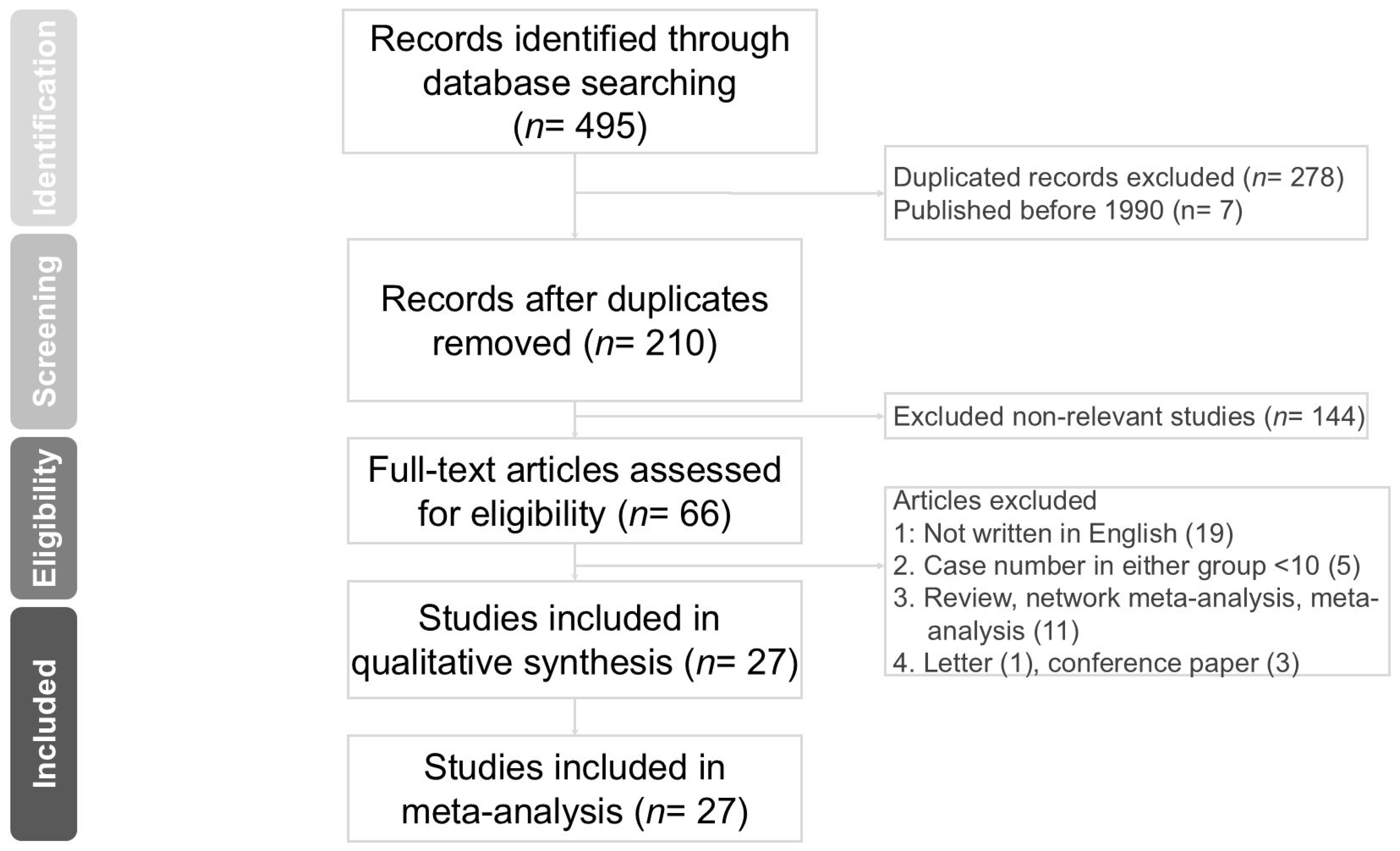
The PRISMA NMA extension’s checklist is provided in Table S1. Table S2 shows the search process. A total of 495 articles were retrieved. Figure 1 shows the PRISMA flowchart illustrating the literature screening process. After removing duplicates (n = 278), articles published before 1990 (n = 7), and non-relevant studies (n = 144), 66 studies were screened by reviewing the full texts. Additionally, non-English publications, conference abstracts, reviews, meta-analyses, and studies with fewer than 10 patients in any group were excluded. Finally, 27 studies were included in the analysis [3,4,9,10,11,12,17,18,19,20,26,27,28,29,30,31,32,33,34,35,36,37,38,39,40,41,42].
The 27 studies involved 2790 individuals with orbital, zygomatic, and maxillofacial fractures who underwent surgeries using the following approaches: subciliary, subtarsal, infraorbital, and transconjunctival. Outcomes, including ectropion, entropion, scleral show, and cutaneous scar, were investigated separately. Further details about the first author of each study, the number/age of the participants, and postoperative eyelid complications are shown in Table 1. Most studies were retrospective and compared two approaches. Studies by Mohamed, Ridgeway, Kesselring, Bahr, and Crosara compared three approaches [26,27,32,38,41]. Only one study compared the four approaches [3].

3.2. Risk of Bias Assessment

The risk-of-bias assessment is presented in Figure S1. For the randomized controlled trials evaluated using the RoB 2 tool (Figure S1A), most studies were judged as having low risk or some concerns across the assessed domains, with the main source of concern arising from the lack of blinding and deviations from intended interventions, which are common in surgical trials. This resulted in an overall judgment of “some concerns” for the majority of randomized studies. Only one study was rated as having a high risk of bias. For the non-randomized studies assessed using the ROBINS-I tool (Figure S1B), most studies were rated as having low to moderate risk of bias across most domains. However, several studies were judged to have a serious or critical risk of bias, primarily driven by confounding and selection of participants. Overall, the majority of non-randomized studies were considered to have a moderate risk of bias.

3.3. Summary of Network Geometry

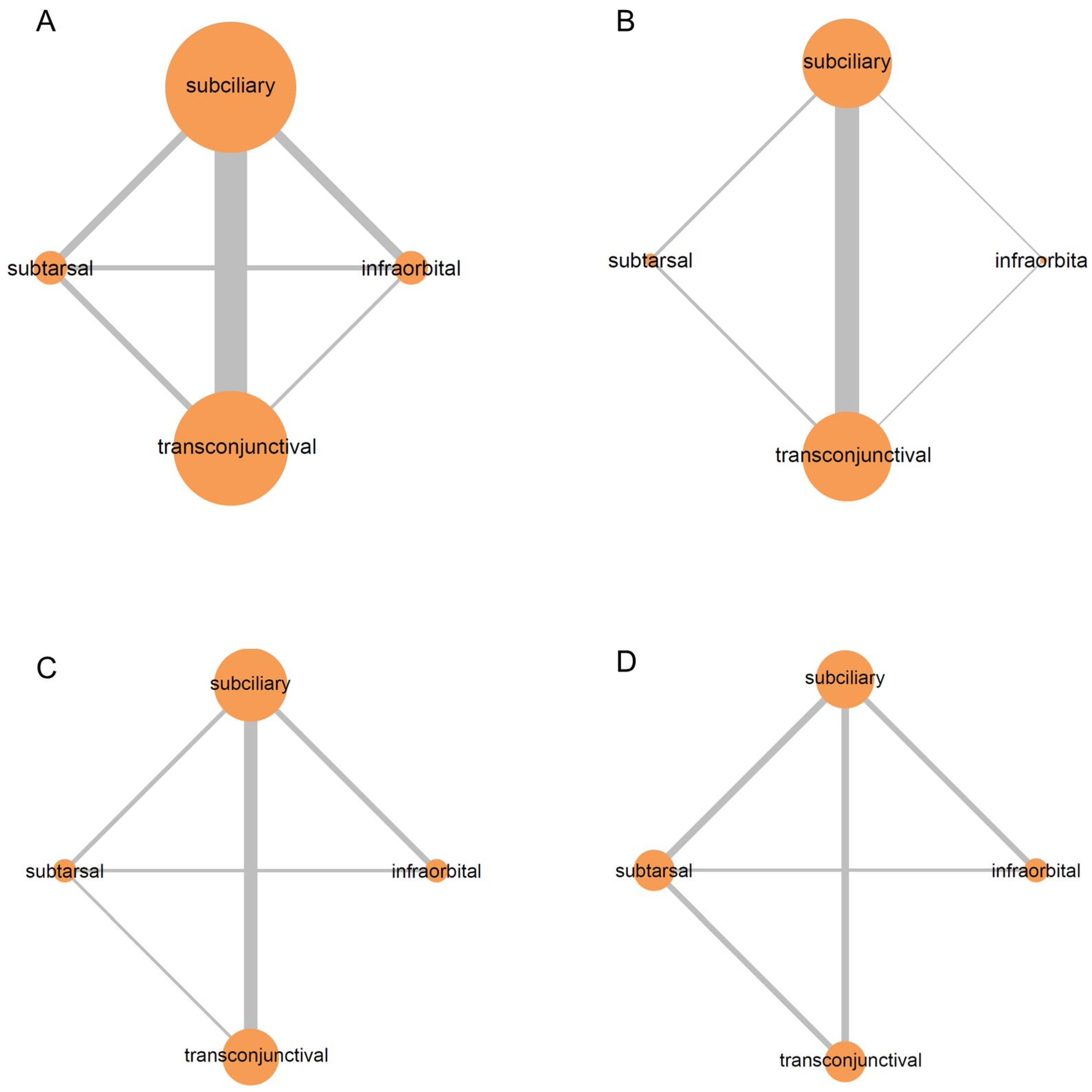
Figure 2 shows the network plots among the four approaches according to eyelid complications. The size of each node and the thickness of each line represent the number of studies included in the analysis. A large number of studies compared the subciliary and transconjunctival approaches.

3.4. Summary of Direct Comparisons of Postoperative Eyelid Complications

3.4.1. Ectropion

Figure S2 shows the pooled results of the meta-analyses for direct comparison of the risk of postoperative ectropion between any two approaches. The transconjunctival approach was associated with a significantly lower risk of postoperative ectropion than the subciliary approach (OR = 0.34; 95% CI: 0.19–0.61). The transconjunctival approach was associated with a lower risk of ectropion than the subtarsal and infraorbital approaches; however, the differences were not statistically significant. The subciliary approach was associated with a higher risk of ectropion than the subtarsal approach; however, the difference was not statistically significant. The risk of postoperative ectropion was similar between the infraorbital, subciliary, and subtarsal approaches.

3.4.2. Entropion

Figure S3 shows the pooled results of the meta-analyses for direct comparison of the risk of postoperative entropion between any two approaches. The transconjunctival approach was associated with a significantly higher risk of postoperative entropion than the subciliary approach (OR = 5.05; 95% CI: 2.12–12.03). The transconjunctival approach was associated with a higher risk of ectropion than the subtarsal approach (OR = 8.62; 95% CI: 0.99–74.90). However, the difference was not statistically significant. The risk of postoperative entropion was similar between the transconjunctival and infraorbital approaches. The subciliary approach was associated with a lower risk of entropion than the infraorbital approach (OR = 1.01; 95% CI: 0.04–25.61). However, the difference was not statistically significant.

3.4.3. Scleral Show

Figure S4 presents the pooled results of the meta-analyses for direct comparisons of the risk of postoperative scleral show between any two approaches. The transconjunctival approach was associated with a significantly lower risk of postoperative scleral show than the subciliary approach (OR = 0.41; 95% CI: 0.20–0.82) but was similar to the subtarsal approach (OR = 0.91; 95% CI: 0.12–7.08). The subciliary approach was significantly associated with a higher risk of postoperative scleral show than the subtarsal approaches (OR = 3.96; 95% CI: 1.36–11.54). The infraorbital approach was associated with a lower risk than the subciliary approach and a higher risk than the subtarsal approach. However, the differences were not statistically significant.

3.4.4. Scar

Figure S5 shows the pooled results of the meta-analyses for direct comparisons of the risk of postoperative scarring between any two approaches. The transconjunctival approach was associated with a significantly lower risk of postoperative scar than the subciliary (OR = 0.18; 95% CI: 0.05–0.61) and subtarsal (OR = 0.16; 95% CI: 0.04–0.73) approaches. The risk of postoperative scar was similar between the subciliary and subtarsal approaches (OR = 0.88; 95% CI: 0.20–3.92). However, the subciliary approach was associated with a significantly lower risk than the infraorbital approach (OR = 0.05; 95% CI: 0.01–0.28). The subtarsal approach was also associated with a significantly lower risk of scar than the infraorbital approach (OR = 0.14; 95% CI: 0.05–0.43).

3.5. Network Meta-Analysis

A total of 27 studies were included in the network meta-analysis of ectropion, entropion, scleral show, and scar. The transconjunctival approach was considered the control group.

3.5.1. Network Meta-Analysis: Entropion

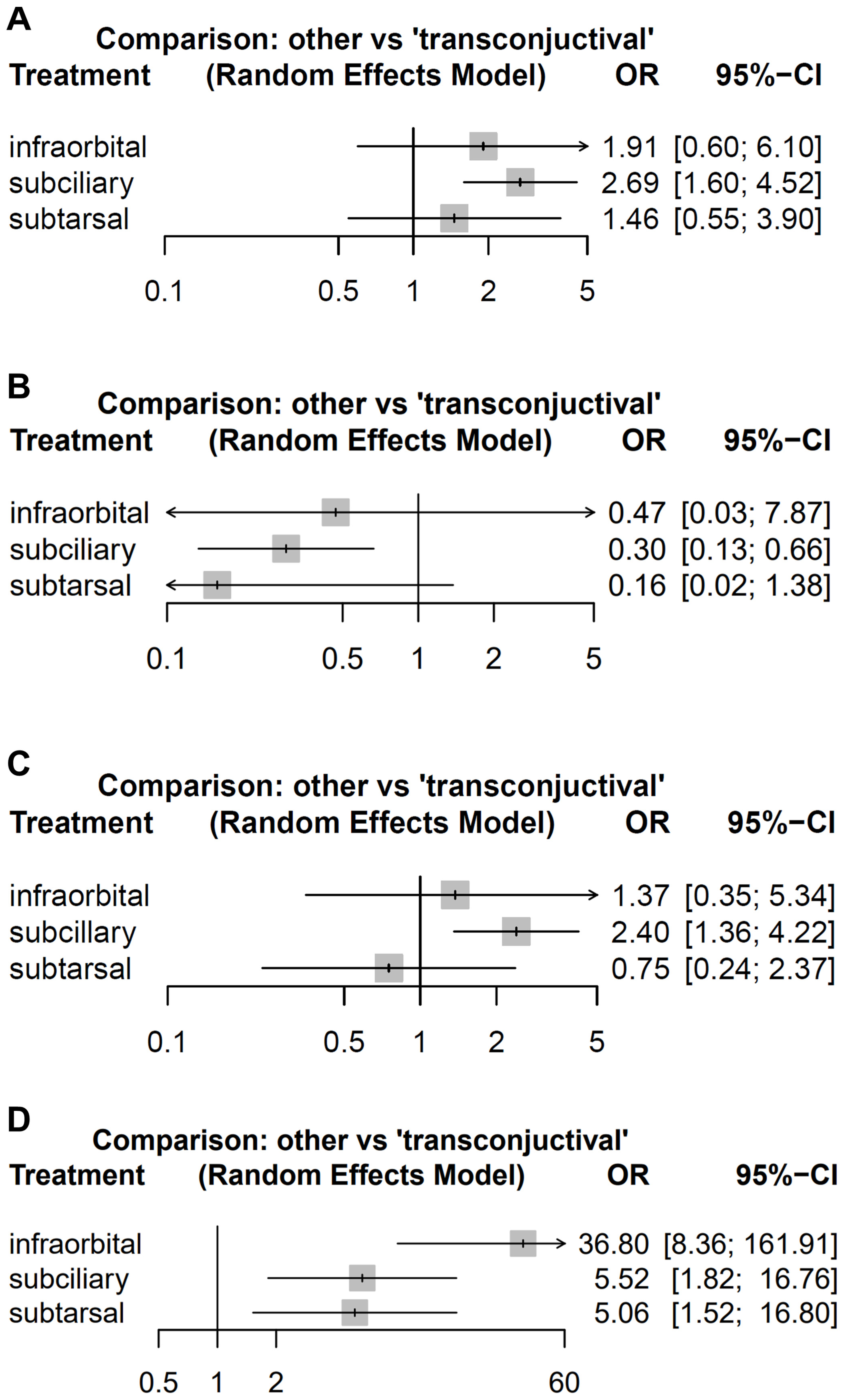
A total of 2713 patients from 25 studies were included in the comparison of the risk of ectropion. The subciliary group showed a significantly higher risk of ectropion than the control group (OR = 2.69; 95% CI: 1.60–4.52). The risk of ectropion was higher in the infraorbital and subtarsal groups than in the control group. However, the difference was not significant (Figure 3A).

3.5.2. Network Meta-Analysis: Entropion

A total of 1858 patients from 15 studies were included in the comparison of the risk of entropion. The subciliary group showed a significantly lower risk of entropion than the control group (OR = 0.30; 95% CI: 0.13–0.66). The risk of entropion was lower in the infraorbital and subtarsal groups than in the control group. However, no significant differences were observed (Figure 3B).

3.5.3. Network Meta-Analysis: Scleral Show

A total of 1287 patients from 14 studies were included in the comparison of the risk of scleral show. The subciliary group presented a significant increase in the risk of scleral show compared with the control group (OR = 2.40; 95% CI: 1.36–4.22). The risk of scleral show was higher in the infraorbital group and lower in the subtarsal group than in the control group. However, neither reached statistical significance (Figure 3C).

3.5.4. Network Meta-Analysis: Scar

A total of 912 patients from 12 studies were included in the network meta-analysis of the risk of scarring. The subciliary, subtarsal, and infraorbital groups showed a statistically increased risk of scar compared with the control group (Figure 3D).

3.6. Rank

The netleague table is a square matrix showing direct and indirect comparisons. The approaches were ranked based on the risks of postoperative eyelid complications.

3.6.1. Rank for Ectropion

The transconjunctival approach had the lowest risk of postoperative ectropion, followed by the subtarsal and infraorbital approaches. The subciliary approach had the highest risk of postoperative ectropion (Table 2).

3.6.2. Rank for Entropion

The subtarsal approach had the lowest risk of postoperative entropion, followed by the subciliary and infraorbital approaches. The transconjunctival approach had the highest risk of postoperative entropion (Table 3).

3.6.3. Rank for Scleral Show

The subciliary approach had the highest risk of postoperative scleral show, followed by the infraorbital and transconjunctival approaches. The subtarsal approach had the lowest risk of postoperative scleral show (Table 4).

3.6.4. Rank for Scar

The transconjunctival approach had the lowest risk of postoperative scarring, followed by the subtarsal and subciliary approaches. The infraorbital approach had the highest risk of postoperative scar (Table 5).

3.7. Inconsistency Tests

Inconsistency tests are presented in Table S2 for ectropion, Table S3 for entropion, Table S4 for scleral show, and Table S5 for scar. All p values were >0.05, indicating no statistical evidence of a violation of the transitivity assumption.

3.8. Results of Sensitivity Analysis

The one-study removal analysis revealed consistent rankings. Therefore, the results of this research were consistent and not influenced by the inclusion or removal of individual studies.

4. Discussion

Surgical approaches for orbital and zygomaticomaxillary fractures should be simple, have good access to the targeted area, and have fewer complications. This network meta-analysis investigated the risk of postoperative complications associated with four surgical approaches for orbital and zygomaticomaxillary fractures. The subciliary approach had the highest risk of postoperative ectropion and scleral show. The transconjunctival approach had the lowest risk of postoperative ectropion and scar but had the highest risk of entropion. The subtarsal approach had the lowest risk of scleral show, whereas the infraorbital approach had the highest risk of scar.
Most published articles on orbital and zygomaticomaxillary fractures focus on surgical techniques, and only a few compare the outcomes between surgical approaches. To the best of our knowledge, only one network meta-analysis has been conducted to compare the eyelid complications among the four surgical approaches [16], which showed that the subciliary approach had the highest risk of ectropion, whereas the transconjunctival approach had the highest risk of entropion. These findings are consistent with those of our study. One slight difference is that the previous study showed that the transconjunctival approach had the highest risk of scleral show, whereas our study identified the subciliary approach as having the highest risk. Additionally, our study investigated the risk of postoperative scarring, which was not addressed in the previous analysis.
The subciliary approach may have the highest risk of ectropion because the cutaneous incision is near the eyelid margin, leading to a shortage at the anterior lamella of the eyelid. Therefore, the eyelid margin turns outward. This study showed that the transconjunctival approach had the lowest risk of postoperative ectropion. The transconjunctival approach could avoid skin incision, thereby reducing the risk of postoperative ectropion.
This network meta-analysis revealed that the transconjunctival approach had a higher risk of postoperative entropion compared to the other three approaches. An incision in the conjunctiva could shorten the posterior lamella. Therefore, the eyelid turns inward. Additionally, previous studies have shown that the transconjunctival approach has poor access to the lateral wall unless lateral canthotomy is performed. However, a lateral canthotomy may result in lid malposition [9,12,33,42].
Regarding scleral show, this study revealed that the subciliary approach had a higher risk than the other three approaches. This might be because the subciliary incision passes close to or through the orbicularis oculi muscle and orbital septum—structures essential for maintaining eyelid stability. During postoperative healing, fibrosis and contraction of the deeper tissues can occur, pulling the eyelid downward and resulting in exposure of the lower sclera. Consistent with the findings of the study by AI-Moraissi [16], this study revealed that the subtarsal approach had the least risk of scleral show. This may be due to the anatomical position of the incision and preservation of the eyelid support structures. The subtarsal approach places the incision approximately 4–5 mm below the lower eyelid margin, which is near the natural skin crease and away from the tarsal plate. Therefore, the subtarsal approach minimizes the risk of disrupting critical support structures, such as the orbicularis muscle, lower eyelid retractors, and tarso-ligamentous framework, which are essential for maintaining proper eyelid position. Furthermore, this study revealed that the infraorbital approach had a lower risk of postoperative scleral show than the subciliary approach. The infraorbital approach has the best direct access to the orbital floor compared with other approaches. Therefore, it typically requires less extensive tissue dissection and causes less trauma to the soft tissue, thereby reducing the likelihood of postoperative contracture that pulls the eyelid downward.
The infraorbital approach has the advantage of easy access and good visibility during the operation. However, this study showed that the infraorbital approach was associated with the highest risk of postoperative scar. This finding is consistent with those of previous studies [3,32,38,43]. Unlike the transconjunctival and subtarsal approaches, which place an incision within the conjunctiva to conceal the scar or along natural skin creases, the infraorbital area lacks a skin fold or crease, making any scar noticeable. Additionally, this area is relatively immobile, leading to more prominent scarring. Therefore, this approach is less commonly chosen when aesthetic outcomes are a major concern.
This study has a limitation in that, among the 27 included studies, only 7 were randomized clinical studies. Most of the published studies were retrospective, and potential confounding variables might have affected the choice of surgical approach. In clinical practice, the choice of surgical approach is influenced by factors that may also affect eyelid outcomes, including fracture location and severity, adjunct procedures, variations in surgical technique, timing of surgery, implant and closure methods, patient characteristics, and duration of follow-up. Because most included studies were retrospective, adjustment for these factors was limited, and the assumption of transitivity may not be fully satisfied. In addition, scar outcomes were assessed using heterogeneous measurement scales across studies. Therefore, the findings should be interpreted with caution, and future prospective studies with standardized reporting are warranted. Further prospective, randomized clinical studies are needed. A meta-analysis that includes more randomized studies can result in more objective conclusions.
Another important limitation of this network meta-analysis is the presence of sparse and rare events across several outcomes. Some comparisons were based on a limited number of studies and small event counts, which resulted in wide confidence intervals, particularly for entropion outcomes, and extremely large odds ratios in the scar analysis. These findings suggest that certain estimates may be unstable. Sparse data can also influence the precision of treatment rankings and should, therefore, be interpreted with caution. Future studies with larger sample sizes and more consistently reported outcomes are needed to provide more robust and precise estimates.
This study has several strengths. First, this study involved a large number of patients to provide convincing evidence. Second, direct (traditional meta-analysis) and indirect (network meta-analysis) comparisons were performed. The inconsistency tests revealed no significant inconsistency, indicating that the transitivity assumption held and that the results are persuasive. Third, the sensitivity tests were performed and showed that the removal of any one study could not change our results. The findings of this study highlight the importance of evaluating the potential risk of various eyelid complications before surgery and engaging in communication with patients during the decision-making process.

Supplementary Materials

The following supporting information can be downloaded at https://www.mdpi.com/article/10.3390/jcm15051842/s1. Table S1: PRISMA for network meta-analysis checklist; Table S2: Inconsistency test results of the odds ratio in postoperative ectropion for various surgical approaches; Table S3: Inconsistency test results of the odds ratio in postoperative entropion for various surgical approaches; Table S4: Inconsistency test results of the odds ratio in postoperative scleral show for various surgical approaches; Table S5: Inconsistency test results of the odds ratio in postoperative scar for various surgical approaches; Figure S1: Risk of bias of included studies; Figure S2: Pairwise ectropion; Figure S3: Pairwise entropion; Figure S4: Pairwise scleral show; Figure S5: Pairwise scar.

Author Contributions

Conceptualization, Y.-Y.C. and T.-Y.C.; methodology, Y.-Y.C. and T.-Y.C.; investigation, Y.-Y.C. and C.-M.L.; formal analysis, Y.-Y.C. and T.-Y.C.; data curation, Y.-Y.C. and C.-M.L.; writing—original draft preparation, Y.-Y.C. and P.C.; writing—review and editing, Y.-Y.C. and T.-Y.C.; supervision, P.C. All authors have read and agreed to the published version of the manuscript.

Funding

This work was supported by the Taichung Veterans General Hospital TCVGH-1142201B.

Institutional Review Board Statement

This is a network meta-analysis study. The Taichung Veterans General Hospital Research Ethics Committee have confirmed that no ethical approval is required.

Informed Consent Statement

This is a network meta-analysis study. Informed consent is not applicable.

Data Availability Statement

Data analyzed in this study were a re-analysis of existing data openly available in works cited in the reference section.

Acknowledgments

We would like to acknowledge the Taichung Veterans General Hospital for their database resources.

Conflicts of Interest

The authors declare no conflicts of interest. The funders had no role in the design of the study, or in the collection, analyses, or interpretation of the data. They did not have a role in the writing of the manuscript, or in the decision to publish the results.

Abbreviations

The following abbreviations are used in this manuscript:
PRISMAPreferred Reporting Items for Systematic Reviews and Meta-Analyses
RoB 2Risk of Bias 2
ROBINS-1Risk Of Bias In Non-randomized Studies of Interventions
ORsOdds Ratios
CisConfidence Intervals

References

  1. Raschke, G.F.; Rieger, U.M.; Bader, R.D.; Schaefer, O.; Guentsch, A.; Hagemeister, C.; Schultze-Mosgau, S. The zygomaticomaxillary complex fracture—An anthropometric appraisal of surgical outcomes. J. Craniomaxillofac. Surg. 2013, 41, 331–337. [Google Scholar] [CrossRef] [PubMed]
  2. Luppens, D.P.; Codner, M.A. Discussion. The incidence of lower eyelid malposition after facial fracture repair: A retrospective study and meta-analysis comparing subtarsal, subciliary, and transconjunctival incisions. Plast. Reconstr. Surg. 2009, 124, 1587–1589. [Google Scholar] [CrossRef] [PubMed]
  3. Subramanian, B.; Krishnamurthy, S.; Suresh Kumar, P.; Saravanan, B.; Padhmanabhan, M. Comparison of various approaches for exposure of infraorbital rim fractures of zygoma. J. Maxillofac. Oral Surg. 2009, 8, 99–102. [Google Scholar] [CrossRef] [PubMed]
  4. Ishida, K. Evolution of the surgical approach to the orbitozygomatic fracture: From a subciliary to a transconjunctival and to a novel extended transconjunctival approach without skin incisions. J. Plast. Reconstr. Aesthet. Surg. 2016, 69, 497–505. [Google Scholar] [CrossRef]
  5. Raschke, G.F.; Rieger, U.M.; Bader, R.D.; Schaefer, O.; Guentsch, A.; Schultze-Mosgau, S. Transconjunctival versus subciliary approach for orbital fracture repair--an anthropometric evaluation of 221 cases. Clin. Oral Investig. 2013, 17, 933–942. [Google Scholar] [CrossRef]
  6. Ridgway, E.B.; Chen, C.; Lee, B.T. Acquired entropion associated with the transconjunctival incision for facial fracture management. J. Craniofacial Surg. 2009, 20, 1412–1415. [Google Scholar] [CrossRef]
  7. Chen, Y.Y.; Liu, S.H.; Nurmatov, U.; van Schayck, O.C.; Kuo, I.C. Antibiotics versus placebo for acute bacterial conjunctivitis. Cochrane Database Syst. Rev. 2023, 3, Cd001211. [Google Scholar]
  8. Wilson, S.; Ellis, E., 3rd. Surgical approaches to the infraorbital rim and orbital floor: The case for the subtarsal approach. J. Oral Maxillofac. Surg. 2006, 64, 104–107. [Google Scholar] [CrossRef]
  9. Appling, W.D.; Patrinely, J.R.; Salzer, T.A. Transconjunctival approach vs subciliary skin-muscle flap approach for orbital fracture repair. Arch. Otolaryngol. Head Neck Surg. 1993, 119, 1000–1007. [Google Scholar] [CrossRef]
  10. Patel, P.C.; Sobota, B.T.; Patel, N.M.; Greene, J.S.; Millman, B. Comparison of transconjunctival versus subciliary approaches for orbital fractures: A review of 60 cases. J. Craniomaxillofac. Trauma 1998, 4, 17–21. [Google Scholar]
  11. Trevisiol, L.; D’Agostino, A.; Gasparini, S.; Bettini, P.; Bersani, M.; Nocini, R.; Favero, V. Transconjunctival and Subciliary Approach in the Treatment of Orbital Fractures: A Study on Oculoplastic Complication. J. Clin. Med. 2021, 10, 2775. [Google Scholar] [CrossRef] [PubMed]
  12. Giraddi, G.B.; Syed, M.K. Preseptal transconjunctival vs. subciliary approach in treatment of infraorbital rim and floor fractures. Ann. Maxillofac. Surg. 2012, 2, 136–140. [Google Scholar] [CrossRef]
  13. Zhang, J.; He, X.; Qi, Y.; Zhou, P. The better surgical timing and approach for orbital fracture: A systematic review and meta-analysis. Ann. Transl. Med. 2022, 10, 564. [Google Scholar] [CrossRef]
  14. Al-Moraissi, E.A.; Thaller, S.R.; Ellis, E. Subciliary vs. transconjunctival approach for the management of orbital floor and periorbital fractures: A systematic review and meta-analysis. J. Craniomaxillofac. Surg. 2017, 45, 1647–1654. [Google Scholar] [CrossRef]
  15. Chen, Y.Y.; Lai, Y.J.; Chen, T.Y.; Yen, Y.F. Eyelid Complications in Subciliary Versus Transconjunctival Approaches to Orbital and Zygomaticofacial Fractures: A Meta-Analysis. J. Clin. Med. 2025, 14, 6431. [Google Scholar] [CrossRef]
  16. Al-Moraissi, E.; Elsharkawy, A.; Al-Tairi, N.; Farhan, A.; Abotaleb, B.; Alsharaee, Y.; Oginni, F.O.; Al-Zabidi, A. What surgical approach has the lowest risk of the lower lid complications in the treatment of orbital floor and periorbital fractures? A frequentist network meta-analysis. J. Craniomaxillofac. Surg. 2018, 46, 2164–2175. [Google Scholar] [CrossRef] [PubMed]
  17. Bronstein, J.A.; Bruce, W.J.; Bakhos, F.; Ishaq, D.; Joyce, C.J.; Cimino, V. Surgical Approach to Orbital Floor Fractures: Comparing Complication Rates Between Subciliary and Subconjunctival Approaches. Craniomaxillofac. Trauma. Reconstr. 2020, 13, 45–48. [Google Scholar] [CrossRef]
  18. Mehrnoush, M.R.; Amir, J.A.; Hamed, Z.; Narges, H. The Incidence of Common Complications, Including Ectropion and Entropion, in Transconjunctival and Subciliary Approaches for Treatment of ZMC Fractures. J. Dent. 2021, 22, 76–81. [Google Scholar]
  19. Kumar, R.; Ali, R.; Zaidi, S.A.A.; Maheshwari, B.; Ahmed, K.; Lajpat; Shams, S. Subciliary and subtarsal incision in management of zygomatico-orbital fracture, a study on scar assessment. Pak. J. Med. Health Sci. 2022, 16, 624–626. [Google Scholar] [CrossRef]
  20. Prince, J.; Shetty, P.; Ramanathan, A.; N, S. A Comparative Analytical Study of Functional and Esthetic Outcomes of Infraorbital and Subciliary Incisions to Assess the Redundancy of the Infraorbital Approach. Sci. World J. 2025, 2025, 9595176. [Google Scholar] [CrossRef] [PubMed]
  21. Hutton, B.; Salanti, G.; Caldwell, D.M.; Chaimani, A.; Schmid, C.H.; Cameron, C.; Ioannidis, J.P.; Straus, S.; Thorlund, K.; Jansen, J.P.; et al. The PRISMA extension statement for reporting of systematic reviews incorporating network meta-analyses of health care interventions: Checklist and explanations. Ann. Intern. Med. 2015, 162, 777–784. [Google Scholar] [CrossRef] [PubMed]
  22. Stang, A. Critical evaluation of the Newcastle-Ottawa scale for the assessment of the quality of nonrandomized studies in meta-analyses. Eur. J. Epidemiol. 2010, 25, 603. [Google Scholar] [CrossRef] [PubMed]
  23. Owen, R.K.; Bradbury, N.; Xin, Y.; Cooper, N.; Sutton, A. MetaInsight: An interactive web-based tool for analyzing, interrogating, and visualizing network meta-analyses using R-shiny and netmeta. Res. Synth. Methods 2019, 10, 569–581. [Google Scholar] [CrossRef]
  24. Catalá-López, F.; Tobías, A.; Cameron, C.; Moher, D.; Hutton, B. Network meta-analysis for comparing treatment effects of multiple interventions: An introduction. Rheumatol. Int. 2014, 34, 1489–1496. [Google Scholar] [CrossRef]
  25. Salanti, G.; Kavvoura, F.K.; Ioannidis, J.P. Exploring the geometry of treatment networks. Ann. Intern. Med. 2008, 148, 544–553. [Google Scholar] [CrossRef] [PubMed]
  26. Mohamed, F.I.; Reda, H.M.; Khalifa, G.A. Anthropometric changes in the morphology of the lower eyelid after using three different approaches in patients with orbital fractures. J. Craniomaxillofac. Surg. 2020, 48, 985–993. [Google Scholar] [CrossRef]
  27. Ridgway, E.B.; Chen, C.; Colakoglu, S.; Gautam, S.; Lee, B.T. The incidence of lower eyelid malposition after facial fracture repair: A retrospective study and meta-analysis comparing subtarsal, subciliary, and transconjunctival incisions. Plast. Reconstr. Surg. 2009, 124, 1578–1586. [Google Scholar] [CrossRef]
  28. Neovius, E.; Clarliden, S.; Farnebo, F.; Lundgren, T.K. Lower Eyelid Complications in Facial Fracture Surgery. J. Craniofac Surg. 2017, 28, 391–393. [Google Scholar] [CrossRef]
  29. Haghighat, A.; Moaddabi, A.; Soltani, P. Comparison of Subciliary, Subtarsal and Transconjunctival Approaches for Management of Zygomaticoorbital Fractures. J. Adv. Med. Med. Res. 2017, 20, 1–9. [Google Scholar] [CrossRef]
  30. Vaibhav, N.; Keerthi, R.; Nanjappa, M.; Ashwin, D.P.; Reyazulla, M.A.; Gopinath, A.L.; Ghosh, A. Comparison of ‘sutureless’ Transconjunctival and Subciliary Approach for Treatment of Infraorbital Rim Fractures: A Clinical Study. J. Maxillofac. Oral Surg. 2016, 15, 355–362. [Google Scholar] [CrossRef]
  31. Pausch, N.C.; Sirintawat, N.; Wagner, R.; Halama, D.; Dhanuthai, K. Lower eyelid complications associated with transconjunctival versus subciliary approaches to orbital floor fractures. Oral Maxillofac. Surg. 2016, 20, 51–55. [Google Scholar] [CrossRef]
  32. Kesselring, A.G.; Promes, P.; Strabbing, E.M.; van der Wal, K.G.; Koudstaal, M.J. Lower Eyelid Malposition Following Orbital Fracture Surgery: A Retrospective Analysis Based on 198 Surgeries. Craniomaxillofac. Trauma. Reconstr. 2016, 9, 109–112. [Google Scholar] [CrossRef]
  33. Salgarelli, A.C.; Bellini, P.; Landini, B.; Multinu, A.; Consolo, U. A comparative study of different approaches in the treatment of orbital trauma: An experience based on 274 cases. Oral Maxillofac. Surg. 2010, 14, 23–27. [Google Scholar] [CrossRef]
  34. Raschke, G.; Rieger, U.; Bader, R.D.; Schaefer, O.; Guentsch, A.; Schultze-Mosgau, S. Outcomes analysis of eyelid deformities using photograph-assisted standardized anthropometry in 311 patients after orbital fracture treatment. J. Trauma. Acute Care Surg. 2012, 73, 1319–1325. [Google Scholar] [CrossRef]
  35. Bhatti, M.A.; Riaz, E.; Razi, A.; Ahmed, S.; Ahsan, F.; Nadeem, R. Incidence of Complication of Ectropion and Entropion in Transconjunctival and Subciliary Approach for Treatment of ZMC Fracture. Pak. J. Med. Health Sci. 2023, 16, 693. [Google Scholar] [CrossRef]
  36. Nowinski, D.; Messo, E.; Hedlund, A. Treatment of orbital fractures: Evaluation of surgical techniques and materials for reconstruction. J. Craniofac. Surg. 2010, 21, 1033–1037. [Google Scholar] [CrossRef] [PubMed]
  37. El-Anwar, M.W.; Elsheikh, E.; Hussein, A.M.; Tantawy, A.A.; Abdelbaki, Y.M. Transconjunctival versus subciliary approach to the infraorbital margin for open reduction of zygomaticomaxillary complex fractures: A randomized feasibility study. Oral Maxillofac. Surg. 2017, 21, 187–192. [Google Scholar] [CrossRef]
  38. Bähr, W.; Bagambisa, F.B.; Schlegel, G.; Schilli, W. Comparison of transcutaneous incisions used for exposure of the infraorbital rim and orbital floor: A retrospective study. Plast. Reconstr. Surg. 1992, 90, 585–591. [Google Scholar] [CrossRef] [PubMed]
  39. Aleem, M.A.; Nasyam, F.A.; Parameshwar Reddy, K.R.; Karpe, T.; Singh, T.; Shailaja, A.B. Management of Infraorbital Rim and Orbital Floor Fractures: A Comparison of Subciliary and Infraorbital Approaches. J. Int. Oral Health 2017, 9, 65. [Google Scholar] [CrossRef]
  40. Garvey, S.R.; Chen, A.; Nassar, A.H.; Cauley, R.P. Trans-tarsal Stair-Step Technique for Lateral Extension of the Transconjunctival Incision: A Technical Note and Case Series. Eplasty 2024, 24, e22. [Google Scholar]
  41. Crosara, J.; Rosa, E.; Silva, M.R.M.A. Comparison of cutaneous incisions to approach the infraorbital rim and orbital floor. Braz. J. Oral Sci. 2009, 8, 88–91. [Google Scholar]
  42. Strobel, L.; Hölzle, F.; Riediger, D.; Hilgers, R.D.; Modabber, A.; Gerressen, M. Subtarsal Versus Transconjunctival Approach-Esthetic and Functional Long-Term Experience. J. Oral Maxillofac. Surg. 2016, 74, 2230–2238. [Google Scholar] [CrossRef] [PubMed]
  43. Holtmann, B.; Wray, R.C.; Little, A.G. A randomized comparison of four incisions for orbital fractures. Plast. Reconstr. Surg. 1981, 67, 731–737. [Google Scholar] [CrossRef] [PubMed]
Figure 1. Flow diagram for the study selection process based on the Preferred Reporting Items for Systematic Reviews and Meta-Analyses (PRISMA) guidelines.
Jcm 15 01842 g001
Figure 2. Network plots illustrate the comparisons between various surgical approaches on the postoperative eyelid complications: (A) ectropion, (B) entropion, (C) scleral show, and (D) scar.
Jcm 15 01842 g002
Figure 3. Network Forest plots illustrating the risk of postoperative eyelid complications between different approaches and the transconjunctival approach. Eyelid complications include (A) ectropion, (B) entropion, (C) scleral show, and (D) scar.
Jcm 15 01842 g003
Table 1. Characteristics of the studies included in meta-analysis.
First AuthorYearStudy DesignAgeGroupsNum of PtsFollow-UpComplications (%)
Bronstein [17]2020Retrospective34.8 ± 12.4Subciliary82at least 6 monthsentropion (1.2), ectropion (2.4), corneal injury (7.3), lagophthalmos (1.2), keratoconjunctivitis
sicca (3.7)
35.3 ± 11.9Transconjunctival102 entropion (3.9), ectropion (2.0), lagophthalmos (1.0), corneal injury (6.9), keratoconjunctivitis sicca (3.9)
Mohamed [26]2020Randomized clinical study30.9 ± 12.6Subciliary156 monthsentropion (0), ectropion (20), visible scar (13.3), scleral show (26.7), epiphora (13.3)
37.4 ± 9.0Transconjunctival15 entropion (20), ectropion (6.7), visible scar (0), scleral show (13.3), epiphora (20)
38.3 ± 12.0Subtarsal15entropion (0), ectropion (6.7), visible scar (26.6), scleral show (6.7), epiphora (6.7)
Appling [9]1993Retrospective11–60Subciliary256 weeks–5 yearsscleral show (28.0), ectropion (12.0), canthal malposition (0)
Transconjunctival33scleral show (3.0), ectropion (0), canthal malposition (9.1)
Patel [10]1998Retrospective12–63Subciliary30at least 8 monthsentropion (0), ectropion (6.7), visible scar (6.7), scleral show (20)
Transconjunctival30entropion (0), ectropion (0), visible scar (0), scleral show (3.3)
Mehrnoush [18]2021Randomized clinical study34.6 ± 14.2Subciliary425 monthsentropion (0), ectropion (2.4), epiphora (7.1), scleral show (11.9)
29.0 ± 9.0Transconjunctival38entropion (5.3), ectropion (13.2), epiphora (23.7), scleral show (18.4)
Ridgeway [27]2009Retrospective 39Subciliary566 weeks entropion (0), ectropion (12.5), lid edema (8.9), scar (3.6),
Transconjunctival45 entropion (4.4), ectropion (0), lid edema (0), scar (0)
Subtarsal74ectropion (2.7), entropion (0), scar (1.4), lid edema (1.4)
Trevisiol [11]2021Retrospective44Subciliary3612–74 monthsectropion (8.3), entropion (0)
Transconjunctival33ectropion (0), entropion (0)
Neovius [28]2017Retrospective41Subciliary37at least 6 monthsentropion (0), ectropion (8.1), canthal malposition (0), scleral show (11.0)
Transconjunctival91entropion (0), ectropion (2.2), canthal malposition (2.2), scleral show (4.4)
Giraddi [12]2012Retrospective28.4Subciliary103 monthsentropion (0), ectropion (30.0), laceration of tarsal plate (0), button hole laceration of lower eyelid (10.0)
Transconjunctival10entropion (30.0), ectropion (10.0), laceration of tarsal plate (10.0), button hole laceration of lower eyelid (0)
Haghighat [29]2017Retrospective26.7 ± 6.5Subciliary174 weeksectropion (17.6), scar (3.7 ± 0.6) a
Transconjunctival17ectropion (0), scar (0.0 ± 0.0) a
Vaibhav [30]2016Randomized clinical study20–60Subciliary203 monthsentropion (0), ectropion (0), unsatisfactory scar (10)
Transconjunctival20entropion (5), ectropion (0), unsatisfactory scar (0)
Pausch [31]2016Retrospective 42.7 ± 21.1Subciliary2256 monthsectropion (3.6), entropion (0), eyelid retraction (0)
Transconjunctival121ectropion (0), entropion (2.5), eyelid retraction (0)
Kesselring [32]2016Retrospective 37.5Subciliary47NRectropion (2.1), entropion (0)
Transconjunctival26 ectropion (0), entropion (0)
Infraorbital81ectropion (2.5), entropion (1.2)
Ishida [4]2016RetrospectiveNRSubciliary296 weeks–6.8 yearsectropion (6.9), scleral show (6.9)
Transconjunctival179ectropion (0.6), entropion (3.4), trichiasis (1.1), symblepharon (1.7), lacrimal canaliculus avulsion (1.1), canthal malposition (0.6), conjunctival granulation (2.2)
Salgarelli [33]2010Retrospective37.1Subciliary2196–48 monthsectropion (0), scleral show (1.3), visible scar (17.5)
Transconjunctival32ectropion (0), scleral show (0), visible scar (3)
Raschke [34]2012Retrospective43.3 ± 19.0Subciliary1149 monthsectropion (5.3), scleral show (21.8), entropion (0),
Transconjunctival197ectropion (1.0), scleral show (6.6), entropion (1.0)
Bhatti [35]2023Prospective clinical study32.8Subciliary285 monthsectropion (14.3), scleral show (11.0), entropion (0), epiphora (21.0)
Transconjunctival22ectropion (13.6), scleral show (17.0), entropion (9.1), epiphora (20.0)
Nowinski [36]2010RetrospectiveNRSubciliary1163–12 monthsectropion (9.5), entropion (1.7)
Transconjunctival40ectropion (5.0), entropion (2.5)
Subramanian [3]2009Randomized clinical studyNRSubciliary10at least 6 monthsectropion (0), scar (1.55) b
Transconjunctival10 ectropion (10), scar (1.00) b, prolonged edema (20)
Subtarsal10 ectropion (0), scar (1.9) b
Infraorbital10ectropion (20), scar (2.1) b, prolonged edema (20)
EI-Anwar [37]2017Randomized clinical study31.3 ± 9.2Subciliary206 weeksectropion (10), scleral show (15), entropion (0), intolerable pain (10)
31.6 ± 7.7Transconjunctival20ectropion (0), scleral show (0), entropion (20), intolerable pain (15)
Bähr [38]1992Retrospective9–83Subciliary166 months–6 yearsectropion (6.3), scleral show (18.8), noticeable scar (0), edema (0)
Subtarsal91 ectropion (1.1), scleral show (4.4), noticeable scar (2.2), edema (1.1)
Infraorbital23ectropion (0), scleral show (4.3), noticeable scar (17.4), edema (8.7)
Kumar [19]2022Cross-sectional25.6 ± 3.1Subciliary163 weeksfirm banding contracture scar (37.5)
25.6 ± 3.1Subtarsal16firm banding contracture scar (12.5)
Prince [20]2025Randomized clinical study30Subciliary116 monthsectropion (9.1), scleral show (9.1), scar (0), edema (0), denting (0)
33.5Infraorbital11ectropion (0), scleral show (0), scar (0), edema (0), denting (0)
Aleem [39]2017Randomized clinical study38.5 ± 8.3Subciliary10at least 6 monthsectropion (0), scleral show (0), noticeable scar (0), lymphedema (0), edema (0)
29.3 ± 9.5Infraorbital10ectropion (0), scleral show (0), noticeable scar (30.0), lymphedema (0), edema (20.0)
Garvey [40]2024Cross-sectional (case series)48.4Subtarsal20NRectropion (25.0), scleral show (10.0), scar (15.0), exposure keratopathy (5.0), trichiasis (0), lid ptosis (0), diplopia (0), lagophthalmos (5.0)
36.4Transconjunctival14ectropion (7.1), scleral show (0), scar (0), exposure keratopathy (7.1), trichiasis (7.1), lid ptosis (7.1), diplopia (7.1), lagophthalmos (0)
Crosara [41]2009Retrospective31Subciliary20at least 6 monthsectropion (0), scleral show (20), noticeable scar (0), Chronic edema (0)
Subtarsal22 ectropion (18.2), scleral show (9.1), noticeable scar (34.1), Chronic edema (0)
Infraorbital16ectropion (6.3), scleral show (18.8), noticeable scar (75.0), Chronic edema (12.5)
Strobel [42]2016Retrospective41.3Subtarsal306–30 monthsscar (23.3), transient epiphora (20), diplopia (6.7)
45.7Transconjunctival15 scar (0), epiphora (33.3), foreign body sensation (6.7), iatrogenic allergic conjunctivitis (6.7)
Pts, patients; NR, not reported; age was presented and mean ± SD, mean, or range; a VAS score for scar; b mean scores of scar: 1 for invisible scar, 2 for barely visible scar and 3 points for visible scar.
Table 2. Pairwise comparison and ranking of various approaches with respect to ectropion.
Transconjunctival0.53
(0.13, 2.18)
0.56
(0.08, 4.08)
0.40
(0.23, 0.68)
0.68
(0.26; 1.83)
Subtarsal1.06
(0.20, 5.47)
0.38
(0.13, 1.11)
0.52
(0.16; 1.67)
0.77
(0.22, 2.63)
Infraorbital1.19
(0.32, 4.46)
0.37
(0.22; 0.63)
0.54
(0.22, 1.37)
0.71
(0.23; 2.17)
Subciliary
The estimates from the direct pairwise meta-analyses are located above the diagonal line, while the estimates from network meta-analyses are located below the diagonal line. The values represent odds ratios and 95% confidence intervals.
Table 3. Pairwise comparison and ranking of various approaches with respect to entropion.
Subtarsal0.87 [0.05, 14.28].0.14 [0.02, 1.28]
0.53 [0.06, 5.07]Subciliary0.86 [0.03, 26.14]0.30 [0.13, 0.66]
0.34 [0.01, 11.59]0.63 [0.04, 10.64]Infraorbital0.64 [0.02, 19.56]
0.16 [0.02, 1.38]0.30 [0.13, 0.66]0.47 [0.03, 7.87]Transconjunctival
The estimates from the direct pairwise meta-analyses are located above the diagonal line, while the estimates from network meta-analyses are located below the diagonal line. The values represent odds ratios and 95% confidence intervals.
Table 4. Pairwise comparison and ranking of various approaches with respect to scleral show.
Subtarsal0.96 [0.13; 7.40]0.62 [0.13, 2.92]0.25 [0.08, 0.80]
0.75 [0.24, 2.37]Transconjunctival.0.43 [0.24, 0.76]
0.55 [0.14, 2.14]0.73 [0.19, 2.83]Infraorbital0.56 [0.16, 2.03]
0.31 [0.11, 0.90]0.42 [0.24, 0.73]0.57 [0.16, 2.00]Subciliary
The estimates from the direct pairwise meta-analyses are located above the diagonal line, while the estimates from network meta-analyses are located below the diagonal line. The values represent odds ratios and 95% confidence intervals.
Table 5. Pairwise comparison and ranking of various approaches with respect to scar.
Transconjunctival0.19 (0.04, 0.90)0.21 (0.06, 0.72).
0.20 (0.06, 0.66)Subtarsal0.94 (0.34, 2.58)0.14 (0.05, 0.43)
0.18 (0.06, 0.55)0.92 (0.37, 2.25)Subciliary0.09 (0.02, 0.43)
0.03 (0.01, 0.12)0.14 (0.05, 0.38)0.15 (0.05, 0.49)Infraorbital
The estimates from the direct pairwise meta-analyses are located above the diagonal line, while the estimates from network meta-analyses are located below the diagonal line. The values represent odds ratios and 95% confidence intervals.
Disclaimer/Publisher’s Note: The statements, opinions and data contained in all publications are solely those of the individual author(s) and contributor(s) and not of MDPI and/or the editor(s). MDPI and/or the editor(s) disclaim responsibility for any injury to people or property resulting from any ideas, methods, instructions or products referred to in the content.