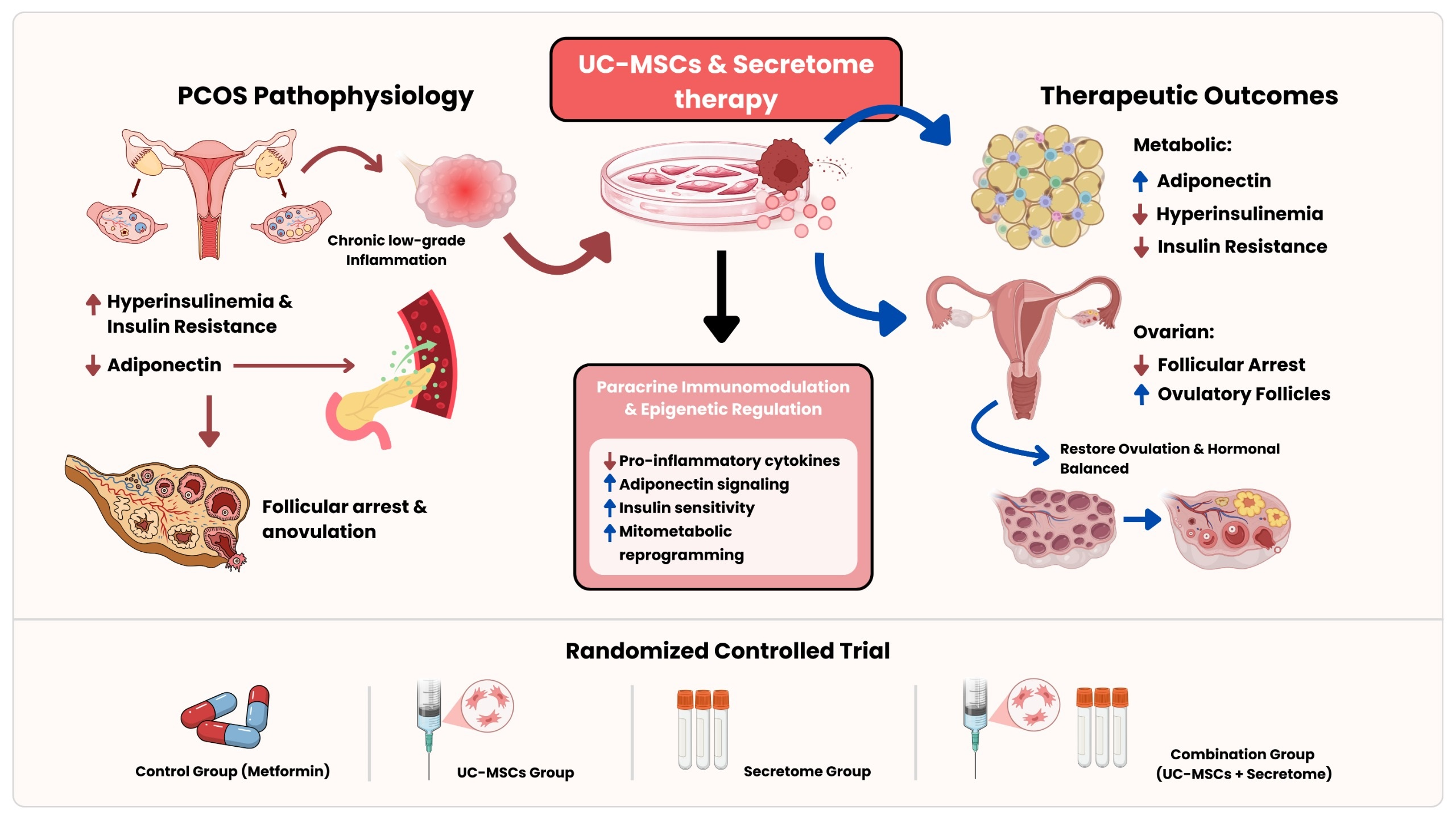
The Effect of Umbilical Cord-Derived Mesenchymal Stem Cells and Secretome on Metabolomic Profiles (C-Peptide, Adiponectin, Fasting Insulin, and Fasting Glucose): A Randomized Controlled Trial
 , , , , ,
Abstract
1. Introduction
2. Materials and Methods
2.1. Study Design and Participants
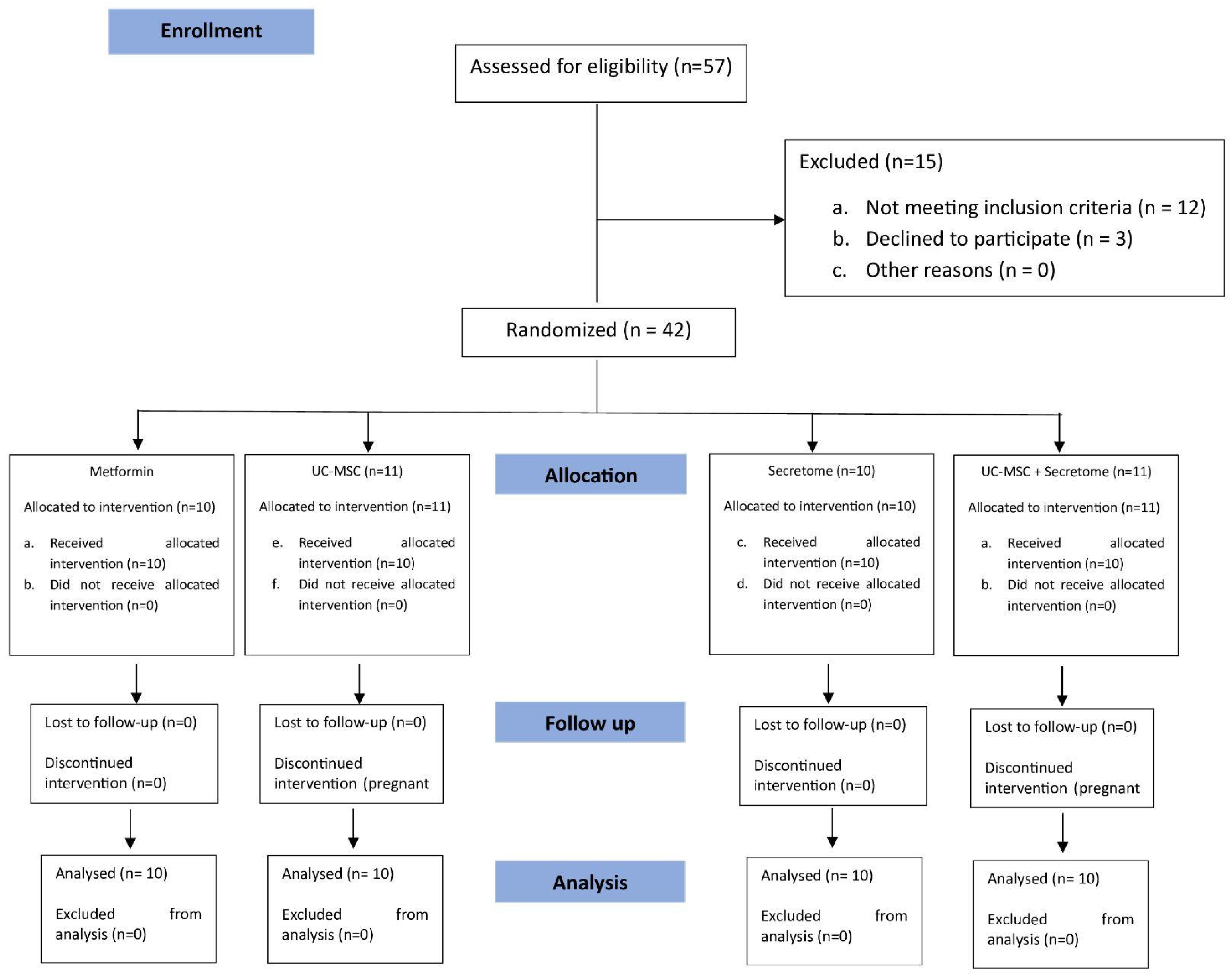
2.2. Participants and Eligibility Criteria
2.3. Randomization and Interventions
2.4. Preparation of UC-MSCs
2.5. Preparation of UC-MSCs-Derived-Secretome
2.6. Outcomes and Follow-Up
2.7. Statistical Analysis
3. Results
3.1. Baseline Characteristics
3.2. Changes in Metabolic Biomarkers over Time
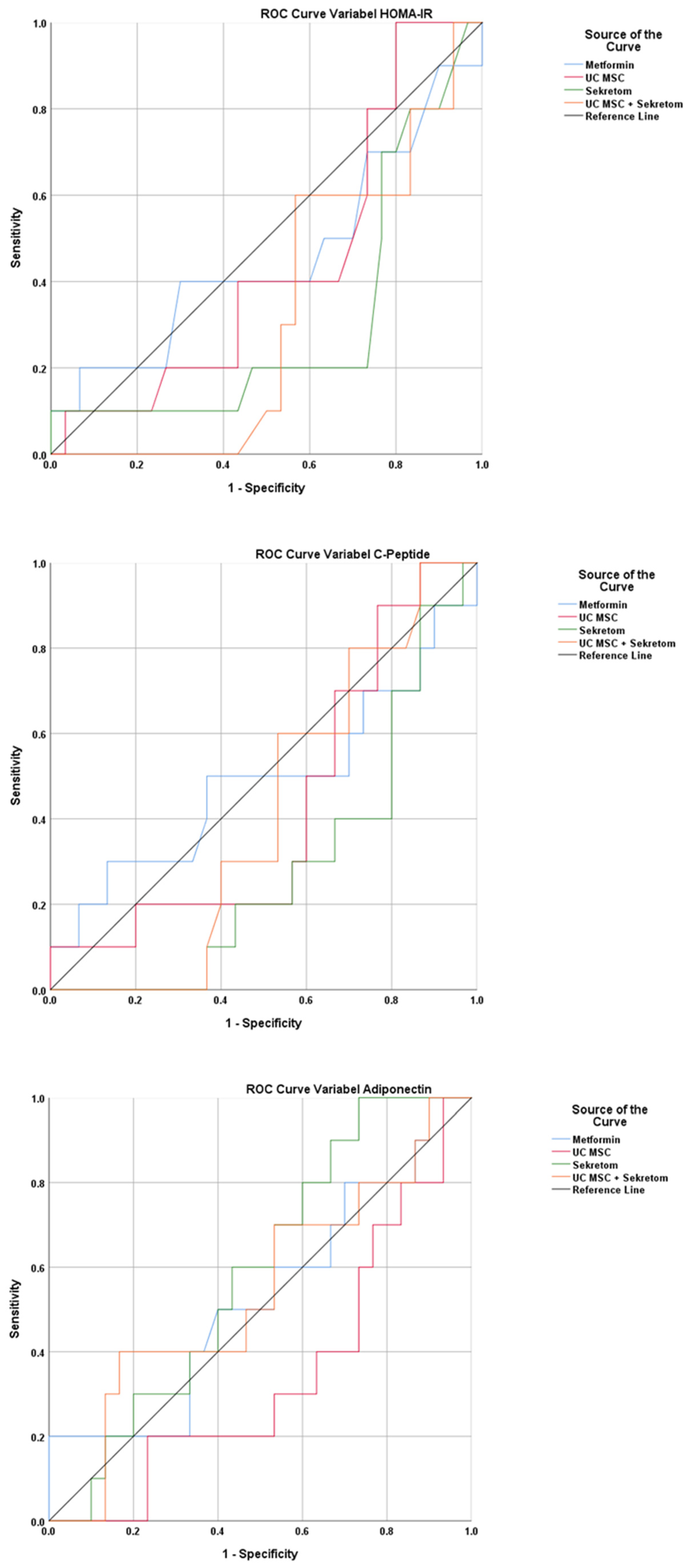
3.2.1. C-Peptide
3.2.2. Adiponectin
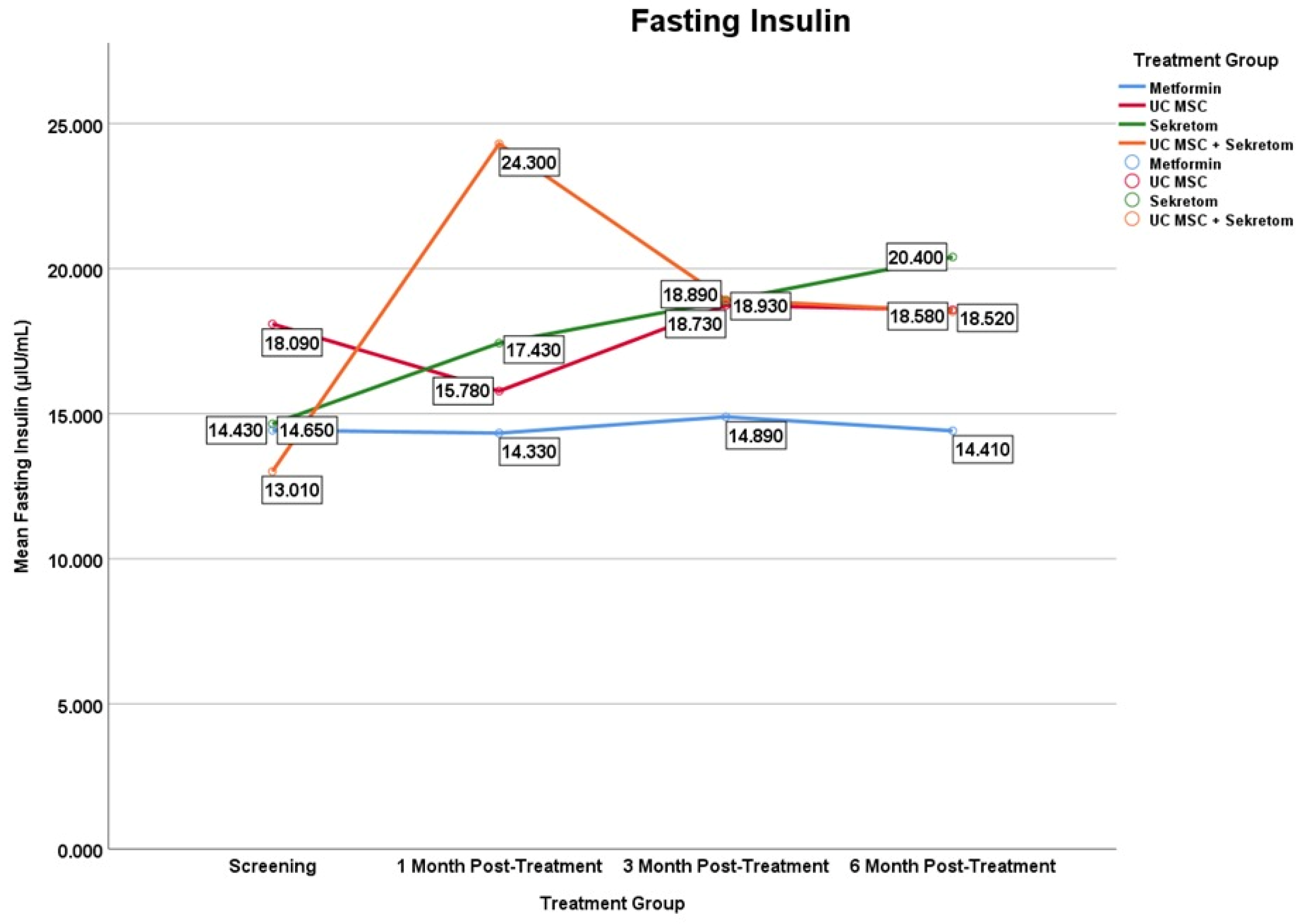
3.2.3. Fasting Insulin
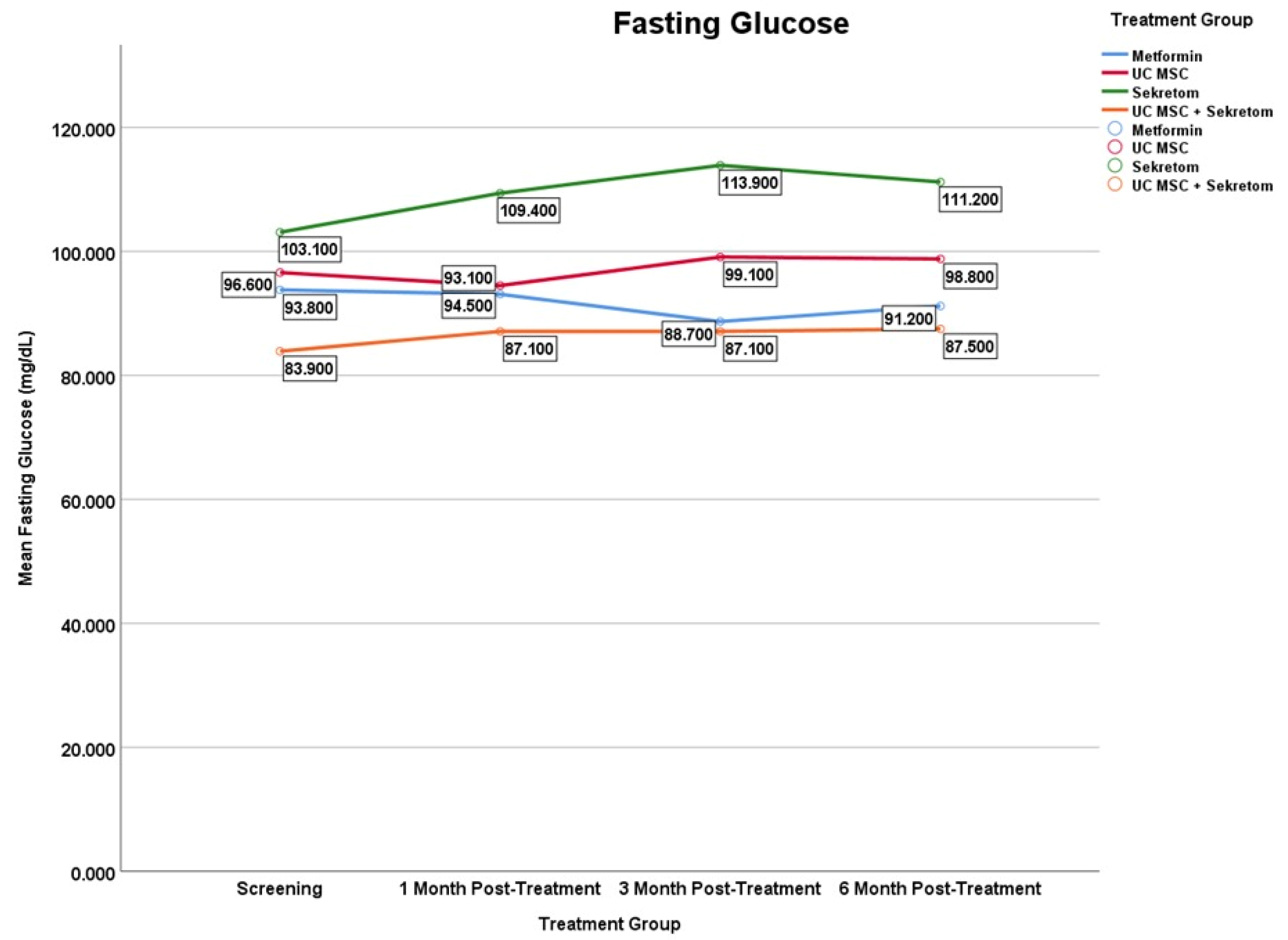
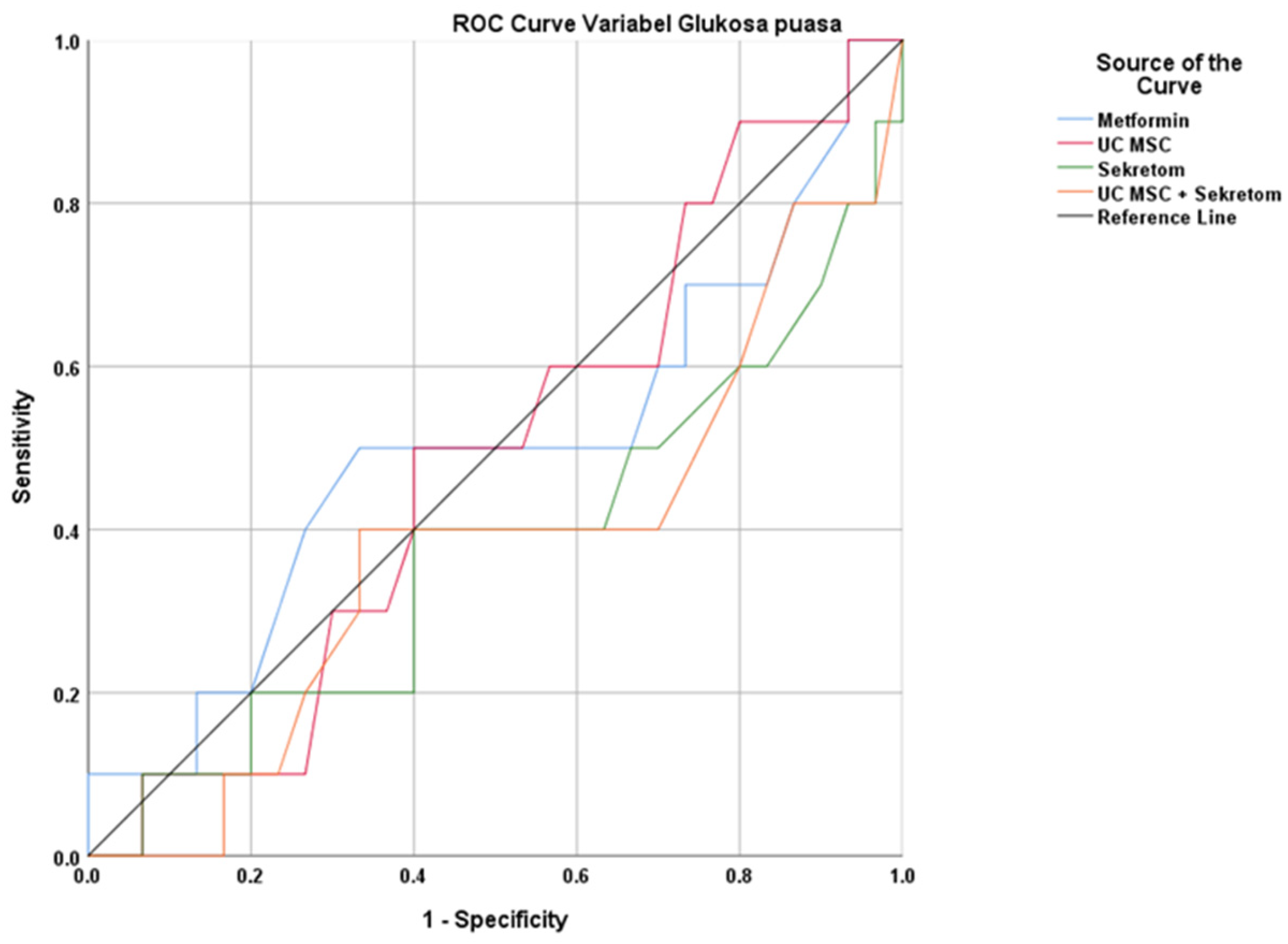
3.2.4. Fasting Glucose
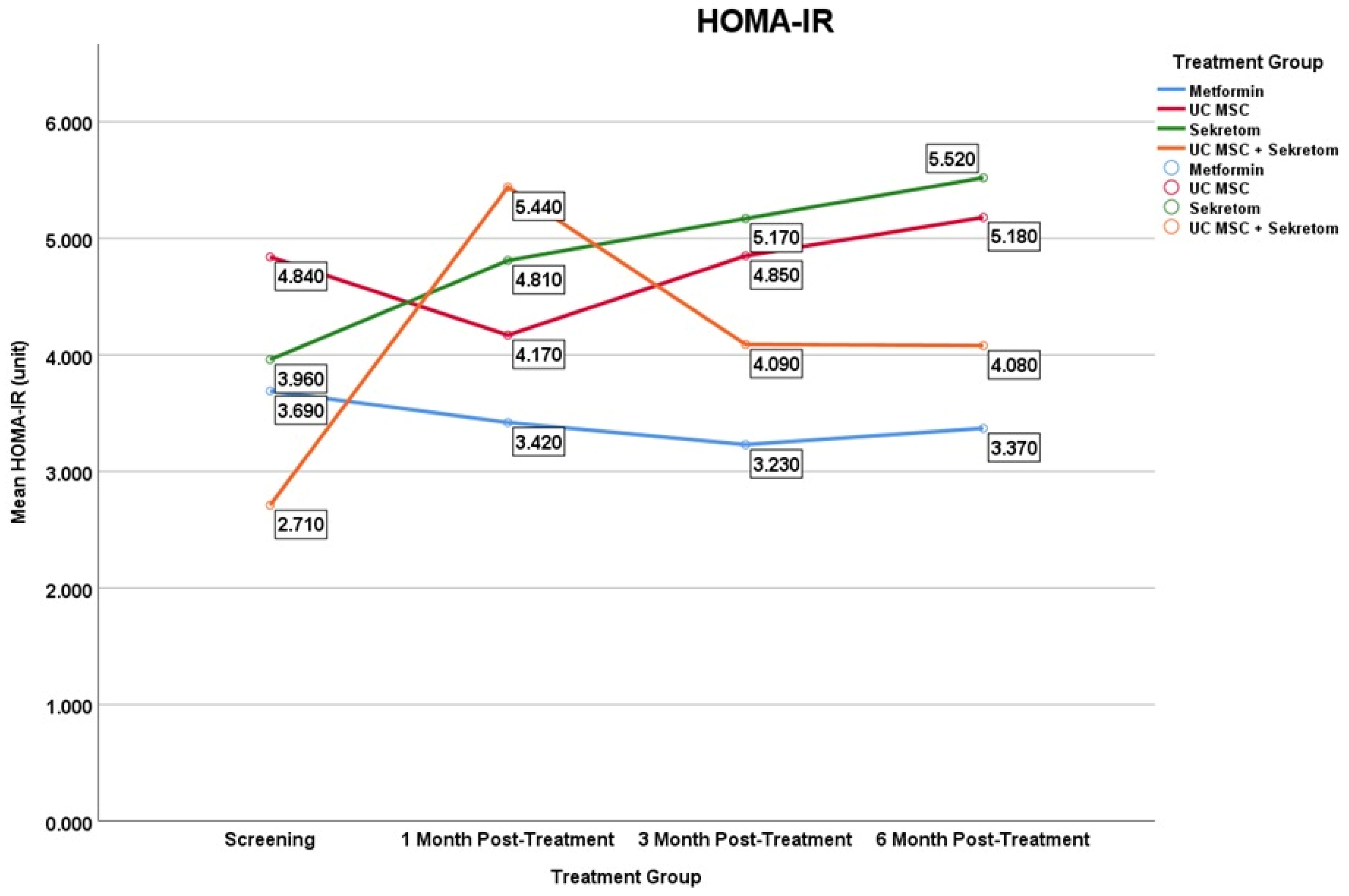
3.2.5. HOMA-IR


| Biomarker | Group | Month 1 | p-Value | Month 3 | p-Value | Month 6 | p-Value * |
|---|---|---|---|---|---|---|---|
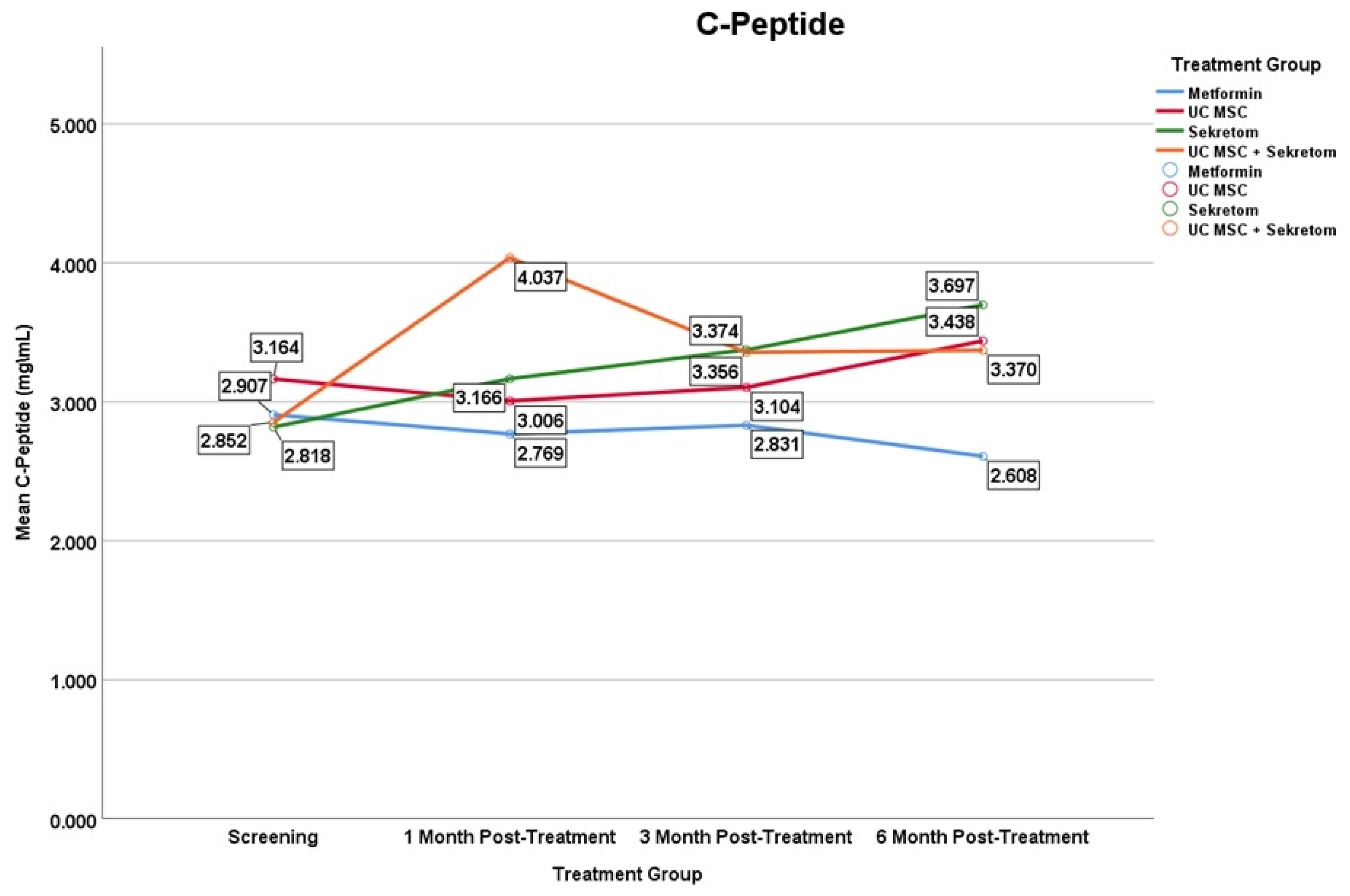
| C-Peptide | Metformin | −0.138 ± 1.03 | 0.799 | −0.076 ± 1.63 | 0.333 | −0.299 ± 1.33 | 0.878 |
| UC MSC | −0.158 ± 0.72 | 0.508 | −0.060 ± 0.99 | 0.878 | 0.274 ± 0.60 | 0.285 | |
| Secretome | 0.348 ± 0.59 | 0.093 | 0.556 ± 1.11 | 0.169 | 0.879 ± 0.69 | 0.007 * | |
| UC MSC + Secretome | 1.185 ± 2.27 | 0.114 | 0.504 ± 1.13 | 0.333 | 0.518 ± 1.23 | 0.203 | |
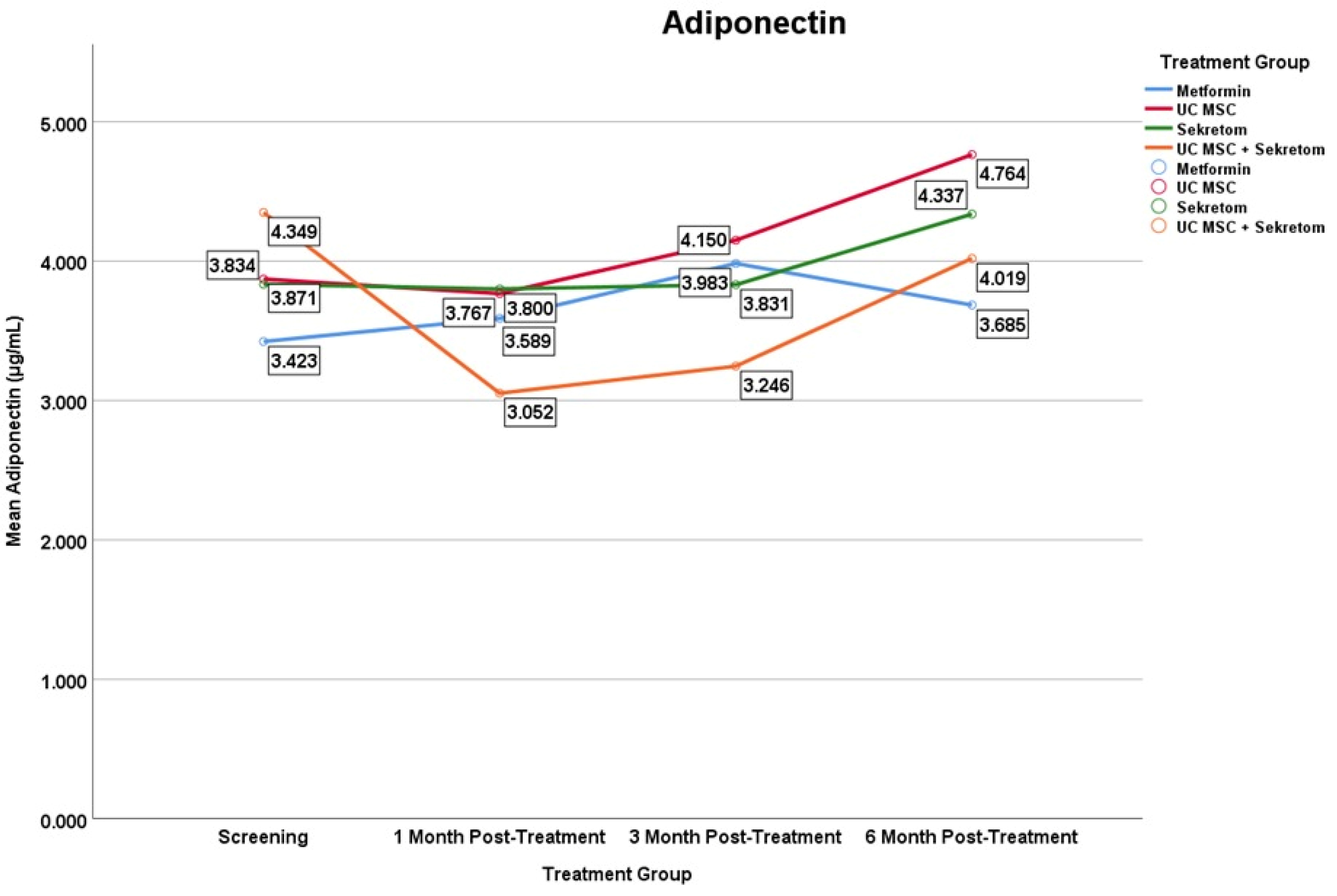
| Adiponectin | Metformin | 0.166 ± 1.15 | 0.799 | 0.560 ± 1.00 | 0.139 | 0.262 ± 1.03 | 0.678 |
| UC MSC | −0.104 ± 1.36 | 0.445 | 0.279 ± 1.14 | 0.959 | 0.893 ± 0.86 | 0.016 * | |
| Secretome | −0.034 ± 1.55 | 0.959 | −0.003 ± 1.37 | 0.959 | 0.503 ± 1.70 | 0.386 | |
| UC MSC + Secretome | −1.297 ± 1.40 | 0.022 * | −1.103 ± 0.91 | 0.013 * | −0.330 ± 2.06 | 0.445 | |
| Fasting Insulin | Metformin | −0.100 ± 5.69 | 0.959 | 0.460 ± 9.25 | 0.285 | −0.020 ± 6.95 | 0.646 |
| UC MSC | −2.310 ± 6.31 | 0.114 | 0.640 ± 8.73 | 0.445 | 0.490 ± 4.78 | 0.878 | |
| Secretome | 2.780 ± 4.36 | 0.185 | 4.240 ± 8.77 | 0.114 | 5.750 ± 8.25 | 0.028 * | |
| UC MSC + Secretome | 11.290 ± 18.24 | 0.047 * | 5.920 ± 8.20 | 0.047 * | 5.510 ± 11.02 | 0.241 | |
| Fasting Glucose | Metformin | −0.700 ± 5.91 | 0.959 | −5.100 ± 23.47 | 0.799 | −2.600 ± 15.92 | 0.959 |
| UC MSC | −2.100 ± 9.33 | 0.386 | 2.500 ± 6.69 | 0.192 | 2.200 ± 7.83 | 0.758 | |
| Secretome | 6.300 ± 6.52 | 0.013 * | 10.800 ± 8.55 | 0.007 * | 8.100 ± 11.23 | 0.032 * | |
| UC MSC + Secretome | 3.200 ± 13.11 | 0.61 | 3.200 ± 7.05 | 0.213 | 3.600 ± 10.05 | 0.22 | |
| HOMA-IR | Metformin | −0.270 ± 2.02 | 0.959 | −0.460 ± 3.60 | 0.575 | −0.320 ± 2.76 | 0.683 |
| UC MSC | −0.670 ± 2.26 | 0.201 | 0.010 ± 2.76 | 0.359 | 0.340 ± 1.15 | 0.441 | |
| Secretome | 0.850 ± 1.25 | 0.058 | 1.210 ± 2.66 | 0.114 | 1.560 ± 2.53 | 0.047 * | |
| UC MSC + Secretome | 2.730 ± 4.65 | 0.059 | 1.380 ± 2.02 | 0.053 | 1.370 ± 2.69 | 0.241 |
3.2.6. Clinical Outcomes in PCOS Patients
4. Discussion
5. Strengths and Limitations
6. Conclusions
Author Contributions
Funding
Institutional Review Board Statement
Informed Consent Statement
Data Availability Statement
Acknowledgments
Conflicts of Interest
Abbreviations
| AES | Androgen Excess Society |
| AUC | Area Under the Curve |
| BCAA | Branched-Chain Amino Acids |
| CI | Confidence Interval |
| DMEM | Dulbecco’s Modified Eagle Medium |
| ELISA | Enzyme-Linked Immunosorbent Assay |
| FHS | Follicle-Stimulating Hormone |
| FG | Fasting Glucose |
| FI | Fasting Insulin |
| HDAC | Histone Deacetylase |
| IR | Insulin Resistance |
| IL | Interleukin |
| MSC | Mesenchymal Stem Cell |
| PCOS | Polycystic Ovary Syndrome |
| RCT | Randomized Controlled Trial |
| ROC | Receiver Operating Characteristic |
| TGF-β | Transforming Growth Factor Beta |
| UC-MSC | Umbilical Cord–Derived Mesenchymal Stem Cell |
| XR | Extended Release |
Appendix A


References
- Azziz, R.; Carmina, E.; Dewailly, D.; Diamanti-Kandarakis, E.; Escobar-Morreale, H.; Futterweit, W.; Janssen, O.E.; Legro, R.; Norman, R.; Taylor, A.E.; et al. Criteria for defining polycystic ovary syndrome as a predominantly hyperandrogenic syndrome: An androgen excess society guideline. J. Clin. Endocrinol. Metab. 2006, 91, 4237–4245. [Google Scholar] [CrossRef] [PubMed]
- Teede, H.; Deeks, A.; Moran, L. Polycystic ovary syndrome: A complex condition with psychological, reproductive and metabolic manifestations that impacts on health across the lifespan. BMC Med. 2010, 8, 41. [Google Scholar] [CrossRef] [PubMed]
- Aversa, A.; La Vignera, S.; Rago, R.; Gambineri, A.; Nappi, R.E.; Calogero, A.E.; Ferlin, A. Fundamental concepts and novel aspects of polycystic ovarian syndrome: Expert consensus resolutions. Front. Endocrinol. 2020, 11, 516. [Google Scholar] [CrossRef]
- Laganà, A.S.; Rossetti, P.; Buscema, M.; La Vignera, S.; Condorelli, R.A.; Gullo, G.; Granese, R.; Triolo, O. Metabolism and Ovarian Function in PCOS Women: A Therapeutic Approach with Inositols. Int. J. Endocrinol. 2016, 2016, 6306410. [Google Scholar] [CrossRef] [PubMed]
- Salari, N.; Nankali, A.; Ghanbari, A.; Jafarpour, S.; Ghasemi, H.; Dokaneheifard, S.; Mohammadi, M. Global prevalence of polycystic ovary syndrome in women worldwide: A comprehensive systematic review and meta-analysis. Arch. Gynecol. Obstet. 2024, 310, 1303–1314. [Google Scholar] [CrossRef]
- Gabrielli, L.; Aquino, E.M. Polycystic ovary syndrome in Salvador, Brazil: A prevalence study in primary healthcare. Reprod. Biol. Endocrinol. 2012, 10, 96. [Google Scholar] [CrossRef]
- Sayehmiri, F.; Kiani, F.; Sayehmiri, K.; Maleki, F.; Ahmadi, M.; Shohani, M. Prevalence of polycystic ovary syndrome in Iranian women: A systematic review and meta-analysis. Iran. J. Obstet. Gynecol. Infertil. 2014, 17, 11–21. [Google Scholar]
- Li, W.; Chen, Q.; Xie, Y.; Hu, J.; Yang, S.; Lin, M. Prevalence and degree of insulin resistance in Chinese Han women with PCOS: Results from euglycemic-hyperinsulinemic clamps. Clin. Endocrinol. 2019, 90, 138–144. [Google Scholar] [CrossRef]
- Rojas, J.; Chávez, M.; Olivar, L.; Rojas, M.; Morillo, J.; Mejías, J.; Calvo, M.; Bermúdez, V. Polycystic Ovary Syndrome, Insulin Resistance, and Obesity: Navigating the Pathophysiologic Labyrinth. Int. J. Reprod. Med. 2014, 2014, 719050. [Google Scholar] [CrossRef]
- Su, P.; Chen, C.; Sun, Y. Physiopathology of polycystic ovary syndrome in endocrinology, metabolism and inflammation. J. Ovarian Res. 2025, 18, 34. [Google Scholar] [CrossRef]
- Velez, L.M.; Seldin, M.; Motta, A.B. Inflammation and reproductive function in women with polycystic ovary syndrome. Biol. Reprod. 2021, 104, 1205–1217. [Google Scholar] [CrossRef]
- Aboeldalyl, S.; James, C.; Seyam, E.; Ibrahim, E.M.; Shawki, H.E.-D.; Amer, S. The role of chronic inflammation in polycystic ovarian syndrome—A systematic review and meta-analysis. Int. J. Mol. Sci. 2021, 22, 2734. [Google Scholar] [CrossRef]
- González, F. Inflammation in Polycystic Ovary Syndrome: Underpinning of insulin resistance and ovarian dysfunction. Steroids 2012, 77, 300–305. [Google Scholar] [CrossRef] [PubMed]
- Haddawi, K.H.; Yaseen, B.R.; Alredha, R.D.A.; Handool, K.O. Insulin Resistance, Adiponectin, and Dyslipidemia as Key Determinants of Metabolic and Reproductive Dysregulation in Polycystic Ovary Syndrome. Indones. Biomed. J. 2025, 17, 125–133. [Google Scholar] [CrossRef]
- Boccardi, V.; Mancinetti, F.; Baroni, M.; Cecchetti, R.; Bastiani, P.; Ruggiero, C.; Mecocci, P. Metabolic Score for Insulin Resistance (METS-IR) and Circulating Cytokines in Older Persons: The Role of Gender and Body Mass Index. Nutrients 2022, 14, 3228. [Google Scholar] [CrossRef] [PubMed]
- Rajska, A.; Buszewska-Forajta, M.; Rachoń, D.; Markuszewski, M.J. Metabolomic Insight into Polycystic Ovary Syndrome—An Overview. Int. J. Mol. Sci. 2020, 21, 4853. [Google Scholar] [CrossRef]
- Mohammadi, M. Oxidative Stress and Polycystic Ovary Syndrome: A Brief Review. Int. J. Prev. Med. 2019, 10, 86. [Google Scholar] [CrossRef] [PubMed]
- Zeber-Lubecka, N.; Ciebiera, M.; Hennig, E.E. Polycystic Ovary Syndrome and Oxidative Stress—From Bench to Bedside. Int. J. Mol. Sci. 2023, 24, 14126. [Google Scholar] [CrossRef]
- Zhang, J.; Bao, Y.; Zhou, X.; Zheng, L. Polycystic ovary syndrome and mitochondrial dysfunction. Reprod. Biol. Endocrinol. 2019, 17, 67. [Google Scholar] [CrossRef]
- Prayitno, G.D.; Lestari, K.; Sartika, C.R.; Djuwantono, T.; Widjaya, A.; Muharam, R.; Hidayat, Y.M.; Wulandari, D.; Haifa, R.; Naura, N.F.; et al. Potential of Mesenchymal Stem Cells and Their Secretomes in Decreasing Inflammation Markers in Polycystic Ovary Syndrome Treatment: A Systematic Review. Medicines 2022, 10, 3. [Google Scholar] [CrossRef]
- Nejabati, H.R.; Nikzad, S.; Roshangar, L. Therapeutic Potential of Mesenchymal Stem Cells in PCOS. Curr. Stem Cell Res. Ther. 2024, 19, 134–144. [Google Scholar] [CrossRef]
- Park, H.; Han, J.W.; Kim, G.J. Recent Trends in Polycystic Ovary Syndrome Treatment Based on Adult Stem Cell Therapies. Clin. Exp. Reprod. Med. 2025, 52, 189–201. [Google Scholar] [CrossRef] [PubMed Central]
- Amisi, C.A. Markers of insulin resistance in Polycystic ovary syndrome women: An update. World J. Diabetes 2022, 13, 129–149. [Google Scholar] [CrossRef]
- Khan, M.J.; Ullah, A.; Basit, S. Genetic basis of polycystic ovary syndrome (PCOS): Current perspectives. Appl. Clin. Genet. 2019, 12, 249–260. [Google Scholar] [CrossRef]
- Dunaif, A.; Wu, X.; Lee, A.; Diamanti-Kandarakis, E. Defects in insulin receptor signaling in vivo in the polycystic ovary syndrome (PCOS). Am. J. Physiol. Metab. 2001, 281, E392–E399. [Google Scholar] [CrossRef] [PubMed]
- Dawood, A.S.; Goyal, M. Debates regarding lean patients with polycystic ovary syndrome: A narrative review. J. Hum. Reprod. Sci. 2017, 10, 154–161. [Google Scholar] [CrossRef] [PubMed]
- Gholinezhad, M.; Gholsorkhtabaramiri, M.; Esmaeilzadeh, S.; Ghanbarpour, A. Insulin Resistance and Adverse Metabolic Profile in Overweight/Obese and Normal Weight of Young Women with Polycystic Ovary Syndrome. Casp. J. Intern. Med. 2018, 9, 260–267. [Google Scholar] [CrossRef] [PubMed Central]
- Yildizhan, B.; Ilhan, G.A.; Pekin, T. The impact of insulin resistance on clinical, hormonal and metabolic parameters in lean women with polycystic ovary syndrome. J. Obstet. Gynaecol. 2016, 36, 893–896. [Google Scholar] [CrossRef]
- Toosy, S.; Sodi, R.; Pappachan, J.M. Lean Polycystic Ovary Syndrome (PCOS): An Evidence-Based Practical Approach. J. Diabetes Metab. Disord. 2018, 17, 277–285. [Google Scholar] [CrossRef]
- Hayes, E.; Winston, N.; Stocco, C. Molecular crosstalk between insulin-like growth factors and follicle-stimulating hormone in the regulation of granulosa cell function. Reprod. Med. Biol. 2024, 23, e12575. [Google Scholar] [CrossRef]
- Franks, S.; Gilling-Smith, C.; Watson, H.; Willis, D. Insulin action in the normal and polycystic ovary. Endocrinol. Metab. Clin. N. Am. 1999, 28, 361–378. [Google Scholar] [CrossRef] [PubMed]
- Busari, K.A.; Tulay, P. Polycystic ovary syndrome: Emerging stem cell therapies. Rev. Assoc. Bras. 2024, 70, e20231436. [Google Scholar] [CrossRef] [PubMed]
- Ullah, A.; Chen, Y.; Zhang, F.; Shen, B. Beyond Glycemic Control: Molecular Mechanisms of Metformin in Modulating Cytokine Networks in Polycystic Ovary Syndrome. Front. Endocrinol. 2026, 17, 1749906. [Google Scholar] [CrossRef]
- Pan, J.-X.; Tan, Y.-J.; Wang, F.-F.; Hou, N.-N.; Xiang, Y.-Q.; Zhang, J.-Y.; Liu, Y.; Qu, F.; Meng, Q.; Xu, J.; et al. Aberrant expression and DNA methylation of lipid metabolism genes in PCOS: A new insight into its pathogenesis. Clin. Epigenetics 2018, 10, 6. [Google Scholar] [CrossRef]
- Hosseini, E.; Shahhoseini, M.; Afsharian, P.; Karimian, L.; Ashrafi, M.; Mehraein, F.; Afatoonian, R. Role of epigenetic modifications in the aberrant CYP19A1 gene expression in polycystic ovary syndrome. Arch. Med. Sci. 2019, 15, 887–895. [Google Scholar] [CrossRef]
- Combs, J.C.; Hill, M.J.D.; Decherney, A.H. Polycystic Ovarian Syndrome Genetics and Epigenetics. Clin. Obstet. Gynecol. 2021, 64, 20–25. [Google Scholar] [CrossRef]
- De Witte, S.F.; Peters, F.S.; Merino, A.; Korevaar, S.S.; Van Meurs, J.B.; O’FLynn, L.; Elliman, S.J.; Newsome, P.N.; Boer, K.; Baan, C.C.; et al. Epigenetic changes in umbilical cord mesenchymal stromal cells upon stimulation and culture expansion. Cytotherapy 2018, 20, 919–929. [Google Scholar] [CrossRef]
- Sarvestani, M.; Rajabzadeh, A.; Mazoochi, T.; Samimi, M.; Navari, M.; Moradi, F. Use of placental-derived mesenchymal stem cells to restore ovarian function and metabolic profile in a rat model of the polycystic ovarian syndrome. BMC Endocr. Disord. 2024, 24, 154. [Google Scholar] [CrossRef]
- Chen, G.; Fan, X.-Y.; Zheng, X.-P.; Jin, Y.-L.; Liu, Y.; Liu, S.-C. Human umbilical cord-derived mesenchymal stem cells ameliorate insulin resistance via PTEN-mediated crosstalk between the PI3K/Akt and Erk/MAPKs signaling pathways in the skeletal muscles of db/db mice. Stem Cell Res. Ther. 2020, 11, 401. [Google Scholar] [CrossRef]
- Chatzianagnosti, S.; Dermitzakis, I.; Theotokis, P.; Kousta, E.; Mastorakos, G.; Manthou, M.E. Application of Mesenchymal Stem Cells in Female Infertility Treatment: Protocols and Preliminary Results. Life 2024, 14, 1161. [Google Scholar] [CrossRef]
- Kavaldzhieva, K.; Mladenov, N.; Markova, M.; Belemezova, K. Mesenchymal Stem Cell Secretome: Potential Applications in Human Infertility Caused by Hormonal Imbalance, External Damage, or Immune Factors. Biomedicines 2025, 13, 586. [Google Scholar] [CrossRef]
- Cucinella, G.; Gullo, G.; Catania, E.; Perino, A.; Billone, V.; Marinelli, S.; Napoletano, G.; Zaami, S. Stem Cells and Infertility: A Review of Clinical Applications and Legal Frameworks. J. Pers. Med. 2024, 14, 135. [Google Scholar] [CrossRef]
- Hou, C.; Zhu, H.; Chang, X. Mesenchymal stem cells: Opening a new chapter in the treatment of gynecological diseases. Stem Cell Res. Ther. 2025, 16, 520. [Google Scholar] [CrossRef]
- Fortuna, A.; Alves, G.; Serralheiro, A.; Sousa, J.; Falcão, A. Intranasal delivery of systemic-acting drugs: Small-molecules and biomacromolecules. Eur. J. Pharm. Biopharm. 2014, 88, 8–27. [Google Scholar] [CrossRef]
- Shen, W.; You, T.; Xu, W.; Xie, Y.; Wang, Y.; Cui, M. Rapid and Widespread Distribution of Intranasal Small Extracellular Vesicles Derived from Mesenchymal Stem Cells throughout the Brain Potentially via the Perivascular Pathway. Pharmaceutics 2023, 15, 2578. [Google Scholar] [CrossRef]
- Vale-Fernandes, E.; Carrageta, D.F.; Moreira, M.V.; Guerra-Carvalho, B.; Rodrigues, B.; Sousa, D.; Brandão, R.; Leal, C.; Barreiro, M.; Tomé, A.; et al. Follicular fluid profiling unveils anti-Müllerian hormone alongside glycolytic and mitochondrial dysfunction as markers of polycystic ovary syndrome. Mol. Cell. Endocrinol. 2025, 602, 112536. [Google Scholar] [CrossRef] [PubMed]
- Xin, X.; Dong, L.; Li, J.; Zhang, J.; Wu, H. Cellular senescence and polycystic ovary syndrome: Mechanisms and therapeutic strategies from a new perspective. Ann. Med. 2025, 57, 2565437. [Google Scholar] [CrossRef] [PubMed]



| Biomarker | Metformin (n = 10) | UC-MSC (n = 10) | Secretome (n = 10) | UC-MSC + Secretome (n = 10) | p-Value * |
|---|---|---|---|---|---|
| C-Peptide | 2.907 ± 1.63 | 3.164 ± 1.18 | 2.818 ± 0.52 | 2.852 ± 0.55 | 0.964 |
| Adiponectin | 3.423 ± 1.11 | 3.871 ± 1.40 | 3.834 ± 1.16 | 4.349 ± 1.48 | 0.891 |
| Fasting Insulin | 14.430 ± 9.95 | 18.090 ± 10.33 | 14.650 ± 3.99 | 13.010 ± 3.27 | 0.657 |
| Fasting glucose | 93.800 ± 23.36 | 96.600 ± 34.81 | 103.100 ± 47.06 | 83.900 ± 6.45 | 0.615 |
| HOMA-IR | 3.690 ± 3.49 | 4.840 ± 5.39 | 3.960 ± 3.08 | 2.710 ± 0.73 | 0.703 |
| Outcome | Metformin (n = 10) | UC-MSC (n = 10) | Secretome (n = 10) | UC-MSC + Secretome (n = 10) |
|---|---|---|---|---|
| Improved menstrual cycle, n (%) | 8 (80%) | 5 (50%) | 6 (60%) | 7 (70%) |
| Ovulation achieved, n (%) | 5 (50%) | 6 (60%) | 7 (70%) | 5 (50%) |
| Pregnancy, n (%) | 2 (20%) | 4 (40%) | 1 (10%) | 3 (30%) |
| During observation | 1 | 0 | 1 | 2 |
| After 6 months therapy | 1 | 4 | 0 | 1 |
| Ovarian volume (mL) | ||||
| Baseline | 23.1 ± 8.9 | 24.8 ± 9.6 | 11.0 ± 5.9 | 13.3 ± 3.6 |
| Month 6 | 13.1 ± 5.4 | 11.9 ± 5.1 | 11.6 ± 5.6 | 9.6 ± 2.8 |
| Trend in ovarian volume | ↓ Progressive | ↓ Progressive | ↓ Mild | ↓ Fluctuating |
Disclaimer/Publisher’s Note: The statements, opinions and data contained in all publications are solely those of the individual author(s) and contributor(s) and not of MDPI and/or the editor(s). MDPI and/or the editor(s) disclaim responsibility for any injury to people or property resulting from any ideas, methods, instructions or products referred to in the content. |
© 2026 by the authors. Licensee MDPI, Basel, Switzerland. This article is an open access article distributed under the terms and conditions of the Creative Commons Attribution (CC BY) license.
Share and Cite
Prayitno, G.D.; Sartika, C.R.; Djuwantono, T.; Wijaya, A.; Muharam, R.; Hidayat, Y.M.; Haifa, R.; Zahrah, A.; Lestari, K. The Effect of Umbilical Cord-Derived Mesenchymal Stem Cells and Secretome on Metabolomic Profiles (C-Peptide, Adiponectin, Fasting Insulin, and Fasting Glucose): A Randomized Controlled Trial. J. Clin. Med. 2026, 15, 1707. https://doi.org/10.3390/jcm15051707
Prayitno GD, Sartika CR, Djuwantono T, Wijaya A, Muharam R, Hidayat YM, Haifa R, Zahrah A, Lestari K. The Effect of Umbilical Cord-Derived Mesenchymal Stem Cells and Secretome on Metabolomic Profiles (C-Peptide, Adiponectin, Fasting Insulin, and Fasting Glucose): A Randomized Controlled Trial. Journal of Clinical Medicine. 2026; 15(5):1707. https://doi.org/10.3390/jcm15051707
Chicago/Turabian StylePrayitno, Gunawan Dwi, Cynthia Retna Sartika, Tono Djuwantono, Andi Wijaya, Raden Muharam, Yudi Mulyana Hidayat, Rima Haifa, Annisah Zahrah, and Keri Lestari. 2026. "The Effect of Umbilical Cord-Derived Mesenchymal Stem Cells and Secretome on Metabolomic Profiles (C-Peptide, Adiponectin, Fasting Insulin, and Fasting Glucose): A Randomized Controlled Trial" Journal of Clinical Medicine 15, no. 5: 1707. https://doi.org/10.3390/jcm15051707
APA StylePrayitno, G. D., Sartika, C. R., Djuwantono, T., Wijaya, A., Muharam, R., Hidayat, Y. M., Haifa, R., Zahrah, A., & Lestari, K. (2026). The Effect of Umbilical Cord-Derived Mesenchymal Stem Cells and Secretome on Metabolomic Profiles (C-Peptide, Adiponectin, Fasting Insulin, and Fasting Glucose): A Randomized Controlled Trial. Journal of Clinical Medicine, 15(5), 1707. https://doi.org/10.3390/jcm15051707