Relationship Between the Uric Acid Level and CNS Relapse Risk in Patients with Newly Diagnosed Adult Diffuse Large B Cell Lymphoma


Abstract
1. Introduction
2. Methods
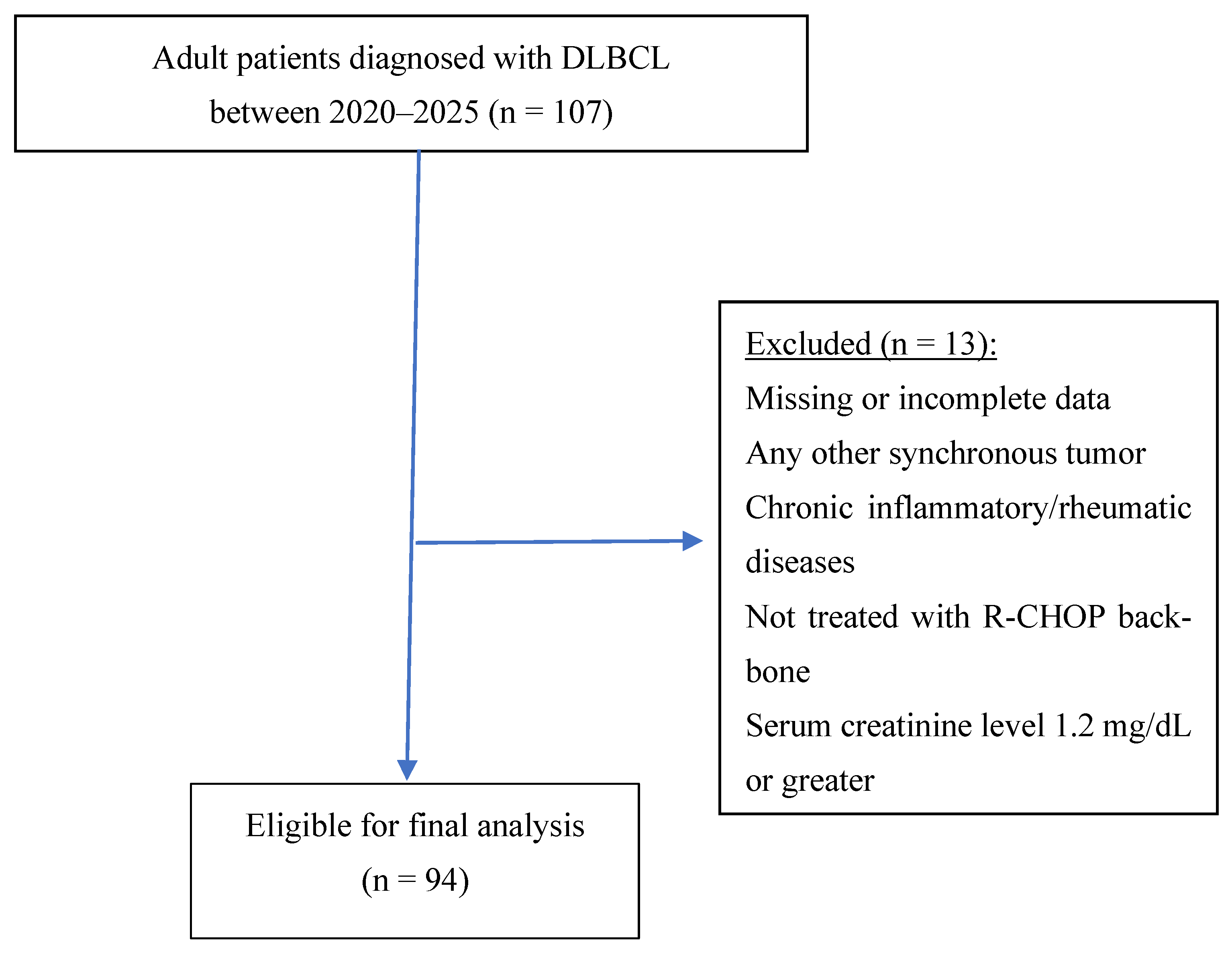
2.1. Study Design and Subjects
2.2. Ethics Approval
2.3. Definitions
2.4. Endpoints
2.5. Statistical Analysis
3. Results
3.1. Patient Characteristics
3.2. Comparison of Hematologic and Biochemical Parameters According to CNS-IPI Risk Groups
3.3. Logistic Regression Analyses for Factors Associated with High CNS-IPI Risk
3.4. Receiver Operating Characteristic (ROC) Analysis
3.5. Survival Analysis
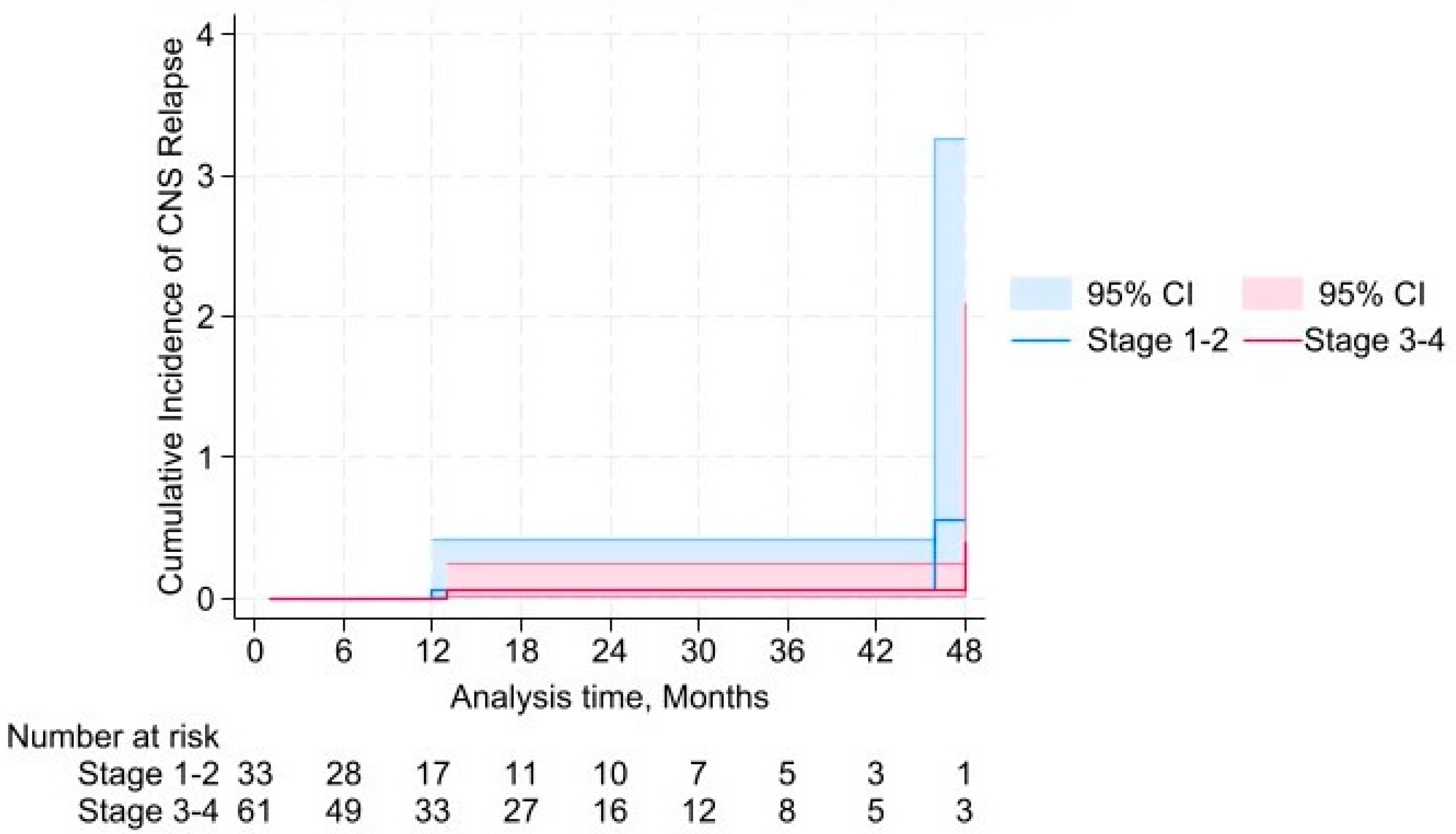
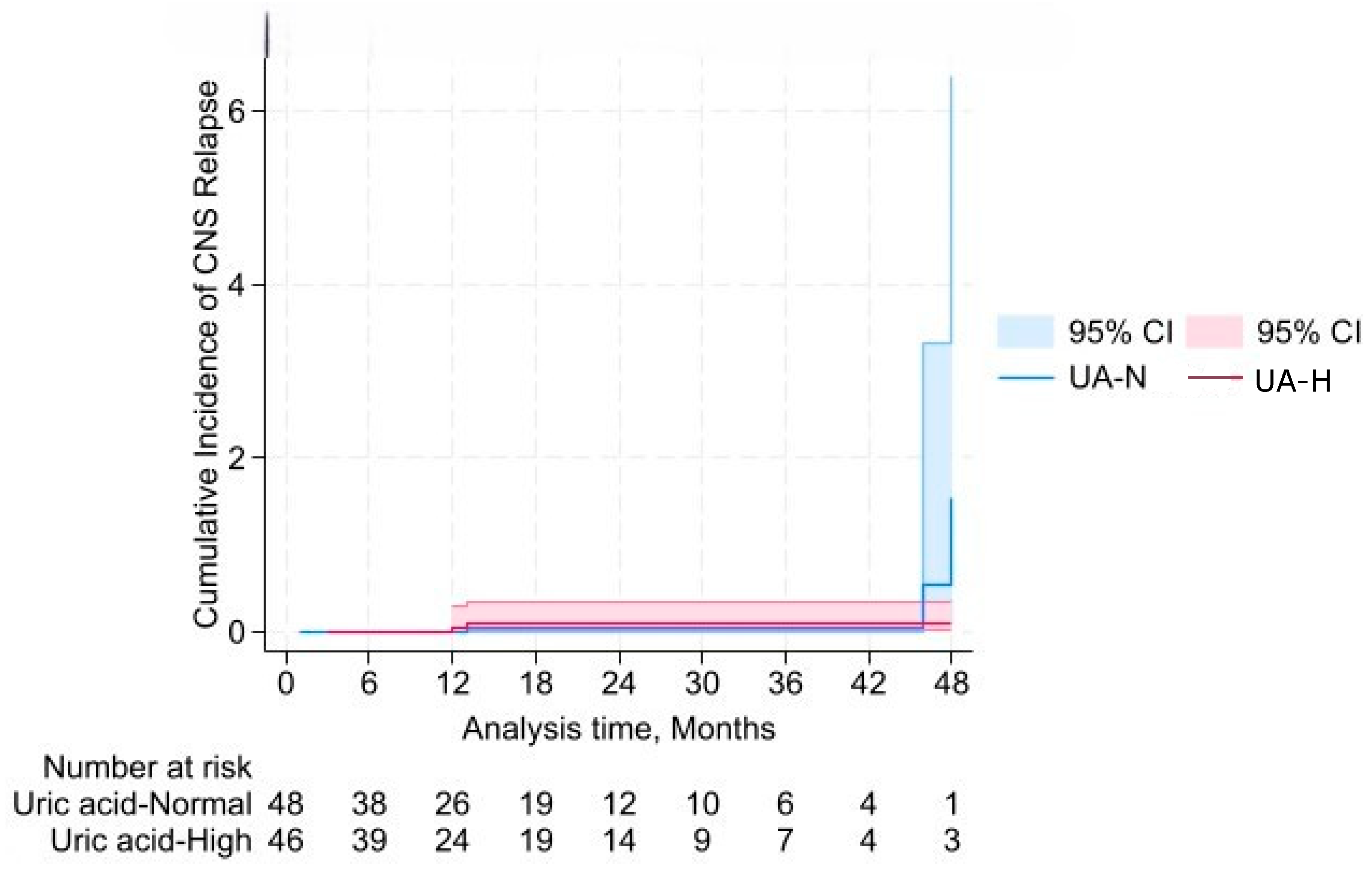
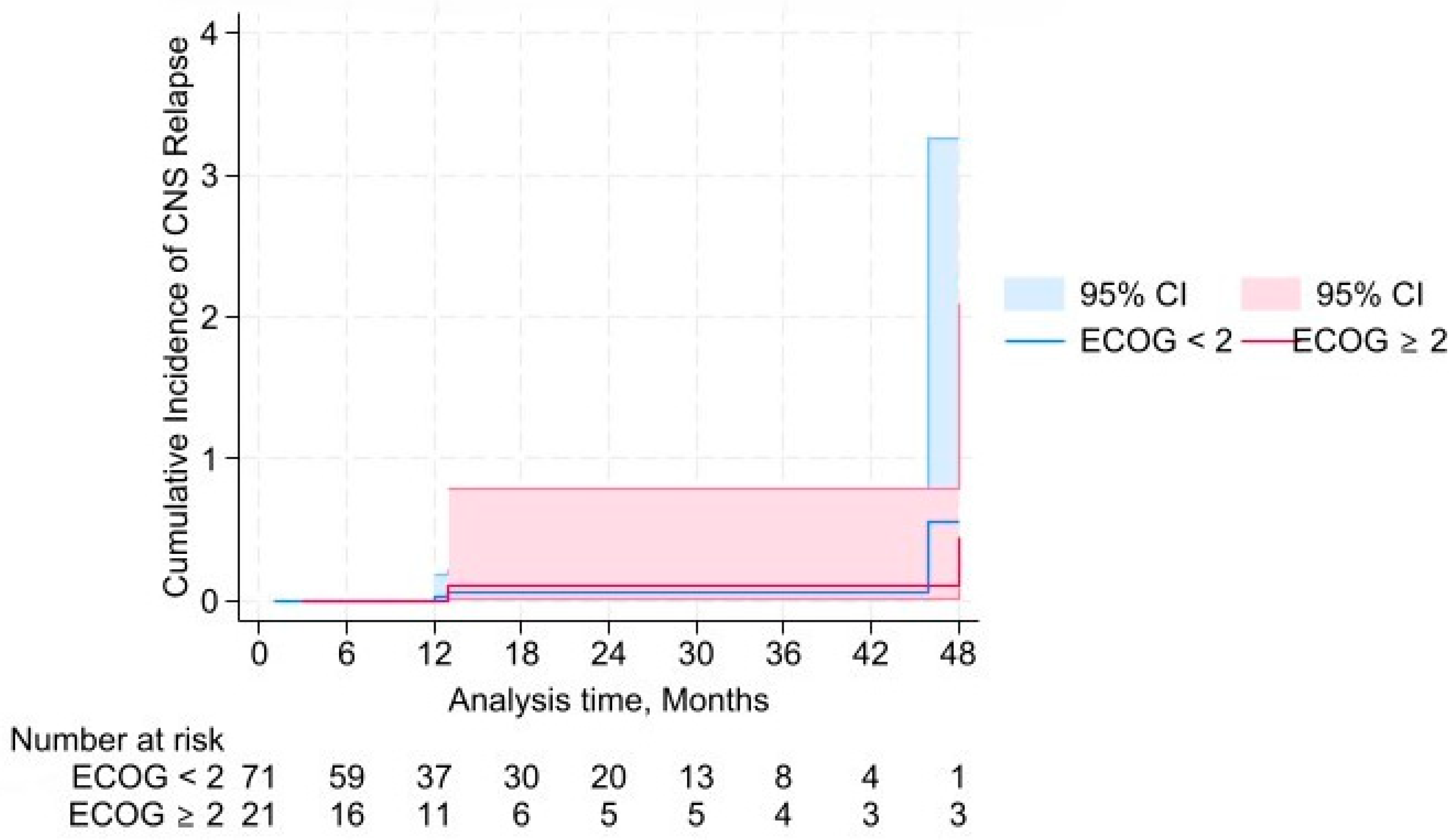
3.6. Cumulative Incidence of CNS Relapse
3.7. Comparisons of Cumulative Incidences of CNS Relapse with All CNS-IPI Parameters and Uric Acid Levels
4. Discussion
Author Contributions
Funding
Institutional Review Board Statement
Informed Consent Statement
Data Availability Statement
Conflicts of Interest
References
- Martelli, M.; Ferreri, A.J.; Agostinelli, C.; Di Rocco, A.; Pfreundschuh, M.; Pileri, S.A. Diffuse large B-cell lymphoma. Crit. Rev. Oncol. Hematol. 2013, 87, 146–171. [Google Scholar] [CrossRef]
- Berhan, A.; Almaw, A.; Damtie, S.; Solomon, Y. Diffuse large B cell lymphoma (DLBCL): Epidemiology, pathophysiology, risk stratification, advancement in diagnostic approaches and prospects: Narrative review. Discov. Oncol. 2025, 16, 184. [Google Scholar] [CrossRef] [PubMed]
- National Cancer Institute. Surveillance, Epidemiology, and End Results (SEER) Program. Released April 2020, Based on the November 2019 Submission (1975–2017). Available online: http://seer.cancer.gov/ (accessed on 5 August 2022).
- Abid, M.B.; Nasim, F.; Anwar, K.; Pervez, S. Diffuse large B cell lymphoma (DLBCL) in Pakistan: An emerging epidemic? Asian Pac. J. Cancer Prev. 2005, 6, 531–534. [Google Scholar]
- World Health Organization. Pathology and Genetics of Tumours of Haematopoietic and Lymphoid Tissues; International Agency for Research on Cancer: Lyon, France, 2001. [Google Scholar]
- Gouveia, G.R.; Siqueira, S.A.; Pereira, J. Pathophysiology and molecular aspects of diffuse large B-cell lymphoma. Rev. Bras. Hematol. Hemoter. 2012, 34, 447–451. [Google Scholar] [CrossRef]
- Bernstein, S.H.; Unger, J.M.; Leblanc, M.; Friedberg, J.; Miller, T.P.; Fisher, R.I. Natural history of CNS relapse in patients with aggressive non-Hodgkin’s lymphoma: A 20-year follow-up analysis of SWOG 8516—The Southwest Oncology Group. J. Clin. Oncol. 2009, 27, 114–119. [Google Scholar] [CrossRef]
- El-Galaly, T.C.; Cheah, C.Y.; Bendtsen, M.D.; Nowakowski, G.S.; Kansara, R.; Savage, K.J.; Connors, J.M.; Sehn, L.H.; Goldschmidt, N.; Shaulov, A.; et al. Treatment strategies, outcomes and prognostic factors in 291 patients with secondary CNS involvement by diffuse large B-cell lymphoma. Eur. J. Cancer 2018, 93, 57–68. [Google Scholar] [CrossRef]
- Alderuccio, J.P.; Nayak, L.; Cwynarski, K. How I treat secondary CNS involvement by aggressive lymphomas. Blood 2023, 142, 1771–1783. [Google Scholar] [CrossRef]
- Chua, B.J.G.; Low, C.E.; Yau, C.E.; Tan, Y.H.; Chiang, J.; Chang, E.W.Y.; Chan, J.Y.; Poon, E.Y.L.; Somasundaram, N.; Rashid, M.F.B.H.; et al. Recent updates on central nervous system prophylaxis in patients with high-risk diffuse large B-cell lymphoma. Exp. Hematol. Oncol. 2024, 13, 1. [Google Scholar] [CrossRef] [PubMed]
- Schmitz, N.; Zeynalova, S.; Nickelsen, M.; Kansara, R.; Villa, D.; Sehn, L.H.; Glass, B.; Scott, D.W.; Gascoyne, R.D.; Connors, J.M.; et al. CNS International Prognostic Index: A Risk Model for CNS Relapse in Patients with Diffuse Large B-Cell Lymphoma Treated with R-CHOP. J. Clin. Oncol. 2016, 34, 3150–3156. [Google Scholar] [CrossRef]
- Klanova, M.; Sehn, L.H.; Bence-Bruckler, I.; Cavallo, F.; Jin, J.; Martelli, M.; Stewart, D.; Vitolo, U.; Zaja, F.; Zhang, Q.; et al. Integration of cell of origin into the clinical CNS International Prognostic Index improves CNS relapse prediction in DLBCL. Blood 2019, 133, 919–926. [Google Scholar] [CrossRef] [PubMed]
- Oki, Y.; Noorani, M.; Lin, P.; Davis, R.E.; Neelapu, S.S.; Ma, L.; Ahmed, M.; Rodriguez, M.A.; Hagemeister, F.B.; Fowler, N.; et al. Double hit lymphoma: The MD Anderson Cancer Center clinical experience. Br. J. Haematol. 2014, 166, 891–901. [Google Scholar] [CrossRef] [PubMed]
- Jagannath, S.; Velasquez, W.S.; Tucker, S.L.; Fuller, L.M.; McLaughlin, P.W.; Manning, J.T.; North, L.B.; Cabanillas, F.C. Tumor burden assessment and its implication for a prognostic model in advanced diffuse large-cell lymphoma. J. Clin. Oncol. 1986, 4, 859–865. [Google Scholar] [CrossRef]
- Maurer, M.J. The International Prognostic Index in aggressive B-cell lymphoma. Haematologica 2023, 108, 2874–2879. [Google Scholar] [CrossRef] [PubMed]
- Li, Y.; Shi, P.; Xie, Y.; Qian, S. Serum uric acid level is a prognostic indicator and improves the predictive ability of the IPI score in diffuse large B-cell lymphoma. Int. J. Clin. Exp. Med. 2018, 11, 2223–2231. [Google Scholar]
- Prochazka, K.T.; Melchardt, T.; Posch, F.; Schlick, K.; Deutsch, A.; Beham-Schmid, C.; Weiss, L.; Gary, T.; Neureiter, D.; Klieser, E.; et al. NCCN-IPI score-independent prognostic potential of pretreatment uric acid levels for clinical outcome of diffuse large B-cell lymphoma patients. Br. J. Cancer 2016, 115, 1264–1272. [Google Scholar] [CrossRef]
- Bobillo, S.; Khwaja, J.; Ferreri, A.J.M.; Cwynarski, K. Prevention and management of secondary central nervous system lymphoma. Haematologica 2023, 108, 673–689. [Google Scholar] [CrossRef]
- Wilson, M.R.; Bobillo, S.; Cwynarski, K. CNS prophylaxis in aggressive B-cell lymphoma. Hematology 2022, 2022, 138–145. [Google Scholar] [CrossRef]
- Tian, J.; Barrantes, F.; Amoateng-Adjepong, Y.; Manthous, C.A. Rapid reversal of acute kidney injury and hospital outcomes: A retrospective cohort study. Am. J. Kidney Dis. 2009, 53, 974–981. [Google Scholar] [CrossRef]
- Oken, M.M.; Creech, R.H.; Tormey, D.C.; Horton, J.; Davis, T.E.; McFadden, E.T.; Carbone, P.P. Toxicity and response criteria of the Eastern Cooperative Oncology Group. Am. J. Clin. Oncol. 1982, 5, 649–655. [Google Scholar] [CrossRef]
- Cheson, B.D.; Fisher, R.I.; Barrington, S.F.; Cavalli, F.; Schwartz, L.H.; Zucca, E.; Lister, T.A. Recommendations for initial evaluation, staging, and response assessment of Hodgkin and non-Hodgkin lymphoma: The Lugano classification. J. Clin. Oncol. 2014, 32, 3059–3068. [Google Scholar] [CrossRef] [PubMed]
- Lister, T.A.; Crowther, D.; Sutcliffe, S.B.; Glatstein, E.; Canellos, G.P.; Young, R.C.; Rosenberg, S.A.; Coltman, C.A.; Tubiana, M. Report of a committee convened to discuss the evaluation and staging of patients with Hodgkin’s disease: Cotswolds meeting. J. Clin. Oncol. 1989, 7, 1630–1636, Erratum in J. Clin. Oncol. 1990, 8, 1602. [Google Scholar] [CrossRef]
- International Non-Hodgkin’s Lymphoma Prognostic Factors Project. A predictive model for aggressive non-Hodgkin’s lymphoma. N. Engl. J. Med. 1993, 329, 987–994. [CrossRef] [PubMed]
- Kim, S.J.; Hong, J.S.; Chang, M.H.; Kim, J.A.; Kwak, J.Y.; Kim, J.S.; Yoon, D.H.; Lee, W.S.; Do, Y.R.; Kang, H.J.; et al. Highly elevated serum lactate dehydrogenase is associated with central nervous system relapse in patients with diffuse large B-cell lymphoma: Results of a multicenter prospective cohort study. Oncotarget 2016, 7, 72033–72043. [Google Scholar] [CrossRef][Green Version]
- Kridel, R.; Telio, D.; Villa, D.; Sehn, L.H.; Gerrie, A.S.; Shenkier, T.; Klasa, R.; Slack, G.W.; Tan, K.; Gascoyne, R.D.; et al. Diffuse large B-cell lymphoma with testicular involvement: Outcome and risk of CNS relapse in the rituximab era. Br. J. Haematol. 2017, 176, 210–221. [Google Scholar] [CrossRef]
- Harrysson, S.; Eloranta, S.; Ekberg, S.; Enblad, G.; Jerkeman, M.; Wahlin, B.E.; Andersson, P.O.; Smedby, K.E. Incidence of relapsed/refractory diffuse large B-cell lymphoma (DLBCL) including CNS relapse in a population-based cohort of 4243 patients in Sweden. Blood Cancer J. 2021, 11, 9. [Google Scholar] [CrossRef] [PubMed]
- Hosein, P.J.; Maragulia, J.C.; Salzberg, M.P.; Press, O.W.; Habermann, T.M.; Vose, J.M.; Bast, M.; Advani, R.H.; Tibshirani, R.; Evens, A.M.; et al. A multicentre study of primary breast diffuse large B-cell lymphoma in the rituximab era. Br. J. Haematol. 2014, 165, 358–363. [Google Scholar] [CrossRef] [PubMed]
- Kunlayawutipong, T.; Rattanathammethee, T.; Punnachet, T.; Hantrakun, N.; Piriyakhuntorn, P.; Hantrakool, S.; Chai-Adisaksopha, C.; Rattarittamrong, E.; Tantiworawit, A.; Norasetthada, L.; et al. Prevalence and risk factors for hyperuricemia and hyperuricosuria in patients with hematologic malignancies. Front. Med. 2024, 11, 1343000. [Google Scholar] [CrossRef]
- Yue, C.F.; Feng, P.N.; Yao, Z.R.; Yu, X.G.; Lin, W.B.; Qian, Y.M.; Guo, Y.M.; Li, L.S.; Liu, M. High serum uric acid concentration predicts poor survival in patients with breast cancer. Clin. Chim. Acta 2017, 473, 160–165. [Google Scholar] [CrossRef]
- Wu, L.; Yang, W.; Zhang, Y.; Du, X.; Jin, N.; Chen, W.; Li, H.; Zhang, S.; Xie, B. Elevated Serum Uric Acid is Associated with Poor Survival in Advanced HCC Patients and Febuxostat Improves Prognosis in HCC Rats. Front. Pharmacol. 2021, 12, 778890. [Google Scholar] [CrossRef]
- Yan, J.; Zhu, C. Hyperuricemia is an Adverse Prognostic Factor for Colon Cancer Patients. Int. J. Gen. Med. 2021, 14, 3001–3006. [Google Scholar] [CrossRef]
- Agtas, G.; Alkan, A.; Tanriverdi, Ö. Serum uric acid level can predict asymptomatic brain metastasis at diagnosis in patients with small cell lung cancer. J. Egypt. Natl. Cancer Inst. 2024, 36, 28. [Google Scholar] [CrossRef] [PubMed]
- Suzuki, T.; Fujii, K.; Matsunaga, N.; Sasaki, H.; Kanamori, T.; Asano, A.; Kinoshita, S.; Narita, T.; Masaki, A.; Sanda, T.; et al. Impact of MYD88 and/or CD79B mutations on central nervous system relapse in patients with diffuse large B-cell lymphoma. Br. J. Haematol. 2025, 207, 92–100. [Google Scholar] [CrossRef] [PubMed]
- Wen, J.; Nie, X.; Zhou, Q.; Liu, Y.; Yue, J.; Zhang, Y.; Xu, F.; Su, J.; Liang, X. Elevated serum IL-10/IL-6 ratio as a novel biomarker for secondary central nervous system lymphoma and poor prognosis in DLBCL. Front. Immunol. 2025, 16, 1656044. [Google Scholar] [CrossRef] [PubMed]





| Variables | CNS-IPI High-Risk (n = 25) | CNS-IPI Low or Intermediate Risk (n = 69) | p Value |
|---|---|---|---|
| Age, years | 64.0 (60.0–70.5) | 58.0 (43.5–66.0) | 0.002 a |
| Gender, n (%) Male Female | 11 (44) 14 (56) | 41 (59.4) 28 (40.6) | 0.184 b |
| Leucocyte count, /uL | 10,000 (6800–10,725) | 8320 (4350–6000) | 0.152 a |
| Lymphocyte count, /uL | 1400 (895–2200) | 1640 (1315–2145) | 0.236 a |
| Neutrophil count, /uL | 5670 (3685–8790) | 5330 (3740–7050) | 0.928 c |
| Monocyte count, /uL | 700 (525–1020) | 520 (395–800) | 0.029 a |
| Hemoglobin, g/dL | 11.30 (9.60–12.95) | 13.60 (12.05–15.00) | <0.001 c |
| Platelet, /uL | 310,000 (227,500–401,000) | 277,000 (207,500–333,500) | 0.432 c |
| Beta-2 microglobulin, mg/L | 3.62 (2.21–5.30) | 2.16 (1.64–3.00) | 0.002 a |
| LDH, U/L | 467 (346–804) | 221 (186–289) | <0.001 a |
| Creatinine, mg/dL | 0.72 (0.62–0.86) | 0.76 (0.65–0.88) | 0.560 c |
| Uric acid, mg/dL | 6.30 (4.30–7.10) | 5.10 (4.05–6.40) | 0.008 c |
| Variables | CNS-IPI High-Risk (n = 25) | CNS-IPI Low or Intermediate Risk (n = 69) | p Value |
|---|---|---|---|
| ECOG, n (%) 0–1 2–3 | 9 (36) 16 (64) | 62 (89.8) 7 (10.2) | <0.001 a |
| Bulky disease, n (%) | 9 (36) | 11 (15.9) | 0.036 a |
| B symptoms, n (%) | 10 (40) | 8 (11.6) | 0.006 b |
| Cell of origin, n (%) | |||
| Germinal | 2 (8) | 28 (40.6) | |
| Non-Germinal | 17 (68) | 34 (49.3) | 0.007 a |
| Undetermined | 6 (24) | 7 (10.1) | |
| Extranodal Involvement, n (%) | |||
| None | 2 (8) | 34 (49.3) | |
| Single | 8 (32) | 30 (43.5) | <0.001 a |
| Two or more | 15 (60) | 5 (7.2) | |
| Stage, n (%) | |||
| 1–2 | 1 (4) | 32 (46.3) | <0.001 a |
| 3–4 | 24 (96) | 37 (53.7) |
Disclaimer/Publisher’s Note: The statements, opinions and data contained in all publications are solely those of the individual author(s) and contributor(s) and not of MDPI and/or the editor(s). MDPI and/or the editor(s) disclaim responsibility for any injury to people or property resulting from any ideas, methods, instructions or products referred to in the content. |
© 2026 by the authors. Licensee MDPI, Basel, Switzerland. This article is an open access article distributed under the terms and conditions of the Creative Commons Attribution (CC BY) license.
Share and Cite
Karakuş, A.; Hatipoğlu, U.; Demircan, V.; Ayyıldız, O. Relationship Between the Uric Acid Level and CNS Relapse Risk in Patients with Newly Diagnosed Adult Diffuse Large B Cell Lymphoma. J. Clin. Med. 2026, 15, 1642. https://doi.org/10.3390/jcm15041642
Karakuş A, Hatipoğlu U, Demircan V, Ayyıldız O. Relationship Between the Uric Acid Level and CNS Relapse Risk in Patients with Newly Diagnosed Adult Diffuse Large B Cell Lymphoma. Journal of Clinical Medicine. 2026; 15(4):1642. https://doi.org/10.3390/jcm15041642
Chicago/Turabian StyleKarakuş, Abdullah, Uğur Hatipoğlu, Vehbi Demircan, and Orhan Ayyıldız. 2026. "Relationship Between the Uric Acid Level and CNS Relapse Risk in Patients with Newly Diagnosed Adult Diffuse Large B Cell Lymphoma" Journal of Clinical Medicine 15, no. 4: 1642. https://doi.org/10.3390/jcm15041642
APA StyleKarakuş, A., Hatipoğlu, U., Demircan, V., & Ayyıldız, O. (2026). Relationship Between the Uric Acid Level and CNS Relapse Risk in Patients with Newly Diagnosed Adult Diffuse Large B Cell Lymphoma. Journal of Clinical Medicine, 15(4), 1642. https://doi.org/10.3390/jcm15041642