Association of IMP3 and CD10 Expression with Clinicopathological Features and Outcomes in Phyllodes Tumors: A Retrospective Single-Center Study

 , , , , , , , ,
Abstract
1. Introduction
2. Materials and Methods
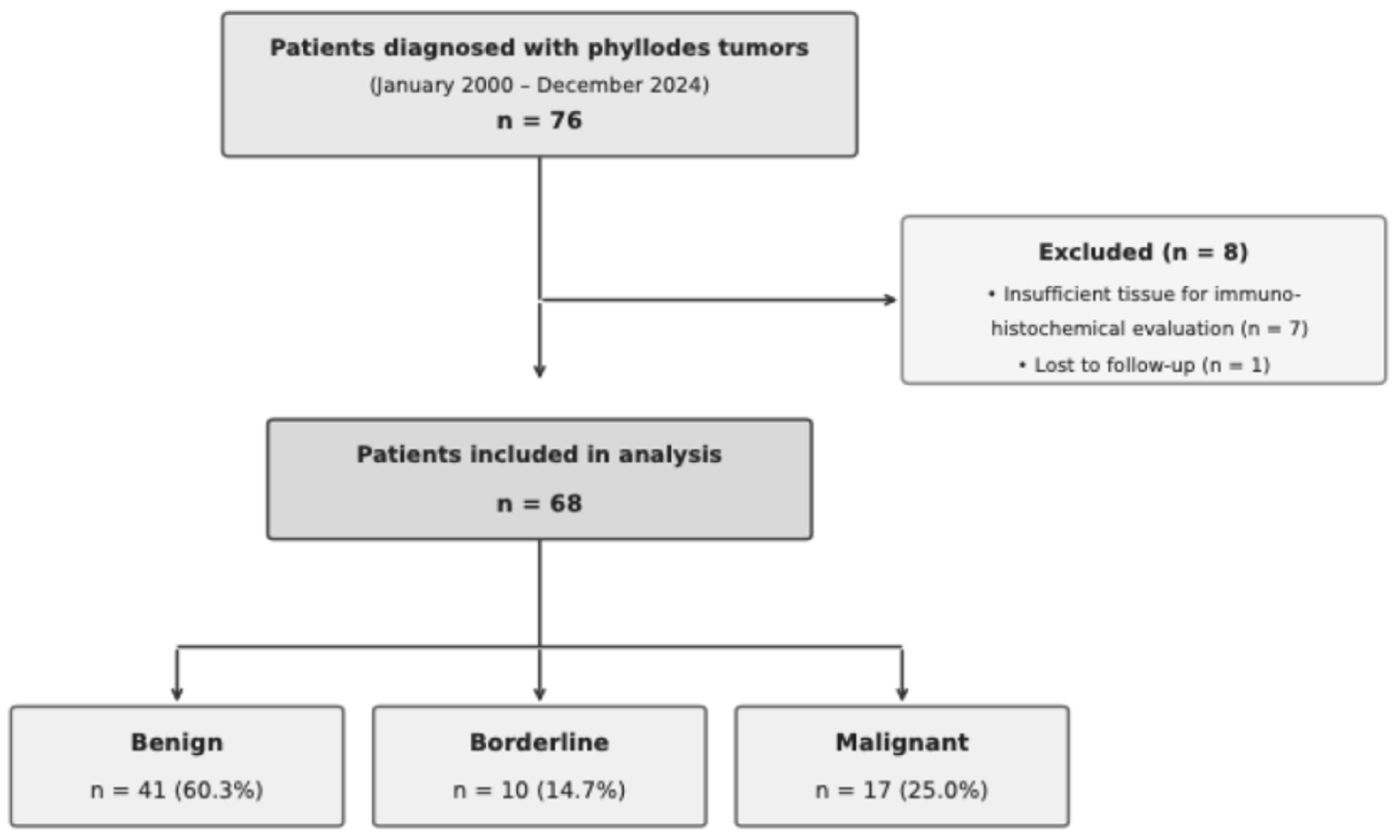
2.1. Study Design and Patient Selection
2.2. Histopathological Examination
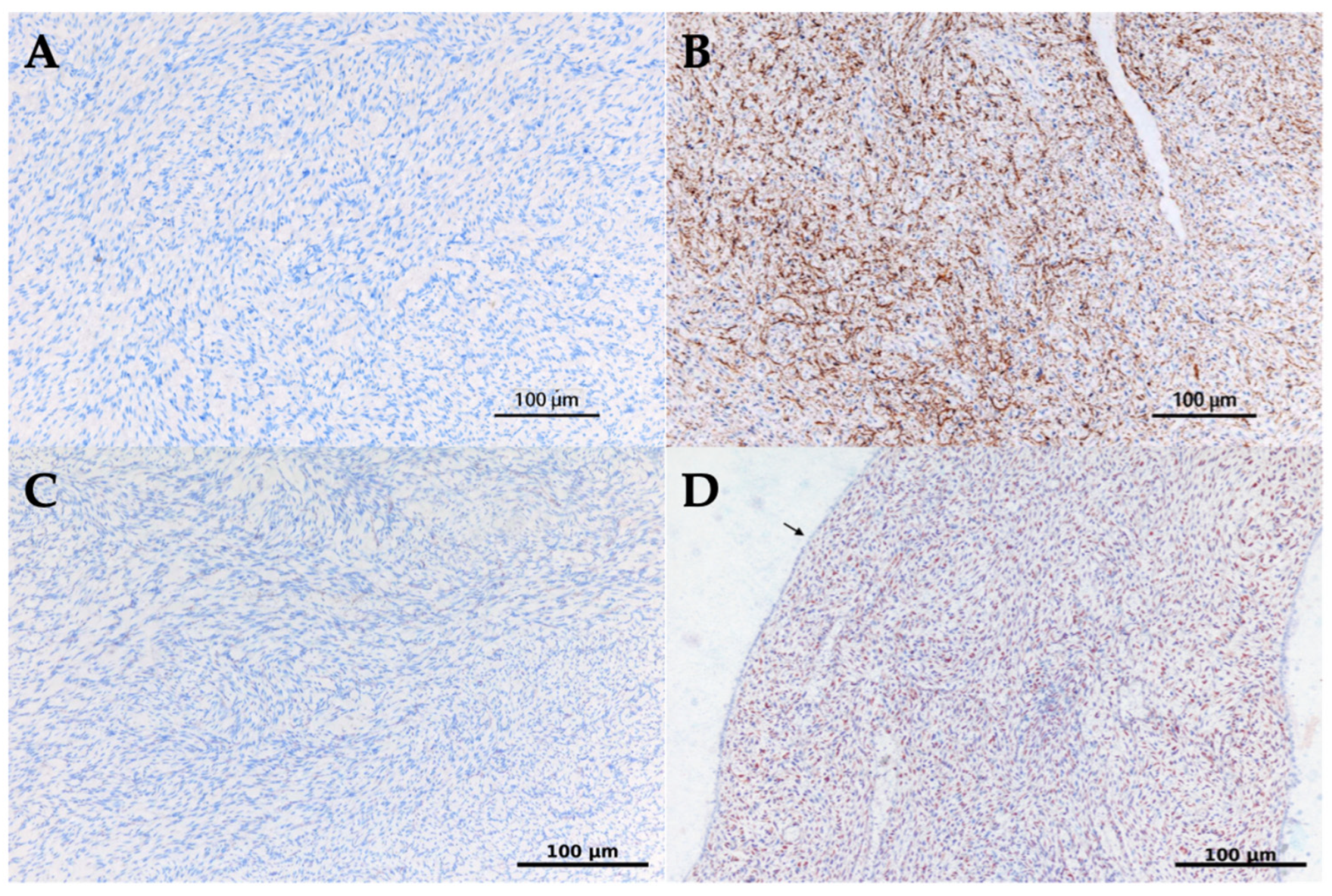
2.3. Immunohistochemical Evaluation
2.4. Endpoints
2.5. Follow-Up Procedures
2.6. Sample Size
2.7. Statistical Analysis
2.8. Ethical Approval
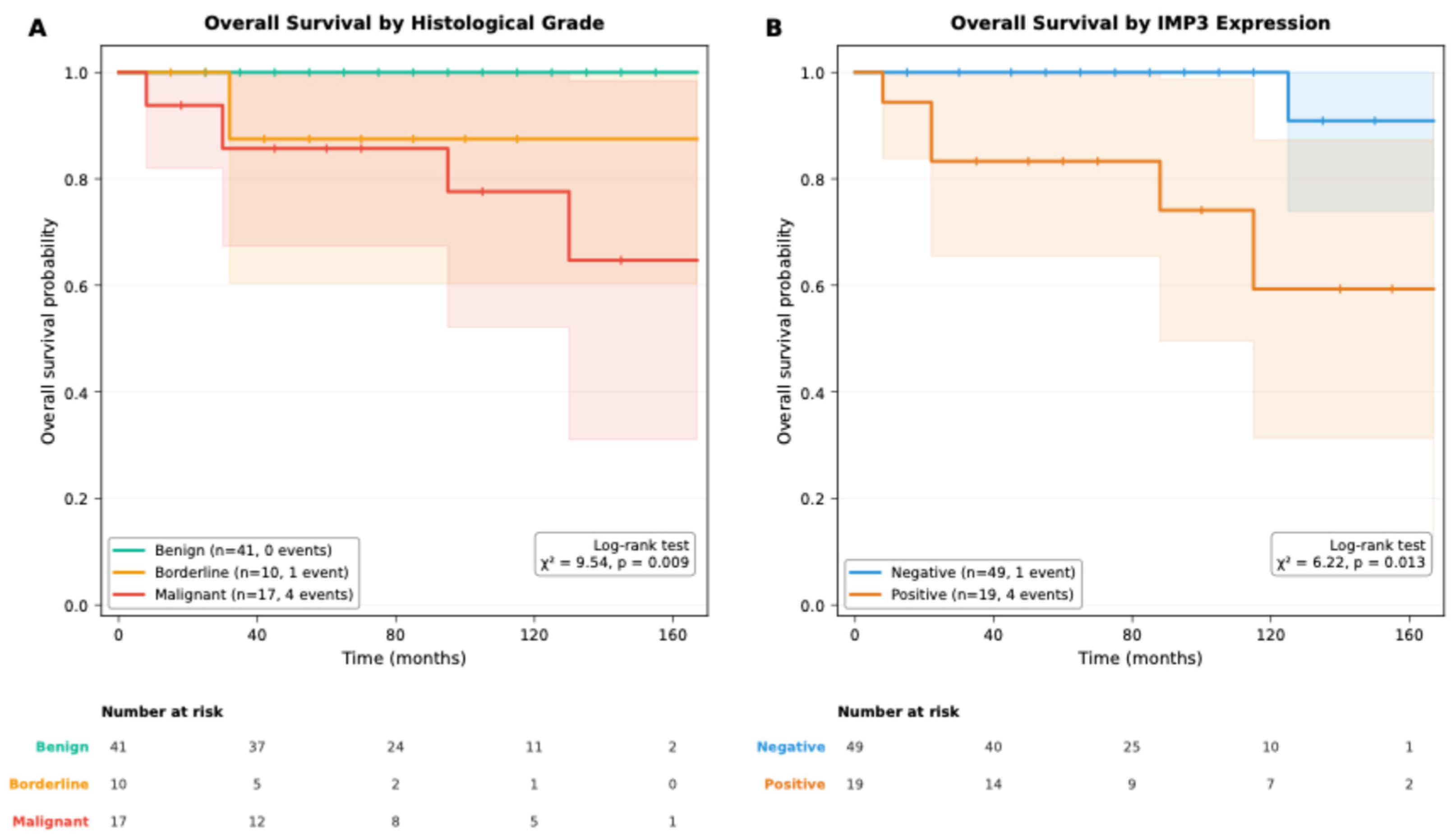
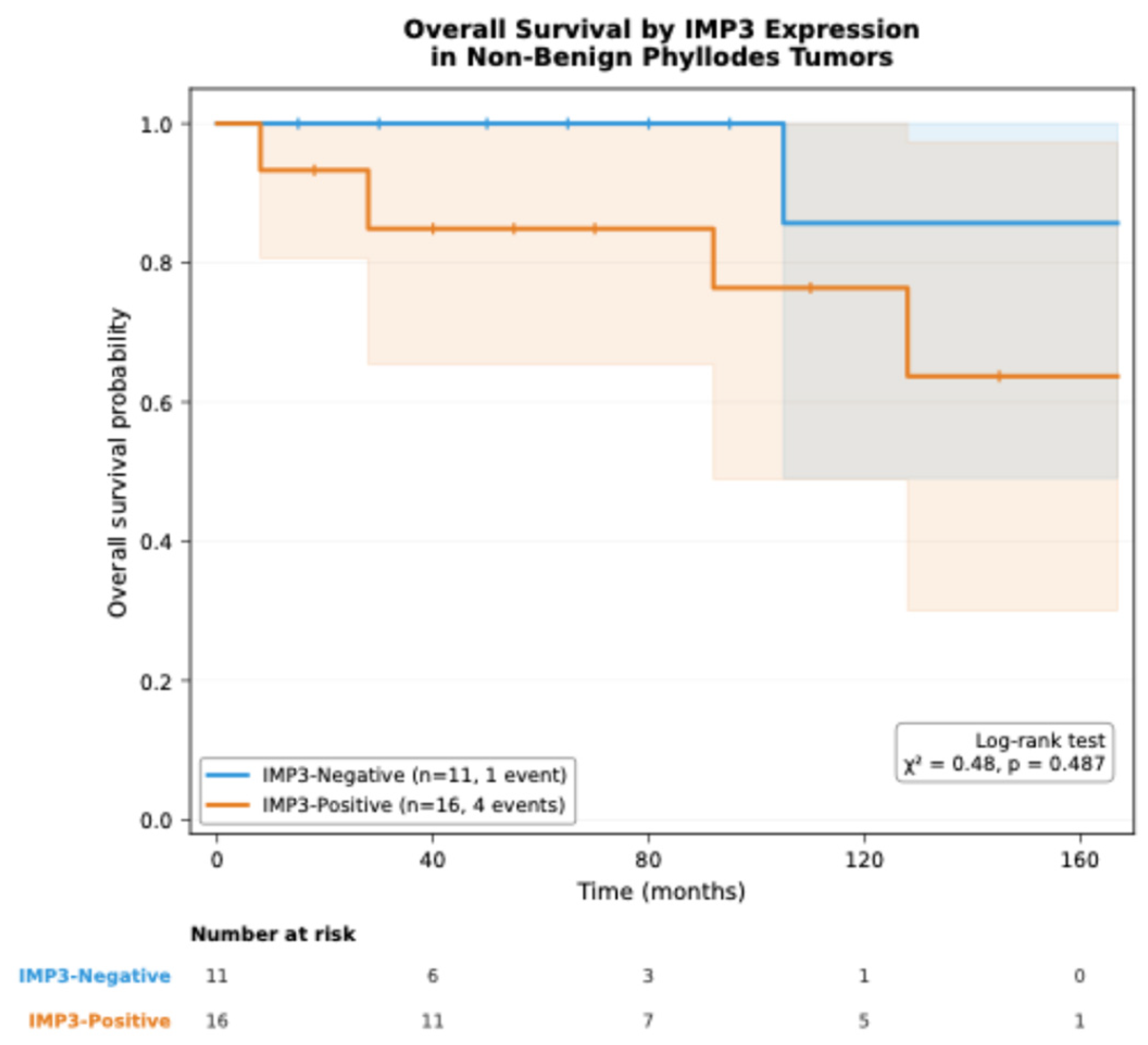
3. Results
4. Discussion
5. Conclusions
Author Contributions
Funding
Institutional Review Board Statement
Informed Consent Statement
Data Availability Statement
Conflicts of Interest
Abbreviations
| CD10 | Cluster of differentiation 10 |
| CI | Confidence interval |
| CT | Computed tomography |
| DFS | Disease-free survival |
| EGFR | Epidermal growth factor receptor |
| ER | Estrogen receptor |
| EZH2 | Enhancer of zeste homolog 2 |
| FFPE | Formalin-fixed, paraffin-embedded |
| H3K27me3 | Trimethylation of histone H3 at lysine 27 |
| HPF | High-power field |
| IMP3 | Insulin-like growth factor II mRNA-binding protein 3 |
| MRI | Magnetic resonance imaging |
| OS | Overall survival |
| PD-L1 | Programmed death-ligand 1 |
| PR | Progesterone receptor |
| PRC2 | Polycomb repressive complex 2 |
| PT | Phyllodes tumor |
| SD | Standard deviation |
| TAM | Tumor-associated macrophage |
| WHO | World Health Organization |
Appendix A


| Outcomes | Variables | n | Events | HR | 95% CI | p-Value |
|---|---|---|---|---|---|---|
| Overall Survival | ||||||
| Mastectomy vs. Lumpectomy | 67 | 5 | 6.49 | 1.46–28.77 | 0.014 | |
| Postoperative Radiotherapy | 66 | 5 | 0.71 | 0.21–2.46 | 0.589 | |
| Adjuvant Chemotherapy | 67 | 5 | 8.32 | 1.85–37.34 | 0.006 | |
| Disease-Free Survival | ||||||
| Mastectomy vs. Lumpectomy | 67 | 14 | 2.42 | 0.72–8.13 | 0.154 | |
| Postoperative Radiotherapy | 66 | 14 | 1.44 | 0.59–3.52 | 0.429 | |
| Adjuvant Chemotherapy | 67 | 14 | 2.85 | 0.83–9.74 | 0.095 | |
| Variables | No | Yes | Deaths (Yes Group) | Recurrences (Yes Group) |
|---|---|---|---|---|
| Mastectomy | 61 | 6 | 3/6 (50%) | 3/6 (50%) |
| Postoperative RT | 45 | 21 | 1/21 (4.8%) | 6/21 (28.6%) |
| Adjuvant Chemotherapy | 61 | 6 | 3/6 (50%) | 3/6 (50%) |
References
- Tomé, A.; Figueiredo, J.; Antunes, S.; Trindade, M.; Travancinha, D. Breast Phyllodes Tumor: A Tumor with Unpredictable Clinical Behavior. Cureus 2023, 15, e37537. [Google Scholar] [CrossRef] [PubMed]
- Chow, Z.L.; Gudi, M.; Tan, P.H. Fibroepithelial Lesions: An Update for Daily Practice (Part-II). Surg. Pathol. Clin. 2025, 18, 701–706. [Google Scholar] [CrossRef] [PubMed]
- Niyonkuru, E.; Nisabwe, S.; Sami, Z.; Faizi, I.; Mazti, A.; Elkarroumi, M.; Karkouri, M. Cystic Squamous Metaplasia in a Giant Benign Phyllodes Tumor of the Breast: A Case Report. J. Surg. Case Rep. 2023, 2023, rjad402. [Google Scholar] [CrossRef] [PubMed]
- Shubham, S.; Ahuja, A.; Bhardwaj, M. Immunohistochemical Expression of Ki-67, P53, and CD10 in Phyllodes Tumor and Their Correlation with Its Histological Grade. J. Lab. Physicians 2019, 11, 330–334. [Google Scholar] [CrossRef]
- Zhang, Y.; Kleer, C. Phyllodes Tumor of the Breast: Histopathologic Features, Differential Diagnosis, and Molecular/Genetic Updates. Arch. Pathol. Lab. Med. 2016, 140, 665–671. [Google Scholar] [CrossRef]
- Reason, E.; Thomas, S.; Plichta, J.; Botty van den Bruele, A.; Hwang, E.; Tong, B.; Larrier, N.; Factor, R.; Grilley-Olson, J.; Rosenberger, L. Utility of the Singapore Recurrence Nomogram in a US Cohort with a Higher Proportion of Borderline and Malignant Phyllodes Tumours. J. Clin. Pathol. 2025, 78, 740–747. [Google Scholar] [CrossRef]
- Guillot, E.; Couturaud, B.; Reyal, F.; Curnier, A.; Ravinet, J.; Laé, M.; Bollet, M.; Pierga, J.; Salmon, R.; Fitoussi, A.; et al. Management of Phyllodes Breast Tumors. Breast J. 2011, 17, 129–137. [Google Scholar] [CrossRef]
- Ben Hassouna, J.; Damak, T.; Gamoudi, A.; Chargui, R.; Khomsi, F.; Mahjoub, S.; Slimene, M.; Ben Dhiab, T.; Hechiche, M.; Boussen, H.; et al. Phyllodes Tumors of the Breast: A Case Series of 106 Patients. Am. J. Surg. 2006, 192, 141–147. [Google Scholar] [CrossRef]
- Yom, C. Malignant Phyllodes of Breast. Adv. Exp. Med. Biol. 2021, 1187, 601–612. [Google Scholar] [CrossRef]
- Shao, Y.; Wang, X.; Yang, J.; Huang, Y.; Qian, L.; Xie, Y.; Ye, M.; Liu, J.; Jin, Y. From Proteomics to Pathology: S100A8’s Impact on Breast Phyllodes Tumors Grading. Ann. Surg. Oncol. 2026. [Google Scholar] [CrossRef]
- Torres, L.; Celso, D.; Defante, M.; Alzogaray, V.; Bearse, M.; de Melo Lopes, A. Ki-67 as a Marker for Differentiating Borderline and Benign Phyllodes Tumors of the Breast: A Meta-Analysis and Systematic Review. Ann. Diagn. Pathol. 2025, 75, 152429. [Google Scholar] [CrossRef]
- Slachmuylders, E.; Laenen, A.; Vernemmen, A.; Keupers, M.; Nevelsteen, I.; Han, S.; Neven, P.; Van Ongeval, C.; Wildiers, H.; Smeets, A.; et al. Expression Patterns of H3K27me3 for Differentiation of Breast Fibroadenomas and Phyllodes Tumors. APMIS 2025, 133, e13485. [Google Scholar] [CrossRef] [PubMed]
- Shin, E.; Kim, H.; Koo, J. CD68 Positive and/or CD163 Positive Tumor-Associated Macrophages and PD-L1 Expression in Breast Phyllodes Tumor. Breast Cancer Res. Treat. 2025, 209, 261–273. [Google Scholar] [CrossRef] [PubMed]
- Süer Mickler, H.; Erkan, M. The Investigation of Somatostatin Receptors as a Potential Target in Breast Phyllodes Tumours. Diagnostics 2024, 14, 2841. [Google Scholar] [CrossRef] [PubMed]
- Ye, J.; Theparee, T.; Bean, G.; Rutland, C.; Schwartz, C.; Vohra, P.; Allard, G.; Wang, A.; Hosfield, E.; Peng, Y.; et al. Targeted DNA Sequencing in Diagnosis of Malignant Phyllodes Tumors with Emphasis on Tumors with Keratin and P63 Expression. Mod. Pathol. 2024, 37, 100593. [Google Scholar] [CrossRef]
- Belhadj, A.; Brikci, S.B.; Akhrouf, C.; Belhadj, A.; Medjamia, M.; Sahraoui, T. Co Expression of EGFR and CD10 in Patients with Phyllodes Tumors of the Breast: A Single Center Experience in North Western Algeria. Afr. Health Sci. 2023, 23, 266–274. [Google Scholar]
- Kim, H.; Koo, J. Expression of Amine Oxidase-Related Proteins in Breast Phyllodes Tumor. Histol. Histopathol. 2025, 40, 39–47. [Google Scholar] [CrossRef]
- Tariq, M.; Haroon, S.; Kayani, N. Role of CD10 Immunohistochemical Expression in Predicting Aggressive Behavior of Phylloides Tumors. Asian Pac. J. Cancer Prev. 2015, 16, 3147–3152. [Google Scholar] [CrossRef]
- Tian, F.; Zhao, J.; Shi, Q.; Zhang, D.; Wang, Y.; Sun, J.; Wang, Y.; Yang, S.; Zhang, C. Association between CD10 Expression and Phyllodes Tumor: A Retrospective Case Control Study. Medicine 2023, 102, e35677. [Google Scholar] [CrossRef]
- Liu, R.; Xue, J.; Liu, W.; Jiang, B.; Shi, F.; Wang, Z.; Li, P. Case Report: Osteosarcomatous Differentiation in the Lung Metastasis of a Malignant Phyllodes Tumor. Front. Med. 2023, 10, 1141353. [Google Scholar] [CrossRef]
- Bellezza, G.; Prosperi, E.; Del Sordo, R.; Colella, R.; Rulli, A.; Sidoni, A. IMP3 Is Strongly Expressed in Malignant Phyllodes Tumors of the Breast: An Immunohistochemical Study: An Immunohistochemical Study. Int. J. Surg. Pathol. 2015, 24, 37–42. [Google Scholar] [CrossRef]
- Classification of Tumours Editorial Board Breast Tumours, 5th ed.; World Health Organization (WHO): Geneva, Switzerland, 2019.
- Krings, G.; Bean, G.; Chen, Y. Fibroepithelial Lesions; The WHO Spectrum. Semin. Diagn. Pathol. 2017, 34, 438–452. [Google Scholar] [CrossRef] [PubMed]
- Sanchez, A.; De Lauretis, F.; Bucaro, A.; Pirrottina, C.; Borghesan, N.; Franco, A.; Scardina, L.; Giannarelli, D.; Di Leone, A.; Masetti, R.; et al. Long Term Outcomes of Breast Primary Sarcomas and Malignant Phyllodes Tumors: 20 Years Observational Analysis of the BEAM∗ Study Group. (∗the Breast European Association for Mesenchymal Tumors). Eur. J. Surg. Oncol. 2025, 51, 110265. [Google Scholar] [CrossRef] [PubMed]
- Malaika, L.; Alamoudi, A.; Jamjoum, G.; Trabulsi, N.; Samkari, A.; Ajabnoor, R.; Alahmadi, S.; Aljhdali, H.; Hafiz, B. Clinicopathological Characteristics and Outcomes of Phyllodes Tumors in a Tertiary Care Center: A Retrospective Study. Gland. Surg. 2025, 14, 1510–1518. [Google Scholar] [CrossRef] [PubMed]
- Burdelski, C.; Jakani-Karimi, N.; Jacobsen, F.; Möller-Koop, C.; Minner, S.; Simon, R.; Sauter, G.; Steurer, S.; Clauditz, T.S.; Wilczak, W. IMP3 Overexpression Occurs in Various Important Cancer Types and Is Linked to Aggressive Tumor Features: A Tissue Microarray Study on 8,877 Human Cancers and Normal Tissues. Oncol. Rep. 2018, 39, 3–12. [Google Scholar] [CrossRef]
- Su, P.; Hu, J.; Zhang, H.; Li, W.; Jia, M.; Zhang, X.; Wu, X.; Cheng, H.; Xiang, L.; Zhou, G. IMP3 Expression Is Associated with Epithelial-Mesenchymal Transition in Breast Cancer. Int. J. Clin. Exp. Pathol. 2014, 7, 3008–3017. [Google Scholar]
- Zhao, W.; Lu, D.; Liu, L.; Cai, J.; Zhou, Y.; Yang, Y.; Zhang, Y.; Zhang, J. Insulin-like Growth Factor 2 mRNA Binding Protein 3 (IGF2BP3) Promotes Lung Tumorigenesis via Attenuating P53 Stability. Oncotarget 2017, 8, 93672–93687. [Google Scholar] [CrossRef]
- Al-Masri, M.; Darwazeh, G.; Sawalhi, S.; Mughrabi, A.; Sughayer, M.; Al-Shatti, M. Phyllodes Tumor of the Breast: Role of CD10 in Predicting Metastasis. Ann. Surg. Oncol. 2012, 19, 1181–1184. [Google Scholar] [CrossRef]


| Variables | Total (n = 68) | Benign (n = 41) | Borderline (n = 10) | Malignant (n = 17) | p-Values |
|---|---|---|---|---|---|
| Demographic characteristics | |||||
| Age (years) | 39.0 [13.9–74.0] | 34.6 [13.9–70.6] | 41.9 [15.6–62.5] | 46.3 [20.7–74.0] | 0.054 |
| Tumor characteristics | |||||
| Tumor size (cm) | 5.0 [1.0–14.0] | 4.0 [1.0–12.0] | 4.5 [1.5–9.0] | 7.0 [2.0–14.0] | 0.171 |
| Histopathological features | |||||
| Mitotic activity | |||||
| <5/10 HPF | 15 (37.5) | 12 (48.0) b | 3 (60.0) b | 0 (0.0) a | 0.005 |
| 5–9/10 HPF | 10 (25.0) | 6 (24.0) a | 2 (40.0) a | 2 (20.0) a | |
| ≥10/10 HPF | 15 (37.5) | 7 (28.0) b | 0 (0.0) b | 8 (80.0) a | |
| Ki-67 index (%) | 15.0 [1.0–100.0] | 10.0 [1.0–40.0] ab | 15.0 [3.0–20.0] b | 25.0 [10.0–100.0] a | <0.001 |
| Stromal atypia | 25 (37.3) | 9 (22.0) b | 2 (22.2) b | 14 (82.4) a | <0.001 |
| Immunohistochemical markers | |||||
| CD10 positivity | 22 (32.4) | 9 (22.0) | 5 (50.0) | 8 (47.1) | 0.065 |
| IMP3 positivity | 19 (27.9) | 3 (7.3) b | 3 (30.0) c | 13 (76.5) a | <0.001 |
| Estrogen receptor positivity | 19 (46.3) | 10 (58.8) | 2 (28.6) | 7 (41.2) | 0.406 |
| Progesterone receptor positivity | 18 (43.9) | 9 (52.9) | 2 (28.6) | 7 (41.2) | 0.527 |
| Treatment characteristics | |||||
| Surgical procedure | |||||
| Lumpectomy | 61 (89.7) | 39 (95.1) | 8 (80.0) | 14 (82.4) | 0.219 |
| Mastectomy | 7 (10.3) | 2 (4.9) | 2 (20.0) | 3 (17.6) | |
| Positive surgical margin | 19 (29.2) | 10 (24.4) | 1 (12.5) | 8 (50.0) | 0.119 |
| Postoperative radiotherapy | 21 (31.8) | 9 (23.1) b | 2 (20.0) b | 10 (58.8) a | 0.022 |
| Adjuvant chemotherapy | 6 (9.0) | 1 (2.4) b | 2 (22.2) a | 3 (17.6) a | 0.044 |
| Clinical outcomes | |||||
| Recurrence/Progression | 12 (17.6) | 6 (14.6) | 1 (10.0) | 5 (29.4) | 0.435 |
| Distant metastasis | 3 (7.0) | 0 (0.0) | 1 (11.1) | 2 (13.3) | 0.212 |
| Mortality | 5 (7.5) | 0 (0.0) b | 1 (10.0) a | 4 (23.5) a | 0.008 |
| Variables | IMP3-Negative (n = 49) | IMP3-Positive (n = 19) | p-Value |
|---|---|---|---|
| Age (years) | 37.6 [13.9–70.6] | 46.3 [19.3–74.0] | 0.052 |
| Tumor size (cm) | 4.0 [1.0–14.0] | 7.0 [3.0–11.0] | 0.036 |
| Ki-67 index (%) | 10.0 [1.0–40.0] | 20.0 [2.0–100.0] | 0.061 |
| Stromal atypia, present | 12 (24.5) | 13 (72.2) | <0.001 |
| Mitotic activity | |||
| <5/10 HPF | 11 (39.3) | 4 (33.3) | 0.924 |
| 5–9/10 HPF | 7 (25.0) | 3 (25.0) | |
| ≥10/10 HPF | 10 (35.7) | 5 (41.7) | |
| Histological grade | |||
| Benign | 38 (77.6) | 3 (15.8) | <0.001 |
| Borderline | 7 (14.3) | 3 (15.8) | |
| Malignant | 4 (8.2) | 13 (68.4) | |
| Menopausal status | |||
| Premenopausal | 34 (69.4) | 10 (52.6) | 0.310 |
| Postmenopausal | 15 (30.6) | 9 (47.4) | |
| Positive surgical margin | 11 (22.9) | 8 (42.1) | 0.072 |
| PT Classes | IMP3 | CD10 | ||||||||
|---|---|---|---|---|---|---|---|---|---|---|
| Benign | Borderline | Malignant | p | Positive | Negative | p | Positive | Negative | p | |
| A. Disease-Free Survival | ||||||||||
| n (events) | 41 (6) | 10 (2) | 17 (6) | 19 (6) | 49 (8) | 22 (7) | 46 (7) | |||
| Mean survival, months | 141.4 | 113.0 | 97.0 | 0.126 | 112.9 | 137.0 | 0.114 | 97.4 | 139.8 | 0.076 |
| 5-year rate, % (95% CI) | 86.1 (69.4–94.0) | 77.1 (34.5–93.9) | 68.3 (39.5–85.5) | 65.9 (39.1–83.1) | 85.8 (70.8–93.5) | 60.5 (33.4–79.4) | 88.6 (74.7–95.1) | |||
| B. Overall Survival | ||||||||||
| n (events) | 41 (0) | 10 (1) | 17 (4) | 19 (4) | 49 (1) | 22 (2) | 46 (3) | |||
| Mean survival, months | 163.0 | 126.9 | 130.3 | 0.009 | 132.8 | 158.4 | 0.013 | 152.0 | 153.1 | 0.573 |
| 5-year rate, % (95% CI) | 100.0 (—) | 87.5 (38.7–98.1) | 86.9 (56.5–96.6) | 82.9 (55.7–94.2) | 100.0 (—) | 89.2 (63.1–97.2) | 97.8 (85.6–99.7) | |||
Disclaimer/Publisher’s Note: The statements, opinions and data contained in all publications are solely those of the individual author(s) and contributor(s) and not of MDPI and/or the editor(s). MDPI and/or the editor(s) disclaim responsibility for any injury to people or property resulting from any ideas, methods, instructions or products referred to in the content. |
© 2026 by the authors. Licensee MDPI, Basel, Switzerland. This article is an open access article distributed under the terms and conditions of the Creative Commons Attribution (CC BY) license.
Share and Cite
Odabaşı Bükün, H.; Çubukçu, E.; Deligönül, A.; Şahin, A.B.; Coşkun, A.; Akın, G.; Karaoğlu, Ç.; Aktaş, A.; Gönül, İ.; Özşen, M.; et al. Association of IMP3 and CD10 Expression with Clinicopathological Features and Outcomes in Phyllodes Tumors: A Retrospective Single-Center Study. J. Clin. Med. 2026, 15, 1614. https://doi.org/10.3390/jcm15041614
Odabaşı Bükün H, Çubukçu E, Deligönül A, Şahin AB, Coşkun A, Akın G, Karaoğlu Ç, Aktaş A, Gönül İ, Özşen M, et al. Association of IMP3 and CD10 Expression with Clinicopathological Features and Outcomes in Phyllodes Tumors: A Retrospective Single-Center Study. Journal of Clinical Medicine. 2026; 15(4):1614. https://doi.org/10.3390/jcm15041614
Chicago/Turabian StyleOdabaşı Bükün, Hülya, Erdem Çubukçu, Adem Deligönül, Ahmet Bilgehan Şahin, Alper Coşkun, Gül Akın, Çağla Karaoğlu, Ali Aktaş, İlkay Gönül, Mine Özşen, and et al. 2026. "Association of IMP3 and CD10 Expression with Clinicopathological Features and Outcomes in Phyllodes Tumors: A Retrospective Single-Center Study" Journal of Clinical Medicine 15, no. 4: 1614. https://doi.org/10.3390/jcm15041614
APA StyleOdabaşı Bükün, H., Çubukçu, E., Deligönül, A., Şahin, A. B., Coşkun, A., Akın, G., Karaoğlu, Ç., Aktaş, A., Gönül, İ., Özşen, M., Polatkan, S. A. V., & Evrensel, T. (2026). Association of IMP3 and CD10 Expression with Clinicopathological Features and Outcomes in Phyllodes Tumors: A Retrospective Single-Center Study. Journal of Clinical Medicine, 15(4), 1614. https://doi.org/10.3390/jcm15041614