Laparoscopic Living Donor Nephrectomy: Learning Curve Analysis Through 1446 Cases and Outcomes from 200 Consecutive Mastery-Phase Procedures—How I Do It

 ,
, 
Abstract
1. Introduction
2. Methods
2.1. Study Design and Objectives
2.2. Statistical Analysis
- Surgical Technique: Laparoscopic Left Living Donor Nephrectomy—Institutional Protocol
- Body Mass Index (BMI): We accept donors with BMI up to 30 kg/m2, with careful consideration of body habitus and distribution of adipose tissue.
- Previous Abdominal Surgery: Not an absolute contraindication; we provide detailed informed consent regarding potential increased complexity and conversion risk.
- Anatomical Considerations: We strongly prefer left kidney procurement due to the longer renal vein (typically 6–8 cm vs. 2–3 cm on the right).
- Left kidney with normal anatomy;
- Left kidney with multiple arteries (up to 3 vessels);
- Right kidney only when the left kidney demonstrates significantly inferior function or anatomy.
- General Anesthesia: Standardized protocol with endotracheal intubation.
- Muscle Relaxation: Complete neuromuscular blockade maintained throughout the procedure.
- Ventilation: Pressure-controlled ventilation with PEEP 5–8 cmH2O to optimize visualization.
- CO2 Monitoring: End-tidal CO2 monitoring with adjustments for pneumoperitoneum effects.
- Foley Catheter: Silicone catheter of 16–18 Fr with 10 mL balloon.
- Bladder Decompression: Critical for safe suprapubic incision placement.
- Sterile Drainage: Closed drainage system maintained throughout procedure.
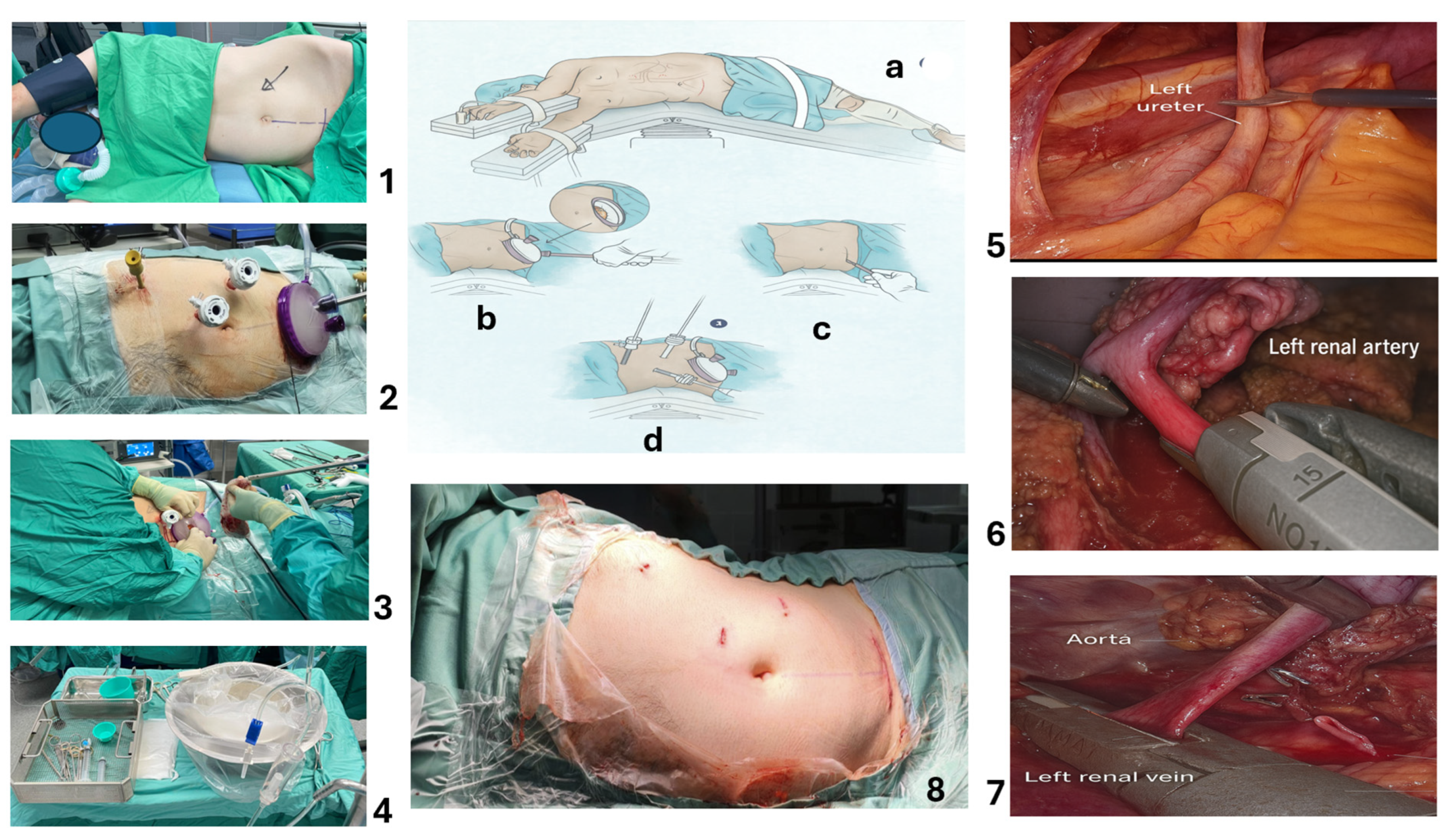
- Extraction Site Marking: Transverse suprapubic incision site marked 1 cm cephalad to pubic symphysis (for optimal cosmetic result, ensuring incision remains below underwear line).
- Port Placement Marking: All trocar sites marked based on patient anatomy.
- Anatomical Landmarks: Identification of anterior superior iliac spines, umbilicus, and costal margins.
- Position: Modified right lateral decubitus (left side up).
- Table Flexion: Moderate table flexion to open the space between the costal margin and the iliac crest.
- Support Systems:
- ○
- Axillary roll placement to protect the brachial plexus.
- ○
- Kidney rest positioned at the level of the 12th rib.
- ○
- Gel padding for all pressure points.
- Arm Positioning: The left arm is placed in extension and supported on a padded arm board above the patient’s torso to maintain stability and prevent nerve compression. The right arm is tucked at the patient’s side, with the shoulder carefully protected to avoid traction injury.
- Leg Positioning: Pillow between legs, lower leg flexed, and upper leg straight.
- Security: Patient secured with wide tape across the hip and shoulder.
- Location: Transverse suprapubic incision, 6–8 cm in length.
- Position: One centimeter cephalad to the pubic symphysis for cosmetic optimization.
- Technique: Sharp dissection through skin and subcutaneous tissue using electrocautery.
- Critical Modification: While the skin incision is placed low for cosmetic reasons, the fascial incision is intentionally placed 2–3 cm higher (more cephalad).
- Rationale: This offset technique minimizes the risk of bladder injury while maintaining the cosmetic advantage.
- Dissection: Sharp dissection through the anterior rectus fascia.
- Muscle Layer Management:
- Rectus Muscle Mobilization: Both rectus muscles are gently mobilized laterally from the fascia using blunt dissection.
- Preperitoneal Space: Access gained through the natural fibrous tissue plane between the rectus muscles.
- Peritoneal Entry: Peritoneum identified and opened under direct visualization using sharp dissection.
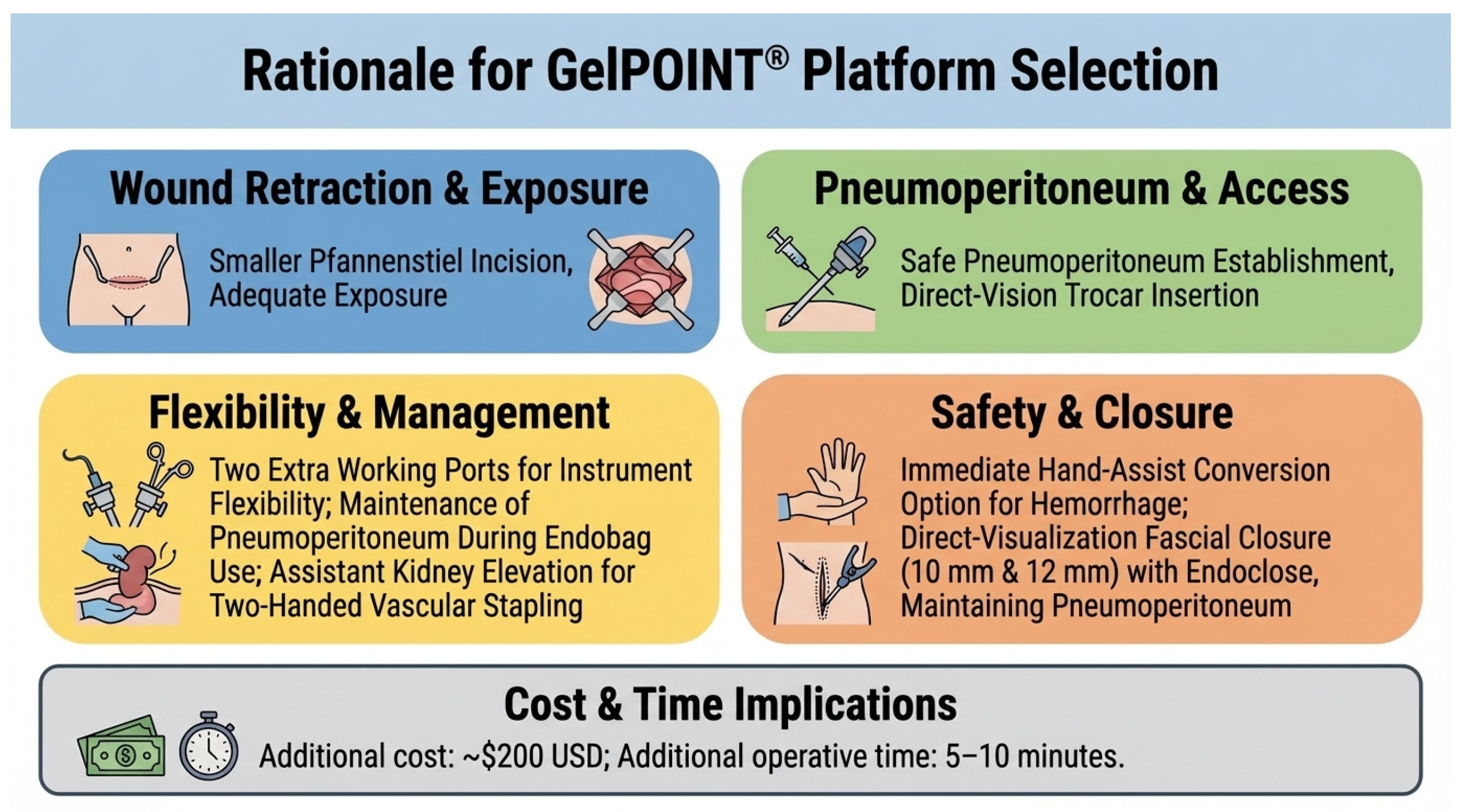
- Device: Applied Medical GelPOINT® Advanced Access Platform (10 cm in diameter).
- Insertion: Platform inserted through the Pfannenstiel incision.
- Seal Verification: Ensuring a circumferential seal around wound edges.
- Assistant Ports: Two 12 mm assistant ports placed within the GelSeal® cap (Applied Medical, Rancho Santa Margarita, CA, USA).
- Insufflation: Primary insufflation port connected to maintain pneumoperitoneum at 15 mmHg.
- Location: One to two centimeters above the umbilicus at the epigastrium.
- Trocar Type: Eleven-millimeter optical trocar (Ethicon ENDOPATH® XCEL®).
- Insertion: Under direct visualization through GelPOINT® after initial insufflation.
- Camera: High-definition 10 mm laparoscope (Olympus® or Karl Storz® 3D system).
- Left Lower Quadrant Port (12 mm):
- ○
- Location: Halfway between the anterior superior iliac spine and the umbilicus.
- ○
- Purpose: Primary working port for dissection instruments.
- ○
- Trocar: Twelve-millimeter bladeless trocar (Ethicon ENDOPATH®).
- Left Upper Quadrant Port (5 mm):
- ○
- Location: Left subcostal, medial to midclavicular line.
- ○
- Purpose: Retraction and secondary dissection.
- ○
- Trocar: Five-millimeter Step® trocar (Covidien).
- Camera System: Olympus VISERA ELITE III® or Karl Storz IMAGE1 S™ 3D system (Karl Storz, Tuttlingen, Germany).
- Resolution: 4K Ultra HD with 3D visualization capability.
- Lighting: Xenon or LED light source with automatic light control.
- Monitor Configuration: Dual 32-inch 4K monitors positioned for optimal surgeon ergonomics.
- Device: Ethicon Harmonic ACE® (Ethicon, Cincinnati, OH, USA)+ Shears or Harmonic SYNERGY® Hook
- Technology: Ultrasonic energy at 55,500 Hz frequency.
- Advantages:
- ○
- Simultaneous cutting and coagulation.
- ○
- Minimal lateral thermal spread (0.5–2 mm).
- ○
- Reduced smoke production.
- ○
- Precise tissue dissection with minimal char formation.
- Settings: Power level 3–5 depending on tissue type and thickness.
- Clipping Systems:
- Primary: Ethicon LIGACLIP® EXTRA Large (5 mm clips).
- Secondary: Aesculap CHALLENGER® medium-large clips.
- Application: Secure vascular and ductal structure control.
- Grasping and Retraction:
- Atraumatic Graspers: Ethicon HARMONIC® curved scissors.
- Bowel Graspers: Karl Storz CLICKLINE® atraumatic graspers.
- Needle Drivers: Ethicon MEGADYNE® laparoscopic needle drivers for suturing.
- General Survey: Complete visualization of the peritoneal cavity, identifying any adhesions from previous surgery.
- Anatomical Orientation: Identification of key landmarks, including the splenic flexure, the descending colon, and the left paracolic gutter.
- Pathology Assessment: Ruling out unexpected pathology that might contraindicate donation.
- Identification: The freno-omento-colic ligament connecting the splenic flexure to the diaphragm.
- Division Technique: Using a harmonic scalpel at a power setting of 3–4.
- Safety Consideration: Careful attention to avoid splenic capsular injury.
- Anatomical Landmarks:
- ○
- Medial border: Toldt’s white line (embryological fusion plane).
- ○
- Lateral border: Paracolic gutter.
- ○
- Superior limit: Splenic flexure.
- ○
- Inferior limit: Sigmoid colon.
- Dissection Technique:
- ○
- Initial Incision: Sharp division of the peritoneum along Toldt’s line using the harmonic scalpel.
- ○
- Plane Development: Blunt and sharp dissection, maintaining the correct areolar tissue plane.
- ○
- Critical Safety Point: Avoiding penetration into retroperitoneal fat, which can lead to bleeding and loss of anatomical planes.
- ○
- Mesocolon Preservation: Maintaining mesocolic vessels intact to ensure colon viability.
- Pressure Dynamics: Maintaining pneumoperitoneum at 15 mmHg to optimize exposure.
- Retraction Strategy: Gentle medial retraction of the colon without excessive tension.
- Hemostasis: Immediate control of any bleeding points with clips or a harmonic scalpel.
- Anatomical Respect: Avoiding kidney mobilization at this stage to prevent medial displacement.
- Identification: Recognition of the glistening Gerota’s fascia overlying the kidney.
- Initial Entry: Careful incision of Gerota’s fascia at the upper pole.
- Plane Development: Establishing the correct plane between Gerota’s fascia and perirenal fat.
- Technique: Systematic dissection of perirenal fat using a combination of blunt and sharp dissection.
- Anatomical Goal: Exposure of renal capsule without capsular injury.
- Superior Extent: Dissection carried to the left subphrenic recess, where intraperitoneal fluid may be encountered.
- Anatomical Structure: Fibrous ligament connecting the spleen to the kidney region.
- Division Technique: Sharp division with a harmonic scalpel.
- Safety Measures: Careful attention to avoid splenic injury or excessive bleeding.
- Anatomical Recognition: Golden-yellow glandular tissue superior and medial to the upper kidney pole.
- Dissection Plane: Maintaining a plane between the adrenal gland and the kidney.
- Safety Protocol: Avoiding adrenal gland injury, which can result in significant bleeding.
- Anatomical Course: Short vein (typically 1–2 cm) draining directly into the renal vein.
- Dissection Technique: Careful dissection using a fine dissector (Maryland, harmonic scalpel).
- Preparation for Division: Ensuring adequate length for safe clipping.
- Initial Identification: Recognition of the renal vein coursing medially toward the IVC.
- Systematic Dissection:
- ○
- Superior border cleared first.
- ○
- Inferior border dissection with attention to lumbar veins.
- ○
- Circumferential clearing to allow stapler passage.
- Anatomical Course: Tracing the gonadal vein from its drainage point into the renal vein.
- Proximal Dissection: Skeletonization near renal vein junction.
- Division Strategy: Initial division near the renal vein, secondary division at the pelvic brim.
- Superior: Lower pole of the kidney.
- Medial: Renal vein.
- Lateral: Large vessels (aorta and IVC).
- Dissection Philosophy: Extremely delicate approach with minimal tissue handling.
- Lumbar Vein Awareness: Recognition that small lumbar veins may traverse this area.
- Bleeding Prevention: Immediate recognition and control of any venous bleeding.
- Instrument Selection: Use of the finest dissection instruments with minimal energy application.
- Anatomical Location: Midway between the lower kidney pole and the common iliac vessel crossing.
- Recognition: Peristaltic activity and characteristic white, cord-like appearance.
- Periureteral Tissue Preservation: Maintaining the adventitial layer with its blood supply.
- “Meso-ureter” Concept: Preserving the delicate vascular network surrounding the ureter.
- Thermal Injury Prevention:
- ○
- No direct energy application to the ureter.
- ○
- Minimum 5 mm of clearance when using the harmonic scalpel.
- ○
- Sharp dissection when in close proximity.
- Proximal: To the renal pelvis.
- Distal: To the common iliac vessel crossing.
- Safety Zone: Avoiding dissection beyond the common iliac vessels to prevent devascularization.
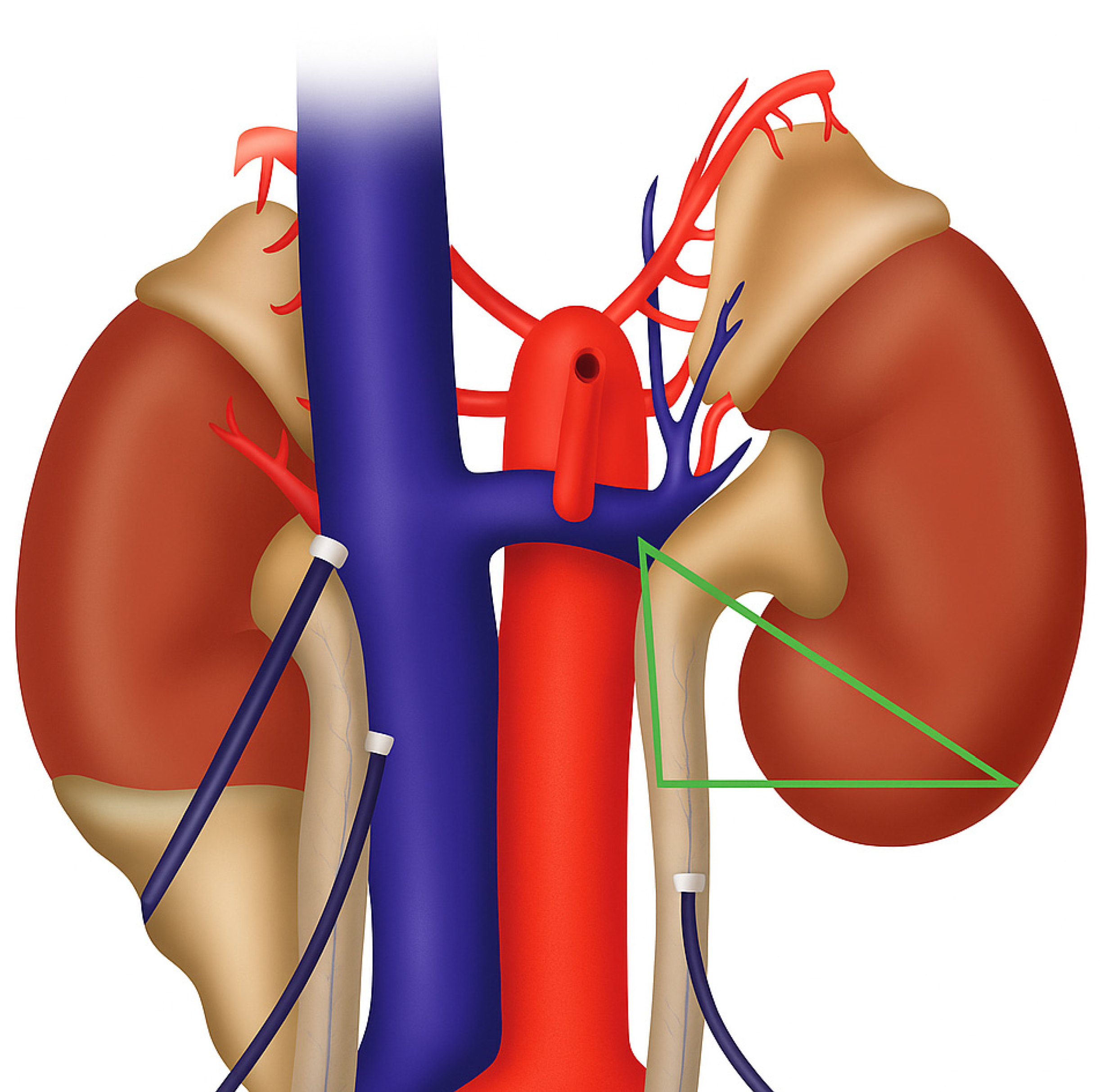
- Anatomical Approach: Posterior and slightly inferior to the renal vein.
- Lymphatic Tissue Management: Careful dissection of abundant lymphatic tissue around the aorta.
- Lymph Node Handling: Selective lymph node dissection to expose the arterial origin.
- Circumferential Clearing: Dissection of 360 degrees to allow stapler passage.
- Origin Exposure: Clear visualization of the aortic origin.
- Length Optimization: Maximizing arterial length for transplantation.
- Critical Separation: Establishing clear space between artery and vein.
- Stapler Accommodation: Ensuring adequate space for safe stapler passage.
- Safety Verification: Confirming no posterior structures in the stapler path.
- Gonadal Vein: Secondary division at pelvic brim between clips.
- Ureteral Division: Above clip placement, ensuring adequate length.
- Medial Mobilization: Freeing the kidney from retroperitoneal attachments.
- Posterior Dissection: Careful attention to avoid lumbar vessels.
- Lateral Release: Complete mobilization for extraction.
- Endo-Bag Preparation: Introduction of the extraction bag through GelPOINT®.
- Kidney Positioning: Careful placement ensuring no vascular kinking.
- Final Inspection: Verification of complete mobilization.
- Stapler: Ethicon ECHELON FLEX™-powered vascular stapler.
- Cartridge: Gold cartridge (3.5 mm staple height) for vascular tissue.
- Firing: Powered articulation with consistent compression and firing.
- Renal Artery First:
- ○
- Rationale: Immediate cessation of perfusion.
- ○
- Technique: Single firing with adequate proximal margin.
- ○
- Verification: Complete division with hemostatic staple line.
- 2.
- Renal Vein Second:
- ○
- Division Level: Just proximal to the adrenal vein stump.
- ○
- Rationale: Maximizing vein length for transplantation.
- ○
- Lymphatic Consideration: A large lymph node frequently present between the adrenal gland and the renal vein may be included in the staple line.
- Bag Closure: Gradual closure of the extraction bag while maintaining the kidney position.
- GelPOINT® Extraction: Atraumatic removal through suprapubic incision.
- Immediate Assessment: Rapid evaluation of graft quality and vascular integrity.
- Pneumoperitoneum Reduction: Reducing pressure to 5–8 mmHg to identify venous bleeding.
- Systematic Review:
- ○
- Renal fossa inspection;
- ○
- Vascular stump evaluation;
- ○
- Colon and spleen assessment;
- ○
- Port site evaluation.
- Primary: Electrocautery for pinpoint bleeding.
- Secondary: Hemostatic clips for specific vessels.
- Adjunctive: Topical hemostatic agents (Surgicel® Ethicon, Cincinnati, OH, USA or Gelfoam® (Pfizer, Kalamazoo, MI, USA) if needed.
- Minimal Lymph Node Dissection: Only as necessary for vascular exposure.
- Clip Application: Liberal use of clips on lymphatic channels.
- Recognition: Early identification of lymphatic fluid (clear, colorless).
- Small Leaks: Clip application or light electrocautery.
- Larger Leaks: Suture ligation with non-absorbable suture.
- Drainage Consideration: Selective drain placement if a significant leak is suspected.
- Suture Material: 0-Vicryl on a large needle (CT-1 or CT-2).
- Technique: Running suture with adequate tissue bites.
- Verification: Ensuring no fascial gaps.
- 12 mm Ports: Fascial closure mandatory to prevent hernia.
- 5 mm Ports: Fascial closure if extended or if fascial defect apparent.
- Suture Material: 2-0 Vicryl with Carter–Thomason closure device.
- Technique: 4-0 Monocryl subcuticular suture.
- Adhesive: Dermabond® (Ethicon, Somerville, NJ, USA) skin adhesive for additional security.
- Dressing: Sterile transparent dressing.
- Pain Management: Multimodal analgesia protocol.
- Early Mobilization: Ambulation within 6–8 h.
- Diet Advancement: Clear liquids advancing to regular diet as tolerated.
- Discharge Planning: Typically postoperative day 1–2.
- Short-term: 1 week, 1 month, and 3 months.
- Long-term: Annual follow-up with renal function assessment.
- Complication Monitoring: Systematic tracking of all complications.
- 1.
- Offset Incision Strategy: Skin incision placed lower than fascial incision for optimal cosmetics without compromising safety.
- 2.
- GelPOINT® Utilization: Single extraction site serving dual purpose as extraction site and primary access port.
- 3.
- Systematic Hemostasis Protocol: Standardized approach to identifying and managing bleeding.
- 4.
- Lymphatic Preservation: Minimal lymph node dissection to reduce chylous complications.
- 5.
- Thermal Injury Prevention: Strict protocols for energy device usage near the ureter.
- Beginner: <180 min;
- Proficient: <150 min;
- Master: <120 min.
- Conversion Rate: <2%;
- Major Complication Rate: <5%;
- Ureteral Complication Rate: <1%;
- Readmission Rate: <3%.
3. Results
3.1. Patient Demographics and Baseline Characteristics
3.2. Operative Characteristics and Outcomes
3.3. Postoperative Complications and Outcomes
3.4. Comparison with the Contemporary Literature
3.5. Learning Curve Analysis
3.6. Recipient Outcomes
4. Discussion
5. Conclusions
Supplementary Materials
Author Contributions
Funding
Institutional Review Board Statement
Informed Consent Statement
Data Availability Statement
Conflicts of Interest
Abbreviations
| BMI | Body mass index |
| GelPOINT | GelPOINT® Advanced Access Platform |
| HALDN | Hand-assisted laparoscopic donor nephrectomy |
| IVC | Inferior vena cava |
| LDN | Laparoscopic donor nephrectomy |
References
- Ratner, L.E.; Ciseck, L.J.; Moore, R.G.; Cigarroa, F.G.; Kaufman, H.S.; Kavoussi, L.R. Laparoscopic live donor nephrectomy. Transplantation 1995, 60, 1047–1049. [Google Scholar]
- Munoz Abraham, A.S.; Morsi, M.; Vianna, R. Robotic Assisted Laparoscopic Donor Nephrectomy: An Update. Curr. Urol. Rep. 2025, 26, 35. [Google Scholar] [CrossRef]
- Takagi, K.; Kimenai, H.J.; Terkivatan, T.; Tran, K.T.; Ijzermans, J.N.; Minnee, R.C. Learning curves of minimally invasive donor nephrectomy in a high-volume center: A cohort study of 1895 consecutive living donors. Int. J. Surg. 2021, 86, 7–12. [Google Scholar] [CrossRef]
- Spagnoletti, G.; Romagnoli, J. The role of mini-invasive approaches in living kidney donation. EJT 2024, 2, 39–43. [Google Scholar] [CrossRef]
- Zaytoun, O.; Elsawy, M.; Ateba, K.; Khalifa, A.; Hamdy, A.; Mostafa, A. Laparoscopic donor nephrectomy: Technique and outcome, a single-center experience. Afr. J. Urol. 2021, 27, 151. [Google Scholar] [CrossRef]
- Chin, C.P.; Levy, M.; Awan, M.; Palese, M. Single-Port and Multi-Port Robotic Donor Nephrectomy. J. Endourol. 2025, 39, S66–S71. [Google Scholar] [CrossRef]
- Cho, S.J.; Moon, H.W.; Kang, S.M.; Choi, S.W.; Kim, K.S.; Choi, Y.S.; Hong, S.H.; Ha, U.S.; Lee, J.Y.; Kim, S.W. Evolution of laparoscopic donor nephrectomy techniques and outcomes: A single-center experience with more than 1000 cases. Ann. Transplant. 2020, 25, e918189. [Google Scholar] [CrossRef]
- Yang, A.; Barman, N.; Chin, E.; Herron, D.; Arvelakis, A.; LaPointe Rudow, D.; Florman, S.S.; Palese, M.A. Robotic-assisted vs. laparoscopic donor nephrectomy: A retrospective comparison of perioperative course and postoperative outcome after 1 year. J. Robot. Surg. 2018, 12, 343–350. [Google Scholar] [CrossRef]
- Nicholson, M.L.; Kaushik, M.; Lewis, G.R.R.; Brook, N.R.; Bagul, A.; Kay, M.D.; Harper, S.J.; Elwell, R.; Veitch, P.S. Randomized clinical trial of laparoscopic versus open donor nephrectomy. Br. J. Surg. 2010, 97, 21–28. [Google Scholar] [CrossRef]
- Pinar, U.; Pettenati, C.; Hurel, S.; Pietak, M.; Dariane, C.; Audenet, F.; Legendre, C.; Rozenberg, A.; Méjean, A.; Timsit, M.O. Persistent orchialgia after laparoscopic living-donor nephrectomy: An underestimated complication requiring information adjustment. World J. Urol. 2021, 39, 621–627. [Google Scholar] [CrossRef]
- Bargman, V.; Sundaram, C.P.; Bernie, J.; Goggins, W. Randomized trial of laparoscopic donor nephrectomy with and without hand assistance. J. Endourol. 2006, 20, 717–722. [Google Scholar] [CrossRef]
- Banga, N.; Nicol, D. Techniques in laparoscopic donor nephrectomy. BJU Int. 2012, 110, 1368–1373. [Google Scholar] [CrossRef]
- Wolf, J.S.; Tchetgen, M.B.; Merion, R.M. Hand-assisted laparoscopic live donor nephrectomy. Urology 1998, 52, 885–887. [Google Scholar] [CrossRef]
- Matas, A.J.; Bartlett, S.T.; Leichtman, A.B.; Delmonico, F.L. Morbidity and mortality after living kidney donation, 1999-2001: Survey of United States transplant centers. Am. J. Transplant. 2003, 3, 830–834. [Google Scholar] [CrossRef]
- Gravetz, A.; Tennak, V.; Mezhybovsky, V.; Gurevich, M.; Eisner, S.; Bielopolski, D.; Kanani, F.; Nesher, E. “Pantaloon” Ureteroneocystostomy for Double Ureter Kidney Grafts: A Matched Single-Center Study of Perioperative and Long-Term Outcomes over 14 Years. Surg. Tech. Dev. 2025, 14, 31. [Google Scholar] [CrossRef]
- Novacescu, D.; Latcu, S.C.; Raica, M.; Baderca, F.; Dumitru, C.-S.; Daminescu, L.; Bardan, R.; Dema, V.; Croitor, A.; Cut, T.G.; et al. Surgical Strategies for Renal Transplantation: A Pictorial Essay. J. Clin. Med. 2024, 13, 4188. [Google Scholar] [CrossRef]
- Serrano, O.K.; Kirchner, V.; Bangdiwala, A.; Vock, D.M.; Dunn, T.B.; Finger, E.B.; Payne, W.D.; Pruett, T.L.; Sutherland, D.E.; Najarian, J.S.; et al. Long-term Outcomes With 4 Different Techniques in Greater Than 4000 Donors Over 50 Years. Transplantation 2016, 100, 1299–1305. [Google Scholar] [CrossRef]
- Serni, S.; Pecoraro, A.; Sessa, F.; Gemma, L.; Greco, I.; Barzaghi, P.; Grosso, A.A.; Corti, F.; Mormile, N.; Spatafora, P.; et al. Robot-Assisted Laparoscopic Living Donor Nephrectomy: The University of Florence Technique. Front. Surg. 2020, 7, 588215. [Google Scholar] [CrossRef]
- Kourounis, G.; Tingle, S.J.; Hoather, T.J.; Thompson, E.R.; Rogers, A.; Page, T.; Sanni, A.; Rix, D.A.; Soomro, N.A.; Wilson, C. Robotic versus laparoscopic versus open nephrectomy for live kidney donors. Cochrane Database Syst. Rev. 2024, 2024, CD006124. [Google Scholar]
- Segev, D.L.; Muzaale, A.D.; Caffo, B.S.; Mehta, S.H.; Singer, A.L.; Taranto, S.E.; McBride, M.A.; Montgomery, R.A. Perioperative mortality and long-term survival following live kidney donation. JAMA 2010, 303, 959–966. [Google Scholar] [CrossRef]
- Hsu, T.H.; Su, L.M.; Ratner, L.E.; Trock, B.J.; Kavoussi, L.R. Impact of renal artery multiplicity on outcomes of renal donors and recipients in laparoscopic donor nephrectomy. Urology 2003, 61, 323–327. [Google Scholar] [CrossRef]
- Branco, A.W.; Kondo, W.; Branco Filho, A.J.; George, M.A.D.; Rangel, M.; Stunitz, L.C. A comparison of hand-assisted and pure laparoscopic techniques in live donor nephrectomy. Clinics 2008, 63, 795–800. [Google Scholar] [CrossRef] [PubMed][Green Version]
- Simforoosh, N.; Basiri, A.; Tabibi, A.; Shakhssalim, N.; Hosseini Moghaddam, S.M. Comparison of laparoscopic and open donor nephrectomy: A randomized controlled trial. BJU Int. 2005, 95, 851–855. [Google Scholar] [CrossRef] [PubMed]
- Kortram, K.; Ijzermans, J.N.; Dor, F.J. Perioperative events and complications in minimally invasive live donor nephrectomy: A systematic review and meta-analysis. Transplantation 2016, 100, 2264–2275. [Google Scholar] [CrossRef] [PubMed]
- Garcia, L.E.; Parra, N.; Gaynor, J.J.; Baker, L.; Guerra, G.; Ciancio, G. Clinical outcomes following single vs. multiple vessel living-donor kidney transplantation: A retrospective comparison of 210 patients. Front. Surg. 2021, 8, 693021. [Google Scholar] [CrossRef]
- Gravetz, A.; Kanani, F.; Lifshitz, K.; Tennak, V.; Bielopolski, D.; Nesher, E. Post-Nephrectomy Orchialgia: A Cross-Sectional Assessment of an Underreported Complication in Living Kidney Donors. J. Clin. Med. 2025, 14, 5807. [Google Scholar] [CrossRef]
- Lentine, K.L.; Lam, N.N.; Segev, D.L. Risks of living kidney donation: Current state of knowledge on outcomes important to donors. Clin. J. Am. Soc. Nephrol. 2019, 14, 597–608. [Google Scholar] [CrossRef]
- Hakim, N.S.; Papalois, V.E. A fast and safe living donor finger-assisted nephrectomy technique: Results of 225 cases. Exp. Clin. Transplant. 2008, 6, 245–248. [Google Scholar] [CrossRef]
- Tsoulfas, G.; Agorastou, P.; Ko, D.S.; Hertl, M.; Elias, N.; Cosimi, A.B.; Kawai, T. Laparoscopic vs open donor nephrectomy: Lessons learnt from single academic center experience. World J. Nephrol. 2017, 6, 45–52. [Google Scholar] [CrossRef]



| Variable | Recent 200 Cases (2023–2025) |
|---|---|
| Age, years | |
| Mean ± SD | 41.6 ± 8.6 |
| Median (IQR) | 42 (35–48) |
| Range | 25–66 |
| Sex, n (%) | |
| Male | 86 (43.0) |
| Female | 114 (57.0) |
| BMI, kg/m2 | |
| Mean ± SD | 24.8 ± 3.0 |
| <25, n (%) | 102 (53.4) |
| 25–30, n (%) | 83 (43.5) |
| >30, n (%) | 6 (3.1) |
| Relationship to Recipient, n (%) | |
| Related donor | 145 (76.0) |
| Spouse | 35 (18.3) |
| Altruistic | 11 (5.7) |
| Comorbidities, n (%) | |
| Hypertension | 1 (0.5) |
| Diabetes mellitus | 0 (0) |
| Smoking history | 12 (6.3) |
| Asthma | 6 (3.1) |
| Thyroid disease | 4 (2.1) |
| Previous Abdominal Surgery, n (%) | 47 (24.6) |
| Preoperative eGFR, mL/min/1.73 m2 | |
| Mean ± SD | 95.2 ± 15.8 |
| Preoperative Creatinine, mg/dL | |
| Mean ± SD | 0.85 ± 0.18 |
| Variable | Recent 200 Cases (2023–2025) |
|---|---|
| Kidney Side Procured, n (%) | |
| Left | 199 (99.5) |
| Right | 1 (0.5) |
| Renal Vascular Anatomy, n (%) | |
| Single renal artery | 164 (86.3) |
| Multiple renal arteries | 26 (13.7) |
| - 2 arteries | 22 (11.6) |
| - 3 arteries | 4 (2.1) |
| Multiple renal veins | 3 (1.6) |
| Operative Time, min | |
| Mean ± SD | 105.2 ± 28.4 |
| Median (IQR) | 100 (85–120) |
| Range | 65–185 |
| Warm Ischemia Time, min | |
| Mean ± SD | 3.8 ± 1.2 |
| Median (IQR) | 4 (3–4) |
| Estimated Blood Loss, mL | |
| Mean ± SD | 85.3 ± 45.2 |
| Median (IQR) | 75 (50–100) |
| Length of Stay, days | |
| Mean ± SD | 3.5 ± 1.8 |
| Median (IQR) | 3 (2–4) |
| Intraoperative Events, n (%) | |
| Conversion to open | 0 (0) |
| Vascular injury | 0 (0) |
| Bowel injury | 0 (0) |
| Spleen injury | 0 (0) |
| Intraoperative bleeding requiring intervention | 0 (0) |
| Extraction Site | |
| Pfannenstiel (suprapubic) | 200 (100) |
| Surgical Approach | |
| Complete laparoscopic | 200 (100) |
| Hand-assisted | 0 (0) |
| Variable | n = 200 | Percentage (%) |
|---|---|---|
| Overall Complications | 12 | 6.0 |
| Clavien–Dindo Classification | ||
| Grade I | 8 | 4.0 |
| Grade II | 3 | 1.5 |
| Grade ≥ III | 1 | 0.5 |
| Specific Complications | ||
| Wound-Related | ||
| Superficial SSI | 2 | 1.0 |
| Deep SSI | 0 | 0 |
| Seroma | 1 | 0.5 |
| Hernia Complications (3-year follow-up) | ||
| Trocar site hernia | 0 | 0 |
| Pfannenstiel hernia | 0 | 0 |
| Intra-abdominal | ||
| Bleeding requiring intervention | 0 | 0 |
| Bowel obstruction | 0 | 0 |
| Intra-abdominal collection | 1 | 0.5 |
| Urological | ||
| Urinary retention | 3 | 1.5 |
| Urinary tract infection | 4 | 2.0 |
| Pulmonary | ||
| Pneumonia | 0 | 0 |
| Pneumothorax | 0 | 0 |
| Thromboembolic | ||
| Deep vein thrombosis | 0 | 0 |
| Pulmonary embolism | 0 | 0 |
| Pain-Related Complications (Males only, n = 86) | ||
| Orchalgia (testicular pain) | ||
| At 1 month | 40 | 46.5 |
| At 1 year | 31 | 36.0 |
| At 5 years (mean ± SD) | 6 ± 3 | 7.0 ± 3.5 |
| Chronic pain (>3 months) | 3 | 3.5 |
| Readmissions | ||
| 30-day readmission | 2 | 1.0 |
| 90-day readmission | 3 | 1.5 |
| Return to Work, days | ||
| Mean ± SD | 18.5 ± 8.2 | |
| Median (IQR) | 16 (12–24) |
| Study | Year | n | Approach | Operative Time (min) | Conversion Rate (%) | Major Complications (%) | Length of Stay (Days) |
|---|---|---|---|---|---|---|---|
| Current Study | 2025 | 200 | Complete Laparoscopic | 96.8 ± 25.5 | 0 | 0.5 | 3.5 ± 1.8 |
| Munoz Abraham et al. [2] | 2025 | 250 | Robotic | 208 ± 45 | 1.08 | 9.05 | 3.8 ± 1.2 |
| Takagi et al. [3] | 2021 | 1895 | Mixed approaches | 195 ± 52 | 2.3 | 4.7 | 4.2 ± 2.1 |
| Serrano et al. [17] | 2016 | 4000 | Mixed approaches | 180 ± 45 | 1.8 | 3.9 | 4.8 ± 2.3 |
| University of Florence [18] | 2021 | 36 | Robotic | 210 ± 38 | 0 | 8.3 | 4.1 ± 1.5 |
| Kourounis et al. (Cochrane) [19] | 2024 | Meta-analysis | Robotic vs. Laparoscopic | 195–220 | 1.5–2.8 | 4.5–8.2 | 3.5–4.8 |
| Phase | Definition | Cases | n | Mean ± SD (min) | Median (IQR) | Reduction vs. Previous Phase |
|---|---|---|---|---|---|---|
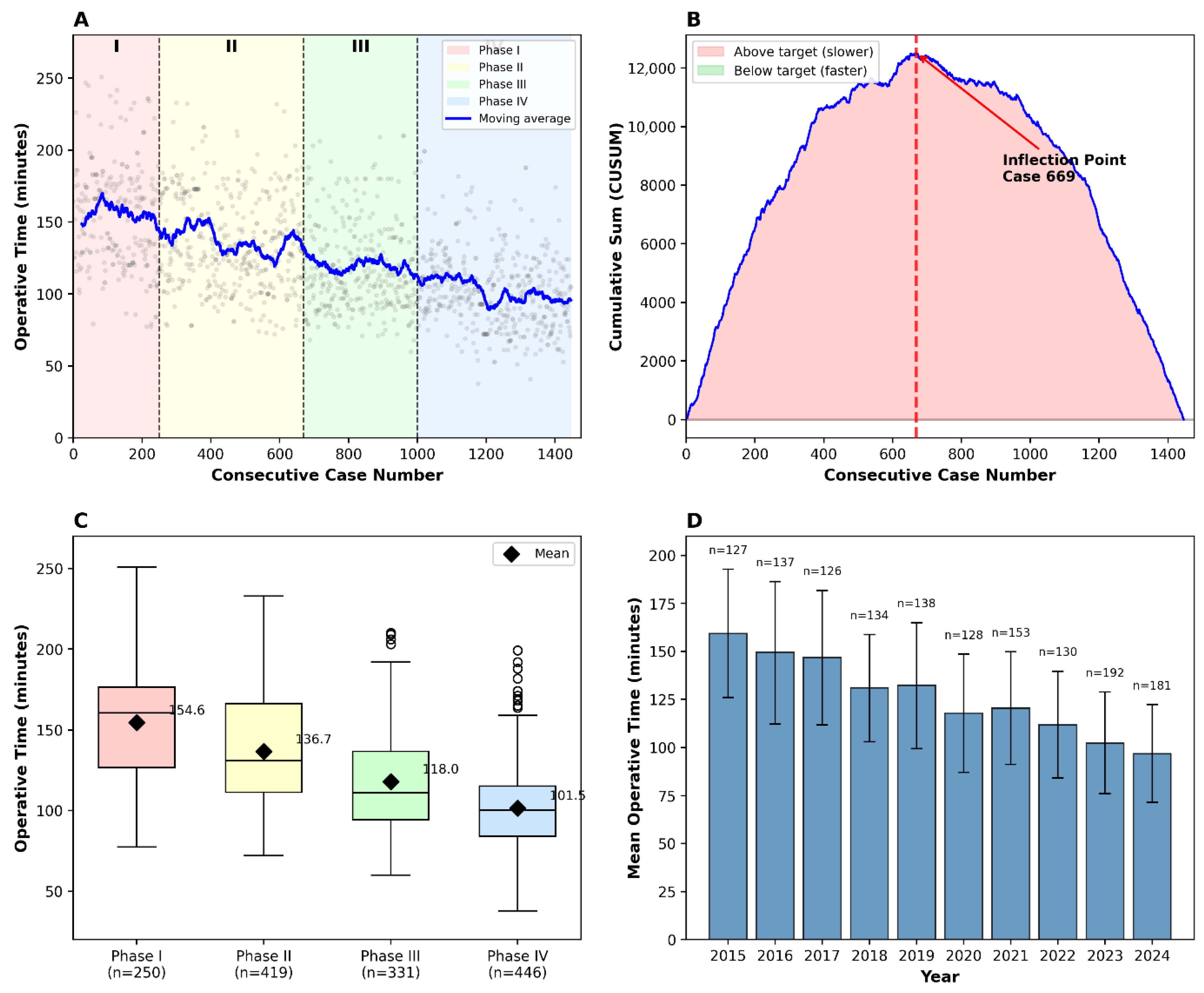
| I | Initial Learning | 1–250 | 250 | 154.6 ± 35.9 | 160.5 (126.8–176.4) | — |
| II | Rapid Improvement | 251–669 | 419 | 136.7 ± 32.6 | 131.0 (111.3–166.1) | 11.6% (p < 0.001) |
| III | Consolidation | 670–1000 | 331 | 118.0 ± 30.1 | 111.0 (94.2–136.6) | 13.6% (p < 0.001) |
| IV | Mastery | 1001–1446 | 446 | 101.5 ± 26.2 | 100.2 (84.0–115.2) | 14.0% (p < 0.001) |
Disclaimer/Publisher’s Note: The statements, opinions and data contained in all publications are solely those of the individual author(s) and contributor(s) and not of MDPI and/or the editor(s). MDPI and/or the editor(s) disclaim responsibility for any injury to people or property resulting from any ideas, methods, instructions or products referred to in the content. |
© 2026 by the authors. Licensee MDPI, Basel, Switzerland. This article is an open access article distributed under the terms and conditions of the Creative Commons Attribution (CC BY) license.
Share and Cite
Kanani, F.; Kozin, M.; Ben Avraham, Y.; Avitan, E.; Gurevich, M.; Nesher, E.; Gravetz, A. Laparoscopic Living Donor Nephrectomy: Learning Curve Analysis Through 1446 Cases and Outcomes from 200 Consecutive Mastery-Phase Procedures—How I Do It. J. Clin. Med. 2026, 15, 1363. https://doi.org/10.3390/jcm15041363
Kanani F, Kozin M, Ben Avraham Y, Avitan E, Gurevich M, Nesher E, Gravetz A. Laparoscopic Living Donor Nephrectomy: Learning Curve Analysis Through 1446 Cases and Outcomes from 200 Consecutive Mastery-Phase Procedures—How I Do It. Journal of Clinical Medicine. 2026; 15(4):1363. https://doi.org/10.3390/jcm15041363
Chicago/Turabian StyleKanani, Fahim, Moran Kozin, Yael Ben Avraham, Efrat Avitan, Michael Gurevich, Eviatar Nesher, and Aviad Gravetz. 2026. "Laparoscopic Living Donor Nephrectomy: Learning Curve Analysis Through 1446 Cases and Outcomes from 200 Consecutive Mastery-Phase Procedures—How I Do It" Journal of Clinical Medicine 15, no. 4: 1363. https://doi.org/10.3390/jcm15041363
APA StyleKanani, F., Kozin, M., Ben Avraham, Y., Avitan, E., Gurevich, M., Nesher, E., & Gravetz, A. (2026). Laparoscopic Living Donor Nephrectomy: Learning Curve Analysis Through 1446 Cases and Outcomes from 200 Consecutive Mastery-Phase Procedures—How I Do It. Journal of Clinical Medicine, 15(4), 1363. https://doi.org/10.3390/jcm15041363