Cellular Mechanisms Underlying Endothelial and Histopathological Alterations Induced by Cerebral Angiography


Abstract
1. Introduction
2. Materials and Methods
3. Fundamentals of Cerebral Angiography and Endovascular Approaches
3.1. Digital Subtraction Angiography (DSA)
3.2. Magnetic Resonance Angiography (MRA)
3.3. Computed Tomography Angiography (CTA)
3.4. Intraoperative Angiographic Techniques
4. Effects of Angiographic Procedures on Cerebral Arteries
4.1. Endothelial Cell Damage
4.2. Vascular Wall Inflammation and Immunological Response
4.3. Effects on the Blood–Brain Barrier
5. Histopathological Effects of Angiographic Contrast Agents
5.1. Endothelial Dysfunction and Oxidative Stress
5.2. Contrast-Induced Nephropathy and Neurovascular Toxicity
5.3. Cellular-Level Inflammation and Necrosis Mechanisms
6. Secondary Vascular and Cellular Effects of Endovascular Therapeutic Procedures
6.1. Cellular-Level Effects of Endovascular Interventions
6.2. Cellular Changes Following Mechanical Thrombectomy
6.3. Restenosis and Tissue Regeneration Processes
7. Pathogenesis of Tissue Damage Following Cerebral Angiography
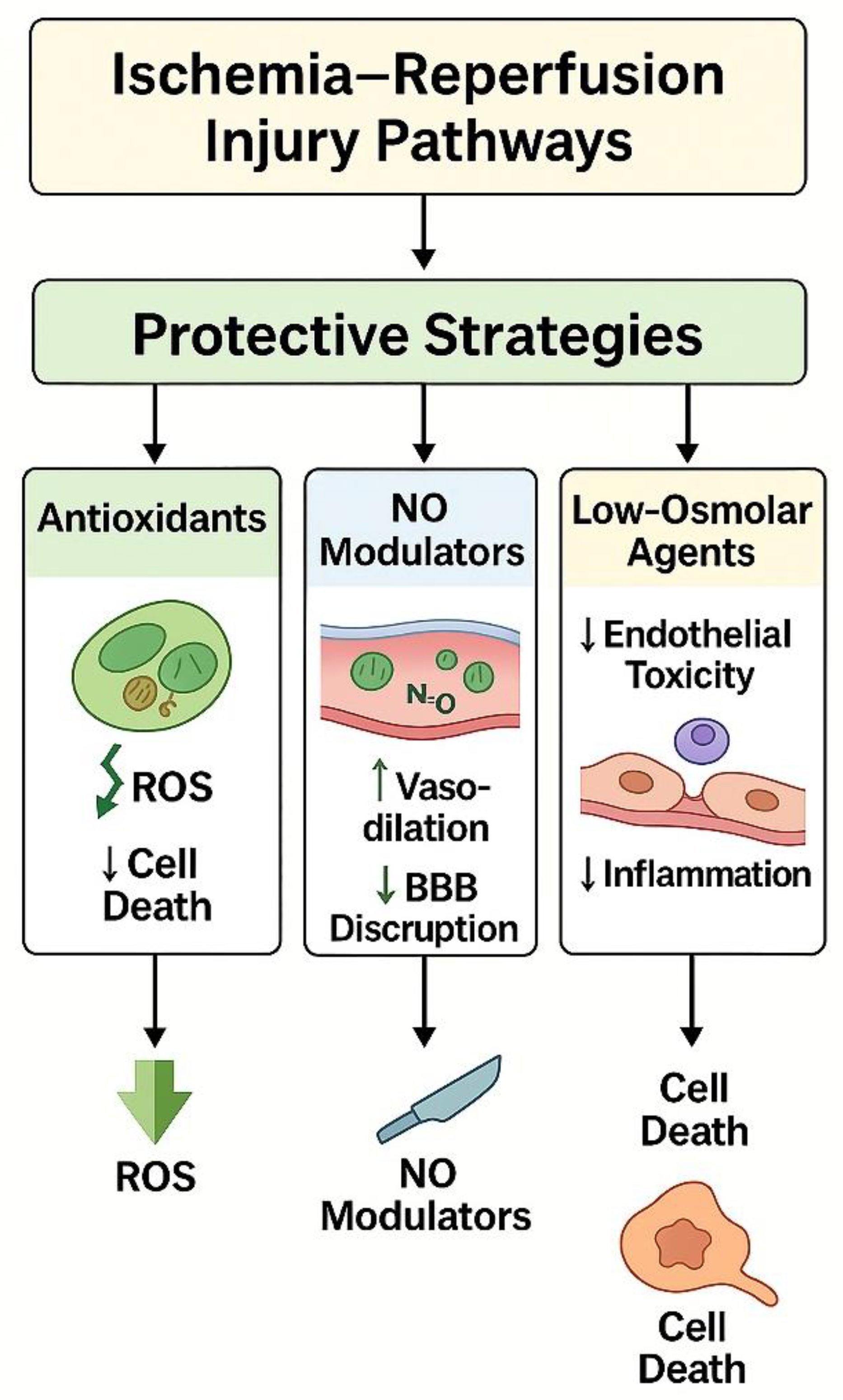
7.1. Ischemia–Reperfusion Injury and Cellular Response
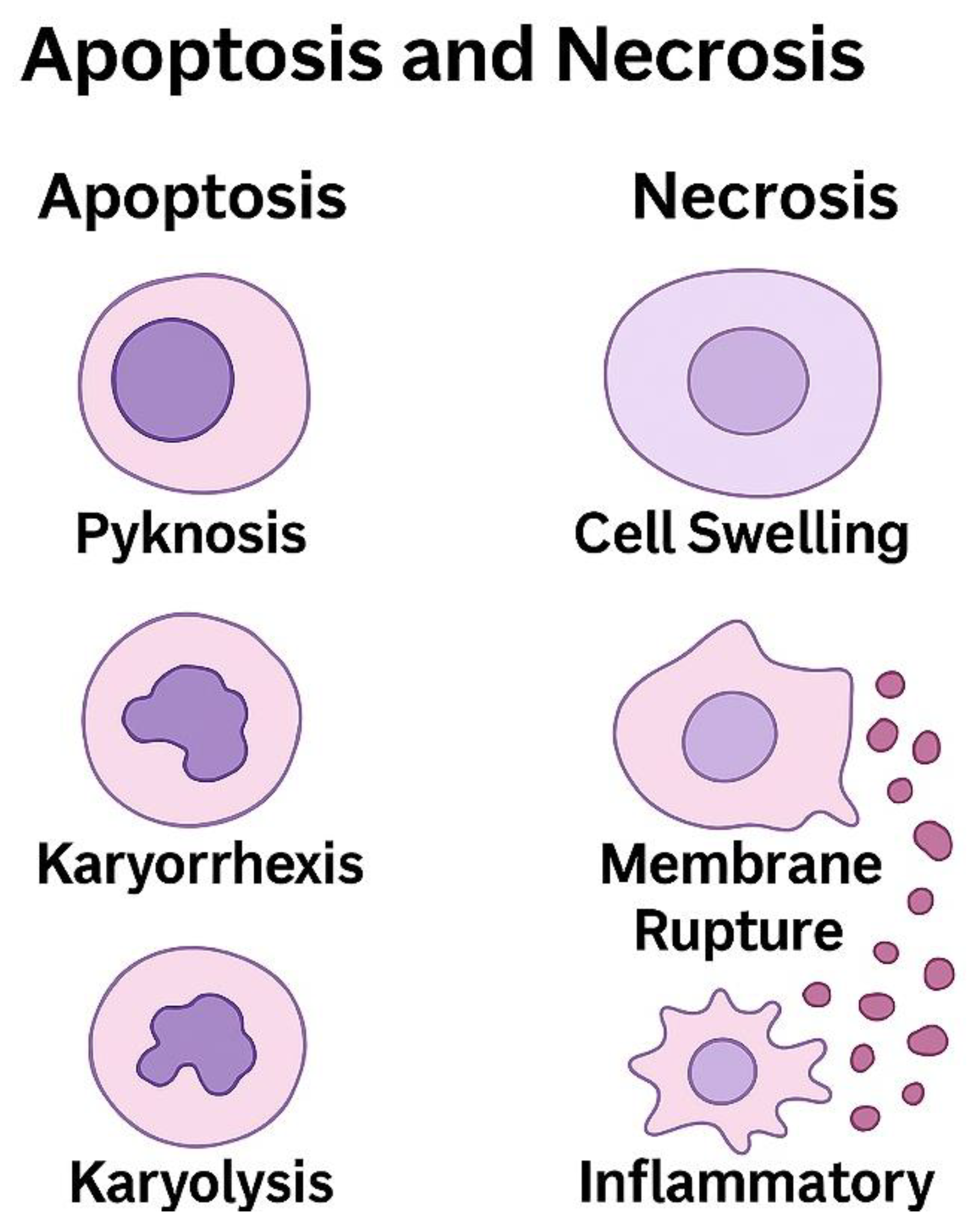
7.2. Apoptosis and Necrosis Mechanisms
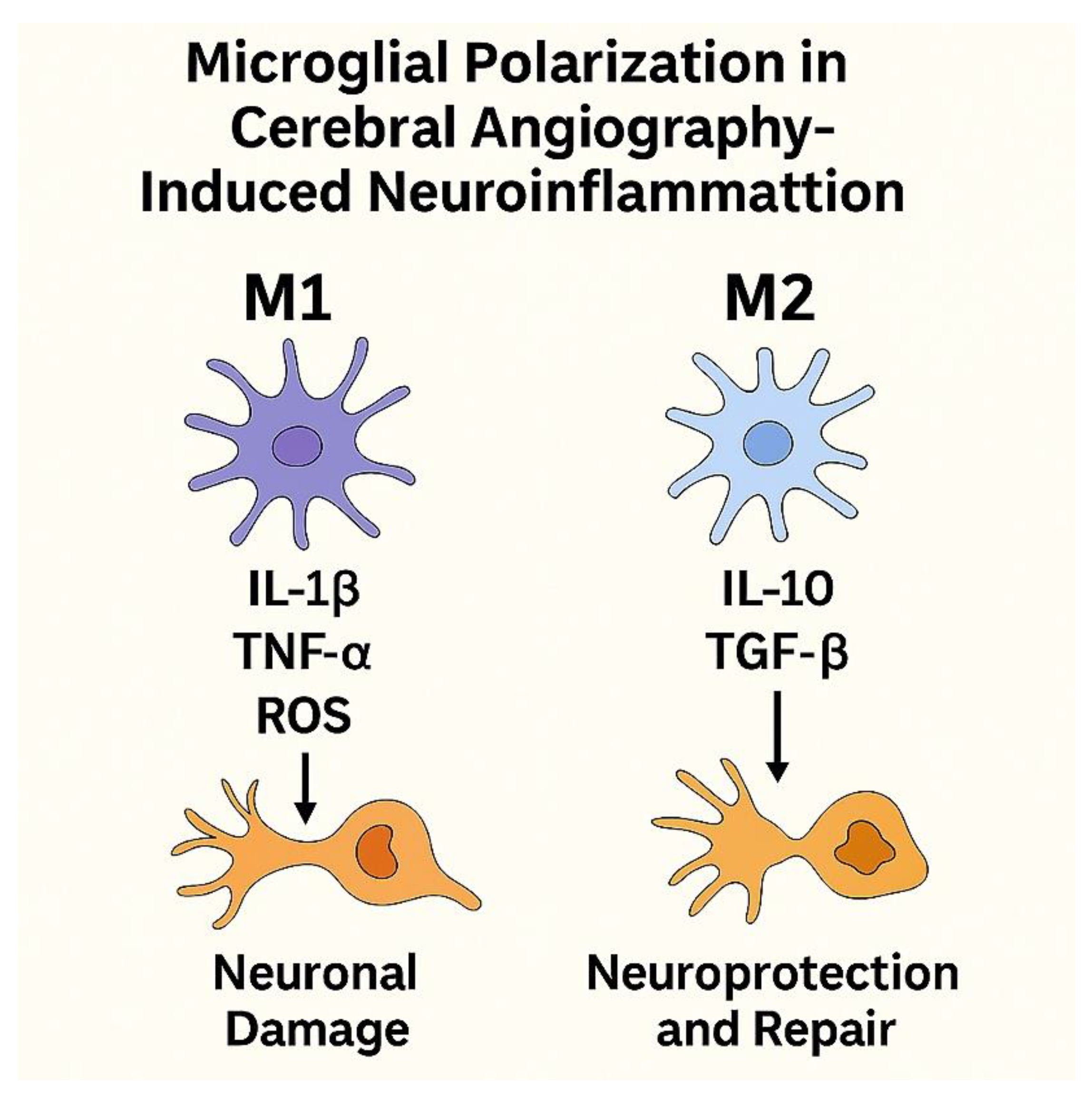
7.3. Microglial Activation and Neuroinflammation
8. Experimental Studies: Histopathological Vascular Findings
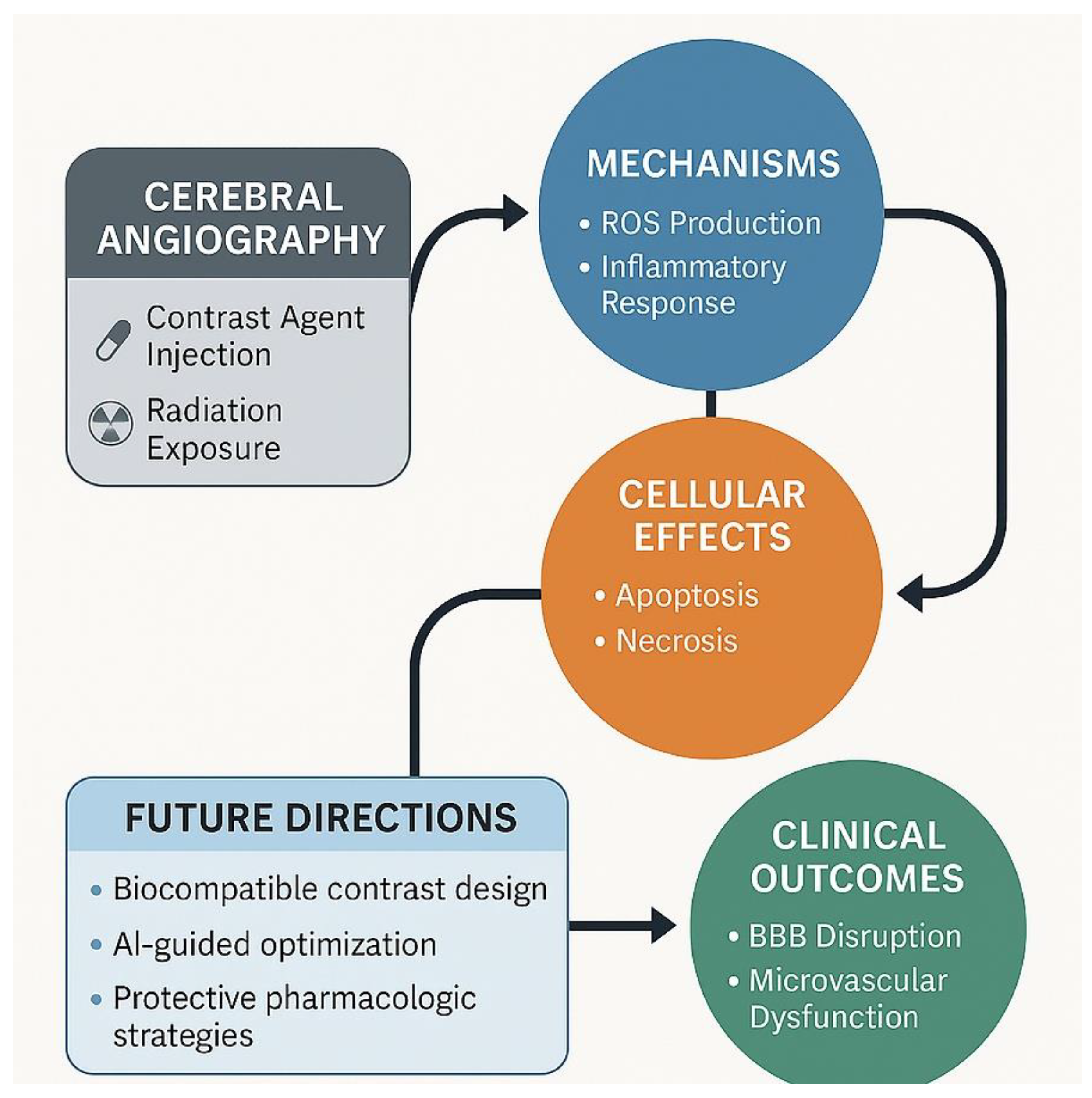
9. Conclusions and Future Directions
Supplementary Materials
Author Contributions
Funding
Institutional Review Board Statement
Informed Consent Statement
Data Availability Statement
Conflicts of Interest
Abbreviations
| AVMs | Arteriovenous Malformations |
| DSA | Digital Subtraction Angiography |
| BBB | Blood–Brain Barrier |
| eNOS | Endothelial Nitric Oxide Synthase |
| NF-κB | Nuclear Factor Kappa B |
| ROS | Reactive Oxygen Species |
| TNF-α | Tumor Necrosis Factor-Alpha |
| IL-6 | Interleukin-6 |
| IL-1β | Interleukin-1 Beta |
| NO | Nitric Oxide |
| VE-cadherin | Vascular Endothelial Cadherin |
| PECAM-1 | Platelet Endothelial Cell Adhesion Molecule-1 |
| MDA | Malondialdehyde |
| TEM | Transmission Electron Microscopy |
| DNA | Deoxyribonucleic Acid |
| ICAM-1 | Intercellular Adhesion Molecule-1 |
| VCAM-1 | Vascular Cell Adhesion Molecule-1 |
| EPCs | Endothelial Progenitor Cells |
| ICG | Indocyanine Green |
| NIR | Near-Infrared |
| CE-MRA | Contrast-Enhanced Magnetic Resonance Angiography |
| PC | Phase-Contrast |
| TOF | Time-of-Flight |
| CE | Contrast-Enhanced |
| CTA | Computed Tomography Angiography |
| CT | Computed Tomography |
| MDCT | Multidetector Computed Tomography |
| CIN | Contrast-Induced Nephropathy |
| CIE | Contrast-Induced Encephalopathy |
| AI | Artificial Intelligence |
| I/R | Ischemia–Reperfusion |
| I/R injury | Ischemia–Reperfusion Injury |
| ATP | Adenosine Triphosphate |
| NMDA | N-Methyl-D-Aspartate |
| AMPA | α-Amino-3-hydroxy-5-methyl-4-isoxazolepropionic Acid |
| M1 | Pro-inflammatory Microglial Phenotype |
| M2 | Anti-inflammatory Microglial Phenotype |
| MMPs | Matrix Metalloproteinases |
| TGF-β | Transforming Growth Factor-Beta |
| VEGF | Vascular Endothelial Growth Factor |
| VSMCs | Vascular Smooth Muscle Cells |
| bFGF | Basic Fibroblast Growth Factor |
| TOF-MRA | Time-of-Flight Magnetic Resonance Angiography |
| dAVFs | Dural Arteriovenous Fistulas |
| DECT | Dual-Energy Computed Tomography |
| 7T MRA | 7 Tesla Magnetic Resonance Angiography |
| 3T MRA | 3 Tesla Magnetic Resonance Angiography |
| γ-H2AX | Phosphorylated Histone H2A Variant X (DNA damage marker) |
| CD34 | Cluster of Differentiation 34 |
References
- Kunst, M.M.; Schaefer, P.W. Ischemic stroke. Radiol. Clin. N. Am. 2011, 49, 1–26. [Google Scholar] [CrossRef]
- Foreman, P.M.; Harrigan, M.R. Blunt Traumatic Extracranial Cerebrovascular Injury and Ischemic Stroke. Cerebrovasc. Dis. Extra 2017, 7, 72–83. [Google Scholar] [CrossRef]
- Bertolote, J.M. Egas Moniz: Twice a double life. Arq. Neuropsiquiatr. 2015, 73, 885–886. [Google Scholar] [CrossRef][Green Version]
- Settecase, F.; Rayz, V.L. Advanced vascular imaging techniques. Handb. Clin. Neurol. 2021, 176, 81–105. [Google Scholar]
- Ambrosino, P.; Bachetti, T.; D’Anna, S.E.; Galloway, B.; Bianco, A.; D’Agnano, V.; Papa, A.; Motta, A.; Perrotta, F.; Maniscalco, M. Mechanisms and Clinical Implications of Endothelial Dysfunction in Arterial Hypertension. J. Cardiovasc. Dev. Dis. 2022, 9, 136. [Google Scholar] [CrossRef]
- Shahov, A.S.; Dugina, V.B.; Alieva, I.B. The reorganization of actin cytoskeleton and microtubule system of human endothelial vein in the intercellular contacts formation. Tsitologiia 2015, 57, 222–232. [Google Scholar] [PubMed]
- Ambrosino, P.; Grassi, G.; Maniscalco, M. Endothelial Dysfunction: From a Pathophysiological Mechanism to a Potential Therapeutic Target. Biomedicines 2021, 10, 78. [Google Scholar] [CrossRef] [PubMed]
- Zaric, B.; Obradovic, M.; Trpkovic, A.; Banach, M.; Mikhailidis, D.P.; Isenovic, E.R. Endothelial Dysfunction in Dyslipidaemia: Molecular Mechanisms and Clinical Implications. Curr. Med. Chem. 2020, 27, 1021–1040. [Google Scholar] [CrossRef]
- Huang, X.; Li, G.; Hu, B.; Zhang, X.; Sun, Y. The safety and feasibility of using a 5-Fr guiding catheter with a 0.035-inch guidewire in place for cerebral angiography. Medicine 2024, 103, e36896. [Google Scholar] [CrossRef] [PubMed]
- Choe, Y.G.; Yoon, J.H.; Joo, J.; Kim, B.; Hong, S.P.; Koh, G.Y.; Lee, D.S.; Oh, W.Y.; Jeong, Y. Pericyte Loss Leads to Capillary Stalling Through Increased Leukocyte-Endothelial Cell Interaction in the Brain. Front. Cell Neurosci. 2022, 16, 848764. [Google Scholar] [CrossRef]
- Cetas, J.S.; Lee, D.R.; Alkayed, N.J.; Wang, R.; Iliff, J.J.; Heinricher, M.M. Brainstem control of cerebral blood flow and application to acute vasospasm following experimental subarachnoid hemorrhage. Neuroscience 2009, 163, 719–729. [Google Scholar] [CrossRef][Green Version]
- Vigano’, M.; Mantero, V.; Basilico, P.; Cordano, C.; Sangalli, D.; Reganati, P.; Lunghi, A.; Rigamonti, A.; Salmaggi, A. Contrast-induced encephalopathy mimicking total anterior circulation stroke: A case report and review of the literatüre. Neurol. Sci. 2021, 42, 1145–1150. [Google Scholar] [CrossRef] [PubMed]
- Yao, L.D.; Zhu, X.L.; Yang, R.L.; Zhang, M.M. Cardiorespiratory arrest after iso-osmolar iodinated contrast injection: A case report of contrast-induced encephalopathy following contrast-enhanced computed-tomography. Medicine 2021, 100, e24035. [Google Scholar] [CrossRef]
- Zhang, L.; Wang, X.; Miao, Y.; Chen, Z.; Qiang, P.; Cui, L.; Jing, H.; Guo, Y. Magnetic ferroferric oxide nanoparticles induce vascular endothelial cell dysfunction and inflammation by disturbing autophagy. J. Hazard. Mater. 2016, 304, 186–195. [Google Scholar] [CrossRef]
- Mujynya-Ludunge, K.; Viswambharan, H.; Driscoll, R.; Ming, X.F.; von Segesser, L.K.; Kappenberger, L.; Yang, Z.; Vassalli, G. Endothelial nitric oxide synthase gene transfer restores endothelium-dependent relaxations and attenuates lesion formation in carotid arteries in apolipoprotein E-deficient mice. Basic Res. Cardiol. 2005, 100, 102–111. [Google Scholar] [CrossRef]
- Guo, Y.; Li, W.; Qian, M.; Jiang, T.; Guo, P.; Du, Q.; Lin, N.; Xie, X.; Wu, Z.; Lin, D.; et al. D-4F Ameliorates Contrast Media-Induced Oxidative Injuries in Endothelial Cells via the AMPK/PKC Pathway. Front. Pharmacol. 2021, 11, 556074. [Google Scholar] [CrossRef]
- Panés, J.; Perry, M.; Granger, D.N. Leukocyte-endothelial cell adhesion: Avenues for therapeutic intervention. Br. J. Pharmacol. 1999, 126, 537–550. [Google Scholar] [CrossRef]
- Abraham, P.; Scott Pannell, J.; Santiago-Dieppa, D.R.; Cheung, V.; Steinberg, J.; Wali, A.; Gupta, M.; Rennert, R.C.; Lee, R.R.; Khalessi, A.A. Vessel wall signal enhancement on 3-T MRI in acute stroke patients after stent retriever thrombectomy. Neurosurg. Focus 2017, 42, E20. [Google Scholar] [CrossRef]
- Fujie, T.; Ito, K.; Ozaki, Y.; Takahashi, S.; Yamamoto, C.; Kaji, T. Induction of ZIP8, a ZIP transporter, via NF-κB signaling by the activation of IκBα and JNK signaling in cultured vascular endothelial cells exposed to cadmium. Toxicol. Appl. Pharmacol. 2022, 434, 115802. [Google Scholar] [CrossRef]
- Zhong, L.; Simard, M.J.; Huot, J. Endothelial microRNAs regulating the NF-κB pathway and cell adhesion molecules during inflammation. FASEB J. 2018, 32, 4070–4084. [Google Scholar] [CrossRef]
- Sanborn, M.R.; Thom, S.R.; Bohman, L.E.; Stein, S.C.; Levine, J.M.; Milovanova, T.; Maloney-Wilensky, E.; Frangos, S.; Kumar, M.A. Temporal dynamics of microparticle elevation following subarachnoid hemorrhage. J. Neurosurg. 2012, 117, 579–586. [Google Scholar] [CrossRef] [PubMed]
- Lackner, P.; Dietmann, A.; Beer, R.; Fischer, M.; Broessner, G.; Helbok, R.; Marxgut, J.; Pfausler, B.; Schmutzhard, E. Cellular microparticles as a marker for cerebral vasospasm in spontaneous subarachnoid hemorrhage. Stroke 2010, 41, 2353–2357. [Google Scholar] [CrossRef] [PubMed]
- Etminan, N.; Vergouwen, M.D.; Macdonald, R.L. Angiographic vasospasm versus cerebral infarction as outcome measures after aneurysmal subarachnoid hemorrhage. Acta. Neurochir. Suppl. 2013, 115, 33–40. [Google Scholar] [PubMed]
- Callewaert, B.; Gsell, W.; Lox, M.; Himmelreich, U.; Jones, E.A.V. A timeline study on vascular co-morbidity induced cerebral endothelial dysfunction assessed by perfusion MRI. Neurobiol. Dis. 2024, 202, 106709. [Google Scholar] [CrossRef]
- Lee, K.; Yoo, R.E.; Cho, W.S.; Choi, S.H.; Lee, S.H.; Kim, K.M.; Kang, H.S.; Kim, J.E. Blood-brain barrier disruption imaging in postoperative cerebral hyperperfusion syndrome using DCE-MRI. J. Cereb. Blood. Flow. Metab. 2024, 44, 345–354. [Google Scholar] [CrossRef]
- Shaban, S.; Huasen, B.; Haridas, A.; Killingsworth, M.; Worthington, J.; Jabbour, P.; Bhaskar, S.M.M. Digital subtraction angiography in cerebrovascular disease: Current practice and perspectives on diagnosis, acute treatment and prognosis. Acta Neurol. Belg. 2022, 122, 763–780. [Google Scholar] [CrossRef]
- Gao, Y.; Song, Y.; Yin, X.; Wu, W.; Zhang, L.; Chen, Y.; Shi, W. Deep learning-based digital subtraction angiography image generation. Int. J. Comput. Assist. Radiol. Surg. 2019, 14, 1775–1784. [Google Scholar] [CrossRef]
- Chen, K.K.; Lin, C.J. Estimating Pulsatile Flow Velocity using Four-Dimensional Digital Subtraction Angiography. In Proceedings of the 2023 45th Annual International Conference of the IEEE Engineering in Medicine & Biology Society (EMBC), Sydney, Australia, 24–27 July 2023; IEEE: New York, NY, USA, 2023; pp. 1–4. [Google Scholar]
- Grossberg, J.A.; Howard, B.M.; Saindane, A.M. The use of contrast-enhanced, time-resolved magnetic resonance angiography in cerebrovascular pathology. Neurosurg. Focus. 2019, 47, E3. [Google Scholar] [CrossRef]
- Mishra, A.; Kumar, A.; Mathur, A.; Kumar, V.; Sreen, A. Coil assisted glue embolization to improve safety and accuracy in endovascular management of Vein of Galen patients. Clin. Neurol. Neurosurg. 2021, 205, 106652. [Google Scholar] [CrossRef]
- Mandell, D.M.; Mossa-Basha, M.; Qiao, Y.; Hess, C.P.; Hui, F.; Matouk, C.; Johnson, M.H.; Daemen, M.J.; Vossough, A.; Edjlali, M.; et al. Intracranial Vessel Wall MRI: Principles and Expert Consensus Recommendations of the American Society of Neuroradiology. AJNR Am. J. Neuroradiol. 2017, 38, 218–229. [Google Scholar] [CrossRef]
- Gomez, J.R.; Hobbs, K.S.; Johnson, L.L.; Vu, Q.D.; Bennett, J.; Tegeler, C.; Wolfe, S.Q.; Sarwal, A. The Clinical Contribution of Neurovascular Ultrasonography in Acute Ischemic Stroke. J. Neuroimaging. 2020, 30, 867–874. [Google Scholar] [CrossRef]
- Mittmann, B.J.; Braun, M.; Runck, F.; Schmitz, B.; Tran, T.N.; Yamlahi, A.; Maier-Hein, L.; Franz, A.M. Deep learning-based classification of DSA image sequences of patients with acute ischemic stroke. Int. J. Comput. Assist. Radiol. Surg. 2022, 17, 1633–1641. [Google Scholar] [CrossRef]
- Aubert, S.; Cunningham, I.A.; Tanguay, J. Theoretical comparison of energy-resolved and digital-subtraction angiography. Med. Phys. 2022, 49, 6885–6902. [Google Scholar] [CrossRef]
- Zhao, X.; Zhang, Y.; Sun, Y.; Sun, L.; Cai, R. Assessment of myocardial viability with delayed-enhancement MRI in coronary artery disease: A correlative study with coronary artery stenosis using digital subtraction angiography. Exp. Ther. Med. 2016, 12, 2285–2289. [Google Scholar] [CrossRef][Green Version]
- Dobrocky, T.; Matzinger, M.; Piechowiak, E.I.; Kaesmacher, J.; Pilgram-Pastor, S.; Goldberg, J.; Bervini, D.; Klail, T.; Pereira, V.M.; Z’Graggen, W.; et al. Benefit of Advanced 3D DSA and MRI/CT Fusion in Neurovascular Pathology. Clin. Neuroradiol. 2023, 33, 669–676. [Google Scholar] [CrossRef] [PubMed]
- Su, R.; van der Sluijs, P.M.; Chen, Y.; Cornelissen, S.; van den Broek, R.; van Zwam, W.H.; van der Lugt, A.; Niessen, W.J.; Ruijters, D.; van Walsum, T. CAVE: Cerebral artery-vein segmentation in digital subtraction angiography. Comput. Med. Imaging Graph. 2024, 115, 102392. [Google Scholar] [CrossRef]
- Raabe, A.; Seidel, K. Prevention of ischemic complications during aneurysm surgery. J. Neurosurg. Sci. 2016, 60, 95–103. [Google Scholar] [PubMed]
- Chen, F.; Wang, X.; Wu, B. Neuroimaging research on cerebrovascular spasm and its current progress. Acta. Neurochir. Suppl. 2011, 110, 233–237. [Google Scholar]
- Kakeda, S.; Korogi, Y.; Ohnari, N.; Hatakeyama, Y.; Moriya, J.; Oda, N.; Nishino, K.; Miyamoto, W. 3D digital subtraction angiography of intracranial aneurysms: Comparison of flat panel detector with conventional image intensifier TV system using a vascular phantom. AJNR Am. J. Neuroradiol. 2007, 28, 839–843. [Google Scholar] [PubMed]
- Woodworth, G.F.; McGirt, M.J.; Clatterbuck, R.; Gailloud, P. Evaluation of a distal pericallosal aneurysm visualized with 3-dimensional digital subtraction angiography: Case report and treatment implications. Surg. Neurol. 2005, 64, 321–324. [Google Scholar] [CrossRef]
- Marinho, P.; Thines, L.; Verscheure, L.; Mordon, S.; Lejeune, J.P.; Vermandel, M. Recent advances in cerebrovascular simulation and neuronavigation for the optimization of intracranial aneurysm clipping. Comput. Aided. Surg. 2012, 17, 47–55. [Google Scholar] [CrossRef]
- Raman, A.; Uprety, M.; Calero, M.J.; Villanueva, M.R.B.; Joshaghani, N.; Villa, N.; Badla, O.; Goit, R.; Saddik, S.E.; Dawood, S.N.; et al. A Systematic Review Comparing Digital Subtraction Angiogram With Magnetic Resonance Angiogram Studies in Demonstrating the Angioarchitecture of Cerebral Arteriovenous Malformations. Cureus 2022, 14, e25803. [Google Scholar] [CrossRef]
- Catapano, J.S.; Lang, M.J.; Koester, S.W.; Wang, D.J.; DiDomenico, J.D.; Fredrickson, V.L.; Cole, T.S.; Lee, J.; Lawton, M.T.; Ducruet, A.F.; et al. Digital subtraction cerebral angiography after negative computed tomography angiography findings in non-traumatic subarachnoid hemorrhage. J. Neurointerv. Surg. 2020, 12, 526–530. [Google Scholar] [CrossRef]
- Vercelli, G.G.; Venturi, F.; Minardi, M.; Cofano, F.; Zenga, F.; Bergui, M.; Garbossa, D. Time-Resolved Magnetic Resonance Angiography for Follow-Up of Treated Dural and Epidural Spinal Arteriovenous Fistula. J. Neurol. Surg. Part A Cent. Eur. Neurosurg. 2022, 83, 561–567. [Google Scholar] [CrossRef]
- Jiao, Y.; Zhang, J.Z.; Zhao, Q.; Liu, J.Q.; Wu, Z.Z.; Li, Y.; Li, H.; Fu, W.L.; Weng, J.C.; Huo, R.; et al. Machine Learning-Enabled Determination of Diffuseness of Brain Arteriovenous Malformations from Magnetic Resonance Angiography. Transl. Stroke Res. 2022, 13, 939–948. [Google Scholar] [CrossRef]
- Rojas-Villabona, A.; Sokolska, M.; Solbach, T.; Grieve, J.; Rega, M.; Torrealdea, F.; Pizzini, F.B.; De Vita, E.; Suzuki, Y.; Van Osch, M.J.P.; et al. Planning of gamma knife radiosurgery (GKR) for brain arteriovenous malformations using triple magnetic resonance angiography (triple-MRA). Br. J. Neurosurg. 2022, 36, 217–227. [Google Scholar] [CrossRef]
- HaiFeng, L.; YongSheng, X.; YangQin, X.; Yu, D.; ShuaiWen, W.; XingRu, L.; JunQiang, L. Diagnostic value of 3D time-of-flight magnetic resonance angiography for detecting intracranial aneurysm: A meta-analysis. Neuroradiology 2017, 59, 1083–1092. [Google Scholar] [CrossRef]
- Shao, S.; Sun, Q. Evaluation of intracranial artery stenosis using time-of-flight magnetic resonance angiography: New wine in an old bottle. Eur. Radiol. 2022, 32, 3670–3671. [Google Scholar] [CrossRef]
- Koktzoglou, I.; Huang, R.; Edelman, R.R. Quantitative time-of-flight MR angiography for simultaneous luminal and hemodynamic evaluation of the intracranial arteries. Magn. Reson. Med. 2022, 87, 150–162. [Google Scholar] [CrossRef]
- Kang, C.K.; Park, C.A.; Lee, D.S.; Lee, Y.B.; Park, C.W.; Kim, Y.B.; Cho, Z.H. Velocity measurement of microvessels using phase-contrast magnetic resonance angiography at 7 Tesla MRI. Magn. Reson. Med. 2016, 75, 1640–1646. [Google Scholar] [CrossRef] [PubMed]
- Kim, H.; Wilton, S.B.; Garcia, J. Left atrium 4D-flow segmentation with high-resolution contrast-enhanced magnetic resonance angiography. Front. Cardiovasc. Med. 2023, 10, 1225922. [Google Scholar] [CrossRef] [PubMed]
- Anzalone, N.; Scotti, R.; Iadanza, A. MR angiography of the carotid arteries and intracranial circulation: Advantage of a high relaxivity contrast agent. Neuroradiology 2006, 48, 9–17. [Google Scholar] [CrossRef] [PubMed]
- Grobner, T. Gadolinium—A specific trigger for the development of nephrogenic fibrosing dermopathy and nephrogenic systemic fibrosis? Nephrol. Dial. Transplant. 2006, 21, 1104–1108. [Google Scholar] [CrossRef]
- Chauvet, G.; Cheddad, E.l.; Aouni, M.; Magro, E.; Sabardu, O.; Ben Salem, D.; Gentric, J.C.; Ognard, J. Diagnostic Accuracy of Non-Contrast-Enhanced Time-Resolved MR Angiography to Assess Angioarchitectural Classification Features of Brain Arteriovenous Malformations. Diagnostics 2024, 14, 1656. [Google Scholar] [CrossRef]
- Wardlaw, J.M.; White, P.M. The detection and management of unruptured intracranial aneurysms. Brain 2000, 123, 205–221. [Google Scholar] [CrossRef]
- Zhao, D.L.; Li, R.Y.; Li, C.; Chen, X.H.; Yu, J.W.; Zhang, Y.; Ju, S. Assessment of the degree of arterial stenosis in intracranial atherosclerosis using 3D high-resolution MRI: Comparison with time-of-flight MRA, contrast-enhanced MRA, and DSA. Clin. Radiol. 2023, 78, e63–e70. [Google Scholar] [CrossRef]
- Finitsis, S.; Anxionnat, R.; Gory, B.; Planel, S.; Liao, L.; Bracard, S. Susceptibility-Weighted Angiography for the Follow-Up of Brain Arteriovenous Malformations Treated with Stereotactic Radiosurgery. AJNR Am. J. Neuroradiol. 2019, 40, 792–797. [Google Scholar] [CrossRef]
- Wheaton, A.J.; Miyazaki, M. Non-contrast enhanced MR angiography: Physical principles. J. Magn. Reson. Imaging 2012, 36, 286–304. [Google Scholar] [CrossRef]
- Runge, V.M. Safety of approved MR contrast media for intravenous injection. J. Magn. Reson. Imaging 2000, 12, 205–213. [Google Scholar] [CrossRef]
- Malek, A.M.; Alper, S.L.; Izumo, S. Hemodynamic shear stress and its role in atherosclerosis. JAMA 1999, 282, 2035–2042. [Google Scholar] [CrossRef] [PubMed]
- Chen, G.Z.; Ke, Y.; Qin, K.; Dong, M.Q.; Zeng, S.J.; Lin, X.F.; Zhan, S.Q.; Tang, K.; Peng, C.; Ding, X.W.; et al. Analysis of the Expression of Angioarchitecture-related Factors in Patients with Cerebral Arteriovenous Malformation. Chin. Med. J. 2017, 130, 2465–2472. [Google Scholar] [CrossRef]
- Chioncel, V.; Brezeanu, R.; Sinescu, C. New Directions in the Management of Peripheral Artery Disease. Am. J. Ther. 2019, 26, e284–e293. [Google Scholar] [CrossRef]
- Shuman, W.P.; Branch, K.R.; May, J.M.; Mitsumori, L.M.; Lockhart, D.W.; Dubinsky, T.J.; Warren, B.H.; Caldwell, J.H. Prospective versus retrospective ECG gating for 64-detector CT of the coronary arteries: Comparison of image quality and patient radiation dose. Radiology 2008, 248, 431–437. [Google Scholar] [CrossRef]
- von Morze, C.; Xu, D.; Purcell, D.D.; Hess, C.P.; Mukherjee, P.; Saloner, D.; Kelley, D.A.; Vigneron, D.B. Intracranial time-of-flight MR angiography at 7T with comparison to 3T. J. Magn. Reson. Imaging 2007, 26, 900–904. [Google Scholar] [CrossRef]
- Edelman, R.R.; Koktzoglou, I. Noncontrast MR angiography: An update. J. Magn. Reson. Imaging 2019, 49, 355–373. [Google Scholar] [CrossRef]
- Kumamaru, K.K.; Hoppel, B.E.; Mather, R.T.; Rybicki, F.J. CT angiography: Current technology and clinical use. Radiol. Clin. N. Am. 2010, 48, 213–235. [Google Scholar] [CrossRef] [PubMed]
- Burrill, J.; Dabbagh, Z.; Gollub, F.; Hamady, M. Multidetector computed tomographic angiography of the cardiovascular system. Postgrad. Med. J. 2007, 83, 698–704. [Google Scholar] [CrossRef]
- Zhao, Y.; Gu, Y.; Liu, Y.; Guo, Z. Evaluation of the Correlation Between Distribution Location and Vulnerability of Carotid Plaque in Patients with Transient Ischemic Attack. Vasc. Health Risk Manag. 2024, 20, 77–87. [Google Scholar] [CrossRef] [PubMed]
- Debernardi, S.; Martincich, L.; Lazzaro, D.; Comelli, S.; Raso, A.M.; Regge, D. CT angiography in the assessment of carotid atherosclerotic disease: Results of more than two years’ experience. Radiol. Med. 2004, 108, 116–127. [Google Scholar]
- Rahlfs, H.; Hüllebrand, M.; Schmitter, S.; Strecker, C.; Harloff, A.; Hennemuth, A. Carotid Artery Plaque Analysis in 3D Based on Distance Encoding in Mesh Representations. Int. J. Comput. Assist. Radiol. Surg. 2025, 20, 1851–1861. [Google Scholar] [CrossRef]
- Ferrara, A. Computed Tomography in Stroke Diagnosis, Assessment, and Treatment. Radiol. Technol. 2020, 91, 447CT–462CT. [Google Scholar]
- Cao, R.; Qi, P.; Jiang, Y.; Hu, S.; Ye, G.; Zhu, Y.; Li, L.; You, Z.; Chen, J. Preliminary Application of a Quantitative Collateral Assessment Method in Acute Ischemic Stroke Patients With Endovascular Treatments: A Single-Center Study. Front. Neurol. 2021, 12, 714313. [Google Scholar] [CrossRef]
- Azzalini, L.; Spagnoli, V.; Ly, H.Q. Contrast-Induced Nephropathy: From Pathophysiology to Preventive Strategies. Can. J. Cardiol. 2016, 32, 247–255. [Google Scholar] [CrossRef]
- Cheruvu, B.; Henning, K.; Mulligan, J.; Klippenstein, D.; Lawrence, D.; Gurtoo, L.; Gottlieb, R.H. Iodixanol: Risk of subsequent contrast nephropathy in cancer patients with underlying renal insufficiency undergoing diagnostic computed tomography examinations. J. Comput. Assist. Tomogr. 2007, 31, 493–498. [Google Scholar] [CrossRef] [PubMed]
- Tochaikul, G.; Tanadchangsaeng, N.; Panaksri, A.; Moonkum, N. Enhancing Radiation Shielding Capabilities with Epoxy-Resin Composites Reinforced with Coral-Derived Calcium Carbonate Fillers. Polymers 2025, 17, 113. [Google Scholar] [CrossRef]
- Aspelin, P.; Stacul, F.; Thomsen, H.S.; Morcos, S.K.; van der Molen, A.J.; Members of the Contrast Media Safety Committee of the European Society of Urogenital Radiology (ESUR). Effects of iodinated contrast media on blood and endothelium. Eur. Radiol. 2006, 16, 1041–1049. [Google Scholar] [CrossRef]
- Sendeski, M.M.; Persson, A.B.; Liu, Z.Z.; Busch, J.F.; Weikert, S.; Persson, P.B.; Hippenstiel, S.; Patzak, A. Iodinated contrast media cause endothelial damage leading to vasoconstriction of human and rat vasa recta. Am. J. Physiol. Renal. Physiol. 2012, 303, F1592–F1598. [Google Scholar] [CrossRef]
- Chen, X.; Liu, Y.; Tong, H.; Dong, Y.; Ma, D.; Xu, L.; Yang, C. Meta-analysis of computed tomography angiography versus magnetic resonance angiography for intracranial aneurysm. Medicine 2018, 97, e10771. [Google Scholar] [CrossRef]
- Nguyen-Huynh, M.N.; Wintermark, M.; English, J.; Lam, J.; Vittinghoff, E.; Smith, W.S.; Johnston, S.C. How accurate is CT angiography in evaluating intracranial atherosclerotic disease? Stroke 2008, 39, 1184–1188. [Google Scholar] [CrossRef]
- Qu, H.; Gao, Y.; Li, M.; Zhai, S.; Zhang, M.; Lu, J. Dual Energy Computed Tomography of Internal Carotid Artery: A Modified Dual-Energy Algorithm for Calcified Plaque Removal, Compared With Digital Subtraction Angiography. Front. Neurol. 2021, 11, 621202. [Google Scholar] [CrossRef]
- Mangesius, S.; Janjic, T.; Steiger, R.; Haider, L.; Rehwald, R.; Knoflach, M.; Widmann, G.; Gizewski, E.; Grams, A. Dual-energy computed tomography in acute ischemic stroke: State-of-the-art. Eur. Radiol. 2021, 31, 4138–4147. [Google Scholar] [CrossRef] [PubMed]
- Brugnara, G.; Baumgartner, M.; Scholze, E.D.; Deike-Hofmann, K.; Kades, K.; Scherer, J.; Denner, S.; Meredig, H.; Rastogi, A.; Mahmutoglu, M.A.; et al. Deep-learning based detection of vessel occlusions on CT-angiography in patients with suspected acute ischemic stroke. Nat. Commun. 2023, 14, 4938. [Google Scholar] [CrossRef] [PubMed]
- Baliyan, V.; Shaqdan, K.; Hedgire, S.; Ghoshhajra, B. Vascular computed tomography angiography technique and indications. Cardiovasc. Diagn. Ther. 2019, 9, S14–S27. [Google Scholar] [CrossRef] [PubMed]
- Budoff, M.J.; Lakshmanan, S.; Toth, P.P.; Hecht, H.S.; Shaw, L.J.; Maron, D.J.; Michos, E.D.; Williams, K.A.; Nasir, K.; Choi, A.D.; et al. Cardiac CT angiography in current practice: An American society for preventive cardiology clinical practice statement✰. Am. J. Prev. Cardiol. 2022, 9, 100318. [Google Scholar] [CrossRef]
- Vivanco-Suarez, J.; Sioutas, G.S.; Matache, I.M.; Muhammad, N.; Salem, M.M.; Kandregula, S.; Jankowitz, B.T.; Burkhardt, J.K.; Srinivasan, V.M. Intraoperative angiography during neurosurgical procedures on patients in prone, three-quarters prone, and park-bench positions: Tertiary single-center experience with systematic review and meta-analysis. J. Neurointerv. Surg. 2023, 15, 793–800. [Google Scholar] [CrossRef]
- Klopfenstein, J.D.; Spetzler, R.F.; Kim, L.J.; Feiz-Erfan, I.; Han, P.P.; Zabramski, J.M.; Porter, R.W.; Albuquerque, F.C.; McDougall, C.G.; Fiorella, D.J. Comparison of routine and selective use of intraoperative angiography during aneurysm surgery: A prospective assessment. J. Neurosurg. 2004, 100, 230–235. [Google Scholar] [CrossRef]
- Derdeyn, C.P.; Moran, C.J.; Cross, D.T.; Grubb, R.L., Jr.; Dacey, R.G., Jr. Intraoperative digital subtraction angiography: A review of 112 consecutive examinations. AJNR Am. J. Neuroradiol. 1995, 16, 307–318. [Google Scholar]
- Balamurugan, S.; Agrawal, A.; Kato, Y.; Sano, H. Intra operative indocyanine green video-angiography in cerebrovascular surgery: An overview with review of literatüre. Asian J. Neurosurg. 2011, 6, 88–93. [Google Scholar] [CrossRef]
- Aguiar, G.B.; Kormanski, M.K.; Corrêa, C.J.T.; Batista, A.V.S.; Conti, M.L.M.; Veiga, J.C.E. Residual lesions in patients undergoing microsurgical clipping of cerebral aneurysms in a reference university hospital. Clinics 2020, 75, e1973. [Google Scholar] [CrossRef]
- Grüter, B.E.; Catalano, K.; Anon, J.; Gruber, P.; Thanabalasingam, A.; Andereggen, L.; Schubert, G.A.; Remonda, L.; Marbacher, S. Intra-aneurysmal contrast agent stasis during intraoperative digital subtraction angiography may predict long-term occlusion after clipping. Acta Neurochir. 2024, 166, 309. [Google Scholar] [CrossRef]
- Marbacher, S.; Grüter, B.E.; Wanderer, S.; Andereggen, L.; Cattaneo, M.; Trost, P.; Gruber, P.; Diepers, M.; Remonda, L.; Steiger, H.J. Risk of intracranial aneurysm recurrence after microsurgical clipping based on 3D digital subtraction angiography. J. Neurosurg. 2022, 138, 717–723. [Google Scholar] [CrossRef]
- Avery, M.; Chehab, S.; Wong, J.H.; Mitha, A.P. Intraoperative indocyanine green videoangiography to guide decision making regarding need for vessel bypass: A case report and technical note. Surg. Neurol. Int. 2016, 7, S36–S39. [Google Scholar] [CrossRef][Green Version]
- Al Menabbawy, A.; Refaee, E.E.; Shoubash, L.; Matthes, M.; Schroeder, H.W.S. The value of intraoperative indocyanine green angiography in microvascular decompression for hemifacial spasm to avoid brainstem ischemia. Acta Neurochir. 2023, 165, 747–755. [Google Scholar] [CrossRef]
- Badie, B.; Lee, F.T., Jr.; Pozniak, M.A.; Strother, C.M. Intraoperative sonographic assessment of graft patency during extracranial-intracranial bypass. AJNR Am. J. Neuroradiol. 2000, 21, 1457–1459. [Google Scholar]
- Joshi, G.; Yamada, Y.; Thavara, B.D.; Tanaka, R.; Miyatini, K.; Nakao, K.; Kawase, T.; Takizava, K.; Kato, Y. EC-IC Bypass; Our Experience of Cerebral Revascularization with Intraoperative Dual-Image Video Angiography (Diva). Asian J. Neurosurg. 2020, 15, 499–506. [Google Scholar] [CrossRef]
- Zhao, X.; Belykh, E.; Cavallo, C.; Valli, D.; Gandhi, S.; Preul, M.C.; Vajkoczy, P.; Lawton, M.T.; Nakaji, P. Application of Fluorescein Fluorescence in Vascular Neurosurgery. Front. Surg. 2019, 6, 52. [Google Scholar] [CrossRef]
- Acerbi, F.; Restelli, F.; Broggi, M.; Schiariti, M.; Ferroli, P. Feasibility of simultaneous sodium fluorescein and indocyanine green injection in neurosurgical procedures. Clin. Neurol. Neurosurg. 2016, 146, 123–129. [Google Scholar] [CrossRef]
- Scoditti, E.; Massaro, M.; Montinari, M.R. Endothelial safety of radiological contrast media: Why being concerned. Vascul. Pharmacol. 2013, 58, 48–53. [Google Scholar] [CrossRef]
- Zhang, H.; Holt, C.M.; Malik, N.; Shepherd, L.; Morcos, S.K. Effects of radiographic contrast media on proliferation and apoptosis of human vascular endothelial cells. Br. J. Radiol. 2000, 73, 1034–1041. [Google Scholar] [CrossRef]
- O’Connor, M.M.; Mayberg, M.R. Effects of radiation on cerebral vasculature: A review. Neurosurgery 2000, 46, 138–149; discussion 150-1. [Google Scholar] [CrossRef]
- Yannuzzi, L.A. Indocyanine green angiography: A perspective on use in the clinical setting. Am. J. Ophthalmol. 2011, 151, 745–751.e1. [Google Scholar] [CrossRef]
- Amoaku, W.M.; Lafaut, B.; Sallet, G.; De Laey, J.J. Radiation choroidal vasculopathy: An indocyanine green angiography study. Eye 1995, 9, 738–744. [Google Scholar] [CrossRef] [PubMed]
- Chiang, V.L.; Gailloud, P.; Murphy, K.J.; Rigamonti, D.; Tamargo, R.J. Routine intraoperative angiography during aneurysm surgery. J. Neurosurg. 2002, 96, 988–992. [Google Scholar] [CrossRef] [PubMed]
- Raabe, A.; Beck, J.; Seifert, V. Technique and image quality of intraoperative indocyanine green angiography during aneurysm surgery using surgical microscope integrated near-infrared video technology. Zentralbl. Neurochir. 2005, 66, 1–6, discussion 7–8. [Google Scholar] [CrossRef]
- Ozawa, T.; Tamatani, S.; Koike, T.; Abe, H.; Ito, Y.; Soga, Y.; Hasegawa, H.; Morita, K.; Tanaka, R. Histological evaluation of endothelial reactions after endovascular coil embolization for intracranial aneurysm: Clinical and experimental studies and review of the literature. Interv. Neuroradiol. 2003, 9, 69–82. [Google Scholar] [CrossRef]
- Ashby, J.W.; Mack, J.J. Endothelial Control of Cerebral Blood Flow. Am. J. Pathol. 2021, 191, 1906–1916. [Google Scholar] [CrossRef]
- Xia, T.; Yu, J.; Du, M.; Chen, X.; Wang, C.; Li, R. Vascular endothelial cell injury: Causes, molecular mechanisms, and treatments. MedComm 2025, 6, e70057. [Google Scholar] [CrossRef]
- Forsberg, K.M.E.; Zhang, Y.; Reiners, J.; Ander, M.; Niedermayer, A.; Fang, L.; Neugebauer, H.; Kassubek, J.; Katona, I.; Weis, J.; et al. Endothelial damage, vascular bagging and remodeling of the microvascular bed in human microangiopathy with deep white matter lesions. Acta Neuropathol. Commun. 2018, 6, 128. [Google Scholar] [CrossRef]
- Krueger, M.; Mages, B.; Hobusch, C.; Michalski, D. Endothelial edema precedes blood-brain barrier breakdown in early time points after experimental focal cerebral ischemia. Acta Neuropathol. Commun. 2019, 7, 17. [Google Scholar] [CrossRef]
- Mandyam, C.D.; Villalpando, E.G.; Steiner, N.L.; Quach, L.W.; Fannon, M.J.; Somkuwar, S.S. Platelet Endothelial Cell Adhesion Molecule-1 and Oligodendrogenesis: Significance in Alcohol Use Disorders. Brain Sci. 2017, 7, 131. [Google Scholar] [CrossRef] [PubMed]
- Daiber, A.; Xia, N.; Steven, S.; Oelze, M.; Hanf, A.; Kröller-Schön, S.; Münzel, T.; Li, H. New Therapeutic Implications of Endothelial Nitric Oxide Synthase (eNOS) Function/Dysfunction in Cardiovascular Disease. Int. J. Mol. Sci. 2019, 20, 187. [Google Scholar] [CrossRef] [PubMed]
- Oemar, B.S.; Tschudi, M.R.; Godoy, N.; Brovkovich, V.; Malinski, T.; Lüscher, T.F. Reduced endothelial nitric oxide synthase expression and production in human atherosclerosis. Circulation 1998, 97, 2494–2498. [Google Scholar] [CrossRef]
- Goncharov, N.V.; Nadeev, A.D.; Jenkins, R.O.; Avdonin, P.V. Markers and Biomarkers of Endothelium: When Something Is Rotten in the State. Oxid. Med. Cell Longev. 2017, 2017, 9759735. [Google Scholar] [CrossRef]
- Feng, S.; Chen, J.W.; Shu, X.Y.; Aihemaiti, M.; Quan, J.W.; Lu, L.; Zhang, R.Y.; Yang, C.D.; Wang, X.Q. Endothelial microparticles: A mechanosensitive regulator of vascular homeostasis and injury under shear stress. Front. Cell Dev. Biol. 2022, 10, 980112. [Google Scholar] [CrossRef]
- Serban, K.A.; Rezania, S.; Petrusca, D.N.; Poirier, C.; Cao, D.; Justice, M.J.; Patel, M.; Tsvetkova, I.; Kamocki, K.; Mikosz, A.; et al. Structural and functional characterization of endothelial microparticles released by cigarette smoke. Sci. Rep. 2016, 6, 31596. [Google Scholar] [CrossRef]
- Milusev, A.; Rieben, R.; Sorvillo, N. The Endothelial Glycocalyx: A Possible Therapeutic Target in Cardiovascular Disorders. Front. Cardiovasc. Med. 2022, 9, 897087. [Google Scholar] [CrossRef]
- Wang, Y.; Boerma, M.; Zhou, D. Ionizing Radiation-Induced Endothelial Cell Senescence and Cardiovascular Diseases. Radiat. Res. 2016, 186, 153–161. [Google Scholar] [CrossRef]
- Lee, W.H.; Nguyen, P.K.; Fleischmann, D.; Wu, J.C. DNA damage-associated biomarkers in studying individual sensitivity to low-dose radiation from cardiovascular imaging. Eur. Heart J. 2016, 37, 3075–3080. [Google Scholar] [CrossRef]
- Stenvall, A.; Larsson, E.; Holmqvist, B.; Strand, S.E.; Jönsson, B.A. Quantitative γ-H2AX immunofluorescence method for DNA double-strand break analysis in testis and liver after intravenous administration of 111InCl3. EJNMMI Res. 2020, 10, 22. [Google Scholar] [CrossRef]
- Milošević, N.; Rütter, M.; David, A. Endothelial Cell Adhesion Molecules- (un)Attainable Targets for Nanomedicines. Front. Med. Technol. 2022, 4, 846065. [Google Scholar] [CrossRef]
- Norman, M.U.; James, W.G.; Hickey, M.J. Differential roles of ICAM-1 and VCAM-1 in leukocyte-endothelial cell interactions in skin and brain of MRL/faslpr mice. J. Leukoc. Biol. 2008, 84, 68–76. [Google Scholar] [CrossRef]
- Gauberti, M.; Fournier, A.P.; Docagne, F.; Vivien, D.; Martinez de Lizarrondo, S. Molecular Magnetic Resonance Imaging of Endothelial Activation in the Central Nervous System. Theranostics 2018, 8, 1195–1212. [Google Scholar] [CrossRef] [PubMed]
- Tilling, L.; Hunt, J.; Donald, A.; Clapp, B.; Chowienczyk, P. Arterial injury and endothelial repair: Rapid recovery of function after mechanical injury in healthy volunteers. Cardiol. Res. Pract. 2014, 2014, 367537. [Google Scholar] [CrossRef] [PubMed]
- Hill, J.M.; Zalos, G.; Halcox, J.P.; Schenke, W.H.; Waclawiw, M.A.; Quyyumi, A.A.; Finkel, T. Circulating endothelial progenitor cells, vascular function, and cardiovascular risk. N. Engl. J. Med. 2003, 348, 593–600. [Google Scholar] [CrossRef]
- Akhiyat, N.; Hellou, E.; Ozcan, I.; Alabdul Razzak, G.; Hajja, A.; Rajai, N.; Barzilai, N.; Lerman, L.O.; Lerman, A. Endothelial dysfunction as a feature of vascular aging. Eur. J. Prev. Cardiol. 2025, zwaf544, online ahead of printing. [Google Scholar] [CrossRef]
- Sun, H.J.; Wu, Z.Y.; Nie, X.W.; Bian, J.S. Role of Endothelial Dysfunction in Cardiovascular Diseases: The Link Between Inflammation and Hydrogen Sulfide. Front. Pharmacol. 2020, 10, 1568. [Google Scholar] [CrossRef]
- Zhang, C. The role of inflammatory cytokines in endothelial dysfunction. Basic Res. Cardiol. 2008, 103, 398–406. [Google Scholar] [CrossRef]
- Kerr, H.; Richards, A. Complement-mediated injury and protection of endothelium: Lessons from atypical haemolytic uraemic syndrome. Immunobiology 2012, 217, 195–203. [Google Scholar] [CrossRef]
- Maclean, M.A.; Rogers, P.S.; Muradov, J.H.; Pickett, G.E.; Friedman, A.; Weeks, A.; Greene, R.; Volders, D. Contrast-Induced Encephalopathy and the Blood-Brain Barrier. Can. J. Neurol. Sci. 2025, 52, 85–94. [Google Scholar] [CrossRef]
- Uchiyama, Y.; Abe, T.; Hirohata, M.; Tanaka, N.; Kojima, K.; Nishimura, H.; Norbash, A.M.; Hayabuchi, N. Blood brain-barrier disruption of nonionic iodinated contrast medium following coil embolization of a ruptured intracerebral aneurysm. AJNR Am. J. Neuroradiol. 2004, 25, 1783–1786. [Google Scholar] [PubMed]
- Hawkins, B.T.; Davis, T.P. The blood-brain barrier/neurovascular unit in health and disease. Pharmacol. Rev. 2005, 57, 173–185. [Google Scholar] [CrossRef]
- Harnish, P.P.; Hagberg, D.J. Contrast media-induced blood-brain barrier damage. Potentiation by hypertension. Invest. Radiol. 1988, 23, 463–465. [Google Scholar] [CrossRef]
- Lin, C.; Kaper, H.J.; Li, W.; Splinter, R.; Sharma, P.K. Role of endothelial glycocalyx in sliding friction at the catheter-blood vessel interface. Sci. Rep. 2020, 10, 11855. [Google Scholar] [CrossRef]
- Chen, L.; Qu, H.; Liu, B.; Chen, B.C.; Yang, Z.; Shi, D.Z.; Zhang, Y. Low or oscillatory shear stress and endothelial permeability in atherosclerosis. Front. Physiol. 2024, 15, 1432719. [Google Scholar] [CrossRef]
- Lu, D.; Kassab, G.S. Role of shear stress and stretch in vascular mechanobiology. J. R. Soc. Interface 2011, 8, 1379–1385. [Google Scholar] [CrossRef]
- Mariajoseph, F.P.; Lai, L.T.; Chandra, R.V.; Moore, J.; Goldschlager, T.; Praeger, A.; Slater, L.A. Contrast-Induced Encephalopathy in Neurovascular Practice: Toward Clarity and Consensus. World Neurosurg. 2025, 203, 124404. [Google Scholar] [CrossRef]
- Uchiyama, Y.; Abe, T.; Tanaka, N.; Kojima, K.; Uchida, M.; Hirohata, M.; Hayabuchi, N. Factors contributing to blood-brain barrier disruption following intracarotid injection of nonionic iodinated contrast medium for cerebral angiography: Experimental study in rabbits. Radiat. Med. 2006, 24, 321–326. [Google Scholar] [CrossRef]
- Pan, W.; Stone, K.P.; Hsuchou, H.; Manda, V.K.; Zhang, Y.; Kastin, A.J. Cytokine signaling modulates blood-brain barrier function. Curr. Pharm. Des. 2011, 17, 3729–3740. [Google Scholar] [CrossRef]
- Galea, I. The blood-brain barrier in systemic infection and inflammation. Cell Mol. Immunol. 2021, 18, 2489–2501. [Google Scholar] [CrossRef]
- Gryka-Marton, M.; Grabowska, A.D.; Szukiewicz, D. Breaking the Barrier: The Role of Proinflammatory Cytokines in BBB Dysfunction. Int. J. Mol. Sci. 2025, 26, 3532. [Google Scholar] [CrossRef]
- Lee, K.K.; Kang, D.H.; Kim, Y.S.; Park, J. Serious Blood-Brain Barrier Disruption after Coil Embolization of Unruptured Intracranial Aneurysm: Report of Two Cases and Role of Immediate Postembolization CT Scan. J. Korean Neurosurg. Soc. 2011, 50, 45–47. [Google Scholar] [CrossRef] [PubMed]
- Heyman, S.N.; Rosen, S.; Khamaisi, M.; Idée, J.M.; Rosenberger, C. Reactive oxygen species and the pathogenesis of radiocontrast-induced nephropathy. Investig. Radiol. 2010, 45, 188–195. [Google Scholar] [CrossRef] [PubMed]
- Persson, P.B.; Hansell, P.; Liss, P. Pathophysiology of contrast medium-induced nephropathy. Kidney Int. 2005, 68, 14–22. [Google Scholar] [CrossRef] [PubMed]
- Yazdani, S.K.; Farb, A.; Nakano, M.; Vorpahl, M.; Ladich, E.; Finn, A.V.; Kolodgie, F.D.; Virmani, R. Pathology of drug-eluting versus bare-metal stents in saphenous vein bypass graft lesions. JACC Cardiovasc. Interv. 2012, 5, 666–674. [Google Scholar] [CrossRef]
- Nakazawa, G.; Otsuka, F.; Nakano, M.; Vorpahl, M.; Yazdani, S.K.; Ladich, E.; Kolodgie, F.D.; Finn, A.V.; Virmani, R. The pathology of neoatherosclerosis in human coronary implants bare-metal and drug-eluting stents. J. Am. Coll. Cardiol. 2011, 57, 1314–1322. [Google Scholar] [CrossRef]
- Farb, A.; Sangiorgi, G.; Carter, A.J.; Walley, V.M.; Edwards, W.D.; Schwartz, R.S.; Virmani, R. Pathology of acute and chronic coronary stenting in humans. Circulation 1999, 99, 44–52. [Google Scholar] [CrossRef]
- Otsuka, F.; Byrne, R.A.; Yahagi, K.; Mori, H.; Ladich, E.; Fowler, D.R.; Kutys, R.; Xhepa, E.; Kastrati, A.; Virmani, R.; et al. Neoatherosclerosis: Overview of histopathologic findings and implications for intravascular imaging assessment. Eur. Heart J. 2015, 36, 2147–2159. [Google Scholar] [CrossRef]
- Wilensky, R.L.; March, K.L.; Gradus-Pizlo, I.; Sandusky, G.; Fineberg, N.; Hathaway, D.R. Vascular Injury, Repair, and Restenosis After Percutaneous Transluminal Angioplasty in the Atherosclerotic Rabbit. Circulation 1995, 92, 2995–3005. [Google Scholar] [CrossRef]
- Buccheri, D.; Piraino, D.; Andolina, G.; Cortese, B. Understanding and managing in-stent restenosis: A review of clinical data, from pathogenesis to treatment. J. Thorac. Dis. 2016, 8, E1150–E1162. [Google Scholar] [CrossRef]
- Suriano, M.; Caram, L.F.; Caiafa, C.; Merlino, H.D.; Rosso, O.A. Information Theory Quantifiers in Cryptocurrency Time Series Analysis. Entropy 2025, 27, 450. [Google Scholar] [CrossRef]
- Brinjikji, W.; Kallmes, D.F.; Kadirvel, R. Mechanisms of Healing in Coiled Intracranial Aneurysms: A Review of the Literature. AJNR Am. J. Neuroradiol. 2015, 36, 1216–1222. [Google Scholar] [CrossRef]
- Abrahams, J.M.; Diamond, S.L.; Hurst, R.W.; Zager, E.L.; Grady, M.S. Topic review: Surface modifications enhancing biological activity of guglielmi detachable coils in treating intracranial aneurysms. Surg. Neurol. 2000, 54, 34–40; discussion 40-1. [Google Scholar] [CrossRef]
- Linfante, I.; Cipolla, M.J. Improving Reperfusion Therapies in the Era of Mechanical Thrombectomy. Transl. Stroke Res. 2016, 7, 294–302. [Google Scholar] [CrossRef]
- Zhou, Y.; He, Y.; Yan, S.; Chen, L.; Zhang, R.; Xu, J.; Hu, H.; Liebeskind, D.S.; Lou, M. Reperfusion Injury Is Associated With Poor Outcome in Patients With Recanalization After Thrombectomy. Stroke 2023, 54, 96–104. [Google Scholar] [CrossRef]
- Yang, M.; Liu, B.; Chen, B.; Shen, Y.; Liu, G. Cerebral ischemia-reperfusion injury: Mechanisms and promising therapies. Front. Pharmacol. 2025, 16, 1613464. [Google Scholar] [CrossRef]
- Teng, D.; Pannell, J.S.; Rennert, R.C.; Li, J.; Li, Y.S.; Wong, V.W.; Chien, S.; Khalessi, A.A. Endothelial Trauma From Mechanical Thrombectomy in Acute Stroke: In Vitro Live-Cell Platform With Animal Validation. Stroke 2015, 46, 1099–1106. [Google Scholar] [CrossRef]
- Pasarikovski, C.R.; Keith, J.; da Costa, L.; Ramjist, J.; Dobashi, Y.; Black, S.E.; Yang, V.X.D. Optical coherence tomography imaging after endovascular thrombectomy: A novel method for evaluating vascular injury in a swine model. J. Neurosurg. 2020, 134, 870–877. [Google Scholar] [CrossRef]
- Evans, C.E.; Iruela-Arispe, M.L.; Zhao, Y.Y. Mechanisms of Endothelial Regeneration and Vascular Repair and Their Application to Regenerative Medicine. Am. J. Pathol. 2021, 191, 52–65. [Google Scholar] [CrossRef]
- Anthony, S.; Cabantan, D.; Monsour, M.; Borlongan, C.V. Neuroinflammation, Stem Cells, and Stroke. Stroke 2022, 53, 1460–1472. [Google Scholar] [CrossRef]
- Zhu, H.; Hu, S.; Li, Y.; Sun, Y.; Xiong, X.; Hu, X.; Chen, J.; Qiu, S. Interleukins and Ischemic Stroke. Front. Immunol. 2022, 13, 828447. [Google Scholar] [CrossRef]
- Jurcau, A.; Ardelean, A.I. Oxidative Stress in Ischemia/Reperfusion Injuries following Acute Ischemic Stroke. Biomedicines 2022, 10, 574. [Google Scholar] [CrossRef]
- Wu, L.; Xiong, X.; Wu, X.; Ye, Y.; Jian, Z.; Zhi, Z.; Gu, L. Targeting Oxidative Stress and Inflammation to Prevent Ischemia-Reperfusion Injury. Front. Mol. Neurosci. 2020, 13, 28. [Google Scholar] [CrossRef] [PubMed]
- Shen, X.Y.; Gao, Z.K.; Han, Y.; Yuan, M.; Guo, Y.S.; Bi, X. Activation and Role of Astrocytes in Ischemic Stroke. Front. Cell Neurosci. 2021, 15, 755955. [Google Scholar] [CrossRef] [PubMed]
- Liang, Z.; Lou, Y.; Hao, Y.; Li, H.; Feng, J.; Liu, S. The Relationship of Astrocytes and Microglia with Different Stages of Ischemic Stroke. Curr. Neuropharmacol. 2023, 21, 2465–2480. [Google Scholar] [CrossRef]
- Zhao, Y.; Zhang, X.; Chen, X.; Wei, Y. Neuronal injuries in cerebral infarction and ischemic stroke: From mechanisms to treatment (Review). Int. J. Mol. Med. 2022, 49, 15. [Google Scholar] [CrossRef] [PubMed]
- Wang, F.; Xie, X.; Xing, X.; Sun, X. Excitatory Synaptic Transmission in Ischemic Stroke: A New Outlet for Classical Neuroprotective Strategies. Int. J. Mol. Sci. 2022, 23, 9381. [Google Scholar] [CrossRef]
- Bernardo-Castro, S.; Sousa, J.A.; Brás, A.; Cecília, C.; Rodrigues, B.; Almendra, L.; Machado, C.; Santo, G.; Silva, F.; Ferreira, L.; et al. Pathophysiology of Blood–Brain Barrier Permeability Throughout the Different Stages of Ischemic Stroke and Its Implication on Hemorrhagic Transformation and Recovery. Front. Neurol. 2020, 11, 594672. [Google Scholar] [CrossRef]
- Lin, L.; Wang, X.; Yu, Z. Ischemia-reperfusion Injury in the Brain: Mechanisms and Potential Therapeutic Strategies. Biochem. Pharmacol. 2016, 5, 213. [Google Scholar]
- Lee, I.H.; Ha, S.K.; Lim, D.J.; Choi, J.I. Risk Factors and Clinical Outcomes of Arterial Re-Occlusion After Successful Mechanical Thrombectomy for Emergent Intracranial Large Vessel Occlusion. J. Clin. Med. 2024, 13, 7640. [Google Scholar] [CrossRef]
- Clare, J.; Ganly, J.; Bursill, C.A.; Sumer, H.; Kingshott, P.; de Haan, J.B. The Mechanisms of Restenosis and Relevance to Next Generation Stent Design. Biomolecules 2022, 12, 430. [Google Scholar] [CrossRef]
- Chung, I.M.; Gold, H.K.; Schwartz, S.M.; Ikari, Y.; Reidy, M.A.; Wight, T.N. Enhanced extracellular matrix accumulation in restenosis of coronary arteries after stent deployment. J. Am. Coll. Cardiol. 2002, 40, 2072–2081. [Google Scholar] [CrossRef]
- Smith, J.; Rai, V. Novel Factors Regulating Proliferation, Migration, and Differentiation of Fibroblasts, Keratinocytes, and Vascular Smooth Muscle Cells during Wound Healing. Biomedicines 2024, 12, 1939. [Google Scholar] [CrossRef]
- Sorokin, V.; Vickneson, K.; Kofidis, T.; Woo, C.C.; Lin, X.Y.; Foo, R.; Shanahan, C.M. Role of Vascular Smooth Muscle Cell Plasticity and Interactions in Vessel Wall Inflammation. Front. Immunol. 2020, 11, 599415. [Google Scholar] [CrossRef]
- Wang, X.; Wang, R.; Jiang, L.; Xu, Q.; Guo, X. Endothelial Progenitor Cells and Vascular Repair. J. Mol. Cell Cardiol. 2022, 163, 133–146. [Google Scholar] [CrossRef]
- Li, W.; Xu, Z.; Zou, B.; Yang, D.; Lu, Y.; Zhang, X.; Zhang, C.; Li, Y.; Zhu, C. Macrophage regulation in vascularization upon regeneration and repair of tissue injury and engineered organ transplantation. Fundam. Res. 2024, 5, 697–714. [Google Scholar] [CrossRef]
- Chen, R.; Zhang, H.; Tang, B.; Luo, Y.; Yang, Y.; Zhong, X.; Chen, S.; Xu, X.; Huang, S.; Liu, C. Macrophages in cardiovascular diseases: Molecular mechanisms and therapeutic targets. Signal Transduct. Target. Ther. 2024, 9, 130. [Google Scholar] [CrossRef]
- Zhang, M.; Liu, Q.; Meng, H.; Duan, H.; Liu, X.; Wu, J.; Gao, F.; Wang, S.; Tan, R.; Yuan, J. Ischemia-reperfusion injury: Molecular mechanisms and therapeutic targets. Signal Transduct. Target. Ther. 2024, 9, 12. [Google Scholar] [CrossRef]
- Jayaraj, R.L.; Azimullah, S.; Beiram, R.; Jalal, F.Y.; Rosenberg, G.A. Neuroinflammation: Friend and foe for ischemic stroke. J. Neuroinflamm. 2019, 16, 142. [Google Scholar] [CrossRef]
- Moon, S.; Chang, M.S.; Koh, S.H.; Choi, Y.K. Repair Mechanisms of the Neurovascular Unit after Ischemic Stroke with a Focus on VEGF. Int. J. Mol. Sci. 2021, 22, 8543. [Google Scholar] [CrossRef]
- Naranjo, O.; Osborne, O.; Torices, S.; Toborek, M. In Vivo Targeting of the Neurovascular Unit: Challenges and Advancements. Cell Mol. Neurobiol. 2022, 42, 2131–2146. [Google Scholar] [CrossRef]
- Gullotta, G.S.; Costantino, G.; Sortino, M.A.; Spampinato, S.F. Microglia and the Blood–Brain Barrier: An External Player in Acute and Chronic Neuroinflammatory Conditions. Int. J. Mol. Sci. 2023, 24, 9144. [Google Scholar] [CrossRef] [PubMed]
- Unal-Cevik, I.; Kilinç, M.; Can, A.; Gürsoy-Ozdemir, Y.; Dalkara, T. Apoptotic and Necrotic Death Mechanisms Are Concomitantly Activated in the Same Cell After Cerebral Ischemia. Stroke 2004, 35, 2189–2194. [Google Scholar] [CrossRef] [PubMed]
- Păun, O.; Cercel, R.A.; Radu, R.I.; Raicea, V.C.; Pîrşcoveanu, D.F.V.; Honţaru, S.O.; Zorilă, M.V.; Mogoantă, L. Histopathological lesions induced by stroke in the encephalon. Rom. J. Morphol. Embryol. 2023, 64, 389–398. [Google Scholar] [CrossRef] [PubMed]
- Qin, C.; Yang, S.; Chu, Y.H.; Zhang, H.; Pang, X.W.; Chen, L.; Zhou, L.Q.; Chen, M.; Tian, D.S.; Wang, W. Signaling pathways involved in ischemic stroke: Molecular mechanisms and therapeutic interventions. Signal Transduct. Target. Ther. 2022, 7, 215. [Google Scholar] [CrossRef]
- Zille, M.; Ikhsan, M.; Jiang, Y.; Lampe, J.; Wenzel, J.; Schwaninger, M. The impact of endothelial cell death in the brain and its role after stroke: A systematic review. Cell Stress 2019, 3, 330–347. [Google Scholar] [CrossRef]
- Dai, Z.; Liu, W.C.; Chen, X.Y.; Wang, X.; Li, J.L.; Zhang, X. Gasdermin D-mediated pyroptosis: Mechanisms, diseases, and inhibitors. Front. Immunol. 2023, 14, 1178662. [Google Scholar] [CrossRef]
- Russo, H.M.; Rathkey, J.; Boyd-Tressler, A.; Katsnelson, M.A.; Abbott, D.W.; Dubyak, G.R. Active Caspase-1 Induces Plasma Membrane Pores That Precede Pyroptotic Lysis and Are Blocked by Lanthanides. J. Immunol. 2016, 197, 1353–1367. [Google Scholar] [CrossRef]
- Yang, W.S.; Stockwell, B.R. Ferroptosis: Death by Lipid Peroxidation. Trends Cell Biol. 2016, 26, 165–176. [Google Scholar] [CrossRef]
- Endale, H.T.; Tesfaye, W.; Mengstie, T.A. ROS induced lipid peroxidation and their role in ferroptosis. Front. Cell Dev. Biol. 2023, 11, 1226044. [Google Scholar] [CrossRef]
- Guo, S.; Wang, H.; Yin, Y. Microglia Polarization From M1 to M2 in Neurodegenerative Diseases. Front. Aging Neurosci. 2022, 14, 815347. [Google Scholar] [CrossRef]
- Kwon, H.S.; Koh, S.H. Neuroinflammation in neurodegenerative disorders: The roles of microglia and astrocytes. Transl. Neurodegener. 2020, 9, 42. [Google Scholar] [CrossRef]
- Qin, J.; Ma, Z.; Chen, X.; Shu, S. Microglia activation in central nervous system disorders: A review of recent mechanistic investigations and development efforts. Front. Neurol. 2023, 14, 1103416. [Google Scholar] [CrossRef]
- Gottlob, R. An animal experimental model for evaluating endothelial damage caused by various angiographic contrast media (author’s transl). Rofo Fortschritte Geb. Rontgenstrahlen Nukl. 1981, 135, 560–565. [Google Scholar] [CrossRef]
- Lavin, B.; Phinikaridou, A.; Lorrio, S.; Zaragoza, C.; Botnar, R.M. Monitoring vascular permeability and remodeling after endothelial injury in a murine model using a magnetic resonance albumin-binding contrast agent. Circ. Cardiovasc. Imaging 2015, 8, e002417. [Google Scholar] [CrossRef]
- Martin-Chouly, C.A.; Youmine, H.; Saiag, B.; Hentsch, A.M.; Corot, C.; Legrand, A. In vitro evaluation of vascular permeability to contrast media using cultured endothelial cell monolayers. Investig. Radiol. 1999, 34, 663–668. [Google Scholar] [CrossRef]
- Takatsuki, H.; Furukawa, T.; Liu, Y.; Hirano, K.; Yoshikoshi, A.; Sakanishi, A. Effect of contrast media on vascular smooth muscle cells. Acta. Radiol. 2004, 45, 635–640. [Google Scholar] [CrossRef]
- Wang, Y.X.; Chan, P.; Morcos, S.K. The effect of radiographic contrast media on human vascular smooth muscle cells. Br. J. Radiol. 1998, 71, 376–380. [Google Scholar] [CrossRef]
- Déglise, S.; Bechelli, C.; Allagnat, F. Vascular smooth muscle cells in intimal hyperplasia, an update. Front. Physiol. 2023, 13, 1081881. [Google Scholar] [CrossRef]
- Deng, K.; Pei, M.; Li, B.; Yang, N.; Wang, Z.; Wan, X.; Zhong, Z.; Yang, Z.; Chen, Y. Signal pathways involved in contrast-induced acute kidney injury. Front. Physiol. 2024, 15, 1490725. [Google Scholar] [CrossRef]



| Stage | Description | Number of Records (n) | Notes/Criteria |
|---|---|---|---|
| Identification | Records identified through database searching (PubMed, Scopus, Web of Science) | 1142 | Initial comprehensive search using keywords related to cerebral angiography, endothelial injury, and histopathology. |
| Duplicate Removal | Duplicate studies removed | 216 | Removed identical records detected across multiple databases. |
| Screening | Titles and abstracts screened for relevance | 926 | Excluded clearly unrelated topics (non-vascular, animal-only, non-histological studies). |
| Exclusion at Screening Stage | Records excluded after initial title/abstract screening | 614 | Excluded due to irrelevance or insufficient data. |
| Eligibility Assessment | Full-text articles assessed for eligibility | 312 | Evaluated for inclusion based on relevance to cerebrovascular endothelial pathology. |
| Full-Text Exclusion | Full-text articles excluded (irrelevant, non-cerebrovascular, or no histopathological data) | 112 | Eliminated studies lacking histological or endothelial data. |
| Included in Qualitative Synthesis | Studies meeting inclusion criteria | 200 | Final set of articles included in review and discussion. |
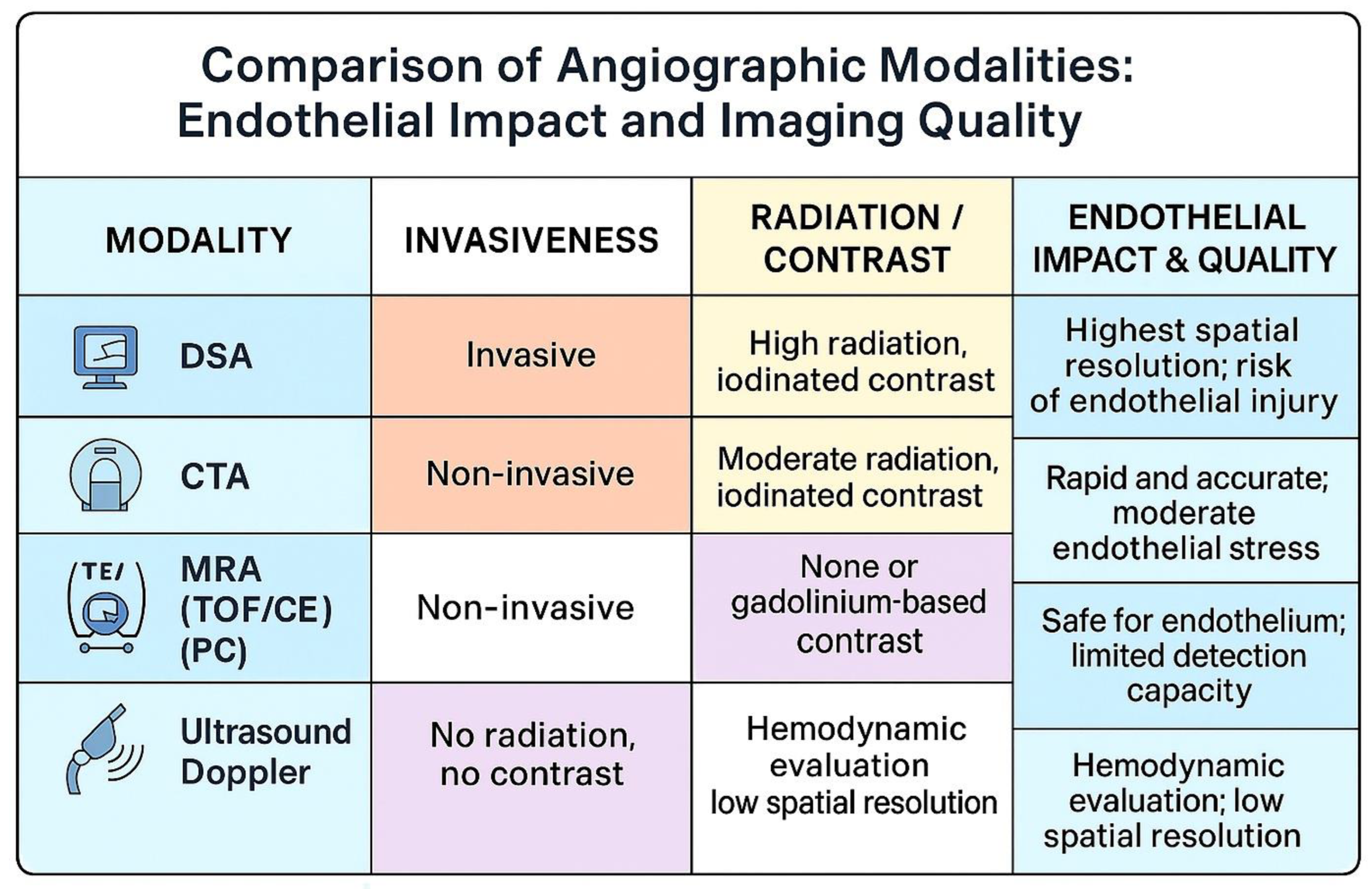
| Modality | Invasiveness | Radiation Exposure | Contrast Requirement | Best for |
|---|---|---|---|---|
| DSA | Invasive | High | Iodinated contrast | Real-time vascular interventions, high-resolution vessel imaging |
| CT Angiography (CTA) | Non-invasive | Moderate | Iodinated contrast | Rapid vascular assessment, aortic pathologies, pulmonary embolism |
| MR Angiography (MRA) | Non-invasive | None | Gadolinium-based contrast (optional) | Soft tissue and vascular imaging without radiation |
| Ultrasound Doppler | Non-invasive | None | No contrast needed | Bedside vascular assessment, deep vein thrombosis |
| Modality | Invasiveness | Radiation Exposure | Contrast Requirement | Best for |
|---|---|---|---|---|
| MRA (TOF, PC, CE) | Non-invasive | None | Optional (Gadolinium in CE-MRA) | Screening and diagnosis of cerebrovascular diseases |
| DSA | Invasive | High | Iodinated contrast | Interventional procedures, high-resolution vessel imaging |
| CTA | Non-invasive | Moderate | Iodinated contrast | Rapid assessment of aortic and extracranial vascular pathologies |
| Ultrasound Doppler | Non-invasive | None | No contrast | Hemodynamic assessment, bedside vascular evaluation |
| Intervention | Histopathological Effects | Complications |
|---|---|---|
| Stenting | Endothelial damage, neointimal hyperplasia, inflammatory cell infiltration, smooth muscle cell proliferation, potential restenosis. | In-stent restenosis, late thrombosis, neoatherosclerosis, chronic inflammation. |
| Balloon Angioplasty | Endothelial disruption, medial dissection, thrombus formation, smooth muscle cell activation, extracellular matrix remodeling. | Elastic recoil, restenosis, thrombosis, vessel rupture in severe cases. |
| Coil Embolization | Thrombus formation, fibroblast infiltration, endothelialization over occlusion site, potential aneurysm recanalization. | Incomplete occlusion, recanalization, chronic inflammation, aneurysm recurrence. |
| Cellular Process | Description |
|---|---|
| Endothelial Injury and Vascular Remodeling | Mechanical damage to the endothelium leading to platelet aggregation, thrombin activation, local inflammation, and vascular healing via EPCs. |
| Inflammatory Response and Immune Activation | Increased IL-6, TNF-α, IL-1β levels trigger leukocyte recruitment, exacerbating BBB disruption and increasing the risk of hemorrhagic transformation. |
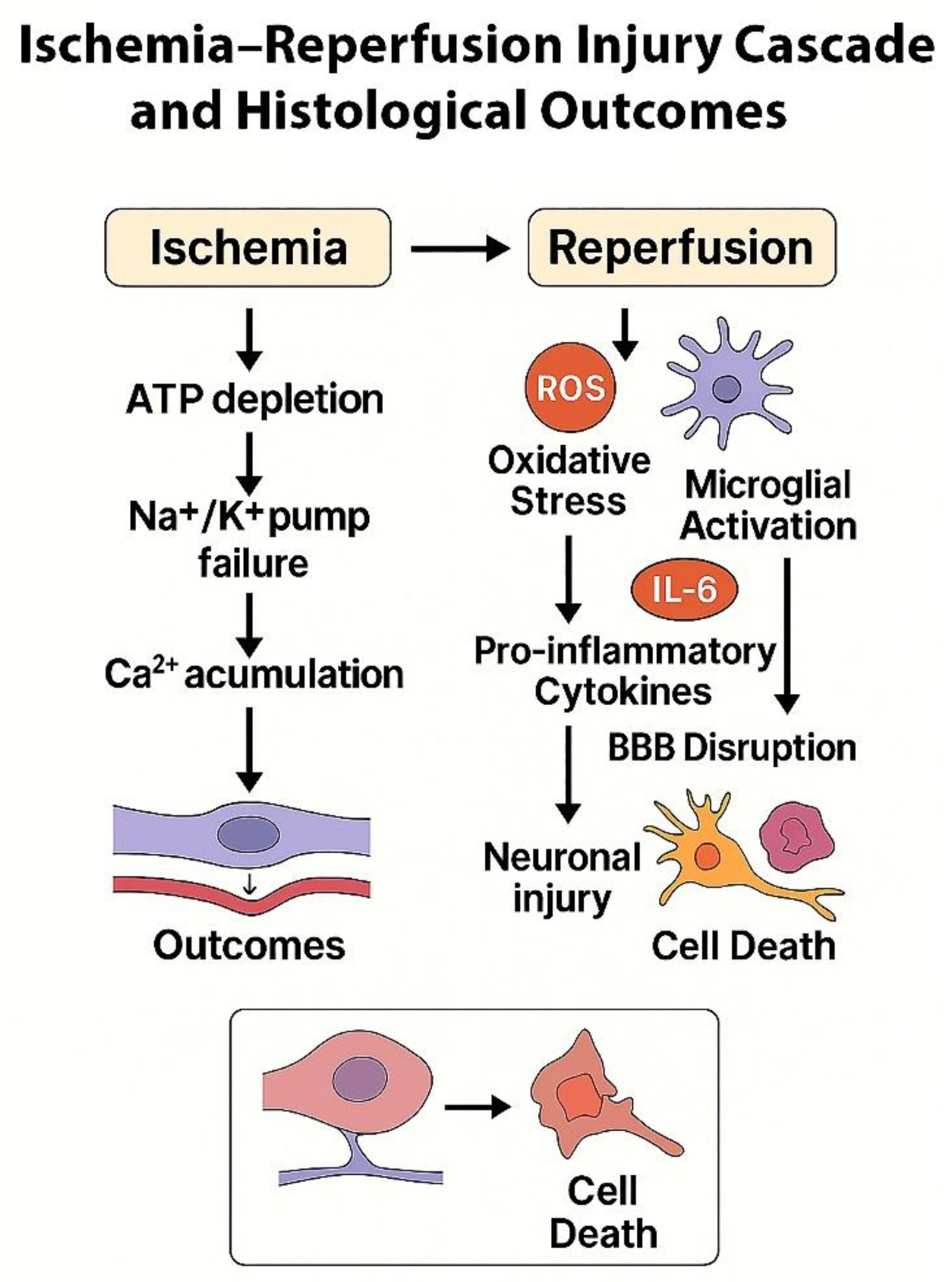
| I/R Injury and Oxidative Stress | Reperfusion leads to ROS overproduction, mitochondrial dysfunction, neuronal apoptosis, and increased BBB permeability, worsening neuroinflammation. |
| Astrocyte and Microglial Activation | Activated astrocytes and microglia mediate neuroprotection or neurotoxicity; excessive activation contributes to neuroinflammation and impaired plasticity. |
| Neuronal and Synaptic Changes | Prolonged ischemia results in neuronal apoptosis, excitotoxicity, and synaptic remodeling; excessive microglial pruning may hinder functional recovery. |
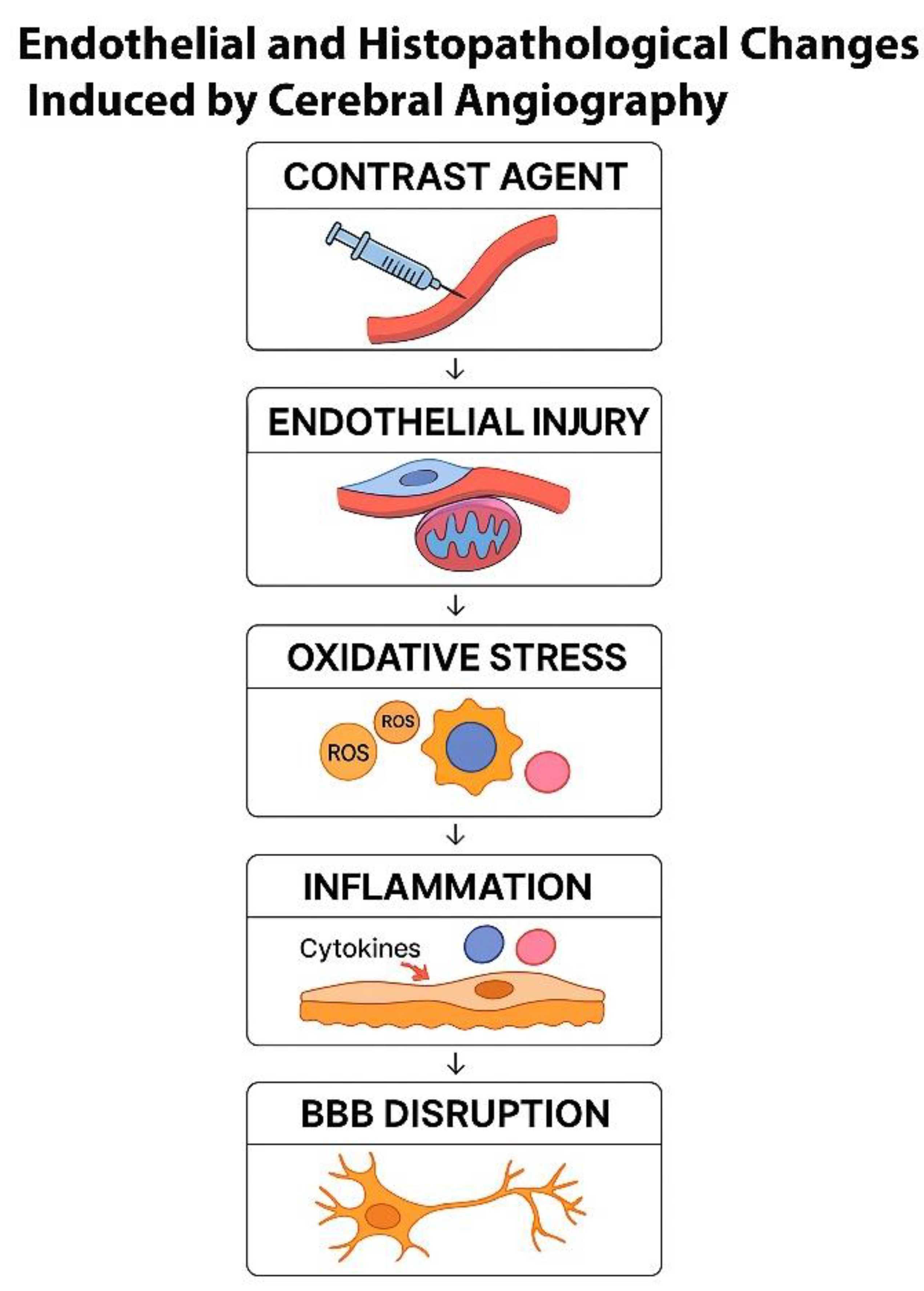
| Blood–Brain Barrier Dysfunction | Endothelial damage, cytokine release, and oxidative stress increase BBB permeability, leading to vasogenic edema and hemorrhagic transformation. |
| Process | Description |
|---|---|
| Restenosis | Re-narrowing of the vessel lumen due to endothelial dysfunction, smooth muscle cell proliferation, and extracellular matrix remodeling. |
| Endothelial Injury | Mechanical disruption exposes the subendothelial matrix, promoting platelet adhesion, activation, and an imbalance in vasoactive factors. |
| Inflammatory Response | IL-6, TNF-α, IL-1β recruit immune cells, leading to chronic inflammation, smooth muscle cell migration, and neointimal hyperplasia. |
| Extracellular Matrix Remodeling | Increased deposition of collagen and fibronectin stiffens the vascular wall, while MMPs regulate fibrosis and repair. |
| Thrombogenicity | Endothelial damage increases thrombus formation and residual platelet activation, leading to a higher risk of reocclusion. |
| Endothelial Regeneration | EPCs migrate to the injury site, and VEGF/bFGF promote neovascularization and vessel stabilization. |
| Macrophage Polarization | Shift from pro-inflammatory M1 phenotype to reparative M2 phenotype, reducing excessive inflammation and fibrosis. |
| Neurovascular Remodeling | Astrocytes and pericytes stabilize the blood–brain barrier, while synaptic plasticity and axonal sprouting improve recovery. |
| Therapeutic Strategies | Targeting inflammation, endothelial cell therapies, and bioengineered stents may reduce restenosis and enhance recovery. |
Disclaimer/Publisher’s Note: The statements, opinions and data contained in all publications are solely those of the individual author(s) and contributor(s) and not of MDPI and/or the editor(s). MDPI and/or the editor(s) disclaim responsibility for any injury to people or property resulting from any ideas, methods, instructions or products referred to in the content. |
© 2026 by the authors. Licensee MDPI, Basel, Switzerland. This article is an open access article distributed under the terms and conditions of the Creative Commons Attribution (CC BY) license.
Share and Cite
Ertuğrul, Z.Ö.; Tuncer, M.C.; Karabat, M.U. Cellular Mechanisms Underlying Endothelial and Histopathological Alterations Induced by Cerebral Angiography. J. Clin. Med. 2026, 15, 974. https://doi.org/10.3390/jcm15030974
Ertuğrul ZÖ, Tuncer MC, Karabat MU. Cellular Mechanisms Underlying Endothelial and Histopathological Alterations Induced by Cerebral Angiography. Journal of Clinical Medicine. 2026; 15(3):974. https://doi.org/10.3390/jcm15030974
Chicago/Turabian StyleErtuğrul, Zülfikar Özgür, Mehmet Cudi Tuncer, and Mehmet Uğur Karabat. 2026. "Cellular Mechanisms Underlying Endothelial and Histopathological Alterations Induced by Cerebral Angiography" Journal of Clinical Medicine 15, no. 3: 974. https://doi.org/10.3390/jcm15030974
APA StyleErtuğrul, Z. Ö., Tuncer, M. C., & Karabat, M. U. (2026). Cellular Mechanisms Underlying Endothelial and Histopathological Alterations Induced by Cerebral Angiography. Journal of Clinical Medicine, 15(3), 974. https://doi.org/10.3390/jcm15030974