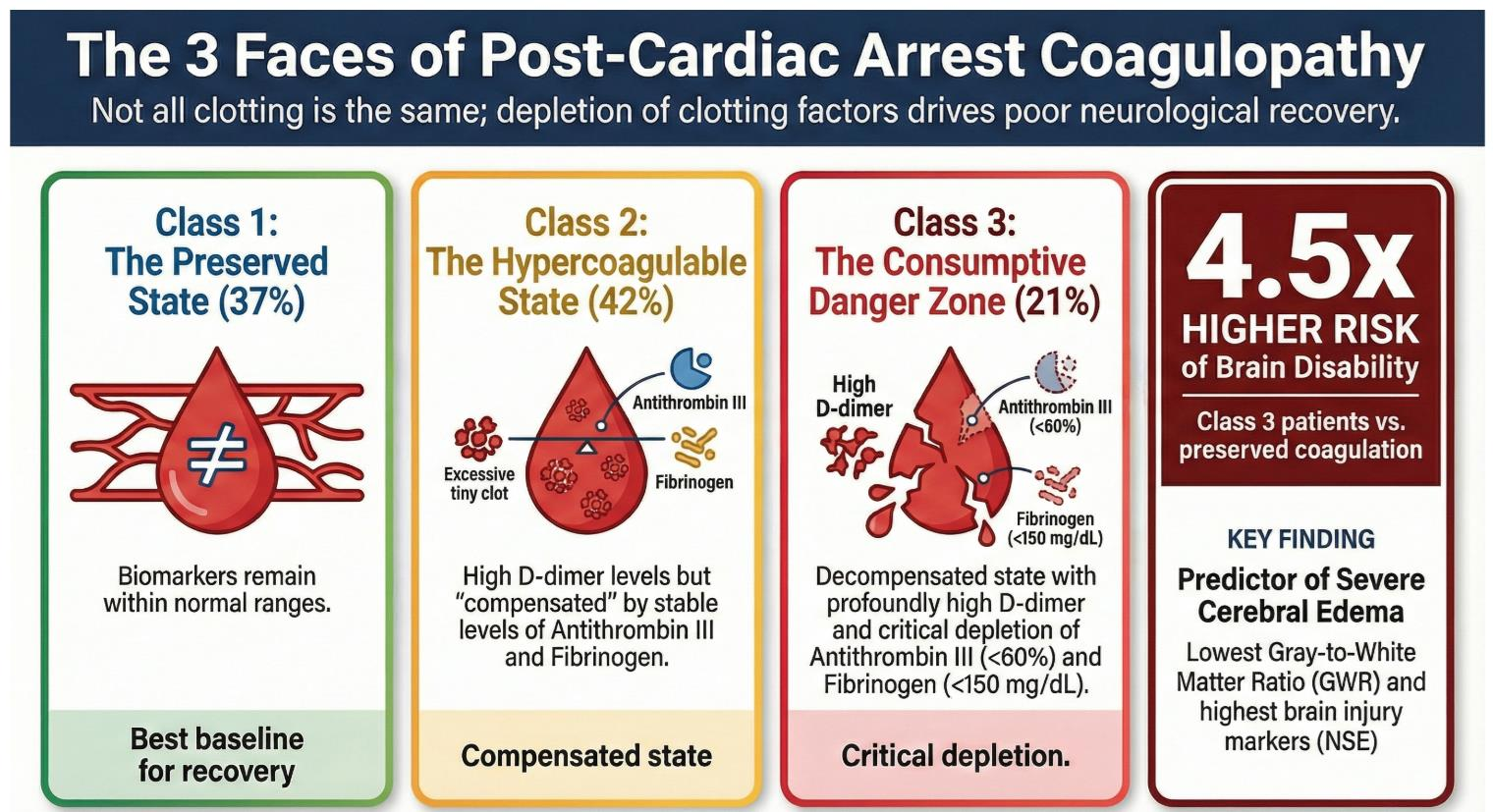
Distinct Coagulation Phenotypes and Long-Term Neurological Outcomes in Post-Cardiac Arrest Syndrome: A Latent Class Analysis of a 9-Year Single-Center Cohort


Abstract
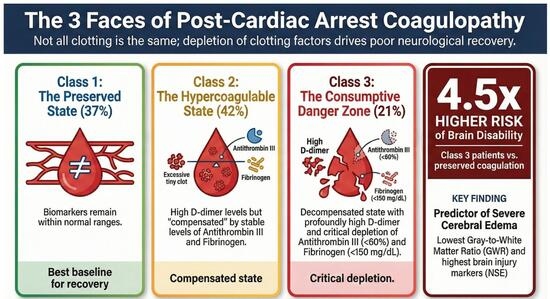
1. Introduction
2. Materials and Methods
2.1. Study Design and Setting
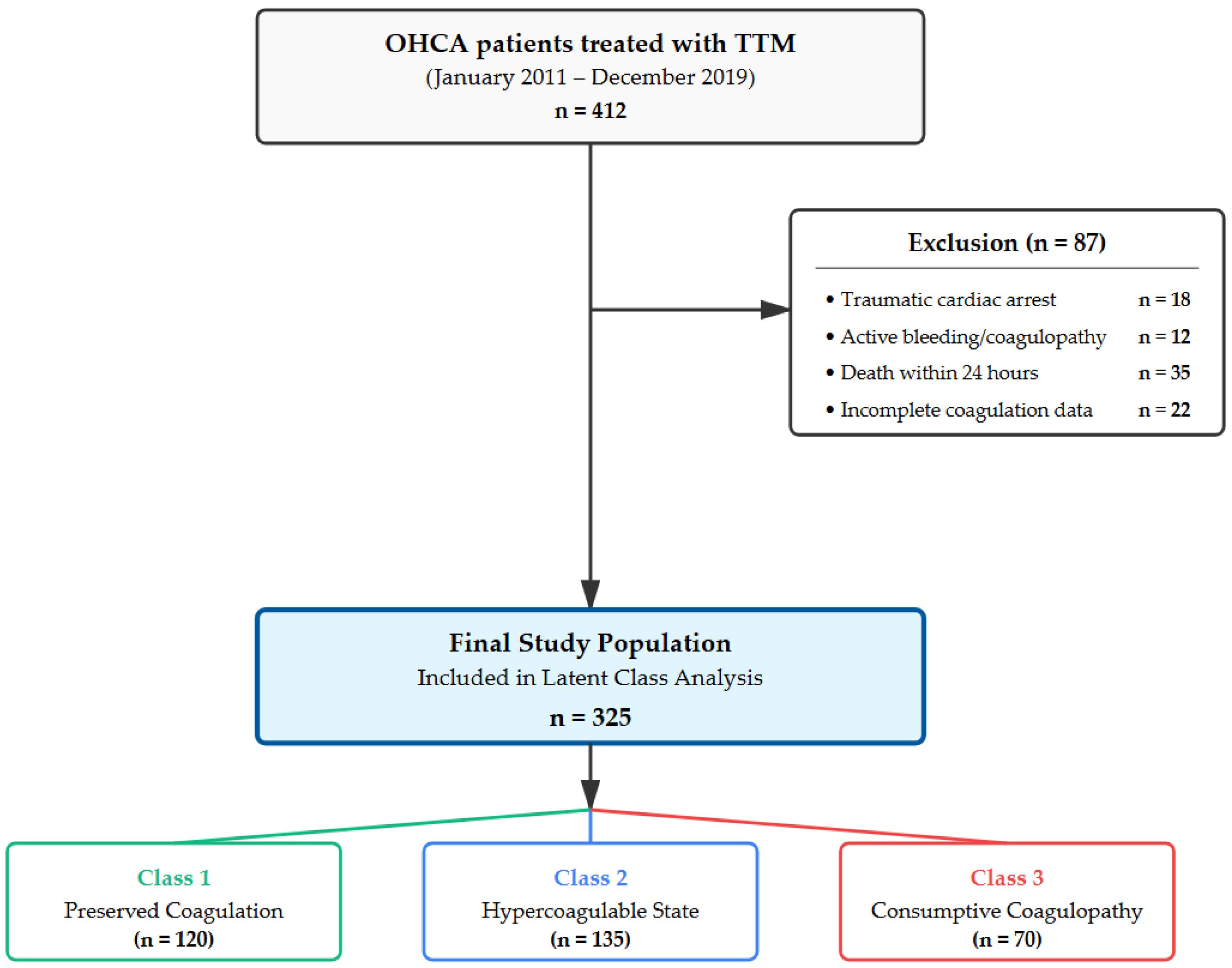
2.2. Study Population
2.3. Post-Cardiac Arrest Care and TTM Protocol
2.4. Data Collection and Biomarker Measurement
2.5. Outcome Assessment
2.6. Statistical Analysis
2.7. Comparison and Regression
3. Results
3.1. Baseline Characteristics of the Core Cohort
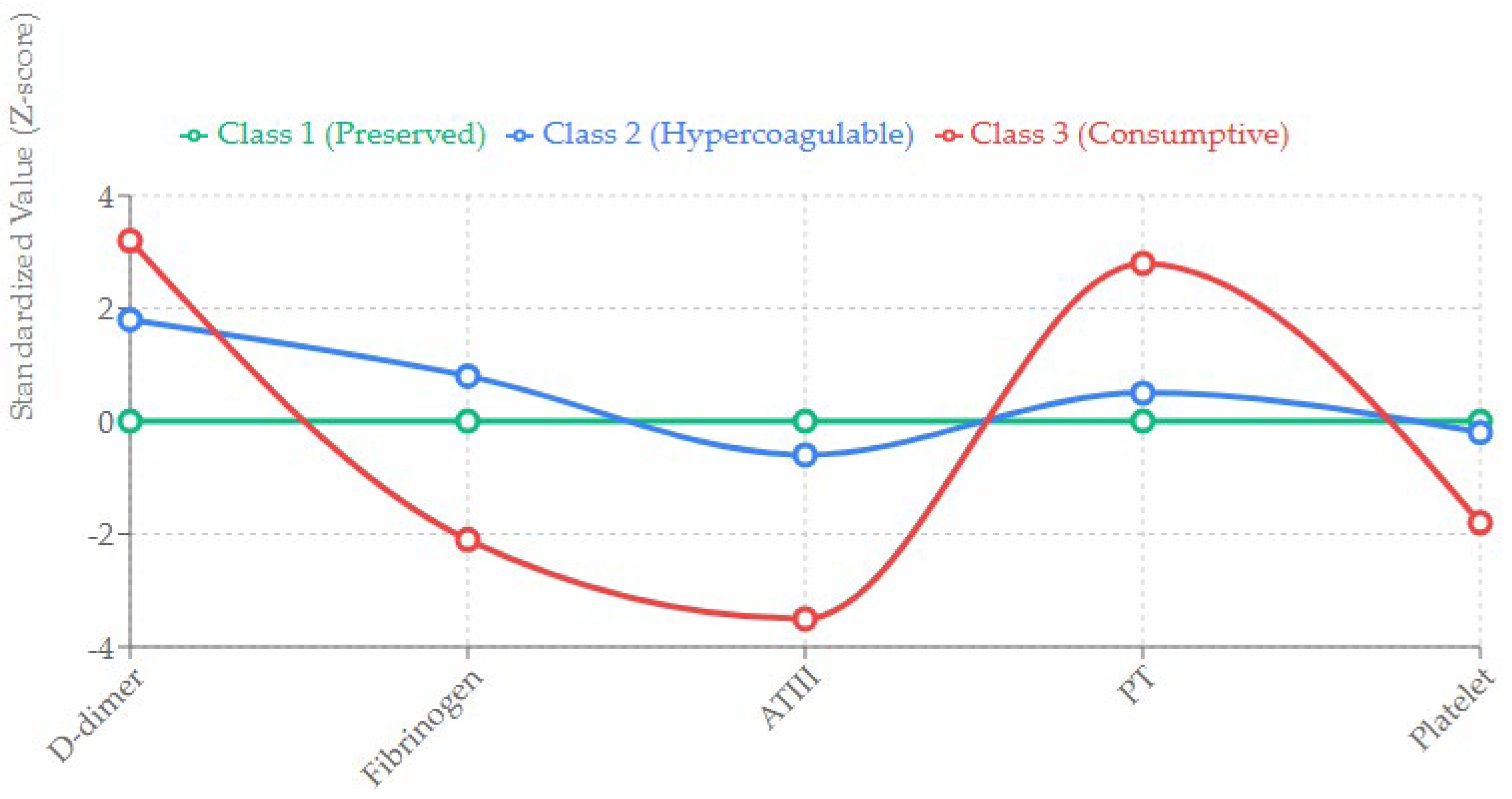
3.2. Identification of Coagulation Phenotypes (Latent Class Analysis)
3.3. Temporal Evolution of Biomarkers
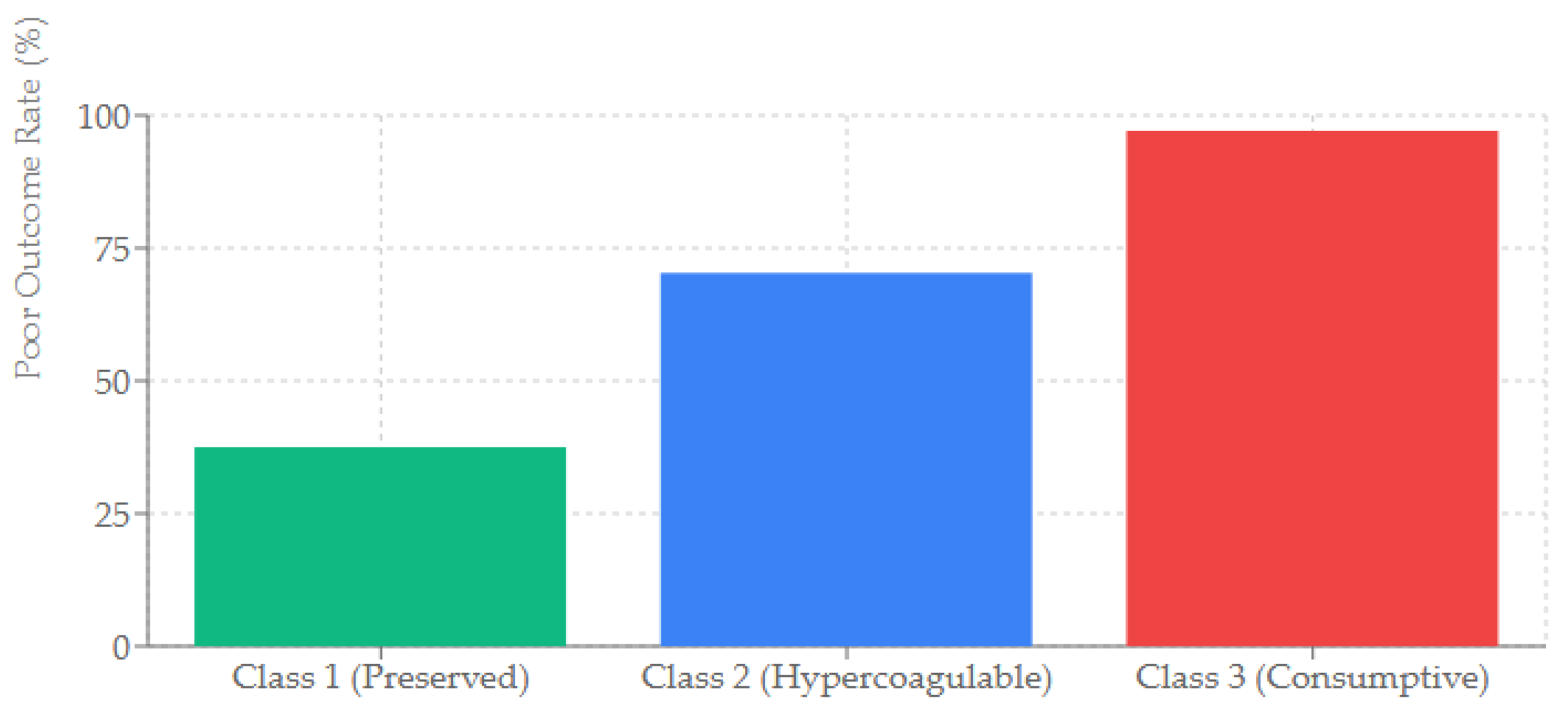
3.4. Association with Neurological Injury and Outcome
3.5. Multivariable Analysis
4. Discussion
5. Conclusions
Supplementary Materials
Author Contributions
Funding
Institutional Review Board Statement
Informed Consent Statement
Data Availability Statement
Acknowledgments
Conflicts of Interest
References
- Nolan, J.P.; Neumar, R.W.; Adrie, C.; Aibiki, M.; Berg, R.A.; Böttiger, B.W.; Callaway, C.W.; Clark, R.W.; Geocadin, R.G.; Jauch, E.C.; et al. Post-cardiac arrest syndrome: Epidemiology, pathophysiology, treatment, and prognostication. Resuscitation 2008, 79, 350–379. [Google Scholar] [CrossRef]
- Lemiale, V.; Dumas, F.; Mongardon, N.; Giovanetti, O.; Charpentier, J.; Chiche, J.D.; Carli, P.; Mira, J.P.; Nolan, J.; Cariou, A. Intensive care unit mortality after cardiac arrest: The relative contribution of shock and brain injury in a large cohort. Intensive Care Med. 2013, 39, 1972–1980. [Google Scholar] [CrossRef]
- Adrie, C.; Monchi, M.; Cariou, A.; Laurent, I.; Dhainaou, J.F.; Spaulding, C. Coagulopathy after successful cardiopulmonary resuscitation following cardiac arrest: Implication of the protein C anticoagulant pathway. J. Am. Coll. Cardiol. 2005, 46, 21–28. [Google Scholar] [CrossRef] [PubMed]
- Iba, T.; Levy, J.H.; Raj, A.; Warkentin, T.E. Advance in the Management of Sepsis-Induced Coagulopathy and Disseminated Intravascular Coagulation. J. Clin. Med. 2019, 8, 728. [Google Scholar] [CrossRef] [PubMed]
- Wada, H.; Thachil, J.; Di Nisio, M.; Mathew, P.; Kurosawa, S.; Gando, S.; Kim, H.K.; Nielsen, J.D.; Dempfle, C.E.; Levi, M.; et al. Guidance for diagnosis and treatment of disseminated intravascular coagulation from harmonization of the recommendations from three guidelines. J. Thromb. Haemost. 2013, 11, 761–767. [Google Scholar] [CrossRef] [PubMed]
- Sekhon, M.S.; Ainslie, P.N.; Griesdale, D.E. Clinical pathophysiology of hypoxic ischemic brain injury after cardiac arrest. Crit. Care 2017, 21, 128. [Google Scholar] [CrossRef]
- Asakura, H.; Ogawa, H. COVID-19-associated coagulopathy and disseminated intravascular coagulation. Int. J. Hematol. 2021, 113, 45–57. [Google Scholar] [CrossRef]
- Asano, M.; Kurabayashi, M.; Yamauchi, Y.; Tetsuo, S. Relationship between D-dimer level upon emergency room arrival and the duration of cardiac arrest in patients with witnessed out-of-hospital cardiac arrest. Heart Vessels 2021, 36, 731–737. [Google Scholar] [CrossRef]
- Filip, M.S.; Karpinski, G.; Filipiak, K.J.; Platek, A.E.; Hrynkiewicz-Szymanska, A.; Kotkowski, M.; Opolski, G. Usefulness of the D-dimer concentration as a predictor of mortality in patients with out-of-hospital cardiac arrest. Am. J. Cardiol. 2013, 112, 467–471. [Google Scholar]
- Taylor, F.B., Jr.; Toh, C.H.; Hoots, W.K.; Wada, H.; Levi, M. Towards definition, clinical and laboratory criteria, and a scoring system for disseminated intravascular coagulation. Thromb. Haemost. 2001, 86, 1327–1330. [Google Scholar] [CrossRef]
- Seymour, C.W.; Kennedy, J.N.; Wang, S.; Chang, C.H.; Elliott, C.F.; Xu, Z.; Berry, S.; Clermont, G.; Cooper, G.; Gomez, H.; et al. Derivation, Validation, and Potential Treatment Implications of Novel Clinical Phenotypes for Sepsis. JAMA 2019, 321, 2003–2017. [Google Scholar] [CrossRef] [PubMed]
- Iba, T.; Levy, J.H. Derangement of the endothelial glycocalyx in sepsis. J. Thromb. Haemost. 2019, 17, 283–294. [Google Scholar] [CrossRef] [PubMed]
- Wiedermann, C.J. Anticoagulant therapy for septic coagulopathy and disseminated intravascular coagulation: Where do KyberSept and SCARLET leave us? Acute Med. Surg. 2020, 7, e477. [Google Scholar] [CrossRef] [PubMed]
- Johansson, P.I.; Stensballe, J.; Ostrowski, S.R. Shock induced endotheliopathy (SHINE) in acute critical illness—A unifying pathophysiologic mechanism. Crit. Care 2017, 21, 25. [Google Scholar] [CrossRef]
- Chappell, D.; Westphal, M.; Jacob, M. The impact of the glycocalyx on microcirculatory oxygen distribution in critical illness. Curr. Opin. Anaesthesiol. 2009, 22, 155–162. [Google Scholar] [CrossRef]
- Callaway, C.W.; Donnino, M.W.; Fink, E.L.; Geocadin, R.G.; Golan, E.; Kern, K.B.; Leary, M.; Meurer, W.J.; Peberdy, M.A.; Thompson, T.M.; et al. Part 8: Post-Cardiac Arrest Care: 2015 American Heart Association Guidelines Update for Cardiopulmonary Resuscitation and Emergency Cardiovascular Care. Circulation 2015, 132, S465–S482. [Google Scholar] [CrossRef]
- Nielsen, N.; Wetterslev, J.; Cronberg, T.; Erlinge, D.; Gasche, Y.; Hassager, C.; Horn, J.; Hovdenes, J.; Kjaergaard, J.; Kuiper, M.; et al. Targeted temperature management at 33 degrees C versus 36 degrees C after cardiac arrest. N. Engl. J. Med. 2013, 369, 2197–2206. [Google Scholar] [CrossRef]
- Jennett, B.; Bond, M. Assessment of outcome after severe brain damage. Lancet 1975, 1, 480–484. [Google Scholar] [CrossRef]
- Cristia, C.; Ho, M.L.; Levy, S.; Andersen, J.C.; Dambediya, S.; Singh, K.; Gupta, S.; Suddarth, B.; Mai, C.L.; Amasi-Hartoonian, N.; et al. The association between a quantitative computed tomography (CT) measurement of cerebral edema and outcomes in post-cardiac arrest-a validation study. Resuscitation 2014, 85, 1497–1503. [Google Scholar] [CrossRef]
- Linzer, D.A.; Lewis, J.B. poLCA: An R Package for Polytomous Variable Latent Class Analysis. J. Stat. Softw. 2011, 42, 1–29. [Google Scholar] [CrossRef]
- Lee, D.H.; Lee, B.K.; Jeung, K.W.; Jung, Y.H.; Lee, S.M.; Cho, Y.S.; Yun, S.-W.; Min, Y.I. Disseminated intravascular coagulation is associated with the neurologic outcome of cardiac arrest survivors. Am. J. Emerg. Med. 2017, 35, 1617–1623. [Google Scholar] [CrossRef]
- Wada, T.; Gando, S.; Ono, Y.; Maekawa, K.; Katabami, K.; Hayakawa, M.; Sawamura, A. Disseminated intravascular coagulation with the fibrinolytic phenotype predicts the outcome of patients with out-of-hospital cardiac arrest. Thromb. J. 2016, 14, 43. [Google Scholar] [CrossRef]
- Kloner, R.A.; Ganote, C.E.; Jennings, R.B. The “no-reflow” phenomenon after temporary coronary occlusion in the dog. J. Clin. Investig. 1974, 54, 1496–1508. [Google Scholar] [CrossRef]
- Metter, R.B.; Rittenberger, J.C.; Guyette, F.X.; Callaway, C.W. Association between a quantitative CT scan measure of brain edema and outcome after cardiac arrest. Resuscitation 2011, 82, 1180–1185. [Google Scholar] [CrossRef]
- Kudo, D.; Hayakawa, M.; Ono, K.; Yamakawa, K. Impact of non-anticoagulant therapy on patients with sepsis-induced disseminated intravascular coagulation: A multicenter, case-control study. Thromb. Res. 2018, 163, 22–29. [Google Scholar] [CrossRef]
- Kim, H.J.; Michael, K.; Wee, J.H.; Oh, J.S.; Kim, W.Y.; Cho, I.S.; Lee, M.J.; Lee, D.H.; Kim, Y.H.; Youn, C.S. Coagulation measures after cardiac arrest (CMACA). PLoS ONE 2023, 18, e0279653. [Google Scholar] [CrossRef]
- Iba, T.; Thachil, J. Present and future of anticoagulant therapy using antithrombin and thrombomodulin for sepsis-associated disseminated intravascular coagulation: A perspective from Japan. Int. J. Hematol. 2016, 103, 253–261. [Google Scholar] [CrossRef]
- Warren, B.L.; Eid, A.; Singer, P.; Pillay, S.S.; Carl, P.; Novak, L.; Chalupa, P.; Atherstone, A.; Penezic, I.; Crozier, T.; et al. Caring for the critically ill patient. High-dose antithrombin III in severe sepsis: A randomized controlled trial. JAMA 2001, 286, 1869–1878. [Google Scholar] [CrossRef] [PubMed]



| Variables | Total (n = 325) | Class 1 (Preserved) (n = 120) | Class 2 (Hypercoagulable) (n = 135) | Class 3 (Consumptive) (n = 70) | p-Value |
|---|---|---|---|---|---|
| Age, years (Mean ± SD) | 55.5 ± 16.9 | 52.3 ± 15.2 | 56.8 ± 17.5 | 58.9 ± 17.8 | 0.041 |
| Male Sex, n (%) | 233 (71.7) | 88 (73.3) | 95 (70.4) | 50 (71.4) | 0.876 |
| Witnessed Arrest, n (%) | 245 (75.4) | 95 (79.2) | 102 (75.6) | 48 (68.6) | 0.253 |
| Bystander CPR, n (%) | 198 (60.9) | 78 (65.0) | 82 (60.7) | 38 (54.3) | 0.348 |
| Shockable Rhythm, n (%) | 123 (37.8) | 62 (51.7) | 48 (35.6) | 13 (18.6) | <0.001 |
| Low-flow time, min (Mean ± SD) | 28.5 ± 15.2 | 22.1 ± 12.5 | 29.8 ± 14.8 | 36.9 ± 16.3 | <0.001 |
| Initial Lactate, mmol/L (Mean ± SD) | 8.2 ± 4.5 | 6.5 ± 3.8 | 8.8 ± 4.5 | 10.2 ± 4.9 | <0.001 |
| 6-month Poor Outcome, n (%) | 224 (69.1) | 45 (37.5) | 95 (70.3) | 68 (97.1) | <0.001 |
| Biomarker | Time | Class 1 (Reference) | Class 2 (Hyper) | Class 3 (Consumptive) | p-Value |
|---|---|---|---|---|---|
| Antithrombin III (%) | 0 h | 92.5 ± 10.5 | 85.1 ± 12.2 | 52.3 ± 14.5 | <0.001 |
| 24 h | 89.1 ± 9.8 | 81.2 ± 11.5 | 41.5 ± 10.2 | <0.001 | |
| Fibrinogen (mg/dL) | 0 h | 245 ± 50 | 310 ± 65 | 142 ± 45 | <0.001 |
| 24 h | 260 ± 55 | 340 ± 70 | 110 ± 35 | <0.001 | |
| D-dimer (µg/mL) | 0 h | 1.5 [0.5–3.2] | 18.5 [10.2–25.5] | 38.2 [22.1–55.5] | <0.001 |
| PT (INR) | 0 h | 1.05 ± 0.1 | 1.15 ± 0.2 | 1.95 ± 0.6 | <0.001 |
| Variable | Class 1 (Preserved) (n = 120) | Class 2 (Hypercoagulable) (n = 135) | Class 3 (Consumptive) (n = 70) | p-Value |
|---|---|---|---|---|
| Brain CT GWR | ||||
| Average GWR (Mean ± SD) | 1.25 ± 0.04 | 1.23 ± 0.06 | 1.18 ± 0.05 | <0.001 |
| Basal Ganglia GWR | 1.24 ± 0.05 | 1.22 ± 0.07 | 1.17 ± 0.06 | <0.001 |
| Serum NSE (ng/mL) | ||||
| NSE at 24 h (Median [IQR]) | 32.1 [20.5–45.2] | 55.2 [35.1–80.5] | 85.4 [50.2–120.5] | <0.001 |
| NSE at 48 h (Median [IQR]) | 28.5 [18.2–38.5] | 65.4 [40.2–95.1] | 110.2 [75.5–250.2] | <0.001 |
| NSE at 72 h (Median [IQR]) | 24.2 [15.5–32.1] | 58.1 [30.5–85.2] | 95.5 [60.2–180.5] | <0.001 |
| Variable | Crude OR (95% CI) | Adjusted OR (95% CI) | p-Value |
|---|---|---|---|
| Age (per 1 year) | 1.04 (1.02–1.06) | 1.03 (1.01–1.05) | 0.012 |
| Low-flow time (per 1 min) | 1.08 (1.05–1.11) | 1.05 (1.02–1.08) | <0.001 |
| Shockable Rhythm (Yes) | 0.25 (0.15–0.42) | 0.45 (0.25–0.81) | 0.008 |
| Coagulation Phenotype | |||
| Class 1 (Preserved) | Reference | Reference | - |
| Class 2 (Hypercoagulable) | 3.52 (1.85–6.68) | 1.45 (0.75–2.85) | 0.215 |
| Class 3 (Consumptive) | 28.5 (5.5–145.2) | 4.52 (2.15–9.48) | <0.001 |
Disclaimer/Publisher’s Note: The statements, opinions and data contained in all publications are solely those of the individual author(s) and contributor(s) and not of MDPI and/or the editor(s). MDPI and/or the editor(s) disclaim responsibility for any injury to people or property resulting from any ideas, methods, instructions or products referred to in the content. |
© 2026 by the authors. Licensee MDPI, Basel, Switzerland. This article is an open access article distributed under the terms and conditions of the Creative Commons Attribution (CC BY) license.
Share and Cite
Park, S.Y.; Oh, S.H.; Kim, H.J.; Kim, H.J.; Lim, J.Y. Distinct Coagulation Phenotypes and Long-Term Neurological Outcomes in Post-Cardiac Arrest Syndrome: A Latent Class Analysis of a 9-Year Single-Center Cohort. J. Clin. Med. 2026, 15, 1287. https://doi.org/10.3390/jcm15031287
Park SY, Oh SH, Kim HJ, Kim HJ, Lim JY. Distinct Coagulation Phenotypes and Long-Term Neurological Outcomes in Post-Cardiac Arrest Syndrome: A Latent Class Analysis of a 9-Year Single-Center Cohort. Journal of Clinical Medicine. 2026; 15(3):1287. https://doi.org/10.3390/jcm15031287
Chicago/Turabian StylePark, Sin Young, Sang Hoon Oh, Hyo Joon Kim, Han Joon Kim, and Jee Yong Lim. 2026. "Distinct Coagulation Phenotypes and Long-Term Neurological Outcomes in Post-Cardiac Arrest Syndrome: A Latent Class Analysis of a 9-Year Single-Center Cohort" Journal of Clinical Medicine 15, no. 3: 1287. https://doi.org/10.3390/jcm15031287
APA StylePark, S. Y., Oh, S. H., Kim, H. J., Kim, H. J., & Lim, J. Y. (2026). Distinct Coagulation Phenotypes and Long-Term Neurological Outcomes in Post-Cardiac Arrest Syndrome: A Latent Class Analysis of a 9-Year Single-Center Cohort. Journal of Clinical Medicine, 15(3), 1287. https://doi.org/10.3390/jcm15031287